WO2017082294A1 - 幹細胞の培養用培地、増殖促進剤及び培養方法、並びに幹細胞を含む細胞組成物及びその製造方法 - Google Patents
幹細胞の培養用培地、増殖促進剤及び培養方法、並びに幹細胞を含む細胞組成物及びその製造方法 Download PDFInfo
- Publication number
- WO2017082294A1 WO2017082294A1 PCT/JP2016/083232 JP2016083232W WO2017082294A1 WO 2017082294 A1 WO2017082294 A1 WO 2017082294A1 JP 2016083232 W JP2016083232 W JP 2016083232W WO 2017082294 A1 WO2017082294 A1 WO 2017082294A1
- Authority
- WO
- WIPO (PCT)
- Prior art keywords
- peptide
- amino acid
- bfgf
- seq
- stem cells
- Prior art date
- Legal status (The legal status is an assumption and is not a legal conclusion. Google has not performed a legal analysis and makes no representation as to the accuracy of the status listed.)
- Ceased
Links
Images

Classifications
-
- C—CHEMISTRY; METALLURGY
- C12—BIOCHEMISTRY; BEER; SPIRITS; WINE; VINEGAR; MICROBIOLOGY; ENZYMOLOGY; MUTATION OR GENETIC ENGINEERING
- C12N—MICROORGANISMS OR ENZYMES; COMPOSITIONS THEREOF; PROPAGATING, PRESERVING, OR MAINTAINING MICROORGANISMS; MUTATION OR GENETIC ENGINEERING; CULTURE MEDIA
- C12N1/00—Microorganisms; Compositions thereof; Processes of propagating, maintaining or preserving microorganisms or compositions thereof; Processes of preparing or isolating a composition containing a microorganism; Culture media therefor
Definitions
- the present invention relates to a medium for culturing stem cells, a growth promoter and a culture method, a cell composition containing stem cells, and a method for producing the same. More specifically, the present invention relates to a medium for culturing stem cells and the like containing a substance that exhibits excellent growth promoting activity on stem cells.
- bFGF basic fibroblast growth factor
- fibroblast growth factor 2 basic fibroblast growth factor 2
- Patent Documents 1 to 4 As described above, since bFGF is very expensive, an alternative substance has been developed (for example, Patent Documents 1 to 4), but a substance having a sufficient proliferation promoting function for stem cells has been obtained. Absent.
- the main object of the present invention is to provide a substance that exhibits excellent growth promoting activity against stem cells.
- [BFGF heparin-binding region-containing peptide] In order to solve the above problems, the present invention provides the following [1] to [40].
- A A peptide comprising any one of the amino acid sequences shown in SEQ ID NOs: 1, 3, 4, 6 to 10.
- the growth promoter according to [8], wherein the bFGF heparin-binding region-containing peptide is the following peptide (A), (B) or (C).
- A A peptide comprising any one of the amino acid sequences shown in SEQ ID NOs: 1, 3, 4, 6 to 10.
- B including any amino acid sequence in which one or several amino acids are deleted, substituted, inserted or added in any one of the amino acid sequences shown in SEQ ID NOs: 1, 3, 4, 6 to 10, and proliferates stem cells Peptides with promoting activity.
- C A peptide obtained by dimerizing the peptide according to (A) or (B).
- a method for culturing stem cells comprising a step of culturing stem cells in a medium containing a peptide containing a bFGF heparin binding region.
- the culture method according to [14], wherein the bFGF heparin-binding region-containing peptide is the following peptide (A), (B), or (C).
- B including any amino acid sequence in which one or several amino acids are deleted, substituted, inserted or added in any one of the amino acid sequences shown in SEQ ID NOs: 1, 3, 4, 6 to 10, and proliferates stem cells Peptides with promoting activity.
- (C) A peptide obtained by dimerizing the peptide according to (A) or (B).
- the stem cells are inducible pluripotent stem cells or mesenchymal stem cells.
- a method for producing a cell composition containing stem cells comprising a step of culturing stem cells in a medium containing a peptide containing a bFGF heparin binding region.
- a method for producing a cell composition containing stem cells comprising a step of culturing stem cells in a medium containing a peptide containing a bFGF heparin binding region.
- the bFGF heparin-binding region-containing peptide is the following peptide (A), (B) or (C).
- a method for producing a cell composition containing differentiated cells comprising a step of culturing stem cells in a medium containing a bFGF heparin-binding region-containing peptide and a step of inducing stem cell differentiation.
- the production method of [28], wherein the bFGF heparin-binding region-containing peptide is the following peptide (A), (B), or (C).
- a peptide comprising any one of the amino acid sequences shown in SEQ ID NOs: 1, 3, 4, 6 to 10.
- the stem cell is an inducible pluripotent stem cell or a mesenchymal stem cell.
- the stem cell is derived from a human.
- the medium is a serum-free medium.
- a cell composition comprising a bFGF heparin-binding region-containing peptide and stem cells and / or differentiated cells derived from stem cells.
- B including any amino acid sequence in which one or several amino acids are deleted, substituted, inserted or added in any one of the amino acid sequences shown in SEQ ID NOs: 1, 3, 4, 6 to 10, and proliferates stem cells Peptides with promoting activity.
- (C) A peptide obtained by dimerizing the peptide according to (A) or (B).
- the stem cell is an inducible pluripotent stem cell or a mesenchymal stem cell.
- [BFGF fragment peptide] The present invention also provides the following [41] to [68].
- [41] A medium for culturing stem cells, comprising a bFGF fragment peptide.
- A) A peptide comprising any one amino acid sequence shown in SEQ ID NOs: 2, 5, and 16.
- (C) A peptide obtained by dimerizing the peptide according to (A) or (B).
- a stem cell proliferation promoter comprising a bFGF fragment peptide.
- the growth promoter according to [46], wherein the bFGF fragment peptide is the following peptide (A), (B) or (C).
- A A peptide comprising any one amino acid sequence shown in SEQ ID NOs: 2, 5, and 16.
- B an amino acid sequence in which one or several amino acids are deleted, substituted, inserted or added in any one of the amino acid sequences shown in SEQ ID NOs: 2, 5 and 16, and has an activity of promoting the proliferation of stem cells Having peptide.
- C A peptide obtained by dimerizing the peptide according to (A) or (B).
- a method for culturing stem cells comprising a step of culturing stem cells in a medium containing a bFGF fragment peptide.
- (C) A peptide obtained by dimerizing the peptide according to (A) or (B).
- a method for producing a cell composition containing a stem cell comprising a step of culturing the stem cell in a medium containing a bFGF fragment peptide.
- A A peptide comprising any one amino acid sequence shown in SEQ ID NOs: 2, 5, and 16.
- B an amino acid sequence in which one or several amino acids are deleted, substituted, inserted or added in any one of the amino acid sequences shown in SEQ ID NOs: 2, 5 and 16, and has an activity of promoting the proliferation of stem cells Having peptide.
- C A peptide obtained by dimerizing the peptide according to (A) or (B).
- [57] The production method of [55] or [56], wherein the stem cell is an inducible pluripotent stem cell or a mesenchymal stem cell.
- the stem cells are derived from a human.
- the medium is a serum-free medium.
- a cell composition comprising a bFGF fragment peptide and stem cells and / or differentiated cells derived from stem cells.
- A A peptide comprising any one amino acid sequence shown in SEQ ID NOs: 2, 5, and 16.
- B an amino acid sequence in which one or several amino acids are deleted, substituted, inserted or added in any one of the amino acid sequences shown in SEQ ID NOs: 2, 5 and 16, and has an activity of promoting the proliferation of stem cells Having peptide.
- C A peptide obtained by dimerizing the peptide according to (A) or (B).
- (C) A peptide obtained by dimerizing the peptide according to (A) or (B).
- a stem cell proliferation promoter comprising an FGF receptor-binding peptide.
- the growth promoter according to [74], wherein the FGF receptor-binding peptide is the following peptide (A), (B) or (C).
- A A peptide comprising any one of the amino acid sequences shown in SEQ ID NOs: 11 to 14.
- B a peptide comprising an amino acid sequence in which one or several amino acids are deleted, substituted, inserted or added in any one of the amino acid sequences shown in SEQ ID NOs: 11 to 14 and having an activity of promoting the proliferation of stem cells .
- C A peptide obtained by dimerizing the peptide according to (A) or (B).
- [76] The proliferation promoter according to [74] or [75], wherein the stem cell is an inducible pluripotent stem cell or a mesenchymal stem cell.
- a method for culturing a stem cell comprising a step of culturing the stem cell in a medium containing an FGF receptor binding peptide.
- the culture method according to [78], wherein the FGF receptor-binding peptide is the following peptide (A), (B) or (C).
- (C) A peptide obtained by dimerizing the peptide according to (A) or (B).
- a method for producing a cell composition containing stem cells comprising a step of culturing stem cells in a medium containing an FGF receptor binding peptide.
- [84] The production method of [83], wherein the FGF receptor-binding peptide is the following peptide (A), (B) or (C).
- A A peptide comprising any one of the amino acid sequences shown in SEQ ID NOs: 11 to 14.
- B a peptide comprising an amino acid sequence in which one or several amino acids are deleted, substituted, inserted or added in any one of the amino acid sequences shown in SEQ ID NOs: 11 to 14 and having an activity of promoting the proliferation of stem cells .
- C A peptide obtained by dimerizing the peptide according to (A) or (B).
- the production method of [83] or [84], wherein the stem cell is an inducible pluripotent stem cell or a mesenchymal stem cell.
- the production method of any of [83] to [85], wherein the stem cell is derived from a human.
- the production method of any of [83] to [86], wherein the medium is a serum-free medium.
- a method for producing a cell composition containing differentiated cells comprising a step of culturing stem cells in a medium containing a bFGF receptor-binding peptide and a step of inducing differentiation of stem cells.
- [89] The production method of [88], wherein the FGF receptor-binding peptide is the following peptide (A), (B) or (C).
- A A peptide comprising any one of the amino acid sequences shown in SEQ ID NOs: 11 to 14.
- B a peptide comprising an amino acid sequence in which one or several amino acids are deleted, substituted, inserted or added in any one of the amino acid sequences shown in SEQ ID NOs: 11 to 14 and having an activity of promoting the proliferation of stem cells .
- C A peptide obtained by dimerizing the peptide according to (A) or (B).
- A A peptide comprising any one of the amino acid sequences shown in SEQ ID NOs: 11 to 14.
- B a peptide comprising an amino acid sequence in which one or several amino acids are deleted, substituted, inserted or added in any one of the amino acid sequences shown in SEQ ID NOs: 11 to 14 and having an activity of promoting the proliferation of stem cells .
- C A peptide obtained by dimerizing the peptide according to (A) or (B).
- [95] The cell composition according to [93] or [94], wherein the stem cells are inducible pluripotent stem cells or mesenchymal stem cells.
- [BFGF binding protein fragment peptide] The present invention also provides the following [97] to [124].
- [97] A medium for stem cell culture, comprising a bFGF-binding protein fragment peptide.
- A) A peptide comprising the amino acid sequence shown in SEQ ID NO: 15.
- B A peptide comprising an amino acid sequence in which one or several amino acids are deleted, substituted, inserted or added in the amino acid sequence shown in SEQ ID NO: 15 and having an activity of promoting proliferation of stem cells.
- C A peptide obtained by dimerizing the peptide according to (A) or (B).
- the medium according to [97] or [98], wherein the stem cells are inducible pluripotent stem cells or mesenchymal stem cells.
- the medium according to any one of [97] to [99], wherein the stem cells are derived from human.
- the medium according to any one of [97] to [100], wherein the medium is a serum-free medium.
- a stem cell proliferation promoter comprising a bFGF binding protein fragment peptide.
- the growth promoter according to [102], wherein the bFGF binding protein fragment peptide is the following peptide (A), (B) or (C).
- A) A peptide comprising the amino acid sequence shown in SEQ ID NO: 15.
- (B) A peptide comprising an amino acid sequence in which one or several amino acids are deleted, substituted, inserted or added in the amino acid sequence shown in SEQ ID NO: 15 and having an activity of promoting proliferation of stem cells.
- (C) A peptide obtained by dimerizing the peptide according to (A) or (B).
- [104] The growth promoter according to [102] or [103], wherein the stem cell is an inducible pluripotent stem cell or a mesenchymal stem cell.
- a method for culturing stem cells comprising a step of culturing stem cells in a medium containing a bFGF binding protein fragment peptide.
- the culture method of [106], wherein the bFGF binding protein fragment peptide is the following peptide (A), (B) or (C).
- C A peptide obtained by dimerizing the peptide according to (A) or (B).
- the production method of [111], wherein the bFGF-binding protein fragment peptide is the following peptide (A), (B) or (C).
- A A peptide comprising the amino acid sequence shown in SEQ ID NO: 15.
- B A peptide comprising an amino acid sequence in which one or several amino acids are deleted, substituted, inserted or added in the amino acid sequence shown in SEQ ID NO: 15 and having an activity of promoting proliferation of stem cells.
- C A peptide obtained by dimerizing the peptide according to (A) or (B). [113] The production method of [111] or [112], wherein the stem cell is an inducible pluripotent stem cell or a mesenchymal stem cell. [114] The production method of any one of [111] to [113], wherein the stem cells are derived from a human.
- (B) A peptide comprising an amino acid sequence in which one or several amino acids are deleted, substituted, inserted or added in the amino acid sequence shown in SEQ ID NO: 15 and having an activity of promoting proliferation of stem cells.
- (C) A peptide obtained by dimerizing the peptide according to (A) or (B). [118] The production method of [116] or [117], wherein the stem cell is an inducible pluripotent stem cell or a mesenchymal stem cell. [119] The production method of any of [116] to [118], wherein the stem cells are derived from human. [120] The production method of any one of [116] to [119], wherein the medium is a serum-free medium.
- a cell composition comprising a bFGF-binding protein fragment peptide and stem cells and / or differentiated cells derived from stem cells.
- the cell composition of [121], wherein the bFGF binding protein fragment peptide is the following peptide (A), (B) or (C).
- A A peptide comprising the amino acid sequence shown in SEQ ID NO: 15.
- B A peptide comprising an amino acid sequence in which one or several amino acids are deleted, substituted, inserted or added in the amino acid sequence shown in SEQ ID NO: 15 and having an activity of promoting proliferation of stem cells.
- C A peptide obtained by dimerizing the peptide according to (A) or (B).
- stem cells are inducible pluripotent stem cells or mesenchymal stem cells.
- stem cell is derived from a human.
- [Low molecular compounds] provides the following [125] to [152].
- [125] A medium for culturing stem cells, comprising one or more low-molecular compounds selected from the group consisting of a cholinesterase inhibitor, a phenothiazine derivative, a steroid, an acetylcholine receptor agonist, and a prostaglandin receptor agonist.
- the medium according to [125] wherein the low molecular compound is epiboxidine hydrochloride.
- the medium according to [125] or [126], wherein the stem cells are inducible pluripotent stem cells or mesenchymal stem cells.
- a stem cell proliferation promoter comprising one or more low molecular weight compounds selected from the group consisting of a cholinesterase inhibitor, a phenothiazine derivative, a steroid, an acetylcholine receptor agonist, and a prostaglandin receptor agonist.
- the growth promoter according to [130], wherein the low molecular compound is epiboxidine hydrochloride.
- a method for culturing stem cells comprising a step of culturing stem cells in a medium containing one or more low molecular weight compounds selected from the group consisting of cholinesterase inhibitors, phenothiazine derivatives, steroids, acetylcholine receptor agonists, and prostaglandin receptor agonists. .
- a cell containing a stem cell comprising a step of culturing the stem cell in a medium containing one or more low molecular weight compounds selected from the group consisting of a cholinesterase inhibitor, a phenothiazine derivative, a steroid, an acetylcholine receptor agonist, and a prostaglandin receptor agonist.
- a method for producing the composition [140] The production method of [139], wherein the low-molecular compound is epiboxidine hydrochloride.
- the production method of [139] or [140] wherein the stem cells are inducible pluripotent stem cells or mesenchymal stem cells.
- the medium is a serum-free medium.
- a step of culturing stem cells in a medium containing one or more low-molecular compounds selected from the group consisting of cholinesterase inhibitors, phenothiazine derivatives, steroids, acetylcholine receptor agonists, and prostaglandin receptor agonists, and induction of stem cell differentiation A method for producing a cell composition containing differentiated cells.
- the production method of [144], wherein the low-molecular compound is epiboxidine hydrochloride.
- stem cells are inducible pluripotent stem cells or mesenchymal stem cells.
- stem cells are derived from a human.
- medium is a serum-free medium.
- one or more low molecular weight compounds selected from the group consisting of cholinesterase inhibitors, phenothiazine derivatives, steroids, acetylcholine receptor agonists, and prostaglandin receptor agonists, and stem cells and / or differentiated cells derived from stem cells, A cell composition comprising.
- the cell composition according to [149], wherein the low-molecular compound is epiboxidine hydrochloride.
- bFGF heparin-binding region-containing peptide refers to bFGF such as human full-length bFGF peptide (GenBank accession number: NP_001997) or mouse bFGF full-length peptide (GenBank accession number: NP_032032) containing the heparin-binding region of bFGF.
- BFGF fragment peptide means a partial peptide of bFGF that does not include the heparin-binding region of bFGF.
- the “FGF receptor-binding peptide” means a peptide that binds to the FGF receptor and has an amino acid sequence not derived from bFGF.
- the “bFGF binding protein fragment peptide” means a partial peptide of a protein (bFGF binding protein) having a function of binding to bFGF to form a bFGF complex protein and increasing the binding affinity of bFGF to the bFGF receptor.
- the “activity for promoting the proliferation of stem cells” refers to the survival and proliferation of stem cells cultured in the presence of the substance for a substance, and the survival and proliferation of stem cells cultured in the absence of the substance. It means that it is promoted compared to proliferation.
- the number of stem cells after culturing for a certain period in the presence of the substance is 5% or more, 10% or more, or 20% as compared to the number of stem cells after culturing for the same period in the absence of the substance. Or more, preferably 30% or more, 40% or more, 50% or more, more preferably 60% or more, 70% or more or 80% or more, still more preferably 90% or more, 100% or more or more. .
- a substance that exhibits excellent growth promoting activity against stem cells is provided.
- bFGF substitute A medium for culturing stem cells according to the present invention contains a substance (hereinafter referred to as “bFGF substitute”) in place of bFGF conventionally used for the purpose of promoting the proliferation of stem cells.
- bFGF substitute means that it can be used alternatively for bFGF, and does not exclude the use of bFGF substitute together with bFGF. That is, the bFGF substitute can be used together with bFGF.
- bFGF heparin-binding region-containing peptide means a partial peptide of bFGF containing the heparin-binding region of bFGF.
- bFGF is known to have a domain (heparin binding region) that strongly binds to heparan sulfate, and includes amino acid sites 166 to 210 and 235 to 262 from the N-terminus of mouse bFGF (GenBank accession number: NP_032032). The site of the second amino acid corresponds to the domain (Non-patent Document 2).
- bFGF secreted from the stem cells themselves or bFGF added to the medium is adsorbed to heparin sulfate, the growth promoting function of bFGF on the stem cells may be inhibited.
- the peptide containing bFGF heparin-binding region may promote the survival and proliferation of stem cells by competitively inhibiting the adsorption of bFGF secreted from stem cells themselves or bFGF added to the medium to heparin sulfate. Sex is conceivable.
- the derived species of the bFGF heparin-binding region-containing peptide is not particularly limited as long as it has a stem cell proliferation promoting activity, and besides humans, rodents such as rats, mice, hamsters or guinea pigs, rabbits such as rabbits, pigs, cows, It may be ungulates such as goats or sheep, cats such as dogs or cats, primates such as monkeys, rhesus monkeys, marmosets, orangutans or chimpanzees.
- the length of the bFGF heparin binding region-containing peptide is preferably 9 to 19 in terms of the number of amino acid residues, but may be 9 or less or 19 or more as long as the stem cell proliferation promoting activity is maintained. It may be about ⁇ 9 or 19 ⁇ 50.
- the bFGF heparin-binding domain-containing peptide has a conventionally known modifying group or protecting group such as an amide at the side chain and / or amino terminus and / or carboxy terminus of the amino acid residue as long as the stem cell proliferation promoting activity is maintained. It may be.
- bFGF heparin-binding region-containing peptide examples include, for example, the following peptides (A), (B) or (C).
- A a peptide comprising any one amino acid sequence represented by SEQ ID NO: 1, 3, 4, 6 to 10, preferably from any one amino acid sequence represented by SEQ ID NO: 1, 3, 4, 6 to 10 Peptide.
- C A peptide obtained by dimerizing the peptide according to (A) or (B).
- a particularly preferred bFGF heparin-binding region-containing peptide is a peptide consisting of the amino acid sequence “YRSRKYSSSWY” (SEQ ID NO: 1) at positions 106 to 115 from the N-terminal of the mouse bFGF shape body.
- SEQ ID NO: 1 A peptide comprising an amino acid sequence represented by SEQ ID NO: 1 has been reported as an FGF antagonist (Patent Document 6), and a method for reducing skin wrinkles using this peptide (Patent Document 5) has been proposed. It has not been known so far that the peptide promotes the proliferation of stem cells.
- the number of amino acids to be deleted, substituted, inserted or added is 10 or less, preferably 7 or less, more preferably 5 or less, and most preferably 1 or 2.
- amino acid sequence in which one or several amino acids have been deleted, substituted, inserted or added can be deleted, substituted, inserted or added by known mutant polypeptide production methods such as site-directed mutagenesis. Means an amino acid sequence in which a certain number of amino acids are deleted, substituted, inserted or added (preferably 10 or less, more preferably 7 or less, even more preferably 5 or less, most preferably 1 or 2) .
- amino acids in an amino acid sequence of a protein can be easily modified without significantly affecting the structure or function of the protein.
- polymorphisms polymorphism
- proteins that do not significantly change the structure or function of the protein. Therefore, in addition to the modified sequence obtained by artificially introducing mutations by a known mutant polypeptide production method, the “amino acid sequence in which one or several amino acids are deleted, substituted, inserted or added” Naturally occurring polymorphic sequences are also included.
- bFGF fragment peptide means a partial peptide of bFGF that does not contain the heparin-binding region of bFGF.
- the species from which the bFGF fragment peptide is derived is not particularly limited as long as it has stem cell proliferation promoting activity.
- rodents such as rats, mice, hamsters or guinea pigs, rabbits such as rabbits, pigs, cows, goats or sheep May be ungulates such as dogs, cats such as dogs or cats, primates such as monkeys, rhesus monkeys, marmosets, orangutans or chimpanzees.
- the length of the bFGF fragment peptide is preferably 15 to 25 in terms of the number of amino acid residues, but may be 15 or less or 25 or more as long as the stem cell proliferation promoting activity is maintained, for example, 9 to 15 or It may be about 25-50.
- the bFGF fragment peptide may have a conventionally known modifying group or protecting group such as an amide at the side chain and / or amino terminus and / or carboxy terminus of the amino acid residue as long as the stem cell proliferation promoting activity is maintained. Good.
- bFGF fragment peptide examples include the following peptides (A), (B) or (C).
- a peptide having an amino acid sequence in which one or several amino acids are deleted, substituted, inserted or added in any one of the amino acid sequences shown in SEQ ID NOs: 2, 5, 16 and promotes proliferation of stem cells A peptide having activity.
- the number of amino acids to be deleted, substituted, inserted or added is 10 or less, preferably 5 or less, more preferably 3 or less, and most preferably 1 or 2.
- amino acid sequence in which one or several amino acids have been deleted, substituted, inserted or added can be deleted, substituted, inserted or added by known mutant polypeptide production methods such as site-directed mutagenesis. Means an amino acid sequence in which a certain number of amino acids are deleted, substituted, inserted or added (preferably 10 or less, more preferably 7 or less, even more preferably 5 or less, most preferably 1 or 2) .
- amino acids in an amino acid sequence of a protein can be easily modified without significantly affecting the structure or function of the protein.
- polymorphisms polymorphism
- proteins that do not significantly change the structure or function of the protein. Therefore, in addition to the modified sequence obtained by artificially introducing mutations by a known mutant polypeptide production method, the “amino acid sequence in which one or several amino acids are deleted, substituted, inserted or added” Naturally occurring polymorphic sequences are also included.
- FGF receptor binding peptide means a peptide that binds to FGF receptor and has an amino acid sequence not derived from bFGF.
- the FGF receptor-binding peptide is not particularly limited as long as it has a stem cell proliferation promoting activity.
- rodents such as rats, mice, hamsters or guinea pigs, rabbits such as rabbits, pigs, cattle It may bind to FGF receptors such as ungulates such as goats or sheep, cats such as dogs or cats, primates such as monkeys, rhesus monkeys, marmosets, orangutans or chimpanzees.
- the length of the FGF receptor-binding peptide is preferably 14 to 29 in terms of the number of amino acid residues, but may be 14 or less or 29 or more as long as the stem cell proliferation promoting activity is maintained, for example, 9 to 14 Or it may be about 29-105.
- the bFGF fragment peptide may have a conventionally known modifying group or protecting group such as an amide at the side chain and / or amino terminus and / or carboxy terminus of the amino acid residue as long as the stem cell proliferation promoting activity is maintained. Good.
- FGF receptor binding peptide examples include, for example, the following peptides (A), (B) or (C).
- C A peptide obtained by dimerizing the peptide according to (A) or (B).
- the number of amino acids to be deleted, substituted, inserted or added is 10 or less, preferably 5 or less, more preferably 3 or less, and most preferably 1 or 2.
- amino acid sequence in which one or several amino acids have been deleted, substituted, inserted or added can be deleted, substituted, inserted or added by known mutant polypeptide production methods such as site-directed mutagenesis. Means an amino acid sequence in which a certain number of amino acids are deleted, substituted, inserted or added (preferably 10 or less, more preferably 7 or less, even more preferably 5 or less, most preferably 1 or 2) .
- amino acids in an amino acid sequence of a protein can be easily modified without significantly affecting the structure or function of the protein.
- polymorphisms polymorphism
- proteins that do not significantly change the structure or function of the protein. Therefore, in addition to the modified sequence obtained by artificially introducing mutations by a known mutant polypeptide production method, the “amino acid sequence in which one or several amino acids are deleted, substituted, inserted or added” Naturally occurring polymorphic sequences are also included.
- bFGF binding protein fragment peptide is a protein having a function of binding to bFGF to form a bFGF complex protein and increasing the binding affinity of bFGF to the bFGF receptor (bFGF binding protein). Of the partial peptide.
- the species from which the bFGF binding protein fragment peptide is derived is not particularly limited as long as it has stem cell proliferation promoting activity.
- rodents such as rats, mice, hamsters or guinea pigs, rabbits such as rabbits, pigs, cows, goats
- rodents such as rats, mice, hamsters or guinea pigs, rabbits such as rabbits, pigs, cows, goats
- rodents such as rats, mice, hamsters or guinea pigs, rabbits such as rabbits, pigs, cows, goats
- they may be ungulates such as sheep, cats such as dogs or cats, primates such as monkeys, rhesus monkeys, marmosets, orangutans or chimpanzees.
- the length of the bFGF binding protein fragment peptide is preferably 41 to 43 in terms of the number of amino acid residues, but may be 41 or less or 43 or more as long as the stem cell proliferation promoting activity is maintained. It may be 41 or about 43-50. As long as the stem cell proliferation promoting activity is maintained, the bFGF binding protein fragment peptide has a conventionally known modifying group or protecting group such as an amide at the side chain of amino acid residue and / or amino terminal and / or carboxy terminal. May be.
- bFGF binding protein examples include, for example, FGF-BP1 protein.
- bFGF binding protein fragment peptide include, for example, the following (A) and (B) derived from a partial peptide of human FGF-BP1 protein: Or the peptide of (C) is mentioned.
- C A peptide obtained by dimerizing the peptide according to (A) or (B).
- the number of amino acids to be deleted, substituted, inserted or added is 10 or less, preferably 5 or less, more preferably 3 or less, and most preferably 1 or 2.
- amino acid sequence in which one or several amino acids have been deleted, substituted, inserted or added can be deleted, substituted, inserted or added by known mutant polypeptide production methods such as site-directed mutagenesis. Means an amino acid sequence in which a certain number of amino acids are deleted, substituted, inserted or added (preferably 10 or less, more preferably 7 or less, even more preferably 5 or less, most preferably 1 or 2) .
- amino acids in an amino acid sequence of a protein can be easily modified without significantly affecting the structure or function of the protein.
- polymorphisms polymorphism
- proteins that do not significantly change the structure or function of the protein. Therefore, in addition to the modified sequence obtained by artificially introducing mutations by a known mutant polypeptide production method, the “amino acid sequence in which one or several amino acids are deleted, substituted, inserted or added” Naturally occurring polymorphic sequences are also included.
- Each peptide described above can be prepared by a conventionally known chemical technique or genetic engineering technique.
- the chemical synthesis method include an azide method, an acid chloride method, an acid anhydride method, a mixed acid anhydride method, a dichloromethane method, an active ester method, a carboimidazole method, and a redox method.
- the synthesis method any of a solid phase synthesis method and a liquid phase synthesis method can be applied, and an automatic peptide synthesizer may be used.
- the binding of the modifying group or protecting group to the peptide may be performed by a conventionally known method, such as a method of chemically modifying the peptide after synthesis, a method of synthesizing the peptide using chemically modified amino acids, or the final deprotection of peptide synthesis A method of appropriately selecting reaction conditions can be applied.
- a recombinant vector is prepared by inserting DNA encoding a peptide downstream of a promoter of an appropriate expression vector by a conventionally known technique, and the recombinant vector is introduced into an appropriate host cell. It can be produced by expression.
- Peptide purification can also be performed by a conventionally known method, for example, solvent extraction, distillation, column chromatography, liquid chromatography, recrystallization, or the like can be performed in combination as necessary.
- the low molecular compound includes one or more compounds selected from the group consisting of cholinesterase inhibitors, phenothiazine derivatives, steroids, acetylcholine receptor agonists, and prostaglandin receptor agonists.
- cholinesterase inhibitor examples include ethopapropine hydrochloride.
- phenothiazine derivatives examples include aceprozine maleate, benzoyl leuco methylene blue, chloropromide hydride, mesoside benzine hydrate, and phenoxide.
- steroids examples include dexamethasone.
- acetylcholine receptor agonists examples include epiboxidine hydrochloride.
- prostaglandin receptor agonists examples include fluprostenol.
- acetylcholine receptor agonists are preferable, and epiboxidine hydrochloride is particularly preferable.
- FGFR1 is known to be activated by the binding of bFGF, and the cells are used in an assay system for evaluating the activity of a bFGF recombinant protein (Cancer Res., 1988, Aug 1, 48 ( 15), p.4266-71).
- the same assay system can also be used in screening evaluation of bFGF substitutes.
- BALB / 3T3 clone A31 is known as a mouse fetal fibroblast.
- the composition of the medium for culturing stem cells according to the present invention may be the same as the medium conventionally used for culturing stem cells except that it contains the above-mentioned bFGF substitute. That is, the medium according to the present invention can be prepared by adding a bFGF substitute to a basal medium conventionally used for culturing cells derived from animal tissues. Specific examples of the basal medium include the following.
- Hybridoma Serum free medium Chemically Defined Hybrids' medium Medium F-12, Ham's Medium F-10, Ham's Medium F12K, ATCC-CRCM30, DM-160, DM-201, BME, Fischer, McCoy's 5A, Leibovitz's L-15, RITC80-7 MCDB105, MCDB107, MCDB131, MCDB153, MCDB201, NCTC109, NCTC135, Waymout 's MB752 / 1, CMRL-1066, William's medium E, Brinster's BMOC-3 Medium, Essential8 Medium (above Thermo Fisher Scientific), mTeSR1 (Stem Cell Technologies), TeSR-E8 Medium ), StemSure (Wako Pure Chemical Industries, Ltd.
- the bFGF substitute may be added alone to the medium, or a plurality of bFGF substitutes may be added to the medium. Moreover, a bFGF substitute may be added in addition to bFGF.
- the addition concentration of the bFGF substitute is not particularly limited as long as it exhibits stem cell proliferation promoting activity, but is, for example, 1 to 500 ⁇ M, preferably 5 to 250 ⁇ M, more preferably 10 to 200 ⁇ M.
- the species derived from the peptide can be appropriately selected according to the species derived from the stem cells to be cultured, preferably The same species as the stem cells to be cultured. For example, when culturing human-derived cells, it is preferable to use human-derived bFGF heparin-binding region-containing peptides. Moreover, what is necessary is just to select suitably the peptide couple
- Physiologically active substances and / or nutrient factors necessary for cell survival or proliferation can be added to the medium. These additives may be added in advance to the medium, or may be added during cell culture.
- the method to be added during the culture may be in any form such as one solution or a mixed solution of two or more, and may be continuous or intermittent addition.
- Nutritional factors include sugars, amino acids, vitamins, hydrolysates or lipids.
- examples of the sugar include neutral sugars such as glucose, mannose, and fructose, acidic sugars such as sialic acid, amino sugars, and sugar alcohols, and one kind or a combination of two or more kinds is used.
- vitamins examples include d-biotin, D-pantothenic acid, choline, folic acid, myo-inositol, niacinamide, pyrodoxal, riboflavin, thiamine, cyanocobalamin or DL- ⁇ -tocopherol, and one or a combination of two or more Used.
- hydrolyzate examples include hydrolyzed soybeans, wheat, rice, peas, corn, cotton seeds or yeast extracts.
- lipids include cholesterol, linoleic acid, and linolenic acid.
- an antibiotic such as kanamycin, streptomycin, penicillin or hygromycin may be added to the medium as necessary.
- an acidic substance such as sialic acid is added to the medium, it is desirable to adjust the pH of the medium to pH 5 to 9, preferably 6 to 8, which is a neutral range suitable for cell growth.
- the medium according to the present invention may be a serum-containing medium or a serum-free medium. From the viewpoint of preventing contamination with heterogeneous animal-derived components, it is preferable not to contain serum or to use serum derived from the same species as the cultured stem cells.
- the serum-free medium means a medium containing no unadjusted or unpurified serum.
- the serum-free medium may contain purified blood-derived components, animal tissue-derived components such as growth factors, proteins produced by gene recombination techniques, or synthesized peptides.
- the medium according to the present invention may or may not contain a serum substitute, like serum.
- Serum substitutes include, for example, albumin substitutes such as albumin, lipid-rich albumin and recombinant albumin, plant starch, dextran, protein hydrolysates, transferrin or other iron transporters, fatty acids, insulin, collagen precursors, trace amounts Examples thereof include element, 2-mercaptoethanol, 3′-thioglycerol and equivalents thereof.
- serum substitutes include, for example, those prepared by the method described in International Publication No. 98/30679, commercially available knockout Serum Replacement (KSR), Chemically-defined Lipid concentrated (Life Technologies max) and Gluten. (Life Technologies).
- KSR knockout Serum Replacement
- Chemically-defined Lipid concentrated Life Technologies max
- Gluten (Life Technologies).
- the “stem cell” targeted by the present invention refers to an immature cell having self-replication ability and differentiation / proliferation ability, and depending on the differentiation ability, a pluripotent stem cell, a multipotent stem cell (multipotent stem cell). cell) or a unipotent stem cell.
- a “stem cell” is generally defined as an undifferentiated cell having “self-renewal ability” capable of proliferating while maintaining an undifferentiated state and “differentiation pluripotency” capable of differentiating into all three germ layers.
- a pluripotent stem cell means a cell having an ability to differentiate into all tissues and cells constituting a living body.
- a multipotent stem cell means a cell having the ability to differentiate into multiple types of tissues and cells, although not all types.
- a unipotent stem cell means a cell having the ability to differentiate into a specific tissue or cell.
- the stem cell origin species is not particularly limited, for example, rodents such as rats, mice, hamsters or guinea pigs, rabbit eyes such as rabbits, ungulates such as pigs, cows, goats or sheep, cats such as dogs or cats, etc.
- rodents such as rats, mice, hamsters or guinea pigs
- rabbit eyes such as rabbits
- ungulates such as pigs, cows, goats or sheep
- cats such as dogs or cats, etc.
- Cells such as eyes, humans, monkeys, rhesus monkeys, marmosets, orangutans or chimpanzees can be used.
- stem cells include myoblasts, vascular endothelial cells, osteoblasts, adipocytes, myocytes, cardiomyocytes, mesenchymal stem cells that differentiate into chondrocytes, neural stem cells that differentiate into neurons and glial cells, leukocytes Hematopoietic stem cells or bone marrow stem cells that differentiate into red blood cells, platelets, mast cells, dendritic cells, etc., and differentiation / induction to various tissues through formation of pseudo embryos called embryoid bodies (EB bodies) from the spheroid state Embryonic stem cells (embryonic stem cells: ES cells), inducible pluripotent stem cells (iPS cells), embryonic germ cells (EG) cells derived from primordial germ cells, Multipotent germline stem (isolated in the process of culturing GS cells from testis tissue) GS) cells, multipotent adult progenitor cell (MAPC) pluripotent stem cells, such as isolated from the bone marrow and the like.
- pluripotent stem cells examples include the aforementioned ES cells or iPS cells.
- Stem cells established by culturing early embryos produced by nuclear transfer of somatic cell nuclei are also preferred as pluripotent stem cells (Nature, 1997, 385, p. 810, Science, 1998, 280, p. 1256, Nature Biotechnology, 1999, 17, p.456, Nature, 1998, 394, p.369, Nature Genetics, 1999, 22, p.127, Proc. Natl. Acad. Sci. USA, 1999, 96, p. 14984, Nature Genetics, 2000, 24, p. 109).
- Human ES cell lines are obtained from, for example, WA01 (H1) and WA09 (H9) from the WiCell Research Institute, and KhES-1, KhES-2 and KhES-3 from the Institute of Regenerative Medicine, Kyoto University (Kyoto, Japan). Is possible.
- iPS cells include cells that have acquired multipotency similar to ES cells obtained by introducing a plurality of genes (reprogramming factors) into somatic cells such as skin cells.
- iPS cells obtained by introducing Oct3 / 4 gene, Klf4 gene, C-Myc gene and Sox2 gene iPS cells obtained by introducing Oct3 / 4 gene, Klf4 gene and Sox2 gene (Nature Biotechnology, 2008) 26, p.101-106).
- genes included in the reprogramming factor include Oct3 / 4, Sox2, Sox1, Sox3, Sox15, Sox17, Klf4, Klf2, c-Myc, N-Myc, L-Myc, Nanog, Lin28, Fbx15, Eras, and ECAT15.
- -2, Tcl1, beta-catenin, Lin28b, Sall1, Sall4, Esrrb, Nr5a2, Tbx3, Glis1, etc. are exemplified, and these initialization factors may be used alone or in combination.
- Combinations of reprogramming factors include WO2007 / 069666, WO2008 / 118820, WO2009 / 007852, WO2009 / 032194, WO2009 / 058413, WO2009 / 057831, WO2009 / 0775119, WO2009 / 079007, WO2009 / 091659, WO2009 / 101084, WO2009 / 101407, WO2009 / 102983, WO2009 / 114949, WO2009 / 117439, WO2009 / 126250, WO2009 / 126251, WO2009 / 126655, WO2009 / 157593, WO2010 / 009015, WO2010 / 033906, WO2010 / 033920, WO2010 / 042800, WO2010 / 045 626, WO 2010/056831, WO 2010/068955, WO 2010/098419, WO 2010/102267, WO 2010
- iPS cells can be obtained from predetermined institutions (RIKEN BioResource Center, Kyoto University, etc.).
- multipotent stem cells examples include somatic stem cells such as mesenchymal stem cells, hematopoietic stem cells, neural stem cells, bone marrow stem cells, and reproductive stem cells.
- the multipotent stem cell is preferably a mesenchymal stem cell.
- the mesenchymal stem cell broadly means a group of stem cells or progenitor cells that can differentiate into all or some mesenchymal cells such as osteoblasts, chondroblasts, and lipoblasts.
- mesenchymal stem cells include human bone marrow-derived mesenchymal stem cells (hMSC-BM, Takara), human umbilical cord matrix-derived mesenchymal stem cells (hMSC-UC, Takara), human adipose tissue-derived mesenchymal stem cells. (HMSC-AT, Takara) can be mentioned.
- the medium according to the present invention can be suitably used for the proliferation of any stem cell, but preferably for culturing mesenchymal stem cells, ES cells or iPS cells, more preferably for culturing iPS cells.
- it can be used for culturing human iPS cells. More specifically, as human iPS cells, 253G1 strain (RIKEN Cell Bank No. HPS0002), 201B7 strain (RIKEN Cell Bank No. HPS0063), 409B2 strain (RIKEN Cell Bank No. HPS0076), 454E2 strain (RIKEN Cell Bank No. HPS0077), HiPS -RIKEN-1A strain (RIKEN Cell Bank No.
- HPS0003 HiPS-RIKEN-2A strain (RIKEN Cell Bank No. HPS0009), HiPS-RIKEN-12A strain (RIKEN Cell Bank No. HPS0029) or Nips-B2 strain (RIKEN Cell Bank No. HPS0223).
- the stem cell culturing method according to the present invention includes a procedure for culturing stem cells in a medium containing a bFGF substitute. Specifically, in the culture method according to the present invention, in the presence of any one or more of the above-mentioned bFGF fragment peptide, FGF receptor binding peptide, bFGF heparin binding region-containing peptide, bFGF binding protein fragment peptide and low molecular weight compound, The stem cells are cultured by batch culture (Bach Culture), fed-batch culture, continuous culture, perfusion culture, or the like.
- Batch culture is a method of culturing without supplementing a medium containing a bFGF substitute to a culture tank during culture.
- Fed-batch culture is a method of culturing while supplementing a medium containing a bFGF substitute to a culture tank during culture.
- Continuous culture is a method in which a part of the medium containing the bFGF substitute is withdrawn from the culture tank being cultured, and the medium is cultured while supplementing the medium corresponding to the amount of withdrawal.
- the perfusion culture is a method in which only the liquid is extracted from the culture tank being cultured, and the culture is performed while supplementing a medium containing a bFGF substitute equivalent to the amount of withdrawal.
- the survival and proliferation of stem cells can be promoted by the action of the bFGF substitute. That is, in the present invention, bFGF fragment peptide, FGF receptor binding peptide, bFGF heparin binding region-containing peptide, bFGF binding protein fragment peptide, cholinesterase inhibitor, phenothiazine derivative, steroid, acetylcholine receptor agonist and prostaglandin receptor agonist are selected.
- the low molecular weight compound can function as a proliferation promoter for stem cells.
- the incubator used in the culture method according to the present invention is not particularly limited, and examples thereof include flasks, dishes, petri dishes, microwell plates, microslides, chamber slides, tubes, trays, culture vessels such as culture bags or tanks, and the like.
- the substrate of these incubators is not particularly limited, and examples thereof include glass, various plastics such as polypropylene and polystyrene, metals such as stainless steel, or combinations thereof.
- collagen, gelatin, poly-L-lysine, poly-D-lysine, and the like are used on the substrate surface in order to induce adhesion of anchorage-dependent cells to the substrate surface of the incubator.
- Adhesive cultures coating scaffolds such as laminin, partial structures of laminin, fibronectin and mixtures thereof (eg, Matrigel) and lysed cell membrane preparations (Lancet, 2005, 365, p1636-1641), and polymer polymers such as methylcellulose ( Stem Cell Reports, 2014, 2, 5, 734-745), MFG- Examples thereof include suspension culture using E8 (Milk fat globule-EGF factor 8) or a fragment of the protein without the above scaffold.
- scaffolds such as laminin, partial structures of laminin, fibronectin and mixtures thereof (eg, Matrigel) and lysed cell membrane preparations (Lancet, 2005, 365, p1636-1641), and polymer polymers such as methylcellulose ( Stem Cell Reports, 2014, 2, 5, 734-745), MFG- Examples thereof include suspension culture using E8 (Milk fat globule-EGF factor 8) or a fragment of the protein without the above scaffold.
- the stem cells to be cultured can be dispersed cells or non-dispersed cells.
- Dispersed cells refer to cells that have been treated to promote cell dispersion. Examples of the dispersed cells include cells forming a small cell mass composed of 2 to 50 cells, 2 to 20 cells, or 2 to 10 cells.
- the dispersed cells can be floating (suspension) cells or adherent cells.
- the culture density of the stem cells is not particularly limited as long as the density can achieve the effect of promoting cell survival and proliferation.
- the culture density is, for example, 1.0 ⁇ 10 1 to 1.0 ⁇ 10 7 cells / ml, preferably 1.0 ⁇ 10 2 to 1.0 ⁇ 10 7 cells / ml, more preferably 1.0 ⁇ 10 3. ⁇ 1.0 ⁇ 10 7 cells / ml, more preferably 3.0 ⁇ 10 4 to 1.0 ⁇ 10 7 cells / ml.
- Temperature, dissolved CO 2 concentration, culture conditions, such as dissolved oxygen concentration and pH can be appropriately set on the basis of the techniques conventionally used for the cultivation of cells derived from animal tissue.
- the culture temperature is not particularly limited, but may be 33 to 39 ° C., preferably 36 to 37 ° C.
- the dissolved CO 2 concentration can be 1-10%, preferably 2-5%.
- the oxygen partial pressure can be 10-22%.
- the cells When performing adherent culture of stem cells, the cells may be cultured in the presence of feeder cells.
- feeder cells stromal cells such as fetal fibroblasts can be used (for example, Manipulating the Mouse Embryo A, Laboratory Manual, Secondary IR, Cold Spring Harbor, Pt. Oxford University Press, 1993, Proc. Natl. Acad. Sci. USA, 1981, 78, 12, p.7634-7638, Nature, 1981, 292, 5819, p.154-156, J. Virol., 1969, 4 , 5, p. 49-553, Science, 1996, 272, 5262, p. 722-724, J. Cell. Physiol., 1982, 112, 1, p. 89-95, International Publication No. 01/088100, 2005/080554. Issue).
- Stem cell suspension culture refers to culturing stem cells in a medium under non-adherent conditions as compared with the case of using an incubator or feeder cells.
- Stem cell suspension culture includes stem cell dispersion culture and stem cell aggregation suspension culture.
- Stem cell dispersion culture refers to culturing suspended stem cells, and includes, for example, dispersion culture of small cell clusters composed of 2 to 20 stem cells. When the dispersion culture is continued, the cultured dispersion cells form a larger stem cell mass, and then aggregated suspension culture can be performed.
- Aggregation suspension culture includes embryoid body culture method (see Curr. Opin. Cell Biol., 1995, 7, 6, p. 862-869), SFEB method (Nature Neuroscience, 2005, 8, 3, p. 288-). 296, International Publication No. 2005/123902), and a sphere culture method (Stem Cell Reports, 2014, 2, 5, p. 734-745) in which cell lines are passaged by mechanical treatment using a mesh
- the survival and proliferation of the stem cells can be promoted by the procedure of culturing the stem cells in the presence of the bFGF substitute, so that the cells are vulnerable to stress such as stem cells, especially suspension culture after dispersion and dispersion. Can be used for efficiently culturing iPS cells.
- a cell composition comprising a low molecular weight compound selected from agonists and stem cells can be used for further stem cell culture or for cell sources for regenerative medicine.
- the culture method according to the present invention can be applied to a method for producing a cell composition containing stem cells or a method for producing a cell composition containing differentiated cells derived from stem cells.
- the method for producing a cell composition containing stem cells according to the present invention includes a step of culturing stem cells in the presence of the above-described bFGF substitute, and a step of substituting stem cells as necessary.
- the method for producing a cell composition containing differentiated cells according to the present invention includes a step of culturing stem cells in the presence of a bFGF substitute and a step of inducing differentiation of stem cells, and subcultures cells as necessary. Process.
- the step of culturing stem cells in the presence of a bFGF substitute can be performed in the same manner as the above-described stem cell culture method.
- Stem cell passage and differentiation induction may be performed by a conventionally known technique.
- a BMP inhibitor, a Wnt inhibitor, a Nodal inhibitor, retinoic acid, or the like can be used.
- mesenchymal stem cells are used in differentiation induction medium (90% ⁇ MEM medium, 10% fetal bovine serum (FBS), 2 mM L-glutamine, 0.1 ⁇ M dexamethasone). Can be performed by culturing.
- cardiomyocytes are cultured for 1 day in a medium in which 0.5 ng / ml BMP-4 is added to STEMdiff APEL Medium (STEMCELL), and then 10 ng / ml BMP in STEMdiff APEL Medium. -4, 10 ng / ml Activin A, 5 ng / ml Replaced with a medium supplemented with bFGF, and continued the culture for another 4 days. Thereafter, the medium was replaced with medium supplemented with 10 ng / ml VEGF and 150 ng / ml Dkk1 in STEMdiff APEL Medium, and cultured for 8 days.
- STEMdiff APEL Medium STEMdiff APEL Medium
- the stem cell in the method for producing a cell composition containing a stem cell or a differentiated cell according to the present invention, the stem cell can be promoted to survive and proliferate by the step of culturing the stem cell in the presence of a bFGF substitute.
- a cell composition containing differentiated cells can be efficiently produced.
- BFGF fragment peptide, FGF receptor binding peptide, bFGF heparin binding region-containing peptide, bFGF binding protein fragment peptide, or cholinesterase inhibitor, phenothiazine derivative obtained by the method for producing a cell composition containing stem cells or differentiated cells according to the present invention .
- a steroid, an acetylcholine receptor agonist, or a low molecular weight compound selected from a prostaglandin receptor agonist, and stem cells and / or differentiated cells, for further stem cell culture or for cell sources for regenerative medicine Can be used.
- the cell composition according to the present invention may be a composition containing dispersed stem cells such as small cell clusters.
- the cell composition according to the present invention can be used, for example, for preservation, transportation, and passage of stem cells by cryopreservation.
- the cell composition according to the present invention may further contain serum or an alternative thereof, or an organic solvent such as DMSO.
- the cell composition according to the present invention may include feeder cells.
- Mouse fetal fibroblasts (BALB / 3T3 clone A31) were obtained from RIKEN.
- BALB / 3T3 cells were cultured on plastic culture dishes in accordance with the manual attached to the cells (Resource No. RBRC-RCB00005). Specifically, culture was performed at 37 ° C. under 5% CO 2 using a culture solution in which FBS (Sigma) having a final concentration of 10% was added to DMEM (Sigma D5796). Transplanting was performed every 3 days, cells were dissociated using dissociation solution (0.25% trypsin, Life Technologies) and plated on new plastic culture dishes.
- Candidate substances include bFGF heparin binding region-containing peptide (SEQ ID NO: 1), bFGF fragment peptide (SEQ ID NO: 2), FGF receptor binding peptide (SEQ ID NO: 11, 13, 14), low molecular weight compound (Fluprostenol (SANTACRUZ), Epiboxidine hydrochloride).
- SIGMA Dexamethasone (Wako Pure Chemical Industries), Perphenazine (Tokyo Kasei Kogyo), Proximine hydrochloride (SIGMA), Promethazine hydrogenide SIGMA (Hako Pure Chemical Industries, Ltd.) Eucomethyl blue (Tokyo Kasei Kogyo), Aceprozine maleate (Wako Pure Chemical Industries), and Chlorpromine hydrochloride (Wako Pure Chemical Industries) were used.
- the cells were counted and seeded at a medium density (1 ⁇ 10 4 cells / 0.8 cm 2 , in a medium volume of 1.0 mL) using a 24-well culture plate. The number of cells was counted after culturing for 3 days in a culture medium containing a candidate substance (10 ⁇ M).
- a culture solution to which human bFGF (Reprocell) was added at 5 ng / ml or 50 ng / ml was used as a negative control (“control” in FIG. 1).
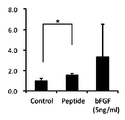
- the addition of the bFGF heparin-binding region-containing peptide of SEQ ID NO: 1 has a cell growth promoting activity comparable to that of human bFGF (50 ng / ml).
- the cell growth promoting activity was also confirmed by the addition of the bFGF fragment peptide of SEQ ID NO: 2, the human FGF receptor binding peptide of SEQ ID NO: 11, and Epiboxidine hydrochloride. (FIG. 1).
- Example 1 Evaluation of iPS cell proliferation promoting activity of peptide containing bFGF heparin binding region
- the iFGF cell proliferation promoting activity of bFGF heparin-binding domain-containing peptides as bFGF substitutes was evaluated.
- As the bFGF heparin binding region-containing peptide a peptide having the amino acid sequence shown in SEQ ID NO: 1 derived from mouse bFGF was used by amidating the C-terminus.
- IPS cells were obtained from RIKEN Cell Bank (No. HPS0063), a human induced pluripotent stem cell (201B7) established by Prof. Shinya Yamanaka, Institute for iPS Cell Research, Kyoto University.
- IPS cells are Nat. Biotechnol. 2007, 25, p.
- mouse fetal fibroblasts inactivated by mitomycin treatment, MEF as a feeder layer were cultured in a plastic culture dish.
- the culture solution is D-MEMF12 (SIGMA, D6421) with a final concentration of 20% KSR (Life Technologies), a final concentration of 1% NON-ESENTIALAMINOACID (SIGMA), 2 mM L-glutamic acid and 80 ⁇ M 2-mercaptoethanol.
- SIGMA D-MEMF12
- KSR Life Technologies
- SIGMA NON-ESENTIALAMINOACID
- the cells were cultured at 37 ° C. under 5% CO 2 and subcultured every 3 to 4 days.
- Dissociate the iPS cells from the feeder layer using a dissociation solution phosphate buffer buffered saline with 0.25% trypsin, 1 mg / ml collagenase IV solution, 1 mM CaCl 2 , all Life Technologies
- a dissociation solution phosphate buffer buffered saline with 0.25% trypsin, 1 mg / ml collagenase IV solution, 1 mM CaCl 2 , all Life Technologies
- the iPS cells cultured as described above are dissociated as small cell clusters from the feeder cells, and further adsorbed on the bottom of a cell-adhesive culture plate (0.1% gelatin coat) in order to remove the contaminating feeder cells.
- the culture was incubated at 37 ° C. for 1 hour. Then, iPS cell mass was seed
- BD Growth Factor Reduced BD Matrigel
- the cell growth promoting activity of bFGF heparin-binding region-containing peptides against iPS cells was examined as follows.
- the culture solution was changed to the assay medium (Essential 6, Life Technologies, serum-free) on the day before the assay, and cultured after 24 hours.
- the iPS cells After dissociating the iPS cells, they were seeded on iMatrix-511 (Nippi) at a density of 5 ⁇ 10 4 cells / 0.32 cm 2 / medium solution volume of 0.2 ml using a 96-well culture plate.
- the cells were cultured for 4 days in an assay medium supplemented with 10 ⁇ M bFGF heparin-binding domain-containing peptide (SEQ ID NO: 1) or 5 ng / ml recombinant human bFGF (Reprocell).
- the medium was changed, and further cultured in an assay medium supplemented with 10 ⁇ M bFGF heparin-binding region-containing peptide or 5 ng / ml recombinant human bFGF for 4 days, and the formed colony area of alkaline phosphatase staining positive (ALP +) was determined as the amount of living cells. As measured. For control, cells cultured only in the assay medium were used.
- SEQ ID NO: 1 Mouse bFGF heparin binding region-containing peptide
- SEQ ID NO: 2 Human bFGF fragment peptide
- SEQ ID NO: 3 Human bFGF heparin binding region-containing peptide
- SEQ ID NO: 4 Human bFGF heparin binding region-containing peptide
- SEQ ID NO: 5 Human bFGF fragment peptide sequence No.
Landscapes
- Health & Medical Sciences (AREA)
- Life Sciences & Earth Sciences (AREA)
- Chemical & Material Sciences (AREA)
- Engineering & Computer Science (AREA)
- Bioinformatics & Cheminformatics (AREA)
- Genetics & Genomics (AREA)
- Organic Chemistry (AREA)
- Zoology (AREA)
- Biotechnology (AREA)
- Wood Science & Technology (AREA)
- Microbiology (AREA)
- Medicinal Chemistry (AREA)
- Biomedical Technology (AREA)
- Virology (AREA)
- Biochemistry (AREA)
- General Engineering & Computer Science (AREA)
- General Health & Medical Sciences (AREA)
- Tropical Medicine & Parasitology (AREA)
- Micro-Organisms Or Cultivation Processes Thereof (AREA)
Abstract
幹細胞に対して優れた増殖促進活性を発揮する物質として、bFGF断片ペプチド、FGFレセプター結合ペプチド、bFGFヘパリン結合領域含有ペプチド、bFGF結合タンパク断片ペプチド、又は、コリンエステラーゼ阻害剤、フェノチアジン誘導体、ステロイド、アセチルコリンレセプターアゴニスト及びプロスタグランジンレセプターアゴニストから選ばれる低分子化合物、並びにこれらを含む幹細胞培養用の培地等を提供する。
Description
本発明は、幹細胞の培養用培地、増殖促進剤及び培養方法、並びに幹細胞を含む細胞組成物及びその製造方法に関する。より詳しくは、幹細胞に対して優れた増殖促進活性を発揮する物質を含む、幹細胞培養用の培地等に関する。
再生医療分野における課題の一つとして、目的の細胞をより効率的に増殖させることが求められている。幹細胞に対する有効な増殖因子の一つとして塩基性線維芽細胞増殖因子(以下bFGFと記載するが、fibroblast growth factor 2とも称する)が広く用いられている(非特許文献1)。一方で、bFGFは非常に高価であるため、幹細胞を大量に培養する場合には、培地に添加するbFGFのコストが問題となっている。
Stem Cells,2005,23,8,p.1200-1211
Proc.Natl.Acad.Sci.,1988,85,7,p.2324-2328
上述のとおり、bFGFは非常に高価であるため、その代替物質の開発が行われているが(例えば、特許文献1~4)、幹細胞に対して十分な増殖促進機能を有する物質は得られていない。
そこで、本発明は、幹細胞に対して優れた増殖促進活性を発揮する物質を提供することを主な目的とする。
[bFGFヘパリン結合領域含有ペプチド]
上記課題解決のため、本発明は、以下の[1]~[40]を提供する。
[1] bFGFヘパリン結合領域含有ペプチドを含む、幹細胞培養用の培地。
[2] 前記bFGFヘパリン結合領域含有ペプチドが、以下の(A)、(B)又は(C)のペプチドである、[1]の培地。
(A)配列番号1,3,4,6~10に示されるいずれか一つのアミノ酸配列を含むペプチド。
(B)配列番号1,3,4,6~10に示されるいずれか一つのアミノ酸配列において1もしくは数個のアミノ酸が欠失、置換、挿入又は付加されたアミノ酸配列を含み、幹細胞の増殖を促進する活性を有するペプチド。
(C)(A)又は(B)に記載のペプチドが二量体化されたペプチド。
[3] 前記bFGFヘパリン結合領域含有ペプチドが、配列番号1のペプチドである、[1]又は[2]の培地。
[4] 前記bFGFヘパリン結合領域含有ペプチドが、C末端がアミド化された配列番号1のペプチドである、[1]~[3]のいずれかの培地。
[5] 前記幹細胞が、誘導性多能性幹細胞又は間葉系幹細胞である、[1]~[4]のいずれかの培地。
[6] 前記幹細胞が、ヒト由来である、[1]~[5]のいずれかの培地。
[7] 前記培地が無血清培地である、[1]~[6]のいずれかの培地。
[8] bFGFヘパリン結合領域含有ペプチドを含む、幹細胞の増殖促進剤。
[9] 前記bFGFヘパリン結合領域含有ペプチドが、以下の(A)、(B)又は(C)のペプチドである、[8]の増殖促進剤。
(A)配列番号1,3,4,6~10に示されるいずれか一つのアミノ酸配列を含むペプチド。
(B)配列番号1,3,4,6~10に示されるいずれか一つのアミノ酸配列において1もしくは数個のアミノ酸が欠失、置換、挿入又は付加されたアミノ酸配列を含み、幹細胞の増殖を促進する活性を有するペプチド。
(C)(A)又は(B)に記載のペプチドが二量体化されたペプチド。
[10] 前記bFGFヘパリン結合領域含有ペプチドが、配列番号1のペプチドである、[8]又は[9]の増殖促進剤。
[11] 前記bFGFヘパリン結合領域含有ペプチドが、C末端がアミド化された配列番号1のペプチドである、[8]~[10]のいずれかの増殖促進剤。
[12] 前記幹細胞が、誘導性多能性幹細胞又は間葉系幹細胞である、[8]~[11]のいずれかの増殖促進剤。
[13] 前記幹細胞が、ヒト由来である、[8]~[12]のいずれかの増殖促進剤。
[14] bFGFヘパリン結合領域含有ペプチドを含む培地で幹細胞を培養する手順を含む、幹細胞の培養方法。
[15] 前記bFGFヘパリン結合領域含有ペプチドが、以下の(A)、(B)又は(C)のペプチドである、[14]の培養方法。
(A)配列番号1,3,4,6~10に示されるいずれか一つのアミノ酸配列を含むペプチド。
(B)配列番号1,3,4,6~10に示されるいずれか一つのアミノ酸配列において1もしくは数個のアミノ酸が欠失、置換、挿入又は付加されたアミノ酸配列を含み、幹細胞の増殖を促進する活性を有するペプチド。
(C)(A)又は(B)に記載のペプチドが二量体化されたペプチド。
[16] 前記bFGFヘパリン結合領域含有ペプチドが、配列番号1のペプチドである、[14]又は[15]の培養方法。
[17] 前記bFGFヘパリン結合領域含有ペプチドが、C末端がアミド化された配列番号1のペプチドである、[14]~[16]のいずれかの培養方法。
[18] 前記幹細胞が、誘導性多能性幹細胞又は間葉系幹細胞である、[14]~[17]のいずれかの培養方法。
[19] 前記幹細胞が、ヒト由来である、[14]~[18]のいずれかの培養方法。
[20] 前記培地が無血清培地である、[14]~[19]のいずれかの培養方法。
[21] bFGFヘパリン結合領域含有ペプチドを含む培地で幹細胞を培養する工程を含む、幹細胞を含む細胞組成物の製造方法。
[22] 前記bFGFヘパリン結合領域含有ペプチドが、以下の(A)、(B)又は(C)のペプチドである、[21]の製造方法。
(A)配列番号1,3,4,6~10に示されるいずれか一つのアミノ酸配列を含むペプチド。
(B)配列番号1,3,4,6~10に示されるいずれか一つのアミノ酸配列において1もしくは数個のアミノ酸が欠失、置換、挿入又は付加されたアミノ酸配列を含み、幹細胞の増殖を促進する活性を有するペプチド。
(C)(A)又は(B)に記載のペプチドが二量体化されたペプチド。
[23] 前記bFGFヘパリン結合領域含有ペプチドが、配列番号1のペプチドである、[21]又は[22]の製造方法。
[24] 前記bFGFヘパリン結合領域含有ペプチドが、C末端がアミド化された配列番号1のペプチドである、[21]~[23]のいずれかの製造方法。
[25] 前記幹細胞が、誘導性多能性幹細胞又は間葉系幹細胞である、[21]~[24]のいずれかの製造方法。
[26] 前記幹細胞が、ヒト由来である、[21]~[25]のいずれかの製造方法。
[27] 前記培地が無血清培地である、[21]~[26]のいずれかの製造方法。
[28] bFGFヘパリン結合領域含有ペプチドを含む培地で幹細胞を培養する工程と、幹細胞の分化を誘導する工程、とを含む、分化細胞を含む細胞組成物の製造方法。
[29] 前記bFGFヘパリン結合領域含有ペプチドが、以下の(A)、(B)又は(C)のペプチドである、[28]の製造方法。
(A)配列番号1,3,4,6~10に示されるいずれか一つのアミノ酸配列を含むペプチド。
(B)配列番号1,3,4,6~10に示されるいずれか一つのアミノ酸配列において1もしくは数個のアミノ酸が欠失、置換、挿入又は付加されたアミノ酸配列を含み、幹細胞の増殖を促進する活性を有するペプチド。
(C)(A)又は(B)に記載のペプチドが二量体化されたペプチド。
[30] 前記bFGFヘパリン結合領域含有ペプチドが、配列番号1のペプチドである、[28]又は[29]の製造方法。
[31] 前記bFGFヘパリン結合領域含有ペプチドが、C末端がアミド化された配列番号1のペプチドである、[28]~[30]のいずれかの製造方法。
[32] 前記幹細胞が、誘導性多能性幹細胞又は間葉系幹細胞である、[28]~[31]のいずれかの製造方法。
[33] 前記幹細胞が、ヒト由来である、[28]~[32]のいずれかの製造方法。
[34] 前記培地が無血清培地である、[28]~[33]のいずれかの製造方法。
[35] bFGFヘパリン結合領域含有ペプチドと、幹細胞及び/又は幹細胞から誘導された分化細胞と、を含む細胞組成物。
[36] 前記bFGFヘパリン結合領域含有ペプチドが、以下の(A)、(B)又は(C)のペプチドである、[35]の細胞組成物。
(A)配列番号1,3,4,6~10に示されるいずれか一つのアミノ酸配列を含むペプチド。
(B)配列番号1,3,4,6~10に示されるいずれか一つのアミノ酸配列において1もしくは数個のアミノ酸が欠失、置換、挿入又は付加されたアミノ酸配列を含み、幹細胞の増殖を促進する活性を有するペプチド。
(C)(A)又は(B)に記載のペプチドが二量体化されたペプチド。
[37] 前記bFGFヘパリン結合領域含有ペプチドが、配列番号1のペプチドである、[35]又は[36]の細胞組成物。
[38] 前記bFGFヘパリン結合領域含有ペプチドが、C末端がアミド化された配列番号1のペプチドである、[35]~[37]のいずれかの細胞組成物。
[39] 前記幹細胞が、誘導性多能性幹細胞又は間葉系幹細胞である、[35]~[38]のいずれかの細胞組成物。
[40] 前記幹細胞が、ヒト由来である、[35]~[39]のいずれかの細胞組成物。
上記課題解決のため、本発明は、以下の[1]~[40]を提供する。
[1] bFGFヘパリン結合領域含有ペプチドを含む、幹細胞培養用の培地。
[2] 前記bFGFヘパリン結合領域含有ペプチドが、以下の(A)、(B)又は(C)のペプチドである、[1]の培地。
(A)配列番号1,3,4,6~10に示されるいずれか一つのアミノ酸配列を含むペプチド。
(B)配列番号1,3,4,6~10に示されるいずれか一つのアミノ酸配列において1もしくは数個のアミノ酸が欠失、置換、挿入又は付加されたアミノ酸配列を含み、幹細胞の増殖を促進する活性を有するペプチド。
(C)(A)又は(B)に記載のペプチドが二量体化されたペプチド。
[3] 前記bFGFヘパリン結合領域含有ペプチドが、配列番号1のペプチドである、[1]又は[2]の培地。
[4] 前記bFGFヘパリン結合領域含有ペプチドが、C末端がアミド化された配列番号1のペプチドである、[1]~[3]のいずれかの培地。
[5] 前記幹細胞が、誘導性多能性幹細胞又は間葉系幹細胞である、[1]~[4]のいずれかの培地。
[6] 前記幹細胞が、ヒト由来である、[1]~[5]のいずれかの培地。
[7] 前記培地が無血清培地である、[1]~[6]のいずれかの培地。
[8] bFGFヘパリン結合領域含有ペプチドを含む、幹細胞の増殖促進剤。
[9] 前記bFGFヘパリン結合領域含有ペプチドが、以下の(A)、(B)又は(C)のペプチドである、[8]の増殖促進剤。
(A)配列番号1,3,4,6~10に示されるいずれか一つのアミノ酸配列を含むペプチド。
(B)配列番号1,3,4,6~10に示されるいずれか一つのアミノ酸配列において1もしくは数個のアミノ酸が欠失、置換、挿入又は付加されたアミノ酸配列を含み、幹細胞の増殖を促進する活性を有するペプチド。
(C)(A)又は(B)に記載のペプチドが二量体化されたペプチド。
[10] 前記bFGFヘパリン結合領域含有ペプチドが、配列番号1のペプチドである、[8]又は[9]の増殖促進剤。
[11] 前記bFGFヘパリン結合領域含有ペプチドが、C末端がアミド化された配列番号1のペプチドである、[8]~[10]のいずれかの増殖促進剤。
[12] 前記幹細胞が、誘導性多能性幹細胞又は間葉系幹細胞である、[8]~[11]のいずれかの増殖促進剤。
[13] 前記幹細胞が、ヒト由来である、[8]~[12]のいずれかの増殖促進剤。
[14] bFGFヘパリン結合領域含有ペプチドを含む培地で幹細胞を培養する手順を含む、幹細胞の培養方法。
[15] 前記bFGFヘパリン結合領域含有ペプチドが、以下の(A)、(B)又は(C)のペプチドである、[14]の培養方法。
(A)配列番号1,3,4,6~10に示されるいずれか一つのアミノ酸配列を含むペプチド。
(B)配列番号1,3,4,6~10に示されるいずれか一つのアミノ酸配列において1もしくは数個のアミノ酸が欠失、置換、挿入又は付加されたアミノ酸配列を含み、幹細胞の増殖を促進する活性を有するペプチド。
(C)(A)又は(B)に記載のペプチドが二量体化されたペプチド。
[16] 前記bFGFヘパリン結合領域含有ペプチドが、配列番号1のペプチドである、[14]又は[15]の培養方法。
[17] 前記bFGFヘパリン結合領域含有ペプチドが、C末端がアミド化された配列番号1のペプチドである、[14]~[16]のいずれかの培養方法。
[18] 前記幹細胞が、誘導性多能性幹細胞又は間葉系幹細胞である、[14]~[17]のいずれかの培養方法。
[19] 前記幹細胞が、ヒト由来である、[14]~[18]のいずれかの培養方法。
[20] 前記培地が無血清培地である、[14]~[19]のいずれかの培養方法。
[21] bFGFヘパリン結合領域含有ペプチドを含む培地で幹細胞を培養する工程を含む、幹細胞を含む細胞組成物の製造方法。
[22] 前記bFGFヘパリン結合領域含有ペプチドが、以下の(A)、(B)又は(C)のペプチドである、[21]の製造方法。
(A)配列番号1,3,4,6~10に示されるいずれか一つのアミノ酸配列を含むペプチド。
(B)配列番号1,3,4,6~10に示されるいずれか一つのアミノ酸配列において1もしくは数個のアミノ酸が欠失、置換、挿入又は付加されたアミノ酸配列を含み、幹細胞の増殖を促進する活性を有するペプチド。
(C)(A)又は(B)に記載のペプチドが二量体化されたペプチド。
[23] 前記bFGFヘパリン結合領域含有ペプチドが、配列番号1のペプチドである、[21]又は[22]の製造方法。
[24] 前記bFGFヘパリン結合領域含有ペプチドが、C末端がアミド化された配列番号1のペプチドである、[21]~[23]のいずれかの製造方法。
[25] 前記幹細胞が、誘導性多能性幹細胞又は間葉系幹細胞である、[21]~[24]のいずれかの製造方法。
[26] 前記幹細胞が、ヒト由来である、[21]~[25]のいずれかの製造方法。
[27] 前記培地が無血清培地である、[21]~[26]のいずれかの製造方法。
[28] bFGFヘパリン結合領域含有ペプチドを含む培地で幹細胞を培養する工程と、幹細胞の分化を誘導する工程、とを含む、分化細胞を含む細胞組成物の製造方法。
[29] 前記bFGFヘパリン結合領域含有ペプチドが、以下の(A)、(B)又は(C)のペプチドである、[28]の製造方法。
(A)配列番号1,3,4,6~10に示されるいずれか一つのアミノ酸配列を含むペプチド。
(B)配列番号1,3,4,6~10に示されるいずれか一つのアミノ酸配列において1もしくは数個のアミノ酸が欠失、置換、挿入又は付加されたアミノ酸配列を含み、幹細胞の増殖を促進する活性を有するペプチド。
(C)(A)又は(B)に記載のペプチドが二量体化されたペプチド。
[30] 前記bFGFヘパリン結合領域含有ペプチドが、配列番号1のペプチドである、[28]又は[29]の製造方法。
[31] 前記bFGFヘパリン結合領域含有ペプチドが、C末端がアミド化された配列番号1のペプチドである、[28]~[30]のいずれかの製造方法。
[32] 前記幹細胞が、誘導性多能性幹細胞又は間葉系幹細胞である、[28]~[31]のいずれかの製造方法。
[33] 前記幹細胞が、ヒト由来である、[28]~[32]のいずれかの製造方法。
[34] 前記培地が無血清培地である、[28]~[33]のいずれかの製造方法。
[35] bFGFヘパリン結合領域含有ペプチドと、幹細胞及び/又は幹細胞から誘導された分化細胞と、を含む細胞組成物。
[36] 前記bFGFヘパリン結合領域含有ペプチドが、以下の(A)、(B)又は(C)のペプチドである、[35]の細胞組成物。
(A)配列番号1,3,4,6~10に示されるいずれか一つのアミノ酸配列を含むペプチド。
(B)配列番号1,3,4,6~10に示されるいずれか一つのアミノ酸配列において1もしくは数個のアミノ酸が欠失、置換、挿入又は付加されたアミノ酸配列を含み、幹細胞の増殖を促進する活性を有するペプチド。
(C)(A)又は(B)に記載のペプチドが二量体化されたペプチド。
[37] 前記bFGFヘパリン結合領域含有ペプチドが、配列番号1のペプチドである、[35]又は[36]の細胞組成物。
[38] 前記bFGFヘパリン結合領域含有ペプチドが、C末端がアミド化された配列番号1のペプチドである、[35]~[37]のいずれかの細胞組成物。
[39] 前記幹細胞が、誘導性多能性幹細胞又は間葉系幹細胞である、[35]~[38]のいずれかの細胞組成物。
[40] 前記幹細胞が、ヒト由来である、[35]~[39]のいずれかの細胞組成物。
[bFGF断片ペプチド]
また、本発明は、以下の[41]~[68]を提供する。
[41] bFGF断片ペプチドを含む、幹細胞培養用の培地。
[42] 前記bFGF断片ペプチドが、以下の(A)、(B)又は(C)のペプチドである、[41]の培地。
(A)配列番号2,5,16に示されるいずれか一つのアミノ酸配列を含むペプチド。
(B)配列番号2,5,16に示されるいずれか一つのアミノ酸配列において1もしくは数個のアミノ酸が欠失、置換、挿入又は付加されたアミノ酸配列を含み、幹細胞の増殖を促進する活性を有するペプチド。
(C)(A)又は(B)に記載のペプチドが二量体化されたペプチド。
[43] 前記幹細胞が、誘導性多能性幹細胞又は間葉系幹細胞である、[41]又は[42]の培地。
[44] 前記幹細胞が、ヒト由来である、[41]~[43]のいずれかの培地。
[45] 前記培地が無血清培地である、[41]~[44]のいずれかの培地。
[46] bFGF断片ペプチドを含む、幹細胞の増殖促進剤。
[47] 前記bFGF断片ペプチドが、以下の(A)、(B)又は(C)のペプチドである、[46]の増殖促進剤。
(A)配列番号2,5,16に示されるいずれか一つのアミノ酸配列を含むペプチド。
(B)配列番号2,5,16に示されるいずれか一つのアミノ酸配列において1もしくは数個のアミノ酸が欠失、置換、挿入又は付加されたアミノ酸配列を含み、幹細胞の増殖を促進する活性を有するペプチド。
(C)(A)又は(B)に記載のペプチドが二量体化されたペプチド。
[48] 前記幹細胞が、誘導性多能性幹細胞又は間葉系幹細胞である、[46]又は[47]の増殖促進剤。
[49] 前記幹細胞が、ヒト由来である、[46]~[48]のいずれかの増殖促進剤。
[50] bFGF断片ペプチドを含む培地で幹細胞を培養する手順を含む、幹細胞の培養方法。
[51] 前記bFGF断片ペプチドが、以下の(A)、(B)又は(C)のペプチドである、[50]の培養方法。
(A)配列番号2,5,16に示されるいずれか一つのアミノ酸配列を含むペプチド。
(B)配列番号2,5,16に示されるいずれか一つのアミノ酸配列において1もしくは数個のアミノ酸が欠失、置換、挿入又は付加されたアミノ酸配列を含み、幹細胞の増殖を促進する活性を有するペプチド。
(C)(A)又は(B)に記載のペプチドが二量体化されたペプチド。
[52] 前記幹細胞が、誘導性多能性幹細胞又は間葉系幹細胞である、[50]又は[51]の培養方法。
[53] 前記幹細胞が、ヒト由来である、[50]~[52]のいずれかの培養方法。
[54] 前記培地が無血清培地である、[50]~[53]のいずれかの培養方法。
[55] bFGF断片ペプチドを含む培地で幹細胞を培養する工程を含む、幹細胞を含む細胞組成物の製造方法。
[56] 前記bFGF断片ペプチドが、以下の(A)、(B)又は(C)のペプチドである、[55]の製造方法。
(A)配列番号2,5,16に示されるいずれか一つのアミノ酸配列を含むペプチド。
(B)配列番号2,5,16に示されるいずれか一つのアミノ酸配列において1もしくは数個のアミノ酸が欠失、置換、挿入又は付加されたアミノ酸配列を含み、幹細胞の増殖を促進する活性を有するペプチド。
(C)(A)又は(B)に記載のペプチドが二量体化されたペプチド。
[57] 前記幹細胞が、誘導性多能性幹細胞又は間葉系幹細胞である、[55]又は[56]の製造方法。
[58] 前記幹細胞が、ヒト由来である、[55]~[57]のいずれかの製造方法。
[59] 前記培地が無血清培地である、[55]~[58]のいずれかの製造方法。
[60] bFGF断片ペプチドを含む培地で幹細胞を培養する工程と、幹細胞の分化を誘導する工程、とを含む、分化細胞を含む細胞組成物の製造方法。
[61] 前記bFGF断片ペプチドが、以下の(A)、(B)又は(C)のペプチドである、[60]の製造方法。
(A)配列番号2,5,16に示されるいずれか一つのアミノ酸配列を含むペプチド。
(B)配列番号2,5,16に示されるいずれか一つのアミノ酸配列において1もしくは数個のアミノ酸が欠失、置換、挿入又は付加されたアミノ酸配列を含み、幹細胞の増殖を促進する活性を有するペプチド。
(C)(A)又は(B)に記載のペプチドが二量体化されたペプチド。
[62] 前記幹細胞が、誘導性多能性幹細胞又は間葉系幹細胞である、[60]又は[61]の製造方法。
[63] 前記幹細胞が、ヒト由来である、[60]~[62]のいずれかの製造方法。
[64] 前記培地が無血清培地である、[60]~[63]のいずれかの製造方法。
[65] bFGF断片ペプチドと、幹細胞及び/又は幹細胞から誘導された分化細胞と、を含む細胞組成物。
[66] bFGF断片ペプチドが、以下の(A)、(B)又は(C)のペプチドである、[65]の細胞組成物。
(A)配列番号2,5,16に示されるいずれか一つのアミノ酸配列を含むペプチド。
(B)配列番号2,5,16に示されるいずれか一つのアミノ酸配列において1もしくは数個のアミノ酸が欠失、置換、挿入又は付加されたアミノ酸配列を含み、幹細胞の増殖を促進する活性を有するペプチド。
(C)(A)又は(B)に記載のペプチドが二量体化されたペプチド。
[67] 前記幹細胞が、誘導性多能性幹細胞又は間葉系幹細胞である、[65]又は[66]の細胞組成物。
[68] 前記幹細胞が、ヒト由来である、[65]~[67]のいずれかの細胞組成物。
また、本発明は、以下の[41]~[68]を提供する。
[41] bFGF断片ペプチドを含む、幹細胞培養用の培地。
[42] 前記bFGF断片ペプチドが、以下の(A)、(B)又は(C)のペプチドである、[41]の培地。
(A)配列番号2,5,16に示されるいずれか一つのアミノ酸配列を含むペプチド。
(B)配列番号2,5,16に示されるいずれか一つのアミノ酸配列において1もしくは数個のアミノ酸が欠失、置換、挿入又は付加されたアミノ酸配列を含み、幹細胞の増殖を促進する活性を有するペプチド。
(C)(A)又は(B)に記載のペプチドが二量体化されたペプチド。
[43] 前記幹細胞が、誘導性多能性幹細胞又は間葉系幹細胞である、[41]又は[42]の培地。
[44] 前記幹細胞が、ヒト由来である、[41]~[43]のいずれかの培地。
[45] 前記培地が無血清培地である、[41]~[44]のいずれかの培地。
[46] bFGF断片ペプチドを含む、幹細胞の増殖促進剤。
[47] 前記bFGF断片ペプチドが、以下の(A)、(B)又は(C)のペプチドである、[46]の増殖促進剤。
(A)配列番号2,5,16に示されるいずれか一つのアミノ酸配列を含むペプチド。
(B)配列番号2,5,16に示されるいずれか一つのアミノ酸配列において1もしくは数個のアミノ酸が欠失、置換、挿入又は付加されたアミノ酸配列を含み、幹細胞の増殖を促進する活性を有するペプチド。
(C)(A)又は(B)に記載のペプチドが二量体化されたペプチド。
[48] 前記幹細胞が、誘導性多能性幹細胞又は間葉系幹細胞である、[46]又は[47]の増殖促進剤。
[49] 前記幹細胞が、ヒト由来である、[46]~[48]のいずれかの増殖促進剤。
[50] bFGF断片ペプチドを含む培地で幹細胞を培養する手順を含む、幹細胞の培養方法。
[51] 前記bFGF断片ペプチドが、以下の(A)、(B)又は(C)のペプチドである、[50]の培養方法。
(A)配列番号2,5,16に示されるいずれか一つのアミノ酸配列を含むペプチド。
(B)配列番号2,5,16に示されるいずれか一つのアミノ酸配列において1もしくは数個のアミノ酸が欠失、置換、挿入又は付加されたアミノ酸配列を含み、幹細胞の増殖を促進する活性を有するペプチド。
(C)(A)又は(B)に記載のペプチドが二量体化されたペプチド。
[52] 前記幹細胞が、誘導性多能性幹細胞又は間葉系幹細胞である、[50]又は[51]の培養方法。
[53] 前記幹細胞が、ヒト由来である、[50]~[52]のいずれかの培養方法。
[54] 前記培地が無血清培地である、[50]~[53]のいずれかの培養方法。
[55] bFGF断片ペプチドを含む培地で幹細胞を培養する工程を含む、幹細胞を含む細胞組成物の製造方法。
[56] 前記bFGF断片ペプチドが、以下の(A)、(B)又は(C)のペプチドである、[55]の製造方法。
(A)配列番号2,5,16に示されるいずれか一つのアミノ酸配列を含むペプチド。
(B)配列番号2,5,16に示されるいずれか一つのアミノ酸配列において1もしくは数個のアミノ酸が欠失、置換、挿入又は付加されたアミノ酸配列を含み、幹細胞の増殖を促進する活性を有するペプチド。
(C)(A)又は(B)に記載のペプチドが二量体化されたペプチド。
[57] 前記幹細胞が、誘導性多能性幹細胞又は間葉系幹細胞である、[55]又は[56]の製造方法。
[58] 前記幹細胞が、ヒト由来である、[55]~[57]のいずれかの製造方法。
[59] 前記培地が無血清培地である、[55]~[58]のいずれかの製造方法。
[60] bFGF断片ペプチドを含む培地で幹細胞を培養する工程と、幹細胞の分化を誘導する工程、とを含む、分化細胞を含む細胞組成物の製造方法。
[61] 前記bFGF断片ペプチドが、以下の(A)、(B)又は(C)のペプチドである、[60]の製造方法。
(A)配列番号2,5,16に示されるいずれか一つのアミノ酸配列を含むペプチド。
(B)配列番号2,5,16に示されるいずれか一つのアミノ酸配列において1もしくは数個のアミノ酸が欠失、置換、挿入又は付加されたアミノ酸配列を含み、幹細胞の増殖を促進する活性を有するペプチド。
(C)(A)又は(B)に記載のペプチドが二量体化されたペプチド。
[62] 前記幹細胞が、誘導性多能性幹細胞又は間葉系幹細胞である、[60]又は[61]の製造方法。
[63] 前記幹細胞が、ヒト由来である、[60]~[62]のいずれかの製造方法。
[64] 前記培地が無血清培地である、[60]~[63]のいずれかの製造方法。
[65] bFGF断片ペプチドと、幹細胞及び/又は幹細胞から誘導された分化細胞と、を含む細胞組成物。
[66] bFGF断片ペプチドが、以下の(A)、(B)又は(C)のペプチドである、[65]の細胞組成物。
(A)配列番号2,5,16に示されるいずれか一つのアミノ酸配列を含むペプチド。
(B)配列番号2,5,16に示されるいずれか一つのアミノ酸配列において1もしくは数個のアミノ酸が欠失、置換、挿入又は付加されたアミノ酸配列を含み、幹細胞の増殖を促進する活性を有するペプチド。
(C)(A)又は(B)に記載のペプチドが二量体化されたペプチド。
[67] 前記幹細胞が、誘導性多能性幹細胞又は間葉系幹細胞である、[65]又は[66]の細胞組成物。
[68] 前記幹細胞が、ヒト由来である、[65]~[67]のいずれかの細胞組成物。
[線維芽細胞増殖因子(FGF)レセプター結合ペプチド]
さらに、本発明は、以下の[69]~[96]を提供する。
[69] FGFレセプター結合ペプチドを含む、幹細胞培養用の培地。
[70] 前記FGFレセプター結合ペプチドが、以下の(A)、(B)又は(C)のペプチドである、[69]の培地。
(A)配列番号11~14に示されるいずれか一つのアミノ酸配列を含むペプチド。
(B)配列番号11~14に示されるいずれか一つのアミノ酸配列において1もしくは数個のアミノ酸が欠失、置換、挿入又は付加されたアミノ酸配列を含み、幹細胞の増殖を促進する活性を有するペプチド。
(C)(A)又は(B)に記載のペプチドが二量体化されたペプチド。
[71] 前記幹細胞が、誘導性多能性幹細胞又は間葉系幹細胞である、[69]又は[70]の培地。
[72] 前記幹細胞が、ヒト由来である、[69]~[71]のいずれかの培地。
[73] 前記培地が無血清培地である、[69]~[72]のいずれかの培地。
[74] FGFレセプター結合ペプチドを含む、幹細胞の増殖促進剤。
[75] 前記FGFレセプター結合ペプチドが、以下の(A)、(B)又は(C)のペプチドである、[74]の増殖促進剤。
(A)配列番号11~14に示されるいずれか一つのアミノ酸配列を含むペプチド。
(B)配列番号11~14に示されるいずれか一つのアミノ酸配列において1もしくは数個のアミノ酸が欠失、置換、挿入又は付加されたアミノ酸配列を含み、幹細胞の増殖を促進する活性を有するペプチド。
(C)(A)又は(B)に記載のペプチドが二量体化されたペプチド。
[76] 前記幹細胞が、誘導性多能性幹細胞又は間葉系幹細胞である、[74]又は[75]の増殖促進剤。
[77] 前記幹細胞が、ヒト由来である、[74]~[76]のいずれかの増殖促進剤。
[78] FGFレセプター結合ペプチドを含む培地で幹細胞を培養する手順を含む、幹細胞の培養方法。
[79] 前記FGFレセプター結合ペプチドが、以下の(A)、(B)又は(C)のペプチドである、[78]の培養方法。
(A)配列番号11~14に示されるいずれか一つのアミノ酸配列を含むペプチド。
(B)配列番号11~14に示されるいずれか一つのアミノ酸配列において1もしくは数個のアミノ酸が欠失、置換、挿入又は付加されたアミノ酸配列を含み、幹細胞の増殖を促進する活性を有するペプチド。
(C)(A)又は(B)に記載のペプチドが二量体化されたペプチド。
[80] 前記幹細胞が、誘導性多能性幹細胞又は間葉系幹細胞である、[78]又は[79]の培養方法。
[81] 前記幹細胞が、ヒト由来である、[78]~[80]のいずれかの培養方法。
[82] 前記培地が無血清培地である、[78]~[81]のいずれかの培養方法。
[83] FGFレセプター結合ペプチドを含む培地で幹細胞を培養する工程を含む、幹細胞を含む細胞組成物の製造方法。
[84] 前記FGFレセプター結合ペプチドが、以下の(A)、(B)又は(C)のペプチドである、[83]の製造方法。
(A)配列番号11~14に示されるいずれか一つのアミノ酸配列を含むペプチド。
(B)配列番号11~14に示されるいずれか一つのアミノ酸配列において1もしくは数個のアミノ酸が欠失、置換、挿入又は付加されたアミノ酸配列を含み、幹細胞の増殖を促進する活性を有するペプチド。
(C)(A)又は(B)に記載のペプチドが二量体化されたペプチド。
[85] 前記幹細胞が、誘導性多能性幹細胞又は間葉系幹細胞である、[83]又は[84]の製造方法。
[86] 前記幹細胞が、ヒト由来である、[83]~[85]のいずれかの製造方法。
[87] 前記培地が無血清培地である、[83]~[86]のいずれかの製造方法。
[88] bFGFレセプター結合ペプチドを含む培地で幹細胞を培養する工程と、幹細胞の分化を誘導する工程、とを含む、分化細胞を含む細胞組成物の製造方法。
[89] 前記FGFレセプター結合ペプチドが、以下の(A)、(B)又は(C)のペプチドである、[88]の製造方法。
(A)配列番号11~14に示されるいずれか一つのアミノ酸配列を含むペプチド。
(B)配列番号11~14に示されるいずれか一つのアミノ酸配列において1もしくは数個のアミノ酸が欠失、置換、挿入又は付加されたアミノ酸配列を含み、幹細胞の増殖を促進する活性を有するペプチド。
(C)(A)又は(B)に記載のペプチドが二量体化されたペプチド。
[90] 前記幹細胞が、誘導性多能性幹細胞又は間葉系幹細胞である、[88]又は[89]のいずれかの製造方法。
[91] 前記幹細胞が、ヒト由来である、[88]~[90]のいずれかの製造方法。
[92] 前記培地が無血清培地である、[88]~[91]のいずれかの製造方法。
[93] FGFレセプター結合ペプチドと、幹細胞及び/又は幹細胞から誘導された分化細胞と、を含む細胞組成物。
[94] 前記FGFレセプター結合ペプチドが、以下の(A)、(B)又は(C)のペプチドである、[93]の細胞組成物。
(A)配列番号11~14に示されるいずれか一つのアミノ酸配列を含むペプチド。
(B)配列番号11~14に示されるいずれか一つのアミノ酸配列において1もしくは数個のアミノ酸が欠失、置換、挿入又は付加されたアミノ酸配列を含み、幹細胞の増殖を促進する活性を有するペプチド。
(C)(A)又は(B)に記載のペプチドが二量体化されたペプチド。
[95] 前記幹細胞が、誘導性多能性幹細胞又は間葉系幹細胞である、[93]又は[94]の細胞組成物。
[96] 前記幹細胞が、ヒト由来である、[93]~[95]のいずれかの細胞組成物。
さらに、本発明は、以下の[69]~[96]を提供する。
[69] FGFレセプター結合ペプチドを含む、幹細胞培養用の培地。
[70] 前記FGFレセプター結合ペプチドが、以下の(A)、(B)又は(C)のペプチドである、[69]の培地。
(A)配列番号11~14に示されるいずれか一つのアミノ酸配列を含むペプチド。
(B)配列番号11~14に示されるいずれか一つのアミノ酸配列において1もしくは数個のアミノ酸が欠失、置換、挿入又は付加されたアミノ酸配列を含み、幹細胞の増殖を促進する活性を有するペプチド。
(C)(A)又は(B)に記載のペプチドが二量体化されたペプチド。
[71] 前記幹細胞が、誘導性多能性幹細胞又は間葉系幹細胞である、[69]又は[70]の培地。
[72] 前記幹細胞が、ヒト由来である、[69]~[71]のいずれかの培地。
[73] 前記培地が無血清培地である、[69]~[72]のいずれかの培地。
[74] FGFレセプター結合ペプチドを含む、幹細胞の増殖促進剤。
[75] 前記FGFレセプター結合ペプチドが、以下の(A)、(B)又は(C)のペプチドである、[74]の増殖促進剤。
(A)配列番号11~14に示されるいずれか一つのアミノ酸配列を含むペプチド。
(B)配列番号11~14に示されるいずれか一つのアミノ酸配列において1もしくは数個のアミノ酸が欠失、置換、挿入又は付加されたアミノ酸配列を含み、幹細胞の増殖を促進する活性を有するペプチド。
(C)(A)又は(B)に記載のペプチドが二量体化されたペプチド。
[76] 前記幹細胞が、誘導性多能性幹細胞又は間葉系幹細胞である、[74]又は[75]の増殖促進剤。
[77] 前記幹細胞が、ヒト由来である、[74]~[76]のいずれかの増殖促進剤。
[78] FGFレセプター結合ペプチドを含む培地で幹細胞を培養する手順を含む、幹細胞の培養方法。
[79] 前記FGFレセプター結合ペプチドが、以下の(A)、(B)又は(C)のペプチドである、[78]の培養方法。
(A)配列番号11~14に示されるいずれか一つのアミノ酸配列を含むペプチド。
(B)配列番号11~14に示されるいずれか一つのアミノ酸配列において1もしくは数個のアミノ酸が欠失、置換、挿入又は付加されたアミノ酸配列を含み、幹細胞の増殖を促進する活性を有するペプチド。
(C)(A)又は(B)に記載のペプチドが二量体化されたペプチド。
[80] 前記幹細胞が、誘導性多能性幹細胞又は間葉系幹細胞である、[78]又は[79]の培養方法。
[81] 前記幹細胞が、ヒト由来である、[78]~[80]のいずれかの培養方法。
[82] 前記培地が無血清培地である、[78]~[81]のいずれかの培養方法。
[83] FGFレセプター結合ペプチドを含む培地で幹細胞を培養する工程を含む、幹細胞を含む細胞組成物の製造方法。
[84] 前記FGFレセプター結合ペプチドが、以下の(A)、(B)又は(C)のペプチドである、[83]の製造方法。
(A)配列番号11~14に示されるいずれか一つのアミノ酸配列を含むペプチド。
(B)配列番号11~14に示されるいずれか一つのアミノ酸配列において1もしくは数個のアミノ酸が欠失、置換、挿入又は付加されたアミノ酸配列を含み、幹細胞の増殖を促進する活性を有するペプチド。
(C)(A)又は(B)に記載のペプチドが二量体化されたペプチド。
[85] 前記幹細胞が、誘導性多能性幹細胞又は間葉系幹細胞である、[83]又は[84]の製造方法。
[86] 前記幹細胞が、ヒト由来である、[83]~[85]のいずれかの製造方法。
[87] 前記培地が無血清培地である、[83]~[86]のいずれかの製造方法。
[88] bFGFレセプター結合ペプチドを含む培地で幹細胞を培養する工程と、幹細胞の分化を誘導する工程、とを含む、分化細胞を含む細胞組成物の製造方法。
[89] 前記FGFレセプター結合ペプチドが、以下の(A)、(B)又は(C)のペプチドである、[88]の製造方法。
(A)配列番号11~14に示されるいずれか一つのアミノ酸配列を含むペプチド。
(B)配列番号11~14に示されるいずれか一つのアミノ酸配列において1もしくは数個のアミノ酸が欠失、置換、挿入又は付加されたアミノ酸配列を含み、幹細胞の増殖を促進する活性を有するペプチド。
(C)(A)又は(B)に記載のペプチドが二量体化されたペプチド。
[90] 前記幹細胞が、誘導性多能性幹細胞又は間葉系幹細胞である、[88]又は[89]のいずれかの製造方法。
[91] 前記幹細胞が、ヒト由来である、[88]~[90]のいずれかの製造方法。
[92] 前記培地が無血清培地である、[88]~[91]のいずれかの製造方法。
[93] FGFレセプター結合ペプチドと、幹細胞及び/又は幹細胞から誘導された分化細胞と、を含む細胞組成物。
[94] 前記FGFレセプター結合ペプチドが、以下の(A)、(B)又は(C)のペプチドである、[93]の細胞組成物。
(A)配列番号11~14に示されるいずれか一つのアミノ酸配列を含むペプチド。
(B)配列番号11~14に示されるいずれか一つのアミノ酸配列において1もしくは数個のアミノ酸が欠失、置換、挿入又は付加されたアミノ酸配列を含み、幹細胞の増殖を促進する活性を有するペプチド。
(C)(A)又は(B)に記載のペプチドが二量体化されたペプチド。
[95] 前記幹細胞が、誘導性多能性幹細胞又は間葉系幹細胞である、[93]又は[94]の細胞組成物。
[96] 前記幹細胞が、ヒト由来である、[93]~[95]のいずれかの細胞組成物。
[bFGF結合タンパク断片ペプチド]
本発明は、以下の[97]~[124]をも提供する。
[97] bFGF結合タンパク断片ペプチドを含む、幹細胞培養用の培地。
[98] 前記bFGF結合タンパク断片ペプチドが、以下の(A)、(B)又は(C)のペプチドである、[97]の培地。
(A)配列番号15に示されるアミノ酸配列を含むペプチド。
(B)配列番号15に示されるアミノ酸配列において1もしくは数個のアミノ酸が欠失、置換、挿入又は付加されたアミノ酸配列を含み、幹細胞の増殖を促進する活性を有するペプチド。
(C)(A)又は(B)に記載のペプチドが二量体化されたペプチド。
[99] 前記幹細胞が、誘導性多能性幹細胞又は間葉系幹細胞である、[97]又は[98]の培地。
[100] 前記幹細胞が、ヒト由来である、[97]~[99]のいずれかの培地。
[101] 前記培地が無血清培地である、[97]~[100]のいずれかの培地。
[102] bFGF結合タンパク断片ペプチドを含む、幹細胞の増殖促進剤。
[103] 前記bFGF結合タンパク断片ペプチドが、以下の(A)、(B)又は(C)のペプチドである、[102]の増殖促進剤。
(A)配列番号15に示されるアミノ酸配列を含むペプチド。
(B)配列番号15に示されるアミノ酸配列において1もしくは数個のアミノ酸が欠失、置換、挿入又は付加されたアミノ酸配列を含み、幹細胞の増殖を促進する活性を有するペプチド。
(C)(A)又は(B)に記載のペプチドが二量体化されたペプチド。
[104] 前記幹細胞が、誘導性多能性幹細胞又は間葉系幹細胞である、[102]又は[103]の増殖促進剤。
[105] 前記幹細胞が、ヒト由来である、[102]~[104]のいずれかの増殖促進剤。
[106] bFGF結合タンパク断片ペプチドを含む培地で幹細胞を培養する手順を含む、幹細胞の培養方法。
[107] 前記bFGF結合タンパク断片ペプチドが、以下の(A)、(B)又は(C)のペプチドである、[106]の培養方法。
(A)配列番号15に示されるアミノ酸配列を含むペプチド。
(B)配列番号15に示されるアミノ酸配列において1もしくは数個のアミノ酸が欠失、置換、挿入又は付加されたアミノ酸配列を含み、幹細胞の増殖を促進する活性を有するペプチド。
(C)(A)又は(B)に記載のペプチドが二量体化されたペプチド。
[108] 前記幹細胞が、誘導性多能性幹細胞又は間葉系幹細胞である、[106]又は[107]の培養方法。
[109] 前記幹細胞が、ヒト由来である、[106]~[108]のいずれかの培養方法。
[110] 前記培地が無血清培地である、[106]~[109]のいずれかの培養方法。
[111] bFGF結合タンパク断片ペプチドを含む培地で幹細胞を培養する工程を含む、幹細胞を含む細胞組成物の製造方法。
[112] 前記bFGF結合タンパク断片ペプチドが、以下の(A)、(B)又は(C)のペプチドである、[111]の製造方法。
(A)配列番号15に示されるアミノ酸配列を含むペプチド。
(B)配列番号15に示されるアミノ酸配列において1もしくは数個のアミノ酸が欠失、置換、挿入又は付加されたアミノ酸配列を含み、幹細胞の増殖を促進する活性を有するペプチド。
(C)(A)又は(B)に記載のペプチドが二量体化されたペプチド。
[113] 前記幹細胞が、誘導性多能性幹細胞又は間葉系幹細胞である、[111]又は[112]の製造方法。
[114] 前記幹細胞が、ヒト由来である、[111]~[113]のいずれかの製造方法。
[115] 前記培地が無血清培地である、[111]~[114]のいずれかの製造方法。
[116] bFGF結合タンパク断片ペプチドを含む培地で幹細胞を培養する工程と、幹細胞の分化を誘導する工程、とを含む、分化細胞を含む細胞組成物の製造方法。
[117] 前記bFGF結合タンパク断片ペプチドが、以下の(A)、(B)又は(C)のペプチドである、[116]の製造方法。
(A)配列番号15に示されるアミノ酸配列を含むペプチド。
(B)配列番号15に示されるアミノ酸配列において1もしくは数個のアミノ酸が欠失、置換、挿入又は付加されたアミノ酸配列を含み、幹細胞の増殖を促進する活性を有するペプチド。
(C)(A)又は(B)に記載のペプチドが二量体化されたペプチド。
[118] 前記幹細胞が、誘導性多能性幹細胞又は間葉系幹細胞である、[116]又は[117]の製造方法。
[119] 前記幹細胞が、ヒト由来である、[116]~[118]のいずれかの製造方法。
[120] 前記培地が無血清培地である、[116]~[119]のいずれかの製造方法。
[121] bFGF結合タンパク断片ペプチドと、幹細胞及び/又は幹細胞から誘導された分化細胞と、を含む細胞組成物。
[122] 前記bFGF結合タンパク断片ペプチドが、以下の(A)、(B)又は(C)のペプチドである、[121]の細胞組成物。
(A)配列番号15に示されるアミノ酸配列を含むペプチド。
(B)配列番号15に示されるアミノ酸配列において1もしくは数個のアミノ酸が欠失、置換、挿入又は付加されたアミノ酸配列を含み、幹細胞の増殖を促進する活性を有するペプチド。
(C)(A)又は(B)に記載のペプチドが二量体化されたペプチド。
[123] 前記幹細胞が、誘導性多能性幹細胞又は間葉系幹細胞である、[121]又は[122]の細胞組成物。
[124] 前記幹細胞が、ヒト由来である、[121]~[123]のいずれかの細胞組成物。
本発明は、以下の[97]~[124]をも提供する。
[97] bFGF結合タンパク断片ペプチドを含む、幹細胞培養用の培地。
[98] 前記bFGF結合タンパク断片ペプチドが、以下の(A)、(B)又は(C)のペプチドである、[97]の培地。
(A)配列番号15に示されるアミノ酸配列を含むペプチド。
(B)配列番号15に示されるアミノ酸配列において1もしくは数個のアミノ酸が欠失、置換、挿入又は付加されたアミノ酸配列を含み、幹細胞の増殖を促進する活性を有するペプチド。
(C)(A)又は(B)に記載のペプチドが二量体化されたペプチド。
[99] 前記幹細胞が、誘導性多能性幹細胞又は間葉系幹細胞である、[97]又は[98]の培地。
[100] 前記幹細胞が、ヒト由来である、[97]~[99]のいずれかの培地。
[101] 前記培地が無血清培地である、[97]~[100]のいずれかの培地。
[102] bFGF結合タンパク断片ペプチドを含む、幹細胞の増殖促進剤。
[103] 前記bFGF結合タンパク断片ペプチドが、以下の(A)、(B)又は(C)のペプチドである、[102]の増殖促進剤。
(A)配列番号15に示されるアミノ酸配列を含むペプチド。
(B)配列番号15に示されるアミノ酸配列において1もしくは数個のアミノ酸が欠失、置換、挿入又は付加されたアミノ酸配列を含み、幹細胞の増殖を促進する活性を有するペプチド。
(C)(A)又は(B)に記載のペプチドが二量体化されたペプチド。
[104] 前記幹細胞が、誘導性多能性幹細胞又は間葉系幹細胞である、[102]又は[103]の増殖促進剤。
[105] 前記幹細胞が、ヒト由来である、[102]~[104]のいずれかの増殖促進剤。
[106] bFGF結合タンパク断片ペプチドを含む培地で幹細胞を培養する手順を含む、幹細胞の培養方法。
[107] 前記bFGF結合タンパク断片ペプチドが、以下の(A)、(B)又は(C)のペプチドである、[106]の培養方法。
(A)配列番号15に示されるアミノ酸配列を含むペプチド。
(B)配列番号15に示されるアミノ酸配列において1もしくは数個のアミノ酸が欠失、置換、挿入又は付加されたアミノ酸配列を含み、幹細胞の増殖を促進する活性を有するペプチド。
(C)(A)又は(B)に記載のペプチドが二量体化されたペプチド。
[108] 前記幹細胞が、誘導性多能性幹細胞又は間葉系幹細胞である、[106]又は[107]の培養方法。
[109] 前記幹細胞が、ヒト由来である、[106]~[108]のいずれかの培養方法。
[110] 前記培地が無血清培地である、[106]~[109]のいずれかの培養方法。
[111] bFGF結合タンパク断片ペプチドを含む培地で幹細胞を培養する工程を含む、幹細胞を含む細胞組成物の製造方法。
[112] 前記bFGF結合タンパク断片ペプチドが、以下の(A)、(B)又は(C)のペプチドである、[111]の製造方法。
(A)配列番号15に示されるアミノ酸配列を含むペプチド。
(B)配列番号15に示されるアミノ酸配列において1もしくは数個のアミノ酸が欠失、置換、挿入又は付加されたアミノ酸配列を含み、幹細胞の増殖を促進する活性を有するペプチド。
(C)(A)又は(B)に記載のペプチドが二量体化されたペプチド。
[113] 前記幹細胞が、誘導性多能性幹細胞又は間葉系幹細胞である、[111]又は[112]の製造方法。
[114] 前記幹細胞が、ヒト由来である、[111]~[113]のいずれかの製造方法。
[115] 前記培地が無血清培地である、[111]~[114]のいずれかの製造方法。
[116] bFGF結合タンパク断片ペプチドを含む培地で幹細胞を培養する工程と、幹細胞の分化を誘導する工程、とを含む、分化細胞を含む細胞組成物の製造方法。
[117] 前記bFGF結合タンパク断片ペプチドが、以下の(A)、(B)又は(C)のペプチドである、[116]の製造方法。
(A)配列番号15に示されるアミノ酸配列を含むペプチド。
(B)配列番号15に示されるアミノ酸配列において1もしくは数個のアミノ酸が欠失、置換、挿入又は付加されたアミノ酸配列を含み、幹細胞の増殖を促進する活性を有するペプチド。
(C)(A)又は(B)に記載のペプチドが二量体化されたペプチド。
[118] 前記幹細胞が、誘導性多能性幹細胞又は間葉系幹細胞である、[116]又は[117]の製造方法。
[119] 前記幹細胞が、ヒト由来である、[116]~[118]のいずれかの製造方法。
[120] 前記培地が無血清培地である、[116]~[119]のいずれかの製造方法。
[121] bFGF結合タンパク断片ペプチドと、幹細胞及び/又は幹細胞から誘導された分化細胞と、を含む細胞組成物。
[122] 前記bFGF結合タンパク断片ペプチドが、以下の(A)、(B)又は(C)のペプチドである、[121]の細胞組成物。
(A)配列番号15に示されるアミノ酸配列を含むペプチド。
(B)配列番号15に示されるアミノ酸配列において1もしくは数個のアミノ酸が欠失、置換、挿入又は付加されたアミノ酸配列を含み、幹細胞の増殖を促進する活性を有するペプチド。
(C)(A)又は(B)に記載のペプチドが二量体化されたペプチド。
[123] 前記幹細胞が、誘導性多能性幹細胞又は間葉系幹細胞である、[121]又は[122]の細胞組成物。
[124] 前記幹細胞が、ヒト由来である、[121]~[123]のいずれかの細胞組成物。
[低分子化合物]
併せて、本発明は、以下の[125]~[152]を提供する。
[125] コリンエステラーゼ阻害剤、フェノチアジン誘導体、ステロイド、アセチルコリンレセプターアゴニスト、及びプロスタグランジンレセプターアゴニストからなる群より選ばれる1以上の低分子化合物を含む、幹細胞培養用の培地。
[126] 前記低分子化合物が、epiboxidine hydrochlorideである、[125]の培地。
[127] 前記幹細胞が、誘導性多能性幹細胞又は間葉系幹細胞である、[125]又は[126]の培地。
[128] 前記幹細胞が、ヒト由来である、[125]~[127]のいずれかの培地。
[129] 前記培地が無血清培地である、[125]~[128]のいずれかの培地。
[130] コリンエステラーゼ阻害剤、フェノチアジン誘導体、ステロイド、アセチルコリンレセプターアゴニスト、及びプロスタグランジンレセプターアゴニストからなる群より選ばれる1以上の低分子化合物を含む、幹細胞の増殖促進剤。
[131] 前記低分子化合物が、epiboxidine hydrochlorideである、[130]の増殖促進剤。
[132] 前記幹細胞が、誘導性多能性幹細胞又は間葉系幹細胞である、[130]又は[131]の増殖促進剤。
[133] 前記幹細胞が、ヒト由来である、[130]~[132]のいずれかの増殖促進剤。
[134] コリンエステラーゼ阻害剤、フェノチアジン誘導体、ステロイド、アセチルコリンレセプターアゴニスト、及びプロスタグランジンレセプターアゴニストからなる群より選ばれる1以上の低分子化合物を含む培地で幹細胞を培養する手順を含む、幹細胞の培養方法。
[135] 前記低分子化合物が、epiboxidine hydrochlorideである、[134]の培養方法。
[136] 前記幹細胞が、誘導性多能性幹細胞又は間葉系幹細胞である、[134]又は[135]の培養方法。
[137] 前記幹細胞が、ヒト由来である、[134]~[136]のいずれかの培養方法。
[138] 前記培地が無血清培地である、[134]~[137]のいずれかの培養方法。
[139] コリンエステラーゼ阻害剤、フェノチアジン誘導体、ステロイド、アセチルコリンレセプターアゴニスト、及びプロスタグランジンレセプターアゴニストからなる群より選ばれる1以上の低分子化合物を含む培地で幹細胞を培養する工程を含む、幹細胞を含む細胞組成物の製造方法。
[140] 前記低分子化合物が、epiboxidine hydrochlorideである、[139]の製造方法。
[141] 前記幹細胞が、誘導性多能性幹細胞又は間葉系幹細胞である、[139]又は[140]の製造方法。
[142] 前記幹細胞が、ヒト由来である、[139]~[141]のいずれかの製造方法。
[143] 前記培地が無血清培地である、[139]~[142]のいずれかの製造方法。
[144] コリンエステラーゼ阻害剤、フェノチアジン誘導体、ステロイド、アセチルコリンレセプターアゴニスト、及びプロスタグランジンレセプターアゴニストからなる群より選ばれる1以上の低分子化合物を含む培地で幹細胞を培養する工程と、幹細胞の分化を誘導する工程、とを含む、分化細胞を含む細胞組成物の製造方法。
[145] 前記低分子化合物が、epiboxidine hydrochlorideである、[144]の製造方法。
[146] 前記幹細胞が、誘導性多能性幹細胞又は間葉系幹細胞である、[144]又は[145]の製造方法。
[147] 前記幹細胞が、ヒト由来である、[144]~[146]のいずれかの製造方法。
[148] 前記培地が無血清培地である、[144]~[147]のいずれかの製造方法。
[149] コリンエステラーゼ阻害剤、フェノチアジン誘導体、ステロイド、アセチルコリンレセプターアゴニスト、及びプロスタグランジンレセプターアゴニストからなる群より選ばれる1以上の低分子化合物と、幹細胞及び/又は幹細胞から誘導された分化細胞と、を含む細胞組成物。
[150] 前記低分子化合物が、epiboxidine hydrochlorideである、[149]の細胞組成物。
[151] 前記幹細胞が、誘導性多能性幹細胞又は間葉系幹細胞である、[149]又は[150]の細胞組成物。
[152] 前記幹細胞が、ヒト由来である、[149]~[151]のいずれかの細胞組成物。
併せて、本発明は、以下の[125]~[152]を提供する。
[125] コリンエステラーゼ阻害剤、フェノチアジン誘導体、ステロイド、アセチルコリンレセプターアゴニスト、及びプロスタグランジンレセプターアゴニストからなる群より選ばれる1以上の低分子化合物を含む、幹細胞培養用の培地。
[126] 前記低分子化合物が、epiboxidine hydrochlorideである、[125]の培地。
[127] 前記幹細胞が、誘導性多能性幹細胞又は間葉系幹細胞である、[125]又は[126]の培地。
[128] 前記幹細胞が、ヒト由来である、[125]~[127]のいずれかの培地。
[129] 前記培地が無血清培地である、[125]~[128]のいずれかの培地。
[130] コリンエステラーゼ阻害剤、フェノチアジン誘導体、ステロイド、アセチルコリンレセプターアゴニスト、及びプロスタグランジンレセプターアゴニストからなる群より選ばれる1以上の低分子化合物を含む、幹細胞の増殖促進剤。
[131] 前記低分子化合物が、epiboxidine hydrochlorideである、[130]の増殖促進剤。
[132] 前記幹細胞が、誘導性多能性幹細胞又は間葉系幹細胞である、[130]又は[131]の増殖促進剤。
[133] 前記幹細胞が、ヒト由来である、[130]~[132]のいずれかの増殖促進剤。
[134] コリンエステラーゼ阻害剤、フェノチアジン誘導体、ステロイド、アセチルコリンレセプターアゴニスト、及びプロスタグランジンレセプターアゴニストからなる群より選ばれる1以上の低分子化合物を含む培地で幹細胞を培養する手順を含む、幹細胞の培養方法。
[135] 前記低分子化合物が、epiboxidine hydrochlorideである、[134]の培養方法。
[136] 前記幹細胞が、誘導性多能性幹細胞又は間葉系幹細胞である、[134]又は[135]の培養方法。
[137] 前記幹細胞が、ヒト由来である、[134]~[136]のいずれかの培養方法。
[138] 前記培地が無血清培地である、[134]~[137]のいずれかの培養方法。
[139] コリンエステラーゼ阻害剤、フェノチアジン誘導体、ステロイド、アセチルコリンレセプターアゴニスト、及びプロスタグランジンレセプターアゴニストからなる群より選ばれる1以上の低分子化合物を含む培地で幹細胞を培養する工程を含む、幹細胞を含む細胞組成物の製造方法。
[140] 前記低分子化合物が、epiboxidine hydrochlorideである、[139]の製造方法。
[141] 前記幹細胞が、誘導性多能性幹細胞又は間葉系幹細胞である、[139]又は[140]の製造方法。
[142] 前記幹細胞が、ヒト由来である、[139]~[141]のいずれかの製造方法。
[143] 前記培地が無血清培地である、[139]~[142]のいずれかの製造方法。
[144] コリンエステラーゼ阻害剤、フェノチアジン誘導体、ステロイド、アセチルコリンレセプターアゴニスト、及びプロスタグランジンレセプターアゴニストからなる群より選ばれる1以上の低分子化合物を含む培地で幹細胞を培養する工程と、幹細胞の分化を誘導する工程、とを含む、分化細胞を含む細胞組成物の製造方法。
[145] 前記低分子化合物が、epiboxidine hydrochlorideである、[144]の製造方法。
[146] 前記幹細胞が、誘導性多能性幹細胞又は間葉系幹細胞である、[144]又は[145]の製造方法。
[147] 前記幹細胞が、ヒト由来である、[144]~[146]のいずれかの製造方法。
[148] 前記培地が無血清培地である、[144]~[147]のいずれかの製造方法。
[149] コリンエステラーゼ阻害剤、フェノチアジン誘導体、ステロイド、アセチルコリンレセプターアゴニスト、及びプロスタグランジンレセプターアゴニストからなる群より選ばれる1以上の低分子化合物と、幹細胞及び/又は幹細胞から誘導された分化細胞と、を含む細胞組成物。
[150] 前記低分子化合物が、epiboxidine hydrochlorideである、[149]の細胞組成物。
[151] 前記幹細胞が、誘導性多能性幹細胞又は間葉系幹細胞である、[149]又は[150]の細胞組成物。
[152] 前記幹細胞が、ヒト由来である、[149]~[151]のいずれかの細胞組成物。
本発明において、「bFGFヘパリン結合領域含有ペプチド」は、bFGFのヘパリン結合領域を含有するヒトbFGF全長ペプチド(GenBankアクセッションナンバー:NP_001997)やマウスbFGF全長ペプチド(GenBankアクセッションナンバー:NP_032032)等のbFGFの部分ペプチドを意味する。
「bFGF断片ペプチド」は、bFGFのヘパリン結合領域を含まない、bFGFの部分ペプチドを意味する。
「bFGF断片ペプチド」は、bFGFのヘパリン結合領域を含まない、bFGFの部分ペプチドを意味する。
また、「FGFレセプター結合ペプチド」は、FGFレセプターへ結合するペプチドであって、bFGFに由来しないアミノ酸配列を有するペプチドを意味する。
「bFGF結合タンパク断片ペプチド」は、bFGFと結合してbFGF複合体タンパク質を形成し、bFGFのbFGFレセプターへの結合親和性を高める機能を有するタンパク質(bFGF結合タンパク質)の部分ペプチドを意味する。
「bFGF結合タンパク断片ペプチド」は、bFGFと結合してbFGF複合体タンパク質を形成し、bFGFのbFGFレセプターへの結合親和性を高める機能を有するタンパク質(bFGF結合タンパク質)の部分ペプチドを意味する。
本発明において、「幹細胞の増殖を促進する活性」とは、ある物質について、当該物質の存在下で培養される幹細胞の生存及び増殖が、当該物質の非存在下で培養される幹細胞の生存及び増殖に比して促進されることを意味する。具体的には、当該物質の存在下で一定期間培養した後の幹細胞数が、当該物質の非存在下で同期間培養した後の幹細胞数に比べて、5%以上、10%以上又は20%以上、好ましくは30%以上、40%以上、50%以上、より好ましくは60%以上、70%以上又は80%以上、さらに好ましくは90%以上、100%以上又はそれ以上増加することを意味する。
本発明により、幹細胞に対して優れた増殖促進活性を発揮する物質が提供される。
以下、本発明を実施するための好適な形態について説明する。なお、以下に説明する実施形態は、本発明の代表的な実施形態の一例を示したものであり、これにより本発明の範囲が狭く解釈されることはない。
1.bFGF代替物
本発明に係る幹細胞培養用の培地は、幹細胞の増殖を促進することを目的として、従来用いられているbFGFに替わる物質(以下「bFGF代替物」と称する)を含有することを特徴とする。ただし、「bFGF代替物」との用語は、bFGFに代替的に用いることが可能であることを意味するものであり、bFGF代替物がbFGFとともに用いられることを排除する趣旨ではない。すなわち、bFGF代替物は、bFGFとともに用いることも可能である。幹細胞に対して優れた増殖促進活性を発揮するbFGF代替物としては、bFGFヘパリン結合領域含有ペプチド、bFGF断片ペプチド、FGFレセプター結合ペプチド、bFGF結合タンパク断片ペプチド、又は特定の低分子化合物が挙げられる。これらのbFGF代替物は、幹細胞に対し、優れた増殖促進活性を発揮し、増殖促進剤として機能し得る。以下、これらのbFGF代替物について順に説明する。
本発明に係る幹細胞培養用の培地は、幹細胞の増殖を促進することを目的として、従来用いられているbFGFに替わる物質(以下「bFGF代替物」と称する)を含有することを特徴とする。ただし、「bFGF代替物」との用語は、bFGFに代替的に用いることが可能であることを意味するものであり、bFGF代替物がbFGFとともに用いられることを排除する趣旨ではない。すなわち、bFGF代替物は、bFGFとともに用いることも可能である。幹細胞に対して優れた増殖促進活性を発揮するbFGF代替物としては、bFGFヘパリン結合領域含有ペプチド、bFGF断片ペプチド、FGFレセプター結合ペプチド、bFGF結合タンパク断片ペプチド、又は特定の低分子化合物が挙げられる。これらのbFGF代替物は、幹細胞に対し、優れた増殖促進活性を発揮し、増殖促進剤として機能し得る。以下、これらのbFGF代替物について順に説明する。
(1)bFGFヘパリン結合領域含有ペプチド
「bFGFヘパリン結合領域含有ペプチド」は、bFGFのヘパリン結合領域を含有する、bFGFの部分ペプチドを意味する。bFGFは、ヘパラン硫酸と強く結合するドメイン(ヘパリン結合領域)を有することが知られており、マウスbFGF(GenBankアクセッションナンバー:NP_032032)のN末端から166~210番目のアミノ酸の部位及び235~262番目のアミノ酸の部位が当該ドメインに相当する(非特許文献2)。
「bFGFヘパリン結合領域含有ペプチド」は、bFGFのヘパリン結合領域を含有する、bFGFの部分ペプチドを意味する。bFGFは、ヘパラン硫酸と強く結合するドメイン(ヘパリン結合領域)を有することが知られており、マウスbFGF(GenBankアクセッションナンバー:NP_032032)のN末端から166~210番目のアミノ酸の部位及び235~262番目のアミノ酸の部位が当該ドメインに相当する(非特許文献2)。
幹細胞自身から分泌されるbFGFや培地中に添加されたbFGFがヘパリン硫酸に吸着すると、bFGFの幹細胞に対する増殖促進機能が阻害されるおそれがある。bFGFヘパリン結合領域含有ペプチドは、幹細胞自身から分泌されるbFGFや培地中に添加されたbFGFがヘパリン硫酸に吸着するのを競合的に阻害することよって、幹細胞の生存及び増殖を促進している可能性が考えられる。
bFGFヘパリン結合領域含有ペプチドの由来種は、幹細胞増殖促進活性を有する限り特に限定されず、ヒトの他、ラット、マウス、ハムスター又はモルモット等のげっ歯類、ウサギ等のウサギ目、ブタ、ウシ、ヤギ又はヒツジ等の有蹄目、イヌ又はネコ等のネコ目、サル、アカゲザル、マーモセット、オランウータン又はチンパンジー等の霊長類であってよい。
bFGFヘパリン結合領域含有ペプチドの長さは、アミノ酸残基数で、好ましくは9~19であるが、幹細胞増殖促進活性が維持される限りにおいて、9以下又は19以上であってもよく、例えば4~9又は19~50程度であってよい。bFGFヘパリン結合領域含有ペプチドは、幹細胞増殖促進活性が維持される限りにおいて、アミノ酸残基の側鎖及び/又はアミノ末端及び/又はカルボキシ末端にアミドなどの従来公知の修飾基や保護基を有していてもよい。
bFGFヘパリン結合領域含有ペプチドの具体例としては、例えば、以下の(A)、(B)又は(C)のペプチドが挙げられる。
(A)配列番号1,3,4,6~10に示されるいずれか一つのアミノ酸配列を含むペプチド、好ましくは配列番号1,3,4,6~10に示されるいずれか一つのアミノ酸配列からなるペプチド。
(B)配列番号1,3,4,6~10に示されるいずれか一つのアミノ酸配列において1もしくは数個のアミノ酸が欠失、置換、挿入又は付加されたアミノ酸配列を含み、幹細胞の増殖を促進する活性を有するペプチド、好ましくは配列番号1,3,4,6~10に示されるいずれか一つのアミノ酸配列において1もしくは数個のアミノ酸が欠失、置換、挿入又は付加されたアミノ酸配列からなり、幹細胞の増殖を促進する活性を有するペプチド。
(C)(A)又は(B)に記載のペプチドが二量体化されたペプチド。
(A)配列番号1,3,4,6~10に示されるいずれか一つのアミノ酸配列を含むペプチド、好ましくは配列番号1,3,4,6~10に示されるいずれか一つのアミノ酸配列からなるペプチド。
(B)配列番号1,3,4,6~10に示されるいずれか一つのアミノ酸配列において1もしくは数個のアミノ酸が欠失、置換、挿入又は付加されたアミノ酸配列を含み、幹細胞の増殖を促進する活性を有するペプチド、好ましくは配列番号1,3,4,6~10に示されるいずれか一つのアミノ酸配列において1もしくは数個のアミノ酸が欠失、置換、挿入又は付加されたアミノ酸配列からなり、幹細胞の増殖を促進する活性を有するペプチド。
(C)(A)又は(B)に記載のペプチドが二量体化されたペプチド。
上記(A)及び(B)に関し、特に好ましいbFGFヘパリン結合領域含有ペプチドは、マウスbFGFのmature体のN末端から106~115番目のアミノ酸配列「YRSRKYSSWY」(配列番号1)からなるペプチドが挙げられる。配列番号1に示されるアミノの酸配列からなるペプチドは、FGF拮抗物質(特許文献6)として報告されており、これを用いた皮膚のシワ低減方法(特許文献5)が提案されているが、当該ペプチドが幹細胞の増殖を促進することはこれまで知られていない。
上記(B)に関し、欠失、置換、挿入又は付加されるアミノ酸数は、10個以下、好ましくは7個以下、より好ましくは5個以下、最も好ましくは1又は2個である。
「1もしくは数個のアミノ酸が欠失、置換、挿入又は付加されたアミノ酸配列」とは、部位特異的突然変異誘発法等の公知の変異ポリペプチド作製法により欠失、置換、挿入又は付加できる程度の数(好ましくは10個以下、より好ましくは7個以下、さらに好ましくは5個以下、最も好ましくは1又は2個)のアミノ酸が欠失、置換、挿入又は付加されたアミノ酸配列を意味する。
タンパク質のアミノ酸配列中のいくつかのアミノ酸が、当該タンパク質の構造又は機能に有意に影響することなく容易に改変され得ることは、当該分野において周知である。さらに、天然に存在するタンパク質において、当該タンパク質の構造又は機能を有意に変化させない多型(ポリモルフィズム)が存在することもまた周知である。従って、「1または数個のアミノ酸が欠失、置換、挿入又は付加されたアミノ酸配列」には、公知の変異ポリペプチド作製法により人為的に変異を導入して得られる改変配列に加えて、天然に存在する多型配列も含まれる。
(2)bFGF断片ペプチド
「bFGF断片ペプチド」は、bFGFのヘパリン結合領域を含まない、bFGFの部分ペプチドを意味する。
「bFGF断片ペプチド」は、bFGFのヘパリン結合領域を含まない、bFGFの部分ペプチドを意味する。
bFGF断片ペプチドの由来種は、幹細胞増殖促進活性を有する限り特に限定されず、ヒトの他、ラット、マウス、ハムスター又はモルモット等のげっ歯類、ウサギ等のウサギ目、ブタ、ウシ、ヤギ又はヒツジ等の有蹄目、イヌ又はネコ等のネコ目、サル、アカゲザル、マーモセット、オランウータン又はチンパンジー等の霊長類であってよい。
bFGF断片ペプチドの長さは、アミノ酸残基数で、好ましくは15~25であるが、幹細胞増殖促進活性が維持される限りにおいて、15以下又は25以上であってもよく、例えば9~15又は25~50程度であってよい。bFGF断片ペプチドは、幹細胞増殖促進活性が維持される限りにおいて、アミノ酸残基の側鎖及び/又はアミノ末端及び/又はカルボキシ末端にアミドなどの従来公知の修飾基や保護基を有していてもよい。
bFGF断片ペプチドの具体例としては、例えば、以下の(A)、(B)又は(C)のペプチドが挙げられる。
(A)配列番号2,5,16に示されるいずれか一つのアミノ酸配列を含むペプチド、好ましくは配列番号2,5,16に示されるいずれか一つのアミノ酸配列からなるペプチド。
(B)配列番号2,5,16に示されるいずれか一つのアミノ酸配列において1もしくは数個のアミノ酸が欠失、置換、挿入又は付加されたアミノ酸配列を含み、幹細胞の増殖を促進する活性を有するペプチド、好ましくは配列番号2,5,16に示されるいずれか一つのアミノ酸配列において1もしくは数個のアミノ酸が欠失、置換、挿入又は付加されたアミノ酸配列からなり、幹細胞の増殖を促進する活性を有するペプチド。
(C)(A)又は(B)に記載のペプチドが二量体化されたペプチド。
(A)配列番号2,5,16に示されるいずれか一つのアミノ酸配列を含むペプチド、好ましくは配列番号2,5,16に示されるいずれか一つのアミノ酸配列からなるペプチド。
(B)配列番号2,5,16に示されるいずれか一つのアミノ酸配列において1もしくは数個のアミノ酸が欠失、置換、挿入又は付加されたアミノ酸配列を含み、幹細胞の増殖を促進する活性を有するペプチド、好ましくは配列番号2,5,16に示されるいずれか一つのアミノ酸配列において1もしくは数個のアミノ酸が欠失、置換、挿入又は付加されたアミノ酸配列からなり、幹細胞の増殖を促進する活性を有するペプチド。
(C)(A)又は(B)に記載のペプチドが二量体化されたペプチド。
上記(B)に関し、欠失、置換、挿入又は付加されるアミノ酸数は、10個以下、好ましくは5個以下、より好ましくは3個以下、最も好ましくは1又は2個である。
「1もしくは数個のアミノ酸が欠失、置換、挿入又は付加されたアミノ酸配列」とは、部位特異的突然変異誘発法等の公知の変異ポリペプチド作製法により欠失、置換、挿入又は付加できる程度の数(好ましくは10個以下、より好ましくは7個以下、さらに好ましくは5個以下、最も好ましくは1又は2個)のアミノ酸が欠失、置換、挿入又は付加されたアミノ酸配列を意味する。
タンパク質のアミノ酸配列中のいくつかのアミノ酸が、当該タンパク質の構造又は機能に有意に影響することなく容易に改変され得ることは、当該分野において周知である。さらに、天然に存在するタンパク質において、当該タンパク質の構造又は機能を有意に変化させない多型(ポリモルフィズム)が存在することもまた周知である。従って、「1または数個のアミノ酸が欠失、置換、挿入又は付加されたアミノ酸配列」には、公知の変異ポリペプチド作製法により人為的に変異を導入して得られる改変配列に加えて、天然に存在する多型配列も含まれる。
(3)FGFレセプター結合ペプチド
「FGFレセプター結合ペプチド」は、FGFレセプターへ結合するペプチドであって、bFGFに由来しないアミノ酸配列を有するペプチドを意味する。
「FGFレセプター結合ペプチド」は、FGFレセプターへ結合するペプチドであって、bFGFに由来しないアミノ酸配列を有するペプチドを意味する。
FGFレセプター結合ペプチドは、幹細胞増殖促進活性を有する限り特に限定されず、ヒトのFGFレセプターに結合するものの他、ラット、マウス、ハムスター又はモルモット等のげっ歯類、ウサギ等のウサギ目、ブタ、ウシ、ヤギ又はヒツジ等の有蹄目、イヌ又はネコ等のネコ目、サル、アカゲザル、マーモセット、オランウータン又はチンパンジー等の霊長類などのFGFレセプターに結合するものであってよい。
FGFレセプター結合ペプチドの長さは、アミノ酸残基数で、好ましくは14~29であるが、幹細胞増殖促進活性が維持される限りにおいて、14以下又は29以上であってもよく、例えば9~14又は29~105程度であってよい。bFGF断片ペプチドは、幹細胞増殖促進活性が維持される限りにおいて、アミノ酸残基の側鎖及び/又はアミノ末端及び/又はカルボキシ末端にアミドなどの従来公知の修飾基や保護基を有していてもよい。
FGFレセプター結合ペプチドの具体例としては、例えば、以下の(A)、(B)又は(C)のペプチドが挙げられる。
(A)配列番号11~14に示されるいずれか一つのアミノ酸配列を含むペプチド、好ましくは配列番号11~14に示されるいずれか一つのアミノ酸配列からなるペプチド。
(B)配列番号11~14に示されるいずれか一つのアミノ酸配列において1もしくは数個のアミノ酸が欠失、置換、挿入又は付加されたアミノ酸配列を含み、幹細胞の増殖を促進する活性を有するペプチド、好ましくは配列番号11~14に示されるいずれか一つのアミノ酸配列において1もしくは数個のアミノ酸が欠失、置換、挿入又は付加されたアミノ酸配列からなり、幹細胞の増殖を促進する活性を有するペプチド。
(C)(A)又は(B)に記載のペプチドが二量体化されたペプチド。
(A)配列番号11~14に示されるいずれか一つのアミノ酸配列を含むペプチド、好ましくは配列番号11~14に示されるいずれか一つのアミノ酸配列からなるペプチド。
(B)配列番号11~14に示されるいずれか一つのアミノ酸配列において1もしくは数個のアミノ酸が欠失、置換、挿入又は付加されたアミノ酸配列を含み、幹細胞の増殖を促進する活性を有するペプチド、好ましくは配列番号11~14に示されるいずれか一つのアミノ酸配列において1もしくは数個のアミノ酸が欠失、置換、挿入又は付加されたアミノ酸配列からなり、幹細胞の増殖を促進する活性を有するペプチド。
(C)(A)又は(B)に記載のペプチドが二量体化されたペプチド。
上記(B)に関し、欠失、置換、挿入又は付加されるアミノ酸数は、10個以下、好ましくは5個以下、より好ましくは3個以下、最も好ましくは1又は2個である。
「1もしくは数個のアミノ酸が欠失、置換、挿入又は付加されたアミノ酸配列」とは、部位特異的突然変異誘発法等の公知の変異ポリペプチド作製法により欠失、置換、挿入又は付加できる程度の数(好ましくは10個以下、より好ましくは7個以下、さらに好ましくは5個以下、最も好ましくは1又は2個)のアミノ酸が欠失、置換、挿入又は付加されたアミノ酸配列を意味する。
タンパク質のアミノ酸配列中のいくつかのアミノ酸が、当該タンパク質の構造又は機能に有意に影響することなく容易に改変され得ることは、当該分野において周知である。さらに、天然に存在するタンパク質において、当該タンパク質の構造又は機能を有意に変化させない多型(ポリモルフィズム)が存在することもまた周知である。従って、「1または数個のアミノ酸が欠失、置換、挿入又は付加されたアミノ酸配列」には、公知の変異ポリペプチド作製法により人為的に変異を導入して得られる改変配列に加えて、天然に存在する多型配列も含まれる。
(4)bFGF結合タンパク断片ペプチド
「bFGF結合タンパク断片ペプチド」は、bFGFと結合してbFGF複合体タンパク質を形成し、bFGFのbFGFレセプターへの結合親和性を高める機能を有するタンパク質(bFGF結合タンパク質)の部分ペプチドを意味する。
「bFGF結合タンパク断片ペプチド」は、bFGFと結合してbFGF複合体タンパク質を形成し、bFGFのbFGFレセプターへの結合親和性を高める機能を有するタンパク質(bFGF結合タンパク質)の部分ペプチドを意味する。
bFGF結合タンパク断片ペプチドの由来種は、幹細胞増殖促進活性を有する限り特に限定されず、ヒトの他、ラット、マウス、ハムスター又はモルモット等のげっ歯類、ウサギ等のウサギ目、ブタ、ウシ、ヤギ又はヒツジ等の有蹄目、イヌ又はネコ等のネコ目、サル、アカゲザル、マーモセット、オランウータン又はチンパンジー等の霊長類であってよい。
bFGF結合タンパク断片ペプチドの長さは、アミノ酸残基数で、好ましくは41~43であるが、幹細胞増殖促進活性が維持される限りにおいて、41以下又は43以上であってもよく、例えば34~41又は43~50程度であってよい。bFGF結合タンパク断片ペプチドは、幹細胞増殖促進活性が維持される限りにおいて、アミノ酸残基の側鎖及び/又はアミノ末端及び/又はカルボキシ末端にアミドなどの従来公知の修飾基や保護基を有していてもよい。
bFGF結合タンパク質の具体例としては、例えばFGF-BP1タンパク質が挙げられ、bFGF結合タンパク断片ペプチドの具体例としては、例えばヒトFGF-BP1タンパク質の部分ペプチドに由来する以下の(A)、(B)又は(C)のペプチドが挙げられる。
(A)配列番号15に示されるアミノ酸配列を含むペプチド、好ましくは配列番号15に示されるアミノ酸配列からなるペプチド。
(B)配列番号15に示されるアミノ酸配列において1もしくは数個のアミノ酸が欠失、置換、挿入又は付加されたアミノ酸配列を含み、幹細胞の増殖を促進する活性を有するペプチド、好ましくは配列番号15に示されるアミノ酸配列において1もしくは数個のアミノ酸が欠失、置換、挿入又は付加されたアミノ酸配列からなり、幹細胞の増殖を促進する活性を有するペプチド。
(C)(A)又は(B)に記載のペプチドが二量体化されたペプチド。
(A)配列番号15に示されるアミノ酸配列を含むペプチド、好ましくは配列番号15に示されるアミノ酸配列からなるペプチド。
(B)配列番号15に示されるアミノ酸配列において1もしくは数個のアミノ酸が欠失、置換、挿入又は付加されたアミノ酸配列を含み、幹細胞の増殖を促進する活性を有するペプチド、好ましくは配列番号15に示されるアミノ酸配列において1もしくは数個のアミノ酸が欠失、置換、挿入又は付加されたアミノ酸配列からなり、幹細胞の増殖を促進する活性を有するペプチド。
(C)(A)又は(B)に記載のペプチドが二量体化されたペプチド。
上記(B)に関し、欠失、置換、挿入又は付加されるアミノ酸数は、10個以下、好ましくは5個以下、より好ましくは3個以下、最も好ましくは1又は2個である。
「1もしくは数個のアミノ酸が欠失、置換、挿入又は付加されたアミノ酸配列」とは、部位特異的突然変異誘発法等の公知の変異ポリペプチド作製法により欠失、置換、挿入又は付加できる程度の数(好ましくは10個以下、より好ましくは7個以下、さらに好ましくは5個以下、最も好ましくは1又は2個)のアミノ酸が欠失、置換、挿入又は付加されたアミノ酸配列を意味する。
タンパク質のアミノ酸配列中のいくつかのアミノ酸が、当該タンパク質の構造又は機能に有意に影響することなく容易に改変され得ることは、当該分野において周知である。さらに、天然に存在するタンパク質において、当該タンパク質の構造又は機能を有意に変化させない多型(ポリモルフィズム)が存在することもまた周知である。従って、「1または数個のアミノ酸が欠失、置換、挿入又は付加されたアミノ酸配列」には、公知の変異ポリペプチド作製法により人為的に変異を導入して得られる改変配列に加えて、天然に存在する多型配列も含まれる。
以上に説明した各ペプチドは、従来公知の化学的手法又は遺伝子工学的手法により調製することができる。
化学的合成方法としては、例えば、アジド法、酸クロライド法、酸無水物法、混合酸無水物法、ジクロロメタン法、活性エステル法、カルボイミダゾール法又は酸化還元法等が挙げられる。合成方法は、固相合成法および液相合成法のいずれをも適用することができ、自動ペプチド合成機が用いられてもよい。
ペプチドへの修飾基又は保護基の結合も従来公知の手法によって行えばよく、ペプチド合成後に化学修飾等する方法、化学修飾等されたアミノ酸を用いてペプチド合成する方法、ペプチド合成の最終脱保護の反応条件を適当に選ぶ方法等を適用できる。
化学的合成方法としては、例えば、アジド法、酸クロライド法、酸無水物法、混合酸無水物法、ジクロロメタン法、活性エステル法、カルボイミダゾール法又は酸化還元法等が挙げられる。合成方法は、固相合成法および液相合成法のいずれをも適用することができ、自動ペプチド合成機が用いられてもよい。
ペプチドへの修飾基又は保護基の結合も従来公知の手法によって行えばよく、ペプチド合成後に化学修飾等する方法、化学修飾等されたアミノ酸を用いてペプチド合成する方法、ペプチド合成の最終脱保護の反応条件を適当に選ぶ方法等を適用できる。
遺伝子工学的手法としては、従来公知の手法により、ペプチドをコードするDNAを適当な発現ベクターのプロモーターの下流に挿入して組換えベクターを作製し、該組換えベクターを適当な宿主細胞に導入し発現させることにより製造できる。
ペプチドの精製も、従来公知の手法によって行うことができ、例えば、溶媒抽出、蒸留、カラムクロマトグラフィー、液体クロマトグラフィー又は再結晶等を必要に応じて組み合わせて行なうことができる。
(5)低分子化合物
低分子化合物としては、コリンエステラーゼ阻害剤、フェノチアジン誘導体、ステロイド、アセチルコリンレセプターアゴニスト、及びプロスタグランジンレセプターアゴニストからなる群より選ばれる1以上の化合物が挙げられる。
低分子化合物としては、コリンエステラーゼ阻害剤、フェノチアジン誘導体、ステロイド、アセチルコリンレセプターアゴニスト、及びプロスタグランジンレセプターアゴニストからなる群より選ばれる1以上の化合物が挙げられる。
コリンエステラーゼ阻害剤としては、例えばethopropazine hydrochloride等が挙げられる。
フェノチアジン誘導体としては、例えばacepromazine maleate、benzoyl leuco methylene blue、chlorpromazine hydrochloride、mesoridazine benzenesulfonate、perphenazine、promazine hydrochroride、promethazine hydrochloride等が挙げられる。
ステロイドとしては例えば、dexamethasone等が挙げられる。
アセチルコリンレセプターアゴニストとしては、例えばepiboxidine hydrochloride等が挙げられる。
プロスタグランジンレセプターアゴニストとしては、例えばfluprostenol等が挙げられる。
これらの低分子化合物のなかで、アセチルコリンレセプターアゴニストが好ましく、特にepiboxidine hydrochlorideが好ましい。
(6)bFGF代替物のスクリーニング方法
マウス胎児線維芽細胞は、細胞膜表面にFGFR1を発現している。FGFR1はbFGFの結合により活性化されることが知られており、上記細胞はbFGF組換えタンパク質の活性を評価するためのアッセイ系に用いられている(Cancer Res., 1988, Aug 1,48(15),p.4266-71)。bFGF代替物のスクリーニング評価においても同アッセイ系を用いることができる。マウス胎児線維芽細胞としては、例えばBALB/3T3 clone A31などが公知である。
マウス胎児線維芽細胞は、細胞膜表面にFGFR1を発現している。FGFR1はbFGFの結合により活性化されることが知られており、上記細胞はbFGF組換えタンパク質の活性を評価するためのアッセイ系に用いられている(Cancer Res., 1988, Aug 1,48(15),p.4266-71)。bFGF代替物のスクリーニング評価においても同アッセイ系を用いることができる。マウス胎児線維芽細胞としては、例えばBALB/3T3 clone A31などが公知である。
2.幹細胞培養用の培地
[基礎培地]
本発明に係る幹細胞培養用の培地の組成は、上記のbFGF代替物を含有する点を除いて、従来幹細胞培養に用いられている培地と同様であってよい。すなわち、本発明に係る培地は、動物組織に由来する細胞の培養に従来用いられている基礎培地にbFGF代替物を添加することにより調製できる。基礎培地として具体的には以下を挙げることができる。
[基礎培地]
本発明に係る幹細胞培養用の培地の組成は、上記のbFGF代替物を含有する点を除いて、従来幹細胞培養に用いられている培地と同様であってよい。すなわち、本発明に係る培地は、動物組織に由来する細胞の培養に従来用いられている基礎培地にbFGF代替物を添加することにより調製できる。基礎培地として具体的には以下を挙げることができる。
RPMI-1640培地、EagleのMEM培地、ダルベッコ改変MEM培地、Glasgow’s MEM培地、α-MEM培地、199培地、IMDM培地、DMEM培地、Hybridoma Serum free培地、Chemically Defined Hybridoma Serum Free培地、Ham’s Medium F-12、Ham’s Medium F-10、Ham’s Medium F12K、ATCC-CRCM30、DM-160、DM-201、BME、Fischer、McCoy’s 5A、Leibovitz’s L-15、RITC80-7、MCDB105、MCDB107、MCDB131、MCDB153、MCDB201、NCTC109、NCTC135、Waymouth’s MB752/1、CMRL-1066、William’s medium E、Brinster’s BMOC-3 Medium、Essential8 Medium(以上サーモフィッシャーサイエンティフィック社)、mTeSR1(ステムセルテクノロジーズ社)、TeSR-E8 medium(ステムセルテクノロジーズ社)、StemSure(和光純薬社)、mESF培地(和光純薬社)、StemFit(味の素社)、S-medium(DSファーマ社)、ReproXF(リプロセル社)、PSGro-free Human iPSC/ESC Growth Medium(StemRD社)、hPSC Growth Medium(タカラバイオ社)、ReproFF2(リプロセル社)、EX-CELL 302培地(SAFC社)、EX-CELL-CD-CHO(SAFC社)又はSTEMdiff APEL Medium(ステムセルテクノロジーズ社)など及びこれらの混合物。
[bFGF代替物の添加]
bFGF代替物は単独で培地に添加されてもよく、複数を組み合せて培地に添加されてもよい。また、bFGF代替物は、bFGFに加えて添加されてもよい。bFGF代替物の添加濃度は、幹細胞増殖促進活性を示す限り特に限定されないが、例えば1~500μM、好ましくは5~250μM、より好ましくは10~200μMである。
bFGF代替物は単独で培地に添加されてもよく、複数を組み合せて培地に添加されてもよい。また、bFGF代替物は、bFGFに加えて添加されてもよい。bFGF代替物の添加濃度は、幹細胞増殖促進活性を示す限り特に限定されないが、例えば1~500μM、好ましくは5~250μM、より好ましくは10~200μMである。
bFGF代替物としてbFGFヘパリン結合領域含有ペプチド、bFGF断片ペプチド、あるいはbFGF結合タンパク断片ペプチドを用いる場合、当該ペプチドの由来種は、培養する幹細胞の由来種に応じて適宜選択することができ、好ましくは培養する幹細胞と同じ種とされる。例えば、ヒト由来の細胞を培養する場合は、ヒト由来のbFGFヘパリン結合領域含有ペプチド等を用いるのが好ましい。また、FGFレセプター結合ペプチドは、培養する幹細胞の由来種に応じて、その種のFGFレセプターに結合するペプチドを適宜選択すればよい。
[bFGF代替物以外の添加物]
培地には、細胞の生存又は増殖に必要な生理活性物質及び/又は栄養因子等を添加できる。これらの添加物は、培地に予め添加されていてもよく、細胞培養中に添加されてもよい。培養中に添加する方法は、1溶液または2種以上の混合溶液などいかなる形態によってもよく、連続的または断続的な添加であってもよい。
培地には、細胞の生存又は増殖に必要な生理活性物質及び/又は栄養因子等を添加できる。これらの添加物は、培地に予め添加されていてもよく、細胞培養中に添加されてもよい。培養中に添加する方法は、1溶液または2種以上の混合溶液などいかなる形態によってもよく、連続的または断続的な添加であってもよい。
生理活性物質としては、インシュリン、IGF-1、トランスフェリン、アルブミンまたは補酵素Q10などが挙げられる。
栄養因子としては、糖、アミノ酸、ビタミン、加水分解物または脂質などが挙げられる。
糖としては、グルコース、マンノースまたはフルクトースなどの中性糖、シアル酸などの酸性糖、アミノ糖又は糖アルコールなどが挙げられ、1種または2種以上を組み合わせて用いられる。
アミノ酸としては、L-アラニン、L-アルギニン、L-アスパラギン、L-アスパラギン酸、L-システイン、L-グルタミン酸、L-グルタミン、グリシン、L-ヒスチジン、L-イソロイシン、L-ロイシン、L-リジン、L-メチオニン、L-フェニルアラニン、L-プロリン、L-セリン、L-スレオニン、L-トリプトファン、L-チロシンまたはL-バリンなどが挙げられ、1種または2種以上を組み合わせて用いられる。
ビタミンとしては、d-ビオチン、D-パントテン酸、コリン、葉酸、myo-イノシトール、ナイアシンアミド、ピロドキサール、リボフラビン、チアミン、シアノコバラミンまたはDL-α―トコフェロールなどが挙げられ、1種または2種以上を組み合わせて用いられる。
加水分解物としては、大豆、小麦、米、えんどう豆、とうもろこし、綿実または酵母抽出物などを加水分解したものが挙げられる。
脂質としては、コレステロール、リノール酸またはリノレイン酸などが挙げられる。
栄養因子としては、糖、アミノ酸、ビタミン、加水分解物または脂質などが挙げられる。
糖としては、グルコース、マンノースまたはフルクトースなどの中性糖、シアル酸などの酸性糖、アミノ糖又は糖アルコールなどが挙げられ、1種または2種以上を組み合わせて用いられる。
アミノ酸としては、L-アラニン、L-アルギニン、L-アスパラギン、L-アスパラギン酸、L-システイン、L-グルタミン酸、L-グルタミン、グリシン、L-ヒスチジン、L-イソロイシン、L-ロイシン、L-リジン、L-メチオニン、L-フェニルアラニン、L-プロリン、L-セリン、L-スレオニン、L-トリプトファン、L-チロシンまたはL-バリンなどが挙げられ、1種または2種以上を組み合わせて用いられる。
ビタミンとしては、d-ビオチン、D-パントテン酸、コリン、葉酸、myo-イノシトール、ナイアシンアミド、ピロドキサール、リボフラビン、チアミン、シアノコバラミンまたはDL-α―トコフェロールなどが挙げられ、1種または2種以上を組み合わせて用いられる。
加水分解物としては、大豆、小麦、米、えんどう豆、とうもろこし、綿実または酵母抽出物などを加水分解したものが挙げられる。
脂質としては、コレステロール、リノール酸またはリノレイン酸などが挙げられる。
さらに、培地には、カナマイシン、ストレプトマイシン、ペニシリン又はハイグロマイシンなどの抗生物質を必要に応じて添加してもよい。シアル酸等の酸性物質を培地に添加する場合には、培地のpHを細胞の成育に適した中性域であるpH5~9、好ましくはpH6~8に調整することが望ましい。
[血清等の添加]
本発明に係る培地は、血清含培地であっても無血清培地であってもよい。異種動物由来成分の混入防止の観点からは血清を含有しないか、培養される幹細胞と同種動物由来の血清が用いられることが好ましい。
本発明に係る培地は、血清含培地であっても無血清培地であってもよい。異種動物由来成分の混入防止の観点からは血清を含有しないか、培養される幹細胞と同種動物由来の血清が用いられることが好ましい。
ここで、無血清培地とは、無調整又は未精製の血清を含まない培地を意味する。無血清培地は、精製された血液由来成分や増殖因子などの動物組織由来成分や遺伝子組換え技術により生産されたタンパク質、もしくは、合成されたペプチドを含有していてもよい。
本発明に係る培地は、血清と同様に、血清代替物を含んでいても含んでいなくともよい。血清代替物としては、例えば、アルブミン、脂質リッチアルブミン及び組換えアルブミン等のアルブミン代替物、植物デンプン、デキストラン、タンパク質加水分解物、トランスフェリン又は他の鉄輸送体、脂肪酸、インスリン、コラーゲン前駆体、微量元素、2-メルカプトエタノール、3’-チオグリセロールあるいはこれらの均等物などが挙げられる。
血清代替物の具体例としては、例えば、国際公開第98/30679号記載の方法により調製されるものや、市販のknockout Serum Replacement(KSR社)、Chemically-defined Lipid concentrated(Life Technologies社)及びGlutamax(Life Technologies社)などが挙げられる。
3.幹細胞の培養方法等
[幹細胞]
本発明が対象とする「幹細胞」は、自己複成能及び分化増殖能を有する未熟な細胞をいい、分化能力に応じて、多能性幹細胞(pluripotent stem cell)、複能性幹細胞(multipotent stem cell)又は単能性幹細胞(unipotent stem cell)等が含まれる。「幹細胞」は、一般に、未分化状態を保持したまま増殖できる「自己再生能」と、三胚葉系列すべてに分化できる「分化多能性」とを有する未分化細胞と定義されている。
[幹細胞]
本発明が対象とする「幹細胞」は、自己複成能及び分化増殖能を有する未熟な細胞をいい、分化能力に応じて、多能性幹細胞(pluripotent stem cell)、複能性幹細胞(multipotent stem cell)又は単能性幹細胞(unipotent stem cell)等が含まれる。「幹細胞」は、一般に、未分化状態を保持したまま増殖できる「自己再生能」と、三胚葉系列すべてに分化できる「分化多能性」とを有する未分化細胞と定義されている。
多能性幹細胞とは、生体を構成する全ての組織や細胞へ分化し得る能力を有する細胞を意味する。
複能性幹細胞とは、全ての種類ではないが、複数種の組織や細胞へ分化し得る能力を有する細胞を意味する。
単能性幹細胞とは、特定の組織や細胞へ分化し得る能力を有する細胞を意味する。
複能性幹細胞とは、全ての種類ではないが、複数種の組織や細胞へ分化し得る能力を有する細胞を意味する。
単能性幹細胞とは、特定の組織や細胞へ分化し得る能力を有する細胞を意味する。
幹細胞の由来種も特に限定されず、例えば、ラット、マウス、ハムスター又はモルモット等のげっ歯類、ウサギ等のウサギ目、ブタ、ウシ、ヤギ又はヒツジ等の有蹄目、イヌ又はネコ等のネコ目、ヒト、サル、アカゲザル、マーモセット、オランウータン又はチンパンジー等の霊長類などの細胞であってもよい。
幹細胞の具体例としては、筋芽細胞、血管内皮細胞、骨芽細胞、脂肪細胞、筋細胞、心筋細胞、軟骨細胞等へ分化する間葉系幹細胞、ニューロンやグリア細胞へ分化する神経幹細胞、白血球、赤血球、血小板、肥満細胞又は樹状細胞等へ分化する造血幹細胞又は骨髄幹細胞、スフェロイド状態から胚様体(EB体)と呼ばれる擬似的な胚の形成を経て様々な組織への分化・誘導のステップに進むことが知られている胚性幹細胞(Embryonic stem cell:ES細胞)や誘導性多能性幹細胞(induced pluripotent cell:iPS細胞)、始原生殖細胞に由来する胚性生殖(EG)細胞、精巣組織からのGS細胞の樹立培養過程で単離されるmultipotent germline stem(mGS)細胞、骨髄から単離されるmultipotent adult progenitor cell(MAPC)等の多能性幹細胞などが挙げられる。
多能性幹細胞としては、特に、上述のES細胞またはiPS細胞を挙げることができる。体細胞の核を核移植することによって作製された初期胚を培養することによって樹立した幹細胞も、多能性幹細胞としてまた好ましい(Nature,1997,385,p.810、Science,1998,280,p.1256、Nature Biotechnology,1999,17,p.456、Nature,1998,394,p.369、Nature Genetics,1999,22,p.127、Proc.Natl.Acad.Sci.USA,1999,96,p.14984、Nature Genetics,2000,24,p.109)。
ヒトES細胞株は、例えばWA01(H1)およびWA09(H9)は、WiCell Reserch Instituteから、KhES-1、KhES-2及びKhES-3は、京都大学再生医科学研究所(京都、日本)から入手可能である。
iPS細胞としては、例えば、皮膚細胞等の体細胞に複数の遺伝子(初期化因子)を導入して得られる、ES細胞同様の多分化能を獲得した細胞が挙げられる。例えばOct3/4遺伝子、Klf4遺伝子、C-Myc遺伝子及びSox2遺伝子を導入することによって得られるiPS細胞、Oct3/4遺伝子、Klf4遺伝子及びSox2遺伝子を導入することによって得られるiPS細胞(Nature Biotechnology,2008,26,p.101-106)等が挙げられる。初期化因子に含まれる遺伝子として、例えば、Oct3/4、Sox2、Sox1、Sox3、Sox15、Sox17、Klf4、Klf2、c-Myc、N-Myc、L-Myc、Nanog、Lin28、Fbx15、ERas、ECAT15-2、Tcl1、beta-catenin、Lin28b、Sall1、Sall4、Esrrb、Nr5a2、Tbx3またはGlis1等が例示され、これらの初期化因子は、単独で用いても良く、組み合わせて用いても良い。初期化因子の組み合わせとしては、WO2007/069666、WO2008/118820、WO2009/007852、WO2009/032194、WO2009/058413、WO2009/057831、WO2009/075119、WO2009/079007、WO2009/091659、WO2009/101084、WO2009/101407、WO2009/102983、WO2009/114949、WO2009/117439、WO2009/126250、WO2009/126251、WO2009/126655、WO2009/157593、WO2010/009015、WO2010/033906、WO2010/033920、WO2010/042800、WO2010/050626、WO 2010/056831、WO2010/068955、WO2010/098419、WO2010/102267、WO 2010/111409、WO 2010/111422、WO2010/115050、WO2010/124290、WO2010/147395、WO2010/147612、Nat. Biotechnol., 2008,26,p.795-797、Cell Stem Cell, 2008,2,p.525-528、Stem Cells. 2008,26,p.2467-2474、Nat Biotechnol. 2008,26,p.1269-1275、Cell Stem Cell, 2008,3, p.568-574、Cell Stem Cell, 2008,3,p.475-479、Cell Stem Cell, 2008,3, p.132-135、Nat Cell Biol.,2009,11,p.197-203、Nat. Biotech., 2009,27,p.459-461、Proc Natl Acad Sci U S A.,2009,106,p.8912-8917、Nature,2009,461,p.643-649、Cell Stem Cell,2009, 5,p.491-503、Cell Stem Cell,2010,6,p.167-74、Nature,2010,463,p.1096-100、Stem Cells,2010,28,p.713-720、Nature,2011,474,p.225-9に記載の組み合わせが例示される。iPS細胞は、所定の機関(理研バイオリソースセンター、京都大学など)より入手可能である。
複能性幹細胞としては、特に、間葉系幹細胞、造血系幹細胞、神経系幹細胞、骨髄幹細胞及び生殖幹細胞等の体性幹細胞等が挙げられる。複能性幹細胞は、好ましくは間葉系幹細胞である。なお、間葉系幹細胞とは、骨芽細胞、軟骨芽細胞及び脂肪芽細胞等の間葉系の細胞全て又はいくつかへの分化が可能な幹細胞又はその前駆細胞の集団を広義に意味する。間葉系幹細胞としてより具体例には、ヒト骨髄由来間葉系幹細胞(hMSC-BM,Takara)、ヒト臍帯マトリックス由来間葉系幹細胞(hMSC-UC,Takara)、ヒト脂肪組織由来間葉系幹細胞(hMSC-AT,Takara) などを挙げることができる。
本発明に係る培地は、いずれの幹細胞の増殖にも好適に使用することができるが、好ましくは、間葉系幹細胞、ES細胞又はiPS細胞の培養に、より好ましくはiPS細胞の培養に、特に好ましくはヒトiPS細胞の培養に使用することができる。ヒトiPS細胞としてより具体的には253G1株(理研セルバンクNo. HPS0002)、201B7株(理研セルバンクNo. HPS0063)、409B2株(理研セルバンクNo. HPS0076)、454E2株(理研セルバンクNo. HPS0077)、HiPS-RIKEN-1A株(理研セルバンクNo. HPS0003)、HiPS-RIKEN-2A株(理研セルバンク No. HPS0009)、HiPS-RIKEN-12A株(理研セルバンク No. HPS0029)又はNips-B2株(理研セルバンクNo. HPS0223)などを挙げることができる。
[培養方法]
本発明に係る幹細胞の培養方法は、bFGF代替物を含む培地で幹細胞を培養する手順を含むことを特徴とする。具体的には、本発明に係る培養方法では、上述のbFGF断片ペプチド、FGFレセプター結合ペプチド、bFGFヘパリン結合領域含有ペプチド、bFGF結合タンパク断片ペプチド及び低分子化合物のいずれか一以上の存在下で、幹細胞をバッチ培養(Bach Culture)、流加培養(Fed-Bach Culture)、連続培養(Continuous Culture)又は灌流培養(Perfusion Culture)等により培養する。
本発明に係る幹細胞の培養方法は、bFGF代替物を含む培地で幹細胞を培養する手順を含むことを特徴とする。具体的には、本発明に係る培養方法では、上述のbFGF断片ペプチド、FGFレセプター結合ペプチド、bFGFヘパリン結合領域含有ペプチド、bFGF結合タンパク断片ペプチド及び低分子化合物のいずれか一以上の存在下で、幹細胞をバッチ培養(Bach Culture)、流加培養(Fed-Bach Culture)、連続培養(Continuous Culture)又は灌流培養(Perfusion Culture)等により培養する。
バッチ培養は、培養中の培養槽にbFGF代替物を含む培地を補給せずに培養する方法である。
流加培養は、培養中の培養槽にbFGF代替物を含む培地を補給しながら培養する方法である。
連続培養は、培養中の培養槽からbFGF代替物を含む培地の一部を引き抜き、引き抜き量相当分の培地を補給しながら培養する方法である。
灌流培養は、培養中の培養槽から液分のみを引き抜き、引き抜き量相当分のbFGF代替物を含む培地を補給しながら培養する方法である。
これらいずれの培養方法においても、bFGF代替物の作用によって、幹細胞の生存と増殖を促進することができる。すなわち、本発明において、bFGF断片ペプチド、FGFレセプター結合ペプチド、bFGFヘパリン結合領域含有ペプチド、bFGF結合タンパク断片ペプチド、並びに、コリンエステラーゼ阻害剤、フェノチアジン誘導体、ステロイド、アセチルコリンレセプターアゴニスト及びプロスタグランジンレセプターアゴニストから選ばれる低分子化合物は、幹細胞の増殖促進剤として機能し得るものである。
流加培養は、培養中の培養槽にbFGF代替物を含む培地を補給しながら培養する方法である。
連続培養は、培養中の培養槽からbFGF代替物を含む培地の一部を引き抜き、引き抜き量相当分の培地を補給しながら培養する方法である。
灌流培養は、培養中の培養槽から液分のみを引き抜き、引き抜き量相当分のbFGF代替物を含む培地を補給しながら培養する方法である。
これらいずれの培養方法においても、bFGF代替物の作用によって、幹細胞の生存と増殖を促進することができる。すなわち、本発明において、bFGF断片ペプチド、FGFレセプター結合ペプチド、bFGFヘパリン結合領域含有ペプチド、bFGF結合タンパク断片ペプチド、並びに、コリンエステラーゼ阻害剤、フェノチアジン誘導体、ステロイド、アセチルコリンレセプターアゴニスト及びプロスタグランジンレセプターアゴニストから選ばれる低分子化合物は、幹細胞の増殖促進剤として機能し得るものである。
本発明に係る培養方法に用いられる培養器は、特に限定されないが、フラスコ、ディッシュ、シャーレ、マイクロウエルプレート、マイクロスライド、チャンバースライド、チューブ、トレイ、培養バック又はタンクなどの培養槽などが挙げられる。これらの培養器の基材も、特に限定されず、ガラスや、ポリプロピレン及びポリスチレンなどの各種プラスチック、ステンレスなどの金属又はそれらの組み合わせが挙げられる。
本発明に係る幹細胞の培養方法としては、培養器の基材表面への足場依存性細胞の接着を誘導するため、基材表面にコラーゲン、ゼラチン、ポリ-L-リジン、ポリ-D-リジン、ラミニン、ラミニンの一部構造体、フィブロネクチン及びこれら混合物(例えばマトリゲル)並びに溶解細胞膜調製物(Lancet,2005,365,p1636-1641)などの足場をコーティングする接着培養や、メチルセルロースなどの高分子ポリマー(Stem Cell Reports,2014,2,5,734-745)、MFG-
E8(Milk fat globule-EGF factor 8)又は該タンパク質の断片を用いた上記足場が不要な浮遊培養が挙げられる。
E8(Milk fat globule-EGF factor 8)又は該タンパク質の断片を用いた上記足場が不要な浮遊培養が挙げられる。
培養される幹細胞は、分散細胞又は非分散細胞であり得る。分散細胞とは、細胞分散を促進するために処理された細胞をいう。分散細胞としては、例えば、2~50個、2~20個、又は2~10個の細胞からなる小さな細胞塊を形成している細胞が挙げられる。分散細胞は、浮遊(懸濁)細胞又は接着細胞であり得る。
幹細胞の培養密度は、細胞の生存及び増殖を促進する効果を達成し得るような密度である限り特に限定されない。培養密度は、例えば1.0×101~1.0×10⁷細胞/ml、好ましくは1.0×102~1.0×107細胞/ml、より好ましくは1.0×103~1.0×107細胞/ml、さらに好ましくは3.0×104~1.0×107細胞/mlである。
温度、溶存CO2濃度、溶存酸素濃度及びpHなどの培養条件は、動物組織に由来する細胞の培養に従来用いられている技術に基づいて適宜設定できる。例えば、培養温度は、特に限定されるものではないが33~39℃、好ましくは36~37℃であり得る。溶存CO2濃度は、1~10%、好ましくは2~5%であり得る。酸素分圧は、10~22%であり得る。
幹細胞の接着培養を行う場合、フィーダー細胞の存在下で培養してもよい。フィーダー細胞には、胎児線維芽細胞等のストローマ細胞を用いることができる(例えば、Manipulating the Mouse Embryo A Laboratory Manual, Second Edition, Cold Spring Harbor Laboratory Press, 1994、Gene Targeting, A Practical Approach, IRL Press at Oxford University Press, 1993、Proc. Natl. Acad. Sci. USA,1981,78,12,p.7634-7638、Nature,1981,292,5819,p.154-156、J. Virol.,1969,4,5,p.549-553、Science,1996,272,5262,p.722-724、J. Cell. Physiol.,1982,112,1,p.89-95、国際公開第01/088100号、同第2005/080554号参照)。
幹細胞の浮遊培養とは、培地中において、培養器又はフィーダー細胞を用いる場合に対して非接着性の条件下で幹細胞を培養することをいう。幹細胞の浮遊培養としては、幹細胞の分散培養及び幹細胞の凝集浮遊培養が挙げられる。
幹細胞の分散培養とは、懸濁された幹細胞を培養することをいい、例えば、2~20個の幹細胞からなる小さな細胞塊の分散培養が挙げられる。分散培養を継続した場合、培養された分散細胞がより大きな幹細胞塊を形成し、その後凝集浮遊培養が実行され得る。
凝集浮遊培養としては、胚様体培養法(Curr. Opin. Cell Biol.,1995,7,6,p.862-869参照)、SFEB法(Nature Neuroscience,2005,8,3,p.288-296、国際公開第2005/123902号)、メッシュフィルターを用いて機械的処理により細胞株を継代させるスフェア培養法(Stem Cell Reports,2014,2,5,p.734-745)が挙げられる。
幹細胞の分散培養とは、懸濁された幹細胞を培養することをいい、例えば、2~20個の幹細胞からなる小さな細胞塊の分散培養が挙げられる。分散培養を継続した場合、培養された分散細胞がより大きな幹細胞塊を形成し、その後凝集浮遊培養が実行され得る。
凝集浮遊培養としては、胚様体培養法(Curr. Opin. Cell Biol.,1995,7,6,p.862-869参照)、SFEB法(Nature Neuroscience,2005,8,3,p.288-296、国際公開第2005/123902号)、メッシュフィルターを用いて機械的処理により細胞株を継代させるスフェア培養法(Stem Cell Reports,2014,2,5,p.734-745)が挙げられる。
本発明に係る培養方法では、bFGF代替物の存在下で幹細胞を培養する手順によって幹細胞の生存と増殖を促進することができるので、幹細胞、特に分散及び分散後の浮遊培養等のストレスに弱いことが知られているiPS細胞、を効率的に培養するために利用できる。本発明に係る培養方法により得られるbFGF断片ペプチド、FGFレセプター結合ペプチド、bFGFヘパリン結合領域含有ペプチド、bFGF結合タンパク断片ペプチド、又は、コリンエステラーゼ阻害剤、フェノチアジン誘導体、ステロイド、アセチルコリンレセプターアゴニスト及びプロスタグランジンレセプターアゴニストから選ばれる低分子化合物と、幹細胞と、を含む細胞組成物は、さらなる幹細胞の培養のためあるいは再生医療用の細胞ソースのために利用され得る。
[幹細胞又は分化細胞を含む細胞組成物の製造方法]
本発明に係る培養方法は、幹細胞を含む細胞組成物の製造方法あるいは幹細胞から誘導される分化細胞を含む細胞組成物の製造方法に応用できる。
本発明に係る培養方法は、幹細胞を含む細胞組成物の製造方法あるいは幹細胞から誘導される分化細胞を含む細胞組成物の製造方法に応用できる。
本発明に係る幹細胞を含む細胞組成物の製造方法は、上述したbFGF代替物の存在下で幹細胞を培養する工程を含み、必要に応じて幹細胞を継代する工程を含む。また、本発明に係る分化細胞を含む細胞組成物の製造方法は、bFGF代替物の存在下で幹細胞を培養する工程と幹細胞の分化を誘導する工程を含み、必要に応じて細胞を継代する工程を含む。bFGF代替物の存在下で幹細胞を培養する工程は、上述の幹細胞の培養方法と同様に実施できる。
幹細胞の継代や分化誘導は、従来公知の手法によって行えばよい。分化誘導剤には、BMP阻害剤、Wnt阻害剤、Nodal阻害剤又はレチノイン酸などを用いることができる。分化誘導は、例えば、軟骨細胞の分化誘導プロセスでは、分化誘導培地(90%αMEM培地、10%牛胎児血清(FBS)、2mM L-グルタミン、0.1μMのデキサメタゾン)中で、間葉系幹細胞を培養することによって行うことができる。
幹細胞の心筋細胞への分化誘導プロセスでは、例えば、心筋細胞をSTEMdiff APEL Medium(STEMCELL社)に0.5ng/ml BMP-4を添加した培地で1日培養後、STEMdiff APEL Mediumに10ng/ml BMP-4、10ng/ml Activin A、5ng/ml bFGF代替物をそれぞれ添加した培地に交換して更に4日間培養を継続する。その後、STEMdiff APEL Mediumに10ng/ml VEGF、150ng/ml Dkk1をそれぞれ添加した培地に交換して8日間培養後、STEMdiff APEL Mediumに10ng/ml VEGF、150ng/ml Dkk1、10ng/ml bFGF代替物をそれぞれ添加した培地に交換することで自律的な拍動を伴う心筋細胞を確認できる。
幹細胞の血小板への分化誘導プロセスの過程で必要となる巨核球の形成には、血清含有培地(20%FCS)にトロンボポエチン(TPO)、インターロイキン3(IL3)、インターロイキン6(IL6)及び幹細胞因子(SCF)等の因子が添加され得る。
また、レチノイン酸などの分化誘導剤を培地に添加することにより、幹細胞を神経系細胞などに分化させることが可能となる。
幹細胞の血小板への分化誘導プロセスの過程で必要となる巨核球の形成には、血清含有培地(20%FCS)にトロンボポエチン(TPO)、インターロイキン3(IL3)、インターロイキン6(IL6)及び幹細胞因子(SCF)等の因子が添加され得る。
また、レチノイン酸などの分化誘導剤を培地に添加することにより、幹細胞を神経系細胞などに分化させることが可能となる。
本発明に係る幹細胞又は分化細胞を含む細胞組成物の製造方法では、bFGF代替物の存在下で幹細胞を培養する工程によって幹細胞の生存と増殖を促進することができるので、幹細胞及びこれから誘導される分化細胞を含む細胞組成物を効率的に製造できる。本発明に係る幹細胞又は分化細胞を含む細胞組成物の製造方法により得られる、bFGF断片ペプチド、FGFレセプター結合ペプチド、bFGFヘパリン結合領域含有ペプチド、bFGF結合タンパク断片ペプチド、又は、コリンエステラーゼ阻害剤、フェノチアジン誘導体、ステロイド、アセチルコリンレセプターアゴニスト、あるいはプロスタグランジンレセプターアゴニストから選ばれる低分子化合物と、幹細胞及び/又は分化細胞とを含む細胞組成物は、さらなる幹細胞の培養のためあるいは再生医療用の細胞ソースのために利用され得る。
本発明に係る細胞組成物は、小さな細胞塊のような分散した幹細胞を含む組成物であり得る。本発明に係る細胞組成物は、例えば、凍結保存による幹細胞の保存、輸送、及び継代に用いられ得る。凍結保存等の保存に用いられる場合、本発明に係る細胞組成物は、血清あるいはその代替物、又はDMSO等の有機溶剤をさらに含んでいてもよい。本発明に係る細胞組成物は、フィーダー細胞を含むものであってもよい。
[参考例1:マウス胎児線維芽細胞を用いたbFGF代替物のスクリーニング]
マウス胎児線維芽細胞(BALB/3T3 clone A31)を用いて、細胞増殖促進活性を有し、bFGF代替物となり得る物質のスクリーニングを行った。
マウス胎児線維芽細胞(BALB/3T3 clone A31)を用いて、細胞増殖促進活性を有し、bFGF代替物となり得る物質のスクリーニングを行った。
マウス胎児線維芽細胞(BALB/3T3 clone A31)は、理化学研究所より入手した。該細胞に添付のマニュアル(Resource No.RBRC-RCB00005)に従い、プラスチック培養皿の上でBALB/3T3細胞を培養した。具体的には、DMEM(Sigma D5796)に最終濃度10%のFBS(Sigma)を添加した培養液を用いて、37℃、5% CO2下で培養を行った。植え継ぎは3日毎に行い、解離液(0.25%トリプシン、Life Technologies)を用いて細胞を解離させ、新たなプラスチック培養皿の上に蒔いた。
候補物質として、bFGFヘパリン結合領域含有ペプチド(配列番号1)、bFGF断片ペプチド(配列番号2)、FGFレセプター結合ペプチド(配列番号11,13,14)、低分子化合物(Fluprostenol(SANTACRUZ),Epiboxidine hydrochloride(SIGMA),Dexamethasone(和光純薬工業),Perphenazine(東京化成工業),Promazine hydrochroride(SIGMA),Promethazine hydrochloride(和光純薬工業),Mesoridazine benzenesulforate(SIGMA),Ethopropazine hydrochloride(SIGMA),Benzoyl leuco methylene blue(東京化成工業),Acepromazine maleate(和光純薬工業),Chlorpromazine hydrochloride(和光純薬工業)を用いた。
培養したBALB/3T3細胞を解離後、細胞カウントを行い、24ウェル培養プレートを用いて、中程度の密度(1×104個/0.8cm2、培地容量1.0mL中)で播種した。候補物質(10μM)を加えた培養液中で3日間培養後に細胞数を計測した。陽性コントロールには、ヒトbFGF(リプロセル社)を5ng/ml又は50ng/mlで添加した培養液を用いた。候補物質及びヒトbFGFのいずれをも加えていない群を、陰性コントロール(図1中「control」)とした。
その結果、配列番号1のbFGFヘパリン結合領域含有ペプチド添加では、ヒトbFGF添加(50ng/ml)と同程度の細胞増殖促進活性を有することが確認された。また、配列番号2のbFGF断片ペプチド、配列番号11のヒトFGFレセプター結合ペプチド、及びEpiboxidine hydrochlorideの添加についても細胞増殖促進活性が確認された(図1)。
[実施例1:bFGFヘパリン結合領域含有ペプチドのiPS細胞増殖促進活性の評価]
bFGF代替物としてのbFGFヘパリン結合領域含有ペプチドのiPS細胞増殖促進活性を評価した。bFGFヘパリン結合領域含有ペプチドには、マウスbFGFに由来する配列番号1に示すアミノ酸配列を有するペプチドを、C末端をアミド化して用いた。
bFGF代替物としてのbFGFヘパリン結合領域含有ペプチドのiPS細胞増殖促進活性を評価した。bFGFヘパリン結合領域含有ペプチドには、マウスbFGFに由来する配列番号1に示すアミノ酸配列を有するペプチドを、C末端をアミド化して用いた。
iPS細胞は、京都大学iPS細胞研究所 山中伸弥教授が樹立したヒト人工多能性幹細胞(201B7)を、理化学研究所セルバンク(No.HPS0063)より入手した。
iPS細胞は、Nat. Biotechnol.,2007,25,p.681-686に記載の方法に従って、フィーダー層としてマウス胎児線維芽細胞(マイトマイシン処理で不活化、MEF)を蒔いたプラスチック培養皿で培養した。
培養液は、D-MEMF12(SIGMA、D6421)に最終濃度20%のKSR(Life Technologies)、最終濃度1%のNON-ESSENTIALAMINOACID(SIGMA)、2mM L-グルタミン酸及び80μM 2-メルカプトエタノールを添加したものを用いた。
37℃、5%CO2下で培養し、3~4日毎に継代を行った。解離液(リン酸バッファー緩衝生理学的食塩水に0.25%トリプシン、1mg/mlコラゲナーゼIV液、1mM CaCl2を添加したもの、全てLife Technologies)を用いて、iPS細胞をフィーダー層から解離し、ピペッティングで小細胞塊(約50-100個)に分散した後、前日にMEFを播種し形成させたフィーダー層の上に蒔いた。
上記のように培養したiPS細胞を、フィーダー細胞から小細胞塊として解離し、さらに混入するフィーダー細胞を除去するために細胞接着性の培養プレート(0.1% ゼラチンコート)の底に吸着させ、培養液で37℃、1時間培養した。その後、Growth Factor Reduced BD Matrigel(BD)上にiPS細胞塊を播種し、フィーダーレス培養を数継代行い、混入するMEFを完全に取り除いた。
iPS細胞に対するbFGFヘパリン結合領域含有ペプチドの細胞増殖促進活性は、下記のように検討した。アッセイ前日に培養液をアッセイ培地(Essential6、Life Technologies、血清不含)に替え、24時間後培養を行った。iPS細胞を解離後、96ウェル培養プレートを用いて、iMatrix-511(ニッピ)上に、5×10⁴個/0.32cm2/培地液量0.2mlで播種した。10μM bFGFヘパリン結合領域含有ペプチド(配列番号1)又は5ng/ml リコンビナントヒトbFGF(リプロセル社)を添加したアッセイ培地中で4日間培養を行った。培地交換を行って、さらに10μM bFGFヘパリン結合領域含有ペプチド又は5ng/ml リコンビナントヒトbFGFを添加したアッセイ培地中で4日間培養し、形成されたアルカリフォスファターゼ染色陽性(ALP+)のコロニー面積を生存細胞量として計測した。コントロールには、アッセイ培地のみで培養した細胞を用いた。
結果を図2に示す。bFGFヘパリン結合領域含有ペプチドを添加した場合(図中「Peptide」)、コントロール(「Control」)に比べてアルカリフォスファターゼ染色陽性細胞数が有意に増加し、bFGFヘパリン結合領域含有ペプチドがヒトiPS細胞の増殖を促進する活性を有することが明らかとなった。
配列番号1:マウスbFGFヘパリン結合領域含有ペプチド
配列番号2:ヒトbFGF断片ペプチド
配列番号3:ヒトbFGFヘパリン結合領域含有ペプチド
配列番号4:ヒトbFGFヘパリン結合領域含有ペプチド
配列番号5:ヒトbFGF断片ペプチド
配列番号6:ヒトbFGFヘパリン結合領域含有ペプチド
配列番号7:ヒトbFGFヘパリン結合領域含有ペプチド
配列番号8:ヒトbFGFヘパリン結合領域含有ペプチド
配列番号9:ヒトbFGFヘパリン結合領域含有ペプチド
配列番号10:ヒトbFGFヘパリン結合領域含有ペプチド
配列番号11:ヒトFGFレセプター結合ペプチド
配列番号12:ヒトFGFレセプター結合ペプチド
配列番号13:ヒトFGFレセプター結合ペプチド
配列番号14:ヒトFGFレセプター結合ペプチド
配列番号15:ヒトbFGF結合タンパク断片ペプチド
配列番号16:ヒトbFGF断片ペプチド
配列番号2:ヒトbFGF断片ペプチド
配列番号3:ヒトbFGFヘパリン結合領域含有ペプチド
配列番号4:ヒトbFGFヘパリン結合領域含有ペプチド
配列番号5:ヒトbFGF断片ペプチド
配列番号6:ヒトbFGFヘパリン結合領域含有ペプチド
配列番号7:ヒトbFGFヘパリン結合領域含有ペプチド
配列番号8:ヒトbFGFヘパリン結合領域含有ペプチド
配列番号9:ヒトbFGFヘパリン結合領域含有ペプチド
配列番号10:ヒトbFGFヘパリン結合領域含有ペプチド
配列番号11:ヒトFGFレセプター結合ペプチド
配列番号12:ヒトFGFレセプター結合ペプチド
配列番号13:ヒトFGFレセプター結合ペプチド
配列番号14:ヒトFGFレセプター結合ペプチド
配列番号15:ヒトbFGF結合タンパク断片ペプチド
配列番号16:ヒトbFGF断片ペプチド
Claims (40)
- (1)塩基性線維芽細胞増殖因子(bFGF)ヘパリン結合領域含有ペプチド、(2)bFGF断片ペプチド、(3)線維芽細胞増殖因子(FGF)レセプター結合ペプチド、及び(4)bFGF結合タンパク断片ペプチドからなるペプチドの群より選ばれる一以上のbFGF代替物、及び/又は、(5)コリンエステラーゼ阻害剤、フェノチアジン誘導体、ステロイド、アセチルコリンレセプターアゴニスト、及びプロスタグランジンレセプターアゴニストからなる低分子化合物の群より選ばれる一以上のbFGF代替物を含む、幹細胞培養用の培地。
- (1)前記bFGFヘパリン結合領域含有ペプチドが、以下の(A1)、(B1)又は(C1)のペプチドであり、
(A1)配列番号1,3,4,6~10に示されるいずれか一つのアミノ酸配列を含むペプチド、
(B1)配列番号1,3,4,6~10に示されるいずれか一つのアミノ酸配列において1もしくは数個のアミノ酸が欠失、置換、挿入又は付加されたアミノ酸配列を含み、幹細胞の増殖を促進する活性を有するペプチド、
(C1)(A1)又は(B1)に記載のペプチドが二量体化されたペプチド、
(2)前記bFGF断片ペプチドが、以下の(A2)、(B2)又は(C2)のペプチドであり、
(A2)配列番号2,5,16に示されるいずれか一つのアミノ酸配列を含むペプチド、
(B2)配列番号2,5,16に示されるいずれか一つのアミノ酸配列において1もしくは数個のアミノ酸が欠失、置換、挿入又は付加されたアミノ酸配列を含み、幹細胞の増殖を促進する活性を有するペプチド、
(C2)(A2)又は(B2)に記載のペプチドが二量体化されたペプチド、
(3)前記FGFレセプター結合ペプチドが、以下の(A3)、(B3)又は(C3)のペプチドであり、
(A3)配列番号11~14に示されるいずれか一つのアミノ酸配列を含むペプチド、
(B3)配列番号11~14に示されるいずれか一つのアミノ酸配列において1もしくは数個のアミノ酸が欠失、置換、挿入又は付加されたアミノ酸配列を含み、幹細胞の増殖を促進する活性を有するペプチド、
(C3)(A3)又は(B3)に記載のペプチドが二量体化されたペプチド、
(4)前記bFGF結合タンパク断片ペプチドが、以下の(A4)、(B4)又は(C4)のペプチドであり、
(A4)配列番号15に示されるアミノ酸配列を含むペプチド、
(B4)配列番号15に示されるアミノ酸配列において1もしくは数個のアミノ酸が欠失、置換、挿入又は付加されたアミノ酸配列を含み、幹細胞の増殖を促進する活性を有するペプチド、
(C4)(A4)又は(B4)に記載のペプチドが二量体化されたペプチド、
(5)前記低分子化合物が、epiboxidine hydrochlorideである、請求項1記載の培地。 - (1)前記bFGFヘパリン結合領域含有ペプチドが、配列番号1のペプチドである、請求項1又は2に記載の培地。
- (1)前記bFGFヘパリン結合領域含有ペプチドが、C末端がアミド化された配列番号1のペプチドである、請求項1~3のいずれか一項に記載の培地。
- 前記幹細胞が、誘導性多能性幹細胞又は間葉系幹細胞である、請求項1~4のいずれか一項に記載の培地。
- 前記幹細胞が、ヒト由来である、請求項1~5のいずれか一項に記載の培地。
- 前記培地が無血清培地である、請求項1~6のいずれか一項に記載の培地。
- (1)bFGFヘパリン結合領域含有ペプチド、(2)bFGF断片ペプチド、(3)FGFレセプター結合ペプチド、及び(4)bFGF結合タンパク断片ペプチドからなるペプチドの群より選ばれる一以上のbFGF代替物、及び/又は、(5)コリンエステラーゼ阻害剤、フェノチアジン誘導体、ステロイド、アセチルコリンレセプターアゴニスト、及びプロスタグランジンレセプターアゴニストからなる低分子化合物の群より選ばれる一以上のbFGF代替物を含む、幹細胞の増殖促進剤。
- (1)前記bFGFヘパリン結合領域含有ペプチドが、以下の(A1)、(B1)又は(C1)のペプチドであり、
(A1)配列番号1,3,4,6~10に示されるいずれか一つのアミノ酸配列を含むペプチド、
(B1)配列番号1,3,4,6~10に示されるいずれか一つのアミノ酸配列において1もしくは数個のアミノ酸が欠失、置換、挿入又は付加されたアミノ酸配列を含み、幹細胞の増殖を促進する活性を有するペプチド、
(C1)(A1)又は(B1)に記載のペプチドが二量体化されたペプチド、
(2)前記bFGF断片ペプチドが、以下の(A2)、(B2)又は(C2)のペプチドであり、
(A2)配列番号2,5,16に示されるいずれか一つのアミノ酸配列を含むペプチド、
(B2)配列番号2,5,16に示されるいずれか一つのアミノ酸配列において1もしくは数個のアミノ酸が欠失、置換、挿入又は付加されたアミノ酸配列を含み、幹細胞の増殖を促進する活性を有するペプチド、
(C2)(A2)又は(B2)に記載のペプチドが二量体化されたペプチド、
(3)前記FGFレセプター結合ペプチドが、以下の(A3)、(B3)又は(C3)のペプチドであり、
(A3)配列番号11~14に示されるいずれか一つのアミノ酸配列を含むペプチド、
(B3)配列番号11~14に示されるいずれか一つのアミノ酸配列において1もしくは数個のアミノ酸が欠失、置換、挿入又は付加されたアミノ酸配列を含み、幹細胞の増殖を促進する活性を有するペプチド、
(C3)(A3)又は(B3)に記載のペプチドが二量体化されたペプチド、
(4)前記bFGF結合タンパク断片ペプチドが、以下の(A4)、(B4)又は(C4)のペプチドであり、
(A4)配列番号15に示されるアミノ酸配列を含むペプチド、
(B4)配列番号15に示されるアミノ酸配列において1もしくは数個のアミノ酸が欠失、置換、挿入又は付加されたアミノ酸配列を含み、幹細胞の増殖を促進する活性を有するペプチド、
(C4)(A4)又は(B4)に記載のペプチドが二量体化されたペプチド、
(5)前記低分子化合物が、Epiboxidine hydrochlorideである、請求項8記載の増殖促進剤。 - (1)前記bFGFヘパリン結合領域含有ペプチドが、配列番号1のペプチドである、請求項8又は9に記載の増殖促進剤。
- (1)前記bFGFヘパリン結合領域含有ペプチドが、C末端がアミド化された配列番号1のペプチドである、請求項8~10のいずれか一項に記載の増殖促進剤。
- 前記幹細胞が、誘導性多能性幹細胞又は間葉系幹細胞である、請求項8~11のいずれか一項に記載の増殖促進剤。
- 前記幹細胞が、ヒト由来である、請求項8~12のいずれか一項に記載の増殖促進剤。
- (1)bFGFヘパリン結合領域含有ペプチド、(2)bFGF断片ペプチド、(3)FGFレセプター結合ペプチド、及び(4)bFGF結合タンパク断片ペプチドからなるペプチドの群より選ばれる一以上のbFGF代替物、及び/又は、(5)コリンエステラーゼ阻害剤、フェノチアジン誘導体、ステロイド、アセチルコリンレセプターアゴニスト、及びプロスタグランジンレセプターアゴニストからなる低分子化合物の群より選ばれる一以上のbFGF代替物を含む培地で幹細胞を培養する手順を含む、幹細胞の培養方法。
- (1)前記bFGFヘパリン結合領域含有ペプチドが、以下の(A1)、(B1)又は(C1)のペプチドであり、
(A1)配列番号1,3,4,6~10に示されるいずれか一つのアミノ酸配列を含むペプチド、
(B1)配列番号1,3,4,6~10に示されるいずれか一つのアミノ酸配列において1もしくは数個のアミノ酸が欠失、置換、挿入又は付加されたアミノ酸配列を含み、幹細胞の増殖を促進する活性を有するペプチド、
(C1)(A1)又は(B1)に記載のペプチドが二量体化されたペプチド、
(2)前記bFGF断片ペプチドが、以下の(A2)、(B2)又は(C2)のペプチドであり、
(A2)配列番号2,5,16に示されるいずれか一つのアミノ酸配列を含むペプチド、
(B2)配列番号2,5,16に示されるいずれか一つのアミノ酸配列において1もしくは数個のアミノ酸が欠失、置換、挿入又は付加されたアミノ酸配列を含み、幹細胞の増殖を促進する活性を有するペプチド、
(C2)(A2)又は(B2)に記載のペプチドが二量体化されたペプチド、
(3)前記FGFレセプター結合ペプチドが、以下の(A3)、(B3)又は(C3)のペプチドであり、
(A3)配列番号11~14に示されるいずれか一つのアミノ酸配列を含むペプチド、
(B3)配列番号11~14に示されるいずれか一つのアミノ酸配列において1もしくは数個のアミノ酸が欠失、置換、挿入又は付加されたアミノ酸配列を含み、幹細胞の増殖を促進する活性を有するペプチド、
(C3)(A3)又は(B3)に記載のペプチドが二量体化されたペプチド、
(4)前記bFGF結合タンパク断片ペプチドが、以下の(A4)、(B4)又は(C4)のペプチドであり、
(A4)配列番号15に示されるアミノ酸配列を含むペプチド、
(B4)配列番号15に示されるアミノ酸配列において1もしくは数個のアミノ酸が欠失、置換、挿入又は付加されたアミノ酸配列を含み、幹細胞の増殖を促進する活性を有するペプチド、
(C4)(A4)又は(B4)に記載のペプチドが二量体化されたペプチド、
(5)前記低分子化合物が、epiboxidine hydrochlorideである、請求項14記載の培養方法。 - (1)前記bFGFヘパリン結合領域含有ペプチドが、配列番号1のペプチドである、請求項14又は15に記載の培養方法。
- (1)前記bFGFヘパリン結合領域含有ペプチドが、C末端がアミド化された配列番号1のペプチドである、請求項14~16のいずれか一項に記載の培養方法。
- 前記幹細胞が、誘導性多能性幹細胞又は間葉系幹細胞である、請求項14~17のいずれか一項に記載の培養方法。
- 前記幹細胞が、ヒト由来である、請求項14~18のいずれか一項に記載の培養方法。
- 前記培地が無血清培地である、請求項14~19のいずれか一項に記載の培養方法。
- (1)bFGFヘパリン結合領域含有ペプチド、(2)bFGF断片ペプチド、(3)FGFレセプター結合ペプチド、及び(4)bFGF結合タンパク断片ペプチドからなるペプチドの群より選ばれる一以上のbFGF代替物、及び/又は、(5)コリンエステラーゼ阻害剤、フェノチアジン誘導体、ステロイド、アセチルコリンレセプターアゴニスト、及びプロスタグランジンレセプターアゴニストからなる低分子化合物の群より選ばれる一以上のbFGF代替物を含む培地で幹細胞を培養する工程を含む、幹細胞を含む細胞組成物の製造方法。
- (1)前記bFGFヘパリン結合領域含有ペプチドが、以下の(A1)、(B1)又は(C1)のペプチドであり、
(A1)配列番号1,3,4,6~10に示されるいずれか一つのアミノ酸配列を含むペプチド、
(B1)配列番号1,3,4,6~10に示されるいずれか一つのアミノ酸配列において1もしくは数個のアミノ酸が欠失、置換、挿入又は付加されたアミノ酸配列を含み、幹細胞の増殖を促進する活性を有するペプチド、
(C1)(A1)又は(B1)に記載のペプチドが二量体化されたペプチド、
(2)前記bFGF断片ペプチドが、以下の(A2)、(B2)又は(C2)のペプチドであり、
(A2)配列番号2,5,16に示されるいずれか一つのアミノ酸配列を含むペプチド、
(B2)配列番号2,5,16に示されるいずれか一つのアミノ酸配列において1もしくは数個のアミノ酸が欠失、置換、挿入又は付加されたアミノ酸配列を含み、幹細胞の増殖を促進する活性を有するペプチド、
(C2)(A2)又は(B2)に記載のペプチドが二量体化されたペプチド、
(3)前記FGFレセプター結合ペプチドが、以下の(A3)、(B3)又は(C3)のペプチドであり、
(A3)配列番号11~14に示されるいずれか一つのアミノ酸配列を含むペプチド、
(B3)配列番号11~14に示されるいずれか一つのアミノ酸配列において1もしくは数個のアミノ酸が欠失、置換、挿入又は付加されたアミノ酸配列を含み、幹細胞の増殖を促進する活性を有するペプチド、
(C3)(A3)又は(B3)に記載のペプチドが二量体化されたペプチド、
(4)前記bFGF結合タンパク断片ペプチドが、以下の(A4)、(B4)又は(C4)のペプチドであり、
(A4)配列番号15に示されるアミノ酸配列を含むペプチド、
(B4)配列番号15に示されるアミノ酸配列において1もしくは数個のアミノ酸が欠失、置換、挿入又は付加されたアミノ酸配列を含み、幹細胞の増殖を促進する活性を有するペプチド、
(C4)(A4)又は(B4)に記載のペプチドが二量体化されたペプチド、
(5)前記低分子化合物が、epiboxidine hydrochlorideである、請求項21記載の製造方法。 - (1)前記bFGFヘパリン結合領域含有ペプチドが、配列番号1のペプチドである、請求項21又は22に記載の製造方法。
- (1)前記bFGFヘパリン結合領域含有ペプチドが、C末端がアミド化された配列番号1のペプチドである、請求項21~23のいずれか一項に記載の製造方法。
- 前記幹細胞が、誘導性多能性幹細胞又は間葉系幹細胞である、請求項21~24のいずれか一項に記載の製造方法。
- 前記幹細胞が、ヒト由来である、請求項21~25のいずれか一項に記載の製造方法。
- 前記培地が無血清培地である、請求項21~26のいずれか一項に記載の製造方法。
- (1)bFGFヘパリン結合領域含有ペプチド、(2)bFGF断片ペプチド、(3)FGFレセプター結合ペプチド、及び(4)bFGF結合タンパク断片ペプチドからなるペプチドの群より選ばれる一以上のbFGF代替物、及び/又は、(5)コリンエステラーゼ阻害剤、フェノチアジン誘導体、ステロイド、アセチルコリンレセプターアゴニスト、及びプロスタグランジンレセプターアゴニストからなる低分子化合物の群より選ばれる一以上のbFGF代替物を含む培地で幹細胞を培養する工程と、幹細胞の分化を誘導する工程、とを含む、分化細胞を含む細胞組成物の製造方法。
- (1)前記bFGFヘパリン結合領域含有ペプチドが、以下の(A1)、(B1)又は(C1)のペプチドであり、
(A1)配列番号1,3,4,6~10に示されるいずれか一つのアミノ酸配列を含むペプチド、
(B1)配列番号1,3,4,6~10に示されるいずれか一つのアミノ酸配列において1もしくは数個のアミノ酸が欠失、置換、挿入又は付加されたアミノ酸配列を含み、幹細胞の増殖を促進する活性を有するペプチド、
(C1)(A1)又は(B1)に記載のペプチドが二量体化されたペプチド、
(2)前記bFGF断片ペプチドが、以下の(A2)、(B2)又は(C2)のペプチドであり、
(A2)配列番号2,5,16に示されるいずれか一つのアミノ酸配列を含むペプチド、
(B2)配列番号2,5,16に示されるいずれか一つのアミノ酸配列において1もしくは数個のアミノ酸が欠失、置換、挿入又は付加されたアミノ酸配列を含み、幹細胞の増殖を促進する活性を有するペプチド、
(C2)(A2)又は(B2)に記載のペプチドが二量体化されたペプチド、
(3)前記FGFレセプター結合ペプチドが、以下の(A3)、(B3)又は(C3)のペプチドであり、
(A3)配列番号11~14に示されるいずれか一つのアミノ酸配列を含むペプチド、
(B3)配列番号11~14に示されるいずれか一つのアミノ酸配列において1もしくは数個のアミノ酸が欠失、置換、挿入又は付加されたアミノ酸配列を含み、幹細胞の増殖を促進する活性を有するペプチド、
(C3)(A3)又は(B3)に記載のペプチドが二量体化されたペプチド、
(4)前記bFGF結合タンパク断片ペプチドが、以下の(A4)、(B4)又は(C4)のペプチドであり、
(A4)配列番号15に示されるアミノ酸配列を含むペプチド、
(B4)配列番号15に示されるアミノ酸配列において1もしくは数個のアミノ酸が欠失、置換、挿入又は付加されたアミノ酸配列を含み、幹細胞の増殖を促進する活性を有するペプチド、
(C4)(A4)又は(B4)に記載のペプチドが二量体化されたペプチド、
(5)前記低分子化合物が、epiboxidine hydrochlorideである、請求項28記載の製造方法。 - (1)前記bFGFヘパリン結合領域含有ペプチドが、配列番号1のペプチドである、請求項28又は29に記載の製造方法。
- (1)前記bFGFヘパリン結合領域含有ペプチドが、C末端がアミド化された配列番号1のペプチドである、請求項28~30のいずれか一項に記載の製造方法。
- 前記幹細胞が、誘導性多能性幹細胞又は間葉系幹細胞である、請求項28~31のいずれか一項に記載の製造方法。
- 前記幹細胞が、ヒト由来である、請求項28~32のいずれか一項に記載の製造方法。
- 前記培地が無血清培地である、請求項28~33のいずれか一項に記載の製造方法。
- (1)bFGFヘパリン結合領域含有ペプチド、(2)bFGF断片ペプチド、(3)FGFレセプター結合ペプチド、及び(4)bFGF結合タンパク断片ペプチドからなるペプチドの群より選ばれる一以上のbFGF代替物、及び/又は、(5)コリンエステラーゼ阻害剤、フェノチアジン誘導体、ステロイド、アセチルコリンレセプターアゴニスト、及びプロスタグランジンレセプターアゴニストからなる低分子化合物の群より選ばれる一以上のbFGF代替物を含むと、幹細胞及び/又は幹細胞から誘導された分化細胞と、を含む細胞組成物。
- (1)前記bFGFヘパリン結合領域含有ペプチドが、以下の(A1)、(B1)又は(C1)のペプチドであり、
(A1)配列番号1,3,4,6~10に示されるいずれか一つのアミノ酸配列を含むペプチド、
(B1)配列番号1,3,4,6~10に示されるいずれか一つのアミノ酸配列において1もしくは数個のアミノ酸が欠失、置換、挿入又は付加されたアミノ酸配列を含み、幹細胞の増殖を促進する活性を有するペプチド、
(C1)(A1)又は(B1)に記載のペプチドが二量体化されたペプチド、
(2)前記bFGF断片ペプチドが、以下の(A2)、(B2)又は(C2)のペプチドであり、
(A2)配列番号2,5,16に示されるいずれか一つのアミノ酸配列を含むペプチド、
(B2)配列番号2,5,16に示されるいずれか一つのアミノ酸配列において1もしくは数個のアミノ酸が欠失、置換、挿入又は付加されたアミノ酸配列を含み、幹細胞の増殖を促進する活性を有するペプチド、
(C2)(A2)又は(B2)に記載のペプチドが二量体化されたペプチド、
(3)前記FGFレセプター結合ペプチドが、以下の(A3)、(B3)又は(C3)のペプチドであり、
(A3)配列番号11~14に示されるいずれか一つのアミノ酸配列を含むペプチド、
(B3)配列番号11~14に示されるいずれか一つのアミノ酸配列において1もしくは数個のアミノ酸が欠失、置換、挿入又は付加されたアミノ酸配列を含み、幹細胞の増殖を促進する活性を有するペプチド、
(C3)(A3)又は(B3)に記載のペプチドが二量体化されたペプチド、
(4)前記bFGF結合タンパク断片ペプチドが、以下の(A4)、(B4)又は(C4)のペプチドであり、
(A4)配列番号15に示されるアミノ酸配列を含むペプチド、
(B4)配列番号15に示されるアミノ酸配列において1もしくは数個のアミノ酸が欠失、置換、挿入又は付加されたアミノ酸配列を含み、幹細胞の増殖を促進する活性を有するペプチド、
(C4)(A4)又は(B4)に記載のペプチドが二量体化されたペプチド、
(5)前記低分子化合物が、epiboxidine hydrochlorideである、請求項35記載の細胞組成物。 - (1)前記bFGFヘパリン結合領域含有ペプチドが、配列番号1のペプチドである、請求項35又は36に記載の細胞組成物。
- (1)前記bFGFヘパリン結合領域含有ペプチドが、C末端がアミド化された配列番号1のペプチドである、請求項35~37のいずれか一項に記載の細胞組成物。
- 前記幹細胞が、誘導性多能性幹細胞又は間葉系幹細胞である、請求項35~38のいずれか一項に記載の細胞組成物。
- 前記幹細胞が、ヒト由来である、請求項35~39のいずれか一項に記載の細胞組成物。
Applications Claiming Priority (2)
| Application Number | Priority Date | Filing Date | Title |
|---|---|---|---|
| JP2015-222842 | 2015-11-13 | ||
| JP2015222842A JP2019010001A (ja) | 2015-11-13 | 2015-11-13 | 幹細胞の培養用培地、増殖促進剤及び培養方法、並びに幹細胞を含む細胞組成物及びその製造方法 |
Publications (1)
| Publication Number | Publication Date |
|---|---|
| WO2017082294A1 true WO2017082294A1 (ja) | 2017-05-18 |
Family
ID=58695284
Family Applications (1)
| Application Number | Title | Priority Date | Filing Date |
|---|---|---|---|
| PCT/JP2016/083232 Ceased WO2017082294A1 (ja) | 2015-11-13 | 2016-11-09 | 幹細胞の培養用培地、増殖促進剤及び培養方法、並びに幹細胞を含む細胞組成物及びその製造方法 |
Country Status (2)
| Country | Link |
|---|---|
| JP (1) | JP2019010001A (ja) |
| WO (1) | WO2017082294A1 (ja) |
Cited By (2)
| Publication number | Priority date | Publication date | Assignee | Title |
|---|---|---|---|---|
| CN115354023A (zh) * | 2022-09-01 | 2022-11-18 | 天津永泰生命科技有限公司 | 一种间充质干细胞的无血清培养基及其制备方法 |
| US20240228949A1 (en) * | 2023-01-06 | 2024-07-11 | Joseph CHALIFOUX | Method and composition for reprogramming cells |
Citations (2)
| Publication number | Priority date | Publication date | Assignee | Title |
|---|---|---|---|---|
| WO2009158238A2 (en) * | 2008-06-16 | 2009-12-30 | University Of Rochester | Fibroblast growth factor (fgf) analogs and uses thereof |
| JP2012502664A (ja) * | 2008-09-19 | 2012-02-02 | ウィスコンシン・アルムニ・リサーチ・ファウンデーション | 多能性細胞の長期培養のためのペプチド提示表面 |
-
2015
- 2015-11-13 JP JP2015222842A patent/JP2019010001A/ja active Pending
-
2016
- 2016-11-09 WO PCT/JP2016/083232 patent/WO2017082294A1/ja not_active Ceased
Patent Citations (2)
| Publication number | Priority date | Publication date | Assignee | Title |
|---|---|---|---|---|
| WO2009158238A2 (en) * | 2008-06-16 | 2009-12-30 | University Of Rochester | Fibroblast growth factor (fgf) analogs and uses thereof |
| JP2012502664A (ja) * | 2008-09-19 | 2012-02-02 | ウィスコンシン・アルムニ・リサーチ・ファウンデーション | 多能性細胞の長期培養のためのペプチド提示表面 |
Cited By (3)
| Publication number | Priority date | Publication date | Assignee | Title |
|---|---|---|---|---|
| CN115354023A (zh) * | 2022-09-01 | 2022-11-18 | 天津永泰生命科技有限公司 | 一种间充质干细胞的无血清培养基及其制备方法 |
| US20240228949A1 (en) * | 2023-01-06 | 2024-07-11 | Joseph CHALIFOUX | Method and composition for reprogramming cells |
| US12410394B2 (en) * | 2023-01-06 | 2025-09-09 | Athergen, Inc. | Composition comprising nicotinamide mononucleotide and leucomethylene blue |
Also Published As
| Publication number | Publication date |
|---|---|
| JP2019010001A (ja) | 2019-01-24 |
Similar Documents
| Publication | Publication Date | Title |
|---|---|---|
| US10829733B2 (en) | Composition and method for enabling proliferation of pluripotent human stem cells | |
| US9249390B2 (en) | Method for producing polarized retinal progenitor cells from pluripotent stem cells and their differentiation into retinal pigment epithelium cells | |
| AU2014203392B2 (en) | Cardiomyocyte medium with dialyzed serum | |
| CN108350417B (zh) | 使用含有层粘连蛋白片段的培养基的细胞培养方法 | |
| WO2011110886A1 (en) | Composition and method for enabling proliferation of pluripotent human stem cells | |
| US10287553B2 (en) | In vitro method for culturing stem cells | |
| JP6744084B2 (ja) | 幹細胞由来の分化細胞用培地、幹細胞からの分化細胞の製造及び該分化細胞を含む細胞医薬組成物の製造のための方法 | |
| JP5995247B2 (ja) | 多能性幹細胞から樹状細胞を製造する方法 | |
| US20250092359A1 (en) | Neural crest cell culturing method and production method | |
| WO2021106765A1 (ja) | ナイーブ型多能性幹細胞からの栄養外胚葉誘導方法 | |
| Liu et al. | A synthetic substrate to support early mesodermal differentiation of human embryonic stem cells | |
| WO2017082294A1 (ja) | 幹細胞の培養用培地、増殖促進剤及び培養方法、並びに幹細胞を含む細胞組成物及びその製造方法 | |
| JP2025160339A (ja) | 多能性幹細胞の製造方法 | |
| JP7328688B2 (ja) | 副甲状腺細胞の作製方法 | |
| JP5842289B2 (ja) | 効率的な内皮細胞の誘導方法 | |
| WO2017082296A1 (ja) | 軟骨組織塊及びその製造方法、並びに幹細胞から軟骨組織塊を誘導するための培地 | |
| EP3150700A1 (en) | Culture medium and culturing method for anchorage-dependent cells, cell composition including stem cells and/or differentiated cells derived from stem cells, and production method for cell composition | |
| JP2024531682A (ja) | コミットされた心臓始原細胞の製造方法 | |
| WO2017082295A1 (ja) | 軟骨組織塊及びその製造方法、並びに幹細胞から軟骨組織塊を誘導するための培地 | |
| US20250332259A1 (en) | Thymic epithelial cell production method | |
| JP2018110531A (ja) | 幹細胞の培地、増殖促進剤及び培養方法 | |
| Rungsiwiwut et al. | Research Article Human Umbilical Cord Blood-Derived Serum for Culturing the Supportive Feeder Cells of Human Pluripotent Stem Cell Lines | |
| WO2021015086A1 (ja) | 骨格筋幹細胞から成熟筋管細胞を製造する方法 | |
| HK1226443B (zh) | 用於产生工程化心肌(ehm)的方法 |
Legal Events
| Date | Code | Title | Description |
|---|---|---|---|
| 121 | Ep: the epo has been informed by wipo that ep was designated in this application |
Ref document number: 16864255 Country of ref document: EP Kind code of ref document: A1 |
|
| NENP | Non-entry into the national phase |
Ref country code: DE |
|
| 122 | Ep: pct application non-entry in european phase |
Ref document number: 16864255 Country of ref document: EP Kind code of ref document: A1 |
|
| NENP | Non-entry into the national phase |
Ref country code: JP |