WO2017057075A1 - 銅粉の製造方法、及びそれを用いた導電性ペーストの製造方法 - Google Patents
銅粉の製造方法、及びそれを用いた導電性ペーストの製造方法 Download PDFInfo
- Publication number
- WO2017057075A1 WO2017057075A1 PCT/JP2016/077534 JP2016077534W WO2017057075A1 WO 2017057075 A1 WO2017057075 A1 WO 2017057075A1 JP 2016077534 W JP2016077534 W JP 2016077534W WO 2017057075 A1 WO2017057075 A1 WO 2017057075A1
- Authority
- WO
- WIPO (PCT)
- Prior art keywords
- copper powder
- copper
- producing
- salt
- ester
- Prior art date
- Legal status (The legal status is an assumption and is not a legal conclusion. Google has not performed a legal analysis and makes no representation as to the accuracy of the status listed.)
- Ceased
Links
Images


Classifications
-
- B—PERFORMING OPERATIONS; TRANSPORTING
- B22—CASTING; POWDER METALLURGY
- B22F—WORKING METALLIC POWDER; MANUFACTURE OF ARTICLES FROM METALLIC POWDER; MAKING METALLIC POWDER; APPARATUS OR DEVICES SPECIALLY ADAPTED FOR METALLIC POWDER
- B22F1/00—Metallic powder; Treatment of metallic powder, e.g. to facilitate working or to improve properties
-
- B—PERFORMING OPERATIONS; TRANSPORTING
- B22—CASTING; POWDER METALLURGY
- B22F—WORKING METALLIC POWDER; MANUFACTURE OF ARTICLES FROM METALLIC POWDER; MAKING METALLIC POWDER; APPARATUS OR DEVICES SPECIALLY ADAPTED FOR METALLIC POWDER
- B22F9/00—Making metallic powder or suspensions thereof
-
- C—CHEMISTRY; METALLURGY
- C25—ELECTROLYTIC OR ELECTROPHORETIC PROCESSES; APPARATUS THEREFOR
- C25C—PROCESSES FOR THE ELECTROLYTIC PRODUCTION, RECOVERY OR REFINING OF METALS; APPARATUS THEREFOR
- C25C1/00—Electrolytic production, recovery or refining of metals by electrolysis of solutions
- C25C1/12—Electrolytic production, recovery or refining of metals by electrolysis of solutions of copper
-
- C—CHEMISTRY; METALLURGY
- C25—ELECTROLYTIC OR ELECTROPHORETIC PROCESSES; APPARATUS THEREFOR
- C25C—PROCESSES FOR THE ELECTROLYTIC PRODUCTION, RECOVERY OR REFINING OF METALS; APPARATUS THEREFOR
- C25C5/00—Electrolytic production, recovery or refining of metal powders or porous metal masses
- C25C5/02—Electrolytic production, recovery or refining of metal powders or porous metal masses from solutions
-
- H—ELECTRICITY
- H01—ELECTRIC ELEMENTS
- H01B—CABLES; CONDUCTORS; INSULATORS; SELECTION OF MATERIALS FOR THEIR CONDUCTIVE, INSULATING OR DIELECTRIC PROPERTIES
- H01B13/00—Apparatus or processes specially adapted for manufacturing conductors or cables
-
- H—ELECTRICITY
- H01—ELECTRIC ELEMENTS
- H01B—CABLES; CONDUCTORS; INSULATORS; SELECTION OF MATERIALS FOR THEIR CONDUCTIVE, INSULATING OR DIELECTRIC PROPERTIES
- H01B5/00—Non-insulated conductors or conductive bodies characterised by their form
-
- Y—GENERAL TAGGING OF NEW TECHNOLOGICAL DEVELOPMENTS; GENERAL TAGGING OF CROSS-SECTIONAL TECHNOLOGIES SPANNING OVER SEVERAL SECTIONS OF THE IPC; TECHNICAL SUBJECTS COVERED BY FORMER USPC CROSS-REFERENCE ART COLLECTIONS [XRACs] AND DIGESTS
- Y02—TECHNOLOGIES OR APPLICATIONS FOR MITIGATION OR ADAPTATION AGAINST CLIMATE CHANGE
- Y02P—CLIMATE CHANGE MITIGATION TECHNOLOGIES IN THE PRODUCTION OR PROCESSING OF GOODS
- Y02P10/00—Technologies related to metal processing
- Y02P10/20—Recycling
Definitions
- the present invention relates to a method for producing copper powder used as a material for conductive paste and the like, and more specifically, a method for producing copper powder having a novel shape capable of improving conductivity and the same.
- the present invention relates to a method for producing a conductive paste.
- a metal filler paste made of silver powder, copper powder, or the like is applied or printed on various substrates of an electronic device, and is subjected to heat curing or heat baking to form a conductive film that becomes a wiring layer, an electrode, or the like.
- a resin-type conductive paste is made of a metal filler, a resin, a curing agent, a solvent, etc., printed on a conductor circuit pattern or terminal, and cured by heating at 100 ° C. to 200 ° C. An electrode is formed.
- the resin-type conductive paste since the thermosetting resin is cured and contracted by heat, when the metal filler is pressed and brought into contact, the metal filler overlaps and an electrically connected current path is formed. Since this resin-type conductive paste is processed at a curing temperature of 200 ° C. or less, it is used for a substrate using a heat-sensitive material such as a printed wiring board.
- Firing-type conductive paste consists of a metal filler, glass, solvent, etc., printed on a conductor circuit pattern or terminal, and heated and fired at 600 ° C. to 800 ° C. to form wiring and electrodes as a conductive film. To do.
- the fired conductive paste is processed at a high temperature to sinter the metal filler and ensure conductivity.
- this firing-type conductive paste has a high firing temperature, it cannot be used for printed wiring boards that use resin materials, but it can realize low resistance because the metal filler is sintered by high-temperature treatment. Become. Therefore, the fired conductive paste is used for an external electrode of a multilayer ceramic capacitor.
- the powder such as copper used as the metal filler has been used in the form of particles, dendrites, flat plates, etc., because the particles are connected and conductive as described above.
- a flat plate shape with a small thickness contributes to a reduction in the thickness of the wiring material due to a decrease in thickness, and a certain thickness.
- tabular copper powder is particularly suitable for conductive paints and conductive pastes for which electrical conductivity is desired to be maintained.
- Patent Document 1 discloses a method for obtaining a flaky copper powder suitable for a metal filler of a conductive paste. Specifically, spherical copper powder with an average particle size of 0.5 ⁇ m to 10 ⁇ m is used as a raw material, and it is mechanically processed into a flat plate shape by the mechanical energy of the media loaded in the mill using a ball mill or a vibration mill. is there.
- Patent Document 2 discloses a technique relating to a copper powder for conductive paste, more specifically, a disk-shaped copper powder that provides high performance as a copper paste for through holes and external electrodes, and a method for manufacturing the same. Specifically, the granular atomized copper powder is put into a medium agitating mill, and a steel ball having a diameter of 1/8 inch to 1/4 inch is used as a grinding medium. % To 1% and processed into a flat plate shape by pulverization in air or in an inert atmosphere.
- Patent Document 3 discloses a method for obtaining electrolytic copper powder that can be molded with high strength, with improved formability than conventional electrolytic copper powder, without unnecessarily developing the branches of electrolytic copper powder.
- the electrolytic solution is used for the purpose of reducing the size of the crystallites constituting the electrolytic copper powder.
- One or two or more selected from tungstate, molybdate, and sulfur-containing organic compounds are added to a certain aqueous copper sulfate solution to deposit electrolytic copper powder.
- the methods disclosed in these patent documents all have a flat plate shape by mechanically deforming (processing) the obtained granular copper powder using a medium such as a ball. Therefore, the size of the processed flat copper powder is, for example, 1 ⁇ m to 30 ⁇ m in the average particle size in the technique of Patent Document 1 and 7 ⁇ m to 12 ⁇ m in the technique of Patent Document 3.
- Patent Document 4 discloses a copper powder for metal powder injection molding having a complicated three-dimensional shape and high dimensional accuracy, and a method for manufacturing an injection molded product using the same.
- the dendrites of the electrolytic copper powder adjacent to each other at the time of compression molding are intertwined and firmly connected to each other, so that it can be molded with high strength. Furthermore, when used as a conductive paste or a metal filler for electromagnetic wave shielding, since it has a dendritic shape, it can be used that it can have more contacts than a spherical one.
- the dendritic copper powder as described above when used as a metal filler such as a conductive paste or a resin for electromagnetic wave shielding, the dendritic copper powder has a shape in which the metal filler in the resin has developed into a dendritic shape. They are entangled with each other and agglomerate occurs, which causes a problem that they are not uniformly dispersed in the resin, and the viscosity of the paste increases due to agglomeration, resulting in problems in wiring formation by printing. Such a problem is pointed out in Patent Document 3, for example.
- the dendritic copper powder As described above, it is not easy to use the dendritic copper powder as a metal filler such as a conductive paste, and the improvement of the conductivity of the paste has been difficult.
- a dendritic shape is easy to ensure a contact rather than granular, and can ensure high electroconductivity as a conductive paste or an electromagnetic wave shield.
- the present invention has been proposed in view of the above-described circumstances, and is preferably used as an application such as a conductive paste or an electromagnetic wave shield while ensuring excellent conductivity by increasing the number of contacts between copper powders. It aims at providing the method of manufacturing the copper powder which can do.
- the inventors of the present invention have intensively studied to solve the above-described problems. As a result, it is a shape having a main trunk that grows in a dendritic shape and a plurality of branches separated from the main trunk, and is a copper powder constituted by aggregating flat copper particles having a cross-sectional average thickness within a specific range.
- the average particle diameter (D50) of the copper powder is in a specific range, so that excellent conductivity can be ensured and, for example, it can be uniformly mixed with a resin, which is suitable for applications such as a conductive paste.
- the present invention has been completed by finding that it can be used. That is, the present invention provides the following.
- a first invention of the present invention is a method for producing copper powder by depositing from an electrolytic solution on an anode by an electrolysis method, wherein the copper powder comprises a main trunk and a plurality of branches separated from the main trunk.
- the main trunk and the branch are composed of tabular copper particles having an average cross-sectional thickness of 0.02 ⁇ m to 5.0 ⁇ m, and an average particle diameter (D50) of 1.0 ⁇ m to 100 ⁇ m. It is a manufacturing method of the copper powder characterized by being.
- the second invention of the present invention is the method for producing a copper powder according to the first invention, wherein the copper powder has a bulk density in the range of 0.5 g / cm 3 to 5.0 g / cm 3. is there.
- a third invention of the present invention in the first or second invention, BET specific surface area of the copper powder is 0.2m 2 /g ⁇ 5.0m 2 / g, the production of copper powder Is the method.
- the crystallite diameter in the Miller index of the (111) plane by X-ray diffraction of the copper powder is in the range of 80 nm to 300 nm. Is a method for producing copper powder.
- the electrolytic solution is a sulfuric acid copper electrolytic solution containing copper ions, and the electrolytic solution contains 1 mg / L.
- a compound having a phenazine structure represented by the following formula (1), a compound having an azobenzene structure represented by the following formula (2), and a phenazine represented by the following formula (3) with a content of ⁇ 10,000 mg / L It is a manufacturing method of copper powder which contains 1 type, or 2 or more types chosen from the group which consists of a compound which has a structure and an azobenzene structure.
- R 1 , R 2 , R 3 , R 4 , R 6 , R 7 , R 8 , R 9 are each independently hydrogen, halogen, amino, OH, —O, CN, SCN. , SH, COOH, COO salt, COO ester, SO 3 H, SO 3 salt, SO 3 ester, benzenesulfonic acid, and C1-C8 alkyl
- R 5 is hydrogen, halogen , Amino, OH, —O, CN, SCN, SH, COOH, COO salt, COO ester, SO 3 H, SO 3 salt, SO 3 ester, benzenesulfonic acid, lower alkyl, and aryl.
- R 1 , R 2 , R 3 , R 4 , R 5 , R 6 , R 7 , R 8 , R 9 , R 10 are each independently hydrogen, halogen, amino, OH, —O, CN, SCN, SH, COOH, COO salt, COO ester, SO 3 H, SO 3 salt, SO 3 ester, a group selected from the group consisting of benzenesulfonic acid, lower alkyl, and aryl.
- R 1 , R 2 , R 4 , R 6 , R 7 , R 8 , R 9 , R 10 , R 11 , R 12 , R 13 are each independently hydrogen, halogen, amino A group selected from the group consisting of OH, —O, CN, SCN, SH, COOH, COO salt, COO ester, SO 3 H, SO 3 salt, SO 3 ester, benzenesulfonic acid, and C1-C8 alkyl.
- R 3 is hydrogen, halogen, amino, OH, —O, CN, SCN, SH, COOH, COO salt, COO ester, SO 3 H, SO 3 salt, SO 3 ester, benzenesulfonic acid, lower alkyl, and a group selected from the group consisting of aryl, a - is a halide anion.
- the sixth invention of the present invention is the method for producing copper powder according to the fifth invention, wherein the electrolytic solution contains chloride ions at a content of 500 mg / L or less.
- the seventh invention of the present invention is the copper powder manufacturing method according to the fifth or sixth invention, wherein the copper ion concentration in the electrolytic solution is 1 g / L to 20 g / L.
- the copper powder obtained by the copper powder manufacturing method according to any one of the first to seventh aspects of the present invention is contained in a proportion of 20% by mass or more in the entire metal filler. This is a method for producing a metal filler.
- a ninth invention of the present invention is a method for producing a conductive paste, wherein a metal filler obtained by the method for producing a metal filler according to the invention of the eighth invention is mixed with a resin.
- the present invention it is possible to secure a large number of contacts and a large contact area, to ensure excellent conductivity, and to prevent agglomeration, which is suitable for applications such as a conductive paste and an electromagnetic wave shield.
- the copper powder which can be utilized can be manufactured.
- Dendritic copper powder and its shape The method for producing copper powder according to the present embodiment produces copper powder by depositing it from an electrolytic solution on a cathode by an electrolysis method. First, the copper powder obtained by this manufacturing method and its shape will be described.
- the copper powder according to the present embodiment When observed using a scanning electron microscope (SEM), the copper powder according to the present embodiment has a dendritic shape having a main trunk that grows linearly and a plurality of branches separated from the main trunk.
- the main trunk and branches are composed of tabular copper particles having a cross-sectional average thickness of 0.02 ⁇ m to 5.0 ⁇ m.
- the copper powder according to the present embodiment is thus composed of tabular copper particles, and the average particle diameter (D50) is 1.0 ⁇ m to 100 ⁇ m.
- the copper powder composed of flat copper particles and having a dendritic shape is not limited to one composed of only one layer, and may be composed of a plurality of laminated structures. Below, the copper powder which concerns on this Embodiment is also called “dendritic copper powder.”
- the dendritic copper powder according to the present embodiment is produced by, for example, an electrolytic method in which an anode and a cathode are immersed in a sulfuric acid electrolytic solution containing copper ions, and electrolysis is performed by flowing a direct current. It can be produced by depositing on the plate, the cross-sectional average thickness of the flat copper particles, the average particle diameter of the dendritic copper powder, the bulk density, the BET specific surface area, the crystallite diameter, etc. It can be controlled by doing. Details will be described later.
- the flat copper particles constituting the main trunk and the branches have an average cross-sectional thickness of 0.02 ⁇ m to 5.0 ⁇ m.
- the main trunk and the branches are constituted by flat copper particles having a cross-sectional average thickness of 5.0 ⁇ m or less, thereby ensuring a large contact area between the copper particles or dendritic copper powders constituted thereby. can do.
- the contact area becomes large, low resistance, that is, high conductivity can be realized.
- it is more excellent in electroconductivity, can maintain the electroconductivity favorably, and can use it suitably for the use of an electroconductive coating material or an electroconductive paste.
- it can contribute to thickness reduction of wiring materials etc. because dendritic copper powder is comprised with the fine flat copper particle.
- the lower limit value of the cross-sectional average thickness of the copper particles is preferably 0.02 ⁇ m or more as described above.
- the cross-sectional average thickness of the flat copper particles is 0.02 ⁇ m to 5.0 ⁇ m, the number of contacts can be effectively increased.
- the average particle diameter (D50) is 1.0 ⁇ m to 100 ⁇ m.
- the average particle diameter can be controlled by changing the electrolysis conditions described later. Further, if necessary, it can be further adjusted to a desired size by adding mechanical pulverization such as a jet mill, a sample mill, a cyclone mill, and a bead mill.
- an average particle diameter (D50) can be measured by the laser diffraction scattering type particle size distribution measuring method, for example.
- the average particle diameter of the dendritic copper powder is 1.0 ⁇ m to 100 ⁇ m, the surface area is increased, and good moldability and sinterability can be ensured.
- the dendritic copper powder which concerns on this Embodiment is dendritic since the main trunk and the branch are comprised from the flat copper particle in addition to being dendritic shape as mentioned above. Due to this three-dimensional effect and the effect that the copper particles constituting the dendritic shape are flat, it is possible to secure more contacts between the copper powders.
- Patent Document 1 and Patent Document 2 for example, when spherical copper powder is formed into a flat plate shape by a mechanical method, it is necessary to prevent copper oxidation during mechanical processing. It is processed into a flat plate shape by adding a fatty acid and pulverizing it in air or in an inert atmosphere. However, it cannot be completely prevented from oxidation, and the fatty acid added at the time of processing may affect the dispersibility when it is made into a paste. The fatty acid may be firmly fixed to the copper surface due to the pressure during machining, which causes a problem that it cannot be completely removed.
- the dendritic copper powder according to the present embodiment can be produced by forming flat copper particles by direct electrolysis without growing into a dendritic shape without performing mechanical processing. Therefore, there is no generation of oxidation which is a problem, and it is not necessary to remove fatty acids, so that the electrical conductivity characteristics can be made extremely good.
- the dendritic copper powder according to the present embodiment is not particularly limited, but the bulk density is preferably in the range of 0.5 g / cm 3 to 5.0 g / cm 3 . If the bulk density is less than 0.5 g / cm 3 , there is a possibility that sufficient contact between the copper powders cannot be ensured. On the other hand, if the bulk density exceeds 5.0 g / cm 3 , the average particle diameter of the copper powder also increases, the surface area decreases, and the moldability and sinterability may deteriorate.
- the dendritic copper powder according to the present embodiment is not particularly limited, it is preferable the value of the BET specific surface is 0.2m 2 /g ⁇ 5.0m 2 / g. If the BET specific surface area is less than 0.2 m 2 / g, the copper particles constituting the dendritic copper powder may not have the desired flat shape as described above, and high conductivity cannot be obtained. Sometimes. On the other hand, when the BET specific surface area exceeds 5.0 m 2 / g, aggregation tends to occur and it becomes difficult to uniformly disperse the resin in the paste.
- the BET specific surface area can be measured in accordance with JIS Z8830: 2013.
- the dendritic copper powder according to the present embodiment is not particularly limited, but it is preferable that the crystallite diameter belongs to the range of 80 nm to 300 nm. If the crystallite diameter is less than 80 nm, the copper particles constituting the main trunk and branches tend to be in the shape of a sphere rather than a flat plate, making it difficult to ensure a sufficiently large contact area and lowering the conductivity. there's a possibility that. On the other hand, when the crystallite diameter exceeds 300 nm, the average particle diameter of the copper powder also increases, the surface area decreases, and the moldability and sinterability may deteriorate.
- the crystallite diameter here is obtained from a diffraction pattern obtained by an X-ray diffractometer, based on Scherrer's formula expressed by the following formula, and in the Miller index of the (111) plane by X-ray diffraction.
- the dendritic copper powder having the shape as described above is occupied at a predetermined ratio in the obtained copper powder when observed with an electron microscope, copper powder having other shapes is mixed.
- the effect similar to the copper powder which consists only of the dendritic copper powder can be acquired.
- the dendritic copper powder having the shape described above is 50% by number or more, preferably 80% by number or more of the total copper powder, More preferably, as long as it occupies a ratio of 90% by number or more, copper powder of other shapes may be included.
- the dendritic copper powder according to the present embodiment can be produced, for example, by a predetermined electrolytic method using a sulfuric acid acidic solution containing copper ions as an electrolytic solution.
- the above-described sulfuric acid-containing electrolytic solution containing copper ions is accommodated in an electrolytic cell in which metallic copper is used as an anode (anode) and a stainless steel plate or a titanium plate is used as a cathode (cathode).
- the electrolytic solution is subjected to electrolytic treatment by applying a direct current at a predetermined current density.
- a dendritic copper powder can be deposited (electrodeposition) on a cathode with electricity supply.
- flat copper particles are gathered only by electrolysis without mechanically deforming the granular copper powder obtained by electrolysis using a medium such as a ball.
- the dendritic copper powder having a dendritic shape can be deposited on the cathode surface.
- the sulfuric acid electrolyte solution includes a copper ion, a compound having a phenazine structure, a compound having an azobenzene structure, and a compound having a phenazine structure and an azobenzene structure. More preferably, the dendritic copper powder with controlled cross-sectional average thickness, BET specific surface area, bulk density, and crystallite diameter can be precipitated by adding one or more selected from the group consisting of .
- the electrolytic solution for example, one having a water-soluble copper salt, sulfuric acid, and an additive composed of a specific compound can be preferably used.
- the water-soluble copper salt is a copper ion source that supplies copper ions, and examples thereof include copper sulfate such as copper sulfate pentahydrate, copper nitrate, and the like, but are not particularly limited.
- copper oxide may be dissolved in a sulfuric acid solution to make a sulfuric acid acidic solution.
- the copper ion concentration in the electrolytic solution is not particularly limited, but can be about 1 g / L to 20 g / L, preferably about 5 g / L to 10 g / L.
- Sulfuric acid is for making a sulfuric acid electrolyte.
- concentration of sulfuric acid in the electrolytic solution can be about 20 g / L to 300 g / L, preferably about 50 g / L to 150 g / L, as the free sulfuric acid concentration. Since the sulfuric acid concentration affects the conductivity of the electrolyte, it affects the uniformity of the copper powder obtained on the cathode.
- a compound selected from the group consisting of a compound having a phenazine structure, a compound having an azobenzene structure, and a compound having a phenazine structure and an azobenzene structure is added to a sulfuric acid acidic solution containing copper ions.
- Each type of the compound having a phenazine structure, the compound having an azobenzene structure, and the compound having a phenazine structure and an azobenzene structure will be described later, but one or more kinds selected from compounds having different molecular structures are used. It can be contained in the electrolytic solution.
- An additive composed of such a compound precipitates dendritic copper powder having different average particle diameter and shape depending on the amount of the additive. Therefore, it is preferable to change the addition amount according to the specific surface area, crystallite diameter, etc. of the dendritic copper powder desired.
- the concentration in the electrolyte of an additive selected from the group consisting of a compound having a phenazine structure, a compound having an azobenzene structure, and a compound having a phenazine structure and an azobenzene structure is, for example, the total of compounds to be added Therefore, it is preferably about 1 mg / L to 10,000 mg / L, more preferably 10 mg / L to 5,000 mg / L, and still more preferably 20 mg / L to 2,000 mg / L.
- a compound having a phenazine structure can be represented by the following formula (1).
- one or more compounds having a phenazine structure represented by the following formula (1) can be contained in the electrolyte as an additive. .
- R 1 , R 2 , R 3 , R 4 , R 6 , R 7 , R 8 and R 9 are each independently hydrogen, halogen, amino, OH, —O, It is a group selected from the group consisting of CN, SCN, SH, COOH, COO salt, COO ester, SO 3 H, SO 3 salt, SO 3 ester, benzenesulfonic acid, and C1-C8 alkyl.
- R 5 is hydrogen, halogen, amino, OH, —O, CN, SCN, SH, COOH, COO salt, COO ester, SO 3 H, SO 3 salt, SO 3 ester, benzenesulfonic acid, lower alkyl, And a group selected from the group consisting of aryl.
- a ⁇ is a halide anion.
- compounds having a phenazine structure include 5-methylphenazine-5-ium, eruginosine B, aeruginosine A, 5-ethylphenazine-5-ium, 3,7-diamino-5-phenylphenazine-5-ium.
- the compound having an azobenzene structure can be represented by the following formula (2).
- one or more compounds having an azobenzene structure represented by the following formula (2) can be contained in the electrolyte as an additive. .
- R 1 , R 2 , R 3 , R 4 , R 5 , R 6 , R 7 , R 8 , R 9 and R 10 are each independently hydrogen, halogen, amino A group selected from the group consisting of OH, —O, CN, SCN, SH, COOH, COO salt, COO ester, SO 3 H, SO 3 salt, SO 3 ester, benzenesulfonic acid, lower alkyl, and aryl. is there.
- examples of the compound having an azobenzene structure include azobenzene, 4-aminoazobenzene-4'-sulfonic acid, 4- (dimethylamino) -4 '-(trifluoromethyl) azobenzene, C.I. I.
- a compound having a phenazine structure and an azobenzene structure can be represented by the following formula (3).
- one or more compounds having a phenazine structure and an azobenzene structure represented by the following formula (3) are used as an additive in the electrolytic solution. It can be included.
- R 1 , R 2 , R 4 , R 6 , R 7 , R 8 , R 9 , R 10 , R 11 , R 12 , R 13 are each independently hydrogen, Selected from the group consisting of halogen, amino, OH, —O, CN, SCN, SH, COOH, COO salt, COO ester, SO 3 H, SO 3 salt, SO 3 ester, benzenesulfonic acid, and C1-C8 alkyl It is a group.
- R 3 is hydrogen, halogen, amino, OH, —O, CN, SCN, SH, COOH, COO salt, COO ester, SO 3 H, SO 3 salt, SO 3 ester, benzenesulfonic acid, lower alkyl, And a group selected from the group consisting of aryl.
- a ⁇ is a halide anion.
- the electrolyte solution can contain chloride ions.
- dendritic copper powder having different cross-sectional average thickness, BET specific surface area, bulk density, and crystallite diameter can be precipitated by containing chloride ions in the electrolyte and controlling the concentration thereof. it can.
- chloride ions for example, a compound that supplies chloride ions such as hydrochloric acid and sodium chloride (chloride ion source) can be added to the electrolytic solution.
- chloride ion source a compound that supplies chloride ions such as hydrochloric acid and sodium chloride
- the concentration of chloride ions in the electrolytic solution is not particularly limited, but is preferably 500 mg / L or less, more preferably 1 mg / L to 500 mg / L, and 10 mg / L to 300 mg / L. More preferably.
- the copper powder is deposited and produced on the cathode by electrolysis using the electrolytic solution having the composition as described above.
- the electrolysis method a known method can be used.
- the current density is preferably in the range of 5 A / dm 2 to 40 A / dm 2 when electrolyzing with a sulfuric acid electrolyte, and the electrolyte is energized while stirring.
- the liquid temperature (bath temperature) of the electrolytic solution can be, for example, about 20 ° C. to 60 ° C.
- the dendritic copper powder produced by the above-described production method is a dendritic copper powder having a dendritic shape having a main trunk and a plurality of branches branched from the main trunk, and has an average cross-sectional thickness of 0.02 ⁇ m to 5 A plate-like copper particle of 0.0 ⁇ m is assembled.
- the average particle diameter (D50) of the dendritic copper powder is 1.0 ⁇ m to 100 ⁇ m. Also preferably, the BET specific surface area of 0.2m 2 /g ⁇ 5.0m 2 / g.
- a dendritic shape has a large surface area, an excellent moldability and sinterability, and a dendritic flat plate having a predetermined cross-sectional average thickness.
- a dendritic flat plate having a predetermined cross-sectional average thickness.
- the dendritic copper powder having such a predetermined structure even when it is a conductive paste (copper paste) or the like, aggregation can be suppressed and the resin can be uniformly dispersed in the resin. In addition, it is possible to suppress the occurrence of poor printability due to an increase in paste viscosity. Moreover, the electroconductivity excellent as an electrically conductive paste can be exhibited by being dendritic copper powder which consists of an aggregate
- the dendritic copper powder according to the present embodiment is contained as a metal filler, and by kneading a binder resin, a solvent, and further additives such as an antioxidant and a coupling agent as necessary. Can be produced.
- the dendritic copper powder is configured to have a proportion of 20% by mass or more, preferably 30% by mass or more, more preferably 50% by mass or more in the metal filler. Furthermore, the above-mentioned dendritic copper powder can be used alone or in combination of two or more different specific surface areas.
- the proportion of the dendritic copper powder in the metal filler is 20% by mass or more, for example, when the metal filler is used in a conductive paste, it can be uniformly dispersed in the resin, and the viscosity of the paste is It can prevent that it raises too much and printability defect arises.
- the metal filler may be included so that the dendritic copper powder has a proportion of 20% by mass or more as described above.
- the dendritic copper powder has a proportion of 20% by mass or more as described above.
- spherical copper powder of about 1 ⁇ m to 20 ⁇ m is mixed. May be.
- the binder resin is not particularly limited, but an epoxy resin, a phenol resin, or the like can be used.
- organic solvents such as ethylene glycol, diethylene glycol, triethylene glycol, glycerol, and terpineol, can be used.
- the amount of the organic solvent added is not particularly limited, but the amount added is adjusted in consideration of the particle size of the dendritic copper powder so that the viscosity is suitable for a conductive film forming method such as screen printing or a dispenser. be able to.
- resin component a cellulose resin typified by ethyl cellulose and the like can be mentioned, and the resin component can be added as an organic vehicle dissolved in an organic solvent such as terpineol.
- organic solvent such as terpineol.
- an antioxidant or the like can be added to improve the conductivity after firing.
- a hydroxycarboxylic acid etc. can be mentioned. More specifically, hydroxycarboxylic acids such as citric acid, malic acid, tartaric acid, and lactic acid are preferable, and citric acid or malic acid having a high adsorptive power to copper is particularly preferable.
- the addition amount of the antioxidant can be set to, for example, about 1% by mass to 15% by mass in consideration of the antioxidant effect and the viscosity of the paste.
- the metal filler according to the present embodiment is used as an electromagnetic wave shielding material, it is not limited to use under particularly limited conditions, but a general method, for example, using a metal filler as a resin Can be used as a mixture.
- the resin used for forming the electromagnetic wave shielding layer of the electromagnetic wave shielding conductive sheet is not particularly limited, and conventionally used vinyl chloride resin, vinyl acetate resin, vinylidene chloride resin, Thermoplastic resin, thermosetting resin, radiation curable type made of various polymers and copolymers such as acrylic resin, polyurethane resin, polyester resin, olefin resin, chlorinated olefin resin, polyvinyl alcohol resin, alkyd resin, phenol resin, etc. Resin etc. can be used suitably.
- the above-described metal filler and resin are dispersed or dissolved in a solvent to form a coating material, and the coating material is applied or printed on the substrate to form the electromagnetic shielding layer. It can be manufactured by forming and drying to such an extent that the surface solidifies.
- a metal filler can also be utilized for the conductive adhesive layer of a conductive sheet.
- the metal filler according to the present embodiment is not limited to use under particularly limited conditions, but a general method such as a metal filler is used. It can be used as a conductive paint by mixing with a resin and a solvent, and further mixing and kneading an antioxidant, a thickener, an anti-settling agent and the like as necessary.
- the binder resin and solvent used at this time are not particularly limited, and vinyl chloride resin, vinyl acetate resin, acrylic resin, polyester resin, fluororesin, silicon resin, phenol resin, and the like that have been used in the past are used. Can be used.
- the solvent conventionally used alcohols such as isopropanol, aromatic hydrocarbons such as toluene, esters such as methyl acetate, ketones such as methyl ethyl ketone, and the like can be used.
- the antioxidant as an additive, conventionally used fatty acid amides, higher fatty acid amines, phenylenediamine derivatives, titanate coupling agents and the like can be used.
- the average particle size (D50) of the obtained copper powder was measured using a laser diffraction / scattering particle size distribution analyzer (manufactured by Nikkiso Co., Ltd., HRA9320 X-100).
- the crystallite diameter was calculated from a diffraction pattern obtained by an X-ray diffractometer (manufactured by PAN analytical, X'Pert PRO) using a known method generally known as Scherrer's equation.
- BET specific surface area The BET specific surface area was measured using a specific surface area / pore distribution measuring apparatus (manufactured by Cantachrome, QUADRASORB SI).
- the sheet resistance value was measured by a four-terminal method using a low resistivity meter (Loresta-GP MCP-T600, manufactured by Mitsubishi Chemical Corporation), while the surface roughness shape measuring instrument ( The film thickness of the coating film was measured by SURFCOM130A, manufactured by Tokyo Seimitsu Co., Ltd., and the sheet resistance value was determined by dividing the film thickness by the film thickness.
- the electromagnetic shielding characteristics were evaluated by measuring the attenuation rate of the samples obtained in the examples and comparative examples using an electromagnetic wave having a frequency of 1 GHz. Specifically, the level in the case of Comparative Example 3 not using the dendritic copper powder is set as “ ⁇ ”, and the level worse than the level of Comparative Example 3 is set as “X”. Was evaluated as “ ⁇ ”, and when it was excellent, “ ⁇ ”.
- Example 1 In an electrolytic cell having a capacity of 100 L, an electrode plate made of titanium having an electrode area of 200 mm ⁇ 200 mm is used as a cathode, and a copper electrode plate having an electrode area of 200 mm ⁇ 200 mm is used as an anode, and an electrolytic solution is loaded in the electrolytic cell. Then, a direct current was applied thereto to deposit copper powder on the cathode plate.
- the electrolytic solution a composition having a copper ion concentration of 12 g / L and a sulfuric acid concentration of 120 g / L was used. Further, a hydrochloric acid solution (manufactured by Wako Pure Chemical Industries, Ltd.) was added to this electrolytic solution so that the chloride ion concentration was 80 mg / L. In addition, safranin (manufactured by Kanto Chemical Co., Ltd.), which is a compound having a phenazine structure as an additive, is used as an additive in this electrolytic solution at a concentration of 20, 50, 100, 200, 500, 1,000, 2, 000, 5,000, and 10,000 mg / L were added.
- the temperature is maintained at 25 ° C. and the current density of the cathode is set to 16 A / dm 2. Then, copper powder was deposited on the cathode plate.
- the electrolytic copper powder deposited on the cathode plate was recovered by mechanically scraping it off the bottom of the electrolytic cell using a scraper, and the recovered copper powder was washed with pure water and then put in a vacuum dryer and dried. .
- the copper powder As a result of observing the shape of the obtained electrolytic copper powder in a 10,000 ⁇ field of view by the method using the scanning electron microscope (SEM) described above, at least 90% or more of the copper powder is two-dimensional or three-dimensional. It was confirmed that the copper powder had a dendritic shape, and the main trunk and a plurality of branches branched from the main trunk were dendritic copper powder composed of flat copper particles.
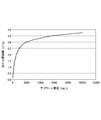
- FIG. 1 shows the result of measuring the BET specific surface area.
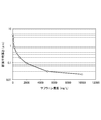
- FIG. 2 shows the result of obtaining the cross-sectional average thickness of the tabular copper particles constituting the dendritic copper powder by observing by the above-described SEM method.
- the BET specific surface area of the precipitated dendritic copper powder and the average cross-sectional thickness of the copper particles constituting the dendritic copper powder It turned out that thinner flat dendritic copper powder can be produced.
- Example 2 A hydrochloric acid solution (manufactured by Wako Pure Chemical Industries, Ltd.) is added to the electrolyte so that the chloride ion concentration becomes 200 mg / L, and methyl orange (Kanto Chemical Industries, Ltd.), which is a compound having an azobenzene structure as an additive, is added. Manufactured) was added in a concentration of 20, 50, 100, 200, 500, 1,000, 2,000, 5,000, 10,000 mg / L in the electrolytic solution. Otherwise, electrolytic treatment was performed under the same conditions as in Example 1 to produce electrolytic copper powder.
- the copper powder is a two-dimensional or three-dimensional dendritic copper. It was a powder, and it was confirmed that the main trunk and a plurality of branches branched from the main trunk were dendritic copper powder composed of flat copper particles.
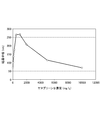
- FIG. 3 shows the result of measuring the BET specific surface area of the dendritic copper powder in the same manner as in Example 1. Moreover, the result of having measured the bulk density of the dendritic copper powder in FIG. 4 is shown.
- Example 3 To the electrolyte solution, a hydrochloric acid solution (manufactured by Wako Pure Chemical Industries, Ltd.) was added so that the chloride ion concentration was 100 mg / L, and Janus Green B (a compound having a phenazine structure and an azobenzene structure as an additive) Manufactured by Kanto Chemical Co., Inc.) and added to the cathode in a concentration of 50, 100, 200, 500, 1,000, 2,000, 5,000, 10,000 mg / L in the electrolyte. The current was supplied so that the current density was 10 A / dm 2 . Otherwise, electrolytic treatment was performed under the same conditions as in Example 1 to produce electrolytic copper powder.
- a hydrochloric acid solution manufactured by Wako Pure Chemical Industries, Ltd.
- Janus Green B a compound having a phenazine structure and an azobenzene structure as an additive
- Kanto Chemical Co., Inc. a compound having a phenazine structure and an
- the copper powder is a two-dimensional or three-dimensional dendritic copper. It was a powder, and it was confirmed that the main trunk and a plurality of branches branched from the main trunk were dendritic copper powder composed of flat copper particles.
- FIG. 5 shows the result of measuring the BET specific surface area of the dendritic copper powder in the same manner as in Example 1.
- Example 4 A hydrochloric acid solution (manufactured by Wako Pure Chemical Industries, Ltd.) is added to the electrolyte so that the chloride ion concentration is 100 mg / L, and methyl orange (Kanto Chemical Industries, Ltd.), which is a compound having an azobenzene structure as an additive, is added.
- Product and Janus Green B (manufactured by Kanto Chemical Co., Ltd.), which is a compound having a phenazine structure and an azobenzene structure, at a concentration of 20 in the electrolytic solution. , 50, 100, 200, 500, 1,000, 2,000, 5,000, 10,000 mg / L, and added so that the current density of the cathode is 10 A / dm 2. I let you. Otherwise, electrolytic treatment was performed under the same conditions as in Example 1 to produce electrolytic copper powder.
- the copper powder is a two-dimensional or three-dimensional dendritic copper. It was a powder, and it was confirmed that the main trunk and a plurality of branches branched from the main trunk were dendritic copper powder composed of flat copper particles.
- FIG. 6 shows the result of calculating the crystallite size of the obtained dendritic copper powder from the diffraction pattern obtained by the above-mentioned X-ray diffraction measurement apparatus (manufactured by PAN, X′Pert PRO).
- Example 5 In Example 1, a specific surface area of 1.28 m was obtained from an electrolyte obtained by adding safranin (manufactured by Kanto Chemical Co., Ltd.), which is a compound having a phenazine structure, to a concentration of 200 mg / L in the electrolyte. 2 parts / g dendritic copper powder is mixed with 55 parts by mass of phenol resin (manufactured by Gunei Chemical Co., Ltd., PL-2211) and 10 parts by mass of butyl cellosolve (manufactured by Kanto Chemical Co., Ltd., deer special grade).
- safranin manufactured by Kanto Chemical Co., Ltd.
- kneader Nippon Seiki Seisakusho, non-bubbling kneader NBK-1
- kneading at 1200 rpm for 3 minutes was repeated three times to form a paste.
- the obtained conductive paste was printed on a glass with a metal squeegee and cured in air at 150 ° C. and 200 ° C. for 30 minutes.
- Table 1 summarizes the measurement results of the specific resistance value of the film obtained by curing.
- Example 6 the specific surface area obtained by an electrolytic solution obtained by adding methyl orange (manufactured by Kanto Chemical Co., Ltd.), which is a compound having an azobenzene structure, to a concentration of 200 mg / L in the electrolytic solution was 1.
- Table 1 summarizes the measurement results of the specific resistance value of the film obtained by curing.
- Example 7 In Example 1, a specific surface area of 2.56 m was obtained from an electrolytic solution obtained by adding safranin (manufactured by Kanto Chemical Industry Co., Ltd.), which is a compound having a phenazine structure, to a concentration of 1000 mg / L in the electrolytic solution. 2 parts / g dendritic copper powder is mixed with 55 parts by mass of phenol resin (manufactured by Gunei Chemical Co., Ltd., PL-2211) and 10 parts by mass of butyl cellosolve (manufactured by Kanto Chemical Co., Ltd., deer special grade).
- safranin manufactured by Kanto Chemical Industry Co., Ltd.
- kneader Nippon Seiki Seisakusho, non-bubbling kneader NBK-1
- kneading at 1200 rpm for 3 minutes was repeated three times to form a paste.
- the obtained conductive paste was printed on a glass with a metal squeegee and cured in air at 150 ° C. and 200 ° C. for 30 minutes.
- Table 1 summarizes the measurement results of the specific resistance value of the film obtained by curing.
- Example 8 In Example 1, the specific surface area obtained by the electrolytic solution in which safranin (manufactured by Kanto Chemical Co., Ltd.), which is a compound having a phenazine structure, was added so that the concentration in the electrolytic solution was 100 mg / L was 0.81 m 2 / g of dendritic copper powder and methyl orange which is a compound having an azobenzene structure in Example 2 (manufactured by Kanto Chemical Industry Co., Ltd.) was added to an electrolyte so that the concentration in the electrolyte was 2000 mg / L.
- safranin manufactured by Kanto Chemical Co., Ltd.
- Table 1 summarizes the measurement results of the specific resistance value of the film obtained by curing.
- Example 9 In Example 1, a specific surface area of 1.98 m obtained from an electrolytic solution in which safranin (manufactured by Kanto Chemical Co., Ltd.), which is a compound having a phenazine structure, was added so that the concentration in the electrolytic solution was 500 mg / L. 2 / g dendritic copper powder was dispersed in a resin to prepare an electromagnetic wave shielding material.
- safranin manufactured by Kanto Chemical Co., Ltd.
- Example 2 100 g of vinyl chloride resin and 200 g of methyl ethyl ketone were mixed with 40 g of the dendritic copper powder obtained in Example 1, and kneading at 1200 rpm for 3 minutes was repeated three times using a small kneader. To make a paste. During pasting, the copper powder was uniformly dispersed in the resin without agglomeration. This was coated and dried on a base material made of a transparent polyethylene terephthalate sheet having a thickness of 100 ⁇ m using a Mayer bar to form an electromagnetic wave shielding layer having a thickness of 25 ⁇ m.
- the electromagnetic shielding characteristics were evaluated by measuring the attenuation rate using an electromagnetic wave having a frequency of 1 GHz. Table 1 shows the results of the characteristic evaluation.
- Example 10 In Example 1, a specific surface area of 2.56 m was obtained from an electrolytic solution obtained by adding safranin (manufactured by Kanto Chemical Industry Co., Ltd.), which is a compound having a phenazine structure, to a concentration of 1000 mg / L in the electrolytic solution. 2 / g dendritic copper powder was dispersed in a resin to prepare an electromagnetic wave shielding material.
- safranin manufactured by Kanto Chemical Industry Co., Ltd.
- Example 2 100 g of vinyl chloride resin and 200 g of methyl ethyl ketone were mixed with 40 g of the dendritic copper powder obtained in Example 1, and kneading at 1200 rpm for 3 minutes was repeated three times using a small kneader. To make a paste. During pasting, the copper powder was uniformly dispersed in the resin without agglomeration. This was coated and dried on a base material made of a transparent polyethylene terephthalate sheet having a thickness of 100 ⁇ m using a Mayer bar to form an electromagnetic wave shielding layer having a thickness of 25 ⁇ m.
- the electromagnetic shielding characteristics were evaluated by measuring the attenuation rate using an electromagnetic wave having a frequency of 1 GHz. Table 1 shows the results of the characteristic evaluation.
- Example 11 In Example 1, a specific surface area of 0.81 m was obtained from an electrolytic solution obtained by adding safranin (manufactured by Kanto Chemical Industry Co., Ltd.), which is a compound having a phenazine structure, to a concentration of 100 mg / L in the electrolytic solution. 2 / g dendritic copper powder was dispersed in a resin to prepare an electromagnetic wave shielding material.
- safranin manufactured by Kanto Chemical Industry Co., Ltd.
- Example 2 100 g of vinyl chloride resin and 200 g of methyl ethyl ketone were mixed with 40 g of the dendritic copper powder obtained in Example 1, and kneading at 1200 rpm for 3 minutes was repeated three times using a small kneader. To make a paste. During pasting, the copper powder was uniformly dispersed in the resin without agglomeration. This was coated and dried on a base material made of a transparent polyethylene terephthalate sheet having a thickness of 100 ⁇ m using a Mayer bar to form an electromagnetic wave shielding layer having a thickness of 25 ⁇ m.
- the electromagnetic shielding characteristics were evaluated by measuring the attenuation rate using an electromagnetic wave having a frequency of 1 GHz. Table 1 shows the results of the characteristic evaluation.
- Example 1 Copper powder was deposited on the cathode plate under the same conditions as in Example 1 except that only chloride ions were added and no compound having a phenazine structure or the like was added as an additive.
- the obtained electrolytic copper powder in a 10,000 ⁇ field of view by the SEM method described above, it was a copper powder having a two-dimensional or three-dimensional dendritic shape.
- the plurality of branches branched from the plate were not composed of flat copper particles.
- Comparative Example 2 55 parts by mass of dendritic copper powder obtained in Comparative Example 1 having a BET specific surface area of 0.16 m 2 / g, 15 parts by mass of phenol resin (PL-2211, manufactured by Gunei Chemical Co., Ltd.), butyl cellosolve (Kanto Chemical) 10 parts by mass (made by Co., Ltd., deer special grade) were mixed, and paste was made by repeating kneading at 1200 rpm for 3 minutes three times using a small kneader (Nippon Seiki Seisakusho, non-bubbling kneader NBK-1). The obtained conductive paste was printed on a glass with a metal squeegee and cured in air at 150 ° C. and 200 ° C. for 30 minutes.
- Table 1 summarizes the measurement results of the specific resistance value of the film obtained by curing.
- the electromagnetic shielding characteristics were evaluated by measuring the attenuation rate using an electromagnetic wave having a frequency of 1 GHz. Table 1 shows the results of the characteristic evaluation.
- dendritic copper powder in which the BET specific surface area, bulk density, crystallite diameter, and cross-sectional average thickness of copper particles were controlled was used as a metal filler, and the metal filler was used. It was found that the conductive paste, the conductive paint for electromagnetic wave shield, and the conductive sheet for electromagnetic wave shield exhibit good characteristics.
- Comparative Example 1 in which only a chloride ion was added to the electrolytic solution as an additive without adding a compound having a phenazine structure, a compound having an azobenzene structure, and a compound having a phenazine structure and an azobenzene structure.
- a conductive paste, a conductive paint for electromagnetic shielding, and a conductive sheet for electromagnetic shielding using the copper powder having a small BET specific surface area obtained in Comparative Example 1, a conductive paste, a conductive paint for electromagnetic shielding, and a conductive sheet for electromagnetic shielding.
Landscapes
- Chemical & Material Sciences (AREA)
- Engineering & Computer Science (AREA)
- Chemical Kinetics & Catalysis (AREA)
- Electrochemistry (AREA)
- Materials Engineering (AREA)
- Metallurgy (AREA)
- Organic Chemistry (AREA)
- Manufacturing & Machinery (AREA)
- Powder Metallurgy (AREA)
- Electrolytic Production Of Metals (AREA)
- Non-Insulated Conductors (AREA)
- Manufacture Of Metal Powder And Suspensions Thereof (AREA)
Abstract
銅粉同士の接点を多くして優れた導電性を確保しつつ、導電性ペーストや電磁波シールド等の用途として好適に利用することができる銅粉の製造方法を提供する。 本発明に係る銅粉の製造方法は、電解法により電解液から陰極上に析出させて銅粉を製造する方法であって、その銅粉が、主幹とその主幹から分かれた複数の枝とを有する樹枝状の形状をなし、主幹及び枝は断面平均厚さが0.02μm~5.0μmの平板状の銅粒子から構成され、平均粒子径(D50)が1.0μm~100μmとなる製造方法である。電解法による製造方法において、その電解液には、銅イオンと、1mg/L~10,000mg/Lの含有量で、特定のフェナジン構造を有する化合物、特定のアゾベンゼン構造を有する化合物、及び特定のフェナジン構造とアゾベンゼン構造とを有する化合物から選ばれる1種又は2種以上とを含有させる。
Description
本発明は、導電性ペースト等の材料として用いられる銅粉の製造方法に関するものであり、より詳しくは、導電性を改善させることのできる新規な形状を有する銅粉の製造方法及びそれを用いた導電性ペーストの製造方法に関する。
電子機器における配線層や電極等の形成には、樹脂型ペーストや焼成型ペーストのような、銀粉や銅粉等の金属フィラーを使用したペーストが多く用いられている。銀粉や銅粉等からなる金属フィラーペーストは、電子機器の各種基材上に塗布又は印刷され、加熱硬化や加熱焼成の処理を受けて、配線層や電極等となる導電膜を形成する。
例えば、樹脂型導電性ペーストは、金属フィラーと、樹脂、硬化剤、溶剤等からなり、導電体回路パターン又は端子の上に印刷され、100℃~200℃で加熱硬化させて導電膜として配線や電極を形成する。樹脂型導電性ペーストは、熱によって熱硬化型樹脂が硬化収縮するため、金属フィラーが圧着されて接触することで金属フィラーが重なり、電気的に接続した電流パスが形成される。この樹脂型導電性ペーストは、硬化温度が200℃以下で処理されることから、プリント配線板等の熱に弱い材料を使用している基板に用いられている。
また、焼成型導電性ペーストは、金属フィラーと、ガラス、溶剤等からなり、導電体回路パターン又は端子の上に印刷され、600℃~800℃に加熱焼成させて導電膜として配線や電極を形成する。焼成型導電性ペーストは、高い温度によって処理することで、金属フィラーが焼結して導通性が確保されるものである。この焼成型導電性ペーストは、焼成温度が高いため、樹脂材料を使用するようなプリント配線基板には使用できないものの、高温処理で金属フィラーが焼結することから低抵抗を実現することが可能となる。そのため、焼成型導電性ペーストは、積層セラミックコンデンサの外部電極等に用いられる。
さて、これらの樹脂型導電性ペーストや焼成型導電性ペーストに使用される金属フィラーとしては、従来から銀の粉末が多く用いられてきた。しかしながら、近年では、貴金属価格が高騰し、低コスト化のためにも、銀粉より安価な銅粉の使用が好まれてきた。
ここで、金属フィラーとして用いられる銅等の粉末としては、上述したように、粒子同士が接続して導電するために、粒状や樹枝状、平板状等の形状が用いられてきた。特に、粒子を縦・横・厚さの3方向のサイズから評価する場合、厚さが薄い平板状の形状は、厚さが減少することによる配線材の薄型化に貢献するとともに、一定の厚さがある立方体や球状の粒子よりも粒同士が接触する面積を大きく確保でき、それだけ低抵抗、すなわち高導電率が達成できるという利点がある。このため、平板状の形状の銅粉は、特に導電性を維持したい導電塗料や導電性ペーストの用途に適している。なお、導電性ペーストを薄く塗布して用いる場合には、銅粉に含まれる不純物の影響も考慮することが好ましくなる。
このような平板状の銅粉を作製するために、例えば特許文献1では、導電性ペーストの金属フィラーに適したフレーク状銅粉を得る方法が開示されている。具体的には、平均粒径0.5μm~10μmの球状銅粉を原料とし、ボールミルや振動ミルを用いて、ミル内に装填したメディアの機械的エネルギーにより機械的に平板状に加工するものである。
また、例えば特許文献2では、導電性ペースト用銅粉末、詳しくはスルーホール用及び外部電極用銅ペーストとして高性能が得られる円盤状銅粉末及びその製造方法に関する技術が開示されている。具体的には、粒状アトマイズ銅粉末を媒体撹拌ミルに投入し、粉砕媒体として1/8インチ~1/4インチ径のスチールボールを使用して、銅粉末に対して脂肪酸を重量で0.5%~1%添加し、空気中あるいは不活性雰囲気中で粉砕することによって平板状に加工するものである。
さらに、例えば特許文献3では、電解銅粉の樹枝を必要以上に発達させることなく、従来の電解銅粉よりも成形性が向上した、高い強度に成形できる電解銅粉を得る方法が開示されている。具体的には、電解銅粉自体の強度を増して高い強度に成形できる電解銅粉を析出させるために、電解銅粉を構成する結晶子のサイズを微細化させることを目的として、電解液である硫酸銅水溶液中にタングステン酸塩、モリブデン酸塩、及び硫黄含有有機化合物から選択される1種又は2種以上を添加して、電解銅粉を析出させるものである。
これらの特許文献に開示された方法は、いずれも得られた粒状の銅粉をボール等の媒体を使用して機械的に変形(加工)させることによって平板状としている。したがって、加工してできた平板状の銅粉の大きさは、例えば特許文献1の技術では平均粒径が1μm~30μmであり、特許文献3の技術では平均粒径が7μm~12μmとなる。
一方、デンドライト状と呼ばれる樹枝状に析出した電解銅粉が知られており、形状が樹枝状になっていることから、表面積が大きく、成形性や焼結性が優れており、粉末冶金用途として含油軸受けや機械部品等の原料として使用されている。特に、含油軸受け等では小型化が進み、それに伴って多孔質化や薄肉化、並びに複雑な形状が要求されるようになっている。それらの要求を満足するために、例えば特許文献4では、複雑3次元形状で寸法精度の高い金属粉末射出成形用銅粉末とそれを用いた射出成形品の製造方法が開示されている。具体的には、樹枝状の形状をより発達させることで、圧縮成形時に隣接する電解銅粉の樹枝が互いに絡み合って強固に連結するようになるため、高い強度に成形できることが示されている。さらに、導電性ペーストや電磁波シールド用の金属フィラーとして利用する場合には、樹枝状の形状であることから、球状のものと比べて接点を多くできることを利用できるとしている。
しかしながら、上述のような樹枝状の銅粉を導電性ペーストや電磁波シールド用樹脂等の金属フィラーとして利用する場合、樹脂中の金属フィラーが樹枝状に発達した形状であると、樹枝状の銅粉同士が絡み合って凝集が発生してしまい、樹脂中に均一に分散しないという問題や、凝集によりペーストの粘度が上昇して印刷による配線形成に問題が生じる。このような問題は、例えば特許文献3でも指摘されている。
このように、樹枝状の銅粉を導電性ペースト等の金属フィラーとして用いるのは容易でなく、ペーストの導電性の改善がなかなか進まない原因ともなっていた。なお、導電性を確保するためには、樹枝状の方が粒状よりも接点を確保しやすく、導電性ペーストや電磁波シールドとして高い導電性を確保することができる。
本発明は、上述したような実情に鑑みて提案されたものであり、銅粉同士の接点を多くして優れた導電性を確保しつつ、導電性ペーストや電磁波シールド等の用途として好適に利用することができる銅粉を製造する方法を提供することを目的とする。
本発明者らは、上述した課題を解決するための鋭意検討を重ねた。その結果、樹枝状に成長した主幹とその主幹から分かれた複数の枝とを有する形状であり、断面平均厚さが特定の範囲である平板状の銅粒子が集合して構成される銅粉であって、当該銅粉の平均粒子径(D50)が特定の範囲であることにより、優れた導電性を確保しつつ、例えば樹脂と均一に混合させることができ導電性ペースト等の用途に好適に用いることができることを見出し、本発明を完成させた。すなわち、本発明は、以下のものを提供する。
(1)本発明の第1の発明は、電解法により電解液から陰極上に析出させて銅粉を製造する方法であって、前記銅粉は、主幹と該主幹から分かれた複数の枝とを有する樹枝状の形状をなし、該主幹及び該枝は、断面平均厚さが0.02μm~5.0μmの平板状の銅粒子から構成され、平均粒子径(D50)が1.0μm~100μmであることを特徴とする銅粉の製造方法である。
(2)本発明の第2の発明は、第1の発明において、前記銅粉の嵩密度が、0.5g/cm3~5.0g/cm3の範囲である、銅粉の製造方法である。
(3)本発明の第3の発明は、第1又は第2の発明において、前記銅粉のBET比表面積が、0.2m2/g~5.0m2/gである、銅粉の製造方法である。
(4)本発明の第4の発明は、第1乃至第3のいずれかの発明において、前記銅粉のX線回折による(111)面のミラー指数における結晶子径が、80nm~300nmの範囲に属する、銅粉の製造方法である。
(5)本発明の第5の発明は、第1乃至第4のいずれかの発明において、前記電解液は、銅イオンを含む硫酸酸性の銅電解液であり、前記電解液に、1mg/L~10,000mg/Lの含有量で、下記式(1)で示されるフェナジン構造を有する化合物、下記式(2)で示されるアゾベンゼン構造を有する化合物、及び下記式(3)で示される、フェナジン構造とアゾベンゼン構造とを有する化合物からなる群から選ばれる1種又は2種以上を含有させる、銅粉の製造方法である。
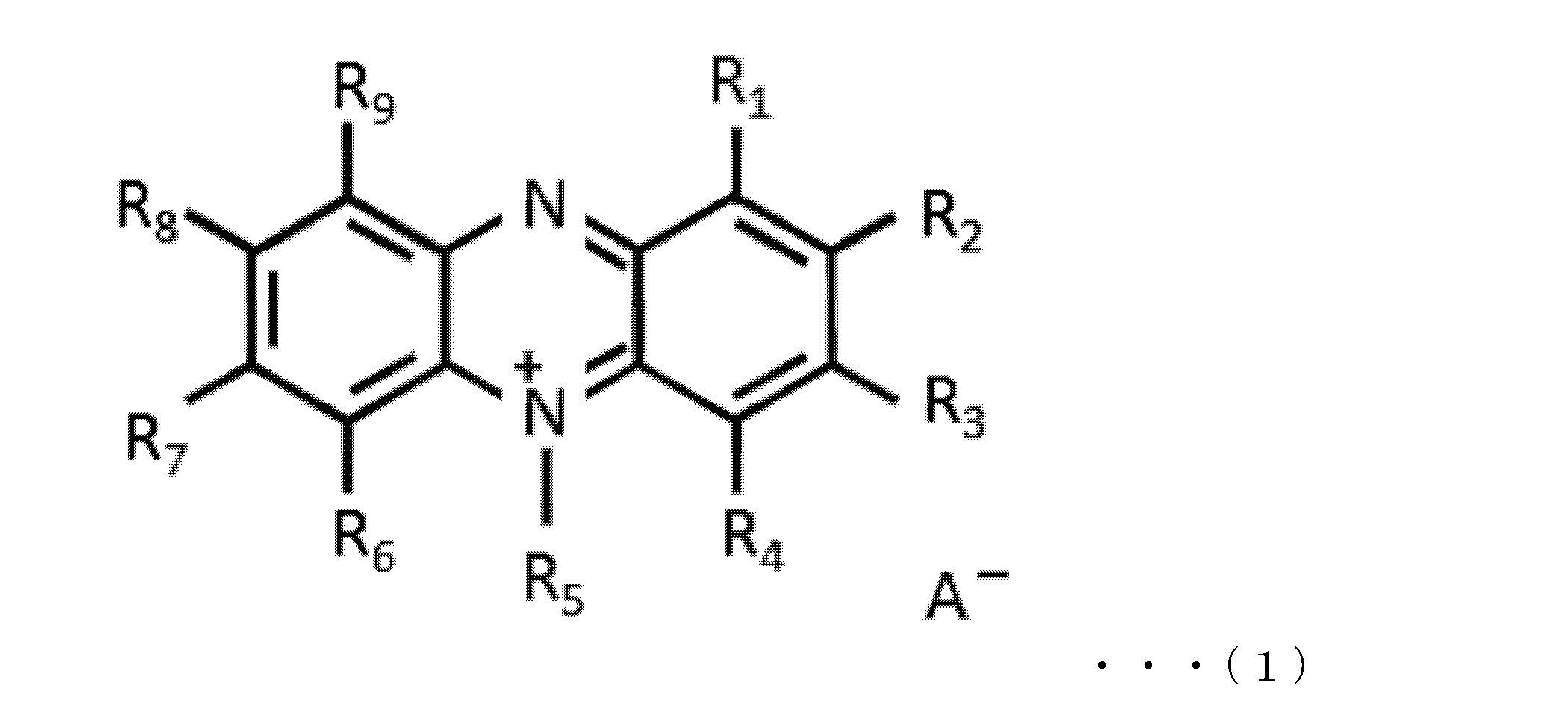
[式(1)中、R1,R2,R3,R4,R6,R7,R8,R9は、それぞれ別個に、水素、ハロゲン、アミノ、OH、-O、CN、SCN、SH、COOH、COO塩、COOエステル、SO3H、SO3塩、SO3エステル、ベンゼンスルホン酸、及びC1~C8アルキルからなる群から選択される基であり、R5は、水素、ハロゲン、アミノ、OH、-O、CN、SCN、SH、COOH、COO塩、COOエステル、SO3H、SO3塩、SO3エステル、ベンゼンスルホン酸、低級アルキル、及びアリールからなる群から選択される基であり、A-がハライドアニオンである。]

[式(2)中、R1,R2,R3,R4,R5,R6,R7,R8,R9,R10は、それぞれ別個に、水素、ハロゲン、アミノ、OH、-O、CN、SCN、SH、COOH、COO塩、COOエステル、SO3H、SO3塩、SO3エステル、ベンゼンスルホン酸、低級アルキル、及びアリールからなる群から選択される基である。]
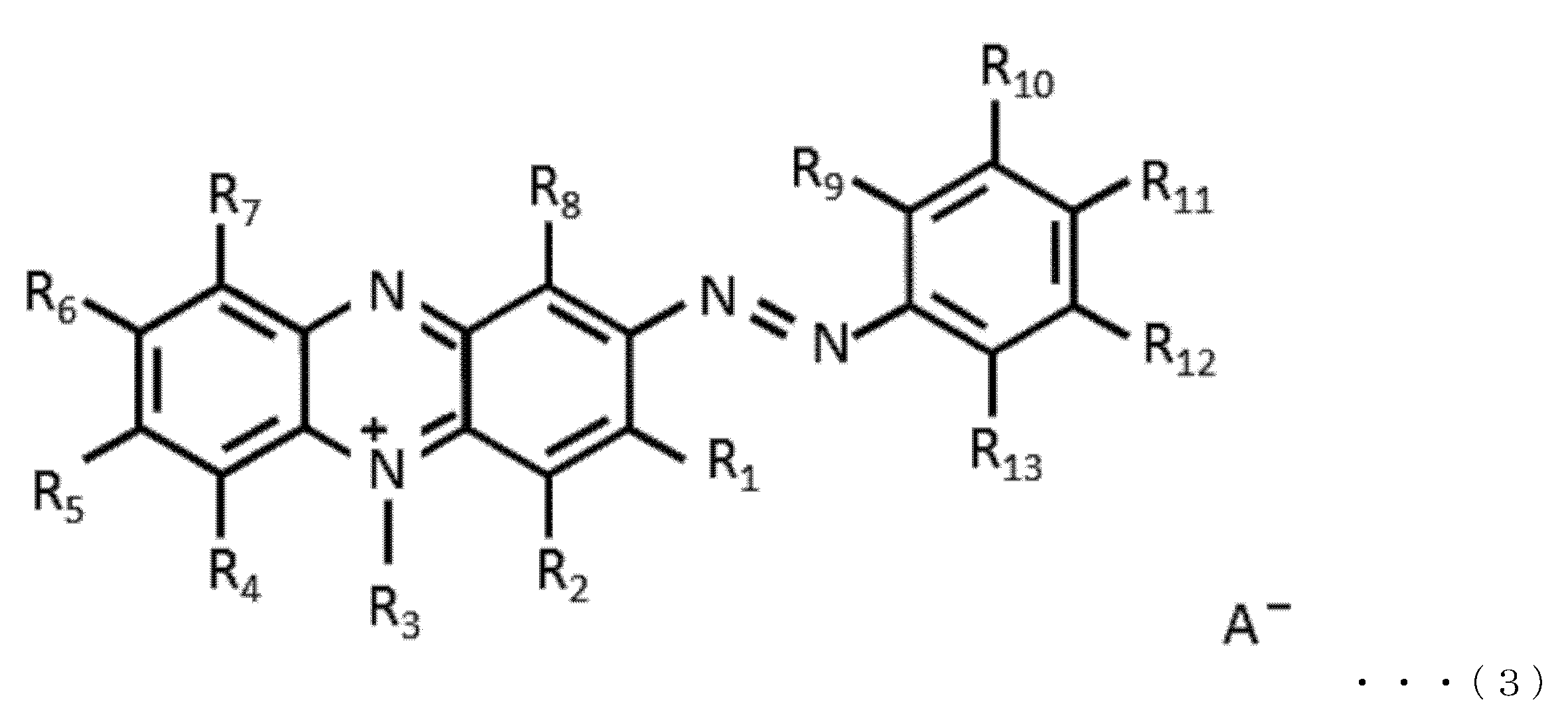
[式(3)中、R1,R2,R4,R6,R7,R8,R9,R10,R11,R12,R13は、それぞれ別個に、水素、ハロゲン、アミノ、OH、-O、CN、SCN、SH、COOH、COO塩、COOエステル、SO3H、SO3塩、SO3エステル、ベンゼンスルホン酸、及びC1~C8アルキルからなる群から選択される基であり、R3は、水素、ハロゲン、アミノ、OH、-O、CN、SCN、SH、COOH、COO塩、COOエステル、SO3H、SO3塩、SO3エステル、ベンゼンスルホン酸、低級アルキル、及びアリールからなる群から選択される基であり、A-がハライドアニオンである。]
(6)本発明の第6の発明は、第5の発明において、前記電解液に、500mg/L以下の含有量で塩化物イオンを含有させる、銅粉の製造方法である。
(7)本発明の第7の発明は、第5又は第6の発明において、前記電解液中の銅イオン濃度は、1g/L~20g/Lである、銅粉の製造方法である。
(8)本発明の第8の発明は、第1乃至第7のいずれかの発明に係る銅粉の製造方法により得られる銅粉を、当該金属フィラー全体において20質量%以上の割合で含有させることを特徴とする金属フィラーの製造方法である。
(9)本発明の第9の発明は、第8の発明の発明に係る金属フィラーの製造方法により得られる金属フィラーを、樹脂に混合させることを特徴とする導電性ペーストの製造方法である。
本発明によれば、接点を多く確保することができるとともに接触面積を大きくとることができ、優れた導電性を確保し、また凝集を防止して導電性ペーストや電磁波シールド等の用途に好適に利用することができる銅粉を製造することができる。
以下、本発明の具体的な実施形態(以下、「本実施の形態」という)について、図面を参照しながら詳細に説明するが、本発明は以下の実施形態に限定されるものではなく、本発明の要旨を変更しない範囲で種々の変更が可能である。なお、本明細書にて、「X~Y」(X、Yは任意の数値)との表記は、「X以上Y以下」の意味である。
≪1.樹枝状銅粉及びその形状≫
本実施の形態に係る銅粉の製造方法は、電解法により電解液から陰極上に析出させることによって銅粉を製造するものである。まず、この製造方法により得られる銅粉及びその形状について説明する。
本実施の形態に係る銅粉の製造方法は、電解法により電解液から陰極上に析出させることによって銅粉を製造するものである。まず、この製造方法により得られる銅粉及びその形状について説明する。
本実施の形態に係る銅粉は、走査型電子顕微鏡(SEM)を用いて観察したとき、直線的に成長した主幹とその主幹から分かれた複数の枝とを有する樹枝状の形状をなすものであり、その主幹及び枝は、断面平均厚さが0.02μm~5.0μmの平板状の銅粒子から構成されている。本実施の形態に係る銅粉は、このように平板状の銅粒子から構成され、その平均粒子径(D50)が1.0μm~100μmである。
この平板状の銅粒子から構成されて樹枝状の形状をなす銅粉は、1層のみから構成されるものに限られず、複数の重なった積層構造で構成されていてもよい。以下では、本実施の形態に係る銅粉を「樹枝状銅粉」ともいう。
なお、上述したように、本実施の形態に係る樹枝状銅粉は、例えば、銅イオンを含む硫酸酸性の電解液に陽極と陰極を浸漬し、直流電流を流して電気分解する電解法により陰極上に析出させて製造することができ、平板状の銅粒子の断面平均厚さ、樹枝状銅粉の平均粒子径、嵩密度、BET比表面積、及び結晶子径等は、その電解条件を変更することで制御することができる。詳しくは後述する。
ここで、主幹及び枝を構成する平板状の銅粒子は、その断面平均厚さが0.02μm~5.0μmである。平板状の銅粒子の断面平均厚さは、より薄い方が平板としての効果が発揮されることになる。すなわち、断面平均厚さが5.0μm以下の平板状の銅粒子により主幹及び枝が構成されることで、その銅粒子同士、またはそれにより構成される樹枝状銅粉同士の接触面積を大きく確保することができる。そして、その接触面積が大きくなることで、低抵抗、すなわち高導電率を実現することができる。このことにより、より導電性に優れ、またその導電性を良好に維持することができ、導電塗料や導電性ペーストの用途に好適に用いることができる。また、樹枝状銅粉が微細な平板状の銅粒子により構成されていることで、配線材等の薄型化に貢献することができる。
なお、平板状の銅粒子の断面平均厚さが5.0μm以下の薄いものであっても、平板の大きさが小さすぎると凹凸が減少することになるため、銅粉同士が接触する際に接点の数が少なくなってしまう。したがって、銅粒子の断面平均厚さの下限値としては、上述のように0.02μm以上であることが好ましい。このように平板状の銅粒子の断面平均厚さが0.02μm~5.0μmであることより、接点の数を有効に増やすことができる。
また、本実施の形態に係る樹枝状銅粉においては、その平均粒子径(D50)が1.0μm~100μmである。平均粒子径は、後述する電解条件を変更することで制御可能である。また、必要に応じて、ジェットミル、サンプルミル、サイクロンミル、ビーズミル等の機械的な粉砕を付加することによって、所望とする大きさにさらに調整することが可能である。なお、平均粒子径(D50)は、例えば、レーザー回折散乱式粒度分布測定法により測定することができる。
このように、樹枝状銅粉の平均粒子径が1.0μm~100μmであることにより、表面積が大きくなり、良好な成形性や焼結性を確保することができる。そして、本実施の形態に係る樹枝状銅粉は、上述したように樹枝状の形状であることに加え、その主幹及び枝が平板状の銅粒子から構成されているため、樹枝状であることの3次元的効果と、その樹枝形状を構成する銅粒子が平板状であることの効果により、銅粉同士の接点をより多く確保することができる。
ここで、特許文献1や特許文献2に記載されているように、機械的な方法で例えば球状銅粉を平板状にする場合には、機械的加工時に銅の酸化を防止する必要があるため、脂肪酸を添加し、空気中あるいは不活性雰囲気中で粉砕することによって平板状に加工している。しかしながら、完全に酸化を防止することができないことや、加工時に添加している脂肪酸がペースト化するときの分散性に影響を及ぼすことがあるため、加工終了後に除去することが必要となるが、その脂肪酸が機械加工時の圧力で銅表面に強固に固着することがあり、完全に除去できないという問題が発生する。
この点、本実施の形態に係る樹枝状銅粉では、機械的な加工を行うことなく直接電解法により平板状の銅粒子を形成させ樹枝状の形状に成長させることによって作製できるため、機械加工で問題となる酸化の発生がなく、また脂肪酸を除去する必要もなく、電気導電性の特性を極めて良好な状態とすることができる。
また、本実施の形態に係る樹枝状銅粉では、特に限定されないが、その嵩密度が0.5g/cm3~5.0g/cm3の範囲であることが好ましい。嵩密度が0.5g/cm3未満であると、銅粉同士の接点を十分に確保することができない可能性がある。一方で、嵩密度が5.0g/cm3を超えると、銅粉の平均粒子径も大きくなり、表面積が小さくなって成形性や焼結性が悪化することがある。
また、本実施の形態に係る樹枝状銅粉では、特に限定されないが、そのBET比表面の値が0.2m2/g~5.0m2/gであることが好ましい。BET比表面積が0.2m2/g未満であると、樹枝状銅粉を構成する銅粒子が、上述したような所望の平板状の形状にはならないことがあり、高い導電性が得られないことがある。一方で、BET比表面積が5.0m2/gを超えると、凝集が生じやすくなってペースト化に際して樹脂中に均一に分散させることが困難となる。なお、BET比表面積は、JIS Z8830:2013に準拠して測定することができる。
また、本実施の形態に係る樹枝状銅粉は、特に限定されないが、その結晶子径が80nm~300nmの範囲に属することが好ましい。結晶子径が80nm未満であると、主幹や枝を構成する銅粒子が平板状ではなく球状に近い形状となる傾向があり、接触面積を十分に大きく確保することが困難となり、導電性が低下する可能性がある。一方で、結晶子径が300nmを超えると、銅粉の平均粒子径も大きくなり、表面積が小さくなって成形性や焼結性が悪化することがある。
ここでの結晶子径とは、X線回折測定装置により得られる回折パターンから下記数式で示されるScherrerの計算式に基づいて求められるものであり、X線回折による(111)面のミラー指数における結晶子径である。
D=0.9λ/βcosθ
(なお、D:結晶子径(nm)、β:結晶子の大きさによる回折ピークの拡がり(rad)、λ:X線の波長[CuKα](nm)、θ:回折角(°)である。)
D=0.9λ/βcosθ
(なお、D:結晶子径(nm)、β:結晶子の大きさによる回折ピークの拡がり(rad)、λ:X線の波長[CuKα](nm)、θ:回折角(°)である。)
なお、電子顕微鏡で観察したときに、得られた銅粉のうちに、上述したような形状の樹枝状銅粉が所定の割合で占められていれば、それ以外の形状の銅粉が混じっていても、その樹枝状銅粉のみからなる銅粉と同様の効果を得ることができる。具体的には、電子顕微鏡(例えば500倍~20,000倍)で観察したときに、上述した形状の樹枝状銅粉が全銅粉のうちの50個数%以上、好ましくは80個数%以上、より好ましくは90個数%以上の割合を占めていれば、その他の形状の銅粉が含まれていてもよい。
≪2.樹枝状銅粉の製造方法≫
次に、上述したような樹枝状銅粉の製造方法について詳細に説明する。本実施の形態に係る樹枝状銅粉は、例えば、銅イオンを含有する硫酸酸性溶液を電解液として用いて所定の電解法により製造することができる。
次に、上述したような樹枝状銅粉の製造方法について詳細に説明する。本実施の形態に係る樹枝状銅粉は、例えば、銅イオンを含有する硫酸酸性溶液を電解液として用いて所定の電解法により製造することができる。
電解に際しては、例えば、金属銅を陽極(アノード)とし、ステンレス板やチタン板等を陰極(カソード)として設置した電解槽中に、上述した銅イオンを含有する硫酸酸性の電解液を収容し、その電解液に所定の電流密度で直流電流を通電することによって電解処理を施す。これにより、通電に伴って陰極上に樹枝状銅粉を析出(電析)させることができる。特に、本実施の形態においては、電解により得られた粒状等の銅粉をボール等の媒体を用いて機械的に変形加工等することなく、その電解のみによって、平板状の銅粒子が集合して樹枝状を形成した樹枝状銅粉を陰極表面に析出させることができる。
そして、本実施の形態に係る銅粉の製造方法においては、硫酸酸性の電解液に、銅イオンと、フェナジン構造を有する化合物、アゾベンゼン構造を有する化合物、及びフェナジン構造とアゾベンゼン構造とを有する化合物からなる群から選ばれる1種又は2種以上とを添加することによって、より好ましく、断面平均厚さや、BET比表面積、嵩密度、及び結晶子径を制御した樹枝状銅粉を析出させることができる。
より具体的に、電解液としては、例えば、水溶性銅塩と、硫酸と、特定の化合物からなる添加剤とを有するものを好ましく用いることができる。
[水溶性銅塩]
水溶性銅塩は、銅イオンを供給する銅イオン源であり、例えば硫酸銅五水和物等の硫酸銅、硝酸銅等が挙げられるが特に限定されない。また、酸化銅を硫酸溶液で溶解して硫酸酸性溶液にしてもよい。
水溶性銅塩は、銅イオンを供給する銅イオン源であり、例えば硫酸銅五水和物等の硫酸銅、硝酸銅等が挙げられるが特に限定されない。また、酸化銅を硫酸溶液で溶解して硫酸酸性溶液にしてもよい。
電解液中での銅イオン濃度としては、特に限定されないが、1g/L~20g/L程度、好ましくは5g/L~10g/L程度とすることができる。
[硫酸]
硫酸は、硫酸酸性の電解液とするためのものである。電解液中の硫酸の濃度としては、遊離硫酸濃度として20g/L~300g/L程度、好ましくは50g/L~150g/L程度とすることができる。この硫酸濃度は、電解液の電導度に影響するため、カソード上に得られる銅粉の均一性に影響する。
硫酸は、硫酸酸性の電解液とするためのものである。電解液中の硫酸の濃度としては、遊離硫酸濃度として20g/L~300g/L程度、好ましくは50g/L~150g/L程度とすることができる。この硫酸濃度は、電解液の電導度に影響するため、カソード上に得られる銅粉の均一性に影響する。
[添加剤]
添加剤としては、フェナジン構造を有する化合物、アゾベンゼン構造を有する化合物、及びフェナジン構造とアゾベンゼン構造とを有する化合物からなる群から選ばれる化合物を、銅イオンを含有する硫酸酸性溶液に加える。
添加剤としては、フェナジン構造を有する化合物、アゾベンゼン構造を有する化合物、及びフェナジン構造とアゾベンゼン構造とを有する化合物からなる群から選ばれる化合物を、銅イオンを含有する硫酸酸性溶液に加える。
フェナジン構造を有する化合物、アゾベンゼン構造を有する化合物、フェナジン構造とアゾベンゼン構造とを有する化合物のそれぞれの種類については後述するが、これらの分子構造が異なる化合物から選ばれる1種又は2種以上を用いて電解液中に含有させることができる。
このような化合物からなる添加剤は、その添加量によって、平均粒子径や形状の異なる樹枝状銅粉が析出する。そのため、所望とする樹枝状銅粉の比表面積や結晶子径等に応じて、添加量を変化させることが好ましい。
具体的に、フェナジン構造を有する化合物、アゾベンゼン構造を有する化合物、及びフェナジン構造とアゾベンゼン構造とを有する化合物からなる群から選ばれる添加剤の電解液中における濃度としては、例えば、添加する化合物の合計で、1mg/L~10,000mg/L程度とすることが好ましく、10mg/L~5,000mg/Lとすることがより好ましく、20mg/L~2,000mg/Lとすることがさらに好ましい。
(フェナジン構造を有する化合物)
フェナジン構造を有する化合物は、下記式(1)によって表すことができる。本実施の形態に係る樹枝状銅粉の製造方法においては、下記式(1)で表されるフェナジン構造を有する化合物の1種又は2種以上を添加剤として電解液中に含有させることができる。
フェナジン構造を有する化合物は、下記式(1)によって表すことができる。本実施の形態に係る樹枝状銅粉の製造方法においては、下記式(1)で表されるフェナジン構造を有する化合物の1種又は2種以上を添加剤として電解液中に含有させることができる。
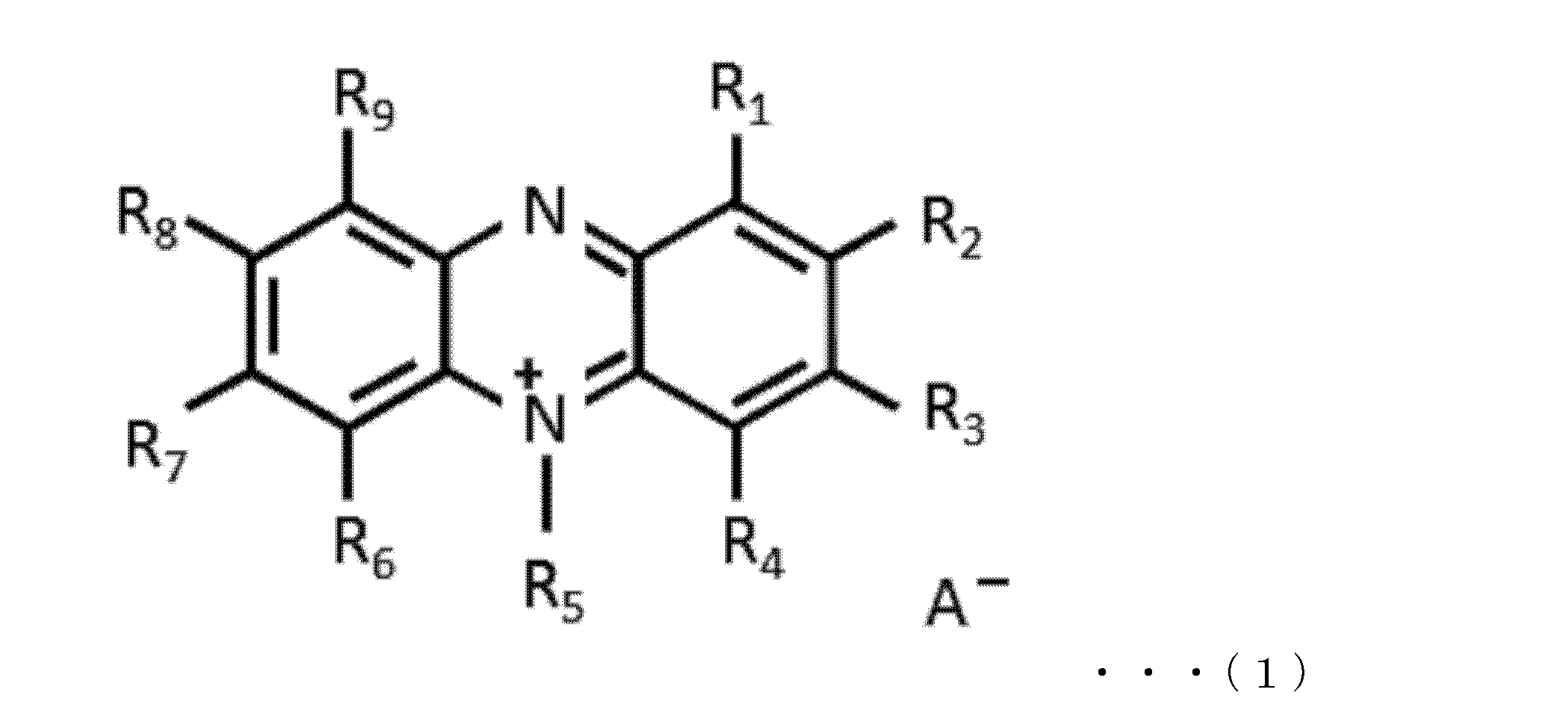
ここで、式(1)中において、R1,R2,R3,R4,R6,R7,R8,R9は、それぞれ別個に、水素、ハロゲン、アミノ、OH、-O、CN、SCN、SH、COOH、COO塩、COOエステル、SO3H、SO3塩、SO3エステル、ベンゼンスルホン酸、及びC1~C8アルキルからなる群から選択される基である。また、R5は、水素、ハロゲン、アミノ、OH、-O、CN、SCN、SH、COOH、COO塩、COOエステル、SO3H、SO3塩、SO3エステル、ベンゼンスルホン酸、低級アルキル、及びアリールからなる群から選択される基である。また、A-が、ハライドアニオンである。
具体的に、フェナジン構造を有する化合物としては、5-メチルフェナジン-5-イウム、エルギノシンB、アエルギノシンA、5-エチルフェナジン-5-イウム、3,7-ジアミノ-5-フェニルフェナジン-5-イウム、5-エチルフェナジン-5-イウム、5-メチルフェナジン-5-イウム、3-アミノ-5-フェニル-7-(ジエチルアミノ)フェナジン-5-イウム、2,8-ジメチル-3,7-ジアミノ-5-フェニルフェナジン-5-イウム、1-メトキシ-5-メチルフェナジン-5-イウム、3-アミノ-7-(ジメチルアミノ)-1,2-ジメチル-5-(3-スルホナトフェニル)フェナジン-5-イウム、1,3-ジアミノ-5-メチルフェナジン-5-イウム、1,3-ジアミノ-5-フェニルフェナジン-5-イウム、3-アミノ-7-(ジエチルアミノ)-2-メチル-5-フェニルフェナジン-5-イウム、3,7-ビス(ジエチルアミノ)-5-フェニルフェナジン-5-イウム、2,8-ジメチル-3,7-ジアミノ-5-(4-メチルフェニル)フェナジン-5-イウム、3-(メチルアミノ)-5-メチルフェナジン-5-イウム、3-ヒドロキシ-7-(ジエチルアミノ)-5-フェニルフェナジン-5-イウム、5-アゾニアフェナジン、1-ヒドロキシ-5-メチルフェナジン-5-イウム、4H,6H-5-フェニル-3,7-ジオキソフェナジン-5-イウム、アニリノアポサフラニン、フェノサフラニン、ニュートラルレッド等が挙げられる。
(アゾベンゼン構造を有する化合物)
アゾベンゼン構造を有する化合物は、下記式(2)によって表わすことができる。本実施の形態に係る樹枝状銅粉の製造方法においては、下記式(2)で表されるアゾベンゼン構造を有する化合物の1種又は2種以上を添加剤として電解液中に含有させることができる。
アゾベンゼン構造を有する化合物は、下記式(2)によって表わすことができる。本実施の形態に係る樹枝状銅粉の製造方法においては、下記式(2)で表されるアゾベンゼン構造を有する化合物の1種又は2種以上を添加剤として電解液中に含有させることができる。

ここで、式(2)中において、R1,R2,R3,R4,R5,R6,R7,R8,R9,R10は、それぞれ別個に、水素、ハロゲン、アミノ、OH、-O、CN、SCN、SH、COOH、COO塩、COOエステル、SO3H、SO3塩、SO3エステル、ベンゼンスルホン酸、低級アルキル、及びアリールからなる群から選択される基である。
具体的に、アゾベンゼン構造を有する化合物としては、アゾベンゼン、4-アミノアゾベンゼン-4’-スルホン酸、4-(ジメチルアミノ)-4’-(トリフルオロメチル)アゾベンゼン、C.I.アシッドレッド13、マーキュリーオレンジ、2’,4’-ジアミノ-5’-メチルアゾベンゼン-4-スルホン酸ナトリウム、メチルレッド、メチルイエロー、メチルオレンジ、アゾベンゼン-2,4-ジアミン、アリザリンイエローGG、4-ジメチルアミノアゾベンゼン、オレンジI、サラゾスルファピリジン、4-(ジエチルアミノ)アゾベンゼン、オレンジOT、3-メトキシ-4-アミノアゾベンゼン、4-アミノアゾベンゼン、N,N,2-トリメチルアゾベンゼン-4-アミン、4-ヒドロキシアゾベンゼン、スダンI、4-アミノ-3,5-ジメチルアゾベンゼン、N,N-ジメチル-4-[(キノリン-6-イル)アゾ]ベンゼンアミン、o-アミノアゾトルエン、アリザリンイエローR、4’-(アミノスルホニル)-4-ヒドロキシアゾベンゼン-3-カルボン酸、コンゴーレッド、バイタルレッド、メタニルイエロー、オレンジII、ディスパースオレンジ3、C.I.ダイレクトオレンジ39、2,2’-ジヒドロキシアゾベンゼン、アゾベンゼン-4,4’-ジオール、ナフチルレッド、5-フェニルアゾベンゼン-2-オール、2,2’-ジメチルアゾベンゼン、C.I.モルダントイエロー12、モルダントイエロー10、アシッドイエロー、ディスパースブルー、ニューイエローRMF、ビストラミンブラウンG等が挙げられる。
(フェナジン構造とアゾベンゼン構造とを有する化合物)
フェナジン構造とアゾベンゼン構造とを有する化合物は、下記式(3)によって表わすことができる。本実施の形態に係る樹枝状銅粉の製造方法においては、下記式(3)で表される、フェナジン構造とアゾベンゼン構造とを有する化合物の1種又は2種以上を添加剤として電解液中に含有させることができる。
フェナジン構造とアゾベンゼン構造とを有する化合物は、下記式(3)によって表わすことができる。本実施の形態に係る樹枝状銅粉の製造方法においては、下記式(3)で表される、フェナジン構造とアゾベンゼン構造とを有する化合物の1種又は2種以上を添加剤として電解液中に含有させることができる。

ここで、式(3)中において、R1,R2,R4,R6,R7,R8,R9,R10,R11,R12,R13は、それぞれ別個に、水素、ハロゲン、アミノ、OH、-O、CN、SCN、SH、COOH、COO塩、COOエステル、SO3H、SO3塩、SO3エステル、ベンゼンスルホン酸、及びC1~C8アルキルからなる群から選択される基である。また、R3は、水素、ハロゲン、アミノ、OH、-O、CN、SCN、SH、COOH、COO塩、COOエステル、SO3H、SO3塩、SO3エステル、ベンゼンスルホン酸、低級アルキル、及びアリールからなる群から選択される基である。また、A-は、ハライドアニオンである。
具体的に、フェナジン構造とアゾベンゼン構造とを有する化合物としては、3-(ジエチルアミノ)-7-[(4‐ヒドロキシフェニル)アゾ]-2,8-ジメチル-5-フェニルフェナジン-5-イウム、3-[[4-(ジメチルアミノ)フェニル]アゾ]-7-(ジエチルアミノ)-5-フェニルフェナジン-5-イウム、ヤヌスグリーンB、3-アミノ-7-[(2,4-ジアミノフェニル)アゾ]-2,8-ジメチル-5-フェニルフェナジン-5-イウム、2,8-ジメチル-3-アミノ-5-フェニル-7-(2-ヒドロキシ-1-ナフチルアゾ)フェナジン-5-イウム、3-[[4-(ジメチルアミノ)フェニル]アゾ]-7-(ジメチルアミノ)-5-フェニルフェナジン-5-イウム、3-アミノ-7-[[4-(ジメチルアミノ)フェニル]アゾ]-5-フェニルフェナジン-5-イウム、2-(ジエチルアミノ)-7-[4-(メチルプロパルギルアミノ)フェニルアゾ]-9-フェニル-9-アゾニア-10-アザアントラセン、2-(ジエチルアミノ)-7-[4-(メチル4-ペンチニルアミノ)フェニルアゾ]-9-フェニル-9-アゾニア-10-アザアントラセン、2-(ジエチルアミノ)-7-[4-(メチル2,3-ジヒドロキシプロピルアミノ)フェニルアゾ]-9-フェニル-9-アゾニア-10-アザアントラセン等が挙げられる。
[塩化物イオン]
さらに、電解液には、塩化物イオンを含有させることができる。このように、電解液中に塩化物イオンを含有させ、その濃度を制御することによっても、断面平均厚さや、BET比表面積、嵩密度、結晶子径の異なる樹枝状銅粉を析出させることができる。
さらに、電解液には、塩化物イオンを含有させることができる。このように、電解液中に塩化物イオンを含有させ、その濃度を制御することによっても、断面平均厚さや、BET比表面積、嵩密度、結晶子径の異なる樹枝状銅粉を析出させることができる。
塩化物イオンとしては、例えば、塩酸、塩化ナトリウム等の塩化物イオンを供給する化合物(塩化物イオン源)を電解液中に添加することによって含有させることができる。
また、電解液中の塩化物イオンの濃度としては、特に限定されないが、500mg/L以下とすることが好ましく、1mg/L~500mg/Lとすることがより好ましく、10mg/L~300mg/Lとすることがさらに好ましい。
本実施の形態に係る樹枝状銅粉の製造方法においては、例えば、上述したような組成の電解液を用いて電解することによって陰極上に銅粉を析出生成させて製造する。電解方法としては、公知の方法を用いることができる。例えば、電流密度としては、硫酸酸性の電解液を用いて電解するにあたっては5A/dm2~40A/dm2の範囲とすることが好ましく、電解液を撹拌しながら通電させる。また、電解液の液温(浴温)としては、例えば20℃~60℃程度とすることができる。
≪3.導電性ペースト、導電塗料等の用途≫
上述した製造方法により製造される樹枝状銅粉は、主幹とその主幹から分岐した複数の枝とを有する樹枝状の形状をした樹枝状銅粉であり、断面平均厚さが0.02μm~5.0μmの平板状の銅粒子が集合して構成されている。そして、当該樹枝状銅粉の平均粒子径(D50)は1.0μm~100μmである。また好ましくは、そのBET比表面積が0.2m2/g~5.0m2/gである。
上述した製造方法により製造される樹枝状銅粉は、主幹とその主幹から分岐した複数の枝とを有する樹枝状の形状をした樹枝状銅粉であり、断面平均厚さが0.02μm~5.0μmの平板状の銅粒子が集合して構成されている。そして、当該樹枝状銅粉の平均粒子径(D50)は1.0μm~100μmである。また好ましくは、そのBET比表面積が0.2m2/g~5.0m2/gである。
このような樹枝状銅粉では、樹枝状の形状であることにより表面積が大きくなり、成形性や焼結性に優れたものとなり、また樹枝状であって且つ所定の断面平均厚さを有する平板状の銅粒子から構成されていることにより、接点の数を多く確保することができ、優れた導電性を発揮する。
また、このような所定の構造を有する樹枝状銅粉によれば、導電性ペースト(銅ペースト)等とした場合であっても、凝集を抑制することができ、樹脂中に均一に分散させることが可能となり、またペーストの粘度上昇等による印刷性不良等の発生を抑制することができる。また、平板状の銅粒子の集合体からなる樹枝状銅粉であることにより、導電性ペーストとして優れた導電性を発揮させることができる。したがって、樹枝状銅粉は、導電性ペーストや導電塗料等の用途に好適に用いることができる。
例えば導電性ペーストとしては、本実施の形態に係る樹枝状銅粉を金属フィラーとして含み、バインダ樹脂、溶剤、さらに必要に応じて酸化防止剤やカップリング剤等の添加剤とを混練することによって作製することができる。
本実施の形態においては、金属フィラー中に、上述した樹枝状銅粉が20質量%以上、好ましくは30質量%以上、より好ましくは50質量%以上の量の割合となるよう構成する。さらに、上述した樹枝状銅粉を1種単独で、または比表面積が異なる2種以上を混合して用いることもできる。金属フィラー中の樹枝状銅粉の割合が20質量%以上であることにより、例えばその金属フィラーを導電性ペーストに用いた場合に、樹脂中に均一に分散させることができ、またペーストの粘度が過度に上昇して印刷性不良が生じることを防ぐことができる。
なお、金属フィラーとしては、上述したように樹枝状銅粉が20質量%以上の量の割合となるように含んでいればよく、その他は、例えば1μm~20μm程度の球状銅粉等を混ぜ合わせてもよい。
具体的に、バインダ樹脂としては、特に限定されないが、エポキシ樹脂、フェノール樹脂等を用いることができる。また、溶剤としては、エチレングリコール、ジエチレングリコール、トリエチレングリコール、グリセリン、ターピネオール等の有機溶剤を用いることができる。また、その有機溶剤の添加量としては、特に限定されないが、スクリーン印刷やディスペンサー等の導電膜形成方法に適した粘度となるように、樹枝状銅粉の粒度を考慮して添加量を調整することができる。
さらに、粘度調整のために他の樹脂成分を添加することもできる。例えば、その樹脂成分としては、エチルセルロースに代表されるセルロース系樹脂等が挙げられ、ターピネオール等の有機溶剤に溶解した有機ビヒクルとして添加することができる。なお、その樹脂成分の添加量としては、焼結性を阻害しない程度に抑える必要があり、好ましくは全体の5質量%以下とする。
また、添加剤として、焼成後の導電性を改善するために酸化防止剤等を添加することができる。酸化防止剤としては、特に限定されないが、例えばヒドロキシカルボン酸等を挙げることができる。より具体的には、クエン酸、リンゴ酸、酒石酸、乳酸等のヒドロキシカルボン酸が好ましく、銅への吸着力が高いクエン酸又はリンゴ酸が特に好ましい。酸化防止剤の添加量としては、酸化防止効果やペーストの粘度等を考慮して、例えば1質量%~15質量%程度とすることができる。
次に、電磁波シールド用材料として、本実施の形態に係る金属フィラーを利用する場合においても、特に限定された条件での使用に限られるものではなく、一般的な方法、例えば金属フィラーを樹脂と混合して使用することができる。
例えば、電磁波シールド用導電性シートの電磁波シールド層を形成するために使用される樹脂としては、特に限定されるものではなく、従来使用されている、塩化ビニル樹脂、酢酸ビニル樹脂、塩化ビニリデン樹脂、アクリル樹脂、ポリウレタン樹脂、ポリエステル樹脂、オレフィン樹脂、塩素化オレフィン樹脂、ポリビニルアルコール系樹脂、アルキッド樹脂、フェノール樹脂などの各種重合体及び共重合体からなる熱可塑性樹脂、熱硬化性樹脂、放射線硬化型樹脂等を適宜使用することができる。
電磁波シールド材を製造する方法としては、例えば、上述したような金属フィラーと樹脂とを、溶媒に分散又は溶解して塗料とし、その塗料を基材上に塗布又は印刷することによって電磁波シールド層を形成し、表面が固化する程度に乾燥することで製造することができる。また、金属フィラーを導電性シートの導電性接着剤層に利用することもできる。
また、本実施の形態に係る金属フィラーを利用して電磁波シールド用導電性塗料とする場合においても、特に限定された条件での使用に限られるものではなく、一般的な方法、例えば金属フィラーを樹脂及び溶剤と混合し、さらに必要に応じて酸化防止剤、増粘剤、沈降防止剤等を混合して混練することで導電性塗料として利用することができる。
このときに使用するバインダ樹脂及び溶剤についても、特に限定されるものではなく、従来使用されている、塩化ビニル樹脂、酢酸ビニル樹脂、アクリル樹脂、ポリエステル樹脂、フッ素樹脂、シリコン樹脂やフェノール樹脂等を利用することができる。また、溶剤についても、従来使用されている、イソプロパノール等のアルコール類、トルエン等の芳香族炭化水素類、酢酸メチル等のエステル類、メチルエチルケトン等のケトン類等を利用することができる。また、添加剤としての酸化防止剤についても、従来使用されている、脂肪酸アミド、高級脂肪酸アミン、フェニレンジアミン誘導体、チタネート系カップリング剤等を利用することができる。
以下、本発明の実施例を比較例と共に示してさらに具体的に説明するが、本発明は以下の実施例に何ら限定されるものではない。
<評価方法>
下記実施例及び比較例にて得られた銅粉について、以下の方法により、形状の観察、平均粒子径の測定、結晶子径の測定を行った。
下記実施例及び比較例にて得られた銅粉について、以下の方法により、形状の観察、平均粒子径の測定、結晶子径の測定を行った。
(形状の観察)
走査型電子顕微鏡(日本電子株式会社製,JSM-7100F型)により、所定の倍率の視野で任意に20視野を観察し、その視野内に含まれる銅粉を観察した。
走査型電子顕微鏡(日本電子株式会社製,JSM-7100F型)により、所定の倍率の視野で任意に20視野を観察し、その視野内に含まれる銅粉を観察した。
(平均粒子径の測定)
得られた銅粉の平均粒子径(D50)については、レーザー回折・散乱法粒度分布測定器(日機装株式会社製,HRA9320 X-100)を用いて測定した。
得られた銅粉の平均粒子径(D50)については、レーザー回折・散乱法粒度分布測定器(日機装株式会社製,HRA9320 X-100)を用いて測定した。
(結晶子径の測定)
結晶子径については、X線回折測定装置(PAN analytical社製,X‘Pert PRO)により得られた回折パターンから、一般にScherrerの式として知られる公知の方法を用いて算出した。
結晶子径については、X線回折測定装置(PAN analytical社製,X‘Pert PRO)により得られた回折パターンから、一般にScherrerの式として知られる公知の方法を用いて算出した。
(BET比表面積)
BET比表面積については、比表面積・細孔分布測定装置(カンタクローム社製,QUADRASORB SI)を用いて測定した。
BET比表面積については、比表面積・細孔分布測定装置(カンタクローム社製,QUADRASORB SI)を用いて測定した。
(比抵抗値測定)
被膜の比抵抗値については、低抵抗率計(三菱化学株式会社製,Loresta-GP MCP-T600)を用いて四端子法によりシート抵抗値を測定し、一方で、表面粗さ形状測定器(東京精密株式会社製,SURFCOM130A)により被膜の膜厚を測定して、シート抵抗値を膜厚で除することによって求めた。
被膜の比抵抗値については、低抵抗率計(三菱化学株式会社製,Loresta-GP MCP-T600)を用いて四端子法によりシート抵抗値を測定し、一方で、表面粗さ形状測定器(東京精密株式会社製,SURFCOM130A)により被膜の膜厚を測定して、シート抵抗値を膜厚で除することによって求めた。
(電磁波シールド特性)
電磁波シールド特性の評価は、各実施例及び比較例にて得られた試料について、周波数1GHzの電磁波を用いて、その減衰率を測定して評価した。具体的には、樹枝状銅粉を使用していない比較例3の場合のレベルを『△』として、その比較例3のレベルよりも悪い場合を『×』とし、その比較例3のレベルよりも良好な場合を『○』とし、さらに優れている場合を『◎』として評価した。
電磁波シールド特性の評価は、各実施例及び比較例にて得られた試料について、周波数1GHzの電磁波を用いて、その減衰率を測定して評価した。具体的には、樹枝状銅粉を使用していない比較例3の場合のレベルを『△』として、その比較例3のレベルよりも悪い場合を『×』とし、その比較例3のレベルよりも良好な場合を『○』とし、さらに優れている場合を『◎』として評価した。
また、電磁波シールドの可撓性についても評価するために、作製した電磁波シールドを折り曲げて電磁波シールド特性が変化するか否かを確認した。
<実施例、比較例>
[実施例1]
容量が100Lの電解槽に、電極面積が200mm×200mmのチタン製の電極板を陰極とし、電極面積が200mm×200mmの銅製の電極板を陽極として用いて、その電解槽中に電解液を装入し、これに直流電流を通電して銅粉を陰極板に析出させた。
[実施例1]
容量が100Lの電解槽に、電極面積が200mm×200mmのチタン製の電極板を陰極とし、電極面積が200mm×200mmの銅製の電極板を陽極として用いて、その電解槽中に電解液を装入し、これに直流電流を通電して銅粉を陰極板に析出させた。
このとき、電解液としては、銅イオン濃度12g/L、硫酸濃度120g/Lの組成のものを用いた。また、この電解液に、塩酸溶液(和光純薬工業株式会社製)を塩化物イオン濃度として80mg/Lとなるように添加した。また、この電解液には、添加剤としてフェナジン構造を有する化合物であるサフラニン(関東化学工業株式会社製)を電解液中の濃度で20、50、100、200、500、1,000、2,000、5,000、10,000mg/Lとなるように変化させて添加した。
そして、上述したような濃度に調整した電解液を、ポンプを用いて15L/minの流量で循環しながら、温度を25℃に維持し、陰極の電流密度が16A/dm2になるように通電して陰極板上に銅粉を析出させた。
陰極板上に析出した電解銅粉を、スクレーパーを用いて機械的に電解槽の槽底に掻き落として回収し、回収した銅粉を純水で洗浄した後、減圧乾燥器に入れて乾燥した。
得られた電解銅粉の形状を、上述した走査型電子顕微鏡(SEM)による方法で倍率10,000倍の視野で観察した結果、少なくとも90個数%以上の銅粉は、2次元又は3次元の樹枝状の形状の銅粉であって、主幹とその主幹から分岐した複数の枝が平板状の銅粒子で構成された樹枝状銅粉であることが確認された。
また、図1に、BET比表面積を測定した結果を示す。
また、図2に、上述したSEMによる方法で観察して、樹枝状銅粉を構成する平板状の銅粒子の断面平均厚さを求めた結果を示す。
図1及び図2の結果に示すように、添加するフェナジン構造を有する化合物の添加量によって、析出する樹枝状銅粉のBET比表面積と、樹枝状銅粉を構成する銅粒子の断面平均厚さが変化し、より薄い平板状の樹枝状銅粉を作製することができることが分かった。
[実施例2]
電解液に、塩化物イオン濃度が200mg/Lとなるように塩酸溶液(和光純薬工業株式会社製)を添加し、また添加剤としてアゾベンゼン構造を有する化合物であるメチルオレンジ(関東化学工業株式会社製)を電解液中の濃度で20、50、100、200、500、1,000、2,000、5,000、10,000mg/Lとなるように変化させて添加した。それ以外は実施例1と同じ条件で電解処理を行い、電解銅粉を作製した。
電解液に、塩化物イオン濃度が200mg/Lとなるように塩酸溶液(和光純薬工業株式会社製)を添加し、また添加剤としてアゾベンゼン構造を有する化合物であるメチルオレンジ(関東化学工業株式会社製)を電解液中の濃度で20、50、100、200、500、1,000、2,000、5,000、10,000mg/Lとなるように変化させて添加した。それ以外は実施例1と同じ条件で電解処理を行い、電解銅粉を作製した。
得られた電解銅粉の形状を、上述したSEMによる方法で倍率10,000倍の視野で観察した結果、少なくとも90個数%以上の銅粉は、2次元又は3次元の樹枝状の形状の銅粉であって、主幹とその主幹から分岐した複数の枝が平板状の銅粒子で構成された樹枝状銅粉であることが確認された。
また、図3に、実施例1と同様にして樹枝状銅粉についてBET比表面積を測定した結果を示す。また、図4に、樹枝状銅粉の嵩密度を測定した結果を示す。
[実施例3]
電解液に、塩化物イオン濃度が100mg/Lとなるように塩酸溶液(和光純薬工業株式会社製)を添加し、また添加剤としてフェナジン構造とアゾベンゼン構造とを有する化合物であるヤヌスグリーンB(関東化学工業株式会社製)を電解液中の濃度で50、100、200、500、1,000、2,000、5,000、10,000mg/Lとなるように変化させて添加し、陰極の電流密度が10A/dm2になるように通電させた。それ以外は実施例1と同じ条件で電解処理を行い、電解銅粉を作製した。
電解液に、塩化物イオン濃度が100mg/Lとなるように塩酸溶液(和光純薬工業株式会社製)を添加し、また添加剤としてフェナジン構造とアゾベンゼン構造とを有する化合物であるヤヌスグリーンB(関東化学工業株式会社製)を電解液中の濃度で50、100、200、500、1,000、2,000、5,000、10,000mg/Lとなるように変化させて添加し、陰極の電流密度が10A/dm2になるように通電させた。それ以外は実施例1と同じ条件で電解処理を行い、電解銅粉を作製した。
得られた電解銅粉の形状を、上述したSEMによる方法で倍率10,000倍の視野で観察した結果、少なくとも90個数%以上の銅粉は、2次元又は3次元の樹枝状の形状の銅粉であって、主幹とその主幹から分岐した複数の枝が平板状の銅粒子で構成された樹枝状銅粉であることが確認された。
また、図5に、実施例1と同様にして樹枝状銅粉についてBET比表面積を測定した結果を示す。
[実施例4]
電解液に、塩化物イオン濃度が100mg/Lとなるように塩酸溶液(和光純薬工業株式会社製)を添加し、また添加剤としてアゾベンゼン構造を有する化合物であるメチルオレンジ(関東化学工業株式会社製)を電解液中の濃度で100mg/Lとなるように添加し、さらにフェナジン構造とアゾベンゼン構造とを有する化合物であるヤヌスグリーンB(関東化学工業株式会社製)を電解液中の濃度で20、50、100、200、500、1,000、2,000、5,000、10,000mg/Lとなるように変化させて添加し、陰極の電流密度が10A/dm2になるように通電させた。それ以外は実施例1と同じ条件で電解処理を行い、電解銅粉を作製した。
電解液に、塩化物イオン濃度が100mg/Lとなるように塩酸溶液(和光純薬工業株式会社製)を添加し、また添加剤としてアゾベンゼン構造を有する化合物であるメチルオレンジ(関東化学工業株式会社製)を電解液中の濃度で100mg/Lとなるように添加し、さらにフェナジン構造とアゾベンゼン構造とを有する化合物であるヤヌスグリーンB(関東化学工業株式会社製)を電解液中の濃度で20、50、100、200、500、1,000、2,000、5,000、10,000mg/Lとなるように変化させて添加し、陰極の電流密度が10A/dm2になるように通電させた。それ以外は実施例1と同じ条件で電解処理を行い、電解銅粉を作製した。
得られた電解銅粉の形状を、上述したSEMによる方法で倍率10,000倍の視野で観察した結果、少なくとも90個数%以上の銅粉は、2次元又は3次元の樹枝状の形状の銅粉であって、主幹とその主幹から分岐した複数の枝が平板状の銅粒子で構成された樹枝状銅粉であることが確認された。
また、図6に、得られた樹枝状銅粉の結晶子径を、上述したX線回折測定装置(PAN analytical社製,X‘Pert PRO)により得られた回折パターンから算出した結果を示す。
[実施例5]
実施例1において、フェナジン構造を有する化合物であるサフラニン(関東化学工業株式会社製)を電解液中の濃度で200mg/Lとなるように添加した電解液により得られた、比表面積が1.28m2/gの樹枝状銅粉55質量部に、フェノール樹脂(群栄化学株式会社製,PL-2211)15質量部、ブチルセロソルブ(関東化学株式会社製,鹿特級)10質量部を混合し、小型ニーダー(日本精機製作所製,ノンバブリングニーダーNBK-1)を用いて、1200rpm、3分間の混錬を3回繰り返すことでペースト化した。得られた導電性ペーストを金属スキージでガラス上に印刷し、大気雰囲気中にて150℃、200℃でそれぞれ30分間硬化させた。
実施例1において、フェナジン構造を有する化合物であるサフラニン(関東化学工業株式会社製)を電解液中の濃度で200mg/Lとなるように添加した電解液により得られた、比表面積が1.28m2/gの樹枝状銅粉55質量部に、フェノール樹脂(群栄化学株式会社製,PL-2211)15質量部、ブチルセロソルブ(関東化学株式会社製,鹿特級)10質量部を混合し、小型ニーダー(日本精機製作所製,ノンバブリングニーダーNBK-1)を用いて、1200rpm、3分間の混錬を3回繰り返すことでペースト化した。得られた導電性ペーストを金属スキージでガラス上に印刷し、大気雰囲気中にて150℃、200℃でそれぞれ30分間硬化させた。
表1に、硬化により得られた被膜の比抵抗値の測定結果をまとめて示す。
[実施例6]
実施例2において、アゾベンゼン構造を有する化合物であるメチルオレンジ(関東化学工業株式会社製)を電解液中の濃度で200mg/Lとなるように添加した電解液により得られた、比表面積が1.11m2/gの樹枝状銅粉55質量部に、フェノール樹脂(群栄化学株式会社製,PL-2211)15質量部、ブチルセロソルブ(関東化学株式会社製,鹿特級)10質量部を混合し、小型ニーダー(日本精機製作所製,ノンバブリングニーダーNBK-1)を用いて、1200rpm、3分間の混錬を3回繰り返すことでペースト化した。得られた導電性ペーストを金属スキージでガラス上に印刷し、大気雰囲気中にて150℃、200℃でそれぞれ30分間硬化させた。
実施例2において、アゾベンゼン構造を有する化合物であるメチルオレンジ(関東化学工業株式会社製)を電解液中の濃度で200mg/Lとなるように添加した電解液により得られた、比表面積が1.11m2/gの樹枝状銅粉55質量部に、フェノール樹脂(群栄化学株式会社製,PL-2211)15質量部、ブチルセロソルブ(関東化学株式会社製,鹿特級)10質量部を混合し、小型ニーダー(日本精機製作所製,ノンバブリングニーダーNBK-1)を用いて、1200rpm、3分間の混錬を3回繰り返すことでペースト化した。得られた導電性ペーストを金属スキージでガラス上に印刷し、大気雰囲気中にて150℃、200℃でそれぞれ30分間硬化させた。
表1に、硬化により得られた被膜の比抵抗値の測定結果をまとめて示す。
[実施例7]
実施例1において、フェナジン構造を有する化合物であるサフラニン(関東化学工業株式会社製)を電解液中の濃度で1000mg/Lとなるように添加した電解液により得られた、比表面積が2.56m2/gの樹枝状銅粉55質量部に、フェノール樹脂(群栄化学株式会社製,PL-2211)15質量部、ブチルセロソルブ(関東化学株式会社製,鹿特級)10質量部を混合し、小型ニーダー(日本精機製作所製,ノンバブリングニーダーNBK-1)を用いて、1200rpm、3分間の混錬を3回繰り返すことでペースト化した。得られた導電性ペーストを金属スキージでガラス上に印刷し、大気雰囲気中にて150℃、200℃でそれぞれ30分間硬化させた。
実施例1において、フェナジン構造を有する化合物であるサフラニン(関東化学工業株式会社製)を電解液中の濃度で1000mg/Lとなるように添加した電解液により得られた、比表面積が2.56m2/gの樹枝状銅粉55質量部に、フェノール樹脂(群栄化学株式会社製,PL-2211)15質量部、ブチルセロソルブ(関東化学株式会社製,鹿特級)10質量部を混合し、小型ニーダー(日本精機製作所製,ノンバブリングニーダーNBK-1)を用いて、1200rpm、3分間の混錬を3回繰り返すことでペースト化した。得られた導電性ペーストを金属スキージでガラス上に印刷し、大気雰囲気中にて150℃、200℃でそれぞれ30分間硬化させた。
表1に、硬化により得られた被膜の比抵抗値の測定結果をまとめて示す。
[実施例8]
実施例1においてフェナジン構造を有する化合物であるサフラニン(関東化学工業株式会社製)を電解液中の濃度で100mg/Lとなるように添加した電解液により得られた比表面積が0.81m2/gの樹枝状銅粉と、実施例2においてアゾベンゼン構造を有する化合物であるメチルオレンジ(関東化学工業株式会社製)を電解液中の濃度で2000mg/Lとなるように添加した電解液により得られた比表面積が2.56m2/gの樹枝状銅粉との異なる2種類を、50:50の割合で混合させた樹枝状銅粉55質量部(合計値)に、フェノール樹脂(群栄化学株式会社製,PL-2211)15質量部、ブチルセロソルブ(関東化学株式会社製,鹿特級)10質量部を混合し、小型ニーダー(日本精機製作所製,ノンバブリングニーダーNBK-1)を用いて、1200rpm、3分間の混錬を3回繰り返すことでペースト化した。得られた導電性ペーストを金属スキージでガラス上に印刷し、大気雰囲気中にて150℃、200℃でそれぞれ30分間硬化させた。
実施例1においてフェナジン構造を有する化合物であるサフラニン(関東化学工業株式会社製)を電解液中の濃度で100mg/Lとなるように添加した電解液により得られた比表面積が0.81m2/gの樹枝状銅粉と、実施例2においてアゾベンゼン構造を有する化合物であるメチルオレンジ(関東化学工業株式会社製)を電解液中の濃度で2000mg/Lとなるように添加した電解液により得られた比表面積が2.56m2/gの樹枝状銅粉との異なる2種類を、50:50の割合で混合させた樹枝状銅粉55質量部(合計値)に、フェノール樹脂(群栄化学株式会社製,PL-2211)15質量部、ブチルセロソルブ(関東化学株式会社製,鹿特級)10質量部を混合し、小型ニーダー(日本精機製作所製,ノンバブリングニーダーNBK-1)を用いて、1200rpm、3分間の混錬を3回繰り返すことでペースト化した。得られた導電性ペーストを金属スキージでガラス上に印刷し、大気雰囲気中にて150℃、200℃でそれぞれ30分間硬化させた。
表1に、硬化により得られた被膜の比抵抗値の測定結果をまとめて示す。
[実施例9]
実施例1において、フェナジン構造を有する化合物であるサフラニン(関東化学工業株式会社製)を電解液中の濃度が500mg/Lとなるように添加した電解液により得られた、比表面積が1.98m2/gの樹枝状銅粉を樹脂に分散させて電磁波シールド材とした。
実施例1において、フェナジン構造を有する化合物であるサフラニン(関東化学工業株式会社製)を電解液中の濃度が500mg/Lとなるように添加した電解液により得られた、比表面積が1.98m2/gの樹枝状銅粉を樹脂に分散させて電磁波シールド材とした。
すなわち、実施例1にて得られた樹枝状銅粉40gに対して、塩化ビニル樹脂100gと、メチルエチルケトン200gとをそれぞれ混合し、小型ニーダーを用いて、1200rpm、3分間の混錬を3回繰り返すことによってペースト化した。ペースト化に際しては、銅粉が凝集することなく、樹脂中に均一に分散した。これを、100μmの厚さの透明ポリエチレンテレフタレートシートからなる基材の上にメイヤーバーを用いて塗布・乾燥し、厚さ25μmの電磁波シールド層を形成した。
電磁波シールド特性については、周波数1GHzの電磁波を用いて、その減衰率を測定することによって評価した。表1に、特性評価の結果を示す。
[実施例10]
実施例1において、フェナジン構造を有する化合物であるサフラニン(関東化学工業株式会社製)を電解液中の濃度で1000mg/Lとなるように添加した電解液により得られた、比表面積が2.56m2/gの樹枝状銅粉を樹脂に分散させて電磁波シールド材とした。
実施例1において、フェナジン構造を有する化合物であるサフラニン(関東化学工業株式会社製)を電解液中の濃度で1000mg/Lとなるように添加した電解液により得られた、比表面積が2.56m2/gの樹枝状銅粉を樹脂に分散させて電磁波シールド材とした。
すなわち、実施例1にて得られた樹枝状銅粉40gに対して、塩化ビニル樹脂100gと、メチルエチルケトン200gとをそれぞれ混合し、小型ニーダーを用いて、1200rpm、3分間の混錬を3回繰り返すことによってペースト化した。ペースト化に際しては、銅粉が凝集することなく、樹脂中に均一に分散した。これを、100μmの厚さの透明ポリエチレンテレフタレートシートからなる基材の上にメイヤーバーを用いて塗布・乾燥し、厚さ25μmの電磁波シールド層を形成した。
電磁波シールド特性については、周波数1GHzの電磁波を用いて、その減衰率を測定することによって評価した。表1に、特性評価の結果を示す。
[実施例11]
実施例1において、フェナジン構造を有する化合物であるサフラニン(関東化学工業株式会社製)を電解液中の濃度で100mg/Lとなるように添加した電解液により得られた、比表面積が0.81m2/gの樹枝状銅粉を樹脂に分散させて電磁波シールド材とした。
実施例1において、フェナジン構造を有する化合物であるサフラニン(関東化学工業株式会社製)を電解液中の濃度で100mg/Lとなるように添加した電解液により得られた、比表面積が0.81m2/gの樹枝状銅粉を樹脂に分散させて電磁波シールド材とした。
すなわち、実施例1にて得られた樹枝状銅粉40gに対して、塩化ビニル樹脂100gと、メチルエチルケトン200gとをそれぞれ混合し、小型ニーダーを用いて、1200rpm、3分間の混錬を3回繰り返すことによってペースト化した。ペースト化に際しては、銅粉が凝集することなく、樹脂中に均一に分散した。これを、100μmの厚さの透明ポリエチレンテレフタレートシートからなる基材の上にメイヤーバーを用いて塗布・乾燥し、厚さ25μmの電磁波シールド層を形成した。
電磁波シールド特性については、周波数1GHzの電磁波を用いて、その減衰率を測定することによって評価した。表1に、特性評価の結果を示す。
[比較例1]
塩化物イオンのみを添加し、添加剤としてフェナジン構造等を有する化合物を添加しない条件としたこと以外は、実施例1と同一の条件にて銅粉を陰極板上に析出させた。
塩化物イオンのみを添加し、添加剤としてフェナジン構造等を有する化合物を添加しない条件としたこと以外は、実施例1と同一の条件にて銅粉を陰極板上に析出させた。
得られた電解銅粉の形状を、上述したSEMによる方法で倍率10,000倍の視野で観察した結果、2次元又は3次元の樹枝状の形状の銅粉ではあったものの、主幹とその主幹から分岐した複数の枝は、平板状の銅粒子から構成されていなかった。
また、実施例1と同様にして、得られた銅粉のBET比表面積を測定した結果、0.16m2/gであった。
[比較例2]
比較例1において得られた、BET比表面積が0.16m2/gの樹枝状銅粉55質量部に、フェノール樹脂(群栄化学株式会社製,PL-2211)15質量部、ブチルセロソルブ(関東化学株式会社製,鹿特級)10質量部を混合し、小型ニーダー(日本精機製作所製,ノンバブリングニーダーNBK-1)を用いて、1200rpm、3分間の混錬を3回繰り返すことでペースト化した。得られた導電性ペーストを金属スキージでガラス上に印刷し、大気雰囲気中にて150℃、200℃でそれぞれ30分間硬化させた。
比較例1において得られた、BET比表面積が0.16m2/gの樹枝状銅粉55質量部に、フェノール樹脂(群栄化学株式会社製,PL-2211)15質量部、ブチルセロソルブ(関東化学株式会社製,鹿特級)10質量部を混合し、小型ニーダー(日本精機製作所製,ノンバブリングニーダーNBK-1)を用いて、1200rpm、3分間の混錬を3回繰り返すことでペースト化した。得られた導電性ペーストを金属スキージでガラス上に印刷し、大気雰囲気中にて150℃、200℃でそれぞれ30分間硬化させた。
表1に、硬化により得られた被膜の比抵抗値の測定結果をまとめて示す。
[比較例3]
比較例1において得られた、BET比表面積が0.16m2/gの樹枝状銅粉を樹脂に分散させて電磁波シールド材とした。
比較例1において得られた、BET比表面積が0.16m2/gの樹枝状銅粉を樹脂に分散させて電磁波シールド材とした。
すなわち、比較例1にて作製した樹枝状銅粉40gに対して、塩化ビニル樹脂100gと、メチルエチルケトン200gとをそれぞれ混合し、小型ニーダーを用いて、1200rpm、3分間の混錬を3回繰り返すことによってペースト化した。ペースト化に際しては、銅粉が凝集することなく、樹脂中に均一に分散した。これを、100μmの厚さの透明ポリエチレンテレフタレートシートからなる基材の上にメイヤーバーを用いて塗布・乾燥し、厚さ25μmの電磁波シールド層を形成した。
電磁波シールド特性については、周波数1GHzの電磁波を用いて、その減衰率を測定することによって評価した。表1に、特性評価の結果を示す。
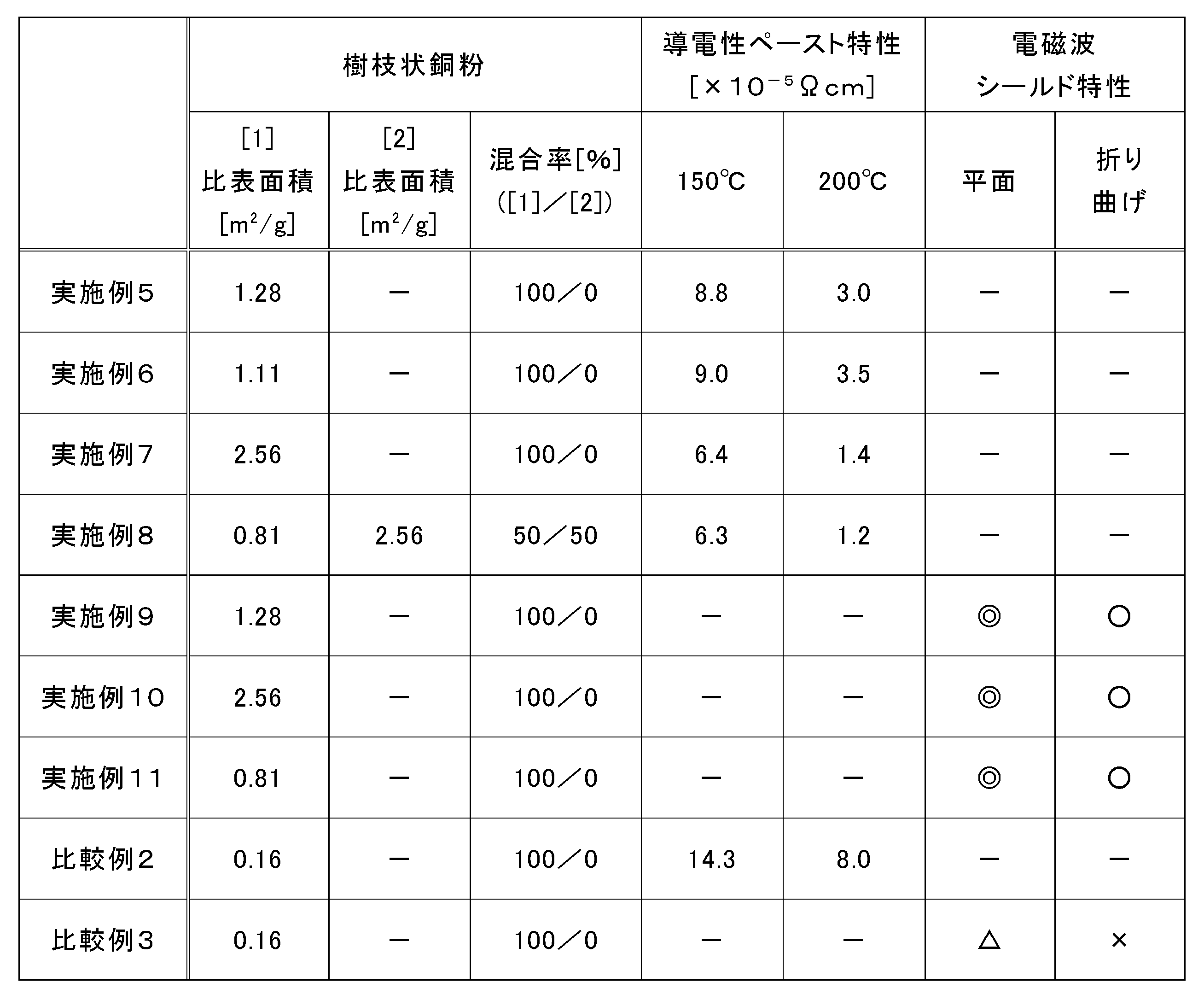
以上のように、電解液に、フェナジン構造を有するサフラニン(実施例1)、アゾベンゼン構造を有するメチルオレンジ(実施例2)、フェナジン構造とアゾベンゼン構造とを有するヤヌスグリーンB(実施例3)、及び、アゾベンゼン構造を有するメチルオレンジと、フェナジン構造とアゾベンゼン構造とを有するヤヌスグリーンBの2種(実施例4)をそれぞれ添加した実施例1~4から、これらの添加剤の濃度を変化させることにより、得られる樹枝状銅粉のBET比表面積、嵩密度、結晶子径、及びその銅粉を構成する銅粒子の断面平均厚さを制御できることが分かる。また、実施例5~11の結果から、これらBET比表面積、嵩密度、結晶子径、及び銅粒子の断面平均厚さが制御された樹枝状銅粉を金属フィラーとし、その金属フィラーを用いた導電性ペースト、電磁波シールド用の導電性塗料、及び電磁波シールド用の導電性シートでは、良好な特性を示すことが分かった。
これに対して、電解液に、添加剤として、フェナジン構造を有する化合物、アゾベンゼン構造を有する化合物、及びフェナジン構造とアゾベンゼン構造とを有する化合物を添加せず、塩化物イオンのみを添加した比較例1では、BET比表面積が実施例1~4で得られた銅粉よりも小さい銅粉しか得られないことが分かった。また、比較例2、3の結果から、その比較例1にて得られたBET比表面積の小さな銅粉を用いて導電性ペースト、電磁波シールド用の導電性塗料、及び電磁波シールド用の導電性シートとしても、十分な特性を有するものとはならないことが分かった。
Claims (9)
- 電解法により電解液から陰極上に析出させて銅粉を製造する方法であって、
前記銅粉は、
主幹と該主幹から分かれた複数の枝とを有する樹枝状の形状をなし、該主幹及び該枝は、断面平均厚さが0.02μm~5.0μmの平板状の銅粒子から構成され、
平均粒子径(D50)が1.0μm~100μmである
ことを特徴とする銅粉の製造方法。 - 前記銅粉の嵩密度が、0.5g/cm3~5.0g/cm3の範囲である
請求項1に記載の銅粉の製造方法。 - 前記銅粉のBET比表面積が、0.2m2/g~5.0m2/gである
請求項1又は2に記載の銅粉の製造方法。 - 前記銅粉のX線回折による(111)面のミラー指数における結晶子径が、80nm~300nmの範囲に属する
請求項1乃至3のいずれか1項に記載の銅粉の製造方法。 - 前記電解液は、銅イオンを含む硫酸酸性の銅電解液であり、
前記電解液に、
1mg/L~10,000mg/Lの含有量で、下記式(1)で示されるフェナジン構造を有する化合物、下記式(2)で示されるアゾベンゼン構造を有する化合物、及び下記式(3)で示される、フェナジン構造とアゾベンゼン構造とを有する化合物からなる群から選ばれる1種又は2種以上を含有させる
請求項1乃至4のいずれか1項に記載の銅粉の製造方法。

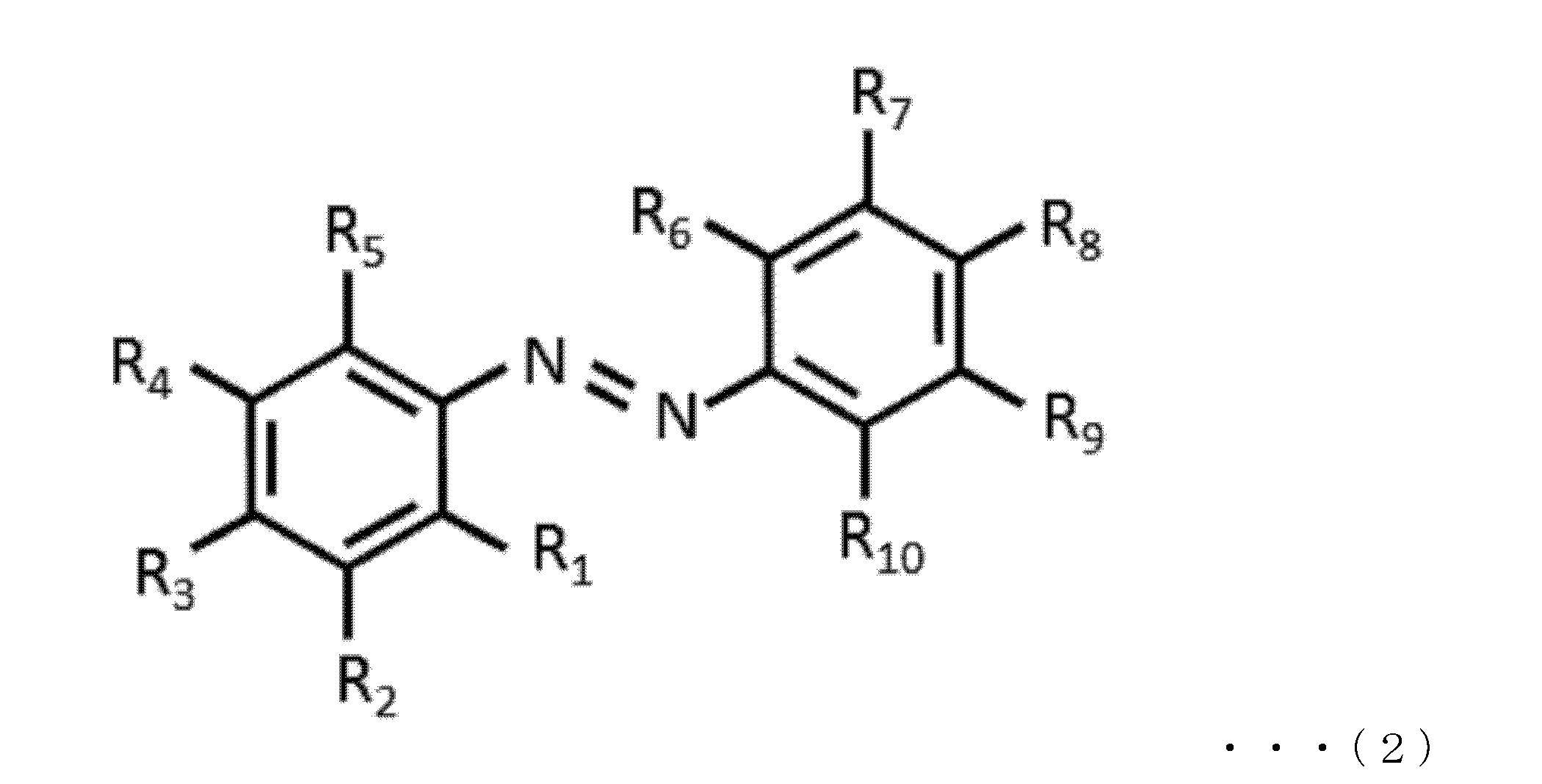

- 前記電解液に、500mg/L以下の含有量で塩化物イオンを含有させる
請求項5に記載の銅粉の製造方法。 - 前記電解液中の銅イオン濃度は、1g/L~20g/Lである
請求項5又は6に記載の銅粉の製造方法。 - 請求項1乃至7のいずれか1項に記載の銅粉の製造方法により得られる銅粉を、当該金属フィラー全体において20質量%以上の割合で含有させる
ことを特徴とする金属フィラーの製造方法。 - 請求項8に記載の金属フィラーの製造方法により得られる金属フィラーを、樹脂に混合させる
ことを特徴とする導電性ペーストの製造方法。
Applications Claiming Priority (2)
| Application Number | Priority Date | Filing Date | Title |
|---|---|---|---|
| JP2015-192149 | 2015-09-29 | ||
| JP2015192149A JP6350475B2 (ja) | 2015-09-29 | 2015-09-29 | 銅粉の製造方法、及びそれを用いた導電性ペーストの製造方法 |
Publications (1)
| Publication Number | Publication Date |
|---|---|
| WO2017057075A1 true WO2017057075A1 (ja) | 2017-04-06 |
Family
ID=58427565
Family Applications (1)
| Application Number | Title | Priority Date | Filing Date |
|---|---|---|---|
| PCT/JP2016/077534 Ceased WO2017057075A1 (ja) | 2015-09-29 | 2016-09-16 | 銅粉の製造方法、及びそれを用いた導電性ペーストの製造方法 |
Country Status (3)
| Country | Link |
|---|---|
| JP (1) | JP6350475B2 (ja) |
| TW (1) | TWI626336B (ja) |
| WO (1) | WO2017057075A1 (ja) |
Cited By (1)
| Publication number | Priority date | Publication date | Assignee | Title |
|---|---|---|---|---|
| CN110243820A (zh) * | 2019-07-01 | 2019-09-17 | 吉林化工学院 | 一种基于新型偶氮化合物的铜离子检测试纸 |
Citations (3)
| Publication number | Priority date | Publication date | Assignee | Title |
|---|---|---|---|---|
| JP2011214032A (ja) * | 2010-03-31 | 2011-10-27 | Jx Nippon Mining & Metals Corp | ブレーキパッド用銅粉 |
| WO2015115139A1 (ja) * | 2014-01-29 | 2015-08-06 | 三井金属鉱業株式会社 | 銅粉 |
| JP5907302B1 (ja) * | 2015-05-15 | 2016-04-26 | 住友金属鉱山株式会社 | 銅粉及びそれを用いた銅ペースト、導電性塗料、導電性シート、並びに銅粉の製造方法 |
Family Cites Families (1)
| Publication number | Priority date | Publication date | Assignee | Title |
|---|---|---|---|---|
| WO2014115614A1 (ja) * | 2013-01-24 | 2014-07-31 | 三井金属鉱業株式会社 | 銅粉 |
-
2015
- 2015-09-29 JP JP2015192149A patent/JP6350475B2/ja not_active Expired - Fee Related
-
2016
- 2016-09-16 WO PCT/JP2016/077534 patent/WO2017057075A1/ja not_active Ceased
- 2016-09-22 TW TW105130533A patent/TWI626336B/zh not_active IP Right Cessation
Patent Citations (3)
| Publication number | Priority date | Publication date | Assignee | Title |
|---|---|---|---|---|
| JP2011214032A (ja) * | 2010-03-31 | 2011-10-27 | Jx Nippon Mining & Metals Corp | ブレーキパッド用銅粉 |
| WO2015115139A1 (ja) * | 2014-01-29 | 2015-08-06 | 三井金属鉱業株式会社 | 銅粉 |
| JP5907302B1 (ja) * | 2015-05-15 | 2016-04-26 | 住友金属鉱山株式会社 | 銅粉及びそれを用いた銅ペースト、導電性塗料、導電性シート、並びに銅粉の製造方法 |
Cited By (1)
| Publication number | Priority date | Publication date | Assignee | Title |
|---|---|---|---|---|
| CN110243820A (zh) * | 2019-07-01 | 2019-09-17 | 吉林化工学院 | 一种基于新型偶氮化合物的铜离子检测试纸 |
Also Published As
| Publication number | Publication date |
|---|---|
| TWI626336B (zh) | 2018-06-11 |
| JP2017066461A (ja) | 2017-04-06 |
| JP6350475B2 (ja) | 2018-07-04 |
| TW201726980A (zh) | 2017-08-01 |
Similar Documents
| Publication | Publication Date | Title |
|---|---|---|
| JP5920540B1 (ja) | 銅粉及びそれを用いた銅ペースト、導電性塗料、導電性シート | |
| JP5858201B1 (ja) | 銅粉及びそれを用いた銅ペースト、導電性塗料、導電性シート | |
| JP5907301B1 (ja) | 銀コート銅粉及びそれを用いた銅ペースト、導電性塗料、導電性シート、並びに銀コート銅粉の製造方法 | |
| JP5907302B1 (ja) | 銅粉及びそれを用いた銅ペースト、導電性塗料、導電性シート、並びに銅粉の製造方法 | |
| WO2016038914A1 (ja) | 銀コート銅粉及びそれを用いた導電性ペースト、導電性塗料、導電性シート | |
| JP5858200B1 (ja) | 銅粉及びそれを用いた導電性ペースト、導電性塗料、導電性シート、帯電防止塗料 | |
| JP6274076B2 (ja) | 銅粉及びそれを用いた銅ペースト、導電性塗料、導電性シート | |
| JP6350475B2 (ja) | 銅粉の製造方法、及びそれを用いた導電性ペーストの製造方法 | |
| JP2016008333A (ja) | 銅粉及びそれを用いた銅ペースト | |
| JP6332058B2 (ja) | 銅粉、及びそれを用いた銅ペースト、導電性塗料、導電性シート | |
| WO2017057231A1 (ja) | Niコート銅粉、及びそれを用いた導電性ペースト、導電性塗料、導電性シート、並びにNiコート銅粉の製造方法 | |
| JP6332124B2 (ja) | 銅粉及びそれを用いた導電性ペースト、導電性塗料、導電性シート | |
| JP2016138301A (ja) | 樹枝状銅粉の製造方法、及びそれを用いた導電性銅ペースト、導電性塗料、導電性シート | |
| JP2017066462A (ja) | 銀コート銅粉の製造方法、及びそれを用いた導電性ペーストの製造方法 | |
| JP5994897B1 (ja) | 樹枝状銅粉の製造方法、及びその樹枝状銅粉を用いた銅ペースト、導電性塗料、導電性シート | |
| TWI541305B (zh) | Copper powder and the use of its copper paste, conductive paint, conductive film | |
| JP2018197379A (ja) | 銅粉の製造方法 | |
| JP2017066445A (ja) | ニッケルコート銅粉及びそれを用いた導電性ペースト、導電性塗料、導電性シート、並びにニッケルコート銅粉の製造方法 |
Legal Events
| Date | Code | Title | Description |
|---|---|---|---|
| 121 | Ep: the epo has been informed by wipo that ep was designated in this application |
Ref document number: 16851249 Country of ref document: EP Kind code of ref document: A1 |
|
| NENP | Non-entry into the national phase |
Ref country code: DE |
|
| 122 | Ep: pct application non-entry in european phase |
Ref document number: 16851249 Country of ref document: EP Kind code of ref document: A1 |