WO2017038993A1 - トリグリセリド生産性が改良された真核微細藻類遺伝子改変株及びその利用 - Google Patents
トリグリセリド生産性が改良された真核微細藻類遺伝子改変株及びその利用 Download PDFInfo
- Publication number
- WO2017038993A1 WO2017038993A1 PCT/JP2016/075875 JP2016075875W WO2017038993A1 WO 2017038993 A1 WO2017038993 A1 WO 2017038993A1 JP 2016075875 W JP2016075875 W JP 2016075875W WO 2017038993 A1 WO2017038993 A1 WO 2017038993A1
- Authority
- WO
- WIPO (PCT)
- Prior art keywords
- gene
- strain
- tag
- genetically modified
- protein
- Prior art date
- Legal status (The legal status is an assumption and is not a legal conclusion. Google has not performed a legal analysis and makes no representation as to the accuracy of the status listed.)
- Ceased
Links
Images



Classifications
-
- C—CHEMISTRY; METALLURGY
- C12—BIOCHEMISTRY; BEER; SPIRITS; WINE; VINEGAR; MICROBIOLOGY; ENZYMOLOGY; MUTATION OR GENETIC ENGINEERING
- C12P—FERMENTATION OR ENZYME-USING PROCESSES TO SYNTHESISE A DESIRED CHEMICAL COMPOUND OR COMPOSITION OR TO SEPARATE OPTICAL ISOMERS FROM A RACEMIC MIXTURE
- C12P7/00—Preparation of oxygen-containing organic compounds
- C12P7/64—Fats; Fatty oils; Ester-type waxes; Higher fatty acids, i.e. having at least seven carbon atoms in an unbroken chain bound to a carboxyl group; Oxidised oils or fats
- C12P7/6436—Fatty acid esters
- C12P7/6445—Glycerides
- C12P7/6463—Glycerides obtained from glyceride producing microorganisms, e.g. single cell oil
-
- C—CHEMISTRY; METALLURGY
- C12—BIOCHEMISTRY; BEER; SPIRITS; WINE; VINEGAR; MICROBIOLOGY; ENZYMOLOGY; MUTATION OR GENETIC ENGINEERING
- C12N—MICROORGANISMS OR ENZYMES; COMPOSITIONS THEREOF; PROPAGATING, PRESERVING, OR MAINTAINING MICROORGANISMS; MUTATION OR GENETIC ENGINEERING; CULTURE MEDIA
- C12N15/00—Mutation or genetic engineering; DNA or RNA concerning genetic engineering, vectors, e.g. plasmids, or their isolation, preparation or purification; Use of hosts therefor
- C12N15/09—Recombinant DNA-technology
- C12N15/11—DNA or RNA fragments; Modified forms thereof; Non-coding nucleic acids having a biological activity
- C12N15/52—Genes encoding for enzymes or proenzymes
-
- C—CHEMISTRY; METALLURGY
- C12—BIOCHEMISTRY; BEER; SPIRITS; WINE; VINEGAR; MICROBIOLOGY; ENZYMOLOGY; MUTATION OR GENETIC ENGINEERING
- C12N—MICROORGANISMS OR ENZYMES; COMPOSITIONS THEREOF; PROPAGATING, PRESERVING, OR MAINTAINING MICROORGANISMS; MUTATION OR GENETIC ENGINEERING; CULTURE MEDIA
- C12N9/00—Enzymes; Proenzymes; Compositions thereof; Processes for preparing, activating, inhibiting, separating or purifying enzymes
- C12N9/10—Transferases (2.)
- C12N9/1025—Acyltransferases (2.3)
- C12N9/1029—Acyltransferases (2.3) transferring groups other than amino-acyl groups (2.3.1)
-
- C—CHEMISTRY; METALLURGY
- C12—BIOCHEMISTRY; BEER; SPIRITS; WINE; VINEGAR; MICROBIOLOGY; ENZYMOLOGY; MUTATION OR GENETIC ENGINEERING
- C12N—MICROORGANISMS OR ENZYMES; COMPOSITIONS THEREOF; PROPAGATING, PRESERVING, OR MAINTAINING MICROORGANISMS; MUTATION OR GENETIC ENGINEERING; CULTURE MEDIA
- C12N9/00—Enzymes; Proenzymes; Compositions thereof; Processes for preparing, activating, inhibiting, separating or purifying enzymes
- C12N9/14—Hydrolases (3)
- C12N9/16—Hydrolases (3) acting on ester bonds (3.1)
-
- C—CHEMISTRY; METALLURGY
- C12—BIOCHEMISTRY; BEER; SPIRITS; WINE; VINEGAR; MICROBIOLOGY; ENZYMOLOGY; MUTATION OR GENETIC ENGINEERING
- C12N—MICROORGANISMS OR ENZYMES; COMPOSITIONS THEREOF; PROPAGATING, PRESERVING, OR MAINTAINING MICROORGANISMS; MUTATION OR GENETIC ENGINEERING; CULTURE MEDIA
- C12N9/00—Enzymes; Proenzymes; Compositions thereof; Processes for preparing, activating, inhibiting, separating or purifying enzymes
- C12N9/14—Hydrolases (3)
- C12N9/24—Hydrolases (3) acting on glycosyl compounds (3.2)
- C12N9/2402—Hydrolases (3) acting on glycosyl compounds (3.2) hydrolysing O- and S- glycosyl compounds (3.2.1)
-
- C—CHEMISTRY; METALLURGY
- C12—BIOCHEMISTRY; BEER; SPIRITS; WINE; VINEGAR; MICROBIOLOGY; ENZYMOLOGY; MUTATION OR GENETIC ENGINEERING
- C12N—MICROORGANISMS OR ENZYMES; COMPOSITIONS THEREOF; PROPAGATING, PRESERVING, OR MAINTAINING MICROORGANISMS; MUTATION OR GENETIC ENGINEERING; CULTURE MEDIA
- C12N9/00—Enzymes; Proenzymes; Compositions thereof; Processes for preparing, activating, inhibiting, separating or purifying enzymes
- C12N9/14—Hydrolases (3)
- C12N9/24—Hydrolases (3) acting on glycosyl compounds (3.2)
- C12N9/2402—Hydrolases (3) acting on glycosyl compounds (3.2) hydrolysing O- and S- glycosyl compounds (3.2.1)
- C12N9/2405—Glucanases
- C12N9/2408—Glucanases acting on alpha -1,4-glucosidic bonds
-
- C—CHEMISTRY; METALLURGY
- C12—BIOCHEMISTRY; BEER; SPIRITS; WINE; VINEGAR; MICROBIOLOGY; ENZYMOLOGY; MUTATION OR GENETIC ENGINEERING
- C12P—FERMENTATION OR ENZYME-USING PROCESSES TO SYNTHESISE A DESIRED CHEMICAL COMPOUND OR COMPOSITION OR TO SEPARATE OPTICAL ISOMERS FROM A RACEMIC MIXTURE
- C12P7/00—Preparation of oxygen-containing organic compounds
- C12P7/64—Fats; Fatty oils; Ester-type waxes; Higher fatty acids, i.e. having at least seven carbon atoms in an unbroken chain bound to a carboxyl group; Oxidised oils or fats
- C12P7/6436—Fatty acid esters
- C12P7/6445—Glycerides
-
- C—CHEMISTRY; METALLURGY
- C12—BIOCHEMISTRY; BEER; SPIRITS; WINE; VINEGAR; MICROBIOLOGY; ENZYMOLOGY; MUTATION OR GENETIC ENGINEERING
- C12Y—ENZYMES
- C12Y203/00—Acyltransferases (2.3)
- C12Y203/01—Acyltransferases (2.3) transferring groups other than amino-acyl groups (2.3.1)
- C12Y203/0102—Diacylglycerol O-acyltransferase (2.3.1.20)
-
- C—CHEMISTRY; METALLURGY
- C12—BIOCHEMISTRY; BEER; SPIRITS; WINE; VINEGAR; MICROBIOLOGY; ENZYMOLOGY; MUTATION OR GENETIC ENGINEERING
- C12Y—ENZYMES
- C12Y301/00—Hydrolases acting on ester bonds (3.1)
- C12Y301/02—Thioester hydrolases (3.1.2)
- C12Y301/02014—Oleoyl-[acyl-carrier-protein] hydrolase (3.1.2.14), i.e. ACP-thioesterase
-
- C—CHEMISTRY; METALLURGY
- C12—BIOCHEMISTRY; BEER; SPIRITS; WINE; VINEGAR; MICROBIOLOGY; ENZYMOLOGY; MUTATION OR GENETIC ENGINEERING
- C12Y—ENZYMES
- C12Y302/00—Hydrolases acting on glycosyl compounds, i.e. glycosylases (3.2)
- C12Y302/01—Glycosidases, i.e. enzymes hydrolysing O- and S-glycosyl compounds (3.2.1)
- C12Y302/0102—Alpha-glucosidase (3.2.1.20)
Definitions
- TAG triacylglycerol
- ⁇ microalgae '' unicellular photosynthetic organisms
- ⁇ lipids '' compounds such as TAG that liberates fatty acids by hydrolysis
- ⁇ lipids '' compounds such as TAG that liberates fatty acids by hydrolysis
- microalgae accumulate a part of the assimilation products generated by photosynthesis as starch or TAG.
- the accumulated amount of starch and TAG varies depending on the type of microalgae, and also varies depending on the culture conditions in the same organism.
- the rate at which photosynthetic assimilation products are converted to starch and TAG differs from the rate at which the storage material once synthesized is degraded, depending on the species and culture conditions, and this is the difference in the accumulated amount of starch and TAG. It seems to appear.
- TAG raw materials are glycerol-3-phosphate and fatty acid.
- Glycerol-3-phosphate is synthesized by glycerol kinase using glycerol and ATP as substrates.
- fatty acids are biosynthesized in the chloroplast.
- the first reaction of fatty acid biosynthesis is catalyzed by acyl-CoA carboxylase to produce malonyl-CoA from acetyl-CoA.
- Malonyl CoA reacts with acyl carrier protein (ACP) to form malonyl ACP.
- ACP acyl carrier protein
- Palmitic acid binds to CoA to form palmityl CoA, which moves from the chloroplast to the endoplasmic reticulum. Palmityl CoA is also produced by CoA ester of oleic acid (oleyl CoA: C18: 1), which is a monounsaturated fatty acid, by the action of long-chain fatty acid elongation enzymes (very long fatty acid elongase) and desaturase (fatty acid desaturase). It is done. Palmitic acid and oleic acid are the highest content fatty acids in many organisms.
- TAG biosynthesis is performed on the endoplasmic reticulum membrane.
- an acyl group of acyl CoA is added to the sn-1 position of glycerol-3-phosphate by glycerol-3-phosphate acyltransferase to produce lysophosphatidic acid To do.
- the acyl group of acyl CoA is added to the sn-2 position of lysophosphatidic acid by lysophosphatidic acid acyltransferase to produce phosphatidic acid.
- DGAT diacylglycerol acyltransferase
- TAG productivity the amount of TAG produced per unit time and light-receiving area of microalgae
- Patent Document 2 encodes DGAT, phospholipid: diacylglycerol acyltransferase or phosphatidic acid phosphatase in Nannochloropsis belonging to Heteromonyphyta and Eustigmataceae. To increase the TGA content. However, in the said patent document, the detail of the effect of these gene transfer is not shown by the Example.
- Chlamydomonas reinhardtii which belongs to the green plant subfamily and green algae plant gate (Chlorophyta: hereinafter referred to as “green algae”), has a plurality of DGAT2 genes (homologous genes). No increase in lipid content was observed even with high expression. On the other hand, when one of Chlamydomonas DGAT2 homologous genes was expressed in yeast, the yeast transformant showed higher TAG productivity than the wild-type yeast (Non-patent Document 2).
- Non-patent Document 5 A gene encoding glycerol-3-phosphate acyltransferase, the first enzyme in the Kennedy pathway for TGA synthesis, was isolated from Lobosphaera incisa, a green alga, and introduced and expressed in Chlamydomonas. Productivity has increased significantly (Non-patent Document 5).
- glycerol kinase which synthesizes glycerol-3-phosphate, which is a substrate of the above-mentioned glycerol-3-phosphate acyltransferase, is highly expressed in the diatom Fisturira (solaris) JPCC DA0580 strain to produce TAG Slightly increased but increased (Non-patent Document 6).
- the acyl ACP thioesterase gene is used to promote the synthesis of rather short fatty acids (C10, C12 and C14) rather than fatty acids with a typical carbon chain length (C16 and C18).
- Lipids containing fatty acids such as C10 and C12 accumulate in the seeds of the camphoraceae plant Umbellularia ⁇ ⁇ californica, which is due to acyl ACP thioesterase that hydrolyzes the acyl ACP with C12 carbon chain of this plant. Has been revealed.
- the cDNA of U When the cDNA of U.
- Non-patent Document 8 californica acyl ACP thioesterase gene, which has a substrate specificity of hydrolyzing a slightly shorter fatty acid, was introduced into Escherichia coli and expressed highly, free fatty acids of C12 and C14 were synthesized and extracellular.
- Patent Document 6 Pseudococcomyxa sp. KJ strain (hereinafter referred to as ⁇ KJ strain '') belonging to the class of green and trebouxiophyceae is a unicellular green algae with very high TAG productivity isolated from hot spring water. (Patent Document 6) and can be cultured in an open culture system shown in Patent Document 7.
- the KJ strain is a strain suitable for large-scale cultivation outdoors, and can be said to be one of the most promising strains as a raw material for the commercial production of lipids.
- it has been desired to further improve the TAG productivity and reduce the TAG production cost.
- the present invention has an object to provide a TAG production method using eukaryotic microalgae genetically modified strains produced by genetic manipulation of eukaryotic microalgae including the KJ strain with improved TAG productivity. To do.
- the present invention includes the following.
- the eukaryotic microalgae genetically modified strain which is a protein having an amino acid sequence having at least 50% sequence identity with and having alpha glycosidase activity.
- a TAG production method comprising a step of culturing the eukaryotic microalgae genetically modified strain of any one of (1) to (8).
- the present invention makes it possible to produce a eukaryotic microalgae genetically modified strain with improved TAG productivity.
- culturing the eukaryotic microalgae genetically modified strain according to the present invention it is possible to significantly reduce the production cost of lipids used for biofuels and the like.
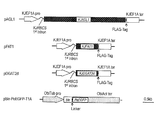
- FIG. 3 is a schematic diagram showing the structures of pAGL1, pFAT1, pDGAT2d and pble-PeEGFP-T1A plasmids.
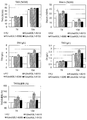
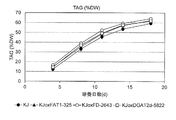
- the KJoxDGAT2d-5822 strain with the KJDGAT2d cDNA expression cassette introduced into the KJ strain and the KJ strain, the KJoxFAT1-325 strain with the KJFAT1 cDNA expression cassette introduced into the KJ strain, and the KJoxFD-2264 strain with the KJDGAT2d cDNA expression cassette introduced into the KJoxFAT1-325 strain It is a graph which shows the average value of TAG content rate (% DW) per cell dry weight, and a standard error (n
- 3).
- a FAT1 gene and / or a DGAT2 gene is further introduced into a wild-type eukaryotic algal strain or a mutant derived from the wild strain (hereinafter referred to as a strain to be transfected).
- a strain to be transfected a wild-type eukaryotic algal strain or a mutant derived from the wild strain.
- TAG productivity of eukaryotic microalgae One of the most important issues to reduce the production cost of biofuels using TAG derived from eukaryotic microalgae is the significant improvement of TAG productivity of eukaryotic microalgae.
- the present inventors have found that the TAG productivity of this green algae can be greatly improved by highly expressing the gene encoding the AGL1 protein, FAT1 protein and / or DGAT2 protein derived from the KJ strain in the KJ strain. It came to complete.
- the FAT1 gene and / or the DGAT2 gene are highly expressed.
- the TAG productivity of eukaryotic microalgae and cultivating the TAG productivity-enhanced strain, the production cost of TAG used for biofuel and the like can be greatly reduced.
- examples of the eukaryotic microalgae include eukaryotic microalgae belonging to green algae, diatoms (diatom or Bacillariophyceae), true eye-point algae (Eustigmatophyceae), and the like.
- green algae examples include green algae belonging to the Treboxia algae network.
- examples of green algae belonging to the treboxya algae network include, for example, the genus Trebouxia, Chlorella, Botryococcus, Choricystis, Coccomyxa, and Pseudococy.
- Green algae belonging to Specific strains belonging to the treboxya algae include the KJ strain. KJ Co., Ltd. was established on June 4, 2013 (NITE-IPOD), the National Institute for Product Evaluation and Technology (NITE-IPOD), 2-5 Kazusa Kama feet, Kisarazu City, Chiba Prefecture 292-0818, Japan. No. -8 ⁇ 120) was deposited under the accession number FERM P-22254 and transferred to the international deposit under the Budapest Treaty under the accession number FERM BP-22254.
- examples of diatoms include eukaryotic microalgae belonging to the genus Fistulifera, Feodactilam, Thalassiosira, Cyclotella, Cylindrothica, Skeletonema, etc. be able to.
- examples of the true eye point algae include the genus Nannochloropsis.
- the eukaryotic microalgae-modified strain according to the present invention can be obtained by highly expressing the gene according to the present invention using the above-described eukaryotic microalgae as a parent strain.
- examples of the AGL1 gene include an AGL1 gene derived from the KJ strain (gene base sequence: SEQ ID NO: 1, mRNA base sequence: SEQ ID NO: 2, amino acid sequence: SEQ ID NO: 3) or a homologue thereof.
- the AGL1 gene includes at least 50%, preferably at least 50%, preferably the amino acid sequence shown in SEQ ID NO: 4 (that is, a highly conserved amino acid sequence corresponding to the 215th to 783rd amino acid sequence in SEQ ID NO: 3).
- a protein having an amino acid sequence with at least 65%, particularly preferably at least 80%, most preferably at least 85%, at least 90%, at least 95%, 100% sequence identity and having alpha-glycosidase activity A gene coding for.
- the AGL1 gene includes at least 50%, preferably at least 65%, particularly preferably at least 80%, most preferably at least 85%, at least 90%, at least 95% of the amino acid sequence shown in SEQ ID NO: 3.
- the alpha glycosidase activity means an enzyme activity that hydrolyzes starch from the non-reducing end and cuts out D-glucose.
- the FAT1 gene examples include the FAT1 gene derived from the KJ strain (gene base sequence: SEQ ID NO: 5, mRNA base sequence: SEQ ID NO: 6, amino acid sequence: SEQ ID NO: 7) or a homologue thereof.
- the FAT1 gene includes an amino acid sequence shown in SEQ ID NO: 8 (that is, a highly conserved amino acid sequence corresponding to the 78th to 283rd amino acid sequence in SEQ ID NO: 7) and at least 50%, preferably Have an amino acid sequence with at least 65%, particularly preferably at least 80%, most preferably at least 85%, at least 90%, at least 95%, 100% sequence identity and have acyl ACP thioesterase activity
- Examples include genes encoding proteins.
- the FAT1 gene includes at least 50%, preferably at least 65%, particularly preferably at least 80%, most preferably at least 85%, at least 90%, at least 95% of the amino acid sequence shown in SEQ ID NO: 7.
- Examples thereof include a gene encoding a protein having an amino acid sequence having 100% sequence identity and having acyl ACP thioesterase activity.
- the acyl ACP thioesterase activity means an enzyme activity that hydrolyzes the thioester bond of acyl-ACP.
- Examples of the DGAT2 gene include a DGAT2d gene derived from the KJ strain (gene base sequence: SEQ ID NO: 9, mRNA base sequence: SEQ ID NO: 10, amino acid sequence: SEQ ID NO: 11) or a homologue thereof.
- the amino acid sequence shown in SEQ ID NO: 12 that is, a highly conserved amino acid sequence corresponding to the 123rd to 322rd amino acid sequence in SEQ ID NO: 11
- at least 50% preferably Having an amino acid sequence with at least 65%, particularly preferably at least 80%, most preferably at least 85%, at least 90%, at least 95%, 100% sequence identity and having diacylglycerol acyltransferase activity
- the DGAT2 gene is at least 50%, preferably at least 65%, particularly preferably at least 80%, most preferably at least 85%, at least 90%, at least 95% with the amino acid sequence shown in SEQ ID NO: 11.
- Examples thereof include a gene encoding a protein having an amino acid sequence having 100% sequence identity and having diacylglycerol acyltransferase activity.
- the diacylglycerol acyltransferase activity means an enzyme activity in which an acyl group derived from acyl CoA is added to diacylglycerol and TAG is synthesized.
- the gene according to the present invention may be derived, for example, from a strain belonging to the green algae described above, preferably a strain belonging to the Treboxya algae, and particularly preferably a strain belonging to the genus Kokomixa or Pseudococcus.
- AGL1 gene, FAT1 gene and DGAT2 gene are highly expressed.
- the most common method is to test a construct that is operably linked to a gene to be highly expressed (e.g., upstream of the gene) with a promoter that ensures high gene expression (constitutively highly expressed promoter). It is a method of constructing in a tube and introducing it into a host. Depending on the purpose, promoters of different strength and properties (constitutive or inducible) can be used.
- the mRNA precursor After transcription, the mRNA precursor undergoes post-transcriptional modifications such as capping, splicing, and poly (A) addition, and then moves from the nucleus to the cytoplasm. Attempts to increase the efficiency of this post-transcriptional modification and highly express the gene have not been made as much as the use of promoters.
- post-transcriptional modifications such as capping, splicing, and poly (A) addition
- the efficiency of translation initiation is influenced by the sequence upstream of the initiation codon (5'-UTR) (Kim et al., 2014, Nucleic Acids Res, 42, 485). It is possible to improve.
- techniques for achieving high expression by optimizing the codon usage of mRNA are widely used. That is, a codon-optimized gene can be produced in vitro and introduced into a host to increase the amount of protein to be translated.
- the gene according to the present invention of KJ strain is induced by nitrogen deficiency or salt stress. This induction is considered to be controlled by a transcription factor that positively or negatively regulates the expression of the gene.
- a transcription factor that positively or negatively regulates the expression of the gene.
- high expression of the gene according to the present invention using this mechanism can be achieved.
- the target gene when a gene to be highly expressed is positively controlled by a transcription factor, the target gene can also be highly expressed by highly expressing the transcription factor.
- a gene to be highly expressed is negatively controlled by a transcription factor, conversely, high expression of the target gene can be achieved by losing the expression or activity of the negative transcription factor. .
- high expression of the target gene can also be achieved by manipulating a signal transduction system for activating or inactivating the transcription factor.
- the gene according to the present invention was cloned downstream of a strong promoter (for example, the promoter of the EF1 ⁇ gene derived from the KJ strain (SEQ ID NO: 13)) and It is a method for producing a eukaryotic microalgae genetically modified strain according to the present invention by introducing it into a eukaryotic microalgae such as a strain.
- a strong promoter for example, the promoter of the EF1 ⁇ gene derived from the KJ strain (SEQ ID NO: 13)
- the KJoxAFD-41417 strain in which all three genes according to the present invention derived from the KJ strain shown in Examples are highly expressed in the KJ strain is Heisei.
- NITE-IPOD National Institute of Technology and Evaluation (NITE-IPOD) (Room 2-5-8, Kazusa Kamashi, Kisarazu 292-0818, Japan) Has been deposited under the accession number FERM P-22294 and has been transferred to the international deposit under the Budapest Treaty under the accession number FERM BP-22294.
- the present invention is a method for producing TAG by mass-culturing the eukaryotic microalgae genetically modified strain according to the present invention described above.
- the mass culture method the culture method described in Patent Document 7 that has already been established can be used. Specifically, it is a method of culturing microalgae using a medium having urea as a nitrogen source and a pH of 4 or less. According to this culturing method, by using urea as the nitrogen source, fluctuations in pH due to consumption of nitrogen content are minimized. In addition, even when CO 2 is introduced into a culture solution having a pH of 4 or less, bicarbonate ions are hardly generated, so that the pH of the culture solution is hardly changed. Thus, since the pH of the culture solution can be stably maintained at 4 or less, the growth of other microalgae and protists can be suppressed.
- a lipid containing TAG can be obtained from the culture by, for example, hexane extraction.
- the AGL1 gene is an AGL1 gene derived from the KJ strain (gene base sequence: SEQ ID NO: 1, mRNA base sequence: SEQ ID NO: 2, amino acid sequence: SEQ ID NO: 3), and the FAT1 gene is KJ Strain-derived FAT1 gene (gene base sequence: SEQ ID NO: 5, mRNA base sequence: SEQ ID NO: 6, amino acid sequence: SEQ ID NO: 7), and DGAT2 gene is a DGAT2d gene (gene base sequence: SEQ ID NO: 9, mRNA base sequence: SEQ ID NO: 10, amino acid sequence: SEQ ID NO: 11).
- Example 1 Analysis of genes involved in TAG productivity by RNA-seq
- TAG production is promoted by adding about 100 mM NaCl to the medium under nitrogen deficient conditions or in addition to it. Can do.
- KJ strain and the closely related Pseudochoricystis ellipsoidea Obi strain (hereinafter referred to as “Obi strain”: Satoh et al., 2010, J Jpn Inst Energ, 89, 909)
- Obi strain Satoh et al., 2010, J Jpn Inst Energ, 89, 909
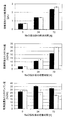
- the black bar graph indicates the results when no NaCl is added
- the white bar graph indicates the results when 100 mM NaCl is added.
- the oil content was measured using NMR under the following conditions. The cells were harvested by centrifugation at 8,000 rpm for 5 minutes or longer, freeze-dried, about 40 mg was weighed, and the oil content per unit cell dry weight was measured with a model MQC oil content measuring device manufactured by Oxford Instrumets. The calibration curve was prepared using Japanese Pharmacopoeia olive oil as a standard substance.
- amino acid sequences of enzymes involved in lipid metabolism and starch metabolism were obtained using a plant metabolic pathway database (http://www.plantcyc.org/). Using these amino acid sequences as queries, a Tblastn search is performed on the genome sequence of KJ and Obi strains or the mRNA sequence obtained by transcriptome analysis (RNA-seq) to determine lipid metabolism and starch in KJ and Obi strains. The amino acid sequence of the enzyme involved in metabolism and its gene were identified. In addition, the expression level and expression change of these genes were analyzed using RNA-seq results.
- DGAT2d one of the synonymous genes of acyl ACP thioesterase (FAT1) gene that works in the final step of fatty acid synthesis and diacylglycerol acyltransferase (DGAT) that works in the final step of Kennedy pathway for TAG synthesis Expression was also strongly induced by NaCl addition.
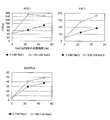
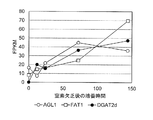
- FIG. 2 shows the expression of AGL1, FAT1, and DGAT2d genes of the KJ strain when NaCl was added at 0 and 100 mM.
- the vertical axis of the graph is FPKM (Fragments Per Kilobase of transcript per Million mapped reads).
- the expression of FAT1 gene, DGAT2d gene, and AGL1 gene increased as the culture time passed without adding NaCl, but the expression level further increased when NaCl was added. The increase in gene expression in the absence of NaCl is probably caused by a decrease in the nitrogen concentration in the medium.
- MA5 is composed of 18 mM NaNO 3 , 0.4 mM MgSO 4 , 60 ⁇ M CaCl 2 , 0.26 mM KH 2 PO 4 , 0.26 mM K 2 HPO 4 , 20 mM HEPES-KOH (pH 7.0), 0.4% (v / v ) Fe solution, 0.1% (v / v) Trace elements.
- the composition of the stock solution used for the preparation of this medium was as follows: Fe solution was 3 g / L, citric acid, 4.9 g / L ammonium iron citrate, 0.5 g / L, EDTA, and trace elements were 70 mg / L H 3 BO 3 , 150 mg / L MnSO 4 ⁇ 5H 2 O, 300 mg / L ZnSO 4 ⁇ 7H 2 O, 300 mg / L CuSO 4 ⁇ 5H 2 O, 70 mg / L CoCl 2 ⁇ 6H 2 O, 3 mg / L Na 2 MoO 4 .
- NaNO 3 was not added, but NaCl was added so that the concentration of Na + was the same.
- Each of these genes encodes an enzyme that acts in the final stages of fatty acid synthesis, TAG synthesis, and starch degradation, so by expressing these genes at high levels, strains with higher TAG productivity could be obtained. We thought that it might be obtained and decided to produce a high expression strain.
- Example 2 Preparation of AGL1 gene, FAT1 gene, DGAT2d gene cDNA high expression strain KJ strain in order to highly express cDNA of AGL1 gene, FAT1 gene, DGAT2d gene singly or simultaneously in KJ strain
- PAGL1, pFAT1, and pDGAT2d plasmids were prepared by inserting the cDNAs of the AGL1 gene, FAT1 gene, and DGAT2d gene between the promoter and terminator of KJEF1A (FIG. 4).
- KJEF1A pro and KJEF1A ter are sequences containing the promoter and terminator of the EF1A gene (KJEF1A) of the KJ strain, respectively.
- KJRBCS indicates the RuBisCO small subunit gene of the KJ strain, and the first intron sequence (SEQ ID NO: 15) is inserted between the promoter and cDNA.
- the middle part of each plasmid shows the cDNA sequence of each gene.
- FLAG-Tag is a DNA fragment encoding a peptide sequence of N-terminal-DYKDDDDK-C-terminal.
- ObiTub pro and ObiAct ter are sequences containing the Tubulin gene promoter and Actin gene terminator of the Obi strain, respectively (Imamura et al., 2012, J Gen Appl Microbiol, 58, 1).
- ble is a resistance gene for bleomycin and zeomycin [trade name Zeocin TM ] (Stevens et al., 1996, Mol. Gen. Genet. 251, 23-30.).
- Linker is a DNA fragment encoding a peptide sequence of N-terminal-GGSGGR-C-terminal.
- PeEGFP is a sequence in which the codon usage frequency of EGFP (enhanced GFP: highly sensitive GFP) is optimized for expression in an Obi strain.
- plasmids were co-introduced into the KJ strain together with the pG418-T1A plasmid (Kasai et al., 2015, Biotechnol Biofuels, 8, 94) that confers G418 resistance using particle bombardment, and G418 resistant colonies were selected.
- Example 3 Evaluation of TAG productivity of KJAGL1 cDNA high-expressing strain
- the expression of KJAGL1 cDNA in six transformants obtained by introducing the pAGL1 plasmid was analyzed by real time PCR.
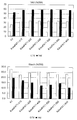
- TAG productivity on the 13th day of culture was about 1.3 times that of the wild strain (FIG. 5).
- the remaining strains the TAG content was slightly increased and the starch content was slightly decreased, but the TAG productivity was almost the same as that of the wild strain.
- the TAG productivity is the TAG production amount (%) of the transformant when the TAG production amount (g / L) of the wild strain (KJ) is 100%.
- each strain was simultaneously cultured in 1/2 DENSO medium and sampled on the 7th day (7d) and 13th day (13d).
- the DENSO medium has almost the same composition as the A6 medium, but the concentrations of (NH 4 ) 2 SO 4 and (NH 2 ) 2 CO are 863 ⁇ M and 2.38 mM, respectively.
- 1/2 DENSO medium is obtained by diluting DENSO medium twice with distilled water.
- TAG productivity was evaluated for 18 transformants obtained by introducing the pFAT1 plasmid.
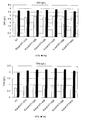
- TAG productivity was about 1.2 on the 7th day of culture. It increased to 1.3 times and increased to about 1.1 to 1.2 times on the 14th day (Fig. 6).
- a decrease in starch was observed at the same time as an increase in TAG, so it was considered that an increase in TAG due to introduction of the pFAT1 plasmid was accompanied by a decrease in starch (FIG. 6).
- each strain was simultaneously cultured in 1/2 DENSO medium and sampled on day 7 (7d) and day 14 (14d).
- Example 6 Preparation of a strain in which multiple cDNAs are simultaneously highly expressed Among the pFAT1 plasmid transformants, the pDGAT2d plasmid and pble-PeEGFP were transformed into the KJoxFAT1-325 strain (Fig. 6) that had the highest TAG productivity on the 7th day. -T1A plasmid was co-introduced to select 228 Zeo resistant colonies. When the insertion of the KJDGAT2d cDNA expression cassette was analyzed by PCR, it was confirmed that the full length of the KJDGAT2d cDNA expression cassette was inserted in 13 strains (5.7%).
- transformants (AGL1 & FAT1, AGL1 &) that combine three gene cDNAs in four ways DGAT2d, FAT1 and DGAT2d, AGL1 and FAT1 and DGAT2d).
- the pFAT1 plasmid was co-introduced into the KJ strain together with the pble-PeEGFP-T1A plasmid into the KJoxAGL1-6060 strain, which had the highest TAG productivity among the pAGL1 plasmid transformants, and 237 Zeocin (Zeo) resistant colonies were selected.
- Example 7 Evaluation of TAG productivity of a strain in which a plurality of cDNAs are highly expressed
- the construction procedure of the transformant is shown below:
- the name of the strain constructed by introducing the cDNA expression cassette shown in parentheses into the KJ strain is shown.
- a KJDGAT2d325 cDNA expression cassette was again introduced into the KJoxFAT1-325 strain to produce the KJoxFD-2643 strain.
- the name of the strain prepared by introducing only the KJFAT1 cDNA expression cassette or only the KJDGAT2d cDNA expression cassette into the KJoxAGL1-6060 strain is not shown.
- the KJFAT1 cDNA expression cassette and the KJDGAT2d cDNA expression cassette were simultaneously introduced into the KJoxAGL1-6060 strain to prepare the KJoxAFD-41417 strain.
- the KJoxFAT1-325 and KJoxDGAT2d-5822 strains had a higher TAG content than the wild strain, whereas the KJoxFD-2643 strain had a higher TAG content than those strains (FIG. 8). That is, high expression of FAT1 and DGAT2d additively increased the TAG content of the KJ strain.
- Each strain was simultaneously cultured in 1/2 DENSO medium and sampled on days 4, 8, 11, 14, and 18 of the culture.
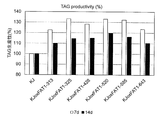
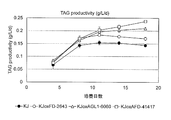
- the TAG productivity of the KJoxAGL1-6060 strain which is a KJAGL1 cDNA expression cassette introduced strain, was about 30% higher than that of the wild strain (FIG. 5). 17 strains and 18 strains in which only the KJFAT1 cDNA expression cassette or only the KJDGAT2d cDNA expression cassette was introduced into the KJoxAGL1-6060 strain were isolated, and the TAG productivity of these strains was examined. Among these expression cassette-introduced strains, no TAG productivity significantly higher than that of the parent strain KJoxAGL1-6060 was found.
- the KJoxAFD-41417 strain in which the KJFAT1 cDNA expression cassette and the KJDGAT2d cDNA expression cassette were simultaneously introduced into the KJoxAGL1-6060 strain, had a much higher productivity than the parent strain, as described below.
Landscapes
- Chemical & Material Sciences (AREA)
- Life Sciences & Earth Sciences (AREA)
- Health & Medical Sciences (AREA)
- Organic Chemistry (AREA)
- Engineering & Computer Science (AREA)
- Genetics & Genomics (AREA)
- Zoology (AREA)
- Wood Science & Technology (AREA)
- Bioinformatics & Cheminformatics (AREA)
- General Engineering & Computer Science (AREA)
- Biochemistry (AREA)
- General Health & Medical Sciences (AREA)
- Biotechnology (AREA)
- Biomedical Technology (AREA)
- Microbiology (AREA)
- Molecular Biology (AREA)
- Medicinal Chemistry (AREA)
- Oil, Petroleum & Natural Gas (AREA)
- Chemical Kinetics & Catalysis (AREA)
- General Chemical & Material Sciences (AREA)
- Biophysics (AREA)
- Plant Pathology (AREA)
- Physics & Mathematics (AREA)
- Cell Biology (AREA)
- Preparation Of Compounds By Using Micro-Organisms (AREA)
- Micro-Organisms Or Cultivation Processes Thereof (AREA)
Abstract
Description
リン脂質+1,2-ジアシルグリセロール=リゾリン脂質+TAG
遺伝子組換え技術を用いて、このTAG合成に関わる酵素活性を上昇させることにより、微細藻類の単位時間当たり及び単位受光面積当たりのTAG生産量(以降、「TAG生産性」と呼ぶ)を改良し、バイオディーゼル生産コストの削減に貢献しようという研究が既に幾つか行われている。
(1)AGL1タンパク質をコードする遺伝子を高発現させた真核微細藻類遺伝子改変株であって、親株と比較してTAG生産性が向上しており、前記AGL1タンパク質が配列番号4に示すアミノ酸配列と少なくとも50%の配列同一性を有するアミノ酸配列を有し、且つアルファ・グリコシダーゼ活性を有するタンパク質である、前記真核微細藻類遺伝子改変株。
(2)さらに、FAT1タンパク質をコードする遺伝子及び/又はDGAT2タンパク質をコードする遺伝子を高発現させた、(1)記載の真核微細藻類遺伝子改変株であって、前記FAT1タンパク質が配列番号8に示すアミノ酸配列と少なくとも50%の配列同一性を有するアミノ酸配列を有し、且つアシルACPチオエステラーゼ活性を有するタンパク質であり、前記DGAT2タンパク質が配列番号12に示すアミノ酸配列と少なくとも50%の配列同一性を有するアミノ酸配列を有し、且つジアシルグリセロールアシル転移酵素活性を有するタンパク質である、前記真核微細藻類遺伝子改変株。
(3)前記遺伝子が、遺伝子高発現を担保するプロモーターに機能的に連結されている、(1)又は(2)記載の真核微細藻類遺伝子改変株。
(4)トレボキシア藻網に属する、(1)~(3)のいずれか1記載の真核微細藻類遺伝子改変株。
(5)コッコミクサ(Coccomyxa)属又はシュードコッコミクサ(Pseudococcomyxa)属に属する、(4)記載の真核微細藻類遺伝子改変株。
(6)前記遺伝子が、緑藻に属する株に由来する、(1)~(5)のいずれか1記載の真核微細藻類遺伝子改変株。
(7)前記遺伝子が、トレボキシア藻網に属する株に由来する、(6)記載の真核微細藻類遺伝子改変株。
(8)前記遺伝子が、コッコミクサ属又はシュードコッコミクサ属に属する株に由来する、(7)記載の真核微細藻類遺伝子改変株。
(9)(1)~(8)のいずれか1記載の真核微細藻類遺伝子改変株を培養する工程を含む、TAG生産方法。
多くの微細藻類では、窒素欠乏条件で、あるいはそれに加えNaClを100 mM程度培地に添加することによって、TAG生産を促進することができる。KJ株及びKJ株に近縁のシュードコリシスティス・エリプソイディア(Pseudochoricystis ellipsoidea)Obi株(以下、「Obi株」と呼ぶ:Satoh et al., 2010, J Jpn Inst Energ, 89, 909)においても、窒素欠乏条件下での培養、及びNaCl添加後の培養の双方において、TAG含有量の増加が見られ、一方でデンプンの蓄積量は減少した。100 mM NaCl添加後のKJ株培養での増殖、TAG及びデンプン含有量の変化を図1に示す。
KJ株内でAGL1遺伝子、FAT1遺伝子、DGAT2d遺伝子のcDNAを単独で、あるいは複数を同時に高発現させるために、KJ株の翻訳伸長因子のαサブユニットであるEF1αをコードする遺伝子(以降、「KJEF1A」と呼ぶ)のプロモーター(配列番号13)とターミネーター(配列番号14)とを利用した。AGL1遺伝子、FAT1遺伝子及びDGAT2d遺伝子それぞれのcDNAを、KJEF1Aのプロモーターとターミネーターとの間に挿入したpAGL1、pFAT1及びpDGAT2dプラスミドを作製した(図4)。
pAGL1プラスミドを導入して得られた6株の形質転換体におけるKJAGL1 cDNAの発現を、Real time PCRで解析した。最もKJAGL1 cDNAの発現が高かったKJoxAGL1-6060株(oxはoverexpression line:高発現株を示す)では、培養13日目のTAG生産性が野生株の約1.3倍であった(図5)。残りの株については、TAG含量が若干上昇し、デンプン含量が若干減少したが、TAG生産性は野生株とほぼ同等であった。
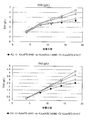
pFAT1プラスミドを導入して得られた形質転換体18株についてTAGの生産性を評価した。18株中12株でTAG含有率が増加し、そのうち細胞乾燥重量の減少があまり見られなかった(すなわち、増殖が悪くならなかった)6株では、培養7日目にTAG生産性が約1.2~1.3倍に、14日目で約1.1~1.2倍に増加していた(図6)。このとき、TAGの増加と同時にデンプンの減少が見られたため、pFAT1プラスミドの導入によるTAGの増加はデンプンの減少を伴うと考えられた(図6)。本実施例では、各株は1/2 DENSO培地で同時に培養し、7日目(7d)と14日目(14d)にサンプリングを行った。
pDGAT2dプラスミドの導入で得られた形質転換体6株のうち4株(KJoxDGAT2d-567, 5617, 5650, 5822)において、細胞乾燥重量当たりのTAG含有率に有意な増加が見られ(P < 0.01, Student's t-test)、培養7日目で野生株の約1.2倍、14日目で約1.1倍に増加した(図7)。このとき、TAGの増加が見られた4株においてデンプン含有率が減少していた(P < 0.05, Student's t-test)ことから、KJDGAT2d cDNAの高発現によるTAGの増加はデンプンの減少を伴うと考えられた(図7)。本実施例では、各株は1/2 DENSO培地で同時に培養し、7日目と14日目にサンプリングを行った。図7において、棒グラフとエラーバーは独立な実験で得られたサンプルの平均値と標準誤差(n = 3-6)を示す。
pFAT1プラスミド形質転換体のうち、7日目におけるTAG生産性が最も高かったKJoxFAT1-325株(図6)にpDGAT2dプラスミドとpble-PeEGFP-T1Aプラスミドとを共導入し、Zeo耐性コロニーを228個選抜した。そして、KJDGAT2d cDNA発現カセットの挿入をPCRで解析したところ、13株(5.7%)でKJDGAT2d cDNA発現カセットの全長が挿入されていることが確認できた。
実施例6に示すように、KJoxFAT1-325株(図6)にKJDGAT2d cDNA発現カセットを導入した株、すなわち、KJFAT1 cDNAとKJDGAT2d cDNAとを高発現させた13株のうち、最もTAG生産性が高かったKJoxFD-2643株について詳しく解析を行った。また、下記に、形質転換体の構築手順を示す:

FERM BP-22294
本明細書で引用した全ての刊行物、特許及び特許出願はそのまま引用により本明細書に組み入れられるものとする。
Claims (9)
- AGL1タンパク質をコードする遺伝子を高発現させた真核微細藻類遺伝子改変株であって、親株と比較してトリアシルグリセロール(TAG)生産性が向上しており、前記AGL1タンパク質が配列番号4に示すアミノ酸配列と少なくとも50%の配列同一性を有するアミノ酸配列を有し、且つアルファ・グリコシダーゼ活性を有するタンパク質である、前記真核微細藻類遺伝子改変株。
- さらに、FAT1タンパク質をコードする遺伝子及び/又はDGAT2タンパク質をコードする遺伝子を高発現させた、請求項1記載の真核微細藻類遺伝子改変株であって、前記FAT1タンパク質が配列番号8に示すアミノ酸配列と少なくとも50%の配列同一性を有するアミノ酸配列を有し、且つアシルACPチオエステラーゼ活性を有するタンパク質であり、前記DGAT2タンパク質が配列番号12に示すアミノ酸配列と少なくとも50%の配列同一性を有するアミノ酸配列を有し、且つジアシルグリセロールアシル転移酵素活性を有するタンパク質である、前記真核微細藻類遺伝子改変株。
- 前記遺伝子が、遺伝子高発現を担保するプロモーターに機能的に連結されている、請求項1又は2記載の真核微細藻類遺伝子改変株。
- トレボキシア藻網に属する、請求項1~3のいずれか1項記載の真核微細藻類遺伝子改変株。
- コッコミクサ(Coccomyxa)属又はシュードコッコミクサ(Pseudococcomyxa)属に属する、請求項4記載の真核微細藻類遺伝子改変株。
- 前記遺伝子が、緑藻に属する株に由来する、請求項1~5のいずれか1項記載の真核微細藻類遺伝子改変株。
- 前記遺伝子が、トレボキシア藻網に属する株に由来する、請求項6記載の真核微細藻類遺伝子改変株。
- 前記遺伝子が、コッコミクサ属又はシュードコッコミクサ属に属する株に由来する、請求項7記載の真核微細藻類遺伝子改変株。
- 請求項1~8のいずれか1項記載の真核微細藻類遺伝子改変株を培養する工程を含む、TAG生産方法。
Priority Applications (2)
| Application Number | Priority Date | Filing Date | Title |
|---|---|---|---|
| AU2016317623A AU2016317623B2 (en) | 2015-09-02 | 2016-09-02 | Genetically modified strain of eukaryotic microalga having improved triglyceride productivity, and use thereof |
| US15/756,233 US10370687B2 (en) | 2015-09-02 | 2016-09-02 | Genetically modified strain of eukaryotic microalga having improved triglyceride productivity, and use thereof |
Applications Claiming Priority (2)
| Application Number | Priority Date | Filing Date | Title |
|---|---|---|---|
| JP2015173161A JP6613731B2 (ja) | 2015-09-02 | 2015-09-02 | トリグリセリド生産性が改良された真核微細藻類遺伝子改変株及びその利用 |
| JP2015-173161 | 2015-09-02 |
Publications (1)
| Publication Number | Publication Date |
|---|---|
| WO2017038993A1 true WO2017038993A1 (ja) | 2017-03-09 |
Family
ID=58188969
Family Applications (1)
| Application Number | Title | Priority Date | Filing Date |
|---|---|---|---|
| PCT/JP2016/075875 Ceased WO2017038993A1 (ja) | 2015-09-02 | 2016-09-02 | トリグリセリド生産性が改良された真核微細藻類遺伝子改変株及びその利用 |
Country Status (4)
| Country | Link |
|---|---|
| US (1) | US10370687B2 (ja) |
| JP (1) | JP6613731B2 (ja) |
| AU (1) | AU2016317623B2 (ja) |
| WO (1) | WO2017038993A1 (ja) |
Cited By (2)
| Publication number | Priority date | Publication date | Assignee | Title |
|---|---|---|---|---|
| CN108062602A (zh) * | 2017-12-28 | 2018-05-22 | 江苏大学 | 一种预测温室茄果类作物同化产物产量的方法 |
| CN121450613A (zh) * | 2026-01-06 | 2026-02-03 | 中国水产科学研究院黄海水产研究所 | 来源于南极磷虾二酰甘油酰基转移酶及其应用 |
Families Citing this family (1)
| Publication number | Priority date | Publication date | Assignee | Title |
|---|---|---|---|---|
| JP7692558B2 (ja) * | 2021-03-23 | 2025-06-16 | 学校法人 中央大学 | 油脂生産性が増加した真核微細藻類変異体及びその利用 |
Citations (1)
| Publication number | Priority date | Publication date | Assignee | Title |
|---|---|---|---|---|
| WO2015075881A1 (ja) * | 2013-11-19 | 2015-05-28 | 株式会社デンソー | 緑藻の脂質蓄積変異体およびその利用 |
Family Cites Families (7)
| Publication number | Priority date | Publication date | Assignee | Title |
|---|---|---|---|---|
| US8394621B2 (en) | 2008-10-23 | 2013-03-12 | Matrix Genetrics, LLC | Modified photosynthetic microorganisms for producing triglycerides |
| US8722359B2 (en) | 2011-01-21 | 2014-05-13 | Aurora Algae, Inc. | Genes for enhanced lipid metabolism for accumulation of lipids |
| JP6006553B2 (ja) | 2012-07-10 | 2016-10-12 | 花王株式会社 | 組換えクラミドモナス属及びそれを用いたラウリン酸高含有油脂の製造方法 |
| US9328336B2 (en) | 2012-10-16 | 2016-05-03 | Exxonmobil Research And Engineering Company | DGAT genes and methods of use for triglyceride production in recombinant microorganisms |
| BR112015012811A2 (pt) | 2012-12-06 | 2017-11-14 | Exxonmobil Res & Eng Co | genes dgat compreendendo domínios de homologia de plecstrina e uso em micro-organismos recombinantes |
| JP6235210B2 (ja) | 2012-12-14 | 2017-11-22 | 株式会社デンソー | 微細藻類の培養方法 |
| JP6088375B2 (ja) | 2013-07-10 | 2017-03-01 | 株式会社デンソー | 新規微細藻類 |
-
2015
- 2015-09-02 JP JP2015173161A patent/JP6613731B2/ja active Active
-
2016
- 2016-09-02 WO PCT/JP2016/075875 patent/WO2017038993A1/ja not_active Ceased
- 2016-09-02 US US15/756,233 patent/US10370687B2/en active Active
- 2016-09-02 AU AU2016317623A patent/AU2016317623B2/en not_active Ceased
Patent Citations (1)
| Publication number | Priority date | Publication date | Assignee | Title |
|---|---|---|---|---|
| WO2015075881A1 (ja) * | 2013-11-19 | 2015-05-28 | 株式会社デンソー | 緑藻の脂質蓄積変異体およびその利用 |
Non-Patent Citations (3)
| Title |
|---|
| DATABASE UniProtKB 13 June 2012 (2012-06-13), XP055373228, Database accession no. IOYMX4 * |
| DATABASE UniProtKB 13 June 2012 (2012-06-13), XP055373234, Database accession no. I0ZAZ8 * |
| DATABASE UniProtKB 13 June 2012 (2012-06-13), XP055373236, Database accession no. I0YMB8 * |
Cited By (2)
| Publication number | Priority date | Publication date | Assignee | Title |
|---|---|---|---|---|
| CN108062602A (zh) * | 2017-12-28 | 2018-05-22 | 江苏大学 | 一种预测温室茄果类作物同化产物产量的方法 |
| CN121450613A (zh) * | 2026-01-06 | 2026-02-03 | 中国水产科学研究院黄海水产研究所 | 来源于南极磷虾二酰甘油酰基转移酶及其应用 |
Also Published As
| Publication number | Publication date |
|---|---|
| US20180245112A1 (en) | 2018-08-30 |
| AU2016317623B2 (en) | 2019-06-13 |
| JP6613731B2 (ja) | 2019-12-04 |
| US10370687B2 (en) | 2019-08-06 |
| AU2016317623A1 (en) | 2018-03-29 |
| JP2017046643A (ja) | 2017-03-09 |
Similar Documents
| Publication | Publication Date | Title |
|---|---|---|
| Wei et al. | A type-I diacylglycerol acyltransferase modulates triacylglycerol biosynthesis and fatty acid composition in the oleaginous microalga, Nannochloropsis oceanica | |
| CN104126006B (zh) | 包括原藻脂质通路基因的基因工程化的微生物株系 | |
| Li et al. | A type 2 diacylglycerol acyltransferase accelerates the triacylglycerol biosynthesis in heterokont oleaginous microalga Nannochloropsis oceanica | |
| Gong et al. | Characterization of a novel thioesterase (PtTE) from Phaeodactylum tricornutum | |
| Cui et al. | Tung tree (Vernicia fordii, Hemsl.) genome and transcriptome sequencing reveals co-ordinate up-regulation of fatty acid β-oxidation and triacylglycerol biosynthesis pathways during eleostearic acid accumulation in seeds | |
| US9359623B2 (en) | Methods and compositions for the production of fatty acids in photosynthetic prokaryotic microorganisms | |
| JP6310544B2 (ja) | β−ケトアシル−ACPシンターゼを用いた脂質の製造方法 | |
| Shi et al. | Δ6 fatty acid elongase is involved in eicosapentaenoic acid biosynthesis via the ω6 pathway in the marine alga Nannochloropsis oceanica | |
| US20140256927A1 (en) | Increasing the lipid content in microalgae by genetically manipulating a triacylglycerol (tag) lipase | |
| JP6613731B2 (ja) | トリグリセリド生産性が改良された真核微細藻類遺伝子改変株及びその利用 | |
| CN114615881B (zh) | 产生甘油三酯的非人类生物体 | |
| Sitnik et al. | DGAT1 from the arachidonic-acid-producing microalga Lobosphaera incisa shows late gene expression under nitrogen starvation and substrate promiscuity in a heterologous system | |
| Zheng et al. | Identification and function analysis of a type 2 diacylglycerol acyltransferase (DGAT2) from the endosperm of coconut (Cocos nucifera L.) | |
| RU2534560C2 (ru) | Новые гены атф:цитратлиазы | |
| WO2014045793A1 (ja) | チオエステラーゼ改変体を用いた脂質の製造方法 | |
| JP2019068755A (ja) | 脂質の製造方法 | |
| Zhang et al. | Transcriptome-based analysis of euglena gracilis lipid metabolic pathways under light stress | |
| AU2016228545A1 (en) | Microorganisms for fatty acid production using elongase and desaturase enzymes | |
| Han et al. | Enhancing the lipid content of Nannochloropsis oceanica by introducing two type 2 diacylglycerol acyltransferase genes from Phaeodactylum tricornutum | |
| Tsai | Production of preferable high-oleic acid yeast | |
| McCoy | Identification of oleaginous Mortierella species and development of metabolic engineering strategies | |
| KAMISAKA | PREPARATION YEAST BY GENETIC OF OLEAGINOUS MODIFICATION AND ITS POTENTIAL APPLICATIONS | |
| US20140289908A1 (en) | Gene combinations for producing punicic acid in transgenic plants | |
| CN102869768A (zh) | 生产脂肪酸和脂肪酸衍生物的微生物工程 | |
| JP2016054703A (ja) | ラウリン酸の製造方法 |
Legal Events
| Date | Code | Title | Description |
|---|---|---|---|
| 121 | Ep: the epo has been informed by wipo that ep was designated in this application |
Ref document number: 16842022 Country of ref document: EP Kind code of ref document: A1 |
|
| WWE | Wipo information: entry into national phase |
Ref document number: 15756233 Country of ref document: US |
|
| NENP | Non-entry into the national phase |
Ref country code: DE |
|
| ENP | Entry into the national phase |
Ref document number: 2016317623 Country of ref document: AU Date of ref document: 20160902 Kind code of ref document: A |
|
| 122 | Ep: pct application non-entry in european phase |
Ref document number: 16842022 Country of ref document: EP Kind code of ref document: A1 |