WO2017017888A1 - 通信システム、通信ノード、端末及び通信制御方法 - Google Patents
通信システム、通信ノード、端末及び通信制御方法 Download PDFInfo
- Publication number
- WO2017017888A1 WO2017017888A1 PCT/JP2016/002916 JP2016002916W WO2017017888A1 WO 2017017888 A1 WO2017017888 A1 WO 2017017888A1 JP 2016002916 W JP2016002916 W JP 2016002916W WO 2017017888 A1 WO2017017888 A1 WO 2017017888A1
- Authority
- WO
- WIPO (PCT)
- Prior art keywords
- terminal
- voice data
- floor
- communication
- logical channel
- Prior art date
- Legal status (The legal status is an assumption and is not a legal conclusion. Google has not performed a legal analysis and makes no representation as to the accuracy of the status listed.)
- Ceased
Links
Images




Classifications
-
- H—ELECTRICITY
- H04—ELECTRIC COMMUNICATION TECHNIQUE
- H04W—WIRELESS COMMUNICATION NETWORKS
- H04W4/00—Services specially adapted for wireless communication networks; Facilities therefor
- H04W4/06—Selective distribution of broadcast services, e.g. multimedia broadcast multicast service [MBMS]; Services to user groups; One-way selective calling services
- H04W4/10—Push-to-Talk [PTT] or Push-On-Call services
-
- H—ELECTRICITY
- H04—ELECTRIC COMMUNICATION TECHNIQUE
- H04W—WIRELESS COMMUNICATION NETWORKS
- H04W72/00—Local resource management
- H04W72/50—Allocation or scheduling criteria for wireless resources
- H04W72/56—Allocation or scheduling criteria for wireless resources based on priority criteria
Definitions
- the present disclosure relates to a communication system, a communication node, a terminal, and a communication control method.
- MCPTT Mobility Critical Push To Talk
- 3GPP 3rd Generation Partnership Project
- Non-Patent Document 1 describes requirements for formulating details of MCPTT services and systems. According to Non-Patent Document 1, as an MCPTT service, an on-network service, an off-network service, or a service using both the on-network service and the off-network service is considered.
- the on-network service uses an LTE (Evolved Packet System) consisting of LTE (Long Term Evolution) radio access network (eUTRAN: evolved Evolved Terrestrial Radio Access Network) and core network (EPC: Evolved Packet Core).
- LTE Long Term Evolution
- eUTRAN evolved Evolved Terrestrial Radio Access Network
- EPC Evolved Packet Core
- GCSE_LTE Group Communication System Enablers for LTE: see, for example, Non-Patent Document 2 and Non-Patent Document 3
- the off-network service is a service using ProSe (Proximity Services: see, for example, Non-Patent Document 4, Non-Patent Document 5, Non-Patent Document 6, and Non-Patent Document 7) that is direct communication between terminals.
- a user terminal (UE: User Equipment) that receives MCPTT service belongs to the MCPTT service group. There may be a plurality of groups to which the UE belongs at the same time.
- Non-Patent Document 8 and Non-Patent Document 9 disclose examples of MCPTT service architecture and signaling including registration with the MCPTT service group, control of the right to speak, resource allocation to the network, and the like. .
- One aspect of the present disclosure is to provide a communication system, a communication node, a terminal, and a communication control method that can perform floor control or priority interrupt efficiently in the MCPTT service.
- a terminal to which a right to speak is transmitted transmits voice data to a communication node, and another terminal receives the voice data from the communication node
- the communication node allocates a resource for voice data transmitted by the terminal, and uses the allocated resource
- Receives voice data from a terminal transmits the received voice data to the other terminal, and when the terminal is notified of granting the right to speak, the terminal uses the allocated resource to When transmitting voice data of a user to be used to the communication node and releasing the floor, the voice data can be transmitted while maintaining the allocated resources.
- the logical channels use a configuration for holding a predetermined period.
- a communication node includes a plurality of terminals belonging to a group, a terminal to which a right to speak is transmitted, transmits voice data to the communication node, and another terminal receives the voice data from the communication node.
- a control unit that allocates resources for audio data transmitted by the terminal, and the allocated resource
- a communication unit that receives voice data and transmits the received voice data to the other terminal, and when the floor given to the terminal is released, the allocated resource is A configuration is adopted in which a logical channel used for transmission of voice data is reserved in a terminal that has been released from the floor while being maintained.
- a terminal includes a terminal to which a right to speak is transmitted among a plurality of terminals belonging to a group, and the other terminal receives the voice data from the communication node.
- voice data of a user who uses the terminal is transmitted to the communication node using resources allocated for voice data transmitted by the terminal.
- a communication unit that transmits to the network, and a controller that holds the logical channel used for transmitting voice data in the terminal while maintaining the allocated resources when releasing the floor. take.
- a terminal to which a right to speak is transmitted transmits voice data to a communication node, and another terminal transmits the voice data from the communication node.
- a communication control method in a communication system for receiving wherein in the communication node, when notifying the terminal of the grant of the right to speak, a resource for voice data transmitted by the terminal is allocated, and the allocated Using the resource, the voice data from the terminal is received, the received voice data is transmitted to the other terminal, and when the terminal is notified of the right to speak, the allocated resource is The voice resource of the user using the terminal is transmitted to the communication node, and when the right to speak is released, the allocated resource is used. While maintaining, to hold the logical channel used for transmission of voice data in said terminal.
- FIG. 1 is a diagram illustrating an example of a communication path for voice data in MCPTT.
- FIG. 2 is a diagram illustrating a configuration example of MCPTT Server / PCRF.
- FIG. 3 is a diagram illustrating a configuration example of a UE.
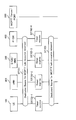
- FIG. 4 is a diagram illustrating an operation of communication control according to the first embodiment.
- FIG. 5 is a diagram illustrating an operation when the right to speak is given again before the timer expires according to the first embodiment.
- FIG. 6 is a diagram illustrating an operation when the timer expires according to the first embodiment.
- FIG. 7 is a diagram illustrating an operation of communication control when a priority interrupt occurs according to the first embodiment.
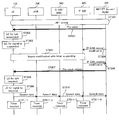
- FIG. 8 is a diagram illustrating an operation of communication control according to the second embodiment.
- FIG. 1 is a diagram illustrating an example of a communication path for voice data in MCPTT.
- FIG. 2 is a diagram illustrating a configuration example of MCPTT Server / PCRF.
- FIG. 9 is a diagram illustrating an operation when the right to speak is given again before the timer expires according to the second embodiment.
- FIG. 10 is a diagram illustrating an operation when the timer expires according to the second embodiment.
- FIG. 11 is a diagram illustrating an operation when a priority interrupt is generated according to the second embodiment.
- FIG. 1 shows a route through which voice data (Speech Data) by MCPTT using on-network and off-network considered from Non-Patent Document 1 to Non-Patent Document 9 passes.
- the MPCTT server shown in FIG. 1 is a node described in Non-Patent Document 9.
- the MPCTT server has functions for performing registration / management of UEs to the MCPTT service group, speaking right control, voice data transmission / reception, resource allocation to a route through which voice data passes, and the like.
- MCPTT Server performs voice data transmission / reception
- the MCPTT server receives the voice data from the UE to which the floor has been given, and the one-to-one distribution (Unicast distribution to the UEs in the group. ) Or broadcast delivery (MBMS (Multimedia Broadcast Multicast Service) delivery. For example, a broken line route shown in FIG. 1).
- MBMS Multimedia Broadcast Multicast Service
- PDN GW Packet Data Network GateWay
- S-GW Serving GW
- Fig. 1 are nodes described in Non-Patent Document 10, and are routes through which audio data passes in the case of one-to-one distribution.
- BM-SC Broadcast-Multicast Service Centre
- MBMS-GW are nodes described in Non-Patent Document 11, and are routes through which audio data passes in the case of broadcast distribution.
- ENB (evolved Node B) is a node described in Non-Patent Document 10 and the like, and is a base station in EPS.
- HSS Home Subscriber Server
- MME Mobility Management
- Policy Quality of Service
- PCRF Policy and Charging Rule Function
- UE1 to UE6 belong to the same MCPTT service group and receive the MCPTT service.
- the UE given the right to speak sends audio data to the MCPTT server in a one-to-one distribution.
- the MCPTT server transfers the received voice data by broadcast delivery to UEs that can receive broadcast delivery, and forwards one-to-one delivery to UEs that cannot receive broadcast delivery.
- UE1 is a UE that is currently given the right to speak
- UE2 is a UE that cannot receive broadcast delivery
- UE3, UE4, and UE5 are UEs that can receive broadcast delivery.
- UE6 shown in FIG. 1 is a UE that performs ProSe communication with UE5, and receives UE5 audio data from UE5 with UE5 as the Relay-UE of UE-to-Network Relay described in Non-Patent Document 1.
- the UE uses its IMS (IP Multimedia Subsystem; see Non-Patent Document 12, for example) control signal (Control Signaling) following the Attach Procedure described in Non-Patent Document 10.
- IMS IP Multimedia Subsystem
- Control Signaling Control Signaling
- User ID information based on IP address and MSISDN (Mobile Subscriber ISDN Number) is registered in the IMS server.
- MSISDN Mobile Subscriber ISDN Number
- an invitation to the call (INVITE message) is sent to the called UE via the IMS server again using the IMS control signal.
- an incoming call response 200 OK
- This process is called “Session Setup”.
- Non-Patent Document 10 a call-dedicated route (Dedicated) Bearer) is established, and necessary resources are reserved (Bearer modification with bearer QoS update).
- the establishment of the call-dedicated route may be performed in advance at the time of Attach, for example.
- the voice input from the microphone is converted to digital data (Digital Data), encoded every frame, RTP (Real Time Protocol) packetized, and then further UDP header, IP header Is added to form an IP packet.
- digital data Digital Data
- RTP Real Time Protocol
- the length of one frame differs depending on the codec used, but is 20 msec in the case of an AMR (Adaptive Multi-Rate) codec or AMR-WB (AMR Wide Band) codec generally used in VoLTE. That is, an IP packet is generated every 20 msec. The generated IP packet is passed to the lower layer.
- AMR Adaptive Multi-Rate
- AMR-WB AMR Wide Band
- the ROHC (Robust Header Compression) function of the PDCP (Packet Data Convergence Protocol) layer compresses the IP / UDP / RTP header, and further adds the PDCP header and passes it to the RLC (Radio Link Control) layer.
- RLC Radio Link Control
- the RLC layer it is treated as a UM mode (Unacknowledged Mode)
- an RLC header is added, and passed to a MAC (Medium Access Control) layer through a logical channel.
- MAC Medium Access Control
- MAC Medium Access Control
- MAC Medium Access Control
- the session is terminated again by the IMS control signal.
- the call-dedicated route is released (Bearer Deactivation), or resources reserved for the route are released (Bearer modification with ⁇ ⁇ bearer QoS update) ).
- the operation outline of VoLTE described above is an example, and the actual operation differs depending on the operator who performs the service.
- MCPTT performs floor control and priority interruption (pre-emption), and only the user (UE) who is given the floor within a limited time. Say something.
- EPS control signal for resource allocation / release occurs, and a load is applied to EPS.
- an object of the present disclosure is to perform floor control and priority interrupt control in MCPTT while suppressing the amount of signaling in EPS.
- the PCRF and MCPTT server shown in FIG. 1 may be collectively described as “MCPTT server / PCRF”.
- MCPTTCPServer / PCRF indicates at least part of the functions of MCPTT Server or PCRF.
- MME and Serving GW shown in FIG. 1 may be collectively described as “S-GW / MME”.
- S-GW / MME indicates at least part of the Serving GW or MME functions.
- the communication system includes at least UE 100, eNB 200, S-GW / MME 300, P-GW 400, and MCPTT server / PCRF 500.
- the UE 100 to which a floor is given transmits voice data to the MCPTT Server / PCRF 500 (communication node), and other UEs receive the voice from the MCPTT Server / PCRF 500.
- Receive data out of a plurality of UEs (terminals) belonging to a group, the UE 100 to which a floor is given transmits voice data to the MCPTT Server / PCRF 500 (communication node), and other UEs receive the voice from the MCPTT Server / PCRF 500.
- FIG. 2 is a block diagram showing a main configuration of the MCPTT server / PCRF 500 according to the present embodiment.
- the control unit 501 allocates resources for audio data transmitted by the UE when notifying the UE 100 of the right to speak.
- the communication part 502 receives the audio
- the logical channel used for transmitting voice data in the UE 100 released the floor is held for a predetermined period while the allocated resources are maintained. .
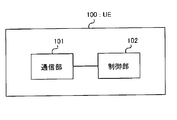
- FIG. 3 is a block diagram showing a main configuration of UE 100 according to the present embodiment.
- the communication unit 101 when the communication unit 101 is notified of the grant of the right to speak from the MCPTT server / PCRF 500, the communication unit 101 uses the resources allocated for the audio data transmitted by the UE 100, Send audio data to MCPTT Server / PCRF500.
- the control unit 102 When releasing the floor, the control unit 102 holds the logical channel used for transmitting voice data in the UE 100 for a predetermined period while maintaining the allocated resources.
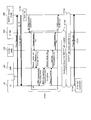
- FIG. 4 is a sequence chart showing an example of the operation according to the present embodiment.
- UE100 is UE1 shown in FIG. 1, for example, and eNB200 is eNB1 (eNB which UE1 connects) shown in FIG.
- the UE 100 transmits a floor request to the MCPTT server / PCRF 500 in order to obtain the right to speak (step (hereinafter referred to as “ST”) 101).
- the floor request, floor request grant, and floor release described below are MCPTT service control signals in one aspect of the present disclosure, and pass through a dedicated path established for the MCPTT service control signal in EPS.
- the floor request transmitted in ST101 is a floor request sent from the UE 100 to the MCPTT server / PCRF 500 for the first time after this MCPTT service session is started.
- the MCPTT Server / PCRF 500 determines that the right to speak to the UE 100 can be granted, it sends a Floor ⁇ Grant to the UE 100 (ST102).
- the MCPTT server / PCRF 500 confirms whether or not a timer for the UE 100 is set. If the timer is not set, MCPTT Server / PCRF 500 sets a timer for UE 100 (ST103). The timer value may be determined in advance by the MCPTT service, or may be set each time by the MCPTT server / PCRF 500.
- processing for establishing a dedicated path (communication path) of audio data sent from the UE 100 to the MCPTT server is performed based on the method described in Non-patent Document 10 (Dedicated Bearer Activation) (ST104). Thereby, a voice data dedicated path is established (ST105).
- a dedicated path communication path
- Non-patent Document 10 Dedicated Bearer Activation
- FIG. 4 shows an example in which a dedicated path is established
- this voice data dedicated path may be established in advance.
- the MCPTT Server / PCRF 500 performs resource allocation for the voice data dedicated path established in advance based on the method described in Non-Patent Document 10 (PDN GW init bearer modification with bearer QoS update).
- PDN GW init bearer modification with bearer QoS update the method described in Non-Patent Document 10
- the MCPTT Server / PCRF 500 allocates resources for audio data transmitted by the UE 100.
- the MCPTT Server / PCRF 500 may send the Floor Grant (ST102) to the UE 100 after confirming that the establishment of the voice data dedicated path or resource allocation of the UE 100 is completed.
- ST102 Floor Grant
- the user of the UE 100 that has received the Floor® Grant starts talking (ST106). That is, when UE 100 is notified of granting the right to speak, it uses the resource allocated to UE 100 to transmit the voice data of the user who uses UE 100 to MCPTTPServer / PCRF 500, and MCPTT Server / PCRF 500 Is used to receive voice data from the UE 100 and transmit (distribute) the received voice data to other terminals.
- the UE 100 may send feedback information to the user interface of the UE 100 in order to indicate that the user of the UE 100 has been given the right to speak when receiving the Floor-Grant. For example, the user interface of the UE 100 notifies the user that the right to speak is given by generating sound or displaying information on the display.
- UE 100 When the speech is completed in ST106, UE 100 transmits Floor Release to MCPTT Server / PCRF 500 (ST107). This Floor Release may be sent from the MCPTT Server side to the UE 100.
- the UE 100 suspends the logical channel (Logical channel (LC) for talk) that handles the voice data of the MCPTT service utterance (ST108).
- LC Logical channel
- the logical channel used for transmission of voice data is put on hold while the call-dedicated route and resources for UE 100 are maintained.
- the resource for voice data is secured by holding this logical channel (although the voice data can be transmitted), the voice data is sent from the UE 100 to the MCPTT server even when the user of the UE 100 speaks after the Floor Release. It will never be done.
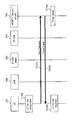
- FIG. 5 is a sequence chart showing an operation when the floor request is again transmitted from the UE 100 and the floor grant is made after the processing shown in FIG. 4 and before the timer of the MCPTT Server / PCRF 500 expires.
- the UE 100 transmits a Floor Request to the MCPTT Server / PCRF 500 as in FIG. 4 (ST201).
- MCPTT Server / PCRF 500 determines that the right to speak to UE 100 can be granted, it sends Floor Grant to UE 100 (ST202).
- MCPTT Server / PCRF 500 confirms whether or not the timer for UE 100 is set (whether or not the previously set timer has expired).
- MCPTT Server / PCRF 500 resets the timer (ST203). That is, the MCPTT Server / PCRF 500 resets the timer (time measurement for a predetermined time) when the right to speak is given again to the UE 100 before the predetermined time counted by the timer elapses after the right to speak is released.
- the UE 100 When the UE 100 receives the Floor® Grant, the UE 100 releases the hold of the logical channel that handles the voice data of the MCPTT service utterance (ST204). As a result, the UE 100 can transmit the voice data spoken by the user to the MCPTT server. In other words, after the floor is released, the UE 100 releases the hold of the logical channel when the floor is given again before the predetermined time counted by the timer elapses, and the voice data is transferred to the MCPTT using the logical channel. Send to Server / PCRF500.
- the UE 100 may send feedback information to the user interface of the UE 100 to indicate that the user of the UE 100 has been given the floor when receiving the Floor-Grant (for example, generation of sound, or , Show information on the display).
- the Floor-Grant for example, generation of sound, or , Show information on the display.
- the MCPTT Server / PCRF 500 grants the right to speak to the UE 100
- the MCPTT ⁇ ⁇ ⁇ Server / PCRF 500 confirms that the timer for the UE 100 is not set (the previously set timer (eg, ST103 in FIG. 4) has already been set). If it has expired (not shown), the timer for UE 100 is set again, and a dedicated path for voice data sent from UE 100 to MCPTTMCServer is established (Dedicated Bearer Activation) in the same manner as ST104 in Fig. 4.
- the MCPTT Server / PCRF 500 performs resource allocation on a voice data dedicated path established in advance based on the method described in Non-Patent Document 10 or the like (PDN GW init bearer modification with bearer QoS update). Note that the MCPTTPCRServer / PCRF 500 may send the Floor Grant (ST202) to the UE 100 after confirming that the voice data dedicated path establishment or resource allocation of the UE 100 is completed.
- the voice data dedicated path is maintained for a predetermined period (a period until the timer expires). Therefore, as shown in FIG. 5, when the floor is given again to the UE 100 during the period, the UE 100 uses the call-dedicated route maintained by releasing the logical channel hold. To start speaking. That is, the UE 100 can quickly resume speech without generating or releasing signaling (EPS control signal) for establishing / releasing a voice data dedicated path or allocating / releasing resources to / from a call dedicated path.
- EPS control signal EPS control signal
- FIG. 6 is a sequence chart showing an operation when the timer of the MCPTT Server / PCRF 500 expires before the UE 100 transmits the next floor request to the MCPTT Server / PCRF 500 after the processing shown in FIG.
- MCPTT Server / PCRF 500 sets a dedicated path for voice data sent from UE 100 to MCPTT Server based on the method described in Non-Patent Document 10, etc. Release (PDN GW initiated bearer deactivation) (ST302, ST303).
- PDN GW initiated bearer deactivation PDN GW initiated bearer deactivation
- FIG. 6 an example in which the dedicated path is released is described, but the MCPTT Server / PCRF 500 may perform resource release based on the method described in Non-Patent Document 10 (PDN GW initiated). bearer modification with bearer QoS update).
- FIG. 7 is a sequence chart showing an operation in the case where a priority interrupt (Pre-emption) occurs while the user of UE 100 is speaking and the user of UE 100 is speaking (ST106) in FIG.
- a priority interrupt Pre-emption
- MCPTT Server / PCRF 500 transmits Pre-empt to all UEs in the group (ST401).
- Pre-empt and Pre-empt release described later are MCPTT service control signals in one aspect of the present disclosure, and pass through a dedicated route or a broadcast delivery route established for the MCPTT service control signal in EPS.
- the MCPTT server / PCRF 500 holds the timers (ST103 in FIG. 4) set for all UEs (dedicated paths) in the group (ST402).
- UE 100 Upon receiving Pre-empt, UE 100 (UE in speech) suspends the logical channel that handles voice data of MCPTT service speech (ST403). Also, all UEs (including UE 100) that have received Pre-empt may suspend logical channels (LC for signaling) that handle MCPTT service control signals (ST404).
- LC logical channels
- MCPTT Server / PCRF 500 transmits Pre-empty release to all UEs in the group (ST405).
- the MCPTT server / PCRF 500 releases the hold of the timer that was held in ST402 for all UEs in the group (ST406).
- UE100 (UE in which speech is suspended in ST403), upon receiving Pre-empty Release, cancels the suspension of the logical channel that handles voice data of MCPTT service speech (ST407). Also, all UEs (including UE 100) that have received Pre-empty Release release the hold of the logical channel (LC (for signaling) that handles the MCPTT service control signal (ST408).
- LC for signaling
- the UE 100 user interface When the UE 100 receives Pre-empt or Pre-empt Release, the UE 100 user interface provides feedback information to the UE 100 to indicate that a priority interrupt has been entered or that the priority interrupt has been released. (E.g., sound generation or display of information on the display).
- the UE 100 holds the logical channel being used when a priority interrupt occurs while speaking (while continuing to transmit audio data), and releases the hold of the logical channel when the priority interrupt ends. To do.
- the voice data exclusive path or the resource release is not performed for a UE whose floor is released until a certain period of time elapses.
- the logical channel to be handled is held.
- the logical channel hold is released. In this way, in this embodiment, it is possible to perform the floor control while suppressing the generation of the EPS control signal.
- the voice data dedicated path is released or the resources are released.
- the logic of handling voice data is suspended although the speech of the UE 100 to which the right to speak is temporarily suspended.
- the channel or the logical channel that handles the MCPTT service control signal is reserved without being released.
- the priority interrupt ends, by canceling the hold of each logical channel, it is possible to quickly resume the speech of the UE 100 without signaling regarding the logical channel.
- the timer for the UE 100 is also held during the priority interruption, the establishment / release of the call-dedicated route for the UE 100 or the resource allocation / release to the call-dedicated route frequently occur due to the expiration of the timer. Can be prevented.
- the present embodiment it is possible to perform speaking right control and priority interrupt control in MCPTT while suppressing the amount of signaling in EPS. That is, it is possible to efficiently perform the floor control or priority interrupt in the MCPTT service.
- the MCPTT server / PCRF 500 holds a timer, and manages whether the voice data dedicated path of the UE 100 or the release of resources for the dedicated path is necessary. Thereby, efficient floor control can be performed by a communication system with a simple configuration.
- Embodiment 2 In the first embodiment, the case where the timer of UE 100 is managed in MCPTT Server / PCRF 500 has been described. On the other hand, this Embodiment demonstrates the case where the intermediate node and UE100 which exist in the path
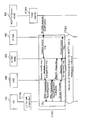
- FIG. 8 is a sequence chart showing an example of the operation according to the present embodiment.
- UE100 is UE1 shown in FIG. 1, for example, and eNB200 is eNB1 (eNB which UE1 connects) shown in FIG.
- UE 100 transmits a Floor request to MCPTT Server / PCRF 500 in order to obtain the right to speak (ST501).
- the floor request, floor request grant, and floor release described later are MCPTT service control signals according to an aspect of the present disclosure as in the first embodiment, and pass through a dedicated path established for the MCPTT service control signal in EPS.
- the floor request transmitted in ST501 is a floor request sent from the UE 100 to the MCPTT server / PCRF 500 for the first time after this MCPTT service session is started.
- the MCPTT Server / PCRF 500 determines that the right to speak to the UE 100 can be granted, it sends a Floor Grant to the UE 100 (ST502). Note that the MCPTTPCRServer / PCRF 500 may send the Floor Grant (ST502) to the UE 100 after confirming that the voice data dedicated path or resource allocation of the UE 100 is completed.
- processing for establishing a dedicated path (communication path) for audio data sent from the UE 100 to the MCPTT server is performed (Dedicated Bearer Activation) (ST503).
- a voice data dedicated path is established (ST504).
- FIG. 8 shows an example in which a dedicated path is established, this voice data dedicated path may be established in advance.
- the MCPTT Server / PCRF 500 performs resource allocation for the voice data dedicated path established in advance based on the method described in Non-Patent Document 10 (PDN GW init bearer modification with bearer QoS update). In this way, when notifying the UE 100 of the right to speak, the MCPTT Server / PCRF 500 allocates resources for audio data transmitted by the UE 100.
- the parameter “timer info” is a node of EPS on the path from MCPTT Server / PCRF 500 to UE100 and UE100 ( eNB200, S-GW / MME300, P-GW400).
- Timer info shown in FIG. 8 is a timer for determining whether to hold or release a dedicated route of voice data sent from the UE 100 to the MCPTT Server or resources assigned to the dedicated route, like the timer of the first embodiment. Is information indicating the value of. The timer value may be determined in advance by the MCPTT service, or may be set each time by the MCPTT server / PCRF 500.
- Each node (UE100, eNB200, S-GW / MME300, P-GW400) of EPS receives "timer info" and sets timers for UE100 (ST503-1 to ST503-4). That is, in the present embodiment, unlike the first embodiment, the timer is not set in the MCPTT Server / PCRF 500, and the UE 100 and the intermediate node time a predetermined period for the UE 100 (dedicated route).
- the user of the UE 100 that has received the Floor® Grant starts talking (ST505). That is, when UE 100 is notified of granting the right to speak, it uses the resource allocated to UE 100 to transmit the voice data of the user who uses UE 100 to MCPTTPServer / PCRF 500, and MCPTT Server / PCRF 500 Is used to receive voice data from the UE 100 and transmit (distribute) the received voice data to other terminals.
- the UE 100 may send feedback information to the user interface of the UE 100 in order to indicate that the user of the UE 100 has been given the right to speak when receiving the Floor-Grant. For example, the user interface of the UE 100 notifies the user that the right to speak is given by generating sound or displaying information on the display.
- UE 100 transmits Floor Release to MCPTT Server / PCRF 500 (ST506). This Floor Release may be sent from the MCPTT Server side to the UE 100.
- the UE 100 suspends the logical channel (Logical Channel (LC) for talk) that handles the voice data of the MCPTT service utterance (ST507).
- LC Logical Channel
- the logical channel used for transmission of voice data is suspended while maintaining the call-dedicated route and resources for UE 100. Even if the user of UE 100 speaks after Floor Release due to the hold of this logical channel, although the resource for voice data is secured (although the voice data can be transmitted), the voice data is sent from UE 100 to MCPTT Server. It will never be done.
- FIG. 9 is a sequence chart illustrating an operation when the floor request is again transmitted from the UE 100 and the floor grant is made before the timer of each node expires after the processing illustrated in FIG. 8.
- UE 100 After suspending the logical channel in ST507, UE 100 transmits a Floor Request to MCPTT Server / PCRF 500 as in FIG. 8 (ST601).
- MCPTT Server / PCRF 500 determines that the right to speak to UE 100 can be granted, it sends Floor Grant to UE 100 (ST602).
- the UE100 upon receiving Floor Grant, releases the hold of the logical channel that handles the voice data of the MCPTT service utterance (ST603). As a result, the UE 100 can transmit the voice data spoken by the user to the MCPTT server.
- UE 100 confirms whether or not the timer for UE 100 (ST503-1 in FIG. 8) is set (whether the previously set timer has expired).
- the timer of UE 100 is set in ST503-1 in FIG.
- UE 100 resets the timer (ST605-1), and transmits audio data spoken by the user of UE 100 to MCPTT Server / PCRF 500 (ST604).
- the UE 100 releases the hold of the logical channel and transfers the voice data to the MCPTT Server / PCRF500. And reset the timer (clocking for a predetermined period).
- the audio data transmitted in ST604 passes through each node on a dedicated route from UE100 to MCPTT Server / PCRF500.
- each node eNB200, S-GW / MME300, P-GW400
- it resets the timer (ST605-2 to ST605-4).
- each node eNB 200, S-GW / MME 300, P-GW 400
- the logical channel hold is released).
- the UE 100 may send feedback information to the user interface of the UE 100 in order to indicate that the user of the UE 100 has been given the right to speak (for example, generation of sound, or Information on the display).
- the voice data dedicated path is maintained for a predetermined period (a period until the timer expires). Therefore, as shown in FIG. 9, when the floor is given again to the UE 100 during the period, the UE 100 uses the call-dedicated route maintained by releasing the logical channel hold. To start speaking. That is, the UE 100 can quickly resume the speech without generating or releasing signaling (EPS control signal) for establishing / releasing the voice data dedicated path or allocating / releasing resources to the call dedicated path.
- EPS control signal EPS control signal
- FIG. 10 is a sequence chart showing an operation when the timer of each node expires before the UE 100 transmits the next floor request to the MCPTT Server / PCRF 500 after the processing shown in FIG.
- resources for a dedicated route (ST504 in FIG. 8) of voice data sent from the established UE1 to the MCPTT server are reserved (ST701).
- each node (UE100, eNB200, S-GW / MME300, P-GW400) has expired the timer for UE100 set in ST503-1 to ST503-4 in FIG. 8 (ST702-1 to ST702). 4) Release the resources of the dedicated route of the voice data sent from the UE 100 to the MCPTT server (ST703).
- the resource of the dedicated route for the voice data Can be released automatically without signaling. This makes it possible to effectively use resources in a group that uses the MCPTT service while suppressing an increase in the amount of signaling.
- FIG. 11 is a sequence chart showing an operation in the case where a priority interrupt (Pre-emption) occurs while UE 100 obtains the right to speak in FIG. 8 and the user of UE 100 speaks (ST505).
- a priority interrupt Pre-emption
- MCPTT Server / PCRF 500 transmits Pre-empt to all UEs in the group (ST801).
- Pre-empt and Pre-empt release described later are MCPTT service control signals in one aspect of the present disclosure as in the first embodiment, and are dedicated routes or broadcast distribution established for MCPTT service control signals in EPS. Take the route.
- UE 100 Upon receiving Pre-empt, UE 100 (UE in speech) suspends the logical channel that handles voice data of MCPTT service speech (ST802). Also, all UEs (including UE 100) that have received Pre-empt may suspend logical channels (LC for signaling) that handle MCPTT service control signals (ST803).
- LC logical channels
- the MCPTTPCRServer / PCRF 500 includes a timer including “timer suspend” in addition to the parameters such as the method described in Non-Patent Document 10 only for the voice data dedicated path of the UE 100 to which the right to speak is currently given.
- the node is urged to hold the timer (PDN GW initiated bearer modification without bearer QoS update) (ST804 to ST806).
- MCPTT Server / PCRF 500 transmits Pre-empty release to all UEs in the group (ST807).
- UE 100 Upon receiving Pre-empty Release, UE 100 (UE in which speech is suspended in ST802) releases (resumes) the logical channel that handles voice data of MCPTT service speech (ST808). Also, all UEs (including UE 100) that have received the Pre-empty Release release the logical channel (LC for signaling) that handles the MCPTT service control signal (ST809).
- UE 100 When the hold of the logical channel that handles the MCPTT service utterance voice data and the logical channel that handles the MCPTT service control signal is released, UE 100 transmits the voice data uttered by the user of UE 100 to MCPTT Server / PCRF 500 (ST810). . Further, UE 100 transmits voice data and restarts the timer suspended in ST 805 (ST 811-1).
- the audio data transmitted in ST810 passes through each node on a dedicated route from UE100 to MCPTT Server / PCRF500.
- each node eNB200, S-GW / MME300, P-GW400
- it restarts the timer suspended in ST805 (ST811-2 ⁇ 811-4). That is, each node (eNB200, S-GW / MME300, P-GW400) is given the right to speak to the UE 100 again based on the passage of the voice data (that is, the priority interrupt is canceled and the MCPTT
- the logical channel that handles the voice data of the service statement is released).
- the UE 100 user interface When the UE 100 receives Pre-empt or Pre-empt Release, the UE 100 user interface provides feedback information to the UE 100 to indicate that a priority interrupt has been entered or that the priority interrupt has been released. (E.g., sound generation or display of information on the display).
- the UE 100 puts the logical channel and timer (clocking for a predetermined period) on hold when a priority interrupt occurs during a speech (while continuing to transmit audio data), and when the priority interrupt ends, the logical channel Release the hold and timer hold. Further, when a priority interrupt occurs, the intermediate node puts the timer (time measurement for a predetermined period) on hold, and when the voice data from the UE 100 is confirmed, the intermediate node releases the hold for the timer (time measurement for a predetermined time).
- the voice data exclusive path or the resource release is not performed for a UE whose floor is released until a certain period of time elapses.
- the logical channel to be handled is held.
- the logical channel hold is released.
- each node on the path between the UE 100 and the MCPTT server / PCRF 500 manages the timer for the UE 100.
- each node can determine the timing at which resources are released without signaling. Therefore, the EPS control signal is not required when the resource is released when the timer expires after the right to speak is released. Therefore, according to the present embodiment, it is possible to further suppress the signaling amount in the floor control as compared with the first embodiment.
- the logic of handling voice data is suspended although the speech of the UE 100 to which the right to speak is temporarily suspended.
- the channel or the logical channel that handles the MCPTT service control signal is reserved without being released.
- the priority interrupt ends, by canceling the hold of each logical channel, it is possible to quickly resume the speech of the UE 100 without signaling regarding the logical channel.
- the timer for the UE 100 is also held during the priority interruption, the establishment / release of the call-dedicated route for the UE 100 or the resource allocation / release to the call-dedicated route frequently occur due to the expiration of the timer. Can be prevented.
- Embodiment 3 when a logical channel that handles the voice data of UE 100 is put on hold as in the first and second embodiments, an encoder of the voice codec of UE 100 that further encodes the voice data is also provided. Deferred. Moreover, in this Embodiment, when the holding
- the Sequence Number or Time Stamp of the RTP header added to the audio data generated by the UE 100 uses a value subsequent to the RTP header added to the last audio data generated by the UE 100 in the previous speech. . That is, in the UE 100, the sequence number and time stamp of the RTP header are continuously used before and after the encoder is suspended.
- UE100 can transmit the audio
- the MCPTT Server may limit the time that the UE can speak when giving the Floor Grant to the UE.
- the time limit when the time limit is reached, the logical channel that handles the voice data of the MCPTT service utterance of the UE may be automatically suspended.
- the timer set in the voice data dedicated path of the UE needs to be set longer than the time limit that the UE can speak.
- the timer for the voice data dedicated route is not set. Also good. Specifically, MCPTT Server / PCRF does not set the timer in MCPTT Server / PCRF or sets “timer info” when the UE receives voice data sent from MCPTT Server to UE by one-to-one communication. It is not included as a parameter when establishing a voice data dedicated path or allocating resources. This is because an audio data dedicated path or resource used for audio data (that is, downlink data) received in one-to-one distribution (Unicast distribution) may be commonly used in uplink. .
- the above embodiment can be applied to a case where UE5 is set as a relay UE of UE-to-Network Relay, like UE6 shown in FIG. In this case, it is the UE 6 that holds / releases the logical channel that handles voice data, but the voice data dedicated path and the like are managed between the UE 5 and the PDN GW 400.
- the signaling name related to the floor control or priority interrupt is not necessarily as described above, and may be a signaling name having an equivalent function.
- the signaling related to establishment / release of the voice data dedicated path and resource allocation / release to the voice data dedicated path described in Non-Patent Document 10 may not be the signaling described in Non-Patent Document 10. It may be another signaling having an equivalent function.
- each functional block used in the description of the above embodiments is typically realized as an LSI that is an integrated circuit having an input terminal and an output terminal.
- the integrated circuit may control each functional block used in the description of the above embodiment, and may include an input and an output. These may be individually made into one chip, or may be made into one chip so as to include a part or all of them.
- the name used here is LSI, but it may also be called IC, system LSI, super LSI, or ultra LSI depending on the degree of integration.
- the method of circuit integration is not limited to LSI, and may be realized by a dedicated circuit or a general-purpose processor.
- An FPGA Field Programmable Gate Array
- a reconfigurable / processor that can reconfigure the connection or setting of circuit cells inside the LSI may be used.
- One embodiment of the present disclosure is useful for a communication system that provides MCPTT service and a user terminal that uses the communication system.
Landscapes
- Engineering & Computer Science (AREA)
- Computer Networks & Wireless Communication (AREA)
- Signal Processing (AREA)
- Multimedia (AREA)
- Mobile Radio Communication Systems (AREA)
Abstract
グループに属する複数のUEのうち、発言権が与えられたUE100が音声データをMCPTT Server/PCRF500に送信し、他のUEがMCPTT Server/PCRF500から当該音声データを受信する通信システムにおいて、MCPTT Server/PCRF500は、UE100に対して発言権の付与を通知する場合、UE100が送信する音声データのためのリソースを割り当て、割り当てたリソースを用いて、UE100からの音声データを受信し、受信した音声データを他のUEへ送信する。UE100は、発言権の付与が通知されると、割り当てられたリソースを用いて、UE100を利用するユーザの音声データをMCPTT Server/PCRF500へ送信し、発言権を解放する場合、割り当てられたリソースを維持しつつ、音声データの送信に使用される論理チャネルを所定期間保留する。
Description
本開示は、通信システム、通信ノード、端末及び通信制御方法に関する。
現在、3GPP(3rd Generation Partnership Project)において、MCPTT(Mission Critical Push To Talk)の標準化が進められている。
非特許文献1には、MCPTTのサービス及びシステムの詳細を策定する上での要求条件が記載されている。非特許文献1によると、MCPTTのサービスとしては、on-networkサービス、off-networkサービス、又は、on-networkサービス及びoff-networkサービスの両方を使用したサービスが考えられている。
on-networkサービスは、LTE(Long Term Evolution)の無線アクセスネットワーク(eUTRAN:evolved Evolved Universal Terrestrial Radio Access Network)とコア網(EPC: Evolved Packet Core)とから成るEPS(Evolved Packet System)を利用して通信を行う、GCSE_LTE(Group Communication System Enablers for LTE:例えば、非特許文献2及び非特許文献3を参照)を使用したサービスである。また、off-networkサービスは、端末間直接通信であるProSe(Proximity Services:例えば、非特許文献4、非特許文献5、非特許文献6、非特許文献7を参照)を使用したサービスである。
また、非特許文献1によると、MCPTTサービス提供を受けるユーザの端末(UE:User Equipment)は、MCPTTサービスのグループに所属する。UEが所属するグループは同時に複数であってもよい。
MCPTTサービスでは、発言権制御(Floor Control)をサポートする事が要求されており、グループ内で発言権(Floor grant)を与えられたユーザのみが発言することが許される。また、この発言権が与えられる時間に制限をつけてもよい。また、緊急事態発生時などには、優先割込み(Pre-emption)を許可する事が要求されている。優先割込みが発生した場合には、現行のMCPTTサービスは一時中断され、発言権を優先割込みに譲る。非特許文献8及び非特許文献9には、MCPTTサービスグループへの登録、発言権制御、ネットワークへのリソース割当などを含むMCPTTサービスのアーキテクチャ(architecture)及びシグナリング(signaling)の例が開示されている。
3GPP TS 22.179 v13.2.0、 "Mission Critical Push to Talk (MCPTT) over LTE; Stage 1"
3GPP TS 22.468 v13.0.0、 "Group Communication System Enablers for LTE (GCSE_LTE)"
3GPP TS 23.468 v13.1.0、 "Group Communication System Enablers for LTE (GCSE_LTE); Stage 2"
3GPP TS 22.278 v13.2.0、 "Service requirements for the Evolved Packet System (EPS)"
3GPP TR 23.713 v1.4.0、 "Study on extended architecture support for proximity services"
3GPP TS 23.303 v13.0.0、 "Proximity-based services (ProSe); Stage 2"
3GPP TR 36.843 v12.0.1、 "Study on LTE device to device proximity services; Radio aspects"
3GPP TR 23.779 v1.0.0、 "Study on application architecture to support Mission Critical Push To Talk over LTE (MCPTT) services"
3GPP TS 23.179 v0.2.0、 "Functional architecture and information flows to support mission critical communication services; Stage 2"
3GPP TS 23.401 v13.3.0、 "General Packet Radio Service (GPRS) enhancements for Evolved Universal Terrestrial Radio Access Network (E-UTRAN) access"
3GPP TS 23.246 v13.1.0、 "Multimedia Broadcast/Multicast Service (MBMS); Architecture and functional description"
3GPP TS 23.228 v13.3.0、 "IP Multimedia Subsystem (IMS); Stage 2"
3GPP TS 36.300 v13.0.0、 "Evolved Universal Terrestrial Radio Access (E-UTRA) and Evolved Universal Terrestrial Radio Access Network (E-UTRAN); Overall description; Stage 2"
しかしながら、MCPTTサービスにおける発言権制御又は優先割込みに対してどのようにリソース割当/解放などを行うかについては十分に検討されていない。
本開示の一態様は、MCPTTサービスにおいて効率良く発言権制御又は優先割込みを行うことができる通信システム、通信ノード、端末及び通信制御方法を提供することである。
本開示の一態様に係る通信システムは、グループに属する複数の端末のうち、発言権が与えられた端末が音声データを通信ノードに送信し、他の端末が前記通信ノードから当該音声データを受信する通信システムであって、前記通信ノードは、前記端末に対して前記発言権の付与を通知する場合、前記端末が送信する音声データのためのリソースを割り当て、前記割り当てたリソースを用いて、前記端末からの音声データを受信し、前記受信した音声データを前記他の端末へ送信し、前記端末は、前記発言権の付与が通知されると、前記割り当てられたリソースを用いて、前記端末を利用するユーザの音声データを前記通信ノードへ送信し、前記発言権を解放する場合、前記割り当てられたリソースを維持しつつ、前記音声データの送信に使用される論理チャネルを所定期間保留する構成を採る。
本開示の一態様に係る通信ノードは、グループに属する複数の端末のうち、発言権が与えられた端末が音声データを通信ノードに送信し、他の端末が前記通信ノードから当該音声データを受信する通信システムにおいて、前記端末に対して前記発言権の付与を通知する場合、前記端末が送信する音声データのためのリソースを割り当てる制御部と、前記割り当てられたリソースを用いて、前記端末からの音声データを受信し、前記受信した音声データを前記他の端末へ送信する通信部と、を具備し、前記端末に対して与えられた前記発言権が解放される場合、前記割り当てられたリソースが維持されつつ、前記発言権が解放された端末において音声データの送信に使用される論理チャネルが保留される構成を採る。
本開示の一態様に係る端末は、グループに属する複数の端末のうち、発言権が与えられた端末が音声データを通信ノードに送信し、他の端末が前記通信ノードから当該音声データを受信する通信システムにおいて、前記通信ノードから前記発言権の付与が通知されると、前記端末が送信する音声データのために割り当てられたリソースを用いて、前記端末を利用するユーザの音声データを前記通信ノードへ送信する通信部と、前記発言権を解放する場合、前記割り当てられたリソースを維持しつつ、前記端末において音声データの送信に使用される論理チャネルを保留する制御部と、を具備する構成を採る。
本開示の一態様に係る通信制御方法は、グループに属する複数の端末のうち、発言権が与えられた端末が音声データを通信ノードに送信し、他の端末が前記通信ノードから当該音声データを受信する通信システムにおける通信制御方法であって、前記通信ノードにおいて、前記端末に対して前記発言権の付与を通知する場合、前記端末が送信する音声データのためのリソースを割り当て、前記割り当てられたリソースを用いて、前記端末からの音声データを受信し、前記受信した音声データを前記他の端末へ送信し、前記端末において、前記発言権の付与が通知されると、前記割り当てられたリソースを用いて、前記端末を利用するユーザの音声データを前記通信ノードへ送信し、前記発言権を解放する場合、前記割り当てられたリソースを維持しつつ、前記端末において音声データの送信に使用される論理チャネルを保留する。
なお、これらの包括的または具体的な態様は、システム、装置、方法、集積回路、コンピュータプログラム、または、記録媒体で実現されてもよく、システム、装置、方法、集積回路、コンピュータプログラムおよび記録媒体の任意な組み合わせで実現されてもよい。
本開示の一態様によれば、MCPTTサービスにおいて効率良く発言権制御又は優先割込みを行うことができる。
本開示の一態様における更なる利点および効果は、明細書および図面から明らかにされる。かかる利点および/または効果は、いくつかの実施形態並びに明細書および図面に記載された特徴によってそれぞれ提供されるが、1つまたはそれ以上の同一の特徴を得るために必ずしも全てが提供される必要はない。
[本開示の一態様に至った経緯]
図1は、非特許文献1~非特許文献9より考えられる、on-network及びoff-networkを用いたMCPTTによる音声データ(Speech Data)が通る経路を示している。
図1は、非特許文献1~非特許文献9より考えられる、on-network及びoff-networkを用いたMCPTTによる音声データ(Speech Data)が通る経路を示している。
図1に示すMPCTT Serverは、非特許文献9に記載されたノードである。MPCTT Serverは、MCPTTサービスグループへのUEの登録・管理、発言権制御、音声データ送受信、音声データが通る経路へのリソース割当などを行う機能を有する。なお、MCPTT Serverは、音声データ送受信を行う際、発言権を与えられたUEからの音声データを受け取り、グループ内のUEへの1対1配信(Unicast配信。例えば、図1に示す実線の経路)又は同報配信(MBMS(Multimedia Broadcast Multicast Service)配信。例えば、図1に示す破線の経路)を行う。
以下の説明では、これらグループ管理機能、発言権制御機能、音声データ送受信及びリソース割当機能などが全てMCPTT Server内にあると仮定するが、実際には、これらの機能は、別々のノード又は機能、例えば、Group Management Server、Floor Server、Media Resource Functionなどに分散されていてもよい。
図1に示すPDN GW(Packet Data Network GateWay)、及び、Serving GW(S-GW)は、非特許文献10に記載されたノードであり、1対1配信の場合に音声データが通る経路である。BM-SC(Broadcast-Multicast Service Centre)及びMBMS-GWは、非特許文献11に記載のノードであり、同報配信の場合に音声データが通る経路である。
eNB(evolved Node B)は、非特許文献10などに記載されたノードであり、EPSにおける基地局である。
なお、図1に示すように、EPS内には、上述した音声データが通るノードの他に、UEの登録情報を管理するHSS(Home Subscriber Server)、UEの位置情報などを管理するMME(Mobility Management Entity)、ポリシ(QoS(Quality of Service)及び課金など)制御を行うPCRF(Policy and Charging Rule Function)などが存在する。
図1の例では、6つのUE(UE1~UE6)が同じMCPTTサービスのグループに所属し、MCPTTサービスを受けているものとする。また、発言権を与えられたUEは、MCPTT Serverに音声データを1対1配信で送る。そして、MCPTT Serverは、受け取った音声データを、同報配信を受け取ることができるUEに対しては同報配信で転送し、同報配信が受け取れないUEに対しては1対1配信で転送することを仮定している。例えば、図1では、UE1は現在発言権を与えられているUEであり、UE2は同報配信を受け取ることができないUEであり、UE3、UE4、UE5は同報配信を受け取ることができるUEである。また、図1に示すUE6は、UE5とProSe通信を行うUEであり、UE5を非特許文献1に記載のUE-to-Network RelayのRelay UEとして、UE5から音声データを受け取っている。
次に、LTEにおける音声通話(VoLTE: Voice over LTE)のオペレーション(operation)概要について説明する。
音声通話を行う前段階として、UEは、非特許文献10に記載のAttach Procedureに引き続き、IMS(IP Multimedia Subsystem。例えば、非特許文献12を参照)制御信号(Control Signaling)を用いて、自らのIPアドレスとMSISDN(Mobile Subscriber ISDN Number:電話番号)をベースとしたユーザIDの情報をIMSのサーバに登録する。その後、UEが通話発信した際、再びIMS制御信号を用いて、IMSのサーバを経由して、呼び出し先のUEに通話への招待(INVITEメッセージ)が送られる。呼び出し先のUEが呼び出しに応じると、IMS制御信号を用いて呼び出し元UEに着信応答(200OK)が送られ、通話開始となる。この処理を「Session Setup」と呼ぶ。
Session Setupの際、双方のUEの、IPアドレス、UDPポート番号、使用するコーデックなどの通話に必要な情報が交換される。この他に、非特許文献10に記載されているように、通話専用の経路(Dedicated Bearer)が確立され、必要なリソースが予約(Bearer modification with bearer QoS update)される。この通話専用の経路の確立は、例えばAttach時に前もって行われる場合もある。
通話が始まると、マイクロフォンから入力された音声はデジタルデータ(Digital Data)へ変換され、1フレーム毎にエンコードされ、RTP(Real Time Protocol)パケット化(Packetization)された後、更にUDPヘッダ、IPヘッダが付加され、IPパケットとなる。1フレームの長さは使用されるコーデックにより異なるが、VoLTEで一般的に使われるAMR(Adaptive Multi-Rate)コーデック又はAMR-WB(AMR WideBand)コーデックの場合は20msecである。すなわち、20msec毎にIPパケットが生成される。生成されたIPパケットは下位レイヤに渡される。eUTRANの下位レイヤの構成及び機能は非特許文献13に記載された通りである。まず、PDCP(Packet Data Convergence Protocol)レイヤのROHC(Robust Header Compression)機能により、IP/UDP/RTPヘッダが圧縮され、更にPDCPヘッダが付加されてRLC(Radio Link Control)レイヤに渡される。RLCレイヤでは、UMモード(Unacknowledged Mode)として扱われてRLCヘッダが付加されて、論理チャネル(Logical Channel)を通してMAC(Medium Access Control)レイヤに渡される。MACレイヤでは、MACヘッダが付加され、論理チャネルと伝送チャネル(Transport Channel)のマッピングが行われる。このようにして、音声データは物理レイヤを通じて基地局(eNB)に送られ、基地局でIPパケットが復元され、EPCを通じて通話先のUEへ送られる。
通話が終了すると、再びIMS制御信号によりSessionを終了する処理が行われる。Session終了処理に伴い、通話専用の経路は、非特許文献10に記載されている通り、開放されるか(Bearer Deactivation)、経路に予約されているリソースが開放される(Bearer modification with bearer QoS update)。なお、上述したVoLTEのオペレーション概要は一例であり、実際のオペレーションはサービスを行うオペレータによって異なる。
一方、MCPTTでは、従来のVoLTE通話とは異なり、発言権制御(Floor Control)及び優先割込み(Pre-emption)が行われ、発言権を与えられたユーザ(UE)のみが限られた時間内で発言を行う。
このため、仮に、MCPTTのセッション開始から終了までの間、上述したVoLTEと同様にグループ内の全てのUEに通話専用の経路及び経路に対するリソース割当を行うと、発言権を与えられていない全てのUEの通話専用経路に割り当てられたリソースは使用されず、リソースの無駄が生じてしまう。
また、発言権の付与、発言権の解放のたびに通話専用経路の確立・解放、又は通話専用経路へのリソース割当・解放を行うと、通話専用経路の確立・解放、又は通話専用経路へのリソース割当・解放のためのシグナリング(EPS制御信号)が多く発生し、EPSに負荷がかかってしまう。
そこで、本開示では、EPSでのシグナリング量を抑えつつ、MCPTTでの発言権制御及び優先割込制御を行うことを目的とする。
以下、本開示の各実施の形態について、図面を参照して詳細に説明する。
各実施の形態に係る通信システムは、図1に示す構成を採るものとする。
また、以下の説明では、図1に示すPCRFとMCPTT Serverとをまとめて「MCPTT Server/PCRF」と記述する場合がある。MCPTT Server/PCRFと記述した場合、MCPTT Server又はPCRFの機能の少なくとも一部を指す。また、図1に示すMMEとServing GWとをまとめて「S-GW/MME」と記述する場合がある。S-GW/MMEと記述した場合、Serving GW又はMMEの機能の少なくとも一部を指す。
各実施の形態に係る通信システムは、少なくとも、UE100、eNB200、S-GW/MME300、P-GW400、MCPTT Server/PCRF500を備える。通信システムでは、グループに属する複数のUE(端末)のうち、発言権が与えられたUE100が音声データをMCPTT Server/PCRF500(通信ノード)に送信し、他のUEがMCPTT Server/PCRF500から当該音声データを受信する。
図2は、本実施の形態に係るMCPTT Server/PCRF500の要部構成を示すブロック図である。図2に示すMCPTT Server/PCRF500において、制御部501は、UE100に対して発言権の付与を通知する場合、UEが送信する音声データのためのリソースを割り当てる。通信部502は、割り当てられたリソースを用いて、UE100からの音声データを受信し、受信した音声データを他のUE端末へ送信する。ただし、UE100に対して与えられた発言権が解放される場合、割り当てられたリソースが維持されつつ、発言権が解放されたUE100において音声データの送信に使用された論理チャネルが所定期間保留される。
図3は、本実施の形態に係るUE100の要部構成を示すブロック図である。図3に示すUE100において、通信部101は、MCPTT Server/PCRF500から発言権の付与が通知されると、UE100が送信する音声データのために割り当てられたリソースを用いて、UE100を利用するユーザの音声データをMCPTT Server/PCRF500へ送信する。制御部102は、発言権を解放する場合、割り当てられたリソースを維持しつつ、UE100において音声データの送信に使用された論理チャネルを所定期間保留する。
(実施の形態1)
本実施の形態について図1及び図4~図7を参照して説明する。なお、図1、図4~図7において、同一構成又は同一処理には同一の符号を付す。
本実施の形態について図1及び図4~図7を参照して説明する。なお、図1、図4~図7において、同一構成又は同一処理には同一の符号を付す。
図4は、本実施の形態に係る動作の一例を示すシーケンスチャートである。なお、図4において、例えば、UE100は、図1に示すUE1であり、eNB200は、図1に示すeNB1(UE1が接続するeNB)である。
図4において、UE100は、発言権を得るために、Floor RequestをMCPTT Server/PCRF500に送信する(ステップ(以下、「ST」と表す)101)。このFloor Request、後述するFloor Grant、Floor Releaseは、本開示の一態様におけるMCPTTサービス制御信号であり、EPS内においてMCPTTサービス制御信号用に確立された専用経路を通る。また、ST101で送信されるFloor Requestは、このMCPTTサービスのセッションが開始されてから、UE100が初めてMCPTT Server/PCRF500に送られるFloor Requestとする。
MCPTT Server/PCRF500は、UE100への発言権を許可(grant)できると判断すると、UE100に対してFloor Grantを送信する(ST102)。
ここで、MCPTT Server/PCRF500は、UE100に対するタイマ(Timer)がセットされているか否かを確認する。タイマがセットされていない場合には、MCPTT Server/PCRF500は、UE100に対するタイマをセットする(ST103)。タイマの値は、MCPTTサービスにより予め決められてもよく、MCPTT Server/PCRF500によって都度設定されてもよい。
ST103のタイマ設定と同時に、非特許文献10に記載の方法等に基づいて、UE100からMCPTT Serverへ送られる音声データの専用経路(通信経路)を確立するための処理が行われる(Dedicated Bearer Activation)(ST104)。これにより、音声データ専用経路が確立される(ST105)。
なお、図4では、専用経路が確立される例が示されているが、この音声データ専用経路は予め確立されていてもよい。この場合、MCPTT Server/PCRF500は、非特許文献10に記載の方法等に基づいて、予め確立されている音声データ専用経路に対してリソース割当を行う(PDN GW initiated bearer modification with bearer QoS update)。このように、MCPTT Server/PCRF500は、UE100に対して発言権の付与を通知する場合、UE100が送信する音声データのためのリソースを割り当てる。また、MCPTT Server/PCRF500は、UE100の音声データ専用経路の確立又はリソース割当が完了するのを確認してから、Floor Grant(ST102)をUE100に送ってもよい。
Floor Grantを受け取ったUE100のユーザは発言(talk)を開始する(ST106)。つまり、UE100は、発言権の付与が通知されると、UE100に割り当てられたリソースを用いて、UE100を利用するユーザの音声データをMCPTT Server/PCRF500へ送信し、MCPTT Server/PCRF500は、当該リソースを用いて、UE100からの音声データを受信し、受信した音声データを他の端末へ送信(配信)する。
なお、UE100は、Floor Grantを受け取った際、UE100のユーザに対して発言権が与えられたことを示すために、UE100のユーザインタフェースにフィードバック情報を送ってもよい。例えば、UE100のユーザインタフェースは、音を発生させる、又は、ディスプレイに情報を表示させるなどを行うことにより、ユーザに対して発言権が与えられたことを通知する。
ST106において発言が終了すると、UE100は、MCPTT Server/PCRF500へFloor Releaseを送信する(ST107)。このFloor Releaseは、MCPTT Server側からUE100送られてもよい。
ST107のFloor Releaseと同時に、UE100は、MCPTTサービス発言の音声データを扱う論理チャネル(Logical Channel (LC) for talk)を保留(Suspend)する(ST108)。
このように、UE100の発言権が開放される場合、UE100に対する通話専用経路及びリソースは維持しつつ、音声データの送信に使用される論理チャネルが保留される。この論理チャネルの保留により、音声データ用のリソースが確保されているものの(音声データが送信可能であるものの)、Floor Release後にUE100のユーザが発言した場合でも、音声データはUE100からMCPTT Serverへ送られることはない。
[タイマが満了する前に発言権が再び与えられた場合の動作]
図5は、図4に示す処理の後、MCPTT Server/PCRF500のタイマが切れる(expire)前に、UE100からFloor Requestが再び送信され、Floor Grantされた場合の動作を示すシーケンスチャートである。
図5は、図4に示す処理の後、MCPTT Server/PCRF500のタイマが切れる(expire)前に、UE100からFloor Requestが再び送信され、Floor Grantされた場合の動作を示すシーケンスチャートである。
図5において、UE100は、ST108にて論理チャネルを保留した後、図4と同様に、Floor RequestをMCPTT Server/PCRF500に送信する(ST201)。MCPTT Server/PCRF500は、UE100への発言権を許可(grant)できると判断すると、UE100に対してFloor Grantを送信する(ST202)。
また、MCPTT Server/PCRF500は、UE100に対するタイマがセットされているか否か(以前セットしたタイマが満了になっていないか)を確認する。ここでは、図4のST103においてUE100のタイマがセットされているものとする。この場合、MCPTT Server/PCRF500は、タイマをリセットする(ST203)。つまり、MCPTT Server/PCRF500は、発言権の解放後、タイマによって計時される所定時間が経過する前にUE100に対して発言権が再び与えられた場合、タイマ(所定時間の計時)をリセットする。
UE100は、Floor Grantを受け取ると、MCPTTサービス発言の音声データを扱う論理チャネルの保留を解除(resume)する(ST204)。これにより、UE100は、ユーザが発言した音声データをMCPTT Serverへ送信可能となる。つまり、UE100は、発言権の解放後、タイマによって計時される所定時間が経過する前に発言権が再び与えられた場合、論理チャネルの保留を解除し、当該論理チャネルを用いて音声データをMCPTT Server/PCRF500に送信する。
なお、UE100は、Floor Grantを受け取った際、UE100のユーザに対して発言権が与えられたことを示すために、UE100のユーザインタフェースにフィードバック情報を送ってもよい(例えば、音の発生、又は、ディスプレイに情報を表示)。
一方、MCPTT Server/PCRF500は、UE100への発言権を許可(grant)した際に、UE100に対するタイマがセットされていないことを確認した場合(以前セットしたタイマ(例えば、図4のST103)が既に満了となっていた場合、図示せず)、UE100に対するタイマを再びセットし、図4のST104と同様にして、UE100からMCPTT Serverへ送られる音声データの専用経路を確立する(Dedicated Bearer Activation)。又は、MCPTT Server/PCRF500は、予め確立されている音声データ専用経路に対して、非特許文献10に記載の方法等に基づいてリソース割当を行う(PDN GW initiated bearer modification with bearer QoS update)。なお、MCPTT Server/PCRF500は、UE100の音声データ専用経路確立又はリソース割当が完了するのを確認してから、Floor Grant(ST202)をUE100に送ってもよい。
図4で説明したように、UE100の発言権が開放された場合には、音声データ専用経路は所定期間(タイマが満了するまでの期間)維持されている。よって、図5に示すように、当該期間中にUE100に対して発言権が再び与えられた場合には、UE100は、論理チャネルの保留を解除することにより、維持されている通話専用経路を用いて発言を開始させることができる。つまり、UE100は、音声データ専用経路の確立・解放、又は通話専用経路へのリソース割当・解放のためのシグナリング(EPS制御信号)を発生させることなく、迅速に発言を再開することができる。
[タイマが満了した場合の動作]
図6は、図4に示す処理の後、UE100が次のFloor RequestをMCPTT Server/PCRF500に送信する前にMCPTT Server/PCRF500のタイマが切れた(expire)場合の動作を示すシーケンスチャートである。
図6は、図4に示す処理の後、UE100が次のFloor RequestをMCPTT Server/PCRF500に送信する前にMCPTT Server/PCRF500のタイマが切れた(expire)場合の動作を示すシーケンスチャートである。
MCPTT Server/PCRF500は、図4のST103でセットしたUE100に対するタイマが満了した場合(ST301)、非特許文献10に記載の方法等に基づいて、UE100からMCPTT Serverへ送られる音声データの専用経路を解放する(PDN GW initiated bearer deactivation)(ST302、ST303)。なお、図6では、専用経路が解放される例が記載されているが、MCPTT Server/PCRF500は、非特許文献10に記載の方法等に基づいて、リソース解放を行ってもよい(PDN GW initiated bearer modification with bearer QoS update)。
このように、UE100の発言権の開放後、UE100に対してセットされたタイマが満了するまでに、UE100に対して発言権が再び与えられない場合、音声データ専用経路又はリソースは解放される。これにより、MCPTTサービスを利用するグループにおいてリソースを有効利用できる。
[優先割込みが発生した場合の動作]
図7は、図4においてUE100が発言権を得てUE100のユーザが発言している最中(ST106)に、優先割込み(Pre-emption)が発生した場合の動作を示すシーケンスチャートである。
図7は、図4においてUE100が発言権を得てUE100のユーザが発言している最中(ST106)に、優先割込み(Pre-emption)が発生した場合の動作を示すシーケンスチャートである。
優先割込みが発生すると、MCPTT Server/PCRF500は、グループ内の全てのUEに対してPre-emptを送信する(ST401)。Pre-empt及び後述するPre-empt releaseは、本開示の一態様におけるMCPTTサービス制御信号であり、EPS内においてMCPTTサービス制御信号用に確立された専用経路又は同報配信用経路を通る。
優先割込みが発生した場合、MCPTT Server/PCRF500は、グループ内の全てのUE(専用経路)に対してセットされているタイマ(図4のST103)を保留する(ST402)。
UE100(発言中のUE)は、Pre-emptを受け取ると、MCPTTサービス発言の音声データを扱う論理チャネルを保留(Suspend)する(ST403)。また、Pre-emptを受け取った全てのUE(UE100を含む)は、MCPTTサービス制御信号を扱う論理チャネル(LC for signaling)を保留してもよい(ST404)。
優先割込みが終了すると、MCPTT Server/PCRF500は、グループ内の全てのUEに対してPre-empt releaseを送信する(ST405)。
優先割込みが終了した場合、MCPTT Server/PCRF500は、グループ内の全てのUEに対してST402において保留していたタイマの保留を解除する(ST406)。
UE100(ST403において発言保留中のUE)は、Pre-empt Releaseを受け取ると、MCPTTサービス発言の音声データを扱う論理チャネルの保留を解除(resume)する(ST407)。また、Pre-empt Releaseを受け取った全てのUE(UE100を含む)は、MCPTTサービス制御信号を扱う論理チャネル(LC for signaling)の保留を解除する(ST408)。
なお、UE100は、Pre-empt又はPre-empt Releaseを受け取った際、UE100のユーザに優先割込みが入ったこと、又は、優先割込みが解除されたことを示すために、UE100のユーザインタフェースにフィードバック情報を送ってもよい(例えば、音の発生、又は、ディスプレイに情報を表示)。
このように、UE100は、発言中(音声データの送信を継続中)に、優先割込みが発生した場合、使用している論理チャネルを保留し、優先割込みが終了した場合、論理チャネルの保留を解除する。
以上、本実施の形態に係る動作について説明した。
このように、本実施の形態では、発言権が解放されたUEに対して、音声データ専用経路の解放又はリソースの解放を一定期間が経過するまで行われず、代わりに、UE側の音声データを扱う論理チャネルが保留される。そして、一定時間内に同一UEに発言権が再度与えられる場合には、論理チャネルの保留が解除される。こうすることで、本実施の形態では、EPS制御信号の発生を抑えた発言権制御が可能となる。
また、本実施の形態によれば、発言権が解放された後に一定時間が経過した場合には、音声データ専用経路の解放又はリソースの解放が行われる。こうすることで、本実施の形態によれば、発言権制御において、リソースが使用されずに無駄になることを防ぎ、リソースを有効利用することができる。
また、本実施の形態によれば、発言権が与えられている途中に優先割込みが発生した場合には、発言権が与えられているUE100の発言が一時中断されるものの、音声データを扱う論理チャネル、又は、MCPTTサービス制御信号を扱う論理チャネルを解放せずに保留する。これにより、優先割込みが終了した際に、各論理チャネルの保留を解除することにより、論理チャネルに関するシグナリング無しで、UE100の発言を迅速に再開することができる。また、優先割込みが発生している間、UE100に対するタイマも保留されるので、UE100に対する通話専用経路の確立・解放、又は通話専用経路へのリソース割当・解放がタイマの満了によって頻繁に発生することを防ぐことができる。
よって、本実施の形態によれば、EPSでのシグナリング量を抑えつつ、MCPTTでの発言権制御及び優先割込制御を行うことができる。すなわち、MCPTTサービスにおいて効率良く発言権制御又は優先割込みを行うことができる。
また、本実施の形態では、MCPTT Server/PCRF500がタイマを保持し、UE100の音声データ専用経路又は専用経路に対するリソースの解放の要否を管理する。これにより、簡易な構成の通信システムによって効率の良い発言権制御が可能となる。
(実施の形態2)
実施の形態1では、MCPTT Server/PCRF500においてUE100のタイマが管理される場合について説明した。これに対して、本実施の形態では、UE100とMCPTT Server/PCRF500との間の経路に存在する中間ノード及びUE100がUE100のタイマを管理する場合について説明する。
実施の形態1では、MCPTT Server/PCRF500においてUE100のタイマが管理される場合について説明した。これに対して、本実施の形態では、UE100とMCPTT Server/PCRF500との間の経路に存在する中間ノード及びUE100がUE100のタイマを管理する場合について説明する。
本実施の形態について図1及び図8~図11を参照して説明する。なお、図1、図8~図11において、同一構成又は同一処理には同一の符号を付す。
図8は、本実施の形態に係る動作の一例を示すシーケンスチャートである。なお、図8において、例えば、UE100は、図1に示すUE1であり、eNB200は、図1に示すeNB1(UE1が接続するeNB)である。
図8において、UE100は、発言権を得るために、Floor RequestをMCPTT Server/PCRF500に送信する(ST501)。このFloor Request及び後述するFloor Grant、Floor Releaseは、実施の形態1と同様、本開示の一態様におけるMCPTTサービス制御信号であり、EPS内においてMCPTTサービス制御信号用に確立された専用経路を通る。また、ST501で送信されるFloor Requestは、このMCPTTサービスのセッションが開始されてから、UE100が初めてMCPTT Server/PCRF500に送られるFloor Requestとする。
MCPTT Server/PCRF500は、UE100への発言権を許可(grant)できると判断すると、UE100に対してFloor Grantを送信する(ST502)。なお、MCPTT Server/PCRF500は、UE100の音声データ専用経路の確立又はリソース割当が完了するのを確認してから、Floor Grant(ST502)をUE100に送ってもよい。
また、非特許文献10に記載の方法等に基づいて、UE100からMCPTT Serverへ送られる音声データの専用経路(通信経路)を確立するための処理が行われる(Dedicated Bearer Activation)(ST503)。これにより、音声データ専用経路が確立される(ST504)。なお、図8では、専用経路が確立される例が示されているが、この音声データ専用経路は予め確立されていてもよい。この場合、MCPTT Server/PCRF500は、非特許文献10に記載の方法等に基づいて、予め確立されている音声データ専用経路に対してリソース割当を行う(PDN GW initiated bearer modification with bearer QoS update)。このように、MCPTT Server/PCRF500は、UE100に対して発言権の付与を通知する場合、UE100が送信する音声データのためのリソースを割り当てる。
ただし、本実施の形態では、ST503において、非特許文献10に記載の方法等のパラメータに加えて、パラメータ“timer info”がMCPTT Server/PCRF500からUE100及びUE100までの経路上のEPSの各ノード(eNB200、S-GW/MME300、P-GW400)に通知される。
図8に示す“timer info”とは、実施の形態1のタイマと同様、UE100からMCPTT Serverへ送られる音声データの専用経路又は専用経路に割り当てられたリソースの保持・解放を判断するためのタイマの値を示す情報である。タイマの値は、MCPTTサービスにより予め決められてもよく、MCPTT Server/PCRF500によって都度設定されてもよい。
EPSの各ノード(UE100、eNB200、S-GW/MME300、P-GW400)は、“timer info”を受け取ると、UE100に対するタイマをそれぞれセットする(ST503-1~ST503-4)。つまり、本実施の形態では、実施の形態1と異なり、タイマはMCPTT Server/PCRF500にはセットされず、UE100及び中間ノードによって、UE100(専用経路)に対して所定期間が計時される。
Floor Grantを受け取ったUE100のユーザは発言(talk)を開始する(ST505)。つまり、UE100は、発言権の付与が通知されると、UE100に割り当てられたリソースを用いて、UE100を利用するユーザの音声データをMCPTT Server/PCRF500へ送信し、MCPTT Server/PCRF500は、当該リソースを用いて、UE100からの音声データを受信し、受信した音声データを他の端末へ送信(配信)する。
なお、UE100は、Floor Grantを受け取った際、UE100のユーザに対して発言権が与えられたことを示すために、UE100のユーザインタフェースにフィードバック情報を送ってもよい。例えば、UE100のユーザインタフェースは、音を発生させる、又は、ディスプレイに情報を表示させるなどを行うことにより、ユーザに対して発言権が与えられたことを通知する。
ST505において発言が終了すると、UE100は、MCPTT Server/PCRF500へFloor Releaseを送信する(ST506)。このFloor Releaseは、MCPTT Server側からUE100送られてもよい。
ST506のFloor Releaseと同時に、UE100は、MCPTTサービス発言の音声データを扱う論理チャネル(Logical Channel (LC) for talk)を保留(Suspend)する(ST507)。
実施の形態1と同様、UE100の発言権が開放される場合、UE100に対する通話専用経路及びリソースは維持しつつ、音声データの送信に使用される論理チャネルが保留される。この論理チャネルの保留により、Floor Release後にUE100のユーザが発言した場合でも、音声データ用のリソースが確保されているものの(音声データが送信可能であるものの)、音声データはUE100からMCPTT Serverへ送られることはない。
[タイマが満了する前に発言権が再び与えられた場合の動作]
図9は、図8に示す処理の後、各ノードのタイマが切れる(expire)前に、UE100からFloor Requestが再び送信され、Floor Grantされた場合の動作を示すシーケンスチャートである。
図9は、図8に示す処理の後、各ノードのタイマが切れる(expire)前に、UE100からFloor Requestが再び送信され、Floor Grantされた場合の動作を示すシーケンスチャートである。
図9において、UE100は、ST507にて論理チャネルを保留した後、図8と同様に、Floor RequestをMCPTT Server/PCRF500に送信する(ST601)。MCPTT Server/PCRF500は、UE100への発言権を許可(grant)できると判断すると、UE100に対してFloor Grantを送信する(ST602)。
UE100は、Floor Grantを受け取ると、MCPTTサービス発言の音声データを扱う論理チャネルの保留を解除(resume)する(ST603)。これにより、UE100は、ユーザが発言した音声データをMCPTT Serverへ送信可能となる。
また、UE100は、UE100に対するタイマ(図8のST503-1)がセットされているか否か(以前セットしたタイマが満了になっていないか)を確認する。ここでは、図8のST503-1においてUE100のタイマがセットされているものとする。この場合、UE100は、タイマをリセットするとともに(ST605-1)、UE100のユーザの発言した音声データを、MCPTT Server/PCRF500へ送信する(ST604)。
つまり、UE100は、UE100に対する発言権の解放後、タイマによって計時される所定時間が経過する前に、発言権が再び与えられた場合、論理チャネルの保留を解除して音声データをMCPTT Server/PCRF500に送信し、かつ、タイマ(所定期間の計時)をリセットする。
ST604において送信される音声データは、UE100からMCPTT Server/PCRF500までの専用経路上の各ノードを通過する。各ノード(eNB200、S-GW/MME300、P-GW400)は、ST604においてUE100からMCPTT Server/PCRF500への音声データの通過(送信)を確認すると、タイマをリセットする(ST605-2~ST605-4)。つまり、各ノード(eNB200、S-GW/MME300、P-GW400)は、音声データの通過に基づいて、UE100に対して発言権が再び与えられたこと(つまり、MCPTTサービス発言の音声データを扱う論理チャネルの保留が解除されたこと)を特定する。
一方、UE100は、Floor Grantを受け取った際に、UE100に対するタイマがセットされていないことを確認した場合(以前セットしたタイマ(例えば、図8のST503-1)が既に満了となっていた場合、図示せず)、非特許文献10に記載の方法等に基づいてリソース割当を要求する(UE requested bearer resource modification)。ただし、図8のST503と同様、非特許文献10に記載の方法等のパラメータに加えて、パラメータ“timer info”が含まれ、リソース要求時にUE100からMCPTT Server/PCRF500までの経路上のEPSの各ノード(eNB200、S-GW/MME300、P-GW400)に通知される。UE100は、リソースが割り当てられた時点で発言可能となる。
なお、UE100は、リソースが割り当てられると、UE100のユーザに対して発言権が与えられたことを示すために、UE100のユーザインタフェースにフィードバック情報を送ってもよい(例えば、音の発生、又は、ディスプレイに情報を表示)。
図8で説明したように、UE100の発言権が開放された場合には、音声データ専用経路は所定期間(タイマが満了するまでの期間)維持されている。よって、図9に示すように、当該期間中にUE100に対して発言権が再び与えられた場合には、UE100は、論理チャネルの保留を解除することにより、維持されている通話専用経路を用いて発言を開始させることができる。つまり、UE100は、音声データ専用経路の確立・解放、又は通話専用経路へのリソース割当・解放のためのシグナリング(EPS制御信号)を発生させることなく、発言を迅速に再開することができる。
[タイマが満了した場合の動作]
図10は、図8に示す処理の後、UE100が次のFloor RequestをMCPTT Server/PCRF500に送信する前に各ノードのタイマが切れた(expire)場合の動作を示すシーケンスチャートである。
図10は、図8に示す処理の後、UE100が次のFloor RequestをMCPTT Server/PCRF500に送信する前に各ノードのタイマが切れた(expire)場合の動作を示すシーケンスチャートである。
図10に示すように、確立されているUE1からMCPTT Serverへ送られる音声データの専用経路(図8のST504)のリソースが確保されている(ST701)。
この状態で、各ノード(UE100、eNB200、S-GW/MME300、P-GW400)は、図8のST503-1~ST503-4でセットしたUE100に対するタイマが満了した場合(ST702-1~ST702-4)、UE100からMCPTT Serverへ送られる音声データの専用経路のリソースを解放する(ST703)。
このように、各ノードは、UE100に対する発言権の解放後、UE100に対してセットされたタイマが満了するまでに、UE100に対して発言権が再び与えられない場合、音声データの専用経路のリソースを、シグナリングを発生させることなく自動的に解放することができる。これにより、シグナリング量の増加を抑えつつ、MCPTTサービスを利用するグループにおいてリソースを有効利用できる。
[優先割込みが発生した場合の動作]
図11は、図8においてUE100が発言権を得てUE100のユーザが発言している最中(ST505)に、優先割込み(Pre-emption)が発生した場合の動作を示すシーケンスチャートである。
図11は、図8においてUE100が発言権を得てUE100のユーザが発言している最中(ST505)に、優先割込み(Pre-emption)が発生した場合の動作を示すシーケンスチャートである。
優先割込みが発生すると、MCPTT Server/PCRF500は、グループ内の全てのUEに対してPre-emptを送信する(ST801)。Pre-empt及び後述するPre-empt releaseは、実施の形態1と同様、本開示の一態様におけるMCPTTサービス制御信号であり、EPS内においてMCPTTサービス制御信号用に確立された専用経路又は同報配信用経路を通る。
UE100(発言中のUE)は、Pre-emptを受け取ると、MCPTTサービス発言の音声データを扱う論理チャネルを保留(Suspend)する(ST802)。また、Pre-emptを受け取った全てのUE(UE100を含む)は、MCPTTサービス制御信号を扱う論理チャネル(LC for signaling)を保留してもよい(ST803)。
また、MCPTT Server/PCRF500は、現在発言権を与えられているUE100の音声データ専用経路に対してのみ、非特許文献10に記載の方法等のパラメータに加え、“timer suspend”を含め、タイマを有する各ノードに対して、タイマを保留するよう促す(PDN GW initiated bearer modification without bearer QoS update)(ST804~ST806)。
優先割込みが終了すると、MCPTT Server/PCRF500は、グループ内の全てのUEに対してPre-empt releaseを送信する(ST807)。
UE100(ST802において発言保留中のUE)は、Pre-empt Releaseを受け取ると、MCPTTサービス発言の音声データを扱う論理チャネルの保留を解除(resume)する(ST808)。また、Pre-empt Releaseを受け取った全てのUE(UE100を含む)は、MCPTTサービス制御信号を扱う論理チャネル(LC for signaling)の保留を解除する(ST809)。
UE100は、MCPTTサービス発言の音声データを扱う論理チャネル及びMCPTTサービス制御信号を扱う論理チャネルの保留が解除されると、UE100のユーザの発言した音声データを、MCPTT Server/PCRF500へ送信する(ST810)。また、UE100は、音声データを送信するとともに、ST805で保留にされたタイマを再開させる(ST811-1)。
ST810において送信される音声データは、UE100からMCPTT Server/PCRF500までの専用経路上の各ノードを通過する。各ノード(eNB200、S-GW/MME300、P-GW400)は、ST810においてUE100からMCPTT Server/PCRF500への音声データの通過を確認すると、ST805で保留にされたタイマを再開させる(ST811-2~811-4)。つまり、各ノード(eNB200、S-GW/MME300、P-GW400)は、音声データの通過に基づいて、UE100に対して発言権が再び与えられたこと(つまり、優先割込が解除され、MCPTTサービス発言の音声データを扱う論理チャネルの保留が解除されたこと)を特定する。
なお、UE100は、Pre-empt又はPre-empt Releaseを受け取った際、UE100のユーザに優先割込みが入ったこと、又は、優先割込みが解除されたことを示すために、UE100のユーザインタフェースにフィードバック情報を送ってもよい(例えば、音の発生、又は、ディスプレイに情報を表示)。
このように、UE100は、発言中(音声データの送信を継続中)に、優先割込みが発生した場合、論理チャネル及びタイマ(所定期間の計時)を保留にし、優先割込みが終了した場合、論理チャネルの保留及びタイマの保留を解除する。また、中間ノードは、優先割込みが発生した場合、タイマ(所定期間の計時)を保留にし、UE100からの音声データを確認した場合にタイマ(所定時間の計時)の保留を解除する。
以上、本実施の形態に係る動作について説明した。
このように、本実施の形態では、発言権が解放されたUEに対して、音声データ専用経路の解放又はリソースの解放を一定期間が経過するまで行われず、代わりに、UE側の音声データを扱う論理チャネルが保留される。そして、一定時間内に同一UEに発言権が再度与えられる場合には、論理チャネルの保留が解除される。こうすることで、本実施の形態では、実施の形態1と同様、EPS制御信号の発生を抑えた発言権制御が可能となる。
また、本実施の形態によれば、UE100とMCPTT Server/PCRF500との間の経路上の各ノードが、UE100に対するタイマを管理する。これにより、各ノードは、リソースが解放されるタイミングをシグナリング無しで判断することができる。よって、発言権が解放された後にタイマが満了した際のリソースの解放時にEPS制御信号は不要となる。よって、本実施の形態によれば、発言権制御において、実施の形態1と比較して、シグナリング量をより抑えることができる。
また、本実施の形態によれば、発言権が与えられている途中に優先割込みが発生した場合には、発言権が与えられているUE100の発言が一時中断されるものの、音声データを扱う論理チャネル、又は、MCPTTサービス制御信号を扱う論理チャネルを解放せずに保留する。これにより、優先割込みが終了した際に、各論理チャネルの保留を解除することにより、論理チャネルに関するシグナリング無しで、UE100の発言を迅速に再開することができる。また、優先割込みが発生している間、UE100に対するタイマも保留されるので、UE100に対する通話専用経路の確立・解放、又は通話専用経路へのリソース割当・解放がタイマの満了によって頻繁に発生することを防ぐことができる。
(実施の形態3)
本実施の形態では、実施の形態1及び実施の形態2のようにUE100の音声データを扱う論理チャネルが保留された時、更に、当該音声データの符号化を行う、UE100の音声コーデックのエンコーダも保留される。また、本実施の形態では、実施の形態1及び実施の形態2のようにUE100の論理チャネルの保留が解除された場合、UE100の音声コーデックのエンコーダの保留も解除される。
本実施の形態では、実施の形態1及び実施の形態2のようにUE100の音声データを扱う論理チャネルが保留された時、更に、当該音声データの符号化を行う、UE100の音声コーデックのエンコーダも保留される。また、本実施の形態では、実施の形態1及び実施の形態2のようにUE100の論理チャネルの保留が解除された場合、UE100の音声コーデックのエンコーダの保留も解除される。
この場合、UE100で生成される音声データに付加されるRTPヘッダのSequence Number又はTime Stampは、UE100が前回の発言で生成した最後の音声データに付加されたRTPヘッダの続きの値が使用される。つまり、UE100では、エンコーダの保留前及び解除後において、RTPヘッダのシーケンス番号及びタイムスタンプは継続して使用される。
これにより、UE100は、エンコーダの保留解除後でも、通常のVoLTEにおいて音声通話開始時に必要な、PDCPでのROHCヘッダをフルヘッダで送る処理を省略することができる。また、UE100は、前回の発言終了時と同様の高い圧縮率のまま、IPパケット化された音声データを送信することができる。
以上、本開示の各実施の形態について説明した。
なお、上記実施の形態において、MCPTT Serverは、UEへFloor Grantを与える際にUEが発言できる時間を制限する場合もある。この場合、制限時間に達すると、UEのMCPTTサービス発言の音声データを扱う論理チャネルは自動的に保留されてもよい。また、UEの音声データ専用経路にセットされるタイマは、UEが発言できる制限時間よりも長く設定される必要がある。
また、上記実施の形態において、UEがMCPTT ServerからUEへ送られる音声データを、同報配信ではなく、1対1配信で受信していた場合、音声データ専用経路に対するタイマはセットされないようにしてもよい。具体的には、MCPTT Server/PCRFは、UEがMCPTT ServerからUEへ送られる音声データを1対1通信で受け取っている場合、MCPTT Server/PCRFでのタイマをセットしない、又は“timer info”を、音声データ専用経路の確立又はリソース割当の際のパラメータとして含めない。これは、1対1配信(Unicast配信)で受信される音声データ(つまり、Downlinkデータ)に使用される音声データ専用経路又はリソースが、Uplinkでも共通して使用されている場合もあるためである。
また、上記実施の形態は、図1に示すUE6のように、UE5をUE-to-Network RelayのRelay UEとしている場合にも適応可能である。この場合、音声データを扱う論理チャネルなどに対する保留・解除が行われるのはUE6であるが、音声データ専用経路等はUE5~PDN GW400間で管理される。
また、上記実施の形態において、発言権制御又は優先割込みに関するシグナリング名は、必ずしも上述した通りで無くてもよく、同等の機能を持ったシグナリング名であってもよい。また、上記実施の形態における、非特許文献10に記載の音声データ専用経路の確立・解放、音声データ専用経路へのリソース割当・解放に関するシグナリングは、非特許文献10に記載のシグナリングでなくてもよく、同等の機能を持った別のシグナリングでもよい。
また、本開示の一態様は、上記各実施の形態に限定されず、種々変更して実施することが可能である。
また、上記各実施の形態では、本開示の一態様をハードウェアで構成する場合を例にとって説明したが、本開示はハードウェアとの連携においてソフトウェアでも実現することも可能である。
また、上記各実施の形態の説明に用いた各機能ブロックは、典型的には、入力端子及び出力端子を有する集積回路であるLSIとして実現される。集積回路は、上記実施の形態の説明に用いた各機能ブロックを制御し、入力と出力を備えてもよい。これらは個別に1チップ化されてもよいし、一部又は全てを含むように1チップ化されてもよい。ここでは、LSIとしたが、集積度の違いにより、IC、システムLSI、スーパーLSI、ウルトラLSIと呼称されることもある。
また、集積回路化の手法はLSIに限るものではなく、専用回路又は汎用プロセッサで実現してもよい。LSI製造後に、プログラムすることが可能なFPGA(Field Programmable Gate Array)または、LSI内部の回路セルの接続若しくは設定を再構成可能なリコンフィギュラブル/プロセッサを利用してもよい。
さらには、半導体技術の進歩又は派生する別技術によりLSIに置き換わる集積回路化の技術が登場すれば、当然、その技術を用いて機能ブロックの集積化を行ってもよい。バイオ技術の適用等が可能性としてありえる。
本開示の一態様は、MCPTTのサービスを提供する通信システム及び通信システムを利用するユーザ端末に有用である。
100 UE
101,502 通信部
102,501 制御部
200 eNB
300 S-GW/MME
400 P-GW
500 MCPTT Server/PCRF
101,502 通信部
102,501 制御部
200 eNB
300 S-GW/MME
400 P-GW
500 MCPTT Server/PCRF
Claims (12)
- グループに属する複数の端末のうち、発言権が与えられた端末が音声データを通信ノードに送信し、他の端末が前記通信ノードから当該音声データを受信する通信システムであって、
前記通信ノードは、
前記端末に対して前記発言権の付与を通知する場合、前記端末が送信する音声データのためのリソースを割り当て、
前記割り当てたリソースを用いて、前記端末からの音声データを受信し、前記受信した音声データを前記他の端末へ送信し、
前記端末は、
前記発言権の付与が通知されると、前記割り当てられたリソースを用いて、前記端末を利用するユーザの音声データを前記通信ノードへ送信し、
前記発言権を解放する場合、前記割り当てられたリソースを維持しつつ、前記音声データの送信に使用される論理チャネルを所定期間保留する、
通信システム。 - 前記端末は、
前記所定期間が経過する前に前記端末に対して前記発言権が再び与えられた場合、前記論理チャネルの保留を解除し、当該論理チャネルを用いて音声データを前記通信ノードに送信し、
前記所定期間が経過するまでに前記端末に対して前記発言権が再び与えられない場合、前記リソースは解放される、
請求項1に記載の通信システム。 - 前記通信ノードは、
前記発言権の解放後、前記所定期間が経過するまでに前記端末に対して前記発言権が再び与えられない場合、前記リソースを解放する、
請求項2に記載の通信システム。 - 前記通信ノードは、
前記所定期間を計時し、
前記発言権の解放後、前記所定期間が経過する前に前記端末に対して前記発言権が再び与えられた場合、前記所定期間の計時をリセットする、
請求項3に記載の通信システム。 - 前記通信システムは、前記端末と前記通信ノードとの間の前記音声データの通信経路上に存在する中間ノードを更に備え、
前記端末及び前記中間ノードの各々は、
前記所定期間を計時し、
前記発言権の解放後、前記所定期間が経過するまでに、前記端末に対して前記発言権が再び与えられない場合、前記リソースを解放する、
請求項2に記載の通信システム。 - 前記端末は、前記発言権の解放後、前記所定期間が経過する前に前記端末に対して前記発言権が再び与えられた場合、前記論理チャネルの保留を解除して前記音声データを前記通信ノードに送信し、かつ、前記所定期間の計時をリセットし、
前記中間ノードは、前記端末からの音声データの送信を確認した場合に、前記所定期間の計時をリセットする、
請求項5に記載の通信システム。 - 前記端末は、前記音声データの送信を継続中に、優先割込みが発生した場合、前記論理チャネルを保留し、前記優先割込みが終了した場合、前記論理チャネルの保留を解除する、
請求項1に記載の通信システム。 - 前記端末は、
前記音声データの送信を継続中に、優先割込みが発生した場合、前記論理チャネル及び前記所定期間の計時を保留にし、前記優先割込みが終了した場合、前記論理チャネルの保留及び前記所定期間の計時の保留を解除し、
前記中間ノードは、前記優先割込みが発生した場合、前記所定期間の計時を保留にし、前記端末からの音声データを確認した場合に前記所定期間の計時の保留を解除する、
請求項5に記載の通信システム。 - 前記端末は、
前記音声データの符号化を行うエンコーダ、を更に具備し、
前記論理チャネルが保留される場合、前記エンコーダを保留し、
前記論理チャネルの保留が解除される場合、前記エンコーダの保留を解除し、
前記エンコーダの保留前と前記エンコーダの保留の解除後とにおいて、RTPヘッダのシーケンス番号及びタイムスタンプは継続して使用される、
請求項1に記載の通信システム。 - グループに属する複数の端末のうち、発言権が与えられた端末が音声データを通信ノードに送信し、他の端末が前記通信ノードから当該音声データを受信する通信システムにおいて、
前記端末に対して前記発言権の付与を通知する場合、前記端末が送信する音声データのためのリソースを割り当てる制御部と、
前記割り当てられたリソースを用いて、前記端末からの音声データを受信し、前記受信した音声データを前記他の端末へ送信する通信部と、
を具備し、
前記端末に対して与えられた前記発言権が解放される場合、前記割り当てられたリソースが維持されつつ、前記発言権が解放された端末において音声データの送信に使用される論理チャネルが保留される、
通信ノード。 - グループに属する複数の端末のうち、発言権が与えられた端末が音声データを通信ノードに送信し、他の端末が前記通信ノードから当該音声データを受信する通信システムにおいて、
前記通信ノードから前記発言権の付与が通知されると、前記端末が送信する音声データのために割り当てられたリソースを用いて、前記端末を利用するユーザの音声データを前記通信ノードへ送信する通信部と、
前記発言権を解放する場合、前記割り当てられたリソースを維持しつつ、前記端末において音声データの送信に使用される論理チャネルを保留する制御部と、
を具備する端末。 - グループに属する複数の端末のうち、発言権が与えられた端末が音声データを通信ノードに送信し、他の端末が前記通信ノードから当該音声データを受信する通信システムにおける通信制御方法であって、
前記通信ノードにおいて、
前記端末に対して前記発言権の付与を通知する場合、前記端末が送信する音声データのためのリソースを割り当て、
前記割り当てられたリソースを用いて、前記端末からの音声データを受信し、前記受信した音声データを前記他の端末へ送信し、
前記端末において、
前記発言権の付与が通知されると、前記割り当てられたリソースを用いて、前記端末を利用するユーザの音声データを前記通信ノードへ送信し、
前記発言権を解放する場合、前記割り当てられたリソースを維持しつつ、前記端末において音声データの送信に使用される論理チャネルを保留する、
通信制御方法。
Applications Claiming Priority (2)
| Application Number | Priority Date | Filing Date | Title |
|---|---|---|---|
| JP2015-150321 | 2015-07-30 | ||
| JP2015150321A JP2019161245A (ja) | 2015-07-30 | 2015-07-30 | 通信システム、通信ノード、端末及び通信制御方法 |
Publications (1)
| Publication Number | Publication Date |
|---|---|
| WO2017017888A1 true WO2017017888A1 (ja) | 2017-02-02 |
Family
ID=57884202
Family Applications (1)
| Application Number | Title | Priority Date | Filing Date |
|---|---|---|---|
| PCT/JP2016/002916 Ceased WO2017017888A1 (ja) | 2015-07-30 | 2016-06-17 | 通信システム、通信ノード、端末及び通信制御方法 |
Country Status (2)
| Country | Link |
|---|---|
| JP (1) | JP2019161245A (ja) |
| WO (1) | WO2017017888A1 (ja) |
Families Citing this family (1)
| Publication number | Priority date | Publication date | Assignee | Title |
|---|---|---|---|---|
| JP2021039027A (ja) | 2019-09-04 | 2021-03-11 | 株式会社デンソー | 空気流量測定装置 |
Citations (5)
| Publication number | Priority date | Publication date | Assignee | Title |
|---|---|---|---|---|
| JPH01195728A (ja) * | 1987-12-22 | 1989-08-07 | Motorola Inc | 音声バッファリングとオフライン・ダイアリングとを有する送信トランク無線システム |
| JP2000513526A (ja) * | 1996-06-24 | 2000-10-10 | クゥアルコム・インコーポレイテッド | ディスパッチシステム内での効率的なシステムアクセスのための方法と装置 |
| JP2005524288A (ja) * | 2002-04-26 | 2005-08-11 | モトローラ・インコーポレイテッド | 呼出し設定時間を短縮する方法および装置 |
| JP2011259444A (ja) * | 2000-03-03 | 2011-12-22 | Qualcomm Incorporated | 現存の通信システムにおいてグループ通信サービスに参加するための方法および装置 |
| JP2012509622A (ja) * | 2008-11-17 | 2012-04-19 | クゥアルコム・インコーポレイテッド | Ev−doシステムの中で中断されないように保留のvoipコールの発生を低減させること |
-
2015
- 2015-07-30 JP JP2015150321A patent/JP2019161245A/ja active Pending
-
2016
- 2016-06-17 WO PCT/JP2016/002916 patent/WO2017017888A1/ja not_active Ceased
Patent Citations (5)
| Publication number | Priority date | Publication date | Assignee | Title |
|---|---|---|---|---|
| JPH01195728A (ja) * | 1987-12-22 | 1989-08-07 | Motorola Inc | 音声バッファリングとオフライン・ダイアリングとを有する送信トランク無線システム |
| JP2000513526A (ja) * | 1996-06-24 | 2000-10-10 | クゥアルコム・インコーポレイテッド | ディスパッチシステム内での効率的なシステムアクセスのための方法と装置 |
| JP2011259444A (ja) * | 2000-03-03 | 2011-12-22 | Qualcomm Incorporated | 現存の通信システムにおいてグループ通信サービスに参加するための方法および装置 |
| JP2005524288A (ja) * | 2002-04-26 | 2005-08-11 | モトローラ・インコーポレイテッド | 呼出し設定時間を短縮する方法および装置 |
| JP2012509622A (ja) * | 2008-11-17 | 2012-04-19 | クゥアルコム・インコーポレイテッド | Ev−doシステムの中で中断されないように保留のvoipコールの発生を低減させること |
Non-Patent Citations (1)
| Title |
|---|
| "3rd Generation Partnership Project; Technical Specification Group Services and System Aspects; Mission Critical Push To Talk(MCPTT) over LTE; Stagel (Release13", 3GPP TS 22.179, V13.2.0, 30 June 2015 (2015-06-30), pages 12 - 16, XP050986175, Retrieved from the Internet <URL:http://www.3gpp.org/ ftp/Specs/archive/22_series/22.179/22179-d20. zip> [retrieved on 20160705] * |
Also Published As
| Publication number | Publication date |
|---|---|
| JP2019161245A (ja) | 2019-09-19 |
Similar Documents
| Publication | Publication Date | Title |
|---|---|---|
| JP4977721B2 (ja) | ダウンリンクマルチキャストサービス(例えばmbms)を用いることによる双方向サービス(ims,例えばpoc,会議)のサービスデータの提供 | |
| KR101532825B1 (ko) | 무선 통신 시스템 내에서 통신 세션 동안 콜 셋업 서비스 품질 (QoS) 리소스 예약들을 선택적으로 프로비져닝하는 것 | |
| US9357359B2 (en) | Dynamic quality of service (QoS) for services over cellular | |
| JP4945577B2 (ja) | ダウンリンクマルチキャストサービス(例えば、mbms)の利用による双方向サービス(ims、例えば、poc、会議)のサービスデータの提供 | |
| CN102379101B (zh) | 用于不可中断的无线群组通信会话的方法和装置 | |
| RU2666128C1 (ru) | Способ и устройство управления правом слова | |
| CN107079369A (zh) | 通过将即按即讲会话中的切换延迟相互静默时段而进行的优化 | |
| CN101902694A (zh) | 接收多媒体广播/多播服务的方法与装置 | |
| WO2013033106A1 (en) | In-band signaling to indicate end of data stream and update user context | |
| JPWO2017051503A1 (ja) | 通信システム、リレー端末、リモート端末及び通信制御方法 | |
| KR20070086177A (ko) | Poc 조정 플로어 및 패킷 스케줄링 | |
| WO2004039029A1 (en) | A voice calling handling method using dynamic home agency technology at the whole ip framework | |
| WO2014166366A1 (zh) | 一种在长期演进集群网络中进行能力协商的方法及装置 | |
| US20160337417A1 (en) | Group call set-up and delivery | |
| CN110832948B (zh) | 针对网络中的组通信的资源分配 | |
| CN106465064B (zh) | 一种数据流传输方法、设备及系统 | |
| WO2017017888A1 (ja) | 通信システム、通信ノード、端末及び通信制御方法 | |
| CN101313612B (zh) | 识别中继移动交换中心的方法、组呼方法及设备 | |
| CN101312560A (zh) | 移动通信中提供广播组播服务的设备和方法 | |
| JP6805182B2 (ja) | 通信システム、端末及び通信制御方法 | |
| CN102244841A (zh) | 语音交互处理方法、装置和系统 | |
| KR20100069442A (ko) | 패킷기반 이동통신 시스템에서 mbms 데이터 전송을 위한 베어러 설정 방법과 mbms 코어 네트워크 장치 및 무선기지국 | |
| CN101083821B (zh) | 针对poc业务的处理方法及poc服务器 | |
| WO2007093103A1 (en) | Method and device for activating multimedia broadcast/multicast service |
Legal Events
| Date | Code | Title | Description |
|---|---|---|---|
| 121 | Ep: the epo has been informed by wipo that ep was designated in this application |
Ref document number: 16829997 Country of ref document: EP Kind code of ref document: A1 |
|
| NENP | Non-entry into the national phase |
Ref country code: DE |
|
| 122 | Ep: pct application non-entry in european phase |
Ref document number: 16829997 Country of ref document: EP Kind code of ref document: A1 |