WO2016163427A1 - 過湿による生育抑制を改善可能である植物の生育改善剤及び過湿による生育抑制の改善方法 - Google Patents
過湿による生育抑制を改善可能である植物の生育改善剤及び過湿による生育抑制の改善方法 Download PDFInfo
- Publication number
- WO2016163427A1 WO2016163427A1 PCT/JP2016/061321 JP2016061321W WO2016163427A1 WO 2016163427 A1 WO2016163427 A1 WO 2016163427A1 JP 2016061321 W JP2016061321 W JP 2016061321W WO 2016163427 A1 WO2016163427 A1 WO 2016163427A1
- Authority
- WO
- WIPO (PCT)
- Prior art keywords
- yeast
- soil
- growth
- improving agent
- plant growth
- Prior art date
- Legal status (The legal status is an assumption and is not a legal conclusion. Google has not performed a legal analysis and makes no representation as to the accuracy of the status listed.)
- Ceased
Links
Images









Classifications
-
- A—HUMAN NECESSITIES
- A01—AGRICULTURE; FORESTRY; ANIMAL HUSBANDRY; HUNTING; TRAPPING; FISHING
- A01N—PRESERVATION OF BODIES OF HUMANS OR ANIMALS OR PLANTS OR PARTS THEREOF; BIOCIDES, e.g. AS DISINFECTANTS, AS PESTICIDES OR AS HERBICIDES; PEST REPELLANTS OR ATTRACTANTS; PLANT GROWTH REGULATORS
- A01N63/00—Biocides, pest repellants or attractants, or plant growth regulators containing microorganisms, viruses, microbial fungi, animals or substances produced by, or obtained from, microorganisms, viruses, microbial fungi or animals, e.g. enzymes or fermentates
- A01N63/30—Microbial fungi; Substances produced thereby or obtained therefrom
- A01N63/32—Yeast
-
- A—HUMAN NECESSITIES
- A01—AGRICULTURE; FORESTRY; ANIMAL HUSBANDRY; HUNTING; TRAPPING; FISHING
- A01G—HORTICULTURE; CULTIVATION OF VEGETABLES, FLOWERS, RICE, FRUIT, VINES, HOPS OR SEAWEED; FORESTRY; WATERING
- A01G7/00—Botany in general
- A01G7/06—Treatment of growing trees or plants, e.g. for preventing decay of wood, for tingeing flowers or wood, for prolonging the life of plants
Definitions
- the present invention relates to a plant growth improving agent, and more particularly to a growth improving agent that can improve the suppression of plant growth caused by excessive moisture (pF value of 1.5 or less).
- moisture damage causes crop failure such as a lack of oxygen in the soil due to excess water in the soil in farm fields, etc., resulting in inhibition of rooting.
- the moisture damage is one of the obstacles in crop cultivation.
- paddy fields that are no longer used due to rice production adjustments due to the policy of reduction are about 1 million hectares (2003), and it has been tried to cultivate wheat etc. as paddy field rotation fields.
- the water permeability to the deep part is impaired, and as a result, the surface tends to be stagnated by rain.
- a disinfectant such as Cruiser (registered trademark) MAXX
- a disinfectant such as Cruiser (registered trademark) MAXX
- measures such as deep plowing, high hail cultivation, and use of moisture-resistant varieties are also taken.
- Etherphon which is marketed as an agricultural chemical and growth regulator.
- Patent Documents 1 and 2 reducing fertilizers and microorganism-derived reducing mixtures produced using brewer's yeast or the like are known (for example, Patent Documents 1 and 2).
- the reducing fertilizer of patent document 1 is comprised in the aspect containing microbial material superheated steam treatment material and diatomaceous earth, for example, microbial material superheated steam treatment material is yeast, the extract of yeast, or yeast, for example. It can be obtained by subjecting a mixture containing cell walls, phosphoric acid and potassium to superheated steam treatment (hydrothermal reaction treatment).
- Patent Document 1 describes that application of the reducing fertilizer can promote the growth of roots of fruit trees and the enlargement of fruits.
- the microorganism-derived reducible mixture of patent document 2 is comprised including the microorganism material superheated steam treatment thing, the microorganisms which are not performing the superheated steam treatment, or the component of microorganisms.
- the microbial material superheated steam-treated product according to Patent Document 2 can also be obtained by subjecting yeast or the like to superheated steam treatment.
- Patent Document 2 describes that the oxidation-reduction potential of soil can be adjusted by applying a microorganism-derived reducing mixture, and as a result, it can contribute to the promotion of absorption of yeast-derived components and soil improvement.
- This invention is made
- the present inventor has conducted intensive research on a technique that can reduce moisture damage caused by excessive moisture in the soil and improve plant rooting.
- the rooting improving agent is a microorganism material superheated steam treatment obtained by subjecting a mixture containing yeast, yeast extract or yeast cell wall, and phosphoric acid or a phosphate compound and potassium or potassium compound to superheated steam treatment.
- a microorganism-derived mixture in which yeast cell wall powder and diatomaceous earth are mixed.
- the rooting of a plant when the soil is in an excessively humid state can be improved by mixing the rooting improving agent with the soil.
- the inventor can improve the suppression of plant growth caused by the soil becoming excessively humid by adding the yeast degradation product adsorbed to the porous material to the soil.
- the present invention was completed.
- the gist of the present invention is as follows.
- a plant growth improving agent comprising one or more yeast degradation products selected from the group consisting of yeast extract, yeast cell wall and yeast cell wall degradation product adsorbed on the porous material.
- the porous material is one or more porous materials selected from the group consisting of diatomaceous earth, pearlite, zeolite, charcoal and activated carbon.
- a plant growth improving agent containing one or more yeast degradation products selected from the group consisting of cell wall degradation products is mixed with soil
- a method for improving the suppression of plant growth caused by the soil becoming excessively humid comprising planting and cultivating a plant in soil mixed with the plant growth improving agent.
- the porous material is one or more porous materials selected from the group consisting of diatomaceous earth, pearlite, zeolite, charcoal and activated carbon.
- yeast degradation product is a yeast degradation product obtained by subjecting yeast to a degradation treatment by an autolysis method.
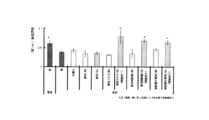
- FIG. It is a graph showing the relationship between the growth improving agent of an Example or the soil admixture of a comparative example, and root dry matter weight concerning the test example 1.
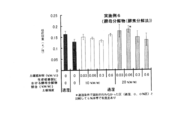
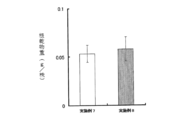
- FIG. It is a graph which concerns on the test example 2 and represents the relationship between the growth improving agent of an Example, and a root dry matter weight. It is a graph which concerns on the test example 2 and represents the relationship between the growth improving agent of an Example, and a root dry matter weight. It is a graph which concerns on the test example 2 and represents the relationship between the growth improving agent of an Example, and a root dry matter weight. It is a graph which concerns on the test example 3 and represents the relationship between the growth improving agent of an Example, and a root dry matter weight.
- FIG. It is a graph showing the relationship between the growth improvement agent of an Example, or the soil mixture of a comparative example, and root dry matter weight concerning the test example 4.
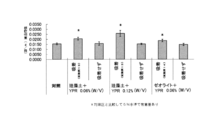
- FIG. It is a graph which concerns on the test example 5, and represents the relationship between the growth improving agent of an Example, or the soil mixture of a comparative example, and root dry matter weight.
- the present embodiment relates to a plant growth improving agent (hereinafter also simply referred to as a growth improving agent) that can improve the suppression of plant growth caused by excessive soil moisture, and at least a porous material and a yeast degradation product It is configured to include. Moreover, the yeast decomposition product is contained in the aspect adsorbed by the porous material.
- a plant growth improving agent hereinafter also simply referred to as a growth improving agent
- a porous material and a yeast degradation product It is configured to include.
- the yeast decomposition product is contained in the aspect adsorbed by the porous material.
- the contained yeast degradation product is a degradation product obtained by performing a degradation treatment on yeast, and is specifically selected from the group consisting of yeast extract, yeast cell wall, and yeast cell wall degradation product. It can be 1 type or 2 types or more.
- the yeast may be cultured to obtain the yeast degradation product according to the present embodiment, but from the viewpoint of waste utilization and waste disposal cost reduction, beer, whiskey, shochu, sake, miso, soy sauce It is preferable to use yeast obtained as extra waste discharged in the brewing industry.
- the yeast degradation product can be produced using one or more of mud beer yeast, pressed beer yeast, dry beer yeast, beer yeast suspension, and the like.
- a self-digestion method that solubilizes cells by using a proteolytic enzyme or the like inherent in yeast cells, solubilizing cells by adding microorganism or plant-derived enzyme preparations Enzymatic decomposition method, Hot water extraction method to solubilize cells by soaking in hot water for a certain period of time, Acid / alkaline decomposition method to solubilize cells by adding various acids or alkalis, Freezing / thawing
- the freeze-thaw method which crushes a microbial cell by performing this once or more
- the physical crushing method which crushes a microbial cell by physical irritation, etc. are mentioned.
- Examples of physical stimulation used in the physical crushing method include ultrasonic treatment, homogenization under high pressure, and grinding by mixing with a solid material such as glass beads.
- a yeast extract is an extract that can be prepared from a yeast culture and can be obtained, for example, by any of the degradation methods described above.
- the yeast cell wall is not particularly limited in its preparation method (decomposition method).
- yeast cell walls obtained as a by-product in the yeast extract preparation process can be used for this embodiment.
- the degradation product of the yeast cell wall can be obtained, for example, by subjecting the yeast cell wall to enzymatic degradation or hydrothermal reaction according to a known method.
- Enzymes that can be used for the preparation of yeast cell wall degradation products include glucanase, ⁇ -amylase, ⁇ -amylase, glucoamylase, pullulanase, transglucosidase, dextranase, glucose isomerase, cellulase, naringinase, hesperidinase, xylanase, Hemicellulase, mannanase, pectinase, invertase, lactase, chitinase, lysozyme, inulinase, chitosanase, ⁇ -galactosidase, protease, papain, peptidase, aminopeptidase, lipase, phospholipase, phytase, acid phosphatase, phosphodiesterase, catalase, glucose oxidase, peroxidase, Tannase
- the yeast degradation product which concerns on this embodiment is the aspect of a mixture
- the said mixture may be the thing which has not been isolate
- a material that has not been subjected to separation treatment for example, after performing a decomposition treatment on yeast, the yeast extract and the yeast cell wall are adsorbed to a porous material as they are without being separated into this embodiment. The case where such a growth improving agent is obtained is mentioned.
- the growth improving agent of this embodiment by containing 2 or more types among yeast extract, a yeast cell wall, and the degradation product of a yeast cell wall, compared with the case where these are contained independently, the growth improvement effect is further improved. Can be increased, which is preferable.
- the method for decomposing yeast is not particularly limited, but on the other hand, since the growth of the plant can be promoted with a smaller addition ratio to the soil, the yeast degradation product according to this embodiment is prepared by an autolysis method. It is preferable.
- yeast cell walls or a degradation product thereof and a mixture thereof as yeast degradation products from the viewpoint of treatment of surplus waste discharged in the industry.
- porous material As a porous material, it can be set as 1 type, or 2 or more types selected from the group which consists of diatomaceous earth, pearlite, a zeolite, charcoal, and activated carbon, for example.
- Examples of charcoal include charcoal, bamboo charcoal, and rice husk charcoal.
- diatomaceous earth it is preferable to contain diatomaceous earth as a porous material from the viewpoint of having a track record as an agricultural material.
- the growth improving agent of the present embodiment can be prepared by mixing the aforementioned yeast degradation product and porous material.
- the mixing method is not particularly limited, and can be appropriately set by those skilled in the art.
- the yeast degradation product is adsorbed in a porous manner.
- the mixing ratio of the yeast degradation product and the porous material is not particularly limited, but from the viewpoint of further promoting the growth of the plant, for example, the ratio (adsorption rate) of the yeast degradation product to the whole growth improving agent of this embodiment is 0. It is preferably 5% (W / W) or more.
- the adsorption rate is more preferably 1% (W / W) or more, still more preferably 1 to 30% (W / W), still more preferably 10 to 20% (W / W), and even more preferably. 10 to 15% (W / W).
- the upper limit of the adsorption rate is not particularly limited, but is preferably 40% (W / W) or less from the viewpoint of manufacturing cost and labor.
- the growth improving agent of the present embodiment is mixed with soil such as a farm field, and can improve the growth inhibition of plants called moisture damage caused by the soil becoming overhumid. Specifically, the growth improving agent of the present embodiment suppresses the influence caused by the soil becoming excessively humid, and improves plant growth.
- the overhumid soil refers to a state in which the moisture contained in the soil is excessive, for example, the pF value representing the degree of strength that the water in the soil is attracted by the capillary force of the soil. State that is 1.5 or less.
- the state in which the soil is excessively humid may be temporary, and varies depending on the type of plant, the type of soil, the temperature, the degree of excessive humidity, the growth stage at the time of encountering excessive humidity in the plant, etc. It is possible to sufficiently improve the moisture damage (growth suppression) of plants due to temporary overhumidity by adding the growth improver to the soil.
- Specific examples of moisture damage due to temporary overhumidity include pumpkin, cucumber, tomato, biman, onion, cabbage, Chinese cabbage, burdock (6-7 leaves), Japanese radish, green beans, etc. It is known that wet damage will occur in celery, spinach, leek, burdock (2-3 leaves), carrots, sweet potatoes, etc.
- the pF value can be measured based on the tensiometer method.
- the tensiometer method is described in, for example, “Soil Environment Analysis Method”, supervised by the Japan Soil Fertilizer Society, edited by the Soil Environment Analysis Method Editorial Committee, published by Hirotomo, 1997, first edition, pages 59-62. Yes.
- the overhumid soil which concerns on this embodiment is the state (pF value 1.5 or less) in which the water
- the soil to which the growth improving agent of this embodiment is applied is not particularly limited and can be appropriately set by those skilled in the art. Although those skilled in the art can naturally understand, in this specification, soil refers to a component that is derived from rocks and plants and can be used to maintain vegetation. It is also a concept that includes materials used for cultivation such as soil collected from peanuts, peat moss, coco pate, vermiculite, humus, compost, and charcoal.
- the growth improving agent of the present embodiment is a soil having a pF value of 1.5 or less (over-humid soil, and also includes a case where it temporarily falls within the range as described above) and can grow a plant. Improve plant growth.
- a preferable aspect in which the growth improving agent of the present embodiment is mixed is a case where the pF value is greater than 0 and 1.5 or less, and a more preferable aspect is a case where the pF value is greater than 0 and 0.5 or less.
- the method of using the growth improving agent of the present embodiment is not particularly limited, and can be appropriately set by those skilled in the art.
- the application time is not limited, and the growth improving agent of the present embodiment can be used in the soil before planting (seeding seeds or planting seedlings).
- the pF value may not be 1.5 or less when the growth improving agent of the present embodiment is mixed with soil.
- the amount and ratio mixed with the overhumid soil can be appropriately set and are not particularly limited.
- mixing of soil (cultured soil) and the growth improving agent of the present embodiment is possible. It is preferable to mix in the range of 0.02 to 1.0% (W / V). Further, it is more preferable to mix the growth improving agent of this embodiment in a range of 0.03 to 0.6% (W / V), and it is preferable to mix in a range of 0.03 to 0.3% (W / V). Even more preferred.
- By mixing in the range of 0.02 to 1.0% (W / V) plant growth can be further promoted.
- the soil volume per 10a is assumed to be 100t with a soil layer of 10cm and a temporary specific gravity of 1, and mixing at 0.02 to 1.0% (W / W), similar to the above range, It is preferable for the same reason.
- the yeast degradation product is 0.5 to 30% (W / W) (more preferably 10 to 20% (W / W), more preferably still, per growth improving agent. 10 to 15% (W / W)) of the growth improving agent of this embodiment, the mixing ratio of the soil and the growth improving agent of this embodiment is 0.02 to 1.0% (W / V) ) (0.02-1.0% (W / W) for fields) (more preferably 0.03-0.6% (W / V), even more preferably 0.03-0.3% ( W / V)).
- the amount of cultivation in a field or the like to which the growth improving agent of this embodiment is applied is not particularly limited.
- spinach 25,000 to 200,000 shares / 10a (preferably 50,000 to 150,000 shares / 10a)
- sweet potatoes 1,000 to 10,000 shares / 10a (preferably 2000 to 5000 shares / 10a)
- wheat In the case of 5,000 to 500,000 strains / 10a (preferably 80,000 to 400,000 strains / 10a)
- green soybeans 2000 to 30,000 strains / 10a (preferably 5000 to 15,000 strains / 10a)
- rice seedlings In the case of: 50 g to 300 g / one seedling box (preferably 130 g to 180 g / one seedling box).
- the growth suppression (moisture damage) of the plant resulting from the soil becoming an overhumid state is improved by mixing the said growth improving agent with soil. Can do. Therefore, it can be expected that plants can be grown healthy while improving growth inhibition (wet damage) in diversion of paddy fields that are left uncultivated or in fields where hard disks are formed.
- a plant cultivated in a field or the like to which the growth improving agent of the present embodiment is applied is not particularly limited, and can be appropriately set by those skilled in the art. Specific examples include monocotyledonous plants such as wheat, leeks and onions, and dicotyledonous plants such as sweet potato and spinach, which have been tried in the paddy field cropping field.
- leek, onion, sweet potato, and spinach are known to be vulnerable to moisture damage compared to other cereals and vegetables, but by mixing the growth improving agent of this embodiment with soil, The growth of these crops in can be improved. Furthermore, by adding the growth improving agent of this embodiment to the soil, green soybeans (soybeans) that are known to be less susceptible to moisture damage than other cereals and vegetables, as well as sweet potatoes, and Asia including Japan. It is also possible to improve the growth of rice, which is a representative crop in the field (especially rice in the seedling stage before planting).
- Test Example 1 The test varieties were spinach 'night-extraction parc' and tested in a greenhouse owned by Asahi Group Holdings in Moriya, Ibaraki. Sowing was performed by filling a 72-hole cell tray with the seedling culture medium of Takii Seedling Co., Ltd. The seedlings were raised on a seedling terrace (closed-type seedling production system) at 25 ° C for 12 hours, and irrigation was conducted once a day. The pots were raised in a No. 5 polypot and grown in a plastic house for 20 days.
- test plots were: A) Control plot (no soil mixing), B) Diatomaceous earth (powder) only, C) Yeast (powder), D) Yeast adsorbed on diatomaceous earth, E) Yeast extract (powder), F) Diatomaceous earth Adsorbed yeast extract (Example 1), G) Yeast cell wall (powder), H) Yeast cell wall adsorbed on diatomaceous earth (Example 2), I) Enzymatic degradation product (powder) of yeast cell wall, J) Diatomaceous earth An enzyme degradation product (Example 3) of the adsorbed yeast cell wall was set.
- yeast extract obtained by yeast self-digestion method as yeast extract ("Meast” (Asahi Food and Healthcare Co., Ltd.)
- yeast self-digestion method and enzyme treatment as yeast cell wall
- yeast cell wall (“YPR” (Asahi Food and Healthcare Co., Ltd.)
- YPR Asahi Food and Healthcare Co., Ltd.
- an enzymatic degradation product of the yeast cell wall the yeast cell wall obtained by the yeast self-digestion method was subjected to the enzymatic degradation method.
- the obtained degradation product (“Toyo crop word ⁇ SP powder>” (Asahi Food and Healthcare Co., Ltd.) was used.
- yeast extract, yeast cell wall, or enzyme degradation product of yeast cell wall were It was made to adsorb
- the soil pF value is adjusted according to the irrigation method, and two types of soil moisture conditions, pF1.5 to 2.7 (water irrigation / suitable humidity, the same shall apply hereinafter) and pF0 to 0.3 (bottom flooding / superhumidity, the same shall apply hereinafter) Cultivated in
- Each material containing the growth improving agent of the examples according to the above B) to J) is 0.06% in the mixing ratio of the material to the soil (hereinafter also referred to as soil miscibility. The same applies to other test examples). (W / V).
- the result of measuring the dry weight of the root after the test is shown in FIG.
- the root mass was significantly decreased in the over-humidity / immiscible group compared with the appropriate-humidity / immiscible group.
- each material growth improving agent of Examples 1 to 3 in which yeast extract, yeast cell wall and enzyme degradation product of yeast cell wall were adsorbed on diatomaceous earth in an overhumid state was mixed with soil, it was compared with the overhumidity / non-mixed group. It was found that the root mass increased significantly.
- Test Example 2 was conducted in order to confirm appropriate amounts such as the type of yeast degradation product, the ratio of yeast degradation product, and the soil admixture of the growth improver.
- test varieties were spinach 'night-extraction parc' and tested in a greenhouse owned by Asahi Group Holdings in Moriya, Ibaraki. Sowing was performed by filling a 72-hole cell tray with the seedling culture medium of Takii Seedling Co., Ltd. The seedlings were raised on a seedling terrace (closed-type seedling production system) at 25 ° C for 12 hours, and irrigation was conducted once a day. The pots were raised in a No. 5 polypot and grown in a plastic house for 30 days.
- yeast degradation products yeast cell walls derived from brewer's yeast (“YPR”, Asahi Food and Healthcare Co., Ltd.), yeast cell wall degradation products obtained by allowing enzymes to act on yeast cell walls obtained by the self-digestion method (good harvest) Story ⁇ >, Asahi Food and Healthcare Co., Ltd., hereinafter also referred to as cell wall degradation product (self-digestion method), yeast cell wall degradation product obtained by allowing enzymes to act on yeast cell wall obtained by enzymatic degradation method (Abundant crop word ⁇ green>, Asahi Food and Healthcare Co., Ltd., hereinafter also referred to as cell wall degradation product (enzymatic degradation method)).
- the growth improving agents of the examples were prepared by adsorbing these yeast cell walls or cell wall degradation products to diatomaceous earth at a ratio of 10% (W / W) or 20% (W / W) as a whole of the growth improving agent (adsorption). Rate: 10% (W / W) or 20% (W / W)).
- the growth improving agent obtained using the yeast cell wall is collectively referred to as the growth improving agent of Example 4.
- the growth improving agent obtained by using the cell wall degradation product self-digestion method
- the growth improving agent obtained by using the cell wall degradation product (enzymatic degradation method).
- the growth improving agent of Example 6 are collectively referred to as the growth improving agent of Example 6.
- the soil admixture of the growth-improving agent is 0.03% (W / V), 0.06% (W / V), 0.3% (W / V), or 0.6% (W / V).
- the soil pF value was adjusted by the irrigation method, and cultivation was carried out under the two soil moisture conditions of each test section, pF1.5 to 2.7 (jouro irrigation / suitable humidity) and pF0 to 0.3 (bottom flooding / overhumidity).
- FIGS. The results of measurement of root dry matter weight after completion of the test are shown in FIGS. Regarding the growth improving agents of Examples 4 and 5, especially when the mixture was mixed with soil at a soil degradation rate of 0.03 to 0.3% (W / V) with a yeast degradation product ratio of 10% (W / W), The root growth improvement effect was confirmed. Moreover, about the growth improving agent of Example 6, when the ratio of a yeast degradation product is 10% (W / W) and soil mixing rate is 0.6% (W / V), the ratio of a yeast degradation product is 20% (W / W). In the case of W) and the soil admixture ratio of 0.03 to 0.3% (W / V), the root growth improving effect was confirmed particularly in overhumid soil.
- the yeast cell wall and the enzymatic degradation product of the yeast cell wall differ in the ratio of the appropriate yeast degradation product and the soil mixing ratio depending on the degradation method for yeast when obtaining the yeast cell wall.
- yeast cell walls and cell wall degradation products autolysis method
- plants can be used even if the proportion of yeast degradation products added to the soil is smaller than when cell wall degradation products (enzymatic degradation method) are used. It can be understood that the growth of can be promoted.
- the ratio of yeast degradation products has an optimum value in the range of 10 to 20% (W / W) /.
- Test Example 3 The test varieties were spinach 'night-extraction parc' and tested in a greenhouse owned by Asahi Group Holdings in Moriya, Ibaraki. Sowing was carried out by filling a 72-hole cell tray with the seedling culture soil of Takii Seedling Co., Ltd. The seedlings were raised on a seedling terrace (closed-type seedling production system) at 25 ° C for 12 hours, and irrigation was carried out once a day so that the irrigation was in an overhumid state of pF0 to 0.3. The pots were raised in a No. 5 polypot and grown in a plastic house for 20 days.
- Example 7 Hokkaido diatomaceous earth (“nano-K” (Cross Farm Co., Ltd.)) and yeast cell wall (“YPR” (Asahi Food and Healthcare Co., Ltd.)) in a total ratio of 10% (W / W) Adsorption was carried out to obtain a growth improving agent of Example 7 (adsorption rate: 10% (W / W)).
- diatomaceous earth Standard Supercell” (Tokyo Kogyo Trading Co., Ltd.)
- the growth improver of Example 8 was obtained, and two test plots were set, and the growth improver of Examples 7 and 8 was added to each test plot as 0.06% (W / V).
- Test Example 4 The test varieties were spinach 'night-drawn bulk' and tested in a greenhouse owned by Asahi Group Holdings in Moriya, Ibaraki Prefecture. Sowing was carried out by filling a 72-hole cell tray with the seedling culture soil of Takii Seedling Co., Ltd. The seedlings were raised on a seedling terrace (closed-type seedling production system) at 25 ° C for 12 hours, and irrigation was carried out once a day so that the irrigation was in an overhumid state of pF0 to 0.3. The pots were raised in a No. 5 polypot and grown in a plastic house for 20 days.
- Yeast cell wall degradation product (“YPR”, Asahi Food and Healthcare Co., Ltd.) is adsorbed to pearlite, charcoal (rice husk charcoal), activated carbon, or zeolite so that the total amount is 10% (W / W).
- the growth improving agents of Examples 9 to 12 were obtained (adsorption rate: 10% (W / W)).
- Each test group was set for the growth improving agents of Examples 9 to 12, and each test group was mixed at a soil mixing ratio of 0.06% (W / V).
- a section in which 0.06% (W / V) was mixed with soil without adsorbing yeast cell wall degradation products was set for each material.
- a test group that was grown with no material admixture, appropriate humidity and excessive humidity was set as a control group.
- the result of measuring the dry weight of the root after the test is shown in FIG. It was confirmed that all of the growth improving agents of Examples 9 to 12 obtained by adsorbing the yeast cell wall (YPR) to pearlite, charcoal, activated carbon, or zeolite had a growth improving effect under excessively humid conditions. On the other hand, the growth improvement effect was not seen by all each material which is a porous material alone. From the results, it can be understood that the porous material according to the growth improving agent of the present invention is not limited to diatomaceous earth, and the same effect can be obtained when other porous materials are used.
- Yeast cell walls (“YPR” (Asahi Food and Healthcare Co., Ltd.)) were adsorbed to diatomaceous earth or zeolite so as to have a ratio of 10% (W / W) as a whole, and the growth improving agents of Examples 13 and 14 were obtained. (Adsorption rate: 10% (W / W)).
- a test plot was set and mixed at a rate of 0.06% (W / V) per mixture of soil and growth improver.
- the test plot which set the mixing ratio of soil and the growth improving agent to 0.12% (W / V) was also set.
- test plot was set in which diatomaceous earth or zeolite and yeast cell wall were mixed with soil without adsorbing the yeast cell wall to diatomaceous earth or zeolite, respectively. Further, as a control group, a test group that was grown without mixing materials under superhumid conditions was set.
- the result of measuring the dry weight of the root after the test is shown in FIG.
- the root mass was significantly increased in any of the test plots mixed with the growth improving agent of Example 13 or 14 prepared by adsorbing yeast cell walls to diatomaceous earth or zeolite.
- the values of the dry weight of the control group and the root dry matter were almost the same. From the above results, it was suggested that the yeast extract and its degradation products would not show growth improvement effect even if mixed with soil unless adsorbed on porous materials.
- the test varieties were edamame: 'Kitanosato', rice: 'Nihonbare', onion: 'Quanzhou Chuo', and green onion: 'Ishikura Ippon' in a greenhouse owned by Asahi Group Holdings in Moriya, Ibaraki. I did it.
- the seedlings were raised on a seedling terrace (closed-type seedling production system) at 25 ° C for 12 hours, irrigation once a day by bottom irrigation. Sowing is done in a 72-hole cell tray. A nursery soil was used. The cultivation period was 21 days for green soybeans, 17 days for rice, 30 days for onions, and 45 days for onions.
- the soil pF value was around 0.5 for the seed sowing medium of the green soybean Takii Seedling Co., Ltd.
- the growth-improving agent of the example was prepared in the same manner as in Example 2 or 3 using the yeast cell wall or its enzymatic degradation product.
- the test plots for green soybean (soybean), rice, onion, and green onion were controls (soil admixture of material 0% (W / V)), soil admixture of the growth improver (yeast cell wall) of Example 15 0.06% ( Two test zones (W / V) were set.
- test groups were established: the two test groups and a test group having a soil admixture of 0.06% (W / V) of the growth improving agent (cell wall degradation product) of Example 16.
- the survey was conducted in 12 replicate strains, and repeated 3 times in 1 test area.
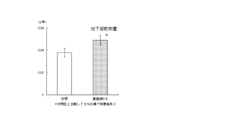
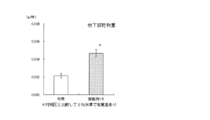
- FIG. 10 An example of green soybeans after the test is shown in FIG.
- the above-mentioned dry weight was significantly increased in both the growth improving agent 0.06% group of Example 15 and the growth improving agent 0.06% group of Example 16 as compared with the control group (FIG. 9).
- the underground dry matter weight in the growth improving agent 0.06% group of Example 15 was particularly increased compared to the control group (FIG. 10).
- the germination rate was 0.06% for the growth improving agent of Example 15 and 0.06% for the growth improving agent of Example 16, both higher than the control, and significantly higher at the 5% level for the 0.06% growth improving agent of Example 15. .
- Example 15 In rice, the above-mentioned dry weight and underground dry weight increased significantly in both the 0.06% growth improvement agent of Example 15 and the 0.06% growth improvement agent of Example 16 as compared to the control group (FIG. 11 to FIG. 11). 13).
- the dry matter weight in the underground portion was significantly increased in the growth improving agent 0.06% section of Example 9 (FIGS. 14 to 15).
- the dry weight of the above-ground part and the dry part of the underground part significantly increased in the 0.06% growth improving agent of Example 9 (FIGS. 16 to 18).
- the test area is a material in which the yeast cell wall and yeast extract are mixed at 4: 6 and adsorbed on diatomaceous earth (hereinafter referred to as material (1)) and a material in which the yeast cell wall is adsorbed on diatomaceous earth (hereinafter referred to as material (2)).
- material (1) a material in which the yeast cell wall and yeast extract are mixed at 4: 6 and adsorbed on diatomaceous earth
- material (2) a material in which the yeast cell wall is adsorbed on diatomaceous earth
- 2 materials were prepared and used as growth improving agents in the examples.
- the growth improving agents of these examples were prepared by adsorbing the yeast degradation product on diatomaceous earth so that the ratio (adsorption rate) of the yeast degradation product to the whole mixture was the value shown in Table 1.
- the test group which mixed by the mixing rate shown in Table 2 or Table 3, respectively was set.
- the control group was a material-unmixed group. Since the material (1) and the material (2) were tested on different seedling terraces, the control zone was also set for each material (1) and (2).
- the test was conducted with 5 strains ⁇ 3 replicates in 1 test section.
- yeast is decomposed by various methods to extract a yeast extract, and the extraction rate varies depending on the method, and is about 30 to 70%. In general, considering the economy and quality, the extraction rate is about 60%.
- the material (1) in which the yeast cell wall and the yeast extract are blended at 4: 6 is equivalent to a material obtained by decomposing yeast and adsorbing it as it is on diatomaceous earth.
- Tables 2 and 3 The results are shown in Tables 2 and 3.
- an example of the photograph of the rice cultivated in the test area which mixed the material (1) of adsorption rate 1% (W / W) is shown in FIG.
Landscapes
- Life Sciences & Earth Sciences (AREA)
- Microbiology (AREA)
- General Health & Medical Sciences (AREA)
- Mycology (AREA)
- Health & Medical Sciences (AREA)
- Engineering & Computer Science (AREA)
- Zoology (AREA)
- Pest Control & Pesticides (AREA)
- Biotechnology (AREA)
- Plant Pathology (AREA)
- Virology (AREA)
- Agronomy & Crop Science (AREA)
- Dentistry (AREA)
- Wood Science & Technology (AREA)
- Environmental Sciences (AREA)
- Agricultural Chemicals And Associated Chemicals (AREA)
- Cultivation Of Plants (AREA)
- Soil Conditioners And Soil-Stabilizing Materials (AREA)
Abstract
【課題】土壌が過湿となったことに起因する植物の生育抑制(湿害)を改善できる新規な技術を提供する。 【解決手段】 土壌が過湿となったことに起因する植物の生育抑制を改善できる植物の生育改善剤であって、多孔質物と、多孔質物に吸着されている、酵母エキス、酵母細胞壁及び酵母細胞壁の分解物からなる群から選択される1種または2種以上の酵母分解物と、を含む植物の生育改善剤。
Description
本発明は、植物の生育改善剤に関し、特に土壌が過湿となったこと(pF値が1.5以下となったこと)に起因する植物の生育抑制を改善できる生育改善剤に関する。
圃場等においてその土壌中で水分が過剰となることにより土壌中の酸素が不足し、これに起因して根張りが阻害されるなどの作物が生育障害を起こす現象(湿害)が知られており、当該湿害は作物栽培における障害の1つとなっている。
例えば減反政策に伴う米の生産調整により使用されなくなった水田は、約100万ha(2003年)であり、水田転作圃場として小麦などを栽培することが試みられているが、水田転作圃場は水分が過剰となる傾向があり、湿害が発生しやすい。
また、重機による耕作等により硬盤が形成された圃場においては、深部への透水性が損なわれている結果、降雨によりその表面が滞水しやすい傾向がある。そのため、このような硬盤が形成された圃場においても土壌中で水分が過多となりやすく、湿害が発生しやすい。
さらに、近年ゲリラ豪雨などの影響で一般圃場でも湛水、冠水が問題になっており、その結果、これらにおいても湿害が発生する場合がある。
例えば減反政策に伴う米の生産調整により使用されなくなった水田は、約100万ha(2003年)であり、水田転作圃場として小麦などを栽培することが試みられているが、水田転作圃場は水分が過剰となる傾向があり、湿害が発生しやすい。
また、重機による耕作等により硬盤が形成された圃場においては、深部への透水性が損なわれている結果、降雨によりその表面が滞水しやすい傾向がある。そのため、このような硬盤が形成された圃場においても土壌中で水分が過多となりやすく、湿害が発生しやすい。
さらに、近年ゲリラ豪雨などの影響で一般圃場でも湛水、冠水が問題になっており、その結果、これらにおいても湿害が発生する場合がある。
このような湿害の発生を招く可能性のある過湿土壌への対策としては、過湿による病気の発生を予防または治療するための殺菌剤(クルーザー(登録商標)MAXXなど)を散布する、湛水状態などで窒素、カリ、鉄、マンガン、カルシウムなどが流亡し欠乏症が発生することがあるため、それらを補給する、などの対策が行われている。また、その他には、深耕や高畝栽培、耐湿性の品種を用いるなどの対策も行われている。
しかしながら、土壌が過湿となったことに起因する植物の生育抑制を改善する技術はほとんど存在せず、農薬・成長調整剤として市販されている「エテホン」で根の湿害抵抗性を高める試みもなされているが実用性は低い。
しかしながら、土壌が過湿となったことに起因する植物の生育抑制を改善する技術はほとんど存在せず、農薬・成長調整剤として市販されている「エテホン」で根の湿害抵抗性を高める試みもなされているが実用性は低い。
一方、ビール酵母などを用いて製造される、還元性肥料や微生物由来還元性混合物が知られている(例えば特許文献1、2)。
特許文献1の還元性肥料は、例えば、微生物材料過熱水蒸気処理物と、珪藻土と、を含む態様で構成されており、微生物材料過熱水蒸気処理物は、例えば酵母、酵母の抽出物、または酵母の細胞壁と、リン酸及びカリウムとを含む混合物に過熱水蒸気処理(水熱反応処理)を施すことにより得ることができる。特許文献1には当該還元性肥料を施用することで、果樹類の根の成長や、果実の肥大を促進できることが記載されている。
また、特許文献2の微生物由来還元性混合物は、微生物材料過熱水蒸気処理物と、過熱水蒸気処理を施していない微生物又は微生物の成分とを含んで構成されている。当該特許文献2に係る微生物材料過熱水蒸気処理物もまた、例えば酵母などに過熱水蒸気処理を施すことにより得ることができる。特許文献2には微生物由来還元性混合物を施用することで土壌の酸化還元電位を調節することができ、その結果、酵母由来成分の吸収促進や土壌改良などに寄与できることが記載されている。
特許文献1の還元性肥料は、例えば、微生物材料過熱水蒸気処理物と、珪藻土と、を含む態様で構成されており、微生物材料過熱水蒸気処理物は、例えば酵母、酵母の抽出物、または酵母の細胞壁と、リン酸及びカリウムとを含む混合物に過熱水蒸気処理(水熱反応処理)を施すことにより得ることができる。特許文献1には当該還元性肥料を施用することで、果樹類の根の成長や、果実の肥大を促進できることが記載されている。
また、特許文献2の微生物由来還元性混合物は、微生物材料過熱水蒸気処理物と、過熱水蒸気処理を施していない微生物又は微生物の成分とを含んで構成されている。当該特許文献2に係る微生物材料過熱水蒸気処理物もまた、例えば酵母などに過熱水蒸気処理を施すことにより得ることができる。特許文献2には微生物由来還元性混合物を施用することで土壌の酸化還元電位を調節することができ、その結果、酵母由来成分の吸収促進や土壌改良などに寄与できることが記載されている。
上述のとおり、土壌が過湿となったことに起因する植物の生育抑制(湿害)を改善できる技術はほとんど知られていない。
本発明はこのような事情に基づきなされたものであり、土壌が過湿となったことに起因する植物の生育抑制を改善できる新規な技術を提供することを目的とする。
本発明はこのような事情に基づきなされたものであり、土壌が過湿となったことに起因する植物の生育抑制を改善できる新規な技術を提供することを目的とする。
本発明者は土壌が過湿となったことに起因する湿害を軽減し、植物の根張りを改善できる技術について鋭意研究を行った。
その結果、これまでに発明者は、過湿土壌における植物の根張り改善剤を提案している(特願2015-003563)。当該根張り改善剤は、酵母、酵母の抽出物、または酵母の細胞壁と、リン酸またはリン酸化合物及びカリウムまたはカリウム化合物とを含む混合物に過熱水蒸気処理を施すことにより得られる微生物材料過熱水蒸気処理物、酵母細胞壁粉末及び珪藻土が混合されている微生物由来混合物を含んで構成されている。当該根張り改善剤を土壌に混合することで、その土壌が過湿の状態となったときの植物の根張りを改善することができる。
発明者はさらに鋭意研究を重ねた結果、多孔質物に吸着させた酵母の分解物を土壌に混和することで、その土壌が過湿の状態となったことに起因する植物の生育抑制を改善できることを見出し、本発明を完成させた。
その結果、これまでに発明者は、過湿土壌における植物の根張り改善剤を提案している(特願2015-003563)。当該根張り改善剤は、酵母、酵母の抽出物、または酵母の細胞壁と、リン酸またはリン酸化合物及びカリウムまたはカリウム化合物とを含む混合物に過熱水蒸気処理を施すことにより得られる微生物材料過熱水蒸気処理物、酵母細胞壁粉末及び珪藻土が混合されている微生物由来混合物を含んで構成されている。当該根張り改善剤を土壌に混合することで、その土壌が過湿の状態となったときの植物の根張りを改善することができる。
発明者はさらに鋭意研究を重ねた結果、多孔質物に吸着させた酵母の分解物を土壌に混和することで、その土壌が過湿の状態となったことに起因する植物の生育抑制を改善できることを見出し、本発明を完成させた。
本発明の要旨は以下のとおりである。
[1] 土壌が過湿となったことに起因する植物の生育抑制を改善できる植物の生育改善剤であって、
多孔質物と、
前記多孔質物に吸着されている、酵母エキス、酵母細胞壁及び酵母細胞壁の分解物からなる群から選択される1種または2種以上の酵母分解物と、を含む植物の生育改善剤。
[2] 前記多孔質物が珪藻土、パーライト、ゼオライト、炭及び活性炭からなる群から選択される1種または2種以上の多孔質物である[1]記載の植物の生育改善剤。
[3] 前記酵母分解物が、酵母に対する自己消化法による分解処理を行うことにより得られた酵母分解物である[1]または[2]に記載の植物の生育改善剤。
[4] 土壌が過湿となったことに起因する植物の生育抑制を改善できる植物の生育改善剤であって、多孔質物と、前記多孔質物に吸着されている、酵母エキス、酵母細胞壁及び酵母細胞壁の分解物からなる群から選択される1種または2種以上の酵母分解物とを含む植物の生育改善剤を土壌に混和し、
前記植物の生育改善剤を混和した土壌において植物を植えて栽培することを含む、土壌が過湿となったことに起因する植物の生育抑制の改善方法。
[5] 前記多孔質物が珪藻土、パーライト、ゼオライト、炭及び活性炭からなる群から選択される1種または2種以上の多孔質物である[4]記載の植物の生育抑制の改善方法。
[6] 前記酵母分解物が、酵母に対する自己消化法による分解処理を行うことにより得られた酵母分解物である[4]または[5]に記載の植物の生育抑制の改善方法。
[7] 前記植物の生育改善剤が混和された土壌において栽培されることで、植物の根の生育が促進される[4]から[6]のいずれか1つに記載の植物の生育抑制の改善方法。
[1] 土壌が過湿となったことに起因する植物の生育抑制を改善できる植物の生育改善剤であって、
多孔質物と、
前記多孔質物に吸着されている、酵母エキス、酵母細胞壁及び酵母細胞壁の分解物からなる群から選択される1種または2種以上の酵母分解物と、を含む植物の生育改善剤。
[2] 前記多孔質物が珪藻土、パーライト、ゼオライト、炭及び活性炭からなる群から選択される1種または2種以上の多孔質物である[1]記載の植物の生育改善剤。
[3] 前記酵母分解物が、酵母に対する自己消化法による分解処理を行うことにより得られた酵母分解物である[1]または[2]に記載の植物の生育改善剤。
[4] 土壌が過湿となったことに起因する植物の生育抑制を改善できる植物の生育改善剤であって、多孔質物と、前記多孔質物に吸着されている、酵母エキス、酵母細胞壁及び酵母細胞壁の分解物からなる群から選択される1種または2種以上の酵母分解物とを含む植物の生育改善剤を土壌に混和し、
前記植物の生育改善剤を混和した土壌において植物を植えて栽培することを含む、土壌が過湿となったことに起因する植物の生育抑制の改善方法。
[5] 前記多孔質物が珪藻土、パーライト、ゼオライト、炭及び活性炭からなる群から選択される1種または2種以上の多孔質物である[4]記載の植物の生育抑制の改善方法。
[6] 前記酵母分解物が、酵母に対する自己消化法による分解処理を行うことにより得られた酵母分解物である[4]または[5]に記載の植物の生育抑制の改善方法。
[7] 前記植物の生育改善剤が混和された土壌において栽培されることで、植物の根の生育が促進される[4]から[6]のいずれか1つに記載の植物の生育抑制の改善方法。
本発明によれば、土壌が過湿となったことに起因する植物の生育抑制を改善できる新規な技術を提供することができる。
以下、本発明の1つの実施形態について詳述する。
本実施形態は、土壌が過湿となったことに起因する植物の生育抑制を改善できる植物の生育改善剤(以下、単に生育改善剤ともいう)に関し、多孔質物と、酵母分解物とを少なくとも含んで構成されている。また、酵母分解物は、多孔質物に吸着されている態様で含まれている。
本実施形態は、土壌が過湿となったことに起因する植物の生育抑制を改善できる植物の生育改善剤(以下、単に生育改善剤ともいう)に関し、多孔質物と、酵母分解物とを少なくとも含んで構成されている。また、酵母分解物は、多孔質物に吸着されている態様で含まれている。
本実施形態において、含有される酵母分解物は、酵母に対する分解処理を行うことにより得られる分解物であり、具体的には酵母エキス、酵母細胞壁及び酵母細胞壁の分解物からなる群から選択される1種または2種以上とすることができる。
酵母は、本実施形態に係る酵母分解物を得るために培養されたものであってもよいが、廃物利用及び廃棄物の廃棄コスト低減の観点から、ビール、ウイスキー、焼酎、清酒、味噌、醤油等の醸造産業において排出される余乗廃棄物として得られる酵母を用いることが好ましい。
一例として、酵母分解物は、泥状ビール酵母、圧搾ビール酵母、乾燥ビール酵母、ビール酵母懸濁液などのうち1種または2種以上を用いて製造することができる。
酵母は、本実施形態に係る酵母分解物を得るために培養されたものであってもよいが、廃物利用及び廃棄物の廃棄コスト低減の観点から、ビール、ウイスキー、焼酎、清酒、味噌、醤油等の醸造産業において排出される余乗廃棄物として得られる酵母を用いることが好ましい。
一例として、酵母分解物は、泥状ビール酵母、圧搾ビール酵母、乾燥ビール酵母、ビール酵母懸濁液などのうち1種または2種以上を用いて製造することができる。
酵母に対する分解処理の方法として、例えば、酵母菌体内に本来あるタンパク質分解酵素等を利用して菌体を可溶化する自己消化法、微生物や植物由来の酵素製剤を添加して菌体を可溶化する酵素分解法、熱水中に一定時間浸漬することにより菌体を可溶化する熱水抽出法、種々の酸あるいはアルカリを添加して菌体を可溶化する酸・アルカリ分解法、凍結・融解を1回以上行うことにより菌体を破砕する凍結融解法、物理的な刺激により菌体を破砕する物理的破砕法等が挙げられる。物理的破砕法において用いられる物理的刺激としては、例えば、超音波処理、高圧下におけるホモジェナイズ、グラスビーズ等の固形物との混合による磨砕等がある。
酵母エキスは酵母の培養物から調製できる抽出物であり、例えば上述のいずれかの分解方法によって得ることができる。
酵母細胞壁もまた、同様にその調製方法(分解方法)について特に限定されない。例えば、酵母エキス調製過程において副産物として得られる酵母細胞壁を本実施形態のために用いることができる。
また、酵母細胞壁の分解物は、例えば上述の酵母細胞壁に対して公知の方法に従い酵素分解や水熱反応を行うことにより得ることができる。酵母細胞壁の分解物調製のために用いることができる酵素としては、グルカナーゼ、α-アミラーゼ、β-アミラーゼ、グルコアミラーゼ、プルラナーゼ、トランスグルコシダーゼ、デキストラナーゼ、グルコースイソメラーゼ、セルラーゼ、ナリンギナーゼ、ヘスペリジナーゼ、キシラナーゼ、ヘミセルラーゼ、マンナナーゼ、ペクチナーゼ、インベルターゼ、ラクターゼ、キチナーゼ、リゾチーム、イヌリナーゼ、キトサナーゼ、α-ガラクトシダーゼ、プロテアーゼ、パパイン、ペプチダーゼ、アミノペプチダーゼ、リパーゼ、ホスホリパーゼ、フィターゼ、酸性フォスファターゼ、ホスホジエステラーゼ、カタラーゼ、グルコースオキシダーゼ、ペルオキシダーゼ、タンナーゼ、ポリフェノールオキシダーゼ、デアミナーゼ、ヌクレアーゼなどを挙げることができる。酵母細胞壁の分解物調製にあたっては、例えばこれらのうち1種または2種以上を適宜選択して用いるようにしてもよい。
なお、本実施形態に係る酵母分解物が混合物の態様である場合、当該混合物は混合処理によって得られたもののほか、分離処理が行われていないものであってもよい。分離処理が行われていないものを用いた場合の具体例としては、例えば酵母について分解処理を行った後、酵母エキスと酵母細胞壁とを分離することなくそのまま多孔質物に吸着させて本実施形態に係る生育改善剤を得るような場合が挙げられる。
また、本実施形態の生育改善剤については、酵母エキス、酵母細胞壁及び酵母細胞壁の分解物のうち2種以上を含有することで、これらを単独で含有する場合と比較して、さらに生育改善効果を高めることができるため、好ましい。
また、上述のとおり酵母に対する分解処理方法は特に限定されないが、一方で、土壌へのより少ない添加割合で植物の生育を促進できるため、本実施形態に係る酵母分解物は自己消化法により調製されることが好ましい。
酵母細胞壁もまた、同様にその調製方法(分解方法)について特に限定されない。例えば、酵母エキス調製過程において副産物として得られる酵母細胞壁を本実施形態のために用いることができる。
また、酵母細胞壁の分解物は、例えば上述の酵母細胞壁に対して公知の方法に従い酵素分解や水熱反応を行うことにより得ることができる。酵母細胞壁の分解物調製のために用いることができる酵素としては、グルカナーゼ、α-アミラーゼ、β-アミラーゼ、グルコアミラーゼ、プルラナーゼ、トランスグルコシダーゼ、デキストラナーゼ、グルコースイソメラーゼ、セルラーゼ、ナリンギナーゼ、ヘスペリジナーゼ、キシラナーゼ、ヘミセルラーゼ、マンナナーゼ、ペクチナーゼ、インベルターゼ、ラクターゼ、キチナーゼ、リゾチーム、イヌリナーゼ、キトサナーゼ、α-ガラクトシダーゼ、プロテアーゼ、パパイン、ペプチダーゼ、アミノペプチダーゼ、リパーゼ、ホスホリパーゼ、フィターゼ、酸性フォスファターゼ、ホスホジエステラーゼ、カタラーゼ、グルコースオキシダーゼ、ペルオキシダーゼ、タンナーゼ、ポリフェノールオキシダーゼ、デアミナーゼ、ヌクレアーゼなどを挙げることができる。酵母細胞壁の分解物調製にあたっては、例えばこれらのうち1種または2種以上を適宜選択して用いるようにしてもよい。
なお、本実施形態に係る酵母分解物が混合物の態様である場合、当該混合物は混合処理によって得られたもののほか、分離処理が行われていないものであってもよい。分離処理が行われていないものを用いた場合の具体例としては、例えば酵母について分解処理を行った後、酵母エキスと酵母細胞壁とを分離することなくそのまま多孔質物に吸着させて本実施形態に係る生育改善剤を得るような場合が挙げられる。
また、本実施形態の生育改善剤については、酵母エキス、酵母細胞壁及び酵母細胞壁の分解物のうち2種以上を含有することで、これらを単独で含有する場合と比較して、さらに生育改善効果を高めることができるため、好ましい。
また、上述のとおり酵母に対する分解処理方法は特に限定されないが、一方で、土壌へのより少ない添加割合で植物の生育を促進できるため、本実施形態に係る酵母分解物は自己消化法により調製されることが好ましい。
ここで、本実施形態においては、酵母分解物として酵母細胞壁またはその分解物およびこれらの混合物を含むことが、産業において排出される余乗廃棄物の処理の観点から好ましい。
多孔質物としては、例えば、珪藻土、パーライト、ゼオライト、炭及び活性炭からなる群から選択される1種または2種類以上とすることができる。炭としては、木炭、竹炭、もみ殻燻炭等が挙げられる。
これらのうち、農業資材としてより実績がある観点から、多孔質物として珪藻土を含有することが好ましい。
これらのうち、農業資材としてより実績がある観点から、多孔質物として珪藻土を含有することが好ましい。
本実施形態の生育改善剤は、上述の酵母分解物と多孔質物とを混合することにより調製することができる。混合する方法については特に限定されず、当業者が適宜設定することができる。混合することで、上述のとおり、酵母分解物は多孔質に吸着される。また、酵母分解物と多孔質物との混合割合も特に限定されないが、より植物の生育を促進する観点から、例えば本実施形態の生育改善剤全体に対する酵母分解物の割合(吸着率)は、0.5%(W/W)以上であることが好ましい。当該吸着率について、より好ましくは1%(W/W)以上であり、さらにより好ましくは1~30%(W/W)、一層好ましくは10~20%(W/W)、より一層好ましくは10~15%(W/W)である。また、吸着率の上限値については特に限定されないが、製造コストや手間等の関係から40%(W/W)以下であることが好ましい。
本実施形態の生育改善剤は、圃場等の土壌に混和されて、その土壌が過湿の状態になることで起こる湿害と称される植物の生育抑制を改善することができる。具体的には、本実施形態の生育改善剤は、土壌が過湿の状態となったことによる影響を抑え、植物の生育を改善する。
本明細書において、過湿土壌とは、土壌中に含まれる水分が過剰である状態をいい、例えば土の中の水が土の毛管力によって引き付けられている強さの程度を表すpF値が1.5以下である状態をいう。また、土壌が過湿である状態は一時的なものでもよく、植物の種類、土壌の種類、気温、過湿の程度、植物の過湿遭遇時の生育ステージなどによっても異なるが、本実施形態の生育改善剤の土壌への混和により一時的な過湿による植物の湿害(生育抑制)を十分に改善することができる。一時的な過湿による湿害の具体例として、カボチャ、キュウリ、トマト、ビーマン、タマネギ、キャベツ、ハクサイ、ゴボウ(6~7葉)、ダイコン、インゲンなどは湛冠水日数わずか1日で湿害が生じ、セロリ、ホウレンソウ、ネギ、ゴボウ(2~3葉)、ニンジン、サツマイモなどでも湛冠水日数2日で湿害が生じることが知られている(農耕と園芸2014年8月号 18-22ページ)。なお、pF値は、テンシオメータ法に基づき測定することができる。テンシオメータ法については、例えば、「土壌環境分析法」、日本土壌肥料学会監修、土壌環境分析法編集委員会編、博友社刊、1997年第1刷発行、59~62頁などに記載されている。また、当業者は当然に理解できるが、本実施形態に係る過湿土壌とは、容器栽培されるときに容器に入れられた土において含まれる水分が過剰である状態(pF値1.5以下)も含む概念である。
本明細書において、過湿土壌とは、土壌中に含まれる水分が過剰である状態をいい、例えば土の中の水が土の毛管力によって引き付けられている強さの程度を表すpF値が1.5以下である状態をいう。また、土壌が過湿である状態は一時的なものでもよく、植物の種類、土壌の種類、気温、過湿の程度、植物の過湿遭遇時の生育ステージなどによっても異なるが、本実施形態の生育改善剤の土壌への混和により一時的な過湿による植物の湿害(生育抑制)を十分に改善することができる。一時的な過湿による湿害の具体例として、カボチャ、キュウリ、トマト、ビーマン、タマネギ、キャベツ、ハクサイ、ゴボウ(6~7葉)、ダイコン、インゲンなどは湛冠水日数わずか1日で湿害が生じ、セロリ、ホウレンソウ、ネギ、ゴボウ(2~3葉)、ニンジン、サツマイモなどでも湛冠水日数2日で湿害が生じることが知られている(農耕と園芸2014年8月号 18-22ページ)。なお、pF値は、テンシオメータ法に基づき測定することができる。テンシオメータ法については、例えば、「土壌環境分析法」、日本土壌肥料学会監修、土壌環境分析法編集委員会編、博友社刊、1997年第1刷発行、59~62頁などに記載されている。また、当業者は当然に理解できるが、本実施形態に係る過湿土壌とは、容器栽培されるときに容器に入れられた土において含まれる水分が過剰である状態(pF値1.5以下)も含む概念である。
本実施形態の生育改善剤が施用される土壌については特に限定されず、当業者が適宜設定することができる。なお、当業者は当然に理解できるが、本明細書において、土壌とは、岩石や植物に由来し、植生の保持のために利用できる成分をいい、圃場において存在している土壌のほか、天然から採取された土壌や、ピートモス、ココピート、バーミキュライト、腐葉土、堆肥、くん炭などの栽培用に用いられる資材も含む概念である。本実施形態の生育改善剤は、pF値1.5以下の土壌(過湿土壌、また上述のとおり、一時的に当該範囲内となる場合も含まれる)であって植物の生育が可能である土壌において植物の生育を改善できる。本実施形態の生育改善剤が混和される好ましい態様としてpF値が0より大きく1.5以下である場合が挙げられ、より好ましい態様としてpF値が0より大きく0.5以下である場合が挙げられる。
本実施形態の生育改善剤の使用方法については特に限定されず、当業者が適宜設定することができる。例えば施用時期などについても限定されず、植物を植える(種を播種する、または苗を植える)前に土壌中に本実施形態の生育改善剤を混和するなどの態様で使用することができる。また、当然に理解できるが、本実施形態の生育改善剤が土壌に混和されるときにはpF値は1.5以下でなくともよい。
また、本実施形態の生育改善剤が施用されるにあたり、過湿土壌へ混和される量や割合は適宜設定でき特に限定されないが、例えば土壌(培土)と本実施形態の生育改善剤との混合割合は0.02~1.0%(W/V)となる範囲で混和することが好ましい。また、本実施形態の生育改善剤を0.03~0.6%(W/V)となる範囲で混和することがより好ましく、0.03~0.3%(W/V)で混和することがさらにより好ましい。当該0.02~1.0%(W/V)の範囲で混和することにより、植物の生育をより促進することができる。圃場の場合は、作土層10cm、土壌の仮比重1として10a当たりの土壌量を100tと考え、上記範囲と同様の0.02~1.0%(W/W)で混和することが、同様の理由から好ましい。
より植物の生育を促進する観点から好ましい態様としては、酵母分解物を生育改善剤あたり0.5~30%(W/W)(より好ましくは10~20%(W/W)、さらにより好ましくは10~15%(W/W))の割合で含む本実施形態の生育改善剤を、土壌と本実施形態の生育改善剤との混合割合が0.02~1.0%(W/V)(圃場の場合0.02~1.0%(W/W))(より好ましくは0.03~0.6%(W/V)、さらにより好ましくは0.03~0.3%(W/V))となる範囲で混和することが挙げられる。
また、本実施形態の生育改善剤が施用された圃場等における栽培量についても特に限定されない。例えば、ホウレンソウの場合: 2.5万~20万株/10a(好ましくは5万~15万株/10a)、サツマイモの場合:1000~1万株/10a(好ましくは2000~5000株/10a)、小麦の場合:5000~50万株/10a(好ましくは8万~40万株/10a)、枝豆の場合:2000~3万株/10a(好ましくは5000~1万5千株/10a)、稲育苗の場合:50g~300g/苗箱1箱(好ましくは130g~180g/苗箱1箱)とすることができる。
以上、本実施形態の生育改善剤によれば、当該生育改善剤を土壌に混和することにより、土壌が過湿の状態となったことに起因する植物の生育抑制(湿害)を改善することができる。よって、未耕作のまま放置されている水田の転用や、硬盤が形成されている圃場等において生育抑制(湿害)を改善しつつ植物を健全に生育させることが可能となることが期待できる。
本実施形態の生育改善剤を施用した圃場等において栽培する植物については特に限定されず、当業者が適宜設定することができる。具体的には、水田転作圃場において栽培が多く試みられている、小麦、ネギ、タマネギなどの単子葉植物のほか、例えばサツマイモ、ホウレンソウなどの双子葉植物を挙げることができる。なお、ネギ、タマネギ、サツマイモ、ホウレンソウは、他の穀類や野菜などと比較して湿害に弱いとして知られているが、本実施形態の生育改善剤を土壌に混和することにより、過湿土壌におけるこれら作物の生育を改善することができる。
さらに、本実施形態の生育改善剤を土壌に混和することにより、サツマイモなどと同じく他の穀類や野菜などと比較して湿害に弱いとして知られている枝豆(大豆)や、日本を含むアジアなどにおける代表的な農作物である稲(特に植え付け前の育苗期の段階にある稲など)についてもその生育を改善することができる。
本実施形態の生育改善剤を施用した圃場等において栽培する植物については特に限定されず、当業者が適宜設定することができる。具体的には、水田転作圃場において栽培が多く試みられている、小麦、ネギ、タマネギなどの単子葉植物のほか、例えばサツマイモ、ホウレンソウなどの双子葉植物を挙げることができる。なお、ネギ、タマネギ、サツマイモ、ホウレンソウは、他の穀類や野菜などと比較して湿害に弱いとして知られているが、本実施形態の生育改善剤を土壌に混和することにより、過湿土壌におけるこれら作物の生育を改善することができる。
さらに、本実施形態の生育改善剤を土壌に混和することにより、サツマイモなどと同じく他の穀類や野菜などと比較して湿害に弱いとして知られている枝豆(大豆)や、日本を含むアジアなどにおける代表的な農作物である稲(特に植え付け前の育苗期の段階にある稲など)についてもその生育を改善することができる。
[試験例1]
供試品種はホウレンソウの‘晩抽パルク’を用い、茨城県守谷市のアサヒグループホールディングス所有の温室で試験を行なった。播種は72穴のセルトレイにタキイ種苗(株)の育苗培土を充填し行なった。育苗は苗テラス(閉鎖型苗生産システム)で25℃、12h日長で、灌水は1日1回底面灌水を行なった。鉢上げは5号のポリポットに行い20日間プラスチックハウス内で生育させた。
試験区は、A)対照区(土壌混和無)、B)珪藻土(紛体)のみ、C)酵母(紛体)、D)珪藻土に吸着させた酵母、E)酵母エキス(紛体)、F)珪藻土に吸着させた酵母エキス(実施例1)、G)酵母細胞壁(紛体)、H)珪藻土に吸着させた酵母細胞壁(実施例2)、I)酵母細胞壁の酵素分解物(紛体)、J)珪藻土に吸着させた酵母細胞壁の酵素分解物(実施例3)を設定した。
なお、酵母としてビール酵母を用い、酵母エキスとして酵母の自己消化方法により得られた酵母エキス(「ミースト」(アサヒフードアンドヘルスケア(株))、酵母細胞壁としてビール酵母の自己消化方法及び酵素処理方法により得られる酵母細胞壁(「YPR」(アサヒフードアンドヘルスケア(株))を用いた。また、酵母細胞壁の酵素分解物として、酵母の自己消化方法により得られた酵母細胞壁から酵素分解方法により得られた分解物(「豊作物語<SPパウダー>」(アサヒフードアンドヘルスケア(株))を用いた。実施例1~3において、酵母エキス、酵母細胞壁または酵母細胞壁の酵素分解物は、これら酵母分解物が混合物全体の10%(W/W)の割合となるように珪藻土に吸着させて乾燥した(吸着率:10%(W/W))。
土壌pF値は灌水方法により調整し、各試験区pF1.5~2.7(ジョウロ灌水・適湿、以下同じ)とpF0~0.3(底面湛水・過湿、以下同じ)の2種類の土壌水分条件で栽培を行なった。上述のB)~J)に係る実施例の生育改善剤を含む各資材はそれぞれ、資材の土壌への混合割合(以下、土壌混和率ともいう。他の試験例においても同じ。)は0.06%(W/V)とした。
供試品種はホウレンソウの‘晩抽パルク’を用い、茨城県守谷市のアサヒグループホールディングス所有の温室で試験を行なった。播種は72穴のセルトレイにタキイ種苗(株)の育苗培土を充填し行なった。育苗は苗テラス(閉鎖型苗生産システム)で25℃、12h日長で、灌水は1日1回底面灌水を行なった。鉢上げは5号のポリポットに行い20日間プラスチックハウス内で生育させた。
試験区は、A)対照区(土壌混和無)、B)珪藻土(紛体)のみ、C)酵母(紛体)、D)珪藻土に吸着させた酵母、E)酵母エキス(紛体)、F)珪藻土に吸着させた酵母エキス(実施例1)、G)酵母細胞壁(紛体)、H)珪藻土に吸着させた酵母細胞壁(実施例2)、I)酵母細胞壁の酵素分解物(紛体)、J)珪藻土に吸着させた酵母細胞壁の酵素分解物(実施例3)を設定した。
なお、酵母としてビール酵母を用い、酵母エキスとして酵母の自己消化方法により得られた酵母エキス(「ミースト」(アサヒフードアンドヘルスケア(株))、酵母細胞壁としてビール酵母の自己消化方法及び酵素処理方法により得られる酵母細胞壁(「YPR」(アサヒフードアンドヘルスケア(株))を用いた。また、酵母細胞壁の酵素分解物として、酵母の自己消化方法により得られた酵母細胞壁から酵素分解方法により得られた分解物(「豊作物語<SPパウダー>」(アサヒフードアンドヘルスケア(株))を用いた。実施例1~3において、酵母エキス、酵母細胞壁または酵母細胞壁の酵素分解物は、これら酵母分解物が混合物全体の10%(W/W)の割合となるように珪藻土に吸着させて乾燥した(吸着率:10%(W/W))。
土壌pF値は灌水方法により調整し、各試験区pF1.5~2.7(ジョウロ灌水・適湿、以下同じ)とpF0~0.3(底面湛水・過湿、以下同じ)の2種類の土壌水分条件で栽培を行なった。上述のB)~J)に係る実施例の生育改善剤を含む各資材はそれぞれ、資材の土壌への混合割合(以下、土壌混和率ともいう。他の試験例においても同じ。)は0.06%(W/V)とした。
試験終了後に根乾物重を測定した結果を図1に示す。
適湿・無混和区と比較して過湿・無混和区で有意に根量が減少していた。しかし、過湿状態で酵母エキス、酵母細胞壁および酵母細胞壁の酵素分解物を珪藻土に吸着させた各資材(実施例1~3の生育改善剤)を土壌混和すると、過湿・無混和区と比較して有意に根量が増加することが分かった。
一方、比較例として用いた酵母では効果が無く、同様に、酵母エキス等が珪藻土に吸着されていない比較例であるその他の資材でも効果がないことが分かった。さらに、比較例である珪藻土のみを混和した場合についても効果がなかった。
適湿・無混和区と比較して過湿・無混和区で有意に根量が減少していた。しかし、過湿状態で酵母エキス、酵母細胞壁および酵母細胞壁の酵素分解物を珪藻土に吸着させた各資材(実施例1~3の生育改善剤)を土壌混和すると、過湿・無混和区と比較して有意に根量が増加することが分かった。
一方、比較例として用いた酵母では効果が無く、同様に、酵母エキス等が珪藻土に吸着されていない比較例であるその他の資材でも効果がないことが分かった。さらに、比較例である珪藻土のみを混和した場合についても効果がなかった。
[試験例2]
酵母分解物の種類や酵母分解物の割合、生育改善剤の土壌混和率などの適正量を確認するため試験例2を行った。
酵母分解物の種類や酵母分解物の割合、生育改善剤の土壌混和率などの適正量を確認するため試験例2を行った。
供試品種はホウレンソウの‘晩抽パルク’を用い、茨城県守谷市のアサヒグループホールディングス所有の温室で試験を行なった。播種は72穴のセルトレイにタキイ種苗(株)の育苗培土を充填し行なった。育苗は苗テラス(閉鎖型苗生産システム)で25℃、12h日長で、灌水は1日1回底面灌水を行なった。鉢上げは5号のポリポットに行い30日間プラスチックハウス内で生育させた。
酵母分解物として、ビール酵母由来の酵母細胞壁(「YPR」、アサヒフードアンドヘルスケア株式会社)、自己消化法により得られた酵母細胞壁に対し酵素を作用させて得られた酵母細胞壁分解物(豊作物語<苺>、アサヒフードアンドヘルスケア株式会社、以下、細胞壁分解物(自己消化法)ともいう)、酵素分解法により得られた酵母細胞壁に対し酵素を作用させて得られた酵母細胞壁分解物(豊作物語<緑>、アサヒフードアンドヘルスケア株式会社、以下、細胞壁分解物(酵素分解法)ともいう)を用いた。これら酵母細胞壁または細胞壁分解物を生育改善剤全体で10%(W/W)あるいは20%(W/W)となる割合で珪藻土に吸着させることにより、実施例の生育改善剤を調製した(吸着率:10%(W/W)または20%(W/W))。
なお、酵母細胞壁を用いて得られた生育改善剤を総称して実施例4の生育改善剤という。また、細胞壁分解物(自己消化法)を用いて得られた生育改善剤を総称して実施例5の生育改善剤といい、細胞壁分解物(酵素分解法)を用いて得られた生育改善剤を総称して実施例6の生育改善剤という。
各実施例の生育改善剤の土壌混和率は0.03%(W/V)、0.06%(W/V)、0.3%(W/V)、または0.6%(W/V)とした区を試験区として設定した。土壌pF値は灌水方法により調整し、各試験区pF1.5~2.7(ジョウロ灌水・適湿)とpF0~0.3(底面湛水・過湿)の2種類の土壌水分条件で栽培を行なった。
酵母分解物として、ビール酵母由来の酵母細胞壁(「YPR」、アサヒフードアンドヘルスケア株式会社)、自己消化法により得られた酵母細胞壁に対し酵素を作用させて得られた酵母細胞壁分解物(豊作物語<苺>、アサヒフードアンドヘルスケア株式会社、以下、細胞壁分解物(自己消化法)ともいう)、酵素分解法により得られた酵母細胞壁に対し酵素を作用させて得られた酵母細胞壁分解物(豊作物語<緑>、アサヒフードアンドヘルスケア株式会社、以下、細胞壁分解物(酵素分解法)ともいう)を用いた。これら酵母細胞壁または細胞壁分解物を生育改善剤全体で10%(W/W)あるいは20%(W/W)となる割合で珪藻土に吸着させることにより、実施例の生育改善剤を調製した(吸着率:10%(W/W)または20%(W/W))。
なお、酵母細胞壁を用いて得られた生育改善剤を総称して実施例4の生育改善剤という。また、細胞壁分解物(自己消化法)を用いて得られた生育改善剤を総称して実施例5の生育改善剤といい、細胞壁分解物(酵素分解法)を用いて得られた生育改善剤を総称して実施例6の生育改善剤という。
各実施例の生育改善剤の土壌混和率は0.03%(W/V)、0.06%(W/V)、0.3%(W/V)、または0.6%(W/V)とした区を試験区として設定した。土壌pF値は灌水方法により調整し、各試験区pF1.5~2.7(ジョウロ灌水・適湿)とpF0~0.3(底面湛水・過湿)の2種類の土壌水分条件で栽培を行なった。
試験終了後に根乾物重を測定した結果を図2~4に示す。
実施例4および5の生育改善剤については、酵母分解物の割合が10%(W/W)で土壌混和率0.03~0.3%(W/V)として土壌に混和した場合において特に過湿土壌における根の生育改善効果が確認できた。
また実施例6の生育改善剤については、酵母分解物の割合が10%(W/W)且つ土壌混和率0.6%(W/V)の場合や、酵母分解物の割合が20%(W/W)且つ土壌混和率0.03~0.3%(W/V)の場合において特に過湿土壌における根の生育改善効果が確認できた。
実施例4および5の生育改善剤については、酵母分解物の割合が10%(W/W)で土壌混和率0.03~0.3%(W/V)として土壌に混和した場合において特に過湿土壌における根の生育改善効果が確認できた。
また実施例6の生育改善剤については、酵母分解物の割合が10%(W/W)且つ土壌混和率0.6%(W/V)の場合や、酵母分解物の割合が20%(W/W)且つ土壌混和率0.03~0.3%(W/V)の場合において特に過湿土壌における根の生育改善効果が確認できた。
試験例2の結果から、酵母細胞壁および酵母細胞壁の酵素分解物は、酵母細胞壁を得るときの酵母に対する分解方法により適切な酵母分解物の割合や土壌混和率が異なることが明らかになった。また、酵母細胞壁、細胞壁分解物(自己消化法)を用いる場合、細胞壁分解物(酵素分解法)を用いる場合と比較して、これら酵母分解物を土壌に添加される割合を小さくしても植物の生育を促進できることが理解できる。さらに、酵母分解物の割合は10~20%(W/W)/の範囲に最適な値があることが示唆された。また、土壌への混和率は0.03~0.3%(W/V)の範囲に最適な値があることが示唆された。
[試験例3]
供試品種はホウレンソウの‘晩抽パルク’を用い、茨城県守谷市のアサヒグループホールディングス所有の温室で試験を行なった。播種は72穴のセルトレイにタキイ種苗(株)の育苗培土を充填し行なった。育苗は苗テラス(閉鎖型苗生産システム)で25℃、12h日長で、灌水はpF0~0.3の過湿状態となるように1日1回底面灌水を行なった。鉢上げは5号のポリポットに行い20日間プラスチックハウス内で生育させた。
北海道産珪藻土(「nano-K」(クロス・ファーム株式会社))に酵母細胞壁(「YPR」(アサヒフードアンドヘルスケア(株))を全体で10%(W/W)の割合となるように吸着させ、実施例7の生育改善剤を得た(吸着率:10%(W/W))。また、北海道産珪藻土に代えて珪藻土(「スタンダードスーパーセル」(株式会社東京興業貿易商会))を用い、実施例8の生育改善剤を得た。2つの試験区を設定し、実施例7と8の生育改善剤をそれぞれの試験区に、生育改善剤の土壌混和率0.06%(W/V)で混和した。
供試品種はホウレンソウの‘晩抽パルク’を用い、茨城県守谷市のアサヒグループホールディングス所有の温室で試験を行なった。播種は72穴のセルトレイにタキイ種苗(株)の育苗培土を充填し行なった。育苗は苗テラス(閉鎖型苗生産システム)で25℃、12h日長で、灌水はpF0~0.3の過湿状態となるように1日1回底面灌水を行なった。鉢上げは5号のポリポットに行い20日間プラスチックハウス内で生育させた。
北海道産珪藻土(「nano-K」(クロス・ファーム株式会社))に酵母細胞壁(「YPR」(アサヒフードアンドヘルスケア(株))を全体で10%(W/W)の割合となるように吸着させ、実施例7の生育改善剤を得た(吸着率:10%(W/W))。また、北海道産珪藻土に代えて珪藻土(「スタンダードスーパーセル」(株式会社東京興業貿易商会))を用い、実施例8の生育改善剤を得た。2つの試験区を設定し、実施例7と8の生育改善剤をそれぞれの試験区に、生育改善剤の土壌混和率0.06%(W/V)で混和した。
試験終了後に根乾物重を測定した結果を図5に示す。実施例7または8の生育改善剤を用いた場合の間に有意な差はなく、酵母分解物を吸着させる珪藻土の種類は効果に影響を与えないことが理解できる。
[試験例4]
供試品種はホウレンソウの‘晩抽バルク’を用い、茨城県守谷市のアサヒグループホールディングス所有の温室で試験を行なった。播種は72穴のセルトレイにタキイ種苗(株)の育苗培土を充填し行なった。育苗は苗テラス(閉鎖型苗生産システム)で25℃、12h日長で、灌水はpF0~0.3の過湿状態となるように1日1回底面灌水を行なった。鉢上げは5号のポリポットに行い20日間プラスチックハウス内で生育させた。
パーライト、炭(もみ殻燻炭)、活性炭、またはゼオライトに酵母細胞壁分解物(「YPR」、アサヒフードアンドヘルスケア株式会社)を全体で10%(W/W)の割合となるように吸着させ、実施例9~12の生育改善剤を得た(吸着率:10%(W/W))。
実施例9~12の生育改善剤についてそれぞれの試験区を設定し、各試験区に、生育改善剤の土壌混和率0.06%(W/V)で混和した。
また、比較のために、各資材について酵母細胞壁分解物を吸着させず土壌に0.06%(W/V)混和した区を設定した。さらに、対照区として資材無混和で適湿、過湿で育てた試験区を設定した。
供試品種はホウレンソウの‘晩抽バルク’を用い、茨城県守谷市のアサヒグループホールディングス所有の温室で試験を行なった。播種は72穴のセルトレイにタキイ種苗(株)の育苗培土を充填し行なった。育苗は苗テラス(閉鎖型苗生産システム)で25℃、12h日長で、灌水はpF0~0.3の過湿状態となるように1日1回底面灌水を行なった。鉢上げは5号のポリポットに行い20日間プラスチックハウス内で生育させた。
パーライト、炭(もみ殻燻炭)、活性炭、またはゼオライトに酵母細胞壁分解物(「YPR」、アサヒフードアンドヘルスケア株式会社)を全体で10%(W/W)の割合となるように吸着させ、実施例9~12の生育改善剤を得た(吸着率:10%(W/W))。
実施例9~12の生育改善剤についてそれぞれの試験区を設定し、各試験区に、生育改善剤の土壌混和率0.06%(W/V)で混和した。
また、比較のために、各資材について酵母細胞壁分解物を吸着させず土壌に0.06%(W/V)混和した区を設定した。さらに、対照区として資材無混和で適湿、過湿で育てた試験区を設定した。
試験終了後に根乾物重を測定した結果を図6に示す。酵母細胞壁(YPR)をパーライト、炭、活性炭、またはゼオライトに吸着させて得た実施例9~12の生育改善剤は、全て、過湿条件下で生育改善効果が有ることが確認された。一方、多孔質物である各資材は全て単独では生育改善効果は見られなかった。
当該結果から、本発明の生育改善剤に係る多孔質物は珪藻土に限られず、他の多孔質物を用いた場合も同様の効果が得られることが理解できる。
当該結果から、本発明の生育改善剤に係る多孔質物は珪藻土に限られず、他の多孔質物を用いた場合も同様の効果が得られることが理解できる。
[試験例5]
供試品種はイネの‘日本晴’を用い、茨城県守谷市のアサヒビール茨城工場鉄骨ハウス内の苗テラス(閉鎖型苗生産システム)で栽培を行なった。播種は72穴のセルトレイに川西床土センター社のサン培土を充填し行なった。育苗は20℃、12h日長、25日行い、灌水はpF0~0.3の過湿状態となるように1日1回底面灌水を行なった。
珪藻土またはゼオライトに酵母細胞壁(「YPR」(アサヒフードアンドヘルスケア(株))を全体で10%(W/W)の割合となるように吸着させ、実施例13、14の生育改善剤を得た(吸着率:10%(W/W))。
試験区を設定し、土壌と生育改善剤の混合物あたり0.06%(W/V)の割合で混和した。
また、珪藻土を用いた実施例13の生育改善剤については、土壌と生育改善剤の混合割合を0.12%(W/V)とした試験区も設定した。
また、比較のために、珪藻土またはゼオライトに酵母細胞壁を吸着させることなく、珪藻土またはゼオライトと酵母細胞壁とをそれぞれ土壌に混和した試験区を設定した。さらに、対照区として、過湿条件下、資材無混和で育てた試験区を設定した。
供試品種はイネの‘日本晴’を用い、茨城県守谷市のアサヒビール茨城工場鉄骨ハウス内の苗テラス(閉鎖型苗生産システム)で栽培を行なった。播種は72穴のセルトレイに川西床土センター社のサン培土を充填し行なった。育苗は20℃、12h日長、25日行い、灌水はpF0~0.3の過湿状態となるように1日1回底面灌水を行なった。
珪藻土またはゼオライトに酵母細胞壁(「YPR」(アサヒフードアンドヘルスケア(株))を全体で10%(W/W)の割合となるように吸着させ、実施例13、14の生育改善剤を得た(吸着率:10%(W/W))。
試験区を設定し、土壌と生育改善剤の混合物あたり0.06%(W/V)の割合で混和した。
また、珪藻土を用いた実施例13の生育改善剤については、土壌と生育改善剤の混合割合を0.12%(W/V)とした試験区も設定した。
また、比較のために、珪藻土またはゼオライトに酵母細胞壁を吸着させることなく、珪藻土またはゼオライトと酵母細胞壁とをそれぞれ土壌に混和した試験区を設定した。さらに、対照区として、過湿条件下、資材無混和で育てた試験区を設定した。
試験終了後に根乾物重を測定した結果を図7に示す。珪藻土またはゼオライトに酵母細胞壁を吸着させることにより調製された実施例13または14の生育改善剤を混和したいずれの試験区においても有意に根量が増加した。一方、吸着させることなく珪藻土またはゼオライトと酵母細胞壁とをそれぞれ土壌に混和した3つの試験区は、いずれも対照区と根乾物重の値がほとんど変わらなかった。
以上の結果より酵母抽出物およびその分解物は多孔質物に吸着させないと土壌混和しても生育改善効果が発現しないことが示唆された。
以上の結果より酵母抽出物およびその分解物は多孔質物に吸着させないと土壌混和しても生育改善効果が発現しないことが示唆された。
[試験例6]
供試品種として、枝豆(大豆)、稲、タマネギ、及びネギを用い、過湿土壌での育苗試験を行った。
供試品種として、枝豆(大豆)、稲、タマネギ、及びネギを用い、過湿土壌での育苗試験を行った。
供試品種は枝豆:‘きたのさと’、稲:‘日本晴’、タマネギ:‘泉州中黄’、ネギ:‘石倉一本’を用い、茨城県守谷市のアサヒグループホールディングス所有の温室で試験を行なった。育苗は苗テラス(閉鎖型苗生産システム)で25℃、12h日長、灌水1日1回底面灌水で行なった。播種は72穴のセルトレイに行い、培土は枝豆にタキイ種苗(株)の種まき培土を使用し、稲では川西床土センター社のサン培土を使用し、タマネギ、ネギにタキイ種苗(株)のネギ用育苗培土を使用した。栽培期間は枝豆が21日、稲が17日、タマネギが30日、ネギが45日とした。土壌pF値は枝豆のタキイ種苗(株)の種まき培土及びタマネギ、ネギのネギ用育苗培土が0.5前後で、稲の川西床土センター社のサン培土が0.3前後であった。
実施例の生育改善剤は酵母細胞壁またはその酵素分解物を用いて、実施例2または3と同様に調製した。試験区は、枝豆(大豆)、稲、タマネギ、及びネギについて、対照(資材の土壌混和0%(W/V))、実施例15の生育改善剤(酵母細胞壁)の土壌混和率0.06%(W/V)の2試験区を設定した。また、枝豆と稲については当該2試験区と実施例16の生育改善剤(細胞壁分解物)の土壌混和率0.06%(W/V)の試験区との3試験区を設定した。調査は1反復12株とし、1試験区3反復行った。
実施例の生育改善剤は酵母細胞壁またはその酵素分解物を用いて、実施例2または3と同様に調製した。試験区は、枝豆(大豆)、稲、タマネギ、及びネギについて、対照(資材の土壌混和0%(W/V))、実施例15の生育改善剤(酵母細胞壁)の土壌混和率0.06%(W/V)の2試験区を設定した。また、枝豆と稲については当該2試験区と実施例16の生育改善剤(細胞壁分解物)の土壌混和率0.06%(W/V)の試験区との3試験区を設定した。調査は1反復12株とし、1試験区3反復行った。
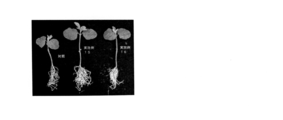
試験終了後の枝豆の一例を図8に示す。
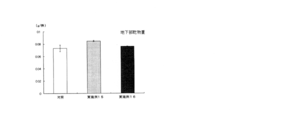
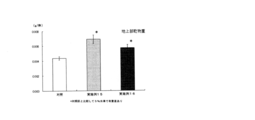
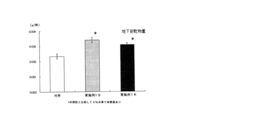
枝豆は対照区と比較して実施例15の生育改善剤0.06%区、実施例16の生育改善剤0.06%区ともに地上部乾物重が有意に増加していた(図9)。地下部乾物重は実施例15の生育改善剤0.06%区で対照区と比較して特に増加傾向であった(図10)。発芽率は実施例15の生育改善剤0.06%区、実施例16の生育改善剤0.06%区ともに対照区より高くなり、実施例15の生育改善剤0.06%区では5%水準で有意に高かった。
枝豆は対照区と比較して実施例15の生育改善剤0.06%区、実施例16の生育改善剤0.06%区ともに地上部乾物重が有意に増加していた(図9)。地下部乾物重は実施例15の生育改善剤0.06%区で対照区と比較して特に増加傾向であった(図10)。発芽率は実施例15の生育改善剤0.06%区、実施例16の生育改善剤0.06%区ともに対照区より高くなり、実施例15の生育改善剤0.06%区では5%水準で有意に高かった。
稲は対照区と比較して実施例15の生育改善剤0.06%区、実施例16の生育改善剤0.06%区ともに地上部乾物重および地下部乾物重が有意に増加していた(図11~13)。
また、タマネギについても、実施例9の生育改善剤0.06%区において、地下部乾物重が有意に増加していた(図14~15)。
また、ネギについても、実施例9の生育改善剤0.06%区において、地上部乾物重および地下部乾物重が有意に増加していた(図16~18)。
また、タマネギについても、実施例9の生育改善剤0.06%区において、地下部乾物重が有意に増加していた(図14~15)。
また、ネギについても、実施例9の生育改善剤0.06%区において、地上部乾物重および地下部乾物重が有意に増加していた(図16~18)。
以上のように、実施例の生育改善剤を育苗培土に混和することで過湿になりやすい育苗環境下で生育改善、促進効果があることが分かった。これにより、硬盤ができて過湿になりやすい圃場や水田転作圃場または水田への土壌混和による効果が期待できることが示唆された。さらに、ゲリラ豪雨による一定期間の湛水、冠水状態においても生育改善効果が期待できると考えられる。
さらに、本試験1~6で使用したピートモスを主体とする培土や採取された土壌を主体とする培土への混和で効果があったことから、過湿になりやすいピートモス、ココピート、バーミキュライトおよび採取された土壌などを主体とする培土でも生育改善効果が期待できると考えられる。
さらに、本試験1~6で使用したピートモスを主体とする培土や採取された土壌を主体とする培土への混和で効果があったことから、過湿になりやすいピートモス、ココピート、バーミキュライトおよび採取された土壌などを主体とする培土でも生育改善効果が期待できると考えられる。
[試験例7]
供試品種はイネの‘日本晴’を用い、茨城県守谷市のアサヒグループホールディングス所有の温室で試験を行なった。苗テラス(閉鎖型苗生産システム)で栽培を行い、育苗は苗テラス(閉鎖型苗生産システム)で20℃、12h日長、25日行い、灌水はpF0~0.3の過湿状態となるように1日1回底面灌水で行なった。播種は72穴のセルトレイに川西床土センター社のサン培土を充填し行なった。
試験区は、酵母細胞壁と酵母エキスを4:6で混合し珪藻土に吸着させた資材(以下、資材(1)という)および酵母細胞壁を珪藻土に吸着させた資材(以下、資材(2)という)の2資材を調製し、実施例の生育改善剤とした。これら実施例の生育改善剤においては、酵母分解物の混合物全体に対する割合(吸着率)が表1に示す値となるように酵母分解物を珪藻土に吸着させて調製した。
供試品種はイネの‘日本晴’を用い、茨城県守谷市のアサヒグループホールディングス所有の温室で試験を行なった。苗テラス(閉鎖型苗生産システム)で栽培を行い、育苗は苗テラス(閉鎖型苗生産システム)で20℃、12h日長、25日行い、灌水はpF0~0.3の過湿状態となるように1日1回底面灌水で行なった。播種は72穴のセルトレイに川西床土センター社のサン培土を充填し行なった。
試験区は、酵母細胞壁と酵母エキスを4:6で混合し珪藻土に吸着させた資材(以下、資材(1)という)および酵母細胞壁を珪藻土に吸着させた資材(以下、資材(2)という)の2資材を調製し、実施例の生育改善剤とした。これら実施例の生育改善剤においては、酵母分解物の混合物全体に対する割合(吸着率)が表1に示す値となるように酵母分解物を珪藻土に吸着させて調製した。

また実施例の生育改善剤である表1の資材(1)、(2)について、それぞれ表2または表3に示す混和率で混和した試験区を設定した。対照区は資材無混和の区とした。資材(1)、資材(2)はそれぞれ別の苗テラスで試験したため、当該対照区も資材(1)、(2)ごとに設定した。試験は1試験区5株×3反復で行った。
なお、一般的に酵母はいろいろな方法で分解され酵母エキスが抽出されているが、その抽出率は方法により異なり約30~70%である。一般には、経済性や品質面を考慮し、約60%の抽出率で行われている。そのため、酵母細胞壁と酵母エキスを4:6で配合した資材(1)は酵母を分解してそのまま珪藻土に吸着させたものと同等であると仮定できる。
結果を表2、表3に示す。また、吸着率1%(W/W)の資材(1)を混和した試験区において栽培した稲の写真の一例を図19に示す。
なお、一般的に酵母はいろいろな方法で分解され酵母エキスが抽出されているが、その抽出率は方法により異なり約30~70%である。一般には、経済性や品質面を考慮し、約60%の抽出率で行われている。そのため、酵母細胞壁と酵母エキスを4:6で配合した資材(1)は酵母を分解してそのまま珪藻土に吸着させたものと同等であると仮定できる。
結果を表2、表3に示す。また、吸着率1%(W/W)の資材(1)を混和した試験区において栽培した稲の写真の一例を図19に示す。
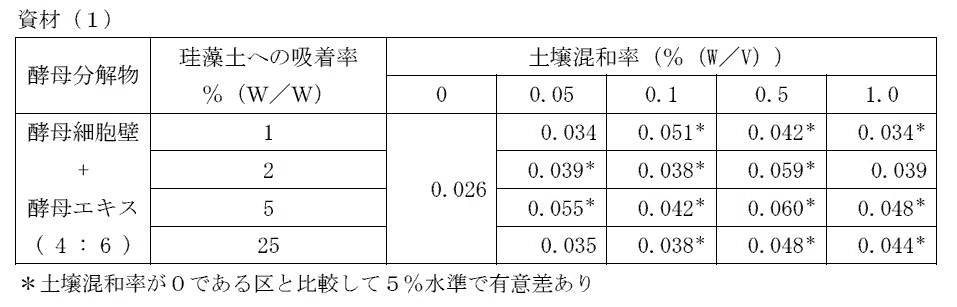
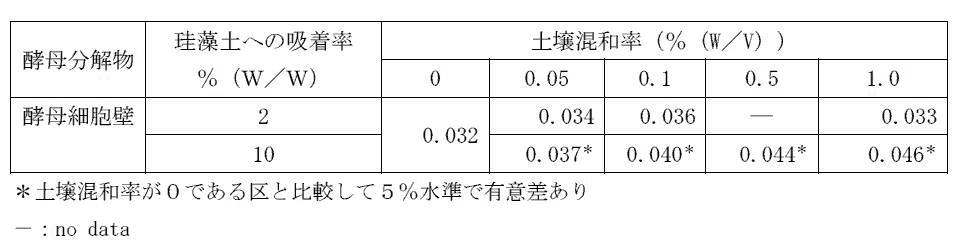
酵母を分解してそのまま珪藻土に吸着させたと仮定できる資材(1)では設定した全ての試験区で生育が促進され、有意に促進されていた区がほとんどであった(表1、図12)。また、資材(2)についても同様に生育促進が確認でき、珪藻土への吸着率10%(W/W)の場合は全ての試験区で有意に生育が促進されていた。
Claims (7)
- 土壌が過湿となったことに起因する植物の生育抑制を改善できる植物の生育改善剤であって、
多孔質物と、
前記多孔質物に吸着されている、酵母エキス、酵母細胞壁及び酵母細胞壁の分解物からなる群から選択される1種または2種以上の酵母分解物と、を含む植物の生育改善剤。 - 前記多孔質物が珪藻土、パーライト、ゼオライト、炭及び活性炭からなる群から選択される1種または2種以上の多孔質物である請求項1記載の植物の生育改善剤。
- 前記酵母分解物が、酵母に対する自己消化法による分解処理を行うことにより得られた酵母分解物である請求項1または2に記載の植物の生育改善剤。
- 土壌が過湿となったことに起因する植物の生育抑制を改善できる植物の生育改善剤であって、多孔質物と、前記多孔質物に吸着されている、酵母エキス、酵母細胞壁及び酵母細胞壁の分解物からなる群から選択される1種または2種以上の酵母分解物とを含む植物の生育改善剤を土壌に混和し、
前記植物の生育改善剤を混和した土壌において植物を植えて栽培することを含む、土壌が過湿となったことに起因する植物の生育抑制の改善方法。 - 前記多孔質物が珪藻土、パーライト、ゼオライト、炭及び活性炭からなる群から選択される1種または2種以上の多孔質物である請求項4記載の植物の生育改善方法。
- 前記酵母分解物が、酵母に対する自己消化法による分解処理を行うことにより得られた酵母分解物である請求項4または5に記載の植物の生育改善方法。
- 前記植物の生育改善剤が混和された土壌において栽培されることで、植物の根の生育が促進される請求項4から6のいずれか1つに記載の植物の生育改善方法。
Priority Applications (1)
| Application Number | Priority Date | Filing Date | Title |
|---|---|---|---|
| JP2017511037A JPWO2016163427A1 (ja) | 2015-04-07 | 2016-04-06 | 過湿による生育抑制を改善可能である植物の生育改善剤及び過湿による生育抑制の改善方法 |
Applications Claiming Priority (2)
| Application Number | Priority Date | Filing Date | Title |
|---|---|---|---|
| JP2015-078403 | 2015-04-07 | ||
| JP2015078403 | 2015-04-07 |
Publications (1)
| Publication Number | Publication Date |
|---|---|
| WO2016163427A1 true WO2016163427A1 (ja) | 2016-10-13 |
Family
ID=57072319
Family Applications (1)
| Application Number | Title | Priority Date | Filing Date |
|---|---|---|---|
| PCT/JP2016/061321 Ceased WO2016163427A1 (ja) | 2015-04-07 | 2016-04-06 | 過湿による生育抑制を改善可能である植物の生育改善剤及び過湿による生育抑制の改善方法 |
Country Status (2)
| Country | Link |
|---|---|
| JP (1) | JPWO2016163427A1 (ja) |
| WO (1) | WO2016163427A1 (ja) |
Cited By (2)
| Publication number | Priority date | Publication date | Assignee | Title |
|---|---|---|---|---|
| JP2018068266A (ja) * | 2016-11-04 | 2018-05-10 | 株式会社サラダコスモ | フィトケミカル高度含有アブラナ科スプラウト及びその生産方法 |
| JP2023095480A (ja) * | 2021-12-24 | 2023-07-06 | 株式会社セレア | 酵母処理方法、酵母処理物、及び組成物 |
Citations (9)
| Publication number | Priority date | Publication date | Assignee | Title |
|---|---|---|---|---|
| JP2001072503A (ja) * | 1999-09-01 | 2001-03-21 | Shoko Kagaku Kenkyusho:Kk | 低臭性気化防黴剤 |
| EP1142988A1 (en) * | 1999-01-14 | 2001-10-10 | Gold Kosan Co. Ltd | Novel microorganism and use thereof |
| JP2002045009A (ja) * | 2000-08-02 | 2002-02-12 | Toko Corp | 品質保持種子パック |
| JP2002355008A (ja) * | 2001-05-31 | 2002-12-10 | Meio Bussan Kk | 酵母エキスの製造方法 |
| JP2005333980A (ja) * | 2004-04-27 | 2005-12-08 | Asahi Breweries Ltd | 根伸長促進剤及びその製造方法 |
| JP3173053U (ja) * | 2011-11-04 | 2012-01-19 | 株式会社ヤマトクリエーション金沢 | 緩効性土壌活性化材 |
| JP2012233122A (ja) * | 2011-05-08 | 2012-11-29 | Eco First:Kk | 土壌消臭材および土壌消臭施工方法 |
| JP2013169176A (ja) * | 2012-02-21 | 2013-09-02 | Asahi Group Holdings Ltd | 植物の育苗方法及び植物の栽培方法 |
| JP2014101349A (ja) * | 2012-10-25 | 2014-06-05 | Lion Corp | 燻煙型殺虫剤および燻煙型殺虫装置 |
-
2016
- 2016-04-06 JP JP2017511037A patent/JPWO2016163427A1/ja active Pending
- 2016-04-06 WO PCT/JP2016/061321 patent/WO2016163427A1/ja not_active Ceased
Patent Citations (9)
| Publication number | Priority date | Publication date | Assignee | Title |
|---|---|---|---|---|
| EP1142988A1 (en) * | 1999-01-14 | 2001-10-10 | Gold Kosan Co. Ltd | Novel microorganism and use thereof |
| JP2001072503A (ja) * | 1999-09-01 | 2001-03-21 | Shoko Kagaku Kenkyusho:Kk | 低臭性気化防黴剤 |
| JP2002045009A (ja) * | 2000-08-02 | 2002-02-12 | Toko Corp | 品質保持種子パック |
| JP2002355008A (ja) * | 2001-05-31 | 2002-12-10 | Meio Bussan Kk | 酵母エキスの製造方法 |
| JP2005333980A (ja) * | 2004-04-27 | 2005-12-08 | Asahi Breweries Ltd | 根伸長促進剤及びその製造方法 |
| JP2012233122A (ja) * | 2011-05-08 | 2012-11-29 | Eco First:Kk | 土壌消臭材および土壌消臭施工方法 |
| JP3173053U (ja) * | 2011-11-04 | 2012-01-19 | 株式会社ヤマトクリエーション金沢 | 緩効性土壌活性化材 |
| JP2013169176A (ja) * | 2012-02-21 | 2013-09-02 | Asahi Group Holdings Ltd | 植物の育苗方法及び植物の栽培方法 |
| JP2014101349A (ja) * | 2012-10-25 | 2014-06-05 | Lion Corp | 燻煙型殺虫剤および燻煙型殺虫装置 |
Non-Patent Citations (1)
| Title |
|---|
| TSUGUKAZU KOBAYASHI: "Baichi no Kiso -Kiko to Tokucho", EIKEN CO., May 2003 (2003-05-01), pages 1 - 3, XP055320036, Retrieved from the Internet <URL:http://www.eiken.co.jp/technique/es/pdf/es33.pdf> * |
Cited By (3)
| Publication number | Priority date | Publication date | Assignee | Title |
|---|---|---|---|---|
| JP2018068266A (ja) * | 2016-11-04 | 2018-05-10 | 株式会社サラダコスモ | フィトケミカル高度含有アブラナ科スプラウト及びその生産方法 |
| JP2023095480A (ja) * | 2021-12-24 | 2023-07-06 | 株式会社セレア | 酵母処理方法、酵母処理物、及び組成物 |
| JP7822001B2 (ja) | 2021-12-24 | 2026-03-02 | 株式会社セレア | 酵母処理方法、及び組成物 |
Also Published As
| Publication number | Publication date |
|---|---|
| JPWO2016163427A1 (ja) | 2018-02-08 |
Similar Documents
| Publication | Publication Date | Title |
|---|---|---|
| KR20210057812A (ko) | 유해한 대기 가스를 줄일 뿐만 아니라 탄소 이용 및/또는 격리를 향상시키기 위한 물질 및 방법 | |
| EP3375861B1 (en) | Strain of paenibacillus mucilaginosus for use as a fertiliser, for growth stimulation, and for the protection of plants from fungal diseases | |
| Mukumbareza et al. | Effects of oats and grazing vetch cover crops and fertilisation on microbial biomass and activity after five years of rotation with maize | |
| Lavrenko et al. | Variable tillage depth and chemical fertilization impact on irrigated common beans and soil physical properties | |
| CN109456105A (zh) | 一种缓解茄科作物连作障碍的微生物菌剂制备及使用方法 | |
| CN109485498A (zh) | 一种高有机质复合微生物冲施肥料的制备及使用方法 | |
| KR102470864B1 (ko) | 양파의 생육 촉진 효과 및 가뭄 내성 증진 효과를 갖는 바실러스 알티투디니스(Bacillus altitudinis) H5-9 균주 및 이의 용도 | |
| CN112094787B (zh) | 用于护坡的微生物菌剂的制备方法和应用 | |
| CN110150093A (zh) | 一种用于提高铁皮石斛多糖含量的培养料及其应用 | |
| CN107353138A (zh) | 适用于盐碱地改良的复混肥及其生产方法 | |
| CN110577916A (zh) | 一种防治作物根结线虫的复合菌剂及其制备方法 | |
| Matsumoto et al. | Nitrogen uptake response of vegetable crops to organic materials | |
| Bakhoum et al. | Biochemical study of some faba bean (Vicia faba L.) cultivars under different water regimes in sandy soil | |
| CN106977344A (zh) | 一种护根生物有机肥及其制作方法 | |
| Hatti et al. | Soil properties and productivity of rainfed finger millet under conservation tillage and nutrient management in Eastern dry zone of Karnataka | |
| CN107417413A (zh) | 盐碱地改良用混和肥及其生产方法 | |
| EP3289878A1 (en) | Method for producing an organic substrate for promoting growth during plant germination and development, and organic substrate | |
| KR20210116951A (ko) | 옥수수대와 사탕수수 줄기박을 이용한 수경재배용 고체배지의 제조방법, 이 고체배지를 포함하는 그로우백 | |
| WO2016163427A1 (ja) | 過湿による生育抑制を改善可能である植物の生育改善剤及び過湿による生育抑制の改善方法 | |
| EP3072384B1 (fr) | Procédé de culture sur une parcelle de plantes de culture annuelle | |
| CN106867542B (zh) | 一种设施蔬菜连作土壤调理剂及其制备方法 | |
| Afafe et al. | Impact of a selected mycorrhizal complex and a rhizobacterial species on tomato plants’ growth under water stress conditions | |
| CN107365233A (zh) | 一种适用于盐碱地的复混肥及其生产方法 | |
| Gol et al. | Effect of different sources of N2 on the structure of Mimosa caesalpiniaefolia root nodules | |
| Sas-Paszt et al. | Effect of microbiologically enriched fertilizers on the yielding of strawberry plants under field conditions in the second year of plantation |
Legal Events
| Date | Code | Title | Description |
|---|---|---|---|
| 121 | Ep: the epo has been informed by wipo that ep was designated in this application |
Ref document number: 16776593 Country of ref document: EP Kind code of ref document: A1 |
|
| DPE2 | Request for preliminary examination filed before expiration of 19th month from priority date (pct application filed from 20040101) | ||
| ENP | Entry into the national phase |
Ref document number: 2017511037 Country of ref document: JP Kind code of ref document: A |
|
| NENP | Non-entry into the national phase |
Ref country code: DE |
|
| 122 | Ep: pct application non-entry in european phase |
Ref document number: 16776593 Country of ref document: EP Kind code of ref document: A1 |