WO2016117296A1 - 車両用表示システム、携帯端末装置、車両用表示プログラム - Google Patents
車両用表示システム、携帯端末装置、車両用表示プログラム Download PDFInfo
- Publication number
- WO2016117296A1 WO2016117296A1 PCT/JP2016/000129 JP2016000129W WO2016117296A1 WO 2016117296 A1 WO2016117296 A1 WO 2016117296A1 JP 2016000129 W JP2016000129 W JP 2016000129W WO 2016117296 A1 WO2016117296 A1 WO 2016117296A1
- Authority
- WO
- WIPO (PCT)
- Prior art keywords
- vehicle
- mobile terminal
- terminal device
- display
- layer
- Prior art date
- Legal status (The legal status is an assumption and is not a legal conclusion. Google has not performed a legal analysis and makes no representation as to the accuracy of the status listed.)
- Ceased
Links
Images






Classifications
-
- G—PHYSICS
- G06—COMPUTING OR CALCULATING; COUNTING
- G06F—ELECTRIC DIGITAL DATA PROCESSING
- G06F3/00—Input arrangements for transferring data to be processed into a form capable of being handled by the computer; Output arrangements for transferring data from processing unit to output unit, e.g. interface arrangements
- G06F3/14—Digital output to display device ; Cooperation and interconnection of the display device with other functional units
- G06F3/147—Digital output to display device ; Cooperation and interconnection of the display device with other functional units using display panels
-
- H—ELECTRICITY
- H04—ELECTRIC COMMUNICATION TECHNIQUE
- H04N—PICTORIAL COMMUNICATION, e.g. TELEVISION
- H04N21/00—Selective content distribution, e.g. interactive television or video on demand [VOD]
- H04N21/40—Client devices specifically adapted for the reception of or interaction with content, e.g. set-top-box [STB]; Operations thereof
- H04N21/41—Structure of client; Structure of client peripherals
- H04N21/414—Specialised client platforms, e.g. receiver in car or embedded in a mobile appliance
- H04N21/41407—Specialised client platforms, e.g. receiver in car or embedded in a mobile appliance embedded in a portable device, e.g. video client on a mobile phone, PDA, laptop
-
- B—PERFORMING OPERATIONS; TRANSPORTING
- B60—VEHICLES IN GENERAL
- B60R—VEHICLES, VEHICLE FITTINGS, OR VEHICLE PARTS, NOT OTHERWISE PROVIDED FOR
- B60R11/00—Arrangements for holding or mounting articles, not otherwise provided for
- B60R11/02—Arrangements for holding or mounting articles, not otherwise provided for for radio sets, television sets, telephones, or the like; Arrangement of controls thereof
-
- G—PHYSICS
- G06—COMPUTING OR CALCULATING; COUNTING
- G06F—ELECTRIC DIGITAL DATA PROCESSING
- G06F3/00—Input arrangements for transferring data to be processed into a form capable of being handled by the computer; Output arrangements for transferring data from processing unit to output unit, e.g. interface arrangements
- G06F3/14—Digital output to display device ; Cooperation and interconnection of the display device with other functional units
- G06F3/1423—Digital output to display device ; Cooperation and interconnection of the display device with other functional units controlling a plurality of local displays, e.g. CRT and flat panel display
-
- G—PHYSICS
- G06—COMPUTING OR CALCULATING; COUNTING
- G06F—ELECTRIC DIGITAL DATA PROCESSING
- G06F3/00—Input arrangements for transferring data to be processed into a form capable of being handled by the computer; Output arrangements for transferring data from processing unit to output unit, e.g. interface arrangements
- G06F3/14—Digital output to display device ; Cooperation and interconnection of the display device with other functional units
- G06F3/1454—Digital output to display device ; Cooperation and interconnection of the display device with other functional units involving copying of the display data of a local workstation or window to a remote workstation or window so that an actual copy of the data is displayed simultaneously on two or more displays, e.g. teledisplay
- G06F3/1462—Digital output to display device ; Cooperation and interconnection of the display device with other functional units involving copying of the display data of a local workstation or window to a remote workstation or window so that an actual copy of the data is displayed simultaneously on two or more displays, e.g. teledisplay with means for detecting differences between the image stored in the host and the images displayed on the remote displays
-
- H—ELECTRICITY
- H04—ELECTRIC COMMUNICATION TECHNIQUE
- H04M—TELEPHONIC COMMUNICATION
- H04M1/00—Substation equipment, e.g. for use by subscribers
- H04M1/72—Mobile telephones; Cordless telephones, i.e. devices for establishing wireless links to base stations without route selection
- H04M1/724—User interfaces specially adapted for cordless or mobile telephones
- H04M1/72403—User interfaces specially adapted for cordless or mobile telephones with means for local support of applications that increase the functionality
- H04M1/72409—User interfaces specially adapted for cordless or mobile telephones with means for local support of applications that increase the functionality by interfacing with external accessories
- H04M1/72412—User interfaces specially adapted for cordless or mobile telephones with means for local support of applications that increase the functionality by interfacing with external accessories using two-way short-range wireless interfaces
-
- H—ELECTRICITY
- H04—ELECTRIC COMMUNICATION TECHNIQUE
- H04M—TELEPHONIC COMMUNICATION
- H04M11/00—Telephonic communication systems specially adapted for combination with other electrical systems
-
- H—ELECTRICITY
- H04—ELECTRIC COMMUNICATION TECHNIQUE
- H04N—PICTORIAL COMMUNICATION, e.g. TELEVISION
- H04N21/00—Selective content distribution, e.g. interactive television or video on demand [VOD]
- H04N21/40—Client devices specifically adapted for the reception of or interaction with content, e.g. set-top-box [STB]; Operations thereof
- H04N21/41—Structure of client; Structure of client peripherals
- H04N21/414—Specialised client platforms, e.g. receiver in car or embedded in a mobile appliance
- H04N21/41422—Specialised client platforms, e.g. receiver in car or embedded in a mobile appliance located in transportation means, e.g. personal vehicle
-
- H—ELECTRICITY
- H04—ELECTRIC COMMUNICATION TECHNIQUE
- H04N—PICTORIAL COMMUNICATION, e.g. TELEVISION
- H04N21/00—Selective content distribution, e.g. interactive television or video on demand [VOD]
- H04N21/40—Client devices specifically adapted for the reception of or interaction with content, e.g. set-top-box [STB]; Operations thereof
- H04N21/43—Processing of content or additional data, e.g. demultiplexing additional data from a digital video stream; Elementary client operations, e.g. monitoring of home network or synchronising decoder's clock; Client middleware
- H04N21/431—Generation of visual interfaces for content selection or interaction; Content or additional data rendering
-
- H—ELECTRICITY
- H04—ELECTRIC COMMUNICATION TECHNIQUE
- H04N—PICTORIAL COMMUNICATION, e.g. TELEVISION
- H04N21/00—Selective content distribution, e.g. interactive television or video on demand [VOD]
- H04N21/40—Client devices specifically adapted for the reception of or interaction with content, e.g. set-top-box [STB]; Operations thereof
- H04N21/43—Processing of content or additional data, e.g. demultiplexing additional data from a digital video stream; Elementary client operations, e.g. monitoring of home network or synchronising decoder's clock; Client middleware
- H04N21/44—Processing of video elementary streams, e.g. splicing a video clip retrieved from local storage with an incoming video stream or rendering scenes according to encoded video stream scene graphs
- H04N21/4402—Processing of video elementary streams, e.g. splicing a video clip retrieved from local storage with an incoming video stream or rendering scenes according to encoded video stream scene graphs involving reformatting operations of video signals for household redistribution, storage or real-time display
-
- H—ELECTRICITY
- H04—ELECTRIC COMMUNICATION TECHNIQUE
- H04N—PICTORIAL COMMUNICATION, e.g. TELEVISION
- H04N21/00—Selective content distribution, e.g. interactive television or video on demand [VOD]
- H04N21/80—Generation or processing of content or additional data by content creator independently of the distribution process; Content per se
- H04N21/81—Monomedia components thereof
- H04N21/8166—Monomedia components thereof involving executable data, e.g. software
- H04N21/8173—End-user applications, e.g. Web browser, game
-
- B—PERFORMING OPERATIONS; TRANSPORTING
- B60—VEHICLES IN GENERAL
- B60Y—INDEXING SCHEME RELATING TO ASPECTS CROSS-CUTTING VEHICLE TECHNOLOGY
- B60Y2400/00—Special features of vehicle units
- B60Y2400/92—Driver displays
-
- G—PHYSICS
- G06—COMPUTING OR CALCULATING; COUNTING
- G06F—ELECTRIC DIGITAL DATA PROCESSING
- G06F3/00—Input arrangements for transferring data to be processed into a form capable of being handled by the computer; Output arrangements for transferring data from processing unit to output unit, e.g. interface arrangements
- G06F3/14—Digital output to display device ; Cooperation and interconnection of the display device with other functional units
- G06F3/1423—Digital output to display device ; Cooperation and interconnection of the display device with other functional units controlling a plurality of local displays, e.g. CRT and flat panel display
- G06F3/1431—Digital output to display device ; Cooperation and interconnection of the display device with other functional units controlling a plurality of local displays, e.g. CRT and flat panel display using a single graphics controller
-
- G—PHYSICS
- G06—COMPUTING OR CALCULATING; COUNTING
- G06F—ELECTRIC DIGITAL DATA PROCESSING
- G06F3/00—Input arrangements for transferring data to be processed into a form capable of being handled by the computer; Output arrangements for transferring data from processing unit to output unit, e.g. interface arrangements
- G06F3/14—Digital output to display device ; Cooperation and interconnection of the display device with other functional units
- G06F3/1423—Digital output to display device ; Cooperation and interconnection of the display device with other functional units controlling a plurality of local displays, e.g. CRT and flat panel display
- G06F3/1438—Digital output to display device ; Cooperation and interconnection of the display device with other functional units controlling a plurality of local displays, e.g. CRT and flat panel display using more than one graphics controller
-
- G—PHYSICS
- G09—EDUCATION; CRYPTOGRAPHY; DISPLAY; ADVERTISING; SEALS
- G09G—ARRANGEMENTS OR CIRCUITS FOR CONTROL OF INDICATING DEVICES USING STATIC MEANS TO PRESENT VARIABLE INFORMATION
- G09G2380/00—Specific applications
- G09G2380/10—Automotive applications
-
- G—PHYSICS
- G09—EDUCATION; CRYPTOGRAPHY; DISPLAY; ADVERTISING; SEALS
- G09G—ARRANGEMENTS OR CIRCUITS FOR CONTROL OF INDICATING DEVICES USING STATIC MEANS TO PRESENT VARIABLE INFORMATION
- G09G5/00—Control arrangements or circuits for visual indicators common to cathode-ray tube indicators and other visual indicators
- G09G5/36—Control arrangements or circuits for visual indicators common to cathode-ray tube indicators and other visual indicators characterised by the display of a graphic pattern, e.g. using an all-points-addressable [APA] memory
- G09G5/37—Details of the operation on graphic patterns
- G09G5/377—Details of the operation on graphic patterns for mixing or overlaying two or more graphic patterns
-
- H—ELECTRICITY
- H04—ELECTRIC COMMUNICATION TECHNIQUE
- H04M—TELEPHONIC COMMUNICATION
- H04M1/00—Substation equipment, e.g. for use by subscribers
- H04M1/60—Substation equipment, e.g. for use by subscribers including speech amplifiers
- H04M1/6033—Substation equipment, e.g. for use by subscribers including speech amplifiers for providing handsfree use or a loudspeaker mode in telephone sets
- H04M1/6041—Portable telephones adapted for handsfree use
- H04M1/6075—Portable telephones adapted for handsfree use adapted for handsfree use in a vehicle
-
- H—ELECTRICITY
- H04—ELECTRIC COMMUNICATION TECHNIQUE
- H04M—TELEPHONIC COMMUNICATION
- H04M2250/00—Details of telephonic subscriber devices
- H04M2250/16—Details of telephonic subscriber devices including more than one display unit
Definitions
- the present disclosure relates to a vehicle display system that displays a screen (also referred to as a screen image or a window) for executing an application by a mobile terminal device (apparatus) on a vehicle device (apparatus), and a portable device that constructs the vehicle display system.
- the present invention relates to a terminal device and a vehicle display program that is executed by being incorporated in the mobile terminal device.
- Patent Document 1 a system for connecting a mobile terminal device to a vehicle device mounted on a vehicle in a communicable manner has been considered (for example, see Patent Document 1).
- a technique for displaying an output screen of an application executed by a mobile terminal device on a display of a vehicle device is considered.
- the primary screen displayed on the display device of the mobile terminal device is transferred to the display device of the vehicular device as it is and displayed, the layout may be difficult to see, for example, the characters become smaller. Therefore, in recent years, a technique has been considered in which a primary screen is converted into a secondary screen corresponding to the display of the vehicle device in the mobile terminal device, and the secondary screen is output to the display of the vehicle device.
- the current system is based on the premise that the operation input to the application is performed from the mobile terminal device and the output screen of the running application is displayed from the vehicle device. That is, the current system treats the display of the vehicle device as a sub display screen for display output, and does not assume an operation input from the vehicle device. Therefore, the current mobile terminal device generates a function related to the operation, that is, a function that generates an operation layer for operating the application and provides it to the vehicle device, or a state layer that indicates the state of the mobile terminal device. It does not have the function to be provided to the vehicle device. Therefore, in the current system, the operation layer and the state layer cannot be displayed on the display device of the vehicle device.
- the display device of the vehicle device has a display area larger than the display device of the mobile terminal device. Therefore, if the operation layer and the state layer are displayed on the display of such a relatively large vehicle device, the operability can be improved, and the state of the mobile terminal device can be easily recognized.
- the present disclosure relates to a vehicle display system that converts a primary screen to be displayed on a display of a mobile terminal device into a secondary screen corresponding to the display of the vehicle device and displays the secondary screen from the display of the vehicle device.
- a configuration capable of displaying an operation layer and a state layer on a display of a vehicle device.
- the present disclosure also provides a portable terminal device that constructs the vehicle display system, and a vehicle display program that is executed by being incorporated in the portable terminal device.
- a vehicle display system includes a vehicle device mounted on a vehicle and a mobile terminal device connected to the vehicle device so as to be able to communicate with each other.
- the output screen is displayed on the vehicle device.
- the mobile terminal device displays an output screen generated upon execution of the application as a primary screen on the display of the mobile terminal device, and converts the primary screen into a secondary screen corresponding to the display of the vehicle device. It has the function to do.
- the mobile terminal device has a function of generating an operation layer for operating the application and a function of generating a state layer indicating the state of the mobile terminal device. Then, the mobile terminal device transmits the operation layer and the state layer to the vehicular device in addition to the secondary screen.
- the vehicle device displays the operation layer and the state layer together with the secondary screen on the display of the vehicle device.
- a program that realizes the function of the mobile terminal device in the vehicle display system described above.
- This program can be provided by being stored in a non-transitional computer-readable storage medium.
- FIG. 1 is a block diagram schematically showing a configuration example of a vehicle display system according to a first embodiment.
- Diagram showing an example of the operation layer (part 1) Diagram showing an example of operation layer (2) Diagram showing an example of the operation layer (No. 3) Diagram showing an example of a state layer
- the flowchart which shows an example of the display control which concerns on 2nd Embodiment.
- a vehicle display system 100 includes a vehicle device 10, a mobile terminal device 20, and a remote control device 30.
- the vehicle display system 100 is simply referred to as a “display system 100”.
- the display system 100 is configured to display an output screen of an application executed on the mobile terminal device 20 on the vehicle device 10.
- the portable terminal device 20 is also simply referred to as a portable terminal.
- the vehicle device 10 is configured by various devices mounted on a vehicle such as a navigation device.
- the vehicle device 10 includes a control circuit 11, an operation device 12, a display device 13, a communication device 14, and the like.
- the control circuit 11 is also referred to as an electronic control unit.
- the control circuit 11 is configured mainly by a microcomputer including a CPU and a memory, and controls the overall operation of the vehicle device 10. Further, the control circuit 11 virtually realizes the secondary screen display processing unit 41 by software by executing a control program in the microcomputer.
- the apparatus 10 for vehicles may comprise the secondary screen display process part 41 with a hardware.
- the operation device 12 includes a touch panel switch provided in the display device 13 and mechanical switches provided in the periphery of the display device 13, and the operation signal is transmitted to the control circuit 11 according to various switch operations by the user. Output to.
- the display device 13 is composed of a liquid crystal display, for example, and displays various screens (also referred to as screen images or windows) based on display command signals from the control circuit 11.
- the communication device 14 is constituted by, for example, a wireless communication module. The communicator 14 establishes a wireless communication line with the mobile terminal device 20 that is brought into the vehicle and exists within a predetermined communication range, and connects the vehicular device 10 to the mobile terminal device 20 so as to enable wireless communication. .
- the secondary screen display processing unit 41 is an example of a secondary screen display unit. As described in detail later, a secondary screen (also referred to as a second screen) obtained from the mobile terminal device 20 is used as the vehicle device 10. Is displayed on the display 13. Further, the secondary screen display processing unit 41 displays the operation layer and the state layer obtained from the mobile terminal device 20 on the display unit 13 of the vehicle device 10 together with the secondary screen.
- a secondary screen also referred to as a second screen obtained from the mobile terminal device 20 is used as the vehicle device 10. Is displayed on the display 13. Further, the secondary screen display processing unit 41 displays the operation layer and the state layer obtained from the mobile terminal device 20 on the display unit 13 of the vehicle device 10 together with the secondary screen.
- the portable terminal device 20 is configured by various portable communication terminals carried by a user such as a smartphone.
- the portable terminal device 20 includes a control circuit 21, an operation device 22, a display device 23, a communication device 24, and the like.
- the control circuit 21 is also referred to as an electronic control unit.
- the control circuit 21 is configured mainly by a microcomputer including a CPU and a memory, and controls the overall operation of the mobile terminal device 20.
- the control circuit 21 executes a control program in the microcomputer, thereby causing the primary screen display processing unit 51, the conversion processing unit 52, the operation layer generation processing unit 53, the state layer generation processing unit 54, and the transmission processing unit 55 to be software. It is realized virtually.
- the processing unit is also referred to as a processor. In the mobile terminal device 20, these processing units 51 to 55 may be configured by hardware.
- the operation device 22 includes a touch panel switch provided in the display device 23, a mechanical switch provided in the periphery of the display device 23, and the like. Output to.
- the display 23 is composed of a liquid crystal display, for example, and displays various screens based on a display command signal from the control circuit 21.
- the communication device 24 is configured by, for example, a wireless communication module. The communication device 24 establishes a wireless communication line with the vehicular device 10 existing within a predetermined communication range, and connects the mobile terminal device 20 to the vehicular device 10 so as to be able to perform radio communication.
- the primary screen display processing unit 51 is an example of a primary screen display unit.
- an output screen generated when the application is executed is displayed on the display 23 of the mobile terminal device 20 as a primary screen ( (Also referred to as the first screen).
- the primary screen is a screen corresponding to the display device 23 of the mobile terminal device 20. That is, the primary screen is a screen suitable for the size and resolution of the display 23 (that is, its display area).
- display elements such as character size and screen layout are displayed in a form that is easy for the user who views the display device 23 to view.
- the conversion processing unit 52 is an example of a conversion unit, and converts the primary screen into a secondary screen (also referred to as a second screen) corresponding to the display 13 of the vehicle device 10.
- the mobile terminal device 20 is given various attribute information related to the display 13 of the vehicle device 10, for example, information such as the size and resolution of the display 13 (that is, its display area).
- the conversion processing unit 52 converts the primary screen into a secondary screen in a format suitable for the display device 13.
- display elements such as the size of characters and the layout of the screen are displayed in a form that is easily visible to the user viewing the display unit 13.
- the secondary screen does not include a function related to the operation of the application or a function indicating the state of the mobile terminal device 20.
- the operation layer generation processing unit 53 is an example of an operation layer generation unit, and generates an operation layer for operating an application executed by the control circuit 21.
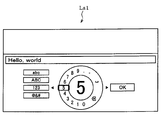
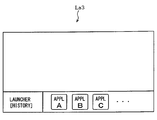
- the operation layers generated by the operation layer generation processing unit 53 are a keyboard layer La1 illustrated in FIG. 2, a mini player layer La2 illustrated in FIG. 3, a launcher layer La3 illustrated in FIG.
- the keyboard layer La1 is a layer for inputting alphabets, hiragana, katakana, numbers, symbols, and the like.
- the mini player layer La2 is a layer for operating the mini player that reproduces the sound source.
- the launcher layer La3 is a layer for operating a launcher function for calling an application executed in the past.
- the state layer generation processing unit 54 is an example of a state layer generation unit, and generates a state layer indicating the current state of the mobile terminal device 20.
- the state layer generated by the state layer generation processing unit 54 is the status bar layer Lb1 illustrated in FIG.
- the status bar layer Lb1 indicates the current state of the mobile terminal device 20, for example, the connection strength state of the communication line established with the vehicle device 10, the charging state of a battery (not shown) of the mobile terminal device 20, and the like. It is a layer to show.
- the transmission processing unit 55 is an example of a transmission unit, the secondary screen data generated by the conversion processing unit 52, the operation layer generated by the operation layer generation processing unit 53, and the state layer generation processing unit 54
- the state layer is transmitted to the vehicle device 10 via the communication device 24.
- these functional units 52 to 54 operate only when the remote control device 30 is connected to the mobile terminal device 20 so as to be communicable. That is, the control circuit 21 turns off the function units 52 to 53 when the remote control device 30 is not communicably connected to the mobile terminal device 20. When the remote control device 30 is communicably connected to the mobile terminal device 20, the control circuit 21 turns on the function units 52 to 54.
- the remote operation device 30 is a dedicated controller provided for remotely operating the mobile terminal device 20.
- the remote control device 30 is detachably attached to, for example, a steering wheel (not shown) of the vehicle.
- the remote operation device 30 includes a control circuit 31, an operation device 32, a communication device 33, and the like.
- the control circuit 31 is also referred to as an electronic control unit.
- the control circuit 31 is configured mainly by a microcomputer including a CPU and a memory, and controls the overall operation of the remote control device 30.
- the operation device 32 includes a mechanical switch (not shown) provided in the main body of the remote operation device 30 and outputs an operation signal to the control circuit 31 in accordance with the operation of various switches by the user.
- the communication device 33 is composed of, for example, a wireless communication module and the like, establishes a wireless communication line with the mobile terminal device 20 existing within a predetermined communication range, and connects the remote control device 30 to the mobile terminal device 20. Connect wirelessly.
- the control circuit 31 transmits various operation signals input from the operation device 32 to the mobile terminal device 20 via the communication device 33.
- the mobile terminal device 20 operates based on various operation signals input from the operation device 22 and can also operate based on various operation signals input from the remote operation device 30.
- the flowchart includes a plurality of sections (or referred to as steps), and each section is expressed as, for example, A1, B1, and the like. Further, each section can be divided into a plurality of subsections, while a plurality of sections can be combined into one section.
- Each section can be referred to as a device, module, processor, or unique name, for example, a conversion section can be referred to as a conversion device, conversion module, conversion processor, or converter.
- the section includes (i) not only a section of software combined with a hardware unit (eg, a computer) but also (ii) a section of hardware (eg, an integrated circuit, a wiring logic circuit) and related devices. It can be realized with or without the function.
- the hardware section can be included inside the microcomputer.
- the mobile terminal device 20 displays an output screen generated along with the execution of the application on the display unit 23 of the mobile terminal device 20 as a primary screen (A1).
- A1 is an example of a primary screen display process.
- the portable terminal device 20 confirms whether the remote control device 30 is connected to the said portable terminal device 20 so that communication is possible (A2).
- the mobile terminal device 20 continues to display the primary screen on the display 23 as the application is executed. However, when the remote control device 30 is communicably connected (A2: YES), the mobile terminal device 20 converts the primary screen for the mobile terminal device 20 into a secondary screen for the vehicle device 10. (A3). A3 is an example of a conversion process. Moreover, the portable terminal device 20 generates an operation layer and a state layer (A4, A5). A4 is an example of the operation layer generation process, and A5 is an example of the state layer generation process. And the portable terminal device 20 transmits the data of the obtained secondary screen, the operation layer, and the state layer to the apparatus 10 for vehicles via the communication device 24 (A6). A6 is an example of a transmission process.
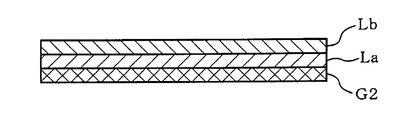
- the vehicle device 10 Upon receiving the secondary screen, operation layer, and state layer data from the mobile terminal device 20 (B1: YES), the vehicle device 10 uses the received data for the secondary screen, the operation layer, and the state layer for the vehicle. It displays on the display 13 of the apparatus 10 (B2). At this time, as illustrated in FIG. 7, the vehicle device 10 displays the operation screen La and the state layer Lb so as to overlap each other on the basis of the secondary screen G2. Thereby, as illustrated in FIG. 8, the operation layer La and the state layer Lb are displayed together with the secondary screen on the display device 13 of the vehicle device 10.
- the mobile terminal device 20 monitors whether or not an operation signal is input from the remote operation device 30 (A7). And the portable terminal device 20 will transmit the operation signal to the apparatus 10 for vehicles, if the operation signal is input from the remote control device 30 (A7: YES) (A8). The mobile terminal device 20 operates based on the input operation signal. Thereby, the mobile terminal device 20 is remotely operated by the remote operation device 30.
- the vehicle device 10 when receiving the operation signal from the mobile terminal device 20 (B3: YES), the vehicle device 10 reflects the operation content based on the operation signal in the operation layer displayed on the display device 13 (B4). As a result, the operation layer displayed on the display device 13 changes as if it were operated by the remote operation device 30.
- the mobile terminal device 20 monitors whether the state of the mobile terminal device 20 has changed (A9). That is, the mobile terminal device 20 monitors the current state of the mobile terminal device 20 such as a change in connection strength of a communication line established with the vehicle device 10 and a change in the state of charge of the battery. And if the state of the said portable terminal device 20 changes (A9: YES), the portable terminal device 20 will transmit the state after a change, ie, the present state data which shows the present state of the portable terminal device 20, to the apparatus 10 for vehicles. (A10).
- the vehicle device 10 when receiving the current state data from the mobile terminal device 20 (B5: YES), the vehicle device 10 reflects the current state based on the current state data in the state layer displayed on the display 13 (B6). ). As a result, the state layer displayed on the display 13 changes in conjunction with the actual state change of the mobile terminal device 20.
- the mobile terminal device 20 repeatedly executes the processes A7 to A10 until the execution of the application is completed. And the portable terminal device 20 will complete
- the operation layer and the state layer are also displayed on the display 13 of the relatively large vehicle device 10. Therefore, the user can operate the application based on the display content displayed on the larger display 13, and the operability can be improved. Further, since the current state of the mobile terminal device 20 is displayed on the larger display 13, the state can be easily recognized.
- the mobile terminal device 20 generates an operation layer and a state layer on the condition that the remote control device 30 is connected to the mobile terminal device 20 so as to be communicable, and the vehicle device. 10 to send.
- the application execution subject is the mobile terminal device 20
- the operation input to the application is performed from the external remote control device 30, and the application output is performed from the external vehicle device 10.
- the user can use the application based on the operation of the remote operation device 30 and the confirmation of the display content displayed on the vehicle device 10 without being aware of the mobile terminal device 20.
- the primary screen display processing unit 51 displays the data.
- a predetermined fixed screen is displayed on the device 23 (A6a).
- the fixed screen is a static screen that replaces the dynamic primary screen.
- a fixed screen for example, if it is a static screen that does not move, such as a single-color block screen, a screen with a predetermined pattern, a screen with a logo mark of the running application, etc.
- Various screens can be employed.
- the dynamic primary screen displayed on the mobile terminal device 20 is hidden. Therefore, the user can concentrate on the secondary screen displayed on the vehicle device 10, and can use the application without being more aware of the mobile terminal device 20.
- the present disclosure is applicable to various embodiments.
- the operation layer and the state layer are not limited to those exemplified above, and various layers can be adopted.
Landscapes
- Engineering & Computer Science (AREA)
- Signal Processing (AREA)
- Multimedia (AREA)
- Theoretical Computer Science (AREA)
- General Engineering & Computer Science (AREA)
- Human Computer Interaction (AREA)
- Physics & Mathematics (AREA)
- General Physics & Mathematics (AREA)
- Computer Networks & Wireless Communication (AREA)
- Software Systems (AREA)
- Mechanical Engineering (AREA)
- Telephone Function (AREA)
- Fittings On The Vehicle Exterior For Carrying Loads, And Devices For Holding Or Mounting Articles (AREA)
- User Interface Of Digital Computer (AREA)
- Telephonic Communication Services (AREA)
- Selective Calling Equipment (AREA)
Abstract
車両用表示システム(100)によれば、携帯端末装置(apparatus)(20)は、アプリケーションの実行に伴い生成する画面を携帯端末装置に一次画面として表示する一次画面表示部(51)と、一次画面を車両用装置(apparatus)(10)に対応する二次画面に変換する変換部(52)と、アプリケーションを操作するための操作レイヤを生成する操作レイヤ生成部(53)と、携帯端末装置の状態を示す状態レイヤを生成する状態レイヤ生成部(54)と、二次画面、操作レイヤ、状態レイヤを車両用装置に送信する送信部(55)と、を備える。車両用装置(apparatus)は、二次画面とともに操作レイヤおよび状態レイヤを車両用装置自体に表示する二次画面表示部(41)を備える。
Description
本出願は、2015年1月21日に出願された日本出願番号2015-9449号に基づくもので、ここにその記載内容を援用する。
本開示は、携帯端末装置(apparatus)によるアプリケーションを実行する画面(画面画像あるいはウインドウとも言及される)を車両用装置(apparatus)に表示する車両用表示システム、当該車両用表示システムを構築する携帯端末装置、および、当該携帯端末装置に組み込まれて実行される車両用表示プログラムに関する。
従来より、車両に搭載される車両用装置に携帯端末装置を通信可能に接続するシステムが考えられている(例えば、特許文献1参照)。
この種のシステムでは、携帯端末装置が実行するアプリケーションの出力画面を車両用装置の表示器に表示する技術が考えられている。しかし、携帯端末装置の表示器に表示する一次画面を、そのまま車両用装置の表示器に転送して表示すると、例えば文字が小さくなる等、見難いレイアウトになることがある。そこで、近年では、携帯端末装置において一次画面を車両用装置の表示器に対応する二次画面に変換し、その二次画面を車両用装置の表示器に出力する技術が考えられている。
しかしながら、現行のシステムは、アプリケーションに対する操作入力を携帯端末装置から行い、実行中のアプリケーションの出力画面の表示を車両用装置から行うことを前提としている。即ち、現行のシステムは、車両用装置の表示器をあくまでも表示出力用のサブ表示スクリーンとして扱っており、車両用装置からの操作入力を想定していない。そのため、現行の携帯端末装置は、操作に係る機能、即ち、アプリケーションを操作するための操作レイヤを生成して車両用装置に提供する機能や、携帯端末装置の状態を示す状態レイヤを生成して車両用装置に提供する機能を備えていない。従って、現行のシステムでは、操作レイヤや状態レイヤを車両用装置の表示器に表示することができない。一般的に、車両用装置の表示器は、携帯端末装置の表示器よりも表示領域のサイズが大きい。そのため、このような比較的大きい車両用装置の表示器に操作レイヤや状態レイヤが表示されれば、操作性の向上を図ることができ、また、携帯端末装置の状態を認識しやすくできる。
本開示は、携帯端末装置の表示器に表示するための一次画面を車両用装置の表示器に対応する二次画面に変換して当該車両用装置の表示器から表示する車両用表示システムに関し、車両用装置の表示器に操作レイヤや状態レイヤも表示できる構成を提供する。また、本開示は、この車両用表示システムを構築する携帯端末装置、および、当該携帯端末装置に組み込まれて実行される車両用表示プログラムを提供する。
本開示の一つの例に係る車両用表示システムは、車両に搭載される車両用装置と、車両用装置に通信可能に接続される携帯端末装置と、を備え、携帯端末装置において実行するアプリケーションの出力画面を車両用装置に表示する。携帯端末装置は、アプリケーションの実行に伴い生成する出力画面を当該携帯端末装置の表示器に一次画面として表示するものであり、その一次画面を車両用装置の表示器に対応する二次画面に変換する機能を有する。また、携帯端末装置は、アプリケーションを操作するための操作レイヤを生成する機能、および、携帯端末装置の状態を示す状態レイヤを生成する機能を有する。そして、携帯端末装置は、二次画面に加えて、さらに操作レイヤおよび状態レイヤも車両用装置に送信する。一方、車両用装置は、携帯端末装置から二次画面、操作レイヤ、状態レイヤを得ると、二次画面とともに操作レイヤおよび状態レイヤを当該車両用装置の表示器に表示する。
また、本開示のもう一つの例として、上記の車両用表示システムで、携帯端末装置の機能を実現するプログラムが提供される。このプログラムは、非遷移のコンピュータ読取が可能な記憶媒体に保管して提供されることもできる。
上記の二つの例によれば、比較的大きい車両用装置の表示器に操作レイヤや状態レイヤも表示させることが可能である。よって、操作性の向上を図ることができ、また、携帯端末装置の状態を認識しやすくできる。
本開示についての上記目的およびその他の目的、特徴や利点は、添付の図面を参照しながら下記の詳細な記述により、より明確になる。
第1実施形態に係る車両用表示システムの構成例を概略的に示すブロック図
操作レイヤの一例を示す図(その1)
操作レイヤの一例を示す図(その2)
操作レイヤの一例を示す図(その3)
状態レイヤの一例を示す図
第1実施形態に係る表示制御の一例を示すフローチャート
車両用装置の表示器に表示される表示画面の断面を概念的に示す図
二次画面の表示例を示す図
第2実施形態に係る表示制御の一例を示すフローチャート
以下、車両用表示システムに係る複数の実施形態について図面を参照しながら説明する。なお、各実施形態において実質的に同一の要素には同一の符号を付し、説明を省略する。
(第1実施形態)
図1に例示する本開示の第1実施形態に沿った車両用表示システム100は、車両用装置10、携帯端末装置20、遠隔操作装置30を備える。以下、車両用表示システム100を単に「表示システム100」と称する。表示システム100は、携帯端末装置20において実行するアプリケーションの出力画面を車両用装置10に表示する構成である。携帯端末装置20は、単に携帯端末とも言及される。
図1に例示する本開示の第1実施形態に沿った車両用表示システム100は、車両用装置10、携帯端末装置20、遠隔操作装置30を備える。以下、車両用表示システム100を単に「表示システム100」と称する。表示システム100は、携帯端末装置20において実行するアプリケーションの出力画面を車両用装置10に表示する構成である。携帯端末装置20は、単に携帯端末とも言及される。
車両用装置10は、例えばナビゲーション装置などといった車両に搭載される各種の装置により構成されている。車両用装置10は、制御回路11、操作器12、表示器13、通信器14などを備える。制御回路11は、電子制御ユニットとも言及され、本実施形態では、一例として、CPUやメモリを含むマイクロコンピュータを主体として構成されており、車両用装置10の動作全般を制御する。また、制御回路11は、マイクロコンピュータにおいて制御プログラムを実行することにより、二次画面表示処理部41をソフトウェアにより仮想的に実現する。なお、車両用装置10は、二次画面表示処理部41をハードウェアにより構成してもよい。
操作器12は、表示器13に設けられるタッチパネルスイッチや表示器13の周辺に設けられている機械的なスイッチなどにより構成されており、ユーザによる各種スイッチの操作に応じて操作信号を制御回路11に出力する。表示器13は、例えば液晶ディスプレイなどで構成されており、制御回路11からの表示指令信号に基づいて各種画面(画面画像あるいはウインドウとも言及される)を表示する。通信器14は、例えば無線通信モジュールなどにより構成されている。通信器14は、車両内に持ち込まれ所定の通信範囲内に存在する携帯端末装置20との間に無線の通信回線を確立し、車両用装置10を携帯端末装置20に無線通信可能に接続する。
二次画面表示処理部41は、二次画面表示部の一例であり、詳しくは後述するように、携帯端末装置20から得られる二次画面(第二画面とも言及される)を車両用装置10の表示器13に表示する。また、二次画面表示処理部41は、携帯端末装置20から得られる操作レイヤや状態レイヤを二次画面とともに車両用装置10の表示器13に表示する。
携帯端末装置20は、例えばスマートフォンなどといったユーザが携帯する各種の携帯型の通信端末により構成されている。携帯端末装置20は、制御回路21、操作器22、表示器23、通信器24などを備える。制御回路21は、電子制御ユニットとも言及され、本実施形態では、一例として、CPUやメモリを含むマイクロコンピュータを主体として構成されており、携帯端末装置20の動作全般を制御する。また、制御回路21は、マイクロコンピュータにおいて制御プログラムを実行することにより、一次画面表示処理部51、変換処理部52、操作レイヤ生成処理部53、状態レイヤ生成処理部54、送信処理部55をソフトウェアにより仮想的に実現する。処理部は、プロセッサとも言及される。なお、携帯端末装置20は、これらの処理部51~55をハードウェアにより構成してもよい。
操作器22は、表示器23に設けられるタッチパネルスイッチや表示器23の周辺に設けられている機械的なスイッチなどにより構成されており、ユーザによる各種スイッチの操作に応じて操作信号を制御回路21に出力する。表示器23は、例えば液晶ディスプレイなどで構成されており、制御回路21からの表示指令信号に基づいて各種画面を表示する。通信器24は、例えば無線通信モジュールなどにより構成されている。通信器24は、所定の通信範囲内に存在する車両用装置10との間に無線の通信回線を確立し、携帯端末装置20を車両用装置10に無線通信可能に接続する。
一次画面表示処理部51は、一次画面表示部の一例であり、制御回路21がアプリケーションを実行すると、そのアプリケーションの実行に伴い生成される出力画面を携帯端末装置20の表示器23に一次画面(第一画面とも言及される)として表示する。一次画面は、携帯端末装置20の表示器23に対応する画面である。即ち、一次画面は、表示器23(即ち、その表示領域)のサイズや解像度などに適合した画面となっている。表示器23に表示される一次画面においては、文字の大きさや画面のレイアウトなどといった表示要素が、表示器23を見るユーザにとって視認しやすい形態により表示される。
変換処理部52は、変換部の一例であり、一次画面を車両用装置10の表示器13に対応する二次画面(第二画面とも言及される)に変換する。即ち、携帯端末装置20には、車両用装置10の表示器13に係る各種の属性情報、例えば表示器13(即ち、その表示領域)のサイズや解像度などといった情報が与えられている。変換処理部52は、表示器13の属性情報に基づいて、一次画面を表示器13に適合する形式の二次画面に変換する。詳しくは後述するようにして表示器13に表示される二次画面においては、文字の大きさや画面のレイアウトなどといった表示要素が、表示器13を見るユーザにとって視認しやすい形態により表示される。なお、この二次画面には、アプリケーションの操作に係る機能や携帯端末装置20の状態を示す機能が含まれていない。
操作レイヤ生成処理部53は、操作レイヤ生成部の一例であり、制御回路21が実行するアプリケーションを操作するための操作レイヤを生成する。操作レイヤ生成処理部53が生成する操作レイヤは、図2に例示するキーボードレイヤLa1、図3に例示するミニプレイヤーレイヤLa2、図4に例示するランチャーレイヤLa3などである。キーボードレイヤLa1は、アルファベット、ひらがな、カタカナ、数字、記号などを入力するためのレイヤである。ミニプレイヤーレイヤLa2は、音源を再生するミニプレイヤーを操作するためのレイヤである。ランチャーレイヤLa3は、過去に実行したアプリケーションを呼び出すランチャー機能を操作するためのレイヤである。
状態レイヤ生成処理部54は、状態レイヤ生成部の一例であり、携帯端末装置20の現在の状態を示す状態レイヤを生成する。状態レイヤ生成処理部54が生成する状態レイヤは、図5に例示するステータスバーレイヤLb1などである。ステータスバーレイヤLb1は、携帯端末装置20の現在の状態、例えば、車両用装置10との間に確立されている通信回線の接続強度の状態や携帯端末装置20の図示しないバッテリの充電状態などを示すレイヤである。
送信処理部55は、送信部の一例であり、変換処理部52によって生成された二次画面のデータ、操作レイヤ生成処理部53によって生成された操作レイヤ、状態レイヤ生成処理部54によって生成された状態レイヤを、通信器24を介して車両用装置10に送信する。なお、これらの機能部52~54は、遠隔操作装置30が携帯端末装置20に通信可能に接続されている場合に限り動作するようになっている。即ち、制御回路21は、携帯端末装置20に遠隔操作装置30が通信可能に接続されていない場合には、機能部52~53をオフする。そして、制御回路21は、携帯端末装置20に遠隔操作装置30が通信可能に接続されると、機能部52~54をオンする。
遠隔操作装置30は、携帯端末装置20を遠隔操作するために設けられた専用のコントローラである。遠隔操作装置30は、例えば車両の図示しないステアリングホイールなどに着脱可能に取り付けられる。遠隔操作装置30は、制御回路31、操作器32、通信器33などを備える。制御回路31は、電子制御ユニットとも言及され、本実施形態では、一例として、CPUやメモリを含むマイクロコンピュータを主体として構成されており、遠隔操作装置30の動作全般を制御する。操作器32は、遠隔操作装置30の本体部に設けられる図示しない機械的なスイッチなどにより構成されており、ユーザによる各種スイッチの操作に応じて操作信号を制御回路31に出力する。通信器33は、例えば無線通信モジュールなどにより構成されており、所定の通信範囲内に存在する携帯端末装置20との間に無線の通信回線を確立し、遠隔操作装置30を携帯端末装置20に無線通信可能に接続する。制御回路31は、操作器32から入力される各種の操作信号を、通信器33を介して携帯端末装置20に送信する。携帯端末装置20は、操作器22から入力される各種の操作信号に基づいて動作するほか、遠隔操作装置30から入力される各種の操作信号に基づいて動作することも可能である。
次に、表示システム100による表示制御の一例をフローチャートで説明する。フローチャートは、複数のセクション(あるいはステップと言及される)を含み、各セクションは、たとえば、A1、B1等と表現される。さらに、各セクションは、複数のサブセクションに分割されることができる、一方、複数のセクションが合わさって一つのセクションにすることも可能である。各セクションは、デバイス、モジュール、プロセッサ、あるいは、固有名として、例えば、変換セクションは、変換デバイス、変換モジュール、変換プロセッサ、あるいは、コンバータして、言及されることができる。また、セクションは、(i)ハードウエアユニット(例えば、コンピュータ)と組み合わさったソフトウエアのセクションのみならず、(ii)ハードウエア(例えば、集積回路、配線論理回路)のセクションとして、関連する装置の機能を含みあるいは含まずに実現できる。さらに、ハードウエアのセクションは、マイクロコンピュータの内部に含まれることもできる。
図6のフローチャートの処理は、携帯端末装置20と車両用装置10とが共に起動し通信状態にある場合に、繰り返し実行される。携帯端末装置20は、制御回路21によりアプリケーションの実行を開始すると、そのアプリケーションの実行に伴い生成される出力画面を当該携帯端末装置20の表示器23に一次画面として表示する(A1)。A1は、一次画面表示処理の一例である。そして、携帯端末装置20は、当該携帯端末装置20に遠隔操作装置30が通信可能に接続されているか否かを確認する(A2)。
携帯端末装置20は、遠隔操作装置30が通信可能に接続されていない場合には(A2:NO)、アプリケーションの実行に伴い一次画面の表示器23への表示を継続する。しかし、携帯端末装置20は、遠隔操作装置30が通信可能に接続されている場合には(A2:YES)、携帯端末装置20用の一次画面を車両用装置10用の二次画面に変換する(A3)。A3は、変換処理の一例である。また、携帯端末装置20は、操作レイヤおよび状態レイヤを生成する(A4,A5)。A4は操作レイヤ生成処理の一例であり、A5は状態レイヤ生成処理の一例である。そして、携帯端末装置20は、得られた二次画面、操作レイヤ、状態レイヤのデータを、通信器24を介して車両用装置10に送信する(A6)。A6は、送信処理の一例である。
車両用装置10は、携帯端末装置20から二次画面、操作レイヤ、状態レイヤのデータを受信すると(B1:YES)、その受信したデータに基づいて二次画面、操作レイヤ、状態レイヤを車両用装置10の表示器13に表示する(B2)。このとき、車両用装置10は、図7に例示するように、二次画面G2をベースとし、その上に操作レイヤLaおよび状態レイヤLbを重ねるようにして表示する。これにより、図8に例示するように、車両用装置10の表示器13には、二次画面とともに、操作レイヤLaおよび状態レイヤLbが表示されるようになる。
携帯端末装置20は、二次画面、操作レイヤ、状態レイヤのデータを送信すると、遠隔操作装置30から操作信号が入力されたか否かを監視する(A7)。そして、携帯端末装置20は、遠隔操作装置30から操作信号が入力されると(A7:YES)、その操作信号を車両用装置10に送信する(A8)。また、携帯端末装置20は、入力された操作信号に基づいて動作する。これにより、携帯端末装置20は、遠隔操作装置30により遠隔操作される。一方、車両用装置10は、携帯端末装置20から操作信号を受信すると(B3:YES)、その操作信号に基づく操作内容を、表示器13に表示している操作レイヤに反映させる(B4)。これにより、表示器13に表示されている操作レイヤは、あたかも遠隔操作装置30により操作されているように変化する。
また、携帯端末装置20は、二次画面、操作レイヤ、状態レイヤのデータを送信すると、当該携帯端末装置20の状態が変化したか否かを監視する(A9)。即ち、携帯端末装置20は、車両用装置10との間に確立されている通信回線の接続強度の変化や、バッテリの充電状態の変化などといった携帯端末装置20の現在の状態を監視する。そして、携帯端末装置20は、当該携帯端末装置20の状態が変化すると(A9:YES)、変化後の状態、つまり、携帯端末装置20の現在状態を示す現在状態データを車両用装置10に送信する(A10)。一方、車両用装置10は、携帯端末装置20から現在状態データを受信すると(B5:YES)、その現在状態データに基づく現在状態を、表示器13に表示している状態レイヤに反映させる(B6)。これにより、表示器13に表示されている状態レイヤは、携帯端末装置20の実際の状態変化に連動して変化する。
携帯端末装置20は、アプリケーションの実行が完了するまで、A7~A10の処理を繰り返し実行する。そして、携帯端末装置20は、アプリケーションの実行が完了すると、この制御を終了する。また、携帯端末装置20は、この制御を終了すると、車両用装置10に終了信号を送信する。一方、車両用装置10は、携帯端末装置20から終了信号を受信するまで、B3~B6の処理を繰り返し実行する。そして、車両用装置10は、終了信号を受信すると、この制御を終了する。
表示システム100によれば、比較的大きい車両用装置10の表示器13に操作レイヤや状態レイヤも表示される。よって、ユーザは、より大きな表示器13に表示される表示内容に基づいてアプリケーションを操作することができ、操作性の向上を図ることができる。また、より大きな表示器13に携帯端末装置20の現在の状態が表示されるから、その状態を認識しやすくできる。
また、表示システム100によれば、携帯端末装置20は、遠隔操作装置30が当該携帯端末装置20に通信可能に接続されていることを条件に、操作レイヤおよび状態レイヤを生成して車両用装置10に送信する。この構成によれば、アプリケーションの実行主体を携帯端末装置20としつつ、そのアプリケーションに対する操作入力を外部の遠隔操作装置30から行い、そのアプリケーションの出力を外部の車両用装置10から行うシステムが実現される。即ち、ユーザは、携帯端末装置20を意識しなくとも、遠隔操作装置30の操作と車両用装置10が表示する表示内容の確認とに基づき、アプリケーションを利用することができる。
(第2実施形態)
この実施形態では、図9に示すように、携帯端末装置20は、二次画面、操作レイヤ、状態レイヤのデータを車両用装置10に送信すると(A6)、一次画面表示処理部51により、表示器23に所定の固定画面を表示する(A6a)。固定画面は、動的な一次画面に代わる静的な画面である。固定画面としては、例えば、全面単一色のブロック画面、所定の絵柄が施された画面、実行中のアプリケーションのロゴマークなどが施された画面など、動きを伴わない静的な画面であれば、種々の画面を採用することができる。
この実施形態では、図9に示すように、携帯端末装置20は、二次画面、操作レイヤ、状態レイヤのデータを車両用装置10に送信すると(A6)、一次画面表示処理部51により、表示器23に所定の固定画面を表示する(A6a)。固定画面は、動的な一次画面に代わる静的な画面である。固定画面としては、例えば、全面単一色のブロック画面、所定の絵柄が施された画面、実行中のアプリケーションのロゴマークなどが施された画面など、動きを伴わない静的な画面であれば、種々の画面を採用することができる。
この実施形態によれば、携帯端末装置20に表示される動的な一次画面が隠される。そのため、ユーザは、車両用装置10に表示される二次画面に集中することができ、携帯端末装置20をより意識することなくアプリケーションを利用することができる。
(その他の実施形態)
本開示は、種々の実施形態に適用可能である。例えば、操作レイヤおよび状態レイヤは、上記に例示したものに限られず、種々のレイヤを採用することができる。また、車両用装置10と携帯端末装置20は、有線通信可能に接続してもよい。また、ステアリングホイールに対する遠隔操作装置30の取り付け位置は、ステアリングホイールを握るユーザの指が無理なく到達する範囲内に設定することが好ましい。
本開示は、種々の実施形態に適用可能である。例えば、操作レイヤおよび状態レイヤは、上記に例示したものに限られず、種々のレイヤを採用することができる。また、車両用装置10と携帯端末装置20は、有線通信可能に接続してもよい。また、ステアリングホイールに対する遠隔操作装置30の取り付け位置は、ステアリングホイールを握るユーザの指が無理なく到達する範囲内に設定することが好ましい。
本開示は、実施例に準拠して記述されたが、本開示は当該実施例や構造に限定されるものではないと理解される。本開示は、様々な変形例や均等範囲内の変形をも包含する。加えて、様々な組み合わせや形態、さらには、それらに一要素のみ、それ以上、あるいはそれ以下、を含む他の組み合わせや形態をも、本開示の範疇や思想範囲に入るものである。
Claims (5)
- 車両に搭載される車両用装置(10)と、前記車両用装置に通信可能に接続される携帯端末装置(20)と、を備え、前記携帯端末装置において実行するアプリケーションの出力画面を前記車両用装置に表示する車両用表示システムであって、
前記携帯端末装置は、
前記アプリケーションの実行に伴い生成する出力画面を当該携帯端末装置の表示器(23)に一次画面として表示する一次画面表示部(51)と、
前記一次画面を前記車両用装置の表示器(13)に対応する二次画面に変換する変換部(52)と、
前記アプリケーションを操作するための操作レイヤを生成する操作レイヤ生成部(53)と、
前記携帯端末装置の状態を示す状態レイヤを生成する状態レイヤ生成部(54)と、
前記二次画面、前記操作レイヤ、前記状態レイヤを前記車両用装置に送信する送信部(55)と、を備え、
前記車両用装置は、
前記二次画面とともに前記操作レイヤおよび前記状態レイヤを当該車両用装置の表示器に表示する二次画面表示部(41)を備える
車両用表示システム。 - 前記一次画面表示部は、前記送信部が前記二次画面、前記操作レイヤ、前記状態レイヤを前記車両用装置に送信すると、前記携帯端末装置の表示器に所定の固定画面を表示する
請求項1に記載の車両用表示システム。 - 前記携帯端末装置を遠隔操作する遠隔操作装置(30)をさらに備え、
前記遠隔操作装置が前記携帯端末装置に通信可能に接続されていることを条件に、前記操作レイヤ生成部は前記操作レイヤを生成し、前記状態レイヤ生成部は前記状態レイヤを生成し、前記送信部は、前記操作レイヤおよび前記状態レイヤを前記車両用装置に送信する
請求項1または2に記載の車両用表示システム。 - 車両に搭載される車両用装置(10)に通信可能に接続される携帯端末装置(20)であって、
前記車両用装置とともに、前記携帯端末装置において実行するアプリケーションの出力画面を前記車両用装置に表示する車両用表示システム(100)を構築し、
前記アプリケーションの実行に伴い生成する出力画面を当該携帯端末装置の表示器(23)に一次画面として表示する一次画面表示部(51)と、
前記一次画面を前記車両用装置の表示器(13)に対応する二次画面に変換する変換部(52)と、
前記アプリケーションを操作するための操作レイヤを生成する操作レイヤ生成部(53)と、
前記携帯端末装置の状態を示す状態レイヤを生成する状態レイヤ生成部(54)と、
前記二次画面、前記操作レイヤ、前記状態レイヤを前記車両用装置に送信する送信部(55)と、
を備える
携帯端末装置。 - 車両に搭載される車両用装置(10)と、前記車両用装置に通信可能に接続される携帯端末装置(20)と、を備え、前記携帯端末装置において実行するアプリケーションの出力画面を前記車両用装置に表示する車両用表示システム(100)において、前記携帯端末装置に組み込まれて実行されるプログラムであって、
前記アプリケーションの実行に伴い生成する出力画面を当該携帯端末装置の表示器(23)に一次画面として表示する一次画面表示処理(A1)と、
前記一次画面を前記車両用装置の表示器(13)に対応する二次画面に変換する変換処理(A3)と、
前記アプリケーションを操作するための操作レイヤを生成する操作レイヤ生成処理(A4)と、
前記携帯端末装置の状態を示す状態レイヤを生成する状態レイヤ生成処理(A5)と、
前記二次画面、前記操作レイヤ、前記状態レイヤを前記車両用装置に送信する送信処理(A6)と、
を行う
車両用表示プログラム。
Priority Applications (2)
| Application Number | Priority Date | Filing Date | Title |
|---|---|---|---|
| CN201680005497.3A CN107113344B (zh) | 2015-01-21 | 2016-01-13 | 车辆用显示系统、移动终端装置、存储车辆用显示程序的介质 |
| US15/539,894 US10268440B2 (en) | 2015-01-21 | 2016-01-13 | Vehicle display system, mobile terminal apparatus, and vehicle display program |
Applications Claiming Priority (2)
| Application Number | Priority Date | Filing Date | Title |
|---|---|---|---|
| JP2015009449A JP6414473B2 (ja) | 2015-01-21 | 2015-01-21 | 車両用表示システム、携帯端末装置、車両用表示プログラム |
| JP2015-009449 | 2015-01-21 |
Publications (1)
| Publication Number | Publication Date |
|---|---|
| WO2016117296A1 true WO2016117296A1 (ja) | 2016-07-28 |
Family
ID=56416851
Family Applications (1)
| Application Number | Title | Priority Date | Filing Date |
|---|---|---|---|
| PCT/JP2016/000129 Ceased WO2016117296A1 (ja) | 2015-01-21 | 2016-01-13 | 車両用表示システム、携帯端末装置、車両用表示プログラム |
Country Status (4)
| Country | Link |
|---|---|
| US (1) | US10268440B2 (ja) |
| JP (1) | JP6414473B2 (ja) |
| CN (1) | CN107113344B (ja) |
| WO (1) | WO2016117296A1 (ja) |
Families Citing this family (3)
| Publication number | Priority date | Publication date | Assignee | Title |
|---|---|---|---|---|
| JP7311295B2 (ja) * | 2019-03-29 | 2023-07-19 | 本田技研工業株式会社 | 制御装置、制御方法及びプログラム |
| EP3958782A4 (en) | 2019-04-22 | 2023-01-11 | Navisect, Inc. | SYSTEM AND PROCEDURE FOR PERFORMING BONE SURGERY |
| US12289657B2 (en) * | 2020-08-19 | 2025-04-29 | Qualcomm Incorporated | Thermal mitigation enhancement |
Citations (3)
| Publication number | Priority date | Publication date | Assignee | Title |
|---|---|---|---|---|
| JP2009287973A (ja) * | 2008-05-27 | 2009-12-10 | Xanavi Informatics Corp | ナビゲーション装置、画面表示制御方法 |
| JP2010224933A (ja) * | 2009-03-24 | 2010-10-07 | Sharp Corp | 通知装置、通知システム、通知装置の制御方法、制御プログラム、及び該プログラムを記録したコンピュータ読み取り可能な記録媒体 |
| WO2012141294A1 (ja) * | 2011-04-15 | 2012-10-18 | クラリオン株式会社 | 情報端末、車載情報システム、車載装置、情報端末用プログラム |
Family Cites Families (6)
| Publication number | Priority date | Publication date | Assignee | Title |
|---|---|---|---|---|
| DE102005023544A1 (de) * | 2005-05-21 | 2006-12-07 | Bayerische Motoren Werke Ag | Anschluss von persönlichen Endgeräten an das Kommunikationssystem eines Kraftfahrzeuges |
| JP5676108B2 (ja) * | 2006-12-20 | 2015-02-25 | ジョンソン コントロールズ テクノロジー カンパニーJohnson Controls Technology Company | リモートディスプレイ再現システム |
| US8559936B2 (en) | 2010-05-28 | 2013-10-15 | Robert Bosch Gmbh | Remote control of a telephone |
| JP2012003374A (ja) | 2010-06-15 | 2012-01-05 | J & K Car Electronics Corp | 操作装置および操作方法 |
| KR20150031098A (ko) * | 2013-09-13 | 2015-03-23 | 삼성전자주식회사 | 화면 미러링 방법 및 그에 따른 디스플레이 기기 |
| JPWO2015097892A1 (ja) * | 2013-12-27 | 2017-03-23 | パイオニア株式会社 | 端末装置、キャリブレーション方法及びキャリブレーションプログラム |
-
2015
- 2015-01-21 JP JP2015009449A patent/JP6414473B2/ja not_active Expired - Fee Related
-
2016
- 2016-01-13 WO PCT/JP2016/000129 patent/WO2016117296A1/ja not_active Ceased
- 2016-01-13 US US15/539,894 patent/US10268440B2/en active Active
- 2016-01-13 CN CN201680005497.3A patent/CN107113344B/zh not_active Expired - Fee Related
Patent Citations (3)
| Publication number | Priority date | Publication date | Assignee | Title |
|---|---|---|---|---|
| JP2009287973A (ja) * | 2008-05-27 | 2009-12-10 | Xanavi Informatics Corp | ナビゲーション装置、画面表示制御方法 |
| JP2010224933A (ja) * | 2009-03-24 | 2010-10-07 | Sharp Corp | 通知装置、通知システム、通知装置の制御方法、制御プログラム、及び該プログラムを記録したコンピュータ読み取り可能な記録媒体 |
| WO2012141294A1 (ja) * | 2011-04-15 | 2012-10-18 | クラリオン株式会社 | 情報端末、車載情報システム、車載装置、情報端末用プログラム |
Also Published As
| Publication number | Publication date |
|---|---|
| US20180011672A1 (en) | 2018-01-11 |
| JP6414473B2 (ja) | 2018-10-31 |
| CN107113344A (zh) | 2017-08-29 |
| JP2016134833A (ja) | 2016-07-25 |
| CN107113344B (zh) | 2020-11-20 |
| US10268440B2 (en) | 2019-04-23 |
Similar Documents
| Publication | Publication Date | Title |
|---|---|---|
| US20210165505A1 (en) | Multi-function stylus with sensor controller | |
| KR101154770B1 (ko) | 휴대기기와 연동하는 사용자 인터페이스를 구비한 차량용 오디오 비디오 단말 시스템 및 그 연동 방법 | |
| CN114449073A (zh) | 用于控制窗口的方法及其电子装置 | |
| CN101763181B (zh) | 输入装置、控制装置及输入装置的控制方法 | |
| CN106163882A (zh) | 车辆用的便携终端操作系统 | |
| CN205706185U (zh) | 车辆控制系统和车辆 | |
| CN111553050B (zh) | 汽车转向系统的结构校核方法、装置及存储介质 | |
| WO2016117296A1 (ja) | 車両用表示システム、携帯端末装置、車両用表示プログラム | |
| JP2004120577A (ja) | 機器制御装置 | |
| JP2012124578A (ja) | 車載装置、車載システム及び携帯端末 | |
| JP2010130369A (ja) | 車載装置および遠隔操作システム | |
| EP3495935A1 (en) | Method for screenshot and related products | |
| JP2010130552A (ja) | 遠隔操作システム及び遠隔操作方法 | |
| JP6405963B2 (ja) | 携帯端末、携帯端末操作システム及び通信制御プログラム | |
| CN105946747A (zh) | 车辆中的控制方法和车辆主板 | |
| CN109886199A (zh) | 信息处理方法、装置、车辆及移动终端 | |
| JP2007253648A (ja) | 入力支援システムおよびそのシステムを構成する車載端末装置 | |
| TW200848297A (en) | Car-use extended device and setting method for operation interface of car-use control system | |
| US20110113165A1 (en) | Terminal apparatus usign a peripheral apparatus of another terminal via the control of one terminal, and interface method thereof | |
| KR20150123022A (ko) | 점자를 입출력하는 장치 및 방법 | |
| KR102930316B1 (ko) | 측위 동작을 수행하는 방법 및 이를 지원하는 전자 장치 | |
| CN105346391A (zh) | 仪表板模块、仪表板整合系统与显示方法 | |
| CN110337631B (zh) | 信息处理装置、方法和程序 | |
| CN114919480B (zh) | 车顶扶手、车顶扶手的控制方法及汽车 | |
| CN105892621A (zh) | 一种可穿戴设备 |
Legal Events
| Date | Code | Title | Description |
|---|---|---|---|
| 121 | Ep: the epo has been informed by wipo that ep was designated in this application |
Ref document number: 16739907 Country of ref document: EP Kind code of ref document: A1 |
|
| WWE | Wipo information: entry into national phase |
Ref document number: 15539894 Country of ref document: US |
|
| NENP | Non-entry into the national phase |
Ref country code: DE |
|
| 122 | Ep: pct application non-entry in european phase |
Ref document number: 16739907 Country of ref document: EP Kind code of ref document: A1 |