WO2016104436A1 - サイトカインストーム抑制剤 - Google Patents
サイトカインストーム抑制剤 Download PDFInfo
- Publication number
- WO2016104436A1 WO2016104436A1 PCT/JP2015/085693 JP2015085693W WO2016104436A1 WO 2016104436 A1 WO2016104436 A1 WO 2016104436A1 JP 2015085693 W JP2015085693 W JP 2015085693W WO 2016104436 A1 WO2016104436 A1 WO 2016104436A1
- Authority
- WO
- WIPO (PCT)
- Prior art keywords
- cytokine storm
- inhibitor
- hrg
- cytokine
- cytokines
- Prior art date
- Legal status (The legal status is an assumption and is not a legal conclusion. Google has not performed a legal analysis and makes no representation as to the accuracy of the status listed.)
- Ceased
Links
Images


Classifications
-
- A—HUMAN NECESSITIES
- A61—MEDICAL OR VETERINARY SCIENCE; HYGIENE
- A61K—PREPARATIONS FOR MEDICAL, DENTAL OR TOILETRY PURPOSES
- A61K38/00—Medicinal preparations containing peptides
-
- C—CHEMISTRY; METALLURGY
- C07—ORGANIC CHEMISTRY
- C07K—PEPTIDES
- C07K14/00—Peptides having more than 20 amino acids; Gastrins; Somatostatins; Melanotropins; Derivatives thereof
- C07K14/435—Peptides having more than 20 amino acids; Gastrins; Somatostatins; Melanotropins; Derivatives thereof from animals; from humans
- C07K14/46—Peptides having more than 20 amino acids; Gastrins; Somatostatins; Melanotropins; Derivatives thereof from animals; from humans from vertebrates
- C07K14/47—Peptides having more than 20 amino acids; Gastrins; Somatostatins; Melanotropins; Derivatives thereof from animals; from humans from vertebrates from mammals
Definitions
- the present invention relates to a cytokine storm inhibitor comprising histidine-rich glycoprotein (hereinafter sometimes simply referred to as “HRG”) as an active ingredient.
- HRG histidine-rich glycoprotein
- Cytokine is a general term for proteinaceous factors involved in inflammatory and immune responses, and includes several hundred or more types of factors. Cytokines have very diverse activity profiles, and maintain and regulate biological functions by interacting in a balanced manner in a coordinated manner. Cytokines are known to play an important role as mediator substances, particularly in the pathogenesis of inflammatory diseases, autoimmune diseases, and neurodegenerative diseases.
- cytokine storm The state in which the concentration of cytokines in the blood is abnormally elevated is called cytokine storm or hypercytokinemia.
- abnormal increases in blood cytokines IL-1, IL-6, TNF- ⁇ , etc.
- symptoms observed in the pre-stage of diseases such as Ebola hemorrhagic fever, severe surgical invasion and systemic inflammatory syndrome (systemic ⁇ ⁇ inflammatory response syndrome: hereinafter referred to simply as “SIRS”) is there.
- SIRS systemic ⁇ ⁇ inflammatory response syndrome
- inflammatory cytokines inflammatory cytokines
- DIC disseminated intravascular coagulation syndrome
- HRG Histidine-rich glycoprotein
- HRG is a plasma protein with a molecular weight of about 80 kDa, identified in 1972 by Heimburger et al (1972). It is a high histidine-containing protein composed of a total of 507 amino acids, of which 66 histidines are present, is mainly synthesized in the liver, and is present in human plasma at a very high concentration of about 100-150 ⁇ g / ml.
- HRG is known to be involved in the regulation of the coagulation / fibrinolysis system and the control of angiogenesis (Non-patent Document 1).
- Patent Document 2 methods for inhibiting angiogenesis by administering HRG polypeptides, HRG polypeptides, antibodies and receptors that bind to HRG polypeptides, HRG-deficient plasma and polynucleotides, vectors and host cells encoding HRG polypeptides
- Patent Document 3 a pharmaceutical composition and a product
- Patent Document 4 a pharmaceutical composition and a product
- An object of the present invention is to provide a novel cytokine storm inhibitor.
- Another object of the present invention is to provide a preventive or therapeutic agent for systemic inflammatory response syndrome (SIRS) containing the cytokine storm inhibitor.
- SIRS systemic inflammatory response syndrome
- this invention makes it a subject to provide the preparation method of the said cytokine storm inhibitor, and the prevention or treatment method of SIRS by the said cytokine storm inhibitor.
- the present inventors have found that HRG has an inhibitory action on a plurality of types of cytokines, and the present invention relates to a cytokine storm inhibitor containing HRG as an active ingredient. Completed the invention.
- this invention consists of the following.
- IL-6, TNF- ⁇ , IL-10, KC (CXCL1), MCP-1 (CCL2), MIG (CXCL9) and MIP-1 alpha (CCL3) in blood and / or lung tissue 2.
- the cytokine storm inhibitor according to item 1 or 2 wherein HRG is a protein obtained by purifying crude blood HRG produced by animal cells by a human blood component or gene recombination technique using affinity gel chromatography. . 4). 4.
- a method of producing a cytokine storm inhibitor containing HRG as an active ingredient a process for preparing crude HRG produced by human blood components or animal cells using affinity gel chromatography to prepare HRG as an active ingredient
- a preventive or therapeutic agent for SIRS comprising the cytokine storm inhibitor according to any one of 1 to 4 above. 7).
- cytokine storm inhibitor IL-6, TNF- ⁇ , IL-10, KC (CXCL1), MCP in blood and / or lung tissue, characterized by using the cytokine storm inhibitor according to any one of items 1 to 4 above
- a cytokine storm suppression method that suppresses two or more cytokines selected from -1 (CCL2), MIG (CXCL9), and MIP-1 alpha (CCL3). 8).
- a method for preventing or treating SIRS comprising using the cytokine storm inhibitor according to any one of 1 to 4 above.
- cytokine storm inhibitor of the present invention multiple types of cytokines in blood and lung tissues, such as IL-6, TNF- ⁇ , IL-10, KC (CXCL1), MCP-1 (CCL2), MIG ( An increase in the concentration of two or more cytokines selected from CXCL9) and MIP-1 alpha (CCL3) can be suppressed, and can be used, for example, as a preventive or therapeutic agent for SIRS.
- HSA human serum albumin
- Example 3 It is a result figure which confirmed various cytokine concentrations in serum when HRG was administered to an intestinal perforation model mouse.
- the control is human serum albumin (HSA).
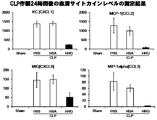
- Example 4 It is a result figure which confirmed various cytokine concentrations in serum when HRG was administered to an intestinal perforation model mouse.
- the control is human serum albumin (HSA). (Example 5)
- cytokine storm means that an excessive production state of cytokine is caused and its action reaches the whole body because its control is broken due to disorder of the balance of the immune system. It may progress to shock, disseminated intravascular coagulation syndrome (DIC), or multiple organ failure through neutrophil activation, blood coagulation mechanism activation, vasodilation, and the like.
- DIC disseminated intravascular coagulation syndrome
- Cytokines are soluble polypeptides or glycoproteins that control cell-to-cell signal transduction functions, and are produced by various cells such as macrophages, monocytes, lymphocytes, and neutrophils, and are responsible for target cell receptors and intracellular activation mechanisms. It is involved in reproduction, development, growth, etc. in addition to immunity and tissue repair by exerting biological effects and regulating the proliferation, differentiation, and functional expression of target cells.
- Physiological reactions such as fever, dullness, anorexia and leukocytosis seen in inflammation are originally host defense reactions necessary for infection protection and immunity acquisition.
- various endogenous mediators produced by the host in response to antigens and toxic substances derived from pathogenic microorganisms are pathogenic factors, and cytokines play a central role in the pathogenesis of inflammation.
- cytokines play a central role in the pathogenesis of inflammation.
- immune system attacks against pathogens mainly include phagocytosis by phagocytic cells of innate immune systems such as neutrophils and macrophages, destruction of host cells by release of cytotoxic substances by killer T cells, and production of B cells.
- Cytokines play an important role in such activation and suppression of immune cells.
- cytokine storms in early stages of influenza are involved in the rapid progression and severity of neurological symptoms such as flu and other symptoms of consciousness, convulsions, abnormal behaviors, and abnormal behavior from the beginning of the onset.
- neurological symptoms such as flu and other symptoms of consciousness, convulsions, abnormal behaviors, and abnormal behavior from the beginning of the onset.
- macrophage syndrome seen in refractory infections, auto-inflammatory syndromes, and rheumatic diseases that have caused abnormalities in the immune system's balance system cytokine control mechanisms such as feedback are disrupted, and various cytokines are present at high levels in the circulating blood. Will be detected.
- the present invention relates to a cytokine storm inhibitor containing HRG (Histidine-rich glycoprotein) as an active ingredient.
- HRG Histidine-rich glycoprotein
- “HRG” as an active ingredient can be applied by a method of isolation / purification from a biological component, a method of preparation using a gene recombination technique, or a method of synthesis.
- it can be purified and / or isolated from biological components such as blood such as plasma and serum, spinal fluid and lymph.
- Suitable biological components are blood components such as plasma and serum.
- a method for isolation / purification from a biological component a method known per se or any method developed in the future can be applied.
- Ni-NTA nickel-nitrilotriacetic acid
- Ni-NTA agarose resin is an affinity resin for protein purification using nickel ions (Ni 2+ ).
- a full-length cDNA encoding HRG or a cDNA encoding a portion having HRG activity can be cloned into an expression vector and prepared.
- it may be a protein biosynthesized from the whole or part of the nucleotide specified by GenBank Accession No. NM000412.
- a full-length cDNA encoding the amino acid sequence of mature HRG (SEQ ID NO: 1) or a cDNA encoding a portion thereof can be cloned into an expression vector and prepared.
- the HRG as the active ingredient of the present invention may be the entire HRG protein, or a partial protein or peptide having HRG activity.
- the crude HRG produced using the gene recombination technique may be further purified as necessary.
- the culture supernatant containing recombinant human HRG can be collected, filtered through a filter with an appropriate pore size, and further purified by passing through an affinity column using Ni-NTA agarose resin.
- ⁇ Mature HRG is composed of four main regions: cystatin-like regions 1, 2, His / Pro region and C-terminal region after being cleaved from the signal peptide by proteolytic enzymes.
- the His / Pro region is very rich in proline and histidine residues, including, for example, about 12 tandem repeats in which the pentapeptide GHHPH (SEQ ID NO: 2) is conserved in the human form.
- it is specified by the amino acid sequence shown at positions 330 to 389 of the amino acid sequence specified by SEQ ID NO: 1.
- the “cytokine storm inhibitor” of the present invention contains the above-described HRG as an active ingredient.
- the “cytokine storm inhibitor” of the present invention contains HRG obtained by isolation and purification from biological components and / or HRG obtained by genetic recombination as an active ingredient, and a pharmacologically acceptable carrier.
- a pharmacologically acceptable carrier include excipients, disintegrants or disintegration aids, binders, lubricants, coating agents, dyes, diluents, bases, solubilizers or solubilizers, Examples include isotonic agents, pH adjusters, stabilizers, propellants, and pressure-sensitive adhesives.
- the cytokine storm inhibitor of the present invention may be a crude HRG obtained by isolation and purification from biological components.
- the cytokine storm inhibitor of the present invention is a drug for preventing, treating, or reducing cytokine storm (hypercytokinemia), which is a state in which abnormal increase in cytokine concentration in blood occurs.
- the cytokine storm inhibitor of the present invention has an action of suppressing at least two kinds of cytokines.
- the cytokine storm inhibitor of the present invention particularly has an action of suppressing an increase in cytokine concentration in blood (in plasma or serum).
- the cytokine in the present invention includes both inflammatory cytokines and anti-inflammatory cytokines. Specific examples include IL-6, TNF- ⁇ , IL-10, KC (CXCL1), MCP-1 (CCL2), MIG (CXCL9), MIP-1 alpha (CCL3), and the like.
- the cytokine inhibitor of the present invention has an action of suppressing at least two or more kinds of cytokines selected from these cytokines. Preferably, it has an action of suppressing at least two cytokines selected from IL-6, TNF- ⁇ , and IL-10. Suppressing cytokine refers to suppressing an increase in the concentration of the cytokine in the blood.
- the cytokine storm inhibitor of the present invention is effective for SIRS produced after cytokine storm by utilizing the action of suppressing multiple types of cytokines, and can also be used as a preventive agent for SIRS. Therefore, the present invention extends to a cytokine storm inhibitor and a preventive or therapeutic agent for SIRS.
- the prophylactic or therapeutic agent of the present invention is used for the prevention, treatment or alleviation of symptoms of SIRS.
- SIRS may be caused by multiple trauma other than infectious diseases, burns, surgery, etc.
- the blood concentration of inflammatory cytokines is increased.
- the blood concentration of anti-inflammatory cytokines is increased in addition to inflammatory cytokines.
- the therapeutic agent is effective.
- the administration form of the cytokine storm inhibitor of the present invention or the preventive or therapeutic agent for SIRS may be administered locally or systemically.
- Formulations for parenteral administration may include sterile aqueous or non-aqueous solutions, suspensions, and emulsions.
- non-aqueous diluents are propylene glycol, polyethylene glycol, vegetable oils such as olive oil and organic ester compositions such as ethyl oleate, which are suitable for injection.
- Aqueous carriers may include water, alcoholic aqueous solutions, emulsions, suspensions, saline and buffered media.
- Parenteral carriers may include sodium chloride solution, Ringer's dextrose, dextrose and sodium chloride, Ringer's lactic acid and binding oil.
- Intravenous carriers may include, for example, fluid supplements, nutrients and electrolytes (eg, those based on Ringer's dextrose).
- the cytokine storm suppressor or SIRS preventive or therapeutic agent of the present invention can further contain preservatives and other additives such as antimicrobial compounds, antioxidants, chelating agents and inert gases.
- the present invention extends to a method for producing a cytokine storm inhibitor containing HRG as an active ingredient.
- the method for preparing a cytokine storm inhibitor includes a step of preparing HRG as an active ingredient.
- HRG as an active ingredient can be prepared by a method of isolation / purification from a biological component, a method of preparation using a gene recombination technique, or a method of preparation by synthesis.
- the crude HRG obtained by the above method may be further purified. For example, it may include a step of appropriately filtering a solution containing crude HRG with a filter having an appropriate pore size, or may include a step of purifying using a resin suitable for purification. Examples of resins suitable for purification include Ni-NTA agarose resin.
- the present invention uses IL-6, TNF- ⁇ , IL-10, KC (CXCL1), MCP-1 (CCL2) in blood and / or lung tissue, characterized by using the above-described cytokine storm inhibitor.
- the present invention extends to a cytokine storm suppression method that suppresses two or more cytokines selected from MIG (CXCL9) and MIP-1IPalpha (CCL3).
- the present invention extends to a method for preventing or treating SIRS, which comprises using the above-described cytokine storm inhibitor.
- Example 1 Preparation 1 of Cytokine Storm Inhibitor
- preparation of a cytokine storm suppressor containing HRG purified from human plasma as an active ingredient will be described.
- human plasma 240 ml
- Ni-NTA nickel-nitrilotriacetic acid
- high performance liquid chromatography anion exchange column (monodispersed hydrophilic) HRG protein was purified by a functional polymer bead: Mono Q)
- a purified HRG sample having a molecular weight of about 80 kDa was obtained.
- the purified sample was dialyzed against PBS, and a preparation containing HRG of 500 to 1000 ⁇ g / ml (5 ml) was stored as the cytokine storm inhibitor of the present invention.
- Example 2 Preparation 2 of Cytokine Storm Inhibitor
- preparation of a cytokine storm suppressor containing recombinant human HRG as an active ingredient will be described.
- a recombinant human HRG was prepared as follows. A DNA encoding a human HRG coding region (DNA consisting of a base sequence specified by GenBank Accession No. NM000412) was ligated to a plasmid vector having a CMV promoter to prepare a vector for producing a recombinant human HRG.
- HEK293 cells (derived from human embryonic kidney cells, transformed with adenovirus type 5) were seeded and cultured in a 3.5 ⁇ 10 6 cells / 10 cm diameter cell culture dish. Remove the cultured HEK293 cells with a scraper and make them float. The transfection was performed by reacting for 15 minutes. Thereafter, HEK293 cells were cultured at 37 ° C. under 5% CO 2 for 48 hours to produce recombinant human HRG.
- the culture supernatant containing the recombinant human HRG was collected and filtered through a filter with a pore size of 0.22 ⁇ m.
- Add QIAGEN (R) Ni-NTA agarose gel gel with Ni-NTA bound to Sepharose CL-6B support ) pre-washed with 30 ml of 1xPBS ( -) to the filtered culture supernatant and rotate at 4 ° C. incubation is performed for 1 hour to bind the recombinant human HRG in QIAGEN (R) Ni-NTA agarose gel.
- washing solution 1 PBS containing 30 mM Imidazole (pH 7.4)
- washing solution 2 (1 M NaCl +10 mM PBS (pH 7.4)
- washing solution 3 The column was sequentially washed with 1 ⁇ PBS (pH 7.4), and the recombinant human HRG was eluted with PBS (pH 7.4) containing 500 mM Imidazole at 4 ° C. for 1 hour.
- Ni-NTA agarose gel is an affinity gel for protein purification using nickel ions (Ni 2+ ).
- Example 3 Changes in blood levels of various cytokines in intestinal perforation model mice
- the cytokine storm inhibitor prepared in Example 1 was administered to intestinal perforation model (cecal ligation and puncture: CLP) mice.
- the serum levels of various cytokines were confirmed.
- a single sham mouse was used as a control. The cecum was removed from the abdominal cavity of the mouse, the cecal root was ligated with a suture, and the cecal wall layer was punctured with an 18-gauge injection needle to produce an intestinal perforation model mouse.
- HSA human serum albumin
- Whole blood was collected from the mice 24 hours after the operation, and the cytokine concentration in the serum was measured using a Cytometric Bead Array (CBA) kit (BD Biosciences).
- CBA Cytometric Bead Array
- Example 4 Changes in mRNA Levels of Various Cytokines in Intestinal Perforation Model Mice
- various cytokines were administered when the cytokine storm inhibitor prepared in Example 1 was administered to intestinal perforation model (CLP) mice. MRNA levels in lung tissue were confirmed.
- CLP intestinal perforation model
- HSA human serum albumin
- Example 5 Changes in blood levels of various cytokines in intestinal perforation model mice
- various cytokines when the cytokine storm inhibitor prepared in Example 1 was administered to intestinal perforation model (CLP) mice. Serum levels were confirmed.
- CLP intestinal perforation model
- HRG 20 mg / kg
- HSA human serum albumin
- Example 6 Confirmation of HRG Stimulation Inhibiting Cytokine / Chemokine Gene in Human Vascular Endothelial Cell Line
- confirmation of HRG stimulation inhibiting cytokine / chemokine gene in human vascular endothelial cell line (EA.hy926 cell) was performed. It was. EA.hy926 cells were cultured using serum-free medium (DMEF). Those cultured for 12 hours in a system containing 1 ⁇ M of the cytokine storm inhibitor (HRG) prepared in Example 1 in serum-free medium (DMEF) were confirmed as the HRG group.
- HRG cytokine storm inhibitor
- DMEF serum-free medium
- HSA human serum albumin
- HRG group is expressed in CCL8, IL-33, interferon epsilon (IFN epsilon, IFNE), IFN alpha 5 (IFNA5), IFN alpha 4 (IFNA4), IFN alpha 13 (IFNA13), CCL3, CXCL5 Inhibition was observed.
- the HRG group showed suppression of expression in the HSA group, particularly with IL33, CCL4 and CXCL5.
- an increase in the concentration of multiple types of cytokines in blood can be suppressed, and for example, it can be used as a preventive or therapeutic agent for SIRS.
Landscapes
- Health & Medical Sciences (AREA)
- Life Sciences & Earth Sciences (AREA)
- Chemical & Material Sciences (AREA)
- Proteomics, Peptides & Aminoacids (AREA)
- Organic Chemistry (AREA)
- General Health & Medical Sciences (AREA)
- Medicinal Chemistry (AREA)
- Public Health (AREA)
- Gastroenterology & Hepatology (AREA)
- Epidemiology (AREA)
- Animal Behavior & Ethology (AREA)
- Immunology (AREA)
- Bioinformatics & Cheminformatics (AREA)
- Veterinary Medicine (AREA)
- Toxicology (AREA)
- Zoology (AREA)
- Pharmacology & Pharmacy (AREA)
- Biochemistry (AREA)
- Biophysics (AREA)
- Genetics & Genomics (AREA)
- Molecular Biology (AREA)
- Engineering & Computer Science (AREA)
- Peptides Or Proteins (AREA)
- Medicines That Contain Protein Lipid Enzymes And Other Medicines (AREA)
- Preparation Of Compounds By Using Micro-Organisms (AREA)
Abstract
新規なサイトカインストーム抑制剤を提供することを課題とする。HRGが複数種のサイトカインの抑制作用を有することを見出したことに基づく、HRGを有効成分とするサイトカインストーム抑制剤による。また、HRGは炎症性サイトカインおよび抗炎症サイトカインに対する抑制作用を有する。さらには、本発明のHRGを有効成分とするサイトカインストーム抑制剤を含む、全身性炎症反応症候群(SIRS)の予防又は治療薬による。発明のサイトカインストーム抑制剤によれば、血液中や肺組織中の複数種のサイトカイン、例えばIL-6、TNF-α、IL-10、KC(CXCL1)、MCP-1(CCL2)、MIG(CXCL9)及びMIP-1 alpha(CCL3)から選択される2種以上のサイトカイン濃度の上昇を抑制することができる。
Description
本発明は、ヒスチジンリッチ糖タンパク質(Histidine-rich glycoprotein:以下、単に「HRG」という場合がある。)を有効成分とするサイトカインストーム抑制剤に関する。
本出願は、参照によりここに援用されるところの日本出願特願2014-258546号及び2015-154972号優先権を請求する。
サイトカインは、炎症反応と免疫応答に関与するタンパク性因子の総称であり、数百種類以上の因子が含まれる。サイトカインは、個々に非常に多彩な活性プロフィールを有し、それらがバランス良く協調的に相互作用することで生体機能を維持・調節している。またサイトカインは、特に炎症性疾患、自己免疫疾患、神経変性疾患の病態形成においてメディエーター物質として重要な役割を果たすことが知られている。
血液中のサイトカイン濃度が異常上昇した状態を、サイトカインストーム(cytokine storm)又は、高サイトカイン血症と呼ぶ。例えば感染症や薬剤投与などの原因により、血中サイトカイン(IL-1,IL-6,TNF-αなど)の異常上昇が起こる。例えば、エボラ出血熱・高度の手術侵襲の後・薬剤投与後などの全身性炎症症候群(systemic inflammatory response syndrome:以下、単に「SIRS」という場合がある。)等の疾患の前段階に観察される症状である。SIRSは、呼吸数の増加、肝臓の急性期タンパクの産生亢進などを呈することが知られている。SIRS病態についてモデル実験動物を用いて解析した結果、炎症を惹起する活性を有する炎症性サイトカイン(起炎性サイトカイン)が血液中に著増することが確認されている。さらにSIRSの重篤な病態では、炎症性サイトカイン濃度の上昇のみならず、炎症・免疫応答を抑制する抗炎症サイトカイン濃度も上昇し、免疫応答不全を生じていると考えられている。サイトカインストームは、SIRSから播種性血管内凝固症候群(DIC)、多臓器不全にに至る段階にも確認されている。
近年、TNF-αやインターロイキン-6(IL-6)を分子標的とする抗体医薬の成功が報告されており、抗サイトカイン治療の新しい時代が切り開かれつつある。抗体医薬は、標的となるサイトカインの活性又はその受容体を特異的に遮断することを特徴とする。しかしながら、SIRS等の炎症性サイトカインと抗炎症サイトカインが同時に複雑に反応する病態に対しては、上記抗体医薬による制御が困難であり、複数種のサイトカインを制御し得る医薬の開発が必要である。細胞表面分子のサブユニットであるCD61タンパク質に結合する抗体が、複数種のサイトカインを制御し得ることが報告されているものの(特許文献1)、複数種のサイトカインを制御しうる医薬は未だ実用化されていない。
HRG(Histidine-rich glycoprotein)は、1972年にHeimburger et al (1972)によって同定された分子量約80kDaの血漿タンパク質である。合計507個のアミノ酸より構成され、そのうちヒスチジンが66存在する高ヒスチジン含有タンパク質であり、主として肝臓で合成され、約100~150μg/mlという非常に高いと考えられる濃度でヒト血漿中に存在する。HRGは、凝固線溶系の調節や血管新生の制御に関与していることが知られている(非特許文献1)。さらに、HRGポリペプチドを投与することによる血管形成を阻害する方法、HRGポリペプチド、HRGポリペプチドに結合する抗体及び受容体、HRG欠乏性血漿及びポリヌクレオチド、HRGポリペプチドをコードするベクター及び宿主細胞を含む、製薬的組成物及び製品が開示されている(特許文献2)。また、血管新生の分野に関し、HRGの中央領域に由来するサブフラグメントを含む抗血管新生活性のある実質的に純粋な連続ポリペプチドの使用に関する開示がある(特許文献3)。また、HRGによる好中球活性化の制御機能についての報告がある(特許文献4)。
しかしながら、HRGによる複数種のサイトカイン制御については、報告はされていない。
Blood, Vol.117, No.7, 2093-2101 (2011)
本発明は、新規なサイトカインストーム抑制剤を提供することを課題とする。又、本発明は当該サイトカインストーム抑制剤を含む全身性炎症反応症候群(SIRS)の予防剤又は治療剤を提供することを課題とする。更に本発明は、当該サイトカインストーム抑制剤の作製方法、並びに当該サイトカインストーム抑制剤によるSIRSの予防又は治療方法を提供することを課題とする。
本願発明者らは、上記課題を解決するために鋭意検討を重ねた結果、HRGが複数種のサイトカインに対して抑制作用を有することを見出し、HRGを有効成分とするサイトカインストーム抑制剤に係る本発明を完成した。
すなわち本発明は、以下よりなる。
1.HRGを有効成分として含有する、サイトカインストーム抑制剤。
2.サイトカインストーム抑制剤により、血中及び/又は肺組織中のIL-6、TNF-α、IL-10、KC(CXCL1)、MCP-1(CCL2)、MIG(CXCL9)及びMIP-1 alpha(CCL3)から選択される2種以上のサイトカインが抑制される、前項1に記載のサイトカインストーム抑制剤。
3.HRGが、ヒト血液成分又は遺伝子組換えの手法により動物細胞により産生された粗HRGを、アフィニティーゲルクロマトグラフィーを用いて精製して得たタンパク質である、前項1又は2に記載のサイトカインストーム抑制剤。
4.HRGが、遺伝子組換えの手法により作製されたHRGである、前項3に記載のサイトカインストーム抑制剤。
5.HRGを有効成分として含有するサイトカインストーム抑制剤の作製方法として、ヒト血液成分又は動物細胞により産生された粗HRGを、アフィニティーゲルクロマトグラフィーを用いて精製し、有効成分としてのHRGを調製する工程を含むことを特徴とする、サイトカインストーム抑制剤の作製方法。
6.前項1~4のいずれか1に記載のサイトカインストーム抑制剤を含む、SIRSの予防剤又は治療剤。
7.前項1~4のいずれか1に記載のサイトカインストーム抑制剤を用いることを特徴とする、血中及び/又は肺組織中のIL-6、TNF-α、IL-10、KC(CXCL1)、MCP-1(CCL2)、MIG(CXCL9)及びMIP-1 alpha(CCL3)から選択される2種以上のサイトカインを抑制するサイトカインストーム抑制方法。
8.前項1~4のいずれか1に記載のサイトカインストーム抑制剤を用いることを特徴とする、SIRSの予防又は治療方法。
1.HRGを有効成分として含有する、サイトカインストーム抑制剤。
2.サイトカインストーム抑制剤により、血中及び/又は肺組織中のIL-6、TNF-α、IL-10、KC(CXCL1)、MCP-1(CCL2)、MIG(CXCL9)及びMIP-1 alpha(CCL3)から選択される2種以上のサイトカインが抑制される、前項1に記載のサイトカインストーム抑制剤。
3.HRGが、ヒト血液成分又は遺伝子組換えの手法により動物細胞により産生された粗HRGを、アフィニティーゲルクロマトグラフィーを用いて精製して得たタンパク質である、前項1又は2に記載のサイトカインストーム抑制剤。
4.HRGが、遺伝子組換えの手法により作製されたHRGである、前項3に記載のサイトカインストーム抑制剤。
5.HRGを有効成分として含有するサイトカインストーム抑制剤の作製方法として、ヒト血液成分又は動物細胞により産生された粗HRGを、アフィニティーゲルクロマトグラフィーを用いて精製し、有効成分としてのHRGを調製する工程を含むことを特徴とする、サイトカインストーム抑制剤の作製方法。
6.前項1~4のいずれか1に記載のサイトカインストーム抑制剤を含む、SIRSの予防剤又は治療剤。
7.前項1~4のいずれか1に記載のサイトカインストーム抑制剤を用いることを特徴とする、血中及び/又は肺組織中のIL-6、TNF-α、IL-10、KC(CXCL1)、MCP-1(CCL2)、MIG(CXCL9)及びMIP-1 alpha(CCL3)から選択される2種以上のサイトカインを抑制するサイトカインストーム抑制方法。
8.前項1~4のいずれか1に記載のサイトカインストーム抑制剤を用いることを特徴とする、SIRSの予防又は治療方法。
本発明のサイトカインストーム抑制剤によれば、血液中や肺組織中の複数種のサイトカイン、例えばIL-6、TNF-α、IL-10、KC(CXCL1)、MCP-1(CCL2)、MIG(CXCL9)及びMIP-1 alpha(CCL3)から選択される2種以上のサイトカイン濃度の上昇を抑制することができ、例えばSIRSの予防剤又は治療剤として利用することができる。
本明細書において、サイトカインストーム(cytokine storm)とは、免疫系のバランスの乱れなどによってその制御が崩れることで、サイトカインの過剰な産生状態を引き起こされ、その作用が全身に及ぶことをいう。好中球の活性化、血液凝固機構活性化、血管拡張などを介して、ショック・播種性血管内凝固症候群(DIC)・多臓器不全にまで進行する場合がある。
サイトカインは、細胞間情報伝達機能を司る可溶性ポリペプチドあるいは糖タンパクであり、マクロファージ、単球、リンパ球、好中球など種々の細胞が産生し、標的細胞の受容体と細胞内活性化機構を介して生物学的作用を発揮し、標的細胞の増殖・分化・機能発現を調節して、免疫や組織修復以外にも生殖、発生、成長などに関わっている。
炎症で見られる発熱、だるさ、食思不振や白血球増多などの生体反応は、本来は感染防御や免疫獲得に必要な宿主防御反応である。この生体反応には病原微生物由来の抗原や毒性物質に反応して宿主が産生する種々の内因性メディエーターが病原因子となっており、この中でも、サイトカインは炎症の病態の中心的な役割を演じている。例えば、病原体に対する免疫系の攻撃としては、主に好中球やマクロファージなどの自然免疫系の貪食細胞による貪食作用、キラーT細胞による細胞傷害性物質の放出による宿主細胞の破壊、B細胞が産生する抗体による病原体の不活化などが挙げられる。このような免疫細胞の活性化や機能抑制には、サイトカインが重要な役割を担っている。
例えば、インフルエンザ等、発症初期から意識障害やけいれん、異常言動、異常行動などの神経症状のような急激な症状進行や重篤化にはインフルエンザ罹患早期のサイトカインストームの関与が示唆される。免疫系のバランス・システムに異常を生じた難治性感染症、自己炎症症候群、リウマチ性疾患で見られるマクロファージ症候群では、フィードバックなどのサイトカイン制御機構が破綻し、種々のサイトカインが循環血中に高濃度で検出されるようになる。この状態では、本来自己分泌(autocrine)、傍分泌(paracrine)であるサイトカインの作用が全身に、及び、好中球活性化、血管内皮傷害、血液凝固機構活性化、血管拡張などを介して、SIRS、ショック、DIC、多臓器不全にまで進展する。
本発明は、HRG(Histidine-rich glycoprotein)を有効成分として含むサイトカインストーム抑制剤に関する。本明細書において、有効成分としての「HRG」は、生体成分から単離・精製する方法、遺伝子組換え技術を用いて調製する方法、あるいは合成により調製する方法を適用することができる。例えば血漿、血清等の血液、脊髄液、リンパ液等の生体成分から精製され/若しくは単離することができる。好適な生体成分は、血漿、血清等の血液成分である。生体成分から単離・精製する方法は、自体公知の方法又は今後開発されるあらゆる方法を適用することができる。例えば、Ni-NTA(nickel-nitrilotriacetic acid)アガロース樹脂を用いたアフィニティカラムに血漿、血清等の血液成分を通すことによって調製することもできる。Ni-NTAアガロース樹脂は、ニッケルイオン(Ni2+)を用いたタンパク質精製用アフィニティー樹脂である。
遺伝子組換え技術を用いて作製する方法も自体公知の方法又は今後開発されるあらゆる方法を適用することができる。例えば、HRGをコードする全長cDNA、又はHRGの活性を有する部分をコードするcDNAを、発現ベクターにクローニングし、調製することもできる。例えば、GenBank Accession No.NM000412で特定されるヌクレオチドの全体又は部分から生合成されるタンパク質であっても良い。例えば、成熟HRGのアミノ酸配列(配列番号1)をコードする全長cDNA、又は部分をコードするcDNAを、発現ベクターにクローニングし、調製することもできる。本発明の有効成分としてのHRGは、HRGタンパク質の全体であっても良いし、HRG活性を有する部分タンパク質又はペプチドであっても良い。遺伝子組換え技術を用いて作製された粗HRGは、必要に応じてさらに精製してもよい。例えば組換えヒトHRGを含む培養上清を回収し、適度な孔径のフィルターでろ過した後、さらにNi-NTAアガロース樹脂を用いたアフィニティカラムに通して精製し、調製することができる。
成熟HRGのアミノ酸配列(配列番号1)
VSPTDCSAVEPEAEKALDLINKRRRDGYLFQLLRIADAHLDRVENTTVYYLVLDVQESDCSVLSRKYWNDCEPPDSRRPSEIVIGQCKVIATRHSHESQDLRVIDFNCTTSSVSSALANTKDSPVLIDFFEDTERYRKQANKALEKYKEENDDFASFRVDRIERVARVRGGEGTGYFVDFSVRNCPRHHFPRHPNVFGFCRADLFYDVEALDLESPKNLVINCEVFDPQEHENINGVPPHLGHPFHWGGHERSSTTKPPFKPHGSRDHHHPHKPHEHGPPPPPDERDHSHGPPLPQGPPPLLPMSCSSCQHATFGTNGAQRHSHNNNSSDLHPHKHHSHEQHPHGHHPHAHHPHEHDTHRQHPHGHHPHGHHPHGHHPHGHHPHGHHPHCHDFQDYGPCDPPPHNQGHCCHGHGPPPGHLRRRGPGKGPRPFHCRQIGSVYRLPPLRKGEVLPLPEANFPSFPLPHHKHPLKPDNQPFPQSVSESCPGKFKSGFPQVSMFFTHTFPK
VSPTDCSAVEPEAEKALDLINKRRRDGYLFQLLRIADAHLDRVENTTVYYLVLDVQESDCSVLSRKYWNDCEPPDSRRPSEIVIGQCKVIATRHSHESQDLRVIDFNCTTSSVSSALANTKDSPVLIDFFEDTERYRKQANKALEKYKEENDDFASFRVDRIERVARVRGGEGTGYFVDFSVRNCPRHHFPRHPNVFGFCRADLFYDVEALDLESPKNLVINCEVFDPQEHENINGVPPHLGHPFHWGGHERSSTTKPPFKPHGSRDHHHPHKPHEHGPPPPPDERDHSHGPPLPQGPPPLLPMSCSSCQHATFGTNGAQRHSHNNNSSDLHPHKHHSHEQHPHGHHPHAHHPHEHDTHRQHPHGHHPHGHHPHGHHPHGHHPHGHHPHCHDFQDYGPCDPPPHNQGHCCHGHGPPPGHLRRRGPGKGPRPFHCRQIGSVYRLPPLRKGEVLPLPEANFPSFPLPHHKHPLKPDNQPFPQSVSESCPGKFKSGFPQVSMFFTHTFPK
成熟HRGは、シグナルペプチドからタンパク質分解酵素によって切断されたのち、シスタチン様領域1,2、His/Pro領域、C末端領域の主要な4つの領域から構成される。His/Pro領域は、プロリン残基及びヒスチジン残基に非常に富んでおり、例えばヒト型ではペンタペプチドGHHPH(配列番号2)が保存されたタンデム反復を約12回含む。別の態様では、配列番号1で特定されるアミノ酸配列の第330位~第389位に示すアミノ酸配列で特定される。
本発明の「サイトカインストーム抑制剤」は、上記説明したHRGを有効成分として含む。本発明の「サイトカインストーム抑制剤」は、生体成分から単離・精製して得たHRG及び/又は遺伝子組換えにより得られたHRGを有効成分として含むほか、薬理学的に許容しうる担体を含むことができる。当該薬理学的に許容しうる担体としては、例えば、賦形剤、崩壊剤若しくは崩壊補助剤、結合剤、滑沢剤、コーティング剤、色素、希釈剤、基剤、溶解剤若しくは溶解補助剤、等張化剤、pH調節剤、安定化剤、噴射剤、及び粘着剤等を挙げることができる。本発明のサイトカインストーム抑制剤は、生体成分から単離・精製して得た粗HRGであってもよい。
本発明のサイトカインストーム抑制剤は、血液中のサイトカイン濃度の異常上昇が起こっている状態であるサイトカインストーム(高サイトカイン血症)を、予防、治療、又は軽減化するための薬剤である。本発明のサイトカインストーム抑制剤は、少なくとも2種以上の複数種のサイトカインを抑制する作用を有する。本発明のサイトカインストーム抑制剤は、特に、血液中(血漿中又は血清中)におけるサイトカイン濃度の上昇を抑制する作用を有する。
本発明におけるサイトカインは、炎症性サイトカインと抗炎症サイトカインの両方を含む。具体的には、例えばIL-6、TNF-α、IL-10、KC(CXCL1)、MCP-1(CCL2)、MIG(CXCL9)及びMIP-1 alpha(CCL3)等が例示される。本発明のサイトカイン抑制剤は、これらのサイトカインから選択される少なくとも2種以上の複数種のサイトカインを抑制する作用を有する。好ましくは、IL-6、TNF-α、IL-10から選択される少なくとも2種以上のサイトカインを抑制する作用を有する。サイトカインを抑制するとは、血液中の当該サイトカインの濃度上昇を抑制することをいう。
サイトカインストームにおいて血液中のサイトカインの作用は全身に及ぶ。サイトカインストームの後、SIRSが発症すると考えられる。サイトカインストームは、SIRSからDIC、多臓器不全にに至る段階にも確認されている。本発明のサイトカインストーム抑制剤は、複数種のサイトカインを抑制する作用を利用して、サイトカインストームの後に生じるSIRSに対しても有効であり、SIRSの予防剤としても用いることができる。よって本発明は、サイトカインストーム抑制剤や、SIRSの予防剤又は治療剤にも及ぶ。本発明の予防剤又は治療剤は、SIRSの予防、治療、又は、症状を軽減化するために用いられるものである。SIRSには、感染症以外の多発外傷、熱傷、手術等に起因するものがある。SIRSにおいては、炎症性サイトカインの血中濃度が上昇しており、重篤な場合には炎症性サイトカインに加えて抗炎症サイトカインの血中濃度が上昇していることから、本発明の予防剤又は治療剤が有効である。
本発明のサイトカインストーム抑制剤、あるいは、SIRSの予防剤又は治療剤の投与形態としては、局所的に投与してもよいし全身的に投与してもよい。非経口投与用の製剤は、滅菌した水性の、又は非水性の溶液、懸濁液及び乳濁液を含んでいてもよい。非水性希釈剤の例として、プロピレングリコール、ポリエチレングリコール、植物油、例えば、オリーブ油及び有機エステル組成物、例えば、エチルオレエートであり、これらは注射用に適している。水性担体には、水、アルコール性水性溶液、乳濁液、懸濁液、食塩水及び緩衝化媒体が含まれていてもよい。非経口的担体には、塩化ナトリウム溶液、リンゲルデキストロース、デキストロース及び塩化ナトリウム、リンゲル乳酸及び結合油が含まれていてもよい。静脈内担体には、例えば、液体用補充物、栄養及び電解質(例えば、リンゲルデキストロースに基づくもの)が含まれていてもよい。本発明のサイトカインストーム抑制剤、あるいは、SIRSの予防剤又は治療剤はさらに、保存剤及び他の添加剤、例えば抗微生物化合物、抗酸化剤、キレート剤及び不活性ガスなどを含むことができる。
本発明は、HRGを有効成分として含有するサイトカインストーム抑制剤の作製方法にも及ぶ。サイトカインストーム抑制剤の作製方法として、有効成分としてのHRGを調製する工程を含む。有効成分としての「HRG」の調製は、上記説明したごとく、生体成分から単離・精製する方法、遺伝子組換え技術を用いて調製する方法、あるいは合成により調製する方法を適用することができる。上記方法により得られた粗HRGを、さらに精製してもよい。例えば、粗HRGを含む溶液を適宜適度な孔径のフィルターで濾過する工程を含んでいてもよいし、精製に適した樹脂を用いて精製する工程を含んでいてもよい。精製に適した樹脂として、Ni-NTAアガロース樹脂などが挙げられる。
本発明は、上記サイトカインストーム抑制剤を用いることを特徴とする、血中及び/又は肺組織中のIL-6、TNF-α、IL-10、KC(CXCL1)、MCP-1(CCL2)、MIG(CXCL9)及びMIP-1 alpha(CCL3)から選択される2種以上のサイトカインを抑制するサイトカインストーム抑制方法に及ぶ。さらには、上記サイトカインストーム抑制剤を用いることを特徴とする、SIRSの予防又は治療方法にも及ぶ。
以下、実施例を挙げて本発明をより具体的に説明する。本発明はもとより下記実施例により制限を受けるものではなく、前・後記の趣旨に適合し得る範囲で適当に変更を加えて実施することも可能であり、それらはいずれも本発明の技術的範囲に含まれる。
(実施例1)サイトカインストーム抑制剤の調製1
本実施例では、ヒト血漿から精製したHRGを有効成分とするサイトカインストーム抑制剤の調製について説明する。
特許文献4に記載の手法に従って、本実施例では、ヒト血漿(240ml)を出発原料とし、Ni-NTA(nickel-nitrilotriacetic acid)アフィニティクロマトグラフィ及び高性能液体クロマトグラフィ(陰イオン交換カラム(単分散系親水性ポリマービーズ:Mono Q))により、HRGタンパク質を精製した。これにより、分子量約80kDa画分に得られたHRG精製試料が得られた。精製試料はPBSで透析し、HRGを500~1000μg/ml(5ml)含む調製物を本発明のサイトカインストーム抑制剤とし、保存した。
本実施例では、ヒト血漿から精製したHRGを有効成分とするサイトカインストーム抑制剤の調製について説明する。
特許文献4に記載の手法に従って、本実施例では、ヒト血漿(240ml)を出発原料とし、Ni-NTA(nickel-nitrilotriacetic acid)アフィニティクロマトグラフィ及び高性能液体クロマトグラフィ(陰イオン交換カラム(単分散系親水性ポリマービーズ:Mono Q))により、HRGタンパク質を精製した。これにより、分子量約80kDa画分に得られたHRG精製試料が得られた。精製試料はPBSで透析し、HRGを500~1000μg/ml(5ml)含む調製物を本発明のサイトカインストーム抑制剤とし、保存した。
(実施例2)サイトカインストーム抑制剤の調製2
本実施例では、遺伝子組換えヒトHRGを有効成分とするサイトカインストーム抑制剤の調製について説明する。
特許文献4に記載の手法に従って、遺伝子組換えヒトHRGは、以下のように作製した。ヒトHRGコーディング領域をコードするDNA(GenBank Accession No.NM000412で特定される塩基配列からなるDNA)を、CMVプロモーターを持つプラスミドベクターにライゲーションし、遺伝子組換え体ヒトHRG作製用ベクターを調製した。HEK293細胞(ヒト胎児腎細胞由来、アデノウイルス5型による形質転換株)を3.5×10⁶cells/10cm 径の細胞培養用ディシュに播種し培養した。培養したHEK293細胞をスクレーパーではがし、浮遊化させたのち、上記遺伝子組換えヒトHRG作製用ベクターを25μg/OPTI-MEM 500μl+FuGENE-HD 50μl/OPTI-MEM 500μl 混合したものを添加し、室温で15分間反応させることでトランスフェクションを行なった。その後、HEK293細胞を37℃で5%CO2下、48時間培養し、遺伝子組換えヒトHRGを作製した。
本実施例では、遺伝子組換えヒトHRGを有効成分とするサイトカインストーム抑制剤の調製について説明する。
特許文献4に記載の手法に従って、遺伝子組換えヒトHRGは、以下のように作製した。ヒトHRGコーディング領域をコードするDNA(GenBank Accession No.NM000412で特定される塩基配列からなるDNA)を、CMVプロモーターを持つプラスミドベクターにライゲーションし、遺伝子組換え体ヒトHRG作製用ベクターを調製した。HEK293細胞(ヒト胎児腎細胞由来、アデノウイルス5型による形質転換株)を3.5×10⁶cells/10cm 径の細胞培養用ディシュに播種し培養した。培養したHEK293細胞をスクレーパーではがし、浮遊化させたのち、上記遺伝子組換えヒトHRG作製用ベクターを25μg/OPTI-MEM 500μl+FuGENE-HD 50μl/OPTI-MEM 500μl 混合したものを添加し、室温で15分間反応させることでトランスフェクションを行なった。その後、HEK293細胞を37℃で5%CO2下、48時間培養し、遺伝子組換えヒトHRGを作製した。
遺伝子組換えヒトHRGを含む培養上清を回収し、孔径0.22μmのフィルターでろ過した。1×PBS(-) 30mlで予め洗浄したQIAGEN(R) Ni-NTAアガロースゲル(Sepharose CL-6B支持体にNi-NTAを結合したゲル)を前記ろ過した培養上清に加え、4℃で回転インキュベーションを1時間行ない、遺伝子組換えヒトHRGをQIAGEN(R) Ni-NTAアガロースゲルに結合させた。QIAGEN(R) Ni-NTAアガロースゲルを精製用カラムに移した後、洗浄液1(30mM Imidazoleを含むPBS (pH7.4)、洗浄液2(1M NaCl +10mM PBS (pH7.4))、洗浄液3(1×PBS (pH7.4))で順次カラムを洗浄した。遺伝子組換えヒトHRG は、500mM Imidazoleを含むPBS (pH7.4)で、4℃で1時間反応させ溶出を行なった。精製品は、ウエスタンブロットとSDS-PAGE 後のタンパク染色でHRGを確認した。得られた遺伝子組換えヒトHRG精製品をHBSS置換してタンパク濃度を調整し、本発明のサイトカインストーム抑制剤とし、保存した。Ni-NTAアガロースゲルは、ニッケルイオン(Ni2+)を用いたタンパク質精製用アフィニティーゲルである。
(実施例3)腸管穿孔モデルマウスでの各種サイトカインの血中レベルの変化
本実験例では、腸管穿孔モデル(cecal ligation and puncture: CLP)マウスに、実施例1で調製したサイトカインストーム抑制剤を投与したときの各種サイトカインの血清中レベルを確認した。
まず、単開腹(sham)マウスを対照とした。マウスの腹腔内より盲腸を取り出して、盲腸根部を縫合糸により結紮し、18ゲージ注射針を用いて盲腸壁層に穿刺して腸管穿孔モデルマウスを作製した。腸管穿孔モデルマウスに、術後約5分後に、実施例1にて調製したサイトカインストーム抑制剤(HRG:20 mg/kg)を尾静脈内投与した(n=5)。陰性コントロールとして、HSA(ヒト血清アルブミン)(20 mg/kg)を用いた(n=5)。buffer controlとして、PBSを200μl投与した(n=5)。
術後24時間後にマウスから全血を採血し、血清中のサイトカイン濃度を、Cytometric Bead Array(CBA)キット(BD Biosciences社製)を用いて測定した。
本実験例では、腸管穿孔モデル(cecal ligation and puncture: CLP)マウスに、実施例1で調製したサイトカインストーム抑制剤を投与したときの各種サイトカインの血清中レベルを確認した。
まず、単開腹(sham)マウスを対照とした。マウスの腹腔内より盲腸を取り出して、盲腸根部を縫合糸により結紮し、18ゲージ注射針を用いて盲腸壁層に穿刺して腸管穿孔モデルマウスを作製した。腸管穿孔モデルマウスに、術後約5分後に、実施例1にて調製したサイトカインストーム抑制剤(HRG:20 mg/kg)を尾静脈内投与した(n=5)。陰性コントロールとして、HSA(ヒト血清アルブミン)(20 mg/kg)を用いた(n=5)。buffer controlとして、PBSを200μl投与した(n=5)。
術後24時間後にマウスから全血を採血し、血清中のサイトカイン濃度を、Cytometric Bead Array(CBA)キット(BD Biosciences社製)を用いて測定した。
その結果、実施例1のサイトカインストーム抑制剤投与群において、IL-6、TNF-α、IL-10の血中レベルの低下が確認された(図1)。
(実施例4)腸管穿孔モデルマウスでの各種サイトカインのmRNAレベルの変化
本実験例では、腸管穿孔モデル(CLP)マウスに、実施例1で調製したサイトカインストーム抑制剤を投与したときの各種サイトカインの肺組織でのmRNAレベルを確認した。
まず、単開腹(sham)マウスを対照とした。マウスの腹腔内より盲腸を取り出して、盲腸根部を縫合糸により結紮し、18ゲージ注射針を用いて盲腸壁層に穿刺して腸管穿孔モデルマウスを作製した。腸管穿孔モデルマウスに、術後約5分後に、実施例1にて調製したサイトカインストーム抑制剤(HRG:20 mg/kg)を尾静脈内投与した(n=5)。陰性コントロールとして、HSA(ヒト血清アルブミン)(20 mg/kg)を用いた(n=5)。buffer controlとして、PBSを200μl投与した(n=5)。
術後24時間後にマウスを安楽死させた後、生理食塩水により全身灌流を行い、肺組織を採取し、肺のmRNAレベルをReal time PCR法を用いて測定した。
本実験例では、腸管穿孔モデル(CLP)マウスに、実施例1で調製したサイトカインストーム抑制剤を投与したときの各種サイトカインの肺組織でのmRNAレベルを確認した。
まず、単開腹(sham)マウスを対照とした。マウスの腹腔内より盲腸を取り出して、盲腸根部を縫合糸により結紮し、18ゲージ注射針を用いて盲腸壁層に穿刺して腸管穿孔モデルマウスを作製した。腸管穿孔モデルマウスに、術後約5分後に、実施例1にて調製したサイトカインストーム抑制剤(HRG:20 mg/kg)を尾静脈内投与した(n=5)。陰性コントロールとして、HSA(ヒト血清アルブミン)(20 mg/kg)を用いた(n=5)。buffer controlとして、PBSを200μl投与した(n=5)。
術後24時間後にマウスを安楽死させた後、生理食塩水により全身灌流を行い、肺組織を採取し、肺のmRNAレベルをReal time PCR法を用いて測定した。
その結果、実施例1のサイトカインストーム抑制剤投与群において、TNF-α、IL-6、iNOS、PAI-1及び好中球エラスターゼの肺組織でのmRNAレベルの低下が確認された(図2)。
(実施例5)腸管穿孔モデルマウスでの各種サイトカインの血中レベルの変化
本実験例では、腸管穿孔モデル(CLP)マウスに、実施例1で調製したサイトカインストーム抑制剤を投与したときの各種サイトカインの血清中レベルを確認した。
まず、単開腹(sham)マウスを対照とした。マウスの腹腔内より盲腸を取り出して、盲腸根部を縫合糸により結紮し、18ゲージ注射針を用いて盲腸壁層に穿刺して腸管穿孔モデルマウスを作製した。腸管穿孔モデルマウスに、術後約5分後に、実施例1にて調製したサイトカインストーム抑制剤(HRG:20 mg/kg)を尾静脈内投与した(n=5)。陰性コントロールとして、HSA(ヒト血清アルブミン)(20 mg/kg)を用いた(n=5)。buffer controlとして、PBSを200μl投与した(n=5)。
術後24時間後にマウスから全血を採血し、血清中のサイトカイン濃度を、BDTM Cytometric Bead Array(CBA)法(BD Biosciences社)を用いて測定した。
本実験例では、腸管穿孔モデル(CLP)マウスに、実施例1で調製したサイトカインストーム抑制剤を投与したときの各種サイトカインの血清中レベルを確認した。
まず、単開腹(sham)マウスを対照とした。マウスの腹腔内より盲腸を取り出して、盲腸根部を縫合糸により結紮し、18ゲージ注射針を用いて盲腸壁層に穿刺して腸管穿孔モデルマウスを作製した。腸管穿孔モデルマウスに、術後約5分後に、実施例1にて調製したサイトカインストーム抑制剤(HRG:20 mg/kg)を尾静脈内投与した(n=5)。陰性コントロールとして、HSA(ヒト血清アルブミン)(20 mg/kg)を用いた(n=5)。buffer controlとして、PBSを200μl投与した(n=5)。
術後24時間後にマウスから全血を採血し、血清中のサイトカイン濃度を、BDTM Cytometric Bead Array(CBA)法(BD Biosciences社)を用いて測定した。
その結果、実施例1のサイトカインストーム抑制剤投与群において、KC(CXCL1)、MCP-1(CCL2)、MIG(CXCL9)及びMIP-1 alpha(CCL3)の血中レベルの低下が確認された(図3)。
(実施例6)ヒト血管内皮細胞株におけるHRG刺激抑制性サイトカイン・ケモカイン遺伝子の確認
本実験例では、ヒト血管内皮細胞株(EA.hy926細胞)におけるHRG刺激抑制性サイトカイン・ケモカイン遺伝子の確認を行った。EA.hy926細胞を無血清培地(DMEF)を用いて培養した。無血清培地(DMEF)に実施例1にて調製したサイトカインストーム抑制剤(HRG)1μMを含む系で12時間培養したものをHRG群として確認した。対照として無血清培地(DMEF)のみで12時間培養したものをIntact群、無血清培地(DMEF)に1μMのヒト血清アルブミン(HSA)を含む系で12時間培養したものをHSA群とし、各々について各種サイトカイン・ケモカイン遺伝子の発現を確認した。遺伝子の確認は、34,878個のプローブセット(human gene 2.0ST)が配置されたGeneChip Gene ST Array(Affymetric社)を用いた遺伝子発現産物の解析により行った。
本実験例では、ヒト血管内皮細胞株(EA.hy926細胞)におけるHRG刺激抑制性サイトカイン・ケモカイン遺伝子の確認を行った。EA.hy926細胞を無血清培地(DMEF)を用いて培養した。無血清培地(DMEF)に実施例1にて調製したサイトカインストーム抑制剤(HRG)1μMを含む系で12時間培養したものをHRG群として確認した。対照として無血清培地(DMEF)のみで12時間培養したものをIntact群、無血清培地(DMEF)に1μMのヒト血清アルブミン(HSA)を含む系で12時間培養したものをHSA群とし、各々について各種サイトカイン・ケモカイン遺伝子の発現を確認した。遺伝子の確認は、34,878個のプローブセット(human gene 2.0ST)が配置されたGeneChip Gene ST Array(Affymetric社)を用いた遺伝子発現産物の解析により行った。
その結果を表1に示した。HRG群はIntact群に対して、CCL8、IL-33、インターフェロンイプシロン(IFNイプシロン、IFNE)、IFNアルファ5(IFNA5)、IFNアルファ4(IFNA4)、IFNアルファ13(IFNA13)、CCL3、CXCL5で発現抑制が認められた。また、HRG群はHSA群に対して、特にIL33、CCL4及びCXCL5で発現抑制が認められた。

以上詳述したように、本発明のサイトカインストーム抑制剤によれば、血液中の複数種のサイトカイン濃度の上昇を抑制することができ、例えばSIRSの予防剤又は治療剤として利用することができる。
Claims (8)
- ヒスチジンリッチ糖タンパク質を有効成分として含有する、サイトカインストーム抑制剤。
- サイトカインストーム抑制剤により、血中及び/又は肺組織中のIL-6、TNF-α、IL-10、KC(CXCL1)、MCP-1(CCL2)、MIG(CXCL9)及びMIP-1 alpha(CCL3)から選択される2種以上のサイトカインが抑制される、請求項1に記載のサイトカインストーム抑制剤。
- ヒスチジンリッチ糖タンパク質が、ヒト血液成分又は遺伝子組換えの手法により動物細胞により産生された粗ヒスチジンリッチ糖タンパク質を、アフィニティーゲルクロマトグラフィーを用いて精製して得たタンパク質である、請求項1又は2に記載のサイトカインストーム抑制剤。
- ヒスチジンリッチ糖タンパク質が、遺伝子組換えの手法により作製されたヒスチジンリッチ糖タンパク質である、請求項3に記載のサイトカインストーム抑制剤。
- ヒスチジンリッチ糖タンパク質を有効成分として含有するサイトカインストーム抑制剤の作製方法として、ヒト血液成分又は動物細胞により産生された粗ヒスチジンリッチ糖タンパク質を、アフィニティーゲルクロマトグラフィーを用いて精製し、有効成分としてのヒスチジンリッチ糖タンパク質を調製する工程を含むことを特徴とする、サイトカインストーム抑制剤の作製方法。
- 請求項1~4のいずれか1に記載のサイトカインストーム抑制剤を含む、全身性炎症反応症候群(SIRS)の予防剤又は治療剤。
- 請求項1~4のいずれか1に記載のサイトカインストーム抑制剤を用いることを特徴とする、血中及び/又は肺組織中のIL-6、TNF-α、IL-10、KC(CXCL1)、MCP-1(CCL2)、MIG(CXCL9)及びMIP-1 alpha(CCL3)から選択される2種以上のサイトカインを抑制するサイトカインストーム抑制方法。
- 請求項1~4のいずれか1に記載のサイトカインストーム抑制剤を用いることを特徴とする、全身性炎症反応症候群(SIRS)の予防又は治療方法。
Priority Applications (1)
| Application Number | Priority Date | Filing Date | Title |
|---|---|---|---|
| JP2016566354A JPWO2016104436A1 (ja) | 2014-12-22 | 2015-12-21 | サイトカインストーム抑制剤 |
Applications Claiming Priority (4)
| Application Number | Priority Date | Filing Date | Title |
|---|---|---|---|
| JP2014-258546 | 2014-12-22 | ||
| JP2014258546 | 2014-12-22 | ||
| JP2015154972 | 2015-08-05 | ||
| JP2015-154972 | 2015-08-05 |
Publications (1)
| Publication Number | Publication Date |
|---|---|
| WO2016104436A1 true WO2016104436A1 (ja) | 2016-06-30 |
Family
ID=56150455
Family Applications (1)
| Application Number | Title | Priority Date | Filing Date |
|---|---|---|---|
| PCT/JP2015/085693 Ceased WO2016104436A1 (ja) | 2014-12-22 | 2015-12-21 | サイトカインストーム抑制剤 |
Country Status (2)
| Country | Link |
|---|---|
| JP (2) | JPWO2016104436A1 (ja) |
| WO (1) | WO2016104436A1 (ja) |
Cited By (3)
| Publication number | Priority date | Publication date | Assignee | Title |
|---|---|---|---|---|
| CN112512547A (zh) * | 2018-06-28 | 2021-03-16 | 国立大学法人冈山大学 | 嗜中性粒细胞吞噬能力增强剂 |
| WO2022173042A1 (ja) | 2021-02-15 | 2022-08-18 | 学校法人近畿大学 | サイトカインストーム抑制用医薬組成物 |
| WO2022191324A1 (ja) * | 2021-03-12 | 2022-09-15 | 万田発酵株式会社 | サイトカインストーム抑制剤 |
Citations (2)
| Publication number | Priority date | Publication date | Assignee | Title |
|---|---|---|---|---|
| US20120189673A1 (en) * | 2009-09-22 | 2012-07-26 | Martina Kalle | Polypeptides and uses thereof |
| WO2013183494A1 (ja) * | 2012-06-06 | 2013-12-12 | 国立大学法人 岡山大学 | 好中球活性化に起因する疾患の治療薬、治療方法及び検査方法 |
Family Cites Families (3)
| Publication number | Priority date | Publication date | Assignee | Title |
|---|---|---|---|---|
| JP2006282634A (ja) * | 2005-04-04 | 2006-10-19 | Kureha Corp | 全身性炎症反応症候群予防又は治療剤 |
| JP2007169166A (ja) * | 2005-12-19 | 2007-07-05 | Kureha Corp | タンパク多糖体を含有する全身性炎症反応症候群(sirs)の予防又は治療に有用な薬剤、組成物及び飲食物 |
| JP5686734B2 (ja) * | 2009-07-08 | 2015-03-18 | 株式会社蛋白科学研究所 | Sirsまたは強毒性インフルエンザ感染症処置のための医薬組成物 |
-
2015
- 2015-12-21 JP JP2016566354A patent/JPWO2016104436A1/ja active Pending
- 2015-12-21 WO PCT/JP2015/085693 patent/WO2016104436A1/ja not_active Ceased
-
2020
- 2020-12-15 JP JP2020207704A patent/JP2021046437A/ja active Pending
Patent Citations (2)
| Publication number | Priority date | Publication date | Assignee | Title |
|---|---|---|---|---|
| US20120189673A1 (en) * | 2009-09-22 | 2012-07-26 | Martina Kalle | Polypeptides and uses thereof |
| WO2013183494A1 (ja) * | 2012-06-06 | 2013-12-12 | 国立大学法人 岡山大学 | 好中球活性化に起因する疾患の治療薬、治療方法及び検査方法 |
Non-Patent Citations (1)
| Title |
|---|
| NISHIBORI, M. ET AL.: "Histidine-rich glycoprotein prevents septic lethality through neutrophil regulation", CRITICAL CARE, vol. 18, no. 2, pages 15 - 16 * |
Cited By (4)
| Publication number | Priority date | Publication date | Assignee | Title |
|---|---|---|---|---|
| CN112512547A (zh) * | 2018-06-28 | 2021-03-16 | 国立大学法人冈山大学 | 嗜中性粒细胞吞噬能力增强剂 |
| EP3815706A4 (en) * | 2018-06-28 | 2022-03-16 | National University Corporation Okayama University | AGENT FOR IMPROVING THE CAPACITY OF PHAGOCYTOSIS OF NEUTROPHILS |
| WO2022173042A1 (ja) | 2021-02-15 | 2022-08-18 | 学校法人近畿大学 | サイトカインストーム抑制用医薬組成物 |
| WO2022191324A1 (ja) * | 2021-03-12 | 2022-09-15 | 万田発酵株式会社 | サイトカインストーム抑制剤 |
Also Published As
| Publication number | Publication date |
|---|---|
| JP2021046437A (ja) | 2021-03-25 |
| JPWO2016104436A1 (ja) | 2017-10-26 |
Similar Documents
| Publication | Publication Date | Title |
|---|---|---|
| Wang et al. | Targeting IL-10 family cytokines for the treatment of human diseases | |
| CA2809900C (en) | Use of interleukin-22 in treating viral hepatitis | |
| EP2444101A1 (en) | Selective targeting of the CD40L/Mac-1 interaction by small peptide inhibitors and its use for the treatment of inflammation and atherogenesis | |
| JP6227601B2 (ja) | 好中球活性化に起因する疾患の治療薬及び検査方法 | |
| JP2021046437A (ja) | サイトカインストーム抑制剤 | |
| JP2012184251A (ja) | 尿細管間質性線維症または進行性腎不全を処置するための機能性h因子の使用 | |
| AU2012271453B2 (en) | Anti-inflammatory pharmaceutical products | |
| JP2022081677A (ja) | 線維症の処置のためのインターフェロン-ラムダの医学的使用 | |
| JP7798368B2 (ja) | Cxcr3の切断可能な活性化因子および使用方法 | |
| KR100837898B1 (ko) | 다발성 경화증의 치료에서 사용되는 케모킨 변이체 | |
| CN104394881B (zh) | 修饰的人肿瘤坏死因子受体-1多肽的新用途 | |
| AU2002215919A1 (en) | Chemokine mutants in the treatment of multiple sclerosis | |
| JP6965362B2 (ja) | ポリペプチド、ポリペプチド断片及びその誘導体、並びに応用 | |
| JP2009513689A5 (ja) | ||
| WO1997018831A1 (en) | Endothelial cell protective | |
| WO2014093870A2 (en) | Use of c-c chemokine receptor type 7 (ccr7) inhibitors | |
| WO2012156811A2 (en) | Compositions useful for the treatment of inflammatory disease or disorders | |
| JP2013500029A (ja) | 高い抗血管形成活性を示す変異体pf4ポリペプチド | |
| CN105017406B (zh) | 一类新的具有神经保护功能的多肽 | |
| US20250276047A1 (en) | Methods of treating diseases associated with traumatic brain injury | |
| Zielińska-Bliźniewska et al. | The role of Th17 lymphocytes in the pathogenesis of chronic rhinosinusitis | |
| WO2010006635A1 (en) | Treatment of inflammatory bowel disease | |
| JPH05178756A (ja) | 肝疾患の予防・治療薬 | |
| JP4716741B2 (ja) | 糖鎖欠損型HGFα鎖部分蛋白質 | |
| Mattos et al. | Interleukin-10 steers the hepatic stellate cell-macrophage axis during liver fibrogenesis |
Legal Events
| Date | Code | Title | Description |
|---|---|---|---|
| 121 | Ep: the epo has been informed by wipo that ep was designated in this application |
Ref document number: 15873004 Country of ref document: EP Kind code of ref document: A1 |
|
| ENP | Entry into the national phase |
Ref document number: 2016566354 Country of ref document: JP Kind code of ref document: A |
|
| NENP | Non-entry into the national phase |
Ref country code: DE |
|
| 122 | Ep: pct application non-entry in european phase |
Ref document number: 15873004 Country of ref document: EP Kind code of ref document: A1 |