WO2016002199A1 - リハビリテーション装置の制御装置およびリハビリテーション装置 - Google Patents
リハビリテーション装置の制御装置およびリハビリテーション装置 Download PDFInfo
- Publication number
- WO2016002199A1 WO2016002199A1 PCT/JP2015/003271 JP2015003271W WO2016002199A1 WO 2016002199 A1 WO2016002199 A1 WO 2016002199A1 JP 2015003271 W JP2015003271 W JP 2015003271W WO 2016002199 A1 WO2016002199 A1 WO 2016002199A1
- Authority
- WO
- WIPO (PCT)
- Prior art keywords
- rehabilitation
- patient
- signal
- control device
- control
- Prior art date
- Legal status (The legal status is an assumption and is not a legal conclusion. Google has not performed a legal analysis and makes no representation as to the accuracy of the status listed.)
- Ceased
Links
Images


Classifications
-
- A—HUMAN NECESSITIES
- A61—MEDICAL OR VETERINARY SCIENCE; HYGIENE
- A61B—DIAGNOSIS; SURGERY; IDENTIFICATION
- A61B5/00—Measuring for diagnostic purposes; Identification of persons
- A61B5/24—Detecting, measuring or recording bioelectric or biomagnetic signals of the body or parts thereof
- A61B5/316—Modalities, i.e. specific diagnostic methods
- A61B5/369—Electroencephalography [EEG]
- A61B5/372—Analysis of electroencephalograms
-
- A—HUMAN NECESSITIES
- A61—MEDICAL OR VETERINARY SCIENCE; HYGIENE
- A61H—PHYSICAL THERAPY APPARATUS, e.g. DEVICES FOR LOCATING OR STIMULATING REFLEX POINTS IN THE BODY; ARTIFICIAL RESPIRATION; MASSAGE; BATHING DEVICES FOR SPECIAL THERAPEUTIC OR HYGIENIC PURPOSES OR SPECIFIC PARTS OF THE BODY
- A61H1/00—Apparatus for passive exercising; Vibrating apparatus; Chiropractic devices, e.g. body impacting devices, external devices for briefly extending or aligning unbroken bones
- A61H1/02—Stretching or bending or torsioning apparatus for exercising
Definitions
- the present invention relates to a control device for a rehabilitation device and a rehabilitation device.
- Non-Patent Document 1 Conventionally, rehabilitation for moving a limb based on an electroencephalogram is known in order to recover a patient who has been paralyzed by a stroke or the like.
- the body drive device moves the limb in response to changes in the brain wave that indicate the movement intention of the patient to move the limb, such as event-related desynchronization (ERD).
- EPD event-related desynchronization
- the rehabilitation device of Patent Document 1 includes an electroencephalograph that detects an electroencephalogram related to exercise, a visual stimulation device for showing a normal movement of a paralyzed site to a patient, and a passive movement device for the paralyzed site.
- the electroencephalograph is worn on the patient's head.
- the visual stimulation device is attached to the front of the head so that an image is displayed in front of the patient's eyes.
- the body drive device is attached to a paralyzed site, for example, in both hands.
- the body drive device when the electroencephalogram detects an electroencephalogram when the patient recalls the motion of the paralyzed part, the body drive device is paralyzed while the visual stimulator shows the normal motion of the paralyzed part to the patient. Operate the part.
- the rehabilitation provided by the rehabilitation device of Patent Literature 1 is monotonous, and the patient's willingness to rehabilitate may be reduced.
- the objective of this invention is providing the control apparatus and rehabilitation apparatus of a rehabilitation apparatus which a patient's willingness to rehabilitation does not fall easily.
- a control device of a rehabilitation device is configured to present a signal in accordance with music, and to control a passive motion device based on a measurement result of an electroencephalogram after the signal is presented. .
- the schematic diagram of the rehabilitation apparatus according to one Embodiment.
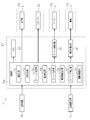
- the block diagram which shows the control structure of a rehabilitation apparatus.
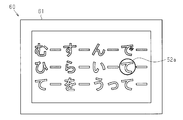
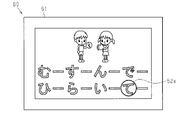
- the schematic diagram of the screen for selecting a music Schematic diagram of a screen containing lyrics text and visual landmarks displayed during music performance.
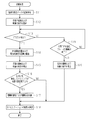
- the flowchart of a training process The flowchart of a training process. Timing chart of training process.
- a rehabilitation device 1 includes an electroencephalogram measurement device 10, a body drive device 20, an electrical stimulus applying device 30, a control device 40, a display device 60 that is an example of a stimulus applying unit, and an operation.
- a device 70 is provided.
- the control device 40 is connected to a commercial power source or a battery (not shown).
- the body drive device 20, the electrical stimulus applying device 30, the display device 60, and the operation device 70 are connected to the control device 40.
- the electroencephalogram measurement apparatus 10 measures the electroencephalograms of the motor areas of the right brain and the left brain, and supplies an electrical signal corresponding to the measured electroencephalogram to the control apparatus 40.
- the electroencephalogram measurement apparatus 10 is attached to the head of a patient PA.
- the body driving device 20 causes the part SP (hereinafter, the target part SP) to be rehabilitated by the patient PA to move in a passive manner.
- the body drive device 20 may be called a passive motion device.
- the body drive device 20 is attached to, for example, the right forearm and right hand of the patient PA.
- the target part SP is, for example, the second finger to the fifth finger other than the first finger of the right hand
- the body driving device 20 drives the motor 21 to drive the second finger to the second finger other than the first finger of the right hand of the patient PA. Extend five fingers.
- the electrical stimulation applying device 30 includes an electrode 31 for applying electrical stimulation to the muscle SM for operating the target site SP of the patient PA.
- the electrode 31 is attached to a part on the upper arm side of the body drive device 20 in the right forearm of the patient PA, for example.
- the electrode 31 may be a pair of electrodes or a plurality of electrodes.
- the control device 40 controls the driving of the body driving device 20 and the electrical stimulus applying device 30 and the display of the display device 60.
- the display device 60 is an output device including a display unit 61 that visually displays the contents of rehabilitation, for example.
- the display device 60 may further include a speaker 62.
- the operating device 70 is an input device that can be, for example, a mouse and a keyboard.
- the therapist ST assisting the rehabilitation of the patient PA sets the contents of the rehabilitation via the operation device 70.
- the control device 40 includes a motor drive circuit 41, an electrical stimulation circuit 42, a memory 43, and a control unit 50.
- the motor drive circuit 41 is electrically connected to the motor 21.
- the electrical stimulation circuit 42 is electrically connected to the electrode 31.
- the memory 43 stores one or more electronic music files, electronic medical records, and the like.
- the control unit 50 controls the motor drive circuit 41, the electrical stimulation circuit 42, and the display device 60.
- the terms “song” and “music” may refer to electronic music files.
- Electronic music files can be audio and video files of various formats. If the song is a song with lyrics, the audio file may be a tagged audio file containing lyrics text. An audio file that does not include lyrics text and an electronic lyrics file that includes lyrics text may be associated with each other and stored in the memory 43.
- the memory 43 can function as a music database or a music storage.
- the control unit 50 can be a so-called microcomputer (not shown) including an electronic circuit.
- the control unit 50 is a ROM (Read Only Memory) in which various control programs for controlling the body driving device 20, the electrical stimulation applying device 30, and the display device 60 are stored, and a CPU (Central Processing Unit that can access the ROM). ) Can be included.
- the control unit 50 includes a music reading unit 51, a signal presenting unit 52, a timing changing unit 53, an electroencephalogram detecting unit 54, a motor command unit 55, an electrical stimulation command unit 56, a timing determination unit 57, and a reward system stimulation unit 58. ing.
- the music reading unit 51, the signal presenting unit 52, the timing changing unit 53, the brain wave detecting unit 54, the motor command unit 55, the electrical stimulation command unit 56, the timing determination unit 57, and the reward system stimulation unit 58 are hardware. Alternatively, it may be realized by software by the CPU executing a control program stored in the ROM.
- the song reading unit 51 reads a song selected by operating the operation device 70 from a plurality of songs stored in the memory 43.
- the signal presenting unit 52 presents a signal TP for recalling the exercise in which the patient PA tries to operate the target part SP when the music read by the music reading unit 51 is being reproduced.
- the sign presentation unit 52 selects a character to be used as the cue TP in the lyric text corresponding to the song read by the song reading unit 51, and attaches a visual mark to the selected character.
- the character with the visual mark 52a functions as a cue TP.
- the cue TP may be referred to as a visual cue.
- the timing changing unit 53 sets and changes the timing of the cue TP for the music read by the music reading unit 51 based on the operation of the operation device 70.
- the electroencephalogram detection unit 54 detects ERD based on the electroencephalogram measured by the electroencephalogram measurement apparatus 10. This ERD indicates the recall of the movement of the target site SP.
- the electroencephalogram detection unit 54 outputs a detection signal to the motor command unit 55, the electrical stimulation command unit 56, and the timing determination unit 57.
- the ERD detection method a known ERD detection method as described in JP 2012-217721 A is used.
- the motor command unit 55 When the detection signal is input, the motor command unit 55 generates a motor signal for moving the target part SP of the patient PA by a predetermined angle, and outputs the generated motor signal to the motor drive circuit 41.
- the motor drive circuit 41 controls the power supplied to the motor 21 based on the motor signal.
- the electrical stimulation command unit 56 When the detection signal is input, the electrical stimulation command unit 56 generates a drive signal for applying a predetermined electrical stimulus to the muscle SM of the patient PA, and outputs the generated drive signal to the electrical stimulation circuit 42.
- the electrical stimulation circuit 42 controls the amount of current supplied to the electrode 31 based on the drive signal.
- timing determination unit 57 detects an ERD within a predetermined period of time (hereinafter, “signal determination period TS”) from the time when the sound corresponding to the character functioning as the signal TP is played (signal timing). Determine whether or not.
- the timing determination unit 57 outputs an output signal to the reward system stimulation unit 58 when ERD is detected within the signal determination period TS.
- the time length of the signal determination period TS is set to 3 to 8 seconds, for example.
- the reward system stimulation unit 58 Based on the output signal of the timing determination unit 57, the reward system stimulation unit 58 outputs a command configured to output from the display device 60 a reward system stimulation that stimulates the reward system of the brain of the patient PA.
- the reward system stimulus may be a visual stimulus such as an image of fireworks, or may be an acoustic stimulus such as a cheer.
- the display device 60 outputs a reward system stimulus from the display unit 61 and the speaker 62 in accordance with a command from the reward system stimulus unit 58.
- the reward system stimulus gives a visual effect to the video on the display unit 61 and gives an acoustic effect to the sound of the speaker 62.
- the reward system stimulus may be both a firework video and a cheer.
- Rehabilitation includes a preparation process, a gripping process, and a training process.
- the preparation step the therapist ST operates the operation device 70, so that the content of the rehabilitation is set before the start of the rehabilitation.
- the therapist ST causes the patient PA to grip the peg PG at the target site SP, or the patient PA itself grips the peg PG at the target site SP.
- the training process the patient PA is conscious of recalling the motion of the target part SP at the timing when the sound corresponding to the character in the lyric text corresponding to the signal TP is reproduced.
- the body part driving device 20 and the electrical stimulus applying apparatus 30 cause the target part SP to be moved in a moving manner to apply electrical stimulation to the muscle SM.
- the rehabilitation is continuously performed for two units after the preparation process, for example, with a process in which the gripping process and the training process are repeatedly performed over 20 minutes as one unit.
- the procedure for setting the rehabilitation content will be described.
- subjected shows the component of the rehabilitation apparatus 1 of FIG. 1 or FIG.
- the therapist ST reads the electronic medical record of the patient PA from the memory 43.
- the therapist ST registers the name, sex, date of birth, target part SP, etc. of the patient PA as personal information of the patient PA in the memory 43 by operating the operating device 70.
- the control unit 50 After completing the registration of the personal information of the patient PA, the control unit 50 reads all the song names stored in the memory 43 and displays a song name list on the display unit 61 as shown in FIG. In the procedure 2, the patient PA selects a song in the list of song names on the display unit 61, for example, “Open in a mud”. The therapist ST operates the arrow AR displayed on the display unit 61 with the operation device 70 to notify the control unit 50 of the music selected by the patient PA.
- the song reading unit 51 reads a song whose song name is “Musudare open” from a plurality of songs in the memory 43, and displays lyrics text corresponding to the song on the display unit 61 as shown in FIG. To do.
- the therapist ST looks at the patient PA and the lyrics text on the display unit 61, and at the timing when the patient PA easily recalls the motion of the target site SP, for example, “Moo Soon De Hira.
- the character “te” in the character string “it-” is set as a cue TP.
- the timing changing unit 53 selects the character “te” corresponding to the signal TP, and the signal presenting unit 52 attaches a visual mark 52a to the character “te”.
- the visual mark 52 a is a circle surrounding the character corresponding to the cue TP.
- step 4 the therapist ST and the patient PA confirm whether or not the selected song and the signal TP are correct.
- the therapist ST stores the selected song and cue TP in the memory 43 when the selected song and cue TP are correct. On the other hand, if there is an error in at least one of the selected song and the signal TP, the therapist ST returns to the procedure 2 and sets it again.
- the therapist ST confirms with the patient PA whether or not to change the content of the rehabilitation.
- the therapist ST can change the content of the rehabilitation along the procedures 2 to 4.
- the training process which the control part 50 performs is demonstrated.
- the therapist ST instructs the control unit 50 to start the training process via the operation device 70.
- the control unit 50 starts recording the measurement data of the brain waves of the patient PA by the brain wave measurement device 10 based on the training start signal supplied from the operation device 70.
- the control unit 50 starts playing the music and outputs a sound from the speaker 62, and causes the display unit 61 to display the lyric text of the song and a video showing the progress of the music performance.
- the color of the text of the lyric text displayed on the display unit 61 is changed from, for example, white to green according to the progress of the music performance.
- a visual mark 52a is attached to the character corresponding to the cue TP in the lyric text displayed on the display unit 61.
- a cue TP is visually presented to the patient PA.
- the shaded area in FIG. 4 indicates the character changed to green.
- control part 50 determines whether the electroencephalogram detection part 54 detected ERD in step S13.
- the control unit 50 makes an affirmative determination in step S13, the motor command unit 55 activates or drives the body drive device 20 in step S14, and at the same time, the electrical stimulation command unit 56 activates or drives the electrical stimulus applying device 30. .
- a passive motion is provided to the target site SP of the patient PA, and at the same time, electrical stimulation is applied to the muscle SM of the patient PA.
- the target site SP of the patient PA moves away from the peg PG.
- step S ⁇ b> 16 the timing determination unit 57 determines whether the timing at which the ERD is detected is within the signal determination period TS.
- the reward system stimulation unit 58 outputs the reward system stimulation to the display device 60 in step S ⁇ b> 17.
- the control unit 50 stores the rehabilitation result in the memory 43 in step S18. As a result of the rehabilitation, there are a timing at which the ERD is detected and a result of whether or not the timing is within the signal determination period TS.
- the control part 50 transfers to step S18, when negative determination is made in step S16.
- step S13 determines whether or not the performance of the phrase including the signal TP has been completed in step S19.
- the control unit 50 stops the music performance and video in step S20, and proceeds to step S18.
- the control part 50 makes a negative determination in step S19, it transfers to determination of step S13 again.
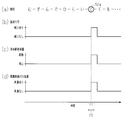
- FIG. 6 the training process by the control part 50 is demonstrated with the effect
- FIG. 6 When the performance of the music is started, the patient PA watches the lyrics text displayed on the display unit 61 while listening to the music. At this time, auditory information and visual information are input to the brain of the patient PA. Then, the patient PA recalls the movement of the target part SP at the timing of the signal TP, that is, the timing at which the sound corresponding to the character with the visual mark 52a (“te” in FIG. 6A) is played. So be conscious.
- the patient PA is aware of the timing of the signal TP by gazing at the lyrics text on the display unit 61 while listening to the music, that is, while being aware of the tempo of the music performance. Therefore, the patient PA can easily recall the movement of the target part SP at the timing of the signal TP in accordance with the performance tempo.
- the electroencephalogram detection unit 54 detects ERD and outputs a detection signal. To do.
- the control unit 50 drives the motor 21 of the body driving device 20 to move the target part SP in a passive manner at time t1.
- the control unit 50 supplies electric power to the muscle SM by supplying power to the electrode 31 of the electric stimulation applying device 30 at time t1.
- the brain recalls that the patient PA has recalled the motion of the target site SP and the sense that the target site SP operates due to the movement of the muscle SM and the movement of the finger joints. For this reason, when the patient PA recalls the motion of the target part SP, it can be expected that the neural circuit that operates the muscle SM of the patient PA is reconstructed.
- the rehabilitation device 1 has the following effects. (1) The control device 40 of the rehabilitation device 1 presents a signal TP according to music, and the body drive device 20 causes the target part SP to move according to the measurement result of the electroencephalogram after the signal TP is presented. To control. Accordingly, since rehabilitation in which the patient PA recalls the movement of the target part SP at the cue TP in accordance with the performance of music is performed, monotony of rehabilitation is reduced as compared with conventional rehabilitation. Therefore, since patient PA can perform while enjoying rehabilitation, patient's motivation for rehabilitation is hard to fall.
- control device 40 controls the body driving device 20 and the electrical stimulus applying device 30 based on the measurement result of the electroencephalogram after the signal TP is presented. Thereby, the improvement of the rehabilitation effect of patient PA can be expected.
- the control device 40 is configured to change the timing of presenting the signal TP.
- the opinion of the patient PA is reflected in the rehabilitation by setting the favorite timing of the patient PA as the signal TP. Therefore, compared with the case where rehabilitation is performed at a predetermined timing in which the preference of the patient PA is not reflected, the patient's motivation for rehabilitation is less likely to decrease.
- the success rate at which the patient PA recalls the movement of the target part SP within the signal determination period TS is increased.
- the patient PA can have a feeling that the rehabilitation is proceeding smoothly. Therefore, the patient's motivation for rehabilitation is less likely to decrease.
- the control device 40 is configured to select a song from a plurality of songs and present a signal TP in accordance with the selected song.
- the patient PA selects a favorite song from the song name list displayed on the display device 60, and performs rehabilitation based on the song. For this reason, compared with the case where the music which is not the patient's PA preference is preset, the willingness of the patient PA for rehabilitation is less likely to decrease.
- the control device 40 is configured to display the signal TP on the display device 60. Specifically, the control device 40 causes the display device 60 to display the song lyrics text and the cue TP in association with each other.
- the patient PA recalls the movement of the target part SP at the timing of the signal TP while being aware of the character (visual signal TP) with the visual mark 52a in the lyric text. It becomes easy for the patient PA to recall the motion of the target site SP visually at the timing of the signal TP, and the success rate of the patient PA recalling the motion of the target site SP within the signal determination period TS is increased.
- the patient PA can have a feeling that rehabilitation is proceeding smoothly. Therefore, the patient's motivation for rehabilitation is less likely to decrease.
- the control device 40 is configured to control the display device 60 which is an example of a stimulus applying unit that outputs a reward system stimulus for stimulating a reward system of the brain based on the measurement result of the electroencephalogram.
- control device of the rehabilitation device of the present invention is not limited to the above embodiment, and may be modified as follows, for example. Several modifications may be combined as appropriate within the technically possible range.
- the memory 43 may store only one song used for rehabilitation. In this case, it is not necessary to display a song name list.
- the control unit 50 reads the music electronic file of the song from the memory 43 in response to the start of rehabilitation, displays the lyrics text of the song on the display unit 61, and based on the operation of the operation device 70, the patient PA A visual mark may be attached to the lyric text corresponding to the signal TP selected by.
- ⁇ Signal TP may be preset for each song.
- the control unit 50 may read a preset cue TP from the memory 43 based on a song selected from the song name list, and attach a visual mark to the lyrics text of the song.
- the control unit 50 drives the body driving device 20 when ERD is detected within the signal determination period TS, and does not drive the body driving device 20 when ERD is detected outside the signal determination period TS. Good.
- the controller 50 drives the electrical stimulation applying device 30 when ERD is detected within the signal determination period TS, and does not drive the electrical stimulation applying device 30 when ERD is detected outside the signal determination period TS. May be.
- the control unit 50 may include a changing unit for changing the operating range of the target part SP by the body driving device 20.
- the patient PA actually confirms the operation state of the target part SP by the body driving device 20 with the body driving device 20 attached before the start of rehabilitation.
- the therapist ST supplies an adjustment signal for increasing or decreasing the movement amount of the target part SP to the control unit 50 via the operation device 70.
- the control unit 50 (changing unit) increases or decreases the amount of movement of the target part SP by the body driving device 20 according to the adjustment signal from the operation device 70.
- the control unit 50 may include a changing unit for changing the strength of the electrical stimulation of the muscle SM by the electrical stimulation applying device 30.
- the patient PA with the electrical stimulation applying device 30 attached, actually applies electrical stimulation to the muscle SM by the electrical stimulation applying device 30 to increase the strength of the electrical stimulation to the muscle SM.
- the therapist ST supplies an adjustment signal for increasing or decreasing the intensity of the electrical stimulation to the control unit 50 via the operation device 70.
- the control unit 50 increases or decreases the amount of current supplied to the electrical stimulation applying device 30 by the changing unit according to the adjustment signal from the operation device 70.
- the control unit 50 can also be set so that the electrical stimulation applying device 30 does not apply electrical stimulation.
- the song may be a song without lyrics, such as a symphony.
- the electronic music file read from the memory 43 may be an audio / video file including score data.
- the control unit 50 displays the score on the display unit 61 instead of the lyrics text.
- the control unit 50 displays a series of notes of a first color (for example, white) on the display unit 61, and sequentially changes the notes from the first color to the second color (for example, black) as the music progresses.
- the control unit 50 adds a circle to the note corresponding to the signal TP.
- the image displayed on the display unit 61 during the performance of music may be other than the lyrics as long as the patient PA has the timing to recall the motion of the target part SP at the timing of the signal TP.
- the control unit 50 may blink the characters in the text corresponding to the cue TP instead of the round visual mark 52a surrounding the characters in the lyric text corresponding to the cue TP.
- the blinking character functions as a visual cue TP.
- the visual cue only needs to be displayed so that the character corresponding to the cue TP can be recognized more easily by the patient PA than the other characters.
- the signal TP may be an acoustic signal instead of or in addition to the visual signal.
- the control unit 50 may output a sound source different from the music being reproduced at the timing of presenting the signal TP, for example, a sound of clapping a hand from the speaker 62 as an acoustic signal.
- the method of presenting the signal TP may be changed as appropriate.
- the control unit 50 may display an image in which the patient PA can easily recall the movement of the target site SP in addition to the lyrics text. For example, as illustrated in FIG. 7, the control unit 50 displays a video (for example, a moving image) in which two children are playing in addition to the lyrics text.
- FIG. 7 shows an image when the sound of the cue TP is being played.
- This moving image is controlled by the control unit 50 so that when the music performance is started, two children's Janken starts and one child gives a “par” at the timing of the signal TP.
- This video can be a moving image configured to display on the display unit 61 a scene representing the contents of the lyric text at the timing of the signal TP.
- This configuration makes it easier for the patient PA to recall the movement of the target part SP at the timing of the signal TP from the video on the display unit 61.
- the success rate at which the target part SP operates by the body driving device 20 within the signal determination period TS is increased.
- the patient PA can have a feeling that rehabilitation is proceeding smoothly. Therefore, the patient's motivation for rehabilitation is unlikely to decrease.
- the control unit 50 presents a popping sound, for example, every second in addition to the rehabilitation music in the signal determination period TS.
- the patient PA can recognize the length of the signal determination period TS, and the patient PA can concentrate on the signal determination period TS to recall the operation of the target part SP.
- the pitch of the sound to be presented is changed.
- the effect that the length of the signal determination period TS can be recognized and the patient PA can concentrate on the signal determination period TS to recall the operation of the target part SP is enhanced.
- the control unit 50 selects music that is likely to cause ⁇ waves of the patient PA as music for rehabilitation.
- the therapist ST allows the patient PA to listen to a plurality of music before the start of rehabilitation, and uses the music in which the ⁇ wave of the patient PA is most generated as the music for rehabilitation.
- the control unit 50 may reproduce only the performance section in which the ⁇ wave power of the patient PA increases in the rehabilitation music. This performance section is set based on the result of extracting the frequency band of the ⁇ wave from the measurement result of the electroencephalogram by the electroencephalogram measurement apparatus 10 when the patient PA listens to music.
- the control unit 50 notifies the patient PA whether or not the patient PA is in a resting state in a period from the start of music performance to the signal TP (hereinafter, “rest period”). Execute control. For example, the control unit 50 compares the measurement result of the ⁇ wave or ⁇ wave of the patient PA during the rest period with the measurement result of the ⁇ wave or ⁇ wave of the patient PA during the signal determination period TS. And the control part 50 determines with patient PA being a resting state, when the increase amount of the alpha wave in the rest period with respect to the alpha wave of signal determination period TS is more than a judgment value.
- control unit 50 determines that the patient PA is in a resting state when the decrease amount of the ⁇ wave in the rest period with respect to the ⁇ wave in the signal determination period TS is equal to or greater than a threshold value.
- the control unit 50 outputs, for example, a sound indicating that the patient PA is in a resting state from the speaker 62 at a pitch different from the sound when not in a resting state. This sound may be different from the music used for rehabilitation, or may be one obtained by changing the pitch of the music used for rehabilitation.
- the controller 50 may intermittently output the sound from the speaker 62 at a predetermined interval.
- the control unit 50 may change the sound output interval in the resting state from the sound output interval in the signal determination period TS.
- the patient PA can know whether or not the patient PA is in a resting state during the resting period, the patient PA can be aware that the patient PA is relaxed to be in a resting state.
- control unit 50 controls the output of the speaker 62 so that mainly the music performance is heard in the ear (right ear) on the same side as the target site SP (for example, the right hand) of the patient PA.
- the speakers 62 are arranged on the left and right sides of the patient PA, and the control unit 50 outputs the music performance only on one side of the left and right speakers 62.
- control unit 50 controls the output of the speaker 62 so that mainly the music performance is heard in the ear (left ear) opposite to the target site SP (for example, the right hand) of the patient PA. In some examples, when one ear of the patient PA is deaf, the control unit 50 controls the output of the speaker 62 so that music is heard mainly by the other ear of the patient PA.
- the speaker 62 may be a separate body from the display device 60.
- the speaker 62 may be provided in the control device 40.
- headphones including the speaker 62 and the electroencephalogram measurement apparatus 10 may be used.
- the display device 60 may not include the speaker 62.
- the control unit 50 receives the reward from the reward system stimulating unit 58 before the start of music performance and video display in the training process or when no ERD is detected within the signal determination period TS.
- a voice of family encouragement is output as a system stimulus.
- the memory 43 stores a voice of encouragement of a family recorded in advance. Thereby, improvement of the consciousness with respect to rehabilitation of patient PA can be expected.
- the control unit 50 outputs a voice of family encouragement as a reward system stimulus when the frequency of ERD detection within the signal determination period TS decreases, thereby suppressing a decrease in patient PA's motivation for rehabilitation. it can.
- the body drive device 20 is worn on the left forearm and left hand when rehabilitation is required for the left hand of the patient PA.
- the body drive device 20 may be a part of the extremity other than the right forearm and the right hand as long as it is a part that requires rehabilitation of the patient PA.
- the rehabilitation device 1 includes a stimulus applying unit that outputs a reward system stimulus separately from the display device 60. In this case, the display device 60 does not output a reward system stimulus. In some examples, the rehabilitation device 1 does not include the electrical stimulation applying device 30.
- the rehabilitation device 1 uses a general-purpose personal computer in place of the control device 40, the display device 60, and the operation device 70.
- the rehabilitation device 1 includes a recording medium storing a plurality of music and videos such as lyrics of each music, a control program executed by the rehabilitation device 1, a drive device including a motor drive circuit 41 and an electrical stimulation circuit 42. Is provided.
- the recording medium includes a USB memory (Universal (Serial Bus).
- the control program for the recording medium includes a music reading unit 51, a signal presenting unit 52, a timing changing unit 53, an electroencephalogram detecting unit 54, a timing determining unit 57, and a reward system stimulating unit 58.
- the control program for the recording medium is read by a personal computer.
- the personal computer executes a control program for the recording medium.
- the drive device includes a control unit that controls the motor drive circuit 41 and the electrical stimulation circuit 42.
- the control unit drives the body driving device 20 and the electrical stimulation applying device 30 using the motor drive circuit 41 and the electrical stimulation circuit 42 based on the detection signal of the electroencephalogram detection unit 54.
- the music reading unit 51, the signal presenting unit 52, the timing changing unit 53, the brain wave detecting unit 54, the motor command unit 55, the electrical stimulation command unit 56, the timing determination unit 57, and the reward system stimulation unit 58 are the control unit 50. It may be realized by one possible processor, or may be realized by a plurality of processors included in the control device 40.
- SYMBOLS 1 ... Rehabilitation device, 10 ... Electroencephalogram measurement device, 20 ... Body drive device (passive motion device), 40 ... Control device, 60 ... Display device (stimulation part), SP ... Target part, TP ... Signal.
Landscapes
- Health & Medical Sciences (AREA)
- Life Sciences & Earth Sciences (AREA)
- Animal Behavior & Ethology (AREA)
- Veterinary Medicine (AREA)
- Public Health (AREA)
- General Health & Medical Sciences (AREA)
- Biophysics (AREA)
- Psychology (AREA)
- Biomedical Technology (AREA)
- Heart & Thoracic Surgery (AREA)
- Medical Informatics (AREA)
- Molecular Biology (AREA)
- Surgery (AREA)
- Pathology (AREA)
- Physics & Mathematics (AREA)
- Engineering & Computer Science (AREA)
- Psychiatry (AREA)
- Epidemiology (AREA)
- Pain & Pain Management (AREA)
- Physical Education & Sports Medicine (AREA)
- Rehabilitation Therapy (AREA)
- Rehabilitation Tools (AREA)
- Measurement And Recording Of Electrical Phenomena And Electrical Characteristics Of The Living Body (AREA)
Abstract
リハビリテーション装置1の制御装置40は、音楽の演奏にあわせて合図を呈示し、合図が呈示された後の脳波の測定結果に基づいて、対象部位SPを他動運動させる身体駆動装置20を制御する。
Description
本発明は、リハビリテーション装置の制御装置およびリハビリテーション装置に関する。
従来、脳卒中等により体肢に麻痺を生じた患者を回復させるために、脳波に基づいて体肢を動作させるリハビリテーションが知られている。このリハビリテーションにおいては、患者が体肢を動作させようとする運動意図の表出を示す脳波の変化、例えば、事象関連脱同期(event-related desynchronization;ERD)に合わせて身体駆動装置が体肢を動作させることにより、リハビリテーションの効果が高まることが知られている(例えば、非特許文献1)。
特許文献1のリハビリテーション装置は、運動に関する脳波を検出する脳波計と、麻痺した部位の正常な動きを患者に見せるための視覚刺激装置と、麻痺した部位を他動運動装置とを備えている。脳波計は、患者の頭部に装着される。視覚刺激装置は、患者の眼前に映像が表示されるように頭部正面に装着される。身体駆動装置は、麻痺した部位に、例えば両手に装着される。
特許文献1のリハビリテーション装置は、患者が麻痺した部位の運動を想起したときの脳波を脳波計が検出したとき、視覚刺激装置が患者に麻痺した部位の正常な動きを見せながら身体駆動装置が麻痺した部位を動作させる。
Shindo K, Kawashima K, Ushiba J, Ota N, Ito M, Ota T, KimuraA, Liu M,"Effects of Neurofeedback training with an electroencephalogram-based brain-computer interface for hand paralysis in patients with chronic stroke: a case series study", Journal of Rehabilitation Medicine 2011, Vol.43, pp951-957
特許文献1のリハビリテーション装置によって提供されるリハビリテーションは単調であり、リハビリテーションに対する患者の意欲が低下するおそれがある。
本発明の目的は、リハビリテーションに対する患者の意欲が低下しにくいリハビリテーション装置の制御装置およびリハビリテーション装置を提供することにある。
本発明の目的は、リハビリテーションに対する患者の意欲が低下しにくいリハビリテーション装置の制御装置およびリハビリテーション装置を提供することにある。
本発明の一側面に従うリハビリテーション装置の制御装置は、音楽にあわせて合図を呈示し、前記合図が呈示された後の脳波の測定結果に基づいて、他動運動装置を制御するように構成される。
本発明の一側面によれば、リハビリテーションに対する患者の意欲が低下しにくいリハビリテーション装置の制御装置を提供することができる。本発明の他の側面及び利点は本発明の技術的思想の例を示す図面と共に以下の記載から明らかとなる。
図1に示すように、一実施形態に従うリハビリテーション装置1は、脳波測定装置10、身体駆動装置20、電気刺激付与装置30、制御装置40、刺激付与部の一例である表示装置60、および、操作装置70を備えている。制御装置40は、商用電源またはバッテリー(図示略)に接続されている。身体駆動装置20、電気刺激付与装置30、表示装置60、および、操作装置70は、制御装置40に接続されている。
脳波測定装置10は、右脳および左脳のそれぞれの運動野の脳波を測定し、測定された脳波に応じた電気信号を制御装置40に供給する。脳波測定装置10は、患者PAの頭部に装着される。
身体駆動装置20は、患者PAのリハビリテーションの対象となる部位SP(以下、対象部位SP)を他動運動させる。身体駆動装置20は、他動運動装置と呼ぶことがある。身体駆動装置20は、例えば患者PAの右前腕および右手に装着される。対象部位SPが例えば右手の第一指以外の第二指~第五指である場合、身体駆動装置20は、モーター21の駆動により、患者PAの右手の第一指以外の第二指~第五指を伸展させる。
電気刺激付与装置30は、患者PAの対象部位SPを動作させるための筋肉SMに電気刺激を付与するための電極31を備える。図示した例では、電極31は、例えば患者PAの右前腕において身体駆動装置20よりも上腕側の部位に装着される。電極31は、一対の電極でもよく、複数の電極でもよい。
制御装置40は、身体駆動装置20および電気刺激付与装置30の駆動、ならびに、表示装置60の表示を制御する。
表示装置60は、例えばリハビリテーションの内容を視覚的に表示する表示部61を備える出力装置である。表示装置60は、スピーカー62を更に備えてもよい。
表示装置60は、例えばリハビリテーションの内容を視覚的に表示する表示部61を備える出力装置である。表示装置60は、スピーカー62を更に備えてもよい。
操作装置70は、例えばマウスおよびキーボードであり得る入力装置である。患者PAのリハビリテーションを補助するセラピストSTは、操作装置70を介してリハビリテーションの内容などを設定する。
図2に示すように、制御装置40は、モーター駆動回路41、電気刺激回路42、メモリー43、および、制御部50を備えている。モーター駆動回路41は、モーター21に電気的に接続されている。電気刺激回路42は、電極31と電気的に接続されている。メモリー43には、一または複数の電子音楽ファイル、電子カルテなどが記憶されている。制御部50は、モーター駆動回路41、電気刺激回路42、および、表示装置60を制御する。
本明細書において、用語「曲」及び「音楽」は、電子音楽ファイルを指すことがある。電子音楽ファイルは、様々なフォーマットのオーディオファイル及びビデオファイルであり得る。曲が歌詞のある歌である場合、オーディオファイルは、歌詞テキストを含むタグ付きオーディオファイルであってよい。歌詞テキストを含まないオーディオファイルと、歌詞テキストを含む電子歌詞ファイルとが相互に対応付けられてメモリー43に格納されてもよい。メモリー43は、音楽データベースまたは音楽ストレージとして機能することができる。
制御部50は、電子回路を含むいわゆるマイクロコンピューター(図示略)であり得る。制御部50は、身体駆動装置20、電気刺激付与装置30、および、表示装置60を制御するための各種制御プログラムが格納されたROM(Read Only Memory)及びROMにアクセス可能なCPU(Central Processing Unit)を含むことができる。制御部50は、曲読出部51、合図呈示部52、タイミング変更部53、脳波検出部54、モーター指令部55、電気刺激指令部56、タイミング判定部57、および、報酬系刺激部58を備えている。曲読出部51、合図呈示部52、タイミング変更部53、脳波検出部54、モーター指令部55、電気刺激指令部56、タイミング判定部57、および、報酬系刺激部58は、ハードウェアであってもよく、CPUがROMに記憶された制御プログラムを実行することによってソフトウェア的に実現されてもよい。
曲読出部51は、メモリー43に記憶された複数の曲から、操作装置70の操作により選択された曲を読み出す。
合図呈示部52は、曲読出部51によって読み出された曲が再生されているときに、患者PAが対象部位SPを動作させようとする運動の想起のための合図TPを呈示する。合図呈示部52は、例えば曲読出部51により読み出された曲に対応する歌詞テキストにおいて合図TPとして用いる文字を選択し、その選択された文字に視覚的目印を付す。この視覚的目印52aの付いた文字が合図TPとして機能する。合図TPは、視覚的合図と呼ぶことがある。
合図呈示部52は、曲読出部51によって読み出された曲が再生されているときに、患者PAが対象部位SPを動作させようとする運動の想起のための合図TPを呈示する。合図呈示部52は、例えば曲読出部51により読み出された曲に対応する歌詞テキストにおいて合図TPとして用いる文字を選択し、その選択された文字に視覚的目印を付す。この視覚的目印52aの付いた文字が合図TPとして機能する。合図TPは、視覚的合図と呼ぶことがある。
タイミング変更部53は、操作装置70の操作に基づいて、曲読出部51によって読み出された曲に対し、合図TPのタイミングを設定および変更する。
脳波検出部54は、脳波測定装置10により測定された脳波に基づいて、ERDを検出する。このERDは、対象部位SPの運動の想起を示す。脳波検出部54は、ERDを検出したとき、検出信号をモーター指令部55、電気刺激指令部56、および、タイミング判定部57に出力する。なお、ERDの検出方法には、特開2012-217721号公報に記載のような既知のERDの検出方法が用いられる。
脳波検出部54は、脳波測定装置10により測定された脳波に基づいて、ERDを検出する。このERDは、対象部位SPの運動の想起を示す。脳波検出部54は、ERDを検出したとき、検出信号をモーター指令部55、電気刺激指令部56、および、タイミング判定部57に出力する。なお、ERDの検出方法には、特開2012-217721号公報に記載のような既知のERDの検出方法が用いられる。
モーター指令部55は、検出信号が入力されたとき、患者PAの対象部位SPを所定角度だけ運動させるためのモーター信号を生成し、生成したモーター信号をモーター駆動回路41に出力する。モーター駆動回路41は、モーター信号に基づいてモーター21に供給する電力を制御する。
電気刺激指令部56は、検出信号が入力されたとき、患者PAの筋肉SMに所定の電気刺激を付与するための駆動信号を生成し、生成した駆動信号を電気刺激回路42に出力する。電気刺激回路42は、駆動信号に基づいて電極31に供給する電流量を制御する。
タイミング判定部57は、合図TPとして機能する文字に対応する音が演奏された時刻(合図タイミング)から、予め設定された一定期間(以下、「合図判定期間TS」)内にERDが検出されたか否かを判定する。タイミング判定部57は、合図判定期間TS内にERDが検出されたとき、出力信号を報酬系刺激部58に出力する。なお、合図判定期間TSの時間長は、例えば3秒~8秒に設定される。
報酬系刺激部58は、タイミング判定部57の出力信号に基づいて、患者PAの脳の報酬系を刺激する報酬系刺激を表示装置60から出力するように構成される指令を表示装置60に出力する。報酬系刺激は、例えば花火の映像のような視覚的刺激であってもよく、歓声のような音響的刺激であってもよい。表示装置60は、報酬系刺激部58からの指令に従って報酬系刺激を表示部61およびスピーカー62から出力する。報酬系刺激は、表示部61上の映像に視覚的演出を付与し、スピーカー62の音に音響的演出を付与する。なお、報酬系刺激は、花火の映像および歓声の両方であってもよい。
次に、リハビリテーション装置1によるリハビリテーション方法について説明する。
リハビリテーションは、準備工程、把持工程、および、訓練工程を備えている。準備工程では、セラピストSTが操作装置70を操作することにより、リハビリテーションの開始前にリハビリテーションの内容が設定される。把持工程では、セラピストSTが患者PAに対象部位SPでペグPGを掴ませる、または患者PA自身が対象部位SPでペグPGを掴む。訓練工程によれば、患者PAが合図TPに対応する歌詞テキスト中の文字に対応する音が再生されたタイミングで対象部位SPの運動を想起するように意識する。そして患者PAが対象部位SPの運動を想起したときに身体駆動装置20および電気刺激付与装置30により対象部位SPを他動運動させ、筋肉SMに電気刺激を与える。リハビリテーションは、準備工程後、例えば20分間にわたり把持工程および訓練工程が繰り返し行われる工程を1単位として、連続して2単位行われる。
リハビリテーションは、準備工程、把持工程、および、訓練工程を備えている。準備工程では、セラピストSTが操作装置70を操作することにより、リハビリテーションの開始前にリハビリテーションの内容が設定される。把持工程では、セラピストSTが患者PAに対象部位SPでペグPGを掴ませる、または患者PA自身が対象部位SPでペグPGを掴む。訓練工程によれば、患者PAが合図TPに対応する歌詞テキスト中の文字に対応する音が再生されたタイミングで対象部位SPの運動を想起するように意識する。そして患者PAが対象部位SPの運動を想起したときに身体駆動装置20および電気刺激付与装置30により対象部位SPを他動運動させ、筋肉SMに電気刺激を与える。リハビリテーションは、準備工程後、例えば20分間にわたり把持工程および訓練工程が繰り返し行われる工程を1単位として、連続して2単位行われる。
図3~図5を参照して、リハビリテーションの内容の設定手順について説明する。なお、以下の説明において、符号が付されたリハビリテーション装置1の構成要素は、図1または図2のリハビリテーション装置1の構成要素を示す。
セラピストSTは、患者PAが対象部位SPのリハビリテーションを初めて行うとき、以下の手順1~4の順でリハビリテーションの内容を設定する。
(手順1)患者PAの個人情報の登録。
(手順2)曲名一覧から患者PAの好みの曲の選択。
(手順3)選択された曲に対し合図TPを選択。
(手順4)手順2および手順3の選択結果の確認および保存。
(手順1)患者PAの個人情報の登録。
(手順2)曲名一覧から患者PAの好みの曲の選択。
(手順3)選択された曲に対し合図TPを選択。
(手順4)手順2および手順3の選択結果の確認および保存。
手順1において、セラピストSTは、患者PAの電子カルテをメモリー43から読み出す。そしてセラピストSTは、患者PAの個人情報として、患者PAの氏名、性別、生年月日、対象部位SPなどを操作装置70の操作によりメモリー43に登録する。
制御部50は、患者PAの個人情報の登録の完了後、メモリー43に記憶された全ての曲名を読み出し、図3に示されるように曲名一覧を表示部61に表示させる。
手順2において、患者PAは表示部61の曲名一覧中の曲、例えば「むすんでひらいて」を選択する。セラピストSTは、表示部61に表示された矢印ARを操作装置70により操作して、患者PAが選択した曲を制御部50に通知する。曲読出部51はメモリー43の複数の曲の中から、曲名が「むすんでひらいて」である曲を読み出し、図4に示されるように、その曲に対応する歌詞テキストを表示部61に表示する。
手順2において、患者PAは表示部61の曲名一覧中の曲、例えば「むすんでひらいて」を選択する。セラピストSTは、表示部61に表示された矢印ARを操作装置70により操作して、患者PAが選択した曲を制御部50に通知する。曲読出部51はメモリー43の複数の曲の中から、曲名が「むすんでひらいて」である曲を読み出し、図4に示されるように、その曲に対応する歌詞テキストを表示部61に表示する。
手順3において、セラピストSTは、患者PAと表示部61の歌詞テキストを見ながら、患者PAが対象部位SPの運動を想起しやすいタイミングとなる文字、例えば「むーすーんーでーひーらーいーてー」という文字列中の文字「て」を合図TPとして設定する。タイミング変更部53は、合図TPに対応する文字「て」を選択し、合図呈示部52はその文字「て」に視覚的目印52aを付す。図4の例では、視覚的目印52aは、合図TPに対応する文字を囲む円である。
手順4において、セラピストSTと患者PAは、選択した曲および合図TPが正しいか否かを確認する。そしてセラピストSTは、選択した曲および合図TPが正しい場合、メモリー43に選択した曲および合図TPを保存する。一方、セラピストSTは、選択した曲および合図TPの少なくとも一方に間違いがある場合、手順2に戻り、再度設定する。
また、セラピストSTは、患者PAが過去に行ったリハビリテーションの履歴があるとき、リハビリテーションの内容を変更するか否かを患者PAに確認する。セラピストSTは、手順2~4に沿ってリハビリテーションの内容を変更することができる。
図5を参照して、制御部50が実行する訓練処理について説明する。
セラピストSTが操作装置70を介して訓練工程の開始を制御部50に指示する。このとき、制御部50は、ステップS11において、操作装置70から供給される訓練開始信号に基づいて脳波測定装置10による患者PAの脳波の測定データの記録を開始する。制御部50は、ステップS12において音楽の演奏を開始してスピーカー62から音を出力するとともに、表示部61にその曲の歌詞テキストおよび音楽の演奏の進行状況を示す映像を表示させる。このとき、図4に示されるように、表示部61に表示された歌詞テキストの文字の色は、音楽の演奏の進行状況に合わせて例えば白色から緑色に変更される。また表示部61に表示された歌詞テキスト中の合図TPに対応する文字には、視覚的目印52aが付される。合図TPは患者PAに視覚的に呈示される。図4の網掛けは、緑色に変更された文字を示す。
セラピストSTが操作装置70を介して訓練工程の開始を制御部50に指示する。このとき、制御部50は、ステップS11において、操作装置70から供給される訓練開始信号に基づいて脳波測定装置10による患者PAの脳波の測定データの記録を開始する。制御部50は、ステップS12において音楽の演奏を開始してスピーカー62から音を出力するとともに、表示部61にその曲の歌詞テキストおよび音楽の演奏の進行状況を示す映像を表示させる。このとき、図4に示されるように、表示部61に表示された歌詞テキストの文字の色は、音楽の演奏の進行状況に合わせて例えば白色から緑色に変更される。また表示部61に表示された歌詞テキスト中の合図TPに対応する文字には、視覚的目印52aが付される。合図TPは患者PAに視覚的に呈示される。図4の網掛けは、緑色に変更された文字を示す。
そして制御部50は、ステップS13において、脳波検出部54がERDを検出したか否かを判定する。制御部50がステップS13において肯定判定したとき、ステップS14においてモーター指令部55は身体駆動装置20を活性化すなわち駆動させ、同時に、電気刺激指令部56は電気刺激付与装置30を活性化すなわち駆動させる。その結果、患者PAの対象部位SPに他動運動が提供され、同時に、患者PAの筋肉SMに電気刺激が付与される。このとき、患者PAの対象部位SPが動作することにより対象部位SPがペグPGから離れる。
次に、制御部50は、ステップS15において音楽の演奏および映像を停止する。ステップS16において、タイミング判定部57は、ERDが検出されたタイミングが合図判定期間TS内か否かを判定する。ステップS16において肯定判定のとき、ステップS17において報酬系刺激部58は、報酬系刺激を表示装置60に出力する。そして制御部50は、ステップS18において、リハビリテーションの結果をメモリー43に保存する。リハビリテーションの結果としては、ERDが検出されたタイミング、および、そのタイミングが合図判定期間TS内か否かの結果が挙げられる。また制御部50は、ステップS16において否定判定のとき、ステップS18に移行する。
また、制御部50は、ステップS13において否定判定したとき、ステップS19において、合図TPを含むフレーズの演奏が終了したか否かを判定する。制御部50は、ステップS19において肯定判定したとき、ステップS20において音楽の演奏および映像を停止して、ステップS18に移行する。また制御部50は、ステップS19において否定判定したとき、ステップS13の判定に再度移行する。
図6を参照して、制御部50による訓練処理について、リハビリテーション装置1の作用と併せて説明する。
患者PAは、音楽の演奏が開始されたとき、音楽を聴きながら表示部61に表示された歌詞テキストを注視する。このとき、患者PAの脳には、聴覚情報と視覚情報が入力される。そして患者PAは、合図TPのタイミング、すなわち、視覚的目印52aが付された文字(図6(a)の「て」)に対応する音が演奏されたタイミングで対象部位SPの運動を想起するように意識する。
患者PAは、音楽の演奏が開始されたとき、音楽を聴きながら表示部61に表示された歌詞テキストを注視する。このとき、患者PAの脳には、聴覚情報と視覚情報が入力される。そして患者PAは、合図TPのタイミング、すなわち、視覚的目印52aが付された文字(図6(a)の「て」)に対応する音が演奏されたタイミングで対象部位SPの運動を想起するように意識する。
このように、患者PAは、音楽を聴きながら、すなわち音楽の演奏のテンポを意識しながら、表示部61の歌詞テキストを注視することにより合図TPのタイミングを意識する。このため、患者PAは、演奏のテンポに合わせて合図TPのタイミングで対象部位SPの運動を想起しやすい。
その後、図6(b)に示されるように、合図判定期間TS内である時刻t1に患者PAが対象部位SPの運動を想起したとき、脳波検出部54はERDを検出し、検出信号を出力する。そして図6(c)に示されるように、制御部50は、時刻t1において、身体駆動装置20のモーター21を駆動させて対象部位SPを他動運動させる。このとき、図6(d)に示されるように、制御部50は、時刻t1において、電気刺激付与装置30の電極31に電力を供給して筋肉SMに電気刺激を付与する。
この一連の動作において、患者PAが対象部位SPの運動を想起したときに身体駆動装置20により対象部位SPが動作する感覚、および、電気刺激付与装置30による筋肉SMの電気刺激の感覚が脳に入力される。これにより、患者PAが対象部位SPの運動を想起したことと、筋肉SMの動きおよび指関節の動きにより、対象部位SPが動作する感覚とが脳において関連付けられる。このため、患者PAが対象部位SPの運動を想起したときに患者PAの筋肉SMを動作させる神経回路が再構築することが期待できる。
リハビリテーション装置1は、以下の効果を奏する。
(1)リハビリテーション装置1の制御装置40は、音楽にあわせて合図TPを呈示し、合図TPが呈示された後の脳波の測定結果に基づいて、対象部位SPを他動運動させる身体駆動装置20を制御する。これにより、患者PAが音楽の演奏にあわせて合図TPにおいて対象部位SPの運動を想起するリハビリテーションとなるため、従来のリハビリテーションよりもリハビリテーションの単調さが低減される。したがって、患者PAがリハビリテーションを楽しみながら行うことができるため、リハビリテーションに対する患者PAの意欲が低下しにくい。
(1)リハビリテーション装置1の制御装置40は、音楽にあわせて合図TPを呈示し、合図TPが呈示された後の脳波の測定結果に基づいて、対象部位SPを他動運動させる身体駆動装置20を制御する。これにより、患者PAが音楽の演奏にあわせて合図TPにおいて対象部位SPの運動を想起するリハビリテーションとなるため、従来のリハビリテーションよりもリハビリテーションの単調さが低減される。したがって、患者PAがリハビリテーションを楽しみながら行うことができるため、リハビリテーションに対する患者PAの意欲が低下しにくい。
また、制御装置40は、合図TPが呈示された後の脳波の測定結果に基づいて、身体駆動装置20および電気刺激付与装置30を制御する。これにより、患者PAのリハビリテーションの効果の向上が期待できる。
(2)制御装置40は、合図TPを呈示するタイミングを変更するように構成される。これにより、患者PAの好みのタイミングを合図TPとすることにより患者PAの意見がリハビリテーションに反映される。したがって、患者PAの好みが反映されていない所定のタイミングでリハビリテーションを行う場合と比較して、リハビリテーションに対する患者PAの意欲が低下しにくい。さらに、患者PAが対象部位SPの運動を想起しやすいタイミングに合図TPが選択されることにより、合図判定期間TS内で患者PAが対象部位SPの運動を想起する成功率が高くなる。患者PAは、リハビリテーションが順調に進んでいる感覚を持つことができる。したがって、リハビリテーションに対する患者PAの意欲がより低下しにくい。
(3)制御装置40は、複数の曲から曲を選択でき、選択した曲にあわせて合図TPを呈示するように構成される。これにより、患者PAが表示装置60に表示された曲名一覧から好みの曲を選択し、その曲に基づいてリハビリテーションを行う。このため、患者PAの好みではない曲が予め設定された場合と比較して、リハビリテーションに対する患者PAの意欲が低下しにくい。
(4)制御装置40は、合図TPを表示装置60に表示させるように構成される。詳細には、制御装置40は、曲の歌詞テキストと合図TPとを関連付けて表示装置60に表示させる。これにより、患者PAは、歌詞テキストにおいて視覚的目印52aが付された文字(視覚的合図TP)を意識しながら合図TPのタイミングで対象部位SPの運動を想起する。患者PAが視覚によって合図TPのタイミングで対象部位SPの運動を想起しやすくなり、合図判定期間TS内で患者PAが対象部位SPの運動を想起する成功率が高くなる。患者PAは、リハビリテーションが順調に進んでいるような感覚を持つことができる。したがって、リハビリテーションに対する患者PAの意欲がより低下しにくい。
(5)制御装置40は、脳波の測定結果に基づいて脳の報酬系を刺激する報酬系刺激を出力する刺激付与部の一例である表示装置60を制御するように構成される。これにより、合図TPのタイミングで患者PAが対象部位SPの運動を想起することが成功したとき、患者PAの脳の報酬系を刺激する。このため、リハビリテーションに対する患者PAの意欲が向上する。
(6)リハビリテーションは、把持工程および訓練工程を所定時間にわたり繰り返し行う。この反復動作により、患者PAが対象部位SPの運動を想起したことと、対象部位SPが動作する感覚とが脳において関連付けられる効果が向上する。
本発明のリハビリテーション装置の制御装置は、上記実施形態に限定されず、例えば以下のように変形してもよい。技術的に可能な範囲においていくつかの変形例を適宜組み合わせてもよい。
・メモリー43は、リハビリテーションに用いる1つの曲のみを記憶してもよい。この場合、曲名一覧の表示は不要である。例えば、制御部50は、リハビリテーションの開始に応答してメモリー43からその曲の音楽電子ファイルを読み出し、その曲の歌詞テキストを表示部61に表示し、操作装置70の操作に基づいて、患者PAが選択した合図TPに応じた歌詞テキストに視覚的目印を付してもよい。
・合図TPは曲毎に予め設定されていてもよい。例えば、制御部50は、曲名一覧から選択された曲に基づいて、メモリー43から予め設定された合図TPを読み出し、その曲の歌詞テキストに視覚的目印を付してもよい。
・制御部50は、合図判定期間TS内でERDが検出されたとき、身体駆動装置20を駆動させ、合図判定期間TS以外でERDが検出されたとき、身体駆動装置20を駆動させなくてもよい。
・制御部50は、合図判定期間TS内でERDが検出されたとき、電気刺激付与装置30を駆動させ、合図判定期間TS以外でERDが検出されたとき、電気刺激付与装置30を駆動させなくてもよい。
・制御部50は、身体駆動装置20による対象部位SPの動作範囲を変更するための変更部を備えてもよい。この場合、患者PAは、リハビリテーションの開始前、身体駆動装置20を装着した状態で、身体駆動装置20により実際に対象部位SPの動作状態を確認する。そしてセラピストSTは、操作装置70を介して対象部位SPの動作量を増加または減小させるための調整信号を制御部50に供給する。制御部50(変更部)は、操作装置70からの調整信号に従って身体駆動装置20による対象部位SPの動作量を増加または減小させる。
・制御部50は、電気刺激付与装置30による筋肉SMの電気刺激の強さを変更するための変更部を備えてもよい。この場合、患者PAは、リハビリテーションの開始前、電気刺激付与装置30を装着した状態で、電気刺激付与装置30により実際に筋肉SMに電気刺激を付与して筋肉SMへの電気刺激の強さを確認する。セラピストSTは、操作装置70を介して電気刺激の強さを増加または減小させるための調整信号を制御部50に供給する。制御部50は、操作装置70からの調整信号に従って変更部により電気刺激付与装置30に供給する電流量を増加または減小させる。電気刺激付与装置30が電気刺激を付与しないように制御部50を設定することもできる。
・曲は、交響曲等の歌詞のない曲でもよい。この場合、メモリー43から読み出される電子音楽ファイルは、楽譜データを含むオーディオ/ビデオファイルであり得る。この例では、制御部50は、歌詞テキストに代えて、楽譜を表示部61に表示する。制御部50は、例えば、一連の第1色(例えば白色)の音符を表示部61に表示し、曲の進行に合わせて音符を第1色から第2色(例えば黒色)に順次変化させる。制御部50は、合図TPに対応する音符に丸を付す。要するに、音楽の演奏中に表示部61に表示される映像は、患者PAが合図TPのタイミングで対象部位SPの運動を想起するタイミングが取れるものであれば、歌詞以外であってもよい。
・制御部50は、合図TPに対応する歌詞テキスト中の文字を囲うような丸形の視覚的目印52aに代えて、合図TPに対応するテキスト中の文字を点滅させてもよい。この場合、点滅文字が視覚的合図TPとして機能する。要するに、視覚的合図は、合図TPに対応する文字が他の文字よりも患者PAが認識しやすいように表示されるものであればよい。
・合図TPは、視覚的合図に代えて、または、加えて、音響的合図でもよい。例えば、制御部50は、合図TPを呈示するタイミングで、再生中の曲とは異なる音源を、例えば手を叩く音を音響的合図としてスピーカー62から出力してもよい。要するに、合図TPを患者PAに呈示できれば、合図TPの提示方法を適宜変更してもよい。
・制御部50は、歌詞テキストに加えて、患者PAが対象部位SPの運動を想起させやすい映像を表示してもよい。例えば、図7に示されるように、制御部50は、歌詞テキストに加え、二人の子供がじゃんけんしている映像(例えば動画)を表示する。なお、図7は、合図TPの音が演奏されているときの映像を示している。この動画は、曲の演奏が開始されたときに二人の子供のじゃんけんが開始され、合図TPのタイミングで片方の子供が「パー」を出すように制御部50により制御される。この映像は、合図TPのタイミングにおける歌詞テキストの内容を表すシーンを表示部61に表示するように構成される動画でありえる。
この構成によれば、表示部61の映像により合図TPのタイミングで患者PAが対象部位SPの運動を想起しやすくなる。合図判定期間TS内において身体駆動装置20により対象部位SPが動作する成功率が高くなる。患者PAは、リハビリテーションが順調に進んでいるような感覚を持つことができる。したがって、リハビリテーションに対する患者PAの意欲が低下しにくい。
・いくつかの例では、制御部50は、合図判定期間TSにおいて、リハビリテーションの音楽とは別に例えば1秒毎にポッ、ポッというような音を呈示する。これにより、患者PAに合図判定期間TSの長さを認識させ、かつ合図判定期間TSに患者PAが集中して対象部位SPの動作を想起させることができる。また、例えば合図判定期間TSが半分経過したとき、または合図判定期間TSの終了まで残り数秒(例えば3秒)となったとき、呈示する音の高さを変更する。これにより、合図判定期間TSの長さを認識させ、かつ合図判定期間TSに患者PAが集中して対象部位SPの動作を想起させることができる効果が高まる。
・いくつかの例では、制御部50は、リハビリテーションの音楽として患者PAのα波が生起しやすい音楽を選択する。例えば、セラピストSTは、リハビリテーションの開始前において患者PAに複数の音楽を聞かせて、患者PAのα波が最も生起した音楽をリハビリテーションの音楽として用いる。制御部50は、リハビリテーションの音楽において患者PAのα波パワーが大きくなる演奏区間のみを再生してもよい。この演奏区間は、患者PAが音楽を聞いたときの脳波測定装置10による脳波の測定結果からα波の周波数帯を抽出した結果に基づいて設定される。
・いくつかの例では、制御部50は、音楽の演奏が開始されてから合図TPまでの期間(以下、「安静期間」)において患者PAが安静状態か否かを患者PAに報知するための制御を実行する。例えば、制御部50は、安静期間における患者PAのα波またはβ波の測定結果と、合図判定期間TSにおける患者PAのα波またはβ波の測定結果とを比較する。そして制御部50は、合図判定期間TSのα波に対する安静期間におけるα波の増加量が判定値以上のとき、患者PAが安静状態であると判定する。または制御部50は、合図判定期間TSのβ波に対する安静期間におけるβ波の減少量が閾値以上のとき、患者PAが安静状態であると判定する。変形例の制御部50は、患者PAが安静状態であると判定したとき、例えば安静状態である旨の音を安静状態でないときの音とは異なる高さでスピーカー62から出力する。この音は、リハビリテーションに用いる音楽とは異なってもよいし、リハビリテーションに用いる音楽の音の高さを変更したものであってもよい。
また、この制御部50は、リハビリテーションに用いる音楽とは別の音を安静状態であるときに出力する場合、その音を所定の間隔をおいてスピーカー62から間欠的に出力してもよい。制御部50は、合図判定期間TSにおいても音をスピーカー62から出力する場合、安静状態であるときの音の出力間隔を合図判定期間TSにおける音の出力間隔とは異ならせてもよい。
このような構成によれば、安静期間において患者PAが安静状態か否かを患者PAが把握できるため、患者PAが安静状態となるためにリラックスすることを意識することができる。
・いくつかの例では、制御部50は、患者PAの対象部位SP(例えば右手)と同じ側の耳(右耳)に主に音楽の演奏を聞かせるようにスピーカー62の出力を制御する。片側の耳に主に音楽の演奏を聞かせる場合、例えばスピーカー62は患者PAの左右に配置され、制御部50は左右のスピーカー62のうちの片側のみに音楽の演奏を出力させる。
・いくつかの例では、制御部50は、患者PAの対象部位SP(例えば右手)と反対側の耳(左耳)に主に音楽の演奏を聞かせるようにスピーカー62の出力を制御する。
・いくつかの例では、制御部50は、患者PAの一方の耳が難聴の場合、患者PAの主に他方の耳に音楽が聞こえるようにスピーカー62の出力を制御する。
・いくつかの例では、制御部50は、患者PAの一方の耳が難聴の場合、患者PAの主に他方の耳に音楽が聞こえるようにスピーカー62の出力を制御する。
・スピーカー62は、表示装置60とは別体でもよい。例えば、スピーカー62は制御装置40に設けられてもよい。または、スピーカー62と脳波測定装置10とを含むヘッドホンを用いてもよい。この場合、表示装置60はスピーカー62を備えなくてもよい。
・いくつかの例では、制御部50は、訓練工程において音楽の演奏および映像の表示の開始前に、または、合図判定期間TS内においてERDが検出されなかったとき、報酬系刺激部58による報酬系刺激として例えば家族の励ましの声を出力する。この場合、メモリー43には、予め録音された家族の励ましの声が記憶される。これにより、患者PAのリハビリテーションに対する意識の向上が期待できる。特に、制御部50が合図判定期間TS内におけるERDの検出の頻度が低下したときに報酬系刺激として家族の励ましの声を出力することにより、リハビリテーションに対する患者PAの意欲の低下を抑制することができる。
・いくつかの例では、身体駆動装置20は、患者PAの左手に対してリハビリテーションが必要な場合、左前腕および左手に装着される。要するに、身体駆動装置20は、患者PAのリハビリテーションが必要な部位であれば、右前腕および右手以外の四肢の部位であってもよい。
・いくつかの例では、リハビリテーション装置1は、報酬系刺激を出力する刺激付与部を表示装置60とは別に備える。この場合、表示装置60は報酬系刺激を出力しない。
・いくつかの例では、リハビリテーション装置1は、電気刺激付与装置30を備えていない。
・いくつかの例では、リハビリテーション装置1は、電気刺激付与装置30を備えていない。
・いくつかの例では、リハビリテーション装置1は、制御装置40、表示装置60、および、操作装置70に代えて、汎用のパーソナルコンピューターを用いる。このリハビリテーション装置1は、複数の音楽および各音楽の歌詞などの映像と、リハビリテーション装置1が実行する制御プログラムとが記憶された記録媒体と、モーター駆動回路41および電気刺激回路42を備える駆動装置とを備える。なお、記録媒体としては、USBメモリー(Universal Serial Bus)などが挙げられる。
記録媒体の制御プログラムは、曲読出部51、合図呈示部52、タイミング変更部53、脳波検出部54、タイミング判定部57、および、報酬系刺激部58を備える。記録媒体の制御プログラムは、パーソナルコンピューターにより読み込まれる。そしてパーソナルコンピューターは、記録媒体の制御プログラムを実行する。駆動装置は、モーター駆動回路41および電気刺激回路42を制御する制御部を備える。制御部は、脳波検出部54の検出信号に基づいてモーター駆動回路41および電気刺激回路42を用いて身体駆動装置20および電気刺激付与装置30を駆動させる。
・曲読出部51、合図呈示部52、タイミング変更部53、脳波検出部54、モーター指令部55、電気刺激指令部56、タイミング判定部57、および、報酬系刺激部58は、制御部50であり得る一つのプロセッサによって実現されてもよく、制御装置40に含まれる複数のプロセッサによって実現されてもよい。
本発明は、例示したものに限定されるものではない。例えば、例示した特徴が本発明にとって必須であると解釈されるべきでなく、本発明の主題は、開示した特定の実施形態の全ての特徴より少ない特徴に存在することがある。
1…リハビリテーション装置、10…脳波測定装置、20…身体駆動装置(他動運動装置)、40…制御装置、60…表示装置(刺激付与部)、SP…対象部位、TP…合図。
Claims (11)
- 音楽にあわせて合図を呈示し、前記合図が呈示された後の脳波の測定結果に基づいて、他動運動装置を制御するように構成される
リハビリテーション装置の制御装置。 - 前記合図を呈示するタイミングを変更するように構成される
請求項1に記載のリハビリテーション装置の制御装置。 - 複数の曲から曲を選択し、選択した曲にあわせて前記合図を呈示するように構成される
請求項1または2に記載のリハビリテーション装置の制御装置。 - 前記合図を表示装置に表示するように構成される請求項1~3のいずれか一項に記載のリハビリテーション装置の制御装置。
- 前記曲の歌詞テキストと前記合図とを関連付けて前記表示装置に表示するように構成される
請求項4に記載のリハビリテーション装置の制御装置。 - 前記脳波の測定結果に基づいて、脳の報酬系を刺激する報酬系刺激を出力する刺激付与部を制御するように構成される請求項1~5のいずれか一項に記載のリハビリテーション装置の制御装置。
- 前記合図は、視覚的合図または音響的合図である請求項1~6のいずれか一項に記載のリハビリテーション装置の制御装置。
- 少なくとも一つの電子音楽ファイルを格納する音楽データベースと、
前記音楽データベースにアクセス可能なプロセッサとを備える請求項1~7のいずれか一項に記載のリハビリテーション装置の制御装置。 - 前記プロセッサは、
前記音楽データベースから、一つの電子音楽ファイルを取得し、
前記電子音楽ファイルの再生中に音響的に出力される所定の音に対して設定された視覚的合図をディスプレイに表示しながら、前記電子音楽ファイルを音響的に出力し、
前記視覚的合図に対応する前記所定の音が音響的に出力されたタイミングと、前記脳波の測定結果と、所定の時間長を有する合図判定期間とに基づいて、他動運動装置に活性化信号を供給する
ように構成される、請求項8に記載のリハビリテーション装置の制御装置。 - 前記プロセッサは、
前記視覚的合図に対応する前記所定の音が音響的に出力されたタイミングと、前記脳波の測定結果と、所定の時間長を有する合図判定期間とに基づいて、電気刺激付与装置に活性化信号を供給するように構成される、
請求項9に記載のリハビリテーション装置の制御装置。 - 脳波測定装置と、
他動運動装置と、
前記脳波測定装置から脳波の測定結果を受信し、前記他動運動装置を制御する請求項1~10のいずれか一項に記載の制御装置と
を備えるリハビリテーション装置。
Applications Claiming Priority (2)
| Application Number | Priority Date | Filing Date | Title |
|---|---|---|---|
| JP2014-135353 | 2014-06-30 | ||
| JP2014135353A JP2016013180A (ja) | 2014-06-30 | 2014-06-30 | リハビリテーション装置の制御装置およびリハビリテーション装置 |
Publications (1)
| Publication Number | Publication Date |
|---|---|
| WO2016002199A1 true WO2016002199A1 (ja) | 2016-01-07 |
Family
ID=55018776
Family Applications (1)
| Application Number | Title | Priority Date | Filing Date |
|---|---|---|---|
| PCT/JP2015/003271 Ceased WO2016002199A1 (ja) | 2014-06-30 | 2015-06-30 | リハビリテーション装置の制御装置およびリハビリテーション装置 |
Country Status (2)
| Country | Link |
|---|---|
| JP (1) | JP2016013180A (ja) |
| WO (1) | WO2016002199A1 (ja) |
Cited By (2)
| Publication number | Priority date | Publication date | Assignee | Title |
|---|---|---|---|---|
| CN106109164A (zh) * | 2016-06-20 | 2016-11-16 | 京东方科技集团股份有限公司 | 康复系统及康复系统的控制方法 |
| CN113274032A (zh) * | 2021-04-29 | 2021-08-20 | 上海大学 | 一种基于ssvep+mi脑机接口的脑卒中康复训练系统及方法 |
Families Citing this family (5)
| Publication number | Priority date | Publication date | Assignee | Title |
|---|---|---|---|---|
| JP7149613B2 (ja) * | 2017-10-20 | 2022-10-07 | 株式会社Lifescapes | リハビリテーション支援システム、脳波測定システムの制御方法、プログラム、及び非一時的記録媒体 |
| JP6966409B2 (ja) * | 2017-10-20 | 2021-11-17 | パナソニック株式会社 | 駆動装置及びリハビリテーション支援システム |
| JP7024151B2 (ja) * | 2017-10-20 | 2022-02-24 | Connect株式会社 | 脳波測定システム、脳波測定方法、プログラム、及び非一時的記録媒体 |
| JP7179364B2 (ja) * | 2020-06-15 | 2022-11-29 | 株式会社mediVR | リハビリテーション支援システム、リハビリテーション支援方法およびリハビリテーション支援プログラム |
| WO2024062962A1 (ja) * | 2022-09-22 | 2024-03-28 | 株式会社Jvcケンウッド | 脳内情報認識装置、脳内情報認識方法及び脳内情報認識プログラム |
Citations (4)
| Publication number | Priority date | Publication date | Assignee | Title |
|---|---|---|---|---|
| JP2002000734A (ja) * | 2000-06-22 | 2002-01-08 | Daiichikosho Co Ltd | 音楽療法支援装置 |
| JP2007020835A (ja) * | 2005-07-15 | 2007-02-01 | National Institute Of Advanced Industrial & Technology | リハビリ装置 |
| JP2012157404A (ja) * | 2011-01-28 | 2012-08-23 | Shibaura Institute Of Technology | リハビリ支援システム、それに用いる制御方法及び、コンピュータプログラム |
| JP2012217721A (ja) * | 2011-04-12 | 2012-11-12 | Keio Gijuku | リハビリテーション用脳波信号処理装置、それを備えるリハビリテーションシステム、及び、それに用いられる電極パッド |
Family Cites Families (1)
| Publication number | Priority date | Publication date | Assignee | Title |
|---|---|---|---|---|
| JPS59160455A (ja) * | 1983-03-03 | 1984-09-11 | 半田 康延 | 上肢機能再建装置 |
-
2014
- 2014-06-30 JP JP2014135353A patent/JP2016013180A/ja active Pending
-
2015
- 2015-06-30 WO PCT/JP2015/003271 patent/WO2016002199A1/ja not_active Ceased
Patent Citations (4)
| Publication number | Priority date | Publication date | Assignee | Title |
|---|---|---|---|---|
| JP2002000734A (ja) * | 2000-06-22 | 2002-01-08 | Daiichikosho Co Ltd | 音楽療法支援装置 |
| JP2007020835A (ja) * | 2005-07-15 | 2007-02-01 | National Institute Of Advanced Industrial & Technology | リハビリ装置 |
| JP2012157404A (ja) * | 2011-01-28 | 2012-08-23 | Shibaura Institute Of Technology | リハビリ支援システム、それに用いる制御方法及び、コンピュータプログラム |
| JP2012217721A (ja) * | 2011-04-12 | 2012-11-12 | Keio Gijuku | リハビリテーション用脳波信号処理装置、それを備えるリハビリテーションシステム、及び、それに用いられる電極パッド |
Non-Patent Citations (1)
| Title |
|---|
| JUN'ICHI USHIBA: "Applying the electroencephalogram-based brain machine interface to rehabilitation", THE JAPANESE JOURNAL OF REHABILITATION MEDICINE, vol. 47, no. 2, 2010, pages 79 - 83, XP055250189 * |
Cited By (2)
| Publication number | Priority date | Publication date | Assignee | Title |
|---|---|---|---|---|
| CN106109164A (zh) * | 2016-06-20 | 2016-11-16 | 京东方科技集团股份有限公司 | 康复系统及康复系统的控制方法 |
| CN113274032A (zh) * | 2021-04-29 | 2021-08-20 | 上海大学 | 一种基于ssvep+mi脑机接口的脑卒中康复训练系统及方法 |
Also Published As
| Publication number | Publication date |
|---|---|
| JP2016013180A (ja) | 2016-01-28 |
Similar Documents
| Publication | Publication Date | Title |
|---|---|---|
| JP2016013180A (ja) | リハビリテーション装置の制御装置およびリハビリテーション装置 | |
| Sas et al. | MeditAid: a wearable adaptive neurofeedback-based system for training mindfulness state | |
| Bunton | Speech versus nonspeech: Different tasks, different neural organization | |
| US8517912B2 (en) | Medical hypnosis device for controlling the administration of a hypnosis experience | |
| Hanser | Music therapy in cardiac health care: current issues in research | |
| JP6234563B2 (ja) | 訓練システム | |
| Palmer et al. | Methods of speech therapy treatment for stable dysarthria: A review | |
| CN101464729B (zh) | 基于听觉认知神经信号的自主意愿表达方法 | |
| US11832954B2 (en) | Sensory-motor generation of therapeutic musical tracks | |
| US20170193831A1 (en) | Systems, apparatuses, and methods for memory recall and reactivation by targeted stimulation | |
| US20130120114A1 (en) | Biofeedback control system and method for human-machine interface | |
| CN104507523A (zh) | 频率特定的感官刺激 | |
| JP2020507796A (ja) | 神経系変調を用いた学習を強化するためのシステムおよび方法 | |
| JP6984613B2 (ja) | 出力制御装置、出力制御方法、およびプログラム | |
| CN110833650A (zh) | 一种抑制抑郁症的装置 | |
| US11660038B2 (en) | System based on multi-sensory learning and EEG biofeedback for improving reading ability | |
| JP5754393B2 (ja) | 睡眠学習制御装置 | |
| TWI626037B (zh) | Virtual reality system for psychological clinical application | |
| US20160228327A1 (en) | Method for Massaging with Audio Playback | |
| CA3234830A1 (en) | Systems and methods to induce sleep and other changes in user states | |
| Larsen et al. | A Longitudinal Field Trial with a Hemiplegic Guitarist Using The Actuated Guitar. | |
| KR102877425B1 (ko) | 개인 맞춤형 관리를 위한 바이오 피드백 제공 방법, 및 사용자 단말 및 사용자 단말의 제어 방법 | |
| CA3054354C (en) | Sensory-motor generation of therapeutic musical tracks | |
| Inuggi et al. | PsySuite, an Android app for behavioural tests in the temporal domain | |
| WO2026076375A1 (en) | Systems and methods of generating and modulating compositions for transcutaneous vibratory stimulation |
Legal Events
| Date | Code | Title | Description |
|---|---|---|---|
| 121 | Ep: the epo has been informed by wipo that ep was designated in this application |
Ref document number: 15814046 Country of ref document: EP Kind code of ref document: A1 |
|
| NENP | Non-entry into the national phase |
Ref country code: DE |
|
| 122 | Ep: pct application non-entry in european phase |
Ref document number: 15814046 Country of ref document: EP Kind code of ref document: A1 |