WO2015186281A1 - 位置情報サービスのための端末、無線信号検知装置及びサーバー - Google Patents
位置情報サービスのための端末、無線信号検知装置及びサーバー Download PDFInfo
- Publication number
- WO2015186281A1 WO2015186281A1 PCT/JP2015/001373 JP2015001373W WO2015186281A1 WO 2015186281 A1 WO2015186281 A1 WO 2015186281A1 JP 2015001373 W JP2015001373 W JP 2015001373W WO 2015186281 A1 WO2015186281 A1 WO 2015186281A1
- Authority
- WO
- WIPO (PCT)
- Prior art keywords
- terminal
- information
- identification information
- wireless signal
- server
- Prior art date
- Legal status (The legal status is an assumption and is not a legal conclusion. Google has not performed a legal analysis and makes no representation as to the accuracy of the status listed.)
- Ceased
Links
Images



Classifications
-
- H—ELECTRICITY
- H04—ELECTRIC COMMUNICATION TECHNIQUE
- H04W—WIRELESS COMMUNICATION NETWORKS
- H04W4/00—Services specially adapted for wireless communication networks; Facilities therefor
- H04W4/02—Services making use of location information
-
- G—PHYSICS
- G01—MEASURING; TESTING
- G01S—RADIO DIRECTION-FINDING; RADIO NAVIGATION; DETERMINING DISTANCE OR VELOCITY BY USE OF RADIO WAVES; LOCATING OR PRESENCE-DETECTING BY USE OF THE REFLECTION OR RERADIATION OF RADIO WAVES; ANALOGOUS ARRANGEMENTS USING OTHER WAVES
- G01S5/00—Position-fixing by co-ordinating two or more direction or position line determinations; Position-fixing by co-ordinating two or more distance determinations
- G01S5/02—Position-fixing by co-ordinating two or more direction or position line determinations; Position-fixing by co-ordinating two or more distance determinations using radio waves
- G01S5/0252—Radio frequency fingerprinting
- G01S5/02529—Radio frequency fingerprinting not involving signal parameters, i.e. only involving identifiers
-
- G—PHYSICS
- G01—MEASURING; TESTING
- G01S—RADIO DIRECTION-FINDING; RADIO NAVIGATION; DETERMINING DISTANCE OR VELOCITY BY USE OF RADIO WAVES; LOCATING OR PRESENCE-DETECTING BY USE OF THE REFLECTION OR RERADIATION OF RADIO WAVES; ANALOGOUS ARRANGEMENTS USING OTHER WAVES
- G01S5/00—Position-fixing by co-ordinating two or more direction or position line determinations; Position-fixing by co-ordinating two or more distance determinations
- G01S5/02—Position-fixing by co-ordinating two or more direction or position line determinations; Position-fixing by co-ordinating two or more distance determinations using radio waves
- G01S5/14—Determining absolute distances from a plurality of spaced points of known location
-
- H—ELECTRICITY
- H04—ELECTRIC COMMUNICATION TECHNIQUE
- H04M—TELEPHONIC COMMUNICATION
- H04M3/00—Automatic or semi-automatic exchanges
- H04M3/42—Systems providing special services or facilities to subscribers
-
- H—ELECTRICITY
- H04—ELECTRIC COMMUNICATION TECHNIQUE
- H04W—WIRELESS COMMUNICATION NETWORKS
- H04W12/00—Security arrangements; Authentication; Protecting privacy or anonymity
- H04W12/02—Protecting privacy or anonymity, e.g. protecting personally identifiable information [PII]
-
- H—ELECTRICITY
- H04—ELECTRIC COMMUNICATION TECHNIQUE
- H04W—WIRELESS COMMUNICATION NETWORKS
- H04W4/00—Services specially adapted for wireless communication networks; Facilities therefor
- H04W4/02—Services making use of location information
- H04W4/029—Location-based management or tracking services
-
- H—ELECTRICITY
- H04—ELECTRIC COMMUNICATION TECHNIQUE
- H04W—WIRELESS COMMUNICATION NETWORKS
- H04W8/00—Network data management
- H04W8/26—Network addressing or numbering for mobility support
-
- H—ELECTRICITY
- H04—ELECTRIC COMMUNICATION TECHNIQUE
- H04W—WIRELESS COMMUNICATION NETWORKS
- H04W84/00—Network topologies
- H04W84/02—Hierarchically pre-organised networks, e.g. paging networks, cellular networks, WLAN [Wireless Local Area Network] or WLL [Wireless Local Loop]
- H04W84/10—Small scale networks; Flat hierarchical networks
- H04W84/12—WLAN [Wireless Local Area Networks]
-
- H—ELECTRICITY
- H04—ELECTRIC COMMUNICATION TECHNIQUE
- H04W—WIRELESS COMMUNICATION NETWORKS
- H04W12/00—Security arrangements; Authentication; Protecting privacy or anonymity
- H04W12/60—Context-dependent security
- H04W12/69—Identity-dependent
- H04W12/73—Access point logical identity
Definitions
- the present invention relates to a technology for grasping the position of a moving terminal from time to time using radio signal detectors installed geographically dispersed and providing information or services according to each position.
- the present invention relates to a method for obtaining terminal position information.
- Non-Patent Document 1 In recent years, in a space such as indoors or underground where GPS radio waves are difficult to reach, a user of a mobile device can obtain location information of the mobile device in real time and provide information and services depending on the location information while walking. This technology is being actively developed (see, for example, Non-Patent Document 1).
- the one using a wireless LAN measures the received signal strength (RSSI) with one or a plurality of wireless LAN base stations on the terminal side.
- RSSI received signal strength
- the method of estimating the position by triangulation etc. and the base station on the wireless network infrastructure side acquires the MAC (Media Access Control) address included in the probe request transmitted from the terminal, and the presence of the terminal There is a method of identifying.
- MAC Media Access Control
- the former is premised on the introduction of a terminal application, and the latter can be used for the purpose of acquiring an action history without assuming the introduction of a terminal application.
- the individual associated with the MAC address is specified by, for example, transferring the MAC address to the service registration system.
- a mechanism that automatically registers the MAC address in the service management system via the terminal application is more efficient.
- a push notification is given to the user, it is necessary to specify an individual, and therefore it is desirable to introduce a terminal application.
- the privacy point refers to the use of a service B that is different from the MAC address of the terminal that uses a certain service A. If the MAC address of the terminal is the same, even if the registration information of the users of each service is different or unregistered, it is assumed that the same user is using both services, and the user's actions can be facilitated It means that it can be traced.
- the MAC address is determined by hardware, it is regarded as a problem that it cannot be opt-out unless replacement or replacement of parts is performed, and the need for anonymization is required.
- Another problem is that the acquisition of the MAC address by the terminal application may be restricted depending on the OS (operating system) installed in the terminal. For example, in iOS 7.0 or later provided by Apple Inc., the OS of the smartphone prohibits the acquisition of the MAC address by API (Application Program Interface), and there is a hurdle for associating the user with the MAC address. It is rising.
- OS operating system
- the present invention is a mechanism for providing information and services depending on the location of a terminal without using a MAC address that the terminal has fixedly in consideration of user privacy. Is realized.
- a terminal communicates with a server for providing a service for obtaining location information of a terminal depending on which of a plurality of detection devices distributed and arranged with a wireless signal from the terminal.
- the terminal is identified on the wireless network infrastructure side that receives the radio signal from the terminal using the terminal identification information temporarily assigned by the server, not the MAC address that the terminal has fixedly.
- the position information can be obtained.
- the position information of the terminal is obtained without using the MAC address for terminal identification, and privacy of the terminal user is protected. It becomes possible to provide location-dependent information and services.
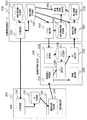
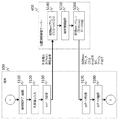
- FIG. 2 is a functional block diagram illustrating an example of an internal configuration of each terminal, each wireless signal detection device, and a location information management server in the example of FIG. 1.
- the flowchart which shows an example of the procedure for assigning the terminal identification information performed by a terminal and a positional information management server.
- the flowchart which shows an example of the procedure for a wireless signal detection apparatus to acquire the collation information for detecting terminal identification information from a positional information management server.
- the flowchart which shows another example of the process for a terminal to transmit including a terminal identification information in a radio signal.
- the flowchart which shows the example of the process which uses collation information in the example of FIG. The flowchart which shows another example of the procedure for detecting terminal identification information from the radio signal which the radio signal detection apparatus received, and notifying a positional infomation management server.
- the terminal identification information may have a MAC address format.
- the terminal identification information has a format of a MAC address, but its content is a virtual MAC address different from an original MAC address having a fixed correspondence with the terminal. Therefore, a virtual MAC address assigned as a user of a certain service and a virtual MAC address assigned as a user of another service are different, and a virtual MAC address assigned at a certain time from a certain service, The virtual MAC address assigned when the user once withdraws from the service and then subscribes to the same service can be made different, so that it is possible to make it difficult to track the user's behavior.
- the terminal identification information may be adapted to the format of the source address of the header included in the wireless signal.
- the MAC address is written in the field of the transmission source address of the header of the radio signal, and communication by the radio signal is performed. Instead, even if the virtual MAC address described above is written, communication by the radio signal is performed. Can be performed in the same manner.
- a radio signal for example, a frame transmitted by a wireless LAN can be used, or a signal transmitted by Bluetooth (registered trademark) can be used. What is necessary is just to provide the several radio
- the terminal identification information may have a format of an SSID (service set identifier) that is one of information elements of a management frame of a wireless LAN standard (for example, 802.11 specification).
- SSID service set identifier
- the SSID is an information element scheduled to set the identification information of its own network by each wireless LAN operation manager according to the standard.
- the wireless LAN base station has an SSID for identifying its own station, and the terminal writes the SSID of the network to be connected as the information element and transmits a management frame.
- a base station having the SSID of the network designated by the terminal performs processing for the management frame and response to the terminal.
- This SSID is set as terminal identification information assigned to each terminal, and each detection device performs processing of notifying the server of terminal identification information represented by the SSID if such SSID is included in the received management frame. This makes it possible to obtain the terminal location information without using the MAC address. In particular, in the case of a terminal in which an OS in which the range that can be customized is restricted is installed, the use of the SSID is effective because the virtual MAC address may not be used.
- the SSID assigned as a user of a certain service and the SSID assigned as a user of another service are different, and assigned from a certain service at a certain time.
- the SSID that has been once removed from the service and the SSID assigned when the service is subscribed to the same service can be made different, so that it is possible to make it difficult to track the user's behavior.
- a wireless LAN standard probe request frame, association request frame, or reassociation request frame can be used as the wireless signal in this case.
- the probe request frame is the first frame that the terminal is scheduled to transmit toward the wireless LAN base station, if the wireless network infrastructure side detects the terminal identification information by the SSID included in the frame, Is efficient. However, an association request frame that the terminal transmits to join the network after the probe request frame and a response to the probe request are transmitted / received, and / or a terminal that has moved after that transmits it to re-establish association with the network.
- the re-association request frame may include terminal identification information as an SSID.
- a target for performing terminal identification information detection processing may be set in a plurality of detection devices that are distributed.
- the terminal identification information is information that allows the detection apparatus to receive the management frame even if the terminal identification information does not have the meaning defined in the standard among the information included in the management frame of the wireless LAN standard. It may be adapted to the form.
- the destination address or BSSID field in the MAC header of the management frame of the wireless LAN standard may be used, or some information element that can be included in the frame body may be used.
- the detection device that performs processing for the service based on the wireless signal does not perform communication processing for connecting the terminal to a network based on the wireless signal.
- the wireless signal for communicating via the network may be transmitted separately from the wireless signal including the terminal identification information.
- the detection device for the location information service is provided separately from the wireless LAN base station for the communication service, a large number of detection devices are distributed in accordance with the content of the location information service to be provided. It becomes possible to improve positioning accuracy.
- the detection device that performs processing for the service based on the wireless signal also has a function of performing communication processing on the wireless signal and connecting a terminal to a network, and the terminal identification
- the wireless signal including information may include information for a terminal to communicate via a network.
- the location information is transmitted to the wireless LAN base station for the communication service. It is also possible to configure the detection device by adding a service function.
- a detection device dedicated to the location information service may be provided, or a detection device that is also used as a wireless LAN base station may be provided.
- the terminal further includes means for deleting the stored terminal identification information and causing the server to cancel the allocation of the terminal identification information. You may make it receive assignment of new terminal identification information from the said server.
- the terminal identification information is deleted. It becomes possible to prevent further tracking by newly associating different terminal identification information with the same user.
- a terminal according to an example according to the principle of the present invention can be realized by installing a program in a device having a function of transmitting a radio signal.
- This installation may be performed by, for example, a user downloading a program from a server for providing a service for obtaining location information to the device, or downloading a program from a server other than the server to the device. You may go.
- the program receives, for example, a program code for communicating with a server for providing the service and terminal identification information that conforms to a format of information included as a standard in the wireless signal from the server.
- a program code for storing terminal identification information and a program code for including the terminal identification information in the wireless signal to be transmitted are provided.
- a detection device communicates with a server for providing a service for obtaining location information of a terminal depending on which of a plurality of detection devices distributed and arranged with a wireless signal from the terminal.
- a detection device that has received a wireless signal has a virtual MAC address as a transmission source address included in the wireless signal and should be notified to the server as terminal identification information. It is possible to determine whether the MAC address is not subject to processing (for example, the original MAC address that the terminal has fixedly).
- the SSID included in the received wireless signal is terminal identification information that should be notified to the server, or is not subject to such processing (for example, identification information of a network to which the terminal wants to connect) It is possible to determine whether this is the case.
- the detection unit when the detection device receives the wireless signal that is to be received by the device itself, the detection unit refers to the transmission source address of the header included in the wireless signal. And means for performing communication processing in accordance with the standard for the received radio signal.
- the information processing apparatus may further include means for performing the detection and means for discarding the received radio signal after notification to the server. Good.
- a detection device can be realized by installing a program in a device having a function of receiving a radio signal and a function of performing communication. This installation may be performed, for example, by a location information service operation manager introducing a program into the apparatus.
- the above program is assigned to each of a plurality of terminals by the server so as to conform to, for example, a program code for communicating with the server for providing the service and a format of information included as a standard in the wireless signal Using the program code for storing the verification information for detecting the received terminal identification information and the stored verification information, the information included in the received radio signal is the terminal identification information And a program code for notifying the server of the information when detected.
- the server includes a unit that assigns terminal identification information that conforms to a format of information included in a wireless signal as a standard, and a plurality of distributedly arranged detections.
- the devices there is provided means for receiving a notification from a detection device that has received a radio signal including the terminal identification information from the terminal, and means for obtaining position information of the terminal based on the notification.
- the server has a fixed terminal on the wireless network infrastructure side that temporarily assigns terminal identification information to each terminal that receives the location information service and receives a radio signal from the terminal. It is possible to identify a terminal based on temporarily assigned terminal identification information instead of a MAC address, obtain its position information, and provide position-dependent information and services.
- the request from the terminal includes information that uniquely identifies the terminal, and the terminal identification information includes information that uniquely identifies the terminal included in the request, and an entity that provides the service It is good also as what is generated based on the information which shows.
- the request from the terminal includes identification information of the user of the terminal, and the assignment of the terminal identification information is such that the identification information of the user included in the request is registered as that of the user of the service. If so, it may be performed.
- the server can associate the user registered in advance as a user of the location information service with the terminal identification information.
- the server may further include means for transmitting, to the plurality of detection devices, verification information for detecting the terminal identification information from the wireless signal received by each detection device.
- each detection device can detect that the information included in the received wireless signal is to be notified to the server as terminal identification information.
- the server deallocates the terminal identification information to the terminal and deletes the correspondence between the terminal identification information and the user identification information of the terminal May be further provided.
- a server can be realized by installing a program in a computer having a function of performing communication. This installation may be performed, for example, by an operation manager of the location information service introducing a program into the computer.
- the program includes, for example, a program code for allocating terminal identification information conforming to a format of information included in a wireless signal as a standard in response to a request from the terminal, and a plurality of detection devices arranged in a distributed manner Among them, a program code for receiving a notification from a detection device that has received a radio signal including the terminal identification information from the terminal, and a program code for determining the location information of the terminal based on the notification Prepare.
- a method is a method for providing a service for determining location information of a terminal depending on which of a plurality of detection devices distributed to a radio signal from the terminal is received, , In response to a request from the terminal, terminal identification information conforming to the format of information included as a standard in the radio signal is allocated to the terminal, and the terminal transmits the radio signal including the terminal identification information, The detection device notifies the server of the terminal identification information included in the received wireless signal, and the server obtains the location information of the terminal based on the notification.
- the elements of the invention described above can be applied to the invention of the detection device or server, the invention described as the invention of the terminal, the invention described as the invention of the detection device can be applied to the invention of the terminal or server, or the invention of the server. It is also possible to apply what is described in the above to the invention of a terminal or a detection device. Further, the above-described invention may be an invention of a system including any two or more of a terminal, a detection device, and a server as a component, a method of the entire system, a component in the system, or a component.
- the principle of opt-in / opt-out is applied to the terminal detection service by the wireless network, and if the terminal identification is not desired, it is possible to realize a privacy-friendly mechanism that does not grasp the behavior and position. is there.
- a location information service is provided without requiring the user to turn on Bluetooth (registered trademark). Can do.
- an application for receiving a location information service is not activated on the terminal, it is possible to realize a platform for providing benefits such as push notification of useful information.
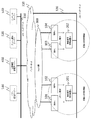
- FIG. 1 shows the overall configuration of a location information service system according to an example of the present embodiment.
- the system includes a location information management server 400 that manages terminal information and user information, a plurality of wireless signal detection devices 200 (201 and 202 in FIG. 1) that receive wireless signals and detect terminals, and terminal applications ( Hereinafter, the terminal 100 (also referred to as “detected application”) is installed (101 to 104 in FIG. 1).
- the terminal 100 and the location information management server 400 are connected via the 3G / LTE network 300 and the Internet 310.
- the wireless signal detection device 200 receives a wireless signal (for example, a probe request) from the terminal 100 within a range where the wireless signal reaches the device itself, and receives terminal identification information (hereinafter, an example of a virtual MAC address and an SSID).
- the position information management server 400 is notified.
- the plurality of wireless signal detection devices 200 and the location information management server 400 are connected via a LAN / Internet 320 and the Internet 310.
- the LAN 320 may be a wireless LAN, or a 3G / LTE network may be used instead. Further, in order to connect the terminal 100 to the Internet 310, a wireless LAN may be used instead of the 3G / LTE network 300. In this case, the wireless LAN base station functioning as the network 300 may be provided separately from the wireless signal detection device 200, or the wireless signal detection device 200 may also serve as the wireless LAN 300 base station.
- the location information management server 400 includes functional units as illustrated in FIG. 2, management of users (user information storage unit 420), determination and assignment of terminal identification information to terminals (ID allocation unit 410 and Terminal information storage unit 430), detection information collected via the wireless signal detection device 200 (detection information acquisition unit 460 and detection information storage 470), etc., and management (list) of a plurality of wireless signal detection devices 200
- the extraction unit 440 and the detection device information storage unit 450), an instruction to the push notification server 520, and the like may be performed.
- the wireless signal detection device 200 is a device for detecting necessary information from a probe request or the like transmitted from the terminal 100, and includes a functional unit illustrated in FIG.
- a wireless signal is received (wireless signal receiving unit 210)
- terminal identification information and the like are detected (ID detecting unit 240)
- the detected information is transmitted to the location information management server 400 (ID transmitting unit 250).
- the detected information is not held in the wireless signal detection device 200 itself.
- the wireless signal detection apparatus 200 holds the list information transmitted from the location information management server 400 (list acquisition unit 220 and list storage unit 230) in order to detect terminal identification information and the like.
- the wireless signal detection apparatus 200 may or may not include a function (wireless communication unit 260) that performs normal communication processing on the received wireless signal.
- the terminal 100 includes a functional unit as illustrated in FIG. 2, and the detected application installed in the terminal 100 registers user information and requests terminal identification information from the location information management server 400 ( ID acquisition unit 110 and ID storage unit 120), and push notification information are displayed.
- the detected application may be acquired from the application distribution server 510 before the use of the location information service is started.
- the terminal 100 transmits a wireless signal (wireless signal transmission unit 140) using the terminal identification information acquired by the detected application. Since the terminal identification information conforms to the standard format of the radio signal, the radio signal can be transmitted by the radio communication function (the radio communication unit 130) originally provided in the terminal 100.
- Application distribution server 510 for distributing the detected application to terminal 100, push notification server 520 for performing push notification to terminal 100, and content that stores content provided to terminal 100 based on location information Server 530 and location information management server 400 are connected to LAN / Internet 330.
- the terminal 100 is connected to a 3G / LTE network with Internet reachability in order to push the information provided based on the location information to the detected application.
- the location information management server 400 has a database and holds the following four tables as a user information storage unit 420, a terminal information storage unit 430, a detection device information storage unit 450, and a detection information storage 470, respectively. .
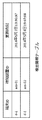
- FIG. 3 shows an example of a user information table, which includes identification information (user ID) of a user of the location information service, a hash of a password, and a display name.
- identification information user ID
- FIG. 3 shows an example of a user information table, which includes identification information (user ID) of a user of the location information service, a hash of a password, and a display name.
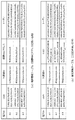
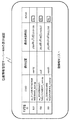
- FIG. 4 shows an example of a terminal information table.
- A shows a case where a virtual MAC address is assigned as terminal identification information
- (b) shows a case where an SSID is assigned as terminal identification information.
- the SSID used as the terminal identification information is an identifier of an extended service set, it may be hereinafter referred to as “ESSID”.
- the terminal information table of FIG. 4 includes the terminal UUID (universary unique identifier), the user ID of the user associated with the terminal in this location information service, and the unique virtual MAC assigned to the terminal by the location information management server 400.
- An address (in the case of (a)) or ESSID (in the case of (b)) and a device token for notification are included.
- An ID in a format suitable for managing information related to a terminal in the location information management server 400 may be held as a terminal ID separately from the UUID.
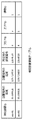
- FIG. 5 shows an example of the detection device information management table.
- the detection device identification information (detection device ID), the latitude and longitude of the installation location of the detection device, the postal code indicating the location, the installed floor (floor) ID), area (area ID), and building name (building ID) are included.
- FIG. 6 shows an example of a detection information table.
- Identification information indicating a detected terminal here, a terminal ID is used, but it may be a UUID, a virtual MAC address, or an ESSID
- a detected detection Information of the device here, the detection device ID is used, but the location information of the installation location of the detection device may be used
- update time may be overwritten.
- the detection information table only information at the latest time point when the terminal is detected may be held, or a plurality of pieces of detection information may be held as a history as the terminal moves.
- a single radio signal from a terminal is received by a plurality of detection devices, the radio signal intensity of the radio signal is measured by each detection device, and the position of the terminal is estimated by triangulation, and detected.
- the positioning accuracy is higher than the unit where the apparatus is installed, information on the estimated position may be held in the detection information table.
- FIG. 7 shows an example of a screen displayed in the location information management server 400 in order to confirm a terminal registered in the location information service.
- a list of registered terminals 100 is displayed, a “user ID (may be a display name)” for identifying the user, and a unique “ESSID (virtual MAC address) assigned by the location information management server 400.
- Good “final position ”which is the latest position detected by the wireless signal detection device 200, and“ last update time ”which is the date and time when the latest position was obtained.
- a delete button may be present so that the operation manager of the location information service can delete the registered information in response to a service stop request from the user.
- FIG. 8 shows an example of a procedure for performing registration (opt-in) of terminal information.
- the user downloads and executes the detected application on the terminal 100 (S110). Then, a user ID or the like is input (S120), and registration processing is performed.
- the detected application generates a UUID when instructed to perform registration processing, and transmits it to the location information management server 400 together with the user ID (S130).
- a device token provided by the OS may be transmitted at this time.
- the location information management server 400 that has received the registration request transmitted from the terminal 100 as described above operates as follows when the virtual MAC address is used as the terminal identification information.
- the OS of the terminal is classified into a proprietary OS that cannot be customized by the user such as iOS and an open source OS that can be customized by the user such as the Linux (registered trademark) OS.
- a proprietary OS a third party other than the vendor cannot make changes, so as will be described later, the individual identification of the wireless LAN is realized by ESSID using an operation flow compliant with the 802.11 protocol as will be described later. Good.
- individual identification of a terminal equipped with an open source OS that can be customized to some extent can be realized by a virtual MAC address.
- the location information management server 400 checks whether the UUID and user ID acquired from the detected application are registered in the database (terminal information storage unit 430). If there is no registration, the location information management server 400 generates a hash based on the current time. Based on this hash, it is converted into a 24-bit unique character string and combined with an IEEE OUI (Organizationally Unique Identifier) that the location information management server 400 has in advance to generate a 48-bit virtual MAC address. (S140).
- OUI Organizationally Unique Identifier
- the location information management server 400 stores the generated virtual MAC address and the UUID, user ID, device token, etc. received from the terminal in the database (terminal information storage unit 430) (S150).
- a terminal setting information file including a virtual MAC address (hereinafter also referred to as “virtual MAC address data”) is created and acquired by the terminal by a known method (for example, HTTP response) (S160).
- a virtual MAC address is generated in the same manner as the above processing, and the virtual record of the record in the database is generated. Update the MAC address column. If opt-out described later is performed, the virtual MAC address column is blank, and the newly generated virtual MAC address is written therein.
- the detected application acquires the virtual MAC address data from the position information management server 400 (S170)
- a virtual network interface is created and linked with the acquired virtual MAC address (S180).
- a frame is transmitted according to the 802.11 protocol.
- the location information management server 400 that receives the registration request transmitted from the terminal 100 operates as follows.
- the location information management server 400 checks whether the UUID and user ID acquired from the detected application are registered in the database (terminal information storage unit 430). If there is no registration, the location information management server 400 generates a hash based on the current time. A specific prefix and postfix are added to this hash to create a globally unique ESSID (S140). At this time, for example, the prefix can be “as12345_” and the postfix can be “_nomap”. It is desirable that the prefix has a unique value for each administrator. By fixing Post_Fox to “_nomap”, it is possible to prevent terminal information from being registered in a location database such as Google. This ESSID is adjusted so that it is within 32 characters as a whole.
- the location information management server 400 stores the generated ESSID and the UUID, user ID, device token, etc. received from the terminal in the database (terminal information storage unit 430) (S150), and at the same time, this ESSID virtual MAC address
- a terminal setting information file for example, mobileconfig
- a known method for example, HTTP response
- an ESSID is generated in the same manner as the above processing, and the ESSID column of the record in the database Update. If opt-out described later is performed, the ESSID field is blank, and the newly generated ESSID is written therein.
- the terminal 100 when the detected application acquires the ESSID from the location information management server 400 (S170), the terminal setting information file including the ESSID is stored and the ESSID is registered (S180).
- the registered terminal periodically makes a probe request to the wireless network, and the acquired ESSID is included in the probe request.
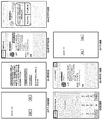
- FIG. 9 shows an example of screen transition on the terminal side in the above procedure.
- (1) is a screen immediately after activation of the detected application.
- the registration button is pressed, the screen changes to (2).
- (2) is a screen for requesting terminal identification information.
- the HTML generated by the location information management server 400 is displayed on the browser of the terminal.
- the “Save location information setting” button is pressed, the detected application is generated for the location information management server 400.
- POST UUID and push notification device token is generated for the location information management server 400.
- the location information management server 400 when the location information management server 400 generates a unique virtual MAC address or ESSID, creates a profile for the terminal, and provides it to the terminal, the screen (3) is displayed.
- the screen when the “Install” button is pressed, the screen shifts to a screen (4) asking the user to save the profile.
- the user inputs the passcode of the terminal as shown in the screen (5), the profile can be saved and the screen (6) is displayed.
- the “Done” button is pressed, the screen automatically transitions to the first screen of the detected application.
- FIG. 10 shows an example of a procedure for the wireless signal detection apparatus 200 to acquire a list from the location information management server 400 in order to detect the terminal identification information and the like from the received wireless silver number and to transmit it to the location information management server 400. Indicates.
- the wireless signal detection apparatus 200 acquires an OUI list (vendor ID constituting the upper 24 bits of the MAC address) used for detection of the virtual MAC address.
- the location information management server 400 extracts the OUI list from the setting file or the OUI management table (S230), and the wireless signal detection device. (S260). If the OUI list does not exist (S240), an error is transmitted to the wireless signal detection device (S250). The wireless signal detection apparatus 200 acquires the OUI list request result (S270) and stores it as a OUI list in a file or its own data verse (S280).
- the wireless signal detection device 200 acquires a registered ESSID list.
- the location information management server 400 extracts the ESSID from the terminal information table of the database and creates the ESSID list (S230). ) If an ESSID list exists, it is transmitted as a request result to the wireless signal detection device (S260). If no ESSID is registered (S240), an error is transmitted to the wireless signal detection device (S250). The wireless signal detection apparatus 200 acquires the ESSID list request result (S270), and saves it as an ESSID list in a file or its own data verse (S280).
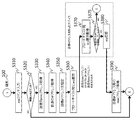
- FIG. 11 shows an example of a procedure in which a terminal performs frame transmission when a virtual MAC address acquired from a location information management server is used as terminal identification information.
- the terminal 1 when performing communication by TCP / IP from the terminal 1 to the terminal 2, the terminal 1 starts from the IP address of the terminal 2.
- an arp request is transmitted (in the following example, the IP address of the terminal 1 is “192.168.0.10” and the IP address of the terminal 2 is “192.168.0.20”).
- an arp command (“arp 192.168.0.20”) is input from the console of the terminal 1 (S310)
- the OS of the terminal 1 checks whether the wireless network interface is on (S320). Then, the MAC address of the terminal 1 is written in the header part and data part of the frame as the source MAC address (S330), the IP address of the terminal 1 is written in the data part of the frame as the source IP address (S340), and the target terminal 2 is written in the data portion of the frame as the target IP address (S350), and broadcast (“ff: ff: ff: ff: ff: ff”) is written in the header portion of the frame as the destination MAC address, and an arp request is made. Is transmitted (S360).
- Another terminal 2 in the network receives the arp request (S370), and when it holds the designated target IP address (S375), includes the MAC address of the terminal 2 in the arp response, A reply is made to the terminal 1 (source MAC address of the arp request) (S380).
- the terminal 1 receiving the arp response can know the MAC address of the terminal 2 (S390).
- the terminal 1 can write the virtual MAC address (“00: 00: 5e: 1b: 6a: 2b”) of the terminal 1 in the transmission source MAC address of the header part of the arp request frame, and detect the radio signal.
- the apparatus 200 evaluates the bit array of the upper 24 bits out of 48 bits corresponding to the transmission source MAC address of the header part of the frame of the received radio signal against the OUI list, thereby obtaining the received radio signal. It is possible to sort whether or not the terminal identification information (virtual MAC address) to be detected is included. If it is determined that it is included, the wireless signal detection apparatus 200 transmits 48-bit information (or lower 24-bit information excluding OUI) corresponding to the transmission source MAC address to the location information management server 400. To do.
- the terminal 1 can write the virtual MAC address in the transmission source MAC address of the header part for any frame to be transmitted, not limited to the arp request, and the wireless signal detection apparatus 200 has received not only the arp request but also the arp request. For a predetermined frame or all frames, the terminal identification information of the terminal 1 can be detected from the transmission source MAC address of the header part.
- the virtual MAC address of the terminal 2 (“00: 00: 5e: 23: 15: e4”) is added to the transmission source MAC address of the header part of the arp response frame. ) And the wireless signal detection apparatus 200 can similarly detect the terminal identification information of the terminal 2 from the received frame.
- the terminal 1 also writes the virtual MAC address of the terminal 1 as the transmission source MAC address in the data part of the arp request, and the terminal 2 writes the virtual MAC address of the terminal 2 as the transmission source MAC address in the data part of the arp response. Since the address is written, the wireless signal detection apparatus 200 may detect the terminal identification information from the data portion of these frames.
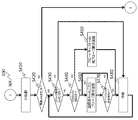
- FIG. 12 shows an example of a procedure in which the terminal transmits a probe request when the ESSID acquired from the location information management server is used as the terminal identification information.
- the wireless LAN is detected on / off (S420). If the wireless LAN is on, it is determined whether or not it is a probe request timing (S430), and if it is a probe request timing, it is determined whether or not an ESSID is specified at a location holding the OS network settings (step S430). S440). If no ESSID is specified, a probe request frame including a broadcast SSID is transmitted to the wireless network (S450).
- a probe request frame including the registered ESSID is transmitted to the wireless network (S460), and the process is continued until transmission of all existing ESSIDs is completed (S470). When all the transmissions are completed, it waits until the next probe request transmission timing (S480).
- the terminal When the terminal receives a probe response to the probe request transmitted as described above, the terminal proceeds to a desired process according to the 802.11 protocol.
- the wireless signal detection device 200 does not perform normal communication processing and is a device dedicated to this location information service, a probe response to the probe request including the ESSID acquired from the location information management server 400 is not returned. There is.
- FIG. 13 shows a standard format of the probe request frame.
- the format of the management frame of the wireless LAN standard and the meaning of the information included for example, “802.11 wireless network management second edition” by Matthew Gust (O'Reilly Japan, August 23, 2013, first edition, fourth print) Issue).
- a terminal broadcasts a probe request including the same character string as that ESSID in order to communicate with a wireless access point having a specific ESSID.
- the ESSID character string is broadcast from the location information management server 400 instead of broadcasting the character string of the ESSID to connect to the access point.
- the ESSID specified in this system is unique to the terminal, and there is no wireless access point on the wireless network that waits for this ESSID as identification information of its own network. Instead, each of the plurality of wireless signal detection apparatuses in the system captures a probe request frame (may be an association request frame and / or a reassociation request frame) broadcast from the terminal including the ESSID, and This is used to report the detection of the target ESSID to the information management server 400.
- the frame including the ESSID specified in the present system may not be used to connect the terminal to the wireless LAN to enable communication.
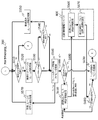
- FIG. 14 shows an example of a procedure in which the wireless signal detection apparatus 200 acquires frame information of a wireless network and transmits a known transmission source address (virtual MAC address) to the location information management server 400.
- FIG. 14 illustrates a case where the wireless signal detection apparatus 200 performs communication processing as a normal wireless LAN base station in addition to processing for the location information service.
- the wireless signal detection apparatus 200 checks whether or not wireless network information acquisition (capture / dump) can be performed (S510), acquires frame information if possible (S520), and determines whether the frame is a broadcast addressed frame. Is evaluated (S520). In the case of a frame addressed to unicast, it is evaluated whether or not the destination address is known (that should be processed by itself) (S530). If not known, the acquired frame information is discarded (S550).
- wireless network information acquisition capture / dump
- the address is a broadcast address or a known address
- a communication process is performed for the frame information (S570), and the header information of the frame (or the frame portion expected to include the terminal identification information) Copy (S560) and perform the following processing.
- the location information management server 400 acquires the virtual MAC address detection information transmitted from the wireless signal detection device 200 (S660), adds a record to the detection information table of the database, and transmits the processing result to the wireless signal detection device 200. (S670).
- the wireless signal detection apparatus 200 confirms the received processing result (S680) and discards the copied frame information (S690). If the received processing result (S680) indicates that it has not been transmitted normally, a desired process is performed, such as instructing retransmission (S650).
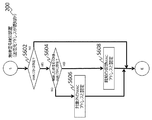
- FIG. 15 shows details of a part for determining whether or not the source MAC address is a registered virtual MAC address to be detected in the above procedure.
- the wireless signal detection apparatus 200 first checks whether the OUI list exists in the file or database (S602). If the list exists, it is checked whether the upper 24 bits of the detected source address match the OUI registered in the OUI list (S604). If the list is registered in the list, a known virtual address is confirmed. The MAC address is determined (S608). If it is not registered, it is determined as a non-target MAC address (S606), and the information is discarded (S690).
- FIG. 16 shows an example of a procedure in which the wireless signal detection apparatus 200 acquires wireless network frame information (in this example, a probe request frame) and transmits a known ESSID to the location information management server 400. .
- FIG. 16 illustrates a case where the wireless signal detection device 200 is a device dedicated to this location information service and does not perform communication processing as a normal wireless LAN base station.
- the wireless signal detection device 200 first checks whether information acquisition (capture / dump) of the wireless network can be performed (S710), and if possible, acquires frame information addressed to the broadcast (S720). If information acquisition is restricted, the process ends.
- the acquired frame is a probe request (S730)
- the detected ESSID terminal identification information
- its own detection device ID and the detection time are transmitted (S850).
- the acquired frame information is discarded (S890).
- the location information management server 400 acquires the ESSID detection information transmitted from the wireless signal detection device 200 (S860), adds a record to the detection information table of the database, and transmits the processing result to the wireless signal detection device 200 ( S870).
- the wireless signal detection device 200 confirms the received processing result (S880) and discards the acquired frame information (S890). If the received processing result (S880) indicates that it has not been transmitted normally, a desired process is performed, such as instructing retransmission (S850).
- FIG. 17 shows details of a part for determining whether or not the SSID included in the probe request is a registered ESSID to be detected in the above procedure.
- the determination of whether or not the ESSID is the target may be performed by providing the wireless signal detection device 200 with a database and caching the ESSID data issued from the location information management server 400 in advance. In the case of a specific pattern, a method of reporting to the location information management server 400 may be used.
- the wireless signal detection apparatus 200 first checks whether an ESSID list exists in a file or a database (S802). If the list exists, it is confirmed whether the SSID detected from the received probe request is an ESSID registered in the ESSID list (S804). If the list is registered in the list, it is determined as a known ESSID. (S806). If it is not registered, it is determined that the SSID is not a target (S808), and a desired process is performed according to the 802.11 convention, or information is discarded (S890).
- the wireless signal detection device 200 compares whether or not it matches a known ESSID pattern (S810). For example, if the prefix is an SSID that starts with “as_” and the postfix ends with “_nomap” (S812), the target is considered to be a known ESSID (S806), and if not, the target It is determined as an outside SSID (S814).
- This known ESSID pattern may be acquired from the location information management server 400 in advance, or may be manually set in the wireless signal detection device 200.
- the detection information from the wireless signal detection device 200 to the location information management server 400 may be reported by sequential transmission, or once accumulated and periodically May be transmitted automatically.
- the reported detection information may include RSSI (received signal radio wave intensity) of the received radio signal or distance information between the terminal and the detection device calculated by the RSSI.
- the position of the terminal is determined by triangulation from the radio wave intensity measured by the plurality of detection devices or the distance information based thereon.
- a plurality of wireless LAN base stations acquire a wireless signal transmitted from a terminal, and triangulation using the MAC address and RSSI of the terminal included in the wireless signal.
- the location of the terminal can be calculated, but the location estimation similar to the existing positioning method is realized by using the terminal identification information in the MAC address format or SSID format in this system instead of this MAC address. Is possible.
- the information in the terminal location information database created based on the detection information collected by the location information management server 400 from the plurality of wireless signal detection devices 200 can be linked with other systems through WebAPI or the like.
- a device token stored in correspondence with a virtual MAC address or ESSID is extracted, and a notification request is made to a server that provides the push notification service.
- applications such as notification to a pre-designated mail address, SMS / MMS (short message), SNS (social networking service), etc. are also possible.
- the terminal where the detected application is installed receives a notification from the push notification service.
- the detected application can be activated by a user operation. Even when the detected application is in a non-activated state or a lock screen when receiving the push notification service, the notification can be received by the function of the OS.
- FIG. 18 shows an example of a procedure for deleting (opting out) terminal information.
- the detected application can request the location information management server 400 to delete the terminal information.
- the position information management server 400 receives a deletion request from the detected application, the position information management server 400 deletes the corresponding record from the database.
- the deletion request may be executed when the UUID matches the user ID, or a combination of a user ID and a password or an authentication token is registered in advance, and authentication is performed before executing the deletion. Also good.
- FIG. 18 illustrates the procedure of the first step of requesting from the terminal and deleting the record of the terminal information table registered in the database of the location information management server 400.
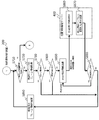
- the detected application is activated (S910), and a terminal information deletion request is transmitted to the location information management server 400 (S915).
- This request includes the user ID of the user of the terminal and the UUID of the terminal.
- the location information management server 400 acquires a terminal information deletion request (S920), and checks whether the user ID and UUID have been registered (S922). If registered, the record is deleted from the database (S924). If not registered, an error message is created (S926) and sent to the terminal as a deletion result notification (S928).
- the terminal 100 confirms the notified deletion result (S930), and when it indicates that the terminal 100 has not been deleted normally, retransmits the terminal information deletion request. When it is confirmed that the data has been deleted normally, the processing of FIG. 19 or FIG. 20 is subsequently performed.
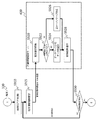
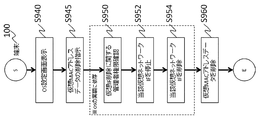
- FIG. 19 illustrates the procedure of the second step of stopping the virtual network interface on the terminal and deleting the virtual network interface and the virtual MAC address when the virtual MAC address is used as the terminal identification information.
- the terminal 100 displays a setting screen (S940) in order to instruct deletion of the virtual MAC address data on the detected application or the OS (S945).
- the OS confirms the administrator authority regarding the deletion of the virtual network interface (S950), stops the virtual network interface (S952), and then deletes the virtual network interface (S954). Then, the detected application or OS deletes the virtual MAC address data stored in the terminal (S960).
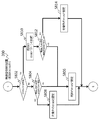
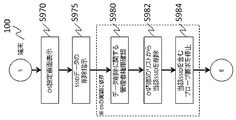
- FIG. 20 illustrates the procedure of the second step of deleting the ESSID on the terminal and preventing the ESSID from being written in the SSID of the probe request frame when the ESSID is used as the terminal identification information.
- the terminal 100 displays an OS setting screen (S970) to instruct deletion of the ESSID issued from the location information management server (S975). Then, the file storing the ESSID data is deleted (some setting information may be deleted instead of the file depending on the OS). Also, depending on the OS implementation, when deleting the ESSID data, an authentication process is performed to confirm that the terminal has the administrator authority (S980), and then the SSID list (database, text file, etc.) The ESSID is deleted (S982). The deleted ESSID is excluded from the subsequent probe request frame (S984).
- a system that detects a terminal such as a smartphone or a tablet using a wireless network, and distributes information according to a place where the user who owns the terminal is present, or a user It can be applied to fields such as traffic flow analysis and congestion statistics.
- the terminal information (MAC address) displayed on the setting screen on the user interface is manually transferred to the management system. Can be automated, and the efficiency of registration work can be improved.
- the push notification can be received when entering the detection range of the wireless signal detection device.
- an existing technology such as iBeacon (registered trademark)
- the detection range can be limited to a range narrower than a geofence using GPS (about 100 m) (the range can be determined by providing a threshold for RSSI).
- this equipment can be used without making a large-scale capital investment. It is also possible to realize a system to which the embodiment is applied.
Landscapes
- Engineering & Computer Science (AREA)
- Signal Processing (AREA)
- Computer Networks & Wireless Communication (AREA)
- Physics & Mathematics (AREA)
- General Physics & Mathematics (AREA)
- Radar, Positioning & Navigation (AREA)
- Remote Sensing (AREA)
- Databases & Information Systems (AREA)
- Computer Security & Cryptography (AREA)
- Mobile Radio Communication Systems (AREA)
- Position Fixing By Use Of Radio Waves (AREA)
- Telephonic Communication Services (AREA)
Applications Claiming Priority (2)
| Application Number | Priority Date | Filing Date | Title |
|---|---|---|---|
| JP2014-118194 | 2014-06-06 | ||
| JP2014118194A JP6071947B2 (ja) | 2014-06-06 | 2014-06-06 | 位置情報サービスのための端末、無線信号検知装置及びサーバー |
Publications (1)
| Publication Number | Publication Date |
|---|---|
| WO2015186281A1 true WO2015186281A1 (ja) | 2015-12-10 |
Family
ID=54766368
Family Applications (1)
| Application Number | Title | Priority Date | Filing Date |
|---|---|---|---|
| PCT/JP2015/001373 Ceased WO2015186281A1 (ja) | 2014-06-06 | 2015-03-12 | 位置情報サービスのための端末、無線信号検知装置及びサーバー |
Country Status (2)
| Country | Link |
|---|---|
| JP (1) | JP6071947B2 (enExample) |
| WO (1) | WO2015186281A1 (enExample) |
Cited By (3)
| Publication number | Priority date | Publication date | Assignee | Title |
|---|---|---|---|---|
| WO2020046380A1 (en) * | 2018-08-31 | 2020-03-05 | Cisco Technology, Inc. | Systems and methods for integrating lte/5g access traffic into a dna fabric of a network |
| JP2021150779A (ja) * | 2020-03-18 | 2021-09-27 | パイオニア株式会社 | 位置特定システムとそれに用いられる情報送受信装置並びにサーバ装置及び情報送信方法並びに位置特定方法 |
| CN118158319A (zh) * | 2024-05-13 | 2024-06-07 | 广东电网有限责任公司 | 一种远程话务分配方法 |
Families Citing this family (6)
| Publication number | Priority date | Publication date | Assignee | Title |
|---|---|---|---|---|
| CN105451188B (zh) * | 2014-08-08 | 2018-11-16 | 阿里巴巴集团控股有限公司 | 实现信息推送的方法、服务器、共享者客户端、第三方客户端 |
| JP6397433B2 (ja) * | 2016-01-26 | 2018-09-26 | 株式会社ウォークインサイト | 国籍判別装置及び国籍判別方法 |
| WO2021001939A1 (ja) * | 2019-07-02 | 2021-01-07 | 日本電信電話株式会社 | 光加入者線終端装置、通信ネットワークシステム及び通信方法 |
| WO2021059059A1 (en) * | 2019-09-26 | 2021-04-01 | Nokia Technologies Oy | Method for rapid location reporting between ue and base station |
| EP4118396A4 (en) * | 2019-10-21 | 2024-09-04 | Position Imaging, Inc. | SYSTEM AND PROCEDURE FOR PERSONALIZED NAVIGATION WITHIN A COMPANY |
| JP7534197B2 (ja) * | 2020-11-26 | 2024-08-14 | 株式会社東海理化電機製作所 | 位置判定システム及び位置判定方法 |
Citations (6)
| Publication number | Priority date | Publication date | Assignee | Title |
|---|---|---|---|---|
| JP2003134118A (ja) * | 2001-09-05 | 2003-05-09 | Samsung Electronics Co Ltd | 一つのnicに複数のipアドレスを割り当てる方法及びこれに適した装置 |
| JP2004088440A (ja) * | 2002-08-27 | 2004-03-18 | Ntt Comware Corp | 位置情報管理システム、位置情報管理方法、位置情報管理プログラム、広告配信システム、広告配信方法、広告配信プログラムおよび記録媒体 |
| JP2007043259A (ja) * | 2005-08-01 | 2007-02-15 | Nec Corp | 無線lan内蔵型携帯電話端末、携帯電話システムおよびその個人情報保護方法 |
| JP2007104245A (ja) * | 2005-10-04 | 2007-04-19 | Ntt Docomo Inc | 移動体端末位置取得システム及び移動体端末位置取得方法 |
| JP2007235765A (ja) * | 2006-03-03 | 2007-09-13 | Ntt Docomo Inc | 移動体端末装置及び端末識別情報変更システム |
| JP2008522507A (ja) * | 2004-12-06 | 2008-06-26 | メッシュネットワークス インコーポレイテッド | インフラストラクチャベースのマルチホップ無線ネットワークにおけるmacアドレスプライバシー用の方式 |
-
2014
- 2014-06-06 JP JP2014118194A patent/JP6071947B2/ja active Active
-
2015
- 2015-03-12 WO PCT/JP2015/001373 patent/WO2015186281A1/ja not_active Ceased
Patent Citations (6)
| Publication number | Priority date | Publication date | Assignee | Title |
|---|---|---|---|---|
| JP2003134118A (ja) * | 2001-09-05 | 2003-05-09 | Samsung Electronics Co Ltd | 一つのnicに複数のipアドレスを割り当てる方法及びこれに適した装置 |
| JP2004088440A (ja) * | 2002-08-27 | 2004-03-18 | Ntt Comware Corp | 位置情報管理システム、位置情報管理方法、位置情報管理プログラム、広告配信システム、広告配信方法、広告配信プログラムおよび記録媒体 |
| JP2008522507A (ja) * | 2004-12-06 | 2008-06-26 | メッシュネットワークス インコーポレイテッド | インフラストラクチャベースのマルチホップ無線ネットワークにおけるmacアドレスプライバシー用の方式 |
| JP2007043259A (ja) * | 2005-08-01 | 2007-02-15 | Nec Corp | 無線lan内蔵型携帯電話端末、携帯電話システムおよびその個人情報保護方法 |
| JP2007104245A (ja) * | 2005-10-04 | 2007-04-19 | Ntt Docomo Inc | 移動体端末位置取得システム及び移動体端末位置取得方法 |
| JP2007235765A (ja) * | 2006-03-03 | 2007-09-13 | Ntt Docomo Inc | 移動体端末装置及び端末識別情報変更システム |
Cited By (4)
| Publication number | Priority date | Publication date | Assignee | Title |
|---|---|---|---|---|
| WO2020046380A1 (en) * | 2018-08-31 | 2020-03-05 | Cisco Technology, Inc. | Systems and methods for integrating lte/5g access traffic into a dna fabric of a network |
| JP2021150779A (ja) * | 2020-03-18 | 2021-09-27 | パイオニア株式会社 | 位置特定システムとそれに用いられる情報送受信装置並びにサーバ装置及び情報送信方法並びに位置特定方法 |
| JP2024161222A (ja) * | 2020-03-18 | 2024-11-15 | パイオニア株式会社 | 位置特定システムとそれに用いられる情報送受信装置並びにサーバ装置及び情報送信方法並びに位置特定方法 |
| CN118158319A (zh) * | 2024-05-13 | 2024-06-07 | 广东电网有限责任公司 | 一种远程话务分配方法 |
Also Published As
| Publication number | Publication date |
|---|---|
| JP2015231226A (ja) | 2015-12-21 |
| JP6071947B2 (ja) | 2017-02-01 |
Similar Documents
| Publication | Publication Date | Title |
|---|---|---|
| JP6071947B2 (ja) | 位置情報サービスのための端末、無線信号検知装置及びサーバー | |
| US10063546B2 (en) | Network access control method and apparatus | |
| KR102185365B1 (ko) | 동일한 네트워크 상의 복수개의 ap 장치 중 하나의 ap 장치와 단말기를 연결하는 방법 및 장치 | |
| CN107113892B (zh) | 一种网关设备自动组网的方法及装置 | |
| US20220321673A1 (en) | Determining a Common Application Context Relocation Method for Edge Computing | |
| CN104854916A (zh) | 采用直接无线电信号进行设备到设备发现 | |
| CN103826323A (zh) | 一种无线网络连接的方法、终端及移动终端 | |
| EP2757738A2 (en) | Communication management system, relay device, communication control system, communication system, communication method, and carrier means storing comunication control program | |
| CN104967997A (zh) | 一种无线网路接入方法、Wi-Fi设备、终端设备及系统 | |
| CN103298072A (zh) | 自动连接WiFi接入点的方法、系统和移动通信终端 | |
| KR20120033788A (ko) | 서비스 존에 해당하는 서비스 제공 방법 및 장치 | |
| WO2017125025A1 (zh) | 寻呼的方法、装置、系统及存储介质 | |
| US9661493B2 (en) | Apparatus and method for providing a wireless communication in a portable terminal | |
| CN112438056A (zh) | 基于设备的接入点关联和物理地址跟踪 | |
| US9113449B2 (en) | Apparatus for managing network zone having plurality of wireless access points, method of connecting mobile terminal to wireless access point by the apparatus, and the mobile terminal | |
| WO2023072271A1 (zh) | 管理安全上下文的方法和装置 | |
| CN106255106A (zh) | 一种无线网络连接方法和装置 | |
| JP2017103785A (ja) | 位置情報サービスのための端末、無線信号検知装置及びサーバー | |
| US11258804B2 (en) | Method and system for controlling access for a user equipment to a local device | |
| US20230096372A1 (en) | Localized authorization for secure communication | |
| CN116074383A (zh) | Dns消息的发送方法、终端及网络侧设备 | |
| CN107995146A (zh) | 登录处理方法及装置 | |
| EP3895456A1 (en) | Method and system for delivering dedicated services restricted to a predefined service area | |
| US12439229B2 (en) | Technique for providing content via a mobile communications network | |
| JP2018170713A (ja) | 通信端末 |
Legal Events
| Date | Code | Title | Description |
|---|---|---|---|
| 121 | Ep: the epo has been informed by wipo that ep was designated in this application |
Ref document number: 15804054 Country of ref document: EP Kind code of ref document: A1 |
|
| NENP | Non-entry into the national phase |
Ref country code: DE |
|
| 122 | Ep: pct application non-entry in european phase |
Ref document number: 15804054 Country of ref document: EP Kind code of ref document: A1 |