WO2015146437A1 - 高機能性IgG2型二重特異性抗体 - Google Patents
高機能性IgG2型二重特異性抗体 Download PDFInfo
- Publication number
- WO2015146437A1 WO2015146437A1 PCT/JP2015/055341 JP2015055341W WO2015146437A1 WO 2015146437 A1 WO2015146437 A1 WO 2015146437A1 JP 2015055341 W JP2015055341 W JP 2015055341W WO 2015146437 A1 WO2015146437 A1 WO 2015146437A1
- Authority
- WO
- WIPO (PCT)
- Prior art keywords
- antibody
- chain
- region
- variable region
- polypeptide
- Prior art date
- Legal status (The legal status is an assumption and is not a legal conclusion. Google has not performed a legal analysis and makes no representation as to the accuracy of the status listed.)
- Ceased
Links
Images





Classifications
-
- C—CHEMISTRY; METALLURGY
- C07—ORGANIC CHEMISTRY
- C07K—PEPTIDES
- C07K16/00—Immunoglobulins [IG], e.g. monoclonal or polyclonal antibodies
- C07K16/18—Immunoglobulins [IG], e.g. monoclonal or polyclonal antibodies against material from animals or humans
- C07K16/28—Immunoglobulins [IG], e.g. monoclonal or polyclonal antibodies against material from animals or humans against receptors, cell surface antigens or cell surface determinants
- C07K16/2863—Immunoglobulins [IG], e.g. monoclonal or polyclonal antibodies against material from animals or humans against receptors, cell surface antigens or cell surface determinants against receptors for growth factors, growth regulators
-
- A—HUMAN NECESSITIES
- A61—MEDICAL OR VETERINARY SCIENCE; HYGIENE
- A61P—SPECIFIC THERAPEUTIC ACTIVITY OF CHEMICAL COMPOUNDS OR MEDICINAL PREPARATIONS
- A61P35/00—Antineoplastic agents
-
- A—HUMAN NECESSITIES
- A61—MEDICAL OR VETERINARY SCIENCE; HYGIENE
- A61P—SPECIFIC THERAPEUTIC ACTIVITY OF CHEMICAL COMPOUNDS OR MEDICINAL PREPARATIONS
- A61P43/00—Drugs for specific purposes, not provided for in groups A61P1/00-A61P41/00
-
- C—CHEMISTRY; METALLURGY
- C07—ORGANIC CHEMISTRY
- C07K—PEPTIDES
- C07K16/00—Immunoglobulins [IG], e.g. monoclonal or polyclonal antibodies
- C07K16/18—Immunoglobulins [IG], e.g. monoclonal or polyclonal antibodies against material from animals or humans
- C07K16/28—Immunoglobulins [IG], e.g. monoclonal or polyclonal antibodies against material from animals or humans against receptors, cell surface antigens or cell surface determinants
- C07K16/2803—Immunoglobulins [IG], e.g. monoclonal or polyclonal antibodies against material from animals or humans against receptors, cell surface antigens or cell surface determinants against the immunoglobulin superfamily
- C07K16/2809—Immunoglobulins [IG], e.g. monoclonal or polyclonal antibodies against material from animals or humans against receptors, cell surface antigens or cell surface determinants against the immunoglobulin superfamily against the T-cell receptor (TcR)-CD3 complex
-
- C—CHEMISTRY; METALLURGY
- C07—ORGANIC CHEMISTRY
- C07K—PEPTIDES
- C07K16/00—Immunoglobulins [IG], e.g. monoclonal or polyclonal antibodies
- C07K16/46—Hybrid immunoglobulins
- C07K16/468—Immunoglobulins having two or more different antigen binding sites, e.g. multifunctional antibodies
-
- A—HUMAN NECESSITIES
- A61—MEDICAL OR VETERINARY SCIENCE; HYGIENE
- A61K—PREPARATIONS FOR MEDICAL, DENTAL OR TOILETRY PURPOSES
- A61K39/00—Medicinal preparations containing antigens or antibodies
- A61K2039/505—Medicinal preparations containing antigens or antibodies comprising antibodies
-
- C—CHEMISTRY; METALLURGY
- C07—ORGANIC CHEMISTRY
- C07K—PEPTIDES
- C07K2317/00—Immunoglobulins specific features
- C07K2317/10—Immunoglobulins specific features characterized by their source of isolation or production
- C07K2317/14—Specific host cells or culture conditions, e.g. components, pH or temperature
-
- C—CHEMISTRY; METALLURGY
- C07—ORGANIC CHEMISTRY
- C07K—PEPTIDES
- C07K2317/00—Immunoglobulins specific features
- C07K2317/20—Immunoglobulins specific features characterized by taxonomic origin
- C07K2317/24—Immunoglobulins specific features characterized by taxonomic origin containing regions, domains or residues from different species, e.g. chimeric, humanized or veneered
-
- C—CHEMISTRY; METALLURGY
- C07—ORGANIC CHEMISTRY
- C07K—PEPTIDES
- C07K2317/00—Immunoglobulins specific features
- C07K2317/30—Immunoglobulins specific features characterized by aspects of specificity or valency
- C07K2317/31—Immunoglobulins specific features characterized by aspects of specificity or valency multispecific
-
- C—CHEMISTRY; METALLURGY
- C07—ORGANIC CHEMISTRY
- C07K—PEPTIDES
- C07K2317/00—Immunoglobulins specific features
- C07K2317/50—Immunoglobulins specific features characterized by immunoglobulin fragments
- C07K2317/52—Constant or Fc region; Isotype
- C07K2317/53—Hinge
-
- C—CHEMISTRY; METALLURGY
- C07—ORGANIC CHEMISTRY
- C07K—PEPTIDES
- C07K2317/00—Immunoglobulins specific features
- C07K2317/50—Immunoglobulins specific features characterized by immunoglobulin fragments
- C07K2317/56—Immunoglobulins specific features characterized by immunoglobulin fragments variable (Fv) region, i.e. VH and/or VL
-
- C—CHEMISTRY; METALLURGY
- C07—ORGANIC CHEMISTRY
- C07K—PEPTIDES
- C07K2317/00—Immunoglobulins specific features
- C07K2317/60—Immunoglobulins specific features characterized by non-natural combinations of immunoglobulin fragments
- C07K2317/62—Immunoglobulins specific features characterized by non-natural combinations of immunoglobulin fragments comprising only variable region components
- C07K2317/622—Single chain antibody (scFv)
-
- C—CHEMISTRY; METALLURGY
- C07—ORGANIC CHEMISTRY
- C07K—PEPTIDES
- C07K2317/00—Immunoglobulins specific features
- C07K2317/70—Immunoglobulins specific features characterized by effect upon binding to a cell or to an antigen
- C07K2317/73—Inducing cell death, e.g. apoptosis, necrosis or inhibition of cell proliferation
-
- C—CHEMISTRY; METALLURGY
- C07—ORGANIC CHEMISTRY
- C07K—PEPTIDES
- C07K2317/00—Immunoglobulins specific features
- C07K2317/90—Immunoglobulins specific features characterized by (pharmaco)kinetic aspects or by stability of the immunoglobulin
- C07K2317/92—Affinity (KD), association rate (Ka), dissociation rate (Kd) or EC50 value
-
- C—CHEMISTRY; METALLURGY
- C07—ORGANIC CHEMISTRY
- C07K—PEPTIDES
- C07K2317/00—Immunoglobulins specific features
- C07K2317/90—Immunoglobulins specific features characterized by (pharmaco)kinetic aspects or by stability of the immunoglobulin
- C07K2317/94—Stability, e.g. half-life, pH, temperature or enzyme-resistance
Definitions
- the present invention relates to a humanized highly functional IgG2-type bispecific antibody that is excellent in stability and can be used for cancer-specific immunotherapy, a single-chain polypeptide constituting the same, and a polypeptide encoding the polypeptide
- the present invention relates to a nucleic acid to be produced, a method for producing the antibody, and a use thereof as a medicine.
- immunotherapy has been used as a safe treatment for cancer (malignant tumors) and rheumatism.
- an antibody that specifically shows cytotoxic activity against cancer is used.
- Antibody drugs composed of such antibodies are recognized as safe and secure with high side effects, low side effects, and high therapeutic effects. On the other hand, it is necessary to produce them using established animal cells. .
- bispecific antibody which is one of such recombinant antibodies, can specifically bind to two different antigens.
- a diabody (Dabody) is the smallest unit of such a bispecific antibody.
- Each heavy chain (H chain) variable region (V region) (represented as “VH”) derived from the same parent antibody.
- VH and the light chain (L chain) variable region (V region) (represented as "VL") VL was devised by utilizing the property of forming a heterodimer by non-covalent bonds with each other ( Non-patent document 1).
- the preparation of bispecific antibodies other than diabody-type bispecific antibodies is described in, for example, Non-Patent Document 2 and Non-Patent Document 3.
- the present inventors have so far developed a diabody-type bispecific antibody (Ex3) prepared using an anti-human epidermal growth factor receptor 1 (Her1) antibody 528 and an anti-CD3 antibody OKT3, and the antibody as a human. It has been found that a typed diabody-type bispecific antibody (hExh3) has an extremely strong antitumor effect (Patent Document 1). Furthermore, highly functional bispecific antibodies having various structures have been developed based on this humanized diabody-type bispecific antibody and the like (Patent Document 2).
- each polypeptide constituting a humanized diabody-type bispecific antibody is an “LH type” in which the L chain variable region is on the N-terminal side.
- LH type bispecific antibody A highly functional bispecific antibody including a specific antibody and the LH type bispecific antibody was developed (Patent Document 3).
- these antibodies having various amino acid mutations and substitutions in the H chain or L chain of the Her1 antibody 528 have also been developed.
- the high-functional bispecific antibodies described in the above Patent Documents 2 to 5 are added to the variable regions containing the L chain and H chain of anti-human epidermal growth factor receptor 1 antibody 528 and anti-CD3 antibody OKT3, respectively.
- the humanized highly functional bispecific antibody having such a structure has a markedly improved cytotoxic activity compared to Ex3 and can bind to each antigen bivalently.
- Bispecific antibodies with minimal additional sequences are easily prepared and can be easily purified by protein A. Furthermore, a function for inducing effector effects such as induction of antibody-dependent cytotoxicity (ADCC) activity and complement-dependent cytotoxicity (CDC) action is newly added.
- ADCC antibody-dependent cytotoxicity
- CDC complement-dependent cytotoxicity
- the bispecific antibody containing the Fc region has very excellent characteristics, but fragmentation occurs near the hinge region at the fusion site between the variable region and the Fc region during storage after purification, etc. This was a problem (Fig. 1). Furthermore, such a highly functional bispecific antibody excessively induces an effector effect via the Fc region, and there are concerns about side effects caused thereby.
- the LH type highly functional bispecific antibody (Ex3-scDb-Fc LH type) described in Patent Document 3 shows superior activity in i n vitro compared to its HL type, but tumortumestablish model No significant difference was observed in in vivo. Accordingly, there is a demand for further improvement of the functions of such LH type bispecific antibodies.
- the problem of the present invention is that the bispecific antibody having such a structure retains the function of cytotoxic activity such as an excellent antitumor effect, and the above problems are improved. It is to provide bispecific antibodies.
- an Fc region derived from an IgG1 subclass is usually used for the purpose of efficiently inducing an effector effect (Non-patent Document 4).
- Non-patent Document 4 an Fc region derived from an IgG1 subclass is usually used for the purpose of efficiently inducing an effector effect.
- the present inventor noted that, among the subclasses of the Fc region, IgG2 has a low ability to induce an effector effect, and instead of IgG1, which has been conventionally used as an Fc region, Fc derived from IgG2 has been used. Attempts were made to produce the above-mentioned highly functional bispecific antibody using the region, and as a result, the present invention was completed and the above-mentioned problems were successfully solved.
- the present invention relates to each aspect shown below.
- [Aspect 11] Culturing the host cell according to aspect 9 to express the nucleic acid in the host cell, recovering and purifying the single-chain polypeptide according to aspect 4, and associating the obtained single-chain polypeptide; The method for producing an antibody according to any one of embodiments 1 to 4, wherein the formed antibody is separated and recovered.
- a pharmaceutical composition comprising the antibody according to any one of embodiments 1 to 4 as an active ingredient.
- a pharmaceutical composition according to aspect 12 characterized in that it is for eliminating, killing, injuring and / or reducing tumor cells.
- the antibody of the present invention showed no difference in antigen-binding property and a decrease in the ability to proliferate against PBMC, compared with the conventional antibody of the same type having an Fc region derived from IgG1.
- the cytotoxic activity when T-LAK was used as an effector cell, the same level of activity was observed, but when PBMC was used, what was expected from the decrease in proliferation ability against PBMC?
- the antibody of the present invention showed higher cytotoxic activity.
- the activation ability against T cells an unexpected result was obtained that the antibody of the present invention was lower for T-LAK but higher for PBMC as compared to conventional antibodies of the same type. It was.
- the antibody of the present invention showed a higher tumor growth inhibitory effect than the conventional antibody of the same type.
- PBMC also contains Fc receptor (FcR) -positive NK cells that play a role in effector effects.
- FcR Fc receptor
- the ability to bind to FcR In the conventional antibody of the same type having, the action of lymphocytes is inhibited by steric hindrance due to binding with NK cells.
- the same reason can be considered in the in vivo test because the mouse used has NK cells that cross-react with the human Fc region.
- the antibody of the present invention showed excellent stability as compared with a conventional antibody of the same type having an Fc region derived from IgG1.
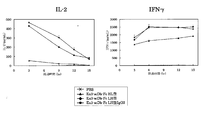
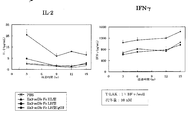
- the results of the evaluation of cytokine secretion induction ability are shown.
- the amino acid sequence in the hinge region of IgG1 and IgG2 is shown.
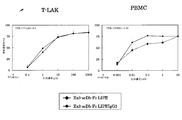
- the result of Proliferation assay using T-LAK is shown.
- the result of T cell activation inducing ability evaluation by FCM is shown.
- the result of stability evaluation of Ex3-scDb-Fc LH type IgG2 is shown.
- the result of the in vivo test of Ex3-scDb-Fc LH type IgG2 is shown.
- the antibody of the present invention comprises, as basic components, an L-chain humanized variable region (5L: SEQ ID NO: 2) and an H-chain humanized variable region (anti-human epidermal growth factor receptor 1 antibody 528).
- 5H: SEQ ID NO: 4 variable region including anti-CD3 antibody OKT3 human chain variable region (OL: SEQ ID NO: 6) and human chain variable region of heavy chain (OH: SEQ ID NO: 8), hinge region
- OL anti-CD3 antibody OKT3 human chain variable region
- OH human chain variable region of heavy chain
- the “Fc region” means a region including two domains (CH2 and CH3) on the C-terminal side of the H chain constituting the constant region (C region) and a hinge part.
- the antibody of the present invention has a human Fc region, it can be easily purified by protein A, and induces antibody-dependent cytotoxicity (ADCC) activity and complement-dependent cytotoxicity (CDC) action. I can do it.
- ADCC antibody-dependent cytotoxicity
- CDC complement-dependent cytotoxicity
- bispecific antibody of the present invention containing such components
- various types of antibodies can be prepared.
- a high-functional bispecific antibody that is a normal IgG type antibody molecule described as the second type (Ex3-Fc) and the third type (Ex3 scDb-Fc).
- Specific antibodies can be mentioned.
- the L chain constant region (CL) and H chain constant region (CH1) contained in the fourth type bispecific antibody of the present invention are not particularly limited as long as they are derived from human antibodies.
- CL may be derived from either ⁇ or ⁇ chain.
- CH1 those usually derived from the ⁇ chain of IgG are used.
- CH1 and CL include those having the amino acid sequences shown in SEQ ID NO: 29 and SEQ ID NO: 33 disclosed in Patent Document 2, respectively.
- the second type (Ex3-Fc) is a humanized diabody-type bispecific antibody (Ex3) composed of two kinds of OH5L and 5HOL polypeptides.
- Ex3 a humanized diabody-type bispecific antibody
- Ex3 composed of two kinds of OH5L and 5HOL polypeptides.
- Ex3 is bound to two Fc regions of a human antibody via a hinge region. That is, specifically, one of two polypeptides constituting Ex3 bound to the Fc region of a human antibody via a hinge region (for example, (5HOL) -hinge region-Fc region), And it is comprised from 2 types of polypeptide of another polypeptide (for example, (OH5L)) which comprises Ex3.
- the antibody can be produced by co-expressing these two types of single-chain polypeptides and then associating them.
- either the 5HOL or OH5L polypeptide can be bound to the Fc region of a human antibody via the hinge region, and the H chain variable region or L Any of the chain variable regions may be bound to the hinge region.
- Ex3 scDb that is, OH5L and 5HOL, which are two types of polypeptide chains constituting Ex3, are further used as peptide linkers instead of Ex3 in the second type.
- a single polypeptide chain represented by (OH5H)-(peptide linker)-(5LOL), or a single polypeptide chain represented by (OH5H)-(peptide linker)-(5LOL), or (OH5L)-(peptide linker)-(5HOL) 5L5H)-(peptide linker)-(OHOL) has a structure in which a tandem single polypeptide chain is bound to the Fc region of a human antibody via a hinge region.
- any of the two types of H chain variable regions or L chain variable regions contained in the above single chain polypeptide may be bound to the hinge region.
- the number of domains constituting the second type and the third type is the same as that of an IgG type immunoglobulin molecule, and these antibodies are considered to have a three-dimensional structure close to the immunoglobulin molecule. It is done. Further, in the second type (ii) and third type (iii) of these BsAbs of the present invention, these BsAbs are digested with protease by interposing a protease cleavage site between Ex3 or Ex3 scDb and the hinge region. Thereafter, Ex3 or Ex3 scDb can be easily produced by appropriately performing various purification operations described later. Further, Ex3 or Ex3 scDb obtained by such protease digestion shows higher cytotoxic activity than that produced by the conventional method.
- the VH and VL of the antibody are respectively converted into the humanized variable regions of the H chain and L chain of the anti-human epidermal growth factor receptor antibody 528, respectively.
- the antibody is composed of two types of single-chain polypeptides of polypeptides formed by binding the other scFv to the N-terminal side of the constant region CL. Note that either the H chain variable region or the L chain variable region contained in the scFv may be bound to these regions. Accordingly, the antibody can be produced by co-expressing these two (single chain) polypeptides and then associating them.
- the L chain variable region as described in Non-Patent Document 3 is on the N-terminal side of the H chain variable region (LH type).
- LH type H chain variable region
- Various antibodies characterized by the above are also included in the present invention. That is, for example, as an example of such LH type in the third type (Ex3 scDb-Fc), it is represented by (OL5H)-(peptide linker)-(5LOH), which is described in the examples of this specification.
- a structure in which a single polypeptide chain having a structure is bound to the Fc region of a human antibody via a hinge region.
- the single-chain polypeptide constituting the antibody of the present invention can include, for example, amino acid sequences such as a PreScission sequence, a peptide linker, and a signal peptide disclosed in FIGS. 3-3 and 3-4 of Patent Document 2.
- the PreSission sequence is a sequence containing a protease cleavage site.
- protease there are no particular limitations on the type of protease to be used.
- enzymes known to those skilled in the art such as Thrombin and FactorFXa can be used, and an amino acid sequence including a protease cleavage site can be appropriately selected accordingly. .
- a protease cleavage site such as a PreSission sequence is not included.
- Anti-EGFR antibody (528 antibody) -producing mouse B cell hybridoma 528 has been deposited with the Medical Cell Resource Center attached to the Research Institute for Aging Medicine, Tohoku University (ID: TKG0555). Further, the hybridoma producing the 528 antibody is stored as ATCC No. HB-8509 in the American Type Culture Collection (ATCC) and can be easily obtained from such depository.
- ATCC American Type Culture Collection
- a hybridoma producing the anti-CD3 antibody OKT3 has been deposited with the Medical Cell Resource Center attached to the Institute of Aging Medicine, Tohoku University (ID: TKG0235).
- the hybridoma producing the OKT3 antibody is stored as ATCC No. CRL-8001 in the American Type Culture Collection (ATCC) and can be easily obtained from such depository.
- cDNA can be prepared by methods known to those skilled in the art. For example, mRNA is extracted using ISOGEN (Nippon Gene), cDNA is prepared by First-Strand cDNA Synthesis Kit (Amersham Biosciences), and reference paper (Krebber, A. et al. Reliable cloning of functional antibody variable domains from hybridomas and spleen cell repertoires employing a reengineered phage display system. J Immunol Methods 201, 35-55. (1997)) PCR was performed using the cloning primers synthesized to determine the sequence of the variable regions of these antibodies. can do.
- “Humanization” of the variable region contained in the single-chain polypeptide constituting the bispecific antibody of the present invention means the complementarity-determining region in the humanized variable region of human immunoglobulin (recipient antibody) ( complementarity-determining (region) (CDR) is a non-human animal (donor antibody) such as a mouse, rat, or rabbit and has the desired specificity, affinity, and ability at least in part An antibody that is substituted by a residue.
- human immunoglobulin Fv framework (FR) residues may be replaced by corresponding non-human residues.
- humanized antibodies may comprise residues that are not found in either the recipient antibody and the introduced CDR sequences or framework sequences. These modifications are made to further improve or optimize the antibody performance.
- ⁇ ⁇ Humanization of such antibody humanized variable regions can be performed according to methods known to those skilled in the art.
- humanized antibodies are prepared by analyzing various conceptual humanized products using a three-dimensional immunoglobulin model of recipient and donor antibodies. Three-dimensional immunoglobulin models are well known to those skilled in the art.
- WO92 / 22653 and the like can be referred to.
- humanized humanized variable regions include antibodies in which the complementarity determining region (CDR) in the humanized variable region is derived from a mouse antibody and the other part is derived from a human antibody. it can.
- CDR complementarity determining region
- an appropriate site in the single-chain polypeptide for example, a framework (FR) that may affect the CDR structure.
- the function of the humanized antibody can be improved by causing site-specific mutations in the middle part, for example, canonical or vernier sequences.
- humanization of the 528 humanized variable region was performed by the CDR-grafting method.
- VH and VL homology searches are performed, and the human antibody sequence having the highest homology FR (frame work) is selected in consideration of the length of each CDR (complementarity determining region). It is preferable to design the amino acid sequence by replacing the CDR of the selected human antibody with the CDR of 528, and for the corresponding codon, it is preferable to use the optimal codon of the host cell used for expression as before, and the gene by the overlap PCR method The total synthesis of can be performed.
- humanized OKT3 humanized variable regions have already been reported and have been confirmed to retain sufficient activity compared to mouse OKT3 (Adair, J. R. et al. Humanization of the murine anti-human CD3 monoclonal antibody OKT3. Hum Antibodies Hybridomas 5, 41-7. (1994)).
- total synthesis of the gene was performed by the overlap PCR method. In this case, it is preferable to use an optimal codon in the host cell, and an increase in the expression level in the host cell by using a total synthetic gene substituted with the optimal codon has already been reported.
- each L-chain variable region fragment and H-chain variable region fragment are preferably connected by an appropriate peptide linker.
- the peptide linker makes it difficult for single-chain antibodies to interact with each other in the molecule, and allows the formation of multimers by a plurality of single-chain antibodies, and as a result, VHs derived from different single-chain antibodies.
- VL are appropriately associated, so that the function of the original protein (the polypeptide is derived from the original protein or derived from the original protein), for example, part of biological activity or It is not particularly limited as long as it can take a structure that simulates or promotes all of them, and for example, it is selected from those widely known in the art or modified from the known linker. Is possible.
- the peptide linker is preferably 1 to 20, preferably 1 to 15, more preferably 2 to 10 amino acids in length.
- each single-chain polypeptide may not include the peptide linker described above, and two variable region fragments may be directly linked.
- one of the C-terminals of the variable region fragment on the N-terminal side in each single-chain polypeptide in order to increase the three-dimensional degree of freedom of each single-chain antibody and promote multimerization, one of the C-terminals of the variable region fragment on the N-terminal side in each single-chain polypeptide. It is preferable that one to several amino acids or one to several amino acids at the N-terminal of the variable region fragment on the C-terminal side have been removed.
- amino acid sequence represented by each of the above SEQ ID NOs one or several (for example, 2 to 5) amino acids are substituted, deleted, inserted or added, and the original amino acid sequence
- amino acid sequence substantially retaining the function and activity of the polypeptide consisting of, for example, the antigen specificity of the variable region fragment can also be used as the polypeptide of the single chain antibody constituting the antibody of the present invention.
- amino acids that are deleted, substituted, inserted or added are preferably substituted for homologous amino acids (polar / nonpolar amino acids, hydrophobic / hydrophilic amino acids, positive / negative charged amino acids, aromatic amino acids, etc.), Alternatively, it is preferable that amino acid deletion or addition does not cause a significant change in the three-dimensional structure and / or local charge state of the protein or that they are not substantially affected.
- Polypeptides having such deleted, substituted or added amino acids include, for example, site-directed mutagenesis methods (such as point mutagenesis and cassette mutagenesis), gene homologous recombination methods, primer extension methods, and It can be easily prepared by appropriately combining methods known to those skilled in the art such as PCR.
- amino acid sequence in which one or several amino acids are substituted, deleted, inserted or added is 90% or more, preferably 95% or more, more preferably 99% or more, with respect to the total length of the original amino acid sequence. It can also be said to show sequence homology (identity).
- a typical example of a nucleic acid molecule (polynucleotide) encoding each region contained in a single-chain polypeptide contained in each antibody of the present invention has the base sequence shown in each of the above SEQ ID NOs.
- a nucleic acid molecule comprising such a base sequence that exhibits a sequence homology of 90% or more, preferably 95% or more, more preferably 99% or more with the entire length of the base sequence described in each SEQ ID NO.
- these nucleic acid molecules are also included in the above-described nucleic acids of the present invention because they are considered to encode polypeptides having substantially the same activity or function as the sequences.
- Such a nucleic acid molecule contains a base sequence encoding at least one of two kinds of single-chain polypeptides constituting the bispecific antibody of the present invention. It is preferable that both types of base sequences are included in the two types encoding the present polypeptide.
- sequence homology between two amino acid sequences or base sequences are pre-processed in an optimal state for comparison. For example, by making a gap in one sequence, the alignment with the other sequence is optimized. Thereafter, the amino acid residues or bases at each site are compared. When the same amino acid residue or base as the corresponding site in the second sequence is present at a site in the first sequence, the sequences are identical at that site. Sequence homology between the two sequences is expressed as a percentage of the total number of sites (all amino acids or all bases) of the number of sites that are identical between the sequences.
- homology means each amino acid residue constituting the chain between two chains in a polypeptide sequence (or amino acid sequence) or polynucleotide sequence (or base sequence). Means the number (number) of things that can be determined to be the same in the matching relationship between comrades or bases, and means the degree of sequence correlation between two polypeptide sequences or two polynucleotide sequences Is. Homology can be easily calculated. Many methods are known for measuring homology between two polynucleotide or polypeptide sequences, and the term “homology” is well known to those skilled in the art (eg, Lesk, A. M.
- Preferred methods for measuring homology include those designed to obtain the largest match between the two sequences being tested. An example of such a method is one assembled as a computer program.
- Preferred computer programming methods for measuring the homology between two sequences include GCG program package (Devereux, J. et al., Nucleic Acids Research, 12 (1): 387 (1984)), BLASTP, BLASTN, FASTA (Atschul, S. F. et al., J. Molec. Biol., 215: 403 (1990)), etc., but are not limited thereto, and methods known in the art are used. be able to.
- each nucleic acid molecule described above hybridizes under stringent conditions with DNA consisting of a base sequence complementary to the DNA consisting of the base sequence represented by each SEQ ID NO. It includes DNA encoding a polypeptide having substantially the same function and activity as the polypeptide.
- hybridization can be carried out according to a method known in the art or a method analogous thereto, such as the method described in Molecular cloning third.ed. (Cold Spring Harbor Lab. Press, 2001). Moreover, when using a commercially available library, it can carry out according to the method as described in an attached instruction manual.
- Hybridization may be performed by a method known in the art, such as the method described in Current Protocols in Molecular Biology (edited by Frederick M, Ausubel et al, 1987), or the like. It can carry out according to the method according to it. Moreover, when using a commercially available library, it can carry out according to the method as described in an attached instruction manual.
- stringent conditions in DNA hybridization are defined by an appropriate combination of salt concentration, organic solvent (for example, formamide), temperature, and other known conditions. That is, stringency increases depending on whether the salt concentration is reduced, the organic solvent concentration is increased, or the hybridization temperature is increased.
- washing conditions after hybridization also affect stringency. This wash condition is also defined by salt concentration and temperature, and the stringency of the wash increases with decreasing salt concentration and increasing temperature.
- “stringent conditions” means that the degree of homology between each base sequence is, for example, about 80% or more, preferably about 90% or more, more preferably about 95% or more on the average on the whole. It means that the hybrid is specifically formed only between base sequences having high homology.
- the conditions include a sodium concentration of 150 to 900 mM, preferably 600 to 900 mM, and a pH of 6 to 8 at a temperature of 60 ° C. to 68 ° C.
- hybridization is performed under conditions of 5 SSC (750 mM NaCl, 75 mM ⁇ trisodium citrate), 1% SDS, 5 x Denhardt solution 50% formaldehyde, and 42 ° C. Washing is carried out under the conditions of 0.1 x SSC (15 mM NaCl, 1.5 mM trisodium citrate), 0.1% SDS, and 55 ° C.
- nucleic acid when a nucleic acid encoding a variable region fragment in each single-chain polypeptide is prepared, it can be totally synthesized by an overlap PCR method based on a previously designed amino acid sequence.
- nucleic acid is a molecule that encodes a single-chain polypeptide, its chemical structure and acquisition route are not particularly limited, and include, for example, gDNA, cDNA, chemically synthesized DNA, mRNA, and the like. is there.
- telomere can be isolated from a cDNA library by hybridization based on the sequence described in the literature, or by the polymerase chain reaction (PCR) technique.
- the DNA is placed in an expression vector, which is then placed in an E. coli (C. coli) cell, COS cell, Chinese hamster ovary cell (CHO cell), or myeloma cell that does not produce immunoglobulin.
- E. coli C. coli
- COS cell COS cell
- CHO cell Chinese hamster ovary cell
- myeloma cell that does not produce immunoglobulin.
- a host cell can be transfected and a monoclonal antibody synthesized in the recombinant host cell.
- the PCR reaction can be carried out by a method known in the art or a method or modification method substantially similar thereto, for example, R. Saiki, et al., Science, 230: 1350, 1985; R.
- the PCR method can be performed using a commercially available kit suitable for the PCR method, and can also be performed according to a protocol clarified by the kit manufacturer or the kit vendor.
- nucleic acid encoding the single-chain polypeptide constituting the antibody of the present invention or each region contained in the antibody thus obtained may appropriately encode a desired peptide or amino acid according to the purpose by means known to those skilled in the art.
- modification of a nucleic acid means insertion, deletion or substitution of a base in at least one codon encoding an amino acid residue in the obtained original nucleic acid.
- altering the amino acid sequence itself constituting a single-chain polypeptide by replacing a codon encoding an original amino acid residue with a codon encoding another amino acid residue.
- a nucleic acid encoding a single-chain polypeptide can be modified so that a codon (optimum codon) suitable for a host cell such as a CHO cell is used without changing the amino acid itself.
- a codon optimum codon
- a host cell such as a CHO cell
- the antibody of the present invention can be produced by methods known to those skilled in the art, for example, various means such as genetic engineering techniques or chemical synthesis.
- genetic engineering techniques for example, a replicable cloning vector or expression vector containing a nucleic acid encoding the polypeptide of each single-chain antibody constituting the bispecific antibody is prepared, and this vector is used as a host.
- replicable expression vector and “expression vector” refer to a piece of DNA (usually double-stranded), in which the DNA contains Can be inserted with foreign DNA fragments.
- Foreign DNA is defined as heterologous DNA, which is a DNA that is not found naturally in the subject host cell.
- Vectors are used to carry foreign or heterologous DNA strands into appropriate host cells. Once in the host cell, the vector can replicate independently of the host chromosomal DNA cage, and several copies of the vector and its inserted (foreign) DNA cage can be generated.
- the vector contains the elements essential to allow translation of the foreign DNA into a polypeptide. Thus, many molecules of polypeptides encoded by foreign DNA can be synthesized rapidly.
- Such vectors are operably linked to an appropriate control sequence so that the DNA sequence is expressed in an appropriate host (ie, to allow expression of foreign DNA). It means a “DNA construct” containing the determined DNA sequence.
- control sequences include a promoter for transcription transcription, any operator sequence to control such transcription, sequences encoding appropriate mRNA ribosome binding sites, enhancers, reardenylation sequences, and transcription and translation. (translation) An array for controlling the end of the cage can be mentioned.
- the vector can appropriately contain various sequences known to those skilled in the art, for example, restriction enzyme cleavage sites, marker genes (selection genes) such as drug resistance genes, signal sequences, leader sequences, and the like as necessary.
- sequences or elements can be appropriately selected and used by those skilled in the art depending on conditions such as the type of foreign DNA, the host cell used, the culture medium, and the like. Further, for the purpose of facilitating the detection and purification of the produced single-chain polypeptide, a sequence encoding various peptide tags known to those skilled in the art (for example, c-myc tag and His-tag) is added. It can be included at the end of the sequence corresponding to this polypeptide.
- the vector can be in any form such as a plasmid, a phage particle, or simply a genomic insert. Once introduced into a suitable host by transformation, the vector can replicate or function independently of the resident genome. Alternatively, the vector may be one that is integrated into the genome.
- any cell known to those skilled in the art can be used.
- typical host cells include prokaryotic cells such as E. coli and Chinese hamster ovary cells (CHO cells).
- Mammalian cells such as rabbits and human-derived cells, and eukaryotic cells such as yeast and insect cells.
- the transformed bacteria can be cultured under any mortgage conditions and methods known to those skilled in the art.
- a single-chain polypeptide obtained by such expression in a host cell is generally recovered from the culture medium as a secreted polypeptide, but if it is produced directly without a secretion signal, the host It can be recovered from cell lysates. If the single-chain polypeptide is membrane-bound, it can be released from the membrane using a suitable detergent (eg, Triton-X100).
- a suitable detergent eg, Triton-X100
- the purification operation can be performed by appropriately combining methods known to those skilled in the art. For example, after performing chemical modification such as PEGylation as necessary, centrifugation, ammonium sulfate precipitation, cross flow concentration, hydroxylapatite chromatography, gel electrophoresis, dialysis, fractionation on an ion exchange column, ethanol precipitation, Suitable for purification by reverse phase HPLC, chromatography on silica, chromatography on heparin sepharose, anion or cation resin chromatography (such as polyaspartic acid columns), chromatofocusing, SDS-PAGE, and affinity chromatography .
- Affinity chromatography is one of the preferred purification techniques with high efficiency utilizing the affinity with a peptide tag of a single-chain polypeptide.
- the purification operation is preferably performed after the single-chain polypeptide is solubilized and denatured.
- This solubilization treatment can be performed using any agent known to those skilled in the art as a dissociator such as alcohols such as ethanol, various reagents, guanidine hydrochloride, urea and the like.
- the antibodies of the present invention can be produced by associating (unwinding) the same or two kinds of single-chain polypeptides purified in this way and separating and recovering the formed antibodies.
- the association treatment means that a single single-chain polypeptide is returned to a state having a desired biological activity by returning it to an appropriate spatial arrangement. Therefore, the association treatment also has the meaning of returning the polypeptides or domains to the associated state, so it can also be referred to as “reassociation”, and in the sense of having the desired biological activity. It can also be called reconstruction, or it can be called refolding.
- the association treatment can be performed by any method known to those skilled in the art. For example, the concentration of the denaturing agent (for example, guanidine hydrochloride) in the buffer solution containing the single-chain polypeptide is decreased stepwise by, for example, dialysis. The method is preferred.
- the antibody of the present invention can be prepared from, for example, a culture medium supernatant of a cultured host cell, a periplasma fraction, a intracellular soluble fraction, or a bacterial insoluble fraction.
- a vector of the present invention by using a co-expression vector containing both nucleic acid molecules corresponding to the single-chain polypeptide constituting the antibody of the present invention, or a nucleic acid molecule encoding each of the single-chain polypeptides
- the same host cell is transformed with the expression vector, and each single-chain polypeptide is expressed in the transformed bacterium, and then an antibody molecule is formed, which is prepared from the culture medium supernatant or soluble fraction of the cultured host cell. Is possible. Therefore, in such a case, the above-described association (rewinding) process becomes unnecessary, and high productivity can be obtained at low cost.
- the pharmaceutical composition of the present invention is characterized by containing as an active ingredient a substance selected from the group consisting of the antibody of the present invention, a single-chain polypeptide, a nucleic acid, a vector, and a transformed host cell.
- a substance selected from the group consisting of the antibody of the present invention a single-chain polypeptide, a nucleic acid, a vector, and a transformed host cell.
- such an active ingredient has an action of significantly eliminating, killing, or damaging (positive) tumor cells expressing the epidermal growth factor receptor in vitro and in vivo. Therefore, the pharmaceutical composition of the present invention can be used as an antitumor agent against such tumor cells.
- the effective amount of the active ingredient of the present invention can be appropriately determined by those skilled in the art depending on, for example, the therapeutic purpose, the type of tumor, the site and size of the subject to be administered, various conditions of the patient, the administration route, and the like.
- a typical single dose or daily dose will depend on the above conditions and, if possible, first in vitro and then, for example, using assays known in the art for tumor cell survival or growth.
- appropriate dose ranges can be determined with appropriate animal models that can extrapolate dose ranges for human patients.
- the pharmaceutical composition of the present invention contains various pharmaceutically acceptable pharmacological agents well known to those skilled in the art in addition to the active ingredient, depending on various conditions such as the type of active ingredient, pharmaceutical form, administration method / purpose, and pathological condition of the administration target.
- Components eg, carriers, excipients, buffers, stabilizers, etc.
- the pharmaceutical composition of the present invention is a tablet, solution, powder, gel, spray, or microcapsule, colloidal distribution system (liposome, microemulsion, etc.), macroemulsion, etc., depending on the above various conditions.
- colloidal distribution system liposome, microemulsion, etc.
- macroemulsion etc.
- administration methods include intravenous, intraperitoneal, intracerebral, intraspinal, intramuscular, intraocular, intraarterial, in particular intrabiliary or intralesional injection or injection, and sustained release system formulations. It is done.
- the active substances according to the invention can be administered continuously by infusion or by bulk injection.
- Sustained release formulations are generally of a form from which the active substance of the present invention can be released for a period of time, and suitable examples of sustained release preparations include solid hydrophobic polymers containing proteins.
- a semipermeable carrier is included, which is in the form of a molded product, such as a film or microcapsule.
- the pharmaceutical composition of the present invention is prepared by methods known to those skilled in the art, for example, the Japanese Pharmacopoeia Manual Editorial Committee, 13th revision, Japanese Pharmacopoeia Manual, issued on July 10, 1996, Yodogawa Shoten Co., Ltd. In view of the description, it can be appropriately selected and manufactured from among them.
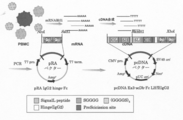
- Ex3-scDb-Fc LH type IgG2 was constructed by modifying the structure of Ex3-scDb-Fc LH type hinge and Fc region from conventional IgG1 to IgG2, which has low binding ability to FcR and complement. Thus, the effect of the binding ability to FcR and complement on the cytotoxicity was verified.
- mRNA was extracted from PBMC using a method known to those skilled in the art, and cDNA was synthesized. Using this cDNA, gene amplification by PCR was performed with a primer covering the Fc region from the hinge region of the human IgG2 sequence, and inserted into the pRA vector to obtain pRA IgG2 hinge-Fc. As a result of confirmation of the sequence, a gene completely identical to the human IgG2 gene sequence (BX640623.1) of GenBank, a gene data bank, was obtained. The base sequence containing the hinge region and Fc region (CH2 and CH3) of the human IgG2 sequence obtained in this way is shown in SEQ ID NO: 9.
- PCR was performed twice using the obtained pRA IgG2 hinge-Fc and pcDNA Ex3-scDb-Fc LH types (prepared according to Example 2 of Patent Document 3) as a template, and digested with BamHI and XhoI.
- pcDNA3-Ex3-scDb-Fc LH type IgG2 was prepared (Fig. 2). The primers and conditions used are shown below.
- pRA IgG2 hinge-Fc (Template: mRNA extract, annealing temperature: 55 ° C, extension time: 60 sec) back primer: NcoI-IgG2 hinge Sequence number 10: 5'-NNNCCATGGTGTTGTGTCGAGTGCCCACC -3 ' forward primer: IgG2 Fc-SacII Sequence number 11: 5'-NNN CCGCGG TCATTTACCCGGAGACAGGGAG-3 '
- PreScDNA Ex3-scDb-Fc LH type IgG2 1st PCR (Template: pRA IgG2 hinge-Fc, annealing temperature: 55 ° C, extension time: 60 sec) back primer: PreScission-IgG2 hinge SEQ ID NO: 12 : 5'- CTGGAAGTTCTGTTCCAGGGGCCC TGTTGTGTCGAGTGCCCACC -3 ' forward primer : CH3-XhoI Sequence number 13: 5'-NNNCTCGAGTCATTTACCCGGAGACAGGGAGAG-3 '
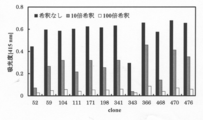
- cloning was performed by limiting dilution, and ELISA was performed using the supernatant (FIG. 4).
- clones 52, 59, 104, 111, 171, 198, 341, 343, 366, 468, 470, 476 which had a particularly high value and formed only colonies derived from one cell, were selected. Selected and expanded using 12-well plates. A solution obtained by diluting the culture supernatant 10 to 100 times was prepared, and ELISA was performed again to select clones 366 and 470 having high values in the stock solution and 10-fold dilution (FIG. 5). ELISA was performed using a Human IgG ELISA Quantitation Kit (BETHYL).
- Clone 366 and 470 obtained by preparation of Ex3-scDb-Fc LH type IgG2 were cultured using a triple flask, respectively, and protein A was purified from the medium supernatant.
- protein A was purified from the medium supernatant.
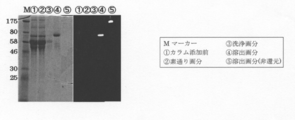
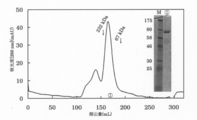
- a band was obtained in the elution fraction, so the purification was confirmed (FIG. 6). Since the yield after purification was 0.6 mg / L for clone 366 and 0.9 mg / L for clone 470, clone 470 was used in the purification confirmation and subsequent assays.
- the HL-type Ex3-scDb-Fc and LH-type Ex3-scDb-Fc used as comparative controls in the examples in the present specification are the antibodies described in Patent Document 2 and Patent Document 3, respectively. It is an antibody containing an IgG1-derived polypeptide as the Fc region.
- Ex3-scDb-Fc LH-type IgG2 has a decreased activation ability against T-LAK, which also affects the ability to induce proliferation against T-LAK.
- Proliferation assay was performed by the above method using T-LAK (FIG. 13). As a result, a decrease in proliferation ability was confirmed as compared with Ex3-scDb-Fc LH type.
- Ex3-scDb-Fc LH type IgG2 was added to PBMC was evaluated by the above FCM (FIG. 14).
- LH type IgG2 showed higher expression of CD69.
- Ex3-scDb-Fc LH type IgG2 has the ability to activate Ex3-scDb-Fc LH type due to hinge problems as described above when T cells alone exist like T-LAK.
- the Fc region of the antibody of the present invention is derived from IgG2, which has low binding to FcR. It is thought that it bound only to T cells without receiving and promoted higher activation.
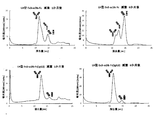
- Ex3-scDb-Fc LH type IgG2 Ex3-scDb-Fc has a problem of fragmentation that is cleaved near the hinge. Therefore, with respect to LH-type Ex3-scDb-Fc IgG1 (the antibody described in Patent Document 3) and Ex3-scDb-Fc LH-type IgG2, which is the antibody of the present invention, samples after purification by gel filtration chromatography are passed for a certain period of time. Then, the presence or absence of fragmentation was confirmed by performing gel filtration chromatography again, and the stability of each antibody was evaluated. In order to eliminate the influence of factors (proteases and the like) produced from microorganisms, the purified sample was subjected to filter sterilization treatment and subjected to experiments. The result is shown in FIG.
- the LH type Ex3-scDb-Fc IgG1 shows considerable fragmentation after 6 months
- the Ex3-scDb-Fc LH type IgG2 which is the antibody of the present invention, has passed after such a long period of time.
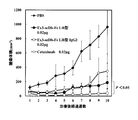
- Ex3-scDb-Fc LH type IgG2 in vivo test Ex3-scDb-Fc LH type IgG2 in vivo test using tumor-bearing mice (Protein Eng Des Sel. 2013 May; 26 (5 ): 359-67) (FIG. 13).
- TFK-1 5 ⁇ 10 6
- T-LAK 1 ⁇ 10 7
- Ex3-scDb-Fc showed stronger tumor growth inhibitory activity than the commercially available anti-EGFR antibody drug Cetuximab, and Ex3-scDb-Fc LH type IgG2 showed a significantly stronger effect than IgG1. .
- the present invention uses a polypeptide derived from IgG2 for the FC region, thereby suppressing side effects due to reduced effector function and avoiding steric hindrance.
- the development of the next-generation antibody drug will be accelerated and greatly contributed by improving and further providing a technology for stably maintaining its function over a long period of time.
Landscapes
- Health & Medical Sciences (AREA)
- Chemical & Material Sciences (AREA)
- Immunology (AREA)
- Organic Chemistry (AREA)
- Life Sciences & Earth Sciences (AREA)
- General Health & Medical Sciences (AREA)
- Medicinal Chemistry (AREA)
- Biochemistry (AREA)
- Biophysics (AREA)
- Genetics & Genomics (AREA)
- Molecular Biology (AREA)
- Proteomics, Peptides & Aminoacids (AREA)
- Animal Behavior & Ethology (AREA)
- Chemical Kinetics & Catalysis (AREA)
- General Chemical & Material Sciences (AREA)
- Nuclear Medicine, Radiotherapy & Molecular Imaging (AREA)
- Pharmacology & Pharmacy (AREA)
- Public Health (AREA)
- Veterinary Medicine (AREA)
- Bioinformatics & Cheminformatics (AREA)
- Engineering & Computer Science (AREA)
- Peptides Or Proteins (AREA)
- Micro-Organisms Or Cultivation Processes Thereof (AREA)
- Preparation Of Compounds By Using Micro-Organisms (AREA)
- Medicines Containing Antibodies Or Antigens For Use As Internal Diagnostic Agents (AREA)
Abstract
Description
抗ヒト上皮細胞成長因子受容体1抗体528のL鎖のヒト型化可変領域(5L:配列番号2)及びH鎖のヒト型化可変領域(5H:配列番号4)、抗CD3抗体OKT3のL鎖のヒト型化可変領域(OL:配列番号6)及びH鎖のヒト型化可変領域(OH:配列番号8)を含む可変領域、ヒンジ領域、並びに、Fc領域を含む、抗ヒト上皮細胞成長因子受容体1及びCD3に対する二重特異性抗体であって、該Fc領域がヒトIgG2サブクラスに由来することを特徴とする、前記抗体。
[態様2]
各ポリペプチドにおいて、L鎖可変領域がH鎖可変領域のN末側にあること(LH型)を特徴とする、態様1記載の抗体。
[態様3]
IgG型タイプの免疫グロブリン分子と同じドメイン数を有する、態様1又は2に記載の抗体。
[態様4]
(OL5H)-(ペプチドリンカー)-(5LOH)で示される構造を有するシングルポリペプチド鎖がヒンジ領域を介してヒト抗体のFc領域に結合した構造を有している、態様3に記載の抗体。
[態様5]
態様1~4のいずれか一項に記載された抗体を構成する一本鎖ポリペプチド。
[態様6]
態様5記載のポリペプチドをコードする核酸分子。
[態様7]
態様6記載の核酸を含有する複製可能なクローニングベクター又は発現ベクター。
[態様8]
プラスミドベクターである、態様7記載のベクター。
[態様9]
態様7又は8記載のベクターで形質転換された宿主細胞。
[態様10]
哺乳動物細胞である態様9記載の宿主細胞。
[態様11]
態様9記載の宿主細胞を培養して宿主細胞中で該核酸を発現せしめ、態様4に記載の一本鎖ポリペプチドを回収し、精製し、得られた該一本鎖ポリペプチドを会合させ、形成された抗体を分離・回収することを特徴とする、態様1~4のいずれか一項に記載の抗体の製造方法。
[態様12]
態様1~4のいずれか一項に記載の抗体を有効成分として含有することを特徴とする医薬組成物。
[態様13]
腫瘍細胞を排除する、殺傷する、傷害する及び/又は減少せしめるためのものであることを特徴とする態様12記載の医薬組成物。
しかしながら、細胞傷害活性に関して、エフェクター細胞としてT-LAKを使用した場合には同程度の活性が見られたものの、PBMCを使用した場合には、PBMCに対する増殖能の低下から予想される結果とは異なり、驚くべきことに、本発明抗体の方がより高い細胞傷害活性を示した。
又、T細胞に対する活性化能についても、従来の同型の抗体と比較して、T-LAKに対しては本発明抗体の方が低いがPBMCに対しては高い、という予想外の結果が得られた。
さらにin vivo試験においても、従来の同型の抗体と比較して、本発明抗体の方がより高い腫瘍の成長抑制効果を示した。
更に、本発明の抗体は、IgG1に由来するFc領域を有する従来の同型の抗体と比較して、優れた安定性を示した。
まず、当業者に公知の方法を用いてPBMCからmRNAを抽出し、cDNAの合成を行った。そのcDNAを用いてヒトIgG2配列のヒンジ領域からFc領域をカバーするプライマーでPCRによる遺伝子増幅を行い、pRAベクターに挿入しpRA IgG2 hinge-Fcを得た。その配列を確認したところ、遺伝子データバンクであるGenBankのhuman IgG2 遺伝子配列(BX640623. 1)と完全に一致する遺伝子が得られた。
こうして得られたヒトIgG2配列のヒンジ領域及びFc領域(CH2及びCH3)を含む塩基配列を配列番号9で示す。
(鋳型:mRNA抽出産物、annealing温度:55℃、伸長時間:60 sec )
back primer:NcoI-IgG2 hinge
配列番号10:5’-NNNCCATGGTGTTGTGTCGAGTGCCCACC -3’
forward primer:IgG2 Fc-SacII
配列番号11:5’-NNN CCGCGG TCATTTACCCGGAGACAGGGAG -3’
1st PCR(PreScission site-IgG2 Fc-XhoI作製)
(鋳型:pRA IgG2 hinge-Fc、annealing温度:55℃、伸長時間:60 sec )
back primer:PreScission-IgG2 hinge
配列番号12
:5’- CTGGAAGTTCTGTTCCAGGGGCCC TGTTGTGTCGAGTGCCCACC -3’
forward primer:CH3-XhoI
配列番号13:5’-NNNCTCGAGTCATTTACCCGGAGACAGGGAGAG-3’
(鋳型:pcDNA Ex3-scDb-Fc LH型、annealing温度:60℃、伸長時間:60 sec )
back primer:BamHI-h5L
配列番号14:5’-NNNGGATCC GATATTGTGATGACCCAGAGCCC-3’
forward primer:hOH-PreScission
配列番号15:5’-GGGCCCCTGGAACAGAACTTCCAG GGAGCTAACGGTCACCGG-3’
2nd PCR
( 鋳型:1st PCR産物、annealing温度:60℃、伸長時間:60 sec )
back primer:BamHI-h5L
配列番号14
forward primer:CH3-XhoI
配列番号13

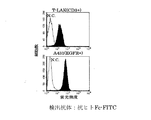
発現ベクターpcDNA Ex3-scDb-Fc LH型IgG2を予めNruIで制限酵素消化し、直鎖状にした。続いて、CHO細胞を宿主細胞として用い、Lipofectamine2000を使用したリポソーム法による遺伝子導入を行った。そして、G418を含む選択抗生培地によりスクリーニングを行い、その培地上清を用いて、当業者に公知の方法(例えば、特許文献5の実施例2に記載の方法)に準じた方法を用いたフローサイトメトリー(FCM)によりヒト扁平上皮がん細胞株であるA431細胞(ATCC No.CRL-1555)(EGFR+)及び細胞傷害性T細胞であるT-LAK(CD3+)に対する結合活性評価を行うことで、本発明抗体の一種であるEx3-scDb-Fc LH型IgG2の発現を確認した(図3)。A431、T-LAKそれぞれに対する結合活性が見られたため、遺伝子導入に成功したことが確認できた。
尚、ELISAはHuman IgG ELISA Quantitation Kit(BETHYL社)を用いて行った。
取得したclone 366、470を、それぞれトリプルフラスコを用いて培養し、その培地上清からプロテインAによる精製を行った。その確認をSDS-PAGEおよびウエスタンブロッティングにより行った結果、溶出画分にバンドが得られたことから、その精製を確認した(図6)。精製後における収量はclone 366で0.6 mg/L、clone 470で0.9 mg/Lであったことから、精製確認および以後のアッセイにおいてはclone 470を用いた。
(1)Proliferation assayによるPBMC増殖誘導能評価
当業者に公知の方法(例えば、特許文献2の実施例4に記載の方法)により末梢血リンパ球(PBMC)を用いたProliferation assayによりEx3-scDb-Fc LH型IgG2のFcR結合能を評価した。結果、IgG1のFc領域を持つEx3-scDb-Fc HL型、LH型と比較して著しく低い増殖能を示し、FcR結合能が低下していることが示された(図8)。尚、本明細書中の実施例で比較対照として使用されるHL型 Ex3-scDb-Fc及びLH型 Ex3-scDb-Fcは、夫々、特許文献2及び特許文献3に記載の抗体であって、Fc領域としてIgG1由来のポリペプチドを含む抗体である。
ヒンジやFc領域への構造改変が抗原に対する結合能に与える影響を検討するため、EGFR(固定化量3690 RU)を用いたSPR(J Biol Chem. 2010 Jul 2:285(27):20844-9)による結合速度論的解析を行ったところ、Ex3-scDb-Fc LH型とEx3-scDb-Fc LH型IgG2のKDは同等であることが示された。
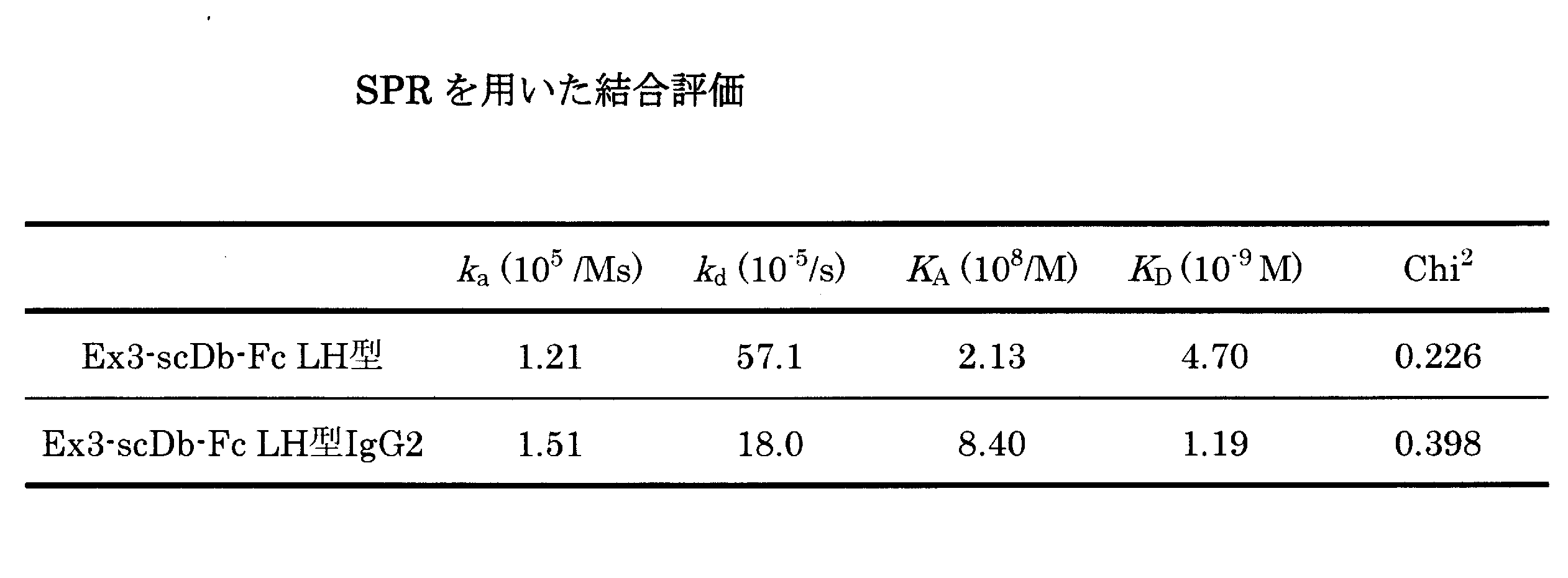
構造改変が細胞傷害性に与える影響を検討するため、業者に公知の方法(例えば、特許文献2の実施例5に記載の方法)に準じて、エフェクター細胞としてT-LAKまたはPBMCを用い、ヒト胆管がん細胞株であるTFK-1(東北大学加齢医学研究所付属医用細胞資源センター ID:TKG036)に対する細胞傷害性試験MTS assayを行った。その結果、T-LAKを用いた場合においてはEx3-scDb-Fc LH型とEx3-scDb-Fc LH型IgG2は同等の傷害性を示した。一方で、予想外なことに、PBMCを用いた場合においてはEx3-scDb-Fc LH型IgG2の方がより高い活性を示した(図9)。
Ex3-scDb-Fc LH型IgG2のがん細胞とT-LAKの存在下、およびT-LAKのみの存在下におけるIL-2とIFN-γの分泌誘導能の経時変化を当業者に公知の方法(J Biol Chem. 2011 Jan 21;286(3):1812-8)で評価した(図10、図11)。
Ex3-scDb-Fc LH型IgG2のT-LAKに対する活性化能の低下が見られたことから、T-LAKに対する増殖誘導能にも影響が生じていると考え、T-LAKを用いて上記の方法でProliferation assayを行った(図13)。その結果、Ex3-scDb-Fc LH型と比較して増殖能の低下が確認された。
Ex3-scDb-Fcはヒンジ近傍で切断される断片化が問題となっている。そこで、LH型 Ex3-scDb-Fc IgG1(特許文献3に記載の抗体)及び本発明抗体であるEx3-scDb-Fc LH型IgG2に関して、夫々のゲルろ過クロマトグラフィーによる精製後のサンプルを一定時間経過後、再度ゲルろ過クロマトグラフィーを行うことで断片化の有無を確認し、各抗体の安定性の評価を行った。尚、微生物から産出される因子(プロテアーゼ等)による影響を排除するために、精製後のサンプルをフィルター滅菌処理して実験に供した。その結果を図15に示す。
Ex3-scDb-Fc LH型IgG2の担がんマウスを用いたin vivo試験を当業者に公知の方法(Protein Eng Des Sel. 2013 May;26(5):359-67)で評価した(図13)。TFK-1(5 x 10⁶)とT-LAK(1 x 10⁷)を混合後、皮下移植し、その1時間後に各サンプルを投与した。
Claims (13)
- 抗ヒト上皮細胞成長因子受容体1抗体528のL鎖のヒト型化可変領域(5L:配列番号2)及びH鎖のヒト型化可変領域(5H:配列番号4)、抗CD3抗体OKT3のL鎖のヒト型化可変領域(OL:配列番号6)及びH鎖のヒト型化可変領域(OH:配列番号8)を含む可変領域、ヒンジ領域、並びに、Fc領域を含む、抗ヒト上皮細胞成長因子受容体1及びCD3に対する二重特異性抗体であって、該Fc領域がヒトIgG2サブクラスに由来することを特徴とする、前記抗体。
- 各ポリペプチドにおいて、L鎖可変領域がH鎖可変領域のN末側にあること(LH型)を特徴とする、請求項1記載の抗体。
- IgG型タイプの免疫グロブリン分子と同じドメイン数を有する、請求項1又は2に記載の抗体。
- (OL5H)-(ペプチドリンカー)-(5LOH)で示される構造を有するシングルポリペプチド鎖がヒンジ領域を介してヒト抗体のFc領域に結合した構造を有している、請求項3に記載の抗体。
- 請求項1~4のいずれか一項に記載された抗体を構成する一本鎖ポリペプチド。
- 請求項5記載のポリペプチドをコードする核酸分子。
- 請求項6記載の核酸を含有する複製可能なクローニングベクター又は発現ベクター。
- プラスミドベクターである、請求項7記載のベクター。
- 請求項7又は8記載のベクターで形質転換された宿主細胞。
- 哺乳動物細胞である請求項9記載の宿主細胞。
- 請求項9記載の宿主細胞を培養して宿主細胞中で該核酸を発現せしめ、請求項4に記載の一本鎖ポリペプチドを回収し、精製し、得られた該一本鎖ポリペプチドを会合させ、形成された抗体を分離・回収することを特徴とする、請求項1~4のいずれか一項に記載の抗体の製造方法。
- 請求項1~4のいずれか一項に記載の抗体を有効成分として含有することを特徴とする医薬組成物。
- 腫瘍細胞を排除する、殺傷する、傷害する及び/又は減少せしめるためのものであることを特徴とする請求項12記載の医薬組成物。
Priority Applications (2)
| Application Number | Priority Date | Filing Date | Title |
|---|---|---|---|
| JP2016510148A JPWO2015146437A1 (ja) | 2014-03-25 | 2015-02-25 | 高機能性IgG2型二重特異性抗体 |
| US15/128,831 US20170183410A1 (en) | 2014-03-25 | 2015-02-25 | HIGHLY-FUNCTIONAL IgG2 BISPECIFIC ANTIBODY |
Applications Claiming Priority (2)
| Application Number | Priority Date | Filing Date | Title |
|---|---|---|---|
| JP2014062066 | 2014-03-25 | ||
| JP2014-062066 | 2014-03-25 |
Publications (1)
| Publication Number | Publication Date |
|---|---|
| WO2015146437A1 true WO2015146437A1 (ja) | 2015-10-01 |
Family
ID=54194971
Family Applications (1)
| Application Number | Title | Priority Date | Filing Date |
|---|---|---|---|
| PCT/JP2015/055341 Ceased WO2015146437A1 (ja) | 2014-03-25 | 2015-02-25 | 高機能性IgG2型二重特異性抗体 |
Country Status (3)
| Country | Link |
|---|---|
| US (1) | US20170183410A1 (ja) |
| JP (1) | JPWO2015146437A1 (ja) |
| WO (1) | WO2015146437A1 (ja) |
Cited By (14)
| Publication number | Priority date | Publication date | Assignee | Title |
|---|---|---|---|---|
| JP2019523753A (ja) * | 2016-05-20 | 2019-08-29 | ハープーン セラピューティクス,インク. | 単鎖可変フラグメントcd3結合タンパク質 |
| JP2019526246A (ja) * | 2016-10-11 | 2019-09-19 | 北京東方百泰生物科技有限公司Beijing Dongfang Biotech Co., Ltd. | 抗egfrと抗cd3の二重特異性抗体及びその応用 |
| WO2021038975A1 (ja) | 2019-08-28 | 2021-03-04 | 株式会社アネロファーマ・サイエンス | ダイアボディ型BsAbを発現・分泌するビフィドバクテリウム属細菌 |
| US11453716B2 (en) | 2016-05-20 | 2022-09-27 | Harpoon Therapeutics, Inc. | Single domain serum albumin binding protein |
| US11535668B2 (en) | 2017-02-28 | 2022-12-27 | Harpoon Therapeutics, Inc. | Inducible monovalent antigen binding protein |
| US11607453B2 (en) | 2017-05-12 | 2023-03-21 | Harpoon Therapeutics, Inc. | Mesothelin binding proteins |
| US11623958B2 (en) | 2016-05-20 | 2023-04-11 | Harpoon Therapeutics, Inc. | Single chain variable fragment CD3 binding proteins |
| US11807692B2 (en) | 2018-09-25 | 2023-11-07 | Harpoon Therapeutics, Inc. | DLL3 binding proteins and methods of use |
| US11976125B2 (en) | 2017-10-13 | 2024-05-07 | Harpoon Therapeutics, Inc. | B cell maturation antigen binding proteins |
| US12084518B2 (en) | 2015-05-21 | 2024-09-10 | Harpoon Therapeutics, Inc. | Trispecific binding proteins and methods of use |
| US12195544B2 (en) | 2018-09-21 | 2025-01-14 | Harpoon Therapeutics, Inc. | EGFR binding proteins and methods of use |
| US12371504B2 (en) | 2017-10-13 | 2025-07-29 | Harpoon Therapeutics, Inc. | Trispecific proteins and methods of use |
| US12415860B2 (en) | 2018-05-14 | 2025-09-16 | Harpoon Therapeutics, Inc. | Binding moiety for conditional activation of immunoglobulin molecules |
| US12516128B2 (en) | 2019-05-14 | 2026-01-06 | Harpoon Therapeutics, Inc. | EpCAM binding proteins and methods of use |
Citations (3)
| Publication number | Priority date | Publication date | Assignee | Title |
|---|---|---|---|---|
| WO2007108152A1 (ja) * | 2006-03-23 | 2007-09-27 | Tohoku University | 高機能性二重特異性抗体 |
| WO2010109924A1 (ja) * | 2009-03-25 | 2010-09-30 | 国立大学法人東北大学 | Lh型二重特異性抗体 |
| WO2011062112A1 (ja) * | 2009-11-18 | 2011-05-26 | 国立大学法人東北大学 | ヒト型化抗egfr抗体可変領域の高機能性変異体 |
-
2015
- 2015-02-25 US US15/128,831 patent/US20170183410A1/en not_active Abandoned
- 2015-02-25 WO PCT/JP2015/055341 patent/WO2015146437A1/ja not_active Ceased
- 2015-02-25 JP JP2016510148A patent/JPWO2015146437A1/ja active Pending
Patent Citations (3)
| Publication number | Priority date | Publication date | Assignee | Title |
|---|---|---|---|---|
| WO2007108152A1 (ja) * | 2006-03-23 | 2007-09-27 | Tohoku University | 高機能性二重特異性抗体 |
| WO2010109924A1 (ja) * | 2009-03-25 | 2010-09-30 | 国立大学法人東北大学 | Lh型二重特異性抗体 |
| WO2011062112A1 (ja) * | 2009-11-18 | 2011-05-26 | 国立大学法人東北大学 | ヒト型化抗egfr抗体可変領域の高機能性変異体 |
Non-Patent Citations (6)
Cited By (19)
| Publication number | Priority date | Publication date | Assignee | Title |
|---|---|---|---|---|
| US12084518B2 (en) | 2015-05-21 | 2024-09-10 | Harpoon Therapeutics, Inc. | Trispecific binding proteins and methods of use |
| US12528859B2 (en) | 2016-05-20 | 2026-01-20 | Harpoon Therapeutics, Inc. | Single domain serum albumin binding protein |
| JP7042467B2 (ja) | 2016-05-20 | 2022-03-28 | ハープーン セラピューティクス,インク. | 単鎖可変フラグメントcd3結合タンパク質 |
| JP2022064939A (ja) * | 2016-05-20 | 2022-04-26 | ハープーン セラピューティクス,インク. | 単鎖可変フラグメントcd3結合タンパク質 |
| US11453716B2 (en) | 2016-05-20 | 2022-09-27 | Harpoon Therapeutics, Inc. | Single domain serum albumin binding protein |
| JP2019523753A (ja) * | 2016-05-20 | 2019-08-29 | ハープーン セラピューティクス,インク. | 単鎖可変フラグメントcd3結合タンパク質 |
| US11623958B2 (en) | 2016-05-20 | 2023-04-11 | Harpoon Therapeutics, Inc. | Single chain variable fragment CD3 binding proteins |
| JP7337204B2 (ja) | 2016-05-20 | 2023-09-01 | ハープーン セラピューティクス,インク. | 単鎖可変フラグメントcd3結合タンパク質 |
| JP2019526246A (ja) * | 2016-10-11 | 2019-09-19 | 北京東方百泰生物科技有限公司Beijing Dongfang Biotech Co., Ltd. | 抗egfrと抗cd3の二重特異性抗体及びその応用 |
| US11396547B2 (en) | 2016-10-11 | 2022-07-26 | Beijing Dongfang Biotech Co., Ltd. | Anti-EGFR and anti-CD3 bispecific antibody and uses thereof |
| US11535668B2 (en) | 2017-02-28 | 2022-12-27 | Harpoon Therapeutics, Inc. | Inducible monovalent antigen binding protein |
| US11607453B2 (en) | 2017-05-12 | 2023-03-21 | Harpoon Therapeutics, Inc. | Mesothelin binding proteins |
| US11976125B2 (en) | 2017-10-13 | 2024-05-07 | Harpoon Therapeutics, Inc. | B cell maturation antigen binding proteins |
| US12371504B2 (en) | 2017-10-13 | 2025-07-29 | Harpoon Therapeutics, Inc. | Trispecific proteins and methods of use |
| US12415860B2 (en) | 2018-05-14 | 2025-09-16 | Harpoon Therapeutics, Inc. | Binding moiety for conditional activation of immunoglobulin molecules |
| US12195544B2 (en) | 2018-09-21 | 2025-01-14 | Harpoon Therapeutics, Inc. | EGFR binding proteins and methods of use |
| US11807692B2 (en) | 2018-09-25 | 2023-11-07 | Harpoon Therapeutics, Inc. | DLL3 binding proteins and methods of use |
| US12516128B2 (en) | 2019-05-14 | 2026-01-06 | Harpoon Therapeutics, Inc. | EpCAM binding proteins and methods of use |
| WO2021038975A1 (ja) | 2019-08-28 | 2021-03-04 | 株式会社アネロファーマ・サイエンス | ダイアボディ型BsAbを発現・分泌するビフィドバクテリウム属細菌 |
Also Published As
| Publication number | Publication date |
|---|---|
| US20170183410A1 (en) | 2017-06-29 |
| JPWO2015146437A1 (ja) | 2017-04-13 |
Similar Documents
| Publication | Publication Date | Title |
|---|---|---|
| JPWO2015146437A1 (ja) | 高機能性IgG2型二重特異性抗体 | |
| CN113194991B (zh) | 针对c-kit的人源化抗体 | |
| JP5725508B2 (ja) | Lh型二重特異性抗体 | |
| JP5527627B2 (ja) | 高機能性二重特異性抗体 | |
| WO2023236889A1 (zh) | 靶向bcma、gprc5d和t细胞的多特异性抗体及其应用 | |
| JP2012034668A (ja) | ヒト型化抗egfr抗体リジン置換可変領域断片及びその利用 | |
| JPWO2015146438A1 (ja) | ヒト上皮増殖因子受容体を標的とした二重特異性抗体 | |
| CN106977602A (zh) | 一种抗 pd1 单克隆抗体、其药物组合物及其用途 | |
| JP2014510084A (ja) | 二重特異性および単一特異性の非対称な抗体ならびにそれらの作製方法 | |
| US20250277051A1 (en) | Anti-cd38 antibodies, anti-cd3 antibodies, and bispecific antibodies, and uses thereof | |
| JP5818003B2 (ja) | ヒト型化抗egfr抗体可変領域の高機能性変異体 | |
| JP5614606B2 (ja) | 多量体化低分子抗体 | |
| JP6210455B2 (ja) | 剛直なヘリックス構造を有するオリゴペプチドが導入された二重特異性抗体 | |
| EP4585618A1 (en) | Anti-ilt4 antibody and pharmaceutical use thereof |
Legal Events
| Date | Code | Title | Description |
|---|---|---|---|
| 121 | Ep: the epo has been informed by wipo that ep was designated in this application |
Ref document number: 15769930 Country of ref document: EP Kind code of ref document: A1 |
|
| ENP | Entry into the national phase |
Ref document number: 2016510148 Country of ref document: JP Kind code of ref document: A |
|
| NENP | Non-entry into the national phase |
Ref country code: DE |
|
| WWE | Wipo information: entry into national phase |
Ref document number: 15128831 Country of ref document: US |
|
| 122 | Ep: pct application non-entry in european phase |
Ref document number: 15769930 Country of ref document: EP Kind code of ref document: A1 |