WO2015045265A1 - 抗ウイルス剤 - Google Patents
抗ウイルス剤 Download PDFInfo
- Publication number
- WO2015045265A1 WO2015045265A1 PCT/JP2014/004305 JP2014004305W WO2015045265A1 WO 2015045265 A1 WO2015045265 A1 WO 2015045265A1 JP 2014004305 W JP2014004305 W JP 2014004305W WO 2015045265 A1 WO2015045265 A1 WO 2015045265A1
- Authority
- WO
- WIPO (PCT)
- Prior art keywords
- extract
- virus
- antiviral agent
- days
- residue
- Prior art date
- Legal status (The legal status is an assumption and is not a legal conclusion. Google has not performed a legal analysis and makes no representation as to the accuracy of the status listed.)
- Ceased
Links
Images






Classifications
-
- A—HUMAN NECESSITIES
- A61—MEDICAL OR VETERINARY SCIENCE; HYGIENE
- A61K—PREPARATIONS FOR MEDICAL, DENTAL OR TOILETRY PURPOSES
- A61K36/00—Medicinal preparations of undetermined constitution containing material from algae, lichens, fungi or plants, or derivatives thereof, e.g. traditional herbal medicines
- A61K36/02—Algae
- A61K36/05—Chlorophycota or chlorophyta (green algae), e.g. Chlorella
-
- A—HUMAN NECESSITIES
- A61—MEDICAL OR VETERINARY SCIENCE; HYGIENE
- A61P—SPECIFIC THERAPEUTIC ACTIVITY OF CHEMICAL COMPOUNDS OR MEDICINAL PREPARATIONS
- A61P31/00—Antiinfectives, i.e. antibiotics, antiseptics, chemotherapeutics
- A61P31/12—Antivirals
-
- A—HUMAN NECESSITIES
- A61—MEDICAL OR VETERINARY SCIENCE; HYGIENE
- A61P—SPECIFIC THERAPEUTIC ACTIVITY OF CHEMICAL COMPOUNDS OR MEDICINAL PREPARATIONS
- A61P31/00—Antiinfectives, i.e. antibiotics, antiseptics, chemotherapeutics
- A61P31/12—Antivirals
- A61P31/14—Antivirals for RNA viruses
- A61P31/16—Antivirals for RNA viruses for influenza or rhinoviruses
-
- A—HUMAN NECESSITIES
- A61—MEDICAL OR VETERINARY SCIENCE; HYGIENE
- A61P—SPECIFIC THERAPEUTIC ACTIVITY OF CHEMICAL COMPOUNDS OR MEDICINAL PREPARATIONS
- A61P31/00—Antiinfectives, i.e. antibiotics, antiseptics, chemotherapeutics
- A61P31/12—Antivirals
- A61P31/20—Antivirals for DNA viruses
-
- A—HUMAN NECESSITIES
- A61—MEDICAL OR VETERINARY SCIENCE; HYGIENE
- A61K—PREPARATIONS FOR MEDICAL, DENTAL OR TOILETRY PURPOSES
- A61K2236/00—Isolation or extraction methods of medicinal preparations of undetermined constitution containing material from algae, lichens, fungi or plants, or derivatives thereof, e.g. traditional herbal medicine
-
- A—HUMAN NECESSITIES
- A61—MEDICAL OR VETERINARY SCIENCE; HYGIENE
- A61K—PREPARATIONS FOR MEDICAL, DENTAL OR TOILETRY PURPOSES
- A61K2236/00—Isolation or extraction methods of medicinal preparations of undetermined constitution containing material from algae, lichens, fungi or plants, or derivatives thereof, e.g. traditional herbal medicine
- A61K2236/30—Extraction of the material
- A61K2236/33—Extraction of the material involving extraction with hydrophilic solvents, e.g. lower alcohols, esters or ketones
-
- A—HUMAN NECESSITIES
- A61—MEDICAL OR VETERINARY SCIENCE; HYGIENE
- A61K—PREPARATIONS FOR MEDICAL, DENTAL OR TOILETRY PURPOSES
- A61K2236/00—Isolation or extraction methods of medicinal preparations of undetermined constitution containing material from algae, lichens, fungi or plants, or derivatives thereof, e.g. traditional herbal medicine
- A61K2236/30—Extraction of the material
- A61K2236/33—Extraction of the material involving extraction with hydrophilic solvents, e.g. lower alcohols, esters or ketones
- A61K2236/331—Extraction of the material involving extraction with hydrophilic solvents, e.g. lower alcohols, esters or ketones using water, e.g. cold water, infusion, tea, steam distillation or decoction
Definitions
- This disclosure relates to antiviral agents.
- Algal bodies as shown in Patent Document 1 only have antiviral activity against cells alone, and no algal bodies exhibiting antiviral activity in biological tests considering various infection protection functions are known.
- the present disclosure has been made in view of the above points, and aims to provide a novel antiviral agent.
- the antiviral agent according to one embodiment of the present disclosure contains, as an active ingredient, an extract of microalgae pseudocollistis, ellipsoidia, sekiguchi, etio, kurano, genet, and spun knob MBIC11204 strain.
- a novel antiviral agent is provided by obtaining an antiviral activity in a biological test that also considers various infection protection functions.
- FIG. 1 is a graph showing the recorded results of the severity of genital herpes (region score)
- FIG. 2 is a graph showing the amount of herpes simplex virus type 2 (HSV-2) in the genitals 3 days after infection
- FIG. 3 is a graph showing the amount of influenza A virus (A / NWS / 33 strain, H1N1 subtype) 3 days after infection
- FIG. 4 is a graph showing changes in mouse body weight after infection with influenza A virus
- FIG. 5 is a graph showing neutralizing antibody titers in mouse serum 14 days after infection with influenza A virus
- FIG. 6 is a graph showing neutralizing antibody titers in mouse airway lavage fluid (BALF) 14 days after influenza A virus infection
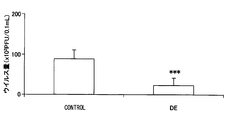
- FIG. 7 is a graph showing the amount of influenza A virus (A / NWS / 33 strain, H1N1 subtype) 3 days after infection
- FIG. 8 is a graph showing changes in mouse body weight after infection with influenza A virus
- FIG. 9 is a graph showing neutralizing antibody titers in mouse serum 14 days after infection with influenza A virus
- FIG. 10 is a graph showing neutralizing antibody titers in mouse airway lavage fluid (BALF) 14 days after infection with influenza A virus
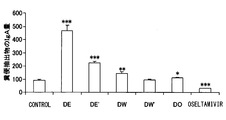
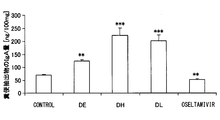
- FIG. 11 is a graph showing the IgA amount of the stool extract 14 days after infection with influenza A virus
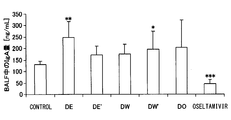
- FIG. 12 is a graph showing the amount of IgA in mouse airway lavage fluid (BALF) 14 days after infection with influenza A virus
- FIG. 13 is a graph showing changes in mouse body weight after infection with influenza A virus
- FIG. 14 is a graph showing the amount of influenza A virus (A / NWS / 33 strain, H1N1 subtype) 3 days after infection
- FIG. 15 is a graph showing neutralizing antibody titers in mouse serum 14 days after infection with influenza A virus
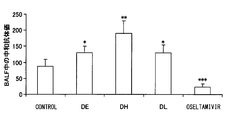
- FIG. 16 is a graph showing neutralizing antibody titers in mouse airway lavage fluid (BALF) 14 days after infection with influenza A virus
- FIG. 17 is a graph showing the IgA amount of mouse stool extract 14 days after infection with influenza A virus
- FIG. 18 is a graph showing the amount of IgA in mouse airway lavage fluid (BALF) 14 days after infection with influenza A virus.
- the MBIC11204 strain may be cultured in a medium containing sufficient nitrogen, or may be cultured in a nitrogen-deficient medium thereafter.
- An extract also referred to as a microalgae extract
- An extract can be obtained, for example, from MBIC11204 strain by extraction using alcohol (for example, ethanol), hot water or the like as an extraction solvent. Extraction can be performed sequentially using, for example, a plurality of types of extraction media. For example, extraction can be performed from the MBIC11204 strain using alcohol and the residue can be extracted using hot water.
- the antiviral agent may contain, for example, an extract in one extraction solvent or a mixture of each extract in a plurality of extraction solvents.
- a dry alga body obtained by drying (for example, freeze-drying) the MBIC11204 strain can be prepared and extracted from the dry alga body.
- the extract can be fractionated by a method such as column chromatography, for example.
- the antiviral agent may include the entire extract, or may include a fraction (for example, a fraction having a particularly high antiviral activity).
- the dosage form of the antiviral agent is not particularly limited, and can be, for example, liquid, powder, solid or the like.
- the concentration of the extract in the antiviral agent is not particularly limited, and can be appropriately set according to the capacity, usage, usage, and the like.
- the antiviral agent may appropriately contain various components other than the extract.
- Example> (1) Culture of microalgae with sufficient N medium 500 mL of a medium having the composition shown in Table 1 below was prepared using demineralized water, and this was placed in a flat glass flask (operating capacity 500 mL) and autoclaved. The MBIC11204 strain was inoculated into this medium, and the flask was stoppered with air permeability.
- the culture in the flask was stirred. At this time, light was irradiated from the periphery of the flask with a white fluorescent lamp. Further, the flask was immersed in a constant temperature water bath to adjust the internal temperature to around 28 ° C. (Celsius degree).
- the dry weight of algal cells was measured over time as an index of growth of MBIC11204 strain.
- the specific growth rate in the logarithmic growth phase was 0.079 h ⁇ 1 , and cell division occurred once every 8.8 hours.
- 300 mL of the culture broth was collected, and the algal bodies were centrifuged from the 300 mL. Thereafter, the algal bodies were freeze-dried to obtain 520.4 mg of dried algal bodies S1.
- (2) Culture of microalgae in N-deficient medium In the same manner as in (1) above, MBIC11204 strain was cultured in 500 mL of medium having the composition shown in Table 1 above. 400 mL of the culture solution was collected, and the algal cells were centrifuged from the 400 mL. Centrifugation conditions were 15,000 rpm and 10 minutes.
- the centrifuged alga bodies were washed twice with a nitrogen-deficient medium obtained by removing NaNO 3 from the composition shown in Table 1, and further cultured for 3 days under the same conditions using the nitrogen-deficient medium.
- a culture solution containing algal bodies accumulating hydrocarbons in the cells was obtained.
- 300 mL of the culture solution was collected, and the algal cells were centrifuged from the collected 300 mL. Thereafter, the algal cells were freeze-dried to obtain 884.7 mg of dried algal cells S2.
- ethanol extract DE After 8.5 g of ethanol extract DE was suspended in methanol, it was applied to a column packed with a synthetic adsorbent (DIAION HP-20, manufactured by Mitsubishi Chemical Corporation).
- the amount of the synthetic adsorbent is 500 g, the inner diameter of the column is 3.5 mm, and the axial length of the column is 60 cm.
- a first developing solvent distilled water
- a second developing solvent a solvent containing methanol and distilled water at a volume ratio of 1: 1
- a third developing solvent methanol
- a fourth developing The solvent acetone
- the component contained in the first developing solvent fraction was designated as ethanol extract DE1.
- the obtained ethanol extract DE1 was 777.9 mg.
- the component contained in the second developing solvent fraction was designated as ethanol extract DE2.
- the obtained ethanol extract DE2 was 139.1 mg.
- the component contained in the third developing solvent fraction was designated as an ethanol extract DE3.
- the obtained ethanol extract DE3 was 1.78 g.
- the component contained in the fourth developing solvent fraction was designated as ethanol extract DE4.
- the obtained ethanol extract DE4 was 3.26 g.
- silica gel 60 manufactured by Merck
- the packing amount of silica gel is 30 g
- the particle size of silica gel is 0.063-0.200 mm
- the inner diameter of the column is 2 cm
- the axial length of the column is 20 cm.
- the developing solvents A to G were passed through the column in this order to further fractionate the ethanol extract DE4. Developing solvents A to G are as follows.
- Developing solvent A n-hexane
- Developing solvent B solvent in which n-hexane and ethyl acetate are mixed at a volume ratio of 5: 1
- Developing solvent C n-hexane and ethyl acetate are mixed at a volume ratio of 3: 1
- Solvent Developing solvent D Solvent prepared by mixing n-hexane and ethyl acetate at a volume ratio of 1: 1
- Developing solvent E Solvent prepared by mixing n-hexane and ethyl acetate at a volume ratio of 1: 3
- Developing solvent F Acetic acid
- Ethyl developing solvent G A solvent in which ethyl acetate and methanol are mixed at a volume ratio of 1: 1.
- a fraction of developing solvent A is dried under reduced pressure at room temperature, and 216.3 mg of an extract (hereinafter referred to as ethanol extract DE4-a and Obtained).
- the fraction of developing solvent E was dried under reduced pressure at room temperature to obtain 170.3 mg of an extract (hereinafter referred to as ethanol extract DE4-b).
- (4) Extraction using hot water 1 L of distilled water is added to the residue after extracting the ethanol extract DE from the dry alga S1 in (3) above, heated at 85 ° C. for 1 h, filtered and the primary filtrate. And residue. Further, 1 L of distilled water was added to the residue to disperse the residue, heated again at 85 ° C. for 1 h, and then filtered to separate the secondary filtrate and the residue.
- the obtained primary filtrate and secondary filtrate were mixed, concentrated under reduced pressure at room temperature, and freeze-dried to obtain 17.0 g of a hot water extract DW.
- the oil extraction residue was dried under reduced pressure at room temperature. 1 L of distilled water was added to the obtained oil extraction residue, heated at 85 ° C. for 1 h, and then filtered to separate the primary filtrate and the residue. In the same manner as above, 1 L of distilled water was added to the residue to disperse the residue, and after heating again at 85 ° C. for 1 h, filtration was performed to separate the secondary filtrate and the residue. The obtained primary filtrate and secondary filtrate were mixed, concentrated under reduced pressure at room temperature, and freeze-dried to obtain 7.0 g of hot water extract DO from the oil extraction residue.
- HSV-2 herpes simplex virus type 2
- mice 6 days before the virus inoculation and 1 day before, medoxyprogesterone 17-acetate (3 mg / 0.1 mL / mouse) was subcutaneously injected into the mice.
- sample was locally administered twice a day from 1 hour before virus inoculation to 7 days after.
- One sample dose was 1 mg / 20 ⁇ L / mouse.
- This “1 mg / 20 ⁇ L / mouse” means that 1 mg of a sample dissolved in 20 ⁇ L of 1% DMSO-added PBS is administered to one mouse.
- the sample was orally administered to mice twice a day (9 o'clock and 18 o'clock) for two weeks from one week before the day of virus inoculation to one week later.
- the dose was 5 mg / day.
- mice The body weight and the number of deaths of mice were recorded over 2 weeks from the day of virus inoculation. There were no deaths in the groups administered with ethanol extracts DE, DW, DL, and DH as samples. On the other hand, in the Control group, one animal died 6 days after the infection.
- FIG. 4 Changes in mouse body weight are shown in FIG. 4, FIG. 8, and FIG.
- the group to which the ethanol extract DE and the hot water extract DW were administered as samples showed the same weight loss as the Control group until 7 days after the infection, but the body weight recovery after 8 days. Was earlier than the Control group. In particular, the recovery of the group administered with the ethanol extract DE was even faster.
- the group administered with ethanol extract DE and hot water extract DW, DW ′, DO as samples showed less body weight loss until 7 days after infection, and recovery thereafter. It was early.
- the group to which the ethanol extract DE ′ was administered as a sample had a similar change in body weight up to 10 days after the infection, but the subsequent recovery was quicker than the Control group.
- the group to which the ethanol extract DE, the supernatant component DL, and the sediment component DH were administered as samples had less weight loss than the Control group.
- BALF airway lavage fluid
- lungs were collected from half (5) mice.
- BALF is a liquid obtained by placing 0.8 mL of ice-cold PBS into the airway from the catheter and washing the airway. After collecting BALF, the lungs were removed. For each lung and BALF, the viral load contained in them was measured. The viral load 3 days after infection is shown in FIG. 3, FIG. 7, and FIG.
- the group to which the ethanol extract DE and the hot water extract DW were administered as samples suppressed the virus growth as compared with the Control group.
- the group administered with the ethanol extract DE, DE ′, the hot water extract DW, DW ′, and DO as samples suppressed the virus growth as compared with the Control group.
- Serum was inactivated by centrifugation from blood. At this time, the centrifugation conditions were 3,000 rpm and 4 ° C., and the inactivation conditions were 56 ° C. and 30 minutes. On the other hand, BALF was stored at ⁇ 80 ° C. immediately after collection.
- a solution obtained by appropriately diluting serum with PBS (hereinafter referred to as a serum diluted solution) and a solution obtained by appropriately diluting BALF with PBS (hereinafter referred to as a BALF diluted solution) were prepared.
- Serum dilution solution 100 ⁇ l and virus solution (fluid containing influenza A virus at a concentration of 2,000 PFU / mL) 100 ⁇ l were added to 96-well plates and mixed.
- this mixed solution is referred to as a serum-virus mixed solution.
- the serum-virus mixture has a volume of 200 ⁇ l and contains 200 PFU of influenza A virus.
- BALF-virus mixed solution 100 ⁇ l of BALF diluted solution and 100 ⁇ l of virus solution were added to 96-well plates and mixed.
- this mixed solution is referred to as a BALF-virus mixed solution.
- the BALF-virus mixture has a volume of 200 ⁇ l and contains 200 PFU of influenza A virus.
- control liquid 100 ⁇ l of PBS and 100 ⁇ l of virus solution were added to 96-well plates and mixed.
- this liquid mixture is referred to as a control liquid.
- the control solution has a volume of 200 ⁇ l and contains 200 PFU of influenza A virus.
- Serum-virus mixture, BALF-virus mixture, and control solution were each treated at 37 ° C. for 1 hour, and then added to MDCK sputum cells cultured in a single layer on 35-mm dishes in an amount of 100 ⁇ L / dish. Infected at room temperature. After 1 hour, an agar medium (2 mL / dish) was overlaid and cultured at 37 ° C. for 2 days. After removing the medium, it was fixed and stained with crystal violet solution, and the number of plaques was measured. The number of plaques in the serum-virus mixture and the BALF-virus mixture was calculated, and the 50% inhibitory dilution factor was determined when the number of plaques in the Control solution was taken as 100%, which was used as the neutralizing antibody titer.
- FIG. 5, FIG. 9, and FIG. 15 show the neutralizing antibody titers of the serum-virus mixed solution 14 days after infection.
- the neutralizing antibody titers of the BALF-virus mixed solution 14 days after infection are shown in FIG. 6, FIG. 10, and FIG.
- the neutralizing antibody titer was high.
- the group administered with ethanol extract DE, DE ′, hot water extract DW, DW ′, DO as a sample was compared with the control group and the group administered with oseltamivir.
- the neutralizing antibody titer was high.
- the group administered with the ethanol extract DE, the supernatant component DL, and the sedimented component DH as a sample was compared with the control group and the group administered with oseltamivir as the neutralizing antibody titer. Was expensive.
- the causes of the increase in the neutralizing antibody titer include the ethanol extract DE, DE ′, the hot water extract DW, DW ′, DO, the supernatant component DL, and the sediment component DH that are immune system stimulating effects. It is estimated that this is because (7-2) Measurement of IgA 10 times the amount of PBS was added to stool collected 14 days after the day of virus inoculation, and the mixture was allowed to stand at room temperature for 15 minutes and then treated with a vortex mixer. Thereafter, the mixture was further left for 15 minutes, and then a supernatant was obtained by centrifugation (3,000 rpm, 10 minutes). Hereinafter, this supernatant is referred to as a fecal extract.
- BALF collected 14 days after the day of virus inoculation was diluted 5-fold with PBS.
- this diluted solution is referred to as 5-fold diluted BALF.
- ELISA was performed by the following procedure, and IgA was measured.
- Antigen purified virus, 1 ⁇ g / mL of PBS was added in an amount of 50 ⁇ L / well to 96-well plate for ELISA (MaxiSorp, Nunc) and treated at 37 ° C. for 1 hour.
- the well was washed 3 times with PBS-T solution.
- the PBS-T solution is a PBS solution containing polyoxyethylene (20) sorbitan monolaurate (product name Tween-20) at a concentration of 0.5%.
- a secondary antibody (HRP-conjugated anti-mouse IgA, manufactured by Bethyl Laboratories) was added at 50 ⁇ L / well and treated at 37 ° C. for 1 hour.
- a substrate solution (0.4 mg / mL o-phenylenediamine + 10 ⁇ L / mL H 2 O 2 ) was added at 50 ⁇ L / well and left at room temperature for 20 minutes.
- the calibration curve was created as follows. That is, mouse IgA (Betyl Laboratories) was prepared at concentrations of 6.25, 12.5, 25, 50, 100, 200, 1000, and 5000 ng / mL, and each concentration of mouse IgA was 50 ⁇ L / well. In addition to 96-well plate for ELISA (3 wells for each concentration), after treatment at 37 ° C for 1 hour, perform the above steps b), c), d), g) to k), and adjust the amount of IgA at 490 nm. A calibration curve was prepared from the measured absorbance values.
- FIG. 11 and FIG. 17 show the IgA amount of the stool extract 14 days after infection.
- FIG. 12 and FIG. 18 show the IgA amount of 5-fold diluted BALF 14 days after infection.
- the group administered with the ethanol extract DE, the supernatant component DL, and the sedimented component DH as the sample has a higher IgA amount than the control group and the group administered with oseltamivir. It was.
- the antiviral agent according to the present disclosure includes an extract extracted from the microalga Pseudochoricystis ellipsoidea Sekiguchi et Kurano gen. Et sp. Nov. MBIC11204 strain as an active ingredient contains.
- the antiviral agent of the present disclosure exhibits high antiviral activity.
Landscapes
- Health & Medical Sciences (AREA)
- Life Sciences & Earth Sciences (AREA)
- Biotechnology (AREA)
- Engineering & Computer Science (AREA)
- Natural Medicines & Medicinal Plants (AREA)
- Virology (AREA)
- Animal Behavior & Ethology (AREA)
- Chemical & Material Sciences (AREA)
- Veterinary Medicine (AREA)
- Medicinal Chemistry (AREA)
- Public Health (AREA)
- General Health & Medical Sciences (AREA)
- Pharmacology & Pharmacy (AREA)
- Oncology (AREA)
- General Chemical & Material Sciences (AREA)
- Organic Chemistry (AREA)
- Nuclear Medicine, Radiotherapy & Molecular Imaging (AREA)
- Chemical Kinetics & Catalysis (AREA)
- Communicable Diseases (AREA)
- Botany (AREA)
- Alternative & Traditional Medicine (AREA)
- Medical Informatics (AREA)
- Epidemiology (AREA)
- Microbiology (AREA)
- Mycology (AREA)
- Molecular Biology (AREA)
- Pulmonology (AREA)
- Medicines Containing Plant Substances (AREA)
- Coloring Foods And Improving Nutritive Qualities (AREA)
Abstract
本開示に係る抗ウイルス剤は、微細藻類シュードコリシスチス エリプソイディア セキグチ エト クラノ ジェンエト エスピー ノブMBIC11204株から抽出された抽出物を有効成分として含有する。微細藻類は、窒素を充分に含む培地で培養してもよいし、この後窒素欠乏培地で培養してもよい。抽出物は、微細藻類から、アルコール、熱水等を抽出溶媒として用いた抽出される。その残渣から、熱水を用いて抽出してもよい。抗ウイルス剤は、1つの抽出溶媒における抽出物を含んでいてもよいし、複数の抽出溶媒における各抽出物の混合物を含んでいてもよい。
Description
本出願は、2013年9月24日に出願された日本国特許出願2013-197102号に基づくものであり、ここにその記載内容を参照により援用する。
本開示は抗ウイルス剤に関する。
従来、藻類は、食品、飼料等に利用されている。藻類の利用方法の一つとして、コッコミクサ藻体の抽出物を有効成分とする抗ウイルス剤が開示されている(特許文献1参照)。
本願発明者らは、以下を見出した。特許文献1で示されるような藻体は細胞単独に対して抗ウイルス活性があるのみで、様々な感染防御機能も考慮した生体試験で抗ウイルス活性を示す藻体は知られていない。
本開示は以上の点に鑑みなされたものであり、新規な抗ウイルス剤を提供することを目的とする。
本開示の一態様に係る抗ウイルス剤は、微細藻類シュードコリシスチス エリプソイディア セキグチ エト クラノ ジェンエト エスピー ノブMBIC11204株抽出物を有効成分として含有する。
本開示に係るウイルス剤によれば、様々な感染防御機能も考慮した生体試験で抗ウイルス活性が得られ、新規な抗ウイルス剤が提供される。
本開示についての上記および他の目的、特徴や利点は、添付の図面を参照した下記の詳細な説明から、より明確になる。添付図面において、
図1は、性器ヘルペスの重症度(lesion score)の記録結果を表すグラフであり、
図2は、感染3日後における性器内の単純ヘルペスウイルス2型(HSV-2)の量を表すグラフであり、
図3は、感染3日後におけるA型インフルエンザウイルス(A/NWS/33株、H1N1亜型)の量を表すグラフであり、
図4は、A型インフルエンザウイルス感染後におけるマウス体重の推移を表すグラフであり、
図5は、A型インフルエンザウイルス感染14日後におけるマウス血清中の中和抗体価を表すグラフであり、
図6は、A型インフルエンザウイルス感染14日後におけるマウス気道洗浄液(BALF)中の中和抗体価を表すグラフであり、
図7は、感染3日後におけるA型インフルエンザウイルス(A/NWS/33株、H1N1亜型)の量を表すグラフであり、
図8は、A型インフルエンザウイルス感染後におけるマウス体重の推移を表すグラフであり、
図9は、A型インフルエンザウイルス感染14日後におけるマウス血清中の中和抗体価を表すグラフであり、
図10は、A型インフルエンザウイルス感染14日後におけるマウス気道洗浄液(BALF)中の中和抗体価を表すグラフであり、
図11は、A型インフルエンザウイルス感染14日後における糞便抽出物のIgA量を表すグラフであり、
図12は、A型インフルエンザウイルス感染14日後におけるマウス気道洗浄液(BALF)中のIgA量を表すグラフであり、
図13は、A型インフルエンザウイルス感染後におけるマウス体重の推移を表すグラフであり、
図14は、感染3日後におけるA型インフルエンザウイルス(A/NWS/33株、H1N1亜型)の量を表すグラフであり、
図15は、A型インフルエンザウイルス感染14日後におけるマウス血清中の中和抗体価を表すグラフであり、
図16は、A型インフルエンザウイルス感染14日後におけるマウス気道洗浄液(BALF)中の中和抗体価を表すグラフであり、
図17は、A型インフルエンザウイルス感染14日後におけるマウス糞便抽出物のIgA量を表すグラフであり、
図18は、A型インフルエンザウイルス感染14日後におけるマウス気道洗浄液(BALF)のIgA量を表すグラフである。
本開示の実施形態を説明する。本開示で用いる微細藻類シュードコリシスチス エリプソイディア セキグチ エト クラノ ジェン エト エスピー ノブ(Pseudochoricystis ellipsoidea Sekiguchi et Kurano gen. et sp. nov.)MBIC11204株は、2005年2月15日付で独立行政法人産業技術総合研究所特許生物寄託センター(IPOD)(茨城県つくば市東1丁目1番地1中央第6)に受託番号FERM P-20401として寄託され、2006年1月18日付でプタベスト条約の規定下で受託番号FERMBP-10484として国際寄託に移管されている。
MBIC11204株は、窒素を充分に含む培地で培養してもよいし、この後窒素欠乏培地で培養してもよい。抽出物(微細藻類抽出物とも呼ぶ)は、例えば、MBIC11204株から、アルコール(例えばエタノール)、熱水等を抽出溶媒として用いた抽出により得ることができる。抽出は、例えば、複数種類の抽出媒体を用いて順次行うことができる。例えば、MBIC11204株から、アルコールを用いて抽出を行い、その残渣から、熱水を用いて抽出を行うことができる。抗ウイルス剤は、例えば、1つの抽出溶媒における抽出物を含んでいてもよいし、複数の抽出溶媒における各抽出物の混合物を含んでいてもよい。
抽出を行う際、例えば、MBIC11204株を乾燥(例えば凍結乾燥)させた乾燥藻体を作成し、その乾燥藻体から抽出を行うことができる。
抽出物は、例えば、カラムクロマトグラフィー等の方法で分画することができる。抗ウイルス剤は、抽出物全体を含むものであってもよいし、一部の画分(例えば、抗ウイルス活性が特に高い画分)を含むものであってもよい。
抗ウイルス剤の剤型は特に限定されず、例えば、液状、粉末状、固形状等とすることができる。抗ウイルス剤における抽出物の濃度は特に限定されず、容量、用途、用法等に応じて適宜設定することができる。抗ウイルス剤は、適宜、抽出物以外の各種成分を含んでいてもよい。
<実施例>
(1)N充分の培地での微細藻類の培養
脱塩水を用いて下記表1に示す組成の培地を500mL作り、これを扁平なガラスフラスコ(稼働容量500mL)に入れ加圧滅菌した。

この培地にMBIC11204株を植菌し、フラスコに通気性のある栓をした。フラスコ内に3%のCO2を付加した空気を通気すると同時に、フラスコ内の培養液を攪拌した。このとき、フラスコの周囲から白色蛍光ランプにより光を照射した。また、フラスコを恒温水槽に浸けて内部の温度を28℃(セルシウス度)付近に調節した。
<実施例>
(1)N充分の培地での微細藻類の培養
脱塩水を用いて下記表1に示す組成の培地を500mL作り、これを扁平なガラスフラスコ(稼働容量500mL)に入れ加圧滅菌した。
藻体の乾燥重量をMBIC11204株の生育の指標として経時的に測定した。対数増殖期の比増殖速度は0.079h-1であり、8.8時間に1回細胞分裂した。藻体が充分増殖したとき、上記培養液のうち300mLを回収し、その300mLから藻体を遠心分離した。その後、藻体を凍結乾燥し、520.4mgの乾燥藻体S1を得た。
(2)N欠乏培地で微細藻類の培養
上記(1)と同様に、上記表1に示す組成の培地500mLでMBIC11204株を培養した。培養液のうち400mLを回収し、その400mLから藻体を遠心分離した。遠心分離の条件は、15、000rpm、10分間とした。
(2)N欠乏培地で微細藻類の培養
上記(1)と同様に、上記表1に示す組成の培地500mLでMBIC11204株を培養した。培養液のうち400mLを回収し、その400mLから藻体を遠心分離した。遠心分離の条件は、15、000rpm、10分間とした。
次に、遠心分離した藻体を、上記表1に示す組成からNaNO3を除いた窒素欠乏培地で2回洗浄し、さらに該窒素欠乏培地を用いて同じ条件で3日間培養した。このことにより、細胞内に炭化水素を蓄積した藻体を含む培養液が得られた。上記培養液のうち300mLを回収し、回収した300mLから藻体を遠心分離した。その後、藻体を凍結乾燥し、884.7mgの乾燥藻体S2を得た。
(3)エタノールを用いた抽出
100gの乾燥藻体S1に対し、1Lのエタノールを添加して分散させ、暗所で3日間静置した。静置後、ろ過して、1次ろ液と残渣とに分離した。この残渣に上記と同様に1Lのエタノールを添加して分散させ、3日間静置した後再度ろ過して2次ろ液と残渣とに分離した。このろ過操作をもう一度繰り返し、3次ろ液と残渣とを得た。
(3)エタノールを用いた抽出
100gの乾燥藻体S1に対し、1Lのエタノールを添加して分散させ、暗所で3日間静置した。静置後、ろ過して、1次ろ液と残渣とに分離した。この残渣に上記と同様に1Lのエタノールを添加して分散させ、3日間静置した後再度ろ過して2次ろ液と残渣とに分離した。このろ過操作をもう一度繰り返し、3次ろ液と残渣とを得た。
1次ろ液、2次ろ液、及び3次ろ液を混合し、エバポレーターでエタノールを留去し、減圧乾燥してエタノール抽出物DEを8.5g得た。また、乾燥藻体S1の代わりに同量の乾燥藻体S2を用い、上と同様の方法で、エタノール抽出物DE’を8.7g得た。
8.5gのエタノール抽出物DEをメタノールに懸濁させた後、合成吸着剤(DIAION HP-20 三菱化学(株)製)を充填したカラムに付した。合成吸着剤の量は500gであり、カラムの内径は3.5mmであり、カラムの軸長は60cmである。
カラムに対し、第1の展開溶媒(蒸留水)、第2の展開溶媒(メタノールと蒸留水とを体積比1:1で含む溶媒)、第3の展開溶媒(メタノール)、及び第4の展開溶媒(アセトン)を、この順序で、それぞれ、1.5Lずつ流し、エタノール抽出物DEを分画した。それぞれの画分を室温で減圧乾燥し、分画されたエタノール抽出物を得た。
第1の展開溶媒の画分に含まれる成分をエタノール抽出物DE1とした。得られたエタノール抽出物DE1は777.9mgであった。第2の展開溶媒の画分に含まれる成分をエタノール抽出物DE2とした。得られたエタノール抽出物DE2は139.1mgであった。第3の展開溶媒の画分に含まれる成分をエタノール抽出物DE3とした。得られたエタノール抽出物DE3は1.78gであった。第4の展開溶媒の画分に含まれる成分をエタノール抽出物DE4とした。得られたエタノール抽出物DE4は3.26gであった。
2.1gのエタノール抽出物DE4を、分取クロマトグラフィー用シリカゲル(シリカゲル60、メルク製)を充填したカラムに付した。シリカゲルの充填量は30gであり、シリカゲルの粒径は0.063-0.200mmであり、カラムの内径は2cmであり、カラムの軸長は20cmである。
カラムに対し、展開溶媒A~Gをこの順序で流し、エタノール抽出物DE4をさらに分画した。展開溶媒A~Gは、それぞれ、以下のものである。
展開溶媒A:n-ヘキサン
展開溶媒B:n-ヘキサンと酢酸エチルとを、体積比5:1で混合した溶媒
展開溶媒C:n-ヘキサンと酢酸エチルとを、体積比3:1で混合した溶媒
展開溶媒D:n-ヘキサンと酢酸エチルとを、体積比1:1で混合した溶媒
展開溶媒E:n-ヘキサンと酢酸エチルとを、体積比1:3で混合した溶媒
展開溶媒F:酢酸エチル
展開溶媒G:酢酸エチルとメタノールとを、体積比1:1で混合した溶媒
展開溶媒Aの画分を室温で減圧乾燥させ、216.3mgの抽出物(以下、エタノール抽出物DE4-aとする)を得た。また、展開溶媒Eの画分を室温で減圧乾燥させ、170.3mgの抽出物(以下、エタノール抽出物DE4-bとする)を得た。
(4)熱水を用いた抽出
上記(3)において乾燥藻体S1からエタノール抽出物DEを抽出した後の残渣に蒸留水1Lを加え、85℃で1h加熱後、ろ過して1次ろ液と残渣とに分離した。さらに、その残渣に1Lの蒸留水を添加して残渣を分散させ、再度85℃で1h加熱後、ろ過して2次ろ液と残渣とに分離した。
展開溶媒B:n-ヘキサンと酢酸エチルとを、体積比5:1で混合した溶媒
展開溶媒C:n-ヘキサンと酢酸エチルとを、体積比3:1で混合した溶媒
展開溶媒D:n-ヘキサンと酢酸エチルとを、体積比1:1で混合した溶媒
展開溶媒E:n-ヘキサンと酢酸エチルとを、体積比1:3で混合した溶媒
展開溶媒F:酢酸エチル
展開溶媒G:酢酸エチルとメタノールとを、体積比1:1で混合した溶媒
展開溶媒Aの画分を室温で減圧乾燥させ、216.3mgの抽出物(以下、エタノール抽出物DE4-aとする)を得た。また、展開溶媒Eの画分を室温で減圧乾燥させ、170.3mgの抽出物(以下、エタノール抽出物DE4-bとする)を得た。
(4)熱水を用いた抽出
上記(3)において乾燥藻体S1からエタノール抽出物DEを抽出した後の残渣に蒸留水1Lを加え、85℃で1h加熱後、ろ過して1次ろ液と残渣とに分離した。さらに、その残渣に1Lの蒸留水を添加して残渣を分散させ、再度85℃で1h加熱後、ろ過して2次ろ液と残渣とに分離した。
得られた1次ろ液と2次ろ液とを混合し、室温で減圧濃縮し、凍結乾燥させることにより熱水抽出物DW17.0gを得た。
次に、熱水抽出物DWに4Lのエタノールを加えて4℃で一晩静置した。静置後、上清と沈殿とに分離した。上清は室温で減圧濃縮し、凍結乾燥させることにより上清成分DL7.5gを得た。一方、上記沈殿を遠心分離し、得られた沈降をエタノール1Lで洗浄後、蒸留水1Lに溶解させた後に凍結乾燥させ、沈降成分DH8.2gを得た。
また、上記(3)において乾燥藻体S2からエタノール抽出物DE‘を抽出した後の残渣に蒸留水1Lを加え、85℃で1h加熱後、ろ過して1次ろ液と残渣とに分離した。さらに、その残渣に1Lの蒸留水を添加して残渣を分散させ、再度85℃で1h加熱後、ろ過して2次ろ液と残渣とに分離した。得られた1次ろ液と2次ろ液とを混合し、室温で減圧濃縮し、凍結乾燥させることにより熱水抽出物DW’10.5gを得た。
(5)オイル抽出残渣からの熱水を用いた抽出
19.7gの乾燥藻体S2に対し、500mLのn-ヘキサンを添加して乾燥粉体S2を分散させた。その後、室温で1日静置し、オイルを抽出した。静置後、ろ過してオイルを含むろ液とオイル抽出残渣とに分離した。残渣には上記と同様に500mLのn-ヘキサンを添加して残渣を分散させ、1日静置した後、再度ろ過してろ液とオイル抽出残渣とに分離した。この操作をもう一度繰り返し、ろ液とオイル抽出残渣とを得た。
(5)オイル抽出残渣からの熱水を用いた抽出
19.7gの乾燥藻体S2に対し、500mLのn-ヘキサンを添加して乾燥粉体S2を分散させた。その後、室温で1日静置し、オイルを抽出した。静置後、ろ過してオイルを含むろ液とオイル抽出残渣とに分離した。残渣には上記と同様に500mLのn-ヘキサンを添加して残渣を分散させ、1日静置した後、再度ろ過してろ液とオイル抽出残渣とに分離した。この操作をもう一度繰り返し、ろ液とオイル抽出残渣とを得た。
オイル抽出残渣を室温で減圧乾燥した。得られたオイル抽出残渣に蒸留水1Lを加え、85℃で1h加熱後、ろ過して1次ろ液と残渣とに分離した。残渣に上記と同様に1Lの蒸留水を添加して残渣を分散させ、再度85℃で1h加熱後、ろ過して2次ろ液と残渣とに分離した。得られた1次ろ液と2次ろ液とを混合し、室温で減圧濃縮し、凍結乾燥させることにより、オイル抽出残渣からの熱水抽出物DOを7.0g得た。
(6)単純ヘルペスウイルス2型(HSV-2)に対する抗ウイルス剤の効果を確認するための試験
サンプルとしてエタノール抽出物DE、DE2、DE4、DE4-a、DE4-bを用い、以下の方法で、HSV-2に対する効果を試験した。
(6)単純ヘルペスウイルス2型(HSV-2)に対する抗ウイルス剤の効果を確認するための試験
サンプルとしてエタノール抽出物DE、DE2、DE4、DE4-a、DE4-bを用い、以下の方法で、HSV-2に対する効果を試験した。
BALB/cマウス(♀、5週齢)(n=5)に、HSV-2を接種し、感染させた。HSV-2は1回、局所投与した。1回の投与量は、1×104PFU/20μL/mouseとした。この「1×104PFU/20μL/mouse」とは、1×104PFUのウイルスを20μlのリン酸緩衝生理食塩水(PBS)に加えたものを、1匹のマウスに投与することを意味する。PFUとは、プラーク形成単位である。
なお、ウイルス接種の6日前、及び1日前に、それぞれ、medroxyprogesterone 17-acetate(3mg/0.1mL/mouse)をマウスに皮下注射しておいた。
また、ウイルス接種の1時間前から7日後まで、1日2回サンプルを局所投与した。1回のサンプル投与量は、1mg/20μL/mouseとした。この「1mg/20μL/mouse」とは、1mgのサンプルを20μLの1%DMSO添加PBSに溶解したものを、1匹のマウスに投与することを意味する。
ウイルス接種の3日後に、マウスの局所をPBSで洗浄し、その中のウイルス量をプラーク法で測定した。ウイルス量については、Control群に対する有意差を、*P<0.05、**P<0.01、***P<0.001で表した。
また、ウイルス接種の日から、その14日後まで、死亡例や性器ヘルペスの発症の程度(lesion score)を記録した。lesion scoreの記録結果を図1に示す。図1における「1」~「5」はそれぞれ以下を意味する。
1:腫脹あり
2:腫脹及び発赤あり
3:液滲出あり
4:後ろ足麻痺
5:死亡
この結果から、エタノール抽出物DE、DE2、DE4、DE4-a、DE4-bは、ヘルペスウイルスの発症程度を抑制することがわかった。また、感染3日後におけるウイルス量を図2に示す。この結果から、エタノール抽出物DEは、ウイルス生産量を有意に低下させることがわかった。
(7)A型インフルエンザウイルスに対する抗ウイルス剤の効果を確認するための試験
サンプルとしてエタノール抽出物DE、DE’、熱水抽出物DW、DW’、DO、上清成分DL、沈降成分DHを用い、以下の方法で、A型インフルエンザウイルスに対する効果を試験した。
(7-1)体重、ウイルス量、及び中和抗体価の測定
BALB/cマウス(♀、6週齢)(n=10)に、A型インフルエンザウイルス(A/NWS/33株、H1N1亜型)を経鼻接種し、感染させた。ウイルスの接種量は、1×104PFU/50μL/mouseとした。この「1×104PFU/50μL/mouse」とは、1×104PFUのウイルスを50μLのPBSに加えたものを、1匹のマウスに投与することを意味する。
2:腫脹及び発赤あり
3:液滲出あり
4:後ろ足麻痺
5:死亡
この結果から、エタノール抽出物DE、DE2、DE4、DE4-a、DE4-bは、ヘルペスウイルスの発症程度を抑制することがわかった。また、感染3日後におけるウイルス量を図2に示す。この結果から、エタノール抽出物DEは、ウイルス生産量を有意に低下させることがわかった。
(7)A型インフルエンザウイルスに対する抗ウイルス剤の効果を確認するための試験
サンプルとしてエタノール抽出物DE、DE’、熱水抽出物DW、DW’、DO、上清成分DL、沈降成分DHを用い、以下の方法で、A型インフルエンザウイルスに対する効果を試験した。
(7-1)体重、ウイルス量、及び中和抗体価の測定
BALB/cマウス(♀、6週齢)(n=10)に、A型インフルエンザウイルス(A/NWS/33株、H1N1亜型)を経鼻接種し、感染させた。ウイルスの接種量は、1×104PFU/50μL/mouseとした。この「1×104PFU/50μL/mouse」とは、1×104PFUのウイルスを50μLのPBSに加えたものを、1匹のマウスに投与することを意味する。
ウイルス接種の日の1週間前から、1週間後までの2週間にわたって、サンプルを1日2回(9時および18時)、マウスに経口投与した。投与量は、5mg/dayとした。
ウイルス接種の日から、2週間にわたって、マウスの体重及び死亡数を記録した。サンプルとしてエタノール抽出物DE、DW、DL、DHを投与した群では死亡例はなかった。一方、Control群では、感染6日後に1匹が死亡した。
マウス体重の推移を図4、図8、図13に示す。図4に示すように、サンプルとしてエタノール抽出物DE、熱水抽出物DWを投与した群は、感染7日後まではControl群と同程度の体重減少を示したが、8日後からの体重の回復はControl群よりも早かった。特に、エタノール抽出物DEを投与した群の回復は一層早かった。
また、図8に示すように、サンプルとしてエタノール抽出物DE、熱水抽出物DW、DW’、DOを投与した群は、Control群に比べ、感染7日後までの体重減少が少なく、その後の回復が早かった。また、サンプルとしてエタノール抽出物DE‘を投与した群は、Control群に比べ、感染10日後までの体重変化は同程度であったが、その後の回復は早かった。
また、図13に示すように、サンプルとしてエタノール抽出物DE、上清成分DL、沈降成分DHを投与した群は、Control群に比べ、体重減少が少なかった。
また、ウイルス接種の日から3日後に、半数(5匹)のマウスから、気道洗浄液(BALF)及び肺を採取した。BALFは、0.8mLの氷冷したPBSをカテーテルから気道に入れ、気道を洗浄して得た液である。BALFを採取した後に、肺を摘出した。肺及びBALFのそれぞれについて、それらに含まれるウイルス量を測定した。感染3日後におけるウイルス量を図3、図7、図14に示す。
図3に示すように、サンプルとしてエタノール抽出物DE、熱水抽出物DWを投与した群は、Control群に比べ、ウイルス増殖を抑制していた。特に、DWを投与した群は、ウイルス増殖を顕著に抑制していた。
また、図7に示すように、サンプルとしてエタノール抽出物DE、DE’、熱水抽出物DW、DW’、DOを投与した群は、Control群に比べ、ウイルス増殖を抑制していた。
また、図14に示すように、サンプルとしてエタノール抽出物DE、上清成分DL、沈降成分DHを投与した群は、Control群に比べ、ウイルス増殖を抑制していた。
また、ウイルス接種の日から14日後に、残り半数のマウスから、血液、BALF、及び糞便を採取した。そして、この血液及びBALFを用いて、以下に示すとおり、中和抗体価格を測定した。
血液から血清を遠心分離し、非働化した。このとき、遠心分離の条件は、3、000rpm、4℃とし、非働化の条件は56℃、30分間とした。一方、BALFは、採取後すぐに-80℃で保存した。
血清をPBSで適宜希釈した液(以下、血清希釈液とする)と、BALFをPBSで適宜希釈した液(以下、BALF希釈液とする)とをそれぞれ作成した。
血清希釈液100μlと、ウイルス液(A型インフルエンザウイルスを2、000PFU/mLの濃度で含む液)100μlとを、96-well platesに加えて混合した。以下では、この混合液を、血清-ウイルス混合液とする。血清-ウイルス混合液は、体積が200μlであり、その中に200PFUのA型インフルエンザウイルスを含む。
また、BALF希釈液100μlと、ウイルス液100μlとを、96-well platesに加えて混合した。以下では、この混合液を、BALF-ウイルス混合液とする。BALF-ウイルス混合液は、体積が200μlであり、その中に200PFUのA型インフルエンザウイルスを含む。
また、controlとして、PBS100μlと、ウイルス液100μlとを、96-well platesに加えて混合した。以下では、この混合液を、control液とする。control液は、体積が200μlであり、その中に200PFUのA型インフルエンザウイルスを含む。
血清-ウイルス混合液、BALF-ウイルス混合液、及びcontrol液を、それぞれ、37℃で1時間処理してから、35-mm dishesに単層状に培養したMDCK 細胞へ、100μL/dishの量で加えて、室温で感染させた。1時間後に、寒天培地(2mL/dish)を重層し、37℃で2日間培養した。培地を除去後、クリスタルバイオレット液で固定・染色し、プラーク数を測定した。血清-ウイルス混合液、及びBALF-ウイルス混合液におけるプラーク数を計算し、Control液におけるプラーク数を100%とした時の50%阻害希釈倍数を求め、それを中和抗体価とした。
感染14日後における血清-ウイルス混合液の中和抗体価を図5、図9、図15に示す。また、感染14日後におけるBALF-ウイルス混合液の中和抗体価を図6、図10、図16に示す。
図5、図6に示すように、サンプルとしてエタノール抽出物DE、熱水抽出物DWを投与した群では、Control群、及びオセルタミビル(F.ホフマン・ラ・ロシュ製)を投与した群に比べて、中和抗体価が高かった。
また、図9、図10に示すように、サンプルとしてエタノール抽出物DE、DE’、熱水抽出物DW、DW’、DOを投与した群では、Control群、及びオセルタミビルを投与した群に比べて、中和抗体価が高かった。
また、図15、図16に示すように、サンプルとしてエタノール抽出物DE、上清成分DL、沈降成分DHを投与した群では、Control群、及びオセルタミビルを投与した群に比べて、中和抗体価が高かった。
なお、上記のように、中和抗体価が高くなる原因としては、エタノール抽出物DE、DE’、熱水抽出物DW、DW’、DO、上清成分DL、沈降成分DHが免疫系刺激効果を有するためであると推定される。
(7-2)IgAの測定
ウイルス接種の日から14日後に採取した糞便に、10倍量のPBSを加え、室温で15分間放置した後、ボルテックスミキサーで処理した。その後さらに15分間放置してから、遠心分離(3,000rpm、10分間)により上清を得た。以下では、この上澄みを糞便抽出物とする。一方、ウイルス接種の日から14日後に採取したBALFをPBSで5倍希釈した。以下では、この希釈液を5倍希釈BALFとする。
(7-2)IgAの測定
ウイルス接種の日から14日後に採取した糞便に、10倍量のPBSを加え、室温で15分間放置した後、ボルテックスミキサーで処理した。その後さらに15分間放置してから、遠心分離(3,000rpm、10分間)により上清を得た。以下では、この上澄みを糞便抽出物とする。一方、ウイルス接種の日から14日後に採取したBALFをPBSで5倍希釈した。以下では、この希釈液を5倍希釈BALFとする。
次に、以下の手順でELISAを実施し、IgAを測定した。
a)抗原(精製したウイルス、1μg/mL of PBS)を、ELISA用96-well plates (MaxiSorp、Nunc製)に50μL/wellずつ加え、37℃で1時間処理した。
b)PBS-T液でwellを3回洗浄した。ここで、PBS-T液とは、ポリオキシエチレン(20)ソルビタンモノラウレート(製品名Tween-20)を、0.5%の濃度で含むPBS溶液である。
c)5%スキムミルク(PBSに溶解したもの)を100μL/well加え、4℃で一晩ブロッキング処理した。
d)PBS-Tでwellを3回洗浄した。
e)上記の糞便抽出物または5倍希釈BALFを50μL/well加え、37℃で1時間処理した。
f)PBS-Tでwellを3回洗浄した。
g)二次抗体(HRP-conjugated anti-mouse IgA、Bethyl Laboratories製)を50μL/well加え、37℃で1時間処理した。
h)PBS-Tでwellを3回洗浄した。
i)基質溶液(0.4mg/mL o-phenylenediamine + 10μL/mL H2O2)を50μL/well加え、室温で20分間放置した。
j)4N硫酸(25μL/well)を加え、反応を停止させた。
k)490nmで吸光度を測定し、糞便抽出物の場合には3本のチューブに分割してそれぞれを測定し、5倍希釈BALFの場合には各サンプルを2回測定した。その平均値を用いて、検量線からIgA量を求めた。
なお、検量線は、次のように作成した。すなわち、マウスIgA(Bethyl Laboratories製)を、6.25、 12.5、 25、 50、 100、 200、 1000、 及び5000ng/mLの濃度でそれぞれ調製し、各濃度のマウスIgAを、50μL/wellずつELISA用96-well platesに加え(各濃度当たり3wells)、37℃、1時間処理後、上記のb),c),d),g)~k)の操作を行い、IgA量と490nmでの吸光度測定値から、検量線を作成した。
感染14日後における糞便抽出物のIgA量を図11、図17に示す。また、 感染14日後における5倍希釈BALFのIgA量を図12、図18に示す。
図11、図12に示すように、サンプルとしてエタノール抽出物DE、DE’、熱水抽出物DW、DW’、DOを投与した群では、Control群、及びオセルタミビルを投与した群に比べて、IgA量が高かった。特に、エタノール抽出物DEを投与した群におけるIgA量の増加が顕著であった。
また、図17、図18に示すように、サンプルとしてエタノール抽出物DE、上清成分DL、沈降成分DHを投与した群では、Control群、及びオセルタミビルを投与した群に比べて、IgA量が高かった。
本開示に係る抗ウイルス剤は、微細藻類シュードコリシスチス エリプソイディア セキグチ エト クラノ ジェン エト エスピー ノブ(Pseudochoricystis ellipsoidea Sekiguchi et Kurano gen. et sp. nov.)MBIC11204株から抽出された抽出物を有効成分として含有する。本開示の抗ウイルス剤は、高い抗ウイルス活性を奏する。
以上、本開示に係る抗ウイルス剤の実施形態、構成、態様を例示したが、本開示に係る実施形態、構成、態様は、上述した各実施形態、各構成、各態様に限定されるものではない。例えば、異なる実施形態、構成、態様にそれぞれ開示された技術的部を適宜組み合わせて得られる実施形態、構成、態様についても本開示に係る実施形態、構成、態様の範囲に含まれる。
Claims (6)
- 微細藻類シュードコリシスチス エリプソイディア セキグチ エト クラノ ジェンエト エスピー ノブMBIC11204株抽出物を有効成分として含有する抗ウイルス剤。
- 前記微細藻類抽出物は、前記微細藻類からアルコールを用いて抽出された抽出物である請求項1に記載の抗ウイルス剤。
- 前記アルコールは、エタノールである請求項2に記載の抗ウイルス剤。
- 前記微細藻類抽出物は、前記微細藻類からアルコールを用いて抽出した後の前記微細藻類産物から、熱水を用いて抽出される請求項1に記載の抗ウイルス剤。
- 前記熱水は、85℃である請求項4に記載の抗ウイルス剤。
- 単純ヘルペスウイルス2型およびA型インフルエンザウイルスを対象とする請求項1に記載の抗ウイルス剤。
Priority Applications (1)
| Application Number | Priority Date | Filing Date | Title |
|---|---|---|---|
| US15/023,780 US20160213719A1 (en) | 2013-09-24 | 2014-08-21 | Antiviral agent |
Applications Claiming Priority (2)
| Application Number | Priority Date | Filing Date | Title |
|---|---|---|---|
| JP2013-197102 | 2013-09-24 | ||
| JP2013197102A JP6125962B2 (ja) | 2013-09-24 | 2013-09-24 | 抗ウイルス剤 |
Publications (1)
| Publication Number | Publication Date |
|---|---|
| WO2015045265A1 true WO2015045265A1 (ja) | 2015-04-02 |
Family
ID=52742444
Family Applications (1)
| Application Number | Title | Priority Date | Filing Date |
|---|---|---|---|
| PCT/JP2014/004305 Ceased WO2015045265A1 (ja) | 2013-09-24 | 2014-08-21 | 抗ウイルス剤 |
Country Status (3)
| Country | Link |
|---|---|
| US (1) | US20160213719A1 (ja) |
| JP (1) | JP6125962B2 (ja) |
| WO (1) | WO2015045265A1 (ja) |
Families Citing this family (1)
| Publication number | Priority date | Publication date | Assignee | Title |
|---|---|---|---|---|
| JP2020019729A (ja) * | 2018-07-31 | 2020-02-06 | 株式会社デンソー | ヘルペスウイルス回帰発症抑制剤 |
Citations (1)
| Publication number | Priority date | Publication date | Assignee | Title |
|---|---|---|---|---|
| JP2005247757A (ja) * | 2004-03-04 | 2005-09-15 | Nikken Sohonsha Corp | 抗ウイルス剤 |
Family Cites Families (4)
| Publication number | Priority date | Publication date | Assignee | Title |
|---|---|---|---|---|
| US6440980B1 (en) * | 1996-09-17 | 2002-08-27 | Avanir Pharmaceuticals | Synergistic inhibition of viral replication by long-chain hydrocarbons and nucleoside analogs |
| CA2273960C (en) * | 1996-09-17 | 2003-12-30 | Avanir Pharmaceuticals | Viral inhibition by long-chain alcohols, alkanes, fatty acids and amides |
| EP2434006A3 (en) * | 2005-04-12 | 2012-04-04 | Denso Corporation | Novel microalga and process for producing hydrocarbon |
| JP2013102715A (ja) * | 2011-11-11 | 2013-05-30 | Denso Corp | 新規微細藻類、炭化水素の製造方法、及びアシルグリセライドの製造方法 |
-
2013
- 2013-09-24 JP JP2013197102A patent/JP6125962B2/ja active Active
-
2014
- 2014-08-21 WO PCT/JP2014/004305 patent/WO2015045265A1/ja not_active Ceased
- 2014-08-21 US US15/023,780 patent/US20160213719A1/en not_active Abandoned
Patent Citations (1)
| Publication number | Priority date | Publication date | Assignee | Title |
|---|---|---|---|---|
| JP2005247757A (ja) * | 2004-03-04 | 2005-09-15 | Nikken Sohonsha Corp | 抗ウイルス剤 |
Non-Patent Citations (1)
| Title |
|---|
| SOCIETY OF GENOME MICROBIOLOGY, JAPAN NENKAI PROGRAM, March 2013 (2013-03-01), pages 24 - 31, Retrieved from the Internet <URL:http://www.sgmj.crg/2013/docs/poster1P.pdf> * |
Also Published As
| Publication number | Publication date |
|---|---|
| US20160213719A1 (en) | 2016-07-28 |
| JP6125962B2 (ja) | 2017-05-10 |
| JP2015063474A (ja) | 2015-04-09 |
Similar Documents
| Publication | Publication Date | Title |
|---|---|---|
| CN111057705B (zh) | 一种提取游离核酸的试剂盒及使用方法 | |
| JP2017537630A (ja) | 低酸素培養条件におけるエクソソームの生成方法 | |
| Zhao et al. | Enterovirus71 virus‐like particles produced from insect cells and purified by multistep chromatography elicit strong humoral immune responses in mice | |
| Zhu et al. | Astragalus and baicalein regulate inflammation of mesenchymal stem cells (MSCs) by the mitogen-activated protein kinase (MAPK)/ERK pathway | |
| JP6125962B2 (ja) | 抗ウイルス剤 | |
| CN102423346B (zh) | 一种牡丹皮提取物及其制备方法和用途 | |
| CN113262234B (zh) | 单糖类衍生物在制备免疫调节药物方面的应用 | |
| Kok et al. | Inhibitory activities of microalgal extracts against Epstein-Barr virus DNA release from lymphoblastoid cells | |
| CN110025630A (zh) | 黑莓籽多糖在制备免疫增强药物中的应用 | |
| CN103566008B (zh) | 一种三白草提取物及其制备方法和应用 | |
| CN104434945A (zh) | 络氨酸磷酸酶激动剂在清除细胞和生物体内病原体中的应用 | |
| JP2017075117A (ja) | バリア機能改善剤 | |
| CN101933976A (zh) | 连翘挥发油高效活性部位纳米乳的制备方法 | |
| CN115414434A (zh) | 一种混合菌种发酵制备胆南星饮片的制备方法 | |
| CN103735599B (zh) | 臭灵丹提取物及组合物在抗甲型病毒性流感药物中的应用 | |
| CN117736219B (zh) | 一类白参菌来源的倍半萜类化合物及其制备方法和在制备抗炎药物中的应用 | |
| Das et al. | Anti hepatitis B viral activity of Phyllanthus reticulatus | |
| CN115040548A (zh) | 一种真海鞘抗肿瘤提取物及其制备方法和应用 | |
| CN1843507B (zh) | 一种人用腮腺炎病毒组份疫苗及其制备方法和应用 | |
| CN107106535A (zh) | 治疗或预防与空气污染有关的疾病的方法 | |
| KR101767337B1 (ko) | 독창적인 순수물질 추출법 | |
| Galasso et al. | Magnetic bead purification of enveloped alphavirus and flavivirus | |
| CN104910016A (zh) | 一种黑果枸杞中硬质酰基甘油的制备方法及其应用 | |
| CN113816817B (zh) | 一种倍半萜烯异构体衍生物高效转化和高纯度单体制备方法及其在抗肿瘤药物中的应用 | |
| JP2020125243A (ja) | セレノネインモノマーの分離方法 |
Legal Events
| Date | Code | Title | Description |
|---|---|---|---|
| 121 | Ep: the epo has been informed by wipo that ep was designated in this application |
Ref document number: 14849880 Country of ref document: EP Kind code of ref document: A1 |
|
| WWE | Wipo information: entry into national phase |
Ref document number: 15023780 Country of ref document: US |
|
| NENP | Non-entry into the national phase |
Ref country code: DE |
|
| 122 | Ep: pct application non-entry in european phase |
Ref document number: 14849880 Country of ref document: EP Kind code of ref document: A1 |