WO2014189065A1 - 水系潤滑剤 - Google Patents
水系潤滑剤 Download PDFInfo
- Publication number
- WO2014189065A1 WO2014189065A1 PCT/JP2014/063398 JP2014063398W WO2014189065A1 WO 2014189065 A1 WO2014189065 A1 WO 2014189065A1 JP 2014063398 W JP2014063398 W JP 2014063398W WO 2014189065 A1 WO2014189065 A1 WO 2014189065A1
- Authority
- WO
- WIPO (PCT)
- Prior art keywords
- water
- graphite
- graphene oxide
- sliding
- sp1go
- Prior art date
- Legal status (The legal status is an assumption and is not a legal conclusion. Google has not performed a legal analysis and makes no representation as to the accuracy of the status listed.)
- Ceased
Links
Images








Classifications
-
- C—CHEMISTRY; METALLURGY
- C10—PETROLEUM, GAS OR COKE INDUSTRIES; TECHNICAL GASES CONTAINING CARBON MONOXIDE; FUELS; LUBRICANTS; PEAT
- C10M—LUBRICATING COMPOSITIONS; USE OF CHEMICAL SUBSTANCES EITHER ALONE OR AS LUBRICATING INGREDIENTS IN A LUBRICATING COMPOSITION
- C10M173/00—Lubricating compositions containing more than 10% water
- C10M173/02—Lubricating compositions containing more than 10% water not containing mineral or fatty oils
-
- C—CHEMISTRY; METALLURGY
- C10—PETROLEUM, GAS OR COKE INDUSTRIES; TECHNICAL GASES CONTAINING CARBON MONOXIDE; FUELS; LUBRICANTS; PEAT
- C10M—LUBRICATING COMPOSITIONS; USE OF CHEMICAL SUBSTANCES EITHER ALONE OR AS LUBRICATING INGREDIENTS IN A LUBRICATING COMPOSITION
- C10M2201/00—Inorganic compounds or elements as ingredients in lubricant compositions
- C10M2201/04—Elements
- C10M2201/041—Carbon; Graphite; Carbon black
-
- C—CHEMISTRY; METALLURGY
- C10—PETROLEUM, GAS OR COKE INDUSTRIES; TECHNICAL GASES CONTAINING CARBON MONOXIDE; FUELS; LUBRICANTS; PEAT
- C10N—INDEXING SCHEME ASSOCIATED WITH SUBCLASS C10M RELATING TO LUBRICATING COMPOSITIONS
- C10N2020/00—Specified physical or chemical properties or characteristics, i.e. function, of component of lubricating compositions
- C10N2020/01—Physico-chemical properties
- C10N2020/055—Particles related characteristics
- C10N2020/06—Particles of special shape or size
-
- C—CHEMISTRY; METALLURGY
- C10—PETROLEUM, GAS OR COKE INDUSTRIES; TECHNICAL GASES CONTAINING CARBON MONOXIDE; FUELS; LUBRICANTS; PEAT
- C10N—INDEXING SCHEME ASSOCIATED WITH SUBCLASS C10M RELATING TO LUBRICATING COMPOSITIONS
- C10N2030/00—Specified physical or chemical properties which is improved by the additive characterising the lubricating composition, e.g. multifunctional additives
- C10N2030/06—Oiliness; Film-strength; Anti-wear; Resistance to extreme pressure
-
- C—CHEMISTRY; METALLURGY
- C10—PETROLEUM, GAS OR COKE INDUSTRIES; TECHNICAL GASES CONTAINING CARBON MONOXIDE; FUELS; LUBRICANTS; PEAT
- C10N—INDEXING SCHEME ASSOCIATED WITH SUBCLASS C10M RELATING TO LUBRICATING COMPOSITIONS
- C10N2040/00—Specified use or application for which the lubricating composition is intended
- C10N2040/20—Metal working
-
- C—CHEMISTRY; METALLURGY
- C10—PETROLEUM, GAS OR COKE INDUSTRIES; TECHNICAL GASES CONTAINING CARBON MONOXIDE; FUELS; LUBRICANTS; PEAT
- C10N—INDEXING SCHEME ASSOCIATED WITH SUBCLASS C10M RELATING TO LUBRICATING COMPOSITIONS
- C10N2050/00—Form in which the lubricant is applied to the material being lubricated
- C10N2050/015—Dispersions of solid lubricants
Definitions
- the present invention relates to an aqueous lubricant containing graphene oxide.
- oil-based materials such as machine oil and machining oil are used as lubricants.
- a coating made of a highly lipophilic material is provided on the contact surface.
- a carbon atom-containing inorganic material such as graphite, diamond-like carbon, or carbon nanotube as a highly lipophilic material (see, for example, Patent Document 1).
- these coatings are formed on the inner surface of the surface texturing by innumerable recesses formed on the contact surface.
- Oil-based lubricants are extremely inexpensive and are widely used. However, when an oil-based lubricant is used as, for example, cutting oil, it is necessary to degrease the workpiece, and various chemicals for this degreasing treatment are necessary, and it is easy to increase the cost in the post-treatment. It was.
- oil-based lubricants have a problem of flammability
- water-soluble lubricants that are used by mixing with water are also used recently.
- a cleaning process using an appropriate chemical is necessary, and an aqueous lubricant that can be easily post-processed has been demanded.
- an aqueous lubricant containing a nanocarbon material such as fullerene in an aqueous solvent see, for example, Patent Document 2
- processing in which ultrafine particles such as fullerene and carbon nanotubes are dispersed in water containing a surfactant has been proposed.
- water-based lubricants in which carbon materials such as fullerenes are dispersed originally have low dispersibility of carbon materials such as fullerenes in water, so various additives such as surfactants are necessary and are flammable.
- various additives such as surfactants are necessary and are flammable.
- one of the inventors of the present invention has invented a production method that makes it possible to produce graphene oxide highly dispersed in water at a lower cost than before.
- the inventors of the present invention have been studying the use of graphene oxide produced by this production method. As a result, they have found that it can be used as a lubricant, and have achieved the present invention.
- the aqueous lubricant of the present invention is an aqueous lubricant in which graphene oxide formed by exfoliating graphite and exfoliating it from graphite is dispersed in water.
- the exfoliation treatment is performed by mixing graphite with an aqueous solution containing an oxidizing agent. In this way, peeling is caused by oxidizing graphite.
- the aqueous lubricant of the present invention is also characterized by the following points.
- the graphite should be fine powder with an average particle size of 100 ⁇ m or less.
- (3) Graphite should contain graphene oxide at a concentration of 0.01 wt% or more as a fine powder with an average particle size of 50 ⁇ m or less.
- an aqueous lubricant using graphene oxide that is highly dispersed in water can be used as a lubricant without using an extra additive. Furthermore, in the water-based lubricant of the present invention, graphene oxide itself is harmless in post-treatment after use as a lubricant, so that it can be disposed of easily and at low cost.
- (A) is an SEM image of the sliding surface of the ball after 60,000 sliding tests with a friction tester in the case of 1 wt% SP1GO dispersed water.
- (B) is the sliding surface of (a). It is a measurement result of carbon element component distribution by energy dispersive X-ray spectroscopic analysis (EDX).
- (A) is an SEM image of the sliding surface of the substrate (SUS304) after 60,000 sliding tests with a friction tester in the case of 1 wt% SP1GO dispersed water
- (b) is (a) 3 is a measurement result of a carbon element component distribution by energy dispersive X-ray spectroscopy (EDX) on a sliding surface of the steel.
- the aqueous lubricant of the present invention is an aqueous lubricant in which graphene oxide obtained by subjecting graphite to exfoliation and exfoliating from graphite is dispersed in water.
- exfoliation is caused by mixing graphite in an aqueous solution containing an oxidizing agent to oxidize the graphite.
- the graphene oxide formed by peeling from graphite into water to form an aqueous lubricant, the graphene oxide can be suitably maintained in a dispersed state without any other additive, and used as a lubricant. Can function.
- graphene oxide itself is harmless and functions as a lubricant even without other additives, it can be disposed of easily and at low cost in post-treatment after use as a lubricant. If necessary, graphene oxide can be decomposed by adding an appropriate acid to the waste liquid after use as a lubricant, and the graphene oxide itself can be lost.
- the graphite to be exfoliated is desirably a fine powder having an average particle diameter of 100 ⁇ m or less, and preferably a fine powder having an average particle diameter of 50 ⁇ m or less.
- the average particle size of graphite By setting the average particle size of graphite to 100 ⁇ m or less, the average particle size of graphene oxide also becomes 100 ⁇ m or less, and the graphene oxide concentration in the aqueous lubricant can be used as a lubricant by setting it to 0.1 wt% or more.
- the average particle size of graphite is set to 50 ⁇ m or less, the average particle size of graphene oxide also becomes 50 ⁇ m or less, and the concentration of graphene oxide in an aqueous lubricant can be set to 0.01 wt% or more and can be used as a lubricant. That is, by using graphene oxide having a smaller diameter, the concentration of graphene oxide can be reduced, and the amount of graphene oxide used can be reduced, so that a less expensive aqueous lubricant can be provided.
- a friction tester was used as a method for evaluating the aqueous lubricant of the present invention.
- the friction tester used in this example is composed of a flat substrate, a ball arranged in contact with the upper surface of the substrate, and a sliding mechanism for reciprocatingly sliding the ball on the substrate. .
- the ball is reciprocated on the substrate without rotating at all.
- the material of the substrate is SUS304 and the surface is smoothed by grinding.
- the material of the ball is a very hard ball for bearings (tansten carbide), with a 1 mm radius.
- the ball sliding conditions were such that the sliding distance for one cycle was about 2 mm and the sliding time for one cycle was about 0.2 seconds. That is, the sliding speed is approximately 0.02 m / s.
- graphene oxide graphene oxide created by oxidizing graphite called “SP1” and graphene oxide created by oxidizing graphite called “X100” were used.
- SP1GO graphene oxide created by oxidizing graphite
- X100GO graphene oxide created by oxidizing graphite
- the raw material graphite is irradiated with microwaves using a microwave oven, and then the graphite irradiated with the microwaves is mixed with an oxidizing agent composed of sulfuric acid, sodium nitrate, and potassium permanganate. It was oxidized by mixing with an aqueous solution to produce exfoliation as graphene oxide.
- an oxidizing agent composed of sulfuric acid, sodium nitrate, and potassium permanganate. It was oxidized by mixing with an aqueous solution to produce exfoliation as graphene oxide.
- an aqueous graphene oxide solution having high water dispersibility can be prepared, and an inexpensive graphene oxide aqueous solution can be provided.
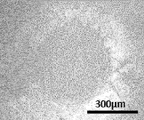
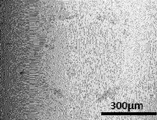
- FIG. 1 shows a scanning electron microscope (SEM) photograph of SP1GO and X100GO dropped on a silicon oxide film substrate.
- SP1GO is over 50 ⁇ m in one large size, but X100GO is about 5 ⁇ m in size.
- the difference in size is caused by the size of the raw graphite powder, and it is desirable to adjust the size of the graphite powder so that a desired size can be obtained.
- graphite is desirably a fine powder having an average particle size of 100 ⁇ m or less, and preferably has an average particle size of 50 ⁇ m or less.
- SP1GO and X100GO were subjected to the following comparative tests as dispersed water adjusted to a desired concentration.
- FIG. 2 (a) as a comparative test of purified water alone, SP1GO dispersed water, X100GO dispersed water, and a commercially available water-soluble lubricant, 60,000 reciprocating slides were performed using the friction tester described above. It shows the coefficient of friction change.
- the SP1GO dispersion water and the X100GO dispersion water each had a concentration of 1 wt%, and the commercially available water-soluble lubricant was a 1% aqueous solution.
- the friction coefficient of purified water is 0.4 or more, and the friction coefficient of the water-soluble lubricant is around 0.1.
- the friction coefficients of SP1GO dispersion water and X100GO dispersion water are each around 0.05, indicating that the friction coefficient is lower than that of the water-soluble lubricant and extremely good lubrication characteristics.
- Fig. 2 (b) shows the change in the friction coefficient when the reciprocating slide is performed 60,000 times with a friction tester as a comparative test based on the difference in SP1GO concentration in SP1GO dispersed water. As a comparative example, only purified water is shown.
- the friction coefficient of 1wt% SP1GO dispersed water is the lowest at 0.05, the friction coefficient of 0.1wt% SP1GO dispersed water is around 0.1, and 0.01wt% SP1GO dispersed water. It can be seen that the coefficient of friction finally exceeds 0.3. Thus, it was confirmed that there was a lubricating effect even at 0.01 wt%, compared with that of purified water alone. However, if the same level of performance as that of a commercially available water-soluble lubricant is required, the concentration of SP1GO dispersed water is desirably 0.1 wt% or more.
- Fig. 2 (c) shows the coefficient of friction change when reciprocating 60,000 times with a friction tester as a comparative test based on the difference in X100GO concentration in X100GO dispersed water. As a comparative example, only purified water is shown.
- the friction coefficient of 1 wt% X100GO dispersed water and the friction coefficient of 0.1wt% X100GO dispersed water are approximately the same, about 0.05 at first, and finally about 0.1.
- the friction coefficient of 0.01wt% X100GO dispersed water is about 0.15 at first and finally about 0.1, and the friction coefficient of 0.001wt% X100GO dispersed water is almost the same as that of purified water alone. I understand.
- X100GO dispersed water has a friction reducing effect at a concentration of 0.01 wt% or more.
- X100GO dispersed water is more effective than SP1GO dispersed water is that the average particle size of X100GO is smaller than that of SP1GO, as is apparent from FIG. Conceivable. That is, by using graphene oxide having a particle size as small as possible, it is possible to obtain a graphene oxide dispersed water with a lower concentration, and further cost reduction can be achieved.
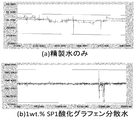
- FIG. 3 shows a cross-sectional curve obtained by measuring the sliding surface of the substrate (SUS304) after 60,000 sliding tests with a friction tester using a confocal laser microscope.
- FIG. 3A shows the case of purified water only
- FIG. 3B shows the case of 1 wt% SP1GO dispersed water.
- FIG. 4 shows an SEM image of the sliding surface of the ball after only 60,000 sliding tests with a friction tester in the case of purified water only.
- the arrow line in Fig.4 (a) has shown the sliding direction.
- FIG. 4B is an enlarged SEM image of a part of FIG. The balls are cleaned in acetone using an ultrasonic cleaner after the sliding test.
- the broken line circled portion is the sliding surface of the ball, which is approximately 300 ⁇ m in size and flat, and it can be seen that it is worn. When calculated geometrically, the wear depth is about 5 ⁇ m.
- the ball is synthesized by sintering fine particles of tungsten carbide. From the enlarged view of FIG. 4B, it can be seen that the fine particles are missing and defective.
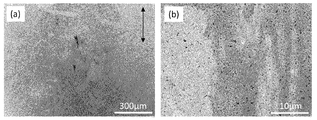
- FIG. 5 shows an SEM image of the sliding surface of the ball after 60,000 sliding tests with a friction tester in the case of 1 wt% SP1GO dispersed water.
- the arrow line in Fig.5 (a) has shown the sliding direction.
- FIG. 5B is an enlarged SEM image of a part of FIG. The balls are cleaned in acetone using an ultrasonic cleaner after the sliding test.
- FIG. 5A it can be seen that a dark streak pattern is formed along the sliding direction.
- FIG. 5B the gaps between the tungsten carbide particles are clearly observed even in the dark imaged area, as if the permeable thin film is adsorbed on the surface. Looks like.
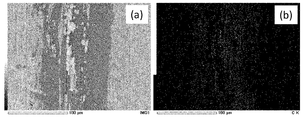
- Fig. 6 (a) is an SEM image of the sliding surface of the ball after 60,000 sliding tests with a friction tester in the case of 1wt% SP1GO dispersed water
- Fig. 6 (b) shows Fig. 6 (b).
- the measurement result of the carbon element component distribution by the energy dispersive X-ray-spectroscopy (EDX) in the sliding surface of a) is shown.
- the vertical direction is the sliding direction.
- Fig. 7 (a) is an SEM image of the sliding surface of the substrate (SUS304) after 60,000 sliding tests with a friction tester in the case of 1wt% SP1GO dispersed water.
- Fig. 7 (b) The measurement result of the carbon element component distribution by the energy dispersive X-ray-spectroscopy (EDX) in the sliding surface of Fig.7 (a) is shown. 7A and 7B, the vertical direction is the sliding direction.
- EDX energy dispersive X-ray-spectroscopy
- FIG. 7B also shows that a lot of carbon components are contained in the place darkly shown in FIG. 7A.
- the water-based lubricant of the present invention is composed only of water and graphene oxide, but an appropriate preservative, pH adjusting solution, or the like may be added for commercialization.
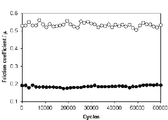
- FIG. 8 shows the test results with a friction tester when the ball material is SUS304.
- the material of the substrate is SUS304, and the surface is smoothed by grinding.
- the ball had a radius of 1 mm, and the sliding condition of the ball was that the sliding distance of one cycle was about 2 mm and the sliding cycle was 500 rpm.
- the load acting on the substrate was 1.8N.
- FIG. 9 shows an SEM image of the sliding surface of the ball after 60,000 sliding tests with a friction tester using only purified water.
- FIG. 10 shows an SEM image of the sliding surface of the ball after 60,000 sliding tests with a friction tester in the case of 1 wt% SP1GO dispersed water.
- FIG. 11 shows a test result by a friction tester when the ball material is SUJ2.
- the material of the substrate is SUS304, and the surface is smoothed by grinding.
- the ball had a radius of 1 mm, and the sliding condition of the ball was that the sliding distance of one cycle was about 2 mm and the sliding cycle was 500 rpm.
- the load acting on the substrate was 1.8N.
- FIG. 12 shows an SEM image of the sliding surface of the ball after 60,000 sliding tests with a friction tester in the case of purified water alone.
- FIG. 13 shows an SEM image of the sliding surface of the ball after 60,000 sliding tests with a friction tester in the case of 1 wt% SP1GO dispersed water.
- DLC diamond-like carbon
- FIG. 1 the material of the ball was SUS304, the radius of the ball was 1 mm, and the sliding condition of the ball was that the sliding distance of one cycle was about 2 mm and the sliding cycle was 500 rpm.
- the load acting on the substrate was 11.1N.
- the square dots ( ⁇ ) indicate the case of DLC substrate-SUS304 ball-purified water only, and the diamond-shaped dots ( ⁇ ) indicate the case of DLC substrate-SUS304 ball-1 wt% SP1GO dispersion water. It was confirmed that the friction coefficient can be reduced by SP1GO dispersed water.
- the point x indicates the case of single crystal diamond substrate-SUS304 ball-purified water only, and the triangular point ( ⁇ ) indicates single crystal diamond substrate-SUS304 ball-1 wt% SP1GO dispersion. The case of water is shown, and in the single crystal diamond substrate, there was no difference in the friction coefficient.
- the sliding surface of the substrate is larger in the frictional trace when 1 wt% SP1GO dispersed water shown in FIG. 16B is compared with the frictional trace of purified water alone shown in FIG.
- the thickness can be reduced to half or less.
- the water-based lubricant in which graphene oxide is dispersed has excellent characteristics as a lubricant.
Landscapes
- Chemical & Material Sciences (AREA)
- Chemical Kinetics & Catalysis (AREA)
- General Chemical & Material Sciences (AREA)
- Oil, Petroleum & Natural Gas (AREA)
- Organic Chemistry (AREA)
- Lubricants (AREA)
Abstract
可燃性の問題を解消するために水系とするとともに、界面活性剤等の各種の添加剤の使用をできるだけ不要とすることにより、使用後の廃液処理に関して発生するコストを低減可能な水系潤滑剤を提供する。 グラファイトに剥離処理を施してグラファイトから剥離させて成る酸化グラフェンを水に分散させた水系潤滑剤。剥離処理は、グラファイトを酸化剤入りの水溶液に混合してグラファイトを酸化させることによって剥離を生じさせているものである。グラファイトは平均粒径100μm以下の微粉末とし、酸化グラフェンを0.1wt%以上の濃度で含有するものとする。グラファイトの平均粒径が50μm以下の場合には、酸化グラフェンを0.01wt%以上の濃度で含有するものとする。
Description
本発明は、酸化グラフェンを含有している水系潤滑剤に関する。
従来、潤滑剤としては、機械油や機械加工油などのように油系の材料が用いられている。さらに、潤滑性を向上させるために、接触面には親油性の高い素材による被膜を設けることが行われている。例えば、親油性の高い素材として黒鉛、ダイヤモンドライクカーボン、カーボンナノチューブなどの炭素原子含有の無機物を用いることが提案されている(例えば、特許文献1参照。)。特に、これらの被膜は、接触面に形成された無数の凹部による表面テクスチャリングの内面に形成している。
油系の潤滑剤は、極めて安価であって、広範に利用されている。しかし、油系の潤滑剤を例えば切削油として用いた場合には、ワークの脱脂処理が必要であって、この脱脂処理のための各種薬剤が必要であり、後処理において高コスト化しやすくなっていた。
また、油系の潤滑剤は可燃性の問題があることから、昨今では水と混合して使用する水溶性の潤滑剤も用いられている。しかし、水溶性の潤滑剤を用いた場合であっても、適宜の薬剤を利用した洗浄処理が必要であり、後処理が容易な水系の潤滑油が求められていた。
そこで、水系溶媒中にフラーレン等のナノカーボン材料を含有させた水系潤滑剤(例えば、特許文献2参照。)や、界面活性剤を含む水にフラーレンやカーボンナノチューブ等の超微粒子を分散させた加工用流体(例えば、特許文献3参照。)が提案されている。
しかしながら、フラーレン等のカーボン材料を分散させた水系潤滑剤は、もともとフラーレン等のカーボン材料の水への分散性が低いことから、界面活性剤等の各種の添加剤が必要であって、可燃性の問題は解消されているものの廃液処理が容易ではなく、使用後の廃液処理に関してコストが嵩むという問題を有していた。
一方、本発明者の一人は、水に高分散した酸化グラフェンを従来よりも安価に製造可能とする製造方法を発明した。そして、本発明者らは、この製造方法で作製した酸化グラフェンの用途の検討を行っていたところ、潤滑剤として利用可能であることを知見し、本発明を成すに至ったものである。
本発明の水系潤滑剤は、グラファイトに剥離処理を施してグラファイトから剥離させて成る酸化グラフェンを水に分散させた水系潤滑剤であって、剥離処理は、グラファイトを酸化剤入りの水溶液に混合することでグラファイトを酸化させることによって剥離を生じさせているものである。
また、本発明の水系潤滑剤は、以下の点にも特徴を有するものである。
(1)グラファイトは平均粒径100μm以下の微粉末としていること。
(2)酸化グラフェンを0.1wt%以上の濃度で含有すること。
(3)グラファイトは平均粒径50μm以下の微粉末として、酸化グラフェンを0.01wt%以上の濃度で含有すること。
(1)グラファイトは平均粒径100μm以下の微粉末としていること。
(2)酸化グラフェンを0.1wt%以上の濃度で含有すること。
(3)グラファイトは平均粒径50μm以下の微粉末として、酸化グラフェンを0.01wt%以上の濃度で含有すること。
本発明によれば、水に高分散する酸化グラフェンを用いた水系潤滑剤とすることで、余計な添加剤を使用しなくても潤滑剤としての機能させることができる。さらに、本発明の水系潤滑剤では、潤滑剤としての使用後の後処理において、酸化グラフェン自体が無害であることから、容易かつ低コストで廃棄処分することができる。
本発明の水系潤滑剤は、グラファイトに剥離処理を施してグラファイトから剥離させて成る酸化グラフェンを水に分散させた水系潤滑剤である。特に、剥離処理は、グラファイトを酸化剤入りの水溶液に混合してグラファイトを酸化させることによって剥離を生じさせているものである。
このように、グラファイトから剥離させて形成した酸化グラフェンを水に分散させて水系潤滑剤とすることにより、他の添加剤がなくても酸化グラフェンが分散状態を好適に維持して、潤滑剤として機能させることができる。
しかも、酸化グラフェン自体が無害であり、かつ、他の添加剤がなくても潤滑剤として機能することから、潤滑剤としての使用後の後処理において容易かつ低コストで廃棄処分することができる。なお、必要であれば、潤滑剤としての使用後の廃液に適当な酸を添加することで酸化グラフェンを分解でき、酸化グラフェン自体を消失させることもできる。
剥離処理されるグラファイトは、平均粒径100μm以下の微粉末としていることが望ましく、好適には、平均粒径50μm以下の微粉末であることが望ましい。
グラファイトの平均粒径を100μm以下としておくことにより、酸化グラフェンの平均粒径も100μm以下となり、水系潤滑剤における酸化グラフェンの濃度を0.1wt%以上として潤滑剤として利用できる。
さらには、グラファイトの平均粒径を50μm以下としておくことにより、酸化グラフェンの平均粒径も50μm以下となり、水系潤滑剤における酸化グラフェンの濃度を0.01wt%以上として潤滑剤として利用できる。すなわち、より小径のサイズの酸化グラフェンを用いることで酸化グラフェンの濃度を低減できることとなり、酸化グラフェンの使用量を低減可能として、より安価な水系潤滑剤を提供可能とすることができる。
以下において具体的な実施例を示しながら、本発明の水系潤滑剤を詳説する。
まず、本発明の水系潤滑剤の評価方法として摩擦試験機を用いた。本実施例で用いた摩擦試験機は、平板状の基板と、この基板上面に接触させて配置したボールと、このボールを基板上で往復摺動させる摺動機構とから構成されたものである。なお、摩擦試験機では、ボールは全く回転せずに基板上を往復摺動させることとしている。
基板の材質はSUS304とし、研削仕上げを行って表面を滑らかとしている。ボールの材質は非常に硬い軸受用の超鋼(タンステンカーバイト)球であって、半径が1mmの球状となっている。ボールの摺動条件は、1サイクルの摺動距離を約2mm,1サイクルの摺動時間を約0.2秒とした。すなわち、摺動速度はおおよそ0.02m/sである。
酸化グラフェンには、「SP1」と呼ばれるグラファイトを酸化させて作成した酸化グラフェンと、「X100」と呼ばれるグラファイトを酸化させて作成した酸化グラフェンを用いた。以下において、説明の便宜上、それぞれの酸化グラフェンを、単に「SP1GO」及び「X100GO」と呼ぶこととする。
グラファイトからの酸化グラフェンの作成は、特許第5098064号公報に記載されている製造方法を用いた。
すなわち、最初に原料となるグラファイトに対して電子レンジによるマイクロ波の照射を行い、次いでマイクロ波が照射されたグラファイトを、硫酸と、硝酸ナトリウムと、過マンガン酸カリウムで構成される酸化剤入りの水溶液に混合させることにより酸化させて、酸化グラフェンとしての剥離を生じさせて作成した。
この方法で酸化グラフェンを作成することにより、水への分散性が高い酸化グラフェンの水溶液を作成することができ、しかも安価な酸化グラフェン水溶液を提供可能とすることができる。
従来の酸化グラフェンは、その製造に要する時間が長いことに起因した製造コストの上昇だけでなく、使用する薬品などの使用量が多いことに起因した製造コストの上昇によって高価な材料となっていた。したがって、酸化グラフェンは、潤滑剤の材料として用いることはコストが合わないと考えられていた。しかし、本発明の発明者の一人が、安価な製造方法として特許第5098064号公報に記載されている製造方法を発明することにより、潤滑剤の材料として実用可能なコストの酸化グラフェンが提供可能となった。
図1に、SP1GO及びX100GOをシリコン酸化膜基板に滴下した状態の走査電子顕微鏡(SEM)写真を示す。SP1GOは1枚のサイズが大きいものでは50μmを超えているが、X100GOは5μmぐらいサイズである。このサイズの違いは原材料のグラファイトの粉末の大きさに起因しており、所望のサイズが得られるように、グラファイトの粉末の大きさを調整しておくことが望ましい。特に、グラファイトは、平均粒径100μm以下の微粉末であることが望ましく、好適には、平均粒径50μm以下である。
SP1GO及びX100GOは、それぞれ所望の濃度に調整した分散水として以下の比較試験を行った。
図2(a)に、精製水のみと、SP1GO分散水と、X100GO分散水と、市販の水溶性潤滑剤との比較試験として、上述した摩擦試験機による6万回の往復摺動を行った時の摩擦係数変化を示す。ここで、SP1GO分散水及びX100GO分散水は、それぞれの濃度を1wt%とし、市販の水溶性潤滑剤は1%の水溶液とした。
図2(a)のグラフから明らかなように、精製水の摩擦係数は0.4以上であり、水溶性潤滑剤の摩擦係数は0.1付近となっている。これに対して、SP1GO分散水及びX100GO分散水の摩擦係数はそれぞれ0.05付近であり、水溶性潤滑剤よりも低摩擦であって、極めて良好な潤滑特性となっていることがわかる。
図2(b)に、SP1GO分散水においてSP1GOの濃度の違いによる比較試験として、摩擦試験機による6万回の往復摺動を行った時の摩擦係数変化を示す。比較例として、精製水のみの場合も示している。
図2(b)のグラフから明らかなように、1wt%のSP1GO分散水の摩擦係数が0.05で最も低く、0.1wt%のSP1GO分散水の摩擦係数は0.1付近となり、0.01wt%のSP1GO分散水の摩擦係数は最終的に0.3を超えていることがわかる。このように精製水だけのものと比べると、0.01wt%でも潤滑効果があることが確認できた。ただし、市販の水溶性潤滑剤と同程度の性能を要求するとなると、SP1GO分散水の濃度は0.1wt%以上であることが望ましい。
図2(c)に、X100GO分散水においてX100GOの濃度の違いによる比較試験として、摩擦試験機による6万回の往復摺動を行った時の摩擦係数変化を示す。比較例として、精製水のみの場合も示している。
図2(c)のグラフから明らかなように、1wt%のX100GO分散水の摩擦係数と0.1wt%のX100GO分散水の摩擦係数はほぼ同等で、当初0.05程度であって最終的に0.1程度となり、0.01wt%のX100GO分散水の摩擦係数は、当初0.15程度であって最終的に0.1程度となり、0.001wt%のX100GO分散水の摩擦係数は、精製水のみの場合とほとんど同等であることが分かる。このように、X100GO分散水では、0.01wt%以上の濃度で摩擦低減効果があるとわかる。
なお、X100GO分散水の方がSP1GO分散水よりも低濃度で効果を有しているのは、図1から明らかなようX100GOの方がSP1GOよりも平均粒径が小さいことに起因していると考えられる。すなわち、できるだけ粒径の小さい酸化グラフェンを用いることにより、より低濃度の酸化グラフェン分散水とすることができ、さらなる低コスト化を図ることができる。
図3に、摩擦試験機による6万回の摺動試験後における基板(SUS304)の摺動面を共焦点レーザー顕微鏡を用いて測定した断面曲線を示す。図3(a)は精製水のみの場合であり、図3(b)は1wt%のSP1GO分散水の場合である。
図3(a)のグラフから明らかなように、精製水のみの場合では段差が約5μm認められる。すなわち摩耗が生じていることがわかる。一方、図3(b)のグラフから明らかなように、SP1GO分散水では全く段差が認められず、ほとんど摩耗が生じていないことがわかる。
図4に、精製水のみの場合で、摩擦試験機による6万回の摺動試験後におけるボールの摺動面のSEM像を示している。図4(a)中の矢印線は摺動方向を示している。図4(b)は図4(a)の一部分の拡大SEM像である。ボールは、摺動試験後に超音波洗浄器を用いてアセトン中で洗浄している。
図4(a)中の破線○印部分はボールの摺動面であって、大きさおよそ300μmで平坦になっており、摩耗されているのがわかる。幾何学的に計算すると摩耗深さは約5μmとなる。ボールはタングステンカーバイトの微粒子を焼結して合成したものであるが、図4(b)の拡大図から、その微粒子が欠落して欠陥となっていることがわかる。
図5に、1wt%のSP1GO分散水の場合で、摩擦試験機による6万回の摺動試験後におけるボールの摺動面のSEM像を示している。図5(a)中の矢印線は摺動方向を示している。図5(b)は図5(a)の一部分の拡大SEM像である。ボールは、摺動試験後に超音波洗浄器を用いてアセトン中で洗浄している。
図5(a)及び図5(b)から明らかなように、1wt%のSP1GO分散水の場合ではボールに摺動による摩耗は見られなかった。特に、図5(b)から明らかなように、摺動前と変わらないタングステンカーバイトの微粒子が緻密に焼結されたままの状態となっていることがわかる。
なお、図5(a)で確認できるように、摺動方向に沿って暗い筋のような模様が結像されているのがわかる。さらに、図5(b)で確認できるように、タングステンカーバイトの微粒子間の隙間が、この暗く結像されている所にも明瞭に観察され、あたかも透過性薄膜が表面に吸着しているように見える。
一般に、数層の酸化グラフェンが他の物質表面に吸着したものをSEMで観察すると、電子線は酸化グラフェンを通り抜けてその下側が結像される。しかし、その場合において強度は弱まり、結果的に酸化グラフェンが存在する部分は暗く結像されてしまうことから、この暗い筋のように結像されている部分は,酸化グラファイトがボールの表面に吸着しているものと思われる。これを明らかにするために、以下のように表面の元素成分を調べた。
図6(a)は、1wt%のSP1GO分散水の場合で、摩擦試験機による6万回の摺動試験後におけるボールの摺動面のSEM像であり、図6(b)は図6(a)の摺動面におけるエネルギー分散型X線分光分析(EDX)による炭素元素成分分布の測定結果を示している。図6(a)及び図6(b)では上下方向を摺動方向としている。
図6(b)から、図6(a)において暗く示されている所に、炭素成分が多く含まれていることがわかる。
図7(a)は、1wt%のSP1GO分散水の場合で、摩擦試験機による6万回の摺動試験後における基板(SUS304)の摺動面のSEM像であり、図7(b)は図7(a)の摺動面におけるエネルギー分散型X線分光分析(EDX)による炭素元素成分分布の測定結果を示している。図7(a)及び図7(b)では上下方向を摺動方向としている。
図7(b)からも、図7(a)において暗く示されている所に、炭素成分が多く含まれていることがわかる。
したがって、摺動面には酸化グラファイトが1層ないし数層吸着していると思われ、さらにアセトンを用いた超音波洗浄を行っても剥がれていないことから、ある程度強固に吸着しているものと思われる。
これらの結果から、酸化グラフェン分散水は、SUS304-タンステンカーバイトという実用上の材料表面で摩擦係数を下げるだけでなく摩耗も見られないことから、既知の潤滑油に匹敵あるいは上回るような潤滑性能を示すことが確認できた。
これは摺動面に酸化グラファイトが1層ないし数層で吸着し、摺動面での基板‐ボール材料の直接接触を防ぎ、摩擦・摩耗を下げたために実現されたと思われる。
上述してきた実施例では、本発明の水系潤滑剤は、水と酸化グラフェンのみで構成しているが、製品化に当たっては、適宜の防腐剤やpH調整液等を添加してもよい。
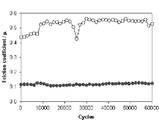
他の実施例として、ボールの材質をSUS304とした場合の摩擦試験機による試験結果を図8に示す。ここで、基板の材質はSUS304とし、研削仕上げを行って表面を滑らかとしている。ボールは、半径が1mmであって、ボールの摺動条件は、1サイクルの摺動距離を約2mm、摺動周期を500rmpとした。基板に作用する荷重は、1.8Nであった。
図8では、精製水のみ(白丸のグラフ)と、SP1GO分散水(黒丸のグラフ)との比較を行っており、精製水の摩擦係数は0.5以上であり、SP1GO分散水の摩擦係数は0.2であった。なお、P1GO分散水の濃度は1wt%とした。
図9に、精製水のみの場合で、摩擦試験機による6万回の摺動試験後におけるボールの摺動面のSEM像を示している。また、図10に、1wt%のSP1GO分散水の場合で、摩擦試験機による6万回の摺動試験後におけるボールの摺動面のSEM像を示している。
また、他の実施例として、ボールの材質をSUJ2とした場合の摩擦試験機による試験結果を図11に示す。ここで、基板の材質はSUS304とし、研削仕上げを行って表面を滑らかとしている。ボールは、半径が1mmであって、ボールの摺動条件は、1サイクルの摺動距離を約2mm、摺動周期を500rmpとした。基板に作用する荷重は、1.8Nであった。
図11では、精製水のみ(白丸のグラフ)と、SP1GO分散水(黒丸のグラフ)との比較を行っており、精製水の摩擦係数は0.4以上であり、SP1GO分散水の摩擦係数は0.1であった。なお、P1GO分散水の濃度は1wt%とした。
図12に、精製水のみの場合で、摩擦試験機による6万回の摺動試験後におけるボールの摺動面のSEM像を示している。また、図13に、1wt%のSP1GO分散水の場合で、摩擦試験機による6万回の摺動試験後におけるボールの摺動面のSEM像を示している。
また、他の実施例として、基板の材質を、ダイヤモンドライクカーボン(以下において、「DLC」と呼ぶ)としたDLC基板、及び単結晶ダイヤモンドとした単結晶ダイヤモンド基板での摩擦試験機による試験結果を図14に示す。ここで、ボールの材質はSUS304とし、ボールの半径は1mmであって、ボールの摺動条件は、1サイクルの摺動距離を約2mm、摺動周期を500rmpとした。基板に作用する荷重は、11.1Nであった。
図14において、四角の点(■)は、DLC基板-SUS304ボール-精製水のみの場合を示しており、菱形の点(◆)は、DLC基板-SUS304ボール-1wt%のSP1GO分散水の場合を示しており、SP1GO分散水によって摩擦係数が低減できることが確認できた。
また、図14において、×の点は、単結晶ダイヤモンド基板-SUS304ボール-精製水のみの場合を示しており、三角の点(▲)は、単結晶ダイヤモンド基板-SUS304ボール-1wt%のSP1GO分散水の場合を示しており、単結晶ダイヤモンド基板では、摩擦係数に差は見られなかった。
しかしながら、ボール側及び基板側の摺動面の摩耗状態は、図15及び図16に示すように大きく異なり、1wt%のSP1GO分散水の場合において摩耗を大きく低減できることが分かる。
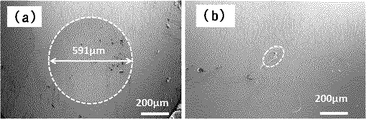
すなわち、摩擦試験機による2.1万回の摺動試験後におけるボールの摺動面は、図15(a)に示すように、精製水のみの場合では大きな摩擦痕が生じているのに対して、図15(b)に示すように、1wt%のSP1GO分散水とした場合には摩擦痕がほとんど生じていない。
一方、基板の摺動面は、図16(a)に示す精製水のみの場合の摩擦痕と比較して、図16(b)に示す1wt%のSP1GO分散水とした場合の摩擦痕の大きさを、半分以下とすることができる。
このように、酸化グラフェンを分散させた水系潤滑剤が、潤滑剤として優れた特性を有していることが分かる。
水の沸点を超えない低温下において使用できる高性能な潤滑剤であり、特に後処理及び廃棄処理に要するコスト低減が可能であり、切削加工等の金属加工における潤滑剤として利用できる。
Claims (4)
- グラファイトに剥離処理を施してグラファイトから剥離させて成る酸化グラフェンを水に分散させた水系潤滑剤であって、
前記剥離処理は、グラファイトを酸化剤入りの水溶液に混合してグラファイトを酸化させることによって剥離を生じさせる処理である水系潤滑剤。 - 前記グラファイトは平均粒径100μm以下の微粉末としている請求項1に記載の水系潤滑剤。
- 前記酸化グラフェンを0.1wt%以上の濃度で含有する請求項2に記載の水系潤滑剤。
- 前記グラファイトは平均粒径50μm以下の微粉末として、前記酸化グラフェンを0.01wt%以上の濃度で含有する請求項2に記載の水系潤滑剤。
Priority Applications (1)
| Application Number | Priority Date | Filing Date | Title |
|---|---|---|---|
| JP2015518269A JPWO2014189065A1 (ja) | 2013-05-20 | 2014-05-20 | 水系潤滑剤 |
Applications Claiming Priority (2)
| Application Number | Priority Date | Filing Date | Title |
|---|---|---|---|
| JP2013-106493 | 2013-05-20 | ||
| JP2013106493 | 2013-05-20 |
Publications (1)
| Publication Number | Publication Date |
|---|---|
| WO2014189065A1 true WO2014189065A1 (ja) | 2014-11-27 |
Family
ID=51933618
Family Applications (1)
| Application Number | Title | Priority Date | Filing Date |
|---|---|---|---|
| PCT/JP2014/063398 Ceased WO2014189065A1 (ja) | 2013-05-20 | 2014-05-20 | 水系潤滑剤 |
Country Status (2)
| Country | Link |
|---|---|
| JP (1) | JPWO2014189065A1 (ja) |
| WO (1) | WO2014189065A1 (ja) |
Cited By (14)
| Publication number | Priority date | Publication date | Assignee | Title |
|---|---|---|---|---|
| CN105316077A (zh) * | 2015-11-16 | 2016-02-10 | 青岛领军节能与新材料研究院 | 一种石墨烯/氮化碳量子点复合纳米材料及润滑油摩擦改善剂 |
| JP2016098279A (ja) * | 2014-11-19 | 2016-05-30 | 国立大学法人 岡山大学 | 水系潤滑液組成物 |
| WO2017199503A1 (ja) * | 2016-05-16 | 2017-11-23 | 株式会社ダイセル | 水潤滑剤組成物および水潤滑システム |
| CN107603724A (zh) * | 2017-09-22 | 2018-01-19 | 广西大学 | 一种石墨烯增效无需排放环保型水基切削液及其制备方法 |
| JP2018070785A (ja) * | 2016-10-31 | 2018-05-10 | 国立大学法人 岡山大学 | 水性媒体用流動抵抗低減剤組成物 |
| CN108117913A (zh) * | 2016-11-28 | 2018-06-05 | 中国科学院金属研究所 | 一种球形石墨烯润滑添加剂的制备方法和用途 |
| IT201700023496A1 (it) * | 2017-03-14 | 2018-09-14 | Vincenzo Tagliaferri | Fluidi termovettori ad elevata conducibilità termica. |
| CN108624389A (zh) * | 2018-04-04 | 2018-10-09 | 浙江工业大学 | 一种氧化石墨烯水基纳米润滑剂及其制备方法 |
| JP2018534412A (ja) * | 2015-10-15 | 2018-11-22 | ジ オーストラリアン ナショナル ユニヴァーシティーThe Australian National University | トラクション駆動流体 |
| CN109679758A (zh) * | 2019-01-21 | 2019-04-26 | 江苏捷达油品有限公司 | 一种低cod的清洁型环保水性金刚线硅片循环切割液及应用 |
| CN110591806A (zh) * | 2019-09-24 | 2019-12-20 | 清华大学 | 水基润滑液及其制备方法 |
| JP2019218218A (ja) * | 2018-06-15 | 2019-12-26 | 国立研究開発法人産業技術総合研究所 | カーボンナノ材料の処理方法 |
| EP3683294A1 (en) * | 2019-01-21 | 2020-07-22 | Marcin Golec | Composition, method and use |
| WO2021168394A1 (en) * | 2020-02-20 | 2021-08-26 | Xg Sciences, Inc. | Graphene-based lubricant additives and lubricants |
Families Citing this family (1)
| Publication number | Priority date | Publication date | Assignee | Title |
|---|---|---|---|---|
| CN107880973B (zh) * | 2017-10-30 | 2020-12-04 | 湖南金泰检测检验有限公司 | 一种氧化石墨烯增强润滑剂及其制备方法 |
Citations (1)
| Publication number | Priority date | Publication date | Assignee | Title |
|---|---|---|---|---|
| JP5098064B1 (ja) * | 2012-04-02 | 2012-12-12 | 国立大学法人 岡山大学 | 酸化薄片化黒鉛及びその製造方法 |
-
2014
- 2014-05-20 WO PCT/JP2014/063398 patent/WO2014189065A1/ja not_active Ceased
- 2014-05-20 JP JP2015518269A patent/JPWO2014189065A1/ja active Pending
Patent Citations (1)
| Publication number | Priority date | Publication date | Assignee | Title |
|---|---|---|---|---|
| JP5098064B1 (ja) * | 2012-04-02 | 2012-12-12 | 国立大学法人 岡山大学 | 酸化薄片化黒鉛及びその製造方法 |
Non-Patent Citations (3)
| Title |
|---|
| "A comparative study between graphene oxide and diamond nanoparticles as water-based lubricating additives", SCIENCE CHINA TECHNOLOGICAL SCIENCES, vol. 56, no. 1, 30 August 2012 (2012-08-30), pages 152 - 157 * |
| "Frictional behavior of oxide graphene nanosheets as water-base lubricant additive", APPLIED PHYSICS A, vol. 105, 29 October 2011 (2011-10-29), pages 827 - 832 * |
| "Graphene Oxide Oyobi Nanodiamond no Mizujunkatsu deno Tenka ni yoru Masatsu Gensho Tokusei", TRIBOLOGY CONFERENCE 2013 SPRING IN TOKYO YOKOSHU, 10 May 2013 (2013-05-10) * |
Cited By (24)
| Publication number | Priority date | Publication date | Assignee | Title |
|---|---|---|---|---|
| JP2016098279A (ja) * | 2014-11-19 | 2016-05-30 | 国立大学法人 岡山大学 | 水系潤滑液組成物 |
| US11124734B2 (en) | 2015-10-15 | 2021-09-21 | Flex-G Pty Ltd | Traction drive fluid |
| JP2018534412A (ja) * | 2015-10-15 | 2018-11-22 | ジ オーストラリアン ナショナル ユニヴァーシティーThe Australian National University | トラクション駆動流体 |
| CN105316077A (zh) * | 2015-11-16 | 2016-02-10 | 青岛领军节能与新材料研究院 | 一种石墨烯/氮化碳量子点复合纳米材料及润滑油摩擦改善剂 |
| US10844313B2 (en) | 2016-05-16 | 2020-11-24 | Daicel Corporation | Water lubricant composition and water lubricating system |
| WO2017199503A1 (ja) * | 2016-05-16 | 2017-11-23 | 株式会社ダイセル | 水潤滑剤組成物および水潤滑システム |
| JP2018070785A (ja) * | 2016-10-31 | 2018-05-10 | 国立大学法人 岡山大学 | 水性媒体用流動抵抗低減剤組成物 |
| CN108117913A (zh) * | 2016-11-28 | 2018-06-05 | 中国科学院金属研究所 | 一种球形石墨烯润滑添加剂的制备方法和用途 |
| CN108117913B (zh) * | 2016-11-28 | 2021-05-18 | 中国科学院金属研究所 | 一种球形石墨烯润滑添加剂的制备方法和用途 |
| IT201700023496A1 (it) * | 2017-03-14 | 2018-09-14 | Vincenzo Tagliaferri | Fluidi termovettori ad elevata conducibilità termica. |
| CN107603724A (zh) * | 2017-09-22 | 2018-01-19 | 广西大学 | 一种石墨烯增效无需排放环保型水基切削液及其制备方法 |
| CN107603724B (zh) * | 2017-09-22 | 2021-03-05 | 广西大学 | 一种石墨烯增效无需排放环保型水基切削液及其制备方法 |
| CN108624389B (zh) * | 2018-04-04 | 2021-10-08 | 浙江工业大学 | 一种氧化石墨烯水基纳米润滑剂及其制备方法 |
| CN108624389A (zh) * | 2018-04-04 | 2018-10-09 | 浙江工业大学 | 一种氧化石墨烯水基纳米润滑剂及其制备方法 |
| JP2019218218A (ja) * | 2018-06-15 | 2019-12-26 | 国立研究開発法人産業技術総合研究所 | カーボンナノ材料の処理方法 |
| JP7079482B2 (ja) | 2018-06-15 | 2022-06-02 | 国立研究開発法人産業技術総合研究所 | カーボンナノチューブおよびカーボンナノチューブを含む廃液の処理方法 |
| CN109679758B (zh) * | 2019-01-21 | 2021-10-01 | 江苏捷达油品有限公司 | 一种低cod的清洁型环保水性金刚线硅片循环切割液及应用 |
| US11118058B2 (en) | 2019-01-21 | 2021-09-14 | Marcin GOLEC | Composition, method and use |
| CN109679758A (zh) * | 2019-01-21 | 2019-04-26 | 江苏捷达油品有限公司 | 一种低cod的清洁型环保水性金刚线硅片循环切割液及应用 |
| EP3683294A1 (en) * | 2019-01-21 | 2020-07-22 | Marcin Golec | Composition, method and use |
| US12091551B2 (en) | 2019-01-21 | 2024-09-17 | Marcin GOLEC | Composition, method and use |
| CN110591806A (zh) * | 2019-09-24 | 2019-12-20 | 清华大学 | 水基润滑液及其制备方法 |
| WO2021168394A1 (en) * | 2020-02-20 | 2021-08-26 | Xg Sciences, Inc. | Graphene-based lubricant additives and lubricants |
| US12241039B2 (en) | 2020-02-20 | 2025-03-04 | Nanoxplore Inc. | Graphene-based lubricant additives and lubricants |
Also Published As
| Publication number | Publication date |
|---|---|
| JPWO2014189065A1 (ja) | 2017-02-23 |
Similar Documents
| Publication | Publication Date | Title |
|---|---|---|
| WO2014189065A1 (ja) | 水系潤滑剤 | |
| Eswaraiah et al. | Graphene-based engine oil nanofluids for tribological applications | |
| Meng et al. | Supercritical fluid synthesis and tribological applications of silver nanoparticle-decorated graphene in engine oil nanofluid | |
| Huang et al. | Machining characteristics and mechanism of GO/SiO2 nanoslurries in fixed abrasive lapping | |
| He et al. | The pH-dependent structural and tribological behaviour of aqueous graphene oxide suspensions | |
| Li et al. | Performance evaluation of graphene oxide nanosheet water coolants in the grinding of semiconductor substrates | |
| Pal et al. | Performance evaluation of minimum quantity lubrication technique in grinding of AISI 202 stainless steel using nano-MoS2 with vegetable-based cutting fluid | |
| Wu et al. | Investigating the tribological performance of nanosized MoS 2 on graphene dispersion in perfluoropolyether under high vacuum | |
| Gupta et al. | Synthesis, characterization, and tribological studies of calcium–copper–titanate nanoparticles as a biolubricant additive | |
| US20160369197A1 (en) | Carbon nanofiber materials and lubricants | |
| Schäfer et al. | Influence of surface design on the solid lubricity of carbon nanotubes-coated steel surfaces | |
| JP2016173113A (ja) | 車両のショックアブソーバ用の摺動部材 | |
| Chebattina et al. | Effect of size of multiwalled carbon nanotubes dispersed in gear oils for improvement of tribological properties | |
| Kumar et al. | Tribological performance of steel-steel contact tribosurfaces by using nano-enhanced biolubricant | |
| Ma et al. | Research progress of nanolubrication for rolling process | |
| Kinoshita et al. | Investigations on tribological mechanisms of Graphene oxide and oxidized wood-derived Nanocarbons as water-based lubricating additives | |
| Prabu et al. | Experimental study on the anti-wear and anti-corrosive properties of the water-soluble metalworking fluid dispersed with copper and aluminium oxide nanoparticles | |
| CN112442365B (zh) | 一种二维材料量子点复合材料及其制备方法 | |
| Wang et al. | Preparation and tribological properties of calcium perrhenate as high-performance lubricating additive toward a broad temperature range | |
| Gupta et al. | Metal‐based nanolubricants: current and future perspectives | |
| Akhtar et al. | Antiwear properties of commercial grease as a function of particle morphology and uniformity of the as-synthesized calcium carbonate additive | |
| Kotnarowski | Searching for possibilities of lubricating and cutting fluids modification with copper micro-and nanopowders | |
| CN116376629B (zh) | 一种具有优异润滑和防锈性能的环保型水基切削液及其制备方法 | |
| JP5197257B2 (ja) | 鉄系被削材の切削方法及び切削液供給装置 | |
| Azizan et al. | Influence of propylene glycol on the tribological performance and lubrication mechanism of water-based lubricants incorporating silicon carbide, magnesium oxide and aluminium oxide nanoadditives |
Legal Events
| Date | Code | Title | Description |
|---|---|---|---|
| 121 | Ep: the epo has been informed by wipo that ep was designated in this application |
Ref document number: 14801855 Country of ref document: EP Kind code of ref document: A1 |
|
| DPE1 | Request for preliminary examination filed after expiration of 19th month from priority date (pct application filed from 20040101) | ||
| ENP | Entry into the national phase |
Ref document number: 2015518269 Country of ref document: JP Kind code of ref document: A |
|
| NENP | Non-entry into the national phase |
Ref country code: DE |
|
| 122 | Ep: pct application non-entry in european phase |
Ref document number: 14801855 Country of ref document: EP Kind code of ref document: A1 |