WO2014157595A1 - 新規なポリペプチドおよびその利用 - Google Patents
新規なポリペプチドおよびその利用 Download PDFInfo
- Publication number
- WO2014157595A1 WO2014157595A1 PCT/JP2014/059052 JP2014059052W WO2014157595A1 WO 2014157595 A1 WO2014157595 A1 WO 2014157595A1 JP 2014059052 W JP2014059052 W JP 2014059052W WO 2014157595 A1 WO2014157595 A1 WO 2014157595A1
- Authority
- WO
- WIPO (PCT)
- Prior art keywords
- amino acids
- amino acid
- polypeptide
- seq
- acid sequence
- Prior art date
- Legal status (The legal status is an assumption and is not a legal conclusion. Google has not performed a legal analysis and makes no representation as to the accuracy of the status listed.)
- Ceased
Links
Images








Classifications
-
- C—CHEMISTRY; METALLURGY
- C12—BIOCHEMISTRY; BEER; SPIRITS; WINE; VINEGAR; MICROBIOLOGY; ENZYMOLOGY; MUTATION OR GENETIC ENGINEERING
- C12Q—MEASURING OR TESTING PROCESSES INVOLVING ENZYMES, NUCLEIC ACIDS OR MICROORGANISMS; COMPOSITIONS OR TEST PAPERS THEREFOR; PROCESSES OF PREPARING SUCH COMPOSITIONS; CONDITION-RESPONSIVE CONTROL IN MICROBIOLOGICAL OR ENZYMOLOGICAL PROCESSES
- C12Q1/00—Measuring or testing processes involving enzymes, nucleic acids or microorganisms; Compositions therefor; Processes of preparing such compositions
- C12Q1/70—Measuring or testing processes involving enzymes, nucleic acids or microorganisms; Compositions therefor; Processes of preparing such compositions involving virus or bacteriophage
- C12Q1/701—Specific hybridization probes
- C12Q1/702—Specific hybridization probes for retroviruses
-
- A—HUMAN NECESSITIES
- A61—MEDICAL OR VETERINARY SCIENCE; HYGIENE
- A61P—SPECIFIC THERAPEUTIC ACTIVITY OF CHEMICAL COMPOUNDS OR MEDICINAL PREPARATIONS
- A61P31/00—Antiinfectives, i.e. antibiotics, antiseptics, chemotherapeutics
- A61P31/12—Antivirals
- A61P31/14—Antivirals for RNA viruses
-
- A—HUMAN NECESSITIES
- A61—MEDICAL OR VETERINARY SCIENCE; HYGIENE
- A61P—SPECIFIC THERAPEUTIC ACTIVITY OF CHEMICAL COMPOUNDS OR MEDICINAL PREPARATIONS
- A61P35/00—Antineoplastic agents
- A61P35/02—Antineoplastic agents specific for leukemia
-
- A—HUMAN NECESSITIES
- A61—MEDICAL OR VETERINARY SCIENCE; HYGIENE
- A61P—SPECIFIC THERAPEUTIC ACTIVITY OF CHEMICAL COMPOUNDS OR MEDICINAL PREPARATIONS
- A61P37/00—Drugs for immunological or allergic disorders
- A61P37/02—Immunomodulators
- A61P37/04—Immunostimulants
-
- C—CHEMISTRY; METALLURGY
- C07—ORGANIC CHEMISTRY
- C07K—PEPTIDES
- C07K14/00—Peptides having more than 20 amino acids; Gastrins; Somatostatins; Melanotropins; Derivatives thereof
- C07K14/005—Peptides having more than 20 amino acids; Gastrins; Somatostatins; Melanotropins; Derivatives thereof from viruses
-
- A—HUMAN NECESSITIES
- A61—MEDICAL OR VETERINARY SCIENCE; HYGIENE
- A61K—PREPARATIONS FOR MEDICAL, DENTAL OR TOILETRY PURPOSES
- A61K39/00—Medicinal preparations containing antigens or antibodies
- A61K39/12—Viral antigens
-
- C—CHEMISTRY; METALLURGY
- C12—BIOCHEMISTRY; BEER; SPIRITS; WINE; VINEGAR; MICROBIOLOGY; ENZYMOLOGY; MUTATION OR GENETIC ENGINEERING
- C12N—MICROORGANISMS OR ENZYMES; COMPOSITIONS THEREOF; PROPAGATING, PRESERVING, OR MAINTAINING MICROORGANISMS; MUTATION OR GENETIC ENGINEERING; CULTURE MEDIA
- C12N2740/00—Reverse transcribing RNA viruses
- C12N2740/00011—Details
- C12N2740/10011—Retroviridae
- C12N2740/14011—Deltaretrovirus, e.g. bovine leukeamia virus
- C12N2740/14022—New viral proteins or individual genes, new structural or functional aspects of known viral proteins or genes
-
- C—CHEMISTRY; METALLURGY
- C12—BIOCHEMISTRY; BEER; SPIRITS; WINE; VINEGAR; MICROBIOLOGY; ENZYMOLOGY; MUTATION OR GENETIC ENGINEERING
- C12N—MICROORGANISMS OR ENZYMES; COMPOSITIONS THEREOF; PROPAGATING, PRESERVING, OR MAINTAINING MICROORGANISMS; MUTATION OR GENETIC ENGINEERING; CULTURE MEDIA
- C12N2740/00—Reverse transcribing RNA viruses
- C12N2740/00011—Details
- C12N2740/10011—Retroviridae
- C12N2740/14011—Deltaretrovirus, e.g. bovine leukeamia virus
- C12N2740/14034—Use of virus or viral component as vaccine, e.g. live-attenuated or inactivated virus, VLP, viral protein
Definitions
- the present invention relates to a novel polypeptide derived from bovine leukemia virus (BLV), which is a CD4-positive T cell epitope, and use thereof.
- BLV bovine leukemia virus
- BLV bovine leukemia virus
- Non-Patent Document 1 describes that the 61st to 78th amino acid sequences of gp51 derived from the Env region are T cell epitopes.
- Non-Patent Document 2 describes that the 98th to 117th amino acid sequence of gp51 derived from the Env region is a T cell epitope.
- Non-Patent Document 3 describes that the 31st to 55th positions and the 141st to 165th positions of the amino acid sequence of p24 derived from the Gag region are T cell epitopes.
- Th1-type cellular immunity predominates in individuals with sheep MHC class II that are resistant to onset of leukemia. It has been reported that Th2 type humoral immunity predominates in individuals having the same (Non-patent Documents 5 and 6). In addition, it has been confirmed that even in cattle, individuals who have homozygous MHC types of onset susceptibility have a higher provirus load than other individuals (Non-patent Document 7). Therefore, in individuals with onset-susceptible MHC, humoral immunity is induced against bovine leukemia virus (BLV), and it is considered that pathological progression is likely to occur. In addition, individuals who have the onset-susceptible MHC type homozygously have a high risk of becoming a source of infection.
- BLV bovine leukemia virus
- BLV bovine leukemia virus
- the present invention has been made in view of the above problems, and an object of the present invention is to provide a novel polypeptide derived from bovine leukemia virus (BLV), which is a CD4-positive T cell epitope.
- BLV bovine leukemia virus
- the polypeptide according to the present invention is a polypeptide shown in any of the following (a) to (h): (A) a polypeptide comprising 11 or more and 50 or less consecutive amino acids in the amino acid sequence shown in SEQ ID NO: 1 and comprising the 22nd to 31st amino acids (FSISIDQIL E) (b) shown in SEQ ID NO: 2 A polypeptide comprising 20 to 50 amino acids in the amino acid sequence and including the 31st to 50th amino acids (GHWARDCPTK ATGPPPGPCP) (c) 20 or more consecutive amino acids in the amino acid sequence shown in SEQ ID NO: 6 And a polypeptide comprising amino acids 41 to 60 (KNYIHWFHKT QKKPWTFTSG) (d) consisting of 20 or more and 50 or less consecutive amino acids in the amino acid sequence shown in SEQ ID NO: 8 And a polypeptide comprising amino acids 52 to 71 (THYNLLNVA SVVAQNRRGL D) (e) shown in SEQ ID NO: 8
- the polypeptide according to the present invention becomes a CD4 positive T cell epitope and can activate CD4 positive T cells.
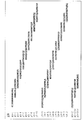
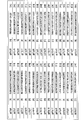
- FIG. 1 is a diagram showing a 10 amino acid overlapping p15 peptide prepared in Example 1.
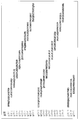
- FIG. 3 is a diagram showing a 10 amino acid overlapping p24 peptide prepared in Example 1.
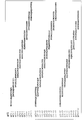
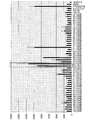
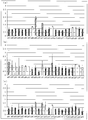
- BRIEF DESCRIPTION OF THE DRAWINGS It is a figure which shows the 10 amino acid overlapping p12 peptide produced in Example 1. It is a figure which shows the result of the cell proliferation test in Example 1. It is a figure which shows the result of the activation ability of Th1 cell by the peptide stimulation in Example 1.
- FIG. FIG. 3 is a diagram showing a 10 amino acid overlapping gp30 peptide prepared in Example 2.
- FIG. 3 is a diagram showing 1 to 3 amino acid overlapping peptides prepared in Example 2.
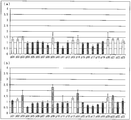
- FIG. 3 is a graph showing the results of cell proliferation test of 1 to 3 amino acid overlapping peptides in Example 2.
- Example 3 It is a figure which shows the result of the cell growth test (sensitive cow 2nd time) in Example 3. It is a figure which shows the result of the cell proliferation test (insensitive cattle. 2nd time) in Example 3. It is a figure which shows the result of the concentration dependence (sensitive cow) of the cell growth inducing ability in Example 3. It is a figure which shows the result of the concentration dependence (insensitive cow) of the cell growth inducing ability in Example 3.
- the polypeptide according to the present invention is based on the peptide sequences of p12 and p15 derived from the Gag region, gp51 and gp30 derived from the Env region, and the tax peptide derived from the pX region, which are major proteins constituting the bovine leukemia virus (BLV). It is a designed polypeptide that becomes a CD4 positive T cell epitope. In particular, it is a CD4-positive T cell epitope of bovine (Bos taurus), bubo (Bos indicus), and / or buffalo (Bubalus bubalis). Preferably, it is a bovine and / or buffalo CD4 positive T cell epitope.
- bovine CD4 positive T cell epitope More preferably, it is a bovine CD4 positive T cell epitope.
- cow examples include dairy species, meat species, milk combined species, functional species, and combined meat species. Specific examples include, but are not limited to, Japanese beef such as Japanese black and Japanese shorthorn, Holstein, Jersey, and native species of each country. It can also be a CD4 positive T cell epitope of an animal other than bovine, bovine and / or buffalo. Examples of such animals include mice, sheep, goats, pigs, primates, and humans.
- polypeptides according to the present invention are identified using immune cells of individuals who have homology to MHC class II (DRB3 * 1601) that is susceptible to the onset of bovine leukemia. Epitope. Therefore, among the polypeptides of the present invention, (a) to (f) are particularly expected to have an effect on individuals who have a high incidence and are likely to become infection sources. In addition, the effect with respect to the individual
- polypeptides of the present invention have also been identified as an epitope in immune cells of individuals with MHC class II that are not susceptible to the onset of bovine leukemia. Therefore, among the polypeptides of the present invention, (e) can be expected to have an effect on a wider range of MHC class II.
- the following (g) and (h) are epitopes identified using immune cells of individuals with MHC class II that are not susceptible to the occurrence of bovine leukemia. .
- “Becomes a CD4-positive T cell epitope” refers to activation of CD4-positive T cells that can bind to MHC class II of antigen-presenting cells.
- “Activating CD4 positive T cells” means differentiating CD4 positive T cells into Th1 cells, Th2 cells, Th17 cells and / or regulatory T cells (Treg cells), differentiated Th1 cells, Th2 cells, Propagating Th17 and / or Treg cells, allowing differentiated Th1 cells, Th2 cells, Th17 cells and / or Treg cells to produce various cytokines, and differentiated Th1 cells, Th2 cells, Th17 cells and / or Treg cells control immune response, etc. More preferably, CD4 positive T cells are differentiated into Th1 cells, differentiated Th1 cells are proliferated, and differentiated Th1 cells produce various cytokines And, as a result, activating cellular immunity, etc. It is.
- antigen-presenting cells examples include dendritic cells, macrophages / monocytes, and B cells.
- cytokines produced by Th1 cells include IFN- ⁇ , IL-2, IL-3, TNF- ⁇ , and GM-CSF.
- cytokines produced by Th2 cells include IL-3, IL-4, IL-5, IL-10, IL-13, GM-CSF, TGF- ⁇ , and IL-13. It is done.
- Th1 cells activate cellular immunity in vivo by producing the cytokines described above.
- Th2 cells activate humoral immunity in vivo by producing the cytokines described above.
- the MHC class II type (haplotype) to which the polypeptide according to the present invention binds is not particularly limited.
- the MHC class II type to which the polypeptide according to the present invention binds is preferably, for example, the MHC class II type of an individual having susceptibility to cattle leukemia onset, and more preferably DRB3 * 1601 type. There is a case. Alternatively, it may bind to many types of MHC class II.
- MHC class II of a type having neither resistance nor sensitivity (for example, DRB3 * 1501 type, DRB3 * 2703 type, DRB3 * 0503 type, etc.).
- the specific amino acid sequence of the above-mentioned MHC class II type can be obtained from http://www.ebi.ac.uk/ipd/mhc/bola/align.html.
- polypeptide according to the present invention is shown in the following (a) or (b).
- A (a) It consists of 11 to 50 amino acids in the amino acid sequence shown in SEQ ID NO: 1 (WRCSLSLGNQ QWMTAYNQEA KFSISIDQIL EAHNQSPFCA KSPRYTLDSV NGYPKIYWPP PQGRRRFGAR A), and the 22nd to 31st amino acids (FSISIDQIL E ) Comprising a polypeptide;
- B Poly consisting of 20 to 50 amino acids in the amino acid sequence shown in SEQ ID NO: 2 (VHTPGPKMPG PRQPAPKRPP PGPCYRCLKE GHWARDCPTK ATGPPPGPCP ICKDPSHWKR DCPTLKSKN) and including the 31st to 50th amino acids (GHWARDCPTK ATGPPPGPCP) peptide;
- C a polypeptide comprising 20 or more and 50 or less consecutive amino acids in the amino acid sequence shown in SEQ ID NO: 1
- the polypeptide shown in (a) above is preferably composed of 15 or more amino acids, more preferably composed of 18 or more amino acids, and 20 or more amino acids. More preferably, it consists of an amino acid.
- the polypeptides shown in (a) to (h) above are each preferably composed of 40 amino acids or less, and more preferably 30 amino acids or less.
- the polypeptide shown in (a) above is composed of 11 to 30 amino acids in the amino acid sequence shown in SEQ ID NO: 3 (WMTAYNQEA KFSISIDQIL EAHNQSPFCA K), and the 11th to 20th amino acids ( Those containing FSISIDQIL E) are preferred.
- the amino acid sequence shown in SEQ ID NO: 3 is identical to the 12th to 41st amino acids of the amino acid sequence shown in SEQ ID NO: 1.
- the 11th to 20th amino acids of the amino acid sequence shown in SEQ ID NO: 3 are the same as the 22nd to 31st amino acids of the amino acid sequence shown in SEQ ID NO: 1.
- the polypeptide shown in (a) above contains the seventh to 26th amino acids (QEA KFSISIDQIL EAHNQSP) in the amino acid sequence shown in SEQ ID NO: 3. More preferably, the polypeptide shown in (a) above consists of the 7th to 26th amino acids in the amino acid sequence shown in SEQ ID NO: 3. The 7th to 26th amino acids in the amino acid sequence shown in SEQ ID NO: 3 are the same as the 18th to 37th amino acids in the amino acid sequence shown in SEQ ID NO: 1.
- polypeptide shown in (b) above preferably consists of the 31st to 50th amino acids in the amino acid sequence shown in SEQ ID NO: 2.
- polypeptide shown in (c) above preferably consists of the 41st to 60th amino acids in the amino acid sequence shown in SEQ ID NO: 6.
- polypeptide shown in (d) above preferably consists of the 52nd to 71st amino acids in the amino acid sequence shown in SEQ ID NO: 8.
- polypeptide shown in (e) above preferably consists of the 131st to 150th amino acids in the amino acid sequence shown in SEQ ID NO: 8.
- polypeptide shown in (f) above preferably consists of the 141st to 160th amino acids in the amino acid sequence shown in SEQ ID NO: 10.
- polypeptide shown in (g) above preferably consists of amino acids 151 to 170 in the amino acid sequence shown in SEQ ID NO: 10.
- polypeptide shown in (h) above preferably consists of amino acids 181 to 200 in the amino acid sequence shown in SEQ ID NO: 10.
- polypeptide according to the present invention is a polypeptide consisting of the seventh to 26th amino acids in the amino acid sequence shown in SEQ ID NO: 3, and a polypeptide consisting of the 31st to 50th amino acids in the amino acid sequence shown in SEQ ID NO: 2.
- Peptide polypeptide consisting of amino acids 41 to 60 in the amino acid sequence shown in SEQ ID NO: 6, polypeptide consisting of amino acids 52 to 71 in the amino acid sequence shown in SEQ ID NO: 8, and amino acid sequence shown in SEQ ID NO: 8
- Peptide Beauty is a polypeptide consisting of 181 th to 200 th amino acid in the amino acid sequence shown in SEQ ID NO: 10.
- polypeptide consisting of the 30th to 50th amino acids in the amino acid sequence shown in SEQ ID NO: 2 is preferable.
- the production method of the polypeptide according to the present invention is not particularly limited, and may be produced by a peptide chemical synthesis method such as a solid phase synthesis method.
- a polynucleotide encoding the polypeptide is introduced into a cell and the cell is produced. May be produced in large quantities, or may be produced by a cell-free peptide synthesis system using a cell extract. Since the polypeptide according to the present invention is a relatively short chain and becomes a CD4-positive T cell epitope without any special modification, it can be easily produced by a peptide chemical synthesis method.
- amino acid substitution, addition, and / or deletion may occur in the polypeptide according to the present invention as long as it becomes a CD4 positive T cell epitope of bovine, cobos, and / or buffalo.
- the permissible amino acid substitution, addition, or deletion is specifically shown below.
- An amino acid substitution is a substitution of one or two amino acids, preferably a substitution of one amino acid.
- the basic amino acid constituting the polypeptide shown in any of the above (a) to (h) is substituted with another basic amino acid, or the acidic amino acid is substituted with another acidic amino acid.
- substitution of a neutral amino acid with another neutral amino acid having similar properties More specifically, for example, any of the following substitutions (1) to (6) has occurred in the polypeptide shown in any of (a) to (h) above.
- the amino acid deletion is a deletion of 1 or 2 amino acids, preferably a deletion of 1 amino acid. More specifically, for example, it is intended to delete an amino acid located on the terminal side constituting the polypeptide shown in any of (a) to (h) above. That is, one or two amino acids located on the amino terminal side are deleted, one or two amino acids located on the carboxy terminal side are deleted, or one amino acid located on the amino terminal side and carboxy It is intended to delete one amino acid located on the terminal side.
- amino acid addition is an addition of 1 or 2 amino acids, preferably an addition of 1 amino acid. More specifically, for example, it is intended to add 1 or 2 amino acids to the terminal side constituting the polypeptide shown in any of (a) to (h) above. That is, 1 or 2 amino acids are added to the amino terminal side, 1 or 2 amino acids are added to the carboxy terminal side, or one amino acid is added to each of the amino terminal side and the carboxy terminal side. I intend to.
- the amino acid substitution, deletion, and / or addition described above can be performed by a known method.
- the known method includes, for example, a method of introducing a desired mutation into the above polypeptide using a site-specific mutation introducing method such as Kunkel method.
- a site-specific mutation introducing method such as Kunkel method.
- the above-described amino acid substitution, deletion, and / or addition sequence may be synthesized by a peptide synthesis method.
- polynucleotide and vector according to the present invention encodes the above-described polypeptide according to the present invention.
- the polynucleotide is DNA or RNA, and is single-stranded or double-stranded.
- the sequence of the base constituting the polynucleotide may be appropriately determined according to the amino acid sequence of the polypeptide to be encoded.
- SEQ ID NO: 4 shows the base sequence of the nucleic acid encoding the amino acid sequence shown in SEQ ID NO: 1.
- SEQ ID NO: 5 shows the base sequence of the nucleic acid encoding the amino acid sequence shown in SEQ ID NO: 2.
- SEQ ID NO: 11 shows the base sequence of the nucleic acid encoding the amino acid sequence shown in SEQ ID NO: 6.
- SEQ ID NO: 12 shows the nucleotide sequence of a nucleic acid encoding the amino acid sequence shown in SEQ ID NO: 8.
- SEQ ID NO: 13 shows the base sequence of the nucleic acid encoding the amino acid sequence shown in SEQ ID NO: 10.
- the nucleotide sequence of the polynucleotide according to the present invention includes, for example, the nucleotide sequence shown in SEQ ID NO: 4, the nucleotide sequence shown in SEQ ID NO: 5, the nucleotide sequence shown in SEQ ID NO: 11, the nucleotide sequence shown in SEQ ID NO: 12, or the SEQ ID NO: 13 What is necessary is just to determine suitably with reference to the base sequence shown.
- a polypeptide consisting of the 18th to 37th amino acids in the amino acid sequence shown in SEQ ID NO: 1 is It is encoded by a polynucleotide having the 52nd to 111st bases.
- the polypeptide consisting of the 31st to 50th amino acids in the amino acid sequence shown in SEQ ID NO: 2 is encoded by a polynucleotide having the 91st to 150th bases in the base sequence shown in SEQ ID NO: 5.
- a polypeptide consisting of amino acids 41 to 60 in the amino acid sequence shown in SEQ ID NO: 6 is encoded by a polynucleotide having bases 121 to 180 in the base sequence shown in SEQ ID NO: 11.
- the polypeptide consisting of the 52nd to 71st amino acids in the amino acid sequence shown in SEQ ID NO: 8 is encoded by a polynucleotide having the 154th to 213th bases in the base sequence shown in SEQ ID NO: 12.
- the polypeptide consisting of the 131st to 150th amino acids in the amino acid sequence shown in SEQ ID NO: 8 is encoded by a polynucleotide having the 391st to 450th bases in the base sequence shown in SEQ ID NO: 12.
- the polypeptide consisting of the 141st to 160th amino acids in the amino acid sequence shown in SEQ ID NO: 10 is encoded by a polynucleotide having the 421st to 480th bases in the base sequence shown in SEQ ID NO: 13.
- the polypeptide consisting of the 151st to 170th amino acids in the amino acid sequence shown in SEQ ID NO: 10 is encoded by a polynucleotide having the 451st to 510th bases in the base sequence shown in SEQ ID NO: 13.
- polypeptide consisting of the 181st to 200th amino acids in the amino acid sequence shown in SEQ ID NO: 10 is encoded by a polynucleotide having the 541st to 600th bases in the base sequence shown in SEQ ID NO: 13.
- the polynucleotide facilitates transcription and / or translation in a cell or in a cell-free synthesis system, regulatory regions such as promoters and enhancers; start and stop codons; other transcription and / or translation related sequences; It is preferable that the function is added. Furthermore, if necessary, a sequence encoding a peptide sequence for purification such as a His tag, HA tag, Myc tag, and Flag tag may be added to the polynucleotide. An example of the polynucleotide according to the present invention to which these sequences are added is in a form incorporated in a vector to be described later.
- the vector according to the present invention includes the above-described polynucleotide according to the present invention.
- the vector according to the present invention is used to produce the polypeptide according to the present invention.
- the vector according to the present invention may be an expression vector used for recombinant expression, or a vector used for a cell-free peptide synthesis system using a cell extract or the like.
- Examples of a method for producing an expression vector used for recombinant expression include, but are not limited to, a method using a plasmid, phage, cosmid, virus or the like. Since the polynucleotide according to the present invention is relatively short, a method using a plasmid is preferred.
- the specific type of expression vector used for recombinant expression is not particularly limited, and a vector that can be expressed in a host cell may be appropriately selected. That is, depending on the type of host cell, an appropriate promoter sequence or the like for selecting the polynucleotide according to the present invention is selected, and this and the polynucleotide according to the present invention are incorporated into various plasmids to construct an expression vector. do it.
- the expression vector may contain at least one selectable marker depending on the type of host cell used.
- selectable markers include ampicillin resistance gene, kanamycin resistance gene, streptomycin resistance gene, chloramphenicol resistance gene, and a gene encoding a fluorescent / luminescent protein when the host cell is a prokaryotic cell.
- the host cell used for the preparation of the cells is not particularly limited, and examples thereof include any one selected from prokaryotic cells (for example, E. coli), yeast cells, higher plant cells, insect cells, and mammalian cells. Suitable culture media and culture conditions for these host cells are well known in the art.
- the method for introducing the polynucleotide or the expression vector according to the present invention into a host cell or the like, that is, the transformation method is not particularly limited, and the PEG method, electroporation method, calcium phosphate method, liposome method, DEAE dextran method Conventionally known methods such as the particle gun method and the Agrobacterium method (limited to plant cells) can be preferably used.
- an expression system using baculovirus may be used.
- CD4 positive T cell activator [4. Example of use of polypeptide according to the present invention] (CD4-positive T cell activator and its specific use)
- at least one polypeptide according to the present invention is included as an active ingredient (CD4 positive T cell activating component).
- the CD4 positive T cell activator according to the present invention may be a composition containing a stabilizer for stabilizing the polypeptide, an antioxidant, and / or an adjuvant, if necessary.
- the CD4 positive T cell activator according to the present invention is a composition further comprising other CD4 positive T cell activating components other than the polypeptide according to the present invention for the purpose of enhancing CD4 positive T cell activation. May be.
- the CD4 positive T cell activator activates particularly CD4 positive T cells of bovine, cobos and / or buffalo.
- bovine and / or buffalo CD4-positive T cells are activated.
- bovine CD4 positive T cells are activated.
- CD4 positive T cells of animals other than bovine, cobos and / or buffalo can be activated. Examples of such animals include mice, sheep, goats, pigs, primates, and humans.
- the CD4-positive T cell activator according to the present invention preferably binds to MHC class II of antigen-presenting cells and activates CD4-positive T cells.
- the MHC class II type (haplotype) of the antigen-presenting cell is as described above.
- CD4 positive T cells can be differentiated into Th1 cells, Th2 cells, Th17 cells and / or Treg cells, differentiated Th1 cells, Th2 Cells, Th17 cells and / or Treg cells, differentiated Th1 cells, Th2 cells, Th17 cells and / or Treg cells produce various cytokines, and differentiated Th1 cells, Th2 cells, Th17 cells and And / or Treg cells control immune responses, and more preferably, in vivo or in vitro, CD4 positive T cells are differentiated into Th1 cells, differentiated Th1 cells are proliferated, differentiated Th1 cells.
- the CD4-positive T cell activator according to the present invention preferably has a specific effect on an individual having sensitivity to the onset of bovine leukemia, for example, and has an DRC3 * 1601 type MHC class II It may be more preferable that a specific effect is exhibited.
- individuals susceptible to the onset of bovine leukemia but also individuals resistant to the onset of bovine leukemia for example, MHC class II such as DRB3 * 0701, DRB3 * 14011, and DRB3 * 1101)
- And / or individuals that have neither resistance nor sensitivity for example, individuals having MHC class II such as DRB3 * 1501, DRB3 * 2703, and DRB3 * 0503
- DRB3 * 1501, DRB3 * 2703, and DRB3 * 0503 It may be preferable to show this.
- the more specific use of the CD4-positive T cell activator according to the present invention is not particularly limited.
- bovine leukemia virus BLV
- bovine leukemia Used to slow the progression of or to reduce the symptoms of bovine leukemia, the form of which may be a material such as a vaccine or therapeutic agent.
- animal individuals that can be applied include cattle, mumps, buffalo, sheep and goats.
- the CD4 positive T cell activator according to the present invention can also be used as a research reagent.
- the polypeptide according to the present invention is a method of oral administration, intravenous or intravascular administration to the animal individual, or enteral administration, etc. May be administered systemically, or may be administered locally by a technique such as transdermal administration or sublingual administration. In the case of oral administration, it can be administered as a feed containing a CD4 positive T cell activator.
- the animal individual may be infected with bovine leukemia virus (BLV) or may not be infected.
- BLV bovine leukemia virus
- the CD4 positive T cell activator in another embodiment, it can be in the form of a DNA vaccine or a vector vaccine.
- a CD4-positive T cell activator in the form of a DNA vaccine contains a polynucleotide according to the present invention.
- the CD4-positive T cell activator that is in the form of a vector vaccine contains the vector according to the present invention.
- the present invention also provides a method for activating CD4 positive T cells.
- the CD4 positive T cell to be activated is brought into contact with the polypeptide according to the present invention to activate the CD4 positive T cell. That is, one aspect of the activation method includes a step of bringing the polypeptide according to the present invention into contact with CD4 positive T cells to be activated. “Contacting” may be performed in vivo or in vitro. Examples of target animals include mice, sheep, goats, pigs, primates, humans, etc., in addition to cattle, cows and / or buffalos.
- contacting a polypeptide means that the polypeptide is directly contacted with a CD4 positive T cell, and that the polypeptide is an antigen-presenting cell (for example, a dendritic cell, macrophage / monocyte, or B cell). Contact with CD4 positive T cells in a state of being bound to MHC class II.
- the “contact” may be at least a part of the polypeptide.
- activation refers to differentiation of CD4 positive T cells into Th1 cells, Th2 cells, Th17 cells and / or Treg cells in vivo or in vitro, differentiated Th1 cells, Th2 cells, Th17 cells and / or Propagating Treg cells, causing differentiated Th1, Th2, Th17 and / or Treg cells to produce various cytokines, and differentiated Th1, Th2, Th17 and / or Treg cells are immune responses More preferably, CD4 positive T cells are differentiated into Th1 cells, differentiated Th1 cells are proliferated, and differentiated Th1 cells are allowed to produce various cytokines in vivo or in vitro. And the result It refers to such activating cellular immunity Te. Whether or not CD4-positive T cells are activated can be determined using, for example, the growth rate, the amount of cytokine production, or the type of molecule expressed on the cell surface as an index.
- Another embodiment of the method for activating CD4 positive T cells is a method for activating CD4 positive T cells in an animal individual, comprising the step of administering the polypeptide or vector according to the present invention to the animal individual.
- Applicable animal individuals and administration methods are as described above.
- the present invention also provides a medicament for the prevention or treatment of bovine leukemia.
- the medicament according to the present invention comprises at least one polypeptide or vector according to the present invention.
- the polypeptide or the polypeptide expressed from the vector acts as an active ingredient.
- the drug according to the present invention is administered to an individual suffering from bovine leukemia for the purpose of treatment.
- treatment includes alleviating or alleviating at least one symptom associated with bovine leukemia, delaying progression, and curing.
- the drug according to the present invention is administered to an individual who does not suffer from bovine leukemia for the purpose of prevention.
- prevention includes preventing infection with bovine leukemia virus (BLV) and preventing onset upon infection with bovine leukemia virus (BLV).
- bovine leukemia can be prevented or treated by activating CD4-positive T cells.
- the development of a vaccine using the polypeptide according to the present invention can provide useful information for the development of a vaccine against adult T-cell leukemia virus (HTLV-1) having high similarity to bovine leukemia virus (BLV).
- HTLV-1 adult T-cell leukemia virus
- BLV bovine leukemia virus
- the inventors of the present application performed BLV CD4-positive T cell epitope mapping using bovine immune cells having homozygous MHC class II (DRB3 * 1601 type), which is susceptible to onset, as shown in the Examples below.
- CD4 positive T cell epitope mapping of BLV was performed using bovine immune cells with MHC class II that are not susceptible or resistant to onset. As a result, a peptide serving as a CD4 positive T cell epitope was identified.
- the present invention includes the following (1) to (15).
- polypeptide according to the above (1) which is represented by any one of the following (a1) to (h1): (A1) A polypeptide consisting of 18 to 30 consecutive amino acids in the amino acid sequence shown in SEQ ID NO: 1 and comprising the 22nd to 31st amino acids (FSISIDQIL E) (b1) shown in SEQ ID NO: 2 A polypeptide comprising 20 or more and 30 or less consecutive amino acids in the amino acid sequence and comprising the 31st to 50th amino acids (GHWARDCPTK ATGPPPGPCP) (c1) 20 or more consecutive amino acids in the amino acid sequence shown in SEQ ID NO: 6 And a polypeptide comprising the 41st to 60th amino acids (KNYIHWFHKT QKKPWTFTSG) (d1) consisting of 20 or more consecutive amino acids in the amino acid sequence shown in SEQ ID NO: 8 and 30 or less amino acids And a polypeptide comprising the amino acids 52 to 71 (THYNLLNVA SVVAQNRRGL D) (e1) A
- VRETIHSVLS LFLLALFLLF A continuous in the amino acid sequence shown in SEQ ID No. 10
- a polypeptide comprising the 151st to 170th amino acids (ILNQMANFSL LPSFDTLLVD) (h1) consisting of 20 to 30 consecutive amino acids in the amino acid sequence shown in SEQ ID NO: 10, and 181 Polypep containing the 2nd to 200th amino acids (TRGAIRYLST LLTLCPATCI) Chido.
- A1 A polypeptide consisting of 18 to 30 consecutive amino acids in the amino acid sequence shown in SEQ ID NO: 1 and comprising the 22nd to 31st amino acids (FSISIDQIL E)
- B1 shown in SEQ ID NO: 2 A polypeptide comprising 20 or more and 30 or less consecutive amino acids in the amino acid sequence, and comprising the 31st to 50th amino acids (GHWARDCPTK ATGPPPGPCP).
- polypeptide according to (5) or (6) above comprising the seventh to 26th amino acids in the amino acid sequence shown in SEQ ID NO: 3.
- a CD4-positive T cell activator comprising the polypeptide according to any one of (1) to (10) as an active ingredient.
- a drug for the prevention or treatment of bovine leukemia comprising the polypeptide according to any one of (1) to (10) above or the vector according to (12) above.
- 121 types of overlapping peptides were prepared for p15, p24, p12 derived from Gag region and gp51, gp30 derived from Env, and cells derived from susceptible cows infected with BLV were obtained. Using this, CD4 positive T cell epitope mapping was performed (FIG. 1).
- Example 1 Search for CD4-positive T cell epitope in Gag region of BLV] (Preparation of 10 amino acid overlapping peptide) A 10 amino acid overlapping peptide (antigen candidate peptide) was chemically synthesized for p15, p24, and p12 peptides in the Gag region of BLV to search for peptides that would be CD4-positive T cell epitopes. Antigen candidate peptides were synthesized by commissioned peptide synthesis of Sigma Genosys.
- the amino acid sequence of p15 is as shown in SEQ ID NO: 6.
- the amino acid sequence of p24 is as shown in SEQ ID NO: 7.
- the amino acid sequence of p12 is as shown in SEQ ID NO: 2.
- the amino acid sequences of each antigen candidate peptide are as shown in FIGS. That is, p15-1 to p15-10 are 1 to 20, 11 to 30, 21 to 40, 31 to 50, 41 to 60, and 51 to 70, respectively, in the amino acid sequence shown in SEQ ID NO: 6. , 61 to 80, 71 to 90, 81 to 100, and 91 to 119.
- p24-1 to p24-21 are 1 to 20, 11 to 30, 21 to 40, 31 to 50, 41 to 60, 51 to 70, 61 in the amino acid sequence shown in SEQ ID NO: 7, respectively.
- p12-1 to p12-6 are each composed of 1 to 20, 11 to 30, 21 to 40, 31 to 50, 41 to 60, and 51 to 69 in the amino acid sequence shown in SEQ ID NO: 2. .
- BLV-infected cattle were tested using BLV-CoCoMo-qPCR (reference: Jimba M et al., BMC veterinary research 2012, 8 (1): 167. Etc.), BLV-ELISA (Chisso Corporation) and BLV provirus nested PCR The search was performed using the method (reference: Tajima S et al., J Virol 2003, 77 (3): 1894-1903.).
- Bovine MHC (BoLA) class II DRB3 gene genotype was determined using the BoLA-DRB3 PCR-SBT method (literature: Takeshima SN et al., Tissue Antigens 2011. ). Among them, a BoLA-DRB3 allele having a homology of DRB3 * 1601 was selected for experiments as a BLV infection-susceptible cattle (hereinafter referred to as “PL10”).
- 1 L of blood was collected from PL10. 10 mL of 60% percoll was placed in a 50 mL tube, and 40 mL of blood was overlaid. This was centrifuged at 2000 ⁇ g for 25 minutes at room temperature without a brake, and a lymphocyte layer as an intermediate layer was recovered. After washing twice with 2 mM EDTA / RPMI, the suspension was resuspended in 1 mL MACS buffer and reacted with 20 ⁇ L of 1 mg / mL ILA11A (anti-bovine CD4 monoclonal antibody, VMRD Inc).
- ILA11A anti-bovine CD4 monoclonal antibody
- MACS mouse-IgG-beads 300 ⁇ L + MACS buffer 1.2 mL was incubated at 4 ° C. for 15 minutes. After washing once with MACS buffer, the cells were added to an LS column (Miltenyi Biotec) equilibrated with 3 mL MACS buffer, and CD4 positive cells and CD4 negative cells were separated using a MACS magnet. It was suspended in 10% DMSO / FCS and stored at ⁇ 150 ° C. CD4-negative cells were irradiated with 60 Gy with an X-ray irradiation apparatus to stop cell growth and used as APC.
- CD4 positive cells 0.5 ⁇ 10 6 cells
- CD4 negative cells 0.5 ⁇ 10 6 cells
- various antigen candidate peptides 100 ⁇ g / mL
- a peptide without antigen peptide Cont.
- a mixture of p12 expressed and purified in E. coli as a GST fusion peptide, and a mixture of p15 expressed and purified in E. coli as a GST fusion peptide were used for comparison.
- 6teen hours before the end of the culture 1 ⁇ Ci [3H] -TdR / 50 ⁇ L was added to each well.
- the cells were collected on a filter for each culture solution.
- the filter was then washed 8 times with distilled water and collected in a vial. A 5 mL solution syn solution was added, and the number of cells was counted using a solution syn counter.
- Th1 cell activation ability by peptide stimulation The ability of p12-4 and p15-1 with large cell proliferation to be induced into Th1 cells was examined.
- PBMCs were separated from blood collected from PL10, and then fractionated into CD4 positive cells and CD4 negative cells by the magnetic bead method using an anti-bovine CD4 monoclonal antibody (ILA11A).
- IFN ⁇ 11A anti-bovine CD4 monoclonal antibody
- 2 ⁇ 10 5 pieces of CD4-negative cells was stopped proliferation by X-ray irradiation of 60 Gy, likewise 2 ⁇ 10 5 cells CD4-positive cells and, P12-4 peptide antigens (final concentration 50 [mu] M) or p15-1 peptide antigen (Final concentration 50 ⁇ M) was mixed in a 48-well culture plate and cultured at 0.5 mL for 1 week.
- a sample to which no antigen was added was prepared for comparison.
- the bovine IFN ⁇ concentration in the culture supernatant was measured using ELISA for Bovine Interferon- ⁇ kit (MABTECH, Product Code: 3115-1H-20).
- PBMCs were separated from blood collected from PL10, and then fractionated into CD4 positive cells and CD4 negative cells by the magnetic bead method using an anti-bovine CD4 monoclonal antibody (ILA11A).
- IVA11A anti-bovine CD4 monoclonal antibody
- 2 ⁇ 10 5 pieces of CD4-negative cells was stopped proliferation by X-ray irradiation of 60 Gy, likewise 2 ⁇ 10 5 cells CD4-positive cells and, P12-4 peptide antigens (final concentration 50 [mu] M) or p15-1 peptide antigen (Final concentration 50 ⁇ M) was mixed on an anti-IFN ⁇ -immobilized PVDF filter plate and cultured at 0.2 mL for 36 hours.
- FIG. 6 (a) shows the result of the concentration of IFN ⁇ in the culture supernatant.
- FIG. 6B shows the result of the number of IFN ⁇ -producing CD4 positive cells. From this result, it was found that p12-4 has a high ability to differentiate CD4 positive cells into Th1 cells and to stimulate IFN ⁇ production of Th1 cells.
- Example 2 Search for CD4-positive T cell epitope in Env region of BLV] (Preparation of 10 amino acid overlapping peptide) With respect to gp30 and gp51 peptides in the Env region of BLV, 10 amino acid overlapping peptides (antigen candidate peptides) were chemically synthesized to search for peptides serving as CD4-positive T cell epitopes. Antigen candidate peptides were synthesized by commissioned peptide synthesis of Sigma Genosys.
- the amino acid sequence of gp30 is as shown in SEQ ID NO: 8.
- the amino acid sequence of gp51 is as shown in SEQ ID NO: 9.
- the amino acid sequences of each antigen candidate peptide are as shown in FIG. 7 and FIG. That is, gp30-1 to gp30-20 are 1 to 20, 11 to 30, 21 to 40, 31 to 50, 41 to 60, and 51 to 70, respectively, in the amino acid sequence shown in SEQ ID NO: 8.
- gp30-21 is obtained by adding the sequence “RPCP” after the amino acids 195 to 210 in the amino acid sequence shown in SEQ ID NO: 8.
- gp51-1 to gp51-25 are 1 to 20, 11 to 30, 21 to 40, 31 to 50, 41 to 60, 51 to 70, 61 in the amino acid sequence shown in SEQ ID NO: 9, respectively.
- Gp51-26 is obtained by adding the sequence “SD” after the amino acids 251 to 268 in the amino acid sequence shown in SEQ ID NO: 9.
- gp51-27 (n) is obtained by adding the sequence “SDAPPTRVRRSDS” after the amino acids 262 to 268 in the amino acid sequence shown in SEQ ID NO: 9.
- BLV-infected cattle were searched using BLV-CoCoMo-qPCR, BLV-ELISA and BLV provirus nested PCR methods.
- BoLA-DRB3 PCR-SBT method For multiple BLV-sensitive cattle, the genotype of the bovine MHC (BoLA) class II DRB3 gene was typed using the BoLA-DRB3 PCR-SBT method. Among them, one in which the allele of BoLA-DRB3 is a homozygous type of DRB3 * 1601 was selected for experiments as a BLV infection susceptible cattle (hereinafter, the cattle are referred to as “Ns920”).
- Heparin blood 100 mL and serum plain tube 10 mL were collected from Ns920. 4 mL of 60% percoll was placed in a 15 mL tube, and 10 mL of heparin blood diluted 2-fold with 2 mM EDTA / RPMI was overlaid. This was centrifuged at 1600 ⁇ g for 25 minutes at room temperature without a brake, and the lymphocyte layer as an intermediate layer was recovered. After washing twice with 2 mM EDTA / RPMI, it was resuspended in 1 mL MACS buffer and reacted with 20 ⁇ L of 1 mg / mL ILA11A (anti-bovine CD4 monoclonal antibody, VMRD Inc).
- ILA11A anti-bovine CD4 monoclonal antibody
- MACS ⁇ ⁇ ⁇ ⁇ ⁇ ⁇ ⁇ ⁇ ⁇ mouse-IgG-beads 200 ⁇ L + MACS buffer 800 ⁇ L was incubated at 4 ° C. for 15 minutes.
- MACS buffer 800 ⁇ L was incubated at 4 ° C. for 15 minutes.
- the cells were added to an LS column (Miltenyi Biotec) equilibrated with 3 mL MACS buffer, and CD4 positive cells and CD4 negative cells were separated using a MACS magnet. It was suspended in 10% DMSO / FCS and stored at ⁇ 150 ° C.
- CD4-negative cells were irradiated with 60 Gy with an X-ray irradiation apparatus to stop cell growth and used as APC.
- CD4 positive cells (2 ⁇ 10 6 cells), CD4 negative cells (2 ⁇ 10 6 cells), 1 ng / mL bovine IL-2 and BLV antigen were mixed and cultured for 1 week (initial culture).
- the cells were collected and washed with HBSS, suspended in a 6 mL culture solution / 25 cm flask, and added with frozen CD4 negative cells (3 ⁇ 10 7 cells) and 1 ng / mL bovine IL-2, and cultured for 12 days. (Resting culture without BLV antigen).
- the cells were then collected, suspended in a 6 mL culture solution / 25 cm flask, frozen CD4 negative cells (1.2 ⁇ 10 7 cells) and 1 ng / mL bovine IL-2 were added and cultured for 2 weeks (stimulation culture). Then, CD4 positive cells were collected.
- the BLV antigen described above was obtained by recovering the supernatant obtained by culturing bat-derived cells Bat / BLV expressing BLV at 15 cm dish, and inactivating BLV by freeze-thawing 5 times (Bat / BLVsup). Added to the medium in 1/20 volume.
- CD4 positive cells 5 ⁇ 10 4 cells
- CD4 negative cells 2 ⁇ 10 5 cells
- various antigen candidate peptides 100 ⁇ g / mL
- gp51-2 and gp51-3 showed particularly high cell proliferation.
- gp51-6 and gp51-11 containing known epitope regions also showed large cell proliferation.
- a 1-3 amino acid overlapping peptide (antigen candidate peptide) was chemically synthesized for the polypeptide in the gp51-2 to gp51-6 region where cell proliferation was large, and a peptide serving as a CD4 positive T cell epitope was searched.
- Antigen candidate peptides were synthesized by commissioned peptide synthesis of Sigma Genosys. The amino acid sequence of each antigen candidate peptide is as shown in FIG.
- the collected long-term culture CD4 positive cells (5 ⁇ 10 4 cells), CD4 negative cells (2 ⁇ 10 5 cells), and various antigen candidate peptides (100 ⁇ g / mL or 10 ⁇ g / mL) are mixed, and 200 ⁇ L is mixed into a 96-well plate. For 3 days. Also, Bat / BLVsup, no CD4 negative cells (“CD4”), and no antigenic peptide (“medium”, “NOag”) were used as comparisons. Sixteen hours before the end of the culture, 1 ⁇ Ci [3H] -TdR / 50 ⁇ L was added to each well. After completion of the culture, the cells were collected on a filter for each culture solution. The filter was then washed 8 times with distilled water and collected in a vial. A 5 mL solution syn solution was added, and the number of cells was counted using a solution syn counter.
- FIG. 11 shows the amino acid sequences of the peptides gp51p12 to gp51p22 in which cell proliferation was particularly large and the regions around it.
- Example 3 Search for CD4-positive T cell epitope in Gag / Env / pX region of BLV] 115 major overlapping peptides were produced for p15, p24, p12 derived from the Gag region, and gp51, gp30 derived from the Env region, and tax derived from the pX region, and infected with BLV. CD4 positive T cell epitope mapping was performed using cells from 3 developed susceptible cows and 2 neutral cows infected with BLV (having neither onset sensitivity nor onset resistance).
- the amino acid sequence of tax is as shown in SEQ ID NO: 10.
- the amino acid sequences of the antigen candidate peptides of p15, p24, p12, gp51, and gp30 are as shown in FIG.
- p15-N1 to p15-N10 are 1 to 20, 11 to 30, 21 to 40, 31 to 50, 41 to 60, and 52 to 71 in the amino acid sequence shown in SEQ ID NO: 6, respectively.
- p24-N1 to p24-N21 are 1 to 20, 11 to 30, 21 to 40, 31 to 50, 41 to 60, 51 to 70, 61 in the amino acid sequence shown in SEQ ID NO: 7, respectively.
- p12-N1 to p12-N6 are each composed of 1 to 20, 11 to 30, 21 to 40, 31 to 50, 41 to 60, and 51 to 69 in the amino acid sequence shown in SEQ ID NO: 2. .
- gp30-N1 to gp30-N21 are 1 to 20, 11 to 30, 21 to 40, 31 to 50, 41 to 60, 52 to 71, 61 in the amino acid sequence shown in SEQ ID NO: 8, respectively.
- gp30-N21 is obtained by adding the sequence “RPCP” after the amino acids 195 to 210 in the amino acid sequence shown in SEQ ID NO: 8.
- gp51-N1 to gp51-N26 are 1 to 20, 12 to 30, 21 to 40, 31 to 50, 41 to 60, 51 to 70, 61 in the amino acid sequence shown in SEQ ID NO: 9, respectively.
- gp51-N27 is obtained by adding the sequence “SDAPPTRVRRSDS” after the amino acids 262 to 268 in the amino acid sequence shown in SEQ ID NO: 9.
- tax-1 to tax-30 are 1 to 20, 11 to 30, 21 to 40, 31 to 50, 41 to 60, 51 to 70, 61 in the amino acid sequence shown in SEQ ID NO: 10, respectively.
- the suspension was resuspended in 1 mL MACS buffer and reacted with 20 ⁇ L of 1 mg / mL ILA11A (anti-bovine CD4 monoclonal antibody, VMRD Inc.). After washing with MACS buffer three times, MACS mouse-IgG-beads (Miltenyi Biotec) 200 ⁇ L + MACS buffer 0.8 mL was incubated at 4 ° C. for 15 minutes.
- ILA11A anti-bovine CD4 monoclonal antibody
- CD4 negative cells were resuspended in 1 mL of 10% FCS / RPMI1640, 1 ⁇ g / mL mitomycin C was added, and the cells were cultured at 37 ° C. for 1 hour to stop growth. Subsequently, the plate was washed 5 times with PBS to completely remove mitomycin C and then resuspended in 10% FCS / RPMI1640 to obtain antigen-presenting cells (APC).
- LS column Miltenyi Biotec
- CD4 positive cells (1 ⁇ 10 5 cells), CD4 negative cells (4 ⁇ 10 5 cells), and various antigen candidate peptides (final concentration 20 ⁇ M) were mixed, and 100 ⁇ L was cultured in a 96-well plate for 109 hours. Further, no antigen peptide (Cont.) was used as a negative control, and concanavalin A (final concentration 5 ⁇ g / mL) was used as a positive control. After culturing for 109 hours, CCK reagent of Cell Counting Kit-8 (Dojindo Laboratories) for cell proliferation / cytotoxicity was added at 10 ⁇ L / well, further cultured for 4 hours, and terminated after 113 hours. After completion, the absorbance at 450 nm was measured to determine cell proliferation ability.
- a peptide pool in which five types of antigen candidate peptides were mixed was prepared (FIG. 12), and antigenic peptides were screened. The results are shown in FIG. 13 and FIG.
- peptide pools 9 and 11 showed particularly large cell growth in the sensitive cattle S2.
- susceptible cattle S4 peptide pools 1 and 14 had particularly large cell growth.
- susceptible cattle S6 peptide pools 9 and 11 had particularly large cell growth.
- gp30-N4 showed the largest cell growth among peptides in peptide pool 9, and from peptide pool 11, gp30-N14 showed the largest cell growth.
- insensitive cattle N1 gp30-N6 and tax-19 had a large cell growth.
- insensitive cattle N2 cell growth was large in peptide pool 3 to p24-N5, peptide pool 9 to gp30-N6, peptide pool 14 to gp51-N10, and peptide pool 21 to tax-16.
- the peptide concentration was taken at 5 points of 0.2 ⁇ M, 2 ⁇ M, 5 ⁇ M, 10 ⁇ M, and 20 ⁇ M, and the concentration dependency was confirmed. The results are shown in FIGS.
- Sensitive cattle S2 gp30-N6, gp30-N14, gp51-N11, tax-15, sensitive cattle S4 p15-N5, gp51-N8, gp51-N9, sensitive cattle S6 gp30-N14, insensitive cattle N1 gp30 -N6, tax-19, insensitive bovine N2 gp30-N6 and tax-16 were identified as CD4 epitopes due to the concentration-dependent increase in cell proliferation ability. On the other hand, no concentration dependency was observed in gp30-N8 of S4, gp30-N4 of S6, p24-N5 of N2, and gp51-N10.
- the polypeptide according to the present invention can be used as a material for vaccine production against bovine leukemia virus (BLV).
- BLV bovine leukemia virus
Landscapes
- Health & Medical Sciences (AREA)
- Life Sciences & Earth Sciences (AREA)
- Chemical & Material Sciences (AREA)
- Organic Chemistry (AREA)
- Virology (AREA)
- Immunology (AREA)
- General Health & Medical Sciences (AREA)
- Medicinal Chemistry (AREA)
- Pharmacology & Pharmacy (AREA)
- Animal Behavior & Ethology (AREA)
- Molecular Biology (AREA)
- Proteomics, Peptides & Aminoacids (AREA)
- Engineering & Computer Science (AREA)
- Veterinary Medicine (AREA)
- Public Health (AREA)
- Chemical Kinetics & Catalysis (AREA)
- General Chemical & Material Sciences (AREA)
- Nuclear Medicine, Radiotherapy & Molecular Imaging (AREA)
- Wood Science & Technology (AREA)
- Bioinformatics & Cheminformatics (AREA)
- Oncology (AREA)
- Zoology (AREA)
- Genetics & Genomics (AREA)
- Biochemistry (AREA)
- Biophysics (AREA)
- Gastroenterology & Hepatology (AREA)
- Physics & Mathematics (AREA)
- Analytical Chemistry (AREA)
- Biotechnology (AREA)
- Microbiology (AREA)
- Communicable Diseases (AREA)
- Hematology (AREA)
- General Engineering & Computer Science (AREA)
- Peptides Or Proteins (AREA)
- Micro-Organisms Or Cultivation Processes Thereof (AREA)
- Medicines That Contain Protein Lipid Enzymes And Other Medicines (AREA)
- Medicines Containing Antibodies Or Antigens For Use As Internal Diagnostic Agents (AREA)
Abstract
本発明のポリペプチドは、CD4陽性T細胞エピトープとなる牛白血病ウイルス由来であって、(a)配列番号1に示すアミノ酸配列における連続する11個以上で50個以下のアミノ酸からなり、かつ、22番目~31番目のアミノ酸を含むポリペプチド、または(b)配列番号2に示すアミノ酸配列における連続する20個以上で50個以下のアミノ酸からなり、かつ、31番目~50番目のアミノ酸を含むポリペプチド等である。
Description
本発明は、CD4陽性T細胞エピトープとなる、牛白血病ウイルス(BLV)由来の新規なポリペプチドおよびその利用に関するものである。
地方病性牛白血病は、牛白血病ウイルス(BLV)というレトロウイルスによって誘発される悪性Bリンパ腫である。予防法および根治療法はなく、全世界的に蔓延し、感染率および発症率は増加の一途をたどっている。この病気は長期の潜伏期間(5~10年)を経た後に発症し、死に至るため、畜産界に甚大な被害をもたらしている。現在の対処法は、隔離または淘汰によって、拡大を防ぐことである。そのため、ワクチンによる予防法および治療法の確立が急がれる。
これまでに、牛白血病ウイルス(BLV)由来のペプチドにおけるT細胞エピトープが調べられており、報告がなされている。例えば、非特許文献1には、Env領域に由来するgp51のアミノ酸配列の61~78番目がT細胞エピトープであることが記載されている。また、非特許文献2には、Env領域に由来するgp51のアミノ酸配列の98~117番目がT細胞エピトープであることが記載されている。また、非特許文献3には、Gag領域に由来するp24のアミノ酸配列の31~55番目および141~165番目がT細胞エピトープであることが記載されている。
ところで、本発明者らの研究グループは、以前の研究で、ウシの主要組織適合抗原(MHC)のクラスII遺伝子のうち、DRB3遺伝子およびその遺伝子産物の構造を明らかにしている(非特許文献4)。さらに、この遺伝子の型によって、牛白血病ウイルス(BLV)が引き起こす地方病性牛白血病の発症に対する発症抵抗性および発症感受性が異なることを見出している。
また、ヒツジを用いた感染実験において、白血病に対する発症抵抗性のあるヒツジMHCクラスIIを有する個体では、Th1型細胞性免疫が優勢となっているが、一方、発症感受性のあるヒツジMHCクラスIIを有する個体では、Th2型液性免疫が優勢となっていることが報告されている(非特許文献5、非特許文献6)。また、ウシにおいても発症感受性MHCの型をホモに有する個体は他の個体に比べてプロウイルスロードが高くなっていることが確かめられている(非特許文献7)。そのため、発症感受性MHCを有する個体では、牛白血病ウイルス(BLV)に対して液性免疫が誘導され、病態進行が起こりやすくなっていると考えられる。また、発症感受性MHCの型をホモに有する個体は、感染源となる危険性も高い。
M. H. Gatei et al., Journal of Virology, Apr. 1993, p. 1796-1802.
I. Callebaut et al., Journal of Virology, Sept. 1993, p. 5321-5327.
A. Mager et al., Journal of General Virology (1994), 75, 2223 2231.
Y. Aida et al., Biochem Biophys Res Commun 1995, 209(3):981-988.
Y. Nagaoka et al., Cancer Res., 1999, 59(4):975-981.
S. Konnai et al., Microbiol Immunol 2003, 47(3):223-232.
T. Miyasaka et al., Tissue Antigens 2013, 81(2), 71-82.
牛白血病ウイルス(BLV)に対するワクチンによる予防法および治療法を確立するためには、さらなるT細胞エピトープの探索が必要となる。
本発明は上記の問題点に鑑みてなされたものであり、その目的は、CD4陽性T細胞エピトープとなる、牛白血病ウイルス(BLV)由来の新規なポリペプチド等を提供することにある。
本発明に係るポリペプチドは、以下の(a)~(h)の何れかに示すポリペプチドである:
(a)配列番号1に示すアミノ酸配列における連続する11個以上で50個以下のアミノ酸からなり、かつ、22番目~31番目のアミノ酸(FSISIDQIL E)を含むポリペプチド
(b)配列番号2に示すアミノ酸配列における連続する20個以上で50個以下のアミノ酸からなり、かつ、31番目~50番目のアミノ酸(GHWARDCPTK ATGPPPGPCP)を含むポリペプチド
(c)配列番号6に示すアミノ酸配列における連続する20個以上で50個以下のアミノ酸からなり、かつ、41番目~60番目のアミノ酸(KNYIHWFHKT QKKPWTFTSG)を含むポリペプチド
(d)配列番号8に示すアミノ酸配列における連続する20個以上で50個以下のアミノ酸からなり、かつ、52番目~71番目のアミノ酸(THYNLLNVA SVVAQNRRGL D)を含むポリペプチド
(e)配列番号8に示すアミノ酸配列における連続する20個以上で50個以下のアミノ酸からなり、かつ、131番目~150番目のアミノ酸(VRETIHSVLS LFLLALFLLF)を含むポリペプチド
(f)配列番号10に示すアミノ酸配列における連続する20個以上で50個以下のアミノ酸からなり、かつ、141番目~160番目のアミノ酸(VTHPVLGKVL ILNQMANFSL)を含むポリペプチド
(g)配列番号10に示すアミノ酸配列における連続する20個以上で50個以下のアミノ酸からなり、かつ、151番目~170番目のアミノ酸(ILNQMANFSL LPSFDTLLVD)を含むポリペプチド
(h)配列番号10に示すアミノ酸配列における連続する20個以上で50個以下のアミノ酸からなり、かつ、181番目~200番目のアミノ酸(TRGAIRYLST LLTLCPATCI)を含むポリペプチド。
(a)配列番号1に示すアミノ酸配列における連続する11個以上で50個以下のアミノ酸からなり、かつ、22番目~31番目のアミノ酸(FSISIDQIL E)を含むポリペプチド
(b)配列番号2に示すアミノ酸配列における連続する20個以上で50個以下のアミノ酸からなり、かつ、31番目~50番目のアミノ酸(GHWARDCPTK ATGPPPGPCP)を含むポリペプチド
(c)配列番号6に示すアミノ酸配列における連続する20個以上で50個以下のアミノ酸からなり、かつ、41番目~60番目のアミノ酸(KNYIHWFHKT QKKPWTFTSG)を含むポリペプチド
(d)配列番号8に示すアミノ酸配列における連続する20個以上で50個以下のアミノ酸からなり、かつ、52番目~71番目のアミノ酸(THYNLLNVA SVVAQNRRGL D)を含むポリペプチド
(e)配列番号8に示すアミノ酸配列における連続する20個以上で50個以下のアミノ酸からなり、かつ、131番目~150番目のアミノ酸(VRETIHSVLS LFLLALFLLF)を含むポリペプチド
(f)配列番号10に示すアミノ酸配列における連続する20個以上で50個以下のアミノ酸からなり、かつ、141番目~160番目のアミノ酸(VTHPVLGKVL ILNQMANFSL)を含むポリペプチド
(g)配列番号10に示すアミノ酸配列における連続する20個以上で50個以下のアミノ酸からなり、かつ、151番目~170番目のアミノ酸(ILNQMANFSL LPSFDTLLVD)を含むポリペプチド
(h)配列番号10に示すアミノ酸配列における連続する20個以上で50個以下のアミノ酸からなり、かつ、181番目~200番目のアミノ酸(TRGAIRYLST LLTLCPATCI)を含むポリペプチド。
本明細書は本願の優先権の基礎である日本国特許出願2013-067683号の明細書および/または図面に記載される内容を包含する。
本発明に係るポリペプチドは、CD4陽性T細胞エピトープとなり、CD4陽性T細胞を活性化することができる。
〔1.本発明に係るポリペプチド〕
本発明に係るポリペプチドは、牛白血病ウイルス(BLV)を構成する主要なタンパク質であるGag領域由来のp12およびp15、Env領域由来のgp51およびgp30、ならびにpX領域由来のtaxのペプチドの配列に基づき設計された、CD4陽性T細胞エピトープとなるポリペプチドである。特にウシ(Bos taurus)、コブウシ(Bos indicus)、および/またはスイギュウ(Bubalus bubalis)のCD4陽性T細胞エピトープとなる。好ましくは、ウシおよび/またはスイギュウのCD4陽性T細胞エピトープとなる。より好ましくは、ウシのCD4陽性T細胞エピトープとなる。ウシとしては、乳用種、肉用種、乳肉兼用種、役用種、および役肉兼用種等が挙げられる。具体的には、例えば、黒毛和種、日本短角種等の和牛、ホルスタイン、ジャージー、および各国の在来種等の品種が挙げられるが、これらに限定されない。なお、ウシ、コブウシ、および/またはスイギュウ以外の動物のCD4陽性T細胞エピトープにもなり得る。そのような動物としては、例えば、マウス、ヒツジ、ヤギ、ブタ、霊長類、およびヒト等が挙げられる。
本発明に係るポリペプチドは、牛白血病ウイルス(BLV)を構成する主要なタンパク質であるGag領域由来のp12およびp15、Env領域由来のgp51およびgp30、ならびにpX領域由来のtaxのペプチドの配列に基づき設計された、CD4陽性T細胞エピトープとなるポリペプチドである。特にウシ(Bos taurus)、コブウシ(Bos indicus)、および/またはスイギュウ(Bubalus bubalis)のCD4陽性T細胞エピトープとなる。好ましくは、ウシおよび/またはスイギュウのCD4陽性T細胞エピトープとなる。より好ましくは、ウシのCD4陽性T細胞エピトープとなる。ウシとしては、乳用種、肉用種、乳肉兼用種、役用種、および役肉兼用種等が挙げられる。具体的には、例えば、黒毛和種、日本短角種等の和牛、ホルスタイン、ジャージー、および各国の在来種等の品種が挙げられるが、これらに限定されない。なお、ウシ、コブウシ、および/またはスイギュウ以外の動物のCD4陽性T細胞エピトープにもなり得る。そのような動物としては、例えば、マウス、ヒツジ、ヤギ、ブタ、霊長類、およびヒト等が挙げられる。
本発明に係るポリペプチドのうち、後述する(a)~(f)は、牛白血病発症に対して感受性を有するMHCクラスII(DRB3*1601型)をホモにもつ個体の免疫細胞を用いて同定されたエピトープである。したがって、本発明のポリペプチドのうち(a)~(f)は、発症率が高く、感染源となりやすい個体に対する効果が特に期待できる。なお、牛白血病発症に対して感受性を有さない(抵抗性を有する、あるいは何れも有さない)MHCクラスIIをもつ個体に対する効果も期待できる。また、本発明のポリペプチドのうち(e)は、牛白血病発症に対して感受性を有さないMHCクラスIIをもつ個体の免疫細胞においてもエピトープとして同定されている。したがって、本発明のポリペプチドのうち(e)は、特に、より幅広いMHCクラスIIに対して効果が期待できる。また、本発明のポリペプチドのうち、後述する(g)および(h)は、牛白血病発症に対して感受性を有さないMHCクラスIIをもつ個体の免疫細胞を用いて同定されたエピトープである。
「CD4陽性T細胞エピトープとなる」とは、抗原提示細胞のMHCクラスIIに結合することができ、かつ、CD4陽性T細胞を活性化させることを指す。「CD4陽性T細胞を活性化させる」とは、CD4陽性T細胞をTh1細胞、Th2細胞、Th17細胞および/または制御性T細胞(Treg細胞)へ分化させること、分化したTh1細胞、Th2細胞、Th17細胞および/またはTreg細胞を増殖させること、分化したTh1細胞、Th2細胞、Th17細胞および/またはTreg細胞に種々のサイトカインを産生させること、ならびに分化したTh1細胞、Th2細胞、Th17細胞および/またはTreg細胞が免疫応答を制御すること等を指し、より好ましくは、CD4陽性T細胞をTh1細胞へ分化させること、分化したTh1細胞を増殖させること、分化したTh1細胞に種々のサイトカインを産生させること、およびその結果として細胞性免疫を活性化すること等を指す。
抗原提示細胞としては、樹状細胞、マクロファージ/単球、およびB細胞等が挙げられる。また、Th1細胞が産生するサイトカイン(Th1サイトカイン)としては、例えば、IFN-γ、IL-2、IL-3、TNF-α、およびGM-CSF等が挙げられる。Th2細胞が産生するサイトカイン(Th2サイトカイン)としては、例えば、IL-3、IL-4、IL-5、IL-10、IL-13、GM-CSF、TGF-β、およびIL-13等が挙げられる。Th1細胞は、インビボにおいて、上述のサイトカインを産生することによって、細胞性免疫を活性化する。Th2細胞は、インビボにおいて、上述のサイトカインを産生することによって、液性免疫を活性化する。
本発明に係るポリペプチドが結合するMHCクラスIIの型(ハプロタイプ)は特に限定されない。本発明に係るポリペプチドが結合するMHCクラスIIの型は、例えば、牛白血病発症に対して感受性を有する個体のMHCクラスIIの型であることが好ましく、DRB3*1601型であることがより好ましい場合がある。あるいは、多くの型のMHCクラスIIに結合するものであってもよい。例えば、牛白血病発症に対して感受性を有する型だけでなく、牛白血病発症に対して抵抗性を有する型(例えば、DRB3*0701型、DRB3*14011型、およびDRB3*1101型等)、および/または抵抗性・感受性の何れも有さない型(例えば、DRB3*1501型、DRB3*2703型、およびDRB3*0503型等)のMHCクラスIIに結合するものであってもよい。なお、上述のMHCクラスIIの型の具体的なアミノ酸配列は、http://www.ebi.ac.uk/ipd/mhc/bola/align.htmlから入手することができる。
本発明に係るポリペプチドの一例は、以下の(a)または(b)に示すものである。
(a)(a)配列番号1(WRCSLSLGNQ QWMTAYNQEA KFSISIDQIL EAHNQSPFCA KSPRYTLDSV NGYPKIYWPP PQGRRRFGAR A)に示すアミノ酸配列における連続する11個以上で50個以下のアミノ酸からなり、かつ、22番目~31番目のアミノ酸(FSISIDQIL E)を含むポリペプチド;
(b)配列番号2(VHTPGPKMPG PRQPAPKRPP PGPCYRCLKE GHWARDCPTK ATGPPPGPCP ICKDPSHWKR DCPTLKSKN)に示すアミノ酸配列における連続する20個以上で50個以下のアミノ酸からなり、かつ、31番目~50番目のアミノ酸(GHWARDCPTK ATGPPPGPCP)を含むポリペプチド;
(c)配列番号6に示すアミノ酸配列における連続する20個以上で50個以下のアミノ酸からなり、かつ、41番目~60番目のアミノ酸(KNYIHWFHKT QKKPWTFTSG)を含むポリペプチド;
(d)配列番号8に示すアミノ酸配列における連続する20個以上で50個以下のアミノ酸からなり、かつ、52番目~71番目のアミノ酸(THYNLLNVA SVVAQNRRGL D)を含むポリペプチド;
(e)配列番号8に示すアミノ酸配列における連続する20個以上で50個以下のアミノ酸からなり、かつ、131番目~150番目のアミノ酸(VRETIHSVLS LFLLALFLLF)を含むポリペプチド;
(f)配列番号10に示すアミノ酸配列における連続する20個以上で50個以下のアミノ酸からなり、かつ、141番目~160番目のアミノ酸(VTHPVLGKVL ILNQMANFSL)を含むポリペプチド;
(g)配列番号10に示すアミノ酸配列における連続する20個以上で50個以下のアミノ酸からなり、かつ、151番目~170番目のアミノ酸(ILNQMANFSL LPSFDTLLVD)を含むポリペプチド;
(h)配列番号10に示すアミノ酸配列における連続する20個以上で50個以下のアミノ酸からなり、かつ、181番目~200番目のアミノ酸(TRGAIRYLST LLTLCPATCI)を含むポリペプチド。
(a)(a)配列番号1(WRCSLSLGNQ QWMTAYNQEA KFSISIDQIL EAHNQSPFCA KSPRYTLDSV NGYPKIYWPP PQGRRRFGAR A)に示すアミノ酸配列における連続する11個以上で50個以下のアミノ酸からなり、かつ、22番目~31番目のアミノ酸(FSISIDQIL E)を含むポリペプチド;
(b)配列番号2(VHTPGPKMPG PRQPAPKRPP PGPCYRCLKE GHWARDCPTK ATGPPPGPCP ICKDPSHWKR DCPTLKSKN)に示すアミノ酸配列における連続する20個以上で50個以下のアミノ酸からなり、かつ、31番目~50番目のアミノ酸(GHWARDCPTK ATGPPPGPCP)を含むポリペプチド;
(c)配列番号6に示すアミノ酸配列における連続する20個以上で50個以下のアミノ酸からなり、かつ、41番目~60番目のアミノ酸(KNYIHWFHKT QKKPWTFTSG)を含むポリペプチド;
(d)配列番号8に示すアミノ酸配列における連続する20個以上で50個以下のアミノ酸からなり、かつ、52番目~71番目のアミノ酸(THYNLLNVA SVVAQNRRGL D)を含むポリペプチド;
(e)配列番号8に示すアミノ酸配列における連続する20個以上で50個以下のアミノ酸からなり、かつ、131番目~150番目のアミノ酸(VRETIHSVLS LFLLALFLLF)を含むポリペプチド;
(f)配列番号10に示すアミノ酸配列における連続する20個以上で50個以下のアミノ酸からなり、かつ、141番目~160番目のアミノ酸(VTHPVLGKVL ILNQMANFSL)を含むポリペプチド;
(g)配列番号10に示すアミノ酸配列における連続する20個以上で50個以下のアミノ酸からなり、かつ、151番目~170番目のアミノ酸(ILNQMANFSL LPSFDTLLVD)を含むポリペプチド;
(h)配列番号10に示すアミノ酸配列における連続する20個以上で50個以下のアミノ酸からなり、かつ、181番目~200番目のアミノ酸(TRGAIRYLST LLTLCPATCI)を含むポリペプチド。
CD4陽性T細胞をより活性化させるという観点では、上記(a)に示すポリペプチドは、15個以上のアミノ酸からなることが好ましく、18個以上のアミノ酸からなることがより好ましく、20個以上のアミノ酸からなることがさらに好ましい。また、上記(a)~(h)に示すポリペプチドは、それぞれ、40個以下のアミノ酸からなることが好ましく、30個以下のアミノ酸からなることがより好ましい。
また、上記(a)に示すポリペプチドは、配列番号3(WMTAYNQEA KFSISIDQIL EAHNQSPFCA K)に示すアミノ酸配列における連続する11個以上で30個以下のアミノ酸からなり、かつ、11番目~20番目のアミノ酸(FSISIDQIL E)を含むものが好ましい。なお、配列番号3に示すアミノ酸配列は、配列番号1に示すアミノ酸配列の12番目~41番目のアミノ酸と同一である。また、配列番号3に示すアミノ酸配列の11番目~20番目のアミノ酸は、配列番号1に示すアミノ酸配列の22番目~31番目のアミノ酸と同一である。
上記(a)に示すポリペプチドは、配列番号3に示すアミノ酸配列における7番目~26番目のアミノ酸(QEA KFSISIDQIL EAHNQSP)を含むことがより好ましい。上記(a)に示すポリペプチドは、配列番号3に示すアミノ酸配列における7番目~26番目のアミノ酸からなることがさらに好ましい。なお、配列番号3に示すアミノ酸配列における7番目~26番目番目のアミノ酸は、配列番号1に示すアミノ酸配列の18番目~37番目のアミノ酸と同一である。
上記(b)に示すポリペプチドは、配列番号2に示すアミノ酸配列における31番目~50番目のアミノ酸からなることが好ましい。
上記(c)に示すポリペプチドは、配列番号6に示すアミノ酸配列における41番目~60番目のアミノ酸からなることが好ましい。
上記(d)に示すポリペプチドは、配列番号8に示すアミノ酸配列における52番目~71番目のアミノ酸からなることが好ましい。
上記(e)に示すポリペプチドは、配列番号8に示すアミノ酸配列における131番目~150番目のアミノ酸からなることが好ましい。
上記(f)に示すポリペプチドは、配列番号10に示すアミノ酸配列における141番目~160番目のアミノ酸からなることが好ましい。
上記(g)に示すポリペプチドは、配列番号10に示すアミノ酸配列における151番目~170番目のアミノ酸からなることが好ましい。
上記(h)に示すポリペプチドは、配列番号10に示すアミノ酸配列における181番目~200番目のアミノ酸からなることが好ましい。
本発明に係るポリペプチドの特に好ましい一例は、配列番号3に示すアミノ酸配列における7番目~26番目のアミノ酸からなるポリペプチド、配列番号2に示すアミノ酸配列における31番目~50番目のアミノ酸からなるポリペプチド、配列番号6に示すアミノ酸配列における41番目~60番目のアミノ酸からなるポリペプチド、配列番号8に示すアミノ酸配列における52番目~71番目のアミノ酸からなるポリペプチド、配列番号8に示すアミノ酸配列における131番目~150番目のアミノ酸からなるポリペプチド、配列番号10に示すアミノ酸配列における141番目~160番目のアミノ酸からなるポリペプチド、配列番号10に示すアミノ酸配列における151番目~170番目のアミノ酸からなるポリペプチド、および、配列番号10に示すアミノ酸配列における181番目~200番目のアミノ酸からなるポリペプチドである。
また、別の一例では、配列番号2に示すアミノ酸配列における30番目~50番目のアミノ酸からなるポリペプチが好ましい。
なお、本発明に係るポリペプチドの製造方法は特に限定されず、固相合成法等のペプチド化学合成法によって製造してもよいし、当該ポリペプチドをコードするポリヌクレオチドを細胞に導入し当該細胞に大量に産生させてもよいし、または細胞抽出液を用いた無細胞ペプチド合成系によって産生させてもよい。本発明に係るポリペプチドは、比較的短鎖であり、かつ特別な修飾等を行わずともCD4陽性T細胞エピトープとなるため、ペプチド化学合成法による製造も容易である。
また、本発明に係るポリペプチドは、ウシ、コブウシ、および/またはスイギュウのCD4陽性T細胞エピトープとなる限りにおいて、アミノ酸の置換、付加、および/または欠失が生じていてもよい。ここで許容されるアミノ酸の置換、付加、または欠失とは、具体的には以下に示すものである。
アミノ酸の置換とは、1または2個のアミノ酸の置換であり、好ましくは1個のアミノ酸の置換である。具体的には、例えば、上記(a)~(h)の何れかに示すポリペプチドを構成する塩基性アミノ酸を他の塩基性アミノ酸に置換すること、酸性アミノ酸を他の酸性アミノ酸に置換すること、中性アミノ酸を性質の類似する他の中性アミノ酸に置換すること、等が挙げられる。さらに具体的には、例えば、上記(a)~(h)の何れかに示すポリペプチドにおいて、以下の(1)~(6)の何れかの置換が生じていること等が挙げられる。
(1)フェニルアラニン(F)、チロシン(Y)、およびトリプトファン(W)からなる群から選択される1アミノ酸から、当該群中の他のアミノ酸への置換。
(2)リジン(K)、アルギニン(R)、およびヒスチジン(H)からなる群から選択される1アミノ酸から、当該群中の他のアミノ酸への置換。
(3)アスパラギン(N)、およびグルタミン(Q)からなる群から選択される1アミノ酸から、当該群中の他のアミノ酸への置換。
(4)アスパラギン酸(D)、およびグルタミン酸(E)からなる群から選択される1アミノ酸から、当該群中の他のアミノ酸への置換。
(5)アラニン(A)、バリン(V)、ロイシン(L)、イソロイシン(I)、およびプロリン(P)からなる群から選択される1アミノ酸から、当該群中の他のアミノ酸への置換。
(6)セリン(S)、およびスレオニン(T)からなる群から選択される1アミノ酸から、当該群中の他のアミノ酸への置換。
(1)フェニルアラニン(F)、チロシン(Y)、およびトリプトファン(W)からなる群から選択される1アミノ酸から、当該群中の他のアミノ酸への置換。
(2)リジン(K)、アルギニン(R)、およびヒスチジン(H)からなる群から選択される1アミノ酸から、当該群中の他のアミノ酸への置換。
(3)アスパラギン(N)、およびグルタミン(Q)からなる群から選択される1アミノ酸から、当該群中の他のアミノ酸への置換。
(4)アスパラギン酸(D)、およびグルタミン酸(E)からなる群から選択される1アミノ酸から、当該群中の他のアミノ酸への置換。
(5)アラニン(A)、バリン(V)、ロイシン(L)、イソロイシン(I)、およびプロリン(P)からなる群から選択される1アミノ酸から、当該群中の他のアミノ酸への置換。
(6)セリン(S)、およびスレオニン(T)からなる群から選択される1アミノ酸から、当該群中の他のアミノ酸への置換。
アミノ酸の欠失とは、1または2個のアミノ酸の欠失であり、好ましくは1個のアミノ酸の欠失である。より具体的には、例えば、上記(a)~(h)の何れかに示すポリペプチドを構成する末端側に位置するアミノ酸を欠失させることを意図する。すなわち、アミノ末端側に位置する1または2個のアミノ酸を欠失させる、カルボキシ末端側に位置する1または2個のアミノ酸を欠失させる、あるいは、アミノ末端側に位置する1個のアミノ酸とカルボキシ末端側に位置する1個のアミノ酸とを欠失させる、ことを意図する。
アミノ酸の付加とは、1または2個のアミノ酸の付加であり、好ましくは1個のアミノ酸の付加である。より具体的には、例えば、上記(a)~(h)の何れかに示すポリペプチドを構成する末端側に1または2個のアミノ酸を付加することを意図する。すなわち、アミノ末端側に1または2個のアミノ酸を付加する、カルボキシ末端側に1または2個のアミノ酸を付加する、あるいは、アミノ末端側とカルボキシ末端側とにそれぞれ1個のアミノ酸を付加する、ことを意図する。
上記したアミノ酸の置換、欠失、および/または付加は、公知の方法で行うことができる。公知の方法とは、例えば、Kunkel法等の部位特異的な変異導入法を利用して上記ポリペプチドに所望の変異を導入する方法が挙げられる。あるいは、上記したアミノ酸の置換、欠失、および/または付加をした配列を、ペプチド合成法によって合成することが挙げられる。
〔2.本発明に係るポリヌクレオチド、ベクター〕
(ポリヌクレオチド)
本発明に係るポリヌクレオチドは、上述の本発明に係るポリペプチドをコードしている。当該ポリヌクレオチドは、DNAまたはRNAであり、一本鎖または二本鎖である。当該ポリヌクレオチドを構成する塩基の配列は、コードすべきポリペプチドのアミノ酸配列に応じて適宜決定すればよい。
(ポリヌクレオチド)
本発明に係るポリヌクレオチドは、上述の本発明に係るポリペプチドをコードしている。当該ポリヌクレオチドは、DNAまたはRNAであり、一本鎖または二本鎖である。当該ポリヌクレオチドを構成する塩基の配列は、コードすべきポリペプチドのアミノ酸配列に応じて適宜決定すればよい。
配列番号4は、配列番号1に示すアミノ酸配列をコードする核酸の塩基配列を示す。配列番号5は、配列番号2に示すアミノ酸配列をコードする核酸の塩基配列を示す。配列番号11は、配列番号6に示すアミノ酸配列をコードする核酸の塩基配列を示す。配列番号12は、配列番号8に示すアミノ酸配列をコードする核酸の塩基配列を示す。配列番号13は、配列番号10に示すアミノ酸配列をコードする核酸の塩基配列を示す。本発明に係るポリヌクレオチドの塩基配列は、例えば、配列番号4に示す塩基配列、配列番号5に示す塩基配列、配列番号11に示す塩基配列、配列番号12に示す塩基配列、または配列番号13に示す塩基配列を参照して適宜決定すればよい。
例えば、配列番号1に示すアミノ酸配列における18番目~37番目のアミノ酸(配列番号3に示すアミノ酸配列における7番目~26番目のアミノ酸と同一)からなるポリペプチドは、配列番号4に示す塩基配列における52番目~111番目の塩基を有するポリヌクレオチドによってコードされる。配列番号2に示すアミノ酸配列における31番目~50番目のアミノ酸からなるポリペプチドは、配列番号5に示す塩基配列における91番目~150番目の塩基を有するポリヌクレオチドによってコードされる。配列番号6に示すアミノ酸配列における41番目~60番目のアミノ酸からなるポリペプチドは、配列番号11に示す塩基配列における121番目~180番目の塩基を有するポリヌクレオチドによってコードされる。配列番号8に示すアミノ酸配列における52番目~71番目のアミノ酸からなるポリペプチドは、配列番号12に示す塩基配列における154番目~213番目の塩基を有するポリヌクレオチドによってコードされる。配列番号8に示すアミノ酸配列における131番目~150番目のアミノ酸からなるポリペプチドは、配列番号12に示す塩基配列における391番目~450番目の塩基を有するポリヌクレオチドによってコードされる。配列番号10に示すアミノ酸配列における141番目~160番目のアミノ酸からなるポリペプチドは、配列番号13に示す塩基配列における421番目~480番目の塩基を有するポリヌクレオチドによってコードされる。配列番号10に示すアミノ酸配列における151番目~170番目のアミノ酸からなるポリペプチドは、配列番号13に示す塩基配列における451番目~510番目の塩基を有するポリヌクレオチドによってコードされる。配列番号10に示すアミノ酸配列における181番目~200番目のアミノ酸からなるポリペプチドは、配列番号13に示す塩基配列における541番目~600番目の塩基を有するポリヌクレオチドによってコードされる。
配列番号4、配列番号5、配列番号11、配列番号12および配列番号13に示される塩基配列に限らず、当業者であれば、コドン表を参照することによって、ポリペプチドのアミノ酸配列を容易に決定できる。
上記ポリヌクレオチドは、細胞中または無細胞合成系での転写および/または翻訳を容易とするため、プロモータ、エンハンサ等の調節領域;開始コドンおよび終止コドン;その他の転写および/または翻訳関連配列;が機能可能に付加されていることが好ましい。さらに、必要に応じて、上記ポリヌクレオチドには、例えば、Hisタグ、HAタグ、Mycタグ、Flagタグ等の精製用ペプチド配列をコードする配列等が付加されていてもよい。これらの配列が付加された本発明に係るポリヌクレオチドの一例は、後述するベクターに組み込まれた形態のものである。
(ベクター)
本発明に係るベクターは、上述の本発明に係るポリヌクレオチドを含んでいる。本発明に係るベクターは、本発明に係るポリペプチドを産生するために使用される。本発明に係るベクターは、組換え発現に用いる発現ベクターであってもよいし、細胞抽出液等を用いた無細胞ペプチド合成系に用いるベクターであってもよい。
本発明に係るベクターは、上述の本発明に係るポリヌクレオチドを含んでいる。本発明に係るベクターは、本発明に係るポリペプチドを産生するために使用される。本発明に係るベクターは、組換え発現に用いる発現ベクターであってもよいし、細胞抽出液等を用いた無細胞ペプチド合成系に用いるベクターであってもよい。
組換え発現に用いる発現ベクターの作製方法としては、プラスミド、ファージ、コスミド、またはウイルス等を用いる方法が挙げられるが、特に限定されない。本発明に係るポリヌクレオチドは比較的短いものであるため、プラスミドを用いる方法が好ましい。
組換え発現に用いる発現ベクターの具体的な種類は特に限定されず、宿主細胞中で発現可能なベクターを適宜選択すればよい。すなわち、宿主細胞の種類に応じて、本発明に係るポリヌクレオチドを発現させるために適当なプロモータ配列等を選択し、これと本発明に係るポリヌクレオチドとを各種プラスミド等に組み込んで発現ベクターを構築すればよい。
発現ベクターは、使用される宿主細胞の種類に応じて、少なくとも1つの選択マーカーを含んでいてもよい。このようなマーカーとしては、宿主細胞が原核細胞の場合は、アンピシリン耐性遺伝子、カナマイシン耐性遺伝子、ストレプトマイシン耐性遺伝子、クロラムフェニコール耐性遺伝子、および蛍光/発光タンパク質をコードする遺伝子等、が挙げられる。
〔3.本発明に係る細胞〕
本発明に係る細胞には、上述の本発明に係るポリヌクレオチドまたは本発明に係るベクターが発現可能に導入されている。
本発明に係る細胞には、上述の本発明に係るポリヌクレオチドまたは本発明に係るベクターが発現可能に導入されている。
上記の細胞の調製に用いる宿主細胞は、特に限定されないが、例えば、原核細胞(例えば、大腸菌)、酵母細胞、高等植物細胞、昆虫細胞、および哺乳動物細胞から選択される何れかが挙げられる。これら宿主細胞のための適切な培養培地および培養条件は当分野で周知である。
本発明に係る上記ポリヌクレオチド、または上記発現ベクターを宿主細胞等に導入する方法、すなわち形質転換法も特に限定されるものではなく、PEG法、電気穿孔法、リン酸カルシウム法、リポソーム法、DEAEデキストラン法、パーティクルガン法、およびアグロバクテリウム法(植物細胞に限る)等の従来公知の方法を好適に用いることができる。また、例えば、本発明に係るポリペプチドを昆虫で転移発現させる場合には、バキュロウイルスを用いた発現系を用いればよい。
〔4.本発明に係るポリペプチドの用途の例示〕
(CD4陽性T細胞活性化剤、およびその具体的用途)
本発明に係るCD4陽性T細胞活性化剤の一態様では、本発明に係る少なくとも一種のポリペプチドを有効成分(CD4陽性T細胞活性化成分)として含んでいる。本発明に係るCD4陽性T細胞活性化剤は、必要に応じて、当該ポリペプチドを安定化させる安定化剤、酸化防止剤、および/またはアジュバンド等を含んだ組成物であってもよい。本発明に係るCD4陽性T細胞活性化剤は、CD4陽性T細胞活性化を増強する目的で、本発明に係るポリペプチド以外の他のCD4陽性T細胞活性化成分をさらに含んだ組成物であってもよい。
(CD4陽性T細胞活性化剤、およびその具体的用途)
本発明に係るCD4陽性T細胞活性化剤の一態様では、本発明に係る少なくとも一種のポリペプチドを有効成分(CD4陽性T細胞活性化成分)として含んでいる。本発明に係るCD4陽性T細胞活性化剤は、必要に応じて、当該ポリペプチドを安定化させる安定化剤、酸化防止剤、および/またはアジュバンド等を含んだ組成物であってもよい。本発明に係るCD4陽性T細胞活性化剤は、CD4陽性T細胞活性化を増強する目的で、本発明に係るポリペプチド以外の他のCD4陽性T細胞活性化成分をさらに含んだ組成物であってもよい。
本発明に係るCD4陽性T細胞活性化剤は、特にウシ、コブウシ、および/またはスイギュウのCD4陽性T細胞を活性化させる。好ましくは、ウシおよび/またはスイギュウのCD4陽性T細胞を活性化させる。より好ましくは、ウシのCD4陽性T細胞を活性化させる。なお、ウシ、コブウシ、および/またはスイギュウ以外の動物のCD4陽性T細胞を活性化させ得る。そのような動物としては、例えば、マウス、ヒツジ、ヤギ、ブタ、霊長類、およびヒト等が挙げられる。
本発明に係るCD4陽性T細胞活性化剤は、抗原提示細胞のMHCクラスIIに結合し、CD4陽性T細胞を活性化することが好ましい。抗原提示細胞のMHCクラスIIの型(ハプロタイプ)については、上述のとおりである。
CD4陽性T細胞活性化剤の効果としてより具体的には、インビボまたはインビトロにおいて、CD4陽性T細胞をTh1細胞、Th2細胞、Th17細胞および/またはTreg細胞へ分化させること、分化したTh1細胞、Th2細胞、Th17細胞および/またはTreg細胞を増殖させること、分化したTh1細胞、Th2細胞、Th17細胞および/またはTreg細胞に種々のサイトカインを産生させること、ならびに分化したTh1細胞、Th2細胞、Th17細胞および/またはTreg細胞が免疫応答を制御すること等が挙げられ、より好ましくは、インビボまたはインビトロにおいて、CD4陽性T細胞をTh1細胞へ分化させること、分化したTh1細胞を増殖させること、分化したTh1細胞に種々のサイトカインを産生させること、およびその結果として細胞性免疫を活性化すること等が挙げられる。
本発明に係るCD4陽性T細胞活性化剤は、例えば、牛白血病発症に対して感受性を有する個体において特異的に効果を示すものであることが好ましく、DRB3*1601型のMHCクラスIIを有する個体において特異的に効果を示すものであることがより好ましい場合がある。あるいは、牛白血病発症に対して感受性を有する個体だけでなく、牛白血病発症に対して抵抗性を有する個体(例えば、DRB3*0701型、DRB3*14011型、およびDRB3*1101型等のMHCクラスIIを有する個体)、および/または抵抗性・感受性の何れも有さない個体(例えば、DRB3*1501型、DRB3*2703型、およびDRB3*0503型等のMHCクラスIIを有する個体)においても幅広く効果を示すものであることが好ましい場合がある。
本発明に係るCD4陽性T細胞活性化剤のより具体的な用途は特に限定されないが、例えば、牛白血病ウイルス(BLV)への感染を予防するため、牛白血病の発症を抑制するため、牛白血病の進行を遅らせるため、または牛白血病の症状を低減するために用いられ、その形態は例えばワクチンまたは治療薬等の材料であり得る。適用しうる動物個体としては、ウシ、コブウシ、スイギュウ、ヒツジ、およびヤギ等が挙げられる。また、本発明に係るCD4陽性T細胞活性化剤は、研究用試薬として利用することもできる。
本発明に係るポリペプチド(例えば、CD4陽性T細胞活性化剤)をインビボで用いる場合、動物個体に対して、経口投与、静脈内もしくは動脈内への血管内投与、または腸内投与等の手法によって全身投与してもよいし、経皮投与、または舌下投与等の手法によって局所投与してもよい。経口投与の場合、CD4陽性T細胞活性化剤を含んでいる飼料として投与することができる。動物個体は牛白血病ウイルス(BLV)に感染しているものであってもよいし、感染していないものであってもよい。
CD4陽性T細胞活性化剤の別の態様では、DNAワクチンまたはベクターワクチンの形態とすることもできる。DNAワクチンの形態であるCD4陽性T細胞活性化剤は、本発明に係るポリヌクレオチドを含んでいる。また、ベクターワクチンの形態であるCD4陽性T細胞活性化剤は、本発明に係るベクターを含んでいる。これらのCD4陽性T細胞活性化剤では、当該CD4陽性T細胞活性化剤が適用された細胞または動物個体において本発明に係るポリペプチドが産生され、上述の効果を発揮する。
(CD4陽性T細胞の活性化方法)
本発明はまたCD4陽性T細胞の活性化方法を提供する。当該活性化方法は、活性化の対象となるCD4陽性T細胞に、本発明に係るポリペプチドを接触させることによって、当該CD4陽性T細胞を活性化させる。すなわち、当該活性化方法の一態様は、活性化の対象となるCD4陽性T細胞に、本発明に係るポリペプチドを接触させる工程を含んでいる。「接触」は、インビボで行ってもよいし、インビトロで行ってもよい。対象となる動物としては、ウシ、コブウシ、および/またはスイギュウの他、マウス、ヒツジ、ヤギ、ブタ、霊長類、およびヒト等が挙げられる。
本発明はまたCD4陽性T細胞の活性化方法を提供する。当該活性化方法は、活性化の対象となるCD4陽性T細胞に、本発明に係るポリペプチドを接触させることによって、当該CD4陽性T細胞を活性化させる。すなわち、当該活性化方法の一態様は、活性化の対象となるCD4陽性T細胞に、本発明に係るポリペプチドを接触させる工程を含んでいる。「接触」は、インビボで行ってもよいし、インビトロで行ってもよい。対象となる動物としては、ウシ、コブウシ、および/またはスイギュウの他、マウス、ヒツジ、ヤギ、ブタ、霊長類、およびヒト等が挙げられる。
なお、「ポリペプチドを接触させる」とは、ポリペプチドを直接CD4陽性T細胞に接触させること、および、ポリペプチドを抗原提示細胞(例えば、樹状細胞、マクロファージ/単球、またはB細胞等)のMHCクラスIIと結合させた状態でCD4陽性T細胞に接触させることを包含する。なお、「接触」は、ポリペプチドの少なくとも一部におけるものであってもよい。また、「活性化」とは、インビボまたはインビトロにおいて、CD4陽性T細胞をTh1細胞、Th2細胞、Th17細胞および/またはTreg細胞へ分化させること、分化したTh1細胞、Th2細胞、Th17細胞および/またはTreg細胞を増殖させること、分化したTh1細胞、Th2細胞、Th17細胞および/またはTreg細胞に種々のサイトカインを産生させること、ならびに分化したTh1細胞、Th2細胞、Th17細胞および/またはTreg細胞が免疫応答を制御すること等を指し、より好ましくは、インビボまたはインビトロにおいて、CD4陽性T細胞をTh1細胞へ分化させること、分化したTh1細胞を増殖させること、分化したTh1細胞に種々のサイトカインを産生させること、およびその結果として細胞性免疫を活性化すること等を指す。なお、CD4陽性T細胞が活性化したか否かは、例えば、増殖速度、サイトカインの産生量、または細胞表面に発現している分子の種類等を指標にして判断することができる。
また、CD4陽性T細胞の活性化方法の別の態様は、本発明に係るポリペプチドまたはベクターを動物個体に投与する工程を含む、動物個体におけるCD4陽性T細胞を活性化する方法である。適用しうる動物個体および投与方法は、上述のとおりである。
(牛白血病の予防または治療のための薬剤)
本発明はまた牛白血病の予防または治療のための薬剤を提供する。本発明に係る薬剤は、本発明に係る少なくとも一種のポリペプチドまたはベクターを含んでいる。当該ポリペプチドまたは当該ベクターから発現されるポリペプチドが有効成分として働く。
本発明はまた牛白血病の予防または治療のための薬剤を提供する。本発明に係る薬剤は、本発明に係る少なくとも一種のポリペプチドまたはベクターを含んでいる。当該ポリペプチドまたは当該ベクターから発現されるポリペプチドが有効成分として働く。
本発明に係る薬剤は、一実施形態において、治療を目的として、牛白血病に罹患した個体に対して投与される。「治療」の一側面には、牛白血病に関連する少なくとも1つの症状について軽減もしくは緩和すること、進行を遅延すること、および治癒すること等が包含される。また、本発明に係る薬剤は、別の実施形態において、予防を目的として牛白血病に罹患していない個体に対して投与される。「予防」の一側面には、牛白血病ウイルス(BLV)への感染を防止すること、および牛白血病ウイルス(BLV)に感染した際の発症を防止すること等が包含される。
本発明に係る薬剤では、CD4陽性T細胞の活性化によって、牛白血病の予防または治療が達成される。
(その他の応用)
本発明に係るポリペプチドによるワクチンの開発は、牛白血病ウイルス(BLV)と類似性の高い成人T細胞白血病ウイルス(HTLV-1)に対するワクチンの開発に、有用な情報を与えうる。
本発明に係るポリペプチドによるワクチンの開発は、牛白血病ウイルス(BLV)と類似性の高い成人T細胞白血病ウイルス(HTLV-1)に対するワクチンの開発に、有用な情報を与えうる。
〔5.まとめ〕
本願発明者らは、後述の実施例に示すように、発症感受性のMHCクラスII(DRB3*1601型)をホモに有するウシの免疫細胞を用いて、BLVのCD4陽性T細胞エピトープマッピングを行った。さらに、発症感受性および発症抵抗性ではないMHCクラスIIを有するウシの免疫細胞を用いて、BLVのCD4陽性T細胞エピトープマッピングを行った。その結果、CD4陽性T細胞エピトープとなるペプチドを同定した。
本願発明者らは、後述の実施例に示すように、発症感受性のMHCクラスII(DRB3*1601型)をホモに有するウシの免疫細胞を用いて、BLVのCD4陽性T細胞エピトープマッピングを行った。さらに、発症感受性および発症抵抗性ではないMHCクラスIIを有するウシの免疫細胞を用いて、BLVのCD4陽性T細胞エピトープマッピングを行った。その結果、CD4陽性T細胞エピトープとなるペプチドを同定した。
本発明はすなわち、以下の(1)~(15)を包含する。
(1)以下の(a)~(h)の何れかに示すポリペプチド:
(a)配列番号1に示すアミノ酸配列における連続する11個以上で50個以下のアミノ酸からなり、かつ、22番目~31番目のアミノ酸(FSISIDQIL E)を含むポリペプチド
(b)配列番号2に示すアミノ酸配列における連続する20個以上で50個以下のアミノ酸からなり、かつ、31番目~50番目のアミノ酸(GHWARDCPTK ATGPPPGPCP)を含むポリペプチド
(c)配列番号6に示すアミノ酸配列における連続する20個以上で50個以下のアミノ酸からなり、かつ、41番目~60番目のアミノ酸(KNYIHWFHKT QKKPWTFTSG)を含むポリペプチド
(d)配列番号8に示すアミノ酸配列における連続する20個以上で50個以下のアミノ酸からなり、かつ、52番目~71番目のアミノ酸(THYNLLNVA SVVAQNRRGL D)を含むポリペプチド
(e)配列番号8に示すアミノ酸配列における連続する20個以上で50個以下のアミノ酸からなり、かつ、131番目~150番目のアミノ酸(VRETIHSVLS LFLLALFLLF)を含むポリペプチド
(f)配列番号10に示すアミノ酸配列における連続する20個以上で50個以下のアミノ酸からなり、かつ、141番目~160番目のアミノ酸(VTHPVLGKVL ILNQMANFSL)を含むポリペプチド
(g)配列番号10に示すアミノ酸配列における連続する20個以上で50個以下のアミノ酸からなり、かつ、151番目~170番目のアミノ酸(ILNQMANFSL LPSFDTLLVD)を含むポリペプチド
(h)配列番号10に示すアミノ酸配列における連続する20個以上で50個以下のアミノ酸からなり、かつ、181番目~200番目のアミノ酸(TRGAIRYLST LLTLCPATCI)を含むポリペプチド。
(a)配列番号1に示すアミノ酸配列における連続する11個以上で50個以下のアミノ酸からなり、かつ、22番目~31番目のアミノ酸(FSISIDQIL E)を含むポリペプチド
(b)配列番号2に示すアミノ酸配列における連続する20個以上で50個以下のアミノ酸からなり、かつ、31番目~50番目のアミノ酸(GHWARDCPTK ATGPPPGPCP)を含むポリペプチド
(c)配列番号6に示すアミノ酸配列における連続する20個以上で50個以下のアミノ酸からなり、かつ、41番目~60番目のアミノ酸(KNYIHWFHKT QKKPWTFTSG)を含むポリペプチド
(d)配列番号8に示すアミノ酸配列における連続する20個以上で50個以下のアミノ酸からなり、かつ、52番目~71番目のアミノ酸(THYNLLNVA SVVAQNRRGL D)を含むポリペプチド
(e)配列番号8に示すアミノ酸配列における連続する20個以上で50個以下のアミノ酸からなり、かつ、131番目~150番目のアミノ酸(VRETIHSVLS LFLLALFLLF)を含むポリペプチド
(f)配列番号10に示すアミノ酸配列における連続する20個以上で50個以下のアミノ酸からなり、かつ、141番目~160番目のアミノ酸(VTHPVLGKVL ILNQMANFSL)を含むポリペプチド
(g)配列番号10に示すアミノ酸配列における連続する20個以上で50個以下のアミノ酸からなり、かつ、151番目~170番目のアミノ酸(ILNQMANFSL LPSFDTLLVD)を含むポリペプチド
(h)配列番号10に示すアミノ酸配列における連続する20個以上で50個以下のアミノ酸からなり、かつ、181番目~200番目のアミノ酸(TRGAIRYLST LLTLCPATCI)を含むポリペプチド。
(2) 以下の(a)または(b)に示す上記(1)に記載のポリペプチド:
(a)配列番号1に示すアミノ酸配列における連続する11個以上で50個以下のアミノ酸からなり、かつ、22番目~31番目のアミノ酸(FSISIDQIL E)を含むポリペプチド
(b)配列番号2に示すアミノ酸配列における連続する20個以上で50個以下のアミノ酸からなり、かつ、31番目~50番目のアミノ酸(GHWARDCPTK ATGPPPGPCP)を含むポリペプチド。
(a)配列番号1に示すアミノ酸配列における連続する11個以上で50個以下のアミノ酸からなり、かつ、22番目~31番目のアミノ酸(FSISIDQIL E)を含むポリペプチド
(b)配列番号2に示すアミノ酸配列における連続する20個以上で50個以下のアミノ酸からなり、かつ、31番目~50番目のアミノ酸(GHWARDCPTK ATGPPPGPCP)を含むポリペプチド。
(3) 以下の(a1)~(h1)の何れかに示す上記(1)に記載のポリペプチド:
(a1)配列番号1に示すアミノ酸配列における連続する18個以上で30個以下のアミノ酸からなり、かつ、22番目~31番目のアミノ酸(FSISIDQIL E)を含むポリペプチド
(b1)配列番号2に示すアミノ酸配列における連続する20個以上で30個以下のアミノ酸からなり、かつ、31番目~50番目のアミノ酸(GHWARDCPTK ATGPPPGPCP)を含むポリペプチド
(c1)配列番号6に示すアミノ酸配列における連続する20個以上で30個以下のアミノ酸からなり、かつ、41番目~60番目のアミノ酸(KNYIHWFHKT QKKPWTFTSG)を含むポリペプチド
(d1)配列番号8に示すアミノ酸配列における連続する20個以上で30個以下のアミノ酸からなり、かつ、52番目~71番目のアミノ酸(THYNLLNVA SVVAQNRRGL D)を含むポリペプチド
(e1)配列番号8に示すアミノ酸配列における連続する20個以上で30個以下のアミノ酸からなり、かつ、131番目~150番目のアミノ酸(VRETIHSVLS LFLLALFLLF)を含むポリペプチド
(f1)配列番号10に示すアミノ酸配列における連続する20個以上で30個以下のアミノ酸からなり、かつ、141番目~160番目のアミノ酸(VTHPVLGKVL ILNQMANFSL)を含むポリペプチド
(g1)配列番号10に示すアミノ酸配列における連続する20個以上で30個以下のアミノ酸からなり、かつ、151番目~170番目のアミノ酸(ILNQMANFSL LPSFDTLLVD)を含むポリペプチド
(h1)配列番号10に示すアミノ酸配列における連続する20個以上で30個以下のアミノ酸からなり、かつ、181番目~200番目のアミノ酸(TRGAIRYLST LLTLCPATCI)を含むポリペプチド。
(a1)配列番号1に示すアミノ酸配列における連続する18個以上で30個以下のアミノ酸からなり、かつ、22番目~31番目のアミノ酸(FSISIDQIL E)を含むポリペプチド
(b1)配列番号2に示すアミノ酸配列における連続する20個以上で30個以下のアミノ酸からなり、かつ、31番目~50番目のアミノ酸(GHWARDCPTK ATGPPPGPCP)を含むポリペプチド
(c1)配列番号6に示すアミノ酸配列における連続する20個以上で30個以下のアミノ酸からなり、かつ、41番目~60番目のアミノ酸(KNYIHWFHKT QKKPWTFTSG)を含むポリペプチド
(d1)配列番号8に示すアミノ酸配列における連続する20個以上で30個以下のアミノ酸からなり、かつ、52番目~71番目のアミノ酸(THYNLLNVA SVVAQNRRGL D)を含むポリペプチド
(e1)配列番号8に示すアミノ酸配列における連続する20個以上で30個以下のアミノ酸からなり、かつ、131番目~150番目のアミノ酸(VRETIHSVLS LFLLALFLLF)を含むポリペプチド
(f1)配列番号10に示すアミノ酸配列における連続する20個以上で30個以下のアミノ酸からなり、かつ、141番目~160番目のアミノ酸(VTHPVLGKVL ILNQMANFSL)を含むポリペプチド
(g1)配列番号10に示すアミノ酸配列における連続する20個以上で30個以下のアミノ酸からなり、かつ、151番目~170番目のアミノ酸(ILNQMANFSL LPSFDTLLVD)を含むポリペプチド
(h1)配列番号10に示すアミノ酸配列における連続する20個以上で30個以下のアミノ酸からなり、かつ、181番目~200番目のアミノ酸(TRGAIRYLST LLTLCPATCI)を含むポリペプチド。
(4) 以下の(a1)または(b1)に示す上記(3)に記載のポリペプチド:
(a1)配列番号1に示すアミノ酸配列における連続する18個以上で30個以下のアミノ酸からなり、かつ、22番目~31番目のアミノ酸(FSISIDQIL E)を含むポリペプチド
(b1)配列番号2に示すアミノ酸配列における連続する20個以上で30個以下のアミノ酸からなり、かつ、31番目~50番目のアミノ酸(GHWARDCPTK ATGPPPGPCP)を含むポリペプチド。
(a1)配列番号1に示すアミノ酸配列における連続する18個以上で30個以下のアミノ酸からなり、かつ、22番目~31番目のアミノ酸(FSISIDQIL E)を含むポリペプチド
(b1)配列番号2に示すアミノ酸配列における連続する20個以上で30個以下のアミノ酸からなり、かつ、31番目~50番目のアミノ酸(GHWARDCPTK ATGPPPGPCP)を含むポリペプチド。
(5) 配列番号3に示すアミノ酸配列における連続する11個以上で30個以下のアミノ酸からなり、かつ、11番目~20番目のアミノ酸(FSISIDQIL E)を含む上記(1)~(4)の何れかに記載のポリペプチド。
(6) 配列番号3に示すアミノ酸配列における7番目~26番目のアミノ酸(QEA KFSISIDQIL EAHNQSP)を含む上記(5)に記載のポリペプチド。
(7) 配列番号3に示すアミノ酸配列における7番目~26番目のアミノ酸からなる上記(5)または(6)に記載のポリペプチド。
(8) 配列番号2に示すアミノ酸配列における31番目~50番目のアミノ酸からなる上記(1)~(4)の何れかに記載のポリペプチド。
(9) 以下の(c2)~(h2)の何れかに示す上記(1)または(3)に記載のポリペプチド:
(c2)配列番号6に示すアミノ酸配列における41番目~60番目のアミノ酸からなるポリペプチド
(d2)配列番号8に示すアミノ酸配列における52番目~71番目のアミノ酸からなるポリペプチド
(e2)配列番号8に示すアミノ酸配列における131番目~150番目のアミノ酸からなるポリペプチド
(f2)配列番号10に示すアミノ酸配列における141番目~160番目のアミノ酸からなるポリペプチド
(g2)配列番号10に示すアミノ酸配列における151番目~170番目のアミノ酸からなるポリペプチド
(h2)配列番号10に示すアミノ酸配列における181番目~200番目のアミノ酸からなるポリペプチド。
(c2)配列番号6に示すアミノ酸配列における41番目~60番目のアミノ酸からなるポリペプチド
(d2)配列番号8に示すアミノ酸配列における52番目~71番目のアミノ酸からなるポリペプチド
(e2)配列番号8に示すアミノ酸配列における131番目~150番目のアミノ酸からなるポリペプチド
(f2)配列番号10に示すアミノ酸配列における141番目~160番目のアミノ酸からなるポリペプチド
(g2)配列番号10に示すアミノ酸配列における151番目~170番目のアミノ酸からなるポリペプチド
(h2)配列番号10に示すアミノ酸配列における181番目~200番目のアミノ酸からなるポリペプチド。
(10) 上記(1)から(9)の何れかに記載のポリペプチドにおいて、1もしくは2個のアミノ酸が置換もしくは付加されてなる、および/または、末端側に位置する1もしくは2個のアミノ酸が欠失されてなり、ウシ、コブウシ、および/またはスイギュウのCD4陽性T細胞エピトープとなるポリペプチド。
(11) 上記(1)から(10)の何れかに記載のポリペプチドをコードしているポリヌクレオチド。
(12) 上記(11)に記載のポリヌクレオチドを含んでいるベクター。
(13) 上記(11)に記載のポリヌクレオチド、または上記(12)に記載のベクターが発現可能に導入されている細胞。
(14) 上記(1)から(10)の何れかに記載のポリペプチドを有効成分として含んでいるCD4陽性T細胞活性化剤。
(15) 上記(1)から(10)の何れかに記載のポリペプチドまたは上記(12)に記載のベクターを含んでいる牛白血病の予防または治療のための薬剤。
以下に実施例を示し、本発明の実施の形態についてさらに詳しく説明する。もちろん、本発明は以下の実施例に限定されるものではなく、細部については様々な態様が可能であることはいうまでもない。さらに、本発明は上述した実施形態に限定されるものではなく、請求項に示した範囲で種々の変更が可能であり、それぞれ開示された技術的手段を適宜組み合わせて得られる実施形態についても本発明の技術的範囲に含まれる。また、本明細書中に記載された文献の全てが参考として援用される。
BLVを構成する主要なタンパク質のうち、Gag領域由来のp15、p24、p12およびEnv由来のgp51、gp30について、計121種類のオーバーラッピングペプチドを作製し、BLVに感染した発症感受性牛由来の細胞をもちいて、CD4陽性T細胞エピトープマッピングを行った(図1)。
〔実施例1:BLVのGag領域におけるCD4陽性T細胞エピトープの探索〕
(10アミノ酸オーバーラッピングペプチドの作製)
BLVのGag領域にあるp15、p24、およびp12のペプチドについて、10アミノ酸オーバーラッピングペプチド(抗原候補ペプチド)を化学合成し、CD4陽性T細胞エピトープとなるペプチドを探索した。抗原候補ペプチドはシグマジェノシス社の受託ペプチド合成によって合成した。
(10アミノ酸オーバーラッピングペプチドの作製)
BLVのGag領域にあるp15、p24、およびp12のペプチドについて、10アミノ酸オーバーラッピングペプチド(抗原候補ペプチド)を化学合成し、CD4陽性T細胞エピトープとなるペプチドを探索した。抗原候補ペプチドはシグマジェノシス社の受託ペプチド合成によって合成した。
p15のアミノ酸配列は配列番号6に示すとおりである。p24のアミノ酸配列は配列番号7に示すとおりである。p12のアミノ酸配列は配列番号2に示すとおりである。また、各抗原候補ペプチドのアミノ酸配列は、図2~4に示すとおりである。すなわち、p15-1~p15-10は、それぞれ、配列番号6に示すアミノ酸配列における1~20番目、11~30番目、21~40番目、31~50番目、41~60番目、51~70番目、61~80番目、71~90番目、81~100番目、91~119番目からなる。p24-1~p24-21は、それぞれ、配列番号7に示すアミノ酸配列における1~20番目、11~30番目、21~40番目、31~50番目、41~60番目、51~70番目、61~80番目、71~90番目、81~100番目、91~110番目、101~120番目、111~130番目、121~140番目、131~150番目、141~160番目、151~170番目、161~180番目、171~190番目、181~200番目、191~210番目、201~215番目からなる。p12-1~p12-6は、それぞれ、配列番号2に示すアミノ酸配列における1~20番目、11~30番目、21~40番目、31~50番目、41~60番目、51~69番目からなる。
(BLV感染感受性牛の選択および細胞の調製)
BLV感染牛を、BLV-CoCoMo-qPCR(文献:Jimba M et al., BMC veterinary research 2012, 8(1):167.等参照)、BLV-ELISA(チッソ株式会社)およびBLVプロウイルスのNested PCR法(文献:Tajima S et al., J Virol 2003, 77(3):1894-1903.参照)を用いて検索した。
BLV感染牛を、BLV-CoCoMo-qPCR(文献:Jimba M et al., BMC veterinary research 2012, 8(1):167.等参照)、BLV-ELISA(チッソ株式会社)およびBLVプロウイルスのNested PCR法(文献:Tajima S et al., J Virol 2003, 77(3):1894-1903.参照)を用いて検索した。
複数のBLV感受性牛(供給元:畜産草地研究所)について、ウシMHC(BoLA)クラスII DRB3遺伝子の遺伝子型を、BoLA-DRB3 PCR-SBT法(文献:Takeshima SN et al., Tissue Antigens 2011.参照)を用いてタイピングした。そのなかから、BoLA-DRB3のアリルがDRB3*1601のホモ型であるものを、BLV感染感受性牛として実験用に選択した(当該牛を以下「PL10」という)。
PL10から血液1Lを採血した。50mLチューブに10mLの60%パーコールを入れ、血液を40mLずつ重層した。これを、2000×g、25分間、室温、ブレーキなしで遠心し、中間層であるリンパ球層を回収した。2mM EDTA/RPMIで2回洗浄後、1mL MACSバッファーに再懸濁し、20μLの1mg/mL ILA11A(anti-bovine CD4 monoclonal antibody, VMRD Inc,)で抗体を反応させた。MACSバッファーで3回洗浄後、MACS mouse-IgG-beads(Miltenyi Biotec)300μL+MACSバッファー 1.2mLで4℃、15分間インキュベートした。MACSバッファーで1回洗浄後、3mL MACSバッファーで平衡化したLSカラム(Miltenyi Biotec)に上記細胞を添加し、MACS用磁石でCD4陽性細胞とCD4陰性細胞とを分離した。10% DMSO/FCSに懸濁し、-150℃で保存した。CD4陰性細胞にX線照射装置で60Gy照射し、細胞増殖を停止させてAPCとした。
(細胞増殖試験)
CD4陽性細胞(0.5×10⁶個)、CD4陰性細胞(0.5×10⁶個)、および各種抗原候補ペプチド(100μg/mL)を混合し、200μLを96ウェルプレートで3日間培養した。また、抗原ペプチドなしのもの(Cont.)、GST融合ペプチドとして大腸菌で発現・精製したp12を混合したもの、およびGST融合ペプチドとして大腸菌で発現・精製したp15を混合したものを比較として用いた。培養終了16時間前に1μCi [3H]-TdR/50μLを各ウェルに添加した。培養終了後、培養液ごとに細胞をフィルターに回収した。次いで、蒸留水で8回フィルターを洗浄し、バイアルに回収した。5mL液シン溶液を添加し、液シンカウンターで細胞数をカウントした。
CD4陽性細胞(0.5×10⁶個)、CD4陰性細胞(0.5×10⁶個)、および各種抗原候補ペプチド(100μg/mL)を混合し、200μLを96ウェルプレートで3日間培養した。また、抗原ペプチドなしのもの(Cont.)、GST融合ペプチドとして大腸菌で発現・精製したp12を混合したもの、およびGST融合ペプチドとして大腸菌で発現・精製したp15を混合したものを比較として用いた。培養終了16時間前に1μCi [3H]-TdR/50μLを各ウェルに添加した。培養終了後、培養液ごとに細胞をフィルターに回収した。次いで、蒸留水で8回フィルターを洗浄し、バイアルに回収した。5mL液シン溶液を添加し、液シンカウンターで細胞数をカウントした。
その結果を図5に示す。調べた抗原候補ペプチドのうち、p12-4およびp15-1が特に細胞増殖が大きかった。
(ペプチド刺激によるTh1細胞の活性化能)
細胞増殖が大きかったp12-4およびp15-1について、Th1細胞への誘導能を調べた。
細胞増殖が大きかったp12-4およびp15-1について、Th1細胞への誘導能を調べた。
<培養上清中のIFNγ濃度の測定>
PL10より採取した血液から、PBMCを分離し、次いで抗ウシCD4モノクローナル抗体(ILA11A)を用いて磁気ビーズ法によってCD4陽性細胞とCD4陰性細胞とに分画した。60GyのX線照射によって増殖を停止させたCD4陰性細胞を2×10⁵個、CD4陽性細胞を同じく2×10⁵個、そして、p12-4ペプチド抗原(終濃度50μM)またはp15-1ペプチド抗原(終濃度50μM)を48ウェル培養プレートで混合し、0.5mLとして1週間培養した。また、抗原を添加していないものを比較として用意した。培養上清のウシIFNγ濃度は、ELISA for Bovine Interferon-γキット(MABTECH社,Product Code:3115-1H-20)を用いて測定した。
PL10より採取した血液から、PBMCを分離し、次いで抗ウシCD4モノクローナル抗体(ILA11A)を用いて磁気ビーズ法によってCD4陽性細胞とCD4陰性細胞とに分画した。60GyのX線照射によって増殖を停止させたCD4陰性細胞を2×10⁵個、CD4陽性細胞を同じく2×10⁵個、そして、p12-4ペプチド抗原(終濃度50μM)またはp15-1ペプチド抗原(終濃度50μM)を48ウェル培養プレートで混合し、0.5mLとして1週間培養した。また、抗原を添加していないものを比較として用意した。培養上清のウシIFNγ濃度は、ELISA for Bovine Interferon-γキット(MABTECH社,Product Code:3115-1H-20)を用いて測定した。
<IFNγ産生CD4陽性細胞数の測定>
PL10より採取した血液から、PBMCを分離し、次いで抗ウシCD4モノクローナル抗体(ILA11A)を用いて磁気ビーズ法によってCD4陽性細胞とCD4陰性細胞とに分画した。60GyのX線照射によって増殖を停止させたCD4陰性細胞を2×10⁵個、CD4陽性細胞を同じく2×10⁵個、そして、p12-4ペプチド抗原(終濃度50μM)またはp15-1ペプチド抗原(終濃度50μM)を抗IFNγ固相化PVDFフィルタープレート上で混合し、0.2mLとして36時間培養した。また、抗原を添加していないものを比較として用意した。その後細胞を洗い流し、ビオチン化されたウシIFNγモノクローナル抗体でキャプチャーされたIFNγ抗原と反応させ、続いてアビジンーHRPによってビオチン化抗体にHRPを結合させ、TMBによって標識して、そのスポット数をカウントすることによって、IFNγ産生細胞数を測定した。各試薬の反応時間、反応条件、および使用するモノクローナル抗体はELISPOT for Bovine Interferon-γキット(MABTECH社,Product Code:3119-2H)に準じて行った。
PL10より採取した血液から、PBMCを分離し、次いで抗ウシCD4モノクローナル抗体(ILA11A)を用いて磁気ビーズ法によってCD4陽性細胞とCD4陰性細胞とに分画した。60GyのX線照射によって増殖を停止させたCD4陰性細胞を2×10⁵個、CD4陽性細胞を同じく2×10⁵個、そして、p12-4ペプチド抗原(終濃度50μM)またはp15-1ペプチド抗原(終濃度50μM)を抗IFNγ固相化PVDFフィルタープレート上で混合し、0.2mLとして36時間培養した。また、抗原を添加していないものを比較として用意した。その後細胞を洗い流し、ビオチン化されたウシIFNγモノクローナル抗体でキャプチャーされたIFNγ抗原と反応させ、続いてアビジンーHRPによってビオチン化抗体にHRPを結合させ、TMBによって標識して、そのスポット数をカウントすることによって、IFNγ産生細胞数を測定した。各試薬の反応時間、反応条件、および使用するモノクローナル抗体はELISPOT for Bovine Interferon-γキット(MABTECH社,Product Code:3119-2H)に準じて行った。
結果を図6に示す。図6の(a)は、培養上清中のIFNγの濃度の結果を示している。また、図6の(b)は、IFNγ産生CD4陽性細胞数の結果を示している。この結果から、p12-4は、CD4陽性細胞をTh1細胞へ分化させる能力、およびTh1細胞のIFNγ産生を刺激する能力が共に高いことがわかった。
〔実施例2:BLVのEnv領域におけるCD4陽性T細胞エピトープの探索〕
(10アミノ酸オーバーラッピングペプチドの作製)
BLVのEnv領域にあるgp30、およびgp51のペプチドについて、10アミノ酸オーバーラッピングペプチド(抗原候補ペプチド)を化学合成し、CD4陽性T細胞エピトープとなるペプチドを探索した。抗原候補ペプチドはシグマジェノシス社の受託ペプチド合成によって合成した。
(10アミノ酸オーバーラッピングペプチドの作製)
BLVのEnv領域にあるgp30、およびgp51のペプチドについて、10アミノ酸オーバーラッピングペプチド(抗原候補ペプチド)を化学合成し、CD4陽性T細胞エピトープとなるペプチドを探索した。抗原候補ペプチドはシグマジェノシス社の受託ペプチド合成によって合成した。
gp30のアミノ酸配列は配列番号8に示すとおりである。gp51のアミノ酸配列は配列番号9に示すとおりである。また、各抗原候補ペプチドのアミノ酸配列は、図7および図8に示すとおりである。すなわち、gp30-1~gp30-20は、それぞれ、配列番号8に示すアミノ酸配列における1~20番目、11~30番目、21~40番目、31~50番目、41~60番目、51~70番目、61~80番目、71~90番目、81~100番目、91~110番目、101~120番目、111~130番目、121~140番目、131~150番目、141~160番目、151~170番目、161~180番目、171~190番目、181~200番目、191~210番目からなる。また、gp30-21は、配列番号8に示すアミノ酸配列における195~210番目のアミノ酸の後ろに配列「RPCP」を付加したものである。gp51-1~gp51-25は、それぞれ、配列番号9に示すアミノ酸配列における1~20番目、11~30番目、21~40番目、31~50番目、41~60番目、51~70番目、61~80番目、71~90番目、81~100番目、91~110番目、101~120番目、111~130番目、121~140番目、131~150番目、141~160番目、151~170番目、161~180番目、171~190番目、181~200番目、191~210番目、201~220番目、211~230番目、221~240番目、231~250番目、241~260番目からなる。また、gp51-26は、配列番号9に示すアミノ酸配列における251~268番目のアミノ酸の後ろに配列「SD」を付加したものである。また、gp51-27(n)は、配列番号9に示すアミノ酸配列における262~268番目のアミノ酸の後ろに配列「SDAPPTRVRRSDS」を付加したものである。
(BLV感染感受性牛の選択および細胞の調製)
BLV感染牛を、BLV-CoCoMo-qPCR、BLV-ELISAおよびBLVプロウイルスのNested PCR法を用いて検索した。
BLV感染牛を、BLV-CoCoMo-qPCR、BLV-ELISAおよびBLVプロウイルスのNested PCR法を用いて検索した。
複数のBLV感受性牛について、ウシMHC(BoLA)クラスII DRB3遺伝子の遺伝子型を、BoLA-DRB3 PCR-SBT法を用いてタイピングした。そのなかから、BoLA-DRB3のアリルがDRB3*1601のホモ型であるものを、BLV感染感受性牛として実験用に選択した(当該牛を以下「Ns920」という)。
Ns920からヘパリン血液100mLおよびと血清用プレーン管10mLを採血した。15mLチューブに4mLの60%パーコールを入れ、2mM EDTA/RPMIで2倍に希釈したヘパリン血液を10mLずつ重層した。これを、1600×g、25分間、室温、ブレーキなしで遠心し、中間層であるリンパ球層を回収した。2mM EDTA/RPMIで2回洗浄後、1mL MACSバッファーに再懸濁し、20μLの1mg/mLILA11A(anti-bovine CD4 monoclonal antibody, VMRD Inc,)で抗体を反応させた。MACSバッファーで3回洗浄後、MACS mouse-IgG-beads(Miltenyi Biotec)200μL+MACSバッファー 800μLで4℃、15分間インキュベートした。MACSバッファーで1回洗浄後、3mL MACSバッファーで平衡化したLSカラム(Miltenyi Biotec)に上記細胞を添加し、MACS用磁石でCD4陽性細胞とCD4陰性細胞とを分離した。10% DMSO/FCSに懸濁し、-150℃で保存した。CD4陰性細胞にX線照射装置で60Gy照射し、細胞増殖を停止させてAPCとした。
(長期培養によるCD4陽性細胞の作製)
まず、CD4陽性細胞(2×10⁶個)、CD4陰性細胞(2×10⁶個)、1ng/mL ウシIL-2およびBLV抗原を混合し、1週間培養した(初期培養)。次いで、細胞を回収してHBSSで洗浄した後、6mL 培養液/25cmフラスコに懸濁し、凍結CD4陰性細胞(3×107個)および1ng/mL ウシIL-2を添加して、12日間培養した(BLV抗原なしの休止培養)。次いで、細胞を回収した後、6mL 培養液/25cmフラスコに懸濁し、凍結CD4陰性細胞(1.2×107個)および1ng/mL ウシIL-2を添加して、2週間培養した(刺激培養)。そして、CD4陽性細胞を回収した。なお、上述のBLV抗原は、BLVを発現するコウモリ由来細胞Bat/BLVを15cm dishで培養した上清を回収し、凍結融解を5回行ってBLVを失活させたもの(Bat/BLVsup)を培地に1/20量で添加した。
まず、CD4陽性細胞(2×10⁶個)、CD4陰性細胞(2×10⁶個)、1ng/mL ウシIL-2およびBLV抗原を混合し、1週間培養した(初期培養)。次いで、細胞を回収してHBSSで洗浄した後、6mL 培養液/25cmフラスコに懸濁し、凍結CD4陰性細胞(3×107個)および1ng/mL ウシIL-2を添加して、12日間培養した(BLV抗原なしの休止培養)。次いで、細胞を回収した後、6mL 培養液/25cmフラスコに懸濁し、凍結CD4陰性細胞(1.2×107個)および1ng/mL ウシIL-2を添加して、2週間培養した(刺激培養)。そして、CD4陽性細胞を回収した。なお、上述のBLV抗原は、BLVを発現するコウモリ由来細胞Bat/BLVを15cm dishで培養した上清を回収し、凍結融解を5回行ってBLVを失活させたもの(Bat/BLVsup)を培地に1/20量で添加した。
(細胞増殖試験)
回収した長期培養によるCD4陽性細胞(5×10⁴個)、CD4陰性細胞(2×10⁵個)、および各種抗原候補ペプチド(100μg/mL)を混合し、200μLを96ウェルプレートで3日間培養した。また、既知のCD4エピトープpep61、既知のCD4エピトープpep98、p12-4を含むペプチド(「FITC-p12-4」)またはBat/BLVsupを添加したもの、抗原ペプチドなし(「RPMI」)、CD4陽性細胞なし(「APCのみ」)を比較として用いた。培養終了16時間前に1μCi [3H]-TdR/50μLを各ウェルに添加した。培養終了後、培養液ごとに細胞をフィルターに回収した。次いで、蒸留水で8回フィルターを洗浄し、バイアルに回収した。5mL液シン溶液を添加し、液シンカウンターで細胞数をカウントした。
回収した長期培養によるCD4陽性細胞(5×10⁴個)、CD4陰性細胞(2×10⁵個)、および各種抗原候補ペプチド(100μg/mL)を混合し、200μLを96ウェルプレートで3日間培養した。また、既知のCD4エピトープpep61、既知のCD4エピトープpep98、p12-4を含むペプチド(「FITC-p12-4」)またはBat/BLVsupを添加したもの、抗原ペプチドなし(「RPMI」)、CD4陽性細胞なし(「APCのみ」)を比較として用いた。培養終了16時間前に1μCi [3H]-TdR/50μLを各ウェルに添加した。培養終了後、培養液ごとに細胞をフィルターに回収した。次いで、蒸留水で8回フィルターを洗浄し、バイアルに回収した。5mL液シン溶液を添加し、液シンカウンターで細胞数をカウントした。
その結果を図9に示す。調べた抗原候補ペプチドのうち、gp51-2およびgp51-3が特に細胞増殖が大きかった。また、既知のエピトープ領域を含むgp51-6およびgp51-11も細胞増殖が大きかった。
(gp51-2~gp51-6領域の1~3アミノ酸オーバーラッピングペプチド)
細胞増殖が大きかったgp51-2~gp51-6領域のポリペプチドについて、1~3アミノ酸オーバーラッピングペプチド(抗原候補ペプチド)を化学合成し、CD4陽性T細胞エピトープとなるペプチドを探索した。抗原候補ペプチドはシグマジェノシス社の受託ペプチド合成によって合成した。各抗原候補ペプチドのアミノ酸配列は、図10に示すとおりである。
細胞増殖が大きかったgp51-2~gp51-6領域のポリペプチドについて、1~3アミノ酸オーバーラッピングペプチド(抗原候補ペプチド)を化学合成し、CD4陽性T細胞エピトープとなるペプチドを探索した。抗原候補ペプチドはシグマジェノシス社の受託ペプチド合成によって合成した。各抗原候補ペプチドのアミノ酸配列は、図10に示すとおりである。
回収した長期培養によるCD4陽性細胞(5×10⁴個)、CD4陰性細胞(2×10⁵個)、および各種抗原候補ペプチド(100μg/mLまたは10μg/mL)を混合し、200μLを96ウェルプレートで3日間培養した。また、Bat/BLVsup、CD4陰性細胞なし(「CD4」)、および抗原ペプチドなし(「medium」、「NOag」)を比較として用いた。培養終了16時間前に1μCi [3H]-TdR/50μLを各ウェルに添加した。培養終了後、培養液ごとに細胞をフィルターに回収した。次いで、蒸留水で8回フィルターを洗浄し、バイアルに回収した。5mL液シン溶液を添加し、液シンカウンターで細胞数をカウントした。
その結果を図11に示す。調べた抗原候補ペプチドのうち、gp51p12~gp51p22が特に細胞増殖が大きかった(図11の(b))。なかでも、gp51p18の細胞増殖が一番大きかった。図11の(a)に、特に細胞増殖が大きかったgp51p12~gp51p22およびその前後の領域のペプチドのアミノ酸配列を示す。
〔実施例3:BLVのGag/Env/pX領域におけるCD4陽性T細胞エピトープの探索〕
BLVを構成する主要なタンパク質のうち、Gag領域由来のp15、p24、p12、Env領域由来のgp51、gp30、pX領域由来のtaxおよびについて、計115種類のオーバーラッピングペプチドを作製し、BLVに感染した3頭の発症感受性牛およびBLVに感染した2頭の中立牛(発症感受性および発症抵抗性の何れも有さない)由来の細胞を用いて、CD4陽性T細胞エピトープマッピングを行った。
BLVを構成する主要なタンパク質のうち、Gag領域由来のp15、p24、p12、Env領域由来のgp51、gp30、pX領域由来のtaxおよびについて、計115種類のオーバーラッピングペプチドを作製し、BLVに感染した3頭の発症感受性牛およびBLVに感染した2頭の中立牛(発症感受性および発症抵抗性の何れも有さない)由来の細胞を用いて、CD4陽性T細胞エピトープマッピングを行った。
(10アミノ酸オーバーラッピングペプチドの作製)
BLVのGag領域にあるp15から10種類、p24から21種類、およびp12から6種類、BLVのEnv領域にあるgp30から21種類、gp51から27種類、BLVのpX領域にあるtaxから30種類の10アミノ酸オーバーラッピングペプチド(抗原候補ペプチド)を化学合成し、CD4陽性T細胞エピトープとなるペプチドを探索した。抗原候補ペプチドはシグマジェノシス社の受託ペプチド合成によって合成した。
BLVのGag領域にあるp15から10種類、p24から21種類、およびp12から6種類、BLVのEnv領域にあるgp30から21種類、gp51から27種類、BLVのpX領域にあるtaxから30種類の10アミノ酸オーバーラッピングペプチド(抗原候補ペプチド)を化学合成し、CD4陽性T細胞エピトープとなるペプチドを探索した。抗原候補ペプチドはシグマジェノシス社の受託ペプチド合成によって合成した。
taxのアミノ酸配列は配列番号10に示すとおりである。また、p15、p24、p12、gp51、およびgp30の抗原候補ペプチドのアミノ酸配列は、図12に示すとおりである。
すなわち、p15-N1~p15-N10は、それぞれ、配列番号6に示すアミノ酸配列における1~20番目、11~30番目、21~40番目、31~50番目、41~60番目、52~71番目、61~80番目、71~90番目、81~100番目、91~119番目からなる。p24-N1~p24-N21は、それぞれ、配列番号7に示すアミノ酸配列における1~20番目、11~30番目、21~40番目、31~50番目、41~60番目、51~70番目、61~80番目、71~90番目、81~100番目、91~110番目、101~120番目、111~130番目、121~140番目、132~151番目、141~160番目、151~170番目、161~180番目、171~190番目、181~200番目、191~210番目、201~215番目からなる。p12-N1~p12-N6は、それぞれ、配列番号2に示すアミノ酸配列における1~20番目、11~30番目、21~40番目、31~50番目、41~60番目、51~69番目からなる。
gp30-N1~gp30-N21は、それぞれ、配列番号8に示すアミノ酸配列における1~20番目、11~30番目、21~40番目、31~50番目、41~60番目、52~71番目、61~80番目、71~90番目、81~100番目、91~110番目、101~120番目、110~129番目、121~140番目、131~150番目、141~160番目、151~170番目、161~180番目、171~190番目、181~200番目、191~210番目からなる。また、gp30-N21は、配列番号8に示すアミノ酸配列における195~210番目のアミノ酸の後ろに配列「RPCP」を付加したものである。gp51-N1~gp51-N26は、それぞれ、配列番号9に示すアミノ酸配列における1~20番目、12~30番目、21~40番目、31~50番目、41~60番目、51~70番目、61~80番目、71~90番目、81~100番目、91~110番目、101~120番目、111~130番目、121~140番目、131~150番目、141~160番目、151~170番目、161~180番目、170~189番目、181~200番目、191~210番目、201~220番目、211~230番目、221~240番目、231~250番目、242~261番目、249~268番目からなる。また、gp51-N27は、配列番号9に示すアミノ酸配列における262~268番目のアミノ酸の後ろに配列「SDAPPTRVRRSDS」を付加したものである。
tax-1~tax-30は、それぞれ、配列番号10に示すアミノ酸配列における1~20番目、11~30番目、21~40番目、31~50番目、41~60番目、51~70番目、61~80番目、71~90番目、82~101番目、91~110番目、101~120番目、111~130番目、121~140番目、131~150番目、141~160番目、151~170番目、161~180番目、171~190番目、181~200番目、191~210番目、201~220番目、211~230番目、221~240番目、231~250番目、241~260番目、251~270番目、261~280番目、271~290番目、281~300番目、291~310番目からなる。
(BLV感染感受性牛の選択および細胞の調製)
5頭のBLV未感染黒毛和種牛を用意した。S2、S4およびS6の3頭はBoLA-DRB3のアリルがDRB3*1601/*1601の感受性牛、N1およびN2はBoLA-DRB3のアリルがそれぞれDRB3*1501/*2703、およびDRB3*1501/*0503の中立牛(非感受性牛)として試験に用いた。
5頭のBLV未感染黒毛和種牛を用意した。S2、S4およびS6の3頭はBoLA-DRB3のアリルがDRB3*1601/*1601の感受性牛、N1およびN2はBoLA-DRB3のアリルがそれぞれDRB3*1501/*2703、およびDRB3*1501/*0503の中立牛(非感受性牛)として試験に用いた。
まず、BLV感染ホルスタイン種Hol416から血液を採取し、BLV-CoCoMo-qPCRによってBLVプロウイルス量を測定した後、4×10⁷コピー(感受性牛S2、S4、S6)および3.6×10⁷コピー(非感受性牛N1、N2)のコピー数のBLVプロウイルスを静脈注射にて接種し、感染させた。感染の成立は、BLV-ELISA(チッソ株式会社)およびBLV-CoCoMo-qPCRを用いて確認した。
S2、S4、S6、N1およびN2から血液100mLを採血し、2mM EDTA/RPMIで2倍希釈した。50mLチューブに15mLの血球分離溶液LymphoprepTM(PROGEN Biotechnik GmbH)を入れ、2倍希釈血液を30~35mLずつ重層した。これを、2000×g、30分間、室温、ブレーキなしで遠心し、中間層であるリンパ球層を回収した。2mM EDTA/RPMIで2回~3回洗浄後、1mL MACSバッファーに再懸濁し、20μLの1mg/mL ILA11A(anti-bovine CD4 monoclonal antibody, VMRD Inc,)で抗体を反応させた。MACSバッファーで3回洗浄後、MACS mouse-IgG-beads(Miltenyi Biotec)200μL+MACSバッファー 0.8mLで4℃、15分間インキュベートした。MACSバッファーで1回洗浄後、3mL MACSバッファーで平衡化したLSカラム(Miltenyi Biotec)に上記細胞を添加し、MACS用磁石でCD4陽性細胞とCD4陰性細胞とを分離した。CD4陰性細胞を10%FCS/RPMI1640 1mLに再懸濁し、1μg/mLのマイトマイシンCを添加後、37℃で1時間培養して増殖を停止させた。続いてPBSで5回洗浄しマイトマイシンCを完全に除去したのち10% FCS/RPMI1640に再懸濁し、抗原提示細胞(APC)とした。
(細胞増殖試験)
CD4陽性細胞(1×10⁵個)、CD4陰性細胞(4×10⁵個)、および各種抗原候補ペプチド(最終濃度20μM)を混合し、100μLを96ウェルプレートで109時間培養した。また、陰性コントロールとして抗原ペプチドなし(Cont.)、陽性コントロールとしてコンカナバリンA(最終濃度5μg/mL)を用いた。109時間培養後、細胞増殖/細胞毒性測定用試薬Cell Counting Kit-8(同仁化学研究所)のCCK試薬を10μL/ウェルで添加し、さらに4時間培養して113時間で培養を終了した。終了後、450nmの吸光度を測定し、細胞増殖能とした。
CD4陽性細胞(1×10⁵個)、CD4陰性細胞(4×10⁵個)、および各種抗原候補ペプチド(最終濃度20μM)を混合し、100μLを96ウェルプレートで109時間培養した。また、陰性コントロールとして抗原ペプチドなし(Cont.)、陽性コントロールとしてコンカナバリンA(最終濃度5μg/mL)を用いた。109時間培養後、細胞増殖/細胞毒性測定用試薬Cell Counting Kit-8(同仁化学研究所)のCCK試薬を10μL/ウェルで添加し、さらに4時間培養して113時間で培養を終了した。終了後、450nmの吸光度を測定し、細胞増殖能とした。
はじめに、5種類ずつの抗原候補ペプチドを混合したペプチドプールを作製し(図12)、抗原ペプチドのスクリーニングを行った。その結果を図13および図14に示す。調べた抗原候補ペプチドのうち、感受性牛S2ではペプチドプール9および11が特に細胞増殖が大きかった。感受性牛S4ではペプチドプール1および14が特に細胞増殖が大きかった。感受性牛S6ではペプチドプール9および11が特に細胞増殖が大きかった。非感受性牛N1では特に反応の強いペプチドプールは見られなかった。非感受性牛N2ではペプチドプール3、9、14および21で特に細胞増殖が大きかった。
続いて、細胞増殖の大きかったペプチドプールを中心に、ペプチド毎に再度スクリーニングを行った。その結果を図15および図16に示す。感受性牛S2ではペプチドプール9からgp30-N6、ペプチドプール11からgp30-N14、それに追加してgp51-N11およびtax-15で細胞増殖が大きかった。感受性牛S4ではペプチドプール1からp15-N5、ペプチドプール14からgp51-N9、それに追加してgp30-N8およびgp51-N8で細胞増殖が大きかった。感受性牛S6ではペプチドプール9のペプチドの中ではgp30-N4で最も細胞増殖が大きく、ペプチドプール11からはgp30-N14で細胞増殖が大きかった。非感受性牛N1ではgp30-N6およびtax-19で細胞増殖が大きかった。非感受性牛N2ではペプチドプール3からp24-N5、ペプチドプール9からgp30-N6、ペプチドプール14からgp51-N10、そしてペプチドプール21からtax-16で細胞増殖が大きかった。
最後に、細胞増殖誘導能がみられた抗原候補ペプチドについて、ペプチド濃度を0.2μM、2μM、5μM、10μM、および20μMの5点を取って、濃度依存性を確認した。その結果を図17および図18に示す。感受性牛S2のgp30-N6、gp30-N14、gp51-N11、tax-15、感受性牛S4のp15-N5、gp51-N8、gp51-N9、感受性牛S6のgp30-N14、非感受性牛N1のgp30-N6、tax-19、非感受性牛N2のgp30-N6およびtax-16で濃度依存的に細胞増殖能が増加したことから、これらがCD4エピトープとして同定された。一方、S4のgp30-N8、S6のgp30-N4、N2のp24-N5およびgp51-N10で濃度依存性が認められなかった。
本発明に係るポリペプチド等は、牛白血病ウイルス(BLV)に対するワクチン製造の材料として利用し得る。
本明細書で引用した全ての刊行物、特許および特許出願をそのまま参考として本明細書にとり入れるものとする。
Claims (15)
- 以下の(a)~(h)の何れかに示すポリペプチド:
(a)配列番号1に示すアミノ酸配列における連続する11個以上で50個以下のアミノ酸からなり、かつ、22番目~31番目のアミノ酸(FSISIDQIL E)を含むポリペプチド
(b)配列番号2に示すアミノ酸配列における連続する20個以上で50個以下のアミノ酸からなり、かつ、31番目~50番目のアミノ酸(GHWARDCPTK ATGPPPGPCP)を含むポリペプチド
(c)配列番号6に示すアミノ酸配列における連続する20個以上で50個以下のアミノ酸からなり、かつ、41番目~60番目のアミノ酸(KNYIHWFHKT QKKPWTFTSG)を含むポリペプチド
(d)配列番号8に示すアミノ酸配列における連続する20個以上で50個以下のアミノ酸からなり、かつ、52番目~71番目のアミノ酸(THYNLLNVA SVVAQNRRGL D)を含むポリペプチド
(e)配列番号8に示すアミノ酸配列における連続する20個以上で50個以下のアミノ酸からなり、かつ、131番目~150番目のアミノ酸(VRETIHSVLS LFLLALFLLF)を含むポリペプチド
(f)配列番号10に示すアミノ酸配列における連続する20個以上で50個以下のアミノ酸からなり、かつ、141番目~160番目のアミノ酸(VTHPVLGKVL ILNQMANFSL)を含むポリペプチド
(g)配列番号10に示すアミノ酸配列における連続する20個以上で50個以下のアミノ酸からなり、かつ、151番目~170番目のアミノ酸(ILNQMANFSL LPSFDTLLVD)を含むポリペプチド
(h)配列番号10に示すアミノ酸配列における連続する20個以上で50個以下のアミノ酸からなり、かつ、181番目~200番目のアミノ酸(TRGAIRYLST LLTLCPATCI)を含むポリペプチド。 - 以下の(a)または(b)に示す請求項1に記載のポリペプチド:
(a)配列番号1に示すアミノ酸配列における連続する11個以上で50個以下のアミノ酸からなり、かつ、22番目~31番目のアミノ酸(FSISIDQIL E)を含むポリペプチド
(b)配列番号2に示すアミノ酸配列における連続する20個以上で50個以下のアミノ酸からなり、かつ、31番目~50番目のアミノ酸(GHWARDCPTK ATGPPPGPCP)を含むポリペプチド。 - 以下の(a1)~(h1)の何れかに示す請求項1に記載のポリペプチド:
(a1)配列番号1に示すアミノ酸配列における連続する18個以上で30個以下のアミノ酸からなり、かつ、22番目~31番目のアミノ酸(FSISIDQIL E)を含むポリペプチド
(b1)配列番号2に示すアミノ酸配列における連続する20個以上で30個以下のアミノ酸からなり、かつ、31番目~50番目のアミノ酸(GHWARDCPTK ATGPPPGPCP)を含むポリペプチド
(c1)配列番号6に示すアミノ酸配列における連続する20個以上で30個以下のアミノ酸からなり、かつ、41番目~60番目のアミノ酸(KNYIHWFHKT QKKPWTFTSG)を含むポリペプチド
(d1)配列番号8に示すアミノ酸配列における連続する20個以上で30個以下のアミノ酸からなり、かつ、52番目~71番目のアミノ酸(THYNLLNVA SVVAQNRRGL D)を含むポリペプチド
(e1)配列番号8に示すアミノ酸配列における連続する20個以上で30個以下のアミノ酸からなり、かつ、131番目~150番目のアミノ酸(VRETIHSVLS LFLLALFLLF)を含むポリペプチド
(f1)配列番号10に示すアミノ酸配列における連続する20個以上で30個以下のアミノ酸からなり、かつ、141番目~160番目のアミノ酸(VTHPVLGKVL ILNQMANFSL)を含むポリペプチド
(g1)配列番号10に示すアミノ酸配列における連続する20個以上で30個以下のアミノ酸からなり、かつ、151番目~170番目のアミノ酸(ILNQMANFSL LPSFDTLLVD)を含むポリペプチド
(h1)配列番号10に示すアミノ酸配列における連続する20個以上で30個以下のアミノ酸からなり、かつ、181番目~200番目のアミノ酸(TRGAIRYLST LLTLCPATCI)を含むポリペプチド。 - 以下の(a1)または(b1)に示す請求項3に記載のポリペプチド:
(a1)配列番号1に示すアミノ酸配列における連続する18個以上で30個以下のアミノ酸からなり、かつ、22番目~31番目のアミノ酸(FSISIDQIL E)を含むポリペプチド
(b1)配列番号2に示すアミノ酸配列における連続する20個以上で30個以下のアミノ酸からなり、かつ、31番目~50番目のアミノ酸(GHWARDCPTK ATGPPPGPCP)を含むポリペプチド。 - 配列番号3に示すアミノ酸配列における連続する11個以上で30個以下のアミノ酸からなり、かつ、11番目~20番目のアミノ酸(FSISIDQIL E)を含む請求項1~4の何れか1項に記載のポリペプチド。
- 配列番号3に示すアミノ酸配列における7番目~26番目のアミノ酸を含む請求項5に記載のポリペプチド。
- 配列番号3に示すアミノ酸配列における7番目~26番目のアミノ酸からなる請求項5または6に記載のポリペプチド。
- 配列番号2に示すアミノ酸配列における31番目~50番目のアミノ酸からなる請求項1~4の何れか1項に記載のポリペプチド。
- 以下の(c2)~(h2)の何れかに示す請求項1または3に記載のポリペプチド:
(c2)配列番号6に示すアミノ酸配列における41番目~60番目のアミノ酸からなるポリペプチド
(d2)配列番号8に示すアミノ酸配列における52番目~71番目のアミノ酸からなるポリペプチド
(e2)配列番号8に示すアミノ酸配列における131番目~150番目のアミノ酸からなるポリペプチド
(f2)配列番号10に示すアミノ酸配列における141番目~160番目のアミノ酸からなるポリペプチド
(g2)配列番号10に示すアミノ酸配列における151番目~170番目のアミノ酸からなるポリペプチド
(h2)配列番号10に示すアミノ酸配列における181番目~200番目のアミノ酸からなるポリペプチド。 - 請求項1~9の何れか1項に記載のポリペプチドにおいて、1もしくは2個のアミノ酸が置換もしくは付加されてなる、および/または、末端側に位置する1もしくは2個のアミノ酸が欠失されてなり、ウシ、コブウシ、および/またはスイギュウのCD4陽性T細胞エピトープとなるポリペプチド。
- 請求項1~10の何れか1項に記載のポリペプチドをコードしているポリヌクレオチド。
- 請求項11に記載のポリヌクレオチドを含んでいるベクター。
- 請求項11に記載のポリヌクレオチド、または請求項12に記載のベクターが発現可能に導入されている細胞。
- 請求項1~10の何れか1項に記載のポリペプチドを有効成分として含んでいるCD4陽性T細胞活性化剤。
- 請求項1~10の何れか1項に記載のポリペプチドまたは請求項12に記載のベクターを含んでいる牛白血病の予防または治療のための薬剤。
Priority Applications (1)
| Application Number | Priority Date | Filing Date | Title |
|---|---|---|---|
| JP2015508741A JPWO2014157595A1 (ja) | 2013-03-27 | 2014-03-27 | 新規なポリペプチドおよびその利用 |
Applications Claiming Priority (2)
| Application Number | Priority Date | Filing Date | Title |
|---|---|---|---|
| JP2013-067683 | 2013-03-27 | ||
| JP2013067683 | 2013-03-27 |
Publications (1)
| Publication Number | Publication Date |
|---|---|
| WO2014157595A1 true WO2014157595A1 (ja) | 2014-10-02 |
Family
ID=51624551
Family Applications (1)
| Application Number | Title | Priority Date | Filing Date |
|---|---|---|---|
| PCT/JP2014/059052 Ceased WO2014157595A1 (ja) | 2013-03-27 | 2014-03-27 | 新規なポリペプチドおよびその利用 |
Country Status (2)
| Country | Link |
|---|---|
| JP (1) | JPWO2014157595A1 (ja) |
| WO (1) | WO2014157595A1 (ja) |
Cited By (2)
| Publication number | Priority date | Publication date | Assignee | Title |
|---|---|---|---|---|
| JP2017156178A (ja) * | 2016-02-29 | 2017-09-07 | 国立研究開発法人理化学研究所 | 牛白血病ウイルス感染動物の特定方法および医薬品組成物 |
| WO2023204252A1 (ja) * | 2022-04-20 | 2023-10-26 | 国立大学法人 東京大学 | 非複製型牛伝染性リンパ腫ウイルス(blv)およびその産生細胞 |
-
2014
- 2014-03-27 WO PCT/JP2014/059052 patent/WO2014157595A1/ja not_active Ceased
- 2014-03-27 JP JP2015508741A patent/JPWO2014157595A1/ja active Pending
Non-Patent Citations (5)
| Title |
|---|
| DATABASE PROTEIN "gp51 [Bovine leukemia virus]", accession no. AR64538 * |
| DATABASE PROTEIN "RecName: Full=Gag polyprotein; Contains: RecName: Full=Matrix protein p15; Short=MA; Contains: RecName: Full=Capsid protein p24; Short= CA ; Contains: RecName: Full=Core protein p12", accession no. 03344 * |
| DATABASE PROTEIN "transmembrane protein gp30 [Bovine leukemia virus", accession no. AP32011 * |
| DATABASE PROTEIN 30 June 2009 (2009-06-30), "Tax [Bovine leukemia virus]", accession no. BR13901 * |
| M. H. GATEI ET AL.: "T- cell responses to highly conserved CD 4 and CD 8 epitopes on the outer membrane protein of bovine leukemia virus: relevance to vaccine development", JOURNAL OF VIROLOGY, vol. 67, no. 4, 1993, pages 1796 - 1802 * |
Cited By (4)
| Publication number | Priority date | Publication date | Assignee | Title |
|---|---|---|---|---|
| JP2017156178A (ja) * | 2016-02-29 | 2017-09-07 | 国立研究開発法人理化学研究所 | 牛白血病ウイルス感染動物の特定方法および医薬品組成物 |
| WO2023204252A1 (ja) * | 2022-04-20 | 2023-10-26 | 国立大学法人 東京大学 | 非複製型牛伝染性リンパ腫ウイルス(blv)およびその産生細胞 |
| JPWO2023204252A1 (ja) * | 2022-04-20 | 2023-10-26 | ||
| JP7853724B2 (ja) | 2022-04-20 | 2026-04-30 | 国立大学法人 東京大学 | 非複製型牛伝染性リンパ腫ウイルス(blv)およびその産生細胞 |
Also Published As
| Publication number | Publication date |
|---|---|
| JPWO2014157595A1 (ja) | 2017-02-16 |
Similar Documents
| Publication | Publication Date | Title |
|---|---|---|
| CN102083979B (zh) | Hbv表位反应性外源t细胞受体(tcr)及其用途 | |
| Pandey et al. | Long-term antibody memory induced by synthetic peptide vaccination is protective against Streptococcus pyogenes infection and is independent of memory T cell help | |
| JP4900884B2 (ja) | 腫瘍抗原 | |
| US10350284B1 (en) | Antigen specific multi epitope-based anti-infective vaccines | |
| CN111533812B (zh) | 针对sars-cov-2病毒的dna疫苗及其用途 | |
| WO2015054639A1 (en) | Epstein-barr virus vaccines | |
| WO2022071513A1 (ja) | SARS-CoV-2に対する改良型DNAワクチン | |
| TW200416043A (en) | Epstein barr virus peptide epitopes, polyepitopes and delivery system therefor | |
| US20110064770A1 (en) | Immunization of an Individual Against Carcinomas and the Preliminary Stages Thereof | |
| CN112940108B (zh) | 识别ebv抗原的t细胞受体以及该t细胞受体的应用 | |
| JPWO2008007711A1 (ja) | Hla−a3スーパータイプアレル陽性前立腺癌患者に対する癌ワクチン療法に有用なsart3由来ペプチド | |
| Xie et al. | Induction of tumor antigen-specific immunity in vivo by a novel vaccinia vector encoding safety-modified simian virus 40 T antigen | |
| JP2006180865A (ja) | マラリアペプチド | |
| Liu et al. | Comparison of immunomodulatory functions of three peptides from the chicken bursa of Fabricius | |
| JP4097178B2 (ja) | 腫瘍抗原 | |
| KR20230019859A (ko) | 펩타이드 칵테일 | |
| JPWO2014157595A1 (ja) | 新規なポリペプチドおよびその利用 | |
| JP2005512518A5 (ja) | ||
| Gibbert et al. | Polyinosinic-polycytidylic acid treatment of Friend retrovirus-infected mice improves functional properties of virus-specific T cells and prevents virus-induced disease | |
| CN102898528A (zh) | 钙网蛋白-可溶性程序性死亡受体1的融合蛋白及其制备方法和用途 | |
| CA2418445A1 (en) | Stress proteins and peptides and methods of use thereof | |
| EP4340869A1 (en) | Tcr constructs specific for magea4-derived epitopes | |
| Stone et al. | Macaque multimeric soluble CD40 ligand and GITR ligand constructs are immunostimulatory molecules in vitro | |
| WO2023178395A1 (en) | Combination of epitopes and use thereof, vaccine construct, method of inducing an immune response, method for the identification of epitopes | |
| CN112940109A (zh) | 识别ebv抗原的t细胞受体及其应用 |
Legal Events
| Date | Code | Title | Description |
|---|---|---|---|
| 121 | Ep: the epo has been informed by wipo that ep was designated in this application |
Ref document number: 14774650 Country of ref document: EP Kind code of ref document: A1 |
|
| ENP | Entry into the national phase |
Ref document number: 2015508741 Country of ref document: JP Kind code of ref document: A |
|
| 122 | Ep: pct application non-entry in european phase |
Ref document number: 14774650 Country of ref document: EP Kind code of ref document: A1 |
|
| NENP | Non-entry into the national phase |
Ref country code: DE |