WO2014141797A1 - 情報処理装置、タッチパネル付ディスプレイ装置、情報処理方法及びプログラム - Google Patents
情報処理装置、タッチパネル付ディスプレイ装置、情報処理方法及びプログラム Download PDFInfo
- Publication number
- WO2014141797A1 WO2014141797A1 PCT/JP2014/053191 JP2014053191W WO2014141797A1 WO 2014141797 A1 WO2014141797 A1 WO 2014141797A1 JP 2014053191 W JP2014053191 W JP 2014053191W WO 2014141797 A1 WO2014141797 A1 WO 2014141797A1
- Authority
- WO
- WIPO (PCT)
- Prior art keywords
- touch
- display
- touch panel
- information
- information processing
- Prior art date
- Legal status (The legal status is an assumption and is not a legal conclusion. Google has not performed a legal analysis and makes no representation as to the accuracy of the status listed.)
- Ceased
Links
Images



Classifications
-
- G—PHYSICS
- G06—COMPUTING OR CALCULATING; COUNTING
- G06F—ELECTRIC DIGITAL DATA PROCESSING
- G06F3/00—Input arrangements for transferring data to be processed into a form capable of being handled by the computer; Output arrangements for transferring data from processing unit to output unit, e.g. interface arrangements
- G06F3/01—Input arrangements or combined input and output arrangements for interaction between user and computer
- G06F3/03—Arrangements for converting the position or the displacement of a member into a coded form
- G06F3/041—Digitisers, e.g. for touch screens or touch pads, characterised by the transducing means
-
- G—PHYSICS
- G06—COMPUTING OR CALCULATING; COUNTING
- G06F—ELECTRIC DIGITAL DATA PROCESSING
- G06F3/00—Input arrangements for transferring data to be processed into a form capable of being handled by the computer; Output arrangements for transferring data from processing unit to output unit, e.g. interface arrangements
- G06F3/01—Input arrangements or combined input and output arrangements for interaction between user and computer
- G06F3/048—Interaction techniques based on graphical user interfaces [GUI]
- G06F3/0487—Interaction techniques based on graphical user interfaces [GUI] using specific features provided by the input device, e.g. functions controlled by the rotation of a mouse with dual sensing arrangements, or of the nature of the input device, e.g. tap gestures based on pressure sensed by a digitiser
- G06F3/0488—Interaction techniques based on graphical user interfaces [GUI] using specific features provided by the input device, e.g. functions controlled by the rotation of a mouse with dual sensing arrangements, or of the nature of the input device, e.g. tap gestures based on pressure sensed by a digitiser using a touch-screen or digitiser, e.g. input of commands through traced gestures
- G06F3/04883—Interaction techniques based on graphical user interfaces [GUI] using specific features provided by the input device, e.g. functions controlled by the rotation of a mouse with dual sensing arrangements, or of the nature of the input device, e.g. tap gestures based on pressure sensed by a digitiser using a touch-screen or digitiser, e.g. input of commands through traced gestures for inputting data by handwriting, e.g. gesture or text
-
- G—PHYSICS
- G06—COMPUTING OR CALCULATING; COUNTING
- G06F—ELECTRIC DIGITAL DATA PROCESSING
- G06F3/00—Input arrangements for transferring data to be processed into a form capable of being handled by the computer; Output arrangements for transferring data from processing unit to output unit, e.g. interface arrangements
- G06F3/01—Input arrangements or combined input and output arrangements for interaction between user and computer
- G06F3/03—Arrangements for converting the position or the displacement of a member into a coded form
- G06F3/041—Digitisers, e.g. for touch screens or touch pads, characterised by the transducing means
- G06F3/0416—Control or interface arrangements specially adapted for digitisers
-
- G—PHYSICS
- G06—COMPUTING OR CALCULATING; COUNTING
- G06F—ELECTRIC DIGITAL DATA PROCESSING
- G06F3/00—Input arrangements for transferring data to be processed into a form capable of being handled by the computer; Output arrangements for transferring data from processing unit to output unit, e.g. interface arrangements
- G06F3/01—Input arrangements or combined input and output arrangements for interaction between user and computer
- G06F3/048—Interaction techniques based on graphical user interfaces [GUI]
- G06F3/0487—Interaction techniques based on graphical user interfaces [GUI] using specific features provided by the input device, e.g. functions controlled by the rotation of a mouse with dual sensing arrangements, or of the nature of the input device, e.g. tap gestures based on pressure sensed by a digitiser
- G06F3/0488—Interaction techniques based on graphical user interfaces [GUI] using specific features provided by the input device, e.g. functions controlled by the rotation of a mouse with dual sensing arrangements, or of the nature of the input device, e.g. tap gestures based on pressure sensed by a digitiser using a touch-screen or digitiser, e.g. input of commands through traced gestures
-
- G—PHYSICS
- G06—COMPUTING OR CALCULATING; COUNTING
- G06F—ELECTRIC DIGITAL DATA PROCESSING
- G06F3/00—Input arrangements for transferring data to be processed into a form capable of being handled by the computer; Output arrangements for transferring data from processing unit to output unit, e.g. interface arrangements
- G06F3/14—Digital output to display device ; Cooperation and interconnection of the display device with other functional units
-
- H—ELECTRICITY
- H04—ELECTRIC COMMUNICATION TECHNIQUE
- H04M—TELEPHONIC COMMUNICATION
- H04M1/00—Substation equipment, e.g. for use by subscribers
- H04M1/72—Mobile telephones; Cordless telephones, i.e. devices for establishing wireless links to base stations without route selection
- H04M1/724—User interfaces specially adapted for cordless or mobile telephones
- H04M1/72469—User interfaces specially adapted for cordless or mobile telephones for operating the device by selecting functions from two or more displayed items, e.g. menus or icons
-
- H—ELECTRICITY
- H04—ELECTRIC COMMUNICATION TECHNIQUE
- H04M—TELEPHONIC COMMUNICATION
- H04M11/00—Telephonic communication systems specially adapted for combination with other electrical systems
- H04M11/007—Telephonic communication systems specially adapted for combination with other electrical systems with remote control systems
-
- G—PHYSICS
- G06—COMPUTING OR CALCULATING; COUNTING
- G06F—ELECTRIC DIGITAL DATA PROCESSING
- G06F2203/00—Indexing scheme relating to G06F3/00 - G06F3/048
- G06F2203/041—Indexing scheme relating to G06F3/041 - G06F3/045
- G06F2203/04101—2.5D-digitiser, i.e. digitiser detecting the X/Y position of the input means, finger or stylus, also when it does not touch, but is proximate to the digitiser's interaction surface and also measures the distance of the input means within a short range in the Z direction, possibly with a separate measurement setup
Definitions
- the present invention relates to an information processing device, a display device with a touch panel, an information processing method, and a program.
- Patent Literature 1 discloses a technique for operating an external display with a touch panel connected to a mobile terminal from the touch panel of the device itself (see Patent Literature 1).
- the portable terminal described in Patent Document 1 has a problem that the type of touch operation cannot be appropriately determined depending on the size of the connected display with a touch panel. For example, a touch operation determined as a flick by a 5-inch touch panel display is determined as a tap on a 10-inch touch panel display.
- one aspect of the present invention has been made in view of the above-described problems of the related art, and an information processing apparatus that can appropriately determine the type of touch operation on a display with a touch panel connected to the information processing apparatus, To provide a display device with a touch panel, an information processing method, and a program.
- the present invention has been made to solve the above-described problem, and one aspect of the present invention provides information representing the number of pixels per unit length of a screen of a display with a touch panel connected to the device, and the touch panel.
- the information processing apparatus includes an operation type determination unit that determines a type of a touch operation based on information indicating a touch position where the display is touched.
- an information processing device a display device with a touch panel, an information processing method, and a program that can appropriately determine the type of touch operation on a display with a touch panel connected to the information processing device. Can do.
- FIG. 1 is an external view 90 showing a usage situation of an information processing apparatus 100 according to an embodiment of the present invention.
- the information processing apparatus 100 is an information processing apparatus such as a smartphone or a tablet terminal.
- the information processing apparatus 100 includes a first touch panel 103 and a first display unit 102, displays an image on the first display unit 102, and touches the first touch panel 103. Is detected.
- the information processing apparatus 100 displays an image on the display 200 with a touch panel and acquires a touch position on the display 200 with a touch panel. To do.
- the information processing apparatus 100 when the display with touch panel 200 is connected, the information processing apparatus 100 always displays an image on the display with touch panel 200 and detects the touch position from the apparatus.
- the information processing apparatus 100 displays an image on the display 200 with a touch panel only when the display 200 with a touch panel is connected and an instruction operation is performed by the user, and the touch position is displayed from the apparatus. You may make it detect.
- FIG. 1 shows the case where the information processing apparatus 100 and the display 200 with a touch panel are connected by a single cable 300, they may be connected by a plurality of cables or may be connected by wireless communication. . Further, image data to be displayed on the display with touch panel 200 is transmitted to the display with touch panel 200 by wire, and information indicating the touch position detected by the display with touch panel 200 is transmitted to the information processing apparatus 100 by wireless communication. Such information may be transmitted by different communication means.
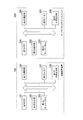
- FIG. 2 is a schematic block diagram showing a hardware configuration of the information processing apparatus 100 and the display 200 with a touch panel.
- the information processing apparatus 100 includes a first CPU 101, a first display unit 102, a first touch panel 103, a first communication unit 105, a first memory 107, and a first external output unit. 108 is comprised.
- the display 200 with a touch panel includes a second CPU 201, a second display unit 202, a second touch panel 203, a second communication unit 205, a second memory 207, and a second external output unit. 208.
- the first touch panel 103 is installed on the surface of the first display unit 102 and detects a position touched by the user (hereinafter referred to as a touch position).
- the first display unit 102 includes a display device such as a liquid crystal display, and displays an image in accordance with an instruction from the first CPU 101.
- the second touch panel 203 is installed on the surface of the second display unit 202 and detects a touch position.
- the second display unit 202 includes a display device such as a liquid crystal display, and displays an image in accordance with an instruction from the second CPU 201.
- the screen size or the number of pixels (resolution) of the screen is different between the first display unit 102 and the second display unit 202.
- FIG. 3 is a schematic block diagram showing functional configurations of the information processing apparatus 100 and the display 200 with a touch panel.
- the information processing apparatus 100 includes a first communication unit 105, a reception information analysis unit 106, a screen information storage unit 111, an operation type determination unit 104, a coordinate conversion unit 113, an application execution unit 110, and a display image generation
- the unit 109, the first display unit 102, and the first external output unit 108 are configured.
- the display 200 with a touch panel includes a second display unit 202, a second touch panel 203, a second communication unit 205, a transmission information generation unit 206, a second memory 207, and a second external output. Part 208.
- the operation type determination unit 104, the coordinate conversion unit 113, the reception information analysis unit 106, the screen information storage unit 111, the application execution unit 110, and the display image generation unit 109 are read by the first CPU 101 from the first memory 107. It is realized by executing.
- the transmission information generation unit 206 is realized by the second CPU 201 reading and executing a program from the second memory 207.
- the same reference numerals (102, 105, 108, 202, 203, 205, 208) are assigned to portions corresponding to the respective portions in FIG.
- the first communication unit 105 communicates with the display 200 with a touch panel via the cable 300 and receives information indicating the number of pixels per unit length of the screen and information indicating the touch position from the display 200 with the touch panel. .
- the first communication unit 105 receives information indicating the screen size and the number of pixels (resolution) (hereinafter referred to as screen information) as information indicating the number of pixels per unit length of the screen.
- the first communication unit 105 uses the touch position coordinates as information indicating the touch position, and the time when the touch position coordinates are detected (hereinafter referred to as coordinate detection time) as information indicating the touch position. Are received periodically.
- the screen information storage unit 111 is a storage area that operates as a work memory when the first CPU 101 executes a program.
- screen information is received from the reception information analysis unit 106. Acquire and memorize. Note that the screen information storage unit 111 may acquire dpi (dots per inch) as the screen information.
- the reception information analysis unit 106 acquires screen information from the display with touch panel 200 via the first communication unit 105. In addition, the reception information analysis unit 106 periodically acquires information indicating the touch position of the display 200 with a touch panel that the first communication unit 105 periodically receives. The reception information analysis unit 106 determines whether the information acquired from the first communication unit 105 is information indicating the touch position or the screen information, and sends the information indicating the touch position to the operation type determination unit 104. The screen information is distributed to the screen information storage unit 111 and output.
- the operation type determination unit 104 acquires information indicating the touch position, and determines whether the coordinates of the touch position in the information indicating the touch position is null information. If the coordinate of the touch position is not null information, the operation type determination unit 104 determines the coordinates of the touch position and the coordinate detection time in the order of acquisition until the next coordinate of the touch position is acquired as null information. Are generated and stored in the touch operation table. Details of the touch operation table will be described later.
- the operation type determination unit 104 reads screen information from the screen information storage unit 111. After acquiring the screen information, the operation type determination unit 104 determines the type of touch operation based on the screen information and the touch operation table. Details of the determination of the type of touch operation will be described later. Thereafter, the operation type determination unit 104 outputs information indicating the type of the touch operation and the touch operation table to the coordinate conversion unit 113.
- the coordinate conversion unit 113 When the coordinate conversion unit 113 acquires information indicating the type of touch operation and the touch operation table, the coordinate conversion unit 113 reads screen information from the screen information storage unit 111. Based on the screen information and the touch operation table, the coordinate conversion unit 113 converts the coordinates of the touch position on the second touch panel 203 stored in the touch operation table to the correspondence on the first touch panel 103. Coordinates are converted to coordinates (hereinafter referred to as body coordinates). Details of the coordinate transformation will be described later. The coordinate conversion unit 113 outputs information indicating the type of the touch operation and the main body coordinates to the application execution unit 110 as touch operation information.
- the application execution unit 110 executes an application such as a Web browser.
- the application execution unit 110 performs an operation requested by the executing application based on the touch operation information acquired from the coordinate conversion unit 113. For example, when the type of touch operation is a flick from point A to point B, scrolling from point A to point B is performed based on the flick.
- the application execution unit 110 displays the image data of the image in order to display the image on the first display unit 102 or the display 200 with a touch panel. Input to the display image generation unit 109.
- the display image generation unit 109 generates an image signal of a display image from the application image data input from the application execution unit 110 and inputs the generated image signal to the first display unit 102 or the first external output unit 108.
- the first external output unit 108 outputs the image signal of the display image input from the display image generation unit 109 to the second communication unit 205.
- the second communication unit 205 When the second communication unit 205 receives an image signal of a display image from the first external output unit 108, the second communication unit 205 inputs the image signal to the second display unit 202.
- the transmission information generation unit 206 acquires screen information from the second memory 207 and outputs the screen information to the second external output unit 208.
- the transmission information generation unit 206 acquires information indicating the touch position from the second touch panel 203
- the transmission information generation unit 206 outputs the information indicating the touch position to the second external output unit 208.
- the second external output unit 208 When acquiring the screen information, the second external output unit 208 inputs the screen information to the first communication unit 105.
- the second external output unit 208 acquires information indicating the touch position
- the second external output unit 208 inputs information indicating the touch position to the first communication unit 105.
- FIG. 4 is a table showing an example of a touch operation table when the display 200 with a touch panel is tapped as a touch operation.
- the touch operation table t100t stores a coordinate detection time t101t and a touch position coordinate t102t.
- the coordinate t102t of the touch position reflects that the touch operation is a tap, and the coordinate value does not change even if the coordinate detection time t101t changes by the period dt.
- FIG. 5 is a table showing an example of a touch operation table when the display 200 with a touch panel is flicked as a touch operation.
- the touch operation table t100f stores coordinate detection time t101f and touch position coordinates t102f.
- the coordinate t102f of the touch position reflects the fact that the touch operation is a flick, and the value of the coordinate changes every time the coordinate detection time t101f changes by the period dt.
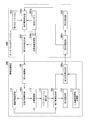
- FIG. 6 is a sequence diagram illustrating an operation example until the type of touch operation of the information processing apparatus 100 is determined.
- the reception information analysis unit 106 waits until it detects the connection of the display 200 with a touch panel (Sa1).
- the reception information analysis unit 106 requests screen information from the display 200 with a touch panel via the first communication unit 105 (Sa2).
- the display with a touch panel 200 transmits the screen information of the device itself to the reception information analysis unit 106 (Sa3).
- the received information analysis unit 106 acquires the screen information as a response to the request for Sa2, and stores it in the screen information storage unit 111 (Sa4).
- the display 200 with a touch panel When the time has elapsed and the display 200 with a touch panel receives a touch operation, it outputs information indicating the touch position of the touch operation to the reception information analysis unit 106 (Sa5).
- the reception information analysis unit 106 acquires information indicating the touch position from the display 200 with a touch panel (Sa6).
- the reception information analysis unit 106 outputs information indicating the touch position to the operation type determination unit 104 (Sa7).
- the operation type determination unit 104 generates a touch operation table based on the information indicating the touch position (Sa8).
- the operation type determination unit 104 acquires screen information from the screen information storage unit 111 (Sa9).
- the operation type determination unit 104 determines the type of touch operation based on the screen information and the touch operation table (Sa10).
- FIG. 7 is a flowchart illustrating an operation in which the operation type determination unit 104 determines the type of touch operation.
- the operation type determination unit 104 executes processes from step ST100 to step ST106 each time a touch operation is performed on the display 200 with a touch panel.
- the operation type determination unit 104 acquires information indicating the touch position.
- the operation type determination unit 104 generates a touch operation table based on the information indicating the touch position.
- the operation type determination unit 104 acquires screen information.
- the process of acquiring the screen information is not necessary every time information indicating the touch position is acquired, and the screen information may be acquired only when information indicating the touch position is first acquired.
- the operation type determination unit 104 refers to the touch operation table, and calculates an average moving speed (a value indicating the amount of movement of the touch position) from when the user touches the second touch panel 203 until it is released. calculate.
- an average moving speed (a value indicating the amount of movement of the touch position) from when the user touches the second touch panel 203 until it is released. calculate.
- the touch operation table t100f stores four coordinates, the names A point, B point, C point, and D point are assigned in order from the top.
- the point A is a position where the user touches the second touch panel 203
- the point D is a position where the user releases the touch from the second touch panel 203.
- the operation type determination unit 104 first calculates the distance between the points A and B using the screen information.
- the operation type determination unit 104 repeats this operation between the points B and C and between the points C and D, and calculates the distance between AB and the distance between BC.
- the movement distance of the touch position is obtained by adding the distance and the distance between CDs, but is not limited to this.
- the movement distance may be calculated by calculating a straight line distance.
- the operation type determination unit 104 can calculate the time taken for the movement from the point A to the point D by referring to the coordinate detection time t101f.
- the time taken for the movement is 3 dt.
- 3 dt is 99 milliseconds. Therefore, the average moving speed when the coordinates move from point A to point D is about 0.3 m / s because 3 cm is moved in 99 milliseconds.
- Step ST104 the operation type determination unit 104 determines whether or not the average moving speed exceeds a predetermined threshold. Since this determination is performed using the average moving speed of the actual size of the coordinates of the touch position, it is possible to determine the type of touch operation using the same threshold value between displays with touch panels of different sizes. ing. Therefore, the operation feeling of the touch operation on the display 200 with the touch panel is the same as the operation feeling of the touch operation on the information processing apparatus 100.
- the determination is made by comparing the average moving speed with a predetermined threshold value, but is not limited thereto. For example, the determination may be made by using the movement distance during a certain time interval as the average movement speed, such as determining whether or not the movement distance per 99 milliseconds exceeds a predetermined threshold value.
- step ST104-Yes When the average moving speed exceeds a predetermined threshold (step ST104-Yes), the operation type determination unit 104 transitions to step ST105. When the average moving speed does not exceed the predetermined threshold (No in Step ST104), the operation type determination unit 104 transitions to Step ST106. (Step ST105) The operation type determination unit 104 determines that the type of the touch operation is flick. (Step ST106) The operation type determination unit 104 determines that the type of touch operation is a tap.
- the determination of the type of touch operation has been described only for taps and flicks, but is not limited thereto.
- the difference from a tap or flick is determined based on whether or not there are a plurality of detected coordinates, and the movement distance of the touch position obtained in step ST103 is a predetermined threshold value It may be determined whether or not a pinch-in or a pinch-out has occurred based on whether or not the value is exceeded.
- the operation type determination unit 104 of the information processing apparatus 100 performs the touch operation performed on the display 200 with a touch panel based on the screen information of the second display unit 202 of the display 200 with a touch panel. Determine the type. Therefore, the information processing apparatus 100 can determine the type of touch operation according to the number of pixels per unit length represented by the screen information, and can appropriately determine the type of touch operation on the display with touch panel 200.
- the information processing apparatus 100 includes a first touch panel 103.
- the operation type determination unit 104 uses the information indicating the touch position where the touch-sensitive display 200 connected to the information processing apparatus 100 is touch-operated and the screen information as a value indicating the amount of movement of the touch position. Calculate the average moving speed. Then, the operation type determination unit 104 determines the type of the touch operation based on whether or not the average moving speed exceeds a predetermined threshold.
- the predetermined threshold is the same as the threshold used when determining the type of touch operation performed on the first touch panel 103 included in the information processing apparatus 100.
- the information processing apparatus 100 determines the type of the touch operation based on the screen information using the average moving speed of the actual size of the coordinates of the touch position. Thereby, the information processing apparatus 100 is determined to be the same type when the same touch operation is performed with the actual size on the information processing apparatus 100 and the display 200 with the touch panel or the display 200 with the touch panel having different sizes. For this reason, the user can perform the touch operation on the display 200 with a touch panel with the same operation feeling as the touch operation on the information processing apparatus 100. As illustrated above, the information processing apparatus 100 can make a determination suitable for the size of the display 200 with a touch panel, and can appropriately determine the type of touch operation.
- FIG. 8 is a schematic block diagram illustrating functional configurations of the information processing apparatus 100 and the touch panel-equipped display 200 according to the second embodiment. In the figure, parts corresponding to those in FIG.
- the operation type determination unit 104a periodically reads information indicating the touch position from the second touch panel 203.
- the operation type determination unit 104a determines whether the coordinates of the touch position of the information indicating the touch position is null information. If the coordinates of the touch position are not null information, the operation type determination unit 104a determines the coordinates of the touch position, the coordinate detection time, and the order of acquisition until the next coordinates of the touch position are acquired as null information. Is generated and stored.
- the operation type determination unit 104a acquires the screen information of the information processing apparatus 100 (hereinafter referred to as own device screen information) stored in the own device screen information storage unit 112 via the second communication unit 205a. In addition, the operation type determination unit 104a acquires screen information from the second memory 207a. The operation type determination unit 104a determines the type of touch operation based on the screen information and the touch operation table. Thereafter, the operation type determination unit 104a outputs the touch operation table and information indicating the type of the touch operation to the transmission information generation unit 206a.
- the transmission information generation unit 206a When the transmission information generation unit 206a acquires the touch operation table and the information indicating the type of the touch operation from the operation type determination unit 104a, the transmission information generation unit 206a transmits the information to the reception information analysis unit 106a via the second external output unit 208. A touch operation table and information indicating the type of the touch operation are output.
- the transmission information generation unit 206a reads screen information from the second memory 207a, and receives information analysis via the second external output unit 208. The screen information is output to the unit 106a.
- the own device screen information storage unit 112 is a storage area operating as a work memory when the first CPU 101 executes a program, and stores own device screen information.
- the own device screen information storage unit 112 outputs the own device screen information to the operation type determination unit 104a via the first external output unit 108a in accordance with the request of the operation type determination unit 104a.
- the first external output unit 108a acquires the own device screen information from the own device screen information storage unit 112
- the first external output unit 108a outputs the own device screen information to the second communication unit 205a.
- the second communication unit 205a When the second communication unit 205a acquires the own device screen information from the first external output unit 108a, the second communication unit 205a outputs the own device screen information to the operation type determination unit 104a.
- the operation type determination unit 104a includes information indicating the number of pixels per unit length represented by the screen information of the display 200 with a touch panel and the touch position where the touch operation with the display 200 with a touch panel is performed. Based on the above, the type of touch operation is determined. In addition, the operation type determination unit 104 a outputs information indicating the type of the touch operation to the information processing apparatus 100.
- the same effect as that of the first embodiment can be obtained because the display 200 with a touch panel has the function of the operation type determination unit 104. Is obtained.
- the reception information analysis unit 106 in the third embodiment is capable of identifying the model such as the VendorID / ProductID of the display with touch panel 200 via the first communication unit 105, or Information that can be individually identified, such as a MAC address, is acquired from the display 200 with a touch panel.
- the reception information analysis unit 106 stores information that can identify the model, or information that can be individually identified, and screen information in association with each other, and is associated with the information acquired from the display 200 with the touch panel.
- the screen information is the screen information of the connected display 200 with a touch panel.
- the reception information analysis unit 106 starts from the following 1) when there is no information that can be identified from the display 200 with a touch panel or screen information that is stored in association with information that can be individually identified. You may make it acquire screen information like either of 3). 1) The received information analysis unit 106 inquires of an external device such as a server connected to the Internet via the first communication unit 105, and acquires screen information corresponding to the information acquired from the display 200 with the touch panel. To do.
- the reception information analysis unit 106 displays a screen for allowing the user to input screen information on the first display unit 102, and acquires the screen information input by the user.
- On the screen for inputting screen information for example, for the number of pixels, an input box for inputting a numerical value may be arranged, or a pull-down menu or a radio button for selecting from a plurality of candidates may be arranged.
- the reception information analysis unit 106 causes the first display unit 102 to display a screen that allows the user to select one of a plurality of screen information stored in advance, and uses the screen information selected by the user.
- the reception information analysis unit 106 associates the screen information acquired by these methods with information that can identify the model acquired from the display 200 with a touch panel, or information that can be individually identified, and stores the screen information storage unit 111. You may make it memorize. Thereby, when the same display 200 with a touch panel is connected, the screen information can be used.
- the reception information analysis unit 106 in the fourth embodiment uses the preset screen information as the screen information to be used.
- the preset screen information may be previously selected by the user from a plurality of screen information stored in the screen information storage unit 111.
- a plurality of pieces of screen information stored in advance may be displayed on the first display unit 102, and the user may select them.
- the information processing apparatus 100 includes the first touch panel 103 and the first display unit 102 .
- the information processing apparatus 100 includes one or both of these. It does not have to be.
- the number of pixels may be acquired from the display with a touch panel 200, and the screen size may be acquired by different methods such as using information stored in association with individually identifiable information.
- the information processing device 100 or the display with a touch panel 200 has the number of pixels per unit length of the screen of the display with a touch panel 200 connected to the information processing device 100 including the first display unit 102.
- the operation is not limited to the touch operation, and may include an operation with a pointing device (for example, a mouse or a touch pad) other than the touch panel.
- the operation type determination unit 104 may use the average moving speed of the cursor by the pointing device as the average moving speed.
- the information processing apparatus 100 may be realized by executing.
- the “computer system” includes an OS and hardware such as peripheral devices.
- the “computer system” includes a homepage providing environment (or display environment) if a WWW system is used.
- the “computer-readable recording medium” refers to a storage device such as a flexible medium, a magneto-optical disk, a portable medium such as a ROM or a CD-ROM, and a hard disk incorporated in a computer system.
- the “computer-readable recording medium” dynamically holds a program for a short time like a communication line when transmitting a program via a network such as the Internet or a communication line such as a telephone line.
- a volatile memory in a computer system serving as a server or a client in that case and a program that holds a program for a certain period of time are also included.
- the program may be a program for realizing a part of the functions described above, and may be a program capable of realizing the functions described above in combination with a program already recorded in a computer system.
- the information processing apparatus includes an operation type determination unit that determines a type of a touch operation based on the operation type.
- the other aspect of this invention is provided with the display with a touchscreen, and the said operation classification determination part is the touch by which the display with the touchscreen connected to the said information and the information showing the number of pixels was touch-operated. Based on the information indicating the position, a value representing the movement amount of the touch position is calculated, and the determination is made based on whether the value representing the movement amount exceeds a predetermined threshold value.
- the threshold value is the same as a threshold used when determining a type of a touch operation performed on a display with a touch panel included in the self apparatus.
- a display device with a touch panel to which an information processing device is connected, the information representing the number of pixels per unit length of the screen of the device, and the device touched
- An operation type determination unit that determines the type of the touch operation based on information indicating the operated touch position, and an external output unit that outputs information indicating the type of the touch operation to the information processing apparatus.
- the type of touch operation includes at least one of tap, flick, pinch-in, and pinch-out.
- the information processing apparatus is configured such that information indicating the number of pixels per unit length of a screen of a display with a touch panel connected to the information processing apparatus and the display with a touch panel are touch-operated. A value representing the amount of movement of the touch position based on the information indicating the touch position, and determining the type of touch operation using the value.
- the other aspect of this invention is a program for functioning a computer as an information processing apparatus as described in any one of (1) to (3).
- the present invention is preferably used when an external display device is connected to the information processing device, but is not limited thereto.
- DESCRIPTION OF SYMBOLS 100 Information processing apparatus 101 ... 1st CPU 102 ... 1st display part 103 ... 1st touch panel 104 ... Operation type determination part 105 ... 1st communication part 106 ... Reception information analysis unit 107 ... First memory 108 ... First external output unit 109 ... Display image generation unit 110 ... Application execution unit 111 ... Screen information storage unit 112. ⁇ ⁇ Own device screen information storage unit 113 ... Coordinate conversion unit 200 ... Display with touch panel 201 ... Second CPU 202 ... Second display unit 203 ... Second touch panel 205 ... -2nd communication part 206 ... transmission information generation part
Landscapes
- Engineering & Computer Science (AREA)
- Theoretical Computer Science (AREA)
- General Engineering & Computer Science (AREA)
- Human Computer Interaction (AREA)
- Physics & Mathematics (AREA)
- General Physics & Mathematics (AREA)
- Signal Processing (AREA)
- Automation & Control Theory (AREA)
- Computer Networks & Wireless Communication (AREA)
- User Interface Of Digital Computer (AREA)
- Position Input By Displaying (AREA)
Abstract
自装置に接続されたタッチパネル付ディスプレイの画面の単位長さ当たりの画素数を表す情報と、前記タッチパネル付ディスプレイがタッチ操作されたタッチ位置を示す情報とに基づいて、タッチ操作の種別を判定する操作種別判定部を備える情報処理装置である。
Description
この発明は、情報処理装置、タッチパネル付ディスプレイ装置、情報処理方法及びプログラムに関する。
本願は、2013年3月14日に、日本に出願された特願2013-052435号に基づき優先権を主張し、その内容をここに援用する。
本願は、2013年3月14日に、日本に出願された特願2013-052435号に基づき優先権を主張し、その内容をここに援用する。
携帯電話端末などの携帯端末は、携帯性が重視されているため、液晶ディスプレイなど、その表示デバイスの大きさが限定されてしまう。そこで、携帯端末を、外部のディスプレイ装置に接続し、該ディスプレイ装置に、携帯端末が生成した画像を表示させるものがある。このような現状の中、外部のディスプレイとしてタッチパネルを搭載したデバイスと、大きさの異なるディスプレイを持つ携帯端末を接続した場合に、1つのタッチパネルを搭載したデバイスで、携帯端末と該外部のディスプレイとの双方で操作可能とするものがある。
例えば、特許文献1には、自装置のタッチパネルから、携帯端末に接続されたタッチパネル付きの外部のディスプレイを操作することを目的とした技術が開示されている(特許文献1参照)。
ところで、特許文献1に記載の携帯端末にあっては、接続されたタッチパネル付ディスプレイのサイズによっては、タッチ操作の種別を適切に判定することができないことがあるという問題がある。例えば、5インチのタッチパネル付ディスプレイがフリックと判定したタッチ操作が、10インチのタッチパネル付ディスプレイではタップと判定されてしまう。
そこで本発明の一態様は、上記従来技術の問題に鑑みてなされたものであり、情報処理装置に接続されたタッチパネル付ディスプレイに対するタッチ操作の種別を、適切に判定することができる情報処理装置、タッチパネル付ディスプレイ装置、情報処理方法及びプログラムを提供することにある。
この発明は、上記問題を解決するためになされたもので、本発明の一態様は、自装置に接続されたタッチパネル付ディスプレイの画面の単位長さ当たりの画素数を表す情報と、前記タッチパネル付ディスプレイがタッチ操作されたタッチ位置を示す情報とに基づいて、タッチ操作の種別を判定する操作種別判定部を備える情報処理装置である。
本発明の一態様によれば、情報処理装置に接続されたタッチパネル付ディスプレイに対するタッチ操作の種別を適切に判定することができる情報処理装置、タッチパネル付ディスプレイ装置、情報処理方法及びプログラムを提供することができる。
[第1の実施形態]
以下、図面を参照して、本発明の第1の実施形態について説明する。
図1は、この発明の一実施形態による情報処理装置100の利用状況を示す外観図90である。本実施形態による情報処理装置100は、スマートフォンやタブレット端末等の情報処理装置である。情報処理装置100は、後述するように、第1のタッチパネル103と、第1の表示部102とを備えており、第1の表示部102に画像を表示し、第1のタッチパネル103のタッチ位置を検出する。さらに、情報処理装置100は、図2に示すように、タッチパネル付ディスプレイ200が、ケーブル300により接続されているときは、タッチパネル付ディスプレイ200に画像を表示させ、タッチパネル付ディスプレイ200におけるタッチ位置を取得する。
以下、図面を参照して、本発明の第1の実施形態について説明する。
図1は、この発明の一実施形態による情報処理装置100の利用状況を示す外観図90である。本実施形態による情報処理装置100は、スマートフォンやタブレット端末等の情報処理装置である。情報処理装置100は、後述するように、第1のタッチパネル103と、第1の表示部102とを備えており、第1の表示部102に画像を表示し、第1のタッチパネル103のタッチ位置を検出する。さらに、情報処理装置100は、図2に示すように、タッチパネル付ディスプレイ200が、ケーブル300により接続されているときは、タッチパネル付ディスプレイ200に画像を表示させ、タッチパネル付ディスプレイ200におけるタッチ位置を取得する。
なお、本実施形態では、情報処理装置100は、タッチパネル付ディスプレイ200が接続されているときは、常にタッチパネル付ディスプレイ200に画像を表示し、該装置からタッチ位置を検出する。他の形態として、情報処理装置100は、タッチパネル付ディスプレイ200が接続されており、かつ、ユーザからの指示操作があったときのみ、タッチパネル付ディスプレイ200に画像を表示し、該装置からタッチ位置を検出するようにしてもよい。
図1では、情報処理装置100と、タッチパネル付ディスプレイ200とが1本のケーブル300で接続される場合を示したが、複数のケーブルで接続されてもよいし、無線通信により接続されてもよい。また、タッチパネル付ディスプレイ200に表示させる画像のデータは、有線にてタッチパネル付ディスプレイ200に送信し、タッチパネル付ディスプレイ200が検出したタッチ位置を示す情報は、無線通信にて情報処理装置100に送信する等、異なる通信手段で、これらの情報を伝達するようにしてもよい。
図2は、情報処理装置100と、タッチパネル付ディスプレイ200とのハード構成を示す概略ブロック図である。図2に示すように、情報処理装置100は、第1のCPU101、第1の表示部102、第1のタッチパネル103、第1の通信部105、第1のメモリ107、第1の外部出力部108を含んで構成される。また、タッチパネル付ディスプレイ200は、第2のCPU201と、第2の表示部202と、第2のタッチパネル203と、第2の通信部205と、第2のメモリ207と、第2の外部出力部208とを含んで構成される。
第1のタッチパネル103は、第1の表示部102の表面に設置されており、ユーザがタッチした位置(以降、タッチ位置という)を検出する。第1の表示部102は、液晶ディスプレイ等の表示デバイスを有し、第1のCPU101からの指示に従い、画像を表示する。
第2のタッチパネル203は、第2の表示部202の表面に設置されており、タッチ位置を検出する。第2の表示部202は、液晶ディスプレイ等の表示デバイスを有し、第2のCPU201からの指示に従い、画像を表示する。ここで、第1の表示部102と第2の表示部202では、例えば、画面の画面サイズ又は画素数(解像度)が異なる。
第2のタッチパネル203は、第2の表示部202の表面に設置されており、タッチ位置を検出する。第2の表示部202は、液晶ディスプレイ等の表示デバイスを有し、第2のCPU201からの指示に従い、画像を表示する。ここで、第1の表示部102と第2の表示部202では、例えば、画面の画面サイズ又は画素数(解像度)が異なる。
図3は、情報処理装置100と、タッチパネル付ディスプレイ200との機能構成を示す概略ブロック図である。情報処理装置100は、第1の通信部105と、受信情報解析部106と、画面情報記憶部111と、操作種別判定部104と、座標変換部113と、アプリケーション実行部110と、表示画像生成部109と、第1の表示部102と、第1の外部出力部108とを含んで構成される。また、タッチパネル付ディスプレイ200は、第2の表示部202と、第2のタッチパネル203と、第2の通信部205と、送信情報生成部206と、第2のメモリ207と、第2の外部出力部208とを含んで構成される。
操作種別判定部104、座標変換部113、受信情報解析部106、画面情報記憶部111、アプリケーション実行部110、表示画像生成部109は、第1のCPU101が第1のメモリ107からプログラムを読み出して実行することにより実現される。また、送信情報生成部206は、第2のCPU201が第2のメモリ207からプログラムを読み出して実行することにより実現される。
同図において、図2における各部に対応する部分には、同一の符号(102、105、108、202、203、205、208)を付し、説明を省略する。
同図において、図2における各部に対応する部分には、同一の符号(102、105、108、202、203、205、208)を付し、説明を省略する。
第1の通信部105は、ケーブル300を介して、タッチパネル付ディスプレイ200と通信し、画面の単位長さ当たりの画素数を表す情報と、タッチパネル付ディスプレイ200からタッチ位置を示す情報とを受信する。本実施形態では、第1の通信部105は、画面の単位長さ当たりの画素数を表す情報として、画面の画面サイズ及び画素数(解像度)を示す情報(以下、画面情報という)を受信する。また、第1の通信部105は、タッチパネル付ディスプレイ200から、該タッチ位置を示す情報として、該タッチ位置の座標と、該タッチ位置の座標が検出された時刻(以降、座標検出時刻という)とを、周期的に受信する。
第1の通信部105は、タッチパネル付ディスプレイ200がタッチされていないときは、該タッチ位置の座標として、ヌル情報を受信する。本実施形態において、該通知の周期は、dtで表すこととし、単位をミリ秒とする。
画面情報記憶部111は、第1のCPU101がプログラムを実行する際にワークメモリとして動作している記憶領域であり、タッチパネル付ディスプレイ200が接続されると、受信情報解析部106から、画面情報を取得して記憶する。なお、画面情報記憶部111は、該画面情報として、dpi(dots per inch)を取得するようにしてもよい。
画面情報記憶部111は、第1のCPU101がプログラムを実行する際にワークメモリとして動作している記憶領域であり、タッチパネル付ディスプレイ200が接続されると、受信情報解析部106から、画面情報を取得して記憶する。なお、画面情報記憶部111は、該画面情報として、dpi(dots per inch)を取得するようにしてもよい。
受信情報解析部106は、タッチパネル付ディスプレイ200が接続されると、第1の通信部105を介して、タッチパネル付ディスプレイ200から、画面情報を取得する。
また、受信情報解析部106は、第1の通信部105が周期的に受信するタッチパネル付ディスプレイ200のタッチ位置を示す情報を、周期的に取得する。受信情報解析部106は、第1の通信部105から取得した情報が、該タッチ位置を示す情報か、該画面情報かを判定し、該タッチ位置を示す情報を操作種別判定部104へ、該画面情報を画面情報記憶部111へと振り分けて出力する。
また、受信情報解析部106は、第1の通信部105が周期的に受信するタッチパネル付ディスプレイ200のタッチ位置を示す情報を、周期的に取得する。受信情報解析部106は、第1の通信部105から取得した情報が、該タッチ位置を示す情報か、該画面情報かを判定し、該タッチ位置を示す情報を操作種別判定部104へ、該画面情報を画面情報記憶部111へと振り分けて出力する。
操作種別判定部104は、タッチ位置を示す情報を取得し、該タッチ位置を示す情報の、該タッチ位置の座標がヌル情報かどうかを判定する。操作種別判定部104は、該タッチ位置の座標がヌル情報ではなかった場合、次にタッチ位置の座標がヌル情報として取得されるまで、取得した順に、該タッチ位置の座標と、該座標検出時刻とを、タッチ操作テーブルを生成して格納する。タッチ操作テーブルの詳細は後述する。操作種別判定部104は、画面情報記憶部111から、画面情報を読み込む。操作種別判定部104は、該画面情報を取得した後、該画面情報と、該タッチ操作テーブルとに基づいて、タッチ操作の種別を判定する。該タッチ操作の種別の判定の詳細は後述する。その後、操作種別判定部104は、該タッチ操作の種別を示す情報と、該タッチ操作テーブルとを、座標変換部113に出力する。
座標変換部113は、タッチ操作の種別を示す情報と、タッチ操作テーブルとを取得すると、画面情報記憶部111から、画面情報を読み込む。座標変換部113は、該画面情報と、該タッチ操作テーブルとに基づいて、該タッチ操作テーブルに格納された第2のタッチパネル203上でのタッチ位置の座標を、第1のタッチパネル103上の対応する座標(以降、本体座標という)に座標変換する。該座標変換の詳細は後述する。座標変換部113は、該タッチ操作の種別を示す情報と、該本体座標とを、タッチ操作情報としてアプリケーション実行部110に出力する。
アプリケーション実行部110は、Webブラウザなどのアプリケーションを実行する。アプリケーション実行部110は、座標変換部113から取得したタッチ操作情報に基づいて、実行しているアプリケーションが要求する動作を行う。例えば、タッチ操作の種別が、A地点からB地点へのフリックだった場合、該フリックに基づいて、A地点からB地点へのスクロールを行う。また、アプリケーション実行部110は、実行しているアプリケーションが画像の表示を要求しているときは、該画像を第1の表示部102もしくはタッチパネル付ディスプレイ200に表示させるため、該画像の画像データを表示画像生成部109に入力する。
表示画像生成部109は、アプリケーション実行部110から入力されたアプリケーションの画像データから、表示画像の画像信号を生成し、第1の表示部102または第1の外部出力部108に入力する。
第1の外部出力部108は、表示画像生成部109から入力された、表示画像の画像信号を、第2の通信部205に出力する。
第1の外部出力部108は、表示画像生成部109から入力された、表示画像の画像信号を、第2の通信部205に出力する。
第2の通信部205は、第1の外部出力部108から、表示画像の画像信号を受けると、第2の表示部202に入力する。
送信情報生成部206は、タッチパネル付ディスプレイ200が接続されると、第2のメモリ207から、画面情報を取得し、第2の外部出力部208に出力する。また、送信情報生成部206は、第2のタッチパネル203から、タッチ位置を示す情報を取得すると、該タッチ位置を示す情報を、第2の外部出力部208に出力する。
第2の外部出力部208は、画面情報を取得すると、該画面情報を第1の通信部105に入力する。また、第2の外部出力部208は、タッチ位置を示す情報を取得すると、該タッチ位置を示す情報を、第1の通信部105に入力する。
送信情報生成部206は、タッチパネル付ディスプレイ200が接続されると、第2のメモリ207から、画面情報を取得し、第2の外部出力部208に出力する。また、送信情報生成部206は、第2のタッチパネル203から、タッチ位置を示す情報を取得すると、該タッチ位置を示す情報を、第2の外部出力部208に出力する。
第2の外部出力部208は、画面情報を取得すると、該画面情報を第1の通信部105に入力する。また、第2の外部出力部208は、タッチ位置を示す情報を取得すると、該タッチ位置を示す情報を、第1の通信部105に入力する。
図4は、タッチパネル付ディスプレイ200が、タッチ操作としてタップされた場合のタッチ操作テーブルの一例を表す表である。タッチ操作テーブルt100tは、座標検出時刻t101tと、タッチ位置の座標t102tとが格納されている。タッチ位置の座標t102tは、該タッチ操作がタップであることを反映して、座標検出時刻t101tが、周期dtだけ変化しても、座標の値が変化していない。
図5は、タッチパネル付ディスプレイ200が、タッチ操作としてフリックされた場合のタッチ操作テーブルの一例を表す表である。タッチ操作テーブルt100fは、座標検出時刻t101fと、タッチ位置の座標t102fとが格納されている。タッチ位置の座標t102fは、該タッチ操作がフリックであることを反映して、座標検出時刻t101fが、周期dtだけ変化する毎に、座標の値も変化している。
図6は、情報処理装置100のタッチ操作の種別を判定するまでの動作例を説明するシーケンス図である。まず、受信情報解析部106は、タッチパネル付ディスプレイ200の接続を検出するまで待機する(Sa1)。受信情報解析部106は、タッチパネル付ディスプレイ200の接続を検出すると、第1の通信部105を介して、タッチパネル付ディスプレイ200に、画面情報を要求する(Sa2)。タッチパネル付ディスプレイ200は、該要求を受けると、自装置の画面情報を、受信情報解析部106に送信する(Sa3)。受信情報解析部106は、Sa2の要求に対する応答として、該画面情報を取得し、画面情報記憶部111に記憶させる(Sa4)。
時間が経過して、タッチパネル付ディスプレイ200は、タッチ操作を受けると、該タッチ操作のタッチ位置を示す情報を、受信情報解析部106に出力する(Sa5)。受信情報解析部106は、タッチパネル付ディスプレイ200から、該タッチ位置を示す情報を取得する(Sa6)。受信情報解析部106は、該タッチ位置を示す情報を、操作種別判定部104に出力する(Sa7)。操作種別判定部104は、該タッチ位置を示す情報に基づいて、タッチ操作テーブルを生成する(Sa8)。操作種別判定部104は、画面情報記憶部111から、画面情報を取得する(Sa9)。操作種別判定部104は、該画面情報と、該タッチ操作テーブルとに基づいて、タッチ操作の種別を判定する(Sa10)。
図7は、操作種別判定部104が、タッチ操作の種別を判定する動作を説明するフローチャートである。操作種別判定部104は、タッチパネル付ディスプレイ200にタッチ操作が行われる毎に、ステップST100からステップST106までの処理を実行する。
(ステップST100)操作種別判定部104は、タッチ位置を示す情報を取得する。
(ステップST101)次に、操作種別判定部104は、該タッチ位置を示す情報に基づいて、タッチ操作テーブルを生成する。
(ステップST102)次に、操作種別判定部104は、画面情報を取得する。なお、該画面情報を取得する処理は、タッチ位置を示す情報を取得する毎に必要なわけではなく、最初にタッチ位置を示す情報を取得した時にのみ、該画面情報を取得するとしてもよい。
(ステップST100)操作種別判定部104は、タッチ位置を示す情報を取得する。
(ステップST101)次に、操作種別判定部104は、該タッチ位置を示す情報に基づいて、タッチ操作テーブルを生成する。
(ステップST102)次に、操作種別判定部104は、画面情報を取得する。なお、該画面情報を取得する処理は、タッチ位置を示す情報を取得する毎に必要なわけではなく、最初にタッチ位置を示す情報を取得した時にのみ、該画面情報を取得するとしてもよい。
(ステップST103)次に、操作種別判定部104は、タッチ操作テーブルを参照し、ユーザが第2のタッチパネル203をタッチしてから離すまでの平均移動速度(タッチ位置の移動量を表す値)を算出する。ここで、図5のタッチ操作テーブルt100fを参照しながら、該平均移動速度の算出の詳細を説明する。タッチ操作テーブルt100fは、4つの座標が格納されているので、上から順に、A地点、B地点、C地点、D地点と名前を付けることにする。該A地点は、ユーザが第2のタッチパネル203をタッチした位置であり、該D地点は、ユーザが第2のタッチパネル203からタッチを離した位置である。
操作種別判定部104は、まず該画面情報を用いて、A地点とB地点との間の距離を算出する。
該画面情報は、画面サイズが横D60x×縦D60yであり、第2のタッチパネル203の画素数が横TR60x×縦TR60yとすると、A地点からB地点までの実寸サイズの距離は、三平方の定理を用いることで、A-B間距離=√(((dx_2 - dx_1)×D60x/TR60x)2 +((dy_2- dy_1)×D60y/TR60y)2 )と算出することができる。
該画面情報は、画面サイズが横D60x×縦D60yであり、第2のタッチパネル203の画素数が横TR60x×縦TR60yとすると、A地点からB地点までの実寸サイズの距離は、三平方の定理を用いることで、A-B間距離=√(((dx_2 - dx_1)×D60x/TR60x)2 +((dy_2- dy_1)×D60y/TR60y)2 )と算出することができる。
本実施形態において、操作種別判定部104は、これをB地点とC地点との間、C地点とD地点との間に対しても繰り返し、算出されたA-B間距離、B-C間距離、C-D間距離を足し合わせることで、タッチ位置の移動距離を求めるが、これに限られるわけではない。例えば、該タッチ操作テーブルの、一番上と一番下のレコードに格納されたタッチ位置を示す座標間の直線距離、すなわちタッチ操作テーブルt100fの例でいえばA地点とD地点との間の直線距離を算出することで、該移動距離としてもよい。
ここで、該A地点からD地点までの移動距離が3cmの場合を考える。また、操作種別判定部104は、座標検出時刻t101fを参照することで、A地点からD地点までの移動に掛かった時間を算出することができる。タッチ操作テーブルt100fの場合、該移動に掛かった時間は、3dtである。本実施形態において、検出周期であるdtは、33ミリ秒とすると、3dtは99ミリ秒ということになる。従って、A地点からD地点まで座標が移動した際の平均移動速度は、3cmを99ミリ秒で移動したので、約0.3m/sとなる。
(ステップST104)次に、操作種別判定部104は、該平均移動速度が、所定の閾値を超えたか否かを判定する。該判定は、タッチ位置の座標の実寸サイズの平均移動速度を用いて行っているため、大きさの異なるタッチパネル付ディスプレイ間で、同じ閾値を用いてタッチ操作の種別を判定することが可能となっている。従って、タッチパネル付ディスプレイ200上でのタッチ操作の操作感覚は、情報処理装置100上でのタッチ操作の操作感覚と同じになる。なお、本実施形態において、該判定は、該平均移動速度と所定の閾値とを比較することとしたが、これに限られるわけではない。例えば、99ミリ秒当たりの移動距離が、所定の閾値を超えたか否かを判定するというように、平均移動速度としてある一定の時間間隔の間の移動距離を用いて判定してもよい。
操作種別判定部104は、該平均移動速度が所定の閾値を超えたとき(ステップST104-Yes)、ステップST105に遷移する。操作種別判定部104は、該平均移動速度が所定の閾値を超えなかったとき(ステップST104-No)、ステップST106に遷移する。
(ステップST105)操作種別判定部104は、タッチ操作の種別を、フリックと判定する。
(ステップST106)操作種別判定部104は、タッチ操作の種別を、タップと判定する。
(ステップST105)操作種別判定部104は、タッチ操作の種別を、フリックと判定する。
(ステップST106)操作種別判定部104は、タッチ操作の種別を、タップと判定する。
なお、本実施形態において、タッチ操作の種別の判定は、タップとフリックとのみを説明したが、これらに限られるわけではない。例えば、ピンチインやピンチアウト等の、マルチタップイベントの場合、検出された座標が複数あるか否かでタップやフリックとの違いを判定し、ステップST103で求めたタッチ位置の移動距離が所定の閾値を超えたか否かでピンチインまたはピンチアウトであったか否かを判定するとしてもよい。
このように、本実施形態において、情報処理装置100の操作種別判定部104は、タッチパネル付ディスプレイ200の第2の表示部202の画面情報に基づいて、タッチパネル付ディスプレイ200に行われたタッチ操作の種別を判定する。このため、情報処理装置100は、画面情報が表わす単位長さ当たりの画素数に応じてタッチ操作の種別を判定でき、タッチパネル付ディスプレイ200に対するタッチ操作の種別を適切に判定することができる。
また、情報処理装置100は、第1のタッチパネル103を備える。さらに、操作種別判定部104は、情報処理装置100に接続されたタッチパネル付ディスプレイ200がタッチ操作されたタッチ位置を示す情報と、画面情報とに基づいて、該タッチ位置の移動量を表す値として平均移動速度を算出する。そして、操作種別判定部104は、該平均移動速度が所定の閾値を超えているか否かにより、該タッチ操作の種別を判定する。該所定の閾値は、情報処理装置100が備える第1のタッチパネル103に対して行われたタッチ操作の種別を判定する際に用いられる閾値と同じである。
例えば、情報処理装置100は、画面情報に基づいて、タッチ位置の座標の実寸サイズの平均移動速度を用いてタッチ操作の種別を判定する。これにより、情報処理装置100は、情報処理装置100とタッチパネル付ディスプレイ200や、サイズの異なるタッチパネル付ディスプレイ200に、実寸サイズで同じタッチ操作をした場合、同じ種別に判定される。このため、ユーザは、タッチパネル付ディスプレイ200上でのタッチ操作を、情報処理装置100上でのタッチ操作と同じ操作感で行うことができる。
以上例示したように、情報処理装置100は、タッチパネル付ディスプレイ200のサイズに適した判定をすることができ、タッチ操作の種別を適切に判定することができる。
以上例示したように、情報処理装置100は、タッチパネル付ディスプレイ200のサイズに適した判定をすることができ、タッチ操作の種別を適切に判定することができる。
[第2の実施形態]
第2の実施形態における情報処理装置100は、操作種別判定部104を含まず、タッチパネル付ディスプレイ200の機能構成に、操作種別判定部104が含まれているとする。
図8は、第2の実施形態における情報処理装置100と、タッチパネル付ディスプレイ200との機能構成を示す概略ブロック図である。同図において、図3の各部に対応する部分には同一の符号を付け、その説明を省略する
第2の実施形態における情報処理装置100は、操作種別判定部104を含まず、タッチパネル付ディスプレイ200の機能構成に、操作種別判定部104が含まれているとする。
図8は、第2の実施形態における情報処理装置100と、タッチパネル付ディスプレイ200との機能構成を示す概略ブロック図である。同図において、図3の各部に対応する部分には同一の符号を付け、その説明を省略する
操作種別判定部104aは、第2のタッチパネル203から、タッチ位置を示す情報を周期的に読み込む。操作種別判定部104aは、該タッチ位置を示す情報の、該タッチ位置の座標がヌル情報かどうかを判定する。操作種別判定部104aは、該タッチ位置の座標がヌル情報ではなかった場合、次にタッチ位置の座標がヌル情報として取得されるまで、取得した順に、該タッチ位置の座標と、座標検出時刻とを、タッチ操作テーブルを生成して格納する。
操作種別判定部104aは、第2の通信部205aを介して、自装置画面情報記憶部112が記憶している、情報処理装置100の画面情報(以降、自装置画面情報という)を取得する。また、操作種別判定部104aは、第2のメモリ207aから、画面情報を取得する。操作種別判定部104aは、該画面情報と、該タッチ操作テーブルとに基づいて、タッチ操作の種別を判定する。その後、操作種別判定部104aは、該タッチ操作テーブルと、該タッチ操作の種別を示す情報とを、送信情報生成部206aに出力する。
送信情報生成部206aは、操作種別判定部104aから、タッチ操作テーブルと、タッチ操作の種別を示す情報とを取得すると、第2の外部出力部208を介して、受信情報解析部106aに、該タッチ操作テーブルと、該タッチ操作の種別を示す情報とを出力する。また、送信情報生成部206aは、情報処理装置100に、タッチパネル付ディスプレイ200が接続されると、第2のメモリ207aから画面情報を読み込み、第2の外部出力部208を介して、受信情報解析部106aに、該画面情報を出力する。
自装置画面情報記憶部112は、第1のCPU101がプログラムを実行する際にワークメモリとして動作している記憶領域であり、自装置画面情報を記憶している。自装置画面情報記憶部112は、操作種別判定部104aの要求に従い、自装置画面情報を、第1の外部出力部108aを介して、操作種別判定部104aに出力する。
第1の外部出力部108aは、自装置画面情報記憶部112から、自装置画面情報を取得すると、該自装置画面情報を、第2の通信部205aに出力する。
第1の外部出力部108aは、自装置画面情報記憶部112から、自装置画面情報を取得すると、該自装置画面情報を、第2の通信部205aに出力する。
第2の通信部205aは、第1の外部出力部108aから、自装置画面情報を取得すると、該自装置画面情報を、操作種別判定部104aに出力する。
このように、第2の実施形態では、操作種別判定部104aは、タッチパネル付ディスプレイ200の画面情報が表わす単位長さ当たりの画素数と、タッチパネル付ディスプレイ200がタッチ操作されたタッチ位置を示す情報とに基づいて、タッチ操作の種別を判定する。また、操作種別判定部104aは、情報処理装置100に該タッチ操作の種別を示す情報を出力する。このため、情報処理装置100に、操作種別判定部104に相当する機能が備わっていなくても、タッチパネル付ディスプレイ200が操作種別判定部104の機能を持つことで、第1の実施形態と同じ効果が得られる。
このように、第2の実施形態では、操作種別判定部104aは、タッチパネル付ディスプレイ200の画面情報が表わす単位長さ当たりの画素数と、タッチパネル付ディスプレイ200がタッチ操作されたタッチ位置を示す情報とに基づいて、タッチ操作の種別を判定する。また、操作種別判定部104aは、情報処理装置100に該タッチ操作の種別を示す情報を出力する。このため、情報処理装置100に、操作種別判定部104に相当する機能が備わっていなくても、タッチパネル付ディスプレイ200が操作種別判定部104の機能を持つことで、第1の実施形態と同じ効果が得られる。
[第3の実施形態]
第3の実施形態における受信情報解析部106は、タッチパネル付ディスプレイ200が接続されると、第1の通信部105を介して、タッチパネル付ディスプレイ200のVendorID/ProductID等機種を識別可能な情報、あるいは、MACアドレスなど個別識別可能な情報を、タッチパネル付ディスプレイ200から取得する。受信情報解析部106は、機種を識別可能な情報、あるいは、個別識別可能な情報と、画面情報とを予め対応付けて記憶しており、タッチパネル付ディスプレイ200から取得した情報に対応付けられている画面情報を、接続されたタッチパネル付ディスプレイ200の画面情報とする。
第3の実施形態における受信情報解析部106は、タッチパネル付ディスプレイ200が接続されると、第1の通信部105を介して、タッチパネル付ディスプレイ200のVendorID/ProductID等機種を識別可能な情報、あるいは、MACアドレスなど個別識別可能な情報を、タッチパネル付ディスプレイ200から取得する。受信情報解析部106は、機種を識別可能な情報、あるいは、個別識別可能な情報と、画面情報とを予め対応付けて記憶しており、タッチパネル付ディスプレイ200から取得した情報に対応付けられている画面情報を、接続されたタッチパネル付ディスプレイ200の画面情報とする。
なお、受信情報解析部106は、タッチパネル付ディスプレイ200から取得した機種を識別可能な情報、あるいは、個別識別可能な情報と対応付けて記憶している画面情報が無いときは、以下の1)から3)のいずれかのようにして画面情報を取得するようにしてもよい。1)受信情報解析部106は、第1の通信部105を介して、インターネットに接続されたサーバ等、外部の装置に問い合わせて、タッチパネル付ディスプレイ200かから取得した情報に対応する画面情報を取得する。
2)受信情報解析部106は、ユーザに画面情報を入力させる画面を第1の表示部102に表示させて、ユーザが入力した画面情報を取得する。画面情報を入力させる画面には、例えば、画素数については、数値を入力させる入力ボックスを配置してもよいし、複数の候補の中から選択させるプルダウンメニューやラジオボタンを配置してもよい。3)受信情報解析部106は、予め記憶していた複数の画面情報から1つをユーザに選択させる画面を第1の表示部102に表示させて、ユーザが選択した画面情報を用いる。
なお、受信情報解析部106は、これらの方法で取得した画面情報を、タッチパネル付ディスプレイ200から取得した機種を識別可能な情報、あるいは、個別識別可能な情報と対応付けて、画面情報記憶部111に記憶させるようにしてもよい。これにより、同じタッチパネル付ディスプレイ200が接続されたときに、該画面情報を用いることができる。
[第4の実施形態]
第4の実施形態における受信情報解析部106は、タッチパネル付ディスプレイ200が接続されると、予め設定された画面情報を、使用する画面情報とする。この予め設定された画面情報は、画面情報記憶部111が記憶する複数の画面情報の中から、ユーザが予め選択したものとしてもよい。また、タッチパネル付ディスプレイ200が接続されると、予め記憶された複数の画面情報を、第1の表示部102に表示し、それらの中からユーザが選択したものとしてもよい。
第4の実施形態における受信情報解析部106は、タッチパネル付ディスプレイ200が接続されると、予め設定された画面情報を、使用する画面情報とする。この予め設定された画面情報は、画面情報記憶部111が記憶する複数の画面情報の中から、ユーザが予め選択したものとしてもよい。また、タッチパネル付ディスプレイ200が接続されると、予め記憶された複数の画面情報を、第1の表示部102に表示し、それらの中からユーザが選択したものとしてもよい。
なお、上述の各実施形態では、情報処理装置100が第1のタッチパネル103及び第1の表示部102を有する場合を説明したが、情報処理装置100は、これらのいずれかまたは双方を有していなくてもよい。
また、画面情報のうち、画素数は、タッチパネル付ディスプレイ200から取得し、画面サイズは、個別識別可能な情報と対応付けて記憶していたものを用いるなど、それぞれ異なる方法で取得してもよい。
なお、上述の各実施形態では、情報処理装置100又はタッチパネル付ディスプレイ200は、第1の表示部102を備える情報処理装置100に接続されるタッチパネル付ディスプレイ200の画面の単位長さ当たりの画素数を表す情報と、情報処理装置100が生成した画像を表示したディスプレイにおける操作位置を示す情報とに基づいて、操作の種別を判定する装置である。ここで、操作は、タッチ操作に限らず、タッチパネル以外のポインティングデバイス(例えば、マウス、タッチパッド)による操作を含んでいてもよい。例えば、操作種別判定部104は、ポインティングデバイスによるカーソルの平均移動速度を、上記の平均移動速度として用いてもよい。
また、画面情報のうち、画素数は、タッチパネル付ディスプレイ200から取得し、画面サイズは、個別識別可能な情報と対応付けて記憶していたものを用いるなど、それぞれ異なる方法で取得してもよい。
なお、上述の各実施形態では、情報処理装置100又はタッチパネル付ディスプレイ200は、第1の表示部102を備える情報処理装置100に接続されるタッチパネル付ディスプレイ200の画面の単位長さ当たりの画素数を表す情報と、情報処理装置100が生成した画像を表示したディスプレイにおける操作位置を示す情報とに基づいて、操作の種別を判定する装置である。ここで、操作は、タッチ操作に限らず、タッチパネル以外のポインティングデバイス(例えば、マウス、タッチパッド)による操作を含んでいてもよい。例えば、操作種別判定部104は、ポインティングデバイスによるカーソルの平均移動速度を、上記の平均移動速度として用いてもよい。
また、図3における情報処理装置100の機能もしくはその一部の機能を実現するためのプログラムをコンピュータ読み取り可能な記録媒体に記録して、この記録媒体に記録されたプログラムをコンピュータシステムに読み込ませ、実行することにより情報処理装置100を実現してもよい。なお、ここでいう「コンピュータシステム」とは、OSや周辺機器等のハードウェアを含むものとする。
また、「コンピュータシステム」は、WWWシステムを利用している場合であれば、ホームページ提供環境(あるいは表示環境)も含むものとする。
また、「コンピュータ読み取り可能な記録媒体」とは、フレキシブルディスク、光磁気ディスク、ROM、CD-ROM等の可搬媒体、コンピュータシステムに内蔵されるハードディスク等の記憶装置のことをいう。
また、「コンピュータ読み取り可能な記録媒体」とは、フレキシブルディスク、光磁気ディスク、ROM、CD-ROM等の可搬媒体、コンピュータシステムに内蔵されるハードディスク等の記憶装置のことをいう。
さらに「コンピュータ読み取り可能な記録媒体」とは、インターネット等のネットワークや電話回線等の通信回線を介してプログラムを送信する場合の通信線のように、短時間の間、動的にプログラムを保持するもの、その場合のサーバやクライアントとなるコンピュータシステム内部の揮発性メモリのように、一定時間プログラムを保持しているものも含むものとする。また上記プログラムは、前述した機能の一部を実現するためのものであってもよく、さらに前述した機能をコンピュータシステムにすでに記録されているプログラムとの組み合わせで実現できるものであってもよい。
以上、この発明の実施形態を、図面を参照して詳述してきたが、具体的な構成はこの実施形態に限られるものではなく、この発明の要旨を逸脱しない範囲の設計変更等も含まれる。
以上、この発明の実施形態を、図面を参照して詳述してきたが、具体的な構成はこの実施形態に限られるものではなく、この発明の要旨を逸脱しない範囲の設計変更等も含まれる。
(1)本発明の一態様は、自装置に接続されたタッチパネル付ディスプレイの画面の単位長さ当たりの画素数を表す情報と、前記タッチパネル付ディスプレイがタッチ操作されたタッチ位置を示す情報とに基づいて、タッチ操作の種別を判定する操作種別判定部を備えることを特徴とする情報処理装置である。
(2)また、本発明の他の態様は、タッチパネル付ディスプレイを備え、前記操作種別判定部は、前記画素数を表す情報と、前記自装置に接続されたタッチパネル付ディスプレイがタッチ操作されたタッチ位置を示す情報とに基づいて、前記タッチ位置の移動量を表す値を算出し、前記移動量を表す値が所定の閾値を超えているか否かにより前記判定を行い、前記所定の閾値は、前記自装置が備えるタッチパネル付ディスプレイに対して行われたタッチ操作の種別を判定する際に用いられる閾値と同じであることを特徴とする(1)に記載の情報処理装置である。
(3)また、本発明の他の態様は、情報処理装置が接続されたタッチパネル付ディスプレイ装置であって、自装置の画面の単位長さ当たりの画素数を表す情報と、前記自装置がタッチ操作されたタッチ位置を示す情報とに基づいて、タッチ操作の種別を判定する操作種別判定部と、前記情報処理装置に前記タッチ操作の種別を示す情報を出力する外部出力部と、を備えることを特徴とするタッチパネル付ディスプレイ装置である。
(4)前記タッチ操作の種別は、タップ、フリック、ピンチイン、ピンチアウトのうち、少なくとも一つを含むことを特徴とする(1)に記載の情報処理装置である。
(4)前記タッチ操作の種別は、タップ、フリック、ピンチイン、ピンチアウトのうち、少なくとも一つを含むことを特徴とする(1)に記載の情報処理装置である。
(5)また、本発明の他の態様は、情報処理装置が、自装置に接続されたタッチパネル付ディスプレイの画面の単位長さ当たりの画素数を表す情報と、前記タッチパネル付ディスプレイがタッチ操作されたタッチ位置を示す情報とに基づいて、前記タッチ位置の移動量を表す値を算出し、該値を用いてタッチ操作の種別を判定する過程を有することを特徴とする情報処理方法である。
(6)また、本発明の他の態様は、コンピュータを、(1)から(3)のいずれか一項に記載の情報処理装置、として機能させるためのプログラムである。
(6)また、本発明の他の態様は、コンピュータを、(1)から(3)のいずれか一項に記載の情報処理装置、として機能させるためのプログラムである。
本発明は、情報処理装置に外部表示装置を接続する際に好適に用いられるが、これに限られない。
100・・・情報処理装置 101・・・第1のCPU 102・・・第1の表示部 103・・・第1のタッチパネル 104・・・操作種別判定部 105・・・第1の通信部 106・・・受信情報解析部 107・・・第1のメモリ 108・・・第1の外部出力部 109・・・表示画像生成部 110・・・アプリケーション実行部 111・・・画面情報記憶部 112・・・自装置画面情報記憶部 113・・・座標変換部 200・・・タッチパネル付ディスプレイ 201・・・第2のCPU 202・・・第2の表示部 203・・・第2のタッチパネル 205・・・第2の通信部 206・・・送信情報生成部
Claims (6)
- 自装置に接続されたタッチパネル付ディスプレイの画面の単位長さ当たりの画素数を表す情報と、前記タッチパネル付ディスプレイがタッチ操作されたタッチ位置を示す情報とに基づいて、タッチ操作の種別を判定する操作種別判定部
を備える情報処理装置。 - タッチパネル付ディスプレイを備え、
前記操作種別判定部は、
前記画素数を表す情報と、前記自装置に接続されたタッチパネル付ディスプレイがタッチ操作されたタッチ位置を示す情報とに基づいて、前記タッチ位置の移動量を表す値を算出し、前記移動量を表す値が所定の閾値を超えているか否かにより前記判定を行い、
前記所定の閾値は、前記自装置が備えるタッチパネル付ディスプレイに対して行われたタッチ操作の種別を判定する際に用いられる閾値と同じである
請求項1に記載の情報処理装置。 - 前記タッチ操作の種別は、タップ、フリック、ピンチイン、ピンチアウトのうち、少なくとも一つを含む請求項1に記載の情報処理装置。
- 情報処理装置が接続されたタッチパネル付ディスプレイ装置であって、
自装置の画面の単位長さ当たりの画素数を表す情報と、前記自装置がタッチ操作されたタッチ位置を示す情報とに基づいて、タッチ操作の種別を判定する操作種別判定部と、
前記情報処理装置に前記タッチ操作の種別を示す情報を出力する外部出力部と、
を備えるタッチパネル付ディスプレイ装置。 - 情報処理装置が、自装置に接続されたタッチパネル付ディスプレイの画面の単位長さ当たりの画素数を表す情報と、前記タッチパネル付ディスプレイがタッチ操作されたタッチ位置を示す情報とに基づいて、前記タッチ位置の移動量を表す値を算出し、該値を用いてタッチ操作の種別を判定する過程
を有する情報処理方法。 - コンピュータを、請求項1から請求項3のいずれか一項に記載の情報処理装置、として機能させるためのプログラム。
Priority Applications (1)
| Application Number | Priority Date | Filing Date | Title |
|---|---|---|---|
| US14/646,035 US9582094B2 (en) | 2013-03-14 | 2014-02-12 | Information processing device, display device with touch panel, information processing method, and program |
Applications Claiming Priority (2)
| Application Number | Priority Date | Filing Date | Title |
|---|---|---|---|
| JP2013052435A JP6047822B2 (ja) | 2013-03-14 | 2013-03-14 | 情報処理装置、情報処理方法及びプログラム |
| JP2013-052435 | 2013-03-14 |
Publications (1)
| Publication Number | Publication Date |
|---|---|
| WO2014141797A1 true WO2014141797A1 (ja) | 2014-09-18 |
Family
ID=51536473
Family Applications (1)
| Application Number | Title | Priority Date | Filing Date |
|---|---|---|---|
| PCT/JP2014/053191 Ceased WO2014141797A1 (ja) | 2013-03-14 | 2014-02-12 | 情報処理装置、タッチパネル付ディスプレイ装置、情報処理方法及びプログラム |
Country Status (3)
| Country | Link |
|---|---|
| US (1) | US9582094B2 (ja) |
| JP (1) | JP6047822B2 (ja) |
| WO (1) | WO2014141797A1 (ja) |
Cited By (1)
| Publication number | Priority date | Publication date | Assignee | Title |
|---|---|---|---|---|
| JPWO2016002634A1 (ja) * | 2014-07-01 | 2017-04-27 | 富士フイルム株式会社 | 感活性光線性又は感放射線性樹脂組成物、パターン形成方法、電子デバイスの製造方法及び電子デバイス |
Families Citing this family (8)
| Publication number | Priority date | Publication date | Assignee | Title |
|---|---|---|---|---|
| US10402142B2 (en) * | 2016-01-25 | 2019-09-03 | Pathway Innovations And Technologies, Inc. | Interactive flat panel display with integrated document camera |
| JP2017174071A (ja) * | 2016-03-23 | 2017-09-28 | 株式会社東海理化電機製作所 | 操作装置 |
| WO2019044003A1 (ja) * | 2017-09-04 | 2019-03-07 | 株式会社ワコム | 空間位置指示システム |
| CN111837174B (zh) * | 2018-06-25 | 2023-03-28 | 麦克赛尔株式会社 | 头戴式显示器、头戴式显示器协作系统及其方法 |
| TWM576682U (zh) * | 2018-11-30 | 2019-04-11 | 華碩電腦股份有限公司 | 電子裝置 |
| JP7203436B2 (ja) * | 2020-11-13 | 2023-01-13 | ディープインサイト株式会社 | ユーザインターフェイス装置、ユーザインターフェイスシステム及びユーザインターフェイス用プログラム |
| US20250271948A1 (en) * | 2022-05-02 | 2025-08-28 | Deep Insight Inc. | User Interface Device, User Interface System, and Recording Medium |
| JP2024134889A (ja) * | 2023-03-22 | 2024-10-04 | 株式会社リコー | 表示システム、表示方法及びプログラム |
Citations (7)
| Publication number | Priority date | Publication date | Assignee | Title |
|---|---|---|---|---|
| JPH08228329A (ja) * | 1994-12-20 | 1996-09-03 | Ricoh Co Ltd | 通信会議方法および通信会議端末装置 |
| JP2011134278A (ja) * | 2009-12-25 | 2011-07-07 | Toshiba Corp | 情報処理装置およびポインティング制御方法 |
| JP2011521381A (ja) * | 2008-05-19 | 2011-07-21 | マイクロソフト コーポレーション | ドラッグ操作を用いるメニューへのアクセス |
| JP2012127791A (ja) * | 2010-12-15 | 2012-07-05 | Aisin Aw Co Ltd | ナビゲーション装置およびその制御方法並びにプログラム |
| JP2012155590A (ja) * | 2011-01-27 | 2012-08-16 | Kyocera Corp | 携帯通信端末 |
| JP5331935B1 (ja) * | 2012-12-22 | 2013-10-30 | 淳也 榎本 | 無線による画面表示制御方法及びシステム |
| JP2013254435A (ja) * | 2012-06-08 | 2013-12-19 | Clarion Co Ltd | 表示装置 |
Family Cites Families (3)
| Publication number | Priority date | Publication date | Assignee | Title |
|---|---|---|---|---|
| US9258402B2 (en) * | 2009-04-14 | 2016-02-09 | Qualcomm Incorporated | System and method for controlling mobile devices |
| JP5629180B2 (ja) * | 2010-10-21 | 2014-11-19 | 京セラ株式会社 | 携帯端末装置 |
| US8674957B2 (en) * | 2011-02-04 | 2014-03-18 | Qualcomm Incorporated | User input device for wireless back channel |
-
2013
- 2013-03-14 JP JP2013052435A patent/JP6047822B2/ja not_active Expired - Fee Related
-
2014
- 2014-02-12 US US14/646,035 patent/US9582094B2/en not_active Expired - Fee Related
- 2014-02-12 WO PCT/JP2014/053191 patent/WO2014141797A1/ja not_active Ceased
Patent Citations (7)
| Publication number | Priority date | Publication date | Assignee | Title |
|---|---|---|---|---|
| JPH08228329A (ja) * | 1994-12-20 | 1996-09-03 | Ricoh Co Ltd | 通信会議方法および通信会議端末装置 |
| JP2011521381A (ja) * | 2008-05-19 | 2011-07-21 | マイクロソフト コーポレーション | ドラッグ操作を用いるメニューへのアクセス |
| JP2011134278A (ja) * | 2009-12-25 | 2011-07-07 | Toshiba Corp | 情報処理装置およびポインティング制御方法 |
| JP2012127791A (ja) * | 2010-12-15 | 2012-07-05 | Aisin Aw Co Ltd | ナビゲーション装置およびその制御方法並びにプログラム |
| JP2012155590A (ja) * | 2011-01-27 | 2012-08-16 | Kyocera Corp | 携帯通信端末 |
| JP2013254435A (ja) * | 2012-06-08 | 2013-12-19 | Clarion Co Ltd | 表示装置 |
| JP5331935B1 (ja) * | 2012-12-22 | 2013-10-30 | 淳也 榎本 | 無線による画面表示制御方法及びシステム |
Cited By (1)
| Publication number | Priority date | Publication date | Assignee | Title |
|---|---|---|---|---|
| JPWO2016002634A1 (ja) * | 2014-07-01 | 2017-04-27 | 富士フイルム株式会社 | 感活性光線性又は感放射線性樹脂組成物、パターン形成方法、電子デバイスの製造方法及び電子デバイス |
Also Published As
| Publication number | Publication date |
|---|---|
| US9582094B2 (en) | 2017-02-28 |
| US20150301633A1 (en) | 2015-10-22 |
| JP2014178887A (ja) | 2014-09-25 |
| JP6047822B2 (ja) | 2016-12-21 |
Similar Documents
| Publication | Publication Date | Title |
|---|---|---|
| JP6047822B2 (ja) | 情報処理装置、情報処理方法及びプログラム | |
| JP6122037B2 (ja) | 端末機におけるコンテンツ移動方法及び装置 | |
| AU2013276998B2 (en) | Mouse function provision method and terminal implementing the same | |
| CN103677556B (zh) | 快速定位应用程序的方法及设备 | |
| CN103164156B (zh) | 便携式终端的触摸输入方法和设备 | |
| US9880613B2 (en) | Apparatus and control method based on motion | |
| JP2014132427A (ja) | 情報処理装置及び情報処理方法、並びにコンピューター・プログラム | |
| KR20140139647A (ko) | 휴대단말기에서 아이콘을 재배열하는 방법 및 장치 | |
| JP6183820B2 (ja) | 端末、及び端末制御方法 | |
| CN101377725A (zh) | 手持式电子装置及其控制方法 | |
| KR20130102670A (ko) | 터치스크린 단말기의 세밀한 조작을 위한 사용자별 손가락 및 터치 펜 접촉 위치 포인트 설정을 위한 방법 및 시스템 | |
| US10101905B1 (en) | Proximity-based input device | |
| KR20110066545A (ko) | 터치스크린을 이용하여 이미지를 표시하기 위한 방법 및 단말 | |
| JP6123107B2 (ja) | 情報処理装置、ソフトウェアキーボードの生成方法およびプログラム | |
| JP2014241078A (ja) | 情報処理装置 | |
| JP5607667B2 (ja) | データ処理装置、入出力装置、タッチパネルの制御方法、記憶媒体及びプログラム伝送装置 | |
| JP6971573B2 (ja) | 電子機器、その制御方法およびプログラム | |
| CN104572602A (zh) | 显示消息的方法和装置 | |
| JP2014186495A (ja) | 情報処理装置、入力制御方法およびプログラム | |
| JP2011123916A (ja) | データ処理装置、入出力装置、タッチパネルの制御方法、記憶媒体及びプログラム伝送装置 | |
| JP2017102676A (ja) | 携帯端末装置、操作装置、情報処理方法及びプログラム | |
| JP2010020667A (ja) | 接触感知型ポインティングデバイスを用いた文字入力方法および装置 | |
| JP2015153239A (ja) | 携帯端末装置、表示方法およびプログラム | |
| JP2014142790A (ja) | 情報処理装置、画像生成方法およびプログラム | |
| WO2016121526A1 (ja) | 表示制御装置、表示方法および表示プログラム |
Legal Events
| Date | Code | Title | Description |
|---|---|---|---|
| 121 | Ep: the epo has been informed by wipo that ep was designated in this application |
Ref document number: 14763466 Country of ref document: EP Kind code of ref document: A1 |
|
| WWE | Wipo information: entry into national phase |
Ref document number: 14646035 Country of ref document: US |
|
| NENP | Non-entry into the national phase |
Ref country code: DE |
|
| 122 | Ep: pct application non-entry in european phase |
Ref document number: 14763466 Country of ref document: EP Kind code of ref document: A1 |