WO2014103015A1 - 携帯端末装置、車載器、情報提示方法及び情報提示プログラム - Google Patents
携帯端末装置、車載器、情報提示方法及び情報提示プログラム Download PDFInfo
- Publication number
- WO2014103015A1 WO2014103015A1 PCT/JP2012/084081 JP2012084081W WO2014103015A1 WO 2014103015 A1 WO2014103015 A1 WO 2014103015A1 JP 2012084081 W JP2012084081 W JP 2012084081W WO 2014103015 A1 WO2014103015 A1 WO 2014103015A1
- Authority
- WO
- WIPO (PCT)
- Prior art keywords
- vehicle
- voice input
- unit
- terminal device
- input means
- Prior art date
- Legal status (The legal status is an assumption and is not a legal conclusion. Google has not performed a legal analysis and makes no representation as to the accuracy of the status listed.)
- Ceased
Links
Images


Classifications
-
- H—ELECTRICITY
- H04—ELECTRIC COMMUNICATION TECHNIQUE
- H04M—TELEPHONIC COMMUNICATION
- H04M1/00—Substation equipment, e.g. for use by subscribers
- H04M1/60—Substation equipment, e.g. for use by subscribers including speech amplifiers
- H04M1/6033—Substation equipment, e.g. for use by subscribers including speech amplifiers for providing handsfree use or a loudspeaker mode in telephone sets
- H04M1/6041—Portable telephones adapted for handsfree use
- H04M1/6075—Portable telephones adapted for handsfree use adapted for handsfree use in a vehicle
- H04M1/6083—Portable telephones adapted for handsfree use adapted for handsfree use in a vehicle by interfacing with the vehicle audio system
- H04M1/6091—Portable telephones adapted for handsfree use adapted for handsfree use in a vehicle by interfacing with the vehicle audio system including a wireless interface
-
- H—ELECTRICITY
- H04—ELECTRIC COMMUNICATION TECHNIQUE
- H04M—TELEPHONIC COMMUNICATION
- H04M2250/00—Details of telephonic subscriber devices
- H04M2250/74—Details of telephonic subscriber devices with voice recognition means
Definitions
- the present invention relates to control when a mobile terminal and an in-vehicle device are connected.
- Patent Document 1 describes a method of performing voice input of a mobile phone using a microphone of an in-vehicle device.
- a mobile phone when a mobile phone is connected to the cradle, data communication can be performed between the vehicle-mounted device and the mobile phone via the cradle.
- the on-vehicle device and the cradle are connected, the function of the mobile phone itself is switched to the on-vehicle device mode.
- the on-vehicle device mode the screen of the mobile phone is displayed on the on-vehicle device, and the operation on the mobile phone side is switched by an operation on the touch panel of the display unit of the on-vehicle device. Therefore, a voice call and voice input operation can be performed on the mobile phone via the microphone of the on-vehicle device, and the voice of the mobile phone can be output from the speaker of the on-vehicle device.
- An object of the present invention is to enable a user to input voice to a valid microphone without hesitation when the mobile phone and the vehicle-mounted device are connected.
- the invention according to claim 1 is a portable terminal device that operates various applications, a portable voice input unit that receives input voice, a connection unit that is communicably connected to the vehicle-mounted device, and the connection unit An on-vehicle device side voice input unit of the on-vehicle device connected by the control unit, the control unit for controlling the operation of the application based on the voice input using any one of the portable side voice input unit, and the application by voice Presenting means for presenting the user with effective input means information indicating which one of the portable-side voice input means and the vehicle-mounted device-side voice input means is used when controlling the operation of And
- the invention according to claim 5 is information executed by a portable terminal device that includes portable side voice input means for receiving inputted voice and connection means for communicatively connecting with the vehicle-mounted device, and operates various applications.
- the operation of the application is performed based on the voice input using any one of the on-vehicle unit voice input unit of the on-vehicle unit connected by the connection unit and the portable side voice input unit.
- effective input means information indicating which of the portable side voice input means and the in-vehicle device side voice input means is used is presented to the user A presentation step.
- the invention according to claim 6 is information executed by a portable terminal device that includes a portable-side voice input unit that receives input voice and a connection unit that is communicably connected to the vehicle-mounted device, and operates various applications.
- a presentation program which performs an application operation based on a voice input using any one of the on-vehicle unit voice input unit of the on-vehicle unit connected by the connection unit and the portable side voice input unit.
- effective input means information indicating which of the portable side voice input means and the in-vehicle device side voice input means is used is presented to the user
- the presenting step is executed by the portable terminal device.
- the invention according to claim 7 is an on-vehicle device, on-vehicle device side voice input means for receiving input voice, connection means for communicatively connecting with a portable terminal device for operating various applications, and the portable
- the terminal device controls the operation of the application by voice, it decides which one of the portable side voice input means of the portable terminal device connected by the connection means and the in-vehicle device side voice input means to use.
- the invention described in claim 8 is information executed by the vehicle-mounted device including the vehicle-mounted device side voice input unit that receives the input voice and the connection unit that is communicably connected to the mobile terminal device that operates various applications.
- the presentation method when the portable terminal device controls the operation of the application by voice, the portable side voice input means of the portable terminal device connected by the connection means, and the on-vehicle device side voice input means, A decision step for deciding which one to use, and a presentation step for presenting the user with effective input means information indicating which of the portable side voice input means and the in-vehicle device side voice input means is used. It is characterized by.
- the invention according to claim 9 is information executed by the vehicle-mounted device including the vehicle-mounted device side voice input unit that receives the input voice and the connection unit that is communicably connected to the portable terminal device that operates various applications.
- the present invention is a portable side voice input means of the portable terminal device connected by the connection means, and the on-vehicle device side voice input means, A decision step for deciding which one to use, and a presentation step for presenting to the user effective input means information indicating which of the portable side voice input means and the in-vehicle device side voice input means is to be used. It is characterized by having a container execute.
- a mobile terminal device that operates various applications includes a mobile-side voice input unit that receives input voice, a connection unit that is communicably connected to the vehicle-mounted device, and the connection unit.
- the above mobile terminal device is communicably connected to the vehicle-mounted device by wired or wireless connection means.
- a typical example of the portable terminal device is a smartphone
- a typical example of the vehicle-mounted device is a navigation device or a vehicle-mounted audio device.
- the control means performs the operation of the application based on the voice input using either the mobile-side voice input means or the vehicle-mounted device voice input means.
- the presenting means presents effective input means information indicating the voice input means to be used to the user. Thereby, the user can easily know which of the portable side voice input means and the vehicle-mounted side voice input means is currently effective.
- the portable terminal device can accept voice input from other than the portable-side voice input unit, and the portable terminal device and the vehicle-mounted device can communicate with each other by the connection unit.
- the presenting means presents effective input means information indicating that the vehicle-mounted device voice input means is used.
- the control means determines whether or not the mobile terminal device can accept an external voice input based on the model information of the mobile terminal device.
- the presenting means transmits the valid input means information to the on-vehicle device and causes the on-vehicle device to present the user.
- the effective input means information is displayed on the display unit of the vehicle-mounted device that is easy for the driver to see.
- the portable terminal device includes a portable-side voice input unit that receives an input voice and a connection unit that is communicably connected to the vehicle-mounted device, and is executed by a portable terminal device that operates various applications.
- the operation of the application is performed based on the voice input using any one of the on-vehicle unit voice input unit of the on-vehicle unit connected by the connection unit and the portable side voice input unit.
- effective input means information indicating which of the portable side voice input means and the in-vehicle device side voice input means is used is presented to the user A presentation step.
- the user can easily know which of the portable side voice input means and the vehicle-mounted side voice input means is currently valid.
- the portable terminal device includes a portable-side voice input unit that receives an input voice and a connection unit that is communicably connected to the vehicle-mounted device, and is executed by a portable terminal device that operates various applications.
- the information presentation program is configured to perform an application operation based on a voice input using any one of the on-vehicle unit voice input unit of the on-vehicle unit connected by the connection unit and the portable side voice input unit.
- the user can easily know which one of the portable side voice input means and the vehicle-mounted side voice input means is currently effective.
- the vehicle-mounted device includes a vehicle-mounted device-side voice input unit that receives an input voice, a connection unit that is communicably connected to a portable terminal device that operates various applications, and the portable device.
- the terminal device controls the operation of the application by voice, it decides which one of the portable side voice input means of the portable terminal device connected by the connection means and the in-vehicle device side voice input means to use.
- the above vehicle-mounted device is communicably connected to the portable terminal device by a wired or wireless connection means.
- a typical example of the portable terminal device is a smartphone, and a typical example of the vehicle-mounted device is a navigation device or a vehicle-mounted audio device.
- the deciding means controls the mobile-side voice of the mobile terminal device connected by the connection means when the mobile terminal device controls the operation of the application by voice. Which one of the input unit and the on-vehicle device side voice input unit is to be used is determined.
- the presenting means presents the user with effective input means information indicating the voice input means to be used. Thereby, the user can easily know which of the portable side voice input means and the vehicle-mounted side voice input means is currently effective.
- an on-vehicle device side voice input unit that receives an input voice and a connection unit that is communicably connected to a mobile terminal device that operates various applications is executed.
- the portable terminal device controls the operation of the application by voice
- the portable side voice input unit of the portable terminal device connected by the connection unit and the onboard unit side voice input unit
- a decision step for deciding which one to use and a presentation step for presenting the user with effective input means information indicating which of the portable side voice input means and the in-vehicle device side voice input means is to be used.
- the user can easily know which of the portable side voice input means and the vehicle-mounted side voice input means is currently valid.
- an on-vehicle device side voice input unit that receives an input voice and a connection unit that is communicably connected to a mobile terminal device that operates various applications is executed.
- the information presentation program is a portable side voice input unit of the portable terminal device connected by the connection unit, and the onboard unit side voice input unit, A decision step for deciding which one to use, and a presentation step for presenting to the user effective input means information indicating which of the portable side voice input means and the in-vehicle device side voice input means is to be used.
- the user can easily know which of the mobile-side voice input means and the vehicle-mounted device voice input means is currently valid.
- FIG. 1 shows a schematic configuration of an in-vehicle device system according to an embodiment of the present invention.
- the on-vehicle device system includes a mobile phone 10 and an on-vehicle device 20.
- the mobile phone 10 can be connected to the server 5 via a network.
- the server 5 holds information related to the mobile phone 10, and specifically includes a model information database (DB) 6 in which model information files of the mobile phone are stored. Details of the model information file will be described later.
- DB model information database
- the mobile phone 10 is preferably a smartphone, and in this embodiment, it is assumed that the user has brought it into the car.
- the vehicle-mounted device 20 is a device mounted on a vehicle, and is preferably a navigation device, a vehicle-mounted AV device, or the like.
- the mobile phone 10 and the vehicle-mounted device 20 are connected by communication means 41 and 42, and data communication is possible between them.
- the communication means may be a wireless communication means such as Bluetooth (registered trademark), for example, or may be a wired communication means such as a mobile phone installation cradle and a connection cable.
- the mobile phone 10 includes a communication unit 11, a control unit 12, an information communication unit 13, a voice control unit 14, a voice communication unit 15, a speaker 16, and a microphone 17.
- the communication unit 11 is for connecting to the server 5 by wireless communication.
- the control unit 12 controls the entire mobile phone 10, and specifically performs connection processing with the vehicle-mounted device 20, microphone switching processing described later, and the like.
- the information communication unit 13 transmits and receives control data and image data to and from the vehicle-mounted device 20 through the communication unit 41.
- the audio control unit 14 is connected to the speaker 16 and the microphone 17 and controls input / output of audio input to the microphone 17 by the user and audio output from the speaker 16 to the outside.
- the voice communication unit 15 transmits and receives voice signals to and from the vehicle-mounted device 20 through the communication unit 42.
- the control unit 12 and the voice control unit 14 are realized by a computer such as a CPU executing a program prepared in advance.
- the in-vehicle device 20 includes an information communication unit 21, a control unit 22, a touch panel 23, a voice communication unit 24, a voice control unit 25, a speaker 26, and a microphone 27.
- the information communication unit 21 transmits and receives control data, image data, and the like to and from the information communication unit 13 of the mobile phone 10 through the communication unit 41.
- the control unit 22 controls the vehicle-mounted device 20 as a whole. Specifically, the control unit 22 executes a connection process with a mobile phone, a microphone switching process described later, and the like.
- the touch panel 23 has a function of displaying information to the user and a function of receiving an operation input from the user.
- the voice communication unit 24 transmits / receives a voice signal to / from the voice communication unit 15 of the mobile phone 10 through the communication unit 42.
- the audio control unit 25 is connected to the speaker 26 and the microphone 27, and controls input / output of audio input to the microphone 27 by the user and audio output from the speaker 26 to the outside.
- the speaker 26 may be a dedicated speaker for the vehicle-mounted device 20 or a vehicle speaker connected to the vehicle-mounted device 20.
- the microphone 27 is a microphone for voice input to the vehicle-mounted device 20, and is usually installed around the driver's seat so that the driver can input voice during driving.
- control unit 12 of the mobile phone 10 corresponds to the control means of the present invention
- the microphone 17 of the mobile phone 10 corresponds to the mobile-side voice input means
- the communication means 41 and 42 correspond to the connection means.
- control part 22 of the onboard equipment 20 is equivalent to the determination means of this invention
- the microphone 27 of the onboard equipment 20 is equivalent to an onboard equipment side voice input means
- the touch panel 23 is equivalent to a presentation means.
- the control unit 12 of the mobile phone 10 and the control unit 22 of the vehicle-mounted device 20 perform connection processing.
- the communication means 41 and 42 may be wireless communication means or wired communication means.
- the case where the mobile phone 10 and the vehicle-mounted device 20 are connected refers to a case where communication is possible using, for example, Bluetooth's SPP (Serial Port Profile) or HFP (Hands Free Protocol) in the case of wireless communication.
- SPP Serial Port Profile
- HFP High Speed Free Protocol
- the control unit 12 of the mobile phone 10 transmits the display image of the mobile phone 10 to the vehicle-mounted device 20 through the information communication unit 13 and the communication unit 41.
- the control unit 22 of the vehicle-mounted device 20 displays the display image received through the information communication unit 21 on the touch panel 23.
- the control unit 22 of the vehicle-mounted device 20 detects a user operation input to the touch panel 23 and transmits it to the mobile phone 10 through the information communication unit 21 and the communication unit 41.
- the control unit 12 of the mobile phone 10 performs processing and operations corresponding to the operation input received through the information communication unit 13. Thereby, in a state where the mobile phone 10 and the vehicle-mounted device 20 are connected, the user can operate the mobile phone 10 using the touch panel 23 of the vehicle-mounted device 20 as an interface.
- the control unit 22 of the vehicle-mounted device 20 controls the voice control unit 25 and inputs the user's voice to the microphone 27 through the voice communication unit 24 and the communication unit 42. Can be transmitted to the mobile phone 10.
- the control unit 12 of the mobile phone 10 can execute processing and operations corresponding to the user's voice input received through the voice communication unit 15. That is, in a state where the mobile phone 10 and the vehicle-mounted device 20 are connected, the user can perform voice input to the mobile phone 10 using the microphone 27 of the vehicle-mounted device 20 as a voice input unit.
- voice input means is called a microphone switching process.
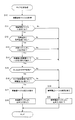
- FIG. 2 is a flowchart of the microphone switching process. This process is performed mainly by the control unit 12 of the mobile phone 10 executing a program prepared in advance. The microphone switching process is basically executed when the mobile phone 10 and the vehicle-mounted device 20 are connected through the communication means 41 and 42.
- the control unit 12 acquires a model information file (step S10).
- the model information file is a file prepared for each model of the mobile phone 10 and indicating the attributes of the mobile phone. In this embodiment, it is assumed that the model information file has information about a plurality of mobile phones as one file.
- Figure 3 shows an example of model information file.
- the model information file includes a model name of the mobile phone, a voice recognition compatible attribute, an OS version, and an update date.
- the model name is the model name of each mobile phone.
- the voice recognition compatible attribute indicates whether each mobile phone supports voice recognition.
- the OS version indicates the version of the OS installed in each mobile phone.
- the update date indicates the update date of each model information file.
- the model information file is periodically updated, and the latest update date is included in the model information file.
- the model information file is stored in the model information DB 6 of the server 5.
- the control unit 12 basically connects to the server 5 via the communication unit 11, downloads a model information file from the model information DB 6, and stores it in the mobile phone 10.
- the control unit 12 uses the stored model information file. Also good. However, when the mobile phone 10 can be connected to the server 5, the control unit 12 connects to the server 5 to check the update date of the model information file, and the model information file stored in the server 5 is already in the mobile phone. If it is newer than the model information file stored in 10, it is preferable to acquire and use the model information file stored in the server 5. For example, the control unit 12 compares the latest update date included in the model information file stored in the server 5 with the latest update date included in the model information file stored in the mobile phone 10. This makes it possible to determine which model information file is new.
- control unit 12 determines whether or not the model of the mobile phone 10 is included in the acquired model information file (step S11). If the model of the mobile phone 10 is not included (step S11: No), the process proceeds to step S19.
- step S11 when the model of the mobile phone 10 is included (step S11: Yes), the control unit 12 refers to the voice recognition compatible attribute in the model information file, and the mobile phone 10 supports voice recognition. It is determined whether or not (step S12). If the mobile phone 10 does not support voice recognition (step S12: No), the process proceeds to step S19.
- step S12 when the mobile phone 10 supports voice recognition (step S12: Yes), the control unit 12 refers to the OS version in the model information file, and the mobile phone 10 inputs voice from an external microphone. It is determined whether or not (step S13). For example, when the OS version 4.0 or higher supports voice input from an external microphone, the control unit 12 refers to the model information file and the OS version of the mobile phone 10 is 4.0 or higher. In addition, it is determined that the mobile phone 10 supports voice input from an external microphone. If the mobile phone 10 does not support voice input from an external microphone (step S13: No), the process proceeds to step S19.
- step S13 when the mobile phone 10 is compatible with voice input from an external microphone (step S13: Yes), the control unit 12 determines whether or not the vehicle-mounted device 20 can be switched to the microphone 27 on the vehicle-mounted device side. Determination is made (step S14). This determination is performed based on the processing on the vehicle-mounted device 20 side. That is, the control unit 12 inquires of the control unit 22 of the vehicle-mounted device 20 whether or not the microphone 27 is in a usable state. The control unit 22 of the vehicle-mounted device 20 confirms the connection state of the microphone 27 on the vehicle-mounted device 20 side, and replies to the mobile phone 10 whether or not the microphone 27 is usable.
- control unit 12 of the mobile phone 10 determines whether or not the onboard device 20 can be switched to the microphone 27. If it is not possible to switch to the microphone 27 of the vehicle-mounted device 20 (step S14: No), the process proceeds to step S19.
- step S14 when switching to the microphone 27 of the vehicle-mounted device 20 is possible (step S14: Yes), the control unit 12 determines whether or not a Bluetooth HFP connection is established between the mobile phone 10 and the vehicle-mounted device 20. (Step S15). In this example, it is assumed that Bluetooth wireless communication is used. However, when wired communication using a cable or the like is used, it is only necessary to determine whether or not connection by a cable is performed by a communication test or the like. When the HFP connection is not established (step S15: No), the process proceeds to step S19.
- step S15 when the HFP connection is established (step S15: Yes), the control unit 12 makes a microphone switching request to the vehicle-mounted device 20 and determines whether a response is obtained from the vehicle-mounted device 20 (step S16). ). If an OK response is not obtained from the vehicle-mounted device 20 (step S16: No), the process proceeds to step S19.
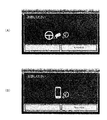
- step S16 when the on-vehicle device 20 is ready to switch the microphone and an OK response is obtained from the on-vehicle device 20 (step S16: Yes), the control unit 12 is illustrated in FIG. Information indicating that the microphone 27 of the vehicle-mounted device 20 is used for the user's voice input is displayed to the user (step S17).
- FIG. 4A is an image showing that voice input is performed on a microphone near the steering of the vehicle.
- control part 12 validates the microphone 27 of the onboard equipment 20 in cooperation with the onboard equipment 20, acquires a user's voice input with respect to the microphone 27, and performs the process of voice recognition (step S18).
- the control unit 12 of the mobile phone 10 receives the voice input to the microphone 27 of the on-vehicle device 20 from the on-vehicle device 20 and executes voice recognition processing by a voice recognition application in the mobile phone 10.
- voice recognition processing by a voice recognition application in the mobile phone 10.
- the voice of the announcement is transmitted from the mobile phone 10 to the vehicle-mounted device 20 and output from the speaker 26 of the vehicle-mounted device 20. Therefore, the user performs voice recognition using the microphone 27 and the speaker 26 of the vehicle-mounted device 20 as interfaces.
- step S19 the control unit 12 determines that the microphone 27 of the vehicle-mounted device 20 is not in a usable state, and as illustrated in FIG. A display indicating that voice input is performed using the microphone 17 of the telephone 10 is performed (step S19).
- FIG. 4B is an image indicating that voice input is performed on the microphone of the mobile phone.
- control part 12 acquires a user's audio
- the display images shown in FIGS. 4A and 4B may be displayed by transmitting the image data itself from the mobile phone 10 to the vehicle-mounted device 20. Instead, the image data itself is held on the in-vehicle device 20 side, and only information indicating which microphone is effective is transmitted from the mobile phone 10 to the on-vehicle device 20, and the corresponding image on the on-vehicle device 20 side. May be displayed.
- the display examples in FIGS. 4A and 4B indicate which microphone is effective, and correspond to the effective input means information of the present invention.
- the mobile phone 10 and the vehicle-mounted device 20 are connected so as to be communicable, and when the voice input to the microphone 27 of the vehicle-mounted device 20 can be transmitted to the mobile phone 10, the user's The microphone 27 of the vehicle-mounted device 20 is used for voice input.
- the microphone 27 of the vehicle-mounted device 20 is installed in the vicinity of the driver's seat and can be used without difficulty by the driver who is driving, so that voice input can be performed without affecting driving.
- the user can confirm which of the microphone 17 of the mobile phone 10 and the microphone 27 of the vehicle-mounted device 20 is effective by displaying an image or the like. Since the notification is made, the user can use the currently active microphone without hesitation.
- step S12 it is determined whether or not switching to the microphone 27 of the vehicle-mounted device 20 is possible by determining the six conditions of steps S11 to S16, but these are merely examples.
- step S12 is performed based on the speech recognition correspondence attribute in the model information file, it is determined whether or not an application for performing speech recognition processing is installed in the mobile phone 10 instead. The determination may be performed based on the determination.
- the mobile phone 10 and the vehicle-mounted device 20 have a function of communicating with each other and transmitting and receiving necessary information and user's voice input data.
- the microphone 27 of the vehicle-mounted device 20 can be controlled to be valid.
- the microphone switching process described with reference to FIG. 2 is performed mainly on the mobile phone 10 side, but can be performed on the vehicle-mounted device 20 side instead.
- basic determination items and processing flow are the same as those performed on the mobile phone 10 side.
- the control unit 22 of the vehicle-mounted device 20 receives the model information of the mobile phone 10 and the model information file acquired by the mobile phone 10 in step S10 from the mobile phone 10, and performs the processing of steps S11 to S13. Do. Next, the control unit 22 detects the state of the microphone 27 of the vehicle-mounted device 20 and performs the determination in step S14, detects the connection state with the mobile phone 10 and performs the determination in step S15.
- step S16 the control unit 22 issues a microphone switching request to the mobile phone 10, and waits for a response of preparation OK from the mobile phone 10. If the response of preparation OK is obtained, the control part 22 will display as FIG. 4 (A) by step S17, and will switch to the microphone 27 of the onboard equipment 20 by step S18. On the other hand, if there is no response to the preparation OK, the control unit 22 performs display as shown in FIG. 4B in step S19, and indicates that the microphone on the mobile phone 10 side should be used as processing corresponding to step S20. You can tell 10.
- step S15 of the flowchart of FIG. 2 the microphone 17 of the mobile phone 10 is used when the Bluetooth HFP connection is not established.
- a situation in which an HFP connection error occurs may be that the mobile phone 10 is in a hands-free call. Therefore, in such a case, the control unit 12 may display an image or the like that once suggests to the user that the hands-free call should be stopped, and redo the processing from step S11.
- control unit 12 may display an image or the like that suggests to the user that the operation of another source is once stopped, and may perform the processing from step S11 again.
- the effective input means information illustrated in FIGS. 4A and 4B is displayed on the vehicle-mounted device 20 side, but may be displayed on the display unit of the mobile phone 10. Thereby, it becomes possible for passengers other than the driver in the vehicle to know which microphone of the mobile phone 10 or the vehicle-mounted device 20 is effective by looking at the display unit of the mobile phone 10.
- the effective input means information is displayed by image display on the vehicle-mounted device 20 as illustrated in FIGS. 4A and 4B, but instead of or in addition, voice announcements and LEDs It is good also as presenting to an effective input means information user by the display by the color of.
- the above microphone switching process is executed when the mobile phone 10 is connected to the vehicle-mounted device 20, and the microphone 27 of the vehicle-mounted device 20 is automatically enabled if the mobile phone 10 and the vehicle-mounted device 20 can communicate with each other. It is said.
- the microphone 17 of the mobile phone 10 is desired to be effective even if the mobile phone 10 and the vehicle-mounted device 20 can communicate.
- the microphone 17 of the mobile phone 10 can be preferentially enabled according to user settings.
- the microphone switching process is not performed even when the mobile phone 10 and the vehicle-mounted device 20 are connected.
- the microphone 17 of the mobile phone 10 can be validated.
- a change to validate the microphone 17 of the mobile phone 10 may be performed by a user operation.
- the vehicle-mounted device When performing a voice call using normal HFP or the like, a process for reducing voice noise is performed on the vehicle-mounted device side so that the other party can easily hear. However, the recognition rate is improved by using the voice of the user itself. Therefore, it is preferable that the vehicle-mounted device temporarily cancels the noise reduction processing when a voice recognition start notification is received from the mobile phone.
- the meaning of the speech recognition result By interpreting the meaning of the speech recognition result, not only the text input assistance but also the operation corresponding to the meaning (voice operation) can be performed. Examples of the voice operation include source switching, audio control (Play / Pause, Volume Up / Down, etc.), screen switching, and the like. Interpretation of the meaning may be performed within the mobile phone, or may be performed by uploading the voice recognition result to the server and receiving the result.
- the mobile phone performs voice recognition / operation via the server and feeds back the result to the vehicle-mounted device having the navigation device, thereby enabling high-precision voice operation.
- voice recognition processing in parallel via the server, it is possible to quickly obtain highly accurate results.
- Each of the above methods is linked with the vehicle-mounted device only when using the microphone of the vehicle-mounted device, but it may be also linked when using the microphone of the mobile phone.
- a method of muting a vehicle speaker is effective.
- the voice recognition start instruction can be made by pressing the software (S / W) button on the mobile phone side, but during the cooperation with the vehicle-mounted device, the operation of the screen of the vehicle-mounted device or the hardware (H / W) of the vehicle-mounted device It is also possible by key operation.
- the on-board microphone When using the on-board microphone for voice input for voice recognition, it is also possible to capture the environmental sound with the mobile phone microphone and use it for noise cancellation.
- the most reliable result for example, there is a method of using the first (first) candidate among the obtained results, the candidate having the highest recognition rate, or the like.
- the present invention can be used for portable terminals and vehicle-mounted devices that can communicate with each other.
Landscapes
- Engineering & Computer Science (AREA)
- Computer Networks & Wireless Communication (AREA)
- Multimedia (AREA)
- Signal Processing (AREA)
- Telephone Function (AREA)
Abstract
携帯端末装置は、有線又は無線の接続手段により車載器と通信可能に接続される。携帯端末装置の典型例はスマートフォンであり、車載器の典型例はナビゲーション装置や車載用オーディオ装置である。携帯端末装置と車載器とが通信可能に接続されると、制御手段は、携帯側音声入力手段と車載器側音声入力手段のいずれかを使用して入力された音声に基づいてアプリケーションの動作を制御する。この際、提示手段は、使用する方の音声入力手段を示す有効入力手段情報をユーザに提示する。これにより、ユーザは、携帯側音声入力手段と車載器側音声入力手段のうちのいずれが現在有効となっているかを容易に知ることができる。
Description
本発明は、携帯端末と車載器とを接続した際の制御に関する。
近年、スマートフォンが普及している。スマートフォンの音声認識機能は日々進化しており、様々なアプリケーションで音声認識が可能となっている。音声認識は、画面を操作する必要がないため、車内での携帯電話の利用や、携帯電話と連携する車載器での利用に適している。
しかし、音声認識を利用するためには、携帯電話をドライバーの音声が届くところに設置する必要がある。また、携帯電話のマイクは電話として使用する用途に最適化されているため、自動車内のような環境音が多い場所では雑音を拾いやすいという問題があり、これが音声認識率の低下につながっている。このため、車内では携帯電話のマイクを使うのではなく、特定の場所に設置した車載器のマイクを使うことが望まれている。
特許文献1は、車載器のマイクを利用して携帯電話の音声入力を行う方法を記載している。特許文献1では、クレードルに携帯電話が接続されると、クレードル経由で車載器と携帯電話との間でデータの通信が可能となる。また、車載器とクレードルが接続されると、携帯電話自体の機能が車載器モードに切り替えられる。車載器モードでは、携帯電話の画面が車載器に表示され、車載器の表示部のタッチパネルに対する操作により、携帯電話側の動作が切り替えられる。よって、車載器のマイク経由で携帯電話での音声通話や音声入力操作が可能となり、車載器のスピーカから携帯電話の音声を出力可能となる。
しかし、特許文献1の方法では、車載器と携帯電話とが接続されると、音声入力は車載器のマイクからの入力に固定される。このため、携帯電話が車載器と正常にデータの通信を行えない場合には音声認識が不可能となる。また、例えば車両の都合により車載器にマイクが接続できないなど、車載器側に問題がある場合にも音声認識が利用できない。さらには、車内で音声認識を行う際、携帯電話が車載器と接続されている場合と接続されていない場合とで使用するマイクが異なるので、ユーザはどちらのマイクに対して発話すれば良いかわからなくなることもある。
また、車両の助手席や後部座席に着座したユーザの保有する携帯電話と無線で接続された場合に、当該車両側のマイクからの入力に固定されてしまうと、当該助手席や後部座席に着座したユーザから当該マイクが遠くなり、利用しずらい又は利用できなくなるという不具合が生じることもある。
本発明が解決しようとする課題としては、上記のものが例として挙げられる。本発明は、携帯電話と車載器とが接続されている場合に、ユーザが迷うことなく、有効となっているマイクに対して音声を入力できるようにすることを目的とする。
請求項1に記載の発明は、各種のアプリケーションを動作させる携帯端末装置であって、入力された音声を受け付ける携帯側音声入力手段と、車載器と通信可能に接続する接続手段と、前記接続手段により接続された車載器の車載器側音声入力手段と、前記携帯側音声入力手段のうち、いずれかを使用して入力された音声に基づいてアプリケーションの動作を制御する制御手段と、音声によりアプリケーションの動作を制御する際に、前記携帯側音声入力手段と前記車載器側音声入力手段のうちのどちらを使用するかを示す有効入力手段情報をユーザに提示する提示手段と、を備えることを特徴とする。
請求項5に記載の発明は、入力された音声を受け付ける携帯側音声入力手段と、車載器と通信可能に接続する接続手段とを備え、各種のアプリケーションを動作させる携帯端末装置によって実行される情報提示方法であって、前記接続手段により接続された車載器の車載器側音声入力手段と、前記携帯側音声入力手段のうち、いずれかを使用して入力された音声に基づいてアプリケーションの動作を制御する制御工程と、音声によりアプリケーションの動作を制御する際に、前記携帯側音声入力手段と前記車載器側音声入力手段のうちのどちらを使用するかを示す有効入力手段情報をユーザに提示する提示工程と、を有することを特徴とする。
請求項6に記載の発明は、入力された音声を受け付ける携帯側音声入力手段と、車載器と通信可能に接続する接続手段とを備え、各種のアプリケーションを動作させる携帯端末装置によって実行される情報提示プログラムであって、前記接続手段により接続された車載器の車載器側音声入力手段と、前記携帯側音声入力手段のうち、いずれかを使用して入力された音声に基づいてアプリケーションの動作を制御する制御工程と、音声によりアプリケーションの動作を制御する際に、前記携帯側音声入力手段と前記車載器側音声入力手段のうちのどちらを使用するかを示す有効入力手段情報をユーザに提示する提示工程と、を前記携帯端末装置に実行させることを特徴とする。
請求項7に記載の発明は、車載器であって、入力された音声を受け付ける車載器側音声入力手段と、各種のアプリケーションを動作させる携帯端末装置と通信可能に接続する接続手段と、前記携帯端末装置が音声によりアプリケーションの動作を制御する際に、前記接続手段により接続された携帯端末装置の携帯側音声入力手段と、前記車載器側音声入力手段のうち、どちらを使用するかを決定する決定手段と、前記携帯側音声入力手段と前記車載器側音声入力手段のどちらを使用するかを示す有効入力手段情報をユーザに提示する提示手段と、を備えることを特徴とする。
請求項8に記載の発明は、入力された音声を受け付ける車載器側音声入力手段と、各種のアプリケーションを動作させる携帯端末装置と通信可能に接続する接続手段とを備える車載器により実行される情報提示方法であって、前記携帯端末装置が音声によりアプリケーションの動作を制御する際に、前記接続手段により接続された携帯端末装置の携帯側音声入力手段と、前記車載器側音声入力手段のうち、どちらを使用するかを決定する決定工程と、前記携帯側音声入力手段と前記車載器側音声入力手段のどちらを使用するかを示す有効入力手段情報をユーザに提示する提示工程と、を有することを特徴とする。
請求項9に記載の発明は、入力された音声を受け付ける車載器側音声入力手段と、各種のアプリケーションを動作させる携帯端末装置と通信可能に接続する接続手段とを備える車載器により実行される情報提示プログラムであって、前記携帯端末装置が音声によりアプリケーションの動作を制御する際に、前記接続手段により接続された携帯端末装置の携帯側音声入力手段と、前記車載器側音声入力手段のうち、どちらを使用するかを決定する決定工程と、前記携帯側音声入力手段と前記車載器側音声入力手段のどちらを使用するかを示す有効入力手段情報をユーザに提示する提示工程と、を前記車載器に実行させることを特徴とする。
本発明の1つの好適な実施形態では、各種のアプリケーションを動作させる携帯端末装置は、入力された音声を受け付ける携帯側音声入力手段と、車載器と通信可能に接続する接続手段と、前記接続手段により接続された車載器の車載器側音声入力手段と、前記携帯側音声入力手段のうち、いずれかを使用して入力された音声に基づいてアプリケーションの動作を制御する制御手段と、音声によりアプリケーションの動作を制御する際に、前記携帯側音声入力手段と前記車載器側音声入力手段のうちのどちらを使用するかを示す有効入力手段情報をユーザに提示する提示手段と、を備える。
上記の携帯端末装置は、有線又は無線の接続手段により車載器と通信可能に接続される。携帯端末装置の典型例はスマートフォンであり、車載器の典型例はナビゲーション装置や車載用オーディオ装置である。携帯端末装置と車載器とが通信可能に接続されると、制御手段は、携帯側音声入力手段と車載器側音声入力手段のいずれかを使用して入力された音声に基づいてアプリケーションの動作を制御する。この際、提示手段は、使用する方の音声入力手段を示す有効入力手段情報をユーザに提示する。これにより、ユーザは、携帯側音声入力手段と車載器側音声入力手段のうちのいずれが現在有効となっているかを容易に知ることができる。
上記の携帯端末装置の一態様では、前記携帯端末装置が前記携帯側音声入力手段以外からの音声入力を受け付け可能であり、かつ、前記携帯端末装置と前記車載器とが前記接続手段により通信可能に接続されている場合、前記提示手段は、前記車載器側音声入力手段を使用することを示す有効入力手段情報を提示する。これにより、ドライバーは運転席近傍に設けられた車載器側音声入力手段を用いて音声入力を行うことができる。好適な例では、前記制御手段は、前記携帯端末装置の機種情報に基づいて、当該携帯端末装置が外部からの音声入力を受け付け可能であるか否かを判定する。
上記の携帯端末装置の他の一態様では、前記提示手段は、前記有効入力手段情報を前記車載器に送信し、前記車載器によってユーザに提示させる。これにより、有効入力手段情報は、ドライバーが見やすい車載器の表示部に表示されることになる。
本発明の他の好適な実施形態では、入力された音声を受け付ける携帯側音声入力手段と、車載器と通信可能に接続する接続手段とを備え、各種のアプリケーションを動作させる携帯端末装置によって実行される情報提示方法は、前記接続手段により接続された車載器の車載器側音声入力手段と、前記携帯側音声入力手段のうち、いずれかを使用して入力された音声に基づいてアプリケーションの動作を制御する制御工程と、音声によりアプリケーションの動作を制御する際に、前記携帯側音声入力手段と前記車載器側音声入力手段のうちのどちらを使用するかを示す有効入力手段情報をユーザに提示する提示工程と、を有する。
この方法によっても、ユーザは、携帯側音声入力手段と車載器側音声入力手段のうちのいずれが現在有効となっているかを容易に知ることができる。
本発明の他の好適な実施形態では、入力された音声を受け付ける携帯側音声入力手段と、車載器と通信可能に接続する接続手段とを備え、各種のアプリケーションを動作させる携帯端末装置によって実行される情報提示プログラムは、前記接続手段により接続された車載器の車載器側音声入力手段と、前記携帯側音声入力手段のうち、いずれかを使用して入力された音声に基づいてアプリケーションの動作を制御する制御工程と、音声によりアプリケーションの動作を制御する際に、前記携帯側音声入力手段と前記車載器側音声入力手段のうちのどちらを使用するかを示す有効入力手段情報をユーザに提示する提示工程と、を前記携帯端末装置に実行させる。
このプログラムを携帯端末装置上で実行することにより、ユーザは、携帯側音声入力手段と車載器側音声入力手段のうちのいずれが現在有効となっているかを容易に知ることができる。
本発明の他の好適な実施形態では、車載器は、入力された音声を受け付ける車載器側音声入力手段と、各種のアプリケーションを動作させる携帯端末装置と通信可能に接続する接続手段と、前記携帯端末装置が音声によりアプリケーションの動作を制御する際に、前記接続手段により接続された携帯端末装置の携帯側音声入力手段と、前記車載器側音声入力手段のうち、どちらを使用するかを決定する決定手段と、前記携帯側音声入力手段と前記車載器側音声入力手段のどちらを使用するかを示す有効入力手段情報をユーザに提示する提示手段と、を備える。
上記の車載器は、有線又は無線の接続手段により携帯端末装置と通信可能に接続される。携帯端末装置の典型例はスマートフォンであり、車載器の典型例はナビゲーション装置や車載用オーディオ装置である。携帯端末装置と車載器とが通信可能に接続されると、決定手段は、前記携帯端末装置が音声によりアプリケーションの動作を制御する際に、前記接続手段により接続された携帯端末装置の携帯側音声入力手段と、前記車載器側音声入力手段のうち、どちらを使用するかを決定する。そして、提示手段は、使用する方の音声入力手段を示す有効入力手段情報をユーザに提示する。これにより、ユーザは、携帯側音声入力手段と車載器側音声入力手段のうちのいずれが現在有効となっているかを容易に知ることができる。
本発明の他の好適な実施形態では、入力された音声を受け付ける車載器側音声入力手段と、各種のアプリケーションを動作させる携帯端末装置と通信可能に接続する接続手段とを備える車載器により実行される情報提示方法は、前記携帯端末装置が音声によりアプリケーションの動作を制御する際に、前記接続手段により接続された携帯端末装置の携帯側音声入力手段と、前記車載器側音声入力手段のうち、どちらを使用するかを決定する決定工程と、前記携帯側音声入力手段と前記車載器側音声入力手段のどちらを使用するかを示す有効入力手段情報をユーザに提示する提示工程と、を有する。
この方法によっても、ユーザは、携帯側音声入力手段と車載器側音声入力手段のうちのいずれが現在有効となっているかを容易に知ることができる。
本発明の他の好適な実施形態では、入力された音声を受け付ける車載器側音声入力手段と、各種のアプリケーションを動作させる携帯端末装置と通信可能に接続する接続手段とを備える車載器により実行される情報提示プログラムは、前記携帯端末装置が音声によりアプリケーションの動作を制御する際に、前記接続手段により接続された携帯端末装置の携帯側音声入力手段と、前記車載器側音声入力手段のうち、どちらを使用するかを決定する決定工程と、前記携帯側音声入力手段と前記車載器側音声入力手段のどちらを使用するかを示す有効入力手段情報をユーザに提示する提示工程と、を前記車載器に実行させる。
このプログラムを車載器上で実行することにより、ユーザは、携帯側音声入力手段と車載器側音声入力手段のうちのいずれが現在有効となっているかを容易に知ることができる。
以下、図面を参照して本発明の好適な実施例について説明する。
[システム構成]
図1は、本発明の実施例に係る車載器システムの概略構成を示す。車載器システムは、携帯電話10と、車載器20とにより構成される。携帯電話10は、ネットワークを介してサーバ5に接続可能である。
図1は、本発明の実施例に係る車載器システムの概略構成を示す。車載器システムは、携帯電話10と、車載器20とにより構成される。携帯電話10は、ネットワークを介してサーバ5に接続可能である。
サーバ5は、携帯電話10に関連する情報を保持しており、具体的には携帯電話の機種情報ファイルが蓄積された機種情報データベース(DB)6を備える。機種情報ファイルの詳細については後述する。
携帯電話10は、好適にはスマートフォンであり、本実施例ではユーザが車内に持ち込んだものを想定している。車載器20は、車両に搭載されている装置であり、好適にはナビゲーション装置、車載用のAV機器などである。携帯電話10と車載器20とは、通信手段41、42により接続され、相互にデータの通信が可能となる。なお、図1においては、説明の便宜上2つの通信手段41、42を示しているが、単一の通信手段で構わない。通信手段は、例えばBluetooth(登録商標)などの無線通信手段であってもよく、携帯電話設置用のクレードルと接続ケーブルのような有線通信手段であってもよい。
携帯電話10は、通信部11と、制御部12と、情報通信部13と、音声制御部14と、音声通信部15と、スピーカ16と、マイク17とを備える。
通信部11は、無線通信によりサーバ5へ接続するためのものである。制御部12は、携帯電話10の全体を制御するものであり、具体的には、車載器20との接続処理や、後述のマイク切替処理などを行う。情報通信部13は、通信手段41を通じて車載器20との間で制御データ、画像データなどの送受信を行う。
音声制御部14は、スピーカ16及びマイク17と接続されており、ユーザによりマイク17に入力された音声、及び、スピーカ16から外部へ出力する音声の入出力を制御する。音声通信部15は、通信手段42を通じて車載器20との間で音声信号の送受信を行う。
なお、制御部12と音声制御部14は、CPUなどのコンピュータが、予め用意されたプログラムを実行することにより実現される。
車載器20は、情報通信部21と、制御部22と、タッチパネル23と、音声通信部24と、音声制御部25と、スピーカ26と、マイク27とを備える。
情報通信部21は、通信手段41を通じて携帯電話10の情報通信部13との間で、制御データ、画像データなどを送受信する。制御部22は、車載器20全体を制御する。具体的には、制御部22は、携帯電話との接続処理、後述のマイク切替処理などを実行する。タッチパネル23は、ユーザに対して情報を表示する機能と、ユーザからの操作入力を受け取る機能とを有する。
音声通信部24は、通信手段42を通じて携帯電話10の音声通信部15との間で音声信号の送受信を行う。音声制御部25は、スピーカ26及びマイク27と接続されており、ユーザによりマイク27に入力された音声、及び、スピーカ26から外部へ出力する音声の入出力を制御する。なお、スピーカ26は、車載器20の専用スピーカであってもよく、車載器20と接続された車両のスピーカであってもよい。また、マイク27は、車載器20に対する音声入力用のマイクであり、通常は、ドライバーが運転中に音声入力できるように運転席の周辺に設置される。
上記の構成において、携帯電話10の制御部12は本発明の制御手段に相当し、携帯電話10のマイク17は携帯側音声入力手段に相当し、通信手段41、42は接続手段に相当する。また、車載器20の制御部22は本発明の決定手段に相当し、車載器20のマイク27は車載器側音声入力手段に相当し、タッチパネル23は提示手段に相当する。
[携帯電話と車載器の接続処理]
携帯電話10と車載器20とが接続されると、携帯電話10の制御部12及び車載器20の制御部22は接続処理を行う。なお、前述のように、通信手段41、42は無線通信手段であってもよく、有線通信手段であってもよい。携帯電話10と車載器20が接続されるとは、無線通信の場合には例えばBluetoothのSPP(Serial Port Profile)やHFP(Hands Free Protocol)によって通信可能となる場合をいい、有線通信の場合は例えばクレードルやケーブルを接続することにより通信可能となる場合をいう。
携帯電話10と車載器20とが接続されると、携帯電話10の制御部12及び車載器20の制御部22は接続処理を行う。なお、前述のように、通信手段41、42は無線通信手段であってもよく、有線通信手段であってもよい。携帯電話10と車載器20が接続されるとは、無線通信の場合には例えばBluetoothのSPP(Serial Port Profile)やHFP(Hands Free Protocol)によって通信可能となる場合をいい、有線通信の場合は例えばクレードルやケーブルを接続することにより通信可能となる場合をいう。
携帯電話10と車載器20とが接続されると、携帯電話10の制御部12は、情報通信部13及び通信手段41を通じて、携帯電話10の表示画像を車載器20へ送信する。車載器20の制御部22は、情報通信部21を通じて受信した表示画像をタッチパネル23に表示する。また、車載器20の制御部22は、タッチパネル23に対するユーザの操作入力を検出し、情報通信部21及び通信手段41を通じて、携帯電話10へ送信する。携帯電話10の制御部12は、情報通信部13を通じて受信した操作入力に対応する処理、動作を行う。これにより、携帯電話10と車載器20とが接続されている状態では、ユーザは、車載器20のタッチパネル23をインタフェースとして使用して、携帯電話10を操作することができる。
[マイク切替処理]
携帯電話10と車載器20とが接続されている状態では、車載器20の制御部22は、音声制御部25を制御し、音声通信部24及び通信手段42を通じて、マイク27に対するユーザの音声入力を携帯電話10へ送信することができる。携帯電話10の制御部12は、音声通信部15を通じて受信したユーザの音声入力に対応する処理、動作を実行することができる。即ち、携帯電話10と車載器20とが接続されている状態では、ユーザは、車載器20のマイク27を音声入力手段として使用して、携帯電話10に対する音声入力を行うことができる。このように、車載器20のマイクを音声入力手段として使用可能とする処理をマイク切替処理と呼ぶ。
携帯電話10と車載器20とが接続されている状態では、車載器20の制御部22は、音声制御部25を制御し、音声通信部24及び通信手段42を通じて、マイク27に対するユーザの音声入力を携帯電話10へ送信することができる。携帯電話10の制御部12は、音声通信部15を通じて受信したユーザの音声入力に対応する処理、動作を実行することができる。即ち、携帯電話10と車載器20とが接続されている状態では、ユーザは、車載器20のマイク27を音声入力手段として使用して、携帯電話10に対する音声入力を行うことができる。このように、車載器20のマイクを音声入力手段として使用可能とする処理をマイク切替処理と呼ぶ。
(マイク切替処理の実施例)
図2は、マイク切替処理のフローチャートである。この処理は、主として携帯電話10の制御部12が予め用意されたプログラムを実行することにより行われる。また、このマイク切替処理は、基本的には携帯電話10と車載器20とが通信手段41、42を通じて接続されたときに実行される。
図2は、マイク切替処理のフローチャートである。この処理は、主として携帯電話10の制御部12が予め用意されたプログラムを実行することにより行われる。また、このマイク切替処理は、基本的には携帯電話10と車載器20とが通信手段41、42を通じて接続されたときに実行される。
まず、制御部12は、機種情報ファイルを取得する(ステップS10)。機種情報ファイルとは、携帯電話10の機種毎に用意され、その携帯電話の属性を示すファイルである。本実施例では、機種情報ファイルは、複数の携帯電話についての情報を1つのファイルとして有しているものとする。
機種情報ファイルの例を図3に示す。図示のように、機種情報ファイルは、携帯電話の機種名と、音声認識対応属性と、OSバージョンと、更新日とを含む。機種名は各携帯電話の機種名である。音声認識対応属性は、各携帯電話が音声認識に対応しているか否かを示す。OSバージョンは、各携帯電話が搭載しているOSのバージョンを示す。更新日は、各機種情報ファイルの更新日を示す。機種情報ファイルは定期的に内容が更新され、最新の更新日が機種情報ファイル内に含められている。
機種情報ファイルは、サーバ5の機種情報DB6内に保存されている。制御部12は、基本的には通信部11を介してサーバ5に接続し、機種情報DB6から機種情報ファイルをダウンロードし、携帯電話10内部に保存する。
なお、ステップS10の実行の際に、その携帯電話10の機種情報ファイルが携帯電話10内に既に保存されている場合には、制御部12はその保存されている機種情報ファイルを使用することとしてもよい。但し、携帯電話10がサーバ5に接続可能な状態においては、制御部12はサーバ5に接続して機種情報ファイルの更新日を確認し、サーバ5に保存されている機種情報ファイルが既に携帯電話10内に保存されている機種情報ファイルよりも新しいものであれば、サーバ5に保存されている機種情報ファイルを取得して使用することが好ましい。例えば、制御部12は、サーバ5に保存されている機種情報ファイルに含まれる最新の更新日と、携帯電話10内に保存されている機種情報ファイルに含まれる最新の更新日とを比較することにより、いずれの機種情報ファイルが新しいかを判定することができる。
こうして、機種情報ファイルを取得すると、制御部12は、取得した機種情報ファイルに、その携帯電話10の機種が含まれているかを判定する(ステップS11)。その携帯電話10の機種が含まれていない場合(ステップS11:No)、処理はステップS19へ進む。
一方、その携帯電話10の機種が含まれている場合(ステップS11:Yes)、制御部12は、機種情報ファイル内の音声認識対応属性を参照して、その携帯電話10が音声認識に対応しているか否かを判定する(ステップS12)。その携帯電話10が音声認識に対応していない場合(ステップS12:No)、処理はステップS19へ進む。
一方、その携帯電話10が音声認識に対応している場合(ステップS12:Yes)、制御部12は、機種情報ファイル内のOSバージョンを参照して、その携帯電話10が外部マイクからの音声入力に対応しているか否かを判定する(ステップS13)。例えば、OSバージョン4.0以上が外部マイクからの音声入力に対応している場合、制御部12は、機種情報ファイルを参照して、その携帯電話10のOSバージョンが4.0以上である場合に、その携帯電話10が外部マイクからの音声入力に対応していると判定する。その携帯電話10が外部マイクからの音声入力に対応していない場合(ステップS13:No)、処理はステップS19へ進む。
一方、その携帯電話10が外部マイクからの音声入力に対応している場合(ステップS13:Yes)、制御部12は、車載器20が車載器側のマイク27に切り替え可能であるか否かを判定する(ステップS14)。この判定は、車載器20側の処理に基づいて行われる。即ち、制御部12は、車載器20の制御部22に対して、マイク27が使用可能な状態にあるか否かを問い合わせる。車載器20の制御部22は、車載器20側のマイク27の接続状態などを確認し、マイク27が使用可能であるか否かを携帯電話10へ回答する。携帯電話10の制御部12は、この回答に基づいて、車載器20のマイク27への切り替えが可能か否かを決定する。車載器20のマイク27に切り替え可能でない場合(ステップS14:No)、処理はステップS19へ進む。
一方、車載器20のマイク27に切り替え可能である場合(ステップS14:Yes)、制御部12は、携帯電話10と車載器20との間でBluetoothのHFP接続が確立しているか否かを判定する(ステップS15)。なお、本例ではBluetoothによる無線通信を前提としているが、ケーブルなどを用いた有線通信を使用する場合には、通信試験などによりケーブルによる接続が行われているか否かを判定すればよい。HFP接続が確立していない場合(ステップS15:No)、処理はステップS19へ進む。
一方、HFP接続が確立している場合(ステップS15:Yes)、制御部12は車載器20に対してマイク切替要求を行い、車載器20から応答が得られたか否かを判定する(ステップS16)。車載器20からOKの応答が得られない場合(ステップS16:No)、処理はステップS19へ進む。
一方、車載器20側でマイク切替の準備ができており、車載器20からOKの応答が得られた場合(ステップS16:Yes)、制御部12は、図4(A)に例示するように、ユーザの音声入力について車載器20のマイク27を使用することを示す情報をユーザに表示する(ステップS17)。図4(A)の例は、車両のステアリング近傍にあるマイクに対して音声入力することを示す画像となっている。
そして、制御部12は、車載器20と連携して車載器20のマイク27を有効とし、マイク27に対するユーザの音声入力を取得して音声認識の処理を行う(ステップS18)。具体的には、携帯電話10の制御部12は、車載器20のマイク27に入力された音声を車載器20から受け取り、携帯電話10内の音声認識アプリケーションにより音声認識処理を実行する。音声認識処理中に音声によるアナウンスが必要な場合には、そのアナウンスの音声は、携帯電話10から車載器20へ送信され、車載器20のスピーカ26から出力される。よって、ユーザは、車載器20のマイク27とスピーカ26とをインタフェースとして使用して音声認識を行うことになる。
一方、ステップS11~S16のいずれかの判定がNoとなった場合、制御部12は車載器20のマイク27を使用できる状態に無いと判定し、図4(B)に例示するように、携帯電話10のマイク17を使用して音声入力を行うことを示す表示を行う(ステップS19)。図4(B)の例は、携帯電話のマイクに対して音声入力することを示す画像となっている。
そして、制御部12は、通常のように携帯電話10のマイク17に対するユーザの音声入力を取得して音声認識の処理を行う(ステップS20)。
なお、図4(A)、(B)に示す表示画像は、携帯電話10からその画像データ自体を車載器20へ送信して表示させてもよい。その代わりに、画像データ自体は車載器20側で所持しておき、いずれのマイクが有効であるかを示す情報のみを携帯電話10から車載器20へ送信し、車載器20側で対応する画像を表示するようにしてもよい。図4(A)、4(B)の表示例は、いずれのマイクが有効であるかを示すものであり、本発明の有効入力手段情報に相当する。
以上のように、本実施例では、携帯電話10と車載器20とが通信可能に接続されており、車載器20のマイク27への音声入力を携帯電話10へ送信できる場合には、ユーザの音声入力に車載器20のマイク27を使用する。通常、車載器20のマイク27は運転席近傍に設置されており、運転中のドライバーが無理なく使用することができるので、運転に影響を与えることなく音声入力が可能となる。また、本実施例では、図4(A)、(B)に例示するように、携帯電話10のマイク17と車載器20のマイク27のいずれが有効となっているかを画像表示などによりユーザに告知するので、ユーザは現在有効となっているマイクを迷うことなく使用することができる。
なお、本実施例では、ステップS11~S16の6つの条件を判定することにより車載器20のマイク27への切り替えが可能か否かを判定しているが、これらは例示にすぎない。例えば、ステップS12における判定は、機種情報ファイル中の音声認識対応属性に基づいて行っているが、その代わりに、携帯電話10内に音声認識処理を行うためのアプリケーションがインストールされているか否かに基づいて判定を行ってもよい。
基本的には、携帯電話10と車載器20が相互に通信して必要な情報及びユーザの音声入力データを送受信できる機能を有し、かつ、実際に携帯電話10と車載器20との間が通信可能な状態になっている場合には、車載器20のマイク27を有効とするように制御することができる。
(マイク切替処理の他の実施例)
上記の実施例では、図2を参照して説明したマイク切替処理を主として携帯電話10側で行っているが、その代わりに車載器20側で行うこともできる。この場合、基本的な判定項目や処理の流れは携帯電話10側で行う場合と同様である。
上記の実施例では、図2を参照して説明したマイク切替処理を主として携帯電話10側で行っているが、その代わりに車載器20側で行うこともできる。この場合、基本的な判定項目や処理の流れは携帯電話10側で行う場合と同様である。
具体的には、まず車載器20の制御部22は、携帯電話10の機種情報と、携帯電話10がステップS10で取得した機種情報ファイルとを携帯電話10から受け取り、ステップS11~S13の処理を行う。次に、制御部22は、車載器20のマイク27の状態を検出してステップS14の判定を行い、携帯電話10との接続状態を検出してステップS15の判定を行う。
次に、制御部22は、ステップS16に対応する処理として、携帯電話10へマイク切替要求を発し、携帯電話10から準備OKの応答を待つ。準備OKの応答を得たら、制御部22は、ステップS17で図4(A)の如き表示を行い、ステップS18で車載器20のマイク27への切り替えを行う。一方、準備OKの応答がない場合、制御部22はステップS19で図4(B)の如き表示を行い、ステップS20に対応する処理として、携帯電話10側のマイクを使用すべき旨を携帯電話10に告知すればよい。
[変形例]
図2のフローチャートのステップS15においては、BluetoothのHFP接続が確立していない場合には携帯電話10のマイク17を使用することにしている。しかし、HFP接続のエラーが出る状況としては、携帯電話10のハンズフリー通話中であることが考えられる。よって、そのような場合には、制御部12は、いったんハンズフリー通話を中止することをユーザに提案する画像などを表示し、再度ステップS11からの処理をやり直すようにしてもよい。
図2のフローチャートのステップS15においては、BluetoothのHFP接続が確立していない場合には携帯電話10のマイク17を使用することにしている。しかし、HFP接続のエラーが出る状況としては、携帯電話10のハンズフリー通話中であることが考えられる。よって、そのような場合には、制御部12は、いったんハンズフリー通話を中止することをユーザに提案する画像などを表示し、再度ステップS11からの処理をやり直すようにしてもよい。
ステップS16において車載器20から応答がない又は応答結果がNGの場合は、車載器20側の何らかの不具合の他に、車載器20でオーディオなどの他のソースが動作中である場合が考えられる。よって、そのような場合には、制御部12は、いったん他のソースの動作を中止することをユーザに提案する画像などを表示し、再度ステップS11からの処理をやり直すようにしてもよい。
上記の実施例では、図4(A)、(B)に例示する有効入力手段情報を車載器20側に表示しているが、さらに携帯電話10の表示部にも表示することとしてもよい。これにより、車内にいるドライバー以外の同乗者が携帯電話10の表示部を見ることにより、携帯電話10と車載器20のどちらのマイクが有効となっているかを知ることが可能となる。
上記の例では、有効入力手段情報を図4(A)、(B)に例示するように車載器20への画像表示により行っているが、その代わりに又はそれに加えて、音声によるアナウンスやLEDの色による表示などにより有効入力手段情報ユーザに提示することとしてもよい。
上記のマイク切替処理は、携帯電話10が車載器20と接続されたときに実行され、携帯電話10と車載器20とが通信可能な状態であれば自動的に車載器20のマイク27が有効とされる。しかし、携帯電話10と車載器20とが通信可能であっても、携帯電話10のマイク17を有効としたい場合もある。例えば、車内において後部座席の同乗者などが音声入力を行いたい場合には、携帯電話10を使用する方が便利である。このような場合には、ユーザの設定により携帯電話10のマイク17を優先的に有効とすることもできる。即ち、ユーザが携帯電話10又は車載器20を操作してマイク切替機能を使用しないように設定しておけば、携帯電話10と車載器20とが接続された場合でもマイク切替処理は行われず、携帯電話10のマイク17を有効とすることができる。また、いったん車載器20のマイク27が有効とされた後でも、ユーザの操作により携帯電話10のマイク17を有効とする変更ができるようにしてもよい。
[音声認識を行うにあたっての車載器との連携]
音声認識を行う場合、周囲の音が大きいと認識率が低下する。そこで、携帯電話から車載器へ音声認識開始通知を送り、車載器はその通知に応じて車両のスピーカをミュートさせるとよい。逆に、オーディオなどの車載器側のソース音声を優先させたい場合には、音声認識処理が実行不可であることを車載器から携帯電話へ通知するようにしてもよい。
音声認識を行う場合、周囲の音が大きいと認識率が低下する。そこで、携帯電話から車載器へ音声認識開始通知を送り、車載器はその通知に応じて車両のスピーカをミュートさせるとよい。逆に、オーディオなどの車載器側のソース音声を優先させたい場合には、音声認識処理が実行不可であることを車載器から携帯電話へ通知するようにしてもよい。
通常のHFPなどで音声通話を行う場合、車載器側では相手が聞き取り易いように音声のノイズを軽減させる処理が行われている。しかし、音声認識自体はユーザの生の音声を使用した方が認識率が向上する。よって、携帯電話から音声認識開始通知を受け取ったら車載器はノイズ軽減処理を一時的にキャンセルすることが好ましい。
HFPの音質を上げるために、通信帯域を一般的な8kHzの周波数から、その2倍の16kHZの周波数に上げるワイドバンドスピーチ(Wide Band Speech)を採用する手法がある。しかし、これは帯域を多く占有してしまうというデメリットもある。このワイドバンドスピーチを音声認識の際に認識率を上げるために使用することも可能である。具体的には、携帯電話から音声認識開始通知を受け取ると、車載器は一時的にワイドバンドスピーチに切り替え、音声認識終了通知を受け取ったらワイドバンドピーチを解除すればよい。
音声認識結果の意味を解釈することにより、テキスト入力の補助だけでなく、その意味に対応した操作(音声操作)を行うことができる。音声操作としては、ソースの切り替え、オーディオ制御(Play/Pause、Volume Up/Downなど)、画面の切り替えなどが考えられる。意味の解釈は、携帯電話内で行ってもよいし、音声認識結果をサーバにアップロードして結果を返してもらう形で行ってもよい。
携帯電話がサーバを介して音声認識・操作を行い、その結果をナビゲーション装置を有する車載器にフィードバックすることにより、高精度な音声操作が可能となる。サーバを介して並列に音声認識処理を行うことにより、高精度な結果を迅速に取得可能となる。
上記の各手法は車載器のマイクを使用する場合のみ車載器と連携しているが、携帯電話のマイクを使用する場合にも連携してもよい。特に、車両のスピーカをミュートする手法は効果的である。
音声認識開始の指示は、携帯電話側のソフトウェア(S/W)ボタンの押下により可能であるが、車載器との連携中は車載器の画面の操作又は車載器のハードウェア(H/W)キーの操作によっても可能である。
音声認識の音声入力について車載器のマイクを使用する場合には、携帯電話のマイクで環境音を取り込み、それをノイズキャンセルのために利用することも可能である。
音声認識結果は複数取得することが可能であるが、走行中にその結果の中から該当する項目を選択することは、画面を注視することとなり、運転に影響を与える可能性がある。一方で、携帯電話が車載器と連携する場合、車載器から走行情報を取得することができる。そのため、音声認識結果を取得した後は、以下のように走行状態によって動作を変更することも可能である。
(1)走行中の場合:取得した結果の候補として一番信頼できる結果を自動で選択する。
(2)停車中の場合:取得した結果の一覧をリストで表示し、ユーザに選択させる。
(1)走行中の場合:取得した結果の候補として一番信頼できる結果を自動で選択する。
(2)停車中の場合:取得した結果の一覧をリストで表示し、ユーザに選択させる。
なお、一番信頼できる結果としては、例えば、取得した結果のうちの先頭(1番目)の候補、認識率が最も高い候補、などを使用する方法がある。
本発明は、相互に通信可能な携帯端末及び車載器に利用することができる。
5 サーバ
6 機種情報DB
10 携帯電話
12、22 制御部
13、21 情報通信部
14、25 音声制御部
15、24 音声通信部
16、26 スピーカ
17、27 マイク
20 車載器
23 タッチパネル
6 機種情報DB
10 携帯電話
12、22 制御部
13、21 情報通信部
14、25 音声制御部
15、24 音声通信部
16、26 スピーカ
17、27 マイク
20 車載器
23 タッチパネル
Claims (10)
- 各種のアプリケーションを動作させる携帯端末装置であって、
入力された音声を受け付ける携帯側音声入力手段と、
車載器と通信可能に接続する接続手段と、
前記接続手段により接続された車載器の車載器側音声入力手段と、前記携帯側音声入力手段のうち、いずれかを使用して入力された音声に基づいてアプリケーションの動作を制御する制御手段と、
音声によりアプリケーションの動作を制御する際に、前記携帯側音声入力手段と前記車載器側音声入力手段のうちのどちらを使用するかを示す有効入力手段情報をユーザに提示する提示手段と、
を備えることを特徴とする携帯端末装置。 - 前記携帯端末装置が前記携帯側音声入力手段以外からの音声入力を受け付け可能であり、かつ、前記携帯端末装置と前記車載器とが前記接続手段により通信可能に接続されている場合、前記提示手段は、前記車載器側音声入力手段を使用することを示す有効入力手段情報を提示することを特徴とする請求項1に記載の携帯端末装置。
- 前記制御手段は、前記携帯端末装置の機種情報に基づいて、当該携帯端末装置が外部からの音声入力を受け付け可能であるか否かを判定することを特徴とする請求項2に記載の携帯端末装置。
- 前記提示手段は、前記有効入力手段情報を前記車載器に送信し、前記車載器によってユーザに提示させることを特徴とする請求項1乃至3のいずれか一項に記載の携帯端末装置。
- 入力された音声を受け付ける携帯側音声入力手段と、車載器と通信可能に接続する接続手段とを備え、各種のアプリケーションを動作させる携帯端末装置によって実行される情報提示方法であって、
前記接続手段により接続された車載器の車載器側音声入力手段と、前記携帯側音声入力手段のうち、いずれかを使用して入力された音声に基づいてアプリケーションの動作を制御する制御工程と、
音声によりアプリケーションの動作を制御する際に、前記携帯側音声入力手段と前記車載器側音声入力手段のうちのどちらを使用するかを示す有効入力手段情報をユーザに提示する提示工程と、
を有することを特徴とする情報提示方法。 - 入力された音声を受け付ける携帯側音声入力手段と、車載器と通信可能に接続する接続手段とを備え、各種のアプリケーションを動作させる携帯端末装置によって実行される情報提示プログラムであって、
前記接続手段により接続された車載器の車載器側音声入力手段と、前記携帯側音声入力手段のうち、いずれかを使用して入力された音声に基づいてアプリケーションの動作を制御する制御工程と、
音声によりアプリケーションの動作を制御する際に、前記携帯側音声入力手段と前記車載器側音声入力手段のうちのどちらを使用するかを示す有効入力手段情報をユーザに提示する提示工程と、
を前記携帯端末装置に実行させることを特徴とする情報提示プログラム。 - 入力された音声を受け付ける車載器側音声入力手段と、
各種のアプリケーションを動作させる携帯端末装置と通信可能に接続する接続手段と、
前記携帯端末装置が音声によりアプリケーションの動作を制御する際に、前記接続手段により接続された携帯端末装置の携帯側音声入力手段と、前記車載器側音声入力手段のうち、どちらを使用するかを決定する決定手段と、
前記携帯側音声入力手段と前記車載器側音声入力手段のどちらを使用するかを示す有効入力手段情報をユーザに提示する提示手段と、
を備えることを特徴とする車載器。 - 入力された音声を受け付ける車載器側音声入力手段と、各種のアプリケーションを動作させる携帯端末装置と通信可能に接続する接続手段とを備える車載器により実行される情報提示方法であって、
前記携帯端末装置が音声によりアプリケーションの動作を制御する際に、前記接続手段により接続された携帯端末装置の携帯側音声入力手段と、前記車載器側音声入力手段のうち、どちらを使用するかを決定する決定工程と、
前記携帯側音声入力手段と前記車載器側音声入力手段のどちらを使用するかを示す有効入力手段情報をユーザに提示する提示工程と、
を有することを特徴とする情報提示方法。 - 入力された音声を受け付ける車載器側音声入力手段と、各種のアプリケーションを動作させる携帯端末装置と通信可能に接続する接続手段とを備える車載器により実行される情報提示プログラムであって、
前記携帯端末装置が音声によりアプリケーションの動作を制御する際に、前記接続手段により接続された携帯端末装置の携帯側音声入力手段と、前記車載器側音声入力手段のうち、どちらを使用するかを決定する決定工程と、
前記携帯側音声入力手段と前記車載器側音声入力手段のどちらを使用するかを示す有効入力手段情報をユーザに提示する提示工程と、
を前記車載器に実行させることを特徴とする情報提示プログラム。 - 請求項6又は9に記載の情報提示プログラムを記憶したことを特徴とする記憶媒体。
Priority Applications (2)
| Application Number | Priority Date | Filing Date | Title |
|---|---|---|---|
| PCT/JP2012/084081 WO2014103015A1 (ja) | 2012-12-28 | 2012-12-28 | 携帯端末装置、車載器、情報提示方法及び情報提示プログラム |
| JP2013524276A JP5350567B1 (ja) | 2012-12-28 | 2012-12-28 | 携帯端末装置、車載器、情報提示方法及び情報提示プログラム |
Applications Claiming Priority (1)
| Application Number | Priority Date | Filing Date | Title |
|---|---|---|---|
| PCT/JP2012/084081 WO2014103015A1 (ja) | 2012-12-28 | 2012-12-28 | 携帯端末装置、車載器、情報提示方法及び情報提示プログラム |
Publications (1)
| Publication Number | Publication Date |
|---|---|
| WO2014103015A1 true WO2014103015A1 (ja) | 2014-07-03 |
Family
ID=49764956
Family Applications (1)
| Application Number | Title | Priority Date | Filing Date |
|---|---|---|---|
| PCT/JP2012/084081 Ceased WO2014103015A1 (ja) | 2012-12-28 | 2012-12-28 | 携帯端末装置、車載器、情報提示方法及び情報提示プログラム |
Country Status (2)
| Country | Link |
|---|---|
| JP (1) | JP5350567B1 (ja) |
| WO (1) | WO2014103015A1 (ja) |
Cited By (4)
| Publication number | Priority date | Publication date | Assignee | Title |
|---|---|---|---|---|
| JP2016046796A (ja) * | 2014-08-25 | 2016-04-04 | 現代自動車株式会社Hyundaimotor Company | サウンドデータ両方向ミラーリングシステム |
| JP2017524949A (ja) * | 2014-06-11 | 2017-08-31 | 深▲せん▼市元征軟件開発有限公司 | スマートフォンから音声による自動車診断方法 |
| CN108319442A (zh) * | 2018-01-23 | 2018-07-24 | 维沃移动通信有限公司 | 一种音频播放的控制方法及移动终端 |
| JP2025105003A (ja) * | 2023-12-28 | 2025-07-10 | 本田技研工業株式会社 | 通話サポート装置 |
Citations (3)
| Publication number | Priority date | Publication date | Assignee | Title |
|---|---|---|---|---|
| JP2002237877A (ja) * | 2001-02-13 | 2002-08-23 | Matsushita Electric Ind Co Ltd | ハンズフリーシステム、携帯電話およびハンズフリー装置 |
| JP2006115098A (ja) * | 2004-10-13 | 2006-04-27 | Toyota Motor Corp | 車載ハンズフリー通話システム |
| JP2010130223A (ja) * | 2008-11-26 | 2010-06-10 | Fujitsu Ten Ltd | 音声操作システムおよび音声操作方法 |
-
2012
- 2012-12-28 WO PCT/JP2012/084081 patent/WO2014103015A1/ja not_active Ceased
- 2012-12-28 JP JP2013524276A patent/JP5350567B1/ja active Active
Patent Citations (3)
| Publication number | Priority date | Publication date | Assignee | Title |
|---|---|---|---|---|
| JP2002237877A (ja) * | 2001-02-13 | 2002-08-23 | Matsushita Electric Ind Co Ltd | ハンズフリーシステム、携帯電話およびハンズフリー装置 |
| JP2006115098A (ja) * | 2004-10-13 | 2006-04-27 | Toyota Motor Corp | 車載ハンズフリー通話システム |
| JP2010130223A (ja) * | 2008-11-26 | 2010-06-10 | Fujitsu Ten Ltd | 音声操作システムおよび音声操作方法 |
Cited By (7)
| Publication number | Priority date | Publication date | Assignee | Title |
|---|---|---|---|---|
| JP2017524949A (ja) * | 2014-06-11 | 2017-08-31 | 深▲せん▼市元征軟件開発有限公司 | スマートフォンから音声による自動車診断方法 |
| JP2016046796A (ja) * | 2014-08-25 | 2016-04-04 | 現代自動車株式会社Hyundaimotor Company | サウンドデータ両方向ミラーリングシステム |
| CN105743862A (zh) * | 2014-08-25 | 2016-07-06 | 现代自动车株式会社 | 用于声音数据的双向镜像系统 |
| CN105743862B (zh) * | 2014-08-25 | 2020-11-10 | 现代自动车株式会社 | 用于声音数据的双向镜像系统 |
| CN108319442A (zh) * | 2018-01-23 | 2018-07-24 | 维沃移动通信有限公司 | 一种音频播放的控制方法及移动终端 |
| JP2025105003A (ja) * | 2023-12-28 | 2025-07-10 | 本田技研工業株式会社 | 通話サポート装置 |
| JP7747726B2 (ja) | 2023-12-28 | 2025-10-01 | 本田技研工業株式会社 | 通話サポート装置 |
Also Published As
| Publication number | Publication date |
|---|---|
| JP5350567B1 (ja) | 2013-11-27 |
| JPWO2014103015A1 (ja) | 2017-01-12 |
Similar Documents
| Publication | Publication Date | Title |
|---|---|---|
| JP5570641B2 (ja) | 携帯端末装置、車載器、情報提示方法及び情報提示プログラム | |
| US11676601B2 (en) | Voice assistant tracking and activation | |
| US8676270B2 (en) | Display apparatus, mobile communication terminal and display system | |
| JP6318621B2 (ja) | 音声処理装置、音声処理システム、音声処理方法、音声処理プログラム | |
| JP5585545B2 (ja) | 近距離通信システム、車両用機器および携帯通信端末 | |
| KR101330826B1 (ko) | 스마트폰과 상호 연동하는 스마트 에이브이엔 시스템 | |
| US20190311712A1 (en) | Selection system and method | |
| US20140106734A1 (en) | Remote Invocation of Mobile Phone Functionality in an Automobile Environment | |
| JP4918179B2 (ja) | 車載情報装置 | |
| US20050277445A1 (en) | Hands-free vehicle phone system and method | |
| JP5350567B1 (ja) | 携帯端末装置、車載器、情報提示方法及び情報提示プログラム | |
| KR20150053276A (ko) | 이동통신단말기와 차량 헤드유닛이 연계된 음성 처리 방법과 그 시스템 | |
| JP5887984B2 (ja) | 車載ハンズフリー装置 | |
| JP2013219659A (ja) | 車両用通信システム、車両用通信装置及び携帯通信端末 | |
| JP2013029976A (ja) | 接続機器一覧の表示制御装置および表示制御方法 | |
| US20140242973A1 (en) | Control apparatus and wireless communication system | |
| JP2013191979A (ja) | 車載器、携帯端末および携帯端末用のプログラム | |
| KR20120009189A (ko) | 차량 상태 표시 시스템 및 그의 이동 단말기 상태 표시 방법 | |
| JP2017004116A (ja) | 車両用遠隔支援システム | |
| US11209960B2 (en) | Control method of terminal device | |
| JP6509077B2 (ja) | 情報処理装置 | |
| JP6537435B2 (ja) | 情報処理装置及びコンピュータプログラム | |
| EP2938102A1 (en) | Wireless communication syst em, vehicle communication device, and portable communication device | |
| JP2017098825A (ja) | 移動体用支援装置および移動体用支援方法 | |
| CN120416810A (zh) | 音频播放处理方法、计算机程序产品、车辆控制器、车辆及终端设备 |
Legal Events
| Date | Code | Title | Description |
|---|---|---|---|
| ENP | Entry into the national phase |
Ref document number: 2013524276 Country of ref document: JP Kind code of ref document: A |
|
| 121 | Ep: the epo has been informed by wipo that ep was designated in this application |
Ref document number: 12890663 Country of ref document: EP Kind code of ref document: A1 |
|
| NENP | Non-entry into the national phase |
Ref country code: DE |
|
| 122 | Ep: pct application non-entry in european phase |
Ref document number: 12890663 Country of ref document: EP Kind code of ref document: A1 |