WO2013129587A1 - コンテンツ提供システム、コンテンツ提供方法、コンテンツ編集装置、コンテンツ解析システム、および、放送局id放音装置 - Google Patents
コンテンツ提供システム、コンテンツ提供方法、コンテンツ編集装置、コンテンツ解析システム、および、放送局id放音装置 Download PDFInfo
- Publication number
- WO2013129587A1 WO2013129587A1 PCT/JP2013/055456 JP2013055456W WO2013129587A1 WO 2013129587 A1 WO2013129587 A1 WO 2013129587A1 JP 2013055456 W JP2013055456 W JP 2013055456W WO 2013129587 A1 WO2013129587 A1 WO 2013129587A1
- Authority
- WO
- WIPO (PCT)
- Prior art keywords
- content
- information
- content data
- broadcast station
- unit
- Prior art date
- Legal status (The legal status is an assumption and is not a legal conclusion. Google has not performed a legal analysis and makes no representation as to the accuracy of the status listed.)
- Ceased
Links
Images







Classifications
-
- H—ELECTRICITY
- H04—ELECTRIC COMMUNICATION TECHNIQUE
- H04N—PICTORIAL COMMUNICATION, e.g. TELEVISION
- H04N21/00—Selective content distribution, e.g. interactive television or video on demand [VOD]
- H04N21/40—Client devices specifically adapted for the reception of or interaction with content, e.g. set-top-box [STB]; Operations thereof
- H04N21/45—Management operations performed by the client for facilitating the reception of or the interaction with the content or administrating data related to the end-user or to the client device itself, e.g. learning user preferences for recommending movies, resolving scheduling conflicts
- H04N21/462—Content or additional data management e.g. creating a master electronic programme guide from data received from the Internet and a Head-end or controlling the complexity of a video stream by scaling the resolution or bit-rate based on the client capabilities
-
- H—ELECTRICITY
- H04—ELECTRIC COMMUNICATION TECHNIQUE
- H04H—BROADCAST COMMUNICATION
- H04H20/00—Arrangements for broadcast or for distribution combined with broadcast
- H04H20/28—Arrangements for simultaneous broadcast of plural pieces of information
- H04H20/30—Arrangements for simultaneous broadcast of plural pieces of information by a single channel
- H04H20/31—Arrangements for simultaneous broadcast of plural pieces of information by a single channel using in-band signals, e.g. subsonic or cue signal
-
- H—ELECTRICITY
- H04—ELECTRIC COMMUNICATION TECHNIQUE
- H04H—BROADCAST COMMUNICATION
- H04H20/00—Arrangements for broadcast or for distribution combined with broadcast
- H04H20/86—Arrangements characterised by the broadcast information itself
- H04H20/93—Arrangements characterised by the broadcast information itself which locates resources of other pieces of information, e.g. URL [Uniform Resource Locator]
-
- H—ELECTRICITY
- H04—ELECTRIC COMMUNICATION TECHNIQUE
- H04H—BROADCAST COMMUNICATION
- H04H60/00—Arrangements for broadcast applications with a direct linking to broadcast information or broadcast space-time; Broadcast-related systems
- H04H60/35—Arrangements for identifying or recognising characteristics with a direct linkage to broadcast information or to broadcast space-time, e.g. for identifying broadcast stations or for identifying users
- H04H60/37—Arrangements for identifying or recognising characteristics with a direct linkage to broadcast information or to broadcast space-time, e.g. for identifying broadcast stations or for identifying users for identifying segments of broadcast information, e.g. scenes or extracting programme ID
-
- H—ELECTRICITY
- H04—ELECTRIC COMMUNICATION TECHNIQUE
- H04H—BROADCAST COMMUNICATION
- H04H60/00—Arrangements for broadcast applications with a direct linking to broadcast information or broadcast space-time; Broadcast-related systems
- H04H60/56—Arrangements characterised by components specially adapted for monitoring, identification or recognition covered by groups H04H60/29-H04H60/54
- H04H60/58—Arrangements characterised by components specially adapted for monitoring, identification or recognition covered by groups H04H60/29-H04H60/54 of audio
-
- H—ELECTRICITY
- H04—ELECTRIC COMMUNICATION TECHNIQUE
- H04H—BROADCAST COMMUNICATION
- H04H60/00—Arrangements for broadcast applications with a direct linking to broadcast information or broadcast space-time; Broadcast-related systems
- H04H60/61—Arrangements for services using the result of monitoring, identification or recognition covered by groups H04H60/29-H04H60/54
- H04H60/65—Arrangements for services using the result of monitoring, identification or recognition covered by groups H04H60/29-H04H60/54 for using the result on users' side
-
- H—ELECTRICITY
- H04—ELECTRIC COMMUNICATION TECHNIQUE
- H04N—PICTORIAL COMMUNICATION, e.g. TELEVISION
- H04N21/00—Selective content distribution, e.g. interactive television or video on demand [VOD]
- H04N21/40—Client devices specifically adapted for the reception of or interaction with content, e.g. set-top-box [STB]; Operations thereof
- H04N21/43—Processing of content or additional data, e.g. demultiplexing additional data from a digital video stream; Elementary client operations, e.g. monitoring of home network or synchronising decoder's clock; Client middleware
- H04N21/439—Processing of audio elementary streams
- H04N21/4394—Processing of audio elementary streams involving operations for analysing the audio stream, e.g. detecting features or characteristics in audio streams
-
- H—ELECTRICITY
- H04—ELECTRIC COMMUNICATION TECHNIQUE
- H04N—PICTORIAL COMMUNICATION, e.g. TELEVISION
- H04N21/00—Selective content distribution, e.g. interactive television or video on demand [VOD]
- H04N21/40—Client devices specifically adapted for the reception of or interaction with content, e.g. set-top-box [STB]; Operations thereof
- H04N21/47—End-user applications
- H04N21/472—End-user interface for requesting content, additional data or services; End-user interface for interacting with content, e.g. for content reservation or setting reminders, for requesting event notification, for manipulating displayed content
- H04N21/4722—End-user interface for requesting content, additional data or services; End-user interface for interacting with content, e.g. for content reservation or setting reminders, for requesting event notification, for manipulating displayed content for requesting additional data associated with the content
Definitions
- the present invention relates to a technology for providing information such as advertisements as sub-contents related to the contents of main contents when a TV program or the like as main contents is broadcasted, distributed or reproduced.
- TV commercials can be broadcast in Japanese television broadcasting (for example, Japan Commercial Broadcasting Corporation Broadcasting Standards Chapter 18 “Advertising Time Standards”).
- TV commercials are divided into time commercials and spot commercials. It is determined in which program the time CM is played.
- spot CMs are basically broadcast outside or between programs, and are not directly related to the contents of the TV program body, and thus often do not attract viewers' interest.
- Web advertisements are linked to broadcasted programs in real time, and programs are being broadcast. It is conceivable to display web advertisements in parallel on a terminal device such as a smartphone.
- Patent Document 1 As a technique for acquiring information via a television receiver, a technique for displaying various types of information related to the program on a television screen by remote control operation of the television is disclosed in Patent Document 1 or the like. Yes.
- An object of the present invention is to provide a technique for displaying or providing information related to broadcast contents on a terminal device used by a user such as a TV broadcast viewer.
- content analysis means for analyzing first content data including audio data and outputting text information indicating the content of the first content data as an analysis result, and corresponding to the text information
- Information selection means for selecting the second content data to be output, outputting an information ID indicating the selected second content data, converting the information ID into an acoustic signal, and converting the acoustic signal into the first content data ID adding means for superimposing the audio data included in the audio data, distribution means for broadcasting or distributing the first content data to which the acoustic signal is added, and the audio included in the first content data broadcast or distributed Information received from the client terminal for the information ID corresponding to the acoustic signal superimposed on the data
- ID resolution means for transmitting address information to the client terminal corresponding to the second content data indicated by the information ID by the information ID receiving unit has received, the content providing system comprising a.
- the content providing system further comprising a counting unit that counts the number of times the ID resolution unit has transmitted the address information.
- a third aspect of the present invention is the content providing system, wherein the client terminal collects an audio signal based on audio data included in the distributed first content data; Information ID extraction means for extracting the information ID from the collected audio signal, and the second content by transmitting the extracted information ID to the ID resolution means and accessing the address information received as a response thereto;
- a content providing system including content acquisition means for acquiring data.
- a content analysis procedure for analyzing first content data including audio data and outputting text information indicating the content of the first content data as an analysis result, and corresponding to the text information Information selection procedure for selecting the second content data to be output, and outputting an information ID indicating the selected second content data, converting the information ID into an acoustic signal, and converting the acoustic signal into the first content data
- An ID adding procedure for superimposing the audio data included in the audio data, a distribution procedure for broadcasting or distributing the first content data to which the acoustic signal is added, and the audio included in the first content data broadcast or distributed Information received from the client terminal for the information ID corresponding to the acoustic signal superimposed on the data
- the ID resolution procedure for transmitting address information to the client terminal corresponding to the second content data indicated by the information ID received by the information ID received instructions, the content providing method comprising the.
- content analysis means for analyzing first content data including audio data and outputting text information indicating the content of the first content data as an analysis result, and corresponding to the text information Information selection means for selecting the second content data to be output, outputting an information ID indicating the selected second content data, converting the information ID into an acoustic signal, and converting the acoustic signal into the first content data ID adding means for superimposing on the audio data included in the content editing apparatus.
- a sixth aspect of the present invention is the content editing apparatus, comprising a table that defines a correspondence relationship between the text information and the second content data or the information ID, and the information selection unit includes:
- a content editing apparatus is provided that refers to the table and extracts second content corresponding to text information output by the content analysis means.
- a seventh aspect of the present invention is the content editing apparatus, wherein the table further stores incidental information related to the second content data, and the information selection unit is output by the content analysis unit Provided is a content editing device for selecting one second content data based on the incidental information of each second content data when there are a plurality of second content data corresponding to the text information.
- a broadcasting station ID that identifies a broadcasting station that broadcasts or distributes the first content data is converted into an acoustic signal, and the acoustic signal is superimposed on the audio data of the first content data.
- ID adding means transmitting means for broadcasting or distributing the first content data to which the acoustic signal is added, and receiving and analyzing the first content data, and contents of the first content data as an analysis result
- Content analysis means for outputting text information indicating the content information, second content data corresponding to the text information is selected, an information ID indicating the selected second content data is output, and the information ID is transmitted to the broadcasting station.
- Information selecting means for storing the information in association with the ID; broadcasting station ID receiving means for receiving the broadcasting station ID from the client terminal; ID providing means for sending address information indicating the storage location of the second content data indicated by the information ID associated with the broadcasting station ID received by the ID receiving means to the client terminal.
- ID providing means for sending address information indicating the storage location of the second content data indicated by the information ID associated with the broadcasting station ID received by the ID receiving means to the client terminal.
- the content providing system further comprising a counting unit that counts the number of times the ID resolution unit has transmitted the address information to the client.
- a tenth aspect of the present invention is the content providing system, wherein the client terminal collects an audio signal including the broadcast or distributed first content data, and collects the sound.
- Broadcast station ID extraction means for extracting the broadcast station ID from the audio signal, and the second content by transmitting the extracted broadcast station ID to the ID resolution means and accessing the address information received as a response thereto.
- a content providing system including content acquisition means for acquiring data.
- the first content data to be broadcasted or distributed is input, or the first content data broadcasted or distributed is received and analyzed, and the first result data is analyzed as the first result data.
- Content analysis means for outputting text information indicating content data content, second content data corresponding to the text information is selected, an information ID indicating the selected second content data is output, and the information ID Information selection means for storing the first content data in association with a broadcasting station ID for identifying a broadcasting station that broadcasts or distributes the broadcasting station ID, a broadcasting station ID receiving means for receiving the broadcasting station ID from a client terminal, Indicates the storage location of the second content data indicated by the information ID associated with the broadcast station ID received by the broadcast station ID receiving means. The address information and provides the content providing system and an ID solutions to be transmitted to the client terminal.
- the content providing system further comprising a counting unit that counts the number of times the ID resolution unit has transmitted the address information to the client.
- a thirteenth aspect of the present invention is the content providing system, wherein the broadcasting station acquires the broadcasting station ID of the first content data being reproduced from the reproducing device that receives and reproduces the first content data.
- ID acquisition means, and ID sound emission means for converting the acquired broadcast station ID into an acoustic ID, which is an acoustic signal, and emitting sound, and the client terminal emits sound from the ID sound emission means
- a content providing system further comprising: sound collection means for collecting sound; and broadcast station ID extraction means for extracting the broadcast station ID from the sound collected by the sound collection means.
- a broadcasting station ID for identifying a broadcasting station that broadcasts or distributes the first content data is converted into an acoustic signal, and the acoustic signal is superimposed on the audio data of the first content data.
- An ID adding procedure a transmission procedure for broadcasting or distributing the first content data to which the acoustic signal is added, and receiving and analyzing the first content data, and the contents of the first content data as an analysis result
- the content analysis procedure for outputting the text information indicating the content information, the second content data corresponding to the text information is selected, the information ID indicating the selected second content data is output, and the information ID is the broadcast station
- a content providing method comprising: an ID resolution procedure for transmitting address information indicating a storage location of second content data indicated by an information ID associated with a broadcast station ID received in a communication procedure to the client terminal.
- the first content data to be broadcasted or distributed is input, or the first content data broadcasted or distributed is received and analyzed, and the first result data is analyzed as the first result data.
- a content analysis procedure for outputting text information indicating the contents of content data, second content data corresponding to the text information is selected, an information ID indicating the selected second content data is output, and the information ID
- Address information indicating a storage location of Tsudeta, the ID resolution procedure to be transmitted to the client terminal it provides a content providing method comprising the.
- content analysis means for receiving and analyzing first content data broadcasted or distributed by a broadcasting station, and outputting text information indicating the contents of the first content data as an analysis result. , Selecting second content data corresponding to the text information, outputting an information ID indicating the selected second content data, and associating the information ID with a broadcasting station ID for identifying the broadcasting station.
- a content analysis device including information selection means for outputting.
- a seventeenth aspect of the present invention is the above content analysis device, which is obtained by demodulating an acoustic signal superimposed on audio data included in first content data broadcast or distributed by the broadcast station from a client terminal.
- Broadcast station ID receiving means for receiving the broadcast station ID, and storage of second content data indicated by the information ID associated with the broadcast station ID received by the broadcast station ID receiving means by the information selecting means.
- ID resolution means for transmitting address information indicating a location to the client terminal.
- An eighteenth aspect of the present invention is the content analysis apparatus, comprising a table that defines a correspondence relationship between the text information output from the content analysis unit and the second content data or the information ID, and the information
- the selection unit provides a content analysis device that extracts the second content data corresponding to the text information output by the content analysis unit with reference to the table.
- a nineteenth aspect of the present invention is the content analysis apparatus, wherein the table further stores incidental information related to the second content data, and the information selection unit is output by the content analysis unit.
- the information selection unit is output by the content analysis unit.
- a broadcast station that is information for identifying a broadcast station that broadcasts or distributes the first content data from a playback device that receives and reproduces the first content data that is broadcast or distributed.
- a broadcasting station ID sound emitting device comprising broadcasting station ID obtaining means for obtaining an ID, and ID sound emitting means for converting the obtained broadcasting station ID into an acoustic ID that is an acoustic signal and emitting sound.
- Sub-content such as advertisements according to the contents / scenes of the main content such as broadcast or distributed television programs can be accurately provided to the viewer of the main content via the terminal device.
- Block diagram of the content providing system which is the first embodiment of the present invention
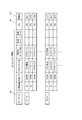
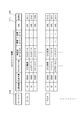
- Diagram showing entry database configuration The figure which shows the structure of an acoustic ID conversion part.
- Block diagram of terminal device The figure which shows the structure of the acoustic ID demodulation part of a terminal device.
- FIG. 1 Flow chart showing operation of content management server
- movement of an advertisement selection part, a terminal device, and ID resolution server The figure which shows the modification of a content provision system
- FIG. 1 is a diagram for explaining the configuration of a content providing system according to the first embodiment of the present invention.
- This content providing system is a terminal device in which a viewer 20 possesses sub-content (second content data; web advertisement) 121 related to the contents of each scene of main content (first content data; television program) 101.
- 22 is a push-type content providing system to be displayed on 22.
- a TV program displays a scene of drinking a drink such as beer
- a web advertisement such as a beer company or a beer restaurant is displayed on the terminal device 22 in response to this.
- the content providing service that provides web advertisements in a push-type manner linked to the television program is hereinafter referred to as “link advertisement providing service”.
- the television program as the main content 101 is broadcast from the broadcasting station 1, and the television receiver 21 receives the television program and reproduces it toward the viewer 20.
- the TV program refers to all contents broadcast from the broadcasting station 1, and includes not only the so-called TV program body but also a TV commercial (TV CM).
- the terminal device 22 is owned by the viewer 20, and when the viewer 20 views a television program, the terminal device 22 also collects the sound emitted from the television receiver 21 (the sound emitted from the television receiver 21). As far as possible).
- the broadcasting station 1 has a transmission device 10, and the transmission device 10 modulates the main content 101 and transmits (broadcasts) it in the frequency band of the terrestrial digital channel in the UHF band.
- the broadcast station 1 also has a link information selection / superimposition unit 11.
- the link information selection superimposing unit 11 analyzes the contents of various data signals (various signals such as audio signals and image signals) constituting the main content 101, and sub-contents (web) provided on the web corresponding to the contents.
- An information ID 103 that is identification information for specifying the advertisement 121 is superimposed on the signal of the main content 101.
- the link information selection / superposition unit 11 corresponds to the content editing apparatus of the present invention.
- Various methods can be applied to superimposing the information ID 103 on the main content 101.
- the method disclosed in the international patent application International Publication No. 2010/016589
- the information ID 103 is converted into an acoustic ID 104 that is an acoustic signal in a specific frequency band by spread spectrum and frequency shift, and the converted acoustic ID 104 is superimposed on the audio signal of the main content 101.
- FIG. 2 shows the relationship between the frequency band of the audio signal included in the main content 101 and the frequency band of the acoustic ID 104.
- the upper limit frequency of the audio signal used in the television program which is the main content in this embodiment is about 16 kHz.
- the upper limit frequency of the audio signal that can be transmitted / received and reproduced by the transmission device 10 and the television receiver 21 is about 20 kHz.
- the acoustic ID 104 is an audio signal in the frequency band of 18 to 20 kHz
- the acoustic ID 104 is equal to or higher than the frequency band of the normal audio signal included in the main content 101 (television program), and the transmission device 10 and the television receiver 21 are It is superimposed on a frequency band that can be transmitted / received and reproduced.
- the audio ID 104 can be easily separated from the audio signal of the main content 101. Details of this method will be described later.
- the terminal device 22 possessed by the viewer 20 collects sound including the audio signal of the main content 101 and the acoustic ID 104 emitted from the speaker of the television receiver 21.
- the terminal device 22 demodulates the acoustic ID 104 included in the collected sound into the information ID 103.
- the terminal device 22 accesses the ID resolution server 41 of the management center 4 and acquires the URL 141 (address information indicating the storage location of the sub content 121) of the sub content 121 corresponding to the information ID 103 obtained by demodulation.
- the terminal device 22 acquires the information ID 103 consisting of a short code (for example, a four-digit number) as the acoustic ID 104 from the television receiver 21, and based on the acquired information ID 103, a long code (a predetermined number such as alphanumeric characters) is obtained.
- URL 141 consisting of a character string
- the terminal device 22 accesses the sub-content providing server 31 based on the acquired URL 141, acquires the sub-content 121, and displays it on a display or the like provided in the terminal device 22.
- the information ID 103 is stored in association with the URL 141 of the sub-content 121.
- the ID resolution server 41 provides a URL 141 corresponding to the requested information ID 103 in response to an access from the terminal device 22.
- a process in which the ID resolution server 41 converts the information ID 103 received from the mobile terminal device 22 into a URL 141 corresponding to the information ID 103 and returns the converted URL 141 to the mobile terminal device 22 is referred to as “information ID resolution”.
- the secondary content providing server 31 is a web server that stores the secondary content 121 indicated by the URL 141 so as to be provided, and provides a web advertisement that is the secondary content 121 indicated by the requested URL 141 in response to access from the terminal device 22. .
- the above-described series of processing of the terminal device 22 (collection of sound emitted from the speaker of the television receiver 21, demodulation of the acoustic ID 104, acquisition of the URL 141, access to the sub-content providing server 31, display of the sub-content 121) Is automatically performed by a sub-content acquisition program executed in the terminal device 22. Accordingly, the sub-content 121 (web advertisement) linked to the main content (television broadcast) 101 is provided to the viewer 20 who owns the terminal device 22 in a push-type manner.
- the secondary content providing server 31 may be a general web server.
- Link information selection superimposing unit 11 includes a content analysis unit 12, an information selection unit 13, an entry database 14, an acoustic ID conversion unit 15, and a speech synthesis unit 16.
- the content analysis unit 12 analyzes the content of the input main content 101, and generates and outputs a keyword 102.
- the analysis of the main content 101 is performed, for example, by performing image analysis, voice recognition, or the like on the main content 101.
- image analysis refers to a technique for extracting features such as contours and color tones from an image and recognizing what the object is in.
- Speech recognition refers to a technology for recognizing information contained in speech based on features such as the waveform and frequency structure of the speech signal. As these techniques, known techniques can be used as appropriate, and a detailed description thereof will be omitted.
- the content analysis unit 12 determines what the scene of the main content 101 is based on the results of image analysis and voice recognition performed on the input main content 101, and determines the contents of the scene.
- a keyword 102 which is text information to be expressed, is generated and output. That is, the keyword 102 is a word that represents the content of the main content 101 or a word that represents the feature or attribute of each scene of the main content 101. This keyword 102 is input to the information selection unit 13. As the text information, information that indirectly expresses the contents of the scene, such as ID information or metadata, may be used instead of the keyword 102 that directly expresses the contents of the scene.
- the content analysis unit 12 inputs the main content 101 broadcast from the broadcast station 1 in real time, and sequentially generates and outputs the keyword 102.
- the generation timing and generation interval of the keyword 102 can be determined as appropriate. For example, a predetermined time interval (for example, every 5 minutes) set in advance, or the content analysis unit 12 may detect that the scene of the main content 101 has been changed, and the detected timing may be used.
- a predetermined time interval for example, every 5 minutes
- the content analysis unit 12 may detect that the scene of the main content 101 has been changed, and the detected timing may be used.
- the information selection unit 13 searches the entry database 14 using the keyword 102 input from the content analysis unit 12, and selects the sub-content 121 matching the keyword 102 from the sub-contents 121 entered in the entry database 14.
- the corresponding information ID 103 is selected.
- the information selection unit 13 outputs the selected information ID 103 to the acoustic ID conversion unit 15 and transmits the selection result as the entry selection information 105 to the management server 40 of the management center 4.
- the entry of the sub-content 121 means that the sub-content 121 (or the corresponding information ID 103) is associated with the specific keyword 102 and registered in the entry database 14 in advance.
- entry information 122 is transmitted from the advertiser 30 to the management center 4.
- the entry information 122 includes at least the keyword 102 and the upper limit unit price.
- the entry information 122 may further include various types of information.
- the entry information 122 further includes a budget, a client name, a product name or service name, a business type code, and a product type code or service code. .
- the entry of the sub content 121 will be described later.
- the information entry database 14 has a table for storing information such as the keyword 102, upper limit unit price, and budget included in the entry information 122, and information such as the URL 141 and the information ID 103 corresponding to the entry information 122.
- Information essential for the entry database 14 of the present invention is information that defines the correspondence between the keyword 102 and the information ID 103.
- the keyword 102, the information ID 103, and the upper limit unit price are essential information registered in the entry database 14, and other information (budget, client name, product name or service name, industry code or product type code, URL and the like) can be added or omitted as appropriate according to a selection rule described later.
- the entry database 14 manages the entries of a plurality of sub contents 121 by grouping them for each keyword 102. Each entry belongs to the group of keywords 102 included in the entry information 122. However, when the entry information 122 includes a plurality of keywords 102, the entry information 122 belongs to each group of the plurality of keywords 102.
- the upper limit unit price (yen / access) is a charge per access charged from the management center 4 to the advertiser 30 according to the number of times the sub-content 121 is viewed (accessed) by the viewer 20 (or the terminal device 22). This is the upper limit of the billing unit price.
- the information selection unit 13 sets the upper limit unit price included in the entry information 122 of each sub content 121 grouped with respect to the keyword 102. Is acquired, and automatic bidding processing based on the upper limit unit price is performed.
- the automatic bidding process is a process in which AI (artificial intelligence) is provided for each entry, and a successful bidder is determined by bidding based on the AI. AI bids by calculating the appropriate price for the keyword 102 based on information such as the upper limit unit price and budget included in the entry information 122 that the AI is in charge of.
- the information selection unit 13 selects one sub-content 121 from the sub-contents 121 grouped for the keyword 102 based on the result of the automatic bidding process.
- the sub-content 121 having the highest maximum unit price is basically selected, but the information selection unit 13 excludes the specific sub-content 121 from the entry based on a predetermined selection rule. Or by changing the weight of the comparison of bid prices, the selection of the sub-content 121 is adjusted and optimized.
- the information selection unit 13 displays various information such as a client name, a product name or a service name, an industry code, and a product code or a service code included in the entry information 122.
- a client name e.g., a client name
- a product name or a service name e.g., a product name or a service name
- an industry code e.g., a product code or a service code included in the entry information 122.
- the code of Japan standard industry classification can be used for the industry code.
- the product type code for example, a classification code of JIS (Japanese Industrial Standard) or JAS (Japanese Agricultural Standard) can be used.
- the selection rule for example, the following is used. “Do not select clients that compete with TV program sponsors.” “Do not select advertisements for products of the same industry type or product type as advertisements broadcast on TV programs.” “Prefer web ads for large clients and clients with a high corporate image.” “Priority is given to sub-content 121 with rich contents.” “Don't select advertisements for programs or scenes where advertisements are prohibited.”
- selection rules are not limited to the above.
- program sponsor companies, advertisement prohibition information, and the like may be included in the main content 101 as metadata, or may be provided by broadcast program information such as EPG.
- the content analysis unit 12 may extract metadata from the main content 101 or extract necessary information from broadcast program information such as EPG.
- CSR degree of social responsibility
- a rule for selecting may be applied. These evaluations may be performed by the administrator of the management center 4 and the rules created by this evaluation may be provided to the link information selection superimposing unit 11.
- the acoustic ID conversion unit 15 spreads the information ID 103 input from the advertisement selection unit 13 and converts the information ID 103 into an acoustic ID 104 that is an acoustic signal.
- a conversion method to the acoustic ID 104 a method disclosed in the above-mentioned International Publication No. 2010/016589 pamphlet is used.
- FIG. 4 is a diagram illustrating a configuration example of the acoustic ID conversion unit 15.
- the spread code generator 201 generates a spread code PN for spreading the frequency spectrum of the information ID 103.
- the spreading code a pseudo-random code string having a fixed cyclic period such as an M series is used.
- the period of the information ID 103 is adjusted so that one symbol period coincides with one cyclic period of the spread code.
- the multiplier 202 multiplies the information ID 103 and the spreading code. This process is a process called spread spectrum.
- the spread code is phase-modulated for each cyclic period by the value of the information ID 103 (a numeric string of 1 or 0), and the frequency spectrum of the information ID 103 is spread.
- the information ID 103 in which the frequency spectrum is spread by the multiplier 202 is converted into a differential code by the differential encoding unit 203.
- the differential encoding process is a process of replacing the value of each chip of the spread code with a value representing a change from the previous chip from its absolute value.
- the differential encoding unit 203 includes an XOR circuit 204 to which the information ID 103 whose frequency spectrum is spread by the multiplier 202 is input to one input terminal, and the other of the XOR circuit 204 by delaying the output of the XOR circuit 204 by one chip.
- 1-chip delay circuit 205 for returning to the input terminal.
- the absolute value of each chip of the information ID 103 in which the frequency spectrum is spread is replaced with a code that represents the phase match or mismatch with the immediately preceding differential code chip.
- the information ID 103 in which the frequency spectrum is spread by comparing two consecutive chips on the receiving side can be restored without a clock that is accurately synchronized with the transmitting side.
- the differential code output from the XOR circuit 204 is input to the upsampling unit 206.
- the upsampling unit 206 divides each sample of the code string to which the differential code is input into a plurality of samples, and processes the waveform so that it can be demodulated on the receiving side even when the code is expanded or contracted by Doppler shift.
- the differential code that has been upsampled by the upsampling unit 206 is input to the LPF 207.
- the LPF 206 is a filter that limits the band of the baseband signal and limits the band of the baseband signal while suppressing inter-chip interference, and is called a Nyquist filter.
- the Nyquist filter is a filter having a characteristic that an impulse response rings at a symbol rate (passes through 0), and is configured by an FIR filter generally called a cosine roll-off filter. The order of the filter, the roll-off rate ⁇ , etc. are determined according to the conditions to be applied.
- the terminal device 22 that receives the acoustic ID 104 also performs filtering with the LPF 254 (see FIG. 6), the LPF 207 in FIG. 4 and the LPF 254 in FIG. 6 each have a complete Nyquist filter. And a root raised cosine roll-off filter.
- the signal band-limited and waveform-shaped by the LPF 207 is multiplied by the carrier signal generated by the carrier signal generator 209 in the multiplier 208 and shifted to a signal in the frequency band of 18 to 20 kHz shown in FIG.
- the signal shifted to the frequency band of 18 to 20 kHz and output from the acoustic ID conversion unit 15 is input to the speech synthesis unit 16 as the acoustic ID 104.
- the voice synthesizer 16 is an adder that synthesizes an acoustic signal by adding the acoustic ID 104 to a broadcast audio signal that is an audio signal of the main content 101.
- the voice synthesizer 16 adjusts the broadcast audio signal and the sound ID 104 to the same sampling frequency, adds and synthesizes the broadcast sound signal and the sound ID 104, and outputs a broadcast sound signal on which the sound ID 104 is superimposed.
- the temporal composition position of the audio ID 104 with respect to the broadcast audio signal (main content 101) is preferably near the time position of the video and audio from which the content analysis unit 12 has analyzed and extracted the keyword 102.
- the main content 101 including the broadcast audio signal on which the acoustic ID 104 is superimposed is input to the transmission device 10 and transmitted as a UHF band radio signal as a television broadcast. This radio signal is received by the television receiver 21 to reproduce video and audio.
- the video signal of the main content 101 is displayed on the display, and the audio signal of the main content 101 is emitted from the speaker.
- the audio signal includes the acoustic ID 104.
- the sound ID 104 emitted is collected by the terminal device 22 possessed by the viewer 20.
- the acoustic ID conversion unit 15 corresponds to the ID addition unit of the present invention.
- the terminal device 22 is a device carried by the user 20 who is watching the television (receiver) 21.
- the terminal device 22 picks up the sound ID 104 emitted by the television 21 and demodulates it to the information ID 103.
- the information ID 103 is resolved by the ID.
- the URL is transmitted to the server 41 and the URL 141 of the web advertisement 121 is acquired.
- the ID resolution server 41 includes an ID / URL correspondence table 41A.
- the ID resolution server 41 searches the ID / URL correspondence table 41A with the information ID 103 received from the terminal device 22, reads the corresponding URL 141, and sends it back to the terminal device 22.
- the terminal device 22 that has acquired the URL 141 accesses the sub-content providing server 31 using this URL 141 to download and display the web advertisement 121.
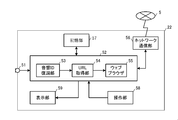
- FIG. 5 is a block diagram of the terminal device 22.
- the terminal device 22 includes a microphone 51, a control unit 52, a network communication unit 56, a storage unit 57, an operation unit 58, and a display unit 59.
- the microphone 51 picks up an audio signal including the acoustic ID 104 emitted from the speaker of the television receiver 21.
- the network communication unit 56 is a functional unit that accesses the communication network 5 such as the Internet or a local area network via a wireless communication antenna by wireless communication such as Wi-Fi standard and / or 3G (IMT-2000) standard. is there.
- the terminal device 22 communicates with the ID resolution server 41 and the subsidiary content providing server 31 via the communication network 5.
- the communication network 5 is a communication network such as a mobile communication network, a gateway, or the Internet. Further, the communication network 5 may be a network in which a plurality of communication networks having different communication methods are interconnected instead of a single communication network.
- the control unit 52 functions as an acoustic ID demodulation unit 53, a URL acquisition unit 54, and a web browser 55 in cooperation with an application program.
- the acoustic ID demodulating unit 53 is a processing unit that extracts the acoustic ID 104 from the audio signal collected by the microphone 51 and demodulates the acoustic ID 104 into the information ID 103.
- the control unit 52 includes a CPU (Central Processing Unit), a ROM (Read Only Memory), and a RAM (Random Access Memory).
- the CPU controls each unit connected to the control unit 52 by executing a control program stored in the ROM or the storage unit 57.
- the storage unit 57 is a storage device such as a hard disk or a flash memory, and stores various programs.
- the operation unit 58 has, for example, a plurality of keys. When these keys are operated by the user, a signal corresponding to the operation content is supplied to the control unit 52.
- the control unit 52 determines the operation content based on this signal and performs processing.
- the display unit 59 includes, for example, a display body such as a liquid crystal display and a memory such as a VRAM (Video Random Access Memory), and various images including images according to received radio waves under the control of the control unit 52. Is displayed on the LCD.
- the display unit 59 also functions as a display screen for the web browser 55.
- FIG. 6 is a block diagram of the acoustic ID demodulator 53.
- the sound ID demodulator 53 receives a sound signal collected by the microphone 51 and A / D converted.
- the input audio signal is input to the HPF 251.
- the HPF 51 is a high-pass filter having a cutoff frequency around 18 kHz, and removes an audible frequency band signal corresponding to the audio signal of the main content 101 from the input audio signal, and only a signal in the frequency band corresponding to the acoustic ID 104 is obtained. It is a filter for taking out.
- the signal component extracted by the HPF 251 (the signal component corresponding to the acoustic ID 104) is input to the delay unit 252 and the multiplier 253.
- the delay time of the delay unit 252 is set to the number of clocks for one chip of the spread code. That is, when the spreading code (differential code) is up-sampled N times by the up-sampling unit 206 of the transmission-side acoustic ID conversion unit 15, the delay amount of the delay unit 252 is also N samples.
- the multiplier 253 multiplies the sample output from the HPF 251 and the sample output from the delay unit 252. This process is a delay detection process. By this delay detection processing, the differentially encoded spread code (information ID 103 in which the frequency spectrum is spread) is converted into the original spread code.
- this delay detection processing is that it does not require the reproduction of the carrier signal at the time of demodulation.
- differential encoding on the transmission side and delay detection on the reception side, it is possible to construct a communication system that is robust against frequency fluctuations and has a low processing load.
- the multiplication output of the multiplier 253 is input to the LPF 254.
- the LPF 254 is a filter for filtering a carrier component to extract a baseband signal and filtering unnecessary noise to improve the SN ratio.
- the LPF 254 has the same characteristics as the LPF (Nyquist filter) 207 used on the transmission side. belongs to. As described above, the LPF 207 of the modulation unit and the LPF 254 are combined to form a filter having a root characteristic so that a complete Nyquist filter characteristic is obtained.
- the output signal from the LPF 254 is input to the matched filter 255.
- the matched filter 255 is composed of an FIR filter having a coefficient of a spread code PN, which is the same code string used for spreading the data code on the transmission side.
- the chip rate of the spreading code used for the coefficient is the same as the chip rate after upsampling on the transmission side. That is, the same code of the same spreading code PN repeats the upsampling rate in the matched filter 255.
- the matched filter 255 performs a convolution operation between the output waveform of the LPF 254 and the spread code PN, and outputs the correlation value.
- the correlation value output from the matched filter 255 indicates a peak representing a strong correlation in the period of the spreading code PN, and the phase of the peak is phase-modulated by a transmission symbol. Therefore, in the correlation value output from the matched filter 255, a positive code peak and a negative code peak appear corresponding to transmission symbols 1 and ⁇ 1, respectively.
- the output of the matched filter 255 is input to the peak detector 256.
- the peak detection unit 256 detects a large peak in the vicinity of the cycle of the spread code PN and identifies a correlation peak.
- the identified correlation peak is input to the code determination unit 257.
- the code determination unit 257 decodes the symbol from the peak phase and outputs this as the information ID 103.
- the information ID 103 obtained by demodulating the acoustic ID 104 extracted from the audio signal by the acoustic ID demodulation unit 53 is input to the URL acquisition unit 54.
- the URL acquisition unit 54 controls the network communication unit 56 to communicate with the ID resolution server 41, and acquires the URL 141 associated with the information ID 103 from the ID resolution server 41.
- This URL 141 is the URL 141 of the sub-content 121 corresponding to the acoustic ID 104 (or information ID 103) superimposed on the audio signal of the main content 101 (television program) being reproduced by the television receiver 21 at that time.
- This URL 141 is input to the web browser 55.
- the web browser 55 accesses the secondary content providing server 31 using this URL 141, and downloads and displays the web advertisement as the secondary content 121.
- the management center 4 has a management server 40 and an ID resolution server 41.
- the advertiser 30 of the subsidiary content 121 uploads the created subsidiary content 121 to the subsidiary content providing server 31.
- the secondary content providing server 31 may be a general web server. Then, the advertiser 30 makes an entry for the link advertisement providing service for the sub-content 121 in the management center 4.
- the management server 40 includes a management database (not shown) having substantially the same configuration as that of the entry database 14 in FIG. 3.
- the management database includes at least an information ID and an upper limit corresponding to the entry of the sub-content 121. Unit price and budget are registered.
- the management server 40 receives the entry information 122 and the URL 141 from the advertiser 30 and accepts the entry of the sub content 121.
- the management server 40 issues an information ID 103 to the sub-content 121 that has accepted the entry.
- a unique information ID 103 is issued at least for each of the plurality of sub contents 121 entered at that time.
- the information ID 103 is registered in the management database together with at least the upper limit unit price and the budget among the entry information 122. Further, the entry information 122 (at least the information necessary for the upper limit unit price and the selection rule) and the information ID 103 are sent to the advertisement selection unit 13 of the link information selection superposition unit 11 to be registered in the entry database 14.
- the management server 40 associates the information ID 103 with the URL 141 of the sub-content 121 and transmits it to the ID resolution server 41.
- the ID resolution server 41 registers the information ID 103 and the URL 141 of the sub-content 121 in the ID / URL correspondence table 41A.
- the ID resolution server 41 registers the information ID 103 and the URL 141 transmitted from the management server 40 in the ID / URL correspondence table 41A in association with each other.
- the ID resolution server 41 Upon receiving the information ID 103 from the terminal device 22, the ID resolution server 41 searches the ID / URL correspondence table 41 ⁇ / b> A using the information ID 103 as a key, reads the URL 141 registered in association with the information ID 103, and sends it to the terminal device 22. Send back.
- the ID resolution server 41 When the ID resolution server 41 resolves a certain information ID 103, the ID resolution server 41 notifies the management server 40 that the information ID 103 has been resolved.
- the management server 40 refers to the number of times the information ID 103 is resolved, that is, the number of times the URL 141 is transferred to the terminal device 22, and the number of times that the terminal device 22 accesses the URL 141 of the sub content 121, that is, the sub content 121 is viewed by the terminal device 22.
- the link advertisement providing service fee is calculated based on the counted value.
- the management server 40 calculates the billing fee by “the successful bid unit price determined by bidding” ⁇ “the number of accesses” corresponding to the entry selection information 105 received from the information selection unit 13 of the link information selection superposition unit 11.
- the budget (yen) stored in the management database of the management server 40 is the upper limit of the fee that the advertiser 30 can pay for one entry of the sub-content 121.
- the management server 40 thereafter inputs the corresponding keyword 102 to the sub-content 121 corresponding to the information ID 103. Even if a bid or selection is not made, the entry of the sub-content 121 is managed.
- the management server 40 charges the advertiser 30 for the amount of the winning bid every time the information ID 103 is resolved to the URL 141.
- the billing amount may be charged when the advertisement fee reaches the entry budget, or may be performed in units of advertisement selection for one keyword 102.
- the billing process may be a clerk process, but may be billed online to the deposit account or credit card of the advertiser 30.
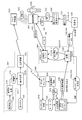
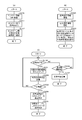
- FIGS. 7A to 7C are flowcharts showing the operation of the management server 40.
- 8A to 8C are flowcharts showing operations of the advertisement selection unit 13, the terminal device 22, and the ID resolution server 41, respectively.
- FIG. 7A is a flowchart showing the entry acceptance operation of the management server 40.
- the advertiser 30 transmits entry information and the like to the management server 40 of the management center 4 and enters the link advertisement providing service.
- the management server 40 receives the entry information 122, the URL 141 of the sub-content 121, etc. from the advertiser 30 (S10)
- the management server 40 accepts the entry of the sub-content 121 and assigns the information ID 103 to the sub-content 121 (S11).
- the management server 40 transmits the accepted entry information 122 and the assigned information ID 103 to the advertisement selection unit 13 (S12).
- the transmitted entry information 122 and information ID 103 are registered in the keyword column designated (described in the entry information 122) in the entry database 14 by the information selection unit 13.
- the management server 40 transmits the information ID 103 and the URL 141 of the sub content 121 to the ID resolution server 41 (S13).
- the transmitted information ID 103 and URL 141 are registered in the ID / URL correspondence table 41A by the ID resolution server 41.
- the management server 40 In response to receiving the entry selection information 105 from the information selection unit 13 of the link information selection / superimposition unit 11, the management server 40 stores the information ID included in the received entry selection information 105 and its successful bid unit price (not shown). It is stored in a predetermined area of the means or management database. The stored information ID and successful bid unit price are used for calculating a billing fee.
- FIG. 8A is a flowchart showing the advertisement selection operation of the information selection unit 13.
- the information selection unit 13 enters the entry information associated with the input keyword 102. 122 is searched from the entry database 14, and the sub-content 121 to be superimposed on the current main content 101 is selected based on the above selection rule and automatic bidding (S41).
- the information selection unit 13 outputs the information ID 103 indicating the sub content 121 selected in step S41 to the acoustic ID conversion unit 15 (S42), and then selects the information including the information ID 103 of the sub content 121 and the winning bid amount.
- the information 105 is transmitted to the management server 40 (S43).
- FIG. 7B is a flowchart showing the entry selection information processing operation of the management server 40.
- the management server 40 receives the entry selection information 105 of any sub-content 121 from the information selection unit 13 (S20)
- the management server 40 stores the entry selection information 105 (S21).
- the entry selection information 105 is used for calculating the advertising fee for the sub-content 121.
- the management server 40 notifies the ID resolution server 41 that the resolution of the information ID 103 of the selected sub-content 121 is permitted for a predetermined time T (S22).
- FIG. 8B is a flowchart of the sub-content acquisition program showing the operation of the terminal device 22 after the terminal device 22 receives the acoustic ID 104.
- This process shows the operation of the control unit 52 of the terminal device 22, and includes the operations of the acoustic ID demodulation unit 53, the URL acquisition unit 54, and the web browser 55.
- the terminal device 22 is in a state where the sub-content acquisition program is resident or executed in the background.
- the acoustic ID demodulator 53 extracts the acoustic ID 104 included in the audio signal from the television receiver 21 collected by the microphone 51 and demodulates it to the information ID 103 (S50).
- the URL acquisition unit 54 transmits the demodulated information ID 103 to the ID resolution server 41 (S51), and receives the URL 141 of the sub-content 121 as a reply (S52).
- the web browser 55 accesses the secondary content providing server 31 using the received URL 141, and downloads and displays the secondary content 121 (S53).
- FIG. 8C is a flowchart showing the operation of the ID resolution server 41.
- This processing operation is executed for the information ID 103 for the predetermined time described above when the management server 40 permits the resolution of the information ID 103 (see S22).
- the ID resolution server 41 searches the ID / URL correspondence table 41A with the information ID 103 and reads the corresponding URL 141 (S61). Then, the ID resolution server 41 returns the read URL 141 to the terminal device 22 (S62), and notifies the management server 40 that the information ID 103 has been resolved (S63).
- the predetermined time T for permitting the resolution of the information ID 103 is for setting a time limit for the ID resolution in order to follow the contents of the main content 101 that is changing scene by moment.
- a sufficient time is set for the terminal device 22 that has picked up the acoustic ID 104 to resolve the information ID 103 and display the sub-content 121. Specifically, about 5 minutes is appropriate. However, the predetermined time is not limited to 5 minutes and may be longer or shorter.
- the next entry selection information 105 may be sent from the information selection unit 13.
- the ID resolution server 41 may manage the predetermined time, and the ID resolution server 41 may notify the management server 40 that the permission time has elapsed, or the management server 40 performs the permission time. The management server 40 may notify the ID resolution server 41 that the time has elapsed.
- FIG. 7C is a flowchart showing the entry management operation of the management server 40.
- the management server 40 permits the ID resolution server 41 to resolve the information ID 103 (see S22)
- the management server 40 executes this process for the permitted information ID 103.
- the management server 40 When the management server 40 receives a notification that the information ID 103 has been resolved from the ID resolution server 41 (YES in S30), the management server 40 counts the number of ID resolutions in the current entry selection of the information ID 103 (S31). Then, the management server 40 integrates the successful bid unit price described in the current entry selection information 105 and the measured ID solution count, and calculates the current billing fee for the selected sub-content 121 (S32). ). It is determined whether the total sum of the current billing fee and the billing fee based on the previous entry selection has reached the budget of the sub-content 121 (S33). When the billing fee total has not yet reached the budget (NO in S33), the management server 40 returns the process to S30 and determines whether or not the next ID resolution notification has been received.
- the management server 40 enters the entry information of the sub content 121 to the information selection unit 13 of the link selection superimposing unit 11.
- the ID resolution server 41 is also instructed to delete the information ID 103 and URL 141 of the sub-content 121 from the ID / URL correspondence table 41A (S35).
- the sub-content 121 whose total billing fee has reached the budget is not selected by the information selection unit 13 or is not resolved by the ID resolution server 41. Managed.
- the management server 40 determines that the current billing fee Is accumulated in the total of unbilled billing charges related to the entry selection up to the previous time (S37), stored in a storage area (not shown) or a predetermined area of the management database, and the entry management operation is terminated.
- FIG. 9 simply shows the hardware configuration of the link information selection / superposition unit 11 (content editing device) in the broadcast station 1, the management server 40 or the ID resolution server 41 in the management center 4, or the sub-content provision server 31. It is a block diagram. Unlike the terminal device 22, these devices and servers are not directly operated by the user, so that it is not necessary to provide a display unit or an operation unit.
- the control unit 403 includes a CPU (Central Processing Unit), a ROM (Read Only Memory), and a RAM (Random Access Memory).
- the CPU controls each unit connected to the control unit 403 by executing a control program stored in the ROM or the storage unit 404.
- the storage unit 404 is a storage device such as a hard disk or a flash memory, and stores various programs and various tables.
- the signal input from the input unit 401 is input to the control unit 403, and various processes are performed on the input signal, or various processes are performed based on the input signal, and the processing results are obtained.
- the output unit 402 outputs the output signal to the outside.
- the input unit 401 or the output unit 402 itself may be configured to communicate with an external device, or the input unit 401 or the output unit 402 may be connected to another communication device and externally connected via the communication device. You may comprise so that it may communicate with an apparatus.
- the log such as the number of times the ID resolution server 41 resolves the information ID 103 to the URL 141 is used to determine the number of accesses to the site of the target sub-content 121, and this log
- the advertisement effect may be measured using (communication record), and the measured result may be presented to the client.
- the analysis of the main content 101 in the link information superimposing unit 11 may be performed before broadcasting.
- the keyword 102 for each scene of the main content 101 is generated in advance before broadcasting and stored together with the time position (time code or the like) in the main content 101.
- a means for storing the keyword and time code is provided at the position of the content analysis unit 12 in FIG. 1, and the keyword 102 of the scene is synchronized with the main content 101 broadcast (transmitted) from the broadcasting station 1.
- the information is output to the information selection unit 13.
- a plurality of terminal devices 22 collect sound IDs 104 at the same time, the access is concentrated on the ID resolution server 41, and the sub-content providing server 31 is accessed. Concentration can cause congestion. Therefore, a function for generating a random waiting time is provided in the terminal device 22 (URL acquisition unit 54), and after waiting for this waiting time, the ID resolution server 41 and the sub-content providing server 31 are accessed. Good.
- the terminal device 22 when the terminal device 22 demodulates the acoustic ID 104, the terminal device 22 accesses the sub-content providing server 31 and displays the sub-content 121 without the operation of the viewer 20.
- the terminal device 22 may access the sub-content providing server 31 after receiving an operation for instructing (permitting) access to the sub-content providing server 31.
- an advertisement is described as a representative example of the sub-content 121, but information to be provided is not limited to the advertisement. As long as the information is related to the content of the main content 101, any information such as regional information and a cooking recipe may be used.
- the method of adding the information ID 103 to the main content 101 is not limited to the acoustic ID 104.
- the method using the acoustic ID 104 is suitable for adding to an existing broadcasting system because it is not necessary to provide a new function in the television receiver 21.
- Even when the acoustic ID 104 is used not only the sound (sound wave) is emitted from the speaker and collected by the terminal device 22, but also by a wired or wireless transmission system such as an audio cable or Bluetooth (registered trademark). An acoustic signal may be transmitted.
- voice fingerprint information of the main content 101 may be used instead of the acoustic ID 104. That is, the main content such as a main content distribution source (broadcast station), a program, and a CM is specified using the voice fingerprint information, and this is used as identification information (ID code) instead of the information ID 103 to the ID resolution server 41. You may make it access.
- the main content such as a main content distribution source (broadcast station), a program, and a CM is specified using the voice fingerprint information, and this is used as identification information (ID code) instead of the information ID 103 to the ID resolution server 41. You may make it access.
- ID code identification information
- a television broadcast is described as an example.
- the present invention is not limited to this.
- a radio broadcast for example, a disaster prevention broadcast in a region, a broadcast in a facility, a broadcast via a communication network (Internet broadcast) ) And other various distribution and broadcast forms.
- the terminal device in the present invention is not limited to the smartphone 2.
- various devices that can be possessed by the viewer 20 (user) such as a mobile phone, a tablet terminal, a PDA (Personal Digital Assistant), a mobile computer, a game machine, and a set top box are used as the terminal device 22 of the present invention. Can be used.
- a part of the link information selection / superimposition unit 11, for example, the content analysis unit 12, the information selection unit 13, or the acoustic ID conversion unit 15 may be provided outside the broadcasting station 1.
- the management center 4 may be provided.
- the broadcast station 1 may be a relay station, or may be a station that reorganizes and broadcasts or distributes the main content 101 broadcast or distributed by one or more other broadcast stations or content servers.
- these a part of the link information selection / superimposition unit 11, for example, the content analysis unit 12 and the information selection unit 13
- You may comprise the main content editing apparatus which the content analysis part 12 and the information selection part 13 process, or the transmission apparatus which broadcasts and distributes.
- a part or all of the link information selection / superposition unit 11, the management server 40, the ID resolution server 41, or the sub-content providing server 31 can be appropriately realized by a virtualization technique and realized by a physically separate device. You may make it carry out, and you may make it implement
- the ID resolution server 41 has the ID / URL correspondence table 41A.
- the management server 40 may have the ID / URL correspondence table 41A.
- a pair of the information ID 103 and URL 141 of the sub-content 121 is transmitted from the management server 40 to the ID resolution server 41, and the ID resolution is permitted for the predetermined time described above.
- the ID resolution server 41 may hold the pair of the information ID 103 and the URL 141 of the sub-content 121 transmitted.
- the information ID 103 is superimposed on the main content 101 as the acoustic ID 104.
- the URL 141 of the sub-content 121 may be converted into the acoustic ID 104 and superimposed on the main content 101. If comprised in this way, the process of ID resolution server 41 will become unnecessary.
- the keyword 102 output from the content analysis unit 12 can be converted into an acoustic ID 104 and superimposed on the main content 101.
- the information selection unit 13 is provided at the position of the ID resolution server 41 in FIG.
- the information selection unit 13 may select the sub-content 121 based on the keyword 102 transmitted from the terminal device 22 and return the URL 141 instead of the information ID 103 to the terminal device 22.
- the terminal device 22 transmits personal information such as the gender, age, and residence of the viewer 20 together with the keyword 102 to the information selection unit 13, and the information selection unit 13 determines each viewer based on the information. It is also possible to configure so as to select the sub-content 121 suitable for 20.
- the terminal device 22 acquires position information such as GPS and uses this position information as a parameter for selecting the sub-content 121, an advertisement optimal for the place of residence or current location of the user (viewer) 20 is displayed. Can be provided. These personal information and position information may be used in combination. Further, the selection change of the content of the sub content 121 based on the personal information and the position information may be performed by the ID resolution server 41 or the sub content providing server 31.
- the broadcast station 1 may send time information indicating the current time (broadcast time of the broadcast station 1) at that time as the acoustic ID 104. Then, by causing the ID resolution server 41 to select the sub content 121 based on the broadcasting station ID 103 and the time information, when the main content 101 is reproduced later on the recorded main content 101, By demodulating the information ID 103 and the time information from the reproduced sound, it is possible to provide appropriate sub-content 121.
- the information content in the present invention is not limited to the sub-content 121 displayed on the display.
- the information content may be information provided by video, sound, vibration or the like by various output means such as sound emission by a speaker, vibration by a vibrator, display by a light emitter, and the like.
- FIG. 10 is a diagram for explaining the configuration of a content providing system according to the second embodiment of the present invention.
- This content providing system is a terminal device in which a viewer 1020 possesses sub-content 1121 (second content data; web advertisement) related to the contents of each scene of main content 1101 (first content data; television program).
- 1 is a push-type web content providing system to be displayed on 1022;
- a web advertisement sub-content 1121
- a beer company or a beer restaurant is displayed on the terminal device 1022 in response to this. Display.
- a web content providing service that provides a web advertisement in a push-type manner linked to the television program is hereinafter referred to as a “link advertisement providing service”.
- This link advertisement providing service is performed for web advertisements that have been previously applied (entry).
- the television program (main content 1101) is broadcast from the broadcasting station 1001, and the television receiver 1021 receives the television program (main content 1101) and reproduces it toward the viewer 1020.
- the TV program refers to all contents broadcast from the broadcasting station 1001, and includes not only the so-called TV program body but also a TV commercial (TV CM).
- the terminal device 1022 is owned by the viewer 1020, and when the viewer 1020 views a television program, the terminal device 1022 can also pick up sound in the vicinity of the television receiver 1021 (sound emitted from the television receiver 1021). A certain distance).
- a broadcasting station 1001 has a transmission device 1010.
- the transmission device 1010 modulates the main content 1101 and transmits (broadcasts) it in the frequency band of the terrestrial digital channel in the UHF band.
- the broadcasting station 1001 includes a broadcasting station ID superimposing unit 1011.
- the broadcast station ID superimposing unit 1011 superimposes the broadcast station ID 1103 that is identification information of the broadcast station 1001 on the signal of the main content 1101.
- the broadcast station identification information may be, for example, a channel number or alphanumeric characters representing a part or all of the call sign.
- the broadcast station ID 1103 is converted into an acoustic ID 1104 that is an acoustic signal in a specific frequency band by spectrum spreading and frequency shift, and the converted acoustic ID 1104 is superimposed on the audio signal of the main content 1101.
- the terminal device 1022 possessed by the viewer 1020 collects sound including the audio signal of the main content 1101 emitted from the speaker of the television receiver 1021 and the acoustic ID 1104.
- the terminal device 1022 demodulates the sound ID 1104 included in the collected sound into the broadcast station ID 1103.
- the terminal device 1022 accesses the ID resolution server 1041 of the management center 1004 and acquires the URL 1141 of the sub content 1121 (address information indicating the storage location of the sub content 1121) corresponding to the broadcast station ID 1103 obtained by demodulation. .
- the terminal device 1022 acquires the broadcast station ID 1103 composed of a short code (for example, an 8-digit number) as the acoustic ID 1104 from the television receiver 1021, and based on the acquired broadcast station ID 1103, a long code (such as alphanumeric characters). It is possible to acquire a URL 1141 consisting of a predetermined character string.
- the terminal device 1022 accesses the sub-content providing server 1031 based on the acquired URL 1141, acquires the sub-content 1121, and displays it on a display or the like provided in the terminal device 1022.
- the ID resolution server 1041 stores the broadcast station ID 1103 in association with the URL 1141 of the sub-content 1121.
- the ID resolution server 1041 provides the URL 1141 corresponding to the received broadcast station ID 1103 in response to access from the terminal device 1022.
- a process in which the ID resolution server 1041 converts the broadcast station ID 1103 received from the terminal device 1022 into a URL 1141 corresponding to the broadcast station ID 1103 and returns the converted URL 1141 to the terminal device 1022 is referred to as “broadcast station ID resolution”. .
- the secondary content providing server 1031 is a web server that stores the secondary content 1121 indicated by the URL 1141 so as to be provided, and provides the secondary content 1121 indicated by the requested URL 1141 in response to access from the terminal device 1022.
- the above-described series of processing of the terminal device 1022 (collection of sound emitted from the speaker of the television receiver 1021, demodulation of the acoustic ID 1104, acquisition of the URL 1141, access to the sub-content providing server 1031, display of the sub-content 1121) Is automatically performed by a sub-content acquisition program executed in the terminal device 1022. Accordingly, the sub-content 1121 (web advertisement) linked to the main content 1101 (television broadcast) is provided to the viewer 1020 possessing the terminal device 1022 in a push-type manner.
- the above-described sub-content acquisition program is a program that realizes the operation as shown in FIG. 14B on the terminal device 1022 and is downloaded via a communication network such as the Internet or recorded on a computer-readable recording medium. It can be provided.
- a computer-readable storage medium a magnetic recording medium (magnetic tape, magnetic disk (HDD, FD), etc.), an optical recording medium (optical disk (CD, DVD), etc.), a magneto-optical recording medium, a semiconductor memory, etc. are applied. It is possible.
- the sub-content acquisition program may be written in the memory of the terminal device 1022 at the time of shipment.
- the secondary content providing server 1031 may be a general web server.
- the processing by the acoustic ID conversion unit 1015 of the broadcasting station ID superimposing unit 1011 installed in the broadcasting station 1001 is the processing by the acoustic ID conversion unit 15 shown in the first embodiment (FIG. 4), and the information ID 103 is the broadcasting station ID 1103. Will be replaced. Therefore, detailed processing of the acoustic ID conversion unit 1015 is omitted here.
- the broadcasting station ID superimposing unit 1011 having the acoustic ID converting unit 1015 and the voice synthesizing unit 1016 corresponds to the ID adding means of the present invention.
- Link information selection unit 1006 includes a television tuner 1017, a broadcast station ID demodulation unit 1018, a content analysis unit 1012, and an advertisement selection unit 1013.
- the advertisement selection unit 1013 includes an advertisement entry database 1014.
- the link information selection unit 1006 receives broadcast radio waves transmitted from the broadcasting station 1001 and inputs the main content 1101 and selects an advertisement according to the content of the main content 1101.
- the television tuner 1017 receives a television broadcast (main content 1101) broadcast by the broadcast station 1001.
- the broadcast station ID demodulation unit 1018 demodulates the broadcast station ID 1103 from the acoustic ID 1104 included in the audio signal of the television broadcast (main content 1101) received by the TV tuner 1017.
- the configuration and operation of the broadcast station ID demodulator 1018 may be the same as the acoustic ID demodulator 1053 of the terminal device 1022 described later.
- the content analysis unit 1012 analyzes the content of the main content 1101 received by the TV tuner 1017, and generates and outputs a keyword 1102.
- the analysis of the main content 1101 is performed, for example, by performing image analysis, voice recognition, or the like on the main content 1101.
- image analysis refers to a technique for extracting features such as contours and color tones from an image and recognizing what the object is in.
- Speech recognition refers to a technology for recognizing information contained in speech based on features such as the waveform and frequency structure of the speech signal. As these techniques, known techniques can be used as appropriate, and a detailed description thereof will be omitted.
- the content analysis unit 1012 determines what the scene of the main content 1101 is based on the results of image analysis and voice recognition performed on the input main content 1101, and determines the content of the scene.
- a keyword 1102 that is text information to be expressed is generated and output. That is, the keyword 1102 is a word that represents the content of the main content 1101 or a word that represents the feature or attribute of each scene of the main content 1101. This keyword 1102 is input to the advertisement selection unit 1013.
- information that indirectly expresses the contents of the scene such as ID information and metadata, may be used.
- the content analysis unit 1012 inputs the main content 1101 broadcast from the broadcast station 1001 in real time via the TV tuner 1017, and sequentially generates and outputs the keywords 1102.
- the generation timing and generation interval of the keyword 1102 can be determined as appropriate. For example, a predetermined time interval (for example, every 5 minutes) set in advance or the content analysis unit 1012 may detect that the scene of the main content 1101 has been changed, and the detected timing may be used.
- a predetermined time interval for example, every 5 minutes
- the content analysis unit 1012 may detect that the scene of the main content 1101 has been changed, and the detected timing may be used.
- the advertisement selection unit 1013 searches the advertisement entry database 1014 using the keyword 1102 input from the content analysis unit 1012, and sub-content matching the keyword 1102 from the sub-contents 1121 entered in the advertisement entry database 1014.
- the advertisement ID 1106 corresponding to 1121 is selected.
- the advertisement selection unit 1013 transmits the selected advertisement ID 1106 as advertisement selection information 1105 to the management server 1040 of the management center 1004.
- the advertisement ID 1106 corresponds to the information ID of the present invention.
- the entry of the sub-content 1121 means that the sub-content 1121 (or the advertisement ID 1106 corresponding to the identification information) is associated with the specific keyword 1102 and registered in advance in the advertisement entry database 1014.
- entry information 1122 is transmitted from the advertiser 1030 to the management center 1004.
- the entry information 1122 includes at least a keyword 1102 and an upper limit unit price.
- the entry information 1122 may further include various types of information.
- the entry information 1122 further includes a budget, a client name, a product name or service name, a business type code, and a product type code or service code. . Details of the entry of the sub content 1121 will be described later.
- the advertisement entry database 1014 has a table for storing information such as keywords 1102, upper limit unit price, and budget included in the entry information 1122, and information such as URL 1141 and advertisement ID 1106 corresponding to the entry information 1122.
- Information essential for the entry database 1014 of the present invention is information that defines the correspondence between the keyword 1102 and the advertisement ID 1106.
- the keyword 1102, the advertisement ID 1106, and the upper limit unit price are indispensable information registered in the advertisement entry database 1014, and other information (budget, client name, product name or service name, industry code or product type code). , URL, etc.) can be added or omitted as appropriate according to a selection rule described later.
- the advertisement entry database 1014 manages the entries of a plurality of sub contents 1121 grouped for each keyword 1102. Each entry belongs to a group of keywords 1102 included in the entry information 1122. However, when the entry information 1122 includes a plurality of keywords 1102, the entry information 1122 belongs to each group of the plurality of keywords 1102.
- the upper limit unit price (yen / access) is based on the number of times the secondary content 1121 is viewed (accessed) by the viewer 1020 (or the terminal device 1022), and is charged from the management center 1004 to the advertiser 1030. This is the upper limit of the billing unit price.
- the advertisement selection unit 1013 Each time the keyword 1102 is input from the content analysis unit 1012 to the advertisement selection unit 1013, the advertisement selection unit 1013 includes the maximum unit price included in the entry information 1122 of each sub-content 1121 grouped for the keyword 1102 Is acquired, and automatic bidding processing based on the upper limit unit price is performed.
- the automatic bidding process provides AI (artificial intelligence) for each entry, and the entry (advertisement ID 1106) of the sub-content 1121 selected for the input keyword 1102 by bidding by this AI. It is a process to decide.
- the AI calculates a reasonable price for the keyword 1102 in a range from a predetermined lower limit value to an upper limit value based on information such as an upper limit unit price and a budget included in the entry information 1122 that it is in charge of, and bids.
- the appropriate price calculated by the AI that has made a successful bid for the keyword 1102 in the automatic bidding process is transmitted to the management server 1040 of the management center 1004 in the advertisement selection information 1105 described later as a successful bid price.
- the advertisement selection unit 1013 selects one sub content 1121 from the sub content 1121 grouped for the keyword 1102 based on the result of the automatic bidding process. If there are multiple entries for the same keyword, the secondary content 1121 with the highest maximum unit price is basically selected, but the information selection unit 1013 excludes the specific secondary content 1121 from the entry based on a predetermined selection rule. Or by changing the weight of the comparison of bid prices, the selection of the secondary content 1121 is adjusted and optimized.
- the advertisement selection unit 1013 displays various information such as a client name, a product name or a service name, an industry code, and a product code or a service code included in the entry information 1122.
- a client name e.g., a client name
- a product name or a service name e.g., a product name or a service name
- an industry code e.g., a product code or a service code included in the entry information 1122.
- the code of Japan standard industry classification can be used for the industry code.
- the product type code for example, a classification code of JIS (Japanese Industrial Standard) or JAS (Japanese Agricultural Standard) can be used.
- the selection rule for example, the following is used. “Do not select clients that compete with TV program sponsors.” “Do not select advertisements for products of the same industry type or product type as advertisements broadcast on TV programs.” “Prefer web ads for large clients and clients with a high corporate image.” “Select a web advertisement (sub-content 1121) rich in content preferentially” “Don't select advertisements for programs or scenes where advertisements are prohibited.”
- selection rules are not limited to the above.
- program sponsor companies, advertisement prohibition information, and the like may be included in the main content 1101 as metadata, or may be provided by broadcast program information such as EPG.
- the content analysis unit 1012 may perform processing for extracting metadata from the main content 1101, processing for extracting necessary information from broadcast program information such as EPG, and the like.
- the subsidiary content 1121 A rule for selecting may be applied. These evaluations may be performed by the administrator of the management center 1004, and the rules created by this evaluation may be provided to the link information selection unit 1006.
- the advertisement selection unit 1013 selects the sub-content 1121 corresponding to the keyword 1102 input from the content analysis unit 1012 based on the selection rule as described above, and manages the management center 1004 using the selection result as the advertisement selection information 1105.
- the advertisement selection information 1105 is information including the broadcast station ID 1103 of the receiving broadcast station 1001, the advertisement ID 1106 of the selected sub-content 1121, and the successful bid price.
- the management server 1040 uploads the URL 1141 of the selected sub-content 1121 (advertisement ID 1106) to the ID resolution server 1041 in association with the broadcast station ID 1103, and calculates the advertisement fee for this advertisement. Etc.
- the broadcast station ID demodulation unit 1018 obtains the broadcast station ID 1103 from the acoustic ID 1104 of the main content 1101 received by the TV tuner 1017.
- the channel selection channel information indicating the broadcast channel of the receiving broadcast station may be extracted, and the music selection channel information may be used as a broadcast station ID 1103 that is information for identifying the broadcast station. According to this method, the broadcast station ID 1103 can be generated without demodulating the acoustic ID 1104.
- the management center 1004 has a management server 1040 and an ID resolution server 1041.
- the advertiser 1030 of the subsidiary content 1121 (advertisement content) uploads the created subsidiary content 1121 to the subsidiary content providing server 1031.
- the secondary content providing server 1031 may be a general web server.
- the advertiser 1030 makes an entry for the link advertisement providing service for the sub-content 1121 in the management center 1004.
- the management server 1040 includes an advertisement management database in which a temporary storage column such as a successful bid unit price, the number of times of ID resolution, and an integrated value of an advertisement fee is added to the configuration of the advertisement entry database 1014 of FIG.
- a temporary storage column such as a successful bid unit price, the number of times of ID resolution, and an integrated value of an advertisement fee is added to the configuration of the advertisement entry database 1014 of FIG.
- Corresponding to the entry at least advertisement ID 1106, URL 1141, upper limit unit price and budget are registered.
- the management server 1040 receives the entry information 1122 and the URL 1141 from the advertiser 1030, and accepts the entry of the sub content 1121.
- the management server 1040 issues an advertisement ID 1106 to the secondary content 1121 that has accepted the entry.
- a unique advertisement ID 1106 is issued for at least each of the plurality of sub contents 1121 entered at that time.
- the advertisement ID 1106 is registered in the advertisement management database together with at least the upper limit unit price and the budget among the entry information 1122. Further, the entry information 1122 (at least information necessary for the upper limit unit price and the selection rule) and the advertisement ID 1106 are sent to the advertisement selection unit 1013 of the link information selection unit 1006 to be registered in the advertisement entry database 1014.
- the management server 1040 associates the broadcast station ID 1103 included in the advertisement selection information 1105 with the URL 1141 of the sub-content 1121 identified by the advertisement ID 1106. Then, it is transmitted to the ID resolution server 1041.
- the ID resolution server 1041 registers the broadcast station ID 1103 and the URL 1141 of the sub-content 1121 in the ID / URL correspondence table 1041A.
- the ID resolution server 1041 registers the broadcast station ID 1103 and URL 1141 transmitted from the management server 1040 in association with each other in the ID / URL correspondence table 1041A.
- the configuration of the ID resolution server 1041 that is a computer device will be described with reference to FIG.
- the ID resolution server 1041 includes a control unit 1042, a storage unit 1043 connected to the control unit 1042, a network communication unit 1045, and a clock 1047.
- the storage unit 1043 stores the above-described ID / URL correspondence table 1041A and a program for executing the processing procedure described with reference to the flowchart in FIG.
- the network communication unit 1045 transmits / receives the broadcasting station ID 1103 and URL 1141 to / from the terminal device 1022 via the network.
- the network communication unit 1045 also communicates with the management server 1040.
- the control unit 1042 refers to the ID / URL correspondence table 1041A and the clock 1047 included in the storage unit 1043 and resolves the broadcast station ID 1103 received from the terminal device 1022 via the network communication unit 1045 into the URL 1141.
- the management server 1040 transfers the broadcast station ID 1103 and the URL 1141 to the ID resolution server 1041 based on the advertisement selection information 1105. To do.
- the ID resolution server 1041 updates the contents of the ID / URL correspondence table 1041A based on the received broadcast station ID 1103 and URL 1141. Further, when receiving the broadcasting station ID 1103 from the terminal device 1022, the ID resolution server 1041 searches the ID / URL correspondence table 1041A using the broadcasting station ID 1103 as a key, and reads the URL 1141 registered in association with the broadcasting station ID 1103. To the terminal device 1022 (ID resolution).
- This ID resolution is permitted only for a predetermined effective time (for example, 5 minutes) after the ID resolution server 1041 receives the broadcast station ID 1103 and the URL 1141 from the management server 1040 and updates the contents of the ID / URL correspondence table 1041A.
- the ID resolution operation of the ID resolution server 1041 during the predetermined valid time is called a session.
- the ID resolution server 1041 resolves a certain broadcast station ID 1103, the ID resolution server 1041 notifies the management server 1040 that the broadcast station ID 1103 has been resolved.
- the management server 1040 indicates the number of times the broadcast station ID 1103 has been resolved, that is, the number of times the URL 1141 has been transferred to the terminal device 1022, and the number of times the terminal device 1022 has accessed the URL 1141, that is, the terminal device. 1022 is counted as the number of times the secondary content 1121 has been browsed, and the charge for the link advertisement providing service is calculated based on this count value.
- the management server 1040 calculates the billing fee by “the successful bid unit price determined by bidding” ⁇ “the number of accesses” corresponding to the advertisement selection information 1105 received from the advertisement selection unit 1013 of the link information selection unit 1006.
- the budget (yen) stored in the management database of the management server 1040 is the upper limit of the advertising fee that the advertiser 1030 can pay for one entry of the sub-content 1121.
- the management server 1040 thereafter has the corresponding keyword 1102 as the sub-content 1121 corresponding to the broadcast station ID 1103.
- the entry of the sub content 1121 in the advertisement selection unit 1013 to the management server 1040 of the link information selection unit 1006 is managed so that even if it is input, it is not bid or selected.
- the management server 1040 charges the advertiser 1030 for the amount of the winning bid every time the broadcast station ID 1103 is resolved to the URL 1141.
- the billing amount may be charged when the advertisement fee reaches the entry budget, or may be performed in units of advertisement selection for one keyword 1102.
- the billing process may be a clerk process, but may be billed online to the deposit account or credit card of the advertiser 1030.
- the terminal device 1022 is a device carried by the user 1020 who is watching the television (receiver) 1021, picks up the sound ID 1104 emitted by the television 1021 and demodulates it to the broadcast station ID 1103. Is transmitted to the ID resolution server 1041, and the URL 1141 of the sub-content 1121 is acquired.
- the ID resolution server 1041 includes an ID / URL correspondence table 1041A, searches the ID / URL correspondence table 1041A with the broadcast station ID 1103 received from the terminal device 1022, reads out the corresponding URL 1141, and sends it back to the terminal device 1022.
- the terminal device 1022 that has acquired the URL 1141 accesses the sub-content providing server 1031 using the URL 1141 to download and display the sub-content 1121.
- the configuration of the terminal device 1022 is substantially the same as that of the terminal device 22 of the first embodiment (FIG. 5), detailed description thereof is omitted here.
- the difference from the first embodiment is that the acoustic ID demodulation unit in the terminal device 1022 demodulates the broadcast station ID, not the information ID.
- FIGS. 13A to 13C are flowcharts showing the operation of the management server 1040.
- FIGS. 14A to 14C are flowcharts showing operations of the advertisement selection unit 1013, the terminal device 1022, and the ID resolution server 1041, respectively.
- FIG. 13A is a flowchart showing the entry acceptance operation of the management server 1040.
- the advertiser 1030 transmits entry information and the like to the management server 1040 of the management center 1004, and enters the link advertisement providing service.
- the management server 1040 receives the entry information 1122, the URL 1141 of the sub-content 1121 from the advertiser 1030 (S1010)
- the management server 1040 accepts the entry of the sub-content 1121 and assigns the advertisement ID 1106 to the sub-content 1121 (S1011).
- the management server 1040 transmits the received entry information 1122 and the assigned advertisement ID 1106 to the advertisement selection unit 1013 of the link information selection unit 1006 (S1012).
- the transmitted entry information 1122 and advertisement ID 1106 are registered in the keyword column specified in the advertisement entry database 1014 (described in the entry information 1122) by the advertisement selection unit 1013.
- FIG. 14A is a flowchart showing the advertisement selection operation of the advertisement selection unit 1013.
- the advertisement selection unit 1013 performs an advertisement selection process based on the input keyword 1102. (S1041).
- the entry information 1122 associated with the keyword 1102 is searched from the advertisement entry database 1014, and the sub-content 1121 optimum for the keyword 1102 is selected based on the selection rule and the automatic bidding described above. It is a process to select as a link advertisement.
- the advertisement selection unit 1013 notifies the management server 1040 of information including the advertisement ID 1106 of the sub-content 1121 selected in step S1041, the broadcast station ID 1103 of the receiving broadcast station, and the winning bid amount as advertisement selection information 1105. (S1042).
- FIG. 13B is a flowchart showing the advertisement selection information processing operation of the management server 1040.
- the management server 1040 receives the advertisement selection information 1105 of any sub-content 1121 from the advertisement selection unit 1013 (S1020), the advertisement selection information 1105 (at least the advertisement ID 1106 and its successful bid price) is stored in a predetermined area (S1020). S1021). These stored advertisement ID 1106 and successful bid unit price are used for calculation of an advertisement fee by the current selection of the sub-content 1121.
- the management server 1040 transmits (uploads) the URL 1141 and the broadcasting station ID 1103 of the sub content 1121 corresponding to the advertisement ID 1106 included in the advertisement selection information 1105 to the ID resolution server 1041 (S1022).
- the transmitted URL 1141 is registered in the ID / URL correspondence table 1041A in association with the broadcast station ID 1103 in the ID resolution server 1041. As a result, the broadcast station ID 1103 is resolved to the URL 1141 of the sub-content 1121 selected.
- FIG. 14B is a flowchart of the sub-content acquisition program showing the operation of the terminal device 1022 after the terminal device 1022 receives the acoustic ID 1104.
- This process shows the operation of the control unit 1052 of the terminal device 1022, and includes the operations of the acoustic ID demodulation unit 1053, the URL acquisition unit 1054, and the web browser 1055.
- the terminal device 1022 is in a state where the sub-content acquisition program is resident or executed in the background, and this process is executed as needed.
- the acoustic ID demodulator 1053 extracts the acoustic ID 1104 included in the audio signal from the television receiver 1021 picked up by the microphone 1051, and demodulates it to the broadcast station ID 1103 (S1050).
- the URL acquisition unit 1054 transmits the demodulated broadcast station ID 1103 to the ID resolution server 1041 (S1051), and receives the URL 1141 of the sub-content 1121 as a reply (S1052).
- the web browser 1055 accesses the secondary content providing server 1031 using the received URL 1141, and downloads and displays the secondary content 1121 (S1053).
- FIG. 14C is a flowchart showing the operation of the ID resolution server 1041.
- the ID resolution server 1041 searches the ID / URL correspondence table 1041A with this broadcast station ID 1103 and reads the corresponding URL 1141 (S1061). Then, the ID resolution server 1041 returns the read URL 1141 to the terminal device 1022 (S1062), and notifies the management server 1040 that the broadcast station ID 1103 has been resolved (S1063).
- the effective time T for which the ID resolution server 1041 permits the resolution of the broadcast station ID 1106 for one URL 1141 is to set a time limit for ID resolution in order to follow the contents of the main content 1101 that changes scene by moment.
- a time sufficient for the terminal device 1022 that picks up the sound ID 1104 emitted from the television receiver 1021 to resolve the broadcast station ID 1103 and display the sub content 1121 is set. Specifically, about 5 minutes is appropriate. However, the effective time is not limited to 5 minutes and may be longer or shorter.
- the next advertisement selection information 1105 may be sent from the advertisement selection unit 1013.
- the management of the valid time may be performed by the ID resolution server 1041 and the ID resolution server 1041 may notify the management server 1040 that the valid time has elapsed, or the management server 1040 may perform the management of the valid time.
- the management server 1040 may notify the ID resolution server 1041 that it has elapsed.
- FIG. 13C is a flowchart showing the entry management operation of the management server 1040.
- the management server 1040 permits the ID resolution server 1041 to resolve the broadcast station ID 1103 (see S1022), the management server 1040 executes this process for the permitted broadcast station ID 1103.
- the management server 1040 When the management server 1040 receives a notification to the effect that the broadcast station ID 1103 has been resolved from the ID resolution server 1041 (YES in S1030), the management server 1040 counts the number of ID resolutions in selecting this sub-content 1121 (URL 1141) for the broadcast station ID 1103 ( S1031). Then, the management server 1040 multiplies the successful bid unit price described in the advertisement selection information 1105 acquired in the current ID resolution by the counted number of ID resolutions in the current session of the selected sub-content 1121. An advertisement fee is calculated (S1032). It is determined whether the total amount of the advertising fee in the current session and the advertising fee in the previous session has reached the advertising budget of the sub-content 1121 (S1033).
- the management server 1040 When the total amount of the advertising fee has not yet reached the advertising budget (NO in S1033), the management server 1040 returns the process to S1030 and determines whether or not the next ID resolution notification has been received. On the other hand, when the total amount of the advertising fee has reached the advertising budget (YES in S1033), the management server 1040 sends the entry information of the sub content 1121 to the advertisement selecting unit 1013 of the link information selecting unit 1006. In addition to instructing deletion from the advertisement entry database 1014 (S1034), the ID resolution server 1041 is also instructed to delete the URL 1141 and the broadcast station ID 103 of the sub-content 1121 from the ID / URL correspondence table 1041A ( S1035). As a result, the sub-content 1121 whose total advertising fee has reached the budget will not be selected by the advertisement selection unit 1013 or ID-resolved by the ID resolution server 1041, so that the entry of the sub-content 1121 is Managed.
- the management server 1040 Adds the current advertisement fee to the previous accumulated advertisement fee (S1037), stores it in a storage area (not shown) or a predetermined area of the advertisement management database, and ends the advertisement entry management operation.
- a log such as the number of times the ID resolution server 1041 resolves the broadcast station ID 1103 to a predetermined URL 1141 is used to determine the number of accesses to the target sub-content 1121, etc.
- the advertisement effect may be measured using a log (communication record), and the measurement result may be presented to the client.
- FIG. 15 is a diagram illustrating an embodiment in which an adapter is provided in the television receiver 1021.
- the television receiver 1021 may generate and add the broadcast station ID 1103 to emit sound.
- the television receiver 1021 is provided with a broadcast station ID sound emitting device 1070 as an adapter.
- the broadcast station ID sound emitting device 1070 includes an acoustic ID conversion unit 1071, an audio circuit 1072, and a speaker 1073.
- the acoustic ID conversion unit 1071 acquires the identification information (broadcasting station ID 1103) of the broadcasting station currently received by the television receiver 1021 via HDMI, converts the broadcasting station ID 1103 into the acoustic ID 1104, and inputs the acoustic ID 1104 to the audio circuit 1072. To do.
- the interface for acquiring the broadcast station ID 1103 from the television receiver 1021 is not limited to HDMI, and may be USB, for example.
- the audio circuit 1072 amplifies the sound ID 1104 and then emits the sound from the speaker 1073 toward the terminal device 1022 as sound.
- the configuration of the acoustic ID conversion unit 1071 may be the same as that of the acoustic ID conversion unit 1015 illustrated in FIG.
- the broadcast station ID sound emitting device 1070 does not convert the broadcast station ID 1103 acquired from the television receiver 1021 into the acoustic ID 1104, and follows the communication standard such as Bluetooth (registered trademark) or infrared communication without changing the broadcast station ID 1103.
- a broadcasting station ID transmission device (not shown) configured to transmit a radio wave or light medium other than sound may be used.
- the broadcasting station ID sound emitting device 1070 is connected to the television receiver 1021 as an adapter, but the function of the broadcasting station ID sound emitting device 1070 may be built in the television receiver 1021.
- the broadcast station ID 1103 may be emitted from the same speaker together with the broadcast audio, or may be emitted from a separately provided speaker.
- the broadcast station ID sound emitting device 1070 of the modification shown in FIG. 15 includes a speaker, and the acoustic ID 1104 is configured as a device that transmits air (gas) as a medium. However, if the terminal device 1022 can detect the vibration of a solid or liquid, the acoustic ID 1104 may be transmitted using the solid or liquid as a medium.
- a plurality of terminal devices 1022 collect sound IDs 1104 at the same time, the access is concentrated on the ID resolution server 1041, and the sub-content providing server 1031 is accessed. Concentration can cause congestion. Therefore, a function for generating a random waiting time may be provided in the terminal device 1022 (URL acquisition unit), and after waiting for this waiting time, the ID resolution server 1041 and the sub-content providing server 1031 may be accessed. .
- the terminal device 1022 is configured to access the sub-content providing server 1031 and display the sub-content 1121 without the operation of the viewer 1020 when the acoustic ID 1104 is demodulated.
- the terminal device 1022 may access the sub-content provision server 1031 after receiving an operation to instruct (permit) access to the sub-content provision server 1031.
- an advertisement is described as a representative example, but information to be provided is not limited to the advertisement. As long as it is information related to the content of the main content 1101, any information such as regional information and cooking recipes may be used.
- the method of adding the broadcast station ID 1103 to the main content 1101 is not limited to the acoustic ID 1104.
- the method using the acoustic ID 1104 is suitable for adding to an existing television receiver system because a new function is not required for the television receiver 1021. Even when the acoustic ID 1104 is used, not only the sound (sound wave) is emitted from the speaker and picked up by the terminal device 1022, but also by a wired or wireless transmission path such as an audio cable or Bluetooth (registered trademark). An acoustic signal may be transmitted.
- the voice fingerprint information of the main content 1101 may be used instead of the acoustic ID 1104.
- the distribution source (broadcast station) of the main content 1101 and the broadcast content such as a program and CM are specified using the voice fingerprint information, and this is used as identification information (ID code) instead of the broadcast station ID 1103 to use the ID resolution server. 1041 may be accessed.
- a television broadcast is described as an example.
- the present invention is not limited to this.
- a radio broadcast for example, a disaster prevention broadcast in a region, a broadcast in a facility, a broadcast via a communication network (Internet broadcast) ) And other forms of distribution and broadcasting.
- the terminal device 1022 in the present invention is not limited to a smartphone.
- a mobile phone, a tablet terminal, a PDA (Personal Digital Assistant), a mobile computer, a game machine, a set top box, or the like can be used as the terminal device 1022 of the present invention.
- the link information selection unit 1006 may be installed inside the broadcast station 1001, for example, so that the main content 1101 is received through a transmission path different from that of the general television receiver 1021.
- the main content 1101 broadcast by terrestrial digital broadcasting may be input by cable as a data stream without being placed on radio waves.
- the link information selection unit 1006 may be installed in the management center 1004. Further, all or part of the management server 1040, the ID resolution server 1041, and the content analysis unit 1012 of the link information selection unit 1006, the advertisement selection unit 1013, and the advertisement entry database 1014 are configured integrally (with the same computer system). Also good.
- part or all of the broadcasting station ID superimposing unit 1011, the management server 1040, the ID resolution server 1041, or the sub content providing server 1031 can be appropriately realized by virtualization technology. Alternatively, it may be realized by a physically separate device, or individual functions may be realized by a virtualization server.
- the broadcast station 1001 or the broadcast station ID sound emitting device 1070 represents the current time (the broadcast time of the broadcast station 1 or the sound output time of the broadcast station ID sound emitting device 1070) at that time.
- Information may be sent as acoustic ID 1104. Then, by causing the ID resolution server 1041 to select the sub content 1121 based on the broadcast station ID 1103 and the time information, when the main content 1101 is reproduced later on the recorded main content 1101, By demodulating the broadcast station ID 1103 and the time information from the reproduced audio, it is possible to provide appropriate sub-content 1121.
- an optimal advertisement can be provided for each gender and age, for example.
- the terminal device 1022 acquires position information such as GPS and uses this position information as a parameter for selecting the sub-content 1121, it is possible to provide an optimal advertisement for the residence or current location of the user 1020. it can.
- position information such as GPS
- the selection change of the content of the sub content 1121 based on the personal information and the position information may be performed by the ID resolution server 1041 or the sub content providing server 1031.
- the link information selection unit 1006 may be configured to receive the main content 1101 of the plurality of broadcasting stations 1001 and output the advertisement selection information 1105.
- Each broadcast station 1001 may be provided with a separate link information selection unit 1006.
- the information content in the present invention is not limited to the web advertisement displayed on the display.
- the information content may be information provided by video, sound, vibration or the like by various output means such as sound emission by a speaker, vibration by a vibrator, display by a light emitter, and the like.
Landscapes
- Engineering & Computer Science (AREA)
- Signal Processing (AREA)
- Multimedia (AREA)
- Databases & Information Systems (AREA)
- Human Computer Interaction (AREA)
- Physics & Mathematics (AREA)
- Acoustics & Sound (AREA)
- Two-Way Televisions, Distribution Of Moving Picture Or The Like (AREA)
Description
この発明は、主コンテンツであるテレビ番組等が放送、配信または再生されているときに、その主コンテンツの内容に関連した副コンテンツである広告などの情報を提供する技術に関する。
日本のテレビ放送において、広告(テレビCM)を放送できる時間は、基準が定められている(例えば、日本民間放送連盟放送基準第18章「広告の時間基準」など)。この基準によれば、30分の時間枠でテレビCMを放送できる時間は約7分で、これ以上増やすことができない。テレビCMはタイムCMとスポットCMとに分けられる。タイムCMは、どの番組内で流されるかが決められている。一方で、スポットCMは基本的には番組外または番組間で放送され、テレビ番組本体の内容と直接関係がないため、視聴者の興味をひけない場合が多かった。
一方、テレビCMでは、より詳細な商品情報を視聴者に伝えるため、視聴者をインターネットのウェブ広告へ誘導することが行われている。視聴者をウェブ広告へ誘導する従来の手法としては、短縮URLの表示、URLを自動返信するメールアドレスの表示、QRコード(登録商標)の表示、検索ワードの表示と言った手法が用いられ、特に現在では検索ワードを表示させる手法が一般的となっている。
テレビ受像機を経由して情報を取得する手法として、例えばテレビのリモコン操作によってその番組に関連する各種の情報をテレビ画面に表示させるものが特許文献1などに開示されている。
テレビ受像機を経由して情報を取得する手法として、例えばテレビのリモコン操作によってその番組に関連する各種の情報をテレビ画面に表示させるものが特許文献1などに開示されている。
テレビ放送による広告の態様を現在よりも多様にするため、また、テレビ放送された番組の内容に関連した広告を提供するため、ウェブ広告を放送された番組にリアルタイムにリンクさせ、番組の放送中にスマートフォンなどの端末装置にウェブ広告を並行して表示させることが考えられる。
しかし、視聴者をウェブ広告に導く上記従来の手法は、どの手法を利用してもユーザに強いる操作の手間が大きく、これらの手法では、テレビ番組の視聴者をそのテレビ番組の内容にリンクしたウェブ広告へ自然に誘導することはできなかった。
なお、従来技術には、テレビ受像機を経由して情報を取得する手法として、テレビのリモコン操作によってその番組に関連する各種の情報をテレビ画面に表示させるものが特許文献1などに開示されている。
この発明は、テレビ放送の視聴者等であるユーザが使用する端末装置に放送の内容に関連した情報を表示または提供するための技術を提供することを目的とする。
本発明の第1の態様は、オーディオデータを含む第1のコンテンツデータを解析し、解析結果として前記第1のコンテンツデータの内容を示すテキスト情報を出力するコンテンツ解析手段と、前記テキスト情報に対応する第2のコンテンツデータを選択し、該選択した第2のコンテンツデータを示す情報IDを出力する情報選択手段と、前記情報IDを音響信号に変換し、当該音響信号を前記第1のコンテンツデータに含まれる前記オーディオデータに重畳するID付加手段と、前記音響信号が付加された第1のコンテンツデータを放送または配信する配信手段と、前記放送または配信した第1のコンテンツデータに含まれる前記オーディオデータに重畳された前記音響信号に対応する前記情報IDを、クライアント端末から受信する情報ID受信手段と、前記情報ID受信手段が受け取った情報IDの示す第2のコンテンツデータに対応するアドレス情報を前記クライアント端末に送信するID解決手段と、を備えたコンテンツ提供システムを提供する。
本発明の第2の態様は、上記コンテンツ提供システムであって、前記ID解決手段が前記アドレス情報を送信した送信回数をカウントするカウント手段をさらに備えたコンテンツ提供システムを提供する。
本発明の第3の態様は、上記コンテンツ提供システムであって、前記クライアント端末は、前記配信された第1のコンテンツデータに含まれるオーディオデータに基づく音声信号を収音する収音手段と、前記収音した音声信号から前記情報IDを抽出する情報ID抽出手段と、前記抽出した情報IDを前記ID解決手段に送信し、その応答として受信した前記アドレス情報にアクセスすることにより前記第2のコンテンツデータを取得するコンテンツ取得手段と、を備えるコンテンツ提供システムを提供する。
本発明の第4の態様は、オーディオデータを含む第1のコンテンツデータを解析し、解析結果として前記第1のコンテンツデータの内容を示すテキスト情報を出力するコンテンツ解析手順と、前記テキスト情報に対応する第2のコンテンツデータを選択し、該選択した第2のコンテンツデータを示す情報IDを出力する情報選択手順と、前記情報IDを音響信号に変換し、当該音響信号を前記第1のコンテンツデータに含まれる前記オーディオデータに重畳するID付加手順と、前記音響信号が付加された第1のコンテンツデータを放送または配信する配信手順と、前記放送または配信した第1のコンテンツデータに含まれる前記オーディオデータに重畳された前記音響信号に対応する前記情報IDを、クライアント端末から受信する情報ID受信手順と、前記情報ID受信手順にて受け取った情報IDの示す第2のコンテンツデータに対応するアドレス情報を前記クライアント端末に送信するID解決手順と、を備えたコンテンツ提供方法を提供する。
本発明の第5の態様は、オーディオデータを含む第1のコンテンツデータを解析し、解析結果として前記第1のコンテンツデータの内容を示すテキスト情報を出力するコンテンツ解析手段と、前記テキスト情報に対応する第2のコンテンツデータを選択し、該選択した第2のコンテンツデータを示す情報IDを出力する情報選択手段と、前記情報IDを音響信号に変換し、当該音響信号を前記第1のコンテンツデータに含まれる前記オーディオデータに重畳するID付加手段と、を備えたコンテンツ編集装置を提供する。
本発明の第6の態様は、上記コンテンツ編集装置であって、前記テキスト情報と、前記第2のコンテンツデータまたは前記情報IDと、の対応関係を規定したテーブルを備え、前記情報選択手段は、前記テーブルを参照して、前記コンテンツ解析手段が出力したテキスト情報に対応する第2のコンテンツを抽出するコンテンツ編集装置を提供する。
本発明の第7の態様は、上記コンテンツ編集装置であって、前記テーブルは、さらに前記第2のコンテンツデータに関連する付帯情報を記憶し、前記情報選択手段は、前記コンテンツ解析手段が出力したテキスト情報に対応する第2のコンテンツデータが複数あった場合、各第2のコンテンツデータの付帯情報に基づいて1の第2のコンテンツデータを選択するコンテンツ編集装置を提供する。
本発明の第8の態様は、第1のコンテンツデータを放送または配信する放送局を識別する放送局IDを音響信号に変換し、当該音響信号を前記第1のコンテンツデータのオーディオデータに重畳するID付加手段と、前記音響信号が付加された第1のコンテンツデータを放送または配信する送信手段と、前記第1のコンテンツデータを受信して解析し、解析結果として前記第1のコンテンツデータの内容を示すテキスト情報を出力するコンテンツ解析手段と、前記テキスト情報に対応する第2のコンテンツデータを選択し、該選択した第2のコンテンツデータを示す情報IDを出力し、該情報IDを前記放送局IDに対応づけて記憶する情報選択手段と、クライアント端末から、前記放送局IDを受信する放送局ID受信手段と、前記放送局ID受信手段が受信した放送局IDに対応づけられた情報IDによって示される第2のコンテンツデータの記憶場所を示すアドレス情報を、前記クライアント端末に送信するID解決手段と、を備えたコンテンツ提供システムを提供する。
本発明の第9の態様は、上記コンテンツ提供システムであって、前記ID解決手段が前記アドレス情報を前記クライアントに送信した送信回数をカウントするカウント手段をさらに備えたコンテンツ提供システムを提供する。
本発明の第10の態様は、上記コンテンツ提供システムであって、前記クライアント端末は、前記放送または配信された第1のコンテンツデータを含む音声信号を収音する収音手段と、前記収音した音声信号から前記放送局IDを抽出する放送局ID抽出手段と、前記抽出した放送局IDを前記ID解決手段に送信し、その応答として受信した前記アドレス情報にアクセスすることにより前記第2のコンテンツデータを取得するコンテンツ取得手段と、を備えるコンテンツ提供システムを提供する。
本発明の第11の態様は、放送または配信される第1のコンテンツデータを入力して、若しくは、放送または配信された第1のコンテンツデータを受信して解析し、解析結果として前記第1のコンテンツデータの内容を示すテキスト情報を出力するコンテンツ解析手段と、前記テキスト情報に対応する第2のコンテンツデータを選択し、該選択した第2のコンテンツデータを示す情報IDを出力し、該情報IDを前記第1のコンテンツデータを放送または配信した放送局を識別する放送局IDと対応づけて記憶する情報選択手段と、クライアント端末から、前記放送局IDを受信する放送局ID受信手段と、前記放送局ID受信手段が受信した放送局IDに対応づけられた情報IDによって示される第2のコンテンツデータの記憶場所を示すアドレス情報を、前記クライアント端末に送信するID解決手段と、を備えたコンテンツ提供システムを提供する。
本発明の第12の態様は、上記コンテンツ提供システムであって、前記ID解決手段が前記アドレス情報を前記クライアントに送信した送信回数をカウントするカウント手段をさらに備えたコンテンツ提供システムを提供する。
本発明の第13の態様は、上記コンテンツ提供システムであって、前記第1のコンテンツデータを受信して再生する再生装置から、再生中の第1のコンテンツデータの放送局IDを取得する放送局ID取得手段と、該取得した放送局IDを、音響信号である音響IDに変換して放音するID放音手段と、を更に備え、前記クライアント端末は、前記ID放音手段が放音した音を収音する収音手段と、前記収音手段が収音した音から前記放送局IDを抽出する放送局ID抽出手段と、を更に備えたコンテンツ提供システムを提供する。
本発明の第14の態様は、第1のコンテンツデータを放送または配信する放送局を識別する放送局IDを音響信号に変換し、当該音響信号を前記第1のコンテンツデータのオーディオデータに重畳するID付加手順と、前記音響信号が付加された第1のコンテンツデータを放送または配信する送信手順と、前記第1のコンテンツデータを受信して解析し、解析結果として前記第1のコンテンツデータの内容を示すテキスト情報を出力するコンテンツ解析手順と、前記テキスト情報に対応する第2のコンテンツデータを選択し、該選択した第2のコンテンツデータを示す情報IDを出力し、該情報IDを前記放送局IDに対応づける情報選択手順と、クライアント端末から、前記放送局IDを受信する放送局ID受信手順と、前記放送局ID受信手順で受信した放送局IDに対応づけられた情報IDによって示される第2のコンテンツデータの記憶場所を示すアドレス情報を、前記クライアント端末に送信するID解決手順と、を備えたコンテンツ提供方法を提供する。
本発明の第15の態様は、放送または配信される第1のコンテンツデータを入力して、若しくは、放送または配信された第1のコンテンツデータを受信して解析し、解析結果として前記第1のコンテンツデータの内容を示すテキスト情報を出力するコンテンツ解析手順と、前記テキスト情報に対応する第2のコンテンツデータを選択し、該選択した第2のコンテンツデータを示す情報IDを出力し、該情報IDを前記第1のコンテンツデータを放送または配信した放送局を識別する放送局IDと対応づけて記憶する情報選択手順と、クライアント端末から、前記放送局IDを受信する放送局ID受信手順と、前記放送局ID受信手順で受信した放送局IDに前記情報選択手順によって対応づけられた情報IDによって示される第2のコンテンツデータの記憶場所を示すアドレス情報を、前記クライアント端末に送信するID解決手順と、を備えたコンテンツ提供方法を提供する。
本発明の第16の態様は、放送局が放送または配信する第1のコンテンツデータを受信して解析し、解析結果として前記第1のコンテンツデータの内容を示すテキスト情報を出力するコンテンツ解析手段と、前記テキスト情報に対応する第2のコンテンツデータを選択し、該選択した第2のコンテンツデータを示す情報IDを出力し、該情報IDを、前記放送局を識別する放送局IDに対応づけて出力する情報選択手段と、を備えたコンテンツ解析装置を提供する。
本発明の第17の態様は、上記コンテンツ解析装置であって、クライアント端末から、前記放送局が放送または配信した第1のコンテンツデータに含まれるオーディオデータに重畳された音響信号を復調して得られた放送局IDを受信する放送局ID受信手段と、前記放送局ID受信手段が受信した前記放送局IDに前記情報選択手段によって対応づけられた前記情報IDの示す第2のコンテンツデータの記憶場所を示すアドレス情報を、前記クライアント端末に送信するID解決手段と、を更に備えたコンテンツ解析装置を提供する。
本発明の第18の態様は、上記コンテンツ解析装置であって、前記コンテンツ解析手段が出力するテキスト情報と前記第2のコンテンツデータまたは前記情報IDとの対応関係を規定したテーブルを備え、前記情報選択手段は、前記テーブルを参照して、前記コンテンツ解析手段が出力したテキスト情報に対応する第2のコンテンツデータを抽出するコンテンツ解析装置を提供する。
本発明の第19の態様は、上記コンテンツ解析装置であって、前記テーブルは、さらに前記第2のコンテンツデータに関連する付帯情報を記憶し、前記情報選択手段は、前記コンテンツ解析手段が出力したテキスト情報に対応する第2のコンテンツデータが複数あった場合、各第2のコンテンツデータの付帯情報に基づいて一の第2のコンテンツデータを選択するコンテンツ解析装置を提供する。
本発明の第20の態様は、放送または配信される第1のコンテンツデータを受信して再生する再生装置から、前記第1のコンテンツデータを放送または配信した放送局を識別する情報である放送局IDを取得する放送局ID取得手段と、該取得した放送局IDを、音響信号である音響IDに変換して放音するID放音手段と、を備えた放送局ID放音装置を提供する。
ユーザを、主コンテンツである放送コンテンツ等の内容や場面等に応じて、広告等の副コンテンツへ自然に誘導することが可能になる。
放送または配信されるテレビ番組などの主コンテンツの内容・場面に応じた広告等の副コンテンツを、端末装置を介して的確に主コンテンツの視聴者に提供することが可能になる。
(第1実施形態)
《コンテンツ提供システムの概要》
図1は、この発明の第1実施形態であるコンテンツ提供システムの構成を説明する図である。このコンテンツ提供システムは、主コンテンツ(第1のコンテンツデータ;テレビ番組)101の各場面の内容に関連した副コンテンツ(第2のコンテンツデータ;ウェブ広告)121を、視聴者20が所持する端末装置22に表示させるプッシュ型のコンテンツ提供システムである。本実施形態においては、たとえば、テレビ番組がビールなどの飲物を飲む場面を表示していたとき、これに呼応するようにビール会社やビヤレストランなどのウェブ広告を端末装置22に表示させる。このテレビ番組に連動したプッシュ型の態様にてウェブ広告を提供するコンテンツ提供サービスを以下「リンク広告提供サービス」と呼ぶ。主コンテンツ101であるテレビ番組は、放送局1から放送され、テレビ受像機21が、このテレビ番組を受信して、視聴者20に向けて再生する。また、本実施形態において、テレビ番組とは、放送局1から放送されるコンテンツ全般を指し、所謂テレビ番組本体のみならずテレビコマーシャル(テレビCM)等を含むものとする。また、端末装置22は、視聴者20が所持し、視聴者20がテレビ番組を視聴するとき、この端末装置22もテレビ受像機21の近傍(テレビ受像機21から放音される音声を収音できる程度の距離)に置かれるものとする。
《コンテンツ提供システムの概要》
図1は、この発明の第1実施形態であるコンテンツ提供システムの構成を説明する図である。このコンテンツ提供システムは、主コンテンツ(第1のコンテンツデータ;テレビ番組)101の各場面の内容に関連した副コンテンツ(第2のコンテンツデータ;ウェブ広告)121を、視聴者20が所持する端末装置22に表示させるプッシュ型のコンテンツ提供システムである。本実施形態においては、たとえば、テレビ番組がビールなどの飲物を飲む場面を表示していたとき、これに呼応するようにビール会社やビヤレストランなどのウェブ広告を端末装置22に表示させる。このテレビ番組に連動したプッシュ型の態様にてウェブ広告を提供するコンテンツ提供サービスを以下「リンク広告提供サービス」と呼ぶ。主コンテンツ101であるテレビ番組は、放送局1から放送され、テレビ受像機21が、このテレビ番組を受信して、視聴者20に向けて再生する。また、本実施形態において、テレビ番組とは、放送局1から放送されるコンテンツ全般を指し、所謂テレビ番組本体のみならずテレビコマーシャル(テレビCM)等を含むものとする。また、端末装置22は、視聴者20が所持し、視聴者20がテレビ番組を視聴するとき、この端末装置22もテレビ受像機21の近傍(テレビ受像機21から放音される音声を収音できる程度の距離)に置かれるものとする。
図1において、放送局1は、送信機器10を有しており、送信機器10は、主コンテンツ101を変調してUHF帯の地上波デジタルチャンネルの周波数帯で送信(放送)する。また、放送局1は、リンク情報選択重畳部11を有する。リンク情報選択重畳部11は、主コンテンツ101を構成する各種データ信号(音声信号や画像信号等の各種信号)の内容を解析し、その内容に対応してウェブ上で提供される副コンテンツ(ウェブ広告)121を指定する識別情報である情報ID103を、主コンテンツ101の信号に重畳する。なお、リンク情報選択重畳部11が本発明のコンテンツ編集装置に対応する。
情報ID103の主コンテンツ101への重畳は、種々の方式を適用することができるが、本実施形態では、本出願人による国際特許出願(国際公開第2010/016589号パンフレット)に開示されている方式を適用する。この方式は、情報ID103をスペクトラム拡散および周波数シフトにより特定の周波数帯域の音響信号である音響ID104に変換し、変換した音響ID104を主コンテンツ101の音声信号に重畳する方式である。
図2に主コンテンツ101に含まれる音声信号の周波数帯と音響ID104の周波数帯との関係を示す。図2に示すように、本実施形態での主コンテンツであるテレビ番組で使用される音声信号の上限周波数は16kHz程度である。一方、送信機器10およびテレビ受像機21が送受信および再生可能な音声信号の上限周波数は20kHz程度である。音響ID104は18~20kHzの周波数帯域の音声信号であるから、音響ID104は、主コンテンツ101(テレビ番組)に含まれる通常の音声信号の周波数帯域以上であり、送信機器10およびテレビ受像機21が送受信および再生可能な周波数帯域に重畳されることになる。テレビ受像機21のスピーカから主コンテンツ101の音声信号および音響ID104を含む音が放音されたとき、音響ID104は、主コンテンツ101の音声信号と容易に分離可能である。本方式の詳細については後述する。
視聴者20が所持する端末装置22は、テレビ受像機21のスピーカから放音された主コンテンツ101の音声信号および音響ID104を含む音を収音する。端末装置22は、この収音した音に含まれる音響ID104を情報ID103に復調する。端末装置22は、管理センター4のID解決サーバ41にアクセスして、復調して得られた情報ID103に対応する副コンテンツ121のURL141(副コンテンツ121の記憶場所を示すアドレス情報)を取得する。これにより、端末装置22は、短い符号(たとえば4桁の数字)からなる情報ID103を、テレビ受像機21から音響ID104として取得し、取得した情報ID103に基づいて長い符号(英数字等の所定の文字列)からなるURL141を取得することが可能になる。端末装置22は、取得したURL141に基づき、副コンテンツ提供サーバ31にアクセスして、副コンテンツ121を取得し、これを端末装置22が備えるディスプレイ等に表示する。
ID解決サーバ41には、情報ID103が副コンテンツ121のURL141に対応づけて記憶されている。ID解決サーバ41は、端末装置22からのアクセスに応じて、要求された情報ID103に対応するURL141を提供する。ID解決サーバ41が、携帯端末装置22から受信した情報ID103を、当該情報ID103に対応するURL141に変換し、変換したURL141を携帯端末装置22に返信する処理を「情報IDの解決」と呼ぶ。
副コンテンツ提供サーバ31は、URL141が示す副コンテンツ121を提供可能に記憶したウェブサーバであり、端末装置22からのアクセスに応じて、要求されたURL141の示す副コンテンツ121であるウェブ広告を提供する。
端末装置22の上述の一連の処理(テレビ受像機21のスピーカから放音された音の収音、音響ID104の復調、URL141の取得、副コンテンツ提供サーバ31へのアクセス、副コンテンツ121の表示)は、端末装置22において実行される副コンテンツ取得プログラムにより自動的に行われる。従って、端末装置22を所持する視聴者20に対しては、主コンテンツ(テレビ放送)101に連動した副コンテンツ121(ウェブ広告)がプッシュ型の態様で提供されることになる。
なお、副コンテンツ121であるウェブ広告の広告主30は、作成した副コンテンツ121を副コンテンツ提供サーバ31において配信が可能な状態に配置しているものとする。副コンテンツ提供サーバ31は一般的なウェブサーバでよい。
以下、本コンテンツ提供システムについて詳細に説明する。
《リンク情報選択重畳部11》
リンク情報選択重畳部11は、コンテンツ解析部12、情報選択部13、エントリーデータベース14、音響ID変換部15および音声合成部16を有している。
リンク情報選択重畳部11は、コンテンツ解析部12、情報選択部13、エントリーデータベース14、音響ID変換部15および音声合成部16を有している。
コンテンツ解析部12は、入力された主コンテンツ101の内容を解析して、キーワード102を生成・出力する。主コンテンツ101の解析は、例えば、主コンテンツ101に対して画像解析や音声認識等をすることによって行われる。ここで、画像解析とは、画像から輪郭、色調などの特徴を抽出し、映っている物体が何であるかを認識する技術をいう。また、音声認識とは、音声信号の波形や周波数構造等の特徴に基づき、音声に含まれている情報を認識する技術をいう。これらの技術は、公知技術を適宜使用することが可能であり、詳細な説明は省略する。コンテンツ解析部12は、入力された主コンテンツ101に対して行った画像解析および音声認識の結果に基づいて、主コンテンツ101の場面がどのような場面であるかを判定し、その場面の内容を表すテキスト情報であるキーワード102を生成・出力する。すなわち、キーワード102は、主コンテンツ101の内容を表す語、または、主コンテンツ101の各場面の特徴や属性を表す語である。このキーワード102は、情報選択部13に入力される。なお、テキスト情報としては、場面の内容を直接的に表現したキーワード102の代わりに、場面の内容を間接的に表現した情報、例えば、ID情報やメタデータ等を使用してもよい。
なお、コンテンツ解析部12は、放送局1から放送される主コンテンツ101をリアルタイムに入力して、キーワード102の生成・出力を逐次行う。
キーワード102の生成タイミング、生成間隔は適宜定めることができる。たとえば、予め設定された所定の時間間隔毎(例えば5分毎)、あるいはコンテンツ解析部12にて主コンテンツ101の場面が変更されたことを検出し、その検出したタイミング等でよい。
情報選択部13は、コンテンツ解析部12から入力されたキーワード102を用いてエントリーデータベース14を検索し、エントリーデータベース14にエントリーされている副コンテンツ121の中からこのキーワード102に適合する副コンテンツ121に対応する情報ID103を選択する。情報選択部13は、選択した情報ID103を音響ID変換部15に出力するとともに、この選択結果をエントリー選択情報105として管理センター4の管理サーバ40に送信する。ここで、副コンテンツ121のエントリーとは、副コンテンツ121(またはこれに対応する情報ID103)が特定のキーワード102に関連付けられて、エントリーデータベース14に事前に登録されていることをいう。副コンテンツ121のエントリーにあたり、エントリー情報122が広告主30から管理センター4に送信される。エントリー情報122は、キーワード102、上限単価を少なくとも含んでいる。なお、エントリー情報122には、更に種々の情報を含ませてもよく、この実施形態では、予算、クライアント名、商品名またはサービス名、業種コード、および、品種コードまたはサービスコードを更に含んでいる。副コンテンツ121のエントリーについては後述する。
図3を参照して、エントリーデータベース14の構成を説明する。情報エントリーデータベース14は、エントリー情報122に含まれるキーワード102、上限単価、予算等の情報や、エントリー情報122に対応するURL141、情報ID103などの情報を記憶するテーブルを有する。本発明のエントリーデータベース14として必須の情報はキーワード102と情報ID103との対応関係を規定する情報である。なお、この実施態様では、キーワード102、情報ID103および上限単価がエントリーデータベース14に登録される必須の情報であり、他の情報(予算,クライアント名,商品名やサービス名,業種コードや品種コード、URL等)は後述する選択ルールに応じて適宜追加・省略が可能である。
エントリーデータベース14は、複数の副コンテンツ121のエントリーをキーワード102毎にグループ化して管理している。各エントリーは、そのエントリー情報122に含まれるキーワード102のグループに所属する。ただし、エントリー情報122が複数のキーワード102を含む場合、そのエントリー情報122は、その複数のキーワード102のそれぞれのグループに所属する。
上限単価(円/アクセス)は、副コンテンツ121が、視聴者20(あるいは端末装置22)によって閲覧(アクセス)された回数に応じて、管理センター4から広告主30へ請求される1アクセス当たりの課金単価の上限である。キーワード102がコンテンツ解析部12から情報選択部13に入力されたとき、情報選択部13は、当該キーワード102に対してグループ化されている各副コンテンツ121のエントリー情報122に含まれている上限単価を取得し、この上限単価に基づく自動入札処理を行う。ここで、自動入札処理とは、各エントリーに対してAI(人工知能)を設け、このAIによる入札によって落札者を決定する処理である。AIは、自己が担当するエントリー情報122に含まれる上限単価、予算などの情報に基づいてキーワード102に対する適価を算出して、入札する。
情報選択部13は、自動入札処理の結果に基づいて、キーワード102に対してグループ化された副コンテンツ121のうちから1の副コンテンツ121を選択する。同じキーワードに複数のエントリーがある場合、基本的には上限単価が最も高い副コンテンツ121が選択されるが、情報選択部13は、所定の選択ルールに基づき、特定の副コンテンツ121をエントリーから除外したり、入札価格の比較の重み付けを変更したりすることによって副コンテンツ121の選択を調整および適正化している。
情報選択部13は、副コンテンツ121の選択を調整および適正化するにあたり、エントリー情報122に含まれる、クライアント名、商品名またはサービス名、業種コード、および、品種コードまたはサービスコード等の各種情報を利用する。なお、業種コードは日本標準産業分類のコードを用いることができる。また、品種コードは、たとえばJIS(日本工業規格)やJAS(日本農林規格)の分類コードを用いることができる。
上記選択ルールとしては、例えば以下のようなものが使用される。
「テレビ番組のスポンサー企業と競合するクライアントは選択しない。」
「テレビ番組で放送される広告と同じ業種または同じ品種の商品の広告は選択しない。」
「規模の大きいクライアント、企業イメージの高いクライアントのウェブ広告を優先的に選択する。」
「内容が充実した副コンテンツ121を優先的に選択する。」
「広告が禁止される番組(たとえばニュース番組)や場面では広告を選択しない。」
「テレビ番組のスポンサー企業と競合するクライアントは選択しない。」
「テレビ番組で放送される広告と同じ業種または同じ品種の商品の広告は選択しない。」
「規模の大きいクライアント、企業イメージの高いクライアントのウェブ広告を優先的に選択する。」
「内容が充実した副コンテンツ121を優先的に選択する。」
「広告が禁止される番組(たとえばニュース番組)や場面では広告を選択しない。」
なお、選択ルールは、上記のものに限定されない。また、番組のスポンサー企業や広告禁止情報等は主コンテンツ101にメタデータとして含まれていてもよく、EPGなどの放送プログラム情報によって提供されてもよい。この場合、コンテンツ解析部12は主コンテンツ101からメタデータを抽出や、EPG等の放送プログラム情報から必要な情報を抽出するようにすればよい。また、広告主30であるクライアント企業の社会的責任(CSR)の程度や、当該広告の商品やサービスの環境への負荷の程度やフェアトレードの程度等を評価した結果に応じて、副コンテンツ121を選択するルールを適用してもよい。これら評価は、管理センター4の管理者が行い、この評価によって作成されたルールをリンク情報選択重畳部11に提供するようにすればよい。
音響ID変換部15は、広告選択部13から入力された情報ID103を、スペクトル拡散し、音響信号である音響ID104に変換する。音響ID104への変換方式は、上述した国際公開第2010/016589号パンフレットに開示されている方式を用いる。
図4は音響ID変換部15の構成例を示す図である。拡散符号発生部201は、情報ID103の周波数スペクトルを拡散するための拡散符号PNを発生する。拡散符号としては、M系列等の一定の巡回周期を持つ擬似乱数符号列が用いられる。情報ID103は、1シンボル周期が拡散符号の1巡回周期と一致するように周期が調整される。
乗算器202は、情報ID103と拡散符号とを乗算する。この処理が、スペクトラム拡散と呼ばれる処理である。この処理により、情報ID103の値(1または0の数値列)によって拡散符号が巡回周期毎に位相変調され、情報ID103の周波数スペクトルが拡散される。
乗算器202により、周波数スペクトルが拡散された情報ID103は、差動符号化部203によって差動符号に変換される。差動符号化処理は、拡散符号の各チップの値をその絶対値から前チップからの変化を表す値に置き換える処理である。この差動符号化により、受信側(後で詳述)において、送信側に正確に同期したクロックが無くても、遅延検波を用いて高精度にシンボルを復調することができる。
差動符号化部203は、乗算器202で周波数スペクトルが拡散された情報ID103が一方の入力端子に入力されるXOR回路204と、XOR回路204の出力を1チップ遅延してXOR回路204の他方の入力端子に戻す1チップ遅延回路205で構成されている。XOR回路204の出力を1チップ遅延して、XOR回路204の他方の入力端子にフィードバックすることにより、XOR回路204は、周波数スペクトルが拡散された情報ID103の入力チップとXOR回路204の1クロック前の出力チップとの排他的論理和を差動符号として出力する。すなわち、差動符号では、周波数スペクトルが拡散された情報ID103の各チップの絶対値が、直前の差動符号チップとの位相の一致または不一致を表す符号に置き換えられる。これにより、受信側において、連続する2チップを比較することにより周波数スペクトルが拡散された情報ID103を、送信側に正確に同期したクロックがなくても、復元することができる。
XOR回路204から出力された差動符号は、アップサンプリング部206に入力される。アップサンプリング部206は、差動符号の入力された符号列の各サンプルを複数のサンプルに分割し、ドップラシフトによって符号が伸縮した場合でも受信側で復調可能なように波形を加工する。
アップサンプリング部206でアップサンプリング処理された差動符号は、LPF207に入力される。LPF206は、ベースバンド信号の帯域を制限し、チップ間干渉を抑制しつつベースバンド信号の帯域を制限するフィルタでありナイキストフィルタと呼ばれるものである。ナイキストフィルタは、インパルス応答がシンボル・レートでリングする(0を通過する)特性を有するフィルタであり、一般的にコサイン・ロールオフ・フィルタと呼ばれるFIRフィルタで構成される。フィルタの次数、ロールオフ率α等は、適用する条件等に応じて決定される。
なお、この実施形態では、音響ID104を受信する端末装置22においてもLPF254(図6参照)でフィルタリングを行うため、図4のLPF207と図6のLPF254で完全なナイキストフィルタとなるように、それぞれが、ルートレイズド・コサイン・ロールオフ・フィルタで構成される。
LPF207によって帯域制限、波形整形された信号は、乗算器208において、キャリア信号発生部209が発生したキャリア信号と乗算され、図2に示す18~20kHzの周波数帯域の信号にシフトされる。18~20kHzの周波数帯域にシフトされ、音響ID変換部15から出力された信号が、音響ID104として音声合成部16に入力される。
音声合成部16は、音響ID104を主コンテンツ101の音声信号である放送音声信号に加算して、音響信号を合成する加算器である。音声合成部16は、放送音声信号と音響ID104とを、同一のサンプリング周波数に調整し、放送音声信号と音響ID104とを加算合成し、音響ID104が重畳された放送音声信号を出力する。音響ID104の放送音声信号(主コンテンツ101)に対する時間的な合成位置は、コンテンツ解析部12が解析し、キーワード102を抽出した映像および音声の時間位置付近が好適である。
この音響ID104が重畳された放送音声信号を含む主コンテンツ101が、送信機器10に入力され、テレビ放送としてUHF帯の電波信号で送信される。この電波信号がテレビ受像機21によって受信され、映像および音声が再生される。主コンテンツ101の映像信号はディスプレイに表示され、主コンテンツ101の音声信号はスピーカから放音される。上述の通り、この音声信号には音響ID104が含まれている。放音された音響ID104は、視聴者20が所持する端末装置22に収音される。
なお、音響ID変換部15が本発明のID付加部に対応する。
《端末装置22》
端末装置22は、テレビ(受像機)21を観ている利用者20が携帯する装置であり、テレビ21が放音した音響ID104を収音して情報ID103に復調し、この情報ID103をID解決サーバ41に送信して、ウェブ広告121のURL141を取得する。ID解決サーバ41は、ID/URL対応テーブル41Aを備えており、端末装置22から受信した情報ID103でID/URL対応テーブル41Aを検索し、対応するURL141を読み出して端末装置22に返信する。URL141を取得した端末装置22は、このURL141で副コンテンツ提供サーバ31にアクセスしてウェブ広告121をダウンロードして表示する。
端末装置22は、テレビ(受像機)21を観ている利用者20が携帯する装置であり、テレビ21が放音した音響ID104を収音して情報ID103に復調し、この情報ID103をID解決サーバ41に送信して、ウェブ広告121のURL141を取得する。ID解決サーバ41は、ID/URL対応テーブル41Aを備えており、端末装置22から受信した情報ID103でID/URL対応テーブル41Aを検索し、対応するURL141を読み出して端末装置22に返信する。URL141を取得した端末装置22は、このURL141で副コンテンツ提供サーバ31にアクセスしてウェブ広告121をダウンロードして表示する。
図5は、端末装置22のブロック図である。この図では、端末装置22の一例であるスマートフォンの本願発明に関係する部分のみを取り出して示している。端末装置22は、マイクロフォン51、制御部52、ネットワーク通信部56、記憶部57、操作部58、表示部59を備えている。マイクロフォン51は、テレビ受像機21のスピーカから放音された音響ID104を含む音声信号を収音する。ネットワーク通信部56は、Wi-Fi規格および/または3G(IMT-2000)規格等の無線通信により、インターネット、ローカル・エリア・ネットワーク等の通信ネットワーク5に無線通信アンテナを介してアクセスする機能部である。端末装置22は、通信ネットワーク5を介してID解決サーバ41や副コンテンツ提供サーバ31と通信する。通信ネットワーク5は、移動体通信網、ゲートウェイ、または、インターネットなどの通信網である。また、通信ネットワーク5は、単独の通信網ではなく、通信方式が異なる複数の通信網を相互接続したものであってもよい。
制御部52は、アプリケーションプログラムとの協働により、音響ID復調部53、URL取得部54およびウェブブラウザ55として機能する。音響ID復調部53は、マイクロフォン51が収音した音声信号から音響ID104を抽出し、これを情報ID103に復調する処理部である。
制御部52は、CPU(Central Processing Unit)、ROM(Read Only Memory)及びRAM(Random Access Memory)を有する。CPUは、ROM又は記憶部57に記憶されている制御プログラムを実行することにより、制御部52と接続されている各部を制御する。記憶部57は、例えばハードディスクやフラッシュメモリのような記憶装置であって、各種プログラムを記憶する。操作部58は、例えば複数のキーを有しており、ユーザによってこれらのキーが操作されるとその操作内容に応じた信号を制御部52へ供給する。制御部52は、この信号に基づいて操作内容を判断して処理を行う。表示部59は、例えば液晶ディスプレイのような表示体やVRAM(Video Random Access Memory)などのメモリを備えており、制御部52の制御の下で、受信した電波に応じた映像を含む各種の画像を液晶ディスプレイに表示する。また、表示部59は、ウェブブラウザ55の表示画面としても機能する。
図6は、音響ID復調部53のブロック図である。音響ID復調部53には、マイクロフォン51で収音されA/D変換された音声信号が入力される。入力された音声信号は、HPF251に入力される。HPF51は18kHz付近をカットオフ周波数とするハイパスフィルタであり、入力された音声信号から主コンテンツ101の音声信号に相当する可聴周波数帯域の信号を除去し、音響ID104に相当する周波数帯域の信号のみを取り出すためのフィルタである。HPF251によって抽出された信号成分(音響ID104に相当する信号成分)は、遅延器252および乗算器253に入力される。遅延器252の遅延時間は、拡散符号の1チップ分のクロック数に設定されている。すなわち、送信側の音響ID変換部15のアップサンプリング部206で拡散符号(差動符号)がN倍にアップサンプリングされている場合には、遅延器252の遅延量もNサンプル分となる。乗算器253は、HPF251から出力されたサンプルと遅延器252から出力されたサンプルとを乗算する。この処理が遅延検波処理である。この遅延検波処理によって、差動符号化された拡散符号(周波数スペクトルが拡散された情報ID103)が元の拡散符号に変換される。
この遅延検波処理の特徴は、復調時にキャリア信号の再生を必要としない点である。このように、送信側に差動符号化、受信側に遅延検波を採用することにより、周波数変動に対して堅牢で、処理負荷も少ない通信システムを構築することが可能になる。
乗算器253の乗算出力は、LPF254に入力される。LPF254は、キャリア成分をフィルタリングしてベースバンド信号を抽出するとともに、余計な雑音をフィルタリングしてSN比を向上させるためのフィルタであり、送信側で使用したLPF(ナイキストフィルタ)207と同様の特性のものである。なお、上述したように、変調部のLPF207とこのLPF254とを合わせて完全なナイキストフィルタ特性となるようにそれぞれルート特性のフィルタとされている。
LPF254からの出力信号は、整合フィルタ255へ入力される。整合フィルタ255は、送信側でデータ符号の拡散に使用されたものと同じ符号列である拡散符号PNを係数に持つFIRフィルタで構成される。係数に使用する拡散符号のチップレートは、送信側におけるアップサンプリング後のチップレートと同じである。すなわち、同じ拡散符号PNの同じ符号が、整合フィルタ255において、アップサンプリング率分を繰り返すことになる。整合フィルタ255は、LPF254の出力波形と拡散符号PNとの畳み込み演算を実行し、その相関値を出力する。
整合フィルタ255が出力した相関値は、拡散符号PNの周期で強い相関を表すピークを示し、そのピークの位相は、送信シンボルによって位相変調されている。このため、整合フィルタ255が出力した相関値には、送信シンボルの1および-1に対応して、それぞれ正の符号のピークおよび負の符号のピークが現れる。整合フィルタ255の出力は、ピーク検出部256へ入力される。ピーク検出部256は、拡散符号PNの周期付近の大きなピークを検出し、相関ピークを特定する。特定された相関ピークは、符号判定部257へ入力される。符号判定部257は、ピーク位相からシンボルを復号し、これを情報ID103として出力する。
音響ID復調部53が音声信号から抽出した音響ID104を復調した情報ID103は、URL取得部54に入力される。URL取得部54は、ネットワーク通信部56を制御してID解決サーバ41と通信し、情報ID103に対応づけられているURL141をID解決サーバ41から取得する。このURL141は、そのときテレビ受像機21によって再生されている主コンテンツ101(テレビ番組)の音声信号に重畳された音響ID104(ないし情報ID103)に対応する副コンテンツ121のURL141である。このURL141は、ウェブブラウザ55に入力される。ウェブブラウザ55は、このURL141を用いて副コンテンツ提供サーバ31にアクセスし、副コンテンツ121であるウェブ広告をダウンロードして表示する。
《管理センター4》
管理センター4は管理サーバ40およびID解決サーバ41を有している。副コンテンツ121の広告主30は、作成した副コンテンツ121を副コンテンツ提供サーバ31にアップロードする。副コンテンツ提供サーバ31は一般のウェブサーバでよい。そして、広告主30は、管理センター4にこの副コンテンツ121についてリンク広告提供サービスのエントリーを行う。なお、管理サーバ40は、図3のエントリーデータベース14とほぼ同様の構成の管理データベース(不図示)を備えており、管理データベースには、副コンテンツ121のエントリーに対応して、少なくとも情報ID、上限単価および予算が登録されている。
管理センター4は管理サーバ40およびID解決サーバ41を有している。副コンテンツ121の広告主30は、作成した副コンテンツ121を副コンテンツ提供サーバ31にアップロードする。副コンテンツ提供サーバ31は一般のウェブサーバでよい。そして、広告主30は、管理センター4にこの副コンテンツ121についてリンク広告提供サービスのエントリーを行う。なお、管理サーバ40は、図3のエントリーデータベース14とほぼ同様の構成の管理データベース(不図示)を備えており、管理データベースには、副コンテンツ121のエントリーに対応して、少なくとも情報ID、上限単価および予算が登録されている。
管理サーバ40は、広告主30からエントリー情報122およびURL141を受信し、副コンテンツ121のエントリーを受け付ける。管理サーバ40は、エントリーを受け付けた副コンテンツ121に対して情報ID103を発行する。情報ID103は、少なくともそのときエントリーされている複数の副コンテンツ121のそれぞれに対して、ユニークなものが発行される。情報ID103は、エントリー情報122のうち少なくとも上限単価および予算とともに管理データベースに登録される。また、エントリー情報122(少なくとも上限単価および選択ルール上必要な情報)および情報ID103を、リンク情報選択重畳部11の広告選択部13に送ってエントリーデータベース14に登録させる。さらに、管理サーバ40は、情報ID103と副コンテンツ121のURL141とを対応づけてID解決サーバ41に送信する。ID解決サーバ41は、情報ID103及び副コンテンツ121のURL141を、ID/URL対応テーブル41Aに登録する。
上記のように、ID解決サーバ41は、管理サーバ40から送信された情報ID103とURL141とを対応付けてID/URL対応テーブル41Aに登録している。ID解決サーバ41は、端末装置22から情報ID103を受信すると、この情報ID103をキーとしてID/URL対応テーブル41Aを検索し、情報ID103に対応づけて登録されているURL141を読み出して端末装置22に返信する。
ID解決サーバ41は、ある情報ID103を解決すると、その情報ID103を解決したことを管理サーバ40に通知する。管理サーバ40は、情報ID103の解決回数、すなわち、URL141を端末装置22に転送した回数を、端末装置22が副コンテンツ121のURL141にアクセスした回数、すなわち、端末装置22によって副コンテンツ121が閲覧された回数、とみなしてカウントし、このカウント値に基づいてリンク広告提供サービスの料金を計算する。管理サーバ40は、リンク情報選択重畳部11の情報選択部13から受信したエントリー選択情報105に対応して、請求料金を「入札により決定された落札単価」×「アクセス数」で計算する。
管理サーバ40の管理データベースに記憶された予算(円)は、1の副コンテンツ121のエントリーに対して広告主30が支払い可能な料金の上限の金額である。管理サーバ40は、上述した情報ID103の解決に応じて計算される請求料金の総合計が予算に到達した場合は、以降、その情報ID103に対応する副コンテンツ121は、対応するキーワード102が入力されたとしても入札乃至選択されないよう副コンテンツ121のエントリーを管理する。
管理サーバ40の管理データベースに記憶された予算(円)は、1の副コンテンツ121のエントリーに対して広告主30が支払い可能な料金の上限の金額である。管理サーバ40は、上述した情報ID103の解決に応じて計算される請求料金の総合計が予算に到達した場合は、以降、その情報ID103に対応する副コンテンツ121は、対応するキーワード102が入力されたとしても入札乃至選択されないよう副コンテンツ121のエントリーを管理する。
管理サーバ40は、情報ID103がURL141に解決されるごとに、広告主30に対して落札単価の金額を課金してゆく。この課金額の請求は、広告料金がエントリーの予算に到達したときに行ってもよく、1回のキーワード102に対する広告選択単位で行ってもよい。請求処理は、係員処理でもよいが、広告主30の預金口座またはクレジットカードに対してオンラインで請求するようにしてもよい。
《広告提供システムの各部の動作》
以下、本広告提供システムの主要な構成部の処理手順を、図7、図8のフローチャートを参照して説明する。図7(A)~(C)は、管理サーバ40の動作を示すフローチャートである。図8(A)~(C)は、それぞれ、広告選択部13、端末装置22およびID解決サーバ41の動作を示すフローチャートである。
以下、本広告提供システムの主要な構成部の処理手順を、図7、図8のフローチャートを参照して説明する。図7(A)~(C)は、管理サーバ40の動作を示すフローチャートである。図8(A)~(C)は、それぞれ、広告選択部13、端末装置22およびID解決サーバ41の動作を示すフローチャートである。
図7(A)は、管理サーバ40のエントリー受付動作を示すフローチャートである。広告主30は、管理センター4の管理サーバ40にエントリー情報等を送信して、リンク広告提供サービスへエントリーする。管理サーバ40は、広告主30からエントリー情報122、副コンテンツ121のURL141等を受信すると(S10)、副コンテンツ121のエントリーを受け付け、この副コンテンツ121に情報ID103を付与する(S11)。そして、管理サーバ40は、受け付けたエントリー情報122および付与した情報ID103を広告選択部13に送信する(S12)。送信されたエントリー情報122および情報ID103は、情報選択部13によってエントリーデータベース14の指定された(エントリー情報122に記載されていた)キーワードの欄に登録される。また、管理サーバ40は、情報ID103および副コンテンツ121のURL141をID解決サーバ41に送信する(S13)。送信された情報ID103およびURL141は、ID解決サーバ41によってID/URL対応テーブル41Aに登録される。
管理サーバ40は、リンク情報選択重畳部11の情報選択部13からエントリー選択情報105を受信したことに応じて、該受信したエントリー選択情報105に含まれる情報IDおよびその落札単価を不図示の記憶手段または管理データベースの所定の領域に記憶する。これら記憶された情報IDおよび落札単価は、請求料金の計算に利用される。
図8(A)は、情報選択部13の広告選択動作を示すフローチャートである。コンテンツ解析部12から、主コンテンツ101の内容を表すキーワード102が、情報選択部13に入力されると(S40)、情報選択部13は、この入力されたキーワード102に対応付けられているエントリー情報122をエントリーデータベース14から検索し、上述の選択ルールおよび自動入札に基づいて、今回主コンテンツ101に重畳する副コンテンツ121を選択する(S41)。情報選択部13は、ステップS41で選択した副コンテンツ121を示す情報ID103を音響ID変換部15に出力した(S42)後に、この副コンテンツ121の情報ID103とその落札金額とを含む情報をエントリー選択情報105として管理サーバ40に送信する(S43)。
図7(B)は、管理サーバ40のエントリー選択情報処理動作を示すフローチャートである。管理サーバ40は、情報選択部13からいずれかの副コンテンツ121のエントリー選択情報105を受信すると(S20)、このエントリー選択情報105を記憶する(S21)。このエントリー選択情報105は、副コンテンツ121の広告料金の計算等に利用される。そして、管理サーバ40は、選択された副コンテンツ121の情報ID103の解決を所定時間Tの間、許可する旨をID解決サーバ41に通知する(S22)。
図8(B)は、端末装置22が音響ID104を受信した時から後の端末装置22の動作を示す、副コンテンツ取得プログラムのフローチャートである。この処理は、端末装置22の制御部52の動作を示しており、音響ID復調部53、URL取得部54およびウェブブラウザ55の動作を含む。端末装置22においては、この副コンテンツ取得プログラムが常駐あるいはバックグランドで実行された状態である。音響ID復調部53は、マイクロフォン51で収音されたテレビ受像機21からの音声信号に含まれる音響ID104を抽出して、情報ID103に復調する(S50)。URL取得部54が、この復調された情報ID103をID解決サーバ41に送信し(S51)、その返信として副コンテンツ121のURL141を受信する(S52)。ウェブブラウザ55が、受信したURL141を用いて副コンテンツ提供サーバ31にアクセスし、副コンテンツ121をダウンロードして表示する(S53)。
図8(C)は、ID解決サーバ41の動作を示すフローチャートである。この処理動作は、管理サーバ40から情報ID103の解決を許可された場合に(S22参照)、その情報ID103に対して上述の所定時間だけ実行される。ID解決サーバ41は、端末装置22から情報ID103を受信すると(S60)、この情報ID103でID/URL対応テーブル41Aを検索し、対応するURL141を読み出す(S61)。そして、ID解決サーバ41は、その読み出したURL141を端末装置22に返信し(S62)、その情報ID103を解決した旨を管理サーバ40に通知する(S63)。
情報ID103の解決を許可する所定時間Tは、刻々と場面転換され変化する主コンテンツ101の内容に追従させるため、ID解決に時間制限を設けるためのものであるが、テレビ受像機21から放音された音響ID104を収音した端末装置22が情報ID103を解決して副コンテンツ121を表示するのに十分な時間が設定される。具体的には5分程度が適当である。ただし、所定時間は5分に限定されず、より長くても短くてもよい。また、情報選択部13から次のエントリー選択情報105が送られてくるまでとしてもよい。また、この所定時間の管理は、ID解決サーバ41が行い、許可時間が経過した旨をID解決サーバ41が管理サーバ40に通知するようにしても良いし、管理サーバ40が行い、許可時間が経過した旨を管理サーバ40がID解決サーバ41に通知するようにしてもよい。
図7(C)は、管理サーバ40のエントリー管理動作を示すフローチャートである。管理サーバ40は、ID解決サーバ41に対して情報ID103の解決を許可したとき(S22参照)、当該許可した情報ID103についてこの処理を実行する。
管理サーバ40は、ID解決サーバ41から情報ID103を解決した旨の通知を受信すると(S30でYES)、その情報ID103の今回のエントリー選択におけるID解決回数を計数する(S31)。そして、管理サーバ40は、今回のエントリー選択情報105に記載されていた落札単価と計測されたID解決回数とを積算し、選択されている副コンテンツ121ついて、今回の請求料金を計算する(S32)。この今回の請求料金と前回までのエントリー選択による請求料金との総合計が、この副コンテンツ121の予算に到達したかを判断する(S33)。請求料金の総合計が、まだ予算に到達していないときには(S33でNO)、管理サーバ40は、処理をS30に戻して、次のID解決通知の受信の有無の判定を行う。一方、請求料金の総合計が、予算に到達した場合には(S33でYES)、管理サーバ40は、リンク選択重畳部11の情報選択部13に対して、この副コンテンツ121のエントリー情報をエントリーデータベース14から消去するように指示するとともに(S34)、ID解決サーバ41に対しても、この副コンテンツ121の情報ID103およびURL141をID/URL対応テーブル41Aから消去するように指示する(S35)。この結果、請求料金の総合計が予算に到達した副コンテンツ121は、以降、情報選択部13にて選択されたり、ID解決サーバ41にてID解決されたりしないよう、その副コンテンツ121のエントリーが管理される。
なお、請求料金が広告予算に到達しないで所定時間(ID解決サーバ41にて情報ID103の解決を許可する時間)が経過した場合には(S36でYES)、管理サーバ40は、今回の請求料金を前回までのエントリー選択に係る未清算の請求料金の総合計に積算して(S37)、不図示の記憶手段または管理データベースの所定の領域に記憶し、エントリー管理動作を終了する。
図9は、放送局1内のリンク情報選択重畳部11(コンテンツ編集装置)、管理センター4内の管理サーバ40またはID解決サーバ41、あるいは副コンテンツ提供サーバ31のハードウェア構成を簡略的に示すブロック図である。これらの装置及びサーバは、端末装置22とは異なり、ユーザが直接操作するものではないため、表示部や操作部を設ける必要はない。制御部403は、CPU(Central Processing Unit)、ROM(Read Only Memory)及びRAM(Random Access Memory)を有する。CPUは、ROM又は記憶部404に記憶されている制御プログラムを実行することにより、制御部403と接続されている各部を制御する。記憶部404は、例えばハードディスクやフラッシュメモリのような記憶装置であって、各種プログラムや各種テーブルを記憶する。入力部401で入力された信号は、制御部403に入力され、入力された信号に対して各種処理を行ったり、あるいは、入力された信号を基に各種処理を行ったりして、その処理結果を出力部402に出力する。出力部402は出力された信号を外部へ出力する。この場合、入力部401や出力部402自体が外部機器と通信するように構成してもよいし、あるいは入力部401や出力部402を別の通信機器に接続し、その通信機器を介して外部機器と通信するように構成してもよい。
《変形例》
上述した実施形態の内容を、以下のように変形してもよい。以下に示す各変形例は、必要に応じて組み合わせて実施されても良い。
上述した実施形態の内容を、以下のように変形してもよい。以下に示す各変形例は、必要に応じて組み合わせて実施されても良い。
管理センター4の上記動作において、ID解決サーバ41が情報ID103をURL141に解決した回数等のログ(通信記録)を活用して、対象の副コンテンツ121のサイトへのアクセス数等を割り出し、このログ(通信記録)を用いて広告効果を測定し、測定した結果をクライアントに提示するようにしてもよい。
リンク情報重畳部11における主コンテンツ101の解析を、放送前に行うようにしてもよい。この場合、主コンテンツ101の場面ごとのキーワード102を、放送前に予め生成して、主コンテンツ101における時間位置(タイムコード等)と共に記憶しておく。図1におけるコンテンツ解析部12の位置には、このキーワードおよびタイムコードを記憶する手段が設けられ、放送局1から主コンテンツ101が放送(送信)される時に同期して、その場面のキーワード102を情報選択部13に出力するようにする。
テレビ放送は多くのテレビ受像機21で視聴されるため、複数の端末装置22が同時に音響ID104を収音して、ID解決サーバ41にアクセスが集中し、且つ、副コンテンツ提供サーバ31にアクセスが集中することにより、輻輳が発生する可能性がある。そこで、端末装置22(URL取得部54)に、ランダムな待ち時間を発生する機能を設けておき、この待ち時間待機したのち、ID解決サーバ41および副コンテンツ提供サーバ31にアクセスするようにしてもよい。
また、上記実施形態では、端末装置22は、音響ID104を復調したとき、視聴者20の操作を経ることなく、副コンテンツ提供サーバ31にアクセスして副コンテンツ121を表示するようになっているが、端末装置22は、副コンテンツ提供サーバ31にアクセスを指示(許可)する操作を受け付けた後に、副コンテンツ提供サーバ31にアクセスするようにしてもよい。
また、この実施形態では、副コンテンツ121として、広告を代表的な例として説明しているが、提供する情報は広告に限定されない。主コンテンツ101の内容に関連する情報であれば、たとえば地域情報、料理レシピなどどのようなものであってもよい。
また、主コンテンツ101に対する情報ID103の付加方式は、音響ID104に限定されない。たとえば、音声信号のサブコードやデータ放送を用いることも可能である。ただし、音響ID104を用いる方式は、テレビ受像機21に新たな機能を設ける必要がないなどのことから既存の放送システムに付加する場合に好適である。また、音響ID104を用いる場合であっても、スピーカから音響(音波)として放音して端末装置22に収音させるのみならず、オーディオケーブルやBluetooth(登録商標)など有線や無線の伝送系で音響信号を伝送するようにしてもよい。
また、音響ID104に代えて、主コンテンツ101の音声指紋情報を利用してもよい。すなわち、音声指紋情報を用いて、主コンテンツの配信元(放送局)や番組、CMなどの主コンテンツを特定し、これを情報ID103に代わる識別情報(IDコード)として用いてID解決サーバ41にアクセスするようにしてもよい。
また、この実施形態ではテレビ放送を例に挙げて説明しているが、これに限定されず、たとえばラジオ放送、地域内の防災放送、施設内の構内放送、通信ネットワークを介した放送(インターネット放送)などの各種配信、放送形態であってもよい。また、本発明における端末装置は、スマートフォン2に限定されない。例えば、携帯電話機やタブレット端末、PDA(Personal Digital Assistant)、モバイルコンピュータ、ゲーム機、セットトップボックスなど、視聴者20(ユーザ)が所持することが可能な各種の装置を本発明の端末装置22として用いることができる。
リンク情報選択重畳部11のうち一部、たとえば、コンテンツ解析部12や情報選択部13あるいは音響ID変換部15等を、放送局1の外部に設けてもよい。たとえば、管理センター4に設けてもよい。放送局1は、中継局であってもよく、他の1または複数の放送局またはコンテンツサーバが放送または配信した主コンテンツ101を、再編成して放送または配信する局であってもよい。また、たとえば、これら(リンク情報選択重畳部11のうち一部、たとえば、コンテンツ解析部12および情報選択部13)が、複数の主コンテンツ101を受信し、これら複数の主コンテンツ101を、まとめてコンテンツ解析部12および情報選択部13が処理する主コンテンツ編集装置、または放送・配信する送信装置を構成してもよい。
また、リンク情報選択重畳部11の一部乃至全部、管理サーバ40、ID解決サーバ41、あるいは副コンテンツ提供サーバ31は、適宜仮想化技術による実現が可能であり、物理的に個別の装置で実現するようにしてもよいし、仮想化サーバにて個々の機能を実現するようにしてもよい。
なお、本実施形態では、ID解決サーバ41にID/URL対応テーブル41Aを持たせたが、ID/ URL対応テーブル41Aは管理サーバ40が持つようにしてもよい。この場合、ある副コンテンツ121が選択されたとき、その副コンテンツ121の情報ID103とURL141のペアを管理サーバ40からID解決サーバ41に送信するようにし、ID解決が許可された上述の所定時間の間、ID解決サーバ41が送信された副コンテンツ121の情報ID103とURL141のペアを保持するようにすればよい
なお、本実施形態では、主コンテンツ101に音響ID104として情報ID103を重畳したが、副コンテンツ121のURL141を音響ID104に変換して主コンテンツ101に重畳しても良い。このように構成すれば、ID解決サーバ41の処理が不要となる。
また、情報ID103に代えて、コンテンツ解析部12が出力したキーワード102を音響ID104に変換して主コンテンツ101に重畳することも可能である。この場合、情報選択部13は、図1のID解決サーバ41の位置に設けられる。情報選択部13は、端末装置22から送信されてきたキーワード102に基づいて副コンテンツ121を選択して、情報ID103の代わりにそのURL141を端末装置22返信するようにすればよい。この場合において、端末装置22が、キーワード102とともに視聴者20の性別、年齢、居住地などのパーソナル情報を情報選択部13に送信し、情報選択部13がこれらの情報に基づいて、各視聴者20に適合した副コンテンツ121の選択をするよう構成することも可能である。また更に、端末装置22がGPS等の位置情報を取得し、この位置情報を副コンテンツ121を選択するためのパラメータとして使用すれば、ユーザ(視聴者)20の居住地または現在地に最適な広告を提供することができる。これらパーソナル情報、位置情報は併用しても良い。また、これらパーソナル情報、位置情報に基づく副コンテンツ121のコンテンツの選択変更は、ID解決サーバ41で行ってもよく、副コンテンツ提供サーバ31で行っても良い。
また、放送局1が、情報ID103に加えて、そのときの現在時刻(放送局1の放送時刻)を表す時刻情報を音響ID104として送るようにしてもよい。そして、ID解決サーバ41に放送局ID103および時刻情報に基づいて副コンテンツ121を選択させるようにすることにより、録画された主コンテンツ101に対しても、主コンテンツ101を後で再生する際に、再生音声から情報ID103および時刻情報を復調することで、適正な副コンテンツ121の提供が可能になる。
なお、本発明における情報コンテンツは、ディスプレイに表示される副コンテンツ121に限定されない。情報コンテンツは、スピーカによる放音、バイブレータによる振動、発光体による表示など各種出力手段により映像、音、振動等で提供される情報であってもよい。
(第2実施形態)
《コンテンツ提供システムの概要》
図10は、この発明の第2実施形態であるコンテンツ提供システムの構成を説明する図である。このコンテンツ提供システムは、主コンテンツ1101(第1のコンテンツデータ;テレビ番組)の各場面の内容に関連した副コンテンツ1121(第2のコンテンツデータ;ウェブ広告)を、視聴者1020が所持する端末装置1022に表示させるプッシュ型のウェブコンテンツ提供システムである。本実施形態においては、たとえば、テレビ番組がビールなどの飲物を飲む場面を表示していたとき、これに呼応するようにビール会社やビヤレストランなどのウェブ広告(副コンテンツ1121)を端末装置1022に表示させる。このテレビ番組に連動したプッシュ型の態様にてウェブ広告を提供するウェブコンテンツ提供サービスを、以下「リンク広告提供サービス」と呼ぶ。このリンク広告提供サービスは、事前に申し込まれた(エントリーされた)ウェブ広告に対して行われる。ここで、テレビ番組(主コンテンツ1101)は、放送局1001から放送され、テレビ受像機1021が、このテレビ番組(主コンテンツ1101)を受信して、視聴者1020に向けて再生する。また、本実施形態において、テレビ番組とは、放送局1001から放送されるコンテンツ全般を指し、所謂テレビ番組本体のみならずテレビコマーシャル(テレビCM)等を含むものとする。また、端末装置1022は視聴者1020が所持し、視聴者1020がテレビ番組を視聴するとき、この端末装置1022もテレビ受像機1021の近傍(テレビ受像機1021から放音される音声を収音できる程度の距離)に置かれるものとする。
《コンテンツ提供システムの概要》
図10は、この発明の第2実施形態であるコンテンツ提供システムの構成を説明する図である。このコンテンツ提供システムは、主コンテンツ1101(第1のコンテンツデータ;テレビ番組)の各場面の内容に関連した副コンテンツ1121(第2のコンテンツデータ;ウェブ広告)を、視聴者1020が所持する端末装置1022に表示させるプッシュ型のウェブコンテンツ提供システムである。本実施形態においては、たとえば、テレビ番組がビールなどの飲物を飲む場面を表示していたとき、これに呼応するようにビール会社やビヤレストランなどのウェブ広告(副コンテンツ1121)を端末装置1022に表示させる。このテレビ番組に連動したプッシュ型の態様にてウェブ広告を提供するウェブコンテンツ提供サービスを、以下「リンク広告提供サービス」と呼ぶ。このリンク広告提供サービスは、事前に申し込まれた(エントリーされた)ウェブ広告に対して行われる。ここで、テレビ番組(主コンテンツ1101)は、放送局1001から放送され、テレビ受像機1021が、このテレビ番組(主コンテンツ1101)を受信して、視聴者1020に向けて再生する。また、本実施形態において、テレビ番組とは、放送局1001から放送されるコンテンツ全般を指し、所謂テレビ番組本体のみならずテレビコマーシャル(テレビCM)等を含むものとする。また、端末装置1022は視聴者1020が所持し、視聴者1020がテレビ番組を視聴するとき、この端末装置1022もテレビ受像機1021の近傍(テレビ受像機1021から放音される音声を収音できる程度の距離)に置かれるものとする。
図10において、放送局1001は、送信機器1010を有しており、送信機器1010は、主コンテンツ1101を変調してUHF帯の地上波デジタルチャンネルの周波数帯で送信(放送)する。また、放送局1001は、放送局ID重畳部1011を有する。放送局ID重畳部1011は、この放送局1001の識別情報である放送局ID1103を主コンテンツ1101の信号に重畳する。放送局の識別情報は、例えばチャンネル番号でもよいし、コールサインの一部または全部を表す英数字でもよい。
放送局ID1103の主コンテンツ1101への重畳は、種々の方式を適用することができるが、本実施形態では、本出願人による国際特許出願(国際公開第2010/016589号パンフレット)に開示されている方式を適用する。この方式は、放送局ID1103をスペクトラム拡散および周波数シフトにより特定の周波数帯域の音響信号である音響ID1104に変換し、変換した音響ID1104を主コンテンツ1101の音声信号に重畳する方式である。
第2実施形態における主コンテンツ1101に含まれる音声信号の周波数帯と音響ID1104の周波数帯との関係は、第1実施形態で説明した関係と同じため、説明を省略する。
視聴者1020が所持する端末装置1022は、テレビ受像機1021のスピーカから放音された主コンテンツ1101の音声信号および音響ID1104を含む音を収音する。端末装置1022は、この収音した音に含まれる音響ID1104を放送局ID1103に復調する。端末装置1022は、管理センター1004のID解決サーバ1041にアクセスして、復調して得られた放送局ID1103に対応する副コンテンツ1121のURL1141(副コンテンツ1121の記憶場所を示すアドレス情報)を取得する。これにより、端末装置1022は、短い符号(たとえば8桁の数字)からなる放送局ID1103を、テレビ受像機1021から音響ID1104として取得し、取得した放送局ID1103に基づいて長い符号(英数字等の所定の文字列)からなるURL1141を取得することが可能になる。端末装置1022は、取得したURL1141に基づき、副コンテンツ提供サーバ1031にアクセスして、副コンテンツ1121を取得し、これを端末装置1022が備えるディスプレイ等に表示する。
ID解決サーバ1041には、放送局ID1103が副コンテンツ1121のURL1141に対応づけて記憶されている。ID解決サーバ1041は、端末装置1022からのアクセスに応じて、受信した放送局ID1103に対応するURL1141を提供する。ID解決サーバ1041が、端末装置1022から受信した放送局ID1103を、当該放送局ID1103に対応するURL1141に変換し、変換したURL1141を端末装置1022に返信する処理を「放送局IDの解決」と呼ぶ。
副コンテンツ提供サーバ1031は、URL1141が示す副コンテンツ1121を提供可能に記憶したウェブサーバであり、端末装置1022からのアクセスに応じて、要求されたURL1141の示す副コンテンツ1121を提供する。
端末装置1022の上述の一連の処理(テレビ受像機1021のスピーカから放音された音の収音、音響ID1104の復調、URL1141の取得、副コンテンツ提供サーバ1031へのアクセス、副コンテンツ1121の表示)は、端末装置1022において実行される副コンテンツ取得プログラムにより自動的に行われる。従って、端末装置1022を所持する視聴者1020に対しては、主コンテンツ1101(テレビ放送)に連動した副コンテンツ1121(ウェブ広告)がプッシュ型の態様で提供されることになる。
上述の副コンテンツ取得プログラムは、端末装置1022に図14(B)に示すような動作を実現するプログラムであり、インターネットなどの通信ネットワークを経由したダウンロードやコンピュータ読み取り可能な記録媒体に記録した状態で提供し得るものである。コンピュータ読み取り可能な記憶媒体としては、磁気記録媒体(磁気テープ、磁気ディスク(HDD、FD)など)、光記録媒体(光ディスク(CD、DVD)など)、光磁気記録媒体、半導体メモリなどを適用することが可能である。また、副コンテンツ取得プログラムは、端末装置1022のメモリに出荷時に書き込まれていてもよい。
なお、ウェブ広告である副コンテンツ1121の広告主1030は、作成した副コンテンツ1121を副コンテンツ提供サーバ1031において配信が可能な状態に配置しているものとする。副コンテンツ提供サーバ1031は一般的なウェブサーバでよい。
以下、本コンテンツ提供システムについて詳細に説明する。
放送局1001に設置される放送局ID重畳部1011の音響ID変換部1015による処理は、第1実施形態(図4)で示した音響ID変換部15による処理において、情報ID103が、放送局ID1103に置き換わったものとなる。そのため、ここでは音響ID変換部1015の詳細な処理を省略する。
なお、上記音響ID変換部1015および音声合成部1016を有する放送局ID重畳部1011が、本発明のID付加手段に対応する。
《リンク情報選択部1006》
リンク情報選択部1006は、テレビチューナ1017、放送局ID復調部1018、コンテンツ解析部1012および広告選択部1013を有している。また、広告選択部1013は、広告エントリーデータベース1014を備えている。リンク情報選択部1006は、放送局1001が送信する放送電波を受信して主コンテンツ1101を入力し、この主コンテンツ1101の内容に応じた広告を選択する。
リンク情報選択部1006は、テレビチューナ1017、放送局ID復調部1018、コンテンツ解析部1012および広告選択部1013を有している。また、広告選択部1013は、広告エントリーデータベース1014を備えている。リンク情報選択部1006は、放送局1001が送信する放送電波を受信して主コンテンツ1101を入力し、この主コンテンツ1101の内容に応じた広告を選択する。
テレビチューナ1017は、放送局1001が放送するテレビ放送(主コンテンツ1101)を受信する。放送局ID復調部1018は、テレビチューナ1017が受信したテレビ放送(主コンテンツ1101)の音声信号に含まれる音響ID1104から放送局ID1103を復調する。放送局ID復調部1018の構成および動作は、後述の端末装置1022の音響ID復調部1053と同様でよい。コンテンツ解析部1012は、テレビチューナ1017が受信した主コンテンツ1101の内容を解析して、キーワード1102を生成・出力する。主コンテンツ1101の解析は、例えば、主コンテンツ1101に対して画像解析や音声認識等をすることによって行われる。ここで、画像解析とは、画像から輪郭、色調などの特徴を抽出し、映っている物体が何であるかを認識する技術をいう。また、音声認識とは、音声信号の波形や周波数構造等の特徴に基づき、音声に含まれている情報を認識する技術をいう。これらの技術は、公知技術を適宜使用することが可能であり、詳細な説明は省略する。コンテンツ解析部1012は、入力された主コンテンツ1101に対して行った画像解析および音声認識の結果に基づいて、主コンテンツ1101の場面がどのような場面であるかを判定し、その場面の内容を表すテキスト情報であるキーワード1102を生成・出力する。すなわち、キーワード1102は、主コンテンツ1101の内容を表す語、または、主コンテンツ1101の各場面の特徴や属性を表す語である。このキーワード1102は、広告選択部1013に入力される。なお、テキスト情報としては、場面の内容を直接的に表現したキーワード1102の代わりに、場面の内容を間接的に表現した情報、例えば、ID情報やメタデータ等を使用してもよい。
なお、コンテンツ解析部1012は、テレビチューナ1017を介して、放送局1001から放送される主コンテンツ1101をリアルタイムに入力して、キーワード1102の生成・出力を逐次行う。
キーワード1102の生成タイミング、生成間隔は適宜定めることができる。たとえば、予め設定された所定の時間間隔毎(例えば5分毎)、あるいはコンテンツ解析部1012にて主コンテンツ1101の場面が変更されたことを検出し、その検出したタイミング等でよい。
広告選択部1013は、コンテンツ解析部1012から入力されたキーワード1102を用いて広告エントリーデータベース1014を検索し、広告エントリーデータベース1014にエントリーされている副コンテンツ1121の中からこのキーワード1102に適合する副コンテンツ1121に対応する広告ID1106を選択する。広告選択部1013は、選択した広告ID1106を広告選択情報1105として管理センター1004の管理サーバ1040に送信する。なお、上記広告ID1106が本発明の情報IDに対応する。
ここで、副コンテンツ1121のエントリーとは、副コンテンツ1121(またはこれに対応する識別情報である広告ID1106)が特定のキーワード1102に関連付けられて、広告エントリーデータベース1014に事前に登録されていることをいう。副コンテンツ1121のエントリーにあたり、エントリー情報1122が広告主1030から管理センター1004に送信される。エントリー情報1122は、キーワード1102、上限単価を少なくとも含んでいる。なお、エントリー情報1122には、更に種々の情報を含ませてもよく、この実施形態では、予算、クライアント名、商品名またはサービス名、業種コード、および、品種コードまたはサービスコードを更に含んでいる。副コンテンツ1121のエントリーの詳細については後述する。
図11を参照して、エントリーデータベース1014の構成を説明する。広告エントリーデータベース1014は、エントリー情報1122に含まれるキーワード1102、上限単価、予算等の情報や、エントリー情報1122に対応するURL1141、広告ID1106などの情報を記憶するテーブルを有する。本発明のエントリーデータベース1014として必須の情報はキーワード1102と広告ID1106との対応関係を規定する情報である。なお、この実施態様では、キーワード1102、広告ID1106および上限単価が広告エントリーデータベース1014に登録される必須の情報であり、他の情報(予算,クライアント名,商品名やサービス名,業種コードや品種コード、URL等)は後述する選択ルールに応じて適宜追加・省略が可能である。
広告エントリーデータベース1014は、複数の副コンテンツ1121のエントリーをキーワード1102毎にグループ化して管理している。各エントリーは、そのエントリー情報1122に含まれるキーワード1102のグループに所属する。ただし、エントリー情報1122が複数のキーワード1102を含む場合、そのエントリー情報1122は、その複数のキーワード1102のそれぞれのグループに所属する。
上限単価(円/アクセス)は、副コンテンツ1121が、視聴者1020(あるいは端末装置1022)によって閲覧(アクセス)された回数に応じて、管理センター1004から広告主1030へ請求される1アクセス当たりの課金単価の上限である。キーワード1102がコンテンツ解析部1012から広告選択部1013に入力される都度、広告選択部1013は、当該キーワード1102に対してグループ化されている各副コンテンツ1121のエントリー情報1122に含まれている上限単価を取得し、この上限単価に基づく自動入札処理を行う。ここで、自動入札処理とは、各エントリーに対してAI(人工知能)を設け、このAIによる入札によって、入力されたキーワード1102に対して選択される、副コンテンツ1121のエントリー(広告ID1106)を決定する処理である。AIは、自己が担当するエントリー情報1122に含まれる上限単価、予算などの情報に基づいてキーワード1102に対する適価を所定の下限値から上限値の範囲で算出して、入札する。自動入札処理にてキーワード1102を落札したAIが算出した適価は、落札単価として後述の広告選択情報1105にて管理センター1004の管理サーバ1040に送信される。
広告選択部1013は、自動入札処理の結果に基づいて、キーワード1102に対してグループ化された副コンテンツ1121のうちから一つの副コンテンツ1121を選択する。同じキーワードに複数のエントリーがある場合、基本的には上限単価が最も高い副コンテンツ1121が選択されるが、情報選択部1013は、所定の選択ルールに基づき、特定の副コンテンツ1121をエントリーから除外したり、入札価格の比較の重み付けを変更したりすることによって副コンテンツ1121の選択を調整および適正化している。
広告選択部1013は、副コンテンツ1121の選択を調整および適正化するにあたり、エントリー情報1122に含まれる、クライアント名、商品名またはサービス名、業種コード、および、品種コードまたはサービスコード等の各種情報を利用する。なお、業種コードは日本標準産業分類のコードを用いることができる。また、品種コードは、たとえばJIS(日本工業規格)やJAS(日本農林規格)の分類コードを用いることができる。
上記選択ルールとしては、例えば以下のようなものが使用される。
「テレビ番組のスポンサー企業と競合するクライアントは選択しない。」
「テレビ番組で放送される広告と同じ業種または同じ品種の商品の広告は選択しない。」
「規模の大きいクライアント、企業イメージの高いクライアントのウェブ広告を優先的に選択する。」
「内容が充実したウェブ広告(副コンテンツ1121)を優先的に選択する。」
「広告が禁止される番組(たとえばニュース番組)や場面では広告を選択しない。」
「テレビ番組のスポンサー企業と競合するクライアントは選択しない。」
「テレビ番組で放送される広告と同じ業種または同じ品種の商品の広告は選択しない。」
「規模の大きいクライアント、企業イメージの高いクライアントのウェブ広告を優先的に選択する。」
「内容が充実したウェブ広告(副コンテンツ1121)を優先的に選択する。」
「広告が禁止される番組(たとえばニュース番組)や場面では広告を選択しない。」
なお、選択ルールは、上記のものに限定されない。また、番組のスポンサー企業や広告禁止情報等は主コンテンツ1101にメタデータとして含まれていてもよく、EPGなどの放送プログラム情報によって提供されてもよい。この場合、コンテンツ解析部1012は主コンテンツ1101からメタデータを抽出する処理や、EPG等の放送プログラム情報から必要な情報を抽出する処理等を実行するようにすればよい。また、広告主1030であるクライアント企業の社会的責任(CSR)の程度や、当該広告の商品やサービスの環境への負荷の程度やフェアトレードの程度等を評価した結果に応じて、副コンテンツ1121を選択するルールを適用してもよい。これらの評価は、管理センター1004の管理者が行い、この評価によって作成されたルールをリンク情報選択部1006に提供するようにすればよい。
広告選択部1013は、上述のような選択ルールに基づいて、コンテンツ解析部1012から入力されたキーワード1102に対応する副コンテンツ1121を選択し、この選択結果を広告選択情報1105として管理センター1004の管理サーバ1040に送信する。広告選択情報1105は、受信している放送局1001の放送局ID1103、選択した副コンテンツ1121の広告ID1106、落札単価を含む情報である。
管理サーバ1040は、この広告選択情報1105に基づいて、選択された副コンテンツ1121(広告ID1106)のURL1141を放送局ID1103に対応づけてID解決サーバ1041にアップロードするとともに、この広告に対する広告料金の計算等を行う。
なお、図10に示したリンク情報選択部1006では、放送局ID復調部1018が、テレビチューナ1017が受信した主コンテンツ1101の音響ID1104から放送局ID1103を取得しているが、テレビチューナ1017から現在受信している放送局の放送チャンネルを表す選局チャンネル情報を取り出し、この選曲チャンネル情報を、放送局を識別する情報である放送局ID1103としてもよい。この方式によれば、音響ID1104を復調することなく放送局ID1103を生成することができる。
《管理センター1004》
管理センター1004は、管理サーバ1040およびID解決サーバ1041を有している。副コンテンツ1121(広告コンテンツ)の広告主1030は、作成した副コンテンツ1121を副コンテンツ提供サーバ1031にアップロードする。副コンテンツ提供サーバ1031は一般のウェブサーバでよい。そして、広告主1030は、管理センター1004にこの副コンテンツ1121についてリンク広告提供サービスのエントリーを行う。なお、管理サーバ1040は、図11の広告エントリーデータベース1014の構成に、落札単価、ID解決回数、広告料金の積算値などの一時記憶欄を加えた広告管理データベースを備えており、副コンテンツ1121のエントリーに対応して、少なくとも広告ID1106、URL1141、上限単価および予算が登録される。
管理センター1004は、管理サーバ1040およびID解決サーバ1041を有している。副コンテンツ1121(広告コンテンツ)の広告主1030は、作成した副コンテンツ1121を副コンテンツ提供サーバ1031にアップロードする。副コンテンツ提供サーバ1031は一般のウェブサーバでよい。そして、広告主1030は、管理センター1004にこの副コンテンツ1121についてリンク広告提供サービスのエントリーを行う。なお、管理サーバ1040は、図11の広告エントリーデータベース1014の構成に、落札単価、ID解決回数、広告料金の積算値などの一時記憶欄を加えた広告管理データベースを備えており、副コンテンツ1121のエントリーに対応して、少なくとも広告ID1106、URL1141、上限単価および予算が登録される。
管理サーバ1040は、広告主1030からエントリー情報1122およびURL1141を受信し、副コンテンツ1121のエントリーを受け付ける。管理サーバ1040は、エントリーを受け付けた副コンテンツ1121に対して広告ID1106を発行する。広告ID1106は、少なくともそのときエントリーされている複数の副コンテンツ1121のそれぞれに対して、ユニークなものが発行される。広告ID1106は、エントリー情報1122のうち少なくとも上限単価および予算とともに広告管理データベースに登録される。また、エントリー情報1122(少なくとも上限単価および選択ルール上必要な情報)および広告ID1106を、リンク情報選択部1006の広告選択部1013に送って広告エントリーデータベース1014に登録させる。さらに、管理サーバ1040は、リンク情報選択部1006から広告選択情報1105が入力されるごとに、その広告選択情報1105に含まれる放送局ID1103と広告ID1106で識別される副コンテンツ1121のURL1141とを対応づけてID解決サーバ1041に送信する。ID解決サーバ1041は、放送局ID1103及び副コンテンツ1121のURL1141を、ID/URL対応テーブル1041Aに登録する。
上記のように、ID解決サーバ1041は、管理サーバ1040から送信された放送局ID1103とURL1141とを対応付けてID/URL対応テーブル1041Aに登録している。図12を参照してコンピュータ装置であるID解決サーバ1041の構成について説明する。ID解決サーバ1041は、制御部1042、および、この制御部1042に接続された記憶部1043、ネットワーク通信部1045、時計1047を備えている。記憶部1043には、上述のID/URL対応テーブル1041A、および、図14(C)のフローチャートで説明する処理手順を実行するためのプログラムが記憶されている。ネットワーク通信部1045は、ネットワークを介して端末装置1022と放送局ID1103やURL1141などの送受信を行う。また、ID解決サーバ1041と管理サーバ1040が別のコンピュータで構成されLANなどのネットワークで接続されている場合、ネットワーク通信部1045は、管理サーバ1040とも通信する。制御部1042は、ネットワーク通信部1045を介して端末装置1022から受信した放送局ID1103を、記憶部1043に含まれるID/URL対応テーブル1041Aおよび時計1047を参照して、URL1141に解決するID解決処理を実行する処理部(ID解決手段)である。「放送局IDをURLに解決する」とは、この明細書では、「音響IDを復調して得られるIDコードに対応したURL(アドレス情報)を特定する」ことを意味する。
上記のように、管理サーバ1040は、リンク情報選択部1006から新たな広告選択情報1105が送られてくる毎に、その広告選択情報1105に基づいて放送局ID1103およびURL1141をID解決サーバ1041に転送する。ID解決サーバ1041は、受け取った放送局ID1103およびURL1141に基づいてID/URL対応テーブル1041Aの内容を更新する。また、ID解決サーバ1041は、端末装置1022から放送局ID1103を受信すると、この放送局ID1103をキーとしてID/URL対応テーブル1041Aを検索し、放送局ID1103に対応づけて登録されているURL1141を読み出して端末装置1022に返信する(ID解決)。このID解決は、ID解決サーバ1041が放送局ID1103およびURL1141を管理サーバ1040から受け取り、ID/URL対応テーブル1041Aの内容を更新したのち、所定の有効時間(たとえば5分)だけ許可される。この所定の有効時間におけるID解決サーバ1041のID解決動作をセッションと呼ぶ。
ID解決サーバ1041は、ある放送局ID1103を解決すると、その放送局ID1103を解決したことを管理サーバ1040に通知する。管理サーバ1040は、管理サーバ1040からの通知を受信すると、放送局ID1103の解決回数、すなわち、URL1141を端末装置1022に転送した回数を、端末装置1022によってURL1141にアクセスされた回数、すなわち、端末装置1022によって副コンテンツ1121が閲覧された回数とみなしてカウントし、このカウント値に基づいてリンク広告提供サービスの料金を計算する。管理サーバ1040は、リンク情報選択部1006の広告選択部1013から受信した広告選択情報1105に対応して、請求料金を「入札により決定された落札単価」×「アクセス数」で計算する。
管理サーバ1040の管理データベースに記憶された予算(円)は、一つの副コンテンツ1121のエントリーに対して広告主1030が支払い可能な広告料金の上限の金額である。管理サーバ1040は、上述した放送局ID1103の解決に応じて計算される広告料金の総合計が予算に到達した場合は、以降、その放送局ID1103に対応する副コンテンツ1121は、対応するキーワード1102が入力されたとしても入札乃至選択されないよう、リンク情報選択部1006の広告選択部1013乃至管理サーバ1040における副コンテンツ1121のエントリーを管理する。
管理サーバ1040は、放送局ID1103がURL1141に解決されるごとに、広告主1030に対して落札単価の金額を課金してゆく。この課金額の請求は、広告料金がエントリーの予算に到達したときに行ってもよく、1回のキーワード1102に対する広告選択単位で行ってもよい。請求処理は、係員処理でもよいが、広告主1030の預金口座またはクレジットカードに対してオンラインで請求するようにしてもよい。
《端末装置1022》
端末装置1022は、テレビ(受像機)1021を視聴している利用者1020が携帯する装置であり、テレビ1021が放音した音響ID1104を収音して放送局ID1103に復調し、この放送局ID1103をID解決サーバ1041に送信して、副コンテンツ1121のURL1141を取得する。ID解決サーバ1041は、ID/URL対応テーブル1041Aを備えており、端末装置1022から受信した放送局ID1103でID/URL対応テーブル1041Aを検索し、対応するURL1141を読み出して端末装置1022に返信する。URL1141を取得した端末装置1022は、このURL1141で副コンテンツ提供サーバ1031にアクセスして副コンテンツ1121をダウンロードして表示する。
端末装置1022は、テレビ(受像機)1021を視聴している利用者1020が携帯する装置であり、テレビ1021が放音した音響ID1104を収音して放送局ID1103に復調し、この放送局ID1103をID解決サーバ1041に送信して、副コンテンツ1121のURL1141を取得する。ID解決サーバ1041は、ID/URL対応テーブル1041Aを備えており、端末装置1022から受信した放送局ID1103でID/URL対応テーブル1041Aを検索し、対応するURL1141を読み出して端末装置1022に返信する。URL1141を取得した端末装置1022は、このURL1141で副コンテンツ提供サーバ1031にアクセスして副コンテンツ1121をダウンロードして表示する。
端末装置1022の構成は、第1実施形態(図5)の端末装置22とほぼ同じであるため、ここでは詳細の説明を省略する。第1実施形態と異なるのは、端末装置1022内の音響ID復調部は、情報IDではなく放送局IDを復調する点にある。
《コンテンツ提供システム各部の動作》
以下、本コンテンツ提供システムの主要な構成部の処理手順を、図13、図14のフローチャートを参照して説明する。図13(A)~(C)は、管理サーバ1040の動作を示すフローチャートである。図14(A)~(C)は、それぞれ、広告選択部1013、端末装置1022およびID解決サーバ1041の動作を示すフローチャートである。
以下、本コンテンツ提供システムの主要な構成部の処理手順を、図13、図14のフローチャートを参照して説明する。図13(A)~(C)は、管理サーバ1040の動作を示すフローチャートである。図14(A)~(C)は、それぞれ、広告選択部1013、端末装置1022およびID解決サーバ1041の動作を示すフローチャートである。
図13(A)は、管理サーバ1040のエントリー受付動作を示すフローチャートである。広告主1030は、管理センター1004の管理サーバ1040にエントリー情報等を送信して、リンク広告提供サービスへエントリーする。管理サーバ1040は、広告主1030からエントリー情報1122、副コンテンツ1121のURL1141等を受信すると(S1010)、副コンテンツ1121のエントリーを受け付け、この副コンテンツ1121に広告ID1106を付与する(S1011)。そして、管理サーバ1040は、受け付けたエントリー情報1122および付与した広告ID1106をリンク情報選択部1006の広告選択部1013に送信する(S1012)。送信されたエントリー情報1122および広告ID1106は広告選択部1013において広告エントリーデータベース1014の指定された(エントリー情報1122に記載されていた)キーワードの欄に登録される。
図14(A)は、広告選択部1013の広告選択動作を示すフローチャートである。コンテンツ解析部1012から、主コンテンツ1101の内容を表すキーワード1102が、広告選択部1013に入力されると(S1040)、広告選択部1013は、この入力されたキーワード1102に基づいて広告選択処理を行う(S1041)。広告選択処理とは、キーワード1102に対応づけられているエントリー情報1122を広告エントリーデータベース1014から検索し、上述の選択ルールおよび自動入札に基づいて、今回のキーワード1102に最適な副コンテンツ1121を今回のリンク広告として選択する処理である。広告選択部1013は、ステップS1041で選択した副コンテンツ1121の広告ID1106と、受信している放送局の放送局ID1103と、その落札金額とを含む情報を、広告選択情報1105として管理サーバ1040に通知する(S1042)。
図13(B)は、管理サーバ1040の広告選択情報処理動作を示すフローチャートである。管理サーバ1040は、広告選択部1013からいずれかの副コンテンツ1121の広告選択情報1105を受信すると(S1020)、この広告選択情報1105(少なくとも広告ID1106およびその落札単価)を所定の領域に記憶する(S1021)。これら記憶された広告ID1106および落札単価は、副コンテンツ1121の今回の選択による広告料金の計算等に利用される。そして、管理サーバ1040は、広告選択情報1105に含まれていた広告ID1106に対応する副コンテンツ1121のURL1141および放送局ID1103をID解決サーバ1041に送信(アップロード)する(S1022)。送信されたURL1141は、ID解決サーバ1041において、放送局ID1103に対応づけてID/URL対応テーブル1041Aに登録される。これにより、放送局ID1103が選択された副コンテンツ1121のURL1141に解決されるようになる。
図14(B)は、端末装置1022が音響ID1104を受信した時から後の端末装置1022の動作を示す、副コンテンツ取得プログラムのフローチャートである。この処理は、端末装置1022の制御部1052の動作を示しており、音響ID復調部1053、URL取得部1054およびウェブブラウザ1055の動作を含む。端末装置1022においては、この副コンテンツ取得プログラムが常駐あるいはバックグランドで実行されている状態であり、随時この処理が実行される。音響ID復調部1053は、マイクロフォン1051で収音されたテレビ受像機1021からの音声信号に含まれる音響ID1104を抽出して、放送局ID1103に復調する(S1050)。URL取得部1054が、この復調された放送局ID1103をID解決サーバ1041に送信し(S1051)、その返信として副コンテンツ1121のURL1141を受信する(S1052)。ウェブブラウザ1055が、受信したURL1141を用いて副コンテンツ提供サーバ1031にアクセスし、副コンテンツ1121をダウンロードして表示する(S1053)。
図14(C)は、ID解決サーバ1041の動作を示すフローチャートである。この処理動作は、管理サーバ1040から放送局ID1103に対応づけたURL1141を受け取ったときに(S1022参照)、そのURL1141に対して上述の有効時間だけ実行される。ID解決サーバ1041は、端末装置1022から放送局ID1103を受信すると(S1060)、この放送局ID1103でID/URL対応テーブル1041Aを検索し、対応するURL1141を読み出す(S1061)。そして、ID解決サーバ1041は、その読み出したURL1141を端末装置1022に返信し(S1062)、その放送局ID1103を解決した旨を管理サーバ1040に通知する(S1063)。
ID解決サーバ1041が、一つのURL1141について放送局ID1106の解決を許可する有効時間Tは、刻々と場面転換され変化する主コンテンツ1101の内容に追従させるため、ID解決に時間制限を設けるためのものであるが、テレビ受像機1021から放音された音響ID1104を収音した端末装置1022が、放送局ID1103を解決して副コンテンツ1121を表示するのに十分な時間が設定される。具体的には5分程度が適当である。ただし、有効時間は5分に限定されず、より長くても短くてもよい。また、広告選択部1013から次の広告選択情報1105が送られてくるまでとしてもよい。また、この有効時間の管理は、ID解決サーバ1041が行い、有効時間が経過した旨をID解決サーバ1041が管理サーバ1040に通知するようにしても良いし、管理サーバ1040が行い、有効時間が経過した旨を管理サーバ1040がID解決サーバ1041に通知するようにしてもよい。
図13(C)は、管理サーバ1040のエントリー管理動作を示すフローチャートである。管理サーバ1040は、ID解決サーバ1041に対して放送局ID1103の解決を許可したとき(S1022参照)、当該許可した放送局ID1103についてこの処理を実行する。
管理サーバ1040は、ID解決サーバ1041から放送局ID1103を解決した旨の通知を受信すると(S1030でYES)、その放送局ID1103の今回の副コンテンツ1121(URL1141)選択におけるID解決回数を計数する(S1031)。そして、管理サーバ1040は、今回のID解決において取得した広告選択情報1105に記載されていた落札単価と計数されたID解決回数とを乗算して、選択されている副コンテンツ1121の今回のセッションにおける広告料金を計算する(S1032)。この今回のセッションにおける広告料金の金額と前回までのセッションにおける広告料金の総合計が、この副コンテンツ1121の広告予算に到達したかを判断する(S1033)。広告料金の総合計が、まだ広告予算に到達していないときには(S1033でNO)、管理サーバ1040は、処理をS1030にもどして、次のID解決通知の受信の有無の判定を行う。一方、広告料金の総合計が、広告予算に到達した場合には(S1033でYES)、管理サーバ1040は、リンク情報選択部1006の広告選択部1013に対して、この副コンテンツ1121のエントリー情報を広告エントリーデータベース1014から消去するように指示するとともに(S1034)、ID解決サーバ1041に対しても、この副コンテンツ1121のURL1141および放送局ID103をID/URL対応テーブル1041Aから消去するように指示する(S1035)。この結果、広告料金の総合計が予算に到達した副コンテンツ1121は、以降、広告選択部1013にて選択されたり、ID解決サーバ1041にてID解決されたりしないよう、その副コンテンツ1121のエントリーが管理される。
なお、広告料金が広告予算に到達しないで有効時間T(ID解決サーバ1041で放送局ID1103に対応してURL1141の送信を許可する時間)が経過した場合には(S1036でYES)、管理サーバ1040は、今回の広告料金を前回までの広告料金の積算額に積算して(S1037)、不図示の記憶手段または広告管理データベースの所定の領域に記憶し、広告エントリー管理動作を終了する。
《変形例》
上述した実施形態の内容を、以下のように変形してもよい。以下に示す各変形例は、必要に応じて組み合わせて実施されても良い。
上述した実施形態の内容を、以下のように変形してもよい。以下に示す各変形例は、必要に応じて組み合わせて実施されても良い。
管理センター1004の上記動作において、ID解決サーバ1041が放送局ID1103を所定のURL1141に解決した回数等のログ(通信記録)を活用して、対象の副コンテンツ1121へのアクセス数等を割り出し、このログ(通信記録)を用いて広告効果を測定し、測定結果をクライアントに提示するようにしてもよい。
図15は、テレビ受像機1021にアダプタを設けた場合の実施形態を示す図である。放送局1001が放送局ID1103を放送信号に重畳して放送しない場合、テレビ受像機1021で放送局ID1103を生成、付加して放音すればよい。この場合、図15に示すように、テレビ受像機1021にアダプタとして放送局ID放音装置1070を設ける。放送局ID放音装置1070は、音響ID変換部1071、オーディオ回路1072及びスピーカ1073で構成される。音響ID変換部1071は、テレビ受像機1021が現在受信している放送局の識別情報(放送局ID1103)をHDMI経由で取得し、この放送局ID1103を音響ID1104に変換してオーディオ回路1072に入力する。テレビ受像機1021から放送局ID1103を取得するインタフェースはHDMIに限定されず、たとえばUSBなどでもよい。オーディオ回路1072は、この音響ID1104を増幅したのち、音としてスピーカ1073から端末装置1022に向けて放音する。なお、音響ID変換部1071の構成は、図10に示した音響ID変換部1015と同様の構成でよい。また、放送局ID放音装置1070は、テレビ受像機1021から取得した放送局ID1103を、音響ID1104に変換することなく、放送局ID1103のままでBluetooth(登録商標)や赤外線通信などの通信規格に従って、音以外の媒体である電波や光の媒体で送信するように構成した放送局ID送信装置(不図示)としてもよい。
なお、図15の変形例では、放送局ID放音装置1070をアダプタとしてテレビ受像機1021に接続したが、放送局ID放音装置1070の機能をテレビ受像機1021に内蔵してもよい。この場合において、放送局ID1103は、放送音声と一緒に同じスピーカから放音されてもよく、別途設けられたスピーカから放音されてもよい。
図15に示した変形例の放送局ID放音装置1070は、スピーカを備え、音響ID1104を、空気(気体)を媒質として伝送する装置として構成した。しかし、端末装置1022が固体や液体の振動を検出できるものであれば、音響ID1104を固体や液体を媒質として伝送するようにしてもよい。
テレビ放送は多くのテレビ受像機1021で視聴されるため、複数の端末装置1022が同時に音響ID1104を収音して、ID解決サーバ1041にアクセスが集中し、且つ、副コンテンツ提供サーバ1031にアクセスが集中することにより、輻輳が発生する可能性がある。そこで、端末装置1022(URL取得部)に、ランダムな待ち時間を発生する機能を設けておき、この待ち時間待機したのち、ID解決サーバ1041および副コンテンツ提供サーバ1031にアクセスするようにしてもよい。
また、上記実施形態では、端末装置1022は、音響ID1104を復調したとき、視聴者1020の操作を経ることなく、副コンテンツ提供サーバ1031にアクセスして副コンテンツ1121を表示するようになっているが、端末装置1022は、副コンテンツ提供サーバ1031にアクセスを指示(許可)する操作を受け付けた後に、副コンテンツ提供サーバ1031にアクセスするようにしてもよい。
また、この実施形態では、広告を代表的な例として説明しているが、提供する情報は広告に限定されない。主コンテンツ1101の内容に関連する情報であれば、たとえば地域情報、料理レシピなどどのようなものであってもよい。
また、主コンテンツ1101に対する放送局ID1103の付加方式は、音響ID1104に限定されない。たとえば、音声信号のサブコードやデータ放送を用いることも可能である。ただし、音響ID1104を用いる方式は、テレビ受像機1021に新たな機能を設ける必要がないなどのことから既存のテレビ受像システムに付加する場合に好適である。また、音響ID1104を用いる場合であっても、スピーカから音響(音波)として放音して端末装置1022に収音させるのみならず、オーディオケーブルやBluetooth(登録商標)など有線や無線の伝送経路で音響信号を伝送するようにしてもよい。
また、音響ID1104に代えて、主コンテンツ1101の音声指紋情報を利用してもよい。すなわち、音声指紋情報を用いて、主コンテンツ1101の配信元(放送局)や番組、CMなどの放送コンテンツを特定し、これを放送局ID1103に代わる識別情報(IDコード)として用いてID解決サーバ1041にアクセスするようにしてもよい。
また、この実施形態ではテレビ放送を例に挙げて説明しているが、これに限定されず、たとえばラジオ放送、地域内の防災放送、施設内の構内放送、通信ネットワークを介した放送(インターネット放送)などの各種形態の配信、放送であってもよい。また、本発明における端末装置1022は、スマートフォンに限定されない。たとえば、携帯電話機やタブレット端末、PDA(Personal Digital Assistant)、モバイルコンピュータ、ゲーム機、セットトップボックスなどを、本発明の端末装置1022として用いることが可能である。
また、リンク情報選択部1006を、たとえば放送局1001の内部に設置し、一般のテレビ受像機1021と異なる伝送路で主コンテンツ1101を受信するようにしてもよい。たとえば、地上波デジタル放送で放送される主コンテンツ1101を電波に乗せないで、データストリームとしてケーブル入力できるようにしてもよい。
また、リンク情報選択部1006を管理センター1004内に設置してもよい。また、管理サーバ1040、ID解決サーバ1041、および、リンク情報選択部1006のコンテンツ解析部1012、広告選択部1013、広告エントリーデータベース1014の全部または一部を一体に(同じコンピュータシステムで)構成してもよい。
また、本コンテンツ提供システムの構成のうち、放送局ID重畳部1011の一部乃至全部、管理サーバ1040、ID解決サーバ1041、あるいは副コンテンツ提供サーバ1031は、適宜仮想化技術による実現が可能であり、物理的に個別の装置で実現するようにしてもよいし、仮想化サーバにて個々の機能を実現するようにしてもよい。
また、放送局1001または放送局ID放音装置1070が、放送局ID1103に加えて、そのときの現在時刻(放送局1の放送時刻または放送局ID放音装置1070の放音時刻)を表す時刻情報を、音響ID1104として送るようにしてもよい。そして、ID解決サーバ1041に放送局ID1103および時刻情報に基づいて副コンテンツ1121を選択させるようにすることにより、録画された主コンテンツ1101に対しても、主コンテンツ1101を後で再生する際に、再生音声から放送局ID1103および時刻情報を復調することで、適正な副コンテンツ1121の提供が可能になる。
また、端末装置1022にユーザ1020のパーソナル情報を登録しておき、このパーソナル情報を副コンテンツ1121を選択するためのパラメータとして使用すれば、例えば男女、年齢別に最適な広告を提供することができる。また更に、端末装置1022がGPS等の位置情報を取得し、この位置情報を副コンテンツ1121を選択するためのパラメータとして使用すれば、ユーザ1020の居住地または現在地に最適な広告を提供することができる。これらパーソナル情報、位置情報は併用しても良い。また、これらパーソナル情報、位置情報に基づく副コンテンツ1121のコンテンツの選択変更は、ID解決サーバ1041で行ってもよく、副コンテンツ提供サーバ1031で行っても良い。
この実施形態では、一つの放送局1001および一つのリンク情報選択部1006のみを示しているが、放送局1001が複数であってもよい。リンク情報選択部1006は、これら複数の放送局1001の主コンテンツ1101を受信して広告選択情報1105を出力するよう構成すればよい。また、各放送局1001に別々のリンク情報選択部1006を設けてもよい。
なお、本発明における情報コンテンツは、ディスプレイに表示されるウェブ広告に限定されない。情報コンテンツは、スピーカによる放音、バイブレータによる振動、発光体による表示など各種出力手段により映像、音、振動等で提供される情報であってもよい。
本出願は、2012年3月2日に出願された日本特許出願(特願2012-046453)および2012年5月29日に出願された日本特許出願(特願2012-121920)に基づくものであり、その内容はここに参照として取り込まれる。
1,1001: 放送局
4,1004: 管理センター
5: 通信ネットワーク
1006: リンク情報選択部
11: リンク情報選択重畳部
41A,1041A: ID/URL対応テーブル
4,1004: 管理センター
5: 通信ネットワーク
1006: リンク情報選択部
11: リンク情報選択重畳部
41A,1041A: ID/URL対応テーブル
Claims (20)
- オーディオデータを含む第1のコンテンツデータを解析し、解析結果として前記第1のコンテンツデータの内容を示すテキスト情報を出力するコンテンツ解析手段と、
前記テキスト情報に対応する第2のコンテンツデータを選択し、該選択した第2のコンテンツデータを示す情報IDを出力する情報選択手段と、
前記情報IDを音響信号に変換し、当該音響信号を前記第1のコンテンツデータに含まれる前記オーディオデータに重畳するID付加手段と、
前記音響信号が付加された第1のコンテンツデータを放送または配信する配信手段と、
前記放送または配信した第1のコンテンツデータに含まれる前記オーディオデータに重畳された前記音響信号に対応する前記情報IDを、クライアント端末から受信する情報ID受信手段と、
前記情報ID受信手段が受け取った情報IDの示す第2のコンテンツデータに対応するアドレス情報を前記クライアント端末に送信するID解決手段と、
を備えたコンテンツ提供システム。 - 請求項1に記載のコンテンツ提供システムであって、
前記ID解決手段が前記アドレス情報を送信した送信回数をカウントするカウント手段
をさらに備えたコンテンツ提供システム。 - 請求項1または2に記載のコンテンツ提供システムであって、
前記クライアント端末は、
前記配信された第1のコンテンツデータに含まれるオーディオデータに基づく音声信号を収音する収音手段と、
前記収音した音声信号から前記情報IDを抽出する情報ID抽出手段と、
前記抽出した情報IDを前記ID解決手段に送信し、その応答として受信した前記アドレス情報にアクセスすることにより前記第2のコンテンツデータを取得するコンテンツ取得手段と、
を備えるコンテンツ提供システム。 - オーディオデータを含む第1のコンテンツデータを解析し、解析結果として前記第1のコンテンツデータの内容を示すテキスト情報を出力するコンテンツ解析手順と、
前記テキスト情報に対応する第2のコンテンツデータを選択し、該選択した第2のコンテンツデータを示す情報IDを出力する情報選択手順と、
前記情報IDを音響信号に変換し、当該音響信号を前記第1のコンテンツデータに含まれる前記オーディオデータに重畳するID付加手順と、
前記音響信号が付加された第1のコンテンツデータを放送または配信する配信手順と、
前記放送または配信した第1のコンテンツデータに含まれる前記オーディオデータに重畳された前記音響信号に対応する前記情報IDを、クライアント端末から受信する情報ID受信手順と、
前記情報ID受信手順にて受け取った情報IDの示す第2のコンテンツデータに対応するアドレス情報を前記クライアント端末に送信するID解決手順と、
を備えたコンテンツ提供方法。 - オーディオデータを含む第1のコンテンツデータを解析し、解析結果として前記第1のコンテンツデータの内容を示すテキスト情報を出力するコンテンツ解析手段と、
前記テキスト情報に対応する第2のコンテンツデータを選択し、該選択した第2のコンテンツデータを示す情報IDを出力する情報選択手段と、
前記情報IDを音響信号に変換し、当該音響信号を前記第1のコンテンツデータに含まれる前記オーディオデータに重畳するID付加手段と、
を備えたコンテンツ編集装置。 - 請求項5に記載のコンテンツ編集装置であって、
前記テキスト情報と、前記第2のコンテンツデータまたは前記情報IDと、の対応関係を規定したテーブルを備え、
前記情報選択手段は、前記テーブルを参照して、前記コンテンツ解析手段が出力したテキスト情報に対応する第2のコンテンツを抽出する
コンテンツ編集装置。 - 請求項6に記載のコンテンツ編集装置であって、
前記テーブルは、さらに前記第2のコンテンツデータに関連する付帯情報を記憶し、
前記情報選択手段は、前記コンテンツ解析手段が出力したテキスト情報に対応する第2のコンテンツデータが複数あった場合、各第2のコンテンツデータの付帯情報に基づいて1の第2のコンテンツデータを選択する
コンテンツ編集装置。 - 第1のコンテンツデータを放送または配信する放送局を識別する放送局IDを音響信号に変換し、当該音響信号を前記第1のコンテンツデータのオーディオデータに重畳するID付加手段と、
前記音響信号が付加された第1のコンテンツデータを放送または配信する送信手段と、
前記第1のコンテンツデータを受信して解析し、解析結果として前記第1のコンテンツデータの内容を示すテキスト情報を出力するコンテンツ解析手段と、
前記テキスト情報に対応する第2のコンテンツデータを選択し、該選択した第2のコンテンツデータを示す情報IDを出力し、該情報IDを前記放送局IDに対応づけて記憶する情報選択手段と、
クライアント端末から、前記放送局IDを受信する放送局ID受信手段と、
前記放送局ID受信手段が受信した放送局IDに対応づけられた情報IDによって示される第2のコンテンツデータの記憶場所を示すアドレス情報を、前記クライアント端末に送信するID解決手段と、
を備えたコンテンツ提供システム。 - 請求項8に記載のコンテンツ提供システムであって、
前記ID解決手段が前記アドレス情報を前記クライアント端末に送信した送信回数をカウントするカウント手段
をさらに備えたコンテンツ提供システム。 - 請求項8または9に記載のコンテンツ提供システムであって、
前記クライアント端末は、
前記放送または配信された第1のコンテンツデータを含む音声信号を収音する収音手段と、
前記収音した音声信号から前記放送局IDを抽出する放送局ID抽出手段と、
前記抽出した放送局IDを前記ID解決手段に送信し、その応答として受信した前記アドレス情報にアクセスすることにより前記第2のコンテンツデータを取得するコンテンツ取得手段と、
を備えるコンテンツ提供システム。 - 放送または配信される第1のコンテンツデータを入力して、若しくは、放送または配信された第1のコンテンツデータを受信して解析し、解析結果として前記第1のコンテンツデータの内容を示すテキスト情報を出力するコンテンツ解析手段と、
前記テキスト情報に対応する第2のコンテンツデータを選択し、該選択した第2のコンテンツデータを示す情報IDを出力し、該情報IDを前記第1のコンテンツデータを放送または配信した放送局を識別する放送局IDと対応づけて記憶する情報選択手段と、
クライアント端末から、前記放送局IDを受信する放送局ID受信手段と、
前記放送局ID受信手段が受信した放送局IDに対応づけられた情報IDによって示される第2のコンテンツデータの記憶場所を示すアドレス情報を、前記クライアント端末に送信するID解決手段と、
を備えたコンテンツ提供システム。 - 請求項11に記載のコンテンツ提供システムであって、
前記ID解決手段が前記アドレス情報を前記クライアント端末に送信した送信回数をカウントするカウント手段
をさらに備えたコンテンツ提供システム。 - 請求項11または12に記載のコンテンツ提供システムであって、
前記第1のコンテンツデータを受信して再生する再生装置から、再生中の第1のコンテンツデータの放送局IDを取得する放送局ID取得手段と、
該取得した放送局IDを、音響信号である音響IDに変換して放音するID放音手段と、
を更に備え、
前記クライアント端末は、
前記ID放音手段が放音した音を収音する収音手段と、
前記収音手段が収音した音から前記放送局IDを抽出する放送局ID抽出手段と、
を更に備えたコンテンツ提供システム。 - 第1のコンテンツデータを放送または配信する放送局を識別する放送局IDを音響信号に変換し、当該音響信号を前記第1のコンテンツデータのオーディオデータに重畳するID付加手順と、
前記音響信号が付加された第1のコンテンツデータを放送または配信する送信手順と、
前記第1のコンテンツデータを受信して解析し、解析結果として前記第1のコンテンツデータの内容を示すテキスト情報を出力するコンテンツ解析手順と、
前記テキスト情報に対応する第2のコンテンツデータを選択し、該選択した第2のコンテンツデータを示す情報IDを出力し、該情報IDを前記放送局IDに対応づける情報選択手順と、
クライアント端末から、前記放送局IDを受信する放送局ID受信手順と、
前記放送局ID受信手順で受信した放送局IDに対応づけられた情報IDによって示される第2のコンテンツデータの記憶場所を示すアドレス情報を、前記クライアント端末に送信するID解決手順と、
を備えたコンテンツ提供方法。 - 放送または配信される第1のコンテンツデータを入力して、若しくは、放送または配信された第1のコンテンツデータを受信して解析し、解析結果として前記第1のコンテンツデータの内容を示すテキスト情報を出力するコンテンツ解析手順と、
前記テキスト情報に対応する第2のコンテンツデータを選択し、該選択した第2のコンテンツデータを示す情報IDを出力し、該情報IDを前記第1のコンテンツデータを放送または配信した放送局を識別する放送局IDと対応づけて記憶する情報選択手順と、
クライアント端末から、前記放送局IDを受信する放送局ID受信手順と、
前記放送局ID受信手順で受信した放送局IDに前記情報選択手順によって対応づけられた情報IDによって示される第2のコンテンツデータの記憶場所を示すアドレス情報を、前記クライアント端末に送信するID解決手順と、
を備えたコンテンツ提供方法。 - 放送局が放送または配信する第1のコンテンツデータを受信して解析し、解析結果として前記第1のコンテンツデータの内容を示すテキスト情報を出力するコンテンツ解析手段と、
前記テキスト情報に対応する第2のコンテンツデータを選択し、該選択した第2のコンテンツデータを示す情報IDを出力し、該情報IDを、前記放送局を識別する放送局IDに対応づけて出力する情報選択手段と、
を備えたコンテンツ解析装置。 - 請求項16に記載のコンテンツ解析装置であって、
クライアント端末から、前記放送局が放送または配信した第1のコンテンツデータに含まれるオーディオデータに重畳された音響信号を復調して得られた放送局IDを受信する放送局ID受信手段と、
前記放送局ID受信手段が受信した前記放送局IDに前記情報選択手段によって対応づけられた前記情報IDの示す第2のコンテンツデータの記憶場所を示すアドレス情報を、前記クライアント端末に送信するID解決手段と、
を更に備えたコンテンツ解析装置。 - 請求項16または17に記載のコンテンツ解析装置であって、
前記コンテンツ解析手段が出力するテキスト情報と前記第2のコンテンツデータまたは前記情報IDとの対応関係を規定したテーブルを備え、
前記情報選択手段は、前記テーブルを参照して、前記コンテンツ解析手段が出力したテキスト情報に対応する第2のコンテンツデータを抽出する
コンテンツ解析装置。 - 請求項18に記載のコンテンツ解析装置であって、
前記テーブルは、さらに前記第2のコンテンツデータに関連する付帯情報を記憶し、
前記情報選択手段は、前記コンテンツ解析手段が出力したテキスト情報に対応する第2のコンテンツデータが複数あった場合、各第2のコンテンツデータの付帯情報に基づいて一の第2のコンテンツデータを選択する
コンテンツ解析装置。 - 放送または配信される第1のコンテンツデータを受信して再生する再生装置から、前記第1のコンテンツデータを放送または配信した放送局を識別する情報である放送局IDを取得する放送局ID取得手段と、
該取得した放送局IDを、音響信号である音響IDに変換して放音するID放音手段と、
を備えた放送局ID放音装置。
Priority Applications (2)
| Application Number | Priority Date | Filing Date | Title |
|---|---|---|---|
| CN201380012246.4A CN104160714A (zh) | 2012-03-02 | 2013-02-28 | 内容提供系统、内容提供方法、内容编辑装置、内容解析系统、以及播送站id放音装置 |
| KR1020147024270A KR101641979B1 (ko) | 2012-03-02 | 2013-02-28 | 컨텐츠 제공 시스템, 컨텐츠 제공 방법 및 컨텐츠 편집 장치 |
Applications Claiming Priority (4)
| Application Number | Priority Date | Filing Date | Title |
|---|---|---|---|
| JP2012-046453 | 2012-03-02 | ||
| JP2012046453A JP2013183327A (ja) | 2012-03-02 | 2012-03-02 | コンテンツ提供システム、コンテンツ提供方法、および、コンテンツ編集装置 |
| JP2012-121920 | 2012-05-29 | ||
| JP2012121920A JP2013247615A (ja) | 2012-05-29 | 2012-05-29 | コンテンツ提供システム、コンテンツ提供方法、コンテンツ解析システム、および、放送局id放音装置 |
Publications (1)
| Publication Number | Publication Date |
|---|---|
| WO2013129587A1 true WO2013129587A1 (ja) | 2013-09-06 |
Family
ID=49082778
Family Applications (1)
| Application Number | Title | Priority Date | Filing Date |
|---|---|---|---|
| PCT/JP2013/055456 Ceased WO2013129587A1 (ja) | 2012-03-02 | 2013-02-28 | コンテンツ提供システム、コンテンツ提供方法、コンテンツ編集装置、コンテンツ解析システム、および、放送局id放音装置 |
Country Status (3)
| Country | Link |
|---|---|
| KR (1) | KR101641979B1 (ja) |
| CN (1) | CN104160714A (ja) |
| WO (1) | WO2013129587A1 (ja) |
Cited By (12)
| Publication number | Priority date | Publication date | Assignee | Title |
|---|---|---|---|---|
| JP2016539589A (ja) * | 2013-09-11 | 2016-12-15 | シンセイ、インコーポレイテッド | ライブビデオコンテンツの動的バインド |
| CN106256131A (zh) * | 2014-03-11 | 2016-12-21 | 三德利株式会社 | 用于在低功率下提供相关内容的系统和方法以及其中记录有程序的计算机可读记录介质 |
| JP2017504892A (ja) * | 2014-01-20 | 2017-02-09 | 曲立東 | 音声周波数をベースとするデータタグ配布システム及び方法 |
| US10268994B2 (en) | 2013-09-27 | 2019-04-23 | Aibuy, Inc. | N-level replication of supplemental content |
| US10701127B2 (en) | 2013-09-27 | 2020-06-30 | Aibuy, Inc. | Apparatus and method for supporting relationships associated with content provisioning |
| US10826623B2 (en) | 2017-12-19 | 2020-11-03 | Lisnr, Inc. | Phase shift keyed signaling tone |
| WO2021102606A1 (zh) * | 2019-11-25 | 2021-06-03 | 吉安市井冈山开发区金庐陵经济发展有限公司 | 选择信息的处理装置 |
| US11074033B2 (en) | 2012-05-01 | 2021-07-27 | Lisnr, Inc. | Access control and validation using sonic tones |
| US11189295B2 (en) | 2017-09-28 | 2021-11-30 | Lisnr, Inc. | High bandwidth sonic tone generation |
| US11233582B2 (en) | 2016-03-25 | 2022-01-25 | Lisnr, Inc. | Local tone generation |
| US11330319B2 (en) | 2014-10-15 | 2022-05-10 | Lisnr, Inc. | Inaudible signaling tone |
| US11452153B2 (en) | 2012-05-01 | 2022-09-20 | Lisnr, Inc. | Pairing and gateway connection using sonic tones |
Families Citing this family (4)
| Publication number | Priority date | Publication date | Assignee | Title |
|---|---|---|---|---|
| JP6766981B2 (ja) * | 2018-07-02 | 2020-10-14 | ヤマハ株式会社 | 放送システム、端末装置、放送方法、端末装置の動作方法、および、プログラム |
| JP6791228B2 (ja) | 2018-11-09 | 2020-11-25 | ヤマハ株式会社 | 情報提供方法、情報提供システム、端末装置の動作方法、端末装置およびプログラム |
| KR102385860B1 (ko) * | 2020-09-03 | 2022-04-12 | 주식회사 뮤즈라이브 | 인증 장치 및 그 제어 방법 |
| TWI779571B (zh) * | 2021-04-21 | 2022-10-01 | 宏碁股份有限公司 | 聲音處理選擇裝置及聲音處理選擇方法 |
Citations (7)
| Publication number | Priority date | Publication date | Assignee | Title |
|---|---|---|---|---|
| JP2003523697A (ja) * | 2000-02-19 | 2003-08-05 | ディジマーク コーポレイション | 透かしエンコーダ及びデコーダイネーブルソフトウェア及び装置 |
| JP2007174108A (ja) * | 2005-12-20 | 2007-07-05 | Nippon Telegr & Teleph Corp <Ntt> | 情報表示方法及びシステム及びプログラム |
| JP2008241943A (ja) * | 2007-03-26 | 2008-10-09 | Cross Feed Co Ltd | 広告配信装置およびその方法 |
| JP2009268036A (ja) * | 2008-03-31 | 2009-11-12 | Yamaha Corp | 視聴確認システム |
| JP2010050549A (ja) * | 2008-08-19 | 2010-03-04 | Sharp Corp | 配信システム、配信システムのサーバ、配信システムの端末、配信方法 |
| WO2010054222A1 (en) * | 2008-11-07 | 2010-05-14 | Digimarc Corporation | Content interaction methods and systems employing portable devices |
| JP2010237779A (ja) * | 2009-03-30 | 2010-10-21 | Mitsubishi Space Software Kk | 広告選択サーバ及び広告選択方法及びプログラム |
Family Cites Families (4)
| Publication number | Priority date | Publication date | Assignee | Title |
|---|---|---|---|---|
| US8645838B2 (en) * | 1998-10-01 | 2014-02-04 | Digimarc Corporation | Method for enhancing content using persistent content identification |
| JP3971346B2 (ja) * | 2002-06-24 | 2007-09-05 | 株式会社東芝 | 動画像再生装置、スケジュール・データ、動画像再生方法、及びプログラム |
| KR20080029446A (ko) * | 2006-09-29 | 2008-04-03 | (주)이스트랩 | 오디오 워터마킹을 이용하여 정보를 제공하는 시스템 및 그제공 방법. |
| JP4989306B2 (ja) | 2007-05-15 | 2012-08-01 | シャープ株式会社 | リモコン装置およびテレビジョン装置 |
-
2013
- 2013-02-28 WO PCT/JP2013/055456 patent/WO2013129587A1/ja not_active Ceased
- 2013-02-28 CN CN201380012246.4A patent/CN104160714A/zh active Pending
- 2013-02-28 KR KR1020147024270A patent/KR101641979B1/ko not_active Expired - Fee Related
Patent Citations (7)
| Publication number | Priority date | Publication date | Assignee | Title |
|---|---|---|---|---|
| JP2003523697A (ja) * | 2000-02-19 | 2003-08-05 | ディジマーク コーポレイション | 透かしエンコーダ及びデコーダイネーブルソフトウェア及び装置 |
| JP2007174108A (ja) * | 2005-12-20 | 2007-07-05 | Nippon Telegr & Teleph Corp <Ntt> | 情報表示方法及びシステム及びプログラム |
| JP2008241943A (ja) * | 2007-03-26 | 2008-10-09 | Cross Feed Co Ltd | 広告配信装置およびその方法 |
| JP2009268036A (ja) * | 2008-03-31 | 2009-11-12 | Yamaha Corp | 視聴確認システム |
| JP2010050549A (ja) * | 2008-08-19 | 2010-03-04 | Sharp Corp | 配信システム、配信システムのサーバ、配信システムの端末、配信方法 |
| WO2010054222A1 (en) * | 2008-11-07 | 2010-05-14 | Digimarc Corporation | Content interaction methods and systems employing portable devices |
| JP2010237779A (ja) * | 2009-03-30 | 2010-10-21 | Mitsubishi Space Software Kk | 広告選択サーバ及び広告選択方法及びプログラム |
Cited By (18)
| Publication number | Priority date | Publication date | Assignee | Title |
|---|---|---|---|---|
| US11452153B2 (en) | 2012-05-01 | 2022-09-20 | Lisnr, Inc. | Pairing and gateway connection using sonic tones |
| US11126394B2 (en) | 2012-05-01 | 2021-09-21 | Lisnr, Inc. | Systems and methods for content delivery and management |
| US11074033B2 (en) | 2012-05-01 | 2021-07-27 | Lisnr, Inc. | Access control and validation using sonic tones |
| US11074620B2 (en) | 2013-09-11 | 2021-07-27 | Aibuy, Inc. | Dynamic binding of content transactional items |
| US11763348B2 (en) | 2013-09-11 | 2023-09-19 | Aibuy, Inc. | Dynamic binding of video content |
| JP2016539589A (ja) * | 2013-09-11 | 2016-12-15 | シンセイ、インコーポレイテッド | ライブビデオコンテンツの動的バインド |
| US10559010B2 (en) | 2013-09-11 | 2020-02-11 | Aibuy, Inc. | Dynamic binding of video content |
| US10268994B2 (en) | 2013-09-27 | 2019-04-23 | Aibuy, Inc. | N-level replication of supplemental content |
| US11017362B2 (en) | 2013-09-27 | 2021-05-25 | Aibuy, Inc. | N-level replication of supplemental content |
| US10701127B2 (en) | 2013-09-27 | 2020-06-30 | Aibuy, Inc. | Apparatus and method for supporting relationships associated with content provisioning |
| JP2017504892A (ja) * | 2014-01-20 | 2017-02-09 | 曲立東 | 音声周波数をベースとするデータタグ配布システム及び方法 |
| JP2017515429A (ja) * | 2014-03-11 | 2017-06-08 | サウンドリー インコーポレイテッドSoundlly Inc. | 低電力関連コンテンツ提供システム、方法、及びプログラムを記録したコンピューターで読むことができる記録媒体 |
| CN106256131A (zh) * | 2014-03-11 | 2016-12-21 | 三德利株式会社 | 用于在低功率下提供相关内容的系统和方法以及其中记录有程序的计算机可读记录介质 |
| US11330319B2 (en) | 2014-10-15 | 2022-05-10 | Lisnr, Inc. | Inaudible signaling tone |
| US11233582B2 (en) | 2016-03-25 | 2022-01-25 | Lisnr, Inc. | Local tone generation |
| US11189295B2 (en) | 2017-09-28 | 2021-11-30 | Lisnr, Inc. | High bandwidth sonic tone generation |
| US10826623B2 (en) | 2017-12-19 | 2020-11-03 | Lisnr, Inc. | Phase shift keyed signaling tone |
| WO2021102606A1 (zh) * | 2019-11-25 | 2021-06-03 | 吉安市井冈山开发区金庐陵经济发展有限公司 | 选择信息的处理装置 |
Also Published As
| Publication number | Publication date |
|---|---|
| CN104160714A (zh) | 2014-11-19 |
| KR20140117668A (ko) | 2014-10-07 |
| KR101641979B1 (ko) | 2016-07-22 |
Similar Documents
| Publication | Publication Date | Title |
|---|---|---|
| KR101641979B1 (ko) | 컨텐츠 제공 시스템, 컨텐츠 제공 방법 및 컨텐츠 편집 장치 | |
| JP2013183327A (ja) | コンテンツ提供システム、コンテンツ提供方法、および、コンテンツ編集装置 | |
| AU2009257626B2 (en) | Measuring exposure to media | |
| US9271044B2 (en) | System and method for providing information of selectable objects in a television program | |
| US8713593B2 (en) | Detection system and method for mobile device application | |
| US10235025B2 (en) | Various systems and methods for expressing an opinion | |
| US20110214143A1 (en) | Mobile device application | |
| JP5949068B2 (ja) | 情報提供システム、識別情報解決サーバおよび携帯端末装置 | |
| US20160337059A1 (en) | Audio broadcasting content synchronization system | |
| CN105392022B (zh) | 基于音频水印的信息交互方法与装置 | |
| US20120203363A1 (en) | Apparatus, system and method for activating functions in processing devices using encoded audio and audio signatures | |
| CN105210376B (zh) | 使用音频流识别与当前播放的电视节目相关联的元数据 | |
| US20090307061A1 (en) | Measuring Exposure To Media | |
| US20130301392A1 (en) | Methods and apparatuses for communication of audio tokens | |
| JP2012508486A (ja) | 携帯型デバイスを使用するコンテンツ連携方法及びシステム | |
| KR101492249B1 (ko) | 사용자 맞춤형 광고 및 콘텐츠 제공 시스템 | |
| JP2013247615A (ja) | コンテンツ提供システム、コンテンツ提供方法、コンテンツ解析システム、および、放送局id放音装置 | |
| CN103942275A (zh) | 一种视频识别方法与设备 | |
| KR101447501B1 (ko) | 고주파 사운드 신호 기반의 매장연계 정보 제공 방법 및 이를 위한 컴퓨터로 판독가능한 기록매체 | |
| CN114402625A (zh) | 对所有其他调谐数据进行分类的方法和装置 | |
| JP4987035B2 (ja) | サーバ装置および広告システム | |
| US12033642B1 (en) | Methods and apparatus for supplementing partially readable and/or inaccurate codes in media | |
| TW201204010A (en) | System and method in a program recorder for managing advertisement presentation | |
| CN105635841A (zh) | 互动播出的控制方法和系统 | |
| KR102297362B1 (ko) | 콘텐츠 재생 장치를 이용한 사용자 특성 기반의 광고 제공 장치 및 방법 |
Legal Events
| Date | Code | Title | Description |
|---|---|---|---|
| 121 | Ep: the epo has been informed by wipo that ep was designated in this application |
Ref document number: 13754869 Country of ref document: EP Kind code of ref document: A1 |
|
| ENP | Entry into the national phase |
Ref document number: 20147024270 Country of ref document: KR Kind code of ref document: A |
|
| NENP | Non-entry into the national phase |
Ref country code: DE |
|
| 122 | Ep: pct application non-entry in european phase |
Ref document number: 13754869 Country of ref document: EP Kind code of ref document: A1 |