WO2012147238A1 - 情報処理装置、情報処理方法、情報処理プログラム、及び情報処理プログラムが記録された記録媒体 - Google Patents
情報処理装置、情報処理方法、情報処理プログラム、及び情報処理プログラムが記録された記録媒体 Download PDFInfo
- Publication number
- WO2012147238A1 WO2012147238A1 PCT/JP2011/080435 JP2011080435W WO2012147238A1 WO 2012147238 A1 WO2012147238 A1 WO 2012147238A1 JP 2011080435 W JP2011080435 W JP 2011080435W WO 2012147238 A1 WO2012147238 A1 WO 2012147238A1
- Authority
- WO
- WIPO (PCT)
- Prior art keywords
- transaction history
- information
- history information
- product
- exhibition
- Prior art date
- Legal status (The legal status is an assumption and is not a legal conclusion. Google has not performed a legal analysis and makes no representation as to the accuracy of the status listed.)
- Ceased
Links
Images





Classifications
-
- G—PHYSICS
- G06—COMPUTING OR CALCULATING; COUNTING
- G06Q—INFORMATION AND COMMUNICATION TECHNOLOGY [ICT] SPECIALLY ADAPTED FOR ADMINISTRATIVE, COMMERCIAL, FINANCIAL, MANAGERIAL OR SUPERVISORY PURPOSES; SYSTEMS OR METHODS SPECIALLY ADAPTED FOR ADMINISTRATIVE, COMMERCIAL, FINANCIAL, MANAGERIAL OR SUPERVISORY PURPOSES, NOT OTHERWISE PROVIDED FOR
- G06Q30/00—Commerce
- G06Q30/06—Buying, selling or leasing transactions
- G06Q30/08—Auctions
-
- G—PHYSICS
- G06—COMPUTING OR CALCULATING; COUNTING
- G06Q—INFORMATION AND COMMUNICATION TECHNOLOGY [ICT] SPECIALLY ADAPTED FOR ADMINISTRATIVE, COMMERCIAL, FINANCIAL, MANAGERIAL OR SUPERVISORY PURPOSES; SYSTEMS OR METHODS SPECIALLY ADAPTED FOR ADMINISTRATIVE, COMMERCIAL, FINANCIAL, MANAGERIAL OR SUPERVISORY PURPOSES, NOT OTHERWISE PROVIDED FOR
- G06Q30/00—Commerce
- G06Q30/06—Buying, selling or leasing transactions
-
- G—PHYSICS
- G06—COMPUTING OR CALCULATING; COUNTING
- G06Q—INFORMATION AND COMMUNICATION TECHNOLOGY [ICT] SPECIALLY ADAPTED FOR ADMINISTRATIVE, COMMERCIAL, FINANCIAL, MANAGERIAL OR SUPERVISORY PURPOSES; SYSTEMS OR METHODS SPECIALLY ADAPTED FOR ADMINISTRATIVE, COMMERCIAL, FINANCIAL, MANAGERIAL OR SUPERVISORY PURPOSES, NOT OTHERWISE PROVIDED FOR
- G06Q30/00—Commerce
- G06Q30/06—Buying, selling or leasing transactions
- G06Q30/0601—Electronic shopping [e-shopping]
-
- G—PHYSICS
- G06—COMPUTING OR CALCULATING; COUNTING
- G06Q—INFORMATION AND COMMUNICATION TECHNOLOGY [ICT] SPECIALLY ADAPTED FOR ADMINISTRATIVE, COMMERCIAL, FINANCIAL, MANAGERIAL OR SUPERVISORY PURPOSES; SYSTEMS OR METHODS SPECIALLY ADAPTED FOR ADMINISTRATIVE, COMMERCIAL, FINANCIAL, MANAGERIAL OR SUPERVISORY PURPOSES, NOT OTHERWISE PROVIDED FOR
- G06Q30/00—Commerce
- G06Q30/06—Buying, selling or leasing transactions
- G06Q30/0601—Electronic shopping [e-shopping]
- G06Q30/0641—Electronic shopping [e-shopping] utilising user interfaces specially adapted for shopping
Definitions
- the present invention relates to a technical field such as an information processing apparatus capable of supporting an input by an exhibitor to an input form of setting items set in listing an item in electronic commerce via a network.
- an auction (also referred to as an online auction) is known as one of electronic commerce transactions performed via a network.
- this auction it is possible for a user who has undergone a procedure for using an auction site to access the auction site from his / her terminal device and to display a product in the auction.
- an exhibitor When exhibiting goods for an auction, an exhibitor needs to input the exhibition conditions etc. which should be set to various setting items regarding exhibition. Examples of setting items include an exhibition period, a start price, a settlement method, a delivery method, a product description, a product image, option settings (such as an escrow / guarantee service), and the like.
- the exhibition request condition of the exhibition request product based on the exhibition information of the exhibited product similar to the image of the exhibition request product, and to make a bid for the exhibition request product. This makes it possible to buy and sell under better conditions.
- Patent Document 1 only the exhibition information set in an image similar to the image of the requested product is used. For example, “I want to sell high”, “I want to sell out”, “Early bidding” It was difficult to set an appropriate listing condition or the like according to the purpose of listing the product by the seller at the time of listing such as “I want you to do it”.
- the present invention has been made in view of the above-described problems and the like, and is an information processing apparatus, an information processing method, and an information processing capable of presenting information that can set an appropriate listing condition according to the purpose of listing a product to an exhibitor. It is an object to provide a recording medium on which a program and an information processing program are recorded.
- the invention according to claim 1 is characterized in that display data of a setting item input form set by an exhibitor when exhibiting a product subject to electronic commerce is displayed on the exhibitor's terminal device.
- An information processing apparatus that transmits to a receiving device that receives product information of a product to be exhibited from the terminal device and a storage device that stores transaction history information of a product that has been exhibited in the past.
- Acquisition means for acquiring transaction history information of a product related to the product information, an exhibition purpose specifying means for specifying an exhibition purpose of the product by the seller, and the exhibition purpose specified by the exhibition purpose specifying means Extracting means for extracting transaction history information of other products that conform to the transaction history information from the transaction history information acquired by the acquiring means, and the extracting means Based on the extracted relevant transaction history information, generation means for generating presentation information indicating simulated input contents for the setting item, and transmission means for transmitting the presentation information generated by the generation means to the terminal device And.
- simulated input contents for setting items set for the listing Information is generated and transmitted to the seller's terminal device, so that it is possible to effectively present to the seller information capable of setting an appropriate exhibition condition or the like according to the item's exhibition purpose. it can.
- the extraction means further extracts transaction history information of other products that do not match the purpose of the exhibition as non-conforming transaction history information
- the information A processing apparatus specifies a first setting item for specifying a setting item in which different contents are set among the same setting items between the conforming transaction history information and the nonconforming transaction history information extracted by the extracting unit.
- a generating unit configured to generate presentation information indicating simulated input content for the setting item based on the content set for the setting item specified by the first setting item specifying unit;
- the transmission means transmits the presentation information to the terminal device.
- the generating means indicates the content set for the setting item in the conforming transaction history information as the simulated input content, The simulated input content and presentation information indicating that the content set in the setting item in the nonconforming transaction history information can be compared are generated, and the transmission unit transmits the presentation information to the terminal device.
- the seller can grasp the setting items that affect the purpose of the listing at a glance, and also to know how much the change from the simulated input content does not meet the purpose of the listing. Can do.
- the receiving means is an input input by the exhibitor for at least a part of the setting items.
- the input information indicating the content is received from the terminal device, and the information processing device has the same setting between the input information received by the receiving unit and the matching transaction history information extracted by the extracting unit
- Second setting item specifying means for specifying the setting item for which different contents among the items are set is specified from the conforming transaction history information
- the generating means is the setting specified by the second setting item specifying means Based on the content set for the item, it generates presentation information indicating simulated input content for the setting item, and the transmission means transmits the presentation information to the terminal device. It is characterized in.
- the present invention among the input contents input by the exhibitor with respect to the setting item, it is possible to effectively present to the exhibitor the input contents that do not match the purpose of the exhibition and the simulated input contents that serve as examples. .
- the extraction means further extracts transaction history information of other products that do not conform to the exhibition purpose as non-conforming transaction history information
- the information A processing apparatus specifies a first setting item for specifying a setting item in which different contents are set among the same setting items between the conforming transaction history information and the nonconforming transaction history information extracted by the extracting unit.
- the information processing apparatus further includes specifying means, wherein the generating means is the setting item specified by the first setting item specifying means and the content set for the setting item specified by the second setting item specifying means. Based on this, presentation information indicating simulated input contents for the setting item is generated.
- the information processing device has contents set for the setting item specified by the second setting item specifying means. , Calculating a difference value indicating the magnitude of the difference between the setting item and the input content input to the same setting item, and determining whether the calculated difference value is equal to or greater than a threshold value
- a determination unit further configured to generate the presentation information when the determination unit determines that the threshold value is equal to or greater than the threshold; and the transmission unit transmits the presentation information to the terminal device.
- the present invention when the difference between the input content and the simulated input content is small, it is possible to avoid complexity by not presenting the simulated input content to the exhibitor.
- the generation means indicates the simulated input content and also pays attention to input to the exhibitor.
- Presentation information indicating prompting information is generated, and the transmission unit transmits the presentation information to the terminal device.
- the extraction means uses the plurality of transaction history information acquired by the acquisition means to obtain the exhibition purpose.
- the transaction history information that most closely matches is extracted as the compatible transaction history information.
- the extraction means uses the plurality of transaction history information obtained by the obtaining means to obtain the exhibition purpose.
- a plurality of the transaction history information having a high degree of conformance with a predetermined rank or higher is extracted as the conformance transaction history information.
- the invention according to claim 10 is the information processing apparatus according to claim 9, wherein the information processing apparatus is the same among the plurality of conforming transaction history information of the predetermined order or more extracted by the extraction unit.
- the setting item further includes third setting item specifying means for specifying the setting item for which the content common to a predetermined ratio or more among the setting items is set, and the generating means is the setting item specified by the third setting item specifying means. Based on the content set for the setting item, presentation information indicating simulated input content for the setting item is generated, and the transmission means transmits the presentation information to the terminal device.
- the invention according to claim 11 is the information processing apparatus according to any one of claims 1 to 10, wherein the extraction means uses the attribute of the seller or the individual of the seller who uses the terminal device. And determining for each transaction history information whether the seller of the product indicated in the transaction history information acquired by the acquisition means is a merchant or individual attribute, The transaction history information of products previously exhibited by other sellers having the same attribute as the seller using the apparatus, and the transaction history information suitable for the purpose of the extraction is extracted as the compatible transaction history information It is characterized by doing.
- the exhibitor it is possible to present the exhibitor with more appropriate simulated input content that matches the exhibitor's attributes.
- a twelfth aspect of the present invention is the information processing apparatus according to any one of the first to eleventh aspects, wherein the extraction means is a product set to be displayed in a more conspicuous manner than other products.
- the transaction history information is excluded from the extraction targets.
- the exhibitor it is possible to present the exhibitor with more appropriate simulated input contents that match the exhibition form.
- the invention according to claim 13 is the information processing apparatus according to any one of claims 1 to 11, wherein the extraction unit is configured to obtain another product from the plurality of transaction history information acquired by the acquisition unit.
- the transaction history information of the product set so as to be displayed in a conspicuous manner as compared with is extracted as the relevant transaction history information.
- the exhibitor it is possible to present the exhibitor with more appropriate simulated input contents that match the exhibition form.
- the acquisition unit acquires transaction history information related to a product including part or all of the product information.
- the extraction means extracts a plurality of the transaction history information suitable for the exhibition purpose as the compatible transaction history information from the plurality of transaction history information acquired by the acquisition means, and the information processing apparatus Comparing a plurality of the conforming transaction history information extracted by the extracting means, the adapting transaction history information specifying means for specifying the conforming transaction history information most suitable for the purpose of the exhibition is further provided, and the generating means includes the conforming transaction history information specifying means. Based on the conforming transaction history information specified by the transaction history information specifying means, it generates presentation information indicating simulated input contents for the setting item, the transmitting means, The shown information and transmits to the terminal device.
- the exhibitor it is possible to present the exhibitor with more appropriate simulated input contents that match the exhibition form.
- the invention according to claim 15 is the information processing device according to any one of claims 1 to 14, wherein the receiving means receives the exhibition purpose information designated by the exhibitor from the terminal device, The exhibition purpose specifying means specifies the exhibition purpose based on the exhibition purpose information received by the receiving means.
- the exhibitor can surely specify the purpose of the exhibition.
- the exhibition purpose specifying unit is configured to store the product included in the transaction history information acquired by the acquiring unit.
- the exhibition purpose is specified based on attribute information indicating an attribute of the person to be exhibited.
- the receiving means is an input indicating an input content input by the exhibitor with respect to the setting item.
- Information is received from the terminal device, and the exhibition purpose specifying means specifies the exhibition purpose based on the input information received by the receiving means.
- the exhibition purpose specifying unit is configured to determine at least a price of an item to be exhibited and an exhibition period from the input information received by the receiving unit.
- a value indicating one of the values is acquired, and at least one of the acquired value indicating the price of the product and the first threshold, and the acquired value indicating the exhibition period and the second threshold.
- the exhibition purpose is specified based on one.
- the invention as set forth in claim 19 is executed by a computer that transmits display data of a setting item input form set by the exhibitor to the exhibitor's terminal device when exhibiting a product subject to electronic commerce.
- An information processing method comprising: receiving product information of a product to be exhibited from the terminal device; and storing means for storing transaction history information of a product that has been exhibited in the past. Acquiring transaction history information of a product to be performed; identifying a purpose of listing the product by the seller; and acquiring transaction history information of another product that meets the specified purpose of the listing.
- a computer for transmitting display data of a setting item input form set by the exhibitor to the exhibitor's terminal device when exhibiting a product subject to electronic commerce.
- An information processing program (computer-readable program).
- a computer for transmitting display data of a setting item input form set by the exhibitor to the exhibitor's terminal device when exhibiting an item for electronic commerce.
- the simulated input contents for the setting items set for the listing Information is generated and transmitted to the seller's terminal device, so that it is possible to effectively present to the seller information capable of setting an appropriate exhibition condition or the like according to the item's exhibition purpose. it can.
- Example 1 it is a flowchart which shows a part of exhibition process in the system control part 4 of auction process server SA. It is a figure which shows the example of a display of an input form page. In Example 1, it is a figure which shows the example of a display of the input form page on which the simulated input content was displayed. In Example 2, it is a flowchart which shows a part of exhibition process in the system control part 4 of auction process server SA.
- Example 2 it is a figure which shows the example of a display of the input form page by which the simulated input content and the non-simulated input content were displayed so that comparison was possible.
- Example 3 it is a flowchart which shows a part of exhibition process in the system control part 4 of auction process server SA.
- Example 3 it is a figure which shows the example of a display of the input form page in which the mock input content and the caution message were displayed.
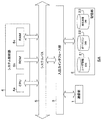
- FIG. 1 is a diagram illustrating an example of a schematic configuration of an auction processing system S according to the present embodiment.
- the user terminal Tn and the auction processing server SA are each connected to the network NW.
- the network NW is constructed by, for example, the Internet, a dedicated communication line (for example, a CATV (Community Antenna Television) line), a mobile communication network (including a base station, etc.), a gateway, and the like.
- the user terminal Tn includes, for example, a personal computer (PC), a PDA (Personal Digital Assistant), a mobile phone, a smart phone, or the like, and has a Web browser function.
- the user terminal Tn uses a web browser to access the auction processing server SA, obtain a web page, and display the web page on the display.
- the auction processing server SA is a server (for example, a Web server, a database server, etc.) installed to operate an auction site.
- FIG. 2 is a block diagram showing an example of a schematic configuration of the auction processing server SA according to the present embodiment.
- the auction processing server SA includes a communication unit 1, a storage unit 2 (an example of a storage unit), an input / output interface unit 3, and a system control unit 4.
- the system control unit 4 and the input / output interface unit 3 are connected via a system bus 5.
- the communication unit 1 is connected to the network NW and controls the communication state with the user terminal Tn.
- the storage unit 2 includes, for example, a hard disk drive and stores various programs such as an operating system and an auction processing program (including the information processing program of the present invention).
- the auction processing program may be acquired (downloaded) from a predetermined server or the like via the network NW, or may be recorded on a recording medium such as a CD (Compact Disc) or a DVD (Digital Versatile Disc). And may be read.
- the storage unit 2 includes a structured document (eg, HTML (Text) Markup Language (HTML) document or XHTML document) file (an example of display data) and an image file that constitute a Web page to be displayed on the user terminal Tn. Etc. are stored.
- the Web page includes a page (hereinafter referred to as “input form page”) for displaying an input form screen for various setting items such as the exhibition conditions set by the exhibitor for the auction exhibition, and the exhibited product There is a page that displays a screen for browsing.
- the input form page may be composed of one page or a plurality of pages.
- a user information database (DB) 21 an auction database (DB) 22, a successful bid market database (DB) 23, and the like are constructed.
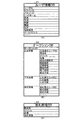
- FIG. 3 is a diagram illustrating an example of contents (items) registered in various databases.
- the user ID In the user information database 21 shown in FIG. 3 (A), the user ID, login ID, password, nickname, user ID of a user registered as an auction member (a user who can become an auction seller, bidder, successful bidder, etc.)
- User information such as name, sex, age, interest, address, telephone number, and mail address is registered (stored) in association with each user.
- the user ID is identification information for identifying a user as a member.
- the login ID and password are authentication information used for a login process (user authentication process) for participating in an auction (exhibition or bidding).
- an auction ID is identification information for identifying an auction for a certain product.
- the exhibition information includes the user ID of the exhibitor and the contents set for various setting items such as the exhibition conditions.
- the setting items include a product name (product name: example of product information), a product genre (also referred to as a category), a product item number (example of product information), a product state, a product description, a product Form, start price (price at the start of exhibition), immediate drop price, inventory confirmation, lowest successful bid price, number of exhibitions, start time (exhibition start date and time), end time (exhibition end date and time), early termination, product image, return , Availability of bidders, restrictions on bidder evaluation, automatic re-exhibition count, automatic extension of end time, shipping area, delivery method, settlement method (payment method), escrow / guarantee, attention auction setting, exhibition advertisement setting, and the like.
- the product number of the product is, for example, a number written below the barcode given to the product.
- a product can be specified by this product number.
- any information may be used as long as it is information that can identify a product, and for example, a product code such as a JAN code may be used.
- the form of the product indicates, for example, whether the exhibited product is a beauty product, a limited product, a non-sale product, an accessory, or the whole volume (in the case of a book).
- the state of the product indicates whether the exhibited product is new or used.
- the immediate drop price indicates a price at which a successful bid can be made in the first-come-first-served basis by bidding.
- the stock confirmation indicates that if there is no stock after a successful bid, it can be canceled, and the setting content is yes or no.
- the early end indicates that the auction of the exhibited product ends earlier than the end time, and the setting content is yes or no.
- the bidder evaluation limit indicates that the bid of a user whose evaluation is equal to or less than a predetermined value is limited, and the setting content is yes or no.
- the noticeable auction setting is an example of a setting in which the displayed product is displayed in a conspicuous manner as compared with other products, and the setting content is “Yes” or “No”.
- the product information of the product that is being listed is displayed in the “Featured auction” field at the top of the list of listed items (a position different from the product that has not been set as a featured auction). Displayed).
- the noticeable auction setting for example, there is also a setting for highlighting the product information of the item being sold as a setting for displaying the exhibited product in a manner that stands out compared to other products. Examples of highlighting of product information include increasing the size of characters, making characters and backgrounds bright colors, or displaying predetermined images and marks.
- the exhibition advertisement setting indicates a setting for posting the product information of the exhibited product on, for example, a Web page other than the exhibited product list page, and the setting content is yes or no.
- This exhibition advertisement setting is also an example of a setting in which the displayed product is displayed in a more conspicuous manner than other products.
- the exhibitor inputs characters using the operation unit (keyboard, mouse, touch panel, etc.) of the user terminal Tn, and a plurality of input candidates prepared for one setting item (for example, this corresponds to a case where an exhibitor selects (designates) a desired input candidate from the input candidate list) using the operation unit.
- the “character input” may be performed by recognizing and converting the voice uttered by the exhibitor using the voice recognition function of the user terminal Tn.
- the above “selecting input candidates” includes adopting the initial input displayed candidates as they are without selecting them.
- the input content thus entered is registered in the auction database 22 as exhibition information, whereby the setting (setting) for each setting item is completed.
- setting items for example, setting items other than the product name (or product code), start price, end time, number of items exhibited, delivery method, and settlement method may not be set.
- the bid information includes, for example, the user ID of the bidder, the bid price, the number of bids for the product, and the bid date and time.
- the successful bid information includes, for example, the user ID of the successful bidder, the successful bid price, the number of successful bids for the product, the market price at the time of the successful bid, and the successful bid date and time.
- the exhibition information, bid information, and successful bid information registered in the auction database 22 constitute transaction history information of products that have been exhibited in the past.
- the auction database 22 may be provided in a storage unit of a predetermined server accessible by the auction processing server SA. Further, a database for registering transaction history information extracted from the auction database 22 may be provided separately from the auction database 22.
- the product name of the product, the genre of the product, the product number of the product, and the successful bid market price are registered in association with each product.
- the successful bid market price is a market price indicating an estimate of how much can be sold when the product is exhibited. Such a successful bid market price is provided in response to a request from the user terminal Tn.
- the calculation method of a successful bid market price is well-known, detailed description is abbreviate
- the input / output interface unit 3 performs interface processing between the communication unit 1 and the storage unit 2 and the system control unit 4.
- the system control unit 4 includes a CPU (Central Processing Unit) 4a, a ROM (Read Only Memory) 4b, a RAM (Random Access Memory) 4c, and the like. Then, the system control unit 4 as a computer executes an auction exhibition process, a bid process, and a successful bid process in accordance with the auction process program stored in the storage unit 2. In particular, in this embodiment, in the auction exhibition process, the system control unit 4 follows the information processing program of the present invention, and the receiving means, acquisition means, exhibition purpose specifying means, extraction means, and first setting item in the present invention. Functions as identification means, second setting item identification means, third setting item identification means, conforming transaction history information identification means, determination means, generation means, transmission means, etc.
- a CPU Central Processing Unit
- ROM Read Only Memory
- RAM Random Access Memory
- the information processing program of the present invention is a system control unit 4 to execute the above means.
- the seller based on the transaction history information of other products that match the purpose of the product by the seller (transaction history information of products that have been exhibited in the past), the seller has the appropriate listing conditions, etc.
- the simulated input contents for the setting items are presented to the exhibitor.
- Example 1 First, with reference to FIG. 4 and the like, an auction exhibition process according to the first embodiment will be described.
- Example 1 is an example in which presentation information is generated using transaction history information of a product suitable for an exhibition purpose.
- FIG. 4 is a flowchart illustrating a part of the exhibition process in the system control unit 4 of the auction processing server SA in the first embodiment.
- the system control unit 4 of the auction processing server SA starts the process shown in FIG. 4 in response to a request for the input form page from the user terminal T1 after the login process of the user of the user terminal T1 that has accessed through the network NW. Then, the structured document file of the input form page is transmitted to the user terminal T1 via the network NW (step S1). Thus, the user terminal T1 displays the input form page on the display by the Web browser.
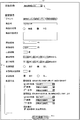
- FIG. 5 is a diagram showing a display example of the input form page.
- the input form page 51 shown in FIG. 5 includes an exhibition purpose input unit 51a and a setting item input unit 51b.
- the exhibition purpose input section 51a pull-down displays are prepared so that candidates for exhibition purposes prepared in advance can be selected.
- the exhibitor can input by selecting (designating) a desired listing purpose from the listing purpose candidates.
- “successful bid price maximization”, “early bidding”, and “sold out” are displayed as candidates for exhibition purposes.
- “Maximize successful bid price” is intended to sell at the highest possible price.
- the purpose of “early bidding” is to make a bid as early as possible.
- “Selling out” is the purpose of surely selling. In addition to this, for example, “I want to sell for high school students”, “I want to sell for seniors”, “I want to sell for female high school students”, “I want to sell for male seniors” There is also a purpose.
- the exhibitor selects the item genre, item name, item state, item description, start price, immediate drop price, number of items exhibited, start time, end time, inventory confirmation, automatic Input to each setting item such as the number of exhibitions, automatic extension, and delivery method (input to an input field (or selection field) corresponding to each setting item) can be performed.
- the product genre is input on the page displayed immediately before the input form page 51.
- the transmission of the exhibition purpose information and the product information may be performed when a transmission button (not shown) provided on the input form page 51 is designated by the exhibitor.
- a transmission button not shown
- the product number or the product code may be input instead of the product name.
- the transaction history information of the product related to the received product information is acquired from the auction database 22.
- the “product related to the product information” corresponds to, for example, a product in which all or part of the product name (or product name and genre) included in the product information matches.
- Part of the product name matches corresponds to, for example, that 90% or more of the entire product name matches.
- the system control unit 4 specifies the exhibition purpose based on the exhibition purpose information received in step S2 (step S4). That is, in this case, the exhibition purpose explicitly specified by the exhibitor is specified on the user terminal T1.
- the system control unit 4 performs a transaction history information extraction process for the product suitable for the exhibition purpose specified in step S4 (step S5).
- this extraction processing for example, transaction history information most suitable for the purpose of exhibition, or a plurality of transaction history information having a high degree of suitability for the purpose of exhibition, such as a plurality of transaction history information (for example, a plurality of items sorted in descending order of the degree of suitability)
- the first (highest) to fifth-ranked transaction history information) is extracted from the transaction history information acquired in step S3 as the matching transaction history information.
- the extraction process according to each exhibition purpose is demonstrated below.
- the transaction history information of the product with the highest successful bid price included in the transaction history information is extracted as the conforming transaction history information most suitable for the purpose of the exhibition. Is done.
- the transaction history information of a product having a high winning bid price included in the transaction history information and having a predetermined rank (for example, fifth) or higher is extracted as the matching transaction history information having a high degree of suitability for the exhibition purpose.
- the starting price is The transaction history information of the lowest product is extracted.
- a predetermined rank with a low start price for example, 5th
- the transaction history information of the above products is extracted.
- the market price is acquired from the successful bid market database 23.
- successful transaction history information suitable for the purpose of the exhibition for example, a successful bid is made by a female successful bidder included in the age group of 15 to 18 years old.
- the transaction history information of the merchandise obtained is extracted (for example, a predetermined number is extracted).
- the relevant transaction history information suitable for the purpose of the exhibition for example, the transaction history of a product made a successful bid by a male successful bidder who is over 60 years old Information is extracted (for example, a predetermined number is extracted).
- the system control unit 4 performs a process of generating presentation information indicating simulated input contents for a predetermined setting item based on the relevant transaction history information extracted in step S5 (step S6).
- the system control unit 4 first sets, for example, a start price, an immediate drop price, a start time, an end time, a delivery method, and a product image as predetermined setting items in the conforming transaction history information.
- the set contents are extracted as simulated input contents.
- the content set for the setting item and the simulated input content do not necessarily match, and the simulated input content may include all or part of the set content (the same applies hereinafter).
- the setting item is a product image
- the presence or absence of setting of the product image is extracted as the simulated input content, not the image data itself.
- time excluding the year, month, and day is past
- the day of the week may also be extracted.
- which setting item is to be extracted as the simulated input content is determined in advance in consideration of, for example, the degree of influence (magnitude of influence) the setting item has on the exhibition purpose.
- the setting items determined in this way may be configured to differ depending on the purpose of exhibition (for example, “maximization of successful bid price” and “early bid”). This is because the degree of influence of the setting item on the exhibition purpose may differ for each exhibition purpose.
- the system control unit 4 simulates the contents set for the predetermined setting items in the conforming transaction history information. Extract as
- the system control unit 4 sets the same setting item among the plurality of conforming transaction history information
- a setting item in which the content common to a predetermined ratio or more in (for example, start price) is specified is specified, and the content set for the specified setting item is extracted as simulated input content.
- the contents of the larger number may be extracted as simulated input contents.
- “1 Yen” is set for the starting price indicated in the three pieces of matching transaction history information among the five pieces of matching transaction history information extracted, and is indicated in the other two pieces of matching transaction history information.
- “100 yen” is set for the starting price
- “1 yen” which is the contents set for the starting price shown in the three compatible transaction history information, is extracted as the simulated input content. .
- any one content selected at random may be extracted as simulated input contents.
- the simulated input content is extracted by a method similar to the configuration for extracting a plurality of conforming transaction history information having a high degree of conformance to a predetermined rank or higher. Also, for example, if the purpose of the listing is “I want to sell it to female high school students”, the contents set for the setting item “description of the product” in the conforming transaction history information that matches this (for example, font and In some cases, a pictographic character or the like is extracted as a simulated input content.
- the system control unit 4 When the simulated input content for the predetermined setting item is extracted as described above, in the generation process, the system control unit 4 next generates presentation information indicating the simulated input content extracted for each predetermined setting item. To do.
- This presentation information is, for example, data for displaying the contents of the simulated input in or near the input field corresponding to the setting item provided in the setting item input unit 51b in the input form page 51.
- the system control unit 4 transmits the presentation information generated in step S6 to the user terminal T1 via the network NW (step S7).
- FIG. 6 is a diagram illustrating a display example of an input form page on which simulated input content is displayed in the first embodiment.
- the exhibition purpose is “maximization of successful bid price”, and the simulated input contents are entered in the input fields corresponding to the start price, immediate drop price, start time, end time, inventory check, automatic extension, and delivery method. Is displayed.
- “1 yen” is presented as the simulated input content for the start price
- “10,000 yen” is presented as the immediate drop price.
- the immediate drop price may be configured such that a price corresponding to the current market price is presented as simulated input content by multiplying the ratio between the market price at the time of the successful bid and the current market price.
- “9:00 April 2nd, 2011” is presented as the simulated input content for the start time, that is, Saturday 9am (in the morning), and the simulated input content for the end time is “3 April 2011 22:00 ", that is, 22:00 on Sunday is presented.
- “None” is presented as a simulated input content for inventory confirmation
- “Yes” is presented as a simulated input content for automatic extension.
- simulated input contents for the delivery method.
- the selection field corresponding to the setting item indicated in the presentation information is a radio button
- the display of the simulated input content is a radio button selection display (for example, a black circle in a round hole).
- the exhibitor confirms the simulated input contents displayed in the input field (or selection field) as shown in FIG. 6, and changes the simulated input contents as necessary.
- the exhibitor may copy the simulated input content via the operation unit and paste it in the input field.
- the seller proceeds to the next step and finally performs the operation of finalizing the exhibition, whereby the input contents entered in the respective input fields are set for each setting item (that is, the exhibition) Information is registered in the auction database 22).
- an exhibitor when an exhibitor sells a product, it is set based on the transaction history information of other products that match the purpose of the product exhibited by the seller. Since the presentation information indicating the simulated input contents for the set items to be set is generated and the presentation information is transmitted to the user terminal T1 of the exhibitor, information (examples) that can set an appropriate exhibition condition or the like according to the exhibition purpose of the product Can be effectively presented to the exhibitor.
- the predetermined setting item in the conforming transaction history information is the description of the product
- the product product having a plurality of color variations
- the simulated input content indicating the color of the product can be presented to the exhibitor.
- the color of the product to be displayed is different from the color of the product indicated by the simulated input content
- the product of this color You can also change to listing.
- FIG. 7 is a flowchart illustrating a part of the exhibition process in the system control unit 4 of the auction processing server SA in the second embodiment. Note that the processing from step S11 to step S15 is the same as the processing from step S1 to step S5 shown in FIG.
- step S16 shown in FIG. 7 the system control unit 4 of the auction processing server SA performs transaction history information extraction processing for products that do not meet the exhibition purpose specified in step S14.
- this extraction process for example, transaction history information that is most unsuitable for the purpose of the listing, or a plurality of transaction history information of a predetermined rank or less that is suitable for the purpose of the listing (for example, a plurality of items sorted in descending order of the degree of suitability)
- the first (lowest) to fifth-ranked transaction history information) is further extracted as non-conforming transaction history information from the transaction history information acquired in step S13.
- the transaction history information of the product with the lowest successful bid price included in the transaction history information is, for example, the non- (non-) conforming transaction history information that is least suitable for the exhibition purpose. Extracted.
- transaction history information of a predetermined rank or lower with a low degree of suitability for an exhibition purpose transaction history information of a product with a predetermined successful bid price included in the transaction history information (for example, fifth rank) or higher is extracted. This nonconforming transaction history information can be said to be transaction history information when the seller sells cheaper than expected.
- the purpose of the exhibition is “Early bidding”, as the non-conforming transaction history information that is most unsuitable for the purpose of the exhibition, for example, the transaction of the product with the longest time from the start date / time of listing included in the transaction history information to the first bid date / time. History information is extracted.
- non-conforming transaction history information of a predetermined rank or higher that is less suitable for the purpose of the exhibition a product having a predetermined rank (for example, fifth) or higher that has a long time from the start date / time of exhibition to the first bid date / time included in the transaction history information
- Transaction history information is extracted.
- the non-conforming transaction history information that is most unsuitable for the purpose of the listing is, for example, the product with the highest starting price among the products whose starting price included in the transaction history information is higher than the market price.
- Transaction history information is extracted.
- a predetermined rank for example, fifth place
- a predetermined rank for example, fifth place
- the system control unit 4 displays the simulated input content for the predetermined setting item based on the conforming transaction history information extracted in step S15 and the nonconforming transaction history information extracted in step S16.
- Generation processing is performed (step S17). For example, in this generation process, the system control unit 4 first sets, for example, a start price, an immediate drop price, a start time, an end time, a delivery method, and a product image as predetermined setting items in the relevant transaction history information.
- the contents set for the input are extracted as simulated input contents.
- the system control unit 4 includes, as predetermined setting items in the nonconforming transaction history information, for example, contents set for a start price, an immediate drop price, a start time, an end time, a delivery method, a product image, and the like Are extracted as non-simulated input contents.
- contents set for the setting item and the non-simulated input content do not necessarily match, and the non-simulated input content may include all or part of the set content (the same applies hereinafter). ).
- the system control unit 4 performs non-simulation input of the contents set for the predetermined setting item in the nonconforming transaction history information. Extract as content. Note that, in the case of the configuration in which the conforming transaction history information that best suits the purpose of exhibition is extracted in step S15, the simulated input content is extracted by the same method as in the first embodiment.
- the system control unit 4 sets the same setting item among the plurality of nonconforming transaction history information.
- the setting item in which the content common to the predetermined ratio or more is specified, and the content set for the specified setting item is extracted as the non-simulated input content.
- the content with the larger number may be extracted as the non-simulated input content.
- the common contents are divided into a plurality of numbers, if the numbers are the same, for example, either one of the randomly selected contents (or both contents may be extracted) may be extracted as the non-simulated input contents. Further, when there is no common content, for example, any one content selected at random (or a plurality of content may be selected) may be extracted as non-simulated input content. Further, when there are a plurality of specified setting items, the contents are extracted for each specified setting item. Note that, in the case of a configuration in which a plurality of matching transaction history information having a high degree of suitability for the purpose of exhibition is extracted in step S15, the simulated input content is extracted by the same method as in the first embodiment.
- the system control unit 4 When the simulated input content and the non-simulated input content for the predetermined setting item are extracted as described above, in the generation process, the system control unit 4 next selects the conforming transaction history information, the nonconforming transaction history information, Among the same setting items, the setting items for which different contents were set (that is, the setting items that differ between the simulated input contents and the non-simulated input contents) were identified and set for the specified setting items. Based on the content, presentation information indicating simulated input content for the setting item is generated.
- setting items for example, the simulated input content is “1 Yen” and the non-simulated input content is “1000 Yen” between the conforming transaction history information and the nonconforming transaction history information are set ( For example, since the start price) can be said to be a setting item that affects the purpose of the exhibition, presentation information indicating simulated input content for the setting item is generated based on the content set for the setting item.
- the system control unit 4 generates presentation information indicating that the simulated input content for the specified setting item and the non-simulated input content for the specified setting item can be compared.
- the simulated input content can be compared with the non-simulated input content in the input field corresponding to the setting item provided in the setting item input unit 51b in the input form page 51 or in the vicinity of the input field.
- the data is displayed side by side.
- the system control unit 4 may be configured to generate presentation information that highlights the simulated input content for the specified setting item (in this case, the non-simulated input content is not displayed).
- the presentation information highlights the simulated input content in or near the input field corresponding to the setting item provided in the setting item input unit 51b in the input form page 51 (for example, the simulated input content).
- the system control unit 4 displays the simulated input content for the specified setting item and the non-simulated input content for the specified setting item in a comparable manner, and presenting information that highlights the simulated input content. You may comprise so that it may produce
- a simulation for a setting item (for example, start time) in which the same content (for example, both the simulated input content and the non-simulated input content are “10 o'clock”) is set between the compatible transaction history information and the non-compliant transaction history information. You may comprise so that input content may be included in the said presentation information.
- system control part 4 transmits the presentation information produced
- FIG. 8 is a diagram illustrating a display example of an input form page in which simulated input contents and non-simulated input contents are displayed in a manner comparable to each other in the second embodiment.
- the simulated input content is highlighted as a good example in the input fields corresponding to the start price, end time, automatic extension, and delivery method, and a non-simulated input is used as a bad example near the simulated input content. The contents are displayed.
- the simulated input content and the non-simulated input content may be configured to be displayed, for example, when the corresponding input field or a position in the vicinity of the input field is mouse-overed, for example.
- the exhibitor confirms the simulated input content displayed in the input field (or selection field) and the non-simulated input content displayed in the vicinity thereof, and the simulated input content as necessary. To change. Thereafter, the exhibitor proceeds to the next step, and finally performs an operation of finalizing the exhibition, whereby the input contents input in the input fields are set for the setting items.
- the seller when a seller sells a product, in addition to the transaction history information of other products that match the purpose of the product exhibited by the seller, the seller does not fit the purpose of the listing. Based on the non-conforming transaction history information for the transaction history information of other products, presentation information indicating simulated input contents for the setting items set for the exhibition is generated, and the presentation information is transmitted to the exhibitor's user terminal T1. Therefore, it is possible to effectively present more accurate information to the exhibitor according to the purpose of listing the product.
- the seller can be made to grasp at a glance the setting items that affect the purpose of the exhibition.
- the seller can be made to grasp the setting items that affect the purpose of the listing at a glance, It is possible to grasp how much the contents are changed from the contents of the simulated input so that they do not meet the purpose of the exhibition.
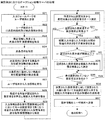
- FIG. 9 is a flowchart illustrating a part of the exhibition process in the system control unit 4 of the auction processing server SA in the third embodiment. Note that the processing from step S21 to step S26 is the same as the processing from step S11 to step S16 shown in FIG.
- step S26 after the transaction history information extraction processing for the product that does not meet the purpose of the exhibition is performed in step S26 shown in FIG. 9 as in the second embodiment, the system control unit 4 of the auction processing server SA Waiting for reception of input information from the terminal T1. Note that this standby will time out when a predetermined time elapses.
- the user terminal T1 Input information indicating the input content input by the seller is transmitted to the auction processing server SA via the network NW.
- the input information may be transmitted each time one or more setting items are input, or a confirmation button 51c provided on the input form page 51 is designated by the exhibitor. It may be configured to be performed when it is done.
- the confirmation button 51c is designated by the seller
- the user terminal T1 confirms the inputted exhibition purpose information indicating the exhibition purpose and the commodity information indicating the inputted genre and commodity name.
- the button 51c may be transmitted together with the input information to the auction processing server SA.
- step S27 when the system control unit 4 of the auction processing server SA receives the input information from the user terminal T1 (step S27), the difference among the same setting items between the conforming transaction history information and the nonconforming transaction history information.
- the setting item in which the content to be set is specified, and the content set in the specified setting item in the relevant transaction history information is extracted as the simulated input content (step S28).
- setting items that affect the purpose of the exhibition are specified, and the simulated input contents for the setting items are extracted.
- the method for extracting the simulated input contents is the same as in the first or second embodiment.
- the system control unit 4 has the same setting item between the input information received in step S27 and the matching transaction history information extracted in step S25, and the setting item specified in step S28.
- the setting items for which different contents are set are identified from the relevant transaction history information (step S29). That is, among the setting items that affect the exhibition purpose, the setting items whose actual input content by the seller is different from the simulated input content are specified.
- step S29 the system control unit 4 sets different contents among the same setting items between the input information received in step S27 and the compatible transaction history information extracted in step S25.
- the setting item may be configured to be identified from the conforming transaction history information (that is, the nonconforming transaction history information is not used). In this case, it is not necessary to perform the process of step S26, and in step S28, a setting item in which different contents are set among the same setting items between the conforming transaction history information and the nonconforming transaction history information is specified. There is no need.
- one setting item to be processed is selected from the setting items specified in step S29 (step S30).
- the selection items may be selected at random, or may be selected in the order of identification numbers assigned to the setting items.
- step S31 determines whether or not the setting item selected in step S30 is a setting item for which a difference value is to be calculated. For example, when the set content is represented by a value such as price or time, it is determined that the setting item is a difference value calculation target. On the other hand, when the contents to be set are present or unequal and are not represented by a value, it is determined that the setting item is not a difference value calculation target. If it is determined that the setting item selected in step S30 is a setting item for which a difference value is to be calculated (step S31: YES), the process proceeds to step S32.
- step S31 YES
- step S30 when it is determined that the setting item selected in step S30 is not the difference item calculation target setting item (step S31: NO), the system control unit 4 changes the setting item selected in step S30.
- the simulated input content is determined as a presentation target (step S34) and the process proceeds to step S35.
- step S30 If the setting item selected in step S30 is a difference value calculation target setting item, the process does not proceed to step S32, but proceeds to step S34 and is determined as the presentation target of the simulated input content. Also good.
- step S32 the system control unit 4 inputs the simulated input content for the setting item selected in step S30 and the input content input for the same setting item as the setting item (received in step S27).
- a difference value indicating the magnitude of the difference between the input content and the input content indicated in the input information is calculated. For example, when the setting item is a start price or an immediate drop price, a price difference between the simulated input content and the input content is calculated as a difference value. For example, when the setting item is a start time or an end time, a time difference between the simulated input content and the input content is calculated as a difference value.
- step S33 determines whether or not the difference value calculated in step S32 is equal to or greater than a threshold value. That is, it is determined whether or not the content input by the exhibitor is different from the simulated input content by more than a threshold value. This threshold is determined for each setting item. And when it determines with the said difference value being more than a threshold value (step S33: YES), the system control part 4 determines the setting item selected by the said step S30 as a presentation object of the simulated input content ( Step S34), the process proceeds to step S35.
- step S33 the setting item selected in step S30 proceeds to step S35 without being determined as the presentation target of the simulated input content. This is to avoid complications by not presenting the simulated input content to the seller if the difference between the input content and the simulated input content is a small difference that does not affect the purpose of the exhibition.
- step S35 the system control unit 4 determines whether there is a setting item identified in step S29 that has not been selected in step S30. If it is determined that there is a setting item that has not yet been selected (step S35: YES), the system control unit 4 returns to step S30, and the setting item that has not yet been selected is set as a processing target. The item is selected, and the processing after step S31 is performed in the same manner as described above. On the other hand, if it is determined that there is no setting item not yet selected (step S35: NO), the process proceeds to step S36.
- step S36 the system control unit 4 generates presentation information indicating the simulated input content for the setting item based on the content set for the setting item determined as the presentation target of the simulated input content in step S34.
- the system control unit 4 generates the presentation information indicating the simulated input content for the setting item determined as the presentation target and the caution message (an example of information for urging attention) that prompts the seller to input attention.
- This presentation information is, for example, in the vicinity of an input field corresponding to the setting item provided in the setting item input unit 51b in the input form page 51 (an input field in which the input content input by the exhibitor is displayed). This is data for displaying the simulated input contents and the caution message. However, the caution message may not be shown in the presentation information.
- the user terminal T1 may be configured to transmit the input information and the like to the auction processing server SA.
- the generated presentation information is, for example, a confirmation page for confirming the input content input in the input field corresponding to the setting item provided in the setting item input unit 51b in the input form page 51. Then, a confirmation page indicating the simulated input content corresponding to the input content and the caution message may be used.
- the system control unit 4 transmits the presentation information generated in step S36 to the user terminal T1 via the network NW (step S37).
- FIG. 10 is a diagram illustrating a display example of an input form page on which the simulated input content and the caution message are displayed in the third embodiment.
- a warning message including simulated input content is displayed in the vicinity of the input column corresponding to the start price and the delivery method.
- “Caution! Starting price is” and “From is better” are caution messages, and “1 yen” is the simulated input content.
- “Caution !” and “It is better to do” are caution messages
- “Free shipping” is the simulated input content.
- the description of “Caution! Starting price is better from 1 yen” and “Caution! It is better to make free shipping” can also be said to be a caution message including simulated input contents.
- a mark for example, a figure, a picture, etc.
- Such marks and conspicuous colors are also examples of information that calls attention.
- the simulated input content and the caution message may be configured to be displayed by, for example, mouse-overing the corresponding input field or a position near the input field.
- the exhibitor confirms the simulated input content and the caution message displayed in the input field (or selection field), and changes the input content as necessary. Thereafter, the exhibitor proceeds to the next step, and finally performs an operation of finalizing the exhibition, whereby the input contents input in each of the input fields are set for each setting item.
- the same information is input between the input information indicating the input content input by the seller and the conforming transaction history information. Since the presentation information indicating the simulated input contents for the setting items for which different contents are set among the setting items is generated and the presentation information is transmitted to the user terminal T1 of the exhibitor, Among the input contents that have been input, it is possible to effectively present to the exhibitor input contents that do not meet the purpose of the exhibition and simulated input contents that serve as examples. Furthermore, according to the configuration in which the simulated input content and the caution message are presented to the exhibitor, it is possible to effectively prompt the exhibitor to input attention.
- the content set for the genre can be extracted as simulated input content and presented to the exhibitor.
- the simulated input content indicating the appropriate genre can be effectively presented to the exhibitor.
- the fourth embodiment is an embodiment in which transaction history information suitable for the attributes of the seller is extracted in the extraction processes of the first to third embodiments.
- the system control unit 4 of the auction processing server SA logs in using the user terminal T1. It is determined whether the present seller (the user of the user terminal T1 that has transmitted the product information in step S2, S12, or S22) is a merchant or individual, and in steps S3, S13, or S23. For each transaction history information, it is determined whether the seller of the product indicated in the acquired transaction history information has an attribute of a trader or an individual.
- whether the seller is an attribute of a trader or an individual is referred to, for example, the past transaction history information of the seller, and the number of items exhibited within a predetermined period (for example, one week) of the seller is predetermined. Judgment is made based on whether the number of cases (for example, 100 cases) or more is large. If information indicating whether the user is an individual or a trader is registered in the user information database 21 in association with the user ID, it can be determined from this information whether the attribute is a trader or an individual. it can.
- the system control unit 4 is transaction history information of a product that has been exhibited in the past by another seller who has the same attribute as the current seller who uses the user terminal T1, and that is suitable for the above-described exhibition purpose.
- the history information is extracted as conforming transaction history information (in the second or third embodiment, in addition to the conforming transaction history information, the transaction history information not conforming to the above-described exhibition purpose is extracted as the nonconforming transaction history information). For example, if the current seller who uses the user terminal T1 is an individual, the transaction history information of products that have been exhibited in the past by other sellers who are individuals is extracted.
- the transaction history information of products that have been exhibited in the past by other sellers who are traders is extracted.
- the seller is an individual, it may not be appropriate to present the simulated input content extracted from the transaction history information of the seller to the seller (for example, a delivery method unique to the seller, It is considered that there is content that cannot be used).
- the processes after the extraction process are the same as in the first to third embodiments.
- Example 5 an auction exhibition process according to the fifth embodiment will be described.
- transaction history information is obtained by distinguishing between a product that is set to be displayed in a conspicuous manner compared to other products and a product that is not set. It is the Example to extract.
- the system control unit 4 of the auction processing server SA is acquired in step S3, S13, or S23 in the extraction process in step S5, "steps S15 and 16", or "steps S25 and S26".
- the transaction history information exclude the transaction history information of products that are set to be displayed in a more prominent manner than other products from the extraction target, and match the transaction history information that suits the above-mentioned exhibition purpose Extracted as history information (in Example 2 or Example 3, in addition to the conforming transaction history information, the transaction history information that does not conform to the above-mentioned exhibition purpose is extracted as nonconforming transaction history information).
- Examples of settings displayed in a conspicuous manner compared to other products include, as described above, noticed auction settings, exhibition advertisement settings, and settings for highlighting product information.
- the transaction history information of products set in this way has a direct influence on the purpose of listing and is difficult to refer to. Therefore, the transaction history information of the product for which the setting has been made is excluded.
- the above configuration is effective when none of the noticeable auction setting, the exhibition advertisement setting, and the item information highlighting setting is made by the present seller who has logged in using the user terminal T1. .
- the system control unit 4 adapts only the transaction history information of the product set to be displayed in a conspicuous manner compared to other products from the transaction history information acquired in the above step S3, S13 or S23. It is effective to extract the transaction history information (the same applies to the non-conforming transaction history information) so that the conditions of the exhibition form are made uniform.
- the processes after the extraction process are the same as in the first to third embodiments.
- step S3, S13 or S23 the transaction history information of products set to be displayed in a conspicuous manner compared to other products is excluded from the extraction target, and the transaction history information of products related to the product information is acquired from the auction database 22 In this case, the same effect as described above can be obtained. Moreover, you may comprise so that the structure of Example 4 and the structure of Example 5 may be combined.
- transaction history information to be acquired in steps S3, S13 or S23 in the first to fifth embodiments is one item of the product information. It is an Example which acquires the transaction history information regarding the goods containing a part or all.
- a product sold at a store or the like may be composed of a main product and accessories attached thereto.
- a product composed of the main product and accessories is referred to as a “set product”.
- accessories include “bonus” attached to the main product “confectionery”, “poster” attached to the main product “optical disc” shipped for the first time, and “postcard”.
- the system control unit 4 of the auction processing server SA performs a transaction related to a product including part or all of the product information of the set product in the above step S3, S13, or S23.
- the history information As the history information, the transaction history information of the set product, the transaction history information of only the main product constituting the set product, and the transaction history information of only the accessory constituting the set product are acquired from the auction database 22.
- the product name of the set product or the description of the product may include the product name of the main product and the product name of the accessory.
- the system control unit 4 extracts the product name of the main product and the product name of the accessory from the product name of the set product or the description of the product (or may be extracted from the transaction history information of other set products).
- Transaction history information can be acquired using the extracted product name as a key.
- the system control unit 4 extracts transaction history information that matches the purpose of the exhibition (for example, maximization of successful bid price) from the acquired plurality of transaction history information as compatible transaction history information, and the extracted plurality of matches The transaction history information is compared to identify suitable transaction history information that best suits the purpose of the exhibition.
- the system control unit 4 compares the winning bid price of the set item, the winning bid price of the main item, and the winning bid price of the accessory, and separates the main item from the accessory rather than listing it as a set item. If the seller is more expensive (for example, if the total price of the winning bid for the main item and the winning bid for the accessory is higher than the winning bid for the set item), transaction history information for the main item only And transaction history information of only accessories are specified as conforming transaction history information that best suits the purpose of the exhibition. Next, the system control unit 4 generates presentation information indicating simulated input contents for the setting items based on the specified matching transaction history information. For example, the presentation information indicating the simulated input content including only the product name of the main product or only the product name of the accessory is generated.
- the system control unit 4 of the auction processing server SA includes all the product information of the main product in the above step S3, S13 or S23.
- the transaction history information regarding the product the transaction history information of the set product and the transaction history information of only the main product are acquired from the auction database 22.
- the system control unit 4 extracts transaction history information that matches the purpose of the exhibition (for example, maximization of successful bid price) from the acquired plurality of transaction history information as compatible transaction history information, and the extracted plurality of matches The transaction history information is compared to identify suitable transaction history information that best suits the purpose of the exhibition.
- the system control unit 4 compares the successful bid price of the set product with the successful bid price of the main product, and if it is more expensive to sell the set product than the main product alone, The transaction history information of only is specified as conforming transaction history information that best suits the purpose of the exhibition. Next, the system control unit 4 generates presentation information indicating simulated input contents for the setting items based on the specified matching transaction history information. For example, the presentation information indicating the simulated input content including only the product name of the set product is generated.
- the system control unit 4 of the auction processing server SA includes all the product information of the accessory in the above step S3, S13, or S23.
- the transaction history information regarding the product the transaction history information of the set product and the transaction history information of only the accessory are acquired from the auction database 22.
- the system control unit 4 extracts transaction history information that matches the purpose of the exhibition (for example, maximization of successful bid price) from the acquired plurality of transaction history information as compatible transaction history information, and the extracted plurality of matches The transaction history information is compared to identify suitable transaction history information that best suits the purpose of the exhibition.
- the system control unit 4 compares the successful bid price of the set product with the successful bid price of the accessory, and if it is more expensive to sell the set product than the accessory only, the set product
- the transaction history information of only is specified as conforming transaction history information that is most suitable for the purpose of exhibition.
- the system control unit 4 generates presentation information indicating simulated input contents for the setting items based on the specified matching transaction history information. For example, the presentation information indicating the simulated input content including only the product name of the accessory is generated.
- an exhibitor sells books (books) issued from 1 volume to X (X: natural number of 2 or more) volumes
- X natural number of 2 or more
- the system control unit 4 of the auction processing server SA performs a transaction related to a product including all or a part of the product information of the book in the above step S3, S13, or S23.
- history information transaction history information of a book that is listed in a plurality of volumes and transaction history information of books that are listed one by one are acquired from the auction database 22.
- the system control unit 4 extracts transaction history information that matches the purpose of the exhibition (for example, maximization of successful bid price) from the acquired plurality of transaction history information as compatible transaction history information, and the extracted plurality of matches
- the transaction history information is compared to identify suitable transaction history information that best suits the purpose of the exhibition. For example, the system control unit 4 compares the winning bid price of books that are listed together with the winning bid price of books that are listed one by one, and sends one volume at a time rather than listing multiple volumes at once. If it is more expensive (for example, if the winning bid price of volume 3 is higher than the volume of other volumes), the transaction history information of the book that has been listed for a volume is used as the best matching transaction for the purpose of the listing. Specify as history information.
- the system control unit 4 generates presentation information indicating simulated input contents for the setting items based on the specified matching transaction history information. For example, the presentation information indicating the simulated input content including the volume number of a certain volume (for example, acquired from the description of the product) is generated.
- simulation input contents it is possible to use simulation input contents to indicate which exhibition form is suitable for the purpose of exhibition among the exhibition of the main product alone, the exhibition of the accessory alone, and the exhibition of the set product. It can be presented to the seller. In addition, it is possible to present to the exhibitor with simulated input contents which exhibition form is suitable for the purpose of the exhibition, one for each volume, and a plurality of volumes collectively.
- the system control unit 4 identifies the purpose of the exhibitor by the exhibitor in steps S4, S14, or S24 in the first to sixth embodiments.
- the purpose of listing in the seventh embodiment is referred to as listing purpose estimation because it does not involve the explicit designation of the listing purpose by the seller.
- the entry form page 51 is not provided with the exhibition purpose input unit 51a, and therefore, the exhibition purpose information from the user terminal T1 is not transmitted in the above step S2, S12 or S22 (product information or product information and input). Information is sent).
- the estimation of the purpose of the exhibition is performed based on attribute information indicating the attributes of the exhibitor of the product and cases where the estimation is performed based on input information indicating the input content input by the exhibitor with respect to the setting item. is there.
- the system control unit 4 of the auction processing server SA acquires the user ID of the seller of the product from each transaction history information acquired in step S3, S13 or S23.
- the exhibitee is, for example, at least one of a bidder and a successful bidder of the product.
- the system control part 4 acquires the attribute information which shows the attribute (for example, age, sex, interest) of each exhibitee from the user information database 21 by using each acquired user ID as a key.
- the system control unit 4 estimates the exhibition purpose based on the attribute information indicating the attribute of each exhibitee.
- the system control unit 4 includes each age group including the age of each exhibitor (for example, “age group of 15 to 18 years old”, “age group of 19 to 59 years”, “age of 60 years or older”).
- the number of people for each “group”) is calculated, and the purpose of the exhibition is estimated according to the age group with the largest number of people. For example, when the number of people in the “age group of 15 to 18 years old” is the largest, the purpose of the exhibition is determined as “I want to sell to middle and high school students”. On the other hand, for example, when the number of people in the “age group of 60 years or older” is the largest, the purpose of the exhibition is determined as “I want to sell to the elderly”.
- the system control unit 4 calculates the number of persons for each sex of each person to be exhibited, and the number of persons estimates the exhibition purpose according to the sex. For example, if the number of men is greater than the number of women, the purpose of the exhibition is determined as “I want to sell to men”. Further, as another example, the above age group is divided by gender (“age group of men aged 15 to 18 years”, “age group of women aged 15 to 18 years”, “age group of men aged 60 and over”, “The age group of women over 60 years old”), the number of people for each age group is calculated, and the purpose of the exhibition is estimated according to the age group with the largest number of people.
- the purpose of the exhibition is determined as “I want to sell to male elderly people”.
- the system control unit 4 calculates the number of people for each exhibitor's interests (for example, travel, music, movies, etc.), and the number of people according to the interest is the purpose of the exhibition (for example, those who are interested in travel). It may be configured to estimate (desired to sell).
- the system control unit 4 of the auction processing server SA receives the merchandise information of the merchandise to be exhibited from the user terminal T1 and the input information indicating the input content input by the exhibitor in the step S2, S12 or S22. To do.
- the product information and the input information may be transmitted together at the same timing from the user terminal T1, or may be transmitted separately at different timings.
- the input information here is input information necessary for specifying the purpose of the exhibition.
- setting items for setting at least one of price and time (for example, start price, immediate price, lowest bid)
- the transmission of input information necessary for specifying the exhibition purpose may be performed when a transmission button provided on the input form page 51 is designated by the exhibitor. You may comprise so that it may be performed when the required predetermined input content is input.
- the system control unit 4 acquires a value indicating the price (for example, an immediately falling price, a starting price, or a lowest successful bid price) of a product to be exhibited from the input information.
- a value indicating an immediate drop price (which may be a starting price or a lowest successful bid price) is compared with a first threshold value, and the purpose of the exhibition is estimated based on the magnitude relationship.
- the first threshold value is a value indicating the market price (successful bid market price) of the product to be exhibited, obtained from the successful bid market database 23, for example. For example, when the immediate drop price is larger than the market price, the exhibition purpose is determined as “maximize successful bid price”, while when the immediate drop price is smaller than the market price, the exhibition purpose is determined as “sold out”.
- the system control unit 4 acquires a value indicating an exhibition period from the input information, compares the acquired value indicating the exhibition period with a second threshold value, and based on the magnitude relationship. Estimate the purpose of the exhibition.
- the second threshold is a value indicating, for example, an average exhibition period (hereinafter, referred to as “average exhibition period”) of products to be exhibited.
- the exhibition period is a period between the start time and the end time included in the input information. For example, when the average exhibition period is shorter than the exhibition period, the purpose of the exhibition is determined as “early bidding”.
- the system control unit 4 is configured to estimate the purpose of the exhibition based on the magnitude relationship between the value indicating the price of the product and the first threshold and the magnitude relationship between the value indicating the exhibition period and the second threshold. Also good. For example, if the immediate drop price is larger than the market price and the average exhibition period is longer than the exhibition period, the purpose of the exhibition is determined as “maximize successful bid price”, otherwise the purpose of the exhibition is determined as “sold out” Is done.
- the transaction history information of the product suitable for the exhibition purpose is extracted in the same manner as in the first to sixth embodiments, and based on the extracted relevant transaction history information, Presentation information indicating simulated input contents for the setting items is generated, and the presentation information is transmitted to the user terminal T1.
- the purpose of listing a product can be estimated without an explicit designation by the seller. It can be omitted.
- the simulated input contents for the predetermined setting items are presented to the seller without the explicit designation of the exhibition purpose by the seller. It is also assumed that presentation of the simulated input content is troublesome. Therefore, it may be configured to determine whether or not the purpose of the listing is estimated based on at least one of the past number of listings of the seller and the latest listing date and time. For example, the system control unit 4 acquires the exhibition information from the auction database 22 using the user ID of the exhibitor (logged-in user) as a key.
- the system control unit 4 calculates the number of past listings of the seller based on the listing information, and when the number of listings is less than a predetermined number (for example, three times), estimates the listing purpose, When the number of exhibitions is equal to or greater than a predetermined number, the above-described exhibition purpose is not estimated. In this case, it is possible to prevent the simulated input content from being presented to exhibitors who have a large number of exhibitions.
- the system control unit 4 acquires the latest exhibition date / time from the acquired exhibition information, calculates an elapsed period between the acquired exhibition date / time and the current date / time, and the elapsed period is a predetermined period (for example, 30 days).
- the exhibition purpose is estimated, and when the elapsed period is less than the predetermined period, the exhibition purpose is not estimated. In this case, it is possible to prevent the simulated input content from being presented to an exhibitor whose time has not passed since the previous listing.
- an example of electronic commerce has been described by taking an auction as an example.
- the present invention is also applied to a case where a store sells products in the sale and sale of products on a shopping site. Applicable.
Landscapes
- Business, Economics & Management (AREA)
- Accounting & Taxation (AREA)
- Finance (AREA)
- Development Economics (AREA)
- Economics (AREA)
- Marketing (AREA)
- Strategic Management (AREA)
- Physics & Mathematics (AREA)
- General Business, Economics & Management (AREA)
- General Physics & Mathematics (AREA)
- Engineering & Computer Science (AREA)
- Theoretical Computer Science (AREA)
- Entrepreneurship & Innovation (AREA)
- Management, Administration, Business Operations System, And Electronic Commerce (AREA)
Abstract
商品の出品目的に応じた適切な出品条件等を設定できる情報を出品者に提示可能な情報処理装置、情報処理方法、情報処理プログラム、及び情報処理プログラムが記録された記録媒体を提供する。 本発明に係る情報処理装置は、出品者が出品にあたり指定した商品の商品情報に関連する商品の取引履歴情報を、過去に出品された商品の取引履歴情報を記憶するデータベースから取得する。そして、情報処理装置は、抽出した取引履歴情報の中から、出品者による商品の出品目的に適合する他の商品の取引履歴情報を適合取引履歴情報として抽出する。そして、情報処理装置は、出品の際に出品者により入力フォーム上で設定される設定項目に対する模擬入力内容を示す提示情報を、上記抽出した適合取引履歴情報に基づいて生成し、これを端末装置へ送信する。
Description
本発明は、ネットワークを介した電子商取引において、商品の出品にあたり設定される設定項目の入力フォームへの出品者による入力を支援することが可能な情報処理装置等の技術分野に関する。
従来から、ネットワークを介して行われる電子商取引の一つとしてオークション(ネットオークションともいう)が知られている。このオークションでは、オークションサイトの利用手続を経たユーザが自身の端末装置からオークションサイトにアクセスしてオークションに商品を出品することが可能になっている。出品者は、オークションに商品を出品する際に、出品に関する種々の設定項目に設定すべき出品条件等を入力する必要がある。なお、設定項目としては、例えば、出品期間、開始価格、決済方法、配送方法、商品説明、商品画像、オプション設定(エスクロー/保証サービスなど)等が挙げられる。
ところで、上記設定項目に設定すべき事項を入力する作業は出品者にとって煩雑である場合がある。また、出品者はどの程度の開始価格や出品期間を設定すれば好条件で売買できるかわからない場合がある。このような点に鑑み、特許文献1に開示された技術では、出品者の端末から受信した出品依頼商品の画像データの特徴量を算出し、算出した特徴量と各出品済商品の画像データの特徴量とから類似度を算出し、この類似度に基づいて出品情報を抽出してこれを出品者の端末に送信するようになっている。この技術によれば、出品依頼商品の画像に類似する出品済商品の出品情報に基づいて、出品依頼商品の出品依頼条件を設定し、出品依頼商品についての入札公開を行うことができ、その結果、より好条件での売買が可能となる。
しかしながら、上述した特許文献1の技術においては、出品依頼商品の画像に類似する画像に設定されている出品情報を利用するだけであり、例えば「高く売りたい」、「売り切りたい」、「早期入札して欲しい」などの出品時の出品者による商品の出品目的に応じた適切な出品条件等を設定することは困難であった。
本発明は、以上の問題等に鑑みてなされたものであり、商品の出品目的に応じた適切な出品条件等を設定できる情報を出品者に提示可能な情報処理装置、情報処理方法、情報処理プログラム、及び情報処理プログラムが記録された記録媒体を提供することを課題とする。
上記課題を解決するために、請求項1に記載の発明は、電子商取引の対象となる商品の出品にあたり出品者により設定される設定項目の入力フォームの表示用データを、前記出品者の端末装置へ送信する情報処理装置であって、出品される商品の商品情報を前記端末装置から受信する受信手段と、過去に出品された商品の取引履歴情報を記憶する記憶手段から、前記受信手段により受信された前記商品情報に関連する商品の取引履歴情報を取得する取得手段と、前記出品者による前記商品の出品目的を特定する出品目的特定手段と、前記出品目的特定手段により特定された前記出品目的に適合する他の商品の取引履歴情報を、前記取得手段により取得された前記取引履歴情報から適合取引履歴情報として抽出する抽出手段と、前記抽出手段により抽出された前記適合取引履歴情報に基づいて、前記設定項目に対する模擬入力内容を示す提示情報を生成する生成手段と、前記生成手段により生成された前記提示情報を前記端末装置へ送信する送信手段と、を備えることを特徴とする。
この発明によれば、出品者が商品を出品する際に、当該出品者による商品の出品目的に適合する他の商品の取引履歴情報に基づいて、当該出品にあたり設定される設定項目に対する模擬入力内容を示す提示情報が生成され、当該提示情報が出品者の端末装置に送信されるので、商品の出品目的に応じた適切な出品条件等を設定できる情報を出品者に効果的に提示することができる。
請求項2に記載の発明は、請求項1に記載の情報処理装置において、前記抽出手段は、前記出品目的に適合しない他の商品の取引履歴情報を不適合取引履歴情報としてさらに抽出し、前記情報処理装置は、前記抽出手段により抽出された前記適合取引履歴情報と前記不適合取引履歴情報との間において同一の前記設定項目のうち相違する内容が設定された前記設定項目を特定する第1設定項目特定手段を更に備え、前記生成手段は、前記第1設定項目特定手段により特定された前記設定項目に対して設定された内容に基づいて、当該設定項目に対する模擬入力内容を示す提示情報を生成し、前記送信手段は、当該提示情報を前記端末装置へ送信することを特徴とする。
この発明によれば、商品の出品目的に応じた、より精度の高い情報を出品者に効果的に提示することができる。
請求項3に記載の発明は、請求項2に記載の情報処理装置において、前記生成手段は、前記適合取引履歴情報における前記設定項目に対して設定された内容を前記模擬入力内容として示すとともに、当該模擬入力内容と、前記不適合取引履歴情報における前記設定項目に設定された内容とを比較可能に示す提示情報を生成し、前記送信手段は、当該提示情報を前記端末装置へ送信することを特徴とする。
この発明によれば、出品者に対して、出品目的に影響する設定項目を一目で把握させることができるとともに、上記模擬入力内容からどの程度変更した場合、出品目的に合わなくなるかを把握させることができる。
請求項4に記載の発明は、請求項1乃至3の何れか一項に記載の情報処理装置において、前記受信手段は、前記設定項目の少なくとも一部に対して前記出品者により入力された入力内容を示す入力情報を前記端末装置から受信し、前記情報処理装置は、前記受信手段により受信された前記入力情報と前記抽出手段により抽出された前記適合取引履歴情報との間において同一の前記設定項目のうち相違する内容が設定された前記設定項目を前記適合取引履歴情報から特定する第2設定項目特定手段を更に備え、前記生成手段は、前記第2設定項目特定手段により特定された前記設定項目に対して設定された内容に基づいて、当該設定項目に対する模擬入力内容を示す提示情報を生成し、前記送信手段は、当該提示情報を前記端末装置へ送信することを特徴とする。
この発明によれば、設定項目に対して出品者により入力された入力内容の中で、出品目的に合わない入力内容と、模範となる模擬入力内容を出品者に効果的に提示することができる。
請求項5に記載の発明は、請求項4に記載の情報処理装置において、前記抽出手段は、前記出品目的に適合しない他の商品の取引履歴情報を不適合取引履歴情報としてさらに抽出し、前記情報処理装置は、前記抽出手段により抽出された前記適合取引履歴情報と前記不適合取引履歴情報との間において同一の前記設定項目のうち相違する内容が設定された前記設定項目を特定する第1設定項目特定手段を更に備え、前記生成手段は、前記第1設定項目特定手段により特定された前記設定項目であり且つ前記第2設定項目特定手段により特定された前記設定項目に対して設定された内容に基づいて、当該設定項目に対する模擬入力内容を示す提示情報を生成することを特徴とする。
この発明によれば、出品者が入力した設定項目の中で、出品目的に影響する設定項目を把握させることができる。
請求項6に記載の発明は、請求項4又は5に記載の情報処理装置において、前記情報処理装置は、前記第2設定項目特定手段により特定された前記設定項目に対して設定された内容と、当該設定項目と同一の前記設定項目に対して入力された前記入力内容との間の相違の大きさを示す差分値を算出し、当該算出した差分値が閾値以上であるか否を判定する判定手段を更に備え、前記判定手段により閾値以上であると判定された場合に、前記生成手段は、前記提示情報を生成し、前記送信手段は、当該提示情報を前記端末装置へ送信することを特徴とする。
この発明によれば、入力内容と模擬入力内容との間の差が小さい場合、模擬入力内容を出品者に提示しないことで煩雑さを回避することができる。
請求項7に記載の発明は、請求項4乃至6の何れか一項に記載の情報処理装置において、前記生成手段は、前記模擬入力内容を示すとともに、前記出品者に対して入力の注意を促す情報を示す提示情報を生成し、前記送信手段は、当該提示情報を前記端末装置へ送信することを特徴とする。
この発明によれば、出品者に対して入力の注意を効果的に促すことができる。
請求項8に記載の発明は、請求項1乃至7の何れか一項に記載の情報処理装置において、前記抽出手段は、前記取得手段により取得された複数の前記取引履歴情報から、前記出品目的に最も適合する前記取引履歴情報を前記適合取引履歴情報として抽出することを特徴とする。
この発明によれば、商品の出品目的に応じた、より精度の高い情報を出品者に効果的に提示することができる。
請求項9に記載の発明は、請求項1乃至7の何れか一項に記載の情報処理装置において、前記抽出手段は、前記取得手段により取得された複数の前記取引履歴情報から、前記出品目的に適合する度合が高い所定順位以上の複数の前記取引履歴情報を前記適合取引履歴情報として抽出することを特徴とする。
この発明によれば、商品の出品目的に応じた、より精度の高い情報を出品者に効果的に提示することができる。
請求項10に記載の発明は、請求項9に記載の情報処理装置において、前記情報処理装置は、前記抽出手段により抽出された前記所定順位以上の複数の前記適合取引履歴情報の間において同一の前記設定項目のうち所定割合以上共通する内容が設定された前記設定項目を特定する第3設定項目特定手段を更に備え、前記生成手段は、前記第3設定項目特定手段により特定された前記設定項目に対して設定された内容に基づいて、当該設定項目に対する模擬入力内容を示す提示情報を生成し、前記送信手段は、当該提示情報を前記端末装置へ送信することを特徴とする。
この発明によれば、商品の出品目的に応じた、より精度の高い情報を出品者に効果的に提示することができる。
請求項11に記載の発明は、請求項1乃至10の何れか一項に記載の情報処理装置において、前記抽出手段は、前記端末装置を使用する前記出品者が業者と個人の何れの属性であるかを判別し、且つ、前記取得手段により取得された前記取引履歴情報に示される前記商品の出品者が業者と個人の何れの属性であるかを前記取引履歴情報毎に判別し、前記端末装置を使用する前記出品者と同じ属性である他の出品者により過去に出品された商品の取引履歴情報であって、且つ前記出品目的に適合する前記取引履歴情報を前記適合取引履歴情報として抽出することを特徴とする。
この発明によれば、出品者の属性に合ったより適切な模擬入力内容を出品者に提示することができる。
請求項12に記載の発明は、請求項1乃至11の何れか一項に記載の情報処理装置において、前記抽出手段は、他の商品と比べて目立つ態様で表示されるように設定された商品の取引履歴情報を抽出対象から除外することを特徴とする。
この発明によれば、出品形態に合ったより適切な模擬入力内容を出品者に提示することができる。
請求項13に記載の発明は、請求項1乃至11の何れか一項に記載の情報処理装置において、前記抽出手段は、前記取得手段により取得された複数の前記取引履歴情報から、他の商品と比べて目立つ態様で表示されるように設定された商品の取引履歴情報を前記適合取引履歴情報として抽出することを特徴とする。
この発明によれば、出品形態に合ったより適切な模擬入力内容を出品者に提示することができる。
請求項14に記載の発明は、請求項1乃至13の何れか一項に記載の情報処理装置において、前記取得手段は、前記商品情報の一部又は全部を含む商品に関する取引履歴情報を取得し、前記抽出手段は、前記取得手段により取得された複数の前記取引履歴情報から、前記出品目的に適合する複数の前記取引履歴情報を前記適合取引履歴情報として抽出し、前記情報処理装置は、前記抽出手段により抽出された複数の前記適合取引履歴情報を比較して、前記出品目的に最も適合する前記適合取引履歴情報を特定する適合取引履歴情報特定手段を更に備え、前記生成手段は、前記適合取引履歴情報特定手段により特定された前記適合取引履歴情報に基づいて、前記設定項目に対する模擬入力内容を示す提示情報を生成し、前記送信手段は、当該提示情報を前記端末装置へ送信することを特徴とする。
この発明によれば、出品形態に合ったより適切な模擬入力内容を出品者に提示することができる。
請求項15に記載の発明は、請求項1乃至14の何れか一項に記載の情報処理装置において、前記受信手段は、前記出品者により指定された出品目的情報を前記端末装置から受信し、前記出品目的特定手段は、前記受信手段により受信された前記出品目的情報に基づいて、前記出品目的を特定することを特徴とする。
この発明によれば、出品者により出品目的を確実に特定することができる。
請求項16に記載の発明は、請求項1乃至14の何れか一項に記載の情報処理装置において、前記出品目的特定手段は、前記取得手段により取得された前記取引履歴情報に含まれる商品の被出品者の属性を示す属性情報に基づいて、前記出品目的を特定することを特徴とする。
この発明によれば、出品者が出品目的を考えて指定する手間を省くことができる。
請求項17に記載の発明は、請求項1乃至14の何れか一項に記載の情報処理装置において、前記受信手段は、前記設定項目に対して前記出品者により入力された入力内容を示す入力情報を前記端末装置から受信し、前記出品目的特定手段は、前記受信手段により受信された前記入力情報に基づいて、前記出品目的を特定することを特徴とする。
この発明によれば、出品者が出品目的を考えて指定する手間を省くことができる。
請求項18に記載の発明は、請求項17に記載の情報処理装置において、前記出品目的特定手段は、前記受信手段により受信された前記入力情報から、出品される商品の価格と出品期間の少なくとも何れか一方を示す値を取得し、前記取得された商品の価格を示す値と第1閾値の大小関係と、前記取得された出品期間を示す値と第2閾値の大小関係との少なくとも何れか一方に基づいて、前記出品目的を特定することを特徴とする。
この発明によれば、出品者が出品目的を考えて指定する手間を省くことができる。
請求項19に記載の発明は、電子商取引の対象となる商品の出品にあたり出品者により設定される設定項目の入力フォームの表示用データを、前記出品者の端末装置へ送信するコンピュータにより実行される情報処理方法であって、出品される商品の商品情報を前記端末装置から受信するステップと、過去に出品された商品の取引履歴情報を記憶する記憶手段から、前記受信された前記商品情報に関連する商品の取引履歴情報を取得するステップと、前記出品者による前記商品の出品目的を特定するステップと、前記特定された前記出品目的に適合する他の商品の取引履歴情報を、前記取得された前記取引履歴情報から適合取引履歴情報としてステップと、前記抽出された前記適合取引履歴情報に基づいて、前記設定項目に対する模擬入力内容を示す提示情報を生成するステップと、前記生成された前記提示情報を前記端末装置へ送信するステップと、を含むことを特徴とする。
請求項20に記載の発明は、電子商取引の対象となる商品の出品にあたり出品者により設定される設定項目の入力フォームの表示用データを、前記出品者の端末装置へ送信するコンピュータを、出品される商品の商品情報を前記端末装置から受信する受信手段と、過去に出品された商品の取引履歴情報を記憶する記憶手段から、前記受信手段により受信された前記商品情報に関連する商品の取引履歴情報を取得する取得手段と、前記出品者による前記商品の出品目的を特定する出品目的特定手段と、前記出品目的特定手段により特定された前記出品目的に適合する他の商品の取引履歴情報を、前記取得手段により取得された前記取引履歴情報から適合取引履歴情報として抽出する抽出手段と、前記抽出手段により抽出された前記適合取引履歴情報に基づいて、前記設定項目に対する模擬入力内容を示す提示情報を生成する生成手段と、前記生成手段により生成された前記提示情報を前記端末装置へ送信する送信手段として機能させることを特徴とする情報処理プログラム(コンピュータ読み取り可能なプログラム)である。
請求項21に記載の発明は、電子商取引の対象となる商品の出品にあたり出品者により設定される設定項目の入力フォームの表示用データを、前記出品者の端末装置へ送信するコンピュータを、出品される商品の商品情報を前記端末装置から受信する受信手段と、過去に出品された商品の取引履歴情報を記憶する記憶手段から、前記受信手段により受信された前記商品情報に関連する商品の取引履歴情報を取得する取得手段と、前記出品者による前記商品の出品目的を特定する出品目的特定手段と、前記出品目的特定手段により特定された前記出品目的に適合する他の商品の取引履歴情報を、前記取得手段により取得された前記取引履歴情報から適合取引履歴情報として抽出する抽出手段と、前記抽出手段により抽出された前記適合取引履歴情報に基づいて、前記設定項目に対する模擬入力内容を示す提示情報を生成する生成手段と、前記生成手段により生成された前記提示情報を前記端末装置へ送信する送信手段として機能させることを特徴とする情報処理プログラムが記録された記録媒体である。
本発明によれば、出品者が商品を出品する際に、当該出品者による商品の出品目的に適合する他の商品の取引履歴情報に基づいて、当該出品にあたり設定される設定項目に対する模擬入力内容を示す提示情報が生成され、当該提示情報が出品者の端末装置に送信されるので、商品の出品目的に応じた適切な出品条件等を設定できる情報を出品者に効果的に提示することができる。
以下、図面を参照して本発明の実施形態について説明する。なお、以下に説明する実施の形態は、オークション処理システムに対して本発明を適用した場合の実施形態である。
[1.オークション処理システムの構成及び機能概要]
先ず、本発明の一実施形態に係るオークション処理システムSの構成及び概要機能について、図1を用いて説明する。
先ず、本発明の一実施形態に係るオークション処理システムSの構成及び概要機能について、図1を用いて説明する。
図1は、本実施形態に係るオークション処理システムSの概要構成の一例を示す図である。
図1に示すように、オークション処理システムSは、複数のユーザ端末(端末装置の一例)Tn(n=1,2,3・・・k)と、オークション処理サーバ(情報処理装置の一例)SAと、を含んで構成されている。ユーザ端末Tn及びオークション処理サーバSAは、夫々、ネットワークNWに接続される。ネットワークNWは、例えば、インターネット、専用通信回線(例えば、CATV(Community Antenna Television)回線)、移動体通信網(基地局等を含む)、及びゲートウェイ等により構築されている。
また、ユーザ端末Tnは、例えば、パーソナルコンピュータ(PC)、PDA(Personal Digital Assistant)、携帯電話機、又はスマートホン等からなり、Webブラウザ機能を有する。ユーザ端末Tnは、Webブラウザにより、オークション処理サーバSAにアクセスしてWebページを取得し、該Webページをディスプレイ上に表示するようになっている。
オークション処理サーバSAは、オークションサイトを運営するために設置されたサーバ(例えば、Webサーバ、及びデータベースサーバ等)である。
図2は、本実施形態に係るオークション処理サーバSAの概要構成の一例を示すブロック図である。
図2に示すように、オークション処理サーバSAは、通信部1と、記憶部2(記憶手段の一例)と、入出力インターフェース部3と、システム制御部4と、を備えている。そして、システム制御部4と入出力インターフェース部3とは、システムバス5を介して接続されている。
通信部1は、ネットワークNWに接続して、ユーザ端末Tnとの通信状態を制御するようになっている。
記憶部2は、例えば、ハードディスクドライブ等により構成されており、オペレーティングシステム及びオークション処理プログラム(本発明の情報処理プログラムを含む)等の各種プログラムを記憶する。なお、オークション処理プログラムは、例えば、所定のサーバ等からネットワークNWを介して取得(ダウンロード)されるようにしても良いし、CD(Compact Disc)、DVD(Digital Versatile Disc)等の記録媒体に記録されて読み込まれるようにしても良い。
また、記憶部2には、ユーザ端末Tnに表示させるWebページを構成する構造化文書(例えば、HTML(Hyper Text Markup Language)文書やXHTML文書等)ファイル(表示用データの一例)、及び画像ファイル等が記憶されている。Webページには、オークションへの出品にあたり出品者により設定される出品条件等の各種設定項目の入力フォームの画面を表示するためのページ(以下、「入力フォームページ」という)、及び出品された商品を閲覧するための画面を表示するページ等がある。なお、入力フォームページは、1ページで構成されても良いし、複数ページで構成されてもよい。
更に、記憶部2には、ユーザ情報データベース(DB)21、オークションデータベース(DB)22、及び落札相場データベース(DB)23等が構築されている。
図3は、各種データベースに登録される内容(項目)の一例を示す図である。
図3(A)に示すユーザ情報データベース21には、オークションの会員登録されたユーザ(オークションへの出品者、入札者、落札者等になり得るユーザ)のユーザID、ログインID、パスワード、ニックネーム、氏名、性別、年齢、興味、住所、電話番号、及びメールアドレス等のユーザ情報がユーザ毎に対応付けられて登録(記憶)されている。なお、ユーザIDは、会員としてのユーザを識別する識別情報である。ログインID及びパスワードは、オークションへ参加(出品又は入札)するためのログイン処理(ユーザの認証処理)に使用される認証情報である。
図3(B)に示すオークションデータベース22には、オークションID、出品情報、入札情報、及び落札情報がオークション毎に対応付けられて登録される。ただし、未だ、入札されていない商品の入札情報、及び落札されていない商品の落札情報は登録されない。オークションIDは、ある商品についてのオークションを識別する識別情報である。
出品情報には、出品者のユーザIDと、出品条件等の各種設定項目に対して設定された内容が含まれる。この設定項目としては、例えば、商品名(商品の名称:商品情報の一例)、商品のジャンル(カテゴリともいう)、商品の品番(商品情報の一例)、商品の状態、商品の説明文、商品の形態、開始価格(出品開始時の価格)、即落価格、在庫確認、最低落札価格、出品個数、開始時間(出品開始日時)、終了時間(出品終了日時)、早期終了、商品画像、返品の可否、入札者評価制限、自動再出品回数、終了時間の自動延長、発送地域、配送方法、決済方法(支払方法)、エスクロー/保証、注目のオークション設定、出品広告設定等が挙げられる。
ここで、商品の品番とは、例えば、商品に付与されたバーコードの下に記載された番号である。この品番により商品を特定することができる。なお、商品を特定できる情報であればどのような情報であっても良く、例えばJANコード等の商品コードであってもよい。商品の形態とは、例えば、出品された商品が、美品、限定品、非売品、付属品、或いは、全巻(書籍の場合)あるかなどを示す。商品の状態とは、出品された商品が、新品又は中古を示す。即落価格は、入札することで入札先着順に落札することができる価格を示す。在庫確認は、落札後に在庫がない場合はキャンセル可能であることを示し、その設定内容は有又は無となる。早期終了は、出品された商品のオークションが終了時間より早く終了することを示し、その設定内容は有又は無となる。入札者評価制限は、評価が所定値以下のユーザの入札を制限することを示し、その設定内容は有又は無となる。注目のオークション設定は、出品された商品が他の商品と比べて目立つ態様で表示させる設定の一例であり、その設定内容は有又は無となる。例えば、注目のオークション設定された商品は、出品商品一覧ページ上部の「注目のオークション」欄に、出品している商品の商品情報が表示される(注目のオークション設定されていない商品とは異なる位置に表示される)。なお、出品された商品が他の商品と比べて目立つ態様で表示させる設定としては、注目のオークション設定の他にも、例えば、出品している商品の商品情報の強調表示する設定もある。商品情報の強調表示の例としては、文字のサイズを大きくすること、文字や背景を鮮やかな色にすること、或いは、所定の画像やマークを表示させたりすること等が挙げられる。また、出品広告設定は、例えば出品商品一覧ページ以外のWebページ上に、出品された商品の商品情報を掲載する設定を示し、その設定内容は有又は無となる。この出品広告設定も、出品された商品が他の商品と比べて目立つ態様で表示させる設定の一例である。
そして、設定項目に設定される内容は、ユーザ端末Tnのディスプレイ上に表示された入力フォームの画面から出品者により入力される。ここで、「入力」には、出品者がユーザ端末Tnの操作部(キーボード、マウス、及びタッチパネル等)を用いて文字入力すること、及び1つの設定項目に対して複数用意された入力候補(例えば、入力候補を表示するリスト)中から出品者が操作部を用いて所望の入力候補を選択(指定)すること等が該当する。なお、上記「文字入力」は、出品者が発話した音声がユーザ端末Tnの音声認識機能により認識され文字変換されることによりなされてもよい。また、上記「入力候補の選択」には、初期入力表示された候補を選択操作することなくそのまま採用することも含まれる。このように入力された入力内容が出品情報としてオークションデータベース22に登録されることで各設定項目に対する設定(セット)が完了する。なお、設定項目のうち、例えば、商品名(又は商品のコード)、開始価格、終了時間、出品個数、配送方法、及び決済方法以外の設定項目は設定されない場合もある。
入札情報には、例えば、入札者のユーザID、入札価格、商品の入札個数、及び入札日時等が含まれる。落札情報には、例えば、落札者のユーザID、落札価格、商品の落札個数、落札時の相場価格及び落札日時等が含まれる。
以上のように、オークションデータベース22に登録された出品情報、入札情報及び落札情報は、過去に出品された商品の取引履歴情報を構成する。なお、オークションデータベース22は、オークション処理サーバSAがアクセス可能な所定のサーバの記憶手段に設けられてもよい。また、オークションデータベース22から抽出された取引履歴情報を登録するデータベースをオークションデータベース22とは別に設けるように構成しても構わない。
落札相場データベース23には、商品の商品名、商品のジャンル、商品の品番、及び落札相場が商品毎に対応付けられて登録される。落札相場は、当該商品を出品したときに幾らで売れるかの目安を示す相場価格である。このような落札相場は、ユーザ端末Tnからの要求に応じて提供される。なお、落札相場の算出方法については公知であるため詳しい説明を省略する。
入出力インターフェース部3は、通信部1及び記憶部2とシステム制御部4との間のインターフェース処理を行うようになっている。
システム制御部4は、CPU(Central Processing Unit)4a、ROM(Read Only Memory)4b、RAM(Random Access Memory)4c等により構成されている。そして、コンピュータとしてのシステム制御部4は、記憶部2に記憶されたオークション処理プログラムにしたがって、オークションへの出品処理、入札処理、及び落札処理を実行する。特に、本実施形態では、オークションへの出品処理において、システム制御部4は、本発明の情報処理プログラムにしたがい、本発明における受信手段、取得手段、出品目的特定手段、抽出手段、第1設定項目特定手段、第2設定項目特定手段、第3設定項目特定手段、適合取引履歴情報特定手段、判定手段、生成手段、送信手段等として機能する(つまり、本発明の情報処理プログラムが、システム制御部4に上記手段を実行させる)。これにより、出品者による商品の出品目的に適合する他の商品の取引履歴情報(過去に出品された商品の取引履歴情報)に基づいて、当該出品者が出品目的に応じた適切な出品条件等を設定できるように、上記設定項目に対する模擬入力内容が当該出品者に提示されるようになっている。
[2.オークションへの出品処理]
次に、本実施形態に係るオークションへの出品処理について、実施例1~実施例7に分けて説明する。
次に、本実施形態に係るオークションへの出品処理について、実施例1~実施例7に分けて説明する。
(実施例1)
先ず、図4等を用いて、実施例1に係るオークションへの出品処理について説明する。この実施例1は、出品目的に適合する商品の取引履歴情報を用いて提示情報を生成する実施例である。図4は、実施例1において、オークション処理サーバSAのシステム制御部4における出品処理の一部を示すフローチャートである。
先ず、図4等を用いて、実施例1に係るオークションへの出品処理について説明する。この実施例1は、出品目的に適合する商品の取引履歴情報を用いて提示情報を生成する実施例である。図4は、実施例1において、オークション処理サーバSAのシステム制御部4における出品処理の一部を示すフローチャートである。
オークション処理サーバSAのシステム制御部4は、ネットワークNWを介してアクセスしてきたユーザ端末T1のユーザのログイン処理後、ユーザ端末T1からの入力フォームページの要求に応じて、図4に示す処理を開始し、入力フォームページの構造化文書ファイルをネットワークNWを介してユーザ端末T1に送信する(ステップS1)。こうして、ユーザ端末T1は、入力フォームページをWebブラウザによりディスプレイ上に表示する。
図5は、入力フォームページの表示例を示す図である。図5に示す入力フォームページ51には、出品目的入力部51aと、設定項目入力部51bが設けられている。出品目的入力部51aには、予め用意された出品目的の候補が選択可能にプルダウン表示されるようになっている。出品者は出品目的の候補の中から所望の出品目的を選択(指定)することで入力することができる。図5に示す例では、出品目的の候補として、「落札価格最大化」、「早期入札」、及び「売り切り」が表示されている。「落札価格最大化」は、できるだけ高値で売りたいという目的である。「早期入札」は、できるだけ早期に入札になって欲しいという目的である。「売り切り」は、確実に売りたいという目的である。なお、出品目的は、これ以外にも、例えば、「高校生向けに売りたい」、「高齢者向けに売りたい」、「女性の高校生向けに売りたい」、「男性の高齢者向けに売りたい」などの目的もある。
一方、設定項目入力部51bにおいて、出品者は、商品のジャンル、商品名、商品の状態、商品の説明文、開始価格、即落価格、出品個数、開始時間、終了時間、在庫確認、自動再出品回数、自動延長、及び配送方法等の各設定項目に対する入力(各設定項目に対応する入力欄(又は選択欄)に入力)を行うことができる。なお、商品のジャンルは、入力フォームページ51の直前に表示されたページ上で入力されたものである。そして、出品者が出品目的入力部51aで出品目的を入力した後、操作部を介して商品名を入力すると、ユーザ端末T1は、入力された出品目的を示す出品目的情報と、入力されたジャンル及び商品名を示す商品情報をネットワークNWを介してオークション処理サーバSAへ送信する。ここで、出品目的情報及び商品情報の送信は、入力フォームページ51に設けられた送信ボタン(図示せず)が出品者により指定されたときに行われるように構成してもよい。なお、商品の品番がわかる場合には、商品名の代わりに、品番又は商品コードが入力されてもよい。
こうして、オークション処理サーバSAのシステム制御部4は、ユーザ端末T1から出品目的情報及び商品情報を受信すると(ステップS2)、受信された商品情報に関連する商品の取引履歴情報をオークションデータベース22から取得する(ステップS3)。ここで、「商品情報に関連する商品」としては、例えば、商品情報に含まれる商品名(又は商品名及びジャンル)の全部又は一部が一致する商品が該当する。なお、商品名の一部が一致する」には、例えば、商品名全体の90%以上が一致することが該当する。
次いで、システム制御部4は、上記ステップS2で受信された出品目的情報に基づいて、出品目的を特定する(ステップS4)。つまり、この場合、ユーザ端末T1において、出品者により明示的に指定された出品目的が特定される。
次いで、システム制御部4は、上記ステップS4で特定された出品目的に適合する商品の取引履歴情報の抽出処理を行う(ステップS5)。この抽出処理により、例えば、出品目的に最も適合する取引履歴情報、または出品目的に適合する度合が高い所定順位以上の複数の取引履歴情報(例えば、当該適合する度合が高い順にソートされた複数の取引履歴情報うち、1位(最も高い)から5位までの取引履歴情報)が、上記ステップS3で取得された取引履歴情報から適合取引履歴情報として抽出される。ここで、各出品目的に応じた抽出処理を以下に説明する。
(i)出品目的が「落札価格最大化」である場合
この場合、出品目的に最も適合する適合取引履歴情報として、例えば、取引履歴情報に含まれる落札価格が最も高い商品の取引履歴情報が抽出される。或いは、出品目的に適合する度合が高い所定順位以上の適合取引履歴情報として、取引履歴情報に含まれる落札価格が高い所定順位(例えば、5位)以上の商品の取引履歴情報が抽出される。
この場合、出品目的に最も適合する適合取引履歴情報として、例えば、取引履歴情報に含まれる落札価格が最も高い商品の取引履歴情報が抽出される。或いは、出品目的に適合する度合が高い所定順位以上の適合取引履歴情報として、取引履歴情報に含まれる落札価格が高い所定順位(例えば、5位)以上の商品の取引履歴情報が抽出される。
(ii)出品目的が「早期入札」である場合
この場合、出品目的に最も適合する適合取引履歴情報として、例えば、取引履歴情報に含まれる出品開始日時から最初の入札日時までの時間が最も短い商品の取引履歴情報が抽出される。或いは、出品目的に適合する度合が高い所定順位以上の適合取引履歴情報として、取引履歴情報に含まれる出品開始日時から最初の入札日時までの時間が短い所定順位(例えば、5位)以上の商品の取引履歴情報が抽出される。
この場合、出品目的に最も適合する適合取引履歴情報として、例えば、取引履歴情報に含まれる出品開始日時から最初の入札日時までの時間が最も短い商品の取引履歴情報が抽出される。或いは、出品目的に適合する度合が高い所定順位以上の適合取引履歴情報として、取引履歴情報に含まれる出品開始日時から最初の入札日時までの時間が短い所定順位(例えば、5位)以上の商品の取引履歴情報が抽出される。
(iii)出品目的が「売り切り」である場合
この場合、出品目的に最も適合する適合取引履歴情報として、例えば、取引履歴情報に含まれる開始価格が相場価格より低い商品の中で、開始価格が最も低い商品の取引履歴情報が抽出される。或いは、出品目的に適合する度合が高い所定順位以上の適合取引履歴情報として、取引履歴情報に含まれる開始価格が相場価格より低い商品の中で、開始価格が低い所定順位(例えば、5位)以上の商品の取引履歴情報が抽出される。ここで、相場価格は、落札相場データベース23から取得される。
この場合、出品目的に最も適合する適合取引履歴情報として、例えば、取引履歴情報に含まれる開始価格が相場価格より低い商品の中で、開始価格が最も低い商品の取引履歴情報が抽出される。或いは、出品目的に適合する度合が高い所定順位以上の適合取引履歴情報として、取引履歴情報に含まれる開始価格が相場価格より低い商品の中で、開始価格が低い所定順位(例えば、5位)以上の商品の取引履歴情報が抽出される。ここで、相場価格は、落札相場データベース23から取得される。
なお、出品目的が「女性の高校生向けに売りたい」である場合、出品目的に適合する適合取引履歴情報として、例えば、年齢が15才~18才の年齢層に含まれる女性の落札者により落札された商品の取引履歴情報が抽出(例えば、所定数抽出)される。また、出品目的が「男性の高齢者向けに売りたい」である場合、出品目的に適合する適合取引履歴情報として、例えば、年齢が60才以上の男性の落札者により落札された商品の取引履歴情報が抽出(例えば、所定数抽出)される。
次いで、システム制御部4は、上記ステップS5で抽出された適合取引履歴情報に基づいて、所定の設定項目に対する模擬入力内容を示す提示情報の生成処理を行う(ステップS6)。この生成処理において、システム制御部4は、先ず、上記適合取引履歴情報における所定の設定項目として、例えば、開始価格、即落価格、開始時間、終了時間、配送方法、及び商品画像等に対して設定された内容を模擬入力内容として抽出する。ここで、設定項目に対して設定された内容と模擬入力内容とが必ずしも一致する必要はなく、模擬入力内容に、上記設定された内容の全部又は一部が含まれればよい(以下同様)。また、設定項目が商品画像の場合、画像データ自体ではなく、商品画像の設定有又は無が模擬入力内容として抽出される。また、設定項目が開始時間又は終了時間の場合、例えば時間(年月日は過去のものであるので除く)が抽出される(曜日も抽出されてもよい)。また、どの設定項目に対して設定された内容を模擬入力内容として抽出するかは、例えば、設定項目が出品目的に与える影響度(影響の大きさ)が考慮されて予め定められる。このように定められる設定項目は、出品目的間(例えば、「落札価格最大化」と「早期入札」)で異なるように構成してもよい。これは、設定項目が出品目的に与える影響度が出品目的毎に異なる場合があるからである。
ところで、上記ステップS5で出品目的に最も適合する適合取引履歴情報を抽出する構成の場合、システム制御部4は、上記適合取引履歴情報における所定の設定項目に対して設定された内容を模擬入力内容として抽出する。
一方、上記ステップS5で出品目的に適合する度合が高い所定順位以上の複数の適合取引履歴情報を抽出する構成の場合、システム制御部4は、複数の適合取引履歴情報の間において同一の設定項目(例えば、開始価格)のうち所定割合以上共通する内容が設定された設定項目を特定し、当該特定した設定項目に対して設定された内容を模擬入力内容として抽出する。ここで、「所定割合以上共通する内容が設定された設定項目」とは、例えば、5つの適合取引履歴情報がある場合に、5つのうち所定割合(例えば、3/5)以上(言い換えれば、3つ以上)内容が共通する設定項目を意味する。共通する内容が複数に分けられる場合、数が多い方(多数派)の内容を模擬入力内容として抽出すればよい。例えば、抽出された5つの適合取引履歴情報のうち、3つの適合取引履歴情報中に示される開始価格に対して「1円」が設定されており、他の2つの適合取引履歴情報中に示される開始価格に対して「100円」が設定されている場合、3つの適合取引履歴情報中に示される開始価格に対して設定された内容である「1円」が模擬入力内容として抽出される。
一方、共通する内容が複数に分けられる場合において、数が同じ場合(例えば、2つの適合取引履歴情報中に示される開始価格に対して「1円」が設定されており、他の2つの適合取引履歴情報中に示される開始価格に対して「100円」が設定されている場合)、例えばランダムで選択された何れか一方の内容(或いは、双方の内容でも構わない)を模擬入力内容として抽出すればよい。
一方、共通する内容が無い場合(例えば、5つの適合取引履歴情報中に示される各開始価格に対して設定された内容が互いに異なる場合)、例えばランダムで選択された何れか一つの内容(或いは、複数の内容でも構わない)を模擬入力内容として抽出すればよい。或いは、共通する内容が無い場合、いずれの内容も模擬入力内容として抽出されないように構成してもよい。この場合、対象の設定項目に対する模擬入力内容は表示されないことになる。
なお、上記特定された設定項目が複数ある場合、特定された設定項目毎に上記内容の抽出が行われる。
なお、上記ステップS5で出品目的として例えば「高校生向けに売りたい」又は「高齢者向けに売りたい」等に適合する適合取引履歴情報が例えば5つ抽出された場合についても、上述した、出品目的に適合する度合が高い所定順位以上の複数の適合取引履歴情報を抽出する構成と同様の方法で模擬入力内容が抽出される。また、例えば、「女性の高校生向けに売りたい」という出品目的であった場合、これに適合する適合取引履歴情報における設定項目「商品の説明文」に対して設定された内容(例えば、字体や絵文字等が特有の文字列)が模擬入力内容として抽出される場合もある。
以上のようにして所定の設定項目に対する模擬入力内容が抽出されると、上記生成処理において、システム制御部4は、次に、所定の設定項目毎に抽出した模擬入力内容を示す提示情報を生成する。この提示情報は、例えば、入力フォームページ51における設定項目入力部51bに設けられた上記設定項目に対応する入力欄内又は入力欄の近傍に上記模擬入力内容を表示させるデータである。
そして、システム制御部4は、上記ステップS6で生成された提示情報をネットワークNWを介してユーザ端末T1へ送信する(ステップS7)。
こうして、ユーザ端末T1は、提示情報を受信すると、これを入力フォームページ51の構造化文書内に組み込み、当該提示情報に示される設定項目に対応する入力欄(又は選択欄)内又は入力欄(又は選択欄)の近傍に上記模擬入力内容を表示する。図6は、実施例1において、模擬入力内容が表示された入力フォームページの表示例を示す図である。図6に示す例では、出品目的が「落札価格最大化」であり、開始価格、即落価格、開始時間、終了時間、在庫確認、自動延長、及び配送方法に対応する入力欄に模擬入力内容が表示されている。この場合、開始価格に対する模擬入力内容として「1円」が提示されており、即落価格として「10,000円」が提示されている。なお、即落価格は、落札時の相場価格と現在の相場価格との比率が乗算されることにより、現在の相場価格に応じた価格が模擬入力内容として提示されるように構成してもよい。また、開始時間に対する模擬入力内容として「2011年4月2日9時」、すなわち、土曜日の9時(午前中)が提示されており、終了時間の模擬入力内容として「2011年4月3日22時」、すなわち、日曜日の22時が提示されている。また、在庫確認に対する模擬入力内容として「なし」が提示されており、自動延長に対する模擬入力内容として「あり」が提示されている。また、配送方法に対する模擬入力内容として、「匿名配送」と「通常配送」に加えて「送料無料」が提示されている。なお、図示しないが、提示情報に示される設定項目に対応する選択欄がラジオボタンである場合、模擬入力内容の表示はラジオボタンの選択表示(例えば、丸い穴内に黒丸表示)となる。また、模擬入力内容は、例えば、これに対応する入力欄又は入力欄の近傍の位置が例えばマウスオーバーされることで表示されるように構成してもよい。
そして、出品者は、図6に示すように入力欄(又は選択欄)内に表示された模擬入力内容を確認し、必要に応じて模擬入力内容を変更する。なお、模擬入力内容が入力欄の近傍に表示される場合、出品者は、操作部を介して当該模擬入力内容をコピーして入力欄内に貼り付け操作を行ってもよい。その後、出品者は、次のステップに進んで、最終的に出品を確定する操作を行うことで、上記各入力欄の入力された入力内容が各設定項目に対して設定される(つまり、出品情報としてオークションデータベース22に登録される)。
以上説明したように、上記実施例1によれば、出品者が商品を出品する際に、当該出品者による商品の出品目的に適合する他の商品の取引履歴情報に基づいて、当該出品にあたり設定される設定項目に対する模擬入力内容を示す提示情報が生成され、当該提示情報が出品者のユーザ端末T1に送信されるので、商品の出品目的に応じた適切な出品条件等を設定できる情報(模範となる情報)を出品者に効果的に提示することができる。
なお、上記適合取引履歴情報における所定の設定項目が商品の説明文とした場合において、これに対して設定された内容中に商品(複数の色のバリエーションがある商品)が記載されていれば、当該商品の色を示す模擬入力内容を出品者に提示することができる。これにより、例えば、出品する商品の色が、模擬入力内容で示された商品の色とは異なる場合において、当該模擬入力内容で示された色の商品を所有しているとき、この色の商品を出品することに変更することもできる。
(実施例2)
次に、図7等を用いて、実施例2に係るオークションへの出品処理について説明する。この実施例2は、出品目的に適合する商品の取引履歴情報に加え、出品目的に適合しない商品の取引履歴情報を用いて提示情報を生成する実施例である。図7は、実施例2において、オークション処理サーバSAのシステム制御部4における出品処理の一部を示すフローチャートである。なお、ステップS11~ステップS15の処理は、図4に示すステップS1~ステップS5の処理と同様であるので重複する説明を省略する。
次に、図7等を用いて、実施例2に係るオークションへの出品処理について説明する。この実施例2は、出品目的に適合する商品の取引履歴情報に加え、出品目的に適合しない商品の取引履歴情報を用いて提示情報を生成する実施例である。図7は、実施例2において、オークション処理サーバSAのシステム制御部4における出品処理の一部を示すフローチャートである。なお、ステップS11~ステップS15の処理は、図4に示すステップS1~ステップS5の処理と同様であるので重複する説明を省略する。
図7に示すステップS16では、オークション処理サーバSAのシステム制御部4は、上記ステップS14で特定された出品目的に適合しない商品の取引履歴情報の抽出処理を行う。この抽出処理により、例えば、出品目的に最も適合しない取引履歴情報、または出品目的に適合する度合が低い所定順位以上の複数の取引履歴情報(例えば、当該適合する度合が低い順にソートされた複数の取引履歴情報うち、1位(最も低い)から5位までの取引履歴情報)が、上記ステップS13で取得された取引履歴情報から不適合取引履歴情報としてさらに抽出される。
例えば、出品目的が「落札価格最大化」である場合、出品目的に最も適合しない不(非)適合取引履歴情報として、例えば、取引履歴情報に含まれる落札価格が最も低い商品の取引履歴情報が抽出される。或いは、出品目的に適合する度合が低い所定順位以上の不適合取引履歴情報として、取引履歴情報に含まれる落札価格が低い所定順位(例えば、5位)以上の商品の取引履歴情報が抽出される。この不適合取引履歴情報は、出品者が想定していたよりも安く売れてしまった場合の取引履歴情報ということができる。
一方、出品目的が「早期入札」である場合、出品目的に最も適合しない不適合取引履歴情報として、例えば、取引履歴情報に含まれる出品開始日時から最初の入札日時までの時間が最も長い商品の取引履歴情報が抽出される。或いは、出品目的に適合する度合が低い所定順位以上の不適合取引履歴情報として、取引履歴情報に含まれる出品開始日時から最初の入札日時までの時間が長い所定順位(例えば、5位)以上の商品の取引履歴情報が抽出される。
一方、出品目的が「売り切り」である場合、出品目的に最も適合しない不適合取引履歴情報として、例えば、取引履歴情報に含まれる開始価格が相場価格より高い商品の中で、開始価格が最も高い商品の取引履歴情報が抽出される。或いは、出品目的に適合する度合が低い所定順位以上の不適合取引履歴情報として、取引履歴情報に含まれる開始価格が相場価格より高い商品の中で、開始価格が高い所定順位(例えば、5位)以上の商品の取引履歴情報が抽出される。
次いで、システム制御部4は、上記ステップS15で抽出された適合取引履歴情報と、上記ステップS16で抽出された不適合取引履歴情報とに基づいて、所定の設定項目に対する模擬入力内容を示す提示情報の生成処理を行う(ステップS17)。例えば、この生成処理において、システム制御部4は、先ず、上記適合取引履歴情報における所定の設定項目として、例えば、開始価格、即落価格、開始時間、終了時間、配送方法、及び商品画像等に対して設定された内容を模擬入力内容として抽出する。次に、システム制御部4は、上記不適合取引履歴情報における所定の設定項目として、例えば、開始価格、即落価格、開始時間、終了時間、配送方法、及び商品画像等に対して設定された内容を非模擬入力内容として抽出する。ここで、設定項目に対して設定された内容と非模擬入力内容とが必ずしも一致する必要はなく、非模擬入力内容に、上記設定された内容の全部又は一部が含まれればよい(以下同様)。
ところで、上記ステップS16で出品目的に最も適合しない不適合取引履歴情報を抽出する構成の場合、システム制御部4は、上記不適合取引履歴情報における所定の設定項目に対して設定された内容を非模擬入力内容として抽出する。なお、上記ステップS15で出品目的に最も適合する適合取引履歴情報を抽出する構成の場合、実施例1と同様の方法で模擬入力内容が抽出される。
一方、上記ステップS16で出品目的に適合する度合が低い所定順位以上の複数の不適合取引履歴情報を抽出する構成の場合、システム制御部4は、複数の不適合取引履歴情報の間において同一の設定項目のうち所定割合以上共通する内容が設定された設定項目を特定し、当該特定した設定項目に対して設定された内容を非模擬入力内容として抽出する。ここで、共通する内容が複数に分けられる場合、数が多い方の内容を非模擬入力内容として抽出すればよい。一方、共通する内容が複数に分けられる場合において、数が同じ場合、例えばランダムで選択された何れか一方の内容(或いは、双方の内容でも構わない)を非模擬入力内容として抽出すればよい。また、共通する内容が無い場合、例えばランダムで選択された何れか一つの内容(或いは、複数の内容でも構わない)を非模擬入力内容として抽出すればよい。また、上記特定された設定項目が複数ある場合、特定された設定項目毎に上記内容の抽出が行われる。なお、上記ステップS15で出品目的に適合する度合が高い所定順位以上の複数の適合取引履歴情報を抽出する構成の場合、実施例1と同様の方法で模擬入力内容が抽出される。
以上のようにして所定の設定項目に対する模擬入力内容及び非模擬入力内容が抽出されると、上記生成処理において、システム制御部4は、次に、上記適合取引履歴情報と上記不適合取引履歴情報との間において同一の設定項目のうち相違する内容が設定された設定項目(つまり、模擬入力内容と非模擬入力内容とで相違する設定項目)を特定し、特定した設定項目に対して設定された内容に基づいて、当該設定項目に対する模擬入力内容を示す提示情報を生成する。ここで、適合取引履歴情報と不適合取引履歴情報との間で相違する内容(例えば、模擬入力内容が「1円」で、非模擬入力内容が「1000円」)が設定されている設定項目(例えば、開始価格)は、出品目的に影響する設定項目と言えるため、このような設定項目に対して設定された内容に基づいて、当該設定項目に対する模擬入力内容を示す提示情報が生成される。
例えば、システム制御部4は、上記特定した設定項目に対する模擬入力内容と、上記特定した設定項目に対する非模擬入力内容と、を比較可能に示す提示情報を生成する。この提示情報は、例えば、入力フォームページ51における設定項目入力部51bに設けられた上記設定項目に対応する入力欄内又は入力欄の近傍に上記模擬入力内容と上記非模擬入力内容とが比較可能に例えば並べて表示させるデータである。或いは、システム制御部4は、上記特定した設定項目に対する模擬入力内容を強調して示す提示情報を生成するように構成(この場合、非模擬入力内容は非表示)してもよい。この提示情報は、例えば、入力フォームページ51における設定項目入力部51bに設けられた上記設定項目に対応する入力欄内又は入力欄の近傍に上記模擬入力内容を強調表示(例えば、当該模擬入力内容を示す文字のサイズや色等を他の文字より強調する表示や、模擬入力内容を示す文字の背景の色や模様等を他の文字より強調する表示)させるデータである。或いは、システム制御部4は、上記特定した設定項目に対する模擬入力内容と、上記特定した設定項目に対する非模擬入力内容と、を比較可能に示すとともに、当該模擬入力内容を強調して示す提示情報を生成するように構成してもよい。
なお、適合取引履歴情報と不適合取引履歴情報との間で同じ内容(例えば、模擬入力内容と非模擬入力内容がともに「10時」)が設定されている設定項目(例えば、開始時間)に対する模擬入力内容が上記提示情報に含まれるように構成してもよい。
そして、システム制御部4は、上記ステップS17で生成された提示情報をネットワークNWを介してユーザ端末T1へ送信する(ステップS18)。
こうして、ユーザ端末T1は、提示情報を受信すると、これを入力フォームページ51の構造化文書内に組み込み、当該提示情報に示される設定項目に対応する入力欄(又は選択欄)内又は入力欄(又は選択欄)の近傍に上記模擬入力内容を表示する。図8は、実施例2において、模擬入力内容及び非模擬入力内容が比較可能に表示された入力フォームページの表示例を示す図である。図8に示す例では、開始価格、終了時間、自動延長及び配送方法に対応する入力欄に模擬入力内容が良い例として強調表示されるとともに、当該模擬入力内容の近傍に悪い例として非模擬入力内容が表示されている。この場合、開始価格に対する非模擬入力内容として「10,000円」が、終了時間に対する非模擬入力内容として「2011年4月4日9時」、すなわち、平日の9時(午前中)が、自動延長に対する非模擬入力内容として「なし」が、配送方法に対する非模擬入力内容として「通常配送のみ」、「送料有料」が、夫々提示されている。また、図8に示す例では、模擬入力内容と非模擬入力内容が同じであった即落価格、及び開始時間に対応する入力欄に模擬入力内容が表示されている。
なお、模擬入力内容及び非模擬入力内容は、例えば、これに対応する入力欄又は入力欄の近傍の位置が例えばマウスオーバーされることで表示されるように構成してもよい。
そして、出品者は、図8に示すように入力欄(又は選択欄)内に表示された模擬入力内容と、その近傍に表示された非模擬入力内容を確認し、必要に応じて模擬入力内容を変更する。その後、出品者は、次のステップに進んで、最終的に出品を確定する操作を行うことで、上記各入力欄に入力された入力内容が各設定項目に対して設定される。
以上説明したように、上記実施例2によれば、出品者が商品を出品する際に、当該出品者による商品の出品目的に適合する他の商品の取引履歴情報に加え、出品目的に適合しない他の商品の取引履歴情報を非適合取引履歴情報に基づいて、当該出品にあたり設定される設定項目に対する模擬入力内容を示す提示情報が生成され、当該提示情報が出品者のユーザ端末T1に送信されるので、商品の出品目的に応じた、より精度の高い情報を出品者に効果的に提示することができる。
また、上記適合取引履歴情報と上記不適合取引履歴情報との間において同一の設定項目のうち相違する内容が設定された設定項目に対する模擬入力内容を強調して出品者に提示する構成によれば、出品者に対して、出品目的に影響する設定項目を一目で把握させることができる。
また、上記模擬入力内容と上記非模擬入力内容を比較可能に出品者に提示する構成によれば、出品者に対して、出品目的に影響する設定項目を一目で把握させることができるとともに、上記模擬入力内容からどの程度変更した場合、出品目的に合わなくなるかを把握させることができる。
(実施例3)
次に、図9等を用いて、実施例3に係るオークションへの出品処理について説明する。この実施例3は、出品目的に適合する商品の取引履歴情報を用いて、出品者により入力された入力内容の妥当性をチェックした上で提示情報を生成する実施例である。図9は、実施例3において、オークション処理サーバSAのシステム制御部4における出品処理の一部を示すフローチャートである。なお、ステップS21~ステップS26の処理は、図7に示すステップS11~ステップS16の処理と同様であるので重複する説明を省略する。
次に、図9等を用いて、実施例3に係るオークションへの出品処理について説明する。この実施例3は、出品目的に適合する商品の取引履歴情報を用いて、出品者により入力された入力内容の妥当性をチェックした上で提示情報を生成する実施例である。図9は、実施例3において、オークション処理サーバSAのシステム制御部4における出品処理の一部を示すフローチャートである。なお、ステップS21~ステップS26の処理は、図7に示すステップS11~ステップS16の処理と同様であるので重複する説明を省略する。
実施例3では、図9に示すステップS26において上記実施例2と同様に出品目的に適合しない商品の取引履歴情報の抽出処理が行われた後、オークション処理サーバSAのシステム制御部4は、ユーザ端末T1からの入力情報の受信を待機する。なお、この待機は所定時間経過によりタイムアウトとなる。
そして、例えば、図5に示す設定項目入力部51bにおいて、出品者は、操作部を介して、複数の設定項目の少なくとも一部に対して出品条件等の入力を行うと、ユーザ端末T1は、当該出品者により入力された入力内容を示す入力情報をネットワークNWを介してオークション処理サーバSAへ送信する。ここで、入力情報の送信は、例えば、1又は複数の設定項目に入力される毎に行われるように構成してもよいし、入力フォームページ51に設けられた確認ボタン51cが出品者により指定されたときに行われるように構成してもよい。ここで、確認ボタン51cが出品者により指定されたときに行われる場合、ユーザ端末T1は、入力された出品目的を示す出品目的情報と、入力されたジャンル及び商品名を示す商品情報を、確認ボタン51cが出品者により指定されたときに、上記入力情報とともにオークション処理サーバSAに送信するように構成してもよい。
こうして、オークション処理サーバSAのシステム制御部4は、ユーザ端末T1からの入力情報を受信すると(ステップS27)、上記適合取引履歴情報と上記不適合取引履歴情報との間において同一の設定項目のうち相違する内容が設定された設定項目を特定し、適合取引履歴情報において当該特定した設定項目に設定された内容を模擬入力内容として抽出する(ステップS28)。この処理で、出品目的に影響する設定項目が特定されるとともに、当該設定項目に対する模擬入力内容が抽出される。なお、模擬入力内容の抽出方法については、実施例1又は2と同様である。
次いで、システム制御部4は、上記ステップS27で受信された入力情報と上記ステップS25で抽出された適合取引履歴情報との間において同一の設定項目であり且つ上記ステップS28で特定された設定項目のうち相違する内容が設定された設定項目を適合取引履歴情報から特定する(ステップS29)。つまり、出品目的に影響する設定項目のうち、出品者による実際の入力内容と、その模擬入力内容が相違する設定項目が特定される。
なお、ステップS29において、システム制御部4は、上記ステップS27で受信された入力情報と上記ステップS25で抽出された適合取引履歴情報との間において同一の設定項目のうち相違する内容が設定された設定項目を適合取引履歴情報から特定するように構成(つまり、不適合取引履歴情報を用いない)してもよい。この場合、上記ステップS26の処理を行う必要はなく、上記ステップS28で、適合取引履歴情報と不適合取引履歴情報との間において同一の設定項目のうち相違する内容が設定された設定項目を特定する必要はない。
次いで、上記ステップS29で特定された設定項目から、処理対象となる設定項目を一つ選択する(ステップS30)。なお、選定項目は、ランダムに選択されてもよいし、各設定項目に付与された識別番号順に選択されてもよい。
次いで、システム制御部4は、上記ステップS30で選択された設定項目が差分値算出対象の設定項目であるか否かを判定する(ステップS31)。例えば、設定される内容が価格や時間等の値で表される場合、差分値算出対象の設定項目であると判定される。一方、設定される内容が有又は無等であり、値で表されない場合、差分値算出対象の設定項目でないと判定される。そして、上記ステップS30で選択された設定項目が差分値算出対象の設定項目であると判定された場合には(ステップS31:YES)、ステップS32に進む。一方、上記ステップS30で選択された設定項目が差分値算出対象の設定項目でないと判定された場合には(ステップS31:NO)、システム制御部4は、上記ステップS30で選択された設定項目を模擬入力内容の提示対象として決定し(ステップS34)、ステップS35に進む。
なお、上記ステップS30で選択された設定項目が差分値算出対象の設定項目である場合に、ステップS32に進まず、ステップS34に進んで模擬入力内容の提示対象として決定されるように構成してもよい。
ステップS32では、システム制御部4は、上記ステップS30で選択された設定項目に対する上記模擬入力内容と、当該設定項目と同一の設定項目に対して入力された入力内容(上記ステップS27で受信された入力情報に示される入力内容)との間の相違の大きさを示す差分値を算出する。例えば、設定項目が開始価格又は即落価格である場合、模擬入力内容と入力内容との価格差が差分値として算出される。また、例えば、設定項目が開始時間又は終了時間である場合、模擬入力内容と入力内容との時間差が差分値として算出される。
次いで、システム制御部4は、上記ステップS32で算出された差分値が閾値以上であるか否を判定する(ステップS33)。つまり、出品者による入力内容が模擬入力内容に比べて閾値以上の差があるか否かが判定される。この閾値は、設定項目毎に定められる。そして、当該差分値が閾値以上であると判定された場合には(ステップS33:YES)、システム制御部4は、上記ステップS30で選択された設定項目を模擬入力内容の提示対象として決定し(ステップS34)、ステップS35に進む。一方、当該差分値が閾値以上でないと判定された場合には(ステップS33:NO)、上記ステップS30で選択された設定項目が模擬入力内容の提示対象として決定されることなくステップS35に進む。これは、入力内容と模擬入力内容との間の差が、出品目的に影響しない程度の小さい差であれば、模擬入力内容を出品者に提示しないことで煩雑さを回避する趣旨である。
ステップS35では、システム制御部4は、上記ステップS29で特定された設定項目で、未だステップS30で選択されていない設定項目があるか否かを判定する。そして、未だ選択されていない設定項目があると判定された場合には(ステップS35:YES)、システム制御部4は、ステップS30に戻り、未だ選択されていない設定項目を、処理対象となる設定項目として選択し、上記と同様に、ステップS31以降の処理を行う。一方、未だ選択されていない設定項目がないと判定された場合には(ステップS35:NO)、ステップS36に進む。
ステップS36では、システム制御部4は、上記ステップS34で模擬入力内容の提示対象として決定された設定項目に対して設定された内容に基づいて、当該設定項目に対する模擬入力内容を示す提示情報の生成処理を行う。例えば、システム制御部4は、提示対象として決定された設定項目に対する模擬入力内容を示すとともに、出品者に対して入力の注意を促す注意メッセージ(注意を促す情報の一例)を示す提示情報を生成する。この提示情報は、例えば、入力フォームページ51における設定項目入力部51bに設けられた上記設定項目に対応する入力欄(出品者により入力された入力内容が表示されている入力欄)の近傍に上記模擬入力内容と上記注意メッセージとを表示させるデータである。ただし、上記提示情報に上記注意メッセージが示されなくても構わない。
なお、入力フォームページ51における確認ボタン51cが出品者により指定されたときに、ユーザ端末T1から上記入力情報等がオークション処理サーバSAに送信されるように構成する場合がある。この場合、上記生成される提示情報は、例えば、入力フォームページ51における設定項目入力部51bに設けられた上記設定項目に対応する入力欄に入力された入力内容を確認させるための確認ページであって、当該入力内容に対応する模擬入力内容と上記注意メッセージを示す確認ページであってもよい。
そして、システム制御部4は、上記ステップS36で生成された提示情報をネットワークNWを介してユーザ端末T1へ送信する(ステップS37)。
こうして、ユーザ端末T1は、提示情報を受信すると、これを入力フォームページ51の構造化文書内に組み込み、当該提示情報に示される設定項目に対応する入力欄(又は選択欄)の近傍に上記模擬入力内容と上記注意メッセージを表示する。図10は、実施例3において、上記模擬入力内容と上記注意メッセージが表示された入力フォームページの表示例を示す図である。図10に示す例では、開始価格、及び配送方法に対応する入力欄の近傍に模擬入力内容を含む注意メッセージが表示されている。図10の例では、「注意!!開始価格は」及び「からの方が良いです。」の部分が注意メッセージであり、「1円」の部分が模擬入力内容である。また、「注意!!」及び「とした方が良いです。」の部分が注意メッセージであり、「送料無料」の部分が模擬入力内容である。なお、「注意!!開始価格は1円からの方が良いです。」と「注意!!送料無料とした方が良いです。」の記述は、模擬入力内容を含む注意メッセージと言うこともできる。なお、このような注意メッセージと共に或いは当該メッセージに代えて、入力の注意を促すマーク(例えば、図形、絵柄等)を表示したり、模擬入力内容の提示対象の設定項目の入力欄(又は選択欄)の背景色を他の部分とは異なる目立つ色(例えば、赤)にするように構成してもよい。このようなマークや目立つ色も注意を促す情報の一例である。
なお、模擬入力内容及び注意メッセージは、例えば、これに対応する入力欄又は入力欄の近傍の位置が例えばマウスオーバーされることで表示されるように構成してもよい。
そして、出品者は、図10に示すように入力欄(又は選択欄)内に表示された模擬入力内容及び注意メッセージを確認し、必要に応じて入力内容を変更する。その後、出品者は、次のステップに進んで、最終的に出品を確定する操作を行うことで、上記各入力欄の入力された入力内容が各設定項目に対して設定される。
以上説明したように、上記実施例3によれば、出品者が商品を出品する際に、当該出品者により入力された入力内容を示す入力情報と、上記適合取引履歴情報との間において同一の設定項目のうち相違する内容が設定された設定項目に対する模擬入力内容を示す提示情報が生成され、当該提示情報が出品者のユーザ端末T1に送信されるので、上記設定項目に対して出品者により入力された入力内容の中で、出品目的に合わない入力内容と、模範となる模擬入力内容を出品者に効果的に提示することができる。更に、上記模擬入力内容と上記注意メッセージを出品者に提示する構成によれば、出品者に対して入力の注意を効果的に促すことができる。
なお、上記適合取引履歴情報における所定の設定項目として、例えば、商品のジャンルとすれば、当該ジャンルに対して設定された内容が模擬入力内容として抽出され、出品者に提示することができる。これにより、例えば、出品者が入力した商品のジャンルが不適切であった場合にも、適切なジャンルを示す模擬入力内容を出品者に効果的に提示することができる。
(実施例4)
次に、実施例4に係るオークションへの出品処理について説明する。この実施例4は、実施例1~3の抽出処理において、出品者の属性に合った取引履歴情報を抽出する実施例である。実施例4では、上記ステップS5、「ステップS15と16」、又は「ステップS25とS26」における抽出処理において、オークション処理サーバSAのシステム制御部4は、ユーザ端末T1を使用してログインしている今回の出品者(上記ステップS2、S12、又はS22で商品情報を送信したユーザ端末T1のユーザ)が業者と個人の何れの属性であるかを判別し、且つ、上記ステップS3,S13又はS23で取得された取引履歴情報に示される商品の出品者が業者と個人の何れの属性であるかを取引履歴情報毎に判別する。ここで、出品者が業者と個人の何れの属性であるかは、例えば当該出品者の過去の取引履歴情報を参照され、当該出品者の所定期間(例えば、1週間)内における出品件数が所定件数(例えば、100件)以上と多いか否かにより判定される。なお、ユーザ情報データベース21に個人であるか業者であるかを示す情報がユーザIDに対応付けられて登録されていれば、この情報から業者と個人の何れの属性であるかが判定することができる。
次に、実施例4に係るオークションへの出品処理について説明する。この実施例4は、実施例1~3の抽出処理において、出品者の属性に合った取引履歴情報を抽出する実施例である。実施例4では、上記ステップS5、「ステップS15と16」、又は「ステップS25とS26」における抽出処理において、オークション処理サーバSAのシステム制御部4は、ユーザ端末T1を使用してログインしている今回の出品者(上記ステップS2、S12、又はS22で商品情報を送信したユーザ端末T1のユーザ)が業者と個人の何れの属性であるかを判別し、且つ、上記ステップS3,S13又はS23で取得された取引履歴情報に示される商品の出品者が業者と個人の何れの属性であるかを取引履歴情報毎に判別する。ここで、出品者が業者と個人の何れの属性であるかは、例えば当該出品者の過去の取引履歴情報を参照され、当該出品者の所定期間(例えば、1週間)内における出品件数が所定件数(例えば、100件)以上と多いか否かにより判定される。なお、ユーザ情報データベース21に個人であるか業者であるかを示す情報がユーザIDに対応付けられて登録されていれば、この情報から業者と個人の何れの属性であるかが判定することができる。
そして、システム制御部4は、ユーザ端末T1を使用する今回の出品者と同じ属性である他の出品者により過去に出品された商品の取引履歴情報であって、且つ上記出品目的に適合する取引履歴情報を適合取引履歴情報として抽出(実施例2又は実施例3では、適合取引履歴情報に加えて、上記出品目的に適合しない取引履歴情報を不適合取引履歴情報として抽出)する。例えば、ユーザ端末T1を使用する今回の出品者が個人であれば、個人である他の出品者により過去に出品された商品の取引履歴情報が抽出対象となる。一方、ユーザ端末T1を使用する今回の出品者が業者であれば、業者である他の出品者により過去に出品された商品の取引履歴情報が抽出対象となる。これは、例えば出品者が個人である場合、業者の取引履歴情報から抽出された模擬入力内容を当該出品者に提示することが適切でない場合がある(例えば、業者特有の配送方法等、個人では利用できない内容がある)ことを考慮したものである。なお、抽出処理以降の処理は実施例1~3と同様である。
以上説明したように、上記実施例4によれば、出品者の属性を合った取引履歴情報を抽出することで、出品者の属性に合ったより適切な模擬入力内容を出品者に提示することができる。
なお、上記抽出処理で出品者が業者と個人の何れの属性であるかを判別し、出品者と同じ属性である他の出品者により過去に出品された商品の取引履歴情報を抽出することに代えて、上記ステップS3,S13又はS23の処理において、出品者が業者と個人の何れの属性であるかを判別し、出品者と同じ属性である他の出品者により過去に出品された商品の取引履歴情報であって、且つ上記商品情報に関連する商品の取引履歴情報をオークションデータベース22から取得するように構成してもよく、この場合も上記と同様の効果を奏することができる。
(実施例5)
次に、実施例5に係るオークションへの出品処理について説明する。この実施例5は、実施例1~3の抽出処理において、他の商品と比べて目立つ態様で表示されるように設定された商品と当該設定がされていない商品とを区別して取引履歴情報を抽出する実施例である。実施例5では、上記ステップS5、「ステップS15と16」、又は「ステップS25とS26」における抽出処理において、オークション処理サーバSAのシステム制御部4は、上記ステップS3,S13又はS23で取得された取引履歴情報を参照して、他の商品と比べて目立つ態様で表示されるように設定された商品の取引履歴情報を抽出対象から除外して、上記出品目的に適合する取引履歴情報を適合取引履歴情報として抽出(実施例2又は実施例3では、適合取引履歴情報に加えて、上記出品目的に適合しない取引履歴情報を不適合取引履歴情報として抽出)する。他の商品と比べて目立つ態様で表示される設定の例としては、上述したように、注目のオークション設定、出品広告設定、及び商品情報の強調表示する設定が挙げられる。このような設定がなされた商品の取引履歴情報は、出品目的に対して直接的な影響力が強く参考になり難い。そのため、当該設定がなされた商品の取引履歴情報は除外される。ただし、上記構成は、ユーザ端末T1を使用してログインしている今回の出品者により注目のオークション設定、出品広告設定、及び商品情報の強調表示する設定の何れもなされない場合に効果的である。しかし、他の商品と比べて目立つ態様で表示される設定がなされる場合(例えば、ユーザ端末T1から受信された情報等中に注目のオークション設定有が示されている場合)、上記構成とは逆に、システム制御部4は、上記ステップS3,S13又はS23で取得された取引履歴情報から、他の商品と比べて目立つ態様で表示されるように設定された商品の取引履歴情報のみを適合取引履歴情報として抽出する(不適合取引履歴情報の場合も同様)ことで、出品形態の条件を揃えるように構成すると効果的である。なお、抽出処理以降の処理は実施例1~3と同様である。
次に、実施例5に係るオークションへの出品処理について説明する。この実施例5は、実施例1~3の抽出処理において、他の商品と比べて目立つ態様で表示されるように設定された商品と当該設定がされていない商品とを区別して取引履歴情報を抽出する実施例である。実施例5では、上記ステップS5、「ステップS15と16」、又は「ステップS25とS26」における抽出処理において、オークション処理サーバSAのシステム制御部4は、上記ステップS3,S13又はS23で取得された取引履歴情報を参照して、他の商品と比べて目立つ態様で表示されるように設定された商品の取引履歴情報を抽出対象から除外して、上記出品目的に適合する取引履歴情報を適合取引履歴情報として抽出(実施例2又は実施例3では、適合取引履歴情報に加えて、上記出品目的に適合しない取引履歴情報を不適合取引履歴情報として抽出)する。他の商品と比べて目立つ態様で表示される設定の例としては、上述したように、注目のオークション設定、出品広告設定、及び商品情報の強調表示する設定が挙げられる。このような設定がなされた商品の取引履歴情報は、出品目的に対して直接的な影響力が強く参考になり難い。そのため、当該設定がなされた商品の取引履歴情報は除外される。ただし、上記構成は、ユーザ端末T1を使用してログインしている今回の出品者により注目のオークション設定、出品広告設定、及び商品情報の強調表示する設定の何れもなされない場合に効果的である。しかし、他の商品と比べて目立つ態様で表示される設定がなされる場合(例えば、ユーザ端末T1から受信された情報等中に注目のオークション設定有が示されている場合)、上記構成とは逆に、システム制御部4は、上記ステップS3,S13又はS23で取得された取引履歴情報から、他の商品と比べて目立つ態様で表示されるように設定された商品の取引履歴情報のみを適合取引履歴情報として抽出する(不適合取引履歴情報の場合も同様)ことで、出品形態の条件を揃えるように構成すると効果的である。なお、抽出処理以降の処理は実施例1~3と同様である。
以上説明したように、上記実施例5によれば、他の商品と比べて目立つ態様で表示される設定を考慮して取引履歴情報を抽出することで、出品形態に合ったより適切な模擬入力内容を出品者に提示することができる。
なお、上記抽出処理で他の商品と比べて目立つ態様で表示されるように設定された商品の取引履歴情報を抽出対象から除外することに代えて、上記ステップS3,S13又はS23の処理において、他の商品と比べて目立つ態様で表示されるように設定された商品の取引履歴情報を抽出対象から除外して、上記商品情報に関連する商品の取引履歴情報をオークションデータベース22から取得するように構成してもよく、この場合も上記と同様の効果を奏することができる。また、実施例4の構成と実施例5の構成を組み合わせるように構成してもよい。
(実施例6)
次に、実施例6に係るオークションへの出品処理について説明する。この実施例6は、実施例1~5におけるステップS3,S13又はS23において取得対象となる取引履歴情報(つまり、受信された商品情報に関連する商品の取引履歴情報)として、当該商品情報の一部又は全部を含む商品に関する取引履歴情報を取得する実施例である。店舗等で販売される商品が、主商品とこれに付属する付属品から構成される場合がある。なお、主商品と付属品から構成される商品を「セット商品」と称する。ここで、付属品の例としては、主商品「菓子」に付属する「おまけ」や、初回限定出荷された主商品「光ディスク」に付属する「ポスター」や「ポストカード」等が挙げられる。
次に、実施例6に係るオークションへの出品処理について説明する。この実施例6は、実施例1~5におけるステップS3,S13又はS23において取得対象となる取引履歴情報(つまり、受信された商品情報に関連する商品の取引履歴情報)として、当該商品情報の一部又は全部を含む商品に関する取引履歴情報を取得する実施例である。店舗等で販売される商品が、主商品とこれに付属する付属品から構成される場合がある。なお、主商品と付属品から構成される商品を「セット商品」と称する。ここで、付属品の例としては、主商品「菓子」に付属する「おまけ」や、初回限定出荷された主商品「光ディスク」に付属する「ポスター」や「ポストカード」等が挙げられる。
そして、例えば、出品者がセット商品を出品する場合、オークション処理サーバSAのシステム制御部4は、上記ステップS3,S13又はS23において、当該セット商品の商品情報の一部又は全部を含む商品に関する取引履歴情報として、当該セット商品の取引履歴情報と、当該セット商品を構成する主商品のみの取引履歴情報と、当該セット商品を構成する付属品のみの取引履歴情報と、をオークションデータベース22から取得する。ここで、当該セット商品の商品名又は商品の説明には、主商品の商品名及び付属品の商品名が含まれる場合がある。そこで、システム制御部4は、当該セット商品の商品名又は商品の説明から主商品の商品名及び付属品の商品名を抽出(或いは、他のセット商品の取引履歴情報から抽出されてもよい)、抽出された商品名をキーとして取引履歴情報を取得することができる。次いで、システム制御部4は、当該取得した複数の取引履歴情報から、上記出品目的(例えば、落札価格最大化)に適合する取引履歴情報を適合取引履歴情報として抽出し、当該抽出した複数の適合取引履歴情報を比較して、出品目的に最も適合する適合取引履歴情報を特定する。例えば、システム制御部4は、セット商品の落札価格と、主商品の落札価格と、付属品の落札価格とを比較して、セット商品で出品するよりも、主商品と付属品とを分けて出品する方が割高の場合(例えば、セット商品の落札価格よりも、主商品の落札価格と付属品の落札価格との合計の価格の方が高い場合)には、主商品のみの取引履歴情報と付属品のみの取引履歴情報とを、出品目的に最も適合する適合取引履歴情報として特定する。次いで、システム制御部4は、当該特定した適合取引履歴情報に基づいて、上記設定項目に対する模擬入力内容を示す提示情報を生成する。例えば、主商品の商品名のみ又は付属品のみの商品名のみを含む模擬入力内容を示す提示情報が生成される。
一方、例えば、出品者がセット商品の中の主商品のみを出品する場合、オークション処理サーバSAのシステム制御部4は、上記ステップS3,S13又はS23において、当該主商品の商品情報の全部を含む商品に関する取引履歴情報として、当該セット商品の取引履歴情報と、当該主商品のみの取引履歴情報と、をオークションデータベース22から取得する。次いで、システム制御部4は、当該取得した複数の取引履歴情報から、上記出品目的(例えば、落札価格最大化)に適合する取引履歴情報を適合取引履歴情報として抽出し、当該抽出した複数の適合取引履歴情報を比較して、出品目的に最も適合する適合取引履歴情報を特定する。例えば、システム制御部4は、セット商品の落札価格と、主商品の落札価格とを比較して、主商品のみで出品するよりも、セット商品で出品する方が割高の場合には、セット商品のみの取引履歴情報を、出品目的に最も適合する適合取引履歴情報として特定する。次いで、システム制御部4は、当該特定した適合取引履歴情報に基づいて、上記設定項目に対する模擬入力内容を示す提示情報を生成する。例えば、セット商品の商品名のみを含む模擬入力内容を示す提示情報が生成される。
一方、例えば、出品者がセット商品の中の付属品のみを出品する場合、オークション処理サーバSAのシステム制御部4は、上記ステップS3,S13又はS23において、当該付属品の商品情報の全部を含む商品に関する取引履歴情報として、当該セット商品の取引履歴情報と、当該付属品のみの取引履歴情報と、をオークションデータベース22から取得する。次いで、システム制御部4は、当該取得した複数の取引履歴情報から、上記出品目的(例えば、落札価格最大化)に適合する取引履歴情報を適合取引履歴情報として抽出し、当該抽出した複数の適合取引履歴情報を比較して、出品目的に最も適合する適合取引履歴情報を特定する。例えば、システム制御部4は、セット商品の落札価格と、付属品の落札価格とを比較して、付属品のみで出品するよりも、セット商品で出品する方が割高の場合には、セット商品のみの取引履歴情報を、出品目的に最も適合する適合取引履歴情報として特定する。次いで、システム制御部4は、当該特定した適合取引履歴情報に基づいて、上記設定項目に対する模擬入力内容を示す提示情報を生成する。例えば、付属品の商品名のみを含む模擬入力内容を示す提示情報が生成される。
また、出品者が1巻~X(X:2以上の自然数)巻まで発行された本(書籍)を出品する場合において、例えば複数巻(例えば、全巻)まとめて出品する場合と、1巻ずつ出品する場合がある。例えば、出品者が複数巻まとめて本を出品する場合、オークション処理サーバSAのシステム制御部4は、上記ステップS3,S13又はS23において、当該本の商品情報の全部又は一部を含む商品に関する取引履歴情報として、複数巻まとめて出品された本の取引履歴情報と、1巻ずつ出品された本の取引履歴情報と、をオークションデータベース22から取得する。次いで、システム制御部4は、当該取得した複数の取引履歴情報から、上記出品目的(例えば、落札価格最大化)に適合する取引履歴情報を適合取引履歴情報として抽出し、当該抽出した複数の適合取引履歴情報を比較して、出品目的に最も適合する適合取引履歴情報を特定する。例えば、システム制御部4は、複数巻まとめて出品された本の落札価格と、1巻ずつ出品された本の落札価格とを比較して、複数巻まとめて出品するよりも、1巻ずつ出品する方が割高の場合(例えば、3巻の落札価格が他の巻に比べて高いような場合)には、ある巻について出品された本の取引履歴情報を、出品目的に最も適合する適合取引履歴情報として特定する。次いで、システム制御部4は、当該特定した適合取引履歴情報に基づいて、上記設定項目に対する模擬入力内容を示す提示情報を生成する。例えば、ある巻の巻番号(例えば、商品の説明文から取得)を含む模擬入力内容を示す提示情報が生成される。
以上説明したように、上記実施例6によれば、主商品単独での出品、付属品単独での出品、及びセット商品での出品のうちどの出品形態が出品目的に合うかを模擬入力内容で出品者に提示することができる。また、1巻ずつ出品、及び複数巻纏めて出品のうちどの出品形態が出品目的に合うかを模擬入力内容で出品者に提示することができる。
(実施例7)
次に、実施例7に係るオークションへの出品処理について説明する。この実施例7は、実施例1~6におけるステップS4,S14又はS24においてシステム制御部4が出品者による出品目的を特定する実施例である。実施例7における出品目的の特定は、出品者による出品目的の明示的な指定を介さないため、出品目的の推定と称するものとする。この場合、入力フォームページ51には出品目的入力部51aが設けられず、そのため、上記ステップS2,S12又はS22において、ユーザ端末T1からの出品目的情報は送信されない(商品情報、又は商品情報と入力情報が送信される)。出品目的の推定は、商品の被出品者の属性を示す属性情報に基づいて行われる場合と、設定項目に対して出品者により入力された入力内容を示す入力情報に基づいて行われる場合とがある。
次に、実施例7に係るオークションへの出品処理について説明する。この実施例7は、実施例1~6におけるステップS4,S14又はS24においてシステム制御部4が出品者による出品目的を特定する実施例である。実施例7における出品目的の特定は、出品者による出品目的の明示的な指定を介さないため、出品目的の推定と称するものとする。この場合、入力フォームページ51には出品目的入力部51aが設けられず、そのため、上記ステップS2,S12又はS22において、ユーザ端末T1からの出品目的情報は送信されない(商品情報、又は商品情報と入力情報が送信される)。出品目的の推定は、商品の被出品者の属性を示す属性情報に基づいて行われる場合と、設定項目に対して出品者により入力された入力内容を示す入力情報に基づいて行われる場合とがある。
先ず、出品目的の推定が、商品の被出品者の属性を示す属性情報に基づいて行われる場合について説明する。この場合、オークション処理サーバSAのシステム制御部4は、上記ステップS3,S13又はS23において取得した各取引履歴情報から、商品の被出品者のユーザIDを取得する。ここで、被出品者とは、例えば当該商品の入札者と落札者の少なくとも何れか一方である。そして、システム制御部4は、取得した各ユーザIDをキーとして、ユーザ情報データベース21から、各被出品者の属性(例えば、年齢、性別、興味)を示す属性情報を取得する。次いで、システム制御部4は、各被出品者の属性を示す属性情報に基づいて、出品目的を推定する。例えば、システム制御部4は、各被出品者の年齢が含まれる各年齢層(例えば、「15~18才の年齢層」、「19才~59才の年齢層」、「60才以上の年齢層」)毎の人数を算出し、最も人数が多い年齢層に応じて出品目的を推定する。例えば、「15~18才の年齢層」の人数が最も多い場合、出品目的が「中高生向けに売りたい」として決定される。一方、例えば、「60才以上の年齢層」の人数が最も多い場合、出品目的が「高齢者向けに売りたい」として決定される。また、別の例として、システム制御部4は、各被出品者の性別毎の人数を算出し、最も人数が性別に応じて出品目的を推定する。例えば、男性の人数が女性の人数より多い場合、出品目的が「男性向けに売りたい」として決定される。更に、別の例として、上記年齢層を性別によって分け(「15~18才の男性の年齢層」、「15~18才の女性の年齢層」、「60才以上の男性の年齢層」、「60才以上の女性の年齢層」)、各年齢層毎の人数を算出し、最も人数が多い年齢層に応じて出品目的を推定する。例えば、「60才以上の男性の年齢層」の人数が最も多い場合、出品目的が「男性の高齢者向けに売りたい」として決定される。なお、システム制御部4は、各被出品者の興味(例えば、旅行、音楽、映画等)毎の人数を算出し、最も人数が興味に応じて出品目的(例えば、旅行に興味がある人に売りたい)を推定するように構成してもよい。
次に、出品目的の推定が、設定項目に対して出品者により入力された入力内容を示す入力情報に基づいて行われる場合について説明する。この場合、オークション処理サーバSAのシステム制御部4は、上記ステップS2,S12又はS22において、ユーザ端末T1から出品される商品の商品情報と、出品者により入力された入力内容を示す入力情報を受信する。なお、商品情報と入力情報とは、ユーザ端末T1から同じタイミングで一緒に送信されてもよいし、異なるタイミングで別々に送信されてもよい。また、ここでの入力情報は、出品目的の特定に必要な入力情報であり、例えば、価格と時間の少なくとも何れか一方を設定するための設定項目(例えば、開始価格、即落価格、最低落札価格、開始時間、終了時間)に対して入力された入力内容を示す入力情報である。また、出品目的の特定に必要な入力情報の送信は、入力フォームページ51に設けられた送信ボタンが出品者により指定されたときに行われるように構成してもよいし、出品目的の特定に必要な所定の入力内容が入力されたときに行われるように構成してもよい。そして、システム制御部4は、上記入力情報を受信すると、当該入力情報から出品される商品の価格(例えば、即落価格、開始価格又は最低落札価格)を示す値を取得し、当該取得された例えば即落価格(開始価格又は最低落札価格でもよい)を示す値と第1閾値を比較して、その大小関係に基づいて出品目的を推定する。この第1閾値は、例えば、落札相場データベース23から取得された、出品される商品の相場価格(落札相場)を示す値である。例えば、相場価格より即落価格が大きい場合、出品目的が「落札価格最大化」として決定される一方、相場価格より即落価格が小さい場合、出品目的が「売り切り」として決定される。また、別の例として、システム制御部4は、上記入力情報から出品期間を示す値を取得し、当該取得された出品期間を示す値と第2閾値を比較して、その大小関係に基づいて出品目的を推定する。この第2閾値は、例えば、出品される商品の平均的な出品期間(以下、「平均出品期間」という)を示す値である。また、出品期間は、上記入力情報に含まれる開始時間と終了時間との間の期間である。例えば、出品期間より平均出品期間が短い場合、出品目的が「早期入札」として決定される。なお、システム制御部4は、商品の価格を示す値と第1閾値との大小関係、及び出品期間を示す値と第2閾値との大小関係に基づいて出品目的を推定するように構成してもよい。例えば、相場価格より即落価格が大きく、且つ出品期間より平均出品期間が長い場合、出品目的が「落札価格最大化」として決定される一方、それ以外の場合、出品目的が「売り切り」として決定される。
以上のように出品目的が推定されると、実施例1~実施例6と同様に、当該出品目的に適合する商品の取引履歴情報が抽出され、抽出された前記適合取引履歴情報に基づいて、上記設定項目に対する模擬入力内容を示す提示情報が生成され、当該提示情報がユーザ端末T1に送信されることになる。
以上説明したように、上記実施例7によれば、商品の出品目的を、出品者による明示的な指定を介さずに推定することができるため、出品者が出品目的を考えて指定する手間を省くことができる。
なお、実施例7では、出品者による出品目的の明示的な指定を介さずに、所定の設定項目に対する模擬入力内容が当該出品者に提示されるが、出品操作が熟練した出品者等にとっては当該模擬入力内容の提示が煩わしいことも想定される。そこで、出品目的を推定するか否かを、出品者の過去の出品回数と直近の出品日時の少なくとも何れか一方に基づいて決定するように構成してもよい。例えば、システム制御部4は、出品者(ログインしたユーザ)のユーザIDをキーとして、オークションデータベース22から出品情報を取得する。そして、システム制御部4は、当該出品情報に基づいて出品者の過去の出品回数を算出し、当該出品回数が所定回数(例えば、3回)未満の場合には上記出品目的の推定を行い、当該出品回数が所定回数以上の場合には上記出品目的の推定を行わないように構成する。この場合、出品回数が多い出品者には模擬入力内容が提示されないようにすることができる。或いは、システム制御部4は、上記取得した出品情報から直近の出品日時を取得し、取得した出品日時と現在日時との間の経過期間を算出し、当該経過期間が所定期間(例えば、30日)以上の場合には上記出品目的の推定を行い、当該経過期間が所定期間未満の場合には上記出品目的の推定を行わないように構成する。この場合、前回の出品から時間があまり経過していない出品者には模擬入力内容が提示されないようにすることができる。
また、上記実施形態においては、電子商取引の一例として、オークションを例にとって説明したが、オークション以外にも、例えば、ショッピングサイトにおける商品の売買において店舗が商品を出品するケースに対しても本発明は適用可能である。
1 通信部
2 記憶部
3 入出力インターフェース部
4 システム制御部
5 システムバス
Tn ユーザ端末
SA オークション処理サーバ
NW ネットワーク
2 記憶部
3 入出力インターフェース部
4 システム制御部
5 システムバス
Tn ユーザ端末
SA オークション処理サーバ
NW ネットワーク
Claims (21)
- 電子商取引の対象となる商品の出品にあたり出品者により設定される設定項目の入力フォームの表示用データを、前記出品者の端末装置へ送信する情報処理装置であって、
出品される商品の商品情報を前記端末装置から受信する受信手段と、
過去に出品された商品の取引履歴情報を記憶する記憶手段から、前記受信手段により受信された前記商品情報に関連する商品の取引履歴情報を取得する取得手段と、
前記出品者による前記商品の出品目的を特定する出品目的特定手段と、
前記出品目的特定手段により特定された前記出品目的に適合する他の商品の取引履歴情報を、前記取得手段により取得された前記取引履歴情報から適合取引履歴情報として抽出する抽出手段と、
前記抽出手段により抽出された前記適合取引履歴情報に基づいて、前記設定項目に対する模擬入力内容を示す提示情報を生成する生成手段と、
前記生成手段により生成された前記提示情報を前記端末装置へ送信する送信手段と、
を備えることを特徴とする情報処理装置。 - 前記抽出手段は、前記出品目的に適合しない他の商品の取引履歴情報を不適合取引履歴情報としてさらに抽出し、
前記情報処理装置は、前記抽出手段により抽出された前記適合取引履歴情報と前記不適合取引履歴情報との間において同一の前記設定項目のうち相違する内容が設定された前記設定項目を特定する第1設定項目特定手段を更に備え、
前記生成手段は、前記第1設定項目特定手段により特定された前記設定項目に対して設定された内容に基づいて、当該設定項目に対する模擬入力内容を示す提示情報を生成し、前記送信手段は、当該提示情報を前記端末装置へ送信することを特徴とする請求項1に記載の情報処理装置。 - 前記生成手段は、前記適合取引履歴情報における前記設定項目に対して設定された内容を前記模擬入力内容として示すとともに、当該模擬入力内容と、前記不適合取引履歴情報における前記設定項目に設定された内容とを比較可能に示す提示情報を生成し、前記送信手段は、当該提示情報を前記端末装置へ送信することを特徴とする請求項2に記載の情報処理装置。
- 前記受信手段は、前記設定項目の少なくとも一部に対して前記出品者により入力された入力内容を示す入力情報を前記端末装置から受信し、
前記情報処理装置は、
前記受信手段により受信された前記入力情報と前記抽出手段により抽出された前記適合取引履歴情報との間において同一の前記設定項目のうち相違する内容が設定された前記設定項目を前記適合取引履歴情報から特定する第2設定項目特定手段を更に備え、
前記生成手段は、前記第2設定項目特定手段により特定された前記設定項目に対して設定された内容に基づいて、当該設定項目に対する模擬入力内容を示す提示情報を生成し、前記送信手段は、当該提示情報を前記端末装置へ送信することを特徴とする請求項1乃至3の何れか一項に記載の情報処理装置。 - 前記抽出手段は、前記出品目的に適合しない他の商品の取引履歴情報を不適合取引履歴情報としてさらに抽出し、
前記情報処理装置は、前記抽出手段により抽出された前記適合取引履歴情報と前記不適合取引履歴情報との間において同一の前記設定項目のうち相違する内容が設定された前記設定項目を特定する第1設定項目特定手段を更に備え、
前記生成手段は、前記第1設定項目特定手段により特定された前記設定項目であり且つ前記第2設定項目特定手段により特定された前記設定項目に対して設定された内容に基づいて、当該設定項目に対する模擬入力内容を示す提示情報を生成することを特徴とする請求項4に記載の情報処理装置。 - 前記情報処理装置は、
前記第2設定項目特定手段により特定された前記設定項目に対して設定された内容と、当該設定項目と同一の前記設定項目に対して入力された前記入力内容との間の相違の大きさを示す差分値を算出し、当該算出した差分値が閾値以上であるか否を判定する判定手段を更に備え、
前記判定手段により閾値以上であると判定された場合に、前記生成手段は、前記提示情報を生成し、前記送信手段は、当該提示情報を前記端末装置へ送信することを特徴とする請求項4又は5に記載の情報処理装置。 - 前記生成手段は、前記模擬入力内容を示すとともに、前記出品者に対して入力の注意を促す情報を示す提示情報を生成し、前記送信手段は、当該提示情報を前記端末装置へ送信することを特徴とする請求項4乃至6の何れか一項に記載の情報処理装置。
- 前記抽出手段は、前記取得手段により取得された複数の前記取引履歴情報から、前記出品目的に最も適合する前記取引履歴情報を前記適合取引履歴情報として抽出することを特徴とする請求項1乃至7の何れか一項に記載の情報処理装置。
- 前記抽出手段は、前記取得手段により取得された複数の前記取引履歴情報から、前記出品目的に適合する度合が高い所定順位以上の複数の前記取引履歴情報を前記適合取引履歴情報として抽出することを特徴とする請求項1乃至7の何れか一項に記載の情報処理装置。
- 前記情報処理装置は、
前記抽出手段により抽出された前記所定順位以上の複数の前記適合取引履歴情報の間において同一の前記設定項目のうち所定割合以上共通する内容が設定された前記設定項目を特定する第3設定項目特定手段を更に備え、
前記生成手段は、前記第3設定項目特定手段により特定された前記設定項目に対して設定された内容に基づいて、当該設定項目に対する模擬入力内容を示す提示情報を生成し、前記送信手段は、当該提示情報を前記端末装置へ送信することを特徴とする請求項9に記載の情報処理装置。 - 前記抽出手段は、前記端末装置を使用する前記出品者が業者と個人の何れの属性であるかを判別し、且つ、前記取得手段により取得された前記取引履歴情報に示される前記商品の出品者が業者と個人の何れの属性であるかを前記取引履歴情報毎に判別し、前記端末装置を使用する前記出品者と同じ属性である他の出品者により過去に出品された商品の取引履歴情報であって、且つ前記出品目的に適合する前記取引履歴情報を前記適合取引履歴情報として抽出することを特徴とする請求項1乃至10の何れか一項に記載の情報処理装置。
- 前記抽出手段は、他の商品と比べて目立つ態様で表示されるように設定された商品の取引履歴情報を抽出対象から除外することを特徴とする請求項1乃至11の何れか一項に記載の情報処理装置。
- 前記抽出手段は、前記取得手段により取得された複数の前記取引履歴情報から、他の商品と比べて目立つ態様で表示されるように設定された商品の取引履歴情報を前記適合取引履歴情報として抽出することを特徴とする請求項1乃至11の何れか一項に記載の情報処理装置。
- 前記取得手段は、前記商品情報の一部又は全部を含む商品に関する取引履歴情報を取得し、
前記抽出手段は、前記取得手段により取得された複数の前記取引履歴情報から、前記出品目的に適合する複数の前記取引履歴情報を前記適合取引履歴情報として抽出し、
前記情報処理装置は、
前記抽出手段により抽出された複数の前記適合取引履歴情報を比較して、前記出品目的に最も適合する前記適合取引履歴情報を特定する適合取引履歴情報特定手段を更に備え、
前記生成手段は、前記適合取引履歴情報特定手段により特定された前記適合取引履歴情報に基づいて、前記設定項目に対する模擬入力内容を示す提示情報を生成し、前記送信手段は、当該提示情報を前記端末装置へ送信することを特徴とする請求項1乃至13の何れか一項に記載の情報処理装置。 - 前記受信手段は、前記出品者により指定された出品目的情報を前記端末装置から受信し、
前記出品目的特定手段は、前記受信手段により受信された前記出品目的情報に基づいて、前記出品目的を特定することを特徴とする請求項1乃至14の何れか一項に記載の情報処理装置。 - 前記出品目的特定手段は、前記取得手段により取得された前記取引履歴情報に含まれる商品の被出品者の属性を示す属性情報に基づいて、前記出品目的を特定することを特徴とする請求項1乃至14の何れか一項に記載の情報処理装置。
- 前記受信手段は、前記設定項目に対して前記出品者により入力された入力内容を示す入力情報を前記端末装置から受信し、
前記出品目的特定手段は、前記受信手段により受信された前記入力情報に基づいて、前記出品目的を特定することを特徴とする請求項1乃至14の何れか一項に記載の情報処理装置。 - 前記出品目的特定手段は、前記受信手段により受信された前記入力情報から、出品される商品の価格と出品期間の少なくとも何れか一方を示す値を取得し、前記取得された商品の価格を示す値と第1閾値の大小関係と、前記取得された出品期間を示す値と第2閾値の大小関係との少なくとも何れか一方に基づいて、前記出品目的を特定することを特徴とする請求項17に記載の情報処理装置。
- 電子商取引の対象となる商品の出品にあたり出品者により設定される設定項目の入力フォームの表示用データを、前記出品者の端末装置へ送信するコンピュータにより実行される情報処理方法であって、
出品される商品の商品情報を前記端末装置から受信するステップと、
過去に出品された商品の取引履歴情報を記憶する記憶手段から、前記受信された前記商品情報に関連する商品の取引履歴情報を取得するステップと、
前記出品者による前記商品の出品目的を特定するステップと、
前記特定された前記出品目的に適合する他の商品の取引履歴情報を、前記取得された前記取引履歴情報から適合取引履歴情報としてステップと、
前記抽出された前記適合取引履歴情報に基づいて、前記設定項目に対する模擬入力内容を示す提示情報を生成するステップと、
前記生成された前記提示情報を前記端末装置へ送信するステップと、
を含むことを特徴とする情報処理方法。 - 電子商取引の対象となる商品の出品にあたり出品者により設定される設定項目の入力フォームの表示用データを、前記出品者の端末装置へ送信するコンピュータを、
出品される商品の商品情報を前記端末装置から受信する受信手段と、
過去に出品された商品の取引履歴情報を記憶する記憶手段から、前記受信手段により受信された前記商品情報に関連する商品の取引履歴情報を取得する取得手段と、
前記出品者による前記商品の出品目的を特定する出品目的特定手段と、
前記出品目的特定手段により特定された前記出品目的に適合する他の商品の取引履歴情報を、前記取得手段により取得された前記取引履歴情報から適合取引履歴情報として抽出する抽出手段と、
前記抽出手段により抽出された前記適合取引履歴情報に基づいて、前記設定項目に対する模擬入力内容を示す提示情報を生成する生成手段と、
前記生成手段により生成された前記提示情報を前記端末装置へ送信する送信手段として機能させることを特徴とする情報処理プログラム。 - 電子商取引の対象となる商品の出品にあたり出品者により設定される設定項目の入力フォームの表示用データを、前記出品者の端末装置へ送信するコンピュータを、
出品される商品の商品情報を前記端末装置から受信する受信手段と、
過去に出品された商品の取引履歴情報を記憶する記憶手段から、前記受信手段により受信された前記商品情報に関連する商品の取引履歴情報を取得する取得手段と、
前記出品者による前記商品の出品目的を特定する出品目的特定手段と、
前記出品目的特定手段により特定された前記出品目的に適合する他の商品の取引履歴情報を、前記取得手段により取得された前記取引履歴情報から適合取引履歴情報として抽出する抽出手段と、
前記抽出手段により抽出された前記適合取引履歴情報に基づいて、前記設定項目に対する模擬入力内容を示す提示情報を生成する生成手段と、
前記生成手段により生成された前記提示情報を前記端末装置へ送信する送信手段として機能させることを特徴とする情報処理プログラムが記録された記録媒体。
Priority Applications (1)
| Application Number | Priority Date | Filing Date | Title |
|---|---|---|---|
| US14/112,770 US11138655B2 (en) | 2011-04-28 | 2011-12-28 | Auction information processing device and auction information processing method |
Applications Claiming Priority (2)
| Application Number | Priority Date | Filing Date | Title |
|---|---|---|---|
| JP2011100973A JP5498430B2 (ja) | 2011-04-28 | 2011-04-28 | 情報処理装置、情報処理方法、及び情報処理プログラム |
| JP2011-100973 | 2011-04-28 |
Publications (1)
| Publication Number | Publication Date |
|---|---|
| WO2012147238A1 true WO2012147238A1 (ja) | 2012-11-01 |
Family
ID=47071774
Family Applications (1)
| Application Number | Title | Priority Date | Filing Date |
|---|---|---|---|
| PCT/JP2011/080435 Ceased WO2012147238A1 (ja) | 2011-04-28 | 2011-12-28 | 情報処理装置、情報処理方法、情報処理プログラム、及び情報処理プログラムが記録された記録媒体 |
Country Status (3)
| Country | Link |
|---|---|
| US (1) | US11138655B2 (ja) |
| JP (1) | JP5498430B2 (ja) |
| WO (1) | WO2012147238A1 (ja) |
Cited By (1)
| Publication number | Priority date | Publication date | Assignee | Title |
|---|---|---|---|---|
| JP2019028544A (ja) * | 2017-07-26 | 2019-02-21 | 株式会社メルカリ | コンピュータの制御プログラム、制御方法、コンピュータ、端末装置の制御プログラム、端末装置 |
Families Citing this family (12)
| Publication number | Priority date | Publication date | Assignee | Title |
|---|---|---|---|---|
| WO2015125229A1 (ja) * | 2014-02-19 | 2015-08-27 | 楽天株式会社 | 情報処理装置、情報処理方法及びプログラム |
| JP6283782B2 (ja) * | 2016-10-29 | 2018-02-21 | 利仁 曽根 | オークション提供方法 |
| JP6402294B2 (ja) * | 2017-11-29 | 2018-10-10 | 利仁 曽根 | オークション提供方法 |
| JP2020013459A (ja) * | 2018-07-20 | 2020-01-23 | 株式会社メルカリ | 情報処理方法、情報処理装置及びプログラム |
| JP6469923B1 (ja) * | 2018-07-20 | 2019-02-13 | 株式会社メルカリ | 情報処理方法、情報処理装置及びプログラム |
| JP6472151B1 (ja) * | 2018-07-25 | 2019-02-20 | 株式会社メルカリ | 情報処理方法、情報処理装置、およびプログラム |
| JP7034198B2 (ja) * | 2020-03-19 | 2022-03-11 | ヤフー株式会社 | 管理装置、管理方法、及びプログラム |
| JP7821129B2 (ja) * | 2020-06-25 | 2026-02-26 | メルカリ,インコーポレイテッド | インテリジェントな出品リスト作成及び自動価格設定ガイダンスのためのコンピュータ技術 |
| JP7419303B2 (ja) * | 2021-08-19 | 2024-01-22 | Lineヤフー株式会社 | 情報処理装置、情報処理方法及び情報処理プログラム |
| JP7410243B1 (ja) | 2022-09-20 | 2024-01-09 | Lineヤフー株式会社 | 情報処理装置、情報処理方法、および情報処理プログラム |
| JP7598993B1 (ja) | 2023-10-31 | 2024-12-12 | 楽天グループ株式会社 | 出品情報登録装置、出品情報登録方法、ならびに、プログラム |
| JP7710575B1 (ja) | 2024-07-31 | 2025-07-18 | 楽天グループ株式会社 | アイテム情報の入力を支援するサーバ装置、入力支援方法、ならびに、プログラム |
Citations (6)
| Publication number | Priority date | Publication date | Assignee | Title |
|---|---|---|---|---|
| JP2001344457A (ja) * | 2000-06-02 | 2001-12-14 | Csk Electronics Corp | オークションシステム、オークション方法、および、そのためのプログラムを記録した記録媒体 |
| JP2002007790A (ja) * | 2000-06-20 | 2002-01-11 | Tsubasa System Co Ltd | 取引対象の価格設定支援装置 |
| JP2002352115A (ja) * | 2001-05-23 | 2002-12-06 | Nec Corp | オークション制御装置及び方法、並びにそのプログラム |
| JP2005107952A (ja) * | 2003-09-30 | 2005-04-21 | Ricoh Co Ltd | 出品支援方法及び出品支援プログラム |
| JP2008134681A (ja) * | 2006-11-27 | 2008-06-12 | Hitachi Software Eng Co Ltd | ネットオークションシステム |
| JP2011043970A (ja) * | 2009-08-20 | 2011-03-03 | Nifty Corp | 価格推定装置、方法及びプログラム |
Family Cites Families (7)
| Publication number | Priority date | Publication date | Assignee | Title |
|---|---|---|---|---|
| US7493280B2 (en) * | 2001-07-10 | 2009-02-17 | Hewlett-Packard Development Company, L.P. | Method and system for setting an optimal reserve price for an auction |
| JP2003316975A (ja) * | 2002-04-25 | 2003-11-07 | Fujitsu Ltd | ネットオークションの出品商品の値段受付方法 |
| US8266009B1 (en) * | 2003-08-22 | 2012-09-11 | Earthtrax, Inc. | Auction optimization system |
| US8874477B2 (en) * | 2005-10-04 | 2014-10-28 | Steven Mark Hoffberg | Multifactorial optimization system and method |
| US20080133305A1 (en) * | 2006-09-01 | 2008-06-05 | Skudr.Com, Inc. | System and method for facilitating resale activity of items |
| US20080215456A1 (en) * | 2006-11-14 | 2008-09-04 | Auctionpal, Llc | Systems and methods for facilitating exchanges of items |
| US20130073410A1 (en) * | 2011-09-21 | 2013-03-21 | International Business Machines Corporation | Estimation of Auction Utilization and Price |
-
2011
- 2011-04-28 JP JP2011100973A patent/JP5498430B2/ja active Active
- 2011-12-28 WO PCT/JP2011/080435 patent/WO2012147238A1/ja not_active Ceased
- 2011-12-28 US US14/112,770 patent/US11138655B2/en active Active
Patent Citations (6)
| Publication number | Priority date | Publication date | Assignee | Title |
|---|---|---|---|---|
| JP2001344457A (ja) * | 2000-06-02 | 2001-12-14 | Csk Electronics Corp | オークションシステム、オークション方法、および、そのためのプログラムを記録した記録媒体 |
| JP2002007790A (ja) * | 2000-06-20 | 2002-01-11 | Tsubasa System Co Ltd | 取引対象の価格設定支援装置 |
| JP2002352115A (ja) * | 2001-05-23 | 2002-12-06 | Nec Corp | オークション制御装置及び方法、並びにそのプログラム |
| JP2005107952A (ja) * | 2003-09-30 | 2005-04-21 | Ricoh Co Ltd | 出品支援方法及び出品支援プログラム |
| JP2008134681A (ja) * | 2006-11-27 | 2008-06-12 | Hitachi Software Eng Co Ltd | ネットオークションシステム |
| JP2011043970A (ja) * | 2009-08-20 | 2011-03-03 | Nifty Corp | 価格推定装置、方法及びプログラム |
Cited By (1)
| Publication number | Priority date | Publication date | Assignee | Title |
|---|---|---|---|---|
| JP2019028544A (ja) * | 2017-07-26 | 2019-02-21 | 株式会社メルカリ | コンピュータの制御プログラム、制御方法、コンピュータ、端末装置の制御プログラム、端末装置 |
Also Published As
| Publication number | Publication date |
|---|---|
| JP2012234271A (ja) | 2012-11-29 |
| US20140046791A1 (en) | 2014-02-13 |
| JP5498430B2 (ja) | 2014-05-21 |
| US11138655B2 (en) | 2021-10-05 |
Similar Documents
| Publication | Publication Date | Title |
|---|---|---|
| JP5498430B2 (ja) | 情報処理装置、情報処理方法、及び情報処理プログラム | |
| JP7414817B2 (ja) | インベントリ取り込み、画像処理、およびマーケット記述子価格設定システム | |
| US20140129333A1 (en) | Advertising system, advertising system control method, program, and information storage medium | |
| US10628872B2 (en) | Browsing device, information processing system, method of controlling browsing device, recording medium, and program | |
| US20070143256A1 (en) | User access to item information | |
| WO2011047041A1 (en) | Apparatuses, methods, and computer program products enabling association of related product data and execution of transaction | |
| US10949897B2 (en) | System and method for receiving promotional sample product | |
| US8392290B2 (en) | Seller conversion factor to ranking score for presented item listings | |
| JP7482557B1 (ja) | 情報処理装置、情報処理方法、及びプログラム | |
| US20130204680A1 (en) | Advertisement system, method of controlling advertisement system, advertisement control device, program, and information recording medium | |
| JP5343161B1 (ja) | 情報処理装置、情報処理方法、及び情報処理プログラム | |
| KR20180007548A (ko) | 중고가격정보 생성과 정보 제공 방법 및 시스템 | |
| CN102656600A (zh) | 广告显示服务器装置、广告显示方法、广告显示服务器装置用的程序及记录介质 | |
| CN107958399B (zh) | 信息提供方法、装置及结算终端设备 | |
| KR101657588B1 (ko) | 웹을 이용한 상품 이미지 기반 상품 거래 정보 제공 시스템 및 방법 | |
| CN119599755A (zh) | 信息展示方法、装置及计算机程序产品 | |
| JP5394219B2 (ja) | オークション処理装置、オークション処理方法、及びオークション処理プログラム | |
| KR101657583B1 (ko) | 모바일 애플리케이션을 이용한 상품 이미지의 해시 태그 추출 시스템 및 방법 | |
| WO2017002204A1 (ja) | 管理装置、管理方法、プログラム、及び記録媒体 | |
| KR20190079582A (ko) | 선물 추천 서비스 방법 및 이를 실행하기 위한 선물 추천 서버 | |
| Hendriana et al. | Design and Implementation of Online Fashion Store “Demi Outfits” Based on Android | |
| JP2022158710A (ja) | 商品販売促進サーバ | |
| JP2001265962A (ja) | コミュニケーション型電子商取引装置及びその方法、記録媒体 | |
| JP7671509B2 (ja) | 商品売買システム | |
| KR20140143297A (ko) | 부동산 중개를 위한 홍보물 출력 및 온라인 매물 등록의 연동 서비스 제공 방법 |
Legal Events
| Date | Code | Title | Description |
|---|---|---|---|
| 121 | Ep: the epo has been informed by wipo that ep was designated in this application |
Ref document number: 11864249 Country of ref document: EP Kind code of ref document: A1 |
|
| WWE | Wipo information: entry into national phase |
Ref document number: 14112770 Country of ref document: US |
|
| NENP | Non-entry into the national phase |
Ref country code: DE |
|
| 122 | Ep: pct application non-entry in european phase |
Ref document number: 11864249 Country of ref document: EP Kind code of ref document: A1 |