WO2012137872A1 - ゲームシステム、その制御方法、ならびに、情報記録媒体群 - Google Patents
ゲームシステム、その制御方法、ならびに、情報記録媒体群 Download PDFInfo
- Publication number
- WO2012137872A1 WO2012137872A1 PCT/JP2012/059380 JP2012059380W WO2012137872A1 WO 2012137872 A1 WO2012137872 A1 WO 2012137872A1 JP 2012059380 W JP2012059380 W JP 2012059380W WO 2012137872 A1 WO2012137872 A1 WO 2012137872A1
- Authority
- WO
- WIPO (PCT)
- Prior art keywords
- display
- reward
- information
- viewer
- user
- Prior art date
- Legal status (The legal status is an assumption and is not a legal conclusion. Google has not performed a legal analysis and makes no representation as to the accuracy of the status listed.)
- Ceased
Links
Images


Classifications
-
- A—HUMAN NECESSITIES
- A63—SPORTS; GAMES; AMUSEMENTS
- A63F—CARD, BOARD, OR ROULETTE GAMES; INDOOR GAMES USING SMALL MOVING PLAYING BODIES; VIDEO GAMES; GAMES NOT OTHERWISE PROVIDED FOR
- A63F13/00—Video games, i.e. games using an electronically generated display having two or more dimensions
- A63F13/60—Generating or modifying game content before or while executing the game program, e.g. authoring tools specially adapted for game development or game-integrated level editor
- A63F13/61—Generating or modifying game content before or while executing the game program, e.g. authoring tools specially adapted for game development or game-integrated level editor using advertising information
-
- A—HUMAN NECESSITIES
- A63—SPORTS; GAMES; AMUSEMENTS
- A63F—CARD, BOARD, OR ROULETTE GAMES; INDOOR GAMES USING SMALL MOVING PLAYING BODIES; VIDEO GAMES; GAMES NOT OTHERWISE PROVIDED FOR
- A63F13/00—Video games, i.e. games using an electronically generated display having two or more dimensions
- A63F13/50—Controlling the output signals based on the game progress
- A63F13/53—Controlling the output signals based on the game progress involving additional visual information provided to the game scene, e.g. by overlay to simulate a head-up display [HUD] or displaying a laser sight in a shooting game
- A63F13/533—Controlling the output signals based on the game progress involving additional visual information provided to the game scene, e.g. by overlay to simulate a head-up display [HUD] or displaying a laser sight in a shooting game for prompting the player, e.g. by displaying a game menu
-
- A—HUMAN NECESSITIES
- A63—SPORTS; GAMES; AMUSEMENTS
- A63F—CARD, BOARD, OR ROULETTE GAMES; INDOOR GAMES USING SMALL MOVING PLAYING BODIES; VIDEO GAMES; GAMES NOT OTHERWISE PROVIDED FOR
- A63F13/00—Video games, i.e. games using an electronically generated display having two or more dimensions
- A63F13/60—Generating or modifying game content before or while executing the game program, e.g. authoring tools specially adapted for game development or game-integrated level editor
- A63F13/65—Generating or modifying game content before or while executing the game program, e.g. authoring tools specially adapted for game development or game-integrated level editor automatically by game devices or servers from real world data, e.g. measurement in live racing competition
-
- A—HUMAN NECESSITIES
- A63—SPORTS; GAMES; AMUSEMENTS
- A63F—CARD, BOARD, OR ROULETTE GAMES; INDOOR GAMES USING SMALL MOVING PLAYING BODIES; VIDEO GAMES; GAMES NOT OTHERWISE PROVIDED FOR
- A63F13/00—Video games, i.e. games using an electronically generated display having two or more dimensions
- A63F13/85—Providing additional services to players
-
- G—PHYSICS
- G06—COMPUTING OR CALCULATING; COUNTING
- G06Q—INFORMATION AND COMMUNICATION TECHNOLOGY [ICT] SPECIALLY ADAPTED FOR ADMINISTRATIVE, COMMERCIAL, FINANCIAL, MANAGERIAL OR SUPERVISORY PURPOSES; SYSTEMS OR METHODS SPECIALLY ADAPTED FOR ADMINISTRATIVE, COMMERCIAL, FINANCIAL, MANAGERIAL OR SUPERVISORY PURPOSES, NOT OTHERWISE PROVIDED FOR
- G06Q30/00—Commerce
- G06Q30/02—Marketing; Price estimation or determination; Fundraising
- G06Q30/0207—Discounts or incentives, e.g. coupons or rebates
-
- G—PHYSICS
- G07—CHECKING-DEVICES
- G07F—COIN-FREED OR LIKE APPARATUS
- G07F17/00—Coin-freed apparatus for hiring articles; Coin-freed facilities or services
- G07F17/32—Coin-freed apparatus for hiring articles; Coin-freed facilities or services for games, toys, sports, or amusements
- G07F17/3244—Payment aspects of a gaming system, e.g. payment schemes, setting payout ratio, bonus or consolation prizes
- G07F17/3255—Incentive, loyalty and/or promotion schemes, e.g. comps, gaming associated with a purchase, gaming funded by advertisements
-
- A—HUMAN NECESSITIES
- A63—SPORTS; GAMES; AMUSEMENTS
- A63F—CARD, BOARD, OR ROULETTE GAMES; INDOOR GAMES USING SMALL MOVING PLAYING BODIES; VIDEO GAMES; GAMES NOT OTHERWISE PROVIDED FOR
- A63F13/00—Video games, i.e. games using an electronically generated display having two or more dimensions
- A63F13/70—Game security or game management aspects
- A63F13/71—Game security or game management aspects using secure communication between game devices and game servers, e.g. by encrypting game data or authenticating players
-
- A—HUMAN NECESSITIES
- A63—SPORTS; GAMES; AMUSEMENTS
- A63F—CARD, BOARD, OR ROULETTE GAMES; INDOOR GAMES USING SMALL MOVING PLAYING BODIES; VIDEO GAMES; GAMES NOT OTHERWISE PROVIDED FOR
- A63F13/00—Video games, i.e. games using an electronically generated display having two or more dimensions
- A63F13/70—Game security or game management aspects
- A63F13/79—Game security or game management aspects involving player-related data, e.g. identities, accounts, preferences or play histories
- A63F13/792—Game security or game management aspects involving player-related data, e.g. identities, accounts, preferences or play histories for payment purposes, e.g. monthly subscriptions
-
- A—HUMAN NECESSITIES
- A63—SPORTS; GAMES; AMUSEMENTS
- A63F—CARD, BOARD, OR ROULETTE GAMES; INDOOR GAMES USING SMALL MOVING PLAYING BODIES; VIDEO GAMES; GAMES NOT OTHERWISE PROVIDED FOR
- A63F2300/00—Features of games using an electronically generated display having two or more dimensions, e.g. on a television screen, showing representations related to the game
- A63F2300/50—Features of games using an electronically generated display having two or more dimensions, e.g. on a television screen, showing representations related to the game characterized by details of game servers
- A63F2300/55—Details of game data or player data management
- A63F2300/5506—Details of game data or player data management using advertisements
-
- A—HUMAN NECESSITIES
- A63—SPORTS; GAMES; AMUSEMENTS
- A63F—CARD, BOARD, OR ROULETTE GAMES; INDOOR GAMES USING SMALL MOVING PLAYING BODIES; VIDEO GAMES; GAMES NOT OTHERWISE PROVIDED FOR
- A63F2300/00—Features of games using an electronically generated display having two or more dimensions, e.g. on a television screen, showing representations related to the game
- A63F2300/50—Features of games using an electronically generated display having two or more dimensions, e.g. on a television screen, showing representations related to the game characterized by details of game servers
- A63F2300/57—Features of games using an electronically generated display having two or more dimensions, e.g. on a television screen, showing representations related to the game characterized by details of game servers details of game services offered to the player
- A63F2300/575—Features of games using an electronically generated display having two or more dimensions, e.g. on a television screen, showing representations related to the game characterized by details of game servers details of game services offered to the player for trading virtual items
Definitions
- the present invention urges players to participate in a game in a store management game in which a user can view information about a product selected and displayed by the player or a user can purchase a reward for the product.
- the present invention relates to a game system suitable for the above, a control method therefor, and a computer-readable information recording medium group in which a program for realizing them is recorded on a computer.
- Patent Document 1 Conventionally, a game system that simulates real world commercial transactions by buying and selling items in a game has been proposed (see, for example, Patent Document 1). On the other hand, a game system for advertising and displaying real-world products in a virtual store in a game has also been proposed (see, for example, Patent Document 2).
- JP 2003-225459 A Japanese Patent Laid-Open No. 2003-115059
- a display person who displayed information related to a real-world product in a virtual store in the game and displayed the product when the viewer browses the displayed information or the purchaser actually purchases the product.
- a store management game for the purpose of obtaining a reward and increasing the reward amount.
- a display person who displays a product is a player, and a viewer who browses or purchases a product is not necessarily a player, but a non-player viewer is a player of the game.
- the rewards obtained are extended from the game world score to the currency that can be used in the real world, it is necessary to prevent troubles related to the advertisement contents of the product, but whether or not the individual player should be rewarded.
- the present invention solves the above-described problems, and stores management in which a reward is obtained by a user browsing information on a product selected and displayed by a player or by the user purchasing the product.
- An object of the present invention is to provide a game system suitable for encouraging players to further participate in a game, a control method therefor, and a computer-readable information recording medium group in which a program for realizing these on a computer is recorded. To do.
- the game system which concerns on the 1st viewpoint of this invention originates in a viewer browsing the information of the product which the display person selected from the display server, or the said user purchasing the said product,
- the user ID of the said display person A store management game in which a reward is given from a reward server is realized as follows.
- the display server includes a display information generation unit and a display information transmission unit.
- the display information generating unit generates display information for allowing the viewer to browse the information on the product selected by the display person.
- the display information transmission unit transmits the generated display information to the terminal used by the viewer.
- the display information generation unit designates the user ID of the exhibitor from the terminal used by the viewer to the reward server. Display information is generated so that the browsed report is transmitted.
- the reward server includes a user reward storage section, a browsing report reception section, a reward determination section, and a reward increase section.
- the user reward storage unit stores a user ID and a reward amount for the user ID.
- the browsing report receiving unit receives browsing reports transmitted from a terminal used by a viewer.
- the reward determining unit determines the amount of reward for the display person based on the behavior of the viewer due to the browsing of information.
- the reward increasing unit increases the reward amount stored for the user ID of the exhibitor in the user reward storage unit by the reward amount determined for the display person.
- the product is electronic information that can be used on the terminal
- the display server presents the product made up of the electronic information downloaded to the terminal used by the display person to the display person, It can comprise so that the said exhibitor may select.
- the display server is a product selected by another display person who has selected a product group similar to the product group selected by the display person, and has not yet been selected by the display person.
- the merchandise can be presented to the display person and selected by the display person.
- the display server can be configured to present a product of information browsed by the display person to the display person and cause the display person to select.
- the display information generation unit deletes a part that matches a predetermined prohibition pattern in the character string designated by the display person for each of the products selected by the display person or other characters.
- the comment that consists of the result of replacement in the column is further specified and the display information is displayed on the screen of the terminal used by the viewer, the information indicating the location of the information for the product specified in the display information, and the Display information can be generated so that comments are displayed on the screen.
- the game system of the present invention can be configured as follows.
- the display information generation unit further specifies the user ID of the viewer in the browsing report, and identifies the terminal used by the viewer in the browsing report. Display information is generated so as to be associated with a terminal ID.
- the reward server further includes a terminal reward storage unit.
- the terminal reward storage unit stores a terminal ID and a reward amount for the terminal ID.
- the reward determination unit determines the reward amount for the viewer together with the reward amount for the display person.
- the reward increase part is only the reward amount determined for the viewer, (A) When the user ID of the viewer is specified in the browsing report, the reward amount stored for the user ID of the viewer in the user reward storage unit is increased, (B) When the user ID of the viewer is not specified in the browsing report, the reward amount stored for the terminal ID associated with the browsing report is increased in the terminal reward storage unit.
- the display server further includes a linking information transmission unit.
- the association information transmission unit associates the terminal ID for identifying the terminal used by the viewer and the user ID of the viewer to the reward server. Send.
- the reward server further includes a tied information receiving unit and a reward moving unit.
- the association information receiving unit receives the association information transmitted from the display server.
- the reward moving unit is designated as the association information in the user reward storage unit by the reward amount stored for the terminal ID designated in the association information in the terminal reward storage unit.
- the amount of reward stored for the user ID is increased, and the amount of reward stored for the terminal ID specified in the association information is deleted from the terminal reward storage unit.
- the reward server uses the terminal of the terminal ID.
- a message prompting the user to obtain a user ID can be sent.
- the control method of the game system according to the second aspect of the present invention is based on the fact that the viewer browses information on the product selected by the display person from the display server or the purchaser purchases the product.
- a store management game in which a reward amount is given to the user ID from the reward server is provided, and includes a display information generation process, a display information transmission process, a browsing report reception process, a reward determination process, and a reward increase process.
- the display server in the display information generation step, display information for causing the viewer to browse the information on the product selected by the display person is generated.
- the generated display information is transmitted to the terminal used by the viewer.
- the display information generation step when the viewer browses the product information via the display information at the terminal used by the viewer, the user ID of the exhibitor is transferred from the terminal used by the viewer to the reward server. Display information is generated so that the specified browsing report is transmitted.
- the reward server includes a user reward storage unit that stores a user ID and a reward amount for the user ID.
- the browsing report receiving step the browsing report transmitted from the terminal used by the viewer is received.
- the reward amount for the display person is determined based on the behavior of the viewer due to the browsing of information.
- the reward amount stored for the user ID of the display person in the user reward storage unit is increased by the reward amount determined for the display person.
- the information recording medium group according to the third aspect of the present invention is based on the fact that the viewer browses the information on the product selected by the display person from the display server or purchases the product.
- a computer-readable non-transitory display server information record that stores a display server program that realizes a store management game in which a reward amount is given from a reward server to a user ID and causes the display server computer to function as a display server
- a medium and a computer-readable non-temporary reward server information recording medium that records a reward server program that causes the reward server computer to function as a reward server.
- the display server program generates the display server computer into a display information generation unit that generates display information for allowing the viewer to browse information on the product selected by the display person, and a terminal used by the viewer.
- the display information generation unit functions as a display information transmission unit that transmits the displayed display information, and the viewer uses the product information when the viewer browses the product information via the display information on the terminal used by the viewer. It is made to function so that display information may be generated so that a browsing report in which a user ID of a display person is specified is transmitted from a terminal to a reward server.
- the reward server program receives a reward report for a reward server computer, a user reward storage unit in which a user ID and a reward amount for the user ID are stored, and a browsing report transmitted from a terminal used by a viewer.
- the reward determining unit that determines the amount of compensation for the display person, when the amount of compensation is determined.
- the reward amount stored for the user ID of the display person in the user reward storage unit is made to function as a reward increase unit for increasing the reward amount determined for the user.
- the non-temporary information recording medium can be a computer-readable information storage medium such as a compact disk, a flexible disk, a hard disk, a magneto-optical disk, a digital video disk, a magnetic tape, and a semiconductor memory.
- a computer-readable information storage medium such as a compact disk, a flexible disk, a hard disk, a magneto-optical disk, a digital video disk, a magnetic tape, and a semiconductor memory.
- each of the above programs can be distributed and sold via a computer communication network independently of each computer on which the program is executed.
- Each information storage medium can be distributed and sold independently of each computer.
- a reward in a store management game in which a user can view information on a product selected and displayed by the player or a user can purchase the product, a reward can be obtained. It is possible to provide a game system suitable for prompting the user, a control method therefor, and a computer-readable information recording medium group in which a program for realizing them is recorded on a computer.
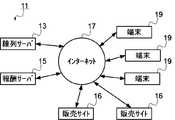
- FIG. 1 is an explanatory diagram showing a schematic configuration of a game system according to the present embodiment and devices that cooperate with the game system.
- FIG. 1 is an explanatory diagram showing a schematic configuration of a game system according to the present embodiment and devices that cooperate with the game system.
- the game system 11 of this embodiment provides a store management game. As shown in the figure, in the game system 11, a display server 13 and a reward server 15 are connected to be communicable via the Internet 17.
- the display server 13 and the reward server 15 are connected to the terminal 17 used by a viewer who participates as a player in a store management game and a viewer who participates as a customer of a virtual store managed by the display player. Communication is possible.
- the display server 13 is operated by a game company that provides a network game
- the reward server 15 is operated by a company that provides various affiliate services.
- the virtual store in the game is managed by the display server 13, but the actual purchase of goods is performed from the sales site 16 that has passed an affiliate contract with the operator of the reward server 15. Is called.
- the store management game provided in this embodiment can be outlined as follows.
- the display person who is a player in the store management game logs in to the display server 13 by inputting the login ID and the login password via the web browser of the terminal 19 used by the display person.
- the login ID is an identification name used for the player to log in to the display server 13.
- an e-mail address or the like that is used on a daily basis by the player is used, but various nicknames or the like can be used as long as the player can be uniquely identified.
- a login password is associated with a login ID.
- a login URL Universal Resource Locator
- a player who logs in to the display server 13 can perform the following operations in the store management game.
- A Selecting a product to be displayed in a virtual store. In the real world, this is equivalent to the act of arranging products on a display shelf in a store.
- B Create a comment for the selected product. This corresponds to placing POP (Point of purchase advertising) advertisements for each product in the store in the real world.
- C Selecting various decoration items provided from the display server 13. This corresponds to applying various decorations and interiors to stores in the real world.
- the state of the virtual store managed by the player is displayed on the web browser.
- display information the information indicating the state of the virtual store displayed on the web browser is appropriately referred to as “display information”.
- a person who views the state of the virtual store through a web browser is called a “viewer”.
- a player of the main store management game may become a viewer, but a user who has not yet participated as a player may become a viewer.
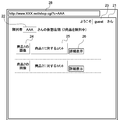
- FIG. 2 is an explanatory view showing a state in which a virtual store managed by a certain player is presented to a user whose web browser does not participate in the store management game.
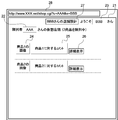
- FIG. 3 is an explanatory diagram showing how the web browser presents a virtual store managed by another player to a player participating in the main store management game.
- the login name of the player who manages the virtual store is displayed in the display name display field 22.
- the display name of the exhibitor is “AAA”.
- “guest” is displayed in the viewer display field 23 in the screen 21. This indicates that the viewer is not a player of the main store management game, or has not logged in to the main store management game even if the player is registered as a player of the main store management game.
- a product image 24 representing the product selected by the display AAA
- a comment 25 for the product
- a detailed display button 26 for displaying an explanation for considering the purchase of the product, Is displayed in tabular form.
- the store design button 27 is not displayed in FIG. 2, but the store design button 27 is displayed in FIG.
- the display of the web browser is as shown in the above (a), (b), and (c) for the virtual store managed by the player BBB. Move to the store design form for action. Details of the store design form will be described later.
- CGI Common Gateway Interface
- acts similar to the above (a), (b), and (c) are also performed in a blog service that allows users to publish critiques and impressions of products, and to obtain affiliate income by advertising and advertising. Can be considered.
- a blog service a user can freely announce a comment on a product or freely set a blog design.
- the service provided by the display server 13 according to the present embodiment is limited in the products that can be selected, the content of comments, and the appearance of the virtual store.
- the comment entered by the display person for the product is checked by the display server 13, and the obscene term, the slander wording, and the portion matching the predetermined prohibited pattern are appropriately deleted or replaced with the hidden character.
- the processing result is arranged as a comment 25 in the vicinity of the product image 24 and the detail display button 26 and displayed on the screen 21 of the web browser.
- the decoration items that can be used by the display person for decorating the virtual store are limited to those provided in advance from the display server 13. Therefore, it is not possible to place an obscene image or an image showing slander slander in a virtual store.
- the player who is a display person is required to increase the reward by obtaining a reward when the product is viewed by a viewer or when the product is actually purchased. And In this store management game, a mechanism similar to affiliate income is adopted as the reward.
- the display person who can log in to the display server 13 is associated with the user ID in addition to the login ID.
- the user ID is an identification name used for managing a reward for the player, and corresponds to an affiliate ID in the above blog service.
- a player who is a displayer participates in the store management game with the goal of increasing the amount of reward managed by his / her user ID in the reward server 15.
- This reward can be exchanged for real money, just like affiliate revenue in a blog service. However, it may be given by a virtual currency that can be used only in the store management game as being similar to the actual affiliate income.
- the display person can purchase the decoration item from the display server 13 by paying the virtual currency.
- the display server 13 manages the login ID and user ID of a certain player in association with each other.
- the reward server 15 need only manage the user ID, and does not necessarily have to manage the login ID.
- the display server 13 confirms that the content of the virtual store operated by the display person is not contrary to public order and morals and is sound as described above.
- the person who participated as a player in the store management game is simultaneously set with the login ID.
- the user ID (corresponding to the affiliate ID as described above) can be immediately given.
- the association of the user ID and the login ID is typically performed by the display server 13. That is, when a new login ID is generated or set based on a request from a person who intends to participate as a player, the display server 13 requests the reward server 15 to generate a new user ID.
- the display server 13 manages the user ID specified in the response from the reward server 15 and the login ID in association with each other.
- the web browser shifts to a mail order or electronic content sales site 16 where the product can be actually purchased.
- product information is displayed on the web browser.
- a terminal ID for identifying the terminal 19 such as a MAC (Media Access Control) address, an IP (Internet Protocol) address of the terminal 19, an individual identification number of a mobile phone, or the like. In the case of access by a web browser, this information is always transmitted because it is a prerequisite for communication. In addition, in a mode in which a unique ID that does not overlap with another terminal 19 is held in the cookie of the web browser, the unique ID can be used as the terminal ID.
- B User ID of the exhibitor. This is information for identifying a player who will pay the affiliate's reward when the product is purchased, and is set in advance by the display server 13.
- the display server 13 sets in advance.
- these pieces of information are embedded in the link destination URL associated with the detail display button 26 and the product image 24, and are transmitted by the GET method in HTTP (HyperText Transfar Protocol).
- HTTP HyperText Transfar Protocol
- the above information may be transmitted by the POST method or may be transmitted in the form of Web API (Application Program Interface).
- An example of a specific mode for transmitting the above information to the reward server 15 by the GET method is as follows. 2 and FIG. 3, the product ID is MMM, the user ID of the display AAA is PPP, the user ID of the viewer BBB is QQQ in the example of FIG. 3, and the host of the reward server 15
- the name shall be www.YYY.net.
- view.cgi is the name of the CGI program that runs on the reward server 15.
- the reward server 15 can appropriately set the payment ratio of the reward. For example, all rewards may be paid to the display person, or may be distributed in half between the display person and the viewer.
- the transmission of the information in (d) may be omitted.
- a technique for determining whether or not to pay a reward and a technique for determining a reward amount when paying can apply the same technique as an affiliate in a conventional blog service.
- the reward server 15 to which the information as described above is transmitted causes the web browser of the terminal 19 to display a web page that displays information for purchasing the product in the sales site 16. Redirect to the URL of the web page. At this time, a session ID associated with the above information is newly generated and transmitted to the sales site 16.
- the display server 13 sets a URL or the like in the display information so that this series of processing is executed. Therefore, when the viewer browses the information of the product via the display information on the terminal 19 used by the viewer, the browsing in which the user ID of the display person is designated from the terminal 19 used by the viewer to the reward server 15.
- the display server 13 is generating the display information so that the report is transmitted.
- the sales site 16 transmits the session ID for which the purchase has been completed to the reward server 15.
- the session ID can be transmitted by using the HTTP GET method or the like as described above.
- the sales site 16 can know that the product ID is MMM and the session ID is SSS from the URL specified when accessing the site. It is not necessary to transmit the user ID of the display person or the viewer to the sales site 16.
- the user ID of the exhibitor is PPP
- the user ID of the viewer is QQQ
- the terminal ID and the like of the terminal 19 used by the viewer are associated with each other and registered in the affiliate database in the reward server 15.
- the reward server 15 can know that a product has been purchased for a session whose session ID is SSS.
- the affiliate database information on a session whose session ID is SSS is stored.
- the reward server 15 can know that the user ID of the display person who introduced the product for which purchase has been made is PPP, the user ID of the viewer who has purchased the product is QQQ, or the like. At this time, it is confirmed that the terminal ID of the terminal stored in the session information matches the terminal ID of the terminal that has accessed done.cgi. The amount may be 0.
- the access destination of the web browser of the terminal 19 is the reward server 15. Therefore, the reward server 15 generates a reward report indicating “the fact that the displayer (and the viewer) is paid a reward and the amount due to the browsing of the viewer”, and the terminal used by the viewer 19 and displayed on the web browser of the terminal 19.
- the following device may be added. That is, even when a viewer who is not a player of the store management game purchases a product from the virtual store of the display person, the reward server 15 presents a reward report to the viewer.
- This remuneration report includes “the remuneration paid to the display person and the amount thereof” and “the remuneration paid and the amount when the viewer registers as a store management game player”. ing.
- Whether or not the viewer who purchased the product from the virtual store of the display person is a player of the store management game can be identified by whether or not the information (d) is transmitted in the browsing report.
- the reward server 15 When the viewer is not a player, the reward server 15 temporarily provisions a reward amount for the viewer to the terminal ID indicated by the information (a).
- the viewer accesses the display server 13 to perform player registration and obtains a login ID and a user ID. Also at this time, the terminal ID is transmitted to the display server 13.
- the display server 13 transmits to the reward server 15 linking information that links the newly registered user ID and the terminal ID of the terminal 19 used for the registration.
- a method using a GET method or a POST method via the web browser of the terminal 19 may be employed in the same manner as described above, in addition to the method using the web API.
- the terminal ID may be transmitted from the display server 13 to the reward server 15 as association information.
- the reward server 15 that has received the association information acquires the terminal ID specified in the association information, and replaces the reward amount provisionally assigned to this terminal ID with the user ID specified by the association information. .
- the affiliate activity can be started as a display person without prior screening, and a person who has not registered as a player can view the store management game. In the case of becoming a user, it is possible to strongly urge the viewer to register as a player.
- the display server 13 may adopt a mode in which the following commodity candidates are presented to the player who is the display person.
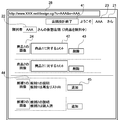
- FIG. 4 is an explanatory diagram showing a store design form displayed on the screen 21 when the player selects the store design button 27.
- FIG. 4 is an explanatory diagram showing a store design form displayed on the screen 21 when the player selects the store design button 27.
- the display example shown in FIG. 3 is that a design end button 41 is prepared in place of the store design button 27, and a product comment 25 is arranged in a comment edit box 42 and can be edited.
- the product deletion button 43 is prepared, and the display can be stopped.
- a candidate product 44 that can be selected as a product to be displayed at the virtual store by the display AAA is displayed in the lower part of the screen 21. If the display person AAA selects the selection button 45, the product candidate 44 corresponding to the selection button 45 moves to the upper part of the screen, and a comment edit box 42 for the product is prepared, and the wording that introduces the product is edited. Is possible.
- the product is electronic information to be played back on the terminal 19, for example, content such as music, video, electronic book, etc.
- the product is extracted from the play list of the playback program and used as a candidate.
- the playlist can be thought of as listing the products that the player has already downloaded. Therefore, when the player selects a product to be displayed as a display person, it is possible to enjoy the pleasure of arranging favorite products and the enjoyment of describing the impressions of the favorite products as comments.
- the player can omit the product selection operation, so that the player can easily start operating his / her virtual store.
- the second is a candidate for a product for which a player has browsed information in the past in a store management game. This is because, as in the case described above, the product whose information has been browsed is considered to be a product preferred by the player.
- the display server 13 may track and manage the past selection history of the player.
- the product group that the player has already selected is compared with the product group that the other player has selected. If they are similar, the other player has been selected but the player has not yet selected. There is no candidate for a product.
- the degree of similarity between product groups can be calculated by using various known techniques, such as how much both product groups contain the same product. This is because, as in the case described above, players having similar product groups are considered to have similar preferences.
- the virtual store where the exhibitor displays the merchandise is arranged in a virtual town prepared in the virtual world.
- shops that handle similar products, such as the electric town in Akihabara and the tool town in Kappabashi often form a town.
- the display server 13 is realized by the web server computer executing the display server program
- the reward server 15 is executed by the web server computer executing the reward server program. Realized.
- a CPU Central Processing Unit
- a non-transitory information recording medium such as a non-volatile storage device such as a hard disk or a flash memory
- Various processes are executed by performing calculation and interpretation of the above.
- RAM Random Access Memory
- the web server computer is connected to the Internet 17 via a NIC (Network Interface Card), and the web server computer communicates with other devices via the NIC and provides various web services under the control of the CPU. .
- NIC Network Interface Card
- a keyboard or mouse connected to the web server computer is used to directly check the processing results.
- it is displayed on a display connected to a computer, but it is possible to adopt a mode in which an instruction is given from another terminal device connected via the NIC and the processing result is displayed on the terminal device. good.
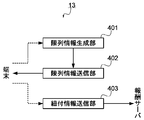
- FIG. 5 is an explanatory diagram showing a schematic configuration of the display server 13 according to the present embodiment.
- a description will be given with reference to FIG.
- the display server 13 includes a display information generation unit 401 and a display information transmission unit 402.
- a linking information transmission unit 403 is further provided.
- the association information transmission unit 403 plays a role of prompting a user who has not been registered in the store management game to further register a player.
- the display information generation unit 401 generates display information for allowing the viewer to browse the information on the product selected by the display person, and the display information transmission unit 402 generates the display information generated to the terminal 19 used by the viewer. Send.
- the association information transmission unit 403 associates the reward ID 15 with the terminal ID for identifying the terminal 19 used by the viewer and the user ID of the viewer. Send.
- the newly generated user ID is assigned to the viewer, and the terminal 19 used for player registration is used.
- the terminal ID and the newly generated user ID are specified in the association information and notified to the reward server 15.
- the display information generation unit 401, the display information transmission unit 402, and the association information transmission unit 403 are configured so that the CPU executes the display server program in the web server computer so that the CPU can be shared with the NIC, RAM, hard disk, flash memory, and the like. Realized by working.
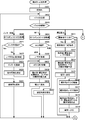
- 6A and 6B are flowcharts showing an outline of the flow of processing executed by the display server 13.
- a description will be given with reference to FIG.
- This processing starts when the CPU of the display server computer that implements the display server 13 starts to execute the display server program. First, the CPU performs various initializations (step S601).
- the CPU receives a packet from another device via the NIC (step S602), and identifies the type of the received packet (step S603).
- step S603 When the packet type is a login request transmitted from the terminal 19 (step S603; login), the CPU acquires the login ID and password specified in the login request (step S604), The contents of the database are collated and authentication for identity verification is performed (step S605).
- step S605 If the authentication is successful (step S605; success), the user ID corresponding to the login ID of the terminal 19 is acquired from the database (step S606), and the terminal ID, user ID, and login ID of the terminal 19 are stored as a logged-in player. (Step S607).
- the information of the logged-in player is generally deleted when the player does not access the display server 13 for a certain period of time, and after that, it is necessary to log in again. is there.
- step S608 the display information representing the state of the virtual store managed by the player as a display person is generated as the viewer (step S608), transmitted to the terminal 19 (step S609), and the process returns to step S602.
- step S605 failure
- step S610 information indicating that is transmitted to the terminal 19
- the information transmitted here is typically information on a login form for inputting a login name and password for re-login including a message indicating that the login has failed.
- the login request received in step S602 responds to the login form request transmitted from the terminal 19, and after the user inputs the login name and password at the terminal 19, It is transmitted from the terminal 19.
- illustration and explanation of such transmission / reception of detailed information are omitted as appropriate for easy understanding.
- step S602 when the packet received in step S602 is a browsing request transmitted from the terminal 19, the CPU uses the terminal ID of the terminal that has transmitted the browsing request, and the viewer using the terminal has logged in. It is checked whether or not there is (step S611).
- step S611 If the user has already logged in (step S611; Yes), the login ID of the display person specified in the browsing request is acquired (step S612), and the user ID of the viewer and the user ID of the display person are obtained from the database. Acquired (step S613), display information representing the state of the virtual store managed by the displayer is generated for the viewer (step S614), and is transmitted to the terminal 19 (step S615). Return.
- step S611 if the user has not logged in (step S611; No), the login ID of the display person specified in the browsing request is acquired (step S616), and the user ID of the display person is acquired from the database (step S617). Display information representing the state of the virtual store managed by the display person is generated for the guest (step S618), transmitted to the terminal 19 (step S619), and the process returns to step S602.
- step S602 when the packet received in step S602 is a player registration request transmitted from the terminal 19 (step S603; player registration), the CPU uses the login ID and password specified in the login request. Is acquired (step S620).
- step S621 If the login ID is not yet registered in the database (step S621; No), the reward server 15 is requested to generate a new user ID (step S622), and the login ID, the obtained user ID, The player is registered in the database in association with the password (step S623).
- linking information for linking the terminal ID of the terminal 19 and the user ID is transmitted to the reward server 15 (step S624), and the process proceeds to step S607.
- the terminal ID of the terminal 19 is associated with the user ID by transmitting the terminal ID of the terminal 19 in advance. Thus, it is possible to change to the transmission of the association information in step S623.
- step S620 when the login ID has been registered in the database (step S620; registered), information indicating that is transmitted to the terminal 19 (step S625), and the process returns to step S602.
- the information transmitted here is typically information on a player registration form for inputting a login name and password for player registration including a message indicating that the player registration has failed.
- step S602 When the packet received in step S602 is a store design start request transmitted from the terminal 19 (step S603; store design start), the CPU logs in the player using the terminal 19 that transmitted the store design request. An ID is acquired (step S626), a store design form for the login ID is generated (step S627), this is transmitted to the terminal 19 (step S628), and the process returns to step S602.
- step S602 when the packet received in step S602 is a store design change request transmitted from the terminal 19 (step S603; store design change), the CPU uses the terminal 19 that has transmitted the store design change request.
- the login ID of the player to perform and the store design instruction content are acquired from the store design change request (step S629), the virtual store design information is registered in the database (step S630), and the process returns to step S602.
- step S602 If the packet received in step S602 represents another request (step S603; other), the CPU executes a corresponding process (step S631) and returns to step S602.
- FIG. 7 is a schematic diagram showing a schematic configuration of the reward server 15 according to the present embodiment.
- a description will be given with reference to FIG.
- the reward server 15 includes a user reward storage unit 701, a browsing report reception unit 702, a reward determination unit 703, and a reward increase unit 704.
- a terminal reward storage unit 705, an association information receiving unit 706, and a reward moving unit 707 are further provided.
- the terminal reward storage unit 705, the association information receiving unit 706, and the reward moving unit 707 play a role of prompting a user who is not registered in the store management game to further register players.
- the user reward storage unit 701 stores a user ID and a reward amount for the user ID.
- the user reward storage unit 701 is a database for managing affiliate income, and is realized by a non-volatile storage device such as a hard disk. Immediately after a new user ID is generated, the reward amount for the user ID is generally set to 0, but a predetermined positive value can be given as an initial value by applying a campaign or the like. It is.
- the browsing report receiving unit 702 receives the browsing report transmitted from the terminal 19 used by the viewer.
- the web browser of the terminal 19 displays http://www.YYY.net/view.cgi? Assigned to the detailed display button 26 or the like.
- the product ID for which information is to be browsed By accessing the reward server 15 via these URLs, the product ID for which information is to be browsed, the terminal ID of the terminal used by the viewer, the user ID of the display person, and the viewer is the main store management game. If the player is a player, the user ID of the viewer is transmitted to the reward server 15 as a browsing report.
- the reward determining unit 703 determines the amount of reward for the display person based on the behavior of the viewer due to the browsing of information.
- the reward increasing unit 704 increases the reward amount stored for the user ID of the exhibitor in the user reward storage unit 701 by the reward amount determined for the display person.
- the terminal reward storage unit 705 stores the terminal ID and the reward amount for the terminal ID, and the reward determination unit 703 determines the reward amount for the viewer together with the reward amount for the display person.
- the reward increase part 704 is only the reward amount determined with respect to the viewer, (A) When the user ID of the viewer is specified in the browsing report, the reward amount stored for the user ID of the viewer in the user reward storage unit 701 is increased, (B) When the user ID of the viewer is not specified in the browsing report, the reward amount stored in the terminal reward storage unit 705 for the terminal ID associated with the browsing report is increased.
- the association information receiving unit 706 receives the association information transmitted from the display server 13.
- the reward moving unit 707 is specified as the association information in the user reward storage unit 701 by the reward amount stored for the terminal ID specified in the association information in the terminal reward storage unit 705.
- the amount of reward stored for the user ID is increased, and the amount of reward stored for the terminal ID specified in the association information is deleted from the terminal reward storage unit 705.
- This process moves the reward given to the terminal ID to the reward to be given to the user ID.
- a mode is conceivable in which a web page that displays both the reward amount for the viewer is generated and transmitted to the terminal 19 as a message.
- the display server 13 transmits to the reward server 15 association information that associates the terminal ID of the browser terminal with the user ID acquired by the browser. This association information is received by the association information receiving unit 706 as described above.
- the user reward storage unit 701, the browsing report receiving unit 702, the reward determining unit 703, the reward increasing unit 704, the terminal reward storage unit 705, the association information receiving unit 706, and the reward moving unit 707 are a web server computer in which a CPU is used for a reward server. By executing the program, the CPU is realized by cooperating with the NIC, RAM, hard disk, flash memory, and the like.
- 8A and 8B are flowcharts showing an outline of the flow of processing executed by the reward server 15.
- a description will be given with reference to FIG.
- This process starts when the CPU of the reward server computer realizing the reward server 15 starts executing the reward server program.
- the CPU performs various initializations (step S801).
- the CPU receives a packet from another device via the NIC (step S802), and identifies the type of the received packet (step S803).
- the CPU When the packet is a browsing report transmitted from the terminal 19 (step S803; browsing report), the CPU generates a session ID that does not overlap with others (step S804).
- the product ID and the user ID of the display person are acquired from the browsing report (step S805), and the acquisition of the user ID of the viewer is tried from the browsing report (step S806).
- the CPU records the remuneration payment schedule information that specifies the user ID of the display person, the user ID of the viewer, and the session ID in the database. (Step S807).
- the CPU transmits a response specifying the redirect destination URL to the terminal 19 so as to acquire the information on the product related to the product ID from the sales site 16 by designating the session ID (step S808).
- the process returns to step S802.
- Step S806 when the user ID of the viewer could not be acquired (step S806; No), remuneration payment schedule information specifying the user ID of the exhibitor, the terminal ID of the terminal 19, and the session ID is recorded ( Step S809) and the process proceeds to Step S808.
- step S802 When the packet received in step S802 is a purchase report transmitted from the sales site 16 (step S803; purchase report), the CPU acquires a session ID from the purchase report (step S810).
- the remuneration payment schedule information for the session ID is extracted from the database (step S811), and the remuneration amounts for the display person and the viewer are determined in the purchase report and the remuneration payment schedule information (step S812).
- the remuneration amount recorded in the database for the user ID of the display person specified in the remuneration payment information is increased by the remuneration amount for the display person determined in step S811 (step S813).
- the database functions as the user reward storage unit 601.
- step S814 when the viewer's user ID is specified in the reward payment schedule information (step S814; Yes), the amount of reward recorded in the database for the viewer's user ID is determined in step S811. Only the reward amount for the viewer is increased (step S815), and the process returns to step S802. In this case, the database functions as the user reward storage unit 601.
- step S814 if the viewer's user ID is not specified in the reward payment information (step S814; No), the reward amount recorded in the database for the terminal ID specified in the reward payment information is set in step S811. Is increased by the reward amount for the viewer determined in (Step S816), and the process returns to Step S802.
- the database functions as the terminal reward storage unit 605.
- the initial value of the reward amount for the user ID and the reward amount for the terminal ID recorded in the database is typically set to 0. However, when the initial value is appropriately changed, the reward is paid for the first time. It is possible to hold an increase campaign.
- step S802 When the packet received in step S802 is a user ID generation request transmitted from the display server 13 (step S803; user ID generation), the CPU generates a user ID that does not overlap with others (step S817). ), The user ID is returned to the display server 13 (step S818), and the process returns to step S802.
- step S802 when the packet received in step S802 is the association information transmitted from the display server 13 (step S804; association information), the CPU obtains the terminal ID specified in the association information and the user ID. Obtain (step S819).
- step S820 the reward amount recorded for the terminal ID is acquired (step S820), the reward amount for the terminal ID is cleared to 0 (step S821), and the reward amount for the user ID is Only the reward amount acquired in step S819 is increased (step S822), and the process returns to step S802. With this process, the reward moves from the terminal reward storage unit 605 to the user reward storage unit 601.
- step S802 If the packet received in step S802 is another request (step S804; other), the CPU executes a corresponding process (step S823) and returns to step S802.
- the terminal ID such as the MAC address of the terminal 19 in order to identify the terminal 19 of the viewer who is not registered as a player.
- a unique ID held in the cookie may be used as the terminal ID. This is because the unique ID is a unique identifier that is given to the terminal 19 of the viewer who purchases the product, so that the terminal 19 of the viewer can be identified.
- Communication between the display server 13, the reward server 15, and the sales site 16 may be performed directly using various web APIs, and various types of information are sent and received using redirection via the terminal 19. It is also good to do.
- the mode in which the browsing report is transmitted from the terminal used by the viewer to the reward server when the viewer browses the product information has been described.
- the reward that the display person can obtain is limited to the score in the game world instead of the currency that is valid in the real world, it is not always necessary to transmit information to the reward server 15. If the score is in the game world, the remuneration amount given to the user ID of the display person may be arbitrarily determined on the display server 13 side.
- the display mode of the virtual store mainly composed of text information as shown in FIG. 2 has been described.
- the virtual store may be displayed so as to visualize the store in the real world.
- the viewer operates the character assigned to each viewer to move in the virtual store or move in the virtual town in the virtual world.
- the store to be entered is selected by the movement of the character, it is not necessary to specify the login name of the player who manages the virtual store as described above.
- the reward is given to the display person due to the browsing or purchase of the product by the viewer.
- the reward is given to the display person due to entering the virtual store. May be.
- the display server 13 checks the comments input to the product by the display person.
- the display server administrator manually checks the comments acquired through the display server. It may be modified.
- the present invention in the store management game in which the user can view the information of the product selected and displayed by the player or the user can purchase the product, and the reward amount can be obtained. It is possible to provide a game system suitable for further encouraging players to participate in the game, a control method therefor, and a computer-readable information recording medium group in which a program for realizing them is recorded on a computer.
Landscapes
- Engineering & Computer Science (AREA)
- Multimedia (AREA)
- Business, Economics & Management (AREA)
- Finance (AREA)
- Strategic Management (AREA)
- Accounting & Taxation (AREA)
- Development Economics (AREA)
- Physics & Mathematics (AREA)
- General Physics & Mathematics (AREA)
- Entrepreneurship & Innovation (AREA)
- Game Theory and Decision Science (AREA)
- Economics (AREA)
- Marketing (AREA)
- General Business, Economics & Management (AREA)
- Theoretical Computer Science (AREA)
- Optics & Photonics (AREA)
- Management, Administration, Business Operations System, And Electronic Commerce (AREA)
Abstract
プレイヤーにより選択されて陳列された商品の情報をユーザが閲覧もしくは当該商品をユーザが購入することに起因して報酬額が得られる店舗経営ゲームにおいて、プレイヤーの一層のゲーム参加を促すゲームシステム等を提供する。ゲームシステム(11)の陳列サーバ(13)は、陳列者が選択した商品の情報を閲覧者に閲覧させるための陳列情報を生成して、閲覧者の端末(19)に送信する。当該端末(19)は、閲覧者が陳列情報を介して商品の情報を閲覧すると、陳列者のユーザIDが指定された閲覧報告を報酬サーバ(15)に送信する。報酬サーバ(15)は、閲覧報告を受信すると、情報の閲覧に起因する閲覧者の行動に基づいて、陳列者に対する報酬額を決定し、当該報酬額だけ、閲覧報告に指定されたユーザIDに対する報酬額を、増加させる。
Description
本発明は、プレイヤーにより選択されて陳列された商品の情報をユーザが閲覧もしくは当該商品をユーザが購入することに起因して報酬額が得られる店舗経営ゲームにおいて、プレイヤーの一層のゲーム参加を促すのに好適なゲームシステム、その制御方法、ならびに、これらをコンピュータにて実現するプログラムを記録したコンピュータ読取可能な情報記録媒体群に関する。
従来から、ゲーム内のアイテムを売買することによって現実世界の商取引をシミュレートするゲームシステムが提案されている(たとえば、特許文献1参照)。一方で、現実世界の商品をゲーム内の仮想店舗において広告、陳列するゲームシステムも提案されている(たとえば、特許文献2参照)。
したがって、現実世界の商品に関する情報をゲーム内の仮想店舗において陳列し、陳列された情報を閲覧者が閲覧したり、当該商品を閲覧者が実際に購入等したことによって、商品を陳列した陳列者等が報酬を得て、その報酬額を増やすことを目的とする店舗経営ゲームを実現したい、という要望がある。
このような店舗経営ゲームにおいては、商品を陳列する陳列者がプレイヤーとなり、商品を閲覧したり購入したりする閲覧者は必ずしもプレイヤーではないが、非プレイヤーの閲覧者がゲームのプレイヤーになることを促し、各プレイヤーが積極的に商品を陳列、広告したくなるような環境を提供したい、という要望も強い。
さらに、得られる報酬をゲーム世界における得点から現実世界でも通用する貨幣に広げた場合には、商品の広告内容に関するトラブルを防止する必要がある一方で、個々のプレイヤーに報酬を与えるべきか否かを事前に審査する等の煩雑な作業をできるだけ抑制して、多くの非プレイヤーがプレイヤーとなるための登録を済ませ、簡易に店舗経営ゲームに参加できるようにしたい、という要望もある。
本発明は、上記のような課題を解決するもので、プレイヤーにより選択されて陳列された商品の情報をユーザが閲覧もしくは当該商品をユーザが購入することに起因して報酬額が得られる店舗経営ゲームにおいて、プレイヤーの一層のゲーム参加を促すのに好適なゲームシステム、その制御方法、ならびに、これらをコンピュータにて実現するプログラムを記録したコンピュータ読取可能な情報記録媒体群を提供することを目的とする。
以上の目的を達成するため、本発明の原理にしたがって、下記の発明を開示する。
本発明の第1の観点に係るゲームシステムは、陳列者が選択した商品の情報を閲覧者が陳列サーバから閲覧もしくは当該商品を閲覧者が購入することに起因して、当該陳列者のユーザIDに対して報酬サーバから報酬額が与えられる店舗経営ゲームを実現し、以下のように構成する。
まず、陳列サーバは、陳列情報生成部、陳列情報送信部を備える。
ここで、陳列情報生成部は、陳列者が選択した商品の情報を閲覧者に閲覧させるための陳列情報を生成する。
一方、陳列情報送信部は、閲覧者が利用する端末へ、生成された陳列情報を送信する。
さらに、陳列情報生成部は、閲覧者が利用する端末において陳列情報を介して当該閲覧者が商品の情報を閲覧すると、当該閲覧者が利用する端末から報酬サーバへ、陳列者のユーザIDが指定された閲覧報告が送信されるように、陳列情報を生成する。
一方、報酬サーバは、ユーザ報酬記憶部、閲覧報告受信部、報酬決定部、報酬増加部を備える。
ここで、ユーザ報酬記憶部には、ユーザIDと、当該ユーザIDに対する報酬額と、が記憶される。
一方、閲覧報告受信部は、閲覧者が利用する端末から送信された閲覧報告を受信する。
さらに、報酬決定部は、閲覧報告が受信されると、情報の閲覧に起因する閲覧者の行動に基づいて、陳列者に対する報酬額を決定する。
そして、報酬増加部は、報酬額が決定されると、陳列者に対して決定された報酬額だけ、ユーザ報酬記憶部において陳列者のユーザIDに対して記憶される報酬額を、増加させる。
また、本発明のゲームシステムにおいて、商品は、端末で使用可能な電子情報であり、陳列サーバは、陳列者が利用する端末にダウンロード済みの電子情報からなる商品を当該陳列者に提示して、当該陳列者に選択させるように構成することができる。
また、本発明のゲームシステムにおいて、陳列サーバは、陳列者により選択された商品群と類似する商品群を選択した他の陳列者により選択された商品であって当該陳列者により未だ選択されていない商品を当該陳列者に提示して、当該陳列者に選択させるように構成することができる。
また、本発明のゲームシステムにおいて、陳列サーバは、陳列者が閲覧した情報の商品を当該陳列者に提示して、当該陳列者に選択させるように構成することができる。
また、本発明のゲームシステムにおいて、陳列情報生成部は、陳列者により選択された商品のそれぞれに対して陳列者により指定された文字列において所定の禁止パターンにマッチする部分を削除もしくは他の文字列に置換した結果からなるコメントをさらに指定し、閲覧者が利用する端末の画面に陳列情報が表示されると、当該陳列情報に指定された商品に対する情報の所在を表す情報と、当該商品に対するコメントと、が当該画面に表示されるように、陳列情報を生成するように構成することができる。
また、本発明のゲームシステムは、以下のように構成することができる。
まず、陳列サーバにおいて、陳列情報生成部は、閲覧者がユーザIDを有していれば閲覧報告に当該閲覧者のユーザIDがさらに指定され、閲覧報告に当該閲覧者が利用する端末を識別するための端末IDが対応付けられるように、陳列情報を生成する。
一方、報酬サーバは、端末報酬記憶部をさらに備える。
ここで、端末報酬記憶部には、端末IDと、当該端末IDに対する報酬額と、が記憶される。
さらに、報酬決定部は、陳列者に対する報酬額とともに、閲覧者に対する報酬額を決定する。
そして、報酬増加部は、閲覧者に対して決定された報酬額だけ、
(a)閲覧報告に閲覧者のユーザIDが指定されている場合、ユーザ報酬記憶部において閲覧者のユーザIDに対して記憶される報酬額を増加させ、
(b)閲覧報告に閲覧者のユーザIDが指定されていない場合、端末報酬記憶部において閲覧報告に対応付けられた端末IDに対して記憶される報酬額を増加させる。
(a)閲覧報告に閲覧者のユーザIDが指定されている場合、ユーザ報酬記憶部において閲覧者のユーザIDに対して記憶される報酬額を増加させ、
(b)閲覧報告に閲覧者のユーザIDが指定されていない場合、端末報酬記憶部において閲覧報告に対応付けられた端末IDに対して記憶される報酬額を増加させる。
さらに、陳列サーバは、紐付情報送信部をさらに備える。
ここで、紐付情報送信部は、閲覧者がユーザIDを取得すると、報酬サーバへ、当該閲覧者が利用する端末を識別する端末IDと、当該閲覧者のユーザIDと、が指定された紐付情報を送信する。
そして、報酬サーバは、紐付情報受信部、報酬移動部をさらに備える。
ここで、紐付情報受信部は、陳列サーバから送信された紐付情報を受信する。
一方、報酬移動部は、紐付情報が受信されると、端末報酬記憶部において当該紐付情報に指定された端末IDに対して記憶された報酬額だけ、ユーザ報酬記憶部において紐付情報に指定されたユーザIDに対して記憶される報酬額を増加させ、端末報酬記憶部から当該紐付情報に指定された端末IDに対して記憶された報酬額を消去する。
また、本発明のゲームシステムにおいて、報酬サーバは、端末報酬記憶部において閲覧報告に対応付けられた端末IDに対して記憶される報酬額が増加された場合、当該端末IDの端末を利用する閲覧者に、ユーザIDの取得を促すメッセージを送信するように構成することができる。
本発明の第2の観点に係るゲームシステムの制御方法は、陳列者が選択した商品の情報を閲覧者が陳列サーバから閲覧もしくは当該商品を閲覧者が購入することに起因して、当該陳列者のユーザIDに対して報酬サーバから報酬額が与えられる店舗経営ゲームを実現し、陳列情報生成工程、陳列情報送信工程、閲覧報告受信工程、報酬決定工程、報酬増加工程を備える。
ここで、陳列サーバにおいて、陳列情報生成工程では、陳列者が選択した商品の情報を閲覧者に閲覧させるための陳列情報を生成する。
一方、陳列情報送信工程では、閲覧者が利用する端末へ、生成された陳列情報を送信する。
ここで、陳列情報生成工程では、閲覧者が利用する端末において陳列情報を介して当該閲覧者が商品の情報を閲覧すると、当該閲覧者が利用する端末から報酬サーバへ、陳列者のユーザIDが指定された閲覧報告が送信されるように、陳列情報を生成する。
一方、報酬サーバは、ユーザIDと、当該ユーザIDに対する報酬額と、が記憶されるユーザ報酬記憶部を備える。
そして、報酬サーバにおいて、閲覧報告受信工程では、閲覧者が利用する端末から送信された閲覧報告を受信する。
一方、報酬決定工程において、閲覧報告が受信されると、情報の閲覧に起因する閲覧者の行動に基づいて、陳列者に対する報酬額を決定する。
さらに、報酬増加工程において、報酬額が決定されると、陳列者に対して決定された報酬額だけ、ユーザ報酬記憶部において陳列者のユーザIDに対して記憶される報酬額を、増加させる。
本発明の第3の観点に係る情報記録媒体群は、陳列者が選択した商品の情報を閲覧者が陳列サーバから閲覧もしくは当該商品を閲覧者が購入することに起因して、当該陳列者のユーザIDに対して報酬サーバから報酬額が与えられる店舗経営ゲームを実現し、陳列サーバ用コンピュータを陳列サーバとして機能させる陳列サーバ用プログラムを記録したコンピュータ読取可能な非一時的な陳列サーバ用情報記録媒体と、報酬サーバ用コンピュータを報酬サーバとして機能させる報酬サーバ用プログラムを記録したコンピュータ読取可能な非一時的な報酬サーバ用情報記録媒体と、を備える。
ここで、陳列サーバ用プログラムは、陳列サーバ用コンピュータを、陳列者が選択した商品の情報を閲覧者に閲覧させるための陳列情報を生成する陳列情報生成部、閲覧者が利用する端末へ、生成された陳列情報を送信する陳列情報送信部として機能させ、陳列情報生成部が、閲覧者が利用する端末において陳列情報を介して当該閲覧者が商品の情報を閲覧すると、当該閲覧者が利用する端末から報酬サーバへ、陳列者のユーザIDが指定された閲覧報告が送信されるように、陳列情報を生成するように機能させる。
一方、報酬サーバ用プログラムは、報酬サーバ用コンピュータを、ユーザIDと、当該ユーザIDに対する報酬額と、が記憶されるユーザ報酬記憶部、閲覧者が利用する端末から送信された閲覧報告を受信する閲覧報告受信部、閲覧報告が受信されると、情報の閲覧に起因する閲覧者の行動に基づいて、陳列者に対する報酬額を決定する報酬決定部、報酬額が決定されると、陳列者に対して決定された報酬額だけ、ユーザ報酬記憶部において陳列者のユーザIDに対して記憶される報酬額を、増加させる報酬増加部として機能させる。
また、上記の非一時的な情報記録媒体は、コンパクトディスク、フレキシブルディスク、ハードディスク、光磁気ディスク、ディジタルビデオディスク、磁気テープ、半導体メモリ等のコンピュータ読取可能な情報記憶媒体とすることができる。
また、上記の各プログラムは、当該プログラムが実行される各コンピュータとは独立して、コンピュータ通信網を介して配布・販売することができる。また、上記の各情報記憶媒体は、各コンピュータとは独立して配布・販売することができる。
本発明によれば、プレイヤーにより選択されて陳列された商品の情報をユーザが閲覧もしくは当該商品をユーザが購入することに起因して報酬額が得られる店舗経営ゲームにおいて、プレイヤーの一層のゲーム参加を促すのに好適なゲームシステム、その制御方法、ならびに、これらをコンピュータにて実現するプログラムを記録したコンピュータ読取可能な情報記録媒体群を提供することができる。
以下に本発明の実施形態を説明する。以下では、理解を容易にするため、ゲーム用の情報処理装置を利用して本発明が実現される実施形態を説明するが、以下に説明する実施形態は説明のためのものであり、本願発明の範囲を制限するものではない。
したがって、当業者であればこれらの各要素もしくは全要素をこれと均等なものに置換した実施形態を採用することが可能であるが、これらの実施形態も本発明の範囲に含まれる。
(ゲームシステムの概要)
図1は、本実施形態に係るゲームシステムならびにこれと共働する機器の概要構成を示す説明図である。以下、本図を参照して説明する。
図1は、本実施形態に係るゲームシステムならびにこれと共働する機器の概要構成を示す説明図である。以下、本図を参照して説明する。
本実施形態のゲームシステム11は、店舗経営ゲームを提供するものである。本図に示すように、ゲームシステム11は、陳列サーバ13と報酬サーバ15がインターネット17を経由して通信可能に接続されている。
また、陳列サーバ13と報酬サーバ15は、店舗経営ゲームにプレイヤーとして参加する陳列者や当該陳列者により経営される仮想的な店舗の客として参加する閲覧者が利用する端末19とも、インターネット17を介して通信可能である。
なお、本実施形態では、陳列サーバ13は、ネットワークゲームを提供しているゲーム会社が運営し、報酬サーバ15は、各種のアフィリエイトサービスを提供している会社が運営することを想定している。
本実施形態の店舗経営ゲームにおいては、ゲーム内の仮想店舗は陳列サーバ13において管理されるが、実際の商品の購入は、報酬サーバ15の運営者とアフィリエイト契約をかわしている販売サイト16から行われる。
本実施形態において提供される店舗経営ゲームは、以下のように概説することができる。
店舗経営ゲームにおけるプレイヤーである陳列者は、当該陳列者が利用する端末19のウェブブラウザを介して、ログインIDならびにログインパスワードを入力することにより、陳列サーバ13にログインする。
ここで、ログインIDは、プレイヤーが陳列サーバ13にログインするために利用する識別名である。典型的には、当該プレイヤーが日常的に利用するメールアドレスなどが利用されるが、一意に識別可能であれば、各種のニックネームなどを利用することも可能である。
また、今日広く提供されているブログサービスと同様に、ログインIDにはログイン用パスワードが対応付けられている。プレイヤーが、陳列サーバ13のログイン用のURL(Universal Resource Locator)にウェブブラウザ経由でアクセスし、ログインIDとログイン用パスワードを入力すると、陳列サーバ13が本人確認のための認証を行う。
陳列サーバ13にログインしたプレイヤーは、店舗経営ゲームにおいて、以下のような作業を行うことができる。
(a)仮想店舗に陳列する商品を選択すること。現実世界において、店舗内の陳列棚に商品を並べる行為に相当する。
(b)選択した商品に対するコメントを作成すること。現実世界において、各商品に対するPOP(Point of purchase advertising)広告を店舗内に配置することに相当する。
(c)陳列サーバ13から提供される種々の装飾アイテムを選択すること。現実世界において、種々の飾りやインテリアを店舗に適用することに相当する。
(a)仮想店舗に陳列する商品を選択すること。現実世界において、店舗内の陳列棚に商品を並べる行為に相当する。
(b)選択した商品に対するコメントを作成すること。現実世界において、各商品に対するPOP(Point of purchase advertising)広告を店舗内に配置することに相当する。
(c)陳列サーバ13から提供される種々の装飾アイテムを選択すること。現実世界において、種々の飾りやインテリアを店舗に適用することに相当する。
本ゲームのプレイヤーや本ゲームに参加していないユーザが、ウェブブラウザから、陳列サーバ13に対してプレイヤーのログイン名を指定すると、当該プレイヤーが経営する仮想店舗の様子がウェブブラウザに表示される。以下、ウェブブラウザに表示される仮想店舗の様子を表す情報を、適宜「陳列情報」と呼ぶ。
仮想店舗には、当該プレイヤーが選択した商品が、その商品に対するコメントともに陳列され、装飾アイテムによって装飾がされている。したがって、上記(a)(b)(c)のような行為を行うプレイヤーは「陳列者」と呼ばれる。
また、仮想店舗の様子をウェブブラウザを介して閲覧する者は、「閲覧者」と呼ばれる。本店舗経営ゲームのプレイヤーが閲覧者となることもあるが、まだプレイヤーとして参加していないユーザが閲覧者となることもある。
図2は、ウェブブラウザが本店舗経営ゲームに参加していないユーザに、あるプレイヤーが経営する仮想店舗を提示する様子を示す説明図である。図3は、ウェブブラウザが本店舗経営ゲームに参加しているプレイヤーに他のプレイヤーが経営する仮想店舗を提示する様子を示す説明図である。以下、これらの図を参照して説明する。
ウェブブラウザの画面21内には、仮想店舗を経営するプレイヤーのログイン名が陳列者名表示欄22に表示されている。これらの図では、陳列者のログイン名は「AAA」である。
また、図2においては、画面21内の閲覧者表示欄23には、「guest」と表示されている。これは、閲覧者が本店舗経営ゲームのプレイヤーでないこと、もしくは、本店舗経営ゲームのプレイヤー登録済であっても、本店舗経営ゲームにログインしていないことを示す。
図3においては、画面21内の閲覧者表示欄23には、「BBB」と表示されている。これにより、閲覧者のログイン名が「BBB」であることがわかる。
両図において、画面21内には、陳列者AAAが選択した商品を表す商品画像24と、当該商品に対するコメント25と、当該商品の購入を検討するための説明を表示する詳細表示ボタン26と、が、表形式で表示されている。
また、図2には、店舗設計ボタン27が表示されていないが、図3には、店舗設計ボタン27が表示されている。
閲覧者である本店舗経営ゲームのプレイヤーBBBが、店舗設計ボタン27を選択すると、ウェブブラウザの表示は、プレイヤーBBBが経営する仮想店舗に対して上記(a)(b)(c)のような行為を行うための店舗設計フォームに移行する。店舗設計フォームの詳細については、後述する。
また、本例では、図2、図3において、ウェブブラウザのURL入力欄28に表示されるURLは、それぞれ、
http://www.XXX.net/shop.cgi?c=AAA
http://www.XXX.net/shop.cgi?c=AAA&e=BBB
である。これらには、
(1)陳列サーバ13のホスト名www.XXX.net
(2)陳列者のログイン名情報c=AAA
が含まれており、さらに図3においては、
(3)閲覧者のログイン名情報e=BBB
が含まれており、仮想店舗の様子を表示するためのCGI(Common Gateway Interface)プログラムshop.cgiに、これらの情報が渡されたことがわかる。
http://www.XXX.net/shop.cgi?c=AAA
http://www.XXX.net/shop.cgi?c=AAA&e=BBB
である。これらには、
(1)陳列サーバ13のホスト名www.XXX.net
(2)陳列者のログイン名情報c=AAA
が含まれており、さらに図3においては、
(3)閲覧者のログイン名情報e=BBB
が含まれており、仮想店舗の様子を表示するためのCGI(Common Gateway Interface)プログラムshop.cgiに、これらの情報が渡されたことがわかる。
なお、各ログイン名情報は、URL内に埋め込む手法のほか、クッキーを利用してセッション管理を行う等の技術により、URL内には明示しない手法もある。
さて、上記(a)(b)(c)に類似する行為は、ユーザが商品の批評・感想を公開したり、宣伝・広告を行ってアフィリエイト収入を得ることができるブログサービスにおいても行われているものと考えることができる。このようなブログサービスでは、ユーザが自由に商品に対するコメントを発表したり、自由にブログのデザインを設定することができる。
しかしながら、本実施形態に係る陳列サーバ13が提供するサービスは、従来のブログサービスとは異なり、選択できる商品、コメントの内容、仮想店舗の見た目に制限が加えられている。
すなわち、陳列者が商品に対して入力したコメントに対しては、陳列サーバ13によるチェックがなされ、卑猥な用語や誹謗中傷の文言、所定の禁止パターンにマッチする部分を適宜削除もしくは伏せ字に置換される。この処理結果がコメント25として、商品画像24や、詳細表示ボタン26の近傍に配置され、ウェブブラウザの画面21に表示される。
また、陳列者が仮想店舗の飾り付けに利用できる装飾アイテムは、陳列サーバ13からあらかじめ提供されるものに限定される。したがって、仮想店舗に卑猥な画像や誹謗中傷を表した画像を配置することはできない。
すなわち、陳列サーバ13を用いることで陳列者が経営する仮想店舗の様子は、公序良俗に反する可能性は極めて低く、商品に対する評価等を適切に公表しているものと考えられる。
ブログサービスにおいて、ブログ運営者が商品を紹介することによりアフィリエイト収入を得ようとする場合には、アフィリエイト企業が当該ブログの事前審査を行うのが一般的である。これは、ブログの内容がブログ運営者によって自由に設定でき、ブログの内容が広告・宣伝には不適切な場合があるからである。
一方、本店舗経営ゲームにおいては、陳列者により商品等が陳列された仮想店舗が、宣伝広告に不適切となる可能性は極めて低い。このため、陳列サーバ13からインターネット17を介して各端末19に提供されるコンテンツ(仮想店舗に商品が陳列されている様子)は、公序良俗に即した健全なものである可能性が極めて高いことになる。
さて、本店舗経営ゲームでは、陳列者であるプレイヤーは、商品等の閲覧者による閲覧、もしくは、当該商品が現実に購入された場合に報酬を得て、この報酬を増加させることをゲームの課題とする。そして、本店舗経営ゲームでは、この報酬として、アフィリエイト収入に類似する機構を採用する。
すなわち、陳列サーバ13にログインできる陳列者は、上記のログインIDのほか、ユーザIDにも紐付けされている。ユーザIDは、プレイヤーに対する報酬を管理するための利用する識別名であり、上記のブログサービスにおけるアフィリエイトIDに相当するものである。
陳列者であるプレイヤーは、報酬サーバ15において、自身のユーザIDにより管理される報酬額を増加させることを目標として、店舗経営ゲームに参加する。
この報酬は、ブログサービスにおけるアフィリエイト収入と同様に、現実の貨幣に交換できるものとすることができる。ただし、現実のアフィリエイト収入に類似するものとして、店舗経営ゲーム内でのみ通用する仮想通貨により与えられるものとしても良い。仮想通貨のみにより報酬が得られる場合には、陳列者は、その仮想通貨を支払うことにより、装飾アイテムを陳列サーバ13から購入できるものとすることができる。
そして、陳列サーバ13は、あるプレイヤーのログインIDとユーザIDを紐付けて管理するが、報酬サーバ15は、ユーザIDを管理すれば十分であり、必ずしもログインIDを管理する必要はない。
さて、本実施形態の店舗経営ゲームでは、陳列者により運営される仮想店舗のコンテンツは、上記のように、公序良俗に反するものではなく、健全であることが陳列サーバ13によって確認されている。
したがって、アフィリエイトに参加する際にブログ内容の事前審査が必要な従来のブログサービスの場合とは異なり、本実施形態においては、店舗経営ゲームにプレイヤーとして参加した者には、ログインIDの設定と同時に、直ちにユーザID(上記のように、アフィリエイトIDに相当する。)を付与することができる。
ユーザIDとログインIDの紐付けは、陳列サーバ13が行うこととするのが典型的である。すなわち、プレイヤーとして参加しようとする者の要求に基づいて、新たなログインIDを生成もしくは設定するときに、陳列サーバ13は、報酬サーバ15に、新たなユーザIDの生成を依頼する。
そして、陳列サーバ13は、報酬サーバ15からの返答に指定されたユーザIDと、ログインIDとを対応付けて管理するのである。
本実施形態では、陳列サーバ13により端末19のウェブブラウザに表示された商品の近傍に配置されている詳細表示ボタン26や商品画像24をマウスでクリックすることにより、閲覧者が選択すると、ウェブブラウザの表示は、当該商品が現実に購入できるような通信販売や電子コンテンツの販売サイト16に移行する。この移行によって商品の情報がウェブブラウザに表示される。
さらに、この移行の際に、以下の情報が「閲覧報告」として、端末19から報酬サーバ15に伝達される。
(a)端末19のMAC(Media Access Control)アドレスやIP(Internet Protocol)アドレス、携帯電話の個体識別番号等、端末19を識別する端末ID。ウェブブラウザによるアクセスでは、この情報は通信の前提となるため、必ず伝達される。このほか、ウェブブラウザのクッキーに他の端末19と重複しないユニークIDを保持させる態様では、ユニークIDを端末IDとして利用することもできる。
(b)陳列者のユーザID。商品が購入等された場合に、アフィリエイトの報酬の支払い先となるプレイヤーを識別する情報であり、陳列サーバ13があらかじめ設定する。
(c)商品が現実に購入できるようなサイトのURL、もしくは、当該URLに変換が可能な情報。後者の例としては、各商品に割り当てられた商品ID等が考えられる。陳列サーバ13があらかじめ設定する。
(d)閲覧者が店舗経営ゲームにログインしている場合には、当該閲覧者のユーザID。商品が購入等された場合に、割引キャッシュバックの報酬の支払先となるプレイヤーを識別する情報であり、陳列サーバ13があらかじめ設定する。
(a)端末19のMAC(Media Access Control)アドレスやIP(Internet Protocol)アドレス、携帯電話の個体識別番号等、端末19を識別する端末ID。ウェブブラウザによるアクセスでは、この情報は通信の前提となるため、必ず伝達される。このほか、ウェブブラウザのクッキーに他の端末19と重複しないユニークIDを保持させる態様では、ユニークIDを端末IDとして利用することもできる。
(b)陳列者のユーザID。商品が購入等された場合に、アフィリエイトの報酬の支払い先となるプレイヤーを識別する情報であり、陳列サーバ13があらかじめ設定する。
(c)商品が現実に購入できるようなサイトのURL、もしくは、当該URLに変換が可能な情報。後者の例としては、各商品に割り当てられた商品ID等が考えられる。陳列サーバ13があらかじめ設定する。
(d)閲覧者が店舗経営ゲームにログインしている場合には、当該閲覧者のユーザID。商品が購入等された場合に、割引キャッシュバックの報酬の支払先となるプレイヤーを識別する情報であり、陳列サーバ13があらかじめ設定する。
ここで、上記(a)(b)(c)は、従来のブログサービスにおけるアフィリエイトにおける通信と同様である。上記(d)は、実施形態によっては省略することも可能である。これらの情報は、詳細表示ボタン26や商品画像24に対応付けられているリンク先のURLに埋め込まれ、HTTP(HyperText Transfar Protocol)におけるGETメソッドによって伝達されるのが典型的であるが、リンク先のURLには陳列サーバ13のアドレスを指定するとともに、上記の情報をPOSTメソッドで伝達したり、ウェブAPI(Application Program Interface)の形式で伝達することとしても良い。
GETメソッドにより上記の情報を報酬サーバ15に伝達する具体的な態様の一例は以下の通りである。図2、図3の例において、商品IDがMMMであり、陳列者AAAのユーザIDがPPPであり、図3の例において閲覧者BBBのユーザIDがQQQであり、また、報酬サーバ15のホスト名がwww.YYY.netであるものとする。
この場合、詳細表示ボタン26や商品画像24に割り当てられたリンクとして、図2の例では、
http://www.YYY.net/view.cgi?t=MMM&c=PPP
を採用し、図3の例では、
http://www.YYY.net/view.cgi?t=MMM&c=PPP&e=QQQ
を採用する。
http://www.YYY.net/view.cgi?t=MMM&c=PPP
を採用し、図3の例では、
http://www.YYY.net/view.cgi?t=MMM&c=PPP&e=QQQ
を採用する。
ここで、view.cgiは、報酬サーバ15において動作するCGIプログラムの名前である。
閲覧者がマウスのクリック操作等を用いて上記の詳細表示ボタン26等を選択すると、報酬サーバ15に用意されたCGIプログラムview.cgiに対して、商品IDであるMMMがt=の引数として、陳列者のユーザIDであるPPPがc=の引数として、それぞれ渡されるとともに、図3の場合には、閲覧者のユーザIDであるQQQがe=の引数としてさらに渡されることになる。
さて、店舗経営ゲームのあるプレイヤーが陳列者として商品を紹介して、別のプレイヤーが閲覧者としてその紹介に起因してその商品を購入した場合、上記(d)の情報を伝達すると、陳列者のみならず、閲覧者にも報酬を支払うことが可能となる。この場合の報酬の支払い割合は、適宜報酬サーバ15が設定できる。たとえば、報酬は、すべて陳列者に支払われることとしても良いし、陳列者と閲覧者で半々に分配されるものとしても良い。
なお、従来のブログサービスにおけるアフィリエイトと同様に、閲覧者には報酬が支払われないものとした場合には、上記(d)の情報の伝達は省略することとしても良い。
さて、報酬を支払うか否かの判断手法、ならびに、支払う場合の報酬額の決定手法は、従来のブログサービスにおけるアフィリエイトと同様の技術を適用することができる。
すなわち、上記のような情報が伝達された報酬サーバ15は、端末19のウェブブラウザに、販売サイト16内において当該商品を購入するための情報を表示するウェブページを表示させるため、当該遷移先のウェブページのURLへリダイレクトを行う。この際に、上記の情報に紐付けられたセッションIDを新たに生成して、販売サイト16に伝達する。
この一連の処理が実行されるように陳列サーバ13は、陳列情報内においてURL等を設定している。したがって、閲覧者が利用する端末19において陳列情報を介して当該閲覧者が商品の情報を閲覧すると、当該閲覧者が利用する端末19から報酬サーバ15へ、陳列者のユーザIDが指定された閲覧報告が送信されるように、陳列サーバ13が陳列情報を生成していることになる。
さて、販売サイト16において商品の購入が行われた後は、販売サイト16は、購入が完了したセッションIDを報酬サーバ15に伝達する。たとえば、購入完了後に、販売サイト16が報酬サーバ15のウェブページにリダイレクトを行う際に、上記と同様に、HTTPのGETメソッド等を用いることにより、セッションIDを伝達することができる。
たとえば、販売サイト16のホスト名がwww.ZZZ.netであり、セッションIDがSSSである場合、GETメソッドを利用した場合には、報酬サーバ15は、端末19のウェブブラウザに対してhttp://www.ZZZ.net/info.cgi?t=MMM&s=SSSのようなURLへのリダイレクトを指示する手法がある。
この手法によれば、販売サイト16は、自身へのアクセスの際に指定されたURLから、商品IDがMMMであり、セッションIDがSSSであることを知得できる。販売サイト16に、陳列者や閲覧者のユーザIDを伝達する必要はない。
セッションIDがSSSであることに対しては、陳列者のユーザIDがPPPであることや、閲覧者が本店舗経営ゲームのプレイヤーである場合に閲覧者のユーザIDがQQQであることのほか、当該閲覧者が利用する端末19の端末ID等を対応付けて、報酬サーバ15内のアフィリエイトデータベースに登録しておく。
ある商品の閲覧や購入がされた旨の情報を販売サイト16と報酬サーバ15との間でやりとりする手法については、公知の各種アフィリエイト技術を適用することができる。典型的には、閲覧者が商品を購入したことを条件に、陳列者(ならびに閲覧者)に報酬が支払われることになる。
たとえば上記の例で、販売サイト16における購入が成立した後に、販売サイト16は、端末19のウェブブラウザに対して、http://www.YYY.net/done.cgi?s=SSSのようなURLへのリダイレクトを指示する。
すると、報酬サーバ15は、セッションIDがSSSであるセッションについて、商品の購入が行われたことを知得することができる。上記のように、アフィリエイトデータベース内には、セッションIDがSSSであるセッションの情報が格納されている。
したがって、報酬サーバ15は、購入が成立した商品を紹介した陳列者のユーザIDがPPPであることや、当該商品を購入した閲覧者のユーザIDがQQQであることなどを知得することができる。なお、この際には、セッションの情報に格納されている端末の端末IDと、done.cgiに対するアクセスを行った端末の端末IDが一致していることを確認し、一致していなければ、報酬額を0とすることとしても良い。
上記の説明では、理解を容易にするため、URL内に明示的に各種の情報を入れる形態を採用したが、POSTメソッドを利用したり、各種ウェブAPIを利用したり、セッションの管理にクッキーを利用したりすれば、これらの情報をできるだけ秘匿して、なりすましなどを防止することができる。
このほか、閲覧者の目にとまっただけで、商品の販売に直接結びつかない場合であっても、報酬を支払うような態様もありうる。この場合には、上記(a)乃至(d)の情報が報酬サーバ15に伝達されたことをもって、報酬を支払う旨が決定される。
さて、上記のように報酬の支払いならびに支払い額が決定される時点では、端末19のウェブブラウザのアクセス先は、報酬サーバ15となっている。したがって、報酬サーバ15は、「閲覧者の閲覧に起因して、陳列者(ならびに閲覧者)に報酬が支払われる旨ならびにその額」を示す報酬報告を生成し、これを閲覧者が利用する端末19に送付して、端末19のウェブブラウザに表示させることができる。
閲覧者が店舗経営ゲームのプレイヤーである場合には、報酬報告を閲覧すれば、他のプレイヤーに報酬が支払われたことが確認できる。したがって、閲覧者には、自身が陳列者である自分の仮想店舗を運営するための動機付け、すなわち、他のプレイヤーに報酬が与えられるのであれば、自分も報酬が得られるように頑張ろうとする意欲が与えられることになる。
さて、このような報酬サーバ15の構成においては、さらに以下のような工夫を付加することとしても良い。すなわち、店舗経営ゲームのプレイヤーでない閲覧者が陳列者の仮想店舗から商品を購入した場合も、報酬サーバ15は、報酬報告を閲覧者に提示する。
この報酬報告には、「陳列者に報酬が支払われる旨ならびにその額」のほか、「閲覧者が店舗経営ゲームのプレイヤー登録をした場合には、報酬が支払われる旨ならびにその額」が記載されている。
したがって、閲覧者には、店舗経営ゲームに参加しようとする動機付けが与えられることになる。
陳列者の仮想店舗から商品を購入した閲覧者が店舗経営ゲームのプレイヤーであるか否かは、閲覧報告において情報(d)が伝達されたか否かによって識別が可能である。
閲覧者がプレイヤーでない場合、報酬サーバ15は、一時的に、情報(a)により示される端末IDに、閲覧者向けの報酬額を仮付与する。
この後、閲覧者が陳列サーバ13にアクセスしてプレイヤー登録を行い、ログインIDとユーザIDを取得したとする。この際にも、端末IDが陳列サーバ13に伝達される。
そこで、陳列サーバ13は、新規に登録されたユーザIDと、その登録で使用された端末19の端末IDとを紐付ける紐付情報を報酬サーバ15に伝達する。
紐付情報の伝達は、ウェブAPIを利用する手法のほか、上記と同様に、端末19のウェブブラウザを介したGETメソッドやPOSTメソッドを利用する手法を採用しても良い。
このほか、陳列サーバ13から報酬サーバ15へ新たなユーザIDの生成を依頼する際に、陳列サーバ13から報酬サーバ15へ紐付情報として端末IDを伝達することとしても良い。
紐付情報を受信した報酬サーバ15は、紐付情報に指定されている端末IDを取得し、この端末IDに仮付与されている報酬額を、紐付情報により指定されることとなったユーザIDに付け替える。
これによって、店舗経営ゲームにプレイヤーとして未登録だった時期に商品を閲覧・購入した者が、その後にプレイヤー登録をすると、登録の後に、閲覧・購入に対する報酬を与えることが可能となるのである。
このように、本実施形態においては、店舗経営ゲームにプレイヤー登録をすると直ちに、事前審査なしに陳列者としてアフィリエイト活動を開始することができるほか、プレイヤー登録をしていない者が店舗経営ゲームの閲覧者となった場合に、当該閲覧者にプレイヤー登録を強く促すことができるのである。
さて、新規にプレイヤー登録をした陳列者は、どんな商品を陳列すれば良いか戸惑うことが多い。そこで、陳列サーバ13は、以下のような商品の候補を、陳列者であるプレイヤーに提示する態様を採用しても良い。
図4は、プレイヤーが店舗設計ボタン27を選択すると画面21に表示される店舗設計フォームの様子を示す説明図である。以下、本図を参照して説明する。
本図に示す店舗設計フォームは、ログインIDとしてAAAを使用するプレイヤーが閲覧者として、陳列者AAAが経営する仮想店舗に閲覧者としてアクセスした(図3に示す表示例において、c=AAAかつe=AAAの場合に相当する。)後に、店舗設計ボタン27を選択した際に表示されるものである。
図3に示す表示例とは、店舗設計ボタン27にかえて設計終了ボタン41が用意されていること、商品のコメント25が、コメント編集ボックス42内に配置されており、編集可能となっていること、商品の削除ボタン43が用意されており、陳列を停止することができること等の点で異なる。
また、本図に示す店舗設計フォームでは、画面21の下段に、陳列者AAAが仮想店舗に陳列する商品として選択可能な商品の候補44が表示されている点である。陳列者AAAが選択ボタン45を選択すれば、当該選択ボタン45に対する商品の候補44が画面の上段に移動して、当該商品についてのコメント編集ボックス42が用意され、当該商品を紹介する文言の編集が可能となる。
ここで、商品の候補の選択の手法としては、以下のようなものが考えられる。
第1は、商品が端末19で再生される電子情報たとえば、音楽、動画、電子書籍等のコンテンツの場合に、当該再生プログラムの再生リストから商品を抽出して、これを候補とするものである。再生リストには、そのプレイヤーがダウンロード済みの、好みの商品が並んでいるものと考えられる。したがって、プレイヤーが陳列者として陳列する商品を選択する場合には、好みの商品を並べる楽しみや、好みの商品の感想をコメントとして記述する楽しみを得ることができる。一方で、陳列する商品を再生リストから抽出する場合には、プレイヤーによる商品の選択作業を省略することが出来るので、プレイヤーは自分の仮想店舗の運営を簡単に開始できる。
この手法では、端末19の内部に用意された再生リストから情報を抽出する必要があるため、ブラウザ単独では処理ができない場合もある。この場合には、ブラウザとは独立して動作するプログラムが自動起動して、ブラウザもしくは陳列サーバ13と通信して商品の候補を表示させるようにする。
第2は、プレイヤーが店舗経営ゲームにおいて、過去に情報を閲覧した商品を候補とするものである。上記の場合と同様に、情報を閲覧した商品は、当該プレイヤーの好みの商品であると考えられるからである。
この手法では、当該プレイヤーの過去の選択の履歴を、陳列サーバ13にて追跡・管理すれば良い。
第3は、プレイヤーがすでに選択した商品群と他のプレイヤーが選択した商品群とを比較し、両者が類似する場合に、当該他のプレイヤーには選択されているが当該プレイヤーがまだ選択していない商品を候補とするものである。商品群の類似の度合は、両商品群が同一の商品をどの程度含んでいるか等、種々の公知の技術を利用することで計算することができる。上記の場合と同様に、類似する商品群を持つプレイヤー同士は、好みも類似していると考えられるからである。
本手法では、各プレイヤーが選択した商品は陳列サーバ13により管理されるので、陳列サーバ13が定期的に、もしくは、アイドル時間内にプレイヤーが選択した商品群同士の対比を行っておけば、店舗管理フォームの提示の際に迅速な処理が可能となる。
さて、陳列者が商品を陳列した仮想店舗は、仮想世界に用意された仮想街の中に配置する態様が考えられる。ここで、現実世界では、たとえば秋葉原の電気街やかっぱ橋の道具街のように、類似する商品を扱う店舗が密集して町を形成することが多々ある。
そこで、陳列者が選択した商品群の類似度に応じて、類似する商品群を取り扱う仮想店舗は、仮想世界内で近くに配置することとすれば、上記のような同業者による町を、仮想世界の中で形成することが可能となる。
以下では、陳列サーバ13ならびに報酬サーバ15の構成、機能および動作について、さらに詳細に説明する。
なお、本実施形態では、陳列サーバ13は、ウェブサーバ用コンピュータが、陳列サーバ用プログラムを実行することによって実現され、報酬サーバ15は、ウェブサーバ用コンピュータが、報酬サーバ用プログラムを実行することによって実現される。
ここで、ウェブサーバ用コンピュータにおいては、ハードディスクやフラッシュメモリといった不揮発性記憶装置等、非一時的(non-transitory)な情報記録媒体に記録されたプログラムをCPU(Central Processing Unit)が読み出して、各種の計算や解釈を行うことにより、各種の処理が実行される。
ウェブサーバ用コンピュータが実行する処理において、計算に一時的(temporary)に必要となる情報は、RAM(Random Access Memory)等の高速な情報記憶装置に格納される。
ウェブサーバ用コンピュータはNIC(Network Interface Card)を介してインターネット17に接続され、ウェブサーバ用コンピュータは、CPUの制御の下、NICを介して他の機器と通信し、各種のウェブサービスを提供する。
また、ウェブサーバ用コンピュータに対して直接、管理者が指示を行う場合には、ウェブサーバ用コンピュータに接続されたキーボードやマウスを利用し、処理の結果を直接確認する場合には、ウェブサーバ用コンピュータに接続されたディスプレイに表示させるのが典型的であるが、NICを介して接続された他の端末装置から指示を行い、当該端末装置に処理結果を表示させるような態様を採用しても良い。
(陳列サーバ)
図5は、本実施形態に係る陳列サーバ13の概要構成を示す説明図である。以下、本図を参照して説明する。
図5は、本実施形態に係る陳列サーバ13の概要構成を示す説明図である。以下、本図を参照して説明する。
本実施形態に係る陳列サーバ13は、陳列情報生成部401、陳列情報送信部402を備える。
また、省略可能な要素として、紐付情報送信部403をさらに備える。紐付情報送信部403は、本店舗経営ゲームに未登録のユーザに一層のプレイヤー登録を促す役割を果たす。
ここではまず、これらの要素の機能について概説する。
陳列情報生成部401は、陳列者が選択した商品の情報を閲覧者に閲覧させるための陳列情報を生成し、陳列情報送信部402は、閲覧者が利用する端末19へ、生成された陳列情報を送信する。
上記の例でいえば、陳列者が利用する端末19のウェブブラウザから、http://www.XXX.net/shop.cgi?c=AAAやhttp://www.XXX.net/shop.cgi?c=AAA&e=BBB等のURLにアクセスすると、陳列者AAAの仮想店舗の様子を表す陳列情報がウェブページの形式で生成され、当該陳列情報が、端末19のウェブブラウザに表示される。
紐付情報送信部403は、閲覧者がユーザIDを取得すると、報酬サーバ15へ、当該閲覧者が利用する端末19を識別する端末IDと、当該閲覧者のユーザIDと、が指定された紐付情報を送信する。
たとえば、閲覧者が新たに本店舗経営ゲームに参加するためのプレイヤー登録を行った場合には、当該閲覧者に新規に生成されたユーザIDが割り当てられ、プレイヤー登録の際に使用された端末19の端末IDと、当該新規に生成されたユーザIDと、が紐付情報に指定されて、報酬サーバ15に通知されることになる。
陳列情報生成部401、陳列情報送信部402、紐付情報送信部403は、ウェブサーバ用コンピュータにおいてCPUが陳列サーバ用プログラムを実行することにより、当該CPUがNICやRAM、ハードディスク、フラッシュメモリ等と共働することによって実現される。
以下では、これら各部の処理の流れを説明する。図6A、図6Bは、陳列サーバ13にて実行される処理の流れの概略を示すフローチャートである。以下、本図を参照して説明する。
本処理は、陳列サーバ13を実現する陳列サーバ用コンピュータのCPUが、陳列サーバ用プログラムの実行を開始することを契機に始まる。まず、CPUは、各種の初期化を行う(ステップS601)。
この後、CPUは、NICを介して、他の機器からのパケットを受信し(ステップS602)、受信されたパケットの種類を識別する(ステップS603)。
パケットの種類が、端末19から送信されたログイン要求である場合(ステップS603;ログイン)、CPUは、当該ログイン要求に指定されたログインIDとパスワードとを取得し(ステップS604)、これらの情報とデータベースの内容とを照合して、本人確認のための認証を行う(ステップS605)。
認証に成功したら(ステップS605;成功)、端末19の当該ログインIDに対するユーザIDをデータベースから取得して(ステップS606)、端末19の端末ID、ユーザID、ログインIDをログイン済のプレイヤーとして記憶する(ステップS607)。
なお、このログイン済のプレイヤーの情報は、当該プレイヤーによる陳列サーバ13へのアクセスが一定時間行われない場合には消去され、その後は再度のログインが必要となるように構成するのが一般的である。
そして、当該プレイヤーが陳列者として経営する仮想店舗の様子を表す陳列情報を、当該プレイヤーを閲覧者として生成して(ステップS608)、端末19に送信し(ステップS609)、ステップS602に戻る。
一方、認証に失敗した場合(ステップS605;失敗)、その旨を表す情報を端末19に送信して(ステップS610)、ステップS602に戻る。ここで送信される情報は、典型的には、ログインが失敗した旨を表すメッセージが含まれた再ログインのためのログイン名ならびにパスワードを入力するためのログイン用フォームの情報である。
なお、ステップS602において受信されるログイン要求は、端末19から送信されたログイン用フォームの要求に対してログイン用フォームを応答し、当該端末19においてユーザがログイン名とパスワードを入力してから、当該端末19から送信されたものである。本図ならびに以降の説明においては、このような、細かい情報の送受については、理解を容易にするため、適宜図示ならびに説明を省略する。
さて、ステップS602において受信されたパケットが、端末19から送信された閲覧要求である場合、CPUは、当該閲覧要求を送信してきた端末の端末IDから、当該端末を利用する閲覧者がログイン済であるか否かを調べる(ステップS611)。
ログイン済である場合(ステップS611;Yes)、当該閲覧要求に指定された陳列者のログインIDを取得し(ステップS612)、閲覧者のユーザIDと、陳列者のユーザIDと、を、データベースから取得して(ステップS613)、当該陳列者が経営する仮想店舗の様子を表す陳列情報を、当該閲覧者向けに生成して(ステップS614)、端末19に送信し(ステップS615)、ステップS602に戻る。
一方、ログイン済でない場合(ステップS611;No)、当該閲覧要求に指定された陳列者のログインIDを取得し(ステップS616)、陳列者のユーザIDを、データベースから取得して(ステップS617)、当該陳列者が経営する仮想店舗の様子を表す陳列情報を、ゲスト向けに生成して(ステップS618)、端末19に送信し(ステップS619)、ステップS602に戻る。
このほか、ステップS602において受信されたパケットが、端末19から送信されたプレイヤー登録要求である場合(ステップS603;プレイヤー登録)、CPUは、CPUは、当該ログイン要求に指定されたログインIDとパスワードとを取得する(ステップS620)。
そして、当該ログインIDが未だデータベースに登録されていなければ(ステップS621;No)、報酬サーバ15に新たなユーザIDの生成を依頼し(ステップS622)、当該ログインIDと、得られたユーザIDと、パスワードと、を対応付けて、データベースにプレイヤーを登録する(ステップS623)。
そして、端末19の端末IDと、ユーザIDとを紐付ける紐付情報を報酬サーバ15に送信して(ステップS624)、ステップS607に進む。
なお、上述のように、報酬サーバ15に新たなユーザIDの生成を依頼する際に、端末19の端末IDをあらかじめ伝達することによって、報酬サーバ15に端末IDとユーザIDとを紐付けさせることによって、ステップS623における紐付情報の送信にかえることができる。
一方、当該ログインIDがデータベースに登録済みである場合(ステップS620;登録済)、その旨を表す情報を端末19に送信して(ステップS625)、ステップS602に戻る。ここで送信される情報は、典型的には、プレイヤー登録が失敗した旨を表すメッセージが含まれたプレイヤー登録のためのログイン名ならびにパスワードを入力するためのプレイヤー登録用フォームの情報である。
さて、ステップS602において受信されたパケットが、端末19から送信された店舗設計開始要求である場合(ステップS603;店舗設計開始)、CPUは、店舗設計要求を送信した端末19を利用するプレイヤーのログインIDを取得し(ステップS626)、当該ログインIDに対する店舗設計フォームを生成してから(ステップS627)、これを端末19に送信して(ステップS628)、ステップS602に戻る。
一方、ステップS602において受信されたパケットが、端末19から送信された店舗設計変更要求である場合(ステップS603;店舗設計変更)、CPUは、当該店舗設計変更要求を送信した端末19を利用する利用するプレイヤーのログインIDと、店舗設計の指示内容と、を、店舗設計変更要求から取得して(ステップS629)、仮想店舗の設計情報をデータベースに登録し(ステップS630)、ステップS602に戻る。
また、ステップS602において受信されたパケットが、その他の要求を表すものである場合(ステップS603;その他)、CPUは、対応する処理を実行して(ステップS631)、ステップS602に戻る。
(報酬サーバ)
図7は、本実施形態に係る報酬サーバ15の概要構成を示す模式図である。以下、本図を参照して説明する。
図7は、本実施形態に係る報酬サーバ15の概要構成を示す模式図である。以下、本図を参照して説明する。
本実施形態に係る報酬サーバ15は、ユーザ報酬記憶部701、閲覧報告受信部702、報酬決定部703、報酬増加部704を備える。
また、省略可能な要素として、端末報酬記憶部705、紐付情報受信部706、報酬移動部707をさらに備える。端末報酬記憶部705、紐付情報受信部706、報酬移動部707は、本店舗経営ゲームに未登録のユーザに一層のプレイヤー登録を促す役割を果たす。
ここではまず、これらの要素の機能について概説する。
ユーザ報酬記憶部701には、ユーザIDと、当該ユーザIDに対する報酬額と、が記憶される。
ユーザ報酬記憶部701は、アフィリエイト収入を管理するためのデータベースであり、ハードディスク等の不揮発性記憶装置により実現される。新たなユーザIDが生成された直後は、当該ユーザIDに対する報酬額は、0とするのが一般的であるが、キャンペーン等の適用により、初期値として所定の正の値を付与することも可能である。
一方、閲覧報告受信部702は、閲覧者が利用する端末19から送信された閲覧報告を受信する。
上記の例でいえば、ユーザがhttp://www.XXX.net/shop.cgi?c=AAAやhttp://www.XXX.net/shop.cgi?c=AAA&e=BBB等のURLにアクセスすることにより画面21に表示された詳細表示ボタン26等を選択すると、端末19のウェブブラウザは、当該詳細表示ボタン26等に割り当てられたhttp://www.YYY.net/view.cgi?t=MMM&c=PPPやhttp://www.YYY.net/view.cgi?t=MMM&c=PPP&e=QQQ等のURLにアクセスする。
これらのURLを介して報酬サーバ15へのアクセスを行うことにより、情報を閲覧しようとする商品ID、閲覧者が利用する端末の端末ID、陳列者のユーザID、ならびに閲覧者が本店舗経営ゲームのプレイヤーである場合には閲覧者のユーザIDが閲覧報告として報酬サーバ15へ伝達される。
上記の例では、この後、報酬サーバ15は、端末19に対して、当該URLから販売サイト16のURLであるhttp://www.ZZZ.net/info.cgi?t=MMM&s=SSSへのリダイレクトを指示し、端末19のウェブブラウザの画面21に、商品IDがMMMである商品の情報を表示させる。
さらに、報酬決定部703は、閲覧報告が受信されると、情報の閲覧に起因する閲覧者の行動に基づいて、陳列者に対する報酬額を決定する。
閲覧者が商品の情報を閲覧すると直ちに報酬を付与する場合には、閲覧報告の受信をもって直ちに報酬額を決定することとなるが、閲覧者による商品の購入をもって陳列者に対する報酬を付与する場合には、販売サーバからの販売報告を待つこととなる。
上記の例では、販売報告は、販売サイト16が端末19に対して、報酬サーバ15のURLであるhttp://www.YYY.net/done.cgi?s=SSSへのリダイレクトを指示し、端末19から報酬サーバ15へのアクセスがなされることによって、伝達される。
そして、報酬増加部704は、報酬額が決定されると、陳列者に対して決定された報酬額だけ、ユーザ報酬記憶部701において陳列者のユーザIDに対して記憶される報酬額を、増加させる。
なお、本店舗経営ゲームのプレイヤーでない閲覧者が商品を購入した後、当該閲覧者が本店舗経営ゲームにプレイヤー登録すると、当該閲覧者に対しても報酬が与えられる態様を実現することも可能である。
このため、端末報酬記憶部705には、端末IDと、当該端末IDに対する報酬額と、が記憶され、報酬決定部703は、陳列者に対する報酬額とともに、閲覧者に対する報酬額を決定する。
そして、報酬増加部704は、閲覧者に対して決定された報酬額だけ、
(a)閲覧報告に閲覧者のユーザIDが指定されている場合、ユーザ報酬記憶部701において閲覧者のユーザIDに対して記憶される報酬額を増加させ、
(b)閲覧報告に閲覧者のユーザIDが指定されていない場合、端末報酬記憶部705において閲覧報告に対応付けられた端末IDに対して記憶される報酬額を増加させる。
(a)閲覧報告に閲覧者のユーザIDが指定されている場合、ユーザ報酬記憶部701において閲覧者のユーザIDに対して記憶される報酬額を増加させ、
(b)閲覧報告に閲覧者のユーザIDが指定されていない場合、端末報酬記憶部705において閲覧報告に対応付けられた端末IDに対して記憶される報酬額を増加させる。
すなわち、閲覧者のユーザIDが不明なセッションにおいて閲覧者による商品の購入が成立した場合には、一旦、当該閲覧者が利用する端末19の端末IDに報酬を付与するのである。
そして、紐付情報受信部706は、陳列サーバ13から送信された紐付情報を受信する。
紐付情報が受信されると、報酬移動部707は、端末報酬記憶部705において当該紐付情報に指定された端末IDに対して記憶された報酬額だけ、ユーザ報酬記憶部701において紐付情報に指定されたユーザIDに対して記憶される報酬額を増加させ、端末報酬記憶部705から当該紐付情報に指定された端末IDに対して記憶された報酬額を消去する。
この処理により、端末IDに付与されていた報酬がユーザIDに付与されるべき報酬に移動する。
なお、報酬サーバ15は、端末報酬記憶部705において閲覧報告に対応付けられた端末IDに対して記憶される報酬額が増加された場合、当該端末IDの端末19を利用する閲覧者に、ユーザIDの取得を促すメッセージを送信するように構成することができる。
たとえば上記の例において、端末19がhttp://www.YYY.net/done.cgi?s=SSSなるURLにアクセスすると、端末19のウェブブラウザの画面21に、陳列者AAAの報酬額と、当該閲覧者に対する報酬額と、の両方を表示するようなウェブページを生成して、これをメッセージとして、端末19に送信する等の態様が考えられる。
また、このウェブページには、閲覧者が本店舗経営ゲームにプレイヤーとして参加するための登録用URLへのリンクを用意しておくことが望ましい。
このリンクを閲覧者が選択すると、陳列サーバ13へのアクセスが開始され、プレイヤー登録が行われる。この後、陳列サーバ13が、閲覧者の端末の端末IDと閲覧者が取得したユーザIDとを紐付ける紐付情報を、報酬サーバ15に送信する。この紐付情報は、上記のように、紐付情報受信部706が受信する。
ユーザ報酬記憶部701、閲覧報告受信部702、報酬決定部703、報酬増加部704、端末報酬記憶部705、紐付情報受信部706、報酬移動部707は、ウェブサーバ用コンピュータにおいてCPUが報酬サーバ用プログラムを実行することにより、当該CPUがNICやRAM、ハードディスク、フラッシュメモリ等と共働することによって実現される。
以下では、これら各部の処理の流れを説明する。図8A、図8Bは、報酬サーバ15にて実行される処理の流れの概略を示すフローチャートである。以下、本図を参照して説明する。
本処理は、報酬サーバ15を実現する報酬サーバ用コンピュータのCPUが、報酬サーバ用プログラムの実行を開始することを契機に始まる。まず、CPUは、各種の初期化を行う(ステップS801)。
この後、CPUは、NICを介して、他の機器からのパケットを受信し(ステップS802)、受信されたパケットの種類を識別する(ステップS803)。
当該パケットが、端末19から送信された閲覧報告である場合(ステップS803;閲覧報告)、CPUは、他と重複しないセッションIDを生成する(ステップS804)。
当該閲覧報告から、商品IDと陳列者のユーザIDを取得して(ステップS805)、当該閲覧報告から閲覧者のユーザIDの取得を試みる(ステップS806)。
閲覧者のユーザIDが取得できた場合(ステップS806;Yes)、CPUは、データベースに、陳列者のユーザIDと、閲覧者のユーザIDと、セッションIDと、を指定する報酬支払予定情報を記録する(ステップS807)。
そして、CPUは、セッションIDを指定して、販売サイト16から商品IDに係る商品の情報を取得するように、リダイレクト先のURLを指定した返答を、端末19に送信して(ステップS808)、ステップS802に戻る。
一方、閲覧者のユーザIDが取得できなかった場合(ステップS806;No)、陳列者のユーザIDと、端末19の端末IDと、セッションIDと、を指定する報酬支払予定情報を記録して(ステップS809)、ステップS808に進む。
ステップS802において受信されたパケットが販売サイト16から送信された購入報告である場合(ステップS803;購入報告)、CPUは、当該購入報告からセッションIDを取得する(ステップS810)。
そして、データベースから、当該セッションIDに対する報酬支払予定情報を取り出して(ステップS811)、当該購入報告ならびに当該報酬支払予定情報に陳列者と閲覧者のそれぞれに対する報酬額を決定する(ステップS812)。
そして、報酬支払情報に指定された陳列者のユーザIDに対してデータベース内に記録される報酬額を、ステップS811において決定された陳列者向けの報酬額だけ増加させる(ステップS813)。この場合、当該データベースは、ユーザ報酬記憶部601として機能することとなる。
さらに、報酬支払予定情報に、閲覧者のユーザIDが指定されている場合(ステップS814;Yes)、閲覧者のユーザIDに対してデータベース内に記録される報酬額を、ステップS811において決定された閲覧者向けの報酬額だけ増加させて(ステップS815)、ステップS802に戻る。この場合、当該データベースは、ユーザ報酬記憶部601として機能することとなる。
一方、報酬支払情報に、閲覧者のユーザIDが指定されていない場合(ステップS814;No)、報酬支払情報に指定されている端末IDに対してデータベース内に記録される報酬額を、ステップS811において決定された閲覧者向けの報酬額だけ増加させて(ステップS816)、ステップS802に戻る。この場合、当該データベースは、端末報酬記憶部605として機能することとなる。
なお、データベース内に記録されるユーザIDに対する報酬額や端末IDに対する報酬額の初期値は0とするのが典型的であるが、この初期値を適宜変更すれば、初めて報酬が支払われる際の増額キャンペーン等を開催することが可能となる。
さて、ステップS802において受信されたパケットが、陳列サーバ13から送信されたユーザID生成依頼である場合(ステップS803;ユーザID生成)、CPUは、他と重複しないユーザIDを生成して(ステップS817)、当該ユーザIDを陳列サーバ13に返信し(ステップS818)、ステップS802に戻る。
一方、ステップS802において受信されたパケットが、陳列サーバ13から送信された紐付情報である場合(ステップS804;紐付情報)、CPUは、当該紐付情報に指定される端末IDと、ユーザIDと、を取得する(ステップS819)。
そして、データベースにおいて、当該端末IDに対して記録されている報酬額を取得し(ステップS820)、当該端末IDに対する報酬額を0にクリアするとともに(ステップS821)、当該ユーザIDに対する報酬額を、ステップS819において取得された報酬額だけ増加させて(ステップS822)、ステップS802に戻る。この処理によって、端末報酬記憶部605からユーザ報酬記憶部601に、報酬が移動することになる。
また、ステップS802において受信されたパケットが、他の要求等である場合(ステップS804;その他)、CPUは、対応する処理を実行して(ステップS823)、ステップS802に戻る。
なお、上記の実施形態では、プレイヤー登録をしていない閲覧者の端末19を識別するには、当該端末19のMACアドレス等の端末IDを利用するのが最も簡易であるが、上述の通り、当該端末IDとして、クッキーに保持されるユニークIDを利用することとしても良い。ユニークIDは、商品を購入する閲覧者の端末19に付与される重複のない識別子であるため、閲覧者の端末19を識別することが可能だからである。
また、陳列サーバ13、報酬サーバ15、販売サイト16との間の通信は、各種のウェブAPIを利用して直接行うこととしても良いし、端末19を介したリダイレクトを用いて各種の情報を送受することとしても良い。
また、上述では、閲覧者が商品の情報を閲覧したときに、当該閲覧者が利用する端末から報酬サーバへ閲覧報告が送信される態様について説明したが、閲覧者が商品の情報を閲覧した場合に陳列者が得られる報酬を、現実世界で通用する貨幣ではなく、ゲーム世界における得点に限定した場合には、必ずしも報酬サーバ15へ情報を送信する必要はない。ゲーム世界における得点であれば、陳列者のユーザIDに対して与えられる報酬額を陳列サーバ13側で任意に決定して良い。
また、上述では、図2で示したように主にテキスト情報からなる仮想店舗の表示態様について説明したが、現実世界の店舗をビジュアル化するように仮想店舗を表示しても良い。この場合、閲覧者は、閲覧者ごとに割り当てられたキャラクターを操作して、仮想店舗の中を移動させたり、または仮想世界における仮想街の中を移動させたりする。この態様においては、入店する店舗の選択は当該キャラクターの移動によってなされるので、上述したように仮想店舗を経営するプレイヤーのログイン名の指定等は必要ない。
また、本態様においては、閲覧者による商品の閲覧に先だって、仮想店舗への入店という行為がある。上述では閲覧者による商品の閲覧または購入に起因して陳列者に報酬を付与することとしたが、本態様においては、仮想店舗への入店に起因して陳列者に報酬を付与するようにしても良い。
また、上述では、陳列サーバ13にログインするために利用するログインIDの代わりに一意に識別可能な各種のニックネームが利用可能であると説明したが、ログインIDとニックネームの両方を登録する態様としても良い。この場合、ニックネームは店舗の経営者を示す表示名として利用されるので、ログインIDはプレイヤーを一意に識別可能でなければならないが、ニックネームは必ずしも一意に識別可能でなくても構わない。
また、上述では、陳列者が商品に対して入力したコメントに対して陳列サーバ13によるチェックがなされる態様を説明したが、陳列サーバを介して取得したコメントを陳列サーバの管理者が手動でチェック、修正するようにしても良い。
なお、本願においては、2011年4月5日出願の日本国特許出願特願2011-083328を基礎とする優先権を主張するものとし、指定国の法令が許す限り、当該基礎出願の内容をすべて本願にとりこむものとする。
以上説明したように、本発明によれば、プレイヤーにより選択されて陳列された商品の情報をユーザが閲覧もしくは当該商品をユーザが購入することに起因して報酬額が得られる店舗経営ゲームにおいて、プレイヤーの一層のゲーム参加を促すのに好適なゲームシステム、その制御方法、ならびに、これらをコンピュータにて実現するプログラムを記録したコンピュータ読取可能な情報記録媒体群を提供することができる。
11 ゲームシステム
13 陳列サーバ
15 報酬サーバ
16 販売サイト
17 インターネット
19 端末
21 画面
22 陳列者名表示欄
23 閲覧者名表示欄
24 商品画像
25 コメント
26 詳細表示ボタン
27 店舗設計ボタン
28 URL入力欄
41 設計終了ボタン
42 コメント編集ボックス
43 削除ボタン
44 商品の候補
45 選択ボタン
401 陳列情報生成部
402 陳列情報送信部
403 紐付情報送信部
701 ユーザ報酬記憶部
702 閲覧報告受信部
703 報酬決定部
704 報酬増加部
705 端末報酬記憶部
706 紐付情報受信部
707 報酬移動部
13 陳列サーバ
15 報酬サーバ
16 販売サイト
17 インターネット
19 端末
21 画面
22 陳列者名表示欄
23 閲覧者名表示欄
24 商品画像
25 コメント
26 詳細表示ボタン
27 店舗設計ボタン
28 URL入力欄
41 設計終了ボタン
42 コメント編集ボックス
43 削除ボタン
44 商品の候補
45 選択ボタン
401 陳列情報生成部
402 陳列情報送信部
403 紐付情報送信部
701 ユーザ報酬記憶部
702 閲覧報告受信部
703 報酬決定部
704 報酬増加部
705 端末報酬記憶部
706 紐付情報受信部
707 報酬移動部
Claims (9)
- 陳列者が選択した商品の情報を閲覧者が陳列サーバ(13)から閲覧もしくは当該商品を閲覧者が購入することに起因して、当該陳列者のユーザIDに対して報酬サーバ(15)から報酬額が与えられる店舗経営ゲームを実現するゲームシステム(11)であって、
(1)前記陳列サーバ(13)は、
前記陳列者が選択した商品の情報を前記閲覧者に閲覧させるための陳列情報を生成する陳列情報生成部(401)、
前記閲覧者が利用する端末へ、前記生成された陳列情報を送信する陳列情報送信部(402)
を備え、
前記陳列情報生成部(401)は、前記閲覧者が利用する端末(19)において前記陳列情報を介して当該閲覧者が前記商品の情報を閲覧すると、当該閲覧者が利用する端末(19)から前記報酬サーバ(15)へ、前記陳列者のユーザIDが指定された閲覧報告が送信されるように、前記陳列情報を生成し、
(2)前記報酬サーバ(15)は、
ユーザIDと、当該ユーザIDに対する報酬額と、が記憶されるユーザ報酬記憶部(701)、
前記閲覧者が利用する端末(19)から送信された閲覧報告を受信する閲覧報告受信部(702)、
前記閲覧報告が受信されると、前記情報の閲覧に起因する前記閲覧者の行動に基づいて、前記陳列者に対する報酬額を決定する報酬決定部(703)、
前記報酬額が決定されると、前記陳列者に対して前記決定された報酬額だけ、前記ユーザ報酬記憶部(701)において前記陳列者のユーザIDに対して記憶される報酬額を、増加させる報酬増加部(704)
を備える
ことを特徴とするゲームシステム(11)。 - 請求項1に記載のゲームシステム(11)であって、
前記商品は、端末(19)で使用可能な電子情報であり、
前記陳列サーバ(13)は、前記陳列者が利用する端末(19)にダウンロード済みの電子情報からなる商品を当該陳列者に提示して、当該陳列者に選択させる
ことを特徴とするゲームシステム(11)。 - 請求項1に記載のゲームシステム(11)であって、
前記陳列サーバ(13)は、前記陳列者により選択された商品群と類似する商品群を選択した他の陳列者により選択された商品であって当該陳列者により未だ選択されていない商品を当該陳列者に提示して、当該陳列者に選択させる
ことを特徴とするゲームシステム(11)。 - 請求項1に記載のゲームシステム(11)であって、
前記陳列サーバ(13)は、前記陳列者が閲覧した情報の商品を当該陳列者に提示して、当該陳列者に選択させる
ことを特徴とするゲームシステム(11)。 - 請求項1に記載のゲームシステム(11)であって、
前記陳列情報生成部(401)は、前記陳列者により選択された商品のそれぞれに対して前記陳列者により指定された文字列において所定の禁止パターンにマッチする部分を削除もしくは他の文字列に置換した結果からなるコメントをさらに指定し、
前記閲覧者が利用する端末(19)の画面に前記陳列情報が表示されると、当該陳列情報に指定された商品に対する情報の所在を表す情報と、当該商品に対するコメントと、が当該画面に表示される
ように、前記陳列情報を生成することを特徴とするゲームシステム(11)。 - 請求項1に記載のゲームシステム(11)であって、
(3)前記陳列サーバ(13)において、
前記陳列情報生成部(401)は、前記閲覧者がユーザIDを有していれば前記閲覧報告に当該閲覧者のユーザIDがさらに指定され、前記閲覧報告に当該閲覧者が利用する端末(19)を識別するための端末(19)IDが対応付けられるように、前記陳列情報を生成し、
(4)前記報酬サーバ(15)は、
端末IDと、当該端末IDに対する報酬額と、が記憶される端末報酬記憶部(705)
をさらに備え、
前記報酬決定部(703)は、前記陳列者に対する報酬額とともに、前記閲覧者に対する報酬額を決定し、
前記報酬増加部(704)は、前記閲覧者に対して前記決定された報酬額だけ、
(a)前記閲覧報告に前記閲覧者のユーザIDが指定されている場合、前記ユーザ報酬記憶部(701)において前記閲覧者のユーザIDに対して記憶される報酬額を増加させ、
(b)前記閲覧報告に前記閲覧者のユーザIDが指定されていない場合、前記端末報酬記憶部(705)において前記閲覧報告に対応付けられた端末IDに対して記憶される報酬額を増加させ、
(5)前記陳列サーバ(13)は、
前記閲覧者がユーザIDを取得すると、前記報酬サーバ(15)へ、当該閲覧者が利用する端末(19)を識別する端末IDと、当該閲覧者のユーザIDと、が指定された紐付情報を送信する紐付情報送信部(403)
をさらに備え、
(6)前記報酬サーバ(15)は、
前記陳列サーバ(13)から送信された紐付情報を受信する紐付情報受信部(706)、
前記紐付情報が受信されると、前記端末報酬記憶部(705)において当該紐付情報に指定された端末IDに対して記憶された報酬額だけ、前記ユーザ報酬記憶部(701)において前記紐付情報に指定されたユーザIDに対して記憶される報酬額を増加させ、前記端末報酬記憶部(705)から当該紐付情報に指定された端末IDに対して記憶された報酬額を消去する報酬移動部(707)
をさらに備える
ことを特徴とするゲームシステム(11)。 - 請求項6に記載のゲームシステム(11)であって、
前記報酬サーバ(15)は、前記端末報酬記憶部(705)において前記閲覧報告に対応付けられた端末IDに対して記憶される報酬額が増加された場合、当該端末IDの端末(19)を利用する閲覧者に、ユーザIDの取得を促すメッセージを送信する
ことを特徴とするゲームシステム(11)。 - 陳列者が選択した商品の情報を閲覧者が陳列サーバ(13)から閲覧もしくは当該商品を閲覧者が購入することに起因して、当該陳列者のユーザIDに対して報酬サーバ(15)から報酬額が与えられる店舗経営ゲームを実現するゲームシステム(11)の制御方法であって、
(1)前記陳列サーバ(13)が、
前記陳列者が選択した商品の情報を前記閲覧者に閲覧させるための陳列情報を生成する陳列情報生成工程、
前記閲覧者が利用する端末(19)へ、前記生成された陳列情報を送信する陳列情報送信工程
を備え、
前記陳列情報生成工程では、前記閲覧者が利用する端末(19)において前記陳列情報を介して当該閲覧者が前記商品の情報を閲覧すると、当該閲覧者が利用する端末(19)から前記報酬サーバ(15)へ、前記陳列者のユーザIDが指定された閲覧報告が送信されるように、前記陳列情報を生成し、
(2)前記報酬サーバ(15)は、ユーザIDと、当該ユーザIDに対する報酬額と、が記憶されるユーザ報酬記憶部(701)を備え、前記報酬サーバ(15)が、
前記閲覧者が利用する端末(19)から送信された閲覧報告を受信する閲覧報告受信工程、
前記閲覧報告が受信されると、前記情報の閲覧に起因する前記閲覧者の行動に基づいて、前記陳列者に対する報酬額を決定する報酬決定工程、
前記報酬額が決定されると、前記陳列者に対して前記決定された報酬額だけ、前記ユーザ報酬記憶部(701)において前記陳列者のユーザIDに対して記憶される報酬額を、増加させる報酬増加工程
を備える
ことを特徴とする制御方法。 - 陳列者が選択した商品の情報を閲覧者が陳列サーバ(13)から閲覧もしくは当該商品を閲覧者が購入することに起因して、当該陳列者のユーザIDに対して報酬サーバ(15)から報酬額が与えられる店舗経営ゲームを実現するための情報記録媒体群であって、
陳列サーバ用コンピュータを前記陳列サーバ(13)として機能させる陳列サーバ用プログラムを記録したコンピュータ読取可能な非一時的な陳列サーバ用情報記録媒体と、
報酬サーバ用コンピュータを前記報酬サーバ(15)として機能させる報酬サーバ用プログラムを記録したコンピュータ読取可能な非一時的な報酬サーバ用情報記録媒体と、
を備え、
(1)前記陳列サーバ用プログラムは、前記陳列サーバ用コンピュータを、
前記陳列者が選択した商品の情報を前記閲覧者に閲覧させるための陳列情報を生成する陳列情報生成部(401)、
前記閲覧者が利用する端末(19)へ、前記生成された陳列情報を送信する陳列情報送信部(402)
として機能させ、
前記陳列情報生成部(401)が、前記閲覧者が利用する端末(19)において前記陳列情報を介して当該閲覧者が前記商品の情報を閲覧すると、当該閲覧者が利用する端末(19)から前記報酬サーバ(15)へ、前記陳列者のユーザIDが指定された閲覧報告が送信されるように、前記陳列情報を生成する
ように機能させ、
(2)前記報酬サーバ用プログラムは、前記報酬サーバ用コンピュータを、
ユーザIDと、当該ユーザIDに対する報酬額と、が記憶されるユーザ報酬記憶部(701)、
前記閲覧者が利用する端末(19)から送信された閲覧報告を受信する閲覧報告受信部(702)、
前記閲覧報告が受信されると、前記情報の閲覧に起因する前記閲覧者の行動に基づいて、前記陳列者に対する報酬額を決定する報酬決定部(703)、
前記報酬額が決定されると、前記陳列者に対して前記決定された報酬額だけ、前記ユーザ報酬記憶部(701)において前記陳列者のユーザIDに対して記憶される報酬額を、増加させる報酬増加部(704)
として機能させる
ことを特徴とする情報記録媒体群。
Applications Claiming Priority (2)
| Application Number | Priority Date | Filing Date | Title |
|---|---|---|---|
| JP2011083328A JP5081994B2 (ja) | 2011-04-05 | 2011-04-05 | ゲームシステム、その制御方法、ならびに、情報記録媒体群 |
| JP2011-083328 | 2011-04-05 |
Publications (1)
| Publication Number | Publication Date |
|---|---|
| WO2012137872A1 true WO2012137872A1 (ja) | 2012-10-11 |
Family
ID=46969262
Family Applications (1)
| Application Number | Title | Priority Date | Filing Date |
|---|---|---|---|
| PCT/JP2012/059380 Ceased WO2012137872A1 (ja) | 2011-04-05 | 2012-04-05 | ゲームシステム、その制御方法、ならびに、情報記録媒体群 |
Country Status (2)
| Country | Link |
|---|---|
| JP (1) | JP5081994B2 (ja) |
| WO (1) | WO2012137872A1 (ja) |
Cited By (3)
| Publication number | Priority date | Publication date | Assignee | Title |
|---|---|---|---|---|
| JP2014238788A (ja) * | 2013-06-10 | 2014-12-18 | 株式会社中川ケミカル | 色関連情報探索支援方法、色関連情報探索支援システム |
| JP2017134873A (ja) * | 2017-05-16 | 2017-08-03 | 株式会社中川ケミカル | 色関連情報探索支援プログラムおよび色関連情報探索支援装置 |
| CN113633977A (zh) * | 2021-08-09 | 2021-11-12 | 北京字跳网络技术有限公司 | 一种虚拟物品处理方法、装置、设备以及存储介质 |
Families Citing this family (5)
| Publication number | Priority date | Publication date | Assignee | Title |
|---|---|---|---|---|
| JP5543659B1 (ja) * | 2013-12-16 | 2014-07-09 | グリー株式会社 | ゲームサーバ、プログラム、及びゲームサーバの制御方法 |
| JP5439617B1 (ja) * | 2013-04-19 | 2014-03-12 | グリー株式会社 | ゲームサーバ、プログラム、及びゲームサーバの制御方法 |
| JP5676035B2 (ja) * | 2014-05-08 | 2015-02-25 | グリー株式会社 | サーバの制御方法、プログラム、及びサーバ |
| JP2021131661A (ja) * | 2020-02-19 | 2021-09-09 | グローリー株式会社 | 情報処理装置、および、情報処理方法 |
| JP7597889B1 (ja) | 2023-10-10 | 2024-12-10 | 株式会社Cygames | 情報処理プログラム、情報処理方法および情報処理システム |
Citations (7)
| Publication number | Priority date | Publication date | Assignee | Title |
|---|---|---|---|---|
| JP2002074142A (ja) * | 2000-08-30 | 2002-03-15 | Toyota Motor Corp | 商品推薦システム |
| JP2006141702A (ja) * | 2004-11-19 | 2006-06-08 | Yamada Masako | ゲームソフトシステム及びこれを用いた商品販売支援システム |
| WO2008047621A1 (fr) * | 2006-10-18 | 2008-04-24 | Konami Digital Entertainment Co., Ltd. | Dispositif de jeu, procédé d'affichage de messages, support d'enregistrement d'informations, et programme |
| JP2008217142A (ja) * | 2007-02-28 | 2008-09-18 | Copcom Co Ltd | プログラムおよびコンピュータシステム |
| JP2008282291A (ja) * | 2007-05-11 | 2008-11-20 | Gourmet Navigator Inc | 来店確認サーバ |
| JP2008282132A (ja) * | 2007-05-09 | 2008-11-20 | Promise Co Ltd | Ecサイト管理装置及びコンピュータプログラム |
| JP2010250752A (ja) * | 2009-04-20 | 2010-11-04 | Hakuhodo Inc | ネット外での商品購入を追跡するアフィリエイト・トラッキングシステム |
-
2011
- 2011-04-05 JP JP2011083328A patent/JP5081994B2/ja active Active
-
2012
- 2012-04-05 WO PCT/JP2012/059380 patent/WO2012137872A1/ja not_active Ceased
Patent Citations (7)
| Publication number | Priority date | Publication date | Assignee | Title |
|---|---|---|---|---|
| JP2002074142A (ja) * | 2000-08-30 | 2002-03-15 | Toyota Motor Corp | 商品推薦システム |
| JP2006141702A (ja) * | 2004-11-19 | 2006-06-08 | Yamada Masako | ゲームソフトシステム及びこれを用いた商品販売支援システム |
| WO2008047621A1 (fr) * | 2006-10-18 | 2008-04-24 | Konami Digital Entertainment Co., Ltd. | Dispositif de jeu, procédé d'affichage de messages, support d'enregistrement d'informations, et programme |
| JP2008217142A (ja) * | 2007-02-28 | 2008-09-18 | Copcom Co Ltd | プログラムおよびコンピュータシステム |
| JP2008282132A (ja) * | 2007-05-09 | 2008-11-20 | Promise Co Ltd | Ecサイト管理装置及びコンピュータプログラム |
| JP2008282291A (ja) * | 2007-05-11 | 2008-11-20 | Gourmet Navigator Inc | 来店確認サーバ |
| JP2010250752A (ja) * | 2009-04-20 | 2010-11-04 | Hakuhodo Inc | ネット外での商品購入を追跡するアフィリエイト・トラッキングシステム |
Cited By (4)
| Publication number | Priority date | Publication date | Assignee | Title |
|---|---|---|---|---|
| JP2014238788A (ja) * | 2013-06-10 | 2014-12-18 | 株式会社中川ケミカル | 色関連情報探索支援方法、色関連情報探索支援システム |
| JP2017134873A (ja) * | 2017-05-16 | 2017-08-03 | 株式会社中川ケミカル | 色関連情報探索支援プログラムおよび色関連情報探索支援装置 |
| CN113633977A (zh) * | 2021-08-09 | 2021-11-12 | 北京字跳网络技术有限公司 | 一种虚拟物品处理方法、装置、设备以及存储介质 |
| CN113633977B (zh) * | 2021-08-09 | 2023-10-24 | 北京字跳网络技术有限公司 | 一种虚拟物品处理方法、装置、设备以及存储介质 |
Also Published As
| Publication number | Publication date |
|---|---|
| JP5081994B2 (ja) | 2012-11-28 |
| JP2012217501A (ja) | 2012-11-12 |
Similar Documents
| Publication | Publication Date | Title |
|---|---|---|
| JP5081994B2 (ja) | ゲームシステム、その制御方法、ならびに、情報記録媒体群 | |
| JP5632004B2 (ja) | 広告アバター | |
| KR102275557B1 (ko) | 하나의 종단점으로부터 다른 종단점으로의 바이러스성 복사를 위한 컨테이너화된 소프트웨어 | |
| US20170255981A1 (en) | Method and system for online redistribution of data and rewards | |
| US20050086605A1 (en) | Method and apparatus for online advertising | |
| US20040220850A1 (en) | Method of viral marketing using the internet | |
| US20040210634A1 (en) | Method enabling a plurality of computer users to communicate via a set of interconnected terminals | |
| US20120116897A1 (en) | System and method for propagating interactive online advertisements | |
| US20140310079A1 (en) | System and method for electronic social shopping game platforms | |
| US20090271289A1 (en) | System and method for propagating endorsements | |
| US20160019598A1 (en) | Targeted advertising and attribution across multiple screens based on playing games on a game console through a television | |
| US9186587B2 (en) | Distribution of electronic game elements | |
| JP5890924B1 (ja) | 広告用動画の配信を管理するシステム、方法、及びプログラム | |
| KR101031139B1 (ko) | 카지노게임제공장치 | |
| JP2020191620A (ja) | 映像配信方法、映像配信装置、及びコンピュータプログラム | |
| KR20200113697A (ko) | 이미지 콘텐츠 제작을 이용한 광고방법 | |
| JP6195950B1 (ja) | サーバ装置及び情報処理システム | |
| Lang et al. | Four strategies to orchestrate a digital ecosystem | |
| GUIDE | Commerce | |
| Di Rienzo et al. | Bridging physical space and digital landscape to drive retail innovation | |
| Liang et al. | Creative Compensation (CC): Future of Jobs with Creative Works in 3D Printing | |
| Scholl | Instant profits guide to YouTube Channel Income Success | |
| JP2004139486A (ja) | ネットワークゲームとオンラインショッピングサイトの融合システム、並びにそのためのサーバおよびプログラム | |
| JP5112823B2 (ja) | ポイント還元システム | |
| KR20180113431A (ko) | 미디어 소셜 네트워크 서비스 기반의 마켓팅 플랫폼 시스템 |
Legal Events
| Date | Code | Title | Description |
|---|---|---|---|
| 121 | Ep: the epo has been informed by wipo that ep was designated in this application |
Ref document number: 12767486 Country of ref document: EP Kind code of ref document: A1 |
|
| NENP | Non-entry into the national phase |
Ref country code: DE |
|
| 122 | Ep: pct application non-entry in european phase |
Ref document number: 12767486 Country of ref document: EP Kind code of ref document: A1 |