WO2012111434A1 - ゲーム装置 - Google Patents
ゲーム装置 Download PDFInfo
- Publication number
- WO2012111434A1 WO2012111434A1 PCT/JP2012/052286 JP2012052286W WO2012111434A1 WO 2012111434 A1 WO2012111434 A1 WO 2012111434A1 JP 2012052286 W JP2012052286 W JP 2012052286W WO 2012111434 A1 WO2012111434 A1 WO 2012111434A1
- Authority
- WO
- WIPO (PCT)
- Prior art keywords
- game
- mobile terminal
- portable terminal
- wireless relay
- play
- Prior art date
- Legal status (The legal status is an assumption and is not a legal conclusion. Google has not performed a legal analysis and makes no representation as to the accuracy of the status listed.)
- Ceased
Links
Images










Classifications
-
- A—HUMAN NECESSITIES
- A63—SPORTS; GAMES; AMUSEMENTS
- A63F—CARD, BOARD, OR ROULETTE GAMES; INDOOR GAMES USING SMALL MOVING PLAYING BODIES; VIDEO GAMES; GAMES NOT OTHERWISE PROVIDED FOR
- A63F13/00—Video games, i.e. games using an electronically generated display having two or more dimensions
- A63F13/30—Interconnection arrangements between game servers and game devices; Interconnection arrangements between game devices; Interconnection arrangements between game servers
- A63F13/31—Communication aspects specific to video games, e.g. between several handheld game devices at close range
-
- A—HUMAN NECESSITIES
- A63—SPORTS; GAMES; AMUSEMENTS
- A63F—CARD, BOARD, OR ROULETTE GAMES; INDOOR GAMES USING SMALL MOVING PLAYING BODIES; VIDEO GAMES; GAMES NOT OTHERWISE PROVIDED FOR
- A63F13/00—Video games, i.e. games using an electronically generated display having two or more dimensions
- A63F13/20—Input arrangements for video game devices
- A63F13/21—Input arrangements for video game devices characterised by their sensors, purposes or types
-
- A—HUMAN NECESSITIES
- A63—SPORTS; GAMES; AMUSEMENTS
- A63F—CARD, BOARD, OR ROULETTE GAMES; INDOOR GAMES USING SMALL MOVING PLAYING BODIES; VIDEO GAMES; GAMES NOT OTHERWISE PROVIDED FOR
- A63F13/00—Video games, i.e. games using an electronically generated display having two or more dimensions
- A63F13/30—Interconnection arrangements between game servers and game devices; Interconnection arrangements between game devices; Interconnection arrangements between game servers
- A63F13/32—Interconnection arrangements between game servers and game devices; Interconnection arrangements between game devices; Interconnection arrangements between game servers using local area network [LAN] connections
- A63F13/327—Interconnection arrangements between game servers and game devices; Interconnection arrangements between game devices; Interconnection arrangements between game servers using local area network [LAN] connections using wireless networks, e.g. Wi-Fi® or piconet
-
- G—PHYSICS
- G07—CHECKING-DEVICES
- G07F—COIN-FREED OR LIKE APPARATUS
- G07F17/00—Coin-freed apparatus for hiring articles; Coin-freed facilities or services
- G07F17/32—Coin-freed apparatus for hiring articles; Coin-freed facilities or services for games, toys, sports, or amusements
- G07F17/3202—Hardware aspects of a gaming system, e.g. components, construction, architecture thereof
- G07F17/3216—Construction aspects of a gaming system, e.g. housing, seats, ergonomic aspects
- G07F17/3218—Construction aspects of a gaming system, e.g. housing, seats, ergonomic aspects wherein at least part of the system is portable
-
- G—PHYSICS
- G07—CHECKING-DEVICES
- G07F—COIN-FREED OR LIKE APPARATUS
- G07F17/00—Coin-freed apparatus for hiring articles; Coin-freed facilities or services
- G07F17/32—Coin-freed apparatus for hiring articles; Coin-freed facilities or services for games, toys, sports, or amusements
- G07F17/3225—Data transfer within a gaming system, e.g. data sent between gaming machines and users
-
- A—HUMAN NECESSITIES
- A63—SPORTS; GAMES; AMUSEMENTS
- A63F—CARD, BOARD, OR ROULETTE GAMES; INDOOR GAMES USING SMALL MOVING PLAYING BODIES; VIDEO GAMES; GAMES NOT OTHERWISE PROVIDED FOR
- A63F13/00—Video games, i.e. games using an electronically generated display having two or more dimensions
- A63F13/30—Interconnection arrangements between game servers and game devices; Interconnection arrangements between game devices; Interconnection arrangements between game servers
- A63F13/32—Interconnection arrangements between game servers and game devices; Interconnection arrangements between game devices; Interconnection arrangements between game servers using local area network [LAN] connections
- A63F13/323—Interconnection arrangements between game servers and game devices; Interconnection arrangements between game devices; Interconnection arrangements between game servers using local area network [LAN] connections between game devices with different hardware characteristics, e.g. hand-held game devices connectable to game consoles or arcade machines
-
- A—HUMAN NECESSITIES
- A63—SPORTS; GAMES; AMUSEMENTS
- A63F—CARD, BOARD, OR ROULETTE GAMES; INDOOR GAMES USING SMALL MOVING PLAYING BODIES; VIDEO GAMES; GAMES NOT OTHERWISE PROVIDED FOR
- A63F13/00—Video games, i.e. games using an electronically generated display having two or more dimensions
- A63F13/70—Game security or game management aspects
- A63F13/73—Authorising game programs or game devices, e.g. checking authenticity
-
- A—HUMAN NECESSITIES
- A63—SPORTS; GAMES; AMUSEMENTS
- A63F—CARD, BOARD, OR ROULETTE GAMES; INDOOR GAMES USING SMALL MOVING PLAYING BODIES; VIDEO GAMES; GAMES NOT OTHERWISE PROVIDED FOR
- A63F13/00—Video games, i.e. games using an electronically generated display having two or more dimensions
- A63F13/70—Game security or game management aspects
- A63F13/75—Enforcing rules, e.g. detecting foul play or generating lists of cheating players
-
- A—HUMAN NECESSITIES
- A63—SPORTS; GAMES; AMUSEMENTS
- A63F—CARD, BOARD, OR ROULETTE GAMES; INDOOR GAMES USING SMALL MOVING PLAYING BODIES; VIDEO GAMES; GAMES NOT OTHERWISE PROVIDED FOR
- A63F13/00—Video games, i.e. games using an electronically generated display having two or more dimensions
- A63F13/70—Game security or game management aspects
- A63F13/77—Game security or game management aspects involving data related to game devices or game servers, e.g. configuration data, software version or amount of memory
-
- A—HUMAN NECESSITIES
- A63—SPORTS; GAMES; AMUSEMENTS
- A63F—CARD, BOARD, OR ROULETTE GAMES; INDOOR GAMES USING SMALL MOVING PLAYING BODIES; VIDEO GAMES; GAMES NOT OTHERWISE PROVIDED FOR
- A63F13/00—Video games, i.e. games using an electronically generated display having two or more dimensions
- A63F13/90—Constructional details or arrangements of video game devices not provided for in groups A63F13/20 or A63F13/25, e.g. housing, wiring, connections or cabinets
- A63F13/92—Video game devices specially adapted to be hand-held while playing
-
- A—HUMAN NECESSITIES
- A63—SPORTS; GAMES; AMUSEMENTS
- A63F—CARD, BOARD, OR ROULETTE GAMES; INDOOR GAMES USING SMALL MOVING PLAYING BODIES; VIDEO GAMES; GAMES NOT OTHERWISE PROVIDED FOR
- A63F2300/00—Features of games using an electronically generated display having two or more dimensions, e.g. on a television screen, showing representations related to the game
- A63F2300/20—Features of games using an electronically generated display having two or more dimensions, e.g. on a television screen, showing representations related to the game characterised by details of the game platform
- A63F2300/204—Features of games using an electronically generated display having two or more dimensions, e.g. on a television screen, showing representations related to the game characterised by details of the game platform the platform being a handheld device
-
- A—HUMAN NECESSITIES
- A63—SPORTS; GAMES; AMUSEMENTS
- A63F—CARD, BOARD, OR ROULETTE GAMES; INDOOR GAMES USING SMALL MOVING PLAYING BODIES; VIDEO GAMES; GAMES NOT OTHERWISE PROVIDED FOR
- A63F2300/00—Features of games using an electronically generated display having two or more dimensions, e.g. on a television screen, showing representations related to the game
- A63F2300/20—Features of games using an electronically generated display having two or more dimensions, e.g. on a television screen, showing representations related to the game characterised by details of the game platform
- A63F2300/205—Features of games using an electronically generated display having two or more dimensions, e.g. on a television screen, showing representations related to the game characterised by details of the game platform for detecting the geographical location of the game platform
-
- A—HUMAN NECESSITIES
- A63—SPORTS; GAMES; AMUSEMENTS
- A63F—CARD, BOARD, OR ROULETTE GAMES; INDOOR GAMES USING SMALL MOVING PLAYING BODIES; VIDEO GAMES; GAMES NOT OTHERWISE PROVIDED FOR
- A63F2300/00—Features of games using an electronically generated display having two or more dimensions, e.g. on a television screen, showing representations related to the game
- A63F2300/40—Features of games using an electronically generated display having two or more dimensions, e.g. on a television screen, showing representations related to the game characterised by details of platform network
- A63F2300/403—Connection between platform and handheld device
-
- A—HUMAN NECESSITIES
- A63—SPORTS; GAMES; AMUSEMENTS
- A63F—CARD, BOARD, OR ROULETTE GAMES; INDOOR GAMES USING SMALL MOVING PLAYING BODIES; VIDEO GAMES; GAMES NOT OTHERWISE PROVIDED FOR
- A63F2300/00—Features of games using an electronically generated display having two or more dimensions, e.g. on a television screen, showing representations related to the game
- A63F2300/40—Features of games using an electronically generated display having two or more dimensions, e.g. on a television screen, showing representations related to the game characterised by details of platform network
- A63F2300/404—Features of games using an electronically generated display having two or more dimensions, e.g. on a television screen, showing representations related to the game characterised by details of platform network characterized by a local network connection
- A63F2300/405—Features of games using an electronically generated display having two or more dimensions, e.g. on a television screen, showing representations related to the game characterised by details of platform network characterized by a local network connection being a wireless ad hoc network, e.g. Bluetooth®, Wi-Fi®, piconet
-
- A—HUMAN NECESSITIES
- A63—SPORTS; GAMES; AMUSEMENTS
- A63F—CARD, BOARD, OR ROULETTE GAMES; INDOOR GAMES USING SMALL MOVING PLAYING BODIES; VIDEO GAMES; GAMES NOT OTHERWISE PROVIDED FOR
- A63F2300/00—Features of games using an electronically generated display having two or more dimensions, e.g. on a television screen, showing representations related to the game
- A63F2300/50—Features of games using an electronically generated display having two or more dimensions, e.g. on a television screen, showing representations related to the game characterized by details of game servers
- A63F2300/53—Features of games using an electronically generated display having two or more dimensions, e.g. on a television screen, showing representations related to the game characterized by details of game servers details of basic data processing
- A63F2300/535—Features of games using an electronically generated display having two or more dimensions, e.g. on a television screen, showing representations related to the game characterized by details of game servers details of basic data processing for monitoring, e.g. of user parameters, terminal parameters, application parameters, network parameters
Definitions
- the present invention relates to a game device capable of playing a game remotely from a mobile terminal.
- Patent Document 1 a game device installed in a game center that can play a game using a portable terminal such as a portable game machine having a wireless LAN function possessed by a player. This is realized by enabling wireless communication between the portable terminal and the game device via a wireless LAN access point installed in the game center.
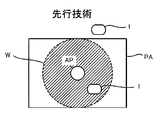
- radio wave reachable range the range in which radio waves reach from the wireless LAN access point AP installed in the game center
- permission area the area that the store manager wants to allow the player to play the game as in the game center
- the radio wave output intensity is set so that the radio wave reaches the entire site PA
- the radio wave reachable range W from the wireless LAN access point AP is set so that the store manager plays the game to the player as outside the site PA of the game center. It also extends to areas that you do not want to allow (hereinafter referred to as “prohibited areas”). In other words, there arises a problem that remote play becomes possible outside the area desired by the store manager.
- an object of the present invention is to provide a game device that enables remote play in a stable communication environment within an area desired by a store manager.
- the game device of the present invention is connected to a wireless relay device capable of wireless communication with a plurality of mobile terminals and can play a game from each mobile terminal, and each mobile terminal wirelessly connected to the wireless relay device
- a wireless relay device capable of wireless communication with a plurality of mobile terminals and can play a game from each mobile terminal, and each mobile terminal wirelessly connected to the wireless relay device
- An acquisition unit (Sc101 to Sc105) for acquiring the corresponding received signal strength
- a determination unit (Sc106 to Sc108) for determining whether or not the received signal strength acquired by the acquisition unit has reached a predetermined reference strength
- a game permission control unit (Sc111 to Sc113) that permits game play from the portable terminal to the portable terminal determined to have reached the predetermined reference strength by the determination unit.
- a reference strength for example, ⁇ 70 [dBm]
- a received signal strength signal strength of a radio signal
- the game play corresponding to the portable terminal set by the game device and having the received signal strength reaching the set reference strength is permitted.
- it means that game play from the mobile terminal is prohibited by the game permission control unit for the mobile terminal that is determined by the determination unit not to have reached the reference strength.
- a predetermined reference strength (P) range is set inside the radio wave reach (W) from the wireless relay device (20) and in the store area (PA). .
- game play from the portable terminal (30) outside the range of the predetermined reference strength (P) is prohibited.
- a mode for prohibiting game play from the mobile terminal with respect to the mobile terminal determined to have not reached the reference strength a configuration in which game play is immediately prohibited (that is, not permitted) or a game that is already in progress Can be exemplified and the game play is prohibited (that is, not permitted) from the next game.
- the determination unit determines that the reference strength has not been reached, a mode in which game play is prohibited when a predetermined condition is subsequently satisfied is also included.
- the “predetermined reference strength” may be configured such that the game device has a setting unit for setting the predetermined reference strength so that the store manager can change the “predetermined reference strength”.
- the game device may be configured to have a fixed value that cannot be changed by setting a “predetermined reference strength” when the game device is shipped.
- the “portable terminal” is, for example, a portable terminal equipped with a wireless LAN device compliant with the IEEE 802.11 series standard, and can be exemplified by a portable game machine and a smartphone.
- the wireless LAN standard is arbitrary.
- the “wireless relay device” is a relay device that connects the mobile terminal and the game device in a communicable manner, and may include other functions such as a router and a HUB.
- the installation location of the wireless relay device is arbitrary, and examples thereof include a wall or a ceiling of a game center. Further, it may be built in the game device. Further, a plurality of wireless relay devices may be provided for the game device. A plurality of wireless relay devices are installed, for example, in two locations, the inside of the game device and the ceiling of the floor where the game device is installed, or the same floor (for example, the first floor) and the other floor (for example, the game device) You may make it install in two places with the 2nd floor. In this case, one of the two permitted areas for the two wireless relay devices may include the other.
- a plurality of permission areas corresponding to a plurality of wireless relay devices may partially overlap to form one wide permission area, or the plurality of permission areas may contact each other without overlapping It may be separated.
- the wireless relay device and the game device that supports remote play are installed in the same site.
- the wireless relay device may be dedicated to one game device, or may be shared with other services at a plurality of game devices or game centers.
- the game device of the present invention includes a connection response unit (Sb207 and Sb208) that makes a connection response to a connection requesting mobile terminal that has made a connection request among the mobile terminals, and a connection confirmation receiving unit (Sb210) that receives a connection confirmation operation of a player. ) And a registration unit (Sb211) that registers identification information corresponding to the connection requesting portable terminal that has received the connection confirmation operation in a registration list, and the game permission control unit (Sc111 to Sc113) Playing a game from the portable terminal with respect to the registered portable terminal whose identification information is registered in the list and having been determined by the determination unit to have reached the predetermined reference strength May be permitted.
- the game apparatus sends a connection response to the portable terminal that has received the connection request, and registers the portable terminal in the registration list according to the determination of the player who owns the portable terminal that has received the connection response. Therefore, when registering a mobile terminal in the registration list, it is not necessary to perform a complicated procedure of separately inputting a MAC address or the like as identification information of the mobile terminal.
- the game device may further include an input unit that inputs credit information indicating the number of credits consumed in the game play.
- the registration unit may register the identification information corresponding to the connection request portable terminal for which the input of credit information has been completed in the input unit in the registration list.
- Examples of the credit information input unit include a configuration in which the number of credits is incremented according to the number of medals or coins inserted, and a configuration in which credit information stored in a storage medium such as a server or a card is used. Therefore, when the identification information corresponding to the connection requesting portable terminal for which the input of credit information has been completed is registered in the registration list, the state in which the portable terminal is registered in the registration list is the portable terminal possessed by the player And the credit information input by the player. In permitting remote play (game play), a minimum credit number may be defined. For example, when the minimum number of credits is set to “50”, the minimum credit number may not be registered in the registration list.
- the game permission control unit determines that the predetermined reference strength has not been reached by the determination unit for the registered portable terminal that has permitted the game play, the game permission control unit
- the game information from the registered portable terminal is prohibited by giving invalidation information (prohibition flag) for invalidating the permission of the game play to the identification information corresponding to the completed portable terminal. If it is determined again that the reference strength has been reached, the invalidation information may be canceled to allow game play from the registered mobile terminal.
- the wireless relay device includes a plurality of individual wireless relay devices, and the game device of the present invention is communicably connected to the plurality of individual wireless relay devices, with respect to each of the plurality of individual wireless relay devices.
- the predetermined reference intensity may be provided individually. According to this game device, since a plurality of wireless relay devices are provided and the reference strength can be individually set for each wireless relay device, according to the size and shape of the area desired by the store manager, Allowed areas can be set by reducing the number of places where radio waves do not reach.
- the mobile device when an instruction regarding game play is received from a mobile terminal that does not permit game play, the mobile device is notified that game play is not permitted. It may be.
- the “instruction regarding game play” includes, for example, a request for updating game operation information by the player and the progress of the game displayed on the mobile terminal.
- the player's portable terminal in a place where the reference intensity is not reached even within the range where radio waves reach, the player's portable terminal is notified that remote play is not permitted at that place. The player can be encouraged to move to an effective area.
- the determination unit sets a signal strength weaker than the predetermined reference strength, instead of the predetermined reference strength, for the mobile terminal that is proceeding with the game play.
- the determination may be made using the lower limit reference intensity.
- the reference strength eg, ⁇ 70 [dBm]
- the lower limit reference strength eg, ⁇ 80 [dBm]
- the lower limit reference intensity may be fixed with respect to the set reference intensity (that is, a value that is weaker than the reference intensity by a predetermined value, for example, “(reference intensity ⁇ 10) [dBm]”). As in the case, it may be set individually.
- the game permission control unit determines that the predetermined reference strength has not been reached for a plurality of times for the mobile terminal that is proceeding with the game play. In some cases, the progress of the game play may not be permitted. According to this game apparatus, when it is determined that the received signal strength has not reached the reference strength for a plurality of times, the game play is not permitted. Even if it weakens, remote play can be continued without interruption.
- FIG. 2 is a block diagram of the game system GS according to the embodiment of the present invention.
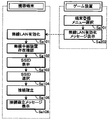
- the game system GS includes a game device 10 installed in a game center or the like, a wireless relay device 20, and a portable terminal 30.
- the portable terminal 30 is a portable terminal that is carried by a player or lent out at a game center, and is separated from the game apparatus 10 by wirelessly connecting the game apparatus 10 and the portable terminal 30 via the wireless relay apparatus 20. The remote play of the game from the portable terminal 30 becomes possible at the place.
- the game apparatus 10 of the present embodiment is an apparatus that executes a medal game that is played using medals, and includes a main control unit 120, a sub station 110, and a plurality of stations 130.
- Each station 130 is a device for providing game play to a player, and a medal process for executing a reception process for receiving a medal inserted by the player and a payout process for paying out a medal acquired as a result of the game.
- the substation 110 is a device for registering the portable terminal 30 that performs remote play of the game executed on the game device 10, and has a management function for the purpose of operation management by the store manager.
- the substation 110 receives a medal inserted by the player for remote play, a medal processing unit 112 that executes a payout process for paying out and paying out the player's medal at the end of the remote play, and various information
- a display unit 113 that displays a player, an operation unit 114 that receives an operation of a player, a storage unit 115 that stores various types of information, and external communication that is wired to the wireless relay device 20 so as to be communicable with the wireless relay device 20 Unit 116 and a control unit 111 that comprehensively controls the operation of each unit of the substation 110.
- the operation unit 114 may be used as an operation unit operated by the store manager.
- the main control unit 120 is a device that controls the progress of the game executed on the game apparatus 10 and receives operation information from each station 130 and notifies the game result to each station 130, and controls the progress of the game.
- the mobile terminal 30 includes a display unit 301 that displays the progress of the game, an operation unit 302 that receives player operations, a wireless communication unit 303 for wireless communication with the wireless relay device 20, and operations of each unit of the mobile terminal 30. And a control unit 304 that performs overall control.
- the wireless relay device 20 is a wireless transceiver (wireless LAN access point) that bridges a wired LAN and a wireless LAN, and thereby enables communication between the game device 10 and the portable terminal 30.
- the wireless relay device 20 is wired to the external communication unit 116 so as to be communicable with the wireless communication unit 201 for wireless communication with the wireless communication unit 303 of the mobile terminal 30 and the external communication unit 116 of the game apparatus 10.
- a wired communication unit 202 and a control unit 203 that comprehensively controls the operation of each unit of the wireless relay device 20 are provided.
- the game system GS of the present embodiment carries the game executed on the game device 10 by connecting the game device 10 and the portable terminal 30 through the wireless relay device 20 so that they can communicate with each other. Remote play that allows remote play from the terminal 30 is enabled. Note that, as described above, communication between the game apparatus 10 and the portable terminal 30 is performed via the wireless relay apparatus 20, but in the following description, in order to simplify the description, the wireless relay apparatus The presence of 20 may be omitted and only the relationship between the game apparatus 10 and the portable terminal 30 may be expressed.
- Communication between the game apparatus 10 as a server and the mobile terminal 30 as a client is a pull-type communication in which the HTTP protocol is adopted and the client extracts data from the server. Therefore, data is not sent from the server to the client at an arbitrary timing.
- the communication relating to the progress of the game in the remote play the communication for reflecting the operation information of the player in the mobile terminal 30 to the game and the communication for updating the progress of the game displayed on the mobile terminal 30. Both are realized as an HTTP request from the mobile terminal 30 to the game apparatus 10.
- the mobile terminal 30 transmits an HTTP request including the operation information to the game apparatus 10 and receives the HTTP request.
- the played game device 10 reflects the operation information in the progressing game.
- the mobile terminal 30 periodically transmits an HTTP request for requesting a web page indicating the progress of the game to the game apparatus 10, and the game apparatus 10 that has received the HTTP request A web page indicating the progress is transmitted to the mobile terminal 30.
- the portable terminal 30 updates the progress of the game by displaying the Web page received from the game apparatus 10 on the display unit 301.
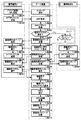
- ⁇ A-2 Flow until remote play starts> Before performing a remote play in which a game executed on the game apparatus 10 is played remotely from the mobile terminal 30, the player needs to register the mobile terminal 30 in the game apparatus 10 at the sub station 110. Therefore, a process for registering the mobile terminal 30 in the game apparatus 10 will be described with reference to a sequence chart shown in FIG.
- ⁇ A-2-1 Connection processing between portable terminal 30 and wireless relay device 20>
- the player operates the operation unit 114 from the operation menu displayed on the display unit 113 of the substation 110 to select the “Register Remote Play Terminal” item (Sa201).
- the sub station 110 activates the wireless LAN mode of the portable terminal 30 possessed by the player for the player and selects the wireless relay device 20 having a game name that can be played on the game device 10.
- a message prompting this is displayed on the display unit 113 (Sa202).
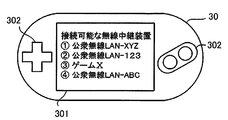
- the control unit 304 determines whether there is a connectable wireless relay device 20 (Sa102). When determining that there is a connectable wireless relay device 20, the control unit 304 causes the display unit 301 to display an SSID (ServiceIDSet Identifier) that is an identifier of the wireless relay device 20 (Sa103).
- SSID ServiceIDSet Identifier
- a game name that can be played on the game device 10 connected to the wireless relay device 20 is set in advance as an SSID. Therefore, as shown in FIG. 4, a game name (game X) is displayed on the display unit 301 as the SSID.
- illustration is omitted, in step Sa102, when it is determined that there is no connectable wireless relay device 20, the portable terminal 30 invalidates the wireless LAN mode.
- the player selects an SSID in which a game name that can be played on the game apparatus 10 is displayed (Sa104).
- the wireless control unit 303 of the mobile terminal 30 controls connection establishment of wireless communication between the wireless relay device 20 using the selected SSID as an identifier and the mobile terminal 30 (Sa105).
- the display unit 301 displays that the connection has been established (Sa106).
- first connection state the state where the SSID corresponding to the wireless relay device 20 wired to the game device 10 is selected and communication between the mobile terminal 30 and the game device 10 is established is described as “ This is referred to as “first connection state”.
- the registration process is a process of registering the mobile terminal 30 in the game apparatus 10 according to the player's determination.
- the mobile terminal 30 of the player who operates the substation is distinguished as “mobile terminal A”, and the mobile terminals 30 of other players are distinguished as “mobile terminal B”.
- the substation 110 causes the display unit 113 of the substation 110 to display a message prompting the player to activate the Web browser BA of the mobile terminal A and specify an arbitrary URL (Uniform Resource Locator) (Sb201).
- URL Uniform Resource Locator
- the mobile terminal A When the player activates the web browser BA of the mobile terminal A according to the message displayed on the display unit 113 and specifies the displayed URL (Sb101), the mobile terminal A displays the Web corresponding to the specified URL. An HTTP request for requesting a page is transmitted to the game apparatus 10 (Sb102). In addition, since designation of URL is used only as an opportunity to transmit an HTTP request, the URL is not limited to a specific format.
- the game apparatus 10 that has received the HTTP request transmits an ARP request to the transmission source of the HTTP request using an address resolution protocol (ARP) (Sb202), and uses the MAC address as identification information of the mobile terminal A.
- ARP address resolution protocol
- address) is acquired (Sb203).
- the game device 10 transmits a broadcast message by designating the IP address of the portable terminal A that is the transmission source of the HTTP request, the portable terminal A having the designated IP address becomes the MAC address of the portable terminal A. , The game apparatus 10 acquires this.
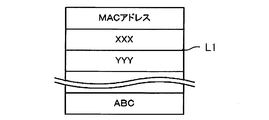
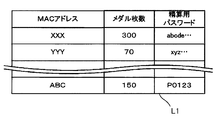
- FIG. 6 is a diagram showing a part of the stored contents of the remote play terminal list (registration list) L1.
- the remote play terminal list L1 is a list of MAC addresses corresponding to all the mobile terminals 30 that are stored in the storage unit 115 and are connected to the game apparatus 10.
- the game apparatus 10 determines whether or not the MAC address exists in the remote play terminal list L1 (Sb204). In this determination, when it is determined that the MAC address to be confirmed exists in the remote play terminal list L1 (Sb204: YES), the mobile terminal A is already in a second connection state (registered in the game apparatus 10) described later. .
- the game device 10 proceeds to step Sc111 in FIG. 13 described later, and determines whether or not the remote play is permitted. In the determination, if remote play of the mobile terminal A is permitted, the game apparatus 10 sends the progress status of the game executed on the game apparatus 10 to the mobile terminal A as a response to the HTTP request. A Web page indicating is transmitted (Sc113). On the other hand, in the determination of step Sb204, it is determined that the MAC address to be confirmed does not exist in the remote play terminal list L1 before the portable terminal A is registered in the game apparatus 10 (Sb204: NO), the game The device 10 transmits a Web page for remote play terminal registration to the mobile terminal A having the MAC address as a response to the HTTP request (Sb205).
- the substation 110 transmits a web page for remote play terminal registration from the game apparatus 10 to the mobile terminal A, and then displays the “connection” displayed on the Web page of the mobile terminal A on the display unit 113 of the substation 110.
- a message prompting the player to press the link button B1 is displayed (Sb206).
- the portable terminal A displays the Web page for remote play terminal registration including the “connect” link button B1 on the Web browser BA as shown in FIG. 7 (Sb103). ).
- the player operates the portable terminal A according to the message displayed on the display unit 113 of the substation 110 and presses the “connect” link button B1 on the web browser BA (Sb104).
- the portable terminal A transmits an HTTP request for requesting a web page corresponding to the URL indicating the connection request to the game device 10 (Sb105).
- the game apparatus 10 receives the HTTP request (URL indicating the connection request)
- the game apparatus 10 transmits a Web page including a “connection successful” message to the mobile terminal A (connection request mobile terminal) that is the transmission source (Sb207). .
- connection request When a plurality of connection requests (Sb105 and Sb305) are generated by pressing the “connection” link button B1 (Sb104 and Sb304) on a plurality of mobile terminals 30 (mobile terminal A and mobile terminal B), the game device 10 transmits a web page including a “successful connection” message to the mobile terminal 30 (mobile terminal A) that is the transmission source of the connection request received first (Sb207), and the connection request received second and later A web page including a “connection failure” message is transmitted to the mobile terminal 30 (mobile terminal B) of the transmission source (Sb208). That is, in the mobile terminal A that has received the web page including the “connection success” message, “connection success” is displayed on the web browser BA as shown in FIG. 8 (Sb106), and the “connection failure” message is received. In the mobile terminal B, “connection failure” is displayed on the Web browser BA as shown in FIG. 9 (Sb306).
- step Sb207 the substation 110 causes the game apparatus 10 to transmit a Web page including a “connection success” message to the mobile terminal A, and then displays a final confirmation message on the display unit 113 of the substation 110.
- a “connection complete” button is displayed when “successful connection” is displayed on your mobile terminal, and a “retry” button is displayed when “connection failure” is displayed. “Please press” message, and “Connection complete” button and “Retry” button are displayed.
- the player confirms that “successful connection” is displayed on the web browser BA of the mobile terminal A owned by the player, and presses the “connection complete” button displayed on the display unit 113 of the substation 110. (Sb107). That is, the player performs a connection confirmation operation.
- the substation 110 receives a press of the “connection complete” button (Sb210), displays a message “connection complete” on the display unit 113, and as shown in FIG.
- the MAC address “ABC” of the portable terminal A that has transmitted the “successful connection” message is added to the remote play terminal list L1 stored in the storage unit 115 (Sb211). That is, the MAC address of the portable terminal A that has received the connection confirmation operation by the player is added to the remote play terminal list L1. That is, according to the player's judgment, the MAC address of the portable terminal A is registered in the remote play terminal list L1.
- the substation 110 causes the display unit 113 to display a message prompting the player to insert a medal.
- a medal inserted into the medal processing unit 112 is received by the player (Sb212)
- the substation 110 uses the medal number “150” inserted into the medal processing unit 112 and counted as a remote play as shown in FIG.
- the MAC address “ABC” registered in the terminal list L1 is linked and stored in the storage unit 115 (Sb213).
- the substation 110 causes the display unit 113 to display a message that prompts the player to input a password for settlement.
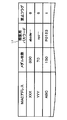
- the input password (P0123) is stored in the remote play terminal list L1 as with the number of medals, as shown in FIG.
- the registered MAC address “ABC” is associated with and stored in the storage unit 115 (Sb215, FIG. 12).
- the password is used as identity verification means when paying out remaining medals from the substation 110 when the player finishes the remote play using the portable terminal 30.
- a state where the registration of the MAC address of the mobile terminal 30 in the remote play terminal list L1 is referred to as a “second connection state”. That is, the “second connection state” is a state where the association between the portable terminal 30 possessed by the player and the number of medals inserted by the player is completed.
- this series of procedures is a process for confirming whether or not the player possessing the mobile terminal 30 is the same as the player who has inserted medals.
- this series of procedures is a process for confirming whether or not the player possessing the mobile terminal 30 is the same as the player who has inserted medals.
- the player operating the substation 110 is allowed to designate the portable terminal 30 possessed by the player himself to be registered in the game apparatus 10. As a result, the player possessing the portable terminal 30 and the player who has inserted medals are the same.
- ⁇ A-3 Remote play prohibition control process>
- the remote play prohibition control process of the mobile terminal 30 that is executed by the game apparatus 10 will be described.
- the game apparatus 10 transmits the signal strength (reception signal strength) of the radio signal transmitted from the mobile terminal 30 and received by the radio relay device 20 within the range of radio waves from the radio relay device 20.
- the remote play prohibition control process is also a game permission control process.
- the reference strength P it is possible to meet the demand of the store manager who wants to permit remote play only in the store area PA (in the game center premises).
- the remote play permission of the mobile terminal 30 is permitted in accordance with the signal strength of the radio signal transmitted from the mobile terminal 30 and received by the wireless relay apparatus 20 within the range where the radio relay apparatus 20 receives radio waves. Or it controls to switch prohibition.
- an RSSI Received Signal
- Strength Indication Strength Indication
- the RSSI value of the mobile terminal 30 shows a higher value. Since the signal strength of the radio signal transmitted from the mobile terminal 30 and received by the wireless relay device 20 becomes weaker as the mobile terminal moves away from the wireless relay device 20, the RSSI value of the mobile terminal 30 shows a lower value. In the present embodiment, using this fact, it is determined whether the RSSI value of the mobile terminal 30 has reached the reference strength P set in advance in the game device 10 in the range where radio waves reach from the wireless relay device 20. By doing so, control is performed so as to switch permission or prohibition of remote play of the portable terminal 30.
- the RSSI value of the mobile terminal 30 is higher than the reference strength P with respect to the mobile terminal 30 (registered mobile terminal) in the second connection state located in a range where radio waves reach from the wireless relay device 20. In such a case, remote play by the portable terminal 30 is permitted, and when the RSSI value of the portable terminal 30 is lower than the reference strength P, remote play by the portable terminal 30 is prohibited.
- the radio relay device 20 has the RSSI values of all the mobile terminals 30 in the first connection state and the second connection state (that is, the signal strength of the radio signal transmitted from each mobile terminal 30 and received by the radio relay device 20). ) Is measured.
- the game apparatus 10 uses the RSSI value information of each mobile terminal 30 acquired from the wireless relay device 20, and the RSSI value reaches the reference strength P for each of all mobile terminals 30 in the second connection state.
- the remote play of the mobile terminal 30 determined to be permitted is permitted, and the remote play of the mobile terminal 30 determined to have the RSSI value not reached the reference strength P is controlled.
- the remote play of the portable terminal 30 whose RSSI value is equal to or higher than the reference strength P is permitted, and the remote play of the portable terminal 30 whose RSSI value is less than the reference strength P is prohibited.
- the timing at which the wireless relay device 20 measures the RSSI value is, for example, every 10 seconds, and the interval is arbitrary.
- the portable terminal 30 always transmits a radio signal during the wireless LAN mode (Sc301).
- the wireless relay device 20 receives a radio wave signal transmitted from the mobile terminal 30 (Sc201).
- the wireless relay device 20 receives the radio signal transmitted from the mobile terminal 30 and measures the signal strength of the received radio signal (Sc202).
- the game device 10 and the wireless relay device 20 are connected in a relationship between a client (game device 10) and a Web server (wireless relay device 20), and each device is controlled by the HTTP protocol.
- the game device 10 requests the wireless relay device 20 for wireless LAN environment information (Sc101). Specifically, an HTTP request for requesting a Web page indicating wireless LAN environment information is transmitted to the wireless relay device 20.
- the wireless LAN environment information is information including contents in which the MAC address corresponding to each mobile terminal 30 in the first connection state or the second connection state is associated with the RSSI value.
- the wireless relay device 20 responds to the game device 10 with the wireless LAN environment information (Sc203). Specifically, a web page indicating wireless LAN environment information is transmitted to game device 10.
- the game apparatus 10 acquires wireless LAN environment information as a response from the wireless relay apparatus 20 (Sc102). Specifically, an HTML file constituting a Web page indicating wireless LAN environment information is acquired.
- the request for the wireless LAN environment information to the wireless relay device 20 of the game device 10 is repeatedly executed every 10 seconds.
- the game device 10 uses the wireless LAN environment information acquired from the wireless relay device 20 to set permission or prohibition of remote play of each mobile terminal 30 in the second connection state with respect to the game device 10. Execute the process. Specifically, since all the mobile terminals 30 registered in the remote play terminal list L1 are the mobile terminals 30 in the second connection state, the game apparatus 10 stores the remote play terminals stored in the storage unit 115. The MAC address corresponding to each mobile terminal 30 registered in the list L1 is selected as a confirmation target (Sc103).
- the game apparatus 10 retrieves the HTML file so as to search the RSSI value corresponding to the MAC address to be confirmed from the text information of the HTML file. Analyze (Sc104). In this way, the game device 10 acquires the RSSI value corresponding to the MAC address to be confirmed from the wireless LAN environment information acquired from the wireless relay device 20 (Sc105).
- the game device 10 compares the acquired RSSI value with the reference strength P (Sc106). If the RSSI value is lower than the reference strength P (Sc106: YES), the game apparatus 10 remotely controls the portable terminal 30 having the MAC address to be confirmed (MAC address corresponding to the RSSI value).
- Set play prohibition Specifically, as shown in FIG. 14, the remote play prohibition flag (invalidation information) is stored in the remote play terminal list L1 stored in the storage unit 115 in association with the MAC address “ABC” to be confirmed. Has been.
- the remote play prohibition flag is set to an initial value at the stage of transition from the first connection state to the second connection state. As an initial value, “0” indicating permission is set.
- the game apparatus 10 When setting the remote play prohibition, the game apparatus 10 updates the remote play prohibition flag to “1” indicating the prohibition (Sc107). That is, if the remote play prohibition flag stored in association with the MAC address “ABC” is “0” indicating permission, it is changed to “1” indicating prohibition, and if it is “1” indicating prohibition, it is left as it is. To do.
- the game apparatus 10 sets the remote play permission for the mobile terminal 30 having the MAC address to be confirmed. Specifically, the remote play prohibition flag is updated to “0” indicating permission (Sc108).
- the remote play prohibition flag stored in association with the MAC address to be confirmed is “0” indicating permission, it is left as it is, and if it is “1” indicating prohibition, it is changed to “0” indicating permission. .
- “1” indicating prohibition may be used instead of “0” indicating permission.
- the game apparatus 10 stores in the storage unit 115 a series of processes from selection of the confirmation MAC address (Sc103) to remote play prohibition setting (Sc107) or remote play permission setting (Sc108). The process is repeatedly executed for all the MAC addresses in the remote play terminal list L1 (Sc109: NO). When a series of processing is completed for all the MAC addresses in the remote play terminal list L1 (Sc109: YES), the game device 10 returns to Step Sc101 and requests the wireless relay device 20 for wireless LAN environment information. Since the game apparatus 10 requests the wireless relay apparatus 20 for wireless LAN environment information every 10 seconds, each mobile terminal 30 registered in the game apparatus 10, that is, the remote play stored in the storage unit 115 is used.
- the state of each MAC address in the terminal list L1 is updated every 10 seconds.
- the storage content (FIG. 14) of the remote play terminal list L1 has registered information necessary for the remote play prohibition process (game permission control process) for each mobile terminal 30 (each MAC address). It becomes.
- the game apparatus 10 determines whether or not the received HTTP request includes operation information and the remote play terminal stored in the storage unit 115. It is determined whether or not the remote play prohibition flag stored in association with the MAC address to be confirmed in the list L1 is “0” indicating permission.
- the game apparatus 10 reflects the operation information in the progressing game (Sc111: YES ⁇ Sc112).
- the remote play prohibition flag is “1”
- the determination result in step Sc111 is NO and no processing is performed on the received HTTP request. Do not do.
- the steps specifically, steps Sc114, Sc307, and Sc308) when the determination result of step Sc111 is negative (Sc111: NO) are related to the modification of the present embodiment. It is processing. Therefore, the details will be described later.
- the mobile terminal 30 periodically requests an HTTP request (to the game device 10 to update the progress of the game displayed on the mobile terminal 30 ( (HTTP request not including operation information) is transmitted (Sc304).
- HTTP request not including operation information is transmitted (Sc304).
- the game apparatus 10 determines whether or not the received HTTP request includes operation information, and remote play of the mobile terminal 30 that has transmitted the HTTP request is permitted. Is confirmed (Sc111), and processing according to the confirmation result is executed.
- the game apparatus 10 when the game apparatus 10 receives an HTTP request for requesting a web page indicating the progress of the game from the portable terminal 30 (Sc110), the game apparatus 10 stores the remote play terminal list L1 stored in the storage unit 115. It is determined whether or not the remote play prohibition flag stored in association with the MAC address to be checked is “0” indicating permission (Sc111). When the received HTTP request does not include operation information and the remote play prohibition flag is “0”, the game apparatus 10 indicates to the mobile terminal 30 a Web indicating the progress of the game. The page is transmitted (Sc111: YES ⁇ Sc113).
- step Sc111 determines whether or not the received HTTP request includes operation information.
- the determination result in step Sc111 is NO and no processing is performed on the received HTTP request. Do not do.
- the mobile terminal 30 receives a Web page from the game apparatus 10 (Sc305)
- the progress state of the game displayed on the mobile terminal 30 is updated by causing the display unit 301 to display the received Web page on the Web browser BA. (Sc306).
- the game apparatus 10 when the remote play is permitted, the game apparatus 10 reflects the operation information of the player in the game or transmits a web page indicating the progress of the game to the mobile terminal 30.
- the portable terminal 30 can continue the remote play of the game.
- the game apparatus 10 when remote play is prohibited, the game apparatus 10 does not perform any processing, so that the operation information of the player is not reflected in the game. Further, since the progress of the game displayed on the mobile terminal 30 is not updated, the player cannot know the change in the progress of the game. That is, it is impossible to continue the remote play of the game using the mobile terminal 30.
- ⁇ A-4 Setting of reference strength P> Next, a configuration that allows the store manager to set the reference strength P will be described.
- the physical environment, such as the size and shape of the store area, and the operating form of the store differ from store to store, so the reference strength P that distinguishes the remote play permission area from the prohibited area can be set by the store manager. It has become.
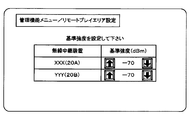
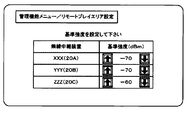
- the store manager When changing the reference strength P, the store manager inputs a manager key to the substation 110 and shifts the substation 110 to the test mode. Next, by selecting the “remote play area setting” item, which is one of the management function menus, the reference strength P corresponding to the wireless relay device 20 connected to the game device 10 is selected as shown in FIG. The current setting status ( ⁇ 70 [dBm]) is displayed on the display unit 113.
- the reference strength P is changed by the operation of the operation unit 114, the changed new value is stored in the storage unit 115 and used as the reference strength P in the subsequent remote play prohibition control.
- the game apparatus 10 has a remote play permission area and a remote play prohibition area even when the mobile terminal 30 is located in a range where radio waves reach from the wireless relay apparatus 20. It can be set as intended by the store manager. And remote play in the said portable terminal 30 can be reliably prohibited by performing remote play prohibition control with respect to the portable terminal 30 located in the prohibition area of remote play. In other words, the game device 10 that can be played remotely using the mobile terminal 30 can be effectively managed in accordance with the store manager's intention.
- ⁇ B-1 Multiple Wireless Relay Devices 20>
- the wireless relay device 20 may be used.
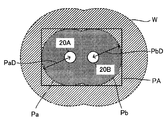
- FIG. 16 when the shape of the store area is rectangular (rectangular), two wireless relay devices 20A and 20B are installed, and remote units corresponding to the wireless relay devices 20A and 20B are installed.
- the reference strengths Pa and Pb are set so that the play permission area is maximized in the store. For example, as shown in FIG.
- the mobile terminal 30 can be used by installing the plurality of wireless relay devices 20 corresponding to the shape.
- the game apparatus 10 capable of remote play can be effectively operated in accordance with the store manager's intention.
- the game system GS has one wireless relay device 20A wired to the game device 10 and the wireless relay device 20A.
- the portable terminal 30 configured with the other wireless relay device 20B to be wirelessly connected and established with the wireless relay device 20B is connected to the game device 10 via both the wireless relay device 20B and the wireless relay device 20A.
- the reference strengths Pa and Pb corresponding to each of the plurality of wireless relay devices 20A and 20B are stored in the storage unit 115 of the game device 10, and the “remote play area setting” item in the management function menu of the game device 10 is set. By selecting, the reference strengths Pa and Pb corresponding to the radio relay apparatuses 20A and 20B can be individually set.
- a distance PaD that is the radius of a circle that has the maximum area in the store centering on the wireless relay device 20A and a distance PbD that is the radius of a circle that has the maximum area in the store centering on the wireless relay device 20B. If they are equal, the reference strength Pa of the radio relay device 20A and the reference strength Pb of the radio relay device 20B can be set to the same value ( ⁇ 70 [dBm]) as shown in FIG.
- the game system GS includes a wireless relay device 20A that is wired to the game device 10 and the wireless relay device.
- the portable terminal 30 that is connected to the wireless relay device 20B via both the wireless relay device 20B and the wireless relay device 20A is configured by the wireless relay devices 20B and 20C that are wirelessly connected to the 20A.
- Communication with the game apparatus 10. a distance PaD that is the radius of a circle that has the maximum area in the store centering on the wireless relay device 20A, and a distance PbD that is the radius of a circle that has the maximum area in the store centering on the wireless relay device 20B.
- the distance PcD which is the radius of the circle having the largest area in the store with the radio relay device 20C as the center, is shorter than PaD and PbD.
- the reference strength Pa of the radio relay device 20A and the reference strength Pb of the radio relay device 20B are set to the same value ( ⁇ 70 [dBm]), and the reference strength of the radio relay device 20C is set.
- Pc is set to a value larger than Pa and Pb ( ⁇ 60 [dBm]).
- the store manager appropriately sets each reference strength P according to the shape of the store area, so that remote play is prohibited outside the store area, but the remote play prohibited area is minimized within the store area. Thus, it is possible to set a remote play permission area.
- ⁇ B-2 Remote play prohibition notification>
- the aspect in which the game apparatus 10 performs no processing on the HTTP request received from the mobile terminal 30 has been described as the control for prohibiting remote play.
- the present invention is not limited to this. Instead, the game apparatus 10 may notify the mobile terminal 30 that remote play is currently prohibited.
- the steps (specifically, steps Sc114, Sc307, and Sc308) when the determination result of step Sc111 is negative (Sc111: NO) are processes according to the modification of the present embodiment. .
- a specific control flow will be described with reference to the sequence chart shown in FIG.
- the game apparatus 10 receives an HTTP request for requesting a web page indicating the progress of the game from the portable terminal 30 (Sc110), whether or not the remote play of the portable terminal 30 that has transmitted the HTTP request is permitted. (Sc111), and notifies the portable terminal 30 according to the determination result.
- the game device 10 transmits a Web page indicating that remote play is currently prohibited instead of the Web page indicating the progress of the game (Sc114).
- the portable terminal 30 displays the received Web page on the Web browser BA on the display unit 301 (Sc308, FIG. 20). Specifically, as shown in FIG. 20, “Remote play prohibited” and “Move to remote play permission area” are displayed on the display unit 301 of the mobile terminal 30.
- the player can know the reason why the remote play cannot be executed. That is, the reason why the player who has recognized the contents of the display cannot execute the remote play is not the poor connection of communication between the portable terminal 30 and the game apparatus 10, but the communication connection is normal but the portable terminal 30 It can be determined that the signal of the radio signal being transmitted does not reach the reference intensity P.
- ⁇ B-3 Lower reference strength Plow>
- the present invention is not limited to this, and the remote play prohibition control may be executed based on the lower limit reference intensity Plow that is set so that the signal intensity is weaker than the reference intensity P.
- the lower limit reference intensity Plow is used as follows. For example, when a device that transmits radio waves in the same frequency band is in the vicinity, radio waves between the wireless relay device 20 and the mobile terminal 30 are radio waves transmitted from the devices. Therefore, as shown in FIG. 21, the signal intensity RS of the radio signal is not constant and is not stable. For this reason, in the portable terminal 30 located near the boundary of the reference strength P, the remote play prohibition and remote play permission states do not continue stably. Therefore, when the reference intensity P is set, the lower limit reference intensity Plow that is set to be lower than the reference intensity P is used for remote play prohibition control.
- the remote play is not permitted, and the mobile terminal 30 having a signal strength (range R2) greater than or equal to the lower reference strength Plow. Allows remote play.
- the game apparatus 10 automatically sets a lower limit reference strength Plow obtained by subtracting a predetermined value from the reference strength P.
- the lower limit reference intensity Plow is set lower than the set reference intensity P by a fixed width. That is, a value that is weaker than the reference intensity P by a predetermined value, for example, the reference intensity P [dBm] minus 10 [dBm] is set. For example, when the reference intensity P is ⁇ 70 [dBm], the lower limit reference intensity Plow is ⁇ 80 [dBm].
- the lower limit reference intensity Plow may not be linked with the value of the reference intensity P but may be set individually.
- the lower limit reference strength Plow is used as a target to be compared with the RSSI value.
- the utilization method of the comparison result is the same as that of embodiment mentioned above.
- the RSSI value of the mobile terminal 30 is compared with the reference strength P, and when the RSSI value is lower than the reference strength P, the mobile terminal 30
- the aspect of performing the remote play prohibition setting has been described.
- the present invention is not limited to this, and when the comparison between the RSSI value of the mobile terminal 30 and the reference strength P is repeated, the RSSI value is lower than the reference strength P over a predetermined number of times. In this case, remote play may be prohibited.
- the prohibition count is stored in association with the MAC address. Then, in the remote play prohibition control, the RSSI value of the mobile terminal 30 is compared with the reference strength P, and the RSSI value is lower than the reference strength P, and the prohibition flag indicates permission “ If it is “0”, the game apparatus 10 increases the prohibition count associated with the MAC address corresponding to the RSSI value by one. Next, the game apparatus 10 confirms whether or not the prohibition count is equal to or greater than a predetermined value (for example, 3 or more).
- a predetermined value for example, 3 or more
- the remote play prohibition flag in the remote play terminal list L2 is updated from “0” indicating permission to “1” indicating prohibition.
- a predetermined value e.g, 3 or more
- the remote play prohibition flag is not updated.
- the prohibition count is set to “0” as an initial value at the stage of transition from the first connection state to the second connection state.
- remote play prohibition control remote play is prohibited when the RSSI value is lower than the reference strength P for a predetermined number of consecutive times. Even if the signal strength of the radio signal with the terminal 30 is momentarily reduced, the remote play permission can be continued. In other words, the remote play permitted state continues stably, so that usability for the player can be improved.
- ⁇ B-5 Configuration Variation in Game Device 10>
- the aspect in which the remote play terminal lists L1 and L2 are stored in the storage unit 115 of the substation 110 has been described.
- the present invention is not limited to this, and the storage unit that stores the remote play terminal lists L1 and L2 only needs to be included in the game apparatus 10, and does not need to be included in the substation 110.
- the external communication unit 116 that is wired to the wireless relay device 20 may be included in the game device 10 and need not be included in the substation 110.
- ⁇ B-6 Variation of unit of reference strength P>
- the mode in which [dBm] is used as the numerical unit indicating the reference intensity P has been described.
- the present invention is not limited to this, and other units are available as the numerical unit indicating the reference intensity P. May be used.
- the unit [dBm] expressed as a negative number a unit expressed as a positive number (for example, percent) can be used.
- the set reference strength P is converted into the unit [dBm] in the game apparatus 10 in the remote play prohibition control described above. Comparison with the RSSI value of the portable terminal 30 measured by the wireless relay device 20 is performed.
- the store manager can intuitively understand the meaning of the numerical value when setting the reference strength P. Since it becomes easy, the usability with respect to a store manager can be improved.
- ⁇ B-7 Prohibited Process Variation 1>
- the mode in which the remote play is prohibited immediately after the prohibition setting is described for the portable terminal 30 in which the prohibition of the remote play is set.
- the present invention is limited to this. Instead, the remote play may be prohibited at an arbitrary timing after the prohibition is set. For example, in a stage where a series of games played remotely on the mobile terminal 30 is in the middle, even if the remote play prohibition is set, permission for remote play is continued until the series of games is completed. You may do it.
- the game apparatus 10 receives an HTTP request for requesting a web page indicating the progress of the game from the mobile terminal 30 (step Sc304 ⁇ step Sc110 in FIG.
- step Sc111 the game apparatus 10 Even when remote play is prohibited (that is, when NO is determined in step Sc111), the web page indicating the progress of the game is in the middle of a series of cycles of the game. However, after a series of cycles of the game is completed, the HTTP request is not processed. Similarly, when the game apparatus 10 receives an HTTP request including the operation information of the player for the portable terminal 30 from the portable terminal 30 (step Sc303 ⁇ step Sc110), the game apparatus 10 is also in the middle of a series of cycles of the game. Even if the remote play of the mobile terminal 30 is set to be prohibited (step Sc111: NO), the operation information is reflected in the game, but after a series of cycles of the game is completed, No processing is performed on the operation information. Thus, remote play is prohibited in the middle of a series of game cycles and the game is not interrupted, so that usability for the player can be improved.
- the RSSI value and the reference strength P are compared to prohibit or permit remote play.
- the mode of performing the setting has been described.
- the present invention is not limited to this, and the RSSI value and the reference strength P are compared at different timings, and remote play prohibition or permission is not set at the timing when the wireless LAN environment information is received. It may be.
- the game apparatus 10 stores an RSSI value from the wireless LAN environment information as a list, and receives an HTTP request for requesting a web page indicating the progress of the game from the mobile terminal 30.
- Step Sc304 ⁇ Step Sc110 in FIG. 13 an RSSI value corresponding to the mobile terminal 30 is acquired from the list, and a web page indicating the progress of the game is transmitted based on the result of comparison with the reference strength P. Decide whether or not to do.
- the RSSI value corresponding to the portable terminal 30 is acquired from the list in the same manner. Based on the result of comparison with the reference strength P, it is determined whether or not the operation information is reflected in the game.
- ⁇ B-9 Variations in configuration of game system GS>
- the aspect in which the game apparatus 10 and the wireless relay apparatus 20 are connected by wire has been described.
- the present invention is not limited to this, and the game apparatus 10 and the wireless relay apparatus 20 are wirelessly connected. You may comprise so that.
- the game apparatus 10 has a wireless LAN function, and is wirelessly connected between the external communication unit 116 and the wireless communication unit 201 of the wireless relay device 20.
- ⁇ B-10 Variations in the configuration of the game system GS>
- the game apparatus 10 performs a series of procedures until the mobile terminal 30 shifts from the first connection state to the second connection state, and then performs remote control using the reference strength P for the registered mobile terminal 30. Play prohibition control processing was performed.
- the present invention is not limited to this mode. Instead, remote play is permitted for the mobile terminal 30 registered through a series of procedures until the mobile terminal 30 is shifted from the first connection state to the second connection state. May be.
- the game apparatus 10 ⁇ / b> A (not shown) according to the present modification is a game apparatus 10 that can be connected to the wireless relay apparatus 20 that can perform wireless communication with a plurality of mobile terminals 30 and can play games from each mobile terminal 30.
- a connection response unit (Sb207 and Sb208 in FIG. 5) that makes a connection response to the mobile terminal 30 (connection request mobile terminal) that has requested connection among the mobile terminals 30, and a connection that accepts a connection confirmation operation by the player
- a confirmation accepting unit (Sb210 in FIG. 5), a registration unit (Sb211 in FIG.
- the game device 10A makes a connection response to the mobile terminal 30 that has received the connection request, and registers the mobile terminal 30 in the registration list according to the determination of the player who owns the mobile terminal 30 that has received the connection response. Therefore, when registering the mobile terminal 30 in the registration list, it is not necessary to perform complicated procedures such as separately inputting the MAC address of the mobile terminal 30.
- the game apparatus 10A further includes a determination unit (Sc106 to Sc108 in FIG. 13) that determines a communication state between the wireless relay device 20 and each of the mobile terminals 30 that are wirelessly connected. From the registered portable terminal, invalidation information (prohibition flag) that invalidates the permission of game play is assigned (set) to the identification information for the registered portable terminal that is determined to be in a communication failure state by the determination unit. When the determination unit determines that the communication state is good again, the invalidation information is canceled (the prohibition flag is reset), and the game play from the registered mobile terminal is permitted. You may do it.
- a determination unit Sc106 to Sc108 in FIG. 13
- the determination by the determination unit may adopt a form in which the communication state is determined using the reference strength P as in the above-described embodiment, or a form in which the communication state is determined based on whether communication is possible.
Landscapes
- Engineering & Computer Science (AREA)
- Multimedia (AREA)
- Physics & Mathematics (AREA)
- General Physics & Mathematics (AREA)
- Human Computer Interaction (AREA)
- Computer Networks & Wireless Communication (AREA)
- Mobile Radio Communication Systems (AREA)
Abstract
Description
このように、店舗管理者は、安定した通信環境でリモートプレイを可能とする範囲を設定できなかった。そこで、本発明は、店舗管理者が所望するエリア内において、安定した通信環境のもとでリモートプレイを可能としたゲーム装置を提供することを解決課題とする。
「携帯端末」は、例えば、IEEE802.11シリーズ規格に準拠した無線LANデバイスを搭載した携帯端末であり、携帯型ゲーム機やスマートフォンを例示可能である。また、無線LANの規格は任意である。
「無線中継装置」は、携帯端末とゲーム装置とを通信可能に接続する中継装置であり、ルータやHUB等の他の機能を含んでいてもよい。無線中継装置の設置場所は任意であり、例えば、ゲームセンタの壁面や天井などが例示できる。また、ゲーム装置に内蔵されていてもよい。さらに、ゲーム装置に対して無線中継装置を複数設けるようにしてもよい。複数の無線中継装置を、例えば、ゲーム装置内と当該ゲーム装置が設置されているフロアの天井との2箇所に設置したり、ゲーム装置と同一のフロア(例えば1階)と他のフロア(例えば2階)との2箇所に設置するようにしてもよい。この場合、2つの無線中継装置に対する2つの許可エリアの一方が他方を含むようにしてもよい。また、複数の無線中継装置に対応する複数の許可エリアが部分的に重複することにより一つの広い許可エリアを形成するようにしてもよいし、複数の許可エリアが重複することなく互いに接しているか分離されていてもよい。また、ゲームセンタの店舗管理者が当該ゲームセンタの敷地内を許可エリアとなるよう所望するならば、無線中継装置とリモートプレイに対応したゲーム装置とは、同一の敷地内に設置される。また、無線中継装置は、1つのゲーム装置の専用であっても、複数のゲーム装置またはゲームセンタでの他のサービスと兼用であってもよい。
なお、ゲーム装置は、ゲームプレイで消費するクレジット数を示すクレジット情報を入力する入力部をさらに備えるようにしてもよい。この場合、登録部は、当該入力部においてクレジット情報の入力が完了している接続要求携帯端末に対応した識別情報を登録リストに登録するようにしてもよい。クレジット情報の入力部として、メダルまたはコインの投入枚数に応じてクレジット数を増分させる構成や、サーバやカード等の記憶媒体に記憶されたクレジット情報を利用する構成が例示できる。よって、クレジット情報の入力が完了している接続要求携帯端末に対応した識別情報を登録リストに登録する場合には、携帯端末が登録リストに登録されている状態とは、プレイヤの所持する携帯端末とプレイヤによって入力されたクレジット情報とが紐づけられている状態でもある。なお、リモートプレイ(ゲームプレイ)を許可するにあたり、最低クレジット数を規定してもよい。例えば、最低クレジット数を「50」とした場合、最低クレジット数に満たない場合には登録リストに登録されないようにしてもよい。
このゲーム装置によれば、複数の無線中継装置を設け、それぞれの無線中継装置に対して個別に基準強度を設定することができるので、店舗管理者が所望するエリアの大きさや形状に合わせて、電波が届かない場所を少なくして許可エリアを設定することができる。
このゲーム装置によれば、電波が届く範囲内であっても基準強度に達していない場所では、プレイヤの携帯端末に対して、その場所ではリモートプレイが許可されていない旨の通知がされるので、当該プレイヤに対して有効なエリアへの移動を促すことが可能となる。
このゲーム装置によれば、リモートプレイ中に一時的に受信信号強度が弱まった場合にでも基準強度(例えば-70[dBm])の代わりに下限基準強度(例えば-80[dBm])に基づいて判断するから、一時的な電波干渉やノイズの発生により電波が弱まった場合でもリモートプレイを中断せることなく継続させることができる。なお、下限基準強度については設定された基準強度に対して固定(つまり、所定値だけ基準強度よりも弱い値、例えば「(基準強度-10)[dBm]」)としてもよいし、基準強度の場合と同様に個別に設定可能にしてもよい。
このゲーム装置によれば、複数回に亘って受信信号強度が基準強度に達していないと判断された場合にゲームプレイを許可しないようにするから、一時的な電波干渉やノイズの発生により電波が弱まった場合でもリモートプレイを中断せることなく継続させることができる。
図2は、本発明の実施形態に係るゲームシステムGSのブロック図である。ゲームシステムGSは、ゲームセンタ等に設置されるゲーム装置10と無線中継装置20および携帯端末30を含んで構成される。携帯端末30は、プレイヤが所持したりゲームセンタで貸し出されたりする可搬型の端末であり、無線中継装置20を介してゲーム装置10と携帯端末30を無線接続させることで、ゲーム装置10から離れた場所で携帯端末30からのゲームのリモートプレイが可能となる。
<A-1-1:ゲーム装置10の構成>
本実施形態のゲーム装置10は、メダルを使用してプレイするメダルゲームを実行する装置であり、メイン制御部120と、サブステーション110と、複数のステーション130とを含んで構成される。各ステーション130は、プレイヤに対してゲームのプレイを提供するための装置であり、プレイヤにより投入されたメダルを受け付ける受付処理と、ゲームの結果として獲得したメダルを払い出す払出処理を実行するメダル処理部(不図示)と、プレイヤからの操作を受け付ける操作部(不図示)と、ゲームの進行状況を表示する表示部(不図示)と、ステーション130の各部の動作を統括的に制御する制御部(不図示)とを備える。
携帯端末30は、ゲームの進行状況を表示する表示部301と、プレイヤの操作を受け付ける操作部302と、無線中継装置20と無線通信するための無線通信部303と、携帯端末30の各部の動作を統括的に制御する制御部304とを備える。
本実施形態の無線中継装置20は、有線LANと無線LANの橋渡しを行う無線送受信機(無線LANアクセスポイント)であり、これによりゲーム装置10と携帯端末30との間の通信を可能とする。無線中継装置20は、携帯端末30の無線通信部303と無線通信するための無線通信部201と、ゲーム装置10の外部通信部116と通信可能なように当該外部通信部116と有線接続される有線通信部202と、無線中継装置20の各部の動作を統括的に制御する制御部203とを備える。
以上のように、本実施形態のゲームシステムGSは、無線中継装置20を介してゲーム装置10と携帯端末30とを通信可能なように接続することで、ゲーム装置10で実行されるゲームを携帯端末30から遠隔でプレイするリモートプレイを可能とする。
なお、上述したように、ゲーム装置10と携帯端末30との間の通信は無線中継装置20を経由して行われることになるが、以降の説明では記載を簡略化するために、無線中継装置20の存在を省略して、ゲーム装置10と携帯端末30との関係のみで表現することがある。
具体的には、リモートプレイにおけるゲームの進行に関する通信では、携帯端末30におけるプレイヤの操作情報を当該ゲームへ反映させるための通信と、携帯端末30で表示するゲームの進行状況を更新するための通信があり、どちらもゲーム装置10に対する携帯端末30からのHTTPリクエストとして実現される。前者の通信では、プレイヤがゲームに対する操作を携帯端末30の操作部302に入力した場合に、携帯端末30は、操作情報を含んだHTTPリクエストをゲーム装置10に送信して、当該HTTPリクエストを受信したゲーム装置10は、当該操作情報を進行するゲームに反映させる。後者の通信では、携帯端末30は、ゲームの進行状況を示すWebページを要求するためのHTTPリクエストをゲーム装置10に定期的に送信して、当該HTTPリクエストを受信したゲーム装置10は、ゲームの進行状況を示すWebページを携帯端末30に送信する。携帯端末30は、ゲーム装置10から受信したWebページを表示部301で表示することで、ゲームの進行状況を更新する。
ゲーム装置10で実行されるゲームを携帯端末30から遠隔でプレイするリモートプレイを行う前に、プレイヤはサブステーション110にて携帯端末30をゲーム装置10に登録する必要がある。そこで、携帯端末30をゲーム装置10へ登録する処理を図3に示すシーケンスチャートを用いて説明する。
まず、プレイヤは、サブステーション110の表示部113に表示された操作メニューの中から、操作部114を操作して「リモートプレイ端末の登録」項目を選択する(Sa201)。当該項目が選択されると、サブステーション110は、プレイヤに対してプレイヤの所持する携帯端末30の無線LANモードを有効にしてゲーム装置10でプレイ可能なゲーム名称を有する無線中継装置20を選択することを促すメッセージを表示部113に表示させる(Sa202)。
次に、携帯端末30をゲーム装置10に登録する登録処理を図5に示すシーケンスチャートを用いて説明する。当該登録処理は、プレイヤの判断に従って、携帯端末30をゲーム装置10に登録する処理である。なお、図5ではサブステーションを操作するプレイヤの携帯端末30を「携帯端末A」、他のプレイヤの携帯端末30を「携帯端末B」として区別する。
サブステーション110は、当該サブステーション110の表示部113に、携帯端末AのWebブラウザBAを起動して任意のURL(Uniform Resource Locator)を指定することをプレイヤに促すメッセージを表示させる(Sb201)。表示部113に表示されたメッセージに従って、プレイヤにより、携帯端末AのWebブラウザBAが起動され、表示されたURLが指定されると(Sb101)、携帯端末Aは、指定されたURLに対応するWebページを要求するHTTPリクエストをゲーム装置10に対して送信する(Sb102)。なお、URLの指定はHTTPリクエストを送信する契機としてのみ利用されるので、URLは特定の形式に限られるものではない。
ゲーム装置10は、HTTPリクエストの送信元である携帯端末AのMACアドレスを取得すると、リモートプレイ端末リストL1に当該MACアドレスが存在するか否かを判定する(Sb204)。この判定において、確認対象のMACアドレスがリモートプレイ端末リストL1に存在すると判定された場合(Sb204:YES)、携帯端末Aは、すでに後述する第2接続状態(ゲーム装置10へ登録済み)にある。よって、ゲーム装置10は、後述する図13のステップSc111へと進み、リモートプレイの許否を判断する。当該判断において、当該携帯端末Aのリモートプレイが許可されている場合には、ゲーム装置10は、当該携帯端末Aに対して、HTTPリクエストの応答として、ゲーム装置10で実行されるゲームの進行状況を示すWebページを送信する(Sc113)。
一方、ステップSb204の判定において、携帯端末Aがゲーム装置10に登録される前の段階では、確認対象のMACアドレスがリモートプレイ端末リストL1に存在しないと判定されるので(Sb204:NO)、ゲーム装置10は、当該MACアドレスを有する携帯端末Aに対して、HTTPリクエストの応答としてリモートプレイ端末登録用のWebページを送信する(Sb205)。
以降の説明では、上述したように携帯端末30のMACアドレスのリモートプレイ端末リストL1への登録が完了した状態を「第2接続状態」と称する。すなわち、「第2接続状態」は、プレイヤの所持する携帯端末30とプレイヤによって投入されたメダルの枚数との紐づけが完了した状態でもある。
次に、ゲーム装置10で実行される、携帯端末30のリモートプレイ禁止制御処理について説明する。携帯端末30が第2接続状態になると、ゲーム装置10は、無線中継装置20から電波の届く範囲のうち携帯端末30から発信されて無線中継装置20が受信する電波信号の信号強度(受信信号強度)があらかじめ設定された基準強度Pに達している携帯端末30に対してのみ、リモートプレイを許可するように制御する。つまり、リモートプレイ禁止制御処理はゲーム許可制御処理でもある。これにより基準強度Pを適切に設定することで、店舗エリアPA(ゲームセンタ敷地内)だけでリモートプレイを許可したいといった店舗管理者の要望に対応することが可能となる。
以下、図13に示すシーケンスチャートを用いて具体的な制御の流れを説明する。
携帯端末30は、無線LANモード中は常に電波信号を発信している(Sc301)。これに対し、無線中継装置20は、携帯端末30から発信される電波信号を受信している(Sc201)。このとき、無線中継装置20は、携帯端末30から発信される電波信号を受信するとともに、受信した電波信号の信号強度を測定する(Sc202)。なお、ゲーム装置10と無線中継装置20とは、クライアント(ゲーム装置10)とWebサーバ(無線中継装置20)の関係で接続されており、各装置間はHTTPプロトコルにより制御される。
具体的には、図14に示すように、記憶部115に記憶されたリモートプレイ端末リストL1には、確認対象のMACアドレス「ABC」に紐づけてリモートプレイ禁止フラグ(無効化情報)が記憶されている。リモートプレイ禁止フラグは、第1接続状態から第2接続状態に移行した段階で初期値がセットされる。初期値としては、許可を示す「0」が設定されている。
一方、RSSI値が基準強度P以上である場合は(Sc106:NO)、ゲーム装置10は、確認対象のMACアドレスを有する携帯端末30に対して、リモートプレイ許可の設定を行う。具体的には、リモートプレイ禁止フラグを、許可を示す「0」に更新する(Sc108)。すなわち、確認対象のMACアドレスに紐づけて記憶されているリモートプレイ禁止フラグが許可を示す「0」であればそのままとし、禁止を示す「1」であれば許可を示す「0」に変更する。なお、初期値としては、許可を示す「0」の代わりに、禁止を示す「1」を用いてもよい。
以上の設定処理により、リモートプレイ端末リストL1の記憶内容(図14)が、各携帯端末30(各MACアドレス)について、リモートプレイ禁止処理(ゲーム許可制御処理)に必要な情報が登録された状態となる。
次に、リモートプレイの許可または禁止の設定に基づいた、携帯端末30に対するゲーム装置10の制御について説明する。携帯端末30は、プレイヤからゲームに関する操作を操作部302で受け付けると(Sc302)、当該操作情報を含んだHTTPリクエストをゲーム装置10に送信する(Sc303)。ゲーム装置10は、携帯端末30からHTTPリクエストを受信すると(Sc110)、当該操作情報を含んだHTTPリクエストを送信した携帯端末30のリモートプレイが許可されているか否かの確認を行い(Sc111)、確認結果に応じた処理を実行する。具体的には、ゲーム装置10は、携帯端末30から、HTTPリクエストを受信すると(Sc110)、受信したHTTPリクエストが操作情報を含むか否か判定するとともに、記憶部115に記憶されたリモートプレイ端末リストL1内の確認対象のMACアドレスに紐づけて記憶されたリモートプレイ禁止フラグが、許可を示す「0」であるか否かを判定する。そして、受信したHTTPリクエストが操作情報を含む場合であって、且つ、リモートプレイ禁止フラグが「0」の場合には、ゲーム装置10は、進行するゲームに操作情報を反映させる(Sc111:YES→Sc112)。一方、受信したHTTPリクエストが操作情報を含むか否かにかかわらず、リモートプレイ禁止フラグが「1」の場合には、ステップSc111の判定結果はNOとなり、受信したHTTPリクエストに対して何も処理を行わない。
なお、図13に示すステップのうち、ステップSc111の判定結果が否定的な場合(Sc111:NO)のステップ(具体的には、ステップSc114、Sc307、Sc308)は、本実施形態の変形例にかかる処理である。よって、その詳細については後段で説明する。
次に、店舗管理者が基準強度Pを設定可能とする構成について説明する。店舗エリアの大きさや形状などの物理的環境、および店舗としての運営形態などは店舗毎にそれぞれ異なるので、リモートプレイの許可エリアと禁止エリアとを区別する基準強度Pは、店舗管理者によって設定可能となっている。
本発明は、上述した実施形態に限定されるものではなく、例えば、以下に述べる各種の変形が可能である。以下の例示から任意に選択された1または複数の態様は適宜に組み合わせてもよい。
上述した実施形態では、1つのゲーム装置10に対して1つの無線中継装置20を利用する態様を説明したが、本発明はこれに限定されるものではなく、1つのゲーム装置10に対して複数の無線中継装置20を利用するようにしてもよい。例えば、図16に示すように、店舗エリアの形状が矩形(長方形)の場合には、無線中継装置20Aおよび無線中継装置20Bの2台を設置し、各無線中継装置20A,20Bに対応するリモートプレイの許可エリアが店舗内において最大となるように、各基準強度Pa,Pbを設定する。
また、例えば、図18に示すように店舗エリアの形状が非矩形(L字型)の場合には、無線中継装置20A、無線中継装置20Bおよび無線中継装置20Cの3台を設置し、各無線中継装置20A,20B,20Cに対応するリモートプレイの許可エリアが店舗内において最大となるように、各基準強度Pa,Pb,Pcを設定する。
このように、複数の無線中継装置20を利用することで、店舗エリアが複雑な形状であっても、その形状に対応して複数の無線中継装置20を設置することで、携帯端末30を利用してリモートプレイが可能なゲーム装置10について、店舗管理者の意向に沿った効果的な運営が可能となる。
例えば、無線中継装置20Aを中心に店舗内で面積が最大となる円の半径である距離PaDと、無線中継装置20Bを中心に店舗内で面積が最大となる円の半径である距離PbDとが等しい場合には、図17に示すように、無線中継装置20Aの基準強度Paと無線中継装置20Bの基準強度Pbとを、それぞれ同じ値(-70[dBm])に設定することができる。
この例では、無線中継装置20Aを中心に店舗内で面積が最大となる円の半径である距離PaDと、無線中継装置20Bを中心に店舗内で面積が最大となる円の半径である距離PbDとが等しくなり、無線中継装置20Cを中心に店舗内で面積が最大となる円の半径である距離PcDはPaD,PbDよりも短くなる場合を想定する。この場合、図19に示すように、無線中継装置20Aの基準強度Paと無線中継装置20Bの基準強度Pbとをそれぞれ同じ値(-70[dBm])に設定し、無線中継装置20Cの基準強度PcをPa,Pbよりも大きい値(-60[dBm])に設定する。
つまり、店舗管理者が、店舗エリアの形状に応じて各基準強度Pを適切に設定することで、店舗エリア外ではリモートプレイを禁止しつつ、店舗エリア内ではリモートプレイの禁止エリアが最小限となるように、リモートプレイの許可エリアの設定が可能となる。
上述した実施形態では、リモートプレイを禁止する制御として、携帯端末30から受信したHTTPリクエストに対してゲーム装置10が何も処理を行わないという態様を説明した。しかし、本発明はこれに限定されるものではなく、代わりに、ゲーム装置10が携帯端末30に対して、現在リモートプレイが禁止されている状態であることを通知するようにしてもよい。
以下、図13に示すシーケンスチャートを用いて具体的な制御の流れを説明する。
ゲーム装置10は、携帯端末30からゲームの進行状況を示すWebページを要求するためのHTTPリクエストを受信したとき(Sc110)、当該HTTPリクエストを送信した携帯端末30のリモートプレイが許可されているか否かを判定し(Sc111)、判定結果に応じて携帯端末30に対して通知を行う。より具体的には、記憶部115に記憶されたリモートプレイ端末リストL1内の判定対象のMACアドレスに紐づけて記憶されたリモートプレイ禁止フラグが「1」の場合には(Sc111:NO)、ゲーム装置10は、受信したHTTPリクエストに対する応答として、ゲームの進行状況を示すWebページの代わりに、現在リモートプレイが禁止されている状態であることを示すWebページを送信する(Sc114)。携帯端末30は、ゲーム装置10からWebページを受信すると(Sc307)、受信したWebページを表示部301でWebブラウザBA上に表示させる(Sc308,図20)。具体的には、図20に示すように、携帯端末30の表示部301には、「リモートプレイ禁止中」および「リモートプレイ許可エリアに移動してください」と表示される。
上述した実施形態では、携帯端末のRSSI値が、無線中継装置20に対応して設定された基準強度Pに達している携帯端末30に対してリモートプレイを許可する態様を説明した。しかし、本発明はこれに限定されるものではなく、基準強度Pより信号強度を弱く設定した下限基準強度Plowに基づいて、リモートプレイ禁止制御を実行してもよい。
そして、リモートプレイ禁止制御において、RSSI値と比較をする対象として下限基準強度Plowを利用する。なお、比較した結果の利用方法は、上述した実施形態と同様である。
以上のように、基準強度Pより信号強度を弱く設定した下限基準強度Plowをリモートプレイ禁止制御に利用することで、一時的な電波干渉やノイズの発生により電波が弱まった場合でもリモートプレイを中断せることなく継続させることができる。
上述した実施形態では、リモートプレイ禁止制御において、携帯端末30のRSSI値と基準強度Pとの比較を行い、RSSI値が基準強度Pよりも低い値である場合に、当該携帯端末30に対してリモートプレイ禁止の設定を行うという態様を説明した。しかし、本発明はこれに限定されるものではなく、携帯端末30のRSSI値と基準強度Pとの比較を繰り返したとき、所定回数に亘ってRSSI値が基準強度Pよりも低い値であった場合にリモートプレイを禁止するようにしてもよい。
上述した実施形態および変形例では、リモートプレイ端末リストL1,L2はサブステーション110の記憶部115に記憶するという態様を説明した。しかし、本発明はこれに限定されるものではなく、リモートプレイ端末リストL1,L2を記憶する記憶部は、ゲーム装置10に含まれていればよく、サブステーション110に含まれる必要はない。
また、無線中継装置20と有線接続される外部通信部116についても、ゲーム装置10に含まれていればよく、サブステーション110に含まれる必要はない。
上述した実施形態では、基準強度Pを示す数値の単位として[dBm]を用いる態様を説明したが、本発明はこれに限定されるものではなく、基準強度Pを示す数値の単位として他の単位を用いてもよい。
例えば、負数で表現される単位[dBm]に代えて、正数で表現される単位(例えば、パーセント)が利用され得る。そして、単位[dBm]の代わりに他の単位が利用された場合には、上述したリモートプレイ禁止制御において、設定された基準強度Pは、ゲーム装置10内で単位[dBm]に変換された後に、無線中継装置20によって測定された、携帯端末30のRSSI値との比較が行われる。
このように、負数で表現される単位[dBm]の代わりに正数で表現される単位を用いることで、店舗管理者が基準強度Pを設定するときに、数値の意味を直感的に理解しやすくなるので、店舗管理者に対するユーザビリティを向上させることができる。
上述した実施形態では、リモートプレイの禁止の設定がなされた携帯端末30に対しては、禁止の設定の後は直ちにリモートプレイが禁止される態様を説明したが、本発明はこれに限定されるものではなく、禁止の設定がなされた後の任意のタイミングでリモートプレイが禁止されるようにしてもよい。
例えば、携帯端末30でリモートプレイされるゲームの一連のサイクルが途中の段階においては、リモートプレイの禁止の設定がなされても、ゲームの一連のサイクルが完了するまではリモートプレイの許可を継続させるようにしてもよい。具体的には、ゲーム装置10は、ゲームの進行状況を示すWebページを要求するためのHTTPリクエストを携帯端末30から受信したときに(図13のステップSc304→ステップSc110)、当該携帯端末30のリモートプレイが禁止に設定されていた場合(つまり、ステップSc111でNOと判定された場合)であっても、当該ゲームの一連のサイクルの途中の段階においては、当該ゲームの進行状況を示すWebページを送信するが、当該ゲームの一連のサイクルが完了した後は、当該HTTPリクエストに対して処理を行わないようにする。また、ゲーム装置10は、携帯端末30に対するプレイヤの操作情報を含んだHTTPリクエストを携帯端末30から受信したとき(ステップSc303→ステップSc110)も同様に、当該ゲームの一連のサイクルの途中の段階においては、当該携帯端末30のリモートプレイが禁止に設定されていた場合(ステップSc111:NO)であっても、操作情報を当該ゲームに反映させるが、当該ゲームの一連のサイクルが完了した後は、操作情報に対して何も処理を行わないようにする。
このように、一連のゲームサイクルの途中でリモートプレイが禁止されてゲームが中断することがないので、プレイヤに対するユーザビリティを向上させることができる。
上述した実施形態では、リモートプレイ禁止制御において、無線LAN環境情報から判定対象のMACアドレスに対応するRSSI値を取得した直後に、当該RSSI値と基準強度Pとを比較してリモートプレイ禁止または許可の設定を行う態様を説明した。しかし、本発明はこれに限定されるものではなく、RSSI値と基準強度Pとの比較は別のタイミングで行い、無線LAN環境情報を受信したタイミングではリモートプレイ禁止または許可の設定を行わないようにしてもよい。
具体的には、ゲーム装置10は、無線LAN環境情報からRSSI値を取得した際にリストとして保存しておき、ゲームの進行状況を示すWebページを要求するHTTPリクエストを携帯端末30から受信したときに(図13のステップSc304→ステップSc110)、当該リストから当該携帯端末30に対応するRSSI値を取得して、基準強度Pと比較した結果に基づいて、ゲームの進行状況を示すWebページを送信するか否かを決定する。また、携帯端末30に対するプレイヤの操作情報を含んだHTTPリクエストを携帯端末30から受信したとき(ステップSc303→ステップSc110)も同様に、当該リストから当該携帯端末30に対応するRSSI値を取得して、基準強度Pと比較した結果に基づいて、操作情報を当該ゲームに反映させるか否かを決定する。
上述した実施形態では、ゲーム装置10と無線中継装置20が有線接続される態様を説明したが、本発明はこれに限定されるものではなく、ゲーム装置10と無線中継装置20とが無線接続されるように構成しても良い。
この場合、ゲーム装置10は無線LAN機能を有し、外部通信部116と無線中継装置20の無線通信部201との間で無線接続される。
上述した実施形態では、ゲーム装置10では携帯端末30を第1接続状態から第2接続状態に移行させるまでの一連の手続を行った後に、登録済み携帯端末30について、基準強度Pを用いたリモートプレイ禁止制御処理を行っていた。しかし、この態様に限られず、代わりに、携帯端末30を第1接続状態から第2接続状態に移行させるまでの一連の手続により登録された携帯端末30に対して、リモートプレイを許可するようにしてもよい。
すなわち、本変形例にかかるゲーム装置10A(不図示)は、複数の携帯端末30と無線通信が可能な無線中継装置20と接続して各携帯端末30からのゲームプレイが可能なゲーム装置10であって、各携帯端末30のうち接続要求をした携帯端末30(接続要求携帯端末)に対して接続応答をする接続応答部(図5のSb207とSb208)と、プレイヤの接続確認操作を受付ける接続確認受付部(図5のSb210)と、当該接続確認操作を受け付けた携帯端末30(接続要求携帯端末)に対応した識別情報を登録リストに登録する登録部(図5のSb211)と、前記登録リストに識別情報が登録されている登録済み携帯端末に対して、当該登録済み携帯端末からのゲームプレイを許可するゲーム許可制御部(図13のSc111~Sc114)とを備える。これにより、ゲーム装置10Aは接続要求を受けた携帯端末30に対して接続応答をして、かつ接続応答を受けた携帯端末30を所持するプレイヤの判断に従って当該携帯端末30を登録リストに登録するので、携帯端末30を登録リストに登録するときに、当該携帯端末30のMACアドレスを別途入力するなどの煩雑な手続きを行わなくてすむようになる。
ゲーム装置10の各ステーション130では、メダル処理部(不図示)からメダルが払い出されるが、メダルの代わりにチケット(クーポンと呼ぶこともできる)が払い出されてもよい。
Claims (7)
- 複数の携帯端末と無線通信が可能な無線中継装置と接続して各携帯端末からのゲームプレイが可能なゲーム装置であって、
前記無線中継装置と無線接続された各携帯端末に対応した受信信号強度を取得する取得部と、
前記取得部で取得した受信信号強度が、所定の基準強度に達しているか否かを判断する判断部と、
前記判断部によって前記所定の基準強度に達していると判断された携帯端末に対して、当該携帯端末からのゲームプレイを許可するゲーム許可制御部と、
を備えるゲーム装置。 - 各携帯端末のうち接続要求をした接続要求携帯端末に対して接続応答をする接続応答部と、
プレイヤの接続確認操作を受付ける接続確認受付部と、
前記接続確認操作を受け付けた前記接続要求携帯端末に対応した識別情報を登録リストに登録する登録部と、を備え、
前記ゲーム許可制御部は、前記登録リストに識別情報が登録されている登録済み携帯端末であって、前記判断部によって前記所定の基準強度に達していると判断された当該登録済み携帯端末に対して、当該携帯端末からのゲームプレイを許可する
請求項1に記載のゲーム装置。 - 前記ゲーム許可制御部は、前記ゲームプレイを許可した前記登録済み携帯端末について、前記判断部によって前記所定の基準強度に達していないと判断された場合には、当該登録済み携帯端末に対応する識別情報に対してゲームプレイの許可を無効化する無効化情報を付与することにより当該登録済み携帯端末からのゲームプレイを禁止し、
前記ゲーム許可制御部は、前記判断部によって前記所定の基準強度に達していると再び判断された場合は、前記無効化情報を取り消して当該登録済み携帯端末からのゲームプレイを許可する請求項2に記載のゲーム装置。 - 前記無線中継装置は、複数の個別無線中継装置で構成され、
前記ゲーム装置は、前記複数の個別無線中継装置と通信接続可能であり、
前記複数の個別無線中継装置のそれぞれに対して個別に前記所定の基準強度が設けられている請求項1に記載のゲーム装置。 - 前記ゲーム許可制御部は、前記ゲームプレイを許可していない携帯端末からのゲームプレイに関する指示を受付けた場合に、当該携帯端末に対してゲームプレイが許可されていない旨の通知をする請求項1に記載のゲーム装置。
- 前記判断部は、前記ゲームプレイを進行させている携帯端末に対しては、前記所定の基準強度に代えて、前記所定の基準強度より信号強度を弱く設定した下限基準強度により前記判断を行う請求項1に記載のゲーム装置。
- 前記ゲーム許可制御部は、前記ゲームプレイを進行させている携帯端末について、複数回に亘って前記所定の基準強度に達していないと前記判断部によって判断された場合には、前記ゲームプレイの進行を許可しない請求項1に記載のゲーム装置。
Priority Applications (3)
| Application Number | Priority Date | Filing Date | Title |
|---|---|---|---|
| US13/983,821 US9314693B2 (en) | 2011-02-15 | 2012-02-01 | Game device |
| AU2012218849A AU2012218849B2 (en) | 2011-02-15 | 2012-02-01 | Game device |
| CN201280003866.7A CN103228326B (zh) | 2011-02-15 | 2012-02-01 | 游戏设备 |
Applications Claiming Priority (2)
| Application Number | Priority Date | Filing Date | Title |
|---|---|---|---|
| JP2011-030159 | 2011-02-15 | ||
| JP2011030159A JP5214751B2 (ja) | 2011-02-15 | 2011-02-15 | ゲーム装置 |
Publications (1)
| Publication Number | Publication Date |
|---|---|
| WO2012111434A1 true WO2012111434A1 (ja) | 2012-08-23 |
Family
ID=46672366
Family Applications (1)
| Application Number | Title | Priority Date | Filing Date |
|---|---|---|---|
| PCT/JP2012/052286 Ceased WO2012111434A1 (ja) | 2011-02-15 | 2012-02-01 | ゲーム装置 |
Country Status (6)
| Country | Link |
|---|---|
| US (1) | US9314693B2 (ja) |
| JP (1) | JP5214751B2 (ja) |
| CN (1) | CN103228326B (ja) |
| AU (1) | AU2012218849B2 (ja) |
| TW (1) | TW201233417A (ja) |
| WO (1) | WO2012111434A1 (ja) |
Families Citing this family (14)
| Publication number | Priority date | Publication date | Assignee | Title |
|---|---|---|---|---|
| US9280867B2 (en) * | 2012-01-13 | 2016-03-08 | Igt Canada Solutions Ulc | Systems and methods for adjusting 3D gaming images for mobile gaming |
| US9269222B2 (en) * | 2012-01-13 | 2016-02-23 | Igt Canada Solutions Ulc | Remote gaming system using separate terminal to set up remote play with a gaming terminal |
| JP5994619B2 (ja) * | 2012-12-17 | 2016-09-21 | ブラザー工業株式会社 | 通信装置、通信システム |
| US9168459B1 (en) | 2013-10-24 | 2015-10-27 | Kabam, Inc. | System and method for dynamically altering an in-game experience based on a user's connection to the game |
| KR102083684B1 (ko) * | 2013-11-28 | 2020-03-02 | 현대모비스 주식회사 | 차량과 무선기기 간 연결 방법 |
| US10193999B1 (en) | 2015-12-10 | 2019-01-29 | Kabam, Inc. | Dynamic online game implementation on a client device |
| US20160078716A1 (en) * | 2014-09-17 | 2016-03-17 | Wayne Goldman | System and Methods for Remote Play of Real Arcade Games |
| US20160093166A1 (en) * | 2014-09-29 | 2016-03-31 | Bally Gaming, Inc. | System and method for wireless card-in/card-out |
| US10068431B1 (en) | 2015-12-10 | 2018-09-04 | Kabam, Inc. | Facilitating event implementation in an online game |
| WO2018174236A1 (ja) * | 2017-03-24 | 2018-09-27 | ヤマハ株式会社 | 音発生装置及び音発生システム |
| US11241623B2 (en) * | 2017-05-05 | 2022-02-08 | Sony Interactive Entertainment LLC | Instant streaming of a mobile user interface without application install |
| US11127247B2 (en) * | 2018-10-23 | 2021-09-21 | Igt | System and method for utilizing mobile device to provide inputs in a gaming environment |
| US20260000995A1 (en) * | 2024-06-27 | 2026-01-01 | Microsoft Technology Licensing, Llc | Proximity-based temporary gamer profile access |
| JP7649908B1 (ja) | 2024-06-28 | 2025-03-21 | 株式会社バンダイ | ゲーム装置及びプログラム |
Citations (4)
| Publication number | Priority date | Publication date | Assignee | Title |
|---|---|---|---|---|
| JP2006100957A (ja) * | 2004-09-28 | 2006-04-13 | Nec Personal Products Co Ltd | 無線通信システム、アクセスポイント装置、プログラム |
| JP2006203507A (ja) * | 2005-01-20 | 2006-08-03 | Oki Electric Ind Co Ltd | 端末機能制限をなす移動端末及び無線通信システム |
| JP2007158447A (ja) * | 2005-11-30 | 2007-06-21 | Canon Inc | 無線通信装置 |
| JP2008220598A (ja) * | 2007-03-12 | 2008-09-25 | Sega Corp | ゲームシステム |
Family Cites Families (7)
| Publication number | Priority date | Publication date | Assignee | Title |
|---|---|---|---|---|
| US6755742B1 (en) * | 2002-09-13 | 2004-06-29 | Gametech International, Inc. | Method and apparatus for remote game device with failure fallback and restoration |
| US20040082383A1 (en) * | 2002-10-24 | 2004-04-29 | Motorola, Inc | Methodology and wireless device for interactive gaming |
| JP4469653B2 (ja) * | 2004-05-06 | 2010-05-26 | 任天堂株式会社 | ゲームシステムおよびゲームプログラム |
| WO2007100725A2 (en) * | 2006-02-24 | 2007-09-07 | Wms Gaming Inc. | Suspending wagering game play on wagering game machines |
| JP4146874B2 (ja) * | 2006-12-22 | 2008-09-10 | 株式会社コナミデジタルエンタテインメント | シューティング対戦用玩具 |
| US20110151955A1 (en) * | 2009-12-23 | 2011-06-23 | Exent Technologies, Ltd. | Multi-player augmented reality combat |
| CN101959282A (zh) * | 2010-09-26 | 2011-01-26 | 杭州华三通信技术有限公司 | 无线局域网接入控制方法及其装置 |
-
2011
- 2011-02-15 JP JP2011030159A patent/JP5214751B2/ja active Active
-
2012
- 2012-02-01 CN CN201280003866.7A patent/CN103228326B/zh active Active
- 2012-02-01 US US13/983,821 patent/US9314693B2/en active Active
- 2012-02-01 WO PCT/JP2012/052286 patent/WO2012111434A1/ja not_active Ceased
- 2012-02-01 AU AU2012218849A patent/AU2012218849B2/en active Active
- 2012-02-14 TW TW101104736A patent/TW201233417A/zh unknown
Patent Citations (4)
| Publication number | Priority date | Publication date | Assignee | Title |
|---|---|---|---|---|
| JP2006100957A (ja) * | 2004-09-28 | 2006-04-13 | Nec Personal Products Co Ltd | 無線通信システム、アクセスポイント装置、プログラム |
| JP2006203507A (ja) * | 2005-01-20 | 2006-08-03 | Oki Electric Ind Co Ltd | 端末機能制限をなす移動端末及び無線通信システム |
| JP2007158447A (ja) * | 2005-11-30 | 2007-06-21 | Canon Inc | 無線通信装置 |
| JP2008220598A (ja) * | 2007-03-12 | 2008-09-25 | Sega Corp | ゲームシステム |
Also Published As
| Publication number | Publication date |
|---|---|
| CN103228326B (zh) | 2015-07-29 |
| US20130316811A1 (en) | 2013-11-28 |
| CN103228326A (zh) | 2013-07-31 |
| JP5214751B2 (ja) | 2013-06-19 |
| US9314693B2 (en) | 2016-04-19 |
| AU2012218849B2 (en) | 2015-02-26 |
| TW201233417A (en) | 2012-08-16 |
| AU2012218849A1 (en) | 2013-05-02 |
| JP2012165923A (ja) | 2012-09-06 |
Similar Documents
| Publication | Publication Date | Title |
|---|---|---|
| JP5214751B2 (ja) | ゲーム装置 | |
| EP2030429B1 (en) | Network access point detection and use | |
| JP4660100B2 (ja) | サーバ装置 | |
| US9489787B1 (en) | Short-range device communications for secured resource access | |
| JP5812910B2 (ja) | 認証装置及び認証方法 | |
| JP5247694B2 (ja) | ワイヤレスネットワークアクセス監視のための方法および装置 | |
| US12250539B2 (en) | Method and device for authenticating device using wireless LAN service | |
| US20260100917A1 (en) | Enhanced real-time linking methods and systems | |
| KR101328779B1 (ko) | 이동 단말기, 서버 및 이를 이용한 정보 제공 방법 | |
| US20090262716A1 (en) | Communication system and communication apparatus | |
| US10142345B2 (en) | Method and apparatus for multi-users registering home network supporting application based device | |
| US9003391B2 (en) | Apparatus and method for providing application service based on area | |
| US20090168735A1 (en) | Station, setting information managing device, wireless communication system, setting information obtaining method, computer-readable medium | |
| JP2007215194A (ja) | 無線装置を用いて無線ネットワーク装置を制御するための方法、コンピュータ読み取り可能な媒体及び無線制御装置 | |
| JP5907960B2 (ja) | 検出器 | |
| CN104255059A (zh) | 用于被动无线电接入网到无线电接入网设备的转变的呈现平台 | |
| JP5129404B1 (ja) | コンテンツ利用管理装置、コンテンツ利用管理方法およびコンテンツ利用管理プログラム | |
| JP6555265B2 (ja) | 処理装置、情報処理装置、情報処理システム、処理方法、および情報処理方法 | |
| JP2004166090A (ja) | 近接通信装置、携帯端末、近接通信装置の制御プログラム、携帯端末の制御プログラム及び通信システム | |
| KR102379865B1 (ko) | IoT 허브 장치 및 이의 동작 방법 | |
| JP5375321B2 (ja) | 小型基地局、無線端末、無線通信システム、接続管理方法、接続方法、プログラムおよび記録媒体 | |
| JP2002278860A (ja) | 中継装置、通信装置、通信制御方法、通信制御プログラムおよび通信制御プログラムを記録した記録媒体 | |
| JP6101456B2 (ja) | コンテンツ利用管理装置、コンテンツ利用管理方法およびコンテンツ利用管理プログラム | |
| EP3707932A1 (en) | Management of a mobile device in proximity of a home gateway with mobile connectivity to a wide area network | |
| JP2008252375A (ja) | 通信方法、通信システムおよび無線通信装置 |
Legal Events
| Date | Code | Title | Description |
|---|---|---|---|
| 121 | Ep: the epo has been informed by wipo that ep was designated in this application |
Ref document number: 12747691 Country of ref document: EP Kind code of ref document: A1 |
|
| ENP | Entry into the national phase |
Ref document number: 2012218849 Country of ref document: AU Date of ref document: 20120201 Kind code of ref document: A |
|
| WWE | Wipo information: entry into national phase |
Ref document number: 13983821 Country of ref document: US |
|
| NENP | Non-entry into the national phase |
Ref country code: DE |
|
| 122 | Ep: pct application non-entry in european phase |
Ref document number: 12747691 Country of ref document: EP Kind code of ref document: A1 |