WO2011132742A1 - 無線基地局及び通信制御方法 - Google Patents
無線基地局及び通信制御方法 Download PDFInfo
- Publication number
- WO2011132742A1 WO2011132742A1 PCT/JP2011/059843 JP2011059843W WO2011132742A1 WO 2011132742 A1 WO2011132742 A1 WO 2011132742A1 JP 2011059843 W JP2011059843 W JP 2011059843W WO 2011132742 A1 WO2011132742 A1 WO 2011132742A1
- Authority
- WO
- WIPO (PCT)
- Prior art keywords
- radio resource
- base station
- predetermined
- mobile terminal
- emergency
- Prior art date
- Legal status (The legal status is an assumption and is not a legal conclusion. Google has not performed a legal analysis and makes no representation as to the accuracy of the status listed.)
- Ceased
Links
Images

Classifications
-
- H—ELECTRICITY
- H04—ELECTRIC COMMUNICATION TECHNIQUE
- H04W—WIRELESS COMMUNICATION NETWORKS
- H04W72/00—Local resource management
- H04W72/04—Wireless resource allocation
-
- H—ELECTRICITY
- H04—ELECTRIC COMMUNICATION TECHNIQUE
- H04W—WIRELESS COMMUNICATION NETWORKS
- H04W4/00—Services specially adapted for wireless communication networks; Facilities therefor
- H04W4/90—Services for handling of emergency or hazardous situations, e.g. earthquake and tsunami warning systems [ETWS]
-
- H—ELECTRICITY
- H04—ELECTRIC COMMUNICATION TECHNIQUE
- H04W—WIRELESS COMMUNICATION NETWORKS
- H04W76/00—Connection management
- H04W76/50—Connection management for emergency connections
-
- H—ELECTRICITY
- H04—ELECTRIC COMMUNICATION TECHNIQUE
- H04W—WIRELESS COMMUNICATION NETWORKS
- H04W88/00—Devices specially adapted for wireless communication networks, e.g. terminals, base stations or access point devices
- H04W88/08—Access point devices
Definitions
- the present invention relates to a radio base station that transmits information from a host network to a mobile terminal to which radio resources are allocated, and a communication control method in the radio base station.
- the broadcast receiving device is usually a device fixed in the home or a semi-fixed device such as a car radio. Since the user does not always hold a fixed or semi-fixed device, emergency information may not be obtained immediately.
- ETWS Earthquake Tsunami Warning System
- ETWS is a system that transmits emergency information about earthquakes and tsunamis to mobile terminals as quickly as possible using a broadcast channel of a wireless communication system (see, for example, Non-Patent Document 1).
- an object of the present invention is to provide a radio base station and a communication control method that can prevent predetermined communication from becoming difficult when traffic increases.
- the first feature of the present invention is that a radio base station (LTE base station 10-) that transmits information (ETWS information) from an upper network (core network 30) to a mobile terminal (mobile terminal 40) to which radio resources are allocated.
- a radio base station LTE base station 10-
- EWS information information
- core network 30 an upper network
- mobile terminal mobile terminal 40
- the gist is to include a resource securing unit (wireless resource securing unit 158).
- Such a radio base station secures a predetermined radio resource for predetermined communication when a condition that an increase in traffic volume with the mobile terminal is predicted is satisfied. Therefore, it is possible to prevent difficulty in predetermined communication when traffic increases.
- the information from the upper network is emergency information related to a predetermined emergency
- the radio resource securing unit is configured to transmit the emergency information to the mobile terminal.
- the gist is to secure the predetermined radio resource.
- the radio resource securing unit reduces the radio resource allocated to the mobile terminal that performs communication at a data transmission rate equal to or higher than a third predetermined value, and the predetermined radio The main point is to secure resources.
- the radio resource securing unit reduces the radio resource allocated to the mobile terminal that is communicating at a data transmission rate equal to or higher than the third predetermined value by a predetermined rate. This is the gist.
- the radio resource securing unit reduces the radio resource allocated to the mobile terminal that is communicating at a data transmission rate equal to or higher than the third predetermined value by a predetermined amount. This is the gist.
- the sixth feature of the present invention is that the traffic amount with the mobile terminal is predicted to be equal to or less than a second predetermined value after the predetermined radio resource is reserved by the radio resource securing unit.
- the present invention includes a radio resource release unit (radio resource release unit 160) that releases the predetermined radio resource when the above condition is satisfied.
- a seventh feature of the present invention is that the radio resource releasing unit releases the predetermined radio resource when a call volume with the mobile terminal is equal to or less than a fourth predetermined value. .
- An eighth feature of the present invention is that the information from the upper network is emergency information related to a predetermined emergency, and includes a detection unit (acceleration sensor 110) that detects the emergency. To do.
- the radio resource release unit releases the predetermined radio resource when the emergency is not detected by the detection unit after the emergency information is transmitted to the mobile terminal.
- the gist is to do.
- the radio resource releasing unit determines whether an elapsed time since the predetermined radio resource is secured by the radio resource securing unit is the degree of the emergency detected by the detecting unit.
- the gist is to release the predetermined radio resource when a predetermined time determined accordingly is reached.
- the detection unit makes the emergency detection period after the emergency information is transmitted to the mobile terminal shorter than before the emergency information is transmitted to the mobile terminal.
- the gist is to do.
- the gist of the twelfth feature of the present invention is that the emergency is an earthquake, and the detection unit detects vibration.
- a thirteenth feature of the present invention is a communication control method in a radio base station that transmits information from a higher-level network to a mobile terminal to which radio resources are allocated, and the traffic amount with the mobile terminal is the first.
- the present invention includes a step of securing a predetermined radio resource for predetermined communication when a condition predicted to be equal to or greater than the predetermined value is satisfied.
- a fourteenth feature of the present invention is that, when the predetermined radio resource is secured, a condition for predicting that the traffic volume with the mobile terminal is less than or equal to a second predetermined value is satisfied. And a step of releasing the predetermined radio resource.
- 1 is an overall schematic configuration diagram of a wireless communication system according to an embodiment of the present invention. It is a block diagram of the LTE base station which concerns on embodiment of this invention. It is a figure explaining reservation of the resource block for emergency information which concerns on embodiment of this invention. It is a flowchart which shows the 1st operation
- FIG. 1 is a schematic configuration diagram of a radio communication system according to the present embodiment.
- the wireless communication system 1 is configured using LTE technology.
- a radio communication system 1 shown in FIG. 1 includes an LTE base station 10-1 and an LTE base station 10-2 that are radio base stations, an MME (Mobile Management Entity) 20, a core network 30 that is an upper network, and an optical fiber. 32, a mobile terminal 40, an earthquake and tsunami warning system (ETWS) information server 50, a public network 60, an ETWS issuing terminal device 70-1, and an ETWS issuing terminal device 70-2. Composed.
- EWS earthquake and tsunami warning system
- the LTE base station 10-1 and the LTE base station 10-2, the MME 20, and the ETWS information server 50 are connected to the core network 30.
- the ETWS information server 50, the ETWS issuing terminal device 70-1, and the ETWS issuing terminal device 70-2 are connected to the public network 60.
- the LTE base station 10-1 and the LTE base station 10-2 are connected to an optical fiber 32.
- the LTE base station 10-1 and the LTE base station 10-2 and the mobile terminal 40 perform wireless communication via a wireless communication section.
- a communication method between the LTE base station 10-1 and the LTE base station 10-2 and the mobile terminal 40 is referred to as E-UTRAN (Evolved UMTS Terrestrial Radio Access Network).
- an S1 interface that is a logical transmission path of the transport layer is established via the core network 30.
- an X2 interface that is a logical transmission path in the transport layer can be established between the LTE base station 10-1 and the LTE base station 10-2 via the optical fiber 32.
- the ETWS command terminal device 70-1 and the ETWS command terminal device 70-2 are government, police, firefighting, etc. who have the authority to notify earthquake tsunami warning (ETWS) information, which is emergency information related to a predetermined emergency situation. It is installed in the institution.
- EWS earthquake tsunami warning
- the ETWS information is notified from the ETWS commanding terminal device 70-1 and the ETWS commanding terminal device 70-2 to the mobile terminal 40 through the following procedure.
- the ETWS issuing terminal device 70-1 and the ETWS issuing terminal device 70-2 transmit ETWS information to the ETWS information server 50 via the public network 60.
- the ETWS information server 50 receives ETWS information from the public network 60. Furthermore, the ETWS information server 50 transmits ETWS information to the MME 20 via the core network 30.
- the MME 20 receives the ETWS information from the core network 30. Further, the MME 20 transmits the ETWS information to the LTE base station 10-1 and the LTE base station 10-2 via the core network 30.
- the LTE base station 10-1 and the LTE base station 10-2 receive the ETWS information from the core network 30. Furthermore, the LTE base station 10-1 and the LTE base station 10-2 transmit ETWS information to the mobile terminal 40 by broadcast or multicast. When receiving the ETWS information, the mobile terminal 40 executes an emergency service (for example, a predetermined alarm sound) corresponding to the ETWS information, and prompts the user to pay attention to the earthquake or tsunami.
- an emergency service for example, a predetermined alarm sound
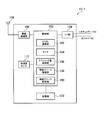
- FIG. 2 is a diagram illustrating a configuration of the LTE base station 10-1.
- the LTE base station 10-1 illustrated in FIG. 2 includes a control unit 102, a storage unit 103, an I / F unit 104, a wireless communication unit 106, an antenna 108, and an acceleration sensor 110.
- the LTE base station 10-2 has the same configuration as the LTE base station 10-1. In the following, it is assumed that the mobile terminal 40 exists in a cell formed by the LTE base station 10-1.
- the control unit 102 is configured using, for example, a CPU (Central Processing Unit) or a DSP (Digital Signal Processor), and controls various functions of the LTE base station 10-1.
- the storage unit 103 is configured by a memory, for example, and stores various types of information used for control in the LTE base station 10-1.
- the I / F unit 104 is connected to the core network 30 and the optical fiber 32.
- the wireless communication unit 106 includes an RF circuit, a baseband circuit, etc., performs modulation and demodulation, encoding and decoding, etc., and transmits and receives wireless signals to and from the mobile terminal 40 via the antenna 108.
- the acceleration sensor 110 detects vibration generated in the LTE base station 10-1.
- the control unit 102 includes an ETWS communication unit 152, a timer 154, a traffic amount detection unit 156, a radio resource securing unit 158, and a radio resource release unit 160.
- the ETWS communication unit 152 receives ETWS information from the core network 30 via the I / F unit 104. Further, the ETWS communication unit 152 determines whether or not there is a free downlink resource block that is a sufficient free downlink radio resource (unused radio resource) for transmission of ETWS information to the mobile terminal 40.
- the ETWS communication unit 152 When there are not enough free downlink resource blocks, the ETWS communication unit 152 performs downlink scheduling (assignment of radio resources in the direction from the LTE base station 10-1 to the mobile terminal 40) in downlink resource blocks for transmitting ETWS information. Secure.
- the ETWS communication unit 152 When there are enough free downlink resource blocks, or when a downlink resource block for transmission of ETWS information is secured, the ETWS communication unit 152 establishes a notification bearer (broadcast bearer or multicast bearer) to the mobile terminal 40.
- the ETWS information is transmitted to the mobile terminal 40 via the wireless communication unit 106 and the antenna 108.
- the ETWS communication unit 152 analyzes the ETWS information and determines the type of emergency corresponding to the ETWS information.
- the ETWS information includes information indicating the type of emergency.
- the type of emergency is “earthquake” or “tsunami”.
- the ETWS communication unit 152 changes the detection period of vibration by the acceleration sensor 110 from a normal period (for example, once per second) to a period shorter than the normal period (for example, 30 times per second). ).
- the timer 154 is started after the ETWS information is transmitted by the ETWS communication unit 152.
- the expiration time of the timer 154 is T1.
- the expiration time T1 may be changed according to the type of emergency corresponding to the ETWS information. In this case, when the emergency type is “earthquake”, the ETWS communication unit 152 shortens the expiration time T1 of the timer 154, and when the emergency type is “tsunami”, the timer 154 Increase the expiration time.
- the traffic amount detection unit 156 detects the uplink traffic amount and the downlink traffic amount of the mobile terminal 40 for each mobile terminal 40.
- the radio resource securing unit 158 rapidly increases communication such as safety confirmation immediately after that, and all mobile terminals in the cell formed by the LTE base station 10-1 40, it is predicted that the total value (total traffic volume) of the traffic volume between 40 and the first predetermined value or more.
- the radio resource securing unit 158 performs communication (emergency) that requires urgency to the police, fire fighting, emergency, etc. in uplink scheduling (allocation of radio resources in the direction from the mobile terminal 40 to the LTE base station 10-1). An uplink resource block for communication) is secured. Further, the radio resource securing unit 158 secures a downlink resource block for emergency communication in downlink scheduling.
- the radio resource securing unit 158 acquires the uplink data transmission rate and the downlink data transmission rate of the mobile terminal 40.
- the radio resource securing unit 158 reduces the uplink resource block allocated to the mobile terminal 40 whose uplink data transmission rate is equal to or higher than the first uplink threshold as the third predetermined value by a predetermined ratio, and downloads the downlink data
- the downlink resource block allocated to the mobile terminal 40 whose transmission rate is equal to or higher than the first downlink threshold as the third predetermined value is reduced by a predetermined ratio, and the empty uplink resource block and the empty downlink resource block are uplinked for emergency communication. It is secured as a resource block and a downlink resource block for emergency communication.
- the radio resource securing unit 158 increases the resource as the mobile terminal 40 has a larger number of allocated resource blocks, in other words, as the mobile terminal 40 has a higher data transmission rate.
- the rate of block reduction may be increased.
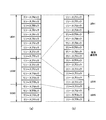
- FIG. 3 is a diagram for explaining securing of resource blocks for emergency information.
- ten resource blocks are required for emergency communication.
- 10 resource blocks are allocated to the mobile terminal UE # 1
- 6 resource blocks are allocated to the mobile terminal UE # 2
- 4 resources are allocated to the mobile terminal # 3.
- a block is allocated.
- the radio resource securing unit 158 includes the mobile terminal # UE1, the mobile terminal # UE2, and the mobile terminal # Decrease the resource block allocated to UE3 by a predetermined rate.
- the radio resource securing unit 158 reduces the allocated resource blocks from 10 to 4 for the mobile terminal # UE1, and for the mobile terminal # UE2, The number of allocated resource blocks is reduced from 6 to 3, and for mobile terminal # UE3, the number of allocated resource blocks is reduced from 4 to 3. As a result, 10 resource blocks are secured for emergency communication.
- the radio resource securing unit 158 reduces the uplink resource block allocated to the mobile terminal 40 whose uplink data transmission rate is equal to or higher than the first uplink threshold as the third predetermined value by a predetermined number, and transmits the downlink data
- the uplink resource blocks allocated to the mobile terminal 40 having a transmission rate equal to or higher than the first downlink threshold as the third predetermined value are reduced by a predetermined number, and the empty uplink resource blocks and the empty downlink resource blocks are reduced for emergency communication.
- the radio resource securing unit 158 is allocated.
- the mobile terminal 40 having a larger number of resource blocks in other words, the mobile terminal 40 having a higher data transmission rate may have a larger number of resource blocks.
- the radio resource release unit 160 releases the uplink resource block for emergency communication in the uplink scheduling, and releases the downlink resource block for emergency communication in the downlink scheduling.
- the following first release procedure and second release procedure are employed.
- the radio resource securing unit 158 secures the uplink resource block for emergency communication and the downlink resource block for emergency communication, and further, the time T1 has elapsed after the timer 154 is started. After the timer 154 expires, the radio resource releasing unit 160 acquires the call volume with all the mobile terminals 40 existing in the cell formed by the LTE base station 10-1.
- the call volume refers to, for example, the number of mobile terminals 40 that are performing wireless communication with the LTE base station 10-1, and a call connection request to the LTE base station 10-1. This is the total value with the number of mobile terminals 40.
- the radio resource release unit 160 determines whether or not the call volume is equal to or less than a fourth predetermined value. When the call volume is equal to or less than the fourth predetermined value, the radio resource releasing unit 160 adds the total traffic volume between all the mobile terminals 40 in the cell formed by the LTE base station 10-1 ( (Total traffic amount) is predicted to be equal to or less than the second predetermined value.
- the second predetermined value is a value smaller than the first predetermined value described above.
- the radio resource release unit 160 releases the uplink resource block for emergency communication and the downlink resource block for emergency communication secured by the radio resource securing unit 158. Further, the radio resource releasing unit 160 returns the state of resource block allocation to the mobile terminal 40 to the state before securing the resource block for emergency communication.
- the radio resource release unit 160 restarts the timer 154 without releasing the uplink resource block for emergency communication and the downlink resource block for emergency communication, and again After the timer 154 expires, the processing of the first release procedure is repeated.
- the second release procedure is adopted when the emergency corresponding to the ETWS information is an “earthquake”.
- the radio resource release unit 160 is detected by the acceleration sensor 110. Determine the magnitude of vibration.
- the magnitude of the vibration is classified into three stages: a medium scale corresponding to a predetermined range, a large scale larger than the predetermined range, and a small scale smaller than the predetermined range.
- the small scale includes a case where vibration is not detected by the acceleration sensor 110 because the ETWS information is a false report.
- the radio resource release unit 160 When the magnitude of the vibration is large, the radio resource release unit 160 resets (stops) the timer 154. Further, the radio resource releasing unit 160 returns the detection cycle of the acceleration sensor 110 to a normal cycle. In this case, the uplink resource block for emergency communication and the downlink resource block for emergency communication remain secured.
- the radio resource release unit 160 uses the uplink resource block for emergency communication and the downlink resource block for emergency communication secured by the radio resource securing unit 158. To release.
- the radio resource releasing unit 160 returns the state of resource block allocation to the mobile terminal 40 to the state before securing the resource block for emergency communication. Further, the radio resource releasing unit 160 returns the detection cycle of the acceleration sensor 110 to a normal cycle.
- the radio resource release unit 160 When the magnitude of vibration is small, the radio resource release unit 160 resets (stops) the timer 154. The radio resource release unit 160 releases the emergency resource uplink resource block and the emergency communication downlink resource block secured by the radio resource securing unit 158. The radio resource releasing unit 160 returns the state of resource block allocation to the mobile terminal 40 to the state before securing the resource block for emergency communication. Further, the radio resource releasing unit 160 returns the detection cycle of the acceleration sensor 110 to a normal cycle.
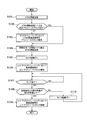
- FIG. 4 is a flowchart showing a first operation of the LTE base station 10-1.
- the operation illustrated in FIG. 4 corresponds to the case where the radio resource release unit 160 adopts the first release procedure described above.
- step S101 the LTE base station 10-1 receives the ETWS information from the core network 30.
- step S102 the LTE base station 10-1 determines whether or not there is a free downlink resource block that is a sufficient free downlink radio resource for transmission of ETWS information to the mobile terminal 40.
- step S103 the LTE base station 10-1 secures downlink resource blocks for transmission of ETWS information in downlink scheduling.
- step S104 If it is determined in step S102 that there are enough free downlink resource blocks, or if a downlink resource block for transmission of ETWS information is secured in step S103, in step S104, the LTE base station 10-1 Then, a notification bearer to the mobile terminal 40 is established, and ETWS information is transmitted to the mobile terminal 40.
- step S105 the timer 154 in the LTE base station 10-1 is started.
- step S106 the LTE base station 10-1 predicts that the total traffic amount will be equal to or greater than the first predetermined value due to the transmission of the ETWS information, and in uplink scheduling, the uplink resource block for emergency communication And downlink resource blocks for emergency communication are secured in downlink scheduling.
- step S107 the LTE base station 10-1 determines whether or not the timer 154 has expired.
- the LTE base station 10-1 has a fourth predetermined traffic volume with all the mobile terminals 40 existing in the cell formed by the LTE base station 10-1. It is determined whether or not it is less than or equal to the value.
- step S109 the LTE base station 10-1 releases the emergency resource uplink resource block and the emergency communication downlink resource block.
- step S110 when the call volume exceeds the fourth predetermined value, the timer 154 in the LTE base station 10-1 is started again in step S110. Thereafter, the operations after determination of whether or not the timer 154 in step S107 has expired are repeated.
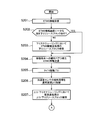
- FIGS. 5 and 6 are flowcharts showing the second operation and the third operation of the LTE base station 10-1.
- the operations shown in FIGS. 5 and 6 correspond to the case where the radio resource releasing unit 160 adopts the second releasing procedure described above.
- step S201 to step S205 Since the operation from step S201 to step S205 is the same as the operation from step S101 to step S105 in FIG. 4, the description thereof is omitted.
- step S206 the LTE base station 10-1 shortens the detection cycle of the acceleration sensor 110 in the LTE base station 10-1 from a normal cycle.
- step S207 the LTE base station 10-1 predicts that the total traffic amount will be equal to or greater than the first predetermined value due to the transmission of the ETWS information, and in uplink scheduling, the uplink resource block for emergency communication And downlink resource blocks for emergency communication are secured in downlink scheduling.
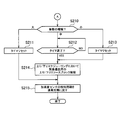
- step S210 the LTE base station 10-1 determines the magnitude of vibration detected by the acceleration sensor 110.
- step S211 the LTE base station 10-1 resets (stops) the timer 154. Thereafter, in step S215, the LTE base station 10-1 returns the detection cycle of the acceleration sensor 110 to a normal cycle.
- step S212 the LTE base station 10-1 determines whether or not the timer 154 has expired.
- step S214 the LTE base station 10-1 releases the uplink resource block for emergency communication and the downlink resource block for emergency communication. Thereafter, in step S215, the LTE base station 10-1 returns the detection cycle of the acceleration sensor 110 to a normal cycle.
- the LTE base station 10-1 If the magnitude of the vibration is small, the LTE base station 10-1 resets (stops) the timer 154 in step S213. Thereafter, in step S214, the LTE base station 10-1 releases the uplink resource block for emergency communication and the downlink resource block for emergency communication. In step S215, the LTE base station 10-1 returns the detection cycle of the acceleration sensor 110 to a normal cycle.
- the LTE base station 10-1 transmits the ETWS information from the core network 30 to the mobile terminal 40
- the LTE base station 10-1 It is determined that a condition predicted that the traffic amount is equal to or greater than the first predetermined value is satisfied, and an uplink resource block for emergency communication and a downlink resource block for emergency communication are secured. Therefore, it is possible to prevent emergency communication from becoming difficult when traffic increases.
- the LTE base station 10-1 has a predetermined time after securing an uplink resource block for emergency communication and a downlink resource block for emergency communication, and the call volume with the mobile terminal 40 is less than or equal to a fourth predetermined value. If it is, it is determined that the condition predicted that the traffic volume with the mobile terminal 40 is equal to or less than the second predetermined value is satisfied, and the uplink resource block for emergency communication and the downlink resource block for emergency communication To release.
- the LTE base station 10-1 determines the traffic volume with the mobile terminal 40 when the magnitude of vibration is large. It is determined that the condition for which the decrease is predicted is not satisfied, and the uplink resource block for emergency communication and the downlink resource block for emergency communication are kept secured. In addition, when the magnitude of the vibration is medium, the LTE base station 10-1 determines that the condition for predicting a decrease in traffic volume with the mobile terminal 40 is satisfied after the timer 154 expires. Then, the uplink resource block for emergency communication and the downlink resource block for emergency communication are released.
- the LTE base station 10-1 does not wait for the timer 154 to expire, and the condition for predicting a decrease in the traffic amount with the mobile terminal 40 is satisfied. And the uplink resource block for emergency communication and the downlink resource block for emergency communication are released.
- the emergency resource uplink resource block and the emergency communication downlink resource block Can be prevented and it becomes difficult to secure resource blocks for communication other than emergency communication.
- the LTE base station 10-1 transmits the ETWS information from the core network 30 to the mobile terminal 40 has been described.
- the LTE base station 10-1 is predetermined in the PWS other than the ETWS.
- the present invention can be similarly applied to a case where emergency information related to an emergency situation is received from the core network 30 and transmitted to the mobile terminal 40.
- the total traffic amount is predicted to be equal to or greater than the first predetermined value due to the transmission of ETWS information, and radio resources for emergency communication are secured.
- the total traffic volume will be greater than or equal to the first predetermined value, such as when the traffic volume is expected to increase immediately after the beginning of the year, or when a specific event is predicted in which the traffic volume will increase. It is assumed that radio resources for emergency communication are secured.
- the total traffic volume is less than or equal to the second predetermined value after a specific event where traffic volume is expected to increase after the time zone in which traffic volume is expected to increase immediately after the beginning of the year, etc.
- the radio resources for emergency communication may be released.
- the traffic volume with the mobile terminal 40 is predicted to be greater than or equal to the first predetermined value.
- the ETWS information it may be determined that the condition predicted that the traffic volume with the mobile terminal 40 is equal to or greater than the first predetermined value is satisfied. .
- the LTE radio communication system 1 has been described.
- the present invention can be similarly applied to any radio communication system that secures radio resources for predetermined communication such as emergency communication.
- the acceleration sensor 110 is used to detect an earthquake that is an emergency, but other detection units may be used depending on the type of emergency. For example, if the type of emergency is a tsunami, a tide meter is used.
- the radio base station and communication control method of the present invention can prevent difficulty in predetermined communication when traffic increases, and are useful as a radio base station and communication control method.
Landscapes
- Engineering & Computer Science (AREA)
- Computer Networks & Wireless Communication (AREA)
- Signal Processing (AREA)
- Mobile Radio Communication Systems (AREA)
- Telephonic Communication Services (AREA)
Priority Applications (1)
| Application Number | Priority Date | Filing Date | Title |
|---|---|---|---|
| US13/642,787 US9066331B2 (en) | 2010-04-23 | 2011-04-21 | Radio base station and communication control method |
Applications Claiming Priority (2)
| Application Number | Priority Date | Filing Date | Title |
|---|---|---|---|
| JP2010100355A JP5660802B2 (ja) | 2010-04-23 | 2010-04-23 | 無線基地局及び通信制御方法 |
| JP2010-100355 | 2010-04-23 |
Publications (1)
| Publication Number | Publication Date |
|---|---|
| WO2011132742A1 true WO2011132742A1 (ja) | 2011-10-27 |
Family
ID=44834258
Family Applications (1)
| Application Number | Title | Priority Date | Filing Date |
|---|---|---|---|
| PCT/JP2011/059843 Ceased WO2011132742A1 (ja) | 2010-04-23 | 2011-04-21 | 無線基地局及び通信制御方法 |
Country Status (3)
| Country | Link |
|---|---|
| US (1) | US9066331B2 (https=) |
| JP (1) | JP5660802B2 (https=) |
| WO (1) | WO2011132742A1 (https=) |
Families Citing this family (9)
| Publication number | Priority date | Publication date | Assignee | Title |
|---|---|---|---|---|
| JP5420210B2 (ja) * | 2008-08-08 | 2014-02-19 | 京セラ株式会社 | 携帯端末および携帯端末におけるロック設定方法 |
| JP6078277B2 (ja) * | 2012-09-19 | 2017-02-08 | 株式会社日立国際電気 | 無線通信システム |
| CN104041167B (zh) * | 2013-01-06 | 2017-11-24 | 华为技术有限公司 | 一种资源分配方法和装置 |
| JP2017510215A (ja) * | 2014-04-04 | 2017-04-06 | 華為技術有限公司Huawei Technologies Co.,Ltd. | データ伝送レートを調整するための方法および装置 |
| US11134487B2 (en) * | 2016-03-31 | 2021-09-28 | Nec Corporation | SDN-based methods and apparatuses for providing TDD radio access network services |
| US10638501B2 (en) * | 2017-03-24 | 2020-04-28 | Qualcomm Incorporated | Opportunistic uplink transmission |
| US11057882B1 (en) * | 2018-04-03 | 2021-07-06 | T-Mobile Innovations Llc | Systems and methods for dynamically setting frame configuration in a wireless network |
| EP3852471A4 (en) | 2018-09-14 | 2021-10-13 | Fujitsu Limited | RADIO TERMINAL AND RADIO COMMUNICATION SYSTEM |
| CN113056016B (zh) * | 2021-03-17 | 2022-07-12 | 中国联合网络通信集团有限公司 | 一种共建共享的资源块配置方法和接入网设备 |
Citations (4)
| Publication number | Priority date | Publication date | Assignee | Title |
|---|---|---|---|---|
| JP2007043310A (ja) * | 2005-08-01 | 2007-02-15 | Softbank Mobile Corp | 移動通信システムにおける輻輳制御方法および輻輳制御装置 |
| JP2008085621A (ja) * | 2006-09-27 | 2008-04-10 | Kyocera Corp | 通信基地局装置及び基地局装置の輻輳回避方法 |
| JP2009230203A (ja) * | 2008-03-19 | 2009-10-08 | Ntt Advanced Technology Corp | 状態情報管理システム、方法、および状態情報管理サーバ |
| JP2010166494A (ja) * | 2009-01-19 | 2010-07-29 | Nec Corp | 移動通信システムおよびその呼制御方法 |
Family Cites Families (12)
| Publication number | Priority date | Publication date | Assignee | Title |
|---|---|---|---|---|
| US6542481B2 (en) * | 1998-06-01 | 2003-04-01 | Tantivy Communications, Inc. | Dynamic bandwidth allocation for multiple access communication using session queues |
| JP3895165B2 (ja) * | 2001-12-03 | 2007-03-22 | 株式会社エヌ・ティ・ティ・ドコモ | 通信制御システム、通信制御方法、通信基地局及び移動端末 |
| JP2005184686A (ja) * | 2003-12-22 | 2005-07-07 | Ntt Docomo Inc | 通信システムおよび通信端末 |
| JP4539858B2 (ja) * | 2005-09-26 | 2010-09-08 | 日本電気株式会社 | 優先呼設定方法 |
| US8364114B2 (en) * | 2007-01-31 | 2013-01-29 | Nokia Corporation | Emergency and priority calling support in WiMAX |
| US8503388B2 (en) * | 2007-03-01 | 2013-08-06 | Ntt Docomo, Inc. | Base station apparatus, user equipment, and communication control method |
| JP5087973B2 (ja) * | 2007-04-05 | 2012-12-05 | 日本電気株式会社 | 無線通信制御方法、無線通信システム、および無線制御局 |
| US8275349B2 (en) * | 2007-11-29 | 2012-09-25 | Rivada Networks, Llc | Method and system for providing tiered priority access to communication network resources |
| JP5090885B2 (ja) * | 2007-12-10 | 2012-12-05 | 株式会社エヌ・ティ・ティ・ドコモ | 無線基地局及び通信制御方法 |
| US8213310B2 (en) * | 2009-02-25 | 2012-07-03 | Qualcomm Incorporated | High-priority communications session within a wireless communications system |
| EP2471300A1 (en) * | 2009-08-29 | 2012-07-04 | Telefonaktiebolaget LM Ericsson (publ) | Method and arrangement in a communication network system method and arrangement for testing of a capacity of a communication network |
| US9420602B2 (en) * | 2009-12-21 | 2016-08-16 | At&T Intellectual Property I, L.P. | Emergency and prioritized access to wireless resources |
-
2010
- 2010-04-23 JP JP2010100355A patent/JP5660802B2/ja not_active Expired - Fee Related
-
2011
- 2011-04-21 WO PCT/JP2011/059843 patent/WO2011132742A1/ja not_active Ceased
- 2011-04-21 US US13/642,787 patent/US9066331B2/en not_active Expired - Fee Related
Patent Citations (4)
| Publication number | Priority date | Publication date | Assignee | Title |
|---|---|---|---|---|
| JP2007043310A (ja) * | 2005-08-01 | 2007-02-15 | Softbank Mobile Corp | 移動通信システムにおける輻輳制御方法および輻輳制御装置 |
| JP2008085621A (ja) * | 2006-09-27 | 2008-04-10 | Kyocera Corp | 通信基地局装置及び基地局装置の輻輳回避方法 |
| JP2009230203A (ja) * | 2008-03-19 | 2009-10-08 | Ntt Advanced Technology Corp | 状態情報管理システム、方法、および状態情報管理サーバ |
| JP2010166494A (ja) * | 2009-01-19 | 2010-07-29 | Nec Corp | 移動通信システムおよびその呼制御方法 |
Also Published As
| Publication number | Publication date |
|---|---|
| US9066331B2 (en) | 2015-06-23 |
| US20130040679A1 (en) | 2013-02-14 |
| JP5660802B2 (ja) | 2015-01-28 |
| JP2011233984A (ja) | 2011-11-17 |
Similar Documents
| Publication | Publication Date | Title |
|---|---|---|
| JP5660802B2 (ja) | 無線基地局及び通信制御方法 | |
| JP7574881B2 (ja) | 無線アクセスネットワークノード、無線端末、並びにこれらのための方法及びプログラム | |
| RU2488974C2 (ru) | Способы и устройства для уведомления о чрезвычайных ситуациях | |
| JP5654769B2 (ja) | 無線基地局及び通信制御方法 | |
| KR101024198B1 (ko) | 긴급정보 수신방법, 이동국 및 무선기지국 | |
| JP7055149B2 (ja) | 公衆警報システムメッセージの提供 | |
| JP2023011033A (ja) | User equipment及びUser equipmentのための方法 | |
| KR101691827B1 (ko) | 무선 통신 시스템에서의 단말의 긴급 서비스 요청 방법 | |
| CN102595555B (zh) | 控制终端发起业务的方法及系统 | |
| EP2037596A1 (en) | Mobile communication system, mobile communication method, radio line control station, radio base station, and mobile station | |
| JP5983774B2 (ja) | 通信装置及び通信制御方法 | |
| KR20120095846A (ko) | 채널-점유-상태 기반 조기 회피 | |
| KR20180090775A (ko) | 연결 확립 방법 및 장치 | |
| CN101547410A (zh) | 告警信息传输方法及装置 | |
| CN103327528B (zh) | 基站、无线终端装置及其传输限制方法 | |
| WO2014103681A1 (ja) | 基地局、通信方法および移動局 | |
| JP2010166494A (ja) | 移動通信システムおよびその呼制御方法 | |
| CN101686430A (zh) | 告警的广播方法及显示告警的终端 | |
| KR20140012158A (ko) | 통신장치 및 통신방법 | |
| JP2020036204A (ja) | 無線通信端末、緊急速報通知システム、緊急速報通知方法、及びプログラム | |
| US20100105352A1 (en) | Mobile communication system, management server device, base station device, and line reservation method | |
| WO2014146709A1 (en) | Public safety threat notifications | |
| WO2010143368A1 (ja) | 呼制御システム及び呼制御方法 | |
| JP2014060485A (ja) | 基地局装置 | |
| HK1223477A1 (zh) | 与用户设备发起的拥塞报告相关的技术和配置 |
Legal Events
| Date | Code | Title | Description |
|---|---|---|---|
| 121 | Ep: the epo has been informed by wipo that ep was designated in this application |
Ref document number: 11772074 Country of ref document: EP Kind code of ref document: A1 |
|
| WWE | Wipo information: entry into national phase |
Ref document number: 13642787 Country of ref document: US |
|
| NENP | Non-entry into the national phase |
Ref country code: DE |
|
| 122 | Ep: pct application non-entry in european phase |
Ref document number: 11772074 Country of ref document: EP Kind code of ref document: A1 |