WO2011121807A1 - 移動無線端末装置および基地局探索方法 - Google Patents
移動無線端末装置および基地局探索方法 Download PDFInfo
- Publication number
- WO2011121807A1 WO2011121807A1 PCT/JP2010/062635 JP2010062635W WO2011121807A1 WO 2011121807 A1 WO2011121807 A1 WO 2011121807A1 JP 2010062635 W JP2010062635 W JP 2010062635W WO 2011121807 A1 WO2011121807 A1 WO 2011121807A1
- Authority
- WO
- WIPO (PCT)
- Prior art keywords
- reception
- base station
- mobile radio
- radio terminal
- reception timing
- Prior art date
- Legal status (The legal status is an assumption and is not a legal conclusion. Google has not performed a legal analysis and makes no representation as to the accuracy of the status listed.)
- Ceased
Links
Images






Classifications
-
- H—ELECTRICITY
- H04—ELECTRIC COMMUNICATION TECHNIQUE
- H04W—WIRELESS COMMUNICATION NETWORKS
- H04W8/00—Network data management
- H04W8/005—Discovery of network devices, e.g. terminals
-
- H—ELECTRICITY
- H04—ELECTRIC COMMUNICATION TECHNIQUE
- H04W—WIRELESS COMMUNICATION NETWORKS
- H04W52/00—Power management, e.g. Transmission Power Control [TPC] or power classes
- H04W52/02—Power saving arrangements
- H04W52/0209—Power saving arrangements in terminal devices
- H04W52/0225—Power saving arrangements in terminal devices using monitoring of external events, e.g. the presence of a signal
- H04W52/0229—Power saving arrangements in terminal devices using monitoring of external events, e.g. the presence of a signal where the received signal is a wanted signal
-
- H—ELECTRICITY
- H04—ELECTRIC COMMUNICATION TECHNIQUE
- H04W—WIRELESS COMMUNICATION NETWORKS
- H04W4/00—Services specially adapted for wireless communication networks; Facilities therefor
- H04W4/18—Information format or content conversion, e.g. adaptation by the network of the transmitted or received information for the purpose of wireless delivery to users or terminals
-
- H—ELECTRICITY
- H04—ELECTRIC COMMUNICATION TECHNIQUE
- H04W—WIRELESS COMMUNICATION NETWORKS
- H04W48/00—Access restriction; Network selection; Access point selection
- H04W48/16—Discovering, processing access restriction or access information
-
- H—ELECTRICITY
- H04—ELECTRIC COMMUNICATION TECHNIQUE
- H04W—WIRELESS COMMUNICATION NETWORKS
- H04W88/00—Devices specially adapted for wireless communication networks, e.g. terminals, base stations or access point devices
- H04W88/02—Terminal devices
-
- Y—GENERAL TAGGING OF NEW TECHNOLOGICAL DEVELOPMENTS; GENERAL TAGGING OF CROSS-SECTIONAL TECHNOLOGIES SPANNING OVER SEVERAL SECTIONS OF THE IPC; TECHNICAL SUBJECTS COVERED BY FORMER USPC CROSS-REFERENCE ART COLLECTIONS [XRACs] AND DIGESTS
- Y02—TECHNOLOGIES OR APPLICATIONS FOR MITIGATION OR ADAPTATION AGAINST CLIMATE CHANGE
- Y02D—CLIMATE CHANGE MITIGATION TECHNOLOGIES IN INFORMATION AND COMMUNICATION TECHNOLOGIES [ICT], I.E. INFORMATION AND COMMUNICATION TECHNOLOGIES AIMING AT THE REDUCTION OF THEIR OWN ENERGY USE
- Y02D30/00—Reducing energy consumption in communication networks
- Y02D30/70—Reducing energy consumption in communication networks in wireless communication networks
Definitions
- Embodiments of the present invention relate to a mobile radio terminal apparatus that performs radio communication with a base station accommodated in a network.
- low power consumption is important in mobile radio terminal apparatuses, and a technique for reducing power consumption is also applied to processing for searching for a base station accommodated in a network. For example, if the base station cannot be detected for a long time when located outside the service area of the base station, the search cycle is lengthened to lower the search frequency and reduce power consumption.
- the search cycle is extended, detection of moving to the service area is delayed, and convenience for the user may be impaired.
- An object of the present invention is to solve the above-described problem, and to provide a mobile radio terminal device and a base station search method that reduce power consumption associated with a search for a base station and suppress a decrease in user convenience. With the goal.
- a radio signal transmitted from the base station is received and frequency-converted, and based on a received signal obtained by the frequency conversion
- the communication means that communicates with the station, and the control means that activates the communication means in accordance with the reception result of the beacon signal by the receiving means and acquires the identification information from the base station are configured.
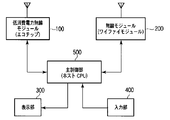
- FIG. 1 is a circuit block diagram showing a configuration of an embodiment of a mobile radio terminal apparatus according to the present invention.
- FIG. 2 is a circuit block diagram showing a configuration example of a low power consumption radio module of the mobile radio terminal device shown in FIG.
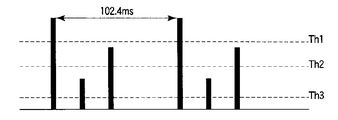
- FIG. 3 is a diagram for explaining the operation of the comparator of the low power consumption wireless module shown in FIG. 2.
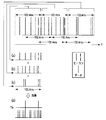
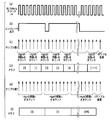
- FIG. 4 is a diagram for explaining a detection process of a beacon signal by the low power consumption wireless module shown in FIG.
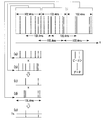
- FIG. 5 is a diagram for explaining detection processing of a beacon signal by the low power consumption wireless module illustrated in FIG. 2.
- FIG. 6 is a diagram for explaining processing for the search window shown in FIGS. 4 and 5.
- FIG. 7 is a diagram for explaining majority decision by the majority decision unit shown in FIG. 2.
- FIG. 2 is a circuit block diagram showing a configuration example of a low power consumption radio module of the mobile radio terminal device shown in FIG.
- FIG. 3 is a diagram for explaining the operation of the comparator of the low
- FIG. 8 is a diagram for explaining majority decision by the majority decision unit shown in FIG. 2.
- FIG. 9 is a diagram for explaining threshold determination by the threshold determination unit illustrated in FIG. 2.
- FIG. 10 is a flowchart for explaining the operation at the time of standby of the mobile radio terminal apparatus shown in FIG.
- FIG. 11 is a diagram for explaining the process of step 7f shown in FIG. 12 is a diagram for explaining a guarantee of clock error by the cumulative addition unit shown in FIG.
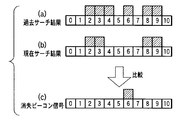
- FIG. 13 is a diagram for explaining determination of beacon signal loss by the search result comparison unit illustrated in FIG. 2.
- FIG. 14 is a diagram for explaining management of a lost beacon signal by the search result comparison unit illustrated in FIG. 2.
- FIG. 15 is a diagram for explaining determination of a new beacon signal by the search result comparison unit illustrated in FIG. 2.
- FIG. 1 shows the configuration of a mobile radio terminal apparatus according to an embodiment of the present invention.
- This mobile wireless terminal device has a function of performing wireless communication with a base station (wireless LAN access point) accommodated in a network.
- a base station wireless LAN access point
- host CPU main control unit
- the low power consumption wireless module (Eco Chip: Eco chip) 100 searches for a base station by receiving a beacon signal periodically transmitted from the base station (hereinafter, 102.4 ms is taken as an example), and determines the base station. Management is based on the reception profile of the beacon signal. That is, the low power consumption radio module 100 receives the wireless LAN signal, and monitors the reception power level and reception timing of the beacon signal, and as a result, the main control is that it has moved to the service area of the new base station. A function of notifying the unit 500 is provided.
- the low power consumption wireless module 100 can operate autonomously even when the main control unit 500 is not operating (stopped or suspended), and has a function of starting the main control unit 500 that is not operating.
- FIG. 2 shows a configuration example of the low power consumption wireless module 100.
- the low power consumption wireless module 100 includes an analog signal processing unit 110 and a digital signal processing unit 120.
- the analog signal processing unit 110 includes a low noise amplifier (LNA) 111, a high sensitivity rectifier circuit 112, a baseband signal amplifier 113, and a comparator 114.
- the digital signal processing unit 120 includes a beacon detection unit 121, a search result comparison unit 122, and a host command unit 123.
- LNA low noise amplifier
- the low noise amplifier (LNA) 111 amplifies the wireless LAN signal received from the base station and outputs it to the high sensitivity rectifier circuit 112. Note that the maximum reception sensitivity of the wireless LAN signal transmitted from the base station is assumed to be equivalent to that of the wireless module 200, and the gain of the low-noise amplifier 111 is adjusted so that this wireless signal is adapted to the high-sensitivity rectifier circuit 112 at the subsequent stage. Is set.
- the high-sensitivity rectifier circuit 112 does not include a local oscillator at the RF frequency in order to realize low power consumption, but includes, for example, a clock-type bias applied rectifier circuit, and down-converts the output of the low-noise amplifier 111 into a baseband signal.
- the baseband signal amplifier 113 includes, for example, a current mirror circuit and an IV conversion circuit (current / voltage conversion circuit), and amplifies the output of the high sensitivity rectifier circuit 112.
- the comparator 114 can set a plurality of threshold values (Th1, Th2, Th3), but a low threshold value such as Th3 so that all beacons can be detected. Is set. At this time, the gains of the low noise amplifier 111 and the baseband signal amplifier 113 are set to the maximum. Then, the comparator 114 determines the output of the baseband signal amplifier 113 with a predetermined threshold at a predetermined cycle. That is, when the output of the baseband signal amplifier 113 exceeds the threshold value, an H level signal (level High) is output, and when it does not exceed, an L level signal (level 0) is output.
- the beacon detection unit 121 detects the reception timing of a signal that is likely to be a beacon signal from the output of the comparator 114 using the beacon transmission cycle (102.4 ms) of the base station as a search window. As a function for that purpose, a majority decision determination unit 121a, an accumulation processing unit 121b, and a threshold determination unit 121c are provided.
- the beacon detection unit 121 sets a search window with a search width of 102.4 ms as one reception profile, and superimposes a plurality of reception profiles (a) to (c) on the time axis.
- the wireless LAN signals received at the same timing are added. Since such signal processing functions as a time filter, only beacon signals transmitted in the same period as the search window appear at the same position, and are added. Randomly generated interference waves are compared to beacon signals.
- the reception profile (d) is obtained by being relatively suppressed. Further, since the data signal has a burst property, it is unlikely that the data signal exists in the same cycle as the search window, and the data signal is not accumulated and added as much as the beacon signal. A signal exceeding the threshold Th is detected as a beacon signal from the reception profile (d) cumulatively added in this way, and the reception timing is output to the search result comparison unit 122.
- FIG. 4 there is a method of making a beacon signal stand out by adding a plurality of reception profiles, but in addition to that, as shown in FIG. 5, correlation is taken between consecutive search windows.
- This is to obtain a logical product for the comparator 114 outputs at the same timing of reception profiles that are continuous in time, so that only signals that are likely to be beacon signals, that is, signals that H level signals are continuous at the same timing, are obtained.
- the logical product of the corresponding wireless LAN signals on the time axis is taken, and thereby the profile logical product (c) is obtained. Then, with respect to the profile (c) and the reception profile (d), the logical product of the corresponding wireless LAN signals on the time axis is calculated, thereby obtaining the profile logical product (e).
- a wireless LAN signal that is equal to or higher than the threshold level Th appearing in the profile logical product (e) is regarded as a beacon signal.
- the threshold level Th may be controlled by the low power consumption radio module 100 according to the number of samples (cumulative addition number) used for the processing in FIG.
- the threshold level Th may be determined in consideration of the influence of the beacon reception timing being deviated. That is, in a high traffic environment in which the reception timing is frequently deviated, Th is reduced. Relatively increases Th.
- the beacon detector 121 includes 512 storage areas (hereinafter referred to as memories) corresponding to the respective positions, and sequentially outputs the comparators for the respective positions from the position 1 to the position 512 using the memory.
- the results are cumulatively added in the case of FIG. 4, and the logical product is taken in the case of FIG.
- the majority decision determination unit 121a samples the output of the comparator 114 at 32.768 kHz, and then performs majority decision for every k pieces. As a result, one level determination result in a period corresponding to k samples is output, all 3355 samples can be compressed to 1 / k, and the required memory can be 3355 / k.
- FIG. 8 shows the value of k, the number of necessary memories, the storage cycle, the memory storage error between the 102.4 ms cycle and the amount of memory used, the number of samples discarded (excess) in one search window, The error in the case of 10 cumulative additions is shown.
- the majority decision determining unit 121a When the majority decision is completed for every k samples in one search window, that is, for each sample of all 3355 positions, the majority decision determining unit 121a performs the same for the samples in each position of the next search window following the processed search window. Repeat the process.
- the value of k may be changed dynamically as necessary. For example, when the reception quality (S / N ratio) is low, control is performed to increase the value of k. Further, by multiplying the sampling frequency (32.768 kHz) by k, the same result as in FIG. 8 can be obtained.
- the accumulating processing unit 121b performs accumulating processing on the determination result obtained by the majority deciding unit 121a in 3355 / k memories. That is, as described above, for example, in the example shown in FIG. 4, the result of (d) is obtained from the results of (a), (b), and (c), and this is held in the memory. On the other hand, in the example shown in FIG. 5, a logical product is obtained for the determination results (a), (b), and (d) obtained by the majority determination unit 121a, and (e) is held in the memory.
- the accumulating process (the process of FIG. 4 or 5) by the accumulating unit 121b may be performed after correcting the position shift due to the clock error.
- the number of accumulated samples may be limited to a predetermined number. That is, the memory is cleared every predetermined number of times. This prevents the accumulation of clock errors.
- the power consumption by the low power consumption wireless module 100 may be suppressed by intermittently performing this accumulation process.
- the threshold determination unit 121c performs threshold determination on the result (FIG. 4D or FIG. 5E) obtained by the accumulation process, detects a signal accumulated more than the threshold as a beacon signal, Thereby, the reception timing of the beacon signal is detected.
- FIG. 4 (d) when the cumulative addition method is adopted, as shown in detail in FIG. 9, the cumulative addition information (FIG. 9 (a)) is accumulated above the threshold.
- the position (reception timing) corresponding to the memory that holds the added information (FIG. 9B) is detected as the timing at which the beacon signal is received.
- the threshold determination unit 121c regards successive positions from which cumulative results equal to or greater than the threshold are obtained as the same single beacon signal. That is, a plurality of consecutive positions are detected as reception timing of one beacon signal.
- the search result comparison unit 122 includes a storage unit. In this storage unit, a past search result storage list L1 and a current search result storage list L2 are respectively created and stored.
- the past search result storage list L1 is a list of reception timings detected by the beacon detection unit 121 in the past, and the current search result storage list L2 lists the latest reception timings detected by the beacon detection unit 121. Is. Then, the search result comparison unit 122 detects that the mobile station has moved to the service area of the new base station based on the past search result storage list L1 and the current search result storage list L2. Note that the search result comparison unit 122 compares the search results after ensuring the memory storage error and the clock error shown in FIG. Detailed processing will be described later.
- the host command unit 123 gives a command to the main control unit 500 based on the detection result of the search result comparison unit 122.
- the wireless module 200 is a so-called WiFi (registered trademark) module that performs wireless LAN communication with the base station, and its operation is controlled by an instruction from the main control unit 500.
- the radio module 200 has a function of down-converting a received radio signal and decoding it to obtain data, and a function of transmitting data (encoding, modulation, radio transmission). Power consumption is high.
- the display unit 300 displays visual information such as characters and images to the user, and is configured using a display device such as an LCD (Liquid Crystal Display).
- the input unit 400 is an input interface using a plurality of key switches, a touch panel, and the like, and receives a request from a user.
- the main control unit 500 controls the respective units of the mobile radio terminal device, and has a function of controlling power supply to the low power consumption radio module 100 and the radio module 200 and controlling these operations. . Note that the main control unit 500 supplies power to the low power consumption radio module 100 even in a state where the self (main control unit 500) is not operating (stopped state or hibernation state), thereby reducing the low power consumption wireless module. 100 can be operated, and can be activated from a non-operating state (stopped state or hibernate state) by control from the low power consumption wireless module 100.
- the low power consumption wireless module 100 and the wireless module 200 are linked via the main control unit 500.
- the function of the main control unit 500 is the low power consumption wireless module 100 or By providing the wireless module 200, the low power consumption wireless module 100 and the wireless module 200 can be directly linked without using the main control unit 500.
- FIG. 10 is a flowchart for explaining this operation, showing processing executed by the low power consumption radio module 100, the radio module 200, and the main control unit 500.
- the instruction from the main control unit 500 is reduced. It is executed when the power consumption wireless module 100 accepts it.
- the sampling frequency for the comparator 114 is 32.768 kHz will be described as an example.
- the main control unit 500 controls the wireless module 200 to connect to the SSID of the connectable base station. (Service Set Identifier) is detected, and a base station that is available and has the best reception status or a user-specified base station is detected and wirelessly connected to start communication. For example, such a process is performed in step 7p described later.
- SSID Service Set Identifier
- the main control unit 500 may shift to a non-operating state (stopped state or hibernate state). For example, when the user operation through the input unit 400 is not performed and the standby state continues for a certain time or longer, the low power consumption wireless module 100 starts the above process, while the main control unit 500 is operating. Transition to a non-existing state (stop state or hibernation state). However, the main control unit 500 may monitor the user's request through the input unit 400 and return to the normal operation state from the stop state or the hibernation state according to the user request.
- step 7a the low power consumption wireless module 100 (search result comparison unit 122) initializes the past search result storage list L1 stored in the storage unit, and proceeds to step 7b.
- step 7b the low power consumption wireless module 100 (search result comparison unit 122) initializes the current search result storage list L2 stored in the storage unit, and proceeds to step 7c.
- step 7c the low power consumption radio module 100 (analog signal processing unit 110 and beacon detection unit 121) receives the wireless LAN signal transmitted from the base station, searches for the base station (beacon signal), and proceeds to step 7d. Transition.
- the majority decision determination unit 121a samples the output of the comparator 114, performs majority decision for every k of them, and performs level determination in that period. As a result, the level determination result is obtained for 3355 / k positions, and this is stored in the corresponding memory.
- the accumulation processing unit 121b performs the accumulation processing as illustrated in FIG. 4 or FIG. As a result, the result of the accumulation process is stored in 3355 / k memories.
- the threshold determination unit 121c performs threshold determination on the result (FIG. 4 (d) or FIG. 5 (e)) obtained by the accumulation process, and signals accumulated more than the threshold are used as beacon signals. And detecting the beacon signal reception timing.
- the threshold value determination part 121c considers the continuous thing among the positions from which the accumulation result more than a threshold value is obtained as the same one beacon signal. That is, for a plurality of consecutive positions, a reception profile that is regarded as the reception timing of one beacon signal is generated.
- step 7d the low power consumption wireless module 100 (search result comparison unit 122) updates the current search result storage list L2 with the reception profile obtained in step 7c ((d) in FIG. 4 or (e) in FIG. 5).
- the process proceeds to step 7e.
- the current search result storage list L2 stores the reception timing of the signal indicated by the reception profile ((d) in FIG. 4 or (e) in FIG. 5).
- the number of received beacons may be stored in order to reduce power consumption due to circuit scale.
- the low power consumption wireless module 100 search result comparison unit 122 refers to the reception profile ((d) of FIG. 4 or (e) of FIG. 5), and seems to be a beacon signal exceeding a preset threshold level th.
- search result comparison unit 122 By determining whether or not a signal exists, it is determined whether or not the mobile radio terminal device is located within a service area formed by the base station.
- the process proceeds to step 7f.
- the process proceeds to step 7i.
- step 7f the low power consumption wireless module 100 (search result comparison unit 122) compares the past search result storage list L1 and the current search result storage list L2, and proceeds to step 7g. That is, in the past search result storage list L1 and the current search result storage list L2, for example, as shown in FIG. 11, beacon detection positions in the search window, that is, beacon reception timings are compared. At this time, as described above, the number of beacons may be compared instead of the beacon position (reception timing).
- the search result comparison unit 122 ensures the memory storage error and the clock error shown in FIG.
- the search result comparison unit 122 performs the following processing.
- the search result comparison unit 122 first sets a reception profile based on the past search result storage list L1 held in the storage unit (hereinafter referred to as a past reception profile; FIG. 12A) to a maximum error E estimated in advance.
- a past reception profile As a result, the reception timing is shifted to the advanced position, and the received reception profile based on the shifted past reception profile and the current search result storage list L2 stored in the storage unit (hereinafter referred to as the current reception profile).
- b)) are compared, and obtains the logical product of the two as the correlation value C 1.
- the maximum error E is a value determined by the maximum error estimated from the frequency error of the 32.768 kHz clock and the memory storage error shown in FIG.
- the search result comparison unit 122 compares the past reception profile from which the maximum correlation value C n is obtained with the current reception profile. As described above, the search result comparison unit 122 obtains a correlation with the current reception profile while cyclically shifting the reception timing of the past reception profile, and compares the two reception profiles having the highest correlation to ensure the clock error. To do.
- the detection process includes a lost beacon signal detection process P1 for detecting a lost beacon signal and a new beacon signal detection process P2 for detecting a new beacon signal.
- FIG. 13 (a) shows the reception timing based on the past search result storage list L1
- FIG. 13 (b) shows the reception timing based on the current search result storage list L2.
- the search result comparison unit 122 compares the two and detects that the beacon signal has disappeared at the fourth position and the sixth position (FIG. 13C). However, because the beacon signal at the fourth position is adjacent to the beacon signal at the third position, the possibility that it was temporarily detected at the timing (a) due to fluctuations, It is not considered lost because it may have disappeared temporarily at the timing. On the other hand, the beacon signal at the sixth position is detected as having disappeared because there is no adjacent beacon.
- the search result comparison unit 122 gives the count value N to the position where the beacon signal disappears (hereinafter referred to as the disappearance position), and a new beacon signal is generated even if a new beacon signal is generated for a predetermined time. To prevent it from being considered as an outbreak.
- step 7f the search result comparison unit 122 sets the count value N to the lost position.
- FIG. 14 shows an example of how search results transition from (a) to (f).
- the search result comparison unit 122 sets the count value N (3 in the example of FIG. 14) to the erasure position. ) Is set. It is assumed that a count value of 0 is set in advance for other positions.
- step 7f the search result comparison unit 122, for a position where a count value N of 1 or more is already set as shown in (b) (or (c) or (d)), Decrement N.
- step 7f by performing such management, a count value N is given to the position where the lost beacon signal is generated (hereinafter referred to as the lost position), and then the process of step 7f is performed a predetermined number of times N.
- a marked state in which a count value of 1 or more is set is set (until a predetermined time elapses). That is, once treated as a lost position, it is regarded as a lost position for a predetermined time.
- the count value N (in the example of FIG. 14) is set again. May be. That is, it is regarded as a lost position for a predetermined time.
- FIG. 15 (a) shows the reception timing based on the past search result storage list L1
- FIG. 15 (b) shows the reception timing based on the current search result storage list L2.
- the search result comparison unit 122 compares the two, and detects the presence of a new beacon signal at the fourth position and the sixth position (FIG. 15C). However, since the beacon signal at the 4th position is adjacent to the beacon signal at the 3rd position, it may be temporarily lost at the timing of (a) due to fluctuations, Since it may be detected temporarily at the timing, it is not regarded as a new beacon signal. On the other hand, the beacon signal at the sixth position is detected as a new beacon signal because there is no adjacent beacon.
- the search result comparison unit 122 confirms that the count value N of 1 or more is not set in the position of the new beacon signal as shown in FIGS. 14B, 14C, and 14D. Confirm that it is not within a certain period of time. If a count value N of 1 or more is set, it is considered that an unstable new beacon signal has been detected because it is an erasure position, and detection as a new beacon signal is canceled.
- the search result comparison unit 122 considers that a stable new beacon signal is detected instead of the lost position.
- step 7g the low power consumption wireless module 100 (search result comparison unit 122) determines whether a change has occurred in the service area based on the comparison result in step 7f. That is, it is determined whether the disappearance of the beacon signal is detected or a new beacon signal is detected. At this time, as described above, it may be determined whether or not the numbers of beacons match.
- step 7h when it is estimated that the beacon signal disappears or a new beacon signal is detected and the service area is changed, the process proceeds to step 7h, while the service area is changed. If it is not estimated (the reception timing or the number of beacons match), the process proceeds to step 7c.
- step 7h when the low power consumption radio module 100 (search result comparison unit 122) detects a new beacon signal (or when the number of beacons increases) in the comparison in step 7f, the low power consumption radio module 100 (search result comparison unit 122) sets a new service area. On the other hand, the process proceeds to step 7j. On the other hand, if a new beacon signal is not detected, it is regarded that there is no movement to a new service area, and the process proceeds to step 7i.
- step 7i the low power consumption wireless module 100 (search result comparison unit 122) updates the past search result storage list L1 with the current search result storage list L2, and proceeds to step 7c.
- the past search result storage list L1 stores the reception timing of the signal indicated by the reception profile (FIG. 4 (d) or FIG. 5 (e)) of the current search result storage list L2.
- step 7j the low power consumption wireless module 100 (search result comparison unit 122) updates the past search result storage list L1 with the current search result storage list L2, and proceeds to step 7k.
- the past search result storage list L1 stores the reception timing of the signal indicated by the reception profile (FIG. 4 (d) or FIG. 5 (e)) of the current search result storage list L2.
- the search result comparison unit 122 notifies the host command unit 123.
- step 7k the low power consumption wireless module 100 (host command unit 123) notifies the main control unit 500 to start the wireless module 200, and proceeds to step 7l.
- the main control unit 500 stops power supply to the low power consumption wireless module 100 to stop the operation of the low power consumption wireless module 100 and starts supplying power to the wireless module 200 to start up.
- the main control unit 500 in a state where the main control unit 500 is not operating (stopped state or hibernation state), the main control unit 500 enters an operating state upon receiving the notification, and in response to the notification, the main control unit 500 becomes low.
- the power consumption wireless module 100 is stopped (power supply is stopped), and the wireless module 200 is started instead.
- the low power consumption wireless module 100 may be configured to stop its own operation when the wireless module 200 is activated without using the main control unit 500.
- the radio module 200 receives a beacon signal transmitted from each base station, decodes each beacon signal, and detects an SSID (Service Set Identifier) included in the beacon signal, that is, identification information of the base station. .
- SSID Service Set Identifier
- step 7m the main control unit 500 determines whether or not an available base station (for example, a base station providing a subscribed service) exists in the vicinity based on the SSID notified from the wireless module 200. To do.
- an available base station for example, a base station providing a subscribed service
- the process proceeds to step 7n.
- an available base station does not exist in the vicinity
- the process proceeds to step 7o.
- step 7n the main control unit 500 displays the SSID of the base station determined to be usable in step 7m on the display unit 300, and displays a message asking the user whether the SSID base station may be connected. Then, the main control unit 500 determines whether or not an input for permitting connection is made from the user via the input unit 400. Here, if an input for permitting connection is detected from the user, the process proceeds to step 7p. On the other hand, if an input for permitting connection from the user is not detected, the process proceeds to step 7o.
- automatic connection may be made according to user settings.
- step 7o the main control unit 500 stops the power supply to the radio module 200, stops the operation of the radio module 200, and instead starts the power supply to the low power consumption radio module 100 and activates it. Then, the process proceeds to step 7c.
- step 7o it is a base station that is determined to be unusable or a base station that the user does not permit to connect, so the time that the main control unit 500 presets the SSID of the base station in step 7o.
- step 7m is executed again within that time, it may be determined that the base station is not available based on the stored SSID in step 7m.
- the past search result storage list is updated in step 7j so that the wireless module 200 is not activated by the same base station that cannot be used again.
- the main control unit 500 detects the reception timing of the stored SSID based on the cumulative addition result of the reception profiles obtained by the low power consumption radio module 100 and the SSID received by the radio module 200, and this reception timing Is notified to the low power consumption wireless module 100.
- the low power consumption radio module 100 may not perform a search for the timing of a predetermined period including the reception timing notified from the main control unit 500 in the subsequent step 7c. Thereby, an unnecessary search period by the low power consumption wireless module 100 is suppressed, and further power consumption can be reduced.
- step 7p the main control unit 500 controls the wireless module 200 to instruct to connect to the available base station.
- the wireless module 200 performs wireless communication with an available base station according to a predetermined protocol, establishes a communication link, and ends the processing.
- the reception profile (reception timing) of the beacon signal is monitored by the low power consumption radio module 100 that does not have a decoding function of the received signal and consumes less power than the radio module 200.
- the reception timing of the beacon signal changes, it is assumed that the mobile station has moved to a new service area, the wireless module 200 that has been stopped is activated, a connectable base station is searched, and a connection is made after user confirmation. I have to. If no connectable base station is found (out of the subscription service area) or the user refuses connection, the wireless module 200 is stopped again.
- the low power consumption radio module 100 which consumes less power than the radio module 200, operates during standby, so that the power consumption associated with the search for the base station is reduced.
- the amount of service area change returning to home, moving from home, moving into a hot spot, etc.
- the present invention is not limited to the above-described embodiment as it is, and can be embodied by modifying the constituent elements without departing from the scope of the invention in the implementation stage.
- various inventions can be formed by appropriately combining a plurality of constituent elements disclosed in the embodiment. Further, for example, a configuration in which some components are deleted from all the components shown in the embodiment is also conceivable. Furthermore, you may combine suitably the component described in different embodiment.
- the entire search window is searched using the beacon transmission period (102.4 ms) as a search window, but a part of the search window may be searched.
- the comparator 114 and the beacon detection unit 121 may not perform processing on a timing at which a beacon signal cannot be received for a preset time or more based on the accumulation result of the accumulation processing unit 121b or the determination result of the threshold determination unit 121c.
- the processing is performed only for the timing within a predetermined range including the timing when the beacon signal can be received for a preset time or more. According to this, since the time for performing the reception process can be shortened, power consumption can be suppressed.
- the above range is determined in consideration of the maximum amount of error caused by cumulative addition. Further, such a shortening of the search period may be returned to the process of searching the entire search window after a certain period of time. By periodically returning in this way, it is possible to detect that the user has moved to a new service area even if the user has moved.
- the low power consumption wireless module 100 has been described as storing the past search result storage list L1 and the current search result storage list L2 and comparing them. 500 may be performed.
- the present invention can be similarly implemented even if various modifications are made without departing from the gist of the present invention.
Landscapes
- Engineering & Computer Science (AREA)
- Computer Networks & Wireless Communication (AREA)
- Signal Processing (AREA)
- Databases & Information Systems (AREA)
- Mobile Radio Communication Systems (AREA)
Abstract
ネットワークに収容される基地局と無線通信する移動無線端末装置において、前記基地局から送信される無線信号を受信して周波数変換し、この周波数変換により得た受信信号に基づいて、前記基地局が送信するビーコン信号を検出する受信手段と、前記基地局から送信される無線信号を受信し、この無線信号から得た受信信号を復号して、前記基地局の識別情報を取得して前記基地局と通信する通信手段と、前記受信手段によるビーコン信号の受信結果に応じて、前記通信手段を起動して、基地局から識別情報を取得させる制御手段とを具備するようにした。
Description
この発明の実施形態は、ネットワークに収容される基地局と無線通信する移動無線端末装置に関する。
周知のように、移動無線端末装置では、低消費電力化が重要であり、ネットワークに収容される基地局を探索する処理においても、低消費電力化を図る技術が適用されている。例えば、基地局のサービス圏外に位置する場合、長時間、基地局を検出できないと、探索周期を長くすることで、探索頻度を下げて消費電力を低減する。
しかしながら、このような従来の手法では、探索周期が長期化すると、サービス圏内に移動したことの検出が遅れ、ユーザの利便性を損なうことがあるという問題がある。
しかしながら、このような従来の手法では、探索周期が長期化すると、サービス圏内に移動したことの検出が遅れ、ユーザの利便性を損なうことがあるという問題がある。
従来の移動無線端末装置では、消費電力を低減させるために、基地局の探索周期を長期化させると、サービス圏内に移動したことの検出が遅れ、ユーザの利便性を損なうことがあるという問題がある。
課題は、上記の問題を解決すべくなされたもので、基地局の探索に伴う消費電力を低減するとともに、ユーザの利便性の低下を抑制した移動無線端末装置および基地局探索方法を提供することを目的とする。
実施形態によれば、ネットワークに収容される基地局と無線通信する移動無線端末装置において、基地局から送信される無線信号を受信して周波数変換し、この周波数変換により得た受信信号に基づいて、基地局が送信するビーコン信号を検出する受信手段と、基地局から送信される無線信号を受信し、この無線信号から得た受信信号を復号して、基地局の識別情報を取得して基地局と通信する通信手段と、受信手段によるビーコン信号の受信結果に応じて、通信手段を起動して、基地局から識別情報を取得させる制御手段とを具備して構成するようにした。
以下、図面を参照して、この発明の一実施形態について説明する。
図1は、この発明の一実施形態に係わる移動無線端末装置の構成を示すものである。この移動無線端末装置は、ネットワークに収容される基地局(無線LANアクセスポイント)と無線通信する機能を有するものであって、この無線通信に係わる構成として、低消費電力無線モジュール100と、無線モジュール200と、表示部300と、入力部400と、主制御部500(ホスト CPU)とを備えている。なお、以下の説明では、上記無線通信の方式として、無線LANを採用する場合を例に挙げて説明する。
図1は、この発明の一実施形態に係わる移動無線端末装置の構成を示すものである。この移動無線端末装置は、ネットワークに収容される基地局(無線LANアクセスポイント)と無線通信する機能を有するものであって、この無線通信に係わる構成として、低消費電力無線モジュール100と、無線モジュール200と、表示部300と、入力部400と、主制御部500(ホスト CPU)とを備えている。なお、以下の説明では、上記無線通信の方式として、無線LANを採用する場合を例に挙げて説明する。
低消費電力無線モジュール(Eco Chip:エコチップ)100は、上記基地局から周期的(以下、102.4ms を例に挙げる)に送信されるビーコン信号を受信することで基地局を探索し、基地局をビーコン信号の受信プロファイルに基づいて管理するものである。すなわち、低消費電力無線モジュール100は、無線LAN信号を受信して、そのうち、ビーコン信号の受信電力レベルと受信タイミングを監視し、その結果、新たな基地局のサービスエリアに移動したことを主制御部500に通知する機能を備えている。
また低消費電力無線モジュール100は、主制御部500が動作していない時(停止もしくは休止)にも自律的に動作可能であり、動作していない主制御部500を起動する機能を備える。
低消費電力無線モジュール100の構成例を図2に示す。低消費電力無線モジュール100は、アナログ信号処理部110と、デジタル信号処理部120とを備える。またアナログ信号処理部110は、ローノイズアンプ(LNA)111と、高感度整流回路112と、ベースバンド信号増幅器113と、コンパレータ114とを備える。またデジタル信号処理部120は、ビーコン検知部121と、サーチ結果比較部122と、ホスト命令部123とを備える。
ローノイズアンプ(LNA)111は、基地局から受信した無線LAN信号を増幅し、高感度整流回路112に出力する。なお、基地局から送信される無線LAN信号の最大受信感度は、無線モジュール200と同等の感度を想定し、この無線信号を後段の高感度整流回路112に適合するように、ローノイズアンプ111の利得が設定される。
高感度整流回路112は、低消費電力を実現するために、RF周波数における局部発振器を備えず、例えばクロック式バイアス印加形整流回路を備え、ローノイズアンプ111の出力を、ベースバンド信号にダウンコンバートする。
ベースバンド信号増幅器113は、例えば、カレントミラー回路とI-V変換回路(電流/電圧変換回路)を備え、高感度整流回路112の出力を増幅する。
ベースバンド信号増幅器113は、例えば、カレントミラー回路とI-V変換回路(電流/電圧変換回路)を備え、高感度整流回路112の出力を増幅する。
コンパレータ114は、例えば図3に示すように、複数の閾値(Th1、Th2、Th3)が設定可能であるが、全てのビーコンを検出することが可能となる様に、例えばTh3のような低い閾値が設定される。なお、このとき、ローノイズアンプ111およびベースバンド信号増幅器113のゲインは、最大に設定する。そして、コンパレータ114は、所定の周期で、設定された閾値でベースバンド信号増幅器113の出力を判定する。すなわち、ベースバンド信号増幅器113の出力が、閾値を超える場合には、Hレベル信号(レベルHigh)を出力し、超えない場合には、Lレベル信号(レベル0)を出力する。
ビーコン検知部121は、基地局のビーコン送信周期(102.4ms)をサーチウィンドウとして、コンパレータ114の出力から、ビーコン信号である可能性の高い信号の受信タイミングを検出する。そのための機能として、多数決判定部121a、累積処理部121b、閾値判定部121cを備える。
具体的には、ビーコン検知部121は、図4に示すように、サーチ幅102.4msのサーチウィンドウを1つの受信プロファイルとし、複数の受信プロファイル(a)~(c)を時間軸で重ね合わせて、同じタイミングで受信した無線LAN信号を加算する。このような信号処理は、時間フィルタの役割を果たすので、サーチウィンドウと同一周期で送信されるビーコン信号だけが同一位置に出現するため加算され、ランダムに発生する干渉波は、ビーコン信号に比べて相対的に抑制され、受信プロファイル(d)が得られる。また、データ信号は、バースト性を有することにより、サーチウィンドウと同一周期で存在する可能性は低く、ビーコン信号のように大きく累積加算されることはない。このようにして累積加算した受信プロファイル(d)から、閾値Thを超える信号をビーコン信号として検出し、その受信タイミングをサーチ結果比較部122に出力する。
なお、図4に示したように、複数の受信プロファイルを加算することでビーコン信号を際だたせる手法もあるが、それ以外にも、図5に示すように、連続するサーチウィンドウ間で相関を取る手法もある。これは、時間的に連続する受信プロファイルの同じタイミングのコンパレータ114出力について論理積を求めることで、Hレベル信号が同じタイミングで連続する信号、すなわちビーコン信号である可能性の高い信号だけを得る。
具体的には、受信プロファイル(a)と受信プロファイル(b)について、時間軸上で対応する無線LAN信号の論理積を取り、これによりプロファイル論理積(c)を得る。そして、このプロファイル(c)と受信プロファイル(d)について、時間軸上で対応する無線LAN信号の論理積を取り、これによりプロファイル論理積(e)を得る。このプロファイル論理積(e)に現れる上記閾値レベルTh以上の無線LAN信号をビーコン信号と見なす。
また、上記閾値レベルThは、図4における処理に利用するサンプル数(累積加算数)に応じて、低消費電力無線モジュール100が制御するようにしてもよい。また、上記閾値レベルThは、ビーコンの受信タイミングがずれることによる影響を考慮して決めてもよいつまり、受信タイミングのずれが頻発するような高トラヒックの環境では、Thを小さくし、そうでない場合は、相対的にThを大きくする。
以下、より具体的に、図4および図5に示した処理について説明する。
上述したようにサーチウィンドウを102.4msとし、例えば、サンプリング周期200μsとすると、図6に示すように、サーチウィンドウ内に512ポジションが存在することになる。この場合、ビーコン検知部121は、各ポジションに対応する512個の記憶領域(以下、メモリと称する)を備え、このメモリを用いて、ポジション1からポジション512までの各ポジションについて、順次コンパレータの出力結果を、図4の場合は累積加算し、図5の場合は論理積をとる。
上述したようにサーチウィンドウを102.4msとし、例えば、サンプリング周期200μsとすると、図6に示すように、サーチウィンドウ内に512ポジションが存在することになる。この場合、ビーコン検知部121は、各ポジションに対応する512個の記憶領域(以下、メモリと称する)を備え、このメモリを用いて、ポジション1からポジション512までの各ポジションについて、順次コンパレータの出力結果を、図4の場合は累積加算し、図5の場合は論理積をとる。
また、一般に、32.768kHzクロックの汎用の発振器が流通している。以下、この発振器を用いる場合について考える。クロック周波数が、32.768kHzであると、サーチウィンドウ102.4msに対して、3355ポジションと、大量のポジションが存在し、大量のメモリが必要となる。
そこで、多数決判定部121aは、コンパレータ114の出力を32.768kHzでサンプリングしたのち、そのうちk個毎に多数決判定を行う。これにより、kサンプルに相当する期間におけるレベル判定結果を1つ出力し、全3355サンプルを1/k個に圧縮でき、必要なメモリを3355/k個とすることができる。図7に、k=3とk=7の例を示す。
32.768kHzクロック(図7(a))で、コンパレータ出力(図7(b))をサンプリングし、例えば図7(c)に示すように、多数決判定部121aは、k=3として、多数決判定を行う。すると、図7(d)に示すように、必要なメモリは、1118個となる。またk=7として、多数決判定を行うと(図7(e))、図7(f)に示すように、必要なメモリは、479個となる。図8には、kの値と、必要なメモリの数、格納周期、102.4ms周期と使用するメモリ量との間のメモリ格納誤差、1つのサーチウィンドウで破棄する(余分となる)サンプル数、10回累積加算を行った場合の誤差を示す。
多数決判定部121aは、1つのサーチウィンドウ、すなわち全3355ポジションの各サンプルについてk個毎に多数決判定が完了すると、この処理したサーチウィンドウに続く次のサーチウィンドウの各ポジションのサンプルに対して同様の処理を繰り返し行う。
なお、kの値は、必要に応じて、動的に変化させるようにしてもよい。例えば、受信品質(SN比)が低い場合には、kの値を大きくするように制御する。またサンプリング周波数(32.768kHz)をk倍することで、図8と同様の結果が得られる。
累積処理部121bは、3355/k個のメモリに、多数決判定部121aによって求められた判定結果を累積処理する。すなわち、前述したように、例えば、図4に示す例では、(a)、(b)、(c)の結果より、(d)の結果を得て、これをメモリに保持する。一方、図5に示す例では、多数決判定部121aによって求められる判定結果(a)、(b)、(d)に対して論理積をとって、(e)をメモリに保持する。
なお、累積処理部121bによる累積処理(図4または図5の処理)は、クロック誤差によるポジション偏移を補正した後、上記累積処理を行うようにしてもよい。またクロック精度を保障するため、累積するサンプル数を所定回数に制限するようにしてもよい。すなわち、所定回数毎にメモリをクリアする。これにより、クロック誤差の累積を防止する。さらには、この累積処理を、間欠的に実施するようにして、低消費電力無線モジュール100による消費電力を抑制するようにしてもよい。
閾値判定部121cは、累積処理によって得られた結果(図4(d)または図5(e))に対して、閾値判定を行って、閾値以上に累積された信号をビーコン信号として検出し、これによりビーコン信号の受信タイミングを検出する。特に、図4(d)に示すように、累積加算方式を採用する場合には、図9に詳細に示すように、累積加算された情報(図9(a))のうち、閾値以上に累積加算された情報(図9(b))を保持するメモリに対応するポジション(受信タイミング)を、ビーコン信号を受信したタイミングとして検出する。
なお、閾値判定部121cは、閾値以上の累積結果が得られるポジションのうち、連続するものについては、同じ1つのビーコン信号とみなす。すなわち、連続する複数のポジションについては、1つのビーコン信号の受信タイミングと見なして検出する。
サーチ結果比較部122は、記憶部を備える。この記憶部には、過去サーチ結果格納リストL1と、現在サーチ結果格納リストL2をそれぞれ作成して記憶する。過去サーチ結果格納リストL1は、ビーコン検知部121が過去に検出した受信タイミングをリスト化したものであり、現在サーチ結果格納リストL2は、ビーコン検知部121が検出した最新の受信タイミングをリスト化したものである。そして、サーチ結果比較部122は、過去サーチ結果格納リストL1と、現在サーチ結果格納リストL2に基づいて、新たな基地局のサービスエリアに移動したことを検出する。
なお、サーチ結果比較部122は、図8に示したメモリ格納誤差とクロック誤差を保障してからサーチ結果を比較する。詳細な処理については後述する。
なお、サーチ結果比較部122は、図8に示したメモリ格納誤差とクロック誤差を保障してからサーチ結果を比較する。詳細な処理については後述する。
ホスト命令部123は、サーチ結果比較部122の検出結果に基づいて、主制御部500に命令を与える。
無線モジュール200は、上記基地局と無線LAN通信を行う、いわゆるWiFi(登録商標)モジュールであって、主制御部500からの指示によって動作が制御される。無線モジュール200は、低消費電力無線モジュール100と比較して、受信した無線信号をダウンコンバートして復号しデータを得る機能や、データを送信する機能(符号化、変調、無線送信)を備えており、消費電力が高い。
表示部300は、文字や画像など視覚的な情報をユーザに示すものであって、LCD(Liquid Crystal Display)などの表示デバイスを用いて構成される。
入力部400は、複数のキースイッチやタッチパネルなどを用いた入力インタフェースであって、ユーザからの要求を受けつける。
入力部400は、複数のキースイッチやタッチパネルなどを用いた入力インタフェースであって、ユーザからの要求を受けつける。
主制御部500は、当該移動無線端末装置の各部を統括して制御するものであって、低消費電力無線モジュール100および無線モジュール200への電源供給をはじめ、これらの動作を制御する機能を備える。なお、主制御部500は、自己(主制御部500)が動作していない状態(停止状態もしくは休止状態)でも、低消費電力無線モジュール100に対して電力を供給して、低消費電力無線モジュール100を動作させることが可能であり、また低消費電力無線モジュール100からの制御により、動作していない状態(停止状態もしくは休止状態)から起動されることが可能である。
また、上記の例では、主制御部500を介して、低消費電力無線モジュール100と無線モジュール200との連携を行う構成としたが、特に主制御部500の機能を低消費電力無線モジュール100または、無線モジュール200に持たせることで、主制御部500を介さずに、低消費電力無線モジュール100と無線モジュール200とが直接連携する構成とすることも可能である。
次に、上記構成の移動無線端末装置の動作について説明する。以下の説明では特に、待ち受け時において、基地局の探索と、無線接続するまでの動作について説明する。図10は、この動作を説明するためのフローチャートであって、低消費電力無線モジュール100、無線モジュール200および主制御部500によって実行される処理を示しており、主制御部500からの指示を低消費電力無線モジュール100が受け付けることで実行される。以下の説明では、コンパレータ114に対するサンプリング周波数が32.768kHzの場合を例に説明する。
なお、図10に示す処理中であっても、入力部400を通じてユーザから接続要求が有った場合には、主制御部500は、無線モジュール200を制御して、接続可能な基地局のSSID(Service Set Identifier)を検出し、そのうち利用可能な基地局で、かつ、最も良好な受信状況の基地局、またはユーザ指定の基地局を検出して無線接続して、通信を開始する。例えば、このような処理を後述するステップ7pで実施する。
また、低消費電力無線モジュール100が図10に示す処理を実行している間、主制御部500は、動作していない状態(停止状態もしくは休止状態)に移行することがある。例えば、入力部400を通じたユーザ操作が行われずに、一定時間以上待ち受け状態が継続した場合などに、低消費電力無線モジュール100が上記処理を開始し、一方、主制御部500は、動作していない状態(停止状態もしくは休止状態)に移行する。ただし、主制御部500は、入力部400を通じたユーザの要求は監視し、ユーザ要求に応じて、停止状態もしくは休止状態から、通常の動作状態に復帰するようにしてもよい。
まず、ステップ7aにおいて低消費電力無線モジュール100(サーチ結果比較部122)は、記憶部に記憶する過去サーチ結果格納リストL1を初期化し、ステップ7bに移行する。
ステップ7bにおいて低消費電力無線モジュール100(サーチ結果比較部122)は、記憶部に記憶する現在サーチ結果格納リストL2を初期化し、ステップ7cに移行する。
ステップ7bにおいて低消費電力無線モジュール100(サーチ結果比較部122)は、記憶部に記憶する現在サーチ結果格納リストL2を初期化し、ステップ7cに移行する。
ステップ7cにおいて低消費電力無線モジュール100(アナログ信号処理部110およびビーコン検知部121)は、基地局から送信される無線LAN信号を受信して、基地局(ビーコン信号)を探索し、ステップ7dに移行する。
より具体的には、多数決判定部121aが、コンパレータ114の出力をサンプリングし、そのうちk個毎に多数決判定を行って、その期間におけるレベル判定を行う。これにより、3355/k個のポジションについて、レベル判定の結果を得て、これをそれぞれ対応するメモリに記憶する。
次に、累積処理部121bが、図4あるいは図5に例示したような累積処理を実施する。これにより、3355/k個のメモリには、累積処理の結果が記憶される。
続いて、閾値判定部121cが、累積処理によって得られた結果(図4(d)または図5(e))に対して、閾値判定を行って、閾値以上に累積された信号をビーコン信号として検出し、これによりビーコン信号の受信タイミングを検出する。
なお、閾値判定部121cは、閾値以上の累積結果が得られるポジションのうち、連続するものについては、同じ1つのビーコン信号とみなす。すなわち、連続する複数のポジションについては、1つのビーコン信号の受信タイミングと見なした受信プロファイルを生成する。
なお、閾値判定部121cは、閾値以上の累積結果が得られるポジションのうち、連続するものについては、同じ1つのビーコン信号とみなす。すなわち、連続する複数のポジションについては、1つのビーコン信号の受信タイミングと見なした受信プロファイルを生成する。
ステップ7dにおいて低消費電力無線モジュール100(サーチ結果比較部122)は、ステップ7cで求めた受信プロファイル(図4の(d)もしくは図5の(e))で現在サーチ結果格納リストL2を更新し、ステップ7eに移行する。これにより、現在サーチ結果格納リストL2は、受信プロファイル(図4の(d)もしくは図5の(e))で示される信号の受信タイミングを記憶する。このとき、回路規模による消費電力を低減するため、受信ビーコン数を記憶するようにしても良い。
ステップ7eにおいて低消費電力無線モジュール100(サーチ結果比較部122)は、受信プロファイル(図4の(d)もしくは図5の(e))を参照し、予め設定した閾値レベルthを超えるビーコン信号らしき信号が存在するか否かを判定することにより、当該移動無線端末装置が基地局が形成するサービスエリア内に位置するか否かを判定する。ここで、当該移動無線端末装置が上記サービスエリア内に位置すると判定した場合には、ステップ7fに移行し、一方、上記サービスエリア外と判定した場合には、ステップ7iに移行する。
ステップ7fにおいて低消費電力無線モジュール100(サーチ結果比較部122)は、過去サーチ結果格納リストL1と現在サーチ結果格納リストL2を比較し、ステップ7gに移行する。すなわち、過去サーチ結果格納リストL1と現在サーチ結果格納リストL2において、例えば図11に示すように、それぞれサーチウィンドウ内のビーコン検出位置、すなわちビーコン受信タイミングを比較する。このとき、上述したように、ビーコン位置(受信タイミング)ではなく、ビーコン数を比較するようにしてもよい。
より具体的に、サーチ結果比較部122による比較処理のアルゴリズムについて説明する。まず、サーチ結果比較部122は、図8に示したメモリ格納誤差とクロック誤差の保障を行う。以下、図12を参照して説明する。上記誤差を保障するために、サーチ結果比較部122は、以下のような処理を実施する。
サーチ結果比較部122は、まず、記憶部に保持している過去サーチ結果格納リストL1に基づく受信プロファイル(以下、過去受信プロファイルと称する。図12(a))を、予め推定される最大誤差Eだけ、受信タイミングを進めた位置にシフトさせ、このシフトさせた過去受信プロファイルと、記憶部に保持している現在サーチ結果格納リストL2に基づく受信プロファイル(以下、現在受信プロファイルと称する。図12(b))を比較し、両者の論理積を相関値C1として求める。なお、上記最大誤差Eとは、32.768kHzクロックの周波数誤差から推定される最大誤差と、図8に示したメモリ格納誤差とによって定まる値である。
そしてサーチ結果比較部122は、過去受信プロファイルを1メモリに相当するタイミングT(T=約30μs×k)だけ遅らせた位置にシフトさせ、このシフトさせた過去受信プロファイルと、現在受信プロファイルを比較して、その相関値Cnを求める処理を、N(=E/T)回繰り返し、相関値C1~CNを得る。
そしてサーチ結果比較部122は、最大の相関値Cnが得られた過去受信プロファイルと現在受信プロファイルを比較する。このように、サーチ結果比較部122は、過去受信プロファイルの受信タイミングを巡回シフトさせながら、現在受信プロファイルとの相関を求め、相関が最も高い2つの受信プロファイルを比較することで、クロック誤差を保障する。
次に、検出処理について具体的に説明する。検出処理には、消失したビーコン信号を検出する消失ビーコン信号検出処理P1と、新規のビーコン信号を検出する新規ビーコン信号検出処理P2がある。
(消失ビーコン信号検出処理P1)
図13を参照して、消失ビーコン信号検出処理P1のアルゴリズムについて説明する。図13(a)は、過去サーチ結果格納リストL1に基づく受信タイミングを示したものであって、図13(b)は、現在サーチ結果格納リストL2に基づく受信タイミングを示したものである。
図13を参照して、消失ビーコン信号検出処理P1のアルゴリズムについて説明する。図13(a)は、過去サーチ結果格納リストL1に基づく受信タイミングを示したものであって、図13(b)は、現在サーチ結果格納リストL2に基づく受信タイミングを示したものである。
サーチ結果比較部122は、両者を比較して、4番目のポジションと、6番目のポジションで、ビーコン信号が消失していることを検出する(図13(c))。しかし、4番目のポジションのビーコン信号は、3番目のポジションのビーコン信号と隣接していることから、揺らぎにより、(a)のタイミングにおいて一時的に検出されていた可能性や、(b)のタイミングにおいて一時的に消失した可能性があることより、消失したとはみなさない。一方、6番目のポジションのビーコン信号は、隣接するビーコンが存在しないため、消失したものとして検出する。
サーチ結果比較部122は、ビーコン信号が消失したポジション(以下、消失ポジションと称する)にカウント値Nを与えて、所定の時間の間は、新規のビーコン信号が発生しても、新規のビーコン信号の発生と見なされないように管理する。
具体的には、ステップ7fにおいてサーチ結果比較部122は、消失ポジションにカウント値Nを設定する。図14に、(a)から(f)まで、サーチ結果が遷移する様子の一例を示す。
図14に示す例では、(a)に示す受信状況から、(b)に示す受信状況に遷移した場合には、サーチ結果比較部122は、消失ポジションにカウント値N(図14の例では3)を設定する。なお、それ以外のポジションには、カウント値0が予め設定されているものとする。
また、ステップ7fにおいてサーチ結果比較部122は、(b)(あるいは(c)や(d))のように、すでに1以上のカウント値Nが設定されているポジションについては、そのポジションのカウント値Nをデクリメントする。
ステップ7fにおいて、このような管理を行うことによって、消失ビーコン信号が生じたポジション(以下、消失ポジションと称する)にカウント値Nを与えて、その後、ステップ7fの処理を所定の回数Nだけ行うまで(所定時間が経過するまで)、1以上のカウント値が設定されたマークされた状態となる。すなわち、いったん消失ポジションとして扱われると、所定時間の間、消失ポジションと見なされることになる。
なお、カウント値Nが0にカウントアウトする前(所定時間が経過する前)に、新規のビーコン信号が発生した場合には、改めてカウント値N(図14の例では3)を設定するようにしてもよい。すなわち、さらに所定時間の間、消失ポジションと見なされることになる。
(新規ビーコン信号検出処理P2)
図15を参照して、新規ビーコン信号検出処理P2のアルゴリズムについて説明する。図15(a)は、過去サーチ結果格納リストL1に基づく受信タイミングを示したものであって、図15(b)は、現在サーチ結果格納リストL2に基づく受信タイミングを示したものである。
サーチ結果比較部122は、両者を比較して、4番目のポジションと、6番目のポジションに、新たなビーコン信号の存在を検出する(図15(c))。しかし、4番目のポジションのビーコン信号は、3番目のポジションのビーコン信号と隣接していることから、揺らぎにより、(a)のタイミングにおいて一時的に消失していた可能性や、(b)のタイミングにおいて一時的に検出された可能性があることより、新規のビーコン信号とはみなさない。一方、6番目のポジションのビーコン信号は、隣接するビーコンが存在しないため、新規のビーコン信号として検出する。
そして、サーチ結果比較部122は、新規のビーコン信号のポジションに、図14(b)、(c)、(d)のように、1以上のカウント値Nが設定されていないこと(消失ポジションと見なされてから、一定時間以内ではないこと)を確認する。ここで1以上のカウント値Nが設定されている場合には、消失ポジションであることより、不安定な新規のビーコン信号が検出されたと見なし、新規のビーコン信号としての検出を取り消す。
一方、サーチ結果比較部122は、新規のビーコン信号のポジションに、カウント値N=0が設定されている場合には、消失ポジションではなく、安定した新規のビーコン信号が検出されたと見なす。
ステップ7gにおいて低消費電力無線モジュール100(サーチ結果比較部122)は、ステップ7fの比較結果に基づいて、サービスエリアに変更が生じたかを判定する。すなわち、ビーコン信号の消失を検出したり、あるいは新規のビーコン信号を検出したかを判定する。このとき、上述したように、ビーコン数が一致するかしないかを判定してもよい。
ここで、ビーコン信号の消失を検出したり、あるいは新規のビーコン信号を検出し、サービスエリアに変更が生じたと推定される場合には、ステップ7hに移行し、一方、サービスエリアに変更が生じていないと推定される(受信タイミングあるいはビーコン数が一致する)場合には、ステップ7cに移行する。
ステップ7hにおいて低消費電力無線モジュール100(サーチ結果比較部122)は、ステップ7fの比較において、新規のビーコン信号を検出した場合(もしくは、ビーコン数が増えた場合)には、新規のサービスエリアに移動したものとみなして、ステップ7jに移行し、一方、新規のビーコン信号を検出しない場合には、新規のサービスエリアへの移動はないものとみなして、ステップ7iに移行する。
ステップ7iにおいて低消費電力無線モジュール100(サーチ結果比較部122)は、現在サーチ結果格納リストL2で、過去サーチ結果格納リストL1を更新し、ステップ7cに移行する。これにより、過去サーチ結果格納リストL1は、現在サーチ結果格納リストL2の受信プロファイル(図4(d)または図5(e))で示される信号の受信タイミングを記憶する。
ステップ7jにおいて低消費電力無線モジュール100(サーチ結果比較部122)は、現在サーチ結果格納リストL2で、過去サーチ結果格納リストL1を更新し、ステップ7kに移行する。これにより、過去サーチ結果格納リストL1は、現在サーチ結果格納リストL2の受信プロファイル(図4(d)または図5(e))で示される信号の受信タイミングを記憶する。ここで、サーチ結果比較部122は、ホスト命令部123に対して、通知を行う。
ステップ7kにおいて低消費電力無線モジュール100(ホスト命令部123)は、主制御部500に対して無線モジュール200を起動するように通知し、ステップ7lに移行する。これにより主制御部500は、低消費電力無線モジュール100への電力供給を停止して、低消費電力無線モジュール100の動作を停止させるとともに、無線モジュール200に電力の供給を開始して起動する。
なおここで、主制御部500が動作していない状態(停止状態もしくは休止状態)の場合には、主制御部500は、上記通知を受けると動作する状態となり、上記通知に応動して、低消費電力無線モジュール100を停止させ(電力供給の停止)、代わりに無線モジュール200を起動する。なお、低消費電力無線モジュール100は、主制御部500を介さずに、無線モジュール200を起動すると、自ら動作を停止する構成としてもよい。
ステップ7lにおいて無線モジュール200は、各基地局から送信されるビーコン信号を受信し、各ビーコン信号を復号して、ビーコン信号に含まれるSSID(Service Set Identifier)、すなわち基地局の識別情報を検出する。これにより、当該移動無線端末装置の周辺に位置する基地局が検出され、この検出結果は主制御部500に通知され、ステップ7mに移行する。
ステップ7mにおいて主制御部500は、無線モジュール200から通知されたSSIDに基づいて、利用可能な基地局(例えば、加入しているサービスを提供する基地局)が周辺に存在するか否かを判定する。ここで、利用可能な基地局が周辺に存在する場合には、ステップ7nに移行し、一方、利用可能な基地局が周辺に存在しない場合には、ステップ7oに移行する。
ステップ7nにおいて主制御部500は、ステップ7mで利用可能と判断した基地局のSSIDを表示部300に表示するとともに、このSSIDの基地局に接続してもよいかをユーザに問う表示を行う。そして、主制御部500は、入力部400を通じて、ユーザから接続を許可する旨の入力が行われたか否かを判断する。ここで、ユーザから接続を許可する旨の入力を検出した場合には、ステップ7pに移行し、一方、ユーザから接続を許可する旨の入力を検出しない場合には、ステップ7oに移行する。また、ここで、ユーザの設定により自動接続するようにしておいても良い。
ステップ7oにおいて主制御部500は、無線モジュール200への電力供給を停止して、無線モジュール200の動作を停止させ、代わりに、低消費電力無線モジュール100への電力供給を開始してこれを起動し、ステップ7cに移行する。
なお、ステップ7oに移行した場合、利用可能でないと判断した基地局か、ユーザが接続を許可しない基地局であるため、ステップ7oにてその基地局のSSIDを主制御部500が予め設定した時間だけ記憶し、その時間内に再びステップ7mを実行する場合には、ステップ7mにて、上記記憶されたSSIDに基づいて、利用可能でない基地局と判定するようにしてもよい。また、再び利用できない同一基地局により無線モジュール200が起動されないように、ステップ7jにて、過去サーチ結果格納リストを更新している。
さらに主制御部500は、低消費電力無線モジュール100が得た受信プロファイルの累積加算結果と、無線モジュール200が受信したSSIDとに基づいて、上記記憶したSSIDの受信タイミングを検出し、この受信タイミングを低消費電力無線モジュール100に通知する。そして低消費電力無線モジュール100は、後のステップ7cにおいては、主制御部500から通知された受信タイミングを含む所定期間のタイミングについては、サーチを行わないようにしてもよい。これにより、低消費電力無線モジュール100による不要なサーチ期間が抑制され、さらなる低消費電力化を図ることができる。
ステップ7pにおいて主制御部500は、無線モジュール200を制御して、上記利用可能な基地局に接続するように指示する。これに応動して、無線モジュール200は、利用可能な基地局との間で、所定のプロトコルにしたがって無線通信を行い、通信リンクを確立して、当該処理を終了する。
以上のように、上記構成の移動無線端末装置では、受信信号の復号機能を備えず無線モジュール200より消費電力の低い低消費電力無線モジュール100により、ビーコン信号の受信プロファイル(受信タイミング)を監視し、ビーコン信号の受信タイミングが変化すると、新しいサービスエリアに移動したものと見なし、動作停止させていた無線モジュール200を起動して、接続可能な基地局を探索し、ユーザ確認後、接続を行うようにしている。また接続可能な基地局が見つからない場合(加入サービス圏外)や、ユーザが接続を拒否する場合は、再び無線モジュール200を停止するようにしている。
したがって、上記構成の移動無線端末装置によれば、待ち受け時においては、無線モジュール200より消費電力の低い低消費電力無線モジュール100が動作するようにしているので、基地局の探索に伴う消費電力が低減できるとともに、サービスエリアの変化(自宅に帰宅、自宅からの移動、ホットスポット内への移動など)を継続的に探索するので、ユーザの利便性の低下を抑制することができる。
なお、この発明は上記実施形態そのままに限定されるものではなく、実施段階ではその要旨を逸脱しない範囲で構成要素を変形して具体化できる。また上記実施形態に開示されている複数の構成要素を適宜組み合わせることによって種々の発明を形成できる。また例えば、実施形態に示される全構成要素からいくつかの構成要素を削除した構成も考えられる。さらに、異なる実施形態に記載した構成要素を適宜組み合わせてもよい。
その一例として例えば、上記実施の形態では、ビーコン送信周期(102.4ms)をサーチウィンドウとして、このサーチウィンドウ全体を探索するようにしたが、サーチウィンドウ内の一部について探索するようにしてもよい。例えば、コンパレータ114およびビーコン検知部121は、累積処理部121bの累積結果もしくは閾値判定部121cの判定結果に基づいて、ビーコン信号が予め設定した時間以上受信できないタイミングについては処理を行わないようにしたり、あるいは、ビーコン信号が予め設定した時間以上受信できたタイミングを含む所定の範囲のタイミングについてのみ処理を行うようにする。これによれば、受信処理を行う時間が短縮できるので、消費電力を抑制することができる。
なお、上記範囲は、累積加算によって生じる誤差の最大量を考慮して決定する。またこのようなサーチ期間の短縮化は、一定時間行った後、サーチウィンドウ全体を探索する処理に復帰させるようにしてもよい。このように定期的に復帰させることで、ユーザが移動しても、新規のサービスエリアに移動したことを検出することができる。
また上記実施の形態では、低消費電力無線モジュール100により、過去サーチ結果格納リストL1および現在サーチ結果格納リストL2の記憶と、両者の比較を行うものとして説明したが、これらの処理を主制御部500が行うようにしてもよい。
その他、この発明の要旨を逸脱しない範囲で種々の変形を施しても同様に実施可能であることはいうまでもない。
その他、この発明の要旨を逸脱しない範囲で種々の変形を施しても同様に実施可能であることはいうまでもない。
100…低消費電力無線モジュール、200…無線モジュール、300…表示部、400…入力部、500…主制御部。
Claims (25)
- ネットワークに収容される基地局と無線通信する移動無線端末装置において、
前記基地局から送信される無線信号を受信して周波数変換し、この周波数変換により得た受信信号に基づいて、前記基地局が送信するビーコン信号を検出する受信手段と、
前記基地局から送信される無線信号を受信し、この無線信号から得た受信信号を復号して、前記基地局の識別情報を取得して前記基地局と通信する通信手段と、
前記受信手段によるビーコン信号の受信結果に応じて、前記通信手段を起動して、基地局から識別情報を取得させる制御手段とを具備することを特徴とする移動無線端末装置。 - 前記制御手段は、
前記受信手段が検出したビーコン信号の受信タイミングの変化に基づいて、サービスエリアの変更を検出するサービスエリア検出手段と、
このサービスエリア検出手段がサービスエリアの変更を検出した場合に、前記前記通信手段を起動して、基地局から識別情報を取得させる動作制御手段とを備えることを特徴とする請求項1に記載の移動無線端末装置。 - 前記制御手段は、
前記通信手段が取得した識別情報に基づいて、サービス利用可能な基地局か否かを判定する判定手段と、
この判定手段がサービス利用可と判定した場合には、前記通信手段を制御して前記識別情報に対応する基地局と無線接続し、一方、前記判定手段がサービス利用不可と判定した場合には、前記通信手段の動作を停止する動作制御手段とを備えることを特徴とする請求項1に記載の移動無線端末装置。 - 前記受信手段は、前記判定手段がサービス利用不可と判定した場合に、前記通信手段が取得した識別情報の受信タイミングを除いて、前記基地局が送信するビーコン信号を検出することを特徴とする請求項3に記載の移動無線端末装置。
- 前記判定手段は、サービス利用不可と判定した場合は、その後予め設定した時間、同じ識別情報については、サービス利用不可と判定することを特徴とする請求項3に記載の移動無線端末装置。
- さらに、情報を表示する表示手段と、
ユーザからの要求を受け付ける入力手段を備え、
前記制御手段は、
前記通信手段が取得した識別情報を前記表示手段に表示する表示制御手段と、
前記入力手段がユーザから接続を許可する入力を受け付けた場合には、前記通信手段を制御して前記識別情報に対応する基地局と無線接続し、一方、前記入力手段がユーザから接続を拒否する入力を受け付けた場合には、前記通信手段の動作を停止する動作制御手段とを備えることを特徴とする請求項1に記載の移動無線端末装置。 - 前記受信手段は、前記入力手段がユーザから接続を拒否する入力を受け付けた場合に、前記通信手段が取得した識別情報の受信タイミングを除いて、前記基地局が送信するビーコン信号を検出することを特徴とする請求項6に記載の移動無線端末装置。
- 前記動作制御手段は、前記入力手段がユーザから接続を拒否する入力を受け付けた場合は、その後予め設定した時間、同じ識別情報については、前記通信手段の動作を停止することを特徴とする請求項6に記載の移動無線端末装置。
- 前記受信手段は、所定の周期で受信する信号をビーコン信号として検出することを特徴とする請求項1に記載の移動無線端末装置。
- 前記受信手段は、前記受信信号を、予め設定した周波数のクロックでサンプリングし、このサンプリング結果を所定数用いて多数決によりレベルを判定し、この判定結果に基づいて、ビーコン信号の有無を検出することを特徴とする請求項1に記載の移動無線端末装置。
- 前記受信手段は、所定の周期に対応するサーチウィンドウ内で、受信信号の受信タイミングを検出した受信プロファイルを生成し、複数の受信プロファイルに基づいて生成したプロファイルからビーコン信号を検出することを特徴とする請求項1に記載の移動無線端末装置。
- 前記受信手段は、所定の周期に対応するサーチウィンドウ内の一部の範囲について、受信信号の受信タイミングを検出した受信プロファイルを生成し、複数の受信プロファイルに基づいて生成したプロファイルからビーコン信号を検出することを特徴とする請求項1に記載の移動無線端末装置。
- 前記受信手段は、所定の周期に対応するサーチウィンドウ内の一部を除く範囲について、受信信号の受信タイミングを検出した受信プロファイルを生成し、複数の受信プロファイルに基づいて生成したプロファイルからビーコン信号を検出することを特徴とする請求項1に記載の移動無線端末装置。
- 前記受信手段は、複数の受信プロファイルを受信タイミング毎に累積加算したプロファイルからビーコン信号を検出することを特徴とする請求項11に記載の移動無線端末装置。
- 前記受信手段は、複数の受信プロファイルを受信タイミング毎に論理積を求めたプロファイルからビーコン信号を検出することを特徴とする請求項11に記載の移動無線端末装置。
- 前記受信手段は、所定の周期に対応するサーチウィンドウ内で、受信信号の受信タイミングと受信レベルを検出し、予め設定した閾値以上の受信レベルに対応する受信レベルを有する受信タイミング検出した受信プロファイルを生成し、複数の受信プロファイルに基づいて生成したプロファイルからビーコン信号を検出することを特徴とする請求項11に記載の移動無線端末装置。
- 前記制御手段は、前記受信手段が生成した複数のプロファイルを比較して、差を検出した場合に、前記通信手段を起動して、基地局から識別情報を取得させることを特徴とする請求項11に記載の移動無線端末装置。
- 前記制御手段は、前記受信手段が生成した複数のプロファイルについて、クロック誤差を保障した後、前記複数のプロファイル間の差を検出することを特徴とする請求項17に記載の移動無線端末装置。
- 前記制御手段は、前記受信手段が生成した複数のプロファイルを比較して、消失した受信タイミングを検出した場合に、前記消失した受信タイミングにおいて新たなビーコンを検出しても、この受信タイミングを前記差として検出しないことを特徴とする請求項17に記載の移動無線端末装置。
- 前記制御手段は、前記受信手段が生成した複数のプロファイルを比較して、消失した受信タイミングを検出した場合に、前記消失した受信タイミングを検出してから所定時間の間に、前記消失した受信タイミングにおいて新たなビーコンを検出しても、この受信タイミングを前記差として検出しないことを特徴とする請求項17に記載の移動無線端末装置。
- 前記制御手段は、前記消失した受信タイミングを検出してから所定時間の間に、前記消失した受信タイミングにおいて新たなビーコンを検出した場合には、前記新たなビーコンを検出してからさらに所定時間の間に、前記消失した受信タイミングにおいて新たなビーコンを検出しても、この受信タイミングを前記差として検出しないことを特徴とする請求項20に記載の移動無線端末装置。
- 前記制御手段は、前記消失した受信タイミングに隣接するタイミングで、ビーコン信号を受信している場合には、前記消失した受信タイミングを前記差として検出しないことを特徴とする請求項17に記載の移動無線端末装置。
- 前記制御手段は、前記受信手段が生成した複数のプロファイルを比較して、新たな受信タイミングを前記差として検出した場合に、前記通信手段を起動して、基地局から識別情報を取得させるものであって、前記新たな受信タイミングに隣接するタイミングで、ビーコン信号を受信している場合には、前記新たな受信タイミングを前記差として検出しないことを特徴とする請求項11に記載の移動無線端末装置。
- 前記制御手段は、前記通信手段の動作中は、前記受信手段の動作を停止させることを特徴とする請求項1に記載の移動無線端末装置。
- ネットワークに収容される基地局と無線通信する移動無線端末装置の基地局探索方法において、
前記基地局から送信される無線信号を受信する受信手段を制御して、この無線信号から得た受信信号に基づいて、前記基地局が送信するビーコン信号を検出するビーコン受信工程と、
前記ビーコン受信工程のビーコン信号の受信結果に応じて、前記基地局と無線通信する通信手段を起動して、この通信手段により、前記基地局から送信される無線信号を受信し、この無線信号から得た受信信号を復号して、前記基地局の識別情報を取得して前記基地局と通信させる制御工程とを具備することを特徴とする基地局探索方法。
Priority Applications (2)
| Application Number | Priority Date | Filing Date | Title |
|---|---|---|---|
| JP2010549963A JP5389056B2 (ja) | 2010-03-31 | 2010-07-27 | 移動無線端末装置および基地局探索方法 |
| US13/179,444 US8767603B2 (en) | 2010-03-31 | 2011-07-08 | Mobile wireless terminal and base station search method |
Applications Claiming Priority (4)
| Application Number | Priority Date | Filing Date | Title |
|---|---|---|---|
| JP2010-082870 | 2010-03-31 | ||
| JP2010082870 | 2010-03-31 | ||
| JP2010-152301 | 2010-07-02 | ||
| JP2010152301 | 2010-07-02 |
Related Child Applications (1)
| Application Number | Title | Priority Date | Filing Date |
|---|---|---|---|
| US13/179,444 Continuation US8767603B2 (en) | 2010-03-31 | 2011-07-08 | Mobile wireless terminal and base station search method |
Publications (1)
| Publication Number | Publication Date |
|---|---|
| WO2011121807A1 true WO2011121807A1 (ja) | 2011-10-06 |
Family
ID=44711586
Family Applications (1)
| Application Number | Title | Priority Date | Filing Date |
|---|---|---|---|
| PCT/JP2010/062635 Ceased WO2011121807A1 (ja) | 2010-03-31 | 2010-07-27 | 移動無線端末装置および基地局探索方法 |
Country Status (3)
| Country | Link |
|---|---|
| US (1) | US8767603B2 (ja) |
| JP (1) | JP5389056B2 (ja) |
| WO (1) | WO2011121807A1 (ja) |
Cited By (2)
| Publication number | Priority date | Publication date | Assignee | Title |
|---|---|---|---|---|
| JP2012104892A (ja) * | 2010-11-05 | 2012-05-31 | Toshiba Corp | 移動無線端末装置および基地局探索方法 |
| JP2012165250A (ja) * | 2011-02-08 | 2012-08-30 | Toshiba Corp | 無線ユニット及びこの無線ユニットを備えた移動通信端末装置 |
Families Citing this family (2)
| Publication number | Priority date | Publication date | Assignee | Title |
|---|---|---|---|---|
| JP4951112B2 (ja) * | 2010-11-05 | 2012-06-13 | 株式会社東芝 | 移動無線端末装置および基地局探索方法 |
| CN114363132B (zh) | 2020-10-13 | 2026-04-07 | 三星电子株式会社 | 通信方法 |
Citations (2)
| Publication number | Priority date | Publication date | Assignee | Title |
|---|---|---|---|---|
| JP2005012973A (ja) * | 2003-06-20 | 2005-01-13 | Nec Corp | 無線通信システム |
| JP2007104033A (ja) * | 2005-09-30 | 2007-04-19 | Matsushita Electric Ind Co Ltd | 無線lanシステムを構成するステーション |
Family Cites Families (4)
| Publication number | Priority date | Publication date | Assignee | Title |
|---|---|---|---|---|
| JP4625018B2 (ja) * | 2004-05-11 | 2011-02-02 | パナソニック株式会社 | 受信装置、その制御方法、及びプログラム |
| JP4054341B2 (ja) * | 2004-05-17 | 2008-02-27 | 三星電子株式会社 | Ieee802.11網に最適化した高速ハンドオーバー方法 |
| JP2005047494A (ja) | 2004-07-22 | 2005-02-24 | Ipp:Kk | 自動車のアクセル、ブレーキ操作等表示システム |
| KR101096076B1 (ko) * | 2008-06-26 | 2011-12-19 | 삼성전자주식회사 | 셀룰러 무선통신 시스템에서 셀룰러 망을 이용한 애드혹모드 연결 설정 장치 및 방법 |
-
2010
- 2010-07-27 WO PCT/JP2010/062635 patent/WO2011121807A1/ja not_active Ceased
- 2010-07-27 JP JP2010549963A patent/JP5389056B2/ja active Active
-
2011
- 2011-07-08 US US13/179,444 patent/US8767603B2/en active Active
Patent Citations (2)
| Publication number | Priority date | Publication date | Assignee | Title |
|---|---|---|---|---|
| JP2005012973A (ja) * | 2003-06-20 | 2005-01-13 | Nec Corp | 無線通信システム |
| JP2007104033A (ja) * | 2005-09-30 | 2007-04-19 | Matsushita Electric Ind Co Ltd | 無線lanシステムを構成するステーション |
Cited By (3)
| Publication number | Priority date | Publication date | Assignee | Title |
|---|---|---|---|---|
| JP2012104892A (ja) * | 2010-11-05 | 2012-05-31 | Toshiba Corp | 移動無線端末装置および基地局探索方法 |
| US8462886B2 (en) | 2010-11-05 | 2013-06-11 | Kabushiki Kaisha Toshiba | Mobile wireless terminal device and base station search method |
| JP2012165250A (ja) * | 2011-02-08 | 2012-08-30 | Toshiba Corp | 無線ユニット及びこの無線ユニットを備えた移動通信端末装置 |
Also Published As
| Publication number | Publication date |
|---|---|
| JP5389056B2 (ja) | 2014-01-15 |
| US20110268005A1 (en) | 2011-11-03 |
| JPWO2011121807A1 (ja) | 2013-07-04 |
| US8767603B2 (en) | 2014-07-01 |
Similar Documents
| Publication | Publication Date | Title |
|---|---|---|
| JP4951112B2 (ja) | 移動無線端末装置および基地局探索方法 | |
| US8064861B2 (en) | Circuit and method for antenna selection in an antenna diversity receiver | |
| US8045576B2 (en) | Methods and apparatus to manage power consumption in wireless local area network devices | |
| JP2006505199A (ja) | 無線通信装置バッテリ消費方法およびシステム | |
| JP5389056B2 (ja) | 移動無線端末装置および基地局探索方法 | |
| WO2023030084A9 (zh) | 确定唤醒链路质量的方法、设备及可读存储介质 | |
| US20130095820A1 (en) | Wireless communication terminal and control method for the same | |
| KR101724020B1 (ko) | 휴대용 단말기에서 전력 소모를 줄이기 위한 장치 및 방법 | |
| US20120202552A1 (en) | Wireless unit and mobile communication terminal with the wireless unit | |
| US8566430B2 (en) | Apparatus and method for determining heartbeat interval of activesync service in wireless communication system | |
| EP2245748B1 (en) | Power-saving receiver | |
| JP4996732B2 (ja) | 移動無線端末装置および基地局探索方法 | |
| US7050839B2 (en) | Mobile communication terminal including automatic frequency control function | |
| US8588708B2 (en) | Communication device and detection period correction method | |
| JP4846546B2 (ja) | 2つの通信方式を利用可能な移動端末 | |
| US9960865B2 (en) | Filtering of Wi-Fi physical layer measurements | |
| US8081976B2 (en) | Mobile radio terminal and base station search method | |
| JP4869154B2 (ja) | 移動通信端末装置 | |
| JP2008278300A (ja) | 無線機位置検知方法 | |
| JP3875881B2 (ja) | 移動体通信端末及びその動作方法 | |
| JP2007104033A (ja) | 無線lanシステムを構成するステーション | |
| JP2013258625A (ja) | 無線アクセスポイント装置および無線通信制御方法 | |
| CN113115432A (zh) | 一种无线通信的方法、装置、设备及存储介质 | |
| JP6146825B2 (ja) | 通信装置と通信方法と通信システム並びにプログラム | |
| JP2009071386A (ja) | 無線通信端末装置およびハンドオーバ方法 |
Legal Events
| Date | Code | Title | Description |
|---|---|---|---|
| WWE | Wipo information: entry into national phase |
Ref document number: 2010549963 Country of ref document: JP |
|
| 121 | Ep: the epo has been informed by wipo that ep was designated in this application |
Ref document number: 10848980 Country of ref document: EP Kind code of ref document: A1 |
|
| NENP | Non-entry into the national phase |
Ref country code: DE |
|
| 122 | Ep: pct application non-entry in european phase |
Ref document number: 10848980 Country of ref document: EP Kind code of ref document: A1 |