WO2011108451A1 - 遺伝子ノックアウト細胞を用いた組換え体リソソーム酵素の製造方法 - Google Patents
遺伝子ノックアウト細胞を用いた組換え体リソソーム酵素の製造方法 Download PDFInfo
- Publication number
- WO2011108451A1 WO2011108451A1 PCT/JP2011/054282 JP2011054282W WO2011108451A1 WO 2011108451 A1 WO2011108451 A1 WO 2011108451A1 JP 2011054282 W JP2011054282 W JP 2011054282W WO 2011108451 A1 WO2011108451 A1 WO 2011108451A1
- Authority
- WO
- WIPO (PCT)
- Prior art keywords
- gene
- lysosomal enzyme
- cells
- sulfatase
- enzyme
- Prior art date
- Legal status (The legal status is an assumption and is not a legal conclusion. Google has not performed a legal analysis and makes no representation as to the accuracy of the status listed.)
- Ceased
Links
Images
Classifications
-
- C—CHEMISTRY; METALLURGY
- C12—BIOCHEMISTRY; BEER; SPIRITS; WINE; VINEGAR; MICROBIOLOGY; ENZYMOLOGY; MUTATION OR GENETIC ENGINEERING
- C12N—MICROORGANISMS OR ENZYMES; COMPOSITIONS THEREOF; PROPAGATING, PRESERVING, OR MAINTAINING MICROORGANISMS; MUTATION OR GENETIC ENGINEERING; CULTURE MEDIA
- C12N9/00—Enzymes; Proenzymes; Compositions thereof; Processes for preparing, activating, inhibiting, separating or purifying enzymes
- C12N9/14—Hydrolases (3)
- C12N9/24—Hydrolases (3) acting on glycosyl compounds (3.2)
- C12N9/2402—Hydrolases (3) acting on glycosyl compounds (3.2) hydrolysing O- and S- glycosyl compounds (3.2.1)
- C12N9/2462—Lysozyme (3.2.1.17)
Definitions
- the present invention relates to a method for producing a recombinant lysosomal enzyme using a gene knockout cell.
- the recombinant lysosomal enzyme is an endogenous gene encoding a lysosomal enzyme such as galactosidase A or iduronic acid 2-sulfatase.
- the present invention relates to a method for producing a gene using a knockout cell having a disrupted gene.
- Lysosomal enzymes are a group of hydrolases having an optimum pH in an acidic region localized in lysosomes, such as ⁇ -L-iduronidase, iduronic acid 2-sulfatase, galsulfase (N-acetylgalactosamine-4-sulfate sulfatase), acidic Enzymes such as ⁇ -glucosidase, ⁇ -galactosidase A, glucocerebrosidase, sulfamidase are included in this category.
- Lysosomal disease is a general term for diseases caused by genetic deficiency of lysosomal enzymes, and this category includes diseases such as lipid accumulation disease, mucopolysaccharidosis, and glycoprotein metabolism disorders.
- ⁇ -L-iduronidase gene deficiency is Harler's syndrome or Cheyre's syndrome
- iduronic acid 2-sulfatase gene deficiency is Hunter syndrome
- galsulfase gene deficiency is Maroto Lamy syndrome
- acid ⁇ -glucosidase gene deficiency is Pompe disease
- the ⁇ -galactosidase A gene deficiency causes Fabry disease
- the glucocerebrosidase gene deficiency causes Gaucher disease (see Non-Patent Document 1).
- enzyme replacement therapy is carried out in which an enzyme that is deleted or decreased in a patient is supplemented from outside the body by intravenous injection or the like.
- Recombinant enzymes used for treatment are produced using mammalian cells such as CHO cells transformed with an expression vector incorporating a gene encoding the enzyme.
- the lysosomal enzyme is originally an enzyme localized in the lysosome, but it is secreted to the outside by forced expression. Therefore, by culturing transformed cells, the secreted enzyme can be obtained in the culture solution. it can.
- a method for producing recombinant lysosomal enzyme by expressing it in mammalian cells for example, a method for producing recombinant ⁇ -L-iduronidase using CHO cells has been reported (see Patent Document 1). .
- Patent Document 2 There is also a report on a method for producing recombinant iduronic acid 2-sulfatase using CHO cells.
- recombinant galsulfase In order to use a recombinant enzyme as a medicine, it is necessary to highly purify the expressed enzyme. For example, a method for highly purifying recombinant galsulfase has been reported for the purpose of obtaining a pharmaceutical formulation (see Patent Document 5). Here, recombinant galsulfase is purified to a purity of 99.9% or more. However, in order to use it as a pharmaceutical product, it is necessary to eliminate contamination even if it is a trace amount in the case of harmful impurities. . In particular, in the case of a lysosomal enzyme used in enzyme replacement therapy, administration to a patient is continued. Therefore, if a foreign substance, such as a protein derived from an endogenous gene of a CHO cell, is mixed, an antigen-antibody reaction occurs and the patient Serious side effects such as allergic symptoms may occur.
- a foreign substance such as a protein derived from an endogenous gene of a
- the recombinant lysosomal enzyme When the recombinant lysosomal enzyme is produced using mammalian cells, it is expected that the lysosomal enzyme derived from the endogenous gene of the host cell will remain actively in the lysosome without being secreted outside the cell. Therefore, it is considered that the possibility that the lysosomal enzyme derived from the endogenous gene of the host cell is mixed with the recombinant lysosomal enzyme is low. For this reason, as far as the present inventors know, there is no report on a method for producing a recombinant lysosomal enzyme provided with a step for removing a lysosomal enzyme derived from an endogenous gene of a host cell. In addition, there is no report analyzing whether or not a recombinant lysosomal enzyme is mixed with a lysosomal enzyme derived from an endogenous gene of a host cell during the production process.
- an object of the present invention is a method for producing a recombinant lysosomal enzyme produced using mammalian cells, which can also prevent contamination of trace amounts of lysosomal enzymes derived from endogenous genes of the mammalian cells. It is to provide a manufacturing method.
- the inventors of the present invention have attempted to produce a recombinant lysosomal enzyme using a knockout cell in which the gene of lysosomal enzyme is disrupted, and found that the above object can be achieved.
- the present invention has been completed based on this discovery.
- a method for producing a recombinant human lysosomal enzyme comprising the following steps: (A) incorporating a gene encoding a human lysosomal enzyme into an expression vector so as to be expressed in a mammalian cell; (B) introducing the expression vector into a mammalian cell in which an endogenous gene encoding one or more lysosomal enzymes has been disrupted to produce a human lysosomal enzyme gene expression cell; and (c) the human lysosome.
- a method comprising (2) the endogenous gene encoding the lysosomal enzyme is selected from ⁇ -galactosidase A, iduronic acid 2-sulfatase, ⁇ -L-iduronidase, galsulfase, acid glucosidase, glucocerebrosidase, sulfamidase, 1 or The method according to (1) above, which is a plurality of genes.
- the endogenous gene encoding the lysosomal enzyme is one or more genes selected from ⁇ -galactosidase A, iduronic acid 2-sulfatase, and sulfamidase.
- the gene encoding the human lysosomal enzyme is selected from ⁇ -galactosidase A, iduronic acid 2-sulfatase, ⁇ -L-iduronidase, galsulfase, acid glucosidase, glucocerebrosidase, (1) or (2 )the method of.
- disrupted endogenous gene is a gene encoding the same type of lysosomal enzyme corresponding to the introduced human lysosomal gene.
- the introduced human lysosomal gene is ⁇ -galactosidase A or iduronic acid 2-sulfatase.
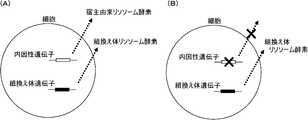
- a lysosomal enzyme derived from an endogenous gene of a mammalian cell from being mixed into a recombinant human lysosomal enzyme obtained by expression in a mammalian cell (FIG. 2).
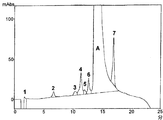
- the analysis result by RP-HPLC method of recombinant human iduronic acid 2-sulfatase purified product is shown.
- the characteristics of the production method of recombinant human iduronic acid 2-sulfatase using gene knockout cells are schematically shown.
- (A) shows the case where cells that do not disrupt the gene are used, and
- (B) shows the case where gene knockout cells are used according to the present invention.
- the lysosomal enzyme refers to a hydrolase present in the lysosome, particularly an enzyme that hydrolyzes a polysaccharide.
- ⁇ -galactosidase A iduronic acid 2-sulfatase, ⁇ -L-iduronidase, galsulfase, Contains enzymes such as acid glucosidase, glucocerebrosidase, and sulfamidase.
- the term “recombinant human lysosomal enzyme” refers to a human lysosomal enzyme produced using a gene recombination technique. In general, it is produced by incorporating a gene encoding human lysosomal enzyme into an expression vector, transforming a mammalian cell using the gene, and culturing the transformed cell.
- a gene encoding human lysosomal enzyme into an expression vector, transforming a mammalian cell using the gene, and culturing the transformed cell.
- cDNA including the entire translation region of the gene encoding the natural enzyme including the leader peptide region is preferably used.
- Other genes such as those of growth hormone, erythropoietin, or other lysosomal enzymes may be used, and the amino acid sequence of the native enzyme is not altered in the translated region of the cDNA It is also possible to use a gene having such a base substitution, or a gene having a base substitution, deletion or duplication so as to bring about substitution, deletion or duplication of the amino acid sequence of the natural enzyme in the translation region of cDNA.
- the expression vector is not particularly limited as long as it can express a gene encoding a human lysosomal enzyme in a mammalian cell, and is generally in the form of a plasmid cut by a circular or restriction enzyme. Introduce into cells.
- a gene encoding a human lysosomal enzyme is generally incorporated downstream of a promoter that controls the expression of the gene so as to be expressed in mammalian cells.
- a promoter derived from cytomegalovirus (CMV), an SV40 early promoter, an elongation factor 1 (EF-1) promoter, or the like can be used.
- mammalian cells are not particularly limited as long as they can introduce an expression vector to express a human lysosomal enzyme, but CHO cells and COS cells can be preferably used.
- an endogenous gene refers to a gene that a mammalian cell originally has on its genome. If the mammalian cell is a CHO cell, it is a Chinese hamster gene, and if it is a COS cell, it is African. It is a gene of midisal. Endogenous genes encoding lysosomal enzymes include ⁇ -galactosidase A, iduronic acid 2-sulfatase, ⁇ -L-iduronidase, galsulfase, acid glucosidase, glucocerebrosidase, sulfamidase. In normal cells, genes encoding various lysosomal enzymes are expressed and localized in lysosomes.
- a gene knockout cell mainly refers to a cell in which both of a pair of genes existing on a homologous chromosome are destroyed so that proteins encoded by those genes are not expressed at all.
- Gene knockout cells can be constructed in vitro from desired cells by homologous recombination (Huang DC. Et. Al., Mol. Cancer Res. (2002) 1, 56-57).
- Adeno-associated virus vectors for generating gene knockout cells have also been developed, and methods for producing gene knockout cells in vitro are well known to those skilled in the art (Porteus MH. Et. Al., Mol Cell Biol (2003) 23, 3558-65).
- genes present on the X chromosome include iduronic acid 2-sulfatase and ⁇ -galactosidase A genes.
- Gene knockout cells can also be obtained by establishing a knockout animal cell line.
- Knockout animals with disrupted genes encoding lysosomal enzymes include, for example, knockout mice of the iduronic acid 2-sulfatase gene (Garcia (AR. Et al., J Inherit Metab Dis. (2007) 30, 924-34), ⁇ -galactosidase A Gene knockout mice (Ioannou YA. Et al., Am J Hum Genet. (2001) 68, 14-25) are known, and gene knockout cells of lysosomal enzymes can be obtained by establishing cells from these animals. Obtainable.
- siRNA small interfering RNA
- siRNA can be introduced into a cell by transforming the cell with an siRNA expression vector.
- siRNA expression vectors such as pBAsi series, pSINsi series, and pSINsi-DK series (Takara Bio). For example, these commercially available products were used to transform with siRNA expression vectors. Gene knockout mouse cells can be easily created.
- a gene knockout cell used for producing a recombinant human lysosomal enzyme is a cell in which one or a plurality of endogenous lysosomal genes are disrupted, and particularly corresponds to a recombinant human lysosomal enzyme.
- a cell in which a gene encoding the same kind of enzyme is disrupted is most preferably used.
- [Construction of recombinant human iduronic acid 2-sulfatase expression vector] A cDNA containing the entire translation region of human iduronic acid 2-sulfatase (the DNA sequence is shown in SEQ ID NO: 1 and the amino acid sequence encoded by it is shown in SEQ ID NO: 2. The first 25 amino acids are the leader peptide).
- the expression vector (2 ⁇ g) was transfected and introduced into 1 ⁇ 10 7 CHO cells (CHO-K1 system: purchased from RIKEN) using Lipofectamine 2000 (Invitrogen), and further introduced. , After selective culture in Ham-F12 medium (Invitrogen) containing 0.8% / mL of 10% fetal bovine serum (FBS) and G418 (SIGMA) to obtain transformed cells that have acquired neomycin resistance Stable, high-producing strains were selected by cell cloning.
- FBS fetal bovine serum
- SIGMA G418
- EX-CELL302 medium JRH
- 4 mM L-glutamine 4 mM L-glutamine
- 10 mg / L hypoxanthine 4 mg / L thymidine
- 120 mg / L G418 120 mg / L G418
- Pre-culture of transformed cells for expression of recombinant human iduronic acid 2-sulfatase The seed cells were diluted to a concentration of 2 ⁇ 10 5 cells / mL, and L-glutamine 4 mM, hypoxanthine 10 mg / L, thymidine 4 mg / L, and G418 120 mg / L were added to EX-CELL302 medium (JRH). And at 37 ° C. in the presence of 5% CO 2 and passaged every 3-5 days until 4 ⁇ 10 10 cells were obtained.
- the cells obtained by the above pre-culture were transferred to a 200 L jar fermenter (Able) at a cell concentration of about 2 ⁇ 10 5 cells / mL, and 5% CO 2 at 37 ° C. with stirring at 100 rpm. Cultured in the presence of 2 . Aeration was carried out by upper surface and in-liquid aeration, and the dissolved oxygen amount was set to 70%. During the cultivation, the glucose concentration in the medium was monitored, and when the glucose concentration became 9.5 mmol / L or less, a 0.3 g / L glucose solution was added so that the final concentration was 19 mmol / L.
- EX-CELL302 medium supplemented with 4 mM L-glutamine and 10 mg / L insulin was added.
- the main culture was terminated 9 days after the start of the culture.
- a column (column volume; about 6.3 L) was loaded and adsorbed at a linear flow rate of 150 cm / hour. Subsequently, the column was washed with 50 mM sodium acetate / 150 mM NaCl (pH 4.3) solution in 4 times the column volume at the same flow rate, and then 50 mM sodium acetate / 150 mM NaCl (pH 5.1) solution in 5 times the column volume. The eluted protein was eluted with
- TNBP tri-n-butyl phosphate
- captoMMC column elution fraction were added to the final concentrations of 0.3% (v / v) and 1% (w / v), respectively.
- Tween 80 was added and allowed to stand at room temperature for 6 hours.
- the pH was adjusted to 7.0 by adding 6N NaOH to the elution fraction of the CaptoMMC column subjected to the virus inactivation treatment.
- This elution fraction was equilibrated with a solution of 20 mM sodium phosphate / 150 mM NaCl (pH 7.0) in a volume 4 times the volume of the column, and a 150 cm / hr line was applied to a Q-Sepharose column (column volume; approximately 6.3 L). It was loaded at a flow rate and adsorbed. Subsequently, the column was washed with a solution of 20 mM sodium phosphate / 150 mM NaCl (pH 7.0) 4 times the column volume at the same flow rate, and then 20 mM sodium phosphate / 400 mM NaCl (pH 7.0) 5 times the column volume. ) The adsorbed protein was eluted with the solution.
- the fraction eluted from the Q-Sepharose FF column was concentrated by ultrafiltration membrane concentration (exclusion limit molecular weight: 8,000). This was applied to a Superdex® 200 pg column (column volume; approximately 19 L, Amersham) equilibrated with 20 mM sodium phosphate / 150 mM NaCl (pH 6.0), gel filtered, and purified with recombinant human iduronic acid 2-sulfatase. Got the product.
- peak A in FIG. 1 the main peak of human iduronic acid 2-sulfatase (peak A in FIG. 1).
- peak 4 was considered to be Chinese hamster iduronic acid 2-sulfatase derived from CHO cells, and part of peak 6 was Chinese hamster N-acetylglucosamine.
- 6 sulfatase, part of peak 7 was found to be Chinese hamster allylsulfatase A and Chinese hamster ⁇ -galactosidase A. Peaks 1-3 were not analyzed.
- the purified product of human lysosomal enzyme is contaminated with proteins derived from mammalian cells that are different from humans, even in trace amounts, and it is considered that such purified product is administered to a patient by intravenous injection or the like. It is expected to cause an immune response and cause serious side effects and should be eliminated.
- the structure of the lysosomal enzyme is conserved among mammalian cells and approximates its properties. Therefore, it was considered difficult to completely separate a human lysosomal enzyme from a heterogeneous lysosomal enzyme such as a Chinese hamster lysosomal enzyme.
- a neomycin resistance gene cassette (about 2.2 kb) in which a neomycin resistance gene is arranged downstream of the SV40 promoter and an SV40 poly A signal sequence is further arranged downstream thereof is used to translate the endogenous iduronic acid 2-sulfatase gene in CHO cells.
- Homologous recombination method using a DNA fragment of about 6.1 kb in total length inserted between the 5 ′ genomic sequence (about 1.4 kb) outside the region and the 3 ′ genomic sequence (about 2.5 kb) of the translation initiation codon Can disrupt the endogenous iduronic acid 2-sulfatase gene.
- the gene-disrupted cells can be selected in a medium supplemented with neomycin, the selection is easy. Gene disruption can be confirmed by Northern blotting, and cells in which both iduronic acid 2-sulfatase genes present in homologous chromosomes are both disrupted can be selected.
- a recombinant human lysosomal enzyme free of lysosomal enzyme contamination derived from an endogenous gene of the host cell, for example, recombinant human iduronic acid 2-sulfatase.
Landscapes
- Life Sciences & Earth Sciences (AREA)
- Chemical & Material Sciences (AREA)
- Health & Medical Sciences (AREA)
- Genetics & Genomics (AREA)
- Organic Chemistry (AREA)
- Engineering & Computer Science (AREA)
- Bioinformatics & Cheminformatics (AREA)
- Zoology (AREA)
- Wood Science & Technology (AREA)
- Molecular Biology (AREA)
- Microbiology (AREA)
- Biotechnology (AREA)
- Biomedical Technology (AREA)
- Biochemistry (AREA)
- General Engineering & Computer Science (AREA)
- General Health & Medical Sciences (AREA)
- Medicinal Chemistry (AREA)
- Enzymes And Modification Thereof (AREA)
- Micro-Organisms Or Cultivation Processes Thereof (AREA)
Abstract
宿主細胞の内因性遺伝子由来の酵素の混入を防止することができる,組換え体ライソソーム酵素を製造するための新たな方法が開示されている。当該方法は,内因性のライソソーム酵素をコードする遺伝子を破壊した細胞を,ヒトライソソーム酵素をコードする遺伝子を組み込んだ発現ベクターで形質転換し,当該形質転換細胞を用いて組換え体ライソソーム酵素を製造することを特徴とする。
Description
本発明は,組換え体リソソーム酵素を,遺伝子ノックアウト細胞を用いて製造する方法に関し,詳しくは,組換え体リソソーム酵素を,ガラクトシダーゼA,イズロン酸2-スルファターゼ等のリソソーム酵素をコードする内因性遺伝子を破壊した遺伝子ノックアウト細胞を用いて製造する方法に関する。
リソソーム酵素は,リソソームに局在する酸性領域に最適pHを有する一群の加水分解酵素であり,α-L-イズロニダーゼ,イズロン酸2-スルファターゼ,ガルスルファーゼ(N-アセチルガラクトサミン-4-硫酸スルファターゼ),酸性α-グルコシダーゼ,α-ガラクトシダーゼA,グルコセレブロシダーゼ,サルファミダーゼ等の酵素がこの範疇に含まれる。
リソソーム病は,リソソーム酵素の遺伝的欠損に起因する疾病の総称であり,脂質蓄積症,ムコ多糖症,糖タンパク質代謝異常症等の疾患がこの範疇に含まれる。例えば,α-L-イズロニダーゼの遺伝子欠損はハーラー症候群又はシャイエ症候群,イズロン酸2-スルファターゼの遺伝子欠損はハンター症候群,ガルスルファーゼの遺伝子欠損はマロトー・ラミー症候群,酸性α-グルコシダーゼの遺伝子欠損はポンペ病,α-ガラクトシダーゼAの遺伝子欠損はファブリー病,グルコセレブロシダーゼの遺伝子欠損はゴーシェ病の原因となる(非特許文献1参照)。
リソソーム病の患者では,遺伝子欠損により特定のリソソーム酵素の活性が欠失又は減少するために,その基質であるムコ多糖,脂質,グリコーゲンなどが細胞内に蓄積し,その結果,それぞれの疾患に特有の病理学的特徴が現れる。そこで,リソソーム病の治療法として,患者で欠失又は減少している酵素を,静脈注射等により体外から補充する酵素補充療法が実施されている。治療に用いられる組換え体酵素は,当該酵素をコードする遺伝子を組み込んだ発現ベクターで形質転換したCHO細胞等の哺乳動物細胞を用いて製造されている。リソソーム酵素は本来リソソームに局在する酵素であるが,強制発現させるとにより細胞外に分泌されることから,形質転換した細胞を培養することにより,分泌された酵素を培養液中に得ることができる。組換え体リソソーム酵素を哺乳動物細胞中で発現させて製造する方法に関しては,例えば,組換え体α-L-イズロニダーゼをCHO細胞を用いて製造する方法が報告されている(特許文献1参照)。また,組換え体イズロン酸2-スルファターゼをCHO細胞を用いて製造する方法についても報告がある(特許文献2参照)。同様に,組換え体酸性α-グルコシダーゼ,α-ガラクトシダーゼA,グルコセレブロシダーゼについてもCHO細胞を用いて製造する方法が報告されている(非特許文献2,特許文献3~4参照)。また,組換え体ガルスルファーゼについては,繊維芽細胞を用いて製造する方法が報告されている(非特許文献3参照)。
組換え体酵素を医薬品として用いるためには,発現させた酵素を高度に精製する必要がある。例えば,薬学的処方を得る目的で,組換え体ガルスルファーゼを高度に精製する方法が報告されている(特許文献5参照)。ここでは,組換え体ガルスルファーゼを純度が99.9%以上になるまで精製しているが,医薬品として用いるためには,有害な夾雑物の場合,極微量であってもその混入を排除する必要がある。特に,酵素補充療法で用いるリソソーム酵素の場合,患者への投与は継続して行われるので,異物,例えばCHO細胞の内因性遺伝子に由来するタンパク質の混入があると,抗原抗体反応が起こり,患者にアレルギー症状等の重篤な副作用が起こる可能性がある。
組換え体リソソーム酵素を哺乳動物細胞を用いて製造した場合,当該宿主細胞の内因性遺伝子に由来するリソソーム酵素は能動的に細胞外に分泌されることなくリソソームに留まると予想される。従って,組換え体リソソーム酵素に,宿主細胞の内因性遺伝子に由来するリソソーム酵素が混入する可能性は低いと考えられる。このため,本発明者らの知る限りにおいて,特に宿主細胞の内因性遺伝子に由来するリソソーム酵素を除去するための工程を設けた,組換え体リソソーム酵素を製造する方法に関する報告はない。また,組換え体リソソーム酵素に,その製造過程で宿主細胞の内因性遺伝子に由来するリソソーム酵素が混入するか否かを分析した報告もない。
Bou-Gharios G. et al., HistochemJ.(1993) 25, 593-605
Fuller M. et al., Eur J Biochem.(1995)15, 903-9
Anson DS. Et al., Biochem J.(1992)284, 789-94
上記背景の下で,本発明者らは,CHO細胞(チャイニーズハムスター卵巣由来の細胞)をそのまま用いて製造した組換え体リソソーム酵素に,該細胞の内因性遺伝子由来の微量のリソソーム酵素が混入すること見出した。従って,本発明の目的は,哺乳動物細胞を用いて製造した組換え体リソソーム酵素の製造方法であって,該哺乳動物細胞の内因性遺伝子由来の極微量のリソソーム酵素の混入も防止できるリソソーム酵素の製造方法を提供することである。
本発明者らは,リソソーム酵素の遺伝子を破壊したノックアウト細胞を用いて組換え体リソソーム酵素を製造することを試み,それによって上記目的が達成されることを見出した。本発明は,この発見に基づいて完成されたものである。
すなわち,本発明は以下を提供する。
(1)組換え体ヒトリソソーム酵素を製造する方法であって,以下の工程すなわち,
(a)ヒトリソソーム酵素をコードする遺伝子を,哺乳動物細胞中で発現するように発現ベクターに組み込む工程,
(b)該発現ベクターを,1又は複数のリソソーム酵素をコードする内因性遺伝子を破壊した哺乳動物細胞に導入して,ヒトリソソーム酵素遺伝子発現用細胞を作成する工程,及び
(c)該ヒトリソソーム酵素遺伝子発現用細胞を培養して,ヒトリソソーム酵素遺伝子を発現させる工程,
を含んでなる方法,
(2)該リソソーム酵素をコードする内因性遺伝子が,α-ガラクトシダーゼA,イズロン酸2-スルファターゼ,α-L-イズロニダーゼ,ガルスルファーゼ,酸性グルコシダーゼ,グルコセレブロシダーゼ,サルファミダーゼから選択される,1又は複数の遺伝子である,上記(1)の方法。
(3)該リソソーム酵素をコードする内因性遺伝子が,α-ガラクトシダーゼA,イズロン酸2-スルファターゼ,サルファミダーゼから選択される,1又は複数の遺伝子である,上記(1)の方法。
(4)該ヒトリソソーム酵素をコードする遺伝子が,α-ガラクトシダーゼA,イズロン酸2-スルファターゼ,α-L-イズロニダーゼ,ガルスルファーゼ,酸性グルコシダーゼ,グルコセレブロシダーゼから選択される,上記(1)又は(2)の方法。
(5)破壊された該内因性遺伝子が,導入されるヒトリソソーム遺伝子と対応する同一種類のリソソーム酵素をコードする遺伝子である,上記(1)の方法。
(6)導入されるヒトリソソーム遺伝子が,α-ガラクトシダーゼA又はイズロン酸2-スルファターゼである,上記(5)の方法。
(1)組換え体ヒトリソソーム酵素を製造する方法であって,以下の工程すなわち,
(a)ヒトリソソーム酵素をコードする遺伝子を,哺乳動物細胞中で発現するように発現ベクターに組み込む工程,
(b)該発現ベクターを,1又は複数のリソソーム酵素をコードする内因性遺伝子を破壊した哺乳動物細胞に導入して,ヒトリソソーム酵素遺伝子発現用細胞を作成する工程,及び
(c)該ヒトリソソーム酵素遺伝子発現用細胞を培養して,ヒトリソソーム酵素遺伝子を発現させる工程,
を含んでなる方法,
(2)該リソソーム酵素をコードする内因性遺伝子が,α-ガラクトシダーゼA,イズロン酸2-スルファターゼ,α-L-イズロニダーゼ,ガルスルファーゼ,酸性グルコシダーゼ,グルコセレブロシダーゼ,サルファミダーゼから選択される,1又は複数の遺伝子である,上記(1)の方法。
(3)該リソソーム酵素をコードする内因性遺伝子が,α-ガラクトシダーゼA,イズロン酸2-スルファターゼ,サルファミダーゼから選択される,1又は複数の遺伝子である,上記(1)の方法。
(4)該ヒトリソソーム酵素をコードする遺伝子が,α-ガラクトシダーゼA,イズロン酸2-スルファターゼ,α-L-イズロニダーゼ,ガルスルファーゼ,酸性グルコシダーゼ,グルコセレブロシダーゼから選択される,上記(1)又は(2)の方法。
(5)破壊された該内因性遺伝子が,導入されるヒトリソソーム遺伝子と対応する同一種類のリソソーム酵素をコードする遺伝子である,上記(1)の方法。
(6)導入されるヒトリソソーム遺伝子が,α-ガラクトシダーゼA又はイズロン酸2-スルファターゼである,上記(5)の方法。
本発明によれば,哺乳動物細胞で発現させて得られる組換え体ヒトリソソーム酵素に,哺乳動物細胞の内因性遺伝子由来のリソソーム酵素が混入するのを防止することができる(図2)。
本発明において,リソソーム酵素というときは,リソソームに存在する加水分解酵素,特に多糖類を加水分解する酵素のことをいい,α-ガラクトシダーゼA,イズロン酸2-スルファターゼ,α-L-イズロニダーゼ,ガルスルファーゼ,酸性グルコシダーゼ,グルコセレブロシダーゼ,サルファミダーゼ等の酵素を含む。
本発明において,組換え体ヒトリソソーム酵素というときは,遺伝子組換え技術を用いて製造されるヒトリソソーム酵素のことをいう。一般的には,ヒトリソソーム酵素をコードする遺伝子を発現ベクターに組み込み,これを用いて哺乳動物細胞を形質転換し,形質転換細胞を培養することにより製造されるが,そのような技術は当業者にとって周知のものである。
本発明において,ヒトリソソーム酵素をコードする遺伝子としては,リーダーペプチド領域を含む天然型酵素をコードする遺伝子の翻訳全領域を含むcDNAが好適に用いられるが,これに限らず,リーダーペプチド領域を他の遺伝子,例えば,成長ホルモン,エリスロポエチンのもの,又は他のリソソーム酵素のものに置換したキメラ遺伝子を用いてもよく,更には,cDNAの翻訳領域中に天然型酵素のアミノ酸配列に変化を与えないような塩基の置換を含む遺伝子,cDNAの翻訳領域中に天然型酵素のアミノ酸配列の置換,欠失,重複をもたらすように塩基の置換,欠失,重複をさせた遺伝子を用いることもできる。
本発明において,発現ベクターは,哺乳動物細胞内でヒトリソソーム酵素をコードする遺伝子を発現させることができるものであれば特に限定はなく,一般的に,環状又は制限酵素で切断したプラスミドの形態で細胞に導入させる。発現ベクター内で,ヒトリソソーム酵素をコードする遺伝子は,哺乳動物細胞内で発現するように,一般に遺伝子の発現を制御するプロモーターの下流に組み込まれる。このときプロモーターとして,サイトメガロウイルス(CMV)由来のプロモーター,SV40初期プロモーター,伸長因子1(EF-1)プロモーター等が使用できる。
本発明において,哺乳動物細胞は,発現ベクターを導入してヒトリソソーム酵素を発現させることができるものであれば特に限定はないが,CHO細胞,COS細胞が好適に使用できる。
本発明において,内因性遺伝子というときは,哺乳動物細胞がそのゲノム上に本来有している遺伝子のことをいい,哺乳動物細胞がCHO細胞の場合,チャイニーズハムスターの遺伝子,COS細胞の場合はアフリカミドリサルの遺伝子である。リソソーム酵素をコードする内因性遺伝子には,α-ガラクトシダーゼA,イズロン酸2-スルファターゼ,α-L-イズロニダーゼ,ガルスルファーゼ,酸性グルコシダーゼ,グルコセレブロシダーゼ,サルファミダーゼが含まれる。通常の細胞では,各種のリソソーム酵素をコードする遺伝子が発現し,リソソームに局在している。
本発明において,遺伝子ノックアウト細胞というときは,相同染色体上に存在する一対の遺伝子の双方が,それらの遺伝子によりコードされるタンパク質が全く発現しないように破壊された細胞のことを主にいう。遺伝子ノックアウト細胞は,相同組換え法により所望の細胞からin vitroで構築することができる(Huang DC. et. Al., Mol
Cancer Res.(2002) 1, 56-57)。遺伝子ノックアウト細胞作成用のアデノ随伴ウイルスベクターも開発されており,in vitroで遺伝子ノックアウト細胞を製造する方法は,当業者にとって周知な手法となっている(Porteus MH. Et. al., Mol Cell Biol.(2003) 23, 3558-65)。
Cancer Res.(2002) 1, 56-57)。遺伝子ノックアウト細胞作成用のアデノ随伴ウイルスベクターも開発されており,in vitroで遺伝子ノックアウト細胞を製造する方法は,当業者にとって周知な手法となっている(Porteus MH. Et. al., Mol Cell Biol.(2003) 23, 3558-65)。
破壊すべき遺伝子がX染色体上に存在する場合,雌の動物由来の細胞よりも雄由来の細胞を用いることにより,遺伝子ノックアウト細胞を構築することが容易となる。何故ならば、雄由来の細胞では,破壊すべき遺伝子が染色体上に1つしか存在せず、雌の動物由来の細胞と異なり,一対の遺伝子の両方を破壊する必要がなくなるからである。ヒトの場合,X染色体上に存在する遺伝子として,例えば,イズロン酸2-スルファターゼ,α-ガラクトシダーゼAの遺伝子が挙げられる。
また遺伝子ノックアウト細胞は,ノックアウト動物の細胞を株化することでも得ることができる。ライソソーム酵素をコードする遺伝子を破壊したノックアウト動物は,例えばイズロン酸2-スルファターゼ遺伝子のノックアウトマウス(Garcia AR. Et al., J Inherit Metab Dis.(2007) 30, 924-34),α-ガラクトシダーゼA遺伝子のノックアウトマウス(Ioannou YA. Et al., Am J Hum Genet.(2001) 68, 14-25)が知られており,これらの動物から細胞を株化することによりライソソーム酵素の遺伝子ノックアウト細胞を得ることができる。
また,本発明において,遺伝子ノックアウトマウス細胞というときは,特定のsiRNA(低分子干渉RNA,small interfering RNA)を細胞内に導入することにより,特定のmRNAを破壊して,当該mRNAをコードするタンパク質の発現が抑制されるようにした細胞も含む。siRNAは,siRNA発現ベクターにより細胞を形質転換することにより,細胞内に導入することができる。siRNA発現ベクターには,pBAsiシリーズ,pSINsiシリーズ,pSINsi-DKシリーズ(タカラバイオ)のように市販されたものがあることから,例えば,これら市販のものを用いることで,siRNA発現ベクターにより形質転換した遺伝子ノックアウトマウス細胞を容易に作成することができる。
本発明において,組換え体ヒトリソソーム酵素を製造するために用いられる遺伝子ノックアウト細胞は,1又は複数の内因性のリソソーム遺伝子を破壊した細胞であるが,特に,組換え体ヒトリソソーム酵素に対応する同一種類の酵素をコードする遺伝子を破壊した細胞が最も好適に用いられる。例えば,組換え体ヒトイズロン酸2-スルファターゼを製造する場合には,少なくとも内因性のヒトイズロン酸2-スルファターゼ遺伝子を破壊した細胞を使用することが好ましい。何故ならば,そのような対応する同一種類の内因性の酵素が,製造しようとする組換え体ヒトリソソーム酵素と最も性質が類似しており,精製工程で分離除去することが困難だからである。
以下,実施例を参照して本発明を更に詳細に説明するが,本発明が実施例に限定されることは意図しない。
〔組換え体ヒトイズロン酸2-スルファターゼ発現用ベクターの構築〕
ヒトイズロン酸2-スルファターゼの翻訳領域の全長(DNA配列を配列番号1に,それがコードするアミノ酸配列を配列番号2に示す。最初の25アミノ酸よりなる部分はリーダーペプチドである。)を含むcDNAを,ヒト胎児肝臓由来のcDNAライブラリー (Clontech社) を鋳型としてPCR法により増幅し,これを発現ベクターpCI-neo (Promega社) のクローニングサイトにDNA ligation kit ver.2 (Takara社)を用いて結合させて,ヒトイズロン酸2-スルファターゼ発現用ベクターpCI-neo (I2S)とした。
ヒトイズロン酸2-スルファターゼの翻訳領域の全長(DNA配列を配列番号1に,それがコードするアミノ酸配列を配列番号2に示す。最初の25アミノ酸よりなる部分はリーダーペプチドである。)を含むcDNAを,ヒト胎児肝臓由来のcDNAライブラリー (Clontech社) を鋳型としてPCR法により増幅し,これを発現ベクターpCI-neo (Promega社) のクローニングサイトにDNA ligation kit ver.2 (Takara社)を用いて結合させて,ヒトイズロン酸2-スルファターゼ発現用ベクターpCI-neo (I2S)とした。
〔組換え体ヒトイズロン酸2-スルファターゼ発現用形質転換細胞の樹立〕
前記発現用ベクター(2μg)を,Lipofectamine2000 (Invitrogen社)を用いて,CHO細胞(CHO-K1系:理化学研究所より購入)1×10⁷個に慣用の方法でトランスフェクトして導入し,更に,10%の牛胎仔血清(FBS)とG418 (SIGMA社)を0.8mg/mL含むHam-F12培地(Invitrogen社)で選択培養をし,ネオマイシン耐性能を獲得した形質転換細胞を得た後,細胞クローニングにより安定した高生産株を選択した。次に,細胞を無血清浮遊培養に馴化させるため,L-グルタミン4mM,ヒポキサンチン10mg/L,チミジンを4mg/L,G418を120mg/L添加した市販の無血清培地EX-CELL302培地(JRH社)で細胞の増殖が安定するまで継代培養を行った。増殖が安定した細胞を,10%のDMSOを含むHam-F12培地に懸濁させて液体窒素中に保存し,種細胞とした。
前記発現用ベクター(2μg)を,Lipofectamine2000 (Invitrogen社)を用いて,CHO細胞(CHO-K1系:理化学研究所より購入)1×10⁷個に慣用の方法でトランスフェクトして導入し,更に,10%の牛胎仔血清(FBS)とG418 (SIGMA社)を0.8mg/mL含むHam-F12培地(Invitrogen社)で選択培養をし,ネオマイシン耐性能を獲得した形質転換細胞を得た後,細胞クローニングにより安定した高生産株を選択した。次に,細胞を無血清浮遊培養に馴化させるため,L-グルタミン4mM,ヒポキサンチン10mg/L,チミジンを4mg/L,G418を120mg/L添加した市販の無血清培地EX-CELL302培地(JRH社)で細胞の増殖が安定するまで継代培養を行った。増殖が安定した細胞を,10%のDMSOを含むHam-F12培地に懸濁させて液体窒素中に保存し,種細胞とした。
〔組換え体ヒトイズロン酸2-スルファターゼ発現用形質転換細胞の前培養〕
前記種細胞を,2×105個/mLの濃度に希釈してL-グルタミン4mM,ヒポキサンチン10mg/L,チミジンを4mg/L,G418を120mg/L添加したEX-CELL302培地(JRH社)で37℃で5%CO2存在下で培養し,4×1010個の細胞が得られるまで,3~5日毎に継代した。
前記種細胞を,2×105個/mLの濃度に希釈してL-グルタミン4mM,ヒポキサンチン10mg/L,チミジンを4mg/L,G418を120mg/L添加したEX-CELL302培地(JRH社)で37℃で5%CO2存在下で培養し,4×1010個の細胞が得られるまで,3~5日毎に継代した。
〔本培養〕
前記の前培養で得られた細胞を,約2×10⁵個/mLの細胞濃度となるように200Lのジャーファーメンター(Able社)に移し,100rpmで攪拌しながら,37℃で5%CO2存在下で培養した。通気は上面及び液内通気で行い,溶存酸素量を70%と設定した。培養中,培地中のグルコース濃度をモニターし,グルコース濃度が9.5mmol/L以下となった時点で,終濃度が19mmol/Lとなるように,0.3g/Lグルコース溶液を添加した。また,培養開始から,72時間,120時間,168時間後に,L-グルタミン4mM,インスリンを10mg/L添加したEX-CELL302培地を200mL添加した。培養開始9日後に本培養を終了した。
前記の前培養で得られた細胞を,約2×10⁵個/mLの細胞濃度となるように200Lのジャーファーメンター(Able社)に移し,100rpmで攪拌しながら,37℃で5%CO2存在下で培養した。通気は上面及び液内通気で行い,溶存酸素量を70%と設定した。培養中,培地中のグルコース濃度をモニターし,グルコース濃度が9.5mmol/L以下となった時点で,終濃度が19mmol/Lとなるように,0.3g/Lグルコース溶液を添加した。また,培養開始から,72時間,120時間,168時間後に,L-グルタミン4mM,インスリンを10mg/L添加したEX-CELL302培地を200mL添加した。培養開始9日後に本培養を終了した。
〔組換え体ヒトイズロン酸2-スルファターゼの精製〕
細胞培養液を回収し,ゼータプラスTMフィルターカートリッジ90MZ03M(3M社)を用いて細胞を除去し,更に0.22μmフィルターでろ過して,培養上清を得た。回収した培養上清に,6N
HClを添加して,培養上清のpHを4.3に調整し,沈殿物をフィルターろ過して除去した。この培養上清を,カラム体積の4倍量の50mM酢酸ナトリウム/150mM NaCl(pH4.3)溶液で平衡化した,疎水性相互作用及び水素結合に基づく選択性を併せ持つ陽イオン交換カラムであるCaptoMMCカラム(カラム体積;約6.3L)に,150cm/時の線流速で負荷し,吸着させた。引き続き同流速で,カラム体積の4倍量の50mM酢酸ナトリウム/150mM NaCl(pH4.3)溶液でカラムを洗浄した後,カラム体積の5倍量の50mM酢酸ナトリウム/150mM NaCl(pH5.1)溶液で吸着タンパク質を溶出した。
細胞培養液を回収し,ゼータプラスTMフィルターカートリッジ90MZ03M(3M社)を用いて細胞を除去し,更に0.22μmフィルターでろ過して,培養上清を得た。回収した培養上清に,6N
HClを添加して,培養上清のpHを4.3に調整し,沈殿物をフィルターろ過して除去した。この培養上清を,カラム体積の4倍量の50mM酢酸ナトリウム/150mM NaCl(pH4.3)溶液で平衡化した,疎水性相互作用及び水素結合に基づく選択性を併せ持つ陽イオン交換カラムであるCaptoMMCカラム(カラム体積;約6.3L)に,150cm/時の線流速で負荷し,吸着させた。引き続き同流速で,カラム体積の4倍量の50mM酢酸ナトリウム/150mM NaCl(pH4.3)溶液でカラムを洗浄した後,カラム体積の5倍量の50mM酢酸ナトリウム/150mM NaCl(pH5.1)溶液で吸着タンパク質を溶出した。
次いで,ウイルス不活化工程として,上記のCaptoMMCカラム溶出画分に,最終濃度が各々0.3%(v/v)及び1%(w/v)となるようにトリ-n-ブチルリン酸(TNBP)及び Tween80を添加して,室温で6時間静置した。上記のウイルス不活化処理をしたCaptoMMCカラム溶出画分に,6N NaOHを添加してpHを7.0に調整した。
この溶出画分を,カラム体積の4倍量の20mMリン酸ナトリウム/150mM NaCl(pH7.0)溶液で平衡化した,Q-Sepharoseカラム(カラム体積;約6.3L)に,150cm/時の線流速で負荷し,吸着させた。引き続き同流速で,カラム体積の4倍量の20mMリン酸ナトリウム/150mM NaCl(pH7.0)溶液でカラムを洗浄した後,カラム体積の5倍量の20mMリン酸ナトリウム/400mM NaCl(pH7.0)溶液で吸着タンパク質を溶出した。
次に前記Q-SepharoseFFカラム溶出画分を限外ろ過膜濃縮(排除限界分子量8,000)で濃縮した。これを,20mMリン酸ナトリウム/150mM NaCl(pH6.0)で平衡化したSuperdex 200pgカラム(カラム体積;約19L,Amersham社)に適用してゲルろ過し,組換え体ヒトイズロン酸2-スルファターゼの精製品を得た。
〔組換え体ヒトイズロン酸2-スルファターゼ精製品の分析〕
高速液体クロマトグラフィーはLC-10ASystem,SPD-10AV UV/VIS Detector(島津製作所)を用いて実施した。CHEMCOSORB 300-7C4(4.6mm径X50mm長,ケムコ社)を,0.1%トリフルオロ酢酸を含む25%アセトニトリル溶液で平衡化した。これにサンプルを負荷し,アセトニトリル濃度を段階的に25%から80%に上昇させて溶出した。検出は214nmの吸光度を測定することにより行った。高速液体クロマトグラフィーの結果,ヒトイズロン酸2-スルファターゼの主要ピーク(図1中ピークA)の他に,複数のピーク(図1中ピーク1~7)が出現した。これらを個別に分取し,N末端配列を分析したところ,ピーク4は,CHO細胞に由来するチャイニーズハムスターのイズロン酸2-スルファターゼと考えられること,ピーク6の一部はチャイニーズハムスターのNアセチルグルコサミン6スルファターゼ,ピーク7の一部はチャイニーズハムスターのアリルスルファターゼA及びチャイニーズハムスターのα-ガラクトシダーゼAであることがわかった。ピーク1~3は分析されなかった。これらの結果は,CHO細胞中で組換え体ヒトリソソーム酵素を発現させることにより,本来リソソームに局在すべきチャイニーズハムスターのリソソーム酵素が,組換え体ヒトリソソーム酵素とともに培地中に分泌され,精製の過程で分離されずに,ヒトリソソーム酵素の精製品に混入することを示すものであった。このような現象が起こることは,従来知られておらず驚くべく結果であった。
高速液体クロマトグラフィーはLC-10ASystem,SPD-10AV UV/VIS Detector(島津製作所)を用いて実施した。CHEMCOSORB 300-7C4(4.6mm径X50mm長,ケムコ社)を,0.1%トリフルオロ酢酸を含む25%アセトニトリル溶液で平衡化した。これにサンプルを負荷し,アセトニトリル濃度を段階的に25%から80%に上昇させて溶出した。検出は214nmの吸光度を測定することにより行った。高速液体クロマトグラフィーの結果,ヒトイズロン酸2-スルファターゼの主要ピーク(図1中ピークA)の他に,複数のピーク(図1中ピーク1~7)が出現した。これらを個別に分取し,N末端配列を分析したところ,ピーク4は,CHO細胞に由来するチャイニーズハムスターのイズロン酸2-スルファターゼと考えられること,ピーク6の一部はチャイニーズハムスターのNアセチルグルコサミン6スルファターゼ,ピーク7の一部はチャイニーズハムスターのアリルスルファターゼA及びチャイニーズハムスターのα-ガラクトシダーゼAであることがわかった。ピーク1~3は分析されなかった。これらの結果は,CHO細胞中で組換え体ヒトリソソーム酵素を発現させることにより,本来リソソームに局在すべきチャイニーズハムスターのリソソーム酵素が,組換え体ヒトリソソーム酵素とともに培地中に分泌され,精製の過程で分離されずに,ヒトリソソーム酵素の精製品に混入することを示すものであった。このような現象が起こることは,従来知られておらず驚くべく結果であった。
このように,ヒトリソソーム酵素の精製品に,微量であれヒトとは異種の哺乳動物細胞由来のタンパク質が混入することは,かかる精製品が医薬品として患者に静脈注射等により投与されることを考えると,免疫反応を引き起こし,重大な副作用の原因となることが予想され,排除すべきことである。
しかしながら,リソソーム酵素の構造は哺乳動物細胞間で保存されており,その性質も近似する。従って,ヒトリソソーム酵素と異種のリソソーム酵素,例えばチャイニーズハムスターのリソソーム酵素を,完全に分離することは困難であると考えられた。
〔イズロン酸2-スルファターゼ遺伝子ノックアウト細胞の作成〕
SV40プロモーターの下流にネオマイシン耐性遺伝子を配置し,更にその下流にSV40ポリAシグナル配列を配置させたネオマイシン耐性遺伝子カセット(約2.2kb)を,CHO細胞の内因性のイズロン酸2-スルファターゼ遺伝子の翻訳領域の外側の5’側ゲノム配列(約1.4kb)と翻訳開始コドンの3’側のゲノム配列(約2.5kb)の間に挿入した全長約6.1kbのDNA断片を用いて,相同組換え法により,内因性のイズロン酸2-スルファターゼ遺伝子を破壊することができる。遺伝子が破壊された細胞は,ネオマイシンを添加した培地で選択することができるので選択が容易である。遺伝子の破壊は,ノーザンブロッティング法により確認することができ,相同染色体に各々存在するイズロン酸2-スルファターゼ遺伝子が両方とも破壊された細胞を選択することができる。
SV40プロモーターの下流にネオマイシン耐性遺伝子を配置し,更にその下流にSV40ポリAシグナル配列を配置させたネオマイシン耐性遺伝子カセット(約2.2kb)を,CHO細胞の内因性のイズロン酸2-スルファターゼ遺伝子の翻訳領域の外側の5’側ゲノム配列(約1.4kb)と翻訳開始コドンの3’側のゲノム配列(約2.5kb)の間に挿入した全長約6.1kbのDNA断片を用いて,相同組換え法により,内因性のイズロン酸2-スルファターゼ遺伝子を破壊することができる。遺伝子が破壊された細胞は,ネオマイシンを添加した培地で選択することができるので選択が容易である。遺伝子の破壊は,ノーザンブロッティング法により確認することができ,相同染色体に各々存在するイズロン酸2-スルファターゼ遺伝子が両方とも破壊された細胞を選択することができる。
〔遺伝子ノックアウト細胞を用いた組換え体ヒトイズロン酸2-スルファターゼの作成〕
イズロン酸2-スルファターゼ遺伝子ノックアウトCHO細胞1×10⁷個を,Lipofectamine2000 (Invitrogen社)を用いて,前記発現用ベクター(20μg)により慣用の方法でトランスフェクトし,更に,10%の牛胎仔血清(FBS)とG418(SIGMA社)を0.8mg/mL含むHem-F12培地(Invitrogen社)でネオマイシン耐性による選択培養をし,安定した形質転換細胞を得ることができる。次に,細胞を無血清浮遊培養に馴化させるため,L-グルタミン4mM,ヒポキサンチン10mg/L,チミジンを4mg/L,G418を120mg/L添加した市販の無血清培地EX-CELL302培地(JRH社)で細胞の増殖が安定するまで継代培養を行い,増殖が安定した細胞を,10%のFBSと10%のDMSOを含むHam-F12培地に懸濁させて液体窒素中に保存し,種細胞とすることができる。この種培養を用いて製造した組換え体ヒトイズロン酸2-スルファターゼには,CHO細胞の内因性遺伝子由来のチャイニーズハムスターイズロン酸2-スルファターゼが混入することはない。
イズロン酸2-スルファターゼ遺伝子ノックアウトCHO細胞1×10⁷個を,Lipofectamine2000 (Invitrogen社)を用いて,前記発現用ベクター(20μg)により慣用の方法でトランスフェクトし,更に,10%の牛胎仔血清(FBS)とG418(SIGMA社)を0.8mg/mL含むHem-F12培地(Invitrogen社)でネオマイシン耐性による選択培養をし,安定した形質転換細胞を得ることができる。次に,細胞を無血清浮遊培養に馴化させるため,L-グルタミン4mM,ヒポキサンチン10mg/L,チミジンを4mg/L,G418を120mg/L添加した市販の無血清培地EX-CELL302培地(JRH社)で細胞の増殖が安定するまで継代培養を行い,増殖が安定した細胞を,10%のFBSと10%のDMSOを含むHam-F12培地に懸濁させて液体窒素中に保存し,種細胞とすることができる。この種培養を用いて製造した組換え体ヒトイズロン酸2-スルファターゼには,CHO細胞の内因性遺伝子由来のチャイニーズハムスターイズロン酸2-スルファターゼが混入することはない。
本発明によれば,宿主細胞の内因性遺伝子に由来するリソソーム酵素の混入のない組換え体ヒトリソソーム酵素,例えば組換え体ヒトイズロン酸2-スルファターゼを得ることができる。
Claims (6)
- 組換え体ヒトリソソーム酵素を製造する方法であって,以下の工程すなわち,
(a)ヒトリソソーム酵素をコードする遺伝子を,哺乳動物細胞中で発現するように発現ベクターに組み込む工程,
(b)該発現ベクターを,1又は複数のリソソーム酵素をコードする内因性遺伝子を破壊した哺乳動物細胞に導入して,ヒトリソソーム酵素遺伝子発現用細胞を作成する工程,及び
(c)該ヒトリソソーム酵素遺伝子発現用細胞を培養して,ヒトリソソーム酵素遺伝子を発現させる工程,
を含んでなる方法, - 該リソソーム酵素をコードする内因性遺伝子が,α-ガラクトシダーゼA,イズロン酸2-スルファターゼ,α-L-イズロニダーゼ,ガルスルファーゼ,酸性グルコシダーゼ,グルコセレブロシダーゼ,サルファミダーゼから選択される,1又は複数の遺伝子である,請求項1の方法。
- 該リソソーム酵素をコードする内因性遺伝子が,α-ガラクトシダーゼA,イズロン酸2-スルファターゼ,サルファミダーゼから選択される,1又は複数の遺伝子である,請求項1の方法。
- 該ヒトリソソーム酵素をコードする遺伝子が,α-ガラクトシダーゼA,イズロン酸2-スルファターゼ,α-L-イズロニダーゼ,ガルスルファーゼ,酸性グルコシダーゼ,グルコセレブロシダーゼから選択される,請求項1又は2の方法。
- 破壊された該内因性遺伝子が,導入されるヒトリソソーム遺伝子と対応する同一種類のリソソーム酵素をコードする遺伝子である,請求項1の方法。
- 導入されるヒトリソソーム遺伝子が,α-ガラクトシダーゼA又はイズロン酸2-スルファターゼである,請求項5の方法。
Priority Applications (1)
| Application Number | Priority Date | Filing Date | Title |
|---|---|---|---|
| JP2012503106A JPWO2011108451A1 (ja) | 2010-03-01 | 2011-02-25 | 遺伝子ノックアウト細胞を用いた組換え体リソソーム酵素の製造方法 |
Applications Claiming Priority (2)
| Application Number | Priority Date | Filing Date | Title |
|---|---|---|---|
| JP2010044568 | 2010-03-01 | ||
| JP2010-044568 | 2010-03-01 |
Publications (1)
| Publication Number | Publication Date |
|---|---|
| WO2011108451A1 true WO2011108451A1 (ja) | 2011-09-09 |
Family
ID=44542104
Family Applications (1)
| Application Number | Title | Priority Date | Filing Date |
|---|---|---|---|
| PCT/JP2011/054282 Ceased WO2011108451A1 (ja) | 2010-03-01 | 2011-02-25 | 遺伝子ノックアウト細胞を用いた組換え体リソソーム酵素の製造方法 |
Country Status (2)
| Country | Link |
|---|---|
| JP (1) | JPWO2011108451A1 (ja) |
| WO (1) | WO2011108451A1 (ja) |
Cited By (7)
| Publication number | Priority date | Publication date | Assignee | Title |
|---|---|---|---|---|
| WO2014016873A1 (en) * | 2012-07-26 | 2014-01-30 | Jcr Pharmaceuticals Co., Ltd. | Method for production of recombinant human alpha-galactosidase a |
| JP2015523072A (ja) * | 2012-06-29 | 2015-08-13 | シャイアー ヒューマン ジェネティック セラピーズ インコーポレイテッド | 組換えイズロン酸2スルファターゼの精製 |
| JP2015524249A (ja) * | 2012-07-26 | 2015-08-24 | Jcrファーマ株式会社 | 組換えヒトα−ガラクトシダーゼAの製造方法 |
| WO2016117341A1 (en) * | 2015-01-22 | 2016-07-28 | Jcr Pharmaceuticals Co., Ltd. | Method for purification of recombinant human alpha-galactosidase a from material containing contaminant host cell proteins |
| WO2016193431A1 (en) * | 2015-06-05 | 2016-12-08 | Laboratorios Del Dr. Esteve, S.A. | Adenoassociated virus vectors for the treatment of mucopolysaccharidoses |
| JP2017014169A (ja) * | 2015-07-03 | 2017-01-19 | 国立研究開発法人医薬基盤・健康・栄養研究所 | ペプチド又はタンパク質の分画方法 |
| US9719074B2 (en) | 2012-06-29 | 2017-08-01 | Shire Human Genetic Therapies, Inc. | Cells for producing recombinant iduronate-2-sulfatase |
Citations (1)
| Publication number | Priority date | Publication date | Assignee | Title |
|---|---|---|---|---|
| JP2007523648A (ja) * | 2004-02-06 | 2007-08-23 | バイオマリン ファーマシューティカル インコーポレイテッド | 高リン酸化リソソーム酵素製剤及びそれらの使用 |
Family Cites Families (1)
| Publication number | Priority date | Publication date | Assignee | Title |
|---|---|---|---|---|
| US5401650A (en) * | 1990-10-24 | 1995-03-28 | The Mount Sinai School Of Medicine Of The City University Of New York | Cloning and expression of biologically active α-galactosidase A |
-
2011
- 2011-02-25 WO PCT/JP2011/054282 patent/WO2011108451A1/ja not_active Ceased
- 2011-02-25 JP JP2012503106A patent/JPWO2011108451A1/ja active Pending
Patent Citations (1)
| Publication number | Priority date | Publication date | Assignee | Title |
|---|---|---|---|---|
| JP2007523648A (ja) * | 2004-02-06 | 2007-08-23 | バイオマリン ファーマシューティカル インコーポレイテッド | 高リン酸化リソソーム酵素製剤及びそれらの使用 |
Non-Patent Citations (2)
| Title |
|---|
| CHAO, H.H. ET AL.: "Mannose 6-phosphate receptor dependent secretion of lysosomal enzymes.", THE EMBO JOURNAL, vol. 9, no. LL, 1990, pages 3507 - 3513 * |
| WARNER, T.G.: "Enhancing therapeutic glycoprotein production in Chinese hamster ovary cells by metabolic engineering endogenous gene control with antisense DNA and gene targeting.", GLYCOBIOLOGY, vol. 9, no. 9, 1999, pages 841 - 850 * |
Cited By (21)
| Publication number | Priority date | Publication date | Assignee | Title |
|---|---|---|---|---|
| US9719074B2 (en) | 2012-06-29 | 2017-08-01 | Shire Human Genetic Therapies, Inc. | Cells for producing recombinant iduronate-2-sulfatase |
| JP2015523072A (ja) * | 2012-06-29 | 2015-08-13 | シャイアー ヒューマン ジェネティック セラピーズ インコーポレイテッド | 組換えイズロン酸2スルファターゼの精製 |
| US12359178B2 (en) | 2012-06-29 | 2025-07-15 | Takeda Pharmaceutical Company Limited | Methods and compositions for treatment of hunter syndrome comprising iduronate-2-sulfatase |
| US9492511B2 (en) | 2012-06-29 | 2016-11-15 | Shire Human Genetic Therapies, Inc. | Methods and compositions for treatment of hunter syndrome |
| US11530393B2 (en) | 2012-06-29 | 2022-12-20 | Takeda Pharmaceutical Company Limited | Compositions comprising iduronate-2-sulfatase |
| US10344270B2 (en) | 2012-06-29 | 2019-07-09 | Shire Human Genetic Therapies, Inc. | Methods and compositions for treatment of Hunter syndrome |
| WO2014017088A1 (en) | 2012-07-26 | 2014-01-30 | Jcr Pharmaceuticals Co., Ltd. | Method for production of recombinant human alpha-galactosidase a |
| JP2015524249A (ja) * | 2012-07-26 | 2015-08-24 | Jcrファーマ株式会社 | 組換えヒトα−ガラクトシダーゼAの製造方法 |
| WO2014016873A1 (en) * | 2012-07-26 | 2014-01-30 | Jcr Pharmaceuticals Co., Ltd. | Method for production of recombinant human alpha-galactosidase a |
| US9617529B2 (en) | 2012-07-26 | 2017-04-11 | Jcr Pharmaceuticals Co., Ltd. | Method for production of recombinant human alpha-galactosidase A |
| WO2016116966A1 (en) * | 2015-01-22 | 2016-07-28 | Jcr Pharmaceuticals Co., Ltd. | Method for purification of recombinant human alpha-galactosidase a from material containing contaminant host cell proteins |
| CN107208081A (zh) * | 2015-01-22 | 2017-09-26 | Jcr制药股份有限公司 | 用于从包含污染宿主细胞蛋白质的材料纯化重组人α‑半乳糖苷酶A的方法 |
| JP2018504121A (ja) * | 2015-01-22 | 2018-02-15 | Jcrファーマ株式会社 | 汚染物質たる宿主細胞タンパク質を含む材料からの組換えヒトα−ガラクトシダーゼAの精製方法 |
| US10385325B2 (en) | 2015-01-22 | 2019-08-20 | Jcr Pharmaceuticals Co., Ltd. | Method for production of recombinant human alpha-galactosidase A from material containing contaminant host cell proteins by chromatography |
| CN107208081B (zh) * | 2015-01-22 | 2020-07-14 | Jcr制药股份有限公司 | 用于从包含污染宿主细胞蛋白质的材料纯化重组人α-半乳糖苷酶A的方法 |
| WO2016117341A1 (en) * | 2015-01-22 | 2016-07-28 | Jcr Pharmaceuticals Co., Ltd. | Method for purification of recombinant human alpha-galactosidase a from material containing contaminant host cell proteins |
| US10617771B2 (en) | 2015-06-05 | 2020-04-14 | Universitat Autónoma De Barcelona | Adenoassociated virus vectors for the treatment of mucopolysaccharidoses |
| RU2744593C2 (ru) * | 2015-06-05 | 2021-03-11 | Эстев Фармасьютикалс, С.А. | Векторы на основе аденоассоциированных вирусов для лечения мукополисахаридозов |
| AU2016273343B2 (en) * | 2015-06-05 | 2022-04-28 | Esteve Pharmaceuticals, S.A. | Adenoassociated virus vectors for the treatment of mucopolysaccharidoses |
| WO2016193431A1 (en) * | 2015-06-05 | 2016-12-08 | Laboratorios Del Dr. Esteve, S.A. | Adenoassociated virus vectors for the treatment of mucopolysaccharidoses |
| JP2017014169A (ja) * | 2015-07-03 | 2017-01-19 | 国立研究開発法人医薬基盤・健康・栄養研究所 | ペプチド又はタンパク質の分画方法 |
Also Published As
| Publication number | Publication date |
|---|---|
| JPWO2011108451A1 (ja) | 2013-06-27 |
Similar Documents
| Publication | Publication Date | Title |
|---|---|---|
| JPWO2011108451A1 (ja) | 遺伝子ノックアウト細胞を用いた組換え体リソソーム酵素の製造方法 | |
| JP6194324B2 (ja) | ポンペ病の処置のための方法および材料 | |
| JP6171007B2 (ja) | 組換えイズロン酸2スルファターゼの精製 | |
| KR20140130512A (ko) | 가용성 히알루로니다아제의 대규모 제조 | |
| CN104651428A (zh) | 水解甘露糖-1-磷酸-6-甘露糖连接为磷酸-6-甘露糖 | |
| CA3052520C (en) | Mutated arylsulfatase a | |
| JP2016005454A (ja) | ウリジンとn−アセチル−d−マンノサミンとを含有する培地 | |
| EP2877575B1 (en) | Method for production of recombinant human alpha-galactosidase a | |
| RS60983B1 (sr) | Postupak za proizvodnju i prečišćavanje lizozomske alfa-manozidaze | |
| JP6749042B2 (ja) | 汚染物質たる宿主細胞タンパク質を含む材料からの組換えヒトα−ガラクトシダーゼAの精製方法 | |
| CN116179578B (zh) | 高水平表达无糖基化玻璃酸酶的基因及其应用 | |
| JP6226435B2 (ja) | 組換えヒトα−ガラクトシダーゼAの製造方法 | |
| CN118667797A (zh) | 一种重组酸性α-葡萄糖苷酶及其用途 | |
| WO2022175308A2 (en) | Mutated arylsulfatase a with increased stability | |
| HK1162580A1 (en) | Purification process of alpha-galactosidase a |
Legal Events
| Date | Code | Title | Description |
|---|---|---|---|
| 121 | Ep: the epo has been informed by wipo that ep was designated in this application |
Ref document number: 11750561 Country of ref document: EP Kind code of ref document: A1 |
|
| WWE | Wipo information: entry into national phase |
Ref document number: 2012503106 Country of ref document: JP |
|
| NENP | Non-entry into the national phase |
Ref country code: DE |
|
| 122 | Ep: pct application non-entry in european phase |
Ref document number: 11750561 Country of ref document: EP Kind code of ref document: A1 |