WO2011090307A2 - 엔테로바이러스 70 및 콕싸키바이러스 A24 모두 동시에 항바이러스 활성을 갖는 siRNA 및 이를 함유하는 급성 출혈성 결막염 치료 및 예방용 약학조성물 - Google Patents
엔테로바이러스 70 및 콕싸키바이러스 A24 모두 동시에 항바이러스 활성을 갖는 siRNA 및 이를 함유하는 급성 출혈성 결막염 치료 및 예방용 약학조성물 Download PDFInfo
- Publication number
- WO2011090307A2 WO2011090307A2 PCT/KR2011/000372 KR2011000372W WO2011090307A2 WO 2011090307 A2 WO2011090307 A2 WO 2011090307A2 KR 2011000372 W KR2011000372 W KR 2011000372W WO 2011090307 A2 WO2011090307 A2 WO 2011090307A2
- Authority
- WO
- WIPO (PCT)
- Prior art keywords
- sirna
- pharmaceutical composition
- coxsackievirus
- enterovirus
- antiviral activity
- Prior art date
- Legal status (The legal status is an assumption and is not a legal conclusion. Google has not performed a legal analysis and makes no representation as to the accuracy of the status listed.)
- Ceased
Links
Images

Classifications
-
- A—HUMAN NECESSITIES
- A61—MEDICAL OR VETERINARY SCIENCE; HYGIENE
- A61K—PREPARATIONS FOR MEDICAL, DENTAL OR TOILETRY PURPOSES
- A61K31/00—Medicinal preparations containing organic active ingredients
- A61K31/70—Carbohydrates; Sugars; Derivatives thereof
- A61K31/7088—Compounds having three or more nucleosides or nucleotides
- A61K31/713—Double-stranded nucleic acids or oligonucleotides
-
- A—HUMAN NECESSITIES
- A61—MEDICAL OR VETERINARY SCIENCE; HYGIENE
- A61P—SPECIFIC THERAPEUTIC ACTIVITY OF CHEMICAL COMPOUNDS OR MEDICINAL PREPARATIONS
- A61P31/00—Antiinfectives, i.e. antibiotics, antiseptics, chemotherapeutics
- A61P31/12—Antivirals
-
- C—CHEMISTRY; METALLURGY
- C12—BIOCHEMISTRY; BEER; SPIRITS; WINE; VINEGAR; MICROBIOLOGY; ENZYMOLOGY; MUTATION OR GENETIC ENGINEERING
- C12N—MICROORGANISMS OR ENZYMES; COMPOSITIONS THEREOF; PROPAGATING, PRESERVING, OR MAINTAINING MICROORGANISMS; MUTATION OR GENETIC ENGINEERING; CULTURE MEDIA
- C12N15/00—Mutation or genetic engineering; DNA or RNA concerning genetic engineering, vectors, e.g. plasmids, or their isolation, preparation or purification; Use of hosts therefor
- C12N15/09—Recombinant DNA-technology
- C12N15/11—DNA or RNA fragments; Modified forms thereof; Non-coding nucleic acids having a biological activity
- C12N15/113—Non-coding nucleic acids modulating the expression of genes, e.g. antisense oligonucleotides; Antisense DNA or RNA; Triplex- forming oligonucleotides; Catalytic nucleic acids, e.g. ribozymes; Nucleic acids used in co-suppression or gene silencing
- C12N15/1131—Non-coding nucleic acids modulating the expression of genes, e.g. antisense oligonucleotides; Antisense DNA or RNA; Triplex- forming oligonucleotides; Catalytic nucleic acids, e.g. ribozymes; Nucleic acids used in co-suppression or gene silencing against viruses
-
- C—CHEMISTRY; METALLURGY
- C12—BIOCHEMISTRY; BEER; SPIRITS; WINE; VINEGAR; MICROBIOLOGY; ENZYMOLOGY; MUTATION OR GENETIC ENGINEERING
- C12N—MICROORGANISMS OR ENZYMES; COMPOSITIONS THEREOF; PROPAGATING, PRESERVING, OR MAINTAINING MICROORGANISMS; MUTATION OR GENETIC ENGINEERING; CULTURE MEDIA
- C12N2310/00—Structure or type of the nucleic acid
- C12N2310/10—Type of nucleic acid
- C12N2310/11—Antisense
Definitions
- the present invention relates to siRNA, both of which enterovirus 70 and coxsackievirus A24 have antiviral activity at the same time, and to pharmaceutical compositions for treating and preventing acute hemorrhagic conjunctivitis.
- AHC Acute hemorrhagic conjunctivitis
- RNA interference is a double-chain RNA composed of a sense RNA having a sequence homologous to an mRNA of a target gene and an antisense RNA having a sequence complementary thereto (hereinafter, "dsRNA").
- dsRNA antisense RNA having a sequence complementary thereto
- siRNA 21-25 nucleotides
- vectors expressing chemically synthesized siRNA and shRNA can induce RNAi in vitro and in vivo (Bernstein, E. et al.
- RNAi is a novel foundation for the development of effective antiviral agents (Dave, RS et al., Rev Med Virol, 13: 373-385, 2003; tevenson, M., Nat Rev Immunol , 3: 851-858, 2003). These studies confirmed that siRNA could effectively inhibit the replication of various viruses such as hepatitis virus, poliovirus or influenza virus under various experimental conditions.
- siRNAs targeting coxsackievirus B3 have been shown to have dramatic antiviral effects in various permissive cells such as cardiomyocytes (Ahn J. et al., J Virol, 79: 2151-2159, 2005; Merl, S. et al., Circulation, 111: 1583-1592, 2005; Schubert, S. et al., J Mol Biol, 346: 457-465, 2005; Yuan).
- an object of the present invention is to siRNA showing the antiviral activity at the same time both enterovirus 70 (Enterovirus 70) and coxsackievirus A24, a major causative agent of acute hemorrhagic conjunctivitis (AHC) To provide.
- another object of the present invention is to provide a siRNA having both anti-virus activity at the same time enterovirus 70 and coxsackievirus A24 and a pharmaceutical composition containing the same as an active ingredient.
- the present invention provides a siRNA (small interfering RNA) represented by SEQ ID NO: 1.
- the siRNA according to the present invention is very excellent by significantly inhibiting cytotoxicity and inhibiting viral replication by a standard virus including enterovirus 70 and coxsackievirus A24, which are the main causes of acute hemorrhagic conjunctivitis, or by wild type virus isolated from a patient's sample. Because of its antiviral activity, it can be very useful as an antiviral agent, especially as a therapeutic agent for acute hemorrhagic conjunctivitis.
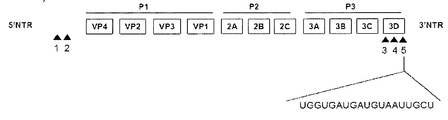
- Figure 1 shows the overall structure of the viral genome and the complementary position and sequence information of siRNA according to the present invention
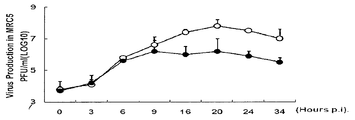
- Figures 2 and 3 are related to the characteristics of MRC5 cells after virus infection (5 MOI), Figure 2 is the analysis of the progeny virus production capacity by time by TCID 50 , Figure 3 is an optical / fluorescent microscope after Hoechst 33342 staining Cell changes were observed under ( ⁇ : CVA24, ⁇ : EV70),
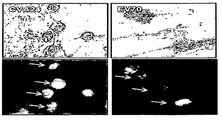
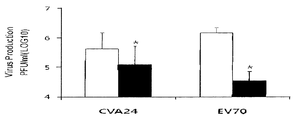
- Figure 4 shows the morphological changes by optical microscope and the change in viral protein production capacity by fluorescence microscope after immunostaining for viral proteins 5 shows analysis of progeny virus production capacity
- FIGS. 6 and 7 show the protective effect of the siRNA according to the invention in the infected primary conjunctival cells as a viral protein synthesis inhibitory effect and virus production inhibitory effect, respectively,
- the present invention provides siRNA (small interfering RNA) represented by SEQ ID NO: 1.
- the antiviral activity of siRNA according to the present invention was examined against standard virus and wild-type virus (which is isolated from the patient's sample), and it was confirmed that the cytotoxicity against the virus was excellent. It was able to inhibit the production of virus-specific proteins, it was confirmed that inhibits the production of progeny virus (see FIGS. 4 to 7).
- RNA refers to a double-chain RNA capable of inducing RNA interference (RNAi) through cleavage of mRNA of a target gene.
- RNAi RNA interference
- the siRNA terminal structures according to the present invention can be blunt ends or cohesive ends as long as the expression of the target gene can be suppressed by the RNAi effect.
- the cohesive end structure is possible in both a three-terminal projecting structure and a five-terminal projecting structure.
- the number of protruding bases is not limited.
- the number of bases may be 1 to 8 bases, preferably 2 to 6 bases.
- siRNA is a low-molecular RNA (e.g., a natural RNA molecule such as tRNA, rRNA, viral RNA or artificial RNA molecule) in the protruding portion of one end in a range capable of maintaining the expression inhibitory effect of the target gene ) May be included.
- the siRNA terminal structure does not need to have a cleavage structure at both sides, and may be a stem loop type structure in which one terminal portion of the double chain RNA is connected by a linker RNA.
- the length of the linker is not particularly limited as long as it does not interfere with pairing of stem portions.
- siRNA of the present invention is a double-stranded RNA having 19 bases, located in the 3D virus polymerase region (CVA24: 6985, EV70: 6903) (see Fig. 1), the base sequence such as SEQ ID NO: 1 Have
- SiRNAs of the invention include variants having one or more substitutions, insertions, deletions and combinations thereof that have a change that does not degrade their activity, ie a functional equivalent.
- Such a variant may exhibit at least 70% homology with the siRNA sequence (SEQ ID NO: 1) described above, preferably at least 80%, more preferably at least 90%, most preferably at least 95%.
- Such homology is well known in the art for computer algorithms, such as the Align or BLAST algorithms (Altschul, SFJ Mol. Biol. 219, 555-565, 1991; Henikoff, S. and Henikoff, JG Proc. Natl. Acad. Sci). USA 89, 10915-10919, 1992) can be readily determined by comparing the sequence of the polynucleotides to the corresponding portions of the target polynucleotides.
- the method for producing siRNA is not particularly limited, and methods known in the art can be used. For example, methods of direct chemical synthesis of siRNA (Sui G et al., Proc Natl Acad Sci USA 99: 5515-5520, 2002), synthesis of siRNA using in vitro transcription (Brummelkamp TR et al) , Science 296: 550-553, 2002), Methods of cleaving long double-stranded RNA synthesized by in vitro transcription using enzymes (Paul CP et al., Nature Biotechnology 20: 505-508 , 2002), expression methods through intracellular delivery of siRNA expression plasmids or viral vectors (Lee NS et al., Nature Biotechnology 20: 500-505, 2002) and PCR (polymerase chain reaction) induced siRNA expression cassettes Expression through intracellular delivery (Castanotto D et al., RNA 8: 1454-1460, 2002) and the like, but is not limited thereto. Determination of the method of preparing siRNA
- a recombinant vector comprising an siRNA according to the present invention is provided.
- Numerous expression systems can be used, for example chromosomes, episomes and induced viruses.
- recombinant vectors that can be used include bacterial plasmids, transfections, yeast episomes, insertion factors, yeast chromosomal factors, viruses such as baculovirus, papilloma viruses such as SV40, vaccine viruses, adenoviruses, poultry viruses, caustics.
- Rabies viruses those derived from retroviruses can be used, but are not limited thereto.
- These recombinant vectors may also be cosmid or phagemid derivatives.
- siRNA sequences are commonly known in the art as described, for example, in Molecular cloning: A laboratory manual, Sambrook et al., 2nd Ed., Cold Spring Harbor Laboratory Press, Cold Spring Harbor, NY, 2001 It can be inserted into the recombinant expression vector by methods well known to those with.
- Recombinant vectors may comprise base sequences that control the regulation of siRNA expression of the invention, and these sequences are selected according to the host cell used.
- the invention also provides a host cell comprising the recombinant vector according to the invention.
- Introduction of recombinant vectors into host cells is possible by transfection with calcium phosphate (Graham, FL et al., Virology, 52: 456 (1973)), transfection with DEAE dextran, transfection with microinjection (Capecchi, MR, Cell, 22: 479 (1980)), transfection with cationic lipids (Wong, TK et al., Gene, 10:87 (1980)), electroporation (Neumann E.
- Host cells are for example bacterial cells, such as streptococci, staphylococci, E. coli or Bacillus subtilis, yeast cells and Aspergillus, Fungal cells such as cells of Streptomyces, insect cells such as Drosophilia S2 and Spodoptera Sf9 cells and mammalian cells or plant cells to be treated. It is not limited to this.
- the present invention also provides an antiviral pharmaceutical composition containing the siRNA as an active ingredient.
- the siRNA has antiviral activity at the same time both enterovirus 70 and coxsackievirus A24, the pharmaceutical composition for the antiviral can treat or prevent acute hemorrhagic conjunctivitis or acute flaccid paralysis.
- the present invention also provides a pharmaceutical composition for the treatment and prevention of acute hemorrhagic conjunctivitis containing siRNA represented by SEQ ID NO: 1 as an active ingredient.
- the pharmaceutical composition of the present invention is prepared by uniformly or homogeneously mixing the siRNA with a pharmaceutically acceptable carrier.
- Aqueous carriers include, but are not limited to, water, saline, and pharmaceutically acceptable buffers, and preferred non-aqueous carriers include, but are not limited to, mineral oils and neutral oils, and mixtures thereof.
- the pharmaceutical composition of the present invention may further include an excipient and a diluent in addition to the carrier described above.
- examples include lactose, dextrose, sucrose, sorbitol, mannitol, calcium silicate, cellulose, methyl cellulose, microcrystalline cellulose, polyvinylpyrrolidone, water, methylhydroxybenzoate, propylhydroxybenzoate, Talc and magnesium stearate.
- the pharmaceutical composition of the present invention may contain a suitable additive for the purpose of stabilizing the active ingredient, osmotic pressure control and pH control.
- the additives include, but are not limited to, stabilizers, osmotic pressure regulators, pH regulators, wetting agents, emulsifiers, dispersants, preservatives and the like.
- the formulation of the pharmaceutical composition of the present invention may be, for example, solid, suspended, or liquid, but is preferably a suspension or liquid formulation which can be injected, or a powder formulation for injection for use in a suitable solvent prior to administration. These formulations can be prepared by methods known in the art.
- compositions of the invention may be administered by conventionally known methods for introducing nucleic acids into cells in vitro and in vivo, and conventional methods include calcium phosphate, DEAE-dextran, electroporation and microinjection, viruses Methods, and methods using cationic liposomes (Graham, FL et al., Virol. 52, 456, 1973; McCutchan, JH et al., J. Natl. Cancer Inst. 41, 351, 1968; Chu , G. et al., Nucl.Acids Res. 15, 1311, 1987; Fraley, R. et al., J. Biol. Chem.
- cationic liposomes are used and can be purchased commercially.
- the route of administration of the composition of the present invention may be oral, topical, subcutaneous, transdermal, subdermal, intramuscular, intraperitoneal, bladder, intraarticular, intraarterial, intravenous, intradermal, intracranial, intralesional, intraocular, Intrapulmonary, intrathecal and prostate administration is, but is not limited to.
- the compositions of the present invention include, but are not limited to, nasal inhalation, lung inhalation, indentation to the skin.
- a typical daily dosage of the active compound may range from 1 to 10 mg / kg body weight, preferably 1 to 5 mg / kg body weight, and may be administered once or in several doses.
- the actual dosage of the active ingredient may vary depending on several factors, including the disease to be treated, the route of administration, the time of administration, the age, sex and weight of the patient, the rate of excretion, the severity of the disease, the sensitivity to the reaction.
- CVA24 coxsackievirus A24
- EV70 Enterovirus 70
- siRNA was synthesized by DHARMACON (www.dharmacon.com, USA), and control siRNA tagged with the red-fluorescent dye Cy-3 was also purchased from the same company. Similarly, modified siRNAs containing 5 'single phosphate were also purchased from the same company.
- siRNA candidates were selected from the entire viral genome 7.3 kb as shown in FIG. Two of them were located in the 5'-untranslated region (NTR), while the other three were located in the 3D virus polymerase region.
- NTR 5'-untranslated region
- siRNA nucleic acid sequences and their exact target sites in the viral genome are shown in Table 1 below.
- MRC5 and HeLa cells were purchased from the American Cell Line Bank (ATCC), and human conjunctival fibroblasts were isolated from human tissues of other donors and cultured according to a known method (Biochem Biophys Res Commun 2008; 376: 389-94). The trial was approved by the Institutional Review Board of Asan Medical Center, and all patients received a signature agreement.
- ATCC American Cell Line Bank
- human conjunctival fibroblasts were isolated from human tissues of other donors and cultured according to a known method (Biochem Biophys Res Commun 2008; 376: 389-94). The trial was approved by the Institutional Review Board of Asan Medical Center, and all patients received a signature agreement.
- the cells were cultured at 37 ° C. in 5% CO at 37 ° C. in Dulbecco's modified Eagle's medium (DMEM) containing 10% fetal bovine serum, L-glutamine (2 mM), penicillin (100 IU / ml) and streptomycin (50 ⁇ g / ml). The culture was carried out using two incubators.
- DMEM Dulbecco's modified Eagle's medium
- Enterovirus 70 (EV70-J670 / 71; # VR836) was purchased from ATCC.
- Coxsackievirus A24 wild type virus was provided by Korea Disease Control Center or Korea Research Institute of Chemical Technology and used isolated from clinical samples in Korea. Viruses were propagated in HeLa (CVA24) or MRC5 (EV70), respectively, and titrated using TCID 50 .
- Cells were transfected for 4 hours with 100 nM siRNA complexed with Lipofectamine 2000 reagent (Invitrogen) in OPTI-MEM medium. After 4 hours, growth medium containing 10% serum was added without removing the transfection medium. After incubating the cells for an additional 8 hours, the virus was infected with MOI 5. After washing, the cells were cultured in fresh medium, and both the medium and cells were recovered and TCID 50 was performed for virus quantification.
- Lipofectamine 2000 reagent Invitrogen
- the cells were fixed with 4% paraformaldehyde, permeabilized with 0.05% TritonX-100 dissolved in 0.1 M phosphate buffer (pH 7.4) and specific for the virus VP1 protein (CVA24; K-MAB898 &EV70; Incubated with MAB843, Chemicon, Billerica, MA). Immune positive signals were visualized using FITC-conjugated second antibody.
- MRC5 cells effectively replicated the two viruses, 15-20 h p.i. Within an irreversible cell death resulted in early cell rounding, nuclear condensation (see arrow in FIG.) And eventual lysis.
- CVA24 coxsackievirus A24
- EV70 enterovirus 70
- AHCe-3D-3 siRNA was able to prevent virus-induced cell death of natural human host cells through direct interference in viral replication.
- RNA secondary structures of genomic regions attacked by AHCe-3D-3 siRNA were analyzed using a Mfold web server (http://frontend.bioinfo.rpi.edu/applications/mfold).
- the target region of AHCe-3D-3 exhibits a secondary loop structure in the region of the recognition site recognized by the siRNA so that it is easily accessible to the siRNA, whereas AHCe-siRNA without antiviral activity is tightly attached to many hydrogen bonds. It consists of an ordered structure.
- the red circle sequence represents the 5 ′ terminal of the nucleotide sequence of the virus target region
- the blue circle sequence represents the core sequence of the siRNA
- the line represents hydrogen bonds.
- SEQ ID NO: 1 is a nucleotide sequence of AHCe-5'-1 as an siRNA according to an embodiment
- SEQ ID NO: 2 is a nucleotide sequence of AHCe-5'-2 as an siRNA according to an embodiment
- SEQ ID NO: 3 is a nucleotide sequence of AHCe-3D-1 which is an siRNA according to an embodiment
- SEQ ID NO: 4 is a nucleotide sequence of AHCe-3D-2 which is an siRNA according to an embodiment
- SEQ ID NO: 5 is a nucleotide sequence of AHCe-3D-3 which is an siRNA according to an embodiment.
Landscapes
- Health & Medical Sciences (AREA)
- Life Sciences & Earth Sciences (AREA)
- Chemical & Material Sciences (AREA)
- Genetics & Genomics (AREA)
- Engineering & Computer Science (AREA)
- General Health & Medical Sciences (AREA)
- Organic Chemistry (AREA)
- Molecular Biology (AREA)
- Biomedical Technology (AREA)
- Zoology (AREA)
- Bioinformatics & Cheminformatics (AREA)
- Veterinary Medicine (AREA)
- Virology (AREA)
- Animal Behavior & Ethology (AREA)
- Biochemistry (AREA)
- Pharmacology & Pharmacy (AREA)
- Medicinal Chemistry (AREA)
- Wood Science & Technology (AREA)
- Biotechnology (AREA)
- General Engineering & Computer Science (AREA)
- Public Health (AREA)
- Microbiology (AREA)
- Plant Pathology (AREA)
- Biophysics (AREA)
- Physics & Mathematics (AREA)
- Epidemiology (AREA)
- Communicable Diseases (AREA)
- Oncology (AREA)
- Chemical Kinetics & Catalysis (AREA)
- General Chemical & Material Sciences (AREA)
- Nuclear Medicine, Radiotherapy & Molecular Imaging (AREA)
- Pharmaceuticals Containing Other Organic And Inorganic Compounds (AREA)
- Medicines That Contain Protein Lipid Enzymes And Other Medicines (AREA)
- Acyclic And Carbocyclic Compounds In Medicinal Compositions (AREA)
Abstract
본 발명은 엔테로바이러스 70 및 콕싸키바이러스 A24 모두 동시에 항바이러스 활성을 갖는 siRNA에 관한 것으로, 상기 siRNA는 급성 출혈성 결막염의 주요 원인인 엔테로바이러스 70 및 콕싸키바이러스 A24 모두에서 세포독성을 현저히 저해하고 바이러스 복제를 억제함으로써 매우 우수한 항바이러스 활성을 나타내므로 항바이러스 제제, 특히 급성 출혈성 결막염의 치료제로서 매우 유용하게 사용될 수 있다.
Description
본 발명은 엔테로바이러스 70 및 콕싸키바이러스 A24 모두 동시에 항바이러스 활성을 갖는 siRNA 및 이를 함유하는 급성 출혈성 결막염 치료 및 예방용 약학조성물에 관한 것이다.
급성 출혈성 결막염(Acute hemorrhagic conjunctivitis, AHC)은 인간 장내바이러스 중 엔테로바이러스 70(Enterovirus 70) 및 콕싸키바이러스 A24 (Coxsackievirus A24)가 주요 원인바이러스로 알려져 있다. 1969년 처음 가나에서 확인되었고 발생시기가 아폴로의 달 착륙 시기와 일치해서 일명 아폴로눈병이라고 불리운다. 8~48시간의 짧은 잠복기와 경과기간이 5~7일이 특징이다. 자각증상은 갑작스런 동통, 이물감, 눈부심, 다량의 눈물흘림이며 타각증상으로는 결막충혈, 눈꺼풀종창을 볼 수 있고 결막 부종도 나타난다. 환자의 25%에서는 열, 무력감, 전신근육통을 보이며 드물게는 하지가 마비되기도 한다.
급성 출혈성 결막염의 예방 백신이나 제제는 현재까지 개발된 바 없으며, 점안액 투여 등 대증적 안과 치료로 증상을 완화시킬 수 있는 것으로 알려져 있다.
한편, RNA 간섭 (RNA interference, 이하 「RNAi」라 칭한다)은 표적 유전자의 mRNA와 상동인 서열을 가지는 센스 RNA와 이것과 상보적인 서열을 가지는 안티센스 RNA로 구성되는 이중사슬 RNA (이하, 「dsRNA」라 칭한다)를 세포 등에 도입하는 것에 의하여 표적유전자 mRNA의 분해를 유도하고 표적유전자의 발현을 억제할 수 있는 현상이다. 이와 같이 RNAi는 표적유전자의 발현을 억제할 수 있기 때문에 유전자치료 (gene therapy)의 방법으로서 상당한 관심을 모으고 있다.
최근, 긴 이중사슬 RNA 대신 21-25 뉴클레오티드의 짧은 dsRNA (이하, siRNA이라 함)를 포유동물 세포에 도입함으로써 포유동물 세포에서도 RNAi를 유도할 수 있음이 보고 되었다 (Elbashir, S. M. et al., Nature 411, 494-498, 2001; Caplen, N. J. et al., Proc. Natl. Acad. Sci. USA 98, 9742-9747, 2001). 또한, 화학적으로 합성된 siRNA와 shRNA (short hairpin RNA)를 발현하는 벡터들이 시험관 내 (in vitro) 및 생체 내 (in vivo)에서 RNAi를 유도할 수 있다는 것이 입증되었다 (Bernstein, E. et al., Rna, 7:1509-1521, 2001; Hasuwa, H. et al., FEBS Lett, 532:227-230, 2002). 더욱이, 최근 연구에서는 RNAi가 효과적인 항바이러스 제제의 개발을 위한 신규한 기반 기술로서 제시되었다 (Dave, R. S. et al., Rev Med Virol, 13:373-385, 2003; tevenson, M., Nat Rev Immunol, 3:851-858, 2003). 이러한 연구에서는 siRNA가 다양한 실험 조건에서 간염 바이러스 (hepatitis virus), 폴리오바이러스 (poliovirus) 또는 인플루엔자 바이러스 (influenza virus)와 같은 다양한 바이러스들의 복제를 효과적으로 억제할 수 있음을 확인하였다. 또한, 콕사키바이러스 B3 (coxsackievirus B3; CVB3)를 표적으로 하는 siRNA가 심근세포 등 각종 허용 (permissive) 세포에서 극적인 항바이러스 효과를 나타냄도 확인되었다(Ahn J. et al., J Virol, 79:2151-2159, 2005; Merl, S. et al., Circulation, 111:1583-1592, 2005; Schubert, S. et al., J Mol Biol, 346:457-465, 2005; Yuan).
그러나, 아직까지 급성 출혈성 결막염(Acute hemorrhagic conjunctivitis, AHC)의 주요 원인균인 엔테로바이러스 70(Enterovirus 70)과 콕싸키바이러스 A24에 대해 동시에 항바이러스 활성을 나타내는 제제에 대한 개발은 전무하며, 효과적인 급성 출혈성 결막염 치료를 위해서는 이러한 제제에 대한 개발이 시급한 실정이다.
상기 종래기술의 문제점을 해결하기 위하여, 본 발명의 목적은 급성 출혈성 결막염(Acute hemorrhagic conjunctivitis, AHC)의 주요 원인균인 엔테로바이러스 70(Enterovirus 70)과 콕싸키바이러스 A24 모두 동시에 항바이러스 활성을 나타내는 siRNA를 제공하는 데에 있다.
또한, 본 발명의 다른 목적은 엔테로바이러스 70(Enterovirus 70)과 콕싸키바이러스 A24 모두 동시에 항바이러스 활성을 나타내는 siRNA 및 이를 유효성분으로 함유하는 약학조성물을 제공하는 데에 있다.
상기 목적을 달성하기 위하여, 본 발명은 서열번호 1로 표시되는 siRNA(small interfering RNA)를 제공한다.
본 발명에 따른 siRNA는 급성 출혈성 결막염의 주요 원인 바이러스인 엔테로바이러스 70 및 콕싸키바이러스 A24를 포함한 표준형 바이러스 또는 환자의 검체로부터 분리된 야생형 바이러스에 의한 세포독성을 현저히 저해하고 바이러스 복제를 억제함으로써 매우 우수한 항바이러스 활성을 나타내므로 항바이러스 제제, 특히 급성 출혈성 결막염의 치료제로서 매우 유용하게 사용될 수 있다.
도 1은 바이러스 게놈 전체 구조와 본 발명에 따른 siRNA의 상보적 위치 및 서열 정보를 나타낸 것이고,
도 2 및 도 3은 바이러스 감염(5 MOI) 후 MRC5 세포의 특성에 관한 것으로, 도 2는 TCID50에 의한 시간 별 자손 바이러스 생산능을 분석한 것이고, 도 3은 Hoechst 33342 염색 후 광학/형광 현미경 하에서 세포변화를 관찰한 것이고(○: CVA24, ●: EV70),
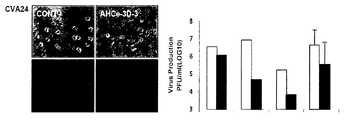
도 4 및 도 5는 감염된 MRC5 세포에서 본 발명에 따른 siRNA의 항바이러스 효과에 관한 것으로, 도 4는 광학현미경에 의한 형태적 변화와 바이러스 단백질용 면역 염색 후 형광현미경에 의한 바이러스 단백질 생산능 변화를 나타낸 것이고, 도 5는 자손 바이러스 생산능을 분석한 것이고,
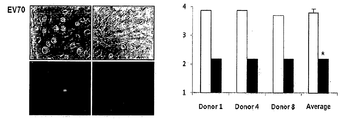
도 6 및 도 7은 감염된 프라이머리 결막 세포에서 본 발명에 따른 siRNA의 보호 효과를 각각 바이러스 단백질 합성 억제 효과 및 바이러스 생산 억제 효과로 나타낸 것이고,
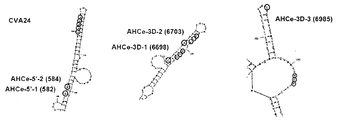
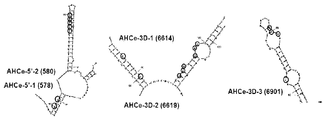
도 8 및 도 9는 본 발명에 따른 siRNA가 공격하는 게놈 부위의 RNA 이차구조를 분석한 결과이다.
본 발명은 서열번호 1로 표시되는 siRNA(small interfering RNA)를 제공한다.
본 발명의 일 실시 예에서는 본 발명에 따른 siRNA의 항바이러스 활성을 표준형 바이러스 및 야생형 바이러스(환자의 검체로부터 분리된 것임)를 대상으로 조사한 결과, 탁월하게 상기 바이러스에 대한 세포독성을 억제함을 확인할 수 있었고, 바이러스 특이 단백의 생산을 저해하였으며, 자손 바이러스의 생산을 저해함을 확인할 수 있었다(도 4 내지 도 7 참조).
또한, 본 발명의 siRNA가 공격하는 게놈 부위의 RNA 이차구조를 분석한 결과, 커다란 루프가 내제되어 있어 이 부분의 자유 에너지(free energy)가 상당히 높을 것으로 예상되었으며, 이러한 표적부위는 본 발명인 AHCe-3D-3 siRNA에 의한 접근이 용이할 것으로 추정되었고 결과적으로 항바이러스 활성이 극대화될 수 있음을 예상할 수 있었다(도 8 및 도 9 참조).
본 발명에서 사용된 용어, "siRNA"는 표적 유전자의 mRNA의 절단(cleavage)을 통하여 RNA 간섭 (RNAi: RNA interference) 현상을 유도할 수 있는 이중사슬 RNA를 의미한다.
본 발명에 따른 siRNA 말단 구조는 표적유전자의 발현을 RNAi 효과에 의하여 억제할 수 있는 것이면 평활 (blunt) 말단 혹은 점착 (cohesive) 말단 모두 가능하다. 점착 말단 구조는 3 말단 돌출한 구조와 5 말단 쪽이 돌출한 구조 모두 가능하다. 돌출하는 염기 수는 한정되지 않는다. 예를 들어, 염기 수로는 1 내지 8 염기, 바람직하게는 2 내지 6 염기로 할 수 있다. 또한, siRNA는 표적유전자의 발현억제 효과를 유지할 수 있는 범위에서 예를 들어, 한쪽 말단의 돌출 부분에 저분자 RNA (예를 들어, tRNA, rRNA, 바이러스 RNA와 같은 천연의 RNA 분자 또는 인공의 RNA 분자)를 포함할 수 있다. siRNA 말단구조는 양측 모두 절단 구조를 가질 필요는 없고, 이중사슬 RNA의 일방의 말단 부위가 링커 RNA에 의하여 접속된 스템 루프형 구조일 수도 있다. 링커의 길이는 스템 부분의 쌍을 이루는 데 지장이 없는 길이면 특별히 한정되지 않는다.
바람직하게는, 본 발명의 siRNA는 19개의 염기를 갖는 이중가닥 RNA로서, 3D 바이러스 폴리머레이즈 영역(CVA24: 6985, EV70: 6903)에 위치하며(도 1 참조), 서열번호 1과 같은 염기서열을 갖는다.
본 발명의 siRNA는 이의 활성을 저하시키지 않는 변화를 갖는, 즉 기능적 등가물인, 하나 이상의 치환, 삽입, 결실 및 이들의 조합을 갖는 변형체를 포함한다. 이러한 변형체는 상기한 siRNA 서열(서열번호 1)과 70% 이상의 상동성을 나타낼 수 있으며, 바람직하게는 80%, 보다 바람직하게는 90%, 가장 바람직하게는 95% 이상의 상동성을 나타낸다. 이러한 상동성은 당 분야에 널리 공지된 컴퓨터 알고리즘, 예를 들어 Align 또는 BLAST 알고리즘 (Altschul, S. F. J. Mol. Biol. 219, 555-565, 1991; Henikoff, S. and Henikoff, J. G. Proc. Natl. Acad. Sci. USA 89, 10915-10919, 1992)을 이용하여 폴리뉴클레오타이드의 서열을 표적 폴리뉴클레오타이드의 상응하는 부분과 비교하여 용이하게 결정할 수 있다.
siRNA의 제조방법으로는 특별히 한정되지 않으며, 당업계에 공지된 방법을 사용할 수 있다. 예를 들면, siRNA를 직접 화학적으로 합성하는 방법(Sui G et al., Proc Natl Acad Sci USA 99:5515-5520, 2002), 시험관 내(in vitro) 전사를 이용한 siRNA의 합성법(Brummelkamp TR et al., Science 296:550-553, 2002), 시험관 내(in vitro) 전사에 의해 합성된 긴 이중-가닥 RNA를 효소를 이용하여 절단하는 방법(Paul CP et al., Nature Biotechnology 20:505-508, 2002), siRNA 발현 플라스미드나 바이러스성 벡터의 세포내 전달을 통한 발현법 (Lee NS et al., Nature Biotechnology 20:500-505, 2002) 및 PCR(polymerase chain reaction) 유도 siRNA 발현 카세트(cassette)의 세포 내 전달을 통한 발현법(Castanotto D et al., RNA 8:1454-1460, 2002) 등이 있으나 이에 한정되는 것은 아니다. siRNA를 제조하는 방법의 결정은 실험의 목적 및 표적 유전자 산물의 세포 생물학적 기능에 따라 달라질 수 있다.
또한, 본 발명에 따른 siRNA를 포함하는 재조합 벡터를 제공한다. 예를 들어 염색체, 에피솜 및 유도된 바이러스와 같은 수많은 발현 시스템이 사용될 수 있다. 보다 구체적으로 사용할 수 있는 재조합 벡터로는 세균성 플라즈미드, 트랜스포숀, 효모 에피솜, 삽입 인자, 효모 염색체 인자, 바큘로바이러스와 같은 바이러스, SV40과 같은 유두종바이러스, 백신 바이러스, 아데노바이러스, 계두 바이러스, 가성광견병 바이러스, 레트로바이러스로부터 유래한 것이 사용될 수 있으나 이에 한정되는 것은 아니다. 이들 재조합 벡터는 또한 코스미드 또는 파지미드 유도체일 수 있다.
siRNA 서열은 예를 들어 문헌(Molecular cloning: A laboratory manual, Sambrook 등, 2nd Ed., Cold Spring Harbor Laboratory Press, Cold Spring Harbor, N.Y., 2001)에 기재된 바와 같이 본 발명이 속한 기술 분야에서 통상의 지식을 가진 자에게 익히 공지되어 있는 방법들에 의해 재조합 발현 벡터에 삽입될 수 있다.
재조합 벡터는 본 발명의 siRNA 발현의 조절을 제어하는 염기서열을 포함할 수 있고, 이들 서열은 사용된 숙주세포에 따라서 선택된다.
본 발명은 또한 본 발명에 따른 재조합 벡터를 포함하는 숙주 세포를 제공한다. 숙주 세포에 재조합 벡터의 도입은 인산칼슘를 이용한 형질감염(Graham, F.L. 등, Virology, 52:456(1973)), DEAE 덱스트란에 의한 형질감염, 미세주사에 의한 형질감염(Capecchi, M.R., Cell, 22:479(1980)), 양이온성 지질에 의한 형질감염 (Wong, T.K. 등, Gene, 10:87(1980)), 전기천공법(Neumann E. 등, EMBO J., 1:841(1982)), 형질도입 또는 트랜스펙션과 같이 문헌(Basic methods in molecular biology, Davis 등, 1986 및 Molecular cloning: A laboratory manual, Davis 등, 1986)에 기재된 바와 같이 본 발명이 속한 기술 분야에서 통상의 지식을 가진 자에게 익히 공지되어 있는 방법들에 따라 제조될 수 있다.
숙주 세포는 예를 들어 스트렙토코커스(streptococci), 스타필로코커스( staphylococci), 대장균(E.coli) 또는 바실러스 서브틸리스(Bacillus subtilis)와 같은 세균 세포, 효모 세포 및 아스페르질러스(Aspergillus), 스트렙토마이세스( Streptomyces)의 세포와 같은 진균류의 세포, 드로소필리아(Drosophilia) S2 및 스포도프테라(Spodoptera) Sf9 세포와 같은 곤충 세포 및 치료 대상이 되는 포유 동물의 세포 또는 식물세포가 될 수 있으나 이에 한정되는 것은 아니다.
또한, 본 발명은 상기 siRNA를 유효성분으로 함유하는 항바이러스용 약학조성물을 제공한다. 상기 siRNA는 엔테로바이러스 70 및 콕싸키바이러스 A24 모두 동시에 항바이러스 활성을 가지며, 상기 항바이러스용 약학조성물은 급성 출혈성 결막염 또는 급성 이완성 마비를 치료하거나 예방할 수 있다.
또한, 본 발명은 서열번호 1로 표시되는 siRNA를 유효성분으로 함유하는 급성 출혈성 결막염 치료 및 예방용 약학조성물을 제공한다.
본 발명의 약학조성물은 상기 siRNA와 약학적으로 허용되는 담체를 균일 또는 균질하게 혼합하여 제조된다. 수성 담체로는 물, 식염수 및 약학적으로 허용되는 완충액이 포함되나 이에 한정되는 것은 아니며, 또 바람직한 비수성 담체로는 광유 및 중성 오일과 이들의 혼합물이 포함되나 이에 한정되는 것은 아니다.
또한, 본 발명의 약학조성물은 상술한 담체 외에도 부형제 및 희석제를 추가로 포함할 수 있다. 그 예로는, 락토즈, 덱스트로즈, 수크로즈, 솔비톨, 만니톨, 칼슘 실리케이트, 셀룰로즈, 메틸 셀룰로즈, 미정질 셀룰로즈, 폴리비닐피롤리돈, 물, 메틸하이드록시벤조에이트, 프로필하이드록시벤조에이트, 탈크, 마그네슘 스테아레이트를 들 수 있다. 이외에 본 발명의 약학조성물은 활성성분의 안정화, 삼투압조절 및 pH 조절 등의 목적으로 적절한 첨가제를 함유할 수도 있다. 상기 첨가제에는 안정화제, 삼투압조절제, pH 조절제, 습윤제, 유화제, 분산제, 방부제 등이 포함되나 이에 한정되는 것은 아니다.
본 발명의 약학조성물의 제형은 예를 들어 고형상, 현탁상 또는 액상일 수 있으나 바람직하게는 주사투여가 가능한 현탁상 또는 액상 제제 또는 투여 전에 적당한 용매에 녹여 사용하는 주사용 분말 제제이다. 이들 제제는 본 발명이 속한 분야에 공지된 방법에 의해 제조될 수 있다.
본 발명의 조성물의 투여경로로는 핵산을 시험관 내 및 생체 내의 세포로 도입시키는 종래 알려진 방법에 의해 투여될 수 있으며, 통상적인 방법으로는 칼슘 포스페이트, DEAE-덱스트란, 전기천공 및 미세주입법, 바이러스법, 및 양이온성 리포좀을 사용하는 방법 등이 있다(Graham, F. L. et al., Virol. 52, 456, 1973; McCutchan, J. H. et al., J. Natl. Cancer Inst. 41, 351, 1968; Chu, G. et al., Nucl. Acids Res. 15, 1311, 1987; Fraley, R. et al., J. Biol. Chem. 255, 10431, 1980; Capecchi, M. R. et al., Cell, 22, 479, 1980; 및 Felgner, P. L. et al., Proc. Nati. Acad. Sci. USA, 84, 7413, 1987). 바람직하게는 양이온성 리포좀을 사용하며, 상업적으로 구입하여 사용할 수 있다.
또한, 본 발명의 조성물의 투여경로로는 경구, 국소, 피하, 경피, 진피하, 근육내, 복막내, 방광내, 관절내, 동맥내, 정맥내, 피내, 두개내, 병소내, 안내, 폐내, 척수강내 및 전립선내 투여가 있으나 이에 한정되는 것은 아니다. 또한 본 발명의 조성물은 비 흡입, 폐 흡입, 피부에의 압인을 포함하나 이에 한정되는 것은 아니다.
사람의 경우, 활성 화합물의 통상적인 1일 투여량은 1 내지 10 ㎎/㎏ 체중, 바람직하게는 1 내지 5 ㎎/㎏ 체중의 범위일 수 있고, 1회 또는 수회로 나누어 투여할 수 있다. 그러나 활성 성분의 실제 투여량은 치료할 질환, 투여 경로, 투여 시간, 환자의 연령, 성별 및 체중, 배설 속도, 질환의 중증도, 반응 감응성 등의 여러 요인들에 의해 다양하게 변할 수 있다.
이하, 하기 실시예를 통해 본 발명을 보다 상세하게 설명한다. 다만, 이러한 실시예에 의해 본 발명이 한정되는 것은 아니다.
<실시예 1> siRNA의 합성
CAPSID 프로그램을 이용하여 콕사키바이러스 A24(CVA24)(Genebank Acc. No: D90457) 및 엔테로바이러스 70(EV70)(Genebank Acc. No: D00820)를 기초로 하여 dTdT3'-오버행을 지닌 21-염기의 이중가닥 siRNA를 설계하였다.
상기 siRNA는 DHARMACON사(미국, www.dharmacon.com)에 의뢰하여 합성하였고, 적색-형광 염료 Cy-3으로 태그된 대조군 siRNA도 동일 회사로부터 구매하였다. 유사하게, 5'단일 포스페이트를 함유하는 변형 siRNA도 동일 회사로부터 구매하였다.
그 결과, 도 1과 같이 전체 바이러스 게놈 7.3kb로부터 5개의 siRNA 후보를 선별하였다. 이들 중 2개는 5'-비번역 영역(NTR)에 위치하는 반면, 나머지 3개는 3D 바이러스 폴리머레이즈 영역에 위치하였다.
siRNA 핵산 서열 및 바이러스 게놈에서 이들의 정확한 표적 부위는 하기 표 1과 같다.
표 1 
<실시예 2> 항바이러스 활성 평가
실시예 1에 따른 siRNA의 엔테로바이러스 70(EV70) 및 콕싸키바이러스 A24(CVA24)와 같은 바이러스 균주에 대한 항바이러스 활성을 알아보기 위하여 다음과 같은 실험을 수행하였다.
<2-1> 세포 배양
MRC5 및 HeLa 세포를 미국세포주은행(ATCC)에서 구입하였고, 인간 결막섬유아세포를 다른 도너들의 인간 조직으로부터 분리하고, 종래 알려진 방법에 따라 배양하였다(Biochem Biophys Res Commun 2008; 376: 389-94). 본 실험은 서울아산병원의 임상시험심사위원회의 승인을 받았으며, 모든 환자에게 서명동의서를 받았다.
상기 세포는 10% 우태아혈청, L-글루타민(2mM), 페니실린(100IU/㎖) 및 스트렙토마이신(50㎍/㎖)을 함유하는 DMEM(Dulbecco's modified Eagle's medium) 배양 배지에서 37℃의 5% CO2 배양기를 이용하여 배양하였다.
<2-2> 바이러스의 적정
엔테로바이러스 70(EV70-J670/71; #VR836)을 ATCC로부터 구매하였다. 콕사키바이러스 A24 야생형 바이러스는 한국질병관리본부 또는 한국화학연구원으로부터 제공받았고, 한국에서 임상 샘플로부터 분리된 것을 사용하였다. 바이러스들은 HeLa(CVA24) 또는 MRC5(EV70)에서 각각 번식되었고, TCID50을 이용하여 적정하였다.
<2-3> 바이러스 감염된 MRC5 세포에 대한 AHCe-3D-3 siRNA의 세포보호 효과
세포를 OPTI-MEM 배지에서 리포펙타민 2000 시약(Invitrogen)과 복합화된 100nM siRNA으로 4시간 동안 형질감염 시켰다. 4시간 후, 형질감염 배지를 제거하지 않은 채 10% 혈청을 함유한 성장 배지를 첨가하였다. 추가로 8시간 동안 세포를 배양한 후, MOI 5로 바이러스를 감염시켰다. 세척 후, 세포를 신선한 배지에서 배양하였고, 배지와 세포 모두를 회수하여 바이러스 정량을 위해 TCID50을 수행하였다.
또한, 세포를 4% 파라포름알데히드로 고정하고, 0.1M 인산 완충액(pH 7.4)에 용해된 0.05% TritonX-100에 투과시키고 바이러스 VP1 단백질에 특이적인 제1항체(CVA24; K-MAB898 & EV70; MAB843, Chemicon, Billerica, MA)와 배양하였다. 면역 양성 시그널을 FITC-접합 제2항체를 이용하여 가시화 하였다.
그리고, Hoechst 33342 염색을 위하여 PBS로 3회 세정하였다. 세포를 37℃에서 30분 동안 1㎍/ml Hoechst 33342 염료(Invitrogen)와 반응시킨 후, 세포의 핵 형상을 가시화 하였다. 그후, UV 필터를 지닌 형광현미경(FM)으로 세포를 관찰하여 핵에서의 형태적 변화를 분석하였다.
도 2 및 도 3과 같이, MRC5 세포는 효과적으로 두 개의 바이러스를 복제하였고, 15-20 h p.i. 이내에 비가역적 세포사를 초래하였으며, 이는 초기 세포 라운딩, 핵 응축(도의 화살표 참조) 및 종국적 세포용해로 나타났다.
한편, 도 4 및 도 5와 같이, AHCe-siRNA 중 AHCe-3D-3 siRNA의 전처리에 의해 이러한 세포변화에 대한 보호 효과 즉, 바이러스 복제가 억제되었고, 바이러스 단백질 합성이 극적으로 감소되었다.
<2-4> 바이러스 감염된 인간 결막 세포에 대한 AHCe-3D-3 siRNA의 세포보호 효과
야생형 바이러스 감염에 대한 AHCe-3D-3 siRNA의 치료효과를 검증하기 위하여, 인간 결막조직으로부터 유래한 프라이머리 배양물을 준비하여 앞서와 동일한 방법으로 검토하였다. 앞서와 같이, 콕사키바이러스 A24(CVA24) 및 엔테로바이러스 70(EV70) 모두 동시에 이러한 세포에서 잘 복제되었고, 이는 MRC5 세포에서 관찰된 비가역적 세포변성효과와 유사한 패턴으로 나타났다.
한편, 도 6 및 도 7과 같이 AHCe-3D-3 siRNA 처리군에서는 대조군 siRNA와 달리 인간 결막 세포에서 바이러스 복제를 방해하고 세포독성을 유의성있게 억제하였다. 이러한 보호효과는 바이러스 유형과 프라이머리 세포 배치와 상관없이 일관되게 나타났다.
이러한 결과로부터 AHCe-3D-3 siRNA는 바이러스 복제에서 직접적 간섭을 통해 천연 인간 호스트 세포의 바이러스 유도성 세포사를 방지할 수 있을 것으로 판단되었다.
<2-5> siRNA 표적 영역 구조 예측
AHCe-3D-3 siRNA이 공격하는 게놈 부위의 RNA 이차구조를 Mfold web server(http://frontend.bioinfo.rpi.edu/applications/mfold)를 이용하여 분석하였다.
그 결과, AHCe-3D-3의 표적 영역은 siRNA에 쉽게 접근가능하도록 siRNA에 의해 인식되는 인식 부위의 영역에서 2차 루프 구조를 나타내는 반면, 항바이러스 활성이 없는 AHCe-siRNA는 많은 수소결합으로 밀착되어 정렬된 구조로 이루어져 있다. 이때, 도 8 및 도 9에서 붉은 원 서열은 바이러스 표적 영역의 염기서열 5'말단, 파란 원 서열은 siRNA의 핵심 염기서열, 선은 수소결합을 의미한다.
서열번호 1은 일실시예에 따른 siRNA인 AHCe-5'-1의 염기서열,
서열번호 2는 일실시예에 따른 siRNA인 AHCe-5'-2의 염기서열,
서열번호 3은 일실시예에 따른 siRNA인 AHCe-3D-1의 염기서열,
서열번호 4는 일실시예에 따른 siRNA인 AHCe-3D-2의 염기서열,
서열번호 5는 일실시예에 따른 siRNA인 AHCe-3D-3의 염기서열이다.
Claims (5)
- 서열번호 1로 표시되는 siRNA(small interfering RNA).
- 청구항 1의 siRNA를 유효성분으로 함유하는 항바이러스용 약학조성물.
- 청구항 2에 있어서, 상기 siRNA는 엔테로바이러스 70 및 콕싸키바이러스 A24 모두 동시에 항바이러스 활성을 갖는 항바이러스용 약학조성물.
- 청구항 2 또는 청구항 3에 있어서, 상기 항바이러스용 약학조성물은 급성 출혈성 결막염 또는 급성 이완성 마비를 치료하거나 예방하는 항바이러스용 약학조성물.
- 서열번호 1로 표시되는 siRNA를 유효성분으로 함유하는 급성 출혈성 결막염 치료 및 예방용 약학조성물.
Applications Claiming Priority (2)
| Application Number | Priority Date | Filing Date | Title |
|---|---|---|---|
| KR1020100004560A KR101300410B1 (ko) | 2010-01-19 | 2010-01-19 | 엔테로바이러스 70 및 콕싸키바이러스 A24 모두 동시에 항바이러스 활성을 갖는 siRNA 및 이를 함유하는 급성 출혈성 결막염 치료 및 예방용 약학조성물 |
| KR10-2010-0004560 | 2010-01-19 |
Publications (2)
| Publication Number | Publication Date |
|---|---|
| WO2011090307A2 true WO2011090307A2 (ko) | 2011-07-28 |
| WO2011090307A3 WO2011090307A3 (ko) | 2011-12-29 |
Family
ID=44307383
Family Applications (1)
| Application Number | Title | Priority Date | Filing Date |
|---|---|---|---|
| PCT/KR2011/000372 Ceased WO2011090307A2 (ko) | 2010-01-19 | 2011-01-19 | 엔테로바이러스 70 및 콕싸키바이러스 A24 모두 동시에 항바이러스 활성을 갖는 siRNA 및 이를 함유하는 급성 출혈성 결막염 치료 및 예방용 약학조성물 |
Country Status (2)
| Country | Link |
|---|---|
| KR (1) | KR101300410B1 (ko) |
| WO (1) | WO2011090307A2 (ko) |
Cited By (1)
| Publication number | Priority date | Publication date | Assignee | Title |
|---|---|---|---|---|
| US9227956B2 (en) | 2013-04-17 | 2016-01-05 | Pfizer Inc. | Substituted amide compounds |
Family Cites Families (2)
| Publication number | Priority date | Publication date | Assignee | Title |
|---|---|---|---|---|
| BR0314236A (pt) * | 2002-09-13 | 2005-08-09 | Replicor Inc | Formulação de oligonucleotìdeo, composição farmacêutica, kit, composto antiviral, preparação de oligonucleotìdeo e métodos para seleção de um oligonucleotìdeo antiviral para uso como um agente antiviral, para profilaxia ou tratamento de uma infecção viral em um paciente, para tratamento profilático de câncer causado por oncovìrus, para identificação de um composto que altera a ligação de um oligonucleotìdeo a pelo menos um componente viral, para purificação da ligação de oligonucleotìdeos a pelo menos um componente viral e para enriquecimento de oligonucleotìdeos a partir de um agrupamento de oligonucleotìdeos |
| KR100941452B1 (ko) * | 2007-08-23 | 2010-02-11 | 울산대학교 산학협력단 | 콕싸키바이러스 A24에 대한 항바이러스 활성을 가지는siRNA 및 이를 포함한 급성 출혈성 결막염 치료용조성물 |
-
2010
- 2010-01-19 KR KR1020100004560A patent/KR101300410B1/ko not_active Expired - Fee Related
-
2011
- 2011-01-19 WO PCT/KR2011/000372 patent/WO2011090307A2/ko not_active Ceased
Cited By (1)
| Publication number | Priority date | Publication date | Assignee | Title |
|---|---|---|---|---|
| US9227956B2 (en) | 2013-04-17 | 2016-01-05 | Pfizer Inc. | Substituted amide compounds |
Also Published As
| Publication number | Publication date |
|---|---|
| KR101300410B1 (ko) | 2013-08-26 |
| KR20110085011A (ko) | 2011-07-27 |
| WO2011090307A3 (ko) | 2011-12-29 |
Similar Documents
| Publication | Publication Date | Title |
|---|---|---|
| RU2399671C2 (ru) | Способный к интерференции дуплекс рнк, имеющий "тупые" концы и 3'-модификации | |
| EP1830866A2 (en) | METHODS AND COMPOSITIONS CONCERNING siRNA'S AS MEDIATORS OF RNA INTERFERENCE | |
| KR101585036B1 (ko) | 눈 상태의 예방 및/또는 치료를 위한 siRNA 및 방법에 있어서 이의 용도 및 조성물 | |
| EP1432799A2 (en) | Silencing of gene expression by sirna | |
| US20070093435A1 (en) | Modulation of cell phenotype by inhibitory rna | |
| KR101300410B1 (ko) | 엔테로바이러스 70 및 콕싸키바이러스 A24 모두 동시에 항바이러스 활성을 갖는 siRNA 및 이를 함유하는 급성 출혈성 결막염 치료 및 예방용 약학조성물 | |
| US20210348167A1 (en) | siNA MOLECULES, METHODS OF PRODUCTION AND USES THEREOF | |
| KR100941452B1 (ko) | 콕싸키바이러스 A24에 대한 항바이러스 활성을 가지는siRNA 및 이를 포함한 급성 출혈성 결막염 치료용조성물 | |
| Tan et al. | Development of potential antiviral strategy against coxsackievirus B4 | |
| RU2664466C1 (ru) | Композиция для лечения рака, ассоциированного с инфекцией hpv | |
| CN102657878B (zh) | Ints6基因小激活rna在制备抗前列腺癌药物中的应用 | |
| CN101348512A (zh) | 一种抗肿瘤的腺病毒制剂 | |
| WO2005019433A2 (en) | VIRALLY-ENCODED RNAs AS SUBSTRATES, INHIBITORS AND DELIVERY VEHICLES FOR RNAi | |
| CN110423812A (zh) | Skiv2l2(MTR4)基因在肿瘤治疗中的用途 | |
| Jun et al. | Antiviral potency of a siRNA targeting a conserved region of coxsackievirus A24 | |
| Wang et al. | Establishment and characterization of a fin cell line from Takifugu obscurus and its application to fish immunology | |
| Shi et al. | Antisense downregulation of SARS‐CoV gene expression in Vero E6 cells | |
| KR100637557B1 (ko) | 비폴리오 엔테로바이러스에 대해 항바이러스 활성을 갖는siRNA | |
| US20210332364A1 (en) | siNA MOLECULES, METHODS OF PRODUCTION AND USES THEREOF | |
| Fukuda et al. | Effect of linoleic acid hydroperoxide on replication of adenovirus DNA in endothelial cells of bovine aorta | |
| CN113274510B (zh) | 抑制j亚群禽白血病病毒复制的组合物及其应用 | |
| CN119709985A (zh) | Fto基因或蛋白作为靶点在筛选和制备抗犬细小病毒药物中的应用 | |
| KR101441415B1 (ko) | 신규한 siRNA, 이를 이용한 오소폭스바이러스에 대한 항바이러스 조성물 | |
| KR100741378B1 (ko) | 콕사키바이러스 b rna에 특이적인 작은 간섭 rna 및이를 유효성분으로 포함하는 치료제 | |
| TW202526018A (zh) | 抑制CTGF基因表達的siRNA及其用途 |
Legal Events
| Date | Code | Title | Description |
|---|---|---|---|
| 121 | Ep: the epo has been informed by wipo that ep was designated in this application |
Ref document number: 11734856 Country of ref document: EP Kind code of ref document: A1 |
|
| NENP | Non-entry into the national phase |
Ref country code: DE |
|
| 122 | Ep: pct application non-entry in european phase |
Ref document number: 11734856 Country of ref document: EP Kind code of ref document: A2 |