WO2011052293A1 - コンテンツ制御装置及びコンテンツ制御方法 - Google Patents
コンテンツ制御装置及びコンテンツ制御方法 Download PDFInfo
- Publication number
- WO2011052293A1 WO2011052293A1 PCT/JP2010/064926 JP2010064926W WO2011052293A1 WO 2011052293 A1 WO2011052293 A1 WO 2011052293A1 JP 2010064926 W JP2010064926 W JP 2010064926W WO 2011052293 A1 WO2011052293 A1 WO 2011052293A1
- Authority
- WO
- WIPO (PCT)
- Prior art keywords
- content
- unit
- paid
- encrypted
- receiving terminal
- Prior art date
- Legal status (The legal status is an assumption and is not a legal conclusion. Google has not performed a legal analysis and makes no representation as to the accuracy of the status listed.)
- Ceased
Links
Images



Classifications
-
- G—PHYSICS
- G06—COMPUTING OR CALCULATING; COUNTING
- G06Q—INFORMATION AND COMMUNICATION TECHNOLOGY [ICT] SPECIALLY ADAPTED FOR ADMINISTRATIVE, COMMERCIAL, FINANCIAL, MANAGERIAL OR SUPERVISORY PURPOSES; SYSTEMS OR METHODS SPECIALLY ADAPTED FOR ADMINISTRATIVE, COMMERCIAL, FINANCIAL, MANAGERIAL OR SUPERVISORY PURPOSES, NOT OTHERWISE PROVIDED FOR
- G06Q20/00—Payment architectures, schemes or protocols
- G06Q20/08—Payment architectures
- G06Q20/12—Payment architectures specially adapted for electronic shopping systems
- G06Q20/123—Shopping for digital content
- G06Q20/1235—Shopping for digital content with control of digital rights management [DRM]
-
- H—ELECTRICITY
- H04—ELECTRIC COMMUNICATION TECHNIQUE
- H04N—PICTORIAL COMMUNICATION, e.g. TELEVISION
- H04N7/00—Television systems
- H04N7/16—Analogue secrecy systems; Analogue subscription systems
- H04N7/173—Analogue secrecy systems; Analogue subscription systems with two-way working, e.g. subscriber sending a programme selection signal
-
- G—PHYSICS
- G06—COMPUTING OR CALCULATING; COUNTING
- G06Q—INFORMATION AND COMMUNICATION TECHNOLOGY [ICT] SPECIALLY ADAPTED FOR ADMINISTRATIVE, COMMERCIAL, FINANCIAL, MANAGERIAL OR SUPERVISORY PURPOSES; SYSTEMS OR METHODS SPECIALLY ADAPTED FOR ADMINISTRATIVE, COMMERCIAL, FINANCIAL, MANAGERIAL OR SUPERVISORY PURPOSES, NOT OTHERWISE PROVIDED FOR
- G06Q20/00—Payment architectures, schemes or protocols
- G06Q20/08—Payment architectures
- G06Q20/14—Payment architectures specially adapted for billing systems
-
- G—PHYSICS
- G06—COMPUTING OR CALCULATING; COUNTING
- G06Q—INFORMATION AND COMMUNICATION TECHNOLOGY [ICT] SPECIALLY ADAPTED FOR ADMINISTRATIVE, COMMERCIAL, FINANCIAL, MANAGERIAL OR SUPERVISORY PURPOSES; SYSTEMS OR METHODS SPECIALLY ADAPTED FOR ADMINISTRATIVE, COMMERCIAL, FINANCIAL, MANAGERIAL OR SUPERVISORY PURPOSES, NOT OTHERWISE PROVIDED FOR
- G06Q20/00—Payment architectures, schemes or protocols
- G06Q20/08—Payment architectures
- G06Q20/14—Payment architectures specially adapted for billing systems
- G06Q20/145—Payments according to the detected use or quantity
-
- G—PHYSICS
- G07—CHECKING-DEVICES
- G07F—COIN-FREED OR LIKE APPARATUS
- G07F17/00—Coin-freed apparatus for hiring articles; Coin-freed facilities or services
- G07F17/16—Coin-freed apparatus for hiring articles; Coin-freed facilities or services for devices exhibiting advertisements, announcements, pictures or the like
-
- H—ELECTRICITY
- H04—ELECTRIC COMMUNICATION TECHNIQUE
- H04L—TRANSMISSION OF DIGITAL INFORMATION, e.g. TELEGRAPHIC COMMUNICATION
- H04L9/00—Cryptographic mechanisms or cryptographic arrangements for secret or secure communications; Network security protocols
- H04L9/08—Key distribution or management, e.g. generation, sharing or updating, of cryptographic keys or passwords
-
- H—ELECTRICITY
- H04—ELECTRIC COMMUNICATION TECHNIQUE
- H04N—PICTORIAL COMMUNICATION, e.g. TELEVISION
- H04N21/00—Selective content distribution, e.g. interactive television or video on demand [VOD]
- H04N21/20—Servers specifically adapted for the distribution of content, e.g. VOD servers; Operations thereof
- H04N21/25—Management operations performed by the server for facilitating the content distribution or administrating data related to end-users or client devices, e.g. end-user or client device authentication, learning user preferences for recommending movies
- H04N21/254—Management at additional data server, e.g. shopping server, rights management server
- H04N21/2543—Billing, e.g. for subscription services
-
- H—ELECTRICITY
- H04—ELECTRIC COMMUNICATION TECHNIQUE
- H04N—PICTORIAL COMMUNICATION, e.g. TELEVISION
- H04N21/00—Selective content distribution, e.g. interactive television or video on demand [VOD]
- H04N21/40—Client devices specifically adapted for the reception of or interaction with content, e.g. set-top-box [STB]; Operations thereof
- H04N21/41—Structure of client; Structure of client peripherals
- H04N21/414—Specialised client platforms, e.g. receiver in car or embedded in a mobile appliance
- H04N21/41407—Specialised client platforms, e.g. receiver in car or embedded in a mobile appliance embedded in a portable device, e.g. video client on a mobile phone, PDA, laptop
-
- H—ELECTRICITY
- H04—ELECTRIC COMMUNICATION TECHNIQUE
- H04N—PICTORIAL COMMUNICATION, e.g. TELEVISION
- H04N21/00—Selective content distribution, e.g. interactive television or video on demand [VOD]
- H04N21/40—Client devices specifically adapted for the reception of or interaction with content, e.g. set-top-box [STB]; Operations thereof
- H04N21/43—Processing of content or additional data, e.g. demultiplexing additional data from a digital video stream; Elementary client operations, e.g. monitoring of home network or synchronising decoder's clock; Client middleware
- H04N21/432—Content retrieval operation from a local storage medium, e.g. hard-disk
- H04N21/4325—Content retrieval operation from a local storage medium, e.g. hard-disk by playing back content from the storage medium
-
- H—ELECTRICITY
- H04—ELECTRIC COMMUNICATION TECHNIQUE
- H04N—PICTORIAL COMMUNICATION, e.g. TELEVISION
- H04N21/00—Selective content distribution, e.g. interactive television or video on demand [VOD]
- H04N21/40—Client devices specifically adapted for the reception of or interaction with content, e.g. set-top-box [STB]; Operations thereof
- H04N21/43—Processing of content or additional data, e.g. demultiplexing additional data from a digital video stream; Elementary client operations, e.g. monitoring of home network or synchronising decoder's clock; Client middleware
- H04N21/433—Content storage operation, e.g. storage operation in response to a pause request, caching operations
- H04N21/4334—Recording operations
-
- H—ELECTRICITY
- H04—ELECTRIC COMMUNICATION TECHNIQUE
- H04N—PICTORIAL COMMUNICATION, e.g. TELEVISION
- H04N21/00—Selective content distribution, e.g. interactive television or video on demand [VOD]
- H04N21/40—Client devices specifically adapted for the reception of or interaction with content, e.g. set-top-box [STB]; Operations thereof
- H04N21/43—Processing of content or additional data, e.g. demultiplexing additional data from a digital video stream; Elementary client operations, e.g. monitoring of home network or synchronising decoder's clock; Client middleware
- H04N21/44—Processing of video elementary streams, e.g. splicing a video clip retrieved from local storage with an incoming video stream or rendering scenes according to encoded video stream scene graphs
- H04N21/4405—Processing of video elementary streams, e.g. splicing a video clip retrieved from local storage with an incoming video stream or rendering scenes according to encoded video stream scene graphs involving video stream decryption
-
- H—ELECTRICITY
- H04—ELECTRIC COMMUNICATION TECHNIQUE
- H04N—PICTORIAL COMMUNICATION, e.g. TELEVISION
- H04N21/00—Selective content distribution, e.g. interactive television or video on demand [VOD]
- H04N21/40—Client devices specifically adapted for the reception of or interaction with content, e.g. set-top-box [STB]; Operations thereof
- H04N21/43—Processing of content or additional data, e.g. demultiplexing additional data from a digital video stream; Elementary client operations, e.g. monitoring of home network or synchronising decoder's clock; Client middleware
- H04N21/44—Processing of video elementary streams, e.g. splicing a video clip retrieved from local storage with an incoming video stream or rendering scenes according to encoded video stream scene graphs
- H04N21/4408—Processing of video elementary streams, e.g. splicing a video clip retrieved from local storage with an incoming video stream or rendering scenes according to encoded video stream scene graphs involving video stream encryption, e.g. re-encrypting a decrypted video stream for redistribution in a home network
-
- H—ELECTRICITY
- H04—ELECTRIC COMMUNICATION TECHNIQUE
- H04N—PICTORIAL COMMUNICATION, e.g. TELEVISION
- H04N21/00—Selective content distribution, e.g. interactive television or video on demand [VOD]
- H04N21/40—Client devices specifically adapted for the reception of or interaction with content, e.g. set-top-box [STB]; Operations thereof
- H04N21/45—Management operations performed by the client for facilitating the reception of or the interaction with the content or administrating data related to the end-user or to the client device itself, e.g. learning user preferences for recommending movies, resolving scheduling conflicts
- H04N21/462—Content or additional data management e.g. creating a master electronic programme guide from data received from the Internet and a Head-end or controlling the complexity of a video stream by scaling the resolution or bit-rate based on the client capabilities
- H04N21/4623—Processing of entitlement messages, e.g. ECM [Entitlement Control Message] or EMM [Entitlement Management Message]
-
- H—ELECTRICITY
- H04—ELECTRIC COMMUNICATION TECHNIQUE
- H04N—PICTORIAL COMMUNICATION, e.g. TELEVISION
- H04N21/00—Selective content distribution, e.g. interactive television or video on demand [VOD]
- H04N21/40—Client devices specifically adapted for the reception of or interaction with content, e.g. set-top-box [STB]; Operations thereof
- H04N21/45—Management operations performed by the client for facilitating the reception of or the interaction with the content or administrating data related to the end-user or to the client device itself, e.g. learning user preferences for recommending movies, resolving scheduling conflicts
- H04N21/462—Content or additional data management e.g. creating a master electronic programme guide from data received from the Internet and a Head-end or controlling the complexity of a video stream by scaling the resolution or bit-rate based on the client capabilities
- H04N21/4627—Rights management associated to the content
-
- H—ELECTRICITY
- H04—ELECTRIC COMMUNICATION TECHNIQUE
- H04N—PICTORIAL COMMUNICATION, e.g. TELEVISION
- H04N5/00—Details of television systems
- H04N5/76—Television signal recording
- H04N5/91—Television signal processing therefor
- H04N5/913—Television signal processing therefor for scrambling ; for copy protection
-
- H—ELECTRICITY
- H04—ELECTRIC COMMUNICATION TECHNIQUE
- H04N—PICTORIAL COMMUNICATION, e.g. TELEVISION
- H04N7/00—Television systems
- H04N7/16—Analogue secrecy systems; Analogue subscription systems
- H04N7/167—Systems rendering the television signal unintelligible and subsequently intelligible
-
- H—ELECTRICITY
- H04—ELECTRIC COMMUNICATION TECHNIQUE
- H04N—PICTORIAL COMMUNICATION, e.g. TELEVISION
- H04N5/00—Details of television systems
- H04N5/76—Television signal recording
- H04N5/91—Television signal processing therefor
- H04N5/913—Television signal processing therefor for scrambling ; for copy protection
- H04N2005/91357—Television signal processing therefor for scrambling ; for copy protection by modifying the video signal
- H04N2005/91364—Television signal processing therefor for scrambling ; for copy protection by modifying the video signal the video signal being scrambled
Definitions
- the present invention relates to a content control apparatus and a content control method.
- a broadcast receiving terminal that receives and records a pay broadcast program (content) and displays the recorded content according to the result of authentication and billing is known (see, for example, Patent Document 1).
- the broadcast receiving terminal described in Patent Document 1 is configured to be communicable with a billing server that manages billing, and displays content according to the result of authentication and billing by the billing server.
- an object of the present invention is to provide a content control apparatus and a content control method capable of appropriately reproducing and protecting paid content before and after the completion of billing.
- a content control apparatus is a content control apparatus that is connected to a receiving terminal that receives and plays back content, and that controls playback and protection of paid content, and the receiving terminal receives the paid content.
- a charging process execution unit that executes a charging process for a user who views the paid content
- a charging completion determination unit that determines whether or not charging for the charged content is completed, and the receiving terminal that has received the A first protection unit that encrypts the pay content and records it as the first encrypted content; and if the charge completion determination unit determines that the charge for the pay content is complete, decrypts the first encrypted content And encrypting the pay content obtained by decryption using a method different from that of the first protection unit A second protection unit for recording the encrypted content, and when the pay content is requested to be reproduced, the second encrypted content is decrypted and provided to the receiving terminal.
- the content control apparatus After the paid content is completely received, a billing process for the user who views the paid content is executed. For this reason, for example, it is possible to avoid charging for content for which all data has not been received, so that appropriate charging processing can be performed.
- the pay content is encrypted by the first protection unit and recorded as the first encrypted content. In this way, since the received paid content is encrypted, for example, the received paid content can be encrypted so that the purchaser can decrypt only with the receiving terminal. As a result, it is possible to avoid playing paid content that has already been received before charging is completed or being reproduced by being copied to another receiving terminal.
- the charging completion determination unit determines that charging for the paid content is completed
- the first encrypted content is decrypted by the second protection unit
- the paid content obtained by the decryption is the first content. It is encrypted by a method different from that of the protection unit and recorded as the second encrypted content.
- the received paid content can be encrypted so that only the purchaser can decrypt it.
- the purchaser can play the paid content, so that the receiving terminal can be exchanged.
- the first protection unit performs encryption using an encryption key including a random value and the unique information of the user, records the random value in a storage unit of the receiving terminal, and the second protection unit It is preferable that the random value is acquired with reference to the storage unit, and a decryption key is generated and decrypted based on the acquired random value and the unique information of the user.
- the first protection unit performs encryption using an encryption key including unique information of the receiving terminal and unique information of the user
- the second protective unit includes unique information of the receiving terminal and the user's unique information.
- a decryption key may be generated based on the unique information.
- the second protection unit encrypts and decrypts paid content using the user's unique information as an encryption key and a decryption key.
- the second protection unit encrypts and decrypts paid content using the user's unique information as an encryption key and a decryption key.
- the content control method according to the present invention is connected to a receiving terminal that receives and plays back content, and a billing processing execution unit that executes billing processing for a user who views paid content, and billing for the paid content is completed
- a charge completion determination unit that determines whether or not, a first protection unit that encrypts the paid content received by the receiving terminal and records the encrypted content as a first encrypted content, and decrypts the first encrypted content
- a content control method that is executed by a content control device including a second protection unit that encrypts the pay content obtained by the conversion using a method different from that of the first protection unit and records the encrypted content as a second encrypted content, After the receiving terminal completes reception of the paid content, the charged content is viewed by the charging process execution unit.
- the charged content is charged by the first protection step in which the paid content is acquired from the receiving terminal by the first protection unit, encrypted, and recorded as the first encrypted content, and the charging completion determination step.
- the second encrypted content is decrypted by the second protection unit, and the pay content obtained by the decryption is encrypted by a method different from the first protection step.
- a second protection step for recording as encrypted content, and a request to play the paid content In is configured and a regeneration step to be provided to the receiving terminal by decoding said second encrypted content.
- the content control method according to the present invention has the same effects as the content control apparatus described above.
- FIG. 1 is a schematic configuration diagram of a broadcasting system including a receiving terminal having a content control apparatus according to an embodiment. It is a hardware block diagram of the receiving terminal which has the content control apparatus which concerns on embodiment. It is a block diagram which shows the function of the receiving terminal which has a content control apparatus which concerns on embodiment. It is a flowchart which shows the content preservation
- the content control apparatus and method according to the present embodiment are preferably employed, for example, when broadcasting or distributing paid content in an analog / digital broadcasting service or a wireless communication service to a receiving terminal such as a portable terminal.
- FIG. 1 is a schematic configuration diagram of a broadcast system 100.
- a broadcasting system 100 includes a content broadcasting device 20 that broadcasts content at a predetermined frequency, a mobile terminal 10 that functions as a receiver that receives content, a mobile terminal 10, and a communication network N. And a charging device 30 connected to each other.
- a communication network N for example, a mobile communication network or a wireless LAN communication network is used.
- the content broadcasting device 20 is configured to be able to broadcast paid content that requires charging, for example.
- the content broadcasting device 20 has a function of, for example, scrambling pay content with a scramble key Ks, and multiplexing and providing the scrambled pay content with the scramble key Ks and other information necessary for viewing.
- the charging device 30 has a function of calculating a usage fee for pay content to be paid by the user based on information related to charging transmitted from the mobile terminal, and charging.
- the billing device 30 has a function of transmitting a billing completion message to the mobile terminal 10 when billing is completed.
- an information processing device including a communication unit, a calculation unit, a storage unit, and an input / output unit is used.
- the mobile terminal 10 is a mobile terminal that is carried by a user, and is, for example, a terminal having a function of receiving a broadcast at a predetermined frequency and a wireless data communication function.
- the mobile terminal 10 has a function of accumulating and playing back content received through broadcasting.
- a mobile phone, a PHS, a PDA (Personal Digital Assistant) equipped with a wireless communication card, or the like is used as the mobile terminal 10.
- FIG. 2 is a hardware configuration diagram of the mobile terminal 10.
- the mobile terminal 10 physically transmits and receives data to and from a main storage device such as a CPU 11, a ROM 12 and a RAM 13, an input device 14, an output device 15 such as a display, and a charging device 30.
- a main storage device such as a CPU 11, a ROM 12 and a RAM 13, an input device 14, an output device 15 such as a display, and a charging device 30.
- It is configured as a normal computer system including a communication module 16 for performing, an auxiliary storage device 17 such as a hard disk.
- Each function of the portable terminal 10 to be described later operates the input device 14, the output device 15, and the communication module 16 under the control of the CPU 11 by reading predetermined computer software on the hardware such as the CPU 11, the ROM 12, and the RAM 13. In addition, it is realized by reading and writing data in the ROM 12, the RAM 13, and the auxiliary storage device 17.
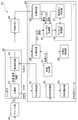
- FIG. 3 is a block diagram showing functions of the mobile terminal 10. As shown in FIG. 3, the mobile terminal 10 includes a tuner unit 40, a renderer 50, a CAS (Conditional Access System) module 60, and an external memory 80.
- the tuner unit 40 is connected to an antenna that receives paid content broadcasting, and outputs a TS (Transport Stream) of the received paid content to the renderer 50.
- TS is a data string in which video / audio information, information necessary for viewing, and the like are multiplexed.
- the renderer 50 includes a separation unit 51 and a viewing processing unit 52.
- the separation unit 51 separates the TS output from the tuner unit 40 into video / audio information and information used for performing processing necessary for viewing by the CAS module 60.
- Information used to perform processing necessary for viewing includes ECM (Entitlement Control Message) and EMM (Entitlement Management Message).
- the renderer 50 outputs video / audio information to the viewing processing unit 52 and outputs ECM and EMM to the CAS module 60.
- the viewing processing unit 52 decodes the video / audio information output from the separating unit 51, descrambles it using the scramble key Ks, and sets the content as viewable content.
- the scramble key Ks that is output from the CAS module 60 is used. Further, the contents that can be viewed are output to the CAS module 60.
- the CAS module 60 is connected to the renderer 50, and includes an ECM receiving unit 61, an EMM receiving unit 62, an EMM storage unit 63, and the content control device 1.
- the ECM receiving unit 61 receives and decrypts the ECM output from the renderer 50, and acquires the scramble key Ks. Then, the ECM receiving unit 61 outputs the scramble key Ks to the viewing processing unit 52.
- the EMM receiving unit 62 receives and decrypts the EMM output from the renderer 50, and acquires contract information and key information for decrypting the encryption. Then, the EMM reception unit 62 stores the decrypted EMM in the EMM storage unit 63. Note that the above is a case where the EMM is acquired by broadcasting, and is acquired from a wireless unit such as the communication module 16 when acquired by communication.
- the content control device 1 has a pay content playback control and protection function.
- the content control apparatus 1 includes a random number generation unit 64, an S1 encryption unit (first protection unit) 65, a non-volatile area unit (storage unit) 66, a status management unit 67, an S2 encryption unit (second protection unit) 68, and a license management unit. (Billing process execution unit) 69 and a charging completion determination unit 70 are provided.
- the random number generator 64 has a function of generating a random number (random value).
- the random number generation unit 64 outputs the generated random number to the S1 encryption unit 65.
- the S1 encryption unit 65 has a function of encrypting the pay content output by the viewing processing unit 52 of the renderer 50 (S1 encryption).
- the S1 encryption unit 65 has a function of performing encryption so that only the mobile terminal 10 and the purchaser of the paid content can decrypt.
- the S1 encryption unit 65 has a function of encrypting a random number (random value) output from the random number generation unit 64 and UIM (User Identity Module) specific information as an encryption key.
- the UIM specific information is information specific to the UIM that is an IC card in which contractor information such as a telephone number is recorded, and is information that can uniquely identify a user.
- the S1 encryption unit 65 stores the random number used for encryption in the nonvolatile area unit 66 and also stores the encrypted pay content (S1 encrypted content) in the external memory 80. In addition, the S1 encryption unit 65 notifies the status management unit 67 that the pay content has been encrypted.
- the S2 encryption unit 68 has a function of decrypting the S1 encrypted content stored in the external memory 80 using the random number recorded in the nonvolatile area unit 66 and the UIM specific information as a decryption key.
- the S2 encryption unit 68 has a function of performing encryption using an encryption method different from the encryption method of the S1 encryption unit 65.
- the S2 encryption unit 68 has a function of performing encryption so that the mobile terminal 10 and the mobile terminal 10 can be played back even when the model of the mobile terminal 10 is changed and only the purchaser can play back.
- the S2 encryption unit 68 has a function of encrypting the paid content obtained by decryption using the UIM specific information as an encryption key (S2 encryption).
- the S2 encryption unit 68 stores the encrypted pay content (S2 encrypted content) in the external memory 80. In addition, the S2 encryption unit 68 notifies the status management unit 67 that the pay content has been encrypted. In addition, when there is a reproduction request, the S2 encryption unit 68 has a function of decrypting the S2 encrypted content using the UIM specific information as a decryption key.
- the license management unit 69 has a function of managing licenses for paid contents. For example, the license management unit 69 confirms reception of paid content after accepting viewing of paid content from a user. Then, when the license management unit 69 confirms the completion of the paid content reception, the license management unit 69 notifies the charging device 30 of the completion of the reception, and causes the charging device 30 to execute the charging process. That is, the reception completion notification process of the license management unit 69 is a charging process on the mobile terminal 10 side. As a result, billing for paid content is executed after the paid content is received. In addition, the license management unit 69 notifies the status management unit 67 that the paid content has been received. When the license management unit 69 receives a charging completion notification from the charging device 30, the license management unit 69 stores, for example, in the non-volatile area unit 66 that the user is a licensed user (license purchase information).
- the charging completion determination unit 70 has a function of determining that charging for paid content has been completed. For example, the charging completion determination unit 70 determines that charging has been completed when the license management unit 69 receives a charging completion notification from the charging device 30. Then, the charging completion determination unit 70 notifies the status management unit 67 that charging has been completed.
- the status management unit 67 has a function of managing the status related to the paid content based on the charging status and the encryption status.
- the status management unit 67 has a function of managing the status related to paid content based on notifications from the S1 encryption unit 65, the S2 encryption unit 68, the license management unit 69, and the charge completion determination unit 70.
- the status management unit 67 for example, has received paid content and has not been charged for the paid content (status S1), has received paid content and has been charged for the paid content (status S2) and a function for managing three types of statuses in which encryption is completed by the S2 encryption unit 68 (status S3).
- the content control device 1 controls the pay content playback operation according to the status status.
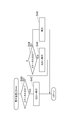
- FIG. 4 is a flowchart showing the operation of the content control apparatus 1 when storing content.
- the control process shown in FIG. 4 is started, for example, at a timing when a paid content acquisition reservation is made by a user.
- the tuner unit 40 starts receiving paid content (step S10). Thereafter, the license management unit 69 determines whether or not the paid content has been received (step S12). The license management unit 69 repeats the process of step S12 until it is determined that the paid content has been received. Note that if it is not possible to determine the completion of paid content reception even after a predetermined period of time, the processing shown in FIG. 4 may be terminated.
- the license management unit 69 determines that the paid content has been received, the license management unit 69 notifies the status management unit 67 that the paid content has been received. Then, the random number generation unit 64 generates a random number and outputs it to the S1 encryption unit 65. Then, the S1 encryption unit 65 starts encryption of the received paid content using the random number and UIM specific information as an encryption key (step S14).
- the S1 encryption unit 65 determines whether or not S1 encryption is completed (step S16). The S1 encryption unit 65 repeats the process of step S14 until it is determined that S1 encryption has been completed. If the S1 encryption unit 65 determines that the S1 encryption has been completed, the S1 encryption unit 65 stores the random number used for the S1 encryption in the nonvolatile area unit 66 (step S18). Then, the S1 encryption unit 65 notifies the status management unit 67 of the completion of S1 encryption and stores the S1 encrypted content in the external memory 80.
- the status management unit 67 When the status management unit 67 receives the completion of S1 encryption, the status management unit 67 sets the status of the mobile terminal 10 to status S1 (step S20). Thereafter, the charge completion determination unit 70 determines whether or not the charge for the charged content is completed (step S22). The charging completion determination unit 70 repeats the determination process until it is possible to determine the completion of charging for paid content.
- the terminal-side billing process is, for example, after S1 encryption is completed in step S16 and when the user indicates the intention to pay for the content received by the mobile terminal 10 by terminal operation or the like To be executed.
- the charging completion determination unit 70 determines that charging of the paid content is completed, the charging completion determination unit 70 notifies the status management unit 67 of the completion of charging.
- the status management unit 67 changes the status of the mobile terminal 10 from the status S1 to the status S2 (step S24).
- the S2 encryption unit 68 refers to the random number stored in the nonvolatile area unit 66 and the UIM specific information stored in the UIM card, and decrypts the S1 encrypted content using the random number and the UIM specific information as a decryption key.
- a process of re-encrypting the pay content obtained by decryption using the UIM specific information as an encryption key is started (step S26).
- the S2 encryption unit 68 determines whether or not S2 encryption is completed (step S28). The S2 encryption unit 68 repeats the process of step S26 until it is determined that the S2 encryption is complete. If the S2 encryption unit 68 determines that the S2 encryption has been completed, the S2 encryption unit 68 deletes the random number used for the S1 encryption from the non-volatile area unit 66 (step S30). Then, the S2 encryption unit 68 notifies the status management unit 67 of the completion of S2 encryption, and stores the S2 encrypted content in the external memory 80. When receiving the completion of the S2 encryption, the status management unit 67 changes the status of the mobile terminal 10 from the status S2 to the status S3 (step S32). When step S32 ends, the control process shown in FIG. 4 ends.
- the paid content is generated by the random number generated by the mobile terminal 10 that has received the paid content and the user using the mobile terminal 10. It is encrypted using UIM specific information. For this reason, the pay content stored in the uncharged state can be decrypted only by the mobile terminal 10 that has received the pay content and the user who uses the mobile terminal 10. Therefore, it is possible to limit decryption at a mobile terminal other than the mobile terminal 10 that has received the pay content, and decryption by inserting a UIM other than the purchaser into the mobile terminal 10. Therefore, illegal outflow of paid content can be suppressed.
- the encrypted pay content is re-encrypted using the UIM specific information of the user who uses the mobile terminal 10 that has received the pay content, using charging as a trigger. Is done. For this reason, since the stored paid content can be decrypted only by a user who is a purchaser of the paid content if it is in a charge state, it is limited that decryption is performed using UIM specific information other than the purchaser. be able to. Furthermore, since the received paid content is encrypted with the purchaser's UIM specific information, the purchased content can be used even if the purchaser is exchanged for another portable terminal or the like.
- the license purchase information is retained in the mobile terminal 10 used at the time of purchase, so that license management may be limited to the nonvolatile area 66 of the mobile terminal 10. it can. For this reason, the outflow of the license can be suppressed.
- FIG. 5 is a flowchart showing the content reproduction operation of the content control apparatus 1.
- the control process shown in FIG. 5 is started, for example, at a timing when a pay content playback request is made by a user operation, and is repeatedly executed at predetermined intervals. It is assumed that the status is set to any one of S1 to S3 before the processing, and otherwise the processing is not started.
- the status management unit 67 determines whether or not the current status is status S1 (step S40).
- step S44 determines whether or not the current status is the status S2 (step S44).
- step S44 the process of step S44 is repeatedly executed until the current status is changed from the status S2 to the status S3.
- the status management unit 67 determines that the current status is not status S2, that is, if the status management unit 67 determines that the current status is status S3, the S2 encryption unit 68 uses the S2 encrypted content. And pay content can be reproduced. As a result, the paid content is reproduced by the renderer 50. (Step S44).
- step S44 ends, the control process shown in FIG. 5 ends.
- the charging process for the user who views the paid content is performed. Executed. For this reason, for example, it is possible to avoid charging for content for which all data has not been received, so that appropriate charging processing can be performed.
- the pay content is encrypted by the S1 encryption unit 65 and recorded as the S1 encrypted content. In this way, since the received paid content is encrypted, for example, the received paid content can be encrypted so that the purchaser can decrypt only with the mobile terminal 10. Thereby, it is possible to prevent the paid content that has been received before being charged from being reproduced or reproduced by being copied to another portable terminal 10.
- the S2 encryption unit 68 decrypts the first encrypted content, and the paid content obtained by the decryption is S1. It is encrypted by a method different from that of the encryption unit 65 and recorded as the second encrypted content. In this way, since the received paid content is encrypted again by another method after the completion of charging, for example, the received paid content can be encrypted so that only the purchaser can decrypt it. As a result, paid content can be played back by the purchaser, so that the mobile terminal 10 can be exchanged.
- the S1 encryption unit 65 encrypts the random value and the UIM specific information as an encryption key, and the random value is stored in the nonvolatile memory of the mobile terminal 10. Since the S2 encryption unit 68 acquires the random number with reference to the non-volatile region unit 66 and generates and decrypts the decryption key based on the acquired random number and UIM specific information, the purchaser However, the received content can be encrypted so that it can be decrypted only by the mobile terminal 10. As a result, it is possible to prevent the paid content that has been received before being charged from being played back or copied and played back on another mobile terminal 10. Therefore, illegal outflow of paid content can be suppressed.
- the S2 encryption unit 68 encrypts the paid content using the UIM specific information as an encryption key, so that only the purchaser can decrypt it.
- the paid content that has already been received can be encrypted.
- paid content can be played back by the purchaser, so that the mobile terminal 10 can be exchanged.
- the embodiment described above shows an example of a content control apparatus and a content control method according to the present invention.
- the content control device and the content control method according to the present invention are not limited to the content control device and the content control method according to the embodiment, and the content control according to the embodiment is within the scope not changing the gist described in each claim.
- the apparatus and the content control method may be modified or applied to others.
- the content broadcasting device 20 and the billing device 30 have been described as separate devices, but they may be the same device.
- the charging process of the mobile terminal 10 has been described as a process of transmitting a paid content reception completion notification to the charging apparatus 30.
- the present invention is not limited to this, and the point is that the mobile terminal 10 receives the paid content after receiving the paid content. What is necessary is just to be comprised so that the charge to a user may be performed.
- the S1 encryption unit 65 generates an encryption key based on the random number and the UIM specific information and performs S1 encryption
- the S2 encryption unit 68 uses the random number and the UIM specific information.
- the unique information of the mobile terminal 10 may be used instead of the random number.
- the specific information of the mobile terminal 10 for example, a terminal manufacturing number is used.
- the unique information of the mobile terminal 10 instead of the random number, there is no need to provide the random number generation unit 64, and the random number used for the encryption by the S1 encryption unit 65 is stored in the nonvolatile area unit 66. Can be omitted. For this reason, the processing load and the storage capacity can be reduced as compared with the case where random numbers are used.
- SYMBOLS 1 ... Content control apparatus, 10 ... Portable terminal (receiving terminal), 20 ... Content broadcasting apparatus, 30 ... Billing apparatus, 65 ... S1 encryption part (1st protection part), 66 ... Nonvolatile area
Landscapes
- Engineering & Computer Science (AREA)
- Business, Economics & Management (AREA)
- Signal Processing (AREA)
- Multimedia (AREA)
- Accounting & Taxation (AREA)
- Databases & Information Systems (AREA)
- Finance (AREA)
- Physics & Mathematics (AREA)
- General Physics & Mathematics (AREA)
- Theoretical Computer Science (AREA)
- Strategic Management (AREA)
- General Business, Economics & Management (AREA)
- Economics (AREA)
- Development Economics (AREA)
- Computer Security & Cryptography (AREA)
- General Engineering & Computer Science (AREA)
- Computer Networks & Wireless Communication (AREA)
- Two-Way Televisions, Distribution Of Moving Picture Or The Like (AREA)
- Television Signal Processing For Recording (AREA)
- Management, Administration, Business Operations System, And Electronic Commerce (AREA)
- Storage Device Security (AREA)
Abstract
Description
Claims (5)
- コンテンツを受信して再生する受信端末に接続され、有料コンテンツの再生制御及び保護を行うコンテンツ制御装置であって、
前記受信端末が前記有料コンテンツの受信を完了した後に、当該有料コンテンツを視聴するユーザの課金処理を実行する課金処理実行部と、
前記有料コンテンツに対する課金が完了したか否かを判定する課金完了判定部と、
前記受信端末が受信した前記有料コンテンツを暗号化し、第1暗号化コンテンツとして記録する第1保護部と、
前記課金完了判定部により前記有料コンテンツに対する課金が完了したと判定された場合には、前記第1暗号化コンテンツを復号化し、復号化により得られた前記有料コンテンツを前記第1保護部とは異なる方法で暗号化し第2暗号化コンテンツとして記録する第2保護部と、
を備え、
前記有料コンテンツの再生要求がされた場合には、前記第2暗号化コンテンツを復号化して前記受信端末に提供すること、
を特徴とするコンテンツ制御装置。 - 前記第1保護部は、ランダム値及び前記ユーザの固有情報を含む暗号鍵を用いて暗号化するとともに、前記ランダム値を前記受信端末の記憶部に記録し、
前記第2保護部は、前記記憶部を参照して前記ランダム値を取得し、取得された前記ランダム値及び前記ユーザの固有情報に基づいて復号鍵を生成して復号化すること、
を特徴とする請求項1に記載のコンテンツ制御装置。 - 前記第1保護部は、前記受信端末の固有情報及び前記ユーザの固有情報を含む暗号鍵を用いて暗号化するとともに、
前記第2保護部は、前記受信端末の固有情報及び前記ユーザの固有情報に基づいて復号鍵を生成して復号化すること、
を特徴とする請求項1又は2に記載のコンテンツ制御装置。 - 前記第2保護部は、前記ユーザの固有情報を暗号鍵及び復号鍵として有料コンテンツを暗号化及び復号化することを特徴とする請求項1~3の何れか一項に記載のコンテンツ制御装置。
- コンテンツを受信して再生する受信端末に接続され、有料コンテンツを視聴するユーザの課金処理を実行する課金処理実行部と、前記有料コンテンツに対する課金が完了したか否かを判定する課金完了判定部と、前記有料コンテンツを暗号化し第1暗号化コンテンツとして記録する第1保護部と、前記第1暗号化コンテンツを復号化し、復号化により得られた前記有料コンテンツを前記第1保護部とは異なる方法で暗号化し第2暗号化コンテンツとして記録する第2保護部とを備えるコンテンツ制御装置により実行されるコンテンツ制御方法であって、
前記受信端末が前記有料コンテンツの受信を完了した後に、前記課金処理実行部によって当該有料コンテンツを視聴するユーザの課金処理を実行する課金処理実行ステップと、
前記課金完了判定部によって前記有料コンテンツに対する課金が完了したか否かを判定する課金完了判定ステップと、
前記受信端末が前記有料コンテンツを受信した場合には、前記第1保護部によって当該有料コンテンツを前記受信端末から取得して暗号化し、第1暗号化コンテンツとして記録する第1保護ステップと、
前記課金完了判定ステップにより前記有料コンテンツに対する課金が完了したと判定された場合には、前記第2保護部により前記第1暗号化コンテンツを復号化し、復号化により得られた前記有料コンテンツを前記第1保護ステップとは異なる方法で暗号化し第2暗号化コンテンツとして記録する第2保護ステップと、
前記有料コンテンツの再生要求がされた場合には、前記第2暗号化コンテンツを復号化して前記受信端末に提供する再生ステップと、
を備えるコンテンツ制御方法。
Priority Applications (5)
| Application Number | Priority Date | Filing Date | Title |
|---|---|---|---|
| CN201080048538XA CN102598693A (zh) | 2009-10-28 | 2010-09-01 | 内容控制装置以及内容控制方法 |
| KR1020127010687A KR101348329B1 (ko) | 2009-10-28 | 2010-09-01 | 콘텐츠 제어 장치 및 콘텐츠 제어 방법 |
| BR112012010168A BR112012010168A2 (pt) | 2009-10-28 | 2010-09-01 | dispositivo de controle de conteúdo e método de controle de conteúdo |
| US13/504,751 US20120275767A1 (en) | 2009-10-28 | 2010-09-01 | Content control device and content control method |
| IN3158DEN2012 IN2012DN03158A (ja) | 2009-10-28 | 2010-09-01 |
Applications Claiming Priority (2)
| Application Number | Priority Date | Filing Date | Title |
|---|---|---|---|
| JP2009247864A JP5208903B2 (ja) | 2009-10-28 | 2009-10-28 | コンテンツ制御装置及びコンテンツ制御方法 |
| JP2009-247864 | 2009-10-28 |
Publications (1)
| Publication Number | Publication Date |
|---|---|
| WO2011052293A1 true WO2011052293A1 (ja) | 2011-05-05 |
Family
ID=43921723
Family Applications (1)
| Application Number | Title | Priority Date | Filing Date |
|---|---|---|---|
| PCT/JP2010/064926 Ceased WO2011052293A1 (ja) | 2009-10-28 | 2010-09-01 | コンテンツ制御装置及びコンテンツ制御方法 |
Country Status (8)
| Country | Link |
|---|---|
| US (1) | US20120275767A1 (ja) |
| JP (1) | JP5208903B2 (ja) |
| KR (1) | KR101348329B1 (ja) |
| CN (1) | CN102598693A (ja) |
| BR (1) | BR112012010168A2 (ja) |
| IN (1) | IN2012DN03158A (ja) |
| PE (1) | PE20130247A1 (ja) |
| WO (1) | WO2011052293A1 (ja) |
Families Citing this family (1)
| Publication number | Priority date | Publication date | Assignee | Title |
|---|---|---|---|---|
| US20180097622A1 (en) * | 2016-09-30 | 2018-04-05 | Semiconductor Energy Laboratory Co., Ltd. | Data transmission method and computer program |
Citations (3)
| Publication number | Priority date | Publication date | Assignee | Title |
|---|---|---|---|---|
| JP2002101089A (ja) * | 1998-10-15 | 2002-04-05 | Mitsubishi Corp | 2重再暗号化によりデジタルデータを保護する方法及び装置 |
| JP2003116114A (ja) * | 2001-10-09 | 2003-04-18 | Sony Corp | 蓄積型データ配信システム及び衛星放送用蓄積型データ配信システム、情報利用者装置及び情報利用方法 |
| JP2003131950A (ja) * | 2001-07-09 | 2003-05-09 | Matsushita Electric Ind Co Ltd | デジタル著作物保護システム、記録再生装置、記録媒体装置及び機種変更装置 |
Family Cites Families (13)
| Publication number | Priority date | Publication date | Assignee | Title |
|---|---|---|---|---|
| JP2003101942A (ja) * | 1994-07-08 | 2003-04-04 | Sony Corp | 再生制御方法 |
| US5758257A (en) * | 1994-11-29 | 1998-05-26 | Herz; Frederick | System and method for scheduling broadcast of and access to video programs and other data using customer profiles |
| US7226494B1 (en) * | 1997-04-23 | 2007-06-05 | Neopost Technologies | Secure postage payment system and method |
| KR100559688B1 (ko) * | 1998-07-22 | 2006-03-10 | 마츠시타 덴끼 산교 가부시키가이샤 | 저작권을 보호하고 기록매체에 기록된 암호화된디지털데이터를 용이하게 재생하는 디지털데이터기록장치와 그 방법 및 그 프로그램을 기록한 컴퓨터판독가능한 기록매체 |
| EP1265440A4 (en) * | 1999-12-24 | 2006-07-12 | Fujitsu Ltd | DEVICE FOR STORING AND PLAYING INFORMATION |
| JP4736216B2 (ja) * | 2000-07-17 | 2011-07-27 | ソニー株式会社 | データ入出力装置及び方法 |
| JP4269501B2 (ja) * | 2000-09-07 | 2009-05-27 | ソニー株式会社 | 情報記録装置、情報再生装置、情報記録方法、情報再生方法、および情報記録媒体、並びにプログラム提供媒体 |
| JP2003242714A (ja) * | 2001-10-24 | 2003-08-29 | Fuji Electric Co Ltd | 情報記録媒体、その媒体の製造方法、情報処理装置、並びに、著作権管理システム |
| JP4164265B2 (ja) * | 2002-02-04 | 2008-10-15 | 富士電機デバイステクノロジー株式会社 | 著作権保護システム、デジタル情報処理装置および著作権保護方法 |
| JP2005198043A (ja) * | 2004-01-07 | 2005-07-21 | Nec Corp | コンテンツ配信システム、その方法、サーバ、ユーザ端末、暗号化装置、管理装置およびストリーミング装置 |
| US8676711B2 (en) * | 2005-06-10 | 2014-03-18 | Aniruddha Gupte | Payment method and apparatus for use in digital distribution system |
| JP2009058983A (ja) * | 2005-12-26 | 2009-03-19 | Univ Waseda | 著作権管理システム |
| US20110041148A1 (en) * | 2009-08-13 | 2011-02-17 | At&T Intellectual Property I, L.P. | Blackouts of pay per view multimedia content |
-
2009
- 2009-10-28 JP JP2009247864A patent/JP5208903B2/ja active Active
-
2010
- 2010-09-01 WO PCT/JP2010/064926 patent/WO2011052293A1/ja not_active Ceased
- 2010-09-01 PE PE2012000504A patent/PE20130247A1/es not_active Application Discontinuation
- 2010-09-01 CN CN201080048538XA patent/CN102598693A/zh active Pending
- 2010-09-01 US US13/504,751 patent/US20120275767A1/en not_active Abandoned
- 2010-09-01 KR KR1020127010687A patent/KR101348329B1/ko not_active Expired - Fee Related
- 2010-09-01 BR BR112012010168A patent/BR112012010168A2/pt not_active IP Right Cessation
- 2010-09-01 IN IN3158DEN2012 patent/IN2012DN03158A/en unknown
Patent Citations (3)
| Publication number | Priority date | Publication date | Assignee | Title |
|---|---|---|---|---|
| JP2002101089A (ja) * | 1998-10-15 | 2002-04-05 | Mitsubishi Corp | 2重再暗号化によりデジタルデータを保護する方法及び装置 |
| JP2003131950A (ja) * | 2001-07-09 | 2003-05-09 | Matsushita Electric Ind Co Ltd | デジタル著作物保護システム、記録再生装置、記録媒体装置及び機種変更装置 |
| JP2003116114A (ja) * | 2001-10-09 | 2003-04-18 | Sony Corp | 蓄積型データ配信システム及び衛星放送用蓄積型データ配信システム、情報利用者装置及び情報利用方法 |
Also Published As
| Publication number | Publication date |
|---|---|
| KR20120060902A (ko) | 2012-06-12 |
| US20120275767A1 (en) | 2012-11-01 |
| BR112012010168A2 (pt) | 2016-04-12 |
| PE20130247A1 (es) | 2013-03-16 |
| JP5208903B2 (ja) | 2013-06-12 |
| IN2012DN03158A (ja) | 2015-09-18 |
| KR101348329B1 (ko) | 2014-01-08 |
| CN102598693A (zh) | 2012-07-18 |
| JP2011097261A (ja) | 2011-05-12 |
Similar Documents
| Publication | Publication Date | Title |
|---|---|---|
| US7698571B2 (en) | Digital work protection system, record/playback device, recording medium device, and model change device | |
| EP2008474B1 (en) | Decoupling rights in a digital content unit from download | |
| US7840805B2 (en) | Method of and apparatus for providing secure communication of digital data between devices | |
| US7889863B2 (en) | Recording device, recording medium, and content protection system | |
| US7203312B1 (en) | Data reproduction apparatus and data reproduction module | |
| JP2001500351A (ja) | 再生された暗号化情報信号のために個別使用認証を請求する装置 | |
| US10269086B2 (en) | Method and system for secure sharing of recorded copies of a multicast audiovisual program using scrambling and watermarking techniques | |
| US7937766B2 (en) | Method and system for preventing simultaneous use of contents in different formats derived from the same content at a plurality of places | |
| JP2005527890A (ja) | 個人用デジタルレコーダでの暗号化データの安全な格納方法 | |
| CN101931784A (zh) | 通过hdcp密钥对录制节目加解密的方法 | |
| JP5735135B2 (ja) | コンテンツ再生装置、コンテンツ再生方法及びコンテンツ再生システム | |
| JP2002344921A (ja) | コンテンツ受信装置 | |
| JPWO2003102948A1 (ja) | コンテンツ配信蓄積システム | |
| JP5400564B2 (ja) | 受信装置及びコンテンツの再暗号化方法 | |
| JP4564938B2 (ja) | コンテンツ管理方法及び装置 | |
| JP5208903B2 (ja) | コンテンツ制御装置及びコンテンツ制御方法 | |
| JP2010157867A (ja) | 動画再生コード生成装置、動画配信システム、実行形式プログラム、同プログラムを記録した記録媒体、サーバー、及び動画再生コード生成方法 | |
| KR20090012581A (ko) | 방송 컨텐츠의 저장 및 재생에 대한 방법 및 시스템,그리고 이에 적용되는 권한발급 장치 | |
| JP4585736B2 (ja) | サーバ装置 | |
| KR101012561B1 (ko) | Drm 컨텐츠 제공 시스템 및 drm 컨텐츠 제공 방법 | |
| JP2010220093A (ja) | 放送受信装置、放送設備、放送システム、及び放送受信方法 | |
| JP5110942B2 (ja) | 情報保護システム | |
| WO2015063933A1 (ja) | コンテンツ再生装置、コンテンツ再生方法及びコンテンツ再生システム | |
| KR20090045769A (ko) | Cas에 대한 시큐리티 장치 및 방법 그리고 stb | |
| JP2007088802A (ja) | コンテンツ送信装置およびコンテンツ送信プログラム、並びに、コンテンツ受信装置およびコンテンツ受信プログラム |
Legal Events
| Date | Code | Title | Description |
|---|---|---|---|
| WWE | Wipo information: entry into national phase |
Ref document number: 201080048538.X Country of ref document: CN |
|
| 121 | Ep: the epo has been informed by wipo that ep was designated in this application |
Ref document number: 10826428 Country of ref document: EP Kind code of ref document: A1 |
|
| WWE | Wipo information: entry into national phase |
Ref document number: 3158/DELNP/2012 Country of ref document: IN |
|
| WWE | Wipo information: entry into national phase |
Ref document number: 000504-2012 Country of ref document: PE |
|
| ENP | Entry into the national phase |
Ref document number: 20127010687 Country of ref document: KR Kind code of ref document: A |
|
| NENP | Non-entry into the national phase |
Ref country code: DE |
|
| WWE | Wipo information: entry into national phase |
Ref document number: 13504751 Country of ref document: US |
|
| 122 | Ep: pct application non-entry in european phase |
Ref document number: 10826428 Country of ref document: EP Kind code of ref document: A1 |
|
| REG | Reference to national code |
Ref country code: BR Ref legal event code: B01A Ref document number: 112012010168 Country of ref document: BR |
|
| ENP | Entry into the national phase |
Ref document number: 112012010168 Country of ref document: BR Kind code of ref document: A2 Effective date: 20120430 |