WO2011033904A1 - 無線通信システム、通信制御装置、通信端末装置および通信制御装置の制御プログラム - Google Patents
無線通信システム、通信制御装置、通信端末装置および通信制御装置の制御プログラム Download PDFInfo
- Publication number
- WO2011033904A1 WO2011033904A1 PCT/JP2010/064083 JP2010064083W WO2011033904A1 WO 2011033904 A1 WO2011033904 A1 WO 2011033904A1 JP 2010064083 W JP2010064083 W JP 2010064083W WO 2011033904 A1 WO2011033904 A1 WO 2011033904A1
- Authority
- WO
- WIPO (PCT)
- Prior art keywords
- access method
- communication
- transmission power
- communication terminal
- access
- Prior art date
- Legal status (The legal status is an assumption and is not a legal conclusion. Google has not performed a legal analysis and makes no representation as to the accuracy of the status listed.)
- Ceased
Links
Images






Classifications
-
- H—ELECTRICITY
- H04—ELECTRIC COMMUNICATION TECHNIQUE
- H04W—WIRELESS COMMUNICATION NETWORKS
- H04W52/00—Power management, e.g. Transmission Power Control [TPC] or power classes
- H04W52/04—Transmission power control [TPC]
- H04W52/06—TPC algorithms
- H04W52/14—Separate analysis of uplink or downlink
- H04W52/146—Uplink power control
-
- H—ELECTRICITY
- H04—ELECTRIC COMMUNICATION TECHNIQUE
- H04W—WIRELESS COMMUNICATION NETWORKS
- H04W52/00—Power management, e.g. Transmission Power Control [TPC] or power classes
- H04W52/04—Transmission power control [TPC]
- H04W52/18—TPC being performed according to specific parameters
- H04W52/24—TPC being performed according to specific parameters using SIR [Signal to Interference Ratio] or other wireless path parameters
- H04W52/247—TPC being performed according to specific parameters using SIR [Signal to Interference Ratio] or other wireless path parameters where the output power of a terminal is based on a path parameter sent by another terminal
-
- H—ELECTRICITY
- H04—ELECTRIC COMMUNICATION TECHNIQUE
- H04W—WIRELESS COMMUNICATION NETWORKS
- H04W52/00—Power management, e.g. Transmission Power Control [TPC] or power classes
- H04W52/04—Transmission power control [TPC]
- H04W52/18—TPC being performed according to specific parameters
- H04W52/26—TPC being performed according to specific parameters using transmission rate or quality of service QoS [Quality of Service]
-
- H—ELECTRICITY
- H04—ELECTRIC COMMUNICATION TECHNIQUE
- H04B—TRANSMISSION
- H04B17/00—Monitoring; Testing
- H04B17/30—Monitoring; Testing of propagation channels
- H04B17/382—Monitoring; Testing of propagation channels for resource allocation, admission control or handover
-
- H—ELECTRICITY
- H04—ELECTRIC COMMUNICATION TECHNIQUE
- H04W—WIRELESS COMMUNICATION NETWORKS
- H04W72/00—Local resource management
- H04W72/04—Wireless resource allocation
- H04W72/044—Wireless resource allocation based on the type of the allocated resource
- H04W72/0453—Resources in frequency domain, e.g. a carrier in FDMA
Definitions
- the present invention relates to a wireless communication system, a communication control device, a communication terminal device, and a control program for a communication control device that perform transmission power control in wireless communication.
- LTE Long Term Evolution
- base station device which is a wireless communication system for a 3.9th generation mobile phone
- FDMA frequency division multiple access
- the mobile station device can simultaneously transmit data to the base station device.
- transmission power control TPC :
- TPC transmission power control
- TPC Transmit Power Control
- transmission power control it is also used for the purpose of controlling interference to adjacent base station apparatuses.
- the TPC of the LTE system there are an open loop TPC determined by the mobile station apparatus and a closed loop TPC controlled by the base station apparatus.
- the open-loop TPC includes a path loss that is calculated from the transmission power of a known signal transmitted from the base station apparatus and the actually received power by the mobile station apparatus.
- closed-loop TPC the mobile station apparatus is notified of excess or deficiency of power received by the base station apparatus.
- the timing of notifying the mobile station apparatus of TPC information is added to and notified of control information for allocating a band to be used for uplink to the mobile station apparatus in addition to the periodic notification as control information.
- LTE-A also referred to as LTE-Advanced, IMT-A, etc.
- IMT-A fourth-generation wireless communication system that is a further development of the LTE system
- the LTE-A system uplink emphasizes backward compatibility with LTE and supports DFT-S-OFDM (also called Discrete Fourier Transform Spread Orthogonal Frequency Division Multiplexing, SC-FDMA) to further improve throughput
- DFT-S-OFDM also called Dynamic Spectrum Control (DSC), DFT-S-OFDM with SDC (Spectrum Division Control)
- DSC Dynamic Spectrum Control
- SDC Spectrum Division Control
- Clustered DFT-S-OFDM can obtain a frequency selection diversity effect by selecting a frequency with a high propagation path gain from an available band and arranging the spectrum discretely.
- the spectrum When the spectrum is arranged discretely, it can be assigned by an integer multiple of a resource block (Resource Block) in which 12 subcarriers are grouped, and a cluster obtained by dividing the spectrum is assigned.
- the effect of frequency selection diversity increases as the number of resource blocks constituting the cluster decreases.
- Clustered DFT-S-OFDM can ensure the desired communication quality even if it is transmitted with less power because of the effect of frequency selective diversity than DFT-S-OFDM. Therefore, when switching between Clustered DFT-S-OFDM and DFT-S-OFDM that are currently under consideration in the LTE-A system, if the TPC that does not take into account the effect of frequency selection diversity in the LTE system is applied as it is, There arises a problem that the received power required by the base station apparatus cannot be obtained at the time of switching and that the mobile station apparatus uses an unnecessarily large amount of power.
- An object of the present invention is to provide a wireless communication system, a communication control device, a communication terminal device, and a control program for the communication control device that control the transmission power to satisfy the communication quality.
- the wireless communication system of the present invention is a wireless communication system in which a communication control apparatus and a communication terminal apparatus that can use a plurality of types of access methods perform wireless communication using any of the access methods, and the communication control
- the device determines the access method after the change, notifies the communication terminal device to switch from the access method before the change to the determined access method, and Transmission power control is performed according to the communication characteristics of the determined access method.
- the communication control device performs transmission power control according to the communication characteristics of the determined access method, data transmission is performed with insufficient transmission power or transmission power more than necessary when switching between access methods. Can be avoided.
- the plurality of types of access methods include a first access method for assigning frequency domain signals to continuous frequency bands, and frequency domain signals at discrete frequencies.
- the communication control apparatus changes the amount of transmission power controlled by the control signal notified to the communication terminal apparatus according to the frequency bandwidth that is discretely allocated.
- the access method is switched, the effect of frequency selection diversity can be reflected in the closed loop TPC.
- appropriate transmission power control can be achieved without changing the number of TPC notifications, even if the access method is switched, the number of resource blocks constituting the cluster, or the number of spectrum divisions is changed.
- the plurality of types of access methods include a first access method for assigning frequency domain signals to continuous frequency bands, and frequency domain signals at discrete frequencies.
- the access method is characterized in that the transmission power calculation method is changed according to the frequency bandwidth to be discretely allocated.
- the communication terminal apparatus can change, for example, the open-loop TPC calculation method according to the frequency bandwidth that is discretely allocated in the second access method, and therefore, when switching the access method, the frequency selection
- the effect of diversity can be reflected in the open loop TPC.
- appropriate transmission power control can be achieved without changing the number of TPC notifications, even if the access method is switched, the number of resource blocks constituting the cluster, or the number of spectrum divisions is changed.
- transmission power control is performed according to the narrowest bandwidth among the discretely allocated frequency bandwidths.
- transmission power control is performed according to the number of spectrum divisions when a frequency domain signal is allocated to a discrete frequency band.
- transmission power control is performed according to the number of spectrum divisions when assigning frequency domain signals to discrete frequency bands. Transmission power control considering the increase is possible, and the effect of frequency diversity can be reflected while maintaining the propagation quality.
- transmission power control is performed according to the moving speed of the communication terminal device.
- transmission power control is performed in accordance with the moving speed of the communication terminal device, so that even when the communication terminal device is moving at a high speed, the effect of frequency selection diversity taking into account the influence of time fluctuation of the propagation path is reflected. be able to.
- the communication control device is configured so that the communication terminal device has a time required to start data transmission after transmitting a known signal used for propagation path estimation. In response, transmission power control is performed.
- a reference signal for propagation path estimation It is possible to reflect the effect of frequency selection diversity in consideration of the influence of time variation of the propagation path due to the length of time from when the SRS (Sounding Reference Signal) is transmitted to when the communication terminal device transmits data.
- the communication control device performs transmission power control according to a frequency bandwidth used by the communication terminal device and a frequency bandwidth that can be allocated by the communication control device. It is characterized by performing.
- the communication control apparatus performs transmission power control according to the frequency bandwidth used by the communication terminal apparatus and the frequency bandwidth that can be allocated by the communication control apparatus, so that the resource block that can be allocated by the communication control apparatus.
- a gain that reflects the reduced frequency selection diversity effect is used for transmission power control. Can be reflected.
- the communication control apparatus performs transmission power control according to the number of transmission antennas used by the communication terminal apparatus when the communication terminal apparatus performs transmission diversity. It is characterized by that.
- the communication control apparatus performs transmission power control according to the number of transmission antennas used by the communication terminal apparatus. Therefore, the frequency selection diversity effect by applying transmission diversity can be improved. Transmission power control can be performed in consideration of the decrease.
- the communication control device sets the number of transmission antennas used by the communication terminal device when the communication terminal device performs MIMO (Multiple-Input Multiple-Output). In response, transmission power control is performed.
- MIMO Multiple-Input Multiple-Output
- the communication control apparatus performs transmission power control according to the number of transmission antennas used by the communication terminal apparatus.
- MIMO Multiple-Input Multiple-Output
- the communication control apparatus performs transmission power control according to the number of reception antennas to be used when the communication terminal apparatus performs MIMO.
- the communication control apparatus performs transmission power control according to the number of reception antennas to be used. Therefore, transmission power in consideration of a reduction in frequency selection diversity effect due to application of MIMO. You can control.
- the communication control device of the present invention is applied to a wireless communication system in which a communication control device and a communication terminal device that can use a plurality of types of access methods perform wireless communication using any one of the access methods.
- the communication control device determines the access method after the change, and notifies the communication terminal device to switch from the access method before the change to the determined access method. And performing transmission power control according to the communication characteristics of the determined access method.
- the communication control device performs transmission power control according to the communication characteristics of the determined access method, the communication terminal device transmits data with insufficient transmission power or transmission power more than necessary when the access method is switched. Can be avoided.
- the plurality of types of access methods include a first access method for assigning frequency domain signals to continuous frequency bands, and frequency domain signals at discrete frequencies.
- the communication control apparatus reports the amount of transmission power controlled by the control signal in accordance with the frequency bandwidth that is discretely allocated, so the frequency is changed when the access method is switched.
- the effect of selection diversity can be reflected in the closed loop TPC.
- appropriate transmission power control can be achieved without changing the number of TPC notifications, even if the access method is switched, the number of resource blocks constituting the cluster, or the number of spectrum divisions is changed.
- the communication terminal apparatus of the present invention is applied to a communication control apparatus and a communication terminal apparatus that can use a plurality of types of access methods, and a wireless communication system in which wireless communication is performed using any one of the access methods.
- the plurality of types of access methods include a first access method that assigns frequency domain signals to continuous frequency bands, and a second access method that assigns frequency domain signals to discrete frequency bands. And has a function of determining transmission power using a transmission power calculation method determined in advance for each communication terminal device. In the second access method, the frequency bandwidth allocated discretely is provided. Accordingly, the transmission power calculation method is changed.
- the communication terminal apparatus changes the transmission power calculation method according to the frequency bandwidth that is discretely allocated in the second access method, so that the effect of frequency selection diversity is opened when the access method is switched. It can be reflected in the loop TPC. Also, appropriate transmission power control can be achieved without changing the number of TPC notifications, even if the access method is switched, the number of resource blocks constituting the cluster, or the number of spectrum divisions is changed.
- a control program for a communication control apparatus is a wireless communication system in which a communication control apparatus and a communication terminal apparatus that can use a plurality of types of access methods perform wireless communication using any of the access methods.
- a control program for a communication control apparatus to be applied, the process for determining whether or not the access method needs to be changed, and the access after the change when the access method needs to be changed as a result of the determination A process for determining a method, a process for notifying the communication terminal device of switching from the access method before the change to the determined access method, and a transmission power control according to the communication characteristics of the determined access method
- a series of processes including the process is converted into a command that can be read and executed by a computer.
- the communication control device performs transmission power control according to the communication characteristics of the determined access method, data transmission may be performed with insufficient transmission power or more than necessary when switching between access methods. Can be avoided.
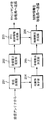
- the simple block diagram of the base station apparatus which concerns on embodiment of this invention is shown.
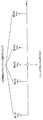
- the timing which notifies TPC in the conventional LTE system is shown.
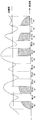
- it is a diagram showing the allocation of resource blocks when using the DFT-S-OFDM access scheme.
- it is a diagram showing resource block allocation in the case of using a Clustered DFT-S-OFDM access scheme.
- the resource blocks that can be allocated by the base station apparatus are the first RB to the twelfth RB, the number of resource blocks is 12, and the number of resource blocks used by the mobile station apparatus is 5.
- the resource blocks that can be allocated by the base station apparatus are the first RB to the twelfth RB, the number of resource blocks is 12, and the number of resource blocks used by the mobile station apparatus is 9 Indicates.
- the access method that can achieve the effect of frequency selective diversity is the Clustered DFT-S-OFDM, but the transmission power control is essentially the same in OFDM, which is a multi-carrier transmission that can use the band discretely.
- the method is the same as that of the present invention.
- the communication terminal apparatus is assumed to be a mobile station apparatus, and the communication control apparatus is assumed to be a base station apparatus.
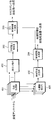
- FIG. 1 is a block diagram illustrating an example of a mobile station apparatus (communication terminal apparatus) that is a transmission apparatus according to an embodiment of the present invention. However, it is a minimum block diagram necessary for explaining the present invention.
- transmission data is input to the encoding unit 101 and subjected to error correction code.
- the code bits are modulated into modulation symbols such as QPSK (Quaternary Phase Shift Keying) and 16 QAM (16 Quadrature Amplitude Modulation) in the modulation unit 102, and the DFT unit 103 performs frequency domain modulation. Is converted into a signal.
- frequency signals are allocated based on band allocation information indicated in the control information notified from the base station apparatus (communication control apparatus).
- DFT-S-OFDM When the band allocated by the control information is a continuous band, DFT-S-OFDM is used, and when it is a discrete band, the Clustered DFT-S-OFDM access method is used.
- the signal output from transmission data arrangement section 104 is converted into a time domain signal by IDFT section 105, the reference signal is multiplexed by reference signal multiplexing section 106, and transmitted from the transmission antenna.
- FIG. 2 shows a simple block diagram of the base station apparatus according to the embodiment of the present invention.
- the signal transmitted from the mobile station apparatus is received by the reception antenna and input to the reception processing unit 201.
- a signal obtained by the reception process is input to the reception power estimation unit 202 and the propagation path estimation unit 204.
- Received power estimation section 202 estimates received power and determines a TPC to be notified to the mobile station apparatus.
- the TPC control information generation unit 203 generates TPC control information determined by the received power estimation unit 202.
- the propagation path estimation unit 204 estimates a propagation path from a known reference signal obtained by the reception process, and inputs the propagation path information to the band allocation determination unit 205.
- the bandwidth allocation information determined by the bandwidth allocation determination unit 205 based on the propagation path information is input to the control information generation unit 206.
- the control information generation unit 206 generates control information to be notified to the mobile station apparatus from the band allocation information and the TPC control information, and is transmitted from the antenna.
- the control information of the TPC control information generating unit 203 is transmitted from the antenna.
- FIG. 3 shows the timing for notifying the TPC in the conventional LTE system.
- the horizontal axis is time
- the first TPC to the fifth TPC are timings for notifying the mobile station apparatus of the TPC.
- the TPC notified to the mobile station apparatus is notified at the same time as the first, second, fourth and fifth TPC notifications and the resource block allocation as the third TPC. There are things.
- the TPC notified at these timings is reflected in the transmission power as a closed loop TPC.
- TX OP is an open loop TPC determined by the mobile station apparatus
- TX CL is a closed loop TPC notified at the timing of FIG.
- Min is selected to be a small value within ⁇ .
- TX CL T before notification of TPC
- T 0 (dB), T 1 (dB),..., T n (dB) are notified by TPC
- TX CL is expressed by Equation (2). It will be added like.
- the TPC in the LTE system is notified by 2-bit control information, and there are four types of values that increase or decrease the transmission power.
- the increase / decrease in the control information and transmission power is determined as shown in Table 1.
- TX CL When notifying the difference with respect to the transmission power of a mobile station apparatus as TPC, TX CL is determined so that it may become a value reflecting the difference of TPC notified from the transmission power of the mobile station apparatus. For example, when TX POWER, which is the transmission power of the mobile station apparatus, is determined by Equation (1), when receiving T 1 (dB) notification by TPC, TX CL that satisfies Equation (3) is applied. Is done.
- the TPC in the LTE system is also notified with 2-bit control information, and is determined as shown in Table 2.
- FIG. 4a is a diagram showing resource block allocation in the embodiment of the present invention when the DFT-S-OFDM access method is used. Since resource blocks are continuously allocated, inter-symbol interference occurs due to the use of resource blocks with poor propagation paths, and the characteristics deteriorate.
- FIG. 4B is a diagram illustrating resource block allocation in a case where a Clustered DFT-S-OFDM access scheme is used in the embodiment of the present invention. Since only the resource block with a good propagation path is selected and the divided spectrum is arranged, the influence of ISI (intersymbol interference) is reduced, and good characteristics can be obtained. In this access method, the peak power increases as the number of cluster divisions increases, so DFT-S-OFDM is suitable when high transmission power such as a cell edge is required. Therefore, in the LTE-A system, it is assumed that DFT-S-OFDM and Clustered DFT-S-OFDM are switched and used depending on the propagation path, moving speed, and position in the cell of the mobile station apparatus. In Clustered DFT-S-OFDM, it is conceivable to dynamically control the cluster size, the number of spectrum divisions, and the like. Table 3 shows the cluster size of Clustered DFT-S-OFDM and the effect of frequency selective diversity.
- N USEDRB is the number of resource blocks used by the mobile station device for data transmission.
- N USEDRB the number of resource blocks constituting the cluster
- the spectrum is not divided and data transmission is performed using DFT-S-OFDM. means.
- the effect of frequency selection diversity is obtained as the number of resource blocks constituting the cluster is reduced, and good communication quality can be obtained with less transmission power, the relationship X 1 > X 2 > X 3 > X 4 is established.
- Table 3 this example is described with the number of resource blocks constituting a cluster, but the effect of frequency selection diversity may be indicated by the number of spectrum divisions.
- the resource block is changed from continuous allocation to discrete allocation in the third TPC of FIG. 3, or from discrete allocation to continuous
- the effect of frequency selection diversity is reflected on the closed-loop TPC when the allocation is changed to a specific one or the cluster size is changed.
- control is performed as shown in Table 4.
- i is the number of resource blocks constituting the cluster after the access method switching
- j is the number of resource blocks constituting the cluster before the access method switching.
- X i and X j are positive values indicating the effect of frequency selection diversity
- X ij is defined by the following equation.
- the effect of frequency selection diversity is reflected on the TPC of the LTE system, but the present embodiment can also be applied when the TPC of DFT-S-OFDM is not the same as that of LTE.
- TPC may be performed as shown in Table 5 in consideration of the moving speed of the mobile station apparatus.
- M SPEED is a deterioration of the frequency selection diversity effect due to the moving speed of the mobile station apparatus, and is a positive value.
- the propagation path estimation error due to the time variation of the propagation path is the time from when the mobile station apparatus transmits data after transmitting the SRS (Sounding Refernce Signal) which is a reference signal for propagation path estimation in addition to the moving speed of the mobile station apparatus.
- the length also affects the length. Therefore, TPC in Table 6 may be performed in consideration of overhead from propagation path estimation to data transmission.
- T OH is the amount of degradation of frequency selection diversity due to the moving speed of the mobile station apparatus and the overhead from propagation path estimation to data transmission, and is a positive value.
- the effect of frequency selection diversity of the access method using the control information received by the mobile station apparatus for data transmission only when the access method is switched Convert to a value that reflects and apply. Therefore, appropriate transmission power control can be performed without increasing the number of TPC notifications even if the access method is switched, the number of resource blocks constituting the cluster, or the number of spectrum divisions is changed. Therefore, it is possible to avoid insufficient transmission power and data transmission with more transmission power than necessary when switching between access methods.
- the number of resource blocks of the cluster is up to 4, but the effect of frequency selection diversity may be reflected on the TPC in the same way even if it is 5 or more.
- the number of resource blocks constituting a cluster is fixed, but the present invention can also be applied to cases where the size is different for each cluster.
- the frequency selection diversity effect may be determined from the cluster consisting of the smallest number of resource blocks in the cluster, or the frequency selection diversity effect is determined using the average value of the number of resource blocks of all clusters. You may do it.
- the TX OP which is the open loop TPC in equation (1), includes the number of resource blocks to be used and path loss. Furthermore, by adding the effect of frequency selection diversity to the open loop TPC and performing the TPC of equation (5), it is possible to perform appropriate power control even when the access method is switched.
- i is the number of resource blocks constituting the cluster
- X i is a positive value indicating the effect of frequency selection diversity.
- X i is zero in the case of DFT-S-OFDM.
- Equation (5) the open loop TPC is (TX OP ⁇ X i ), but it may be Equation (6) reflecting the moving speed of the mobile station apparatus.
- M SPEED is a deterioration of the frequency selection diversity effect due to the moving speed of the mobile station apparatus, and is a positive value.
- equation (7) may be used in consideration of propagation path estimation and data transmission overhead.
- T OH is the amount of degradation of frequency selection diversity due to the moving speed of the mobile station apparatus and the overhead from propagation path estimation to data transmission, and is a positive value.
- the effect of frequency selection diversity is shown by the cluster size, but the effect of frequency selection diversity may be defined by the number of spectrum divisions.
- the effect of frequency selection diversity is reflected in the open loop TPC, so that the number of resource blocks constituting the cluster, the number of spectrum divisions can be changed without increasing the number of TPC notifications from the LTE system. Even if it is changed, appropriate transmission power control is enabled. Therefore, it is possible to avoid insufficient transmission power and data transmission with more transmission power than necessary when switching between access methods.
- the frequency selection diversity effect is determined not only by the number of resource blocks constituting the cluster, but also by considering the total number of resource blocks used by the mobile station apparatus and the number of resource blocks that can be allocated by the base station apparatus. An example of determination will be described.
- the smaller the number of resource blocks that make up the cluster the more the frequency domain signals obtained by dividing the spectrum can be allocated to better propagation paths. Therefore, the number of resource blocks that make up the cluster as shown in Table 3
- Table 3 The example of uniquely determining the frequency selection diversity effect has been described.
- the number of resource blocks used by the mobile station apparatus increases with respect to the number of resource blocks that can be allocated by the base station apparatus, it is necessary to allocate even resource blocks with poor propagation paths, so the frequency selection diversity effect is reduced. . Therefore, by considering the number of resource blocks that can be allocated by the base station apparatus and the number of resource blocks that are used by the mobile station apparatus, it is possible to reflect a more accurate frequency selection diversity effect on the transmission power control.
- FIG. 5a shows the resource blocks that can be allocated by the base station apparatus in the third embodiment of the present invention are the first RB to the twelfth RB, the number of resource blocks is 12, and the resource block used by the mobile station apparatus. The case of Equation 5 is shown.
- FIG. 5b shows the resource blocks that can be allocated by the base station apparatus in the third embodiment of the present invention are the first RB to the twelfth RB, the number of resource blocks is 12, and the resource block used by the mobile station apparatus.
- the case of Equation 9 is shown.
- FIG. 5a is an example in which the mobile station apparatus uses fewer resource blocks, and the first RB, the third RB, the eighth RB, the tenth RB, and the twelfth of the resource block having a relatively high propagation path gain. RBs are assigned.
- the allocation is performed to the fourth RB, the sixth RB, the ninth RB, etc., which have poor propagation paths. The effect is reduced, and the characteristics are degraded by intersymbol interference.
- equation (8) may be used in consideration of the number of resource blocks that can be allocated by the base station apparatus and the number of resource blocks that the mobile station apparatus uses.
- X i is the frequency selection diversity effect when the number of resource blocks constituting the cluster is i.
- s is the number of resource blocks used by the mobile station apparatus
- t is the number of resource blocks that can be allocated by the base station apparatus
- N (s, t) is used by the mobile station apparatus for the allocable bandwidth.
- the degradation of the frequency selective diversity effect obtained from the bandwidth to be used.
- open-loop TPC and closed-loop TPC taking into account switching of access methods, the number of resource blocks constituting a cluster, the number of spectrum divisions, and the number of resource blocks used by the mobile station apparatus can be realized. . Therefore, it is possible to avoid insufficient transmission power and data transmission with more transmission power than necessary when switching between access methods.
- a transmission signal converted from the same code bit is transmitted using a plurality of antennas using the same frequency, and a transmission signal converted from a different code bit is transmitted by a plurality of antennas.
- MIMO that transmits using the same frequency can be applied. A configuration of a mobile station apparatus having a plurality of antennas will be described.
- FIG. 6 is a block diagram showing an example of a mobile station apparatus which is a transmission apparatus according to the fourth embodiment of the present invention (application of transmission diversity).
- the code bit obtained by the encoding unit 101 is subjected to modulation processing by the modulation unit 102 and converted into a frequency domain signal by DFT.
- SFBC Space Frequency Block Code
- STBC Space Time Block Code
- encoding is applied to the signal in the frequency domain, and is performed by the multi-antenna transmission processing unit 303 in this figure.
- CDD Cyclic Delay Diversity
- a cyclic delay is given to the signal in the time domain after being subjected to IDFT, and the signal is transmitted from each transmitting antenna.
- FIG. 7 shows a simple block diagram of a base station apparatus according to the fourth embodiment of the present invention.
- signals received by a plurality of reception antennas are input to the reception processing unit 401 as in FIG.
- the reception processing unit 401 synthesizes the received signals, and other processing is performed in the same manner as when one transmission antenna is used.
- Equation 9 may be used.
- X i is the frequency selection diversity effect when the number of resource blocks constituting the cluster is i.
- TxDANT is the number of antennas for transmission diversity, and N TxDANT indicates a reduction in the effect of frequency selective diversity due to the number of transmission antennas. Further, it is assumed that X i_TxD > 0 is satisfied.
- FIG. 8 is a block diagram showing an example of a mobile station apparatus which is a transmission apparatus according to the fourth embodiment of the present invention (MIMO is applied).
- MIMO a transmission apparatus according to the fourth embodiment of the present invention
- a case of applying MIMO will be described with reference to FIG.
- MIMO a sign bit is input to an S / P unit, and serial / parallel conversion is performed in the S / P unit.
- Different modulation-converted signals are input to the modulation unit 503 of each antenna and subjected to transmission processing.
- the multi-antenna transmission processing unit 509 in the case of MIMO applies transmission weights for each antenna in order to improve detection accuracy of signals spatially multiplexed on the receiving side.
- the signal received by each receiving antenna is separated by the reception processing unit 401, and the propagation path of each antenna is estimated.
- MIMO separation is performed by the signal separation unit 403 from the signal from which the reference signal is separated, and reception power is estimated by the reception power estimation unit 202.
- Equation 10 the effect of frequency selection diversity when MIMO is applied may be expressed by Equation 10.
- X i is the frequency selection diversity effect when the number of resource blocks constituting the cluster is i.
- MIMOANT is the number of antennas used for MIMO, and N MIMOANT indicates a decrease in the effect of frequency selection diversity depending on the number of transmission antennas. Further, it is assumed that X i_MIMO > 0 is satisfied.
- Formula 11 When MIMO is applied with two transmission antennas and transmission diversity is applied with the remaining two antennas when there are four or more transmission antennas, Formula 11 may be used.
- open-loop TPC and closed-loop TPC taking into account switching of access methods, the number of resource blocks constituting a cluster, the number of spectrum divisions, and the number of resource blocks used by the mobile station apparatus can be realized. . Therefore, it is possible to avoid insufficient transmission power and data transmission with more transmission power than necessary when switching between access methods.
Landscapes
- Engineering & Computer Science (AREA)
- Computer Networks & Wireless Communication (AREA)
- Signal Processing (AREA)
- Quality & Reliability (AREA)
- Mobile Radio Communication Systems (AREA)
- Radio Transmission System (AREA)
Priority Applications (3)
| Application Number | Priority Date | Filing Date | Title |
|---|---|---|---|
| EP10817017.6A EP2480032A4 (en) | 2009-09-18 | 2010-08-20 | WIRELESS COMMUNICATION SYSTEM, COMMUNICATION MANAGEMENT APPARATUS, COMMUNICATION TERMINAL APPARATUS, AND APPARATUS FOR CONTROLLING COMMUNICATION PROGRAM |
| US13/496,809 US9301260B2 (en) | 2009-09-18 | 2010-08-20 | Wireless communication system, communication control apparatus, communication terminal apparatus, and control program of communication control apparatus |
| CN2010800413339A CN102577545A (zh) | 2009-09-18 | 2010-08-20 | 无线通信系统、通信控制装置、通信终端装置以及通信控制装置的控制程序 |
Applications Claiming Priority (2)
| Application Number | Priority Date | Filing Date | Title |
|---|---|---|---|
| JP2009-217002 | 2009-09-18 | ||
| JP2009217002A JP5425576B2 (ja) | 2009-09-18 | 2009-09-18 | 移動局装置、送信電力調整方法および通信システム |
Publications (1)
| Publication Number | Publication Date |
|---|---|
| WO2011033904A1 true WO2011033904A1 (ja) | 2011-03-24 |
Family
ID=43758517
Family Applications (1)
| Application Number | Title | Priority Date | Filing Date |
|---|---|---|---|
| PCT/JP2010/064083 Ceased WO2011033904A1 (ja) | 2009-09-18 | 2010-08-20 | 無線通信システム、通信制御装置、通信端末装置および通信制御装置の制御プログラム |
Country Status (5)
| Country | Link |
|---|---|
| US (1) | US9301260B2 (https=) |
| EP (1) | EP2480032A4 (https=) |
| JP (1) | JP5425576B2 (https=) |
| CN (2) | CN104113902B (https=) |
| WO (1) | WO2011033904A1 (https=) |
Families Citing this family (3)
| Publication number | Priority date | Publication date | Assignee | Title |
|---|---|---|---|---|
| CN104813703B (zh) * | 2012-11-22 | 2019-08-23 | 夏普株式会社 | 终端装置及其方法 |
| CN106922034B (zh) | 2015-12-25 | 2020-03-20 | 华为技术有限公司 | 一种接入方法及装置 |
| JP2018046442A (ja) | 2016-09-15 | 2018-03-22 | 富士通株式会社 | 基地局装置、無線通信システム及び無線送信方法 |
Citations (3)
| Publication number | Priority date | Publication date | Assignee | Title |
|---|---|---|---|---|
| JP2002204178A (ja) * | 2000-12-28 | 2002-07-19 | Toshiba Corp | 無線通信装置及び情報処理装置 |
| JP2008118580A (ja) * | 2006-11-08 | 2008-05-22 | Nec Corp | 無線通信機器、無線通信制御方法及びプログラム |
| JP2009060638A (ja) * | 2008-09-26 | 2009-03-19 | Kyocera Corp | 無線送信装置、送信電力制御方法および送信電力制御プログラム |
Family Cites Families (13)
| Publication number | Priority date | Publication date | Assignee | Title |
|---|---|---|---|---|
| EP1530387A1 (en) * | 2003-11-06 | 2005-05-11 | Matsushita Electric Industrial Co., Ltd. | Transmission power range setting during channel assignment for interference balancing in a cellular wireless communication system |
| CN1744602B (zh) * | 2004-05-28 | 2012-02-15 | 株式会社东芝 | 无线通信系统及无线终端 |
| US7454175B2 (en) * | 2004-12-07 | 2008-11-18 | Atc Technologies, Llc | Broadband wireless communications systems and methods using multiple non-contiguous frequency bands/segments |
| JP4642582B2 (ja) * | 2005-07-27 | 2011-03-02 | 富士通株式会社 | 移動通信システムおよび無線基地局、移動局 |
| WO2007112547A1 (en) * | 2006-03-20 | 2007-10-11 | Nortel Networks Limited | Method & system for fractional frequency reuse in a wireless communication network |
| EP2077634B1 (en) * | 2006-10-26 | 2016-02-24 | Fujitsu Limited | Radio base station apparatus, pilot transmitting method thereof and terminal apparatus |
| WO2008081876A1 (ja) * | 2006-12-28 | 2008-07-10 | Sharp Kabushiki Kaisha | 無線送信装置、制御装置、無線通信システムおよび通信方法 |
| KR20090118074A (ko) * | 2007-03-01 | 2009-11-17 | 가부시키가이샤 엔티티 도코모 | 기지국장치 및 통신제어방법 |
| ATE528942T1 (de) * | 2007-05-02 | 2011-10-15 | Alcatel Lucent | Verfahren zur etablierung eines parametrisierten kanals zur drahtlosen kommunikation |
| US8446849B2 (en) * | 2007-06-20 | 2013-05-21 | Qualcomm Incorporated | Methods and apparatuses for power control |
| EP2169866A4 (en) * | 2007-07-09 | 2014-07-09 | Sharp Kk | TERMINATION PLANNING AND CONTROL STATION DEVICE |
| US8180335B2 (en) * | 2008-01-11 | 2012-05-15 | Qualcomm Incorporated | System information modification notification and detection in wireless communications |
| JP5256825B2 (ja) * | 2008-04-04 | 2013-08-07 | 株式会社日立製作所 | 基地局装置 |
-
2009
- 2009-09-18 JP JP2009217002A patent/JP5425576B2/ja active Active
-
2010
- 2010-08-20 CN CN201410290308.4A patent/CN104113902B/zh active Active
- 2010-08-20 CN CN2010800413339A patent/CN102577545A/zh active Pending
- 2010-08-20 US US13/496,809 patent/US9301260B2/en active Active
- 2010-08-20 WO PCT/JP2010/064083 patent/WO2011033904A1/ja not_active Ceased
- 2010-08-20 EP EP10817017.6A patent/EP2480032A4/en not_active Withdrawn
Patent Citations (3)
| Publication number | Priority date | Publication date | Assignee | Title |
|---|---|---|---|---|
| JP2002204178A (ja) * | 2000-12-28 | 2002-07-19 | Toshiba Corp | 無線通信装置及び情報処理装置 |
| JP2008118580A (ja) * | 2006-11-08 | 2008-05-22 | Nec Corp | 無線通信機器、無線通信制御方法及びプログラム |
| JP2009060638A (ja) * | 2008-09-26 | 2009-03-19 | Kyocera Corp | 無線送信装置、送信電力制御方法および送信電力制御プログラム |
Non-Patent Citations (2)
| Title |
|---|
| "Approaches to Assess Uplink Transmission Enhancements for LTE-Advanced", 3GPP TSG-RAN WG1 #54 R1-083226, 18 August 2008 (2008-08-18), XP008154170 * |
| "Non-contiguous Resource Allocation in Uplink LTE-A", 3GPP TSG RAN1#55BIS R1-090266, 12 January 2009 (2009-01-12), XP008154118 * |
Also Published As
| Publication number | Publication date |
|---|---|
| EP2480032A4 (en) | 2015-03-11 |
| US20120218961A1 (en) | 2012-08-30 |
| JP2011066771A (ja) | 2011-03-31 |
| CN104113902A (zh) | 2014-10-22 |
| JP5425576B2 (ja) | 2014-02-26 |
| US9301260B2 (en) | 2016-03-29 |
| CN102577545A (zh) | 2012-07-11 |
| EP2480032A1 (en) | 2012-07-25 |
| CN104113902B (zh) | 2018-05-11 |
Similar Documents
| Publication | Publication Date | Title |
|---|---|---|
| US11128322B2 (en) | Methods and devices for determination of beamforming information | |
| CN110114982B (zh) | 基于逐波束信号同步的无线通信系统及方法 | |
| WO2021217328A1 (en) | Csi reporting techniques for multi-panel full duplex base stations | |
| CN108924920B (zh) | 发送功率的确定方法和配置方法,终端和基站 | |
| US10200170B2 (en) | Method and apparatus for a multi-cell full-dimension MIMO system | |
| KR20210052562A (ko) | 업링크 제어 정보 송신 및 수신을 위한 방법 및 장치 | |
| US20090110114A1 (en) | Open-Loop MIMO Scheme and Signaling Support for Wireless Networks | |
| US20220232573A1 (en) | Method and apparatus for indication of ul parameters in tci state | |
| KR20240037270A (ko) | 제어 채널에 대한 tci 상태 인디케이션 방법 및 장치 | |
| KR101565194B1 (ko) | 무선 통신 시스템, 기지국 장치, 이동국 장치, 통신 방법 | |
| WO2010067419A1 (ja) | 無線通信システム及び無線通信方法 | |
| CN115699841B (zh) | 频谱共享无线系统 | |
| KR20240128689A (ko) | 무선 통신 시스템에서 시변 채널의 도플러 정보를 보고하는 방법 및 장치 | |
| US11616663B2 (en) | Method and apparatus of parameter tracking for CSI estimation | |
| US9083490B2 (en) | Apparatus and method for mitigating inter-cell interference in multiple antenna system | |
| US20180213598A1 (en) | Resource configuration of wireless devices | |
| KR20240035479A (ko) | 무선 통신 시스템에서의 tci 상태 인디케이션 방법 및 장치 | |
| US20230328568A1 (en) | Quantization scheme for channel state information reports | |
| EP4271093B1 (en) | Resource configuration of wireless devices | |
| WO2022027625A1 (en) | Frequency domain precoding for fdd reciprocity | |
| EP4032213A1 (en) | Spectral efficiency (spef) to channel quality indicator (cqi) mapping adaptation | |
| JP5425576B2 (ja) | 移動局装置、送信電力調整方法および通信システム | |
| JP2011066771A5 (https=) | ||
| CN120814188A (zh) | 量化时域信道属性 | |
| CN110391884A (zh) | 一种sdma资源复用的方法、设备及存储介质 |
Legal Events
| Date | Code | Title | Description |
|---|---|---|---|
| WWE | Wipo information: entry into national phase |
Ref document number: 201080041333.9 Country of ref document: CN |
|
| 121 | Ep: the epo has been informed by wipo that ep was designated in this application |
Ref document number: 10817017 Country of ref document: EP Kind code of ref document: A1 |
|
| NENP | Non-entry into the national phase |
Ref country code: DE |
|
| WWE | Wipo information: entry into national phase |
Ref document number: 2010817017 Country of ref document: EP |
|
| WWE | Wipo information: entry into national phase |
Ref document number: 13496809 Country of ref document: US |