WO2010131660A1 - 生体試料中のエクオールを免疫法により測定する方法、その測定のためのキット、および被験者のエクオール産生能を判定する方法 - Google Patents
生体試料中のエクオールを免疫法により測定する方法、その測定のためのキット、および被験者のエクオール産生能を判定する方法 Download PDFInfo
- Publication number
- WO2010131660A1 WO2010131660A1 PCT/JP2010/057974 JP2010057974W WO2010131660A1 WO 2010131660 A1 WO2010131660 A1 WO 2010131660A1 JP 2010057974 W JP2010057974 W JP 2010057974W WO 2010131660 A1 WO2010131660 A1 WO 2010131660A1
- Authority
- WO
- WIPO (PCT)
- Prior art keywords
- equol
- antigen
- biological sample
- antibody
- measurement
- Prior art date
- Legal status (The legal status is an assumption and is not a legal conclusion. Google has not performed a legal analysis and makes no representation as to the accuracy of the status listed.)
- Ceased
Links
Images


Classifications
-
- G—PHYSICS
- G01—MEASURING; TESTING
- G01N—INVESTIGATING OR ANALYSING MATERIALS BY DETERMINING THEIR CHEMICAL OR PHYSICAL PROPERTIES
- G01N33/00—Investigating or analysing materials by specific methods not covered by groups G01N1/00 - G01N31/00
- G01N33/48—Biological material, e.g. blood, urine; Haemocytometers
- G01N33/50—Chemical analysis of biological material, e.g. blood, urine; Testing involving biospecific ligand binding methods; Immunological testing
- G01N33/53—Immunoassay; Biospecific binding assay; Materials therefor
- G01N33/5308—Immunoassay; Biospecific binding assay; Materials therefor for analytes not provided for elsewhere, e.g. nucleic acids, uric acid, worms, mites
-
- C—CHEMISTRY; METALLURGY
- C07—ORGANIC CHEMISTRY
- C07K—PEPTIDES
- C07K16/00—Immunoglobulins [IG], e.g. monoclonal or polyclonal antibodies
- C07K16/44—Immunoglobulins [IG], e.g. monoclonal or polyclonal antibodies against material not provided for elsewhere, e.g. haptens, metals, DNA, RNA, amino acids
-
- G—PHYSICS
- G01—MEASURING; TESTING
- G01N—INVESTIGATING OR ANALYSING MATERIALS BY DETERMINING THEIR CHEMICAL OR PHYSICAL PROPERTIES
- G01N33/00—Investigating or analysing materials by specific methods not covered by groups G01N1/00 - G01N31/00
- G01N33/48—Biological material, e.g. blood, urine; Haemocytometers
- G01N33/50—Chemical analysis of biological material, e.g. blood, urine; Testing involving biospecific ligand binding methods; Immunological testing
- G01N33/53—Immunoassay; Biospecific binding assay; Materials therefor
- G01N33/531—Production of immunochemical test materials
Definitions
- the present invention relates to a method for measuring equol in a biological sample by immunization, a kit for the measurement, and a method for determining the equol production ability of a subject.
- Isoflavones contained in soybean have a preventive effect (antiestrogenic effect) against breast cancer, prostate cancer, etc., and an improvement effect on menopause, postmenopausal osteoporosis, hyperlipidemia, hypertension, etc. (estrogen-like It is widely known to have an effect).
- lactic acid bacteria that efficiently produce equol were isolated and identified (Patent Document 1), and by efficiently ingesting the lactic acid bacteria preparation and reaching or fixing the lactic acid bacteria in the intestine, equol is efficiently introduced into the body. Incorporation is expected. At this time, for example, by measuring equol such as urine, blood, stool, etc., it is possible to confirm whether the lactic acid bacteria have reached the colon or established.
- Non-patent Document 1 Labmaster TR-FIA Research Reagents for Measurement of Equal (LABMASTER DIAGNOSTIC) using time-resolved fluorescence immunoassay is commercially available (Non-patent Document 1).
- equol is known to have two types of optical isomers, S-equol and R-equol.
- S-equol the metabolite by enterobacteria of daidzein which is a precursor of equol is limited to S-equol.
- S-equol is much stronger in binding to the estrogen receptor (Non-patent Document 2).
- equol contained in blood samples and urine samples which are indicators of the presence in vivo, is S-equol, and it is useful to specifically measure S-equol.
- An object of the present invention is to construct a method for specifically and accurately measuring S-equol in an equol measurement method using an immunoassay, that is, an immunoassay.
- Another object of the present invention is to construct a kit capable of specifically and accurately measuring S-equol in the measurement of equol concentration using an immunization method. Furthermore, this invention aims at constructing
- the present invention has been completed as a result of further research based on this finding.
- the present invention has the following configuration.
- Item 1 A method for measuring equol in a biological sample by immunization, wherein at least one antigen selected from the group consisting of a standard antigen used for preparing a calibration curve and a labeled antigen that competes with equol in a biological sample, A method characterized by using S-equol.
- Item 2. When the crossing property to S-equol is 100%, the crossing property to daidzein is 10% or less, the crossing property to genistein is 10% or less, the crossing property to glycitein is 10% or less, the crossing property to dihydrodaidzein is 20% or less, Item 2.
- Item 1 The method according to Item 1, wherein an anti-equol antibody having a cross-reactivity to dehydroequol of 20% or less is used as a primary antibody.
- Item 3. Item 2. The method according to Item 1, wherein the labeled substance of the labeled antigen is at least one selected from the group consisting of an enzyme, a radioisotope, a dye, a fluorescent material, latex, and a metal colloid.
- Item 4. Item 2. The method according to Item 1, wherein the immunization method is at least one selected from the group consisting of an ELISA method, a radioimmunoassay method, and an immunochromatography method.
- Item 5. Item 2.
- Item 2. The method according to Item 1, wherein the conjugate of equol in the biological sample is measured without being deconjugated.
- Item 7. A kit for measuring equol in a biological sample by an immunization method, as at least one antigen selected from the group consisting of a standard antigen used for preparing a calibration curve and a labeled antigen that competes with equol in a sample A kit comprising S-equol.
- the cross-reactivity to S-equol is 100%, the cross-reactivity to daidzein is 10% or less, the cross-reactivity to genistein is 10% or less, the cross-reactivity to glycitein is 10% or less, and the cross-reactivity to dihydrodaidzein is 20%.
- Item 8 The kit according to Item 7, comprising an anti-equol antibody having a cross-reactivity to dehydroequol of 20% or less as a primary antibody.
- the immunization method is at least one selected from the group consisting of an ELISA method, a radioimmunoassay method, and an immunochromatography method.
- Item 11 A method for determining a subject's ability to produce equol, comprising: (1) Soy isoflavone was obtained by immunization using S-equol as at least one antigen selected from the group consisting of a standard antigen used for preparing a calibration curve and a labeled antigen competing with equol in a biological sample. A step of measuring equol in a biological sample derived from a fed subject, and (2) a step of determining the equol production ability of the subject based on the measured value of equol obtained in the step (1). A determination method including Item 12. Item 12. The determination method according to Item 11, wherein in the step (1), the equol conjugate in the biological sample is measured without being deconjugated.
- the measurement method of the present invention in the method of measuring equol in a biological sample by immunoassay, a non-specific reaction is suppressed and an accurate measurement result can be obtained. Moreover, according to the kit of this invention, this method can be implemented still more simply. Moreover, according to the determination method of the present invention, it can be accurately and easily determined whether or not the subject has the ability to produce equol.
- the equol concentration measured by the present invention is highly correlated with the equol concentration measured by the HPLC method.
- the detection time is about 3 hours, and the equol concentration can be measured more quickly than the HPLC method, which requires about 2 weeks when commissioned for 72 hours.
- the kit of the present invention is very inexpensive as compared with the HPLC method, detection sensitivity equivalent to that of the HPLC method can be obtained.
- the presence or absence and the degree of equol production ability of the subject can be accurately, simply, rapidly and highly specific, so that it is related to the lack of equol production ability based on the measurement results and determination results. It is possible to understand the possibility of the onset of the disease (for example, breast cancer, prostate cancer, menopause, postmenopausal osteoporosis, hyperlipidemia, hypertension, etc.) and the degree of symptoms, and measures to prevent or improve the disease Can be applied appropriately.
- the onset of the disease for example, breast cancer, prostate cancer, menopause, postmenopausal osteoporosis, hyperlipidemia, hypertension, etc.
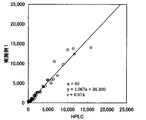
- FIG. 1 is a correlation diagram of the results measured by the HPLC method and Example 1.
- the vertical axis shows the value obtained by the ELISA method
- the horizontal axis shows the value obtained by the HPLC method
- the unit is ng / ml.
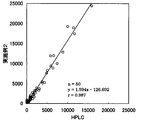
- FIG. 2 is a correlation diagram of the results measured by the HPLC method and Example 2.
- the vertical axis shows the value obtained by the ELISA method
- the horizontal axis shows the value obtained by the HPLC method
- the unit is ng / ml.
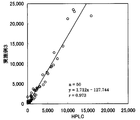
- FIG. 3 is a correlation diagram of the results measured by the HPLC method and Example 3.
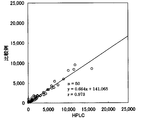
- FIG. 4 is a correlation diagram of the results measured by the HPLC method and the comparative example.
- the vertical axis shows the value obtained by the ELISA method
- the horizontal axis shows the value obtained by the HPLC method
- the unit is ng / ml.
- FIG. 5 is a model diagram of the competitive method in the ELISA method.
- FIG. 6 is a correlation diagram of the results of measuring the equol concentration by the immunoassay method of the present invention described in LC / MS / MS and Test Example 3.
- FIG. 7 shows the concentration of daidzein in urine measured using the HPLC method.
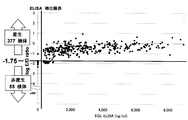
- FIG. 8 shows a plot of EQL ELISA and Log E / D ratio.
- the present invention will be described below.
- Method of measuring equol in a biological sample by immunization The method of measuring the concentration of equol in a biological sample by immunization according to the present invention (hereinafter sometimes referred to as immunoassay) is based on a calibration curve.
- S-equol is used as at least one antigen selected from the group consisting of a standard antigen used for preparation and a labeled antigen that competes with equol in a biological sample.
- the immunoassay method of the present invention will be described below.
- Immune antigen for production of antibodies against S-equol Since equol, which is a measurement target of the present invention, is a small molecule hapten antigen, it does not itself have immunogenicity. Therefore, in order to obtain an antibody for use in an immunoassay, it is preferable to synthesize a conjugate of equol and an antigen-supporting substance to produce an immune antigen.
- the antigen-supporting substance is not limited as long as the immune antigen can be produced, but a high-molecular substance (molecular weight of 10,000 or more, preferably 50,000 to 1,000,000) is preferable, and among them, a protein is preferable.
- a high-molecular substance molecular weight of 10,000 or more, preferably 50,000 to 1,000,000
- preferred proteins include, but are not limited to, antibodies, bovine serum albumin (BSA), casein, gelatin, ferritin and the like.
- the method for binding the hapten antigen and the antigen-supporting substance is not limited as long as they can be bound, but a covalent bond is preferable.
- the succinimide group introduced into the hapten antigen is reacted with the amino group of the protein or glycoprotein by the N-hydroxysuccinimide activated ester method, Can be bound to the antigen-supporting substance.
- the glutar method or the like is exemplified as another method.
- a spacer compound is introduced into the hapten antigen and then bound to the antigen supporting substance, thereby Changes in affinity and antibody specificity can be given.
- spacer compounds are not limited as long as they can bind a hapten antigen and an antigen-supporting substance via a spacer compound, and can change the affinity with the antibody and the specificity of the antibody. If it is, it will not restrict
- hapten antigen and antigen-supporting substance bound via a spacer compound examples include equol-CME-protein, which will be described later.
- equol-CPE-protein, equol-CBE-protein, equol-CPhE- Examples thereof include proteins.
- the equol-CME-protein can be prepared as described in the following examples, and immune antigens having other spacer compounds can be appropriately prepared by those skilled in the art depending on the type of spacer used. .
- a labeled hapten antigen that detects the presence of a labeled hapten antigen antibody can be prepared in the same manner by using a label instead of the antigen-supporting substance, and a spacer compound is provided between the hapten antigen and the label. By introducing, the affinity with the antibody to be detected can be adjusted.
- labels include enzymes, radioisotopes, dyes, fluorescent substances, latex, metal colloids, europium, acridinium, etc., preferably from the group consisting of enzymes, radioisotopes, dyes, fluorescent substances, latexes and metal colloids. Selected. Moreover, peroxidase, alkaline phosphatase, luciferase, etc. as enzymes; 125 I, etc. as radioisotopes; cyanine dyes, etc. as dyes; FITC, cy3, cy5, etc.
- an enzyme preferably a peroxidase, more preferably a horseradish peroxidase, is exemplified because of the advantage that detection with high sensitivity can be easily performed.
- Examples of the spacer compound used for binding the hapten antigen to the label include carboxymethyl ether (CME), carboxypropyl ether (CPE), carboxybutyl ether (CBE), carboxyphenyl ether (CPhE), and the like. Is CPE.
- Antibody Primary antibody
- the primary antibody used in the present invention is not limited as long as it can specifically bind to equol, and a polyclonal antibody or a monoclonal antibody may be used. Moreover, as long as the specificity with equol is maintained, the antibody fragment may be used as a primary antibody. Moreover, antiserum can also be used as a primary antibody.
- the primary antibody used in the immunoassay can be prepared by performing a known method.
- the primary antibody can be produced as follows, but the production method is not limited to the following example.
- a polyclonal antibody is prepared by mixing an immune antigen in which equol and an antigen-supporting substance are combined with Freund's complete adjuvant to prepare an immunizing agent.
- the prepared immunizing agent is periodically added to rabbit, goat, horse, sheep, guinea pig. It can be prepared by purifying or diluting the antiserum obtained after multiple injections subcutaneously and / or intradermally such as in chickens. Examples of the immunizing antigen include those described above, and the use of an adjuvant is not essential, but it is desirable to use an adjuvant.
- the antiserum can be prepared by collecting according to a conventionally known method. Rabbit antiserum is preferably used as the primary antibody used in the present invention.
- Monoclonal antibodies are prepared by mixing immune with equol and antigen-supporting substance and Freund's complete adjuvant to prepare an immunizing agent.
- the prepared immunizing agent is periodically subcutaneously and / or intradermally in mice, rats, etc. After multiple injections, the immunizing antigen is injected intravenously or intraperitoneally, and the fused cells are selectively cultured by fusing spleen cells prepared from the spleen removed several days later and myeloma cells.
- the cloned cells that have proliferated are cloned and cultured, and a cell line that produces an IgG antibody that specifically binds to equol is selected.
- a monoclonal antibody used for measurement can be prepared by purifying or diluting the culture supernatant obtained by culturing the selected cell line.
- the above-mentioned immunizing antigens can be exemplified, and the use of an adjuvant is not essential, but it is desirable to use an adjuvant.
- the primary antibody used in the present invention desirably has high specificity for S-equol and low cross-reactivity for other structurally similar isoflavones.
- daidzein, dihydrodaidzein, and dehydroequol cause false detection of equol in biological samples, and therefore it is desirable to use a primary antibody that has low cross-reactivity to these compounds.
- the primary antibody used in the present invention when the cross-reactivity to S-equol is 100%, the cross-reactivity to daidzein, genistein, glycitein, dihydrodaidzein, and dehydroequol satisfies the following range.
- Crossability to daidzein 10% or less, preferably 1% or less, more preferably 0.1% or less; Crossability to genistein: 10% or less, preferably 1% or less, more preferably 0.1% or less; Crossability to glycitein: 10% or less, preferably 1% or less, more preferably 0.1% or less; Crossability to dihydrodaidzein: 20% or less, preferably 5% or less, more preferably 1.1% or less; and Crossability to dehydroequol: 20% or less, preferably 5% or less, more preferably 1% or less.
- the crossing property can be explained as follows. That is, the above-described crossing property indicates that the labeled S-equol anti-equol antibody against the concentration (IC 20 ) of each isoflavone or the like that can inhibit the binding of labeled S-equol to the anti-equol antibody by 20%. The ratio (%) of the concentration (IC 20 ) of unlabeled S-equol that can inhibit the binding to 20% of the reaction is shown.
- the concentration of the unlabeled S-equol is determined.
- a competitive reaction with the labeled S-equol was performed, and the binding of the labeled S-equol to the antibody was 80. Determine the concentration of each isoflavone.
- the crossover rate is determined using a competition method in ELISA, and is determined using S-equol as a standard antigen used for preparing a calibration curve and an antigen of labeled antigen that competes with equol in a biological sample. Is done.
- concentration of labeled S-equol used in the determination of the crossover rate may be set as appropriate under conditions that allow the antigen to be measured with high sensitivity in the competition method.
- the label include the aforementioned enzymes.
- intersection rate is determined by the same procedure as in Test Example 2 described later.
- Secondary antibody used in the present invention is an antibody that specifically binds to the primary antibody, and the secondary antibody can be prepared according to a known method.
- a goat anti-rabbit IgG antibody is preferably used as the secondary antibody.
- biotin-avidin / streptavidin binding may be used.
- a biotinylated primary antibody is prepared, and the biotin is bound to avidin / streptavidin immobilized on a solid phase. Just do it.
- Standard antigen and labeled antigen that competes with equol in a biological sample In addition, in the present invention, a standard used for preparing a calibration curve when measuring equol in a biological sample using an antibody prepared by the method described above.
- S-equol As a labeled antigen that competes with the antigen and / or equol in the sample, an accurate equol measurement value can be obtained. That is, in the present invention, S-equol is used as at least one of the standard antigen used for preparing the calibration curve and the labeled antigen competing with equol in the sample, but the measurement accuracy of equol in a biological sample is improved. From the point of view, it is desirable to use S-equol for both the standard antigen used to create the calibration curve and the labeled antigen that competes with equol in the sample.
- labeled product of the labeled antigen conventionally known labeled products can be used as long as they do not interfere with the antigen-antibody reaction.
- the label include enzymes, radioisotopes, dyes, fluorescent substances, latexes, metal colloids, europium, acridinium and the like, preferably from the group consisting of enzymes, radioisotopes, dyes, fluorescent substances, latexes and metal colloids. Selected.
- an enzyme preferably a peroxidase, more preferably a horseradish peroxidase, is exemplified because of the advantage that detection with high sensitivity can be easily performed.
- a spacer compound may be introduced between the antigen and the label for the purpose of binding the antigen to the label and for the purpose of adjusting the affinity between the antigen and the antibody.
- the spacer compound used for binding the antigen (S-equol) and the label include carboxymethyl ether (CME), carboxypropyl ether (CPE), carboxybutyl ether (CBE), carboxyphenyl ether (CPhE) and the like.
- CME carboxymethyl ether
- CPE carboxypropyl ether
- CBE carboxybutyl ether
- CPhE carboxyphenyl ether
- the biological sample for measuring equol is not particularly limited as long as it is a sample derived from a living body including animals and plants and measurement of equol is required.
- urine for example, blood (for example, plasma in addition to serum) Stool, tissue extract, cell extract, foodstuff and the like.
- the biological sample is preferably a human-derived biological sample, more preferably human-derived urine and blood, and particularly preferably human-derived urine.
- the biological sample to be used for equol measurement may be diluted as necessary.
- Enzyme for pretreatment (deconjugation) of biological sample The equol contained in the biological sample usually exists in the form of a conjugate. For this reason, before subjecting the biological sample to an antigen-antibody reaction, it may be subjected to a pretreatment for deconjugating equol.
- the deconjugation treatment can be performed using an enzyme such as ⁇ -glutatase (containing glucuronidase and sulfatase), glucuronidase, sulfatase and the like. More specifically, as a suitable example of the enzyme solution used for the deconjugation treatment, a composition containing 6% ⁇ -glutatase and 0.1 M acetate buffer (pH 5.5) as main components is exemplified.
- the deconjugation treatment may be performed prior to the antigen-antibody reaction or may be performed simultaneously with the antigen-antibody reaction.
- the reaction conditions for the deconjugation treatment are appropriately set according to the type of enzyme used, the type of biological sample, and the like, but are usually performed at 25 to 56 ° C. for 5 minutes to overnight.
- Diluted solution of biological sample and / or standard antigen Diluted solution used for diluting biological sample and standard antigen is not limited as long as it does not adversely affect the measurement, and uses the diluted solution used in general immunization method can do.
- the diluent used in the present invention include sodium chloride, a mixed solution containing a bovine serum albumin-containing phosphate buffer (pH 7.5), 100% charcoal-treated human serum, and the like. More specifically, as the diluent, a mixed solution of 150 mM sodium chloride and 0.1 M bovine serum albumin-containing 0.1 M phosphate buffer (pH 7.5) is exemplified.
- the immunization method for measuring equol is not limited as long as the concentration of equol in a biological sample can be measured by an antigen-antibody reaction using the antigen and the antibody.
- an antigen-antibody reaction using the antigen and the antibody.
- ELISA ELISA
- radioimmunoassay And immunochromatography and the like.
- an ELISA (Enzyme-Linked Immunosorbent Assay) method When an ELISA (Enzyme-Linked Immunosorbent Assay) method is used as an immunization method, the measurement of equol in a biological sample may be performed in accordance with a conventionally known ELISA method, and any of a competitive method, a sandwich method, and a direct method may be used. Also good.
- the ELISA method is preferably a competitive method.
- a competitive model in the ELISA method is shown in FIG.
- the measurement of equol in a biological sample by the ELISA method is performed, for example, on a well of a microplate on which a secondary antibody is preliminarily immobilized on a biological sample, an enzyme-labeled antigen (labeled Antigen) and the primary antibody are added and reacted to form a secondary antibody-primary antibody-equol conjugate.
- the primary antibody may be added simultaneously with the biological sample and the labeled antigen, or may be added separately.
- the well is washed with a washing solution, and after reacting by adding a substrate corresponding to the enzyme, the reaction is stopped with a reaction stopping solution or the like, and the absorbance is measured.
- the calibration curve for measuring the standard antigen Calculate the equol concentration in the sample.
- a conventionally known microplate can be used, and the size and shape of the well are not limited as long as the reaction is carried out.
- the solid phase immobilization of the secondary antibody in the well can be performed by a conventionally known method.
- a conventionally known substrate suitable for the enzyme may be used as the substrate.
- the amount of primary antibody, secondary antibody, and labeled antigen added is not limited as long as equol in a biological sample can be accurately measured by the method, and is appropriately set according to the conditions of a general ELISA method. Is done.
- the addition amounts of the primary antibody, the secondary antibody, and the labeled antigen may be in accordance with conventionally known conditions and appropriately set.
- Each reaction in the ELISA method may be performed according to conventionally known conditions, and is appropriately set according to the type of biological sample, the method of the ELISA method, and the like.
- the antigen-antibody reaction for forming a secondary antibody-primary antibody-equol conjugate is usually carried out at 4 to 37 ° C. for 5 minutes to overnight.
- a diluted urine sample solution is prepared by adding a sample diluent to a urine sample, and a goat anti-rabbit IgG antibody (secondary antibody) in advance
- the prepared diluted urine sample solution, horseradish peroxidase-labeled equol, and diluted anti-equol rabbit antiserum (primary antibody) are added to the wells of the microplate on which the solid phase has been immobilized and allowed to react for a certain period of time. After the reaction, the wells are washed and a chromogenic substrate solution is added to react for a certain period of time. After a certain period of time, the reaction is stopped and the absorbance is measured. Similarly, the equol concentration in the sample is calculated from the calibration curve obtained by measuring the standard antigen. To do.
- the buffer for diluting the antiserum is not limited as long as the antiserum can be suitably diluted and does not adversely affect the measurement.
- a suitable example of the antiserum dilution buffer used in the present invention a mixed solution containing sodium chloride, bovine serum albumin, Tween 20-containing phosphate buffer (pH 7.5) and the like is exemplified. More specifically, examples of the antiserum dilution buffer include a mixed solution of 150 mM sodium chloride, 0.5% bovine serum albumin, and 0.1 M phosphate buffer (pH 7.5) containing 0.01% Tween20. .
- the antiserum dilution buffer can be used not only in the competition method, but also in ELISA methods other than the competition method and various immunization methods. Tween is a registered trademark.
- Measurement of equol in a biological sample by the RIA (Radioimmunoassay) method may be performed in accordance with a conventionally known method, and can be carried out in the same manner as the ELISA method except that a radioisotope is used as a label.
- the following is exemplified as the RIA method using urine as a biological sample and 125 I as a radioisotope.
- diluted urine sample solution by adding sample diluent to urine sample, dilute urine sample solution prepared in microplate wells pre-immobilized with goat anti-mouse IgG antibody, 125 I-labeled S-equol and diluted
- the anti-equol antibody-producing cell culture supernatant is added and allowed to react for a certain period of time. After the reaction, the wells are washed, and then the radioactivity in the wells of the microplate is measured. Similarly, the equol concentration in the sample is calculated from the calibration curve obtained by measuring the standard antigen.
- the measurement of equol in a biological sample by an immunochromatography (immunochromatography) method may be performed according to a conventionally known method.
- the following method is exemplified as an immunochromatography method using urine as a biological sample and gold colloid as a label. That is, a colloidal gold-labeled anti-equol mouse monoclonal antibody is added to a urine sample to prepare a diluted urine sample solution, and the diluted urine sample solution is dropped on the sample pad portion of the immunochromatographic strip and allowed to react for a certain period of time.
- the coloration of the capturing part to which equol is immobilized by the colloidal gold labeling substance is measured, and the concentration of equol in the sample is calculated from a calibration curve in which the standard antigen is measured in the same manner.
- anti-equol rabbit polyclonal antibody labeled with a fluorescent substance and equol bound to an antigen-supporting substance or a solid phase and a biological substance are used as a method of measuring using equol-labeled antibody in a biological sample.
- measurement is performed after washing the fluorescent substance that is bound to the solid phase in competition with the measurement target substance in the biological sample, and the equol concentration in the sample is calculated from the calibration curve in which the standard antigen is measured in the same manner.
- an open sandwich method is known as a method for measuring using an antibody fragment labeled with equol in a biological sample.
- This measurement method is, for example, measured by forming a polymer in which equol in a living body is sandwiched between equol in a biological sample using a light chain antigen binding site fragment and a heavy chain antigen binding site fragment of an anti-equol mouse monoclonal antibody. it can.
- the light chain antigen binding site fragment was immobilized on the solid phase, and the biological sample was mixed with the heavy chain antigen binding site fragment labeled with alkaline phosphatase, thereby binding to the solid phase via equol in the biological sample. It measures after wash
- the light chain antigen binding site fragment and the heavy chain antigen binding site fragment are labeled with different fluorescent substances, and the fluorescence resonance energy transfer phenomenon caused by forming a complex via equol in a biological sample is measured. It is also possible to calculate the equol concentration in the sample from the calibration curve obtained by measuring the standard antigen.
- a preferred embodiment of the present invention includes an ELISA method as an immunization method, more preferably an ELISA method performed by a competitive method, and particularly preferably in a standard antigen and sample used for preparing a calibration curve.
- an ELISA method in which S-equol is used as both of the labeled antigens competing with the equol, and the competitive method is used.
- kits for measuring the concentration of equol in a biological sample by an immunization method comprises a standard antigen used in preparing a calibration curve and a sample.
- S-equol is included as at least one antigen selected from the group consisting of labeled antigens that compete with equol.
- the kit of the present invention may further contain a primary antibody that specifically binds to S-equol.
- the kit of the present invention may further solidify a biological sample and / or standard antigen dilution, an enzyme solution for deconjugating the S-equol conjugate in the sample, and a secondary antibody as necessary. And at least one selected from the group consisting of a washed plate and a cleaning solution.
- the kit of the present invention may contain other necessary reagents depending on the type of immunization method employed.
- a substrate for a labeled product of a labeled antigen when used in an ELISA method performed by a competitive method, a substrate for a labeled product of a labeled antigen, a reaction stop solution for stopping the reaction between the labeled product and the substrate, and a lysis for dissolving the substrate
- You may contain at least 1 sort (s) selected from the group which consists of a liquid.
- an antiserum dilution buffer used for diluting the antiserum may be included.
- Standard antigens As described above, the same standard antigens can be used.
- the standard antigen may be included in the kit in the form of a solution.
- S-equol when used as a standard antigen, it may be in the form of a standard equol solution containing S-equol, sodium chloride, and a bovine serum albumin-containing phosphate buffer (pH 7.5).
- bovine serum albumin-containing phosphate buffer pH 7.5
- Examples of the standard equol solution include 810 ng / mL S-equol, 150 mM sodium chloride, 0.1% bovine serum albumin, 0.1% -containing 0.01 M phosphate buffer (pH 7.5).
- Another standard equol solution is a mixed solution of S-equol and 100% charcoal-treated human serum.
- labeled antigen labeled antigen those described above can be used similarly.
- Preferred examples include peroxidase-labeled S-equol, and particularly preferred is horseradish peroxidase-labeled S-equol.
- a substrate for a labeled product a conventionally known substrate can be used, and it is used in combination with a conventionally known labeled product.
- a conventionally known substrate can be used, and it is used in combination with a conventionally known labeled product.
- hydrogen peroxide is exemplified as the substrate.
- the substrate is preferably used after being dissolved in a solution to be described later.
- the dissolving solution is used for the purpose of dissolving as necessary.
- the lysis solution is not limited as long as the substrate can be suitably dissolved and does not adversely affect the measurement, and a conventionally known buffer solution can be used, and examples thereof include citrate buffer solution and acetate buffer solution.
- the lysate can be provided in a form that already contains the substrate.
- OPD o-phenylenediamine dihydrochloride
- a preferred embodiment includes a substrate solution of 0.05% hydrogen peroxide solution, 2.2 mg / mL OPD (o-phenylenediamine dihydrochloride) -containing 50 mM citrate buffer (pH 5.5).
- Antibody Primary antibody As the primary antibody, those mentioned above can be used similarly. Preferably antiserum is used, more preferably rabbit antiserum is used. The antiserum is used after being diluted with an antiserum lysis buffer described later, if necessary. The antiserum may be included in the kit in a state diluted with the antiserum dilution buffer.
- Secondary antibody As the secondary antibody, those mentioned above can be used similarly. When a rabbit antibody or rabbit antiserum is used as the primary antibody, a goat anti-rabbit IgG antibody is preferably used as the secondary antibody. Moreover, when adopting the competition method in the ELISA method, the secondary antibody is preferably immobilized on the well of a microplate. As the microplate, a conventionally known one can be used, and solid phase immobilization may be carried out according to a conventionally known method.
- Antiserum dilution buffer is used for the purpose of diluting the antiserum as necessary.
- the antiserum dilution buffer is not limited as long as the antiserum can be diluted appropriately and does not adversely affect the measurement, and the above-mentioned ones can be used similarly.
- the antiserum dilution buffer may be included in the kit in a state where the antiserum is diluted.
- the enzyme solution for pretreatment (deconjugation) of the biological sample As the enzyme solution for pretreatment (deconjugation) of the biological sample, those described above can be used similarly.
- Biological Sample and / or Standard Antigen Diluent As the biological sample (specimen) and standard antigen diluting solution, those described above can be used in the same manner.
- reaction stop solution for stopping the reaction between the labeling substance and the substrate The reaction stop solution for stopping the reaction between the labeling substance and the substrate is limited as long as it can stop these reactions and does not affect the measurement results.
- a conventionally known reaction stop solution can be used. Examples of the reaction stop solution include sulfuric acid, hydrochloric acid, nitric acid and the like.
- the washing solution is used for the purpose of removing excess biological sample, antibody, and the like from the well and the like after the antigen-antibody reaction and before dispensing the substrate.
- the washing solution is not limited as long as it can be suitably washed and does not adversely affect the measurement, and a conventionally known washing solution may be used as it is, or may be used as it is, or may be diluted with purified water or the like.
- the cleaning liquid include purified water, a solution obtained by diluting a surfactant with a buffer, and the like.
- the kit of the present invention may include instructions describing the protocol using the kit, a dilution plate, a plate seal, and the like.
- a dye may be further added to the solution included in the kit for coloring.
- the biological samples targeted by the kit of the present invention include those described above.
- the above-mentioned method is illustrated also as the immunization method implemented using this kit, Preferably it is ELISA method, Preferably it is a competition method among ELISA methods.
- the content of the antibody, antigen, solution, etc. in this kit is not limited as long as the equol concentration in a biological sample can be measured, and is appropriately set according to the general conditions of immunization including ELISA as described above.
- the method for judging the equol production ability of the subject of the present invention (hereinafter sometimes referred to as a determination method) is as follows: (1) Standard antigen and biological sample used for preparing a calibration curve Measuring equol in a biological sample derived from a subject fed with soy isoflavone by immunization using S-equol as at least one antigen selected from the group consisting of labeled antigens competing with equol And (2) a step of determining the equol production ability of the subject based on the measured value of equol obtained in the step (1). Below, the determination method of this invention is demonstrated for every process.
- Process (1) by an immunization method using S-equol for at least one antigen selected from the group consisting of a standard antigen used for preparing a calibration curve and a labeled antigen that competes with equol in a biological sample, Equol in a biological sample derived from a subject fed with soy isoflavone is measured.
- the biological sample used in this step (1) is a biological sample derived from a subject who has consumed soy isoflavone. Since equol is an active metabolite of soy isoflavone, subjects who do not take soy isoflavone tend to detect equol or have a very low measured value even if they have equol-producing ability Indicates. Therefore, it is necessary for the subject to ingest soy isoflavone in advance.
- the amount of soy isoflavone to be ingested by the subject is not particularly limited. For example, the total amount of soy isoflavone is 20 to 70 mg, preferably about 25 to 50 mg.
- the timing of ingesting soy isoflavone is not particularly limited, but for example, every day for 3 days before collecting biological samples or 6 to 24 hours before collecting biological samples, preferably 8 to 12 hours before collecting biological samples. Is exemplified.
- soy milk, soy isoflavone tablets, soy bar, natto, tofu, boiled soy beans, green soybeans, black beans, tempeh, etc. can be used as the soy isoflavone to be ingested by the subject.
- the biological sample subjected to this step (1) may be any of urine, blood (serum, plasma), feces, etc., preferably urine and blood, more preferably urine.
- the measurement of equol by the immunization method in this step (1) is performed according to the aforementioned “1. Method for measuring equol in a biological sample by the immunization method”.
- Step (2) In this 2nd process, a test subject's equol production ability is determined based on the measured value of the equol obtained at the said process (1).
- step (2) the subject of the biological sample in which equol was detected in the step (1) was determined to have equol-producing ability, and the living body in which equol was not detected in the step (1) The sample subject is determined not to have equol-producing ability.
- this step (2) it is desirable to determine whether or not the measured concentration of equol is less than the cutoff value in order to suppress erroneous determination in the determination of the presence or absence of equol production ability. That is, if the measured equol concentration of the biological sample is less than the cut-off value, it is determined that the subject of the biological sample has no equol-producing ability, and if the measured equol concentration of the biological sample is greater than or equal to the cut-off value, For example, it is determined that the subject of the biological sample is capable of producing equol.
- the cut-off value can be set as follows. 1. The equol concentration in the biological sample is measured by the immunization method. 2.
- the concentration of daidzein in the same biological sample is measured.
- the measurement is performed using an existing measurement method (HPLC method, GC-MS method, etc.).
- the log ratio of equol concentration to daidzein concentration is calculated for each biological sample. Since equol is a metabolite of daidzein, it is possible to grasp how much equol is produced in the living body by calculating the logarithmic value. 4).
- the S-equol concentration and daidzein in the biological sample are measured by the HPLC method. 5). Based on the measured value of 4, the log ratio of the equol concentration to the daidzein concentration is calculated for each biological sample. 6).
- the reference value set by the logarithmic ratio obtained in 5 is compared with the logarithmic ratio obtained in 3 above, and the 3 is classified into equol production / non-production results. Based on this, the equol concentration at which the misjudgment rate of the equol non-producer / producer is the lowest is determined, and this concentration is set as a cutoff value.
- the value ( ⁇ 1.75) is set as a reference value (for example, Sketchell and Co, 2006).
- the reference value is compared with the logarithmic ratio obtained in 3 above, and similarly, if it is less than ⁇ 1.75, it is classified as an equol producer if it is less than ⁇ 1.75.
- the equol concentration is determined so that the misjudgment rate of the equol non-producer / producer is the lowest based on the classification, and this concentration is used as a cutoff value.
- this step (2) it is determined that the equol-producing ability is high for the biological sample subject in which a high concentration of equol was detected in the step (1), and the low concentration in the step (1).
- the subject of the biological sample in which equol is detected can also be determined to have low equol production ability.
- Equol is known to have two types of optical isomers, S-equol and R-equol, and the presence in vivo is limited to the former S-equol. Therefore, the measurement method is required to specifically and accurately measure S-equol. Therefore, standard antigens and labeled antigens that affect measurement by competitive immunization were examined.
- Example 1 The measurement methods evaluated and the results will be described below. ⁇ Test Example 1> Example 1 1. Measurement with a measurement kit using S-equol as a labeled antigen and standard antigen Biological sample Urine was used as the biological sample. The number of biological samples is 5.
- 8N sodium hydroxide was added to the collected equol-CME-methylester bound to each molecule and heated at 50 ° C. for 20 minutes. After heating, the mixture was acidified with hydrochloric acid, extracted with ethyl acetate, and evaporated to dryness to obtain equol-CME-acid.
- Equol-CME-NHS N-hydroxysuccinimide
- WSC water-soluble carbodiimide
- the antibody titer is defined as the maximum dilution ratio of antiserum that can be detected by a conventionally known method.
- the dilution was performed using the antiserum dilution buffer described below.
- bovine serum albumin solution 300 ⁇ L was added to each well of the 96-well microplate which had been removed by suction. After standing at 4 ° C. for 18 hours, the bovine serum albumin solution was removed by suction and vacuum dried to obtain a goat anti-rabbit IgG antibody-immobilized plate.
- 8N sodium hydroxide is added to the collected S-equol-CPE-methylester bound to each molecule and heated at 50 ° C. for 20 minutes. After heating, the mixture was acidified with hydrochloric acid, extracted with ethyl acetate, and evaporated to dryness to obtain S-equol-CPE-acid.
- Standard antigen S-equol was used as a standard antigen.
- a standard equol solution of a mixed solution of 0, 30, 90, 270 or 810 ng / mL S-equol and 100% charcoal-treated human serum was used.
- charcoal-treated human serum (SERACON II: CD INTERGEN) was used as a biological sample diluent, a standard antigen diluent, a biological sample (specimen), and a standard antigen diluent.
- antiserum dilution buffer 150 mM sodium chloride, 0.5% bovine serum albumin, 0.1% phosphate buffer (pH 7.5) containing 0.01% Tween 20 was used as the antiserum dilution buffer.
- Tween is a registered trademark.
- washing solution 100 mM sodium chloride, 0.025% Tween20-containing 0.3 mM phosphate buffer (pH 7.5) was used as the washing solution.
- Substrate 0.05% hydrogen peroxide solution 2.2 mg / mL OPD (o-phenylenediamine dihydrochloride) -containing 50 mM citrate buffer (pH 5.5) was used as the substrate (substrate solution).
- OPD o-phenylenediamine dihydrochloride
- reaction stop solution 3N sulfuric acid was used as the reaction stop solution.
- the well was washed three times with a washing solution. After washing, 100 ⁇ L of the substrate was added to the well of a goat anti-rabbit IgG antibody-immobilized plate and allowed to stand at 25 ° C. for 30 minutes. Thereafter, 100 ⁇ L of a reaction stop solution was added to the well of a goat anti-rabbit IgG antibody-immobilized plate, the absorbance at a wavelength of 490 nm was measured, and a calibration obtained from a dilution series of a standard antigen prepared using a standard dilution solution similarly measured From the line, the equol concentration in the sample was calculated.
- Example 2 Measurement with a measurement kit using S-equol as a labeled antigen In Example 1, except that the “standard antigen” was changed from S-equol to equol (a mixture of S-equol and R-equol). 1 was carried out.
- Example 3 Measurement with a measurement kit using S-equol as a standard antigen
- S-equol production kit using S-equol as a standard antigen
- S-equol and R-equol production kits using S-equol as a standard antigen
- Equol-CPE-acid 8N sodium hydroxide is added to the collected Eool-CPE-methylester bound to each molecule and heated at 50 ° C. for 20 minutes. After heating, the mixture was acidified with hydrochloric acid, extracted with ethyl acetate, and evaporated to dryness to obtain Equol-CPE-acid.
- Equol-CPE-NHS N-hydroxysuccinimide
- WSC water-soluble carbodiimide
- Example 4 Comparison of measured values with HPLC method (panel sample)
- Table 5 shows the results of measurement of five urine samples with known equol concentrations by HPLC method according to Example 1, Example 2, Example 3, and Comparative Example, and each measured value with the measured value by HPLC method as 100%.
- Table 3 shows the ratio.
- Example 1 In comparison with the ratio of the measurement result by the comparative example and the measurement result by the HPLC method being 39 to 82%, in Example 1, Example 2 and Example 3, 89 to 107%, 106 to 130% and 92, respectively.
- S-equol As the standard antigen and / or the labeled antigen, ⁇ 159%, the deviation of the measured value from the HPLC method was converged.
- FIG. 1 shows a correlation diagram between the results of measurements made in the same manner as in Example 1, Example 2, Example 3, and Comparative Example, and the measurement results by the HPLC method for 50 urine samples with known equol concentrations by the HPLC method. 2, 3, and 4.
- the slope is 0.664, which is almost half of the value measured by the HPLC method.
- Example 1 had higher accuracy than the comparative example.
- anti-equol rabbit antiserum was used as in Example 1.
- the antiserum was appropriately diluted with an antiserum dilution buffer described later and used for the test.
- Example 3 As a secondary antibody , a goat anti-rabbit IgG antibody was used as in Example 1. The antibody was immobilized in the same manner as in Example 1 to obtain a goat anti-rabbit IgG antibody-immobilized plate.
- Standard antigen S-equol was used as a standard antigen in the same manner as in Example 1. Standard equol solutions of mixed solutions of 0, 30, 90, 270 and 810 ng / mL S-equol and 100% charcoal-treated human serum were used.
- washing solution 100 mM sodium chloride, 0.3 mM phosphate buffer (pH 7.5) containing 0.025% Tween 20 was used.
- substrate solution As a substrate substrate (substrate solution), 0.05% hydrogen peroxide solution, 50 mg citrate buffer (pH 5.5) containing 2.2 mg / mL OPD (o-phenylenediamine dihydrochloride) was used.
- citrate buffer pH 5.5
- OPD o-phenylenediamine dihydrochloride
- reaction stop solution 3N sulfuric acid was used as the reaction stop solution.
- the competitive reaction was performed in the same procedure as in Example 1 using the competitive method in ELISA. Further, horseradish peroxidase was used as a label.
- the crossover rate with daidzein is 0.8% (http://labmaster.fi/products/tr-fia-kits/equol-tr- fia.htm), and its crossing property is 10 times that of this kit.
- the cross rate with dehydroequol in Labmaster Equol TR-FIA is 42.3% and the cross rate with dihydrodaidzein is 4.0%, and it can be said that this kit has remarkably higher specificity than conventionally known kits.
- Example 2 As a primary antibody , the same anti-equol rabbit antiserum as in Example 1 was used. The antiserum was appropriately diluted with an antiserum dilution buffer described later and used for the test.
- Example 3 As the secondary antibody , the same goat anti-rabbit IgG antibody as in Example 1 was used. The antibody was immobilized in the same manner as in Example 1 to obtain a goat anti-rabbit IgG antibody-immobilized plate.
- Standard antigen S-equol was used as a standard antigen in the same manner as in Example 1. Note that 810 ng / mL S-equol was appropriately diluted with a standard antigen diluent to obtain a standard equol solution.
- Standard Antigen Diluent 100% charcoal-treated human serum was used as a standard antigen dilution .
- washing solution 100 mM sodium chloride, 0.3 mM phosphate buffer (pH 7.5) containing 0.025% Tween 20 was used.
- a 0.1 M acetate buffer solution (pH 5.5) containing 6% ⁇ -glutatase manufactured by Japan Biotest Laboratories was used as the enzyme solution.
- Substrate 0.05% hydrogen peroxide solution 2.2 mg / mL OPD (o-phenylenediamine dihydrochloride) -containing 50 mM citrate buffer (pH 5.5) was used as the substrate (substrate solution).
- OPD o-phenylenediamine dihydrochloride
- reaction stop solution 3N sulfuric acid was used as the reaction stop solution.
- the well was washed three times with a washing solution. After washing, 100 ⁇ L of the substrate was added to the well of a goat anti-rabbit IgG antibody-immobilized plate and allowed to stand at 25 ° C. for 30 minutes. Thereafter, 100 ⁇ L of a reaction stop solution was added to the well of a goat anti-rabbit IgG antibody-immobilized plate, the absorbance at a wavelength of 490 nm was measured, and a calibration obtained from a dilution series of a standard antigen prepared using a standard dilution solution similarly measured From the line, the equol concentration in the sample was calculated.
- soybean isoflavone was ingested (about 25 mg as isoflavone aglycone) at the dinner of the previous day, and the first urine in the early morning after 6 hours of ingestion was used.
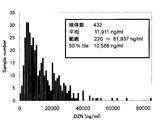
- the number of subjects was 244 (male: 76, female; 168), and the number of biological samples was 432.
- DZN daidzein
- FIG. 8 shows a plot of the EQL ELISA and the Log E / D ratio.
- Log E / D ratio is -1.75 (Kenneth DR Stechell and Sindey J. cole, J. Nutr. 136: 2188-2193, August 2006), and -1.75 or higher is S-equol. Producers, ⁇ -1.75 were considered non-producers.
- the equol concentration that is, the cut-off value, at which the misjudgment rate of equol producers / non-producers is lowest was examined.
- the examination results are shown in Table 6.
- the number of biological samples determined as producers was 377, and the number of biological samples determined as non-producers was 55.
- Anti-estrogen and estrogen-like effects are expected, and when taking processed soybean products, the presence or absence of such effects is determined by measuring the concentration of equol in urine and blood, but equol is accurately measured.
- a method using instrumental analysis such as the HPLC method takes time and labor to process multiple samples and is not suitable for daily measurement.
Landscapes
- Health & Medical Sciences (AREA)
- Life Sciences & Earth Sciences (AREA)
- Chemical & Material Sciences (AREA)
- Immunology (AREA)
- Molecular Biology (AREA)
- Engineering & Computer Science (AREA)
- Urology & Nephrology (AREA)
- Hematology (AREA)
- Biomedical Technology (AREA)
- General Health & Medical Sciences (AREA)
- Biochemistry (AREA)
- Medicinal Chemistry (AREA)
- Organic Chemistry (AREA)
- Microbiology (AREA)
- General Physics & Mathematics (AREA)
- Biotechnology (AREA)
- Cell Biology (AREA)
- Pathology (AREA)
- Analytical Chemistry (AREA)
- Physics & Mathematics (AREA)
- Food Science & Technology (AREA)
- Biophysics (AREA)
- Genetics & Genomics (AREA)
- Tropical Medicine & Parasitology (AREA)
- Proteomics, Peptides & Aminoacids (AREA)
- Peptides Or Proteins (AREA)
- Investigating Or Analysing Biological Materials (AREA)
Priority Applications (8)
| Application Number | Priority Date | Filing Date | Title |
|---|---|---|---|
| EP10774917.8A EP2431740B1 (en) | 2009-05-11 | 2010-05-11 | Method for measurement of equol in biological sample by immunoassay, kit for the measurement, and method for determination of equol production ability of subject |
| JP2011513349A JPWO2010131660A1 (ja) | 2009-05-11 | 2010-05-11 | 生体試料中のエクオールを免疫法により測定する方法、その測定のためのキット、および被験者のエクオール産生能を判定する方法 |
| CN201080021069.2A CN102422160B (zh) | 2009-05-11 | 2010-05-11 | 利用免疫法测定生物样品中的雌马酚的方法、用于该测定的试剂盒、以及判定受试者的雌马酚产生能力的方法 |
| US13/318,735 US9176124B2 (en) | 2009-05-11 | 2010-05-11 | Method for measurement of equol in biological sample by immunoassay, kit for the measurement, and method for determination of equol production ability of subject |
| CA2761078A CA2761078C (en) | 2009-05-11 | 2010-05-11 | Method for measurement of equol in biological sample by immunoassay, kit for the measurement, and method for determination of equol production ability of subject |
| HK12105379.6A HK1165001B (en) | 2009-05-11 | 2010-05-11 | Method for measurement of equol in biological sample by immunoassay, kit for the measurement, and method for determination of equol production ability of subject |
| AU2010248472A AU2010248472B2 (en) | 2009-05-11 | 2010-05-11 | Method for measurement of equol in biological sample by immunoassay, kit for the measurement, and method for determination of equol production ability of subject |
| ES10774917.8T ES2563049T3 (es) | 2009-05-11 | 2010-05-11 | Método para la medida de ecuol en muestra biológica mediante inmunoensayo, kit para la medida, y método para la determinación de la capacidad de un sujeto para producir ecuol |
Applications Claiming Priority (2)
| Application Number | Priority Date | Filing Date | Title |
|---|---|---|---|
| JP2009114572 | 2009-05-11 | ||
| JP2009-114572 | 2009-05-11 |
Publications (1)
| Publication Number | Publication Date |
|---|---|
| WO2010131660A1 true WO2010131660A1 (ja) | 2010-11-18 |
Family
ID=43085033
Family Applications (1)
| Application Number | Title | Priority Date | Filing Date |
|---|---|---|---|
| PCT/JP2010/057974 Ceased WO2010131660A1 (ja) | 2009-05-11 | 2010-05-11 | 生体試料中のエクオールを免疫法により測定する方法、その測定のためのキット、および被験者のエクオール産生能を判定する方法 |
Country Status (10)
| Country | Link |
|---|---|
| US (1) | US9176124B2 (enExample) |
| EP (1) | EP2431740B1 (enExample) |
| JP (2) | JPWO2010131660A1 (enExample) |
| KR (1) | KR20120028324A (enExample) |
| CN (1) | CN102422160B (enExample) |
| AU (1) | AU2010248472B2 (enExample) |
| CA (1) | CA2761078C (enExample) |
| ES (1) | ES2563049T3 (enExample) |
| TW (1) | TWI542878B (enExample) |
| WO (1) | WO2010131660A1 (enExample) |
Cited By (2)
| Publication number | Priority date | Publication date | Assignee | Title |
|---|---|---|---|---|
| CN102928604A (zh) * | 2011-08-08 | 2013-02-13 | 爱科来株式会社 | 羧甲基精氨酸的免疫测定方法 |
| WO2017073753A1 (ja) * | 2015-10-29 | 2017-05-04 | 株式会社ヤクルト本社 | エコール産生能の測定方法 |
Families Citing this family (9)
| Publication number | Priority date | Publication date | Assignee | Title |
|---|---|---|---|---|
| CN103076452B (zh) * | 2012-12-30 | 2015-02-25 | 上海市内分泌代谢病研究所 | 一种脂联素浓度的测定方法及其应用 |
| CZ306733B6 (cs) * | 2014-08-27 | 2017-05-31 | Walmark, A.S. | Doplněk stravy na bázi klikvy velkoplodé pro použití k oddálení biochemického návratu karcinomu prostaty |
| US20170189902A1 (en) * | 2014-09-12 | 2017-07-06 | Pinpoint Testing, Llc | Ready-to-constitute analytical platforms for chemical analyses and quantification |
| CN104897652B (zh) * | 2015-03-19 | 2017-08-25 | 杭州金溪生物技术有限公司 | 一步均相化学发光法进行小分子检测的方法及所用微粒 |
| JP6586604B2 (ja) * | 2016-07-27 | 2019-10-09 | 株式会社ヘルスケアシステムズ | 骨折リスク評価方法 |
| CN106290281A (zh) * | 2016-08-30 | 2017-01-04 | 广州蓝勃生物科技有限公司 | 一种检测用试剂组件及其读取识别方法 |
| JP6202652B1 (ja) * | 2016-12-19 | 2017-09-27 | 株式会社ヘルスケアシステムズ | 抗エクオール抗体組成物及びその利用 |
| CN109444406A (zh) * | 2018-11-09 | 2019-03-08 | 深圳市众循精准医学研究院 | 定量检测标志物cyfra21-1的试纸条及其制备方法和检测方法 |
| CN116577498B (zh) * | 2023-07-13 | 2023-09-12 | 济南玖方生物科技有限公司 | 用于检测尿液中hiv抗体的样品垫的应用、试纸条及样品垫处理液 |
Citations (3)
| Publication number | Priority date | Publication date | Assignee | Title |
|---|---|---|---|---|
| JP2006504409A (ja) * | 2002-07-24 | 2006-02-09 | チルドレンズ ホスピタル メディカル センター | 鏡像異性のエクオールを含有する組成物および製品、およびその製造方法 |
| JP2006242602A (ja) * | 2005-02-28 | 2006-09-14 | Gifu Prefecture | エクオールの検査方法及びエクオール産生菌の検査方法 |
| JP2006296434A (ja) | 2003-06-30 | 2006-11-02 | Otsuka Pharmaceut Co Ltd | エクオール産生乳酸菌含有組成物 |
Family Cites Families (2)
| Publication number | Priority date | Publication date | Assignee | Title |
|---|---|---|---|---|
| US5314804A (en) * | 1992-03-24 | 1994-05-24 | Serim Research Corporation | Test for Helicobacter pylori |
| US20030162955A1 (en) * | 1998-03-17 | 2003-08-28 | Lionel Chalus | Isolated mammalian membrane protein genes; related reagents |
-
2010
- 2010-05-11 CA CA2761078A patent/CA2761078C/en active Active
- 2010-05-11 EP EP10774917.8A patent/EP2431740B1/en active Active
- 2010-05-11 AU AU2010248472A patent/AU2010248472B2/en active Active
- 2010-05-11 WO PCT/JP2010/057974 patent/WO2010131660A1/ja not_active Ceased
- 2010-05-11 CN CN201080021069.2A patent/CN102422160B/zh active Active
- 2010-05-11 JP JP2011513349A patent/JPWO2010131660A1/ja active Pending
- 2010-05-11 US US13/318,735 patent/US9176124B2/en active Active
- 2010-05-11 KR KR1020117029453A patent/KR20120028324A/ko not_active Ceased
- 2010-05-11 TW TW099115202A patent/TWI542878B/zh active
- 2010-05-11 ES ES10774917.8T patent/ES2563049T3/es active Active
-
2014
- 2014-05-02 JP JP2014095421A patent/JP2014160088A/ja active Pending
Patent Citations (3)
| Publication number | Priority date | Publication date | Assignee | Title |
|---|---|---|---|---|
| JP2006504409A (ja) * | 2002-07-24 | 2006-02-09 | チルドレンズ ホスピタル メディカル センター | 鏡像異性のエクオールを含有する組成物および製品、およびその製造方法 |
| JP2006296434A (ja) | 2003-06-30 | 2006-11-02 | Otsuka Pharmaceut Co Ltd | エクオール産生乳酸菌含有組成物 |
| JP2006242602A (ja) * | 2005-02-28 | 2006-09-14 | Gifu Prefecture | エクオールの検査方法及びエクオール産生菌の検査方法 |
Non-Patent Citations (8)
| Title |
|---|
| DUNCAN C.S. TALBOT ET AL., CLINICAL CHEMISTRY, vol. 53, 2007, pages 748 - 756 |
| DUNCAN C.S. TALBOT ET AL.: "Monoclonal Antibody-Based Time-Resolved Fluorescence Immunoassays for Daidzein, Genistein, and Equol in Blood and Urine: Application to the Isoheart Intervention Study", CLINICAL CHEMISTRY, vol. 53, no. 4, 2007, pages 748 - 756, XP009162851 * |
| E. BROUWERS ET AL., JOURNAL OF STEROID BIOCHEMISTRY & MOLECULAR BIOLOGY, vol. 84, 2003, pages 577 - 588 |
| ELKE BROUWERS ET AL.: "Time-resolved fluoroimmunoassay for equol in plasma and urine", THE JOURNAL OF STEROID BIOCHEMISTRY AND MOLECULAR BIOLOGY, vol. 84, no. 5, 2003, pages 577 - 588, XP009162835 * |
| K. D. R. SETCHELL ET AL., THE AMERICAN JOURNAL OF CLINICAL NUTRITION, vol. 81, 2005, pages 1072 - 1079 |
| KENNETH D.R. STECHELL, SINDEY J. COLE, J. NUTR., vol. 136, August 2006 (2006-08-01), pages 2188 - 2193 |
| See also references of EP2431740A4 * |
| SUZUKI: "Ranso Tekishutsu Rat ni Okeru S-tai Equol no Estrogen-yo Sayo", DAI 61 KAI THE JAPANESE SOCIETY OF NUTRITION AND FOOD SCIENCE TAIKAI KOEN YOSHISHU, 2007, pages 250, XP008168587 * |
Cited By (6)
| Publication number | Priority date | Publication date | Assignee | Title |
|---|---|---|---|---|
| CN102928604A (zh) * | 2011-08-08 | 2013-02-13 | 爱科来株式会社 | 羧甲基精氨酸的免疫测定方法 |
| WO2017073753A1 (ja) * | 2015-10-29 | 2017-05-04 | 株式会社ヤクルト本社 | エコール産生能の測定方法 |
| KR20180073562A (ko) * | 2015-10-29 | 2018-07-02 | 가부시키가이샤 야쿠르트 혼샤 | 에쿠올 산생능의 측정 방법 |
| JPWO2017073753A1 (ja) * | 2015-10-29 | 2018-08-16 | 株式会社ヤクルト本社 | エコール産生能の測定方法 |
| US10752961B2 (en) | 2015-10-29 | 2020-08-25 | Kabushiki Kaisha Yakult Honsha | Method for measuring equol-producing ability |
| KR102719722B1 (ko) | 2015-10-29 | 2024-10-18 | 가부시키가이샤 야쿠르트 혼샤 | 에쿠올 산생능의 측정 방법 |
Also Published As
| Publication number | Publication date |
|---|---|
| KR20120028324A (ko) | 2012-03-22 |
| EP2431740A4 (en) | 2012-10-31 |
| EP2431740A1 (en) | 2012-03-21 |
| US20120064550A1 (en) | 2012-03-15 |
| CN102422160A (zh) | 2012-04-18 |
| CA2761078C (en) | 2018-06-12 |
| TWI542878B (zh) | 2016-07-21 |
| CA2761078A1 (en) | 2010-11-18 |
| EP2431740B1 (en) | 2016-01-13 |
| ES2563049T3 (es) | 2016-03-10 |
| CN102422160B (zh) | 2014-09-10 |
| JPWO2010131660A1 (ja) | 2012-11-01 |
| HK1165001A1 (en) | 2012-09-28 |
| AU2010248472A1 (en) | 2011-11-10 |
| TW201043956A (en) | 2010-12-16 |
| JP2014160088A (ja) | 2014-09-04 |
| AU2010248472B2 (en) | 2015-05-14 |
| US9176124B2 (en) | 2015-11-03 |
Similar Documents
| Publication | Publication Date | Title |
|---|---|---|
| US9176124B2 (en) | Method for measurement of equol in biological sample by immunoassay, kit for the measurement, and method for determination of equol production ability of subject | |
| Adlercreutz et al. | Time-resolved fluoroimmunoassay for plasma enterolactone | |
| Jin et al. | Development of an ic-ELISA and Immunochromatographic Strip Assay for the Detection of Diacetoxyscirpenol in Rice | |
| US10399938B2 (en) | Compositions relating to vitamin D | |
| EP2090590A1 (en) | Antibody against aflatoxins, support using the antibody, method of immunologically detecting aflatoxins and method of concentrating and purifying aflatoxins | |
| AU2015280288B2 (en) | Assays for vitamin D epimers | |
| JPH09506260A (ja) | メトトレキサートを検出するための試薬および方法 | |
| CN113046325B (zh) | 一株维生素k3单克隆抗体杂交瘤细胞株及其应用 | |
| JP4990785B2 (ja) | トピラメートに関する免疫アッセイ | |
| JP5329994B2 (ja) | 試料中のエクオールの免疫測定法 | |
| CN110713986B (zh) | 一株维生素b1单克隆抗体杂交瘤细胞株cbdd及其应用 | |
| AU2015280292B2 (en) | Binding partners specific for vitamin D epimers | |
| JP3899260B2 (ja) | 三環系抗うつ薬誘導体およびイムノアッセイ | |
| KR20150133196A (ko) | 마우스 혈청 내의 래트 항체의 특이적인 검출 | |
| JPWO1993003365A1 (ja) | 下痢性貝毒に特異的なモノクローナル抗体、ハイブリドーマ及び下痢性貝毒の検出方法 | |
| US8039226B2 (en) | Anti NC1 monoclonal antibody | |
| HK1165001B (en) | Method for measurement of equol in biological sample by immunoassay, kit for the measurement, and method for determination of equol production ability of subject | |
| JP2011026315A (ja) | アゾキシストロビン誘導体、アゾキシストロビンに対する抗体またはそのフラグメント、ならびにそれらの抗体またはフラグメントを用いた測定キットおよび測定方法 | |
| JP4664340B2 (ja) | モノクローナル抗体、細胞株及びn1,n12−ジアセチルスペルミンの測定法 | |
| JP2005062114A (ja) | 糖脂質の測定法、疾病検出方法及びキット | |
| EP2124055A1 (en) | Kit for immunoassay of bsh, and method for measurement of bsh |
Legal Events
| Date | Code | Title | Description |
|---|---|---|---|
| WWE | Wipo information: entry into national phase |
Ref document number: 201080021069.2 Country of ref document: CN |
|
| 121 | Ep: the epo has been informed by wipo that ep was designated in this application |
Ref document number: 10774917 Country of ref document: EP Kind code of ref document: A1 |
|
| ENP | Entry into the national phase |
Ref document number: 2011513349 Country of ref document: JP Kind code of ref document: A |
|
| WWE | Wipo information: entry into national phase |
Ref document number: 2010774917 Country of ref document: EP |
|
| WWE | Wipo information: entry into national phase |
Ref document number: 13318735 Country of ref document: US |
|
| WWE | Wipo information: entry into national phase |
Ref document number: 2761078 Country of ref document: CA |
|
| ENP | Entry into the national phase |
Ref document number: 2010248472 Country of ref document: AU Date of ref document: 20100511 Kind code of ref document: A |
|
| NENP | Non-entry into the national phase |
Ref country code: DE |
|
| ENP | Entry into the national phase |
Ref document number: 20117029453 Country of ref document: KR Kind code of ref document: A |