WO2010106960A1 - ゲームサーバ、ゲームシステム、ゲーム装置、巡回地点更新方法、情報記録媒体、および、プログラム - Google Patents
ゲームサーバ、ゲームシステム、ゲーム装置、巡回地点更新方法、情報記録媒体、および、プログラム Download PDFInfo
- Publication number
- WO2010106960A1 WO2010106960A1 PCT/JP2010/054103 JP2010054103W WO2010106960A1 WO 2010106960 A1 WO2010106960 A1 WO 2010106960A1 JP 2010054103 W JP2010054103 W JP 2010054103W WO 2010106960 A1 WO2010106960 A1 WO 2010106960A1
- Authority
- WO
- WIPO (PCT)
- Prior art keywords
- area
- unit
- enemy character
- player character
- character
- Prior art date
- Legal status (The legal status is an assumption and is not a legal conclusion. Google has not performed a legal analysis and makes no representation as to the accuracy of the status listed.)
- Ceased
Links
Images






Classifications
-
- A—HUMAN NECESSITIES
- A63—SPORTS; GAMES; AMUSEMENTS
- A63F—CARD, BOARD, OR ROULETTE GAMES; INDOOR GAMES USING SMALL MOVING PLAYING BODIES; VIDEO GAMES; GAMES NOT OTHERWISE PROVIDED FOR
- A63F13/00—Video games, i.e. games using an electronically generated display having two or more dimensions
- A63F13/55—Controlling game characters or game objects based on the game progress
- A63F13/56—Computing the motion of game characters with respect to other game characters, game objects or elements of the game scene, e.g. for simulating the behaviour of a group of virtual soldiers or for path finding
-
- A—HUMAN NECESSITIES
- A63—SPORTS; GAMES; AMUSEMENTS
- A63F—CARD, BOARD, OR ROULETTE GAMES; INDOOR GAMES USING SMALL MOVING PLAYING BODIES; VIDEO GAMES; GAMES NOT OTHERWISE PROVIDED FOR
- A63F13/00—Video games, i.e. games using an electronically generated display having two or more dimensions
- A63F13/55—Controlling game characters or game objects based on the game progress
- A63F13/57—Simulating properties, behaviour or motion of objects in the game world, e.g. computing tyre load in a car race game
- A63F13/577—Simulating properties, behaviour or motion of objects in the game world, e.g. computing tyre load in a car race game using determination of contact between game characters or objects, e.g. to avoid collision between virtual racing cars
-
- A—HUMAN NECESSITIES
- A63—SPORTS; GAMES; AMUSEMENTS
- A63F—CARD, BOARD, OR ROULETTE GAMES; INDOOR GAMES USING SMALL MOVING PLAYING BODIES; VIDEO GAMES; GAMES NOT OTHERWISE PROVIDED FOR
- A63F13/00—Video games, i.e. games using an electronically generated display having two or more dimensions
- A63F13/30—Interconnection arrangements between game servers and game devices; Interconnection arrangements between game devices; Interconnection arrangements between game servers
- A63F13/33—Interconnection arrangements between game servers and game devices; Interconnection arrangements between game devices; Interconnection arrangements between game servers using wide area network [WAN] connections
- A63F13/335—Interconnection arrangements between game servers and game devices; Interconnection arrangements between game devices; Interconnection arrangements between game servers using wide area network [WAN] connections using Internet
-
- A—HUMAN NECESSITIES
- A63—SPORTS; GAMES; AMUSEMENTS
- A63F—CARD, BOARD, OR ROULETTE GAMES; INDOOR GAMES USING SMALL MOVING PLAYING BODIES; VIDEO GAMES; GAMES NOT OTHERWISE PROVIDED FOR
- A63F13/00—Video games, i.e. games using an electronically generated display having two or more dimensions
- A63F13/30—Interconnection arrangements between game servers and game devices; Interconnection arrangements between game devices; Interconnection arrangements between game servers
- A63F13/35—Details of game servers
-
- A—HUMAN NECESSITIES
- A63—SPORTS; GAMES; AMUSEMENTS
- A63F—CARD, BOARD, OR ROULETTE GAMES; INDOOR GAMES USING SMALL MOVING PLAYING BODIES; VIDEO GAMES; GAMES NOT OTHERWISE PROVIDED FOR
- A63F13/00—Video games, i.e. games using an electronically generated display having two or more dimensions
- A63F13/40—Processing input control signals of video game devices, e.g. signals generated by the player or derived from the environment
- A63F13/42—Processing input control signals of video game devices, e.g. signals generated by the player or derived from the environment by mapping the input signals into game commands, e.g. mapping the displacement of a stylus on a touch screen to the steering angle of a virtual vehicle
- A63F13/426—Processing input control signals of video game devices, e.g. signals generated by the player or derived from the environment by mapping the input signals into game commands, e.g. mapping the displacement of a stylus on a touch screen to the steering angle of a virtual vehicle involving on-screen location information, e.g. screen coordinates of an area at which the player is aiming with a light gun
-
- A—HUMAN NECESSITIES
- A63—SPORTS; GAMES; AMUSEMENTS
- A63F—CARD, BOARD, OR ROULETTE GAMES; INDOOR GAMES USING SMALL MOVING PLAYING BODIES; VIDEO GAMES; GAMES NOT OTHERWISE PROVIDED FOR
- A63F13/00—Video games, i.e. games using an electronically generated display having two or more dimensions
- A63F13/45—Controlling the progress of the video game
-
- A—HUMAN NECESSITIES
- A63—SPORTS; GAMES; AMUSEMENTS
- A63F—CARD, BOARD, OR ROULETTE GAMES; INDOOR GAMES USING SMALL MOVING PLAYING BODIES; VIDEO GAMES; GAMES NOT OTHERWISE PROVIDED FOR
- A63F13/00—Video games, i.e. games using an electronically generated display having two or more dimensions
- A63F13/60—Generating or modifying game content before or while executing the game program, e.g. authoring tools specially adapted for game development or game-integrated level editor
- A63F13/67—Generating or modifying game content before or while executing the game program, e.g. authoring tools specially adapted for game development or game-integrated level editor adaptively or by learning from player actions, e.g. skill level adjustment or by storing successful combat sequences for re-use
-
- A—HUMAN NECESSITIES
- A63—SPORTS; GAMES; AMUSEMENTS
- A63F—CARD, BOARD, OR ROULETTE GAMES; INDOOR GAMES USING SMALL MOVING PLAYING BODIES; VIDEO GAMES; GAMES NOT OTHERWISE PROVIDED FOR
- A63F2300/00—Features of games using an electronically generated display having two or more dimensions, e.g. on a television screen, showing representations related to the game
- A63F2300/40—Features of games using an electronically generated display having two or more dimensions, e.g. on a television screen, showing representations related to the game characterised by details of platform network
- A63F2300/407—Data transfer via internet
-
- A—HUMAN NECESSITIES
- A63—SPORTS; GAMES; AMUSEMENTS
- A63F—CARD, BOARD, OR ROULETTE GAMES; INDOOR GAMES USING SMALL MOVING PLAYING BODIES; VIDEO GAMES; GAMES NOT OTHERWISE PROVIDED FOR
- A63F2300/00—Features of games using an electronically generated display having two or more dimensions, e.g. on a television screen, showing representations related to the game
- A63F2300/50—Features of games using an electronically generated display having two or more dimensions, e.g. on a television screen, showing representations related to the game characterized by details of game servers
-
- A—HUMAN NECESSITIES
- A63—SPORTS; GAMES; AMUSEMENTS
- A63F—CARD, BOARD, OR ROULETTE GAMES; INDOOR GAMES USING SMALL MOVING PLAYING BODIES; VIDEO GAMES; GAMES NOT OTHERWISE PROVIDED FOR
- A63F2300/00—Features of games using an electronically generated display having two or more dimensions, e.g. on a television screen, showing representations related to the game
- A63F2300/50—Features of games using an electronically generated display having two or more dimensions, e.g. on a television screen, showing representations related to the game characterized by details of game servers
- A63F2300/55—Details of game data or player data management
- A63F2300/5526—Game data structure
- A63F2300/5533—Game data structure using program state or machine event data, e.g. server keeps track of the state of multiple players on in a multiple player game
-
- A—HUMAN NECESSITIES
- A63—SPORTS; GAMES; AMUSEMENTS
- A63F—CARD, BOARD, OR ROULETTE GAMES; INDOOR GAMES USING SMALL MOVING PLAYING BODIES; VIDEO GAMES; GAMES NOT OTHERWISE PROVIDED FOR
- A63F2300/00—Features of games using an electronically generated display having two or more dimensions, e.g. on a television screen, showing representations related to the game
- A63F2300/60—Methods for processing data by generating or executing the game program
- A63F2300/6027—Methods for processing data by generating or executing the game program using adaptive systems learning from user actions, e.g. for skill level adjustment
-
- A—HUMAN NECESSITIES
- A63—SPORTS; GAMES; AMUSEMENTS
- A63F—CARD, BOARD, OR ROULETTE GAMES; INDOOR GAMES USING SMALL MOVING PLAYING BODIES; VIDEO GAMES; GAMES NOT OTHERWISE PROVIDED FOR
- A63F2300/00—Features of games using an electronically generated display having two or more dimensions, e.g. on a television screen, showing representations related to the game
- A63F2300/60—Methods for processing data by generating or executing the game program
- A63F2300/63—Methods for processing data by generating or executing the game program for controlling the execution of the game in time
-
- A—HUMAN NECESSITIES
- A63—SPORTS; GAMES; AMUSEMENTS
- A63F—CARD, BOARD, OR ROULETTE GAMES; INDOOR GAMES USING SMALL MOVING PLAYING BODIES; VIDEO GAMES; GAMES NOT OTHERWISE PROVIDED FOR
- A63F2300/00—Features of games using an electronically generated display having two or more dimensions, e.g. on a television screen, showing representations related to the game
- A63F2300/60—Methods for processing data by generating or executing the game program
- A63F2300/64—Methods for processing data by generating or executing the game program for computing dynamical parameters of game objects, e.g. motion determination or computation of frictional forces for a virtual car
- A63F2300/643—Methods for processing data by generating or executing the game program for computing dynamical parameters of game objects, e.g. motion determination or computation of frictional forces for a virtual car by determining the impact between objects, e.g. collision detection
-
- A—HUMAN NECESSITIES
- A63—SPORTS; GAMES; AMUSEMENTS
- A63F—CARD, BOARD, OR ROULETTE GAMES; INDOOR GAMES USING SMALL MOVING PLAYING BODIES; VIDEO GAMES; GAMES NOT OTHERWISE PROVIDED FOR
- A63F2300/00—Features of games using an electronically generated display having two or more dimensions, e.g. on a television screen, showing representations related to the game
- A63F2300/60—Methods for processing data by generating or executing the game program
- A63F2300/66—Methods for processing data by generating or executing the game program for rendering three dimensional images
- A63F2300/6607—Methods for processing data by generating or executing the game program for rendering three dimensional images for animating game characters, e.g. skeleton kinematics
-
- A—HUMAN NECESSITIES
- A63—SPORTS; GAMES; AMUSEMENTS
- A63F—CARD, BOARD, OR ROULETTE GAMES; INDOOR GAMES USING SMALL MOVING PLAYING BODIES; VIDEO GAMES; GAMES NOT OTHERWISE PROVIDED FOR
- A63F2300/00—Features of games using an electronically generated display having two or more dimensions, e.g. on a television screen, showing representations related to the game
- A63F2300/60—Methods for processing data by generating or executing the game program
- A63F2300/66—Methods for processing data by generating or executing the game program for rendering three dimensional images
- A63F2300/6623—Methods for processing data by generating or executing the game program for rendering three dimensional images for animating a group of characters
Definitions
- the present invention relates to a game server, a game system, a game device, a patrol point update method, an information recording medium, and a program capable of appropriately updating a patrol point of a character that patrols in a virtual space.
- game devices such as video game devices
- a player operates a hero character equipped with a weapon such as a gun or a sword to freely move in a virtual space (generally called “field” etc.), Let fight.
- Patent Document 1 discloses appropriately changing the appearance of a character in an action game.
- enemy characters are often arranged on the path of the player character or in an easily accessible place. For example, there are cases where enemy characters are placed on a street or a characteristic building where the player character passes for movement, so that the player character can easily encounter the enemy character.
- the enemy character may be searched for (searching for) the player character by moving it as appropriate.
- the enemy character In the infiltration type action game described above, the enemy character often controls the enemy character to go around in order to protect his position. For example, the enemy character patrolls around a plurality of predetermined cruising points in order so that the player character cannot easily enter the enemy team.
- This patrol point is determined in consideration of a map (arrangement of enemy terrain, buildings, etc.) at the time of game design, for example.
- the present invention has been made in view of the above circumstances, and a game server, a game system, a game device, a patrol point update method, an information recording medium, which can appropriately update a patrol point of a character that patrols in a virtual space, And it aims at providing a program.
- a game server is a game server that provides a game in which a player character can arbitrarily move in a virtual space, and includes a tour point storage unit, an enemy character control unit, a region specifying unit, and And a patrol point update unit.
- the traveling point storage unit stores a plurality of traveling points in the virtual space.
- the enemy character control unit patrolls the enemy character based on each of the stored tour points. For example, the enemy character control unit moves the enemy character so as to go around each patrol point.
- the area specifying unit specifies an area in which the player character is allowed to move without being detected from the enemy characters in circulation. For example, the points where the player character can move without being discovered for a certain time or more are totaled for each predetermined area, and the upper area is specified as a short area.
- the traveling point update unit updates the stored traveling point so as to compensate for the identified area. For example, the patrol point storage unit is updated so that the center of the identified area is added to the new patrol point.
- the game server can patrol the enemy character so that the player character can be easily detected.
- the game server can appropriately update the patrol point of the character that patrols the virtual space.
- a game server is connected to a plurality of game devices via a network, arranges player characters operated by each player in a virtual space, and each player character arbitrarily moves in the virtual space.
- a game server that provides a movable game includes a player character management unit, a tour point storage unit, an enemy character control unit, an enemy character management unit, a region specifying unit, and a tour point updating unit.
- the player character management unit manages position information including the current position of each player character.
- the patrol point storage unit stores a plurality of patrol points in the virtual space.
- the enemy character control unit patrols the enemy character based on each of the stored tour points.
- the enemy character management unit manages position information including a current position and a detection range (for example, a field of view range, a listening range, etc.) of the enemy character being patrolled.
- the area specifying unit allows the movement of the player character without being detected from the enemy character being circulated based on the relationship between the position information of the managed player character and the position information of the managed enemy character. Is identified.
- the points where the player character has been able to move without being discovered or heard for a certain time or more are totaled for each predetermined area, and the upper area is specified as a thin area.
- the traveling point update unit updates the stored traveling point so as to include the specified position in the region.
- the patrol point storage unit is updated so that the center of the identified area is added to the new patrol point.
- the game server can patrol the enemy character so that the player character can be easily detected.
- the game server can appropriately update the patrol point of the character that patrols the virtual space.
- the area specifying unit divides and manages the virtual space into a plurality of areas of a predetermined size, totals points where the player character can move without being detected for a certain period of time, and counts the highest number May be specified.
- the traveling point update unit may update the traveling point stored in the traveling point storage unit so that the center position of the identified area is included in the new traveling point.
- the game server can update the patrol point by counting the number of cases in a certain area unit.
- the area specifying unit divides and manages the virtual space into a plurality of areas of a predetermined size, totals the elapsed time that the player character has been able to move without being detected, and determines the length of the elapsed time. May specify the upper region.
- the patrol point update unit may update the patrol point stored in the patrol point storage unit so that the center position of the identified area is included in the new patrol point.
- the game server can update the patrol point by counting the elapsed time in a certain area unit.
- the patrol point storage unit identifies another area based on the movement status of the player character from the identified area, and includes the position of the center of the other area in the new patrol point. You may update the patrol point memorize
- the game server can update the patrol point in consideration of the movement destination of the player character.
- a game system is a game system in which a game device and a game server are connected via a network, the game device includes a transmission unit, and the game server includes a circulation point storage unit, An enemy character control unit, a player character management unit, an area specifying unit, and a patrol point update unit are provided.
- the transmission unit of the game device transmits instruction information for moving the player character in the virtual space to the game server based on an operation received from the player.
- the tour point storage unit stores a plurality of tour points in the virtual space.
- the enemy character control unit patrolls the enemy character based on each of the stored tour points.
- the player character management unit moves the player character in the virtual space based on the instruction information transmitted from the game device.
- the area specifying unit specifies an area in which the player character is allowed to move without being detected from the enemy characters in circulation.
- the traveling point update unit updates the stored traveling point so as to compensate for the identified area. In this way, when the patrol point is updated so as to compensate for the short area, the enemy character can be patroled so that the player character can be easily detected.
- the game system can appropriately update the circulation point of the character that circulates in the virtual space.
- a game device includes a tour point storage unit, an enemy character control unit, a player character management unit, a region specifying unit, and a tour point updating unit.
- the traveling point storage unit stores a plurality of traveling points in the virtual space.
- the enemy character control unit patrolls the enemy character based on each of the stored tour points.
- the player character management unit moves the player character in the virtual space based on an operation received from the player.
- the area specifying unit specifies an area in which the player character is allowed to move without being detected from the enemy characters in circulation.
- the traveling point update unit updates the stored traveling point so as to compensate for the identified area. In this way, when the patrol point is updated so as to compensate for the short area, the enemy character can be patroled so that the player character can be easily detected.
- the game apparatus can appropriately update the circulation point of the character that circulates in the virtual space.
- a traveling point update method includes a storage unit that stores a plurality of traveling points in a virtual space, and provides a game server in which a player character can arbitrarily move in the virtual space.
- the patrol point update method in FIG. 1 includes an enemy character control step, an area specifying step, and a patrol point update step.
- the enemy character is patrolled based on the stored patrolling points. For example, the enemy character is patrolled so as to visit each patrolling point.
- the area specifying step an area in which the player character is allowed to move without being detected from the enemy characters in circulation is specified. For example, the points where the player character has been able to move without being discovered or heard for a certain time or more are totaled for each predetermined area, and the upper area is specified as a thin area.
- the patrol point update step the stored patrol point is updated so as to compensate for the identified area. For example, the patrol point storage unit is updated so that the center of the identified area is added to the new patrol point. In this way, when the patrol point is updated so as to compensate for the short area, the enemy character can be patroled so that the player character can be easily detected. According to the present invention, it is possible to appropriately update the circulation point of the character that circulates in the virtual space.
- a traveling point update method is a traveling point update method in a game device having a storage unit that stores a plurality of traveling points in a virtual space, and includes an enemy character control step and a player character management step. , An area specifying step and a patrol point updating step.
- the enemy character is patrolled based on the stored patrolling points. For example, the enemy character is patrolled so as to visit each patrolling point.
- the player character management step the player character in the virtual space is moved based on the operation received from the player.
- the area specifying step an area in which the player character is allowed to move without being detected from the enemy characters in circulation is specified. For example, the points where the player character has been able to move without being discovered or heard for a certain time or more are totaled for each predetermined area, and the upper area is specified as a thin area.
- the patrol point update step the stored patrol point is updated so as to compensate for the identified area.
- the patrol point storage unit is updated so that the center of the identified area is added to the new patrol point.
- the patrol point is updated so as to compensate for the short area, the enemy character can be patroled so that the player character can be easily detected.
- it is possible to appropriately update the circulation point of the character that circulates in the virtual space.
- An information recording medium provides a computer that provides a game in which a player character can arbitrarily move in a virtual space, a tour point storage unit, an enemy character control unit, a region specifying unit, and a tour point update.
- a program that functions as a unit is stored.
- the traveling point storage unit stores a plurality of traveling points in the virtual space.
- the enemy character control unit patrols the enemy character based on the stored tour points.
- the area specifying unit specifies an area in which the player character is allowed to move without being detected from the enemy characters in circulation.
- the traveling point update unit updates the stored traveling point so as to supplement the specified area.
- the computer can appropriately update the circulation point of the character that circulates in the virtual space.
- An information recording medium stores a program that causes a computer to function as a patrol point storage unit, an enemy character control unit, a player character management unit, an area specifying unit, and a patrol point update unit.
- the traveling point storage unit stores a plurality of traveling points in the virtual space.
- the enemy character control unit patrols the enemy character based on the stored tour points.
- the player character management unit moves the player character in the virtual space based on an operation received from the player.
- the area specifying unit specifies an area in which the player character is allowed to move without being detected from the enemy characters in circulation.
- the traveling point update unit updates the stored traveling point so as to supplement the specified area.
- the computer can appropriately update the circulation point of the character that circulates in the virtual space.
- a program provides a computer that provides a game in which a player character can arbitrarily move in a virtual space, a traveling point storage unit, an enemy character control unit, a player character management unit, a region specifying unit, It functions as a patrol point update unit.
- the traveling point storage unit stores a plurality of traveling points in the virtual space.
- the enemy character control unit patrols the enemy character based on the stored tour points.
- the area specifying unit specifies an area in which the player character is allowed to move without being detected from the enemy characters in circulation.
- the traveling point update unit updates the stored traveling point so as to supplement the specified area.
- the computer can appropriately update the circulation point of the character that circulates in the virtual space.
- a program causes a computer to function as a patrol point storage unit, an enemy character control unit, a player character management unit, an area specifying unit, and a patrol point update unit.
- the traveling point storage unit stores a plurality of traveling points in the virtual space.
- the enemy character control unit patrols the enemy character based on the stored tour points.
- the player character management unit moves the player character in the virtual space based on an operation received from the player.
- the area specifying unit specifies an area in which the player character is allowed to move without being detected from the enemy characters in circulation.
- the traveling point update unit updates the stored traveling point so as to supplement the specified area.
- the computer can appropriately update the circulation point of the character that circulates in the virtual space.
- the above program can be recorded on a computer-readable information recording medium such as a compact disk, flexible disk, hard disk, magneto-optical disk, digital video disk, magnetic tape, and semiconductor memory.
- a computer-readable information recording medium such as a compact disk, flexible disk, hard disk, magneto-optical disk, digital video disk, magnetic tape, and semiconductor memory.
- the above program can be distributed and sold via a computer communication network independently of the computer on which the program is executed.
- the information recording medium can be distributed and sold independently of the computer.
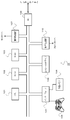
- FIG. 1 is a block diagram showing a schematic configuration of a network game system according to an embodiment of the present invention.
- a game server 11 that manages the entire system is arranged on the Internet 13.
- Each game device 12 in the network game system 10 is connected to the game server 11 via the Internet 13 so as to be communicable.
- Each game device 12 shares the same virtual space (game space), and each player can operate his / her character (player character).
- game apparatus 12 capable of connecting to the Internet 13 (network) will be described.
- FIG. 2 is a diagram illustrating a hardware configuration of the game apparatus 12 according to the present embodiment.
- the game apparatus 12 includes a CPU (Central Processing Unit) 101, a ROM (Read Only Memory) 102, a RAM (Random Access Memory) 103, an interface 104, a controller 105, an external memory 106, an image processing unit 107, and the like. , A DVD (Digital Versatile Disk) -ROM drive 108, an audio processing unit 109, and a NIC (Network Interface Card) 110.
- a CPU Central Processing Unit
- ROM Read Only Memory
- RAM Random Access Memory
- the CPU 101 controls the overall operation of the game apparatus 12 and is connected to each component to exchange control signals and data.
- the ROM 102 records an IPL (Initial Program Loader) that is executed immediately after the power is turned on, and when this is executed, the program recorded on the DVD-ROM is read into the RAM 103 and the execution by the CPU 101 is started.
- the ROM 102 stores an operating system program and various data necessary for controlling the operation of the entire game apparatus 12.
- the RAM 103 is for temporarily storing data and programs, and holds programs and data read from the DVD-ROM and other data necessary for game progress and chat communication.
- the controller 105 connected via the interface 104 receives an operation input performed when the user executes the game.
- the controller 105 accepts input of a character string (message) or the like according to the operation input.
- the external memory 106 detachably connected via the interface 104 stores data indicating the progress of the game, chat communication log (record) data, and the like in a rewritable manner.
- the user can record these data in the external memory 106 as appropriate by inputting an instruction via the controller 105.
- the DVD-ROM drive 108 On the DVD-ROM mounted on the DVD-ROM drive 108, a program for realizing the game and image data and sound data associated with the game are recorded. Under the control of the CPU 101, the DVD-ROM drive 108 performs a reading process on the DVD-ROM mounted on the DVD-ROM drive 108 to read out necessary programs and data. The read program and data are temporarily stored in the RAM 103 or the like.
- the image processing unit 107 processes the data read from the DVD-ROM by the CPU 101 or an image arithmetic processor (not shown) included in the image processing unit 107, and then processes the processed data in a frame memory ( (Not shown).
- the image information recorded in the frame memory is converted into a video signal at a predetermined synchronization timing and output to a monitor (not shown) connected to the image processing unit 107. Thereby, various image displays are possible.
- the image calculation processor can execute a two-dimensional image overlay calculation, a transmission calculation such as ⁇ blending, and various saturation calculations at high speed.
- the polygon information arranged in the virtual three-dimensional space and added with various kinds of texture information is rendered by the Z buffer method, and a rendered image is obtained by overlooking the polygon arranged in the virtual three-dimensional space from a predetermined viewpoint position. High speed execution of the obtained operation is also possible.
- the CPU 101 and the image arithmetic processor work together to draw a character string as a two-dimensional image in the frame memory or on the surface of each polygon according to the font information that defines the character shape. is there.
- the font information is recorded in the ROM 102, but it is also possible to use dedicated font information recorded in the DVD-ROM.
- the audio processing unit 110 converts audio data read from the DVD-ROM into an analog audio signal and outputs it from a speaker (not shown) connected thereto. Further, under the control of the CPU 101, sound effects and music data to be generated during the progress of the game are generated, and sound corresponding to this is output from the speaker.
- the NIC 109 is for connecting the game apparatus 12 to a computer communication network (not shown) such as the Internet, and conforms to the 10BASE-T / 100BASE-T standard used when configuring a LAN (Local Area Network). Therefore, analog modems for connecting to the Internet using telephone lines, ISDN (Integrated Services Digital Network) modems, ADSL (Asymmetric Digital Subscriber Line) modems, cables for connecting to the Internet using cable television lines It comprises a modem, etc., and an interface (not shown) that mediates between them and the CPU 101.
- a computer communication network not shown
- LAN Local Area Network
- the game apparatus 12 uses a large-capacity external storage device such as a hard disk so as to perform the same function as the DVD-ROM or the like attached to the ROM 102, RAM 103, external memory 106, DVD-ROM drive 108, It may be configured. Further, it is possible to adopt a form in which a keyboard for accepting a character string editing input from a user, a mouse for accepting various position designations and selection inputs, and the like are connected.
- a general computer can be used as the game apparatus.
- a general computer like the game device 12, includes a CPU, RAM, ROM, DVD-ROM drive, and NIC, and includes an image processing unit having a simpler function than the game device 12,
- a hard disk as an external storage device
- a flexible disk a magneto-optical disk, a magnetic tape, and the like
- a keyboard, a mouse or the like is used as an input device instead of a controller. Then, after the game program is installed, when the program is executed, it functions as a game device.
- FIG. 3 is a diagram illustrating an example of a schematic configuration of the game server 11 according to the present embodiment.
- the configuration of the game server 11 conforms to the configuration of FIG. 2 described above, and includes a general computer (a general-purpose server computer or the like).
- the game server 11 has a hardware configuration including a hard disk, a keyboard, and the like in addition to the same configuration as the CPU 101, ROM 102, RAM 103, DVD-ROM drive 108, and NIC 109 of FIG. .
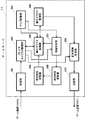
- FIG. 3 is a diagram showing a functional outline configuration of the game server 11.
- the game server 11 includes a receiving unit 201, a player character management unit 202, a map storage unit 203, a traveling point storage unit 204, an enemy character control unit 205, an enemy character management unit 206, an area specifying unit 207, A traveling point update unit 208, a change information generation unit 209, and a transmission unit 210 are provided.
- the receiving unit 201 receives various data sent from each game device 12. For example, the receiving unit 201 receives instruction data such as movement toward the player character that is sent in response to the operation of the player.
- the NIC 109 functions as the receiving unit 201.
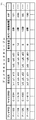
- the player character management unit 202 manages information on player characters operated by the respective game devices 12. Specifically, the player character management unit 202 appropriately updates the player character table T1 as shown in FIG. 4 and manages the current situation of each player character. For example, when the receiving unit 201 receives the movement instruction data, the player character management unit 202 updates the current position, orientation, generated sound volume, and the like of the player character corresponding to the received instruction data in the player character table T1. To do.
- the generated volume indicates the value of the volume generated by the action of the player character. For example, when the player character is running, the generated sound volume is updated to a large value by the CPU 101 so that a loud footstep is emitted. Conversely, when the player character is walking slowly, the generated sound volume is updated by the CPU 101 so that a small footstep is emitted. In addition, the value of the generated sound volume is appropriately updated by the CPU 101 in accordance with the movement position (grass, waterside, etc.) of the player character and the sound emitted from the gun firing.
- the player character management unit 202 appropriately updates the non-alert moving time of the player character table T1.
- This unalert movement time indicates a time during which the player character can move without being detected (discovered or heard) by the enemy character. In other words, the larger the value of the non-alert movement time is, the more the player character can move without being detected by the enemy character.
- the player character management unit 202 counts up (adds) the non-alert moving time.
- the enemy character control unit 205 for example, within the field of view of any enemy character, or at a sound level equal to or higher than a predetermined volume in the listening range of the enemy character (a range where sound can be heard).
- CPU 101 resets the non-alert movement time of the player character to 0 (zero).
- the CPU 101 resets the non-alert moving time of the player character to 0 (zero).
- the CPU 101 determines that the player character has moved without detection for n seconds or more.
- the CPU 101, the RAM 103, and the like function as the player character management unit 202.
- the map storage unit 203 stores map information that defines a virtual space (game space) in the game.
- the map storage unit 203 stores map information that defines fields in which the player character and the enemy character move.
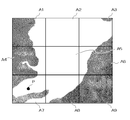
- the map storage unit 203 stores map information as shown in FIG. Although omitted in FIG. 5, actually, various objects such as buildings and trees are appropriately arranged on such a map.
- the RAM 103, the hard disk, etc. function as the map storage unit 203.
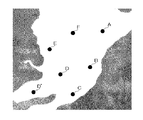
- the traveling point storage unit 204 stores the positions of a plurality of traveling points where the enemy character circulates. For example, as shown in FIG. 6, the traveling point storage unit 204 stores the positions of a plurality of traveling points (touring points “A” to “F”) allocated on the map. The position is represented using coordinate values in a coordinate system defined in advance on the map.
- the RAM 103, the hard disk, etc. function as the traveling point storage unit 204.
- the enemy character control unit 205 circulates the enemy character in the virtual space based on the position of each tour point stored in the tour point storage unit 204. For example, the enemy character control unit 205 disperses and arranges a predetermined number of enemy characters on the map, and moves each enemy character so that it passes through the patrol point.
- the enemy character control unit 205 moves each enemy character so as to travel around the tour points A to F shown in FIG.
- the enemy character control unit 205 circulates the enemy characters arranged in the vicinity of the circulation point “A” in the order of “A ⁇ B ⁇ C ⁇ D ⁇ E ⁇ F ⁇ A ⁇ .
- the enemy characters arranged near the point “C” are circulated in the order of “C ⁇ D ⁇ E ⁇ F ⁇ A ⁇ B ⁇ C ⁇ .
- the enemy character control unit 205 not only makes the enemy character circulate in the forward direction (the order from the circuit point “A” to the circuit point “F”) but also the reverse direction (from the circuit point “F” to the circuit point “A”).
- the enemy character may be patrolled in the order of "".
- the enemy character control unit 205 may not only circulate in the forward direction and the reverse direction, but may circulate through the circulatory points in a random order, for example. Further, the enemy character control unit 205 may distribute different ways of patrol to each enemy character, and cause each enemy character to travel around different routes.
- the enemy character control unit 205 refers to the map information in the map storage unit 203 when circulating the enemy character, and appropriately cycles the enemy character while avoiding obstacles such as buildings.
- the enemy character control unit 205 supplies control information of the enemy character to be circulated to the enemy character management unit 206, and updates the current position, orientation, view range, listening range, and the like of the enemy character.
- the view range is a range in which an enemy character can see from its own position.
- the field-of-view range is a range determined by a viewing angle, a viewing distance, and the like in front of the enemy character (front of the face, etc.).
- the view range is appropriately updated by the enemy character management unit 206 by referring to the map information in the map storage unit 203 and considering obstacles such as buildings that block the view.
- the listening range is a range in which the enemy character can listen to the sound, and is, for example, the entire periphery within a certain distance centering on the enemy character. Similarly to the view range, the listening range is appropriately updated by the enemy character management unit 206 in consideration of obstacles that block sound.
- the enemy character control unit 205 detects (discovers) the enemy character with reference to the above-described player character table T1 and a table of the enemy character management unit 206 (an enemy character table T2 to be described later) at every predetermined timing. And the presence of a player character that has been listened to).
- the enemy character control unit 205 compares the current position of each player character in the player character table T1 with the view range of each enemy character in the enemy character table T2, which will be described later. It is determined whether or not there is a player character to enter. Then, if there is a player character that falls within the field of view of the enemy character, the enemy character control unit 205 notifies the player character management unit 202 that the player character has been found by the enemy character.
- the enemy character control unit 205 compares the current position of each player character in the player character table T1 with the listening range of each enemy character in the enemy character table T2, which will be described later, and enters the listening range of the enemy character. Determine if there is any. Then, if there is a player character that falls within the enemy character's listening range and the generated sound volume of the player character is equal to or higher than a reference value, the enemy character control unit 205 causes the player character's sound (footsteps, etc.) to be sent to the enemy character. The player character management unit 202 is notified of the listening.
- the enemy character control unit 205 may control the position and action of the enemy character so as to chase or attack the detected (discovered or listened) player character.
- the CPU 101 or the like functions as the enemy character control unit 205.
- the enemy character management unit 206 manages information on enemy characters controlled by the enemy character control unit 205. Specifically, the enemy character management unit 206 appropriately updates the enemy character table T2 as shown in FIG. 7, and manages the current situation of each enemy character. For example, the enemy character management unit 206 updates the current position, orientation, view range, and listening range of the enemy character in accordance with the control information of the enemy character to be circulated.
- the view range is a range determined by the viewing angle in front of the enemy character, the viewing distance, and the like, and is appropriately updated by the enemy character management unit 206 in consideration of obstacles that block the view.
- the listening range is the entire circumference within a certain distance centered on the enemy character, and is appropriately updated by the enemy character management unit 206 in consideration of obstacles that block sound.
- the CPU 101, RAM 103, and the like function as such an enemy character management unit 206.
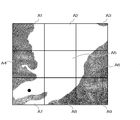
- the area specifying unit 207 specifies a thin area in which the player character is allowed to move without being detected (discovered or heard) from the enemy character who is traveling. Specifically, the area specifying unit 207 manages the map stored in the map storage unit 203 by dividing (dividing) a plurality of areas of a predetermined size as shown in FIG. 8A. In FIG. 8A, the map is internally divided into areas A1 to A9. However, the size and number of areas managed by the area specifying unit 207 can be changed as appropriate.
- the area specifying unit 207 refers to the above-described player character table T1 for each predetermined timing, and determines whether or not there is a player character whose unalert moving time exceeds a certain time (n seconds). Then, if the unalert movement time exceeds a certain time, the area specifying unit 207 plots the current position of the player character as indicated by “x” in FIG. 8B. That is, the points (position information) where the player character can move without being found for n seconds or more are totaled.
- non-alert movement time of the player character that has been counted may be reset to 0 (zero) by the enemy character control unit 205 and the player character management unit 202.
- the area specifying unit 207 finishes counting when a predetermined time has elapsed since the start of counting the positions of the player characters, or when the total number of totals exceeds a specified number, and “a weak area (weak area)” ”Is specified.
- the area specifying unit 207 extracts areas where the total number of areas A1 to A9 exceeds a certain number (n), sorts them in descending order, and selects several (m) from the top. Identified as a weak spot area.
- the area specifying unit 207 sorts in descending order and specifies the top several cases. For example, when only one area “A7” is extracted, the area specifying unit 207 directly specifies the area “A7” as a thin area.
- the CPU 101 and the like function as the area specifying unit 207.
- the patrol point update unit 208 updates the patrol point storage unit 204 such that the center of the area specified by the area specifying unit 207 becomes a new patrol point.
- the center of the region is represented using coordinate values in a predetermined coordinate system defined in the virtual space.
- the traveling point update unit 208 when the area “A7” in FIG. 8B described above is specified as a short area by the area specifying unit 207, the traveling point update unit 208, as shown in FIG. 9A, the center coordinates “P” of the area “A7” "Is a new patrol point. And the patrol point update part 208 updates the patrol point memory
- the traveling point update unit 208 updates the new traveling point by replacing the current traveling point with the closest one of the current traveling points. That is, as illustrated in FIG. 9B, the traveling point update unit 208 replaces the new traveling point “D ′” with the current traveling point “D”.
- the patrol point storage unit 204 may be updated so as to add a new patrol point. That is, as illustrated in FIG. 9C, the traveling point update unit 208 adds a new traveling point “D ′” while maintaining the traveling points that have already been arranged.
- the traveling point update unit 208 can update the traveling point storage unit 204 using an arbitrary method so that a new traveling point is added.
- the CPU 101 or the like functions as the patrol point update unit 208.
- the change information generation unit 209 generates various change information that needs to be reflected in each game device 12. For example, the change information generation unit 209 generates change information based on information regarding the contents of information regarding each player character and information regarding each enemy character. That is, when the position information of the player character managed in the player character table T1 is changed, or the position information of the enemy character managed in the enemy character table T2 is changed, the CPU 101 Changes information is generated.
- the CPU 101 and the like function as the change information generation unit 209.
- the transmission unit 210 transmits the change information generated by the change information generation unit 209 to each game device 12.
- the NIC 109 functions as the transmission unit 210.
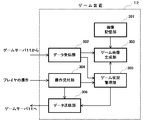
- FIG. 10 is a diagram illustrating an example of a schematic configuration of the game apparatus 12 according to the present embodiment.
- the game apparatus 12 includes an image storage unit 301, a data reception unit 302, a game image generation unit 303, an operation reception unit 304, a game situation management unit 305, and a data transmission unit 306. I have.
- the image storage unit 301 stores an image representing a player character (each character operated by each player) arranged in the virtual space, an image representing an enemy character, and an image representing an object such as a tree or a building.
- the above-described RAM 103 or the like functions as the image storage unit 301.
- the data receiving unit 302 receives various information sent from the game server 11. For example, the data reception unit 302 sequentially receives the change information generated by the change information generation unit 209 in the game server 11 described above and transmitted from the transmission unit 210. Then, the data reception unit 302 reflects the game situation management unit 305 in the latest state based on the received change information.
- the NIC 109 described above functions as the data receiving unit 302.
- the game image generation unit 303 generates a game image including characters arranged in the virtual space. For example, the game image generation unit 303 repeatedly generates a game image in which the object image stored in the image storage unit 301 is arranged in the virtual space at a regular timing such as vertical synchronization interrupt (VSYNC). At that time, the game image generation unit 303 generates a game image in which player characters and enemy characters are appropriately arranged based on the position and orientation of each character received by the data reception unit 302. The generated game image is output to a monitor connected to the game apparatus 12. An animated image representing the virtual space is displayed on the monitor.
- the image processing unit 107 described above functions as the game image generation unit 303.
- the operation accepting unit 304 accepts an operation input such as an operation instruction to the player character by the player.
- the operation accepting unit 304 has buttons (for example, arranged on the controller 105) corresponding to various actions such as moving the player character in a predetermined direction, lowering the posture of the player character, and causing the player character to shoot a gun.
- An operation input when the player presses a direction key, an “A” button, a “B” button, an “X” button, a “Y” button, or the like) is accepted.
- the controller 105 described above functions as the operation reception unit 304.
- the game situation management unit 305 manages the game situation including the progress state of the game in the game apparatus 12.
- the game situation is, for example, information such as the hit points of the player character (physical strength value of the player character), experience values, and possessed items, and information such as the current position and orientation on the map of the player character.
- the game situation management unit 305 updates the game situation according to the change information from the game server 11 received by the data receiving unit 302, the operation information received by the operation receiving unit 304, and the like.
- the RAM 103 and CPU 101 described above function as the game situation management unit 305.
- the data transmission unit 306 transmits operation information indicating the content of the operation received by the operation reception unit 304 to the game server 11. That is, information indicating what instruction is given to the player character by the player is transmitted to the game server 11.
- the data transmission unit 306 also transmits the game situation managed by the game situation management unit 305 to the game server 11 as appropriate. For example, the progress state of the game in the game device 12 is transmitted to the game server 11.
- the NIC 109 described above functions as the data transmission unit 306.
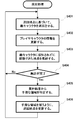
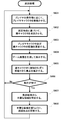
- FIG. 11 is a flowchart showing the flow of the patrol process performed while updating the patrol point in the game server 11 having the above-described configuration. It is assumed that the initial value of the traveling point is stored in advance in the traveling point storage unit 204.
- the enemy character control unit 205 of the game server 11 circulates the enemy character based on the position of the tour location stored in the tour location storage unit 204 (step S401).
- circuit points “A” to “F”) as shown in FIG. 6 are stored in the circuit point storage unit 204, and a plurality of enemy characters are arranged on the map. If it is, the enemy character control unit 205 moves each enemy character so that it sequentially passes through the patrol point.
- the enemy character management unit 206 updates the current position, orientation, view range, listening range, and the like of the enemy character in accordance with the control information of the enemy character to be circulated in this way. That is, the enemy character table T2 as shown in FIG.
- the player character management unit 202 of the game server 11 updates the player character information (step S402). That is, the player character management unit 202 updates the current position, orientation, generated sound volume, and the like of the player character according to the instruction data of the player character operated by each game device 12. That is, the player character table T1 as shown in FIG. 4 is updated as appropriate.
- the player character management unit 202 also appropriately updates the unalert movement time of the player character table T1. That is, when the player character starts moving, the player character management unit 202 counts up the non-alert movement time, and when the enemy character control unit 205 detects (discovers or listens to) the player character, the player character management unit 202 detects the player character. The non-alert movement time of the player character is reset to 0 (zero).
- the area specifying unit 207 of the game server 11 counts points where the player character has been able to move without being detected by the enemy character over a certain time (step S403). That is, the area specifying unit 207 refers to the player character table T1 and determines whether or not there is a player character whose unalert moving time exceeds a certain time (n seconds). Then, if the unalert moving time exceeds a certain time, the area specifying unit 207 plots the current position of the player character as indicated by the “x” mark in FIG. 8B described above. That is, the positions of points where the player character can move without being found for more than n seconds are counted.
- the area specifying unit 207 of the game server 11 determines whether or not the aggregation in step S403 has been completed (step S404). For example, the area specifying unit 207 determines that the aggregation is completed when a predetermined time has elapsed since the aggregation started, or when the total number of cases exceeds a specified number.
- step S404 If it is determined that the aggregation has not been completed (step S404; No), the area specifying unit 207 of the game server 11 returns the process to step S401, and repeatedly executes the processes of steps S401 to S404 described above.
- the area specifying unit 207 of the game server 11 determines that the counting has been completed (step S404; Yes), the area (weak point area) where the enemy character side has weak defense is specified from the counting result (step S405). ). That is, the area specifying unit 207 extracts areas where the number of cases counted for each area exceeds a certain number (n cases), sorts them in descending order, and selects a predetermined number (m cases) from the top Specify as an area.
- the area specifying unit 207 extracts only the area “A7” that meets the condition and sets the area “A7” as the weak area. As specified.
- the traveling point update unit 208 of the game server 11 updates the traveling point so as to compensate for the weak point area (step S406). That is, the patrol point update unit 208 updates the patrol point storage unit 204 so that the center of the weak point area specified by the area specifying unit 207 is added to the new patrol point.
- the traveling point update unit 208 uses the center coordinates of the area “A7” as a new traveling point as shown in FIG. 9A. And And the area
- the area specifying unit 207 may replace the new circuit point “D ′” with the current circuit point “D” as illustrated in FIG. 9B described above. Further, the area specifying unit 207 may further add a new patrol point “D ′” as shown in FIG. 9C described above.
- the game server 11 returns the process to step S401.
- the patrol points are updated so that there is as little as possible a region with weak defense in the arrangement of enemy characters.
- the enemy character moves based on the updated patrol point.
- the game server 11 arranges the enemy character so as to compensate for the weak point even if the enemy character has a weak point. Can be redone.
- the patrol point is updated so as to compensate for the weak area.
- the game server 11 can automatically update the patrol point so as to always compensate for the short area. According to the present embodiment, the game server 11 can appropriately update the patrol point of the character so that the balance of offense and defense is not greatly lost.
- the present invention is not limited to such a network game and can be applied to a game executed by a single game device.
- FIG. 12 is a diagram showing a schematic configuration of a game apparatus 52 according to the second embodiment of the present invention.
- the game device 52 includes an image storage unit 301, a game image generation unit 303, an operation reception unit 304, a player character management unit 502, a map storage unit 503, a traveling point storage unit 504, and an enemy character control unit 505. , An enemy character management unit 506, an area specifying unit 507, and a patrol point update unit 508.
- the image storage unit 301, the game image generation unit 303, and the operation reception unit 304 have the same configuration as the game device 12 described above.
- the player character management unit 502, the map storage unit 503, the traveling point storage unit 504, the enemy character control unit 505, the enemy character management unit 506, the area specifying unit 507, and the traveling point update unit 508 are each the game server 11 described above.
- FIG. 13 is a flowchart showing the flow of the patrol process of the game device according to the second embodiment of the present invention.
- the player character management unit 502 of the game device 52 moves the player character in accordance with the player's operation or the like (step S601). Further, the enemy character control unit 505 circulates the enemy character based on the tour point stored in the tour point storage unit 504 (step S602).
- the player character moves in accordance with the operation information received by the operation receiving unit 304, and the traveling points assigned on the map as shown in FIG. 6 stored in the traveling point storage unit 504 are displayed.
- the enemy character moves to pass.
- the player character management unit 502 and the enemy character management unit 506 of the game device 52 update the player character and enemy character information (step S603).
- the player character management unit 502 appropriately updates the player character table T1 as shown in FIG. 4 described above. Note that the player operates only one player character, and the other player characters are appropriately controlled according to a predetermined logic. Further, the enemy character management unit 506 appropriately updates the enemy character table T2 as shown in FIG.
- the game image generation unit 303 of the game device 52 generates a game image and displays it on the monitor (step S604). That is, the game image generation unit 303 generates a game image in which the player character and the enemy character are arranged based on information managed by the player character management unit 502 and the enemy character management unit 506.
- the area specifying unit 507 of the game device 52 specifies and totals points where the player character can move without being detected (discovered or heard) by the enemy character (step S605). That is, the area specifying unit 507 refers to the player character table T1 as shown in FIG. 4, and determines the position of the player character whose unalert moving time exceeds a certain time (n seconds) by “ ⁇ ” in FIG. Plot as indicated by "" and total.
- the area specifying unit 507 of the game device 52 determines whether or not counting has been completed (step S606). If it is determined that counting has not been completed (step S606; No), the process returns to step S601 described above. .
- the area specifying unit 507 of the game device 52 specifies an area where the enemy character is not easily protected from the counting result (step S607). That is, the area specifying unit 507 extracts areas where the number of cases counted for each area exceeds a certain number (n cases), sorts them in descending order, and makes a predetermined number (m cases) from the top Specify as an area. For example, when the aggregation as shown in FIG. 8B is performed, the region “A7” is specified as the weak point region.
- the traveling point update unit 508 of the game device 52 updates the traveling point so as to compensate for the identified weak spot region (step S608). That is, the patrol point update unit 508 updates the patrol point storage unit 504 so that the center of the weak point area specified by the area specifying unit 507 is added to the new patrol point.
- the new circuit point “D ′” is changed to the current circuit point “ Replace with D ′′.
- the patrol point update unit 508 may further add a new patrol point “D ′” as shown in FIG. 9C described above. Then, the game device 52 returns the process to step S601.
- the patrol point can also be updated by the patrol process according to the present embodiment so as to compensate for an area where the defense of the enemy character is weak.
- the enemy character patrols based on the updated patrol point.
- the patrol point is updated so as to compensate for the weak spot area.
- the game apparatus 52 can automatically update the patrol point so as to always compensate for the weak area.
- the game device 52 can appropriately update the patrol point of the character that circulates in the virtual space so that the balance of offense and defense is not greatly lost.
- the present invention is not limited to the above-described embodiment, and various modifications and applications are possible. Moreover, it is also possible to freely combine the constituent elements of the above-described embodiments.
- the patrol points are updated so as to compensate for the short area, and the updated patrol points are patroled by the enemy characters already arranged.
- the number of enemy characters may be changed according to the arrangement and distribution of the updated circulation points. For example, a new enemy character may be added and arranged when the length of the tour route passing through each updated tour point becomes longer. Moreover, an enemy character may be added so that the ratio of the enemy character to circulate may become constant, and each enemy character may be circulated. Alternatively, the number of enemy characters may be reduced when the length of the tour route passing through each updated tour point becomes smaller.
- the game server 11 or the game device 12 may identify the weak spot region by counting points where the player character has not encountered an enemy character for a long time.
- the identified weak spot area is used as a new patrol point as it is, but in consideration of the movement of the player character, the movement area of the player character or the possibility that the player character will move is high.
- the estimated area may be a new patrol point.
- the game server 11 or the game device 12 specifies the area “A4” to which the player character is to move, and an arbitrary point in the specified area “A4” or the center point of the specified area “A4” The coordinates of are set as a new patrol point.
- a game server a game system, a game device, a patrol point update method, an information recording medium, and a program suitable for appropriately updating a patrol point of a character that patrols in a virtual space. be able to.
Landscapes
- Engineering & Computer Science (AREA)
- Multimedia (AREA)
- Human Computer Interaction (AREA)
- Theoretical Computer Science (AREA)
- Processing Or Creating Images (AREA)
Abstract
プレイヤキャラクタ管理部(202)は、プレイヤキャラクタの位置情報を管理する。巡回地点記憶部(204)は、複数の巡回地点を記憶する。敵キャラクタ制御部(205)は、記憶される各巡回地点を敵キャラクタに巡回させる。敵キャラクタ管理部(206)は、巡回中の敵キャラクタの位置情報を管理する。領域特定部(207)は、管理されるプレイヤキャラクタの位置情報と敵キャラクタの位置情報とに基づいて、敵キャラクタから探知されずにプレイヤキャラクタの移動を許した領域を特定する。巡回地点更新部(208)は、特定された当該領域内の位置を含めるように、巡回地点記憶部(204)の巡回地点を更新する。
Description
本発明は、仮想空間内を巡回させるキャラクタの巡回地点を適切に更新することのできるゲームサーバ、ゲームシステム、ゲーム装置、巡回地点更新方法、情報記録媒体、および、プログラムに関する。
従来より、アクションゲーム等を行うことのできるゲーム装置(ビデオゲーム装置等)が広く普及している。このようなアクションゲームでは、プレイヤは、例えば、銃や剣等の武器を装備した主人公キャラクタを操作して、仮想空間(一般に“フィールド”等と呼ばれる)内を自由に移動させ、敵キャラクタ等と戦わせる。
最近では、このような戦いを主眼としたアクションゲームだけでなく、あえて戦闘を避けるゲームも知られている。例えば、プレイヤが、敵陣等に潜入させたプレイヤキャラクタを敵キャラクタに見つからないように身を隠して移動させて所定の目的を果たす、といった潜入タイプのアクションゲームも知られている。
例えば、特許文献1には、アクションゲームにおいて、キャラクタの外観を適切に変化させることが開示されている。
また、このような潜入タイプのアクションゲームは、インターネット等を利用したネットワークゲーム(オンラインゲーム)としても普及してきている。
上述したアクションゲームでは、一般に、プレイヤキャラクタの通り道や近づき易い場所に敵キャラクタが配置されることが多い。例えば、プレイヤキャラクタが移動のために通る街道や、特徴のある建物等に敵キャラクタが配置され、プレイヤキャラクタが敵キャラクタと遭遇しやすくなるように設定されていることがある。
また、敵キャラクタを一カ所に留めておくだけでなく、適宜移動させて、敵キャラクタにプレイヤキャラクタを探索(索敵)させる場合もある。
上述した潜入タイプのアクションゲームでは、敵キャラクタ側が自らの陣地を守るために、敵キャラクタを巡回させるように制御していることが多い。例えば、予め定められた複数の巡回地点を順に巡るように敵キャラクタを巡回させ、プレイヤキャラクタが容易に敵陣に潜入できないようにしている。
この巡回地点は、例えば、ゲーム設計時等において、マップ(敵陣の地形や建物等の配置)等を考慮して定められている。
しかしながら、このような巡回地点を敵キャラクタに巡回させても、プレイヤがプレイヤキャラクタにゲーム制作者側が予想し得なかった動きをさせることにより、敵キャラクタ側の防御が手薄となってしまう箇所(抜け道等)が見抜かれてしまうことがある。
例えば、潜入タイプのアクションゲームでは、各プレイヤキャラクタがそれぞれ奇抜な経路からの潜入を試みることがあるため、ゲーム制作者側の予想に反して、敵キャラクタに発見されずにすむ手薄な潜入経路が簡単に見抜かれてしまうことがある。
特にオンラインゲームでは、攻略法などの情報が他のプレイヤに広まるのが早い傾向にあるため、手薄な潜入経路が一旦見抜かれてしまうと、同じ潜入経路を通って多くのプレイヤキャラクタが容易に潜入できてしまい、ゲームが陳腐化してしまう恐れがある。
例えば、潜入タイプのアクションゲームでは、各プレイヤキャラクタがそれぞれ奇抜な経路からの潜入を試みることがあるため、ゲーム制作者側の予想に反して、敵キャラクタに発見されずにすむ手薄な潜入経路が簡単に見抜かれてしまうことがある。
特にオンラインゲームでは、攻略法などの情報が他のプレイヤに広まるのが早い傾向にあるため、手薄な潜入経路が一旦見抜かれてしまうと、同じ潜入経路を通って多くのプレイヤキャラクタが容易に潜入できてしまい、ゲームが陳腐化してしまう恐れがある。
そのため、アクションゲームにおいて、このようなプレイヤキャラクタの容易な潜入や移動を防ぐために、敵キャラクタを巡回させる巡回地点を適宜更新する仕組みが求められていた。
本発明は、上記実状に鑑みてなされたもので、仮想空間内を巡回させるキャラクタの巡回地点を適切に更新することのできるゲームサーバ、ゲームシステム、ゲーム装置、巡回地点更新方法、情報記録媒体、および、プログラムを提供することを目的とする。
本発明の第1の観点に係るゲームサーバは、プレイヤキャラクタが仮想空間内を任意に移動可能なゲームを提供するゲームサーバであって、巡回地点記憶部、敵キャラクタ制御部、領域特定部、及び、巡回地点更新部を備える。
まず、巡回地点記憶部は、仮想空間内の複数の巡回地点を記憶する。また、敵キャラクタ制御部は、記憶される当該各巡回地点に基づいて、敵キャラクタを巡回させる。例えば、敵キャラクタ制御部は、各巡回地点を巡るように、敵キャラクタを移動させる。
一方、領域特定部は、巡回中の敵キャラクタから探知されずにプレイヤキャラクタの移動を許した領域を特定する。例えば、プレイヤキャラクタが一定時間以上発見されずに移動できた地点を、所定の領域毎に集計し、上位の領域を手薄な領域として特定する。
そして、巡回地点更新部は、特定された当該領域を補うように、記憶される巡回地点を更新する。例えば、特定された領域の中心が新たな巡回地点に加わるように巡回地点記憶部を更新する。
このように、手薄な領域を補うように巡回地点が更新されると、ゲームサーバは、プレイヤキャラクタを探知しやすくなるように、敵キャラクタを巡回させることができる。
ゲームサーバは、仮想空間内を巡回させるキャラクタの巡回地点を適切に更新することができる。
一方、領域特定部は、巡回中の敵キャラクタから探知されずにプレイヤキャラクタの移動を許した領域を特定する。例えば、プレイヤキャラクタが一定時間以上発見されずに移動できた地点を、所定の領域毎に集計し、上位の領域を手薄な領域として特定する。
そして、巡回地点更新部は、特定された当該領域を補うように、記憶される巡回地点を更新する。例えば、特定された領域の中心が新たな巡回地点に加わるように巡回地点記憶部を更新する。
このように、手薄な領域を補うように巡回地点が更新されると、ゲームサーバは、プレイヤキャラクタを探知しやすくなるように、敵キャラクタを巡回させることができる。
ゲームサーバは、仮想空間内を巡回させるキャラクタの巡回地点を適切に更新することができる。
本発明の第2の観点に係るゲームサーバは、複数のゲーム装置とネットワークを介して接続され、各プレイヤが操作するプレイヤキャラクタを仮想空間内に配置し、各プレイヤキャラクタが仮想空間内を任意に移動可能なゲームを提供するゲームサーバであって、プレイヤキャラクタ管理部、巡回地点記憶部、敵キャラクタ制御部、敵キャラクタ管理部、領域特定部、及び、巡回地点更新部を備える。
まず、プレイヤキャラクタ管理部は、各プレイヤキャラクタの現在位置を含む位置情報を管理する。
また、巡回地点記憶部は、仮想空間内の複数の巡回地点を記憶する。敵キャラクタ制御部は、記憶される当該各巡回地点に基づいて、敵キャラクタを巡回させる。敵キャラクタ管理部は、巡回させている敵キャラクタの現在位置及び探知範囲(例えば、視界範囲や聴取範囲等)を含む位置情報を管理する。
一方、領域特定部は、管理されるプレイヤキャラクタの位置情報と、管理される敵キャラクタの位置情報との関係に基づいて、巡回中の敵キャラクタから探知されずにプレイヤキャラクタの移動を許した領域を特定する。例えば、プレイヤキャラクタが一定時間以上発見や聴取されずに移動できた地点を、所定の領域毎に集計し、上位の領域を手薄な領域として特定する。
そして、巡回地点更新部は、特定された当該領域内の位置を含めるように、記憶される巡回地点を更新する。例えば、特定された領域の中心が、新たな巡回地点に加わるように巡回地点記憶部を更新する。
このように、手薄な領域を補うように巡回地点が更新されると、ゲームサーバは、プレイヤキャラクタを探知しやすくなるように、敵キャラクタを巡回させることができる。
ゲームサーバは、仮想空間内を巡回させるキャラクタの巡回地点を適切に更新することができる。
また、巡回地点記憶部は、仮想空間内の複数の巡回地点を記憶する。敵キャラクタ制御部は、記憶される当該各巡回地点に基づいて、敵キャラクタを巡回させる。敵キャラクタ管理部は、巡回させている敵キャラクタの現在位置及び探知範囲(例えば、視界範囲や聴取範囲等)を含む位置情報を管理する。
一方、領域特定部は、管理されるプレイヤキャラクタの位置情報と、管理される敵キャラクタの位置情報との関係に基づいて、巡回中の敵キャラクタから探知されずにプレイヤキャラクタの移動を許した領域を特定する。例えば、プレイヤキャラクタが一定時間以上発見や聴取されずに移動できた地点を、所定の領域毎に集計し、上位の領域を手薄な領域として特定する。
そして、巡回地点更新部は、特定された当該領域内の位置を含めるように、記憶される巡回地点を更新する。例えば、特定された領域の中心が、新たな巡回地点に加わるように巡回地点記憶部を更新する。
このように、手薄な領域を補うように巡回地点が更新されると、ゲームサーバは、プレイヤキャラクタを探知しやすくなるように、敵キャラクタを巡回させることができる。
ゲームサーバは、仮想空間内を巡回させるキャラクタの巡回地点を適切に更新することができる。
領域特定部は、仮想空間内を所定の大きさの複数の領域に分割して管理し、プレイヤキャラクタが一定時間以上探知されずに移動できた地点を各領域毎に集計し、集計件数が上位の領域を特定してもよい。
巡回地点更新部は、特定された領域の中心の位置を新たな巡回地点に含めるように、巡回地点記憶部に記憶される巡回地点を更新してもよい。
ゲームサーバは、ある程度の大きさの領域単位にて件数を集計して、巡回地点を更新することができる。
巡回地点更新部は、特定された領域の中心の位置を新たな巡回地点に含めるように、巡回地点記憶部に記憶される巡回地点を更新してもよい。
ゲームサーバは、ある程度の大きさの領域単位にて件数を集計して、巡回地点を更新することができる。
領域特定部は、仮想空間内を所定の大きさの複数の領域に分割して管理し、プレイヤキャラクタが探知されずに移動できた経過時間を各領域毎に集計し、当該経過時間の長さが上位の領域を特定してもよい。
巡回地点更新部は、特定された当該領域の中心の位置を新たな巡回地点に含めるように、巡回地点記憶部に記憶される巡回地点を更新してもよい。
ゲームサーバは、ある程度の大きさの領域単位にて経過時間を集計して、巡回地点を更新することができる。
巡回地点更新部は、特定された当該領域の中心の位置を新たな巡回地点に含めるように、巡回地点記憶部に記憶される巡回地点を更新してもよい。
ゲームサーバは、ある程度の大きさの領域単位にて経過時間を集計して、巡回地点を更新することができる。
巡回地点更新部は、特定された当該領域からのプレイヤキャラクタの移動状況に基づいて他の領域を特定し、当該他の領域の中心の位置を新たな巡回地点に含めるように、巡回地点記憶部に記憶される巡回地点を更新してもよい。
ゲームサーバは、プレイヤキャラクタの移動先を考慮して、巡回地点を更新することができる。
ゲームサーバは、プレイヤキャラクタの移動先を考慮して、巡回地点を更新することができる。
本発明の第3の観点に係るゲームシステムは、ゲーム装置とゲームサーバとがネットワークを介して接続されたゲームシステムであって、ゲーム装置は送信部を備え、ゲームサーバは、巡回地点記憶部、敵キャラクタ制御部、プレイヤキャラクタ管理部、領域特定部、及び、巡回地点更新部を備える。
まず、ゲーム装置の送信部は、プレイヤから受け付けた操作に基づいて、仮想空間内のプレイヤキャラクタを移動させる指示情報をゲームサーバに送信する。
一方、ゲームサーバにおいて、巡回地点記憶部は、仮想空間内の複数の巡回地点を記憶する。
また、敵キャラクタ制御部は、記憶される当該各巡回地点に基づいて、敵キャラクタを巡回させる。
プレイヤキャラクタ管理部は、ゲーム装置から送信された指示情報に基づいて、仮想空間内のプレイヤキャラクタを移動させる。
領域特定部は、巡回中の敵キャラクタから探知されずにプレイヤキャラクタの移動を許した領域を特定する。
そして、巡回地点更新部は、特定された当該領域を補うように、記憶される巡回地点を更新する。
このように、手薄な領域を補うように巡回地点が更新されると、プレイヤキャラクタを探知しやすくなるように、敵キャラクタを巡回させることができる。
ゲームシステムは、仮想空間内を巡回させるキャラクタの巡回地点を適切に更新することができる。
一方、ゲームサーバにおいて、巡回地点記憶部は、仮想空間内の複数の巡回地点を記憶する。
また、敵キャラクタ制御部は、記憶される当該各巡回地点に基づいて、敵キャラクタを巡回させる。
プレイヤキャラクタ管理部は、ゲーム装置から送信された指示情報に基づいて、仮想空間内のプレイヤキャラクタを移動させる。
領域特定部は、巡回中の敵キャラクタから探知されずにプレイヤキャラクタの移動を許した領域を特定する。
そして、巡回地点更新部は、特定された当該領域を補うように、記憶される巡回地点を更新する。
このように、手薄な領域を補うように巡回地点が更新されると、プレイヤキャラクタを探知しやすくなるように、敵キャラクタを巡回させることができる。
ゲームシステムは、仮想空間内を巡回させるキャラクタの巡回地点を適切に更新することができる。
本発明の第4の観点に係るゲーム装置は、巡回地点記憶部、敵キャラクタ制御部、プレイヤキャラクタ管理部、領域特定部、及び、巡回地点更新部を備える。
まず、巡回地点記憶部は、仮想空間内の複数の巡回地点を記憶する。
また、敵キャラクタ制御部は、記憶される当該各巡回地点に基づいて、敵キャラクタを巡回させる。
プレイヤキャラクタ管理部は、プレイヤから受け付けた操作に基づいて、仮想空間内のプレイヤキャラクタを移動させる。
領域特定部は、巡回中の敵キャラクタから探知されずにプレイヤキャラクタの移動を許した領域を特定する。
そして、巡回地点更新部は、特定された当該領域を補うように、記憶される巡回地点を更新する。
このように、手薄な領域を補うように巡回地点が更新されると、プレイヤキャラクタを探知しやすくなるように、敵キャラクタを巡回させることができる。
ゲーム装置は、仮想空間内を巡回させるキャラクタの巡回地点を適切に更新することができる。
また、敵キャラクタ制御部は、記憶される当該各巡回地点に基づいて、敵キャラクタを巡回させる。
プレイヤキャラクタ管理部は、プレイヤから受け付けた操作に基づいて、仮想空間内のプレイヤキャラクタを移動させる。
領域特定部は、巡回中の敵キャラクタから探知されずにプレイヤキャラクタの移動を許した領域を特定する。
そして、巡回地点更新部は、特定された当該領域を補うように、記憶される巡回地点を更新する。
このように、手薄な領域を補うように巡回地点が更新されると、プレイヤキャラクタを探知しやすくなるように、敵キャラクタを巡回させることができる。
ゲーム装置は、仮想空間内を巡回させるキャラクタの巡回地点を適切に更新することができる。
本発明の第5の観点に係る巡回地点更新方法は、仮想空間内の複数の巡回地点を記憶する記憶部を有し、プレイヤキャラクタが仮想空間内を任意に移動可能なゲームを提供するゲームサーバにおける巡回地点更新方法であって、敵キャラクタ制御ステップ、領域特定ステップ、及び、巡回地点更新ステップを備えて構成される。
まず、敵キャラクタ制御ステップでは、記憶される当該各巡回地点に基づいて、敵キャラクタを巡回させる。例えば、各巡回地点を巡るように、敵キャラクタを巡回させる。
また、領域特定ステップでは、巡回中の敵キャラクタから探知されずにプレイヤキャラクタの移動を許した領域を特定する。例えば、プレイヤキャラクタが一定時間以上発見や聴取されずに移動できた地点を、所定の領域毎に集計し、上位の領域を手薄な領域として特定する。
そして、巡回地点更新ステップでは、特定された当該領域を補うように、記憶される巡回地点を更新する。例えば、特定された領域の中心が新たな巡回地点に加わるように、巡回地点記憶部を更新する。
このように、手薄な領域を補うように巡回地点が更新されると、プレイヤキャラクタを探知しやすくなるように、敵キャラクタを巡回させることができる。
本発明によれば、仮想空間内を巡回させるキャラクタの巡回地点を適切に更新することができる。
また、領域特定ステップでは、巡回中の敵キャラクタから探知されずにプレイヤキャラクタの移動を許した領域を特定する。例えば、プレイヤキャラクタが一定時間以上発見や聴取されずに移動できた地点を、所定の領域毎に集計し、上位の領域を手薄な領域として特定する。
そして、巡回地点更新ステップでは、特定された当該領域を補うように、記憶される巡回地点を更新する。例えば、特定された領域の中心が新たな巡回地点に加わるように、巡回地点記憶部を更新する。
このように、手薄な領域を補うように巡回地点が更新されると、プレイヤキャラクタを探知しやすくなるように、敵キャラクタを巡回させることができる。
本発明によれば、仮想空間内を巡回させるキャラクタの巡回地点を適切に更新することができる。
本発明の第6の観点に係る巡回地点更新方法は、仮想空間内の複数の巡回地点を記憶する記憶部を有するゲーム装置における巡回地点更新方法であって、敵キャラクタ制御ステップ、プレイヤキャラクタ管理ステップ、領域特定ステップ、及び、巡回地点更新ステップを備える。
まず、敵キャラクタ制御ステップでは、記憶される当該各巡回地点に基づいて、敵キャラクタを巡回させる。例えば、各巡回地点を巡るように、敵キャラクタを巡回させる。
プレイヤキャラクタ管理ステップでは、プレイヤから受け付けた操作に基づいて、仮想空間内のプレイヤキャラクタを移動させる。
また、領域特定ステップでは、巡回中の敵キャラクタから探知されずにプレイヤキャラクタの移動を許した領域を特定する。例えば、プレイヤキャラクタが一定時間以上発見や聴取されずに移動できた地点を、所定の領域毎に集計し、上位の領域を手薄な領域として特定する。
そして、巡回地点更新ステップでは、特定された当該領域を補うように、記憶される巡回地点を更新する。例えば、特定された領域の中心が新たな巡回地点に加わるように、巡回地点記憶部を更新する。
このように、手薄な領域を補うように巡回地点が更新されると、プレイヤキャラクタを探知しやすくなるように、敵キャラクタを巡回させることができる。
本発明によれば、仮想空間内を巡回させるキャラクタの巡回地点を適切に更新することができる。
プレイヤキャラクタ管理ステップでは、プレイヤから受け付けた操作に基づいて、仮想空間内のプレイヤキャラクタを移動させる。
また、領域特定ステップでは、巡回中の敵キャラクタから探知されずにプレイヤキャラクタの移動を許した領域を特定する。例えば、プレイヤキャラクタが一定時間以上発見や聴取されずに移動できた地点を、所定の領域毎に集計し、上位の領域を手薄な領域として特定する。
そして、巡回地点更新ステップでは、特定された当該領域を補うように、記憶される巡回地点を更新する。例えば、特定された領域の中心が新たな巡回地点に加わるように、巡回地点記憶部を更新する。
このように、手薄な領域を補うように巡回地点が更新されると、プレイヤキャラクタを探知しやすくなるように、敵キャラクタを巡回させることができる。
本発明によれば、仮想空間内を巡回させるキャラクタの巡回地点を適切に更新することができる。
本発明の第7の観点に係る情報記録媒体は、プレイヤキャラクタが仮想空間内を任意に移動可能なゲームを提供するコンピュータを、巡回地点記憶部、敵キャラクタ制御部、領域特定部、巡回地点更新部、として機能させるプログラムを記憶する。
巡回地点記憶部は、仮想空間内の複数の巡回地点を記憶する。
敵キャラクタ制御部は、記憶される各巡回地点に基づいて、敵キャラクタを巡回させる。
領域特定部は、巡回中の敵キャラクタから探知されずにプレイヤキャラクタの移動を許した領域を特定する。
巡回地点更新部は、特定された領域を補うように、記憶される巡回地点を更新する。
巡回地点記憶部は、仮想空間内の複数の巡回地点を記憶する。
敵キャラクタ制御部は、記憶される各巡回地点に基づいて、敵キャラクタを巡回させる。
領域特定部は、巡回中の敵キャラクタから探知されずにプレイヤキャラクタの移動を許した領域を特定する。
巡回地点更新部は、特定された領域を補うように、記憶される巡回地点を更新する。
本発明によれば、コンピュータは、仮想空間内を巡回させるキャラクタの巡回地点を適切に更新することができる。
本発明の第8の観点に係る情報記録媒体は、コンピュータを、巡回地点記憶部、敵キャラクタ制御部、プレイヤキャラクタ管理部、領域特定部、巡回地点更新部、として機能させるプログラムを記憶する。
巡回地点記憶部は、仮想空間内の複数の巡回地点を記憶する。
敵キャラクタ制御部は、記憶される各巡回地点に基づいて、敵キャラクタを巡回させる。
プレイヤキャラクタ管理部は、プレイヤから受け付けた操作に基づいて、仮想空間内のプレイヤキャラクタを移動させる。
領域特定部は、巡回中の敵キャラクタから探知されずにプレイヤキャラクタの移動を許した領域を特定する。
巡回地点更新部は、特定された領域を補うように、記憶される巡回地点を更新する。
巡回地点記憶部は、仮想空間内の複数の巡回地点を記憶する。
敵キャラクタ制御部は、記憶される各巡回地点に基づいて、敵キャラクタを巡回させる。
プレイヤキャラクタ管理部は、プレイヤから受け付けた操作に基づいて、仮想空間内のプレイヤキャラクタを移動させる。
領域特定部は、巡回中の敵キャラクタから探知されずにプレイヤキャラクタの移動を許した領域を特定する。
巡回地点更新部は、特定された領域を補うように、記憶される巡回地点を更新する。
本発明によれば、コンピュータは、仮想空間内を巡回させるキャラクタの巡回地点を適切に更新することができる。
本発明の第9の観点に係るプログラムは、プレイヤキャラクタが仮想空間内を任意に移動可能なゲームを提供するコンピュータを、巡回地点記憶部、敵キャラクタ制御部、プレイヤキャラクタ管理部、領域特定部、巡回地点更新部、として機能させる。
巡回地点記憶部は、仮想空間内の複数の巡回地点を記憶する。
敵キャラクタ制御部は、記憶される各巡回地点に基づいて、敵キャラクタを巡回させる。
領域特定部は、巡回中の敵キャラクタから探知されずにプレイヤキャラクタの移動を許した領域を特定する。
巡回地点更新部は、特定された領域を補うように、記憶される巡回地点を更新する。
巡回地点記憶部は、仮想空間内の複数の巡回地点を記憶する。
敵キャラクタ制御部は、記憶される各巡回地点に基づいて、敵キャラクタを巡回させる。
領域特定部は、巡回中の敵キャラクタから探知されずにプレイヤキャラクタの移動を許した領域を特定する。
巡回地点更新部は、特定された領域を補うように、記憶される巡回地点を更新する。
本発明によれば、コンピュータは、仮想空間内を巡回させるキャラクタの巡回地点を適切に更新することができる。
本発明の第10の観点に係るプログラムは、コンピュータを、巡回地点記憶部、敵キャラクタ制御部、プレイヤキャラクタ管理部、領域特定部、巡回地点更新部、として機能させる。
巡回地点記憶部は、仮想空間内の複数の巡回地点を記憶する。
敵キャラクタ制御部は、記憶される各巡回地点に基づいて、敵キャラクタを巡回させる。
プレイヤキャラクタ管理部は、プレイヤから受け付けた操作に基づいて、仮想空間内のプレイヤキャラクタを移動させる。
領域特定部は、巡回中の敵キャラクタから探知されずにプレイヤキャラクタの移動を許した領域を特定する。
巡回地点更新部は、特定された領域を補うように、記憶される巡回地点を更新する。
巡回地点記憶部は、仮想空間内の複数の巡回地点を記憶する。
敵キャラクタ制御部は、記憶される各巡回地点に基づいて、敵キャラクタを巡回させる。
プレイヤキャラクタ管理部は、プレイヤから受け付けた操作に基づいて、仮想空間内のプレイヤキャラクタを移動させる。
領域特定部は、巡回中の敵キャラクタから探知されずにプレイヤキャラクタの移動を許した領域を特定する。
巡回地点更新部は、特定された領域を補うように、記憶される巡回地点を更新する。
本発明によれば、コンピュータは、仮想空間内を巡回させるキャラクタの巡回地点を適切に更新することができる。
上記プログラムは、コンパクトディスク、フレキシブルディスク、ハードディスク、光磁気ディスク、ディジタルビデオディスク、磁気テープ、半導体メモリ等のコンピュータ読取可能な情報記録媒体に記録することができる。
上記プログラムは、当該プログラムが実行されるコンピュータとは独立して、コンピュータ通信網を介して配布・販売することができる。また、上記情報記録媒体は、当該コンピュータとは独立して配布・販売することができる。
本発明によれば、仮想空間内を巡回させるキャラクタの巡回地点を適切に更新することができる。
以下に本発明の実施形態を説明する。以下では、理解を容易にするため、ネットワークゲームシステムやゲーム装置単体に本発明が適用される実施形態を説明する。なお、以下に説明する実施形態は説明のためのものであり、本願発明の範囲を制限するものではない。したがって、当業者であればこれらの各要素または全要素をこれと均等なものに置換した実施形態を採用することが可能であるが、これらの実施形態も本発明の範囲に含まれる。
まず、ネットワークゲームシステムに本発明が適用された場合について説明する。
図1は、本発明の実施の形態に係るネットワークゲームシステムの概要構成を示すブロック図である。
図1は、本発明の実施の形態に係るネットワークゲームシステムの概要構成を示すブロック図である。
図1に示すネットワークゲームシステム10では、一例として、インターネット13上にシステム全体を管理するゲームサーバ11が配置されている。そして、本ネットワークゲームシステム10における各ゲーム装置12は、インターネット13を介してゲームサーバ11と通信可能に接続されている。
各ゲーム装置12は、同一の仮想空間(ゲーム空間)を共有し、それぞれのプレイヤが自己のキャラクタ(プレイヤキャラクタ)を操作可能となっている。
以下では、インターネット13(ネットワーク)への接続が可能なゲーム装置12を用いた実施形態について説明する。
以下では、インターネット13(ネットワーク)への接続が可能なゲーム装置12を用いた実施形態について説明する。
(ゲーム装置のハードウェア構成)
図2は、本実施形態のゲーム装置12のハードウェア構成を示す図である。
ゲーム装置12は、CPU(Central Processing Unit)101と、ROM(Read Only Memory)102と、RAM(Random Access Memory)103と、インターフェース104と、コントローラ105と、外部メモリ106と、画像処理部107と、DVD(Digital Versatile Disk)-ROMドライブ108と、音声処理部109と、NIC(Network Interface Card)110と、を備える。
図2は、本実施形態のゲーム装置12のハードウェア構成を示す図である。
ゲーム装置12は、CPU(Central Processing Unit)101と、ROM(Read Only Memory)102と、RAM(Random Access Memory)103と、インターフェース104と、コントローラ105と、外部メモリ106と、画像処理部107と、DVD(Digital Versatile Disk)-ROMドライブ108と、音声処理部109と、NIC(Network Interface Card)110と、を備える。
ゲーム用のプログラムおよびデータを記憶したDVD-ROMをDVD-ROMドライブ107に装着して、電源を投入することにより、当該プログラムが実行され、本実施形態のゲームを行えるゲーム装置12が実現される。
CPU 101は、ゲーム装置12全体の動作を制御し、各構成要素と接続され制御信号やデータをやりとりする。
ROM 102には、電源投入直後に実行されるIPL(Initial Program Loader)が記録され、これが実行されることにより、DVD-ROMに記録されたプログラムをRAM 103に読み出してCPU 101による実行が開始される。また、ROM 102には、ゲーム装置12全体の動作制御に必要なオペレーティングシステムのプログラムや各種のデータが記録される。
RAM 103は、データやプログラムを一時的に記憶するためのもので、DVD-ROMから読み出したプログラムやデータ、その他ゲームの進行やチャット通信に必要なデータが保持される。
インターフェース104を介して接続されたコントローラ105は、ユーザがゲーム実行の際に行う操作入力を受け付ける。たとえば、コントローラ105は、操作入力に従って、文字列(メッセージ)等の入力を受け付ける。
インターフェース104を介して着脱自在に接続された外部メモリ106には、ゲームの進行状態を示すデータ、チャット通信のログ(記録)のデータなどが書き換え可能に記憶される。ユーザは、コントローラ105を介して指示入力を行うことにより、これらのデータを適宜外部メモリ106に記録することができる。
DVD-ROMドライブ108に装着されるDVD-ROMには、ゲームを実現するためのプログラムとゲームに付随する画像データや音声データが記録される。CPU 101の制御によって、DVD-ROMドライブ108は、これに装着されたDVD-ROMに対する読み出し処理を行って、必要なプログラムやデータを読み出す。読み出されたプログラムやデータはRAM 103等に一時的に記憶される。
画像処理部107は、DVD-ROMから読み出されたデータをCPU 101や画像処理部107が備える画像演算プロセッサ(図示せず)によって加工処理した後、これを画像処理部107が備えるフレームメモリ(図示せず)に記録する。フレームメモリに記録された画像情報は、所定の同期タイミングでビデオ信号に変換され画像処理部107に接続されるモニタ(図示せず)へ出力される。これにより、各種の画像表示が可能となる。
なお、画像演算プロセッサは、2次元の画像の重ね合わせ演算やαブレンディング等の透過演算、各種の飽和演算を高速に実行できる。
また、仮想3次元空間に配置され、各種のテクスチャ情報が付加されたポリゴン情報を、Zバッファ法によりレンダリングして、所定の視点位置から仮想3次元空間に配置されたポリゴンを俯瞰したレンダリング画像を得る演算の高速実行も可能である。
また、仮想3次元空間に配置され、各種のテクスチャ情報が付加されたポリゴン情報を、Zバッファ法によりレンダリングして、所定の視点位置から仮想3次元空間に配置されたポリゴンを俯瞰したレンダリング画像を得る演算の高速実行も可能である。
さらに、CPU 101と画像演算プロセッサが協調動作することにより、文字の形状を定義するフォント情報にしたがって、文字列を2次元画像としてフレームメモリへ描画したり、各ポリゴン表面へ描画することが可能である。フォント情報は、ROM 102に記録されているが、DVD-ROMに記録された専用のフォント情報を利用することも可能である。
音声処理部110は、DVD-ROMから読み出した音声データをアナログ音声信号に変換し、これに接続されたスピーカ(図示せず)から出力させる。また、CPU 101の制御の下、ゲームの進行の中で発生させるべき効果音や楽曲データを生成し、これに対応した音声をスピーカから出力させる。
NIC 109は、ゲーム装置12をインターネット等のコンピュータ通信網(図示せず)に接続するためのものであり、LAN(Local Area Network)を構成する際に用いられる10BASE-T/100BASE-T規格にしたがうものや、電話回線を用いてインターネットに接続するためのアナログモデム、ISDN(Integrated Services Digital Network)モデム、ADSL(Asymmetric Digital Subscriber Line)モデム、ケーブルテレビジョン回線を用いてインターネットに接続するためのケーブルモデム等と、これらとCPU 101との仲立ちを行うインターフェース(図示せず)により構成される。
このほか、ゲーム装置12は、ハードディスク等の大容量外部記憶装置を用いて、ROM 102、RAM 103、外部メモリ106、DVD-ROMドライブ108に装着されるDVD-ROM等と同じ機能を果たすように構成してもよい。
また、ユーザからの文字列の編集入力を受け付けるためのキーボードや、各種の位置の指定および選択入力を受け付けるためのマウスなどを接続する形態も採用することができる。
また、ユーザからの文字列の編集入力を受け付けるためのキーボードや、各種の位置の指定および選択入力を受け付けるためのマウスなどを接続する形態も採用することができる。
また、本実施形態のゲーム装置12にかえて、一般的なコンピュータ(汎用のパーソナルコンピュータ等)をゲーム装置として利用することもできる。たとえば、一般的なコンピュータは、上記ゲーム装置12と同様に、CPU、RAM、ROM、DVD-ROMドライブ、および、NICを備え、ゲーム装置12よりも簡易な機能を備えた画像処理部を備え、外部記憶装置としてハードディスクを有する他、フレキシブルディスク、光磁気ディスク、磁気テープ等が利用できるようになっている。また、コントローラではなく、キーボードやマウスなどを入力装置として利用する。そして、ゲームプログラムをインストールした後に、そのプログラムを実行させると、ゲーム装置として機能する。
(サーバの概要構成)
図3は、本実施形態に係るゲームサーバ11の概要構成の一例を示す図である。
図3は、本実施形態に係るゲームサーバ11の概要構成の一例を示す図である。
なお、ゲームサーバ11の構成は、上述した図2の構成に準じており、一般的なコンピュータ(汎用のサーバ用コンピュータ等)からなる。例えば、ゲームサーバ11は、図2のCPU 101、ROM 102、RAM 103、DVD-ROMドライブ108、及び、NIC 109と同等の構成に加え、ハードディスク、および、キーボード等を備えたハードウェア構成からなる。
図3は、ゲームサーバ11の機能的な概要構成を示す図である。ゲームサーバ11は、受信部201と、プレイヤキャラクタ管理部202と、マップ記憶部203と、巡回地点記憶部204と、敵キャラクタ制御部205と、敵キャラクタ管理部206と、領域特定部207と、巡回地点更新部208と、変更情報生成部209と、送信部210と、を備えている。
受信部201は、各ゲーム装置12から送られる種々のデータを受信する。例えば、受信部201は、プレイヤの操作に応じて送られる、プレイヤキャラクタに向けた移動等の指示データを受信する。
上記NIC 109が受信部201として機能する。
上記NIC 109が受信部201として機能する。
プレイヤキャラクタ管理部202は、各ゲーム装置12によりそれぞれ操作されるプレイヤキャラクタの情報を管理する。
具体的に、プレイヤキャラクタ管理部202は、図4に示すようなプレイヤキャラクタテーブルT1を適宜更新して、各プレイヤキャラクタの現在の状況を管理する。例えば、受信部201が移動の指示データを受信すると、プレイヤキャラクタ管理部202は、プレイヤキャラクタテーブルT1のうち、受信した指示データに対応するプレイヤキャラクタの現在位置、向き、及び、発生音量等を更新する。
具体的に、プレイヤキャラクタ管理部202は、図4に示すようなプレイヤキャラクタテーブルT1を適宜更新して、各プレイヤキャラクタの現在の状況を管理する。例えば、受信部201が移動の指示データを受信すると、プレイヤキャラクタ管理部202は、プレイヤキャラクタテーブルT1のうち、受信した指示データに対応するプレイヤキャラクタの現在位置、向き、及び、発生音量等を更新する。
発生音量は、プレイヤキャラクタの動作等により発せられる音量の値を示す。
例えば、プレイヤキャラクタが走っている場合には、大きな足音が発せられるように、この発生音量が大きな値にCPU 101によって更新される。逆に、プレイヤキャラクタがゆっくり歩いている場合には、小さな足音が発せられるように、発生音量が小さな値にCPU 101によって更新される。
このほか、プレイヤキャラクタの移動場所(草むら、水辺等)や、銃の発砲等より発せられる音に応じて、発生音量の値がCPU 101によって適宜更新される。
例えば、プレイヤキャラクタが走っている場合には、大きな足音が発せられるように、この発生音量が大きな値にCPU 101によって更新される。逆に、プレイヤキャラクタがゆっくり歩いている場合には、小さな足音が発せられるように、発生音量が小さな値にCPU 101によって更新される。
このほか、プレイヤキャラクタの移動場所(草むら、水辺等)や、銃の発砲等より発せられる音に応じて、発生音量の値がCPU 101によって適宜更新される。
また、プレイヤキャラクタ管理部202は、プレイヤキャラクタテーブルT1の未アラート移動時間を適宜更新する。
この未アラート移動時間は、プレイヤキャラクタが敵キャラクタに探知(発見や聴取)されることなく移動できた時間を示す。つまり、この未アラート移動時間の値が大きいほど、そのプレイヤキャラクタが敵キャラクタに探知されずに移動できたことを示している。
この未アラート移動時間は、プレイヤキャラクタが敵キャラクタに探知(発見や聴取)されることなく移動できた時間を示す。つまり、この未アラート移動時間の値が大きいほど、そのプレイヤキャラクタが敵キャラクタに探知されずに移動できたことを示している。
例えば、プレイヤキャラクタ管理部202は、プレイヤキャラクタが移動を開始すると、未アラート移動時間をカウントアップ(加算)する。
後述するように敵キャラクタ制御部205によりプレイヤキャラクタが探知されると(例えば、何れかの敵キャラクタの視界範囲に入ったり、敵キャラクタの聴取範囲(音が聞こえる範囲)にて所定音量以上の音を立てたりすると)、CPU 101は、そのプレイヤキャラクタの未アラート移動時間を0(ゼロ)にリセットする。また、プレイヤキャラクタが移動を停止した際(若しくは、停止したまま所定時間経過した際)等にも、CPU 101は、そのプレイヤキャラクタの未アラート移動時間を0(ゼロ)にリセットする。
後述するように敵キャラクタ制御部205によりプレイヤキャラクタが探知されると(例えば、何れかの敵キャラクタの視界範囲に入ったり、敵キャラクタの聴取範囲(音が聞こえる範囲)にて所定音量以上の音を立てたりすると)、CPU 101は、そのプレイヤキャラクタの未アラート移動時間を0(ゼロ)にリセットする。また、プレイヤキャラクタが移動を停止した際(若しくは、停止したまま所定時間経過した際)等にも、CPU 101は、そのプレイヤキャラクタの未アラート移動時間を0(ゼロ)にリセットする。
そして、後述するように、未アラート移動時間の値が一定時間(n秒)を超えると、そのプレイヤキャラクタがn秒以上探知されずに移動できた、とCPU 101によって判定される。
なお、上記CPU 101、RAM 103等がプレイヤキャラクタ管理部202として機能する。
なお、上記CPU 101、RAM 103等がプレイヤキャラクタ管理部202として機能する。
マップ記憶部203は、ゲームにおける仮想空間(ゲーム空間)を規定するマップ情報を記憶する。マップ記憶部203は、プレイヤキャラクタ及び敵キャラクタがそれぞれ移動するフィールドを規定するマップ情報を記憶する。
具体的にマップ記憶部203は、図5に示すようなマップの情報を記憶する。なお、図5では省略されているが、実際には、このようなマップに、建物や樹木といった種々のオブジェクトが適宜配置されている。
なお、上記RAM 103、ハードディスク等がマップ記憶部203として機能する。
なお、上記RAM 103、ハードディスク等がマップ記憶部203として機能する。
巡回地点記憶部204は、敵キャラクタが巡回する複数の巡回地点の位置を記憶する。
例えば、図6に示すように、巡回地点記憶部204には、マップ上に割り当てられた複数の巡回地点(巡回地点“A”~“F”)のそれぞれの位置が記憶される。位置は、マップ上に予め定義される座標系による座標値を用いて表される。
上記RAM 103、ハードディスク等が巡回地点記憶部204として機能する。
例えば、図6に示すように、巡回地点記憶部204には、マップ上に割り当てられた複数の巡回地点(巡回地点“A”~“F”)のそれぞれの位置が記憶される。位置は、マップ上に予め定義される座標系による座標値を用いて表される。
上記RAM 103、ハードディスク等が巡回地点記憶部204として機能する。
敵キャラクタ制御部205は、巡回地点記憶部204に記憶されている各巡回地点の位置に基づいて、仮想空間内において敵キャラクタを巡回させる。
例えば、敵キャラクタ制御部205は、所定数の敵キャラクタをマップ上に分散して配置しておき、各敵キャラクタを、それぞれが巡回地点を通るように移動させる。
例えば、敵キャラクタ制御部205は、所定数の敵キャラクタをマップ上に分散して配置しておき、各敵キャラクタを、それぞれが巡回地点を通るように移動させる。
具体的には、敵キャラクタ制御部205は、図6に示す巡回地点A~Fを順に巡るように各敵キャラクタを移動させる。
例えば、敵キャラクタ制御部205は、巡回地点“A”付近に配置された敵キャラクタを、「A→B→C→D→E→F→A→・・・」の順に巡回させ、また、巡回地点“C”付近に配置された敵キャラクタを、「C→D→E→F→A→B→C→・・・」の順に巡回させる。
例えば、敵キャラクタ制御部205は、巡回地点“A”付近に配置された敵キャラクタを、「A→B→C→D→E→F→A→・・・」の順に巡回させ、また、巡回地点“C”付近に配置された敵キャラクタを、「C→D→E→F→A→B→C→・・・」の順に巡回させる。
また、敵キャラクタ制御部205は、敵キャラクタを順方向(巡回地点“A”から巡回地点“F”への順番)に巡回させるだけでなく、逆方向(巡回地点“F”から巡回地点“A”への順番)に敵キャラクタを巡回させてもよい。
また、敵キャラクタ制御部205は、順方向や逆方向に巡回させるだけでなく、例えば、各巡回地点をランダムな順序で通るように巡回させてもよい。
更に、敵キャラクタ制御部205は、それぞれ異なる巡回の仕方を各敵キャラクタにそれぞれ振り分けて、各敵キャラクタを別々な経路で巡回させてもよい。
更に、敵キャラクタ制御部205は、それぞれ異なる巡回の仕方を各敵キャラクタにそれぞれ振り分けて、各敵キャラクタを別々な経路で巡回させてもよい。
なお、敵キャラクタ制御部205は、敵キャラクタを巡回させる際に、マップ記憶部203のマップ情報を参照して、建物等の障害物を避けながら適宜敵キャラクタを巡回させるものとする。
また、敵キャラクタ制御部205は、巡回させる敵キャラクタの制御情報を敵キャラクタ管理部206に供給し、敵キャラクタの現在位置、向き、視界範囲、及び、聴取範囲等を更新させる。
視界範囲は、敵キャラクタが自身の位置から見ることができる範囲である。例えば、視界範囲は、敵キャラクタの前方(顔の向き等の前方)における視野角や視認距離等により定まる範囲となる。
なお、視界範囲は、敵キャラクタ管理部206により、マップ記憶部203のマップ情報が参照され、視界を遮る建物等の障害物を考慮して適宜更新されるものとする。
なお、視界範囲は、敵キャラクタ管理部206により、マップ記憶部203のマップ情報が参照され、視界を遮る建物等の障害物を考慮して適宜更新されるものとする。
また、聴取範囲は、敵キャラクタが物音を聴くことのできる範囲であり、例えば、敵キャラクタを中心とし、一定距離内の全周囲となる。
聴取範囲は、視界範囲と同様に、敵キャラクタ管理部206により、音を遮る障害物等を考慮して適宜更新されるものとする。
聴取範囲は、視界範囲と同様に、敵キャラクタ管理部206により、音を遮る障害物等を考慮して適宜更新されるものとする。
更に、敵キャラクタ制御部205は、所定のタイミング毎に、上述したプレイヤキャラクタテーブルT1と、敵キャラクタ管理部206のテーブル(後述する敵キャラクタテーブルT2)とを参照して、敵キャラクタに探知(発見や聴取)されたプレイヤキャラクタの有無を判別する。
具体的には、まず、敵キャラクタ制御部205は、プレイヤキャラクタテーブルT1における各プレイヤキャラクタの現在位置と、後述する敵キャラクタテーブルT2における各敵キャラクタの視界範囲とを比較し、敵キャラクタの視界範囲に入るプレイヤキャラクタがあるかどうかを判別する。
そして、敵キャラクタ制御部205は、敵キャラクタの視界範囲に入るプレイヤキャラクタがあれば、そのプレイヤキャラクタが敵キャラクタに発見されたことを、プレイヤキャラクタ管理部202に通知する。
そして、敵キャラクタ制御部205は、敵キャラクタの視界範囲に入るプレイヤキャラクタがあれば、そのプレイヤキャラクタが敵キャラクタに発見されたことを、プレイヤキャラクタ管理部202に通知する。
次に、敵キャラクタ制御部205は、プレイヤキャラクタテーブルT1における各プレイヤキャラクタの現在位置と、後述する敵キャラクタテーブルT2における各敵キャラクタの聴取範囲とを比較し、敵キャラクタの聴取範囲に入るプレイヤキャラクタがあるかどうかを判別する。
そして、敵キャラクタ制御部205は、敵キャラクタの聴取範囲に入るプレイヤキャラクタがあり、かつ、そのプレイヤキャラクタの発生音量が基準値以上であれば、そのプレイヤキャラクタの音(足音等)が敵キャラクタに聴取されたことを、プレイヤキャラクタ管理部202に通知する。
そして、敵キャラクタ制御部205は、敵キャラクタの聴取範囲に入るプレイヤキャラクタがあり、かつ、そのプレイヤキャラクタの発生音量が基準値以上であれば、そのプレイヤキャラクタの音(足音等)が敵キャラクタに聴取されたことを、プレイヤキャラクタ管理部202に通知する。
その際、敵キャラクタ制御部205は、探知(発見や聴取)したプレイヤキャラクタを追いかけたり、攻撃するように、敵キャラクタの位置や動作を制御してもよい。
上記CPU 101等が敵キャラクタ制御部205として機能する。
上記CPU 101等が敵キャラクタ制御部205として機能する。
敵キャラクタ管理部206は、敵キャラクタ制御部205により制御される敵キャラクタの情報を管理する。
具体的に、敵キャラクタ管理部206は、図7に示すような敵キャラクタテーブルT2を適宜更新して、各敵キャラクタの現在状況を管理する。敵キャラクタ管理部206は、例えば、巡回させる敵キャラクタの制御情報に応じて、敵キャラクタの現在位置、向き、視界範囲、及び、聴取範囲を更新する。
具体的に、敵キャラクタ管理部206は、図7に示すような敵キャラクタテーブルT2を適宜更新して、各敵キャラクタの現在状況を管理する。敵キャラクタ管理部206は、例えば、巡回させる敵キャラクタの制御情報に応じて、敵キャラクタの現在位置、向き、視界範囲、及び、聴取範囲を更新する。
なお、上述したように、視界範囲は、敵キャラクタの前方の視野角や視認距離等により定まる範囲であり、視界を遮る障害物等を考慮して敵キャラクタ管理部206により適宜更新される。
また、聴取範囲は、敵キャラクタを中心とした一定距離内の全周囲であり、音を遮る障害物等を考慮して敵キャラクタ管理部206により適宜更新される。
上記CPU 101、RAM 103等がこのような敵キャラクタ管理部206として機能する。
また、聴取範囲は、敵キャラクタを中心とした一定距離内の全周囲であり、音を遮る障害物等を考慮して敵キャラクタ管理部206により適宜更新される。
上記CPU 101、RAM 103等がこのような敵キャラクタ管理部206として機能する。
領域特定部207は、巡回中の敵キャラクタから探知(発見や聴取)されずに、プレイヤキャラクタの移動を許した手薄な領域を特定する。
具体的に領域特定部207は、マップ記憶部203に記憶されるマップを、図8Aに示すように、所定の大きさの複数の領域に分割(区分け)して管理している。図8Aでは、マップは内部的に領域A1~A9に分けて管理されている。ただし、領域特定部207が管理する領域の大きさや数は、適宜変更可能である。
具体的に領域特定部207は、マップ記憶部203に記憶されるマップを、図8Aに示すように、所定の大きさの複数の領域に分割(区分け)して管理している。図8Aでは、マップは内部的に領域A1~A9に分けて管理されている。ただし、領域特定部207が管理する領域の大きさや数は、適宜変更可能である。
領域特定部207は、所定のタイミング毎に、上述したプレイヤキャラクタテーブルT1を参照し、未アラート移動時間が一定時間(n秒)を超えているプレイヤキャラクタの有無を判別する。
そして、領域特定部207は、未アラート移動時間が一定時間を超えていれば、そのプレイヤキャラクタの現在位置を、図8Bの“×”印で示されるようにプロットする。つまり、プレイヤキャラクタがn秒以上発見されずに移動できた地点(位置情報)が集計される。
そして、領域特定部207は、未アラート移動時間が一定時間を超えていれば、そのプレイヤキャラクタの現在位置を、図8Bの“×”印で示されるようにプロットする。つまり、プレイヤキャラクタがn秒以上発見されずに移動できた地点(位置情報)が集計される。
なお、集計が済んだプレイヤキャラクタの未アラート移動時間は、敵キャラクタ制御部205とプレイヤキャラクタ管理部202により、0(ゼロ)にリセットさせるようにしてもよい。
そして、領域特定部207は、プレイヤキャラクタの位置の集計を開始して所定時間が経過すると、若しくは、集計した総件数が規定数を超えると、集計を終了し、“手薄な領域(弱点領域)”を特定する。
例えば、領域特定部207は、領域A1~A9毎に集計した件数が、一定件数(n件)を超えた領域を抽出し、それらを降順にソートして、上位から数件(m件)を弱点領域として特定する。
例えば、領域特定部207は、領域A1~A9毎に集計した件数が、一定件数(n件)を超えた領域を抽出し、それらを降順にソートして、上位から数件(m件)を弱点領域として特定する。
仮に、一定件数が5件である場合に、図8Bに示すような集計が行われると、領域“A7”だけが弱点領域として抽出される。
なお、領域特定部207は、複数の領域が弱点領域として抽出された場合には、降順にソートして上位数件を特定する。
例えば1つの領域“A7”だけが抽出された場合には、領域特定部207は、そのまま領域“A7”を手薄な領域として特定する。
上記CPU 101等が領域特定部207として機能する。
なお、領域特定部207は、複数の領域が弱点領域として抽出された場合には、降順にソートして上位数件を特定する。
例えば1つの領域“A7”だけが抽出された場合には、領域特定部207は、そのまま領域“A7”を手薄な領域として特定する。
上記CPU 101等が領域特定部207として機能する。
巡回地点更新部208は、領域特定部207により特定された領域の中心が新たな巡回地点となるように、巡回地点記憶部204を更新する。領域の中心は、仮想空間に定義される所定の座標系による座標値を用いて表される。
例えば、領域特定部207により、上述した図8Bの領域“A7”が手薄な領域として特定された場合、巡回地点更新部208は、図9Aに示すように、領域“A7”の中心座標“P”を新たな巡回地点とする。そして、巡回地点更新部208は、この新たな巡回地点を追加するように、巡回地点記憶部204を更新する。
更新の一例として、巡回地点更新部208は、新たな巡回地点を、現在の巡回地点のうちで距離が最も近いものと置き換えて更新する。つまり、図9Bに示すように、巡回地点更新部208は、新たな巡回地点“D’”を現在の巡回地点“D”と置き換える。
また、他の更新例として、新たな巡回地点を更に加えるように巡回地点記憶部204を更新してもよい。つまり、図9Cに示すように、巡回地点更新部208は、既に配置している巡回地点を維持したまま、新たな巡回地点“D’”を追加する。
これらのような例に限られず、巡回地点更新部208は、新たな巡回地点が加わるように、任意の手法を用いて、巡回地点記憶部204を更新することができる。
上記CPU 101等が巡回地点更新部208として機能する。
上記CPU 101等が巡回地点更新部208として機能する。
変更情報生成部209は、各ゲーム装置12にて反映が必要となる種々の変更情報を生成する。例えば、変更情報生成部209は、各プレイヤキャラクタに関する情報、及び、各敵キャラクタに関する情報のうち、内容に変更のあった情報に基づいて、変更情報を生成する。
つまり、プレイヤキャラクタテーブルT1にて管理されるプレイヤキャラクタの位置情報等が変更されている場合や、敵キャラクタテーブルT2にて管理される敵キャラクタの位置情報等が変更されている場合に、CPU 101によって変更情報が生成される。
上記CPU 101等が変更情報生成部209として機能する。
つまり、プレイヤキャラクタテーブルT1にて管理されるプレイヤキャラクタの位置情報等が変更されている場合や、敵キャラクタテーブルT2にて管理される敵キャラクタの位置情報等が変更されている場合に、CPU 101によって変更情報が生成される。
上記CPU 101等が変更情報生成部209として機能する。
送信部210は、変更情報生成部209により生成された変更情報を各ゲーム装置12へ送信する。
上記NIC 109が送信部210として機能する。
上記NIC 109が送信部210として機能する。
(ゲーム装置の概要構成)
図10は、本実施形態に係るゲーム装置12の概要構成の一例を示す図である。
図10は、本実施形態に係るゲーム装置12の概要構成の一例を示す図である。
ゲーム装置12は、図10に示すように、画像記憶部301と、データ受信部302と、ゲーム画像生成部303と、操作受付部304と、ゲーム状況管理部305と、データ送信部306とを備えている。
画像記憶部301は、仮想空間に配置されるプレイヤキャラクタ(各プレイヤに操作されるそれぞれのキャラクタ)を表す画像、敵キャラクタを表す画像、樹木や建物等のオブジェクトを表す画像を記憶する。
上述したRAM 103等が、画像記憶部301として機能する。
上述したRAM 103等が、画像記憶部301として機能する。
データ受信部302は、ゲームサーバ11から送られる種々の情報を受信する。
例えば、データ受信部302は、上述したゲームサーバ11における変更情報生成部209にて生成され、送信部210から送信された変更情報を、順次受信する。そして、データ受信部302は、受信した変更情報に基づいて、ゲーム状況管理部305を最新の状態に反映させる。
上述したNIC 109がデータ受信部302として機能する。
例えば、データ受信部302は、上述したゲームサーバ11における変更情報生成部209にて生成され、送信部210から送信された変更情報を、順次受信する。そして、データ受信部302は、受信した変更情報に基づいて、ゲーム状況管理部305を最新の状態に反映させる。
上述したNIC 109がデータ受信部302として機能する。
ゲーム画像生成部303は、仮想空間内に配置されるキャラクタを含むゲーム画像を生成する。
例えば、ゲーム画像生成部303は、画像記憶部301に記憶されるオブジェクト画像を仮想空間内に配置したゲーム画像を、垂直同期割り込み(VSYNC)等の定期的なタイミングで繰り返し生成する。その際、ゲーム画像生成部303は、データ受信部302が受信した各キャラクタの位置や向き等に基づいてプレイヤキャラクタや敵キャラクタを適宜配置したゲーム画像を生成する。生成されたゲーム画像は、ゲーム装置12に接続されるモニターに出力される。モニターには、仮想空間内を表すアニメーション画像が表示される。
上述した画像処理部107がゲーム画像生成部303として機能する。
例えば、ゲーム画像生成部303は、画像記憶部301に記憶されるオブジェクト画像を仮想空間内に配置したゲーム画像を、垂直同期割り込み(VSYNC)等の定期的なタイミングで繰り返し生成する。その際、ゲーム画像生成部303は、データ受信部302が受信した各キャラクタの位置や向き等に基づいてプレイヤキャラクタや敵キャラクタを適宜配置したゲーム画像を生成する。生成されたゲーム画像は、ゲーム装置12に接続されるモニターに出力される。モニターには、仮想空間内を表すアニメーション画像が表示される。
上述した画像処理部107がゲーム画像生成部303として機能する。
操作受付部304は、プレイヤによるプレイヤキャラクタへの動作指示等の操作入力を受け付ける。例えば、操作受付部304は、プレイヤキャラクタを所定方向に移動させる、プレイヤキャラクタの姿勢を伏せる、プレイヤキャラクタに銃を撃たせる、等の各種動作に対応したボタン(一例として、コントローラ105に配置された方向キー,“A”ボタン,“B”ボタン,“X”ボタン,“Y”ボタン等)がプレイヤにより押下されることによる操作入力を受け付ける。
上述したコントローラ105が操作受付部304として機能する。
上述したコントローラ105が操作受付部304として機能する。
ゲーム状況管理部305は、ゲーム装置12におけるゲームの進行状態を含めたゲーム状況を管理する。
ゲーム状況とは、例えば、プレイヤキャラクタのヒットポイント(プレイヤキャラクタの体力値)、経験値、及び、所持アイテムといった情報や、プレイヤキャラクタのマップ上における現在位置及び向き等の情報である。
ゲーム状況とは、例えば、プレイヤキャラクタのヒットポイント(プレイヤキャラクタの体力値)、経験値、及び、所持アイテムといった情報や、プレイヤキャラクタのマップ上における現在位置及び向き等の情報である。
ゲーム状況管理部305は、データ受信部302が受信したゲームサーバ11からの変更情報や、操作受付部304が受け付けた操作情報等に従って、ゲーム状況を更新する。
上述したRAM 103やCPU 101がゲーム状況管理部305として機能する。
上述したRAM 103やCPU 101がゲーム状況管理部305として機能する。
データ送信部306は、操作受付部304が受け付けた操作の内容を示す操作情報をゲームサーバ11に送信する。つまり、プレイヤによってプレイヤキャラクタへどのような指示がなされたかを示す情報がゲームサーバ11に送信される。
また、データ送信部306は、ゲーム状況管理部305にて管理されるゲーム状況も適宜ゲームサーバ11に送信する。例えば、ゲーム装置12におけるゲームの進行状態等がゲームサーバ11に送信される。
上述したNIC 109がデータ送信部306として機能する。
上述したNIC 109がデータ送信部306として機能する。
(ゲームサーバの動作概要)
図11は、上述した構成のゲームサーバ11にて巡回地点を更新しながら行われる巡回処理の流れを示すフローチャートである。
なお、巡回地点記憶部204には、巡回地点の初期値が予め記憶されているものとする。
図11は、上述した構成のゲームサーバ11にて巡回地点を更新しながら行われる巡回処理の流れを示すフローチャートである。
なお、巡回地点記憶部204には、巡回地点の初期値が予め記憶されているものとする。
まず、ゲームサーバ11の敵キャラクタ制御部205は、巡回地点記憶部204に記憶されている巡回地点の位置に基づいて、敵キャラクタを巡回させる(ステップS401)。
例えば、上述した図6に示すような複数の巡回地点(巡回地点“A”~“F”)の位置が巡回地点記憶部204に記憶されており、また、複数の敵キャラクタがマップ上に配置されている場合、敵キャラクタ制御部205は、各敵キャラクタのそれぞれが順々に巡回地点を通るように移動させる。
そして、敵キャラクタ管理部206は、このように巡回させる敵キャラクタの制御情報に応じて、敵キャラクタの現在位置、向き、視界範囲、及び、聴取範囲等を更新する。つまり、上述した図7に示すような敵キャラクタテーブルT2が敵キャラクタ管理部206により適宜更新される。
ゲームサーバ11のプレイヤキャラクタ管理部202は、プレイヤキャラクタの情報を更新する(ステップS402)。
すなわち、プレイヤキャラクタ管理部202は、各ゲーム装置12によりそれぞれ操作されるプレイヤキャラクタの指示データに応じて、プレイヤキャラクタの現在位置、向き、及び、発生音量等を更新する。つまり、上述した図4に示すようなプレイヤキャラクタテーブルT1が適宜更新される。
すなわち、プレイヤキャラクタ管理部202は、各ゲーム装置12によりそれぞれ操作されるプレイヤキャラクタの指示データに応じて、プレイヤキャラクタの現在位置、向き、及び、発生音量等を更新する。つまり、上述した図4に示すようなプレイヤキャラクタテーブルT1が適宜更新される。
なお、その際、プレイヤキャラクタ管理部202は、プレイヤキャラクタテーブルT1の未アラート移動時間も適宜更新する。
つまり、プレイヤキャラクタ管理部202は、プレイヤキャラクタが移動を開始すると、未アラート移動時間をカウントアップし、また、敵キャラクタ制御部205によりプレイヤキャラクタが探知(発見や聴取)されると、探知されたプレイヤキャラクタの未アラート移動時間を0(ゼロ)にリセットする。
つまり、プレイヤキャラクタ管理部202は、プレイヤキャラクタが移動を開始すると、未アラート移動時間をカウントアップし、また、敵キャラクタ制御部205によりプレイヤキャラクタが探知(発見や聴取)されると、探知されたプレイヤキャラクタの未アラート移動時間を0(ゼロ)にリセットする。
ゲームサーバ11の領域特定部207は、プレイヤキャラクタが一定時間を超えて敵キャラクタに探知されずに移動できた地点を集計する(ステップS403)。
すなわち、領域特定部207は、プレイヤキャラクタテーブルT1を参照し、未アラート移動時間が一定時間(n秒)を超えているプレイヤキャラクタの有無を判別する。そして、領域特定部207は、未アラート移動時間が一定時間を超えていれば、そのプレイヤキャラクタの現在位置を、上述した図8Bの“×”印にて示すようにプロットする。つまり、プレイヤキャラクタがn秒以上発見されずに移動できた地点の位置が集計される。
すなわち、領域特定部207は、プレイヤキャラクタテーブルT1を参照し、未アラート移動時間が一定時間(n秒)を超えているプレイヤキャラクタの有無を判別する。そして、領域特定部207は、未アラート移動時間が一定時間を超えていれば、そのプレイヤキャラクタの現在位置を、上述した図8Bの“×”印にて示すようにプロットする。つまり、プレイヤキャラクタがn秒以上発見されずに移動できた地点の位置が集計される。
ゲームサーバ11の領域特定部207は、ステップS403における集計が完了したか否かを判別する(ステップS404)。
例えば、領域特定部207は、集計を開始して所定時間が経過した場合や、集計した総件数が規定数を超えた場合に、集計が完了したと判別する。
例えば、領域特定部207は、集計を開始して所定時間が経過した場合や、集計した総件数が規定数を超えた場合に、集計が完了したと判別する。
集計が完了していないと判別した場合(ステップS404;No)、ゲームサーバ11の領域特定部207は、ステップS401に処理を戻し、上述したステップS401~S404の処理を繰り返し実行する。
一方、ゲームサーバ11の領域特定部207は、集計が完了したと判別した場合(ステップS404;Yes)、集計結果から、敵キャラクタ側の防御が手薄な領域(弱点領域)を特定する(ステップS405)。
すなわち、領域特定部207は、領域毎に集計した件数が、一定件数(n件)を超えた領域を抽出し、それらを降順にソートして、上位から所定の件数(m件)を、弱点領域として特定する。
すなわち、領域特定部207は、領域毎に集計した件数が、一定件数(n件)を超えた領域を抽出し、それらを降順にソートして、上位から所定の件数(m件)を、弱点領域として特定する。
例えば、一定件数が5件であり、上述した図8Bのような集計が行われた場合、領域特定部207は、条件にあった領域“A7”だけを抽出し、領域“A7”を弱点領域として特定する。
ゲームサーバ11の巡回地点更新部208は、弱点領域を補うように、巡回地点を更新する(ステップS406)。
すなわち、巡回地点更新部208は、領域特定部207により特定された弱点領域の中心が新たな巡回地点に加わるように、巡回地点記憶部204を更新する。
すなわち、巡回地点更新部208は、領域特定部207により特定された弱点領域の中心が新たな巡回地点に加わるように、巡回地点記憶部204を更新する。
例えば、領域特定部207により、図8Bの領域“A7”が弱点領域として特定された場合、巡回地点更新部208は、図9Aに示すように、領域“A7”の中心座標を新たな巡回地点とする。そして、領域特定部207は、この新たな巡回地点が加わるように、巡回地点記憶部204を更新する。
なお、領域特定部207は、更新の一例として、上述した図9Bに示すように、新たな巡回地点“D’”を現在の巡回地点“D”と置き換えてもよい。また、領域特定部207は、上述した図9Cに示すように、新たな巡回地点“D’”を更に加えてもよい。
そして、ゲームサーバ11は、ステップS401に処理を戻す。
以上の巡回処理が繰り返されることにより、敵キャラクタの配置の中に防御が手薄な領域がなるべく無くなるように、巡回地点が更新される。敵キャラクタは、更新された巡回地点に基づいて移動する。
以上の巡回処理が繰り返されることにより、敵キャラクタの配置の中に防御が手薄な領域がなるべく無くなるように、巡回地点が更新される。敵キャラクタは、更新された巡回地点に基づいて移動する。
例えばコンピュータが制御する敵キャラクタとプレイヤが指示するプレイヤキャラクタとが対戦する戦闘ゲームにおいて、ゲームサーバ11は、もし敵キャラクタの配置に弱点が生じたとしても、その弱点を補うように敵キャラクタを配置し直すことができる。
また、ゲームが進み、敵キャラクタ側の防御が手薄な領域が発生すると、その手薄な領域を補うように、巡回地点が更新される。ゲームサーバ11は、常に手薄な領域を補うように、巡回地点を自動的に更新することができる。
本実施形態によれば、ゲームサーバ11は、攻守のバランスが大きく崩れることがないように、キャラクタの巡回地点を適切に更新することができる。
本実施形態によれば、ゲームサーバ11は、攻守のバランスが大きく崩れることがないように、キャラクタの巡回地点を適切に更新することができる。
上記の実施形態では、ネットワークゲームに本発明が適用された場合について説明した。しかし、このようなネットワークゲームに限られず、ゲーム装置単体にて実行されるゲームにも、本発明を適用することができる。
図12は、本発明の第2の実施形態に係るゲーム装置52の概要構成を示す図である。
ゲーム装置52は、画像記憶部301と、ゲーム画像生成部303と、操作受付部304と、プレイヤキャラクタ管理部502と、マップ記憶部503と、巡回地点記憶部504と、敵キャラクタ制御部505と、敵キャラクタ管理部506と、領域特定部507と、巡回地点更新部508とを備えている。
なお、画像記憶部301、ゲーム画像生成部303、及び、操作受付部304は、上述したゲーム装置12と同じ構成となっている。
また、プレイヤキャラクタ管理部502、マップ記憶部503、巡回地点記憶部504、敵キャラクタ制御部505、敵キャラクタ管理部506、領域特定部507、巡回地点更新部508は、それぞれ、上述したゲームサーバ11のプレイヤキャラクタ管理部202、マップ記憶部203、巡回地点記憶部204、敵キャラクタ制御部205、敵キャラクタ管理部206、領域特定部207、巡回地点更新部208に相当するものである。
ゲーム装置52は、画像記憶部301と、ゲーム画像生成部303と、操作受付部304と、プレイヤキャラクタ管理部502と、マップ記憶部503と、巡回地点記憶部504と、敵キャラクタ制御部505と、敵キャラクタ管理部506と、領域特定部507と、巡回地点更新部508とを備えている。
なお、画像記憶部301、ゲーム画像生成部303、及び、操作受付部304は、上述したゲーム装置12と同じ構成となっている。
また、プレイヤキャラクタ管理部502、マップ記憶部503、巡回地点記憶部504、敵キャラクタ制御部505、敵キャラクタ管理部506、領域特定部507、巡回地点更新部508は、それぞれ、上述したゲームサーバ11のプレイヤキャラクタ管理部202、マップ記憶部203、巡回地点記憶部204、敵キャラクタ制御部205、敵キャラクタ管理部206、領域特定部207、巡回地点更新部208に相当するものである。
このような構成のゲーム装置52の動作について、図13を参照して説明する。図13は、本発明の第2の実施形態に係るゲーム装置の巡回処理の流れを示すフローチャートである。
まず、ゲーム装置52のプレイヤキャラクタ管理部502は、プレイヤの操作等に応じて、プレイヤキャラクタを移動させる(ステップS601)。
また、敵キャラクタ制御部505は、巡回地点記憶部504に記憶されている巡回地点に基づいて、敵キャラクタを巡回させる(ステップS602)。
また、敵キャラクタ制御部505は、巡回地点記憶部504に記憶されている巡回地点に基づいて、敵キャラクタを巡回させる(ステップS602)。
つまり、操作受付部304が受け付けた操作情報に応じてプレイヤキャラクタが移動し、また、巡回地点記憶部504に記憶されている上述した図6に示すようなマップ上に割り当てられた各巡回地点を通るように、敵キャラクタが移動する。
ゲーム装置52のプレイヤキャラクタ管理部502と敵キャラクタ管理部506は、プレイヤキャラクタ及び敵キャラクタの情報を更新する(ステップS603)。
つまり、プレイヤキャラクタ管理部502は、上述した図4に示すようなプレイヤキャラクタテーブルT1を適宜更新する。
なお、プレイヤが操作するのは1つのプレイヤキャラクタだけであり、他のプレイヤキャラクタは、所定のロジックに従って適宜制御されるものとする。
また、敵キャラクタ管理部506は、上述した図7に示すような敵キャラクタテーブルT2を適宜更新する。
なお、プレイヤが操作するのは1つのプレイヤキャラクタだけであり、他のプレイヤキャラクタは、所定のロジックに従って適宜制御されるものとする。
また、敵キャラクタ管理部506は、上述した図7に示すような敵キャラクタテーブルT2を適宜更新する。
ゲーム装置52のゲーム画像生成部303は、ゲーム画像を生成してモニターに表示する(ステップS604)。
すなわち、ゲーム画像生成部303は、プレイヤキャラクタ管理部502や敵キャラクタ管理部506にて管理される情報等に基づいてプレイヤキャラクタと敵キャラクタを配置したゲーム画像を生成する。
すなわち、ゲーム画像生成部303は、プレイヤキャラクタ管理部502や敵キャラクタ管理部506にて管理される情報等に基づいてプレイヤキャラクタと敵キャラクタを配置したゲーム画像を生成する。
ゲーム装置52の領域特定部507は、プレイヤキャラクタが敵キャラクタに探知(発見や聴取)されずに移動できた地点を特定し、集計する(ステップS605)。
つまり、領域特定部507は、図4に示すようなプレイヤキャラクタテーブルT1を参照し、未アラート移動時間が一定時間(n秒)を超えているプレイヤキャラクタの位置を、上述した図8Bの“×”印にて示すようにプロットして、集計する。
つまり、領域特定部507は、図4に示すようなプレイヤキャラクタテーブルT1を参照し、未アラート移動時間が一定時間(n秒)を超えているプレイヤキャラクタの位置を、上述した図8Bの“×”印にて示すようにプロットして、集計する。
ゲーム装置52の領域特定部507は、集計が完了したか否かを判別し(ステップS606)、集計が完了していないと判別した場合(ステップS606;No)、上述したステップS601に処理を戻す。
一方、集計が完了したと判別した場合(ステップS606;Yes)、ゲーム装置52の領域特定部507は、集計結果から、敵キャラクタの防御が手薄な領域を特定する(ステップS607)。
つまり、領域特定部507は、領域毎に集計した件数が、一定件数(n件)を超えた領域を抽出し、それらを降順にソートして、上位から所定の件数(m件)を手薄な領域として特定する。例えば、上述した図8Bに示すような集計が行われた場合には、領域“A7”が弱点領域として特定される。
つまり、領域特定部507は、領域毎に集計した件数が、一定件数(n件)を超えた領域を抽出し、それらを降順にソートして、上位から所定の件数(m件)を手薄な領域として特定する。例えば、上述した図8Bに示すような集計が行われた場合には、領域“A7”が弱点領域として特定される。
ゲーム装置52の巡回地点更新部508は、特定された弱点領域を補うように、巡回地点を更新する(ステップS608)。
つまり、巡回地点更新部508は、領域特定部507により特定された弱点領域の中心が新たな巡回地点に加わるように、巡回地点記憶部504を更新する。
つまり、巡回地点更新部508は、領域特定部507により特定された弱点領域の中心が新たな巡回地点に加わるように、巡回地点記憶部504を更新する。
例えば、上述した図9Aに示すように、領域“A7”の中心座標を新たな巡回地点とした場合、上述した図9Bに示すように、新たな巡回地点“D’”を現在の巡回地点“D”と置き換える。
巡回地点更新部508は、上述した図9Cに示すように、新たな巡回地点“D’”を更に加えてもよい。
そして、ゲーム装置52は、ステップS601に処理を戻す。
巡回地点更新部508は、上述した図9Cに示すように、新たな巡回地点“D’”を更に加えてもよい。
そして、ゲーム装置52は、ステップS601に処理を戻す。
本実施形態の巡回処理によっても、敵キャラクタの防御が手薄な領域を補うように、巡回地点を更新することができる。敵キャラクタは、更新された巡回地点に基づいて巡回する。
また、ゲームが進むにつれて、再び弱点領域が発生すると、その弱点領域を補うように、巡回地点が更新される。ゲーム装置52は、常に弱点領域を補うように、巡回地点を自動的に更新することができる。
本実施形態によれば、ゲーム装置52は、攻守のバランスが大きく崩れることがないように、仮想空間内を巡回させるキャラクタの巡回地点を適切に更新することができる。
本実施形態によれば、ゲーム装置52は、攻守のバランスが大きく崩れることがないように、仮想空間内を巡回させるキャラクタの巡回地点を適切に更新することができる。
本発明は、上述した実施形態に限定されず、種々の変形及び応用が可能である。また、上述した実施形態の各構成要素を自由に組み合わせることも可能である。
上記の実施形態では、手薄な領域を補うように巡回地点を更新し、更新後の各巡回地点を、既に配置されている敵キャラクタに巡回させる場合について説明した。
その際、更新後の巡回地点の配置や分布に応じて、敵キャラクタの数を変化させて巡回させてもよい。
例えば、更新後の各巡回地点を通る巡回ルートの長さが大きくなった場合に、新たな敵キャラクタを追加して配置してもよい。また、巡回する敵キャラクタの割合が一定になるように敵キャラクタを追加して、各敵キャラクタを巡回させてもよい。あるいは、更新後の各巡回地点を通る巡回ルートの長さが小さくなった場合に、敵キャラクタの数を減少させてもよい。
その際、更新後の巡回地点の配置や分布に応じて、敵キャラクタの数を変化させて巡回させてもよい。
例えば、更新後の各巡回地点を通る巡回ルートの長さが大きくなった場合に、新たな敵キャラクタを追加して配置してもよい。また、巡回する敵キャラクタの割合が一定になるように敵キャラクタを追加して、各敵キャラクタを巡回させてもよい。あるいは、更新後の各巡回地点を通る巡回ルートの長さが小さくなった場合に、敵キャラクタの数を減少させてもよい。
上記の実施形態では、弱点領域を特定するために、プレイヤキャラクタが敵キャラクタに遭遇せずに進入できた領域と回数を集計したが、弱点領域を特定する手法はこれに限られない。
例えば、ゲームサーバ11あるいはゲーム装置12は、プレイヤキャラクタが敵キャラクタに遭遇しなかった時間の長い地点を集計することによって、弱点領域を特定してもよい。
例えば、ゲームサーバ11あるいはゲーム装置12は、プレイヤキャラクタが敵キャラクタに遭遇しなかった時間の長い地点を集計することによって、弱点領域を特定してもよい。
また、上記の実施形態では、特定された弱点領域をそのまま新たな巡回地点としたが、プレイヤキャラクタの移動を考慮し、プレイヤキャラクタの移動先の領域や、プレイヤキャラクタが移動する可能性が高いと推定される領域を、新たな巡回地点としてもよい。
例えば、図14Aに示すように、領域“A7”が手薄な領域と特定された場合に、その領域“A7”を基準としたプレイヤキャラクタの移動が考慮される。つまり、図14Bにて矢印で示すように、プレイヤキャラクタの移動方向や移動時間が考慮される。そして、ゲームサーバ11又はゲーム装置12は、プレイヤキャラクタの移動先となる領域“A4”を特定し、特定された領域“A4”内の任意の点、もしくは特定された領域“A4”の中心点の座標を、新たな巡回地点とする。
なお、本願については、日本国特許願 特願2009-067060号を基礎とする優先権を主張し、当該基礎出願の内容をすべて本願にとりこむものとする。
本発明によれば、仮想空間内を巡回させるキャラクタの巡回地点を適切に更新することに好適な、ゲームサーバ、ゲームシステム、ゲーム装置、巡回地点更新方法、情報記録媒体、および、プログラムを提供することができる。
10 ネットワークゲームシステム
11 ゲームサーバ
12 ゲーム装置
13 インターネット
101 CPU
102 ROM
103 RAM
104 インターフェース
105 コントローラ
106 外部メモリ
107 画像処理部
108 DVD-ROMドライブ
109 NIC
110 音声処理部
201 受信部
202 プレイヤキャラクタ管理部
203 マップ記憶部
204 巡回地点記憶部
205 敵キャラクタ制御部
206 敵キャラクタ管理部
207 領域特定部
208 巡回地点更新部
209 変更情報生成部
210 送信部
301 画像記憶部
302 データ受信部
303 ゲーム画像生成部
304 操作受付部
305 ゲーム状況管理部
306 データ送信部
11 ゲームサーバ
12 ゲーム装置
13 インターネット
101 CPU
102 ROM
103 RAM
104 インターフェース
105 コントローラ
106 外部メモリ
107 画像処理部
108 DVD-ROMドライブ
109 NIC
110 音声処理部
201 受信部
202 プレイヤキャラクタ管理部
203 マップ記憶部
204 巡回地点記憶部
205 敵キャラクタ制御部
206 敵キャラクタ管理部
207 領域特定部
208 巡回地点更新部
209 変更情報生成部
210 送信部
301 画像記憶部
302 データ受信部
303 ゲーム画像生成部
304 操作受付部
305 ゲーム状況管理部
306 データ送信部
Claims (13)
- プレイヤキャラクタが仮想空間内を任意に移動可能なゲームを提供するゲームサーバ(11)であって、
当該仮想空間内の複数の巡回地点を記憶する巡回地点記憶部(204)と、
前記記憶される各巡回地点に基づいて、敵キャラクタを巡回させる敵キャラクタ制御部(205)と、
巡回中の敵キャラクタから探知されずに前記プレイヤキャラクタの移動を許した領域を特定する領域特定部(207)と、
前記特定された領域を補うように、前記記憶される巡回地点を更新する巡回地点更新部(208)と、
を備えることを特徴とするゲームサーバ(11)。 - 複数のゲーム装置とネットワークを介して接続され、各プレイヤが操作するそれぞれのプレイヤキャラクタを仮想空間内に配置し、前記各プレイヤキャラクタが仮想空間内を任意に移動可能なゲームを提供するゲームサーバ(11)であって、
前記各プレイヤキャラクタの現在位置を含む位置情報を管理するプレイヤキャラクタ管理部(202)と、
前記仮想空間内の複数の巡回地点を記憶する巡回地点記憶部(204)と、
前記記憶される各巡回地点に基づいて、敵キャラクタを巡回させる敵キャラクタ制御部(205)と、
前記巡回させている敵キャラクタの現在位置及び探知範囲を含む位置情報を管理する敵キャラクタ管理部(206)と、
前記管理される各プレイヤキャラクタの位置情報と、前記管理される敵キャラクタの位置情報との関係に基づいて、巡回中の敵キャラクタから探知されずに前記プレイヤキャラクタの移動を許した領域を特定する領域特定部(207)と、
前記特定された領域内の位置を含めるように、前記記憶される巡回地点を更新する巡回地点更新部(208)と、
を備えることを特徴とするゲームサーバ(11)。 - 請求項1に記載のゲームサーバ(11)であって、
前記領域特定部(207)は、前記仮想空間内を所定の大きさの複数の領域に分割して管理しており、前記プレイヤキャラクタが一定時間以上探知されずに移動できた地点を各領域毎に集計し、集計件数が上位の領域を特定し、
前記巡回地点更新部(208)は、前記特定された領域の中心の位置を新たな巡回地点に含めるように、前記巡回地点記憶部(204)に記憶される巡回地点を更新する、
ことを特徴とするゲームサーバ(11)。 - 請求項1に記載のゲームサーバ(11)であって、
前記領域特定部(207)は、前記仮想空間内を所定の大きさの複数の領域に分割して管理しており、前記プレイヤキャラクタが探知されずに移動できた経過時間を各領域毎に集計し、当該経過時間の長さが上位の領域を特定し、
前記巡回地点更新部(208)は、前記特定された領域の中心の位置を新たな巡回地点に含めるように、前記巡回地点記憶部(204)に記憶される巡回地点を更新する、
ことを特徴とするゲームサーバ(11)。 - 請求項1に記載のゲームサーバ(11)であって、
前記巡回地点更新部(208)は、前記特定された領域からの前記プレイヤキャラクタの移動状況に基づいて他の領域を特定し、当該特定された他の領域の中心の位置を新たな巡回地点に含めるように、前記巡回地点記憶部(204)に記憶される巡回地点を更新する、
ことを特徴とするゲームサーバ(11)。 - ゲーム装置(12)とゲームサーバ(11)とがネットワークを介して接続されたゲームシステム(10)であって、
前記ゲーム装置(12)は、
プレイヤから受け付けた操作に基づいて、仮想空間内のプレイヤキャラクタを移動させる指示情報をゲームサーバ(11)に送信する送信部(306)を備え、
前記ゲームサーバ(11)は、
前記仮想空間内の複数の巡回地点を記憶する巡回地点記憶部(204)と、
前記記憶される各巡回地点に基づいて、敵キャラクタを巡回させる敵キャラクタ制御部(205)と、
前記ゲーム装置(12)から送信された指示情報に基づいて、前記仮想空間内のプレイヤキャラクタを移動させるプレイヤキャラクタ管理部(202)と、
巡回中の敵キャラクタから探知されずに前記プレイヤキャラクタの移動を許した領域を特定する領域特定部(207)と、
前記特定された領域を補うように、前記記憶される巡回地点を更新する巡回地点更新部(208)と、
を備えることを特徴とするゲームシステム(10)。 - 仮想空間内の複数の巡回地点を記憶する巡回地点記憶部(504)と、
前記記憶される各巡回地点に基づいて、敵キャラクタを巡回させる敵キャラクタ制御部(505)と、
プレイヤから受け付けた操作に基づいて、前記仮想空間内のプレイヤキャラクタを移動させるプレイヤキャラクタ管理部(502)と、
巡回中の敵キャラクタから探知されずに前記プレイヤキャラクタの移動を許した領域を特定する領域特定部(507)と、
前記特定された領域を補うように、前記記憶される巡回地点を更新する巡回地点更新部(508)と、
を備えることを特徴とするゲーム装置(52)。 - 記憶部を有し、プレイヤキャラクタが仮想空間内を任意に移動可能なゲームを提供するゲームサーバにおける巡回地点更新方法であって、
前記記憶部には、前記仮想空間内の複数の巡回地点が記憶され、
前記記憶される各巡回地点に基づいて、敵キャラクタを巡回させる敵キャラクタ制御ステップと、
巡回中の敵キャラクタから探知されずに前記プレイヤキャラクタの移動を許した領域を特定する領域特定ステップと、
前記特定された領域を補うように、前記記憶部に記憶される巡回地点を更新する巡回地点更新ステップと、
を備えることを特徴とする巡回地点更新方法。 - 記憶部を有するゲーム装置における巡回地点更新方法であって、
前記記憶部には、仮想空間内の複数の巡回地点が記憶され、
前記記憶される各巡回地点に基づいて、敵キャラクタを巡回させる敵キャラクタ制御ステップと、
プレイヤから受け付けた操作に基づいて、前記仮想空間内のプレイヤキャラクタを移動させるプレイヤキャラクタ管理ステップと、
巡回中の敵キャラクタから探知されずに前記プレイヤキャラクタの移動を許した領域を特定する領域特定ステップと、
前記特定された領域を補うように、前記記憶部に記憶される巡回地点を更新する巡回地点更新ステップと、
を備えることを特徴とする巡回地点更新方法。 - プレイヤキャラクタが仮想空間内を任意に移動可能なゲームを提供するコンピュータを、
前記仮想空間内の複数の巡回地点を記憶する巡回地点記憶部(204)、
前記記憶される各巡回地点に基づいて、敵キャラクタを巡回させる敵キャラクタ制御部(205)、
巡回中の敵キャラクタから探知されずに前記プレイヤキャラクタの移動を許した領域を特定する領域特定部(207)、
前記特定された領域を補うように、前記記憶される巡回地点を更新する巡回地点更新部(208)、
として機能させるプログラムを記憶することを特徴とする、コンピュータ読み取り可能な情報記録媒体。 - コンピュータを、
仮想空間内の複数の巡回地点を記憶する巡回地点記憶部(504)、
前記記憶される各巡回地点に基づいて、敵キャラクタを巡回させる敵キャラクタ制御部(505)、
プレイヤから受け付けた操作に基づいて、前記仮想空間内のプレイヤキャラクタを移動させるプレイヤキャラクタ管理部(502)、
巡回中の敵キャラクタから探知されずに前記プレイヤキャラクタの移動を許した領域を特定する領域特定部(507)、
前記特定された領域を補うように、前記記憶される巡回地点を更新する巡回地点更新部(508)、
として機能させるプログラムを記憶することを特徴とする、コンピュータ読み取り可能な情報記録媒体。 - プレイヤキャラクタが仮想空間内を任意に移動可能なゲームを提供するコンピュータを、
前記仮想空間内の複数の巡回地点を記憶する巡回地点記憶部(204)、
前記記憶される各巡回地点に基づいて、敵キャラクタを巡回させる敵キャラクタ制御部(205)、
巡回中の敵キャラクタから探知されずに前記プレイヤキャラクタの移動を許した領域を特定する領域特定部(207)、
前記特定された領域を補うように、前記記憶される巡回地点を更新する巡回地点更新部(208)、
として機能させることを特徴とするプログラム。 - コンピュータを、
仮想空間内の複数の巡回地点を記憶する巡回地点記憶部(504)、
前記記憶される各巡回地点に基づいて、敵キャラクタを巡回させる敵キャラクタ制御部(505)、
プレイヤから受け付けた操作に基づいて、前記仮想空間内のプレイヤキャラクタを移動させるプレイヤキャラクタ管理部(502)、
巡回中の敵キャラクタから探知されずに前記プレイヤキャラクタの移動を許した領域を特定する領域特定部(507)、
前記特定された領域を補うように、前記記憶される巡回地点を更新する巡回地点更新部(508)、
として機能させることを特徴とするプログラム。
Applications Claiming Priority (2)
| Application Number | Priority Date | Filing Date | Title |
|---|---|---|---|
| JP2009067060A JP5015984B2 (ja) | 2009-03-18 | 2009-03-18 | ゲームサーバ、ゲームシステム、ゲーム装置、巡回地点更新方法、および、プログラム |
| JP2009-067060 | 2009-03-18 |
Publications (1)
| Publication Number | Publication Date |
|---|---|
| WO2010106960A1 true WO2010106960A1 (ja) | 2010-09-23 |
Family
ID=42739620
Family Applications (1)
| Application Number | Title | Priority Date | Filing Date |
|---|---|---|---|
| PCT/JP2010/054103 Ceased WO2010106960A1 (ja) | 2009-03-18 | 2010-03-11 | ゲームサーバ、ゲームシステム、ゲーム装置、巡回地点更新方法、情報記録媒体、および、プログラム |
Country Status (3)
| Country | Link |
|---|---|
| JP (1) | JP5015984B2 (ja) |
| TW (1) | TW201103612A (ja) |
| WO (1) | WO2010106960A1 (ja) |
Cited By (5)
| Publication number | Priority date | Publication date | Assignee | Title |
|---|---|---|---|---|
| CN102592059A (zh) * | 2011-01-12 | 2012-07-18 | 史克威尔艾尼克斯股份有限公司 | 网络游戏系统、游戏和服务器装置及电脑可读取记录媒体 |
| WO2012177972A1 (en) * | 2011-06-23 | 2012-12-27 | Biogen Idec International Neuroscience Gmbh | Anti-alpha synuclein binding molecules |
| CN111265874A (zh) * | 2020-01-20 | 2020-06-12 | 网易(杭州)网络有限公司 | 游戏中目标物的建模方法、装置、设备及存储介质 |
| CN113680055A (zh) * | 2021-08-19 | 2021-11-23 | 网易(杭州)网络有限公司 | 虚拟对象的控制方法、电子设备及可读介质 |
| CN115721935A (zh) * | 2022-12-05 | 2023-03-03 | 杭州弹指宇宙科技有限公司 | 地图画面的展示方法、数据库生成方法、装置及设备 |
Families Citing this family (3)
| Publication number | Priority date | Publication date | Assignee | Title |
|---|---|---|---|---|
| JP6430700B2 (ja) * | 2014-01-06 | 2018-11-28 | 任天堂株式会社 | ネットワークゲームシステム、ゲーム装置、ゲームプログラムおよびゲーム制御方法 |
| CN109843403B (zh) * | 2016-10-31 | 2022-10-14 | 喀普康有限公司 | 游戏系统及游戏系统的控制方法 |
| JP6578322B2 (ja) * | 2017-06-09 | 2019-09-18 | 株式会社カプコン | ゲームプログラムおよびゲーム装置 |
Citations (2)
| Publication number | Priority date | Publication date | Assignee | Title |
|---|---|---|---|---|
| JP2002210254A (ja) * | 2001-01-24 | 2002-07-30 | Square Co Ltd | ビデオゲームプログラム、敵キャラクタダメージ量算出方法、ゲームシステム及びゲームサーバ |
| JP2005211132A (ja) * | 2004-01-27 | 2005-08-11 | Namco Ltd | プログラム、情報記憶媒体及びゲーム装置 |
-
2009
- 2009-03-18 JP JP2009067060A patent/JP5015984B2/ja active Active
-
2010
- 2010-03-11 WO PCT/JP2010/054103 patent/WO2010106960A1/ja not_active Ceased
- 2010-03-17 TW TW099107833A patent/TW201103612A/zh unknown
Patent Citations (2)
| Publication number | Priority date | Publication date | Assignee | Title |
|---|---|---|---|---|
| JP2002210254A (ja) * | 2001-01-24 | 2002-07-30 | Square Co Ltd | ビデオゲームプログラム、敵キャラクタダメージ量算出方法、ゲームシステム及びゲームサーバ |
| JP2005211132A (ja) * | 2004-01-27 | 2005-08-11 | Namco Ltd | プログラム、情報記憶媒体及びゲーム装置 |
Non-Patent Citations (4)
| Title |
|---|
| "KONAMI OFFICIAL GUIDE METAL GEAR SOLID INTEGRAL PERFECT GUIDE", vol. 1ST ED., 24 July 1999, KONAMI CO., LTD., pages: 106 - 107 * |
| "KONAMI OFFICIAL GUIDE METAL GEAR SOLID PERFECT GUIDE", vol. 1ST ED., 7 September 1998, KONAMI CO., LTD., pages: 46 - 49 * |
| "Metal Gear Solid Complete Guide", vol. 1ST ED., 19 October 1998, KONAMI CO., LTD., pages: 70 - 75 * |
| "Wild Arms Cross Fire the Master Guide", vol. 1ST ED., 30 August 2007, MEDIA WORKS INC., pages: 110 * |
Cited By (8)
| Publication number | Priority date | Publication date | Assignee | Title |
|---|---|---|---|---|
| CN102592059A (zh) * | 2011-01-12 | 2012-07-18 | 史克威尔艾尼克斯股份有限公司 | 网络游戏系统、游戏和服务器装置及电脑可读取记录媒体 |
| CN102592059B (zh) * | 2011-01-12 | 2016-02-17 | 史克威尔艾尼克斯股份有限公司 | 网络游戏系统、游戏和服务器装置 |
| WO2012177972A1 (en) * | 2011-06-23 | 2012-12-27 | Biogen Idec International Neuroscience Gmbh | Anti-alpha synuclein binding molecules |
| CN111265874A (zh) * | 2020-01-20 | 2020-06-12 | 网易(杭州)网络有限公司 | 游戏中目标物的建模方法、装置、设备及存储介质 |
| CN111265874B (zh) * | 2020-01-20 | 2023-04-14 | 网易(杭州)网络有限公司 | 游戏中目标物的建模方法、装置、设备及存储介质 |
| CN113680055A (zh) * | 2021-08-19 | 2021-11-23 | 网易(杭州)网络有限公司 | 虚拟对象的控制方法、电子设备及可读介质 |
| CN113680055B (zh) * | 2021-08-19 | 2023-08-22 | 网易(上海)网络有限公司 | 虚拟对象的控制方法、电子设备及可读介质 |
| CN115721935A (zh) * | 2022-12-05 | 2023-03-03 | 杭州弹指宇宙科技有限公司 | 地图画面的展示方法、数据库生成方法、装置及设备 |
Also Published As
| Publication number | Publication date |
|---|---|
| TW201103612A (en) | 2011-02-01 |
| JP5015984B2 (ja) | 2012-09-05 |
| JP2010214020A (ja) | 2010-09-30 |
Similar Documents
| Publication | Publication Date | Title |
|---|---|---|
| US12017141B2 (en) | Virtual object control method and apparatus, device, and storage medium | |
| JP2022527662A (ja) | 仮想オブジェクトの制御方法、装置、機器及びコンピュータプログラム | |
| JP5015984B2 (ja) | ゲームサーバ、ゲームシステム、ゲーム装置、巡回地点更新方法、および、プログラム | |
| CN101415471B (zh) | 图像生成装置以及角色外观变更方法 | |
| KR100990304B1 (ko) | 오브젝트표시장치, 오브젝트배치방법 및 프로그램을 기록한 정보기록매체 | |
| US20110059801A1 (en) | Network game system, network game system control method, game control device, and information storage medium | |
| TWI793838B (zh) | 虛擬對象互動模式的選擇方法、裝置、設備、媒體及產品 | |
| US11471769B2 (en) | Game system, storage medium for use therewith, and control method | |
| JP2008099774A (ja) | ゲーム装置、メッセージ表示方法、および、プログラム | |
| US20260057590A1 (en) | Method and apparatus for displaying particle animation, device, medium, and program product | |
| US20130137513A1 (en) | Game machine, game system, game machine control method, and information storage medium | |
| CN111589114B (zh) | 虚拟对象的选择方法、装置、终端及存储介质 | |
| US8287369B2 (en) | Game machine, control method of game machine and information storage medium | |
| WO2026086475A1 (zh) | 一种游戏信息标记方法、装置、计算机设备及存储介质 | |
| CN101107630B (zh) | 图像生成装置及自动生成方法 | |
| WO2024067168A1 (zh) | 基于社交场景的消息显示方法、装置、设备、介质及产品 | |
| CN114288655B (zh) | 基于虚拟角色的对局控制方法及相关设备 | |
| CN100538746C (zh) | 图像生成装置及自动配置方法 | |
| CN112587924B (zh) | 游戏ai的躲避方法、装置、存储介质及计算机设备 | |
| CN116983613A (zh) | 虚拟对象的标记方法、装置、终端及存储介质 | |
| WO2024139796A1 (zh) | 多媒体互动的实现方法、装置、设备及存储介质 | |
| CN119139697A (zh) | 提示信息的显示方法、装置、设备及存储介质 |
Legal Events
| Date | Code | Title | Description |
|---|---|---|---|
| 121 | Ep: the epo has been informed by wipo that ep was designated in this application |
Ref document number: 10753452 Country of ref document: EP Kind code of ref document: A1 |
|
| NENP | Non-entry into the national phase |
Ref country code: DE |
|
| 122 | Ep: pct application non-entry in european phase |
Ref document number: 10753452 Country of ref document: EP Kind code of ref document: A1 |