WO2010095750A1 - キシロースを炭素源として使用しうる、キャンディダ・ユティリスによる物質の製造法 - Google Patents
キシロースを炭素源として使用しうる、キャンディダ・ユティリスによる物質の製造法 Download PDFInfo
- Publication number
- WO2010095750A1 WO2010095750A1 PCT/JP2010/052751 JP2010052751W WO2010095750A1 WO 2010095750 A1 WO2010095750 A1 WO 2010095750A1 JP 2010052751 W JP2010052751 W JP 2010052751W WO 2010095750 A1 WO2010095750 A1 WO 2010095750A1
- Authority
- WO
- WIPO (PCT)
- Prior art keywords
- gene
- seq
- strain
- polypeptide
- activity
- Prior art date
- Legal status (The legal status is an assumption and is not a legal conclusion. Google has not performed a legal analysis and makes no representation as to the accuracy of the status listed.)
- Ceased
Links
Images








Classifications
-
- C—CHEMISTRY; METALLURGY
- C12—BIOCHEMISTRY; BEER; SPIRITS; WINE; VINEGAR; MICROBIOLOGY; ENZYMOLOGY; MUTATION OR GENETIC ENGINEERING
- C12N—MICROORGANISMS OR ENZYMES; COMPOSITIONS THEREOF; PROPAGATING, PRESERVING, OR MAINTAINING MICROORGANISMS; MUTATION OR GENETIC ENGINEERING; CULTURE MEDIA
- C12N1/00—Microorganisms; Compositions thereof; Processes of propagating, maintaining or preserving microorganisms or compositions thereof; Processes of preparing or isolating a composition containing a microorganism; Culture media therefor
- C12N1/14—Fungi; Culture media therefor
- C12N1/16—Yeasts; Culture media therefor
- C12N1/18—Baker's yeast; Brewer's yeast
-
- C—CHEMISTRY; METALLURGY
- C12—BIOCHEMISTRY; BEER; SPIRITS; WINE; VINEGAR; MICROBIOLOGY; ENZYMOLOGY; MUTATION OR GENETIC ENGINEERING
- C12P—FERMENTATION OR ENZYME-USING PROCESSES TO SYNTHESISE A DESIRED CHEMICAL COMPOUND OR COMPOSITION OR TO SEPARATE OPTICAL ISOMERS FROM A RACEMIC MIXTURE
- C12P7/00—Preparation of oxygen-containing organic compounds
- C12P7/40—Preparation of oxygen-containing organic compounds containing a carboxyl group including Peroxycarboxylic acids
- C12P7/56—Lactic acid
-
- C—CHEMISTRY; METALLURGY
- C12—BIOCHEMISTRY; BEER; SPIRITS; WINE; VINEGAR; MICROBIOLOGY; ENZYMOLOGY; MUTATION OR GENETIC ENGINEERING
- C12N—MICROORGANISMS OR ENZYMES; COMPOSITIONS THEREOF; PROPAGATING, PRESERVING, OR MAINTAINING MICROORGANISMS; MUTATION OR GENETIC ENGINEERING; CULTURE MEDIA
- C12N15/00—Mutation or genetic engineering; DNA or RNA concerning genetic engineering, vectors, e.g. plasmids, or their isolation, preparation or purification; Use of hosts therefor
- C12N15/09—Recombinant DNA-technology
- C12N15/11—DNA or RNA fragments; Modified forms thereof; Non-coding nucleic acids having a biological activity
- C12N15/52—Genes encoding for enzymes or proenzymes
-
- C—CHEMISTRY; METALLURGY
- C12—BIOCHEMISTRY; BEER; SPIRITS; WINE; VINEGAR; MICROBIOLOGY; ENZYMOLOGY; MUTATION OR GENETIC ENGINEERING
- C12N—MICROORGANISMS OR ENZYMES; COMPOSITIONS THEREOF; PROPAGATING, PRESERVING, OR MAINTAINING MICROORGANISMS; MUTATION OR GENETIC ENGINEERING; CULTURE MEDIA
- C12N15/00—Mutation or genetic engineering; DNA or RNA concerning genetic engineering, vectors, e.g. plasmids, or their isolation, preparation or purification; Use of hosts therefor
- C12N15/09—Recombinant DNA-technology
- C12N15/63—Introduction of foreign genetic material using vectors; Vectors; Use of hosts therefor; Regulation of expression
- C12N15/79—Vectors or expression systems specially adapted for eukaryotic hosts
- C12N15/80—Vectors or expression systems specially adapted for eukaryotic hosts for fungi
- C12N15/81—Vectors or expression systems specially adapted for eukaryotic hosts for fungi for yeasts
-
- C—CHEMISTRY; METALLURGY
- C12—BIOCHEMISTRY; BEER; SPIRITS; WINE; VINEGAR; MICROBIOLOGY; ENZYMOLOGY; MUTATION OR GENETIC ENGINEERING
- C12N—MICROORGANISMS OR ENZYMES; COMPOSITIONS THEREOF; PROPAGATING, PRESERVING, OR MAINTAINING MICROORGANISMS; MUTATION OR GENETIC ENGINEERING; CULTURE MEDIA
- C12N9/00—Enzymes; Proenzymes; Compositions thereof; Processes for preparing, activating, inhibiting, separating or purifying enzymes
- C12N9/0004—Oxidoreductases (1.)
-
- C—CHEMISTRY; METALLURGY
- C12—BIOCHEMISTRY; BEER; SPIRITS; WINE; VINEGAR; MICROBIOLOGY; ENZYMOLOGY; MUTATION OR GENETIC ENGINEERING
- C12N—MICROORGANISMS OR ENZYMES; COMPOSITIONS THEREOF; PROPAGATING, PRESERVING, OR MAINTAINING MICROORGANISMS; MUTATION OR GENETIC ENGINEERING; CULTURE MEDIA
- C12N9/00—Enzymes; Proenzymes; Compositions thereof; Processes for preparing, activating, inhibiting, separating or purifying enzymes
- C12N9/0004—Oxidoreductases (1.)
- C12N9/0006—Oxidoreductases (1.) acting on CH-OH groups as donors (1.1)
-
- C—CHEMISTRY; METALLURGY
- C12—BIOCHEMISTRY; BEER; SPIRITS; WINE; VINEGAR; MICROBIOLOGY; ENZYMOLOGY; MUTATION OR GENETIC ENGINEERING
- C12N—MICROORGANISMS OR ENZYMES; COMPOSITIONS THEREOF; PROPAGATING, PRESERVING, OR MAINTAINING MICROORGANISMS; MUTATION OR GENETIC ENGINEERING; CULTURE MEDIA
- C12N9/00—Enzymes; Proenzymes; Compositions thereof; Processes for preparing, activating, inhibiting, separating or purifying enzymes
- C12N9/10—Transferases (2.)
- C12N9/12—Transferases (2.) transferring phosphorus containing groups, e.g. kinases (2.7)
- C12N9/1205—Phosphotransferases with an alcohol group as acceptor (2.7.1), e.g. protein kinases
-
- C—CHEMISTRY; METALLURGY
- C12—BIOCHEMISTRY; BEER; SPIRITS; WINE; VINEGAR; MICROBIOLOGY; ENZYMOLOGY; MUTATION OR GENETIC ENGINEERING
- C12Y—ENZYMES
- C12Y101/00—Oxidoreductases acting on the CH-OH group of donors (1.1)
- C12Y101/01—Oxidoreductases acting on the CH-OH group of donors (1.1) with NAD+ or NADP+ as acceptor (1.1.1)
- C12Y101/01009—D-Xylulose reductase (1.1.1.9), i.e. xylitol dehydrogenase
-
- C—CHEMISTRY; METALLURGY
- C12—BIOCHEMISTRY; BEER; SPIRITS; WINE; VINEGAR; MICROBIOLOGY; ENZYMOLOGY; MUTATION OR GENETIC ENGINEERING
- C12Y—ENZYMES
- C12Y101/00—Oxidoreductases acting on the CH-OH group of donors (1.1)
- C12Y101/01—Oxidoreductases acting on the CH-OH group of donors (1.1) with NAD+ or NADP+ as acceptor (1.1.1)
- C12Y101/0101—L-Xylulose reductase (1.1.1.10)
-
- C—CHEMISTRY; METALLURGY
- C12—BIOCHEMISTRY; BEER; SPIRITS; WINE; VINEGAR; MICROBIOLOGY; ENZYMOLOGY; MUTATION OR GENETIC ENGINEERING
- C12Y—ENZYMES
- C12Y207/00—Transferases transferring phosphorus-containing groups (2.7)
- C12Y207/01—Phosphotransferases with an alcohol group as acceptor (2.7.1)
- C12Y207/01017—Xylulokinase (2.7.1.17)
Definitions
- the present invention relates to a method for producing a substance (for example, lactic acid) using Candida utilis , which is a club tree negative yeast, as a host.
- Biodegradable plastics can circulate resources naturally and have a low impact on the environment because they decompose naturally.
- Polylactic acid which is a typical raw material for biodegradable plastics, is produced by polymerizing L-lactic acid. The higher the optical purity of lactic acid, the more stable polylactic acid can be produced.
- lactic acid is obtained as a metabolite of a microorganism using a carbohydrate such as glucose as a substrate.
- lactic acid bacteria a group of bacteria called lactic acid bacteria has long been known to specifically produce lactic acid, and is involved in the production of yogurt and the like.
- lactic acid bacteria by-produce several percent of D-lactic acid in addition to L-lactic acid during the fermentation process, the optical purity of the produced lactic acid is lowered.
- yeast is often used for the production of useful substances.
- yeast can be cultured at a higher cell density than bacteria, and continuous culture is also possible.
- Yeast secretes proteins into the medium, and the secreted proteins are modified by sugar chains. For this reason, protein production by yeast is advantageous when such modifications are important for biological activity.
- yeasts that have been most well studied to date and have accumulated genetic knowledge, there is a yeast of the genus Saccharomyces, which has been studied as a host for the production of various substances.
- methods for transforming several species such as Pichia yeast, Hansenula yeast, Kluyveromyces yeast, Candida yeast as yeast other than Saccharomyces yeast have been developed and are useful substances. It has been studied as a production host.
- Candida yeast has characteristics that are not found in Saccharomyces yeast, such as a wide carbon utilization range.
- Candida utilis exhibits excellent assimilability to pentose including xylose.
- Saccharomyces yeast ethanol is not produced by culturing under aerobic conditions and growth inhibition is not caused thereby, so that efficient microbial cell production by continuous culture at high density is possible. Therefore, Candida utilis has once attracted attention as a protein source, and industrial production of microbial cells using a saccharified solution of broad-leaved trees containing a large amount of pentose and a sulfite pulp waste solution as a sugar source has been performed.
- Candida utilis is manufactured in various countries around the world, including Germany, the United States, Taiwan, and Brazil, and is used as a diet. In addition to its use as a microbial protein, Candida utilis has been widely used in industry as a production strain for pentose and xylose fermentation strains, ethyl acetate, L-glutamine, glutathione, invertase and the like. .
- yeast As an attempt to produce lactic acid using yeast, a technology for producing lactic acid by introducing a gene encoding a polypeptide having an activity of an exogenous lactate dehydrogenase (LDH) into yeast that does not have the ability to produce lactic acid has been developed.
- LDH lactate dehydrogenase
- Yeast that has been subjected to such genetic manipulation can produce lactic acid from glucose via pyruvic acid.
- Saccharomyces cerevisiae Saccharomyces cerevisiae
- Saccharomyces cerevisiae which is the most studied in yeast, has a strong ability to perform alcoholic fermentation to produce ethanol from pyruvic acid via acetaldehyde, thus reducing the efficiency of lactic acid production from glucose as a substrate Resulting in.
- Candida recombinant yeast which is a clubtree-negative yeast
- Candida sonorensis Japanese Patent Laid-Open No. 2007-1111054; Special Table 2005. No. 518197
- the lactic acid production efficiency is low, the concentration of lactic acid produced is low, or it takes a long time to produce lactic acid.
- Xylose is one of the most abundant carbohydrates present in plant biomass and wood and constitutes about 40% of lignocellulosic material.
- xylose is formed as a waste product from the hydrolyzate of xylan, which is the main component of hemicellulose.
- Examples of production of lactic acid using pentose such as xylose as a sugar source have also been reported.
- the production efficiency of lactic acid is low, and the concentration of produced lactic acid is low, or the production of lactic acid takes a long time. (Japanese Patent Publication No. 2005-518197; Appl. Environ. Microbiol., 2007, Jan; 73 (1): 117-123).
- Candida (Adv. Biochem. Eng., 20: 93-118, 1981; Adv. Biochem. Biotech., 27: 1-32, 1983) is a yeast that can utilize pentoses such as xylose and D-ribose. Dabaymyces , Hansenula , Kluyveromyces , Metschnikowia , Pachysolen , Paecilomyces (Nature, 321: 887-888, 1986), Pichia (Can. J. Microbiol, 28, 1982).
- Pentose phosphorylation first requires the reduction of pentose with conversion of NADPH to NADP +, and this reaction is catalyzed by reductase.
- the pentitol resulting from the reduction of pentose is then subjected to oxidation with conversion of NAD + to NADH. This reaction is catalyzed by dehydrogenase.
- D-pentulose is produced, and when it is phosphorylated by a phosphorylating enzyme, it becomes pentose phosphate (The utilization of sugars by yeasts. In: Advances in carbohydrate chemistry and biochemistry; Tipson, RS and Horton , D .; New York: Academic Press.1976, pp.125-235).
- yeasts can assimilate xylose but have poor fermentability. Examples of such species include Kluyveromyces lactis and Candida utilis.
- Pichia stipitis Pichia stipitis
- Candida shehatae Candida shehatae
- genes encoding xylose reductase and xylitol dehydrogenase have been isolated from Candida shehatae, which is a yeast having xylose fermentation ability (GenBank Direct submission, respectively). , Accession AF278715; GenBank Direct submission, Accession AF127802).
- Xylose is converted to xylulose by these enzymes and then converted to xylulose 5 ′ phosphate by xylulose phosphatase.
- a gene coding for xylulose kinase has also been reported in Pichia stipitis (Appl. Environ. Microbiol., 2002, Mar, pp. 1232-1239).
- Candida utilis ( Candida) that can express at least one of three genes encoding polypeptides having the activity of xylose reductase, xylitol dehydrogenase and xylulose kinase. It was found that a metabolite such as ethanol can be produced by producing a yeast strain of utilis ) by transformation and culturing it in a medium containing xylose as a carbon source.
- the present invention provides a yeast strain that produces a metabolite from xylose with high efficiency, and a method for producing a low-cost, high-yield metabolite, produced using Candida utilis, which is a crab tree effect negative yeast.
- the purpose is to provide.
- the yeast strain according to the first aspect of the present invention encodes a polypeptide having the activity of xylose reductase, xylitol dehydrogenase and xylulose phosphorylase operably linked to a promoter sequence.
- the method for producing a metabolite according to the first aspect of the present invention comprises culturing the yeast strain according to the first aspect of the present invention in a medium containing xylose as a carbon source.
- a novel Candida utilis strain capable of assimilating xylose is provided.
- a metabolite can be efficiently and quickly obtained. It can be manufactured.
- the present inventors have prepared a gene encoding a polypeptide having lactate dehydrogenase activity, and further obtained a polypeptide having xylose reductase, xylitol dehydrogenase and xylulose phosphorylase activities. Lactic acid is produced more efficiently by producing a yeast strain of Candida utilis that can express at least one of the three encoded genes by transformation and culturing it. I found out.
- the present invention provides a yeast strain produced using Candida utilis which is a club tree effect negative yeast and producing lactic acid with high efficiency, and a method for producing lactic acid with low cost and high yield. Objective.
- the yeast strain according to the second aspect of the present invention is transformed with at least one copy of a gene operably linked to a promoter sequence and encoding a polypeptide having lactate dehydrogenase activity, , Transformed by at least one of three genes operably linked to a promoter sequence and encoding a polypeptide having xylose reductase, xylitol dehydrogenase and xylulose kinase activity , A yeast strain of Candida utilis.
- the method for producing lactic acid according to the second aspect of the present invention comprises culturing the yeast strain according to the present invention.
- a novel Candida utilis strain having the ability to produce lactic acid is provided, and by using this yeast strain for fermentation under appropriate conditions, L-lactic acid can be efficiently produced in a short time.
- L-lactic acid can be efficiently produced in a short time.
- the production of lactic acid can be greatly improved while suppressing the production of by-products such as ethanol and various organic acids.
- lactic acid can be efficiently produced using xylose as a carbon source.
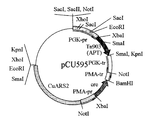
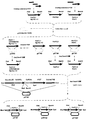
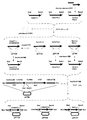
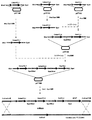
- SEQ ID NO: 36 a nucleotide sequence (codon optimized sequence) from the 13th a to the 1011st a (upstream TGA of the two translation termination codons) and the sequence represented by SEQ ID NO: 38 (bovine It is a figure which shows the alignment of the (wild-type sequence derived). It is a figure which shows the structure of plasmid pCU563. It is a figure which shows the structure of plasmid pCU595. It is a figure which shows the annealing site
- Hygr and G418s strain (lane 2) in which one copy of CuURA3 gene derived from NBRC0988 strain (lane 1), CuURA3 gene derived from NBRC0988 strain was disrupted, and one copy of CuURA3 gene in Hygs having pCU595 and G418r were disrupted .
- a strain (lane 3) is a Hygs and G418s strain (lane 4) in which one copy of the CuURA3 gene from which pCU595 has been eliminated is disrupted.
- M is DNA obtained by digesting Lamda DNA with Sty I. It is a figure which shows the result of having performed PCR using IM-63 (sequence number 58) and IM-223 (sequence number 60) as a primer.
- IM-63 sequence number 58
- IM-223 sequence number 60
- Hygr and G418s strain (lane 2) in which one copy of CuURA3 gene derived from NBRC0988 strain (lane 1), CuURA3 gene derived from NBRC0988 strain was disrupted, and one copy of CuURA3 gene in Hygs having pCU595 and G418r were disrupted .
- a strain (lane 3) is a Hygs and G418s strain (lane 4) in which one copy of the CuURA3 gene from which pCU595 has been eliminated is disrupted.
- M is DNA obtained by digesting Lamda DNA with Sty I. It is a figure which shows the growth ability in the non-selective culture medium of the NBRC0988 strain and the CuURA3 gene disruption strain which made the NBRC0988 strain a host, and a selective culture medium. It is a figure which shows the analysis result by the Southern hybridization method for investigating how many types of PDC genes exist in Candida utilis.
- Lane 1 is a sample obtained by digesting genomic DNA extracted from Saccharomyces cerevisiae S288C with Hind III.
- genomic DNA extracted from Candida utilis NBRC0988 strain was extracted from Xba I (lane 2), Hind III (lane 3), Bgl II (lane 4), Eco RI (lane 5), Bam HI (lane 6). , Pst I (lane 7) digested sample.
- Primers IKSM-29 (SEQ ID NO: 1) and IKSM-30 (SEQ ID NO: 2) were prepared, and a DNA fragment of approximately 220 bp (SEQ ID NO: 3) amplified by PCR using the genome of NBRC0988 strain as a probe was probed Used as DNA. It is a figure which shows the annealing part of the primer utilized for destruction of CuPDC1 gene.
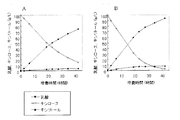
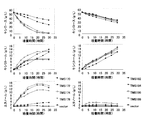
- Panel A shows the result of the sample pre-cultured with YPD medium
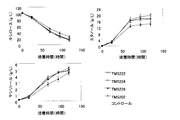
- Panel B shows the result of the sample pre-cultured with YPX medium. It is a figure which shows the result of the fermentation test of the strain
- Candida utilis Since the yeast used in the present invention, Candida utilis, is produced for food and feed, it is known that the yeast is highly safe.
- the yeast strain according to the first aspect of the present invention is a strain of Candida utilis that is operably linked to a promoter sequence as an enzyme gene related to xylose metabolism, xylose reductase, xylitol dehydrogenase and xyl. It is obtained by transformation with at least one of three genes encoding a polypeptide having the activity of phosphatase.
- the yeast strain according to the second aspect of the present invention is a strain of Candida utilis, wherein at least one gene encoding a polypeptide having lactate dehydrogenase activity operably linked to a promoter sequence.
- it encodes a polypeptide having the activities of xylose reductase, xylitol dehydrogenase and xylulose phosphorylase operably linked to a promoter sequence as an enzyme gene related to xylose metabolism. Obtained by transformation with at least one of the three genes.
- Candida utilis has at least one gene encoding a polypeptide having pyruvate decarboxylase activity by analysis using Southern hybridization ( CuPDC1 gene).
- CuPDC1 gene When the CuPDC1 gene is disrupted for all copies, the reaction for converting pyruvic acid to acetaldehyde does not proceed, so that alcohol fermentation, which is a subsequent metabolic pathway, is not performed, and ethanol is hardly produced.
- a yeast in which a gene encoding a polypeptide having pyruvate decarboxylase activity is disrupted is used as a gene introduction host, pyruvate can be produced with high efficiency instead of ethanol. Is possible.
- a yeast that disrupts a gene encoding a polypeptide having pyruvate decarboxylase activity is used as a host for lactic acid-producing yeast, no surplus substance for ethanol-producing lactic acid is produced. It is possible to produce lactic acid with high efficiency.
- a yeast strain having no or reduced pyruvate decarboxylase activity is provided.
- this yeast strain it is preferable that the endogenous gene encoding the polypeptide having pyruvate decarboxylase activity is disrupted.
- a yeast strain capable of expressing a gene encoding a polypeptide having no or reduced activity of pyruvate decarboxylase and having lactate dehydrogenase activity. Is done.
- this yeast strain it is preferable that the endogenous gene encoding the polypeptide having pyruvate decarboxylase activity is disrupted.
- the gene encoding a polypeptide having lactate dehydrogenase activity is preferably provided so as to be expressed under the control of a promoter of a gene encoding a polypeptide having pyruvate decarboxylase activity, More preferably, it is provided so that it can be expressed under the control of a promoter of a gene encoding a polypeptide having a pyruvate decarboxylase activity on the yeast chromosome.
- a gene encoding a polypeptide having pyruvate decarboxylase activity on the chromosome is disrupted, and the promoter of the disrupted gene is A yeast strain is provided that is capable of expressing a gene encoding a polypeptide having the activity of lactate dehydrogenase under control.
- the gene encoding the polypeptide having pyruvate decarboxylase activity is preferably pyruvate decarboxylase gene 1 ( CuPDC1 gene), and the lactate dehydrogenase
- the polypeptide having the enzyme activity is preferably derived from bovine.
- the yeast strain according to the present invention further comprises at least three kinds of genes encoding a polypeptide having xylose reductase, xylitol dehydrogenase, and xylulose kinase activity associated with xylose metabolism. Although one type is provided for expression, it is most preferable that all three types of genes are provided for expression.
- the yeast strain according to the first aspect of the present invention can efficiently produce a metabolite using xylose as a carbon source.
- the yeast strain according to the second aspect of the present invention can efficiently produce lactic acid using xylose as a carbon source.
- the gene encoding the polypeptide having xylose metabolism-related enzyme activity is expressed under the control of the promoter of the gene encoding the GAP gene encoding the polypeptide having the activity of glyceraldehyde-3-phosphate dehydrogenase. It is preferable that it is provided, and it is more preferable that it is incorporated into the CuURA3 locus encoding orotidine 5 ′ phosphate decarboxylase on the yeast chromosome.
- the polypeptide having xylose reductase and xylitol dehydrogenase activities is derived from Pichia stepitis or Candida shehatae, and the polypeptide having xylulose phosphorylase activity is Pichia -It is preferably derived from Stipitis.
- the yeast strain according to the invention is further transformed with at least one copy of a gene encoding a polypeptide having transaldolase activity operably linked to a promoter sequence. ing.
- a yeast strain improves and the production efficiency of metabolites, such as lactic acid, ethanol, and pyruvic acid, increases.
- Genes encoding a polypeptide having transaldolase activity include other protein genes involved in the pentose phosphate cycle, such as a gene encoding a polypeptide having ribulose 5 phosphate 3 epimerase activity and ribose 5 You may use in combination with the gene which codes polypeptide which has the activity of phosphate ketoisomerase.
- the lactic acid produced by the yeast strain according to the second aspect of the present invention may be any of L-lactic acid, D-lactic acid, and DL-lactic acid, but is preferably L-lactic acid.
- yeast strain according to the present invention will be described, and a method for producing a metabolite (lactic acid) using the yeast will be described.
- the yeast strain according to the present invention is a transformed yeast having a foreign gene (for example, a gene encoding a polypeptide having lactate dehydrogenase activity).
- the yeast used for transformation is Candida utilis, which is a club tree negative yeast.
- the strain of Candida utilis may be various strains known in the art, for example, NBRC0626 strain, NBRC0639 strain, NBRC0988 strain, NBRC1086 strain and the like, and preferably NBRC0988 strain.
- Pyruvate decarboxylase The yeast strain according to the present invention preferably has no or reduced pyruvate decarboxylase (PDC) activity.
- PDC pyruvate decarboxylase
- This enzyme is an enzyme that converts pyruvate to acetaldehyde in the alcohol fermentation pathway, and yeast that performs alcohol fermentation inherently has a gene encoding a polypeptide having pyruvate decarboxylase activity on its chromosome.
- Saccharomyces cerevisiae has three types of genes ( ScPDC1 , ScPDC5, and ScPDC6 ) encoding polypeptides having pyruvate decarboxylase activity, and these function by a so-called autoregulation mechanism.
- homology at the nucleotide level of each gene is as high as 70% or more.
- the proteins encoded by these genes are composed of an N-terminal TPP binding region and a C-terminal PDC active region.
- the gene encoding PDC is also present in other yeasts.
- the KlPDC1 gene of Kluyveromyces lactis has high homology with the ScPDC1 gene.
- Candida utilis has one type of gene ( CuPDC1 ) encoding a polypeptide having pyruvate decarboxylase activity, and there may be another similar gene, but at least CuPDC1 Alcohol fermentation is almost never performed by destroying the gene.
- “there is no or reduced PDC activity” means that there is no PDC activity, the enzyme having an activity lower than that of the wild type is produced, or the production amount of the enzyme is wild type. Means less than.
- the yeast strain having no or reduced PDC activity may be obtained by artificial manipulation or may be found by screening. Artificial manipulations for extinction or reduction of enzyme activity include RNAi, replacement with other genes such as all or part of the selectable marker, and insertion of meaningless sequences inside the gene. It can carry out by a method well-known in this technical field. Among these, it is preferable to destroy (knock out) the gene encoding the polypeptide having the enzyme activity. As such a method, among the above-mentioned methods, all or a part of the sequence of the selectable marker is used. And a method of exchanging the gene of PDC with a gene encoding PDC.
- the gene encoding the polypeptide having the activity of pyruvate decarboxylase to be destroyed originally exists in Candida utilis.
- the example described in the present invention is CuPDC1 present in NBRC0988 strain.
- One of the alleles of a gene, the nucleotide sequence of which is represented by SEQ ID NO: 63, and the encoded amino acid sequence is represented by SEQ ID NO: 64.
- NBRC0626 strain, NBRC0639 strain, NBRC1086 strain, etc. even if they are different from the sequences, there are those having equivalent functions, that is, activities. It can be targeted for destruction.
- the endogenous gene encoding a polypeptide having pyruvate decarboxylase activity to be destroyed is a gene encoding a polypeptide comprising the amino acid sequence represented by SEQ ID NO: 64 More preferably, the gene comprises the nucleotide sequence represented by SEQ ID NO: 63.
- Lactate dehydrogenase The yeast strain according to the second aspect of the present invention retains a gene ( LDH gene) encoding a polypeptide having lactate dehydrogenase activity. Since yeast is not originally have a lactic acid producing ability, a gene encoding a polypeptide having the activity of lactate dehydrogenase yeast strain according to have a second aspect of the present invention (LDH) is foreign. LDH has various congeners depending on the type of organism or in vivo, and L-LDH or D-LDH may be used in the present invention. -LDH.
- the gene encoding a polypeptide having lactate dehydrogenase activity used in the present invention includes naturally occurring LDH, as well as LDH artificially synthesized by chemical synthesis or genetic engineering techniques. Yes.
- organisms having LDH include prokaryotes such as lactic acid bacteria, eukaryotes such as fungi, and higher eukaryotes such as plants, animals and insects.
- the LDH used in the present invention is preferably derived from higher eukaryotes, particularly those derived from cattle.
- the nucleotide sequence of a gene encoding a polypeptide having the activity of bovine lactate dehydrogenase (L-LDH) is represented by SEQ ID NO: 38, and the amino acid sequence encoded thereby is represented by SEQ ID NO: 35. Is done.
- the polypeptide having lactate dehydrogenase activity is a polypeptide comprising the amino acid sequence represented by SEQ ID NO: 37.
- the polypeptide having lactate dehydrogenase activity includes an amino acid sequence in which one or several amino acids are deleted, substituted, added or inserted in the amino acid sequence represented by SEQ ID NO: 37, and lactate dehydration. It may be a polypeptide having an enzyme activity.
- amino acid deletion, substitution, addition, or insertion can be performed by modifying a gene encoding the above polypeptide by a technique known in the art.
- Mutation can be introduced into a gene by a known method such as the Kunkel method or Gapped-duplex method or a method similar thereto, for example, a mutation introduction kit using site-directed mutagenesis, such as Mutant-K (Takara Bio Inc.), Mutant-G (Takara Bio Inc.), etc., or using Takara Bio Inc.
- LA PCR in vitro Mutageness series kit, KOD-Plus-Mutageness Kit (TOYOBO), etc. be able to.
- the activity of lactate dehydrogenase can be confirmed by a technique known in the art.
- the gene encoding a polypeptide having the activity of lactate dehydrogenase to be introduced into the host is cattle described in SEQ ID NO: 35 (Bos taurus) amino acid sequence derived from the enzyme (DDBJ / EMBL / GenBank Accession number : AAI46211.
- the nucleotide sequence corresponding to 1) is preferably artificially synthesized in consideration of the Candida utilis codon usage. Such artificial synthesis can be appropriately performed by those skilled in the art, but a particularly preferred nucleotide sequence is the nucleotide sequence from the 13th a to the 1,011st a in SEQ ID NO: 36. .
- sequences before and after that are restriction enzyme recognition sites, respectively, a Kpn I recognition site (sequence from the first g to the 6th c in the nucleotide sequence of SEQ ID NO: 36), and an Xba I recognition site (SEQ ID NO: 36). sequences from the seventh t in the nucleotide sequence up to 12 th a), sequences from 1,015 th g in the nucleotide sequence of Bam HI recognition site (SEQ ID NO: 36 to 1,020 th c), and Sac I recognition site (sequence from 1,021st g to 1,025th c in the nucleotide sequence of SEQ ID NO: 36).
- SEQ ID NO: 36 a nucleotide sequence (codon optimized sequence: SEQ ID NO: 36) from the 13th a to the 1,011st a (upstream tga of two translation termination codons) and SEQ ID NO: 38
- the alignment of the nucleotide sequence represented by (wild-type sequence derived from bovine) is shown in FIG. Both sequences had the same 751 bases out of 999 bases, and the homology was 75%.
- the upper sequence is a nucleotide sequence from the 13th a to the 1011st a (upstream tga of two translation termination codons) in SEQ ID NO: 36.
- L-LDH-A gene derived from Bos taurus represented by SEQ ID NO: 38 (extracted from DDBJ / EMBL / GenBank Accession number: BC146210.1). No. 35).
- the gene encoding the artificially synthesized polypeptide having the lactate dehydrogenase activity is optimized for codon usage in Candida utilis. L-lactic acid can be produced with high efficiency.
- the gene encoding a polypeptide having lactate dehydrogenase activity has a nucleotide sequence from the 13th a to the 1,011st a in SEQ ID NO: 36. It is considered as a gene containing or equivalent thereof.
- This equivalent is a gene in which some nucleotide residues are different on the condition that it has a function equivalent to that of a gene containing a nucleotide sequence from the 13th a to the 1011st a in SEQ ID NO: 36. means.
- Such an equivalent includes a nucleotide sequence from the 13th a to the 1011st a in SEQ ID NO: 36 and 70% or more, preferably 80% or more, more preferably 85% or more, and still more preferably Examples thereof include a gene comprising a nucleotide sequence encoding a polypeptide having 90% or more homology, most preferably 95% or more, and having lactate dehydrogenase activity.
- the equivalent further hybridizes with the nucleotide sequence from the 13th a to the 1,011st a or its complementary sequence in SEQ ID NO: 36 under stringent conditions, and the activity of lactate dehydrogenase And a gene containing a nucleotide sequence encoding a polypeptide having The equivalent further includes a sequence in which one or several nucleotide residues are deleted, substituted, added, or inserted in the nucleotide sequence from the 13th a to the 1011st a in SEQ ID NO: 36. And a gene comprising a nucleotide sequence encoding a polypeptide having lactate dehydrogenase activity.
- the gene encoding a polypeptide having lactate dehydrogenase activity is a nucleotide sequence from the 13th a to the 1,011st a in SEQ ID NO: 36. It is considered as a gene containing
- deletion, substitution, addition or insertion of nucleotide residues can be performed by modifying a gene containing the above sequence by a technique known in the art.
- Mutation can be introduced into a gene by a known method such as the Kunkel method or Gapped-duplex method, or a method equivalent thereto, for example, a mutation introduction kit using site-directed mutagenesis may be used.
- a mutation introduction kit using site-directed mutagenesis may be used.
- Mutant-K (Takara Bio) or Mutant-G (Takara Bio)
- Takara Bio's LA ⁇ ⁇ ⁇ PCR in vitro Mutageness series kit
- KOD-Plus-Mutageness Kit TOYOBO
- Mutations can be introduced.
- the activity of lactate dehydrogenase can be confirmed by a technique known in the art.
- the numerical value (%) indicating homology is calculated using default (initial setting) parameters using a base sequence comparison program such as GENETYX-WIN 7.0.0. That is, each gene on the yeast chromosome may be replaced by a gene encoding a polypeptide that is not identical but has an equivalent function, ie, each activity, through homologous recombination or the like.
- the activity of lactate dehydrogenase can be confirmed by a technique known in the art.
- the stringent conditions include, for example, Rapid-Hyb Buffer (manufactured by GE Healthcare Bioscience), the temperature condition is preferably 40 to 70 ° C., more preferably 60 ° C., and others are performed according to the attached protocol. Hybridization conditions. Then, for example using a general method of the person skilled in the art, washing for 5 minutes with a solution consisting of 2 ⁇ SSC and 0.1% (w / v) SDS, followed by 1 ⁇ SSC and 0.1% (w / v) v) Refers to washing for 10 minutes with a solution consisting of SDS, and further washing for 10 minutes with a solution consisting of 0.1 ⁇ SSC and 0.1% (w / v) SDS.
- Rapid-Hyb Buffer manufactured by GE Healthcare Bioscience
- DNA containing a base sequence having the above homology can be cloned.
- the gene thus obtained may be replaced by homologous recombination or the like with a gene that encodes a polypeptide that is not identical in sequence but has an equivalent function, that is, each activity.
- the activity of lactate dehydrogenase can be confirmed by a technique known in the art.
- the yeast strain according to the present invention encodes a polypeptide having the activity of xylose reductase, xylitol dehydrogenase, and xylulose kinase as a gene encoding a polypeptide having the activity of xylose metabolism-related enzyme.
- At least one of the three genes (respectively XYL1, XYL2, XYL3), preferably retains all 2 or more, more preferably three.
- These genes are known to be derived from various yeasts, and their origins are not particularly limited, but are preferably Pichia stippitis yeast and Candida shehatae yeast.
- yeast strains may be various strains known in the art, but are preferably CBS6054 strain and CBS5813 (NBRC1983) strain.
- CBS6054 strain and CBS5813 (NBRC1983) strain As for the origin of each enzyme, Pichia stippitis or Candida shehatae yeast is used for xylose reductase, Pichia stippitis or Candida shehatae yeast is used for xylitol dehydrogenase, and Pichia stipitis or Candida Shehatae yeast is preferred.
- the xylose reductase is derived from Candida shehatae yeast
- the xylitol dehydrogenase is derived from Candida shehatae yeast
- the xylulose phosphorylase is derived from Pichia stepitis yeast.
- the coding sequence of the Pichia stipitis derived xylose reductase gene ( PsXYL1 ) is represented by SEQ ID NO: 81, and the encoded amino acid sequence is represented by SEQ ID NO: 82.
- the polypeptide having xylose reductase activity includes an amino acid sequence in which one or several amino acids are deleted, substituted, added or inserted in the amino acid sequence represented by SEQ ID NO: 82, and xylose reductase A polypeptide having the following activity may also be used.
- the one obtained by mutating 270th lysine to arginine and 272nd asparagine to aspartic acid in the amino acid sequence represented by SEQ ID NO: 82 is preferably used.
- the coding sequence of the Candida shehatae- derived xylose reductase gene ( CsheXYL1 ) is represented by SEQ ID NO: 101, and the encoded amino acid sequence is represented by SEQ ID NO: 102.
- a polypeptide having xylose reductase activity comprises an amino acid sequence in which one or several amino acids are deleted, substituted, added or inserted in the amino acid sequence represented by SEQ ID NO: 102, and xylose reductase A polypeptide having the following activity may also be used.
- the one obtained by mutating the 275th lysine to arginine and the 277th asparagine to aspartic acid in the amino acid sequence represented by SEQ ID NO: 102 is preferably used.
- the coding sequence of the Pichia stipitis xylitol dehydrogenase gene ( PsXYL2 ) is represented by SEQ ID NO: 91, and the encoded amino acid sequence is represented by SEQ ID NO: 92.
- the polypeptide having xylitol dehydrogenase activity includes an amino acid sequence in which one or several amino acids are deleted, substituted, added or inserted in the amino acid sequence represented by SEQ ID NO: 92, and xylitol dehydration. It may be a polypeptide having an enzyme activity.
- Candida shehatae-derived xylitol dehydrogenase gene CsheXYL2
- SEQ ID NO: 110 The coding sequence of Candida shehatae-derived xylitol dehydrogenase gene ( CsheXYL2 ) is represented by SEQ ID NO: 109, and the encoded amino acid sequence is represented by SEQ ID NO: 110.
- the polypeptide having xylitol dehydrogenase activity includes an amino acid sequence in which one or several amino acids are deleted, substituted, added or inserted in the amino acid sequence represented by SEQ ID NO: 110, and xylitol dehydration. It may be a polypeptide having an enzyme activity.
- the coding sequence of the Pichia stipitis derived xylulose kinase gene is represented by SEQ ID NO: 95, and the encoded amino acid sequence is represented by SEQ ID NO: 96.
- the polypeptide having xylulose kinase activity includes an amino acid sequence in which one or several amino acids are deleted, substituted, added or inserted in the amino acid sequence represented by SEQ ID NO: 96, and xyl It may be a polypeptide having a phosphatase activity.
- Deletion, substitution, addition, or insertion of amino acids can be performed by modifying a gene encoding the above polypeptide by a technique known in the art.
- Mutation can be introduced into a gene by a known method such as the Kunkel method or Gapped-duplex method or a method similar thereto, for example, a mutation introduction kit using site-directed mutagenesis, such as Mutant-K (Takara Bio Inc.), Mutant-G (Takara Bio Inc.), etc., or using Takara Bio Inc.
- LA PCR in vitro Mutageness series kit, KOD-Plus-Mutageness Kit (TOYOBO), etc. be able to.
- the activity of each enzyme described above can be confirmed by a technique known in the art.
- This equivalent means a gene in which some nucleotide residues are different on the condition that it has a function equivalent to each gene.
- Such equivalents have 70% or more, preferably 80% or more, more preferably 85% or more, even more preferably 90% or more, most preferably 95% or more homology with the respective nucleotide sequence, and Examples thereof include a gene comprising a nucleotide sequence encoding a polypeptide having the activity of each enzyme.
- the equivalent further includes a gene comprising a nucleotide sequence that hybridizes with each nucleotide sequence or a complementary sequence thereof under stringent conditions and encodes a polypeptide having the activity of each enzyme.
- the equivalent further includes a nucleotide sequence that includes a sequence in which one or several nucleotide residues are deleted, substituted, added, or inserted in each nucleotide sequence, and encodes a polypeptide having the activity of each enzyme.
- the gene containing is mentioned.
- deletion, substitution, addition or insertion of nucleotide residues can be performed by modifying a gene containing the above sequence by a technique known in the art.
- Mutation can be introduced into a gene by a known method such as the Kunkel method or Gapped-duplex method, or a method equivalent thereto, for example, a mutation introduction kit using site-directed mutagenesis may be used.
- a mutation introduction kit using site-directed mutagenesis may be used.
- Mutant-K (Takara Bio) or Mutant-G (Takara Bio)
- Takara Bio's LA ⁇ ⁇ ⁇ PCR in vitro Mutageness series kit KOD-Plus-Mutageness Kit (TOYOBO), etc. Mutations can be introduced.
- the activity of each enzyme can be confirmed by a technique known in the art.
- the numerical value (%) indicating homology is calculated using default (initial setting) parameters using a base sequence comparison program such as GENETYX-WIN 7.0.0. That is, each gene on the yeast chromosome may be replaced by a gene encoding a polypeptide that is not identical but has an equivalent function, ie, each activity, through homologous recombination or the like. The activity of each enzyme can be confirmed by a technique known in the art.
- the stringent conditions include, for example, Rapid-Hyb Buffer (manufactured by GE Healthcare Bioscience), the temperature condition is preferably 40 to 70 ° C., more preferably 60 ° C., and others are performed according to the attached protocol. Hybridization conditions. Then, for example using a general method of the person skilled in the art, washing for 5 minutes with a solution consisting of 2 ⁇ SSC and 0.1% (w / v) SDS, followed by 1 ⁇ SSC and 0.1% (w / v) v) Refers to washing for 10 minutes with a solution consisting of SDS, and further washing for 10 minutes with a solution consisting of 0.1 ⁇ SSC and 0.1% (w / v) SDS.
- Rapid-Hyb Buffer manufactured by GE Healthcare Bioscience
- DNA containing a base sequence having the above homology can be cloned.
- the gene thus obtained may be replaced by homologous recombination or the like with a gene that encodes a polypeptide that is not identical in sequence but has an equivalent function, that is, each activity.
- the activity of each enzyme can be confirmed by a technique known in the art.
- the yeast strain according to the present invention is a gene encoding a polypeptide having transaldolase activity ( Tal1 ) as a gene encoding a polypeptide having activity of an enzyme involved in the pentose phosphate cycle. Preferably, at least one copy of is retained.
- Yeast strain in addition to the gene (TAL1) encoding a polypeptide having the activity of transaldolase, a gene encoding a polypeptide having a ribulose 5-phosphate 3-epimerase activity (RPE1) And a gene ( Rki1 ) encoding a polypeptide having the activity of ribose 5-phosphate ketoisomerase .
- RPE1 ribulose 5-phosphate 3-epimerase activity
- Rki1 ribulose 5-phosphate 3-epimerase activity
- the coding sequence of the Pichia stipitis derived transaldolase gene ( PsTal1 ) is represented by SEQ ID NO: 146, and the encoded amino acid sequence is represented by SEQ ID NO: 147.
- the polypeptide having transaldolase activity includes an amino acid sequence in which one or several amino acids are deleted, substituted, added or inserted in the amino acid sequence represented by SEQ ID NO: 147, and the activity of transaldolase It may be a polypeptide having
- the coding sequence of the Pichia stipitis derived ribulose 5 phosphate 3 epimerase gene ( PsRpe1 ) is represented by SEQ ID NO: 142, and the encoded amino acid sequence is represented by SEQ ID NO: 143.
- the polypeptide having ribulose 5-phosphate 3 epimerase activity includes an amino acid sequence in which one or several amino acids are deleted, substituted, added or inserted in the amino acid sequence represented by SEQ ID NO: 143, and It may be a polypeptide having xylitol dehydrogenase activity.
- the coding sequence of the Pichia stipitis-derived ribose 5-phosphate ketoisomerase gene ( PsRki1 ) is represented by SEQ ID NO: 144, and the encoded amino acid sequence is represented by SEQ ID NO: 145.
- the polypeptide having ribose 5-phosphate ketoisomerase activity includes an amino acid sequence in which one or several amino acids are deleted, substituted, added or inserted in the amino acid sequence represented by SEQ ID NO: 145, and It may be a polypeptide having xylulose kinase activity.
- Deletion, substitution, addition, or insertion of amino acids can be performed by modifying a gene encoding the above polypeptide by a technique known in the art.
- Mutation can be introduced into a gene by a known method such as the Kunkel method or Gapped-duplex method or a method similar thereto, for example, a mutation introduction kit using site-directed mutagenesis, such as Mutant-K (Takara Bio Inc.), Mutant-G (Takara Bio Inc.), etc., or using Takara Bio Inc.
- LA PCR in vitro Mutageness series kit, KOD-Plus-Mutageness Kit (TOYOBO), etc. be able to.
- the activity of each enzyme described above can be confirmed by a technique known in the art.
- This equivalent means a gene in which some nucleotide residues are different on the condition that it has a function equivalent to each gene.
- Such equivalents have 70% or more, preferably 80% or more, more preferably 85% or more, even more preferably 90% or more, most preferably 95% or more homology with the respective nucleotide sequence, and Examples thereof include a gene comprising a nucleotide sequence encoding a polypeptide having the activity of each enzyme.
- the equivalent further includes a gene comprising a nucleotide sequence that hybridizes with each nucleotide sequence or a complementary sequence thereof under stringent conditions and encodes a polypeptide having the activity of each enzyme.
- the equivalent further includes a nucleotide sequence that includes a sequence in which one or several nucleotide residues are deleted, substituted, added, or inserted in each nucleotide sequence, and encodes a polypeptide having the activity of each enzyme.
- the gene containing is mentioned.
- deletion, substitution, addition or insertion of nucleotide residues can be performed by modifying a gene containing the above sequence by a technique known in the art.
- Mutation can be introduced into a gene by a known method such as the Kunkel method or Gapped-duplex method, or a method equivalent thereto, for example, a mutation introduction kit using site-directed mutagenesis may be used.
- a mutation introduction kit using site-directed mutagenesis may be used.
- Mutant-K (Takara Bio) or Mutant-G (Takara Bio)
- Takara Bio's LA ⁇ ⁇ ⁇ PCR in vitro Mutageness series kit KOD-Plus-Mutageness Kit (TOYOBO), etc. Mutations can be introduced.
- the activity of each enzyme can be confirmed by a technique known in the art.
- the numerical value (%) indicating homology is calculated using default (initial setting) parameters using a base sequence comparison program such as GENETYX-WIN 7.0.0. That is, each gene on the yeast chromosome may be replaced by a gene encoding a polypeptide that is not identical but has an equivalent function, ie, each activity, through homologous recombination or the like. The activity of each enzyme can be confirmed by a technique known in the art.
- the stringent conditions include, for example, Rapid-Hyb Buffer (manufactured by GE Healthcare Bioscience), the temperature condition is preferably 40 to 70 ° C., more preferably 60 ° C., and others are performed according to the attached protocol. Hybridization conditions. Then, for example using a general method of the person skilled in the art, washing for 5 minutes with a solution consisting of 2 ⁇ SSC and 0.1% (w / v) SDS, followed by 1 ⁇ SSC and 0.1% (w / v) v) Refers to washing for 10 minutes with a solution consisting of SDS, and further washing for 10 minutes with a solution consisting of 0.1 ⁇ SSC and 0.1% (w / v) SDS.
- Rapid-Hyb Buffer manufactured by GE Healthcare Bioscience
- DNA containing a base sequence having the above homology can be cloned.
- the gene thus obtained may be replaced by homologous recombination or the like with a gene that encodes a polypeptide that is not identical in sequence but has an equivalent function, that is, each activity.
- the activity of each enzyme can be confirmed by a technique known in the art.
- a gene encoding a polypeptide having the activity of a promoter lactate dehydrogenase used for expression of a structural gene a gene encoding a polypeptide having an activity of an enzyme related to xylose metabolism, and an activity of an enzyme involved in the pentose phosphate cycle It is preferable that a gene encoding a polypeptide having a be provided so that it can be expressed under the control of a promoter having a strong promoter activity.
- the promoter of the GAP gene encoding a polypeptide having the activity of glyceraldehyde-3-phosphate dehydrogenase of Candida utilis encodes a polypeptide having the activity of phosphoglycerate kinase.
- PGK gene promoter PMA gene promoter encoding polypeptide having plasma membrane proton ATPase activity (JP-A 2003-144185), polypeptide having orotidine alpha amino adipate reductase activity
- the LYS2 gene promoter to be encoded is exemplified, and the promoter of gene 1 ( CuPDC1 gene) encoding a polypeptide having pyruvate decarboxylase activity is preferable.
- the promoter of gene 1 CuPDC1 gene
- encoding a polypeptide having pyruvate decarboxylase activity is preferable.
- the gene encoding a polypeptide having lactate dehydrogenase activity is preferably provided so that it can be expressed under the control of the CuPDC1 gene promoter on the yeast chromosome.
- Candida utilis used as a host of the yeast strain according to the present invention is presumed to have at least one PDC gene ( CuPDC1 gene).
- CuPDC1 gene controlled by the CuPDC1 gene promoter encoding a polypeptide having a disrupted by activity of lactate dehydrogenase is expressed in place, lowering the lactic acid effectively pyruvate decarboxylase activity
- the dehydrogenase activity can be expressed at the same time.
- the promoter sequence that controls the expression of a gene encoding a polypeptide having lactate dehydrogenase activity is a promoter portion of an endogenous gene encoding pyruvate decarboxylase, More preferably, the nucleotide sequence represented by SEQ ID NO: 3 is included. Alternatively, this promoter sequence may be an equivalent in which some nucleotide residues are different on the condition that it has a function equivalent to that including the nucleotide sequence represented by SEQ ID NO: 3.
- Such an equivalent includes 70% or more, preferably 80% or more, more preferably 85% or more, still more preferably 90% or more, most preferably 95% or more homology with the nucleotide sequence represented by SEQ ID NO: 3.
- DNA having a promoter activity further includes DNA that hybridizes with the nucleotide sequence represented by SEQ ID NO: 3 or its complementary sequence under stringent conditions and has promoter activity.
- Examples of the equivalent further include DNA having a promoter activity, including a sequence in which one or several nucleotide residues are deleted, substituted, added, or inserted in the nucleotide sequence represented by SEQ ID NO: 3. .
- the promoter sequence that controls the expression of three genes encoding polypeptides having xylose reductase, xylitol dehydrogenase, and xylulose kinase activity is glyceraldehyde. It is a promoter part of a GAP gene encoding a polypeptide having the activity of -3-phosphate dehydrogenase, and more preferably contains the nucleotide sequence represented by SEQ ID NO: 113. Alternatively, this promoter sequence may be an equivalent in which some nucleotide residues are different on the condition that it has a function equivalent to that including the nucleotide sequence represented by SEQ ID NO: 113.
- Such an equivalent includes 70% or more, preferably 80% or more, more preferably 85% or more, still more preferably 90% or more, and most preferably 95% or more homology with the nucleotide sequence represented by SEQ ID NO: 113.
- DNA having a promoter activity further includes DNA that hybridizes with the nucleotide sequence represented by SEQ ID NO: 113 or its complementary sequence under stringent conditions and has promoter activity. Examples of the equivalent further include DNA having a promoter activity, including a sequence in which one or several nucleotide residues are deleted, substituted, added, or inserted in the nucleotide sequence represented by SEQ ID NO: 113. .
- deletion, substitution, addition, or insertion of a nucleotide residue can be performed by modifying the above sequence by a technique known in the art.
- Mutation can be introduced into a gene by a known method such as the Kunkel method or Gapped-duplex method or a method similar thereto, for example, a mutation introduction kit using site-directed mutagenesis, such as Mutant-K (Takara Bio Inc.), Mutant-G (Takara Bio Inc.), etc., or using Takara Bio Inc.
- LA PCR in vitro Mutageness series kit, KOD-Plus-Mutageness Kit (TOYOBO), etc. be able to.
- Promoter activity, ie, transcription activity can be confirmed by a technique known in the art.
- the numerical value (%) indicating homology is calculated using default (initial setting) parameters using a base sequence comparison program such as GENETYX-WIN 7.0.0. That is, each gene on the yeast chromosome may be replaced by a gene that is not identical but has an equivalent function, that is, each activity, through homologous recombination or the like. Promoter activity, ie, transcription activity, can be confirmed by a technique known in the art.
- the stringent conditions include, for example, Rapid-Hyb Buffer (manufactured by GE Healthcare Bioscience), the temperature condition is preferably 40 to 70 ° C., more preferably 60 ° C., and others are performed according to the attached protocol. Hybridization conditions. Then, for example using a general method of the person skilled in the art, washing for 5 minutes with a solution consisting of 2 ⁇ SSC and 0.1% (w / v) SDS, followed by 1 ⁇ SSC and 0.1% (w / v) v) Refers to washing for 10 minutes with a solution consisting of SDS, and further washing for 10 minutes with a solution consisting of 0.1 ⁇ SSC and 0.1% (w / v) SDS.
- Rapid-Hyb Buffer manufactured by GE Healthcare Bioscience
- DNA containing a base sequence having the above homology can be cloned.
- the gene thus obtained may be replaced by homologous recombination or the like with a gene that is not identical in sequence but has an equivalent function, that is, each activity.
- Promoter activity, ie, transcription activity can be confirmed by a technique known in the art.
- yeast strains encodes a polypeptide having xylose reductase, xylitol dehydrogenase, and xylulose phosphorylase activities relative to a host yeast. It can be carried out by introducing at least one, preferably two or more, more preferably all three of the three genes in an expressible state.
- the molecular breeding of the yeast strain according to the second aspect of the present invention includes a gene encoding a polypeptide having lactate dehydrogenase activity with respect to a host yeast, xylose reductase, xylitol dehydrogenase, and xylulose.
- a DNA construct for PDC disruption has a gene sequence for homologous recombination to be introduced into a specific gene site to destroy the gene.
- the gene sequence for homologous recombination here is a gene sequence that is homologous to a target site that is a PDC gene to be destroyed or a gene in the vicinity thereof.
- two types of gene sequences for homologous recombination are made homologous to the upstream and downstream genes of the target gene on the chromosome, and the gene is destroyed between these gene sequences for homologous recombination.
- the gene at the target site can be destroyed by introducing a DNA fragment comprising the gene for the purpose into the yeast chromosome by homologous recombination.
- Selection of a gene sequence for homologous recombination to realize such integration on a chromosome is well known to those skilled in the art, and those skilled in the art can select an appropriate gene sequence for homologous recombination as necessary.
- a DNA fragment for homologous recombination can be constructed.
- the endogenous gene encoding a polypeptide having pyruvate decarboxylase activity is disrupted by deletion of the gene by insertion of a selectable marker sequence.
- the PDC gene can be destroyed by incorporating a selectable marker sequence into the nucleotide sequence inserted in place of the PDC gene in the above homologous recombination.
- the selectable marker is useful for selecting transformed cells.
- the insertion of the selection marker sequence is not only the introduction of the entire sequence, but also the introduction of a part of the sequence to complete the selection marker sequence by combining this partial sequence with the sequence originally present in the yeast. Is also included.
- any sequence that involves homologous recombination is introduced by introducing the missing partial sequence as a selectable marker sequence.
- Gene disruption can be performed.
- any gene with homologous recombination is introduced by introducing a gene for imparting resistance to these drugs. Can be destroyed. Therefore, according to one embodiment of the present invention, a yeast strain sensitive to hygromycin B and G418 described above is used as a host, and a gene imparting drug resistance that does not originally exist in the strain is used. It shall destroy the PDC gene.
- the selection marker examples include a hygromycin B phosphotransferase gene ( HPT gene, a gene conferring resistance to hygromycin B, which was shown to be usable in the bacterial species in Japanese Patent Application Laid-Open No. 2003-144185. ) And aminoglycoside phosphotransferase ( APT gene, gene conferring resistance to G418).
- HPT gene a gene conferring resistance to hygromycin B, which was shown to be usable in the bacterial species in Japanese Patent Application Laid-Open No. 2003-144185.
- APT gene gene conferring resistance to G418
- the position on the chromosome where the gene encoding a polypeptide having lactate dehydrogenase activity is integrated into the yeast genome is not particularly limited, but it encodes a polypeptide having pyruvate decarboxylase activity. It is advantageous to have a locus. Thereby, a gene encoding a polypeptide having lactate dehydrogenase activity can be placed under the control of the full-length promoter of the PDC gene, and thus high expression efficiency can be obtained.
- the position on the chromosome where three genes ( XYL1 , XYL2 , and XYL3 ) encoding polypeptides having xylose reductase, xylitol dehydrogenase, and xylulose phosphorylase activity are integrated into the yeast genome is Although not particularly limited, a locus encoding orotidine 5 ′ phosphate decarboxylase is preferable. Each of these three genes is preferably placed under the control of a GAP gene promoter encoding a polypeptide having the activity of glyceraldehyde-3-phosphate dehydrogenase.
- a means of selecting XYL1 , XYL2 , and XYL3 by incorporating them into one vector and co-expressing them can be considered. Furthermore, it is preferable to prepare, introduce, and select a vector in which XYL1 , XYL2 , and XYL3 are arranged in tandem in the same order and have the same gene direction.
- the position on the chromosome where the gene encoding the polypeptide having the activity of the enzyme involved in the pentose phosphate cycle is integrated into the yeast genome is not particularly limited, Advantageously, the locus of the LYS2 gene encoding the peptide.
- a gene encoding a polypeptide having an activity of an enzyme involved in the pentose phosphate circuit can be placed under the control of the full-length promoter of the LYS2 gene, and thus high expression efficiency can be obtained.
- the yeast strain according to the invention comprises an expression comprising a promoter sequence and a DNA sequence encoding a polypeptide having the activity of lactate dehydrogenase under the control of the promoter sequence. It is assumed that it has been transformed with a vector. Moreover, such an expression vector forms one embodiment of the present invention.
- the yeast strain according to the present invention comprises a promoter sequence and a DNA sequence encoding a polypeptide having the activity of xylose reductase under the control of the promoter sequence, xylitol dehydration. And a DNA sequence encoding a polypeptide having an enzyme activity, and an expression vector containing a DNA sequence encoding a polypeptide having an xylulose kinase activity. Moreover, such an expression vector forms one embodiment of the present invention.
- Candida utilis has high ploidy and does not form spores. When trying to introduce a mutation into a gene of a highly polyploid strain, it is necessary to add the mutation more severely than in a haploid strain. It is considered that the possibility of mutation is increased. Therefore, when introducing a mutation into the gene of Candida utilis, it is preferable to use a technique that can efficiently add multiple mutations only to the target gene.
- a sequence homologous to the chromosomal DNA of Candida utilis and a selection marker gene are included, and the heterologous gene can be incorporated into the chromosomal DNA of Candida utilis by homologous recombination.
- a DNA sequence that can be transformed into Candida utilis, or a DNA sequence having an autonomous replication function in Candida utilis and a selectable marker gene, has been developed.
- a selectable marker gene that can be used in the Candida utilis transformation system is a drug resistance marker that can function in Candida utilis, preferably a cycloheximide-resistant L41 gene, a gene conferring geneticin (G418) resistance, or hygromycin There are genes that confer B resistance.
- a gene that confers geneticin (G418) resistance or a gene that confers hygromycin B resistance is a sequence that does not exist in wild yeast, and is therefore considered to have a high probability of being incorporated into a target locus.
- Cre-loxP system derived from bacteriophage P1. This is a site-specific recombination system between the loxP sequences of the two 34 bp, this recombination is catalyzed by Cre recombinase which Cre gene.
- This system has also been reported to function in yeast cells such as Saccharomyces cerevisiae, and it is known that a selectable marker gene placed between two loxP sequences is removed by recombination between loxP sequences. (Guldener, U., et al., Nucleic Acids Res., 24, 2519-24., 1996). This system is used in several yeast species other than Candida utilis, such as Kluyveromyces lactis (Steensma, HY et al., Yeast, 18, 469-72., 2001). .
- a metabolite eg, lactic acid, which is a fermentation product of lactate dehydrogenase
- a metabolite for example, lactic acid
- a metabolite for example, lactic acid
- the culture includes cultured cells or microbial cells, cells or disrupted microbial cells, in addition to the culture supernatant.
- a culture method and culture conditions can be selected according to the type of yeast.
- a liquid culture method using a test tube, a flask or a jar fermenter can be mentioned, and a culture format such as batch culture or semi-batch culture can be adopted.
- the conditions with an amplitude of 35 mm are suitable for culturing in test tubes and flasks, and such culturing can be performed with a table culture apparatus manufactured by TAITEC.
- the composition of the medium is not particularly limited as long as it is a composition containing various nutrients capable of producing lactic acid and capable of producing lactic acid.
- a metabolite for example, lactic acid
- the assimilating carbon source contained in the medium for example, xylose or sucrose can be used in addition to glucose as long as it can be assimilated. According to a preferred embodiment of the present invention, xylose is used as the carbon source.
- a nutrient source contained in the medium for example, yeast extract, peptone, whey and the like are used, but a medium obtained by adding the above assimilable carbon source to YP (10 g / L yeast extract, 20 g / L peptone),
- YP 10 g / L yeast extract, 20 g / L peptone
- YPD (20 g / L glucose, 10 g / L yeast extract, 20 g / L peptone
- YPX (20 g / L xylose, 10 g / L yeast extract, 20 g / L peptone
- YPSuc10 medium 100 g / L sucrose, 10 g / L
- yeast extract (20 g / L peptone
- inorganic nitrogen such as ammonium salts such as ammonium sulfate and urea are preferred for a medium that is inexpensive and does not impose a burden on the purification process.
- inorganic nutrient source for example, potassium phosphate, magnesium sulfate, Fe (iron), Mn (manganese) compound, or the like is also used.
- the culture medium may contain a pH adjuster.
- the fermentation temperature can be selected within the range in which the yeast to be used can grow.
- the fermentation temperature can be, for example, about 15 to 45 ° C., more preferably 25 to 40 ° C., still more preferably 27 to 40 ° C., and most preferably 35 ° C.
- the pH of the medium during the fermentation process is preferably maintained at 3 to 8, more preferably pH 4 to 7, most preferably pH 6, and neutralization of lactic acid as a fermentation product may be performed as necessary. it can.
- the neutralizing agent to be used include calcium carbonate, sodium hydroxide, potassium hydroxide and the like, and calcium carbonate is preferable.
- reaction time required for the production of a metabolite is not particularly limited, and the reaction is performed with an arbitrary reaction time as long as the effect of the present invention is recognized. Those skilled in the art can easily optimize these conditions.
- a metabolite for example, lactic acid
- yeast when yeast is first grown, it is preferable to perform pre-culture and pre-culture, and then to produce a metabolite (for example, lactic acid) by fermentation culture.
- YPD agar medium As pre-culture conditions, cells grown on a YPD agar medium at 30 ° C. for 1 to 3 days are scraped with a sterilized toothpick to obtain. This is preferably cultured using 3 to 5 mL of YPD liquid medium added to a 15 mL tube under shaking conditions of 120 to 150 rpm.
- Pre-culture conditions include 50 to 100 mL of YPD liquid medium, YPX10 liquid medium (100 g / L xylose, 10 g / L yeast extract, 20 g / L peptone) or YPSuc10 liquid medium (100 g / L sucrose, 10 g / L).
- Yeast extract, 20 g / L peptone inoculate the pre-cultured cells into a new medium so that the OD600 is about 0.1, and then culture at 120 to 150 rpm, 30 ° C. for usually 16 to 30 hours.
- the culture is preferably performed until the logarithmic growth phase or stationary phase where OD600 is 10 to 25.
- the conditions for the fermentation culture include a medium containing glucose, xylose or sucrose at a concentration of 95 to 115 g / L, and a medium containing 3 to 5% calcium carbonate as a neutralizing agent, such as 3 to 5 calcium carbonate.
- % YPD10 medium (100 g / L glucose, 10 g / L yeast extract, 20 g / L peptone), YPX10 medium (100 g / L xylose, 10 g / L yeast extract, 20 g / L peptone) or YPSuc10 medium (100 g / L sucrose, 10 g / L yeast extract, 20 g / L peptone) is preferably used under aeration conditions of 70 to 150 rpm, 15 to 45 ° C., and 10 to 40 mL of liquid volume. More preferably, they are 80 to 100 rpm, 25 to 40 ° C., and 10 to 20 mL.
- a 100 mL Erlenmeyer flask with a baffle it is preferable to use a 100 mL Erlenmeyer flask with a baffle, and add 10 to 40 mL of medium and cells.
- the OD600 it is preferable to adjust the OD600 to 1 to 30 as the initial amount of bacterial cells from the viewpoint of efficiently producing a metabolite (for example, lactic acid) in a shorter time, and more preferably, the OD600 is set to 5 to 25. To do.
- a metabolite for example, lactic acid
- a medium scale of 500 mL or more when growing yeast, pre-culture, pre-culture, and pre-culture are performed in a liquid medium, and then a metabolite by fermentation culture (for example, lactic acid). It is preferable to carry out the production. It is preferable to use a jar fermenter in the test on the scale.
- the cells grown on the YPD agar medium at 30 ° C. for 1 to 3 days are scraped with a sterilized toothpick.
- This is preferably cultured under shaking conditions using 3 to 5 mL of YPD liquid medium added to a 15 mL tube at 120 to 150 rpm and 30 ° C. for usually 6 to 30 hours.
- the pre-culture conditions are as follows: 50 mL to 100 mL of YPD liquid medium is used as the medium, and the pre-culture cells are inoculated into a new medium so that the OD600 is about 0.1, and then 120 to 150 rpm.
- the culture is preferably carried out at 30 ° C. for usually 10 to 30 hours, and further to the logarithmic growth phase or stationary phase where OD600 is 10 to 25.
- a Sakaguchi flask is preferably used.
- a jar fermenter capable of adjusting temperature, aeration amount, stirring speed and the like.
- Use 500 mL to 2.5 L YPX liquid medium or YPD liquid medium as the medium add 20 to 100 mL of the culture medium in advance, inoculate the new medium so that OD600 is about 0.1, and then stir speed
- a jar fermenter that can adjust temperature, aeration rate, stirring speed, pH control, and the like.
- YPX10 medium 100 g / L xylose, 10 g / L yeast extract, 20 g / L peptone
- YPD10 containing xylose or glucose as a medium at a concentration of 50 to 220 g / L and 3-5% calcium carbonate medium as a neutralizing agent YPX10 medium or YPD10 in a medium (100 g / L glucose, 10 g / L yeast extract, 20 g / L peptone) or a pH maintained at a pH suitable for fermentation with a neutralizing agent such as sodium hydroxide or potassium hydroxide
- a neutralizing agent such as sodium hydroxide or potassium hydroxide
- the OD600 is set to 2 to 25. To do.
- the aeration conditions during fermentation are preferably aerobic conditions, particularly microaerobic conditions.
- the target metabolite for example, lactic acid
- the target metabolite is produced with high efficiency by culturing for 24 to 48 hours.
- the metabolite (for example, lactic acid) component thus produced is separated and collected from the medium, but the separation and collection method is not particularly limited.
- a known method used in a production process by conventional lactic acid fermentation can be used as a means for separating and concentrating lactic acid components.
- the lactic acid component obtained by the method for producing lactic acid according to the present invention may be in the form of not only free lactic acid but also salts such as sodium and potassium, and esters such as methyl ester and ethyl ester.
- the ability to produce a metabolite (eg, lactic acid) in yeast Candida utilis having the ability to produce the metabolite (eg, lactic acid) can be improved.
- the metabolite (for example, lactic acid) can be produced in a high yield in a short time.
- the method for producing a metabolite (for example, lactic acid) according to the present invention improves the ability to produce a metabolite (for example, lactic acid) in yeast having the ability to produce the metabolite (for example, lactic acid) regardless of the composition of the medium to be used. it can.
- a metabolite for example, lactic acid
- improvement in the ability to produce a metabolite can be achieved even in a poor nutrient medium such as a relatively inexpensive synthetic medium.
- the cost of producing metabolites eg lactic acid
- lactic acid when a microorganism having ethanol production ability typified by yeast or the like introduced with a gene encoding a polypeptide having lactate dehydrogenase activity is used. , Ethanol production can be suppressed, and lactic acid can be produced in high yield. Further, by suppressing the production of various organic acids such as D-lactic acid, which is a by-product other than ethanol, lactic acid contained in the medium can be more easily recovered. In other words, the steps required for recovery and purification of lactic acid can be simplified, and the cost required for lactic acid production can be suppressed. Such by-products can be analyzed and evaluated according to known techniques.
- ethanol can be analyzed and evaluated by gas chromatography (GC) or high performance liquid chromatography (HPLC), various aromatic components such as acetaldehyde can be analyzed by GC, and various organic acids such as pyruvic acid can be analyzed and evaluated by HPLC.
- Glucose is quantified by HPLC or Biochemistry Analyzer (hereinafter BA) (Wyeth Japan)
- L-lactic acid is HPLC or BA
- D-lactic acid is combined with HPLC or L-lactic acid
- JK International L-lactic acid
- pyruvic acid and various organic acids such as citric acid, malic acid, and succinic acid in the culture solution were measured by organic acid analysis by HPLC (detection by electrical conductivity).
- HPLC detection by electrical conductivity
- methods for measuring other substances such as ethanol are described in the following examples.
- the present specification further relates to a yeast strain of Candida utilis in which an endogenous gene encoding a polypeptide having pyruvate decarboxylase activity is disrupted, wherein the lactate dehydrogenase activity is increased. It has been found that pyruvic acid is produced in large quantities by culturing a yeast strain into which a gene encoding the polypeptide it has is not introduced.
- a Candida utilis yeast strain in which an endogenous gene encoding a polypeptide having pyruvate decarboxylase activity is disrupted, and There is provided a method for producing pyruvic acid comprising culturing the yeast strain. Since pyruvic acid has high reactivity and is used as a synthetic substrate for pharmaceuticals, agricultural chemicals, etc., it is regarded as an important intermediate in the fine chemical field.
- the endogenous gene encoding the polypeptide having pyruvate decarboxylase activity in the yeast strain of Candida utilis and the details of the disruption are as described above.
- a method for purifying pyruvic acid any method known as a method for purifying organic compounds may be used.
- a method by distillation described in JP-A No. 2007-169244 may be used. Distillation can be performed, for example, under the reduced pressure condition or vacuum condition of 70 to 80 ° C. as the first distillation and under the reduced pressure condition or vacuum condition of 90 to 100 ° C. as the second distillation.
- the pyruvic acid obtained by distillation can be separated from a product such as lactic acid and recovered by appropriately performing treatment with activated carbon, dehydration, deacetic acid and the like.
- the pyruvic acid thus purified can be used in the fine chemical field as described above.
- GeneAmp PCR System 9700 PE Applied Biosystems
- Gentoru-kun manufactured by TaKaRa or the potassium acetate method was used for extraction of genomic DNA from yeast.
- Alkaline Phosphatase ( E. coli C75) manufactured by TaKaRa or Alkaline Phosphatase (Shripmp) manufactured by TaKaRa was used for the dephosphorylation of DNA, and the Ligation Kit ver. 2 and the method followed the attached protocol.
- Competent cells of DH5 ⁇ were used for transformation of E. coli, and the method followed the attached protocol. For selection of E.
- coli transformants an LB plate containing 100 ⁇ g / mL of ampicillin (LB + amp plate) or an LB plate containing 50 ⁇ g / mL of kanamycin is used according to the drug resistance marker gene contained in the plasmid. Blue-white selection with 20 ⁇ g / mLX-gal and 0.1 mM IPTG was performed.
- QIAprep Spin Miniprep Kit manufactured by QIAGEN was used, and the method followed the attached protocol. Transformation of Saccharomyces cerevisiae was performed by the lithium method (Ito et al., J. Bacteriol., 153, 163, 1983).
- Transformation of Candida utilis was performed by partially modifying the method described in JP-A No. 2003-144185.
- the base sequence was determined by the following method. PCR was performed using BigDye Terminator v3.1 manufactured by Applied Biosystems, and the method followed the attached protocol. For removal of unreacted BigDye Terminator, CENTRI-SEP COLUMNS (PRINCETON SEPARATIONS) was used, and the method followed the attached protocol. For determination of the base sequence, 3100 Genetic Analyzer manufactured by Applied Biosystems was used, and the method followed the attached protocol.
- Transformation of the Candida utilis strain by electric pulse was performed by partially modifying the method described in Japanese Patent Application Laid-Open No. 2003-144185.
- the cells are washed once with 100 ml of ice-cooled sterilized water, then once with 40 ml of ice-cold sterilized water, and then once with 40 ml of ice-cooled 1M sorbitol.
- the cells are suspended in 10 ml of 1M sorbitol, transferred to a sterile polypropylene tube, and collected again by centrifugation at 1,100 ⁇ g for 5 minutes. After removing the supernatant, the suspension is suspended in ice-cooled 1 M sorbitol so that the final cell volume is 2.5 ml.
- Transformation experiments with electric pulses are performed using a Bio-Rad gene pulser. 50 ⁇ l of the bacterial solution, 5 ⁇ l of DNA sample containing 100 ng to 10 ⁇ g of DNA, and 5 ⁇ l of 2.0 mg / ml salmon testis-derived carrier DNA were mixed, and then placed in a 0.2 cm disposable cuvette. Apply electrical pulses.
- the electric capacity is 25 ⁇ F
- the resistance value is 600 to 1000 ohms
- the voltage is 0.75 to 5 KV / cm.
- G418 was added to the YPD medium at a concentration of 200 ⁇ g / ml.
- each medium is referred to as a HygB medium and a G418 medium.
- the resistance to hygromycin B is expressed as HygBr
- the sensitivity to hygromycin B is expressed as HygBs
- the resistance to G418 is expressed as G418r
- the sensitivity to G418 is expressed as G418s.
- Example 1 Development of Candida utilis transformation system using Cre-loxP system 1-1. Construction of Plasmid Required for Multiple Transformation System Using Cre-lox System Plasmid pCU563 for preparing a DNA fragment for gene disruption was constructed by the following procedure. Using the plasmid pGKHPT1 having the PGK gene promoter and hygromycin resistance gene HPT gene described in Shimada et al. (Appl. Environ. Microbiol.
- IM-53 SEQ ID NO: 16
- IM-57 By performing PCR (elongation reaction 1.5 minutes) with the primer set of (SEQ ID NO: 17), a DNA fragment consisting of loxP (SEQ ID NO: 18), PGK gene promoter, and HPT gene in this order was amplified.
- PCR extension reaction 30 seconds
- IM-54 SEQ ID NO: 19
- IM-55 SEQ ID NO: 20
- the expression plasmid pCU595 for Cre recombinase was constructed by the following procedure. S. (1) IM-49 (SEQ ID NO: 23) and IM-50 (SEQ ID NO: 23) using as a template the plasmid pSH65 (Gueldener, U., et al., Nucleic Acids Res. 30 (6), E23, 2002) for expressing Cre in cerevisiae 24), (2) PCR was carried out with two types of primer sets, IM-51 (SEQ ID NO: 25) and IM-52 (SEQ ID NO: 26) (both extended for 30 seconds).
- Each amplified DNA fragment was mixed and then subjected to PCR using IM-49 (SEQ ID NO: 23) and IM-52 (SEQ ID NO: 26) to amplify the gene fragment encoding Cre recombinase.
- the Cre gene was thus, Bam HI recognition sequence present in the Cre gene pSH65 (GGATCC) is, without changing the amino acid sequence, which is arranged and (GCATAC) that the enzyme does not recognize. Further, a DNA fragment obtained by digesting this with Xba I and Bam HI was inserted into the Xba I- Bam HI gap of pPMAPPT1 (Japanese Patent Laid-Open No. 2003-144185).
- a Cre expression module obtained by treating this plasmid with Not I that is, a DNA fragment comprising a PMA gene promoter, a Cre gene, and a PMA gene terminator in this order, pCARS7 (Japanese Patent Laid-Open No. 2003-144185) having an autonomously replicating sequence CuARS2 It was inserted into DNA partially digested with Not I.
- the plasmid thus obtained was named pCU595 (FIG. 3).
- This plasmid has an APT gene, and when Candida utilis is transformed with this plasmid, cells into which the plasmid has been introduced grow, for example, in a medium containing G418 at a concentration of 200 ⁇ g / ml that cannot be grown in a wild strain. It becomes possible.
- CuURA3 gene Multiple disruption of Candida utilis URA3 gene (hereinafter referred to as CuURA3 gene) described in JP-A-2003-144185 Tried.
- the gene encodes orotidine-5′-phosphate decarboxylase, and a strain in which all the functional gene in the cell is lost becomes uracil-requiring. That is, it is thought that it cannot grow on a medium not containing uracil.
- a DNA fragment for disrupting the first and second copies of the CuURA3 gene was prepared as follows. First, two types of PCR shown in the following (1), (2) and (3) were performed: (1) pCU563 was used as a template, and IM-1 (SEQ ID NO: 21) and IM-2 (primers were used as primers. (SEQ ID NO: 22), and the extension reaction time was 2 minutes; (2) NBRC0988 strain genomic DNA was used as a template, and primers IM-59 (SEQ ID NO: 54) and IM-60 (SEQ ID NO: 55) were used.
- the extension reaction time was 30 seconds; (3) NBRC0988 strain genomic DNA was used as a template, IM-61 (SEQ ID NO: 56) and IM-62 (SEQ ID NO: 57) were used as primers, and the extension reaction time was 30 seconds. It was. In (2) and (3), the upstream part and the downstream part of the CuURA3 gene are amplified. Further, PCR of the following (4) was carried out: (4) Using a mixture of the three kinds of DNA amplified in the above (1), (2) and (3) as a template, IM-59 (sequence) as a primer No. 54) and IM-62 (SEQ ID NO: 57) were used, and the extension reaction time was 3 minutes.
- the NBRC0988 strain was transformed with 1 ⁇ g of the first and second fragments of CuURA3 disrupted as a DNA fragment. As a result, 119 clones of HygBr transformants were obtained. Genomic DNA was extracted from transformants of 11 clones arbitrarily selected from the NBRC0988 strain and 119 clones, and PCR was performed with IM-63 (SEQ ID NO: 58) and IM-92 (SEQ ID NO: 59) using this as a template ( Elongation reaction 3.5 minutes). As shown in FIG. 4, these primers anneal outside the homologous recombination region.
- Genomic DNA was extracted from HygBr's CuURA3 gene 1-copy disrupted strain and HygBs' 1st-copy disrupted strain of CuURA3 gene, and this was used as a template for PCR with IM-63 (SEQ ID NO: 58) and IM-92 (SEQ ID NO: 59). (Elongation reaction 3.5 minutes). When subjected to 0.8% agarose gel electrophoresis, DNA fragments of 3.2 kb and 2.3 kb were amplified in the former strain, and 2.3 kb and 1.1 kb in the latter strain. A strain from which the HPT gene was removed as intended was obtained.
- HydBs CuURA3 gene 1-copy disrupted strain was cultured overnight in YPD liquid medium, and a portion thereof was applied to YPD medium. After 1 to 3 days, a plurality of single colonies were separated and applied to G418 medium and YPD medium. As a result, most clones grew on the YPD medium but did not grow on the G418 medium.
- IM-63 (SEQ ID NO: 58) anneals outside the homologous recombination region
- IM-223 SEQ ID NO: 60
- Cre-loxP system was similar to the results of IM-63 (SEQ ID NO: 58) and IM-92 (SEQ ID NO: 59). Was found to work with Candida utilis.
- PCR was performed with certain IM-49 (SEQ ID NO: 23) and IM-52 (SEQ ID NO: 26) (extension reaction: 1 minute).
- IM-49 SEQ ID NO: 23
- IM-52 SEQ ID NO: 26
- a disrupted strain of HygBs and G418s with 1 copy of the CuURA3 gene was transformed.
- Genomic DNA was extracted from the obtained transformant, and PCR was carried out with IM-63 (SEQ ID NO: 58) and IM-92 (SEQ ID NO: 59) using this as a template (extension reaction 3.5 minutes).
- IM-63 SEQ ID NO: 58
- IM-92 SEQ ID NO: 59
- HygBs CuURA3 gene 2-copy disrupted strain was cultured overnight in YPD liquid medium, and a portion thereof was applied to YPD medium. Two days later, single colonies were isolated and spread on YPD medium and G418 medium. Then, clones that grew on the YPD medium but did not grow on the G418 medium were isolated. A strain from which pCU595 was eliminated, that is, a disrupted strain of HygBs and G418s in the second copy of the CuURA3 gene could be obtained.
- a DNA fragment for disrupting the 3rd and 4th copies of the CuURA3 gene was prepared as follows. First, three types of PCR shown in the following (1), (2) and (3) were performed: (1) pCU563 was used as a template, IM-1 (SEQ ID NO: 21) and IM-2 (primers were used as primers. (SEQ ID NO: 22) and the extension reaction time was 2 minutes; (2) NBRC0988 strain genomic DNA was used as a template, and primers were used with IM-295 (SEQ ID NO: 61) and IM-296 (SEQ ID NO: 62).
- the extension reaction time was 30 seconds; (3) NBRC0988 strain genomic DNA was used as a template, IM-61 (SEQ ID NO: 56) and IM-62 (SEQ ID NO: 57) were used as primers, and the extension reaction time was 30 seconds. It was.
- the upstream part and the downstream part of the CuURA3 gene are amplified.
- PCR of the following (4) was carried out: (4) Using a mixture of the three types of DNA amplified in the above (1), (2) and (3) as a template, IM-295 (sequence) as a primer No. 61) and IM-62 (SEQ ID NO: 57) were used, and the extension reaction time was 3 minutes.
- the upstream region of CuURA3 gene amplified by (3), the deleted regions in the transformation for one copy first and two copies th CuURA3 gene disruption was performed using the CuURA3 destruction 1-second fragment Therefore, it is considered that the possibility of being incorporated into two copies of the destroyed allele can be reduced.
- the CuURA3 gene 2 copy disrupted strain of HygBs and G418s was transformed for the 3rd copy of the CuURA3 gene disruption.
- Genomic DNA was extracted from the obtained transformant, and PCR was carried out with IM-63 (SEQ ID NO: 58) and IM-92 (SEQ ID NO: 59) using this as a template (extension reaction 3.5 minutes).
- IM-63 SEQ ID NO: 58
- IM-92 SEQ ID NO: 59
- HygBs CuURA3 gene 3-copy disrupted strain was cultured overnight in YPD liquid medium, and a portion thereof was applied to YPD medium. Two days later, single colonies were isolated and spread on YPD medium and G418 medium. Then, clones that grew on the YPD medium but did not grow on the G418 medium were isolated. A strain in which pCU595 was eliminated, that is, a strain in which the third copy of the CuURA3 gene of HygBs and G418s was disrupted was obtained.
- HygBs CuURA3 gene 4 copy-disrupted strain was cultured overnight in YPD liquid medium, and a part thereof was applied to YPD medium. Two days later, single colonies were isolated and spread on YPD medium and G418 medium. Then, clones that grew on the YPD medium but did not grow on the G418 medium were isolated. A strain in which pCU595 was eliminated, that is, a disrupted strain of HygBs and G418s at the fourth copy of CuURA3 gene could be obtained.
- SC medium SC-Ura medium (medium not containing uracil), which is a non-selective medium of a strain in which the CuURA3 gene is disrupted (HygBs and G418s from which the HPT gene and the APT gene have been removed) using the NBRC0988 strain and the NBRC0988 strain as hosts And the growth ability in 5-FOA medium was examined.
- these culture medium compositions followed what was described in Methods In Yeast Genetics 1997 Edition (Cold Spring Harbor Laboratory Press). As shown in FIG. 7, only 4 copies of the CuURA3 gene, that is, all the disrupted strains, were different from the other 4 strains including the NBRC0988 strain, and could not grow on the SC-Ura medium, but could grow on the 5-FOA medium.
- Example 2 Construction of a gene-disrupted strain encoding PDC 2-1. Cloning of a gene encoding PDC Primers IKSM-29 (SEQ ID NO: 1) and IKSM-30 (SEQ ID NO: 2) for amplifying a C-terminal base sequence having a lot of common sequences in ScPDC1 gene and KlPDC1 gene were prepared, and NBRC0988 PCR was performed using the strain genome as a template (elongation time 30 seconds). When the sequence of the amplified DNA fragment of about 220 bp (base pair) (hereinafter referred to as CuP-Fg) was decoded (SEQ ID NO: 3), it was found to be highly homologous to the ScPDC1 gene. From this, this DNA fragment was considered to be a part of the gene encoding PDC.
- CuP-Fg base pair
- genomic DNA extracted from Saccharomyces cerevisiae S288C strain (NBRC1136 strain) was digested with Hind III
- genomic DNA extracted from Candida utilis NBRC0988 was digested with Xba I, Hind III, Bgl II, Eco RI, Bam HI, Digested with Pst I and subjected to 0.8% agarose gel electrophoresis.
- the separated genomic DNA was transferred to Hybond N + nylon membrane manufactured by Amersham Biosciences according to a conventional method. Radiolabeling of the probe was performed using Random Primer DNA Labeling Kit Ver. The method followed the attached protocol.
- dCTP As the labeled dCTP, 1.85 MBq of [ ⁇ -32P] dCTP manufactured by Amersham Biosciences was used. Hybridization was performed using Rapid-Hyb buffer according to the attached protocol. However, the hybridization temperature was 60 ° C. The result is shown in FIG.
- a pBR322 was dephosphorylated after digestion with Bam HI (Nippon Gene), the reactions to link fragments of 5 ⁇ 10 kb of the partial digested DNA with Sau 3AI went. With this solution, 50,000 clones grown on LB + Amp agar were obtained. In addition, less than 5% of the clones were self-closed.
- a plurality of clones containing a site homologous to the probe sequence were obtained by the colony hybridization method using the aforementioned DNA fragment CuP-Fg as a probe.
- sequences of these clones were decoded by the primer walking method, one type of contig was completed (SEQ ID NO: 63).
- SGD Sacharomyces Genome Database
- sequence 2,246 bases in the upstream region of the gene ORF region described in SEQ ID NO: 63 correspond to the promoter region of the CuPDC1 gene, and the 1076 bases in the downstream region correspond to the terminator region of the CuPDC1 gene.
- sequences reported here were all contained in the plasmid pCU530 obtained by the colony hybridization method.
- Plasmid pCU546 for expressing the ScPDC1 gene in Saccharomyces cerevisiae was constructed as follows.
- a centromeric plasmid pRS316 (Sikorski, R et al., Genetics. 122, 19-27.1989) (having the URA3 gene) that functions in Saccharomyces cerevisiae was cleaved with Cla I and Bam HI.
- BY4741 Invitrogen
- PCR was performed with a primer set of IM-135 (SEQ ID NO: 4) and IM-136 (SEQ ID NO: 5) (extension time: 3 minutes). This amplified fragment was digested with Cla I and Bam HI.
- Plasmid pCU546 was constructed by ligating this DNA fragment with the plasmid fragment previously treated with the restriction enzyme.
- the SGY107 strain was transformed with pCU546. This strain was transferred to a spore-forming agar medium (0.5 g / L glucose, 1 g / L Yeast Extract, 10 g / L potassium acetate, 20 g / L agarose) and allowed to stand at 25 ° C. for 3 days.
- a spore-forming agar medium 0.5 g / L glucose, 1 g / L Yeast Extract, 10 g / L potassium acetate, 20 g / L agarose
- the genomic DNA extracted from the obtained spore was used as a template and subjected to the following two types of PCR (extension time: 2 minutes): (1) IM-19 (SEQ ID NO: 6) and IM-331 (SEQ ID NO: 7) (About 1.5 kb DNA fragment is amplified only in the strain in which the ScPDC1 gene is disrupted in this combination); (2) IM-20 (SEQ ID NO: 8) and IM-334 (SEQ ID NO: 9) (In this combination, a DNA fragment of about 1.5 kb is amplified only in a strain in which the ScPDC5 gene is disrupted).
- the SGY116 strain was obtained in which DNA fragments were amplified with both primer sets and pCU546 was retained.
- a hybrid strain of SGY116 strain and BY4742-derived ScPDC6 gene disruption strain (Open BioSystems) was constructed. It was transferred to a sporulation medium and allowed to stand at 25 ° C. for 3 days.
- the genomic DNA extracted from the obtained spore was used as a template for the following three types of PCR (extension time 2 minutes): (1) of IM-19 (SEQ ID NO: 6) and IM-331 (SEQ ID NO: 7) Primer set; (2) Primer set of IM-20 (SEQ ID NO: 8) and IM-334 (SEQ ID NO: 9); (3) Primer set of IM-339 (SEQ ID NO: 10) and IM-340 (SEQ ID NO: 11) (DNA fragment amplified from strain ScPDC6 gene is destroyed by this combination, larger DNA fragment ScPDC6 gene is amplified by the strain that has not been destroyed (approximately 3.4 kb)).
- Plasmid pCU655 for expressing the CuPDC1 gene in Saccharomyces cerevisiae was constructed as follows. First, the following PCRs (1), (2) and (3) were performed: (1) IM-135 (SEQ ID NO: 4) and IM-147 (SEQ ID NO: 12) using BY4741 genomic DNA as a template (2) Using the BY4741 strain genomic DNA as a template, IM-150 (SEQ ID NO: 13) and IM-136 (SEQ ID NO: 5) as primers (extension reaction 1 minute) (3) IM-148 (SEQ ID NO: 14) and IM-149 (SEQ ID NO: 15) were used as primers with pCU530 having a putative ORF region of the CuPDC1 gene (extension reaction 2 minutes); Next, PCR was performed using the DNA fragments amplified in (1), (2) and (3) as templates and IM-135 (SEQ ID NO: 4) and IM-136 (SEQ ID NO: 5) as primers.
- the SGY389 strain in which all of the ScPDC1 gene, ScPDC5 gene, and ScPDC6 gene were disrupted was transformed with pRS313 or pCU655 to obtain SGY393 strain and SGY392 strain, respectively.
- the BY4741 strain, the BY4742 strain, the ScPDC1 gene disruption strain derived from the BY4741 strain, the ScPDC5 gene disruption strain derived from the BY4742 strain, and the ScPDC6 gene disruption strain derived from the BY4742 strain were able to grow. That is, these strains are uracil-requiring strains.
- the SGY389 strain in which all of the ScPDC1 gene, the ScPDC5 gene, and the ScPDC6 gene were disrupted, and pRS313 was introduced into the SGY389 strain, which retained pCU546, and the SGY393 strain in which pRS313 was introduced could not grow in a 5-FOA medium.
- the extension reaction time was 30 seconds; (3) NBRC0988 strain genomic DNA was used as a template, IM-279 (SEQ ID NO: 29) and IM-280 (SEQ ID NO: 30) were used as primers, and the extension reaction time was 30 seconds. It was.
- the upstream part and the downstream part of the CuPDC1 gene are amplified.
- PCR of the following (4) was performed: (4) Using a mixture of the three types of DNA amplified in the above (1), (2) and (3) as a template, and using IM-277 ( SEQ ID NO: 27) and IM-280 (SEQ ID NO: 30) were used, and the extension reaction time was 3 minutes.
- this DNA fragment consisting of the upstream region of the CuPDC1 gene, the loxP, the PGK gene promoter, the HPT gene, the GAP gene terminator, the loxP, and the downstream region of the CuPDC1 gene was obtained in this order.
- this DNA fragment is referred to as “ CuPDC1 disruption first and second fragment”. If the transformation using this DNA fragment, by duplex homologous recombination upstream region and downstream region of CuPDC1 gene occurs, it is possible to an allele of CuPDC1 gene partially deleted.
- the NBRC0988 strain was transformed using the first and second fragments of CuPDC1 disrupted as DNA fragments.
- Genomic DNA was extracted from the NBRC0988 strain and the resulting transformant, and PCR was carried out with IM-281 (SEQ ID NO: 31) and IM-282 (SEQ ID NO: 32) using this as a template (extension reaction: 4 minutes). As shown in FIG. 9, these primers anneal outside the homologous recombination region.
- a 3.7 kb DNA fragment was amplified in the NBRC0988 strain, and a 3.9 kb and 3.7 kb DNA fragment was amplified in the plurality of transformants. From this, it was found that the desired HygBr CuPDC1 gene 1-copy disruption strain was obtained.
- Genomic DNA was extracted from the HygBr CuPDC1 gene 1-copy disrupted strain and the HygBs CuPDC1 gene 1-copy disrupted strain. (Elongation reaction 4 minutes). When subjected to 0.8% agarose gel electrophoresis, DNA fragments of 3.9 kb and 3.7 kb were amplified in the former strain, and DNA fragments of 3.7 kb and 1.9 kb were amplified in the latter strain. A strain from which the HPT gene was removed as intended was obtained.
- a disrupted strain of 1 copy of HyPBs CuPDC1 gene was cultured overnight in YPD liquid medium, and a portion thereof was applied to YPD medium. Two days later, single colonies were separated and applied to G418 medium and YPD medium. As a result, most clones grew on the YPD medium but did not grow on the G418 medium.
- PCR was performed with certain IM-49 (SEQ ID NO: 23) and IM-52 (SEQ ID NO: 26) (extension reaction: 1 minute).
- IM-49 SEQ ID NO: 23
- IM-52 SEQ ID NO: 26
- HydBs CuPDC1 gene 2-copy disrupted strain was cultured overnight in YPD liquid medium, and a portion thereof was applied to YPD medium. Two days later, single colonies were isolated and spread on YPD medium and G418 medium. Then, clones that grew on the YPD medium but did not grow on the G418 medium were isolated. A strain in which pCU595 was eliminated, that is, a disrupted strain of HyGBs and G418s in the second copy of the CuPDC1 gene could be obtained.
- a DNA fragment for disrupting the third and fourth copies of the CuPDC1 gene was prepared as follows. First, three types of PCR shown in the following (1), (2) and (3) were performed: (1) pCU563 was used as a template, IM-1 (SEQ ID NO: 21) and IM-2 (primers were used as primers. (SEQ ID NO: 22), and the extension reaction time was 2 minutes; (2) genomic DNA of NBRC0988 strain was used as a template, and IM-277 (SEQ ID NO: 27) and IM-278 (SEQ ID NO: 28) were used as primers.
- the extension reaction time was 30 seconds; (3) NBRC0988 strain genomic DNA was used as a template, IM-185 (SEQ ID NO: 33) and IM-168 (SEQ ID NO: 34) were used as primers, and the extension reaction time was 30 seconds. It was. In (2) and (3), the upstream part and the downstream part of the CuPDC1 gene are amplified. Furthermore, PCR of the following (4) was performed: (4) Using a mixture of the three types of DNA amplified in the above (1), (2) and (3) as a template, IM-277 ( SEQ ID NO: 27) and IM-168 (SEQ ID NO: 34) were used, and the extension reaction time was 3 minutes.
- the CuPDC1 gene 2-copy disruption strain of HygBs and G418s was transformed for the third copy of the CuPDC1 gene.
- Genomic DNA was extracted from the obtained transformant, and PCR was carried out using IM-281 (SEQ ID NO: 31) and IM-282 (SEQ ID NO: 32) as a template (extension reaction: 4 minutes).
- IM-281 SEQ ID NO: 31
- IM-282 SEQ ID NO: 32
- HygBs CuPDC1 gene 3-copy disrupted strain was cultured overnight in YPD liquid medium, and a part thereof was applied to YPD medium. Two days later, single colonies were isolated and spread on YPD medium and G418 medium. Then, clones that grew on the YPD medium but did not grow on the G418 medium were isolated. A strain in which pCU595 was eliminated, that is, a strain in which the third copy of the CuPDC1 gene of HygBs and G418s was disrupted was obtained.
- a CuPDC1 gene 3 copy disrupted strain of HygBs and G418s was transformed. Genomic DNA was extracted from the obtained transformant, and PCR was carried out using IM-281 (SEQ ID NO: 31) and IM-282 (SEQ ID NO: 32) as a template (extension reaction: 4 minutes). When subjected to 0.8% agarose gel electrophoresis, three types of DNA fragments of 4.4 kb, 2.4 kb, and 1.9 kb were amplified in a plurality of transformants. From this, it was found that the desired HygBr CuPDC1 gene 4 copy disruption strain was obtained. Also, DNA fragments of 3.7kb was observed in a wild strain NBRC0988 strain, that is, from the DNA fragment allele not destroyed is amplified is not detected, this strain is a CuPDC1 gene completely disrupted strain it was thought.
- a 4 copy disrupted strain of HyPBs CuPDC1 gene was cultured overnight in a YPD liquid medium, and a portion thereof was applied to the YPD medium. Two days later, single colonies were isolated and spread on YPD medium and G418 medium. Then, clones that grew on the YPD medium but did not grow on the G418 medium were isolated. A strain from which pCU595 was eliminated, that is, a disrupted strain of HyGBs and G418s at the fourth copy of the CuPDC1 gene could be obtained. This strain was named Cu8402g strain.
- CuPDC1 gene disrupted strain
- the CuPDC1 gene is thought to encode a polypeptide having pyruvate decarboxylase activity that catalyzes the conversion of pyruvate to acetaldehyde.
- acetaldehyde is further metabolized to ethanol by alcohol dehydrogenase. That is, it is expected that by destroying the CuPDC1 gene, the metabolic pathway to ethanol is shut down and the ethanol production ability is reduced.
- the CuPDC1 gene 1-copy disrupted strain, the CuPDC1 gene 2-copy-disrupted strain, the CuPDC1 gene 3-copy-disrupted strain, and the CuPDC1 gene completely disrupted strain Cu8402g strain were subjected to fermentation tests (all strains of HygBs and G418s), ethanol production ability and organic acid was analyzed.
- the yeast cells thus obtained were inoculated into 50 mL of YPD10 (100 g / L glucose, 10 g / L yeast extract, 20 g / L peptone) medium in a 100 mL Erlenmeyer flask with baffle so that the initial OD600 was 0.5. Then, the cells were cultured at 30 ° C. for 48 hours with an amplitude of 35 mm and a shaking speed of 80 rpm using a table culture apparatus manufactured by TAITEC. The culture solution was filtered through a 0.22 ⁇ m filter, and the ethanol concentration, aroma component concentration, and various organic acid concentrations in the medium were measured. The results are shown in Table 1. Various data are values calculated from the results of three independent trials.
- NBRC0988 strain produced 3.96 g / L ethanol, but Cu8402g strain could not detect ethanol.
- the concentrations of ethanol and acetic acid in which acetaldehyde was a precursor were both lower in the Cu8402g strain than in the NBRC0988 strain.
- the pyruvate concentration of NBRC0988 strain 48 hours after the start of fermentation was 462.4 mg / L, whereas it was observed that 3659.9 mg / L was present in the Cu8402g strain.
- the L-lactic acid concentration was lower in both the NBRC 0988 strain and the Cu8402g strain than in the medium without yeast added.
- the concentration of D-lactic acid decreased in the NBRC0988 strain, but increased in the Cu8402g strain, compared to the medium without yeast added.
- the CuPDC1 gene encodes pyruvate decarboxylase, which is involved in the conversion of pyruvate to acetaldehyde, and the activity of the enzyme in the cell is lost by completely deleting this gene. Or it is thought that it originates in having fallen.
- the CuPDC1 gene 1-copy disrupted strain, the CuPDC1 gene 2-copy-disrupted strain, and the CuPDC1 gene 3-copy disrupted strain had the same ability to produce ethanol as the Candida utilis wild strain NBRC0988.
- Example 3 Construction of Candida utilis strain into which L-LDH gene was introduced 3-1.
- Design of DNA sequence of L-LDH gene encoding polypeptide having L-lactate dehydrogenase activity Polypeptide having L- lactate dehydrogenase activity derived from bovine, which is a higher eukaryote, is transformed into yeast Candida utilis.
- the activity of lactate dehydrogenase described in JP-A No. 2003-259878 and described in the amino acid sequence of a bovine-derived enzyme (DDBJ / EMBL / GenBank Accession number: AAI46211.1) is used.
- Takara Bio Inc. was requested to design and synthesize a new gene sequence that does not exist in nature, using the following items as design guidelines.
- the Kpn I recognition site indicates the sequence GGTACC from the first g to the sixth c in the nucleotide sequence of SEQ ID NO: 36
- the Xba I recognition site is from the seventh t in the nucleotide sequence of SEQ ID NO: 36.
- the Bam HI recognition site represents the sequence GGATCC from the 1,015th g to the 1,020th c in the nucleotide sequence of SEQ ID NO: 36
- the Sac I recognition site is The sequence GAGCTC from the 1,021st g to the 1,026th c in the nucleotide sequence of SEQ ID NO: 36 is shown.
- the synthesized DNA sequence is shown in SEQ ID NO: 36.
- the amino acid sequence corresponding to the nucleotide sequence from the 13th a to the 1,011st a encoding the above-mentioned polypeptide having the activity of L-lactate dehydrogenase is derived from bovine itself. (DDBJ / EMBL / GenBank Accession number: AAI46211.1). Note that the 1,009 to 1,011st TGAs of SEQ ID NO: 36 and the subsequent 1,012 to 1,014th TGAs are translation end codons.
- the plasmid having this DNA fragment was named pCU669 (also known as GA07033).
- SEQ ID NO: 36 the nucleotide sequence (codon optimized sequence) from the 13th a to the 1,011st a (upstream TGA of the two translation termination codons) is represented by SEQ ID NO: 38
- the alignment of the nucleotide sequence (wild-type sequence derived from bovine) is shown in FIG. Both sequences had the same 751 bases out of 999 bases, and the homology was 75%.
- the upper sequence is a nucleotide sequence from the 13th a to the 1011st a (upstream TGA of two translation termination codons) in SEQ ID NO: 36.
- the lower sequence of FIG. 1 is the base sequence of L-LDH-A gene derived from Bos taurus represented by SEQ ID NO: 38 (extracted from DDBJ / EMBL / GenBank Accession number: BC146210.1). No. 35).
- PCR was performed with IM-345 (SEQ ID NO: 39) and IM-346 (SEQ ID NO: 40) to amplify the downstream region of the CuPDC1 gene (extension reaction 1 minute). After digesting the amplified fragment with Bss HII, and ligated with pBluescriptIISK it was completely digested with Bss HII (+) (TOYOBO Co.). The resulting plasmid was named pCU670 (alias: pPt).
- a plasmid pCU621 in which the PGK gene promoter of the plasmid pCU563 for preparing a DNA fragment for gene disruption was elongated was constructed by the following procedure. Using the plasmid pGKHPT1 having the PGK gene promoter and hygromycin resistance gene HPT gene described in Shimada et al. (Appl. Environ. Microbiol. 64, 2676-2680) as a template, By performing PCR (extension reaction 2 minutes) with the primer set of (SEQ ID NO: 17), DNA fragments consisting of loxP, PGK gene promoter, and HPT gene were sequentially amplified.
- PCR extension reaction 30 seconds was carried out using the primer set of IM-54 (SEQ ID NO: 19) and IM-55 (SEQ ID NO: 20) using pGAPPT10 (Kondo et al., Nat. Biotechnol. 15, 453-457) as a template.
- pGAPPT10 Kanet al., Nat. Biotechnol. 15, 453-457
- a DNA fragment consisting of the GAP gene terminator and loxP was amplified.
- IM-1 SEQ ID NO: 21
- IM-2 SEQ ID NO: 22
- pCU621 (alias: pNNLHL).
- PCR was performed using pCU621 as a template and IM-349 (SEQ ID NO: 42) and IM-350 (SEQ ID NO: 43) as primers (extension reaction 2.5). Min); (2) PCR was carried out using pPGKPT2 (Japanese Patent Laid-Open No.
- PCU672 (aka: pPGtH) PGK gene terminator was obtained by digesting with Bam HI and Cla I, loxP, PGK gene promoter, HPT gene, GAP gene terminator, a DNA fragment of about 3kbp consisting loxP, Bam HI and Cla
- a new plasmid pCU675 (also known as pPGtHPt) was constructed by ligation to pCU670 digested with I.
- PCR was performed using pCU530 as a template and IM-341 (SEQ ID NO: 46) and IM-342 (SEQ ID NO: 47) as primers (extension reaction 2 minutes), CuPDC1 gene promoter region was amplified; (2) PCR was performed using pCU669 (also known as GA07033) as a template and IM-343 (SEQ ID NO: 48) and IM-379 (SEQ ID NO: 49) as primers (extension reaction 1 min) L-LDH structural gene was amplified; (3) The DNA fragment amplified in (1) and (2) was used as a template, and IM-341 (SEQ ID NO: 46) and IM-379 (SEQ ID NO: 49) were used as primers.
- PCR was performed using (extension reaction 3 minutes).
- the DNA fragment amplified in (3) was digested with Not I and Bgl II, and the obtained DNA fragment was ligated to pCU675 (also called pPGtHPt) cleaved with Not I and BamH I.
- the resulting plasmid PCU681 (aka: pPLPGtHPt) (FIG. 10) is the Bss HII site of pBluescriptIISK (+), in order CuPDC1 gene promoter region, L-LDH structural gene, PGK gene terminator, loxP, PGK gene promoter, HPT gene A DNA fragment consisting of the GAP gene terminator, loxP, and the downstream region of the CuPDC1 gene has been inserted.
- NBRC0988 shares at Candida utilis pCU681 was digested with the introduction Bgl II of the L-LDH gene into the wild strain NBRC0988 Ltd. (pPLPGtHPt) 3 ⁇ g.
- PCR was performed using the DNA extracted from the obtained transformant as a template and IM-362 (SEQ ID NO: 50) and IM-174 (SEQ ID NO: 51) as a primer set (extension reaction 4 minutes).
- a transformant Pj0202 strain in which a 3.6 kb DNA fragment that is not amplified in the NBRC0988 strain was amplified was obtained.
- PCR was carried out using IM-163 (SEQ ID NO: 52) and IM-164 (SEQ ID NO: 53) as a primer set (elongation reaction 30 seconds), a DNA fragment of about 500 bp was amplified. This indicates that the Pj0202 strain has at least one copy of the undisrupted CuPDC1 gene.
- the Pj0404 strain is a strain into which at least one copy of the L-LDH gene has been introduced.
- the HPT gene expressed in this study can select a transformant exhibiting the HygBr phenotype by introducing only one copy
- the Pj0404 strain is a strain into which one copy of the L-LDH gene is incorporated. Conceivable.
- IM-281 SEQ ID NO: 31
- IM-282 SEQ ID NO: 32
- the Pj0404 strain was transformed with the Cre recombinase expression plasmid pCU595 to obtain a HygBs and G418r clone.
- the clone was cultured overnight in a YPD liquid medium, and a part thereof was applied to the YPD medium. Two days later, single colonies were isolated and spread on YPD medium and G418 medium. Then, clones that grew on the YPD medium but did not grow on the G418 medium were isolated.
- Pj0707a strain As a result of PCR using DNA extracted from this clone Pj0707a strain as a template and IM-362 (SEQ ID NO: 50) and IM-174 (SEQ ID NO: 51) as a primer set (extension reaction 4 minutes), a DNA of 1.2 kb was amplified.
- Pj0707a strain has a HygBs and G418s phenotype, destroyed all CuPDC1 gene and a strain CuPDC1 gene promoter inducible L-LDH gene integrated was introduced into CuPDC1 locus.
- the Pj0707a strain was transformed with 3 ⁇ g of pCU681 (pPLPGtHPt) digested with Bgl II. PCR was carried out using the DNA extracted from the obtained HygBr transformant as a template and IM-362 (SEQ ID NO: 50) and IM-174 (SEQ ID NO: 51) as a primer set (extension reaction: 4 minutes). As a result, a transformant Pj0957 strain was obtained in which two types of DNA fragments of 3.6 kb and 1.2 kb were amplified.
- This strain L-LDH gene is a strain incorporated in CuPDC1 locus different alleles and CuPDC1 locus L-LDH gene is integrated at Pj0457 strain. Expression of the L-LDH gene introduced by this transformation is also controlled by the original CuPDC1 gene promoter.
- the Pj0957 strain is a strain into which at least two copies of the L-LDH gene have been introduced.
- the HPT gene expressed in this study can select a transformant exhibiting a HygBr phenotype by introducing only one copy
- the Pj0957 strain is a strain into which two copies of the L-LDH gene are incorporated. Conceivable.
- Cre-loxP system in Candida utilis can be used not only for gene destruction but also for introduction of arbitrary genes.
- Example 4 Fermentation Test in Flask As shown below, NBRC0988 strain and the newly constructed recombinant yeast strain were evaluated for lactic acid production ability.
- the ethanol concentration in the medium was measured using GC or HPLC, and the glucose concentration and L-lactic acid concentration in the medium were measured using Biochemistry Analyzer (BA) manufactured by Wyeth Japan.
- BA Biochemistry Analyzer
- F-kit D-lactic acid / L-lactic acid manufactured by International Co., Ltd. the method followed the attached protocol.
- Other various organic acid production amounts were performed using HPLC.
- a culture solution previously filtered through a 0.22 ⁇ m filter was used as a sample subjected to analysis. Each type of data is an average of the results of independent trials at least three times.
- the bacterial cells thus obtained were inoculated into a 15 mL medium containing 100 to 115 g / L glucose in a baffled 100 mL Erlenmeyer flask and fermented by a table culture apparatus manufactured by TAITEC at an amplitude of 35 mm and 80 rpm. .
- the amount of cells to be inoculated for fermentation by the preculture was planted so that OD600 would be 10 unless otherwise specified.
- calcium carbonate was added to the medium to a concentration of 4.5% (w / v) as a neutralizing agent.
- the temperature at the time of fermentation was 25 degreeC, 30 degreeC, or 35 degreeC.
- 10 g / L yeast extract and 20 g / L peptone are added to the medium, and the medium having this composition is hereinafter referred to as YPD10 medium.
- the total sugar conversion rate (%) is a value obtained by dividing the weight of L-lactic acid in the medium by the initial glucose weight in the medium and multiplying by 100.
- the optical purity (%) of L-lactic acid is a value obtained by dividing the value of L-lactic acid concentration by the value obtained by adding D-lactic acid concentration to L-lactic acid concentration and multiplying by 100.
- NBRC0988 strain, Cu8402g strain, and Pj0202 strain were examined for glucose concentration, ethanol concentration, L-lactic acid concentration, D-lactic acid concentration, and other organic acid concentrations in the medium 24 hours after the start of fermentation.
- Table 2 shows the results when the fermentation temperature was 30 ° C.
- the wild strain NBRC0988 strain consumed almost all glucose and produced ethanol.
- the concentration of L-lactic acid was decreased.
- the Pj0202 strain is a strain having both the undisrupted CuPDC1 gene and the L-LDH gene, and the strain produced both ethanol and L-lactic acid.
- the L-lactic acid concentration in the medium from 4 hours to 13 hours after the start of fermentation was measured every hour.
- the Pj0404 strain was set to one condition of 30 ° C
- the Pj0957 strain was set to two conditions of 30 ° C and 35 ° C.
- a first-order approximation formula was also obtained for each data. The results are shown in FIG.
- the glucose concentration, ethanol concentration, L-lactic acid concentration, D-lactic acid concentration, and other organic acid concentrations in the medium 24 hours after the start of fermentation were examined.
- the Pj0404 strain was set to one condition of 30 ° C
- the Pj0957 strain was set to two conditions of 30 ° C and 35 ° C. The results are listed in Table 3.
- the amount of lactic acid produced was higher when the Pj0957 strain was cultured at 35 ° C than when the Pj0957 strain was cultured at 30 ° C. From this, it was considered that the fermentation temperature is preferably 35 ° C rather than 30 ° C for the production of L-lactic acid.
- the Pj0957 strain was fermented under the conditions with and without the neutralizer.
- the fermentation temperature was 35 ° C.
- Table 4 shows the results of examining the glucose concentration, ethanol concentration, L-lactic acid concentration, D-lactic acid concentration, and other organic acid concentrations in the medium after 33 hours.
- the Pj0957 strain in which the CuPDC1 gene has been completely disrupted and the L-LDH gene has been introduced is capable of rapidly removing L-lactic acid from a medium containing 108.7 g / L glucose at a high efficiency of 95.10% in terms of total sugar. Manufactured out of.
- the initial OD was 10
- the fermentation temperature was 25 ° C.
- the concentration of L-lactic acid in YPD10 medium (containing 100 g / L glucose) supplemented with 4.5% (w / v) calcium carbonate was determined. Measurements were made every 2 hours from 4 hours to 12 hours after the start. The first-order approximate expression was obtained, and the L-lactic acid production rate per unit time was calculated to be 3.0 g / L / h. Further, when the L-lactic acid concentration at 33 hours after the start of fermentation was examined, the L-lactic acid concentration in the medium was 95 g / L. Although the L-lactic acid production rate was inferior to the conditions of 25 ° C. and 30 ° C. and 35 ° C., a considerable amount of L-lactic acid was produced. Therefore, it was clarified that the Pj0957 strain can produce L-lactic acid with high efficiency at a wide temperature range of 25 ° C to 35 ° C.
- the amount of cells used for fermentation was examined.
- the Pj0404 strain and the Pj0957 strain were inoculated at an OD600 of 2, 5, or 10 at the start of fermentation, and the glucose concentration and L-lactic acid concentration in the medium 42.5 hours after the start of fermentation were examined.
- a medium with a sugar concentration of 100 g / L was used.
- the liquid volume was 15 mL.
- the OD2 condition is 88.2 g / L
- the OD5 condition is 92.0 g / L
- the OD10 condition is 93.0 g / L
- the Pj0957 strain is the OD2 condition, 93.8 g / L
- the OD5 condition is It became 92.8 g / L on condition of 92.2 g / L and OD10. This indicates that even when the initial OD is lower than 10, L-lactic acid can be produced with the efficiency almost the same as the OD10 condition by increasing the fermentation time.
- Example 5 Fermentation test using a jar fermenter As shown below, the lactic acid-producing ability of the Pj0957 strain was evaluated. The ethanol concentration in the medium was measured using GC or HPLC, and the glucose concentration and L-lactic acid concentration in the medium were measured using Biochemistry Analyzer (BA) manufactured by Wyeth Japan. For the discrimination of optical isomers, J. et al. K. Using F-kit D-lactic acid / L-lactic acid manufactured by International Co., Ltd., the method followed the attached protocol. Other various organic acid production amounts were performed using HPLC. As a sample subjected to analysis, a culture solution previously filtered through a 0.22 ⁇ m filter was used.
- BA Biochemistry Analyzer
- a 3 mL YPD liquid medium in a 15 mL tube from a yeast cell cultured on a YPD agar medium for 2 to 3 days at 30 ° C. with a platinum loop.
- Pre-culture was performed for 6 to 15 hours at an amplitude of 35 mm, 130 rpm, and 30 ° C. using a culture apparatus.
- 50 mL of YPD liquid medium is used as a medium, and the cells of the pre-pre-culture are inoculated into a new medium so that the OD600 is about 0.1, and usually at 130 rpm and 30 ° C.
- the cells were cultured for 12 to 18 hours and cultured until the logarithmic growth phase or the stationary phase where OD600 was 10 to 25. In this culture, a Sakaguchi flask was used.
- the pre-culture conditions for preparing the cells to be used for fermentation were as follows: YPD medium 2 in a 5 L jar fermenter (desktop culture device, Bioneer-C 5 L (S), manufactured by Maruhishi Bioengineering). 5 L was inoculated with the entire amount of the cells previously cultured and cultured at 400 rpm, 30 ° C., 1 vvm for 21 to 27 hours. At this time, the OD600 was usually 10-25. Then, the cells were collected by centrifugation under conditions of 4 ° C.
- the bacterial cells thus obtained were inoculated into a 2 L medium containing 100 to 120 g / L glucose, and a 5 L capacity jar fermenter (desktop culture device, Bioneer-C 5 L (S), Maruhishi Bioengineering Co., Ltd. Made). In addition, it planted so that the quantity which inoculates the microbial cell obtained by preculture for fermentation may be set to OD600.10. Pj0957 strain was used for this fermentation test.
- the stirring speed was 250 rpm, the temperature was 35 ° C., and the air flow rate was 1 vvm.
- the total sugar conversion rate (%) is a value obtained by dividing the weight of L-lactic acid in the medium by the initial glucose weight in the medium and multiplying by 100.
- the optical purity (%) of L-lactic acid is a value obtained by dividing the value of L-lactic acid concentration by the value obtained by adding D-lactic acid concentration to L-lactic acid concentration and multiplying by 100.
- FIG. 12 shows the change over time in the amount of glucose and the amount of L-lactic acid in the medium.
- FIG. 13B shows the results of three independent experiments.
- the total sugar conversion rate after 24 hours of culture is 90.4 ⁇ 8.1%.
- Example 6 Evaluation of L-lactic acid-producing ability of Pj0957 strain in a medium using sucrose as a single sugar source
- the lactic acid-producing ability of Pj0957 strain was evaluated as described below.
- the L-lactic acid concentration in the medium was measured using a biochemistry analyzer (BA) manufactured by Wyeth Japan.
- BA biochemistry analyzer
- F-kit D-lactic acid / L-lactic acid manufactured by International Co., Ltd. the method followed the attached protocol.
- Other various organic acid production amounts were performed using HPLC.
- a culture solution previously filtered through a 0.22 ⁇ m filter was used as a sample subjected to analysis. Each type of data is an average of the results of independent trials at least three times.
- the bacterial cells thus obtained were inoculated into a 15 mL medium containing 100 g / L sucrose in a 100 mL Erlenmeyer flask with baffles, and fermented at 35 mm, 80 rpm, and 35 ° C. using a table-top culture apparatus manufactured by TAITEC. It was. The amount of cells to be inoculated for fermentation by the preculture was planted so that OD600 would be 10 unless otherwise specified. Unless otherwise specified, calcium carbonate was added to the medium to a concentration of 4.5% (w / v) as a neutralizing agent. The temperature during fermentation was 30 ° C. or 35 ° C. In addition to sucrose at the above concentration, 10 g / L yeast extract and 20 g / L peptone are added to the medium, and the medium having this composition is hereinafter referred to as YPsuc10 medium.
- the total sugar conversion rate (%) is a value obtained by dividing the L-lactic acid weight in the medium by the initial sucrose weight in the medium, and further multiplying by (342/360) and 100.
- the optical purity (%) of L-lactic acid is a value obtained by dividing the value of L-lactic acid concentration by the value obtained by adding D-lactic acid concentration to L-lactic acid concentration and multiplying by 100.
- the total sugar conversion rate was 94.8 ⁇ 3.5%, and the optical purity of L-lactic acid exceeded 99.9%.
- the ethanol concentration was quantified by HPLC, the ethanol concentration was less than the detection limit (less than 0.01 g / L).
- Example 7 Development of Candida utilis capable of producing L-lactic acid using xylose as a carbon source 7-1. Construction of integrative plasmid at CuURA3 locus PCR using Candida utilis genomic DNA as a template with primer set of IM-371 (SEQ ID NO: 65) and IM-372 (SEQ ID NO: 66) (extension 45 seconds) was performed to amplify the upstream sequence of the CuURA3 gene. Further, Candida utilis genomic DNA as a template, by performing PCR (elongation reaction 45 seconds) in IM-373 primer sets (SEQ ID NO: 67) and IM-374 (SEQ ID NO: 68), the CuURA3 gene The downstream sequence was amplified.
- the obtained two types of DNA fragments were mixed, and PCR was performed with the primer set of IM-371 and IM-374 (extension reaction 1 minute 30 seconds).
- the resulting DNA fragment was digested with Bss HII, and inserted into the Bss HII site of pBluescriptIISK (+), the resulting plasmid PCU685 (aka: pURAin) and was named.
- a Not I recognition sequence, an Xba I recognition sequence, a Bam HI recognition sequence, and a Cla I recognition sequence are present at the linking site between the upstream and downstream sequences of CuURA3 .
- the inserted DNA fragment side of Bss HII, Bgl II recognition sequence respectively are present. All PCR was performed with KOD plus.
- PCR was performed using pCU621 as a template and IM-349 (SEQ ID NO: 42) and IM-350 (SEQ ID NO: 43) as primers (elongation reaction 2.5 minutes).
- the plasmid pCU621 also known as pNNLHL
- pNNLHL is a DNA fragment composed of loxP, PGK gene promoter, HPT gene, GAP gene terminator, and loxP in this order cloned into the pCR2.1 vector [Invitrogen: TA cloning kit (pCR2.1vector)].
- PCR was performed using pPGKPT2 (Japanese Patent Laid-Open No.
- PGK gene terminator The resulting, loxP, PGK gene promoter, HPT gene, GAP gene terminator, a DNA fragment of about 3kbp consisting loxP, PCU685 was digested with Bam HI and Cla I (aka: pURAin) to ligated A new plasmid pCU687 (also known as pURAPGtH) was constructed.
- Plasmid pCU687 (alias: pURAPGtH) was used as a template, and IM-425 (SEQ ID NO: 69) and IM-426 (SEQ ID NO: 70) were used as primers. Other experimental conditions followed the attached protocol.
- An expression vector for introducing a plurality of gene expression cassettes into the CuURA3 gene locus encoding Candida utilis orotidine 5 ′ phosphate decarboxylase was constructed.
- An upstream sequence fragment of the CuURA3 gene was obtained by performing PCR using pCU699 as a template using a combination of TMP-1 (SEQ ID NO: 71) and TMP-2 (SEQ ID NO: 72) as primers.
- the Candida utilis glyceraldehyde 3-phosphate dedehydrogenase gene ( GAP ) promoter uses a combination of TMP-3 (SEQ ID NO: 73) and TMP-4 (SEQ ID NO: 74) as a primer.
- the obtained CuURA3 gene upstream sequence / GAP gene promoter fusion fragment has a Not I site and a Bgl II site in this order at the 5 ′ end, and further an Xba I site at the 3 ′ end.
- the Candida utilis phosphoglycerate kinase gene ( CuPGK ) terminator was a combination of TMP-5 (SEQ ID NO: 75) and TMP-6 (SEQ ID NO: 76) as primers, and the CuURA3 gene downstream sequence fragment was TMP-7 ( Using the combination of SEQ ID NO: 77) and TMP-8 (SEQ ID NO: 78) as primers, PCR was performed using pCU699 of Candida utilis as a template to obtain each gene fragment.
- a hygromycin phosphotransferase gene ( HPT ; hygromycin resistance gene) expression cassette that acts on Candida utilis is expressed using primers of a combination of TMP-9 (SEQ ID NO: 79) and TMP-10 (SEQ ID NO: 80). It was obtained by performing PCR using pCU699 as a template. Each of the obtained DNA amplification products was subjected to electrophoresis and then extracted from an agarose gel. The recovered products were mixed, and PCR was performed using the combination of TMP-5 and TMP-8 as primers to obtain a DNA fragment in which the CuPGK gene terminator, hygromycin resistance gene, and CuURA3 gene downstream sequence were fused.
- HPT hygromycin phosphotransferase gene
- the DNA fragment BamH I, subjected to Xho I treatment, to construct pVT92 was introduced into the restriction enzyme site of PVT86 ( Figure 14). pVT86 was previously treated with BamH I and Xho I, and after phenol / chloroform precipitation, dephosphorylation was performed.
- pVT92 the Not I or Bgl II, and Bgl II, when cut with Apa I, Xho I, or Kpn I, CuURA3 gene upstream sequences, PGK gene terminator, loxP, PGK gene promoter, HPT gene, GAP gene terminator from loxP Resulting in a DNA fragment.
- pVT92 When pVT92 is used to transform Candida utilis, double-stranded recombination occurs at the CuURA3 locus, so that the DNA fragment is integrated into the chromosome, for example, 600 to 800 ⁇ g / ml that cannot grow in a wild strain. It becomes possible to grow on a medium containing HygB at a concentration of.
- Plasmid pCU595 (Example 1) was used for expression of the Cre recombinase.
- the plasmid has an autonomously replicating sequence that functions in Candida utilis, a PGK promoter-inducible APT gene, and a PMA promoter (Japanese Patent Laid-Open No. 2003-144185) inducible CRE gene. Therefore, when Candida utilis is transformed with this plasmid, cells into which the plasmid has been introduced retain the plasmid separately from the chromosome, and in a medium containing 200 ⁇ g / ml G418 that cannot grow in the wild strain. Grows and expresses Cre recombinase. As a result, the HPT gene possessed by the Hygr strain is removed by recombination between loxP sequences located at both ends thereof to become a Hygs strain.
- a fragment of the Pichia stippitis derived xylose reductase gene ( PsXYL1 ; SEQ ID NO: 81) is a combination of TMP-11 (SEQ ID NO: 83) and TMP-12 (SEQ ID NO: 84), TMP-13 (SEQ ID NO: 85) and TMP- 14 (SEQ ID NO: 86), TMP-15 (SEQ ID NO: 87) and TMP-16 (SEQ ID NO: 88) were used as primers, respectively, and PCR was performed using Pichia stipitis chromosomal DNA as a template. . Each of the obtained DNA amplification products was subjected to electrophoresis and then extracted from an agarose gel.
- PsXYL1 sequence obtained is removed Bgl II site of two places present inside, 'Xba I site at the end, 3' 5 end has a BamH I site.
- the obtained DNA fragment was cloned using Zero Blunt TOPO PCR Cloning Kit manufactured by Invitrogen to obtain pVT49 (FIG. 15).
- the 270th lysine of the PsXYL1 gene was mutated to arginine and the 272nd asparagine was mutated to aspartic acid using pVT49 as a template by inverse PCR (pVT53; FIG. 15).
- Mutagenesis was performed using a KOD mutation Kit made by TOYOBO, and the operation was performed according to the attached protocol. At this time, a combination of TMP-17 (SEQ ID NO: 89) and TMP-18 (SEQ ID NO: 90) was used as a primer.
- a fragment of the Pichia stipitis-derived xylitol dehydrogenase gene ( PsXYL2 ; SEQ ID NO: 91) is a chromosomal DNA of Pichia stipitsis using a combination of TMP-19 (SEQ ID NO: 93) and TMP-20 (SEQ ID NO: 94) as a primer was obtained by performing PCR using as a template.
- the PsXYL2 sequence has an Xba I site at the 5 ′ end and a BamH I site at the 3 ′ end.
- the obtained DNA fragment was cloned using Zero Blunt TOPO PCR Cloning Kit manufactured by Invitrogen to obtain pVT58 (FIG. 15).
- a fragment of the Xylulose kinase gene ( PsXYL3 ; SEQ ID NO: 95) from Pichia stipitis is a combination of TMP-21 (SEQ ID NO: 97) and TMP-22 (SEQ ID NO: 98), TMP-23 (SEQ ID NO: 99) and It was obtained by PCR using the combination of TMP-24 (SEQ ID NO: 100) as a primer and using Pichia stipitis chromosomal DNA as a template. Each of the obtained DNA amplification products was subjected to electrophoresis and then extracted from an agarose gel.
- the recovered products were mixed and PCR was performed using the combination of TMP-21 and TMP-24 as primers to obtain the full-length PsXYL3 gene.
- PsXYL3 sequence obtained is removed Xba I site at one location present inside, 'Xba I site at the end, 3' 5 end has a BamH I site.
- the obtained DNA fragment was cloned using Zero Blunt TOPO PCR Cloning Kit manufactured by Invitrogen to obtain pVT81 (FIG. 15).
- pVT53, pVT58, and pVT81 were treated with Xba I and BamH I, purified by agarose gel extraction, and then ligated to pVT92 treated with the same restriction enzymes to obtain pVT97, pVT103, and pVT107 (FIG. 15).
- pVT107 was treated with Nhe I and dephosphorylated.
- pVT103 was treated with Nhe I and Spe I, and then a DNA fragment containing the PsXYL2 expression cassette was purified, and ligated to pVT107 to obtain plasmid pVT109 in which PsXYL2 and PsXYL3 were introduced in the same direction (FIG. 16).
- pVT109 was treated with Nhe I and dephosphorylated. After treating pVT97 with Nhe I and Spe I, the DNA fragment containing the PsXYL1 expression cassette was purified and ligated to pVT109 to obtain a plasmid pVT115 in which the PsXYL1 , PsXYL2 and PsXYL3 genes were all introduced in the same direction. (FIG. 16).
- Each of the obtained DNA amplification products was subjected to electrophoresis and then extracted from an agarose gel.
- the resulting CsheXYL1 sequence has an Xba I site at the 5 ′ end and a BamH I site at the 3 ′ end.
- the obtained DNA fragment was cloned using Zero Blunt TOPO PCR Cloning Kit manufactured by Invitrogen to obtain pVT123 (FIG. 17).
- the psh123 was used as a template to mutate the 275th lysine of the CsheXYL1 gene to arginine and the 277th asparagine to aspartic acid by inverse PCR (pVT129; FIG. 17).
- Mutagenesis was performed using a KOD mutation Kit made by TOYOBO, and the operation was performed according to the attached protocol. In this case, combinations of TMP-29 (SEQ ID NO: 107) and TMP-30 (SEQ ID NO: 108) were used as primers.
- a fragment of the Candida shehatae-derived xylitol dehydrogenase gene uses a combination of TMP-31 (SEQ ID NO: 111) and TMP-32 (SEQ ID NO: 112) as a primer, and the chromosome of Candida shehatae It was obtained by performing PCR using DNA as a template.
- the CsheXYL2 sequence has an Xba I site at the 5 ′ end and a BamH I site at the 3 ′ end.
- the obtained DNA fragment was cloned using Zero Blunt TOPO PCR Cloning Kit manufactured by Invitrogen to obtain pVT125 (FIG. 17).
- pVT129 and pVT125 were treated with Xba I and BamH I, purified by agarose gel extraction, and then ligated to pVT92 treated with the same restriction enzymes to obtain pVT148 and pVT150, respectively (FIG. 17).
- pVT150 was treated with Nhe I and Spe I, and then the DNA fragment containing the CsheXYL2 expression cassette was purified and ligated to pVT107 to obtain plasmid pVT155 in which CsheXYL2 and PsXYL3 were introduced in the same direction ( FIG. 18).
- pVT155 was treated with Nhe I and dephosphorylated.
- the DNA fragment containing the CsheXYL1 expression cassette was purified and ligated to pVT155 to obtain plasmid pVT168 in which CsheXYL1 , CsheXYL2 and PsXYL3 were all introduced in the same direction ( FIG. 18).
- pVT115 was digested with Bgl II, and concentrated by ethanol precipitation.
- SGY451 was transformed with each DNA fragment, smeared on YPD medium containing 600 ⁇ g / mL hygromycin, and cultured at 30 ° C. for 2 days.
- 21 transformants were obtained, and 4 of these strains had the PsXYL1 gene, the PsXYL2 gene, and the PsXYL3 gene.
- This strain was named TMS178 strain.
- pVT168 was digested with Not I and Apa I and concentrated by ethanol precipitation.
- SGY451 was transformed with each DNA fragment, smeared on YPD medium containing 600 ⁇ g / mL hygromycin, and cultured at 30 ° C. for 2 days.
- 12 transformants were obtained, 3 of which were strains having the CsheXYL1 gene, the CsheXYL2 gene, and the PsXYL3 gene. This strain was named TMS196.
- Example 8 Evaluation of L-lactic acid-producing ability of xylose-fermentable transformant
- the lactic acid-producing ability of the transformant obtained in Example 7 was evaluated as described below.
- the amount of L-lactic acid produced was measured using a biochemistry analyzer manufactured by YSI.
- the amount of xylose and the total amount of lactic acid produced were quantified by a suggested refractometer using Shimadzu high performance liquid chromatography (hereinafter referred to as “HPLC”).
- HPLC Shimadzu high performance liquid chromatography
- Each transformant was inoculated into a 2 mL YPD liquid medium / 14 mL test tube and cultured with shaking at 140 rpm at 30 ° C. for 24 hours.
- 0.5 mL of the obtained pre-culture solution was inoculated into a 25 mL YPD (glucose 20 g / L) / 100 mL Erlenmeyer flask or YPX liquid medium (xylose 50 g / L) / 100 mL Erlenmeyer flask at 120 rpm, 30 ° C. And cultured with shaking for 24 hours.
- the resulting preculture was centrifuged and the supernatant was removed.
- the total sugar conversion rate (%) is a value obtained by dividing the L-lactic acid weight in the medium by the initial xylose weight in the medium and multiplying by 100.
- the optical purity (%) of L-lactic acid is a value obtained by dividing the value of L-lactic acid concentration by the value obtained by adding D-lactic acid concentration to L-lactic acid concentration and multiplying by 100.
- SGY451 cells pre-cultured in a YPD liquid medium were subjected to a fermentation test in a YPX10 medium containing xylose at a concentration of 100 g / L.
- concentration of xylose 50 hours after the start of fermentation was 81.9 g / L, and the concentration of L-lactic acid was 3.5 g / L.
- the concentration of xylitol was 10 g / L or less, and it became clear that the TMS178 strain can produce lactic acid while suppressing the production of by-products. Furthermore, when pre-cultured in a YPX liquid medium, the total sugar conversion rate exceeded 80% in 34 hours after the start of fermentation. In addition, up to 45 hours after the start of fermentation, the total saccharide conversion rate of lactic acid production ability was higher than that in the case of pre-culture in the YPD liquid medium than in the case of pre-culture in the YPX liquid medium. From this, it was revealed that pre-culture in a medium containing xylose is preferable for lactic acid production.
- the concentration of xylitol was 10 g / L, and it became clear that the TMS196 strain can produce lactic acid while suppressing the production of by-products. Furthermore, when pre-cultured in a YPX liquid medium, the total sugar conversion rate exceeded 80% in 34 hours after the start of fermentation. Further, the total sugar conversion rate exceeded 90% in 42 hours after the start of fermentation. In addition, up to 42 hours after the start of fermentation, the total sugar conversion rate of lactic acid production ability was higher than that in the case of pre-culture in the YPD liquid medium than in the case of pre-culture in the YPX liquid medium. From this, it became clear that pre-culture in a medium containing xylose is preferable for lactic acid production.
- Example 9 Construction of xylose reductase gene derived from Candida shehatae, xylitol dehydrogenase gene and Pichia stepitis derived xylulose phosphorylase gene expression vector converted from coenzyme requirement Candida shehatae )
- Derived xylose reductase gene ( CsheXYL1 ; SEQ ID NO: 114) fragments are the primer set of Xba-CsheXYL1Fw (SEQ ID NO: 116) and CsheXYL1_T231CRv (SEQ ID NO: 117), CsheXYL1_T231CFw (SEQ ID NO: 118) and XbaYC1R19 sequence It was obtained by performing PCR using a primer set and chromosomal DNA of Candida shehatae as a template.
- Each of the obtained DNA amplification products was subjected to electrophoresis and then extracted from an agarose gel.
- the recovered products were mixed, and PCR was performed using a combination of Xba-CsheXYL1Fw (SEQ ID NO: 116) and Xba-CsheXYL1Rv (SEQ ID NO: 119) as a primer to obtain a CshXYL2 full-length gene.
- the resulting CsheXYL1 sequence has an Xba I site at the 5 ′ end and a BamH I site at the 3 ′ end.
- the obtained DNA fragment was cloned using Zero Blunt TOPO PCR Cloning Kit manufactured by Invitrogen Corporation to obtain pVT123.
- CsheXYL1 in which coenzyme requirement was converted to NADH type requirement type, mutation was introduced into CsheXYL1 gene by inverse PCR method using pVT123 as a template, and three variants were prepared (K275R, K275R / N277D, R281H). ). Mutagenesis was performed using a KOD mutation Kit made by TOYOBO, and the operation was performed according to the attached protocol.
- CsheXYR1 K275R is constructed for CsheXR_K275R_Fw (SEQ ID NO: 120) / CsheXR_mutation_Rv (SEQ ID NO: 123), and CsheXYL K275R / N277D_Fw (SEQ ID NO: 123) is used.
- CsheXR_R281H_Fw SEQ ID NO: 122) / CsheXR_mutation_Rv (SEQ ID NO: 123) was used, and the obtained vectors were designated as pVT127, pVT129, and pVT131, respectively.
- Candida shehatae-derived xylitol dehydrogenase gene ( CsheXYL2 ; SEQ ID NO: 124) fragment was used as a combination primer of Xba-Cshexyl2Fw (SEQ ID NO: 126) and Bam-CsheXYL2Rv (SEQ ID NO: 127), and Candida shehatae chromosomal DNA as a template Obtained by performing PCR.
- the CsheXYL2 sequence has an Xba I site at the 5 ′ end and a BamH I site at the 3 ′ end.
- the obtained DNA amplification product was subjected to electrophoresis, extracted from an agarose gel, and cloned using Zero Blunt TOPO PCR Cloning Kit manufactured by Invitrogen to obtain pVT125.
- CsheXYL2 CsheXYL2 ARSdR
- mutation was introduced into the CsheXYL1 gene by inverse PCR using pVT125 as a template. Mutagenesis was performed using a KOD mutation Kit made by TOYOBO, and the operation was performed according to the attached protocol.
- Inverse PCR was performed using a primer set of CsheDHH_ARSdRFw (SEQ ID NO: 128) and CsheDHH_ARSdRRv (SEQ ID NO: 129) to obtain pVT133.
- the Xylulose kinase gene ( PsXYL3 ; SEQ ID NO: 130) fragment derived from Pichia stipitis is a combination of Xba-PsXYL3Fw (SEQ ID NO: 132) and PstpXYL3Xb_rv (SEQ ID NO: 133), PstpXYL3Xb_fw (SEQ ID NO: 134) and Bam-PsXYL3R sequence (No. 134) 135) were used as primers, and PCR was performed using Pichia stipitis chromosomal DNA as a template. Each of the obtained DNA amplification products was subjected to electrophoresis and then extracted from an agarose gel.
- the recovered products were mixed, and PCR was performed using a combination of Xba-PsXYL3Fw (SEQ ID NO: 132) and Bam-PsXYL3Rv (SEQ ID NO: 135) as a primer to obtain a full-length PsXYL3 gene.
- PsXYL3 sequence obtained is removed Xba I site at one location present inside, 'Xba I site at the end, 3' 5 end has a BamH I site.
- the obtained DNA fragment was cloned using Zero Blunt TOPO PCR Cloning Kit manufactured by Invitrogen to obtain pVT81.
- pVT146 and pVT147 were treated with Nhe I and Spe I
- the DNA fragment containing the CsheXYL2 expression cassette was purified, and ligated to pVT107 to obtain plasmids pVT155 and pVT172 into which CsheXYL2 and CsheXYL3 were introduced in the same direction. It was.
- pVT155 and pVT172 were treated with Nhe I and dephosphorylated.
- Example 10 Construction of xylose-fermenting Candida utilis strain Each vector in which three xylose-metabolizing enzyme genes were cloned was digested with Not I and Apa I and concentrated by ethanol precipitation. C. utilis NBRC0988 strain was transformed with each DNA fragment, smeared on YPD medium containing 600 ⁇ g / mL hygromycin, and cultured at 30 ° C. for 2 days. A strain having all the introduced genes was selected. The genes to be expressed, vector names, and strain names are shown in Table 8.
- Example 11 Fermentation test of strains expressing various xylose-metabolizing enzyme gene groups As shown below, the obtained transformants were evaluated for xylose-fermenting ability.
- the amount of xylose, the amount of xylitol, and the amount of ethanol were quantified using a Shimadzu high performance liquid chromatography (hereinafter referred to as HPLC), an ISep-ION 300 column (manufactured by Tokyo Chemical Industry Co., Ltd.), and a suggested refractometer.
- HPLC Shimadzu high performance liquid chromatography
- ISep-ION 300 column manufactured by Tokyo Chemical Industry Co., Ltd.
- the various transformants were inoculated into a 2 mL YPD liquid medium / 14 mL test tube or a YPX liquid medium / 14 mL test tube, and cultured with shaking at 140 rpm at 30 ° C. for 24 hours. Each time 0.5 mL of the culture solution was inoculated into a 25 mL YPD (glucose 20 g / L) / 100 mL Erlenmeyer flask and cultured with shaking at 120 rpm and 30 ° C. for 24 hours. The preculture was centrifuged and the supernatant was removed.
- Example 12 Construction of an integrative plasmid into the CuLYS2 locus For introducing an overexpression cassette of a plurality of pentose phosphate circuit genes into the Cu LYS2 locus encoding Candida utilis orotidine alpha amino adipate reductase An expression vector was constructed.
- the upstream sequence fragment of the Cu LYS2 gene (SEQ ID NO: 136) is a primer set of LYS2leftFw (SEQ ID NO: 137) and LSY2leftRv (SEQ ID NO: 138), and the downstream sequence fragment (SEQ ID NO: 139) is LSY2rightFw (SEQ ID NO: 140) and LSY2rightRv (SEQ ID NO: 140).
- PCR was performed using Candida utilis chromosomal DNA as a template.
- Candida utilis chromosomal DNA was subjected to electrophoresis and then extracted from an agarose gel. Since each recovered DNA fragment is designed so that the 3 ′ end and the 5 ′ end are paired with each other, PCR is performed using a primer set of LYS2leftFw (SEQ ID NO: 137) and LSY2rightRv (SEQ ID NO: 141).
- LYS2leftFw SEQ ID NO: 137
- LSY2rightRv SEQ ID NO: 141
- the obtained Cu LYS2 gene upstream / downstream sequence has a Not I site at the 5 ′ end, the Cu LYS2 gene upstream and downstream has a Spe I site and a Cla I site in this order, and the 3 ′ end has a Not I site. Site, Xho I site in this order.
- This DNA was cloned into the pCR-BluntII TOPO vector using Zero Blunt TOPO PCR cloning kit (Invitrogen) to obtain pVT198.
- pVT198 was treated with Xho I, and the recovered DNA fragment containing CuLYS2 was introduced into the Sal I site of pUC119 to obtain pVT202.
- pVT92 was treated with SpeI and ClaI, and a hygromycin resistant gene expression cassette was excised and incorporated into the same restriction enzyme site of pVT202 (pVT206).
- pVT206 contains pUC119 as a base, and a CuLYS2 upstream sequence, a SpeI site , a hygromycin resistance gene expression cassette, and a CuLYS2 downstream sequence are incorporated, and a gene cassette to be expressed at the SpeI site can be incorporated.
- the obtained vector was subjected to NotI treatment, and C.I.
- the target gene can be expressed at the CuLYS2 locus by transforming utilis.
- Example 13 Construction of a vector for overexpression of the pentose phosphate circuit gene
- the ribulose 5-phosphate 3 epimerase gene PsRpe1 ; SEQ ID NO: 142
- the ribose 5-phosphate ketoisomerase gene PsRki1 ; SEQ ID NO: 144
- transaldolase gene PsTAL1 ; SEQ ID NO: 146
- transketolase gene PsTkl1 ; SEQ ID NO: 148) were cloned.
- Xba_PsRPE_Fw (SEQ ID NO: 150) / Bam_PsRPE_Rv (SEQ ID NO: 151), Xba_PsRKI_Fw (SEQ ID NO: 152) / Bam_PsRKI_Rv (SEQ ID NO: 153), Xba-PsTAL1Fw2 (SEQ ID NO: 15v1R5R1Rv15P) Xba-PsTKL1Fw (SEQ ID NO: 156) / Bam-PsTKL1Rv (SEQ ID NO: 157) was used.
- the obtained DNA fragments were treated with XbaI and BamHI and cloned into the same site of pVT92 to obtain pVT184 , pVT186 , pVT157 and pVT153 .
- Each vector thus obtained was treated with NheI and SpeI , and an expression cassette containing each gene was excised.
- the PsTal1 gene expression cassette and the PsTkl1 gene expression cassette were cloned at the SpeI site of pVT210 to construct pVT212 and pVT214.
- TMS174 strain overexpressing various pentose phosphate circuit genes
- TMS174 strain was transformed with Cre recombinase expression plasmid pCU595 to obtain HygBs and G418r clones. The clone was cultured overnight in a YPD liquid medium, and a part thereof was applied to the YPD medium. Two days later, single colonies were isolated and spread on YPD medium and G418 medium. A clone that grew on the YPD medium but did not grow on the G418 medium was isolated as TMS202. Each vector in which the pentose phosphate cycle enzyme gene was cloned was digested with Not I and Apa I and concentrated by ethanol precipitation.
- TMS202 strain was transformed with each DNA fragment, smeared on YPD medium containing 600 ⁇ g / mL hygromycin, and cultured at 30 ° C. for 2 days. A strain having all the introduced genes was selected. Table 9 shows the genes to be expressed, vector names, and strain names.
- Example 15 Fermentation test of strains expressing various pentose phosphate cycle enzyme gene groups As shown below, ethanol transformability of the obtained transformants was evaluated. The amount of xylose, the amount of xylitol, and the amount of ethanol were quantified using a Shimadzu high performance liquid chromatography (hereinafter referred to as HPLC), an ISep-ION 300 column (manufactured by Tokyo Chemical Industry Co., Ltd.), and a suggested refractometer.
- HPLC Shimadzu high performance liquid chromatography
- ISep-ION 300 column manufactured by Tokyo Chemical Industry Co., Ltd.
- the various transformants were inoculated into a 2 mL YPD liquid medium / 14 mL test tube or a YPX liquid medium / 14 mL test tube, and cultured with shaking at 140 rpm at 30 ° C. for 24 hours.
- the culture solution 0.5 mL was inoculated into a 25 mL YPX100 (xylose 100 g / L) / 100 mL Erlenmeyer flask before culturing at 100 rpm and 30 ° C. After sampling over time and filtering through a 0.2 ⁇ m filter, it was subjected to HPLC to quantify xylose and various metabolites. The results are shown in FIG. The data is an average of 8 repeated trials.
- the highest ethanol was produced by the TMS224 strain overexpressing PsRpe1 , PsRki1 and PsTal1 , with a maximum of 18.5 g / L. Ethanol was produced.
- the TMS222 strain that expresses only PsRpe1 and PsRki1 has a maximum ethanol amount of 17.0 g / L and a control strain of 17.4 g / L. Since there was no significant difference, only PsTal1 was used to enhance the xylose fermentation ability. It was suggested that overexpression might be sufficient (t test: p ⁇ 0.05).
- Example 16 Construction of vector for overexpression of PsTal1 gene Using plasmid pPGKAPH2 (Ikushima et al., Biosci. Biotechnol. Biochem., 73, 152-9 (2009)) as a template, IM-473 (SEQ ID NO: 158) and By performing PCR using two primers of IM-474 (SEQ ID NO: 159), a DNA fragment of about 3.3 kb consisting of a CuPGK gene promoter, an APT gene, and a PGK gene terminator was amplified. This fragment was digested with SalI and XhoI and then ligated into the XhoI site of pBluescriptII.
- IM-475 (SEQ ID NO: 160) and IM-475 were used at the SpeI-NotI site of this new plasmid using pCARS6 (Ikushima et al., Biosci. Biotechnol. Biochem., 73, 152-9 (2009)) as a template.
- pCARS6 Ikushima et al., Biosci. Biotechnol. Biochem., 73, 152-9 (2009)
- ⁇ 476 SEQ ID NO: 161
- the plasmid pCU724 constructed in this way can be used as an autonomously replicating plasmid that imparts G418 resistance when C. utilis is transformed.
- the psTAL1 gene expression cassette was inserted into the NheI - SpeI site of pCU724 by digestion with NheI and SpeI from pVT157 to construct plasmid pR-Tal1. That is, this is an autonomously replicating plasmid having an APT gene expression cassette for imparting G418 resistance to C. utilis and a PsTal1 gene expression cassette.
- Example 17 Introduction of plasmid pR-TAL1 into TMS228 strain producing high lactic acid from xylose TMS196 strain was transformed with expression plasmid pCU595 of Cre recombinase, and HygBs and G418r clones were obtained. The clone was cultured overnight in a YPD liquid medium, and a part thereof was applied to the YPD medium. Two days later, single colonies were isolated and spread on YPD medium and G418 medium. A clone that grew on the YPD medium but did not grow on the G418 medium was isolated and designated as TMS228.
- the TMS228 strain was transformed with the plasmid pR-TAL1, and a clone capable of growing at a YPD culture value containing 200 mg / ml G418 was obtained. Three of them were named TMS228- #.
- TMS228- # N a strain TMS228- # N in which pCU724, a control vector, was introduced into TMS228 was constructed.
- Example 18 Fermentation test of TMS228- # overexpressing PsTal1 gene TMS228- # and TMS228- # N were independently subjected to four fermentation tests. First, it was cultured at 30 ° C. for 3 days on a YPD plate containing 200 mg / ml G418. The cells were inoculated into 100 ml YPX2 medium (using a 500 ml Sakaguchi flask) containing 200 mg / ml G418, and then cultured with shaking at 30 ° C. for 72 hours (140 rpm).
Landscapes
- Life Sciences & Earth Sciences (AREA)
- Health & Medical Sciences (AREA)
- Chemical & Material Sciences (AREA)
- Genetics & Genomics (AREA)
- Engineering & Computer Science (AREA)
- Organic Chemistry (AREA)
- Wood Science & Technology (AREA)
- Zoology (AREA)
- Bioinformatics & Cheminformatics (AREA)
- General Engineering & Computer Science (AREA)
- General Health & Medical Sciences (AREA)
- Biochemistry (AREA)
- Biotechnology (AREA)
- Biomedical Technology (AREA)
- Molecular Biology (AREA)
- Microbiology (AREA)
- Mycology (AREA)
- Medicinal Chemistry (AREA)
- Physics & Mathematics (AREA)
- Biophysics (AREA)
- Plant Pathology (AREA)
- Chemical Kinetics & Catalysis (AREA)
- General Chemical & Material Sciences (AREA)
- Botany (AREA)
- Tropical Medicine & Parasitology (AREA)
- Virology (AREA)
- Micro-Organisms Or Cultivation Processes Thereof (AREA)
- Preparation Of Compounds By Using Micro-Organisms (AREA)
Abstract
Description
本発明は、クラブトゥリー陰性酵母であるキャンディダ・ユティリス(Candida utilis)を宿主とした物質(例えば乳酸)の製造方法に関する。
近年、環境問題への取り組みから、生分解性プラスチックへの関心が高まっている。生分解性プラスチックは資源を自然循環でき、自然に分解していく点から環境に対する負荷が少ない。代表的な生分解性プラスチックの原料であるポリ乳酸はL-乳酸を重合して製造するが、乳酸の光学純度が高いほど安定したポリ乳酸ができる。通常、乳酸はグルコース等の糖質を基質とした微生物の代謝産物として得られる。特に乳酸菌と呼ばれる一群の細菌類は乳酸を特異的に製造することが古くから知られており、ヨーグルト等の製造に関わっている。しかし、乳酸菌は発酵過程においてL-乳酸の他にD-乳酸も数%副生するので、製造した乳酸の光学純度が低下してしまう。
また、近年、サッカロマイセス属酵母以外の酵母としてピキア属酵母、ハンセヌラ属酵母、クルイベロマイセス属酵母、キャンディダ属酵母などのいくつかの種について、それらを形質転換する手法が開発され、有用物質生産の宿主として検討されている。このうち、キャンディダ属酵母は、特に、炭素資化域が広いなど、サッカロマイセス属酵母にない特性を有している。
本発明による酵母菌株は、外来の遺伝子(例えば乳酸脱水素酵素の活性を有するポリペプチドをコードする遺伝子)を有する形質転換酵母である。形質転換に用いる酵母は、クラブトゥリー陰性酵母であるキャンディダ・ユティリスである。キャンディダ・ユティリスの菌株は当技術分野において公知の様々な株、例えば、NBRC0626株、NBRC0639株、NBRC0988株、NBRC1086株等であってよいが、好ましくはNBRC0988株とされる。
本発明による酵母菌株においては、ピルビン酸脱炭酸酵素(PDC)活性がないか、または低下していることが好ましい。この酵素は、アルコール発酵経路においてピルビン酸をアセトアルデヒドに変換する酵素であり、アルコール発酵を行う酵母はピルビン酸脱炭酸酵素の活性を有するポリペプチドをコードする遺伝子を染色体上に本来的に有している。サッカロマイセス・セレビシエにはピルビン酸脱炭酸酵素の活性を有するポリペプチドをコードする遺伝子が3種類(ScPDC1、ScPDC5およびScPDC6)存在し、これらはいわゆるオートレギュレーション機構により機能している。また、各遺伝子のヌクレオチドレベルでの相同性も70%以上と高い。これらの遺伝子がコードするタンパク質はN末端側のTPP結合領域とC末端側のPDC活性領域から構成されている。PDCをコードする遺伝子は他の酵母でも存在しており、例えば、クルイベロマイセス・ラクティスのKlPDC1遺伝子はScPDC1遺伝子との高い相同性を有する。一方、キャンディダ・ユティリスにはピルビン酸脱炭酸酵素の活性を有するポリペプチドをコードする1種類の遺伝子(CuPDC1)が存在し、他にも同様の遺伝子が存在する可能性があるが、少なくともCuPDC1遺伝子を破壊することによりアルコール発酵はほぼ全く行われなくなる。
本発明の第二の態様による酵母菌株は、乳酸脱水素酵素の活性を有するポリペプチドをコードする遺伝子(LDH遺伝子)を保持している。酵母は元来乳酸製造能を持たないので、本発明の第二の態様による酵母菌株が有する乳酸脱水素酵素の活性を有するポリペプチドをコードする遺伝子(LDH)は外来性である。LDHには、生物の種類に応じて、あるいは生体内においても各種同属体が存在し、本発明に使用するのはL-LDHであってもD-LDHであってもよいが、好ましくはL-LDHである。また、本発明において使用する乳酸脱水素酵素の活性を有するポリペプチドをコードする遺伝子としては、天然由来のLDHの他、化学合成的或いは遺伝子工学的な手法により人工合成されたLDHも包含している。LDHをもつ生物としては、乳酸菌等の原核生物、カビ等の真核生物、植物や動物並びに昆虫等の高等真核生物などが挙げられる。本発明において使用するLDHとして好ましいのは高等真核生物由来であり、特にウシ由来のものが適している。ウシ由来の乳酸脱水素酵素(L-LDH)の活性を有するポリペプチドをコードする遺伝子のヌクレオチド配列は配列番号38で表されるものであり、これによりコードされるアミノ酸配列は配列番号35で表される。
本発明による酵母菌株は、キシロース代謝関連酵素の活性を有するポリペプチドをコードする遺伝子として、キシロース還元酵素、キシリトール脱水素酵素、およびキシルロースリン酸化酵素の活性を有するポリペプチドをコードしている3種の遺伝子(それぞれXYL1、XYL2、XYL3)の少なくとも一つ、好ましくは2以上、より好ましくは3つ全てを保持している。これらの遺伝子は様々な酵母に由来するものが知られており、その起源は特に制限されないが、好ましくはピキア・スティピティス酵母およびキャンディダ・シェハタエ酵母とされる。これら酵母の菌株は当技術分野において公知の様々な株であればよいが、好ましくはCBS6054株およびCBS5813(NBRC1983)株とされる。それぞれの酵素の起源としては、キシロース還元酵素はピキア・スティピティスまたはキャンディダ・シェハタエ酵母、キシリトール脱水素酵素はピキア・スティピティスまたはキャンディダ・シェハタエ酵母、キシルロースリン酸化酵素はピキア・スティピティスあるいはキャンディダ・シェハタエ酵母が好ましい。さらには、キシロース還元酵素はキャンディダ・シェハタエ酵母由来、キシリトール脱水素酵素はキャンディダ・シェハタエ酵母由来、キシルロースリン酸化酵素はピキア・スティピティス酵母由来のものとすることが最も好ましい。
また、キシルロースリン酸化酵素の活性を有するポリペプチドは、配列番号96で表されるアミノ酸配列において、1もしくは数個のアミノ酸が欠失、置換、付加もしくは挿入されたアミノ酸配列を含み、かつキシルロースリン酸化酵素の活性を有するポリペプチドであってもよい。
本発明による酵母菌株は、ペントースリン酸回路に関与する酵素の活性を有するポリペプチドをコードする遺伝子として、トランスアルドラーゼの活性を有するポリペプチドをコードしている遺伝子(Tal1)の少なくとも1コピーを保持していることが好ましい。また、本発明による酵母菌株は、トランスアルドラーゼの活性を有するポリペプチドをコードしている遺伝子(Tal1)に加え、リブロース5リン酸3エピメラーゼの活性を有するポリペプチドをコードしている遺伝子(Rpe1)およびリボース5リン酸ケトイソメラーゼの活性を有するポリペプチドをコードしている遺伝子(Rki1)を保持していてもよい。これらの遺伝子は様々な酵母に由来するものが知られており、その起源は特に制限されないが、好ましくはピキア・スティピティス酵母とされる。この酵母の菌株は当技術分野において公知の様々な株であればよいが、好ましくはCBS6054株とされる。
乳酸脱水素酵素の活性を有するポリペプチドをコードする遺伝子、キシロース代謝関連酵素の活性を有するポリペプチドをコードする遺伝子、ならびにペントースリン酸回路に関与する酵素の活性を有するポリペプチドをコードする遺伝子は、強力なプロモーター活性を有するプロモーターの制御下で発現可能に備えられていることが好ましい。例えば、キャンディダ・ユティリスでは、キャンディダ・ユティリスのグリセロアルデヒド-3-リン酸脱水素酵素の活性を有するポリペプチドをコードするGAP遺伝子のプロモーター、ホスホグリセリン酸キナーゼの活性を有するポリペプチドをコードするPGK遺伝子のプロモーター、原形質膜プロトンATPaseの活性を有するポリペプチドをコードするPMA遺伝子のプロモーター(以上、特開2003-144185号公報)、オロチジンアルファアミノアジピン酸還元酵素の活性を有するポリペプチドをコードするLYS2遺伝子のプロモーター等が例示されるが、好ましくはピルビン酸脱炭酸酵素の活性を有するポリペプチドをコードする遺伝子1(CuPDC1遺伝子)のプロモーターである。うち、本発明の実施例で記載されているのはキャンディダ・ユティリスNBRC0988株に存在するもの(配列番号3)である。キャンディダ・ユティリスの他の株、例えばNBRC0626株、NBRC0639株、NBRC1086株等を用いる場合には、仮に当該配列と相違していても同等の機能、すなわち活性を有するもの(他株配列)が存在していればそのまま使用することができる。当該他株配列は、当業者であれば公知の方法により確認することができる。
本発明の第一の態様による酵母菌株の分子育種は、宿主酵母に対してキシロース還元酵素、キシリトール脱水素酵素、およびキシルロースリン酸化酵素活性を有するポリペプチドをコードしている3種の遺伝子の少なくとも一つ、好ましくは2つ以上、より好ましくは3つ全てを発現可能な状態で導入することによって行うことができる。また、本発明の第二の態様による酵母菌株の分子育種は、宿主酵母に対して乳酸脱水素酵素の活性を有するポリペプチドをコードする遺伝子、ならびにキシロース還元酵素、キシリトール脱水素酵素、およびキシルロースリン酸化酵素活性を有するポリペプチドをコードしている3種の遺伝子の少なくとも一つ、好ましくは2つ以上、より好ましくは3つ全てを発現可能な状態で導入することによって行うことができる。その際に、宿主酵母に対してPDCをコードする遺伝子の破壊を伴っていることが好ましい。PDC破壊のためのDNA構築物は、特定の遺伝子部位に導入して遺伝子を破壊するための相同組換え用遺伝子配列を備えている。ここでいう相同組換え用遺伝子配列とは、破壊しようとするPDC遺伝子であるターゲット部位、或いはその近傍の遺伝子と相同な遺伝子配列である。例えば、2種類の相同組換え用遺伝子配列を、染色体上のターゲット遺伝子の上流側と下流側の遺伝子とのそれぞれに相同な遺伝子配列とし、これらの相同組換え用遺伝子配列の間に遺伝子を破壊するための遺伝子を備えるDNA断片を酵母染色体に相同組換えにより導入することでターゲット部位の遺伝子を破壊することができる。このような染色体上への組込みを実現するための相同組換え用遺伝子配列の選択は、当業者において周知であり、当業者であれば必要に応じて適切な相同組換え用遺伝子配列を選択して相同組換え用DNA断片を構成することができる。
本発明による酵母菌株を適当な炭素源の存在下で培養することにより、培養物中に代謝産物(例えば乳酸脱水素酵素の発酵産物である乳酸)を製造することができる。本発明による代謝産物(例えば乳酸)製造法によれば、培養系から代謝産物(例えば乳酸)を分離する工程を実施することにより、代謝産物(例えば乳酸)を得ることが出来る。なお、本発明において培養物とは、培養上清の他、培養細胞あるいは菌体、細胞もしくは菌体の破砕物を包含している。
PCR増幅反応は94℃で1分間の熱処理を行った後、変性工程:94℃で30秒、アニーリング工程:X℃で30秒(X℃はプライマーのTm値である。ただし特記しない限り55℃とした。)、伸長工程:72℃でY秒(ただし、Y秒は予想される増幅産物の大きさから1kbp(kilo base pair)につき約60秒として計算)の3工程を30サイクル繰り返し、最後に4℃とした。PCR増幅装置はGeneAmp PCR System 9700(PE Applied Biosystems社)を使用した。酵母からのゲノムDNAの抽出には、TaKaRa社製Genとるくん、もしくは酢酸カリウム法(Methods Enzymol.,65、404,1980)を用いた。
DNAの脱リン酸化反応にはTaKaRa社製Alkaline Phosphatase(E. coli C75)またはTaKaRa社製Alkaline Phosphatase(Shrimp)を使用し、ライゲーション反応にはTaKaRa社製Ligation Kit ver.2を使用し、方法は添付のプロトコールに従った。大腸菌の形質転換にはDH5α(TOYOBO社)のコンピテントセルを使用し、方法は添付のプロトコールに従った。大腸菌の形質転換体の選抜には、プラスミドに含まれる薬剤耐性マーカー遺伝子に応じて、アンピシリン100μg/mLを含むLBプレート(LB+ampプレート)またはカナマイシン50μg/mLを含むLBプレートを用い、必要に応じて20μg/mLX-gal及び0.1mMIPTGによる青白選択を行った。大腸菌からのプラスミドDNAの回収にはQIAGEN社製QIAprep Spin Miniprep Kitを使用し、方法は添付のプロトコールに従った。サッカロマイセス・セレビシエの形質転換はリチウム法(Itoら、 J.Bacteriol.,153、163,1983)により行った。キャンディダ・ユティリスの形質転換は特開2003-144185号公報に記載された方法を一部改変して行った。塩基配列の決定は以下の方法で行った。アプライドバイオシステムズ社製BigDye Terminator v3.1を用いてPCRを行い、方法は添付のプロトコールに従った。未反応BigDye Terminatorの除去にはCENTRI-SEP COLUMNS(PRINCETON SEPARATIONS)を用い、方法は添付のプロトコールに従った。塩基配列の決定には、アプライドバイオシステムズ社製3100 Genetic Analyzerを使用し、方法は添付のプロトコールに従った。なお、配列表に記載されている縮重プライマーの表記については、「W」が「A(アデニン)」と「T(チミン)」から、「R」は「A(アデニン)」と「G(グアニン)」、「Y」は「C(シトシン)」と「T(チミン)」、「M」は「A(アデニン)」と「C(シトシン)」からの混合物より、それぞれ成り立つことを示す。なお、表中の乳酸製造量等の各種数値は、平均値±標準誤差で示した。
1-1.Cre-lox系を利用した多重形質転換系に必要なプラスミドの構築
遺伝子破壊用のDNA断片を調製するためのプラスミドpCU563は次の手順で構築した。Shimadaら(Appl.Environ.Microbiol.64,2676-2680)に記載されたPGK遺伝子プロモーターとハイグロマイシン耐性遺伝子HPT遺伝子を有するプラスミドpGKHPT1を鋳型にして、IM-53(配列番号16)とIM-57(配列番号17)のプライマーセットでPCR(伸長反応1.5分)を行うことにより、順にloxP(配列番号18)、PGK遺伝子プロモーター、HPT遺伝子からなるDNA断片を増幅した。また、pGAPPT10(Kondoら,Nat.Biotechnol.15,453-457)を鋳型にして、IM-54(配列番号19)とIM-55(配列番号20)のプライマーセットでPCR(伸長反応30秒)を行うことにより、GAP遺伝子ターミネーターとloxPからなるDNA断片を増幅した。
これらを混合してIM-1(配列番号21)とIM-2(配列番号22)でPCR(伸長反応2分)を行うことによって、順にloxP、PGK遺伝子プロモーター、HPT遺伝子、GAP遺伝子ターミネーター、loxPからなるDNA断片を増幅した。得られたDNA断片をpCR2.1ベクター[Invitrogen:TAクローニングキット(pCR2.1vector)]にクローン化した。こうして得られたプラスミドをpCU563と名づけた(図2)。形質転換によって本モジュールが組込まれたキャンディダ・ユティリス細胞は、例えば野生株では生育できない600~800μg/mlの濃度でHygBを含む培地で生育可能となる。
Cre-loxP系が機能するかどうかを調べるために、特開2003-144185号公報で記載されたCandida utilis URA3遺伝子(以下、CuURA3遺伝子)の多重破壊を試みた。当該遺伝子はオロチジン―5’―リン酸脱炭酸酵素をコードしており、細胞内にある機能性の当該遺伝子が全て失われた株は、ウラシル要求性となる。すなわちウラシルを含まない培地で生育できなくなると考えられる。
本DNA断片を用いて形質転換をすれば、CuURA3遺伝子の上流領域と下流領域で二重鎖相同組換えが起こることにより、CuURA3遺伝子のアレルを部分的に欠失させることが可能である。
順にレーン1、レーン2、レーン3、レーン4に相当する。図4に示したとおり、IM-63(配列番号58)は相同組換え領域の外側に、IM-223(配列番号60)はHPT遺伝子内部にアニーリングする。Hygrの株を鋳型としたレーン2のみで1.4kbのDNA断片が増幅されたことから、IM-63(配列番号58)とIM-92(配列番号59)の結果と同様、Cre-loxPシステムがキャンディダ・ユティリスでも機能することが明らかになった。
2-1.PDCをコードする遺伝子のクローニング
ScPDC1遺伝子やKlPDC1遺伝子で共通の配列が多いC末端側の塩基配列を増幅するプライマーIKSM-29(配列番号1)とIKSM-30(配列番号2)を作製し、NBRC0988株のゲノムを鋳型としたPCRを行った(伸長時間30秒)。増幅された約220bp(base pair)のDNA断片(以下、CuP-Fgと呼ぶ)のシークエンスを解読したところ(配列番号3)、ScPDC1遺伝子との相同性が高いことがわかった。このことから、このDNA断片はPDCをコードする遺伝子の一部であると考えられた。
1コピー目と2コピー目のCuPDC1遺伝子を破壊するためのDNA断片の調製を次のようにして行った。まず、次の(1)、(2)および(3)に示した3種類のPCRを実施した:(1)鋳型としてpCU563を用い、プライマーとしてIM-1(配列番号21)とIM-2(配列番号22)を用い、伸長反応時間を2分とした;(2)鋳型としてNBRC0988株のゲノムDNAを用い、プライマーとしてIM-277(配列番号27)とIM-278(配列番号28)を用い、伸長反応時間を30秒とした;(3)鋳型としてNBRC0988株ゲノムDNAを用い、プライマーとしてIM-279(配列番号29)とIM-280(配列番号30)を用い、伸長反応時間を30秒とした。なお、(2)および(3)ではCuPDC1遺伝子の上流部分と下流部分が増幅される。さらに、以下の(4)のPCRを実施した:(4)鋳型として先述の(1)、(2)および(3)で増幅された3種類のDNAの混合物を用い、プライマーとしてIM-277(配列番号27)とIM-280(配列番号30)を用い、伸長反応時間を3分とした。これにより、順にCuPDC1遺伝子の上流領域、loxP、PGK遺伝子プロモーター、HPT遺伝子、GAP遺伝子ターミネーター、loxP、CuPDC1遺伝子の下流領域からなるDNA断片を取得した。以下、このDNA断片を「CuPDC1破壊1・2回目断片」と表記する。本DNA断片を用いて形質転換をすれば、CuPDC1遺伝子の上流領域と下流領域で二重鎖相同組換えが起こることにより、CuPDC1遺伝子のアレルを部分的に欠失させることが可能である。
CuPDC1遺伝子は、ピルビン酸からアセトアルデヒドへの変換を触媒するピルビン酸脱炭酸酵素の活性を有するポリペプチドをコードすると考えられる。発酵経路においては、アセトアルデヒドは、アルコール脱水素酵素によりさらにエタノールへと代謝される。すなわち、CuPDC1遺伝子を破壊することにより、エタノールへの代謝経路がシャットダウンされ、エタノール製造能が低下することが期待される。そこで、CuPDC1遺伝子1コピー破壊株、CuPDC1遺伝子2コピー破壊株、CuPDC1遺伝子3コピー破壊株、CuPDC1遺伝子完全破壊株Cu8402g株を発酵試験に供し(全てHygBsかつG418sの株)、エタノール製造能および有機酸の分析を行った。

3-1.L-乳酸脱水素酵素の活性を有するポリペプチドをコードするL-LDH遺伝子のDNA配列の設計
高等真核生物であるウシ由来L-乳酸脱水素酵素の活性を有するポリペプチドを酵母キャンディダ・ユティリスで効率よく発現させるために、特開2003-259878号公報に記載され、ウシ由来の酵素のアミノ酸配列(DDBJ/EMBL/GenBank Accession number:AAI46211.1)に記載された乳酸脱水素酵素の活性を有するポリペプチドをコードする遺伝子に対して、以下の項目を設計指針として、タカラバイオ社に天然に存在しない新規な遺伝子配列の設計及び合成を依頼した。
(ロ)mRNAの不安定配列や繰り返し配列を出来る限り排除した。
(ハ)全領域にわたってGC含量の偏りに差がでないようにした。
(ニ)設計した配列中に遺伝子クローニングに不適当な制限酵素部位ができないようにした。
(ホ)L-LDH遺伝子発現用ベクターに組込むための両末端に有用な制限酵素部位を付加した(L-LDHコード領域上流:KpnI、XbaI;L-LDHコード領域下流:BamHI、SacI)。ここで、KpnI認識部位は、配列番号36のヌクレオチド配列において1番目のgから6番目のcまでの配列GGTACCを示し、Xba I認識部位は、配列番号36のヌクレオチド配列において7番目のtから12番目のaまでの配列TCTAGAを示し、BamHI認識部位は、配列番号36のヌクレオチド配列において1,015番目のgから1,020番目のcまでの配列GGATCCを示し、SacI認識部位は、配列番号36のヌクレオチド配列において1,021番目のgから1,026番目のcまでの配列GAGCTCを示す。
L-LDH遺伝子発現用プラスミドの構築を、特記しない限りは、KOD―Plus-を用いて以下のようにして実施した。
また、pGAPPT10(Kondoら、Nat.Biotechnol.15,453-457)を鋳型として、IM-54(配列番号19)とIM-55(配列番号20)のプライマーセットでPCR(伸長反応30秒)を行うことにより、GAP遺伝子ターミネーターとloxPからなるDNA断片を増幅した。これらを混合してIM-1(配列番号21)とIM-2(配列番号22)でPCRを行うことによって(伸長反応2.5分、酵素としてはタカラバイオ社製LA Taqを使用した)、順にloxP、PGK遺伝子プロモーター、HPT遺伝子、GAP遺伝子ターミネーター、loxPからなるDNA断片を増幅した。得られたDNA断片を、pCR2.1ベクターにクローン化した。こうして得られたプラスミドをpCU621(別名:pNNLHL)と名づけた。
BglIIで消化したpCU681(pPLPGtHPt)3μgでNBRC0988株の形質転換を行った。得られた形質転換体から抽出したDNAを鋳型とし、IM-362(配列番号50)とIM-174(配列番号51)をプライマーセットとしてPCRを行った(伸長反応4分)。その内、NBRC0988株では増幅されない3.6kbのDNA断片が増幅される形質転換体Pj0202株を取得した。また、IM-163(配列番号52)とIM-164(配列番号53)をプライマーセットとしたPCRを行ったところ(伸長反応30秒)、約500bpのDNA断片が増幅された。このことからPj0202株は、破壊されていないCuPDC1遺伝子を少なくとも1コピー以上有していることが示された。
BglIIで消化したpCU681(pPLPGtHPt)3μgでCu8402g株の形質転換を行った。得られたHygBrの形質転換体から抽出したDNAを鋳型とし、IM-362(配列番号50)とIM-174(配列番号51)をプライマーセットとして、PCRを行った(伸長反応4分)。その内、Cu8402g株では増幅されない3.6kbのDNA断片が増幅される形質転換体Pj0404株を取得した。この株はL-LDH遺伝子がCuPDC1遺伝子座に組込まれた株であり、L-LDH遺伝子の発現は本来のCuPDC1遺伝子プロモーターによって制御される。
特に、本検討で発現させたHPT遺伝子は1コピーのみの導入によってHygBrの表現型を示す形質転換体を選択できることから、Pj0404株は、1コピーのL-LDH遺伝子が組込まれた株であると考えられる。IM-281(配列番号31)とIM-282(配列番号32)をプライマーセットとしてPCRを行った結果(伸長反応4分)、2.4kbと1.9kbの少なくとも2種類のDNA断片が増幅された。この結果、L-LDH遺伝子が組込まれずに、破壊された状態のCuPDC1遺伝子座がPj0404株に存在していることが明らかになった。
Pj0707a株はHygBsかつG418sの表現型をもち、CuPDC1遺伝子が全て破壊され、かつCuPDC1遺伝子座に組込まれたCuPDC1遺伝子プロモーター誘導性のL-LDH遺伝子が導入された株である。
特に、本検討で発現させたHPT遺伝子は1コピーのみの導入によってHygBrの表現型を示す形質転換体を選択できることから、Pj0957株は、2コピーのL-LDH遺伝子が組込まれた株であると考えられる。
以下に示すとおり、NBRC0988株および新たに構築した組換え酵母菌株の乳酸製造能の評価を実施した。培地中のエタノール濃度はGCあるいはHPLCを用いて、培地中のグルコース濃度およびL-乳酸濃度はワイエスアイジャパン社製バイオケミストリーアナライザー(BA)を用いて測定した。光学異性体の判別には、J.K.インターナショナル社製のF-キットD-乳酸/L-乳酸を用い、方法は添付のプロトコールに従った。その他の各種有機酸製造量はHPLCを用いて行った。分析に供した試料には、培養液を0.22μmのフィルターで事前に濾過したものを用いた。各種データは、少なくとも3回、独立に試行した結果の平均値である。
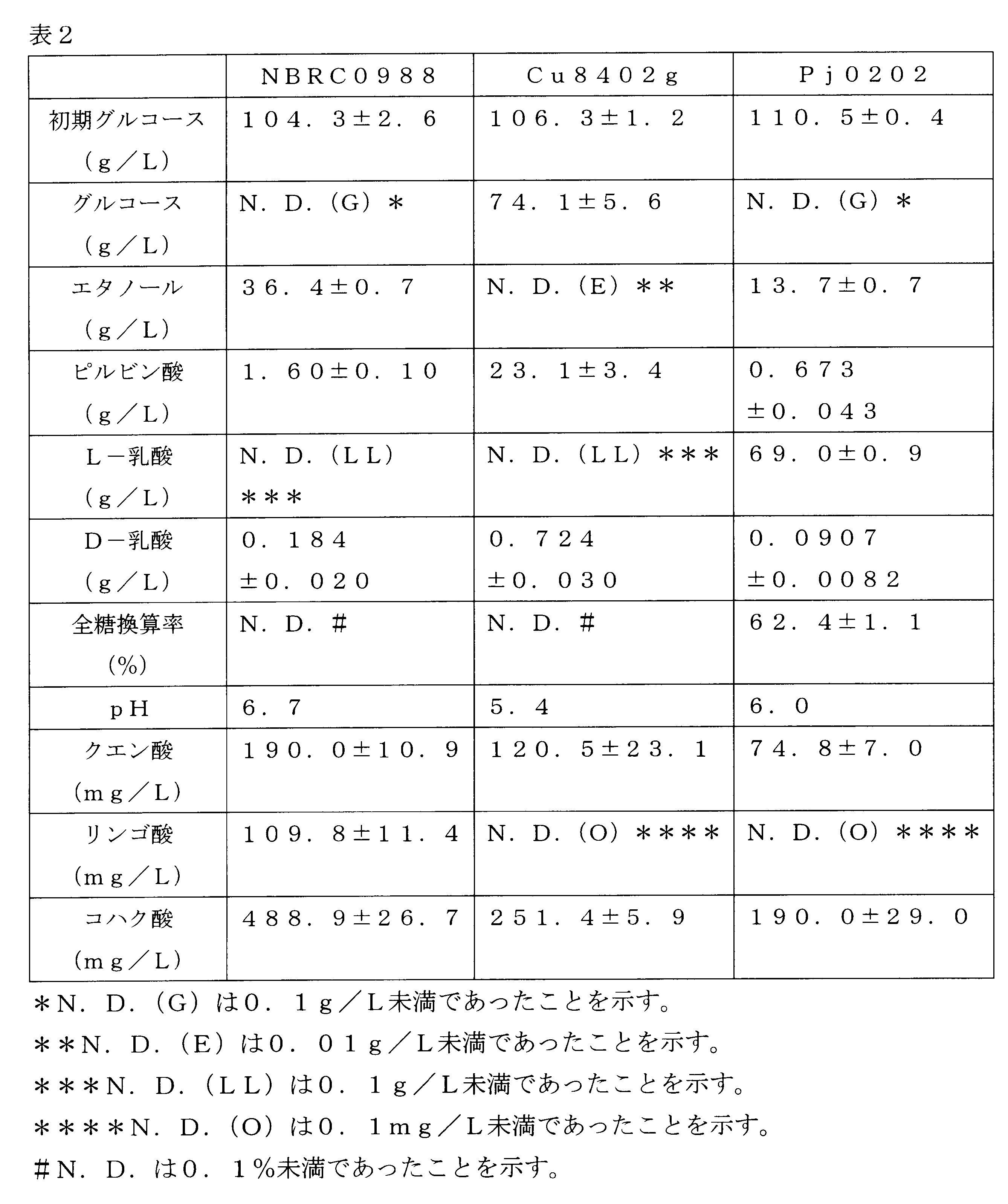
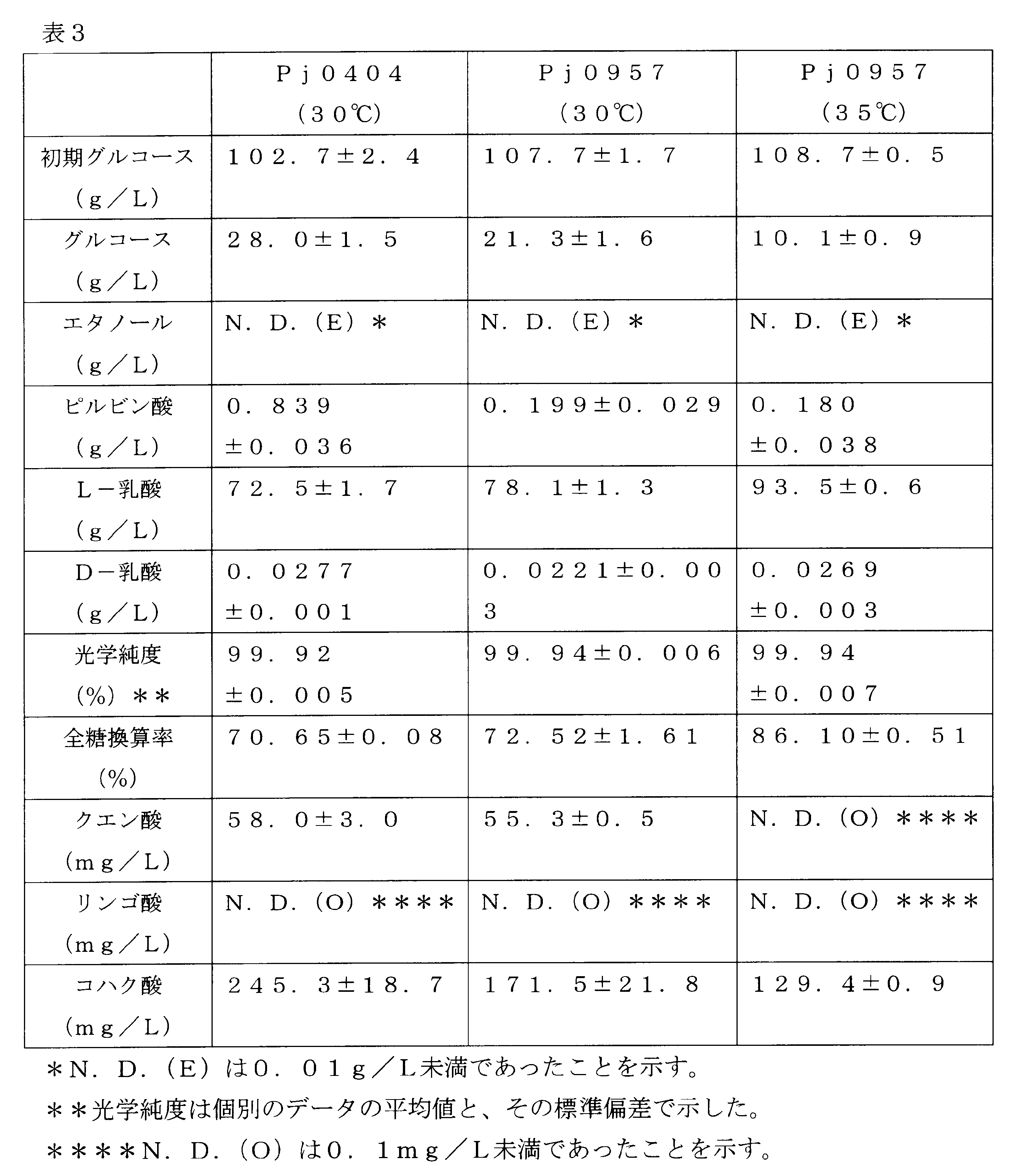
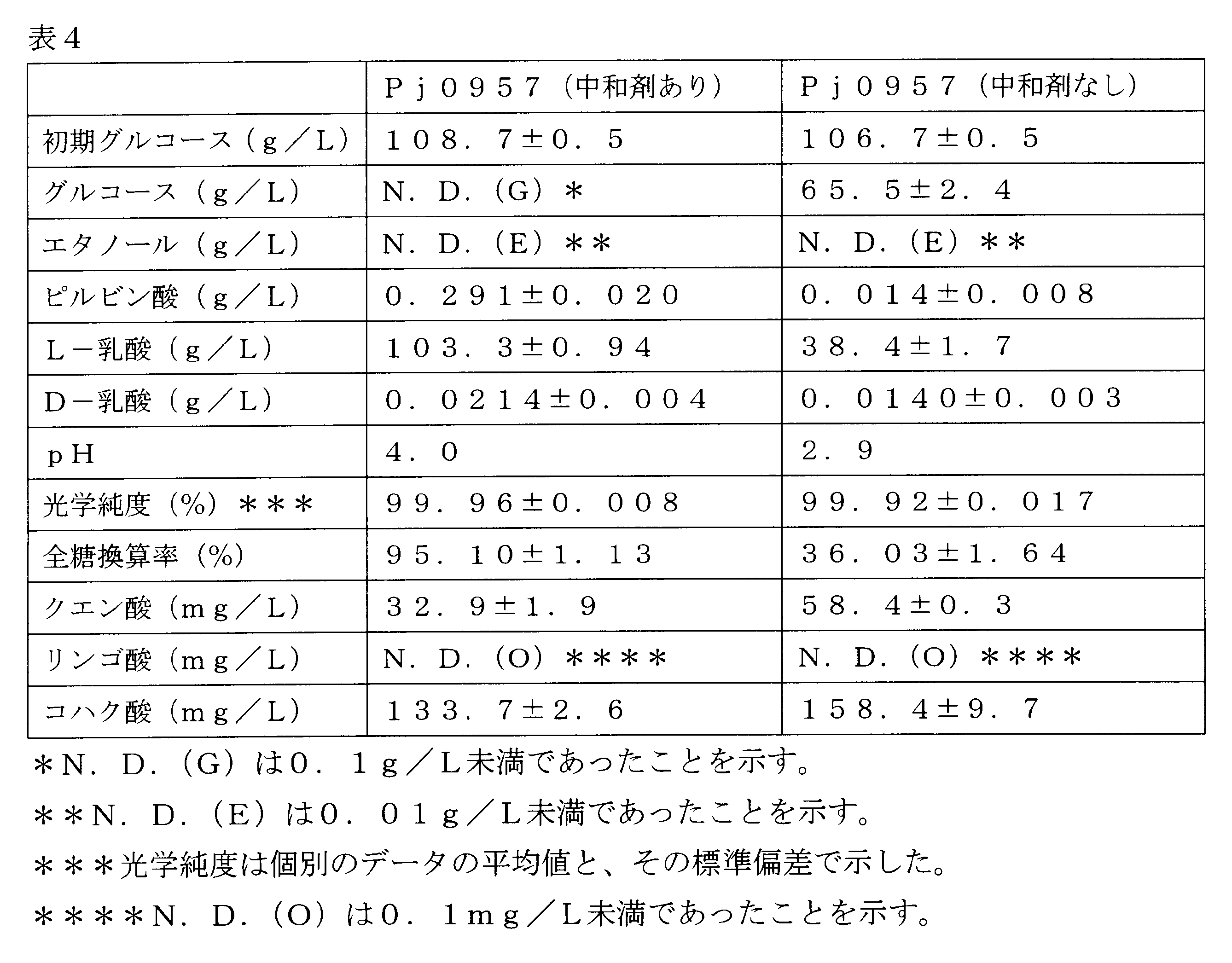
以下に示すとおり、Pj0957株の乳酸製造能の評価を実施した。培地中のエタノール濃度はGCあるいはHPLCを用いて、培地中のグルコース濃度およびL-乳酸濃度はワイエスアイジャパン社製バイオケミストリーアナライザー(BA)を用いて測定した。
光学異性体の判別には、J.K.インターナショナル社製のF-キットD-乳酸/L-乳酸を用い、方法は添付のプロトコールに従った。その他の各種有機酸製造量はHPLCを用いて行った。分析に供した試料には、培養液を0.22μmのフィルターで事前に濾過したものを用いた。
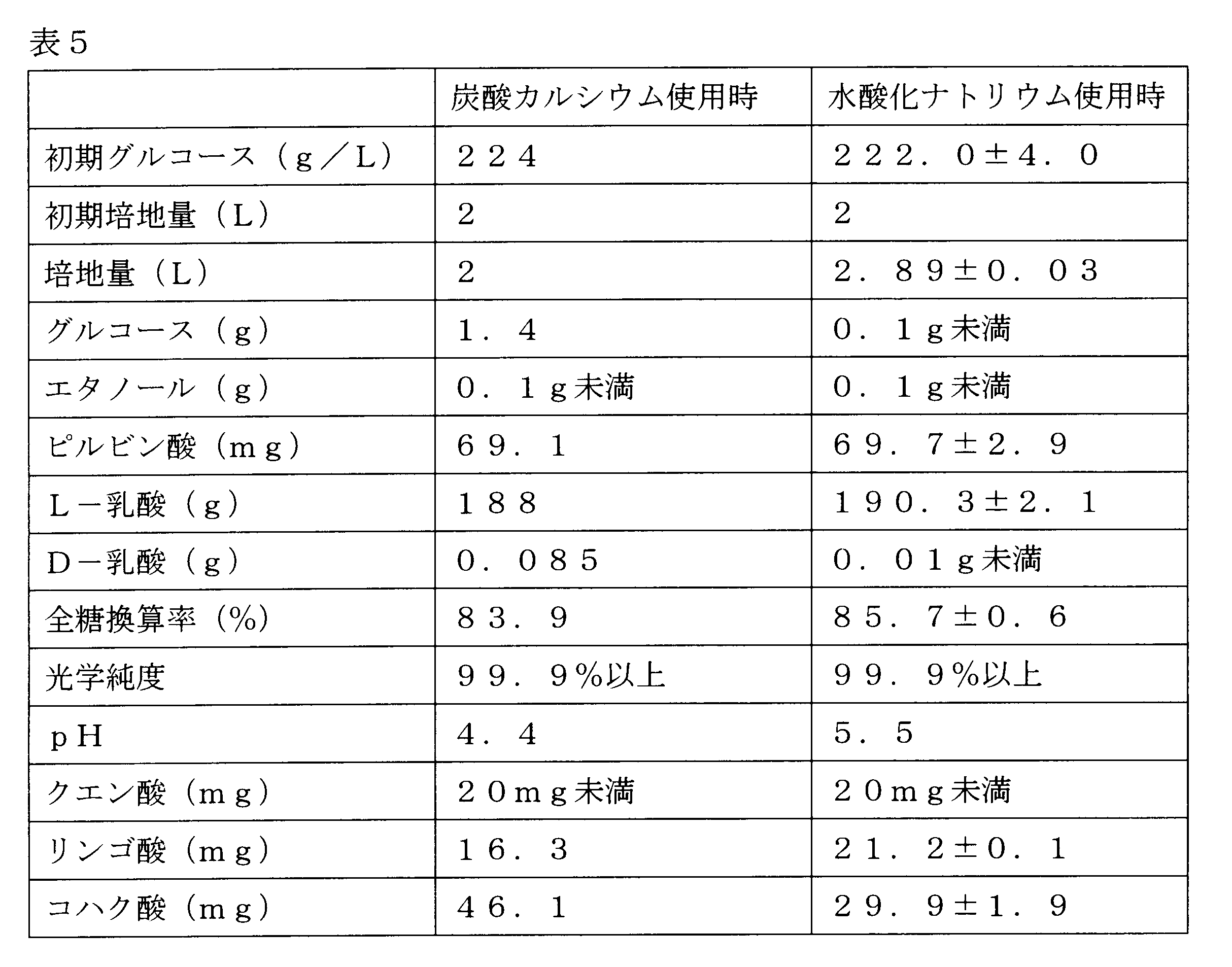
以下に示すとおり、Pj0957株の乳酸製造能の評価を実施した。培地中のL-乳酸濃度はワイエスアイジャパン社製バイオケミストリーアナライザー(BA)を用いて測定した。光学異性体の判別には、J.K.インターナショナル社製のF-キットD-乳酸/L-乳酸を用い、方法は添付のプロトコールに従った。その他の各種有機酸製造量はHPLCを用いて行った。分析に供した試料には、培養液を0.22μmのフィルターで事前に濾過したものを用いた。各種データは、少なくとも3回、独立に試行した結果の平均値である。
7-1.CuURA3遺伝子座への組込み型プラスミドの構築
キャンディダ・ユティリスのゲノムDNAを鋳型にして、IM-371(配列番号65)とIM-372(配列番号66)のプライマーセットでPCR(伸長反応45秒)を行うことにより、CuURA3遺伝子の上流側配列を増幅した。また、キャンディダ・ユティリスのゲノムDNAを鋳型にして、IM-373(配列番号67)とIM-374(配列番号68)のプライマーセットでPCR(伸長反応45秒)を行うことにより、CuURA3遺伝子の下流側配列を増幅した。得られた2種類のDNA断片を混合し、IM-371とIM-374のプライマーセットでPCRを行った(伸長反応1分30秒)。得られたDNA断片をBssHIIで消化し、pBluescriptIISK(+)のBssHII部位に挿入し、得られたプラスミドをpCU685(別名:pURAin)と名づけた。CuURA3の上流側と下流側の配列の連結部位にはNotI認識配列、XbaI認識配列、BamHI認識配列、ClaI認識配列が存在する。また、BssHIIの挿入DNA断片側には、それぞれBglII認識配列が存在する。なお、PCRは全てKOD plusで行った。
当該プラスミドはキャンディダ・ユティリスで機能する自律複製配列、PGKプロモーター誘導性のAPT遺伝子、PMAプロモーター(特開2003-144185号公報)誘導性のCRE遺伝子を有している。したがって、本プラスミドでキャンディダ・ユティリスの形質転換を行うと、プラスミドが導入された細胞は、染色体とは別に当該プラスミドを保持しており、野生株では生育できない200μg/mlのG418を含む培地において生育し、Cre組換え酵素を発現する。その結果、Hygr株が有するHPT遺伝子は、その両端にあるloxP配列同士での組換えにより除去され、Hygs株となる。
発現ベクターの作製および形質転換の際にはXbaI、BamHI、BglIIサイトを使用するため、使用する遺伝子に存在するこれらの制限酵素部位をoverlap extension PCRを用いて除去した。
キャンディダ・シェハタエ(Candida shehatae)由来キシロース還元酵素遺伝子(CsheXYL1;配列番号101)の断片はTMP-25(配列番号103)およびTMP-26(配列番号104)の組み合わせ、TMP-27(配列番号105)およびTMP-28(配列番号106)の組み合わせをプライマーとして用い、キャンディダ・シェハタエの染色体DNAを鋳型としてPCRを行なうことで得た。得られたそれぞれのDNA増幅産物は電気泳動を行った後、アガロースゲルから抽出を行った。得られたCsheXYL1配列は5’末端にXbaIサイト、3’末端にはBamHIサイトを持つ。得られたDNA断片をインビトロジェン社製Zero Blunt TOPO PCR Cloning Kitを用いてクローニングしてpVT123を得た(図17)。pVT123を鋳型としてインバースPCR法によりCsheXYL1遺伝子の275番目のリジンをアルギニンに、277番目のアスパラギンをアスパラギン酸に変異させた(pVT129;図17)。変異導入はTOYOBO社製KOD mutagenesis Kitを用いて行い、操作は添付のプロトコールに従った。この際、TMP-29(配列番号107)およびTMP-30(配列番号108)の組み合わせをそれぞれプライマーとして用いた。
ピルビン酸脱炭酸酵素をコードするCuPDC1遺伝子を完全に破壊し、さらに、コドンを最適化したウシ由来L-LDH遺伝子を少なくとも2コピー有する株Pj0957株は、loxP配列に挟まれたHPT遺伝子を有するHygr株である(実施例3)。そこで、当該菌株を、Cre組換え酵素発現株であるpCU595で形質転換し、G418rかつHygsとなったクローンを取得した。当該クローンをYPD液体培地で1晩培養後、その一部をYPD培地に塗布した。2日後にシングルコロニーを分離し、YPD培地とG418培地に塗布した。そして、YPD培地では生育するが、G418培地では生育しないクローンを分離した。このクローンをSGY451と名づけた。
以下に示すとおり、実施例7において得られた形質転換体の乳酸製造能の評価を実施した。L-乳酸製造量はYSI社製バイオケミストリーアナライザーを用いて測定した。キシロース量および総乳酸製造量は島津製作所製高速液体クロマトフラフィー(以下「HPLC」という)を用いて示唆屈折計により定量した。光学異性体の判別には、J.K.インターナショナル社製F-キット D-乳酸/L-乳酸を用い、方法は添付のプロトコールに従った。
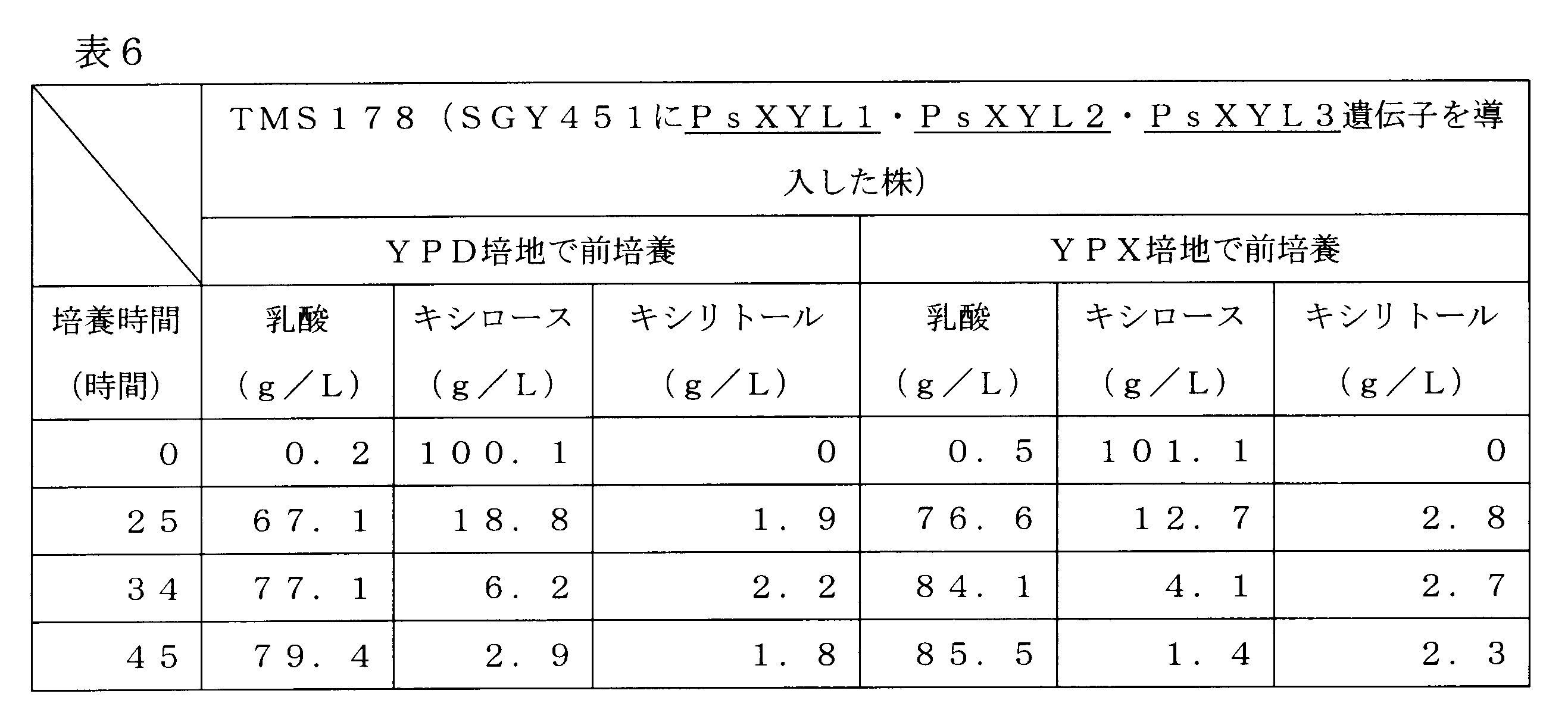
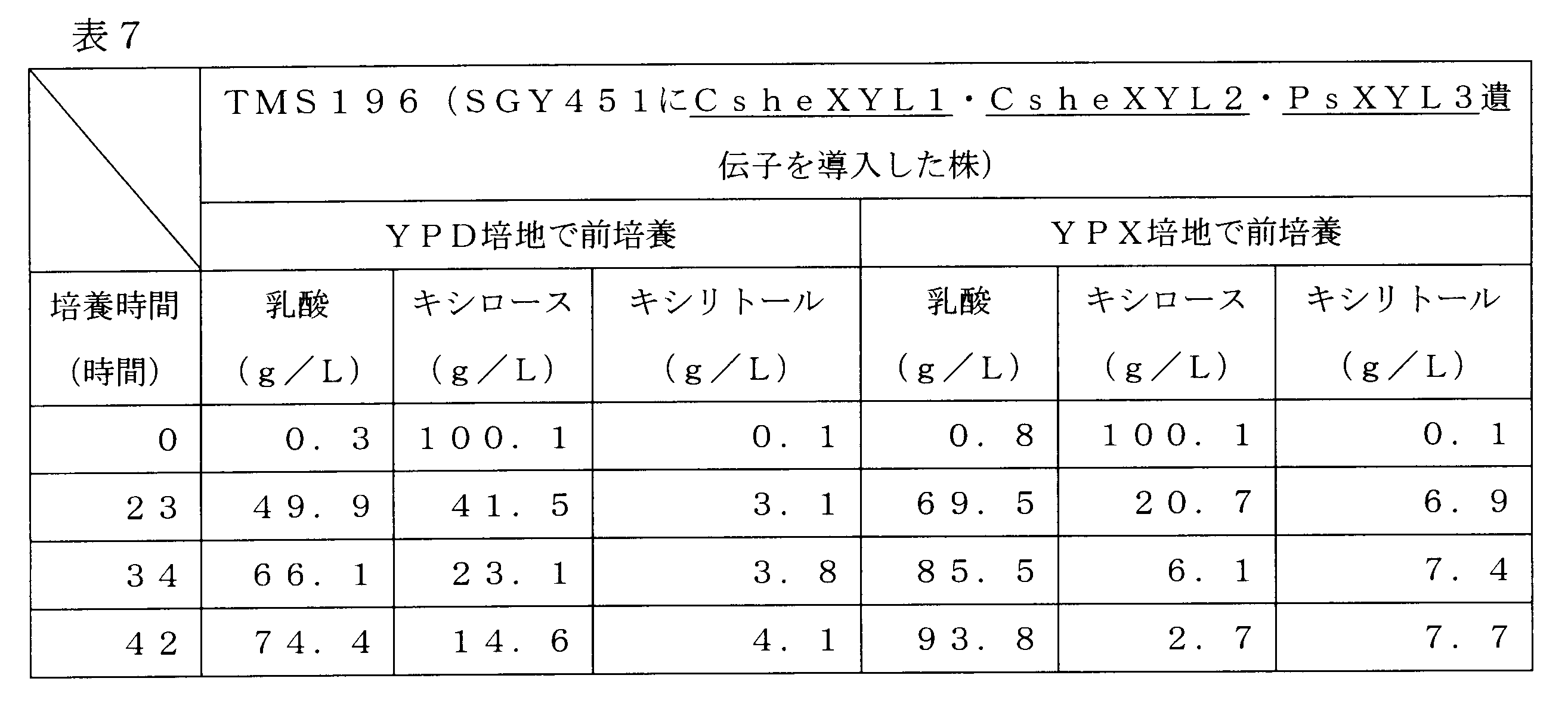
キャンディダ・シェハタエ(Candida shehatae)由来キシロース還元酵素遺伝子(CsheXYL1;配列番号114)断片はXba-CsheXYL1Fw(配列番号116)およびCsheXYL1_T231CRv(配列番号117)のプライマーセット、CsheXYL1_T231CFw(配列番号118)およびXba-CsheXYL1Rv(配列番号119)のプライマーセットを用い、キャンディダ・シェハタエの染色体DNAを鋳型としてPCRを行なうことで得た。得られたそれぞれのDNA増幅産物は電気泳動を行った後、アガロースゲルから抽出を行った。回収した産物は混合し、Xba-CsheXYL1Fw(配列番号116)およびXba-CsheXYL1Rv(配列番号119)の組合せをプライマーとしてPCRを行なうことによってCsheXYL2全長遺伝子を得た。得られたCsheXYL1配列は5’末端にXbaIサイト、3’末端にはBamHIサイトを持つ。得られたDNA断片をインビトロジェン社製Zero Blunt TOPO PCR Cloning Kitを用いてクローニングしてpVT123を得た。補酵素要求性をNADH型要求型に変換したCsheXYL1を構築するためにpVT123を鋳型としてインバースPCR法によりCsheXYL1遺伝子に変異導入を行い、3種の変異体を作製した(K275R、K275R/N277D、R281H)。変異導入はTOYOBO社製KOD mutagenesis Kitを用いて行い、操作は添付のプロトコールに従った。この際、CsheXYL1 K275Rの構築にはCsheXR_K275R_Fw(配列番号120)/CsheXR_mutation_Rv(配列番号123)、CsheXYL K275R/N277Dの構築にはCsheXR_K275R/N277D_Fw(配列番号121)/CsheXR_mutation_Rv(配列番号123)、CsheXYL1 R281Hの構築にはCsheXR_R281H_Fw(配列番号122)/CsheXR_mutation_Rv(配列番号123)を用いて、それぞれ得られたベクターをpVT127、pVT129、pVT131とした。
3つのキシロース代謝酵素遺伝子がクローニングされた各ベクターをNotIおよびApaIで消化し、エタノール沈殿により濃縮した。それぞれのDNA断片を用いてC.utilis NBRC0988株を形質転換し、600μg/mLハイグロマイシンを含むYPD培地に塗抹し30℃で2日間培養した。導入した全ての遺伝子を有する株を選抜した。発現する遺伝子とベクター名、菌株名を表8に示す
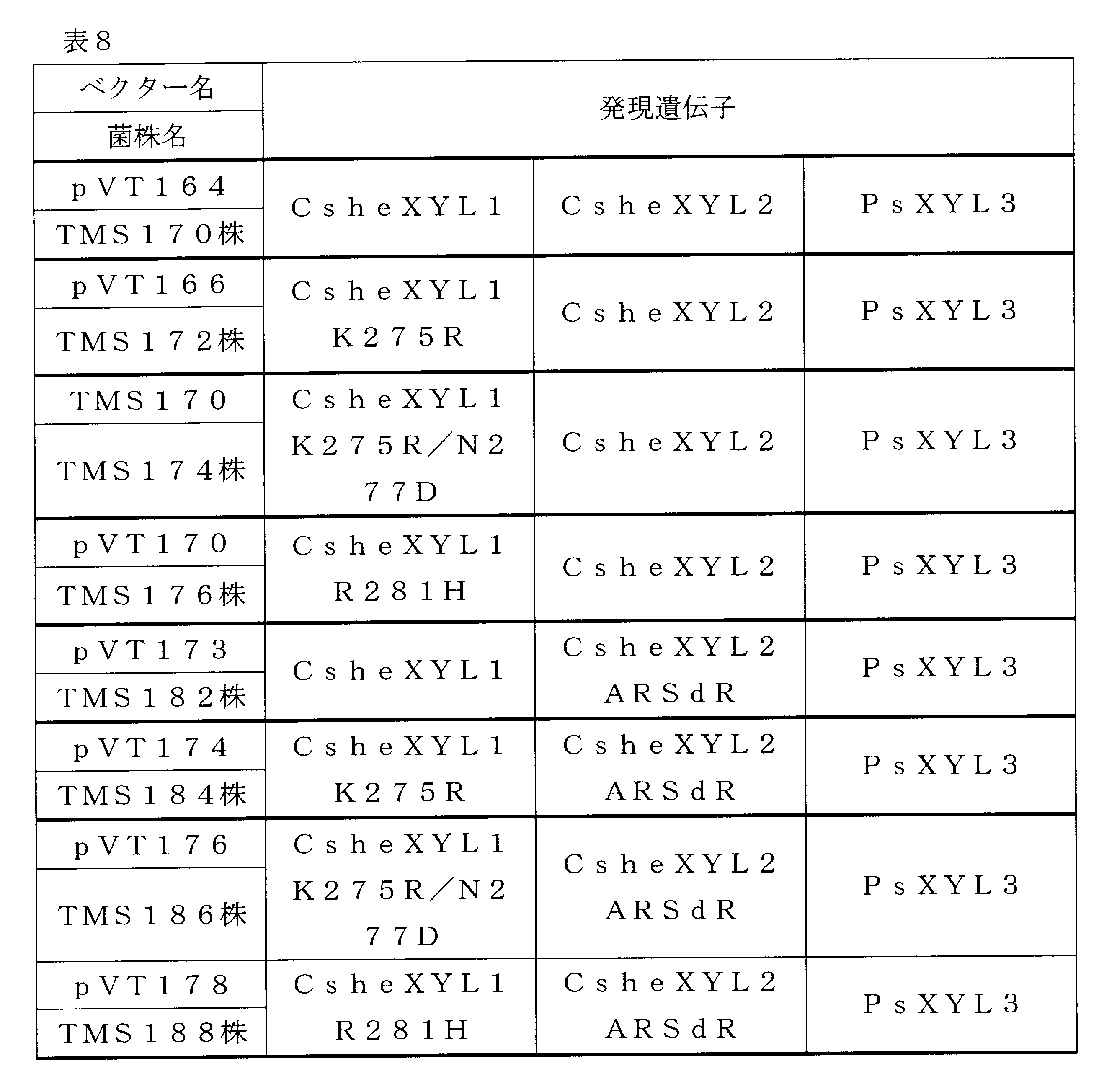
以下に示すとおり、得られた形質転換体のキシロース発酵能の評価を実施した。キシロース量、キシリトール量、エタノール量は島津製作所製高速液体クロマトフラフィー(以下、HPLC)、ISep-ION300カラム(東京化成工業製)、示唆屈折計を用いて定量した。
キャンディダ・ユティリスのオロチジンアルファアミノアジピン酸還元酵素をコードするCuLYS2遺伝子座に複数のペントースリン酸回路遺伝子の過剰発現カセットを導入するための発現ベクターを構築した。CuLYS2遺伝子上流配列断片(配列番号136)はLYS2leftFw(配列番号137)およびLSY2leftRv(配列番号138)のプライマーセットを、下流配列断片(配列番号139)はLSY2rightFw(配列番号140)およびLSY2rightRv(配列番号141)の組み合わせをプライマーとして用い、キャンディダ・ユティリスの染色体DNAをそれぞれ鋳型としてPCRを行なうことで得た。得られたそれぞれのDNA増幅産物は電気泳動を行った後、アガロースゲルから抽出を行った。回収したそれぞれDNA断片は3’末端および5’末端が互いに対合するように設計されているため、混合してLYS2leftFw(配列番号137)およびLSY2rightRv(配列番号141)のプライマーセットを用いてPCRを行なうことによってCuLYS2遺伝子上流下流配列が融合したDNA断片を得ることができる。得られたCuLYS2遺伝子上流下流配列5’末端にNotIサイトを持ち、CuLYS2遺伝子上流と下流の間にSpeIサイト、ClaIサイトをこの順で持ち、さらには3’末端にはNotIサイト、XhoIサイトをこの順で持つ。このDNAをZero Blunt TOPO PCRクローニングキット(インビトロジェン)を用いてpCR-BluntII TOPOベクターにクローニングしてpVT198を得た。pVT198をXhoI処理して、回収したCuLYS2を含むDNA断片をpUC119のSalIサイトに導入し、pVT202を得た。また、pVT92をSpeI、ClaI処理し、ハイグロマイシン耐性遺伝子発現カセットを切り出し、pVT202の同制限酵素サイトに組み込んだ(pVT206)。pVT206はpUC119を母体としてCuLYS2上流配列、SpeIサイト、ハイグロマイシン耐性遺伝子発現カセット、CuLYS2下流配列が組み込まれており、SpeIサイトに発現させたい遺伝子カセットを組み込むことができる。また、得られたベクターのNotI処理を行い、C.utilisを形質転換することで目的遺伝子をCuLYS2座で発現させることができる。
ペントースリン酸回路遺伝子の過剰発現用ベクターを構築するためにピキア・スティピティスのゲノムよりPCRでリブロース5リン酸3エピメラーゼ遺伝子(PsRpe1;配列番号142)、リボース5リン酸ケトイソメラーゼ遺伝子(PsRki1;配列番号144)、トランスアルドラーゼ遺伝子(PsTAL1;配列番号146)、トランスケトラーゼ遺伝子(PsTkl1;配列番号148)のクローニングを行った。PCRにはそれぞれ、Xba_PsRPE_Fw(配列番号150)/ Bam_PsRPE_Rv(配列番号151)、Xba_PsRKI_Fw(配列番号152)/ Bam_PsRKI_Rv(配列番号153)、Xba-PsTAL1Fw2(配列番号154)/ Bam-PsTAL1Rv2(配列番号155)、Xba-PsTKL1Fw(配列番号156)/ Bam-PsTKL1Rv(配列番号157)を用いた。得られたDNA断片はXbaI、BamHI処理し、pVT92の同サイトにクローニングしてpVT184、pVT186、pVT157、pVT153を得た。得られた各ベクターをNheI、SpeI処理し、各遺伝子を含む発現カセットを切り出した。pVT206のSpeIサイトにPsRpe1遺伝子発現カセット、PsRki1発現カセットを順次クローニングし、pVT210を構築した。さらにpVT210のSpeIサイトにPsTal1遺伝子発現カセット、PsTkl1遺伝子発現カセットをそれぞれクロニーニングしてpVT212、pVT214を構築した。
Cre組換え酵素の発現プラスミドpCU595でTMS174株の形質転換を行い、HygBsかつG418rのクローンを取得した。当該クローンをYPD液体培地で1晩培養後、その一部をYPD培地に塗布した。2日後にシングルコロニーを分離し、YPD培地とG418培地に塗布した。そして、YPD培地では生育するが、G418培地では生育しないクローンを分離してTMS202とした。また、ペントースリン酸回路酵素遺伝子がクローニングされた各ベクターをNotIおよびApaIで消化し、エタノール沈殿により濃縮した。それぞれのDNA断片を用いてTMS202株を形質転換し、600μg/mLハイグロマイシンを含むYPD培地に塗抹し30℃で2日間培養した。導入した全ての遺伝子を有する株を選抜した。発現する遺伝子とベクター名、菌株名を表9に示す

以下に示すとおり、得られた形質転換体のエタノール発酵能の評価を実施した。キシロース量、キシリトール量、エタノール量は島津製作所製高速液体クロマトフラフィー(以下、HPLC)、ISep-ION300カラム(東京化成工業製)、示唆屈折計を用いて定量した。
プラスミドpPGKAPH2(Ikushima et al., Biosci. Biotechnol. Biochem., 73, 152-9 (2009))を鋳型にして、IM-473(配列番号158)とIM-474(配列番号159)の2種のプライマーを用いたPCRを行うことにより、CuPGK遺伝子プロモーター、APT遺伝子、PGK遺伝子ターミネーターからなる約3.3kbのDNA断片を増幅した。この断片をSalIとXhoIで消化した後、pBluescriptIIのXhoI部位に連結した。次にこの新たなプラスミドのSpeI-NotIサイトに、pCARS6(Ikushima et al., Biosci. Biotechnol. Biochem., 73, 152-9 (2009))を鋳型にしてIM-475(配列番号160)とIM-476(配列番号161)のプライマーセットでPCRを行った後、本増幅断片をSpeIとNotIで二重消化して得た自律複製配列を含む約2.0kbのDNAを挿入した。こうして構築したプラスミドpCU724は、C. utilisの形質転換時に、G418耐性能を付与する自律複製型プラスミドとして利用することが可能である。
Cre組換え酵素の発現プラスミドpCU595でTMS196株の形質転換を行い、HygBsかつG418rのクローンを取得した。当該クローンをYPD液体培地で1晩培養後、その一部をYPD培地に塗布した。2日後にシングルコロニーを分離し、YPD培地とG418培地に塗布した。そして、YPD培地では生育するが、G418培地では生育しないクローンを分離してTMS228とした。
使用した菌株はTMS228-#とTMS228-#Nを独立で4回の発酵試験を行った。まず、200mg/ml G418を含むYPDプレートで3日間、30℃で培養した。この菌体を200mg/ml G418を含む100ml YPX2培地 (500ml坂口フラスコを使用) に接種した後、30℃で72時間、振とう培養を行った (140rpm)。その培養液から遠心分離 (3,000rpm、5分) によって回収した菌体を、100ml三角フラスコ中の200mg/ml G418を含む25ml YPX10 (CaCO3も4.5%添加されている) にOD600を20となるように懸濁した後、100rpm、35℃で発酵させた。その結果、PsTal1遺伝子を発現させた全ての株は、発現させていない株に比べて乳酸生産量を有意に高めていた(t検定:p<0.01)(図23)。なお、PsTal1遺伝子は乳酸の生産性の向上に有効であることを示唆するデータが得られた。
Claims (16)
- プロモーター配列に機能的に連結された、キシロース還元酵素、キシリトール脱水素酵素およびキシルロースリン酸化酵素の活性を有するポリペプチドをコードしている3種の遺伝子の少なくとも一つにより形質転換されてなる、キャンディダ・ユティリスの酵母菌株。
- プロモーター配列に機能的に連結された、乳酸脱水素酵素の活性を有するポリペプチドをコードしている遺伝子の少なくとも1コピーにより形質転換され、
さらに、プロモーター配列に機能的に連結された、キシロース還元酵素、キシリトール脱水素酵素およびキシルロースリン酸化酵素の活性を有するポリペプチドをコードしている3種の遺伝子の少なくとも一つにより形質転換されてなる、請求項1に記載の酵母菌株。 - キシロース還元酵素、キシリトール脱水素酵素およびキシルロースリン酸化酵素の活性を有するポリペプチドをコードしている3種の遺伝子の全てにより形質転換されてなる、請求項1または2に記載の酵母菌株。
- ピルビン酸脱炭酸酵素の活性を有するポリペプチドをコードしている内因性遺伝子が破壊されている、請求項1または2に記載の酵母菌株。
- ピルビン酸脱炭酸酵素の活性を有するポリペプチドをコードしている内因性遺伝子が、選択マーカー配列の挿入による該遺伝子の欠失によって破壊されている、請求項1または2に記載の酵母菌株。
- さらに、プロモーター配列に機能的に連結された、トランスアルドラーゼの活性を有するポリペプチドをコードしている遺伝子の少なくとも1コピーにより形質転換されてなる、請求項1または2に記載の酵母菌株。
- 乳酸脱水素酵素の活性を有するポリペプチドが、
(a)配列番号37で表されるアミノ酸配列を含むポリペプチド、または
(b)配列番号37で表されるアミノ酸配列において、1もしくは数個のアミノ酸が欠失、置換、付加もしくは挿入されたアミノ酸配列を含み、かつ乳酸脱水素酵素の活性を有するポリペプチド
である、請求項2~6のいずれか一項に記載の酵母菌株。 - 乳酸脱水素酵素の活性を有するポリペプチドをコードしている遺伝子が、
(a)配列番号36のうち、13番目のaから1,011番目のaまでのヌクレオチド配列、または
(b)配列番号36のうち、13番目のaから1,011番目のaまでのヌクレオチド配列と85%以上の相同性があり、かつ乳酸脱水素酵素の活性を有するポリペプチドをコードするヌクレオチド配列、または
(c)配列番号36のうち、13番目のaから1,011番目のaまでのヌクレオチド配列もしくはその相補配列とストリンジェントな条件下でハイブリダイズし、かつ乳酸脱水素酵素の活性を有するポリペプチドをコードするヌクレオチド配列
を含むものである、請求項2~6のいずれか一項に記載の酵母菌株。 - キシロース還元酵素の活性を有するポリペプチドが、
(a)配列番号82または配列番号102で表されるアミノ酸配列を含むポリペプチド、または
(b)配列番号82または配列番号102で表されるアミノ酸配列において、1もしくは数個のアミノ酸が欠失、置換、付加もしくは挿入されたアミノ酸配列を含み、かつキシロース還元酵素の活性を有するポリペプチド
である、請求項1~6のいずれか一項に記載の酵母菌株。 - キシリトール脱水素酵素の活性を有するポリペプチドが、
(a)配列番号92または配列番号110で表されるアミノ酸配列を含むポリペプチド、または
(b)配列番号92または配列番号110で表されるアミノ酸配列において、1もしくは数個のアミノ酸が欠失、置換、付加もしくは挿入されたアミノ酸配列を含み、かつキシリトール脱水素酵素の活性を有するポリペプチド
である、請求項1~6のいずれか一項に記載の酵母菌株。 - キシルロースリン酸化酵素の活性を有するポリペプチドが、
(a)配列番号96で表されるアミノ酸配列を含むポリペプチド、または
(b)配列番号96で表されるアミノ酸配列において、1もしくは数個のアミノ酸が欠失、置換、付加もしくは挿入されたアミノ酸配列を含み、かつキシルロースリン酸化酵素の活性を有するポリペプチド
である、請求項1~6のいずれか一項に記載の酵母菌株。 - ピルビン酸脱炭酸酵素の活性を有するポリペプチドをコードしている内因性遺伝子が、配列番号64で表されるアミノ酸配列をコードするヌクレオチド配列、または配列番号63で表されるヌクレオチド配列を含むものである、請求項4または5に記載の酵母菌株。
- トランスアルドラーゼの活性を有するポリペプチドが、
(a)配列番号147で表されるアミノ酸配列を含むポリペプチド、または
(b)配列番号147で表されるアミノ酸配列において、1もしくは数個のアミノ酸が欠失、置換、付加もしくは挿入されたアミノ酸配列を含み、かつトランスアルドラーゼの活性を有するポリペプチド
である、請求項6に記載の酵母菌株。 - 請求項1~13のいずれか一項に記載の酵母菌株を、キシロースを炭素源として含有する培地で培養することを含んでなる、代謝産物を製造する方法。
- 請求項2~13のいずれか一項に記載の酵母菌株を培養することを含んでなる、乳酸を製造する方法。
- 酵母菌株の培養において、発酵培養初期の菌体のOD600が1~30である、請求項15に記載の方法。
Priority Applications (4)
| Application Number | Priority Date | Filing Date | Title |
|---|---|---|---|
| US13/202,819 US20120045803A1 (en) | 2009-02-23 | 2010-02-23 | Method for production of substance in candida utilis using xylose as carbon source |
| CA2761877A CA2761877A1 (en) | 2009-02-23 | 2010-02-23 | Method for production of substance in candida utilis using xylose as carbon source |
| JP2011500680A JPWO2010095750A1 (ja) | 2009-02-23 | 2010-02-23 | キシロースを炭素源として使用しうる、キャンディダ・ユティリスによる物質の製造法 |
| AU2010216616A AU2010216616A1 (en) | 2009-02-23 | 2010-02-23 | Manufacturing method for substances from Candida utilis that can use xylose as carbon source |
Applications Claiming Priority (2)
| Application Number | Priority Date | Filing Date | Title |
|---|---|---|---|
| JP2009039856 | 2009-02-23 | ||
| JP2009-039856 | 2009-02-23 |
Publications (1)
| Publication Number | Publication Date |
|---|---|
| WO2010095750A1 true WO2010095750A1 (ja) | 2010-08-26 |
Family
ID=42634026
Family Applications (1)
| Application Number | Title | Priority Date | Filing Date |
|---|---|---|---|
| PCT/JP2010/052751 Ceased WO2010095750A1 (ja) | 2009-02-23 | 2010-02-23 | キシロースを炭素源として使用しうる、キャンディダ・ユティリスによる物質の製造法 |
Country Status (6)
| Country | Link |
|---|---|
| US (1) | US20120045803A1 (ja) |
| JP (1) | JPWO2010095750A1 (ja) |
| KR (1) | KR20110124781A (ja) |
| AU (1) | AU2010216616A1 (ja) |
| CA (1) | CA2761877A1 (ja) |
| WO (1) | WO2010095750A1 (ja) |
Cited By (1)
| Publication number | Priority date | Publication date | Assignee | Title |
|---|---|---|---|---|
| WO2014058034A1 (ja) * | 2012-10-10 | 2014-04-17 | Jx日鉱日石エネルギー株式会社 | キシロースからエタノールを生産する酵母 |
Families Citing this family (2)
| Publication number | Priority date | Publication date | Assignee | Title |
|---|---|---|---|---|
| NZ743055A (en) * | 2013-03-08 | 2020-03-27 | Xyleco Inc | Equipment protecting enclosures |
| TWI719317B (zh) * | 2018-06-13 | 2021-02-21 | 遠東新世紀股份有限公司 | 用於生產乳酸的方法 |
Citations (8)
| Publication number | Priority date | Publication date | Assignee | Title |
|---|---|---|---|---|
| JPH06339383A (ja) * | 1990-03-26 | 1994-12-13 | Rhein Biotech Gmbh | Dna配列 |
| JP2003259878A (ja) * | 2002-03-11 | 2003-09-16 | Toyota Central Res & Dev Lab Inc | 乳酸脱水素酵素をコードするdnaおよびその利用 |
| WO2003078643A1 (en) * | 2002-03-19 | 2003-09-25 | Forskarpatent I Syd Ab | Metabolic engineering for improved xylose utilisation of saccharomyces cerevisiae |
| JP2005507255A (ja) * | 2001-10-29 | 2005-03-17 | バルティオン テクニリーネン トゥトキムスケスクス | バイオテクノロジープロセスを実施する能力が増強された真菌微生物 |
| JP2005518197A (ja) * | 2001-11-23 | 2005-06-23 | カーギル ダウ エルエルシー | カンジダ菌種の細胞における有機生成物の産生のための方法及び材料 |
| JP2007111054A (ja) * | 2000-11-22 | 2007-05-10 | Cargill Dow Llc | 有機生成物の合成のための方法及び材料 |
| JP2008506383A (ja) * | 2004-07-16 | 2008-03-06 | テクニシエ ユニヴェルシテイト デルフト | キシロース発酵性真核細胞の代謝工学 |
| WO2008093847A1 (ja) * | 2007-02-02 | 2008-08-07 | Kirin Holdings Kabushiki Kaisha | キシリトールデヒドロゲナーゼをコードするdna |
Family Cites Families (7)
| Publication number | Priority date | Publication date | Assignee | Title |
|---|---|---|---|---|
| ATE154364T1 (de) * | 1988-09-02 | 1997-06-15 | Univ Rockefeller | Makrophagenabgeleiteter entzündungsmediator(mip- 2) |
| FI913197A0 (fi) * | 1991-07-01 | 1991-07-01 | Xyrofin Oy | Nya jaeststammar med reducerad foermaoga att metabolisera xylitol, foerfarande foer bildande av dessa och deras anvaendning vid framstaellning av xylitol. |
| JPH08173170A (ja) * | 1994-05-25 | 1996-07-09 | Kirin Brewery Co Ltd | キャンディダ・ユティリス酵母の形質転換系、およびそれによる異種遺伝子の発現 |
| US7141410B2 (en) * | 2000-11-22 | 2006-11-28 | Natureworks Llc | Methods and materials for the production of organic products in cells of Candida species |
| GB0227435D0 (en) * | 2002-11-25 | 2002-12-31 | Univ Denmark Tech Dtu | Metabolically engineered micro-organisms having reduced production of undesired metobolic products |
| US8921045B2 (en) * | 2008-02-26 | 2014-12-30 | The Research Foundation For The State University Of New York | Fluorescent color markers |
| WO2010130877A2 (en) * | 2009-05-12 | 2010-11-18 | Abacus Diagnostica Oy | Method for detecting nucleic acids |
-
2010
- 2010-02-23 AU AU2010216616A patent/AU2010216616A1/en not_active Abandoned
- 2010-02-23 JP JP2011500680A patent/JPWO2010095750A1/ja not_active Withdrawn
- 2010-02-23 WO PCT/JP2010/052751 patent/WO2010095750A1/ja not_active Ceased
- 2010-02-23 US US13/202,819 patent/US20120045803A1/en not_active Abandoned
- 2010-02-23 CA CA2761877A patent/CA2761877A1/en not_active Abandoned
- 2010-02-23 KR KR1020117022105A patent/KR20110124781A/ko not_active Withdrawn
Patent Citations (8)
| Publication number | Priority date | Publication date | Assignee | Title |
|---|---|---|---|---|
| JPH06339383A (ja) * | 1990-03-26 | 1994-12-13 | Rhein Biotech Gmbh | Dna配列 |
| JP2007111054A (ja) * | 2000-11-22 | 2007-05-10 | Cargill Dow Llc | 有機生成物の合成のための方法及び材料 |
| JP2005507255A (ja) * | 2001-10-29 | 2005-03-17 | バルティオン テクニリーネン トゥトキムスケスクス | バイオテクノロジープロセスを実施する能力が増強された真菌微生物 |
| JP2005518197A (ja) * | 2001-11-23 | 2005-06-23 | カーギル ダウ エルエルシー | カンジダ菌種の細胞における有機生成物の産生のための方法及び材料 |
| JP2003259878A (ja) * | 2002-03-11 | 2003-09-16 | Toyota Central Res & Dev Lab Inc | 乳酸脱水素酵素をコードするdnaおよびその利用 |
| WO2003078643A1 (en) * | 2002-03-19 | 2003-09-25 | Forskarpatent I Syd Ab | Metabolic engineering for improved xylose utilisation of saccharomyces cerevisiae |
| JP2008506383A (ja) * | 2004-07-16 | 2008-03-06 | テクニシエ ユニヴェルシテイト デルフト | キシロース発酵性真核細胞の代謝工学 |
| WO2008093847A1 (ja) * | 2007-02-02 | 2008-08-07 | Kirin Holdings Kabushiki Kaisha | キシリトールデヒドロゲナーゼをコードするdna |
Non-Patent Citations (5)
| Title |
|---|
| DATABASE DATABASE DDBJ/EMBL/GENBAN [online] 18 April 2005 (2005-04-18), HOHMANN,S ET AL.: "Definition: Saccharomyces cerevisiae PDC5 gene for pyruvate decarboxylase", Database accession no. X15668 * |
| DATABASE DATABASE DDBJ/EMBL/GENBAN [online] 18 July 2000 (2000-07-18), GOVINDEN,R. ET AL.: "Definition: Candida shehatae xylose reductase gene", Database accession no. AF278715 * |
| DATABASE DATABASE DDBJ/EMBL/GENBAN [online] 6 December 2005 (2005-12-06), JIN,Y.S. ET AL.: "Defenition: Pichia stipitis transaldolase (TAL1) gene", Database accession no. AY854959 * |
| KELLERMANN,E. ET AL.: "Analysis of the primary structure and promoter function of a pyruvate decarboxylase gene (PDC1) from Saccharomyces cerevisiae", NUCLEIC ACIDS RES, vol. 14, no. 22, 1986, pages 8963 - 8977, XP002961301 * |
| VAN URK H ET AL.: "Localization and kinetics of pyruvate-metabolizing enzymes in relation to aerobic alcoholic fermentation in Saccharomyces cerevisiae CBS 8066 and Candida utilis CBS 621.", BIOCHIM BIOPHYS ACTA, vol. 992, no. 1, 1989, pages 78 - 86, XP023577071, DOI: doi:10.1016/0304-4165(89)90053-6 * |
Cited By (2)
| Publication number | Priority date | Publication date | Assignee | Title |
|---|---|---|---|---|
| WO2014058034A1 (ja) * | 2012-10-10 | 2014-04-17 | Jx日鉱日石エネルギー株式会社 | キシロースからエタノールを生産する酵母 |
| JP5796138B2 (ja) * | 2012-10-10 | 2015-10-21 | Jx日鉱日石エネルギー株式会社 | キシロースからエタノールを生産する酵母 |
Also Published As
| Publication number | Publication date |
|---|---|
| CA2761877A1 (en) | 2010-08-26 |
| US20120045803A1 (en) | 2012-02-23 |
| KR20110124781A (ko) | 2011-11-17 |
| AU2010216616A1 (en) | 2011-10-20 |
| JPWO2010095750A1 (ja) | 2012-08-30 |
Similar Documents
| Publication | Publication Date | Title |
|---|---|---|
| JP6087854B2 (ja) | 組換え酵母を用いたエタノールの製造方法 | |
| JP4963488B2 (ja) | 変異体酵母及びこれを用いた物質生産方法 | |
| CN101287824A (zh) | 东方伊氏酵母种及密切相关物种的基因修饰的酵母和采用它们的发酵方法 | |
| CA2631036A1 (en) | Lactic acid-producing yeast cells having nonfunctional l-or d-lactate: ferricytochrome c oxidoreductase gene | |
| JP2011147445A (ja) | キシロースイソメラーゼ及びその利用 | |
| WO2023220547A1 (en) | Genetically modified yeast and fermentation processes for the production of polyols | |
| CN110651034A (zh) | 用于制备fdca的fdca-脱羧单加氧酶-缺陷的宿主细胞 | |
| JP2010075171A (ja) | キャンディダ・ユティリスによる高効率乳酸製造法 | |
| JPWO2010095750A1 (ja) | キシロースを炭素源として使用しうる、キャンディダ・ユティリスによる物質の製造法 | |
| WO2024229192A1 (en) | Genetically modified yeast with decreased erythritol production | |
| WO2010095751A1 (ja) | キャンディダ・ユティリスによる高効率乳酸製造法 | |
| EP4522730A1 (en) | Genetically modified yeast and fermentation processes for the production of arabitol | |
| EP2643466B1 (en) | Yeast cells and process for converting acetaldehyde to ethanol | |
| JP2009268407A (ja) | キャンディダ・ボイディニによる高効率乳酸製造法 | |
| JP6249391B2 (ja) | キシロースを高温で発酵する方法 | |
| WO2014021163A1 (ja) | 組換え酵母を用いたエタノールの製造方法 | |
| WO2025230692A1 (en) | Genetically modified yeast and fermentation processes for the production of xylitol | |
| WO2025184054A2 (en) | Genetically modified microorganism and fermentation process for the production of d-allulose | |
| WO2025230693A1 (en) | Genetically modified yeast and fermentation processes for the production of xylitol | |
| WO2023220545A2 (en) | Genetically modified yeast and fermentation processes for the production of xylitol | |
| EP4522732A1 (en) | Genetically modified yeast and fermentation processes for the production of ribitol | |
| WO2025230694A1 (en) | Genetically modified yeast and fermentation processes for the production of xylitol | |
| AU2010216617A1 (en) | High-efficiency lactic acid manufacturing method using Candida utilis | |
| AU2008201598A1 (en) | Methods and materials for the production of D-lactic acid in yeast |
Legal Events
| Date | Code | Title | Description |
|---|---|---|---|
| 121 | Ep: the epo has been informed by wipo that ep was designated in this application |
Ref document number: 10743873 Country of ref document: EP Kind code of ref document: A1 |
|
| WWE | Wipo information: entry into national phase |
Ref document number: 2011500680 Country of ref document: JP |
|
| NENP | Non-entry into the national phase |
Ref country code: DE |
|
| ENP | Entry into the national phase |
Ref document number: 20117022105 Country of ref document: KR Kind code of ref document: A |
|
| WWE | Wipo information: entry into national phase |
Ref document number: 2010216616 Country of ref document: AU |
|
| ENP | Entry into the national phase |
Ref document number: 2010216616 Country of ref document: AU Date of ref document: 20100223 Kind code of ref document: A |
|
| WWE | Wipo information: entry into national phase |
Ref document number: 13202819 Country of ref document: US |
|
| WWE | Wipo information: entry into national phase |
Ref document number: 2761877 Country of ref document: CA |
|
| 122 | Ep: pct application non-entry in european phase |
Ref document number: 10743873 Country of ref document: EP Kind code of ref document: A1 |