WO2010035339A1 - ナビゲーション装置及び速度推定方法 - Google Patents
ナビゲーション装置及び速度推定方法 Download PDFInfo
- Publication number
- WO2010035339A1 WO2010035339A1 PCT/JP2008/067618 JP2008067618W WO2010035339A1 WO 2010035339 A1 WO2010035339 A1 WO 2010035339A1 JP 2008067618 W JP2008067618 W JP 2008067618W WO 2010035339 A1 WO2010035339 A1 WO 2010035339A1
- Authority
- WO
- WIPO (PCT)
- Prior art keywords
- speed
- vehicle
- sound collection
- result
- sound
- Prior art date
- Legal status (The legal status is an assumption and is not a legal conclusion. Google has not performed a legal analysis and makes no representation as to the accuracy of the status listed.)
- Ceased
Links
Images

Classifications
-
- G—PHYSICS
- G08—SIGNALLING
- G08G—TRAFFIC CONTROL SYSTEMS
- G08G1/00—Traffic control systems for road vehicles
- G08G1/09—Arrangements for giving variable traffic instructions
- G08G1/0962—Arrangements for giving variable traffic instructions having an indicator mounted inside the vehicle, e.g. giving voice messages
- G08G1/0968—Systems involving transmission of navigation instructions to the vehicle
- G08G1/096805—Systems involving transmission of navigation instructions to the vehicle where the transmitted instructions are used to compute a route
- G08G1/096827—Systems involving transmission of navigation instructions to the vehicle where the transmitted instructions are used to compute a route where the route is computed onboard
-
- G—PHYSICS
- G01—MEASURING; TESTING
- G01C—MEASURING DISTANCES, LEVELS OR BEARINGS; SURVEYING; NAVIGATION; GYROSCOPIC INSTRUMENTS; PHOTOGRAMMETRY OR VIDEOGRAMMETRY
- G01C21/00—Navigation; Navigational instruments not provided for in groups G01C1/00 - G01C19/00
- G01C21/26—Navigation; Navigational instruments not provided for in groups G01C1/00 - G01C19/00 specially adapted for navigation in a road network
- G01C21/28—Navigation; Navigational instruments not provided for in groups G01C1/00 - G01C19/00 specially adapted for navigation in a road network with correlation of data from several navigational instruments
-
- G—PHYSICS
- G01—MEASURING; TESTING
- G01S—RADIO DIRECTION-FINDING; RADIO NAVIGATION; DETERMINING DISTANCE OR VELOCITY BY USE OF RADIO WAVES; LOCATING OR PRESENCE-DETECTING BY USE OF THE REFLECTION OR RERADIATION OF RADIO WAVES; ANALOGOUS ARRANGEMENTS USING OTHER WAVES
- G01S19/00—Satellite radio beacon positioning systems; Determining position, velocity or attitude using signals transmitted by such systems
- G01S19/38—Determining a navigation solution using signals transmitted by a satellite radio beacon positioning system
- G01S19/39—Determining a navigation solution using signals transmitted by a satellite radio beacon positioning system the satellite radio beacon positioning system transmitting time-stamped messages, e.g. GPS [Global Positioning System], GLONASS [Global Orbiting Navigation Satellite System] or GALILEO
- G01S19/52—Determining velocity
Definitions
- the present invention relates to a navigation device, a speed estimation method, a speed estimation program, and a recording medium on which the speed estimation program is recorded.
- GPS positioning Global Positioning System
- the GPS positioning means and the vehicle acceleration and angular velocity sensors are generally implemented in navigation devices.
- a vehicle speed sensor there has been proposed a technology that uses a vehicle speed sensor that is provided in a vehicle separately from a navigation device (see Patent Document 1: hereinafter referred to as “conventional example”).
- the navigation device can accurately detect the speed of the vehicle based on the vehicle speed pulse output from the vehicle speed sensor without depending on the GPS positioning result.
- vehicle speed pulse As a vehicle speed sensor that is provided separately from the navigation device, there is a sensor that detects the rotation of an axle or a wheel and outputs a pulse signal having a cycle corresponding to the number of rotations (hereinafter also referred to as “vehicle speed pulse”). It is common.
- the technology of the conventional example described above is based on the premise that a pulse signal output from a vehicle speed sensor installed in a vehicle can be acquired.
- a pulse signal output from a vehicle speed sensor installed in a vehicle can be acquired.
- in-vehicle LAN Local Area Network
- the present invention has been made in view of the above circumstances, and a new navigation device that can accurately estimate the speed of a vehicle without using a detection result by a vehicle speed sensor mounted on the vehicle separately from the navigation device. It is another object of the present invention to provide a speed estimation method.
- a navigation device mounted on a vehicle, a sound collecting means for collecting sound at a predetermined position in the vehicle; and based on a reception result of radio waves from a GPS satellite, Detection means for detecting the speed of the vehicle; extraction means for extracting feature information of the sound collection result corresponding to the speed of the vehicle based on a detection result by the detection means and a sound collection result by the sound collection means Storage means for storing sound collection characteristic information in which the speed of the vehicle and the characteristic information are associated; and the detection means generates radio waves from a number of GPS satellites necessary for detecting the speed of the vehicle. And an estimation means for estimating the speed of the vehicle in consideration of the sound collection result and the sound collection characteristic information when the sound cannot be received.
- the present invention is a speed estimation method used in a navigation device mounted on a vehicle, and a sound collection step of collecting sound at a predetermined position in the vehicle; and a radio wave from a GPS satellite;
- a speed estimation method of the symptoms A speed estimation method of the symptoms.
- the present invention is a speed estimation program characterized by causing a calculation means to execute the speed estimation method of the present invention.
- the present invention is a recording medium in which the speed estimation program of the present invention is recorded so as to be readable by a calculation means.
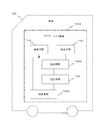
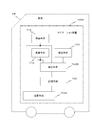
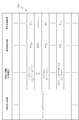
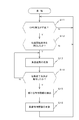
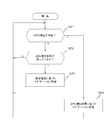
- FIG. 1 is a diagram schematically showing a configuration of a navigation device according to a first embodiment of the present invention. It is a figure which shows schematically the structure of the navigation apparatus which concerns on 2nd Embodiment of this invention. It is a figure which shows roughly the structure of the navigation apparatus which concerns on one Example of this invention. It is a figure for demonstrating the content of the sound collection characteristic information (SCI) in FIG. 4 is a flowchart for explaining update processing of sound collection feature information by the navigation device of FIG. 3. It is a flowchart for demonstrating the switching process of the data utilized for the navigation process by the navigation apparatus of FIG.
- SCI sound collection characteristic information
- FIG. 1 is a block diagram showing a schematic configuration of a navigation device 700A according to the first embodiment.
- the navigation device 700A is mounted on a vehicle CR and moves together with the vehicle CR.
- the navigation device 700A includes a sound collection unit 710, a detection unit 730, and an extraction unit 740A.
- the navigation device 700A further includes a storage unit 750 and an estimation unit 760A.
- the sound collecting means 710 is constituted by a microphone or the like.
- the sound collection result by the sound collection means 710 is sent to the extraction means 740A and the estimation means 760A.
- the sound collection position by the sound collection means 710 is, for example, a sound that changes in accordance with the speed of the vehicle CR, such as an operation sound of the engine of the vehicle CR (hereinafter also referred to as “engine sound”). It is preferable to set the position so as to be the main component.
- the detection means 730 detects the speed of the vehicle CR based on the reception result of the radio wave from the GPS satellite.
- the detection means 730 can detect the speed of the vehicle CR based on the time change of the current position of the vehicle CR specified using the reception result of the radio wave from the GPS satellite.
- the detection means 730 can also detect the speed of the vehicle CR based on the amount of frequency shift due to the Doppler effect in the radio waves received from GPS satellites.
- the detection result by the detection unit 730 is sent to the extraction unit 740A.
- the detecting means 730 detects the speed of the vehicle CR during a period in which radio waves from a number of GPS satellites necessary for speed detection can be satisfactorily received.
- the extraction means 740A receives the sound collection result by the sound collection means 710 and the detection result by the detection means 730. And extraction means 740A extracts the characteristic information of the sound collection result corresponding to the speed of the vehicle.
- the extraction unit 740A when extracting the feature information, for example, performs, for example, (a) removal of a known voice component that does not depend on the speed in the sound collection result, and (b) during a period of constant speed movement. Calculation of the average value of the frequency distribution (spectrum distribution) of the sound subjected to the removal process, and (c) derivation of feature information based on the average value.
- the feature information derived in this way is registered in the storage unit 750.
- the storage means 750 has a nonvolatile rewritable storage area. In the storage area of the storage unit 750, sound collection characteristic information in which the speed of the vehicle is associated with the feature information extracted by the extraction unit 740A is stored.
- the feature information associated with each speed in the sound collection characteristic information is updated each time new feature information is extracted by the extraction means 740A.
- the extraction unit 740A is stored in the storage unit 750 in association with the vehicle speed corresponding to the new feature information.
- New registered feature information is obtained and registered in the storage unit 750 by calculating a weighted average of the feature information (hereinafter also referred to as “registered feature information”) and the new feature information.
- the estimation means 760A receives the sound collection result from the sound collection means 710. When the speed cannot be detected by the detection unit 730, the estimation unit 760A extracts the characteristic information of the sound collection result with the same algorithm as the algorithm employed by the extraction unit 740A described above at a predetermined period. Based on the extraction result and the sound collection characteristic information stored in the storage unit 750, the estimation unit 760A estimates the speed of the vehicle CR at a predetermined period when the detection unit 730 cannot detect the speed.
- the sound collection means 710 When updating the sound collection characteristic information, the sound collection means 710 performs sound collection processing. The sound collection result by the sound collection means 710 is sent to the extraction means 740A.
- the detection means 730 detects the speed of the vehicle CR based on the reception result of the radio wave from the GPS satellite. Note that the detection means 730 detects the speed of the vehicle CR during a period in which a condition necessary for speed detection is satisfied. As such a condition, as described above, radio waves from the number of GPS satellites necessary for speed detection can be satisfactorily received.
- the detection result by the detection unit 730 is sent to the extraction unit 740A.
- the extracting means 740A collects the sound at the speed at the constant speed movement based on the sound collection result during the period in which the vehicle CR is determined to move at the constant speed. Extract the feature information of the sound result. At the time of such extraction, in the first embodiment, the extraction unit 740A first collects these audio components when it is considered that components such as the guidance audio and the content reproduction audio output from the navigation device 700A cannot be ignored. Remove from sound results. This is to remove a sound component that is clearly not dependent on the speed of the vehicle CR.
- Such components such as guidance voices and content playback voices can be removed by subtracting these voice components from the collected sound results. It should be noted that the removal of these sound components by the extraction means 740A is realized by not using the sound collection results during the period in which these sounds are output from the navigation device 700A for feature information extraction. You can also.
- the extraction unit 740A calculates the average value of the frequency distribution (spectrum distribution) of the sound that is the feature information extraction target. By calculating the average value, it is possible to reduce the contribution to the conversational sound and the sudden voice feature information generated by other devices mounted on the vehicle CR.
- the extracting means 740A extracts feature information based on the calculated average value.
- the average value can be used as it is, or a feature pattern further extracted from the average value (for example, peak frequency information in the frequency distribution, ratio between peak values, etc.) is used as the feature information. You can also Such an algorithm for extracting feature information is determined in advance based on experiments, simulations, experiences, and the like.
- the extraction unit 740A reads the registered feature information associated with the speed corresponding to the new feature information in the sound collection feature information stored in the storage unit 750. Subsequently, the extraction unit 740A determines new registered feature information based on the new feature information and the read registered feature information.
- weighting considering the sound collection time related to the sound collection result that is the basis of the read registered feature information and the sound collection time related to the sound collection result that is the basis for extracting new feature information.
- new registered feature information is calculated.
- the influence of other factors greatly increases depending on the speed of the vehicle CR, such as road noise during driving that depends on the condition of the road and wind noise that depends on the open / close state of the vehicle window. The contribution of the received component to the registered feature information can be suppressed.
- the extraction unit 740A determines the new feature information as new registered feature information.
- the extraction unit 740A registers the new registered feature information in the sound collection feature information in the storage unit 750, whereby the sound collection feature information is updated.
- the estimation means 760A that has received the sound collection result from the sound collection means 710 first extracts the characteristic information of the sound collection result at that time point every time a predetermined period elapses.
- This extraction process is performed by adopting an algorithm similar to the algorithm employed by the extraction means 740A described above.
- the estimation means 760A when extracting the feature information of the sound collection result, the estimation means 760A first collects these sound components when components such as the guidance sound and the content reproduction sound output from the navigation device 700A cannot be ignored. Subtract from sound results. Subsequently, the estimation unit 760A obtains the frequency distribution of the components of the collected sound at each time point. Then, the estimation unit 760A extracts feature information of the sound collection result at each time point based on the obtained frequency distribution.
- the estimation unit 760A determines each characteristic based on the characteristic information at each time point and the registered characteristic information in the sound collection characteristic information stored in the storage unit 750. Estimate the vehicle speed at the moment. In the first embodiment, in such estimation, the estimation unit 760A estimates the speed corresponding to the registered feature information closest to the feature information at each time point as the speed of the vehicle CR at each time point.
- the speed is estimated based on the difference between each of the two registered feature information and the feature information at each time point.
- the speed between the speeds corresponding to the two registered feature information may be estimated as the speed of the vehicle CR at each time point.
- the detection unit 730 detects the speed of the vehicle CR during the period in which the speed of the vehicle CR can be detected based on the reception result of the radio wave from the GPS satellite. Subsequently, the characteristic information of the sound collection result by the sound collection means 710 associated with the detected speed is extracted by the extraction means 740A, and the sound collection characteristic information in the storage means 750 is updated. On the other hand, during the period in which the speed of the vehicle CR cannot be detected based on the reception result of the radio wave from the GPS satellite, the estimation unit 760A determines the vehicle CR based on the sound collection result and the sound collection feature information at each time point. Estimate speed.
- the CR speed of the vehicle can be accurately estimated without using the vehicle speed sensor provided in the vehicle CR separately from the navigation device 700A.
- FIG. 2 is a block diagram showing a schematic configuration of a navigation device 700B according to the second embodiment.
- the navigation device 700B is further provided with an acquisition unit 715, an extraction unit 740B instead of the extraction unit 740A, and an estimation unit 760A, compared to the navigation device 700A described above.
- the difference is that the estimation means 760B is provided.
- description will be given mainly focusing on these differences.
- the storage unit 750 is configured in the same manner as in the navigation device 700A, but the sound collection feature information stored in the storage unit 750 is for each inclination angle of the traveling road (hereinafter also simply referred to as “inclination angle”).
- the navigation device 700A is different from the navigation device 700A.
- the acquisition means 715 acquires the inclination angle of the travel path on which the vehicle CR is traveling.
- the inclination angle acquired by the acquisition unit 715 is sent to the extraction unit 740B and the estimation unit 760B.
- the above-mentioned inclination angle is (a) the time change of the positioning result when the three-dimensional position can be measured, and (b) the inclination angle in the map data held as the navigation device 700B. If data is included, the reference result of the tilt angle data at the current position of the vehicle CR that has been positioned, (c) the normal direction component of the acceleration floor detected by the acceleration sensor included in the navigation device 700B It is possible to obtain the value based on the value or (d) the time change of the atmospheric pressure detected by the atmospheric pressure sensor provided in the navigation device 700B. Further, it is possible to obtain the inclination angle in consideration of a plurality of (a) to (d).
- the tilt angle is the speed estimation result estimated at each time point (c) or (d) or (e), the detection result by the acceleration sensor and the angular speed sensor. Can be obtained based on the reference result of the tilt angle data at the current position of the vehicle CR specified by the above. Further, it is possible to obtain the inclination angle in consideration of a plurality of (c) to (e).
- the extraction means 740B receives the sound collection result by the sound collection means 710, the inclination angle acquisition result by the acquisition means 715, and the vehicle CR speed detection result by the detection means 730.
- the extraction unit 740B extracts the characteristic information of the sound collection result during the period of traveling at a substantially constant speed on the traveling road having a substantially constant inclination angle in the same manner as the extraction unit 740A described above. Then, the extraction unit 740B calculates new registered feature information for each combination of the inclination angle value and the velocity value while referring to the sound collection feature information stored in the storage unit 750, and the new feature information is included in the sound collection feature information. sign up.
- the estimation means 760B receives the sound collection result by the sound collection means 710 and the inclination angle acquisition result by the acquisition means 715. As in the case of the estimation unit 760A described above, the estimation unit 760B collects data by a similar algorithm to the algorithm employed in the extraction unit 740B described above at a predetermined period when the speed detection by the detection unit 730 is not possible. Extract the feature information of the sound result.
- the estimation unit 760B determines the speed of the vehicle CR at a predetermined cycle when the detection unit 730 cannot detect the speed. presume.
- the sound collection means 710 When updating the sound collection characteristic information, the sound collection means 710 performs sound collection processing. In parallel with the sound collection processing by the sound collection means 710, the acquisition means 715 acquires the inclination angle of the travel path on which the vehicle CR is traveling. The sound collection result by the sound collection means 710 and the inclination angle acquisition result by the acquisition means 715 are sent to the extraction means 740B.
- the detection means 730 is necessary for speed detection in the same manner as in the first embodiment. In the period when the condition is satisfied, the speed of the vehicle CR is detected. This speed detection result is sent to the extraction means 740B.
- the extraction means 740B Upon receiving the sound collection result, the inclination angle acquisition result, and the vehicle CR speed detection result, the extraction means 740B collects the sound during the period in which it is determined that the vehicle CR is moving at a constant speed on the traveling road having a certain inclination angle. Based on the result, the characteristic information of the sound collection result in the combination of the tilt angle and the speed at the constant speed movement is extracted by performing the same process as the process adopted by the extraction unit 740A. Subsequently, the extraction unit 740B calculates the average value of the frequency distribution (spectral distribution) of the sound collection result in the same manner as the extraction unit 740A, and extracts feature information based on the calculated average value.
- the extraction unit 740B registers the registered feature information associated with the combination of the inclination angle and the speed corresponding to the new feature information in the sound collection feature information recorded in the storage unit 750. Read. Subsequently, the extracting unit 740B determines new registered feature information based on the new feature information and the read registered feature information in the same manner as the extracting unit 740A.
- the extraction unit 740B registers the new registered feature information in the collected sound feature information, whereby the collected sound feature information is updated.
- the estimation unit 760B that receives the sound collection result from the sound collection unit 710 and the acquisition result of the inclination angle by the acquisition unit 715 is first performed in the same manner as in the case of the estimation unit 760A described above. Each time a predetermined period elapses, the characteristic information of the sound collection result at that time is extracted. When the feature information of the sound collection result at each time point is thus extracted, the estimation unit 760B converts the inclination angle, the feature information at each time point, and the registered feature information in the sound collection feature information stored in the storage unit 750. Based on this, the speed of the vehicle CR at each time point is estimated in the same manner as in the estimation unit 760A.
- the detection unit 730 detects the speed of the vehicle CR during the period in which the speed of the vehicle CR can be detected based on the reception result of the radio wave from the GPS satellite. . Further, the acquisition unit 715 acquires the inclination angle of the travel path on which the vehicle CR is traveling. Then, the characteristic information of the sound collection result by the sound collection means 710 associated with the combination of the detected speed and the acquired inclination angle is extracted by the extraction means 740B, and the sound collection characteristic information in the storage means 750 is extracted. Is updated.
- the estimation unit 760B based on the reception result of the radio wave from the GPS satellite, the estimation unit 760B causes the estimation unit 760B to collect the sound collection result and the traveling time during the period in which the detection unit 730 cannot detect the speed of the vehicle CR.
- the speed of the vehicle CR is estimated based on the inclination angle of the road and the sound collection feature information. Therefore, the speed of the vehicle CR can be estimated with higher accuracy than in the case of the navigation device 700A described above, without using the vehicle speed sensor that is provided in the vehicle CR separately from the navigation device 700B.
- the navigation devices 700A and 700B of the first and second embodiments described above are configured by including a computer as a calculation unit, and the functions of the above-described units other than the sound collection unit 710 and the storage unit 750 are programmed. It can be realized by executing. These programs may be acquired in the form recorded on a portable recording medium such as a CD-ROM or DVD, or may be acquired in the form of delivery via a network such as the Internet. Can do.
- FIGS. In the following description and drawings, the same or equivalent elements are denoted by the same reference numerals, and redundant description is omitted.
- FIG. 3 shows a schematic configuration of the navigation device 100 according to one embodiment.
- the navigation device 100 is an aspect of the navigation device 700B (see FIG. 2) of the second embodiment described above, and is mounted on the vehicle CR.
- FIG. 3 schematically shows the configuration of the navigation device 100.
- the navigation device 100 includes a control unit 110 and a storage unit 120 as a storage unit 750.
- the navigation device 100 includes a sound output unit 130, a display unit 140, and an operation input unit 150.
- the navigation device 100 includes a GPS (Global Positioning System) receiving unit 160, a sound collecting unit 170 as the sound collecting means 710, and a sensor unit 180.
- GPS Global Positioning System
- the control unit 110 controls the entire navigation device 100.
- the control unit 110 will be described later.
- the storage unit 120 includes a hard disk device that is a nonvolatile storage device.
- the storage unit 120 stores various data such as navigation information (NVI) and sound collection feature information (SCI).
- NVI navigation information
- SCI sound collection feature information
- the storage unit 120 can be accessed by the control unit 110.
- the map data includes road inclination angle data.
- the sound collection characteristic information registered feature information of the sound collection result associated with the speed is registered for each inclination angle.
- the registered feature information RCI j, k associated with the speed range of the width is registered. For each speed range, a representative speed (2k ⁇ 1) ⁇ ⁇ V is defined. Further, the sound collection characteristic information registered feature information RCI j, cumulative collected time RT j sound collection results became the basis of the calculation of k, k are registered.
- the inclination angle range ((2j ⁇ 1) ⁇ ⁇ to (2j + 1) ⁇ ⁇ ) includes the inclination angle “(2j ⁇ 1) ⁇ ⁇ ”, but the inclination angle “(2j + 1) ⁇ ⁇ ” is Not included.
- the speed range (2 (k ⁇ 1) ⁇ ⁇ V to 2k ⁇ ⁇ V) does not include the speed “2 (k ⁇ 1) ⁇ ⁇ V” but includes the speed “2k ⁇ ⁇ V”.
- the values of the parameters ⁇ and ⁇ V are determined in advance based on experiments, simulations, experiences, and the like from the viewpoint of enabling speed estimation with acceptable accuracy.
- the registered feature information RCZ feature information corresponding to the stop state can be registered in advance.
- the sound output unit 130 includes a speaker, and outputs sound corresponding to the sound data received from the control unit 110. Under the control of the control unit 110, the sound output unit 130 outputs guidance voices such as the traveling direction of the vehicle CR, the traveling situation, and the traffic situation regarding the navigation processing.
- the display unit 140 includes a display device such as a liquid crystal panel, and displays an image corresponding to the display data received from the control unit 110.
- the display unit 140 displays map information, images such as route information, guidance information, and the like during navigation processing under the control of the control unit 110.
- the operation input unit 150 includes a key unit provided in the main body of the navigation device 100 and / or a remote input device including the key unit.
- a key part provided in the main body part a touch panel provided in a display device of the display unit 140 can be used.
- it can replace with the structure which has a key part, or can also employ
- the operation content of the navigation device 100 is set and an operation command is performed.
- the user uses the operation input unit 150 to set a destination or the like for route search in the navigation process.
- Such input contents are sent from the operation input unit 150 to the control unit 110 as operation input data.
- the GPS receiving unit 160 described above calculates the current position of the vehicle CR based on reception results of radio waves from a plurality of GPS satellites. In the present embodiment, the GPS receiving unit 160 calculates the current position of the vehicle CR as a three-dimensional position.
- the GPS receiving unit 160 measures the current time based on the date / time information transmitted from the GPS satellite. Information regarding these current position and current time is sent to the control unit 110 as GPS data.
- the above-described sound collection unit 170 includes a microphone and the like.
- the sound collection result by the sound collection unit 170 is sent to the control unit 110.
- the microphone is arranged in the engine room. For this reason, the engine sound is the main component of the sound collection result by the sound collection unit 170.
- the sensor unit 180 includes an acceleration sensor and an angular velocity sensor, and detects the acceleration acting on the vehicle CR and the angular velocity of the vehicle CR. Each data thus obtained is sent to the control unit 110 as travel data.
- the control unit 110 includes a central processing unit (CPU) and its peripheral circuits.
- Various functions as the navigation device 100 are realized by the control unit 110 executing various programs. These functions include functions as the acquisition unit 715, the detection unit 730, the extraction unit 740B, and the estimation unit 760B in the second embodiment described above.
- the control unit 110 periodically acquires GPS data from the GPS receiving unit 160. Based on the positioning result of the current position of the vehicle CR included in the GPS data, and the determination result of the current date and time specified from the timing result of the GPS data and the timing result of the internal timer, the control unit 110 Detect speed.
- the speed of the vehicle CR using the GPS data is detected during a period during which GPS positioning is possible, that is, a period during which the GPS receiving unit 160 can satisfactorily receive radio waves from the number of GPS satellites necessary for GPS positioning. Executed in
- control unit 110 is a map corresponding to the time change of the vertical position in the GPS positioning result obtained as a three-dimensional position and the current position of the vehicle CR that is the GPS positioning result during a period in which GPS positioning is possible. Based on the inclination angle data in the data, the inclination angle of the travel path on which the vehicle CR is traveling is acquired. In addition, during the period when GPS positioning is not possible, the control unit 110 detects the speed of the vehicle CR estimated at each time point, and the inclination at the current position of the vehicle CR specified by the detection results of the acceleration sensor and the angular velocity sensor. The inclination angle is acquired based on the reference result of the angle data.
- control unit 110 responds to a route search command specifying a destination or the like by the user, and uses the navigation information stored in the storage unit 120 to plan a travel route to the destination of the vehicle CR. Explore.
- a route search command specifying a destination or the like by the user is notified to the control unit 110 as operation input data from the operation input unit 150.
- control unit 110 moves the vehicle CR along a traveling path having a substantially constant inclination angle at a substantially constant speed based on the speed of the vehicle CR detected as described above and the acquired inclination angle. Determine if you can say. If the result of this determination is affirmative, the control unit 110 extracts the characteristic information of the sound collection result during a period of moving at a substantially constant speed along the traveling path having the substantially constant inclination angle. Then, the control unit 110 calculates new registered feature information for each combination of the inclination angle value and the velocity value while referring to the sound collection feature information stored in the storage unit 120, and includes the new sound collection feature information in the sound collection feature information. sign up.
- control unit 110 appropriately refers to the navigation information in the storage unit 120 based on the GPS positioning result and the acceleration and angular velocity detection results by the sensor unit 180 during the period in which GPS positioning is possible.
- the navigation information providing process includes (a) a map display for displaying a map of an area specified by the user on the display device of the display unit 140, (b) where the vehicle is located on the map, Calculate which direction the vehicle is heading and display it on the display device of the display unit 140 and present it to the user. (C) Any position specified by the user from the current vehicle position.
- the control unit 110 estimates the speed of the vehicle CR at a predetermined cycle based on the sound collection result by the sound collection unit 170 and the inclination angle acquisition result. Then, based on the speed estimation result and the acceleration and angular velocity detection results by the sensor unit 180, the navigation information in the storage unit 120 is referred to as appropriate, as in the above-described period in which GPS positioning is possible. Provides navigation information to users.
- the control unit 110 can perform GPS positioning by the GPS receiving unit 160, that is, the GPS receiving unit 160 It is determined whether or not radio waves from a number of GPS satellites necessary for positioning are satisfactorily received. This determination is performed by determining whether or not the control unit 110 has received valid GPS data from the GPS receiving unit 160.
- step S11: N If the result of the determination in step S11 is negative (step S11: N), the process of step S11 is repeated. On the other hand, if the result of the determination in step S11 is affirmative (step S11: Y), the process proceeds to step S12.
- step S12 the control unit 110 determines the vehicle CR based on the positioning result of the current position of the vehicle CR included in the GPS data and the current date and time identification result based on the time measurement result in the GPS data and the time measurement result of the internal timer. Detect the speed of. Further, the control unit 110 is based on the time change of the vertical position in the GPS positioning result obtained as a three-dimensional position, and the inclination angle data in the map data corresponding to the current position of the vehicle CR that is the GPS positioning result, The inclination angle of the travel path on which the vehicle CR is traveling is acquired.
- control unit 110 determines whether the sound collection result collection start condition by the sound collection unit 170 is satisfied based on the speed detection result and the inclination angle acquisition result. This determination is performed when the control unit 110 determines whether or not the vehicle CR is moving at a substantially constant speed on a traveling road having a substantially constant inclination angle.
- step S12 N
- the process returns to step S11. Thereafter, the processes in steps S11 and S12 are repeated until the result of the determination in step S12 becomes affirmative.
- step S12 When the sound collection result collection start condition is satisfied and the result of determination in step S12 is affirmative (step S12: Y), the control unit 110 resets the collection counter, which is an internal counter, to “0”. After maintaining the speed of the vehicle CR and the inclination angle of the travel path at the time, the process proceeds to step S13.
- step S13 the control unit 110 collects the sound collection results from the sound collection unit 170 over a predetermined time, and increments the collection counter. Subsequently, the frequency distribution of the sound collection result at the predetermined time is calculated.
- the “predetermined time” is determined in advance by experiment, simulation, experience, or the like, during which it is considered that a large speed change or a large change in inclination angle does not occur during normal travel.
- step S13 When collecting the sound collection results in step S13, the result of subtracting the sound components output from the sound output unit 130 according to the control by the control unit 110 at that time from the sound collection results is collected.
- the ratio between the output sound level from the sound output unit 130 and the sound component level to be subtracted from the sound collection result is determined by measurement after the navigation apparatus 100 is mounted on the vehicle CR.
- step S14 the control unit 110 determines whether or not a sound collection result collection end condition has occurred.
- Such collection end conditions include (i) the speed of the vehicle CR detected at that time and the acquired inclination angle, the speed of the vehicle CR held in step S12, and the acquired inclination angle. For example, the difference is out of a predetermined allowable range, and (ii) GPS positioning cannot be performed.
- step S14 If the result of the determination in step S14 is negative (step S14: N), the process returns to step S13. Thereafter, the processing in steps S13 and S14 is repeated until the result of determination in step S14 becomes affirmative, and the collection of sound collection results and the increment of the collection counter are repeated.
- step S15 the control unit 110 extracts feature information from the collected sound collection results. When extracting the feature information, an average value of the frequency distribution of the collection result of the current sound collection result is calculated. Then, the control unit 110 extracts the peak frequency in the frequency distribution and the ratio between the peak values as feature information based on the calculated average value.
- step S ⁇ b> 16 the control unit 110 updates the sound collection feature information in the storage unit 120.
- the control unit 110 first registers the registered feature information (RCI j, k ) and the accumulated sound collection time (RT j, k ) is read. Then, the control unit 110 uses the read registered feature information (RCI j, k ) and the current feature information as weights, and the read accumulated sound collection time (RT j, k ) and the current sound collection time as weights. The weighted average is calculated, and new registered feature information (RCI j, k ) is calculated. Then, the control unit 110 updates the sound collection feature information by registering new registration feature information (RCI j, k ).
- step S11 when the update of the sound collection feature information in the storage unit 120 is completed, the process returns to step S11. Thereafter, the processing of steps S11 to S16 is repeated, and the sound collection feature information is updated every time the sound collection result collection condition is satisfied.
- step S21 the control unit 110 determines whether or not GPS positioning by the GPS receiving unit 160 is possible.
- the determination in step S21 is performed in the same manner as in step S11 described above.
- step S21 If the result of the determination in step S21 is affirmative (step S21: Y), the process proceeds to step S24.
- step S24 the control unit 110 appropriately refers to the navigation information in the storage unit 120 based on the GPS positioning result and the acceleration and angular velocity detection results by the sensor unit 180, and navigation to the user described above. Provide information.
- step S21 the process returns to step S21. Thereafter, in a period in which the GPS positioning by the GPS receiving unit 160 continues, the processes of steps S21 and S24 are repeated, and the control unit 110 performs a navigation information providing process using the GPS positioning result.
- step S21 determines whether or not the registered feature information in the sound collection feature information in the storage unit 120 is registered with an acceptable accuracy to an extent that allows speed estimation to be described later. It is determined whether speed estimation conditions are satisfied.
- the “allowable accuracy” is determined in advance based on experiments, simulations, experiences, and the like.
- step S22: N If the result of the determination in step S22 is negative (step S22: N), the process returns to step S21. On the other hand, if the result of the determination in step S22 is affirmative (step S22: Y), the process proceeds to step S23.
- step S23 the control unit 110 estimates the speed of the vehicle CR based on the sound collection result and the inclination angle acquisition result by the sound collection unit 170 at each time point. In this estimation, the control unit 110 collects the sound collection results by the sound collection unit 170 at each time point, and calculates the frequency distribution of the collected sound collection results. Subsequently, the control unit 110 performs the same processing as in step S15 described above except for calculating the average value, and extracts the characteristic information of the collected sound collection results. In addition, the control unit 110 acquires the inclination angle of the travel path at each time point.
- the control unit 110 Based on the characteristic information thus extracted and the acquired inclination angle, the control unit 110 is extracted in the range of the inclination angle including the acquired inclination angle in the sound collection characteristic information in the storage unit 120.
- the registered feature information (RCI j, k ) that most closely approximates the feature information is specified. Then, the control unit 110 estimates the representative speed (V j, k ) of the specified registered feature information (RCI j, k ) as the speed of the vehicle CR at each time point.
- step S24 If the navigation process using the GPS positioning result in step S24 has been performed immediately before the start of the process in step S23, the detection result of the speed of the vehicle CR at the end of step S24 is displayed in step S23. This is adopted as the estimated speed of the vehicle CR at the start of processing.
- control unit 110 appropriately refers to the navigation information in the storage unit 120 based on the estimated speed, and the detection results of the acceleration and angular velocity by the sensor unit 180, and the navigation information for the user described above. Perform the provision process.
- step S21 the process returns to step S21. Thereafter, during a period in which the GPS positioning by the GPS receiving unit 160 is not possible, the processing of steps S21 to S23 is repeated, and the control unit 110 is estimated based on the sound collection result by the sound collection unit 170. A navigation information providing process using the estimation result of the CR speed is performed.
- the navigation processing using the GPS positioning result is performed in the period during which GPS positioning by the GPS receiving unit 160 is possible.
- the characteristic information of the sound collection result by the sound collection unit 170 is extracted, and the speed of the vehicle CR detected based on the GPS positioning result and the vehicle CR is running
- the sound collection feature information in the storage unit 120 is updated in association with the combination with the inclination angle of the travel path.
- navigation processing using the speed of the vehicle CR estimated based on the sound collection result, the inclination angle of the traveling road, and the sound collection feature information at each time point is performed. Is called.
- the speed of the vehicle is estimated without using a sensor mounted on the vehicle separately from the navigation device 100, and the navigation information is provided to the user even during a period in which GPS positioning is not possible. be able to.
- the sound collection feature information is classified by the inclination angle of the traveling path of the vehicle CR, but the classification by the inclination angle in the sound collection feature information is omitted as in the first embodiment. May be. In this case, it is not necessary to acquire the inclination angle, and the time required for collecting sound collection feature information for speed estimation can be shortened.
- the inclination angle of the traveling road on which the vehicle CR is traveling is acquired.
- the inclination angle may be acquired based on (a) or (b), and the inclination angle is determined by appropriately considering the normal direction component of the acceleration detected by the acceleration sensor with respect to the floor surface. May be obtained.
- an atmospheric pressure sensor may be provided, and the inclination angle may be acquired in consideration of the time change of the atmospheric pressure detected by the atmospheric pressure sensor.
- the sound collection results are collected over the entire period of traveling at a constant speed along the traveling road having a fixed inclination angle in order to update the sound collection feature information.
- the maximum length for the length of the collection period of one sound collection result may be determined.
- the speed of the vehicle CR estimated at each time point and the current position of the vehicle CR specified by the detection results of the acceleration sensor and the angular velocity sensor are used.
- the inclination angle is obtained based on the reference result of the inclination angle data.
- the inclination angle may be acquired by appropriately considering the normal direction component of the acceleration detected by the acceleration sensor with respect to the floor surface.
- an atmospheric pressure sensor may be provided, and the inclination angle may be acquired in consideration of the time change of the atmospheric pressure detected by the atmospheric pressure sensor.
- the detection is performed based on the time change of the GPS positioning result of the current position of the vehicle CR.
- the speed of the vehicle CR may be detected based on the frequency shift amount due to the Doppler effect in the received radio wave from the GPS satellite.
- the average value of the frequency distribution of the sound collection result is calculated, and the ratio between the peak frequency and the peak value in the calculated average value is extracted as the feature information.
- the average value can be used as feature information as it is, or the peak frequency can be used as feature information.
- the sound collection feature information registered feature information is registered for each speed range, and when estimating the speed, the feature information of the sound collection result at each time point is the closest to the registered feature information.
- the representative speed in the corresponding speed range is set as the estimated speed.
- the sound collection feature information registered feature information is registered for each speed, and when estimating the speed, the estimated speed is obtained by a method such as linear interpolation based on the feature information of the sound collection result at each time. May be requested.
- the functions of the units other than the sound collecting unit 710 and the storage unit 750 are realized by executing a program by a computer. However, all or a part of these units are used exclusively. You may make it comprise with the hardware which used LSI (Large
Landscapes
- Engineering & Computer Science (AREA)
- Radar, Positioning & Navigation (AREA)
- Remote Sensing (AREA)
- Physics & Mathematics (AREA)
- General Physics & Mathematics (AREA)
- Computer Networks & Wireless Communication (AREA)
- Automation & Control Theory (AREA)
- Navigation (AREA)
- Position Fixing By Use Of Radio Waves (AREA)
Abstract
GPS衛星からの電波の受信結果に基づく車両CRの速度の検出が可能な期間には、検出手段730が、車両CRの速度を検出する。引き続き、検出された速度に関連付けられた集音手段710による集音結果の特徴情報が抽出手段740Aにより抽出されて、記憶手段750の集中特徴情報が更新される。一方、GPS衛星からの電波の受信結果に基づく車両CRの速度の検出ができない期間には、推定手段760Aが、各時点における集音結果と、集中特徴情報とに基づいて、車両CRの速度を推定する。この結果、ナビゲーション装置とは別途に車両CRに装備される車速センサを利用せずに、車両CRの速度を精度良く推定することができる。
Description
本発明は、ナビゲーション装置、速度推定方法、速度推定プログラム、及び、当該速度推定プログラムが記録された記録媒体に関する。
従来から、車両に搭載され、移動経路の地図情報等のナビゲーション情報を提供するナビゲーション装置が広く普及している。こうしたナビゲーション装置では、GPS(Global Positioning System)衛星を利用した現在位置の測位(以下、「GPS測位」という)結果に加えて、車両の速度、加速度及び角速度等のセンサによる検出結果を得て、車両の移動状況を検出する方式が多く採用されている。
かかる方式の採用に際して、GPS測位手段、並びに車両の加速度及び角速度のセンサについては、一般に、ナビゲーション装置に実装されるようになっている。そして、車両の速度のセンサについては、車両において、ナビゲーション装置とは別途に装備されている車速センサを利用する技術が提案されている(特許文献1参照:以下、「従来例」という)。この従来例の技術では、ナビゲーション装置が、車速センサから出力された車速パルスに基づいて、GPS測位結果に頼らずに、車両の速度を精度良く検出することができるようになっている。
なお、ナビゲーション装置とは別途に装備されている車速センサとしては、車軸や車輪の回転を検出し、回転数に応じた周期のパルス信号(以下、「車速パルス」とも呼ぶ)を出力するセンサが一般的である。
上述した従来例の技術は、車両に装備された車速センサから出力されたパルス信号を取得できることが前提となる。しかしながら、車両内における配線の簡素化の要請等に伴う車内LAN(Local Area Network)技術の進展等により、ナビゲーション装置による車速パルスの取得が困難となりつつある。
このため、車速センサによる検出結果に頼らずに、車両の速度を精度良く推定できる技術が待望されている。こうした要請に応えることが、本発明が解決すべき課題の一つとして挙げられる。
本発明は、上記の事情を鑑みてなされたものであり、ナビゲーション装置とは別途に車両に装備される車速センサによる検出結果を利用せずに、車両の速度を精度良く推定できる新たなナビゲーション装置及び速度推定方法を提供することを目的とする。
本発明は、第1の観点からすると、車両に搭載されるナビゲーション装置であって、前記車両における所定位置で集音を行う集音手段と;GPS衛星からの電波の受信結果に基づいて、前記車両の速度を検出する検出手段と;前記検出手段による検出結果と、前記集音手段による集音結果とに基づいて、前記車両の速度に対応する前記集音結果の特徴情報を抽出する抽出手段と;前記車両の速度と前記特徴情報とが関連付けられた集音特性情報を記憶する記憶手段と;前記検出手段が、前記車両の速度を検出するために必要な数のGPS衛星からの電波を受信できない場合に、前記集音結果と前記集音特性情報とを考慮して、前記車両の速度を推定する推定手段と;を備えることを特徴とするナビゲーション装置である。
本発明は、第2の観点からすると、車両に搭載されるナビゲーション装置において使用される速度推定方法であって、前記車両における所定位置で集音を行う集音工程と;GPS衛星からの電波の受信結果に基づいて、前記車両の速度を検出する検出工程と;前記検出工程における検出結果と、前記集音工程における集音結果とに基づいて、前記車両の速度に対応する前記集音結果の特徴情報を抽出する抽出工程と;前記車両の速度と前記特徴情報とが関連付けられた集音特性情報を記憶手段に記憶させる記憶工程と;前記検出工程において、前記車両の速度を検出するために必要な数のGPS衛星からの電波を受信できない場合に、前記集音結果と前記集音特性情報とを考慮して、前記車両の速度を推定する推定工程と;を備えることを特徴とする速度推定方法である。
本発明は、第3の観点からすると、本発明の速度推定方法を演算手段に実行させる、ことを特徴とする速度推定プログラムである。
本発明は、第4の観点からすると、本発明の速度推定プログラムが、演算手段により読み取り可能に記録されている、ことを特徴とする記録媒体である。
以下、本発明の実施形態を、添付図面を参照して説明する。なお、以下の説明においては、同一又は同等の要素には同一の符号を付し、重複する説明を省略する。
[第1実施形態]
まず、本発明の第1実施形態のナビゲーション装置700Aについて、図1を参照して説明する。
まず、本発明の第1実施形態のナビゲーション装置700Aについて、図1を参照して説明する。
<構成>
図1には、第1実施形態に係るナビゲーション装置700Aの概略的な構成がブロック図にて示されている。この図1に示されるように、ナビゲーション装置700Aは、車両CRに搭載されており、車両CRとともに移動するようになっている。このナビゲーション装置700Aは、集音手段710と、検出手段730と、抽出手段740Aとを備えている。また、ナビゲーション装置700Aは、記憶手段750と、推定手段760Aとを更に備えている。
図1には、第1実施形態に係るナビゲーション装置700Aの概略的な構成がブロック図にて示されている。この図1に示されるように、ナビゲーション装置700Aは、車両CRに搭載されており、車両CRとともに移動するようになっている。このナビゲーション装置700Aは、集音手段710と、検出手段730と、抽出手段740Aとを備えている。また、ナビゲーション装置700Aは、記憶手段750と、推定手段760Aとを更に備えている。
上記の集音手段710は、マイクロフォン等により構成される。この集音手段710による集音結果は、抽出手段740A及び推定手段760Aへ送られる。
なお、集音手段710による集音位置は、例えば、車両CRのエンジンの動作音(以下、「エンジン音」とも呼ぶ)のように、車両CRの速度に応じて変化する音が、集音結果における主成分となるような位置とすることが好ましい。
上記の検出手段730は、GPS衛星からの電波の受信結果に基づいて、車両CRの速度を検出する。ここで、検出手段730は、GPS衛星からの電波の受信結果を用いて特定した車両CRの現在位置の時間変化に基づいて、車両CRの速度を検出することができる。また、検出手段730は、GPS衛星からの受信電波におけるドップラー効果による周波数のシフト量に基づいて車両CRの速度を検出することもできる。検出手段730による検出結果は、抽出手段740Aへ送られる。
なお、検出手段730は、速度検出のために必要な数のGPS衛星からの電波の受信が良好に行える期間において、車両CRの速度を検出する。
上記の抽出手段740Aは、集音手段710による集音結果及び検出手段730による検出結果を受ける。そして、抽出手段740Aは、車両の速度に対応する集音結果の特徴情報を抽出する。本第1実施形態では、かかる特徴情報の抽出に際して、抽出手段740Aが、例えば、(a)集音結果における速度に依存しない既知の音声成分の除去、(b)等速移動している期間における当該除去処理が施された音の周波数分布(スペクトル分布)の平均値の算出、(c)当該平均値に基づく特徴情報の導出を行う。こうして導出された特徴情報は、記憶手段750に登録される。
上記の記憶手段750は、不揮発性の書き換え可能な記憶領域を有している。そして、記憶手段750の当該記憶領域に、車両の速度と、抽出手段740Aにより抽出された特徴情報とが関連付けられた集音特性情報が記憶されるようになっている。
こうした集音特性情報における個々の速度と関連付けられた特徴情報は、抽出手段740Aによる新たな特徴情報の抽出が行われるたびに更新される。かかる更新に際しては、新たな集音結果に基づいて新たな特徴情報が抽出された場合に、抽出手段740Aが、当該新たな特徴情報に対応する車両の速度と関連付けられて記憶手段750に記憶されていた特徴情報(以下、「登録特徴情報」とも呼ぶ)と、当該新たな特徴情報との重み付け平均を算出する等して、新たな登録特徴情報を求めて、記憶手段750に登録する。
上記の推定手段760Aは、集音手段710から集音結果を受ける。この推定手段760Aは、検出手段730による速度検出ができない場合に、所定周期で、上述した抽出手段740Aで採用されているアルゴリズムと同様のアルゴリズムにより、集音結果の特徴情報を抽出する。この抽出結果と、記憶手段750に記憶されている集音特性情報とに基づいて、推定手段760Aは、検出手段730による速度検出ができない場合について、所定周期で車両CRの速度を推定する。
<動作>
次に、上述のように構成されたナビゲーション装置700Aによる車両CRの速度の推定方法について説明する。
次に、上述のように構成されたナビゲーション装置700Aによる車両CRの速度の推定方法について説明する。
《集音特性情報の更新処理》
まず、速度推定に利用される集音特性情報の更新処理について説明する。
まず、速度推定に利用される集音特性情報の更新処理について説明する。
この集音特性情報の更新に際して、集音手段710が、集音処理を行う。この集音手段710による集音結果は、抽出手段740Aへ送られる。
また、集音手段710による集音処理と並行して、検出手段730が、GPS衛星からの電波の受信結果に基づいて、車両CRの速度を検出する。なお、検出手段730は、速度検出のために必要な条件が満足されている期間において、車両CRの速度検出を行う。こうした条件としては、上述したように、速度検出のために必要な数のGPS衛星からの電波を良好に受信できることとなる。検出手段730による検出結果は、抽出手段740Aへ送られる。
集音結果及び車両CRの速度の検出結果を受けた抽出手段740Aは、車両CRが等速移動していると判断された期間における集音結果に基づいて、当該等速移動時の速度における集音結果の特徴情報を抽出する。かかる抽出に際して、本第1実施形態においては、抽出手段740Aは、まず、ナビゲーション装置700Aが出力する案内音声やコンテンツ再生音声等の成分が無視できないと考えられる場合には、これらの音声成分を集音結果から除去する。これは、当該車両CRの速度に依存しないことが明らかな音声成分を、除去するためである。
こうした案内音声やコンテンツ再生音声等の成分の除去は、これらの音声の成分を集音結果から差し引くことにより行うことができる。なお、抽出手段740Aによるこれらの音声の成分の除去は、これらの音声がナビゲーション装置700Aから出力されている期間における集音結果を、特徴情報抽出のために利用しないようにすることで実現することもできる。
引き続き、本第1実施形態においては、抽出手段740Aが、特徴情報の抽出対象とする音の周波数分布(スペクトル分布)の平均値を算出する。こうした平均値の算出により、会話音や、車両CRに搭載された他機器が発生する突発的な音声の特徴情報に対する寄与を小さくすることができる。
次に、抽出手段740Aは、算出された平均値に基づいて、特徴情報を抽出する。かかる特徴情報としては、当該平均値をそのまま採用することもできるし、当該平均値から更に抽出される特徴パターン(例えば、周波数分布におけるピーク周波数情報、ピーク値間の比率等)を特徴情報として採用することもできる。こうした特徴情報の抽出アルゴリズムは、実験、シミュレーション、経験等に基づいて、予め定められる。
こうして新たな特徴情報が求められると、抽出手段740Aは、記憶手段750に記憶されている集音特徴情報における、当該新たな特徴情報に対応する速度と関連付けられた登録特徴情報を読み取る。引き続き、抽出手段740Aは、当該新たな特徴情報と、読み取られた登録特徴情報とに基づいて、新たな登録特徴情報を決定する。
本第1実施形態では、読み取られた登録特徴情報の基礎となった集音結果に関する集音時間と、新たな特徴情報の抽出の基礎となった集音結果に関する集音時間とを考慮した重み付け平均値を算出することにより、新たな登録特徴情報を算出するようになっている。こうした重み付け平均を行うことにより、走行路の状態に依存する走行時のロードノイズ、車窓の開閉状態に依存する風切り音等といった、車両CRの速度にも依存するが、他の要素の影響を大きく受ける成分の登録特徴情報への寄与を抑制することができる。
なお、集音特徴情報内に、対応する速度と関連付けられた登録特徴情報が登録されていない場合には、抽出手段740Aは、当該新たな特徴情報を新たな登録特徴情報に決定する。
こうして新たな登録特徴情報が決定されると、抽出手段740Aが、新たな登録特徴情報を記憶手段750における集音特徴情報内に登録することにより、集音特徴情報が更新される。
《速度推定処理》
次に、車両CRの速度の推定方法について説明する。この速度の推定処理は、検出手段730による速度検出ができない期間に実行される。
次に、車両CRの速度の推定方法について説明する。この速度の推定処理は、検出手段730による速度検出ができない期間に実行される。
かかる速度の推定処理では、集音手段710からの集音結果を受けた推定手段760Aが、まず、所定周期が経過するたびに、その時点における集音結果の特徴情報を抽出する。この抽出処理は、上述した抽出手段740Aで採用されているアルゴリズムと同様のアルゴリズムを採用して行われる。
すなわち、集音結果の特徴情報の抽出に際して、推定手段760Aは、まず、ナビゲーション装置700Aが出力する案内音声やコンテンツ再生音声等の成分が無視できないと考えられる場合には、これらの音声成分を集音結果から差し引く。引き続き、推定手段760Aは、各時点の集音音声の成分の周波数分布を求める。そして、推定手段760Aは、求められた周波数分布に基づいて、各時点における集音結果の特徴情報を抽出する。
こうして各時点における集音結果の特徴情報が抽出されると、推定手段760Aは、各時点の特徴情報と、記憶手段750に記憶されている集音特徴情報における登録特徴情報とに基づいて、各時点における車両の速度を推定する。本第1実施形態では、かかる推定に際しては、推定手段760Aは、各時点の特徴情報と最も近似している登録特徴情報に対応する速度を、各時点における車両CRの速度として推定する。
なお、速度の推定に際しては、各時点の特徴情報が、2つの登録特徴情報の間にあると考えられる場合に、当該2つの登録特徴情報のそれぞれと、各時点の特徴情報との差に基づいて、例えば線形補間の手法を用いて、当該2つの登録特徴情報のそれぞれに対応する速度間の速度を、各時点における車両CRの速度として推定するようにしてもよい。
以上説明したように、本第1実施形態では、GPS衛星からの電波の受信結果に基づき、車両CRの速度の検出が可能な期間には、検出手段730が、車両CRの速度を検出する。引き続き、検出された速度と関連付けられた集音手段710による集音結果の特徴情報が抽出手段740Aにより抽出されて、記憶手段750内の集音特徴情報が更新される。一方、GPS衛星からの電波の受信結果に基づき、車両CRの速度の検出ができない期間には、推定手段760Aが、各時点における集音結果と、集音特徴情報とに基づいて、車両CRの速度を推定する。
したがって、ナビゲーション装置700Aとは別途に車両CRに装備される車速センサを利用せずに、車両のCR速度を精度良く推定できる。
[第2実施形態]
まず、本発明の第2実施形態のナビゲーション装置700Bについて、図2を参照して説明する。
まず、本発明の第2実施形態のナビゲーション装置700Bについて、図2を参照して説明する。
<構成>
図2には、第2実施形態に係るナビゲーション装置700Bの概略的な構成がブロック図にて示されている。図2に示されるように、ナビゲーション装置700Bは、上述したナビゲーション装置700Aと比べて、取得手段715を更に備える点、抽出手段740Aに代えて抽出手段740Bを備える点、及び、推定手段760Aに代えて推定手段760Bを備える点が異なっている。以下、これらの相違点に主に着目して、説明する。
図2には、第2実施形態に係るナビゲーション装置700Bの概略的な構成がブロック図にて示されている。図2に示されるように、ナビゲーション装置700Bは、上述したナビゲーション装置700Aと比べて、取得手段715を更に備える点、抽出手段740Aに代えて抽出手段740Bを備える点、及び、推定手段760Aに代えて推定手段760Bを備える点が異なっている。以下、これらの相違点に主に着目して、説明する。
なお、記憶手段750は、ナビゲーション装置700Aの場合と同様に構成されるが、記憶手段750に記憶される集音特徴情報が、走行路の傾斜角(以下、単に「傾斜角」とも呼ぶ)ごとに分類されている点が、ナビゲーション装置700Aの場合と異なっている。
上記の取得手段715は、車両CRが走行中の走行路の傾斜角を取得する。取得手段715により取得された傾斜角は、抽出手段740B及び推定手段760Bへ送られる。
上記の傾斜角は、GPS測位が可能な期間においては、(a)3次元位置の測位が可能な場合には、測位結果の時間変化、(b)ナビゲーション装置700Bとして保有する地図データに傾斜角データが含まれている場合には、測位された車両CRの現在位置における傾斜角データの参照結果、(c)ナビゲーション装置700Bが備える加速度センサにより検出された加速度の床面の法線方向成分の値、又は、(d)ナビゲーション装置700Bが備える気圧センサにより検出された気圧の時間変化に基づいて求めるようにすることができる。さらに、前記の(a)~(d)のうちの複数を勘案して、傾斜角を求めるようにすることもできる。
また、上記の傾斜角は、GPS測位が可能でない期間においては、上記の(c)若しくは(d)、又は(e)各時点で推定されている速度推定結果、加速度センサ及び角速度センサによる検出結果により特定された車両CRの現在位置における傾斜角データの参照結果に基づいて求めるようにすることができる。さらに、前記の(c)~(e)のうちの複数を勘案して、傾斜角を求めるようにすることもできる。
上記の抽出手段740Bは、集音手段710による集音結果、取得手段715による傾斜角の取得結果、及び、検出手段730による車両CRの速度の検出結果を受ける。この抽出手段740Bは、略一定の傾斜角の走行路を略等速移動している期間の集音結果の特徴情報を、上述した抽出手段740Aと同様にして、抽出する。そして、抽出手段740Bは、傾斜角値と速度値との組み合わせごとに、記憶手段750に記憶された集音特徴情報を参照しつつ、新たな登録特徴情報を算出し、集音特徴情報内に登録する。
上記の推定手段760Bは、集音手段710による集音結果、及び、取得手段715による傾斜角の取得結果を受ける。この推定手段760Bは、上述した推定手段760Aの場合と同様に、検出手段730による速度検出ができない場合に、所定周期で、上述した抽出手段740Bで採用されているアルゴリズムと同様のアルゴリズムにより、集音結果の特徴情報を抽出する。
この抽出結果と、傾斜角と、記憶手段750に記憶されている集音特性情報とに基づいて、推定手段760Bは、検出手段730による速度検出ができない場合について、所定周期で車両CRの速度を推定する。
<動作>
次に、上述のように構成されたナビゲーション装置700Bによる車両CRの速度の推定方法について説明する。
次に、上述のように構成されたナビゲーション装置700Bによる車両CRの速度の推定方法について説明する。
《集音特性情報の更新処理》
まず、速度推定に利用される集音特性情報の更新処理について説明する。
まず、速度推定に利用される集音特性情報の更新処理について説明する。
この集音特性情報の更新に際して、集音手段710が、集音処理を行う。また、集音手段710による集音処理と並行して、取得手段715が、車両CRが走行している走行路の傾斜角を取得する。集音手段710による集音結果、及び、取得手段715による傾斜角の取得結果は、抽出手段740Bへ送られる。
また、集音手段710による集音処理、及び、取得手段715による傾斜角の取得処理と並行して、検出手段730が、第1実施形態の場合と同様にして、速度検出のために必要な条件が満足されている期間において、車両CRの速度検出を行う。この速度検出結果は、抽出手段740Bへ送られる。
集音結果、傾斜角の取得結果及び車両CRの速度の検出結果を受けた抽出手段740Bは、一定の傾斜角の走行路を車両CRが等速移動していると判断された期間における集音結果に基づいて、当該傾斜角と当該等速移動時の速度との組み合わせにおける集音結果の特徴情報を、上述した抽出手段740Aが採用した処理と同様の処理を行って抽出する。引き続き、抽出手段740Bが、抽出手段740Aの場合と同様にして、集音結果の周波数分布(スペクトル分布)の平均値を算出し、算出された平均値に基づいて、特徴情報を抽出する。
こうして新たな特徴情報が求められると、抽出手段740Bは、記憶手段750に記されている集音特徴情報における、当該新たな特徴情報に対応する傾斜角及び速度の組み合わせと関連付けられた登録特徴情報を読み取る。引き続き、抽出手段740Bは、抽出手段740Aの場合と同様にして、当該新たな特徴情報と、読み取られた登録特徴情報とに基づいて、新たな登録特徴情報を決定する。
こうして新たな登録特徴情報が決定されると、抽出手段740Bが、新たな登録特徴情報を集音特徴情報内に登録することにより、集音特徴情報が更新される。
《速度推定処理》
次に、車両CRの速度の推定方法について説明する。この速度の推定処理は、第1実施形態の場合と同様に、検出手段730による速度検出ができない期間に実行される。
次に、車両CRの速度の推定方法について説明する。この速度の推定処理は、第1実施形態の場合と同様に、検出手段730による速度検出ができない期間に実行される。
かかる速度の推定処理では、集音手段710からの集音結果、及び、取得手段715による傾斜角の取得結果を受けた推定手段760Bが、まず、上述した推定手段760Aの場合と同様にして、所定周期が経過するたびに、その時点における集音結果の特徴情報を抽出する。こうして各時点における集音結果の特徴情報が抽出されると、推定手段760Bは、傾斜角と、各時点の特徴情報と、記憶手段750に記憶されている集音特徴情報における登録特徴情報とに基づいて、推定手段760Aの場合と同様にして、各時点における車両CRの速度を推定する。
以上説明したように、本第2実施形態では、GPS衛星からの電波の受信結果に基づいて、車両CRの速度の検出が可能な期間には、検出手段730が、車両CRの速度を検出する。また、取得手段715により、車両CRが走行中の走行路の傾斜角が取得される。そして、検出された速度と、取得された傾斜角との組み合せと関連付けられた、集音手段710による集音結果の特徴情報が抽出手段740Bにより抽出されて、記憶手段750内の集音特徴情報が更新される。
また、本第2実施形態では、GPS衛星からの電波の受信結果に基づいて、検出手段730による車両CRの速度の検出ができない期間には、推定手段760Bが、各時点における集音結果及び走行路の傾斜角と、集音特徴情報とに基づいて、車両CRの速度を推定する。したがって、上述したナビゲーション装置700Aの場合よりも高い精度で、ナビゲーション装置700Bとは別途に車両CRに装備される車速センサを利用せずに、車両CRの速度を推定できる。
なお、上記の第1及び第2実施形態のナビゲーション装置700A,700Bを、演算手段としてのコンピュータを備えて構成し、集音手段710及び記憶手段750を除く上述した各手段の機能を、プログラムを実行することにより実現するようにすることができる。これらのプログラムは、CD-ROM,DVD等の可搬型記録媒体に記録された形態で取得されるようにしてもよいし、インターネットなどのネットワークを介した配送の形態で取得されるようにすることができる。
以下、本発明のナビゲーション装置の一実施例を、図3~図6を主に参照して説明する。なお、以下の説明及び図面においては、同一又は同等の要素については同一の符号を付し、重複する説明を省略する。
図3には、一実施例に係るナビゲーション装置100の概略的な構成が示されている。なお、ナビゲーション装置100は、上述した第2実施形態のナビゲーション装置700B(図2参照)の一態様となっており、車両CRに搭載される。
[構成]
図3には、ナビゲーション装置100の構成が概略的に示されている。この図3に示されるように、ナビゲーション装置100は、制御ユニット110と、記憶手段750としての記憶ユニット120とを備えている。また、ナビゲーション装置100は、音出力ユニット130と、表示ユニット140と、操作入力ユニット150とを備えている。さらに、ナビゲーション装置100は、GPS(Global Positioning System)受信ユニット160と、集音手段710としての集音ユニット170と、センサユニット180とを備えている。
図3には、ナビゲーション装置100の構成が概略的に示されている。この図3に示されるように、ナビゲーション装置100は、制御ユニット110と、記憶手段750としての記憶ユニット120とを備えている。また、ナビゲーション装置100は、音出力ユニット130と、表示ユニット140と、操作入力ユニット150とを備えている。さらに、ナビゲーション装置100は、GPS(Global Positioning System)受信ユニット160と、集音手段710としての集音ユニット170と、センサユニット180とを備えている。
上記の制御ユニット110は、ナビゲーション装置100の全体を統括制御する。この制御ユニット110については、後述する。
上記の記憶ユニット120は、不揮発性の記憶装置であるハードディスク装置等から構成される。記憶ユニット120は、ナビゲーション用情報(NVI)、集音特徴情報(SCI)等の様々なデータを記憶する。この記憶ユニット120には、制御ユニット110がアクセスできるようになっている。
上記のナビゲーション用情報には、地図データ、POI(Point Of Interests)データ、背景データ等のナビゲーションのために利用される様々なデータが記憶されている。なお、本実施例では、当該地図データには、道路の傾斜角データが含まれるようになっている。
上記の集音特性情報には、傾斜角ごとに、速度と関連付けられた集音結果の登録特徴情報が登録されている。本実施例では、集音特性情報には、図4に示されるように、((2j-1)・Δθ~(2j+1)・Δθ)(j=…,-1,0,1,…;Δθ>0)という2Δθの幅の傾斜角範囲ごとに、速度範囲(2(k-1)・ΔV~2k・ΔV)(k=…,-1,0,1,…;ΔV>0)という2ΔVの幅の速度範囲と関連付けられた登録特徴情報RCIj,kが登録されている。各速度範囲については、代表速度(2k-1)・ΔVが定義されている。さらに、集音特性情報には、登録特徴情報RCIj,kの算出の基礎になった集音結果の累積集音時間RTj,kが登録されている。
ここで、傾斜角範囲((2j-1)・Δθ~(2j+1)・Δθ)には、傾斜角「(2j-1)・Δθ」は含まれるが、傾斜角「(2j+1)・Δθ」は含まれない。また、速度範囲(2(k-1)・ΔV~2k・ΔV)には、速度「2(k-1)・ΔV」が含まれないが、速度「2k・ΔV」は含まれる。
なお、速度が「0」については、上記の速度範囲に対応する登録特徴情報(RCIj,k)とは別途に特別の登録特徴情報RCZが登録されるようになっている。
上記のパラメータΔθ,ΔVの値は、許容精度で速度推定を可能とするという観点から、実験、シミュレーション、経験等に基づいて、予め定められる。また、登録特徴情報RCZとしては、停車状態に対応する特徴情報を、予め登録しておくようにすることができる。
図3に戻り、上記の音出力ユニット130は、スピーカを備えて構成され、制御ユニット110から受信した音声データに対応する音声を出力する。この音出力ユニット130は、制御ユニット110による制御のもとで、ナビゲーション処理に関する車両CRの進行方向、走行状況、交通状況等の案内音声を出力する。
上記の表示ユニット140は、液晶パネル等の表示デバイスを備えて構成され、制御ユニット110から受信した表示データに対応する画像を表示する。この表示ユニット140は、制御ユニット110による制御のもとで、ナビゲーション処理に際して、地図情報、ルート情報等の画像、ガイダンス情報等を表示する。
上記の操作入力ユニット150は、ナビゲーション装置100の本体部に設けられたキー部、及び/又はキー部を備えるリモート入力装置等により構成される。ここで、本体部に設けられたキー部としては、表示ユニット140の表示デバイスに設けられたタッチパネルを用いることができる。なお、キー部を有する構成に代えて、又は併用して音声認識技術を利用して音声にて入力する構成を採用することもできる。
この操作入力ユニット150を利用者が操作することにより、ナビゲーション装置100の動作内容の設定や動作指令が行われる。例えば、ナビゲーション処理におけるルート探索に関する目的地等の設定を、利用者が操作入力ユニット150を利用して行う。こうした入力内容は、操作入力データとして、操作入力ユニット150から制御ユニット110へ向けて送られる。
上記のGPS受信ユニット160は、複数のGPS衛星からの電波の受信結果に基づいて、車両CRの現在位置を算出する。なお、本実施例では、3次元位置として、GPS受信ユニット160は、車両CRの現在位置を算出するようになっている。
また、GPS受信ユニット160は、GPS衛星から送出された日時情報に基づいて、現在時刻を計時する。これらの現在位置および現在時刻に関する情報は、GPSデータとして制御ユニット110へ送られる。
上記の集音ユニット170は、マイクロフォン等を備えて構成される。この集音ユニット170による集音結果は、制御ユニット110へ送られる。
なお、本実施例では、当該マイクロフォンは、エンジン室内に配置されている。このため、集音ユニット170による集音結果は、エンジン音が主成分となるようになっている。
上記のセンサユニット180は、加速度センサ、角速度センサを備えて構成されており、車両CRに作用している加速度、及び、車両CRの角速度を検出する。こうして得られた各データは、走行データとして制御ユニット110へ送られる。
次に、上記の制御ユニット110について説明する。この制御ユニット110は、中央処理装置(CPU)及びその周辺回路を備えて構成されている。制御ユニット110が様々なプログラムを実行することにより、ナビゲーション装置100としての各種機能が実現されるようになっている。こうした機能の中には、上述した第2実施形態における取得手段715、検出手段730、抽出手段740B及び推定手段760Bとしての機能も含まれている。
この制御ユニット110は、定期的に、GPS受信ユニット160からのGPSデータを取得する。そして、制御ユニット110は、GPSデータに含まれる車両CRの現在位置の測位結果と、GPSデータにおける計時結果及び内部タイマの計時結果から特定される現在日時の特定結果とに基づいて、車両CRの速度を検出する。なお、GPSデータを利用した車両CRの速度の検出は、GPS測位が可能な期間、すなわち、GPS受信ユニット160が、GPS測位のために必要な数のGPS衛星からの電波を良好に受信できる期間において実行される。
また、制御ユニット110は、GPS測位が可能な期間においては、3次元位置として得られるGPS測位結果における鉛直方向位置の時間変化、及び、当該GPS測位結果である車両CRの現在位置に対応する地図データにおける傾斜角データに基づいて、車両CRが走行中の走行路の傾斜角を取得する。また、制御ユニット110は、GPS測位が可能ではない期間においては、各時点で推定されている車両CRの速度、並びに、加速度センサ及び角速度センサによる検出結果により特定された車両CRの現在位置における傾斜角データの参照結果に基づいて当該傾斜角を取得する。
また、制御ユニット110は、利用者による目的地等を指定したルート探索指令に応答して、記憶ユニット120に記憶されているナビゲーション用情報を利用して、車両CRの目的地までの予定走行ルートを探索する。ここで、利用者による目的地等を指定したルート探索指令は、操作入力ユニット150からの操作入力データとして、制御ユニット110に通知される。
また、制御ユニット110は、上述のようにして検出された車両CRの速度、及び、取得された傾斜角に基づいて、車両CRが、略一定の傾斜角の走行路を略等速移動しているといえるかを判定する。この判定の結果が肯定的であった場合には、制御ユニット110は、その略一定の傾斜角の走行路を略等速移動している期間の集音結果の特徴情報を抽出する。そして、制御ユニット110は、傾斜角値と速度値との組み合わせごとに、記憶ユニット120に記憶された集音特徴情報を参照しつつ、新たな登録特徴情報を算出し、集音特徴情報内に登録する。
なお、本実施例における特徴情報の抽出処理、新たな登録特徴情報の算出処理、及び、集音特徴情報内への登録処理については、後述する。
また、制御ユニット110は、GPS測位が可能な期間においては、GPS測位結果、並びに、センサユニット180による加速度及び角速度の検出結果に基づいて、記憶ユニット120中のナビゲーション用情報を適宜参照し、利用者へのナビゲーション情報の提供処理を行う。こうしたナビゲーション情報の提供処理には、(a)利用者が指定する地域の地図を表示ユニット140の表示デバイスに表示するための地図表示、(b)車両が地図上のどこに位置するのか、また、どの方角に向かっているのかを算出し、表示ユニット140の表示デバイスに表示して利用者に提示するマップマッチング、(c)現在車両が存在する位置から、利用者が指定する任意の位置である目的地点までの最適ルート検索、(d)設定されたルートに沿って目的地まで運転するときに、目的地への到達予想時刻や、進行すべき方向を的確にアドバイスするために行われる、表示ユニット140の表示デバイスへの案内表示のための制御、及び、音出力ユニット130のスピーカから音声案内を出力するための制御等の処理が含まれる。
また、制御ユニット110は、GPS測位が可能ではない期間においては、集音ユニット170による集音結果、及び、傾斜角の取得結果に基づいて、所定周期で、車両CRの速度を推定する。そして、速度の推定結果、並びに、センサユニット180による加速度及び角速度の検出結果に基づいて、記憶ユニット120中のナビゲーション用情報を適宜参照し、上述したGPS測位が可能な期間の場合と同様に、利用者へのナビゲーション情報の提供処理を行う。
[動作]
次に、上記のように構成されたナビゲーション装置100の動作について、GPS測位ができない場合における速度推定処理に主に着目して説明する。
次に、上記のように構成されたナビゲーション装置100の動作について、GPS測位ができない場合における速度推定処理に主に着目して説明する。
<集音特性情報の更新処理>
まず、速度推定に利用される集音特性情報の更新処理について説明する。
まず、速度推定に利用される集音特性情報の更新処理について説明する。
集音特性情報の更新処理に際しては、図5に示されるように、まず、ステップS11において、制御ユニット110が、GPS受信ユニット160によるGPS測位が可能な状態、すなわち、GPS受信ユニット160が、GPS測位のために必要な数のGPS衛星からの電波を良好に受信できているか否かを判定する。この判定は、制御ユニット110が、GPS受信ユニット160からの有効なGPSデータを受信できているか否かを判定することにより行われる。
ステップS11における判定の結果が否定的であった場合(ステップS11:N)には、ステップS11の処理が繰り返される。一方、ステップS11における判定の結果が肯定的であった場合(ステップS11:Y)には、処理はステップS12へ進む。
ステップS12では、制御ユニット110が、GPSデータに含まれる車両CRの現在位置の測位結果と、GPSデータにおける計時結果及び内部タイマの計時結果に基づく、現在日時の特定結果とに基づいて、車両CRの速度を検出する。また、制御ユニット110が、3次元位置として得られるGPS測位結果における鉛直方向位置の時間変化、及び、当該GPS測位結果である車両CRの現在位置に対応する地図データにおける傾斜角データに基づいて、車両CRが走行中の走行路の傾斜角を取得する。
そして、制御ユニット110は、速度の検出結果及び傾斜角の取得結果に基づいて、集音ユニット170による集音結果の収集開始条件が満たされたか否かを判定する。この判定は、制御ユニット110が、車両CRが、略一定の傾斜角の走行路を略等速移動しているといえるか否かを判定することにより行われる。
ステップS12における判定の結果が否定的であった場合(ステップS12:N)には、処理はステップS11へ戻る。この後、ステップS12における判定の結果が肯定的となるまで、ステップS11,S12の処理が繰り返される。
集音結果の収集開始条件が満たされ、ステップS12における判定の結果が肯定的となると(ステップS12:Y)、制御ユニット110が、内部カウンタである収集カウンタを「0」にリセットするとともに、その時点における車両CRの速度及び走行路の傾斜角を保持した後、処理がステップS13へ進む。このステップS13では、制御ユニット110が、集音ユニット170からの集音結果を、所定時間にわたって収集し、収集カウンタをインクリメントする。引き続き、当該所定時間における集音結果の周波数分布を算出する。ここで、「所定時間」としては、通常の走行において、大きな速度変化又は大きな傾斜角変化が発生しないと考えられる時間が、実験、シミュレーション、経験等により予め定められる。
なお、ステップS13における集音結果の収集に際しては、その時点で音出力ユニット130から制御ユニット110による制御に従って出力されている音声の成分を、集音結果から差し引いた結果を収集する。なお、音出力ユニット130からの出力音声レベルと、当該集音結果から差し引くべき音声成分レベルとの比率は、ナビゲーション装置100の車両CRへの搭載後における計測により定められるようになっている。
次に、ステップS14において、制御ユニット110が、集音結果の収集終了条件が発生したか否かを判定する。こうした収集終了条件としては、(i)その時点において検出される車両CRの速度、及び、取得される傾斜角と、ステップS12において保持された車両CRの速度、及び、取得される傾斜角との差が、所定の許容範囲外となったこと、及び、(ii)GPS測位ができなくなったこと等が挙げられる。
ステップS14における判定の結果が否定的であった場合(ステップS14:N)には、処理はステップS13へ戻る。以後、ステップS14における判定の結果が肯定的となるまで、ステップS13,S14の処理が繰り返され、集音結果の収集及び収集カウンタのインクリメントが繰り返される。
集音結果の収集終了条件が発生し、ステップS14における判定の結果が肯定的となると(ステップS14:Y)、処理はステップS15へ進む。このステップS15では、制御ユニット110が、収集された集音結果から特徴情報を抽出する。この特徴情報の抽出に際して、今回の集音結果の収集結果の周波数分布の平均値を算出する。そして、制御ユニット110は、算出された平均値に基づいて、周波数分布におけるピーク周波数及びピーク値間の比率を、特徴情報として抽出する。
なお、当該平均値の算出により、上述したように、会話音や、車両CRに搭載された他機器が発生する突発的な音の当該特徴情報に対する寄与を小さくすることができる。
次に、ステップS16において、制御ユニット110が、記憶ユニット120内の集音特徴情報の更新を行う。この集音特徴情報の更新に際して、制御ユニット110は、まず、ステップS12において保持した速度と傾斜角との組み合せと関連付けられた登録特徴情報(RCIj,k)及び累積集音時間(RTj,k)を読み取る。そして、制御ユニット110は、読み取られた登録特徴情報(RCIj,k)と今回の特徴情報とを、読み取られた累積集音時間(RTj,k)と今回の集音時間とを重みとする重み付け平均を算出し、新たな登録特徴情報(RCIj,k)を算出する。そして、制御ユニット110は、新たな登録特徴情報(RCIj,k)を登録することにより、集音特徴情報を更新する。
こうして記憶ユニット120内の集音特徴情報の更新が終了すると、処理はステップS11へ戻る。以後、ステップS11~S16の処理が繰り返され、集音結果の収集条件が満たされるたびに、集音特徴情報が更新される。
<ナビゲーション利用データの切換処理>
次に、ナビゲーション装置100によるナビゲーション処理について、ナビゲーション利用データの切換処理に主に着目して説明する。
次に、ナビゲーション装置100によるナビゲーション処理について、ナビゲーション利用データの切換処理に主に着目して説明する。
ナビゲーション処理に際しては、図6に示されるように、まず、ステップS21において、制御ユニット110が、GPS受信ユニット160によるGPS測位が可能な状態であるか否かを判定する。このステップS21における判定は、上述したステップS11の場合と同様にして行われる。
ステップS21における判定の結果が肯定的であった場合(ステップS21:Y)には、処理はステップS24へ進む。このステップS24では、制御ユニット110が、GPS測位結果、並びに、センサユニット180による加速度及び角速度の検出結果に基づいて、記憶ユニット120中のナビゲーション用情報を適宜参照し、上述した利用者へのナビゲーション情報の提供処理を行う。
そして、処理はステップS21へ戻る。この後、GPS受信ユニット160によるGPS測位が可能な状態が継続する期間においては、ステップS21,S24の処理が繰り返され、制御ユニット110が、GPS測位結果を利用したナビゲーション情報の提供処理を行う。
上述したステップS21における判定の結果が否定的であった場合(ステップS21:N)には、処理はステップS22へ進む。このステップS22では、記憶ユニット120内の集音特徴情報において、登録特徴情報が、許容精度で、後述する速度推定ができる程度に登録されているか否かを判定することにより、制御ユニット110が、速度推定条件が整っているか否かを判定する。ここで、「許容精度」は、実験、シミュレーション、経験等に基づいて、予め定められる。
ステップS22における判定の結果が否定的であった場合(ステップS22:N)には、処理はステップS21へ戻る。一方、ステップS22における判定の結果が肯定的であった場合(ステップS22:Y)には、処理はステップS23へ進む。
ステップS23では、まず、制御ユニット110は、各時点における集音ユニット170による集音結果及び傾斜角の取得結果に基づいて、車両CRの速度を推定する。この推定に際して、制御ユニット110は、各時点における集音ユニット170による集音結果を収集し、収集された集音結果の周波数分布を算出する。引き続き、制御ユニット110は、平均値を算出することを除いて上述したステップS15の場合と同様の処理を行って、収集された集音結果の特徴情報を抽出する。また、制御ユニット110は、各時点における走行路の傾斜角を取得する。
こうして抽出された特徴情報、及び、取得された傾斜角に基づいて、制御ユニット110は、記憶ユニット120内の集音特徴情報における当該取得された傾斜角を含む傾斜角の範囲において、抽出された特徴情報に最も近似する登録特徴情報(RCIj,k)を特定する。そして、制御ユニット110は、特定された登録特徴情報(RCIj,k)の代表速度(Vj,k)を、各時点における車両CRの速度として推定する。
なお、ステップS23の処理の開始直前に、ステップS24におけるGPS測位結果を利用したナビゲーション処理が行われていた場合には、そのステップS24の終了時における車両CRの速度の検出結果を、ステップS23の処理の開始時における車両CRの推定速度として採用するようになっている。
そして、制御ユニット110は、推定された速度、並びに、センサユニット180による加速度及び角速度の検出結果に基づいて、記憶ユニット120中のナビゲーション用情報を適宜参照し、上述した利用者へのナビゲーション情報の提供処理を行う。
そして、処理はステップS21へ戻る。この後、GPS受信ユニット160によるGPS測位ができない状態が継続する期間においては、ステップS21~S23の処理が繰り返され、制御ユニット110が、集音ユニット170による集音結果に基づいて推定された車両CRの速度の推定結果を利用したナビゲーション情報の提供処理を行う。
すなわち、上記のステップS21~S24の処理を繰り返すことにより、GPS受信ユニット160によるGPS測位が可能な場合には、GPS測位結果を利用したナビゲーション処理が行われる。また、GPS受信ユニット160によるGPS測位ができない場合には、集音ユニット170による集音結果に基づいて推定された車両CRの速度の推定結果を利用したナビゲーション処理が行われる。
以上説明したように、本実施例では、GPS受信ユニット160によるGPS測位が可能な期間では、GPS測位結果を利用したナビゲーション処理が行われる。また、GPS受信ユニット160によるGPS測位が可能な期間では、集音ユニット170による集音結果の特徴情報が抽出され、GPS測位結果に基づいて検出された車両CRの速度と、車両CRが走行中の走行路の傾斜角との組み合せと関連付けられて、記憶ユニット120内の集音特徴情報が更新される。そして、GPS受信ユニット160によるGPS測位ができない期間では、各時点における集音結果及び走行路の傾斜角と、集音特徴情報とに基づいて推定された車両CRの速度を利用したナビゲーション処理が行われる。
したがって、本実施例によれば、ナビゲーション装置100とは別途に車両に装備されるセンサを利用せずに、車両の速度を推定し、GPS測位ができない期間においてもナビゲーション情報を利用者に提供することができる。
[実施例の変形]
本発明は、上記の実施例に限定されるものではなく、様々な変形が可能である。
本発明は、上記の実施例に限定されるものではなく、様々な変形が可能である。
例えば、上記の実施例では、集音特徴情報を、車両CRの走行路の傾斜角により分類するようにしたが、第1実施形態のように、集音特徴情報における傾斜角による分類を省略してもよい。この場合には、傾斜角の取得が不要となるとともに、速度推定のための集音特徴情報の整備時間を短縮することができる。
また、上記の実施例では、GPS測位が可能な期間においては、(a)3次元位置として得られるGPS測位結果における鉛直方向位置の時間変化、及び、(b)当該GPS測位結果である車両CRの現在位置に対応する地図データにおける傾斜角データの双方を勘案して、車両CRが走行中の走行路の傾斜角を取得するようにした。これに対し、(a)又は(b)に基づいて、傾斜角を取得するようにしてもよいし、加速度センサにより検出された加速度の床面に対する法線方向成分を適宜考慮して、傾斜角を取得するようにしてもよい。また、気圧センサを設け、気圧センサにより検出された気圧の時間変化を考慮して傾斜角を取得するようにしてもよい。
また、上記の実施例では、集音特徴情報の更新のために、一定の傾斜角の走行路を等速移動している期間の全期間にわたって、集音結果を収集するようにした。これに対し、1回の集音結果の収集期間の長さについての最大長を定めておくようにすることもできる。
また、上記の実施例では、GPS測位が可能ではない期間においては、各時点で推定されている車両CRの速度、並びに、加速度センサ及び角速度センサによる検出結果により特定された車両CRの現在位置における傾斜角データの参照結果に基づいて当該傾斜角を取得するようにした。これに対し、加速度センサにより検出された加速度の床面に対する法線方向成分を適宜考慮して、傾斜角を取得するようにしてもよい。また、気圧センサを設け、気圧センサにより検出された気圧の時間変化を考慮して傾斜角を取得するようにしてもよい。
また、上記の実施例では、GPS衛星からの電波の受信結果に基づく車両CRの速度の検出に際して、車両CRの現在位置のGPS測位結果の時間変化に基づいて、検出するようにした。これに対し、GPS衛星からの受信電波におけるドップラー効果による周波数のシフト量に基づいて車両CRの速度を検出するようにしてもよい。
また、上記の実施例では、集音結果の周波数分布の平均値を算出し、算出された平均値におけるピーク周波数及びピーク値間の比率を、特徴情報として抽出するようにした。これに対し、当該平均値をそのまま特徴情報とすることもできるし、当該ピーク周波数を特徴情報とすることもできる。
また、上記の実施例では、集音特徴情報においては、速度範囲ごとに登録特徴情報を登録しておき、速度推定に際しては、各時点における集音結果の特徴情報が最も近似する登録特徴情報に対応する速度範囲の代表速度を推定速度とするようにした。これに対し、集音特徴情報においては、速度ごとに登録特徴情報を登録しておき、速度推定に際しては、各時点における集音結果の特徴情報に基づいて、線形補間等の手法により、推定速度を求めるようにしてもよい。
なお、上記の実施例では、コンピュータによるプログラムの実行により、集音手段710及び記憶手段750を除く各手段の機能を実現するようにしたが、これらの各手段の全部又は一部を、専用のLSI(Large Scale Integrated circuit)等を用いたハードウェアにより構成するようにしてもよい。
Claims (8)
- 車両に搭載されるナビゲーション装置であって、
前記車両における所定位置で集音を行う集音手段と;
GPS衛星からの電波の受信結果に基づいて、前記車両の速度を検出する検出手段と;
前記検出手段による検出結果と、前記集音手段による集音結果とに基づいて、前記車両の速度に対応する前記集音結果の特徴情報を抽出する抽出手段と;
前記車両の速度と前記特徴情報とが関連付けられた集音特性情報を記憶する記憶手段と;
前記検出手段が、前記車両の速度を検出するために必要な数のGPS衛星からの電波を受信できない場合に、前記集音結果と前記集音特性情報とを考慮して、前記車両の速度を推定する推定手段と;
を備えることを特徴とするナビゲーション装置。 - 前記車両は、エンジンを動作させることによって走行し、
前記集音結果には、前記エンジンの動作音が含まれる、
ことを特徴とする請求項1に記載のナビゲーション装置。 - 前記集音手段は、前記集音結果の主成分が前記エンジンの動作音となる位置に配置される、ことを特徴とする請求項2に記載のナビゲーション装置。
- 前記車両の走行経路の傾斜角を取得する取得手段を更に備え、
前記抽出手段は、前記傾斜角ごとに前記特徴情報を抽出し、
前記集音特性情報は、前記傾斜角ごとに分類されて前記記憶手段に記憶され、
前記推定手段は、前記傾斜角を更に考慮して、前記車両の速度を推定する、
ことを特徴とする請求項1~3のいずれか一項に記載のナビゲーション装置。 - 前記抽出手段は、前記車両が等速移動している期間の集音結果の周波数分布の平均値に基づいて、前記等速移動の速度に対応する前記特徴情報を抽出する、ことを特徴とする請求項1~4のいずれか一項に記載のナビゲーション装置。
- 車両に搭載されるナビゲーション装置において使用される速度推定方法であって、
前記車両における所定位置で集音を行う集音工程と;
GPS衛星からの電波の受信結果に基づいて、前記車両の速度を検出する検出工程と;
前記検出工程における検出結果と、前記集音工程における集音結果とに基づいて、前記車両の速度に対応する前記集音結果の特徴情報を抽出する抽出工程と;
前記車両の速度と前記特徴情報とが関連付けられた集音特性情報を記憶手段に記憶させる記憶工程と;
前記検出工程において、前記車両の速度を検出するために必要な数のGPS衛星からの電波を受信できない場合に、前記集音結果と前記集音特性情報とを考慮して、前記車両の速度を推定する推定工程と;
を備えることを特徴とする速度推定方法。 - 請求項6に記載の速度推定方法を演算手段に実行させる、ことを特徴とする速度推定プログラム。
- 請求項7に記載の速度推定プログラムが、演算手段により読み取り可能に記録されている、ことを特徴とする記録媒体。
Priority Applications (2)
| Application Number | Priority Date | Filing Date | Title |
|---|---|---|---|
| PCT/JP2008/067618 WO2010035339A1 (ja) | 2008-09-29 | 2008-09-29 | ナビゲーション装置及び速度推定方法 |
| JP2010530668A JP4972211B2 (ja) | 2008-09-29 | 2008-09-29 | ナビゲーション装置及び速度推定方法 |
Applications Claiming Priority (1)
| Application Number | Priority Date | Filing Date | Title |
|---|---|---|---|
| PCT/JP2008/067618 WO2010035339A1 (ja) | 2008-09-29 | 2008-09-29 | ナビゲーション装置及び速度推定方法 |
Publications (1)
| Publication Number | Publication Date |
|---|---|
| WO2010035339A1 true WO2010035339A1 (ja) | 2010-04-01 |
Family
ID=42059357
Family Applications (1)
| Application Number | Title | Priority Date | Filing Date |
|---|---|---|---|
| PCT/JP2008/067618 Ceased WO2010035339A1 (ja) | 2008-09-29 | 2008-09-29 | ナビゲーション装置及び速度推定方法 |
Country Status (2)
| Country | Link |
|---|---|
| JP (1) | JP4972211B2 (ja) |
| WO (1) | WO2010035339A1 (ja) |
Cited By (5)
| Publication number | Priority date | Publication date | Assignee | Title |
|---|---|---|---|---|
| JP2017146279A (ja) * | 2016-02-19 | 2017-08-24 | ヤフー株式会社 | 推定装置、推定方法及び推定プログラム |
| JP2019002901A (ja) * | 2017-11-02 | 2019-01-10 | ヤフー株式会社 | 推定装置、推定方法及び推定プログラム |
| CN112881744A (zh) * | 2021-02-08 | 2021-06-01 | 中科(湖南)先进轨道交通研究院有限公司 | 一种基于火车声音的火车测速与测向装置及其工作方法 |
| CN113450794A (zh) * | 2021-06-25 | 2021-09-28 | 北京百度网讯科技有限公司 | 导航播报的检测方法、装置、电子设备和介质 |
| US12570294B2 (en) * | 2023-07-14 | 2026-03-10 | Toyota Jidosha Kabushiki Kaisha | Vehicle speed acquisition device and abnormal noise diagnostic system |
Citations (3)
| Publication number | Priority date | Publication date | Assignee | Title |
|---|---|---|---|---|
| JPH0668374A (ja) * | 1992-08-18 | 1994-03-11 | Nissin Electric Co Ltd | 交通流検出装置 |
| JPH095094A (ja) * | 1995-06-20 | 1997-01-10 | Matsushita Electric Ind Co Ltd | ナビゲーション装置 |
| JP2008205804A (ja) * | 2007-02-20 | 2008-09-04 | Clarion Co Ltd | 音響システム |
-
2008
- 2008-09-29 WO PCT/JP2008/067618 patent/WO2010035339A1/ja not_active Ceased
- 2008-09-29 JP JP2010530668A patent/JP4972211B2/ja not_active Expired - Fee Related
Patent Citations (3)
| Publication number | Priority date | Publication date | Assignee | Title |
|---|---|---|---|---|
| JPH0668374A (ja) * | 1992-08-18 | 1994-03-11 | Nissin Electric Co Ltd | 交通流検出装置 |
| JPH095094A (ja) * | 1995-06-20 | 1997-01-10 | Matsushita Electric Ind Co Ltd | ナビゲーション装置 |
| JP2008205804A (ja) * | 2007-02-20 | 2008-09-04 | Clarion Co Ltd | 音響システム |
Cited By (7)
| Publication number | Priority date | Publication date | Assignee | Title |
|---|---|---|---|---|
| JP2017146279A (ja) * | 2016-02-19 | 2017-08-24 | ヤフー株式会社 | 推定装置、推定方法及び推定プログラム |
| JP2019002901A (ja) * | 2017-11-02 | 2019-01-10 | ヤフー株式会社 | 推定装置、推定方法及び推定プログラム |
| CN112881744A (zh) * | 2021-02-08 | 2021-06-01 | 中科(湖南)先进轨道交通研究院有限公司 | 一种基于火车声音的火车测速与测向装置及其工作方法 |
| CN112881744B (zh) * | 2021-02-08 | 2023-04-07 | 中科(湖南)先进轨道交通研究院有限公司 | 一种基于火车声音的火车测速与测向装置及其工作方法 |
| CN113450794A (zh) * | 2021-06-25 | 2021-09-28 | 北京百度网讯科技有限公司 | 导航播报的检测方法、装置、电子设备和介质 |
| CN113450794B (zh) * | 2021-06-25 | 2023-09-05 | 北京百度网讯科技有限公司 | 导航播报的检测方法、装置、电子设备和介质 |
| US12570294B2 (en) * | 2023-07-14 | 2026-03-10 | Toyota Jidosha Kabushiki Kaisha | Vehicle speed acquisition device and abnormal noise diagnostic system |
Also Published As
| Publication number | Publication date |
|---|---|
| JP4972211B2 (ja) | 2012-07-11 |
| JPWO2010035339A1 (ja) | 2012-02-16 |
Similar Documents
| Publication | Publication Date | Title |
|---|---|---|
| US9305317B2 (en) | Systems and methods for collecting and transmitting telematics data from a mobile device | |
| US8185308B2 (en) | Angular velocity correcting device, angular velocity correcting method, and navigation device | |
| US9228836B2 (en) | Inference of vehicular trajectory characteristics with personal mobile devices | |
| CN102905941B (zh) | 车辆提醒声产生装置以及车辆提醒声产生方法 | |
| JP5670840B2 (ja) | 地図作成装置、方法及び車載用ナビゲーション装置 | |
| JP4972211B2 (ja) | ナビゲーション装置及び速度推定方法 | |
| WO2008056972A1 (en) | Arrangement for and method of two dimensional and three dimensional precision location and orientation determination | |
| US20160132530A1 (en) | Identification of a driver's point of interest for a situated dialog system | |
| WO2010113246A1 (ja) | 燃費推定装置、燃費推定方法、燃費推定プログラムおよび記録媒体 | |
| US8903652B2 (en) | Navigation device positioning system | |
| JP2014089557A (ja) | 車載装置、危険予測方法、およびプログラム | |
| JP2012052851A (ja) | 加速度データ補正装置、及び、ナビゲーション装置 | |
| JP4629738B2 (ja) | ナビゲーション装置、その方法、そのプログラム及びその記録媒体 | |
| JP5538131B2 (ja) | 車載用ナビゲーション装置 | |
| US20240319038A1 (en) | Structure evaluation system and structure evaluation method | |
| WO2006043419A1 (ja) | 経路探索装置およびナビゲーション装置 | |
| JP2005301751A (ja) | 緊急車両走行位置検出装置 | |
| WO2011117974A1 (ja) | 危険箇所警告装置及び危険箇所警告方法 | |
| CN116391108A (zh) | 道路物体定位方法 | |
| JP7774530B2 (ja) | 運転状況モニタリング装置 | |
| US12516953B2 (en) | Road surface evaluation apparatus and road surface evaluation method | |
| US12516953B1 (en) | Road surface evaluation apparatus and road surface evaluation method | |
| JP2008180678A (ja) | 経路探索装置、経路探索方法、経路探索プログラム、および記録媒体 | |
| JP2008101987A (ja) | 車載装置 | |
| JP2023130118A (ja) | 施設評価装置 |
Legal Events
| Date | Code | Title | Description |
|---|---|---|---|
| 121 | Ep: the epo has been informed by wipo that ep was designated in this application |
Ref document number: 08877075 Country of ref document: EP Kind code of ref document: A1 |
|
| WWE | Wipo information: entry into national phase |
Ref document number: 2010530668 Country of ref document: JP |
|
| NENP | Non-entry into the national phase |
Ref country code: DE |
|
| 122 | Ep: pct application non-entry in european phase |
Ref document number: 08877075 Country of ref document: EP Kind code of ref document: A1 |