WO2010016539A1 - 無菌充填システムにおける「容器の無菌性レベル」検証方法および無菌充填システム - Google Patents
無菌充填システムにおける「容器の無菌性レベル」検証方法および無菌充填システム Download PDFInfo
- Publication number
- WO2010016539A1 WO2010016539A1 PCT/JP2009/063928 JP2009063928W WO2010016539A1 WO 2010016539 A1 WO2010016539 A1 WO 2010016539A1 JP 2009063928 W JP2009063928 W JP 2009063928W WO 2010016539 A1 WO2010016539 A1 WO 2010016539A1
- Authority
- WO
- WIPO (PCT)
- Prior art keywords
- container
- filling system
- bottle
- cfu
- aseptic filling
- Prior art date
- Legal status (The legal status is an assumption and is not a legal conclusion. Google has not performed a legal analysis and makes no representation as to the accuracy of the status listed.)
- Ceased
Links
Images



Classifications
-
- A—HUMAN NECESSITIES
- A61—MEDICAL OR VETERINARY SCIENCE; HYGIENE
- A61L—METHODS OR APPARATUS FOR STERILISING MATERIALS OR OBJECTS IN GENERAL; DISINFECTION, STERILISATION OR DEODORISATION OF AIR; CHEMICAL ASPECTS OF BANDAGES, DRESSINGS, ABSORBENT PADS OR SURGICAL ARTICLES; MATERIALS FOR BANDAGES, DRESSINGS, ABSORBENT PADS OR SURGICAL ARTICLES
- A61L2/00—Disinfection or sterilisation of materials or objects, in general; Accessories therefor
- A61L2/02—Disinfection or sterilisation of materials or objects, in general; Accessories therefor using physical processes
- A61L2/08—Radiation
- A61L2/087—Particle radiation, e.g. electron-beam, alpha or beta radiation
-
- A—HUMAN NECESSITIES
- A61—MEDICAL OR VETERINARY SCIENCE; HYGIENE
- A61L—METHODS OR APPARATUS FOR STERILISING MATERIALS OR OBJECTS IN GENERAL; DISINFECTION, STERILISATION OR DEODORISATION OF AIR; CHEMICAL ASPECTS OF BANDAGES, DRESSINGS, ABSORBENT PADS OR SURGICAL ARTICLES; MATERIALS FOR BANDAGES, DRESSINGS, ABSORBENT PADS OR SURGICAL ARTICLES
- A61L2/00—Disinfection or sterilisation of materials or objects, in general; Accessories therefor
- A61L2/26—Accessories
- A61L2/28—Devices for testing the effectiveness or completeness of sterilisation or disinfection, e.g. indicators which change colour
-
- A—HUMAN NECESSITIES
- A61—MEDICAL OR VETERINARY SCIENCE; HYGIENE
- A61L—METHODS OR APPARATUS FOR STERILISING MATERIALS OR OBJECTS IN GENERAL; DISINFECTION, STERILISATION OR DEODORISATION OF AIR; CHEMICAL ASPECTS OF BANDAGES, DRESSINGS, ABSORBENT PADS OR SURGICAL ARTICLES; MATERIALS FOR BANDAGES, DRESSINGS, ABSORBENT PADS OR SURGICAL ARTICLES
- A61L2103/00—Materials or objects being the target of disinfection or sterilisation
- A61L2103/23—Containers other than laboratory or medical, e.g. bottles or mail
Definitions
- the present invention relates to a "container sterility level" verification method in an aseptic filling system and an aseptic filling system, in particular, a verification method capable of simply and rationally verifying "container sterility level" in an aseptic filling system;
- the present invention relates to an aseptic filling system that can easily and rationally realize a “container sterility level” required for an aseptic filling system with a sterilizing apparatus having a “sterilizing effect of less than 6D”.
- an aseptic filling system for filling and capping “sterilized beverage (contents)” in a “sterile environment” in a “sterilized bottle (container)” has been put into practical use.
- “sterilization” is to kill microorganisms
- “sterilization” is to kill or remove all microorganisms in a substance
- "sterile” is a microorganism in a substance Is defined not to exist.
- the practical “sterility level” is defined on the basis of the probability that the microorganism after sterilization will survive (viability rate).
- the international sterility assurance level (SAL) is 10 ⁇ 6 (the probability of survival of microorganisms after sterilization is one millionth).
- the “sterility assurance level” of the aseptic filling system means that 1 million bottled beverages manufactured by the filling system are inspected and the number of bacteria detected is at most. The probability is very close to zero (at most) 1 [cfu].
- a container for filling a beverage is manufactured, and then the contents (beverage) are filled and sealed by the contents filling system of the container and shipped as a product to the market. Therefore, after the container is sterilized by the content filling system (container sterilization apparatus), it is supplied to the aseptic filling system.
- the sterilizing ability of the sterilizer is defined by the sterilizing effect that reduces the number of bacteria to 1/10.
- the sterilization effect of the sterilizer that reduces the number of bacteria from 10 4 [cfu / line] to 10 0 [cfu / line] is 4D.
- the sterilization effect of the sterilizer that reduces the number of bacteria from 10 0 to 10 ⁇ 6 [cfu / tube] is 6D.
- a peracetic acid sterilization apparatus having a sterilization effect exceeding 6D is known (for example, refer to [0032] of Patent Document 1). Further, a PET bottle aseptic filling system using a bottle sterilizer having a sterilizing effect of 6D is also known (see, for example, Non-Patent Document 1).
- the verification of “container sterility” in a PET bottle aseptic filling system is not to inspect 1 million PET bottled beverages, but the sterilization effect of the bottle sterilizer is 6D or more.
- the “sterility level of the container” satisfies the above “sterility assurance level” of 10 ⁇ 6 [cfu / piece] or less.
- the sterilization apparatus with 6D sterilization effect is very expensive, and when the sterilization apparatus with 6D sterilization effect is introduced into the PET bottle aseptic filling system, the manufacturing cost of the PET bottle aseptic filling system increases. .
- the most resistant bacteria against the sterilization apparatus so-called indicator bacteria
- the initial number of bacteria is set high, for example, 10 6
- the sterilization validation method that achieved the above “sterility assurance level” by using the D value (time to reduce to 1/10) ⁇ 12 and sterilizing (10 6 ⁇ 10 ⁇ 6 ) was also used. It has been. In any case, verification of the “container sterility level” in an aseptic filling system is a great effort (work).
- a beverage packaging apparatus in which a preform molding machine and a blow molding machine for manufacturing a container are placed in an aseptic chamber in advance, and the sterilization process for the container is omitted.
- a preform molding machine and a blow molding machine for manufacturing a container are placed in an aseptic chamber in advance, and the sterilization process for the container is omitted.
- resin supply equipment, resin pretreatment equipment, cap supply equipment, cap sterilization equipment, etc. which are the materials for containers, are also placed in a clean room, and all processes are performed in an aseptic environment.
- a plastic bottle sterilization facility configured to be consistently performed below (see, for example, Patent Document 3).
- This electron beam irradiation device is a sterilization device that uses the strong sterilization effect of an electron beam, and does not use any chemical solution and injects a drug compared to a sterilization method using a drug.
- the electron beam passes through the container, there is an advantage that the container is less likely to be damaged than the drug.
- the sterilizing effect is 6D or more as seen in the above-mentioned prior art. It is most reliable and simple to introduce this sterilizer into an aseptic filling system.
- a sterilizing apparatus having a sterilizing effect of 6D or higher is very expensive, and there is a problem that the cost of an aseptic filling system is increased.
- the present invention has been made in view of the problems of the prior art, and the purpose thereof is a verification method capable of simply and rationally verifying the “sterility level of a container” in an aseptic filling system.
- An object of the present invention is to provide an aseptic filling system that can easily and rationally realize the “container sterility level” required for an aseptic filling system with a sterilizing apparatus having a “sterilizing effect of less than 6D”.
- a container manufacturing unit, a sterilization unit for sterilizing a container, and contents in a sterilized container are placed.
- a method for verifying the “sterility level of a container” of an aseptic filling system comprising a filling and sealing unit for filling and sealing, By combining the “viable count per unit container” of the container manufactured in the container manufacturing department with the “sterilizing effect of the sterilizing device” in the sterilizing section, the “sterility level of the container” in the aseptic filling system is obtained. It is characterized by verifying.
- Verification of the “sterility level of the container” in the aseptic filling system is performed by verifying the “sterility level” of the final product “contained beverage”. Therefore, if the sterility level of the packaged beverage satisfies the required level (for example, 10 ⁇ 6 [cfu / book or less] or less), the sterility level of the upstream process (for example, the container manufacturing department) is specified. There is no particular need to quantitatively verify with numerical values. However, the inventor of the present application pays attention to “the sterilizing effect of the sterilizing apparatus” and does not directly verify the “sterility level” of the “contained beverage” which is the final product.
- the final product By verifying the “viable cell count per unit container (viable cell rate)” on the upstream side (container production department) and combining the “viable cell rate (viable cell rate)” with the “bactericidal effect of the sterilizer”, the final product It was found that the “sterility level” of the “contained beverage”, that is, the “sterility level of the container in the sterile filling system” can be indirectly verified.
- the “container” referred to here is composed of a “body” and a “lid”, and the contents are packed in the trunk and sealed by the lid.
- the “sterility level of container” verification method in the above aseptic filling system first, the “viable count per unit container” in the container manufacturing department corresponding to the upstream side of the filling and sealing part is set as the initial bacterial rate, By combining the “sterilization effect of the sterilizer” in the sterilization unit, the “sterility level” of the final product “contained beverage”, that is, the “sterility level of the container in the aseptic filling system” can be verified easily and rationally. I was able to do it.
- the “sterilized medium” is removed from the container manufactured by the container manufacturing unit without operating the sterilizer.
- a medium filling step for confirming the above “viable bacteria number per unit container” by filling, sealing and storing under After attaching the indicator bacteria of a predetermined concentration to a container with a known viable count and operating the sterilizer on the container, the "sterilized medium” is filled, sealed and stored in an aseptic environment.
- the “viable count per unit container” in the container manufacturing unit, which is upstream of the filling and sealing unit, is confirmed in the medium filling step. That is, since the medium filling step does not operate the sterilizer, the “viable count per unit container” in the container manufacturing unit can be quantitatively determined from the result of the medium filling step.
- the “bactericidal effect of the sterilizing apparatus” in the sterilizing unit is confirmed in the bacteria attaching step. In other words, after fully operating the sterilizer for a container with a known number of viable bacteria in advance, aseptically fill and seal the “sterilized medium” and store the container for a predetermined number of days.
- the “bactericidal effect of the sterilizer” can be quantitatively determined from the reduction ratio of the number of viable bacteria. Therefore, when the container manufactured in the container manufacturing department is aseptically filled / sealed with the contents in the filling / sealing section, the “viable count per unit container” in the container manufacturing section and the “ By combining with the “sterilizing effect of the sterilizing apparatus”, the sterility level of the container in the aseptic filling system can be verified easily and rationally.
- the bactericidal effect is 1 [D] is a sterilizing ability that reduces the viable cell count to 1/10
- the “viable count per unit container” can be reduced to 10 ⁇ Y by sterilizing the container supplied from the container manufacturing section to the filling and sealing section with the sterilization apparatus. is doing.
- the actual “number of viable bacteria per unit container” X * [cfu / book] in the container manufacturing department obtained from the “medium filling step” And “the sterilization effect of the sterilizer” Y * [D] in the sterilization unit obtained from the above “bacteria adhesion step” is applied to the above relational expression, thereby “the sterility level of the container” in the aseptic filling system. ( Z * [cfu / book]) can be easily and rationally verified.
- the aseptic filling system according to claim 4 is a container manufacturing unit, a sterilizing unit for sterilizing the container, and filling the sterilized container with contents and sealing with a sterilized lid.
- An aseptic filling system comprising a filling seal, By combining the “viable count per unit container” of the container manufactured in the container manufacturing department with the “sterilizing effect of the sterilizing apparatus” in the sterilizing section, the “sterility level of the container” in the aseptic filling system It is characterized by verifying.
- the “container sterility level” verification method in the aseptic filling system according to claim 1 can be suitably implemented, and the “container” required for the aseptic filling system more easily and rationally. Can be achieved (guaranteed).
- the “viable count per unit container” of the container manufactured by the container manufacturing unit operates the sterilizer with respect to the container manufactured by the container manufacturing unit. Obtained by filling, sealing, and storing “sterilized medium” in a sterile environment,
- the “bactericidal effect of the sterilizing apparatus” is obtained by attaching and drying a predetermined concentration of indicator bacteria to a container having a known viable count and operating the sterilizing apparatus on the container. Was obtained by filling, sealing, and storing in a sterile environment.
- the “container sterility level” verification method in the aseptic filling system according to claim 2 can be suitably carried out, and the “container” required for the aseptic filling system more easily and rationally. Can be achieved (guaranteed).
- the “container sterility level” of the aseptic filling system can be realized (guaranteed) simply and rationally by utilizing the “sterilizing effect of the sterilizing apparatus”.
- the sterilization treatment for the container manufacturing department was performed.
- the “sterility level of aseptic filling system container” can be simply and reasonably verified.
- the above-described “container sterility level” verification method can be suitably implemented, and the “container sterility level” required for an aseptic filling system more easily and rationally. Can be realized (guaranteed).
- the required “container sterility level” is 10 ⁇ 6 [cfu / book]
- a sterilization apparatus having a sterilization effect of less than 6 [D] is used.
- Z 10 ⁇ 6 [cfu / book]) can be realized (guaranteed).
- FIG. 1 is an explanatory diagram showing a configuration of a plastic bottle aseptic filling system 100 according to the present invention.
- This PET bottle aseptic filling system 100 is an embodiment when applied to a PET bottle-packed beverage having a PET bottle and a cap as a container in the aseptic filling system according to the present invention.
- the configuration of this plastic bottle aseptic filling system 100 includes a PF supply unit 11 that supplies a preform (PF) to the bottle manufacturing unit 10 and a bottle that manufactures a plastic bottle that becomes the body of the container by biaxial stretching blow from the preform.
- PF preform
- Manufacturing unit 10 bottle sterilization unit 20 for sterilizing PET bottles, filling sealing unit 30 for filling beverages in PET bottles and sealing with “sterilized caps”, and sterilizing the caps and supplying them to the filling machine
- a cap sterilization unit 40 ; a cap supply unit 60 that supplies a cap serving as a lid of the container; a beverage supply unit 70 that supplies a prepared beverage; and a beverage heat sterilizer 80 that sterilizes the prepared beverage by heating. Configured. The dotted line portion indicates the clean box 50.
- the clean box 50 is one of the means for cleaning the machine installation environment that keeps the inside clean and positive pressure by shutting the inside from the general environment and introducing the purified air into the inside. This cleaned air is generated by passing air from the general environment through a HEPA filter or ULPA filter. Also, the interior is periodically sterilized and thus periodically reset to the initial sterility level. Examples of the reset method include a medicine injection method, a medicine gas injection method, and cleaning with an alcohol agent. Moreover, as a chemical
- the outer surface of the apparatus is sterilized with a medicine (for example, sterilized alcohol).
- the bottle sterilization device 21 for example, an EB irradiation device, a rinser that injects a chemical solution such as a peracetic acid aqueous solution and an aqueous hydrogen peroxide solution onto the bottle, or a sterilization device that attaches the chemical solution to the bottle and heats it with hot air or the like is used. I can do it.
- the bottle sterilizer 21 is a medicine injection system such as a rinser, a bottle washing apparatus for washing away the medicine attached to the PET bottle with aseptic water is separately required.
- the bypass line 22 is provided for a “medium filling test” (medium filling step) described later.
- the PET bottle manufactured by the bottle manufacturing unit 10 bypasses the bottle sterilization device 21 (without receiving the sterilization action of the bottle sterilization device 21) and is supplied to the filling machine 31.
- FIG. In the “medium filling test”, the bottle is sterilized without passing through the bottle sterilizer 21.
- the bottle sterilizer 21 is operated to remove the PET bottle.
- the line is configured to sterilize.
- the minimum bactericidal effect Y [D] of 21 is calculated from the above equation (2) by “the number of viable bacteria per unit container” of the PET bottle supplied from the bottle manufacturing unit 10 and the cap supplied from the cap supply unit (“live Bacterial rate ”)
- the filling and sealing unit 30 includes a filling machine 31 that fills a PET bottle with a predetermined amount of beverage via a filling line (liquid feeding line) that has been pre-heated and sterilized, and a “sterilized cap that is supplied from the cap sterilizing unit 40 And a winder 32 for sealing the beverage-filled plastic bottle.
- the cap sterilization unit 40 includes a cap sterilization device 41 that sterilizes the cap, and a bypass line 42 that bypasses the cap sterilization device 41 and conveys the cap to the filling machine 31.
- a cap sterilizer 41 for example, an electron beam (EB) irradiation sterilizer, a rinser that injects a chemical solution such as an aqueous solution of peracetic acid and an aqueous solution of hydrogen peroxide onto the bottle, or a chemical solution that adheres to the bottle and hot air or the like.
- EB electron beam
- a heated sterilizer or the like can be used.
- the bypass line 42 is a line for confirming and verifying the “viable count per unit cap (cfu / piece)” of the unsterilized cap. Further, like the bypass line 22, the line may be configured to pass through the cap without operating the cap sterilizer 41.
- the cap supply unit 60 supplies the cap to the cap sterilization unit 40 or the filling and sealing unit 30.
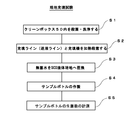
- FIG. 2 is a flowchart of a medium filling test (medium filling step) for verifying and confirming the “sterility level” of the PET bottle container of the PET bottle aseptic filling system 100 according to the present invention.
- This culture medium filling test is performed on the basis of “the number of viable bacteria per unit container” of a plastic bottle container composed of a plastic bottle (body part) produced in the bottle production part 10 and a cap (lid part) supplied from the cap sterilization part 40.
- the “sterilization treatment” supplied from the cap sterilization unit 40 is performed after aseptically filling the “sterilized medium” on the PET bottle produced by the bottle production unit 10 without operating the bottle sterilization device 21. After sealing with a “finished cap” and storing for a predetermined number of days, the number of viable bacteria in the sample bottle was measured.
- the type of the PET bottle to be used was a 500 ml PET bottle, and the medium used was an SCD (Soybean / Casein / Digest) liquid medium.
- step S1 the inside of the clean box 50 is sterilized and washed.
- the apparatus surface (outer surface) was wiped off with disinfection alcohol, and the box surface (inner surface) was also wiped off with disinfection alcohol.
- the filling sealing part 30 filling machine 31, the clamping machine 32
- medical solutions such as peracetic acid aqueous solution
- the inside of the clean box 50 was kept at a positive pressure of 30 [Pa] or more to prevent bacteria from entering the clean box 50 from the outside.
- step S2 the filling line (liquid feeding line) of the filling sealing part 30 and the filling machine 31 are sterilized by heating. That is, the filling line (liquid feeding line) was sterilized by heating with high-temperature, sterile water at 130 ° C. for 30 minutes, and then the liquid temperature was lowered and set to a predetermined temperature while maintaining the sterile positive pressure state in the clean box 50. Moreover, about the bottle line and the cap line, the container passage part was sterilized and hold
- the filling temperature (° C.) of the SCD liquid medium was 30 ° C.
- step S4 a sample bottle is produced.
- the bottle is blown from the preform to the plastic bottle blow-molded by the blow molding machine 12 without operating the bottle sterilization device 21 (or bypassing the bottle sterilization device 21).
- 500 ml of “medium” was filled and sealed with a “sterilized cap” by a winder 32 to prepare a sample bottle.
- the reason why the bottle sterilizer 21 is not allowed to act on the PET bottle is to allow germs that may adhere in the bottle manufacturing process to live on the “SCD liquid medium” without sterilization.
- step S5 the number of viable bacteria in the sample bottle is measured.
- the number of viable cells was measured by storing the above sample bottle filled with 500 ml of SCD liquid medium and sealed at 30 ° C. for 7 days, and checking whether the medium was turbid.
- the number of sample bottles measured was 1000.
- turbidity in the medium was positive (+), and turbidity in the medium was negative (-).
- the “minimum sterilization effect” Y [D] of the “bottle sterilizer 21” necessary for the “sterility level of the container” of the bottle aseptic filling system 100 to be 10 ⁇ 6 or less is obtained.
- the required “container sterility level” 10 ⁇ 6 [cfu / book] can be realized.
- the cap used in the culture medium filling test was a “sterilized cap”. That is, the number of viable bacteria obtained by the culture medium filling test actually corresponds to the “viable cell count per unit bottle (cfu / bottle)” of a single PET bottle produced by the bottle production unit 10. That is, the culture medium filling test using the “sterilized cap” is a test for verifying and confirming the so-called “sterility level” of the PET bottle manufactured by the container manufacturing unit 10.
- the bottle sterilizer 21 is operated for the plastic bottle to perform sterilization, and the cap is allowed to pass through without operating the cap sterilizer 41 or through the bypass line 42.
- the above-described steps S1 to S5 are carried out, so that the so-called “sterility level” of the cap unit is the same as the PET bottle unit. Can also be verified and confirmed.
- the sample bottle is produced using a PET bottle manufactured from a “sterilized preform”.
- FIG. 3 is a flowchart showing a bacteria adhesion test for verifying / confirming the “bactericidal effect of the bottle sterilizer 21” of the aseptic filling system 100 according to the present invention.
- the cap the cap supplied from the cap sterilization unit 40
- a PET bottle manufactured by the bottle manufacturing unit 10 whose number of viable bacteria is known and a “sterilized cap” (HDPE cap) supplied from the cap sterilization unit 40 are used.
- the same 500 ml plastic bottle as the said culture medium filling test was used for the model of a plastic bottle.
- “Bacillus pumilus ATCC 27142” was used as the indicator bacterium.
- the “indicator bacteria” as used herein is a resident bacterium that exhibits the strongest resistance to the sterilization method. If the bacterium is sterilized, it can be estimated that the sterilized product is sterilized. It is defined as a fungus.
- step S′1 a bacterial suspension having a predetermined concentration is prepared.
- concentration of the said indicator microbe in microbe suspension was 50 [cfu / ml].
- the plastic bottle adhering to this bacterial suspension was stored in a clean room (CLASS10000) for 24 hours to dry the inner surface of the bottle.
- an EB irradiation device is used as the bottle sterilization device 21, and an electron beam is irradiated to the PET bottle adhering to the bacterial suspension to absorb a predetermined amount of electron beam.
- the electron beam dose was 6 kGy.
- the bottle sterilizer 21 may be a chemical injection type such as a peracetic acid rinser.
- a bottle washer that flushes the medicine adhering to the PET bottle with aseptic water is separately required.
- step S'4 a sample bottle is prepared.
- a plastic bottle adhering to a predetermined amount of the electron beam adhering to the above-mentioned bacterial suspension was filled with 500 ml of heat-sterilized SCD liquid medium, and then sealed with a “sterilized cap” to prepare a sample bottle.
- step S'5 the number of viable bacteria in the sample bottle is measured.
- the sample bottle was stored in a clean room at 30 ° C. for 7 days in the same manner as in the medium filling test, and then the medium was checked for turbidity. Then, turbidity in the medium was positive (+), and no turbidity was observed in the medium (-). The number of sample bottles inspected was 100.
- the “container sterility level” can be achieved.
- PET bottles aseptic filling system 100 of the present invention by combining sanitary bottle blow (bottle manufacturing unit 10) and the sterilizing effect is less than 6D sterilizing machine (bottle sterilizer 21), 10 -6 [cfu / Book]
- 6D sterilizing machine bottle sterilizer 21
- 10 -6 [cfu / Book] The following “sterility level of container” can be suitably realized.
- an EB irradiation device is used as the bottle sterilization device 21, but a chemical injection type sterilizer can also be used.
- a peracetic acid aqueous solution can be used as the chemical solution.
- the sterilization conditions of the peracetic acid sterilizer are, for example, peracetic acid concentration: 1000 [ppm], peracetic acid temperature: 65 [° C.], and peracetic acid contact time: 8 [sec].
- FIG. 4 is a configuration explanatory diagram illustrating a PET bottle aseptic filling system 200 according to the second embodiment.
- the PF supply unit 11 in the PET bottle aseptic filling system 100 is constituted by a “bottle resin supply” 11a and a “PF molding machine” 11b, and the PF molding machine 11b is a blow molding machine.
- 12 is arranged in a clean box 50 having the same high cleanliness level as 12 and is manufactured so as to further improve the “sterility level” of the PET bottle alone by manufacturing the preform in an environment with a very high cleanliness level. Yes.
- the aseptic filling system 200 for PET bottles comprises the cap supply unit 60 by a “cap resin supply” 60a and a “cap molding machine” 60b, and the “cap molding machine” 60b is formed by the blow molding machine 12 and the PF molding machine.
- the cap By arranging the cap in a clean box 50 having the same high cleanliness as 11b and manufacturing the cap in an environment having a very high cleanliness, the “sterility level” of the cap itself is further improved. Therefore, in this PET bottle aseptic filling system 200, the content is filled in the PET bottle whose single “sterility level” is further improved, and is sealed by the cap which is further improved in the single “sterility level”. A PET bottled beverage will be produced.
- the “sterility level of the container” in the PET bottle aseptic filling system 200 is further improved as compared with the PET bottle aseptic filling system 100.
- the PF supply unit 11 has the above-described configuration (the “PF molding machine” 11b is installed in the clean box 50), and the cap supply unit 60 is installed in a general environment.
- the cap supply unit 60 may be configured as described above (the “cap forming machine” 60b is installed in the clean box 50), and the PF supply unit 11 may be installed in a general environment.
- the “container sterility level” is further improved as compared with the PET bottle aseptic filling system 100.
- PET bottle aseptic filling system 100 (1) Bottle sterilizer 21: Electron beam (EB) irradiation device (2) Cap sterilizer 41: Electron beam (EB) irradiation device or (1 ′) Bottle sterilizer 21: Peracetic acid sterilizer (2 ′) Cap sterilizer 41: Peracetic acid sterilizer PET bottle aseptic filling system 200 (1) Bottle sterilizer 21: Electron beam (EB) irradiation device (2) Cap sterilizer 41: Electron beam (EB) irradiation device
- the said embodiment is embodiment which applied this invention to the plastic bottle container, it is not restricted to this,
- the same can be applied.
- the structure of this invention when a container is a can container or a cup container replaces in the said PET bottle aseptic filling system 100,200 as follows.
- -PF supply unit 11-> can body supply unit-Bottle manufacturing unit 10-> can body manufacturing unit-Bottle sterilization unit 20 (bottle sterilization device 21)-> can body sterilization unit (can body sterilization device) -Cap supply unit 60-> Can lid supply unit-Cap sterilization unit 40 (cap sterilization device 41)-> Can lid sterilization unit (can lid sterilization device) -Winding machine 32-> Double winding device
- EB electron beam
- the configuration of the present invention in the case where the container is a cup container is the one replaced as follows in the PET bottle aseptic filling system 100, 200.
- both a cup sterilizer and a cover material sterilizer are electron beam (EB) irradiation apparatuses.
- EB electron beam
- the “container sterility level” verification method in the aseptic filling system of the present invention can be preferably applied to the verification operation of the sterility level of a container-packed beverage manufactured in an aseptic environment.
- the aseptic filling system of the present invention can be suitably applied to filling and sealing of container-packed beverages that require a “container sterility level” of 10 ⁇ 6 [cfu / book] or less.
Landscapes
- Health & Medical Sciences (AREA)
- Epidemiology (AREA)
- Life Sciences & Earth Sciences (AREA)
- Animal Behavior & Ethology (AREA)
- General Health & Medical Sciences (AREA)
- Public Health (AREA)
- Veterinary Medicine (AREA)
- Filling Of Jars Or Cans And Processes For Cleaning And Sealing Jars (AREA)
Abstract
無菌充填システムにおける「容器の無菌性レベル」を簡易かつ合理的に検証することができる検証方法と、無菌充填システムに要求される「容器の無菌性レベル」を「殺菌効果が6D未満」の殺菌装置によって簡易かつ合理的に実現することが出来る無菌充填システムを提供する。 ボトル製造部10で製造されるペットボトルの「単位ボトル当たりの生菌数」が100[cfu/本]未満となるように、クリーンボックス50の内面および装置外表面を殺菌処理する。そして、「培地充填試験」から実際のペットボトル容器の「単位容器当たりの生菌数」(=X*[cfu/ボトル])を定量的に求め、そして、要求される「容器の無菌性レベル」Z=10-6[cfu/本]に対し、「ボトル殺菌装置21」のミニマム殺菌効果(=Y[D])を、Log(X*)+6≦Y<6の範囲で選定する。
Description
本発明は、無菌充填システムにおける「容器の無菌性レベル」検証方法および無菌充填システム、特に、無菌充填システムにおける「容器の無菌性レベル」を簡易かつ合理的に検証することができる検証方法と、無菌充填システムに要求される「容器の無菌性レベル」を「殺菌効果が6D未満」の殺菌装置によって簡易かつ合理的に実現することが出来る無菌充填システムに関する。
「殺菌されたボトル(容器)」に「殺菌された飲料(内容物)」を「無菌環境下」で充填・キャッピングするアセプティック充填システム(無菌充填システム)が実用化されている。ところで、学術上、「殺菌」とは微生物を死滅させることであり、「滅菌」とは、物質中のすべての微生物を死滅させるか除去することであり、さらに「無菌」とは物質中に微生物が存在しないことと定義されている。実務上の「無菌性レベル」は、滅菌処理後の微生物が生存する確率(生菌率)を基に規定されている。また、国際的な無菌性保証レベル(sterility assurance level:SAL)は、10-6(滅菌処理後の微生物の生存する確率が100万分の1)とされている。この定義規定を上記無菌充填システムに当てはめると、無菌充填システムの「無菌性保証レベル」とは、その充填システムで製造される容器詰め飲料を100万本検査して、検出される菌数が高々(最大で)1[cfu]だけという極めてゼロに近い確率である。
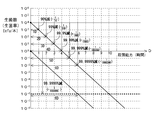
通常、無菌充填システムにおいては、飲料を充填する容器は、製造された後に、容器の内容物充填システムによって内容物(飲料)が充填密封され、製品として市場へ出荷される。従って、容器は、その内容物充填システム(容器殺菌装置)で滅菌処理が成された後で上記アセプティック充填システムに供されることになる。図5は、生菌数(生菌率)と殺菌能力との相関を示す微生物死滅曲線のグラフである。殺菌装置の殺菌能力は、菌数を10分の1にする殺菌効果によって規定される。例えば、菌数を104[cfu/本]から100[cfu/本]に減少させる殺菌装置の殺菌効果は4Dである。また、菌数を100から10-6[cfu/本]に減少させる殺菌装置の殺菌効果は6Dである。
従来、ペットボトル無菌充填システムにおけるボトル殺菌装置としては、殺菌効果が6D超過の過酢酸殺菌装置が知られている(例えば、特許文献1の[0032]を参照。)。また、殺菌効果が6Dのボトル殺菌機を使用したペットボトル無菌充填システムも知られている(例えば、非特許文献1を参照。)。このように、一般的に、ペットボトル無菌充填システムにおける「容器の無菌性レベル」の検証は、100万本のペットボトル詰め飲料を検査するのではなく、ボトル殺菌装置の殺菌効果が6D又はそれ以上であることを以て、「容器の無菌性レベル」が上記「無菌性保証レベル」10-6[cfu/本]以下を満足しているとみなしている。
なお、殺菌効果が6Dの殺菌装置は、非常に高価であり、ペットボトル無菌充填システムに殺菌効果が6Dの殺菌装置を導入する場合は、ペットボトル無菌充填システムの製造コストが増大することになる。また、その他の「容器の無菌性レベル」検証方法としては、その殺菌装置に対し最も抵抗性の強い菌、いわゆる指標菌を用い、初期菌数を高めに設定、例えば106個に設定し、そのD値(1/10に減少させる時間)×12の時間をかけて滅菌処理(106→10-6)したことを以て、上記「無菌性保証レベル」を達成したとする滅菌バリデーション法も用いられている。何れにしても、無菌充填システムにおける「容器の無菌性レベル」の検証は、大変な労力(作業)である。
ところで、容器の滅菌処理工程を軽減するために、容器を製造するためのプリフォーム成形機とブロー成形機を予め無菌チャンバ内に配置し、容器に対する滅菌工程を省略した飲料包装装置が知られている(例えば、特許文献2を参照。)。
また、プリフォーム成形機とブロー成形機だけでなく、容器の材料となるレジン供給装置、レジン前処理装置、キャップ供給装置、キャップ滅菌装置等までもクリーンルーム内に配置して、全工程を無菌環境下で一貫して行うことが出来るように構成されているプラスチックボトルの無菌設備が知られている(例えば、特許文献3を参照。)。
上述した通り、容器(ペットボトル)は、成形された後、外部環境より無菌充填システムに導入されるため、一般環境を想定した高い菌汚染率を想定しなければならず、そのため、充填密封システムに対しては、高い殺菌効果の殺菌装置が要求される。ペットボトルを滅菌する方法としては、過酢酸水溶液あるいは過酸化水素水溶液等の薬剤を、ボトルの内外周面に薬剤を噴射することで滅菌する方法、あるいは、ペットボトルをこれらの薬剤中に浸漬することで滅菌する方法等がある。
また、近年、容器の殺菌装置として電子線照射装置が注目されている(例えば、非特許文献2を参照。)。この電子線照射装置は、電子線(Electron Beam)の持つ強い殺菌効果を利用した殺菌装置で、薬剤を使用した殺菌方式に比較して、薬液を一切使用することがなく、また薬剤を噴射するノズルや薬剤を洗い流す無菌洗浄水に係る設備等が不要となりシステムの構成が簡素になるメリットがある。この電子線照射装置を無菌充填システムに導入することは、無菌充填システムのコストダウンに合理的である。更に、電子線は容器を透過するため、薬剤に比べ、容器を傷めにくいメリットもある。
通常、無菌充填システムにおいては、飲料を充填する容器は、製造された後に、容器の内容物充填システムによって内容物(飲料)が充填密封され、製品として市場へ出荷される。従って、容器は、その内容物充填システム(容器殺菌装置)で滅菌処理が成された後で上記アセプティック充填システムに供されることになる。図5は、生菌数(生菌率)と殺菌能力との相関を示す微生物死滅曲線のグラフである。殺菌装置の殺菌能力は、菌数を10分の1にする殺菌効果によって規定される。例えば、菌数を104[cfu/本]から100[cfu/本]に減少させる殺菌装置の殺菌効果は4Dである。また、菌数を100から10-6[cfu/本]に減少させる殺菌装置の殺菌効果は6Dである。
従来、ペットボトル無菌充填システムにおけるボトル殺菌装置としては、殺菌効果が6D超過の過酢酸殺菌装置が知られている(例えば、特許文献1の[0032]を参照。)。また、殺菌効果が6Dのボトル殺菌機を使用したペットボトル無菌充填システムも知られている(例えば、非特許文献1を参照。)。このように、一般的に、ペットボトル無菌充填システムにおける「容器の無菌性レベル」の検証は、100万本のペットボトル詰め飲料を検査するのではなく、ボトル殺菌装置の殺菌効果が6D又はそれ以上であることを以て、「容器の無菌性レベル」が上記「無菌性保証レベル」10-6[cfu/本]以下を満足しているとみなしている。
なお、殺菌効果が6Dの殺菌装置は、非常に高価であり、ペットボトル無菌充填システムに殺菌効果が6Dの殺菌装置を導入する場合は、ペットボトル無菌充填システムの製造コストが増大することになる。また、その他の「容器の無菌性レベル」検証方法としては、その殺菌装置に対し最も抵抗性の強い菌、いわゆる指標菌を用い、初期菌数を高めに設定、例えば106個に設定し、そのD値(1/10に減少させる時間)×12の時間をかけて滅菌処理(106→10-6)したことを以て、上記「無菌性保証レベル」を達成したとする滅菌バリデーション法も用いられている。何れにしても、無菌充填システムにおける「容器の無菌性レベル」の検証は、大変な労力(作業)である。
ところで、容器の滅菌処理工程を軽減するために、容器を製造するためのプリフォーム成形機とブロー成形機を予め無菌チャンバ内に配置し、容器に対する滅菌工程を省略した飲料包装装置が知られている(例えば、特許文献2を参照。)。
また、プリフォーム成形機とブロー成形機だけでなく、容器の材料となるレジン供給装置、レジン前処理装置、キャップ供給装置、キャップ滅菌装置等までもクリーンルーム内に配置して、全工程を無菌環境下で一貫して行うことが出来るように構成されているプラスチックボトルの無菌設備が知られている(例えば、特許文献3を参照。)。
上述した通り、容器(ペットボトル)は、成形された後、外部環境より無菌充填システムに導入されるため、一般環境を想定した高い菌汚染率を想定しなければならず、そのため、充填密封システムに対しては、高い殺菌効果の殺菌装置が要求される。ペットボトルを滅菌する方法としては、過酢酸水溶液あるいは過酸化水素水溶液等の薬剤を、ボトルの内外周面に薬剤を噴射することで滅菌する方法、あるいは、ペットボトルをこれらの薬剤中に浸漬することで滅菌する方法等がある。
また、近年、容器の殺菌装置として電子線照射装置が注目されている(例えば、非特許文献2を参照。)。この電子線照射装置は、電子線(Electron Beam)の持つ強い殺菌効果を利用した殺菌装置で、薬剤を使用した殺菌方式に比較して、薬液を一切使用することがなく、また薬剤を噴射するノズルや薬剤を洗い流す無菌洗浄水に係る設備等が不要となりシステムの構成が簡素になるメリットがある。この電子線照射装置を無菌充填システムに導入することは、無菌充填システムのコストダウンに合理的である。更に、電子線は容器を透過するため、薬剤に比べ、容器を傷めにくいメリットもある。
"PETボトル無菌充填システムにおける殺菌技術の研究"、[online]、平成11年7月27日[平成20年7月24日検索]、インターネット<URL:http://www.mhi.co.jp/technology/review/pdf/342/342104.pdf>
"世界発の電子線殺菌 PETボトル無菌充填システムの開発"、[online]、平成18年9月25日[平成20年7月24日検索]、インターネット<URL:http://www.shibuya.co.jp/outline/ir/NewsReleasePDF/news20060925-1.PDF>
上述した通り、無菌充填システムの「容器の無菌性レベル」としては、生菌率が10-6[cfu/本]であることが一般に要求されている。従って、無菌充填システムの「容器の無菌性レベル」が10-6[cfu/本]であることを検証し保証する方式としては、上記従来技術に見られるように、殺菌効果が6D又はそれ以上の殺菌装置を無菌充填システムに導入することが最も確実、かつ簡単である。
しかし、殺菌効果が6D又はそれ以上の殺菌装置は非常に高価であり、無菌充填システムのコストが高騰する問題がある。また、これらの殺菌装置が設置されている場合であっても実際の無菌充填システムにおける「容器の無菌性レベル」の検証は、複雑で多大な労力を必要とする問題がある。また、殺菌装置の殺菌効果が6D未満の場合は、無菌充填システムに要求される「容器の無菌性レベル」(=10-6[cfu/本])を実現することが難しいという問題もある。
そこで、本発明は、かかる従来技術の問題点に鑑みなされたものであって、その目的は、無菌充填システムにおける「容器の無菌性レベル」を簡易かつ合理的に検証することができる検証方法と、無菌充填システムに要求される「容器の無菌性レベル」を「殺菌効果が6D未満」の殺菌装置によって簡易かつ合理的に実現することが出来る無菌充填システムを提供することにある。
しかし、殺菌効果が6D又はそれ以上の殺菌装置は非常に高価であり、無菌充填システムのコストが高騰する問題がある。また、これらの殺菌装置が設置されている場合であっても実際の無菌充填システムにおける「容器の無菌性レベル」の検証は、複雑で多大な労力を必要とする問題がある。また、殺菌装置の殺菌効果が6D未満の場合は、無菌充填システムに要求される「容器の無菌性レベル」(=10-6[cfu/本])を実現することが難しいという問題もある。
そこで、本発明は、かかる従来技術の問題点に鑑みなされたものであって、その目的は、無菌充填システムにおける「容器の無菌性レベル」を簡易かつ合理的に検証することができる検証方法と、無菌充填システムに要求される「容器の無菌性レベル」を「殺菌効果が6D未満」の殺菌装置によって簡易かつ合理的に実現することが出来る無菌充填システムを提供することにある。
前記目的を達成するために、請求項1に記載の無菌充填システムにおける「容器の無菌性レベル」検証方法では、容器製造部と、容器を殺菌する殺菌部と、殺菌処理済み容器に内容物を充填・密封する充填密封部とを備えた無菌充填システムの「容器の無菌性レベル」検証方法であって、
前記容器製造部で製造される容器の「単位容器当たりの生菌数」と、前記殺菌部における「殺菌装置の殺菌効果」とを組み合わせることにより前記無菌充填システムにおける「容器の無菌性レベル」を検証することを特徴とする。
無菌充填システムにおける「容器の無菌性レベル」の検証は、最終製品である「容器詰め飲料」の「無菌性レベル」を検証することにより行われる。従って、その容器詰め飲料の無菌性レベルが要求レベル(例えば、10-6[cfu/本]以下)を満足していれば、その上流側のプロセス(例えば容器製造部)の無菌性レベルを具体的数値で定量的に検証する必要は特にはない。しかし、本願発明者は、「殺菌装置の殺菌効果」に着目して、最終製品である「容器詰め飲料」の「無菌性レベル」を直接に検証することはせずに、先ず充填密封部の上流側(容器製造部)の「単位容器当たりの生菌数(生菌率)」を検証し、その生菌数(生菌率)に「殺菌装置の殺菌効果」を組み合わせることにより、最終製品である「容器詰め飲料」の「無菌性レベル」、すなわち「無菌充填システムにおける容器の無菌性レベル」を間接的に検証出来ることを見出した。なお、ここで言う「容器」とは、「胴部」と「蓋部」から成り、内容物を胴部に詰め蓋部によって密封するものである。
そこで、上記無菌充填システムにおける「容器の無菌性レベル」検証方法では、先ず充填密封部の上流側に当たる容器製造部における「単位容器当たりの生菌数」を初菌率とし、その初菌率に殺菌部における「殺菌装置の殺菌効果」を組み合わせることにより、最終製品である「容器詰め飲料」の「無菌性レベル」、すなわち「無菌充填システムにおける容器の無菌性レベル」を簡易かつ合理的に検証することが出来るようにした。
前記容器製造部で製造される容器の「単位容器当たりの生菌数」と、前記殺菌部における「殺菌装置の殺菌効果」とを組み合わせることにより前記無菌充填システムにおける「容器の無菌性レベル」を検証することを特徴とする。
無菌充填システムにおける「容器の無菌性レベル」の検証は、最終製品である「容器詰め飲料」の「無菌性レベル」を検証することにより行われる。従って、その容器詰め飲料の無菌性レベルが要求レベル(例えば、10-6[cfu/本]以下)を満足していれば、その上流側のプロセス(例えば容器製造部)の無菌性レベルを具体的数値で定量的に検証する必要は特にはない。しかし、本願発明者は、「殺菌装置の殺菌効果」に着目して、最終製品である「容器詰め飲料」の「無菌性レベル」を直接に検証することはせずに、先ず充填密封部の上流側(容器製造部)の「単位容器当たりの生菌数(生菌率)」を検証し、その生菌数(生菌率)に「殺菌装置の殺菌効果」を組み合わせることにより、最終製品である「容器詰め飲料」の「無菌性レベル」、すなわち「無菌充填システムにおける容器の無菌性レベル」を間接的に検証出来ることを見出した。なお、ここで言う「容器」とは、「胴部」と「蓋部」から成り、内容物を胴部に詰め蓋部によって密封するものである。
そこで、上記無菌充填システムにおける「容器の無菌性レベル」検証方法では、先ず充填密封部の上流側に当たる容器製造部における「単位容器当たりの生菌数」を初菌率とし、その初菌率に殺菌部における「殺菌装置の殺菌効果」を組み合わせることにより、最終製品である「容器詰め飲料」の「無菌性レベル」、すなわち「無菌充填システムにおける容器の無菌性レベル」を簡易かつ合理的に検証することが出来るようにした。
請求項2に記載の無菌充填システムにおける「容器の無菌性レベル」検証方法では、前記容器製造部で製造される容器に対し、前記殺菌装置を稼働させることなく「滅菌処理済み培地」を無菌環境下で充填・密封・保存することにより前記「単位容器当たりの生菌数」を確認する培地充填工程と、
生菌数が既知の容器に対し所定濃度の指標菌を付着・乾燥させ、該容器に前記殺菌装置を稼働させた後に、「滅菌処理済みの培地」を無菌環境下で充填・密封・保存することにより前記「殺菌装置の殺菌効果」を確認する菌付着工程と
を組み合わせることにより前記無菌充填システムにおける「容器の無菌性レベル」を検証することとした。
上記無菌充填システムにおける「容器の無菌性レベル」検証方法では、先ず充填密封部の上流側に当たる容器製造部における「単位容器当たりの生菌数」を培地充填工程にて確認する。つまり、培地充填工程は殺菌装置を稼働させないため、培地充填工程の結果から、容器製造部における「単位容器当たりの生菌数」を定量的に求めることが出来る。次に、殺菌部における「殺菌装置の殺菌効果」を菌付着工程にて確認する。つまり、予めその生菌数が既知の容器に対し殺菌装置を十分に稼働させた後に、「滅菌処理済みの培地」を無菌充填・密封しその容器を所定の日数保存し、容器の生菌数を定量的に求め、その生菌数の減少比から「殺菌装置の殺菌効果」を定量的に求めることが出来る。従って、容器製造部にて製造された容器が、充填密封部にて内容物を無菌充填・密封される時、上記容器製造部における「単位容器当たりの生菌数」と、上記殺菌部における「殺菌装置の殺菌効果」とを組み合わせることにより、無菌充填システムにおける容器の無菌性レベルを簡易かつ合理的に検証することが出来る。
生菌数が既知の容器に対し所定濃度の指標菌を付着・乾燥させ、該容器に前記殺菌装置を稼働させた後に、「滅菌処理済みの培地」を無菌環境下で充填・密封・保存することにより前記「殺菌装置の殺菌効果」を確認する菌付着工程と
を組み合わせることにより前記無菌充填システムにおける「容器の無菌性レベル」を検証することとした。
上記無菌充填システムにおける「容器の無菌性レベル」検証方法では、先ず充填密封部の上流側に当たる容器製造部における「単位容器当たりの生菌数」を培地充填工程にて確認する。つまり、培地充填工程は殺菌装置を稼働させないため、培地充填工程の結果から、容器製造部における「単位容器当たりの生菌数」を定量的に求めることが出来る。次に、殺菌部における「殺菌装置の殺菌効果」を菌付着工程にて確認する。つまり、予めその生菌数が既知の容器に対し殺菌装置を十分に稼働させた後に、「滅菌処理済みの培地」を無菌充填・密封しその容器を所定の日数保存し、容器の生菌数を定量的に求め、その生菌数の減少比から「殺菌装置の殺菌効果」を定量的に求めることが出来る。従って、容器製造部にて製造された容器が、充填密封部にて内容物を無菌充填・密封される時、上記容器製造部における「単位容器当たりの生菌数」と、上記殺菌部における「殺菌装置の殺菌効果」とを組み合わせることにより、無菌充填システムにおける容器の無菌性レベルを簡易かつ合理的に検証することが出来る。
請求項3に記載の無菌充填システムにおける「容器の無菌性レベル」検証方法では、前記培地充填工程から得られる前記容器製造部で製造される容器の「単位容器当たりの生菌数」をX*[cfu/本]と、前記菌付着工程から得られる前記「殺菌装置の殺菌効果」をY*[D]とする時、前記無菌充填システムにおける「容器の無菌性レベル」Z*[cfu/本]を、Z*=X*・10-Y*[cfu/本]とすることとした。
上述した通り、殺菌効果が1[D]とは、生菌数を1/10に減少させる殺菌能力であるから、殺菌効果がY[D]とは、生菌数を1/10Y=10-Yに減少させる殺菌能力である。これは、容器製造部から充填密封部に供給される容器をその殺菌装置によって殺菌処理を行うことにより、その「単位容器当たりの生菌数」を10-Yに減少させることが出来ることを意味している。従って、容器製造部における実際の「単位容器当たりの生菌数」X*[cfu/本]と、殺菌部における実際の「殺菌装置の殺菌効果」Y*[D]と、無菌充填システムにおける実際の「容器の無菌性レベル」Z*[cfu/本]との間には、Z*=X*・10-Y*という関係式が成立する。例えば、X*=10-2[cfu/本]、Y*=4[D]の場合は、Z*=X*・10-Y*=10-2・10-4=10-6[cfu/本]となる。
従って、上記無菌充填システムにおける「容器の無菌性レベル」検証方法では、上記「培地充填工程」から得られた容器製造部における実際の「単位容器当たりの生菌数」X*[cfu/本]と、上記「菌付着工程」から得られた殺菌部における実際の「殺菌装置の殺菌効果」Y*[D]とを上記関係式に当てはめることにより、無菌充填システムにおける「容器の無菌性レベル」(=Z*[cfu/本])を簡易かつ合理的に検証することが出来る。
上述した通り、殺菌効果が1[D]とは、生菌数を1/10に減少させる殺菌能力であるから、殺菌効果がY[D]とは、生菌数を1/10Y=10-Yに減少させる殺菌能力である。これは、容器製造部から充填密封部に供給される容器をその殺菌装置によって殺菌処理を行うことにより、その「単位容器当たりの生菌数」を10-Yに減少させることが出来ることを意味している。従って、容器製造部における実際の「単位容器当たりの生菌数」X*[cfu/本]と、殺菌部における実際の「殺菌装置の殺菌効果」Y*[D]と、無菌充填システムにおける実際の「容器の無菌性レベル」Z*[cfu/本]との間には、Z*=X*・10-Y*という関係式が成立する。例えば、X*=10-2[cfu/本]、Y*=4[D]の場合は、Z*=X*・10-Y*=10-2・10-4=10-6[cfu/本]となる。
従って、上記無菌充填システムにおける「容器の無菌性レベル」検証方法では、上記「培地充填工程」から得られた容器製造部における実際の「単位容器当たりの生菌数」X*[cfu/本]と、上記「菌付着工程」から得られた殺菌部における実際の「殺菌装置の殺菌効果」Y*[D]とを上記関係式に当てはめることにより、無菌充填システムにおける「容器の無菌性レベル」(=Z*[cfu/本])を簡易かつ合理的に検証することが出来る。
前記目的を達成するために、請求項4に記載の無菌充填システムは、容器製造部と、容器を殺菌する殺菌部と、殺菌処理済み容器に内容物を充填し滅菌処理済み蓋部で密封する充填密封部とを備えた無菌充填システムであって、
前記容器製造部で製造される容器の「単位容器当たりの生菌数」と、前記殺菌部における「殺菌装置の殺菌効果」とを組み合わせることにより、前記無菌充填システムにおける「容器の無菌性レベル」を検証することを特徴とする。
上記無菌充填システムでは、上記請求項1に記載の無菌充填システムにおける「容器の無菌性レベル」検証方法を好適に実施することができ、更に簡易かつ合理的に無菌充填システムに要求される「容器の無菌性レベル」を実現(保証)することが出来る。
前記容器製造部で製造される容器の「単位容器当たりの生菌数」と、前記殺菌部における「殺菌装置の殺菌効果」とを組み合わせることにより、前記無菌充填システムにおける「容器の無菌性レベル」を検証することを特徴とする。
上記無菌充填システムでは、上記請求項1に記載の無菌充填システムにおける「容器の無菌性レベル」検証方法を好適に実施することができ、更に簡易かつ合理的に無菌充填システムに要求される「容器の無菌性レベル」を実現(保証)することが出来る。
請求項5に記載の無菌充填システムでは、前記容器製造部で製造される容器の「単位容器当たりの生菌数」は、前記容器製造部で製造される容器に対し、前記殺菌装置を稼働させることなく「滅菌処理済み培地」を無菌環境下で充填・密封・保存することにより取得し、
一方、前記「殺菌装置の殺菌効果」は、生菌数が既知の容器に対し所定濃度の指標菌を付着・乾燥させ、該容器に該殺菌装置を稼働させた後に、「滅菌処理済みの培地」を無菌環境下で充填・密封・保存することにより取得することとした。
上記無菌充填システムでは、上記請求項2に記載の無菌充填システムにおける「容器の無菌性レベル」検証方法を好適に実施することができ、更に簡易かつ合理的に無菌充填システムに要求される「容器の無菌性レベル」を実現(保証)することが出来る。
一方、前記「殺菌装置の殺菌効果」は、生菌数が既知の容器に対し所定濃度の指標菌を付着・乾燥させ、該容器に該殺菌装置を稼働させた後に、「滅菌処理済みの培地」を無菌環境下で充填・密封・保存することにより取得することとした。
上記無菌充填システムでは、上記請求項2に記載の無菌充填システムにおける「容器の無菌性レベル」検証方法を好適に実施することができ、更に簡易かつ合理的に無菌充填システムに要求される「容器の無菌性レベル」を実現(保証)することが出来る。
請求項6に記載の無菌充填システムでは、要求される無菌充填システムにおける「容器の無菌性レベル」(=Z[cfu/本])に対し、前記容器製造部で製造される容器の実際の「単位容器当たりの生菌数」(=X*[cfu/本])を基に、前記「容器の無菌性レベル」を実現するために必要な前記殺菌装置のミニマム殺菌効果(=Y[D])を、Y=Log(X*)-Log(Z)とすることとした。
上記無菌充填システムでは、「殺菌装置の殺菌効果」を利用して簡易かつ合理的に要求される無菌充填システムの「容器の無菌性レベル」を実現(保証)することが出来る。
上記無菌充填システムでは、「殺菌装置の殺菌効果」を利用して簡易かつ合理的に要求される無菌充填システムの「容器の無菌性レベル」を実現(保証)することが出来る。
請求項7に記載の無菌充填システムでは、前記容器製造部で製造される「単位容器当たりの生菌数」(=X*[cfu/本])が100[cfu/本]未満となるように、該容器製造部に対する殺菌処理が成されていることとした。
上記無菌充填システムでは、無菌充填システムに要求される「容器の無菌性レベル」がZ=10-6[cfu/本]である場合に、「殺菌装置」のミニマム殺菌効果(=Y[D])は、6[D]未満となる(∵Y=Log(X)+6<Log(100)+6=6[D])。つまり、殺菌効果が6[D]未満の殺菌装置を使用して、無菌充填システムに要求される「容器の無菌性レベル」(Z=10-6[cfu/本])を実現(保証)することが可能となる。
上記無菌充填システムでは、無菌充填システムに要求される「容器の無菌性レベル」がZ=10-6[cfu/本]である場合に、「殺菌装置」のミニマム殺菌効果(=Y[D])は、6[D]未満となる(∵Y=Log(X)+6<Log(100)+6=6[D])。つまり、殺菌効果が6[D]未満の殺菌装置を使用して、無菌充填システムに要求される「容器の無菌性レベル」(Z=10-6[cfu/本])を実現(保証)することが可能となる。
本発明の無菌充填システムにおける「容器の無菌性レベル」検証方法によれば、「無菌充填システムの容器の無菌性レベル」を簡易かつ合理的に検証することが出来る。
また、本発明の無菌充填システムによれば、上記「容器の無菌性レベル」検証方法を好適に実施することができ、更に簡易かつ合理的に無菌充填システムに要求される「容器の無菌性レベル」を実現(保証)することが出来る。特に、要求される上記「容器の無菌性レベル」が10-6[cfu/本]の場合、殺菌効果が6[D]未満の殺菌装置を使用して、上記「容器の無菌性レベル」(Z=10-6[cfu/本])を実現(保証)することが可能となる。
また、本発明の無菌充填システムによれば、上記「容器の無菌性レベル」検証方法を好適に実施することができ、更に簡易かつ合理的に無菌充填システムに要求される「容器の無菌性レベル」を実現(保証)することが出来る。特に、要求される上記「容器の無菌性レベル」が10-6[cfu/本]の場合、殺菌効果が6[D]未満の殺菌装置を使用して、上記「容器の無菌性レベル」(Z=10-6[cfu/本])を実現(保証)することが可能となる。
10 ボトル製造部
20 ボトル殺菌部
30 充填密封部
40 キャップ殺菌部
50 クリーンボックス
60 キャップ供給部
70 飲料供給部
80 飲料加熱殺菌機
100,200 ペットボトル無菌充填システム
20 ボトル殺菌部
30 充填密封部
40 キャップ殺菌部
50 クリーンボックス
60 キャップ供給部
70 飲料供給部
80 飲料加熱殺菌機
100,200 ペットボトル無菌充填システム
以下、図に示す実施の形態により本発明をさらに詳細に説明する。
図1は、本発明に係るペットボトル無菌充填システム100の構成を示す説明図である。
このペットボトル無菌充填システム100は、本発明に係る無菌充填システムの内、ペットボトル及びキャップを容器とするペットボトル詰め飲料に適用した場合の実施例である。このペットボトル無菌充填システム100の構成は、プリフォーム(PF)をボトル製造部10へ供給するPF供給部11と、プリフォームから二軸延伸ブローにより容器の胴部となるペットボトルを製造するボトル製造部10と、ペットボトルを殺菌処理するボトル殺菌部20と、ペットボトルに飲料を充填して「滅菌処理済みキャップ」にて密封する充填密封部30と、キャップを殺菌し充填機に供給するキャップ殺菌部40と、容器の蓋部となるキャップを供給するキャップ供給部60と、調合済み飲料を供給する飲料供給部70と、調合済み飲料を加熱殺菌する飲料加熱殺菌機80とを具備して構成されている。なお、点線部は、クリーンボックス50を示す。
このペットボトル無菌充填システム100は、本発明に係る無菌充填システムの内、ペットボトル及びキャップを容器とするペットボトル詰め飲料に適用した場合の実施例である。このペットボトル無菌充填システム100の構成は、プリフォーム(PF)をボトル製造部10へ供給するPF供給部11と、プリフォームから二軸延伸ブローにより容器の胴部となるペットボトルを製造するボトル製造部10と、ペットボトルを殺菌処理するボトル殺菌部20と、ペットボトルに飲料を充填して「滅菌処理済みキャップ」にて密封する充填密封部30と、キャップを殺菌し充填機に供給するキャップ殺菌部40と、容器の蓋部となるキャップを供給するキャップ供給部60と、調合済み飲料を供給する飲料供給部70と、調合済み飲料を加熱殺菌する飲料加熱殺菌機80とを具備して構成されている。なお、点線部は、クリーンボックス50を示す。
クリーンボックス50は、内部を一般環境と遮断し、清浄化された空気を内部に導入することにより内部を清浄かつ陽圧に保つ、機械設置環境の清浄化手段の一つである。この清浄化された空気は、一般環境からの空気をHEPAフィルタ或いはULPAフィルタを通過させることにより生成される。また、内部は、定期的に殺菌洗浄され、従って定期的に初期の無菌性レベルにリセットされる。リセット方法としては、薬剤噴射方式、薬剤ガス噴射方式、アルコール剤による清掃等がある。また、使用薬剤としては、過酢酸水溶液、過酸化水素水溶液、オゾン水溶液等を使用する。
また、詳細については、図2および図3を参照しながら後述するが、このペットボトル無菌充填システム100は、無菌充填システムにおける「容器(=ペットボトル+キャップ)の無菌性レベル」が、所望の無菌性レベルを満足することを簡易かつ合理的に検証・確認することができ、なお且つ、その無菌性レベルを実現するために最適な「容器の殺菌装置の殺菌効果」を決定することができ、特に殺菌効果が6[D]未満の殺菌装置を使用して、要求される「容器の無菌性レベル」(Z=10-6[cfu/本])を実現(保証)することが出来る構成となっている。つまり、ペットボトル無菌充填システム100は、図2に係る「培地充填試験」(培地充填工程)の結果(=X*[cfu/本])と、図3に係る「菌付着試験」(菌付着工程)の結果(=Y*[D])とを組み合わせることにより、ペットボトル無菌充填システム100における実際の「容器の無菌性レベル」(=Z*[cfu/本])を、
Z*=X*・10-Y*[cfu/本] ・・・・(1)
と簡易かつ合理的に検証することが出来るように構成されている。
また、これとは逆に、ペットボトル無菌充填システムに要求される「容器の無菌性レベル」が、Z[cfu/本]の場合は、上記(1)式において、Z*=Z、Y*=Yとおいて、Yについて解く(両辺の常用対数を取る)と、(1)←→Log(Z)=Log(X*)+Log10-Y←→Log(Z)=Log(X*)-Y←→Y=Log(X*)-Log(Z) ・・・・(2)
となる。つまり、要求される無菌充填システムの「無菌性レベル」(=Z[cfu/本])を実現するために必要な「容器(=キャップ+ペットボトル)の殺菌装置の殺菌効果」のミニマム殺菌効果(=Y[D])を、上記(2)式を用いることにより、簡易かつ合理的に決定することが出来る。特に、要求される無菌充填システムの「無菌性レベル」がZ=10-6[cfu/本]の場合、ペットボトル容器の「単位容器当たりの生菌数」(=X[cfu/本])が100[cfu/本]未満となるように、ボトル製造部10を殺菌処理することにより、ミニマム殺菌効果(=Y[D])が6[D]未満の殺菌装置を使用して要求される「容器の無菌性レベル」を実現することが出来る。すなわち、「単位容器当たりの生菌数」(=X*[cfu/本])が100[cfu/本]未満に殺菌処理されたボトル製造部10(∵キャップは「滅菌処理済みキャップ」である。)と、殺菌効果が6[D]未満の殺菌装置とを組み合わせることにより、ペットボトル無菌充填システム100に要求される「容器の無菌性レベル」(=Z[cfu/本])を好適に実現することが出来る。
Z*=X*・10-Y*[cfu/本] ・・・・(1)
と簡易かつ合理的に検証することが出来るように構成されている。
また、これとは逆に、ペットボトル無菌充填システムに要求される「容器の無菌性レベル」が、Z[cfu/本]の場合は、上記(1)式において、Z*=Z、Y*=Yとおいて、Yについて解く(両辺の常用対数を取る)と、(1)←→Log(Z)=Log(X*)+Log10-Y←→Log(Z)=Log(X*)-Y←→Y=Log(X*)-Log(Z) ・・・・(2)
となる。つまり、要求される無菌充填システムの「無菌性レベル」(=Z[cfu/本])を実現するために必要な「容器(=キャップ+ペットボトル)の殺菌装置の殺菌効果」のミニマム殺菌効果(=Y[D])を、上記(2)式を用いることにより、簡易かつ合理的に決定することが出来る。特に、要求される無菌充填システムの「無菌性レベル」がZ=10-6[cfu/本]の場合、ペットボトル容器の「単位容器当たりの生菌数」(=X[cfu/本])が100[cfu/本]未満となるように、ボトル製造部10を殺菌処理することにより、ミニマム殺菌効果(=Y[D])が6[D]未満の殺菌装置を使用して要求される「容器の無菌性レベル」を実現することが出来る。すなわち、「単位容器当たりの生菌数」(=X*[cfu/本])が100[cfu/本]未満に殺菌処理されたボトル製造部10(∵キャップは「滅菌処理済みキャップ」である。)と、殺菌効果が6[D]未満の殺菌装置とを組み合わせることにより、ペットボトル無菌充填システム100に要求される「容器の無菌性レベル」(=Z[cfu/本])を好適に実現することが出来る。
ボトル製造部10は、PF供給部11から搬送されて来るプリフォームを加熱した後、二軸延伸ブローにより、容器の胴部となるペットボトルを成形するブロー成形機12とから成る。また、上述した通り、「単位ペットボトル当たりの生菌数」(=X*[cfu/本])が100[cfu/本]未満となるように、クリーンボックス内面、およびブロー成形機等の装置外表面は、薬剤(例えば、除菌アルコール)によって殺菌処理が施されている。
ボトル殺菌部20は、ボトル製造部10から供給されるペットボトルを殺菌処理する。また、ボトル殺菌部20には、10-6[cfu/本]の「容器の無菌性レベル」(=Z[cfu/本])を実現するのに最適な殺菌効果を備えたボトル殺菌装置21が配設されている。ボトル殺菌装置21としては、例えば、EB照射装置、過酢酸水溶液および過酸化水素水溶液等の薬液をボトルに噴射するリンサー、或いは薬液をボトルに付着させ、ホットエアー等により加熱する殺菌装置等を使用することが出来る。また、ボトル殺菌装置21がリンサー等の薬剤噴射方式の場合は、ペットボトルに付着した薬剤を無菌水にて洗い流すためのボトル洗浄装置が別途必要となる。
また、バイパスライン22は、後述する「培地充填試験」(培地充填工程)のために設けられたものである。このバイパスライン22により、ボトル製造部10で製造されるペットボトルは、ボトル殺菌装置21を迂回して(ボトル殺菌装置21の殺菌作用を受けずに)、充填機31に供給される。あるいは、バイパスライン22を設けることなく、ボトル殺菌装置21を稼働させずにペットボトルがボトル殺菌装置21を単に通過するようにスルーラインを構成しても良い。なお、「培地充填試験」では、ボトル殺菌装置21を稼働させずにペットボトルをそのまま通過させ、他方、「菌付着試験」(菌付着工程)では、ボトル殺菌装置21を稼働させてペットボトルを殺菌処理するようにラインを構成している。
また、上述した通り、ペットボトル無菌充填システム100に要求される「容器の無菌性レベル」(=Z[cfu/本])が10-6[cfu/本]になるために必要なボトル殺菌装置21のミニマム殺菌効果Y[D]は、上記(2)式より、ボトル製造部10から供給されるペットボトル及びキャップ供給部から供給されるキャップの「単位容器当たりの生菌数」(「生菌率」)X*[cfu/本]に応じて、
Y=Log(X*)-Log(10-6)=Log(X*)+6 [D] ・・・(3)
に基づいて決定される。なお、上記(Log(X*)+6 [D])は、要求される「無菌性レベル」10-6[cfu/本]を実現するために必要な最小の殺菌効果であるから、実際の殺菌効果(=Y*[D])が、Y*≧Log(X*)+6 [D] ・・・(3')
であれば、「無菌性レベル」10-6[cfu/本]を実現することが出来る。
しかし、ペットボトル容器の無菌性レベル(=X*[cfu/本])が100[cfu/本]未満となるように、ボトル製造部10及びキャップに対する殺菌処理または滅菌処理が成されている為に、上記(3)式の「Log(X*)」は負である。すなわち、このペットボトル無菌充填システム100においては、10-6[cfu/本](=Z[cfu/本])の無菌性レベルを実現するために、殺菌効果が6[D]未満の「容器(=キャップ+ペットボトル)の殺菌装置」を使用することが出来る。なお、本実施の形態では、キャップは「滅菌処理済みのキャップ」を使用しているため、後述の「菌付着試験」から得られる「殺菌装置の殺菌効果」(=Y*[D])は、実際のところ、「ボトル殺菌装置21の殺菌効果」となる。
Y=Log(X*)-Log(10-6)=Log(X*)+6 [D] ・・・(3)
に基づいて決定される。なお、上記(Log(X*)+6 [D])は、要求される「無菌性レベル」10-6[cfu/本]を実現するために必要な最小の殺菌効果であるから、実際の殺菌効果(=Y*[D])が、Y*≧Log(X*)+6 [D] ・・・(3')
であれば、「無菌性レベル」10-6[cfu/本]を実現することが出来る。
しかし、ペットボトル容器の無菌性レベル(=X*[cfu/本])が100[cfu/本]未満となるように、ボトル製造部10及びキャップに対する殺菌処理または滅菌処理が成されている為に、上記(3)式の「Log(X*)」は負である。すなわち、このペットボトル無菌充填システム100においては、10-6[cfu/本](=Z[cfu/本])の無菌性レベルを実現するために、殺菌効果が6[D]未満の「容器(=キャップ+ペットボトル)の殺菌装置」を使用することが出来る。なお、本実施の形態では、キャップは「滅菌処理済みのキャップ」を使用しているため、後述の「菌付着試験」から得られる「殺菌装置の殺菌効果」(=Y*[D])は、実際のところ、「ボトル殺菌装置21の殺菌効果」となる。
充填密封部30は、予め加熱殺菌処理された充填ライン(送液ライン)を介して所定量の飲料をペットボトルに充填する充填機31と、キャップ殺菌部40から供給される「滅菌処理済みキャップ」で飲料充填済みペットボトルを密封する巻締機32とから成る。
キャップ殺菌部40は、キャップを殺菌処理するキャップ殺菌装置41と、キャップ殺菌装置41を迂回させてキャップを充填機31に搬送するバイパスライン42とから成る。なお、キャップ殺菌装置41としては、例えば、電子線(EB)照射殺菌装置、過酢酸水溶液および過酸化水素水溶液等の薬液をボトルに噴射するリンサー、或いは薬液をボトルに付着させ、ホットエアー等により加熱する殺菌装置等を使用することが出来る。また、キャップ殺菌装置41が過酢酸リンサー等の薬剤噴射方式の場合は、キャップに付着した薬剤を無菌水にて洗い流すためのキャップ洗浄装置が別途必要となる。また、バイパスライン42は、後述するように、未滅菌処理のキャップの「単位キャップ当たりの生菌数(cfu/個)」を確認・検証するためのラインである。また、上記バイパスライン22と同様に、キャップに対しキャップ殺菌装置41を稼働させずにスルーさせるようにラインを構成しても良い。
キャップ供給部60は、キャップ殺菌部40または充填密封部30へキャップを供給する。
図2は、本発明に係るペットボトル無菌充填システム100のペットボトル容器の「無菌性レベル」を検証・確認する培地充填試験(培地充填工程)のフローである。
この培地充填試験は、ボトル製造部10において製造されるペットボトル(胴部)と、キャップ殺菌部40から供給されるキャップ(蓋部)とから成るペットボトル容器の「単位容器当たりの生菌数(cfu/本)」(=X*[cfu/本])を定量的に求めるための試験である。
試験は、ボトル製造部10で製造されるペットボトルに対して、ボトル殺菌装置21を稼働させないで、「滅菌処理済みの培地」を無菌充填した後、キャップ殺菌部40から供給される「滅菌処理済みキャップ」で密封し、所定の日数だけ保存した後に、サンプルボトル内の生菌数を計測することにより行った。なお、使用するペットボトルの型は、500mlペットボトルとし、使用培地は、SCD(ソイビーン・カゼイン・ダイジェスト)液体培地とした。
この培地充填試験は、ボトル製造部10において製造されるペットボトル(胴部)と、キャップ殺菌部40から供給されるキャップ(蓋部)とから成るペットボトル容器の「単位容器当たりの生菌数(cfu/本)」(=X*[cfu/本])を定量的に求めるための試験である。
試験は、ボトル製造部10で製造されるペットボトルに対して、ボトル殺菌装置21を稼働させないで、「滅菌処理済みの培地」を無菌充填した後、キャップ殺菌部40から供給される「滅菌処理済みキャップ」で密封し、所定の日数だけ保存した後に、サンプルボトル内の生菌数を計測することにより行った。なお、使用するペットボトルの型は、500mlペットボトルとし、使用培地は、SCD(ソイビーン・カゼイン・ダイジェスト)液体培地とした。
先ず、ステップS1として、クリーンボックス50内を殺菌・洗浄する。ボトル製造部10(ブロー成形機12)については、除菌アルコールにより装置表面(外面)を拭きあげ、ボックス表面(内面)についても除菌アルコールにより拭きあげた。また、充填密封部30(充填機31、巻締機32)については、過酢酸水溶液等の薬液を噴射した後に、無菌水にて装置表面(外面)およびボックス表面(内面)を洗浄した。また、試験中は、クリーンボックス50内を30[Pa]以上の陽圧に保持し、菌が外界からクリーンボックス50内へ侵入することを防止した。
次に、ステップS2として、充填密封部30の充填ライン(送液ライン)および充填機31を加熱殺菌する。すなわち、充填ライン(送液ライン)を130℃の高温・無菌水で30分間加熱殺菌した後、クリーンボックス50内の無菌陽圧状態を保持したまま液温を下げ、所定温度に設定した。また、ボトルライン及びキャップラインについてはボトル殺菌装置21及びキャップ殺菌装置41を各々稼働させることにより、容器通過部を滅菌保持した。これにより、クリーンボックス50内は、滅菌処理されたことになる。
次に、ステップS3として、充填ライン(送液ライン)中の無菌水を、加熱滅菌したSCD液体培地(F0=15設定)に置換する。なお、SCD液体培地の充填温度(℃)は、30℃とした。
次に、ステップS4として、サンプルボトルを作製する。プリフォームからブロー成形機12によってブロー成形されたペットボトルに、ボトル殺菌装置21を稼働させないでスルーして(あるいはボトル殺菌装置21をバイパスして)、充填機31によってそのペットボトルに「SCD液体培地」を500ml充填し、巻締機32によって「滅菌処理済みキャップ」で密封し、サンプルボトルを作製した。なお、ボトル殺菌装置21をペットボトルに作用させないのは、ボトル製造工程で付着する可能性のある菌を殺菌せずに「SCD液体培地」上で生菌させる為である。
次に、ステップS5として、サンプルボトルの生菌数を計測する。生菌数の計測は、SCD液体培地を500ml充填密封した上記サンプルボトルを30℃で7日間保存し、培地の混濁の有無により行った。なお、計測したサンプルボトル数は、1000本とした。また、培地に混濁の認められるものを陽性(+)、培地に混濁が認められないものを陰性(-)とした。
生菌数の計測の結果、全1000本のサンプルボトルについて、培地による混濁が認められなかった。従って、ボトル製造部10において製造されるペットボトル(胴部)と、キャップ殺菌部40から供給されるキャップ(蓋部)とから成るペットボトル容器の「単位容器当たりの生菌数」(=X*[cfu/本])については、最確数法により計算すると、0.0010005[cfu/本](≒10-3[cfu/本])となった。従って、上記ペットボトル容器の「単位容器当たりの生菌数」は、X*=10-3[cfu/本]・・・・(4)となり、これを上記(3)式に代入すると、ペットボトル無菌充填システム100の「容器の無菌性レベル」が10-6以下になるために必要な「ボトル殺菌装置21」のミニマム殺菌効果」Y[D]が求まる。その結果、「ボトル殺菌装置21」のミニマム殺菌効果Y[D]は、Y=6+Log(10-3)=6-3=3[D]となる。つまり、殺菌効果が3[D]以上であれば、要求される「容器の無菌性レベル」10-6[cfu/本]を実現することが出来る。
上記培地充填試験によってペットボトル容器(=ペットボトル+キャップ)の「単位容器当たりの生菌数」(=X*[cfu/本])を定量的に得ることができた。ところで、上記培地充填試験において使用されたキャップは、「滅菌処理済みキャップ」であった。つまり、上記培地充填試験によって得られた生菌数は、実際のところ、ボトル製造部10で製造されるペットボトル単体の「単位ボトル当たりの生菌数(cfu/ボトル)」に相当する。つまり、「滅菌処理済みキャップ」を使用した上記培地充填試験は、容器製造部10で製造されるペットボトル単体の、いわゆる「無菌性レベル」を検証・確認する試験でもある。従って、これとは逆の、ペットボトルに対してはボトル殺菌装置21を稼働させて滅菌処理を行い、キャップについては、キャップ殺菌装置41を稼働させずにスルーさせ、或いはバイパスライン42を介してキャップ殺菌装置41の殺菌作用を受けずに充填機31に供給するように構成し、上記ステップS1からS5を実施することにより、ペットボトル単体と同様に、キャップ単体のいわゆる「無菌性レベル」についても検証・確認することが出来る。なお、キャップ単体の生菌数を検証・確認する場合、サンプルボトルは、「滅菌処理済みのプリフォーム」から製造されたペットボトルを用いて作製されることになる。
上記培地充填試験の結果、ボトル殺菌部20のボトル殺菌装置21に必要な殺菌効果は、3[D](=Y[D])以上である。続いて、図3に示す菌付着試験(チャレンジテスト)において、ボトル殺菌装置21の実際の殺菌効果(=Y*[D])を検証・確認し、併せて実際のペットボトル無菌充填システム100の「容器の無菌性レベル」(=Z*[cfu/本])についても検証・確認する。
図3は、本発明に係るペットボトル無菌充填システム100の「ボトル殺菌装置21の殺菌効果」を検証・確認する菌付着試験を示すフローである。
上記培地充填試験において、ペットボトル容器(=ペットボトル+キャップ)の初期菌数(ボトル製造部10において製造されるペットボトル(胴部)と、キャップ殺菌部40から供給されるキャップ(蓋部)とから成るペットボトル容器の「単位容器当たりの生菌数(=X*[cfu/本])」)は、X*=10-3[cfu/本]と定量的に得られた。従って、「ボトル殺菌装置21」の実際の殺菌効果(=Y*[D])が定量的に得られると、ペットボトル無菌充填システム100における実際の「容器の無菌性レベル」(=Z*[cfu/本])を上記(1)式を用いて定量的に得ることが出来る。
従って、この「菌付着試験」は、「ボトル殺菌装置21」の実際の殺菌効果(=Y*[D])を検証・確認する試験であると同時に、ペットボトル無菌充填システム100における実際の「容器の無菌性レベル」(=Z*[cfu/本])を検証・確認する試験でもある。
上記培地充填試験において、ペットボトル容器(=ペットボトル+キャップ)の初期菌数(ボトル製造部10において製造されるペットボトル(胴部)と、キャップ殺菌部40から供給されるキャップ(蓋部)とから成るペットボトル容器の「単位容器当たりの生菌数(=X*[cfu/本])」)は、X*=10-3[cfu/本]と定量的に得られた。従って、「ボトル殺菌装置21」の実際の殺菌効果(=Y*[D])が定量的に得られると、ペットボトル無菌充填システム100における実際の「容器の無菌性レベル」(=Z*[cfu/本])を上記(1)式を用いて定量的に得ることが出来る。
従って、この「菌付着試験」は、「ボトル殺菌装置21」の実際の殺菌効果(=Y*[D])を検証・確認する試験であると同時に、ペットボトル無菌充填システム100における実際の「容器の無菌性レベル」(=Z*[cfu/本])を検証・確認する試験でもある。
容器については、その生菌数が既知であるボトル製造部10で製造されるペットボトル、およびキャップ殺菌部40から供給される「滅菌処理済みキャップ」(HDPEキャップ)を使用する。なお、このペットボトル容器の初期生菌数(=X*[cfu/本])は、10-3[cfu/本]であるため、下記付着菌数(150[cfu/本])に比べはるかに小さいため、本菌付着試験においては無視しても差し支えない。また、ペットボトルの型式は、上記培地充填試験と同じ500mlのペットボトルを使用した。また、指標菌は、「Bacillus pumilus ATCC 27142」を使用した。なお、ここで言う「指標菌」とは、当該滅菌法に対して最も強い抵抗性を示す常在菌で、この菌が滅菌されていれば、被滅菌物は滅菌されていると推定しうる菌と定義する。
先ず、ステップS'1として、所定濃度の菌懸濁液を作製する。なお、菌懸濁液中の上記指標菌の濃度は、50[cfu/ml]とした。
次に、ステップS'2として、上記菌懸濁液(50[cfu/ml])を上記ペットボトル内面に付着させる。ボトルへの付着は、スプレーにて噴霧(0.3[ml/本])することにより行った。従って、この場合のペットボトルの付着菌数は、50[cfu/ml]×0.3[ml/本]=15[cfu/本]・・・・(5)となる。
この菌懸濁液付着のペットボトルをクリーンルーム(CLASS10000)内で24時間保存してボトル内面を乾燥させた。
この菌懸濁液付着のペットボトルをクリーンルーム(CLASS10000)内で24時間保存してボトル内面を乾燥させた。
次に、ステップS'3として、ボトル殺菌装置21として例えばEB照射装置を使用して、上記菌懸濁液付着のペットボトルに対し電子線を照射し所定量の電子線を吸収させる。なお、電子線の照射量は6kGyとした。なお、ボトル殺菌装置21としては、過酢酸リンサー装置等の薬剤噴射タイプでも良い。また、ボトル殺菌装置21が薬剤噴射タイプの場合は、ペットボトルに付着した薬剤を無菌水により洗い流すボトル洗浄機が別途必要となる。
次に、ステップS'4として、サンプルボトルを作製する。所定量の電子線を吸収させた上記菌懸濁液付着のペットボトルに、加熱殺菌したSCD液体培地500mlを充填し、その後に「滅菌処理済みキャップ」で密封しサンプルボトルを作製した。
次に、ステップS'5として、上記サンプルボトル中の生菌数を計測する。生菌数の計測方法としては、上記培地充填試験と同様に、上記サンプルボトルを30℃のクリーンルーム内に7日間保存した後、培地の混濁を検査することにより行った。そして、培地に混濁の認められるものを陽性(+)、培地に混濁が認められないものを(-)とした。また、検査したサンプルボトルの本数は100本とした。
生菌数の計測の結果、全100本のサンプルボトルについて、混濁が認められなかった。従って、最確数法により計算すると、サンプルボトルの生残菌数は、0.015005[cfu/本]・・・・(6)となった。従って、EB照射装置21の実際の殺菌効果(=Y*[D])は、上記(5)および(6)より、Y*=-Log(0.015005/15)=3.17[D]・・・・(7)である。
従って、上記(1)、(4)および(7)より、ペットボトル無菌充填システム100における実際の「容器の無菌性レベル」(=Z*[cfu/本])は、
Z*=X*・10-Y*=10-3・10-3.17=10-6.17[cfu/本]となり、10-6[cfu/本]以下であることを確認することが出来た。
Z*=X*・10-Y*=10-3・10-3.17=10-6.17[cfu/本]となり、10-6[cfu/本]以下であることを確認することが出来た。
以上より、本発明に係るペットボトル無菌充填システム100によれば、ペットボトル容器の「単位容器当たりの生菌数」(=X*[cfu/本])を検証・確認する「培地充填試験」(培地充填工程)と、「ボトル殺菌装置21の殺菌効果」(=Y*[D])を検証・確認する「菌付着試験」(菌付着工程)とを組み合わせることにより、簡易かつ合理的に無菌充填システムにおける「容器の無菌性レベル」(=Z*)を検証することができる。同時に、上記「培地充填試験」から実際のペットボトル容器の「無菌性レベル」(=X*[cfu/本])が既知となると、ペットボトル無菌充填システムに要求される「容器の無菌性レベル」(=Z[cfu/本])を実現するために必要な「容器(=キャップ+ペットボトル)の殺菌装置」のミニマム殺菌効果(=Y[D])を、簡易かつ合理的に決定することが出来る。
特に、要求される無菌充填システムの「無菌性レベル」がZ=10-6[cfu/本]の場合、ペットボトル容器の「単位容器当たりの生菌数」(=X*[cfu/本])が100[cfu/本]未満となるように、ボトル製造部10を殺菌処理することにより、殺菌効果(=Y*[D])が6[D]未満の殺菌装置を使用して要求される「容器の無菌性レベル」を実現することが出来る。すなわち、「単位容器当たりの生菌数」(=X*[cfu/本])が100[cfu/本]未満に殺菌処理されたボトル製造部10(∵キャップは「滅菌処理済みキャップ」である。)と、殺菌効果が6[D]未満のボトル殺菌装置21とを組み合わせることにより、要求される「容器の無菌性レベル」(=Z[cfu/本])を好適に実現することが出来る。つまり、本発明のペットボトル無菌充填システム100は、衛生的なボトルブロー(ボトル製造部10)と殺菌効果が6D未満の殺菌機(ボトル殺菌装置21)を組み合わせることにより、10-6[cfu/本]以下の「容器の無菌性レベル」を好適に実現することが出来る。
特に、要求される無菌充填システムの「無菌性レベル」がZ=10-6[cfu/本]の場合、ペットボトル容器の「単位容器当たりの生菌数」(=X*[cfu/本])が100[cfu/本]未満となるように、ボトル製造部10を殺菌処理することにより、殺菌効果(=Y*[D])が6[D]未満の殺菌装置を使用して要求される「容器の無菌性レベル」を実現することが出来る。すなわち、「単位容器当たりの生菌数」(=X*[cfu/本])が100[cfu/本]未満に殺菌処理されたボトル製造部10(∵キャップは「滅菌処理済みキャップ」である。)と、殺菌効果が6[D]未満のボトル殺菌装置21とを組み合わせることにより、要求される「容器の無菌性レベル」(=Z[cfu/本])を好適に実現することが出来る。つまり、本発明のペットボトル無菌充填システム100は、衛生的なボトルブロー(ボトル製造部10)と殺菌効果が6D未満の殺菌機(ボトル殺菌装置21)を組み合わせることにより、10-6[cfu/本]以下の「容器の無菌性レベル」を好適に実現することが出来る。
上記菌付着試験([0037]のステップS'3)において、ボトル殺菌装置21としてEB照射装置を使用しているが、薬剤噴射方式の殺菌機を使用することも可能である。薬剤噴射方式の場合、薬液として過酢酸水溶液を使用することが出来る。また、過酢酸殺菌装置の殺菌条件は、例えば過酢酸濃度:1000[ppm]、過酢酸温度:65[℃]、過酢酸接触時間:8[sec]である。因みに、「ボトル殺菌機」および「指標菌」以外は上記菌付着試験と同一試験条件とし、この過酢酸殺菌機を用いて上記ステップS'1からS'5を実施した時の殺菌効果は、3.17Dという結果が得られ、EB照射装置を用いた上記菌付着試験と同等な結果が得られた。なお、指標菌は、「Bacillus atrophaeus ATCC 9372」を使用した。
図4は、実施例2に係るペットボトル無菌充填システム200を示す構成説明図である。
このペットボトル無菌充填システム200は、上記ペットボトル無菌充填システム100におけるPF供給部11を、「ボトル用レジン供給」11aと「PF成形機」11bとによって構成し、PF成形機11bをブロー成形機12と同じ清浄度の極めて高いクリーンボックス50内に配置し、清浄度の極めて高い環境下でプリフォームを製造することにより、ペットボトル単体における「無菌性レベル」が更に向上するように構成されている。更に、ペットボトル無菌充填システム200は、同キャップ供給部60を「キャップ用レジン供給」60aと「キャップ成形機」60bとによって構成し、「キャップ成形機」60bをブロー成形機12およびPF成形機11bと同じ清浄度の極めて高いクリーンボックス50内に配置し、清浄度の極めて高い環境下でキャップを製造することにより、キャップ単体における「無菌性レベル」が更に向上するように構成されている。
従って、このペットボトル無菌充填システム200では、単体の「無菌性レベル」が更に向上した上記ペットボトルに内容物が充填され、同じく単体の「無菌性レベル」が更に向上した上記キャップによって密封されてペットボトル詰め飲料が製造されることになる。その結果、上記ペットボトル無菌充填システム200における「容器の無菌性レベル」が、上記ペットボトル無菌充填システム100に比べ更に向上する。
なお、上記ペットボトル無菌充填システム200において、PF供給部11は上記構成(「PF成形機」11bをクリーンボックス50内に設置する。)とし、且つキャップ供給部60を一般環境に設置し、或いはこれとは逆の、
キャップ供給部60は上記構成(「キャップ成形機」60bをクリーンボックス50内に設置する。)とし、且つPF供給部11を一般環境に設置しても良い。この場合も、ペットボトル無菌充填システム100に比べ「容器の無菌性レベル」は更に向上する。
このペットボトル無菌充填システム200は、上記ペットボトル無菌充填システム100におけるPF供給部11を、「ボトル用レジン供給」11aと「PF成形機」11bとによって構成し、PF成形機11bをブロー成形機12と同じ清浄度の極めて高いクリーンボックス50内に配置し、清浄度の極めて高い環境下でプリフォームを製造することにより、ペットボトル単体における「無菌性レベル」が更に向上するように構成されている。更に、ペットボトル無菌充填システム200は、同キャップ供給部60を「キャップ用レジン供給」60aと「キャップ成形機」60bとによって構成し、「キャップ成形機」60bをブロー成形機12およびPF成形機11bと同じ清浄度の極めて高いクリーンボックス50内に配置し、清浄度の極めて高い環境下でキャップを製造することにより、キャップ単体における「無菌性レベル」が更に向上するように構成されている。
従って、このペットボトル無菌充填システム200では、単体の「無菌性レベル」が更に向上した上記ペットボトルに内容物が充填され、同じく単体の「無菌性レベル」が更に向上した上記キャップによって密封されてペットボトル詰め飲料が製造されることになる。その結果、上記ペットボトル無菌充填システム200における「容器の無菌性レベル」が、上記ペットボトル無菌充填システム100に比べ更に向上する。
なお、上記ペットボトル無菌充填システム200において、PF供給部11は上記構成(「PF成形機」11bをクリーンボックス50内に設置する。)とし、且つキャップ供給部60を一般環境に設置し、或いはこれとは逆の、
キャップ供給部60は上記構成(「キャップ成形機」60bをクリーンボックス50内に設置する。)とし、且つPF供給部11を一般環境に設置しても良い。この場合も、ペットボトル無菌充填システム100に比べ「容器の無菌性レベル」は更に向上する。
なお、一部繰り返しとなるが、上記ペットボトル無菌充填システム100,200におけるボトル殺菌装置21およびキャップ殺菌装置41の代表的な組合せを以下に記す。
1.ペットボトル無菌充填システム100
(1)ボトル殺菌装置21:電子線(EB)照射装置
(2)キャップ殺菌装置41:電子線(EB)照射装置
または、
(1')ボトル殺菌装置21:過酢酸殺菌装置
(2')キャップ殺菌装置41:過酢酸殺菌装置
2.ペットボトル無菌充填システム200
(1)ボトル殺菌装置21:電子線(EB)照射装置
(2)キャップ殺菌装置41:電子線(EB)照射装置
1.ペットボトル無菌充填システム100
(1)ボトル殺菌装置21:電子線(EB)照射装置
(2)キャップ殺菌装置41:電子線(EB)照射装置
または、
(1')ボトル殺菌装置21:過酢酸殺菌装置
(2')キャップ殺菌装置41:過酢酸殺菌装置
2.ペットボトル無菌充填システム200
(1)ボトル殺菌装置21:電子線(EB)照射装置
(2)キャップ殺菌装置41:電子線(EB)照射装置
また、上記実施形態は、本発明をペットボトル容器に適用した実施形態であるが、これに限らず、缶胴および缶蓋から成る缶容器、あるいはカップ及びヒートシール蓋材から成るカップ容器に対しても同様に適用することが可能である。なお、容器が缶容器またはカップ容器である場合の本発明の構成は、上記ペットボトル無菌充填システム100,200において、下記のとおり置換したものとなる。
・PF供給部11→缶胴供給部
・ボトル製造部10→缶胴製造部
・ボトル殺菌部20(ボトル殺菌装置21)→缶胴殺菌部(缶胴殺菌装置)
・キャップ供給部60→缶蓋供給部
・キャップ殺菌部40(キャップ殺菌装置41)→缶蓋殺菌部(缶蓋殺菌装置)
・巻締機32→二重巻締装置
なお、缶胴殺菌装置および缶蓋殺菌装置は、ともに電子線(EB)照射装置である。
・PF供給部11→缶胴供給部
・ボトル製造部10→缶胴製造部
・ボトル殺菌部20(ボトル殺菌装置21)→缶胴殺菌部(缶胴殺菌装置)
・キャップ供給部60→缶蓋供給部
・キャップ殺菌部40(キャップ殺菌装置41)→缶蓋殺菌部(缶蓋殺菌装置)
・巻締機32→二重巻締装置
なお、缶胴殺菌装置および缶蓋殺菌装置は、ともに電子線(EB)照射装置である。
同様に、容器がカップ容器である場合の本発明の構成は、上記ペットボトル無菌充填システム100,200において、下記のとおり置換したものとなる。
・PF供給部11→カップ供給部
・ボトル製造部10→カップ製造部
・ボトル殺菌部20(ボトル殺菌装置21)→カップ殺菌部(カップ殺菌装置)
・キャップ供給部60→蓋材供給部
・キャップ殺菌部40(キャップ殺菌装置41)→蓋材殺菌部(蓋材殺菌装置)
・巻締機32→溶着シール
なお、カップ殺菌装置および蓋材殺菌装置は、ともに電子線(EB)照射装置である。
・PF供給部11→カップ供給部
・ボトル製造部10→カップ製造部
・ボトル殺菌部20(ボトル殺菌装置21)→カップ殺菌部(カップ殺菌装置)
・キャップ供給部60→蓋材供給部
・キャップ殺菌部40(キャップ殺菌装置41)→蓋材殺菌部(蓋材殺菌装置)
・巻締機32→溶着シール
なお、カップ殺菌装置および蓋材殺菌装置は、ともに電子線(EB)照射装置である。
本発明の無菌充填システムにおける「容器の無菌性レベル」検証方法は、無菌環境下で製造される容器詰め飲料の無菌性レベルの検証作業に好適に適用することが可能である。
また、本発明の無菌充填システムは、10-6[cfu/本]以下の「容器の無菌性レベル」が要求される容器詰め飲料の充填・密封に対し好適に適用することが可能である。
また、本発明の無菌充填システムは、10-6[cfu/本]以下の「容器の無菌性レベル」が要求される容器詰め飲料の充填・密封に対し好適に適用することが可能である。
Claims (7)
- 容器製造部と、容器を殺菌する殺菌部と、殺菌処理済み容器に内容物を充填・密封する充填密封部とを備えた無菌充填システムの「容器の無菌性レベル」検証方法であって、
前記容器製造部で製造される容器の「単位容器当たりの生菌数」と、前記殺菌部における「殺菌装置の殺菌効果」とを組み合わせることにより前記無菌充填システムにおける「容器の無菌性レベル」を検証することを特徴とする無菌充填システムにおける「容器の無菌性レベル」検証方法。 - 前記容器製造部で製造される容器に対し、前記殺菌装置を稼働させることなく「滅菌処理済み培地」を無菌環境下で充填・密封・保存することにより前記「単位容器当たりの生菌数」を確認する培地充填工程と、
生菌数が既知の容器に対し所定濃度の指標菌を付着・乾燥させ、該容器に前記殺菌装置を稼働させた後に、「滅菌処理済みの培地」を無菌環境下で充填・密封・保存することにより前記「殺菌装置の殺菌効果」を確認する菌付着工程と
を組み合わせることにより前記無菌充填システムにおける「容器の無菌性レベル」を検証する請求項1に記載の無菌充填システムにおける「容器の無菌性レベル」検証方法。 - 前記培地充填工程から得られる前記容器製造部で製造される容器の「単位容器当たりの生菌数」をX*[cfu/本]と、前記菌付着工程から得られる前記「殺菌装置の殺菌効果」をY*[D]とする時、前記無菌充填システムにおける「容器の無菌性レベル」Z*[cfu/本]を、Z*=X*・10-Y*[cfu/本]とする請求項2に記載の無菌充填システムにおける「容器の無菌性レベル」検証方法。
- 容器製造部と、容器を殺菌する殺菌部と、殺菌処理済み容器に内容物を充填し滅菌処理済み蓋部で密封する充填密封部とを備えた無菌充填システムであって、
前記容器製造部で製造される容器の「単位容器当たりの生菌数」と、前記殺菌部における「殺菌装置の殺菌効果」とを組み合わせることにより、前記無菌充填システムにおける「容器の無菌性レベル」を検証することを特徴とする無菌充填システム。 - 前記容器製造部で製造される容器の「単位容器当たりの生菌数」は、前記容器製造部で製造される容器に対し、前記殺菌装置を稼働させることなく「滅菌処理済み培地」を無菌環境下で充填・密封・保存することにより取得し、
一方、前記「殺菌装置の殺菌効果」は、生菌数が既知の容器に対し所定濃度の指標菌を付着・乾燥させ、該容器に該殺菌装置を稼働させた後に、「滅菌処理済みの培地」を無菌環境下で充填・密封・保存することにより取得する請求項4に記載の無菌充填システム。 - 要求される無菌充填システムにおける「容器の無菌性レベル」(=Z[cfu/本])に対し、前記容器製造部で製造される容器の実際の「単位容器当たりの生菌数」(=X*[cfu/本])を基に、前記「容器の無菌性レベル」を実現するために必要な前記殺菌装置のミニマム殺菌効果(=Y[D])を、Y=Log(X*)-Log(Z)とする請求項4又は5に記載の無菌充填システム。
- 前記容器製造部で製造される「単位容器当たりの生菌数」(=X*[cfu/本])が100[cfu/本]未満となるように、該容器製造部に対する殺菌処理が成されている請求項6に記載の無菌充填システム。
Priority Applications (1)
| Application Number | Priority Date | Filing Date | Title |
|---|---|---|---|
| CN200980130542.8A CN102112374B (zh) | 2008-08-07 | 2009-08-06 | 无菌填充系统的“容器的无菌性级别”验证方法以及无菌填充系统 |
Applications Claiming Priority (2)
| Application Number | Priority Date | Filing Date | Title |
|---|---|---|---|
| JP2008-204350 | 2008-08-07 | ||
| JP2008204350A JP5292609B2 (ja) | 2008-08-07 | 2008-08-07 | 無菌充填システムにおける「容器の無菌性レベル」検証方法および無菌充填システム |
Publications (1)
| Publication Number | Publication Date |
|---|---|
| WO2010016539A1 true WO2010016539A1 (ja) | 2010-02-11 |
Family
ID=41663755
Family Applications (1)
| Application Number | Title | Priority Date | Filing Date |
|---|---|---|---|
| PCT/JP2009/063928 Ceased WO2010016539A1 (ja) | 2008-08-07 | 2009-08-06 | 無菌充填システムにおける「容器の無菌性レベル」検証方法および無菌充填システム |
Country Status (3)
| Country | Link |
|---|---|
| JP (1) | JP5292609B2 (ja) |
| CN (1) | CN102112374B (ja) |
| WO (1) | WO2010016539A1 (ja) |
Cited By (5)
| Publication number | Priority date | Publication date | Assignee | Title |
|---|---|---|---|---|
| JP2010036973A (ja) * | 2008-08-07 | 2010-02-18 | Toyo Seikan Kaisha Ltd | 無菌充填システムにおける「容器の無菌性レベル」検証方法および無菌充填システム |
| JP2017186070A (ja) * | 2016-04-08 | 2017-10-12 | 大日本印刷株式会社 | 内容物充填システムにおける初発菌確認方法 |
| WO2018181494A1 (ja) * | 2017-03-28 | 2018-10-04 | 大日本印刷株式会社 | 内容物充填システムの検証方法および内容物充填システム |
| CN110475723A (zh) * | 2017-04-07 | 2019-11-19 | 大日本印刷株式会社 | 无菌填充方法以及无菌填充机 |
| US10875756B2 (en) | 2016-03-08 | 2020-12-29 | Dai Nippon Printing Co., Ltd. | Initial bacteria confirmation method in content filling system, method for verifying content filling system, and culture medium |
Families Citing this family (12)
| Publication number | Priority date | Publication date | Assignee | Title |
|---|---|---|---|---|
| CN103766205B (zh) * | 2014-01-28 | 2016-02-03 | 福建兰水金莲生物科技有限公司 | 金线莲瓶装培养基制备方法及其分装装置 |
| JP6206522B2 (ja) * | 2016-03-08 | 2017-10-04 | 大日本印刷株式会社 | 内容物充填システムの検証方法および培地 |
| JP6428863B2 (ja) * | 2017-06-29 | 2018-11-28 | 大日本印刷株式会社 | 内容物充填システムにおける初発菌確認方法 |
| JP6395066B2 (ja) * | 2017-06-29 | 2018-09-26 | 大日本印刷株式会社 | 内容物充填システムにおける初発菌確認方法 |
| JP6369770B2 (ja) * | 2017-06-29 | 2018-08-08 | 大日本印刷株式会社 | 内容物充填システムにおける初発菌確認方法 |
| JP6406400B2 (ja) * | 2017-06-29 | 2018-10-17 | 大日本印刷株式会社 | 内容物充填システムの調整方法 |
| JP6414762B2 (ja) * | 2017-06-29 | 2018-10-31 | 大日本印刷株式会社 | 内容物充填システムにおける初発菌確認方法 |
| JP6436189B2 (ja) * | 2017-06-29 | 2018-12-12 | 大日本印刷株式会社 | 内容物充填システムにおける初発菌確認方法 |
| JP6406399B2 (ja) * | 2017-06-29 | 2018-10-17 | 大日本印刷株式会社 | 内容物充填システムにおける初発菌確認方法 |
| JPWO2020075846A1 (ja) * | 2018-10-11 | 2021-09-02 | サントリーホールディングス株式会社 | 滅菌装置および滅菌方法 |
| JP7150667B2 (ja) * | 2019-06-14 | 2022-10-11 | 大日本印刷株式会社 | 内容物充填システムにおける初発菌確認方法 |
| JP2025097249A (ja) * | 2023-12-18 | 2025-06-30 | 大日本印刷株式会社 | 内容物充填システム及び内容物入り容器の製造方法 |
Citations (3)
| Publication number | Priority date | Publication date | Assignee | Title |
|---|---|---|---|---|
| JP2002240805A (ja) * | 2000-12-15 | 2002-08-28 | Ishikawajima Harima Heavy Ind Co Ltd | 無菌充填方法 |
| JP2005218850A (ja) * | 2004-10-19 | 2005-08-18 | Uchihashi Estec Co Ltd | 殺菌方法及び殺菌装置 |
| WO2007007453A1 (ja) * | 2005-07-07 | 2007-01-18 | Toyo Seikan Kaisha, Ltd. | 容器詰め飲料の製造方法および装置 |
Family Cites Families (10)
| Publication number | Priority date | Publication date | Assignee | Title |
|---|---|---|---|---|
| JPH07170954A (ja) * | 1993-12-21 | 1995-07-11 | Otsuka Chem Co Ltd | 密封包装食品の製造方法 |
| JP3747236B2 (ja) * | 2000-02-18 | 2006-02-22 | 大和製罐株式会社 | 無菌状態監視のためのサンプリング方法 |
| JP2002332018A (ja) * | 2001-05-01 | 2002-11-22 | Toyo Seikan Kaisha Ltd | 食品包装容器または食品充填システムの殺菌方法および装置 |
| JP2004018029A (ja) * | 2002-06-17 | 2004-01-22 | Yoshino Kogyosho Co Ltd | アセプティック充填方法 |
| JP2004299738A (ja) * | 2003-03-31 | 2004-10-28 | Daiwa Can Co Ltd | 無菌成形・充填システムの環境監視装置 |
| US7883660B2 (en) * | 2005-02-08 | 2011-02-08 | Toyo Seikan Kaisha, Ltd. | Sterile package, process for producing the same, and production apparatus |
| JP2006331763A (ja) * | 2005-05-25 | 2006-12-07 | Ngk Insulators Ltd | プラズマ処理装置及びそれを用いたプラズマ処理方法 |
| JP2007269325A (ja) * | 2006-03-30 | 2007-10-18 | Dainippon Printing Co Ltd | 殺菌装置および殺菌方法 |
| JP5271490B2 (ja) * | 2006-10-12 | 2013-08-21 | アサヒ飲料株式会社 | 樹脂製容器入り飲料の製造方法および樹脂製容器入り飲料 |
| JP5292609B2 (ja) * | 2008-08-07 | 2013-09-18 | 東洋製罐株式会社 | 無菌充填システムにおける「容器の無菌性レベル」検証方法および無菌充填システム |
-
2008
- 2008-08-07 JP JP2008204350A patent/JP5292609B2/ja active Active
-
2009
- 2009-08-06 CN CN200980130542.8A patent/CN102112374B/zh not_active Expired - Fee Related
- 2009-08-06 WO PCT/JP2009/063928 patent/WO2010016539A1/ja not_active Ceased
Patent Citations (3)
| Publication number | Priority date | Publication date | Assignee | Title |
|---|---|---|---|---|
| JP2002240805A (ja) * | 2000-12-15 | 2002-08-28 | Ishikawajima Harima Heavy Ind Co Ltd | 無菌充填方法 |
| JP2005218850A (ja) * | 2004-10-19 | 2005-08-18 | Uchihashi Estec Co Ltd | 殺菌方法及び殺菌装置 |
| WO2007007453A1 (ja) * | 2005-07-07 | 2007-01-18 | Toyo Seikan Kaisha, Ltd. | 容器詰め飲料の製造方法および装置 |
Cited By (12)
| Publication number | Priority date | Publication date | Assignee | Title |
|---|---|---|---|---|
| JP2010036973A (ja) * | 2008-08-07 | 2010-02-18 | Toyo Seikan Kaisha Ltd | 無菌充填システムにおける「容器の無菌性レベル」検証方法および無菌充填システム |
| US10875756B2 (en) | 2016-03-08 | 2020-12-29 | Dai Nippon Printing Co., Ltd. | Initial bacteria confirmation method in content filling system, method for verifying content filling system, and culture medium |
| JP2017186070A (ja) * | 2016-04-08 | 2017-10-12 | 大日本印刷株式会社 | 内容物充填システムにおける初発菌確認方法 |
| WO2018181494A1 (ja) * | 2017-03-28 | 2018-10-04 | 大日本印刷株式会社 | 内容物充填システムの検証方法および内容物充填システム |
| JP2018165170A (ja) * | 2017-03-28 | 2018-10-25 | 大日本印刷株式会社 | 内容物充填システムの検証方法および内容物充填システム |
| CN110461760A (zh) * | 2017-03-28 | 2019-11-15 | 大日本印刷株式会社 | 内容物充填系统的检验方法及内容物充填系统 |
| EP3604204A4 (en) * | 2017-03-28 | 2021-02-24 | Dai Nippon Printing Co., Ltd. | CONTENT FILLING SYSTEM AND VERIFICATION PROCEDURES FOR CONTENT FILLING SYSTEM |
| US11332356B2 (en) | 2017-03-28 | 2022-05-17 | Dai Nippon Printing Co., Ltd. | Content filling system and verification method of content filling system |
| US12012325B2 (en) | 2017-03-28 | 2024-06-18 | Dai Nippon Printing Co., Ltd. | Content filling system and verification method of content filling system |
| CN110475723A (zh) * | 2017-04-07 | 2019-11-19 | 大日本印刷株式会社 | 无菌填充方法以及无菌填充机 |
| CN110475723B (zh) * | 2017-04-07 | 2022-01-18 | 大日本印刷株式会社 | 无菌填充方法以及无菌填充机 |
| US11643317B2 (en) | 2017-04-07 | 2023-05-09 | Dai Nippon Printing Co., Ltd. | Aseptic filling method and aseptic filling apparatus |
Also Published As
| Publication number | Publication date |
|---|---|
| JP2010036973A (ja) | 2010-02-18 |
| CN102112374A (zh) | 2011-06-29 |
| CN102112374B (zh) | 2014-01-29 |
| JP5292609B2 (ja) | 2013-09-18 |
Similar Documents
| Publication | Publication Date | Title |
|---|---|---|
| JP5292609B2 (ja) | 無菌充填システムにおける「容器の無菌性レベル」検証方法および無菌充填システム | |
| CN108698722B (zh) | 内容物填充系统中的初始菌确认方法、内容物填充系统的验证方法和培养基 | |
| JP7276732B2 (ja) | 内容物充填システム及び殺菌方法 | |
| WO2023063419A1 (ja) | 内容物充填システム及び殺菌方法 | |
| WO2018181494A1 (ja) | 内容物充填システムの検証方法および内容物充填システム | |
| JP7245453B1 (ja) | 内容物充填システム及び殺菌方法 | |
| JP2023059188A (ja) | 水殺菌機及び内容物充填システム | |
| JP7388579B2 (ja) | 内容物充填システム及び殺菌方法 | |
| JP2009269677A (ja) | プラスチックボトル詰めミネラルウォーターの製造方法 | |
| JP6369770B2 (ja) | 内容物充填システムにおける初発菌確認方法 | |
| JP2019131298A (ja) | 内容物充填システムの検証方法および内容物充填システム | |
| JP7324438B2 (ja) | 水殺菌機及び内容物充填システム | |
| JP7150667B2 (ja) | 内容物充填システムにおける初発菌確認方法 | |
| JP2015166264A (ja) | 容器の滅菌方法および装置 | |
| JP6395066B2 (ja) | 内容物充填システムにおける初発菌確認方法 | |
| JP6436189B2 (ja) | 内容物充填システムにおける初発菌確認方法 | |
| JP6406399B2 (ja) | 内容物充填システムにおける初発菌確認方法 | |
| JP6414762B2 (ja) | 内容物充填システムにおける初発菌確認方法 | |
| JP6428863B2 (ja) | 内容物充填システムにおける初発菌確認方法 | |
| JP6565974B2 (ja) | 容器殺菌装置、内容物充填システム及び内容物充填方法 | |
| JP6168428B1 (ja) | 内容物充填システムにおける初発菌確認方法 | |
| JP2017186092A (ja) | 内容物充填システムにおける初発菌確認方法 |
Legal Events
| Date | Code | Title | Description |
|---|---|---|---|
| WWE | Wipo information: entry into national phase |
Ref document number: 200980130542.8 Country of ref document: CN |
|
| 121 | Ep: the epo has been informed by wipo that ep was designated in this application |
Ref document number: 09805022 Country of ref document: EP Kind code of ref document: A1 |
|
| NENP | Non-entry into the national phase |
Ref country code: DE |
|
| 122 | Ep: pct application non-entry in european phase |
Ref document number: 09805022 Country of ref document: EP Kind code of ref document: A1 |