WO2009104370A1 - 通信方法およびそれを利用した基地局装置、端末装置、通信システム - Google Patents
通信方法およびそれを利用した基地局装置、端末装置、通信システム Download PDFInfo
- Publication number
- WO2009104370A1 WO2009104370A1 PCT/JP2009/000559 JP2009000559W WO2009104370A1 WO 2009104370 A1 WO2009104370 A1 WO 2009104370A1 JP 2009000559 W JP2009000559 W JP 2009000559W WO 2009104370 A1 WO2009104370 A1 WO 2009104370A1
- Authority
- WO
- WIPO (PCT)
- Prior art keywords
- terminal device
- communication
- base station
- unit
- terminal
- Prior art date
- Legal status (The legal status is an assumption and is not a legal conclusion. Google has not performed a legal analysis and makes no representation as to the accuracy of the status listed.)
- Ceased
Links
Images



Classifications
-
- H—ELECTRICITY
- H04—ELECTRIC COMMUNICATION TECHNIQUE
- H04W—WIRELESS COMMUNICATION NETWORKS
- H04W88/00—Devices specially adapted for wireless communication networks, e.g. terminals, base stations or access point devices
- H04W88/08—Access point devices
- H04W88/10—Access point devices adapted for operation in multiple networks, e.g. multi-mode access points
-
- H—ELECTRICITY
- H04—ELECTRIC COMMUNICATION TECHNIQUE
- H04W—WIRELESS COMMUNICATION NETWORKS
- H04W84/00—Network topologies
- H04W84/18—Self-organising networks, e.g. ad-hoc networks or sensor networks
-
- H—ELECTRICITY
- H04—ELECTRIC COMMUNICATION TECHNIQUE
- H04W—WIRELESS COMMUNICATION NETWORKS
- H04W88/00—Devices specially adapted for wireless communication networks, e.g. terminals, base stations or access point devices
- H04W88/02—Terminal devices
- H04W88/06—Terminal devices adapted for operation in multiple networks or having at least two operational modes, e.g. multi-mode terminals
-
- H—ELECTRICITY
- H04—ELECTRIC COMMUNICATION TECHNIQUE
- H04W—WIRELESS COMMUNICATION NETWORKS
- H04W92/00—Interfaces specially adapted for wireless communication networks
- H04W92/16—Interfaces between hierarchically similar devices
- H04W92/18—Interfaces between hierarchically similar devices between terminal devices
Definitions
- the present invention relates to a communication technique, and more particularly to a communication method for communicating a signal between a base station apparatus and a terminal apparatus and communicating a signal between a plurality of terminal apparatuses, and a base station apparatus, a terminal apparatus, and a communication using the communication method About the system.
- the infrastructure mode is a mode in which a base station device and a terminal device are connected and the terminal device communicates via the base station device.
- the ad hoc mode is a form in which terminal devices do not need a base station device and communicate directly with each other (for example, see Non-Patent Document 1). Masahiro Morikura, Shuji Kubota, 802.11 high-speed wireless LAN textbook, Japan, Impress, Inc., July 21, 2005, p. 60-63
- the terminal device cannot execute the infrastructure mode and the ad hoc mode in parallel.
- the base station device is installed on a road and the terminal device is installed on a vehicle.
- the vehicle is also provided with an in-vehicle imaging device. While the vehicle is traveling, the terminal device is connected to the network via the base station device in the infrastructure mode. When the vehicle stops, the terminal device transmits the captured image to another terminal device in the ad hoc mode. In such a situation, it is desirable to automatically switch between the infrastructure mode and the ad hoc mode.
- the present invention has been made in view of such a situation, and an object thereof is to provide a communication technique for automatically switching between an infrastructure mode and an ad hoc mode.
- a base station apparatus is a base station apparatus that communicates with at least a first terminal apparatus and a second terminal apparatus, and is of a type different from the present base station apparatus
- a communication unit that performs communication with the first terminal device and the second terminal device, and a control unit that controls communication in the communication unit.
- the control unit permits direct communication between the first terminal device and the second terminal device over a predetermined period, and executes the permitted direct communication via the communication unit to the first terminal. Instruct the device and the second terminal device.
- This device is a terminal device that communicates with at least the base station device and other terminal devices, and controls a communication unit that performs communication with a different type of base station device from this terminal device, and communication in the communication unit.
- the control unit and the control unit are other terminal devices connected to the base station device over a predetermined period from the base station device through the communication unit, and other types of the same type as the terminal device.
- a receiving unit that receives an instruction to execute direct communication with a terminal device, and when the receiving unit receives an instruction, the communication target of the communication unit is transferred from the base station device to another terminal device over the specified period.
- Still another aspect of the present invention is a communication system.
- the communication system includes a base station device and a plurality of terminal devices that perform communication with the base station device.
- the base station device permits direct communication to two of the plurality of terminal devices over a predetermined period, instructs the execution of the permitted direct communication to at least two terminal devices, and includes the plurality of terminal devices.
- the two perform direct communication between the terminal devices over the designated period.
- Still another aspect of the present invention is a communication method.
- at least a base station apparatus that communicates with a first terminal apparatus and a second terminal apparatus executes communication with a first terminal apparatus and a second terminal apparatus that are different from the base station apparatus.
- Still another aspect of the present invention is also a communication method.
- at least a terminal device communicating with a base station device and another terminal device performs a communication with a base station device of a different type from the present terminal device, and a predetermined period from the base station device.
- a step of receiving an instruction to execute direct communication with another terminal device connected to the base station device and of the same type as this terminal device; And switching the communication target from the base station apparatus to another terminal apparatus over the instructed period.
- Infrastructure mode and ad hoc mode can be switched automatically.
- FIGS. 2A to 2C are diagrams showing packet formats in the communication system of FIG. It is a figure which shows the outline
- 10 terminal devices 12 base station devices, 14 terminal antennas, 16 base station antennas, 18 networks, 20 packet communication units, 22 signal processing units, 24 control units, 28 packet reception units, 30 packet transmission units, 32 packet processings Part, 34 packet generation part, 36 detection part, 38 request part, 40 reception part, 42 switching part, 50 packet communication part, 52 signal processing part, 54 wired communication part, 56 packet reception part, 58 packet transmission part, 60 packet Processing unit, 62 packet generation unit, 64 control unit, 68 acquisition unit, 70 determination unit, 72 instruction unit, 100 communication system.
- An embodiment of the present invention relates to a communication system including a base station device and a terminal device, as in a wireless LAN system.
- a communication system including a base station device and a terminal device, as in a wireless LAN system.
- an infrastructure mode and an ad hoc mode are defined.
- the communication system executes the following processing.
- the terminal device is set to the infrastructure mode and executes communication with the base station device.
- the terminal device When the terminal device desires to change to the ad hoc mode, the terminal device notifies the base station device of the request for changing to the ad hoc mode and the transmission destination at that time. Upon receiving the notification, the base station device permits the terminal device and the destination terminal device to change to the ad hoc mode over a predetermined period, and notifies the content of the permission to at least two terminal devices. To do. The two terminal devices perform communication in the ad hoc mode over a permitted period. Also during that period, the other terminal devices are set to the infrastructure mode and execute communication with the base station device. As described above, the base station device manages the terminal device and the period in which the ad hoc mode is permitted, thereby realizing automatic switching between the infrastructure mode and the ad hoc mode.
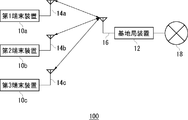
- FIG. 1 shows a configuration of a communication system 100 according to an embodiment of the present invention.
- the communication system 100 includes a first terminal device 10 a, a second terminal device 10 b, a third terminal device 10 c, a base station device 12, and a network 18 that are collectively referred to as the terminal device 10.
- the first terminal apparatus 10a includes a first terminal antenna 14a
- the second terminal apparatus 10b includes a second terminal antenna 14b
- the third terminal apparatus 10c includes a third terminal antenna 14c
- the base station apparatus 12 includes a base station antenna 16.
- the first terminal antenna 14a, the second terminal antenna 14b, and the third terminal antenna 14c are collectively referred to as a terminal antenna 14.
- the base station apparatus 12 forms a wireless network with the base station antenna 16 at one end and connects to the network 18 at the other end.
- the base station device 12 communicates with the terminal device 10 to communicate between the terminal device 10 and the network 18 or between the terminal device 10 and other terminal devices 10. Relay data between them.
- the base station device 12 is not involved in communication between the terminal devices 10.
- the base station apparatus 12 permits direct communication with respect to two of the plurality of terminal apparatuses 10, that is, communication in the ad hoc mode, over a predetermined period. Further, the base station apparatus 12 instructs at least two terminal apparatuses 10 to execute communication in the permitted ad hoc mode.
- the base station apparatus 12 does not participate in the communication in the ad hoc mode, but schedules the communication period in the ad hoc mode. Details of the scheduling process by the base station apparatus 12 will be described later.
- the terminal device 10 may execute the communication in the infrastructure mode with the other terminal devices 10 while the two terminal devices 10 are executing the communication in the ad hoc mode.
- the communication system 100 corresponds to a form in which a wireless LAN system compliant with a standard such as IEEE 802.11 is applied. Therefore, a publicly known technique may be used for communication in the infrastructure mode and communication in the ad hoc mode, and thus description thereof is omitted here.
- the terminal apparatus 10 enters the service area of the base station apparatus 12 and establishes connection with the base station apparatus 12 by receiving a beacon from the base station apparatus 12.
- the infrastructure mode and the ad hoc mode are defined for the communication of the terminal device 10.
- the terminal device 10 executes communication with the base station device 12.
- ad hoc period a communication period in the ad hoc mode
- the terminal apparatus 10 performs communication in the ad hoc mode over the ad hoc period. Execute.
- the switching between the infrastructure mode and the ad hoc mode in the terminal device 10 will be described later.
- the communication period in the infrastructure mode is referred to as an “infrastructure period” corresponding to the ad hoc period.
- FIGS. 2A to 2C show packet formats in the communication system 100.
- FIG. FIG. 2A shows a format of information included in a part of a beacon notified from the base station apparatus 12.
- terminal number includes information for specifying each terminal device 10 shown in FIG.
- the infrastructure period and the ad hoc period include values for the terminal device 10.
- time information is shared, and the infrastructure period and the ad hoc period are indicated by the time.
- the infrastructure period includes a start time and an end time of the infrastructure period. The same applies to the ad hoc period. It is assumed that the terminal device 10 whose terminal device number is not indicated is instructed to operate in the infrastructure mode implicitly.
- FIG. 2B shows a format of a request signal transmitted from the terminal device 10 to the base station device 12.
- a predetermined period after the base station apparatus 12 transmits a beacon is defined as an “admission period”.
- the terminal device 10 transmits a request signal during the admission period.
- An example of the request signal is a request for participation in the communication system 100, which can be said to be a connection request to the base station apparatus 12.
- a value predetermined as a participation request is input to the “signal type”.
- the QoS request parameters include request values such as QoS class, delay / throughput, and the like. Since this may be a known technique, the description is omitted here.
- the terminal device number and the data amount for specifying the terminal device 10 to be communicated are included.
- the request signal is a change request
- a value determined in advance as the change request is input to the “signal type”.
- the change request is a signal used when the content of the QoS request parameter already transmitted by the terminal device 10 is changed.
- FIG. 2C shows a format of a response signal transmitted from the base station apparatus 12 to the terminal apparatus 10.
- the base station apparatus 12 transmits a response signal to the request signal to the terminal apparatus 10.
- the request signal is a participation request
- a participation response is transmitted as a response signal.
- the request signal is a change request
- a change response is transmitted as a response signal.
- a predetermined value as a participation response or a change signal is input to the signal type.
- the QoS response parameter includes a value corresponding to the QoS request parameter.
- FIG. 3 shows an outline of a communication procedure in the communication system 100.
- a base station device 12 a first terminal device 10a, a second terminal device 10b, and a third terminal device 10c are shown.
- “B” in FIG. 3 indicates a beacon
- “Q” indicates a request signal
- “S” indicates a response signal
- “D” indicates a data signal
- “A” indicates an Ack signal
- “A period” indicates an ad hoc period
- I period” indicates an infrastructure period.
- the first terminal device 10a to the third terminal device 10c are not connected to the base station device 12.
- the direction from the base station apparatus 12 to the terminal apparatus 10 corresponds to the downlink
- the direction from the terminal apparatus 10 to the base station apparatus 12 corresponds to the uplink.
- the base station device 12 periodically notifies a beacon. Further, a predetermined period after the base station apparatus 12 transmits a beacon is defined as an admission period.
- the admission period is a period defined for the terminal apparatus 10 to request connection to the base station apparatus 12. During this period, the terminal apparatus 10 that has not established a connection with the base station apparatus 12 recognizes the presence of the base station apparatus 12 by receiving a beacon from the base station apparatus 12.
- the terminal device 10 transmits a participation request to the base station device 12.
- the participation request has the request signal format shown in FIG.
- the first terminal apparatus 10a transmits a request signal to the base station apparatus 12, and the base station apparatus 12 transmits a participation response to the first terminal apparatus 10a as a response signal.
- the second terminal device 10b and the third terminal device 10c also perform the same operation. As a result, the first terminal apparatus 10a to the third terminal apparatus 10c are connected to the base station apparatus 12.
- the change request from the first terminal device 10a includes a request for communication in the ad hoc mode with the second terminal device 10b and the third terminal device 10c, and the change request from the second terminal device 10b. Includes a request for communication with the third terminal apparatus 10c in the ad hoc mode.
- the base station apparatus 12 performs scheduling based on these requests, includes the scheduling result in the second beacon in the figure as shown in FIG. 2A, and broadcasts the beacon. That is, the base station apparatus 12 instructs each terminal apparatus 10 about the I period and the A period.
- Each of the first terminal device 10a to the third terminal device 10c receives a beacon, transmits a next request signal and receives a next response signal during the admission period.
- the first terminal apparatus 10a After the admission period ends, the first terminal apparatus 10a enters the I period after the A period in accordance with an instruction from the base station apparatus 12. In the I period, the first terminal apparatus 10 a receives the data signal from the base station apparatus 12 and transmits an Ack signal corresponding to the data signal to the base station apparatus 12. In addition, the first terminal apparatus 10a transmits a data signal to the second terminal apparatus 10b after confirming that the second terminal apparatus 10b to be transmitted is in the A period after being changed to the A period following the I period. To do. When the second terminal apparatus 10b receives the data signal from the first terminal apparatus 10a in the ad hoc period, the second terminal apparatus 10b transmits an Ack signal corresponding to the data signal to the first terminal apparatus 10a.
- the second terminal apparatus 10b transmits a data signal to the third terminal apparatus 10c after confirming that the third terminal apparatus 10c to be transmitted is in the A period.
- the third terminal apparatus 10c transmits an Ack signal corresponding to the data signal to the second terminal apparatus 10b.
- the second terminal apparatus 10b is changed from the A period to the I period.
- the second terminal apparatus 10b receives a data signal from the base station apparatus 12 and transmits a corresponding Ack signal to the base station apparatus 12.
- the third terminal apparatus 10c is also changed from the A period to the I period.
- the data signal is transmitted to the base station apparatus 12, and the corresponding Ack signal is received from the base station apparatus 12.
- the third terminal apparatus 10c is changed from the I period to the A period.
- the first terminal device 10a is also set to the A period.
- the first terminal apparatus 10a transmits a data signal to the third terminal apparatus 10c after confirming that the third terminal apparatus 10c to be transmitted is in the A period.
- the third terminal apparatus 10c When receiving the data signal from the first terminal apparatus 10a in the ad hoc period, the third terminal apparatus 10c transmits an Ack signal corresponding to the data signal to the first terminal apparatus 10a.
- the third terminal apparatus 10c is changed from the A period to the I period.
- the third terminal apparatus 10c transmits a data signal to the base station apparatus 12, and receives a corresponding Ack signal from the base station apparatus 12. Thereafter, the base station apparatus 12 broadcasts a beacon.
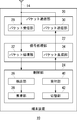
- FIG. 4 shows the configuration of the terminal device 10.
- the terminal device 10 includes a terminal antenna 14, a packet communication unit 20, a signal processing unit 22, and a control unit 24.
- the packet communication unit 20 includes a packet reception unit 28 and a packet transmission unit 30,
- the signal processing unit 22 includes a packet processing unit 32 and a packet generation unit 34, and
- the control unit 24 includes a detection unit 36 and a request unit 38.
- the packet receiver 28 performs demodulation processing and the like on the packet signal received by the terminal antenna 14. Since the packet signal received by the terminal antenna 14 is a signal in the radio frequency domain, the packet receiving unit 28 performs frequency conversion on the packet signal from the radio frequency domain to the baseband domain, and then performs a demodulation process. The decoding process is executed, and a packet signal defined in a layer higher than the physical layer is output to the packet processing unit 32.
- the packet processing unit 32 receives a packet signal from the packet receiving unit 28, and executes processing in an upper layer such as connection processing in accordance with the packet signal included in the received packet signal. The upper layer corresponds to a layer defined higher than the physical layer.
- the packet processing unit 32 outputs the processing result to the control unit 24.
- omitted since a well-known technique should just be used as a process of an upper layer, description is abbreviate
- the packet generator 34 receives information from the controller 24 and generates a packet signal based on the information.
- the packet signal generated in the packet generation unit 34 corresponds to a packet signal defined in a layer higher than the physical layer, like the packet signal input to the packet processing unit 32.
- the packet generator 34 outputs the generated packet signal to the packet transmitter 30.
- the packet transmission unit 30 performs encoding processing and modulation processing on the packet signal from the packet generation unit 34.
- the packet transmission unit 30 performs frequency conversion from the baseband region to the radio frequency region on the modulated packet signal, and then transmits the frequency-converted packet signal from the terminal antenna 14. Processing in the packet receiving unit 28 and the packet transmitting unit 30 corresponds to wireless communication processing.
- the control unit 24 controls communication operations in the terminal device 10.
- a connection process with a base station apparatus 12 (not shown) a request process for communication in the ad hoc mode, and a communication process by switching between the infrastructure mode and the ad hoc mode will be described in this order.
- connection processing with the base station apparatus 12 will be described.
- the control unit 24 recognizes the presence of the base station device 12 by receiving a beacon from the base station device 12 (not shown) via the packet receiving unit 28 and the packet processing unit 32. Further, the control unit 24 instructs the packet generation unit 34 to generate a request for participation in the base station apparatus 12.
- the control unit 24 causes the packet generation unit 34 and the packet transmission unit 30 to transmit a participation request to the base station apparatus 12.
- control unit 24 establishes a connection with the base station device 12 by receiving a participation response from the base station device 12 via the packet receiving unit 28 and the packet processing unit 32.
- the control unit 24 establishes a connection with the base station device 12 by receiving a participation response from the base station device 12 via the packet receiving unit 28 and the packet processing unit 32.
- the detection unit 36 confirms the destination of data generated in the application being executed in the terminal device 10. As a result, the detection unit 36 detects the presence of data addressed to the other terminal device 10 connected to the base station device 12. When detecting the presence of data, the detection unit 36 notifies the request unit 38 to that effect. At this time, the detection unit 36 also notifies information on the other terminal device 10 that is the destination of the data.
- the request unit 38 receives from the detection unit 36 a notification that the presence of data has been detected and a notification from another terminal device 10 that is the destination of the data.
- the request unit 38 instructs the packet generation unit 34 to generate a request signal.
- the request signal is a participation request or a change request.
- the request unit 38 causes the request signal to include a request for communication in the ad hoc mode with respect to the other terminal device 10 and information on the other terminal device 10 that is the destination.
- the packet generation unit 34 and the packet transmission unit 30 transmit a request signal to the base station apparatus 12 during the above-described admission period.
- the accepting unit 40 receives a beacon from the base station apparatus 12 via the packet receiving unit 28 and the packet processing unit 32.
- the receiving unit 40 extracts a part related to scheduling, that is, a part shown in FIG.
- the reception unit 40 extracts a part related to scheduling for itself.
- the reception unit 40 receives an instruction from the base station device 12 to execute communication in the ad hoc mode with another terminal device 10 connected to the base station device 12 over the ad hoc period.
- the reception unit 40 receives an instruction to execute communication with the base station apparatus 12 in the infrastructure mode over the infrastructure period.
- the receiving unit 40 notifies the switching unit 42 of the infrastructure period and the ad hoc period.
- the switching unit 42 realizes communication in the infrastructure mode over the infrastructure period based on the notification from the reception unit 40. That is, the communication target is set in the base station apparatus 12. In addition, the switching unit 42 realizes communication in the ad hoc mode over the ad hoc period. For example, when switching from the infrastructure period to the ad hoc period, the switching unit 42 switches the communication target of the communication unit from the base station apparatus 12 to another terminal apparatus 10. Note that a publicly known technique may be used for the communication in the infrastructure mode and the communication in the ad hoc mode, and thus the description thereof is omitted here.
- control unit 24 when data is transmitted to another terminal apparatus 10 in the ad hoc period, the control unit 24 confirms whether the other terminal apparatus 10 is also in the ad hoc period while referring to a portion related to scheduling. In the ad hoc period, the control unit 24 transmits data. On the other hand, the control unit 24 may cause the packet communication unit 20 and the signal processing unit 22 to execute the communication in the infrastructure mode even when the other two terminal devices 10 are in the ad hoc period.
- This configuration can be realized in terms of hardware by a CPU, memory, or other LSI of any computer, and in terms of software, it is realized by a program having a communication function loaded in the memory. Describes functional blocks realized by collaboration. Accordingly, those skilled in the art will understand that these functional blocks can be realized in various forms by hardware only, software only, or a combination thereof.
- FIG. 5 shows the configuration of the base station apparatus 12.
- the base station apparatus 12 includes a base station antenna 16, a packet communication unit 50, a signal processing unit 52, and a wired communication unit 54.
- the packet communication unit 50 includes a packet reception unit 56 and a packet transmission unit 58
- the signal processing unit 52 includes a packet processing unit 60, a packet generation unit 62, and a control unit 64.
- the control unit 64 includes an acquisition unit 68, a determination unit 70, and an instruction unit 72.
- the packet receiving unit 56 performs the same processing as the above-described packet receiving unit 28, and the packet transmitting unit 58 performs the same processing as the above-described packet transmitting unit 30.
- the packet transmission unit 58 periodically transmits a beacon signal.
- the beacon signal includes the information shown in FIG.
- the packet processing unit 60 receives a packet signal from the packet receiving unit 56, and executes processing in an upper layer such as connection processing in accordance with the packet signal included in the received packet signal. As described above, the upper layer corresponds to a layer defined higher than the physical layer.
- the packet processing unit 60 outputs the processing result to the control unit 64.
- the control unit 64 controls the overall operation of the base station device 12, connection processing for the terminal device 10, and the like. Details of the control unit 64 will be described later.
- the packet generation unit 62 generates a packet signal in response to an instruction from the control unit 64. Note that the packet signal generated in the packet generation unit 62 corresponds to a packet signal defined in a layer higher than the physical layer corresponding to the packet signal input to the packet processing unit 60. The packet generator 62 outputs the generated packet signal to the packet transmitter 58.
- the wired communication unit 54 is connected to the network 18 in FIG. 1 and executes wired communication using the network 18. That is, the wired communication unit 54 outputs data from the terminal device 10 (not shown) received by the packet communication unit 50 and the signal processing unit 52 to the network 18. The wired communication unit 54 outputs data input from the network 18 to the signal processing unit 52. The wired communication unit 54 is controlled by the control unit 64.
- the control unit 64 causes the packet generation unit 62 to periodically generate beacons and causes the packet transmission unit 58 to transmit beacons. Moreover, the control part 64 prescribes
- the control unit 64 transmits a response signal as a change response to the terminal device 10 via the packet generation unit 62 and the packet transmission unit 58.
- the acquiring unit 68 extracts a communication request in the ad hoc mode and information on the terminal device 10 to be communicated from the received request signal.
- the terminal device 10 that is a request source for communication in the ad hoc mode is referred to as a “transmission source”
- the terminal device 10 that is a communication target is referred to as a “transmission destination”.
- the acquisition unit 68 outputs the extracted information to the determination unit 70.
- the determination unit 70 determines an infrastructure period and an ad hoc period for each terminal device 10 based on information from the acquisition unit 68. For example, the determination unit 70 determines the ad hoc period such that the transmission source ad hoc period overlaps with the transmission destination ad hoc period. Further, the determination unit 70 allocates an infrastructure period and an ad hoc period to the remaining period. Note that only an ad hoc period may be assigned to a predetermined terminal device 10, or only an infrastructure period may be assigned. By such processing, the determination unit 70 permits communication in the ad hoc mode to two of the plurality of terminal devices 10 over the ad hoc period while focusing on the communication in the infrastructure mode. Here, the determination unit 70 only determines an infrastructure period and an ad hoc period for each terminal apparatus 10, and does not execute control of communication in the infrastructure period and the ad hoc period.
- the instruction unit 72 causes the packet generation unit 62 to generate a beacon via the control unit 64 based on the scheduling result in the determination unit 70.
- the beacon has a format shown in FIG. That is, the instruction unit 72 instructs at least the transmission source and the transmission destination to execute communication in the permitted ad hoc mode. Note that, as described above, a publicly-known technique may be used for the communication in the infrastructure mode and the communication in the ad hoc mode, and thus description thereof is omitted here.
- one combination of the transmission source and the transmission destination may be another combination of the transmission destination and the transmission source.
- the two terminal devices 10 are destinations.
- the second terminal device 10b is designated as the transmission destination in the request from the first terminal device 10a
- the first terminal device 10a is designated as the transmission destination in the request from the second terminal device 10b.
- the acquisition unit 68 receives a request signal for permission of communication in the ad hoc mode from at least two of the plurality of terminal devices 10.
- the determination unit 70 permits the two terminal devices 10 to communicate in the ad hoc mode, and at least partially overlaps the ad hoc periods permitted to the terminal devices 10.
- the control unit 64 provides the infrastructure mode with the terminal devices 10 other than the two terminal devices 10 to the packet communication unit 50 and the signal processing unit 52 even when the two terminal devices 10 are in the ad hoc period. Execute communication by.
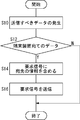
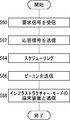
- FIG. 6 is a flowchart showing a request signal transmission procedure in the terminal device 10.
- the detection unit 36 detects the occurrence of data to be transmitted (S10). If the data is data addressed to another terminal device 10 (Y in S12), the request unit 38 instructs the packet generation unit 34 to include destination information in the request signal (S14). . Further, the packet generator 34 and the packet transmitter 30 transmit a request signal during the admission period (S16). On the other hand, if the data is not data addressed to another terminal device 10 (N in S12), the process is terminated.
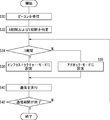
- FIG. 7 is a flowchart showing a communication procedure in the terminal device 10.
- the accepting unit 40 receives a beacon (S30).
- the switching unit 42 specifies the A period and the I period (S32). If it is I period (Y of S34), the switching unit 42 sets the packet communication unit 20 and the signal processing unit 22 to the infrastructure mode (S36). On the other hand, if it is not the I period (N in S34), the switching unit 42 sets the packet communication unit 20 and the signal processing unit 22 to the ad hoc mode (S38).
- the packet communication unit 20 and the signal processing unit 22 perform communication (S40). If the communication period does not end (N in S42), the process returns to step 34. If the communication period ends (Y in S42), the process ends.
- FIG. 8 is a flowchart showing a communication procedure in the base station apparatus 12.
- the acquisition unit 68 receives the request signal via the packet communication unit 50 and the signal processing unit 52 during the admission period (S60).
- the acquisition unit 68 transmits a response signal (S62).
- the determination unit 70 executes scheduling (S64).
- the instruction unit 72 instructs the packet generation unit 62 and the packet transmission unit 58 to transmit a beacon including the scheduling result (S66).
- the packet communication unit 50 and the signal processing unit 52 communicate with the terminal device 10 in the infrastructure mode (S68).
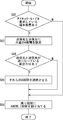
- FIG. 9 is a flowchart showing a scheduling procedure in the base station apparatus 12. This corresponds to the processing in the determination unit 70. If there is a terminal device 10 requesting the ad hoc mode (Y in S80), the determination unit 70 sets a common A period for the transmission source and the transmission destination (S82). If there is a combination in which the transmission source and the transmission destination are opposite to each other (Y in S84), the determination unit 70 continues those A periods (S86). On the other hand, if there is no combination in which the transmission source and the transmission destination are opposite to each other (N in S84), step 86 is skipped. Further, if there is no terminal device 10 requesting the ad hoc mode (N in S80), steps 82 to 86 are skipped. The determination unit 70 assigns the A period and the I period to the remaining periods (S88).
- communication in the ad hoc mode is performed with two of the plurality of terminal devices over a predetermined period while performing the communication in the infrastructure mode.
- Ad hoc mode is compatible.
- the transmission source and the transmission destination are specified based on a request signal from a terminal device that requests communication in the ad hoc mode, and an ad hoc period that overlaps the transmission source and the transmission destination is determined, the ad hoc period is determined.
- the period can be specified automatically.
- the infrastructure mode and the ad hoc mode can be switched automatically.
- an ad hoc period is set for two terminal devices, communication with a terminal device other than the two terminal devices is executed, so that communication in the infrastructure mode can be continued.
- the infrastructure period and the ad hoc period are managed, the compatibility between the infrastructure mode and the ad hoc mode can be easily realized.
- the communication itself in the ad hoc mode is not controlled, the control can be easily realized.
- two terminal devices are destinations of each other, at least a part of the ad hoc periods for the two terminal devices are overlapped, so that the ad hoc periods can be allocated efficiently.
- the ad hoc period is efficiently allocated, the ad hoc period can be shortened.
- the infrastructure mode and the ad hoc mode are switched according to the instructions of the ad hoc period and the infrastructure period included in the beacon, both can be switched automatically. Further, when communication in the ad hoc mode is required, communication in the ad hoc mode is transmitted with the request signal, so that communication according to the intention of the terminal device can be realized. Also, since the request signal is transmitted during the admission period, the probability of collision between the request signal and data can be reduced.
- the determination unit 70 determines the ad hoc period based on the information of the terminal device 10 that is the destination.
- the present invention is not limited to this.
- the determining unit 70 may reflect the data amount when determining the ad hoc period.
- the determination unit 70 lengthens the ad hoc period as the data amount increases. According to this modification, an ad hoc period suitable for the amount of data can be set.
- the base station apparatus 12 notifies each terminal apparatus 10 of the ad hoc period.
- the present invention is not limited to this.
- the base station device 12 may also notify the terminal device 10 that is a data transmission destination in the ad hoc period.
- the terminal device 10 transmits data to the instructed terminal device 10 or receives data from the instructed terminal device 10.
- the base station apparatus 12 since the base station apparatus 12 also controls communication in the ad hoc mode in an integrated manner, the efficiency of communication in the ad hoc mode can be improved.
- Infrastructure mode and ad hoc mode can be switched automatically.
Landscapes
- Engineering & Computer Science (AREA)
- Computer Networks & Wireless Communication (AREA)
- Signal Processing (AREA)
- Mobile Radio Communication Systems (AREA)
Priority Applications (1)
| Application Number | Priority Date | Filing Date | Title |
|---|---|---|---|
| US12/918,231 US8472318B2 (en) | 2008-02-18 | 2009-02-12 | Communication method, base station device using the same, terminal device, and communication system |
Applications Claiming Priority (2)
| Application Number | Priority Date | Filing Date | Title |
|---|---|---|---|
| JP2008-036711 | 2008-02-18 | ||
| JP2008036711A JP2009194880A (ja) | 2008-02-18 | 2008-02-18 | 通信方法およびそれを利用した基地局装置、端末装置、通信システム |
Publications (1)
| Publication Number | Publication Date |
|---|---|
| WO2009104370A1 true WO2009104370A1 (ja) | 2009-08-27 |
Family
ID=40985259
Family Applications (1)
| Application Number | Title | Priority Date | Filing Date |
|---|---|---|---|
| PCT/JP2009/000559 Ceased WO2009104370A1 (ja) | 2008-02-18 | 2009-02-12 | 通信方法およびそれを利用した基地局装置、端末装置、通信システム |
Country Status (3)
| Country | Link |
|---|---|
| US (1) | US8472318B2 (https=) |
| JP (1) | JP2009194880A (https=) |
| WO (1) | WO2009104370A1 (https=) |
Cited By (1)
| Publication number | Priority date | Publication date | Assignee | Title |
|---|---|---|---|---|
| JP2012178733A (ja) * | 2011-02-25 | 2012-09-13 | Nintendo Co Ltd | 情報処理装置、情報処理プログラム、情報処理方法および情報処理システム |
Families Citing this family (3)
| Publication number | Priority date | Publication date | Assignee | Title |
|---|---|---|---|---|
| JP5480789B2 (ja) * | 2010-12-02 | 2014-04-23 | パナソニック株式会社 | 無線通信システム |
| JP5508337B2 (ja) * | 2011-05-17 | 2014-05-28 | 株式会社Nttドコモ | 移動通信方法、移動局、コアネットワーク装置及び無線基地局 |
| US9369258B2 (en) * | 2013-05-03 | 2016-06-14 | Qualcomm Incorporated | Systems and methods for peer-to-peer and AP traffic multiplexing |
Citations (2)
| Publication number | Priority date | Publication date | Assignee | Title |
|---|---|---|---|---|
| JP2004128785A (ja) * | 2002-10-01 | 2004-04-22 | Nec Infrontia Corp | 無線lan通信方式 |
| JP2004260258A (ja) * | 2003-02-24 | 2004-09-16 | Oki Electric Ind Co Ltd | 無線lanシステム |
Family Cites Families (4)
| Publication number | Priority date | Publication date | Assignee | Title |
|---|---|---|---|---|
| JP3517219B2 (ja) * | 2000-08-28 | 2004-04-12 | 松下電器産業株式会社 | 通信端末収容装置及び通信端末収容方法 |
| GB2396775B (en) * | 2002-12-23 | 2005-04-13 | Motorola Inc | Method and apparatus for establishing direct communication for mobiles in a radio communication system |
| JP4512641B2 (ja) * | 2005-09-15 | 2010-07-28 | パイオニア株式会社 | 無線通信システム用基地局装置、無線通信システム用端末装置、無線通信システム及びダイレクトリンクモードの解除方法 |
| JP4911970B2 (ja) * | 2005-12-20 | 2012-04-04 | キヤノン株式会社 | 基地局の制御方法及び基地局 |
-
2008
- 2008-02-18 JP JP2008036711A patent/JP2009194880A/ja active Pending
-
2009
- 2009-02-12 US US12/918,231 patent/US8472318B2/en not_active Expired - Fee Related
- 2009-02-12 WO PCT/JP2009/000559 patent/WO2009104370A1/ja not_active Ceased
Patent Citations (2)
| Publication number | Priority date | Publication date | Assignee | Title |
|---|---|---|---|---|
| JP2004128785A (ja) * | 2002-10-01 | 2004-04-22 | Nec Infrontia Corp | 無線lan通信方式 |
| JP2004260258A (ja) * | 2003-02-24 | 2004-09-16 | Oki Electric Ind Co Ltd | 無線lanシステム |
Cited By (1)
| Publication number | Priority date | Publication date | Assignee | Title |
|---|---|---|---|---|
| JP2012178733A (ja) * | 2011-02-25 | 2012-09-13 | Nintendo Co Ltd | 情報処理装置、情報処理プログラム、情報処理方法および情報処理システム |
Also Published As
| Publication number | Publication date |
|---|---|
| JP2009194880A (ja) | 2009-08-27 |
| US8472318B2 (en) | 2013-06-25 |
| US20110044254A1 (en) | 2011-02-24 |
Similar Documents
| Publication | Publication Date | Title |
|---|---|---|
| JP7241237B2 (ja) | 間欠受信方法、関連する装置及びシステム | |
| JP7193620B2 (ja) | データ伝送方法、無線アクセスネットワークデバイス及び端末デバイス | |
| CN114390598B (zh) | Drx确定方法、装置、终端及可读存储介质 | |
| JP4095585B2 (ja) | 無線通信方法、無線通信装置、および無線通信システム | |
| US12245253B2 (en) | Systems and methods for resource allocation and encoding of inter-UE coordination messages | |
| US11019636B2 (en) | Methods of wireless device and network node, such wireless device and network node, and computer programs thereof | |
| KR20210042345A (ko) | 정보 전송 방법 및 장치 | |
| JP2021534652A (ja) | Urllcサービスのための低レイテンシharqプロトコル | |
| CN102668661A (zh) | 用于在空白电视频段中进行基于选择性可扩展信道的站启用和禁用的方法和系统 | |
| CN111684828B (zh) | 用于v2x服务和v2x应用的实体、网络和用户设备 | |
| JP5398585B2 (ja) | 無線通信システム及び基地局間協調通信制御方法 | |
| KR20170028974A (ko) | 단말 장치 성능을 보고하는 방법 및 장치 | |
| US20120182979A1 (en) | Performance in a dual bss environment | |
| WO2009104370A1 (ja) | 通信方法およびそれを利用した基地局装置、端末装置、通信システム | |
| JP7105132B2 (ja) | レガシーシステムとの共存を実行するための通信装置、通信方法、及びプログラム | |
| JP2020099032A (ja) | リレー局装置、通信システム、通信方法、およびプログラム | |
| WO2017107624A1 (zh) | 一种资源配置和数据传输的方法及设备 | |
| US20170135143A1 (en) | Wireless communications system, base station, terminal, and communications method | |
| WO2015015766A1 (ja) | 通信装置並びにその制御方法、基地局装置並びにその制御方法、及びプログラム | |
| CN113574932A (zh) | 通信控制设备、通信控制方法、通信终端和通信方法 | |
| US20130182686A1 (en) | Optimization of dual bss scheduling | |
| JP7089592B2 (ja) | 情報フィードバック方法及び装置、コンピュータ記憶媒体 | |
| US10149139B2 (en) | Connection control method by communication terminal | |
| WO2024067797A1 (zh) | 信息传输方法、第一通信节点、第二通信节点及存储介质 | |
| EP3861772B1 (en) | User equipment and method for reducing interference for a communication session |
Legal Events
| Date | Code | Title | Description |
|---|---|---|---|
| 121 | Ep: the epo has been informed by wipo that ep was designated in this application |
Ref document number: 09713062 Country of ref document: EP Kind code of ref document: A1 |
|
| NENP | Non-entry into the national phase |
Ref country code: DE |
|
| WWE | Wipo information: entry into national phase |
Ref document number: 12918231 Country of ref document: US |
|
| 122 | Ep: pct application non-entry in european phase |
Ref document number: 09713062 Country of ref document: EP Kind code of ref document: A1 |