WO2007046554A1 - ジベンゾオキセピノピロール化合物の製造方法、その中間体及び該中間体の製造方法 - Google Patents
ジベンゾオキセピノピロール化合物の製造方法、その中間体及び該中間体の製造方法 Download PDFInfo
- Publication number
- WO2007046554A1 WO2007046554A1 PCT/JP2006/321452 JP2006321452W WO2007046554A1 WO 2007046554 A1 WO2007046554 A1 WO 2007046554A1 JP 2006321452 W JP2006321452 W JP 2006321452W WO 2007046554 A1 WO2007046554 A1 WO 2007046554A1
- Authority
- WO
- WIPO (PCT)
- Prior art keywords
- formula
- compound represented
- compound
- reaction
- represented
- Prior art date
- Legal status (The legal status is an assumption and is not a legal conclusion. Google has not performed a legal analysis and makes no representation as to the accuracy of the status listed.)
- Ceased
Links
Classifications
-
- C—CHEMISTRY; METALLURGY
- C07—ORGANIC CHEMISTRY
- C07D—HETEROCYCLIC COMPOUNDS
- C07D207/00—Heterocyclic compounds containing five-membered rings not condensed with other rings, with one nitrogen atom as the only ring hetero atom
- C07D207/02—Heterocyclic compounds containing five-membered rings not condensed with other rings, with one nitrogen atom as the only ring hetero atom with only hydrogen or carbon atoms directly attached to the ring nitrogen atom
- C07D207/30—Heterocyclic compounds containing five-membered rings not condensed with other rings, with one nitrogen atom as the only ring hetero atom with only hydrogen or carbon atoms directly attached to the ring nitrogen atom having two double bonds between ring members or between ring members and non-ring members
- C07D207/34—Heterocyclic compounds containing five-membered rings not condensed with other rings, with one nitrogen atom as the only ring hetero atom with only hydrogen or carbon atoms directly attached to the ring nitrogen atom having two double bonds between ring members or between ring members and non-ring members with hetero atoms or with carbon atoms having three bonds to hetero atoms with at the most one bond to halogen, e.g. ester or nitrile radicals, directly attached to ring carbon atoms
- C07D207/36—Oxygen or sulfur atoms
- C07D207/38—2-Pyrrolones
-
- A—HUMAN NECESSITIES
- A61—MEDICAL OR VETERINARY SCIENCE; HYGIENE
- A61P—SPECIFIC THERAPEUTIC ACTIVITY OF CHEMICAL COMPOUNDS OR MEDICINAL PREPARATIONS
- A61P25/00—Drugs for disorders of the nervous system
- A61P25/18—Antipsychotics, i.e. neuroleptics; Drugs for mania or schizophrenia
-
- C—CHEMISTRY; METALLURGY
- C07—ORGANIC CHEMISTRY
- C07D—HETEROCYCLIC COMPOUNDS
- C07D491/00—Heterocyclic compounds containing in the condensed ring system both one or more rings having oxygen atoms as the only ring hetero atoms and one or more rings having nitrogen atoms as the only ring hetero atoms, not provided for by groups C07D451/00 - C07D459/00, C07D463/00, C07D477/00 or C07D489/00
- C07D491/02—Heterocyclic compounds containing in the condensed ring system both one or more rings having oxygen atoms as the only ring hetero atoms and one or more rings having nitrogen atoms as the only ring hetero atoms, not provided for by groups C07D451/00 - C07D459/00, C07D463/00, C07D477/00 or C07D489/00 in which the condensed system contains two hetero rings
- C07D491/04—Ortho-condensed systems
-
- C—CHEMISTRY; METALLURGY
- C07—ORGANIC CHEMISTRY
- C07D—HETEROCYCLIC COMPOUNDS
- C07D491/00—Heterocyclic compounds containing in the condensed ring system both one or more rings having oxygen atoms as the only ring hetero atoms and one or more rings having nitrogen atoms as the only ring hetero atoms, not provided for by groups C07D451/00 - C07D459/00, C07D463/00, C07D477/00 or C07D489/00
- C07D491/02—Heterocyclic compounds containing in the condensed ring system both one or more rings having oxygen atoms as the only ring hetero atoms and one or more rings having nitrogen atoms as the only ring hetero atoms, not provided for by groups C07D451/00 - C07D459/00, C07D463/00, C07D477/00 or C07D489/00 in which the condensed system contains two hetero rings
- C07D491/04—Ortho-condensed systems
- C07D491/044—Ortho-condensed systems with only one oxygen atom as ring hetero atom in the oxygen-containing ring
Definitions
- TECHNICAL FIELD A process for producing a dibenzoxepinopyrrole compound, an intermediate thereof, and a process for producing the intermediate Technical Field
- the present invention relates to a method for producing asenapine useful as a schizophrenia drug, an intermediate thereof, and a method for producing the intermediate.
- USP 4,145,434 describes various tetracyclic derivatives including asenapine, and describes that synthetic intermediates immediately before the formation of the tetracycle can be produced by the following route.
- J. Med. Chem. (1983), 26 (10), 1353-1360 describes that 2-phenoxy-5-chlorophenylacetic acid is synthesized by the following route.
- An object of the present invention is to provide a method for efficiently and safely producing asenapine and a synthetic intermediate thereof starting from an inexpensive raw material, and another object is to provide a novel intermediate of asenapine. is there.
- the present invention is as follows.
- Formula [III] A process for producing compound [IV] comprising reacting a compound represented by the formula (hereinafter, sometimes referred to as compound [III]) with 4-monochlorophenol.
- R represents an alkyl group having 1 to 6 carbon atoms.
- Compound [II] has the formula [la]: A compound represented by the formula (hereinafter may be referred to as a compound [la]) or a reactive derivative of its force lpoxyl group to the formula [lb]: to CO 2 R [lb]
- the reaction is a reaction between a reactive derivative at the carboxyl group of the compound [la] and the compound [lb], and the reactive derivative is an acid halide of the compound [la]. the method of.
- ⁇ 1 3> The method according to any one of ⁇ 10> to ⁇ 12>, wherein the intramolecular cyclization is performed by allowing a base to act on compound [II].
- a process comprising obtaining a compound represented by the formula (hereinafter, may be referred to as compound [IV]), wherein compound [IV] is subjected to intramolecular cyclization to formula [V]:
- a process comprising obtaining a compound represented by formula (hereinafter sometimes referred to as compound [V]), wherein compound [V] is reduced to formula [VI]:
- a process comprising obtaining a compound represented by the formula (hereinafter sometimes referred to as compound [VI]), and
- ⁇ 1 7> The method according to ⁇ 15> or ⁇ 16>, wherein the reaction between compound [III] and 4-chlorophenol is performed in the presence of a base.
- ⁇ 1 9> The method according to any one of ⁇ 15> to ⁇ 18>, wherein the intramolecular cyclization of compound [IV] is carried out in a dehydrating solvent.
- ⁇ 20> The method according to ⁇ 19>, wherein the dehydrating solvent is sulfuric acid, phosphoric acid or polyphosphoric acid.
- ⁇ 2 1> The method according to 19>, wherein the dehydrating solvent is polyphosphoric acid, and the polyphosphoric acid is polyphosphoric acid prepared from phosphoric acid and diphosphorus pentoxide.
- Reduction of compound [V] is carried out by catalytic reduction in the presence of a noble metal catalyst or by reaction with an alkali metal or alkaline earth metal in lower alcohol or ammonia ⁇ 1
- ⁇ 24> The method according to any one of ⁇ 15> to ⁇ 23>, wherein the reduction of the carbonyl group of compound [VI] is carried out by reacting with a reducing agent.
- the reducing agent is Li A l H 4 , Na a 1 H 2 (OCH 2 CH 2 0 CH 3 ) 2 , Li A 1 H (t 1 Bu 0) 3 , A 1 H 3 , B 2 H 6 , BH 3 'THF, BH 3 ' OE t 2 , Na BH 4 / BF 3 'THF, KBH 4 / BF 3- THF, Li BH 4 / BF 3 ⁇ TH F, Na B H 4 / (CH 3) 2 S0 4 or method according to NaBH 4 / H 2 S_ ⁇ is 4 ⁇ 24>.
- asenapine or a pharmacologically acceptable salt thereof can be produced by the route shown in the following scheme 1.
- Compound [II] can be produced by reacting compound [la] or a reactive derivative at its carboxyl group with compound [lb].
- R represents a linear or branched alkyl group having 1 to 6 carbon atoms, particularly preferably a methyl group or an ethyl group.
- This step can be performed by a method employed in a general amidation reaction.
- a method using a condensing agent can be employed.
- a reactive derivative at the galboxyl group of compound [la] is used, a reactive derivative derived from compound [la], for example, a method of reacting the corresponding acid halide with compound [lb] can be mentioned.
- the amount of the compound. [Ib] is usually 0.8 to 5 mol, preferably 1 with respect to 1 mol of the compound [la]. ⁇ 1.5 moles.
- Condensation agents include N, N'-dicyclohexyl carpositimide (DCC), N- (3-Jetylamino-1_propyl) -N'-ethyl carpositimide hydrochloride (WSCI ⁇ HC 1), etc.
- Diphenylphosphoryl azide DP PA
- Jetyl cyanophosphate DEPC
- N ⁇ 'One bis (2-oxo-1-3-xazolidinyl) Phosphinic chloride (BOP— C 1)
- organic phosphorus condensing agents methyl carbonates such as methyl carbonate, ethyl carbonate, and isopropyl carbonate
- pivaloyl chloride thionyl chloride
- phosphorus oxychloride phosphorus oxychloride and the like.
- the amount of the condensing agent is usually 0.8 to 5 mol, preferably 1 to 1.5 mol, per 1 mol of the compound [la].
- a base is not necessarily used, but a base (for example, triethylamine, tri-n-propylamine, tri-n-butylamine, diisopropyl) is used.
- Organic pyrethylamine, N-methylmorpholine, pyridine, 2,6-di-tert-butylpyridine, imidazole, 1-methylimidazole and other organic bases, potassium hydroxide, sodium hydroxide, lithium hydroxide, potassium carbonate, Inorganic bases such as sodium carbonate, lithium carbonate, potassium bicarbonate, sodium bicarbonate, lithium bicarbonate, etc.) may be added to the reaction system, with triethylamine being particularly preferred.
- the base the amount is usually 0.1 to 5 mol, preferably 1 to 2 mol, relative to 1 mol of the compound [la].
- the base is liquid, it can also serve as a solvent.
- the solvent examples include ester solvents (for example, ethyl acetate, propyl acetate, butyl acetate, ethyl propionate, propyl propionate, butyl propionate, etc.); ether solvents (for example, jetyl ether, tert butyl) Methyl ether, 1,2-dimethoxyethane, diglyme, tetrahydrofuran, etc.) Amide solvent (eg, N, N-dimethylformamide, N, N-dimethylacetylamide, N-methylpyrrolidone, 1,3-dimethyl-2) —Imidazolidinones, etc.); Ketone solvents (eg, methyl isobutyl ketone, methyl ethyl ketone, cyclohexanone, cyclopentanone, etc.); Nitryl solvents.
- ester solvents for example, ethyl acetate, propyl acetate,
- Alcohol solvent for example, methanol, ethanol, 1-propanol, 2-propanol, 1-butanol, 2_butanol, etc .; halogenated solvents (eg, methylene chloride, black, etc.); aromatic solvents (eg, toluene, xylene, black mouth) Benzene, nitro benzene, etc.); water, etc.
- halogenated solvents eg, methylene chloride, black, etc.
- aromatic solvents eg, toluene, xylene, black mouth
- water etc.
- the amount of the solvent is usually 1 to 100 L, preferably 3 to 30 L, relative to 1 kg of the compound [la].
- a catalyst such as 4-N, N-dimethylaminopyridine or 4-pyrrolidinopyridine to the reaction system, and 4-N, N-dimethylaminopyridine is added. It is particularly preferable to add them.
- the amount of the catalyst is usually from 0.001 to 1 mol, preferably from 0.1 to 0.5 mol, per 1 mol of the compound [la].
- the reaction temperature is usually ⁇ 30 to 15 ° C., preferably 0 to 50 ° C. There is no particular restriction on the order of charging with Compound [Ia], Compound [lb] and the condensing agent.
- the acid halide examples include an acid chloride and an acid chloride, and an acid chloride is preferable.
- the acid group and the ride can be produced by reacting the compound [la] with a halogenating agent.
- the halogenating agent include thionyl chloride, phosphorus pentachloride, phosphorus trichloride, phosphorus oxychloride, oxalyl chloride, thionyl bromide, and ⁇ phosphorous bromide, with thionyl chloride being preferred.
- the amount of thionyl chloride is usually;! '-5 mol, preferably 1-1.'5 mol, relative to compound [la] ⁇ mol.
- Solvents are not necessarily used, but halogenated solvents (eg, methylene chloride, chloroform, etc.), aromatic solvents (eg, benzene, toluene, xylene, chloroform, nitrobenzene, etc.) are used. Of these, toluene is preferred.
- the amount of the solvent is usually 1 to 100 L, preferably 3 to 30 L, per 1 kg of the compound [la].
- N, N-dimethylformamide, ⁇ ,, ⁇ -dimethylaniline, etc. as a catalyst, and it is particularly preferable to add ⁇ , ⁇ -dimethylformamide to the reaction system.
- the amount of the catalyst is usually from 0.001 to 1 mol, preferably from 0.01 to 0.05 mol, per 1 mol of the compound [la].
- the reaction temperature is usually ⁇ 30 to 1.5 ° C., preferably 20 to 90 ° C.
- the acid halide of the compound [la] is used in the form of a solution, a concentrated product or a distilled product obtained by distillation after removing the excess amount of the halogenating agent as the solvent is distilled off, preferably in the form of a concentrated compound. Used for reactions with [lb].
- the reaction between the acid halide of compound [la] and compound [lb] can be suitably carried out usually in the presence of a base.
- the amount of compound [lb] is usually 0.8 to 5 mol, preferably 1 to 1.5 mol, per 1 mol of compound [la].
- bases examples include ⁇ ethylamine, tri-n-propylamine, tri-n-butylamine, diisopropylethylamine, N_methylmorpholine, pyridine, 2,6-di-tert-butylpyridine, imidazole, 1- Organic bases such as methylimidazole, inorganic bases such as potassium hydroxide, sodium hydroxide, lithium hydroxide, potassium carbonate, sodium carbonate, lithium carbonate, potassium bicarbonate, sodium bicarbonate, lithium bicarbonate ⁇ Liethylamine and N-methylmorpholine are preferred.
- the amount of the base is usually 0.8 to 5 mol, preferably 1 to 3 mol, relative to 1 mol of the compound [la].
- Base as solvent It can also be used.
- the solvent examples include ester solvents (eg, ethyl acetate, propyl acetate, butyl acetate, ethyl propionate, propyl propionate, butyl propionate, etc.); ether media (eg, jetyl ether, tert-butyl methyl ether, 1, 2 _ Dimethichetetane, diglyme, tetrahydrofuran, etc.); Amide solvent (eg, N, N-dimethylformamide, N, N-dimethylacetylamide, N-methylpyrrolidone, 1,3-dimethyl-2-imidazolidinone, etc.); Ketone Solvents (eg, methyl isobutyl ketone, methyl ethyl ketone, cyclohexanone, cyclopentanone, etc.); diaryl solvents (eg, acetonitrile, propionitryl, etc.); alcohol solvents (eg, methanol,
- a mixed solvent of two or more Preferably, toluene and tetrahydrofuran are used.
- a catalyst such as 4-N, N-dimethylaminopyridine or 4-pyrrolidinopyridine to the reaction system, and the amount of the catalyst is 1 mol of the compound [la].
- the amount is usually from 0.001 to 1 mol, preferably from 0.1 to 0.5 mol.
- the reaction temperature is usually ⁇ 30 to 15 O: preferably 0 to 80 ° C.
- the order in which the acid halide of compound [la] and the compound [Ib ⁇ and base are charged is not particularly limited, but the acid halide of compound [la] is preferably added dropwise to the solution of compound [lb] and base.
- Compound [ ⁇ ] can be purified by conventional post-treatment of the reaction solution (for example, neutralization, extraction, washing, drying, concentration, chromatography, etc.), but without any particular purification. It can also be used in the next step. (Process 2)
- Compound [ ⁇ ] can be produced by intramolecular cyclization of compound [II].
- the reaction in this step can be suitably carried out by reacting compound [II] with a base.
- Bases include metal hydrides (eg, potassium hydride, sodium hydride, lithium hydride, etc.), Metal carbonates (eg cesium carbonate, potassium carbonate, potassium bicarbonate, sodium carbonate, sodium bicarbonate, etc.), metal alkoxides (eg tert-butoxy potassium, tert-butoxy sodium, potassium potassium, ethoxy sodium) ), Tertiary amines (eg, triethyla, min, 1,8-diazabicyclo [4.3.0] — 5-nonene, etc.), and metal alkoxides are preferred.
- metal hydrides eg, potassium hydride, sodium hydride, lithium hydride, etc.
- Metal carbonates eg cesium carbonate, potassium carbonate, potassium bicarbonate, sodium carbonate,
- the amount of the base is usually 0.5 to 5 mol, preferably 1 to 1.5 mol, per 1 mol of the compound [II].
- the reaction solvent include ether solvents (eg, jetyl ether, tert-butyl methyl ether, 1,2-dimethoxyethane, diglyme, tetrahydrofuran, etc.); amide solvents (eg, N, N-dimethylformamide, N, N-dimethyla Cetylamide, N-methylpyrrolidone, 1,3-dimethyl_ 2 -imidazolidinone, etc .; halogenated solvents (eg methylene chloride, black mouth form, etc.); aromatic solvents (eg benzene, toluene, etc.) Xylene, black benzene, nitrobenzene, etc.); alcohol solvents (eg, methanol, ethanol, 1-propanol, 2_propanol, 1-butane, etc.); amide solvents (
- the amount of the solvent is usually 1 to 100 L, preferably 3 to 30 L, per 1 kg of the compound [II].
- the reaction temperature is usually from 30 to 150 ° C, preferably from -10 to 50 ° C.
- the reaction time depends on the reaction temperature and the amount of raw materials, it is usually 1 to 48 hours, preferably 2 to 10 hours.
- Compound [III] can be isolated by post-treatment of the reaction solution by a conventional method (for example, neutralization, extraction, washing, drying, crystallization, etc.).
- Step 3) Compound [IV] can be produced by reacting Compound [III] with 4-chlorophenol.
- the reaction in this step can be suitably performed in the presence of a base, and is preferably performed in the presence of a catalyst.
- Examples of the base include, for example, triethylamine, tri_n-propylamine, tri-n-butylamine, diisopropylethylamine, N-methylmorpholine, pyridine, 2,6-di-tert-butylpyridine, imidazole, and 1-methylimidazole.
- Organic bases such as: metal hydroxides such as potassium hydroxide, sodium hydroxide, lithium hydroxide, metal carbonates such as cesium carbonate, potassium carbonate, sodium carbonate, lithium carbonate, potassium bicarbonate, sodium bicarbonate, bicarbonate Inorganic bases such as metal bicarbonates such as lithium can be mentioned, and cesium carbonate and potassium carbonate are preferred.
- the amount of the base is usually 0.5 to 5 mol, preferably 1 to 2 mol, relative to 1 mol of the compound [HI].
- 4-Chlorophenol can be used in place of 4-chlorophenol and a base, which is prepared by previously reacting 4-chlorophenol with the above-mentioned metal hydroxide.
- the metal salt include a cesium salt, a potassium salt, a sodium salt, and a lithium salt, and a cesium salt and a potassium salt are preferable.
- the catalyst examples include a compound containing a transition metal, an amino acid or a derivative thereof.
- the compound containing a transition metal include compounds containing a transition metal such as rhodium, nickel, iron and copper, and a compound containing copper (0) or copper (I) is preferable.
- Compounds containing copper (I) include copper (I) halides (eg, copper chloride (I), copper bromide (I), copper iodide (I), etc.), oxides, mineral salts (eg, , Sulfates, nitrates, phosphates, carbonates, etc.), organic acid salts, complexes of copper (0) and copper (I), etc., but copper iodide (I) and copper chloride (I) are Particularly preferred.
- the amount of the catalyst is usually 0.001 to 0.5 mol, preferably 0.01 to 0.1 mol, relative to 1 mol of the compound [III].
- amino acids and derivatives thereof include glycine, N-methylglycine, N, N-dimethylglycine, alanine, phenylalanine and the like can be mentioned, and N, N-dimethyldaricin is preferable.
- the amount of the amino acid and its derivative is usually from 0.001 to 0.5 mol, preferably from 0.005 to 0.1 mol, per 1 mol of the compound [III].
- the amount of monophenol is usually 1 to 5 mol, preferably 1 to L. 5 mol, per 1 mol of compound [II].
- reaction solvent examples include ether solvents (eg, jetyl ether, tert-butyl methyl ether, 1,2-dimethoxyethane, diglyme, tetrahydrofuran, etc.); amide solvents (eg, N, N-dimethylformamide, N, N-dimethylacetylamide, N-methylpyrrolidone, 1,3-dimethyl-2-imidazolidinone, etc .; ketone solvents (eg, methylisoptylketone, methylethylketone, cyclohexanone, cyclopentanone, etc.); Nitrile solvents (eg, acetonitrile, propionitrile, etc.); alcohol solvents (eg, 1-propanol, 2-monopropanol, 1-butanol, 2-butanol, etc.); halogenated solvents (eg, methylene chloride, Chloroform, etc.); aromatic solvents (eg, Ene
- the amount of the solvent is usually 1 to: 100 L, preferably 3 to 30 L, relative to 1 kg of the compound [III].
- the reaction temperature is usually 0 to 200 ° C., preferably 50 to 150 ° C. While the reaction time depends on the reaction temperature, the amount of raw materials, etc., it is usually 0.5 to 48 hours, preferably 0.5 to 6 hours. If the reaction time is too long, the yield tends to decrease.
- Compound [IV] can be isolated by post-treatment of the reaction solution by a conventional method (for example, neutralization, extraction, washing, drying, crystallization, etc.). After adding water to the reaction solution, it is washed with an organic solvent (for example, an alcohol such as methanol or ethanol, or a mixed solvent of the alcohol and tetrahydrofuran, tert-butylmethylether or toluene), and separated. Neutralize the resulting aqueous layer to PH 1-8, preferably pH 6-8, A method of isolating the product [IV] by crystallization is preferred.
- a conventional method for example, neutralization, extraction, washing, drying, crystallization, etc.
- Compound [IV] may be a tautomer of the formula [IV '] depending on conditions.
- Compound [V] can be produced by intramolecular ring closure of compound [IV].
- the intramolecular ring closure reaction in this step can be preferably carried out in a dehydrating solvent.
- the dehydrating solvent include sulfuric acid, phosphoric acid, and polyphosphoric acid.
- Polyphosphoric acid, especially polyphosphoric acid prepared from phosphoric acid and nitric pentoxide is preferred because of its adjustable viscosity.
- the amount of phosphoric acid is usually 1 to: L 0 0 kg, preferably 3 to 30 kg, per 1 kg of compound [IV]
- the amount of diphosphorus pentaoxide is usually 1 to 10 mol, preferably 1 to 3 mol, per 1 mol of compound [IV].
- the reaction temperature is usually from 20 to 25 ° C., preferably from 1 20 to 20 ° C.
- the reaction time depends on the reaction temperature and the amount of raw materials, but is usually 10 to 48 hours, preferably 15 to 25 hours.
- the compound [V] extracted by post-treatment of the reaction solution by a conventional method for example, neutralization, extraction, purification, drying, concentration, etc.
- the product may be used in the next step as it is.
- Compound [VI] can be produced by reducing the carbon-carbon double bond of compound [V].
- Examples of the reduction reaction in this step include a method of catalytic reduction in the presence of a noble metal catalyst such as platinum and palladium, and a method of reacting with an alkali metal or alkaline earth metal in a lower alcohol or ammonia.
- a method of reacting with alkali metal or alkaline earth metal in lower alcohol or ammonia More preferred is a method of reacting with magnesium in a lower alcohol, a method of reacting with lithium or sodium in ammonia, and most preferred is a method of reacting with magnesium in methanol or ethanol.
- the amount of the lower alcohol or ammonia is usually 4 to 100, preferably 5 to 30 L per 1 kg of the compound [V].
- the amount of the alkali metal or alkaline earth metal is usually 2 to 25 mol, preferably 4 to 7 mol, per 1 mol of the compound [V].
- the reaction temperature is usually 0-100 ° C, preferably 40-70 ° C.
- the reaction time is usually 1 to 48 hours, preferably 4 to 10 hours, although it depends on the reaction temperature and the amount of raw materials.
- Compound [V] can be purified by conventional post-treatment of the reaction solution (for example, neutralization, extraction, washing, drying, concentration, chromatography, etc.), and without any particular purification. The liquid can also be used in the next step as it is.
- Compound [VII] can be produced by reducing the carbonyl group of compound [VI].
- the reduction reaction in this step can be suitably carried out in the presence of a reducing agent.
- the reducing agent include Li A 1 H 4 , NaA 1 H 2 (OCH 2 CH 2 OCH 3 ) 2 , L i A 1 H (t -BuO) 3 , A 1 H 3 , B 2 H 6 , BH 3 'THF, BH 3 * OE t 2, N'a BH 4, / BF 3 ⁇ THF, KBH down BF 3 ⁇ THF, L i BH 4 / BF 3 ⁇ TH F, Na BH 4 Z (CH 3) 2 S0 4 , And so on.
- the amount of the reducing agent is usually 1 to 5 mol per 1 mol of compound [VI].
- the reaction solvent include ether solvents such as jetyl ether, tert-butyl methyl ether, 1,2-dimethoxyethane, diglyme, and tetrahydrofuran, and tetrahydrofuran is preferred.
- the amount of the solvent is usually 1 to 100, preferably 3 to 30 L per 1 kg of the compound [VI].
- the reaction temperature is usually from 80 to 100.
- Compound [VII] can be purified by conventional post-treatment of the reaction solution (for example, neutralization, extraction, washing, drying, concentration, crystallization, chromatography, etc.). It is preferred to do both.
- the extraction method is preferably an acid-base extraction method
- the crystallization method is preferably a salt-forming crystallization method. After acid-base extraction first, It is more preferable to pray.
- Acid-base extraction refers to crude compound [VII] converted from mineral acid (eg, sulfuric acid, hydrochloric acid, nitric acid, phosphoric acid, etc.) or organic acid (eg, methanesulfonic acid, trichloromethanesulfonic acid, formic acid, acetic acid, etc.) ) And the resulting acidic aqueous solution of compound [VII] is washed with an organic solvent (for example, ethyl acetate, tert-butyl methyl ether, toluene, etc.), and then added to a neutral to basic base. If necessary, further extract, dry, concentrate, etc. and isolate.
- mineral acid eg, sulfuric acid, hydrochloric acid, nitric acid, phosphoric acid, etc.
- organic acid eg, methanesulfonic acid, trichloromethanesulfonic acid, formic acid, acetic acid, etc.
- an organic solvent for example,
- the salt crystallization method is an organic solvent (for example, an alcohol solvent such as methanol or ethanol, a cane solvent such as acetone or methylisobutyl ketone, an aromatic hydrocarbon solvent such as benzene, toluene or xylene, N, Amide solvents such as N-dimethylformamide and 1-methylpyrrolidinone, i ⁇ ryl solvents such as acetonitrile and propionitol, halogenated solvents such as methylene chloride and blackform), water, and a mixture of two or more of these In the solvent of [VII] and a mineral acid (for example, sulfuric acid, hydrochloric acid, nitric acid, phosphoric acid, hydrobromic acid, etc.) or an organic acid (for example, methanesulfonic acid, p-toluenesulfonic acid, maleic acid
- an organic solvent for example, methanesulfonic acid, p-toluenesul
- Example 2 The compound obtained in Example 2 (compound [III]) (20.0 g, 89.6 mmo 1), 4 monochlorophenol (17.3 g, 1 34 mmo 1), cesium carbonate (59.3 g, 1 82mmo 1), copper iodide (I) (0.34 g, 1.9 mm o 1), N, N-dimethyldalysin hydrochloride (0.94 g, 6.7 mmo 1) and diglyme (190 m 1) After the mixture was heated in an nitrogen atmosphere at an internal temperature of 114 to 116 ° C. for 50 minutes, the disappearance of raw materials was confirmed by HP. The reaction mass was cooled to about 10 ° C, and water (190 ml) was gradually introduced.
- Solution B concentration 20% to 70% for 20 minutes. 70% for 5 minutes.
- asenapine useful as a pharmaceutical, a pharmacologically acceptable salt thereof, and a synthetic intermediate thereof can be efficiently and safely produced.
Landscapes
- Chemical & Material Sciences (AREA)
- Organic Chemistry (AREA)
- Health & Medical Sciences (AREA)
- Engineering & Computer Science (AREA)
- Bioinformatics & Cheminformatics (AREA)
- Psychiatry (AREA)
- Biomedical Technology (AREA)
- Neurology (AREA)
- Neurosurgery (AREA)
- Chemical Kinetics & Catalysis (AREA)
- General Chemical & Material Sciences (AREA)
- Medicinal Chemistry (AREA)
- Nuclear Medicine, Radiotherapy & Molecular Imaging (AREA)
- Pharmacology & Pharmacy (AREA)
- Life Sciences & Earth Sciences (AREA)
- Animal Behavior & Ethology (AREA)
- General Health & Medical Sciences (AREA)
- Public Health (AREA)
- Veterinary Medicine (AREA)
- Pharmaceuticals Containing Other Organic And Inorganic Compounds (AREA)
Description
明 細 書 ジベンゾォキセピノピロール化合物の製造方法、 その中間体及び該中間体の製造方法 技術分野
本発明は統合失調薬として有用なァセナピン (As e n a p i n e) の製造方法、 その中間体及び該中間体の製造方法に関する。 背景技術
ァセナピン [化学名: 卜ランス— 5—クロ口— 2—メチル— 2, 3 a, 12 b —テトラヒドロ一 1 H—ジベンゾ [2, 3 : 6, 7] ォキセピノ 5— c ] ピロ ール] は、 式 [VII]

で示される化合物であり、 統合失調薬として有用な化合物である。
USP4,145,434には、 ァセナピンを含む種々の四環式誘導体が記載されており、 また 四環を形成する直前の合成中間体が下記ルートにより製造できることが記載されてい る。

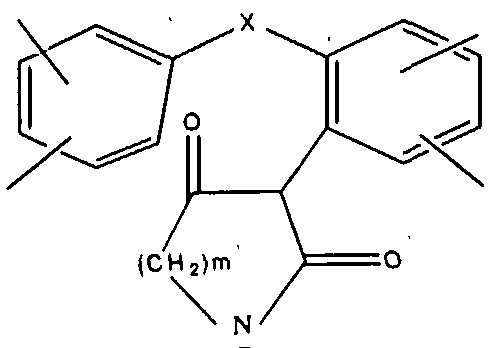

また、 Coll. of Czechoslovak Chem. Comm., 34(8), 2258-2277(1969) には、 2—フエノ キシー 5 —クロ口フエニル酢酸のクロ口原子位置異性体である 2— ( 4—クロ口フエ ノキシ) フエニル酢酸が、 下記合成ルートにより合成されることが記載され Tいる。

^ゥ【こ、 Journal of Labelled Compounds and Radiopharmaceuticals, (1994), vol. XXX IV, No.9, 845-869には、 ァセナピンが、 下記合成ルートにより合成されることが記載 されている。

発明の開示
本発明の課題は、 安価な原料を出発し、 ァセナピンとその合成中間体を効率的かつ 安全に製造する方法を提供することであり、 また他の課題はァセナピンの新規中間体 を提供することである。
本発明者らは、 上記課題に対して鋭意検討し、 本発明を完成するに至った。
すなわち、 本発明は以下の通りである。
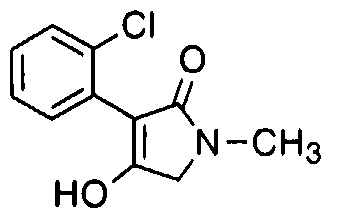
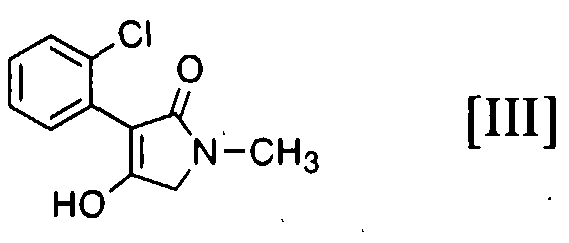
< 1 > 式 [III] :
 で表される化合物 (以下、 化合物 [III] と記すことがある。) を 4一クロ口フエノール と反応させることを含む化合物 [IV] の製造方法。
< 2 > 反応が塩基の存在下に行われるぐ 1〉に記載の方法。
< 3 > 反応が、 4 -クロ口フエノールを 4ークロロフエノキシ金属塩に変換後、 化合
物 [III] を該 4—クロロフエノキシ金属塩と反応させることにより行われる < 1〉に 記載の方法。
< 4 > 化合物 [III] 力 式 [Π] :
UU CH3 [ii]
R02C-^
(式中、 Rは炭素数 1〜6のアルキル基を表す。) '
で表される化合物 (以下、 化合物 [II] と記すことがある。) を分子内閉環することに より得られる < 1〉〜ぐ 3〉のいずれかに記載の方法。
く 5〉 分子内閉環が、 化合物 [ΙΠ] に塩基を作用させることによりより行われる < 4 >に記載の方法。
く 6〉 塩基が金属アルコキシドである < 5〉に記載の方法。
< 7 > 化合物 [II] が、 式 [la] :
 で表される化合物 (以下、 化合物 [la] と記すことがある。) またはその力ルポキシル 基における反応性誘導体を式 [lb] : へ CO2R [lb]
, Η3〇
(式中、 Rは前記と同義を表す。)
で表される 2級ァミン化合物 (以下、 化合物 [lb] と記すことがある。) と反応させる ことにより得られるぐ 4〉〜ぐ 6〉のいずれかに記載の方法。
< 8 > 反応が、 化合物 [la] と化合物 [lb] との反応であり、 縮合剤の存在下に行 われる < 7〉に記載の方法。
く 9〉 反応が、 化合物 [la] のカルボキシル基における反応性誘導体と化合物 [lb] との反応であり、 該反応性誘導体が化合物 [la] の酸ハライドであるぐ 7〉に記載の 方法。
< 1 0〉 化合物 [la]またはそのカルボキシル基における反応性誘導体を化合物 [lb] と反応させて化合物 [II] を得ることを含む工程、 及び
化合物 [II] を分子内閉環することを含む工程を含む化合物 [III] の製造方法。
< 1 1 > 反応が、 化合物 [la] と化合物 [lb] との反応であり、 縮合剤の存在下に 行われるぐ 1 0 >に記載の方法。
< 1 2 > 反応が、化合物 [la]のカルボキシル基における反応性誘導体と化合物 [lb] と,の反応であり、 該反応性誘導体が化合物 [la] の酸ハライドであるぐ 1 0 >に記載 の方法。
< 1 3 > 分子内閉環が、 化合物 [II] に塩基を作用させることにより行われる < 1 0〉〜ぐ 1 2〉のいずれかに記載の方法。
< 1 4 > 塩基が金属アルコキシドである < 1 3 >に記載の方法。
< 1 5 > 化合物 [III] を 4—クロ口フエノールと反応させて式 [IV] :

で表される化合物 (以下、 化合物 [IV] と記すことがある。) を得ることを含む工程、 化合物 [IV] を分子内閉環して式 [V] :

で表される化合物 (以下、 化合物 [V] と記すことがある。) を得ることを含む工程、 化合物 [V] を還元して式 [VI] :

で表される化合物 (以下、 化合物 [VI] と記すことがある。) を得ることを含む工程、 及び
化合物 [VI] の力ルポエル基を還元することを含む工程を含む式 [VII] :

で表されるジベンゾォキセピノピロール化合物 (以下、 化合物 [VII]) またはその薬 理的に許容しうる塩の製造方法。
<16〉 化合物 [VII] をその薬理的に許容しうる塩に変換することを含む工程をさ らに含むぐ 1 5〉に記載の方法。
<1 7> 化合物 [III] と 4—クロ口フエノールとの反応が塩基の存在下に行われる <1 5>またはぐ 1 6>に記載の方法。
< 18> 化合物 [III] と 4—クロ口フエノールとの反応が、 4-クロ口フエノールを 4—クロロフエノキシ金属塩に変換後、 化合物 [III] を該 4—クロロフエノキシ金属 塩と反応させることにより行われる < 1 5>または <1 6〉に記載の方法。
<1 9〉 化合物 [IV] の分子内閉環が、 脱水性溶媒中で行われるく 1 5>〜<1 8 >のいずれかに記載の方法。 ,
ぐ 20> 脱水性溶媒が硫酸、リン酸またはポリリン酸であるぐ 1 9 >に記載の方法。 <2 1> 脱水性溶媒がポリリン酸であり、 ポリリン酸がリン酸と五酸化二リンから 調製したポリリン酸であるぐ 19>に記載の方法。
, <22> 化合物 [V] の還元が、 貴金属触媒の存在下に接触還元することにより、 または、 低級アルコールまたはアンモニア中で、 アルカリ金属またはアルカリ土類金 属と反応させることにより行われる < 1 5>〜<2 1〉のいずれかに記載の方法。 <23> 化合物 [V] の還元が、 低級アルコールまたはアンモニア中でアルカリ金 属またはアルカリ土類金属と反応させることにより行われる <1 5〉〜<2 1〉のい ずれかに記載の方法。
<24> 化合物 [VI] のカルボニル基の還元が、 還元剤と反応させることにより行 われる <1 5〉〜ぐ 23〉のいずれかに記載の方法。
<25> 還元剤が、 L i A l H4、 N a A 1 H2 (OCH2CH2〇CH3) 2、 L i A 1 H (t一 Bu〇) 3、 A 1 H3、 B2H6, BH3 ' THF、 BH3 ' OE t 2、 N a B H4/BF3 ' THF、 KBH4/B F3 - THF, L i B H4/B F 3 · TH F、 Na B
H4/ (CH3) 2S04または NaBH4/H2S〇4である <24〉に記載の方法。 <26> 化合物 [HI] 力 化合物 [II] を分子内閉環することを含む工程により得 られるぐ 15〉〜<25〉のいずれかに記載の方法。 ' <27> 分子内閉環が、 化合物 [II] に塩基を作用させることにより行われる <2 6, >に記載の方法。
<28> 塩基が金属アルコキシドである < 27 >に記載の方法。
<29> 化合物 [II] 力 化合物 [la] またはそのカルボキシル基における反応性誘 導体を化合物 [lb] と反応させることを含む工程により得られる <26>〜<28〉 の.いずれかに記載の方法。
<30> 反応が、 化合物 [la] と化合物 [lb] との反応であり、 縮合剤の存在下に 行われる < 29〉に記載の方法。
<31> 反応が、化合物 [la]のカルボキシル基における反応性誘導体と化合物 [lb] との反応であり、 該反応性誘導体が化合物 [la] の酸ハライドであるぐ 29>に記載 の方法。 ,
<32> 化合物 [IV]。
<33> 化合物 [111]。 ·
-発明を実施するだめの最良の形態
本発明によれば、 下記スキーム 1に示したルートにより、 ァセナピンもしくはその 薬理的に許容し得る塩を製造することができる。
(スキーム 1)


V VI vn
,以下、 本発明について詳細に説明する。
(工程 1) '
化合物 [II] は、 化合物 [la] またはそのカルボキシル基における反応性誘導体を化 合物 [lb] と反応させることにより製造することができる。
化合物 [lb] および化合物 [II] において、 Rは炭素数 1〜6の直鎖または分岐アル キル基を表し、 とりわけメチル基、 ェチル基が好ましい。
本工程は、 一般的なアミド化反応で採用されている方法により実施することができ る。 例えば化合物 [la] をそのまま用いる場合は、 縮合剤を用いる方法を採用するこ とができる。 また、 化合物 [la] のガルボキシル基における反応性誘導体を用いる場 合は、 化合物 [la] から誘導される反応性誘導体、 例えば対応する酸ハライドを化合 物 [lb] と反応させる方法が挙げられる。
化合物 [la] と化合物 [lb] とを縮合剤を用いて反応させる場合は、 化合物. [Ib] の 量は、 化合物 [la] 1モルに対し、 通常 0. 8〜5モル、 好ましくは 1〜1. 5モル である。 縮合剤としては、 N, N' —ジシクロへキシルカルポジイミド (DCC)、 N - (3—ジェチルァミノ— 1 _プロピル) —N' —ェチルカルポジイミド塩酸塩 (W S C I · HC 1 )などのカルポジイミド縮合剤;ジフエ二ルホスホリルアジド(DP P A), シアノリン酸ジェチル(DEPC)、 N, Ν' 一ビス (2—ォキソ一 3—才キサゾ リジニル) ホスフィニッククロライド(BOP— C 1 )などの 5価の有機リン縮合剤; クロ口炭酸メチル、 クロ口炭酸ェチル、 クロ口炭酸イソプロピルなどのクロ口炭酸ェ ステル類; ピバロイルクロリ ド ;塩化チォニル;ォキシ塩化リンなどが挙げられる。 縮合剤の量は化合物 [la] 1モルに対し、 通常 0. 8〜5モル、 好ましくは 1〜1. 5モルである。
本工程の反応においては、 塩基を必ずしも使用しなくてもよいが、 塩基 (例えば、 トリェチルァミン、 トリー n—プロピルァミン、 トリ— n—ブチルァミン、 ジイソプ
口ピルェチルァミン、 N—メチルモルホリン、 ピリジン、 2 , 6—ジー t e r t—ブ チルピリジン、 イミダゾ一ル、 1—メチルイミダゾールなどの有機塩基、 水酸化カリ ゥム、 水酸化ナトリウム、 水酸化リチウム、 炭酸カリウム、 炭酸ナトリウム、 炭酸リ チウム、 重炭酸カリウム、 重炭酸ナトリウム、 重炭酸リチウムなどの無機塩基) を反 ^系に添加してもよく、 トリェチルァミンが特に好ましい。 塩基を使用する場合の量 は化合物 [la] 1モルに対し、 通常 0 . 0 1〜5モル、 好ましくは 1〜2モルである。 塩基が液状である場合、 溶媒を兼ねさせることができる。
溶媒としては、 例えば、 エステル溶媒 (例えば、 酢酸ェチル、 酢酸プロピル、 酢酸 'ブチル、 プロピオン酸ェチル、 プロピオン酸プロピル、 プロピオン酸ブチルなど).;ェ 一テル溶媒 (例えば、 ジェチルエーテル、 t e r t _ブチルメチルエーテル、 1, 2 ージメトキシェタン、 ジグライム、 テトラヒドロフランなど) ;アミド溶媒 (例えば、 N, N—ジメチルホルムアミド、 N, N—ジメチルァセチルアミド、 N—メチルピロ リ ドン、 1 , 3 —ジメチルー 2—イミダゾリジノンなど);ケトン溶媒 (例えば、 メチ ルイソブチルケトン、 メチルェチルケトン、 シクロへキサノン、,シクロペン夕ノンな ど) ;二トリル溶媒.(例えば、 ァセトニトリル、 プロピオ二卜リルなど) ; アルコール 溶媒 ( えば、 メタノール、 エタノール、 1—プロパノール、 2—プロパノール、 1 ーブ夕ノール、 2 _ブ夕ノールなど);ハロゲン化溶媒 (例えば、 塩化メチレン、 クロ ,口ホルムなど);芳香族溶媒 (例えば、 トルエン、 キシレン、 クロ口ベンゼン、 ニトロ ベンゼンなど);水等が挙げられ、 これらは 2種以上の混合溶媒であってもよい。 好ま しくはトルエンとテトラヒドロフランである。 溶媒の量は、 化合物 [la] 1 k gに対 し、 通常 1〜1 0 0 L、 好ましくは 3〜3 0 Lである。 なお、 反応を加速するために は、 4一 N, N—ジメチルァミノピリジン、 4—ピロリジノピリジンなどの触媒を反 応系に加えることが好ましく、 4—N, N—ジメチルァミノピリジンを添加すること が特に好ましい。 触媒の量は、 化合物 [la] 1モルに対し、 通常 0 . 0 0 1〜1モル、 好ましくは 0 . 1〜0 . 5モルである。 反応温度は、 通常— 3 0〜1 5 0 、 好まし くは 0〜5 0 °Cである。 化合物 [Ia]、 化合物 [lb] 及び縮合剤との仕込み順は特に制 限はない。
一方、 化合物 [la] のカルボキシル基における反応性誘導体として、 対応する酸ハ
ライドを使用する場合、 酸ハライドとしては、 酸クロリ ド、 酸プロ.ミドなどがあげら れ、 酸クロリ ドが好ましい。 前記酸ノ、ライドは化合物 [la] にハロゲン化剤を作用さ せることにより製造することができる。 ハロゲン化剤としては、 例えば、 塩化チォニ ル、 五塩化リン、三塩化リン、 ォキシ塩化リン、 ォキザリルクロリド、 臭化チォニル、 ^臭化リンなどが挙げられ、 塩化チォニルが好ましい。 ハロゲン化剤として塩化チォ ニルを使用する場合、 塩化チォニルの量は化合物 [la] Γモルに対し、 通常;!'〜 5モ ル、 好ましくは 1〜 1 . ' 5モルである。 溶媒は必ずしも用いなくてもよいが、 ハロゲ ン化溶媒 (例えば、 塩化メチレン、 クロ口ホルムなど)、 芳香族溶媒 (例えば、 ベンゼ ン、 トルエン、 キシレン、 クロ口ベンゼン、 ニトロベンゼンなど) などを用いてもよ く、 好ましくはトルエンである。 溶媒の量は、 化合物 [la] 1 k gに対し、 通常 1〜 1 0 0 L、 好ましくは 3〜3 0 Lである。 反応を加速するためには、 通常 N, N—ジ メチルホルムアミド、 Ν , , Ν—ジメチルァニリンなどを触媒として用いることが好ま しく、 Ν, Ν—ジメチルホルムアミドを反応系に添加することが特に好ましい。 触媒 の量は化合物 [la] 1モルに対し、 通常 0 . 0 0 1〜1モル、 ^ましくは 0 . 0 0 1 〜0 . 0 5モルである。反応温度は、通常— 3 0〜 1. 5 0 °C、好ましくは 2 0〜9 0 °C である。, 化合物 [la] の酸ハライドは溶媒の留去とともに過剰量のハロゲンィ匕剤を除 去後、 溶液の状態、 濃縮物または蒸留による蒸留品の形態で、 好ましくは、 濃縮物の 形態で、 化合物 [lb] との反応に用いられる。
化合物 [la] の酸ハロゲン化物と化合物 [lb] との反応は、 通常塩基の存在下に好 適に行うことができる。 化合物 [lb] の量は化合物 [la] 1モルに対し、 通常 0 . 8 〜5モル、 好ましくは 1〜1 . 5モルである。 塩基としては、 例えば、 卜リエチルァ ミン、 トリ— n—プロピルァミン、 トリ— n—ブチルァミン、 ジイソプロピルェチル ァミン、 N _メチルモルホリン、 ピリジン、 2 , 6—ジー t e r t —ブチルピリジン、 イミダゾ一ル、 1ーメチルイミダゾールなどの有機塩基、 水酸化カリウム、 水酸化ナ トリウム、 水酸化リチウム、 炭酸カリウム、 炭酸ナトリウム、 炭酸リチウム、 重炭酸 カリウム、 重炭酸ナトリウム、 重炭酸リチウムなどの無機塩基を挙げることができ、 卜リエチルァミン及び N—メチルモルホリンが好ましい。 塩基の量は化合物 [la] 1 モルに対し、 通常 0 . 8〜5モル、 好ましくは 1〜 3モルである。 塩基を溶媒として
使用することもできる。
溶媒としては、 エステル溶媒 (例えば、 酢酸ェチル、 酢酸プロピル、 酢酸プチル、 プロピオン酸ェチル、 プロピオン酸プロピル、 プロピオン酸ブチルなど);エーテル 媒 (例えば、 ジェチルエーテル、 t e r t —ブチルメチルエーテル、 1 , 2 _ジメト チシェタン、 ジグライム、 テトラヒドロフランなど);アミド溶媒 (例えば、 N, N— ジメチルホルムアミド、 N, N—ジメチルァセチルアミド、 N—メチルピロリ ドン、 1 , 3—ジメチルー 2—イミダゾリジノンなど);ケトン溶媒 (例えば、 メチルイソブ チルケトン、 メチルェチルケトン、 シクロへキサノン、 シクロペン夕ノンなど);二卜 リル溶媒 (例えば、 ァセ卜二トリル、 プロピオ二トリルなど);アルコール溶媒 (例え ば、 メタノール、 エタノール、 1—プロパノール、 2—プロパノール、 1ーブタノ一 ル、 2—ブ夕ノールなど);ハロゲン化溶媒 (例えば、 塩化メチレン、 クロ口ホルムな ど);芳香族溶媒 (例えば、 トルエン、 キシレン、 クロ口ベンゼン、 ニトロベンゼンな ど);水などを挙げることができ、 これらは 2種以上の混合溶媒であってもよい。好ま しくはトルエン及びテトラヒドロフランである。 反応を促進させるために、 4— N, N—ジメチルァミノピリジン、 4 —ピロリジノピリジンなどの触媒をとして反応系に 加えることが好ましく、 触媒の量は、 化合物 [la] 1モルに対し、 通常 0 . 0 0 1〜 1モル、好ましくは 0 . 1〜0 . 5モルである。反応温度は、通常— 3 0〜 1 5 O :、 好ましくは 0〜8 0 °Cである。 化合物 [la] の酸ハライドと化合物 [Ib〗 と塩基との 仕込み順には特に制限がないが、 化合物 [la] の酸ハライドを、 化合物 [lb] と塩基 の溶液に滴下することが好ましい。
化合物 [Π] の精製は、 反応液の常法による後処理 (例えば、 中和、 抽出、 洗浄、 乾燥、 濃縮、 クロマ卜グラフィ一など) によって行なうことができるが、 特に精製す ることなしに次工程に用いることもできる。 (工程 2 )
化合物 [ΙΠ] は化合物 [II] を分子内環化することにより製造できる。 本工程の反 応は化合物 [II] に塩基を作用させることにより好適に実施できる。 塩基としては、 金属水素化物 (例えば、 水素化カリウム、 水素化ナトリウム、 水素化リチウムなど)、
金属炭酸塩 (例えば、 炭酸セシウム、 炭酸カリウム、 重炭酸カリウム、 炭酸ナトリウ ム、 重炭酸ナトリウムなど)、 金属アルコキシド (例えば、 t e r t —ブトキシカリウ ム、 t e r t —ブトキシナトリウム、 ェ卜キシカリウム、 ェ卜キシナトリウム、 メ卜 キシカリウム、 メトキシナトリウムなど)、 三級アミン (例えば、 トリェチルァ,ミン、 1,, 8—ジァザビシクロ [ 4 . 3 . 0 ] — 5—ノネンなど) などが挙げられ、 金属アル コキシドが好ましく、 t e r t —ブトキシカリウムが最も好ましい。 塩基の量は、 化 合物 [II] 1モルに対し、 通常 0 . 5〜5モル、 好ましくは 1〜1 . 5モルである。 反応溶媒としてはエーテル溶媒 (例えば、 ジェチルエーテル、 t e r t —プチルメ チルエーテル、 1 , 2—ジメトキシェタン、 ジグライム、 テトラヒドロフランなど) ; アミド溶媒 (例えば、 N, N—ジメチルホルムアミド、 N, N—ジメチルァセチルァ ミド、 N—メチルピロリドン、 1, 3—ジメチル _ 2 —イミダゾリジノンなど);ハロ ゲン化溶媒 (例えば、 塩化メチレン、 クロ口ホルムなど);芳香族溶媒 (例えば、 ベン ゼン、 トルエン、 キシレン、 クロ口ベンゼン、 ニトロベンゼンなど);アルコール溶媒 (例えば、 メタノール、 エタノール、 1—プロパノール、 2 _プロパノール、 1—ブ 夕ノール、 2—ブ夕ノールなど);水などが挙げられ、 これらは 2種以上の混合溶媒で あってもよい。 好ましくはテトラヒドロフラン及びトルエンである。 溶媒の量は、 化 合物 [II] 1 k gに対し、 通常 1〜 1 0 0 L、 好ましくは 3〜 3 0 Lである。 反応温 度は通常一 3 0〜1 5 0 °C、好ましくは— 1 0〜5 0 °Cである。反応時間は反応温度、 原材料の量などにもよるが、 通常 1〜4 8時間、 好ましくは 2〜 1 0時間である。 化合物 [III] の単離は、 反応液の常法による後処理 (例えば、 中和、 抽出、 洗浄、 乾燥、 晶析など) によって行なうことができる。反応液に水を加えた後、有機溶媒(例 えば、 トルエン、 t e r t—プチルメチルエーテル、 トルエンなど)で洗浄、 分液し、 得られた水層を p H 1〜8、 好ましくは p H 3〜7に中和し、 化合物 [IV] を晶析さ せて単離する方法が特に好ましい。
なお、 化合物 [III] は条件によって互変異性体である式 [ΙΙΓ]
 で表される化合物に変わりうる。 本発明においては、 両化合物は化合物 [III] として 定義される。
(工程 3) ' ,化合物 [IV] は化合物 [III] を 4一クロ口フエノールと反応させることにより製造 できる。 本工程の反応は、 塩基の存在下に好適に行うことができ、 さらに触媒存在下 に行なうのが好ましい。
塩基としては、 例えば、 卜リエチルァミン、 トリ _n—プロピルァミン、 トリー n 一プチルァミン、 ジイソプロピルェチルァミン、 N—メチルモルホリン、 ピリジン、 2, 6—ジー t e r t—ブチルピリジン、 イミダゾール、 1一メチルイミダゾ一ルな どの有機塩基;水酸化カリウム、 水酸化ナトリウム、 水酸化リチウム等の金属水酸化 物、 炭酸セシウム、 炭酸カリウム、 炭酸ナトリウム、 炭酸リチウム等の金属炭酸塩、 重炭酸カリウム、 重炭酸ナトリウム、 重炭酸リチウム等の金属重炭酸塩などの無機塩 基が挙げられ、 炭酸セシウム及び炭酸カリウムが好ましい。 塩基,の量は、 化合物 [HI] 1モルに対し、 通常 0. 5〜5モル、 好ましくは 1〜2モルである。
4—クロ口フエノールを、 · 前記した金属水酸化物と先に反応させることにより調製 した 4ークロロフエノキシ金属塩を、 4—クロ口フエノール及び塩基に代えて用いる こともできる。 金属塩としては、 セシウム塩、 カリウム塩、 ナトリウム塩、 リチウム 塩などが挙げられるが、 セシウム塩、 カリウム塩が好ましい。
触媒としては、 遷移金属を含む化合物、 アミノ酸またはその誘導体が挙げられる。 遷移金属を含む化合物としては、 ロジウム、 ニッケル、 鉄、 銅などの遷移金属を含む 化合物などがあげられ、 銅 (0) または銅 ( I ) を含む化合物が好ましい。 銅 (I ) を含む化合物としては、銅( I )のハロゲン化物(例えば、塩化銅( I )、臭化銅( I )、 ヨウ化銅 ( I) など)、 酸化物、 鉱酸塩 (例えば、 硫酸塩、 硝酸塩、 燐酸塩、 炭酸塩な ど)、 有機酸塩、 銅 (0) と銅 ( I) との錯体などが挙げられるが、 ヨウ化銅 (I ) と 塩化銅 ( I ) が特に好ましい。 触媒の量は、 化合物 [III] 1モルに対し、 通常 0. 0 0 1〜0. 5モル、 好ましくは 0. 0 1〜0. 1モルである。
アミノ酸およびその誘導体としては、例えば、 グリシン、 N—メチルグリシン、 N、
N—ジメチルグリシン、 ァラニン、 フエ二ルァラニンなどが挙げられ、 N、 N—ジメ チルダリシンが好ましい。 アミノ酸およびその誘導体の量は、 化合物 [III] 1モルに 対し、 通常 0 . 0 0 1〜0 . 5モル、 好ましくは 0 . 0 0 5〜0 . 0 1モルである。
4 一クロ口フエノールの量は、 化合物 [II] 1モルに対し、 通常 1〜 5モル、 好ま レくは 1〜: L . 5モルである。
反応溶媒としては、 例えば、 エーテル溶媒 (例えば、 ジェチルエーテル、 t e r t —プチルメチルエーテル、 1, 2—ジメトキシェタン、 ジグライム、 テトラヒドロフ ランなど) ;アミド溶媒 (例えば、 N, N—ジメチルホルムアミド、 N, N—ジメチル ァセチルアミド、 N—メチルピロリドン、 1, 3—ジメチルー 2—イミダゾリジノン など);ケトン溶媒 (例えば、 メチルイソプチルケトン、 メチルェチルケトン、 シクロ へキサノン、 シクロペン夕ノンなど);二トリル溶媒 ('例えば、 ァセトニトリル、 プロ ピオ二トリルなど);アルコール溶媒(例えば、 1—プロパノール、 2 一プロパノール、 1—ブタノール、 2—ブ夕ノールなど) ;ハロゲン化溶媒 (例えば、 塩化メチレン、 ク ロロホルムなど);芳香族溶媒 (例えば、 トルエン、 キシレン、 クロ口ベンゼン、 ニト 口べンゼンなど);水などが挙げられる。これらは 2種以上の混合溶媒であつてもよい。 好ましくはジグライム及び 1, 3—ジメチルー 2—イミダゾリジノンである。. 溶媒の 量は、化合物 [III] 1 k gに対し、 通常 1〜: 1 0 0 L、好ましくは 3〜 3 0 Lである。 , 反応温度は通常 0〜2 0 0 °C、 好ましくは 5 0〜 1 5 0 °Cである。 反応時間は反応 温度、 原材料の量などにもよるが、 通常 0 . 5〜4 8時間、 好ましくは 0 . 5〜6時 間である。 反応時間が長すぎると収率が低下する傾向がある。
化合物 [III]、 4一クロ口フエノール (またはその金属塩)、 塩基、 触媒等の仕込み 順には特に制限がない。 反応は、 窒素、 アルゴンなどの不活性ガス雰囲気下に行うの が好ましい。
化合物 [IV] の単離は、 反応液の常法による後処理 (例えば、 中和、 抽出、 洗浄、 乾燥、 晶析など) によって行なうことができる。反応液に水を加えた後、 有機溶媒(例 えばメタノール、 エタノールなどのアルコール、 あるいは該アルコールと、 テトラヒ ドロフラン、 t e r t —ブチルメチルエーテルもしくはトルエンとの混合溶媒など) で洗浄、 分液し、 得られた水層を P H 1〜8、 好ましくは p H 6〜8に中和し、 化合
物 [IV] を晶析させることにより単離する方法が好ましい。
なお、 化合物 [IV] は条件によって互変異性体である式 [IV']

で表される化合物に変わりうる。 本発明においては、 両化合物は化合物 [IV] として 定義される。
(工程 4 )
化合物 [V] は、 化合物 [IV] を分子内閉環することにより製造できる。 本工程に おける分子内閉環反応は脱水性溶媒中で好適に実施することができる。 脱水性溶媒と しては、 例えば、 硫酸、 リン酸、 ポリリン酸などが挙げられ、 ポリリン酸、 とくに粘 度が調整できることから、リン酸と五酸化ニリンから調製したポリリン酸が好ましレ^ リン酸と五酸化二リンから調製したポリリン酸を使用する場合、 リン酸の量は、 化合 物 [IV] 1 k gに対し、 通常 1〜: L 0 0 k g、 好ましくは 3〜3 0 k gであり、 五酸 化二リンの量は、 化合物 [IV] 1モルに対し、 通常 1〜 1 0モル、 好ましくは 1〜3 モルである。 反応温度は通常 2 0〜2 5 0 °C、 好ましくは 1 2 0〜 2 0 0 °Cである。 反応時間は反応温度、 原材料の量などにもよるが、 通常 1 0〜4 8時間、 好ましくは 1 5〜2 5時間。 反応液の常法による後処理 (例えば、 中和、 抽出、 冼浄、 乾燥、 濃 縮など) によって取り出された化合物 [V] を晶析精製できるが、 前記常法による後 処理によって得られる濃縮物をそのまま次工程に用いてもよい。
(工程 5 )
化合物 [VI] は、 化合物 [V] の炭素一炭素二重結合を還元することにより製造で きる。 本工程における還元反応としては、 白金やパラジウムなどの貴金属触媒の存在 下に接触還元する方法や、 低級アルコールまたはアンモニア中でアルカリ金属または アルカリ土類金属と反応させる方法などを挙げることができる。 なかでも、 低級アル コールまたはアンモニア中でアルカリ金属またはアル力リ土類金属と反応させる方法
が好ましく、さらに好ましくは、低級アルコール中でマグネシウムと反応させる方法、 アンモニア中にリチウムまたはナトリウムと反応させる方法であり、最も好ましくは、 メタノールまたはエタノール中でマグネシウムと反応させる方法である。 低級アルコ —ルまたはアンモニアの量は、 化合物 [V] 1 k gに対して、 通常 4〜1 00 であ り,、 好ましくは、 5〜30 Lである。 アルカリ金属またはアルカリ土類金属の量は、 化合物 [V] 1モルに対し、 通常 2〜25モル、 好ましぐは 4〜7モルである'。 反応 温度は通常 0〜 100°C、 好ましくは 40〜70°Cである。 反応時間は反応温度、 原 材料の量等にもよるが、 通常 1〜48時間、 好ましくは 4〜 10時間である。 化合物 [V] の精製は、 反応液の常法による後処理 (例えば、 中和、 抽出、 洗浄、 乾燥、 濃 縮、 クロマトグラフィーなど) によって行なうことができ、 また、 特に精製すること なしに反応液をそのまま次工程に用いることもできる。
(工程 6)
化合物 [VII] は、 化合物 [VI] のカルボ二ル基を還元することにより製造すること ができる。 本工程における還元反応は、 還元剤の存在下に好適に実施できる。 還元剤 としては、 例えば、 L i A l H4、 NaA l H2 (OCH2CH2OCH3) 2、 L i A 1 H ( t -BuO) 3、 A 1 H3、 B2H6, BH3 ' THF、 BH3 * OE t 2、 N'a BH4 ,/BF3 · THF、 KBHン BF3 · THF、 L i B H4/B F 3 · TH F、 Na BH4 Z (CH3) 2S04、
 などを挙げることができる。.還元剤の量は 通常、 化合物 [VI] 1モルに対して 1〜 5モルである。 反応溶媒としては、 ジェチル エーテル、 t e r t—ブチルメチルエーテル、 1, 2—ジメトキシェタン、 ジグライ ム、 テトラヒドロフランなどのエーテル溶媒を挙げることができ、 好ましくはテトラ ヒドロフランである。 溶媒の量は、 化合物 [VI] 1 k gに対し、 通常 1〜 1 00し、 好ましくは 3〜30 Lである。 反応温度は、 通常— 80〜 1 00 である。
化合物 [VII] の精製は、 反応液の常法による後処理 (例えば、 中和、 抽出、 洗浄、 乾燥、 濃縮、 晶析、 クロマトグラフィーなど) によって行なうことができ、 抽出法と 晶析法の両方を行うことが好ましい。抽出法として好ましくは、酸塩基抽出法であり、 晶析法として好ましくは、 造塩晶析法である。 まず酸塩基抽出を行なった後、 造塩晶
祈させることがさらに好ましい。 酸塩基抽出法とは、 粗製化合物 [VII] を鉱酸 (例え ば、 硫酸、 塩酸、 硝酸、 リン酸など) または有機酸 (例えば、 メタンスルホン酸、 ト リクロロメタンスルホン酸、蟻酸、酢酸など)の水溶液に溶解し、得られた化合物 [VII] の酸性水溶液を有機溶媒 (例えば、 酢酸ェチル、 t e r t一ブチルメチルエーテル、 トルエンなど) で洗浄した後、 塩基を加えることにより、 中性〜塩基性にして精製す る方法を指し、 必要であれば、 さらに抽出、 乾燥、 濃縮などを行い、 単離する。 酸塩 基抽出法で用いる酸としては、 硫酸、 メタンスルホン酸が特に好ましい。 造塩晶析法 とは、 有機溶媒(例えば、 メタノール、 エタノールなどのアルコール溶媒、 アセトン、 メチルイソプチルケトンなどのケ卜ン溶媒、 ベンゼン、 トルエン、 キシレンなどの芳 香族炭化水素溶媒、 N、 N—ジメチルホルムアミド、 1一メチルピロリジノンなどの アミド溶媒、 ァセニトリル、 プロピオ二トリルなどの i卜リル溶媒、 塩化メチレン、 クロ口ホルムなどのハロゲン化溶媒)、水、 これらの 2種以上の混合溶媒などの溶媒中 に、 化合物 [VII] と鉱酸 (例えば、 硫酸、 塩酸、 硝酸、 リン酸、 臭化水素酸など) あ るいは有機酸 (例えば、 メタンスルホン酸、 p—トルエンスルホン酸、 マレイン酸、 フマル酸、 酒石酸、 蓚酸、 琥珀酸など) を加え、 造塩、 晶析させる方法である。 特に、 マレイン酸を用いて造塩精製することが、 そのまま医薬品として用いることが可能で あるため好ましい。 ' 次に実施例をあげて本発明を具体的に説明するが、 本発明はこれら実施例になんら 限定されるものではない。
[実施例 1] ェチル 2— (2— (2—クロ口フエ二ル) — N—メチルァセタミ ド) アセテート (化合物 [II]) の合成
(2—クロ口フエニル) 酢酸 (144 g, 844mmo 1 ) のトルエン (430m 1 ) 溶液に、 N, N—ジメチルホルムアミド (0. 3m l ) 加え、 30〜50°Cで、 窒素雰囲気下で塩化チォニル (1 05 g, 883 mm o l ) を 30分間で滴下し、 還 流温度まで徐々に加熱した。 加熱終了後、 トルエンを減圧留去し、 得られた (2—ク ロロフエニル) ァセチルクロライド溶液をサルコシンェチルエステル塩酸塩(1 29 g, 84 Ommo 1 )、 N, N—ジメチルァミノピリジン (10 g)、 テトラヒドロフ
ラン (6 3 0m l ) 及び卜リエチルアミン (2 9 0m 1 ) の混合溶液に 0〜 20°Cで 30分間かけて滴下し、 終夜撹拌した。 撹拌終了後、 反応液に水 (3 00m l ) とト ルェン(50 0m l )を加え、攪拌分液した。得られたトルエン層を水(30 0m l ), 1 0 %塩酸(2 0 Om 1 )Λ 水(2 0 Om 1 )、 5 %重曹水(2 0 0m l ) と食塩水(2 0 0m l ) で順次洗浄し、 無水硫酸マグネシウムで乾燥後、 ろ過、 濃縮を行い、 油状 のェチル 2 — ( 2 - (2—クロ口フエニル) _N—メチルァセタミド) アセテート (化合物 [II]) を 1 6 3 g得た。 見かけ収率: 7 1. 8 %。
ェチル 2— (2 - (2—クロ口フエニル) —N—メチルァセタミド) アセテート ' (化合物 [II]) の1 H— NMRデータ (p pm i n C D C 1 3): 1. 2 8 ( 3 H, t, J= 7Hz), 3. 1 0 (3H, s), 3. 8 8 (2H, s), 4. 1 6 (2H, s), 4. 2 0 (2 H, q, 7= 7Hz), 7. 2 0〜7. 24 (2 H, m), 7. 3 6〜 7. 3 9 ( 2 H , m) .
, [実施例 2] 3— (2—クロ口フエニル) _4ーヒドロキシ— 1 _メチル— 1 H— ピロール— 2 (5H) —オン (化合物 [III]) の合成
実施例 1で得られた化合物 [II] ( 1 6 3 g、 0. 604mo 1 ) をトルェ (4 0 0m l ) とテトラヒドロフラン (1 0 0m l ) に溶解させ、 0〜2 0°Cで t'e r t ,—ブトキシカリウム (7 0. 6 g、 0. 6 3mo.l ) を分割して添加した。 反応液を 室温で終夜攪拌後、 水 (2 0 Om 1 ) を少しずつ流入した。 分液後、 有機層を水 (5 Om l ) で抽出し、 水層を合わせた。 合わせた水層に 3 5 %塩酸を滴下し、 pH約 3 に調整した後、 析出した固体をろ過、 乾燥して、 3— (2—クロ口フエニル) —4— ヒドロキシ— 1—メチル _ 1 H—ピロ一ルー 2 (5H) 一オン (化合物 [III]) を 1 0 7. 0 g得た。 (2—クロ口フエニル)酢酸(化合物 [la])からの通算収率は 5 6. 7 %である。
3—(2—クロ口フエニル)— 4—ヒドロキシ— 1—メチルー 1 H—ピロ一ルー 2 (5 H) —オン (化合物 [III]) の1 H— NMRデータ (p pm i n DMSO— d 6) : 2. 8 7 (3H, s ), 3. 9 5 (2H, s), 7. 2 2〜7. 46 (4H, m), 1 1. 2 7 ( 1 H, s).
[実施例 3] 3— (2— (4—クロロフエノキシ) フエニル) 一4—ヒドロキシー 1—メチル— 1 H—ピロ一ル— 2 (5H) —オン (化合物 [IV]) の合成
実施例 2で得られた化合物 (化合物 [III]) (20. 0 g, 89.6mmo 1 )、 4一 クロ口フエノール (1 7. 3 g, 1 34mmo 1 )、 炭酸セシウム (59. 3 g, 1 82mmo 1 )、 ヨウ化銅 (I) (0. 34 g, 1. 9 mm o 1 )、 N, N—ジメチルダ リシン塩酸塩 (0. 94 g, 6. 7mmo 1 ) 及びジグライム ( 190m 1 ) を混合 し、 該混合物を窒素雰囲気中、 内温 1 14〜1 1 6°Cで 50分間加熱後、 HPし に よ.り原料の消失を確認した。 反応マスを約 10°Cまでに冷却し、 水 (1 90m l ) を 徐々に流入した。得られた水溶液をトルエンで洗浄後、 35 %塩酸水で pHを 7〜8 に調整した。 析出した固体をろ過、 水洗浄、 減圧乾燥して、 固体の 3— (2- (4一 クロロフエノキシ) フエニル) 一4—ヒドロキシ— 1—メチルー 1 H—ピロ一ルー 2 (5H) 一オン (化合物 [IV]) が 1 6. 6 g得られた。 収率 58. 8%。
上記化合物 [IV] の1 H— NMRデータ (p pm i n CDC 13) : 3. 02 (3 H, s), 3. 82 (2 H, s), 6. 83 (2H, d, ゾ =9Hz), 6. 99^7. 02 (1 H, m), 7. 25-7. 33 (3H, m)、 8. 07 ( 1 H, s), .8. 1 2 (1H, m).
[実施例 4] 5—クロ口— 2, 3—ジヒドロ— 2—メチル— 1 H—ジベンゾ [2, 3 : 6, 7 ] ォキセピノ [4, 5— C ] ピロ一ルー 1—オン (化合物 [V]) の合成 実施例 3で得た化合物 [IV] (1 1. 5 g, 36. 5 mm o 1 ) と 105 %リン酸 (35. O g) を混合し、 1 60°Cで 1 7時間加熱した。 原料が残留していたため、 五酸化二リン (7. 9 g) を加え、 160°Cで 10時間加熱した。 反応マスに水 (1 00m l ) と酢酸ェチル (1 00m l ) を順次流入した。 析出した少量の生成物をろ 過、 回収し、 ろ液を分液した。 酢酸ェチル層を水 (50m l )、 5%重曹水 (100 m 1 ) と水 ( 1 0 Om 1 ) で順次洗浄後、 減圧濃縮して、 黄色固体の生成物 (5—ク ロロ一 2, 3—ジヒドロ— 2—メチル— 1 H—ジベンゾ [2, 3 : 6, 7] ォキセピ ノ [4, 5— c ] ピロ一ル— 1—オン (化合物 [V])) が上記の回収分と合わせて 9.
90 g得られた。 粗収率 91. 2%。
化合物 [V] の1 H— NMRデータ (p pm i n DMSO-d6) : 3. 09 (3 H, d, 7= 2Hz) 4. 6 1 (2 H, d, ゾ =4Hz), 7. 30〜7. 60 (6 H, m), 8. 04 (1H, t - 1 i k e, J= c a. 3Hz). ,
[実施例 5] 5—クロロー 2, 3, 3 a, 12 b—テトラヒドロ— 2—メチル _ 1 H—ジベンゾ [2, 3 : 6, 7] ォキセピノ [4, 5 - c ] ピロ一ルー 1一オン (化 合物 [VI]) の合成 >
実施例 4で得られた化合物 [V] を Journal of Labelled Compounds and Radiopharmaceuticals,(1994), vol.XXXIV, No.9, 845— 869に記載の方法に準じて、 無 水メタノール中、 マグネシウムを用いて還元すること より 5—クロ口— 2, 3, 3 a, 1 2 b—テ卜ラヒドロ,一 2—メチルー 1 H—ジベンゾ [2, 3 : 6, 7 ] ォキセ ピノ [4, 5— c] ピロ一ル— 1一オン (化合物 [VI]) を得る。 [実施例 6] トランス一 5—クロ口一 2, 3, 3 a, 12 b—テトラヒドロ— 2— メチルー 1 H—ジベンゾ [2, 3 : 6, 7] ォキセピノ [4, 5_c] ピロ一ル (化 合物 [VII]) の合成
実施例 5で得られた化合物 [VI] を Journal of Labelled Compounds and
Radiopharmaceuticals,(1994), vol.XXXIV, No.9, 845— 869に記載の方法に準じて、 L i A 1 H4を用いて還元することにより、 トランス一 5—クロ口一 2, 3, 3 a, 1
2 b—テトラヒドロー 2—メチルー 1H—ジベンゾ [2, 3 : 6, 7]ォキセピノ [4,
5— C ] ピロール (化合物 [VII]) を得る。
HPLC測定条件:カラム I n e r t s i l ODS— 2, 4. 6mmx 150mm カラム温度 35°C、 移動層: A液: 0. 1 %トリフルォロ酢酸水、 B液:ァセ卜二 卜リル
B液濃度 (グラジェント、 v/v): 20 %から 70 %までに 20分間。 70%で 5分 間。
流速: lm 1/m i n。 検出: UV 220 nm。 保持時間: 1 1. 2m i n (シス異
性体 10. 6 m i n )
卜ランス一 5—クロ口一 2, 3, 3 a, 12 b—テトラヒドロ一 2—メチル一 1 H— ジベンゾ [2, 3 : 6, 7] ォキセピノ [4, 5— c] ピロ一ル (化合物 [VH]) の iH— NMRデータ (p pm i n C D C 1 3 ) : 2. 56 (3H, s ), 3. 08 〜3. 18 (2H, m), 3. 19〜 3. 28 (2 H, m), 3. 64 (2 H, m)、 7. 05〜7. 20 (7H, m).
[実施例 7] トランス一 5—クロ口— 2, 3, 3 a, 12 b—テトラヒドロ一 2— メチル一 1 H—ジベンゾ [2, 3 : 6, 7] ォキセピノ [4, 5— c] ピロール マ レエ一卜の合成
実施例 6で得られたトランス— 5—クロロー 2, 3, 3 a, 12 b—テトラヒドロ — 2—メチル一 1 H—ジベンゾ [2, 3 : 6, 7] ォキセピノ [4, 5— c] ピロ一 ルを 99. 5 %エタノールに溶解させ、マレイン酸のエタノール溶液を室温で滴下す , る。 析出する固体をろ過、 乾燥して、 トランス一 5—クロロー 2, 3, 3 a, 12 b —テトラヒドロ— 2—メチル一 1 H—ジベンゾ [2, 3 : 6, 7] ォキセピノ [4, 5 - c] ピロール マレエー卜を得る。 mp.l 41で
, 本発明によれば、 医薬として有用なァセナピン、 その薬理学的に許容しえる塩およ びその合成中間体を効率的にかつ安全に製造することができる。
Claims
請求の範囲 式 [III] :

で表される化合物を 4一クロロフエノ ルと反応させることを含む式 [IV] :

で表される化合物の製造方法。
2 . 反応が塩基の存在下に行われる請求の範囲 1に記載の方法。
3 . 反応が、 4 -クロ口フエノールを 4ークロロフエノキシ金属塩に変換後、 式 [III] で表される化合物を該 4—クロロフエノキシ金属塩と反応させることにより行われる 請求の範囲 1に記載の方法。.
4 . 式 [III] で表される化合物が、 式 [II] :

(式中、 Rは炭素数 1〜 6のアルキル基を表す。)
で表される化合物を分子内閉環することにより得られる請求の範囲 1に記載の方法。
5 . 分子内閉環が、 式 [II] で表される化合物に塩基を作用させることによりより 行われる請求の範囲 4に記載の方法。
6 . 塩基が金属アルコキシドである請求の範囲 5に記載の方法。
7 . 式 [Π] で表される化合物が、 式 [la] :

で表される化合物またはその力ルポキシル基における反応性誘導体を式 [lb] :
H へ co2R [lb]
H3C
(式中、 Rは炭素 ϊα 6のアルキル基を表す。)
で表される 2級アミン化合物と反応させることにより得られる請求の範囲 4に記載の 方法。
8 . 反応が、 式 [la] で表される化合物と式 [lb] で表される 2級ァミン化合物と の反応であり、 縮合剤の存在下に行われる請求の範囲 7に記載の方法。
9 . 反応が、 式 [la] で表される化合物のカルボキシル基における反応性誘導体と 式 [lb] で表される 2級ァミン化合物との反応であり、 該反応性誘導体が式 [la] で 表される化合物の酸ハライドである請求の範囲 7に記載の方法。
1 0 . 式 [la] :

で表される化合物またはそのカルボキシル基における反応性誘導体を式 [lb] : H へ CO2R [lb]
H3C
(式中、 Rは炭素数 1 6のアルキル基を表す。)
で表される 2級ァミン化合物と反応させて式 [II] :

(式中、 Rは前記と同義を有する。)
で表される化合物を得ることを含む工程、 及び
式 [II] で表される化合物を分子内閉環することを含む工程を含む式 [III] :
 で表される化合物の製造方法。
1 1 . 反応が、 式 [la] で表される化合物と式 [lb] で表される 2級ァミン化合物
との反応であり、 縮合剤の存在下に行われる請求の範囲 1 0に記載の方法。
1 2 . 反応が、 式 [la] で表される化合物のカルボキシル基における反応性誘導体 と式 [lb] で表される 2級ァミン化合物との反応であり、 該反応性誘導体が式 [la] で表される化合物の酸ハライドである請求の範囲 1 0に記載の方法。
1 3 . 分子内閉環が、 式 [Π] で表される化合物に塩基を作用させることにより行 われる請求の範囲 1 0に記載の方法。
1 4 . 塩基が金属アルコキシドである請求の範囲 1 3に記載の方法。
1 5 . 式 [III] :
で表される化合物を 4—クロ口フエノールと反応させて式 [IV] :

で表される化合物を得ることを含む工程、
式 [IV] で表される化合物を分子内閉環して式 [V] :

で表される化合物を得ることを含む工程、
式 [V] で表される化合物を還元して式 [VI] :

で表される化合物を得ることを含む工程、 及び
式 [VI]で表される化合物のカルボ二ル基を還元することを含む工程を含む式 [VII] :

で表されるジベンゾォキセピノピロ一ル化合物またはその薬理的に許容しうる塩の製 造方法。
1 6. 式 [VII] で表されるジベンゾォキセピノピロール化合物をその薬理的に許容し うる塩に変換することを含む工程をさらに含む請求の範囲 1 5に記載の方法。
1 7. 式 [III] で表される化合物と 4一クロ口フエノールとの反応が塩基の存在下に 行われる請求の範囲 1 5に記載の方法。
1 8. 式 [III] で表される化合物と 4—クロ口フエノールとの反応が、 4-クロ口フエ ノールを 4—クロロフエノキシ金属塩に変換後、 式 [ΠΙ] で表される化合物を該 4— クロロフエノキシ金属塩と反応させることにより行われる請求の範囲 1 5に記載の方 法。
1 9. 式 [IV] で表される化合物の分子内閉環が、 脱水性溶媒,中で行われる請求の 範囲 1 5に記載の方法。
20. 脱水性溶媒が硫酸、. リン酸またはポリリン酸である請求の範囲 1 9に記載の 方法。 '
2 1. 脱水性溶媒がポリリン酸であり、 ポリリン酸がリン酸と五酸化二リンから調 製したポリリン酸である請求の範囲 1 9に記載の方法。
22. 式 [V] で表される化合物の還元が、 貴金属触媒の存在下に接触還元するこ , とにより、 または、 低級アルコールまたはアンモニア中で、 アルカリ金属またはアル カリ土類金属と反応させることにより行われる請求の範囲 1 5に記載の方法。
23. 式 [V] で表される化合物の還元が、 低級アルコールまたはアンモニア中で アル力リ金属またはアルカリ土類金属と反応させることにより行われる請求の範囲 1 5に記載の方法。
24. 式 [VI] で表される化合物のカルボニル基の還元が、 還元剤と反応させるこ とにより行われる請求の範囲 1 5に記載の方法。
25. 還元剤が、 L i A l H4、 N a A 1 H2 (OCH2CH2OCH3) 2、 L i A 1
H ( t -BuO) 3、 A 1 H3、 B2H6, BH3 ' THF、 BH3 '〇E t 2、 N a BH4 /BF3 ' THF、 KBH4/BF3 ' THF、 L i B H4/B F 3 · TH F、 N a BH4 / (CH3) 2S04または N a BH4ZH2S04である請求の範囲 24に記載の方法。
26. 式 [III] で表される化合物が、 式 [II] :
。
R02C— ^
(式中、 Rは炭素数 1〜6のアルキル基を表す。)
で表される化合物を分子内閉環することを含む工程により得られる請求の範囲 15に 記載の方法。
27. 分子内閉環が、 式 [II] で表される化合物に塩基を作用させることにより行 われる請求の範囲 26に記載の方法。
28. 塩基が金属アルコキシドである請求の範囲 27に記載の方法。
29. 式 [II] で表される化合物が、 式 [la] :

で表される化合物またはそのカルボキシル基における反応性誘導体を式 [lb]
へ CO2R [lb]
, H3C
(式中、 Rは炭素数 1〜6のアルキル基を表す。)
で表される 2級ァミン化合物と反応させることを含む工程により得られる請求の範囲
26に記載の方法。
30. 反応が、 式 [la] で表される化合物と式 [lb] で表される 2級ァミン化合物 との反応であり、 縮合剤の存在下に行われる請求の範囲 29に記載の方法。
31. 反応が、 式 [la] で表される化合物のカルボキシル基における反応性誘導体 と式 [lb] で表される 2級ァミン化合物との反応であり、 該反応性誘導体が式 [la] で表される化合物の酸ハライドである請求の範囲 29に記載の方法。
32. 式 [IV]

で表される化合物。

で表される化合物。
Applications Claiming Priority (2)
| Application Number | Priority Date | Filing Date | Title |
|---|---|---|---|
| JP2005307588 | 2005-10-21 | ||
| JP2005-307588 | 2005-10-21 |
Publications (1)
| Publication Number | Publication Date |
|---|---|
| WO2007046554A1 true WO2007046554A1 (ja) | 2007-04-26 |
Family
ID=37962634
Family Applications (1)
| Application Number | Title | Priority Date | Filing Date |
|---|---|---|---|
| PCT/JP2006/321452 Ceased WO2007046554A1 (ja) | 2005-10-21 | 2006-10-20 | ジベンゾオキセピノピロール化合物の製造方法、その中間体及び該中間体の製造方法 |
Country Status (1)
| Country | Link |
|---|---|
| WO (1) | WO2007046554A1 (ja) |
Cited By (14)
| Publication number | Priority date | Publication date | Assignee | Title |
|---|---|---|---|---|
| WO2008081010A1 (en) * | 2007-01-05 | 2008-07-10 | Synthon B.V. | Process for making asenapine |
| WO2009087058A1 (en) * | 2008-01-04 | 2009-07-16 | N.V. Organon | Process for the preparation of asenapine and intermediate products used in said process |
| CN101851242A (zh) * | 2010-05-25 | 2010-10-06 | 上海皓元生物医药科技有限公司 | 阿塞那平中间体的制备方法 |
| WO2012038975A3 (en) * | 2010-09-22 | 2012-05-18 | Msn Laboratories Limited | Processes for the preparation of asenapine and intermediates thereof |
| EP2468751A3 (en) * | 2010-12-24 | 2012-08-01 | Medichem, S.A. | Processes for the preparation of 5-chloro-2-methyl-2,3,3a,12b-tetrahydro-1H-dibenzo[2,3:6,7]oxepino[4,5-c]pyrrole |
| CN103254201A (zh) * | 2012-02-21 | 2013-08-21 | 四川科伦药物研究有限公司 | 一种阿塞那平的制备方法 |
| CN103351393A (zh) * | 2013-07-03 | 2013-10-16 | 华裕(无锡)制药有限公司 | 用于制备阿森那平之还原剂及阿森那平之制备方法 |
| CN103760280A (zh) * | 2014-01-10 | 2014-04-30 | 万特制药(海南)有限公司 | 一种用液相色谱法分离测定阿塞那平中间体有关物质的方法 |
| JP2014513117A (ja) * | 2011-05-02 | 2014-05-29 | オロン ソシエタ ペル アチオニ | アセナピンの結晶塩 |
| US10898449B2 (en) | 2016-12-20 | 2021-01-26 | Lts Lohmann Therapie-Systeme Ag | Transdermal therapeutic system containing asenapine |
| US11033512B2 (en) | 2017-06-26 | 2021-06-15 | Lts Lohmann Therapie-Systeme Ag | Transdermal therapeutic system containing asenapine and silicone acrylic hybrid polymer |
| US11337932B2 (en) | 2016-12-20 | 2022-05-24 | Lts Lohmann Therapie-Systeme Ag | Transdermal therapeutic system containing asenapine and polysiloxane or polyisobutylene |
| US11648213B2 (en) | 2018-06-20 | 2023-05-16 | Lts Lohmann Therapie-Systeme Ag | Transdermal therapeutic system containing asenapine |
| US12329862B2 (en) | 2018-06-20 | 2025-06-17 | Lts Lohmann Therapie-Systeme Ag | Transdermal therapeutic system containing asenapine |
Citations (2)
| Publication number | Priority date | Publication date | Assignee | Title |
|---|---|---|---|---|
| JPS532465A (en) * | 1976-05-24 | 1978-01-11 | Akzo Nv | Novel tetracyclic derivative* its preparation and formulations containing same |
| JPH02225459A (ja) * | 1989-01-07 | 1990-09-07 | Bayer Ag | 3―アリール―ピロリジン―2,4―ジオン誘導体 |
-
2006
- 2006-10-20 WO PCT/JP2006/321452 patent/WO2007046554A1/ja not_active Ceased
Patent Citations (2)
| Publication number | Priority date | Publication date | Assignee | Title |
|---|---|---|---|---|
| JPS532465A (en) * | 1976-05-24 | 1978-01-11 | Akzo Nv | Novel tetracyclic derivative* its preparation and formulations containing same |
| JPH02225459A (ja) * | 1989-01-07 | 1990-09-07 | Bayer Ag | 3―アリール―ピロリジン―2,4―ジオン誘導体 |
Non-Patent Citations (1)
| Title |
|---|
| VADER J.: "The synthesis of radiolabelled ORG 5222 and its main metabolite Org 30526", JOURNAL OF LABELLED COMPOUNDS AND RADIOPHARMACEUTICALS, vol. 34, no. 9, 1994, pages 845 - 869, XP009071608 * |
Cited By (20)
| Publication number | Priority date | Publication date | Assignee | Title |
|---|---|---|---|---|
| WO2008081010A1 (en) * | 2007-01-05 | 2008-07-10 | Synthon B.V. | Process for making asenapine |
| WO2009087058A1 (en) * | 2008-01-04 | 2009-07-16 | N.V. Organon | Process for the preparation of asenapine and intermediate products used in said process |
| US7964739B2 (en) | 2008-01-04 | 2011-06-21 | N.V. Organon | Process for the preparation of asenapine and intermediate products used in said process |
| CN101851242A (zh) * | 2010-05-25 | 2010-10-06 | 上海皓元生物医药科技有限公司 | 阿塞那平中间体的制备方法 |
| WO2012038975A3 (en) * | 2010-09-22 | 2012-05-18 | Msn Laboratories Limited | Processes for the preparation of asenapine and intermediates thereof |
| EP2468751A3 (en) * | 2010-12-24 | 2012-08-01 | Medichem, S.A. | Processes for the preparation of 5-chloro-2-methyl-2,3,3a,12b-tetrahydro-1H-dibenzo[2,3:6,7]oxepino[4,5-c]pyrrole |
| JP2014513117A (ja) * | 2011-05-02 | 2014-05-29 | オロン ソシエタ ペル アチオニ | アセナピンの結晶塩 |
| CN103254201A (zh) * | 2012-02-21 | 2013-08-21 | 四川科伦药物研究有限公司 | 一种阿塞那平的制备方法 |
| CN103254201B (zh) * | 2012-02-21 | 2016-04-13 | 四川科伦药物研究有限公司 | 一种阿塞那平的制备方法 |
| CN103351393B (zh) * | 2013-07-03 | 2016-04-06 | 华裕(无锡)制药有限公司 | 用于制备阿森那平之还原剂及阿森那平之制备方法 |
| CN103351393A (zh) * | 2013-07-03 | 2013-10-16 | 华裕(无锡)制药有限公司 | 用于制备阿森那平之还原剂及阿森那平之制备方法 |
| CN103760280A (zh) * | 2014-01-10 | 2014-04-30 | 万特制药(海南)有限公司 | 一种用液相色谱法分离测定阿塞那平中间体有关物质的方法 |
| US10898449B2 (en) | 2016-12-20 | 2021-01-26 | Lts Lohmann Therapie-Systeme Ag | Transdermal therapeutic system containing asenapine |
| US10980753B2 (en) | 2016-12-20 | 2021-04-20 | Lts Lohmann Therapie-Systeme Ag | Transdermal therapeutic system containing asenapine |
| US11337932B2 (en) | 2016-12-20 | 2022-05-24 | Lts Lohmann Therapie-Systeme Ag | Transdermal therapeutic system containing asenapine and polysiloxane or polyisobutylene |
| US12138353B2 (en) | 2016-12-20 | 2024-11-12 | Lts Lohmann Therapie-Systeme Ag | Transdermal therapeutic system containing asenapine |
| US12485099B2 (en) | 2016-12-20 | 2025-12-02 | Lts Lohmann Therapie-Systeme Ag | Transdermal therapeutic system containing asenapine and polysiloxane or polyisobutylene |
| US11033512B2 (en) | 2017-06-26 | 2021-06-15 | Lts Lohmann Therapie-Systeme Ag | Transdermal therapeutic system containing asenapine and silicone acrylic hybrid polymer |
| US11648213B2 (en) | 2018-06-20 | 2023-05-16 | Lts Lohmann Therapie-Systeme Ag | Transdermal therapeutic system containing asenapine |
| US12329862B2 (en) | 2018-06-20 | 2025-06-17 | Lts Lohmann Therapie-Systeme Ag | Transdermal therapeutic system containing asenapine |
Similar Documents
| Publication | Publication Date | Title |
|---|---|---|
| WO2007046554A1 (ja) | ジベンゾオキセピノピロール化合物の製造方法、その中間体及び該中間体の製造方法 | |
| JP5102002B2 (ja) | アセナピン合成中間体の製造方法 | |
| CN101600716A (zh) | 用于制备9-羟基-3-(2-氯乙基)-2-甲基-4H-吡啶并[1,2-a]嘧啶-4-酮盐酸盐的改进方法 | |
| TW201806927A (zh) | 製備4-烷氧基-3-(醯基或烷基)氧基吡啶醯胺之方法 | |
| CN107474107A (zh) | Glyx‑13的制备方法及用于制备glyx‑13的化合物 | |
| CN110845482B (zh) | 制备吲哚化合物的方法 | |
| WO2003042180A9 (en) | Process for producing optically active oxoheptenoic acid ester | |
| ZA200407821B (en) | Compounds useful in preparing camptothecin derivatives. | |
| US12077484B2 (en) | Process for the synthesis of melphalan | |
| JP4953822B2 (ja) | ムスカリン受容体拮抗作用薬の製造方法及びその中間体 | |
| CN115417816B (zh) | 一种3,6-二溴-1-氯-异喹啉的制备方法 | |
| KR101457453B1 (ko) | 게피티닙의 제조방법 및 이의 제조에 사용되는 중간체 | |
| HU201921B (en) | New process for producing 6-acylforscholine derivatives | |
| JP5027477B2 (ja) | ジベンゾオキセピノピロール化合物およびその中間体の製造方法ならびに新規中間体 | |
| WO1998032736A1 (en) | Process for producing benzylsuccinic acid derivatives | |
| CN113816955B (zh) | 一种ret激酶抑制剂中间体及其制备方法 | |
| CN102020615B (zh) | 一种吗啉酮衍生物及其制备方法 | |
| US6426417B1 (en) | Processes and intermediates useful to make antifolates | |
| JP4061333B2 (ja) | 2−(ピラゾール−1−イル)ピリジン誘導体 | |
| JP2024511422A (ja) | 5-{5-クロロ-2-[(3s)-3-[(モルホリン-4-イル)メチル]-3,4-ジヒドロイソキノリン-2(1h)-カルボニル]フェニル}-1,2-ジメチル-1h-ピロール-3-カルボン酸誘導体を合成するための新規な製造方法及び医薬化合物を製造するためのその適用 | |
| WO2000061575A1 (en) | Process for the production of indole derivatives and intermediates therefor | |
| KR100232541B1 (ko) | 4-아미노메틸피롤리딘-3-온-0-알킬 혹은 아릴 옥심 유도체 및 이의 제조방법 | |
| HK40110664B (zh) | 7,8-二氢-2h-环戊二烯并吡咯并吡嗪酮化合物的合成方法 | |
| HK40110664A (zh) | 7,8-二氢-2h-环戊二烯并吡咯并吡嗪酮化合物的合成方法 | |
| CN117466796A (zh) | 一种((2R,7aS)-2-氟六氢-1H-吡咯嗪-7a-基)甲醇的制备方法 |
Legal Events
| Date | Code | Title | Description |
|---|---|---|---|
| 121 | Ep: the epo has been informed by wipo that ep was designated in this application | ||
| NENP | Non-entry into the national phase |
Ref country code: DE |
|
| 122 | Ep: pct application non-entry in european phase |
Ref document number: 06822421 Country of ref document: EP Kind code of ref document: A1 |