WO2006070806A1 - 新規ベンゾイミダゾール化合物及び該化合物を含有する医薬組成物 - Google Patents
新規ベンゾイミダゾール化合物及び該化合物を含有する医薬組成物 Download PDFInfo
- Publication number
- WO2006070806A1 WO2006070806A1 PCT/JP2005/023906 JP2005023906W WO2006070806A1 WO 2006070806 A1 WO2006070806 A1 WO 2006070806A1 JP 2005023906 W JP2005023906 W JP 2005023906W WO 2006070806 A1 WO2006070806 A1 WO 2006070806A1
- Authority
- WO
- WIPO (PCT)
- Prior art keywords
- group
- carbon atoms
- compound
- benzimidazole
- pyridine
- Prior art date
- Legal status (The legal status is an assumption and is not a legal conclusion. Google has not performed a legal analysis and makes no representation as to the accuracy of the status listed.)
- Ceased
Links
Classifications
-
- C—CHEMISTRY; METALLURGY
- C07—ORGANIC CHEMISTRY
- C07D—HETEROCYCLIC COMPOUNDS
- C07D417/00—Heterocyclic compounds containing two or more hetero rings, at least one ring having nitrogen and sulfur atoms as the only ring hetero atoms, not provided for by group C07D415/00
- C07D417/14—Heterocyclic compounds containing two or more hetero rings, at least one ring having nitrogen and sulfur atoms as the only ring hetero atoms, not provided for by group C07D415/00 containing three or more hetero rings
-
- A—HUMAN NECESSITIES
- A61—MEDICAL OR VETERINARY SCIENCE; HYGIENE
- A61P—SPECIFIC THERAPEUTIC ACTIVITY OF CHEMICAL COMPOUNDS OR MEDICINAL PREPARATIONS
- A61P13/00—Drugs for disorders of the urinary system
- A61P13/08—Drugs for disorders of the urinary system of the prostate
-
- A—HUMAN NECESSITIES
- A61—MEDICAL OR VETERINARY SCIENCE; HYGIENE
- A61P—SPECIFIC THERAPEUTIC ACTIVITY OF CHEMICAL COMPOUNDS OR MEDICINAL PREPARATIONS
- A61P43/00—Drugs for specific purposes, not provided for in groups A61P1/00-A61P41/00
-
- C—CHEMISTRY; METALLURGY
- C07—ORGANIC CHEMISTRY
- C07D—HETEROCYCLIC COMPOUNDS
- C07D401/00—Heterocyclic compounds containing two or more hetero rings, having nitrogen atoms as the only ring hetero atoms, at least one ring being a six-membered ring with only one nitrogen atom
- C07D401/14—Heterocyclic compounds containing two or more hetero rings, having nitrogen atoms as the only ring hetero atoms, at least one ring being a six-membered ring with only one nitrogen atom containing three or more hetero rings
-
- C—CHEMISTRY; METALLURGY
- C07—ORGANIC CHEMISTRY
- C07D—HETEROCYCLIC COMPOUNDS
- C07D405/00—Heterocyclic compounds containing both one or more hetero rings having oxygen atoms as the only ring hetero atoms, and one or more rings having nitrogen as the only ring hetero atom
- C07D405/14—Heterocyclic compounds containing both one or more hetero rings having oxygen atoms as the only ring hetero atoms, and one or more rings having nitrogen as the only ring hetero atom containing three or more hetero rings
-
- C—CHEMISTRY; METALLURGY
- C07—ORGANIC CHEMISTRY
- C07D—HETEROCYCLIC COMPOUNDS
- C07D409/00—Heterocyclic compounds containing two or more hetero rings, at least one ring having sulfur atoms as the only ring hetero atoms
- C07D409/14—Heterocyclic compounds containing two or more hetero rings, at least one ring having sulfur atoms as the only ring hetero atoms containing three or more hetero rings
-
- C—CHEMISTRY; METALLURGY
- C07—ORGANIC CHEMISTRY
- C07D—HETEROCYCLIC COMPOUNDS
- C07D413/00—Heterocyclic compounds containing two or more hetero rings, at least one ring having nitrogen and oxygen atoms as the only ring hetero atoms
- C07D413/14—Heterocyclic compounds containing two or more hetero rings, at least one ring having nitrogen and oxygen atoms as the only ring hetero atoms containing three or more hetero rings
Definitions
- the present invention relates to a novel benzimidazole compound or a salt thereof, and further, a pharmaceutical composition containing the compound or a salt thereof, more specifically, a disease caused by abnormal proliferation of stromal cells.
- the present invention relates to a pharmaceutical composition for preventing the onset of a disease caused by abnormal proliferation of prostate stromal cells, for example, the onset of prostatic hypertrophy, or suppressing or treating the progression of prostatic hypertrophy.
- BPH benign prostatic hyperplasia
- the prostate gland grows rapidly after puberty and grows as large as walnuts, the normal size in the 30s.
- a benign adenoma enlarged with a mixture of myofibrous interstitial and glandular parts in the glandular portion of the prostate developed, and the increase in this adenoma was immediately enlarged prostate.
- the cause and mechanism of the prostatic hypertrophy has not been fully elucidated, but the reversal of sex hormone that occurs around the age of 40, that is, the decrease in male hormone testosterone secretion and the adrenal gland Increased secretion of estrogen, a female hormone produced It is said that the proliferation of the stromal component induced by the prostate is one of the causes.
- dysuria caused by enlarged prostate is caused by (1) mechanical compression of the urethra due to an increase in benign adenoma in the internal gland, and (2) contraction of the smooth muscle tissue of the prostate.
- Two major causes of urethral functional pressure are.
- Today's drug treatment for benign prostatic hyperplasia is a treatment to relieve the above-mentioned clinical symptoms that do not block the cause of its occurrence.
- ⁇ receptor blockers are used to relax prostate smooth muscle tissue, and antiandrogens are used to reduce adenomas.
- a receptor blocker has a function of relieving functional urethral obstruction caused by prostate smooth muscle relaxation, but has no effect of reducing prostate. Also. In severe cases, the transition to surgery is inevitable! / ⁇ (Non-patent Document 2).
- antiandrogens only reduce 30% of the glandular epithelium, and there is no correlation between the reduction and the degree of symptom improvement.
- composition ratio of the glandular epithelium and stromal components is compared between the enlarged prostate tissue with clinical symptoms mainly due to dysuria and that with no clinical symptoms! It has also been reported that due to the high proportion of stroma, the increase in stroma is greatly involved in the development of clinical symptoms.
- PSA Prostate specific antigen
- epithelial cells is abnormally produced in prostate cancer, and it is known that the concentration of PSA in the blood increases. Therefore, blood PSA is used in clinical diagnosis as an indicator of prostate cancer (a marker for prostate cancer). Since this PSA is secreted by prostate epithelial cells including cancer cells, when the epithelial tissue is retracted by an antiandrogen, the blood PSA concentration, which is a diagnostic marker for prostate cancer, is reduced. For this reason, it has been a problem that blood tests have a profound effect on the diagnosis and treatment of prostate cancer, which has a high possibility of being diagnosed as having prostate cancer absent or reduced.
- PSA is also secreted into the semen as prostatic fluid and plays a role in helping fertilization so that the semen can be prevented from coagulating so that the sperm can continue to live and move freely.
- anti-androgen drugs cause sexual dysfunction such as decreased libido and impotence due to anti-androgenic action, which is a problem in QOL of patients. Therefore, the future treatment of benign prostatic hyperplasia is a problem of how to reduce the stroma without affecting the prostate epithelial tissue (Non-patent Documents 3 and 4).
- Patent Document 1 Japanese Patent Laid-Open No. 2000-095767
- Patent Document 2 Japanese Patent Laid-Open No. 2000-143635
- GnRH antagonist gonadotropin-releasing hormone antagonist
- Patent Document 1 describes a benzobenzimidazole compound that is useful as a GnRH antagonist, and prostatic hypertrophy is described as a treatment target disease.
- the compound specifically described in Patent Document 2 is an in vivo test compared with the compound of the present invention. It showed no effect on prostate interstitial tissue hypertrophy.
- Patent Document 3 International Publication WO2003 / 082186 discloses a benzimidazole compound having a phenyl group having a substituent such as amide as the 2-position substituent of the benzimidazole skeleton. However, it is related to anticancer drugs and there is no description about benign prostatic hyperplasia.
- Patent Document 4 International Publication WO2004 / 0412757 discloses certain benzimidazoles. Although compounds have been described, such compounds have an antagonistic action against androgens and have been disclosed for application to benign prostatic hyperplasia.
- Patent Document 5 International Publication No. 2004/017963 describes a very wide range of benzimidazole compounds in the scope of claims. These extremely wide-ranging compounds are disclosed as useful blood coagulation factor Xa inhibitors for the prevention and treatment of thromboembolism, but are not disclosed. Cunning. Non-patent literature 1: Urology MOOK, Urology, 6. Prostatic hypertrophy, Kanehara Publishing Co., Ltd. Non-patent literature 2: European Urology, 43, p.528- 534, 2003
- Non-patent document 3 Japanese clinical practice, 52 ⁇ , 3, p.255-260, 1994
- Patent Document 4 Supplement To Urology, Vol.43, No.2, p.7-16, Feb, 1994, Patent Document 1: JP 2000-095767
- Patent Document 2 Japanese Patent Laid-Open No. 2000-143635
- Patent Document 3 International Publication WO2003 / 082186
- Patent Document 4 International Publication WO2004 / 041277
- Patent Document 5 International Publication No. 2004/017963
- An object of the present invention is to provide a novel prostatic hypertrophy treatment agent that has solved the above-mentioned problems of a receptor blockers and antiandrogens that have been conventionally used as a prostatic hypertrophy treatment agent.
- the present invention directly relates to an increase in prostate stroma mainly due to abnormal proliferation of prostate stromal cells, which is a direct cause of prostatic hypertrophy, by a mechanism not based on antiandrogen action.
- the purpose is to provide a drug useful for the treatment of the onset of benign prostatic hyperplasia, the suppression of the progression of symptoms, and the treatment of Z or prostatic hypertrophy by controlling.
- the present inventors have conducted intensive studies to find a compound that selectively suppresses the proliferation of human prostate stromal cells. As a result, the following knowledge was obtained.
- a benzimidazole compound having a specific 5-position substituent increases human prostate stromal cell proliferation. Suppresses breeding,
- the above compound is useful for the treatment of diseases based on abnormal growth of stromal cells, particularly prostatic hypertrophy.
- the present invention has been completed based on these findings, and has been completed further.
- a pharmaceutical composition containing a pharmaceutically acceptable salt is provided.
- R 1 and R 2 are the same or different
- R 1 and R 2 together with the adjacent nitrogen atom have one heteroatom selected in the ring structure, in addition to the adjacent nitrogen atom, the group power of nitrogen atom and oxygen atomic energy. Or may form a 4- to 8-membered (preferably 5- or 6-membered) heterocyclic group! /,
- the alicyclic group may be mono-substituted or di-substituted with an alkoxy group having 1 to 6 carbon atoms, an alkyl group having 1 to 6 carbon atoms, and an alkyl group having 1 to 6 carbon atoms, or may be an amino group.
- the force is also chosen. It has 1 to 3 substituents! /, May! /.
- R 3 is a 5- or 6-membered monocyclic unsaturated heterocyclic group having 1 to 3 heteroatoms independently selected from the group consisting of a nitrogen atom, an oxygen atom and a sulfur atom in the ring structure.
- Benzofuryl group, dihydrobenzofuryl group or methylenedioxyphenyl group, and the heterocyclic group, benzofuryl group, dihydrobenzofuryl group or methylenedioxyphenyl group has 1 to 6 carbon atoms.
- Alkoxy group, alkyl group having 1 to 6 carbon atoms, mono-substituted or di-substituted by alkyl group having 1 to 6 carbon atoms, or alkyl group having 1 to 6 carbon atoms having amino group, halogen atom , Cyan group, and acyl group strength may be selected from 1 to 3 substituents.
- R 1 and R 2 together with the adjacent nitrogen atom have one heteroatom selected in the ring structure, in addition to the adjacent nitrogen atom, the group power of nitrogen atom and oxygen atomic energy. Or may form a 4- to 8-membered (preferably 5- or 6-membered) heterocyclic group! /, And the heterocyclic group may be an alkoxy group having 1 to 3 carbon atoms. Mono- or di-substituted with an alkyl group having 1 to 3 carbon atoms and an alkyl group having 1 to 3 carbon atoms.
- R 3 is independently selected from the group consisting of a nitrogen atom, an oxygen atom and a sulfur atom in the ring structure
- a 5- or 6-membered monocyclic unsaturated heterocyclic group having 1 to 3 heteroatoms, a benzofuryl group, a dihydrobenzofuryl group or a methylenedioxyphenyl group, and the heterocyclic group, benzofuryl Group, dihydrobenzofuryl group or methylenedioxyphenyl group is an aminomethyl disubstituted by an alkoxy group having 1 to 3 carbon atoms, an alkyl group having 1 to 3 carbon atoms, or an alkyl group having 1 to 3 carbon atoms.
- the compound of item 1 which may have 1 to 3 substituents selected from a group, a halogen atom, a cyano group, and an aliphatic acyl group having 2 to 6 carbon atoms, or a pharmaceutically acceptable salt thereof Salt.
- R 1 and R 2 are the same or different and each represents a hydrogen atom, a methyl group, an ethyl group, a methoxyethyl group, a methoxypropyl group, a dimethylaminoethyl group, a cyclopentyl group, or a cyclohexyl group, Or
- R 1 and R 2 together with the adjacent nitrogen atom have one heteroatom selected in the ring structure in addition to the adjacent nitrogen atom and the group power of nitrogen atom and oxygen atomic energy. May form a 5- or 6-membered monocyclic saturated or unsaturated heterocyclic group, and the heterocyclic group may have one alkyl group having 1 to 3 carbon atoms. 3.
- R 3 is a 5-membered or 6-membered monocyclic unsaturated heterocyclic group having 1 to 3 heteroatoms independently selected from a nitrogen atom, an oxygen atom, and a sulfur atom in the ring structure, and the monocycle
- the unsaturated polycyclic group includes an alkoxy group having 1 to 3 carbon atoms, an alkyl group having 1 to 3 carbon atoms, an aminoamino group disubstituted by an alkyl group having 1 to 3 carbon atoms, a halogen atom, a cyan group, and Having 1 to 3 substituents selected from the group consisting of acetyl groups! /, May! /, Any one of Items 1 to 3, or a pharmaceutically acceptable compound thereof Salt.
- R 3 is a pyridyl group, pyrimidyl group, pyradyl group, pyrrolyl group, imidazolyl group, pyrazolyl group, thiazolyl group, oxazolyl group, and furyl group, a selected heterocyclic group, and the heterocyclic group
- Item 6 RiR 2 N force 1-pyrrolidyl group, morpholino group, or 4-methylbiperazine-1-yl group
- R 3 is pyridyl group, pyrimidyl group, pyrazyl group, pyrrolyl group, imidazolyl Group force consisting of a group, a pyrazolyl group, a thiazolyl group, an oxazolyl group and a furyl group, a selected monocyclic unsaturated heterocyclic group, and the monocyclic unsaturated heterocyclic group is a methyl group, a methoxy group, a dimethylaminomethyl group
- Item 8 A pharmaceutical composition comprising an effective amount of at least one compound according to any one of Items 1 to 7 or a pharmaceutically acceptable salt thereof and a pharmaceutical carrier.
- Item 9 Due to abnormal growth of prostate stromal cells, comprising an effective amount of the compound according to any one of items 1 to 7 or a pharmaceutically acceptable salt thereof and a pharmaceutical carrier Preventive or therapeutic agent for diseases.
- Item 10 The prophylactic or therapeutic agent according to Item 9, wherein the disease caused by abnormal proliferation of prostate stromal cells is benign prostatic hyperplasia.
- Item 11 A benzimidazole compound or a product thereof according to any one of Items 1 to 7, for producing a medicament for treating or preventing a disease caused by abnormal proliferation of prostate stromal cells. Use of a pharmaceutically acceptable salt.
- Item 12 The use according to Item 11, wherein the disease caused by abnormal proliferation of prostate stromal cells is benign prostatic hyperplasia.
- Item 13 A method for treating or preventing a disease caused by abnormal proliferation of prostate stromal cells, wherein a benzoate according to any one of Items 1 to 7 is administered to a patient in need of such treatment or prevention. Administering an effective amount of an imidazole compound or a pharmaceutically acceptable salt thereof.
- Item 14 The method according to Item 13, wherein the disease caused by abnormal proliferation of prostate stromal cells is benign prostatic hyperplasia.
- the compound of the present invention or a pharmaceutically acceptable salt thereof, or the pharmaceutical composition containing the compound of the present invention or a pharmaceutically acceptable salt thereof prevents the onset of prostatic hypertrophy, suppresses or treats progression. It is useful as a pharmaceutical product.
- the compound of the present invention or a pharmaceutically acceptable salt thereof has a specific growth inhibitory activity against stromal cells in prostate tissue, and is substantially effective for the growth of epithelial cells.
- Diseases caused by abnormal proliferation of prostate stromal cells with no effect, substantially no effect on PSA secretion of epithelial cell force, virtually no hormonal action, etc.
- Prevention and treatment especially prostatic hypertrophy, urination associated with prostatic hypertrophy It is useful for the relief or prevention of various symptoms such as difficulty, frequent urination, residual urine and residual urine, urgency, urinary incontinence, micturition pain, etc., and external medicine for prostatic hypertrophy such as TURP It can also be applied to restenosis after treatment and prevention of bladder neck stiffness.
- the present invention eliminates the problems associated with the use of antiandrogens. More specifically, since the compound of the present invention or a pharmaceutically acceptable salt thereof does not substantially affect the secretion of epithelial cell force PSA (a marker of prostate cancer), it is substantially effective in the diagnosis and treatment of prostate cancer. There are advantages such as having no adverse effect and virtually no adverse effect on fertilization. In addition, since the compound of the present invention or a pharmaceutically acceptable salt thereof does not substantially exhibit a hormonal action such as an antiandrogen, there is also a problem of lowering QOL of patients related to decreased libido, sexual dysfunction, etc. It does not evoke virtually.
- PSA epithelial cell force
- the pharmaceutical composition of the present invention can be easily reduced or treated for dysuria symptoms of benign prostatic hyperplasia.
- the novel benzimidazole compound of the present invention has the general formula (1)
- R 1 and R 2 are the same or different
- R 1 and R 2 together with the adjacent nitrogen atom have one heteroatom selected in the ring structure, in addition to the adjacent nitrogen atom, the group power of nitrogen atom and oxygen atomic energy. Or may form a 4- to 8-membered (preferably 5-membered or 6-membered) heterocyclic group! /, And the heterocyclic group may be an alkoxy group having 1 to 6 carbon atoms. Mono- or di-substituted with an alkyl group having 1 to 6 carbon atoms and an alkyl group having 1 to 6 carbon atoms. /!
- R 3 is a 5- or 6-membered monocyclic unsaturated heterocyclic group having 1 to 3 heteroatoms independently selected from the group consisting of a nitrogen atom, an oxygen atom and a sulfur atom in the ring structure Benzofuryl group, dihydrobenzofuryl group or methylenedioxyphenyl group, and the heterocyclic group, benzofuryl group, dihydrobenzofuryl group or methylenedioxyphenyl group has 1 to 6 carbon atoms.
- Alkoxy group, alkyl group having 1 to 6 carbon atoms, mono-substituted or di-substituted by alkyl group having 1 to 6 carbon atoms, or alkyl group having 1 to 6 carbon atoms having amino group, halogen atom , Cyan group, and acyl group strength may be selected from 1 to 3 substituents.
- the benzimidazole compound represented by the general formula (1) of the present invention is a novel compound and is not specifically disclosed in Patent Documents 1 to 5.
- Patent Document 1 Japanese Patent Laid-Open No. 2000-095767
- Patent Document 2 Japanese Patent Laid-Open No. 2000-14363 5
- a benzimidazole compound having a phenol-amino group is disclosed.
- the compound of the present invention is chemically structurally different in that it has a structure having a nicotinamide group at the 5-position of the benzimidazole skeleton.
- Patent Document 3 International Publication WO2003 / 082186 discloses a benzimidazole compound having a phenyl group having a substituent such as amide as the 2-position substituent of the benzimidazole skeleton. ing.
- the compound of the present invention has a chemical structural feature in that the 2-position group of the benzimidazole skeleton is a monocyclic unsaturated heterocyclic ring, a benzofuryl group, a dihydrobenzofuryl group, or a methylenedioxyphenyl group. Is different.
- the compound specifically described in Patent Document 3 is an interstitial substance in an in vitro test compared to the compound of the present invention. It has been shown that it has a strong inhibitory effect on epithelial cell proliferation as well as cell proliferation, and that it is cytotoxic at low concentrations.
- Patent Document 4 International Publication WO2004 / 041277 describes that certain benzimidazole compounds have an antagonistic action against androgen. Nicotinic acid which is a 5-position substituent of the benzimidazole skeleton Substituent force bonded to the amide moiety It is different from the amino group (R ⁇ N-) which is a corresponding substituent which is a feature of the compound of the present invention, and is chemically different. However, the compound of the present invention is also different in that the compound of the present invention is a novel therapeutic agent for benign prostatic hyperplasia that does not act on androgen but solves the above-mentioned problems associated with drugs acting on the hormone.
- Patent Document 5 International Publication WO2004 / 017963
- the 2-position substituent of the benzimidazole skeleton has 1 to 3 hetero atoms independently selected from a group consisting of a nitrogen atom, an oxygen atom and a sulfur nuclear power in a ring structure which may have a substituent.
- the “alkyl group having 1 to 6 carbon atoms” represented by R 1 and R 2 includes a methyl group, an ethyl group, a propyl group, an isopropyl group, an n-butyl group, and an isobutyl group.
- linear or branched alkyl groups such as tert-butyl group, n-pentyl group, and n-hexyl group are exemplified, preferably alkyl groups having 1 to 3 carbon atoms, and more preferably It is a methyl group.
- the “C3-C7 cycloalkyl group” represented by R 1 and R 2 is a cyclopropyl group, cyclobutyl group, cyclopentyl group, cyclohexyl group, cyclohexene Examples include a propyl group, and a cyclopentyl group is preferred.
- R 1 and R 2 may be formed together with the adjacent nitrogen atom.
- R 1 and R 2 may be formed together with the adjacent nitrogen atom.
- the nitrogen atom from the nitrogen atom and the oxygen atom It has one heteroatom selected independently from the group consisting of! /, May!
- the 4- to 8-membered "heterocyclic group” includes azetizyl group, pyrrolidyl group, piperidinyl Group, hexamethyleneimino group, imidazolidinyl group, oxazolidinyl group, thiazolidinyl group, virazolinyl group, virazolidinyl group, piperazino group, pyrrolyl group, morpholino group, thiomorpholino group, etc., preferably pyrrolidyl group, A bisazolyl group, a piperazino group, a piperidinyl group, a morpholino group or a pyrrolyl group, more preferably a 1-pyrrolidinyl group, a morpholino group, or a 4-methylbiperazine-1-yl group, particularly preferably a morpho Is an amino group.
- alkyl groups force of 1 to 6 carbon atoms represented by R 1 or R 2 or a cycloalkyl group force carbon atoms 3 to 7 represented by R 1 or R 2 or , R 1 and R 2 may be formed together with the adjacent nitrogen atom, or the heterocyclic ring may have a substituent, and as the “alkoxy group having 1 to 6 carbon atoms”, Linear or branched methoxy group, ethoxy group, propyloxy group, isopropyloxy group, n-butyloxy group, isobutyloxy group, tert-butyloxy group, n-pentyloxy group, n-hexyloxy group, etc.
- An alkoxy group is exemplified, preferably an alkoxy group having 1 to 3 carbon atoms, and more preferably a methoxy group.
- alkyl groups force of 1 to 6 carbon atoms represented by R 1 or R 2 or a cycloalkyl group force carbon atoms 3 to 7 represented by R 1 or R 2 or , R 1 and R 2 may be formed together with the adjacent nitrogen atom, or the heterocyclic ring may have a substituent, which may be “mono-substituted with a C 1-6 alkyl group or Examples of the “optionally substituted amino group” include amino group, methylamino group, ethylamino group, propylamino group, isopropylamino group, isobutylamino group.
- Group, tert-butylamino group, n-pentylamino group, n-hexylamino group, dimethylamino group, methylethylamino group, jetylamino group, methylpropylamino group, ethylpropylamino group, methylisopropylamino group, methyl-n-butylamino group , Methylisobutylamino group, ethyl n-hexylamino group and the like are exemplified, and preferably monosubstituted or disubstituted with an alkyl group having 1 to 3 carbon atoms, more preferably an amino group. It is an amino group disubstituted by an alkyl group having 1 to 3 carbon atoms, and particularly preferably a dimethylamino group.
- a heterocyclic ring which R 1 and R 2 may form together with an adjacent nitrogen atom has as a substituent, and may be “an alkyl group having 1 to 6 carbon atoms”. "Is exemplified by the alkyl group described above, preferably an alkyl group having 1 to 3 carbon atoms, and more preferably a methyl group.
- R 3 has a "ring nitrogen atom in an oxygen atom and 1 to 3 heteroatoms independently selected the group force consisting sulfur atom or a 6
- the ⁇ membered monocyclic unsaturated heterocycle '' include pyrrolyl group, furyl group, chenyl group, imidazolyl group, pyrazolyl group, triazolyl group, oxazolyl group, isoxazolyl group, thiazolyl group, oxadiazolyl group, thiadiazolyl group, Examples include a pyridyl group, a pyradyl group, a pyrimidyl group, a triazinyl group, and the like, and a pyridyl group, a pyrimidyl group, a birazinyl group, a pyrrolyl group, an imidazolyl group, a pyrazolyl group, a thiazolyl group
- C2-C6 aliphatic acyl groups such as pentanol group, hexanol group, atalyloyl group, propioroyl group, methacryloyl group, crotonol group, etc.
- aromatic acyl groups include benzoyl group, 3-tolyl group Group, 4-tolyl group, 2-methoxybenzoyl group, 2,4-dimethoxybenzoyl group, a naphthylcarbol group, 13 naphthylcarbol group, and preferably an aliphatic group having 2 to 6 carbon atoms.
- the monocyclic unsaturated heterocycle represented by R 3 a benzofuryl group, a dihydrobenzofuryl group or a methylenedioxyphenyl group has as a substituent
- examples of the “halogen atom” include a fluorine atom, a chlorine atom, a bromine atom, and an iodine atom, and a chlorine atom is preferable.
- the monocyclic unsaturated heterocycle represented by R 3 a benzofuryl group, a dihydrobenzofuryl group, or a methylenedioxyphenyl group has as a substituent
- Examples of the “mono-substituted or di-substituted amino group” include an amino group which may be mono-substituted or di-substituted with the aforementioned alkyl group having 1 to 6 carbon atoms.
- the monocyclic unsaturated heterocycle represented by R 3 a benzofuryl group, a dihydrobenzofuryl group, or a methylenedioxyphenyl group has as a substituent
- an alkyl group having 1 to 6 carbon atoms may be “monosubstituted or disubstituted with an alkyl group having 1 to 6 carbon atoms and may have an amino group and having 1 to 6 carbon atoms”. Examples thereof include the above-mentioned alkyl groups having 1 to 6 carbon atoms.
- a monocyclic unsaturated heterocycle represented by R 3 a benzofuryl group, a dihydrobenzofuryl group or a methylenedioxyphenyl group has as a substituent, But, "1 carbon number
- the mono- or di-substituted alkyl group having ⁇ 6 may be an alkyl group having 1 to 6 carbon atoms having an amino group ”, preferably an amino group di-substituted with an alkyl group having 1 to 3 carbon atoms.
- R 1 and R 2 are the same or different, and (a) a hydrogen atom, (b) (bl) “an alkoxy group having 1 to 3 carbon atoms” and (b2) “the number of carbon atoms” A mono- or di-substituted alkyl group having 1 to 3 alkyl groups, or a group power of “amino group”, and an alkyl group having 1 to 3 carbon atoms which may have one substituent selected; Or (c) (cl) “Alkoxy group having 1 to 3 carbon atoms” and (c2) “Amino group that is mono- or disubstituted by an alkyl group having 1 to 3 carbon atoms may be used”. It has one substituent which is also selected as a group force, and may represent a cycloalkyl group having 3 to 7 carbon atoms, or
- R 1 and R 2 together with the adjacent nitrogen atom have one heteroatom selected in the ring structure in addition to the adjacent nitrogen atom and the group power of nitrogen atom and oxygen atomic energy.
- the heterocyclic group which may form a 4- to 8-membered (preferably 5- or 6-membered) heterocyclic group is an alkyl group having 1 to 3 carbon atoms or an alkoxy group having 1 to 3 carbon atoms. It may be mono- or di-substituted by a group and an alkyl group having 1 to 3 carbon atoms, or may have one substituent selected from the group power of an amino group.
- R 3 is a 5- or 6-membered monocyclic unsaturated heterocyclic group or benzofuryl group having 1 to 3 heteroatoms independently selected from the group consisting of a nitrogen atom, an oxygen atom and a sulfur atom in the ring structure
- Group power consisting of an alkyl group having 1 to 3 carbon atoms, an aminoamino group disubstituted by an alkyl group having 1 to 3 carbon atoms, a halogen atom, a cyan group, and an aliphatic asil group having 2 to 6 carbon atoms is selected 1 to
- a compound represented by the general formula (1) is preferable even if it has three substituents.
- R 1 and R 2 forces are the same or different and each represents a hydrogen atom, a methyl group, an ethyl group, a methoxyethyl group, a methoxypropyl group, a dimethylaminoethyl group, a cyclopentyl group, or a cyclohexyl group.
- R 1 and R 2 together with the adjacent nitrogen atom have one heteroatom selected in the ring structure in addition to the adjacent nitrogen atom and the group power of nitrogen atom and oxygen atomic energy. May form a 5- or 6-membered monocyclic saturated or unsaturated heterocyclic group, and the heterocyclic group may have one alkyl group having 1 to 3 carbon atoms. Or a compound represented by the general formula (1) or a pharmaceutically acceptable salt thereof.
- R 1 and R 2 are hydrogen atom, a methyl group or an ethyl group, and the other acetyl group, ethyl group, methoxyethyl group, methoxypropyl group, dimethylaminoethyl group on the other side of R 1 and R 2
- RiR 2 N-force is a heterocyclic group selected from the group consisting of a pyrrolidyl group, a virazolyl group, a piperazino group, a piperidyl group, a morpholino group, and a pyrrolyl group, The group has one substituent selected from an aminomethyl group (particularly a dimethylamino group) that is disubstituted by an alkyl group having 1 to 3 carbon atoms and an alkyl group having 1 to 3 carbon atoms.
- RiR 2 N-force A pyrrolidyl group which may have one aminomethyl group (particularly a dimethylamino group) disubstituted with an alkyl group having 1 to 3 carbon atoms, unsubstituted virazolinyl A group having one alkyl group having 1 to 3 carbon atoms (particularly a methyl group), a piperazino group, an unsubstituted piperidyl group, an unsubstituted morpholino group, and an unsubstituted pyrrolyl group Force A compound represented by the general formula (1) or a pharmaceutically acceptable salt thereof, which is a selected heterocyclic group.
- R ⁇ N- is a dimethylamino group, a jetylamino group, a methoxypropylamino group, an N- (2-methoxyethyl) -N-methylamino group, ⁇ , ⁇ , ⁇ '-trimethylethylenediamine group,
- R 3 is a 5-membered or 6-membered monocyclic unsaturated heterocyclic group having 1 to 3 heteroatoms independently selected from a nitrogen atom, an oxygen atom, and a sulfur atom in the ring structure, and the monocycle
- the unsaturated polycyclic group is an alkoxy group having 1 to 3 carbon atoms, an alkyl group having 1 to 3 carbon atoms, an alkyl group having 1 to 3 carbon atoms.
- Group power consisting of an aminomethyl group, a halogen atom, a cyano group, and an acetyl group di-substituted with an alkyl group, which may have 1 to 3 (especially 1 or 2) substituents. Or a pharmaceutically acceptable salt thereof.
- R ⁇ N- is a dimethylamino group, a jetylamino group, a methoxypropylamino group, an N- (2-methoxyethyl) -N-methylamino group, ⁇ , ⁇ , ⁇ '-trimethylethylenediamine Group, a force that is a cyclopentylamino group, or a pyrrolidinyl group, a virazolyl group, a piperazino group, a piperidyl group, a morpholino group, and a pyrrolyl group, a selected group of heterocyclic groups, (Especially piperazino group) may have one alkyl group with 1 to 3 carbon atoms
- R 3 is a pyridyl group, pyrimidyl group, pyradyl group, pyrrolyl group, imidazolyl group, pyrazolyl group, thiazolyl group, oxazolyl group, furyl group, thiadiazolyl group, pyridazinyl group, benzofuryl group, dihydrobenzofuryl group or methylenedi
- R ⁇ N- is ⁇ , ⁇ , ⁇ , -trimethylethylenediamine group or cyclopentylamino group, or RiR 2 N-force pyrrolidyl group, virazolyl group , A piperazino group, a piperidyl group, a morpholino group, and a pyrrolyl group, a group strength of selected heterocyclic groups, which may have one alkyl group having 1 to 3 carbon atoms.
- R 3 is a pyridyl group, pyrimidyl group, pyradyl group, pyrrolyl group, imidazolyl group, pyrazolyl group, thiazolyl group, oxazolyl group, and furyl group, a selected heterocyclic group, and the heterocyclic group
- ⁇ ⁇ ⁇ ⁇ ⁇ - is ⁇ , ⁇ , ⁇ '-trimethylethylenediamine group or cyclopentylamino group, or RiR 2 N-force pyrrolidyl group, Piperazino group, morpholino group and pyrrole
- a heterocyclic group selected from the group consisting of a sulfur group, and the heterocyclic group (particularly a piperazino group) may have one alkyl group having 1 to 3 carbon atoms,
- R 3 is a complex selected from the group consisting of a pyridyl group, a pyrimidyl group, a pyradyl group, a pyrrolyl group, an imidazolyl group, a pyrazolyl group, a thiazolyl group, an oxazolyl group, a methylenedioxyphenyl group, and a dihydrobenzofuryl group.
- the heterocyclic group includes an alkoxy group having 1 to 3 carbon atoms, an alkyl group having 1 to 3 carbon atoms, an aminomethyl group di-substituted with an alkyl group having 1 to 3 carbon atoms, a halogen atom, and Cyan group strength Group power A compound represented by the general formula (1) or a pharmaceutically acceptable salt thereof optionally having 1 to 3 (especially 1 or 2) substituents.
- RiR 2 N— is a 1-pyrrolidyl group, a morpholino group or a 4-methylbiperazine-1-yl group
- R 3 is a pyridyl group, a pyrimidyl group, a pyradyl group, or a pyrrolyl group.
- RiR 2 N— is a 1-pyrrolidyl group, a morpholino group or a 4-methylbiperazine-1-yl group
- R 3 is a pyridyl group, a pyrimidyl group, a pyradyl group, Pyrrolyl group, imidazolyl group, pyrazolyl group, thiazolyl group, and oxazolyl group group group power is selected monocyclic unsaturated heterocyclic group, which is a methyl group, methoxy group, dimethylaminomethyl A group, a chlorine atom and a cyano group, a group force that is selected 1 to 3 (especially 1 or 2) substituents which may have a substituent or a pharmaceutically acceptable compound thereof Salt.
- R 3 is imidazolyl group, pyrazolyl group, thiazolyl group and pyridyl group
- a pharmaceutically acceptable compound thereof which may have a substituent of 1 or 2) Salt.
- RiR 2 N— is a 1-pyrrolidyl group, a morpholino group or a 4-methylbiperazine-1-yl group
- R 3 is an imidazolyl group, a pyrazolyl group, a thiazolyl group and a pyridyl group Is a selected monocyclic unsaturated heterocyclic group, and imidazolyl, pyrazolyl, and thiazolyl groups may have one or two methyl groups.
- Pyridyl groups may have chlorine and cyano group strengths.
- a compound represented by the general formula (1) or a pharmaceutically acceptable salt thereof optionally having 1 to 3 (especially 1 or 2) substituents.
- the compound of the present invention may give rise to optical isomers or geometric isomers depending on the kind of the substituent, and the present invention includes both of them. These isomers can be used either as a mixture or as a mixture.
- the benzimidazole compound of the present invention can form a salt, particularly a pharmaceutically acceptable salt.
- a salt particularly a pharmaceutically acceptable salt.
- alkali and alkaline earth metal salts such as lithium salt, sodium salt, potassium salt, magnesium salt and calcium salt when an acidic group is present in the benzimidazole compound of the present invention.
- an ammonium salt such as an ammonium salt, a methyl ammonium salt, a dimethyl ammonium salt, or a trimethyl ammonium salt can be formed.
- mineral salts such as hydrochloride, hydrobromide, sulfate, nitrate, phosphate, acetate, propionic acid
- Organic salts such as salts, tartrate, fumarate, maleate, malate, citrate, methanesulfonate, and paratoluenesulfonate can be formed.
- the benzimidazole compound of the present invention includes a solvate represented by a hydrate, an amorphous form (amorphous), or a crystalline polymorph.
- the benzimidazole compound of the present invention can be synthesized by various methods, for example, by the method described in the following reaction process formula 1.
- Suitable solvents are not particularly limited as long as they do not affect the reaction, for example, dichloromethane, chloroform, ethyl acetate, tetrahydrofuran (THF), dioxane, ethyl ether, diisopropyl ether, benzene, toluene. , Acetonitrile, ⁇ , ⁇ -dimethylformamide (DMF), ⁇ , ⁇ -dimethylacetamide (DMA), ⁇ ⁇ ⁇ -methylpyrrolidone, dimethylsulfoxide, pyridine, collidine, lutidine, triethylamine and the like. They can be used alone or in combination.
- the condensing agent is not particularly limited as long as it is generally used in the synthesis of amides.
- Condensation aids can also be used, such as 1-hydroxybenzotriazole hydrate (HOBt), ⁇ -hydroxysuccinimide, N-hydroxy-5-norbornene-2,3-dicarboxylic imide, 4- (dimethylamino) ) Pyridine etc. can be used.
- HOBt 1-hydroxybenzotriazole hydrate
- ⁇ -hydroxysuccinimide N-hydroxy-5-norbornene-2,3-dicarboxylic imide
- 4- (dimethylamino) ) Pyridine etc. can be used.
- 2-nitro-1,4-phenol-diamine represented by the formula (2) is 0.5 to 5.0 moles, particularly 0.7 to 1.2 moles per mole of 6-clonicotinic nicotinic acid. It is preferable to use 1.0 to 5.0 mol, particularly 1.0 to 1.5 mol, of a condensing agent that is preferably used.
- the reaction temperature can be selected as appropriate over a wide range of forces. Generally, the reaction is started under ice-cooling, and the reaction is carried out by raising the temperature naturally, followed by reaction at 10 to 80 ° C, especially 15 to 30 ° C. Is preferred. This reaction is usually completed in 1 to 72 hours.
- the condensate represented by the general formula (5) is obtained by reacting the compound (3) obtained in the step 1 with an amine represented by the general formula (4) in the presence of a base in an appropriate solvent.
- Suitable solvents are not particularly limited as long as they do not affect the reaction, for example, dichloromethane, chloroform, ethyl acetate, tetrahydrofuran (THF), dioxane, ethyl ether, diisopropyl ether, benzene, toluene. , Acetonitrile, ⁇ , ⁇ -dimethylformamide (DMF), ⁇ , ⁇ -dimethylacetamide (DMA), N-methylpyrrolidone, dimethylsulfoxide, etc., which can be used alone or in combination. it can be used alone or in combination. it can be used alone or in combination. it can be used alone or in combination. it can be used alone or in combination. it can be used alone or in combination. it can be used alone or in combination. it can be used alone or in combination. it can be used alone or in combination. it can be used alone or in combination. it can be used alone or in combination. it can be used alone or in combination. it can
- any of an inorganic base and an organic base can be used.
- inorganic bases include sodium hydride, lithium hydroxide, sodium hydroxide, potassium hydroxide, calcium hydroxide, barium hydroxide, lithium carbonate, sodium carbonate, potassium carbonate, etc.
- Organic bases include pyridine, lutidine, collidine, ⁇ , ⁇ - (dimethylamino) pyridine, triethylamine, diisopropylethylamine, 1,5-diazabicyclo [4.3.0] non-5-ene, 1,8-diazabicyclo. [5.4.0] Undec-7-en etc. can be used.
- the liquid organic base can be used as a solvent.
- the compound (4) is a liquid amine
- the amine can be used as a solvent.
- Step 2 1.0 to 10 mol of the base represented by 1.0 to 10 mol, particularly 2.0 to 5.0 mol of the amine represented by the formula (4) is preferably used with respect to 1 mol of the compound (3). In particular, it is preferable to use 1.5 to 5.0 moles.
- the reaction temperature can be appropriately selected from a wide range. Generally, the reaction is preferably carried out at 50 to 200 ° C, particularly 70 to 150 ° C. This reaction is usually completed in about 6 to 48 hours.
- the suitable solvent is not particularly limited as long as it does not affect the reaction.
- DMF ⁇ -dimethylformamide
- DMA ⁇ -dimethylacetamide
- ⁇ -methylpyrrolidone etc.
- they can be mixed and used.
- the reduction method a reduction method commonly used in the laboratory or industrially can be used. For example, catalytic hydrogenation using noradium carbon, reduction using Raney nickel, iron powder is used. Reduction using tin, reduction using tin, reduction using hydrazine, and the like can be used.
- the reaction conditions for these reduction methods are well known (see M.R. Arnold, Ind. Eng. Chem., 48, p. 1629, 1956). Of these, specific examples of the reduction reaction using hydrazine are shown in Production Examples 3, 5 and 10 described later.
- the compound (6) obtained in step 3 can be led to the benzimidazole compound represented by the formula (1) by two methods.
- the first method (Synthesis Method A) is to obtain a benzimidazole compound (1) by subjecting compound (6) to a ring-closing reaction with an aldehyde derivative represented by formula (7) in an appropriate solvent. It is.
- Suitable solvents are not particularly limited as long as they do not affect the reaction, for example, ethyl acetate, butyl acetate, dioxane, ethanol, 1-propanol, 2-propanol, 1-butanol, benzene, toluene, nitrobenzene, Examples include ⁇ , ⁇ -dimethylformamide (DMF), ⁇ , ⁇ -dimethylacetamide (DMA), and ⁇ -methylpyrrolidone, which can be used alone or in combination.
- DMF ⁇ , ⁇ -dimethylformamide
- DMA ⁇ -dimethylacetamide
- ⁇ -methylpyrrolidone ⁇ -methylpyrrolidone
- the aldehyde derivative represented by the formula (7) is used in an amount of 0.7 to 2.0 mol, particularly 0.9 to 1.5 mol, and sodium bisulfite is used in an amount of about 0.5 to 3.0 mol with respect to 1 mol of the compound (6). In particular, it is preferable to use about 0.8 to 1.5 mol.
- the reaction temperature is a force that can be appropriately selected from a wide range. Generally, the reaction is preferably carried out at 60 to 200 ° C, particularly 70 to 150 ° C. This reaction is usually completed in about 0.5 to 24 hours.
- Suitable solvents are not particularly limited as long as they do not affect the reaction.
- dichloromethane, chloroform, ethyl acetate, tetrahydrofuran (THF), dioxane, jetyl ether, diisopropyl ether, benzene, toluene, ⁇ Examples include ⁇ ⁇ ⁇ ⁇ -dimethylformamide (DMF), ⁇ , ⁇ ⁇ ⁇ ⁇ -dimethylacetamide (DMA), ⁇ -methylpyrrolidone, acetonitol, pyridine, collidine, lutidine, and triethylamine. These may be used alone or in combination. Can be used.
- the condensing agent is not particularly limited as long as it is generally used in the synthesis of amides.
- the condensing agent exemplified for Step 1 can be used.
- the amount of the reactant used can be selected within a wide range.
- the carboxylic acid derivative represented by the general formula (8) is added in an amount of 0.5 to 2.0 mol per 1 mol of the compound (6). It is preferable to use 0.8 to 1.0 mol of the catalyst, and 1.0 to 5.0 mol, particularly 1.0 to 1.5 mol of the condensing agent.
- Reaction temperature is a wide range of force. Force that can be selected as appropriate. Generally -10 to 50 ° C. It is preferable to carry out the reaction at 0 to 30 ° C. This reaction is usually completed in about 36 hours.
- the treatment under acidic conditions means that the amide intermediate is heated and stirred in an acidic medium at room temperature or about 30150 ° C.
- the acidic medium are usually organic acids such as formic acid, acetic acid, propionic acid, trifluoroacetic acid, black acetic acid, methanesulfonic acid, and paratoluenesulfonic acid, or acids themselves such as mineral acids such as hydrochloric acid, sulfuric acid, and nitric acid, Alternatively, a mixture of these organic acid or mineral acid and a suitable organic solvent (for example, methanol, ethanol, 1-propanol, 2-propanol, 1-butanol, tetrahydrofuran (THF), dioxane) can be exemplified.
- acetic acid itself is preferably used as the acidic medium.
- R 1 and R 2 are the same as above, and R 4 is a hydrogen atom or a carbon number of 1
- the compound represented by the formula (9) is 6-clonicotinic nicotinic acid (R 4 is hydrogen)
- the compound (9) is combined with the amine represented by the formula (4) and the process represented by the reaction process formula 1.
- the carboxylic acid represented by the formula (10) is obtained by reacting in the presence of a base in a suitable solvent in the same manner as 2>.
- the compound represented by the formula (9) is a 6-chloronicotinic ester (R 4 is an alkyl group having 16 carbon atoms)
- the compound (9) is represented by the formula (4)
- the reaction is carried out in the same manner as in step 2> of reaction process formula 1 and then subjected to a hydrolysis reaction.
- the carboxylic acid represented is obtained.
- the solvent and base used in step 2> can be used in the same manner.
- 1.0 to 10 mol, particularly 2.0 to 5.0 mol of the amine represented by the formula (4) is preferably used in an amount of 1.0 to 10 mol per 1 mol of the compound (9). It is preferable to use mol, particularly 1.5 to 5.0 mol.
- the reaction temperature can be appropriately selected from a wide range. In general, the reaction is preferably carried out at 50 to 200 ° C, particularly 70 to 150 ° C. This reaction is usually completed in about 6 to 48 hours.
- the subsequent hydrolysis reaction may be performed according to a conventional method such as a hydrolysis reaction in an aqueous solution of an alkali metal hydroxide such as sodium hydroxide.
- RiR 2 N- of compound (10) is a pyrrole ring, it can be synthesized from 6-aminonicotinic acid and 2,5-dimethoxytetrahydrofuran according to a known method (DE222291). (Refer to Production Example 26).
- Step 5 Compound (10) obtained in Step 5 is prepared by reacting 2-nitro-1,4-phenylenediamine represented by Formula (2) with a suitable solvent in the same manner as in Step 1> in Reaction Scheme 1.
- the compound (5) can be obtained from the condensation reaction using a condensing agent. In this reaction, any of the solvents and condensing agents used in Step 1> can be used.
- reaction temperature can be selected from a wide range of forces.In general, the reaction is started under ice-cooling, the temperature is allowed to rise naturally, and then the reaction is carried out at 10 to 80 ° C, especially at 15 to 25 ° C. It is preferred to do so. This reaction is usually completed in 1 to 72 hours.
- benzimidazole compound (1) of the present invention can also be synthesized by the method described in Reaction Scheme 3 below.
- the 4-nitro-1,2-phenylenediamine represented by the formula (11) is represented by the formula (12) by two methods in the same manner as in ⁇ Step 4> of the reaction process formula 1.
- a 5-nitrobenzimidazole derivative is obtained.
- a compound (12) can be obtained by carrying out a ring-closing reaction between the compound (11) and the aldehyde derivative represented by the formula (7).
- any of the solvents used in the synthesis method A in step 4> can be used.
- the aldehyde derivative represented by the formula (7) is used in an amount of 0.7 to 2.0 mol, particularly 0.9 to 1.5 mol, and sodium bisulfite is about 0.5 to 3.0 mol, especially 0.8 to 1 mol of the compound (11). It is preferable to use about 1.5 moles.
- the reaction temperature can be appropriately selected from a wide range, but in general, the reaction is preferably carried out at 60 to 200 ° C, particularly 70 to 150 ° C. This reaction is usually completed in about 0.5 to 24 hours.
- the carboxylic acid derivative represented by the formula (8) is used in an amount of 0.5 to 2.0 mol, particularly 0.8 to 1.0 mol, and the condensing agent is 1.0 to 5.0 mol, especially 1.0 to 1 mol, relative to 1 mol of the compound (11). It is preferable to use 1.5 moles.
- the reaction temperature can be appropriately selected from a wide range. Generally, the reaction is preferably carried out at ⁇ 10 to 50 ° C., particularly at 0 to 30 ° C. This reaction is usually completed in about 1 to 36 hours.
- the compound (12) obtained in Step 7 is an amine compound represented by Formula (13) in the same manner as the reduction reaction represented by ⁇ Step 3> in Reaction Scheme 1.
- a reduction method commonly used in the laboratory or industrially can be used. Of these, specific examples of reduction reactions using catalytic hydrogenation using palladium on carbon are shown in Production Example 7 described later.
- the compound (13) obtained in Step 8 is reacted with 6-clonal nicotinic acid in a suitable solvent using a condensing agent in the same manner as in ⁇ Step 1> of Reaction Process Formula 1.
- the amide derivative represented by (14) is obtained.
- any of the solvents and condensing agents used in Step 1> can be used.
- 0.5-5.0 mol, especially 0.7-1.2 mol of the compound (13) is preferably used in an amount of 1.0-5.0 mol, particularly 1.0-1.5 mol, per mol of 6-clonicotinic acid. It is preferable to use it.
- the reaction temperature can be selected from a wide range. Generally, the reaction is started under ice-cooling, the temperature is raised as it is, the reaction is carried out, and then the reaction is carried out at 10 to 80 ° C, especially 15 to 25 ° C. Is preferred. This reaction is usually completed in 1 to 72 hours.
- Step 10> Compound (14) obtained in Step 9 is reacted with an amine represented by Formula (4) in the presence of a base in a suitable solvent in the same manner as in Step 2> of Reaction Scheme 1. Thus, it can be led to a benzoimidazole compound represented by the formula (1). In this reaction, the solvent and base used in ⁇ Step 1> can be used in the same manner.
- 1.0 to 10 mol, especially 2.0 to 5.0 mol of the amine represented by the formula (4) is preferably used in an amount of 1.0 to 10 mol, particularly 1.5 to 1 mol of the compound (14). It is preferable to use ⁇ 5.0 mol.
- the reaction temperature can be suitably selected from a wide range. Generally, the reaction is preferably carried out at 10 to 200 ° C, particularly 30 to 150 ° C. This reaction is usually completed in about 6 to 48 hours.
- the compound (13) obtained in Step 8 is obtained by reacting the carboxylic acid derivative represented by Formula (10) in Reaction Scheme 2 with the condensation reaction shown in ⁇ Step 1> of Reaction Scheme 1.
- a condensing agent in an appropriate solvent, it can be led to a benzimidazole compound represented by the formula (1).
- any of the solvents and condensing agents used in Step 1> can be used.
- the condensing agent is preferably used in an amount of 0.5 to 5.0 mol, particularly 0.7 to 1.2 mol, based on 1 mol of compound (13). It is preferable to do this.
- the reaction temperature can be selected as appropriate over a wide range, but in general, the reaction is started under ice-cooling, the temperature is allowed to rise as it is, and then the reaction is carried out at 10 to 80 ° C, particularly at 15 to 30 ° C. It is preferable to carry out. This reaction is usually completed in 1 to 72 hours.
- Step 1> of Reaction Process Formula 1 a specific example for producing the compound represented by the general formula (1) using a condensation reaction using chlorothionyl is described below. Example 41 shows.
- R 1 and R 2 are the same or different, and (a) a hydrogen atom, or (b) (bl) “an alkoxy group having 1 to 6 carbon atoms” and (b2) “an alkyl group having 1 to 6 carbon atoms” An alkyl group having 1 to 6 carbon atoms which may have 1 to 3 substituents selected from the group consisting of “mono-substituted or di-substituted!
- nitrogen Group power consisting of atoms and oxygen atoms May have one independently selected heteroatom
- An amine (heterocyclic compound) forming a 4- to 8-membered heterocyclic group is also publicly known It is an easy compound or can be produced according to known methods.
- the heterocyclic group may be mono- or di-substituted with the above-described substituent (an alkoxy group having 1 to 6 carbon atoms, an alkyl group having 1 to 6 carbon atoms, and an alkyl group having 1 to 6 carbon atoms).
- An amino group having 1 to 3 substituents that can also be selected as a group force, and rumin (heterocyclic compound) is also a known and readily available compound or a known method (for example, amino ⁇ Can be easily prepared according to the substitution reaction (Chem. Ber., 108, 1293 (1975)), hetero Diels-Alder reaction, Beckmann transition (Org. Synth., 66, 185 (1988), etc.).
- the aldehyde derivative represented by the general formula (7) and the carboxylic acid represented by the general formula (8) used in the step 4> of the reaction scheme 1 and the step 7> of the reaction scheme 3 The acid derivative is a known and readily available compound or can be easily produced according to a known method.
- the alkyl group, halogen atom, cyano group, and acyl group strength of 1 to 3 substituents selected) can be appropriately selected, and the following synthesis methods can be exemplified.
- R 3 -COOR 5 (wherein R 3 is the same as described above and may have the above substituent.
- R 5 is a hydrogen atom or an alkyl having 1 to 6 carbon atoms.
- a carboxylic acid ester represented by the formula R 3 -CHO (wherein R 3 is the same as described above, and may have the above-described substituent).
- the aldehyde to be obtained is a known and readily available compound or can be easily produced according to a known method.
- a heterocyclic compound represented by the formula R 3 -X (wherein X is a hydrogen or halogen atom, R 3 is the same as above, and may have the above substituent), a benzofuran compound, a dihydrobenzofuran compound, or It can be produced by a known method for introducing a carboxyl group or a formyl group into a methylenedioxybenzene compound.
- a synthesis method for introducing a carboxyl group shown in Example 77 Heterocycles 38 (6), 1375-1382 (1994)
- Production Examples 48 and 50 (Vilismeier-Haak reaction), and Example 30 (Japanese Patent Laid-Open No. 11).
- -3352 75 or a synthesis method introducing a formyl group shown in Example 62 (W096 / 35678).
- a carboxylic acid or a carboxylic acid ester represented by the formula R 3 -COOR 4 may have the above-described substituent), or a formula R 3 -CHO (R 3 is an aldehyde having the above-mentioned substituents and may be represented by the following formula: 1) Known methods (alkoxylation reaction, alkylation reaction, halogenation reaction, cyanation reaction, acylation reaction) The target substituent may be directly introduced using a reaction, etc.), or 2) the substituent of R 3 may be converted to the target substituent using a synthesis method that converts by a known method ( For example, Production Example 37-38, Production Example 41-45, Production Example 46-47, Example 21 (Tetrahedron: Asymmetry, 12 (7), 1047-1054; 2001), or Example 46 (Bull.Kor ean Chem. Soc., 23 (5), 661-662 (2002))).
- the aldehyde derivative represented by the general formula (7) and the carboxylic acid derivative represented by the general formula (8) are produced in Production Example 40 (J. Heterocyclic Chem., 1979, 16, 799) and Synthesis method using oxidation reaction shown in Example 48 (W098 / 1 6526) and pyrimidine induction from formaldehyde dimethylacetal, dimethoxyacetone and amidine derivatives shown in Example 34 etc. It can also be synthesized using a ring formation reaction such as the synthesis method of conductors (Chem.Ber.97 (12), 3407-3417 (1964)).
- the ester represented by the formula R 3 -COOR 5 (wherein R 3 is the same as defined above, and R 5 represents an alkyl group having 1 to 6 carbon atoms) is obtained by a conventional method. And is converted to the target carboxylic acid compound represented by the general formula (8).
- the production intermediate obtained in the above reaction process formulas 1 to 3 and the compound of the present invention obtained in reaction process formula 1 or 3 are usually used in synthetic chemistry such as recrystallization, distillation, column chromatography, etc. It can be purified by the separation means.
- the compound of the present invention obtained in the free form in the reaction process formula 1 or 3 can form the pharmaceutically acceptable salt by subjecting it to a salt formation reaction according to a conventional method.
- this invention compound obtained with a salt form can be converted into a free form or another salt form according to a conventional method.
- the present invention also provides a pharmaceutical composition
- a pharmaceutical composition comprising as an active ingredient at least one of the benzoimidazole compound of the present invention or a pharmaceutically acceptable salt thereof.
- the pharmaceutical composition containing as an active ingredient at least one of the benzoimidazole compound of the present invention or a pharmaceutically acceptable salt thereof is particularly suitable for diseases caused by abnormal proliferation of stromal cells. It is useful as a prophylactic or therapeutic agent, particularly as a prophylactic or therapeutic agent for diseases caused by abnormal proliferation of stromal cells of the prostate, typically as a prophylactic or therapeutic agent for prostatic hypertrophy.
- the present invention also relates to a preventive or therapeutic agent for a disease caused by abnormal growth of stromal cells, particularly a preventive or therapeutic agent for a disease caused by abnormal proliferation of stromal cells of the prostate, typically Provides the use of at least one of the benzoimidazole compounds of the present invention or a pharmaceutically acceptable salt thereof for the manufacture of a prophylactic or therapeutic agent for benign prostatic hyperplasia.
- the present invention is a method for treating or preventing a disease caused by abnormal proliferation of prostate stromal cells, typically prostatic hypertrophy, which requires such treatment or prevention. Do It also provides a method comprising administering to a patient an effective amount of the benzimidazole compound of the present invention or a pharmaceutically acceptable salt thereof.
- the compounds of the present invention or a pharmaceutically acceptable salt thereof to the treatment of the above-mentioned diseases including abnormal growth of stromal cells of mammals including humans, particularly prostatic hypertrophy. Usually, it is administered orally or parenterally.
- the dose of the benzoimidazole compound of the present invention or a pharmaceutically acceptable salt thereof is not constant depending on age, sex, body weight, medical condition, etc., but it is a disease caused by abnormal growth of stromal cells. It is an amount effective for prevention or treatment, and usually 0.1 to 300 mg, preferably 1 to 100 mg per day per adult is administered orally or parenterally at a time, or in 2 or 3 divided doses.
- the compound of the present invention can be combined with a pharmaceutical carrier and administered orally or parenterally as a solid preparation such as a tablet, capsule, granule or powder, or as a liquid preparation such as a syrup or injection. it can.
- the pharmaceutical carrier various organic or inorganic carrier substances conventionally used as pharmaceutical materials are used. Excipients, lubricants, binders, disintegrants in solid preparations, solvents in liquid preparations, dissolution aids It is formulated as an agent, suspending agent, isotonic agent, buffering agent, soothing agent and the like. In addition, formulation additives such as preservatives, antioxidants, colorants, sweeteners and the like can be used as necessary.
- Preferable examples of the excipient include lactose, D-manntol, starch, crystalline cellulose, light anhydrous caustic acid and the like.
- Preferable examples of the lubricant include magnesium stearate, calcium stearate, talc, colloidal silica and the like.
- Preferable examples of the binder include crystalline cellulose, sucrose, D-manntol, dextrin, hydroxypropylcellulose, hydroxypropylmethylcellulose, polyvinylinole pyrrolidone and the like.
- Preferable examples of the disintegrant include starch, carboxymethyl cellulose, carboxymethyl cellulose calcium, cross-strength noromerono sodium and carboxymethyl starch sodium.
- the solvent include water for injection, alcohol, propylene glycol, macrogol, sesame oil, corn oil and the like.
- the solubilizer include, for example, polyethylene glycol, propylene glycol, D-mannitol, benzyl benzoate, ethanol , Trisaminomethane, cholesterol, triethanolamine, sodium carbonate, sodium citrate and the like.
- Suitable examples of the suspending agent include, for example, surfactants such as stearyltriethanolamine, sodium lauryl sulfate, laurylaminopropionic acid, lecithin, benzalkonium chloride, salt benzethonium and glyceryl monostearate.
- hydrophilic polymers such as polybutyl alcohol, polypyrrole pyrrolidone, carboxymethylcellulose sodium, methinorescenellose, hydroxymethinoresenorelose, hydroxyethenoresenorelose, and hydroxypropylcellulose.
- buffer include buffers such as phosphate, acetate, carbonate, kenate and the like.
- soothing agent include benzyl alcohol.
- preservative include, for example, para-benzoic acid esters, chlorobutanol, benzyl alcohol, phenethyl alcohol, dehydroacetic acid, sorbic acid and the like.
- the antioxidant include sulfite and ascorbate.
- Diseases resulting from abnormal proliferation of prostate stromal cells that can be prevented or treated by administering the compound of the present invention include prostatic hypertrophy, difficulty in urination due to prostatic hypertrophy, frequent urination, residual urine and residual urine sensation Remission of symptoms such as urinary urgency, urinary incontinence, micturition pain, prevention of restenosis after surgical treatment for prostatic hypertrophy such as TUR P (transurethral prostatectomy) and prevention of bladder neck sclerosis It can also be applied to.
- prostatic hypertrophy difficulty in urination due to prostatic hypertrophy, frequent urination, residual urine and residual urine sensation
- Remission of symptoms such as urinary urgency, urinary incontinence, micturition pain
- prevention of restenosis after surgical treatment for prostatic hypertrophy such as TUR P (transurethral prostatectomy) and prevention of bladder neck sclerosis It can also be applied to.
- diseases caused by excessive proliferation of stromal cells' overactivity such as interstitial cystitis, prostatitis, interstitial pneumonia, renal disease (renal fibrosis, nephritis, renal failure, renal sclerosis ), Lung disease (e.g., pulmonary fibrosis, pneumonia), liver disease (e.g., liver tissue fibrosis, cirrhosis, hepatitis), skin disease (e.g., wound, scleroderma, psoriasis, keloid) , Arthritis (eg, rheumatoid arthritis, osteoarthritis, etc.), vascular disease (eg, vascular restenosis, rheumatoid vasculitis, etc.), tissue fibrosis in various organs (tissue fibrosis associated with various cancers And arteriosclerosis (including concurrent tissue fibrosis).
- diseases caused by excessive proliferation of stromal cells' overactivity such as interstitial cystitis, prostatitis,
- the pharmaceutical composition containing at least one benzimidazole compound of the present invention or a pharmaceutically acceptable salt thereof may be administered in combination with an existing therapeutic agent for prostatic hypertrophy.
- existing drugs for treating benign prostatic hyperplasia include various drugs conventionally used for the treatment of benign prostatic hyperplasia, and in particular, a group force consisting of a receptor blocker and antiandrogen is also selected.
- examples include pharmaceuticals or plant extract preparations such as ser-chinpolen extract, Chinese medicines such as Hachimi-jio-gan, Ushizura-Ken-gan.
- receptor blockers include tamsulosin hydrochloride and naphthovir, and typical examples of antiandrogens include oxendron, caprolate guestnolone, chlormadinone acetate, allylestrenol, finasteride, and dutasteride. Can be mentioned.
- the ⁇ -NMR ⁇ vector was measured using TMS (tetramethylsilane) as an internal standard, and showed a chemical shift in ⁇ value (ppm). The chemical shift showed the proton number, absorption pattern, and coupling constant (J value) in force.
- the obtained methanol solution was again filtered while being heated to 40 to 50 to remove activated carbon.
- the filtrates were combined and concentrated under reduced pressure to obtain a solid.
- the obtained solid was suspended in water (1 L) and stirred for 30 minutes.
- the insoluble material was collected by filtration and washed with water (100 mL).
- the obtained solid was air-dried at room temperature overnight and then dried at 50 ° C. under reduced pressure (constant weight). Yield 39.0 g (85.5%) pale brown solid.
- the aqueous layer was extracted with ethyl acetate (100 mL), and the organic layer was washed with water (100 mL X 3) and saturated brine (50 mL).
- the organic layers were combined and dried over anhydrous magnesium sulfate, and then the solvent was distilled off.
- the obtained residue was crystallized in a mixed solvent of hexane-diisopropyl ether (15 mL + 15 mL), collected by filtration and dried to obtain 4.5 g of the desired product.
- Ethyl 2-chloropyridine-5-carboxylate (5 g), pyrrolidine (6.5 mL) and potassium carbonate (4 g) were mixed with DMA (50 mL), and the mixture was heated and stirred overnight at 100 ° C. After allowing to cool, the inorganic substance was filtered off, water was added to the filtrate, and the precipitated crystals were collected by filtration to obtain 5.7 g (96%) of the desired compound.
- ⁇ Be ⁇ ⁇ -(— ⁇ — One ⁇ ) — 9— (/, ⁇ d'S) — ⁇
- Methyl 6-jetylaminonicotinate (5.0 g) was dissolved in methanol (12 mL), 4N aqueous sodium hydroxide solution (12 mL) was added, and the mixture was stirred at 50 ° C for 1 hr. After cooling, the mixture was neutralized with 2N hydrochloric acid, the solvent was distilled off under reduced pressure, and the obtained solid was used for the next reaction as it was.
- the target compound (534 mg) was obtained from dihydrobenzofuran-5-carboxaldehyde (2.6 g) according to the method described in the literature (Liu et al. J. Heterocyclic Chem., 1979, 16, 799).
- Methyl 2-amino-4-methyl-1,3-thiazole-5-carboxylate (152 g) was dissolved in dimethylsulfoxide (DMSOX 800 mL), and 48% hydrogen bromide (430%) at an internal temperature of 50 ° C or lower. mL) was added dropwise. Then, sodium nitrite (67 g) dissolved in water (250 mL) was added dropwise over 2 hours. Next, the reaction solution was adjusted to PH9 with a saturated aqueous solution of potassium bicarbonate.
- Boiling point 125 ° CI 20 mmHg (% ⁇ ) ⁇ ⁇ 06 ⁇ . > ⁇
- Example 10 2- (pyridine-2-yl) -5-[[2- (4-methylbiperazine-1-yl) pyridine-5-yl] carbo-lamino] -1H-benzimidazole
- the target was obtained.
- Example 21 2- (5-Methoxypyridine-2-yl) -5-[[2- (pyrrolidine-1-yl) pyridine-5-yl] carboamino] -1H-benzimidazole
- the target was obtained.
- the target was obtained.
- the target was obtained.
- Tables 1 to 14 show the structural formulas, melting points, 3 ⁇ 4-NMR data, and synthesis methods (A, B, or C) used in the synthesis of the compounds obtained in Examples 1 to 79.
Landscapes
- Chemical & Material Sciences (AREA)
- Organic Chemistry (AREA)
- Health & Medical Sciences (AREA)
- Chemical Kinetics & Catalysis (AREA)
- Life Sciences & Earth Sciences (AREA)
- General Chemical & Material Sciences (AREA)
- Medicinal Chemistry (AREA)
- Nuclear Medicine, Radiotherapy & Molecular Imaging (AREA)
- Bioinformatics & Cheminformatics (AREA)
- Pharmacology & Pharmacy (AREA)
- Engineering & Computer Science (AREA)
- Animal Behavior & Ethology (AREA)
- General Health & Medical Sciences (AREA)
- Public Health (AREA)
- Veterinary Medicine (AREA)
- Urology & Nephrology (AREA)
- Pharmaceuticals Containing Other Organic And Inorganic Compounds (AREA)
- Plural Heterocyclic Compounds (AREA)
Abstract
本発明は、一般式(1)
[化1]
[式中、R1及びR2は、それぞれ、H、置換又は非置換のC1-C6アルキル基又は置換又は非置換のC3-C7シクロアルキル基を示すか、R1及びR2は、隣接する窒素原子と共に環構造中に該窒素原子に加えて、N又はOを有していてもよい4~8員の置換又は非置換複素環を形成してもよく、R3は、環構造中にN、O及びSから選ばれる1~3個の複素原子を有する5~6員単環式不飽和複素環基、ベンゾフリル基等(これら基は、置換又は非置換)を示す。]で表される化合物又はその薬学的に許容される塩、並びにこれを含有する医薬組成物を提供する。該化合物又は塩は、前立腺間質細胞の異常増殖に起因する疾病、特に前立腺肥大症の予防又は治療に有用である。
Description
明 細 書
新規べンゾイミダゾール化合物及び該化合物を含有する医薬組成物 技術分野
[0001] 本発明は、新規べンゾイミダゾールイ匕合物又はその塩に関し、更に、該化合物又は その塩を含有する医薬組成物、より詳しくは、間質細胞の異常増殖に起因する疾病 、特に前立腺間質細胞の異常増殖に起因する疾病、例えば、前立腺肥大症の発症 の予防、又は、前立腺肥大症の進行を抑制若しくは治療するための医薬組成物に 関するものである。
背景技術
[0002] 高齢者の割合が増加の一途をたどる我が国において、高齢者男性の日常生活を 損なう代表的な疾患は、排尿障害を引き起こす原因となっている前立腺肥大症 (Beni gn prostatic hyperplasia; BPH)である。
[0003] 前立腺肥大症の成因には、遺伝的要因と食生活などの環境的要因など、多数の要 因が関与すると考えられるが、いまだその詳細なメカニズムは明らかになつていない
。現在、我が国における前立腺肥大症患者は、厚生労働省の統計調査では、 30〜4 0万人と ヽわれて ヽるが、潜在患者数は数百万人にのぼると!/ヽわれて 、る。
[0004] 前立腺は思春期以降に急激に発育増大し、 30歳代で正常の大きさである胡桃ほど の大きさに成長する。 30歳代以降では前立腺の内腺部分に筋線維性の間質部分と 腺性部分が混在した状態で肥大した良性の腺腫が発生し、この腺腫の増大化が即 ち前立腺肥大である。
[0005] 組織学的な前立腺肥大の発生頻度は、 40歳代で約 25%、 70歳代で約 80%であった との報告がなされている。この発生頻度は、欧米での報告とほぼ同様である。この良 性腺腫の肥大に伴い、 40歳代ではその約 10%、 70歳代ではその約 40%において尿 の勢いが弱くなる、排尿に時間を要する、などの排尿障害が生じる (非特許文献 1)。
[0006] 上述したとおり、前立腺肥大の原因と発生のメカニズムは未だ十分には解明されて いないが、 40歳頃力 起こる性ホルモンの逆転現象、即ち男性ホルモンのテストステ ロンの分泌減少と、副腎で産生される女性ホルモンのエストロゲンの分泌量増加によ
り誘導される前立腺の間質成分の増殖が、その原因の一つとも言われている。また、 前立腺腺管を構成して!/ヽる上皮細胞、その周囲を取り巻く間質細胞がそれぞれ様々 な成長因子や増殖因子を産生することで、相互に増殖に影響を及ぼすという上皮細 胞と間質細胞の相互作用も原因の一つとも言われている。
[0007] 臨床症状的には、前立腺肥大により起こる排尿障害は、(1)内腺部に生じる良性腺 腫の増大による尿道の機械的圧迫、及び、(2)前立腺の平滑筋組織の収縮による尿 道の機能的圧迫の 2つが大きな成因である。今日における前立腺肥大症の薬物治 療は、その発生の原因を遮断するものではなぐ上述のような臨床症状を和らげるた めの治療である。具体的には前立腺平滑筋組織の弛緩を目的として α 受容体遮断 薬が、また、腺腫の縮小を目的として抗アンドロゲン剤が用いられている。
[0008] しかしながら、 a 受容体遮断薬は前立腺平滑筋弛緩による機能的な尿道閉塞の 緩解作用はあるものの、前立腺縮小作用はない。また。重症例においては外科手術 への移行が避けられな!/ヽ (非特許文献 2)。
[0009] 一方、抗アンドロゲン剤では腺上皮の 30%を縮小させるに過ぎず、またその縮小作 用と症状の改善程度とは相関しない。
[0010] また、排尿障害を主とする臨床症状をともなう前立腺肥大組織と、臨床症状をともな わな!/ヽ前立腺肥大組織で腺上皮と間質成分の構成比率を比べた場合、臨床症状を ともなう場合に間質の構成比率が高いことから、臨床症状の発現に間質の増大が大 きく関与して ヽることも報告されて 、る。
[0011] また、前立腺肥大症の治療には、前立腺癌の存在の可能性について十分な注意 が必要である。前立腺癌では上皮細胞のがん化に伴い上皮細胞が産生する前立腺 特異抗原(Prostate specific antigen; PSA)が異常に産生され、血液中の PSA濃度が 上昇する事が知られている。従って血中 PSAは前立腺癌の指標(前立腺癌のマーカ 一)として臨床上診断に使用されている。この PSAは癌細胞を含む前立腺上皮細胞 が分泌するために、抗アンドロゲン剤により上皮組織を退縮させた場合、前立腺癌の 診断マーカーである血中 PSA濃度を低下させる。そのために血液検査からは前立腺 癌が存在しないか、もしくは縮小したと診断される可能性が高ぐ前立腺癌診断'治 療に大きな影響を及ぼすことが問題とされている。
[0012] また、 PSAは前立腺液として精液中に分泌され、精液の凝固を阻止して、精子が生 き続け自由に動き回れるように、受精を助ける役目を果たして 、る。力!]えて、抗アンド ロゲン剤は抗男性ホルモン作用による性欲低下やインポテンスなどの性機能障害を 引き起こす事が患者の QOL上問題となっている。したがって、今後の前立腺肥大症 の治療には前立腺上皮組織に影響を与えず、いかに間質を縮小させるかが課題とさ れている(非特許文献 3、 4)。
[0013] しかし、抗アンドロゲン剤に代表される既存の薬物療法は、上皮組織を退縮させる 力 前立腺肥大の直接的な成因である前立腺間質細胞の増殖を抑制するものでは ない。
[0014] 以上のようなことから、前立腺肥大症治療剤として従来用いられてきた、抗アンド口 ゲン剤や α 受容体遮断薬の有する上述の問題点を解消した、新規な前立腺肥大症 治療剤の開発が強く望まれている。
[0015] 従来、前立腺肥大症治療のために、ベンゾイミダゾール化合物を使用することが提 案されている。
[0016] 例えば、特許文献 1 (特開 2000-095767号公報)及び特許文献 2 (特開 2000-14363 5号公報)には、それぞれ性腺刺激ホルモン放出ホルモン拮抗剤(GnRHアンタゴニス ト)、血管新生阻害剤として、ベンゾイミダゾール骨格の 5位置換基として、置換基を 有して 、てもよ 、フエ-ルカルポ-ルァミノ基を有するベンゾイミダゾール化合物が開 示されている。そして、特許文献 1には、カゝかるべンゾイミダゾールイ匕合物が GnRHァ ンタゴ-ストとして有用であり、その治療対象疾患として前立腺肥大症が記載されて いる。し力しながら、後述の実験例(表 23の参考例 12の化合物参照)に示すように、 特許文献 2に具体的に記載されている化合物は、本発明化合物と比較した in vivo試 験で、前立腺間質組織肥大に対して全く効力を示さな力つた。
[0017] 特許文献 3 (国際公開 WO2003/082186号公報)には、ベンゾイミダゾール骨格の 2 位置換基として、アミド等の置換基を有するフエ-ル基を有するベンゾイミダゾールイ匕 合物が開示されているが、制癌剤に関するものであり、前立腺肥大症に関する記載 はない。
[0018] 特許文献 4 (国際公開 WO2004/041277号公報)には、ある種のベンゾイミダゾール
化合物が記載されて 、るが、斯カる化合物がアンドロゲンに対するアンタゴニスト作 用を有し、前立腺肥大症への適用が開示されて 、るにとどまる。
[0019] 特許文献 5 (国際公開 2004/017963号公報)には、きわめて広範なベンゾイミダゾー ルイ匕合物がその特許請求の範囲に記載されている。これらきわめて広範な化合物は 、血液凝集因子 Xa阻害剤として、血栓塞栓症の予防や治療等に有用であると開示さ れて 、るにとどまり、前立腺肥大症に関する知見にっ 、ては開示されて ヽな 、。 非特許文献 1 :泌尿器科 MOOK, Urology, 6.前立腺肥大症,金原出版株式会社 非特許文献 2 : European Urology, 43, p.528- 534, 2003
非特許文献 3 :日本臨床, 52卷, 3号, p.255〜260, 1994
非特許文献 4 Supplement To Urology, Vol.43, No.2, p.7〜16, Feb, 1994, 特許文献 1:特開 2000-095767号公報
特許文献 2:特開 2000-143635号公報
特許文献 3:国際公開 WO2003/082186号公報
特許文献 4 :国際公開 WO2004/041277号公報
特許文献 5:国際公開 2004/017963号公報
発明の開示
発明が解決しょうとする課題
[0020] 本発明は、前立腺肥大症治療剤として従来用いられてきた a 受容体遮断薬ゃ抗 アンドロゲン剤が有する上述の問題点を解消した、新規な前立腺肥大症治療剤を提 供することを目的とする。
[0021] より詳しくは、本発明は、抗アンドロゲン作用によらないメカニズムで、前立腺肥大 症の直接的な成因となる前立腺間質細胞の異常増殖に主として起因する前立腺間 質の増大を直接的に制御することにより、前立腺肥大症の発症の治療、症状の進行 を抑制及び Z又は前立腺肥大症の治療に有用な薬剤を提供することを目的とする。 課題を解決するための手段
[0022] 本発明者らは、ヒト前立腺間質細胞の増殖を選択的に抑制する化合物を見出すベ ぐ鋭意研究を重ねた。その結果、次の知見を得た。
[0023] (1)特定の 5位置換基を有するベンゾイミダゾールイ匕合物が、ヒト前立腺間質細胞増
殖を抑制する、
(2)上記化合物が、ヒト前立腺上皮細胞の増殖に実質上影響を与えない、
(3)上記化合物が、 PSA分泌を実質上抑制しな 、、
(4)上記化合物が、前立腺組織肥大を抑制する、
(5)従って、上記化合物が、間質細胞の異常増殖に基づく疾病、特に前立腺肥大 症の治療に有用である。
[0024] 本発明は、これら知見に基づき、更に検討を重ねて完成されたものであり、次の新 規ベンゾイミダゾールイヒ合物又はその薬学的に許容される塩、及び、該化合物又は その薬学的に許容される塩を含有する医薬組成物を提供するものである。
[0025] 項 1 一般式(1)
[0026] [化 1]

[0027] [式中、
R1及び R2は、それぞれ同一又は異なって、
(a)水素原子、
(b) (bl)「炭素数 1〜6のアルコキシ基」及び (b2)「炭素数 1〜6のアルキル基でモノ置換 もしくはジ置換されて 、てもよ 、ァミノ基」力もなる群力も選ばれる 1〜3個の置換基を 有していてもよい炭素数 1〜6のアルキル基、又は、
(c) (cl)「炭素数 1〜6のアルコキシ基」及び (c2)「炭素数 1〜6のアルキル基でモノ置換 もしくはジ置換されて 、てもよ 、ァミノ基」力もなる群力も選ばれる 1〜3個の置換基を 有して 、てもよ 、炭素数 3〜7のシクロアルキル基
を示すか、又は
R1及び R2は、隣接する窒素原子と一緒になつて、環構造中に、該隣接する窒素原 子に加えて、窒素原子及び酸素原子力 なる群力 選ばれる 1個の複素原子を有し て!、てもよ 、4〜8員(好ましくは 5員又は 6員)の複素環基を形成して!/、てもよく、該複
素環基は、炭素数 1〜6のアルコキシ基、炭素数 1〜6のアルキル基及び炭素数 1〜6 のアルキル基でモノ置換もしくはジ置換されて 、てもよ 、アミノ基カもなる群力も選ば れる 1〜3個の置換基を有して!/、てもよ!/、。
[0028] R3は、環構造中に窒素原子、酸素原子及び硫黄原子からなる群から独立して選ば れる 1〜3個の複素原子を有する 5又は 6員の単環式不飽和複素環基、ベンゾフリル 基、ジヒドロべンゾフリル基又はメチレンジォキシフエ-ル基を示し、該複素環基、ベ ンゾフリル基、ジヒドロべンゾフリル基又はメチレンジォキシフエ-ル基は、炭素数 1〜 6のアルコキシ基、炭素数 1〜6のアルキル基、炭素数 1〜6のアルキル基でモノ置換も しくはジ置換されて 、てもよ 、アミノ基を有する炭素数 1〜6のアルキル基、ハロゲン 原子、シァノ基及びァシル基力 なる群力 選ばれる 1〜3個の置換基を有していても よい。]
で表されるベンゾイミダゾールイ匕合物又はその薬学的に許容される塩。
[0029] 項 2 R1及び R2は、それぞれ同一又は異なって、
(a)水素原子、
(b) (bl)「炭素数 1〜3のアルコキシ基」及び (b2)「炭素数 1〜3のアルキル基でモノ置換 もしくはジ置換されて 、てもよ 、ァミノ基」力 なる群力 選ばれる 1個の置換基を有し ていてもよい炭素数 1〜3のアルキル基、又は、
(c) (cl)「炭素数 1〜3のアルコキシ基」及び (c2)「炭素数 1〜3のアルキル基でモノ置換 もしくはジ置換されて 、てもよ 、ァミノ基」力もなる群力も選ばれる 1個の置換基を有し て 、てもよ 、炭素数 3〜7のシクロアルキル基
を示すか、又は
R1及び R2は、隣接する窒素原子と一緒になつて、環構造中に、該隣接する窒素原 子に加えて、窒素原子及び酸素原子力 なる群力 選ばれる 1個の複素原子を有し て!、てもよ 、4〜8員(好ましくは 5員又は 6員)の複素環基を形成して!/、てもよく、該複 素環基は、炭素数 1〜3のアルコキシ基、炭素数 1〜3のアルキル基及び炭素数 1〜3 のアルキル基でモノ置換もしくはジ置換されて 、てもよ 、アミノ基カもなる群力も選ば れる 1個の置換基を有していてもよぐ
R3は、環構造中に窒素原子、酸素原子及び硫黄原子からなる群から独立して選ば
れる 1〜3個の複素原子を有する 5又は 6員の単環式不飽和複素環基、ベンゾフリル 基、ジヒドロべンゾフリル基又はメチレンジォキシフエ-ル基を示し、該複素環基、ベ ンゾフリル基、ジヒドロべンゾフリル基又はメチレンジォキシフエ-ル基は、炭素数 1〜 3のアルコキシ基、炭素数 1〜3のアルキル基、炭素数 1〜3のアルキル基でジ置換さ れたァミノメチル基、ハロゲン原子、シァノ基及び炭素数 2〜6の脂肪族ァシル基から なる群力 選ばれる 1〜3個の置換基を有していてもよい項 1記載の化合物又はその 薬学的に許容される塩。
[0030] 項 3 R1及び R2が、同一又は異なって、水素原子、メチル基、ェチル基、メトキシェ チル基、メトキシプロピル基、ジメチルアミノエチル基、シクロペンチル基又はシクロへ キシル基を示すか、又は、
R1及び R2が、隣接する窒素原子と一緒になつて、環構造中に、該隣接する窒素原 子に加えて、窒素原子及び酸素原子力 なる群力 選ばれる 1個の複素原子を有し ていてもよい 5又は 6員の単環式の飽和又は不飽和複素環基を形成しており、該複素 環基は、炭素数 1〜3のアルキル基を 1個有して 、てもよ 、項 1又は 2記載の化合物又 はその薬学的に許容される塩。
[0031] 項 4 RJR2N-^\ジメチルァミノ基、ジェチルァミノ基、メトキシプロピルアミノ基、 N- ( 2-メトキシェチル) -N-メチルァミノ基、 Ν,Ν,Ν' -トリメチルエチレンジァミノ基、シクロべ ンチルァミノ基である力、又は、ピロリジニル基、ビラゾリ-ル基、ピペラジノ基、ピペリ ジニル基、モルホリノ基及びピロリル基力 なる群力 選ばれる複素環基であり、該複 素環基は炭素数 1〜3のアルキル基を 1個有していてもよぐ
R3が、環構造中に窒素原子、酸素原子、硫黄原子力 独立して選ばれる 1〜3個の 複素原子を有する 5員又は 6員の単環式不飽和複素環基であり、該単環式不飽和複 素環基は、炭素数 1〜3のアルコキシ基、炭素数 1〜3のアルキル基、炭素数 1〜3のァ ルキル基でジ置換されたァミノメチル基、ハロゲン原子、シァノ基及びァセチル基か らなる群から選ばれる 1〜3個の置換基を有して!/、てもよ!/、項 1乃至 3の!、ずれかに記 載の化合物又はその薬学的に許容される塩。
[0032] 項 5 RiR2N-力 ピロリジ -ル基、ビラゾリ-ル基、ピペラジノ基、ピペリジニル基、モ ルホリノ基及びピロリル基からなる群から選ばれる複素環基であり、該複素環基は炭
素数 1〜3のアルキル基を 1個有していてもよく、
R3が、ピリジル基、ピリミジ -ル基、ピラジュル基、ピロリル基、イミダゾリル基、ピラゾ リル基、チアゾリル基、ォキサゾリル基及びフリル基力 なる群力 選ばれる複素環基 であり、該複素環基は、炭素数 1〜3のアルコキシ基、炭素数 1〜3のアルキル基、炭 素数 1〜3のアルキル基でジ置換されたァミノメチル基、ハロゲン原子、シァノ基及び ァセチル基力 なる群力 選ばれる 1〜3個の置換基を有して!/、てもよ!/、項 1乃至 4の いずれかに記載の化合物又はその薬学的に許容される塩。
[0033] 項 6 RiR2N—力 1-ピロリジ -ル基、モルホリノ基又は 4-メチルビペラジン- 1-ィル基 であり、 R3がピリジル基、ピリミジ -ル基、ピラジュル基、ピロリル基、イミダゾリル基、ピ ラゾリル基、チアゾリル基、ォキサゾリル基及びフリル基力 なる群力 選ばれる単環 式不飽和複素環基であり、該単環式不飽和複素環基はメチル基、メトキシ基、ジメチ ルァミノメチル基、塩素原子、シァノ基及びァセチル基力 なる群力 選ばれる 1〜3 個の置換基を有して 、てもよ 、項 1乃至 5の 、ずれかに記載の化合物又はその薬学 的に許容される塩。
[0034] 項 7 次のベンゾイミダゾールイ匕合物又はその薬学的に許容される塩:
1) 2-(4-クロ口ピリジン- 2-ィル) -5-{[2- (ピロリジン- 1-ィル)ピリジン- 5-ィル] -カルボ- ルァミノ }-1Η-ベンゾイミダゾール
2) 2-(5-メトキシピリジン- 2-ィル) -5-{[2- (ピロリジン- 1-ィル)ピリジン- 5-ィル] -カルボ -ルァミノ }-1Η-ベンゾイミダゾール
3) 2-(2-メトキシ -4-メチルチアゾール -5-ィル) -5-{[2- (ピロリジン- 1-ィル)ピリジン- 5- ィル] -カルボ-ルァミノ }-1Η-ベンゾイミダゾール
4) 2-(1-メチル -1H-イミダゾール -2-ィル) - 5-[2- (モルホリノピリジン- 5-ィル)カルボ- ルァミノ] -1H-ベンゾイミダゾール
5) 2-(5-シァノピリジン- 2-ィル) -5-{[2- (ピロリジン- 1-ィル)ピリジン- 5-ィル] -カルボ- ルァミノ }-1Η-ベンゾイミダゾール
6) 2-(1,3-ジメチル -1H-ピラゾール -5-ィル) -5-{[2- (ピロリジン- 1-ィル)ピリジン- 5-ィ ル]-カルボ-ルアミノト 1H-ベンゾイミダゾール
7) 2-(1,3,5-トリメチル -1H-ピラゾール -4-ィル) -5-{[2- (ピロリジン- 1-ィル)ピリジン- 5-
ィル] -カルボ-ルァミノ }-1Η-ベンゾイミダゾール。
[0035] 項 8 項 1乃至 7のいずれかに記載の化合物の少なくとも 1種又はその薬学的に許容 される塩の有効量と薬学的担体を含有する医薬組成物。
[0036] 項 9 項 1乃至 7のいずれかに記載の化合物又はその薬学的に許容される塩の有効 量と薬学的担体とを含有することを特徴とする前立腺間質細胞の異常増殖に起因す る疾病の予防剤又は治療剤。
[0037] 項 10 前立腺間質細胞の異常増殖に起因する疾病が前立腺肥大症である項 9記 載の予防剤又は治療剤。
[0038] 項 11 前立腺間質細胞の異常増殖に起因する疾病の治療又は予防のための医薬 を製造するための、項 1乃至 7の 、ずれかに記載のベンゾイミダゾールイ匕合物又はそ の薬学的に許容される塩の使用。
[0039] 項 12 前立腺間質細胞の異常増殖に起因する疾病が前立腺肥大症である項 11記 載の使用。
[0040] 項 13 前立腺間質細胞の異常増殖に起因する疾病を治療又は予防する方法であ つて、そのような治療又は予防を必要とする患者に、項 1乃至 7のいずれかに記載の ベンゾイミダゾールイ匕合物又はその薬学的に許容される塩の有効量を投与すること を含む方法。
[0041] 項 14 前立腺間質細胞の異常増殖に起因する疾病が前立腺肥大症である項 13記 載の方法。
発明の効果
[0042] 本発明化合物又はその薬学的に許容される塩、或いは、本発明化合物又はその 薬学的に許容される塩を含む医薬組成物は、前立腺肥大症の発症予防、進行の抑 制又は治療するための医薬品として有用である。
[0043] 特に、本発明化合物又はその薬学的に許容される塩は、前立腺組織に於いて間 質細胞に対する特異的増殖阻害活性を有しており、且つ、上皮細胞の増殖には実 質上影響を及ぼさな 、こと、上皮細胞力 の PSA分泌に実質上影響を及ぼさな 、こと 、実質上ホルモン様作用を示さないこと等の特徴を持ち、前立腺間質細胞の異常増 殖に起因する疾病の予防及び治療、特に、前立腺肥大症、前立腺肥大に伴う排尿
困難、頻尿、残尿及び残尿感、尿意切迫、尿失禁、排尿痛などの諸症状の緩解又は 予防に有用であり、 TURP (経尿道的前立腺切除術)等の前立腺肥大症に対する外 科治療後の再狭窄や、膀胱頸部硬化の予防にも適用できる。
[0044] 特に、本発明では、抗アンドロゲン剤を使用する場合の問題点が解消される。より 詳しくは、本発明化合物又はその薬学的に許容される塩は、上皮細胞力 の PSA (前 立腺癌のマーカー)分泌に実質上影響を及ぼさないので、前立腺癌の診断'治療に 実質上悪影響を及ぼさない、受精にも実質上悪影響を与えない等の利点がある。加 えて、本発明化合物又はその薬学的に許容される塩は、抗アンドロゲン剤のようなホ ルモン用作用を実質上示さないので、性欲低下、性機能障害等に関する患者の QO L低下の問題も実質上惹起しない。
[0045] また、本発明の医薬組成物は、前立腺肥大症の排尿障害症状を緩和又は治療す ることち可會である。
発明を実施するための最良の形態
[0046] 本発明のべンゾイミダゾール化合物
本発明の新規べンゾイミダゾールイ匕合物は、一般式(1)
[0047] [化 2]

[0048] [式中、
R1及び R2は、それぞれ同一又は異なって、
(a)水素原子、
(b) (bl)「炭素数 1〜6のアルコキシ基」及び (b2)「炭素数 1〜6のアルキル基でモノ置換 もしくはジ置換されて 、てもよ 、ァミノ基」力もなる群力も選ばれる 1〜3個の置換基を 有していてもよい炭素数 1〜6のアルキル基、又は、
(c) (cl)「炭素数 1〜6のアルコキシ基」及び (c2)「炭素数 1〜6のアルキル基でモノ置換
もしくはジ置換されて 、てもよ 、ァミノ基」力もなる群力も選ばれる 1〜3個の置換基を 有して 、てもよ 、炭素数 3〜7のシクロアルキル基
を示すか、又は
R1及び R2は、隣接する窒素原子と一緒になつて、環構造中に、該隣接する窒素原 子に加えて、窒素原子及び酸素原子力 なる群力 選ばれる 1個の複素原子を有し て!、てもよ 、4〜8員(好ましくは 5員又は 6員)の複素環基を形成して!/、てもよく、該複 素環基は、炭素数 1〜6のアルコキシ基、炭素数 1〜6のアルキル基及び炭素数 1〜6 のアルキル基でモノ置換もしくはジ置換されて 、てもよ 、アミノ基カもなる群力も選ば れる 1〜3個の置換基を有して!/、てもよ!/、。
[0049] R3は、環構造中に窒素原子、酸素原子及び硫黄原子からなる群から独立して選ば れる 1〜3個の複素原子を有する 5又は 6員の単環式不飽和複素環基、ベンゾフリル 基、ジヒドロべンゾフリル基又はメチレンジォキシフエ-ル基を示し、該複素環基、ベ ンゾフリル基、ジヒドロべンゾフリル基又はメチレンジォキシフエ-ル基は、炭素数 1〜 6のアルコキシ基、炭素数 1〜6のアルキル基、炭素数 1〜6のアルキル基でモノ置換も しくはジ置換されて 、てもよ 、アミノ基を有する炭素数 1〜6のアルキル基、ハロゲン 原子、シァノ基及びァシル基力 なる群力 選ばれる 1〜3個の置換基を有していても よい。]
で表される。
[0050] 本発明の上記一般式 (1)で表されるベンゾイミダゾールイ匕合物は、新規化合物であ り、前記特許文献 1〜5に具体的には開示されていない化合物である。
[0051] 例えば、特許文献 1 (特開 2000-095767号公報)及び特許文献 2 (特開 2000-14363 5号公報)には、ベンゾイミダゾール骨格の 5位置換基として、置換基を有していても よ 、フエ-ルカルポ-ルァミノ基を有するベンゾイミダゾール化合物が開示されて ヽ る。しかし、本発明化合物は、ベンゾイミダゾール骨格の 5位にニコチン酸アミド基を 有する構造であることを特徴とする点で、化学構造的に相違する。また、後述の実験 例(表 23の参考例 12の化合物参照)に示すように、特許文献 1に具体的に記載され ている化合物は、本発明化合物と比較した in vivo試験で、前立腺間質組織肥大に対 して全く効力を示さな力つた。
[0052] 特許文献 3 (国際公開 WO2003/082186号公報)には、ベンゾイミダゾール骨格の 2 位置換基として、アミド等の置換基を有するフエ-ル基を有するベンゾイミダゾールイ匕 合物が開示されている。しかし、本発明化合物は、ベンゾイミダゾール骨格の 2位置 換基が単環式不飽和複素環、ベンゾフリル基、ジヒドロべンゾフリル基又はメチレンジ ォキシフエ-ル基であることを特徴とする点で、化学構造的に相違する。また、後述 の実験例(表 20の参考例 10の化合物参照)に示すように、特許文献 3に具体的に記 載されている化合物は、本発明化合物と比較した in vitro試験で、間質細胞増殖のみ でなぐ上皮細胞増殖にも強い抑制作用を示し、さらに低濃度で細胞毒性を示すこと が判った。
[0053] 特許文献 4 (国際公開 WO2004/041277号公報)には、ある種のベンゾイミダゾール 化合物がアンドロゲンに対するアンタゴニスト作用を有する旨記載されている力 ベン ゾイミダゾール骨格の 5位置換基であるニコチン酸アミド部分に結合している置換基 力 本発明化合物の特徴である対応する置換基であるアミノ基 (R^N-)とは異なつ ており、化学構造的に相違する。し力も、本発明化合物は、アンドロゲンには作用せ ず、該ホルモンに作用する薬剤の有する前記問題点を解消した新規な前立腺肥大 症治療剤である点でも異なって 、る。
[0054] 特許文献 5 (国際公開 WO2004/017963号公報)には、きわめて広範なイミダゾール 化合物がその特許請求の範囲に記載されているが、一般式 (1)で表される化合物、即 ち、ベンゾイミダゾール骨格の 2位置換基が、置換基を有していてもよぐ環構造中に 、窒素原子、酸素原子及び硫黄原子力 なる群力 独立して選ばれる 1〜3個の複素 原子を有する 5又は 6員の単環式不飽和複素環、ベンゾフリル基、ジヒドロベンゾフリ ル基又はメチレンジォキシフエ-ル基であり、かつ、 5位置換基が、アミノ基 (RiR2N-) を置換基として有するニコチン酸アミド基であるべンゾイミダゾールイ匕合物につ 、て は開示がない。すなわち、特許文献 5の実施例において具体的に記載されているィ匕 合物は、 1)ベンゾイミダゾール骨格の 5位置換基がアミノ基であるべンゾイミダゾール 化合物、 2)ベンゾイミダゾール骨格の 5位置換基がウレァ構造であるべンゾイミダゾ ール化合物、及び 3)ベンゾイミダゾール 5位置換基がァラルキル(ヘテロァラルキル) 基であるべンゾイミダゾール化合物を開示しているのみである。
[0055] 一般式(1)中、 R1及び R2で示される「炭素数 1〜6のアルキル基」としては、メチル基 、ェチル基、プロピル基、イソプロピル基、 n-ブチル基、イソブチル基、 tert-ブチル基 、 n-ペンチル基、 n-へキシル基等の直鎖状又は分枝状のアルキル基が例示され、好 ましくは炭素数 1〜3のアルキル基であり、より好ましくはメチル基である。
[0056] 一般式(1)中、 R1及び R2で示される「炭素数 3〜7のシクロアルキル基」としては、シク 口プロピル基、シクロブチル基、シクロペンチル基、シクロへキシル基、シクロへプチ ル基等が例示され、好ましくはシクロペンチル基である。
[0057] 一般式(1)中、 R1及び R2が隣接する窒素原子と一緒になつて形成していてもよい、 環構造中に、該窒素原子に加えて、窒素原子及び酸素原子からなる群から独立して 選ばれる 1個の複素原子を有して!/、てもよ!/、4〜8員の「複素環基」としては、ァゼチジ -ル基、ピロリジ -ル基、ピペリジニル基、へキサメチレンイミノ基、イミダゾリジニル基 、ォキサゾリジニル基、チアゾリジニル基、ビラゾリニル基、ビラゾリジニル基、ピぺラジ ノ基、ピロリル基、モルホリノ基、チオモルホリノ基等が例示され、好ましくはピロリジ- ル基、ビラゾリ-ル基、ピペラジノ基、ピペリジニル基、モルホリノ基又はピロリル基で あり、より好ましくは 1-ピロリジニル基、モルホリノ基、 4-メチルビペラジン- 1-ィル基で あり、特に好ましくはモルホリノ基である。
[0058] 一般式(1)中、 R1又は R2で表される炭素数 1〜6のアルキル基力 又は、 R1又は R2で 表される炭素数 3〜7のシクロアルキル基力 又は、 R1及び R2が隣接する窒素原子と ともに形成して 、てもよ 、複素環が、置換基として有して 、てもよ 、「炭素数 1〜6のァ ルコキシ基」としては、メトキシ基、エトキシ基、プロピルォキシ基、イソプロピルォキシ 基、 n-ブチルォキシ基、イソブチルォキシ基、 tert-ブチルォキシ基、 n-ペンチルォキ シ基、 n-へキシルォキシ基等の直鎖状又は分枝状のアルコキシ基が例示され、好ま しくは炭素数 1〜3のアルコキシ基であり、より好ましくはメトキシ基である。
[0059] 一般式(1)中、 R1又は R2で表される炭素数 1〜6のアルキル基力 又は、 R1又は R2で 表される炭素数 3〜7のシクロアルキル基力 又は、 R1及び R2が隣接する窒素原子と ともに形成して 、てもよ 、複素環が、置換基として有して 、てもよ 、「炭素数 1〜6のァ ルキル基でモノ置換もしくはジ置換されていてもよいアミノ基」としては、アミノ基、メチ ルァミノ基、ェチルァミノ基、プロピルアミノ基、イソプロピルアミノ基、イソブチルァミノ
基、 tert-ブチルァミノ基、 n-ペンチルァミノ基、 n-へキシルァミノ基、ジメチルァミノ基 、メチルェチルァミノ基、ジェチルァミノ基、メチルプロピルアミノ基、ェチルプロピル アミノ基、メチルイソプロピルアミノ基、メチルー n-ブチルァミノ基、メチルイソブチルァ ミノ基、ェチルー n-へキシルァミノ基等が例示され、好ましくは炭素数 1〜3のアルキ ル基でモノ置換もしくはジ置換されて 、てもよ 、ァミノ基であり、より好ましくは炭素数 1〜3のアルキル基でジ置換されたァミノ基であり、特に好ましくはジメチルァミノ基で ある。
[0060] 一般式(1)中、 R1及び R2が隣接する窒素原子とともに形成していてもよい複素環が 置換基として有して 、てもよ 、「炭素数 1〜6のアルキル基」としては上述のアルキル 基が例示され、好ましくは炭素数 1〜3のアルキル基であり、より好ましくはメチル基で ある。
[0061] 一般式(1)中、 R3で示される、「環構造中に窒素原子、酸素原子及び硫黄原子から なる群力 独立して選ばれる 1〜3個の複素原子を有する 5又は 6員の単環式不飽和 複素環」としては、例えば、ピロリル基、フリル基、チェニル基、イミダゾリル基、ピラゾ リル基、トリァゾリル基、ォキサゾリル基、イソキサゾリル基、チアゾリル基、ォキサジァ ゾリル基、チアジアゾリル基、ピリジル基、ピラジュル基、ピリミジ -ル基、トリアジニル 基等が例示され、ピリジル基、ピリミジ -ル基、ビラジニル基、ピロリル基、イミダゾリル 基、ピラゾリル基、チアゾリル基、ォキサゾリル基及びフリル基等、より好ましくはイミダ ゾリル基、ピラゾリル基、チアゾリル基、ピリジル基であり、特に好ましくは、イミダゾリル 基である。
[0062] 一般式(1)中、 R3で表される単環式不飽和複素環、ベンゾフリル基、ジヒドロべンゾ フリル基又はメチレンジォキシフエ-ル基が置換基として有して 、てもよ 、「炭素数 1 〜6のアルキル基」としては、上述のアルキル基が例示され、好ましくは炭素数 1〜3の アルキル基であり、より好ましくはメチル基、ェチル基であり、特に好ましくはメチル基 である。
[0063] 一般式(1)中、 R3で表される単環式不飽和複素環、ベンゾフリル基、ジヒドロべンゾ フリル基又はメチレンジォキシフエ-ル基が置換基として有して 、てもよ 、「炭素数 1 〜6のアルコキシ基」としては、上述のアルコキシ基が例示され、好ましくは炭素数 1〜
3のアルコキシ基であり、より好ましくはメトキシ基である。
[0064] 一般式(1)中、 R3で表される単環式不飽和複素環、ベンゾフリル基、ジヒドロべンゾ フリル基又はメチレンジォキシフエ-ル基が置換基として有して 、てもよ 、「ァシル基 」としては、脂肪族ァシル基、芳香族ァシル基を広く示すことができ、脂肪族ァシル基 としては、ホルミル基、ァセチル基、プロピオ-ル基、ブチリル基、イソブチリル基、ぺ ンタノィル基、へキサノィル基、アタリロイル基、プロピオロイル基、メタクリロイル基、ク ロトノィル基等の炭素数 2〜6の脂肪族ァシル基が例示され、芳香族ァシル基として は、ベンゾィル基、 3-トルィル基、 4 トルィル基、 2—メトキシベンゾィル基、 2,4-ジメト キシベンゾィル基、 a ナフチルカルボ-ル基、 13 ナフチルカルボ-ル基が例示 され、好ましくは炭素数 2〜6の脂肪族ァシル基であり、より好ましくはァセチル基であ る。
[0065] 一般式(1)中、 R3で表される単環式不飽和複素環、ベンゾフリル基、ジヒドロべンゾ フリル基又はメチレンジォキシフエ-ル基が置換基として有して 、てもよ 、「ハロゲン 原子」としては、フッ素原子、塩素原子、臭素原子、ヨウ素原子が例示され、好ましく は塩素原子である。
[0066] 一般式(1)中、 R3で表される単環式不飽和複素環、ベンゾフリル基、ジヒドロべンゾ フリル基又はメチレンジォキシフエ-ル基が置換基として有して 、てもよ 、「炭素数 1 〜6のアルキル基でモノ置換もしくはジ置換されて 、てもよ 、アミノ基を有する炭素数 1〜6のアルキル基」の「炭素数 1〜6のアルキル基でモノ置換もしくはジ置換されてい てもよぃァミノ基」としては、上述の炭素数 1〜6のアルキル基でモノ置換もしくはジ置 換されて 、てもよ 、ァミノ基が例示される。
[0067] 一般式(1)中、 R3で表される単環式不飽和複素環、ベンゾフリル基、ジヒドロべンゾ フリル基又はメチレンジォキシフエ-ル基が置換基として有して 、てもよ 、「炭素数 1 〜6のアルキル基でモノ置換もしくはジ置換されて 、てもよ 、アミノ基を有する炭素数 1〜6のアルキル基」の「炭素数 1〜6のアルキル基」としては、上述の炭素数 1〜6のァ ルキル基が例示される。
[0068] 一般式(1)中、 R3で表される単環式不飽和複素環、ベンゾフリル基、ジヒドロべンゾ フリル基又はメチレンジォキシフエ-ル基が置換基として有して 、てもよ 、「炭素数 1
〜6のアルキル基でモノ置換もしくはジ置換されて 、てもよ 、アミノ基を有する炭素数 1〜6のアルキル基」として、好ましくは、炭素数 1〜3のアルキル基でジ置換されたアミ ノメチル基であり、より好ましくはジメチルァミノメチル基である。
[0069] 好まし ヽベンゾイミダゾール化合物
上記本発明の化合物の中でも、 R1及び R2が、それぞれ同一又は異なって、(a)水素 原子、(b)(bl)「炭素数 1〜3のアルコキシ基」及び (b2)「炭素数 1〜3のアルキル基でモ ノ置換もしくはジ置換されて 、てもよ 、ァミノ基」力 なる群力 選ばれる 1個の置換基 を有していてもよい炭素数 1〜3のアルキル基、又は、(c)(cl)「炭素数 1〜3のアルコキ シ基」及び (c2)「炭素数 1〜3のアルキル基でモノ置換もしくはジ置換されて 、てもよ ヽ アミノ基」力もなる群力も選ばれる 1個の置換基を有して 、てもよ 、炭素数 3〜7のシク 口アルキル基を示すか、又は
R1及び R2が、隣接する窒素原子と一緒になつて、環構造中に、該隣接する窒素原 子に加えて、窒素原子及び酸素原子力 なる群力 選ばれる 1個の複素原子を有し ていてもよい 4〜8員(好ましくは 5員又は 6員)の複素環基を形成してもよぐ該複素 環基は、炭素数 1〜3のアルキル基、炭素数 1〜3のアルコキシ基及び炭素数 1〜3の アルキル基でモノ置換もしくはジ置換されて 、てもよ 、ァミノ基力 なる群力 選ばれ る 1個の置換基を有していてもよぐ
R3が、環構造中に窒素原子、酸素原子及び硫黄原子からなる群から独立して選ば れる 1〜3個の複素原子を有する 5又は 6員の単環式不飽和複素環基、ベンゾフリル 基、ジヒドロべンゾフリル基又はメチレンジォキシフエ-ル基を示し、該複素環基、ベ ンゾフリル基、ジヒドロべンゾフリル基又はメチレンジォキシフエ-ル基は、炭素数 1〜 3のアルコキシ基、炭素数 1〜3のアルキル基、炭素数 1〜3のアルキル基でジ置換さ れたァミノメチル基、ハロゲン原子、シァノ基及び炭素数 2〜6の脂肪族ァシル基から なる群力 選ばれる 1〜3個の置換基を有して 、てもよ 、一般式(1)で表される化合 物が好ましい。
[0070] 本発明では、特に次の化合物が好ましい。
[0071] (0 R1及び R2力 同一又は異なって、水素原子、メチル基、ェチル基、メトキシェチ ル基、メトキシプロピル基、ジメチルアミノエチル基、シクロペンチル基又はシクロへキ
シル基を示すか、又は、
R1及び R2が、隣接する窒素原子と一緒になつて、環構造中に、該隣接する窒素原 子に加えて、窒素原子及び酸素原子力 なる群力 選ばれる 1個の複素原子を有し ていてもよい 5又は 6員の単環式の飽和又は不飽和複素環基を形成しており、該複素 環基は、炭素数 1〜3のアルキル基を 1個有して 、てもよ 、一般式 (1)で表される化合 物又はその薬学的に許容される塩。
[0072] (i-a) R1及び R2の一方が水素原子、メチル基又はェチル基であり、 R1及び R2の他 方カ チル基、ェチル基、メトキシェチル基、メトキシプロピル基、ジメチルアミノエチ ル基、シクロペンチル基又はシクロへキシル基である一般式 (1)で表される化合物又 はその薬学的に許容される塩。
[0073] (i-b) RiR2N-力 ピロリジ -ル基、ビラゾリ-ル基、ピペラジノ基、ピベリジ-ル基、モ ルホリノ基及びピロリル基からなる群から選ばれる複素環基であり、該複素環基は炭 素数 1〜3のアルキル基及び炭素数 1〜3のアルキル基でジ置換されたアミノメチル基 (特にジメチルァミノ基)力 選ばれる置換基を 1個有して 、てもよ 、、一般式 (1)で表 される化合物又はその薬学的に許容される塩。
[0074] (i-c) RiR2N-力 炭素数 1〜3のアルキル基でジ置換されたアミノメチル基 (特にジメ チルァミノ基)を 1個有していてもよいピロリジ -ル基、非置換ビラゾリニル基、炭素数 1〜3のアルキル基 (特にメチル基)を 1個有して 、てもよ 、ピペラジノ基、非置換ピぺ リジ-ル基、非置換モルホリノ基及び非置換ピロリル基力 なる群力 選ばれる複素 環基である、一般式 (1)で表される化合物又はその薬学的に許容される塩。
[0075] (ii) R^N-が、ジメチルァミノ基、ジェチルァミノ基、メトキシプロピルアミノ基、 N- (2 -メトキシェチル) -N-メチルァミノ基、 Ν,Ν,Ν' -トリメチルエチレンジァミノ基、シクロべ ンチルァミノ基である力、又は、ピロリジニル基、ビラゾリ-ル基、ピペラジノ基、ピペリ ジニル基、モルホリノ基及びピロリル基力 なる群力 選ばれる複素環基であり、該複 素環基は炭素数 1〜3のアルキル基を 1個有していてもよぐ
R3が、環構造中に窒素原子、酸素原子、硫黄原子力 独立して選ばれる 1〜3個の 複素原子を有する 5員又は 6員の単環式不飽和複素環基であり、該単環式不飽和複 素環基は、炭素数 1〜3のアルコキシ基、炭素数 1〜3のアルキル基、炭素数 1〜3のァ
ルキル基でジ置換されたァミノメチル基、ハロゲン原子、シァノ基及びァセチル基か らなる群力 選ばれる 1〜3個(特に 1又は 2個)の置換基を有していてもよい一般式 (1 )で表される化合物又はその薬学的に許容される塩。
[0076] (ii-a) R^N-が、ジメチルァミノ基、ジェチルァミノ基、メトキシプロピルアミノ基、 N- (2-メトキシェチル) -N-メチルァミノ基、 Ν,Ν,Ν' -トリメチルエチレンジァミノ基、シクロ ペンチルァミノ基である力、又は、ピロリジニル基、ビラゾリ-ル基、ピペラジノ基、ピぺ リジ-ル基、モルホリノ基及びピロリル基力 なる群力 選ばれる複素環基であり、該 複素環基 (特に、ピペラジノ基)は炭素数 1〜3のアルキル基を 1個有していてもよぐ
R3が、ピリジル基、ピリミジ -ル基、ピラジュル基、ピロリル基、イミダゾリル基、ピラゾ リル基、チアゾリル基、ォキサゾリル基、フリル基、チアジアゾリル基、ピリダジニル基、 ベンゾフリル基、ジヒドロべンゾフリル基又はメチレンジォキシフエ-ル基及びチォ- ル基からなる群から選ばれる複素環基であり、該複素環基は、炭素数 1〜3のアルコ キシ基、炭素数 1〜3のアルキル基、炭素数 1〜3のアルキル基でジ置換されたアミノメ チル基、ハロゲン原子、シァノ基及びァセチル基力 なる群力 選ばれる 1〜3個(特 に 1又は 2個)の置換基を有していてもよい一般式 (1)で表される化合物又はその薬学 的に許容される塩。
[0077] (iii) R^N-が、 Ν,Ν,Ν,-トリメチルエチレンジァミノ基もしくはシクロペンチルァミノ基 であるか、又は、 RiR2N-力 ピロリジ -ル基、ビラゾリ-ル基、ピペラジノ基、ピベリジ- ル基、モルホリノ基及びピロリル基力 なる群力 選ばれる複素環基であり、該複素 環基は炭素数 1〜3のアルキル基を 1個有していてもよぐ
R3が、ピリジル基、ピリミジ -ル基、ピラジュル基、ピロリル基、イミダゾリル基、ピラゾ リル基、チアゾリル基、ォキサゾリル基及びフリル基力 なる群力 選ばれる複素環基 であり、該複素環基は、炭素数 1〜3のアルコキシ基、炭素数 1〜3のアルキル基、炭 素数 1〜3のアルキル基でジ置換されたァミノメチル基、ハロゲン原子、シァノ基及び ァセチル基力 なる群力 選ばれる 1〜3個(特に 1又は 2個)の置換基を有していても よい一般式 (1)で表される化合物又はその薬学的に許容される塩。
[0078] (iii-a) ί^ί^Ν-が、 Ν,Ν,Ν' -トリメチルエチレンジァミノ基もしくはシクロペンチルァミノ 基であるか、又は、 RiR2N-力 ピロリジ -ル基、ピペラジノ基、モルホリノ基及びピロリ
ル基からなる群から選ばれる複素環基であり、該複素環基 (特に、ピペラジノ基)は炭 素数 1〜3のアルキル基を 1個有していてもよく、
R3が、ピリジル基、ピリミジ -ル基、ピラジュル基、ピロリル基、イミダゾリル基、ピラゾ リル基、チアゾリル基、ォキサゾリル基、メチレンジォキシフヱニル基及びジヒドロベン ゾフリル基からなる群から選ばれる複素環基であり、該複素環基は、炭素数 1〜3のァ ルコキシ基、炭素数 1〜3のアルキル基、炭素数 1〜3のアルキル基でジ置換されたァ ミノメチル基、ハロゲン原子及びシァノ基力 なる群力 選ばれる 1〜3個(特に 1又は 2個)の置換基を有していてもよい一般式 (1)で表される化合物又はその薬学的に許 容される塩。
[0079] (iv) RiR2N—が、 1-ピロリジ -ル基、モルホリノ基又は 4-メチルビペラジン- 1-ィル基 であり、 R3がピリジル基、ピリミジ -ル基、ピラジュル基、ピロリル基、イミダゾリル基、ピ ラゾリル基、チアゾリル基、ォキサゾリル基及びフリル基力 なる群力 選ばれる単環 式不飽和複素環基であり、該単環式不飽和複素環基はメチル基、メトキシ基、ジメチ ルァミノメチル基、塩素原子、シァノ基及びァセチル基力 なる群力 選ばれる 1〜3 個(特に 1又は 2個)の置換基を有して 、てもよ 、一般式 (1)で表される化合物又はそ の薬学的に許容される塩。
[0080] (iv-a) RiR2N—が、 1-ピロリジ -ル基、モルホリノ基又は 4-メチルビペラジン- 1-ィル 基であり、 R3がピリジル基、ピリミジ -ル基、ピラジュル基、ピロリル基、イミダゾリル基、 ピラゾリル基、チアゾリル基及びォキサゾリル基力 なる群力 選ばれる単環式不飽 和複素環基であり、該単環式不飽和複素環基はメチル基、メトキシ基、ジメチルァミノ メチル基、塩素原子及びシァノ基力 なる群力 選ばれる 1〜3個(特に 1又は 2個)の 置換基を有していてもよい一般式 (1)で表される化合物又はその薬学的に許容される 塩。
[0081] (V) R^N—力 1-ピロリジ -ル基、モルホリノ基又は 4-メチルビペラジン- 1-ィル基 であり、 R3が、イミダゾリル基、ピラゾリル基、チアゾリル基及びピリジル基力 なる群か ら選ばれる単環式不飽和複素環基であり、該単環式不飽和複素環基は、メチル基、 メトキシ基、塩素原子及びシァノ基力 なる群力 選ばれる 1〜3個(特に 1又は 2個) の置換基を有していてもよい一般式 (1)で表される化合物又はその薬学的に許容され
る塩。
[0082] (v-a) RiR2N—が、 1-ピロリジ -ル基、モルホリノ基又は 4-メチルビペラジン- 1-ィル 基であり、 R3が、イミダゾリル基、ピラゾリル基、チアゾリル基及びピリジル基力 なる群 力 選ばれる単環式不飽和複素環基であり、イミダゾリル基、ピラゾリル基、チアゾリ ル基は、メチル基を 1又は 2個有していてもよぐピリジル基は塩素原子及びシァノ基 力もなる群力も選ばれる 1〜3個(特に 1又は 2個)の置換基を有していてもよい一般式 (1)で表される化合物又はその薬学的に許容される塩。
[0083] 最も好まし!/、ィ匕合物としては、下記 1)〜7)に記載の名称、化学構造式で表される 化合物が挙げられる:
1) 2-(4-クロ口ピリジン- 2-ィル) -5-{[2- (ピロリジン- 1-ィル)ピリジン- 5-ィル] -カルボ- ルァミノ }-1Η-ベンゾイミダゾール
[0084] [化 3]

[0085] 2) 2-(5-メトキシピリジン- 2-ィル) -5-{[2- (ピロリジン- 1-ィル)ピリジン- 5-ィル] -カルボ
-ルァミノ }-1Η-ベンゾイミダゾール
[0086] [化 4]

[0087] 3) 2-(2-メトキシ -4-メチルチアゾール -5-ィル) -5-{[2- (ピロリジン- 1-ィル)ピリジン- 5- ィル] -カルボ-ルァミノ }-1Η-ベンゾイミダゾール
[0088] [化 5]

[0089] 4) 2-(l-メチル -1H-イミダゾール- 2-ィル) -5-[2- (モルホリノピリジン- 5-ィル)カルボ- ノレアミノ]- 1H-ベンゾイミダゾール
[0090] [化 6]

[0091] 5) 2-(5-シァノピリジン- 2-ィル) - 5-{[2- (ピロリジン- 1-ィル)ピリジン- 5-ィル] -カルボ- ノレアミノ}- 1H-ベンゾイミダゾール
[0092] [化 7]

[0093] 6) 2-(1,3-ジメチル- 1H-ピラゾール- 5-ィル) -5-{[2- (ピロリジン- 1-ィル)ピリジン- 5-ィ ノレ]-カルボ-ルァミノ) -1H-ベンゾイミダゾール
[0094] [化 8]

[0095] 7) 2- (1,3,5-トリメチル -1H-ピラゾール- 4-ィル) -5- {[2- (ピロリジン-卜ィル)ピリジン- 5- ィル] -カルボ-ルァミノ)- 1H-ベンゾイミダゾール。
[0096] [化 9]

[0097] 本発明化合物においては、ベンゾイミダゾール骨格に基づく互変異性体が存在す るが、それらも本発明に包含される。
[0098] 本発明化合物は置換基の種類によって光学異性体又は幾何異性体を生じることが あるが、本発明はそのいずれも包含するものである。そして、それらの異性体は、分 割しても、混合物のままでも利用することができる。
[0099] 本発明のベンゾイミダゾールイ匕合物は、塩、特に、薬学的に許容される塩を形成す ることが出来る。その具体例としては、例えば、本発明のベンゾイミダゾールイ匕合物中 に酸性基が存在する場合は、リチウム塩、ナトリウム塩、カリウム塩、マグネシウム塩、 カルシウム塩等のアルカリ及びアルカリ土類金属塩、あるいはアンモ-ゥム塩、メチル アンモ-ゥム塩、ジメチルアンモ -ゥム塩、トリメチルアンモ-ゥム塩等のアンモ-ゥム 塩を形成することができる。本発明のベンゾイミダゾールイ匕合物中に塩基性基が存在 する場合には、塩酸塩、臭化水素酸塩、硫酸塩、硝酸塩、リン酸塩等の鉱酸塩、酢 酸塩、プロピオン酸塩、酒石酸塩、フマル酸塩、マレイン酸塩、リンゴ酸塩、クェン酸 塩、メタンスルホン酸塩、パラトルエンスルホン酸塩等の有機酸塩を形成することがで きる。
[0100] 本発明のベンゾイミダゾールイ匕合物は、水和物に代表される溶媒和物、無晶形 (ァ モルファス)又は結晶多形も包含する。
[0101] 本発明のベンゾイミダゾール化合物の製造方法
本発明のベンゾイミダゾールイ匕合物は、種々の方法で製造できる力 例えば、次の 反応工程式 1に記載の方法で合成することが出来る。
[0102] [化 10]

次いで酸処理 (1 )
工程 4
[0103] 上記反応工程式 1に於いて、 、 R2及び R3は前記に同じである。
[0104] 以下、各工程について説明する。
[0105] <工程 1 >
式 (2)で表される 2-ニトロ- 1,4-フエ-レンジアミンを適当な溶媒中、縮合剤を用いて 6-クロ口ニコチン酸と反応させることにより、式 (3)で表されるアミド誘導体が得られる。
[0106] 適当な溶媒としては、反応に影響を及ぼさないものなら特に制限は無ぐ例えばジ クロロメタン、クロ口ホルム、酢酸ェチル、テトラヒドロフラン (THF)、ジォキサン、ジェチ ルエーテル、ジイソプロピルエーテル、ベンゼン、トルエン、ァセトニトリル、 Ν,Ν-ジメ チルホルムアミド(DMF)、 Ν,Ν-ジメチルァセトアミド(DMA)、 Ν-メチルピロリドン、ジメ チルスルホキシド、ピリジン、コリジン、ルチジン、トリェチルァミン等が挙げられ、それ らを単独であるいは混合して用いることができる。
[0107] 縮合剤としてはアミドの合成に一般的に用いられるものであれば特に制限は無ぐ
例えば Ν,Ν-ジシクロへキシルカルボジイミド、 Ν,Ν-ジイソプロピルカルボジイミド、 1- ェチル -3-(3-ジメチルァミノプロピル)カルボジイミド (WSC)、 Ν-エトキシカルボ-ル -2 -エトキシ- 1,2-ジヒドロキシキノリン、 0- (7-ァザべンゾトリアゾール -1-ィル) -1,1, 3,3,- テトラメチルゥ口-ゥムへキサフルォロリン酸塩、 4-(4,6-ジメトキシ-1,3,5-トリァジン-2 -ィル )-4-メチルモルホリュウム塩酸塩、 1,1-カルボ-ルジイミダゾ -ル、塩化 2-クロ口- 1,3-ジメチルイミダゾリ-ゥム、クロロギ酸イソプロピル、塩化ビバロイル、塩化チォ- ル、無水トリフルォロ酢酸等が利用できる。また縮合補助剤を用いてもよぐ例えば 1 ーヒドロキシベンゾトリアゾール水和物(HOBt)、 Ν—ヒドロキシスクシンイミド、 N—ヒド 口キシ— 5—ノルボルネン— 2,3—ジカルボン酸イミド、 4— (ジメチルァミノ)ピリジン 等が利用できる。
[0108] 工程 1において、 6-クロ口ニコチン酸 1モルに対して、式 (2)で表される 2-ニトロ- 1,4- フエ-レンジアミンを 0.5〜5.0モル、特に 0.7〜1.2モル使用するのが好ましぐ縮合剤 を 1.0〜5.0モル、特に 1.0〜1.5モル使用するのが好ましい。反応温度は、広い範囲 力 適宜選択できるが、一般には氷冷下で反応を開始し、そのまま自然昇温させて 反応を行い、その後 10〜80°C、特に 15〜30°Cで反応を行うのが好ましい。本反応は 、通常、 1〜72時間で完結する。
[0109] <工程 2 >
工程 1で得られた化合物 (3)を適当な溶媒中、一般式 (4)で表されるァミンと塩基存 在下に反応させることにより、一般式 (5)で示される縮合体が得られる。
[0110] 適当な溶媒としては、反応に影響を及ぼさないものなら特に制限は無ぐ例えばジ クロロメタン、クロ口ホルム、酢酸ェチル、テトラヒドロフラン (THF)、ジォキサン、ジェチ ルエーテル、ジイソプロピルエーテル、ベンゼン、トルエン、ァセトニトリル、 Ν,Ν-ジメ チルホルムアミド(DMF)、 Ν,Ν-ジメチルァセトアミド (DMA)、 N-メチルピロリドン、ジメ チルスルホキシド等が挙げられ、それらを単独であるいは混合して用いることができる
[0111] 塩基としては、無機塩基及び有機塩基のいずれであっても使用できる。無機塩基と しては水素化ナトリウム、水酸化リチウム、水酸化ナトリウム、水酸ィ匕カリウム、水酸ィ匕 カルシウム、水酸化バリウム、炭酸リチウム、炭酸ナトリウム、炭酸カリウム等を、また、
有機塩基としてはピリジン、ルチジン、コリジン、 Ν,Ν- (ジメチルァミノ)ピリジン、トリエ チルァミン、ジイソプロピルェチルァミン、 1,5-ジァザビシクロ [4.3.0]ノン- 5-ェン、 1,8- ジァザビシクロ [5.4.0]ゥンデク- 7-ェン等を用いることが出来る。また、液体の有機塩 基は溶媒としても用いることが出来、更に、化合物 (4)が液体のァミンである場合には そのアミンを溶媒として用いることが出来る。
[0112] 工程 2において、化合物 (3)1モルに対して、式 (4)で表されるアミンを 1.0〜10モル、 特に 2.0〜5.0モル使用するのが好ましぐ塩基を 1.0〜10モル、特に 1.5〜5.0モル使 用するのが好ましい。反応温度は、広い範囲から適宜選択できる力 一般には 50〜2 00°C、特に 70〜150°Cで反応を行うのが好ましい。本反応は、通常、 6〜48時間程度 で完結する。
[0113] <工程 3 >
工程 2で得られた化合物 (5)を適当な溶媒中還元に付すことにより、式 (6)で表され るジァミン体が得られる。
[0114] 適当な溶媒としては、反応に影響を及ぼさないものなら特に制限は無ぐ例えばジ クロロメタン、クロ口ホルム、酢酸ェチル、テトラヒドロフラン (THF)、ジォキサン、ジェチ ノレエーテノレ、ジイソプロピノレエーテノレ、メタノーノレ、エタノーノレ、 1-プロパノーノレ、 2-プ ロパノール、ベンゼン、トルエン、 Ν,Ν-ジメチルホルムアミド(DMF)、 Ν,Ν-ジメチルァ セトアミド(DMA)、 Ν-メチルピロリドン等が挙げられ、それらを単独であるいは混合し て用いることができる。
[0115] 還元法としては、実験室で又は工業的に通常用いられている還元方法を用いること が出来、例えば、ノラジウム炭素を用いた接触水素添加、ラネーニッケルを用いた還 元、鉄粉を用いた還元、スズを用いた還元、ヒドラジンを用いた還元等を用いることが 出来る。これら還元法の反応条件はよく知られている(M.R.Arnold, Ind. Eng.Chem.,4 8, p.1629, 1956参照)。このうち、ヒドラジンを用いた還元反応の具体例を後述の製造 例 3、 5及び 10に示す。
[0116] <工程 4>
工程 3で得られた化合物(6)は 2種類の方法で、式(1)で表されるベンゾイミダゾー ルイ匕合物に導くことが出来る。
[0117] 第一の方法 (合成法 A)は、化合物 (6)を適当な溶媒中、式 (7)で表されるアルデヒ ド誘導体と閉環反応を行 ヽベンゾイミダゾール化合物(1)を得るものである。適当な 溶媒としては、反応に影響を及ぼさないものなら特に制限は無ぐ例えば酢酸ェチル 、酢酸ブチル、ジォキサン、エタノール、 1-プロパノール、 2-プロパノール、 1-ブタノ ール、ベンゼン、トルエン、ニトロベンゼン、 Ν,Ν-ジメチルホルムアミド(DMF)、 Ν,Ν- ジメチルァセトアミド (DMA)、 Ν-メチルピロリドン等が挙げられ、それらを単独である いは混合して用いることができる。本反応は一般的に亜硫酸水素ナトリウム存在下に 実施されるが、ニトロベンゼンを溶媒として用いた場合にはその必要はない。化合物 (6) 1モルに対して、式(7)で示されるアルデヒド誘導体は 0.7〜2.0モル、特に 0.9〜1. 5モル使用され、亜硫酸水素ナトリウムは、使用する場合、 0.5〜3.0モル程度、特に 0. 8〜1.5モル程度使用されるのが好ましい。反応温度は、広い範囲から適宜選択でき る力 一般には 60〜200°C、特に 70〜150°Cで反応を行うのが好ましい。本反応は、 通常、 0.5〜24時間程度で完結する。
[0118] 第二の方法 (合成法 B)は、化合物 (6)を適当な溶媒中、縮合剤を用いて、式 (8)で 示されるカルボン酸誘導体と反応させてアミド中間体を合成し、次いで該アミド中間 体を酸性条件下で処理することにより閉環させ、ベンゾイミダゾール化合物(1)を得る ものである。適当な溶媒としては、反応に影響を及ぼさないものなら特に制限は無ぐ 例えばジクロロメタン、クロ口ホルム、酢酸ェチル、テトラヒドロフラン (THF)、ジォキサ ン、ジェチルエーテル、ジイソプロピルエーテル、ベンゼン、トルエン、 Ν,Ν-ジメチル ホルムアミド(DMF)、 Ν,Ν-ジメチルァセトアミド(DMA)、 Ν-メチルピロリドン、ァセトニト リル、ピリジン、コリジン、ルチジン、トリェチルァミン等が挙げられ、それらを単独であ るいは混合して用いることができる。
[0119] 縮合剤としてはアミドの合成に一般的に用いられるものなら特に制限は無ぐ例え ば工程 1に関して例示した縮合剤を用いることが出来る。
[0120] この合成法においては、反応物の使用量は広い範囲力 選択できる力 一般には 、化合物(6) 1モルに対して、一般式 (8)で示されるカルボン酸誘導体を 0.5〜2.0モ ル、特に 0.8〜1.0モル使用し、縮合剤を 1.0〜5.0モル、特に 1.0〜1.5モル使用するの が好ましい。反応温度は、広い範囲力 適宜選択できる力 一般には- 10〜50°C、特
に 0 30°Cで反応を行うのが好ましい。本反応は、通常、 1 36時間程度で完結する
[0121] 上記酸性条件下での処理とは、上記アミド中間体を酸性媒体中で室温又は 30 15 0°C程度に加熱して撹拌することを意味している。該酸性媒体としては、通常、例えば 蟻酸、酢酸、プロピオン酸、トリフルォロ酢酸、クロ口酢酸、メタンスルホン酸、パラトル エンスルホン酸等の有機酸又は塩酸、硫酸、硝酸等の鉱酸等の酸そのもの、或いは これら有機酸又は鉱酸と適当な有機溶媒 (例えば、メタノール、エタノール、 1-プロパ ノール、 2-プロパノール、 1-ブタノール、テトラヒドロフラン(THF)、ジォキサンが挙げ られる)との混合物を例示できるが、これらの中でも酢酸そのものを酸性媒体として使 用することが好ましい。
[0122] 反応工程式 1に記載の化合物 (5)は、下記反応工程式 2によっても製造できる。
[0123] [化 11]
反応ェ稈式 2

[0124] 反応工程式 2において、 R1及び R2は前記に同じであり、 R4は水素原子又は炭素数 1
6のアルキル基を示す。
[0125] <工程 5 >
式 (9)で表される化合物が 6-クロ口ニコチン酸 (R4が水素)である場合は、化合物 (9) を式 (4)で表されるァミンと、反応工程式 1のく工程 2 >と同様にして適当な溶媒中、 塩基の存在下で反応させることにより、式 (10)で表されるカルボン酸が得られる。
[0126] また、式 (9)で表される化合物が 6-クロ口ニコチン酸エステル (R4が炭素数 1 6のァ ルキル基)である場合は、化合物 (9)を、式 (4)で表されるァミンと、反応工程式 1のく 工程 2 >と同様にして反応させ、次いで加水分解反応に供することにより、式 (10)で
表されるカルボン酸が得られる。本反応において、上記溶媒及び塩基は、く工程 2 > で使用するものが、ずれも使用できる。
[0127] 縮合反応においては、化合物 (9)1モルに対して、式 (4)で表されるアミンを 1.0〜10 モル、特に 2.0〜5.0モル使用するのが好ましぐ塩基を 1.0〜10モル、特に 1.5〜5.0モ ル使用するのが好ましい。反応温度は、広い範囲から適宜選択できる力 一般には 5 0〜200°C、特に 70〜150°Cで反応を行うのが好ましい。本反応は、通常、 6〜48時間 程度で完結する。
[0128] 引き続く加水分解反応は、例えば、水酸ィ匕ナトリウム等のアルカリ金属水酸ィ匕物の 水溶液中での加水分解反応等の常法に従って行えばよい。
[0129] また、化合物(10)の RiR2N—がピロール環である場合には、公知の方法(DE222291 )に準じて、 6-ァミノニコチン酸と 2,5-ジメトキシテトラヒドロフランより合成することもで きる (製造例 26参照)。
[0130] <工程 6 >
工程 5で得られた化合物 (10)は、式 (2)で表される 2-ニトロ- 1,4-フヱ-レンジァミンと 反応工程式 1のく工程 1 >と同様にして、適当な溶媒中で縮合剤を用いて、縮合反 応させること〖こより、化合物 (5)が得られる。本反応において、上記溶媒及び縮合剤は 、く工程 1 >で使用するものがいずれも使用できる。
[0131] 化合物 (10)1モルに対して、式 (2)で表される 2--トロ- 1,4 -フエ-レンジアミンを 0.5〜 5.0モル、特に 0.7〜1.2モル使用するのが好ましぐ縮合剤を 1.0〜5.0モル、特に 1.0 〜1.5モル使用するのが好ましい。反応温度は、広い範囲力も適宜選択できる力 一 般には氷冷下で反応を開始し、そのまま自然昇温させて反応を行い、その後 10〜80 °C、特に 15〜25°Cで反応を行うのが好ましい。本反応は、通常、 1〜72時間で完結す る。
[0132] 本発明のベンゾイミダゾールイ匕合物 (1)は、下記反応工程式 3に記載の方法でも合 成することが出来る。
[0133] [化 12]
反応工程式 3
(7)
OHC - FT
兀
工程 8

H02C - R3 /縮合
(1 1 ) (12)
次いで酸処理
工 7

(13) (1)
工程 11
[0134] 反応工程式 3において、 、 及び R3は前記に同じである。
[0135] <工程 7 >
式 (11)で表される 4-ニトロ- 1 ,2-フエ二レンジアミンを、反応工程式 1の <工程 4 >と 同様にして、 2種類の方法により、式 (12)で表される 5-ニトロべンゾイミダゾール誘導 体が得られる。
[0136] すなわち、第一の方法としては、反応工程式 1のく工程 4 >に示される(合成法 A) と同様にして、適当な溶媒中で、通常、亜硫酸水素ナトリウムの存在下に、化合物 (11 )と式 (7)で表されるアルデヒド誘導体との閉環反応を行うことによりィ匕合物 (12)が得ら れる。本反応において、上記溶媒は、く工程 4 >の合成法 Aで使用するものがいず れも使用できる。
[0137] 化合物 (11) 1モルに対して、式 (7)で表されるアルデヒド誘導体を 0.7〜2.0モル、特に 0.9〜1.5モル使用し、亜硫酸水素ナトリウムを 0.5〜3.0モル程度、特に 0.8〜1.5モル 程度使用するのが好ましい。反応温度は、広い範囲から適宜選択できるが、一般に は 60〜200°C、特に 70〜150°Cで反応を行うのが好ましい。本反応は、通常、 0.5〜24 時間程度で完結する。
[0138] また第二の方法としては、反応工程式 1の <工程 4 >に示される(合成法 B)と同様 にして、適当な溶媒中で縮合剤を用いて、化合物 (11)と式 (8)で表されるカルボン酸
誘導体との縮合反応によりアミド中間体を得、得られたアミド中間体を、次いで酸性 条件下での閉環反応に供することより、化合物 (12)が得られる。本反応において、上 記溶媒及び縮合剤は、く工程 4>の合成法 Bで使用するものがいずれも使用できる
[0139] 化合物 (11)1モルに対して、式 (8)で表されるカルボン酸誘導体を 0.5〜2.0モル、特 に 0.8〜1.0モル使用し、縮合剤を 1.0〜5.0モル、特に 1.0〜1.5モル使用するのが好ま しい。反応温度は、広い範囲から適宜選択できる力 一般には- 10〜50°C、特に 0〜3 0°Cで反応を行うのが好ましい。本反応は、通常、 1〜36時間程度で完結する。
[0140] 上記酸性条件下での閉環反応とは、反応工程式 1の <工程 4 >に示される酸性条 件下での処理と同義であり、上記アミド中間体を酸性媒体中で室温又は 30〜 150°C 程度に加熱して撹拌することを意味して 、る。
[0141] <工程 8 >
工程 7で得られた化合物 (12)は、反応工程式 1の <工程 3 >で示される還元反応と 同様にして、式 (13)で表されるァミン体が得られる。還元法としては、反応工程式 1の <工程 3 >と同様、実験室で又は工業的に通常用いられて!/、る還元方法を用いるこ とが出来る。このうち、パラジウム炭素を用いた接触水素添加を用いた還元反応の具 体例を後述の製造例 7に示す。
[0142] く工程 9 >
工程 8で得られた化合物 (13)は、反応工程式 1の <工程 1 >と同様にして、適応な 溶媒中、縮合剤を用いて、 6-クロ口ニコチン酸と反応させることにより、式 (14)で表され るアミド誘導体が得られる。本反応において、上記溶媒及び縮合剤は、く工程 1 >で 使用するものがいずれも使用できる。
[0143] 6-クロ口ニコチン酸 1モルに対して、化合物 (13)を 0.5〜5.0モル、特に 0.7〜1.2モル 使用するのが好ましぐ縮合剤を 1.0〜5.0モル、特に 1.0〜1.5モル使用するのが好ま しい。反応温度は、広い範囲から適宜選択できる力 一般には氷冷下で反応を開始 し、そのまま自然昇温させて反応を行い、その後 10〜80°C、特に 15〜25°Cで反応を 行うのが好ましい。本反応は、通常、 1〜72時間で完結する。
[0144] <工程 10>
工程 9で得られた化合物 (14)は、反応工程式 1のく工程 2>と同様にして、適合な 溶媒中、塩基の存在下で、式 (4)で表されるァミンと反応させることにより、式 (1)で表さ れるべンゾイミダゾールイ匕合物に導くことが出来る。本反応において、上記溶媒及び 塩基は、 <工程 1 >で使用するものカ^ヽずれも使用できる。
[0145] 化合物 (14)1モルに対して、式 (4)で表されるアミンを 1.0〜10モル、特に 2.0〜5.0モ ル使用するのが好ましぐ塩基を 1.0〜10モル、特に 1.5〜5.0モル使用するのが好ま しい。反応温度は、広い範囲から適宜選択できる力 一般には 10〜200°C、特に 30〜 150°Cで反応を行うのが好ましい。本反応は、通常、 6〜48時間程度で完結する。
[0146] <工程 11 >
工程 8で得られた化合物 (13)は、反応工程式 2中の式 (10)で表されるカルボン酸誘 導体と、反応工程式 1の <工程 1 >に示される縮合反応と同様に、適当な溶媒中、縮 合剤を用いて反応させることにより、式 (1)で表されるベンゾイミダゾールイ匕合物に導く ことが出来る。本反応において、上記溶媒及び縮合剤は、く工程 1 >で使用するも のがいずれも使用できる。
[0147] 化合物 (13)1モルに対して、化合物 (10)を 0.5〜5.0モル、特に 0.7〜1.2モル使用す るのが好ましぐ縮合剤を 1.0〜5.0モル、特に 1.0〜1.5モル使用するのが好ましい。 反応温度は、広い範囲力 適宜選択できるが、一般には氷冷下で反応を開始し、そ のまま自然昇温させて反応を行い、その後 10〜80°C、特に 15〜30°Cで反応を行うの が好ましい。本反応は、通常、 1〜72時間で完結する。反応工程式 1のく工程 1 >に 示される縮合反応のうち、塩ィ匕チォニルを用いた縮合反応を使用して一般式 (1)で表 される化合物を製造する具体例を、後述の実施例 41に示す。
[0148] <原料の入手法 >
次に、上記反応工程式 1〜3に記載の製造法で使用する原料の入手法について説 明する。
[0149] 反応工程式 1のく工程 1 >において使用する式 (2)で表される 2-ニトロ- 1,4-フエ二 レンジァミン、反応工程式 1の <工程 1 >、反応工程式 2の <工程 5 >及び反応工程 式 3の <工程 9 >で使用する 6-クロ口ニコチン酸、反応工程式 2の <工程 5 >にお!/ヽ て使用する式 (9)で表される 6-クロ口ニコチン酸エステル、反応工程式 3のく工程 7 >
において使用する 4--トロ- 1,2-フエ-レンジアミンは、いずれも公知で入手容易な化 合物であるか又は公知方法に従って容易に製造できる。
[0150] 反応工程式 1の <工程 2 >、反応工程式 2の <工程 5 >、及び反応工程式 3の <ェ 程 10 >において使用する、式 (4)で表されるァミンのうち、 R1及び R2が、それぞれ同一 又は異なって、(a)水素原子、又は、(b)(bl)「炭素数 1〜6のアルコキシ基」及び (b2)「炭 素数 1〜6のアルキル基でモノ置換もしくはジ置換されて!、てもよ!/、ァミノ基」からなる 群から選ばれる 1〜3個の置換基を有していてもよい炭素数 1〜6のアルキル基、(c)(c 1)「炭素数 1〜6のアルコキシ基」及び (c2)「炭素数 1〜6のアルキル基でモノ置換もしく はジ置換されて 、てもよ 、ァミノ基」力もなる群力も選ばれる 1〜3個の置換基を有して V、てもよ 、炭素数 3〜7のシクロアルキル基を示すアミンは、公知で入手容易な化合 物であるか又は公知方法 (例えば、ニトロ化合物や酸アミドの還元、ハロゲン化物の 置換反応、 Ritter反応(Org.React., 70, 4045(1948))、 Ho&iann転移(Org.React., 3,2 67(1946)など)に従って容易に製造できる。
[0151] また、一般式 (4)で表されるァミンのうち、 R1及び R2が、隣接する窒素原子と一緒にな つて、環構造中に、該隣接する窒素原子に加えて、窒素原子及び酸素原子からなる 群力 独立して選ばれる 1個の複素原子を有していてもよい 4〜8員の複素環基を形 成しているアミン (複素環化合物)も、公知で入手容易な化合物であるか又は公知方 法に従い製造できる。該複素環基が、前記置換基 (炭素数 1〜6のアルコキシ基、炭 素数 1〜6のアルキル基、及び炭素数 1〜6のアルキル基でモノ置換もしくはジ置換さ れて 、てもよ 、ァミノ基)力もなる群力も選ばれる 1〜3個の置換基)を有して 、るァミン (複素環化合物)も、公知で入手容易な化合物であるか又は公知方法 (例えば、アミ ン α位の置換反応(Chem.Ber., 108,1293(1975))、ヘテロ Diels- Alder反応、 Beckman n転移(Org.Synth., 66,185(1988)など)に従って容易に製造できる。
[0152] 反応工程式 1のく工程 4 >、及び反応工程式 3のく工程 7 >において使用する、一 般式 (7)で表されるアルデヒド誘導体及び一般式 (8)で表されるカルボン酸誘導体は、 公知で入手容易な化合物であるか又は公知方法に従って容易に製造できる。
[0153] 公知方法につ!、ては、 R3で表される単環式不飽和複素環、ベンゾフリル基、ジヒド 口べンゾフリル基又はメチレンジォキシフヱニル基の環構造や、 R3が有する前記置換
基(炭素数 1〜6のアルコキシ基、炭素数 1〜6のアルキル基、炭素数 1〜6のアルキル 基でモノ置換もしくはジ置換されて 、てもよ 、アミノ基を有する炭素数 1〜6のアルキ ル基、ハロゲン原子、シァノ基及びァシル基力 なる群力 選ばれる 1〜3個の置換 基)によって適宜選択できるが、以下のような合成法が例示できる。
[0154] すなわち、式 R3- COOR5 (式中、 R3は前記に同じであり、上記の置換基を有していて もよい。 R5は、水素原子又は炭素数 1〜6のアルキル基を示す。)で表されるカルボン 酸又はカルボン酸エステル、或いは、式 R3-CHO (R3は前記に同じであり、上記の置 換基を有して 、てもよ 、)で表されるアルデヒドは、公知で入手容易な化合物である か又は公知方法に従って容易に製造できる。式 R3-X (Xは水素又はハロゲン原子、 R 3は前記に同じであり、上記の置換基を有していてもよい)で表される複素環化合物、 ベンゾフラン化合物、ジヒドロべンゾフラン化合物又はメチレンジォキシベンゼン化合 物に、カルボキシル基又はホルミル基を導入する公知の方法により製造できる。例え ば、実施例 77 (Heterocycles 38(6), 1375- 1382(1994))に示されるカルボキシル基を 導入する合成法、製造例 48、 50 (Vilismeier-Haak反応)、実施例 30 (特開平 11-3352 75)、或いは実施例 62 (W096/35678)に示されるホルミル基を導入する合成法など が挙げられる。
[0155] また、式 R3- COOR4 (R3は上記の置換基を有して 、てもよ 、)で表されるカルボン酸 又はカルボン酸エステル、或 、は式 R3-CHO (R3は上記の置換基を有して 、てもよ!/ヽ )で表されるアルデヒドに、 1)公知の方法 (アルコキシ化反応、アルキル化反応、ハロ ゲン化反応、シァノ化反応、ァシル化反応等)を用いて目的の置換基を直接導入し てもよく、 2) R3が有する置換基を、公知方法により変換する合成法を用いて目的の置 換基に変換してもよい(例えば、製造例 37〜38、製造例 41〜45、製造例 46〜47、実 施例 21 (Tetrahedron: Asymmetry, 12(7), 1047- 1054;2001)、或い実施例 46 (Bull.Kor ean Chem.Soc.,23(5),661— 662(2002)) )。
[0156] また、一般式 (7)で表されるアルデヒド誘導体及び一般式 (8)で表されるカルボン酸 誘導体は、製造例 40 (J.Heterocyclic Chem., 1979, 16, 799)や、実施例 48 (W098/1 6526)に示される酸化反応を用いる合成法や、実施例 34等に示される、ホルムアル デヒドジメチルァセタール、ジメトキシアセトン及びアミジン誘導体からのピリミジン誘
導体の合成法 (Chem.Ber.97(12), 3407-3417(1964))のような環形成反応等を用いて 合成することも出来る。
[0157] こうして得られる式 R3- COOR5 (式中、 R3は前記に同じであり、 R5は、炭素数 1〜6の アルキル基を示す。)で表されるエステルは、常法に従って加水分解されて、目的の 一般式 (8)で表されるカルボン酸ィ匕合物に変換される。
[0158] 反応工程式 1〜3において使用される原料又は中間体の製造方法の代表的な例を 、後述の製造例 1〜50に示す。
[0159] 以上の反応工程式 1〜3の反応において得られる製造中間体及び反応工程式 1又 は 3で得られる本発明化合物は、再結晶、蒸留、カラムクロマトグラフィー等の合成化 学上通常の分離手段で精製可能である。また反応工程式 1又は 3で、遊離形態で得 られる本発明化合物は、常法に従って塩形成反応に供することにより、前記薬学的 に許容される塩を形成することができる。また、塩形態で得られる本発明化合物は、 常法に従って遊離形態又は他の塩の形態に変換することができる。
[0160] 本発明の医蓉組成物
また、本発明は、本発明べンゾイミダゾールイ匕合物又はその薬学的に許容される塩 の少なくとも 1種を有効成分とする医薬組成物を提供するものである。
[0161] 本発明べンゾイミダゾールイ匕合物又はその薬学的に許容される塩の少なくとも 1種 を有効成分として含有する医薬組成物は、特に、間質細胞の異常増殖に起因する 疾患の予防薬又は治療薬、とりわけ前立腺の間質細胞の異常増殖に起因する疾患 の予防薬又は治療薬、典型的には、前立腺肥大症の予防薬又は治療薬として有用 である。
[0162] また、本発明は、間質細胞の異常増殖に起因する疾患の予防薬又は治療薬、とり わけ前立腺の間質細胞の異常増殖に起因する疾患の予防薬又は治療薬、典型的 には、前立腺肥大症の予防薬又は治療薬の製造のための、本発明べンゾイミダゾー ルイ匕合物又はその薬学的に許容される塩の少なくとも 1種の使用を提供するものでも ある。
[0163] 更に、本発明は、前立腺間質細胞の異常増殖に起因する疾病、典型的には、前立 腺肥大症を治療又は予防する方法であって、そのような治療又は予防を必要とする
患者に、本発明べンゾイミダゾールイ匕合物又はその薬学的に許容される塩の有効量 を投与することを含む方法を提供するものでもある。
[0164] 本発明化合物又はその薬学的に許容される塩の少なくとも 1種を、ヒトを含む哺乳 動物の間質細胞の異常増殖、特に前立腺肥大症を含む上記疾患の治療に適用す るには、通常、経口又は非経口で投与される。本発明べンゾイミダゾールイ匕合物又は その薬学的に許容される塩の投与量は年令、性別、体重、病状等により一定ではな いが、間質細胞の異常増殖に起因する疾患の予防又は治療に有効な量であり、通 常、成人一人当たり 1日にっき 0.1〜300mg、好ましくは l〜100mgを、 1回で又は 2回 もしくは 3回に分けて経口あるいは非経口投与される。
[0165] 本発明化合物は、薬学的担体と配合し、錠剤、カプセル剤、顆粒剤、散剤などの固 形製剤又はシロップ剤、注射剤などの液状製剤として経口又は非経口的に投与する ことができる。
[0166] 薬学的担体としては、製剤素材として慣用の各種有機あるいは無機担体物質が用 いられ、固形製剤における賦形剤、滑沢剤、結合剤、崩壊剤、液状製剤における溶 剤、溶解補助剤、懸濁化剤、等張化剤、緩衝剤、無痛化剤等として配合される。また 、必要に応じて防腐剤、抗酸化剤、着色剤、甘味剤などの製剤添加物を用いることも できる。
[0167] 賦形剤の好適な例としては、例えば乳糖、 D-マン-ト -ル、デンプン、結晶セルロ- ス、軽質無水ケィ酸などが挙げられる。滑沢剤の好適な例としては、例えば、ステアリ ン酸マグネシウム、ステアリン酸カルシウム、タルク、コロイドシリカ等が挙げられる。結 合剤の好適な例としては、例えば、結晶セルロース、白糖、 D-マン-トール、デキスト リン、ヒドロキシプロピルセルロース、ヒドロキシプロピルメチルセルロース、ポリビニノレ ピロリドン等が挙げられる。崩壊剤の好適な例としては、例えば、デンプン、カルボキ シメチルセルロース、カルボキシメチルセルロースカルシウム、クロス力ノレメローノレナト リウム、カルボキシメチルスターチナトリウムなどが挙げられる。溶剤の好適な例として は、例えば、注射用水、アルコール、プロピレングリコール、マクロゴール、ゴマ油、ト ゥモロコシ油などが挙げられる。溶解補助剤の好適な例としては、例えば、ポリエチレ ングリコール、プロピレングリコール、 D-マン-トール、安息香酸ベンジル、エタノール
、トリスァミノメタン、コレステロール、トリエタノールァミン、炭酸ナトリウム、クェン酸ナト リウムなどが挙げられる。懸濁化剤の好適な例としては、例えば、ステアリルトリェタノ ールァミン、ラウリル硫酸ナトリウム、ラウリルアミノプロピオン酸、レシチン、塩化ベン ザルコ-ゥム、塩ィ匕べンゼトニゥム、モノステアリン酸グリセリンなどの界面活性剤、例 えば、ポリビュルアルコール、ポリビュルピロリドン、カルボキシメチルセルロースナトリ ゥム、メチノレセノレロース、ヒドロキシメチノレセノレロース、ヒドロキシェチノレセノレロース、ヒ ドロキシプロピルセルロースなどの親水性高分子などが挙げられる。緩衝剤の好適な 例としては、例えば、リン酸塩、酢酸塩、炭酸塩、クェン酸塩などの緩衝液が挙げら れる。無痛化剤の好適な例としては、例えば、ベンジルアルコール等が挙げられる。 防腐剤の好適な例としては、例えばパラォキシ安息香酸エステル類、クロロブタノ一 ル、ベンジルアルコール、フエネチルアルコール、デヒドロ酢類、ソルビン酸などが挙 げられる。抗酸化剤の好適な例としては、例えば、亜硫酸塩、ァスコルビン酸塩など が挙げられる。
[0168] 本発明化合物を投与することにより予防又は治療されうる前立腺間質細胞の異常 増殖に起因する疾病としては、前立腺肥大症、前立腺肥大に伴う排尿困難、頻尿、 残尿及び残尿感、尿意切迫、尿失禁、排尿痛などの諸症状の緩解が挙げられ、 TUR P (経尿道的前立腺切除術)等の前立腺肥大症に対する外科治療後の再狭窄や、膀 胱頸部硬化の予防にも適用できる。
[0169] また、間質細胞の過剰増殖'過活動に原因を発する疾病、例えば、間質性膀胱炎 、前立腺炎、間質性肺炎、腎疾患 (腎線維症、腎炎、腎不全、腎硬化症など)、肺疾 患 (例えば、肺線維症、肺炎など)、肝臓疾患 (例えば、肝臓組織線維症、肝硬変、 肝炎など)、皮膚疾患 (例えば、創傷、強皮症、乾癬、ケロイドなど)、関節炎 (例えば 、慢性関節リウマチ、変形性関節症など)、血管疾患 (例えば、血管再狭窄、リウマチ 性血管炎など)、種々臓器での組織線維症 (種々の癌で併発する組織線維症を含む )、及び動脈硬化症 (併発する組織線維症を含む)などにも適用でき得る。
[0170] また、本発明の少なくとも 1種のベンゾイミダゾールイ匕合物又はその薬学的に許容 される塩を含有する医薬組成物は、既存の前立腺肥大症の治療薬と組み合わせて 投与することちでさる。
[0171] 既存の前立腺肥大症治療薬としては、例えば、従来前立腺肥大症治療に使用され ている各種の薬剤が例示でき、特に、 a 受容体遮断薬及び抗アンドロゲン剤からな る群力も選ばれる薬剤、又はセル-チンポーレンエキスなどの植物エキス製剤、八味 地黄丸、牛車腎気丸等の漢方薬が挙げられる。
[0172] a 受容体遮断薬の典型例としては、塩酸タムスロシン、ナフトビジルが挙げられ、 抗アンドロゲン剤の典型例としては、ォキセンドロン、カプロン酸ゲストノロン、酢酸ク ロルマジノン、ァリルエストレノール、フィナステライド、デュタステライドが挙げられる。 実施例
[0173] 次に実施例を挙げて本発明を詳細に説明するが、本発明はこれらの実施例に制約 されるものではない。
[0174] なお、 ^-NMR ^ベクトルは、 TMS (テトラメチルシラン)を内部標準として測定し、 δ 値 (ppm)でィ匕学シフトを示した。化学シフトは、力つこ内にプロトン数、吸収パターン、 カツプリング定数 (J値)を示した。
[0175] また、吸収パターンに関して、次の記号を使用する。 s =シングレット、 d=ダブレット 、 t =トリプレット、 q =クワルテット、 dd =ダブルダブレット、 ddd=ダブルダブルダブレツ ト、 dt =ダブルトリプレット、 0^ =ダブレットクワルテット、 m =マルチプレット、 bs=ブロー ドシングレット。
[0176] また、化合物の構造式に関して、次の記号を使用する。 \^=メチル、 Et = チル、
Ac =ァセチル、 Ms =メタンスルホ -ル。
[0177] 製造例 1
N— (4—ァミノ— 3—二トロフエ-ル)— 6—クロ口ニコチンアミド
[0178] [化 13]

2-ニトロ- 1,4-フエ-レンジァミン(10g)及び 1-ェチル -3- (3-ジメチルァミノプロピル) カルボジイミド (WSC)塩酸塩(14g)を、 Ν,Ν-ジメチルホルムアミド (DMFXlOOmL)に溶 解し、得られた溶液を氷浴を用いて冷却した。この氷冷した溶液に、 6-クロ口ニコチン
[3ΐ^ ] [画]
、 ^ べ ^c ( / — ΐ—ベ fici )— 9— ( / ェ , ^ d'S)— Ν
m m
°(s 'Ηΐ)ΐ6·6 'WZ=[ 'P 'Ηΐ)69·8 '^ΗΖ'Ζ=ί 'P 'Ηΐ)9 •8 '(ΖΗ8·8 'VZ=[ 'ΡΡ 'Ηΐ)ΐΟ·8 W6 'VZ=[ 'ΡΡ 'Ηΐ) Ζ· '(s 'HZ)Z^L '(ΖΗ0·6=1" 'Ρ
'Ηΐ)66·9 '(ΖΗ0·6=1" 'Ρ 'HT)0S"9 '(ω ' )WZ '(ω 'Η^)36·ΐ: 9 (9P-0S a)H N-HT
つ。^ S〜OW: 鞭 s 6·ο8晷 ¾τ。 ¾窗 晷 II 'エ 累コ 、¾¾窗 Tエ^ ^
οε 9

^ ^ a ^ ^ Wi。 ·η# ^翻 εエ )つ。 οπ¾ 、"¥D ( 8)ベ ίίΰ
、 ¾ 9)マ ίί 濯^ Κ8ΐθ]

m^i [ΐ8ΐο]
、 ^ べ ^c ( / — ΐ—ベ fici )— 9—( / -ェ cH-— ε— — — N
z [ο8ΐο]
°(s 'HI)S '0I '(ZH =f 'P 'HI
)S6"8 '(ZHZ =1" 'P 'HI)0S'8 '(ZH9"8 Ί'Ζ=ί 'PP 'Ηΐ)εε·8 W6 'VZ=[ 'PP 'HI) Z
'(zHS"8=f 'P 'HT)0Z"Z '(s 'Ηΐ)ΐ ·Ζ '(zHS"6=f 'P 'Ηΐ)εθ· : 9 (9P- OSWd) 顺- HT
つ。 οοεく: 鞭
° ^ (%οοτ) § 3·8ΐ w ^ ^ ^^^ n ^n ^ H、¾¾窗、 丁エ^ 。 _η ¾^ 一, 、氺 a¾ ¾<¾?¾«a^ m

906CZ0/S00Zdf/X3d 8ε 9080.0/900Z OAV

[0185] 製造例 2で得られた化合物(79g)をメタノール (2 L)に懸濁させ、活性炭 (7.9g)、塩 化第二鉄六水和物(3.8g)を投入し加熱した。還流開始後、ヒドラジン一水和物 (80 mL)を 10分かけて滴下した。そのまま還流下 19時間攪拌後、原料消失を薄層クロマ トグラフィ一で確認した。反応液は 40〜50 °Cの状態でろ過し、活性炭を除いた。ろ液 を減圧下濃縮し、約 6〜7割の溶媒が留去された時点で濃縮を中止した。ここに水(70 0 mL)を加え、そのまま 30分攪拌したのち不溶物をろ取し、水(100 mL)で洗浄した。 風乾後、減圧下 50 °Cにて乾燥した。収量 58g(82%)。淡褐色固体。
融点: 211〜214°C
— NMR(DMSO— d6) δ : 2.05(4H, m), 3.51(4Η, m), 6.53(1Η, d, J=8.8Hz), 6.68(1H, d, J=8.3Hz), 6.80(1H, dd, J=2.2, 8.3Hz), 7.02(1H, d, J=2.4Hz), 8.00(1H, dd, J=2.4, 9.0Hz), 8.62(1H, d, J=2.2Hz)0
[0186] 製诰例 4
N- (4-ァミノ- 3--トロフエ-ル)- 6-モルホリノニコチンアミド
[0187] [化 16]

製造例1で得られた化合物(100.0§)の0\1\ (1000 mL)溶液に炭酸カリウム(57.6 g) 、モルホリン(75.0g)を加え、内温 110°Cにて 15時間攪拌した。原料消失を薄層クロマ トグラフィ一により確認した後、水 (2L)を加え、氷水浴で 30分攪拌し、析出する固体を ろ取した。得られた固体を水(3L)中で 30分間攪拌し、ろ取した後、室温にて恒量に なるまで風乾を行ったのち、減圧下 40°Cにて乾燥した。収量 104g (89%)赤橙色固体。 融点: 274〜277°C
H-NMR(DMSO-d6) δ: 3.55-3.62(4H, m), 3.63(4H, m), 6.90(1H, d, J=9.0Hz), 7.00 (1H, d, J=9.2Hz), 7.34(2H, bs), 7.74(1H, dd, J=2.4, 9.2Hz), 8.08(1H, dd, J=2.4, 9.0 Hz), 8.47(1H, d, J=2.4Hz), 8.72(1H, d, J=2.4Hz), 9.99(1H, s)。
[0189] 製造例 5
N- (3,4-ジァミノフエ-ル)- 6-モルホリノニコチンアミド
[0190] [化 17]

[0191] 製造例 4で得られた化合物 (50.0g)をメタノール (2L)に懸濁させ、活性炭 (5g)、塩 化鉄六水和物 (500mg)を投入し加熱攪拌した。還流開始後、ヒドラジン一水和物 (50 mL)を 10分かけて滴下した。そのまま 5時間撹拌後、原料消失を薄層クロマトグラフィ 一で確認した。その後、テトラヒドロフラン (THFKlOOmL)を加え 30分撹拌した。反応 液は 40〜50 °Cに加熱した状態でろ過し、活性炭を除いた。活性炭は再度メタノール (1L)に懸濁し、還流下 1時間撹拌した。得られたメタノール溶液を、再度 40〜50でに 加熱した状態でろ過し、活性炭を除いた。それぞれのろ液を合一し、減圧下濃縮す ることで固体を得た。得られた固体を水(1 L)に懸濁させ、 30分攪拌したのち不溶物 をろ取し、水(100 mL)で洗浄した。得られた固体を室温にて一夜風乾後、減圧下 50 °Cにて乾燥した (恒量)。収量 39.0g (85.5%)淡褐色固体。
融点: 229〜233°C (分解)
— NMR(DMSO— d6) δ : 3.51— 3.59(4H, m), 3.65— 3.72(4Η, m), 4.37(4Η, bs), 6.43(1 Η, d, J=8.1Hz), 6.68(1H, dd, J=2.0, 8.1Hz), 6.86(1H, d, J=9.0Hz), 6.92(1H, d, J=2. 2Hz), 8.05(1H, dd, J=2.2, 9.0Hz), 8.68(1H, d, J=2.4Hz), 9.50(1H, s)。
[0192] 製诰例 6
5--トロ- 2- (ピリジン- 2-ィル) -1H-ベンゾイミダゾール
[0193] [化 18]
[8610]

'Η )9^·2ΐ Wf=i 'P 'HS )Z9"8 '(zH9^=f 'P 'HZ )S9"8 '(^ 'HI)SS'8— SI'8 '( ω 'HT)00"8-S8"Z '(ω 'HT)0S"Z-eS"Z '(zHS"8=f 'P 'ΗΖ ) SS" '(zHS"8=f 'P 'HS )02" Z '(ZHO =f 'P Ήε·0)ΐ8·9 '(ZHO =f 'P ΉΖ )Ζ9"9 '(ΖΗ8·8 'S"T=f 'PP Ήε·0)ΐ9·9 '(ζ
Η8·8 'S'I=f 'PP 'ΗΖ·0) ·9 '(sq 'HVl)W '(sq 'Η9·0) · : 9 (9P- OSW。) 顺- Ητ
' M^m ° %99) ·8呦 目、つ攝 (ΗΝ)— 翻 9I( )止^蹈 峯氺エ^ Ui (S8'S 'D/Pd%0 ΐ)峯 ^マ %01 ^ m^ m 02ΐ ^α¾ (§2·3ΐ) ^^ ^¾ 9P}¾

[6ΐ^ ] [9610] m [S6T0] °( s Ήΐ)6 ·εΐ
 'Ρ 'Ηΐ)0 ·8 '(ω 'Ηΐ)08·8— 0ε·8 '(ω Ή
WS-WS '(ZH9"Z '6^=Γ 'PP 'HT)29"Z '(ω 'HS)00'8— 09 : 9 (9P-OS a)H N-H.
° ^Μ。 %ε9) 'si呦 目、つ攝慰、 (HN)— ム!^マ ( 、 °^m ^i m
 。:ふ
。:ふ
^ ^ ^^、 丄 止縱。 _n止纖 os 缀 ^^α )( ·π)、 ^
^^ ^-Ζ- ^ (y^、 "¾^ίί¾( ·π)マ (H 峯氺邈 亜 ^ 缀 。:
-—

906CZ0/S00Zdf/X3d 9080.0/900Z OAV
2- (シクロペンチルォキシ)ピリジン- 5-カルボン酸
[0199] [化 20]

[0200] 6-クロ口ニコチン酸(2.0g)を DMF(2.5 mL)に懸濁し、シクロペンチルアルコール (60 mL)、水酸ィ匕カリウム (3.4g)を加え、 125°Cにて一晩撹拌した。反応液を冷却後、 20%- 酢酸水溶液(30 mL)、飽和食塩水(lOmL)をカ卩え、水層を酸性 (pH = 5)にしたのち、 酢酸ェチルにて抽出した。油層を硫酸マグネシウムにて乾燥後、溶媒を留去し得ら れた残渣をシリカゲルカラムクロマトグラフィーにて精製し、 目的物 410mg (15.6%)を得 た。
— NMR(DMSO— d6) δ: 1.50— 1.78(6Η, m), 1.88— 2.02(2Η, m), 5.40— 5.47(1Η, m), 6.
83(1Η, dd, J=0.7, 8.6Hz), 8.10(1H, dd, J=2.4, 8.6Hz), 8.71(1H, dd, J=0.7, 2.4Hz), 1
2.98(1H, bs)。
[0201] 製诰例 9
5-ニトロ- 2- (ピロリジン- 1-ィル)ピリジン
[0202] [化 21]

[0203] 2-クロ口- 5-二トロピリジン(3.0g)、ピロリジン(4.0g)、炭酸カリウム(5.2g)を DMA (15 mL)に懸濁し、 150°Cにて一晩加熱した。反応液力 不溶物をろ過により除去後、減 圧下濃縮し、得られた残渣をシリカゲルカラムクロマトグラフィーにて精製した。収量 3 •6g(99%)
— NMR(DMSO— d6) δ: 1.87— 2.09(4H, m), 3.45— 3.60(4H, m), 6.56(1H, d, J=9.5Hz ), 8.20(1H, dd, J=2.9, 9.5Hz), 8.97(1H, d, J=2.9Hz)。
[0204] 製诰例 10
5-ァミノ- 2- (ピロリジン- 1-ィル)ピリジン
[0205] [化 22]

[0206] 製造例 9で得られた化合物 (3.6g)をメタノール (50mL)に溶解し、活性炭 (400mg)、塩 化第二鉄六水和物 (200mg)を加え 70°Cに加熱した。還流が開始した時点で、ヒドラジ ン一水和物 (3.6mL)をゆっくりと滴下した。得られた混合物を一晩撹拌した後、ろ過、 濃縮して得られた残渣をシリカゲルカラムクロマトグラフィー (NH)にて精製し、 目的物 を得た。紫色固体 2.0g (66%)。
1H-NMR(DMSO-d6) δ: 1.85— 1.92(4H, m), 3.23— 3.32(4H, m), 4.29(2H, bs), 6.25(1 H, d, J=8.8 Hz), 6.90(1H, dd, J=2.9, 8.8 Hz), 7.55(1H, d, J=2.9 Hz)。
[0207] 製造例 11
2- (ピリジン- 2-ィル) -1 H-ベンゾイミダゾール- 5-カルボン酸
[0208] [化 23]

[0209] 3,4-ジァミノ安息香酸(5.0g)を DMA(30 mL)中加熱し、亜硫酸水素ナトリウム(4.1 g) を加えた。この混合物に、ピリジン- 2-カルボキシアルデヒド(4.2g)の DMA溶液 10mL を滴下した。滴下終了後、そのまま一晩撹拌を続けた。反応液を冷却後、水 (60 mL) を加え、析出した固体を濾取、風乾後、 60°Cにて減圧乾燥し、 目的物 2.0g(25%)を得 た。
^-NMRCCD OD) δ: 7.52(1H, dd, J=4.6, 7.8Hz), 7.71(1H, d, J=8.6Hz), 7.90— 8.04(
3
2H, m), 8.33(1H, d, J=7.8Hz), 8.39(1H, s), 8.76(1H, d, J=4.6Hz)。
[0210] 製诰例 12
2- (ピリジン- 2-ィル) -5-[(2-アミノビリジン- 5-ィル)カルボ-ルァミノ] -1H-ベンゾイミ ダゾーノレ
[0211] [化 24]

[0212] 製造例 7で得られた化合物(150mg)、 6-ァミノニコチン酸(108mg)及び 1ーヒドロキシ ベンゾトリアゾール水和物 (HOBt) (96mg)の DMF溶液(10 mL)に、トリェチルァミン(4 40mg)、 WSC塩酸塩(151mg)を室温でカ卩え、 18時間撹拌した。反応混合物にクロロホ ルム(50 mL)、水(20 mL)を加え、析出固体を濾取、乾燥し、 目的物 118mgを得た。 融点: 211〜214°C
1H-NMR(DMSO-d6) δ : 6.94(1H, d, J=9.0Hz), 6.56— 6.61(2H, m), 7.44-7.64(3H, m) , 7.95-8.02(2H, m), 8.15(1H, m), 8.31(1H, m), 8.62(1H, d, J=2.0Hz), 8,73(1H, m), 9 ,92(0.3H, s), 9.78(0.7H, s), 13.02(1H, s)。
[0213] 製造例 13
2-(l-ピロリジニル)- 5-エトキシカルボニルピリミジン
[0214] [化 25]

[0215] 文献記載の方法(K. Ohta et al., Chem. Pharm. Bull, 48, 1504-1513 (2000) )に従 つて合成した 2-クロ口- 5-エトキシカルボ-ルピリミジン(5. Og)、ピロリジン(2.35 mL)、 炭酸カリゥム(7.41§)及び0\^(100 mL)の混合物を 80°Cで 6時間撹拌した。反応液 を冷却後、酢酸ェチル(lOOmL)で希釈し、水(100 mi x 3)、飽和食塩水(50 mL)で 洗浄し、有機層を分離した。水層を酢酸ェチル(100 mL)で抽出し、有機層を水(100 mL X 3)、飽和食塩水(50 mL)で洗浄した。有機層を合わせ、無水硫酸マグネシウム で乾燥した後、溶媒を留去した。得られた残渣をへキサン-ジイソプロピルエーテル( 15 mL + 15 mL)混合溶媒中で結晶化させ、濾取、乾燥し、 目的物 4.5gを得た。
NMR(DMSO— d6) δ : 1.29(3H, t, J=7.2Hz), 1.93— 1.97(4H, m), 3.54— 3.57(4H, m), 4.26(dd, J=7.2, 14.4Hz), 8.77(2H, s)。
[0216] 製诰例 14
2-(l-ピロリジニル)- 5-カルボキシピリミジン
[0217] [化 26]

[0218] 製造例 13で得られた化合物 (4.5g)を THF(45.5 mL)に溶解し、 2規定水酸化ナトリ ゥム水溶液(15.1 mL)を加え、室温で 11時間撹拌した。次いで反応温度を 50°Cに上 げ、 6時間 40分後に 2規定水酸ィ匕ナトリウム水溶液 (5.0mL)を追加し、更に 4時間撹拌 した。反応終了後、反応液を 1規定塩酸で中和し、析出した固体を濾取、乾燥し、目 的物 2.0gを得た。
1H-NMR (DMSO-d6) δ: 1.92-1.96(4H, m), 3.53- 3.56(4H, m), 8.75(2H, s), 12.72(1 H, bs)。
[0219] 製造例 15
N- (4-ァミノ- 3-二トロフエ-ル)- 2- (1-ピロリジ -ル)ピリミジン- 5-カルボキシアミド [0220] [化 27]

[0221] 製造例 14で得られた化合物(2.0g)、 2- -トロ- 1,4-フエ-レンジァミン(1.58g)、 HO Bt (1.74g)、 DMF (25 mL)の混合液に WSC塩酸塩(2.18g)を室温でカ卩え、 14時間 50 分撹拌した。反応終了後、反応液に 2%炭酸ナトリウム水溶液 (50 mL)を加え、室温で 2時間撹拌した。析出固体を濾取、乾燥し、目的物 3.0gを得た。
— NMR(DMSO— d6) δ: 1.94-2.02(4H, m), 3.54— 3.57(4H, m), 7.02(1H, d, J=9.0Hz) , 7.36(2H, s), 7.72(1H, dd, J=2.4, 9.3Hz), 8.45(1H, d, J=2.4Hz), 8.86(2H, s)。
[0222] 製诰例 16
N- (3,4-ジァミノフエ-ル)- 2- (1-ピロリジ -ル)ピリミジン- 5-カルボキシアミド
[0223] [化 28]

[0224] 製造例 15で得られた化合物を製造例 3と同様の方法で還元し、目的物 1.6gを得た。
— NMR(DMSO— d6) δ: 1.91— 1.95(4H,m), 3.51— 3.55(4H, m), 4.28(2H, bs), 4.48(2H , bs), 6.43(1H, d, J=8.3Hz), 6.67(1H, dd, J=2.2, 8.3Hz), 8.80(2H, s), 9.54(1H, s)。
[0225] 製诰例 17
2- (ピロリジン- 1 -ィル)ピリジン- 5-カルボン酸ェチル
[0226] [化 29]

[0227] 2-クロ口ピリジン- 5-カルボン酸ェチル(5g)、ピロリジン (6.5 mL)、炭酸カリウム(4g) を DMA (50 mL)に混合し、 100°Cで一晩加熱攪拌した。放冷後無機物を濾別後、濾 液に水を加え、析出した結晶を濾取することにより目的の化合物を 5.7g(96%)で得た。
- NMR(DMSO- d6) δ: 1.27(1H, t, J=7.1Hz), 1.83— 1.99(4H, m), 3.34- 3.55(4H, m) 4.23(2H, q, J=7.1Hz), 6.46(1H, d, J=9.0Hz), 7.89(1H, dd, J=2.2, 9.0Hz), 8.61(1H, d, J=2.2Hz)。
[0228] 製诰例 18
2- (ピロリジン- 1 -ィル)ピリジン- 5-カルボキシアルデヒド
[0229] [化 30]

製造例 17で得られた化合物 (5.7g)を THF 100 mL)に溶解し、氷冷下、水素化リチウ ムアルミニウム (LAH) (1.5g)を注意深く加え 1時間攪拌した。得られた混合物を氷水
βε^ ] [esso] 邈 (^ [ - s-ベ ( -卜べ ίίΰ )- - ε
°{ vz=[ 'ρ Ήΐ)οε·8 '(ΖΗ
6·8 'VZ=[ 'ΡΡ 'HT)88"Z '(zH6"ST=f 'Ρ 'HI)SS'Z '(ΖΗ6·8=1" 'Ρ 'Ηΐ)8 ·9 '(zH6"ST=f 'Ρ
'Ηΐ)9ε·9 '(s Ήε)89·ε '(ω ' )LVZ-^Z '(ω 'Η )86·ΐ— ΐ8·ΐ: 9 (9P-OS a)H N-HT
。


氺^^ ¾靱 a -z^ ^n 、つ止纖 os) 缀 一, ^^^^^ i m os) /—, o( 9'ow 、^ n マ rw 、止^^ κεεο]
 ^エ邈 (^ [ - s -ベ;^ ( -卜べ ίίΰ )- a- ε
°(s 'Ηΐ)ΐΖ·6 =f 'P 'HI)9S'8 '(ZH6"8 'Ζ'Ζ=ί 'PP 'HT)^8"Z
'(zH6"8=f 'P 'HT)ZS"9 '(ω 'H^) 9"S-6^"S '(ω 'Η^)80 — 8Ζ·ΐ : 9 (9P-OS a)H N-HT


906CZ0/S00Zdf/X3d IP 9080.0/900Z OAV

[0236] 製造例 19で得られた化合物 (lg)のメタノール溶液 (50 mL)に 1規定水酸ィ匕ナトリウム 水溶液 (5 mL)を加え室温で一晩攪拌した。さらに 10時間加熱還流を行った。放冷後 、 1規定塩酸で中和すると沈殿が析出するので、濾取し、水、少量のメタノールで洗 い込むことにより目的の化合物 (0.56g、 59%)を得た。
JH -NMR(DMSO-d6) δ: 1.84— 2.01(4H, m), 3.40- 3.50(4H, m), 6.26(1H, d, J=15.9H z), 6.48(1H, d, J=8.8Hz), 7.47(1H, d, J=15.9Hz), 7.86(1H, dd, J=2.2, 8.8Hz), 8.28(1 H, d, J=2.2Hz), 12.02(1H, s)。
[0237] 製诰例 21
3-[2- (ピロリジン- 1-ィル)ピリジン- 5-ィル]プロピオン酸
[0238] [化 33]

[0239] 製造例 20で得られた化合物(0.16g)の DMF (10 mL)溶液に 10%Pd/C (50mg)を加え 、 1気圧の水素雰囲気下室温で一晩攪拌した。不溶物を濾別し、溶媒を減圧下留去 することにより得た残渣をそのまま次の工程に用いた。
[0240] 製诰例 22
N- (3,4-ジァミノフエ-ル)- 6- [ N- (2-メトキシェチル)- N-メチルァミノ]ニコチンアミド [0241] [化 34]

製造例 2と同様の方法に従 、、製造例 1で得られたィ匕合物と N-(2-メトキシェチル) - N-メチルァミンより縮合体を得、更に製造例 3と同様の方法で還元を行い、 目的物を
呦 ^目 ^!^ 翁^; Sfi iif C)Tベ ^ ペ

[9S^ ] [LfZO
、 ^ べ "^c ( ^ 、ベ ^エ ^ fH— 'Ν'Ν'Ν)— 9— ( / ェ , ^ ; ^— ε)— N
°(s 'HI)S '
6 'WZ=[ 'P 'Ηΐ)Ζ9·8 '(ΖΗ0·6 'VZ=[ 'PP 'Ηΐ)εθ·8 '^ΗΖ'Ζ=ί 'P 'Ηΐ)ε6·9 W6= f 'P 'Ηΐ)Ζ8·9 '(ZHS'8 'Ζ'Ζ=ί 'PP 'Ηΐ)69·9 '(zH0"8=f 'P ' )fV9 '(sq 'HZ)SVf '(sq ' m)fz'f '(^ 'H ) ε9·ε— 9s's '(^ ' )wz- z '(s Ήε)^ : 9 OP-os^a) 顺- HT
0^8ΐ- 08Ϊ: 鞭
。 呦 W目 ^!^ ¾^ω$^;ε^¾¾ ¾ΦΙ^

[es ] o]
、 ^ べ "^c ( / — ΐ—ベ 、 。; Μ/·^ — 9—( / ェ , ^ d'S)— N °(s 'HI)S '6 '(ZHS =f 'P 'Ηΐ) 9·8 '(ZH8"8 'VZ=[ 'PP 'Ηΐ)66· '^ΗΖ'Ζ=ί 'P Ήΐ)ε
6·9

'H2)9Z"S '(zH9"S=f ^ 'ΗΖ)Ζ '(s 'HS)SS'S '(s Ήε)80·ε: 9 (9P- OSWd) 顺- HT
/ ¾ : 鞭
906CZ0/S00Zdf/X3d 6ャ 9080.0/900Z OAV
vi。 呦 w目つ粼¾

職 呦、 。 つ D 翻 ε、 つ。 08 ψαω

^ ^^Ζ^ 3'1)濯べ ∑=-,^ -9 -Q¾^)¾^0)¾3I {\&LZZZm)

[8ε^ ] [seso] 邈べ^ c ( / - "[- /— el )- 9
m [^o]
°(s ' )fV6 '{ vz=[ 'p 'HI
)99·8 '(ΖΗ0·6 ' VZ=[ 'PP 'Ηΐ)ΐΟ·8 '^ΗΖ'Ζ=ί 'P 'Ηΐ)ε6·9 '(ω 'HS)SZ'9— S9'9 '(ζΗΐ
•8=f 'p ' )fV9 '(sq 'm)9Vf '(sq 'H 9W '(s Ή9)60·ε: 9 OP-os^a) 顺- HT
。 呦 W目 ^!^ ¾^ω$^; ε^¾¾

、 ^ べ ^c-,^ ^ — 9— ( / ェ , ^ d'S)— N
°(s Ήΐ)ε ·6 '{ vz=[ 'p 'HI
)S9'8 '(ΖΗ0·6 'VZ=[ 'PP 'Ηΐ)66· '(ZHS =f 'P 'Ηΐ) 6·9 WS 'Ζ'Ζ=ί 'PP 'Ηΐ)69·9
'(zH0"6=f 'P 'HI)S9'9 '(zHS'8=f 'P ' )fV9 '(s 'HZ)9Vf '(s Ή ' '(zH8'9=f
' ΉΖ)89τ '(s Ήε)90·ε '(zH8"9=f ' 'HZ)WZ '(s 'Η9)8ΐ : 9 (9Ρ- OSWd) 顺- Ητ
/ ¾ : 鞭
906CZ0/S00Zdf/X3d 09 9080.0/900Z OAV
•8 'S =f 'PP 'Ηΐ)99·9 '(zH0"6=f 'P ' )fV9 '(zHS'8=f 'P 'ΗΙ)Ζ¥9 '(ω 'HZ)LV -\
-f '(ω 'HS)9 -ΐΐ· '(ω ' 6·Η8·ΐ '(ω 'Η9)ΐΓΐ— 6ε·ΐ: 9 (9P-0S a) Η顺- Ητ
。 呦 W目 ^!^ ¾^ω$^; ε^¾¾ ¾ΦΙ^
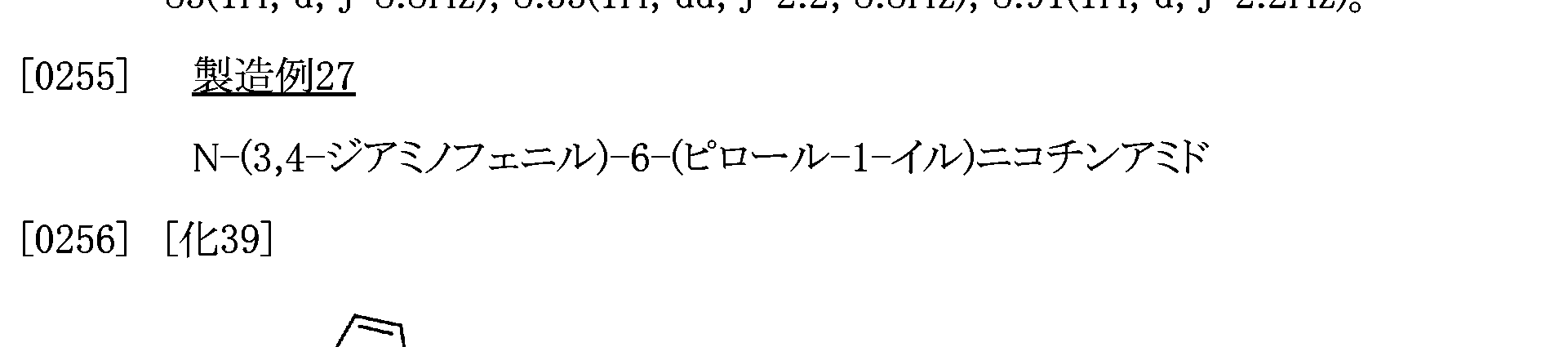
[Of^ [6S20]
、 ^ べ ^∑= ,^ ^べ 9— ( / ェ , ^ d'S)— Ν

'(s 'Ηΐ)ΐ8·6 '(ΖΗ
Ζ'Ζ=ί 'Ρ 'Ηΐ)ΐ6·8 '(ZHS'8 'Ζ'Ζ=ί 'ΡΡ 'Ηΐ)9ε·8 '(zHS'8=f 'Ρ 'Ηΐ)ΐ8· '^ΗΖ'Ζ 'Ζ'Ζ=ί
'ΡΡ Ή2)3 · '(ΖΗ0 =1" 'Ρ 'Ηΐ)96·9 '(ζΗε·8
 'Ρ 'Ηΐ)9
•9
 Η顺- HT
( )つ。 6 - 9 : 鞭
° 呦 ^目 ^!^ 翁^; Sfi iif C)Tベ ^ ペ
[6S^ ] [9S20]
、 ^ べ ^∑=- ( — ΐ— 一 ΰ )— 9— ( / ェ , ^ d'S)— Ν
[eeso]
°(ZHS =f 'P 'Ηΐ)ΐ6·8 '(ΖΗ8·8 'Ζ'Ζ=ί 'PP 'Ηΐ)εε·8 '(zH8"8=f 'Ρ 'HT)S8 •Ζ '^ΗΥΖ 'Ζ'Ζ=ί 'PP 'H2)9Z"Z '^ΗΥΖ 'Ζ'Ζ=ί 'ΡΡ 'Η 9ε·9: 9 (9Ρ- OSWd) Η顺- Ητ
(%69) s
906CZ0/S00Zdf/X3d 1-9 9080.0/900Z OAV
f 'P 'Ηΐ) 8 '(ΖΗ8·8 'Ζ'Ζ=ί 'ΡΡ 'Ηΐ)00·8 '(zH8"8=f 'Ρ 'Ηΐ) Γ9 '(ω 'HI)SO'S- 06·,
'(s 'HS)Z8"S '(ΖΗΓ
 '; Ήε)8Π: 9 (OQD) Η Ν-ΗΤ

¾呦^目。 っ攝慰エ ΚΐΛ〜 = "^ェ邈 4§/ベ ^^)— 4ム マ α¾(§ω ε8 )マ fi 邈 [9920]

[Zf^ [S920] ^ 濯べ ^エ- 9
°(s 'Ηΐ)Ζε·6 Z'Z=[ 'P 'HT)9S"8 '(ΖΗ8·8 'Ζ'Ζ=ί 'PP Ή
T)S8"Z '(zH9'S=f 4 HI) '^ΗΖ'Ζ=ί 'P 'Ηΐ)ΐ6·9 ' (ζΗε·8 'Ζ'Ζ=ί 'PP Ήΐ)99 ·9 '(ζ
Η8·8=ί" 'Ρ 'HI)S '9 '(ΖΗε·8=ί" 'Ρ Ήΐ)Ζ¥9 '(s 'HS)S ' '(sq
 ' '
' '
Ηζ)8ζτ '(^ Ήζ) ζτ-∑ζτ '(s Ήε)εζ'ε '(^ 'HS)08'I οζ'ΐ: 9 OP-os^a) Η Ν-ΗΤ
( )つ。90ΐ- εοι: 鞭

[ ] [2920]
、 ^ べ ^c ( ^ — ε)— 9— ( / ェ , ^ d'S)— N
[围]
°(s 'Ηΐ)9ε·6 'WZ=[ 'Ρ 'Ηΐ) SS'8 '(ΖΗ8·8 'ΥΖ=ί 'PP 'HT)S8"Z '(zH8"9=f 'Ρ Ήΐ)εθ"Ζ ^ΗΥΖ=ί 'Ρ 'Ηΐ)ΐ6·9 2ΗΖ
906CZ0/S00Zdf/X3d 39 9080.0/900Ζ OAV
=2.2Hz)。
[0267] 製造例 31
6-ェチルァミノニコチン酸
[0268] [化 43]
H
N
0
[0269] 製造例 30で得られた化合物 (220 mg)をメタノール (5 mL)に溶解し、 4規定水酸化ナ トリウム水溶液 (1.3 mL)をカ卩えた。バス温 50°Cにてー晚撹拌したのち放冷し、 6規定塩 酸 (0.9mL)を加えた。析出物を冷水で洗浄後、乾燥し目的物を得た。 67 mg(33%)。 JH-NMR (DMSO-d6) δ : 1.13(3Η, t, J=7.1Hz), 3.25- 3.45(2Η, m), 6.44(1Η, d, J=8.8 Hz), 7.29(1H, t, J=5.6Hz), 7.77(1H, dd, J=2.2, 8.8Hz), 8.53(1H, d, J=2.2Hz)0
[0270] 製诰例 32
N- (3,4-ジァミノフエ-ル)- 6- [(3-ジメチルァミノ)ピロリジン- 1-ィル]ニコチンアミド [0271] [化 44]

[0272] 製造例 2と同様の方法に従い、製造例 1で得られたィ匕合物と 3- (ジメチルァミノ)ピロ リジンより縮合体を得、更に製造例 3と同様の方法で還元を行い、 目的物を得た。 融点:アモルファス
1H-NMR (DMSO-d6) δ: 1.74— 1.86(1H, m), 2.10— 2.23(7H, m), 2.71— 2.81(1H, m), 3. 10— 3.18(1H, m), 3.26— 3.41(1H, m), 3.58— 3.77(2H, m), 4.26(2H, bs), 4.45(2H, bs), 6 .43(1H, d, J=8.3Hz), 6.48(1H, d, J=9.0Hz), 6.67(1H, dd, J=2.2, 8.3Hz), 6.91(1H, d, J=2.2Hz), 7.99(1H, dd, J=2.2, 9.0Hz), 8.64(1H, d, J=2.2Hz), 9.43(1H, s)。
[0273] 製诰例 33
[0820] 邈べ^ c ,^ ^エ 、- 9

'WZ=i 'P 'HI)S6'9 '(ZHS =f 'P 'Ηΐ)89·9 '(zH0"8=f 'P 'Ηΐ) ·9 '(sq 'HZ)LVf '( sq
 ' 'H S6'S: 9 (9Ρ— OSWd) Η Ν-ΗΤ
/ ¾ : 鞭
°


[ ZSO]
、 べ^ — ΐ—ベ S)— 9— ェ厶/ d'S)— N

Z'Z=[ 'P 'HI)S9'8 '(ζΗ9 ΐ 'Ζ'Ζ=ί 'PP 'Ηΐ)86· '(s Ήΐ)8ΓΖ '(ΖΗ8·8=1" 'Ρ Ήΐ)3ΓΖ
 9 (9Ρ— OSWd) Η Ν-ΗΤ
。 呦 W目ヽ ¾ ^氺 0 ¾^0)1^?0 ¾¾ ¾

[fLZO] 邈べ^ - ΐ-ベ S)- 9
906CZ0/S00Zdf/X3d 9080.0/900J ΟΛ\

[0281] 6-ジェチルァミノニコチン酸メチル(5.0g)をメタノール(12mL)に溶解し、 4規定水酸 化ナトリウム水溶液(12mL)を加え、 50°Cで 1時間撹拌した。冷後、 2規定塩酸で中和 し、減圧下溶媒を留去し、得られた固体をそのまま次の反応に用いた。
収量: 2.4g
JH-NMR (DMSO-d6) δ : 1.12(6Η, t, J=7.2Hz), 3.54(4Η, q, J=7.2Hz), 6.61(1H, d, J
=9.0Hz), 7.87(1H, dd, J=2.4, 9.0Hz), 8.60(1H, d, J=2.4Hz)0
[0282] 製诰例 36
N- (3,4-ジァミノフエ-ル)- 6-ジェチルァミノニコチンアミド
[0283] [化 48]

[0284] 製造例 15と同様の方法に従い、製造例 35で得られたィヒ合物と 2--トロ- 1,4-フエ- レンジァミンより縮合体を得た。更に製造例 3と同様の方法で還元を行い、 目的物を 得、精製せずに次の工程に用いた。
[0285] 製诰例 37
5- (Ν,Ν-ジメチルァミノ)メチル -2-フランカルボン酸ェチル
[0286] [化 49]

[0287] 5-クロロメチル- 2-フランカルボン酸ェチル(5.0g)の DMF溶液(20mL)に 50%ジメチ ルァミン水溶液 (5mL)を加え、室温で 22時間攪拌した。溶媒を減圧留去後、残渣に 水(30mL)をカ卩え、 1規定水酸ィ匕ナトリウム水溶液で中和し、酢酸ェチル -へキサン混 合溶媒 (50mL+10mL)で抽出した。有機層を水、飽和食塩水で洗浄し、無水硫酸ナト
リウムで乾燥した。溶媒を減圧留去し、目的物を淡褐色油状物として得た。
収量: 3.8g
1H-NMR (CDC1 ) δ : 1.37(1H, t, J=7.2Hz), 2.29(6H, s), 3.54(2H, s), 4.35(2H, q, J=
3
7.2Hz), 6.33(1H, d, J=3.4Hz), 7.13(1H, d, J=3.4Hz)。
[0288] 製造例 38
5- (Ν,Ν-ジメチルァミノ)メチル -2-フランカルボン酸
[0289] [化 50]

[0290] 製造例 37で得られた化合物(3.8g)をメタノール (4.9mL)に溶解し、 4規定水酸化ナ トリウム (4.9mL)を加え、室温で攪拌した。 4日後、 4規定水酸化ナトリウム水溶液を追 カロし (970 L) 2時間攪拌した。反応終了後、反応液を 6規定塩酸で中和し、溶媒を 減圧留去した。得られた固体 (5.0g)をそのまま次の工程に用いた。
'H-NMR (DMSO-d6) δ : 2.23(6H, s), 3.58(2Η, s), 6.48(1Η, d, J=3.4Hz), 7.10(1H, d , J=3.4Hz)。
[0291] 製诰例 39
5-クロ口- 2-ピラジンカルボン酸
[0292] [化 51]

5-クロ口- 2-ピラジンカルボン酸ェチル(863mg)をメタノール(10mL)に溶解し、水酸 化リチウム水溶液 (210mg/5mL)を氷冷下に加え、 2時間攪拌した。反応終了後、反 応液を減圧濃縮し、 1規定塩酸で中和した。析出固体を濾取、乾燥し、目的物を得た 収量: 248mg
1H-NMR (DMSO-d6) δ : 8.92(1H, d, J=1.2Hz), 9.01(1H, d, J=1.2Hz), 13.92(1H, bs)
[0294] 製造例 40
ベンゾフラン- 5-カルボキシアルデヒド
[0295] [化 52]

[0296] 文献(Liu et al. J. Heterocyclic Chem., 1979, 16, 799)記載の方法に従い、ジヒドロ ベンゾフラン- 5-カルボキシアルデヒド(2.6g)より目的化合物(534mg)を得た。
JH-NMR (CDC1 ) δ : 6.91(1H, dd, J=1.0, 2.2Hz), 7.63(1H, d, J=8.5Hz), 7.73(1H, d,
3
J=2.2Hz), 7.88(1H, dd, J=1.5, 8.6Hz), 8.16(1H, d, J=1.5Hz), 10.08(1H, s)。
[0297] 製诰例 41
6 ァセチルォキシメチルニコチン酸メチル
[0298] [化 53]

[0299] 6—メチルニコチン酸メチル(10g)をクロ口ホルム(lOOmL)に溶解し、氷冷下 m—クロ 口過安息香酸(m-CPBA)(80%, 20g)を加えた。一夜攪拌後、溶媒を留去し、シリカゲ ルカラムクロマトグラフィーで精製した。得られた残渣 16.7gに無水酢酸 lOOmLをカロえ 1 00°Cで一夜加熱攪拌した。溶媒を留去後、クロ口ホルム、飽和炭酸カリウム水溶液を 加え、クロ口ホルムで抽出し、有機層を硫酸マグネシウムで乾燥した。固形物を濾別 し、濾液を減圧濃縮して得られた残渣をシリカゲルカラムクロマトグラフィーで精製す ることにより目的化合物 (5.45g、 39%)を得た。
1H-NMR (DMSO-d6) δ : 2.13(3H, s), 3.88(3H, s), 7.55(1H, d, J=8.3Hz), 8.30(1H, d d, J=2.0, 8.3Hz), 9.03(1H, d, J=2.0Hz)。
[0300] 製造例 42
6 ヒドロキシメチルニコチン酸メチル
[0301] [化 54]
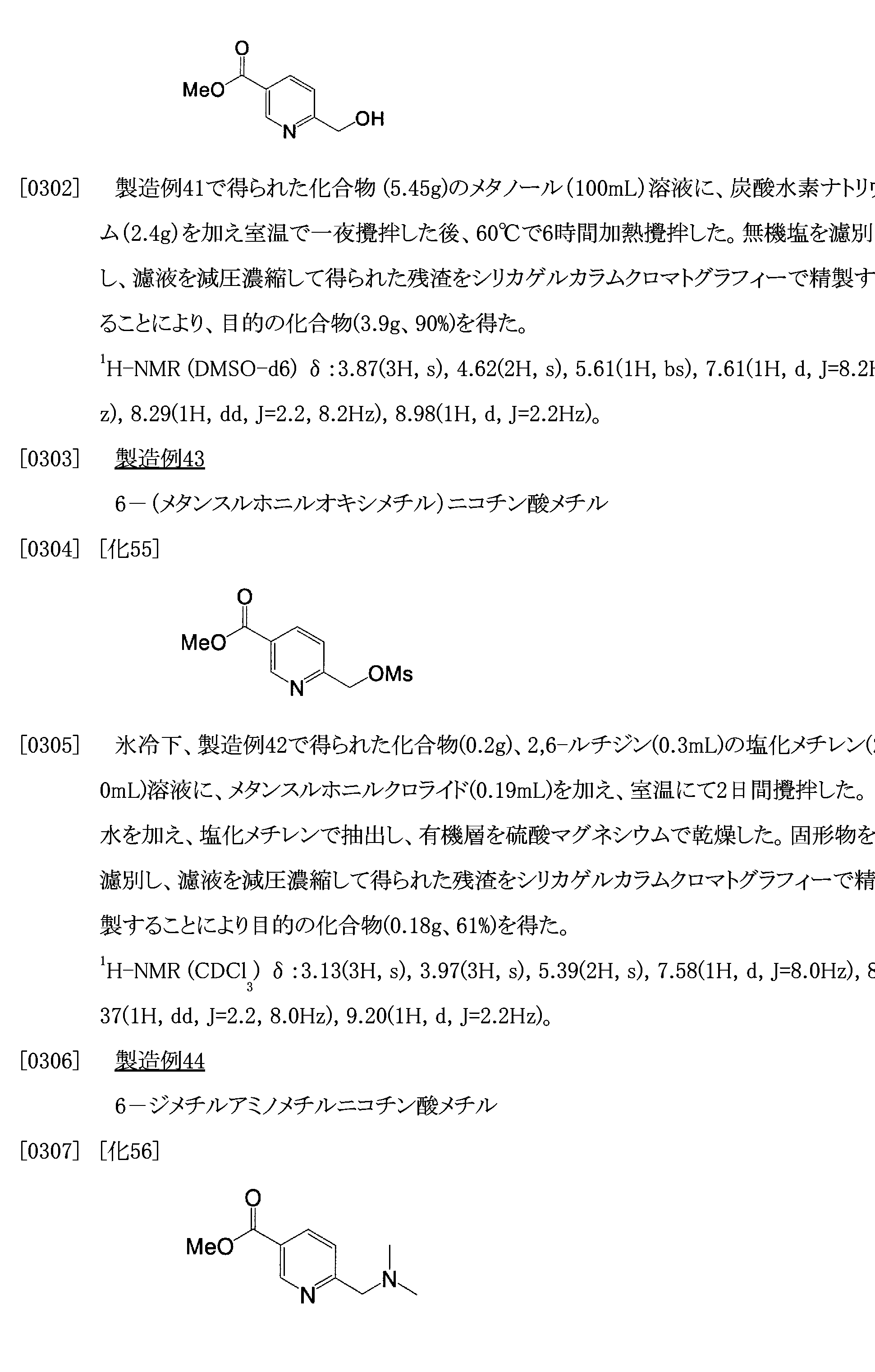
[0308] 製造例 43で得られた化合物(0.3g)、 50%ジメチルァミン水溶液(0.33g)を DMF (10m L)に加え室温で一夜攪拌した。溶媒を留去後、得られた残渣をシリカゲルカラムクロ マトグラフィー (NH)で精製することにより目的の化合物 (0.12g、 51%)を得た。
1H-NMR (CDC1 ) δ : 2.31(6H, s), 3.66(2H, s), 3.95(3H, s), 7.51(1H, d, J=8.0Hz), 8.
3
27(1H, dd, J=2.2, 8.0Hz), 9.16(1H, d, J=2.2Hz)0
[0309] 製造例 45
2-ジメチルァミノメチルピリジン- 5-カルボキシアルデヒド
[0310] [化 57]

[0311] 製造例 44で得られた化合物 (lg)の THF(lOOmL)溶液に、氷冷下 LAH(0.4g)を少量ず つ加えた。 1時間攪拌後、反応液を氷水に注ぎ入れ、クロ口ホルムで 3回抽出し、有 機層を硫酸マグネシウムで乾燥した。固形物を濾別し、濾液を減圧濃縮後、クロロホ ルム (lOOmL)を加え、さらに二酸化マンガン (7g)を加え、一夜加熱還流した。放冷後 固形物を濾別し、濾液を減圧濃縮して得られた残渣をシリカゲルカラムクロマトグラフ ィ一で精製すること〖こより目的の化合物 (95mg、 11%)を得た。
270MHz JH-NMR (CDC1 ) δ : 2.32(6Η, s), 3.69(2Η, s), 7.62(1Η, d, J=8.2Hz), 8.15(
3
1H, dd, J=2.2, 8.2Hz), 9.01(1H, d, J=2.2Hz), 10.1(1H, s)。
[0312] 製诰例 46
2-ブロモ -4-メチルチアゾール -5-カルボン酸メチル
[0313] [化 58]

2-ァミノ- 4-メチル -1,3-チアゾール -5-カルボン酸メチル(152 g)をジメチルスルホキ シド (DMSOX800 mL)に溶解し、内温 50°C以下で 48%臭化水素(430 mL)を滴下した。
ついで亜硝酸ナトリウム(67 g)を水 (250 mL)に溶解したものを 2時間かけて滴下した。 次に飽和炭酸水素カリウム水溶液で反応液を PH9に調整した。これを酢酸ェチルで 抽出し、硫酸マグネシウムで乾燥後溶媒を留去し、シリカゲルカラムクロマトグラフィ 一にて精製した (クロ口ホルム/メタノール = 10/1)。黄色針状晶固体 109 g (52%) 1H NMR (CDC1 ) δ : 2.72(3H, s), 3.87(3H, s)。
3
[0315] 製造例 47
2-メトキシ -4-メチルチアゾール -5-カルボン酸
[0316] [化 59]

[0317] 製造例 46で得られた化合物 (40 g)をメタノール (400 mL)に溶解し、 4規定水酸化ナ トリウム水溶液 (254 mL)を加え、内温 50°Cで一夜撹拌した。原料消失を薄層クロマト グラフィ一にて確認後、 6規定塩酸 (189.4 mL)で中和した。析出した固体を水 (100 mL )で洗浄後、乾燥し目的物を得た。 28.0 g(95%)
1H NMR (CDC1 ) δ : 2.49(3Η, s), 4.04(3Η, s), 13.19(1Η, bs)。
3
[0318] 製造例 48
5-メトキシフルフラール
[0319] [化 60]

[0320] 窒素雰囲気下、 -78°Cにて 2-メトキシフラン (5.0 g)の THF(60 mL)溶液に n_ブチルリ チウム (へキサン溶液、 26 mL, 66.0 mmol)を滴下した。ついで- 40°Cに昇温し 3時間撹 拌した後、無水 DMF(4.3 mL)を滴下し、そのまま一晩自然昇温した。反応液に飽和 塩ィ匕アンモ-ゥム水溶液をカ卩え、エーテルで抽出した。硫酸マグネシウムで乾燥後、 蒸留にて精製した。無色透明油状物 2.6 g(40.4%)
沸点: 125°C I 20 mmHg
(%εε)§ω 06ε 。 >η辛爵瀚缀つ粼¾、 マ ム邈^ ^ ^
$$0)¾-

。 つ 翻 、"¥D Π1 [9ZZ0

[Z9^ [esso]
°(s 'Ηΐ)0ΐ·εΐ '(s 'ΗΖ )33 ΐ '(s Ήε )6^ ΐ '(ζ
H Ζ'Ζ=ί 'P 'Ηΐ)86·8 '(ω 'Ηΐ) Ζ·8— 0Ζ·8 WS 'Ζ'Ζ=ί 'ΡΡ 'Ηΐ)8ε·8 '(ω Ήΐ - ζ •8 '(ω 'Ηΐ) ·8— 9Γ8 '(ω 'Ηΐ)εθ·8— '(ω 'H )SZ'Z— 9 ·Ζ: 9 (9Ρ— Η Ν Ητ
つ。 鞭
。 >n ^^] κ¾目、

[ΐ9^ ] [ΖΖΖΟ 一

°(s Ήΐ
)0ε·6 '(ζΗ9·ε=ί" 'Ρ Ήΐ)ΐ2· '(ζΗ9·ε=ί" 'Ρ 'Ηΐ) S '(s Ήε)20^: 9 (OQD) Η醒 Η,
906CZ0/S00Zdf/X3d 1-9 9080.0/900Ζ OAV
このものは精製することなく次の反応に用いた。
[0327] 実施例 1
本発明に於けるべンゾイミダゾール誘導体の一般的合成例 (合成法 A)
[0328] [化 63]

[0329] 2- (ピリジン- 2-ィル) -5-{[2- (ピロリジン- 1-ィル)ピリジン- 5-ィル] -カルボ-ルァミノ) - 1 H-ベンゾイミダゾール
製造例 3で得られた化合物 (50mg)を DMF(2 mL)に溶解し、この溶液に亜硫酸水素 ナトリウム (21mg)をカ卩えた後、 110°Cでピリジン- 2-カルボキシアルデヒド (24 L)の DM F溶液 (1 mL)を滴下した。滴下終了後、そのまま 2.5時間撹拌を続けた。薄層クロマト グラフィ一にて反応の終了を確認した後、反応混合物を放冷し、減圧濃縮した。得ら れた残渣をシリカゲルカラムクロマトグラフィーに付し、 目的物 25mgを得た。
融点: 148〜151°C
NMR(DMSO— d6) δ: 1.92— 2.01(4H, m), 3.40-3.51(4H, m), 6.52(1H, d, J=9.0Hz), 7.46-7.68(3H,m), 7.98(1H, ddd, J=1.2, 7.8, 7.8Hz), 8.07(1H, dd, J=2.2, 8.8Hz), 8. 16(1H, s), 8.29(1H, d, J=7.8Hz), 8.71(1H, d, J=4.9Hz), 8.75(1H, d, J=2.4Hz), 9.98( 1H, bs), 13.04(1H, bs)。
[0330] 実施例 2
本発明に於けるべンゾイミダゾール誘導体の一般的合成例 (合成法 B)
[0331] [化 64]

[0332] 2- (ピラジン- 2-ィル) -5-{[2- (ピロリジン- 1-ィル)ピリジン- 5-ィル] -カルボ-ルァミノ) -1

一 、^^ 、ベ:^—
Ηΐ—[ ^ - ^ / [ / — S—ベ;^ fi ( — I—ベ ίίΰ ) ¾]— S—( / — ベ έ )— S
腦 [9εεο] 。 呦 W目、π

[S9^ ] [ εεο]
—[ ^ - ^ / [ / — S—ベ;^ ( — ΐ—ベ ίίΰ ) ¾]— S—( / — S— /— ci )— S
WW [εεεο]
°WT=f 'P 'Ηΐ) ·6 mVZ 'V\=[ 'PP 'Ηΐ) 8 '(ZH =f 'P Ήΐ)0Ζ •8 '(zW2=f 'P 'HT)S9"8 '(sq Ήΐ)8Γ8 '(ZH0"6 ' Z=[ 'PP 'Ηΐ)Ζ0·8 '(sq 'HZ)WL-^ •Z '(zH0"6=f 'P 'HT)9S"9 '(ω 'HWZ-WZ '(ω 'H 1 - 66·ΐ: 9 (<30 顺- Ητ
つ。 οοεく: 鞭
° 會 Suqg呦 ^目 、っ^^—
ΐ ψ(ΐω
 、O ^— ^ Μム マ

906CZ0/S00Zdf/X3d 89 9080.0/900Z OAV
[0338] 製造例 3で得られた化合物とフラン- 2-カルボキシアルデヒドを合成法 Aによって縮 合し、 目的物を得た。
[0339] 実施例 5
2-(6-ブロモピリジン- 2-ィル) -5-[[2- (ピロリジン- 1-ィル)ピリジン- 5-ィル]カルボ-ル ァミノ] -1H-ベンゾイミダゾール
[0340] [化 67]

[0341] 製造例 3で得られた化合物と 6-ブロモピリジン- 2-カルボン酸を合成法 Bによって縮 合し、 目的物を得た。
[0342] 例 6
2- (ピリジン- 3-ィル) -5-[[2- (ピロリジン- 1-ィル)ピリジン- 5-ィル]カルボ-ルァミノ] -1H -ベンゾイミダゾール
[0343] [化 68]

[0344] 製造例 3で得られた化合物とピリジン- 3-カルボキシアルデヒドを合成法 Aによって 縮合し、 目的物を得た。
[0345] 例 7
2- (チアゾール -2-ィル) -5-[[2- (ピロリジン- 1-ィル)ピリジン- 5-ィル]カルボ-ルァミノ ]- 1H-ベンゾイミダゾール
[0346] [化 69]

[0347] 製造例 3で得られた化合物とチアゾール -2-カルボキシアルデヒドを合成法 Aによつ て縮合し、 目的物を得た。
[0348] 実施例 8
2- (ピリジン- 2-ィル) -5-[[2-[N- (2-メトキシ)ェチル -N-メチルァミノ]ピリジン- 5-ィル] カルボ-ルァミノ] -1H-ベンゾイミダゾール
[0349] [化 70]

[0350] 製造例 22で得られたィ匕合物とピリジン- 2-カルボキシアルデヒドを合成法 Aによって 縮合し、 目的物を得た。
[0351] 実施例 9
2- (ピリジン- 2-ィル) -5-[[2- (モルホリノ)ピリジン- 5-ィル]カルボ-ルァミノ] -1H-ベン ゾイミダゾール
[0352] [化 71]

[0353] 製造例 5で得られた化合物とピリジン- 2-カルボキシアルデヒドを合成法 Aによって 縮合し、 目的物を得た。
[0354] 実施例 10
2- (ピリジン- 2-ィル) -5-[[2-(4-メチルビペラジン- 1-ィル)ピリジン- 5-ィル]カルボ- ルァミノ] -1H-ベンゾイミダゾール
[0355] [化 72]

[0356] 製造例 23で得られた化合物とピリジン- 2-カルボキシアルデヒドを合成法 Aによって 縮合し、 目的物を得た。
[0357] ^ ^Il l
2- (チォフェン- 2-ィル) -5-[[2- (ピロリジン- 1-ィル)ピリジン- 5-ィル]カルボ-ルァミノ] - 1 H-ベンゾイミダゾール
[0358] [化 73]

[0359] 製造例 3で得られた化合物とチォフェン- 2-カルボキシアルデヒドを合成法 Aによつ て縮合し、 目的物を得た。
[0360] 例 12
2- (ピリジン- 2-ィル) - 5-[[2-(N,N,N,-トリメチルエチレンジァミノ)ピリジン- 5-ィル]力 ルボニルァミノ] -1H-ベンゾイミダゾール
[0361] [化 74]

[0362] 製造例 24で得られた化合物とピリジン- 2-カルボキシアルデヒドを合成法 Aによって
縮合し、 目的物を得た。
[0363] 実施例 13
2-(4-クロ口ピリジン- 2-ィル) - 5-[[2- (ピロリジン- 1-ィル)ピリジン- 5-ィル]カルボ-ル ァミノ]- 1H-ベンゾイミダゾール
[0364] [化 75]

[0365] 製造例 3で得られた化合物と 4-クロ口ピリジン- 2-カルボン酸を合成法 Bによって縮 合し、 目的物を得た。
[0366] 実飾 114
2- (チアゾール -2-ィル) -5-[[2- (ピロリジン- 1-ィル)ピリジン- 5-ィル]カルボニルァミノ ]-1Η-ベンゾイミダゾール
[0367] [化 76]

[0368] 製造例 5で得られた化合物とチアゾール -2-カルボキシアルデヒドを合成法 Aによつ て縮合し、 目的物を得た。
[0369] 実施例 15
2- (チアゾール -2-ィル) -5-K2-ジメチルァミノピリジン- 5-ィル)カルボ-ルァミノ] -1H -べンゾイミダゾール
[0370] [化 77]

[0371] 製造例 25で得られたィヒ合物とチアゾール -2-カルボキシアルデヒドを合成法 Aによ つて縮合し、 目的物を得た。
[0372] 実飾 116
2- (チアゾール -2-ィル) -5-[[2-(N- 2-メトキシェチル- N-メチルァミノ)ピリジン- 5-ィル] カルボ-ルァミノ] -1H-ベンゾイミダゾール
[0373] [化 78]

[0374] 製造例 22で得られた化合物とチアゾール -2-カルボキシアルデヒドを合成法 Aによ つて縮合し、 目的物を得た。
[0375] 実施例 17
2- (チアゾール -2-ィル) - 5-[[2-(N,N,N,-トリメチルエチレンジァミノ)ピリジン- 5-ィル] カルボ-ルァミノ] -1H-ベンゾイミダゾール
[0376] [化 79]

[0377] 製造例 24で得られた化合物とチアゾール -2-カルボキシアルデヒドを合成法 Aによ つて縮合し、 目的物を得た。
[0378] 実施例 18
2-(4-メトキシォキサゾール -2-ィル) -5-[[2- (ピロリジン- 1-ィル)ピリジン- 5-ィル]カル ボ-ルァミノ] -1H-ベンゾイミダゾール
[0379] [化 80]

[0380] 製造例 3で得られた化合物と 4-メトキシォキサゾール -2-カルボン酸を合成法 Bによ つて縮合し、 目的物を得た。
[0381] 実施例 19
2-[(5-ジメチルアミノメチル)フラン- 2-ィル] -5-[[2- (ピロリジン- 1-ィル)ピリジン- 5-ィ ル]カルボ-ルァミノ- 1H-ベンゾイミダゾール
[0382] [化 81]

[0383] 製造例 3で得られた化合物と製造例 38で得られた化合物を合成法 Bによって縮合し
、 目的物を得た。
[0384] 実施例 20
2-(1-メチルイミダゾール -2-ィル) -5-[[2- (ピロリジン- 1-ィル)ピリジン- 5-ィル]カルボ -ルァミノ] -1H-ベンゾイミダゾール
[0385] [化 82]

[0386] 製造例 3で得られた化合物と 1-メチルイミダゾール -2-カルボキシアルデヒドを合成 法 Aによって縮合し、 目的物を得た。
[0387] 実施例 21
2-(5-メトキシピリジン- 2-ィル) -5-[[2- (ピロリジン- 1-ィル)ピリジン- 5-ィル]カルボ ルァミノ] -1H-ベンゾイミダゾール
[化 83]

[0389] 製造例 3で得られた化合物と文献(Tetrahedron: Asymmetry, 12(7), 1047- 1054;200 1)記載の方法によって合成した 5-メトキシピリジン- 2-カルボキシアルデヒドを合成法 Aによって縮合し、 目的物を得た。
[0390] 実施例 22
2-(5-メトキシピリジン- 2-ィル) - 5-[[2_(4-メチルビペラジン- 1-ィル)ピリジン- 5-ィル] カルボ-ルァミノ] -1H-ベンゾイミダゾール
[0391] [化 84]

[0392] 製造例 23で得られた化合物と文献(Tetrahedron:Asymmetry, 12(7), 1047- 1054;20 01)記載の方法によって合成した 5-メトキシピリジン- 2-カルボキシアルデヒドを合成 法 Aによって縮合し、 目的物を得た。
[0393] 実施例 23
2- [(メチレンジォキシ -4-ィル)フエニル] -5-[[2- (ピロリジン- 1-ィル)ピリジン- 5-ィル] カルボニルァミノ] -1H-ベンゾイミダゾール
[0394] [化 85]

[0396] 実施例 24
2- (ピリジン- 2-ィル) -5-[[2- (ピロール -1-ィル)ピリジン- 5-ィル]カルボ-ルァミノ] -1 H-ベンゾイミダゾール
[0397] [化 86]

[0398] 製造例 27で得られた化合物と 2-ピリジンカルボキシアルデヒドを合成法 Aによって 縮合し、 目的物を得た。
[0399] 実施例 25
2-[2- (ジメチルアミノメチル)ピリジン- 5-ィル] -5 - [[2- (ピロリジン- 1 -ィル)ピリジン- 5-ィ ル]カルボニルァミノ] -1H-ベンゾイミダゾール
[0400] [化 87]

[0401] 製造例 3で得られた化合物と製造例 45で得られた化合物を合成法 Aによって縮合 し、 目的物を得た。
[0402] 実施例 26
2- (メチレンジォキシフエニル -3-ィル) -5-[[2- (ピロリジン- 1-ィル)ピリジン- 5-ィル]力 ルポ-ルァミノ] -1H-ベンゾイミダゾール
[0403] [化 88]

[0404] 製造例 3で得られた化合物と 2,3-メチレンジォキシベンズアルデヒドを合成法 Aによ つて縮合し、 目的物を得た。
[0405] 実飾 127
2-(4-メチルチアゾール -5-ィル) -5-[[2- (ピロリジン- 1-ィル)ピリジン- 5-ィル]カルボ -ルァミノ] -1H-ベンゾイミダゾール
[0406] [化 89]

[0407] 製造例 3で得られた化合物と 4-メチルチアゾール -5-カルボン酸を合成法 Bによつ て縮合し、 目的物を得た。
[0408] 実飾 128
2-(2-メトキシ -4-メチルチアゾール - 5-ィル) -5-[[2- (ピロリジン- 1-ィル)ピリジン- 5-ィ ル]カルボニルァミノ] -1H-ベンゾイミダゾール
[0409] [化 90]

[0410] 製造例 3で得られた化合物と製造例 47で得られた化合物を合成法 Bによって縮合し
、 目的物を得た。
[0411] 実施例 29
2- (ピリジン- 2-ィル) -5- [(2-シクロペンチルァミノピリジン- 5-ィル)カルボ-ルァミノ]-
1 H-ベンゾイミダゾール
[0412] [化 91]

[0413] 製造例 28で得られた化合物とピリジン- 2-カルボキシアルデヒドを合成法 Aによって 縮合し、 目的物を得た。
[0414] 実飾 130
2-(5-クロ口ピリジン- 2-ィル) -5-[[2- (ピロリジン- 1-ィル)ピリジン- 5-ィル]カルボ-ル ァミノ] -1H-ベンゾイミダゾール
[0415] [化 92]

[0416] 製造例 3で得られた化合物と文献 (特開平 11-335275)記載の方法によって合成し た 5-クロ口ピリジン- 2-カルボキシアルデヒドを合成法 Aによって縮合し、 目的物を得 た。
[0417] 実飾 131
2-[(2-ジメチルアミノメチル)ピリジン- 5-ィル] -5-[[2- (モルホリノ)ピリジン- 5-ィル]力 ルポ-ルァミノ] -1H-ベンゾイミダゾール
[0418] [化 93]

[0419] 製造例 5で得られた化合物と製造例 45で得られた化合物を合成法 Aによって縮合
し、 目的物を得た。
[0420] 実施例 32
2-[(2-ジメチルアミノメチル)ピリジン- 5-ィル] - 5-[[2-(4-メチルビペラジン- 1-ィル)ピ リジン- 5-ィル]カルボニルアミ] -1H-ベンゾイミダゾール
[0421] [化 94]

[0422] 製造例 23で得られた化合物と製造例 45で得られた化合物を合成法 Aによって縮合し
、 目的物を得た。
[0423] 実施例 33
2-(2-クロ口ピリジン- 5-ィノレ) -5-[[2-(4-メチルビペラジン- 1-ィル)ピリジン- 5-ィル]力 ルボュルアミ] -1H-ベンゾイミダゾール
[0424] [化 95]

[0425] 製造例 23で得られた化合物と 6—クロ口ニコチン酸を合成法 Bによって縮合し、 目的 物を得た。
[0426] 実施例 34
2-(2,6-ジメチルピリミジン- 4-ィル) -5-[[2- (ピロリジン- 1-ィル)ピリジン- 5-ィル]カル ボニルァミノ] -1H-ベンゾイミダゾール
[0427] [化 96]

[0428] 製造例 3で得られた化合物と文献(Chem.Ber.97(12), 3407-3417(1964))記載の方 法によって合成した 2,6-ジメチルピリミジン- 4-カルボキシアルデヒドを合成法 Aによつ て縮合し、 目的物を得た。
[0429] 実飾 135
2- (ピリミジン- 4-ィル) - 5-[[2-(N,N,N,-トリメチルエチレンジァミノ)ピリジン- 5-ィル]力 ルポ-ルァミノ] -1H-ベンゾイミダゾール
[0430] [化 97]

[0431] 製造例 24で得られた化合物と文献(Chem.Ber.97(12), 3407-3417(1964))記載の方 法によって合成したピリミジン- 4-カルボキシアルデヒドを合成法 Aによって縮合し、 目 的物を得た。
[0432] 実施例 36
2-(2-メトキシピリミジン- 4-ィル) -5-[[2- (ピロリジン- 1-ィル)ピリジン- 5-ィル]カルボ- ルァミノ] -1H-ベンゾイミダゾール
[0433] [化 98]

製造例 3で得られた化合物と文献 (Chem.Ber.97(12), 3407-3417(1964))記載の方 法によって合成した 2-メトキシピリミジン- 4-カルボキシアルデヒドを合成法 Aによって
縮合し、 目的物を得た。
[0435] 実施例 37
2-(1-メチル -1H-イミダゾール -2-ィル) - 5-[2- (モルホリノピリジン- 5-ィル)カルボ- ルァミノ] -1H-ベンゾイミダゾール
[0436] [化 99]

[0437] 製造例 5で得られた化合物と 1-メチルビロール- 2-カルボキシアルデヒドを合成法 A によって縮合し、 目的物を得た。
[0438] 実飾 138
2-(2-メチルピリミジン- 4-ィル) -5-[[2- (ピロリジン- 1-ィル)ピリジン- 5-ィル]カルボ- ルァミノ] -1H-ベンゾイミダゾール
[0439] [化 100]

[0440] 製造例 3で得られた化合物と文献 (Chem.Ber.97(12), 3407-3417(1964))記載の方法 によって合成した 2-メチルピリミジン- 4-カルボキシアルデヒドを合成法 Aによって縮 合し、 目的物を得た。
[0441] 実飾 139
2- (フラン- 3-ィル) -5-[[2- (ピロリジン- 1-ィル)ピリジン- 5-ィル]カルボ-ルァミノ] -1H- ベンゾイミダゾール
[0442] [化 101]

[0443] 製造例 3で得られた化合物とフラン- 3-カルポキシアルデヒドを合成法 Aによって縮 合し、 目的物を得た。
[0444] 例 40
2- (ピリジン- 2-ィル) -5- [[2- (3-メトキシプロピルァミノ)ピリジン- 5-ィル]カルボ-ルァ ミノ] -1H-ベンゾイミダゾール
[0445] [化 102]

[0446] 製造例 29で得られた化合物とピリジン- 2-カルボキシアルデヒドを合成法 Aによって 縮合し、 目的物を得た。
[0447] 実施例 41
2- (ピリジン- 2-ィル) -5-[[2- (ピロリジン- 5-ィル) -ピリジン- 3-ィル] -カルボ-ルァミノ] -1Hベンゾイミダゾール
[0448] [化 103]

[0449] 製造例 7および製造例 31で得られた化合物を C法 (後出:参考例 1)によって縮合し 、 目的物を得た。
[0450] 実施例 42
2-(5-クロロビラジン- 2-ィル) -5-[[2- (ピロリジン- 1-ィル)ピリジン- 5-ィル 1カルボ-ル
ァミノ] -1H-ベンゾイミダゾ
[0451] [化 104]

[0452] 製造例 3で得られた化合物と製造例 39で得られた化合物を合成法 Bによって縮合し
、 目的物を得た。
[0453] 実施例 43
2-(2,2-ジフルォロ- 1,3-ベンゾジォキソール -5-ィル) -5-[[2- (ピロリジン- 1-ィル)ピリ ジン- 5-ィル]カルボ-ルァミノ] -1H-ベンゾイミダゾール
[0454] [化 105]

[0455] 製造例 3で得られた化合物と 2,2-ジフルォロ- 1,3-ベンゾジォキソール- 5-カルボキ シアルデヒドを合成法 Aによって縮合し、 目的物を得た。
[0456] 実施例 44
2- (ジヒドロべンゾフラン- 5-ィル) -5-[[2- (ピロリジン- 1-ィル)ピリジン- 5-ィル]カルボ -ルァミノ] -1H-ベンゾイミダゾール
[0457] [化 106]

[0458] 製造例 3で得られた化合物とジヒドロべンゾフラン- 5-カルボキシアルデヒドを合成法 Aによって縮合し、 目的物を得た。
[0459] 実施例 45
2- (ベンゾフラン- 5-ィル) -5-[[2- (ピロリジン- 1-ィル)ピリジン- 5-ィル]カルボ-ルアミ ノ] -1H-ベンゾイミダゾール
[0460] [化 107]

[0461] 製造例 3で得られた化合物と製造例 40で得られた化合物を合成法 Aによって縮合 し、目的物を得た。
[0462] 実飾 146
2-(2,2-ジメチルベンゾジォキソール -5-ィル) -5-[[2- (ピロリジン- 1-ィル)ピリジン- 5-ィ ル]カルボ-ルァミノ] -1H-ベンゾイミダゾール
[0463] [化 108]

[0464] 製造例 3で得られた化合物と文献(Bull.Korean Chem.Soc.,23(5),661-662(2002))記 載の方法によって合成した 2,2-ジメチルベンゾジォキソール- 5-カルボキシアルデヒド を合成法 Aによって縮合し、目的物を得た。
[0465] 実飾 147
2-(2,2-ジメチルベンゾジォキソール -5-ィル) - 5-[[2-(3-メトキシプロピルァミノ)ピリ ジン- 5-ィル]カルボ-ルァミノ] -1H-ベンゾイミダゾール
[0466] [化 109]

[0467] 製造例 29で得られた化合物と文献(Bull.Korean Chem.Soc.,23(5),661-662(2002)) 記載の方法によって合成した 2,2-ジメチルベンゾジォキソール- 5-カルボキシアルデ ヒドを合成法 Aによって縮合し、 目的物を得た。
[0468] 実飾 148
2-(5-シァノピリジン- 2-ィル) -5-[[2- (ピロリジン- 1-ィル)ピリジン- 5-ィル]カルボ-ル ァミノ] -1H-ベンゾイミダゾール
[0469] [化 110]

[0470] 製造例 3で得られた化合物と文献 (W098/16526)記載の方法によって合成した 5- シァノピリジン- 2-カルボキシアルデヒドを合成法 Aによって縮合し、 目的物を得た。
[0471] 実飾 149
2- (ジヒドロべンゾフラン- 7-ィル) -5-[[2- (ピロリジン- 1-ィル)ピリジン- 5-ィル]カルボ -ルァミノ] -1H-ベンゾイミダゾール
[0472] [化 111]

[0473] 製造例 3で得られたィ匕合物とジヒドロべンゾフラン- 7-カルボキシアルデヒドを合成法
Aによって縮合し、 目的物を得た。
[0474] 実施例 50
2-(2,4-ジメチルビロール- 5-ィル) -5-[[2- (ピロリジン- 1-ィル)ピリジン- 5-ィル]カル ボ-ルァミノ] -1H-ベンゾイミダゾール
[化 112]

[0476] 製造例 3で得られた化合物と 2, 4-ジメチルビロール- 5-カルボキシアルデヒドを合成 法 Aによって縮合し、 目的物を得た。
[0477] 実飾 151
2- (チォフェン- 3-ィル) -5-[[2- (ピロリジン- 1-ィル)ピリジン- 5-ィル]カルボ-ルァミノ ]-1Η-ベンゾイミダゾール
[0478] [化 113]

[0479] 製造例 3で得られたィ匕合物とチォフェン- 3-カルボキシアルデヒドを合成法 Aによって 縮合し、 目的物を得た。
[0480] 実飾 152
2- (ジヒドロべンゾフラン- 5-ィル) -5-[[2-(3-ジメチルァミノピロリジン- 1-ィル)ピリジン -5-ィル]カルボ-ルァミノ] -1H-ベンゾイミダゾール
[0481] [化 114]

[0482] 製造例 32で得られた化合物とジヒドロべンゾフラン- 5-カルボキシアルデヒドを合成
法 Aによって縮合し、 目的物を得た。
[0483] 実施例 53
2- (ジヒドロべンゾフラン- 5-ィル) -5-[[2-[N- (2-メトキシェチル)- N-メチルァミノ]ピリ ジン- 5-ィル]カルボニルァミノ] -1H-ベンゾイミダゾール
[0484] [化 115]

[0485] 製造例 22で得られた化合物とジヒドロべンゾフラン - 5-カルボキシアルデヒドを合成 法 Aによって縮合し、 目的物を得た。
[0486] 実施例 54
2-(5-ブロモチォフェン- 2-ィル) -5-[[2- (ピロリジン- 1-ィル)ピリジン- 5-ィル]カルボ -ルァミノ] -1H-ベンゾイミダゾール
[0487] [化 116]

[0488] 製造例 3で得られたィ匕合物と 5-ブロモチォフェン- 2 -カルボキシアルデヒドを合成法 A によって縮合し、 目的物を得た。
[0489] 実飾 155
2-(5-シァノピリジン- 2-ィル) -5-[[2-[N-(2-メトキシェチル) -N-メチルァミノ]ピリジン -5-ィル]カルボニルァミノ] -1H-ベンゾイミダゾール
[0490] [化 117]

[0492] 実施例 56
2-(3-ァセチル- 2,4-ジメチルビロール- 2-ィル) -5-[[2- (ピロリジン- 1-ィル)ピリジン- 5-ィル]カルボ-ルァミノ] -1H-ベンゾイミダゾール
[0493]

[0494] 製造例 3で得られた化合物と製造例 50で得られた化合物を合成法 Aによって縮合 し、 目的物を得た。
[0495] 例 57
2-(1,3-ジメチルビラゾール -5-ィル) -5-[[2- (ピロリジン- 1-ィル)ピリジン- 5-ィル]力 ルポ-ルァミノ] -1H-ベンゾイミダゾール
[0496] [化 119]

[0497] 製造例 3で得られたィ匕合物と 1,3-ジメチルビラゾール -5-カルボン酸を合成法 Bによつ て縮合し、 目的物を得た。
[0498] 例 58
2-(3,5-ジメチルイソキサゾール -4-ィル) -5-[[2- (ピロリジン- 1-ィル)ピリジン- 5-ィル] カルボ-ルァミノ] -1H-ベンゾイミダゾール
[0499] [化 120]
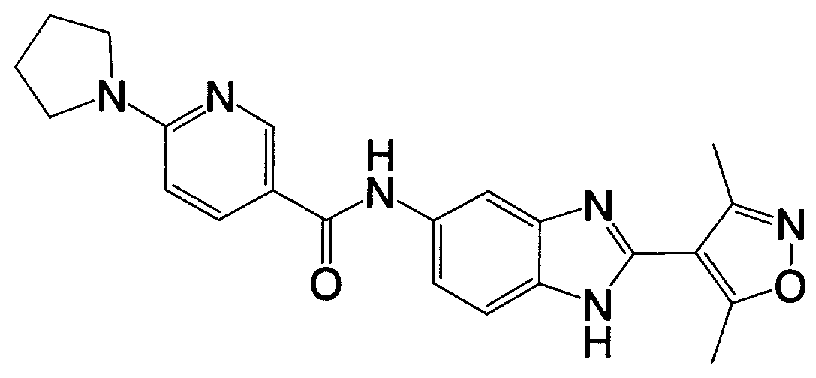
[0500] 製造例 3で得られた化合物と 3,5-ジメチルイソキサゾール -4-カルボン酸を合成法 B によって縮合し、 目的物を得た。
[0501] 実施例 59
2-(2,4-ジメチルチアゾール -5-ィル) -5-[[2- (ピロリジン- 1-ィル)ピリジン- 5-ィル]力 ルポ-ルァミノ] -1H-ベンゾイミダゾール
[0502] [化 121]

[0503] 製造例 3で得られた化合物と 2, 4-ジメチルチアゾール -5-カルボン酸を合成法 Bによ つて縮合し、 目的物を得た。
[0504] 実施例 60
2-(5-メトキシフラン- 2-ィル) -5-[[2- (ピロリジン- 1-ィル)ピリジン- 5-ィル]カルボ-ル ァミノ] -1H-ベンゾイミダゾール
[0505] [化 122]

[0506] 製造例 3で得られた化合物と製造例 48で得られた化合物を合成法 Aによって縮合 し、 目的物を得た。
[0507] 実施例 61
2-(4-ブロモチォフェン- 2-ィル) -5-[[2- (ピロリジン- 1-ィル)ピリジン- 5-ィル]カルボ -ルァミノ] -1H-ベンゾイミダゾール
[0508] [化 123]

[0509] 製造例 3で得られた化合物と 4-ブロモチォフェン- 2-カルボキシアルデヒドを合成法 A によって縮合し、 目的物を得た。
[0510] ¾施例 62
2-(4-シァノピリジン- 2-ィル) -5-[[2- (ピロリジン- 1-ィル)ピリジン- 5-ィル]カルボ-ル ァミノ]- 1H-ベンゾイミダゾール
[0511] [化 124]

[0512] 製造例 3で得られた化合物と文献 (W096/35678)記載の方法によって合成した 4- シァノピリジン- 2-カルボン酸を合成法 Bによって縮合し、 目的物を得た。
[0513] 実施例 63
2-(4-メチル -1,2,3-チアジアゾール -5-ィル) -5- [[2- (ピロリジン- 1-ィル)ピリジン- 5-ィ ル]カルボ-ルァミノ] -1H-ベンゾイミダゾール
[0514] [化 125]

[0516] 実施例 64
2-(4-ブロモ - 1,3-ジメチルビラゾール -5-ィル) -5-[[2- (ピロリジン- 1-ィル)ピリジン- 5 -ィル]カルボ-ルァミノ] -1H-ベンゾイミダゾール
[0517] [化 126]

[0518] 製造例 3で得られた化合物と 4-ブロモ -1,3-ジメチル -5-カルボン酸を合成法 Bによ つて縮合し、 目的物を得た。
[0519] 例 65
2-(1-ェチル -3-メチルビラゾール -5-ィル) -5-[[2- (ピロリジン- 1-ィル)ピリジン- 5-ィ ル]カルボ-ルァミノ] -1H-ベンゾイミダゾール
[0520] [化 127]

[0521] 製造例 3で得られた化合物と 1-ェチル -3-メチルビラゾール -5-カルボン酸を合成法 Bによって縮合し、 目的物を得た。
[0522] 実施例 66
2-(1,3,5-トリメチルビラゾール -4-ィル) -5-[[2- (ピロリジン- 1-ィル)ピリジン- 5-ィル] カルボ-ルァミノ] -1H-ベンゾイミダゾール
[0523] [化 128]

[0524] 製造例 3で得られた化合物と 1,3,5-トリメチルビラゾール -4-カルボキシアルデヒドを 合成法 Aによって縮合し、 目的物を得た。
[0525] 実飾 167
2-(1,3-ジメチルビラゾール- 5-ィル) - 5-[[2- (ビラゾリン- 1-ィル)ピリジン- 5-ィル]カル ボニルァミノ] -1H-ベンゾイミダゾール
[0526] [化 129]

[0527] 製造例 34で得られた化合物と 1,3-ジメチルビラゾール -5-カルボン酸を合成法 Bに よって縮合し、 目的物を得た。
[0528] 実施例 68
2-(5-シァノピリジン- 2-ィル) -5-[(2 -ジェチルァミノピリジン- 5-ィル)カルボ-ルアミ ノ] -1H-ベンゾイミダゾール
[0529] [化 130]

[0530] 製造例 36で得られた化合物と文献 (W098/16526)記載の方法によって合成した 5- シァノピリジン- 2-カルボキシアルデヒドを合成法 Aによって縮合し、 目的物を得た。
[0531] 実施例 69
2-(3,5-ジメチルビラゾール -4-ィル) -5-[[2- (ピロリジン- 1-ィル)ピリジン- 5-ィル]力 ルポ-ルァミノ] -1H-ベンゾイミダゾール
[0532] [化 131]

[0533] 製造例 3で得られた化合物と 3,5-ジメチルビラゾール -4-カルボン酸を合成法 Bによ つて縮合し、 目的物を得た。
[0534] 実飾 170
2-(1,3-ジメチルビラゾール -5-ィル) - 5-[2- (モルホリノピリジン- 5-ィル)カルボニルァ ミノ] -1H-ベンゾイミダゾール
[0535] [化 132]

[0536] 製造例 5で得られた化合物と 1,3-ジメチルビラゾール -5-カルボン酸を合成法 Bによ つて縮合し、 目的物を得た。
[0537] 実施例 71
2- (ピリミジン- 4-ィル) -5-[[2- (ピロリジン- 1-ィル)ピリジン- 5-ィル]カルボ-ルァミノ] - 1 H-ベンゾイミダゾール
[0538] [化 133]

[0540] 実施例 72
2-(1-メチルピロール- 2-ィル) -5-[[2- (ピロリジン- 1-ィル)ピリジン- 5-ィル]カルボ二 ルァミノ]- 1H-ベンゾイミダゾール
[0541] [化 134]

[0542] 製造例 3で得られた化合物と 1-メチルビロール- 2 -カルボキシアルデヒドを合成法 A によって縮合し、 目的物を得た。
[0543] 例 73
2- (メチレンジォキシフエニル -4-ィル) -5-[2- (モルホリノピリジン- 5-ィル)カルボニル ァミノ] -1H-ベンゾイミダゾール
[0544] [化 135]

[0545] 製造例 5で得られた化合物とピぺロナールを合成法 Aによって縮合し、目的物を得 た。
[0546] 実施例 74
2-(2,6-ジメチルピリミジン- 4-ィル) - 5-[[2-(4-メチルビペラジン- 1-ィル)ピリジン- 5- ィル]カルボ-ルァミノ]- 1 H-ベンゾイミダゾール
[0547] [化 136]

[0548] 製造例 23で得られた化合物と文献(Chem.Ber.97(12), 3407-3417(1964))記載の方 法によって合成した 2,6-ジメチルピリミジン- 4-カルボキシアルデヒドを合成法 Aによつ て縮合し、 目的物を得た。
[0549] 実施例 75
2-(2,6-ジメチルピリミジン- 4-ィル) - 5-[[2-(N,N,N,-トリメチルエチレンジァミノ)ピリジ ン -5-ィル]カルボ-ルァミノ] -1H-ベンゾイミダゾール
[0550] [化 137]

[0551] 実施例 1と同様の方法に従って、製造例 24で得られた化合物と文献 (Chem.Ber.97( 12), 3407-3417(1964))記載の方法によって合成した 2,6-ジメチルピリミジン- 4-カル ボキシアルデヒドを合成法 Aによって縮合し、 目的物を得た。
[0552] 実施例 76
2- (ピリジン- 2-ィル) -5- [(2-シクロへキシルアミノビリジン- 5-ィル)カルボ-ルァミノ]- 1 H-ベンゾイミダゾール
[0553] [化 138]

[0554] 製造例 49で得られた化合物とシクロへキシルァミンを製造例 2と同様の方法で縮合 し、 目的物を得た。
[0555] 実施例 77
2- (ピリミジン- 5-ィル) -5-[[2- (ピロリジン- 1-ィル)ピリジン- 5-ィル]カルボ-ルァミノ] - 1 H-ベンゾイミダゾール
[0556] [化 139]

[0557] 製造例 3で得られた化合物と文献 (Heterocycles 38(6), 1375-1382 (1994) )記載の 方法によって合成したピリミジン- 5-カルボン酸を合成法 Bによって縮合し、 目的物を 得た。
[0558] 実施例 78
2- (ビラジン- 2-ィル) -5-[2- (モルホリノピリジン- 5-ィル)カルボ-ルァミノ] - 1H-ベン ゾイミダゾール
[0559] [化 140]

[0560] 製造例 5で得られた化合物とピラジン- 2-カルボン酸を合成法 Bによって縮合し、 目 的物を得た。
[0561] 実飾 179
2- (ピリダジン- 3-ィル) -5-[[2- (ピロリジン- 1-ィル)ピリジン- 5-ィル]カルボニルァミノ] - 1H-ベンゾイミダゾール
[0562] [化 141]

[0563] 製造例 3で得られた化合物とピリダジン- 3-カルボン酸を合成法 Bによって縮合し、 目的物を得た。
[0564] 実施例 1〜79で得られた化合物の構造式、融点、 ¾— NMRデータ、及び、合成 に使用した合成法 (A、 B又は C)を表 1〜14に示す。
[0565] [表 1]

屋0

3]


s6903

£/7:sosfc>d OAV
〔〕【〕9oozg

906s/vososfcl:266/ 9080/-0900 OZAV
u〔〕o s

/Sv:0sfcl>d 001/-0 OAV·

[0573] [表 9]

[0574] [表 10]

90/v:6S0S0sfcl£ εοι/ O 9080/-090SAV- sssozs

s2ΐ

13]

構造式 融点 (°c) 1H - NMR( 5 , ppm)
番号 合成法
NMR溶媒
1.91-2.04C4H, m), 3.40— 3.54(4H, m), 6.52(1 H, d, J=9.0Hz), 7.47 - 7,73(2H, m),
T II H 7.88(1 H, dd, J=5.0, 9.0Hz), 8.08(1 H, dd, J=2.0, 9.0Hz), 8.22(1 H, d, J=2.0Hz),
79 177-179 B
8.47(1 H, m), 8.75(1 H, d, J=2.0Hz), 9.31(1 H, s), 9.99(0.3H, s), 10.04(0.7H, s),
13.53(1 H, s): DMSO-d6
H
〔〕ί0578
[0579] また、比較のために、本発明化合物と構造類似の化合物を、下記の参考例 1〜12 において合成した。
[0580] ^mn-A^ ^o
2- (ピリジン- 2-ィル) -5- [(ピリジン- 3-ィル) -カルボ-ルァミノ]- 1H-ベンゾイミダゾー ル
[0581] [化 142]

ニコチン酸(177.0mg)を塩化チォ -ル 5mLに溶解し、 50°Cにて 30分撹拌した。その 後溶媒留去し、得られた残渣にジクロロメタン (30mL)、製造例 7で得られたァミン(10 Omg)、トリェチルァミン (139mL)を加え、室温にて一晩撹拌した。反応液を減圧濃縮し 、得られた残渣をシリカゲルカラムクロマトグラフィー (NH)で精製し、 目的物 50 mg(33% )を得た。茶色固体。
[0582] 参者例 2
2- (ピリジン- 2-ィル) -5-[(2-シクロペンチルォキシピリジン- 5-ィル)カルボ-ルァミノ] -1H-ベンゾイミダゾール
[0583] [化 143]

[0584] 製造例 7で得られた化合物と製造例 8で得られた化合物を C法によって縮合し、 目 的物を得た。
[0585] 参者例 3
2- (ピリジン- 2-ィル) -5-[[2-(N-ベンジル- N-メチルァミノ)ピリジン- 5-ィル]カルボ- ルァミノ] -1H-ベンゾイミダゾール
[0586] [化 144]

[0587] 製造例 49で得られた化合物とベンジルメチルァミンを製造例 1と同様の方法で縮合 し、 目的物を得た。
[0588] 参者例 4
2- (ピリジン- 2-ィル) -5-{[2-(N,N-ジメチルアミノアセチルァミノ)ピリジン- 5-ィル] -力 ルポ-ルァミノ }-1Η-ベンゾイミダゾール
[0589] [化 145]

[0590] 製造例 12で得られた化合物(50mg)とジメチルダリシン塩酸塩 (23mg)の DMF溶液 ( 1 mL)に WSC塩酸塩 (35mg)を室温で加え、 12時間撹拌した。反応混合物を濃縮し、 残渣をシリカゲルカラムクロマトグラフィーを用いて精製し、 目的物 6mgを得た。
[0591] 参者例 5
2- (ピリジン- 2-ィル) -5-[[2- (ピロリジン- 1-ィル)ピリミジン- 5-ィル] -カルボニルアミ ノ] -1H-ベンゾイミダゾール
[0592] [化 146]

[0593] 製造例 16で得られた化合物とピリジン- 2-カルボキシアルデヒドとを A法によって縮 合し、 目的物を得た。
[0594] 参者例 6
2- (ピリジン- 2-ィル) -N- [2- (ピロリジン- 1-ィル)ピリジン- 5-ィル] -1H-ベンゾイミダゾ ール 5-カルボキシアミド
[0595] [化 147]

[0596] 製造例 11で得られた化合物(480 mg)を塩ィ匕チォニル (50 mL)に懸濁させ、 60°Cに て 30分撹拌した。これを濃縮乾固し、得られた残渣をクロ口ホルム (50 mL)に懸濁し、 氷冷下トリエチルァミン (320 mL)、次いで製造例 10の化合物(342 mg)をカ卩えた。そ のまま昇温しながら一晩撹拌後、濃縮し、シリカゲルカラムクロマトグラフィーにて精製 した。黄色固体。
[0597] 参考例 7
2- (ピリジン- 2-ィル) -5-[[2- (ピロリジン- 1-ィル)ピリジン- 5-ィル] -プロパノィルァミノ] -1H-ベンゾイミダゾール
[0598] [化 148]

[0599] 製造例 7で得られた化合物と製造例 21で得られた化合物を C法によって縮合し、 目 的物を得た。
[0600] 参者例 8
2- (ピリジン- 2-ィル) -5-[2- (ピロリジン- 1-ィル)ピリジン- 5-ィルメチルァミノ] -1H-ベ ンゾイミダゾール
[0601] [化 149]

[0602] 実施例 1の化合物(200mg)を THF (50 ml)に懸濁し、氷冷下、 LAH (50mg)を加え、 室温に昇温後、さらに LAH (150mg)をカ卩ぇ一晩攪拌した。反応液を氷に注ぎ、クロ口 ホルムを加え、不溶物をセライトを用い濾別し、濾液をクロ口ホルムで抽出した。有機 相を硫酸マグネシウムで乾燥した。固形物を濾別し、濾液を減圧下濃縮し、残渣をシ リカゲルカラムクロマトグラフィー (NH)で精製することにより目的化合物 26mg(13%)を 得た。
[0603] 参者例 9
2-メチル -5-[[2- (ピロリジン- 1-ィル)ピリジン- 5-ィル] -カルボ-ルァミノ] -1H-ベン ゾイミダゾール
[0604] [化 150]

[0605] 製造例 3で得られた化合物(lOOmg)と酢酸 (5ml)を還流下、 10時間 40分攪拌した。
反応終了後、酢酸を減圧下に留去し、得られた残渣をシリカゲルカラムクロマトグラフ ィ一にて精製し、 目的物を得た。
[0606] 参者例 10
2-(4-ァダマンチルカルボ-ルァミノ)フエ-ル- 5- [(ピリジン- 5-ィル)カルボ-ルアミ ノ] -1H-ベンゾイミダゾール
[0607] [化 151]

[0608] WO 03/082186記載の方法に従って目的物を得た。
[0609] 参者例 11
2 -シクロへキシル -5-[[2- (ピロリジン- 1-ィル)ピリジン- 5-ィル] -カルボエルァミノ] -1 H-ベンゾイミダゾール
[0610] [化 152]

[0611] 製造例 3で得られた化合物とシクロへキシルアルデヒドを合成法 Aによって縮合し、 目的物を得た。
[0612] 参考例 12
2- (ジヒドロべンゾフラン- 5-ィル) -5-[(4-ジェチルァミノフエ-ル- 5-ィル)カルボ-ルァ ミノ] -1H-ベンゾイミダゾール
[0613] [化 153]

[0614] 特開 2000/95767号記載の方法に従って目的物を得た。
[0615] 参者例 13
2-(4-メトキシフエ二ル)- 5-(4-ピロリジノベンゾィル)ァミノべンズイミダゾール
[0616] [化 154]

[0617] 特開 2000/95767号記載の方法に従って目的物を得た。
[0618] 参者例 14
2-[2-(5-クロロチォフェン- 2-ィル) -1H-ベンゾイミダゾール -5-ィル] - N- [3-メチル - 4- (3-ォキソモルホリン- 4-ィル)フエ-ル]ァセトアミド
[0619] [化 155]

[0620] WO 04/017963記載の方法に従って目的物を得た。
[0621] 参者例 15
N- (2-チアゾール -4-ィル- 1H-ベンゾイミダゾール- 5-ィル) -2- p-トルィルァセトアミド [0622] [化 156]

[0623] WO 04/041277記載の方法に従って目的物を得た。
[0624] 上記参考例 1〜15により得られた参考例化合物の構造、融点、 1H-NMRデータ、及 び合成法を表 15〜 17に示す。
[0625] [表 15]
 16]
16]


正常ヒト前立腺間質細胞の増殖に対する抑制作用を、以下のようにして試験した。
[0629] フラスコにて培養したヒト前立腺間質細胞 PrSC (CAMBREX社製、カタログ番号 CC- 2508)を回収後、線維芽細胞用増殖培地 FGM-2 (CAMBREX社製)中に懸濁し、 96 穴マイクロタイタープレートに播種(5000個 Zゥエル)し、 37°Cで 1日間インキュベート した。
[0630] 播種翌日、 0.1%BSA (bovine serum albumin,シグマ'アルドリッチ社製)と 1%ぺ-シ リン Zストレプトマイシン液(シグマ ·アルドリッチ社製)を含有する DMEM培地(Dulbec co's Modified Eagle's Medium,シグマ ·アルドリッチ社製)に置換し、 37°Cで 1日間ィ ンキュペートした。その後、該 DMEM培地に、ヒト前立腺上皮細胞 PrEC (CAMBREX 社製、カタログ番号 CC-2555)とヒト前立腺間質細胞 PrSCの培養上清(Conditioned Medium;以下「CM」 t 、う)と被験化合物を溶媒 (ジメチルスルホキシド (DMSO))に溶 解して添カ卩し、 37°Cで 3日間インキュベートした。
[0631] 次いで、各ゥエルに生細胞数測定試薬 WST-1 (10 LZゥエル;和光純薬社製)を 添加し、さらに 37°Cで 1時間インキュベートした。次いで、マイクロプレートリーダー(和 光純薬社製)を用いて、 450nmの吸光度を測定し、 At (CMと被験化合物添加時の吸 光度)を得た。この際、 CMと、被験化合物の溶媒のみを添加して、同様に操作して得 られた吸光度を Ac (CMと、被験化合物の溶媒のみ添加時の吸光度)とした。また、 C Mを添加せずに被験化合物の溶媒のみを添加して、同様に操作して得られた吸光 度を Ao (CM非添加及び被験化合物の溶媒のみ添加時の吸光度)とした。
[0632] この吸光度の測定値を用い、以下の式により、被験化合物の間質細胞増殖抑制率
(%)を算出した:
間質細胞増殖抑制率 (%)= [ (Ac— At) / (Ac— Ao) ] X 100
[式中、 Acは CMと、被験化合物の溶媒のみ添加時の吸光度を示し、 Atは CMと被験 化合物添加時の吸光度を示し、 Aoは CM非添加及び被験化合物の溶媒のみ添カロ 時の吸光度を示す。 ]。
[0633] 被験化合物の濃度と間質細胞増殖抑制率の回帰直線より、 50%抑制濃度である IC
5 M)を算出した。
[0634] M2(ト.皮糸田 ¾tの ffil l!l乍) ¾)
正常ヒト前立腺上皮細胞の増殖に対する抑制作用を、以下のようにして試験した。
[0635] フラスコにて培養したヒト前立腺上皮細胞 PrEC (CAMBREX社製、カタログ番号 CC- 2555)を回収後、前立腺上皮細胞用増殖培地 PrEGM (CAMBREX社製)中に懸濁し 、 96穴マイクロタイタープレートに播種(5000個 Zゥエル)し、 37°Cで 2日間インキュべ ートした。その後、被験化合物(3 μ Μ)を溶媒 (DMSO)に溶解して添加し、 37°Cで 2日 間インキュベートした。
[0636] 次 、で、各ゥエルに生細胞数測定試薬 WST-1 (10 μ LZゥエル;和光純薬社製)を 添加し、さらに 37°Cで 3時間インキュベートした。次いで、マイクロプレートリーダー(和 光純薬社製)を用いて、 450nmの吸光度を測定し、 At (被験化合物添加時の吸光度) を得た。この際、被験化合物の溶媒のみを添加して、同様に操作して得られた吸光 度を Ac (被験化合物の溶媒のみ添加時の吸光度)とした。
[0637] この吸光度の測定値を用い、以下の式により、被験化合物(3 μ Μ)の上皮細胞増 殖抑制率 (%)を算出した:
上皮細胞増殖抑制率 (%) = [ (Ac— At) /Ac] X 100
[式中、 Acは被験化合物の溶媒のみ添加時の吸光度を示し、 Atは被験化合物添カロ 時の吸光度を示す。 ]。
[0638] ,験 f列 3 (tffVr— 糸田 からの PSA分泌 乍 ffl)
ヒト前立腺癌細胞 LNCaP (ATCC、カタログ番号: CRL-1740)力もの前立腺特異抗 原 (PSA)分泌に対する抑制作用を、以下のようにして試験した。
[0639] フラスコにて培養した LNCaPを回収後、 2%のゥシ胎仔血清(FBS =Fetal Bovine Seru m)を含む 0.45%グルコース、 1 mMピルビン酸、 10 mM HEPES (Ν-2-Hydroxyethylpip erazine-N, - 2- ethanesulfonic Acid)添加 RPMI- 1640培地(シグマ ·アルドリッチ社製) 中に懸濁し、 96穴マイクロタイタープレートに播種(5000個 Zゥエル)し、 37°Cで 1日間 インキュベートした。更に、培地を 0.1% FBSを含む 0.45%グルコース、 1 mMピルビン酸 、 lOmMHEPES添加 RPMI-1640培地に交換し、 37°Cで 1日間培養することにより細胞 周期の同調を行った。
[0640] その後、 10 nMの 5 a -Dihvdrotestosterone (DHT、和光純薬社製) DMSO溶液刺激
下で被験化合物(3 μ Μ)を溶媒 (DMSO)に溶解して添加し、 37°Cで 2日間インキュべ ートした。次いで、培養上清を回収し、上清中の PSA濃度をィムノアッセィシステム( 製品名「Access」(登録商標)、 Beckman Coulter社製)により測定し、 Pt (DHTと被験 化合物添加時の PSA濃度)を得た。この際、 DHTと、被験化合物の溶媒のみを添加し て、同様に操作して得られた PSA濃度を Pc (DHTと、被験化合物の溶媒のみ添加時 の PSA濃度)とした。また、 DHTと被験化合物それぞれの溶媒のみを添加して同様に 操作して得られた PSA濃度を Po (各溶媒のみ添加時の PSA濃度)とした。
[0641] この PSA濃度測定値を用い、以下の式により、被験化合物(3 μ Μ)の PSA分泌抑制 率 (%)を算出した:
PSA分泌抑制率(%) =[ (Pc— Pt) / (Pc— Po)] X 100
[式中、 Pcは DHTと、被験化合物の溶媒のみ添カ卩時の PSA濃度を示し、 Ptは DHTと被 験化合物添加時の PSA濃度を示し、 Poは各溶媒のみ添加時の PSA濃度を示す。 ]。
[0642] 実験例 1〜3で示した方法を用いて被験化合物(実施例 2、 12、 14、 18、 24、 25、 2 9、 31、 32、 33、 35、 36、 37、 38、 70で得た本発明化合物)を評価した結果を表 18〜2 0に示す。また、対照薬として、前立腺肥大症の治療に現在使用されている抗アンド ロゲン剤である酢酸クロルマジノン及び参考例 1〜 10および 13〜 15で得られた参考 化合物を使用した以外は実験例 1〜3と同様にして得た評価結果を表 20〜22に示 す。
[0643] [表 18]


[0648] 表 18〜22力 次のことが明らかである:
(a)参考例 1〜4の化合物のように、本発明べンゾイミダゾールイ匕合物の 5位置換基 であるニコチン酸アミドに、置換基を有さない、又は一般式 (1)で示されるアミノ基 (R1!?
2N-)以外の置換基を有する化合物は、間質細胞増殖の抑制作用を示さな力つた。
[0649] (b)参考例 5の化合物のように、本発明べンゾイミダゾールイ匕合物の 5位置換基であ るニコチン酸アミドのピリジン環部分力 他の不飽和複素環である化合物も、間質細 胞増殖の抑制作用を示さなかった。
[0650] (c)参考例 6の化合物のように、本発明べンゾイミダゾールイ匕合物の 5位置換基であ るニコチン酸アミドのアミド結合が逆になつたィ匕合物は、強い上皮細胞増殖の抑制作 用を示し、また、 PSA分泌抑制作用が大きい。
[0651] (d)参考例 7〜8の化合物のように、本発明べンゾイミダゾールイ匕合物の 5位置換基 であるニコチン酸アミドのアミド結合が、他の結合に変換されたィ匕合物でも、間質細 胞増殖の抑制作用を示さなかった。
[0652] (e)参考例 9の化合物のように、本発明べンゾイミダゾールイ匕合物の 2位置換基であ る単環式不飽和複素環が、アルキル基 (メチル基)に変換されたィ匕合物は、間質細 胞増殖の抑制作用を示さなかった。
[0653] (1)参考例 10の化合物は特許文献 3記載の化合物であり、本発明べンゾイミダゾー ルイ匕合物の 2位置換基がアミド基を有するフエニル基に変換されたィ匕合物であるが、 間質細胞だけでなぐ上皮細胞の増殖も強く抑制し、さらに低濃度力 細胞毒性を認 めた。
[0654] (g)参考例 13の化合物は特許文献 1記載の化合物であり、ベンゾイミダゾール化合 物の 5位置換基がフエニルカルボ-ルァミノ基を有する化合物であるが、間質細胞だ けでなぐ上皮細胞の増殖も強く抑制した。
[0655] (h)参考例 14の化合物は特許文献 5記載の化合物であり、ベンゾイミダゾール化合 物の 2位置換基がチェ-ル基を有し、 5位置換基がフエ-ルァミノカルボ-ルメチル 基を有する化合物であるが、間質細胞増殖の抑制作用を示さな力 た。
[0656] (0参考例 15の化合物は特許文献 4記載の化合物であり、ベンゾイミダゾール化合 物の 2位置換基がチアゾリル基を有し、 5位置換基がベンジルカルボ-ルァミノ基を 有する化合物であるが、間質細胞増殖の抑制作用を示さな力つた。
[0657] (j)また、対照薬の酢酸クロルマジノンは間質細胞増殖抑制作用を殆ど示さず、また 、 PSA分泌は本発明化合物より低濃度(1 μ Μ)で抑制した。
[0658] (k)一方、特定のアミノ基 を有する一般式 (1)で示される本発明化合物は、 優れた間質細胞増殖抑制作用を示すが、上皮細胞増殖には影響をほとんど与えず 、また、前立腺癌のマーカーである PSA分泌に対してもほとんど影響を与えない。従 つて、本発明化合物は、前立腺癌の診断'治療に対して大きな悪影響を及ぼさない ことが半 Uる。
[0659] 以上の結果より、一般式(1)で示される本発明べンゾイミダゾールイ匕合物のインビト 口での効果が明らかとなった。
[0660] 実,験例 4 (前立腺間皙組織 大モデル)
インビボ (in vivo)前立腺間質組織肥大抑制作用は以下のようにして試験した。
[0661] エーテル麻酔下で妊娠 20日の CD · IGSラット(日本チヤ一ルス ·リバ一社製)より胎仔 を摘出し、胎仔を過麻酔により屠殺した。その後雄性胎仔より泌尿生殖洞 (UGS)を摘 出し、以下の実験に使用した。
[0662] 7週齢の雄性 CD · IGSラット(日本チヤ一ルス ·リバ一社製)をエーテル麻酔下で開
腹し、摘出した UGSを前立腺腹葉被膜下に移植した。閉腹後、約 3時間の回復時間 を設け、必要に応じて塩酸塩とした被験化合物を溶媒 (ヒドロキシプロピルメチルセル ロース (HPMC))に溶解又は懸濁し、強制経口投与した。被験化合物はその後 1日 1 回 3週間反復経口投与した。最終投与の翌日、ラットをエーテル過麻酔により屠殺し 、移植 UGSを摘出し重量測定を行い、 Utを得た。この際、被験化合物の溶媒のみを 投与した動物力も得られた UGS重量を Ucとした。
[0663] この重量測定値を用い、次の式から、 UGS重量増加抑制率 (%)を求めた:
UGS重量増加抑制率 (%)=[1—(UtZUc)] X 100
[式中、 Ucは、溶媒投与群の UGS重量を示し、 Utは被験化合物投与群の UGS重量を 示す。 ]。
[0664] 実験例 4で示した方法を用いて被験化合物(実施例 10、 12、 13、 14、 18、 21、 23、 28 、 29、 35、 37、 38、 44、 48、 57、 59、 72で得た本発明化合物、対照薬としての酢酸クロ ルマジノン及び参考例 11及び 12で得られた参考化合物)を評価した結果を表 23〜2 5に示す。
[0665] [表 23]


[0668] 表 23〜25から次のことが明らかである:
(a)参考例 11の化合物のように、本発明べンゾイミダゾール化合物の 2位置換基で ある単環式不飽和複素環が、シクロアルキル基 (シクロへキシル基)に変換されたィ匕 合物は、 100mg/kgの用量でも前立腺肥大抑制作用を示さな力つた。
[0669] (b)参考例 12の化合物は特許文献 1及び 2記載の化合物であり、本発明べンゾイミ ダゾール化合物の 5位置換基であるニコチン酸アミドのピリジン環部分力 フエニル 環である化合物であるが、この化合物も前立腺肥大抑制作用を示さな力つた。
[0670] (c)また、対照薬の酢酸クロルマジノンは、毒性用量である 10mg/kgの投与量におい ても 20%程度の UGS重量抑制率しか示さなかった。
[0671] (d)—方、本発明化合物は、比較的低!、投与量で優れた前立腺間質組織肥大抑制 作用を示す。
[0672] 以上の結果より、一般式(1)で示される本発明べンゾイミダゾールイ匕合物の、インビ ボでの優れた前立腺肥大抑制作用が明らかとなった。
[0673] 験例 5 (アン ロゲン謙発前 腺卜.皮組織肥大モデル)
in vivoアンドロゲン誘発上皮組織肥大抑制作用は以下のようにして試験した。
[0674] エーテル麻酔下で 7週齢の雄性 CD · IGSラット(日本チヤ一ルス ·リバ一社)を去勢し 、 1週間後に一部の動物より前立腺腹葉を摘出し、重量測定を実施して、得られた重 量を「Cast」とした。さらに、他の動物はエーテル麻酔下でテストステロンペレット(Inno vative Research of America社製)を腹部皮下に植え込んだ。閉腹後、約 3時間の回 復時間を設け、必要に応じて塩酸塩とした被験化合物を溶媒 (HPMC)に溶解又は懸 濁し、強制経口投与した。被験化合物はその後 1日 1回 2週間反復経口投与した。な お、最終投与の翌日、ラットをエーテル過麻酔により屠殺し、前立腺腹葉を摘出し、 重量を測定して得られた重量を「Tt」とした。この際、被験化合物の溶媒のみを投与 した動物から得られた前立腺腹葉重量を「Tc」とした。
[0675] この重量測定値を用い、次の式から、前立腺腹葉重量増加抑制率 (%)を求めた: 前立腺腹葉重量増加抑制率(%)= [1—( ーじ )70^—じ )] X 100 [式中、 Ttは、テストステロンペレット移植後、被験化合物を投与した群の前立腺腹葉 重量を示し、 Tcはテストステロンペレット移植後、溶媒のみを投与した群の前立腺腹 葉重量を示し、 Castは去勢 1週間後の前立腺腹葉重量を示す。 ]
実験例 5で示した方法を用いて被験化合物(実施例 44及び 48の本発明化合物、対 照薬としての酢酸クロルマジノン)を評価した結果を表 26に示す。
[0676] [表 26]

[0677] 表 26から次のことが明らかである:
一般式(1)で示される本発明べンゾイミダゾールイ匕合物は、アンドロゲンに対する 作用を有しないため、表 26のように抑制作用が見られな力つた。一方、抗アンドロゲ ン剤である対照薬の酢酸クロルマジノンは、用量依存的に抑制作用を示した。
[0678] 以下に、本発明化合物を活性成分とする製剤の例を掲げる。
[0679] 製剤例 ί
実施例 13の化合物 50mg
トウモロコシデンプン 50mg
微結晶セルロース 50mg
ノヽイドロキシプロピルセルロース I5mg
乳糖 47mg
タノレク 2mg
ステアリン酸マグネシウム 2mg
ェチルセルロース 30mg
不飽和グリセリド 2mg
二酸化チタン 2mg
上記配合割合で、常法に従い、 1錠当たり 250mgの錠剤を調製した。
[0680] 製剤例 2顆粒剤
実施例 21の化合物 300mg
乳糖 540mg
トウモロコシデンプン lOOmg
ノヽイドロキシプロピノレセノレロース 50mg
タノレク lOmg
上記配合割合で、常法に従い、 1包当たり lOOOmgの顆粒剤を調製した。
[0681] 靱剤例 3カプセル剤
実施例 27の化合物 lOOmg
乳糖 30mg
トウモロコシデンプン 50mg
微結晶セルロース lOmg
ステアリン酸マグネシウム 3mg
上記配合割合で、常法に従い、 1カプセル当たり 193mgのカプセル剤を調製した。
[0682] ■例 4請剤
実施例 37の化合物 lOOmg
塩化ナトリウム 3. 5mg
注射用蒸留水適量
(1アンプル当たり 2ml)
上記配合割合で、常法に従い、注射剤を調製した。
[0683] 製剤例 5シロップ剤
実施例 48の化合物 200mg
精製白糖 60g
パラヒドロキシ安息香酸ェチル 5mg
パラヒドロキシ安息香酸ブチル 5mg
香料適量
着色料適量
精製水適量
上記配合割合で、常法に従い、シロップ剤を調製した。
[0684] 製剤例 6坐剤
実施例 57の化合物 300mg
ウイテツブゾール W— 35 1400mg
(登録商標、ラウリン酸からステアリン酸までの飽和脂肪酸のモノー、ジー及びトリー グリセライド混合物、ダイナマイトノーベル社製)
上記配合割合で、常法に従い、坐剤を調製した。
産業上の利用可能性
[0685] 本発明の、間質細胞の増殖を抑制する新規べンゾイミダゾール誘導体又はそれら の塩は、前立腺組織に於 、て間質細胞に対する特異的増殖阻害活性を有しており 、且つ、上皮細胞の増殖には実質上影響を及ぼさないこと、上皮細胞力 の PSA産 生に実質上影響を及ぼさないこと、実質上ホルモン様作用を示さないこと等の特徴を 持ち、前立腺間質細胞の異常増殖に起因する疾病、特に前立腺肥大症の予防薬又 は治療薬として有用である。
Claims
(1)

[式中、
R1及び R2は、それぞれ同一又は異なって、
(a)水素原子、
(b) (bl)炭素数 1〜6のアルコキシ基及び (b2)炭素数 1〜6のアルキル基でモノ置換もし くはジ置換されて 、てもよ 、ァミノ基力 なる群力 選ばれる 1〜3個の置換基を有し ていてもよい炭素数 1〜6のアルキル基、又は、
(c) (cl)炭素数 1〜6のアルコキシ基及び (c2)炭素数 1〜6のアルキル基でモノ置換もし くはジ置換されて 、てもよ 、ァミノ基力 なる群力 選ばれる 1〜3個の置換基を有し て 、てもよ 、炭素数 3〜7のシクロアルキル基
を示すか、又は
R1及び R2は、隣接する窒素原子と一緒になつて、環構造中に、該隣接する窒素原 子に加えて、窒素原子及び酸素原子力 なる群力 選ばれる 1個の複素原子を有し ていてもよい 4〜8員の複素環基を形成していてもよぐ該複素環基は、炭素数 1〜6 のアルコキシ基、炭素数 1〜6のアルキル基及び炭素数 1〜6のアルキル基でモノ置 換もしくはジ置換されていてもよいアミノ基カもなる群力も選ばれる 1〜3個の置換基を 有していてもよい。
R3は、環構造中に窒素原子、酸素原子及び硫黄原子からなる群から独立して選ば れる 1〜3個の複素原子を有する 5又は 6員の単環式不飽和複素環基、ベンゾフリル 基、ジヒドロべンゾフリル基又はメチレンジォキシフエ-ル基を示し、該複素環基、ベ ンゾフリル基、ジヒドロべンゾフリル基又はメチレンジォキシフエ-ル基は、炭素数 1〜
6のアルコキシ基、炭素数 1〜6のアルキル基、炭素数 1〜6のアルキル基でモノ置換も しくはジ置換されて 、てもよ 、アミノ基を有する炭素数 1〜6のアルキル基、ハロゲン 原子、シァノ基及びァシル基力 なる群力 選ばれる 1〜3個の置換基を有していても よい。]
で表されるベンゾイミダゾールイ匕合物又はその薬学的に許容される塩。
R1及び R2は、それぞれ同一又は異なって、
(a)水素原子、
(b) (bl)炭素数 1〜3のアルコキシ基及び (b2)炭素数 1〜3のアルキル基でモノ置換もし くはジ置換されて 、てもよ 、ァミノ基力 なる群力 選ばれる 1個の置換基を有して!/ヽ てもよい炭素数 1〜3のアルキル基、又は、
(c) (cl)炭素数 1〜3のアルコキシ基及び
(c2)炭素数 1〜3のアルキル基でモノ置換もし くはジ置換されて 、てもよ 、ァミノ基力 なる群力 選ばれる 1個の置換基を有して ヽ てもよ 、炭素数 3〜7のシクロアルキル基
を示すか、又は
R1及び R2は、隣接する窒素原子と一緒になつて、環構造中に、該隣接する窒素原 子に加えて、窒素原子及び酸素原子力 なる群力 選ばれる 1個の複素原子を有し ていてもよい 4〜8員の複素環基を形成していてもよぐ該複素環基は、炭素数 1〜3 のアルコキシ基、炭素数 1〜3のアルキル基及び炭素数 1〜3のアルキル基でモノ置 換もしくはジ置換されていてもよいアミノ基カもなる群力も選ばれる 1個の置換基を有 していてもよく、
R3は、環構造中に窒素原子、酸素原子及び硫黄原子からなる群から独立して選ば れる 1〜3個の複素原子を有する 5又は 6員の単環式不飽和複素環基、ベンゾフリル 基、ジヒドロべンゾフリル基又はメチレンジォキシフエ-ル基を示し、該複素環基、ベ ンゾフリル基、ジヒドロべンゾフリル基又はメチレンジォキシフエ-ル基は、炭素数 1〜 3のアルコキシ基、炭素数 1〜3のアルキル基、炭素数 1〜3のアルキル基でジ置換さ れたァミノメチル基、ハロゲン原子、シァノ基及び炭素数 2〜6の脂肪族ァシル基から なる群力 選ばれる 1〜3個の置換基を有していてもよい請求項 1記載の化合物又は その薬学的に許容される塩。
[3] R1及び R2が、同一又は異なって、水素原子、メチル基、ェチル基、メトキシェチル基、 メトキシプロピル基、ジメチルアミノエチル基、シクロペンチル基又はシクロへキシル基 を示すか、又は、
R1及び R2が、隣接する窒素原子と一緒になつて、環構造中に、該隣接する窒素原 子に加えて、窒素原子及び酸素原子力 なる群力 選ばれる 1個の複素原子を有し ていてもよい 5又は 6員の単環式の飽和又は不飽和複素環基を形成しており、該複素 環基は、炭素数 1〜3のアルキル基を 1個有していてもよい請求項 1記載の化合物又 はその薬学的に許容される塩。
[4] R^N-力 ジメチルァミノ基、ジェチルァミノ基、メトキシプロピルアミノ基、 N- (2-メトキ シェチル) -N-メチルァミノ基、 Ν,Ν,Ν' -トリメチルエチレンジァミノ基、シクロペンチル アミノ基である力 又は、ピロリジ -ル基、ビラゾリニル基、ピペラジノ基、ピベリジ-ル 基、モルホリノ基及びピロリル基からなる群から選ばれる複素環基であり、該複素環 基は炭素数 1〜3のアルキル基を 1個有していてもよぐ
R3が、環構造中に窒素原子、酸素原子、硫黄原子力 独立して選ばれる 1〜3個の 複素原子を有する 5員又は 6員の単環式不飽和複素環基であり、該単環式不飽和複 素環基は、炭素数 1〜3のアルコキシ基、炭素数 1〜3のアルキル基、炭素数 1〜3のァ ルキル基でジ置換されたァミノメチル基、ハロゲン原子、シァノ基及びァセチル基か らなる群力 選ばれる 1〜3個の置換基を有していてもよい請求項 1記載の化合物又 はその薬学的に許容される塩。
[5] R^N-力 ピロリジニル基、ビラゾリ-ル基、ピペラジノ基、ピベリジ-ル基、モルホリノ 基及びピロリル基力 なる群力 選ばれる複素環基であり、該複素環基は炭素数 1〜 3のアルキル基を 1個有していてもよぐ
R3が、ピリジル基、ピリミジ -ル基、ピラジュル基、ピロリル基、イミダゾリル基、ピラゾ リル基、チアゾリル基、ォキサゾリル基及びフリル基力 なる群力 選ばれる複素環基 であり、該複素環基は、炭素数 1〜3のアルコキシ基、炭素数 1〜3のアルキル基、炭 素数 1〜3のアルキル基でジ置換されたァミノメチル基、ハロゲン原子、シァノ基及び ァセチル基力 なる群力 選ばれる 1〜3個の置換基を有していてもよい請求項 1記 載の化合物又はその薬学的に許容される塩。
[6] RiR2N—が、 1-ピロリジ -ル基、モルホリノ基又は 4-メチルビペラジン- 1-ィル基であり 、 R3がピリジル基、ピリミジニル基、ピラジュル基、ピロリル基、イミダゾリル基、ビラゾリ ル基、チアゾリル基、ォキサゾリル基及びフリル基力 なる群力 選ばれる単環式不 飽和複素環基であり、該単環式不飽和複素環基はメチル基、メトキシ基、ジメチルァ ミノメチル基、塩素原子、シァノ基及びァセチル基力 なる群力 選ばれる 1〜3個の 置換基を有して ヽてもよ ヽ請求項 1に記載の化合物又はその薬学的に許容される塩
[7] 次のベンゾイミダゾールイ匕合物又はその薬学的に許容される塩:
1) 2-(4-クロ口ピリジン- 2-ィル) -5-{[2- (ピロリジン- 1-ィル)ピリジン- 5-ィル] -カルボ- ルァミノ }-1Η-ベンゾイミダゾール
2) 2-(5-メトキシピリジン- 2-ィル) -5-{[2- (ピロリジン- 1-ィル)ピリジン- 5-ィル] -カルボ -ルァミノ }-1Η-ベンゾイミダゾール
3) 2-(2-メトキシ -4-メチルチアゾール -5-ィル) -5-{[2- (ピロリジン- 1-ィル)ピリジン- 5- ィル] -カルボ-ルァミノ }-1Η-ベンゾイミダゾール
4) 2-(1-メチル -1H-イミダゾール -2-ィル) - 5-[2- (モルホリノピリジン- 5-ィル)カルボ- ルァミノ] -1H-ベンゾイミダゾール
5) 2-(5-シァノピリジン- 2-ィル) -5-{[2- (ピロリジン- 1-ィル)ピリジン- 5-ィル] -カルボ- ルァミノ }-1Η-ベンゾイミダゾール
6) 2-(1,3-ジメチル -1H-ピラゾール -5-ィル) -5-{[2- (ピロリジン- 1-ィル)ピリジン- 5-ィ ル]-カルボ-ルアミノト 1H-ベンゾイミダゾール
7) 2-(1,3,5-トリメチル -1H-ピラゾール -4-ィル) -5-{[2- (ピロリジン- 1-ィル)ピリジン- 5- ィル] -カルボ-ルァミノ }-1Η-ベンゾイミダゾール。
[8] 請求項 1乃至 7のいずれかに記載の化合物の少なくとも 1種又はその薬学的に許容さ れる塩の有効量と薬学的担体を含有する医薬組成物。
[9] 請求項 1乃至 7のいずれかに記載の化合物又はその薬学的に許容される塩の有効 量と薬学的担体とを含有することを特徴とする前立腺間質細胞の異常増殖に起因す る疾病の予防剤又は治療剤。
[10] 前立腺間質細胞の異常増殖に起因する疾病が前立腺肥大症である請求項 9記載の
予防剤又は治療剤。
[11] 前立腺間質細胞の異常増殖に起因する疾病の治療又は予防のための医薬を製造 するための、請求項 1乃至 7のいずれかに記載のベンゾイミダゾールイ匕合物又はその 薬学的に許容される塩の使用。
[12] 前立腺間質細胞の異常増殖に起因する疾病が前立腺肥大症である請求項 11記載 の使用。
[13] 前立腺間質細胞の異常増殖に起因する疾病を治療又は予防する方法であって、そ のような治療又は予防を必要とする患者に、請求項 1乃至 7のいずれかに記載のベ ンゾイミダゾールイ匕合物又はその薬学的に許容される塩の有効量を投与することを 含む方法。
[14] 前立腺間質細胞の異常増殖に起因する疾病が前立腺肥大症である請求項 13記載 の方法。
Applications Claiming Priority (4)
| Application Number | Priority Date | Filing Date | Title |
|---|---|---|---|
| JP2004381951 | 2004-12-28 | ||
| JP2004-381951 | 2004-12-28 | ||
| JP2005-069693 | 2005-03-11 | ||
| JP2005069693 | 2005-03-11 |
Publications (1)
| Publication Number | Publication Date |
|---|---|
| WO2006070806A1 true WO2006070806A1 (ja) | 2006-07-06 |
Family
ID=36614918
Family Applications (1)
| Application Number | Title | Priority Date | Filing Date |
|---|---|---|---|
| PCT/JP2005/023906 Ceased WO2006070806A1 (ja) | 2004-12-28 | 2005-12-27 | 新規ベンゾイミダゾール化合物及び該化合物を含有する医薬組成物 |
Country Status (1)
| Country | Link |
|---|---|
| WO (1) | WO2006070806A1 (ja) |
Cited By (8)
| Publication number | Priority date | Publication date | Assignee | Title |
|---|---|---|---|---|
| CN107739370A (zh) * | 2017-10-26 | 2018-02-27 | 中国药科大学 | 吡咯酮类brd4蛋白抑制剂的制备方法以及用途 |
| CN107903279A (zh) * | 2017-11-30 | 2018-04-13 | 湖北大学 | 一种新型荧光材料的合成方法 |
| JP2019069946A (ja) * | 2010-08-23 | 2019-05-09 | シントリックス・バイオシステムズ・インコーポレイテッドSyntrix Biosystems, Inc. | Cxcr2モジュレーターとしてのアミノピリジンカルボキサミドおよびアミノピリミジンカルボキサミド |
| JP2023512038A (ja) * | 2020-01-29 | 2023-03-23 | フォグホーン セラピューティクス インコーポレイテッド | 化合物及びその使用 |
| US12383560B2 (en) | 2018-01-30 | 2025-08-12 | Foghorn Therapeutics Inc. | Compounds and uses thereof |
| US12486262B2 (en) | 2020-01-29 | 2025-12-02 | Foghorn Therapeutics Inc. | Compounds and uses thereof |
| US12509453B2 (en) | 2019-01-29 | 2025-12-30 | Foghorn Therapeutics Inc. | BRM/BRG1 inhibitors and uses thereof |
| US12606553B2 (en) | 2021-03-09 | 2026-04-21 | Foghorn Therapeutics Inc. | Crystalline forms, compositions containing same, and methods of their use |
Citations (3)
| Publication number | Priority date | Publication date | Assignee | Title |
|---|---|---|---|---|
| US5763473A (en) * | 1996-12-06 | 1998-06-09 | American Home Procucts Corporation | Use of 2-substituted benzimidazole as smooth muscle cell proliferation inhibitors |
| JP2000095767A (ja) * | 1998-09-28 | 2000-04-04 | Takeda Chem Ind Ltd | 性腺刺激ホルモン放出ホルモン拮抗剤 |
| WO2004041277A1 (en) * | 2002-11-01 | 2004-05-21 | Merck & Co., Inc. | Carbonylamino-benzimidazole derivatives as androgen receptor modulators |
-
2005
- 2005-12-27 WO PCT/JP2005/023906 patent/WO2006070806A1/ja not_active Ceased
Patent Citations (3)
| Publication number | Priority date | Publication date | Assignee | Title |
|---|---|---|---|---|
| US5763473A (en) * | 1996-12-06 | 1998-06-09 | American Home Procucts Corporation | Use of 2-substituted benzimidazole as smooth muscle cell proliferation inhibitors |
| JP2000095767A (ja) * | 1998-09-28 | 2000-04-04 | Takeda Chem Ind Ltd | 性腺刺激ホルモン放出ホルモン拮抗剤 |
| WO2004041277A1 (en) * | 2002-11-01 | 2004-05-21 | Merck & Co., Inc. | Carbonylamino-benzimidazole derivatives as androgen receptor modulators |
Non-Patent Citations (1)
| Title |
|---|
| VLAHOS C.J. ET AL.: "Platelet-Derived Growth Factor Induces Proliferation of Hyperplastic Human Prostatic Stromal Cells", JOURNAL OF CELLULAR BIOCHEMISTRY, vol. 52, no. 4, 1993, pages 404 - 413, XP002998059 * |
Cited By (9)
| Publication number | Priority date | Publication date | Assignee | Title |
|---|---|---|---|---|
| JP2019069946A (ja) * | 2010-08-23 | 2019-05-09 | シントリックス・バイオシステムズ・インコーポレイテッドSyntrix Biosystems, Inc. | Cxcr2モジュレーターとしてのアミノピリジンカルボキサミドおよびアミノピリミジンカルボキサミド |
| USRE48547E1 (en) | 2010-08-23 | 2021-05-11 | Syntrix Biosystems Inc. | Aminopyrimidinecarboxamides as CXCR2 modulators |
| CN107739370A (zh) * | 2017-10-26 | 2018-02-27 | 中国药科大学 | 吡咯酮类brd4蛋白抑制剂的制备方法以及用途 |
| CN107903279A (zh) * | 2017-11-30 | 2018-04-13 | 湖北大学 | 一种新型荧光材料的合成方法 |
| US12383560B2 (en) | 2018-01-30 | 2025-08-12 | Foghorn Therapeutics Inc. | Compounds and uses thereof |
| US12509453B2 (en) | 2019-01-29 | 2025-12-30 | Foghorn Therapeutics Inc. | BRM/BRG1 inhibitors and uses thereof |
| JP2023512038A (ja) * | 2020-01-29 | 2023-03-23 | フォグホーン セラピューティクス インコーポレイテッド | 化合物及びその使用 |
| US12486262B2 (en) | 2020-01-29 | 2025-12-02 | Foghorn Therapeutics Inc. | Compounds and uses thereof |
| US12606553B2 (en) | 2021-03-09 | 2026-04-21 | Foghorn Therapeutics Inc. | Crystalline forms, compositions containing same, and methods of their use |
Similar Documents
| Publication | Publication Date | Title |
|---|---|---|
| US10030034B2 (en) | Heterocycle amines and uses thereof | |
| JP5261575B2 (ja) | 化学化合物 | |
| KR101730791B1 (ko) | 3-(1-{3-[5-(1-메틸-피페리딘-4일메톡시)-피리미딘-2-일]-벤질}-6-옥소-1,6-디히드로-피리다진-3-일)-벤조니트릴 히드로클로라이드 염의 신규한 다형체 및 이의 제조 방법 | |
| KR102014478B1 (ko) | 신규한 피페리딘-2,6-디온 유도체 및 이의 용도 | |
| CN104540831B (zh) | 用于治疗癌症、自身免疫性炎症和cns紊乱的二氟二氧戊环‑氨基‑苯并咪唑激酶抑制剂 | |
| EP1725544A1 (en) | 3-[4-heterocyclyl-1,2,3-triazol-1-yl]-n-aryl-benzamides as inhibitors of the cytokines production for the treatment of chronic inflammatory diseases | |
| CN107635404B (zh) | 用于治疗疾病的mct4抑制剂 | |
| NO341019B1 (no) | Propan-1,3-dion-derivat og salt derav, farmasøytisk preparat, anvendelse til fremstilling av et medikament, samt anvendelse i en fremgangsmåte for behandling | |
| KR20030019555A (ko) | 프로판-1,3-디온 유도체 | |
| TW201217362A (en) | Heteroaryls and uses thereof | |
| WO2011100324A1 (en) | Cannabinoid receptor agonists | |
| CA3073956A1 (en) | Vinylheterocycles as rho-associated coiled-coil kinase (rock) inhibitors | |
| JP4986853B2 (ja) | プロスタグランジンd合成酵素を阻害するベンゾイミダゾール化合物 | |
| JP2019514951A (ja) | 増殖性疾患の治療に使用される置換2,4−ジアミノ−キノリン誘導体 | |
| BG108230A (bg) | Бензимидазоли, използвани за лечение на сексуална дисфункция | |
| WO2006070806A1 (ja) | 新規ベンゾイミダゾール化合物及び該化合物を含有する医薬組成物 | |
| JP2008545756A (ja) | 癌化学療法剤として有用な1−メチル−1h−ピラゾール−4−カルボキサミド類 | |
| KR101663335B1 (ko) | 6-(1-메틸-1h-피라졸-4-일)-2-{3-[5-(2-모르폴린-4-일-에톡시)-피리미딘-2-일]-벤질}-2h-피리다진-3-온디히드로겐포스페이트의 신규한 다형체 및 이의 제조 방법 | |
| JP2008503556A (ja) | オキシトシンアンタゴニストとしての置換ジケトピペラジン | |
| CN121735914A (zh) | 一种用于进行癌症免疫治疗的parp7抑制剂 | |
| KR20250097910A (ko) | 포스파티딜이노시톨 3-키나제의 신규 억제제 | |
| KR20240066906A (ko) | 퀴놀린 아마이드 구조를 갖는 이소인돌리논 유도체 및 이의 용도 | |
| MX2007011997A (es) | Derivado de propan-1,3-diona o una sal del mismo. | |
| HK1197677A (en) | Heterocycle amines and uses thereof | |
| JPWO2008062739A1 (ja) | ピラゾール化合物及びその医薬用途 |
Legal Events
| Date | Code | Title | Description |
|---|---|---|---|
| 121 | Ep: the epo has been informed by wipo that ep was designated in this application | ||
| NENP | Non-entry into the national phase |
Ref country code: DE |
|
| 122 | Ep: pct application non-entry in european phase |
Ref document number: 05822851 Country of ref document: EP Kind code of ref document: A1 |
|
| WWW | Wipo information: withdrawn in national office |
Ref document number: 5822851 Country of ref document: EP |