US9840479B2 - Polyamine-fatty acid derived lipidoids and uses thereof - Google Patents
Polyamine-fatty acid derived lipidoids and uses thereof Download PDFInfo
- Publication number
- US9840479B2 US9840479B2 US14/789,227 US201514789227A US9840479B2 US 9840479 B2 US9840479 B2 US 9840479B2 US 201514789227 A US201514789227 A US 201514789227A US 9840479 B2 US9840479 B2 US 9840479B2
- Authority
- US
- United States
- Prior art keywords
- certain embodiments
- substituted
- unsubstituted
- alkyl
- compound
- Prior art date
- Legal status (The legal status is an assumption and is not a legal conclusion. Google has not performed a legal analysis and makes no representation as to the accuracy of the status listed.)
- Expired - Fee Related
Links
- 0 CCC=C[*@](C)C*(C)C(OCCN(C)CCN(CCN(C)CCOC(*C[*@@](C)C=CC*C)=O)CCN(C)CCOC(C(C)*(C)C=CC*C)=O)=O Chemical compound CCC=C[*@](C)C*(C)C(OCCN(C)CCN(CCN(C)CCOC(*C[*@@](C)C=CC*C)=O)CCN(C)CCOC(C(C)*(C)C=CC*C)=O)=O 0.000 description 44
- BZHMBWZPUJHVEE-UHFFFAOYSA-N CC(C)CC(C)C Chemical compound CC(C)CC(C)C BZHMBWZPUJHVEE-UHFFFAOYSA-N 0.000 description 28
- OYMCICUVXIIAOW-UHFFFAOYSA-N CC(C)C(F)(F)C(C)C Chemical compound CC(C)C(F)(F)C(C)C OYMCICUVXIIAOW-UHFFFAOYSA-N 0.000 description 20
- WSSSPWUEQFSQQG-UHFFFAOYSA-N C=CCC(C)C Chemical compound C=CCC(C)C WSSSPWUEQFSQQG-UHFFFAOYSA-N 0.000 description 17
- BOHNMUKQWOARTI-UHFFFAOYSA-N CC(C)C(F)(F)C(F)(F)F Chemical compound CC(C)C(F)(F)C(F)(F)F BOHNMUKQWOARTI-UHFFFAOYSA-N 0.000 description 17
- QWTDNUCVQCZILF-UHFFFAOYSA-N CCC(C)C Chemical compound CCC(C)C QWTDNUCVQCZILF-UHFFFAOYSA-N 0.000 description 17
- HKXIJYMGDJXCJK-UHFFFAOYSA-N CC(C)CC(C)C(C)C.CC(C)CC(C)C(C)C Chemical compound CC(C)CC(C)C(C)C.CC(C)CC(C)C(C)C HKXIJYMGDJXCJK-UHFFFAOYSA-N 0.000 description 10
- UWNADWZGEHDQAB-UHFFFAOYSA-N CC(C)CCC(C)C Chemical compound CC(C)CCC(C)C UWNADWZGEHDQAB-UHFFFAOYSA-N 0.000 description 10
- DQOGJBURXALBPG-OZUSETIQSA-N CC(C)C[C@@H](C)C(C)C.CC(C)C[C@@H](C)C(C)C.CC(C)C[C@H](C)C(C)C.CC(C)C[C@H](C)C(C)C Chemical compound CC(C)C[C@@H](C)C(C)C.CC(C)C[C@@H](C)C(C)C.CC(C)C[C@H](C)C(C)C.CC(C)C[C@H](C)C(C)C DQOGJBURXALBPG-OZUSETIQSA-N 0.000 description 10
- GJRQTCIYDGXPES-UHFFFAOYSA-N CC(=O)OCC(C)C Chemical compound CC(=O)OCC(C)C GJRQTCIYDGXPES-UHFFFAOYSA-N 0.000 description 9
- LOGAWEJAEPATIU-UHFFFAOYSA-N CC(=O)OCN(C)CN(C)COC(C)=O Chemical compound CC(=O)OCN(C)CN(C)COC(C)=O LOGAWEJAEPATIU-UHFFFAOYSA-N 0.000 description 5
- JVARMMSZVRSNGA-UHFFFAOYSA-N CC(=O)OCN(C)CN(COC(C)=O)COC(C)=O Chemical compound CC(=O)OCN(C)CN(COC(C)=O)COC(C)=O JVARMMSZVRSNGA-UHFFFAOYSA-N 0.000 description 4
- DZGFYFLRJDTTKT-UHFFFAOYSA-N CC(=O)OCN(COC(C)=O)CN(COC(C)=O)COC(C)=O Chemical compound CC(=O)OCN(COC(C)=O)CN(COC(C)=O)COC(C)=O DZGFYFLRJDTTKT-UHFFFAOYSA-N 0.000 description 4
- FOOOIWODXFKQHC-UHFFFAOYSA-N CC(=O)OCN(C)COC(C)=O Chemical compound CC(=O)OCN(C)COC(C)=O FOOOIWODXFKQHC-UHFFFAOYSA-N 0.000 description 3
- NZIWCJIMKAWXAQ-UHFFFAOYSA-N CC(C)N1CCN(C(C)C)CC1 Chemical compound CC(C)N1CCN(C(C)C)CC1 NZIWCJIMKAWXAQ-UHFFFAOYSA-N 0.000 description 3
- IYZNSXMBSVPJGY-UHFFFAOYSA-N CC(=O)O.CN(CO)CN(C)CO Chemical compound CC(=O)O.CN(CO)CN(C)CO IYZNSXMBSVPJGY-UHFFFAOYSA-N 0.000 description 2
- JZSWZDBPGBBRNA-UHFFFAOYSA-N CC(=O)O.CN(CO)CO Chemical compound CC(=O)O.CN(CO)CO JZSWZDBPGBBRNA-UHFFFAOYSA-N 0.000 description 2
- LBPQZDPJFCIZEB-UHFFFAOYSA-N CC(=O)OC[Y].CNCNC Chemical compound CC(=O)OC[Y].CNCNC LBPQZDPJFCIZEB-UHFFFAOYSA-N 0.000 description 2
- DQGHKEGZZQBHHA-UHFFFAOYSA-N CC(C)C1CNC(C(C)C)CN1 Chemical compound CC(C)C1CNC(C(C)C)CN1 DQGHKEGZZQBHHA-UHFFFAOYSA-N 0.000 description 2
- JFUIZZRCYFPUHF-UHFFFAOYSA-N CC(C)N(CCO)CCN(CCN(CCO)C(C)C)CCN(CCO)C(C)C Chemical compound CC(C)N(CCO)CCN(CCN(CCO)C(C)C)CCN(CCO)C(C)C JFUIZZRCYFPUHF-UHFFFAOYSA-N 0.000 description 2
- LCTYQXDHTHVMLH-UHFFFAOYSA-N CC(C)N1CC(=O)N(C(C)C)CC1=O Chemical compound CC(C)N1CC(=O)N(C(C)C)CC1=O LCTYQXDHTHVMLH-UHFFFAOYSA-N 0.000 description 2
- DYLSSHRNBPFPAI-XYTJTEQHSA-N CC/C=C\C/C=C\C/C=C\CCCCCCCC(OCCN(CCCCC(C(NC1CCCCN(CCOC(CCCCCCC/C=C\C/C=C\C/C=C\CC)=O)CCOC(CCCCCCC/C=C\C/C=C\C/C=C\CC)=O)=O)NC1=O)CCOC(CCCCCCC/C=C\C/C=C\C/C=C\CC)=O)=O Chemical compound CC/C=C\C/C=C\C/C=C\CCCCCCCC(OCCN(CCCCC(C(NC1CCCCN(CCOC(CCCCCCC/C=C\C/C=C\C/C=C\CC)=O)CCOC(CCCCCCC/C=C\C/C=C\C/C=C\CC)=O)=O)NC1=O)CCOC(CCCCCCC/C=C\C/C=C\C/C=C\CC)=O)=O DYLSSHRNBPFPAI-XYTJTEQHSA-N 0.000 description 2
- PCNTURLTHDAMOF-RGLFHLPNSA-N CCCCC/C=C\C/C=C\CCCCCCCC(=O)OCCCCN(CCCCC1NC(=O)C(CCCCN(CCCCOC(=O)CCCCCCC/C=C\C/C=C\CCCCC)CCOC(=O)CCCCCCC/C=C\C/C=C\CCCCC)NC1=O)CCOC(=O)CCCCCCC/C=C\C/C=C\CCCCC Chemical compound CCCCC/C=C\C/C=C\CCCCCCCC(=O)OCCCCN(CCCCC1NC(=O)C(CCCCN(CCCCOC(=O)CCCCCCC/C=C\C/C=C\CCCCC)CCOC(=O)CCCCCCC/C=C\C/C=C\CCCCC)NC1=O)CCOC(=O)CCCCCCC/C=C\C/C=C\CCCCC PCNTURLTHDAMOF-RGLFHLPNSA-N 0.000 description 2
- LNBZVNOQFDTELA-VNYUESMOSA-N CCCCC/C=C\C/C=C\CCCCCCCC(=O)OCCCCN(CCCCOC(=O)CCCCCCC/C=C\C/C=C\CCCCC)CCCCC1NC(=O)C(CCCCN(CCCCOC(=O)CCCCCCC/C=C\C/C=C\CCCCC)CCCCOC(=O)CCCCCCC/C=C\C/C=C\CCCCC)NC1=O.CCCCCCCC/C=C\CCCCCCCC(=O)OCCCCN(CCCCOC(=O)CCCCCCC/C=C\CCCCCCCC)CCCCC1NC(=O)C(CCCCN(CCCCOC(=O)CCCCCCC/C=C\CCCCCCCC)CCCCOC(=O)CCCCCCC/C=C\CCCCCCCC)NC1=O.CCCCCCCCCC(=O)OCCCCN(CCCCOC(=O)CCCCCCCCC)CCCCC1NC(=O)C(CCCCN(CCCCOC(=O)CCCCCCCCC)CCCCOC(=O)CCCCCCCCC)NC1=O.CCCCCCCCCCCCC(=O)OCCCCN(CCCCOC(=O)CCCCCCCCCCCC)CCCCC1NC(=O)C(CCCCN(CCCCOC(=O)CCCCCCCCCCCC)CCCCOC(=O)CCCCCCCCCCCC)NC1=O Chemical compound CCCCC/C=C\C/C=C\CCCCCCCC(=O)OCCCCN(CCCCOC(=O)CCCCCCC/C=C\C/C=C\CCCCC)CCCCC1NC(=O)C(CCCCN(CCCCOC(=O)CCCCCCC/C=C\C/C=C\CCCCC)CCCCOC(=O)CCCCCCC/C=C\C/C=C\CCCCC)NC1=O.CCCCCCCC/C=C\CCCCCCCC(=O)OCCCCN(CCCCOC(=O)CCCCCCC/C=C\CCCCCCCC)CCCCC1NC(=O)C(CCCCN(CCCCOC(=O)CCCCCCC/C=C\CCCCCCCC)CCCCOC(=O)CCCCCCC/C=C\CCCCCCCC)NC1=O.CCCCCCCCCC(=O)OCCCCN(CCCCOC(=O)CCCCCCCCC)CCCCC1NC(=O)C(CCCCN(CCCCOC(=O)CCCCCCCCC)CCCCOC(=O)CCCCCCCCC)NC1=O.CCCCCCCCCCCCC(=O)OCCCCN(CCCCOC(=O)CCCCCCCCCCCC)CCCCC1NC(=O)C(CCCCN(CCCCOC(=O)CCCCCCCCCCCC)CCCCOC(=O)CCCCCCCCCCCC)NC1=O LNBZVNOQFDTELA-VNYUESMOSA-N 0.000 description 2
- SWBXJGVPKKKQGG-CHPNDPQGSA-N CCCCC/C=C\C/C=C\CCCCCCCC(=O)OCCCN(CCCCC1NC(=O)C(CCCCN(CCCOC(=O)CCCCCCC/C=C\C/C=C\CCCCC)CCCOC(=O)CCCCCCC/C=C\C/C=C\CCCCC)NC1=O)CCCOC(=O)CCCCCCC/C=C\C/C=C\CCCCC.CCCCC/C=C\C/C=C\CCCCCCCC(=O)OCCN(CCCCC1NC(=O)C(CCCCN(CCOC(=O)CCCCCCC/C=C\C/C=C\CCCCC)CCOC(=O)CCCCCCC/C=C\C/C=C\CCCCC)NC1=O)CCOC(=O)CCCCCCC/C=C\C/C=C\CCCCC.CCCCCCC(=O)OCCCCN(CCCCOC(=O)CCCCCC)CCCCC1NC(=O)C(CCCCN(CCCCOC(=O)CCCCCC)CCCCOC(=O)CCCCCC)NC1=O.CCCCCCCC/C=C/CCCCCCCC(=O)OCCN(CCCCC1NC(=O)C(CCCCN(CCOC(=O)CCCCCCC/C=C/CCCCCCCC)CCOC(=O)CCCCCCC/C=C/CCCCCCCC)NC1=O)CCOC(=O)CCCCCCC/C=C/CCCCCCCC Chemical compound CCCCC/C=C\C/C=C\CCCCCCCC(=O)OCCCN(CCCCC1NC(=O)C(CCCCN(CCCOC(=O)CCCCCCC/C=C\C/C=C\CCCCC)CCCOC(=O)CCCCCCC/C=C\C/C=C\CCCCC)NC1=O)CCCOC(=O)CCCCCCC/C=C\C/C=C\CCCCC.CCCCC/C=C\C/C=C\CCCCCCCC(=O)OCCN(CCCCC1NC(=O)C(CCCCN(CCOC(=O)CCCCCCC/C=C\C/C=C\CCCCC)CCOC(=O)CCCCCCC/C=C\C/C=C\CCCCC)NC1=O)CCOC(=O)CCCCCCC/C=C\C/C=C\CCCCC.CCCCCCC(=O)OCCCCN(CCCCOC(=O)CCCCCC)CCCCC1NC(=O)C(CCCCN(CCCCOC(=O)CCCCCC)CCCCOC(=O)CCCCCC)NC1=O.CCCCCCCC/C=C/CCCCCCCC(=O)OCCN(CCCCC1NC(=O)C(CCCCN(CCOC(=O)CCCCCCC/C=C/CCCCCCCC)CCOC(=O)CCCCCCC/C=C/CCCCCCCC)NC1=O)CCOC(=O)CCCCCCC/C=C/CCCCCCCC SWBXJGVPKKKQGG-CHPNDPQGSA-N 0.000 description 2
- CFWHRTOMMWEWJK-RGLFHLPNSA-N CCCCC/C=C\C/C=C\CCCCCCCC(OCCCN(CCCCC(C(NC1CCCCN(CCCOC(CCCCCCC/C=C\C/C=C\CCCCC)=O)COC(CCCCCCC/C=C\C/C=C\CCCCC)=O)=O)NC1=O)CCCOC(CCCCCCC/C=C\C/C=C\CCCCC)=O)=O Chemical compound CCCCC/C=C\C/C=C\CCCCCCCC(OCCCN(CCCCC(C(NC1CCCCN(CCCOC(CCCCCCC/C=C\C/C=C\CCCCC)=O)COC(CCCCCCC/C=C\C/C=C\CCCCC)=O)=O)NC1=O)CCCOC(CCCCCCC/C=C\C/C=C\CCCCC)=O)=O CFWHRTOMMWEWJK-RGLFHLPNSA-N 0.000 description 2
- JRTCKUTVIYAWOE-QXMHVHEDSA-N CCCCCCCC/C=C\CCCCCCCC(=O)OCCN(C)C Chemical compound CCCCCCCC/C=C\CCCCCCCC(=O)OCCN(C)C JRTCKUTVIYAWOE-QXMHVHEDSA-N 0.000 description 2
- DOWWBTRMRPBWRQ-MFKHBKNESA-N CCCCCCCC/C=C\CCCCCCCC(=O)OCCN(CCCCC1NC(=O)C(CCCCN(CCOC(=O)CCCCCCC/C=C\CCCCCCCC)CCOC(=O)CCCCCCC/C=C\CCCCCCCC)NC1=O)CCOC(=O)CCCCCCC/C=C\CCCCCCCC.CCCCCCCCC(=O)OCCN(CCCCC1NC(=O)C(CCCCN(CCOC(=O)CCCCCCCC)CCOC(=O)CCCCCCCC)NC1=O)CCOC(=O)CCCCCCCC.CCCCCCCCCCCC(=O)OCCN(CCCCC1NC(=O)C(CCCCN(CCOC(=O)CCCCCCCCCCC)CCOC(=O)CCCCCCCCCCC)NC1=O)CCOC(=O)CCCCCCCCCCC.CCCCCCCCCCCCCCC(=O)OCCN(CCCCC1NC(=O)C(CCCCN(CCOC(=O)CCCCCCCCCCCCCC)CCOC(=O)CCCCCCCCCCCCCC)NC1=O)CCOC(=O)CCCCCCCCCCCCCC Chemical compound CCCCCCCC/C=C\CCCCCCCC(=O)OCCN(CCCCC1NC(=O)C(CCCCN(CCOC(=O)CCCCCCC/C=C\CCCCCCCC)CCOC(=O)CCCCCCC/C=C\CCCCCCCC)NC1=O)CCOC(=O)CCCCCCC/C=C\CCCCCCCC.CCCCCCCCC(=O)OCCN(CCCCC1NC(=O)C(CCCCN(CCOC(=O)CCCCCCCC)CCOC(=O)CCCCCCCC)NC1=O)CCOC(=O)CCCCCCCC.CCCCCCCCCCCC(=O)OCCN(CCCCC1NC(=O)C(CCCCN(CCOC(=O)CCCCCCCCCCC)CCOC(=O)CCCCCCCCCCC)NC1=O)CCOC(=O)CCCCCCCCCCC.CCCCCCCCCCCCCCC(=O)OCCN(CCCCC1NC(=O)C(CCCCN(CCOC(=O)CCCCCCCCCCCCCC)CCOC(=O)CCCCCCCCCCCCCC)NC1=O)CCOC(=O)CCCCCCCCCCCCCC DOWWBTRMRPBWRQ-MFKHBKNESA-N 0.000 description 2
- LADNWJXIAXVUOW-UHFFFAOYSA-N CCCCCCCCCCCCCC(=O)OCCN1CCCCC1 Chemical compound CCCCCCCCCCCCCC(=O)OCCN1CCCCC1 LADNWJXIAXVUOW-UHFFFAOYSA-N 0.000 description 2
- SSKFVNDHDUDVFN-UHFFFAOYSA-N CCCCCCCCCCCCCCCCC(=O)OCCN1CCCCC1 Chemical compound CCCCCCCCCCCCCCCCC(=O)OCCN1CCCCC1 SSKFVNDHDUDVFN-UHFFFAOYSA-N 0.000 description 2
- NRCOONFJDJGLOU-UHFFFAOYSA-N CCOC(C)=O.CN Chemical compound CCOC(C)=O.CN NRCOONFJDJGLOU-UHFFFAOYSA-N 0.000 description 2
- IOKQUOJCWWGZCD-UHFFFAOYSA-N CN(CCO)CCN(CCN(C)CCO)CCN(C)CCO Chemical compound CN(CCO)CCN(CCN(C)CCO)CCN(C)CCO IOKQUOJCWWGZCD-UHFFFAOYSA-N 0.000 description 2
- RAXUTTGQOJKXGY-UHFFFAOYSA-N CN.[H]C(=O)COC(C)=O Chemical compound CN.[H]C(=O)COC(C)=O RAXUTTGQOJKXGY-UHFFFAOYSA-N 0.000 description 2
- RKOYMDHRRDCGQD-UHFFFAOYSA-N CNCNC.[H]C(=O)COC(C)=O Chemical compound CNCNC.[H]C(=O)COC(C)=O RKOYMDHRRDCGQD-UHFFFAOYSA-N 0.000 description 2
- OMJTZVPPLTZAHV-UHFFFAOYSA-N *.CC(=O)O.CC(=O)OCN(C)CN(C)COC(C)=O.CC(=O)OCN(C)COC(C)=O.CN(CO)CN(C)CO.CN(CO)CO.F.I.II.[H]C(C)=O Chemical compound *.CC(=O)O.CC(=O)OCN(C)CN(C)COC(C)=O.CC(=O)OCN(C)COC(C)=O.CN(CO)CN(C)CO.CN(CO)CO.F.I.II.[H]C(C)=O OMJTZVPPLTZAHV-UHFFFAOYSA-N 0.000 description 1
- VXCAJIZQFNUYPL-UHFFFAOYSA-N B.B.B.B.B.BC(N(CCC(=O)C(C)(C)OCCC)CCC(=O)C(C)(C)OCCC)N(CCC(=O)C(C)(C)OCCC)CCC(=O)C(C)(C)OCCC.CCCO Chemical compound B.B.B.B.B.BC(N(CCC(=O)C(C)(C)OCCC)CCC(=O)C(C)(C)OCCC)N(CCC(=O)C(C)(C)OCCC)CCC(=O)C(C)(C)OCCC.CCCO VXCAJIZQFNUYPL-UHFFFAOYSA-N 0.000 description 1
- AOGFMCPKLZEOHN-UHFFFAOYSA-N C.C.CC(=O)OCN(C)CN(C)COC(C)=O.CC(=O)OCN(C)COC(C)=O.CN.CNCNC.I.II.[H]C(=O)COC(C)=O.[H]C(=O)COC(C)=O.[KH] Chemical compound C.C.CC(=O)OCN(C)CN(C)COC(C)=O.CC(=O)OCN(C)COC(C)=O.CN.CNCNC.I.II.[H]C(=O)COC(C)=O.[H]C(=O)COC(C)=O.[KH] AOGFMCPKLZEOHN-UHFFFAOYSA-N 0.000 description 1
- VRXSHLKVCIZGJF-NKNWVWFCSA-N C.CC(=O)OCN(C)CN(C)COC(C)=O.CC(=O)OCN(C)COC(C)=O.CC(=O)OC[Y].CCOC(C)=O.CN.CNCNC.I.II.[2HH].[HH] Chemical compound C.CC(=O)OCN(C)CN(C)COC(C)=O.CC(=O)OCN(C)COC(C)=O.CC(=O)OC[Y].CCOC(C)=O.CN.CNCNC.I.II.[2HH].[HH] VRXSHLKVCIZGJF-NKNWVWFCSA-N 0.000 description 1
- ITODXTLMZJTEOA-UHFFFAOYSA-N C.CC(C)CC1NC(=O)C(CC(C)C)NC1=O Chemical compound C.CC(C)CC1NC(=O)C(CC(C)C)NC1=O ITODXTLMZJTEOA-UHFFFAOYSA-N 0.000 description 1
- CFICPHARMSZIDG-YLCYVCDOSA-N C=CCC.C=CCC.C=CCC.C=CCC.C=CCC.C=CCC.CC/C=C\C/C=C\C/C=C\CCCCCCCC(=O)OCCN(CCCCC1NC(=O)C(CCCCN(CCOC(=O)CCCCCCC/C=C\C/C=C\C/C=C\CC)CCOC(=O)CCCCCCC/C=C\C/C=C\C/C=C\CC)NC1=O)CCOC(=O)CCCCCCC/C=C\C/C=C\C/C=C\CC.CC/C=C\CCCCCCCC(=O)OCCN(C)CCN(CCN(C)CCOC(C)=O)CCN(C)CCOC(=O)CCCCCCC/C=C\CC/C=C\CCCCCCCC(=O)OCCN(C)CCN(CCN(C)CCOC(C)=O)CCN(C)CCOC(=O)CCCCCCC/C=C\CC/C=C\CCCCCCCC(=O)OCCN(C)CCN(CCN(C)CCOC(C)=O)CCN(C)CCOC(=O)CCCCCCC/C=C\CC/C=C\CCCCCCCC(=O)OCCN(C)CCN(CCN(C)CCOC(C)=O)CCN(C)CCOC(=O)CCCCCCC/C=C\CC/C=C\CCCCCCCC(=O)OCCN(C)CCN(CCN(C)CCOC(C)=O)CCN(C)CCOC(=O)CCCCCCC/C=C\CC/C=C\CCCCCCCC(=O)OCCN(C)CCN(CCN(C)CCOC(C)=O)CCN(C)CCOC(=O)CCCCCCC/C=C\CC/C=C\CCCCCCCC(=O)OCCN(C)CCN(CCN(C)CCOC(=O)CCCCCCC/C=C\CC)CCN(C)CCOC(=O)CCCCCCC/C=C\CC(C)(C)(C)(C)(C)C Chemical compound C=CCC.C=CCC.C=CCC.C=CCC.C=CCC.C=CCC.CC/C=C\C/C=C\C/C=C\CCCCCCCC(=O)OCCN(CCCCC1NC(=O)C(CCCCN(CCOC(=O)CCCCCCC/C=C\C/C=C\C/C=C\CC)CCOC(=O)CCCCCCC/C=C\C/C=C\C/C=C\CC)NC1=O)CCOC(=O)CCCCCCC/C=C\C/C=C\C/C=C\CC.CC/C=C\CCCCCCCC(=O)OCCN(C)CCN(CCN(C)CCOC(C)=O)CCN(C)CCOC(=O)CCCCCCC/C=C\CC/C=C\CCCCCCCC(=O)OCCN(C)CCN(CCN(C)CCOC(C)=O)CCN(C)CCOC(=O)CCCCCCC/C=C\CC/C=C\CCCCCCCC(=O)OCCN(C)CCN(CCN(C)CCOC(C)=O)CCN(C)CCOC(=O)CCCCCCC/C=C\CC/C=C\CCCCCCCC(=O)OCCN(C)CCN(CCN(C)CCOC(C)=O)CCN(C)CCOC(=O)CCCCCCC/C=C\CC/C=C\CCCCCCCC(=O)OCCN(C)CCN(CCN(C)CCOC(C)=O)CCN(C)CCOC(=O)CCCCCCC/C=C\CC/C=C\CCCCCCCC(=O)OCCN(C)CCN(CCN(C)CCOC(C)=O)CCN(C)CCOC(=O)CCCCCCC/C=C\CC/C=C\CCCCCCCC(=O)OCCN(C)CCN(CCN(C)CCOC(=O)CCCCCCC/C=C\CC)CCN(C)CCOC(=O)CCCCCCC/C=C\CC(C)(C)(C)(C)(C)C CFICPHARMSZIDG-YLCYVCDOSA-N 0.000 description 1
- HJLWMBVCINCVHB-UHFFFAOYSA-N CC(=O)C(C)(C)OCN(C)CN(C)COC(C)(C)C(C)=O.CC(=O)O.CC(=O)O Chemical compound CC(=O)C(C)(C)OCN(C)CN(C)COC(C)(C)C(C)=O.CC(=O)O.CC(=O)O HJLWMBVCINCVHB-UHFFFAOYSA-N 0.000 description 1
- NUOBYUPHBOMTDX-UHFFFAOYSA-N CC(=O)OCC(COC(C)=O)COC(C)=O Chemical compound CC(=O)OCC(COC(C)=O)COC(C)=O NUOBYUPHBOMTDX-UHFFFAOYSA-N 0.000 description 1
- LQRCGAIKLNSHDU-UHFFFAOYSA-N CC(=O)OCCN(C)CCN(CCN(C)CCOC(C)=O)CCN(CCOC(C)=O)CCOC(C)=O Chemical compound CC(=O)OCCN(C)CCN(CCN(C)CCOC(C)=O)CCN(CCOC(C)=O)CCOC(C)=O LQRCGAIKLNSHDU-UHFFFAOYSA-N 0.000 description 1
- NAHMCYQZTMERQU-UHFFFAOYSA-N CC(=O)OCCN(C)CCN(CCN(CCOC(C)=O)CCOC(C)=O)CCN(CCOC(C)=O)CCOC(C)=O Chemical compound CC(=O)OCCN(C)CCN(CCN(CCOC(C)=O)CCOC(C)=O)CCN(CCOC(C)=O)CCOC(C)=O NAHMCYQZTMERQU-UHFFFAOYSA-N 0.000 description 1
- RFHAEZJHUQQPOS-UHFFFAOYSA-N CC(=O)OCCN(C)CCOC(C)=O Chemical compound CC(=O)OCCN(C)CCOC(C)=O RFHAEZJHUQQPOS-UHFFFAOYSA-N 0.000 description 1
- VXOIWHNBCUZHTL-UHFFFAOYSA-N CC(=O)OCCN(C)CN(C)CCOC(C)=O Chemical compound CC(=O)OCCN(C)CN(C)CCOC(C)=O VXOIWHNBCUZHTL-UHFFFAOYSA-N 0.000 description 1
- NPHWRGJFIWLOPF-UHFFFAOYSA-N CC(=O)OCCN(C)CN(CCOC(C)=O)CCOC(C)=O Chemical compound CC(=O)OCCN(C)CN(CCOC(C)=O)CCOC(C)=O NPHWRGJFIWLOPF-UHFFFAOYSA-N 0.000 description 1
- JHCUIKJPQGDDHO-UHFFFAOYSA-N CC(=O)OCCN(CCOC(C)=O)CCN(CCN(CCOC(C)=O)CCOC(C)=O)CCN(CCOC(C)=O)CCOC(C)=O Chemical compound CC(=O)OCCN(CCOC(C)=O)CCN(CCN(CCOC(C)=O)CCOC(C)=O)CCN(CCOC(C)=O)CCOC(C)=O JHCUIKJPQGDDHO-UHFFFAOYSA-N 0.000 description 1
- DJYQGDNOPVHONN-UHFFFAOYSA-N CC(=O)OCCN(CCOC(C)=O)CCOC(C)=O Chemical compound CC(=O)OCCN(CCOC(C)=O)CCOC(C)=O DJYQGDNOPVHONN-UHFFFAOYSA-N 0.000 description 1
- JGYWCDPMPMDVQX-UHFFFAOYSA-N CC(=O)OCCN(CCOC(C)=O)CN(CCOC(C)=O)CCOC(C)=O Chemical compound CC(=O)OCCN(CCOC(C)=O)CN(CCOC(C)=O)CCOC(C)=O JGYWCDPMPMDVQX-UHFFFAOYSA-N 0.000 description 1
- JEHPYOKDFHJEEN-UHFFFAOYSA-N CC(=O)OCN(C)CN(C)COC(C)=O.CC(=O)OCN(C)COC(C)=O Chemical compound CC(=O)OCN(C)CN(C)COC(C)=O.CC(=O)OCN(C)COC(C)=O JEHPYOKDFHJEEN-UHFFFAOYSA-N 0.000 description 1
- XFSFUHFILFGSEN-UHFFFAOYSA-N CC(=O)OCN(CC(C)C)CC(C)C Chemical compound CC(=O)OCN(CC(C)C)CC(C)C XFSFUHFILFGSEN-UHFFFAOYSA-N 0.000 description 1
- QLAVZCUQKBHZQH-UHFFFAOYSA-N CC(=O)OCN(COC(C)=O)COC(C)=O Chemical compound CC(=O)OCN(COC(C)=O)COC(C)=O QLAVZCUQKBHZQH-UHFFFAOYSA-N 0.000 description 1
- QGMAWEIDGADSAC-UHFFFAOYSA-N CC(C)C1NC(=O)C(C(C)C)NC1=O Chemical compound CC(C)C1NC(=O)C(C(C)C)NC1=O QGMAWEIDGADSAC-UHFFFAOYSA-N 0.000 description 1
- CLXIUYJMTIYUPK-UHFFFAOYSA-N CC(C)CC(C)C.CC(C)CC(C)C Chemical compound CC(C)CC(C)C.CC(C)CC(C)C CLXIUYJMTIYUPK-UHFFFAOYSA-N 0.000 description 1
- XWYXUMDVQIOAPR-UHFFFAOYSA-N CC(C)CC1NC(=O)C(CC(C)C)NC1=O Chemical compound CC(C)CC1NC(=O)C(CC(C)C)NC1=O XWYXUMDVQIOAPR-UHFFFAOYSA-N 0.000 description 1
- CKLAUMVJCHNZTN-UHFFFAOYSA-N CC(C)CCCCC1NC(=O)C(CCCCC(C)C)NC1=O Chemical compound CC(C)CCCCC1NC(=O)C(CCCCC(C)C)NC1=O CKLAUMVJCHNZTN-UHFFFAOYSA-N 0.000 description 1
- AQZGPSLYZOOYQP-UHFFFAOYSA-N CC(C)CCOCCC(C)C Chemical compound CC(C)CCOCCC(C)C AQZGPSLYZOOYQP-UHFFFAOYSA-N 0.000 description 1
- BMJMPMPRZVKSLC-UHFFFAOYSA-N CC(C)CCOCCOCCC(C)C Chemical compound CC(C)CCOCCOCCC(C)C BMJMPMPRZVKSLC-UHFFFAOYSA-N 0.000 description 1
- LDSKUTXPRAUERR-UHFFFAOYSA-N CC(C)CCOCCOCCOCCC(C)C Chemical compound CC(C)CCOCCOCCOCCC(C)C LDSKUTXPRAUERR-UHFFFAOYSA-N 0.000 description 1
- DGPSPSZUSWHDPM-UHFFFAOYSA-N CC(C)CCOCCOCCOCCOCCC(C)C Chemical compound CC(C)CCOCCOCCOCCOCCC(C)C DGPSPSZUSWHDPM-UHFFFAOYSA-N 0.000 description 1
- LPBCXBOPWDSHTB-UHFFFAOYSA-N CC(C)CCOCCOCCOCCOCCOCCC(C)C Chemical compound CC(C)CCOCCOCCOCCOCCOCCC(C)C LPBCXBOPWDSHTB-UHFFFAOYSA-N 0.000 description 1
- OBNJVMFWYAFYES-UHFFFAOYSA-N CC(C)CCOCCOCCOCCOCCOCCOCCC(C)C Chemical compound CC(C)CCOCCOCCOCCOCCOCCOCCC(C)C OBNJVMFWYAFYES-UHFFFAOYSA-N 0.000 description 1
- CVGZYBYVLMNLGK-UHFFFAOYSA-N CC(O)CN1CCN(CCN(CC(C)O)CC(C)O)CC1 Chemical compound CC(O)CN1CCN(CCN(CC(C)O)CC(C)O)CC1 CVGZYBYVLMNLGK-UHFFFAOYSA-N 0.000 description 1
- MBMBGCFOFBJSGT-KUBAVDMBSA-N CC/C=C\C/C=C\C/C=C\C/C=C\C/C=C\C/C=C\CCC(=O)O Chemical compound CC/C=C\C/C=C\C/C=C\C/C=C\C/C=C\C/C=C\CCC(=O)O MBMBGCFOFBJSGT-KUBAVDMBSA-N 0.000 description 1
- HAXMXDFEZHOQKZ-YNUSHXQLSA-N CC/C=C\C/C=C\C/C=C\C/C=C\C/C=C\C/C=C\CCC(C)C Chemical compound CC/C=C\C/C=C\C/C=C\C/C=C\C/C=C\C/C=C\CCC(C)C HAXMXDFEZHOQKZ-YNUSHXQLSA-N 0.000 description 1
- JAZBEHYOTPTENJ-JLNKQSITSA-N CC/C=C\C/C=C\C/C=C\C/C=C\C/C=C\CCCC(=O)O Chemical compound CC/C=C\C/C=C\C/C=C\C/C=C\C/C=C\CCCC(=O)O JAZBEHYOTPTENJ-JLNKQSITSA-N 0.000 description 1
- CVGWIVHUDOKWBJ-AAQCHOMXSA-N CC/C=C\C/C=C\C/C=C\C/C=C\C/C=C\CCCC(C)C Chemical compound CC/C=C\C/C=C\C/C=C\C/C=C\C/C=C\CCCC(C)C CVGWIVHUDOKWBJ-AAQCHOMXSA-N 0.000 description 1
- JIWBIWFOSCKQMA-LTKCOYKYSA-N CC/C=C\C/C=C\C/C=C\C/C=C\CCCCC(=O)O Chemical compound CC/C=C\C/C=C\C/C=C\C/C=C\CCCCC(=O)O JIWBIWFOSCKQMA-LTKCOYKYSA-N 0.000 description 1
- RUMDOACBINHNBN-AFSLFLIVSA-N CC/C=C\C/C=C\C/C=C\C/C=C\CCCCC(C)C Chemical compound CC/C=C\C/C=C\C/C=C\C/C=C\CCCCC(C)C RUMDOACBINHNBN-AFSLFLIVSA-N 0.000 description 1
- DTOSIQBPPRVQHS-PDBXOOCHSA-N CC/C=C\C/C=C\C/C=C\CCCCCCCC(=O)O Chemical compound CC/C=C\C/C=C\C/C=C\CCCCCCCC(=O)O DTOSIQBPPRVQHS-PDBXOOCHSA-N 0.000 description 1
- BDTGMZWJOGNWSM-WOSXONCKSA-N CC/C=C\C/C=C\C/C=C\CCCCCCCC(=O)OCCN(C)CCN(CCN(C)CCOC(=O)CCCCCCC/C=C\C/C=C\C/C=C\CC)CCN(C)CCOC(=O)CCCCCCC/C=C\C/C=C\C/C=C\CC.CC/C=C\C/C=C\C/C=C\CCCCCCCC(=O)OCCN(CCCCC1NC(=O)C(CCCCN(CCOC(=O)CCCCCCC/C=C\C/C=C\C/C=C\CC)CCOC(=O)CCCCCCC/C=C\C/C=C\C/C=C\CC)NC1=O)CCOC(=O)CCCCCCC/C=C\C/C=C\C/C=C\CC.CC/C=C\CC(=O)OCCN(C)CCN(CCN(C)CCOC(=O)C/C=C\CC)CCN(C)CCOC(=O)C/C=C\CC/C=C\CC(=O)OCCN(C)CCN(CCN(C)CCOC(=O)C/C=C\CC)CCN(C)CCOC(=O)C/C=C\CC/C=C\CC(=O)OCCN(C)CCN(CCN(C)CCOC(=O)C/C=C\CC)CCN(C)CCOC(=O)C/C=C\CC/C=C\CC(=O)OCCN(C)CCN(CCN(C)CCOC(=O)C/C=C\CC)CCN(C)CCOC(=O)C/C=C\CC/C=C\CC(=O)OCCN(C)CCN(CCN(C)CCOC(=O)C/C=C\CC)CCN(C)CCOC(=O)C/C=C\CC/C=C\CC(=O)OCCN(C)CCN(CCN(C)CCOC(=O)C/C=C\CC)CCN(C)CCOC(=O)C/C=C\CC/C=C\CC(=O)OCCN(C)CCN(CCN(C)CCOC(=O)C/C=C\CC)CCN(C)CCOC(=O)C/C=C\CC.CCCCC/C=C\C/C=C\CCCCCCCC(=O)OCCN(C)CCN(CCN(C)CCOC(=O)CCCCCCC/C=C\C/C=C\CCCCC)CCN(C)CCOC(=O)CCCCCCC/C=C\C/C=C\CCCCC.CCCCCCCC/C=C\CCCCCCCC(=O)OCCN1CCN(CCOC(=O)CCCCCCC/C=C\CCCCCCCC)CC1.CCCCCCCCCCCCCCCCC(=O)OCCN1CCN(CCOC(=O)CCCCCCCCCCCCCCCC)CC1.CCCCCCCCCCCCCCCCCC(=O)OCCN1CCN(CCOC(=O)CCCCCCCCCCCCCCCCC)CC1 Chemical compound CC/C=C\C/C=C\C/C=C\CCCCCCCC(=O)OCCN(C)CCN(CCN(C)CCOC(=O)CCCCCCC/C=C\C/C=C\C/C=C\CC)CCN(C)CCOC(=O)CCCCCCC/C=C\C/C=C\C/C=C\CC.CC/C=C\C/C=C\C/C=C\CCCCCCCC(=O)OCCN(CCCCC1NC(=O)C(CCCCN(CCOC(=O)CCCCCCC/C=C\C/C=C\C/C=C\CC)CCOC(=O)CCCCCCC/C=C\C/C=C\C/C=C\CC)NC1=O)CCOC(=O)CCCCCCC/C=C\C/C=C\C/C=C\CC.CC/C=C\CC(=O)OCCN(C)CCN(CCN(C)CCOC(=O)C/C=C\CC)CCN(C)CCOC(=O)C/C=C\CC/C=C\CC(=O)OCCN(C)CCN(CCN(C)CCOC(=O)C/C=C\CC)CCN(C)CCOC(=O)C/C=C\CC/C=C\CC(=O)OCCN(C)CCN(CCN(C)CCOC(=O)C/C=C\CC)CCN(C)CCOC(=O)C/C=C\CC/C=C\CC(=O)OCCN(C)CCN(CCN(C)CCOC(=O)C/C=C\CC)CCN(C)CCOC(=O)C/C=C\CC/C=C\CC(=O)OCCN(C)CCN(CCN(C)CCOC(=O)C/C=C\CC)CCN(C)CCOC(=O)C/C=C\CC/C=C\CC(=O)OCCN(C)CCN(CCN(C)CCOC(=O)C/C=C\CC)CCN(C)CCOC(=O)C/C=C\CC/C=C\CC(=O)OCCN(C)CCN(CCN(C)CCOC(=O)C/C=C\CC)CCN(C)CCOC(=O)C/C=C\CC.CCCCC/C=C\C/C=C\CCCCCCCC(=O)OCCN(C)CCN(CCN(C)CCOC(=O)CCCCCCC/C=C\C/C=C\CCCCC)CCN(C)CCOC(=O)CCCCCCC/C=C\C/C=C\CCCCC.CCCCCCCC/C=C\CCCCCCCC(=O)OCCN1CCN(CCOC(=O)CCCCCCC/C=C\CCCCCCCC)CC1.CCCCCCCCCCCCCCCCC(=O)OCCN1CCN(CCOC(=O)CCCCCCCCCCCCCCCC)CC1.CCCCCCCCCCCCCCCCCC(=O)OCCN1CCN(CCOC(=O)CCCCCCCCCCCCCCCCC)CC1 BDTGMZWJOGNWSM-WOSXONCKSA-N 0.000 description 1
- LBLINTRUHMSYBU-AGRJPVHOSA-N CC/C=C\C/C=C\C/C=C\CCCCCCCC(C)C Chemical compound CC/C=C\C/C=C\C/C=C\CCCCCCCC(C)C LBLINTRUHMSYBU-AGRJPVHOSA-N 0.000 description 1
- HFTNLLWRWHOMQG-RYMGEZJSSA-N CC/C=C\C/C=C\CC(=O)OCCN(C)CCOC(=O)C/C=C\C/C=C\CC.CCC(=O)OCCN(C)CCOC(=O)CC Chemical compound CC/C=C\C/C=C\CC(=O)OCCN(C)CCOC(=O)C/C=C\C/C=C\CC.CCC(=O)OCCN(C)CCOC(=O)CC HFTNLLWRWHOMQG-RYMGEZJSSA-N 0.000 description 1
- IFPXICOATAYDOH-AFLAREFJSA-N CC/C=C\C/C=C\CC(=O)OCCN(C)CCOC(=O)C/C=C\C/C=C\CC.CCCCCCCC/C=C\CCCCCCCC(=O)OCCN(C)CCOC(=O)CCCCCCC/C=C\CCCCCCCC.CCCCCCCC/C=C\CCCCCCCC(=O)OCCN(CCOC(=O)CCCCCCC/C=C\CCCCCCCC)CCOC(=O)CCCCCCC/C=C\CCCCCCCC.CCCCCCCCCCCCCC(=O)OCCN(CCOC(=O)CCCCCCCCCCCCC)CCOC(=O)CCCCCCCCCCCCC.CCCCCCCCCCCCCCC(=O)OCCN(CCOC(=O)CCCCCCCCCCCCCC)CCOC(=O)CCCCCCCCCCCCCC.CCCCCCCCCCCCCCCC(=O)OCCN(CCOC(=O)CCCCCCCCCCCCCCC)CCOC(=O)CCCCCCCCCCCCCCC.CCCCCCCCCCCCCCCCCC(=O)OCCN(CCOC(=O)CCCCCCCCCCCCCCCCC)CCOC(=O)CCCCCCCCCCCCCCCCC Chemical compound CC/C=C\C/C=C\CC(=O)OCCN(C)CCOC(=O)C/C=C\C/C=C\CC.CCCCCCCC/C=C\CCCCCCCC(=O)OCCN(C)CCOC(=O)CCCCCCC/C=C\CCCCCCCC.CCCCCCCC/C=C\CCCCCCCC(=O)OCCN(CCOC(=O)CCCCCCC/C=C\CCCCCCCC)CCOC(=O)CCCCCCC/C=C\CCCCCCCC.CCCCCCCCCCCCCC(=O)OCCN(CCOC(=O)CCCCCCCCCCCCC)CCOC(=O)CCCCCCCCCCCCC.CCCCCCCCCCCCCCC(=O)OCCN(CCOC(=O)CCCCCCCCCCCCCC)CCOC(=O)CCCCCCCCCCCCCC.CCCCCCCCCCCCCCCC(=O)OCCN(CCOC(=O)CCCCCCCCCCCCCCC)CCOC(=O)CCCCCCCCCCCCCCC.CCCCCCCCCCCCCCCCCC(=O)OCCN(CCOC(=O)CCCCCCCCCCCCCCCCC)CCOC(=O)CCCCCCCCCCCCCCCCC IFPXICOATAYDOH-AFLAREFJSA-N 0.000 description 1
- LGAQJENWWYGFSN-UHFFFAOYSA-N CC=CC(C)C Chemical compound CC=CC(C)C LGAQJENWWYGFSN-UHFFFAOYSA-N 0.000 description 1
- NQPDZGIKBAWPEJ-UHFFFAOYSA-N CCCCC(=O)O Chemical compound CCCCC(=O)O NQPDZGIKBAWPEJ-UHFFFAOYSA-N 0.000 description 1
- YZXBAPSDXZZRGB-DOFZRALJSA-N CCCCC/C=C\C/C=C\C/C=C\C/C=C\CCCC(=O)O Chemical compound CCCCC/C=C\C/C=C\C/C=C\C/C=C\CCCC(=O)O YZXBAPSDXZZRGB-DOFZRALJSA-N 0.000 description 1
- CAHGYBRFXSTTDM-GKFVBPDJSA-N CCCCC/C=C\C/C=C\C/C=C\C/C=C\CCCC(C)C Chemical compound CCCCC/C=C\C/C=C\C/C=C\C/C=C\CCCC(C)C CAHGYBRFXSTTDM-GKFVBPDJSA-N 0.000 description 1
- TWSWSIQAPQLDBP-DOFZRALJSA-N CCCCC/C=C\C/C=C\C/C=C\C/C=C\CCCCCC(=O)O Chemical compound CCCCC/C=C\C/C=C\C/C=C\C/C=C\CCCCCC(=O)O TWSWSIQAPQLDBP-DOFZRALJSA-N 0.000 description 1
- DFKBJOROHKOIRX-GKFVBPDJSA-N CCCCC/C=C\C/C=C\C/C=C\C/C=C\CCCCCC(C)C Chemical compound CCCCC/C=C\C/C=C\C/C=C\C/C=C\CCCCCC(C)C DFKBJOROHKOIRX-GKFVBPDJSA-N 0.000 description 1
- VZCCETWTMQHEPK-QNEBEIHSSA-N CCCCC/C=C\C/C=C\C/C=C\CCCCC(=O)O Chemical compound CCCCC/C=C\C/C=C\C/C=C\CCCCC(=O)O VZCCETWTMQHEPK-QNEBEIHSSA-N 0.000 description 1
- BMFVJSLAWQSLON-ORZIMQNZSA-N CCCCC/C=C\C/C=C\C/C=C\CCCCC(C)C Chemical compound CCCCC/C=C\C/C=C\C/C=C\CCCCC(C)C BMFVJSLAWQSLON-ORZIMQNZSA-N 0.000 description 1
- HOBAELRKJCKHQD-QNEBEIHSSA-N CCCCC/C=C\C/C=C\C/C=C\CCCCCCC(=O)O Chemical compound CCCCC/C=C\C/C=C\C/C=C\CCCCCCC(=O)O HOBAELRKJCKHQD-QNEBEIHSSA-N 0.000 description 1
- DOWMSJMMNPDASS-ORZIMQNZSA-N CCCCC/C=C\C/C=C\C/C=C\CCCCCCC(C)C Chemical compound CCCCC/C=C\C/C=C\C/C=C\CCCCCCC(C)C DOWMSJMMNPDASS-ORZIMQNZSA-N 0.000 description 1
- OYHQOLUKZRVURQ-HZJYTTRNSA-N CCCCC/C=C\C/C=C\CCCCCCCC(=O)O Chemical compound CCCCC/C=C\C/C=C\CCCCCCCC(=O)O OYHQOLUKZRVURQ-HZJYTTRNSA-N 0.000 description 1
- IURGBXOBACMDCK-RGLFHLPNSA-N CCCCC/C=C\C/C=C\CCCCCCCC(=O)OCCCN(CCCCC1NC(=O)C(CCCCN(CCCOC(=O)CCCCCCC/C=C\C/C=C\CCCCC)CCCOC(=O)CCCCCCC/C=C\C/C=C\CCCCC)NC1=O)CCCOC(=O)CCCCCCC/C=C\C/C=C\CCCCC Chemical compound CCCCC/C=C\C/C=C\CCCCCCCC(=O)OCCCN(CCCCC1NC(=O)C(CCCCN(CCCOC(=O)CCCCCCC/C=C\C/C=C\CCCCC)CCCOC(=O)CCCCCCC/C=C\C/C=C\CCCCC)NC1=O)CCCOC(=O)CCCCCCC/C=C\C/C=C\CCCCC IURGBXOBACMDCK-RGLFHLPNSA-N 0.000 description 1
- JEIFFYBRKVBZFD-QIWUAIRSSA-N CCCCC/C=C\C/C=C\CCCCCCCC(=O)OCCN(CCCC)CCOC(=O)CCCCCCC/C=C\C/C=C\CCCCC.CCCCC/C=C\C/C=C\CCCCCCCC(=O)OCCN(CCCCC1NC(=O)C(CC)NC1=O)CCOC(=O)CCCCCCC/C=C\C/C=C\CCCCC Chemical compound CCCCC/C=C\C/C=C\CCCCCCCC(=O)OCCN(CCCC)CCOC(=O)CCCCCCC/C=C\C/C=C\CCCCC.CCCCC/C=C\C/C=C\CCCCCCCC(=O)OCCN(CCCCC1NC(=O)C(CC)NC1=O)CCOC(=O)CCCCCCC/C=C\C/C=C\CCCCC JEIFFYBRKVBZFD-QIWUAIRSSA-N 0.000 description 1
- ZUNYGNLNPHGJPY-MURFETPASA-N CCCCC/C=C\C/C=C\CCCCCCCC(C)C Chemical compound CCCCC/C=C\C/C=C\CCCCCCCC(C)C ZUNYGNLNPHGJPY-MURFETPASA-N 0.000 description 1
- FUZZWVXGSFPDMH-UHFFFAOYSA-N CCCCCC(=O)O Chemical compound CCCCCC(=O)O FUZZWVXGSFPDMH-UHFFFAOYSA-N 0.000 description 1
- UWHZIFQPPBDJPM-BQYQJAHWSA-N CCCCCC/C=C/CCCCCCCCCC(=O)O Chemical compound CCCCCC/C=C/CCCCCCCCCC(=O)O UWHZIFQPPBDJPM-BQYQJAHWSA-N 0.000 description 1
- CEVAUTKQIMCFEG-MDZDMXLPSA-N CCCCCC/C=C/CCCCCCCCCC(C)C Chemical compound CCCCCC/C=C/CCCCCCCCCC(C)C CEVAUTKQIMCFEG-MDZDMXLPSA-N 0.000 description 1
- SECPZKHBENQXJG-FPLPWBNLSA-N CCCCCC/C=C\CCCCCCCC(=O)O Chemical compound CCCCCC/C=C\CCCCCCCC(=O)O SECPZKHBENQXJG-FPLPWBNLSA-N 0.000 description 1
- CVHNUZZJWMQZPB-KTKRTIGZSA-N CCCCCC/C=C\CCCCCCCC(C)C Chemical compound CCCCCC/C=C\CCCCCCCC(C)C CVHNUZZJWMQZPB-KTKRTIGZSA-N 0.000 description 1
- URXZXNYJPAJJOQ-FPLPWBNLSA-N CCCCCC/C=C\CCCCCCCCCCCC(=O)O Chemical compound CCCCCC/C=C\CCCCCCCCCCCC(=O)O URXZXNYJPAJJOQ-FPLPWBNLSA-N 0.000 description 1
- BMWUGEKGADMITA-KTKRTIGZSA-N CCCCCC/C=C\CCCCCCCCCCCC(C)C Chemical compound CCCCCC/C=C\CCCCCCCCCCCC(C)C BMWUGEKGADMITA-KTKRTIGZSA-N 0.000 description 1
- MNWFXJYAOYHMED-UHFFFAOYSA-N CCCCCCC(=O)O Chemical compound CCCCCCC(=O)O MNWFXJYAOYHMED-UHFFFAOYSA-N 0.000 description 1
- DROMARKFXOSKEI-UHFFFAOYSA-N CCCCCCC(=O)OCCCCN(CCCCOC(=O)CCCCCC)CCCCC1NC(=O)C(CCCCN(CCCCOC(=O)CCCCCC)CCCCOC(=O)CCCCCC)NC1=O Chemical compound CCCCCCC(=O)OCCCCN(CCCCOC(=O)CCCCCC)CCCCC1NC(=O)C(CCCCN(CCCCOC(=O)CCCCCC)CCCCOC(=O)CCCCCC)NC1=O DROMARKFXOSKEI-UHFFFAOYSA-N 0.000 description 1
- WWZKQHOCKIZLMA-UHFFFAOYSA-N CCCCCCCC(=O)O Chemical compound CCCCCCCC(=O)O WWZKQHOCKIZLMA-UHFFFAOYSA-N 0.000 description 1
- ZQPPMHVWECSIRJ-MDZDMXLPSA-N CCCCCCCC/C=C/CCCCCCCC(=O)O Chemical compound CCCCCCCC/C=C/CCCCCCCC(=O)O ZQPPMHVWECSIRJ-MDZDMXLPSA-N 0.000 description 1
- JRTCKUTVIYAWOE-VAWYXSNFSA-N CCCCCCCC/C=C/CCCCCCCC(=O)OCCN(C)C Chemical compound CCCCCCCC/C=C/CCCCCCCC(=O)OCCN(C)C JRTCKUTVIYAWOE-VAWYXSNFSA-N 0.000 description 1
- BUCGCXXSCYDJLK-DXXRKCAZSA-N CCCCCCCC/C=C/CCCCCCCC(=O)OCCN(CCCCC1NC(=O)C(CCCCN(CCOC(=O)CCCCCCC/C=C/CCCCCCCC)CCOC(=O)CCCCCCC/C=C/CCCCCCCC)NC1=O)CCOC(=O)CCCCCCC/C=C/CCCCCCCC Chemical compound CCCCCCCC/C=C/CCCCCCCC(=O)OCCN(CCCCC1NC(=O)C(CCCCN(CCOC(=O)CCCCCCC/C=C/CCCCCCCC)CCOC(=O)CCCCCCC/C=C/CCCCCCCC)NC1=O)CCOC(=O)CCCCCCC/C=C/CCCCCCCC BUCGCXXSCYDJLK-DXXRKCAZSA-N 0.000 description 1
- KTJDFIHTVUDWPY-VAWYXSNFSA-N CCCCCCCC/C=C/CCCCCCCC(C)C Chemical compound CCCCCCCC/C=C/CCCCCCCC(C)C KTJDFIHTVUDWPY-VAWYXSNFSA-N 0.000 description 1
- UNSRRHDPHVZAHH-YOILPLPUSA-N CCCCCCCC/C=C\C/C=C\C/C=C\CCCC(=O)O Chemical compound CCCCCCCC/C=C\C/C=C\C/C=C\CCCC(=O)O UNSRRHDPHVZAHH-YOILPLPUSA-N 0.000 description 1
- PJRKZLUELIUDFF-IHDWIWDKSA-N CCCCCCCC/C=C\C/C=C\C/C=C\CCCC(C)C Chemical compound CCCCCCCC/C=C\C/C=C\C/C=C\CCCC(C)C PJRKZLUELIUDFF-IHDWIWDKSA-N 0.000 description 1
- ZQPPMHVWECSIRJ-KTKRTIGZSA-N CCCCCCCC/C=C\CCCCCCCC(=O)O Chemical compound CCCCCCCC/C=C\CCCCCCCC(=O)O ZQPPMHVWECSIRJ-KTKRTIGZSA-N 0.000 description 1
- UGSCHSFIAFTRDM-PMDAXIHYSA-N CCCCCCCC/C=C\CCCCCCCC(=O)OCCCCN(CCCCOC(=O)CCCCCCC/C=C\CCCCCCCC)CCCCC1NC(=O)C(CCCCN(CCCCOC(=O)CCCCCCC/C=C\CCCCCCCC)CCCCOC(=O)CCCCCCC/C=C\CCCCCCCC)NC1=O Chemical compound CCCCCCCC/C=C\CCCCCCCC(=O)OCCCCN(CCCCOC(=O)CCCCCCC/C=C\CCCCCCCC)CCCCC1NC(=O)C(CCCCN(CCCCOC(=O)CCCCCCC/C=C\CCCCCCCC)CCCCOC(=O)CCCCCCC/C=C\CCCCCCCC)NC1=O UGSCHSFIAFTRDM-PMDAXIHYSA-N 0.000 description 1
- JAFRQXHPKIAPGE-SEYXRHQNSA-N CCCCCCCC/C=C\CCCCCCCC(=O)OCCN(C)CCN(C)C Chemical compound CCCCCCCC/C=C\CCCCCCCC(=O)OCCN(C)CCN(C)C JAFRQXHPKIAPGE-SEYXRHQNSA-N 0.000 description 1
- GJWCMPCGUKBXCD-QWWGNAQQSA-N CCCCCCCC/C=C\CCCCCCCC(=O)OCCN(CCOC(=O)CCCCCCC/C=C\CCCCCCCC)CCN(CCOC(=O)CCCCCCC/C=C\CCCCCCCC)CCOC(=O)CCCCCCC/C=C\CCCCCCCCC Chemical compound CCCCCCCC/C=C\CCCCCCCC(=O)OCCN(CCOC(=O)CCCCCCC/C=C\CCCCCCCC)CCN(CCOC(=O)CCCCCCC/C=C\CCCCCCCC)CCOC(=O)CCCCCCC/C=C\CCCCCCCCC GJWCMPCGUKBXCD-QWWGNAQQSA-N 0.000 description 1
- DEWDJAAEBZSCKU-KTKRTIGZSA-N CCCCCCCC/C=C\CCCCCCCC(=O)OCCN1CCCCC1 Chemical compound CCCCCCCC/C=C\CCCCCCCC(=O)OCCN1CCCCC1 DEWDJAAEBZSCKU-KTKRTIGZSA-N 0.000 description 1
- KTJDFIHTVUDWPY-QXMHVHEDSA-N CCCCCCCC/C=C\CCCCCCCC(C)C Chemical compound CCCCCCCC/C=C\CCCCCCCC(C)C KTJDFIHTVUDWPY-QXMHVHEDSA-N 0.000 description 1
- BITHHVVYSMSWAG-KTKRTIGZSA-N CCCCCCCC/C=C\CCCCCCCCCC(=O)O Chemical compound CCCCCCCC/C=C\CCCCCCCCCC(=O)O BITHHVVYSMSWAG-KTKRTIGZSA-N 0.000 description 1
- LVJNRLSPLUZAPO-QXMHVHEDSA-N CCCCCCCC/C=C\CCCCCCCCCC(C)C Chemical compound CCCCCCCC/C=C\CCCCCCCCCC(C)C LVJNRLSPLUZAPO-QXMHVHEDSA-N 0.000 description 1
- XGGBZIRWTKMMDB-QNSJKJKKSA-N CCCCCCCC/C=C\CCCCCCCCCCCC(=O)OCCN(CCCCC1NC(=O)C(CCCCN(CCOC(=O)CCCCCCC/C=C\CCCCCCCC)CCOC(=O)CCCCCCC/C=C\CCCCCCCC)NC1=O)CCOC(=O)CCCCCCC/C=C\CCCCCCCC Chemical compound CCCCCCCC/C=C\CCCCCCCCCCCC(=O)OCCN(CCCCC1NC(=O)C(CCCCN(CCOC(=O)CCCCCCC/C=C\CCCCCCCC)CCOC(=O)CCCCCCC/C=C\CCCCCCCC)NC1=O)CCOC(=O)CCCCCCC/C=C\CCCCCCCC XGGBZIRWTKMMDB-QNSJKJKKSA-N 0.000 description 1
- FBUKVWPVBMHYJY-UHFFFAOYSA-N CCCCCCCCC(=O)O Chemical compound CCCCCCCCC(=O)O FBUKVWPVBMHYJY-UHFFFAOYSA-N 0.000 description 1
- KAXOYBBEHZOKHS-UHFFFAOYSA-N CCCCCCCCC(=O)OCCN(CCCCC1NC(=O)C(CCCCN(CCOC(=O)CCCCCCCC)CCOC(=O)CCCCCCCC)NC1=O)CCOC(=O)CCCCCCCC Chemical compound CCCCCCCCC(=O)OCCN(CCCCC1NC(=O)C(CCCCN(CCOC(=O)CCCCCCCC)CCOC(=O)CCCCCCCC)NC1=O)CCOC(=O)CCCCCCCC KAXOYBBEHZOKHS-UHFFFAOYSA-N 0.000 description 1
- GHVNFZFCNZKVNT-UHFFFAOYSA-N CCCCCCCCCC(=O)O Chemical compound CCCCCCCCCC(=O)O GHVNFZFCNZKVNT-UHFFFAOYSA-N 0.000 description 1
- AMAQVFVIDRWIEM-UHFFFAOYSA-N CCCCCCCCCC(=O)OCCCCN(CCCCOC(=O)CCCCCCCCC)CCCCC1NC(=O)C(CCCCN(CCCCOC(=O)CCCCCCCCC)CCCCOC(=O)CCCCCCCCC)NC1=O Chemical compound CCCCCCCCCC(=O)OCCCCN(CCCCOC(=O)CCCCCCCCC)CCCCC1NC(=O)C(CCCCN(CCCCOC(=O)CCCCCCCCC)CCCCOC(=O)CCCCCCCCC)NC1=O AMAQVFVIDRWIEM-UHFFFAOYSA-N 0.000 description 1
- ZDPHROOEEOARMN-UHFFFAOYSA-N CCCCCCCCCCC(=O)O Chemical compound CCCCCCCCCCC(=O)O ZDPHROOEEOARMN-UHFFFAOYSA-N 0.000 description 1
- POULHZVOKOAJMA-UHFFFAOYSA-N CCCCCCCCCCCC(=O)O Chemical compound CCCCCCCCCCCC(=O)O POULHZVOKOAJMA-UHFFFAOYSA-N 0.000 description 1
- BVGWQKTYFZKTSB-UHFFFAOYSA-N CCCCCCCCCCCC(=O)OCCN(CCCCC1NC(=O)C(CCCCN(CCOC(=O)CCCCCCCCCCC)CCOC(=O)CCCCCCCCCCC)NC1=O)CCOC(=O)CCCCCCCCCCC Chemical compound CCCCCCCCCCCC(=O)OCCN(CCCCC1NC(=O)C(CCCCN(CCOC(=O)CCCCCCCCCCC)CCOC(=O)CCCCCCCCCCC)NC1=O)CCOC(=O)CCCCCCCCCCC BVGWQKTYFZKTSB-UHFFFAOYSA-N 0.000 description 1
- SZHOJFHSIKHZHA-UHFFFAOYSA-N CCCCCCCCCCCCC(=O)O Chemical compound CCCCCCCCCCCCC(=O)O SZHOJFHSIKHZHA-UHFFFAOYSA-N 0.000 description 1
- MLDKXDPRHJEDCB-UHFFFAOYSA-N CCCCCCCCCCCCC(=O)OCCCCN(CCCCOC(=O)CCCCCCCCCCCC)CCCCC1NC(=O)C(CCCCN(CCCCOC(=O)CCCCCCCCCCCC)CCCCOC(=O)CCCCCCCCCCCC)NC1=O Chemical compound CCCCCCCCCCCCC(=O)OCCCCN(CCCCOC(=O)CCCCCCCCCCCC)CCCCC1NC(=O)C(CCCCN(CCCCOC(=O)CCCCCCCCCCCC)CCCCOC(=O)CCCCCCCCCCCC)NC1=O MLDKXDPRHJEDCB-UHFFFAOYSA-N 0.000 description 1
- TUNFSRHWOTWDNC-UHFFFAOYSA-N CCCCCCCCCCCCCC(=O)O Chemical compound CCCCCCCCCCCCCC(=O)O TUNFSRHWOTWDNC-UHFFFAOYSA-N 0.000 description 1
- WVTLMDGNANZSAT-UHFFFAOYSA-N CCCCCCCCCCCCCC(=O)OCCN(C)C Chemical compound CCCCCCCCCCCCCC(=O)OCCN(C)C WVTLMDGNANZSAT-UHFFFAOYSA-N 0.000 description 1
- OPRMQZPGZSJWTQ-UHFFFAOYSA-N CCCCCCCCCCCCCC(=O)OCCN(C)CCN(C)C Chemical compound CCCCCCCCCCCCCC(=O)OCCN(C)CCN(C)C OPRMQZPGZSJWTQ-UHFFFAOYSA-N 0.000 description 1
- WUUIMIFSEJJWLV-UHFFFAOYSA-N CCCCCCCCCCCCCC(=O)OCCN(C)CCOC(=O)CCCCCCCCCCCCC.CCCCCCCCCCCCCCC(=O)OCCN(C)CCOC(=O)CCCCCCCCCCCCCC.CCCCCCCCCCCCCCCC(=O)OCCN(C)CCOC(=O)CCCCCCCCCCCCCCC.CCCCCCCCCCCCCCCCC(=O)OCCN(C)CCOC(=O)CCCCCCCCCCCCCCCC.CCCCCCCCCCCCCCCCCC(=O)OCCN(C)CCOC(=O)CCCCCCCCCCCCCCCCC Chemical compound CCCCCCCCCCCCCC(=O)OCCN(C)CCOC(=O)CCCCCCCCCCCCC.CCCCCCCCCCCCCCC(=O)OCCN(C)CCOC(=O)CCCCCCCCCCCCCC.CCCCCCCCCCCCCCCC(=O)OCCN(C)CCOC(=O)CCCCCCCCCCCCCCC.CCCCCCCCCCCCCCCCC(=O)OCCN(C)CCOC(=O)CCCCCCCCCCCCCCCC.CCCCCCCCCCCCCCCCCC(=O)OCCN(C)CCOC(=O)CCCCCCCCCCCCCCCCC WUUIMIFSEJJWLV-UHFFFAOYSA-N 0.000 description 1
- AFQCYYMFIUJQDC-UHFFFAOYSA-N CCCCCCCCCCCCCC(=O)OCCN(CCOC(=O)CCCCCCCCCCCCC)CCN(CCOC(=O)CCCCCCCCCCCCC)CCOC(=O)CCCCCCCCCCCCC.CCCCCCCCCCCCCCC(=O)OCCN(CCOC(=O)CCCCCCCCCCCCCC)CCN(CCOC(=O)CCCCCCCCCCCCCC)CCOC(=O)CCCCCCCCCCCCCC.CCCCCCCCCCCCCCCC(=O)OCCN(CCOC(=O)CCCCCCCCCCCCCCC)CCN(CCOC(=O)CCCCCCCCCCCCCCC)CCOC(=O)CCCCCCCCCCCCCCC.CCCCCCCCCCCCCCCCC(=O)OCCN(CCOC(=O)CCCCCCCCCCCCCCCC)CCN(CCOC(=O)CCCCCCCCCCCCCCCC)CCOC(=O)CCCCCCCCCCCCCCCC.CCCCCCCCCCCCCCCCCC(=O)OCCN(CCOC(=O)CCCCCCCCCCCCCCCCC)CCN(CCOC(=O)CCCCCCCCCCCCCCCCC)CCOC(=O)CCCCCCCCCCCCCCCCC Chemical compound CCCCCCCCCCCCCC(=O)OCCN(CCOC(=O)CCCCCCCCCCCCC)CCN(CCOC(=O)CCCCCCCCCCCCC)CCOC(=O)CCCCCCCCCCCCC.CCCCCCCCCCCCCCC(=O)OCCN(CCOC(=O)CCCCCCCCCCCCCC)CCN(CCOC(=O)CCCCCCCCCCCCCC)CCOC(=O)CCCCCCCCCCCCCC.CCCCCCCCCCCCCCCC(=O)OCCN(CCOC(=O)CCCCCCCCCCCCCCC)CCN(CCOC(=O)CCCCCCCCCCCCCCC)CCOC(=O)CCCCCCCCCCCCCCC.CCCCCCCCCCCCCCCCC(=O)OCCN(CCOC(=O)CCCCCCCCCCCCCCCC)CCN(CCOC(=O)CCCCCCCCCCCCCCCC)CCOC(=O)CCCCCCCCCCCCCCCC.CCCCCCCCCCCCCCCCCC(=O)OCCN(CCOC(=O)CCCCCCCCCCCCCCCCC)CCN(CCOC(=O)CCCCCCCCCCCCCCCCC)CCOC(=O)CCCCCCCCCCCCCCCCC AFQCYYMFIUJQDC-UHFFFAOYSA-N 0.000 description 1
- WQEPLUUGTLDZJY-UHFFFAOYSA-N CCCCCCCCCCCCCCC(=O)O Chemical compound CCCCCCCCCCCCCCC(=O)O WQEPLUUGTLDZJY-UHFFFAOYSA-N 0.000 description 1
- YDAFEAGUDJFURU-UHFFFAOYSA-N CCCCCCCCCCCCCCC(=O)OCCN(C)C Chemical compound CCCCCCCCCCCCCCC(=O)OCCN(C)C YDAFEAGUDJFURU-UHFFFAOYSA-N 0.000 description 1
- SGPAMRYQTGJFKT-UHFFFAOYSA-N CCCCCCCCCCCCCCC(=O)OCCN(C)CCN(C)C Chemical compound CCCCCCCCCCCCCCC(=O)OCCN(C)CCN(C)C SGPAMRYQTGJFKT-UHFFFAOYSA-N 0.000 description 1
- UCSJUUNLZMWINB-UHFFFAOYSA-N CCCCCCCCCCCCCCC(=O)OCCN(CCCCC1NC(=O)C(CCCCN(CCOC(=O)CCCCCCCCCCCCCC)CCOC(=O)CCCCCCCCCCCCCC)NC1=O)CCOC(=O)CCCCCCCCCCCC Chemical compound CCCCCCCCCCCCCCC(=O)OCCN(CCCCC1NC(=O)C(CCCCN(CCOC(=O)CCCCCCCCCCCCCC)CCOC(=O)CCCCCCCCCCCCCC)NC1=O)CCOC(=O)CCCCCCCCCCCC UCSJUUNLZMWINB-UHFFFAOYSA-N 0.000 description 1
- BAIBVLBRAMRDMC-UHFFFAOYSA-N CCCCCCCCCCCCCCC(=O)OCCN1CCCCC1 Chemical compound CCCCCCCCCCCCCCC(=O)OCCN1CCCCC1 BAIBVLBRAMRDMC-UHFFFAOYSA-N 0.000 description 1
- IPCSVZSSVZVIGE-UHFFFAOYSA-N CCCCCCCCCCCCCCCC(=O)O Chemical compound CCCCCCCCCCCCCCCC(=O)O IPCSVZSSVZVIGE-UHFFFAOYSA-N 0.000 description 1
- XSKSOLBYWOVVBN-UHFFFAOYSA-N CCCCCCCCCCCCCCCC(=O)OCCN(C)C Chemical compound CCCCCCCCCCCCCCCC(=O)OCCN(C)C XSKSOLBYWOVVBN-UHFFFAOYSA-N 0.000 description 1
- DSURZCJBOCUFFG-UHFFFAOYSA-N CCCCCCCCCCCCCCCC(=O)OCCN(C)CCN(C)C Chemical compound CCCCCCCCCCCCCCCC(=O)OCCN(C)CCN(C)C DSURZCJBOCUFFG-UHFFFAOYSA-N 0.000 description 1
- LXYOERCKCQPCHM-UHFFFAOYSA-N CCCCCCCCCCCCCCCC(=O)OCCN1CCCCC1 Chemical compound CCCCCCCCCCCCCCCC(=O)OCCN1CCCCC1 LXYOERCKCQPCHM-UHFFFAOYSA-N 0.000 description 1
- SYVZKHFGMIAUHM-UHFFFAOYSA-N CCCCCCCCCCCCCCCCC(=O)OCCN(C)CCN(C)C Chemical compound CCCCCCCCCCCCCCCCC(=O)OCCN(C)CCN(C)C SYVZKHFGMIAUHM-UHFFFAOYSA-N 0.000 description 1
- QIQXTHQIDYTFRH-UHFFFAOYSA-N CCCCCCCCCCCCCCCCCC(=O)O Chemical compound CCCCCCCCCCCCCCCCCC(=O)O QIQXTHQIDYTFRH-UHFFFAOYSA-N 0.000 description 1
- SXIOLYXSOHUULZ-UHFFFAOYSA-N CCCCCCCCCCCCCCCCCC(=O)OCCN(C)C Chemical compound CCCCCCCCCCCCCCCCCC(=O)OCCN(C)C SXIOLYXSOHUULZ-UHFFFAOYSA-N 0.000 description 1
- PGUZYGVLGHDATH-UHFFFAOYSA-N CCCCCCCCCCCCCCCCCC(=O)OCCN(C)CCN(C)C Chemical compound CCCCCCCCCCCCCCCCCC(=O)OCCN(C)CCN(C)C PGUZYGVLGHDATH-UHFFFAOYSA-N 0.000 description 1
- IYLPYEGLULGNPP-UHFFFAOYSA-N CCCCCCCCCCCCCCCCCC(=O)OCCN1CCCCC1 Chemical compound CCCCCCCCCCCCCCCCCC(=O)OCCN1CCCCC1 IYLPYEGLULGNPP-UHFFFAOYSA-N 0.000 description 1
- ISYWECDDZWTKFF-UHFFFAOYSA-N CCCCCCCCCCCCCCCCCCC(=O)O Chemical compound CCCCCCCCCCCCCCCCCCC(=O)O ISYWECDDZWTKFF-UHFFFAOYSA-N 0.000 description 1
- VKOBVWXKNCXXDE-UHFFFAOYSA-N CCCCCCCCCCCCCCCCCCCC(=O)O Chemical compound CCCCCCCCCCCCCCCCCCCC(=O)O VKOBVWXKNCXXDE-UHFFFAOYSA-N 0.000 description 1
- BHSDKJNVQIFOLE-UHFFFAOYSA-N CCCCCCN(CCCCCO[Si](C)(C)C(C)(C)C)CCCCC1NC(=O)C(CCCCN(CCCCCO[Si](C)(C)C(C)(C)C)CCCCCO[Si](C)(C)C(C)(C)C)NC1=O.NCCCCC1NC(=O)C(CCCCN)NC1=O.[H]C(=O)CCCCO[Si](C)(C)C(C)(C)C Chemical compound CCCCCCN(CCCCCO[Si](C)(C)C(C)(C)C)CCCCC1NC(=O)C(CCCCN(CCCCCO[Si](C)(C)C(C)(C)C)CCCCCO[Si](C)(C)C(C)(C)C)NC1=O.NCCCCC1NC(=O)C(CCCCN)NC1=O.[H]C(=O)CCCCO[Si](C)(C)C(C)(C)C BHSDKJNVQIFOLE-UHFFFAOYSA-N 0.000 description 1
- JRZXAXXXNAABLK-UHFFFAOYSA-N CCCCCN(CCCCO[Si](C)(C)C(C)(C)C)CCCCC1NC(=O)C(CCCCN(CCCCO[Si](C)(C)C(C)(C)C)CCCCO[Si](C)(C)C(C)(C)C)NC1=O.NCCCCC1NC(=O)C(CCCCN)NC1=O.[H]C(=O)CCCO[Si](C)(C)C(C)(C)C Chemical compound CCCCCN(CCCCO[Si](C)(C)C(C)(C)C)CCCCC1NC(=O)C(CCCCN(CCCCO[Si](C)(C)C(C)(C)C)CCCCO[Si](C)(C)C(C)(C)C)NC1=O.NCCCCC1NC(=O)C(CCCCN)NC1=O.[H]C(=O)CCCO[Si](C)(C)C(C)(C)C JRZXAXXXNAABLK-UHFFFAOYSA-N 0.000 description 1
- ZSEPEGVOSRNWDH-UHFFFAOYSA-N CCCN(CCCCC1NC(=O)C(CCCCN(CCO[Si](C)(C)C(C)(C)C)CCO[Si](C)(C)C(C)(C)C)NC1=O)CCO[Si](C)(C)C(C)(C)C.NCCCCC1NC(=O)C(CCCCN)NC1=O.[H]C(=O)CO[Si](C)(C)C(C)(C)C Chemical compound CCCN(CCCCC1NC(=O)C(CCCCN(CCO[Si](C)(C)C(C)(C)C)CCO[Si](C)(C)C(C)(C)C)NC1=O)CCO[Si](C)(C)C(C)(C)C.NCCCCC1NC(=O)C(CCCCN)NC1=O.[H]C(=O)CO[Si](C)(C)C(C)(C)C ZSEPEGVOSRNWDH-UHFFFAOYSA-N 0.000 description 1
- OZICRFXCUVKDRG-UHFFFAOYSA-N CCCN(CCO)CCO Chemical compound CCCN(CCO)CCO OZICRFXCUVKDRG-UHFFFAOYSA-N 0.000 description 1
- QUSNBJAOOMFDIB-UHFFFAOYSA-N CCN Chemical compound CCN QUSNBJAOOMFDIB-UHFFFAOYSA-N 0.000 description 1
- UNEXJVCWJSHFNN-UHFFFAOYSA-N CCN(CC)CN(CC)CC Chemical compound CCN(CC)CN(CC)CC UNEXJVCWJSHFNN-UHFFFAOYSA-N 0.000 description 1
- AKNUHUCEWALCOI-UHFFFAOYSA-N CCN(CCO)CCO Chemical compound CCN(CCO)CCO AKNUHUCEWALCOI-UHFFFAOYSA-N 0.000 description 1
- CPDRQCCTFYDQCV-UHFFFAOYSA-N CN(CCCN(C)CCN(CCO)CCO)CCN(CCO)CCO Chemical compound CN(CCCN(C)CCN(CCO)CCO)CCN(CCO)CCO CPDRQCCTFYDQCV-UHFFFAOYSA-N 0.000 description 1
- CRVGTESFCCXCTH-UHFFFAOYSA-N CN(CCO)CCO Chemical compound CN(CCO)CCO CRVGTESFCCXCTH-UHFFFAOYSA-N 0.000 description 1
- IMVDVAXXPQDWGK-UHFFFAOYSA-N COC(N1C=C1)=O Chemical compound COC(N1C=C1)=O IMVDVAXXPQDWGK-UHFFFAOYSA-N 0.000 description 1
- DQRKEFBGVALTEY-UHFFFAOYSA-N O=C1NC(CCCCN(CCO)CCO)C(=O)CC1CCCCN(CCO)CCO Chemical compound O=C1NC(CCCCN(CCO)CCO)C(=O)CC1CCCCN(CCO)CCO DQRKEFBGVALTEY-UHFFFAOYSA-N 0.000 description 1
- NPIRFRAUILYHON-UHFFFAOYSA-N OCCC(CCO)CCN(CCO)CCN1CCN(CCN(CCO)CCO)CC1 Chemical compound OCCC(CCO)CCN(CCO)CCN1CCN(CCN(CCO)CCO)CC1 NPIRFRAUILYHON-UHFFFAOYSA-N 0.000 description 1
- BYACHAOCSIPLCM-UHFFFAOYSA-N OCCN(CCO)CCN(CCO)CCO Chemical compound OCCN(CCO)CCN(CCO)CCO BYACHAOCSIPLCM-UHFFFAOYSA-N 0.000 description 1
- VARKIGWTYBUWNT-UHFFFAOYSA-N OCCN1CCN(CCO)CC1 Chemical compound OCCN1CCN(CCO)CC1 VARKIGWTYBUWNT-UHFFFAOYSA-N 0.000 description 1
- BGRGVZPWNDAFTL-UHFFFAOYSA-N OCN(CO)CN(CO)CO Chemical compound OCN(CO)CN(CO)CO BGRGVZPWNDAFTL-UHFFFAOYSA-N 0.000 description 1
- NBBJYMSMWIIQGU-UHFFFAOYSA-N [H]C(=O)CC Chemical compound [H]C(=O)CC NBBJYMSMWIIQGU-UHFFFAOYSA-N 0.000 description 1
Images


Classifications
-
- C—CHEMISTRY; METALLURGY
- C07—ORGANIC CHEMISTRY
- C07D—HETEROCYCLIC COMPOUNDS
- C07D241/00—Heterocyclic compounds containing 1,4-diazine or hydrogenated 1,4-diazine rings
- C07D241/02—Heterocyclic compounds containing 1,4-diazine or hydrogenated 1,4-diazine rings not condensed with other rings
- C07D241/06—Heterocyclic compounds containing 1,4-diazine or hydrogenated 1,4-diazine rings not condensed with other rings having one or two double bonds between ring members or between ring members and non-ring members
- C07D241/08—Heterocyclic compounds containing 1,4-diazine or hydrogenated 1,4-diazine rings not condensed with other rings having one or two double bonds between ring members or between ring members and non-ring members with oxygen atoms directly attached to ring carbon atoms
-
- C—CHEMISTRY; METALLURGY
- C07—ORGANIC CHEMISTRY
- C07C—ACYCLIC OR CARBOCYCLIC COMPOUNDS
- C07C219/00—Compounds containing amino and esterified hydroxy groups bound to the same carbon skeleton
- C07C219/02—Compounds containing amino and esterified hydroxy groups bound to the same carbon skeleton having esterified hydroxy groups and amino groups bound to acyclic carbon atoms of the same carbon skeleton
- C07C219/04—Compounds containing amino and esterified hydroxy groups bound to the same carbon skeleton having esterified hydroxy groups and amino groups bound to acyclic carbon atoms of the same carbon skeleton the carbon skeleton being acyclic and saturated
- C07C219/06—Compounds containing amino and esterified hydroxy groups bound to the same carbon skeleton having esterified hydroxy groups and amino groups bound to acyclic carbon atoms of the same carbon skeleton the carbon skeleton being acyclic and saturated having the hydroxy groups esterified by carboxylic acids having the esterifying carboxyl groups bound to hydrogen atoms or to acyclic carbon atoms of an acyclic saturated carbon skeleton
-
- C—CHEMISTRY; METALLURGY
- C07—ORGANIC CHEMISTRY
- C07C—ACYCLIC OR CARBOCYCLIC COMPOUNDS
- C07C219/00—Compounds containing amino and esterified hydroxy groups bound to the same carbon skeleton
- C07C219/02—Compounds containing amino and esterified hydroxy groups bound to the same carbon skeleton having esterified hydroxy groups and amino groups bound to acyclic carbon atoms of the same carbon skeleton
- C07C219/04—Compounds containing amino and esterified hydroxy groups bound to the same carbon skeleton having esterified hydroxy groups and amino groups bound to acyclic carbon atoms of the same carbon skeleton the carbon skeleton being acyclic and saturated
- C07C219/08—Compounds containing amino and esterified hydroxy groups bound to the same carbon skeleton having esterified hydroxy groups and amino groups bound to acyclic carbon atoms of the same carbon skeleton the carbon skeleton being acyclic and saturated having at least one of the hydroxy groups esterified by a carboxylic acid having the esterifying carboxyl group bound to an acyclic carbon atom of an acyclic unsaturated carbon skeleton
-
- C—CHEMISTRY; METALLURGY
- C07—ORGANIC CHEMISTRY
- C07D—HETEROCYCLIC COMPOUNDS
- C07D295/00—Heterocyclic compounds containing polymethylene-imine rings with at least five ring members, 3-azabicyclo [3.2.2] nonane, piperazine, morpholine or thiomorpholine rings, having only hydrogen atoms directly attached to the ring carbon atoms
- C07D295/04—Heterocyclic compounds containing polymethylene-imine rings with at least five ring members, 3-azabicyclo [3.2.2] nonane, piperazine, morpholine or thiomorpholine rings, having only hydrogen atoms directly attached to the ring carbon atoms with substituted hydrocarbon radicals attached to ring nitrogen atoms
- C07D295/08—Heterocyclic compounds containing polymethylene-imine rings with at least five ring members, 3-azabicyclo [3.2.2] nonane, piperazine, morpholine or thiomorpholine rings, having only hydrogen atoms directly attached to the ring carbon atoms with substituted hydrocarbon radicals attached to ring nitrogen atoms substituted by singly bound oxygen or sulfur atoms
- C07D295/084—Heterocyclic compounds containing polymethylene-imine rings with at least five ring members, 3-azabicyclo [3.2.2] nonane, piperazine, morpholine or thiomorpholine rings, having only hydrogen atoms directly attached to the ring carbon atoms with substituted hydrocarbon radicals attached to ring nitrogen atoms substituted by singly bound oxygen or sulfur atoms with the ring nitrogen atoms and the oxygen or sulfur atoms attached to the same carbon chain, which is not interrupted by carbocyclic rings
- C07D295/088—Heterocyclic compounds containing polymethylene-imine rings with at least five ring members, 3-azabicyclo [3.2.2] nonane, piperazine, morpholine or thiomorpholine rings, having only hydrogen atoms directly attached to the ring carbon atoms with substituted hydrocarbon radicals attached to ring nitrogen atoms substituted by singly bound oxygen or sulfur atoms with the ring nitrogen atoms and the oxygen or sulfur atoms attached to the same carbon chain, which is not interrupted by carbocyclic rings to an acyclic saturated chain
Definitions
- RNA interference RNA interference
- siRNA small interfering RNA
- the advantages of siRNA therapeutics include high target selectivity and specificity, and the potential to target pathways currently believed to be “undruggable” for the treatment of genetic diseases without effective therapy.
- siRNA therapeutics has shown promising results for the treatment of various diseases, such as hepatic carcinoma, hypercholesterolemia, refractory anemia, and familial amyloid neuropathy.
- siRNA is still a challenge in the development of siRNA therapeutics. Due to issues associated with delivery efficiency and toxicity, the clinical use of siRNA requires safer and more effective delivery systems. It is understood that the development of genetic drugs is slowed by the inability to deliver nucleic acids effectively in vivo. When unprotected, genetic materials injected into the bloodstream can be degraded by deoxyribonucleases (DNAases) and ribonucleases (RNAases), or, if not degraded, the genetic materials can stimulate an immune response. See, e.g., Whitehead et al., Nature Reviews Drug Discovery (2009) 8:129-138; Robbins et al., Oligonucleotides (2009) 19:89-102.
- DNAases deoxyribonucleases
- RNAases ribonucleases
- Intact siRNA must then enter the cytosol, where the antisense strand is incorporated into the RNA-induced silencing complex (RISC) (Whitehead et al., supra).
- RISC RNA-induced silencing complex
- the RISC associates with and degrades complementary mRNA sequences, thereby preventing translation of the target mRNA into protein, i.e., “silencing” the gene.
- polynucleotides have been complexed with a wide variety of delivery systems, including polymers, lipids, inorganic nanoparticles, and viruses. See, e.g., Peer et al., Nature Nanotechnology , (2007) 2:751-760.
- delivery systems including polymers, lipids, inorganic nanoparticles, and viruses.
- lipid-like molecules including poly ⁇ -amino esters and amino alcohol lipids. See, e.g., International PCT Patent Application Publications, WO 2002/031025, WO 2004/106411, WO 2008/011561, WO 2007/143659, WO 2006/138380, WO 2010/053572, and WO 2013/063468.
- Amino acid, peptide, and polypeptide-derived lipids have also been studied for a variety of applications, including use as therapeutics, biosurfactants, and nucleotide delivery systems.
- the present disclosure provides lipidoids (e.g., compounds of Formula (I) or (II)) and methods of preparing the compounds.
- the compounds described herein are polyamine-fatty acid derived lipidoids.
- the compounds described herein may be useful in delivering an agent (e.g., a polynucleotide (e.g., an RNA (e.g., siRNA or mRNA), DNA), small molecule, peptide, or protein) to a subject, tissue (e.g., liver, spleen, or lung), or cell.
- an agent e.g., a polynucleotide (e.g., an RNA (e.g., siRNA or mRNA), DNA), small molecule, peptide, or protein
- tissue e.g., liver, spleen, or lung
- cell e.g., liver, spleen, or lung
- a compound described herein includes one or more amino moieties and one or more lipid moieties (“lipid tails”) (e.g., substituted or unsubstituted, C 4-30 alkyl, and substituted or unsubstituted, C 4-30 alkenyl) (e.g., R A1a , R A1b , R A2a , R A2b , R A3a , R A3b , R A3c , and R X1 moieties of a compound described herein).
- the amino moieties of a described compound may be protonated to form positively charged ammonium cations that may bind to an agent that includes negatively charged moieties, such as a polynucleotide.
- the lipid moieties of a described compound are typically hydrophobic and may assist the described compound and/or a complex of the described compound and the agent to pass through cell membranes or be taken up by cells.
- the compounds may also be able to form lipid nanoparticles (LNPs), microparticles, micelles, liposomes, lipoplexes, and other forms.
- a compound described herein includes “internal” ester moieties R—C( ⁇ O)—O— (where R is a lipid moiety), which may be hydrolyzed under physiological conditions to form carboxylic acids (RC( ⁇ O)OH, e.g., fatty acids), which are typically non-toxic. Therefore, in certain embodiments, the compounds described herein may be biodegradable and/or non-toxic.
- lipidoids such as polyamine-acrylamide derived lipidoids, which do not readily hydrolyze under physiological conditions due to the amide moieties, and polyamine-acrylate derived lipidoids that include “external” ester moieties R—O—C( ⁇ O)— (where R is a lipid moiety), which may hydrolyze to form aliphatic alcohols (ROH) due to the “external” orientation of the ester moieties, and the resulting aliphatic alcohols are often toxic.
- polyamine-acrylamide derived lipidoids which do not readily hydrolyze under physiological conditions due to the amide moieties
- polyamine-acrylate derived lipidoids that include “external” ester moieties R—O—C( ⁇ O)— (where R is a lipid moiety), which may hydrolyze to form aliphatic alcohols (ROH) due to the “external” orientation of the ester moieties, and the resulting aliphatic alcohols are often toxic.
- ROH
- compositions including a compound described herein and optionally an agent.
- the present disclosure also provides methods and kits using the compounds or compositions for delivering an agent to a subject, tissue, or cell and for treating and/or preventing a range of diseases, such as genetic diseases, proliferative diseases, hematological diseases, neurological diseases, immunological diseases, gastrointestinal diseases (e.g., liver diseases), immunological diseases (e.g., autoimmune diseases), spleen diseases, respiratory diseases (e.g., lung diseases), painful conditions, psychiatric disorders, and metabolic disorders.
- diseases such as genetic diseases, proliferative diseases, hematological diseases, neurological diseases, immunological diseases, gastrointestinal diseases (e.g., liver diseases), immunological diseases (e.g., autoimmune diseases), spleen diseases, respiratory diseases (e.g., lung diseases), painful conditions, psychiatric disorders, and metabolic disorders.
- Exemplary compounds of Formula (I) include, but are not limited to:
- Exemplary compounds of Formula (II) include, but are not limited to:
- Another aspect of the present disclosure relates to methods of preparing compounds of Formula (I), and salts thereof, the methods including esterifying an alcohol of Formula (A), or a salt thereof, with a carboxylic acid of Formula (B), or a salt thereof:
- Another aspect of the present disclosure relates to methods of preparing the compounds of Formula (I), and salts thereof, the methods including alkylating an amine of Formula (C), or a salt thereof, with a compound of Formula (D), or a salt thereof:
- Another aspect of the present disclosure relates to methods of preparing the compounds of Formula (I), and salts thereof, the methods including reacting an amine of Formula (C), or a salt thereof, with an aldehyde of Formula (K), or a salt thereof, in the presence of a reductant:
- Another aspect of the present disclosure relates to methods of preparing the compounds of Formula (II), and salts thereof, the methods including esterifying an alcohol of Formula (E), or a salt thereof, with a carboxylic acid of Formula (F), or a salt thereof:
- Another aspect of the present disclosure relates to methods of preparing the compounds of Formula (II), and salts thereof, the methods including alkylating an amine of Formula (G), or a salt thereof, with a compound of Formula (H), or a salt thereof:
- Another aspect of the present disclosure relates to methods of preparing the compounds of Formula (II), and salts thereof, the methods including reacting an amine of Formula (G), or a salt thereof, with an aldehyde of Formula (J), or a salt thereof, in the presence of a reductant:
- compositions comprising a compound described herein and optionally an excipient (e.g., a pharmaceutically acceptable excipient).
- excipient e.g., a pharmaceutically acceptable excipient.
- the described compositions are thought to be useful for delivering an agent to a subject, tissue, or cell.
- a described composition including a compound described herein may be in the form of particles (e.g., nanoparticles, microparticles, micelles, or liposomes).
- the lipid moieties of a compound described herein are substantially on or outside the outer portion of a particle described herein.
- the amine moieties of a compound described herein are substantially within the inner portion of a particle described herein.
- An agent may be encapsulated within the inner portion of the particle described herein and may get transported through the cell membranes (e.g., into or out of a cell).
- the particle may dissociate and release the agent to a cell (e.g., a target cell) or tissue (e.g., a target tissue).
- compositions described herein may also be useful in treating a range of diseases (e.g., genetic diseases, proliferative diseases, hematological diseases, neurological diseases, immunological diseases, gastrointestinal diseases (e.g., liver diseases), spleen diseases, respiratory diseases (e.g., lung diseases)), painful conditions, psychiatric disorders, and metabolic disorders in a subject in need thereof.
- diseases e.g., genetic diseases, proliferative diseases, hematological diseases, neurological diseases, immunological diseases, gastrointestinal diseases (e.g., liver diseases), spleen diseases, respiratory diseases (e.g., lung diseases)
- painful conditions e.g., psychiatric disorders, and metabolic disorders
- psychiatric disorders e.g., asthma
- metabolic disorders e.g., cardiovascular disorders, neurological disorders, and digestive disorders infa subject in need thereof.
- a composition described herein includes a therapeutically effective amount of the agent.
- compositions described herein may also be useful in preventing a range of diseases (e.g., genetic diseases, proliferative diseases, hematological diseases, neurological diseases, immunological diseases, gastrointestinal diseases (e.g., liver diseases), spleen diseases, respiratory diseases (e.g., lung diseases)), painful conditions, psychiatric disorders, and metabolic disorders in a subject in need thereof.
- diseases e.g., genetic diseases, proliferative diseases, hematological diseases, neurological diseases, immunological diseases, gastrointestinal diseases (e.g., liver diseases), spleen diseases, respiratory diseases (e.g., lung diseases)
- painful conditions e.g., psychiatric disorders, and metabolic disorders
- psychiatric disorders e.g., asthma
- metabolic disorders e.g., cardiovascular disease, neurological disorders, and digestive disorders infected a subject in need thereof.
- a composition described herein includes a prophylactically effective amount of the agent.
- Another aspect of the present disclosure relates to methods of delivering an agent to a subject.
- the method of delivering an agent comprises administering to a subject (e.g., a human) a compound or composition described herein.
- the method of delivering an agent comprises contacting a tissue (e.g., a liver, spleen, or lung) with a compound or composition described herein.
- the agent is selectively delivered to a target tissue, compared to the delivery of the agent to a non-target tissue.
- the method of delivering an agent comprises contacting a cell with a compound or composition described herein.
- the cell may be in vitro or in vivo.
- the agent is selectively delivered to a target cell, compared to the delivery of the agent to a non-target cell.
- Another aspect of the disclosure relates to methods of increasing the exposure or concentration of an agent in a subject, tissue, or cell.
- the present disclosure provides methods of treating a disease in a subject in need thereof.
- the methods of treating a disease comprise administering to the subject a therapeutically effective amount of a compound or composition described herein.
- the present disclosure provides methods of preventing a disease in a subject in need thereof.
- the methods of treating a disease comprise administering to the subject a prophylactically effective amount of a compound or composition described herein.
- the disease that is treated or prevented by a described method is a genetic disease, a proliferative disease, a hematological disease, a neurological disease, an immunological disease, a gastrointestinal disease (e.g., a liver disease), a spleen disease, a respiratory disease (e.g., a lung disease), a painful condition, a psychiatric disorder, or a metabolic disorder.
- the disease is hepatic carcinoma, hypercholesterolemia, refractory anemia, or familial amyloid neuropathy.
- Another aspect of the disclosure relates to methods of screening a library of compounds described herein to identify a compound that is useful in a method described herein (e.g., a compound useful for delivering a polynucleotide to a subject, tissue, or cell).
- the present disclosure provides compounds and compositions described herein for use in a method of the present disclosure.
- kits comprising a container with a compound or composition described herein.
- the kits may include a single dose or multiple doses of the compound or composition.
- the kits may be useful in a method described herein.
- a kit of the disclosure further includes instructions for using the kit (e.g., for administering the compound or composition to a subject (e.g., as required by a regulatory agency)).
- Compounds described herein can comprise one or more asymmetric centers, and thus can exist in various isomeric forms, e.g., enantiomers and/or diastereomers.
- the compounds described herein can be in the form of an individual enantiomer, diastereomer or geometric isomer, or can be in the form of a mixture of stereoisomers, including racemic mixtures and mixtures enriched in one or more stereoisomer.
- Isomers can be isolated from mixtures by methods known to those skilled in the art, including chiral high pressure liquid chromatography (HPLC) and the formation and crystallization of chiral salts; or preferred isomers can be prepared by asymmetric syntheses.
- HPLC high pressure liquid chromatography
- C 1-6 is intended to encompass, C 1 , C 2 , C 3 , C 4 , C 5 , C 6 , C 1-6 , C 1-5 , C 1-4 , C 1-3 , C 1-2 , C 2-6 , C 2-5 , C 2-4 , C 2-3 , C 3-6 , C 3-5 , C 3-4 , C 4-6 , C 4-5 , and C 5-6 .
- aliphatic refers to alkyl, alkenyl, alkynyl, and carbocyclic groups.
- heteroaliphatic refers to heteroalkyl, heteroalkenyl, heteroalkynyl, and heterocyclic groups.
- Alkyl refers to a radical of a straight-chain or branched saturated hydrocarbon group having from 1 to 20 carbon atoms (“C 1-20 alkyl”). In some embodiments, an alkyl group has 1 to 10 carbon atoms (“C 1-10 alkyl”). In some embodiments, an alkyl group has 1 to 9 carbon atoms (“C 1-9 alkyl”). In some embodiments, an alkyl group has 1 to 8 carbon atoms (“C 1-8 alkyl”). In some embodiments, an alkyl group has 1 to 7 carbon atoms (“C 1-7 alkyl”). In some embodiments, an alkyl group has 1 to 6 carbon atoms (“C 1-6 alkyl”).
- an alkyl group has 1 to 5 carbon atoms (“C 1-5 alkyl”). In some embodiments, an alkyl group has 1 to 4 carbon atoms (“C 1-4 alkyl”). In some embodiments, an alkyl group has 1 to 3 carbon atoms (“C 1-3 alkyl”). In some embodiments, an alkyl group has 1 to 2 carbon atoms (“C 1-2 alkyl”). In some embodiments, an alkyl group has 1 carbon atom (“C 1 alkyl”). In some embodiments, an alkyl group has 2 to 6 carbon atoms (“C 2-6 alkyl”).
- C 1-4 alkyl groups include methyl (C 1 ), ethyl (C 2 ), n-propyl (C 3 ), isopropyl (C 3 ), n-butyl (C 4 ), tert-butyl (C 4 ), sec-butyl (C 4 ), iso-butyl (C 4 ), n-pentyl (C 5 ), 3-pentanyl (C 5 ), amyl (C 5 ), neopentyl (C 5 ), 3-methyl-2-butanyl (C 5 ), tertiary amyl (C 5 ), and n-hexyl (C 6 ).
- alkyl groups include n-heptyl (C 7 ), n-octyl (C 8 ) and the like. Unless otherwise specified, each instance of an alkyl group is independently optionally substituted, i.e., unsubstituted (an “unsubstituted alkyl”) or substituted (a “substituted alkyl”) with one or more substituents. In certain embodiments, the alkyl group is unsubstituted C 1-10 alkyl (e.g., —CH 3 ). In certain embodiments, the alkyl group is substituted C 1-10 alkyl.
- Alkenyl refers to a radical of a straight-chain or branched hydrocarbon group having from 2 to 20 carbon atoms, one or more carbon-carbon double bonds, and no triple bonds (“C 2-20 alkenyl”). In some embodiments, an alkenyl group has 2 to 10 carbon atoms (“C 2-10 alkenyl”). In some embodiments, an alkenyl group has 2 to 9 carbon atoms (“C 2-9 alkenyl”). In some embodiments, an alkenyl group has 2 to 8 carbon atoms (“C 2-8 alkenyl”). In some embodiments, an alkenyl group has 2 to 7 carbon atoms (“C 2-7 alkenyl”).
- an alkenyl group has 2 to 6 carbon atoms (“C 2-6 alkenyl”). In some embodiments, an alkenyl group has 2 to 5 carbon atoms (“C 2-5 alkenyl”). In some embodiments, an alkenyl group has 2 to 4 carbon atoms (“C 2-4 alkenyl”). In some embodiments, an alkenyl group has 2 to 3 carbon atoms (“C 2-3 alkenyl”). In some embodiments, an alkenyl group has 2 carbon atoms (“C 2 alkenyl”). The one or more carbon-carbon double bonds can be internal (such as in 2-butenyl) or terminal (such as in 1-butenyl).
- Examples of C 2 4 alkenyl groups include ethenyl (C 2 ), 1-propenyl (C 3 ), 2-propenyl (C 3 ), 1-butenyl (C 4 ), 2-butenyl (C 4 ), butadienyl (C 4 ), and the like.
- Examples of C 2-6 alkenyl groups include the aforementioned C 2-4 alkenyl groups as well as pentenyl (C 5 ), pentadienyl (C 5 ), hexenyl (C 6 ), and the like. Additional examples of alkenyl include heptenyl (C 7 ), octenyl (C 8 ), octatrienyl (C 8 ), and the like.
- each instance of an alkenyl group is independently optionally substituted, i.e., unsubstituted (an “unsubstituted alkenyl”) or substituted (a “substituted alkenyl”) with one or more substituents.
- the alkenyl group is unsubstituted C 2-10 alkenyl.
- the alkenyl group is substituted C 2-10 alkenyl.
- a C ⁇ C double bond for which the stereochemistry is unspecified e.g., —CH ⁇ CHCH 3 or
- Alkynyl refers to a radical of a straight-chain or branched hydrocarbon group having from 2 to 20 carbon atoms, one or more carbon-carbon triple bonds, and optionally one or more double bonds (“C 2-20 alkynyl”).
- an alkynyl group has 2 to 10 carbon atoms (“C 2-10 alkynyl”).
- an alkynyl group has 2 to 9 carbon atoms (“C 2-9 alkynyl”).
- an alkynyl group has 2 to 8 carbon atoms (“C 2-8 alkynyl”).
- an alkynyl group has 2 to 7 carbon atoms (“C 2-7 alkynyl”).
- an alkynyl group has 2 to 6 carbon atoms (“C 2-6 alkynyl”). In some embodiments, an alkynyl group has 2 to 5 carbon atoms (“C 2-5 alkynyl”). In some embodiments, an alkynyl group has 2 to 4 carbon atoms (“C 2-4 alkynyl”). In some embodiments, an alkynyl group has 2 to 3 carbon atoms (“C 2-3 alkynyl”). In some embodiments, an alkynyl group has 2 carbon atoms (“C 2 alkynyl”). The one or more carbon-carbon triple bonds can be internal (such as in 2-butynyl) or terminal (such as in 1-butynyl).
- Examples of C 2-4 alkynyl groups include, without limitation, ethynyl (C 2 ), 1-propynyl (C 3 ), 2-propynyl (C 3 ), 1-butynyl (C 4 ), 2-butynyl (C 4 ), and the like.
- Examples of C 2-6 alkenyl groups include the aforementioned C 2-4 alkynyl groups as well as pentynyl (C 5 ), hexynyl (C 6 ), and the like. Additional examples of alkynyl include heptynyl (C 7 ), octynyl (C 8 ), and the like.
- each instance of an alkynyl group is independently optionally substituted, i.e., unsubstituted (an “unsubstituted alkynyl”) or substituted (a “substituted alkynyl”) with one or more substituents.
- the alkynyl group is unsubstituted C 2-10 alkynyl.
- the alkynyl group is substituted C 2-10 alkynyl.
- heteroatom refers to an atom that is not hydrogen or carbon. In certain embodiments, the heteroatom is nitrogen. In certain embodiments, the heteroatom is oxygen. In certain embodiments, the heteroatom is sulfur.
- carbocyclyl refers to a radical of a non-aromatic cyclic hydrocarbon group having from 3 to 14 ring carbon atoms (“C 3-14 carbocyclyl”) and zero heteroatoms in the non-aromatic ring system.
- a carbocyclyl group has 3 to 10 ring carbon atoms (“C 3-10 carbocyclyl”).
- a carbocyclyl group has 3 to 8 ring carbon atoms (“C 3-8 carbocyclyl”).
- a carbocyclyl group has 3 to 7 ring carbon atoms (“C 3-7 carbocyclyl”).
- a carbocyclyl group has 3 to 6 ring carbon atoms (“C 3-6 carbocyclyl”). In some embodiments, a carbocyclyl group has 4 to 6 ring carbon atoms (“C 4-6 carbocyclyl”). In some embodiments, a carbocyclyl group has 5 to 6 ring carbon atoms (“C 5-6 carbocyclyl”). In some embodiments, a carbocyclyl group has 5 to 10 ring carbon atoms (“C 5-10 carbocyclyl”).
- Exemplary C 3-6 carbocyclyl groups include, without limitation, cyclopropyl (C 3 ), cyclopropenyl (C 3 ), cyclobutyl (C 4 ), cyclobutenyl (C 4 ), cyclopentyl (C 5 ), cyclopentenyl (C 5 ), cyclohexyl (C 6 ), cyclohexenyl (C 6 ), cyclohexadienyl (C 6 ), and the like.
- Exemplary C 3-8 carbocyclyl groups include, without limitation, the aforementioned C 3-6 carbocyclyl groups as well as cycloheptyl (C 7 ), cycloheptenyl (C 7 ), cycloheptadienyl (C 7 ), cycloheptatrienyl (C 7 ), cyclooctyl (C 8 ), cyclooctenyl (C 8 ), bicyclo[2.2.1]heptanyl (C 7 ), bicyclo[2.2.2]octanyl (C 8 ), and the like.
- Exemplary C 3-10 carbocyclyl groups include, without limitation, the aforementioned C 3-8 carbocyclyl groups as well as cyclononyl (C 9 ), cyclononenyl (C 9 ), cyclodecyl (C 10 ), cyclodecenyl (C 10 ), octahydro- 1 H-indenyl (C 9 ), decahydronaphthalenyl (C 10 ), spiro[4.5]decanyl (C 10 ), and the like.
- the carbocyclyl group is either monocyclic (“monocyclic carbocyclyl”) or polycyclic (e.g., containing a fused, bridged or spiro ring system such as a bicyclic system (“bicyclic carbocyclyl”) or tricyclic system (“tricyclic carbocyclyl”)) and can be saturated or can contain one or more carbon-carbon double or triple bonds.
- Carbocyclyl also includes ring systems wherein the carbocyclyl ring, as defined above, is fused with one or more aryl or heteroaryl groups wherein the point of attachment is on the carbocyclyl ring, and in such instances, the number of carbons continue to designate the number of carbons in the carbocyclic ring system.
- each instance of a carbocyclyl group is independently unsubstituted (an “unsubstituted carbocyclyl”) or substituted (a “substituted carbocyclyl”) with one or more substituents.
- the carbocyclyl group is an unsubstituted C 3-14 carbocyclyl.
- the carbocyclyl group is a substituted C 3-14 carbocyclyl.
- “carbocyclyl” is a monocyclic, saturated carbocyclyl group having from 3 to 14 ring carbon atoms (“C 3-14 cycloalkyl”). In some embodiments, a cycloalkyl group has 3 to 10 ring carbon atoms (“C 3-10 cycloalkyl”). In some embodiments, a cycloalkyl group has 3 to 8 ring carbon atoms (“C 3-8 cycloalkyl”). In some embodiments, a cycloalkyl group has 3 to 6 ring carbon atoms (“C 3-6 cycloalkyl”). In some embodiments, a cycloalkyl group has 4 to 6 ring carbon atoms (“C 4-6 cycloalkyl”).
- a cycloalkyl group has 5 to 6 ring carbon atoms (“C 5-6 cycloalkyl”). In some embodiments, a cycloalkyl group has 5 to 10 ring carbon atoms (“C 5-10 cycloalkyl”). Examples of C 5-6 cycloalkyl groups include cyclopentyl (C 5 ) and cyclohexyl (C 5 ). Examples of C 3-6 cycloalkyl groups include the aforementioned C 5-6 cycloalkyl groups as well as cyclopropyl (C 3 ) and cyclobutyl (C 4 ).
- C 3-8 cycloalkyl groups include the aforementioned C 3-6 cycloalkyl groups as well as cycloheptyl (C 7 ) and cyclooctyl (C 8 ).
- each instance of a cycloalkyl group is independently unsubstituted (an “unsubstituted cycloalkyl”) or substituted (a “substituted cycloalkyl”) with one or more substituents.
- the cycloalkyl group is an unsubstituted C 3-14 cycloalkyl.
- the cycloalkyl group is a substituted C 3-14 cycloalkyl.
- Heterocyclyl or “heterocyclic” refers to a radical of a 3- to 10-membered non-aromatic ring system having ring carbon atoms and 1 to 4 ring heteroatoms, wherein each heteroatom is independently selected from nitrogen, oxygen, sulfur, boron, phosphorus, and silicon (“3-10 membered heterocyclyl”).
- the point of attachment can be a carbon or nitrogen atom, as valency permits.
- a heterocyclyl group can either be monocyclic (“monocyclic heterocyclyl”) or a fused, bridged or spiro ring system such as a bicyclic system (“bicyclic heterocyclyl”), and can be saturated or can be partially unsaturated.
- Heterocyclyl bicyclic ring systems can include one or more heteroatoms in one or both rings.
- Heterocyclyl also includes ring systems wherein the heterocyclic ring, as defined above, is fused with one or more carbocyclyl groups wherein the point of attachment is either on the carbocyclyl or heterocyclic ring, or ring systems wherein the heterocyclic ring, as defined above, is fused with one or more aryl or heteroaryl groups, wherein the point of attachment is on the heterocyclic ring, and in such instances, the number of ring members continue to designate the number of ring members in the heterocyclic ring system.
- each instance of heterocyclyl is independently optionally substituted, i.e., unsubstituted (an “unsubstituted heterocyclyl”) or substituted (a “substituted heterocyclyl”) with one or more substituents.
- the heterocyclyl group is unsubstituted 3-10 membered heterocyclyl. In certain embodiments, the heterocyclyl group is substituted 3-10 membered heterocyclyl.
- a heterocyclyl group is a 5-10 membered non-aromatic ring system having ring carbon atoms and 1-4 ring heteroatoms, wherein each heteroatom is independently selected from nitrogen, oxygen, sulfur, boron, phosphorus, and silicon (“5-10 membered heterocyclyl”).
- a heterocyclyl group is a 5-8 membered non-aromatic ring system having ring carbon atoms and 1-4 ring heteroatoms, wherein each heteroatom is independently selected from nitrogen, oxygen, and sulfur (“5-8 membered heterocyclyl”).
- a heterocyclyl group is a 5-6 membered non-aromatic ring system having ring carbon atoms and 1-4 ring heteroatoms, wherein each heteroatom is independently selected from nitrogen, oxygen, and sulfur (“5-6 membered heterocyclyl”).
- the 5-6 membered heterocyclyl has 1-3 ring heteroatoms selected from nitrogen, oxygen, and sulfur.
- the 5-6 membered heterocyclyl has 1-2 ring heteroatoms selected from nitrogen, oxygen, and sulfur.
- the 5-6 membered heterocyclyl has one ring heteroatom selected from nitrogen, oxygen, and sulfur.
- Exemplary 3-membered heterocyclyl groups containing one heteroatom include, without limitation, azirdinyl, oxiranyl, and thiiranyl.
- Exemplary 4-membered heterocyclyl groups containing one heteroatom include, without limitation, azetidinyl, oxetanyl and thietanyl.
- Exemplary 5-membered heterocyclyl groups containing one heteroatom include, without limitation, tetrahydrofuranyl, dihydrofuranyl, tetrahydrothiophenyl, dihydrothiophenyl, pyrrolidinyl, dihydropyrrolyl, and pyrrolyl-2,5-dione.
- Exemplary 5-membered heterocyclyl groups containing two heteroatoms include, without limitation, dioxolanyl, oxasulfuranyl, disulfuranyl, and oxazolidin-2-one.
- Exemplary 5-membered heterocyclyl groups containing three heteroatoms include, without limitation, triazolinyl, oxadiazolinyl, and thiadiazolinyl.
- Exemplary 6-membered heterocyclyl groups containing one heteroatom include, without limitation, piperidinyl, tetrahydropyranyl, dihydropyridinyl, and thianyl.
- Exemplary 6-membered heterocyclyl groups containing two heteroatoms include, without limitation, piperazinyl, morpholinyl, dithianyl, and dioxanyl. Exemplary 6-membered heterocyclyl groups containing two heteroatoms include, without limitation, triazinanyl. Exemplary 7-membered heterocyclyl groups containing one heteroatom include, without limitation, azepanyl, oxepanyl and thiepanyl. Exemplary 8-membered heterocyclyl groups containing one heteroatom include, without limitation, azocanyl, oxecanyl and thiocanyl.
- Exemplary 5-membered heterocyclyl groups fused to a C 6 aryl ring include, without limitation, indolinyl, isoindolinyl, dihydrobenzofuranyl, dihydrobenzothienyl, benzoxazolinonyl, and the like.
- Exemplary 6-membered heterocyclyl groups fused to an aryl ring include, without limitation, tetrahydroquinolinyl, tetrahydroisoquinolinyl, and the like.
- Aryl refers to a radical of a monocyclic or polycyclic (e.g., bicyclic or tricyclic) 4 n+2 aromatic ring system (e.g., having 6, 10, or 14 p electrons shared in a cyclic array) having 6-14 ring carbon atoms and zero heteroatoms provided in the aromatic ring system (“C 6-14 aryl”).
- an aryl group has six ring carbon atoms (“C 6 aryl”; e.g., phenyl).
- an aryl group has ten ring carbon atoms (“C 10 aryl”; e.g., naphthyl such as 1-naphthyl and 2-naphthyl).
- an aryl group has fourteen ring carbon atoms (“C 1-4 aryl”; e.g., anthracyl).
- Aryl also includes ring systems wherein the aryl ring, as defined above, is fused with one or more carbocyclyl or heterocyclyl groups wherein the radical or point of attachment is on the aryl ring, and in such instances, the number of carbon atoms continue to designate the number of carbon atoms in the aryl ring system.
- each instance of an aryl group is independently optionally substituted, i.e., unsubstituted (an “unsubstituted aryl”) or substituted (a “substituted aryl”) with one or more substituents.
- the aryl group is unsubstituted C 6-14 aryl.
- the aryl group is substituted C 6-14 aryl.
- Alkyl is a subset of alkyl and aryl and refers to an optionally substituted alkyl group substituted by an optionally substituted aryl group. In certain embodiments, the aralkyl is optionally substituted benzyl. In certain embodiments, the aralkyl is benzyl. In certain embodiments, the aralkyl is optionally substituted phenethyl. In certain embodiments, the aralkyl is phenethyl.
- Heteroaryl refers to a radical of a 5-10 membered monocyclic or bicyclic 4 n+2 aromatic ring system (e.g., having 6 or 10 p electrons shared in a cyclic array) having ring carbon atoms and 1-4 ring heteroatoms provided in the aromatic ring system, wherein each heteroatom is independently selected from nitrogen, oxygen and sulfur (“5-10 membered heteroaryl”).
- the point of attachment can be a carbon or nitrogen atom, as valency permits.
- Heteroaryl bicyclic ring systems can include one or more heteroatoms in one or both rings.
- Heteroaryl includes ring systems wherein the heteroaryl ring, as defined above, is fused with one or more carbocyclyl or heterocyclyl groups wherein the point of attachment is on the heteroaryl ring, and in such instances, the number of ring members continue to designate the number of ring members in the heteroaryl ring system. “Heteroaryl” also includes ring systems wherein the heteroaryl ring, as defined above, is fused with one or more aryl groups wherein the point of attachment is either on the aryl or heteroaryl ring, and in such instances, the number of ring members designates the number of ring members in the fused (aryl/heteroaryl) ring system.
- Bicyclic heteroaryl groups wherein one ring does not contain a heteroatom e.g., indolyl, quinolinyl, carbazolyl, and the like
- the point of attachment can be on either ring, i.e., either the ring bearing a heteroatom (e.g., 2-indolyl) or the ring that does not contain a heteroatom (e.g., 5-indolyl).
- a heteroaryl group is a 5-10 membered aromatic ring system having ring carbon atoms and 1-4 ring heteroatoms provided in the aromatic ring system, wherein each heteroatom is independently selected from nitrogen, oxygen, and sulfur (“5-10 membered heteroaryl”).
- a heteroaryl group is a 5-8 membered aromatic ring system having ring carbon atoms and 1-4 ring heteroatoms provided in the aromatic ring system, wherein each heteroatom is independently selected from nitrogen, oxygen, and sulfur (“5-8 membered heteroaryl”).
- a heteroaryl group is a 5-6 membered aromatic ring system having ring carbon atoms and 1-4 ring heteroatoms provided in the aromatic ring system, wherein each heteroatom is independently selected from nitrogen, oxygen, and sulfur (“5-6 membered heteroaryl”).
- the 5-6 membered heteroaryl has 1-3 ring heteroatoms selected from nitrogen, oxygen, and sulfur.
- the 5-6 membered heteroaryl has 1-2 ring heteroatoms selected from nitrogen, oxygen, and sulfur.
- the 5-6 membered heteroaryl has 1 ring heteroatom selected from nitrogen, oxygen, and sulfur.
- each instance of a heteroaryl group is independently optionally substituted, i.e., unsubstituted (an “unsubstituted heteroaryl”) or substituted (a “substituted heteroaryl”) with one or more substituents.
- the heteroaryl group is unsubstituted 5-14 membered heteroaryl. In certain embodiments, the heteroaryl group is substituted 5-14 membered heteroaryl.
- Exemplary 5-membered heteroaryl groups containing one heteroatom include, without limitation, pyrrolyl, furanyl, and thiophenyl.
- Exemplary 5-membered heteroaryl groups containing two heteroatoms include, without limitation, imidazolyl, pyrazolyl, oxazolyl, isoxazolyl, thiazolyl, and isothiazolyl.
- Exemplary 5-membered heteroaryl groups containing three heteroatoms include, without limitation, triazolyl, oxadiazolyl, and thiadiazolyl.
- Exemplary 5-membered heteroaryl groups containing four heteroatoms include, without limitation, tetrazolyl.
- Exemplary 6-membered heteroaryl groups containing one heteroatom include, without limitation, pyridinyl.
- Exemplary 6-membered heteroaryl groups containing two heteroatoms include, without limitation, pyridazinyl, pyrimidinyl, and pyrazinyl.
- Exemplary 6-membered heteroaryl groups containing three or four heteroatoms include, without limitation, triazinyl and tetrazinyl, respectively.
- Exemplary 7-membered heteroaryl groups containing one heteroatom include, without limitation, azepinyl, oxepinyl, and thiepinyl.
- Exemplary 5,6-bicyclic heteroaryl groups include, without limitation, indolyl, isoindolyl, indazolyl, benzotriazolyl, benzothiophenyl, isobenzothiophenyl, benzofuranyl, benzoisofuranyl, benzimidazolyl, benzoxazolyl, benzisoxazolyl, benzoxadiazolyl, benzthiazolyl, benzisothiazolyl, benzthiadiazolyl, indolizinyl, and purinyl.
- Exemplary 6,6-bicyclic heteroaryl groups include, without limitation, naphthyridinyl, pteridinyl, quinolinyl, isoquinolinyl, cinnolinyl, quinoxalinyl, phthalazinyl, and quinazolinyl.
- Heteroaralkyl is a subset of alkyl and heteroaryl and refers to an optionally substituted alkyl group substituted by an optionally substituted heteroaryl group.
- “Unsaturated” or “partially unsaturated” refers to a group that includes at least one double or triple bond.
- a “partially unsaturated” ring system is further intended to encompass rings having multiple sites of unsaturation, but is not intended to include aromatic groups (e.g., aryl or heteroaryl groups) as herein defined.
- “saturated” refers to a group that does not contain a double or triple bond, i.e., contains all single bonds.
- Alkyl, alkenyl, alkynyl, carbocyclyl, heterocyclyl, aryl, and heteroaryl groups, which are divalent bridging groups are further referred to using the suffix -ene, e.g., alkylene, alkenylene, alkynylene, carbocyclylene, heterocyclylene, arylene, and heteroarylene.
- Alkyl, alkenyl, alkynyl, carbocyclyl, heterocyclyl, aryl, and heteroaryl groups are optionally substituted (e.g., “substituted” or “unsubstituted” alkyl, “substituted” or “unsubstituted” alkenyl, “substituted” or “unsubstituted” alkynyl, “substituted” or “unsubstituted” carbocyclyl, “substituted” or “unsubstituted” heterocyclyl, “substituted” or “unsubstituted” aryl or “substituted” or “unsubstituted” heteroaryl group) if not otherwise provided explicitly.
- substituted means that at least one hydrogen present on a group (e.g., a carbon or nitrogen atom) is replaced with a permissible substituent, e.g., a substituent which upon substitution results in a stable compound, e.g., a compound which does not spontaneously undergo transformation such as by rearrangement, cyclization, elimination, or other reaction.
- a “substituted” group has a substituent at one or more substitutable positions of the group, and when more than one position in any given structure is substituted, the substituent is either the same or different at each position.
- substituted is contemplated to include substitution with all permissible substituents of organic compounds, any of the substituents described herein that results in the formation of a stable compound.
- the present invention contemplates any and all such combinations in order to arrive at a stable compound.
- heteroatoms such as nitrogen may have hydrogen substituents and/or any suitable substituent as described herein which satisfy the valencies of the heteroatoms and results in the formation of a stable moiety.
- Exemplary carbon atom substituents include, but are not limited to, halogen, —CN, —NO 2 , —N 3 , —SO 2 H, —SO 3 H, —OH, —OR aa , —ON(R bb ) 2 , —N(R bb ) 2 , —N(R bb ) 3 + X ⁇ , —N(OR cc )R bb , —C( ⁇ O)R aa , —CO 2 H, —CHO, —C(OR cc ) 2 , —CO 2 R, —OC( ⁇ O)R aa , —OCO 2 R aa , —C( ⁇ O)N(R bb ) 2 , —OC( ⁇ O)N(R bb ) 2 , —NR bb C( ⁇ O)R aa , —NR bb CO 2 R aa ,
- each instance of R aa is, independently, selected from C 1-10 alkyl, C 1-10 perhaloalkyl, C 2-10 alkenyl, C 2-10 alkynyl, C 3-10 carbocyclyl, 3-14 membered heterocyclyl, C 6-14 aryl, and 5-14 membered heteroaryl, or two R aa groups are joined to form a 3-14 membered heterocyclyl or 5-14 membered heteroaryl ring, wherein each alkyl, alkenyl, alkynyl, carbocyclyl, heterocyclyl, aryl, and heteroaryl is independently substituted with 0, 1, 2, 3, 4, or 5 R dd groups;
- each instance of R bb is, independently, selected from hydrogen, —OH, —OR aa , —N(R cc ) 2 , —CN, —C( ⁇ O)R aa , —C( ⁇ O)N(R cc ) 2 , —CO 2 R aa , —SO 2 R aa , —C( ⁇ NR cc )OR aa , —C( ⁇ NR cc )N(R cc ) 2 , —SO 2 N(R cc ) 2 , —SO 2 R cc , —SO 2 OR cc , —SOR aa , —C( ⁇ S)N(R cc ) 2 , —C( ⁇ O)SR cc , —C( ⁇ S)SR cc , P( ⁇ O) 2 R aa , —P( ⁇ O)(R aa ) 2 , —P
- each instance of R cc is, independently, selected from hydrogen, C 1-10 alkyl, C 1-10 perhaloalkyl, C 2-10 alkenyl, C 2-10 alkynyl, C 3-10 carbocyclyl, 3-14 membered heterocyclyl, C 6-14 aryl, and 5-14 membered heteroaryl, or two R cc groups are joined to form a 3-14 membered heterocyclyl or 5-14 membered heteroaryl ring, wherein each alkyl, alkenyl, alkynyl, carbocyclyl, heterocyclyl, aryl, and heteroaryl is independently substituted with 0, 1, 2, 3, 4, or 5 R dd groups;
- each instance of R dd is, independently, selected from halogen, —CN, —NO 2 , —N 3 , —SO 2 H, —SO 3 H, —OH, —OR ee , —ON(R ff ) 2 , —N(R ff ) 2 , —N(R ff ) 3 + X ⁇ , —N(OR ee )R ff , —C( ⁇ O)R ee , —CO 2 H, —CO 2 R ee , —OC( ⁇ O)R ee , —OCO 2 R ee , —C( ⁇ O)N(R ff ) 2 , —OC( ⁇ O)N(R ff ) 2 , —NR ff C( ⁇ O)R ee , —NR ff CO 2 R ee , —NR ff C( ⁇ O)R ee ,
- each instance of R ee is, independently, selected from C 1-6 alkyl, C 1-4 perhaloalkyl, C 2-6 alkenyl, C 2-6 alkynyl, C 3-10 carbocyclyl, C 6-10 aryl, 3-10 membered heterocyclyl, and 3-10 membered heteroaryl, wherein each alkyl, alkenyl, alkynyl, carbocyclyl, heterocyclyl, aryl, and heteroaryl is independently substituted with 0, 1, 2, 3, 4, or 5 R gg groups;
- each instance of R ff is, independently, selected from hydrogen, C 1-6 alkyl, C 1-6 perhaloalkyl, C 2-6 alkenyl, C 2-6 alkynyl, C 3-10 carbocyclyl, 3-10 membered heterocyclyl, C 6-10 aryl and 5-10 membered heteroaryl, or two R ff groups are joined to form a 3-10 membered heterocyclyl or 5-10 membered heteroaryl ring, wherein each alkyl, alkenyl, alkynyl, carbocyclyl, heterocyclyl, aryl, and heteroaryl is independently substituted with 0, 1, 2, 3, 4, or 5 R gg groups; and
- each instance of R gg is, independently, halogen, —CN, —NO 2 , —N 3 , —SO 2 H, —SO 3 H, —OH, —OC 1-6 alkyl, —ON(C 1-6 alkyl) 2 , —N(C 1-6 alkyl) 2 , —N(C 1-6 alkyl) 3 + X ⁇ , —NH(C 1-5 alkyl) 2 + X ⁇ , —NH 2 (C 1-6 alkyl) + X ⁇ , —NH 3 + X ⁇ , —N(OC 1-6 alkyl)(C 1-6 alkyl), —N(OH)(C 1-6 alkyl), —NH(OH), —SC 1-6 alkyl, —SS(C 1-6 alkyl), —C( ⁇ O)(C 1-6 alkyl), —CO 2 H, —CO 2 (C 1-6 alkyl), —OC( ⁇ O)(C 1-6
- Halo or “halogen” refers to fluorine (fluoro, —F), chlorine (chloro, —Cl), bromine (bromo, —Br), or iodine (iodo, —I).
- “Acyl” refers to a moiety selected from the group consisting of —C( ⁇ O)R aa , —CHO, —CO 2 R aa , —C( ⁇ O)N(R bb ) 2 , —C( ⁇ NR bb )R aa , —C( ⁇ NR bb )OR aa , —C( ⁇ NR bb )N(R bb ) 2 , —C( ⁇ O)NR bb SO 2 R aa , —C( ⁇ S)N(R bb ) 2 , —C( ⁇ O)SR aa , or —C( ⁇ S)SR aa , wherein R aa and R bb are as defined herein.
- Nitrogen atoms can be substituted or unsubstituted as valency permits, and include primary, secondary, tertiary, and quarternary nitrogen atoms.
- Exemplary nitrogen atom substituents include, but are not limited to, hydrogen, —OH, —OR aa , —N(R cc ) 2 , —CN, —C( ⁇ O)R aa , —C( ⁇ O)N(R cc ) 2 , —CO 2 R aa , —SO 2 R aa , —C( ⁇ NR bb )R aa , —C( ⁇ NR cc )OR aa , —C( ⁇ NR cc )N(R cc ) 2 , —SO 2 N(R cc ) 2 , —SO 2 R cc , —SO 2 OR cc , —SOR aa , —C( ⁇ S)N(R
- the substituent present on a nitrogen atom is a nitrogen protecting group (also referred to as an amino protecting group).
- Nitrogen protecting groups include, but are not limited to, —OH, —OR aa , —N(R cc ) 2 , —C( ⁇ O)R aa , —C( ⁇ O)N(R cc ) 2 , —CO 2 R aa , —SO 2 R aa , —C( ⁇ NR cc )R aa , —C( ⁇ NR cc )OR aa , —C( ⁇ NR cc )N(R cc ) 2 , —SO 2 N(R cc ) 2 , —SO 2 R cc , —SO 2 OR cc , SOR aa , —C( ⁇ S)N(R cc ) 2 , —C( ⁇ O)SR cc , —C( ⁇ S)N
- Nitrogen protecting groups are well known in the art and include those described in detail in Protecting Groups in Organic Synthesis , T. W. Greene and P. G. M. Wuts, 3 rd edition, John Wiley & Sons, 1999, incorporated herein by reference.
- nitrogen protecting groups such as amide groups (e.g., —C( ⁇ O)R aa ) include, but are not limited to, formamide, acetamide, chloroacetamide, trichloroacetamide, trifluoroacetamide, phenylacetamide, 3-phenylpropanamide, picolinamide, 3-pyridylcarboxamide, N-benzoylphenylalanyl derivative, benzamide, p-phenylbenzamide, o-nitophenylacetamide, o-nitrophenoxyacetamide, acetoacetamide, (N′-dithiobenzyloxyacylamino)acetamide, 3-(p-hydroxyphenyl)propanamide, 3-(o-nitrophenyl)propanamide, 2-methyl-2-(o-nitrophenoxy)propanamide, 2-methyl-2-(o-phenylazophenoxy)propanamide, 4-chlorobutanamide, 3-methyl-3-nitrobutanamide, o-nitro
- Nitrogen protecting groups such as carbamate groups include, but are not limited to, methyl carbamate, ethyl carbamante, 9-fluorenylmethyl carbamate (Fmoc), 9-(2-sulfo)fluorenylmethyl carbamate, 9-(2,7-dibromo)fluoroenylmethyl carbamate, 2,7-di-t-butyl-[9-(10,10-dioxo-10,10,10,10-tetrahydrothioxanthyl)]methyl carbamate (DBD-Tmoc), 4-methoxyphenacyl carbamate (Phenoc), 2,2,2-trichloroethyl carbamate (Troc), 2-trimethylsilylethyl carbamate (Teoc), 2-phenylethyl carbamate (hZ), 1-(1-adamantyl)-1-methylethyl carbamate
- Nitrogen protecting groups such as sulfonamide groups include, but are not limited to, p-toluenesulfonamide (Ts), benzenesulfonamide, 2,3,6,-trimethyl-4-methoxybenzenesulfonamide (Mtr), 2,4,6-trimethoxybenzenesulfonamide (Mtb), 2,6-dimethyl-4-methoxybenzenesulfonamide (Pme), 2,3,5,6-tetramethyl-4-methoxybenzenesulfonamide (Mte), 4-methoxybenzenesulfonamide (Mbs), 2,4,6-trimethylbenzenesulfonamide (Mts), 2,6-dimethoxy-4-methylbenzenesulfonamide (iMds), 2,2,5,7,8-pentamethylchroman-6-sulfonamide (Pmc), methanesulfonamide
- Ts p-toluenesulfonamide
- nitrogen protecting groups include, but are not limited to, phenothiazinyl-(10)-acyl derivative, N′-p-toluenesulfonylaminoacyl derivative, N′-phenylaminothioacyl derivative, N-benzoylphenylalanyl derivative, N-acetylmethionine derivative, 4,5-diphenyl-3-oxazolin-2-one, N-phthalimide, N-dithiasuccinimide (Dts), N-2,3-diphenylmaleimide, N-2,5-dimethylpyrrole, N-1,1,4,4-tetramethyldisilylazacyclopentane adduct (STABASE), 5-substituted 1,3-dimethyl-1,3,5-triazacyclohexan-2-one, 5-substituted 1,3-dibenzyl-1,3,5-triazacyclohexan-2-one, 1-substituted 3,5-dinitro-4
- the substituent present on an oxygen atom is an oxygen protecting group (also referred to as a hydroxyl protecting group).
- Oxygen protecting groups include, but are not limited to, —R aa , —N(R bb ) 2 , —C( ⁇ O)SR aa , —C( ⁇ O)R aa , —CO 2 R aa , —C( ⁇ O)N(R bb ) 2 , —C( ⁇ NR bb )R aa , —C( ⁇ NR bb )OR aa , —C( ⁇ NR bb )N(R bb ) 2 , —S( ⁇ O)R aa , —SO 2 R aa , —Si(R aa ) 3 , —P(R cc ) 2 , —P(R cc ) 3 , —P( ⁇ O) 2 R aa ,
- Oxygen protecting groups are well known in the art and include those described in detail in Protecting Groups in Organic Synthesis , T. W. Greene and P. G. M. Wuts, 3 rd edition, John Wiley & Sons, 1999, incorporated herein by reference.
- oxygen protecting groups include, but are not limited to, methyl, methoxylmethyl (MOM), tert-butoxycarbonyl, methylthiomethyl (MTM), t-butylthiomethyl, (phenyldimethylsilyl)methoxymethyl (SMOM), benzyloxymethyl (BOM), p-methoxybenzyloxymethyl (PMBM), (4-methoxyphenoxy)methyl (p-AOM), guaiacolmethyl (GUM), t-butoxymethyl, 4-pentenyloxymethyl (POM), siloxymethyl, 2-methoxyethoxymethyl (MEM), 2,2,2-trichloroethoxymethyl, bis(2-chloroethoxy)methyl, 2-(trimethylsilyl)ethoxymethyl (SEMOR), tetrahydropyranyl (THP), 3-bromotetrahydropyranyl, tetrahydrothiopyranyl, 1-methoxycyclohexyl, 4-methoxytetrahydr
- leaving group is given its ordinary meaning in the art of synthetic organic chemistry and refers to an atom or a group capable of being displaced by a nucleophile.
- suitable leaving groups include, but are not limited to, halogen (such as F, Cl, Br, or I (iodine)), alkoxycarbonyloxy, aryloxycarbonyloxy, alkanesulfonyloxy, arenesulfonyloxy, alkyl-carbonyloxy (e.g., acetoxy), arylcarbonyloxy, aryloxy, methoxy, N,O-dimethylhydroxylamino, pixyl, and haloformates.
- the leaving group is a sulfonic acid ester, such as toluenesulfonate (tosylate, —OTs), methanesulfonate (mesylate, —OMs), p-bromobenzenesulfonyloxy (brosylate, —OBs), or trifluoromethanesulfonate (triflate, —OTf).
- the leaving group is a brosylate, such as p-bromobenzenesulfonyloxy.
- the leaving group is a nosylate, such as 2-nitrobenzenesulfonyloxy.
- the leaving group is a sulfonate-containing group. In some embodiments, the leaving group is a tosylate group.
- the leaving group may also be a phosphineoxide (e.g., formed during a Mitsunobu reaction) or an internal leaving group such as an epoxide or cyclic sulfate.
- Other non-limiting examples of leaving groups are water, ammonia, alcohols, ether moieties, thioether moieties, zinc halides, magnesium moieties, diazonium salts, and copper moieties.
- salt refers to ionic compounds that result from the neutralization reaction of an acid and a base.
- a salt is composed of one or more cations (positively charged ions) and one or more anions (negative ions) so that the salt is electrically neutral (without a net charge).
- Salts of the compounds of this invention include those derived from inorganic and organic acids and bases.
- acid addition salts are salts of an amino group formed with inorganic acids such as hydrochloric acid, hydrobromic acid, phosphoric acid, sulfuric acid, and perchloric acid, or with organic acids such as acetic acid, oxalic acid, maleic acid, tartaric acid, citric acid, succinic acid, or malonic acid or by using other methods known in the art such as ion exchange.
- inorganic acids such as hydrochloric acid, hydrobromic acid, phosphoric acid, sulfuric acid, and perchloric acid
- organic acids such as acetic acid, oxalic acid, maleic acid, tartaric acid, citric acid, succinic acid, or malonic acid or by using other methods known in the art such as ion exchange.
- salts include adipate, alginate, ascorbate, aspartate, benzenesulfonate, benzoate, bisulfate, borate, butyrate, camphorate, camphorsulfonate, citrate, cyclopentanepropionate, digluconate, dodecylsulfate, ethanesulfonate, formate, fumarate, glucoheptonate, glycerophosphate, gluconate, hemisulfate, heptanoate, hexanoate, hydroiodide, 2-hydroxy-ethanesulfonate, lactobionate, lactate, laurate, lauryl sulfate, malate, maleate, malonate, methanesulfonate, 2-naphthalenesulfonate, nicotinate, nitrate, oleate, oxalate, palmitate, pamoate, pectinate, persul
- Salts derived from appropriate bases include alkali metal, alkaline earth metal, ammonium and N + (C 1-4 alkyl) 4 salts.
- Representative alkali or alkaline earth metal salts include sodium, lithium, potassium, calcium, magnesium, and the like.
- Further salts include ammonium, quaternary ammonium, and amine cations formed using counterions such as halide, hydroxide, carboxylate, sulfate, phosphate, nitrate, lower alkyl sulfonate, and aryl sulfonate.
- pharmaceutically acceptable salt refers to those salts which are, within the scope of sound medical judgment, suitable for use in contact with the tissues of humans and lower animals without undue toxicity, irritation, allergic response and the like, and are commensurate with a reasonable benefit/risk ratio.
- Pharmaceutically acceptable salts are well known in the art. For example, Berge et al., describe pharmaceutically acceptable salts in detail in J. Pharmaceutical Sciences, 1977, 66, 1-19, incorporated herein by reference.
- Pharmaceutically acceptable salts of the compounds of this disclosure include those derived from suitable inorganic and organic acids and bases.
- Examples of pharmaceutically acceptable, nontoxic acid addition salts are salts of an amino group formed with inorganic acids such as hydrochloric acid, hydrobromic acid, phosphoric acid, sulfuric acid, and perchloric acid or with organic acids such as acetic acid, oxalic acid, maleic acid, tartaric acid, citric acid, succinic acid, or malonic acid or by using other methods known in the art such as ion exchange.
- inorganic acids such as hydrochloric acid, hydrobromic acid, phosphoric acid, sulfuric acid, and perchloric acid
- organic acids such as acetic acid, oxalic acid, maleic acid, tartaric acid, citric acid, succinic acid, or malonic acid or by using other methods known in the art such as ion exchange.
- salts include adipate, alginate, ascorbate, aspartate, benzenesulfonate, benzoate, bisulfate, borate, butyrate, camphorate, camphorsulfonate, citrate, cyclopentanepropionate, digluconate, dodecylsulfate, ethanesulfonate, formate, fumarate, glucoheptonate, glycerophosphate, gluconate, hemisulfate, heptanoate, hexanoate, hydroiodide, 2-hydroxy-ethanesulfonate, lactobionate, lactate, laurate, lauryl sulfate, malate, maleate, malonate, methanesulfonate, 2-naphthalenesulfonate, nicotinate, nitrate, oleate, oxalate, palmitate, pamoate, pectinate,
- Salts derived from appropriate bases include alkali metal, alkaline earth metal, ammonium and N + (C 1-4 alkyl) 4 ⁇ salts.
- Representative alkali or alkaline earth metal salts include sodium, lithium, potassium, calcium, magnesium, and the like.
- Further pharmaceutically acceptable salts include, when appropriate, nontoxic ammonium, quaternary ammonium, and amine cations formed using counterions such as halide, hydroxide, carboxylate, sulfate, phosphate, nitrate, lower alkyl sulfonate, and aryl sulfonate.
- solvate refers to forms of the compound that are associated with a solvent, usually by a solvolysis reaction. This physical association may include hydrogen bonding.
- Conventional solvents include water, methanol, ethanol, acetic acid, DMSO, THF, diethyl ether, and the like.
- the compounds of Formula (I) or (II) may be prepared, e.g., in crystalline form, and may be solvated.
- Suitable solvates include pharmaceutically acceptable solvates and further include both stoichiometric solvates and non-stoichiometric solvates. In certain instances, the solvate will be capable of isolation, for example, when one or more solvent molecules are incorporated in the crystal lattice of a crystalline solid.
- “Solvate” encompasses both solution-phase and isolable solvates.
- Representative solvates include hydrates, ethanolates, and methanolates.
- hydrate refers to a compound that is associated with water.
- the number of the water molecules contained in a hydrate of a compound is in a definite ratio to the number of the compound molecules in the hydrate. Therefore, a hydrate of a compound may be represented, for example, by the general formula R.xH 2 O, wherein R is the compound and wherein x is a number greater than 0.
- a given compound may form more than one type of hydrates, including, e.g., monohydrates (x is 1), lower hydrates (x is a number greater than 0 and smaller than 1, e.g., hemihydrates (R.0.5H 2 O)), and polyhydrates (x is a number greater than 1, e.g., dihydrates (R.2H 2 O) and hexahydrates (R.6H 2 O)).
- monohydrates x is 1
- lower hydrates x is a number greater than 0 and smaller than 1, e.g., hemihydrates (R.0.5H 2 O)
- polyhydrates x is a number greater than 1, e.g., dihydrates (R.2H 2 O) and hexahydrates (R.6H 2 O)
- tautomers refer to compounds that are interchangeable forms of a particular compound structure, and that vary in the displacement of hydrogen atoms and electrons. Thus, two structures may be in equilibrium through the movement of it electrons and an atom (usually H). For example, enols and ketones are tautomers because they are rapidly interconverted by treatment with either acid or base. Another example of tautomerism is the aci- and nitro-forms of phenylnitromethane, that are likewise formed by treatment with acid or base.
- Tautomeric forms may be relevant to the attainment of the optimal chemical reactivity and biological activity of a compound of interest.
- stereoisomers that are not mirror images of one another are termed “diastereomers” and those that are non-superimposable mirror images of each other are termed “enantiomers”.
- enantiomers When a compound has an asymmetric center, for example, it is bonded to four different groups, a pair of enantiomers is possible.
- An enantiomer can be characterized by the absolute configuration of its asymmetric center and is described by the R- and S-sequencing rules of Cahn and Prelog, or by the manner in which the molecule rotates the plane of polarized light and designated as dextrorotatory or levorotatory (i.e., as (+) or ( ⁇ )-isomers respectively).
- a chiral compound can exist as either individual enantiomer or as a mixture thereof. A mixture containing equal proportions of the enantiomers is called a “racemic mixture”.
- polymorphs refers to a crystalline form of a compound (or a salt, hydrate, or solvate thereof) in a particular crystal packing arrangement. All polymorphs have the same elemental composition. Different crystalline forms usually have different X-ray diffraction patterns, infrared spectra, melting points, density, hardness, crystal shape, optical and electrical properties, stability, and solubility. Recrystallization solvent, rate of crystallization, storage temperature, and other factors may cause one crystal form to dominate. Various polymorphs of a compound can be prepared by crystallization under different conditions.
- lipophilic refers to the ability of a compound to dissolve, or the ability of a moiety of a compound to assist the compound in dissolving in fats, oils, lipids, and/or non-polar solvents (e.g., hexane or toluene).
- Lipophilic moieties include, but are not limited to, substituted or unsubstituted, branched or unbranched alkyl groups having 1 to 50 carbon atoms.
- the lipophilic moiety is an alkyl group including at least 1, at least 6, at least 12, at least 18, at least 24, at least 36, or at least 50 carbon atoms.
- the lipophilic moiety is an alkyl group including at most 50, at most 36, at most 24, at most 18, at most 12, or at most 6 carbon atoms. Combinations of the above-referenced ranges (e.g., at least about 1 and at most about 24 carbon atoms) are also within the scope of the disclosure.
- the lipophilic moiety is unsubstituted alkyl. In certain embodiments, the lipophilic moiety is unsubstituted and unbranched alkyl. In certain embodiments, the lipophilic moiety is unsubstituted and unbranched C 1-24 alkyl. In certain embodiments, the lipophilic moiety is unsubstituted and unbranched C 6-24 alkyl. In certain embodiments, the lipophilic moiety is unsubstituted and unbranched C 12-24 alkyl.
- small molecule refers to molecules, whether naturally-occurring or artificially created (e.g., via chemical synthesis) that have a relatively low molecular weight.
- a small molecule is an organic compound (i.e., it contains carbon).
- the small molecule may contain multiple carbon-carbon bonds, stereocenters, and other functional groups (e.g., amines, hydroxyl, carbonyls, and heterocyclic rings, etc.).
- the molecular weight of a small molecule is at most about 1,000 g/mol, at most about 900 g/mol, at most about 800 g/mol, at most about 700 g/mol, at most about 600 g/mol, at most about 500 g/mol, at most about 400 g/mol, at most about 300 g/mol, at most about 200 g/mol, or at most about 100 g/mol.
- the molecular weight of a small molecule is at least about 100 g/mol, at least about 200 g/mol, at least about 300 g/mol, at least about 400 g/mol, at least about 500 g/mol, at least about 600 g/mol, at least about 700 g/mol, at least about 800 g/mol, or at least about 900 g/mol, or at least about 1,000 g/mol. Combinations of the above ranges (e.g., at least about 200 g/mol and at most about 500 g/mol) are also possible.
- the small molecule is a therapeutically active agent such as a drug (e.g., a molecule approved by the U.S.
- the small molecule may also be complexed with one or more metal atoms and/or metal ions.
- the small molecule is also referred to as a “small organometallic molecule.”
- Preferred small molecules are biologically active in that they produce a biological effect in animals, preferably mammals, more preferably humans. Small molecules include, but are not limited to, radionuclides and imaging agents.
- the small molecule is a drug.
- the drug is one that has already been deemed safe and effective for use in humans or animals by the appropriate governmental agency or regulatory body. For example, drugs approved for human use are listed by the FDA under 21 C.F.R.
- a “protein,” “peptide,” or “polypeptide” comprises a polymer of amino acid residues linked together by peptide bonds.
- the term refers to proteins, polypeptides, and peptides of any size, structure, or function. Typically, a protein will be at least three amino acids long.
- a protein may refer to an individual protein or a collection of proteins.
- the proteins preferably contain only natural amino acids, although non-natural amino acids (i.e., compounds that do not occur in nature but that can be incorporated into a polypeptide chain) and/or amino acid analogs as are known in the art may alternatively be employed.
- amino acids in a protein may be modified, for example, by the addition of a chemical entity such as a carbohydrate group, a hydroxyl group, a phosphate group, a farnesyl group, an isofarnesyl group, a fatty acid group, a linker for conjugation or functionalization, or other modification.
- a protein may also be a single molecule or may be a multi-molecular complex.
- a protein may be a fragment of a naturally occurring protein or peptide.
- a protein may be naturally occurring, recombinant, synthetic, or any combination of these.
- gene refers to a nucleic acid fragment that expresses a specific protein, including regulatory sequences preceding (5′ non-coding sequences) and following (3′ non-coding sequences) the coding sequence.
- “Native gene” refers to a gene as found in nature with its own regulatory sequences.
- “Chimeric gene” or “chimeric construct” refers to any gene or a construct, not a native gene, comprising regulatory and coding sequences that are not found together in nature. Accordingly, a chimeric gene or chimeric construct may comprise regulatory sequences and coding sequences that are derived from different sources, or regulatory sequences and coding sequences derived from the same source, but arranged in a manner different than that found in nature.
- Endogenous gene refers to a native gene in its natural location in the genome of an organism.
- a “foreign” gene refers to a gene not normally found in the host organism, but which is introduced into the host organism by gene transfer.
- Foreign genes can comprise native genes inserted into a non-native organism, or chimeric genes.
- a “transgene” is a gene that has been introduced into the genome by a transformation procedure.
- polynucleotide refers to a series of nucleotide bases (also called “nucleotides”) in DNA and RNA, and mean any chain of two or more nucleotides.
- the polynucleotides can be chimeric mixtures or derivatives or modified versions thereof, single-stranded or double-stranded.
- the oligonucleotide can be modified at the base moiety, sugar moiety, or phosphate backbone, for example, to improve stability of the molecule, its hybridization parameters, etc.
- the antisense oligonuculeotide may comprise a modified base moiety which is selected from the group including, but not limited to, 5-fluorouracil, 5-bromouracil, 5-chlorouracil, 5-iodouracil, hypoxanthine, xanthine, 4-acetylcytosine, 5-(carboxyhydroxylmethyl) uracil, 5-carboxymethylaminomethyl-2-thiouridine, 5-carboxymethylaminomethyluracil, dihydrouracil, beta-D-galactosylqueosine, inosine, N6-isopentenyladenine, 1-methylguanine, 1-methylinosine, 2,2-dimethylguanine, 2-methyladenine, 2-methylguanine, 3-methylcytosine, 5-methylcytosine, N6-adenine, 7-methylguanine, 5-methylaminomethyluracil, 5-methoxyaminomethyl-2-thiouracil, beta-D-mannosyl
- a nucleotide sequence typically carries genetic information, including the information used by cellular machinery to make proteins and enzymes. These terms include double- or single-stranded genomic and cDNA, RNA, any synthetic and genetically manipulated polynucleotide, and both sense and antisense polynucleotides. This includes single- and double-stranded molecules, i.e., DNA-DNA, DNA-RNA and RNA-RNA hybrids, as well as “protein nucleic acids” (PNAs) formed by conjugating bases to an amino acid backbone. This also includes nucleic acids containing carbohydrate or lipids.
- PNAs protein nucleic acids
- Exemplary DNAs include single-stranded DNA (ssDNA), double-stranded DNA (dsDNA), plasmid DNA (pDNA), genomic DNA (gDNA), complementary DNA (cDNA), antisense DNA, chloroplast DNA (ctDNA or cpDNA), microsatellite DNA, mitochondrial DNA (mtDNA or mDNA), kinetoplast DNA (kDNA), provirus, lysogen, repetitive DNA, satellite DNA, and viral DNA.
- RNAs include single-stranded RNA (ssRNA), double-stranded RNA (dsRNA), small interfering RNA (siRNA), messenger RNA (mRNA), precursor messenger RNA (pre-mRNA), small hairpin RNA or short hairpin RNA (shRNA), microRNA (miRNA), guide RNA (gRNA), transfer RNA (tRNA), antisense RNA (asRNA), heterogeneous nuclear RNA (hnRNA), coding RNA, non-coding RNA (ncRNA), long non-coding RNA (long ncRNA or lncRNA), satellite RNA, viral satellite RNA, signal recognition particle RNA, small cytoplasmic RNA, small nuclear RNA (snRNA), ribosomal RNA (rRNA), Piwi-interacting RNA (piRNA), polyinosinic acid, ribozyme, flexizyme, small nucleolar RNA (snoRNA), spliced leader RNA, viral RNA, and viral satellite RNA
- Polynucleotides described herein may be synthesized by standard methods known in the art, e.g., by use of an automated DNA synthesizer (such as those that are commercially available from Biosearch, Applied Biosystems, etc.).
- an automated DNA synthesizer such as those that are commercially available from Biosearch, Applied Biosystems, etc.
- phosphorothioate oligonucleotides may be synthesized by the method of Stein et al., Nucl. Acids Res., 16, 3209, (1988)
- methylphosphonate oligonucleotides can be prepared by use of controlled pore glass polymer supports (Sarin et al., Proc. Natl. Acad. Sci. U.S.A. 85, 7448-7451, (1988)).
- antisense molecules can be injected directly into the tissue site, or modified antisense molecules, designed to target the desired cells (antisense linked to peptides or antibodies that specifically bind receptors or antigens expressed on the target cell surface) can be administered systemically.
- RNA molecules may be generated by in vitro and in vivo transcription of DNA sequences encoding the antisense RNA molecule. Such DNA sequences may be incorporated into a wide variety of vectors that incorporate suitable RNA polymerase promoters such as the T7 or SP6 polymerase promoters.
- antisense cDNA constructs that synthesize antisense RNA constitutively or inducibly, depending on the promoter used, can be introduced stably into cell lines.
- a preferred approach utilizes a recombinant DNA construct in which the antisense oligonucleotide is placed under the control of a strong promoter. The use of such a construct to transfect target cells in the subject will result in the transcription of sufficient amounts of single stranded RNAs that will form complementary base pairs with the endogenous target gene transcripts and thereby prevent translation of the target gene mRNA.
- a vector can be introduced in vivo such that it is taken up by a cell and directs the transcription of an antisense RNA.
- a vector can remain episomal or become chromosomally integrated, as long as it can be transcribed to produce the desired antisense RNA.
- Such vectors can be constructed by recombinant DNA technology methods standard in the art.
- Vectors can be plasmid, viral, or others known in the art, used for replication and expression in mammalian cells.
- Expression of the sequence encoding the antisense RNA can be by any promoter known in the art to act in mammalian, preferably human, cells. Such promoters can be inducible or constitutive.
- Such promoters include, but are not limited to: the SV40 early promoter region (Bernoist et al., Nature, 290, 304-310, (1981); Yamamoto et al., Cell, 22, 787-797, (1980); Wagner et al., Proc. Natl. Acad. Sci. U.S.A. 78, 1441-1445, (1981); Brinster et al., Nature 296, 39-42, (1982)).
- Any type of plasmid, cosmid, yeast artificial chromosome or viral vector can be used to prepare the recombinant DNA construct that can be introduced directly into the tissue site.
- viral vectors can be used which selectively infect the desired tissue, in which case administration may be accomplished by another route (e.g., systemically).
- the polynucleotides may be flanked by natural regulatory (expression control) sequences or may be associated with heterologous sequences, including promoters, internal ribosome entry sites (IRES) and other ribosome binding site sequences, enhancers, response elements, suppressors, signal sequences, polyadenylation sequences, introns, 5′- and 3′-non-coding regions, and the like.
- the nucleic acids may also be modified by many means known in the art.
- Non-limiting examples of such modifications include methylation, “caps”, substitution of one or more of the naturally occurring nucleotides with an analog, and internucleotide modifications, such as, for example, those with uncharged linkages (e.g., methyl phosphonates, phosphotriesters, phosphoroamidates, carbamates, etc.) and with charged linkages (e.g., phosphorothioates, phosphorodithioates, etc.).
- uncharged linkages e.g., methyl phosphonates, phosphotriesters, phosphoroamidates, carbamates, etc.
- charged linkages e.g., phosphorothioates, phosphorodithioates, etc.
- Polynucleotides may contain one or more additional covalently linked moieties, such as, for example, proteins (e.g., nucleases, toxins, antibodies, signal peptides, poly-L-lysine, etc.), intercalators (e.g., acridine, psoralen, etc.), chelators (e.g., metals, radioactive metals, iron, oxidative metals, etc.), and alkylators.
- the polynucleotides may be derivatized by formation of a methyl or ethyl phosphotriester or an alkyl phosphoramidate linkage.
- the polynucleotides herein may also be modified with a label capable of providing a detectable signal, either directly or indirectly. Exemplary labels include radioisotopes, fluorescent molecules, biotin, and the like.
- a “recombinant nucleic acid molecule” is a nucleic acid molecule that has undergone a molecular biological manipulation, i.e., non-naturally occurring nucleic acid molecule or genetically engineered nucleic acid molecule.
- the term “recombinant DNA molecule” refers to a nucleic acid sequence which is not naturally occurring, or can be made by the artificial combination of two otherwise separated segments of nucleic acid sequence, i.e., by ligating together pieces of DNA that are not normally continuous.
- recombinantly produced is meant artificial combination often accomplished by either chemical synthesis means, or by the artificial manipulation of isolated segments of nucleic acids, e.g., by genetic engineering techniques using restriction enzymes, ligases, and similar recombinant techniques as described by, for example, Sambrook et al., Molecular Cloning , second edition, Cold Spring Harbor Laboratory, Plainview, N.Y.; (1989), or Ausubel et al., Current Protocols in Molecular Biology , Current Protocols (1989), and DNA Cloning: A Practical Approach , Volumes I and II (ed. D. N. Glover) IREL Press, Oxford, (1985); each of which is incorporated herein by reference.
- Such manipulation may be done to replace a codon with a redundant codon encoding the same or a conservative amino acid, while typically introducing or removing a sequence recognition site.
- it may be performed to join together nucleic acid segments of desired functions to generate a single genetic entity comprising a desired combination of functions not found in nature.
- Restriction enzyme recognition sites are often the target of such artificial manipulations, but other site specific targets, e.g., promoters, DNA replication sites, regulation sequences, control sequences, open reading frames, or other useful features may be incorporated by design.
- Plasmid DNA refers to a small DNA molecule that is physically separate from, and can replicate independently of, chromosomal DNA within a cell. Plasmids can be found in all three major domains: Archaea, Bacteria, and Eukarya. In nature, plasmids carry genes that may benefit survival of the subject (e.g., antibiotic resistance) and can frequently be transmitted from one bacterium to another (even of another species) via horizontal gene transfer. Artificial plasmids are widely used as vectors in molecular cloning, serving to drive the replication of recombinant DNA sequences within host subjects. Plasmid sizes may vary from 1 to over 1,000 kbp. Plasmids are considered replicons, capable of replicating autonomously within a suitable host.
- RNA transcript refers to the product resulting from RNA polymerase-catalyzed transcription of a DNA sequence. When the RNA transcript is a complementary copy of the DNA sequence, it is referred to as the primary transcript, or it may be an RNA sequence derived from post-transcriptional processing of the primary transcript and is referred to as the mature RNA. “Messenger RNA (mRNA)” refers to the RNA that is without introns and can be translated into polypeptides by the cell. “cRNA” refers to complementary RNA, transcribed from a recombinant cDNA template. “cDNA” refers to DNA that is complementary to and derived from an mRNA template. The cDNA can be single-stranded or converted to double-stranded form using, for example, the Klenow fragment of DNA polymerase I.
- a sequence “complementary” to a portion of an RNA refers to a sequence having sufficient complementarity to be able to hybridize with the RNA, forming a stable duplex; in the case of double-stranded antisense nucleic acids, a single strand of the duplex DNA may thus be tested, or triplex formation may be assayed.
- the ability to hybridize will depend on both the degree of complementarity and the length of the antisense nucleic acid. Generally, the longer the hybridizing nucleic acid, the more base mismatches with an RNA it may contain and still form a stable duplex (or triplex, as the case may be).
- One skilled in the art can ascertain a tolerable degree of mismatch by use of standard procedures to determine the melting point of the hybridized complex.
- nucleic acid or “nucleic acid sequence”, “nucleic acid molecule”, “nucleic acid fragment” or “polynucleotide” may be used interchangeably with “gene”, “mRNA encoded by a gene” and “cDNA”.
- mRNA or “mRNA molecule” refers to messenger RNA, or the RNA that serves as a template for protein synthesis in a cell.
- sequence of a strand of mRNA is based on the sequence of a complementary strand of DNA comprising a sequence coding for the protein to be synthesized.
- siRNA refers to small inhibitory RNA duplexes that induce the RNA interference (RNAi) pathway, where the siRNA interferes with the expression of specific genes with a complementary nucleotide sequence.
- siRNA molecules can vary in length (e.g., between 18-30 or 20-25 basepairs) and contain varying degrees of complementarity to their target mRNA in the antisense strand. Some siRNA have unpaired overhanging bases on the 5′ or 3′ end of the sense strand and/or the antisense strand.
- siRNA includes duplexes of two separate strands, as well as single strands that can form hairpin structures comprising a duplex region.
- Gene silencing refers to an epigenetic process of gene regulation where a gene is “switched off” by a mechanism other than genetic modification. That is, a gene which would be expressed (i.e., “turned on”) under normal circumstances is switched off by machinery in the cell. Gene silencing occurs when RNA is unable to make a protein during translation. Genes are regulated at either the transcriptional or post-transcriptional level. Transcriptional gene silencing is the result of histone modifications, creating an environment of heterochromatin around a gene that makes it inaccessible to transcriptional machinery (e.g., RNA polymerase and transcription factors). Post-transcriptional gene silencing is the result of mRNA of a particular gene being destroyed or blocked. The destruction of the mRNA prevents translation and thus the formation of a gene product (e.g., a protein). A common mechanism of post-transcriptional gene silencing is RNAi.
- particle refers to a small object, fragment, or piece of a substance that may be a single element, inorganic material, organic material, or mixture thereof.
- particles include polymeric particles, single-emulsion particles, double-emulsion particles, coacervates, liposomes, microparticles, nanoparticles, macroscopic particles, pellets, crystals, aggregates, composites, pulverized, milled or otherwise disrupted matrices, and cross-linked protein or polysaccharide particles, each of which have an average characteristic dimension of about less than about 1 mm and at least 1 nm, where the characteristic dimension, or “critical dimension,” of the particle is the smallest cross-sectional dimension of the particle.
- a particle may be composed of a single substance or multiple substances.
- the particle is not a viral particle.
- the particle is not a liposome.
- the particle is not a micelle.
- the particle is substantially solid throughout.
- the particle is a nanoparticle.
- the particle is a microparticle.
- nanoparticle refers to a particle having a characteristic dimension of less than about 1 micrometer and at least about 1 nanometer, where the characteristic dimension of the particle is the smallest cross-sectional dimension of the particle.
- microparticle refers to a particle having a characteristic dimension of less than about 1 millimeter and at least about 1 micrometer, where the characteristic dimension of the particle is the smallest cross-sectional dimension of the particle.
- composition and “formulation” are used interchangeably.
- a toxic substance refers to a substance showing detrimental, deleterious, harmful, or otherwise negative effects on a subject, tissue, or cell when or after administering the substance to the subject or contacting the tissue or cell with the substance, compared to the subject, tissue, or cell prior to administering the substance to the subject or contacting the tissue or cell with the substance.
- the effect is death or destruction of the subject, tissue, or cell.
- the effect is a detrimental effect on the metabolism of the subject, tissue, or cell.
- a toxic substance is a substance that has a median lethal dose (LD 50 ) of not more than 500 milligrams per kilogram of body weight when administered orally to an albino rat weighing between 200 and 300 grams, inclusive.
- LD 50 median lethal dose
- a toxic substance is a substance that has an LD 50 of not more than 1,000 milligrams per kilogram of body weight when administered by continuous contact for 24 hours (or less if death occurs within 24 hours) with the bare skin of an albino rabbit weighing between two and three kilograms, inclusive.
- a toxic substance is a substance that has an LC 50 in air of not more than 2,000 parts per million by volume of gas or vapor, or not more than 20 milligrams per liter of mist, fume, or dust, when administered by continuous inhalation for one hour (or less if death occurs within one hour) to an albino rat weighing between 200 and 300 grams, inclusive.
- non-toxic refers to a substance that is not toxic.
- a “subject” to which administration is contemplated includes, but is not limited to, humans (i.e., a male or female of any age group, e.g., a pediatric subject (e.g., infant, child, adolescent) or adult subject (e.g., young adult, middle-aged adult, or senior adult)) and/or other non-human animals, for example, mammals (e.g., primates (e.g., cynomolgus monkeys, rhesus monkeys); commercially relevant mammals such as cattle, pigs, horses, sheep, goats, cats, and/or dogs) and birds (e.g., commercially relevant birds such as chickens, ducks, geese, and/or turkeys).
- mammals e.g., primates (e.g., cynomolgus monkeys, rhesus monkeys); commercially relevant mammals such as cattle, pigs, horses, sheep, goats, cats, and/or dogs) and birds (
- the animal is a mammal.
- the animal may be a male or female at any stage of development.
- the animal may be a transgenic animal or genetically engineered animal.
- the subject is a non-human animal.
- the animal is a fish or reptile.
- target tissue refers to any biological tissue of a subject (including a group of cells, a body part, or an organ) or a part thereof, including blood and/or lymph vessels, which is the object to which a compound, particle, and/or composition of the disclosure is delivered.
- a target tissue may be an abnormal or unhealthy tissue, which may need to be treated.
- a target tissue may also be a normal or healthy tissue that is under a higher than normal risk of becoming abnormal or unhealthy, which may need to be prevented.
- the target tissue is the liver.
- the target tissue is the lung.
- the target tissue is the spleen.
- a “non-target tissue” is any biological tissue of a subject (including a group of cells, a body part, or an organ) or a part thereof, including blood and/or lymph vessels, which is not a target tissue.
- administer refers to implanting, absorbing, ingesting, injecting, inhaling, or otherwise introducing a compound described herein, or a composition thereof, in or on a subject.
- treatment refers to reversing, alleviating, delaying the onset of, or inhibiting the progress of a disease described herein.
- treatment may be administered after one or more signs or symptoms of the disease have developed or have been observed.
- treatment may be administered in the absence of signs or symptoms of the disease.
- treatment may be administered to a susceptible subject prior to the onset of symptoms (e.g., in light of a history of symptoms and/or in light of exposure to a pathogen). Treatment may also be continued after symptoms have resolved, for example, to delay or prevent recurrence.
- an “effective amount” of a compound described herein refers to an amount sufficient to elicit the desired biological response, i.e., treating the condition.
- the effective amount of a compound described herein may vary depending on such factors as the desired biological endpoint, the pharmacokinetics of the compound, the condition being treated, the mode of administration, and the age and health of the subject.
- An effective amount encompasses therapeutic and prophylactic treatment.
- a “therapeutically effective amount” of a compound described herein is an amount sufficient to provide a therapeutic benefit in the treatment of a condition or to delay or minimize one or more symptoms associated with the condition.
- a therapeutically effective amount of a compound means an amount of therapeutic agent, alone or in combination with other therapies, which provides a therapeutic benefit in the treatment of the condition.
- the term “therapeutically effective amount” can encompass an amount that improves overall therapy, reduces or avoids symptoms, signs, or causes of the condition, and/or enhances the therapeutic efficacy of another therapeutic agent.
- a “prophylactically effective amount” of a compound described herein is an amount sufficient to prevent a condition, or one or more symptoms associated with the condition or prevent its recurrence.
- a prophylactically effective amount of a compound means an amount of a therapeutic agent, alone or in combination with other agents, which provides a prophylactic benefit in the prevention of the condition.
- the term “prophylactically effective amount” can encompass an amount that improves overall prophylaxis or enhances the prophylactic efficacy of another prophylactic agent.
- genetic disease refers to a disease caused by one or more abnormalities in the genome of a subject, such as a disease that is present from birth of the subject. Genetic diseases may be heritable and may be passed down from the parents' genes. A genetic disease may also be caused by mutations or changes of the DNAs and/or RNAs of the subject. In such cases, the genetic disease will be heritable if it occurs in the germline.
- Exemplary genetic diseases include, but are not limited to, Aarskog-Scott syndrome, Aase syndrome, achondroplasia, acrodysostosis, addiction, adreno-leukodystrophy, albinism, ablepharon-macrostomia syndrome, alagille syndrome, alkaptonuria, alpha-1 antitrypsin deficiency, Alport's syndrome, Alzheimer's disease, asthma, autoimmune polyglandular syndrome, androgen insensitivity syndrome, Angelman syndrome, ataxia, ataxia telangiectasia, atherosclerosis, attention deficit hyperactivity disorder (ADHD), autism, baldness, Batten disease, Beckwith-Wiedemann syndrome, Best disease, bipolar disorder, brachydactyl), breast cancer, Burkitt lymphoma, chronic myeloid leukemia, Charcot-Marie-Tooth disease, Crohn's disease, cleft lip, Cockayne syndrome, Coffin Lowry syndrome, colon cancer, congenital adrenal
- proliferative disease refers to a disease that occurs due to abnormal growth or extension by the multiplication of cells (Walker, Cambridge Dictionary of Biology ; Cambridge University Press: Cambridge, UK, 1990).
- a proliferative disease may be associated with: 1) the pathological proliferation of normally quiescent cells; 2) the pathological migration of cells from their normal location (e.g., metastasis of neoplastic cells); 3) the pathological expression of proteolytic enzymes such as the matrix metalloproteinases (e.g., collagenases, gelatinases, and elastases); or 4) the pathological angiogenesis as in proliferative retinopathy and tumor metastasis.
- Exemplary proliferative diseases include cancers (i.e., “malignant neoplasms”), benign neoplasms, angiogenesis, inflammatory diseases, and autoimmune diseases.
- angiogenesis refers to the physiological process through which new blood vessels form from pre-existing vessels.
- Angiogenesis is distinct from vasculogenesis, which is the de novo formation of endothelial cells from mesoderm cell precursors. The first vessels in a developing embryo form through vasculogenesis, after which angiogenesis is responsible for most blood vessel growth during normal or abnormal development.
- Angiogenesis is a vital process in growth and development, as well as in wound healing and in the formation of granulation tissue.
- angiogenesis is also a fundamental step in the transition of tumors from a benign state to a malignant one, leading to the use of angiogenesis inhibitors in the treatment of cancer.
- Angiogenesis may be chemically stimulated by angiogenic proteins, such as growth factors (e.g., VEGF).
- angiogenic proteins such as growth factors (e.g., VEGF).
- VEGF growth factors
- “Pathological angiogenesis” refers to abnormal (e.g., excessive or insufficient) angiogenesis that amounts to and/or is associated with a disease.
- neoplasm and “tumor” are used interchangeably and refer to an abnormal mass of tissue wherein the growth of the mass surpasses and is not coordinated with the growth of a normal tissue.
- a neoplasm or tumor may be “benign” or “malignant,” depending on the following characteristics: degree of cellular differentiation (including morphology and functionality), rate of growth, local invasion, and metastasis.
- a “benign neoplasm” is generally well differentiated, has characteristically slower growth than a malignant neoplasm, and remains localized to the site of origin.
- a benign neoplasm does not have the capacity to infiltrate, invade, or metastasize to distant sites.
- Exemplary benign neoplasms include, but are not limited to, lipoma, chondroma, adenomas, acrochordon, senile angiomas, seborrheic keratoses, lentigos, and sebaceous hyperplasias.
- certain “benign” tumors may later give rise to malignant neoplasms, which may result from additional genetic changes in a subpopulation of the tumor's neoplastic cells, and these tumors are referred to as “pre-malignant neoplasms.”
- An exemplary pre-malignant neoplasm is a teratoma.
- a “malignant neoplasm” is generally poorly differentiated (anaplasia) and has characteristically rapid growth accompanied by progressive infiltration, invasion, and destruction of the surrounding tissue. Furthermore, a malignant neoplasm generally has the capacity to metastasize to distant sites.
- the term “metastasis,” “metastatic,” or “metastasize” refers to the spread or migration of cancerous cells from a primary or original tumor to another organ or tissue and is typically identifiable by the presence of a “secondary tumor” or “secondary cell mass” of the tissue type of the primary or original tumor and not of that of the organ or tissue in which the secondary (metastatic) tumor is located.
- a prostate cancer that has migrated to bone is said to be metastasized prostate cancer and includes cancerous prostate cancer cells growing in bone tissue.
- cancer refers to a malignant neoplasm ( Stedman's Medical Dictionary, 25th ed.; Hensyl ed.; Williams & Wilkins: Philadelphia, 1990).
- exemplary cancers include, but are not limited to, acoustic neuroma; adenocarcinoma; adrenal gland cancer; anal cancer; angiosarcoma (e.g., lymphangiosarcoma, lymphangioendotheliosarcoma, hemangiosarcoma); appendix cancer; benign monoclonal gammopathy; biliary cancer (e.g., cholangiocarcinoma); bladder cancer; breast cancer (e.g., adenocarcinoma of the breast, papillary carcinoma of the breast, mammary cancer, medullary carcinoma of the breast); brain cancer (e.g., meningioma, glioblastomas, glioma (e.g., astrocytoma,
- liver cancer e.g., hepatocellular cancer (HCC), malignant hepatoma
- lung cancer e.g., bronchogenic carcinoma, small cell lung cancer (SCLC), non-small cell lung cancer (NSCLC), adenocarcinoma of the lung
- leiomyosarcoma LMS
- mastocytosis e.g., systemic mastocytosis
- muscle cancer myelodysplastic syndrome (MDS); mesothelioma; myeloproliferative disorder (MPD) (e.g., polycythemia vera (PV), essential thrombocytosis (ET), agnogenic myeloid metaplasia (AMM) a.k.a.
- myelofibrosis MF
- chronic idiopathic myelofibrosis chronic myelocytic leukemia (CML), chronic neutrophilic leukemia (CNL), hypereosinophilic syndrome (HES)
- neuroblastoma e.g., neurofibromatosis (NF) type 1 or type 2, schwannomatosis
- neuroendocrine cancer e.g., gastroenteropancreatic neuroendocrinetumor (GEP-NET), carcinoid tumor
- osteosarcoma e.g., bone cancer
- ovarian cancer e.g., cystadenocarcinoma, ovarian embryonal carcinoma, ovarian adenocarcinoma
- papillary adenocarcinoma pancreatic cancer
- pancreatic cancer e.g., pancreatic andenocarcinoma, intraductal papillary mucinous neoplasm (IPMN), Islet cell tumors
- inflammatory disease refers to a disease caused by, resulting from, or resulting in inflammation.
- inflammatory disease may also refer to a dysregulated inflammatory reaction that causes an exaggerated response by macrophages, granulocytes, and/or T-lymphocytes leading to abnormal tissue damage and/or cell death.
- An inflammatory disease can be either an acute or chronic inflammatory condition and can result from infections or non-infectious causes.
- Inflammatory diseases include, without limitation, atherosclerosis, arteriosclerosis, autoimmune disorders, multiple sclerosis, systemic lupus erythematosus, polymyalgia rheumatica (PMR), gouty arthritis, degenerative arthritis, tendonitis, bursitis, psoriasis, cystic fibrosis, arthrosteitis, rheumatoid arthritis, inflammatory arthritis, Sjogren's syndrome, giant cell arteritis, progressive systemic sclerosis (scleroderma), ankylosing spondylitis, polymyositis, dermatomyositis, pemphigus, pemphigoid, diabetes (e.g., Type I), myasthenia gravis, Hashimoto's thyroiditis, Graves' disease, Goodpasture's disease, mixed connective tissue disease, sclerosing cholangitis, inflammatory bowel disease, Crohn's disease, ulcerative colitis, per
- autoimmune disease refers to a disease arising from an inappropriate immune response of the body of a subject against substances and tissues normally present in the body. In other words, the immune system mistakes some part of the body as a pathogen and attacks its own cells. This may be restricted to certain organs (e.g., in autoimmune thyroiditis) or involve a particular tissue in different places (e.g., Goodpasture's disease which may affect the basement membrane in both the lung and kidney).
- the treatment of autoimmune diseases is typically with immunosuppression, e.g., medications which decrease the immune response.
- Exemplary autoimmune diseases include, but are not limited to, glomerulonephritis, Goodpasture's syndrome, necrotizing vasculitis, lymphadenitis, peri-arteritis nodosa, systemic lupus erythematosis, rheumatoid, arthritis, psoriatic arthritis, systemic lupus erythematosis, psoriasis, ulcerative colitis, systemic sclerosis, dermatomyositis/polymyositis, anti-phospholipid antibody syndrome, scleroderma, pemphigus vulgaris, ANCA-associated vasculitis (e.g., Wegener's granulomatosis, microscopic polyangiitis), uveitis, Sjogren's syndrome, Crohn's disease, Reiter's syndrome, ankylosing spondylitis, Lyme disease, Guillain-Barré syndrome, Hashimoto's thyroiditis, and
- liver disease refers to damage to or a disease of the liver.
- liver disease include intrahepatic cholestasis (e.g., alagille syndrome, biliary liver cirrhosis), fatty liver (e.g., alcoholic fatty liver, Reye's syndrome), hepatic vein thrombosis, hepatolenticular degeneration (i.e., Wilson's disease), hepatomegaly, liver abscess (e.g., amebic liver abscess), liver cirrhosis (e.g., alcoholic, biliary, and experimental liver cirrhosis), alcoholic liver diseases (e.g., fatty liver, hepatitis, cirrhosis), parasitic liver disease (e.g., hepatic echinococcosis, fascioliasis, amebic liver abscess), jaundice (e.g., hemolytic,
- spleen disease refers to a disease of the spleen.
- spleen diseases include, but are not limited to, splenomegaly, spleen cancer, asplenia, spleen trauma, idiopathic purpura, Felty's syndrome, Hodgkin's disease, and immune-mediated destruction of the spleen.
- lung disease refers to a disease of the lung.
- lung diseases include, but are not limited to, bronchiectasis, bronchitis, bronchopulmonary dysplasia, interstitial lung disease, occupational lung disease, emphysema, cystic fibrosis, acute respiratory distress syndrome (ARDS), severe acute respiratory syndrome (SARS), asthma (e.g., intermittent asthma, mild persistent asthma, moderate persistent asthma, severe persistent asthma), chronic bronchitis, chronic obstructive pulmonary disease (COPD), emphysema, interstitial lung disease, sarcoidosis, asbestosis, aspergilloma, aspergillosis, pneumonia (e.g., lobar pneumonia, multilobar pneumonia, bronchial pneumonia, interstitial pneumonia), pulmonary fibrosis, pulmonary tuberculosis, rheumatoid lung disease, pulmonary embolism, and lung cancer (e.g., non-small-cell
- a “hematological disease” includes a disease which affects a hematopoietic cell or tissue.
- Hematological diseases include diseases associated with aberrant hematological content and/or function. Examples of hematological diseases include diseases resulting from bone marrow irradiation or chemotherapy treatments for cancer, diseases such as pernicious anemia, hemorrhagic anemia, hemolytic anemia, aplastic anemia, sickle cell anemia, sideroblastic anemia, anemia associated with chronic infections such as malaria, trypanosomiasis, HTV, hepatitis virus or other viruses, myelophthisic anemias caused by marrow deficiencies, renal failure resulting from anemia, anemia, polycythemia, infectious mononucleosis (EVI), acute non-lymphocytic leukemia (ANLL), acute myeloid leukemia (AML), acute promyelocytic leukemia (APL), acute myelomonocytic leukemia (AMMoL), poly
- Neurodegenerative diseases refer to a type of neurological disease marked by the loss of nerve cells, including, but not limited to, Alzheimer's disease, Parkinson's disease, amyotrophic lateral sclerosis, tauopathies (including frontotemporal dementia), and Huntington's disease.
- neurological diseases include, but are not limited to, headache, stupor and coma, dementia, seizure, sleep disorders, trauma, infections, neoplasms, neuro-ophthalmology, movement disorders, demyelinating diseases, spinal cord disorders, and disorders of peripheral nerves, muscle and neuromuscular junctions.
- Addiction and mental illness include, but are not limited to, bipolar disorder and schizophrenia, are also included in the definition of neurological diseases.
- neurological diseases include acquired epileptiform aphasia; acute disseminated encephalomyelitis; adrenoleukodystrophy; agenesis of the corpus callosum; agnosia; Aicardi syndrome; Alexander disease; Alpers' disease; alternating hemiplegia; Alzheimer's disease; amyotrophic lateral sclerosis; anencephaly; Angelman syndrome; angiomatosis; anoxia; aphasia; apraxia; arachnoid cysts; arachnoiditis; Arnold-Chiari malformation; arteriovenous malformation; Asperger syndrome; ataxia telangiectasia; attention deficit hyperactivity disorder; autism; autonomic dysfunction; back pain; Batten disease; Behcet's disease; Bell's palsy; benign essential blepharospasm; benign focal; amyotrophy; benign intracranial hypertension; Binswanger's disease; blepharospasm; Bloch
- a “painful condition” includes, but is not limited to, neuropathic pain (e.g., peripheral neuropathic pain), central pain, deafferentiation pain, chronic pain (e.g., chronic nociceptive pain, and other forms of chronic pain such as post-operative pain, e.g., pain arising after hip, knee, or other replacement surgery), pre-operative pain, stimulus of nociceptive receptors (nociceptive pain), acute pain (e.g., phantom and transient acute pain), noninflammatory pain, inflammatory pain, pain associated with cancer, wound pain, burn pain, postoperative pain, pain associated with medical procedures, pain resulting from pruritus, painful bladder syndrome, pain associated with premenstrual dysphoric disorder and/or premenstrual syndrome, pain associated with chronic fatigue syndrome, pain associated with pre-term labor, pain associated with withdrawal symptoms from drug addiction, joint pain, arthritic pain (e.g., pain associated with crystalline arthritis, osteoarthritis, psoriatic arthritis, gouty arthritis,
- One or more of the painful conditions contemplated herein can comprise mixtures of various types of pain provided above and herein (e.g. nociceptive pain, inflammatory pain, neuropathic pain, etc.). In some embodiments, a particular pain can dominate. In other embodiments, the painful condition comprises two or more types of pains without one dominating. A skilled clinician can determine the dosage to achieve a therapeutically effective amount for a particular subject based on the painful condition.
- psychiatric disorder refers to a disease of the mind and includes diseases and disorders listed in the Diagnostic and Statistical Manual of Mental Disorders—Fourth Edition (DSM-IV), published by the American Psychiatric Association, Washington D. C. (1994).
- Psychiatric disorders include, but are not limited to, anxiety disorders (e.g., acute stress disorder agoraphobia, generalized anxiety disorder, obsessive-compulsive disorder, panic disorder, posttraumatic stress disorder, separation anxiety disorder, social phobia, and specific phobia), childhood disorders, (e.g., attention-deficit/hyperactivity disorder, conduct disorder, and oppositional defiant disorder), eating disorders (e.g., anorexia nervosa and bulimia nervosa), mood disorders (e.g., depression, bipolar disorder, cyclothymic disorder, dysthymic disorder, and major depressive disorder), personality disorders (e.g., antisocial personality disorder, avoidant personality disorder, borderline personality disorder, dependent personality disorder, histrionic personality disorder, narcissistic personality disorder, obsessive-compulsive personality disorder, paranoid personality disorder, schizoid personality disorder, and schizotypal personality disorder), psychotic disorders (e.g., brief psychotic disorder,
- metabolic disorder refers to any disorder that involves an alteration in the normal metabolism of carbohydrates, lipids, proteins, nucleic acids, or a combination thereof.
- a metabolic disorder is associated with either a deficiency or excess in a metabolic pathway resulting in an imbalance in metabolism of nucleic acids, proteins, lipids, and/or carbohydrates.
- Factors affecting metabolism include, and are not limited to, the endocrine (hormonal) control system (e.g., the insulin pathway, the enteroendocrine hormones including GLP-1, PYY or the like), the neural control system (e.g., GLP-1 in the brain), or the like.
- Examples of metabolic disorders include, but are not limited to, diabetes (e.g., type 1 diabetes, type 2 diabetes, gestational diabetes), hyperglycemia, hyperinsulinemia, insulin resistance, and obesity.
- FIG. 1 shows that compound 24C18Oleic exhibited splenic luciferase mRNA expression at 6 hours.
- FIG. 2 shows exemplary erythropoietin (EPO) serum levels at 6 hours after a 1 mg/kg injection of a composition that includes EPO mRNA and compound 24C18Oleic, 24C18Linoleic2, or 24C18Linoleic3.
- EPO erythropoietin
- FIG. 3 shows exemplary HeLa cell luminescence results at 24 hours after treating HeLa cells with 10 ng of a composition that includes luciferase mRNA and an exemplary compound of the disclosure.
- FIGS. 4A to 4C show exemplary proton nuclear magnetic resonance (CDCl 3 ) spectra of compounds 24C18Oleic ( FIG. 4A ), 24C18Linoleic3 ( FIG. 4B ), and 50C18Linoleic3 ( FIG. 4C ).
- FIGS. 5A to 5P show exemplary proton nuclear magnetic resonance spectra of compounds (A) 50-C2-CC-DD core, (B) 50-C3-CC-DD core, (C) 50-C4-CC-DD core, (D) 50-C5-CC-DD core, (E) 50-C2-C9-4tail, (F) 50-C2-C12-4tail, (G) 50-C2-C15-4tail, (H) 50-C2-C18oleic-4tail, (I) 50-C2-C18elaidic-4tail, (J) 50-C2-C18lin2-4tail, (K) 50-C3-C18lin2-4tail, (L) 50-C4-C7-4tail, (M) 50-C4-C10-4tail, (N) 50-C4-C13-4tail, (0) 50-C4-C18oleic-4tail, and (P) 50-C4-C18lin2-4tail.
- compositions including a compound described herein and optionally an excipient.
- the compositions further include an agent (e.g., a polynucleotide (e.g., an RNA or DNA), small molecule, peptide, or protein).
- agent e.g., a polynucleotide (e.g., an RNA or DNA), small molecule, peptide, or protein.
- a compound of the disclosure which includes one or more amino moieties that may be protonated to form positively charged ammonium cation(s), may bind to an agent that includes negatively charged moieties to form a complex.
- a compound described herein also includes one or more lipid moieties (e.g., substituted or unsubstituted, C 4-30 alkyl, substituted or unsubstituted, C 4-30 alkenyl).
- the lipid moieties are typically hydrophobic and may assist the compound and/or a complex of the compound and the agent to pass through cell membranes and/or mask the charge on the agent to be delivered.
- a described compound includes R—C( ⁇ O)—O— moieties (where R is a lipid moiety), which may be hydrolyzed into non-toxic carboxylic acids (e.g., fatty acids). Therefore, the compounds described herein may be biodegradable and/or non-toxic.
- a composition described herein that includes a plurality of molecules of a compound of the disclosure is in the form of particles.
- An agent may be encapsulated within or otherwise associated with the particles.
- the compositions are useful in delivering (e.g., selectively delivering) the agent to a subject, tissue (e.g., liver, spleen, or lung), or cell.
- compositions may also be useful in treating and/or preventing a variety of diseases (e.g., genetic diseases, proliferative diseases, hematological diseases, neurological diseases, immunological diseases, gastrointestinal diseases (e.g., liver diseases), spleen diseases, respiratory diseases (e.g., lung diseases)), painful conditions, psychiatric disorders, and metabolic disorders in a subject in need thereof.
- diseases e.g., genetic diseases, proliferative diseases, hematological diseases, neurological diseases, immunological diseases, gastrointestinal diseases (e.g., liver diseases), spleen diseases, respiratory diseases (e.g., lung diseases)
- painful conditions e.g., psychiatric disorders, and metabolic disorders in a subject in need thereof.
- X is substituted or unsubstituted alkylene, substituted or unsubstituted alkenylene, substituted or unsubstituted alkynylene, substituted or unsubstituted heteroalkylene, substituted or unsubstituted heteroalkenylene, substituted or unsubstituted heteroalkynylene, substituted or unsubstituted carbocyclylene, substituted or unsubstituted heterocyclylene, substituted or unsubstituted arylene, substituted or unsubstituted heteroarylene, a divalent moiety of the formula:
- R X is independently hydrogen, substituted or unsubstituted alkyl, substituted or unsubstituted alkenyl, substituted or unsubstituted alkynyl, substituted or unsubstituted carbocyclyl, substituted or unsubstituted heterocyclyl, substituted or unsubstituted aryl, substituted or unsubstituted heteroaryl, a nitrogen protecting group, or a moiety of the formula:
- R B1 and an instance of R X are joined to form a substituted or unsubstituted, heterocyclic ring or a substituted or unsubstituted, heteroaryl ring, or R B2 and an instance of R X are joined to form a substituted or unsubstituted, heterocyclic ring or a substituted or unsubstituted, heteroaryl ring, wherein:
- L 1a is substituted or unsubstituted alkylene or substituted or unsubstituted heteroalkylene
- R A1a is substituted or unsubstituted, C 4-30 alkyl, substituted or unsubstituted, C 4-30 alkenyl, or substituted or unsubstituted, C 4-30 alkynyl;
- R B1 is hydrogen, substituted or unsubstituted acyl, substituted or unsubstituted alkyl, substituted or unsubstituted alkenyl, substituted or unsubstituted alkynyl, substituted or unsubstituted carbocyclyl, substituted or unsubstituted heterocyclyl, substituted or unsubstituted aryl, substituted or unsubstituted heteroaryl, a nitrogen protecting group, or a moiety of the formula:
- L 1b is substituted or unsubstituted alkylene or substituted or unsubstituted heteroalkylene, and R A1b is substituted or unsubstituted, C 4-30 alkyl, substituted or unsubstituted, C 4-30 alkenyl, or substituted or unsubstituted, C 4-30 alkynyl;
- L 2a is substituted or unsubstituted alkylene or substituted or unsubstituted heteroalkylene
- R A2a is substituted or unsubstituted, C 4-30 alkyl, substituted or unsubstituted, C 4-30 alkenyl, or substituted or unsubstituted, C 4-30 alkynyl;
- R B2 is hydrogen, substituted or unsubstituted acyl, substituted or unsubstituted alkyl, substituted or unsubstituted alkenyl, substituted or unsubstituted alkynyl, substituted or unsubstituted carbocyclyl, substituted or unsubstituted heterocyclyl, substituted or unsubstituted aryl, substituted or unsubstituted heteroaryl, a nitrogen protecting group, or a moiety of the formula:
- L 2b is substituted or unsubstituted alkylene or substituted or unsubstituted heteroalkylene, and R A2b is substituted or unsubstituted, C 4-30 alkyl, substituted or unsubstituted, C 4-30 alkenyl, or substituted or unsubstituted, C 4-30 alkynyl;
- R B1 and R B2 are joined to form a substituted or unsubstituted, heterocyclic ring or a substituted or unsubstituted, heteroaryl ring.
- Formula (I) includes a divalent moiety X.
- X comprises substituted alkylene.
- X comprises a moiety shown in Table 2.
- X comprises unsubstituted alkylene.
- X comprises a moiety shown in Table 1.
- X comprises substituted C 1-6 alkylene.
- X comprises C 1-6 alkylene substituted with at least one halogen.
- X comprises C 1-6 alkylene substituted with at least one fluorine.
- X comprises C 1-6 perfluoroalkylene.
- X comprises unsubstituted C 1-6 alkylene.
- X comprises
- X comprises
- X comprises
- X comprises
- X is of the formula:
- X is of the formula:
- X is of the formula
- X is of the formula:
- X is a moiety shown in Table 1. In certain embodiments, X is a moiety shown in Table 2.
- X comprises substituted alkenylene. In certain embodiments, X comprises unsubstituted alkenylene. In certain embodiments, X comprises substituted C 1-6 alkenylene. In certain embodiments, X comprises C 2-6 alkenylene substituted with at least one halogen. In certain embodiments, X comprises C 2-6 alkenylene substituted with at least one fluorine. In certain embodiments, X comprises C 2-6 perfluoroalkenylene. In certain embodiments, X comprises unsubstituted C 2-6 alkenylene. In certain embodiments, X comprises unsubstituted vinylene. In certain embodiments, X comprises unsubstituted propenylene.
- X comprises unsubstituted butenylene. In certain embodiments, X comprises unsubstituted pentenylene. In certain embodiments, X comprises unsubstituted hexenylene. In certain embodiments, X is unsubstituted vinylene. In certain embodiments, X is unsubstituted propenylene. In certain embodiments, X is unsubstituted butenylene. In certain embodiments, X is unsubstituted pentenylene. In certain embodiments, X is unsubstituted hexenylene.
- X comprises substituted alkynylene. In certain embodiments, X comprises unsubstituted alkynylene. In certain embodiments, X comprises substituted C 1-6 alkynylene. In certain embodiments, X comprises C 2-6 alkynylene substituted with at least one halogen. In certain embodiments, X comprises C 2-6 alkynylene substituted with at least one fluorine. In certain embodiments, X comprises C 2-6 perfluoroalkynylene. In certain embodiments, X comprises unsubstituted C 2-6 alkynylene. In certain embodiments, X comprises —C ⁇ C—. In certain embodiments, X comprises unsubstituted propynylene.
- X comprises unsubstituted butynylene. In certain embodiments, X comprises unsubstituted pentynylene. In certain embodiments, X comprises unsubstituted hexynylene. In certain embodiments, X is —C ⁇ C—. In certain embodiments, X is unsubstituted propynylene. In certain embodiments, X is unsubstituted butynylene. In certain embodiments, X is unsubstituted pentynylene. In certain embodiments, X is unsubstituted hexynylene.
- X comprises substituted heteroalkylene. In certain embodiments, X comprises unsubstituted heteroalkylene. In certain embodiments, X comprises is a moiety shown in Table 3. In certain embodiments, a heteroalkylene moiety consists of one, two, three, or four heteroatoms in the heteroalkylene chain, wherein the heteroatoms are independently selected from the group consisting of nitrogen, oxygen, or sulfur. In certain embodiments, X comprises substituted C 1-6 heteroalkylene. In certain embodiments, X comprises C 1-6 heteroalkylene substituted with at least one halogen. In certain embodiments, X comprises C 1-6 heteroalkylene substituted with at least one fluorine. In certain embodiments, X comprises unsubstituted C 1-6 heteroalkylene. In certain embodiments, X is unsubstituted C 1-6 heteroalkylene. In certain embodiments, X is a moiety shown in Table 3.
- X comprises substituted heteroalkenylene. In certain embodiments, X comprises unsubstituted heteroalkenylene. In certain embodiments, a heteroalkenylene moiety consists of one, two, three, or four heteroatoms in the heteroalkenylene chain, wherein the heteroatoms are independently selected from the group consisting of nitrogen, oxygen, or sulfur. In certain embodiments, X comprises substituted C 1-6 heteroalkenylene. In certain embodiments, X comprises C 1-6 heteroalkenylene substituted with at least one halogen. In certain embodiments, X comprises C 1-6 heteroalkenylene substituted with at least one fluorine. In certain embodiments, X comprises unsubstituted C 1-6 heteroalkenylene. In certain embodiments, X is unsubstituted C 1-6 heteroalkenylene.
- X comprises substituted heteroalkynylene. In certain embodiments, X comprises unsubstituted heteroalkynylene. In certain embodiments, a heteroalkynylene moiety consists of one, two, three, or four heteroatoms in the heteroalkynylene chain, wherein the heteroatoms are independently selected from the group consisting of nitrogen, oxygen, or sulfur. In certain embodiments, X comprises substituted C 1-6 heteroalkynylene. In certain embodiments, X comprises C 1-6 heteroalkynylene substituted with at least one halogen. In certain embodiments, X comprises C 1-6 heteroalkynylene substituted with at least one fluorine. In certain embodiments, X comprises unsubstituted C 1-6 heteroalkynylene. In certain embodiments, X is unsubstituted C 1-6 heteroalkynylene.
- X comprises substituted carbocyclylene. In certain embodiments, X comprises unsubstituted carbocyclylene. In certain embodiments, X comprises saturated carbocyclylene. In certain embodiments, X comprises unsaturated carbocyclylene. In certain embodiments, X comprises monocyclic carbocyclylene. In certain embodiments, X comprises 3- to 7-membered, monocyclic carbocyclylene.
- X comprises substituted heterocyclylene. In certain embodiments, X comprises unsubstituted heterocyclylene. In certain embodiments, X comprises saturated heterocyclylene. In certain embodiments, X comprises unsaturated heterocyclylene. In certain embodiments, X comprises substituted or unsubstituted, 3- to 7-membered, monocyclic heterocyclylene, wherein one, two, or three atoms in the heterocyclylene ring system are independently nitrogen, oxygen, or sulfur. In certain embodiments, X comprises substituted or unsubstituted, 6-membered monocyclic heterocyclylene, wherein one or two atoms in the heterocyclylene ring system are independently nitrogen, oxygen, or sulfur. In certain embodiments, X comprises a divalent moiety of the formula:
- X comprises a divalent moiety of the formula:
- X comprises a divalent moiety of the formula:
- X comprises a divalent moiety of the formula:
- X comprises a divalent moiety of the formula:
- X comprises a divalent moiety of the formula:
- X comprises a divalent moiety of the formula:
- all instances of R N are the same. In certain embodiments, two instances of R N are different from each other. In certain embodiments, at least one instance of R N is hydrogen. In certain embodiments, each instance of R N is hydrogen. In certain embodiments, at least one instance of R N is substituted or unsubstituted C 1-6 alkyl (e.g., —CH 3 , —CF 3 , unsubstituted ethyl, perfluoroethyl, unsubstituted propyl, perfluoropropyl, unsubstituted butyl, or perfluorobutyl). In certain embodiments, at least one instance of R N is a nitrogen protecting group (e.g., Bn, Boc, Cbz, Fmoc, trifluoroacetyl, triphenylmethyl, acetyl, or Ts).
- a nitrogen protecting group e.g., Bn, Boc, Cbz, Fmoc, trifluoroacety
- X comprises substituted arylene. In certain embodiments, X comprises unsubstituted arylene. In certain embodiments, X comprises 6- to 10-membered arylene. In certain embodiments, X comprises substituted phenylene. In certain embodiments, X comprises unsubstituted phenylene. In certain embodiments, X comprises substituted heteroarylene. In certain embodiments, X comprises unsubstituted heteroarylene. In certain embodiments, X comprises heteroarylene, wherein one, two, three, or four atoms in the heteroarylene ring system are independently selected from the group consisting of nitrogen, oxygen, and sulfur. In certain embodiments, X comprises monocyclic heteroarylene.
- X comprises 5-membered, monocyclic heteroarylene. In certain embodiments, X comprises 6-membered, monocyclic heteroarylene. In certain embodiments, X comprises bicyclic heteroarylene, wherein the point of attachment may be on any atom of the bicyclic heteroarylene ring system, as valency permits. In certain embodiments, X comprises 9- or 10-membered, bicyclic heteroarylene.
- X comprises a divalent moiety of the formula:
- X comprises a divalent moiety of the formula:
- all instances of R X are the same. In certain embodiments, two instances of R X are different from each other. In certain embodiments, at least one instance of R X is H. In certain embodiments, at least one instance of R X is substituted acyl. In certain embodiments, at least one instance of R X is unsubstituted acyl. In certain embodiments, at least one instance of R X is acetyl. In certain embodiments, at least one instance of R X is substituted alkyl. In certain embodiments, at least one instance of R X is unsubstituted alkyl. In certain embodiments, at least one instance of R X is unsubstituted C 1-6 alkyl.
- At least one instance of R X is methyl. In certain embodiments, at least one instance of R X is ethyl. In certain embodiments, at least one instance of R X is propyl. In certain embodiments, at least one instance of R X is butyl. In certain embodiments, at least one instance of R X is pentyl. In certain embodiments, at least one instance of R X is hexyl. In certain embodiments, at least one instance of R X is substituted or unsubstituted carbocyclyl. In certain embodiments, at least one instance of R X is saturated carbocyclyl. In certain embodiments, at least one instance of R X is unsaturated carbocyclyl.
- At least one instance of R X is 3 to 7 membered, monocyclic carbocyclyl. In certain embodiments, at least one instance of R X is substituted or unsubstituted heterocyclyl. In certain embodiments, at least one instance of R X is saturated heterocyclyl. In certain embodiments, at least one instance of R X is unsaturated heterocyclyl. In certain embodiments, at least one instance of R X is heterocyclyl, wherein one, two, or three atoms in the heterocyclic ring system are independently selected from the group consisting of nitrogen, oxygen, and sulfur. In certain embodiments, at least one instance of R X is 3 to 7 membered, monocyclic heterocyclyl.
- At least one instance of R X is substituted or unsubstituted aryl. In certain embodiments, at least one instance of R X is 6 to 10 membered aryl. In certain embodiments, at least one instance of R X is monocyclic aryl. In certain embodiments, at least one instance of R X is substituted phenyl. In certain embodiments, at least one instance of R X is unsubstituted phenyl. In certain embodiments, at least one instance of R X is bicyclic aryl. In certain embodiments, at least one instance of R X is substituted or unsubstituted heteroaryl.
- At least one instance of R X is heteroaryl, wherein one, two, three, or four atoms in the heteroaryl ring system are independently selected from the group consisting of nitrogen, oxygen, and sulfur.
- at least one instance of R X is monocyclic heteroaryl.
- at least one instance of R X is 5 or 6 membered, monocyclic heteroaryl.
- at least one instance of R X is bicyclic heteroaryl, wherein the point of attachment may be on any atom of the bicyclic heteroaryl ring system, as valency permits.
- at least one instance of R X is a nitrogen protecting group.
- At least one instance of R X is Bn, Boc, Cbz, Fmoc, trifluoroacetyl, triphenylmethyl, acetyl, or Ts. In certain embodiments, at least one instance of R X is a moiety of the formula:
- R B1 and an instance of R X are joined to form a substituted or unsubstituted, heterocyclic ring. In certain embodiments, R B1 and an instance of R X are joined to form a 3- to 7-membered, monocyclic heterocyclic ring, wherein one, two, or three atoms in the heterocyclic ring system are independently selected from the group consisting of nitrogen, oxygen, and sulfur. In certain embodiments, R B1 and an instance of R X are joined to form a substituted or unsubstituted, heteroaryl ring.
- R B1 and an instance of R X are joined to form a 5- to 6-membered, monocyclic heteroaryl ring, wherein one, two, or three atoms in the heteroaryl ring system are independently selected from the group consisting of nitrogen, oxygen, and sulfur.
- R B1 and an instance of R X are joined to form a 9- to 10-membered, bicyclic heteroaryl ring, wherein one, two, three, or four atoms in the heteroaryl ring system are independently selected from the group consisting of nitrogen, oxygen, and sulfur.
- R B2 and an instance of R X are joined to form a substituted or unsubstituted, heterocyclic ring.
- R B2 and an instance of R X are joined to form a 3- to 7-membered, monocyclic heterocyclic ring, wherein one, two, or three atoms in the heterocyclic ring system are independently selected from the group consisting of nitrogen, oxygen, and sulfur.
- R B2 and an instance of R X are joined to form a substituted or unsubstituted, heteroaryl ring.
- R B2 and an instance of R X are joined to form a 5- to 6-membered, monocyclic heteroaryl ring, wherein one, two, or three atoms in the heteroaryl ring system are independently selected from the group consisting of nitrogen, oxygen, and sulfur.
- R B2 and an instance of R X are joined to form a 9- to 10-membered, bicyclic heteroaryl ring, wherein one, two, three, or four atoms in the heteroaryl ring system are independently selected from the group consisting of nitrogen, oxygen, and sulfur.
- all instances of L X are the same. In certain embodiments, two instances of L X are different from each other. In certain embodiments, at least one instance of L X is substituted alkylene. In certain embodiments, at least one instance of L X is a moiety shown in Table 2. In certain embodiments, at least one instance of L X is unsubstituted alkylene. In certain embodiments, at least one instance of L X is a moiety shown in Table 1. In certain embodiments, at least one instance of L X is substituted C 1-6 alkylene. In certain embodiments, at least one instance of L X is C 1-6 alkylene substituted with at least one halogen.
- At least one instance of L X is C 1-6 alkylene substituted with at least one fluorine. In certain embodiments, at least one instance of L X is C 1-6 perfluoroalkylene. In certain embodiments, at least one instance of L X is unsubstituted C 1-6 alkylene. In certain embodiments, at least one instance of L X is of the formula:
- At least one instance of L X is of the formula:
- At least one instance of L X is of the formula:
- At least one instance of L X is substituted heteroalkylene. In certain embodiments, at least one instance of L X is unsubstituted heteroalkylene. In certain embodiments, at least one instance of L X is a moiety shown in Table 3. In certain embodiments, at least one instance of L X is substituted C 1-6 heteroalkylene. In certain embodiments, at least one instance of L X is C 1-6 heteroalkylene substituted with at least one halogen. In certain embodiments, at least one instance of L X is C 1-6 heteroalkylene substituted with at least one fluorine. In certain embodiments, at least one instance of L X is unsubstituted C 1-6 heteroalkylene.
- all instances of R X1 are the same. In certain embodiments, two instances of R X1 are different from each other. In certain embodiments, at least one instance of R X1 is substituted C 4-30 alkyl. In certain embodiments, at least one instance of R X1 is a moiety shown in Table 5. R X1 is C 4-30 alkyl substituted with one or more halogen. In certain embodiments, at least one instance of R X1 is C 4-30 alkyl substituted with one or more fluorine. In certain embodiments, at least one instance of R X1 is C 4-30 perfluoroalkyl. In certain embodiments, at least one instance of R X1 is unsubstituted C 4-30 alkyl.
- At least one instance of R X1 is a moiety shown in Table 4. In certain embodiments, at least one instance of R X1 is unsubstituted and unbranched C 4-30 alkyl. In certain embodiments, at least one instance of R X1 is substituted C 7-24 alkyl. In certain embodiments, at least one instance of R X1 is C 7-24 alkyl substituted with one or more halogen. In certain embodiments, at least one instance of R X1 is C 7-24 alkyl substituted with one or more fluorine. In certain embodiments, at least one instance of R X1 is C 7-24 perfluoroalkyl.
- At least one instance of R X1 is unsubstituted C 7-24 alkyl. In certain embodiments, at least one instance of R X1 is unsubstituted and unbranched C 7-24 alkyl. In certain embodiments, at least one instance of R X1 is substituted C 9-19 alkyl. In certain embodiments, at least one instance of R X1 is C 9-19 alkyl substituted with one or more halogen. In certain embodiments, at least one instance of R X1 is C 9-19 alkyl substituted with one or more fluorine. In certain embodiments, at least one instance of R X1 is C 9-19 perfluoroalkyl.
- At least one instance of R X1 is unsubstituted C 9-19 alkyl. In certain embodiments, at least one instance of R X1 is unsubstituted and unbranched C 9-19 alkyl. In certain embodiments, at least one instance of R X1 is substituted C 4-30 alkenyl. In certain embodiments, at least one instance of R X1 is C 4-30 alkenyl substituted with one or more halogen. In certain embodiments, at least one instance of R X1 is C 4-30 alkenyl substituted with one or more fluorine.
- At least one instance of R X1 is C 4-30 perfluoroalkenyl. In certain embodiments, at least one instance of R X1 is unsubstituted C 4-30 alkenyl. In certain embodiments, at least one instance of R X1 is a moiety shown in Table 6. In certain embodiments, at least one instance of R X1 is unsubstituted and unbranched C 4-30 alkenyl. In certain embodiments, at least one instance of R X1 is substituted C 7-24 alkenyl. In certain embodiments, at least one instance of R X1 is C 7-24 alkenyl substituted with one or more halogen.
- At least one instance of R X1 is C 7-24 alkenyl substituted with one or more fluorine. In certain embodiments, at least one instance of R X1 is C 7-24 perfluoroalkenyl. In certain embodiments, at least one instance of R X1 is unsubstituted C 7-24 alkenyl. In certain embodiments, at least one instance of R X1 is unsubstituted and unbranched C 7-24 alkenyl. In certain embodiments, at least one instance of R X1 is substituted C 9-19 alkenyl. In certain embodiments, at least one instance of R X1 is C 9-19 alkenyl substituted with one or more halogen.
- At least one instance of R X1 is C 9-19 alkenyl substituted with one or more fluorine. In certain embodiments, at least one instance of R X1 is C 9-19 perfluoroalkenyl. In certain embodiments, at least one instance of R X1 is unsubstituted C 9-19 alkenyl. In certain embodiments, at least one instance of R X1 is unsubstituted and unbranched C 9-19 alkenyl. In certain embodiments, at least one instance of R X1 is alkenyl described herein and includes one, two, three, four, five, or six C ⁇ C double bonds. In certain embodiments, at least one instance of R X1 is substituted C 4-30 alkynyl.
- At least one instance of R X1 is C 4-30 alkynyl substituted with one or more halogen. In certain embodiments, at least one instance of R X1 is C 4-30 alkynyl substituted with one or more fluorine. In certain embodiments, at least one instance of R X1 is C 4-30 perfluoroalkynyl. In certain embodiments, at least one instance of R X1 is unsubstituted C 4-30 alkynyl. In certain embodiments, at least one instance of R X1 is unsubstituted and unbranched C 4-30 alkynyl. In certain embodiments, at least one instance of R X1 is substituted C 7-24 alkynyl.
- At least one instance of R X1 is C 7-24 alkynyl substituted with one or more halogen. In certain embodiments, at least one instance of R X1 is C 7-24 alkynyl substituted with one or more fluorine. In certain embodiments, at least one instance of R X1 is C 7-24 perfluoroalkynyl. In certain embodiments, at least one instance of R X1 is unsubstituted C 7-24 alkynyl. In certain embodiments, at least one instance of R X1 is unsubstituted and unbranched C 7-24 alkynyl. In certain embodiments, at least one instance of R X1 is substituted C 9-19 alkynyl.
- At least one instance of R X1 is C 9-19 alkynyl substituted with one or more halogen. In certain embodiments, at least one instance of R X1 is C 9-19 alkynyl substituted with one or more fluorine. In certain embodiments, at least one instance of R X1 is C 9-19 perfluoroalkynyl. In certain embodiments, at least one instance of R X1 is unsubstituted C 9-19 alkynyl. In certain embodiments, at least one instance of R X1 is unsubstituted and unbranched C 9-19 alkynyl.
- X may be a combination of two or more divalent moieties described herein.
- Reference to divalent linker (e.g., X) being a combination of two or more divalent moieties described herein refers to a divalent linker consisting of at least one instance of a first divalent moiety and at least one instance of a second divalent moiety, wherein the first and second divalent moieties are the same or different and are within the scope of the divalent moieties described herein, and the instances of the first and second divalent moieties are consecutive covalently attached to each other.
- divalent linkers -alkylene-alkylene-, -alkylene-heterocyclylene-, -alkylene-(heterocyclylene) 2 -, and -heterocyclylene-alkylene-heterocyclylene- are all within the scope of X, wherein each instance of alkylene in any one of the divalent linkers may be the same or different, and each instance of heterocyclylene in any one of the divalent linkers may be the same or different.
- X is a combination of one or more substituted or unsubstituted alkylene, one or more substituted or unsubstituted heteroalkylene, and one or more substituted or unsubstituted heterocyclylene. In certain embodiments, X is a combination of one or more substituted or unsubstituted alkylene and one or more substituted or unsubstituted heteroalkylene. In certain embodiments, X is a combination of one or more substituted or unsubstituted alkylene and one or more substituted or unsubstituted heterocyclylene. In certain embodiments, X is a combination of one or more substituted or unsubstituted heteroalkylene and one or more substituted or unsubstituted heterocyclylene. In certain embodiments, X is of the formula:
- X is of the formula:
- X is of the formula:
- Each instance of p is independently 1, 2, 3, 4, 5, or 6. In certain embodiments, all instances of p are the same. In certain embodiments, two instances of p are different from each other. In certain embodiments, each instance of p is 3, 4, or 5 (e.g., 4). In certain embodiments, X is of the formula:
- X is of the formula:
- Each instance of q is independently 1, 2, 3, 4, 5, or 6. In certain embodiments, all instances of q are the same. In certain embodiments, two instances of q are different from each other. In certain embodiments, each instance of q is 2, 3, or 4 (e.g., 2).
- the number r is 1, 2, 3, 4, 5, or 6. In certain embodiments, r is 1. In certain embodiments, r is 2. In certain embodiments, r is 3. In certain embodiments, r is 4. In certain embodiments, r is 5. In certain embodiments, r is 6.
- Formula (I) includes divalent linker L 1a .
- L 1a is substituted alkylene.
- L 1a is a moiety shown in Table 2.
- L 1a is unsubstituted alkylene.
- L 1a is a moiety shown in Table 1.
- L 1a is substituted C 1-6 alkylene.
- L 1a is C 1-6 alkylene substituted with at least one halogen.
- L 1a is C 1-6 alkylene substituted with at least one fluorine.
- L 1a is C 1-6 perfluoroalkylene.
- L 1a is unsubstituted C 1-6 alkylene.
- L 1a is of the formula:
- L 1a is of the formula:
- L 1a is of the formula:
- L 1a is substituted heteroalkylene. In certain embodiments, L 1a is unsubstituted heteroalkylene. In certain embodiments, L 1a is a moiety shown in Table 3. In certain embodiments, L 1a is substituted C 1-6 heteroalkylene. In certain embodiments, L 1a is C 1-6 heteroalkylene substituted with at least one halogen. In certain embodiments, L 1a is C 1-6 heteroalkylene substituted with at least one fluorine. In certain embodiments, L 1a is unsubstituted C 1-6 heteroalkylene.
- Formula (I) includes substituent R A1a .
- R A1a is substituted C 4-30 alkyl.
- R A1a is a moiety shown in Table 5.
- R A1a is C 4-30 alkyl substituted with one or more halogen.
- R A1a is C 4-30 alkyl substituted with one or more fluorine.
- R A1a is C 4-30 perfluoroalkyl.
- R A1a is unsubstituted C 4-30 alkyl.
- R A1a is a moiety shown in Table 4.
- R A1a is unsubstituted and unbranched C 4-30 alkyl.
- R A1a is substituted C 7-24 alkyl. In certain embodiments, R A1a is C 7-24 alkyl substituted with one or more halogen. In certain embodiments, R A1a is C 7-24 alkyl substituted with one or more fluorine. In certain embodiments, R A1a is C 7-24 perfluoroalkyl. In certain embodiments, R A1a is unsubstituted C 7-24 alkyl. In certain embodiments, R A1a is unsubstituted and unbranched C 7-24 alkyl. In certain embodiments, R A1a is substituted C 9-19 alkyl. In certain embodiments, R A1a is C 9-19 alkyl substituted with one or more halogen.
- R A1a is C 9-19 alkyl substituted with one or more fluorine. In certain embodiments, R A1a is C 9-19 perfluoroalkyl. In certain embodiments, R A1a is unsubstituted C 9-19 alkyl. In certain embodiments, R A1a is unsubstituted and unbranched C 9-19 alkyl.
- R A1a is substituted C 4-30 alkenyl. In certain embodiments, R A1a is C 4-30 alkenyl substituted with one or more halogen. In certain embodiments, R A1a is C 4-30 alkenyl substituted with one or more fluorine. In certain embodiments, R A1a is C 4-30 perfluoroalkenyl. In certain embodiments, R A1a is unsubstituted C 4-30 alkenyl. In certain embodiments, R A1a is a moiety shown in Table 6. In certain embodiments, R A1a is unsubstituted and unbranched C 4-30 alkenyl. In certain embodiments, R A1a is substituted C 7-24 alkenyl.
- R A1a is C 7-24 alkenyl substituted with one or more halogen. In certain embodiments, R A1a is C 7-24 alkenyl substituted with one or more fluorine. In certain embodiments, R A1a is C 7-24 perfluoroalkenyl. In certain embodiments, R A1a is unsubstituted C 7-24 alkenyl. In certain embodiments, R A1a is unsubstituted and unbranched C 7-24 alkenyl. In certain embodiments, R A1a is substituted C 9-19 alkenyl. In certain embodiments, R A1a is C 9-19 alkenyl substituted with one or more halogen.
- R A1a is C 9-19 alkenyl substituted with one or more fluorine. In certain embodiments, R A1a is C 9-19 perfluoroalkenyl. In certain embodiments, R A1a is unsubstituted C 9-19 alkenyl. In certain embodiments, R A1a is unsubstituted and unbranched C 9-19 alkenyl. In certain embodiments, R A1a is alkenyl described herein and includes one, two, three, four, five, or six C ⁇ C double bonds.
- R A1a is substituted C 4-30 alkynyl. In certain embodiments, R A1a is C 4-30 alkynyl substituted with one or more halogen. In certain embodiments, R A1a is C 4-30 alkynyl substituted with one or more fluorine. In certain embodiments, R A1a is C 4-30 perfluoroalkynyl. In certain embodiments, R A1a is unsubstituted C 4-30 alkynyl. In certain embodiments, R A1a is unsubstituted and unbranched C 4-30 alkynyl. In certain embodiments, R A1a is substituted C 7-24 alkynyl.
- R A1a is C 7-24 alkynyl substituted with one or more halogen. In certain embodiments, R A1a is C 7-24 alkynyl substituted with one or more fluorine. In certain embodiments, R A1a is C 7-24 perfluoroalkynyl. In certain embodiments, R A1a is unsubstituted C 7-24 alkynyl. In certain embodiments, R A1a is unsubstituted and unbranched C 7-24 alkynyl. In certain embodiments, R A1a is substituted C 9-19 alkynyl. In certain embodiments, R A1a is C 9-19 alkynyl substituted with one or more halogen.
- R A1a is C 9-19 alkynyl substituted with one or more fluorine. In certain embodiments, R A1a is C 9-19 perfluoroalkynyl. In certain embodiments, R A1a is unsubstituted C 9-19 alkynyl. In certain embodiments, R A1a is unsubstituted and unbranched C 9-19 alkynyl.
- Formula (I) includes substituent R B1 .
- R B1 is H.
- R B1 is substituted acyl.
- R B1 is unsubstituted acyl.
- R B1 is acetyl.
- R B1 is substituted alkyl.
- R B1 is unsubstituted alkyl.
- R B1 is substituted C 1-6 alkyl.
- R B1 is unsubstituted C 1-6 alkyl.
- R B1 is C 1-6 alkyl substituted with at least one halogen.
- R B1 is substituted methyl.
- R B1 is —CH 2 F, —CHF 2 , or —CF 3 . In certain embodiments, R B1 is —CH 3 . In certain embodiments, R B1 is ethyl. In certain embodiments, R B1 is propyl. In certain embodiments, R B1 is butyl. In certain embodiments, R B1 is pentyl. In certain embodiments, R B1 is hexyl. In certain embodiments, R B1 is substituted alkenyl. In certain embodiments, R B1 is unsubstituted alkenyl. In certain embodiments, R B1 is substituted C 1-6 alkenyl. In certain embodiments, R B1 is unsubstituted C 1-6 alkenyl. In certain embodiments, R B1 is vinyl. In certain embodiments, R B1 is substituted alkynyl. In certain embodiments, R B1 is unsubstituted alkynyl.
- R B1 is substituted C 1-6 alkynyl. In certain embodiments, R B1 is unsubstituted C 1-6 alkynyl. In certain embodiments, R B1 is substituted carbocyclyl. In certain embodiments, R B1 is unsubstituted carbocyclyl. In certain embodiments, R B1 is saturated carbocyclyl. In certain embodiments, R B1 is unsaturated carbocyclyl. In certain embodiments, R B1 is monocyclic carbocyclyl. In certain embodiments, R B1 is 3- to 7-membered, monocyclic carbocyclyl. In certain embodiments, R B1 is substituted heterocyclyl.
- R B1 is unsubstituted heterocyclyl. In certain embodiments, R B1 is saturated heterocyclyl. In certain embodiments, R B1 is unsaturated heterocyclyl. In certain embodiments, R B1 is heterocyclyl, wherein one, two, or three atoms in the heterocyclic ring system are independently selected from the group consisting of nitrogen, oxygen, and sulfur. In certain embodiments, R B1 is monocyclic heterocyclyl. In certain embodiments, R B1 is 3- to 7-membered, monocyclic heterocyclyl. In certain embodiments, R B1 is substituted aryl. In certain embodiments, R B1 is unsubstituted aryl.
- R B1 is 6- to 10-membered aryl. In certain embodiments, R B1 is substituted phenyl. In certain embodiments, R B1 is unsubstituted phenyl. In certain embodiments, R B1 is substituted heteroaryl. In certain embodiments, R B1 is unsubstituted heteroaryl. In certain embodiments, R B1 is heteroaryl, wherein one, two, three, or four atoms in the heteroaryl ring system are independently selected from the group consisting of nitrogen, oxygen, and sulfur. In certain embodiments, R B1 is monocyclic heteroaryl. In certain embodiments, R B1 is 5-membered, monocyclic heteroaryl.
- R B1 is 6-membered, monocyclic heteroaryl. In certain embodiments, R B1 is bicyclic heteroaryl, wherein the point of attachment may be on any atom of the bicyclic heteroaryl ring system, as valency permits. In certain embodiments, R B1 is 9- or 10-membered, bicyclic heteroaryl. In certain embodiments, R B1 is a nitrogen protecting group. In certain embodiments, R B1 is Bn, Boc, Cbz, Fmoc, trifluoroacetyl, triphenylmethyl, acetyl, or Ts.
- R B1 is a moiety of the formula:
- L 1b is substituted or unsubstituted alkylene or substituted or unsubstituted heteroalkylene, and R A1b is substituted or unsubstituted, C 4-30 alkyl, substituted or unsubstituted, C 4-30 alkenyl, or substituted or unsubstituted, C 4-30 alkynyl.
- L 1b is substituted alkylene.
- L 1b is a moiety shown in Table 2.
- L 1b is unsubstituted alkylene.
- L 1b is a moiety shown in Table 1.
- L 1b is substituted C 1-6 alkylene.
- L 1b is C 1-6 alkylene substituted with at least one halogen. In certain embodiments, L 1b is C 1-6 alkylene substituted with at least one fluorine. In certain embodiments, L 1b is C 1-6 perfluoroalkylene. In certain embodiments, L 1b is unsubstituted C 1-6 alkylene. In certain embodiments, L 1b is of the formula:
- L 1b is of the formula:
- L is of the formula:
- L 1b is substituted heteroalkylene. In certain embodiments, L 1b is unsubstituted heteroalkylene. In certain embodiments, L 1b is a moiety shown in Table 3. In certain embodiments, L 1b is substituted C 1-6 heteroalkylene. In certain embodiments, L 1b is C 1-6 heteroalkylene substituted with at least one halogen. In certain embodiments, L 1b is C 1-6 heteroalkylene substituted with at least one fluorine. In certain embodiments, L 1b is unsubstituted C 1-6 heteroalkylene. In certain embodiments, R A1b is substituted C 4-30 alkyl. In certain embodiments, R A1b is a moiety shown in Table 5.
- R A1b is C 4-30 alkyl substituted with one or more halogen. In certain embodiments, R A1b is C 4-30 alkyl substituted with one or more fluorine. In certain embodiments, R A1b is C 4-30 perfluoroalkyl. In certain embodiments, R A1b is unsubstituted C 4-30 alkyl. In certain embodiments, R A1b is a moiety shown in Table 4. In certain embodiments, R A1b is unsubstituted and unbranched C 4-30 alkyl. In certain embodiments, R A1b is substituted C 7-24 alkyl. In certain embodiments, R A1b is C 7-24 alkyl substituted with one or more halogen.
- R A1b is C 7-24 alkyl substituted with one or more fluorine. In certain embodiments, R A1b is C 7-24 perfluoroalkyl. In certain embodiments, R A1b is unsubstituted C 7-24 alkyl. In certain embodiments, R A1b is unsubstituted and unbranched C 7-24 alkyl. In certain embodiments, R A1b is substituted C 9-19 alkyl. In certain embodiments, R A1b is C 9-19 alkyl substituted with one or more halogen. In certain embodiments, R A1b is C 9-19 alkyl substituted with one or more fluorine. In certain embodiments, R A1b is C 9-19 perfluoroalkyl.
- R A1b is unsubstituted C 9-19 alkyl. In certain embodiments, R A1b is unsubstituted and unbranched C 9-19 alkyl. In certain embodiments, R A1b is substituted C 4-30 alkenyl. In certain embodiments, R A1b is C 4-30 alkenyl substituted with one or more halogen. In certain embodiments, R A1b is C 4-30 alkenyl substituted with one or more fluorine. In certain embodiments, R A1b is C 4-30 perfluoroalkenyl. In certain embodiments, R A1b is unsubstituted C 4-30 alkenyl. In certain embodiments, R A1b is a moiety shown in Table 6.
- R A1b is unsubstituted and unbranched C 4-30 alkenyl. In certain embodiments, R A1b is substituted C 7-24 alkenyl. In certain embodiments, R A1b is C 7-24 alkenyl substituted with one or more halogen. In certain embodiments, R A1b is C 7-24 alkenyl substituted with one or more fluorine. In certain embodiments, R A1b is C 7-24 perfluoroalkenyl. In certain embodiments, R A1b is unsubstituted C 7-24 alkenyl. In certain embodiments, R A1b is unsubstituted and unbranched C 7-24 alkenyl.
- R A1b is substituted C 9-19 alkenyl. In certain embodiments, R A1b is C 9-19 alkenyl substituted with one or more halogen. In certain embodiments, R A1b is C 9-19 alkenyl substituted with one or more fluorine. In certain embodiments, R A1b is C 9-19 perfluoroalkenyl. In certain embodiments, R A1b is unsubstituted C 9-19 alkenyl. In certain embodiments, R A1b is unsubstituted and unbranched C 9-19 alkenyl. In certain embodiments, R A1b is alkenyl described herein and includes one, two, three, four, five, or six C ⁇ C double bonds.
- R A1b is substituted C 4-30 alkynyl. In certain embodiments, R A1b is C 4-30 alkynyl substituted with one or more halogen. In certain embodiments, R A1b is C 4-30 alkynyl substituted with one or more fluorine. In certain embodiments, R A1b is C 4-30 perfluoroalkynyl. In certain embodiments, R A1b is unsubstituted C 4-30 alkynyl. In certain embodiments, R A1b is unsubstituted and unbranched C 4-30 alkynyl. In certain embodiments, R A1b is substituted C 7-24 alkynyl.
- R A1b is C 7-24 alkynyl substituted with one or more halogen. In certain embodiments, R A1b is C 7-24 alkynyl substituted with one or more fluorine. In certain embodiments, R A1b is C 7-24 perfluoroalkynyl. In certain embodiments, R A1b is unsubstituted C 7-24 alkynyl. In certain embodiments, R A1b is unsubstituted and unbranched C 7-24 alkynyl. In certain embodiments, R A1b is substituted C 9-19 alkynyl. In certain embodiments, R A1b is C 9-19 alkynyl substituted with one or more halogen.
- R A1b is C 9-19 alkynyl substituted with one or more fluorine. In certain embodiments, R A1b is C 9-19 perfluoroalkynyl. In certain embodiments, R A1b is unsubstituted C 9-19 alkynyl. In certain embodiments, R A1b is unsubstituted and unbranched C 9-19 alkynyl.
- R B1 and R B2 are joined to form a substituted or unsubstituted, heterocyclic ring. In certain embodiments, R B1 and R B2 are joined to form a 3- to 7-membered, monocyclic heterocyclic ring, wherein one, two, or three atoms in the heterocyclic ring system are independently selected from the group consisting of nitrogen, oxygen, and sulfur.
- R B1 and R B2 are joined to form a divalent moiety of the formula:
- R B1 and R B2 are joined to a divalent moiety of the formula:
- R B1 and R B2 are joined to form a substituted or unsubstituted, heteroaryl ring.
- R B1 and R B2 are joined to form a 5- to 6-membered, monocyclic heteroaryl ring, wherein one, two, or three atoms in the heteroaryl ring system are independently selected from the group consisting of nitrogen, oxygen, and sulfur.
- R B1 and R B2 are joined to form a 9- to 10-membered, bicyclic heteroaryl ring, wherein one, two, three, or four atoms in the heteroaryl ring system are independently selected from the group consisting of nitrogen, oxygen, and sulfur.
- Formula (I) includes divalent linker L 2a .
- L 2a is substituted alkylene.
- L 2a is a moiety shown in Table 2.
- L 2a is unsubstituted alkylene.
- L 2a is a moiety shown in Table 1.
- L 2a is substituted C 1-6 alkylene.
- L 2a is C 1-6 alkylene substituted with at least one halogen.
- L 2a is C 1-6 alkylene substituted with at least one fluorine.
- L 2a is C 1-6 perfluoroalkylene.
- L 2a is unsubstituted C 1-6 alkylene.
- L 2a is of the formula:
- L 2a is of the formula:
- L 2a is of the formula:
- L 2a is substituted heteroalkylene. In certain embodiments, L 2a is unsubstituted heteroalkylene. In certain embodiments, L 2a is a moiety shown in Table 3. In certain embodiments, L 2a is substituted C 1-6 heteroalkylene. In certain embodiments, L 2a is C 1-6 heteroalkylene substituted with at least one halogen. In certain embodiments, L 2a is C 1-6 heteroalkylene substituted with at least one fluorine. In certain embodiments, L 2a is unsubstituted C 1-6 heteroalkylene.
- Formula (I) includes substituent R A2a .
- R A2 is substituted C 4-30 alkyl.
- R A2a is a moiety shown in Table 5.
- R A2a is C 4-30 alkyl substituted with one or more halogen.
- R A2a is C 4-30 alkyl substituted with one or more fluorine.
- R A2a is C 4-30 perfluoroalkyl.
- R A2a is unsubstituted C 4-30 alkyl. In certain embodiments, R A2a is a moiety shown in Table 4. In certain embodiments, R A2a is unsubstituted and unbranched C 4-30 alkyl. In certain embodiments, R A2a is substituted C 7-24 alkyl. In certain embodiments, R A2a is C 7-24 alkyl substituted with one or more halogen. In certain embodiments, R A2a is C 7-24 alkyl substituted with one or more fluorine. In certain embodiments, R A2a is C 7-24 perfluoroalkyl. In certain embodiments, R A2a is unsubstituted C 7-24 alkyl.
- R A2a is unsubstituted and unbranched C 7-24 alkyl. In certain embodiments, R A2a is substituted C 9-19 alkyl. In certain embodiments, R A2a is C 9-19 alkyl substituted with one or more halogen. In certain embodiments, R A2a is C 9-19 alkyl substituted with one or more fluorine. In certain embodiments, R A2a is C 9-19 perfluoroalkyl. In certain embodiments, R A2a is unsubstituted C 9-19 alkyl. In certain embodiments, R A2a is unsubstituted and unbranched C 9-19 alkyl. In certain embodiments, R A2a is substituted C 4-30 alkenyl.
- R A2a is C 4-30 alkenyl substituted with one or more halogen. In certain embodiments, R A2a is C 4-30 alkenyl substituted with one or more fluorine. In certain embodiments, R A2a is C 4-30 perfluoroalkenyl. In certain embodiments, R A2a is unsubstituted C 4-30 alkenyl. In certain embodiments, R A2a is a moiety shown in Table 6. In certain embodiments, R A2a is unsubstituted and unbranched C 4-30 alkenyl. In certain embodiments, R A2a is substituted C 7-24 alkenyl.
- R A2a is C 7-24 alkenyl substituted with one or more halogen. In certain embodiments, R A2a is C 7-24 alkenyl substituted with one or more fluorine. In certain embodiments, R A2a is C 7-24 perfluoroalkenyl. In certain embodiments, R A2a is unsubstituted C 7-24 alkenyl. In certain embodiments, R A2a is unsubstituted and unbranched C 7-24 alkenyl. In certain embodiments, R A2a is substituted C 9-19 alkenyl. In certain embodiments, R A2a is C 9-19 alkenyl substituted with one or more halogen.
- R A2a is C 9-19 alkenyl substituted with one or more fluorine. In certain embodiments, R A2a is C 9-19 perfluoroalkenyl. In certain embodiments, R A2a is unsubstituted C 9-19 alkenyl. In certain embodiments, R A2a is unsubstituted and unbranched C 9-19 alkenyl. In certain embodiments, R A2a is alkenyl described herein and includes one, two, three, four, five, or six C ⁇ C double bonds. In certain embodiments, R A2a is substituted C 4-30 alkynyl. In certain embodiments, R A2a is C 4-30 alkynyl substituted with one or more halogen.
- R A2a is C 4-30 alkynyl substituted with one or more fluorine. In certain embodiments, R A2a is C 4-30 perfluoroalkynyl. In certain embodiments, R A2a is unsubstituted C 4-30 alkynyl. In certain embodiments, R A2a is unsubstituted and unbranched C 4-30 alkynyl. In certain embodiments, R A2a is substituted C 7-24 alkynyl. In certain embodiments, R A2a is C 7-24 alkynyl substituted with one or more halogen. In certain embodiments, R A2a is C 7-24 alkynyl substituted with one or more fluorine.
- R A2a is C 7-24 perfluoroalkynyl. In certain embodiments, R A2a is unsubstituted C 7-24 alkynyl. In certain embodiments, R A2a is unsubstituted and unbranched C 7-24 alkynyl. In certain embodiments, R A2a is substituted C 9-19 alkynyl. In certain embodiments, R A2a is C 9-19 alkynyl substituted with one or more halogen. In certain embodiments, R A2a is C 9-19 alkynyl substituted with one or more fluorine. In certain embodiments, R A2a is C 9-19 perfluoroalkynyl. In certain embodiments, R A2a is unsubstituted C 9-19 alkynyl. In certain embodiments, R A2a is unsubstituted and unbranched C 9-19 alkynyl.
- Formula (I) includes substituent R B2 .
- R B2 is H.
- R B2 is substituted acyl.
- R B2 is unsubstituted acyl.
- R B2 is acetyl.
- R B2 is substituted alkyl.
- R B2 is unsubstituted alkyl.
- R B2 is substituted C 1-6 alkyl.
- R B2 is unsubstituted C 1-6 alkyl.
- R B2 is C 1-6 alkyl substituted with at least one halogen.
- R B2 is substituted methyl.
- R B2 is —CH 2 F, —CHF 2 , or —CF 3 . In certain embodiments, R B2 is —CH 3 . In certain embodiments, R B2 is ethyl. In certain embodiments, R B2 is propyl. In certain embodiments, R B2 is butyl. In certain embodiments, R B2 is pentyl. In certain embodiments, R B2 is hexyl. In certain embodiments, R B2 is substituted alkenyl. In certain embodiments, R B2 is unsubstituted alkenyl. In certain embodiments, R B2 is substituted C 1-6 alkenyl. In certain embodiments, R B2 is unsubstituted C 1-6 alkenyl.
- R B2 is vinyl. In certain embodiments, R B2 is substituted alkynyl. In certain embodiments, R B2 is unsubstituted alkynyl. In certain embodiments, R B2 is substituted C 1-6 alkynyl. In certain embodiments, R B2 is unsubstituted C 1-6 alkynyl. In certain embodiments, R B2 is substituted carbocyclyl. In certain embodiments, R B2 is unsubstituted carbocyclyl. In certain embodiments, R B2 is saturated carbocyclyl. In certain embodiments, R B2 is unsaturated carbocyclyl. In certain embodiments, R B2 is monocyclic carbocyclyl.
- R B2 is 3- to 7-membered, monocyclic carbocyclyl. In certain embodiments, R B2 is substituted heterocyclyl. In certain embodiments, R B2 is unsubstituted heterocyclyl. In certain embodiments, R B2 is saturated heterocyclyl. In certain embodiments, R B2 is unsaturated heterocyclyl. In certain embodiments, R B2 is heterocyclyl, wherein one, two, or three atoms in the heterocyclic ring system are independently selected from the group consisting of nitrogen, oxygen, and sulfur. In certain embodiments, R B2 is monocyclic heterocyclyl. In certain embodiments, R B2 is 3- to 7-membered, monocyclic heterocyclyl.
- R B2 is substituted aryl. In certain embodiments, R B2 is unsubstituted aryl. In certain embodiments, R B2 is 6- to 10-membered aryl. In certain embodiments, R B2 is substituted phenyl. In certain embodiments, R B2 is unsubstituted phenyl. In certain embodiments, R B2 is substituted heteroaryl. In certain embodiments, R B2 is unsubstituted heteroaryl. In certain embodiments, R B2 is heteroaryl, wherein one, two, three, or four atoms in the heteroaryl ring system are independently selected from the group consisting of nitrogen, oxygen, and sulfur. In certain embodiments, R B2 is monocyclic heteroaryl.
- R B2 is 5-membered, monocyclic heteroaryl. In certain embodiments, R B2 is 6-membered, monocyclic heteroaryl. In certain embodiments, R B2 is bicyclic heteroaryl, wherein the point of attachment may be on any atom of the bicyclic heteroaryl ring system, as valency permits. In certain embodiments, R B2 is 9- or 10-membered, bicyclic heteroaryl. In certain embodiments, R B2 is a nitrogen protecting group. In certain embodiments, R B2 is Bn, Boc, Cbz, Fmoc, trifluoroacetyl, triphenylmethyl, acetyl, or Ts.
- R B2 is a moiety of the formula:
- L 2b is substituted or unsubstituted alkylene or substituted or unsubstituted heteroalkylene
- R A2b is substituted or unsubstituted, C 4-30 alkyl, substituted or unsubstituted, C 4-30 alkenyl, or substituted or unsubstituted, C 4-30 alkynyl.
- L 2b is substituted alkylene.
- L 2b is a moiety shown in Table 2.
- L 2b is unsubstituted alkylene.
- L 2b is a moiety shown in Table 1.
- L 2b is substituted C 1-6 alkylene.
- L 2b is C 1-6 alkylene substituted with at least one halogen. In certain embodiments, L 2b is C 1-6 alkylene substituted with at least one fluorine. In certain embodiments, L 2b is C 1-6 perfluoroalkylene. In certain embodiments, L 2b is unsubstituted C 1-6 alkylene. In certain embodiments, L 2b is of the formula:
- L 2b is of the formula:
- L 2b is of the formula:
- L 2b is substituted heteroalkylene. In certain embodiments, L 2b is unsubstituted heteroalkylene. In certain embodiments, L 2b is a moiety shown in Table 3. In certain embodiments, L 2b is substituted C 1-6 heteroalkylene. In certain embodiments, L 2b is C 1-6 heteroalkylene substituted with at least one halogen. In certain embodiments, L 2b is C 1-6 heteroalkylene substituted with at least one fluorine. In certain embodiments, L 2b is unsubstituted C 1-6 heteroalkylene. In certain embodiments, R A2b is substituted C 4-30 alkyl. In certain embodiments, R A2b is a moiety shown in Table 5.
- R A2b is C 4-30 alkyl substituted with one or more halogen. In certain embodiments, R A2b is C 4-30 alkyl substituted with one or more fluorine. In certain embodiments, R A2b is C 4-30 perfluoroalkyl. In certain embodiments, R A2b is unsubstituted C 4-30 alkyl. In certain embodiments, R A2b is a moiety shown in Table 4. In certain embodiments, R A2b is unsubstituted and unbranched C 4-30 alkyl. In certain embodiments, R A2b is substituted C 7-24 alkyl. In certain embodiments, R A2b is C 7-24 alkyl substituted with one or more halogen.
- R A2b is C 7-24 alkyl substituted with one or more fluorine. In certain embodiments, R A2b is C 7-24 perfluoroalkyl. In certain embodiments, R A2b is unsubstituted C 7-24 alkyl. In certain embodiments, R A2b is unsubstituted and unbranched C 7-24 alkyl. In certain embodiments, R A2b is substituted C 9-19 alkyl. In certain embodiments, R A2b is C 9-19 alkyl substituted with one or more halogen. In certain embodiments, R A2b is C 9-19 alkyl substituted with one or more fluorine. In certain embodiments, R A2b is C 9-19 perfluoroalkyl.
- R A2b is unsubstituted C 9-19 alkyl. In certain embodiments, R A2b is unsubstituted and unbranched C 9-19 alkyl. In certain embodiments, R A2b is substituted C 4-30 alkenyl. In certain embodiments, R A2b is C 4-30 alkenyl substituted with one or more halogen. In certain embodiments, R A2b is C 4-30 alkenyl substituted with one or more fluorine. In certain embodiments, R A2b is C 4-30 perfluoroalkenyl. In certain embodiments, R A2b is unsubstituted C 4-30 alkenyl. In certain embodiments, R A2b is a moiety shown in Table 6.
- R A2b is unsubstituted and unbranched C 4-30 alkenyl. In certain embodiments, R A2b is substituted C 7-24 alkenyl. In certain embodiments, R A2b is C 7-24 alkenyl substituted with one or more halogen. In certain embodiments, R A2b is C 7-24 alkenyl substituted with one or more fluorine. In certain embodiments, R A2b is C 7-24 perfluoroalkenyl. In certain embodiments, R A2b is unsubstituted C 7-24 alkenyl. In certain embodiments, R A2b is unsubstituted and unbranched C 7-24 alkenyl.
- R A2b is substituted C 9-19 alkenyl. In certain embodiments, R A2b is C 9-19 alkenyl substituted with one or more halogen. In certain embodiments, R A2b is C 9-19 alkenyl substituted with one or more fluorine. In certain embodiments, R A2b is C 9-19 perfluoroalkenyl. In certain embodiments, R A2b is unsubstituted C 9-19 alkenyl. In certain embodiments, R A2b is unsubstituted and unbranched C 9-19 alkenyl. In certain embodiments, R A2b is alkenyl described herein and includes one, two, three, four, five, or six C ⁇ C double bonds.
- R A2b is substituted C 4-30 alkynyl. In certain embodiments, R A2b is C 4-30 alkynyl substituted with one or more halogen. In certain embodiments, R A2b is C 4-30 alkynyl substituted with one or more fluorine. In certain embodiments, R A2b is C 4-30 perfluoroalkynyl. In certain embodiments, R A2b is unsubstituted C 4-30 alkynyl. In certain embodiments, R A2b is unsubstituted and unbranched C 4-30 alkynyl. In certain embodiments, R A2b is substituted C 7-24 alkynyl.
- R A2b is C 7-24 alkynyl substituted with one or more halogen. In certain embodiments, R A2b is C 7-24 alkynyl substituted with one or more fluorine. In certain embodiments, R A2b is C 7-24 perfluoroalkynyl. In certain embodiments, R A2b is unsubstituted C 7-24 alkynyl. In certain embodiments, R A2b is unsubstituted and unbranched C 7-24 alkynyl. In certain embodiments, R A2b is substituted C 9-19 alkynyl. In certain embodiments, R A2b is C 9-19 alkynyl substituted with one or more halogen.
- R A2b is C 9-19 alkynyl substituted with one or more fluorine. In certain embodiments, R A2b is C 9-19 perfluoroalkynyl. In certain embodiments, R A2b is unsubstituted C 9-19 alkynyl. In certain embodiments, R A2b is unsubstituted and unbranched C 9-19 alkynyl.
- any two of L 1a , L 2a , L 1b , and L 2b may be the same or different.
- L 1a and L 2a are the same.
- each of L 1a and L 2a is independently substituted or unsubstituted alkylene.
- each of L 1a and L 2a is of the formula:
- each of L 1a and L 2a is of the formula:
- each of L 1a and L 2a is of the formula:
- L 1a , L 2a , and L 1b are the same. In certain embodiments, L 1a , L 2a , L 1b , and L 2b are the same.
- any two of R 1a , R A2a , R 1b , and R A2b may be the same or different.
- R A1a and R A2a are the same.
- at least one of R A1a and R A2a is substituted or unsubstituted, C 7-24 alkyl.
- at least one of R A1a and R A2a is substituted or unsubstituted, C 9-19 alkyl.
- at least one of R A1a and R A2a is substituted or unsubstituted, C 7-24 alkenyl.
- R A1a and R A2a are substituted or unsubstituted, C 9-19 alkenyl.
- R A1a , R A2a and R A1b are the same.
- R A1a , R A2a , R A1b , and R A2b are the same.
- the compound of Formula (I) is of Formula (I-C):
- the compound of Formula (I) is of Formula (I-D):
- the compound of Formula (I) is of Formula (I-E):
- each instance of t is 2, 3, 4, 5, or 6; and each instance of r is 2, 3, 4, 5, or 6.
- the compound of Formula (I) is of Formula (I-F):
- the compound of Formula (I) is of Formula (I-G):
- R B4 is substituted or unsubstituted C 1-6 alkyl
- R A4a is substituted or unsubstituted, C 4-30 alkyl, substituted or unsubstituted, C 4-30 alkenyl, or substituted or unsubstituted, C 4-30 alkynyl.
- a compound of Formula (I) is a compound of any one of Formulae (I-C) to (I-G), wherein each of R B1 and R B2 is H or substituted or unsubstituted, C 1-6 alkyl (e.g., methyl).
- the compound of Formula (I) is of Formula (I-A):
- the compound of Formula (I) is of Formula (I-H):
- the compound of Formula (I) is of Formula (I-I):
- the compound of Formula (I) is of Formula (I-J):
- each instance of t is 2, 3, 4, 5, or 6; and each instance of r is 2, 3, 4, 5, or 6.
- the compound of Formula (I) is of Formula (I-K):
- the compound of Formula (I) is of Formula (I-L):
- R B4 is substituted or unsubstituted C 1-6 alkyl
- R A4a is substituted or unsubstituted, C 4-30 alkyl, substituted or unsubstituted, C 4-30 alkenyl, or substituted or unsubstituted, C 4-30 alkynyl.
- a compound of Formula (I) is a compound of any one of Formulae (I-A) and (I-H) to (I-L), wherein R B2 is H or substituted or unsubstituted, C 1-6 alkyl (e.g., methyl).
- the compound of Formula (I) is of Formula (I-B):
- the compound of Formula (I) is of the formula:
- the compound of Formula (I) is of the formula:
- the compound of Formula (I) is of the formula:
- each instance of t is 2, 3, 4, 5, or 6; and each instance of r is 2, 3, 4, 5, or 6.
- the compound of Formula (I) is of the formula:
- the compound of Formula (I) is of the formula:
- R B4 is substituted or unsubstituted C 1-6 alkyl
- R A4a is substituted or unsubstituted, C 4-30 alkyl, substituted or unsubstituted, C 4-30 alkenyl, or substituted or unsubstituted, C 4-30 alkynyl.
- the compound of Formula (I) is of the formula:
- R A4a is substituted or unsubstituted, C 4-30 alkyl, substituted or unsubstituted, C 4-30 alkenyl, or substituted or unsubstituted, C 4-30 alkynyl;
- R A4b is substituted or unsubstituted, C 4-30 alkyl, substituted or unsubstituted, C 4-30 alkenyl, or substituted or unsubstituted, C 4-30 alkynyl.
- Exemplary compounds of Formula (I) include, but are not limited to:
- Formula (II) includes divalent linker L 3a .
- L 3a is substituted alkylene.
- L 3a is a moiety shown in Table 2.
- L 3a is unsubstituted alkylene.
- L 3a is a moiety shown in Table 1.
- L 3a is substituted C 1-6 alkylene.
- L 3a is C 1-6 alkylene substituted with at least one halogen.
- L 3a is C 1-6 alkylene substituted with at least one fluorine.
- L 3a is C 1-6 perfluoroalkylene.
- L 3a is unsubstituted C 1-6 alkylene.
- L 3a is of the formula:
- L 3a is of the formula:
- L 3a is of the formula:
- L 3a is substituted heteroalkylene. In certain embodiments, L 3a is unsubstituted heteroalkylene. In certain embodiments, L 3a is a moiety shown in Table 3. In certain embodiments, L 3a is substituted C 1-6 heteroalkylene. In certain embodiments, L 3a is C 1-6 heteroalkylene substituted with at least one halogen. In certain embodiments, L 3a is C 1-6 heteroalkylene substituted with at least one fluorine. In certain embodiments, L 3a is unsubstituted C 1-6 heteroalkylene.
- Formula (II) includes substituent R A3a .
- R A3a is substituted C 4-30 alkyl.
- R A3a is a moiety shown in Table 5.
- R A3a is C 4-30 alkyl substituted with one or more halogen.
- R A3a is C 4-30 alkyl substituted with one or more fluorine.
- R A3a is C 4-30 perfluoroalkyl.
- R A3a is unsubstituted C 4-30 alkyl.
- R A3a is a moiety shown in Table 4.
- R A3a is unsubstituted and unbranched C 4-30 alkyl.
- R A3a is substituted C 7-24 alkyl. In certain embodiments, R A3a is C 7-24 alkyl substituted with one or more halogen. In certain embodiments, R A3a is C 7-24 alkyl substituted with one or more fluorine. In certain embodiments, R A3a is C 7-24 perfluoroalkyl. In certain embodiments, R A3a is unsubstituted C 7-24 alkyl. In certain embodiments, R A3a is unsubstituted and unbranched C 7-24 alkyl. In certain embodiments, R A3a is substituted C 9-19 alkyl.
- R A3a is C 9-19 alkyl substituted with one or more halogen. In certain embodiments, R A3a is C 9-19 alkyl substituted with one or more fluorine. In certain embodiments, R A3a is C 9-19 perfluoroalkyl. In certain embodiments, R A3a is unsubstituted C 9-19 alkyl. In certain embodiments, R A3a is unsubstituted and unbranched C 9-19 alkyl.
- R A3a is substituted C 4-30 alkenyl. In certain embodiments, R A3a is C 4-30 alkenyl substituted with one or more halogen. In certain embodiments, R A3a is C 4-30 alkenyl substituted with one or more fluorine. In certain embodiments, R A3a is C 4-30 perfluoroalkenyl. In certain embodiments, R A3a is unsubstituted C 4-30 alkenyl. In certain embodiments, R A3a is a moiety shown in Table 6. In certain embodiments, R A3a is unsubstituted and unbranched C 4-30 alkenyl. In certain embodiments, R A3a is substituted C 7-24 alkenyl.
- R A3a is C 7-24 alkenyl substituted with one or more halogen. In certain embodiments, R A3a is C 7-24 alkenyl substituted with one or more fluorine. In certain embodiments, R A3a is C 7-24 perfluoroalkenyl. In certain embodiments, R A3a is unsubstituted C 7-24 alkenyl. In certain embodiments, R A3a is unsubstituted and unbranched C 7-24 alkenyl. In certain embodiments, R A3a is substituted C 9-19 alkenyl. In certain embodiments, R A3a is C 9-19 alkenyl substituted with one or more halogen.
- R A3a is C 9-19 alkenyl substituted with one or more fluorine. In certain embodiments, R A3a is C 9-19 perfluoroalkenyl. In certain embodiments, R A3a is unsubstituted C 9-19 alkenyl. In certain embodiments, R A3a is unsubstituted and unbranched C 9-19 alkenyl. In certain embodiments, R A3a is alkenyl described herein and includes one, two, three, four, five, or six C ⁇ C double bonds.
- R A3a is substituted C 4-30 alkynyl. In certain embodiments, R A3a is C 4-30 alkynyl substituted with one or more halogen. In certain embodiments, R A3a is C 4-30 alkynyl substituted with one or more fluorine. In certain embodiments, R A3a is C 4-30 perfluoroalkynyl. In certain embodiments, R A3a is unsubstituted C 4-30 alkynyl. In certain embodiments, R A3a is unsubstituted and unbranched C 4-30 alkynyl. In certain embodiments, R A3a is substituted C 7-24 alkynyl.
- R A3a is C 7-24 alkynyl substituted with one or more halogen. In certain embodiments, R A3a is C 7-24 alkynyl substituted with one or more fluorine. In certain embodiments, R A3a is C 7-24 perfluoroalkynyl. In certain embodiments, R A3a is unsubstituted C 7-24 alkynyl. In certain embodiments, R A3a is unsubstituted and unbranched C 7-24 alkynyl. In certain embodiments, R A3a is substituted C 9-19 alkynyl. In certain embodiments, R A3a is C 9-19 alkynyl substituted with one or more halogen.
- R A3a is C 9-19 alkynyl substituted with one or more fluorine. In certain embodiments, R A3a is C 9-19 perfluoroalkynyl. In certain embodiments, R A3a is unsubstituted C 9-19 alkynyl. In certain embodiments, R A3a is unsubstituted and unbranched C 9-19 alkynyl.
- Formula (II) includes divalent linker L 3b .
- L 3b is substituted alkylene.
- L 3b is a moiety shown in Table 2.
- L 3b is unsubstituted alkylene.
- L 3b is a moiety shown in Table 1.
- L 3b is substituted C 1-6 alkylene.
- L 3b is C 1-6 alkylene substituted with at least one halogen.
- L 3b is C 1-6 alkylene substituted with at least one fluorine.
- L 3b is C 1-6 perfluoroalkylene.
- L 3b is unsubstituted C 1-6 alkylene.
- L 3b is of the formula:
- L 3b is of the formula:
- L 3b is of the formula:
- L 3b is substituted heteroalkylene. In certain embodiments, L 3b is unsubstituted heteroalkylene. In certain embodiments, L 3b is a moiety shown in Table 3. In certain embodiments, L 3b is substituted C 1-6 heteroalkylene. In certain embodiments, L 3b is C 1-6 heteroalkylene substituted with at least one halogen. In certain embodiments, L 3b is C 1-6 heteroalkylene substituted with at least one fluorine. In certain embodiments, L 3b is unsubstituted C 1-6 heteroalkylene.
- Formula (II) includes substituent R A3b .
- R A3b is substituted C 4-30 alkyl.
- R A3b is a moiety shown in Table 5.
- R A3b is C 4-30 alkyl substituted with one or more halogen.
- R A3b is C 4-30 alkyl substituted with one or more fluorine.
- R A3b is C 4-30 perfluoroalkyl.
- R A3b is unsubstituted C 4-30 alkyl.
- R A3b is a moiety shown in Table 4.
- R 3b is unsubstituted and unbranched C 4-30 alkyl.
- R A3b is substituted C 7-24 alkyl. In certain embodiments, R A3b is C 7-24 alkyl substituted with one or more halogen. In certain embodiments, R A3b is C 7-24 alkyl substituted with one or more fluorine. In certain embodiments, R A3b is C 7-24 perfluoroalkyl. In certain embodiments, R A3b is unsubstituted C 7-24 alkyl. In certain embodiments, R A3b is unsubstituted and unbranched C 7-24 alkyl. In certain embodiments, R A3b is substituted C 9-19 alkyl. In certain embodiments, R A3b is C 9-19 alkyl substituted with one or more halogen.
- R A3b is C 9-19 alkyl substituted with one or more fluorine. In certain embodiments, R A3b is C 9-19 perfluoroalkyl. In certain embodiments, R A3b is unsubstituted C 9-19 alkyl. In certain embodiments, R A3b is unsubstituted and unbranched C 9-19 alkyl.
- R A3b is substituted C 4-30 alkenyl. In certain embodiments, R A3b is C 4-30 alkenyl substituted with one or more halogen. In certain embodiments, R A3b is C 4-30 alkenyl substituted with one or more fluorine. In certain embodiments, R A3b is C 4-30 perfluoroalkenyl. In certain embodiments, R A3b is unsubstituted C 4-30 alkenyl. In certain embodiments, R A3b is a moiety shown in Table 6. In certain embodiments, R A3b is unsubstituted and unbranched C 4-30 alkenyl. In certain embodiments, R A3b is substituted C 7-24 alkenyl.
- R A3b is C 7-24 alkenyl substituted with one or more halogen. In certain embodiments, R 3b is C 7-24 alkenyl substituted with one or more fluorine. In certain embodiments, R A3b is C 7-24 perfluoroalkenyl. In certain embodiments, R A3b is unsubstituted C 7-24 alkenyl. In certain embodiments, R A3b is unsubstituted and unbranched C 7-24 alkenyl. In certain embodiments, R A3b is substituted C 9-19 alkenyl. In certain embodiments, R A3b is C 9-19 alkenyl substituted with one or more halogen.
- R A3b is C 9-19 alkenyl substituted with one or more fluorine. In certain embodiments, R A3b is C 9-19 perfluoroalkenyl. In certain embodiments, R A3b is unsubstituted C 9-19 alkenyl. In certain embodiments, R A3b is unsubstituted and unbranched C 9-19 alkenyl. In certain embodiments, R A3b is alkenyl described herein and includes one, two, three, four, five, or six C ⁇ C double bonds.
- R A3b is substituted C 4-30 alkynyl. In certain embodiments, R A3b is C 4-30 alkynyl substituted with one or more halogen. In certain embodiments, R A3b is C 4-30 alkynyl substituted with one or more fluorine. In certain embodiments, R A3b is C 4-30 perfluoroalkynyl. In certain embodiments, R A3b is unsubstituted C 4-30 alkynyl. In certain embodiments, R 3b is unsubstituted and unbranched C 4-30 alkynyl. In certain embodiments, R 3b is substituted C 7-24 alkynyl.
- R A3b is C 7-24 alkynyl substituted with one or more halogen. In certain embodiments, R A3b is C 7-24 alkynyl substituted with one or more fluorine. In certain embodiments, R A3b is C 7-24 perfluoroalkynyl. In certain embodiments, R A3b is unsubstituted C 7-24 alkynyl. In certain embodiments, R A3b is unsubstituted and unbranched C 7-24 alkynyl. In certain embodiments, R A3b is substituted C 9-19 alkynyl. In certain embodiments, R A3b is C 9-19 alkynyl substituted with one or more halogen.
- R A3b is C 9-19 alkynyl substituted with one or more fluorine. In certain embodiments, R A3b is C 9-19 perfluoroalkynyl. In certain embodiments, R A3b is unsubstituted C 9-19 alkynyl. In certain embodiments, R A3b is unsubstituted and unbranched C 9-19 alkynyl.
- Formula (I) includes substituent R B3 .
- R B3 is H.
- R B3 is substituted acyl.
- R B3 is unsubstituted acyl.
- R B3 is acetyl.
- R B3 is substituted alkyl.
- R B3 is unsubstituted alkyl.
- R B3 is substituted C 1-6 alkyl.
- R B3 is unsubstituted C 1-6 alkyl.
- R B3 is C 1-6 alkyl substituted with at least one halogen.
- R B3 is substituted methyl.
- R B3 is —CH 2 F, —CHF 2 , or —CF 3 . In certain embodiments, R B3 is —CH 3 . In certain embodiments, R B3 is ethyl. In certain embodiments, R B3 is propyl. In certain embodiments, R B3 is butyl. In certain embodiments, R B3 is pentyl. In certain embodiments, R B3 is hexyl. In certain embodiments, R B3 is substituted alkenyl. In certain embodiments, R B3 is unsubstituted alkenyl. In certain embodiments, R B3 is substituted C 1-6 alkenyl. In certain embodiments, R B3 is unsubstituted C 1-6 alkenyl.
- R B3 is vinyl. In certain embodiments, R B3 is substituted alkynyl. In certain embodiments, R B3 is unsubstituted alkynyl. In certain embodiments, R B3 is substituted C 1-6 alkynyl. In certain embodiments, R B3 is unsubstituted C 1-6 alkynyl. In certain embodiments, R B3 is substituted carbocyclyl. In certain embodiments, R B3 is unsubstituted carbocyclyl. In certain embodiments, R B3 is saturated carbocyclyl. In certain embodiments, R B3 is unsaturated carbocyclyl. In certain embodiments, R B3 is monocyclic carbocyclyl.
- R B3 is 3- to 7-membered, monocyclic carbocyclyl. In certain embodiments, R B3 is substituted heterocyclyl. In certain embodiments, R B3 is unsubstituted heterocyclyl. In certain embodiments, R B3 is saturated heterocyclyl. In certain embodiments, R B3 is unsaturated heterocyclyl. In certain embodiments, R B3 is heterocyclyl, wherein one, two, or three atoms in the heterocyclic ring system are independently selected from the group consisting of nitrogen, oxygen, and sulfur. In certain embodiments, R B3 is monocyclic heterocyclyl. In certain embodiments, R B3 is 3- to 7-membered, monocyclic heterocyclyl.
- R B3 is substituted aryl. In certain embodiments, R B3 is unsubstituted aryl. In certain embodiments, R B3 is 6- to 10-membered aryl. In certain embodiments, R B3 is substituted phenyl. In certain embodiments, R B3 is unsubstituted phenyl. In certain embodiments, R B3 is substituted heteroaryl. In certain embodiments, R B3 is unsubstituted heteroaryl. In certain embodiments, R B3 is heteroaryl, wherein one, two, three, or four atoms in the heteroaryl ring system are independently selected from the group consisting of nitrogen, oxygen, and sulfur. In certain embodiments, R B3 is monocyclic heteroaryl.
- R B3 is 5-membered, monocyclic heteroaryl. In certain embodiments, R B3 is 6-membered, monocyclic heteroaryl. In certain embodiments, R B3 is bicyclic heteroaryl, wherein the point of attachment may be on any atom of the bicyclic heteroaryl ring system, as valency permits. In certain embodiments, R B3 is 9- or 10-membered, bicyclic heteroaryl. In certain embodiments, R B3 is a nitrogen protecting group. In certain embodiments, R B3 is Bn, Boc, Cbz, Fmoc, trifluoroacetyl, triphenylmethyl, acetyl, or Ts.
- R B3 is a moiety of the formula:
- L 3c is substituted or unsubstituted alkylene or substituted or unsubstituted heteroalkylene, and R 3c is substituted or unsubstituted, C 4-30 alkyl, substituted or unsubstituted, C 4-30 alkenyl, or substituted or unsubstituted, C 4-30 alkynyl.
- L 3c is substituted alkylene.
- L 3c is a moiety shown in Table 2.
- L 3c is unsubstituted alkylene.
- L 3c is a moiety shown in Table 1.
- L 3c is substituted C 1-6 alkylene.
- L 3c is C 1-6 alkylene substituted with at least one halogen. In certain embodiments, L 3c is C 1-6 alkylene substituted with at least one fluorine. In certain embodiments, L 3c is C 1-6 perfluoroalkylene. In certain embodiments, L 3c is unsubstituted C 1-6 alkylene. In certain embodiments, L 3c is of the formula:
- L 3c is of the formula:
- L 3c is of the formula:
- L 3c is substituted heteroalkylene. In certain embodiments, L 3c is unsubstituted heteroalkylene. In certain embodiments, L 3c is a moiety shown in Table 3. In certain embodiments, L 3c is substituted C 1-6 heteroalkylene. In certain embodiments, L 3c is C 1-6 heteroalkylene substituted with at least one halogen. In certain embodiments, L 3c is C 1-6 heteroalkylene substituted with at least one fluorine. In certain embodiments, L 3c is unsubstituted C 1-6 heteroalkylene. In certain embodiments, R A3c is substituted C 4-30 alkyl. In certain embodiments, R A3c is a moiety shown in Table 5.
- R A3c is C 4-30 alkyl substituted with one or more halogen. In certain embodiments, R A3c is C 4-30 alkyl substituted with one or more fluorine. In certain embodiments, R A3c is C 4-30 perfluoroalkyl. In certain embodiments, R A3c is unsubstituted C 4-30 alkyl. In certain embodiments, R A3c is a moiety shown in Table 4. In certain embodiments, R A3c is unsubstituted and unbranched C 4-30 alkyl. In certain embodiments, R 3c is substituted C 7-24 alkyl. In certain embodiments, R A3c is C 7-24 alkyl substituted with one or more halogen.
- R A3c is C 7-24 alkyl substituted with one or more fluorine. In certain embodiments, R A3c is C 7-24 perfluoroalkyl. In certain embodiments, R A3c is unsubstituted C 7-24 alkyl. In certain embodiments, R A3c is unsubstituted and unbranched C 7-24 alkyl. In certain embodiments, R A3c is substituted C 9-19 alkyl. In certain embodiments, R A3c is C 9-19 alkyl substituted with one or more halogen. In certain embodiments, R A3c is C 9-19 alkyl substituted with one or more fluorine. In certain embodiments, R A3c is C 9-19 perfluoroalkyl. In certain embodiments, R A3c is unsubstituted C 9-19 alkyl. In certain embodiments, R A3c is unsubstituted and unbranched C 9-19 alkyl.
- R 3c is substituted C 4-30 alkenyl. In certain embodiments, R A3c is C 4-30 alkenyl substituted with one or more halogen. In certain embodiments, R A3c is C 4-30 alkenyl substituted with one or more fluorine. In certain embodiments, R A3c is C 4-30 perfluoroalkenyl. In certain embodiments, R A3c is unsubstituted C 4-30 alkenyl. In certain embodiments, R A3c is a moiety shown in Table 6. In certain embodiments, R A3c is unsubstituted and unbranched C 4-30 alkenyl. In certain embodiments, R A3c is substituted C 7-24 alkenyl.
- R A3c is C 7-24 alkenyl substituted with one or more halogen. In certain embodiments, R A3c is C 7-24 alkenyl substituted with one or more fluorine. In certain embodiments, R A3c is C 7-24 perfluoroalkenyl. In certain embodiments, R A3c is unsubstituted C 7-24 alkenyl. In certain embodiments, R A3c is unsubstituted and unbranched C 7-24 alkenyl. In certain embodiments, R A3c is substituted C 9-19 alkenyl. In certain embodiments, R A3c is C 9-19 alkenyl substituted with one or more halogen.
- R A3c is C 9-19 alkenyl substituted with one or more fluorine. In certain embodiments, R A3c is C 9-19 perfluoroalkenyl. In certain embodiments, R A3c is unsubstituted C 9-19 alkenyl. In certain embodiments, R A3c is unsubstituted and unbranched C 9-19 alkenyl. In certain embodiments, R A3c is alkenyl described herein and includes one, two, three, four, five, or six C ⁇ C double bonds.
- R 3c is substituted C 4-30 alkynyl. In certain embodiments, R A3c is C 4-30 alkynyl substituted with one or more halogen. In certain embodiments, R A3c is C 4-30 alkynyl substituted with one or more fluorine. In certain embodiments, R A3c is C 4-30 perfluoroalkynyl. In certain embodiments, R A3c is unsubstituted C 4-30 alkynyl. In certain embodiments, R A3c is unsubstituted and unbranched C 4-30 alkynyl. In certain embodiments, R A3c is substituted C 7-24 alkynyl.
- R A3c is C 7-24 alkynyl substituted with one or more halogen. In certain embodiments, R A3c is C 7-24 alkynyl substituted with one or more fluorine. In certain embodiments, R A3c is C 7-24 perfluoroalkynyl. In certain embodiments, R A3c is unsubstituted C 7-24 alkynyl. In certain embodiments, R A3c is unsubstituted and unbranched C 7-24 alkynyl. In certain embodiments, R 3c is substituted C 9-19 alkynyl. In certain embodiments, R A3c is C 9-19 alkynyl substituted with one or more halogen.
- R A3c is C 9-19 alkynyl substituted with one or more fluorine. In certain embodiments, R A3c is C 9-19 perfluoroalkynyl. In certain embodiments, R A3c is unsubstituted C 9-19 alkynyl. In certain embodiments, R A3c is unsubstituted and unbranched C 9-19 alkynyl.
- any two of L 3a , L 3b , and L 3c may be the same or different.
- L 3a and L 3b are the same.
- each of L 3a and L 3b is independently substituted or unsubstituted alkylene.
- each of L 3a and L 3b is of the formula:
- each of L 3a and L 3b is of the formula:
- each of L 3a and L 3b is of the formula:
- L 3a , L 3b , and L 3c are the same.
- any two of R A3a , R A3b , and R A3c may be the same or different.
- R A3a and R A3b are the same.
- at least one of R A3a and R A3b is substituted or unsubstituted, C 7-24 alkyl.
- at least one of R A3a and R A3b is substituted or unsubstituted, C 9-19 alkyl.
- at least one of R A3a and R A3b is substituted or unsubstituted, C 7-24 alkenyl.
- at least one of R A3a and R A3b is substituted or unsubstituted, C 9-19 alkenyl.
- R A3a , R A3b and R A3c are the same.
- the compound of Formula (II) is of formula:
- the compound of Formula (II) is of the formula:
- the compound of Formula (II) is of Formula (II-A):
- the compound of Formula (I) is of the formula:
- the compound of Formula (II) is of the formula:
- Exemplary compounds of Formula (II) include, but are not limited to:
- the present disclosure provides compounds listed in Table 6A, and salts, hydrates, solvates, polymorphs, tautomers, stereoisomers, and isotopically labeled derivatives thereof.
- a compound described herein is a compound of Formula (I), or a salt, hydrate, solvate, polymorph, tautomer, stereoisomer, and isotopically labeled derivative thereof.
- a compound described herein is a compound of Formula (I), or a salt thereof.
- a compound described herein is a compound of Formula (I), or a pharmaceutically acceptable salt thereof.
- a compound described herein is a compound of Formula (II), or a salt, hydrate, solvate, polymorph, tautomer, stereoisomer, and isotopically labeled derivative thereof.
- a compound described herein is a compound of Formula (II), or a salt thereof. In certain embodiments, a compound described herein is a compound of Formula (II), or a pharmaceutically acceptable salt thereof. In certain embodiments, a compound described herein is a compound listed in Table 6A, or a salt, hydrate, solvate, polymorph, tautomer, stereoisomer, and isotopically labeled derivative thereof. In certain embodiments, a compound described herein is a compound listed in Table 6A, or a salt thereof. In certain embodiments, a compound described herein is a compound listed in Table 6A, or a pharmaceutically acceptable salt thereof.
- the compounds described herein may be useful in delivering an agent, such as a polynucleotide (e.g., DNA (e.g., plasmid DNA) or RNA (e.g., an siRNA, mRNA), or a combination thereof), to a subject, tissue, or cell.
- a polynucleotide e.g., DNA (e.g., plasmid DNA) or RNA (e.g., an siRNA, mRNA), or a combination thereof
- RNA e.g., an siRNA, mRNA
- the compounds described herein may also be useful in treating and/or preventing a disease (e.g., a genetic disease, proliferative disease, hematological disease, or neurological disease) in a subject in need thereof.
- a disease e.g., a genetic disease, proliferative disease, hematological disease, or neurological disease
- the compounds described herein are useful in gene therapy.
- Polyamine-acrylate derived lipidoids typically degrade more readily under physiological conditions than polyamine-acrylamide derived lipidoids, due to the hydrolysable ester bond linkage.
- current polyamine-acrylate derived lipidoids include “external” ester moieties R—O—C( ⁇ O)— (wherein R is a lipid moiety) and may hydrolyze into aliphatic alcohols ROH due to the “external” orientation of the ester (Scheme 2), and the resulting aliphatic alcohols are often toxic.
- the compounds of the present disclosure are advantageous over reported lipidoids in delivering an agent to a subject, tissue, or cell.
- the compounds described herein include “internal” ester linkage, i.e., a lipid moiety (R) of a compound described herein is directly attached to a —C( ⁇ O)—O— moiety to form an R—C( ⁇ O)—O— moiety (“internal”), rather than to form an R—O—C( ⁇ O)— moiety (“external”).
- the compounds of the disclosure may hydrolyze into carboxylic acids (e.g., fatty acids), which are typically non-toxic, thereby decreasing the toxicity associated with lipidoid delivery systems (see, e.g., Scheme 3). Therefore, the compounds of the disclosure are typically biodegradable and non-toxic.
- carboxylic acids e.g., fatty acids
- a compound Formula (I) is a compound of formula:
- L X , L 1a , L 2a , R X1 , R A1a , and R A2a are as defined herein.
- a compound Formula (I) is a compound of formula:
- R X , R A1a , and R A2a are as defined herein.
- a compound Formula (I) is a compound of formula:
- Compounds described herein may be prepared using esterification (e.g., Methods A and D), alkylation (e.g., Methods B and E), or reductive amination (e.g., Methods C and F) reactions.
- esterification e.g., Methods A and D
- alkylation e.g., Methods B and E
- reductive amination e.g., Methods C and F
- the present disclosure also provides methods of preparing the compounds described herein.
- described herein are methods of preparing the compounds of Formula (I), and salts, stereoisomers, and isotopically labeled derivatives thereof (Method A), the methods including esterifying an alcohol of Formula (A), or a salt, stereoisomer, and isotopically labeled derivative thereof, with a carboxylic acid of Formula (B), or a salt, stereoisomer, and isotopically labeled derivative thereof:
- described herein are methods of preparing the compounds of Formula (I), and salts, stereoisomers, and isotopically labeled derivatives thereof (Method B), the methods including alkylating an amine of Formula (C), or a salt, stereoisomer, and isotopically labeled derivative thereof, with a compound of Formula (D), or a salt, stereoisomer, and isotopically labeled derivative thereof:
- Formula (D) includes substituent Y.
- Y is Cl, Br, I, or —OS( ⁇ O),R Y , wherein u is 1 or 2; and R Y is substituted or unsubstituted alkyl, substituted or unsubstituted alkenyl, substituted or unsubstituted alkynyl, substituted or unsubstituted carbocyclyl, substituted or unsubstituted heterocyclyl, substituted or unsubstituted aryl, or substituted or unsubstituted heteroaryl.
- Y is Cl.
- Y is Br.
- Y is I (iodine).
- Y is —OS( ⁇ O) u R Y . In certain embodiments, Y is —OS( ⁇ O)R Y . In certain embodiments, Y is —OS( ⁇ O) 2 R Y . In certain embodiments, Y is —OTs, —OMs, —OBs, or —OTf.
- u is 1. In certain embodiments, u is 2.
- R Y is substituted alkyl. In certain embodiments, R Y is unsubstituted alkyl. In certain embodiments, R Y is substituted C 1-6 alkyl. In certain embodiments, R Y is unsubstituted C 1-6 alkyl. In certain embodiments, R Y is C 1-6 alkyl substituted with at least one halogen. In certain embodiments, R Y is substituted methyl. In certain embodiments, R Y is —CH 2 F, —CHF 2 , or —CF 3 . In certain embodiments, R Y is —CH 3 . In certain embodiments, R Y is ethyl. In certain embodiments, R Y is propyl. In certain embodiments, R Y is butyl. In certain embodiments, R Y is pentyl. In certain embodiments, R Y is hexyl.
- Method C methods of preparing the compounds of Formula (I), and salts, stereoisomers, and isotopically labeled derivatives thereof (Method C), the methods including reacting an amine of Formula (C), or a salt thereof, with an aldehyde of Formula (K), or a salt thereof, in the presence of a reductant:
- the reductant is a borohydride (e.g., sodium borohydride, potassium borohydride, calcium borohydride, magnesium borohydride, tetramethylammonium borohydride, tetraethylammonium borohydride, tetrabutylammonium borohydride, methyltrioctylammonium borohydride, cetyltrimethylammonium borohydride, bis(triphenylphosphine)copper(I) borohydride, potassium tri(1-pyrazolyl)borohydride, potassium tri(3,5-dimethyl-1-pyrazolyl)borohydride, sodium cyanoborohydride, sodium triacetoxyborohydride, or polymer-supported borohydride).
- a borohydride e.g., sodium borohydride, potassium borohydride, calcium borohydride, magnesium borohydride, tetramethylammonium borohydride, tetraethyl
- the reductant is a borane (e.g., a borane tetrahydrofuran complex, borane dimethyl sulfide complex, borane dimethylamine complex, borane pyridine complex, borane trimethylamine complex, borane triethylamine complex, borane morpholine complex, borane tert-butylamine complex, borane-ammonia complex, borane triphenylphosphine complex, borane N,N-diethylaniline complex, borane di(tert-butyl)phosphine complex, borane diphenylphosphine complex, borane 4-methylmorpholine complex, borane N,N-diisopropylethylamine complex, borane isoamylsulfide complex, borane ethylenediamine complex, acetylthiomethyl-diphenylphosphine borane complex, 2-methylpyridine borane
- the reductant is a silane.
- the silane is of the formula: HSi(R 1 ) 3 , wherein each instance of R 1 is independently hydrogen, substituted or unsubstituted alkyl, substituted or unsubstituted alkenyl, substituted or unsubstituted alkynyl, substituted or unsubstituted carbocyclyl, substituted or unsubstituted heterocyclyl, substituted or unsubstituted aryl, substituted or unsubstituted heteroaryl, or —OR 1a , wherein each instance of R 1a is independently hydrogen, substituted or unsubstituted alkyl, substituted or unsubstituted alkenyl, substituted or unsubstituted alkynyl, substituted or unsubstituted carbocyclyl, substituted or unsubstituted heterocyclyl, substituted or unsubstituted aryl, substituted or unsubstituted aryl
- the silane is a monoalkylsilane (e.g., BuSiH 3 ), dialkylsilane (e.g., Et 2 SiH 2 ), trialkylsilane (e.g., Me 3 SiH or Et 3 SiH).
- the silane is a poly(alkylhydrosiloxane) (e.g., poly(methylhydrosiloxane) (PMHS)).
- the reductant is an alcohol.
- the alcohol is of the formula: (R 2 ) 2 CHOH, wherein each instance of R 2 is independently hydrogen, substituted or unsubstituted alkyl, substituted or unsubstituted alkenyl, substituted or unsubstituted alkynyl, substituted or unsubstituted carbocyclyl, substituted or unsubstituted heterocyclyl, substituted or unsubstituted aryl, or substituted or unsubstituted heteroaryl.
- the alcohol is methanol, ethanol, propanol (e.g., isopropanol), or butanol.
- the reductant is H 2 . In certain embodiments, the reductant is commercially available.
- described herein are methods of preparing the compounds of Formula (II), and salts, stereoisomers, and isotopically labeled derivatives thereof (Method D), the methods including esterifying an alcohol of Formula (E), or a salt, stereoisomer, and isotopically labeled derivative thereof, with a carboxylic acid of Formula (F), or a salt, stereoisomer, and isotopically labeled derivative thereof:
- described herein are methods of preparing the compounds of Formula (II), and salts, stereoisomers, and isotopically labeled derivatives thereof (Method E), the methods including alkylating an amine of Formula (G), or a salt, stereoisomer, and isotopically labeled derivative thereof, with a compound of Formula (H), or a salt, stereoisomer, and isotopically labeled derivative thereof:
- Formula (H) includes substituent Z.
- Z is Cl, Br, I, or —OS( ⁇ O) v R Z , wherein v is 1 or 2; and R Z is substituted or unsubstituted alkyl, substituted or unsubstituted alkenyl, substituted or unsubstituted alkynyl, substituted or unsubstituted carbocyclyl, substituted or unsubstituted heterocyclyl, substituted or unsubstituted aryl, or substituted or unsubstituted heteroaryl.
- Z is Cl.
- Z is Br.
- Z is I (iodine).
- Z is —OS( ⁇ O) v R Z . In certain embodiments, Z is —OS( ⁇ O)R Z . In certain embodiments, Z is —OS( ⁇ O) 2 R Z . In certain embodiments, Z is —OTs, —OMs, —OBs, or —OTf.
- v is 1. In certain embodiments, v is 2.
- R Z is substituted alkyl. In certain embodiments, R Z is unsubstituted alkyl. In certain embodiments, R Z is substituted C 1-6 alkyl. In certain embodiments, R Z is unsubstituted C 1-6 alkyl. In certain embodiments, R Z is C 1-6 alkyl substituted with at least one halogen. In certain embodiments, R Z is substituted methyl. In certain embodiments, R Z is —CH 2 F, —CHF 2 , or —CF 3 . In certain embodiments, R Z is —CH 3 . In certain embodiments, R Z is ethyl. In certain embodiments, R Z is propyl. In certain embodiments, R Z is butyl. In certain embodiments, R Z is pentyl. In certain embodiments, R Z is hexyl.
- Method F a reductant for preparing the compounds of Formula (II), and salts, stereoisomers, and isotopically labeled derivatives thereof (Method F), the methods including reacting an amine of Formula (G), or a salt thereof, with an aldehyde of Formula (J), or a salt thereof, in the presence of a reductant:
- a compound of Formula (I) may be prepared according to Scheme 4.
- the X is a compound of formula:
- X may be a bis-lysine diketopiperzine based moiety, of formula:
- the step of esterifying is performed in the presence of a base.
- the base is an organic base.
- the organic base is an aliphatic amine or aromatic amine.
- the organic base is a primary amine, secondary amine, or tertiary amine.
- the organic base is triethylamine, N,N-diisopropylethylamine, 1,8-diazabicyclo[5.4.0]undec-7-ene (DBU), pyridine, 2,6-lutidine, or 4-dimethylaminopyridine (DMAP).
- the step of esterifying is performed in the presence of a carbodiimide (e.g., N,N′-dicyclohexylcarbodiimide (DCC), 1-ethyl-3-(3-dimethylaminopropyl)carbodiimide (EDC), or N,N′-diisopropylcarbodiimide (DIC)).
- the step of esterigying is performed in the presence of a catalyst (e.g., DMAP, 1-hydroxybenzotriazole (HOBt), or 1-hydroxy-7-azabenzotriazole (HOAt)).
- the method of preparing a compound of Formula (I) further comprises deprotecting a compound of Formula (R):
- the oxygen protecting group is silyl (e.g., TMS, TES, TIPS, TBDMS).
- the step of deprotecting is performed in the presence of an acid.
- the step of deprotecting is performed in the presence of a base.
- the step of deprotecting is performed in the presence of a reductant.
- the step of deprotecting is performed in the presence of a fluoride source (e.g., tetrabutylammonium fluoride (TBAF)).
- TBAF tetrabutylammonium fluoride
- the method of preparing a compound of Formula (I) further comprises contacting a compound of Formula (Q):
- the oxygen protecting group is silyl (e.g., TMS, TES, TIPS, TBDMS).
- the step of esterifying is performed in the presence of a base.
- the base is an organic base.
- the organic base is an aliphatic amine or aromatic amine.
- the organic base is a primary amine, secondary amine, or tertiary amine. In certain embodiments, the organic base is triethylamine, N,N-diisopropylethylamine, 1,8-diazabicyclo[5.4.0]undec-7-ene (DBU), pyridine, 2,6-lutidine, or 4-dimethylaminopyridine (DMAP).
- the reductant is a reductant described herein. In certain embodiments, the reductant is a borohydride or borane. In some embodiments, the reductant is sodium borohydride or sodium triacetoxyborohydride.
- the step(s) of the methods of preparing the compounds described herein may be performed under any suitable conditions.
- a suitable condition is a combination of physical and chemical parameters under which an intended product (e.g., a compound described herein) or intermediate may be formed using the methods.
- a suitable condition may include the presence of a base.
- the base is an inorganic base.
- the inorganic base is an alkali metal carbonate (e.g., Li 2 CO 3 , Na 2 CO 3 , K 2 CO 3 , Rb 2 CO 3 , or Cs 2 CO 3 ).
- the inorganic base is an alkali metal bicarbonate (e.g., LiHCO 3 , NaHCO 3 , KHCO 3 , RbHCO 3 , or CsHCO 3 ).
- the inorganic base is an alkaline earth metal carbonate (e.g., BeCO 3 , MgCO 3 , CaCO 3 , SrCO 3 , or BaCO 3 ).
- the inorganic base is an alkaline earth metal bicarbonate (e.g., Be(HCO 3 ) 2 , Mg(HCO 3 ) 2 , Ca(HCO 3 ) 2 , Sr(HCO 3 ) 2 , or Ba(HCO 3 ) 2 ).
- the base is an organic base.
- the organic base is an aliphatic amine or aromatic amine.
- the organic base is a primary amine, secondary amine, or tertiary amine.
- the organic base is triethylamine, N,N-diisopropylethylamine, 1,8-diazabicyclo[5.4.0]undec-7-ene (DBU), pyridine, 2,6-lutidine, or 4-dimethylaminopyridine (DMAP).
- a base described herein may be present in a stoichiometric amount (e.g., at least 1 equivalent compared to the amount of a compound of Formula (B), (D), (F), (H), (Q), or (S)) or catalytic amount (e.g., less than 1 equivalent compared to the amount of a compound of Formula (B), (D), (F), (H), (Q), or (S)).
- a stoichiometric amount e.g., at least 1 equivalent compared to the amount of a compound of Formula (B), (D), (F), (H), (Q), or (S)
- catalytic amount e.g., less than 1 equivalent compared to the amount of a compound of Formula (B), (D), (F), (H), (Q), or (S)
- a suitable condition may include the presence of a carbodiimide (e.g., N,N′-dicyclohexylcarbodiimide (DCC), 1-ethyl-3-(3-dimethylaminopropyl)carbodiimide (EDC), or N,N′-diisopropylcarbodiimide (DIC)).
- a carbodiimide e.g., N,N′-dicyclohexylcarbodiimide (DCC), 1-ethyl-3-(3-dimethylaminopropyl)carbodiimide (EDC), or N,N′-diisopropylcarbodiimide (DIC)
- a suitable condition may include the presence of a catalyst (e.g., DMAP, 1-hydroxybenzotriazole (HOBt), or 1-hydroxy-7-azabenzotriazole (HOAt)).
- a catalyst e.g., DMAP, 1-hydroxybenzotriazole (HOBt), or 1-hydroxy-7-azabenzotriazole (HOAt)
- a suitable condition may include the absence of a solvent (i.e., neat).
- a suitable condition may include a suitable solvent.
- the suitable solvent is an organic solvent.
- the suitable solvent is an aprotic organic solvent (e.g., acetonitrile, N,N-dimethylformamide (DMF), N,N-dimethylacetamide (DMA), N-methyl-2-pyrrolidone (NMP), dimethyl sulfoxide (DMSO), tetrahydrofuran (THF), 2-methyl-tetrahydrofuran, tetrahydropyran, dioxane, diethyl ether, methyl t-butyl ether (MTBE), dimethoxyethane (DME), diglyme, acetone, butanone, dichloromethane, chloroform, carbon tetrachloride, or 1,2-dichloroethane).
- DMF N,N-dimethylformamide
- DMA N,N-di
- the suitable solvent is a protic organic solvent (e.g., an alcohol, such as methanol, ethanol, propanol, or butanol).
- the suitable solvent is an inorganic solvent (e.g., water).
- the suitable solvent is a mixture of two or more solvents.
- the suitable solvent is commercially available.
- a suitable condition may also include a suitable temperature under which a step of a method of preparing a compound described herein is performed.
- the suitable temperature is at least about 0° C., at least about 23° C., at least about 40° C., at least about 60° C., at least about 80° C., or at least about 100° C.
- the suitable temperature is at most about 100° C., at most about 80° C., at most about 60° C., at most about 40° C., at most about 23° C., or at most about 0° C. Combinations of the above-referenced ranges (e.g., at least about 23° C. and at most about 80° C.) are also within the scope of the disclosure.
- a suitable temperature may be a variable temperature (e.g., from 23° C. to about 80° C.) during a step of a method of preparing a compound described herein.
- a suitable condition may also include a suitable pressure under which a step of a method of preparing a compound described herein is performed.
- the suitable pressure is about 1 atmosphere.
- a suitable condition may also include a suitable atmosphere under which a step of a method of preparing a compound described herein is performed.
- the suitable atmosphere is air.
- the suitable atmosphere is an inert atmosphere.
- the suitable atmosphere is a nitrogen or argon atmosphere.
- a suitable condition may also include a suitable time duration that a step of a method of preparing a compound described herein lasts.
- the suitable time duration is in the order of minutes (e.g., about 10 minutes or about 30 minutes), hours (e.g., about 1 hour, about 2 hours, about 3 hours, about 4 hours, about 6 hours, or about 12 hours), or days (e.g., about 1 day or 2 days).
- One or more intermediates resulting from a step of a method of preparing the compounds described herein may be isolated and/or purified, and the isolated and/or purified intermediates may be reacted in a next step of the method.
- the isolated and/or purified intermediates may be substantially free of impurities or may contain one or more other components, such as reagents and solvents employed in the step yielding the intermediates, and byproducts.
- the intermediates may also be reacted in a next step without being isolated and/or purified.
- the intermediates and/or intended products of a method of preparing a compound described herein may be isolated and/or purified using methods known in the art, such as distillation, chromatography (e.g., normal phase chromatography (e.g., silica gel flash chromatography), reverse phase chromatography (e.g., high performance liquid chromatography (HPLC)), precipitation, decanting, filtration, centrifuge, trituration, crystallization, recrystallization, liquid-liquid phase separation, evaporation, and drying.
- chromatography e.g., normal phase chromatography (e.g., silica gel flash chromatography), reverse phase chromatography (e.g., high performance liquid chromatography (HPLC)
- precipitation decanting
- filtration centrifuge
- trituration crystallization
- recrystallization liquid-liquid phase separation
- liquid-liquid phase separation evaporation, and drying.
- an intended product described herein is substantially pure (e.g., substantially free of impurities) (e.g., at least about 90%, at least about 95%, at least about 98%, at least about 99%, at least about 99.5%, at least about 99.9%, or more pure) prior to or without purification.
- substantially pure e.g., substantially free of impurities
- impurities e.g., at least about 90%, at least about 95%, at least about 98%, at least about 99%, at least about 99.5%, at least about 99.9%, or more pure
- Another aspect of the present disclosure relates to compounds prepared by a method described herein (e.g., any one of Methods A to F).
- described herein are compounds prepared by a method described herein, wherein the alcohol of Formula (A) or (E) is a compound in Table 7, or a salt, stereoisomer, and isotopically labeled derivative thereof, and the carboxylic acid of Formula (B) or (F) is a compound in Table 8, or a salt, stereoisomer, and isotopically labeled derivative thereof.
- compositions comprising a compound described herein and optionally an excipient.
- a composition described herein comprises a compound described herein and an excipient.
- a composition described herein is a pharmaceutical composition.
- a composition described herein comprises a compound described herein and a pharmaceutically acceptable excipient.
- a composition described herein is a composition for non-medical applications.
- a composition described herein is a cosmetic composition.
- a composition described herein comprises a compound described herein and a cosmetically acceptable excipient.
- a composition described herein is a dietary composition.
- a composition described herein comprises a compound described herein and a dietarily acceptable excipient.
- a composition described herein is a nutraceutical composition.
- a composition described herein comprises a compound described herein and a nutraceutically acceptable excipient.
- a composition described herein may further comprise an agent (e.g., a pharmaceutical agent or diagnostic agent).
- an agent may form a complex with a compound described herein.
- a composition described herein is useful in the delivery of the agent to a subject, tissue, or cell.
- a composition described herein is useful in the delivery of an effective amount of the agent to the subject, tissue, or cell.
- compositions of the disclosure may improve or increase the delivery of an agent described herein to a subject, tissue, or cell.
- the compositions increase the delivery of the agent to a target tissue or target cell.
- the target tissue is liver, spleen, and/or lung.
- the target cell is a liver cell, spleen cell, and/or lung cell.
- the compositions selectively deliver the agent to the target tissue or target cell (e.g., the compositions deliver the agent to the target tissue in a greater quantity in unit time than to a non-target tissue or deliver the agent to the target cell in a greater quantity in unit time than to a non-target cell).
- the delivery of an agent described herein may be characterized in various ways, such as the exposure, concentration, and bioavailability of the agent.
- the exposure of an agent in a subject, tissue, or cell may be defined as the area under the curve (AUC) of the concentration of the agent in the subject, tissue, or cell after administering or dosing the agent.
- AUC area under the curve
- an increase in exposure may be calculated by first taking the difference in: (1) a first AUC, which is the AUC measured in a subject, tissue, or cell administered or dosed with a composition described herein; and (2) a second AUC, which is the AUC measured in a subject, tissue, or cell administered or dosed with a control composition; and then by dividing the difference by the second AUC.
- Exposure of an agent may be measured in an appropriate animal model.
- the concentration of an agent and, when appropriate, its metabolite(s), in a subject, tissue, or cell is measured as a function of time after administering or dosing the agent.
- Concentration of an agent, and, when appropriate, of its metabolite(s), in a subject, tissue, or cell may be measured as a function of time in vivo using an appropriate animal model.
- the concentration of the agent is the concentration of the agent in a target tissue or target cell.
- One exemplary method of determining the concentration of an agent involves dissecting of a tissue. The concentration of the agent may be determined by HPLC or LC/MS analysis.
- a composition of the disclosure increases the delivery of an agent described herein to a subject, tissue, or cell by due to the presence of a compound described herein.
- the composition increases the delivery of the agent due to the presence of a complex formed between the compound and the agent.
- the presence of a compound described herein increase the delivery of the agent by at least about 10%, at least about 20%, at least about 30%, at least about 40%, at least about 50%, at least about 100%, at least about 2-fold, at least about 3-fold, at least about 10-fold, at least about 30-fold, at least about 100-fold, at least about 300-fold, or at least about 1000-fold.
- a compound described herein is present in the composition in an amount sufficient to increase the delivery of the agent by an amount described herein when administered in the composition compared to the delivery of the agent when administered in the absence of the compound.
- compositions described herein may deliver an agent selectively to a tissue or cell.
- the tissue or cell to which the agent is selectively delivered is a target tissue or target cell, respectively.
- the compositions deliver at least about 10%, at least about 20%, at least about 30%, at least about 40%, at least about 50%, at least about 70%, at least about 100%, at least about 3-fold, at least about 10-fold, at least about 30-fold, at least about 100-fold, at least about 300-fold, or at least about 1000-fold more amount of the agent in unit time to a target tissue than to a non-target tissue or to a target cell than to a non-target cell.
- the amount of agent may be measured by the exposure, concentration, and/or bioavailability of the agent in a tissue or cell as described herein.
- compositions described herein including one or more agents (e.g., pharmaceutical agents) may be useful in treating and/or preventing a disease.
- the compositions are useful in gene therapy.
- the compositions are useful for treating and/or preventing a genetic disease.
- the compositions are useful for treating and/or preventing a proliferative disease.
- the compositions are useful for treating and/or preventing cancer.
- the compositions are useful for treating and/or preventing a benign neoplasm.
- the compositions are useful for treating and/or preventing pathological angiogenesis.
- the compositions are useful for treating and/or preventing an inflammatory disease. In certain embodiments, the compositions are useful for treating and/or preventing an autoimmune disease. In certain embodiments, the compositions are useful for treating and/or preventing a hematological disease. In certain embodiments, the compositions are useful for treating and/or preventing a neurological disease. In certain embodiments, the compositions are useful for treating and/or preventing an immunological disease. In certain embodiments, the compositions are useful for treating and/or preventing a gastrointestinal disease. In certain embodiments, the compositions are useful for treating and/or preventing a liver disease. In certain embodiments, the compositions are useful for treating and/or preventing a spleen disease.
- the compositions are useful for treating and/or preventing a respiratory disease. In certain embodiments, the compositions are useful for treating and/or preventing a lung disease. In certain embodiments, the compositions are useful for treating and/or preventing a painful condition. In certain embodiments, the compositions are useful for treating and/or preventing a psychiatric disorder. In certain embodiments, the compositions are useful for treating and/or preventing a metabolic disorder. In certain embodiments, the compositions are useful for treating and/or preventing hepatic carcinoma, hypercholesterolemia, refractory anemia, or familial amyloid neuropathy.
- the agents may be provided in an effective amount in a composition described herein.
- the effective amount is a therapeutically effective amount.
- the effective amount is a prophylactically effective amount.
- the effective amount is an amount effective for treating a disease described herein.
- the effective amount is an amount effective for preventing a disease described herein.
- An effective amount of an agent may vary from about 0.001 mg/kg to about 1000 mg/kg in one or more dose administrations for one or several days (depending on the mode of administration). In certain embodiments, the effective amount per dose varies from about 0.001 to about 1000 mg/kg, from about 0.01 to about 750 mg/kg, from about 0.1 to about 500 mg/kg, from about 1.0 to about 250 mg/kg, and from about 10.0 to about 150 mg/kg.
- a composition of the disclosure may include a particle described herein.
- the composition is in the form of a particle.
- the particle is a nanoparticle or microparticle.
- a composition described herein is in the form of liposomes or micelles. It is understood that, in certain embodiments, the particles, micelles, or liposomes result from self-assembly of the components of the composition.
- the particle, micelle, or liposome encapsulates an agent.
- the agent to be delivered by the particle, micelle, or liposome may be in the form of a gas, liquid, or solid.
- the compounds described herein may be combined with polymers (synthetic or natural), surfactants, substituted or unsubstituted cholesterols, steroids, carbohydrates, proteins, lipids, lipidoids, etc. to form the particles. These particles may be further combined with an excipient to form the composition.
- polymers synthetic or natural
- surfactants substituted or unsubstituted cholesterols
- steroids carbohydrates
- proteins proteins
- lipids lipidoids
- the compounds described herein may be combined with an excipient to form the composition.
- the particles, micelles, and liposomes are described in more detail herein.
- compositions described herein can be prepared by any method known in the art (e.g., pharmacology).
- preparatory methods include the steps of bringing a compound described herein into association with an agent described herein (i.e., the “active ingredient”), optionally with a carrier or excipient, and/or one or more other accessory ingredients, and then, if necessary and/or desirable, shaping, and/or packaging the product into a desired single- or multi-dose unit.
- compositions can be prepared, packaged, and/or sold in bulk, as a single unit dose, and/or as a plurality of single unit doses.
- a unit dose is a discrete amount of the composition comprising a predetermined amount of the active ingredient.
- the amount of the active ingredient is generally equal to the dosage of the active ingredient which would be administered to a subject and/or a convenient fraction of such a dosage such as, for example, one-half or one-third of such a dosage.
- Relative amounts of the active ingredient, the excipient (e.g., the pharmaceutically or cosmetically acceptable excipient), and/or any additional ingredients in a composition described herein will vary, depending upon the identity, size, and/or condition of the subject to whom the composition is administered and further depending upon the route by which the composition is to be administered.
- the composition may comprise between 0.1% and 100% (w/w) active ingredient.
- Excipients used in the manufacture of provided compositions include inert diluents, dispersing and/or granulating agents, surface active agents and/or emulsifiers, disintegrating agents, binding agents, preservatives, buffering agents, lubricating agents, and/or oils. Excipients such as cocoa butter and suppository waxes, coloring agents, coating agents, sweetening, flavoring, and perfuming agents may also be present in the composition.
- Exemplary diluents include calcium carbonate, sodium carbonate, calcium phosphate, dicalcium phosphate, calcium sulfate, calcium hydrogen phosphate, sodium phosphate lactose, sucrose, cellulose, microcrystalline cellulose, kaolin, mannitol, sorbitol, inositol, sodium chloride, dry starch, cornstarch, powdered sugar, and mixtures thereof.
- Exemplary granulating and/or dispersing agents include potato starch, corn starch, tapioca starch, sodium starch glycolate, clays, alginic acid, guar gum, citrus pulp, agar, bentonite, cellulose, and wood products, natural sponge, cation-exchange resins, calcium carbonate, silicates, sodium carbonate, cross-linked poly(vinyl-pyrrolidone) (crospovidone), sodium carboxymethyl starch (sodium starch glycolate), carboxymethyl cellulose, cross-linked sodium carboxymethyl cellulose (croscarmellose), methylcellulose, pregelatinized starch (starch 1500), microcrystalline starch, water insoluble starch, calcium carboxymethyl cellulose, magnesium aluminum silicate (Veegum), sodium lauryl sulfate, quaternary ammonium compounds, and mixtures thereof.
- crospovidone cross-linked poly(vinyl-pyrrolidone)
- sodium carboxymethyl starch sodium starch glycolate
- Exemplary surface active agents and/or emulsifiers include natural emulsifiers (e.g., acacia, agar, alginic acid, sodium alginate, tragacanth, chondrux, cholesterol, xanthan, pectin, gelatin, egg yolk, casein, wool fat, cholesterol, wax, and lecithin), colloidal clays (e.g., bentonite (aluminum silicate) and Veegum (magnesium aluminum silicate)), long chain amino acid derivatives, high molecular weight alcohols (e.g., stearyl alcohol, cetyl alcohol, oleyl alcohol, triacetin monostearate, ethylene glycol distearate, glyceryl monostearate, and propylene glycol monostearate, polyvinyl alcohol), carbomers (e.g., carboxy polymethylene, polyacrylic acid, acrylic acid polymer, and carboxyvinyl polymer), carrageenan, cellulos
- Exemplary binding agents include starch (e.g., cornstarch and starch paste), gelatin, sugars (e.g., sucrose, glucose, dextrose, dextrin, molasses, lactose, lactitol, mannitol, etc.), natural and synthetic gums (e.g., acacia, sodium alginate, extract of Irish moss, panwar gum, ghatti gum, mucilage of isapol husks, carboxymethylcellulose, methylcellulose, ethylcellulose, hydroxyethylcellulose, hydroxypropyl cellulose, hydroxypropyl methylcellulose, microcrystalline cellulose, cellulose acetate, poly(vinyl-pyrrolidone), magnesium aluminum silicate (Veegum®), and larch arabogalactan), alginates, polyethylene oxide, polyethylene glycol, inorganic calcium salts, silicic acid, polymethacrylates, waxes, water, alcohol, and mixtures thereof.
- Exemplary preservatives include antioxidants, chelating agents, antimicrobial preservatives, antifungal preservatives, antiprotozoan preservatives, alcohol preservatives, acidic preservatives, and other preservatives.
- the preservative is an antioxidant.
- the preservative is a chelating agent.
- antioxidants include alpha tocopherol, ascorbic acid, acorbyl palmitate, butylated hydroxyanisole, butylated hydroxytoluene, monothioglycerol, potassium metabisulfite, propionic acid, propyl gallate, sodium ascorbate, sodium bisulfite, sodium metabisulfite, sodium sulfite, and mixtures thereof.
- Exemplary chelating agents include ethylenediaminetetraacetic acid (EDTA) and salts and hydrates thereof (e.g., sodium edetate, disodium edetate, trisodium edetate, calcium disodium edetate, and dipotassium edetateke), citric acid and salts and hydrates thereof (e.g., citric acid monohydrate), fumaric acid and salts and hydrates thereof, malic acid and salts and hydrates thereof, phosphoric acid and salts and hydrates thereof, tartaric acid and salts and hydrates thereof, and mixtures thereof.
- EDTA ethylenediaminetetraacetic acid
- salts and hydrates thereof e.g., sodium edetate, disodium edetate, trisodium edetate, calcium disodium edetate, and dipotassium edetateke
- citric acid and salts and hydrates thereof e.g., citric acid mono
- antimicrobial preservatives include benzalkonium chloride, benzethonium chloride, benzyl alcohol, bronopol, cetrimide, cetylpyridinium chloride, chlorhexidine, chlorobutanol, chlorocresol, chloroxylenol, cresol, ethyl alcohol, glycerin, hexetidine, imidurea, phenol, phenoxyethanol, phenylethyl alcohol, phenylmercuric nitrate, propylene glycol, thimerosal, and mixtures thereof.
- antifungal preservatives include butyl paraben, methyl paraben, ethyl paraben, propyl paraben, benzoic acid, hydroxybenzoic acid, potassium benzoate, potassium sorbate, sodium benzoate, sodium propionate, sorbic acid, and mixtures thereof.
- Exemplary alcohol preservatives include ethanol, polyethylene glycol, phenol, phenolic compounds, bisphenol, chlorobutanol, hydroxybenzoate, phenylethyl alcohol, and mixtures thereof.
- Exemplary acidic preservatives include vitamin A, vitamin C, vitamin E, beta-carotene, citric acid, acetic acid, dehydroacetic acid, ascorbic acid, sorbic acid, phytic acid, and mixtures thereof.
- preservatives include tocopherol, tocopherol acetate, deteroxime mesylate, cetrimide, butylated hydroxyanisol (BHA), butylated hydroxytoluened (BHT), ethylenediamine, sodium lauryl sulfate (SLS), sodium lauryl ether sulfate (SLES), sodium bisulfite, sodium metabisulfite, potassium sulfite, potassium metabisulfite, Glydant® Plus, Phenonip®, methylparaben, Germall® 115, Germaben® II, Neolone®, Kathon®, Euxyl®, and mixtures thereof.
- Exemplary buffering agents include citrate buffer solutions, acetate buffer solutions, phosphate buffer solutions, ammonium chloride, calcium carbonate, calcium chloride, calcium citrate, calcium glubionate, calcium gluceptate, calcium gluconate, D-gluconic acid, calcium glycerophosphate, calcium lactate, propanoic acid, calcium levulinate, pentanoic acid, dibasic calcium phosphate, phosphoric acid, tribasic calcium phosphate, calcium hydroxide phosphate, potassium acetate, potassium chloride, potassium gluconate, potassium mixtures, dibasic potassium phosphate, monobasic potassium phosphate, potassium phosphate mixtures, sodium acetate, sodium bicarbonate, sodium chloride, sodium citrate, sodium lactate, dibasic sodium phosphate, monobasic sodium phosphate, sodium phosphate mixtures, tromethamine, magnesium hydroxide, aluminum hydroxide, alginic acid, pyrogen-free water, isotonic saline, Ringer
- Exemplary lubricating agents include magnesium stearate, calcium stearate, stearic acid, silica, talc, malt, glyceryl behanate, hydrogenated vegetable oils, polyethylene glycol, sodium benzoate, sodium acetate, sodium chloride, leucine, magnesium lauryl sulfate, sodium lauryl sulfate, and mixtures thereof.
- Exemplary natural oils include almond, apricot kernel, avocado, babassu, bergamot, black current seed, borage, cade, camomile, canola, caraway, carnauba, castor, cinnamon, cocoa butter, coconut, cod liver, coffee, corn, cotton seed, emu, eucalyptus, evening primrose, fish, flaxseed, geraniol, gourd, grape seed, hazel nut, hyssop, isopropyl myristate, jojoba, kukui nut, lavandin, lavender, lemon, litsea cubeba, macademia nut, mallow, mango seed, meadowfoam seed, mink, nutmeg, olive, orange, orange roughy, palm, palm kernel, peach kernel, peanut, poppy seed, pumpkin seed, rapeseed, rice bran, rosemary, safflower, sandalwood, sasquana, savoury, sea buckt
- Exemplary synthetic oils include, but are not limited to, butyl stearate, caprylic triglyceride, capric triglyceride, cyclomethicone, diethyl sebacate, dimethicone 360, isopropyl myristate, mineral oil, octyldodecanol, oleyl alcohol, silicone oil, and mixtures thereof.
- composition may further comprise an apolipoprotein.
- Apolipoprotein E Apolipoprotein E was able to enhance cell uptake and gene silencing for a certain type of materials. See, e.g., Akinc, A., et al., Targeted delivery of RNAi therapeutics with endogenous and exogenous ligand - based mechanisms . Mol Ther. 18(7): p. 1357-64.
- the apolipoprotein is ApoA, ApoB, ApoC, ApoE, or ApoH, or an isoform thereof.
- Liquid dosage forms for oral and parenteral administration include emulsions, microemulsions, solutions, suspensions, syrups and elixirs.
- the emulsions, microemulsions, solutions, suspensions, syrups and elixirs are or cosmetically acceptable emulsions, microemulsions, solutions, suspensions, syrups and elixirs.
- the liquid dosage forms may comprise inert diluents commonly used in the art such as, for example, water or other solvents, solubilizing agents and emulsifiers such as ethyl alcohol, isopropyl alcohol, ethyl carbonate, ethyl acetate, benzyl alcohol, benzyl benzoate, propylene glycol, 1,3-butylene glycol, dimethylformamide, oils (e.g., cottonseed, groundnut, corn, germ, olive, castor, and sesame oils), glycerol, tetrahydrofurfuryl alcohol, polyethylene glycols and fatty acid esters of sorbitan, and mixtures thereof.
- inert diluents commonly used in the art such as, for example, water or other solvents, solubilizing agents and emulsifiers such as ethyl alcohol, isopropyl alcohol, ethyl carbonate, ethyl acetate,
- the oral compositions can include adjuvants such as wetting agents, emulsifying and suspending agents, sweetening, flavoring, and perfuming agents.
- adjuvants such as wetting agents, emulsifying and suspending agents, sweetening, flavoring, and perfuming agents.
- the conjugates described herein are mixed with solubilizing agents such as Cremophor®, alcohols, oils, modified oils, glycols, polysorbates, cyclodextrins, polymers, and mixtures thereof.
- sterile injectable aqueous or oleaginous suspensions can be formulated according to the known art using suitable dispersing or wetting agents and suspending agents.
- the sterile injectable preparation can be a sterile injectable solution, suspension, or emulsion in a nontoxic parenterally acceptable diluent or solvent, for example, as a solution in 1,3-butanediol.
- acceptable vehicles and solvents that can be employed are water, Ringer's solution, U.S.P., and isotonic sodium chloride solution.
- sterile, fixed oils are conventionally employed as a solvent or suspending medium.
- any bland fixed oil can be employed including synthetic mono- or di-glycerides.
- fatty acids such as oleic acid are used in the preparation of injectables.
- the injectable formulations can be sterilized, for example, by filtration through a bacterial-retaining filter, or by incorporating sterilizing agents in the form of sterile solid compositions which can be dissolved or dispersed in sterile water or other sterile injectable medium prior to use.
- compositions for rectal or vaginal administration are typically suppositories which can be prepared by mixing the conjugates with suitable non-irritating excipients or carriers such as cocoa butter, polyethylene glycol, or a suppository wax which are solid at ambient temperature but liquid at body temperature and therefore melt in the rectum or vaginal cavity and release the active ingredient.
- suitable non-irritating excipients or carriers such as cocoa butter, polyethylene glycol, or a suppository wax which are solid at ambient temperature but liquid at body temperature and therefore melt in the rectum or vaginal cavity and release the active ingredient.
- Solid dosage forms for oral administration include capsules, tablets, pills, powders, and granules.
- the active ingredient is mixed with at least one inert, excipient or carrier (e.g., pharmaceutically or cosmetically acceptable excipient or carrier) such as sodium citrate or dicalcium phosphate and/or (a) fillers or extenders such as starches, lactose, sucrose, glucose, mannitol, and silicic acid, (b) binders such as, for example, carboxymethylcellulose, alginates, gelatin, polyvinylpyrrolidinone, sucrose, and acacia, (c) humectants such as glycerol, (d) disintegrating agents such as agar, calcium carbonate, potato or tapioca starch, alginic acid, certain silicates, and sodium carbonate, (e) solution retarding agents such as paraffin, (f) absorption accelerators such as quaternary ammonium compounds, (g) wetting agents such as
- Solid compositions of a similar type can be employed as fillers in soft and hard-filled gelatin capsules using such excipients as lactose or milk sugar as well as high molecular weight polyethylene glycols and the like.
- the solid dosage forms of tablets, dragees, capsules, pills, and granules can be prepared with coatings and shells such as enteric coatings and other coatings well known in the art of pharmacology. They may optionally comprise opacifying agents and can be of a composition that they release the active ingredient(s) only, or preferentially, in a certain part of the intestinal tract, optionally, in a delayed manner.
- encapsulating compositions which can be used include polymeric substances and waxes.
- Solid compositions of a similar type can be employed as fillers in soft and hard-filled gelatin capsules using such excipients as lactose or milk sugar as well as high molecular weight polethylene glycols and the like.
- the active ingredient can be in a micro-encapsulated form with one or more excipients as noted above.
- the solid dosage forms of tablets, dragees, capsules, pills, and granules can be prepared with coatings and shells such as enteric coatings, release controlling coatings, and other coatings well known in the formulation art.
- the active ingredient can be admixed with at least one inert diluent such as sucrose, lactose, or starch.
- Such dosage forms may comprise, as is normal practice, additional substances other than inert diluents, e.g., tableting lubricants and other tableting aids such a magnesium stearate and microcrystalline cellulose.
- the dosage forms may comprise buffering agents. They may optionally comprise opacifying agents and can be of a composition that they release the active ingredient(s) only, or preferentially, in a certain part of the intestinal tract, optionally, in a delayed manner.
- encapsulating agents which can be used include polymeric substances and waxes.
- Dosage forms for topical and/or transdermal administration of a composition of this disclosure may include ointments, pastes, creams, lotions, gels, powders, solutions, sprays, inhalants, and/or patches.
- the active ingredient is admixed under sterile conditions with a carrier or excipient and/or any needed preservatives and/or buffers as can be required.
- the present disclosure contemplates the use of transdermal patches, which often have the added advantage of providing controlled delivery of an active ingredient to the body.
- Such dosage forms can be prepared, for example, by dissolving and/or dispensing the active ingredient in the proper medium.
- the rate can be controlled by either providing a rate controlling membrane and/or by dispersing the active ingredient in a polymer matrix and/or gel.
- Suitable devices for use in delivering intradermal compositions described herein include short needle devices such as those described in U.S. Pat. Nos. 4,886,499; 5,190,521; 5,328,483; 5,527,288; 4,270,537; 5,015,235; 5,141,496; and 5,417,662.
- Intradermal compositions can be administered by devices which limit the effective penetration length of a needle into the skin, such as those described in PCT publication WO 99/34850 and functional equivalents thereof.
- conventional syringes can be used in the classical mantoux method of intradermal administration.
- Jet injection devices which deliver liquid vaccines to the dermis via a liquid jet injector and/or via a needle which pierces the stratum corneum and produces a jet which reaches the dermis are suitable. Jet injection devices are described, for example, in U.S. Pat. Nos.
- Formulations suitable for topical administration include, but are not limited to, liquid and/or semi-liquid preparations such as liniments, lotions, oil-in-water and/or water-in-oil emulsions such as creams, ointments, and/or pastes, and/or solutions and/or suspensions.
- Topically administrable formulations may, for example, comprise from about 1% to about 10% (w/w) active ingredient, although the concentration of the active ingredient can be as high as the solubility limit of the active ingredient in the solvent.
- Formulations for topical administration may further comprise one or more of the additional ingredients described herein.
- a composition described herein can be prepared, packaged, and/or sold in a formulation suitable for pulmonary administration via the buccal cavity.
- a formulation may comprise dry particles which comprise the active ingredient.
- Dry powder compositions may include a solid fine powder diluent such as sugar and are conveniently provided in a unit dose form.
- Low boiling propellants generally include liquid propellants having a boiling point of below 65° F. at atmospheric pressure. Generally the propellant may constitute 50 to 99.9% (w/w) of the composition, and the active ingredient may constitute 0.1 to 20% (w/w) of the composition.
- the propellant may further comprise additional ingredients such as a liquid non-ionic and/or solid anionic surfactant and/or a solid diluent (which may have a particle size of the same order as particles comprising the active ingredient).
- compositions described herein formulated for pulmonary delivery may provide the active ingredient in the form of droplets of a solution and/or suspension.
- Such formulations can be prepared, packaged, and/or sold as aqueous and/or dilute alcoholic solutions and/or suspensions, optionally sterile, comprising the active ingredient, and may conveniently be administered using any nebulization and/or atomization device.
- Such formulations may further comprise one or more additional ingredients including, but not limited to, a flavoring agent such as saccharin sodium, a volatile oil, a buffering agent, a surface active agent, and/or a preservative such as methylhydroxybenzoate.
- the droplets provided by this route of administration may have an average diameter in the range from about 0.1 to about 200 nanometers.
- Formulations described herein as being useful for pulmonary delivery are useful for intranasal delivery of a composition described herein.
- Another formulation suitable for intranasal administration is a coarse powder comprising the active ingredient and having an average particle from about 0.2 to 500 micrometers. Such a formulation is administered by rapid inhalation through the nasal passage from a container of the powder held close to the nares.
- Formulations for nasal administration may, for example, comprise from about as little as 0.1% (w/w) to as much as 100% (w/w) of the active ingredient, and may comprise one or more of the additional ingredients described herein.
- a composition described herein can be prepared, packaged, and/or sold in a formulation for buccal administration.
- Such formulations may, for example, be in the form of tablets and/or lozenges made using conventional methods, and may contain, for example, 0.1 to 20% (w/w) active ingredient, the balance comprising an orally dissolvable and/or degradable composition and, optionally, one or more of the additional ingredients described herein.
- formulations for buccal administration may comprise a powder and/or an aerosolized and/or atomized solution and/or suspension comprising the active ingredient.
- Such powdered, aerosolized, and/or aerosolized formulations when dispersed, may have an average particle and/or droplet size in the range from about 0.1 to about 200 nanometers, and may further comprise one or more of the additional ingredients described herein.
- a composition described herein can be prepared, packaged, and/or sold in a formulation for ophthalmic administration.
- Such formulations may, for example, be in the form of eye drops including, for example, a 0.1/1.0% (w/w) solution and/or suspension of the active ingredient in an aqueous or oily liquid carrier or excipient.
- Such drops may further comprise buffering agents, salts, and/or one or more other of the additional ingredients described herein.
- Other opthalmically-administrable formulations which are useful include those which comprise the active ingredient in microcrystalline form and/or in a liposomal preparation. Ear drops and/or eye drops are also contemplated as being within the scope of this disclosure.
- compositions provided herein are principally directed to compositions which are suitable for administration to humans, it will be understood by the skilled artisan that such compositions are generally suitable for administration to animals of all sorts. Modification of compositions suitable for administration to humans in order to render the compositions suitable for administration to various animals is well understood, and the ordinarily skilled veterinary pharmacologist can design and/or perform such modification with ordinary experimentation.
- compositions of the present disclosure are typically formulated in dosage unit form for ease of administration and uniformity of dosage. It will be understood, however, that the total daily usage of the compositions of the present disclosure will be decided by the attending physician within the scope of sound medical judgment.
- the specific therapeutically effective dose level for any particular subject or organism will depend upon a variety of factors including the disease being treated and the severity of the disorder, the activity of the specific active ingredient employed, the specific composition employed, the age, body weight, general health, sex, and diet of the subject, the time of administration, route of administration, and rate of excretion of the specific active ingredient employed, the duration of the treatment, drugs used in combination or coincidental with the specific active ingredient employed, and like factors well known in the medical arts.
- compositions described herein can be administered by any suitable route, including enteral (e.g., oral), parenteral, intravenous, intramuscular, intra-arterial, intramedullary, intrathecal, subcutaneous, intraventricular, transdermal, interdermal, rectal, intravaginal, intraperitoneal, topical (as by powders, ointments, creams, and/or drops), mucosal, nasal, bucal, sublingual; by intratracheal instillation, bronchial instillation, and/or inhalation; and/or as an oral spray, nasal spray, and/or aerosol.
- enteral e.g., oral
- parenteral intravenous, intramuscular, intra-arterial, intramedullary
- intrathecal subcutaneous, intraventricular, transdermal, interdermal, rectal, intravaginal, intraperitoneal
- topical as by powders, ointments, creams, and/or drops
- mucosal nasal, bucal
- compositions are administered by oral administration, intravenous administration (e.g., systemic intravenous injection), regional administration via blood and/or lymph supply, and/or direct administration to an affected site.
- intravenous administration e.g., systemic intravenous injection
- regional administration via blood and/or lymph supply
- direct administration to an affected site.
- the most appropriate route of administration will depend upon a variety of factors including the nature of the agent (e.g., its stability in the environment of the gastrointestinal tract), and/or the condition of the subject (e.g., whether the subject is able to tolerate oral administration).
- the exact amount of an agent required to achieve an effective amount will vary from subject to subject, depending, for example, on species, age, and general condition of a subject, severity of the side effects or disorder, identity of the particular agent, mode of administration, and the like.
- the desired dosage can be delivered three times a day, two times a day, once a day, every other day, every third day, every week, every two weeks, every three weeks, or every four weeks.
- the desired dosage can be delivered using multiple administrations (e.g., two, three, four, five, six, seven, eight, nine, ten, eleven, twelve, thirteen, fourteen, or more administrations).
- an effective amount of an agent for administration one or more times a day to a 70 kg adult human may comprise about 0.0001 mg to about 3000 mg, about 0.0001 mg to about 2000 mg, about 0.0001 mg to about 1000 mg, about 0.001 mg to about 1000 mg, about 0.01 mg to about 1000 mg, about 0.1 mg to about 1000 mg, about 1 mg to about 1000 mg, about 1 mg to about 100 mg, about 10 mg to about 1000 mg, or about 100 mg to about 1000 mg, of an agent per unit dosage form.
- the agents described herein may be at dosage levels sufficient to deliver from about 0.001 mg/kg to about 100 mg/kg, from about 0.01 mg/kg to about 50 mg/kg, preferably from about 0.1 mg/kg to about 40 mg/kg, preferably from about 0.5 mg/kg to about 30 mg/kg, from about 0.01 mg/kg to about 10 mg/kg, from about 0.1 mg/kg to about 10 mg/kg, and more preferably from about 1 mg/kg to about 25 mg/kg, of subject body weight per day, one or more times a day, to obtain the desired therapeutic and/or prophylactic effect.
- dose ranges as described herein provide guidance for the administration of provided compositions to an adult.
- the amount to be administered to, for example, a child or an adolescent can be determined by a medical practitioner or person skilled in the art and can be lower or the same as that administered to an adult.
- compositions described herein may further include a hydrophilic polymer (e.g., polyethylene glycol (PEG)).
- the compositions described herein may further include a lipid (e.g., a substituted or unsubstituted cholesterol, a steroid, or a polyethylene glycol (PEG)-containing material).
- the lipid included in the compositions is a triglyceride, a driglyceride, a PEGylated lipid, dimyristoyl-PEG2000 (DMG-PEG2000), a phospholipid (e.g., 1,2-distearoyl-sn-glycero-3-phosphocholine (DSPC)), dioleoylphosphatidylethanolamine (DOPE), a substituted or unsubstituted cholesterol, a steroid an apolipoprotein, or a combination thereof.
- DMG-PEG2000 dimyristoyl-PEG2000
- a phospholipid e.g., 1,2-distearoyl-sn-glycero-3-phosphocholine (DSPC)
- DOPE dioleoylphosphatidylethanolamine
- a substituted or unsubstituted cholesterol a steroid an apolipoprotein, or a combination thereof.
- the compositions include two components selected from the group consisting of the following components: a hydrophilic polymer, a triglyceride, a driglyceride, a PEGylated lipid, a phospholipid, a substituted or unsubstituted cholesterol, a steroid, and an apolipoprotein.
- the compositions include three components selected from the group consisting of the following components: a hydrophilic polymer, a triglyceride, a driglyceride, a PEGylated lipid, a phospholipid, a substituted or unsubstituted cholesterol, a steroid, and an apolipoprotein.
- the compositions include at least four components selected from the group consisting of the following components: a hydrophilic polymer, a triglyceride, a driglyceride, a PEGylated lipid, a phospholipid, a substituted or unsubstituted cholesterol, a steroid, and an apolipoprotein.
- the compositions include a hydrophilic polymer, a phospholipid, a substituted or unsubstituted cholesterol, and a steroid.
- the compositions include PEG, DSPC, and cholesterol.
- compositions described herein may be useful in other applications, e.g., non-medical applications.
- Nutraceutical compositions described herein may be useful in the delivery of an effective amount of a nutraceutical, e.g., a dietary supplement, to a subject in need thereof.
- Cosmetic compositions described herein may be formulated as a cream, ointment, balm, paste, film, or liquid, etc., and may be useful in the application of make-up, hair products, and materials useful for personal hygiene, etc.
- compositions described herein may be useful for other non-medical applications, e.g., such as an emulsion, emulsifier, or coating, useful, for example, as a food component, for extinguishing fires, for disinfecting surfaces, for oil cleanup, and/or as a bulk material.
- an emulsion emulsifier
- coating useful, for example, as a food component, for extinguishing fires, for disinfecting surfaces, for oil cleanup, and/or as a bulk material.
- Agents that are delivered by the systems (e.g., pharmaceutical compositions) described herein may be pharmaceutical (e.g., therapeutic or prophylactic), diagnostic, cosmetic, or nutraceutical agents. Any chemical compound to be administered to a subject or to be contacted with a tissue or cell may be delivered using the compositions, complexes, particles, micelles, or liposomes described herein.
- the agent may be a small molecule (e.g., a small organic molecule or small inorganic molecule), protein, peptide, polynucleotide, targeting agent, isotopically labeled chemical compound, vaccine, or immunological agent.
- the agent may be an agent useful in bioprocessing (e.g., intracellular manufacturing of proteins, such as a cell's bioprocessing of a commercially useful chemical or fuel).
- bioprocessing e.g., intracellular manufacturing of proteins, such as a cell's bioprocessing of a commercially useful chemical or fuel.
- intracellular delivery of an agent may be useful in bioprocessing by maintaining the cell's health and/or growth, e.g., in the manufacturing of proteins.
- Any chemical compound to be administered to a subject or contacted with a tissue or cell may be delivered to the subject, tissue, or cell using the compositions described herein.
- agents that may be included in a composition described herein include, but are not limited to, small molecules, organometallic compounds, polynucleotides, proteins, peptides, carbohydrates, monosaccharides, oligosaccharides, polysaccharides, nucleoproteins, mucoproteins, lipoproteins, small molecules linked to proteins, glycoproteins, steroids, nucleotides, oligonucleotides, polynucleotides, nucleosides, antisense oligonucleotides, lipids, hormones, vitamins, cells, metals, targeting agents, isotopically labeled chemical compounds, drugs (e.g., compounds approved for human or veterinary use by the U.S.
- drugs e.g., compounds approved for human or veterinary use by the U.S.
- the agents are nutraceutical agents.
- the agents are pharmaceutical agents (e.g., a therapeutic or prophylactic agent).
- the agent is an antibiotic agent (e.g., an anti-bacterial, anti-viral, or anti-fungal agent), anesthetic, steroidal agent, anti-proliferative agent, anti-inflammatory agent, anti-angiogenesis agent, anti-neoplastic agent, anti-cancer agent, anti-diabetic agent, antigen, vaccine, antibody, decongestant, antihypertensive, sedative, birth control agent, progestational agent, anti-cholinergic, analgesic, immunosuppressant, anti-depressant, anti-psychotic, ⁇ -adrenergic blocking agent, diuretic, cardiovascular active agent, vasoactive agent, non-steroidal, nutritional agent, anti-allergic agent, or pain-relieving agent.
- an antibiotic agent e.g., an anti-bacterial, anti-viral, or anti-fungal agent
- anesthetic e.g., an anti-bacterial, anti-viral, or anti-fungal agent
- steroidal agent e.
- Vaccines may comprise isolated proteins or peptides, inactivated organisms and viruses, dead organisms and viruses, genetically altered organisms or viruses, and cell extracts.
- Therapeutic and prophylactic agents may be combined with interleukins, interferon, cytokines, and adjuvants such as cholera toxin, alum, and Freund's adjuvant, etc.
- an agent described herein is a polynucleotide.
- the agent is a DNA.
- the agent is plasmid DNA (pDNA).
- the agent is single-stranded DNA (ssDNA), double-stranded DNA (dsDNA), genomic DNA (gDNA), complementary DNA (cDNA), antisense DNA, chloroplast DNA (ctDNA or cpDNA), microsatellite DNA, mitochondrial DNA (mtDNA or mDNA), kinetoplast DNA (kDNA), provirus, lysogen, repetitive DNA, satellite DNA, or viral DNA.
- the agent is an RNA.
- the agent is siRNA.
- the agent is mRNA.
- the agent is single-stranded RNA (ssRNA), double-stranded RNA (dsRNA), small interfering RNA (siRNA), precursor messenger RNA (pre-mRNA), small hairpin RNA or short hairpin RNA (shRNA), microRNA (miRNA), guide RNA (gRNA), transfer RNA (tRNA), antisense RNA (asRNA), heterogeneous nuclear RNA (hnRNA), coding RNA, non-coding RNA (ncRNA), long non-coding RNA (long ncRNA or lncRNA), satellite RNA, viral satellite RNA, signal recognition particle RNA, small cytoplasmic RNA, small nuclear RNA (snRNA), ribosomal RNA (rRNA), Piwi-interacting RNA (piRNA), polyinosinic acid, ribozyme, flexizyme, small nucleolar RNA (snoRNA), spliced leader RNA, viral
- the agent is a pDNA, siRNA, or a combination thereof. In certain embodiments, the agent is a pDNA, siRNA, mRNA, or a combination thereof. In certain embodiments, the agent is an RNA that carries out RNA interference (RNAi).
- RNAi RNA interference
- the phenomenon of RNAi is discussed in greater detail, for example, in the following references: Elbashir et al., 2001, Genes Dev., 15:188; Fire et al., 1998, Nature, 391:806; Tabara et al., 1999, Cell, 99:123; Hammond et al., Nature, 2000, 404:293; Zamore et al., 2000, Cell, 101:25; Chakraborty, 2007, Curr.
- the agent is an siRNA.
- the agent is a dsRNA.
- the agent is an shRNA.
- the agent is an miRNA. miRNAs are genomically encoded non-coding RNAs of about 21-23 nucleotides in length that help regulate gene expression, particularly during development. See, e.g., Bartel, 2004, Cell, 116:281; Novina and Sharp, 2004, Nature, 430:161; and U.S. Patent Application Publication, US 2005/0059005; Wang et al., 2007, Front.
- the agent is an mRNA. In certain embodiments, the agent is a tRNA. In certain embodiments, the agent is an asRNA. In certain embodiments, the agent is a combination of pDNA and siRNA. In certain embodiments, upon delivery of an RNA into a subject, tissue, or cell, the RNA is able to interfere with the expression of a specific gene in the subject, tissue, or cell.
- the polynucleotide may be provided as an antisense agent or RNAi.
- Antisense therapy is meant to include, e.g., administration or in situ provision of single- or double-stranded polynucleotides, or derivatives thereof, which specifically hybridize, e.g., bind, under cellular conditions, with cellular mRNA and/or genomic DNA, or mutants thereof, so as to inhibit the expression of the encoded protein, e.g., by inhibiting transcription and/or translation. See, e.g., Crooke, “Molecular mechanisms of action of antisense drugs,” Biochim. Biophys.
- the binding may be by conventional base pair complementarity, or, for example, in the case of binding to DNA duplexes, through specific interactions in the major groove of the double helix (i.e., triple helix formation). See, e.g., Chan et al., J. Mol. Med. 75(4):267-282, 1997.
- siRNA, dsRNA, shRNA, miRNA, mRNA, tRNA, asRNA, and/or RNAi described herein can be designed and/or predicted using one or more of a large number of available algorithms.
- the following resources can be utilized to design and/or predict polynucleotides: algorithms found at Alnylum Online; Dharmacon Online; OligoEngine Online; Molecula Online; Ambion Online; BioPredsi Online; RNAi Web Online; Chang Bioscience Online; Invitrogen Online; LentiWeb Online GenScript Online; Protocol Online; Reynolds et al., 2004, Nat.
- the polynucleotide included in a composition described herein may be of any size or sequence, and they may be single- or double-stranded.
- the polynucleotide includes at least about 30, at least about 100, at least about 300, at least about 1,000, at least about 3,000, or at least about 10,000 base pairs.
- the polynucleotide includes less than about 10,000, less than about 3,000, less than about 1,000, less than about 300, less than about 100, or less than about 30 base pairs. Combinations of the above ranges (e.g., at least about 100 and less than about 1,000) are also within the scope of the disclosure.
- the polynucleotide may be provided by any suitable means known in the art.
- the polynucleotide is engineered using recombinant techniques. See, e.g., Ausubel et al., Current Protocols in Molecular Biology (John Wiley & Sons, Inc., New York, 1999); Molecular Cloning: A Laboratory Manual, 2nd Ed., ed. by Sambrook, Fritsch, and Maniatis (Cold Spring Harbor Laboratory Press: 1989).
- the polynucleotide may also be obtained from natural sources and purified from contaminating components found normally in nature.
- the polynucleotide may also be chemically synthesized in a laboratory. In certain embodiments, the polynucleotide is synthesized using standard solid phase chemistry.
- the polynucleotide may be isolated and/or purified. In certain embodiments, the polynucleotide is substantially free of impurities. In certain embodiments, the polynucleotide is at least about 50%, at least about 60%, at least about 70%, at least about 80%, at least about 90%, at least about 95%, or at least about 99% free of impurities.
- the polynucleotide may be modified by physical, chemical, and/or biological means.
- the modifications include methylation, phosphorylation, and/or end-capping, etc.
- the modifications lead to increased stability of the polynucleotide.
- a derivative of the polynucleotide may also be used. These derivatives include products resulted from modifications of the polynucleotide in the base moieties, sugar moieties, and/or phosphate moieties of the polynucleotide.
- Modified base moieties include, but are not limited to, 2-aminoadenosine, 2-thiothymidine, inosine, pyrrolo-pyrimidine, 3-methyl adenosine, 5-methylcytidine, C5-bromouridine, C5-fluorouridine, C5-iodouridine, C5-propynyl-uridine, C5-propynyl-cytidine, C5-methylcytidine, 7-deazaadenosine, 7-deazaguanosine, 8-oxoadenosine, 8-oxoguanosine, 0(6)-methylguanine, and 2-thiocytidine.
- Modified sugar moieties include, but are not limited to, 2′-fluororibose, ribose, 2′-deoxyribose, 3′-azido-2′,3′-dideoxyribose, 2′,3′-dideoxyribose, arabinose (the 2′-epimer of ribose), acyclic sugars, and hexoses.
- the nucleosides may be strung together by linkages other than the phosphodiester linkage found in naturally occurring DNA and RNA.
- Modified linkages include, but are not limited to, phosphorothioate and 5′-N-phosphoramidite linkages.
- modified polynucleotides may be provided by any suitable means known in the art; however, as will be appreciated by those of skill in the art, the modified polynucleotides may be prepared using synthetic chemistry in vitro.
- the polynucleotide described herein may be in any form, such as a circular plasmid, a linearized plasmid, a cosmid, a viral genome, a modified viral genome, or an artificial chromosome.
- the polynucleotide described herein may be of any sequence.
- the polynucleotide encodes a protein or peptide.
- the encoded protein may be an enzyme, structural protein, receptor, soluble receptor, ion channel, active (e.g., pharmaceutically active) protein, cytokine, interleukin, antibody, antibody fragment, antigen, coagulation factor, albumin, growth factor, hormone, or insulin, etc.
- the polynucleotide may also comprise regulatory regions to control the expression of a gene. These regulatory regions may include, but are not limited to, promoters, enhancer elements, repressor elements, TATA boxes, ribosomal binding sites, and stop sites for transcription.
- the polynucleotide is not intended to encode a protein.
- the polynucleotide may be used to fix an error in the genome of the cell being transfected.
- the polynucleotide described herein comprises a sequence encoding an antigenic peptide or protein.
- a composition containing the polynucleotide can be delivered to a subject to induce an immunologic response sufficient to decrease the chance of a subsequent infection and/or lessen the symptoms associated with such an infection.
- the polynucleotide of these vaccines may be combined with interleukins, interferon, cytokines, and/or adjuvants described herein.
- the antigenic protein or peptides encoded by the polynucleotide may be derived from bacterial organisms, such as Streptococccus pneumoniae, Haemophilus influenzae, Staphylococcus aureus, Streptococcus pyrogenes, Corynebacterium diphtheriae, Listeria monocytogenes, Bacillus anthracis, Clostridium tetani, Clostridium botulinum, Clostridium perfringens, Neisseria meningitidis, Neisseria gonorrhoeae, Streptococcus mutans, Pseudomonas aeruginosa, Salmonella typhi, Haemophilus parainfluenzae, Bordetella pertussis, Francisella tularensis, Yersinia pestis, Vibrio cholerae, Legionella pneumophila, Mycobacterium tuberculosis, Mycobacter
- An agent described herein may be covalently or non-covalently (e.g., complexed or encapsulated) attached to a compound described herein, or included in a composition described herein.
- the agent upon delivery of the agent into a cell, the agent is able to interfere with the expression of a specific gene in the cell.
- an agent described herein may be a mixture of two or more agents that may be useful as, e.g., combination therapies.
- a composition including the mixture can be used to achieve a synergistic effect.
- the composition including the mixture can be used to improve the activity and/or bioavailability, reduce and/or modify the metabolism, inhibit the excretion, and/or modify the distribution of at least one of the two or more agents in a subject, tissue, or cell to which the mixture is administered or dosed. It will also be appreciated that the composition including the mixture may achieve a desired effect for the same disorder, and/or it may achieve different effects.
- the two or more agents in the mixture may be useful for treating and/or preventing a same disease or different diseases described herein.
- compositions e.g., pharmaceutical compositions
- agents e.g., pharmaceutical agents
- Each one of the agents may be administered at a dose and/or on a time schedule determined for that agent.
- the agents may also be administered together with each other and/or with the composition described herein in a single dose or administered separately in different doses.
- the particular combination to employ in a regimen will take into account compatibility of the agents and/or the desired therapeutic and/or prophylactic effect to be achieved. In general, it is expected that the agents utilized in combination be utilized at levels that do not exceed the levels at which they are utilized individually. In some embodiments, the levels utilized in combination will be lower than those utilized individually.
- the compounds described herein, and the compositions, complexes, liposomes, micelles, and particles thereof may be modified to include targeting moieties.
- the compounds may include a targeting moiety.
- the targeting agent may be included throughout a particle of a compound described herein or may be only on the surface (e.g., outer or inner surface) of the particle.
- a targeting agent may be a protein, peptide, carbohydrate, glycoprotein, lipid, small molecule, or polynucleotide, and a targeting moiety may be a fragment of the targeting agent.
- the targeting moiety or targeting agent may be used to target specific cells or tissues or may be used to promote endocytosis or phagocytosis of the particle.
- the targeting moieties or targeting agents include the ones known in the art. See, e.g., Cotten et al., Methods Enzym. 217:618, 1993. Examples of the targeting moieties and targeting agents include, but are not limited to, antibodies, antibodies, proteins, peptides, carbohydrates, receptor ligands, sialic acid, aptamers, and fragments thereof. If a targeting agent is included throughout a particle, the targeting agent may be included in the mixture that is used to form the particle.
- the targeting agent may be associated with (e.g., by covalent or non-covalent (e.g., electrostatic, hydrophobic, hydrogen bonding, van der Waals, ⁇ - ⁇ stacking) interactions) the formed particle using standard chemical techniques.
- covalent or non-covalent e.g., electrostatic, hydrophobic, hydrogen bonding, van der Waals, ⁇ - ⁇ stacking
- the compounds described herein are useful in the delivery of an agent described herein to a subject, tissue, or cell.
- the compounds have several desirable properties that make a composition that includes the compound and an agent suitable for delivering the agent to a subject, tissue, or cell.
- the desirable properties include: 1) the ability of the compound to complex with and “protect” the agent that may otherwise be labile; 2) the ability of the compound to buffer the pH in an endosome of the cell; 3) the ability of the compound to act as a “proton sponge” and cause endosomolysis; and 4) the ability of the compound to substantially neutralize the negative charges of the agent.
- a compound and agent described herein may form a complex in a composition of the disclosure.
- a compound described herein comprises secondary or tertiary amino moieties, which may be useful in enhancing the ability of a composition that includes an agent to deliver the agent to a subject, tissue, or cell.
- the amino moieties may be sterically hindered or not, may non-covalently interact with the agent, such as a polynucleotide.
- the agent may be contacted with the compound under conditions suitable to form a complex.
- the agent binds to the compound to form a complex through non-covalent interactions.
- the agent binds to the compound to form a complex through electrostatic interactions.
- one or more amino moieties of a compound described herein may be positively charged, and an agent described herein may be negatively charged (e.g., at the monophosphate, diphosphate, and/or triphosphate moieties of a polynucleotide), when the compound, or a composition thereof, is delivered to a subject, tissue, or cell (e.g., under physiological conditions).
- the agent may bind to the compound to form a complex through electrostatic interactions between the negative charges of the compound and the positive charges of the agent.
- the resulting complex may be able to more easily pass through the hydrophobic membranes (e.g., cytoplasmic, lysosomal, endosomal, or nuclear) of a cell, compared to an agent whose charges are not neutralized.
- the complex is substantially neutral.
- the complex is slightly positively charged.
- the complex has a positive ⁇ -potential. In certain embodiments the ⁇ -potential is between 0 and +30.
- An agent described herein such as a polynucleotide, may be degraded chemically and/or enzymatically (e.g., by nucleases). The interaction of a compound described herein with the agent is thought to at least partially prevent the degradation of the agent.
- a compound described herein may be at least partially provided as a salt (e.g., being protonated) so as to form a complex with a negatively charged agent.
- the complex form particles that are useful in the delivery of the agent to a subject, tissue, or cell.
- more than one compound described herein are associated with an agent.
- the complex may include 1-10, 1-100, 1-1,000, 10-1,000, 100-1,000, or 100-10,000 compounds described herein associated with an agent.
- the ratio of the amount of a compound described herein to the amount of an agent to be delivered in a described composition that includes the compound and agent (e.g., as a complex) may be adjusted so that the agent may be more efficiently delivered to a subject, tissue, or cell and/or the toxicity of the composition is decreased.
- the ratio of the compound to the agent is at least about 1:1, at least about 2:1, at least about 5:1, at least about 10:1, at least about 20:1, at least about 50:1, at least about 100:1, at least about 200:1, or at least about 500:1 mol/mol.
- the ratio of the compound to the agent is less than about 500:1, less than about 200:1, less than about 100:1, less than about 50:1, less than about 20:1, less than about 10:1, less than about 5:1, less than about 2:1, or less than about 1:1 mol/mol. Combinations of the above ranges (e.g., at least about 10:1 and less than about 100:1) are also within the scope of the disclosure.
- the ratio of the amount of the amino moieties of a compound described herein to the amount of the phosphate moieties of a polynucleotide (i.e., nitrogen:phosphate ratio) in a described composition that includes the compound and polynucleotide (e.g., as a complex) may also be adjusted so that the polynucleotide may be more efficiently delivered to a subject, tissue, or cell and/or the toxicity of the composition is decreased. See, e.g., Incani et al., Soft Matter (2010) 6:2124-2138.
- the nitrogen:phosphate ratio is at least about 1:1, at least about 2:1, at least about 5:1, at least about 10:1, at least about 20:1, at least about 50:1, at least about 100:1, at least about 200:1, or at least about 500:1 mol/mol. In certain embodiments, the nitrogen:phosphate ratio is less than about 500:1, less than about 200:1, less than about 100:1, less than about 50:1, less than about 20:1, less than about 10:1, less than about 5:1, less than about 2:1, or less than about 1:1 mol/mol. Combinations of the above ranges (e.g., at least about 10:1 and less than about 100:1) are also within the scope of the disclosure.
- a composition that includes a compound and agent described herein may be in the form of a particle.
- the compound is in the form of a particle.
- the agent is in the form of a particle.
- the compound and agent form a complex, and the complex is in the form of a particle.
- the compound encapsulates the agent and is in the form of a particle.
- the compound is mixed with the agent, and the mixture is in the form of a particle.
- Encapsulation of an agent e.g., a polynucleotide, such as an siRNA
- particles e.g., nanoparticles
- an agent e.g., a polynucleotide, such as an siRNA
- particles e.g., nanoparticles
- an agent e.g., a polynucleotide, such as an siRNA
- particles e.g., nanoparticles
- a compound described herein (e.g., a plurality of molecules of the compound) is in the form of a particle.
- a complex of a compound and agent described herein in a described composition is in the form of a particle.
- the particle is a microparticle.
- the particle is a nanoparticle. Such a nanoparticle may be referred to as a “lipid nanoparticle” (LNP).
- LNP lipid nanoparticle
- the average diameter of the particle is less than about 1 mm, less than about 300 m, less than about 100 ⁇ m, less than about 30 ⁇ m less than about 10 ⁇ m, less than about 3 ⁇ m, less than about 1 ⁇ m, less than about 300 nm, less than about 100 nm, less than about 30 nm, or less than about 10 nm.
- the average diameter of the particle is at least about 10 nm, at least about 30 nm, at least about 100 nm, at least about 300 nm, at least about 1 ⁇ m, at least about 3 ⁇ m, at least about 10 ⁇ m, at least about 30 ⁇ m, at least about 100 ⁇ m, at least about 300 ⁇ m, or at least about 1 mm. Combinations of the above ranges (e.g., at least about 100 nm and less than about 1 km) are also within the scope of the present disclosure.
- a particle described herein includes an agent described herein.
- the particle may encapsulate the agent.
- a particle described herein may further include additional materials such as polymers (e.g., synthetic polymers (e.g., PEG, PLGA) and natural polymers (e.g., phospholipids, proteins)).
- the particle further includes a lipid (e.g., a substituted or unsubstituted cholesterol, a steroid, or a polyethylene glycol (PEG)-containing material).
- the additional materials are approved by a regulatory agency, such as the U.S. FDA, for human and/or veterinary use.
- a particle described herein may be prepared using any suitable method known in the art, such as precipitation, milling, spray drying, single and double emulsion solvent evaporation, solvent extraction, phase separation, and simple and complex coacervation.
- methods of preparing the particles are the double emulsion process and spray drying.
- the conditions used in preparing the particles may be altered to yield particles of a desired size or property (e.g., hydrophobicity, hydrophilicity, external morphology, “stickiness”, shape, and polydispersity).
- the method of preparing the particles and the conditions (e.g., solvent, temperature, concentration, and air flow rate) used may also depend on the agent being complexed, encapsulated, or mixed, and/or the composition of the matrix.
- Particles described herein may also be a micelle, liposome, or lipoplex.
- a composition including a compound and agent described herein may be in the form of a micelle or liposome.
- the compound is in the form of a micelle or liposome.
- An agent described herein may be inside a micelle or liposome, and a lipidoid described herein may be inside the micelle or liposome.
- an agent in a micelle or liposome, is encapsulated in a lipidoid.
- Micelles and liposomes are typically useful in delivering an agent, such as a hydrophobic agent, to a subject, tissue, or cell.
- the resulting complex may be referred to as a “lipoplex.”
- a lipoplex Many techniques for preparing micelles and liposomes are known in the art, and any such method may be used to make micelles and liposomes.
- liposomes are formed through spontaneous assembly.
- liposomes are formed when thin lipid films or lipid cakes are hydrated and stacks of lipid crystalline bilayers become fluid and swell. The hydrated lipid sheets detach during agitation and self-close to form large, multilamellar vesicles (LMV). This may prevent interaction of water with the hydrocarbon core of the bilayers at the edges.
- LMV multilamellar vesicles
- a compound described herein may be first dissolved in a solvent in a container to result in a homogeneous mixture. The solvent is then removed to form a film. This film is thoroughly dried to remove residual amount of the solvent, e.g., by placing the container in vacuo for a period of time. Hydration of the film may be accomplished by adding an aqueous medium and agitating the resulting mixture. Disruption of LMV suspensions using sonic energy typically produces small unilamellar vesicles (SUV) with diameters in the range of 15-50 nm. Lipid extrusion is a technique in which a lipid suspension is forced through a polycarbonate filter with a defined pore size to yield particles having a diameter near the pore size of the filter used.
- SUV small unilamellar vesicles
- the amount of a compound described herein in the liposome is between about 30 mol % and about 80 mol %, between about 40 mol % and about 70 mol %, or between about 60 mol % and about 70 mol %, inclusive.
- the compound further complexes an agent, such as a polynucleotide.
- Liposomes and micelles may also be prepared according to methods in the following scientific papers: Narang et al., “Cationic Lipids with Increased DNA Binding Affinity for Nonviral Gene Transfer in Dividing and Nondividing Cells,” Bioconjugate Chem. 16:156-68, 2005; Hofland et al., “Formation of stable cationic lipid/DNA complexes for gene transfer,” Proc. Natl. Acad. Sci. USA 93:7305-7309, July 1996; Byk et al., “Synthesis, Activity, and Structure—Activity Relationship Studies of Novel Cationic Lipids for DNA Transfer,” J. Med. Chem.
- kits e.g., packs.
- the kits provided may comprise a compound or composition described herein and a container (e.g., a vial, ampule, bottle, syringe, and/or dispenser package, or other suitable container).
- a kit described herein further includes a second container comprising an excipient for dilution or suspension of a compound or composition described herein.
- the compound or composition provided in the first container and the compound or composition provided in the second container are combined to form one unit dosage form.
- kits described herein are useful for delivering an agent to a subject, tissue, or cell. In certain embodiments, the kits are useful for delivering an agent to a target tissue described herein. In certain embodiments, the kits are useful for treating a disease described herein. In certain embodiments, the kits are useful for preventing a disease described herein.
- kits further include instructions for administering a compound or composition described herein.
- the kits may also include information as required by a regulatory agency such as the U.S. Food and Drug Administration (FDA).
- the information included in the kits is prescribing information.
- the kits, including the instructions provide for delivering an agent described herein to a subject, tissue, or cell.
- the kits, including the instructions provide for treating a disease described herein.
- the kits, including the instructions provide for preventing a disease described herein.
- the kit described herein may include one or more agents described herein as a separate composition.
- RNA interference RNA interference
- siRNA therapeutics there are more than 20 clinical trials ongoing or completed involving siRNA therapeutics, which have shown promising results for the treatment of various diseases. See, e.g., Burnett, J. C., J. J. Rossi, and K. Tiemann, Biotechnol. J. 6(9): p. 1130-46.
- the efficient and safe delivery of siRNA is still a key challenge in the development of siRNA therapeutics. See, e.g., Juliano, R., et al., Mol. Pharm. 2009. 6(3): p. 686-95.
- the present disclosure provides methods of delivering an agent described herein (e.g., polynucleotide) to a subject, tissue, or cell.
- an agent described herein e.g., polynucleotide
- described herein are methods of delivering the agent to a target tissue or target cell described herein.
- described herein are methods of selectively delivering the agent to a target tissue, compared to a non-target tissue.
- described herein are methods of selectively delivering the agent to a target cell, compared to a non-target cell.
- the agent is delivered into the subject, tissue, or cell by the methods described herein.
- the agent is selectively delivered into the target tissue or target cell by the methods described herein, compared to a non-target tissue or non-target cell, respectively.
- Another aspect of the present disclosure relates to methods of increasing the delivery of an agent to a subject, tissue, or cell.
- the delivery of the agent to the subject, tissue, or cell is increased by a method described herein.
- the delivery of the agent to the subject, tissue, or cell by a method described herein is increased compared to the delivery of the agent to the subject, tissue, or cell by a control method that does not involve a compound described herein.
- the present disclosure provides methods of treating a disease described herein in a subject in need thereof.
- the present disclosure provides methods of preventing a disease described herein in a subject in need thereof.
- the disease is treated by the methods.
- a symptom of the disease is reduced or eliminated by the methods.
- the progression of the disease is slowed by the methods.
- the disease is prevented by the methods.
- the onset of the disease is delayed by the methods.
- the present disclosure provides methods of reducing the risk of developing a disease described herein in a subject in need thereof.
- the risk of developing the disease is reduced by the methods.
- a disease described herein is a genetic disease. In certain embodiments, the genetic disease is a genetic disease described herein. In certain embodiments, the disease is cancer. In certain embodiments, the cancer is a cancer described herein. In certain embodiments, the disease is a benign neoplasm. In certain embodiments, the benign neoplasm is a benign neoplasm described herein. In certain embodiments, the disease is pathological angiogenesis. In certain embodiments, the pathological angiogenesis is pathological angiogenesis described herein. In certain embodiments, the disease is an inflammatory disease. In certain embodiments, the disease is an autoimmune disease. In certain embodiments, the disease is a hematological disease. In certain embodiments, the disease is a neurological disease.
- the disease is an immunological disease. In certain embodiments, the disease is a gastrointestinal disease. In certain embodiments, the disease is a liver disease. In certain embodiments, the disease is a spleen disease. In certain embodiments, the disease is a respiratory disease. In certain embodiments, the disease is a painful condition. In certain embodiments, the painful condition is a painful condition described herein. In certain embodiments, the painful condition is inflammatory pain. In certain embodiments, the painful condition (e.g., inflammatory pain) is associated with an inflammatory disorder and/or an autoimmune disorder. In certain embodiments, the disease is a psychiatric disorder. In certain embodiments, the disease is a metabolic disorder. In certain embodiments, the disease is hepatic carcinoma. In certain embodiments, the disease is hypercholesterolemia. In certain embodiments, the disease is refractory anemia. In certain embodiments, the disease is familial amyloid neuropathy.
- Another aspect of the present disclosure relates to methods of genetically engineering a subject.
- the subject is genetically engineered to increase the growth of the subject.
- the subject is genetically engineered to increase the subject's resistance to pathogenic organisms and/or microorganisms (e.g., viruses, bacteria, fungi, protozoa, and parasites.
- pathogenic organisms and/or microorganisms e.g., viruses, bacteria, fungi, protozoa, and parasites.
- a method described herein includes administering to the subject a composition described herein. In certain embodiments, a method described herein includes administering to the subject an effective amount of a composition described herein. In certain embodiments, a method described herein includes administering to the subject a therapeutically effective amount of a pharmaceutical composition described herein.
- a method described herein includes contacting the tissue with a composition described herein. In certain embodiments, a method described herein includes contacting the tissue with an effective amount of a composition described herein. In certain embodiments, a method described herein includes contacting the tissue with a therapeutically effective amount of a pharmaceutical composition described herein.
- a method described herein includes contacting the cell with a composition described herein. In certain embodiments, a method described herein includes contacting the cell with an effective amount of a composition described herein. In certain embodiments, a method described herein includes contacting the cell with a therapeutically effective amount of a pharmaceutical composition described herein.
- a subject described herein is a human.
- the subject is an animal.
- the subject is a non-human animal.
- the animal may be of either sex and may be at any stage of development.
- the subject is a fish.
- the subject is a mammal.
- the subject is a non-human mammal.
- the subject is a domesticated animal, such as a dog, cat, cow, pig, horse, sheep, or goat.
- the subject is a companion animal such as a dog or cat.
- the subject is a livestock animal such as a cow, pig, horse, sheep, or goat.
- the subject is a zoo animal.
- the subject is a research animal such as a rodent (e.g., mouse, rat), dog, pig, or non-human primate.
- the animal is a genetically engineered animal.
- the animal is a transgenic animal.
- the subject is a human with a disease described herein.
- the subject is a human suspected of having a disease described.
- the subject is a human at risk of developing a disease described herein.
- a cell described herein is in vivo. In certain embodiments, a cell described herein is in vitro.
- Another aspect of the present disclosure relates to methods of screening a library of compounds to identify a compound that is useful in the methods described herein.
- the methods of screening a library of compounds are useful in identifying a compound with desired or undesired properties.
- the desired property is solubility in water, solubility at different pH, ability to bind polynucleotides, ability to bind heparin, ability to bind small molecules, ability to bind protein, ability to form microparticles, ability to increase transfection efficiency, ability to support normal cell growth, ability to inhibit abnormal cell growth, ability to support cell attachment, ability to support tissue growth, and/or intracellular delivery of an agent described herein and/or an agent complexed or attached thereto to aid in bioprocessing.
- the undesired property is the lack of a desired property.
- the compound identified is useful for delivering an agent described herein to a subject, tissue, or cell. In certain embodiments, the compound identified is useful for treating and/or preventing a disease described herein.
- the library of compounds is a library of compounds described herein.
- the methods of screening a library include providing at least two different compounds described herein; and performing at least one assay using the compounds. In certain embodiments, at least one assay is useful in identifying a compound that is useful in a method described herein.
- the assay may be an immunoassay, such as a sandwich-type assay, competitive binding assay, one-step direct test, two-step test, or blot assay. The step of performing at least one assay may be performed robotically or manually.
- the compounds provided herein can be prepared from readily available starting materials using the following general methods (e.g., the method shown in Scheme E1, E2, or E3).
- reaction temperatures e.g., reaction temperatures, times, mole ratios of reactants, solvents, and pressures
- Optimum reaction conditions may vary with the particular reactants or solvents used, but such conditions can be determined by those skilled in the art by routine optimization.
- an alcohol of Formula (A) or (E) (1 equivalent) was dissolved in a solvent (e.g., dichloromethane, in which the concentration of the alcohol of Formula (A) or (E) was about 0.1 M).
- a solvent e.g., dichloromethane, in which the concentration of the alcohol of Formula (A) or (E) was about 0.1 M.
- a carbodiimide e.g., EDC (about 2a equivalents, where a is the number of hydroxyl moieties of a molecule of the alcohol of Formula (A)
- a catalyst e.g., HOBt (about 2a equivalents)
- a carboxylic acid of Formula (B) or (F) about 2a equivalents
- a base e.g., triethylamine (about 6a equivalents) was then added dropwise to the resulting mixture.
- reaction mixture was stirred at room temperature for about 24 hours. Liquid chromatography/mass spectrometry was used to assess if the reaction was complete, and if it was not, additional amounts (e.g., 1 to 6a equivalents) of the carbodiimide, catalyst, carboxylic acid of Formula (B) or (F), and/or base were added so that the conversion of the alcohol of Formula (A) or (E) was close to 100% (e.g., at least about 90% or at least about 95%). Upon completion, the reaction mixture was diluted with the solvent (e.g., dichloromethane) and washed with an aqueous solution of 1 N hydrochloric acid, an aqueous solution of saturated sodium bicarbonate, and saturated sodium chloride.
- solvent e.g., dichloromethane
- an amine of Formula (C) or (G) (1 equivalent) was dissolved in a solvent (e.g., DMF).
- a base e.g., solid sodium carbonate (about 4b equivalents, where b is the number of amino protons of a molecule of the amine of Formula (C) or (G)
- a compound of Formula (D) or (H) about 2b equivalents.
- the resulting mixture was stirred vigorously at elevated temperature (e.g., about 50° C. or higher) for about 48 hours, cooled to room temperature, and filtered. The filtrate was concentrated under reduced pressure.
- the resulting residue was purified via silica gel chromatography eluted with a 2% to 100% gradient of dichloromethane/ULTRA to yield the desired product.
- an amine of Formula (C) or (G) (1 equivalent) was dissolved in a solvent (e.g., THF, in which the concentration of the amine of Formula (C) or (G) was about 0.1 M).
- a solvent e.g., THF, in which the concentration of the amine of Formula (C) or (G) was about 0.1 M.
- An aldehyde of Formula (K) or (J) (about 3c equivalents, where c is the number of amino moieties of a molecule of the amine of Formula (C) or (G)) was added to the resulting mixture, followed by the addition of a reductant (e.g., sodium triacetoxy borohydride (about 2.7c equivalents)).
- a reductant e.g., sodium triacetoxy borohydride (about 2.7c equivalents)
- Liquid chromatography/mass spectrometry was used to assess the conversion of the reaction, and more amounts (e.g., 1 to 3c equivalents) of the aldehyde of Formula (K) or (J) and the reductant were added to attempt to so that the conversion of the amine of Formula (C) or (G) was close to 100% (e.g., at least about 90% or at least about 95%).
- the reaction mixture was diluted with ethyl acetate, and the organic layer was washed with an aqueous solution of sodium chloride. The organic layer was dried over anhydrous sodium sulfate, filtered, and concentrated under reduced pressure. The resulting residue was purified via silica gel chromatography eluted with a 2% to 100% gradient of dichloromethane/ULTRA to yield the desired product.
- AA refers to the specific core, e.g., core 50, which refers to a bis-lysine diketopiperazine based core.
- BB refers to the number of carbons between the lysine nitrogens and the alcohol oxygen.
- CC refers to the tail length of the fatty acid used for esterification, and, in cases wherein multiple tails exist with the same tail length, the specific tail name is used.
- DD refers to the total number of tails off of the diketopiperazine core.
- the crude product mixture was purified using silica gel chromatography eluting with a 0 ⁇ 100% gradient of dichlormethane/methanol/ammonium hydroxide (75%/22%/3% v/v/v):dichloromethane. Fractions were concentrated under reduced pressure to afford the desired products in 58% yield.
- the crude product mixture was purified using silica gel chromatography eluting with a 0 ⁇ 100% gradient of dichlormethane/methanol/ammonium hydroxide (75%/22%/3% v/v/v):dichloromethane. Fractions were concentrated under reduced pressure to afford the desired products in 41% yield.
- the crude product mixture was purified using silica gel chromatography eluting with a 0 ⁇ 100% gradient of dichlormethane/methanol/ammonium hydroxide (75%/22%/3% v/v/v):dichloromethane. Fractions were concentrated under reduced pressure to afford the desired products in 19% yield.
- the crude product mixture was purified using silica gel chromatography eluting with a 0 ⁇ 100% gradient of dichlormethane/methanol/ammonium hydroxide (75%/22%/3% v/v/v):dichloromethane. Fractions were concentrated under reduced pressure to afford the desired products in 13% yield.
- the crude product mixture was purified using silica gel chromatography eluting with a 0 ⁇ 100% gradient of dichlormethane/methanol/ammonium hydroxide (75%/22%/3% v/v/v):dichloromethane. Fractions were concentrated under reduced pressure to afford the desired products in moderate yield.
- C9 refers to nonanoic acid.
- 1H NMR 500 MHz, CDCl 3 , ppm: 6.15 (br, 2H, NH), 4.1 (m, 8H, NCH 2 CH 2 OCO), 3.99 (br, 2H, COCHN), 2.73 (t, 8H, OCOCH 2 ), 2.53 (t, 4H, NCH 2 ), 2.29 (t, 8H, NCH 2 CH 2 OCO), 1.96 (m, 2H, COCHCH 2 ), 1.78 (m, 2H, COCHCH 2 ), 1.61 (m, 4H, NCH 2 CH 2 CH 2 CH 2 ), 1.77 (m, 4H, NCH 2 CH 2 CH 2 CH 2 ), 1.1-1.35 (m, 48H, CH 2 ), 0.88 (t, 12H, CH 3 ).
- C12 refers to dodecanoic acid.
- 1 H NMR 500 MHz, CDCl 3 , ppm: 6.12 (br, 2H, NH), 4.11 (m, 8H, NCH 2 CH 2 OCO), 3.97 (br, 2H, COCHN), 2.75 (t, 8H, OCOCH 2 ), 2.54 (t, 4H, NCH 2 ), 2.29 (t, 8H, NCH 2 CH 2 OCO), 1.97 (m, 2H, COCHCH 2 ), 1.77 (m, 2H, COCHCH 2 ), 1.61 (m, 4H, NCH 2 CH 2 CH 2 CH 2 ), 1.45 (m, 4H, NCH 2 CH 2 CH 2 CH 2 ), 1.1-1.17 (m, 72H, CH 2 ), 0.9 (t, 12H, CH 3 ).
- C15 refers to pentadecanoic acid.
- 1 H NMR 500 MHz, CDCl 3 , ppm: 6.17 (br, 2H, NH), 4.11 (m, 8H, NCH 2 CH 2 OCO), 3.97 (br, 2H, COCHN), 2.74 (t, 8H, OCOCH 2 ), 2.53 (t, 4H, NCH 2 ), 2.29 (t, 8H, NCH 2 CH 2 OCO), 1.97 (m, 2H, COCHCH 2 ), 1.76 (m, 2H, COCHCH 2 ), 1.59 (m, 4H, NCH 2 CH 2 CH 2 CH 2 ), 1.45 (m, 4H, NCH 2 CH 2 CH 2 CH 2 ), 1.17-1.34 (m, 96H, CH 2 ), 0.9 (t, 12H, CH 3 ).
- C18oleic refers to oleic acid.
- 1H NMR 500 MHz, CDCl 3 , ppm: 6.13 (br, 2H, NH), 5.34 (m, 8H, CH 2 CHCHCH 2 ), 4.11 (m, 8H, NCH 2 CH 2 OCO), 3.98 (br, 2H, COCHN), 2.74 (t, 8H, OCOCH 2 ), 2.53 (t, 4H, NCH 2 ), 2.29 (t, 8H, NCH 2 CH 2 OCO), 2.00 (m, 16H, CH 2 CHCHCH 2 ), 1.94 (m, 2H, COCHCH 2 ), 1.77 (m, 2H, COCHCH 2 ), 1.61 (m, 4H, NCH 2 CH 2 CH 2 CH 2 ), 1.45 (m, 4H, NCH 2 CH 2 CH 2 CH 2 ), 1.21-1.36 (m, 88H, CH 2 ), 0.9 (t, 12H, CH 3 ).
- C18elaidic refers to elaidic acid.
- 1H NMR 500 MHz, CDCl 3 , ppm: 6.13 (br, 2H, NH), 5.39 (m, 8H, CH 2 CHCHCH 2 ), 4.10 (m, 8H, NCH 2 CH 2 OCO), 3.97 (br, 2H, COCHN), 2.74 (t, 8H, OCOCH 2 ), 2.52 (t, 4H, NCH 2 ), 2.27 (t, 8H, NCH 2 CH 2 OCO), 1.95 (m, 16H, CH 2 CHCHCH 2 ), 1.78 (m, 2H, COCHCH 2 ), 1.69 (m, 2H, COCHCH 2 ), 1.60 (m, 4H, NCH 2 CH 2 CH 2 CH 2 ), 1.45 (m, 4H, NCH 2 CH 2 CH 2 CH 2 ), 1.20-1.37 (m, 88H, CH 2 ), 0.87 (t, 12H, CH 3 ).
- C18lin2 refers to linoleic acid.
- 1H NMR 500 MHz, DMSO-d 6 , ppm: 6.13 (br, 2H, NH), 5.34 (m, 16H, CH 2 CHCHCH 2 ), 4.11 (m, 8H, NCH 2 CH 2 OCO), 3.98 (br, 2H, COCHN), 2.74 (t, 8H, OCOCH 2 ), 2.53 (t, 8H, NCH 2 CH 2 OCO), 2.29 (t, 4H, NCH 2 ), 2.00 (m, 16H, CH 2 CHCHCH 2 CHCHCH 2 ), 1.94 (m, 2H, COCHCH 2 ), 1.77 (m, 2H, COCHCH 2 ), 1.61 (m, 4H, NCH 2 CH 2 CH 2 CH 2 ), 1.45 (m, 4H, NCH 2 CH 2 CH 2 CH 2 ), 1.21-1.36 (m, 88H, CH 2 ), 0.9 (t, 12H, CH 3 ).
- C18lin2 refers to linoleic acid.
- H NMR 500 MHz, CDCl 3 , ppm: 6.27 (br, 2H, NH), 5.34 (m, 16H, CH 2 CHCHCH 2 ), 4.09 (m, 8H, NCH 2 CH 2 OCO), 3.97 (br, 2H, COCHN), 2.76 (t, 8H, OCOCH 2 ), 2.26-2.57 (t, 12H, NCH 2 ), 2.22 (m, 8H, CHCH 2 CH, 2.04 (m, 16H, CH 2 CHCHCH 2 CHCHCH 2 ), 1.14-1.85 (m, 84H, CH 2 ), 0.9 (t, 12H, CH 3 ).
- C7 refers to heptanoic acid.
- 1 H NMR 500 MHz, CDCl 3 , ppm: 6.15 (br, 2H, NH), 4.07 (m, 8H, NCH 2 CH 2 OCO), 3.97 (br, 2H, COCHN), 2.43 (br, 12H, NCH 2 ), 2.30 (t, 8H, t, 8H, OCOCH 2 ), 1.96 (m, 2H, COCHCH 2 ), 1.76 (m, 2H, COCHCH 2 ), 1.1-1.67 (m, 64H, CH 2 ), 0.9 (t, 12H, CH 3 ).
- C10 refers to decanoic acid.
- 1 H NMR 500 MHz, CDCl 3 , ppm: 6.23 (br, 2H, NH), 4.07 (m, 8H, NCH 2 CH 2 OCO), 3.97 (br, 2H, COCHN), 2.40 (br, 12H, NCH 2 ), 2.30 (t, 8H, t, 8H, OCOCH 2 ), 1.97 (m, 2H, COCHCH 2 ), 1.77 (m, 2H, COCHCH 2 ), 1.14-1.69 (m, 80H, CH 2 ), 0.88 (t, 12H, CH 3 ).
- C13 refers to tridecanoic acid.
- 1H NMR 500 MHz, CDCl 3 , ppm: 6.25 (br, 2H, NH), 4.07 (m, 8H, NCH 2 CH 2 OCO), 3.96 (br, 2H, COCHN), 2.39 (br, 12H, NCH 2 ), 2.29 (t, 8H, t, 8H, OCOCH 2 ), 1.96 (m, 2H, COCHCH 2 ), 1.75 (m, 2H, COCHCH 2 ), 1.13-1.68 (m, 104H, CH 2 ), 0.88 (t, 12H, CH 3 ).
- C18oleic refers to oleic acid.
- 1H NMR 500 MHz, CDCl 3 , ppm: 6.22 (br, 2H, NH), 5.35 (m, 8H, CH 2 CHCHCH 2 ), 4.07 (m, 8H, CH 2 CH 2 OCO), 3.98 (br, 2H, COCHN), 2.39 (br, 12H, NCH 2 ), 2.29 (t, 8H, OCOCH 2 ), 2.04 (m, 16H, CH 2 CHCH), 1.96 (m, 2H, COCHCH 2 ), 1.77 (m, 2H, COCHCH 2 ), 1.18-1.70 (m, 110H, CH 2 ), 0.88 (t, 12H, CH 3 ).
- C18lin2 refers to linoleic acid.
- 1H NMR 500 MHz, CDCl 3 , ppm: 6.29 (br, 2H, NH), 5.35 (m, 16H, CH 2 CHCHCH 2 ), 4.07 (m, 8H, CH 2 CH 2 OCO), 3.96 (br, 2H, COCHN), 2.77 (t, 8H, OCOCH 2 ), 2.44 (br, 12H, NCH 2 ), 2.29 (t, 8H, CHCH 2 CH), 2.04 (m, 16H, CH 2 CHCHCH 2 CHCHCH 2 ), 1.96 (m, 2H, COCHCH 2 ), 1.77 (m, 2H, COCHCH 2 ), 1.22-1.68 (m, 88H, CH 2 ), 0.88 (t, 12H, CH 3 ).
- helper lipids were used to generate the liposomal nanoparticles: cholesterol, dimyristoyl-PEG2000 (DMG-PEG2000), distearoylphosphatidylcholine (DSPC), and dioleoylphosphatidylethanolamine (DOPE).
- the lipids e.g., the lipidoids and helper lipids
- the RNA were dissolved in water and then added to a citric acid buffer (pH 3.0).
- Methods (a) and (b) Two methods (Methods (a) and (b)) were used to formulate the liposomal nanoparticles, with both methods requiring the use of syringe pumps and a microfluidics device (Chen et al., J. Am. Chem. Soc. 2012, 134, 6948-6951).
- Method (a) the lipid and RNA solutions were pumped into the microfluidics device in a 1:1 ratio at 300 ⁇ l/minute, followed by addition of PBS at 600 ⁇ L/minute.
- Method (b) the RNA and lipids were pumped in at a ratio of 3:1 at 900 ⁇ L/minute and 300 ⁇ L/minute, respectively.
- the liposomal nanoparticles are dialyzed in 20 k MW cutoff dialysis cassettes against PBS for 2 hours. Entrapment and mRNA concentration were determined via RIBOGREEN assay; particle size was determined using a ZETASIZER (Malvern).
- Exemplary lipidoids (e.g., compounds of Formula (I) or (II)) of the disclosure were examined for efficacy in vitro.
- HeLa cells were transfected with 10 ng of formulated luciferase mRNA, and examined for luminescence 24 hours later. Exemplary results are shown in FIG. 3 .
- mice were injected with formulated luciferase mRNA using the compound 24C18Oleic at a dose of 1 mg/kh mRNA; after 6 hours, the murine organs were examined ex vivo, and luminescence was successfully seen in the spleen of the treated mice ( FIG. 1 ).
- the EPO levels of mice were examined 6 hours after treatment with formulated human EPO mRNA at a dose of 1 mg/kg.
- lipidoids e.g., compounds 24C18Oleic, 24C18Linoleic2, and 24C18Linoleic3
- FIG. 2 lipidoids
- the invention encompasses all variations, combinations, and permutations in which one or more limitations, elements, clauses, and descriptive terms from one or more of the listed claims is introduced into another claim.
- any claim that is dependent on another claim can be modified to include one or more limitations found in any other claim that is dependent on the same base claim.
- elements are presented as lists, e.g., in Markush group format, each subgroup of the elements is also disclosed, and any element(s) can be removed from the group. It should it be understood that, in general, where the invention, or aspects described herein, is/are referred to as comprising particular elements and/or features, certain embodiments described herein or aspects described herein consist, or consist essentially of, such elements and/or features.
Landscapes
- Chemical & Material Sciences (AREA)
- Organic Chemistry (AREA)
- Pharmaceuticals Containing Other Organic And Inorganic Compounds (AREA)
Abstract

Description

and salts thereof, wherein X, L1a, L2a, RA1a, RA2a, RB1, and RB2 are as described herein.

and salts thereof.

and salts thereof, wherein L3a, L3b, RA3a, RA3b, and RB3 as described herein.

and salts thereof.

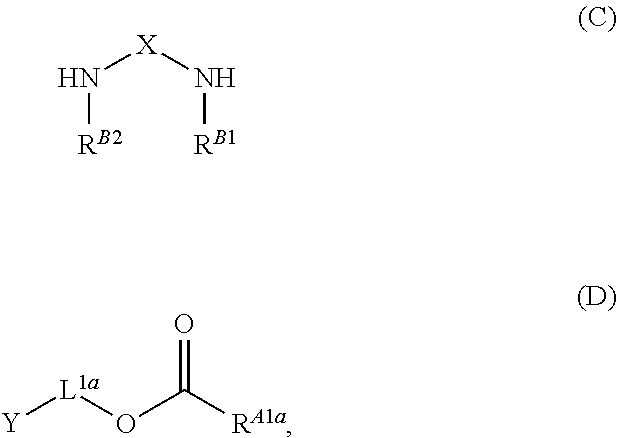
wherein Y is as described herein.


wherein Z is as described herein.


may be an (E)- or (Z)-double bond.

and salts, hydrates, solvates, polymorphs, tautomers, stereoisomers, and isotopically labeled derivatives thereof, wherein:

or a combination thereof, wherein each instance of RX is independently hydrogen, substituted or unsubstituted alkyl, substituted or unsubstituted alkenyl, substituted or unsubstituted alkynyl, substituted or unsubstituted carbocyclyl, substituted or unsubstituted heterocyclyl, substituted or unsubstituted aryl, substituted or unsubstituted heteroaryl, a nitrogen protecting group, or a moiety of the formula:

or RB1 and an instance of RX are joined to form a substituted or unsubstituted, heterocyclic ring or a substituted or unsubstituted, heteroaryl ring, or RB2 and an instance of RX are joined to form a substituted or unsubstituted, heterocyclic ring or a substituted or unsubstituted, heteroaryl ring, wherein:
-
- each instance of LX is independently substituted or unsubstituted alkylene or substituted or unsubstituted heteroalkylene; and
- each instance of RX1 is independently substituted or unsubstituted, C4-30 alkyl, substituted or unsubstituted, C4-30 alkenyl, or substituted or unsubstituted, C4-30 alkynyl;

wherein L1b is substituted or unsubstituted alkylene or substituted or unsubstituted heteroalkylene, and RA1b is substituted or unsubstituted, C4-30 alkyl, substituted or unsubstituted, C4-30 alkenyl, or substituted or unsubstituted, C4-30 alkynyl;

wherein L2b is substituted or unsubstituted alkylene or substituted or unsubstituted heteroalkylene, and RA2b is substituted or unsubstituted, C4-30 alkyl, substituted or unsubstituted, C4-30 alkenyl, or substituted or unsubstituted, C4-30 alkynyl;

In certain embodiments, X comprises

In certain embodiments, X comprises

In certain embodiments, X comprises

and/or

In certain embodiments, X is of the formula:

In certain embodiments, X is of the formula:

In certain embodiments, X is of the formula

In certain embodiments, X is of the formula:

In certain embodiments, X is a moiety shown in Table 1. In certain embodiments, X is a moiety shown in Table 2.
| TABLE 1 |
| Exemplary unsubstituted alkylene moieties |
 |
 |
 |
 |
 |
 |
 |
 |
 |
 |
 |
 |
 |
 |
 |
 |
 |
 |
 |
 |
| TABLE 2 |
| Exemplary substituted alkylene moieties |
 |
 |
 |
 |
 |
 |
 |
 |
 |
 |
 |
 |
 |
 |
 |
 |
 |
 |
 |
 |
| TABLE 3 |
| Exemplary unsubstituted heteroalkylene moieties (wherein each instance |
| of RX is independently unsubstituted C1-6 alkyl) |
 |
 |
 |
 |
 |
 |
 |
 |
 |
 |
 |
 |

wherein the divalent moiety is substituted (e.g., substituted with one or more halogen, substituted or unsubstituted C1-6 alkyl, and/or oxo) or unsubstituted. In certain embodiments, X comprises a divalent moiety of the formula:

In certain embodiments, X comprises a divalent moiety of the formula:

wherein the divalent moiety is substituted (e.g., with one or more halogen) or unsubstituted. In certain embodiments, X comprises a divalent moiety of the formula:

wherein the divalent moiety is substituted (e.g., substituted with one or more halogen, substituted or unsubstituted C1-6 alkyl, and/or oxo) or unsubstituted. In certain embodiments, X comprises a divalent moiety of the formula:

In certain embodiments, X comprises a divalent moiety of the formula:

In certain embodiments, X comprises a divalent moiety of the formula:


In certain embodiments, X comprises a divalent moiety of the formula:


In certain embodiments, RB1 and an instance of RX are joined to form a substituted or unsubstituted, heterocyclic ring. In certain embodiments, RB1 and an instance of RX are joined to form a 3- to 7-membered, monocyclic heterocyclic ring, wherein one, two, or three atoms in the heterocyclic ring system are independently selected from the group consisting of nitrogen, oxygen, and sulfur. In certain embodiments, RB1 and an instance of RX are joined to form a substituted or unsubstituted, heteroaryl ring. In certain embodiments, RB1 and an instance of RX are joined to form a 5- to 6-membered, monocyclic heteroaryl ring, wherein one, two, or three atoms in the heteroaryl ring system are independently selected from the group consisting of nitrogen, oxygen, and sulfur. In certain embodiments, RB1 and an instance of RX are joined to form a 9- to 10-membered, bicyclic heteroaryl ring, wherein one, two, three, or four atoms in the heteroaryl ring system are independently selected from the group consisting of nitrogen, oxygen, and sulfur. In certain embodiments, RB2 and an instance of RX are joined to form a substituted or unsubstituted, heterocyclic ring. In certain embodiments, RB2 and an instance of RX are joined to form a 3- to 7-membered, monocyclic heterocyclic ring, wherein one, two, or three atoms in the heterocyclic ring system are independently selected from the group consisting of nitrogen, oxygen, and sulfur. In certain embodiments, RB2 and an instance of RX are joined to form a substituted or unsubstituted, heteroaryl ring. In certain embodiments, RB2 and an instance of RX are joined to form a 5- to 6-membered, monocyclic heteroaryl ring, wherein one, two, or three atoms in the heteroaryl ring system are independently selected from the group consisting of nitrogen, oxygen, and sulfur. In certain embodiments, RB2 and an instance of RX are joined to form a 9- to 10-membered, bicyclic heteroaryl ring, wherein one, two, three, or four atoms in the heteroaryl ring system are independently selected from the group consisting of nitrogen, oxygen, and sulfur.

In certain embodiments, at least one instance of LX is of the formula:

In certain embodiments, at least one instance of LX is of the formula:

| TABLE 4 |
| Exemplary unsubstituted alkyl moieties |
 |
 |
 |
 |
 |
 |
 |
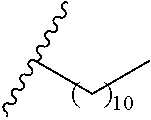 |
 |
 |
 |
 |
 |
 |
 |
 |
 |
| TABLE 5 |
| Exemplary substituted alkyl moieties |
 |
 |
 |
 |
 |
 |
 |
 |
 |
 |
 |
 |
 |
 |
 |
 |
 |
| TABLE 6 |
| Exemplary unsubstituted alkenyl moieties |
 |
 |
 |
 |
 |
 |
 |
 |
 |
 |
 |
 |
 |
 |
 |
 |
 |
| —(CH2)7CH═CH(CH2)3CH3 |
| —(CH2)7CH═CH(CH2)5CH3 |
| —(CH2)4CH═CH(CH2)8CH3 |
| —(CH2)7CH═CH(CH2)7CH3 |
| —(CH2)7CH═CHCH2CH═CH(CH2)4CH3 |
| —(CH2)7CH═CHCH2CH═CHCH2CH═CHCH2CH3 |
| —(CH2)3CH═CHCH2CH═CHCH2CH═CHCH2CH═CH(CH2)4CH3 |
| —(CH2)3CH═CHCH2CH═CHCH2CH═CHCH2CH═CHCH2CH═CHCH2CH3 |
| —(CH2)11CH═CH(CH2)7CH3 |
| —(CH2)2CH═CHCH2CH═CHCH2CH═CHCH2CH═CHCH2CH═CHCH2CH═CH—CH2CH3 |
 |
 |
 |
 |
 |
 |
 |
 |
 |
 |
 |
 |
 |
 |
 |
 |

or a combination thereof. In certain embodiments, X is of the formula:

In certain embodiments, X is of the formula:

Each instance of p is independently 1, 2, 3, 4, 5, or 6. In certain embodiments, all instances of p are the same. In certain embodiments, two instances of p are different from each other. In certain embodiments, each instance of p is 3, 4, or 5 (e.g., 4). In certain embodiments, X is of the formula:

In certain embodiments, X is of the formula:

Each instance of q is independently 1, 2, 3, 4, 5, or 6. In certain embodiments, all instances of q are the same. In certain embodiments, two instances of q are different from each other. In certain embodiments, each instance of q is 2, 3, or 4 (e.g., 2). The number r is 1, 2, 3, 4, 5, or 6. In certain embodiments, r is 1. In certain embodiments, r is 2. In certain embodiments, r is 3. In certain embodiments, r is 4. In certain embodiments, r is 5. In certain embodiments, r is 6.

In certain embodiments, L1a is of the formula:

In certain embodiments, L1a is of the formula:


wherein L1b is substituted or unsubstituted alkylene or substituted or unsubstituted heteroalkylene, and RA1b is substituted or unsubstituted, C4-30 alkyl, substituted or unsubstituted, C4-30 alkenyl, or substituted or unsubstituted, C4-30 alkynyl. In certain embodiments, L1b is substituted alkylene. In certain embodiments, L1b is a moiety shown in Table 2. In certain embodiments, L1b is unsubstituted alkylene. In certain embodiments, L1b is a moiety shown in Table 1. In certain embodiments, L1b is substituted C1-6 alkylene. In certain embodiments, L1b is C1-6 alkylene substituted with at least one halogen. In certain embodiments, L1b is C1-6 alkylene substituted with at least one fluorine. In certain embodiments, L1b is C1-6 perfluoroalkylene. In certain embodiments, L1b is unsubstituted C1-6 alkylene. In certain embodiments, L1b is of the formula:

In certain embodiments, L1b is of the formula:

In certain embodiments, L is of the formula:


wherein the moiety is substituted (e.g., with one or more halogen and/or oxo) or unsubstituted. In certain embodiments, RB1 and RB2 are joined to a divalent moiety of the formula:

wherein the moiety is substituted (e.g., with one or more halogen) or unsubstituted. In certain embodiments, RB1 and RB2 are joined to form a substituted or unsubstituted, heteroaryl ring. In certain embodiments, RB1 and RB2 are joined to form a 5- to 6-membered, monocyclic heteroaryl ring, wherein one, two, or three atoms in the heteroaryl ring system are independently selected from the group consisting of nitrogen, oxygen, and sulfur. In certain embodiments, RB1 and RB2 are joined to form a 9- to 10-membered, bicyclic heteroaryl ring, wherein one, two, three, or four atoms in the heteroaryl ring system are independently selected from the group consisting of nitrogen, oxygen, and sulfur.

In certain embodiments, L2a is of the formula:

In certain embodiments, L2a is of the formula:


wherein L2b is substituted or unsubstituted alkylene or substituted or unsubstituted heteroalkylene, and RA2b is substituted or unsubstituted, C4-30 alkyl, substituted or unsubstituted, C4-30 alkenyl, or substituted or unsubstituted, C4-30 alkynyl. In certain embodiments, L2b is substituted alkylene. In certain embodiments, L2b is a moiety shown in Table 2. In certain embodiments, L2b is unsubstituted alkylene. In certain embodiments, L2b is a moiety shown in Table 1. In certain embodiments, L2b is substituted C1-6 alkylene. In certain embodiments, L2b is C1-6 alkylene substituted with at least one halogen. In certain embodiments, L2b is C1-6 alkylene substituted with at least one fluorine. In certain embodiments, L2b is C1-6 perfluoroalkylene. In certain embodiments, L2b is unsubstituted C1-6 alkylene. In certain embodiments, L2b is of the formula:

In certain embodiments, L2b is of the formula:

In certain embodiments, L2b is of the formula:


In certain embodiments, each of L1a and L2a is of the formula:

In certain embodiments, each of L1a and L2a is of the formula:

In certain embodiments, L1a, L2a, and L1b are the same. In certain embodiments, L1a, L2a, L1b, and L2b are the same.

or a salt, hydrate, solvate, polymorph, tautomer, stereoisomer, and isotopically labeled derivative thereof, wherein each instance of t is 2, 3, 4, 5, or 6.

or a salt, hydrate, solvate, polymorph, tautomer, stereoisomer, and isotopically labeled derivative thereof.

or a salt, hydrate, solvate, polymorph, tautomer, stereoisomer, and isotopically labeled derivative thereof, wherein each instance of t is 2, 3, 4, 5, or 6; and each instance of r is 2, 3, 4, 5, or 6.

or a salt, hydrate, solvate, polymorph, tautomer, stereoisomer, and isotopically labeled derivative thereof.

or a salt, hydrate, solvate, polymorph, tautomer, stereoisomer, and isotopically labeled derivative thereof, wherein:

or a salt, hydrate, solvate, polymorph, tautomer, stereoisomer, and isotopically labeled derivative thereof.

or a salt, hydrate, solvate, polymorph, tautomer, stereoisomer, and isotopically labeled derivative thereof, wherein each instance of t is 2, 3, 4, 5, or 6.

or a salt, hydrate, solvate, polymorph, tautomer, stereoisomer, and isotopically labeled derivative thereof.

or a salt, hydrate, solvate, polymorph, tautomer, stereoisomer, and isotopically labeled derivative thereof, wherein each instance of t is 2, 3, 4, 5, or 6; and each instance of r is 2, 3, 4, 5, or 6.

or a salt, hydrate, solvate, polymorph, tautomer, stereoisomer, and isotopically labeled derivative thereof.

or a salt, hydrate, solvate, polymorph, tautomer, stereoisomer, and isotopically labeled derivative thereof, wherein:

or a salt, hydrate, solvate, polymorph, tautomer, stereoisomer, and isotopically labeled derivative thereof.

or a salt, hydrate, solvate, polymorph, tautomer, stereoisomer, and isotopically labeled derivative thereof, wherein each instance of t is 2, 3, 4, 5, or 6.

or a salt, hydrate, solvate, polymorph, tautomer, stereoisomer, and isotopically labeled derivative thereof.

or a salt, hydrate, solvate, polymorph, tautomer, stereoisomer, and isotopically labeled derivative thereof, wherein each instance of t is 2, 3, 4, 5, or 6; and each instance of r is 2, 3, 4, 5, or 6.

or a salt, hydrate, solvate, polymorph, tautomer, stereoisomer, and isotopically labeled derivative thereof.

or a salt, hydrate, solvate, polymorph, tautomer, stereoisomer, and isotopically labeled derivative thereof, wherein:

or a salt, hydrate, solvate, polymorph, tautomer, stereoisomer, and isotopically labeled derivative thereof, wherein:


and salts, hydrates, solvates, polymorphs, tautomers, stereoisomers, and isotopically labeled derivatives thereof.

and salts, hydrates, solvates, polymorphs, tautomers, stereoisomers, and isotopically labeled derivatives thereof, wherein:

In certain embodiments, L3a is of the formula:

In certain embodiments, L3a is of the formula:

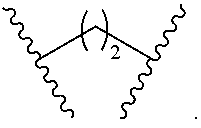
In certain embodiments, L3b is of the formula:

In certain embodiments, L3b is of the formula:


wherein L3c is substituted or unsubstituted alkylene or substituted or unsubstituted heteroalkylene, and R3c is substituted or unsubstituted, C4-30 alkyl, substituted or unsubstituted, C4-30 alkenyl, or substituted or unsubstituted, C4-30 alkynyl. In certain embodiments, L3c is substituted alkylene. In certain embodiments, L3c is a moiety shown in Table 2. In certain embodiments, L3c is unsubstituted alkylene. In certain embodiments, L3c is a moiety shown in Table 1. In certain embodiments, L3c is substituted C1-6 alkylene. In certain embodiments, L3c is C1-6 alkylene substituted with at least one halogen. In certain embodiments, L3c is C1-6 alkylene substituted with at least one fluorine. In certain embodiments, L3c is C1-6 perfluoroalkylene. In certain embodiments, L3c is unsubstituted C1-6 alkylene. In certain embodiments, L3c is of the formula:

In certain embodiments, L3c is of the formula:

In certain embodiments, L3c is of the formula:


In certain embodiments, each of L3a and L3b is of the formula:

In certain embodiments, each of L3a and L3b is of the formula:

In certain embodiments, L3a, L3b, and L3c are the same.

or a salt, hydrate, solvate, polymorph, tautomer, stereoisomer, and isotopically labeled derivative thereof, wherein each instance of s is 2, 3, 4, 5, or 6.

or a salt, hydrate, solvate, polymorph, tautomer, stereoisomer, and isotopically labeled derivative thereof.

or a salt, hydrate, solvate, polymorph, tautomer, stereoisomer, and isotopically labeled derivative thereof.

or a salt, hydrate, solvate, polymorph, tautomer, stereoisomer, and isotopically labeled derivative thereof, wherein each instance of s is 2, 3, 4, 5, or 6.

or a salt, hydrate, solvate, polymorph, tautomer, stereoisomer, and isotopically labeled derivative thereof.


and salts, hydrates, solvates, polymorphs, tautomers, stereoisomers, and isotopically labeled derivatives thereof.
| TABLE 6A |
| Single-tailed lipidoids of the present disclosure |
 |
1C18Oleic |
 |
3C18Oleic |
 |
30C18Oleic |
 |
1C18 |
 |
1C14 |
 |
1C16 |
 |
1C18Elaidic |
 |
1C15 |
 |
1C18Oleic |
 |
3C14 |
 |
3C15 |
 |
3C16 |
 |
3C17 |
 |
3C18 |
 |
30C14 |
 |
30C15 |
 |
30C16 |
 |
30C17 |
 |
30C18 |


or a salt thereof, wherein LX, L1a, L2a, RX1, RA1a, and RA2a are as defined herein.

or a salt thereof, wherein f is 2, 3, 4, or 5, and wherein RX, RA1a, and RA2a are as defined herein.


Methods of Preparing the Compounds and Compounds Prepared by the Methods


wherein Y is a leaving group.


wherein Z is a leaving group.


wherein each instance of p is independently 1, 2, 3, 4, 5, or 6. For example, X may be a bis-lysine diketopiperzine based moiety, of formula:


or a salt, stereoisomer, or isotopically labeled derivative thereof, with a carboxylic acid of Formula (B):

or a salt, stereoisomer, or isotopically labeled derivative thereof, wherein X, LX, L1a, L2a, and RX1 are as described herein, to provide a compound of Formula (I). In some embodiments, the step of esterifying is performed in the presence of a base. In some embodiments, the base is an organic base. In certain embodiments, the organic base is an aliphatic amine or aromatic amine. In certain embodiments, the organic base is a primary amine, secondary amine, or tertiary amine. In certain embodiments, the organic base is triethylamine, N,N-diisopropylethylamine, 1,8-diazabicyclo[5.4.0]undec-7-ene (DBU), pyridine, 2,6-lutidine, or 4-dimethylaminopyridine (DMAP). In some embodiments, the step of esterifying is performed in the presence of a carbodiimide (e.g., N,N′-dicyclohexylcarbodiimide (DCC), 1-ethyl-3-(3-dimethylaminopropyl)carbodiimide (EDC), or N,N′-diisopropylcarbodiimide (DIC)). In some embodiments, the step of esterigying is performed in the presence of a catalyst (e.g., DMAP, 1-hydroxybenzotriazole (HOBt), or 1-hydroxy-7-azabenzotriazole (HOAt)).

or a salt, stereoisomer, or isotopically labeled derivative thereof, wherein each P1 is independently hydrogen, optionally substituted alkyl, or an oxygen protecting group, and X, LX, L1a, L2a are as described herein, to provide a compound of Formula (S). In certain embodiments, the oxygen protecting group is silyl (e.g., TMS, TES, TIPS, TBDMS). In certain embodiments, the step of deprotecting is performed in the presence of an acid. In certain embodiments, the step of deprotecting is performed in the presence of a base. In certain embodiments, the step of deprotecting is performed in the presence of a reductant. In certain embodiments, the step of deprotecting is performed in the presence of a fluoride source (e.g., tetrabutylammonium fluoride (TBAF)).

or a salt, stereoisomer, or isotopically labeled derivative thereof, wherein X is as described herein, with a compound of Formula (P):

or a salt, stereoisomer, or isotopically labeled derivative thereof, wherein P1 is hydrogen, optionally substituted alkyl, or an oxygen protecting group, and LXa is substituted or unsubstituted alkylene or substituted or unsubstituted heteroalkylene, in the presence of a reductant, to provide a compound of Formula (R). In certain embodiments, the oxygen protecting group is silyl (e.g., TMS, TES, TIPS, TBDMS). In some embodiments, the step of esterifying is performed in the presence of a base. In some embodiments, the base is an organic base. In certain embodiments, the organic base is an aliphatic amine or aromatic amine. In certain embodiments, the organic base is a primary amine, secondary amine, or tertiary amine. In certain embodiments, the organic base is triethylamine, N,N-diisopropylethylamine, 1,8-diazabicyclo[5.4.0]undec-7-ene (DBU), pyridine, 2,6-lutidine, or 4-dimethylaminopyridine (DMAP). In certain embodiments, the reductant is a reductant described herein. In certain embodiments, the reductant is a borohydride or borane. In some embodiments, the reductant is sodium borohydride or sodium triacetoxyborohydride.
| TABLE 7 |
| Exemplary alcohols that are useful in preparing a compound of the disclosure |
 |
 |
 |
 |
 |
 |
 |
 |
 |
 |
 |
| TABLE 8 |
| Exemplary carboxylic acids that are useful in preparing a compound of the disclosure |
 |
 |
 |
 |
 |
 |
 |
 |
 |
 |
 |
 |
 |
 |
 |
 |
 |
 |
 |
 |
 |
 |
 |
 |
 |
 |
 |
 |
 |
 |
 |
Compositions


Claims (29)


Priority Applications (1)
| Application Number | Priority Date | Filing Date | Title |
|---|---|---|---|
| US14/789,227 US9840479B2 (en) | 2014-07-02 | 2015-07-01 | Polyamine-fatty acid derived lipidoids and uses thereof |
Applications Claiming Priority (2)
| Application Number | Priority Date | Filing Date | Title |
|---|---|---|---|
| US201462020114P | 2014-07-02 | 2014-07-02 | |
| US14/789,227 US9840479B2 (en) | 2014-07-02 | 2015-07-01 | Polyamine-fatty acid derived lipidoids and uses thereof |
Publications (2)
| Publication Number | Publication Date |
|---|---|
| US20160002178A1 US20160002178A1 (en) | 2016-01-07 |
| US9840479B2 true US9840479B2 (en) | 2017-12-12 |
Family
ID=53762324
Family Applications (1)
| Application Number | Title | Priority Date | Filing Date |
|---|---|---|---|
| US14/789,227 Expired - Fee Related US9840479B2 (en) | 2014-07-02 | 2015-07-01 | Polyamine-fatty acid derived lipidoids and uses thereof |
Country Status (3)
| Country | Link |
|---|---|
| US (1) | US9840479B2 (en) |
| EP (1) | EP3164379A1 (en) |
| WO (1) | WO2016004202A1 (en) |
Cited By (5)
| Publication number | Priority date | Publication date | Assignee | Title |
|---|---|---|---|---|
| US10695444B2 (en) | 2015-06-19 | 2020-06-30 | Massachusetts Institute Of Technology | Alkenyl substituted 2,5-piperazinediones, compositions, and uses thereof |
| US10844028B2 (en) | 2008-11-07 | 2020-11-24 | Massachusetts Institute Of Technology | Aminoalcohol lipidoids and uses thereof |
| US10933139B2 (en) | 2011-03-28 | 2021-03-02 | Massachusetts Institute Of Technology | Conjugated lipomers and uses thereof |
| WO2022152939A1 (en) | 2021-01-18 | 2022-07-21 | Conserv Bioscience Limited | Coronavirus immunogenic compositions, methods and uses thereof |
| US11458158B2 (en) | 2011-10-27 | 2022-10-04 | Massachusetts Institute Of Technology | Amino acid-, peptide- and polypeptide-lipids, isomers, compositions, and uses thereof |
Families Citing this family (89)
| Publication number | Priority date | Publication date | Assignee | Title |
|---|---|---|---|---|
| EP3052521A1 (en) | 2013-10-03 | 2016-08-10 | Moderna Therapeutics, Inc. | Polynucleotides encoding low density lipoprotein receptor |
| EP3350157B1 (en) | 2015-09-17 | 2022-01-05 | Modernatx, Inc. | Compounds and compositions for intracellular delivery of therapeutic agents |
| SI3394030T1 (en) | 2015-12-22 | 2022-04-29 | Modernatx, Inc. | Compounds and compositions for intracellular delivery of agents |
| US20200069599A1 (en) | 2016-06-14 | 2020-03-05 | Modernatx, Inc. | Stabilized formulations of lipid nanoparticles |
| US11583504B2 (en) | 2016-11-08 | 2023-02-21 | Modernatx, Inc. | Stabilized formulations of lipid nanoparticles |
| JP7332478B2 (en) | 2017-03-15 | 2023-08-23 | モデルナティエックス インコーポレイテッド | Lipid nanoparticle formulation |
| ES2911186T3 (en) | 2017-03-15 | 2022-05-18 | Modernatx Inc | Crystalline forms of aminolipids |
| FI3596041T3 (en) | 2017-03-15 | 2023-01-31 | Compound and compositions for intracellular delivery of therapeutic agents | |
| WO2018213476A1 (en) | 2017-05-16 | 2018-11-22 | Translate Bio, Inc. | Treatment of cystic fibrosis by delivery of codon-optimized mrna encoding cftr |
| EP3638678B1 (en) | 2017-06-14 | 2025-12-03 | ModernaTX, Inc. | Compounds and compositions for intracellular delivery of agents |
| EP3641834B1 (en) | 2017-06-19 | 2023-10-04 | Translate Bio, Inc. | Messenger rna therapy for the treatment of friedreich's ataxia |
| WO2019126593A1 (en) | 2017-12-20 | 2019-06-27 | Translate Bio, Inc. | Improved composition and methods for treatment of ornithine transcarbamylase deficiency |
| EP3793689A1 (en) | 2018-05-15 | 2021-03-24 | Translate Bio, Inc. | Subcutaneous delivery of messenger rna |
| CA3100254A1 (en) | 2018-05-24 | 2019-11-28 | Translate Bio, Inc. | Thioester cationic lipids |
| US20200016274A1 (en) | 2018-05-30 | 2020-01-16 | Translate Bio, Inc. | Messenger rna vaccines and uses thereof |
| JP7441802B2 (en) | 2018-05-30 | 2024-03-01 | トランスレイト バイオ, インコーポレイテッド | vitamin cationic lipid |
| CA3100214A1 (en) | 2018-05-30 | 2019-12-05 | Translate Bio, Inc. | Cationic lipids comprising a steroidal moiety |
| WO2019232097A1 (en) | 2018-05-30 | 2019-12-05 | Translate Bio, Inc. | Phosphoester cationic lipids |
| WO2020023533A1 (en) | 2018-07-23 | 2020-01-30 | Translate Bio, Inc. | Dry power formulations for messenger rna |
| JP2021534101A (en) | 2018-08-09 | 2021-12-09 | ヴェルソー セラピューティクス, インコーポレイテッド | Oligonucleotide compositions for targeting CCR2 and CSF1R and their use |
| AU2019333042B2 (en) | 2018-08-29 | 2025-06-19 | Translate Bio, Inc. | Improved process of preparing mRNA-loaded lipid nanoparticles |
| EP3849617A1 (en) | 2018-09-14 | 2021-07-21 | Translate Bio, Inc. | Composition and methods for treatment of methylmalonic acidemia |
| EP3853202A1 (en) | 2018-09-19 | 2021-07-28 | ModernaTX, Inc. | Compounds and compositions for intracellular delivery of therapeutic agents |
| CN112888451A (en) | 2018-10-19 | 2021-06-01 | 川斯勒佰尔公司 | Pump-free encapsulation of messenger RNA |
| JP7483294B2 (en) * | 2018-11-09 | 2024-05-15 | トランスレイト バイオ, インコーポレイテッド | 2,5-dioxopiperazine lipids containing intercalation ester, thioester, disulfide and anhydride moieties |
| US12280147B2 (en) | 2018-11-09 | 2025-04-22 | Translate Bio, Inc. | PEG lipidoid compounds |
| AU2019377525B2 (en) | 2018-11-09 | 2025-10-16 | Translate Bio, Inc. | Multi-PEG lipid compounds |
| US20220016265A1 (en) | 2018-11-09 | 2022-01-20 | Translate Bio, Inc. | Messenger rna therapy for treatment of ocular diseases |
| CA3119449A1 (en) | 2018-11-12 | 2020-05-22 | Translate Bio, Inc. | Methods for inducing immune tolerance |
| US12257305B2 (en) | 2018-11-21 | 2025-03-25 | Translate Bio, Inc. | Cationic lipid compounds |
| JP2022516356A (en) | 2019-01-07 | 2022-02-25 | トランスレイト バイオ, インコーポレイテッド | Compositions and Methods for the Treatment of Primary Ciliary Dysfunction |
| WO2020214946A1 (en) | 2019-04-18 | 2020-10-22 | Translate Bio, Inc. | Cystine cationic lipids |
| US20220233444A1 (en) | 2019-04-22 | 2022-07-28 | Translate Bio, Inc. | Thioester cationic lipids |
| EP3962902A1 (en) | 2019-05-03 | 2022-03-09 | Translate Bio, Inc. | Di-thioester cationic lipids |
| EP3976593A1 (en) | 2019-05-31 | 2022-04-06 | Translate Bio, Inc. | Macrocyclic lipids |
| WO2020257611A1 (en) | 2019-06-21 | 2020-12-24 | Translate Bio, Inc. | Cationic lipids comprising an hydroxy moiety |
| CN114401942B (en) | 2019-06-21 | 2024-01-26 | 川斯勒佰尔公司 | Tris(hydroxymethyl)methylglycine and citrate lipids |
| JP7586886B2 (en) | 2019-07-08 | 2024-11-19 | トランスレイト バイオ, インコーポレイテッド | Improved mRNA-loaded lipid nanoparticles and processes for making same |
| US12144871B2 (en) | 2019-07-23 | 2024-11-19 | Translate Bio, Inc. | Stable compositions of MRNA-loaded lipid nanoparticles and processes of making |
| BR112022004759A2 (en) | 2019-09-19 | 2022-06-21 | Modernatx Inc | Branched tail lipid compositions and compounds for intracellular delivery of therapeutic agents |
| US20240197825A1 (en) | 2019-09-20 | 2024-06-20 | Translate Bio, Inc. | mRNA Encoding Engineered CFTR |
| WO2021081058A1 (en) | 2019-10-21 | 2021-04-29 | Translate Bio, Inc. | Compositions, methods and uses of messenger rna |
| WO2021127641A1 (en) | 2019-12-20 | 2021-06-24 | Translate Bio, Inc. | Improved process of preparing mrna-loaded lipid nanoparticles |
| IL294073A (en) | 2019-12-20 | 2022-08-01 | Translate Bio Inc | Rectal delivery of messenger rna |
| WO2021142245A1 (en) | 2020-01-10 | 2021-07-15 | Translate Bio, Inc. | Compounds, pharmaceutical compositions and methods for modulating expression of muc5b in lung cells and tissues |
| US11969480B2 (en) | 2020-02-25 | 2024-04-30 | Translate Bio, Inc. | Processes of preparing mRNA-loaded lipid nanoparticles |
| WO2021226468A1 (en) | 2020-05-07 | 2021-11-11 | Translate Bio, Inc. | Improved compositions for cftr mrna therapy |
| WO2021226436A1 (en) | 2020-05-07 | 2021-11-11 | Translate Bio, Inc. | Optimized nucleotide sequences encoding sars-cov-2 antigens |
| EP4146680A1 (en) | 2020-05-07 | 2023-03-15 | Translate Bio, Inc. | Composition and methods for treatment of primary ciliary dyskinesia |
| US12514932B2 (en) | 2020-05-14 | 2026-01-06 | Translate Bio, Inc. | PEG lipidoid compounds |
| WO2021231901A1 (en) | 2020-05-15 | 2021-11-18 | Translate Bio, Inc. | Lipid nanoparticle formulations for mrna delivery |
| WO2022006527A1 (en) | 2020-07-02 | 2022-01-06 | Maritime Therapeutics, Inc. | Compositions and methods for reverse gene therapy |
| JP2023544197A (en) | 2020-10-06 | 2023-10-20 | トランスレイト バイオ, インコーポレイテッド | Improved methods and formulations of lipid nanoparticles |
| US20220133631A1 (en) | 2020-10-12 | 2022-05-05 | Translate Bio, Inc. | Process of preparing ice-based lipid nanoparticles |
| WO2022081544A1 (en) | 2020-10-12 | 2022-04-21 | Translate Bio, Inc. | Improved process of preparing mrna-loaded lipid nanoparticles |
| AU2021373892A1 (en) | 2020-11-09 | 2023-07-06 | Translate Bio, Inc. | Improved compositions for delivery of codon-optimized mrna |
| AU2021386737A1 (en) | 2020-11-25 | 2023-07-13 | Translate Bio, Inc. | Stable liquid lipid nanoparticle formulations |
| CN116981692A (en) | 2021-01-14 | 2023-10-31 | 翻译生物公司 | Methods and compositions for delivering mRNA-encoded antibodies |
| IL305021A (en) | 2021-02-08 | 2023-10-01 | Univ Texas | Unsaturated dendrimers compositions,related formulations, and methods of use thereof |
| WO2022204219A1 (en) | 2021-03-22 | 2022-09-29 | Recode Therapeutics, Inc. | Compositions and methods for targeted delivery to cells |
| JP2024511437A (en) | 2021-03-23 | 2024-03-13 | リコード セラピューティクス,インク. | Polynucleotide compositions, related formulations, and methods of use thereof |
| US20250268994A1 (en) | 2021-03-25 | 2025-08-28 | Translate Bio, Inc. | Optimized Nucleotide Sequences Encoding the Extracellular Domain of Human ACE2 Protein or a Portion Thereof |
| JP2024515668A (en) | 2021-04-19 | 2024-04-10 | トランスレイト バイオ, インコーポレイテッド | Improved compositions for delivery of mRNA |
| EP4204390A1 (en) | 2021-05-24 | 2023-07-05 | Suzhou Abogen Biosciences Co., Ltd. | Lipid compounds and lipid nanoparticle compositions |
| EP4362920A1 (en) | 2021-07-01 | 2024-05-08 | Translate Bio, Inc. | Compositions for delivery of mrna |
| AU2022341440A1 (en) * | 2021-09-10 | 2024-05-02 | Maxirna (Shanghai) Pharmaceutical Co., Ltd. | Ionizable lipids, their preparation and application in gene delivery |
| JP2024539512A (en) | 2021-10-22 | 2024-10-28 | セイル バイオメディシンズ インコーポレイテッド | MRNA Vaccine Compositions |
| WO2023086893A1 (en) | 2021-11-10 | 2023-05-19 | Translate Bio, Inc. | Composition and methods for treatment of primary ciliary dyskinesia |
| CN118488834A (en) | 2021-11-23 | 2024-08-13 | 赛欧生物医药股份有限公司 | Bacteria-derived lipid compositions and uses thereof |
| EP4452239A1 (en) | 2021-12-20 | 2024-10-30 | Sail Biomedicines, Inc. | Compositions comprising mrna and lipid reconstructed plant messenger packs |
| EP4499045A4 (en) * | 2022-03-30 | 2026-03-25 | Univ Johns Hopkins | COMPOSITIONS OF LIPIDNANOPARTICLES FOR PLUMMIDE DNA DELIVERANCE TO THE LIVER AND METHOD FOR THEM TO BE MADE |
| WO2024102434A1 (en) | 2022-11-10 | 2024-05-16 | Senda Biosciences, Inc. | Rna compositions comprising lipid nanoparticles or lipid reconstructed natural messenger packs |
| WO2024112652A1 (en) | 2022-11-21 | 2024-05-30 | Translate Bio, Inc. | Compositions of dry powder formulations of messenger rna and methods of use thereof |
| CN120693181A (en) | 2022-12-08 | 2025-09-23 | 瑞科德治疗公司 | Lipid nanoparticle compositions and uses thereof |
| AU2023394992A1 (en) | 2022-12-15 | 2025-07-31 | Sanofi Pasteur Inc. | Mrna encoding influenza virus-like particle |
| AR131438A1 (en) | 2022-12-20 | 2025-03-19 | Sanofi Sa | RHINOVIRUS mRNA VACCINE |
| WO2024159172A1 (en) | 2023-01-27 | 2024-08-02 | Senda Biosciences, Inc. | A modified lipid composition and uses thereof |
| EP4698156A1 (en) | 2023-04-17 | 2026-02-25 | Sanofi Pasteur Inc. | Reconstitutable dry powder formulations and methods of use thereof |
| WO2024220712A2 (en) | 2023-04-19 | 2024-10-24 | Sail Biomedicines, Inc. | Vaccine compositions |
| WO2024220625A1 (en) | 2023-04-19 | 2024-10-24 | Sail Biomedicines, Inc. | Delivery of polynucleotides from lipid nanoparticles comprising rna and ionizable lipids |
| WO2024220752A2 (en) | 2023-04-19 | 2024-10-24 | Sail Biomedicines, Inc. | Rna therapeutic compositions |
| WO2025106930A1 (en) | 2023-11-17 | 2025-05-22 | Sail Biomedicines, Inc. | Circular polyribonucleotides encoding glucagon-like peptide 2 (glp-2) and uses thereof |
| WO2025106915A1 (en) | 2023-11-17 | 2025-05-22 | Sail Biomedicines, Inc. | Circular polyribonucleotides encoding glucagon-like peptide 1 (glp-1) and uses thereof |
| US12364773B2 (en) | 2023-12-01 | 2025-07-22 | Recode Therapeutics, Inc. | Lipid nanoparticle compositions and uses thereof |
| US12553042B2 (en) | 2023-12-01 | 2026-02-17 | Recode Therapeutics, Inc. | Method for quantifying an amount of capped messenger RNA |
| WO2025137646A1 (en) | 2023-12-22 | 2025-06-26 | Recode Therapeutics, Inc. | Gene editing methods and compositions for treating cystic fibrosis |
| WO2025196065A1 (en) | 2024-03-20 | 2025-09-25 | Sanofi | Novel homocysteine based lipids and their use for delivery of nucleic acids |
| WO2026008743A1 (en) | 2024-07-02 | 2026-01-08 | Sanofi Pasteur Inc. | Water-soluble polyanionic polymer as adjuvant for carrier-formulated nucleic acid |
| WO2026033123A1 (en) | 2024-08-08 | 2026-02-12 | Sanofi Pasteur Inc. | Lipid nanoparticle formulations for mrna delivery |
Citations (255)
| Publication number | Priority date | Publication date | Assignee | Title |
|---|---|---|---|---|
| GB137749A (en) | 1919-06-18 | 1920-01-22 | William Murray | Improvements in holding-on apparatus for rivets |
| US2580922A (en) | 1942-09-19 | 1952-01-01 | Nat Aluminate Corp | Prevention of foaming in steam generation |
| US2647121A (en) | 1951-02-02 | 1953-07-28 | Ruth P Jacoby | Diamine-bis-acetamides |
| US2717909A (en) | 1953-09-24 | 1955-09-13 | Monsanto Chemicals | Hydroxyethyl-keryl-alkylene-ammonium compounds |
| US2819718A (en) | 1953-07-16 | 1958-01-14 | Isidore H Goldman | Drainage tube |
| US2844629A (en) | 1956-04-25 | 1958-07-22 | American Home Prod | Fatty acid amides and derivatives thereof |
| GB866408A (en) | 1957-10-21 | 1961-04-26 | Arnold Hoffman & Co Inc | Quaternary ammonium salts |
| US3096560A (en) | 1958-11-21 | 1963-07-09 | William J Liebig | Process for synthetic vascular implants |
| DE1155118B (en) | 1961-12-30 | 1963-10-03 | Basf Ag | Process for the preparation of sulfonamides substituted on the nitrogen atom |
| FR1378382A (en) | 1962-12-01 | 1964-11-13 | Sandoz Sa | Amides of amino-propionic acid, usable in particular for the treatment of textile fibers |
| US3170953A (en) | 1960-09-06 | 1965-02-23 | Dow Chemical Co | N-hydroxymaleamic acid |
| US3268576A (en) | 1962-01-23 | 1966-08-23 | American Cyanamid Co | Di-alkanoic acid esters of 2, 2'-(ethylenedhino)-di-1-butanols |
| GB1072118A (en) | 1962-12-01 | 1967-06-14 | Sandoz Ag | Amides of aminopropionic acid |
| US3350325A (en) | 1964-07-31 | 1967-10-31 | Dow Chemical Co | Water soluble polymer of diglycidyl ether and an alkanolamine |
| US3535289A (en) | 1966-03-12 | 1970-10-20 | Nitto Electric Ind Co | Epoxy resin composition and its production |
| US3614955A (en) | 1970-02-09 | 1971-10-26 | Medtronic Inc | Standby defibrillator and method of operation |
| US3614954A (en) | 1970-02-09 | 1971-10-26 | Medtronic Inc | Electronic standby defibrillator |
| US3656185A (en) | 1969-02-04 | 1972-04-18 | Rhone Poulenc Sa | Cardiac valvular support prosthesis |
| US3682980A (en) | 1966-10-31 | 1972-08-08 | Mobil Oil Corp | Aminobenzoquinones and aminonaphthoquinones as additives for imparting oxidative stability to organic compositions |
| JPS4822365Y1 (en) | 1969-11-28 | 1973-06-29 | ||
| US3805301A (en) | 1972-07-28 | 1974-04-23 | Meadox Medicals Inc | Tubular grafts having indicia thereon |
| JPS49127908A (en) | 1973-04-20 | 1974-12-07 | ||
| DE2430998A1 (en) | 1973-06-28 | 1975-01-09 | Kuraray Co | NEW ORGANIC COMPOUNDS CONTAINING AN N, N-DIALKYL-SUBSTIBUTED AMIDE GROUP AND METHOD OF PREPARING THEREOF |
| JPS5123537A (en) | 1974-04-26 | 1976-02-25 | Adeka Argus Chemical Co Ltd | KASOZAISOSEIBUTSU |
| US3945052A (en) | 1972-05-01 | 1976-03-23 | Meadox Medicals, Inc. | Synthetic vascular graft and method for manufacturing the same |
| US3956502A (en) | 1974-09-04 | 1976-05-11 | Nalco Chemical Company | Polyamine alcohols as microbiocides |
| JPS51125144A (en) | 1974-12-27 | 1976-11-01 | Adeka Argus Chem Co Ltd | Stabilized organic materials composition |
| DE2520814A1 (en) | 1975-05-09 | 1976-11-18 | Bayer Ag | Light stabilisation of polyurethanes - using polymeric tert. amines from aliphatic diamines and (meth)acrylic esters or amides |
| US3995623A (en) | 1974-12-23 | 1976-12-07 | American Hospital Supply Corporation | Multipurpose flow-directed catheter |
| JPS5210847A (en) | 1975-07-16 | 1977-01-27 | Nippon Steel Corp | Pinch roll |
| DE2530243A1 (en) | 1975-07-07 | 1977-01-27 | Henkel & Cie Gmbh | Microbistatic and microbicidal N-substd. aminoalkanols - of reduced amine odour and improved skin compatibility |
| US4013507A (en) | 1973-09-18 | 1977-03-22 | California Institute Of Technology | Ionene polymers for selectively inhibiting the vitro growth of malignant cells |
| US4022833A (en) | 1973-02-14 | 1977-05-10 | Sterling Drug Inc. | N,N'-bridged-bis[2-alkyl-2-hydroxyethylamines] |
| JPS5278924A (en) | 1975-12-26 | 1977-07-02 | Hodogaya Chem Co Ltd | Solubilization of dye in hydrocarbon solvent |
| US4072146A (en) | 1976-09-08 | 1978-02-07 | Howes Randolph M | Venous catheter device |
| US4096860A (en) | 1975-10-08 | 1978-06-27 | Mclaughlin William F | Dual flow encatheter |
| US4099528A (en) | 1977-02-17 | 1978-07-11 | Sorenson Research Co., Inc. | Double lumen cannula |
| US4106129A (en) | 1976-01-09 | 1978-08-15 | American Hospital Supply Corporation | Supported bioprosthetic heart valve with compliant orifice ring |
| US4134402A (en) | 1976-02-11 | 1979-01-16 | Mahurkar Sakharam D | Double lumen hemodialysis catheter |
| US4140126A (en) | 1977-02-18 | 1979-02-20 | Choudhury M Hasan | Method for performing aneurysm repair |
| US4180068A (en) | 1978-04-13 | 1979-12-25 | Motion Control, Incorporated | Bi-directional flow catheter with retractable trocar/valve structure |
| US4182833A (en) | 1977-12-07 | 1980-01-08 | Celanese Polymer Specialties Company | Cationic epoxide-amine reaction products |
| DE2903979A1 (en) | 1979-02-02 | 1980-08-07 | Henkel Kgaa | Hydroxy-carboxylic acid amide derivs. - prepd. by acylating hydroxyalkyl alkylene di:amine and used as greying inhibitors in detergent compsns. |
| US4227533A (en) | 1978-11-03 | 1980-10-14 | Bristol-Myers Company | Flushable urinary catheter |
| US4284459A (en) | 1978-07-03 | 1981-08-18 | The Kendall Company | Method for making a molded catheter |
| GB1602085A (en) | 1977-05-25 | 1981-11-04 | Teijin Ltd | Permselective membrane |
| US4308085A (en) | 1980-07-28 | 1981-12-29 | Jenoptik Jena Gmbh | Process for the preparation of high molecular thermoplastic epoxide-amine-polyadducts |
| US4323525A (en) | 1978-04-19 | 1982-04-06 | Imperial Chemical Industries Limited | Electrostatic spinning of tubular products |
| US4335723A (en) | 1976-11-26 | 1982-06-22 | The Kendall Company | Catheter having inflatable retention means |
| US4339369A (en) | 1981-04-23 | 1982-07-13 | Celanese Corporation | Cationic epoxide-amine reaction products |
| US4355426A (en) | 1975-05-09 | 1982-10-26 | Macgregor David C | Porous flexible vascular graft |
| US4375817A (en) | 1979-07-19 | 1983-03-08 | Medtronic, Inc. | Implantable cardioverter |
| US4385631A (en) | 1980-03-21 | 1983-05-31 | Ulrich Uthmann | Catheter |
| US4401472A (en) | 1982-02-26 | 1983-08-30 | Martin Marietta Corporation | Hydraulic cement mixes and processes for improving hydraulic cement mixes |
| US4406656A (en) | 1981-06-01 | 1983-09-27 | Brack Gillium Hattler | Venous catheter having collapsible multi-lumens |
| US4475972A (en) | 1981-10-01 | 1984-10-09 | Ontario Research Foundation | Implantable material |
| US4530113A (en) | 1983-05-20 | 1985-07-23 | Intervascular, Inc. | Vascular grafts with cross-weave patterns |
| US4550447A (en) | 1983-08-03 | 1985-11-05 | Shiley Incorporated | Vascular graft prosthesis |
| US4562596A (en) | 1984-04-25 | 1986-01-07 | Elliot Kornberg | Aortic graft, device and method for performing an intraluminal abdominal aortic aneurysm repair |
| US4568329A (en) | 1982-03-08 | 1986-02-04 | Mahurkar Sakharam D | Double lumen catheter |
| US4571241A (en) | 1983-12-16 | 1986-02-18 | Christopher T Graham | Urinary catheter with collapsible urethral tube |
| US4601718A (en) | 1982-12-13 | 1986-07-22 | Possis Medical, Inc. | Vascular graft and blood supply method |
| EP0211305A2 (en) | 1985-08-05 | 1987-02-25 | Miyoshi Yushi Kabushiki Kaisha | Metal scavenging process |
| US4647416A (en) | 1983-08-03 | 1987-03-03 | Shiley Incorporated | Method of preparing a vascular graft prosthesis |
| US4662382A (en) | 1985-01-16 | 1987-05-05 | Intermedics, Inc. | Pacemaker lead with enhanced sensitivity |
| US4701162A (en) | 1985-09-24 | 1987-10-20 | The Kendall Company | Foley catheter assembly |
| US4710169A (en) | 1983-12-16 | 1987-12-01 | Christopher T Graham | Urinary catheter with collapsible urethral tube |
| US4720517A (en) | 1986-11-24 | 1988-01-19 | Ciba-Geigy Corporation | Compositions stabilized with N-hydroxyiminodiacetic and dipropionic acids and esters thereof |
| JPS63125144A (en) | 1986-10-29 | 1988-05-28 | 東燃化学株式会社 | Synthetic resin vessel and mold for manufacture thereof |
| US4762915A (en) | 1985-01-18 | 1988-08-09 | Liposome Technology, Inc. | Protein-liposome conjugates |
| US4782836A (en) | 1984-05-24 | 1988-11-08 | Intermedics, Inc. | Rate adaptive cardiac pacemaker responsive to patient activity and temperature |
| US4856521A (en) | 1986-07-31 | 1989-08-15 | Werner Irnich | Cardiac pacemaker having a variable stimulation frequency |
| US4860751A (en) | 1985-02-04 | 1989-08-29 | Cordis Corporation | Activity sensor for pacemaker control |
| US4873370A (en) | 1987-03-03 | 1989-10-10 | Pennzoil Products Company | Alkylene diamines for use in friction and wear reducing compositions |
| US4878908A (en) | 1974-08-05 | 1989-11-07 | Imperial Chemical Industries Plc | Fibrillar product |
| US4892540A (en) | 1988-04-21 | 1990-01-09 | Sorin Biomedica S.P.A. | Two-leaflet prosthetic heart valve |
| US4897355A (en) | 1985-01-07 | 1990-01-30 | Syntex (U.S.A.) Inc. | N[ω,(ω-1)-dialkyloxy]- and N-[ω,(ω-1)-dialkenyloxy]-alk-1-yl-N,N,N-tetrasubstituted ammonium lipids and uses therefor |
| US4946857A (en) | 1985-07-19 | 1990-08-07 | Kuraray Co., Ltd. | Terpene amino alcohols and medicinal uses thereof |
| US4960409A (en) | 1986-09-11 | 1990-10-02 | Catalano Marc L | Method of using bilumen peripheral venous catheter with adapter |
| US4966945A (en) | 1986-05-17 | 1990-10-30 | Schering Ag | Coating method using aqueous glycidyl compound-amine hardner-thermoplastic resin compositions |
| US5024671A (en) | 1988-09-19 | 1991-06-18 | Baxter International Inc. | Microporous vascular graft |
| US5025005A (en) | 1984-04-03 | 1991-06-18 | Takeda Chemical Industries, Ltd. | Lipid derivatives, their production and use |
| US5047540A (en) | 1987-12-17 | 1991-09-10 | Shionogi & Co., Ltd. | Lipid derivatives |
| US5101824A (en) | 1990-04-16 | 1992-04-07 | Siemens-Pacesetter, Inc. | Rate-responsive pacemaker with circuitry for processing multiple sensor inputs |
| JPH04108173A (en) | 1990-08-22 | 1992-04-09 | Kao Corp | Softening finish |
| US5104399A (en) | 1986-12-10 | 1992-04-14 | Endovascular Technologies, Inc. | Artificial graft and implantation method |
| US5116360A (en) | 1990-12-27 | 1992-05-26 | Corvita Corporation | Mesh composite graft |
| US5138067A (en) | 1987-12-17 | 1992-08-11 | Shionogi & Co. Ltd. | Lipid derivatives |
| US5151105A (en) | 1991-10-07 | 1992-09-29 | Kwan Gett Clifford | Collapsible vessel sleeve implant |
| US5171678A (en) | 1989-04-17 | 1992-12-15 | Centre National De La Recherche Scientifique | Lipopolyamines, their preparation and their use |
| US5176661A (en) | 1988-09-06 | 1993-01-05 | Advanced Cardiovascular Systems, Inc. | Composite vascular catheter |
| US5197977A (en) | 1984-01-30 | 1993-03-30 | Meadox Medicals, Inc. | Drug delivery collagen-impregnated synthetic vascular graft |
| US5200395A (en) | 1988-10-18 | 1993-04-06 | Ajinomoto Company, Inc. | Pharmaceutical composition of BUF-5 for treating anemia |
| US5201998A (en) | 1982-05-28 | 1993-04-13 | Ciba-Geigy Corporation | Process for sizing paper with anionic hydrophobic sizing agents and cationic retention aids |
| EP0545305A1 (en) | 1991-11-27 | 1993-06-09 | Fuji Photo Film Co., Ltd. | Silver halide color photographic material |
| WO1993018229A1 (en) | 1992-03-12 | 1993-09-16 | Weyerhaeuser Company | Polyether-reinforced fiber-based materials |
| WO1993018754A1 (en) | 1992-03-11 | 1993-09-30 | Pharmaceutical Discovery Corporation | Self-assembling diketopiperazine drug delivery system |
| US5261419A (en) | 1990-12-19 | 1993-11-16 | Peter Osypka | Cardiac pacemaker lead |
| US5282824A (en) | 1990-10-09 | 1994-02-01 | Cook, Incorporated | Percutaneous stent assembly |
| US5284491A (en) | 1992-02-27 | 1994-02-08 | Medtronic, Inc. | Cardiac pacemaker with hysteresis behavior |
| US5300022A (en) | 1992-11-12 | 1994-04-05 | Martin Klapper | Urinary catheter and bladder irrigation system |
| US5314430A (en) | 1993-06-24 | 1994-05-24 | Medtronic, Inc. | Atrial defibrillator employing transvenous and subcutaneous electrodes and method of use |
| JPH06200073A (en) | 1992-09-30 | 1994-07-19 | Minnesota Mining & Mfg Co <3M> | Fluorochemical aminoalcohol |
| US5330768A (en) | 1991-07-05 | 1994-07-19 | Massachusetts Institute Of Technology | Controlled drug delivery using polymer/pluronic blends |
| JPH06211978A (en) | 1992-10-28 | 1994-08-02 | Takeda Chem Ind Ltd | New polyether polyol and production of polyurethane foam therefrom |
| US5334761A (en) | 1992-08-28 | 1994-08-02 | Life Technologies, Inc. | Cationic lipids |
| JPH0753535A (en) | 1993-07-31 | 1995-02-28 | Basf Ag | Preparation of n-(2-hydroxyethyl)piperazine |
| US5395619A (en) | 1993-03-03 | 1995-03-07 | Liposome Technology, Inc. | Lipid-polymer conjugates and liposomes |
| US5405379A (en) | 1990-07-26 | 1995-04-11 | Lane; Rodney J. | Self expanding vascular endoprosthesis for aneurysms |
| US5405363A (en) | 1991-03-15 | 1995-04-11 | Angelon Corporation | Implantable cardioverter defibrillator having a smaller displacement volume |
| WO1995011004A1 (en) | 1993-10-22 | 1995-04-27 | Berol Nobel Ab | A personal care composition |
| WO1995014651A1 (en) | 1993-11-24 | 1995-06-01 | Megabios Corporation | Amphiphilic derivatives of piperazine |
| WO1995018863A1 (en) | 1994-01-10 | 1995-07-13 | Rhone-Poulenc Rorer S.A. | Composition containing nucleic acids, preparation and uses |
| EP0673637A1 (en) | 1994-03-25 | 1995-09-27 | Dentsply GmbH | Dental filling composition and method |
| US5464924A (en) | 1994-01-07 | 1995-11-07 | The Dow Chemical Company | Flexible poly(amino ethers) for barrier packaging |
| US5528023A (en) | 1992-10-09 | 1996-06-18 | Johnson & Johnson Clinical Diagnostics, Inc. | Bar code detecting circuitry |
| WO1996025508A1 (en) | 1995-02-17 | 1996-08-22 | Rhone-Poulenc Rorer S.A. | Nucleic acid-containing composition, preparation and use thereof |
| WO1996026179A1 (en) | 1995-02-21 | 1996-08-29 | Imarx Pharmaceutical Corp. | Novel cationic lipids and the use thereof |
| WO1996036314A2 (en) | 1995-05-15 | 1996-11-21 | Pharmaceutical Discovery Corporation | Method for drug delivery to the pulmonary system |
| US5607385A (en) | 1995-08-17 | 1997-03-04 | Medtronic, Inc. | Device and algorithm for a combined cardiomyostimulator and a cardiac pacer-carioverter-defibrillator |
| US5609624A (en) | 1993-10-08 | 1997-03-11 | Impra, Inc. | Reinforced vascular graft and method of making same |
| US5614548A (en) | 1988-10-25 | 1997-03-25 | Wake Forest University | Quaternary amine containing ether or ester lipid derivatives and therapeutic compositions |
| US5626869A (en) | 1992-03-27 | 1997-05-06 | Pharmacia & Upjohn Ab | Pharmaceutical composition containing a defined lipid system |
| WO1997023457A1 (en) | 1995-12-26 | 1997-07-03 | Celgene Corporation | Imides as pde iii, pde iv and tnf inhibitors |
| US5693088A (en) | 1993-11-08 | 1997-12-02 | Lazarus; Harrison M. | Intraluminal vascular graft |
| US5697953A (en) | 1993-03-13 | 1997-12-16 | Angeion Corporation | Implantable cardioverter defibrillator having a smaller displacement volume |
| US5700437A (en) | 1993-10-06 | 1997-12-23 | The Kansai Electric Power Co., Inc. | Method for removing carbon dioxide from combustion exhaust gas |
| US5705188A (en) | 1993-02-19 | 1998-01-06 | Nippon Shinyaku Company, Ltd. | Drug composition containing nucleic acid copolymer |
| US5736573A (en) | 1996-07-31 | 1998-04-07 | Galat; Alexander | Lipid and water soluble derivatives of drugs |
| JPH1099679A (en) | 1996-09-30 | 1998-04-21 | Kobe Steel Ltd | Deodorant for basic gas |
| WO1998016202A2 (en) | 1996-10-11 | 1998-04-23 | Sequus Pharmaceuticals, Inc. | Fusogenic liposome composition and method |
| US5772694A (en) | 1995-05-16 | 1998-06-30 | Medical Carbon Research Institute L.L.C. | Prosthetic heart valve with improved blood flow |
| US5776747A (en) | 1994-07-20 | 1998-07-07 | Cytotherapeutics, Inc. | Method for controlling the distribution of cells within a bioartificial organ using polycthylene oxide-poly (dimethylsiloxane) copolymer |
| US5776165A (en) | 1995-10-11 | 1998-07-07 | Ela Medical S.A. | Active implantable cardiac defibrillator cardioverter and method of operation |
| JPH10197978A (en) | 1997-01-09 | 1998-07-31 | Mitsubishi Paper Mills Ltd | Silver halide photographic material |
| US5817873A (en) | 1993-03-22 | 1998-10-06 | Guerbet S.A. | Polyiodinated compounds, their preparation and their use as contrast media for radiology |
| JPH115786A (en) | 1997-06-13 | 1999-01-12 | Pola Chem Ind Inc | New aminohydroxypropyl piperazine derivatives |
| US5874105A (en) | 1996-01-31 | 1999-02-23 | Collaborative Laboratories, Inc. | Lipid vesicles formed with alkylammonium fatty acid salts |
| US5885613A (en) | 1994-09-30 | 1999-03-23 | The University Of British Columbia | Bilayer stabilizing components and their use in forming programmable fusogenic liposomes |
| JPH1180142A (en) | 1997-09-05 | 1999-03-26 | Pola Chem Ind Inc | Method for producing diphenylalkyl compound |
| US5910168A (en) | 1992-12-11 | 1999-06-08 | W. L. Gore & Associates, Inc. | Prosthetic vascular graft |
| US5916208A (en) | 1996-06-06 | 1999-06-29 | Luther Medical Products, Inc. | Hard tip over-the-needle catheter and method of manufacturing the same |
| US5958894A (en) | 1997-04-04 | 1999-09-28 | Megabios Corporation | Amphiphilic biguanide derivatives |
| US5976569A (en) | 1994-09-29 | 1999-11-02 | Emisphere Technologies, Inc. | Diketopiperazine-based delivery systems |
| EP0959092A1 (en) | 1998-05-20 | 1999-11-24 | Th. Goldschmidt AG | Process of production of polyaminoacidesters through esterification of polyaminoacids or of transesterification of polyaminoacidesters |
| US6013429A (en) | 1998-02-27 | 2000-01-11 | Eastman Kodak Company | Photographic element with new singlet oxygen quenchers |
| WO2000003044A1 (en) | 1998-07-08 | 2000-01-20 | Crew Development Corporation | A method for isolation and production of magnesium metal, magnesium chloride, magnesite and magnesium based products |
| JP2000501383A (en) | 1995-11-14 | 2000-02-08 | ローヌ−プーラン・ロレ・エス・アー | Lipopolyamine as transfection agent and its pharmaceutical use |
| US6034056A (en) | 1994-12-24 | 2000-03-07 | Zeneca Limited | Fibronectin adhesion inhibitors |
| US6055454A (en) | 1998-07-27 | 2000-04-25 | Cardiac Pacemakers, Inc. | Cardiac pacemaker with automatic response optimization of a physiologic sensor based on a second sensor |
| US6067471A (en) | 1998-08-07 | 2000-05-23 | Cardiac Pacemakers, Inc. | Atrial and ventricular implantable cardioverter-defibrillator and lead system |
| US6090384A (en) | 1992-08-04 | 2000-07-18 | Chisei Ra | Antiallergic compostion |
| US6096075A (en) | 1998-01-22 | 2000-08-01 | Medical Carbon Research Institute, Llc | Prosthetic heart valve |
| US6096070A (en) | 1995-06-07 | 2000-08-01 | Med Institute Inc. | Coated implantable medical device |
| US6120799A (en) | 1997-03-12 | 2000-09-19 | The Regents Of The University Of California | Cationic lipid compositions targeting angiogenic endothelial cells |
| US6152955A (en) | 1992-11-24 | 2000-11-28 | Cardiac Pacemakers, Inc. | Implantable conformal coil patch electrode with multiple conductive elements for cardioversion and defibrillation |
| US6169923B1 (en) | 1999-04-23 | 2001-01-02 | Pacesetter, Inc. | Implantable cardioverter-defibrillator with automatic arrhythmia detection criteria adjustment |
| US6176877B1 (en) | 1998-04-20 | 2001-01-23 | St. Jude Medical, Inc. | Two piece prosthetic heart valve |
| WO2001015726A2 (en) | 1999-08-27 | 2001-03-08 | Inex Pharmaceuticals Corp. | Compositions for stimulating cytokine secretion and inducing an immune response |
| US6204297B1 (en) | 1996-11-26 | 2001-03-20 | Rhodia Inc. | Nonionic gemini surfactants |
| WO2001049324A2 (en) | 1999-12-30 | 2001-07-12 | Novartis Ag | Novel colloid synthetic vectors for gene therapy |
| US6271209B1 (en) | 1998-04-03 | 2001-08-07 | Valentis, Inc. | Cationic lipid formulation delivering nucleic acid to peritoneal tumors |
| US6299604B1 (en) | 1998-08-20 | 2001-10-09 | Cook Incorporated | Coated implantable medical device |
| JP2001523215A (en) | 1995-04-17 | 2001-11-20 | イマークス ファーマシューティカル コーポレーション | Hybrid magnetic resonance contrast agent |
| US6331318B1 (en) | 1994-09-30 | 2001-12-18 | Emisphere Technologies Inc. | Carbon-substituted diketopiperazine delivery systems |
| US6335199B1 (en) | 1997-02-28 | 2002-01-01 | Transgene S.A. | Lipid compounds and compositions containing same used for the transfer of at least an active substance, in particular a polynucleotide, in a target cell and therapeutic use |
| US20020022721A1 (en) | 1996-11-14 | 2002-02-21 | Affymetrix, Inc. | Methods of array synthesis |
| US6358278B1 (en) | 1999-09-24 | 2002-03-19 | St. Jude Medical, Inc. | Heart valve prosthesis with rotatable cuff |
| WO2002022709A1 (en) | 2000-09-14 | 2002-03-21 | Epox Ltd. | Highly branched water-soluble polyamine oligomers, process for their preparation and applications thereof |
| US6370434B1 (en) | 2000-02-28 | 2002-04-09 | Cardiac Pacemakers, Inc. | Cardiac lead and method for lead implantation |
| US6372903B1 (en) | 1998-01-26 | 2002-04-16 | Commissariat A L'energie Atomique | Method for preparing polyazacycloalkanes grafted on silica gel and use of grafted compounds |
| US6371983B1 (en) | 1999-10-04 | 2002-04-16 | Ernest Lane | Bioprosthetic heart valve |
| WO2002031025A2 (en) | 2000-10-10 | 2002-04-18 | Massachusetts Institute Of Technology | Biodegradable poly(beta-amino esters) and uses thereof |
| US6398808B1 (en) | 1999-06-15 | 2002-06-04 | Scimed Life Systems, Inc. | Localized delivery of genetic information from biostable materials |
| JP2002167368A (en) | 2000-12-01 | 2002-06-11 | Nitto Denko Corp | Alkyl-substituted dendrimer and method for producing the same |
| US20020094528A1 (en) | 2000-11-29 | 2002-07-18 | Salafsky Joshua S. | Method and apparatus using a surface-selective nonlinear optical technique for detection of probe-target interations |
| WO2002097068A2 (en) | 2001-05-31 | 2002-12-05 | Inserm | Keratinocytes obtained from embryonic stem cells of mammals |
| US20020192721A1 (en) | 2001-03-28 | 2002-12-19 | Engeneos, Inc. | Modular molecular clasps and uses thereof |
| US20020193622A1 (en) | 2001-04-23 | 2002-12-19 | Shin-Etsu Chemical Co., Ltd. | Novel tertiary amine compounds having an ester structure and processes for preparing same |
| EP1277829A2 (en) | 2001-07-20 | 2003-01-22 | Air Products And Chemicals, Inc. | Alkyl glycidyl ether-capped polyamine foam control agents |
| WO2003040288A2 (en) | 2001-11-09 | 2003-05-15 | Bayer Healthcare Ag | Isotopically coded affinity markers 3 |
| WO2003070735A2 (en) | 2002-02-19 | 2003-08-28 | Novosom Ag | Components for producing amphoteric liposomes |
| US20030215395A1 (en) | 2002-05-14 | 2003-11-20 | Lei Yu | Controllably degradable polymeric biomolecule or drug carrier and method of synthesizing said carrier |
| US6696424B1 (en) | 1999-05-28 | 2004-02-24 | Vical Incorporated | Cytofectin dimers and methods of use thereof |
| WO2004043588A2 (en) | 2002-08-07 | 2004-05-27 | Massachusetts Institute Of Technology | Production of polymeric microarrays |
| WO2004048345A2 (en) | 2002-11-22 | 2004-06-10 | Novo Nordisk A/S | 2,5-diketopiperazines for the treatment of obesity |
| US20040181077A1 (en) | 2003-03-10 | 2004-09-16 | Air Products And Chemicals, Inc. | Tertiary alkanolamines containing surface active alkyl groups |
| US6821530B2 (en) | 2000-06-01 | 2004-11-23 | Shriners Hospitals For Children | Polymer composite compositions |
| US20040235982A1 (en) | 2003-05-19 | 2004-11-25 | Rabasco John Joseph | Polymer emulsions resistant to biodeterioration |
| WO2004106411A2 (en) | 2003-05-28 | 2004-12-09 | Massachusetts Institute Of Technology | Biodegradable poly(beta-amino esters) and uses thereof |
| US20050059005A1 (en) | 2001-09-28 | 2005-03-17 | Thomas Tuschl | Microrna molecules |
| US20050069590A1 (en) | 2003-09-30 | 2005-03-31 | Buehler Gail K. | Stable suspensions for medicinal dosages |
| WO2005028619A2 (en) | 2003-09-15 | 2005-03-31 | Massachusetts Institute Of Technology | Nanoliter-scale synthesis of arrayed biomaterials and screening thereof |
| US20050123596A1 (en) | 2003-09-23 | 2005-06-09 | Kohane Daniel S. | pH-triggered microparticles |
| US20050143332A1 (en) | 2002-05-28 | 2005-06-30 | Monahan Sean D. | Compositions and processes using siRNA, amphipathic compounds and polycations |
| US20050148786A1 (en) | 2003-11-10 | 2005-07-07 | Nippon Kayaku Kabushiki Kaisha | Diimmonium compound and use thereof |
| US20050244961A1 (en) | 2002-08-22 | 2005-11-03 | Robert Short | Cell culture surface |
| WO2005121348A1 (en) | 2004-06-07 | 2005-12-22 | Protiva Biotherapeutics, Inc. | Lipid encapsulated interfering rna |
| CA2518132A1 (en) | 2004-09-08 | 2006-03-08 | Bayer Materialscience Ag | Ahhesive compositions containing blocked polyurethane prepolymers |
| US7022214B2 (en) | 2004-01-21 | 2006-04-04 | Bio-Rad Laboratories, Inc. | Carrier ampholytes of high pH range |
| WO2006065266A2 (en) | 2004-04-20 | 2006-06-22 | Dendritic Nanotechnologies, Inc. | Dendritic polymers with enhanced amplification and interior functionality |
| WO2006082088A1 (en) | 2005-02-07 | 2006-08-10 | Glaxo Group Limited | Ester-linked gemini surfactant compounds for use in gene therapy |
| WO2006105043A2 (en) | 2005-03-28 | 2006-10-05 | Dendritic Nanotechnologies, Inc. | Janus dendrimers and dendrons |
| US20060223939A1 (en) | 2002-11-04 | 2006-10-05 | Ge Bayer Silicones Gmbh & Co. Kg | Linear polyamino and/or polyammonium polysiloxane copolymers I |
| US20060228404A1 (en) | 2004-03-04 | 2006-10-12 | Anderson Daniel G | Compositions and methods for treatment of hypertrophic tissues |
| WO2006138380A2 (en) | 2005-06-15 | 2006-12-28 | Massachusetts Institute Of Technology | Amine-containing lipids and uses thereof |
| WO2007096662A2 (en) | 2006-02-27 | 2007-08-30 | Technische Universität München | Cancer imaging and treatment |
| US20070275923A1 (en) | 2006-05-25 | 2007-11-29 | Nastech Pharmaceutical Company Inc. | CATIONIC PEPTIDES FOR siRNA INTRACELLULAR DELIVERY |
| WO2007143659A2 (en) | 2006-06-05 | 2007-12-13 | Massachusetts Institute Of Technology | Crosslinked, degradable polymers and uses thereof |
| WO2008011561A2 (en) | 2006-07-21 | 2008-01-24 | Massachusetts Institute Of Technology | End-modified poly(beta-amino esters) and uses thereof |
| WO2008036168A2 (en) | 2006-08-30 | 2008-03-27 | The Regents Of The University Of Michigan | New small molecule inhibitors of mdm2 and the uses thereof |
| JP2008202015A (en) | 2007-02-23 | 2008-09-04 | Toyo Ink Mfg Co Ltd | Pressure sensitive adhesive composition |
| WO2008113364A2 (en) | 2007-03-20 | 2008-09-25 | Recepticon Aps | Amino derivatives to prevent nephrotoxicity and cancer |
| WO2008119741A2 (en) | 2007-03-29 | 2008-10-09 | Novartis Ag | 3-imidazolyl-indoles for the treatment of proliferative diseases |
| JP2008247749A (en) | 2007-03-29 | 2008-10-16 | Research Institute Of Innovative Technology For The Earth | Novel triazine derivatives, their production and their use as gas separation membranes |
| US20090023673A1 (en) | 2006-10-03 | 2009-01-22 | Muthiah Manoharan | Lipid containing formulations |
| US7507859B2 (en) | 2003-06-16 | 2009-03-24 | Fifth Base Llc | Functional synthetic molecules and macromolecules for gene delivery |
| EP2045251A1 (en) | 2006-07-20 | 2009-04-08 | Consejo Superior de Investigaciones Cientificas | Compound that can inhibit ubc13-uev interactions, pharmaceutical compositions and therapeutic uses |
| WO2009046220A2 (en) | 2007-10-02 | 2009-04-09 | Mdrna, Inc. | Lipopeptides for delivery of nucleic acids |
| US7556684B2 (en) | 2004-02-26 | 2009-07-07 | Construction Research & Technology Gmbh | Amine containing strength improvement admixture |
| WO2009086547A1 (en) | 2008-01-03 | 2009-07-09 | Cedars-Sinai Medical Center | Antioxidant nanosphere comprising [1,2]-dithiolane moieties |
| US20090221684A1 (en) | 2005-12-22 | 2009-09-03 | Trustees Of Boston University | Molecules for Gene Delivery and Gene Therapy, and Methods of Use Thereof |
| CN100569877C (en) | 2005-12-30 | 2009-12-16 | 财团法人工业技术研究院 | Branched structure compound containing multiple UV crosslinking reactive groups and application thereof |
| WO2010042877A1 (en) | 2008-10-09 | 2010-04-15 | Tekmira Pharmaceuticals Corporation | Improved amino lipids and methods for the delivery of nucleic acids |
| WO2010045512A2 (en) | 2008-10-16 | 2010-04-22 | Mdrna , Inc. | Processes and compositions for liposomal and efficient delivery of gene silencing therapeutics |
| WO2010053572A2 (en) | 2008-11-07 | 2010-05-14 | Massachusetts Institute Of Technology | Aminoalcohol lipidoids and uses thereof |
| WO2010078373A1 (en) | 2008-12-29 | 2010-07-08 | Mannkind Corporation | Substituted diketopiperazine analogs for use as drug delivery agents |
| US20100178699A1 (en) | 2007-05-01 | 2010-07-15 | Pgr-Solutions | Multi-chain lipophilic polyamines |
| WO2010099387A1 (en) | 2009-02-27 | 2010-09-02 | Corning Incorporated | Copolymer composition, membrane article, and methods thereof |
| US20100240072A1 (en) | 2007-08-30 | 2010-09-23 | Wester Hans Juergen | Cancer Imaging and Treatment |
| WO2010114789A1 (en) | 2009-04-02 | 2010-10-07 | The Siemon Company | Telecommunications patch panel |
| WO2010129709A1 (en) | 2009-05-05 | 2010-11-11 | Alnylam Pharmaceuticals, Inc. | Lipid compositions |
| WO2010144789A2 (en) | 2009-06-12 | 2010-12-16 | Mannkind Corporation | Diketopiperazine microparticles with defined specific surface areas |
| CA2769408A1 (en) | 2009-07-30 | 2011-02-03 | Laboratorios Salvat, S.A. | Apaf-1 inhibitor compounds |
| WO2011068810A1 (en) | 2009-12-01 | 2011-06-09 | Shire Human Genetic Therapies | Delivery of mrna for the augmentation of proteins and enzymes in human genetic diseases |
| US20110158935A1 (en) | 2008-12-29 | 2011-06-30 | Kelly Sullivan Kraft | Substituted Diketopiperazine Analogs for Use as Drug Delivery Agents |
| CN101863544B (en) | 2010-06-29 | 2011-09-28 | 湖南科技大学 | Cyanuric acid-based heavy metal chelating flocculant and preparation method thereof |
| US20120009222A1 (en) | 2008-10-27 | 2012-01-12 | Massachusetts Institute Of Technology | Modulation of the immune response |
| WO2012027675A2 (en) | 2010-08-26 | 2012-03-01 | Massachusetts Institute Of Technology | Poly(beta-amino alcohols), their preparation, and uses thereof |
| US20120196923A1 (en) | 2009-05-15 | 2012-08-02 | Kaushal Rege | Polymers for delivering a substance into a cell |
| USRE43612E1 (en) | 2000-10-10 | 2012-08-28 | Massachusetts Institute Of Technology | Biodegradable poly(β-amino esters) and uses thereof |
| WO2012133737A1 (en) | 2011-03-31 | 2012-10-04 | 公益財団法人地球環境産業技術研究機構 | Crosslinkable amine compound, polymer membrane using crosslinkable amine compound, and method for producing polymer membrane |
| WO2012135025A2 (en) | 2011-03-28 | 2012-10-04 | Massachusetts Institute Of Technology | Conjugated lipomers and uses thereof |
| JP2012197433A (en) | 2011-03-04 | 2012-10-18 | Toyo Ink Sc Holdings Co Ltd | MODIFIED β-HYDROXYALKYLAMIDE AND CROSSLINKABLE COMPOSITION |
| EP2532649A1 (en) | 2011-06-07 | 2012-12-12 | Karlsruher Institut Für Technologie (KIT) | Amino lipids, their synthesis and uses thereof |
| WO2012170889A1 (en) | 2011-06-08 | 2012-12-13 | Shire Human Genetic Therapies, Inc. | Cleavable lipids |
| WO2012170930A1 (en) | 2011-06-08 | 2012-12-13 | Shire Human Genetic Therapies, Inc | Lipid nanoparticle compositions and methods for mrna delivery |
| US8361555B2 (en) | 2007-12-27 | 2013-01-29 | E I Du Pont De Nemours And Company | Hydroxy alkyl isocyanurates |
| WO2013063468A1 (en) | 2011-10-27 | 2013-05-02 | Massachusetts Institute Of Technology | Amino acid derivates functionalized on the n- terminal capable of forming drug incapsulating microspheres |
| WO2014028487A1 (en) | 2012-08-13 | 2014-02-20 | Massachusetts Institute Of Technology | Amine-containing lipidoids and uses thereof |
| JP2014172827A (en) | 2013-03-06 | 2014-09-22 | Jx Nippon Oil & Energy Corp | Friction modifier and lubricating-oil composition |
| WO2014179562A1 (en) | 2013-05-01 | 2014-11-06 | Massachusetts Institute Of Technology | 1,3,5-triazinane-2,4,6-trione derivatives and uses thereof |
| WO2014210356A1 (en) | 2013-06-26 | 2014-12-31 | Massachusetts Institute Of Technology | Multi-tailed lipids and uses thereof |
| WO2015061467A1 (en) | 2013-10-22 | 2015-04-30 | Shire Human Genetic Therapies, Inc. | Lipid formulations for delivery of messenger rna |
| US20160367686A1 (en) | 2015-06-19 | 2016-12-22 | Massachusetts Institute Of Technology | Alkenyl substituted 2,5-piperazinediones, compositions, and uses thereof |
Family Cites Families (27)
| Publication number | Priority date | Publication date | Assignee | Title |
|---|---|---|---|---|
| US4270537A (en) | 1979-11-19 | 1981-06-02 | Romaine Richard A | Automatic hypodermic syringe |
| US4596556A (en) | 1985-03-25 | 1986-06-24 | Bioject, Inc. | Hypodermic injection apparatus |
| CA1283827C (en) | 1986-12-18 | 1991-05-07 | Giorgio Cirelli | Appliance for injection of liquid formulations |
| GB8704027D0 (en) | 1987-02-20 | 1987-03-25 | Owen Mumford Ltd | Syringe needle combination |
| US4940460A (en) | 1987-06-19 | 1990-07-10 | Bioject, Inc. | Patient-fillable and non-invasive hypodermic injection device assembly |
| US4941880A (en) | 1987-06-19 | 1990-07-17 | Bioject, Inc. | Pre-filled ampule and non-invasive hypodermic injection device assembly |
| US4790824A (en) | 1987-06-19 | 1988-12-13 | Bioject, Inc. | Non-invasive hypodermic injection device |
| US5339163A (en) | 1988-03-16 | 1994-08-16 | Canon Kabushiki Kaisha | Automatic exposure control device using plural image plane detection areas |
| FR2638359A1 (en) | 1988-11-03 | 1990-05-04 | Tino Dalto | SYRINGE GUIDE WITH ADJUSTMENT OF DEPTH DEPTH OF NEEDLE IN SKIN |
| US5312335A (en) | 1989-11-09 | 1994-05-17 | Bioject Inc. | Needleless hypodermic injection device |
| US5064413A (en) | 1989-11-09 | 1991-11-12 | Bioject, Inc. | Needleless hypodermic injection device |
| US5190521A (en) | 1990-08-22 | 1993-03-02 | Tecnol Medical Products, Inc. | Apparatus and method for raising a skin wheal and anesthetizing skin |
| US5527288A (en) | 1990-12-13 | 1996-06-18 | Elan Medical Technologies Limited | Intradermal drug delivery device and method for intradermal delivery of drugs |
| GB9118204D0 (en) | 1991-08-23 | 1991-10-09 | Weston Terence E | Needle-less injector |
| SE9102652D0 (en) | 1991-09-13 | 1991-09-13 | Kabi Pharmacia Ab | INJECTION NEEDLE ARRANGEMENT |
| US5328483A (en) | 1992-02-27 | 1994-07-12 | Jacoby Richard M | Intradermal injection device with medication and needle guard |
| US5383851A (en) | 1992-07-24 | 1995-01-24 | Bioject Inc. | Needleless hypodermic injection device |
| US5569189A (en) | 1992-09-28 | 1996-10-29 | Equidyne Systems, Inc. | hypodermic jet injector |
| US5334144A (en) | 1992-10-30 | 1994-08-02 | Becton, Dickinson And Company | Single use disposable needleless injector |
| WO1995024176A1 (en) | 1994-03-07 | 1995-09-14 | Bioject, Inc. | Ampule filling device |
| US5466220A (en) | 1994-03-08 | 1995-11-14 | Bioject, Inc. | Drug vial mixing and transfer device |
| US5599302A (en) | 1995-01-09 | 1997-02-04 | Medi-Ject Corporation | Medical injection system and method, gas spring thereof and launching device using gas spring |
| US5730723A (en) | 1995-10-10 | 1998-03-24 | Visionary Medical Products Corporation, Inc. | Gas pressured needle-less injection device and method |
| US5893397A (en) | 1996-01-12 | 1999-04-13 | Bioject Inc. | Medication vial/syringe liquid-transfer apparatus |
| GB9607549D0 (en) | 1996-04-11 | 1996-06-12 | Weston Medical Ltd | Spring-powered dispensing device |
| US5993412A (en) | 1997-05-19 | 1999-11-30 | Bioject, Inc. | Injection apparatus |
| IT1298087B1 (en) | 1998-01-08 | 1999-12-20 | Fiderm S R L | DEVICE FOR CHECKING THE PENETRATION DEPTH OF A NEEDLE, IN PARTICULAR APPLICABLE TO A SYRINGE FOR INJECTIONS |
-
2015
- 2015-07-01 WO PCT/US2015/038827 patent/WO2016004202A1/en not_active Ceased
- 2015-07-01 EP EP15744766.5A patent/EP3164379A1/en not_active Withdrawn
- 2015-07-01 US US14/789,227 patent/US9840479B2/en not_active Expired - Fee Related
Patent Citations (319)
| Publication number | Priority date | Publication date | Assignee | Title |
|---|---|---|---|---|
| GB137749A (en) | 1919-06-18 | 1920-01-22 | William Murray | Improvements in holding-on apparatus for rivets |
| US2580922A (en) | 1942-09-19 | 1952-01-01 | Nat Aluminate Corp | Prevention of foaming in steam generation |
| US2647121A (en) | 1951-02-02 | 1953-07-28 | Ruth P Jacoby | Diamine-bis-acetamides |
| US2819718A (en) | 1953-07-16 | 1958-01-14 | Isidore H Goldman | Drainage tube |
| US2717909A (en) | 1953-09-24 | 1955-09-13 | Monsanto Chemicals | Hydroxyethyl-keryl-alkylene-ammonium compounds |
| US2844629A (en) | 1956-04-25 | 1958-07-22 | American Home Prod | Fatty acid amides and derivatives thereof |
| GB866408A (en) | 1957-10-21 | 1961-04-26 | Arnold Hoffman & Co Inc | Quaternary ammonium salts |
| US3096560A (en) | 1958-11-21 | 1963-07-09 | William J Liebig | Process for synthetic vascular implants |
| US3170953A (en) | 1960-09-06 | 1965-02-23 | Dow Chemical Co | N-hydroxymaleamic acid |
| DE1155118B (en) | 1961-12-30 | 1963-10-03 | Basf Ag | Process for the preparation of sulfonamides substituted on the nitrogen atom |
| US3268576A (en) | 1962-01-23 | 1966-08-23 | American Cyanamid Co | Di-alkanoic acid esters of 2, 2'-(ethylenedhino)-di-1-butanols |
| GB1072118A (en) | 1962-12-01 | 1967-06-14 | Sandoz Ag | Amides of aminopropionic acid |
| FR1378382A (en) | 1962-12-01 | 1964-11-13 | Sandoz Sa | Amides of amino-propionic acid, usable in particular for the treatment of textile fibers |
| US3350325A (en) | 1964-07-31 | 1967-10-31 | Dow Chemical Co | Water soluble polymer of diglycidyl ether and an alkanolamine |
| US3535289A (en) | 1966-03-12 | 1970-10-20 | Nitto Electric Ind Co | Epoxy resin composition and its production |
| US3682980A (en) | 1966-10-31 | 1972-08-08 | Mobil Oil Corp | Aminobenzoquinones and aminonaphthoquinones as additives for imparting oxidative stability to organic compositions |
| US3656185A (en) | 1969-02-04 | 1972-04-18 | Rhone Poulenc Sa | Cardiac valvular support prosthesis |
| JPS4822365Y1 (en) | 1969-11-28 | 1973-06-29 | ||
| US3614955A (en) | 1970-02-09 | 1971-10-26 | Medtronic Inc | Standby defibrillator and method of operation |
| US3614954A (en) | 1970-02-09 | 1971-10-26 | Medtronic Inc | Electronic standby defibrillator |
| US3945052A (en) | 1972-05-01 | 1976-03-23 | Meadox Medicals, Inc. | Synthetic vascular graft and method for manufacturing the same |
| US3805301A (en) | 1972-07-28 | 1974-04-23 | Meadox Medicals Inc | Tubular grafts having indicia thereon |
| US4022833A (en) | 1973-02-14 | 1977-05-10 | Sterling Drug Inc. | N,N'-bridged-bis[2-alkyl-2-hydroxyethylamines] |
| JPS49127908A (en) | 1973-04-20 | 1974-12-07 | ||
| DE2430998A1 (en) | 1973-06-28 | 1975-01-09 | Kuraray Co | NEW ORGANIC COMPOUNDS CONTAINING AN N, N-DIALKYL-SUBSTIBUTED AMIDE GROUP AND METHOD OF PREPARING THEREOF |
| FR2235112A1 (en) | 1973-06-28 | 1975-01-24 | Kuraray Co | Cpds contg dialkyl-substd amide gps - used as surfactants, dispersants, solvents, chelating agents and polymer modifiers |
| JPS5024216A (en) | 1973-06-28 | 1975-03-15 | ||
| US4013507A (en) | 1973-09-18 | 1977-03-22 | California Institute Of Technology | Ionene polymers for selectively inhibiting the vitro growth of malignant cells |
| JPS5123537A (en) | 1974-04-26 | 1976-02-25 | Adeka Argus Chemical Co Ltd | KASOZAISOSEIBUTSU |
| US4878908A (en) | 1974-08-05 | 1989-11-07 | Imperial Chemical Industries Plc | Fibrillar product |
| US3956502A (en) | 1974-09-04 | 1976-05-11 | Nalco Chemical Company | Polyamine alcohols as microbiocides |
| US3995623A (en) | 1974-12-23 | 1976-12-07 | American Hospital Supply Corporation | Multipurpose flow-directed catheter |
| JPS51125144A (en) | 1974-12-27 | 1976-11-01 | Adeka Argus Chem Co Ltd | Stabilized organic materials composition |
| DE2520814A1 (en) | 1975-05-09 | 1976-11-18 | Bayer Ag | Light stabilisation of polyurethanes - using polymeric tert. amines from aliphatic diamines and (meth)acrylic esters or amides |
| US4355426A (en) | 1975-05-09 | 1982-10-26 | Macgregor David C | Porous flexible vascular graft |
| DE2530243A1 (en) | 1975-07-07 | 1977-01-27 | Henkel & Cie Gmbh | Microbistatic and microbicidal N-substd. aminoalkanols - of reduced amine odour and improved skin compatibility |
| JPS5210847A (en) | 1975-07-16 | 1977-01-27 | Nippon Steel Corp | Pinch roll |
| US4096860A (en) | 1975-10-08 | 1978-06-27 | Mclaughlin William F | Dual flow encatheter |
| JPS5278924A (en) | 1975-12-26 | 1977-07-02 | Hodogaya Chem Co Ltd | Solubilization of dye in hydrocarbon solvent |
| US4106129A (en) | 1976-01-09 | 1978-08-15 | American Hospital Supply Corporation | Supported bioprosthetic heart valve with compliant orifice ring |
| US4134402A (en) | 1976-02-11 | 1979-01-16 | Mahurkar Sakharam D | Double lumen hemodialysis catheter |
| US4134402B1 (en) | 1976-02-11 | 1989-07-25 | ||
| US4072146A (en) | 1976-09-08 | 1978-02-07 | Howes Randolph M | Venous catheter device |
| US4335723A (en) | 1976-11-26 | 1982-06-22 | The Kendall Company | Catheter having inflatable retention means |
| US4099528A (en) | 1977-02-17 | 1978-07-11 | Sorenson Research Co., Inc. | Double lumen cannula |
| US4140126A (en) | 1977-02-18 | 1979-02-20 | Choudhury M Hasan | Method for performing aneurysm repair |
| GB1602085A (en) | 1977-05-25 | 1981-11-04 | Teijin Ltd | Permselective membrane |
| US4182833A (en) | 1977-12-07 | 1980-01-08 | Celanese Polymer Specialties Company | Cationic epoxide-amine reaction products |
| US4180068A (en) | 1978-04-13 | 1979-12-25 | Motion Control, Incorporated | Bi-directional flow catheter with retractable trocar/valve structure |
| US4323525A (en) | 1978-04-19 | 1982-04-06 | Imperial Chemical Industries Limited | Electrostatic spinning of tubular products |
| US4284459A (en) | 1978-07-03 | 1981-08-18 | The Kendall Company | Method for making a molded catheter |
| US4227533A (en) | 1978-11-03 | 1980-10-14 | Bristol-Myers Company | Flushable urinary catheter |
| DE2903979A1 (en) | 1979-02-02 | 1980-08-07 | Henkel Kgaa | Hydroxy-carboxylic acid amide derivs. - prepd. by acylating hydroxyalkyl alkylene di:amine and used as greying inhibitors in detergent compsns. |
| US4375817A (en) | 1979-07-19 | 1983-03-08 | Medtronic, Inc. | Implantable cardioverter |
| US4385631A (en) | 1980-03-21 | 1983-05-31 | Ulrich Uthmann | Catheter |
| US4308085A (en) | 1980-07-28 | 1981-12-29 | Jenoptik Jena Gmbh | Process for the preparation of high molecular thermoplastic epoxide-amine-polyadducts |
| US4339369A (en) | 1981-04-23 | 1982-07-13 | Celanese Corporation | Cationic epoxide-amine reaction products |
| US4406656A (en) | 1981-06-01 | 1983-09-27 | Brack Gillium Hattler | Venous catheter having collapsible multi-lumens |
| US4475972A (en) | 1981-10-01 | 1984-10-09 | Ontario Research Foundation | Implantable material |
| US4401472A (en) | 1982-02-26 | 1983-08-30 | Martin Marietta Corporation | Hydraulic cement mixes and processes for improving hydraulic cement mixes |
| US4568329A (en) | 1982-03-08 | 1986-02-04 | Mahurkar Sakharam D | Double lumen catheter |
| US5201998A (en) | 1982-05-28 | 1993-04-13 | Ciba-Geigy Corporation | Process for sizing paper with anionic hydrophobic sizing agents and cationic retention aids |
| US4601718A (en) | 1982-12-13 | 1986-07-22 | Possis Medical, Inc. | Vascular graft and blood supply method |
| US4530113A (en) | 1983-05-20 | 1985-07-23 | Intervascular, Inc. | Vascular grafts with cross-weave patterns |
| US4647416A (en) | 1983-08-03 | 1987-03-03 | Shiley Incorporated | Method of preparing a vascular graft prosthesis |
| US4550447A (en) | 1983-08-03 | 1985-11-05 | Shiley Incorporated | Vascular graft prosthesis |
| US4571241A (en) | 1983-12-16 | 1986-02-18 | Christopher T Graham | Urinary catheter with collapsible urethral tube |
| US4710169A (en) | 1983-12-16 | 1987-12-01 | Christopher T Graham | Urinary catheter with collapsible urethral tube |
| US5197977A (en) | 1984-01-30 | 1993-03-30 | Meadox Medicals, Inc. | Drug delivery collagen-impregnated synthetic vascular graft |
| US5025005A (en) | 1984-04-03 | 1991-06-18 | Takeda Chemical Industries, Ltd. | Lipid derivatives, their production and use |
| US4562596A (en) | 1984-04-25 | 1986-01-07 | Elliot Kornberg | Aortic graft, device and method for performing an intraluminal abdominal aortic aneurysm repair |
| US4782836A (en) | 1984-05-24 | 1988-11-08 | Intermedics, Inc. | Rate adaptive cardiac pacemaker responsive to patient activity and temperature |
| US4897355A (en) | 1985-01-07 | 1990-01-30 | Syntex (U.S.A.) Inc. | N[ω,(ω-1)-dialkyloxy]- and N-[ω,(ω-1)-dialkenyloxy]-alk-1-yl-N,N,N-tetrasubstituted ammonium lipids and uses therefor |
| US4662382A (en) | 1985-01-16 | 1987-05-05 | Intermedics, Inc. | Pacemaker lead with enhanced sensitivity |
| US4762915A (en) | 1985-01-18 | 1988-08-09 | Liposome Technology, Inc. | Protein-liposome conjugates |
| US4860751A (en) | 1985-02-04 | 1989-08-29 | Cordis Corporation | Activity sensor for pacemaker control |
| US4946857A (en) | 1985-07-19 | 1990-08-07 | Kuraray Co., Ltd. | Terpene amino alcohols and medicinal uses thereof |
| EP0211305A2 (en) | 1985-08-05 | 1987-02-25 | Miyoshi Yushi Kabushiki Kaisha | Metal scavenging process |
| US4701162A (en) | 1985-09-24 | 1987-10-20 | The Kendall Company | Foley catheter assembly |
| US4966945A (en) | 1986-05-17 | 1990-10-30 | Schering Ag | Coating method using aqueous glycidyl compound-amine hardner-thermoplastic resin compositions |
| US4856521A (en) | 1986-07-31 | 1989-08-15 | Werner Irnich | Cardiac pacemaker having a variable stimulation frequency |
| US4960409A (en) | 1986-09-11 | 1990-10-02 | Catalano Marc L | Method of using bilumen peripheral venous catheter with adapter |
| JPS63125144A (en) | 1986-10-29 | 1988-05-28 | 東燃化学株式会社 | Synthetic resin vessel and mold for manufacture thereof |
| JPS63154788A (en) | 1986-11-24 | 1988-06-28 | チバ−ガイギー アクチェンゲゼルシャフト | Composition stabilized using n-hydroxyimino diacetate or-dipropionate or its ester |
| US4720517A (en) | 1986-11-24 | 1988-01-19 | Ciba-Geigy Corporation | Compositions stabilized with N-hydroxyiminodiacetic and dipropionic acids and esters thereof |
| US5104399A (en) | 1986-12-10 | 1992-04-14 | Endovascular Technologies, Inc. | Artificial graft and implantation method |
| US4873370A (en) | 1987-03-03 | 1989-10-10 | Pennzoil Products Company | Alkylene diamines for use in friction and wear reducing compositions |
| US5047540A (en) | 1987-12-17 | 1991-09-10 | Shionogi & Co., Ltd. | Lipid derivatives |
| US5138067A (en) | 1987-12-17 | 1992-08-11 | Shionogi & Co. Ltd. | Lipid derivatives |
| US4892540A (en) | 1988-04-21 | 1990-01-09 | Sorin Biomedica S.P.A. | Two-leaflet prosthetic heart valve |
| US5176661A (en) | 1988-09-06 | 1993-01-05 | Advanced Cardiovascular Systems, Inc. | Composite vascular catheter |
| US5024671A (en) | 1988-09-19 | 1991-06-18 | Baxter International Inc. | Microporous vascular graft |
| US5200395A (en) | 1988-10-18 | 1993-04-06 | Ajinomoto Company, Inc. | Pharmaceutical composition of BUF-5 for treating anemia |
| US5614548A (en) | 1988-10-25 | 1997-03-25 | Wake Forest University | Quaternary amine containing ether or ester lipid derivatives and therapeutic compositions |
| US5171678A (en) | 1989-04-17 | 1992-12-15 | Centre National De La Recherche Scientifique | Lipopolyamines, their preparation and their use |
| US5101824A (en) | 1990-04-16 | 1992-04-07 | Siemens-Pacesetter, Inc. | Rate-responsive pacemaker with circuitry for processing multiple sensor inputs |
| US5405379A (en) | 1990-07-26 | 1995-04-11 | Lane; Rodney J. | Self expanding vascular endoprosthesis for aneurysms |
| JPH04108173A (en) | 1990-08-22 | 1992-04-09 | Kao Corp | Softening finish |
| US5282824A (en) | 1990-10-09 | 1994-02-01 | Cook, Incorporated | Percutaneous stent assembly |
| US5261419A (en) | 1990-12-19 | 1993-11-16 | Peter Osypka | Cardiac pacemaker lead |
| US5116360A (en) | 1990-12-27 | 1992-05-26 | Corvita Corporation | Mesh composite graft |
| US5405363A (en) | 1991-03-15 | 1995-04-11 | Angelon Corporation | Implantable cardioverter defibrillator having a smaller displacement volume |
| US5330768A (en) | 1991-07-05 | 1994-07-19 | Massachusetts Institute Of Technology | Controlled drug delivery using polymer/pluronic blends |
| US5151105A (en) | 1991-10-07 | 1992-09-29 | Kwan Gett Clifford | Collapsible vessel sleeve implant |
| EP0545305A1 (en) | 1991-11-27 | 1993-06-09 | Fuji Photo Film Co., Ltd. | Silver halide color photographic material |
| US5330888A (en) | 1991-11-27 | 1994-07-19 | Fuji Photo Film Co., Ltd. | Silver halide color photographic material |
| US5284491A (en) | 1992-02-27 | 1994-02-08 | Medtronic, Inc. | Cardiac pacemaker with hysteresis behavior |
| WO1993018754A1 (en) | 1992-03-11 | 1993-09-30 | Pharmaceutical Discovery Corporation | Self-assembling diketopiperazine drug delivery system |
| US5503852A (en) | 1992-03-11 | 1996-04-02 | Pharmaceutical Discovery Corporation | Method for making self-assembling diketopiperazine drug delivery system |
| US5352461A (en) | 1992-03-11 | 1994-10-04 | Pharmaceutical Discovery Corporation | Self assembling diketopiperazine drug delivery system |
| WO1993018229A1 (en) | 1992-03-12 | 1993-09-16 | Weyerhaeuser Company | Polyether-reinforced fiber-based materials |
| US5626869A (en) | 1992-03-27 | 1997-05-06 | Pharmacia & Upjohn Ab | Pharmaceutical composition containing a defined lipid system |
| US6090384A (en) | 1992-08-04 | 2000-07-18 | Chisei Ra | Antiallergic compostion |
| US5334761A (en) | 1992-08-28 | 1994-08-02 | Life Technologies, Inc. | Cationic lipids |
| JPH06200073A (en) | 1992-09-30 | 1994-07-19 | Minnesota Mining & Mfg Co <3M> | Fluorochemical aminoalcohol |
| US5528023A (en) | 1992-10-09 | 1996-06-18 | Johnson & Johnson Clinical Diagnostics, Inc. | Bar code detecting circuitry |
| JPH06211978A (en) | 1992-10-28 | 1994-08-02 | Takeda Chem Ind Ltd | New polyether polyol and production of polyurethane foam therefrom |
| US5300022A (en) | 1992-11-12 | 1994-04-05 | Martin Klapper | Urinary catheter and bladder irrigation system |
| US6152955A (en) | 1992-11-24 | 2000-11-28 | Cardiac Pacemakers, Inc. | Implantable conformal coil patch electrode with multiple conductive elements for cardioversion and defibrillation |
| US5910168A (en) | 1992-12-11 | 1999-06-08 | W. L. Gore & Associates, Inc. | Prosthetic vascular graft |
| US5705188A (en) | 1993-02-19 | 1998-01-06 | Nippon Shinyaku Company, Ltd. | Drug composition containing nucleic acid copolymer |
| US5631018A (en) | 1993-03-03 | 1997-05-20 | Sequus Pharmaceuticals, Inc. | Lipid-polymer conjugates and liposomes |
| US5395619A (en) | 1993-03-03 | 1995-03-07 | Liposome Technology, Inc. | Lipid-polymer conjugates and liposomes |
| US5697953A (en) | 1993-03-13 | 1997-12-16 | Angeion Corporation | Implantable cardioverter defibrillator having a smaller displacement volume |
| US5817873A (en) | 1993-03-22 | 1998-10-06 | Guerbet S.A. | Polyiodinated compounds, their preparation and their use as contrast media for radiology |
| US5314430A (en) | 1993-06-24 | 1994-05-24 | Medtronic, Inc. | Atrial defibrillator employing transvenous and subcutaneous electrodes and method of use |
| US5455352A (en) | 1993-07-31 | 1995-10-03 | Basf Aktiengesellschaft | Preparation of N-(2-hydroxyethyl)-piperazine |
| JPH0753535A (en) | 1993-07-31 | 1995-02-28 | Basf Ag | Preparation of n-(2-hydroxyethyl)piperazine |
| US5700437A (en) | 1993-10-06 | 1997-12-23 | The Kansai Electric Power Co., Inc. | Method for removing carbon dioxide from combustion exhaust gas |
| US5609624A (en) | 1993-10-08 | 1997-03-11 | Impra, Inc. | Reinforced vascular graft and method of making same |
| WO1995011004A1 (en) | 1993-10-22 | 1995-04-27 | Berol Nobel Ab | A personal care composition |
| US5693088A (en) | 1993-11-08 | 1997-12-02 | Lazarus; Harrison M. | Intraluminal vascular graft |
| JPH09505593A (en) | 1993-11-24 | 1997-06-03 | メガバイオス・コーポレイション | Amphiphilic derivatives of piperazine |
| WO1995014651A1 (en) | 1993-11-24 | 1995-06-01 | Megabios Corporation | Amphiphilic derivatives of piperazine |
| US5464924A (en) | 1994-01-07 | 1995-11-07 | The Dow Chemical Company | Flexible poly(amino ethers) for barrier packaging |
| WO1995018863A1 (en) | 1994-01-10 | 1995-07-13 | Rhone-Poulenc Rorer S.A. | Composition containing nucleic acids, preparation and uses |
| EP0673637A1 (en) | 1994-03-25 | 1995-09-27 | Dentsply GmbH | Dental filling composition and method |
| US5776747A (en) | 1994-07-20 | 1998-07-07 | Cytotherapeutics, Inc. | Method for controlling the distribution of cells within a bioartificial organ using polycthylene oxide-poly (dimethylsiloxane) copolymer |
| US5976569A (en) | 1994-09-29 | 1999-11-02 | Emisphere Technologies, Inc. | Diketopiperazine-based delivery systems |
| US5885613A (en) | 1994-09-30 | 1999-03-23 | The University Of British Columbia | Bilayer stabilizing components and their use in forming programmable fusogenic liposomes |
| US6331318B1 (en) | 1994-09-30 | 2001-12-18 | Emisphere Technologies Inc. | Carbon-substituted diketopiperazine delivery systems |
| US6034056A (en) | 1994-12-24 | 2000-03-07 | Zeneca Limited | Fibronectin adhesion inhibitors |
| WO1996025508A1 (en) | 1995-02-17 | 1996-08-22 | Rhone-Poulenc Rorer S.A. | Nucleic acid-containing composition, preparation and use thereof |
| WO1996026179A1 (en) | 1995-02-21 | 1996-08-29 | Imarx Pharmaceutical Corp. | Novel cationic lipids and the use thereof |
| JP2001523215A (en) | 1995-04-17 | 2001-11-20 | イマークス ファーマシューティカル コーポレーション | Hybrid magnetic resonance contrast agent |
| WO1996036314A2 (en) | 1995-05-15 | 1996-11-21 | Pharmaceutical Discovery Corporation | Method for drug delivery to the pulmonary system |
| US5772694A (en) | 1995-05-16 | 1998-06-30 | Medical Carbon Research Institute L.L.C. | Prosthetic heart valve with improved blood flow |
| US6096070A (en) | 1995-06-07 | 2000-08-01 | Med Institute Inc. | Coated implantable medical device |
| US5607385A (en) | 1995-08-17 | 1997-03-04 | Medtronic, Inc. | Device and algorithm for a combined cardiomyostimulator and a cardiac pacer-carioverter-defibrillator |
| US5776165A (en) | 1995-10-11 | 1998-07-07 | Ela Medical S.A. | Active implantable cardiac defibrillator cardioverter and method of operation |
| JP2000501383A (en) | 1995-11-14 | 2000-02-08 | ローヌ−プーラン・ロレ・エス・アー | Lipopolyamine as transfection agent and its pharmaceutical use |
| US6171612B1 (en) | 1995-11-14 | 2001-01-09 | Aventis Pharma S.A. | Lipopolyamines as transfection agents and pharmaceutical uses thereof |
| WO1997023457A1 (en) | 1995-12-26 | 1997-07-03 | Celgene Corporation | Imides as pde iii, pde iv and tnf inhibitors |
| US5874105A (en) | 1996-01-31 | 1999-02-23 | Collaborative Laboratories, Inc. | Lipid vesicles formed with alkylammonium fatty acid salts |
| US5916208A (en) | 1996-06-06 | 1999-06-29 | Luther Medical Products, Inc. | Hard tip over-the-needle catheter and method of manufacturing the same |
| US5736573A (en) | 1996-07-31 | 1998-04-07 | Galat; Alexander | Lipid and water soluble derivatives of drugs |
| JPH1099679A (en) | 1996-09-30 | 1998-04-21 | Kobe Steel Ltd | Deodorant for basic gas |
| WO1998016202A2 (en) | 1996-10-11 | 1998-04-23 | Sequus Pharmaceuticals, Inc. | Fusogenic liposome composition and method |
| US20020022721A1 (en) | 1996-11-14 | 2002-02-21 | Affymetrix, Inc. | Methods of array synthesis |
| US6887665B2 (en) | 1996-11-14 | 2005-05-03 | Affymetrix, Inc. | Methods of array synthesis |
| US6204297B1 (en) | 1996-11-26 | 2001-03-20 | Rhodia Inc. | Nonionic gemini surfactants |
| JPH10197978A (en) | 1997-01-09 | 1998-07-31 | Mitsubishi Paper Mills Ltd | Silver halide photographic material |
| US6335199B1 (en) | 1997-02-28 | 2002-01-01 | Transgene S.A. | Lipid compounds and compositions containing same used for the transfer of at least an active substance, in particular a polynucleotide, in a target cell and therapeutic use |
| US6756055B2 (en) | 1997-03-12 | 2004-06-29 | The Regents Of The University Of California | Cationic lipid compositions targeting angiogenic endothelial cells |
| US6120799A (en) | 1997-03-12 | 2000-09-19 | The Regents Of The University Of California | Cationic lipid compositions targeting angiogenic endothelial cells |
| US5958894A (en) | 1997-04-04 | 1999-09-28 | Megabios Corporation | Amphiphilic biguanide derivatives |
| JPH115786A (en) | 1997-06-13 | 1999-01-12 | Pola Chem Ind Inc | New aminohydroxypropyl piperazine derivatives |
| JPH1180142A (en) | 1997-09-05 | 1999-03-26 | Pola Chem Ind Inc | Method for producing diphenylalkyl compound |
| US6096075A (en) | 1998-01-22 | 2000-08-01 | Medical Carbon Research Institute, Llc | Prosthetic heart valve |
| US6372903B1 (en) | 1998-01-26 | 2002-04-16 | Commissariat A L'energie Atomique | Method for preparing polyazacycloalkanes grafted on silica gel and use of grafted compounds |
| US6013429A (en) | 1998-02-27 | 2000-01-11 | Eastman Kodak Company | Photographic element with new singlet oxygen quenchers |
| US6271209B1 (en) | 1998-04-03 | 2001-08-07 | Valentis, Inc. | Cationic lipid formulation delivering nucleic acid to peritoneal tumors |
| US6176877B1 (en) | 1998-04-20 | 2001-01-23 | St. Jude Medical, Inc. | Two piece prosthetic heart valve |
| EP0959092A1 (en) | 1998-05-20 | 1999-11-24 | Th. Goldschmidt AG | Process of production of polyaminoacidesters through esterification of polyaminoacids or of transesterification of polyaminoacidesters |
| WO2000003044A1 (en) | 1998-07-08 | 2000-01-20 | Crew Development Corporation | A method for isolation and production of magnesium metal, magnesium chloride, magnesite and magnesium based products |
| US6055454A (en) | 1998-07-27 | 2000-04-25 | Cardiac Pacemakers, Inc. | Cardiac pacemaker with automatic response optimization of a physiologic sensor based on a second sensor |
| US6067471A (en) | 1998-08-07 | 2000-05-23 | Cardiac Pacemakers, Inc. | Atrial and ventricular implantable cardioverter-defibrillator and lead system |
| US6299604B1 (en) | 1998-08-20 | 2001-10-09 | Cook Incorporated | Coated implantable medical device |
| US6169923B1 (en) | 1999-04-23 | 2001-01-02 | Pacesetter, Inc. | Implantable cardioverter-defibrillator with automatic arrhythmia detection criteria adjustment |
| US6696424B1 (en) | 1999-05-28 | 2004-02-24 | Vical Incorporated | Cytofectin dimers and methods of use thereof |
| US6398808B1 (en) | 1999-06-15 | 2002-06-04 | Scimed Life Systems, Inc. | Localized delivery of genetic information from biostable materials |
| WO2001015726A2 (en) | 1999-08-27 | 2001-03-08 | Inex Pharmaceuticals Corp. | Compositions for stimulating cytokine secretion and inducing an immune response |
| US6358278B1 (en) | 1999-09-24 | 2002-03-19 | St. Jude Medical, Inc. | Heart valve prosthesis with rotatable cuff |
| US6371983B1 (en) | 1999-10-04 | 2002-04-16 | Ernest Lane | Bioprosthetic heart valve |
| WO2001049324A2 (en) | 1999-12-30 | 2001-07-12 | Novartis Ag | Novel colloid synthetic vectors for gene therapy |
| JP2003519199A (en) | 1999-12-30 | 2003-06-17 | ノバルティス アクチエンゲゼルシャフト | Novel colloid synthesis vector for gene therapy |
| CN1433478A (en) | 1999-12-30 | 2003-07-30 | 诺瓦提斯公司 | New colloidal synthetic vectors for gene therapy |
| US6370434B1 (en) | 2000-02-28 | 2002-04-09 | Cardiac Pacemakers, Inc. | Cardiac lead and method for lead implantation |
| US6821530B2 (en) | 2000-06-01 | 2004-11-23 | Shriners Hospitals For Children | Polymer composite compositions |
| WO2002022709A1 (en) | 2000-09-14 | 2002-03-21 | Epox Ltd. | Highly branched water-soluble polyamine oligomers, process for their preparation and applications thereof |
| USRE43612E1 (en) | 2000-10-10 | 2012-08-28 | Massachusetts Institute Of Technology | Biodegradable poly(β-amino esters) and uses thereof |
| US20140094399A1 (en) | 2000-10-10 | 2014-04-03 | Massachusetts Institute Of Technology | Biodegradable poly(beta-amino esters) and uses thereof |
| US20120065358A1 (en) | 2000-10-10 | 2012-03-15 | Massachusetts Institute Of Technology | Biodegradable poly(beta-amino esters) and uses thereof |
| US20100036084A1 (en) | 2000-10-10 | 2010-02-11 | Massachusetts Institute Of Technology | Biodegradable poly(beta-amino esters) and uses thereof |
| US20020131951A1 (en) | 2000-10-10 | 2002-09-19 | Langer Robert S. | Biodegradable poly(beta-amino esters) and uses thereof |
| US8557231B2 (en) | 2000-10-10 | 2013-10-15 | Massachusetts Institute Of Technology | Biodegradable poly(beta-amino esters) and uses thereof |
| US8287849B2 (en) | 2000-10-10 | 2012-10-16 | Massachusetts Institute Of Technology | Biodegradable poly(beta-amino esters) and uses thereof |
| US7427394B2 (en) | 2000-10-10 | 2008-09-23 | Massachusetts Institute Of Technology | Biodegradable poly(β-amino esters) and uses thereof |
| WO2002031025A2 (en) | 2000-10-10 | 2002-04-18 | Massachusetts Institute Of Technology | Biodegradable poly(beta-amino esters) and uses thereof |
| US6998115B2 (en) | 2000-10-10 | 2006-02-14 | Massachusetts Institute Of Technology | Biodegradable poly(β-amino esters) and uses thereof |
| US20020094528A1 (en) | 2000-11-29 | 2002-07-18 | Salafsky Joshua S. | Method and apparatus using a surface-selective nonlinear optical technique for detection of probe-target interations |
| JP2002167368A (en) | 2000-12-01 | 2002-06-11 | Nitto Denko Corp | Alkyl-substituted dendrimer and method for producing the same |
| US20020192721A1 (en) | 2001-03-28 | 2002-12-19 | Engeneos, Inc. | Modular molecular clasps and uses thereof |
| US7084303B2 (en) | 2001-04-23 | 2006-08-01 | Shin-Etsu Chemical Co., Ltd. | Tertiary amine compounds having an ester structure and processes for preparing same |
| US20020193622A1 (en) | 2001-04-23 | 2002-12-19 | Shin-Etsu Chemical Co., Ltd. | Novel tertiary amine compounds having an ester structure and processes for preparing same |
| WO2002097068A2 (en) | 2001-05-31 | 2002-12-05 | Inserm | Keratinocytes obtained from embryonic stem cells of mammals |
| EP1277829A2 (en) | 2001-07-20 | 2003-01-22 | Air Products And Chemicals, Inc. | Alkyl glycidyl ether-capped polyamine foam control agents |
| US20050059005A1 (en) | 2001-09-28 | 2005-03-17 | Thomas Tuschl | Microrna molecules |
| WO2003040288A2 (en) | 2001-11-09 | 2003-05-15 | Bayer Healthcare Ag | Isotopically coded affinity markers 3 |
| WO2003070735A2 (en) | 2002-02-19 | 2003-08-28 | Novosom Ag | Components for producing amphoteric liposomes |
| US20030215395A1 (en) | 2002-05-14 | 2003-11-20 | Lei Yu | Controllably degradable polymeric biomolecule or drug carrier and method of synthesizing said carrier |
| US20050143332A1 (en) | 2002-05-28 | 2005-06-30 | Monahan Sean D. | Compositions and processes using siRNA, amphipathic compounds and polycations |
| WO2004043588A2 (en) | 2002-08-07 | 2004-05-27 | Massachusetts Institute Of Technology | Production of polymeric microarrays |
| US20050244961A1 (en) | 2002-08-22 | 2005-11-03 | Robert Short | Cell culture surface |
| US20060223939A1 (en) | 2002-11-04 | 2006-10-05 | Ge Bayer Silicones Gmbh & Co. Kg | Linear polyamino and/or polyammonium polysiloxane copolymers I |
| WO2004048345A2 (en) | 2002-11-22 | 2004-06-10 | Novo Nordisk A/S | 2,5-diketopiperazines for the treatment of obesity |
| US20070185128A1 (en) | 2002-11-22 | 2007-08-09 | Conde-Frieboes Kilian W | Compounds and compositions for treating obesity |
| US20040181077A1 (en) | 2003-03-10 | 2004-09-16 | Air Products And Chemicals, Inc. | Tertiary alkanolamines containing surface active alkyl groups |
| US20040235982A1 (en) | 2003-05-19 | 2004-11-25 | Rabasco John Joseph | Polymer emulsions resistant to biodeterioration |
| WO2004106411A2 (en) | 2003-05-28 | 2004-12-09 | Massachusetts Institute Of Technology | Biodegradable poly(beta-amino esters) and uses thereof |
| US7507859B2 (en) | 2003-06-16 | 2009-03-24 | Fifth Base Llc | Functional synthetic molecules and macromolecules for gene delivery |
| WO2005028619A2 (en) | 2003-09-15 | 2005-03-31 | Massachusetts Institute Of Technology | Nanoliter-scale synthesis of arrayed biomaterials and screening thereof |
| US20050123596A1 (en) | 2003-09-23 | 2005-06-09 | Kohane Daniel S. | pH-triggered microparticles |
| US20050069590A1 (en) | 2003-09-30 | 2005-03-31 | Buehler Gail K. | Stable suspensions for medicinal dosages |
| US20050148786A1 (en) | 2003-11-10 | 2005-07-07 | Nippon Kayaku Kabushiki Kaisha | Diimmonium compound and use thereof |
| WO2005055979A2 (en) | 2003-12-02 | 2005-06-23 | Massachusetts Institute Of Technology | Ph triggerable polymeric particles or films containing a poly (beta-amino ester) |
| US7022214B2 (en) | 2004-01-21 | 2006-04-04 | Bio-Rad Laboratories, Inc. | Carrier ampholytes of high pH range |
| US7556684B2 (en) | 2004-02-26 | 2009-07-07 | Construction Research & Technology Gmbh | Amine containing strength improvement admixture |
| US7972435B2 (en) | 2004-02-26 | 2011-07-05 | Construction Research & Technology Gmbh | Amine containing strength improvement admixture |
| US20060228404A1 (en) | 2004-03-04 | 2006-10-12 | Anderson Daniel G | Compositions and methods for treatment of hypertrophic tissues |
| WO2006065266A2 (en) | 2004-04-20 | 2006-06-22 | Dendritic Nanotechnologies, Inc. | Dendritic polymers with enhanced amplification and interior functionality |
| WO2005121348A1 (en) | 2004-06-07 | 2005-12-22 | Protiva Biotherapeutics, Inc. | Lipid encapsulated interfering rna |
| CA2518132A1 (en) | 2004-09-08 | 2006-03-08 | Bayer Materialscience Ag | Ahhesive compositions containing blocked polyurethane prepolymers |
| WO2006082088A1 (en) | 2005-02-07 | 2006-08-10 | Glaxo Group Limited | Ester-linked gemini surfactant compounds for use in gene therapy |
| US7977452B2 (en) | 2005-03-28 | 2011-07-12 | Dendritic Nanotechnologies, Inc. | Janus dendrimers and dendrons |
| WO2006105043A2 (en) | 2005-03-28 | 2006-10-05 | Dendritic Nanotechnologies, Inc. | Janus dendrimers and dendrons |
| US20110009641A1 (en) | 2005-06-15 | 2011-01-13 | Anderson Daniel G | Amine-containing lipids and uses thereof |
| US9006487B2 (en) | 2005-06-15 | 2015-04-14 | Massachusetts Institute Of Technology | Amine-containing lipids and uses thereof |
| JP5777846B2 (en) | 2005-06-15 | 2015-09-09 | マサチューセッツ インスティテュート オブ テクノロジー | Amine-containing lipids and uses thereof |
| US20160009657A1 (en) | 2005-06-15 | 2016-01-14 | Massachusetts Institute Of Technology | Amine-containing lipids and uses thereof |
| EP1912679A2 (en) | 2005-06-15 | 2008-04-23 | Massachusetts Institute Of Technology | Amine-containing lipids and uses thereof |
| WO2006138380A2 (en) | 2005-06-15 | 2006-12-28 | Massachusetts Institute Of Technology | Amine-containing lipids and uses thereof |
| EP2476756A1 (en) | 2005-06-15 | 2012-07-18 | Massachusetts Institute of Technology | Amine-containing lipids and uses thereof |
| US20090221684A1 (en) | 2005-12-22 | 2009-09-03 | Trustees Of Boston University | Molecules for Gene Delivery and Gene Therapy, and Methods of Use Thereof |
| CN100569877C (en) | 2005-12-30 | 2009-12-16 | 财团法人工业技术研究院 | Branched structure compound containing multiple UV crosslinking reactive groups and application thereof |
| WO2007096662A2 (en) | 2006-02-27 | 2007-08-30 | Technische Universität München | Cancer imaging and treatment |
| US20070275923A1 (en) | 2006-05-25 | 2007-11-29 | Nastech Pharmaceutical Company Inc. | CATIONIC PEPTIDES FOR siRNA INTRACELLULAR DELIVERY |
| WO2007143659A2 (en) | 2006-06-05 | 2007-12-13 | Massachusetts Institute Of Technology | Crosslinked, degradable polymers and uses thereof |
| US8808681B2 (en) | 2006-06-05 | 2014-08-19 | Massachusetts Institute Of Technology | Crosslinked, degradable polymers and uses thereof |
| US20080145338A1 (en) | 2006-06-05 | 2008-06-19 | Daniel Griffith Anderson | Crosslinked, degradable polymers and uses thereof |
| EP2045251A1 (en) | 2006-07-20 | 2009-04-08 | Consejo Superior de Investigaciones Cientificas | Compound that can inhibit ubc13-uev interactions, pharmaceutical compositions and therapeutic uses |
| CN101506196A (en) | 2006-07-20 | 2009-08-12 | 康斯乔最高科学研究公司 | Compound that can inhibit UBC13-UEV interactions, pharmaceutical compositions and therapeutic uses |
| US20080242626A1 (en) | 2006-07-21 | 2008-10-02 | Massachusetts Institute Of Technology | End-Modified Poly(beta-amino esters) and Uses Thereof |
| US8562966B2 (en) | 2006-07-21 | 2013-10-22 | Massachusetts Institute Of Technology | End-modified poly(beta-amino esters) and uses thereof |
| WO2008011561A2 (en) | 2006-07-21 | 2008-01-24 | Massachusetts Institute Of Technology | End-modified poly(beta-amino esters) and uses thereof |
| US8071082B2 (en) | 2006-07-21 | 2011-12-06 | Massachusetts Institute Of Technology | End-modified poly(beta-amino esters) and uses thereof |
| WO2008036168A2 (en) | 2006-08-30 | 2008-03-27 | The Regents Of The University Of Michigan | New small molecule inhibitors of mdm2 and the uses thereof |
| US20090023673A1 (en) | 2006-10-03 | 2009-01-22 | Muthiah Manoharan | Lipid containing formulations |
| JP2008202015A (en) | 2007-02-23 | 2008-09-04 | Toyo Ink Mfg Co Ltd | Pressure sensitive adhesive composition |
| WO2008113364A2 (en) | 2007-03-20 | 2008-09-25 | Recepticon Aps | Amino derivatives to prevent nephrotoxicity and cancer |
| WO2008119741A2 (en) | 2007-03-29 | 2008-10-09 | Novartis Ag | 3-imidazolyl-indoles for the treatment of proliferative diseases |
| JP2008247749A (en) | 2007-03-29 | 2008-10-16 | Research Institute Of Innovative Technology For The Earth | Novel triazine derivatives, their production and their use as gas separation membranes |
| US20100178699A1 (en) | 2007-05-01 | 2010-07-15 | Pgr-Solutions | Multi-chain lipophilic polyamines |
| US20100240072A1 (en) | 2007-08-30 | 2010-09-23 | Wester Hans Juergen | Cancer Imaging and Treatment |
| WO2009046220A2 (en) | 2007-10-02 | 2009-04-09 | Mdrna, Inc. | Lipopeptides for delivery of nucleic acids |
| US8361555B2 (en) | 2007-12-27 | 2013-01-29 | E I Du Pont De Nemours And Company | Hydroxy alkyl isocyanurates |
| WO2009086547A1 (en) | 2008-01-03 | 2009-07-09 | Cedars-Sinai Medical Center | Antioxidant nanosphere comprising [1,2]-dithiolane moieties |
| WO2010042877A1 (en) | 2008-10-09 | 2010-04-15 | Tekmira Pharmaceuticals Corporation | Improved amino lipids and methods for the delivery of nucleic acids |
| WO2010045512A2 (en) | 2008-10-16 | 2010-04-22 | Mdrna , Inc. | Processes and compositions for liposomal and efficient delivery of gene silencing therapeutics |
| US20120009222A1 (en) | 2008-10-27 | 2012-01-12 | Massachusetts Institute Of Technology | Modulation of the immune response |
| US8969353B2 (en) | 2008-11-07 | 2015-03-03 | Massachusetts Institute Of Technology | Aminoalcohol lipidoids and uses thereof |
| US20110293703A1 (en) | 2008-11-07 | 2011-12-01 | Massachusetts Institute Of Technology | Aminoalcohol lipidoids and uses thereof |
| US9556110B2 (en) | 2008-11-07 | 2017-01-31 | Massachusetts Institute Of Technology | Aminoalcohol lipidoids and uses thereof |
| US20150203439A1 (en) | 2008-11-07 | 2015-07-23 | Massachusetts Institute Of Technology | Aminoalcohol lipidoids and uses thereof |
| US20100331234A1 (en) | 2008-11-07 | 2010-12-30 | Massachusetts Institute Of Technology | Aminoalcohol lipidoids and uses thereof |
| WO2010053572A2 (en) | 2008-11-07 | 2010-05-14 | Massachusetts Institute Of Technology | Aminoalcohol lipidoids and uses thereof |
| US8450298B2 (en) | 2008-11-07 | 2013-05-28 | Massachusetts Institute Of Technology | Aminoalcohol lipidoids and uses thereof |
| US20110158935A1 (en) | 2008-12-29 | 2011-06-30 | Kelly Sullivan Kraft | Substituted Diketopiperazine Analogs for Use as Drug Delivery Agents |
| WO2010078373A1 (en) | 2008-12-29 | 2010-07-08 | Mannkind Corporation | Substituted diketopiperazine analogs for use as drug delivery agents |
| WO2010099387A1 (en) | 2009-02-27 | 2010-09-02 | Corning Incorporated | Copolymer composition, membrane article, and methods thereof |
| WO2010114789A1 (en) | 2009-04-02 | 2010-10-07 | The Siemon Company | Telecommunications patch panel |
| US20120128760A1 (en) | 2009-05-05 | 2012-05-24 | Alnylam Pharmaceuticals, Inc. | Lipid compositions |
| WO2010129709A1 (en) | 2009-05-05 | 2010-11-11 | Alnylam Pharmaceuticals, Inc. | Lipid compositions |
| US20120196923A1 (en) | 2009-05-15 | 2012-08-02 | Kaushal Rege | Polymers for delivering a substance into a cell |
| WO2010144789A2 (en) | 2009-06-12 | 2010-12-16 | Mannkind Corporation | Diketopiperazine microparticles with defined specific surface areas |
| WO2011012746A2 (en) | 2009-07-30 | 2011-02-03 | Laboratorios Salvat, S.A. | Apaf-1 inhibitor compounds |
| CA2769408A1 (en) | 2009-07-30 | 2011-02-03 | Laboratorios Salvat, S.A. | Apaf-1 inhibitor compounds |
| WO2011068810A1 (en) | 2009-12-01 | 2011-06-09 | Shire Human Genetic Therapies | Delivery of mrna for the augmentation of proteins and enzymes in human genetic diseases |
| CN101863544B (en) | 2010-06-29 | 2011-09-28 | 湖南科技大学 | Cyanuric acid-based heavy metal chelating flocculant and preparation method thereof |
| WO2012027675A2 (en) | 2010-08-26 | 2012-03-01 | Massachusetts Institute Of Technology | Poly(beta-amino alcohols), their preparation, and uses thereof |
| US9193827B2 (en) | 2010-08-26 | 2015-11-24 | Massachusetts Institute Of Technology | Poly(beta-amino alcohols), their preparation, and uses thereof |
| US20130302401A1 (en) | 2010-08-26 | 2013-11-14 | Massachusetts Institute Of Technology | Poly(beta-amino alcohols), their preparation, and uses thereof |
| US20160137785A1 (en) | 2010-08-26 | 2016-05-19 | Massachusetts Institute Of Technology | Poly(beta-amino alcohols), their preparation, and uses thereof |
| JP2012197433A (en) | 2011-03-04 | 2012-10-18 | Toyo Ink Sc Holdings Co Ltd | MODIFIED β-HYDROXYALKYLAMIDE AND CROSSLINKABLE COMPOSITION |
| US20160206740A1 (en) | 2011-03-28 | 2016-07-21 | Massachusetts Institute Of Technology | Conjugated lipomers and uses thereof |
| WO2012135025A2 (en) | 2011-03-28 | 2012-10-04 | Massachusetts Institute Of Technology | Conjugated lipomers and uses thereof |
| US9238716B2 (en) | 2011-03-28 | 2016-01-19 | Massachusetts Institute Of Technology | Conjugated lipomers and uses thereof |
| US20120251560A1 (en) | 2011-03-28 | 2012-10-04 | Massachusetts Institute Of Technology | Conjugated lipomers and uses thereof |
| WO2012133737A1 (en) | 2011-03-31 | 2012-10-04 | 公益財団法人地球環境産業技術研究機構 | Crosslinkable amine compound, polymer membrane using crosslinkable amine compound, and method for producing polymer membrane |
| EP2532649A1 (en) | 2011-06-07 | 2012-12-12 | Karlsruher Institut Für Technologie (KIT) | Amino lipids, their synthesis and uses thereof |
| WO2012170930A1 (en) | 2011-06-08 | 2012-12-13 | Shire Human Genetic Therapies, Inc | Lipid nanoparticle compositions and methods for mrna delivery |
| WO2012170889A1 (en) | 2011-06-08 | 2012-12-13 | Shire Human Genetic Therapies, Inc. | Cleavable lipids |
| US20130158021A1 (en) | 2011-10-27 | 2013-06-20 | Massachusetts Institute Of Technology | Amino acid-, peptide-and polypeptide-lipids, isomers, compositions, and uses thereof |
| US9512073B2 (en) | 2011-10-27 | 2016-12-06 | Massachusetts Institute Of Technology | Amino acid-, peptide-and polypeptide-lipids, isomers, compositions, and uses thereof |
| WO2013063468A1 (en) | 2011-10-27 | 2013-05-02 | Massachusetts Institute Of Technology | Amino acid derivates functionalized on the n- terminal capable of forming drug incapsulating microspheres |
| US20140161830A1 (en) | 2012-08-13 | 2014-06-12 | Massachusetts Institute Of Technology | Amine-containing lipidoids and uses thereof |
| US20170152213A1 (en) | 2012-08-13 | 2017-06-01 | Massachusetts Institute Of Technology | Amine-containing lipidoids and uses thereof |
| WO2014028487A1 (en) | 2012-08-13 | 2014-02-20 | Massachusetts Institute Of Technology | Amine-containing lipidoids and uses thereof |
| US9227917B2 (en) | 2012-08-13 | 2016-01-05 | Massachusetts Institute Of Technology | Amine-containing lipidoids and uses thereof |
| US9439968B2 (en) | 2012-08-13 | 2016-09-13 | Massachusetts Institute Of Technology | Amine-containing lipidoids and uses thereof |
| US20160114042A1 (en) | 2012-08-13 | 2016-04-28 | Massachusetts Institute Of Technology | Amine-containing lipidoids and uses thereof |
| JP2014172827A (en) | 2013-03-06 | 2014-09-22 | Jx Nippon Oil & Energy Corp | Friction modifier and lubricating-oil composition |
| WO2014179562A1 (en) | 2013-05-01 | 2014-11-06 | Massachusetts Institute Of Technology | 1,3,5-triazinane-2,4,6-trione derivatives and uses thereof |
| US9315472B2 (en) | 2013-05-01 | 2016-04-19 | Massachusetts Institute Of Technology | 1,3,5-triazinane-2,4,6-trione derivatives and uses thereof |
| US20140329884A1 (en) | 2013-05-01 | 2014-11-06 | Massachusetts Institute Of Technology | 1,3,5-triazinane-2,4,6-trione derivatives and uses thereof |
| US20160158363A1 (en) | 2013-06-26 | 2016-06-09 | Massachusetts Institute Of Technology | Multi-tailed lipids and uses thereof |
| WO2014210356A1 (en) | 2013-06-26 | 2014-12-31 | Massachusetts Institute Of Technology | Multi-tailed lipids and uses thereof |
| WO2015061467A1 (en) | 2013-10-22 | 2015-04-30 | Shire Human Genetic Therapies, Inc. | Lipid formulations for delivery of messenger rna |
| US20160367686A1 (en) | 2015-06-19 | 2016-12-22 | Massachusetts Institute Of Technology | Alkenyl substituted 2,5-piperazinediones, compositions, and uses thereof |
Non-Patent Citations (410)
| Title |
|---|
| Adami et al., An amino acid-based amphoteric liposomal delivery system for systemic administration of siRNA. Mol Ther. Jun. 2011;19(6):1141-51. |
| Akhtar et al., Toxicogenomics of non-viral drug delivery systems for RNAi: potential impact on siRNA-mediated gene silencing activity and specificity. Adv Drug Deliv Rev. Mar. 30, 2007;59(2-3):164-82. |
| Akinc et al., A combinatorial library of lipid-like materials for delivery of RNAi therapeutics. Nat Biotech. 2008;26(5):561-69. |
| Akinc et al., Development of lipidoid-siRNA formulations for systemic delivery to the liver. Mol Ther. May 2009;17(5):872-9. doi: 10.1038/mt.2009.36. Epub Mar. 3, 2009. |
| Akinc et al., Exploring polyethylenimine-mediated DNA transfection and the proton sponge hypothesis. J Gene Med. May 2005;7(5):657-63. |
| Akinc et al., Targeted delivery of RNAi therapeutics with endogenous and exogenous ligand-based mechanisms. Mol Ther. Jul. 2010;18(7):1357-64. |
| Akira et al., Functions of toll-like receptors: lessons from KO mice. C R Biol. Jun. 2004;327(6):581-9. |
| Ali et al., Derivation of type II alveolar epithelial cells from murine embryonic stem cells. Tissue Eng. Aug. 2002;8(4):541-50. |
| Allison, the mode of action of immunological adjuvants. Dev Biol Stand. 1998;92:3-11. Review. |
| Alshamsan et al., The induction of tumor apoptosis in B16 melanoma following STAT3 siRNA delivery with a lipid-substituted polyethylenimine. Biomaterials. Feb. 2010;31(6):1420-8. Epub Nov. 13, 2009. |
| Anderson et al., Nanoliter-scale synthesis of arrayed biomaterials and application to human embryonic stem cells. Nat. Biotechnol. Jul. 2004;22(7):863-6. Epub Jun. 13, 2004. |
| Anderson et al., Structure/property studies of polymeric gene delivery using a library of poly(beta-amino esters). Mol Ther. Mar. 2005;11(3):426-34. |
| Anderson, Biological Responses to Materials. Annu Rev Mater Res. 2001;31:81-110. |
| Anderson, Chapter 4. Mechanisms of Inflammation and Infection With Implanted Devices. Cardiovasc Pathol. 1993;2:33S-41S. |
| Anderson, Human gene therapy. Nature. Apr. 30, 1998;392(6679 Suppl):25-30. Review. |
| Asokan et al., Cytosolic delivery of macromolecules. 3. Synthesis and characterization of acid-sensitive bis-detergents. Bioconjug Chem. Nov.-Dec. 2004;15(6):1166-73. |
| Astle et al., A VEGFR2 Antagonist and Other Peptoids Evade Immune Recognition. Int J Pept Res Ther. 2008;14(3):223-227. |
| Bajaj et al., Synthesis and gene transfection efficacies of Pei-cholesterol-based lipopolymers. Bioconjug Chem. Aug. 2008;19(8):1640-51. Epub Jul. 11, 2008. |
| Ballermann et al., Shear stress and the endothelium. Kidney Int Suppl. Sep. 1998;67:S100-8. |
| Bartel, MicroRNAs: Genomics, Biogenesis, Mechanism, and Function. Cell. 2004;116:281-97. |
| Behr et al., Efficient gene transfer into mammalian primary endocrine cells with lipopolyamine-coated DNA. Proc Natl Acad Sci U S A. Sep. 1989;86(18):6982-6. |
| Behr, Synthetic gene-transfer vectors. Acc Chem Res. 1993;26:274-278. |
| Berge et al., Pharmaceutical salts. J Pharm Sci. Jan. 1977;66(1):1-19. |
| Bossle et al., Synthesis and biological activity of new 2-substituted analogs of fluphenazine. J Med Chem. Mar. 1, 1976;19(3):370-3. |
| Boudou et al., Multiple functionalities of polyelectrolyte multilayer films: new biomedical applications. Adv Mater. Jan. 26, 2010;22(4):441-67. |
| Bourque et al., Hydroformylation Reactions Using Recyclable Rhodium-Complexed Dendrimers on Silica. J Am Chem Soc. 2000;122(5):956-957. |
| Boussif et al., A versatile vector for gene and oligonucleotide transfer into cells in culture and in vivo: polyethylenimine. Proc Natl Acad Sci U S A. Aug. 1, 1995;92(16):7297-301. |
| Bratlie et al., Rapid biocompatibility analysis of materials via in vivo fluorescence imaging of mouse models. PLoS One. Apr. 6, 2010;5(4):e10032. |
| Braun et al., Structure/function relationships of polyamidoamine/DNA dendrimers as gene delivery vehicles. J Pharm Sci. Feb. 2005;94(2):423-36. |
| Breunig et al., Breaking up the correlation between efficacy and toxicity for nonviral gene delivery. Proc Natl Acad Sci U S A. Sep. 4, 2007;104(36):14454-9. Epub Aug. 28, 2007. |
| Breunig et al., Mechanistic investigation of poly(ethylene imine)-based siRNA delivery: disulfide bonds boost intracellular release of the cargo. J Control Release. Aug. 25, 2008;130(1):5763. Epub May 24, 2008. |
| Brey et al., Controlling poly(beta-amino ester) network properties through macromer branching. Acta Biomater. Mar. 2008;4(2):207-17. Epub Oct. 22, 2007. |
| Brey et al., Influence of macromer molecular weight and chemistry on poly(beta-amino ester) network properties and initial cell interactions. J Biomed Mater Res A. Jun. 1, 2008;85(3):731-41. |
| Brodbeck et al., Biomaterial surface chemistry dictates adherent monocyte/macrophage cytokine expression in vitro. Cytokine. Jun. 21, 2002;18(6):311-9. |
| Burnett et al., Current progress of siRNA/shRNA therapeutics in clinical trials. Biotechnol J. Sep. 2011;6(9):1130-46. doi: 10.1002/biot.201100054. Epub Jul. 11, 2011. |
| Byk et al., Synthesis, activity, and structure—activity relationship studies of novel cationic lipids for DNA transfer. J Med Chem. Jan. 15, 1998;41(2):229-35. |
| Campbell et al., Application of cytokeratin 7 and 20 immunohistochemistry to diagnostic pathology. Current Diagnostic Pathology. 2001;7:113-22. |
| Carter et al., Mechanobiology of skeletal regeneration. Clin Orthop Relat Res. Oct. 1998;(355 Suppl):S41-55. |
| Castanotto et al.,. The promises and pitfalls of RNA-interference-based therapeutics. Nature. Jan. 22, 2009;457(7228):426-33. doi: 10.1038/nature07758. |
| Chakraborty, Potentiality of Small Interfering RNAs (siRNA) as Recent Therapeutic Targets for Gene-Silencing. Curr Drug Targets. 2007;8:469-82. |
| Chan et al., Triplex DNA: fundamentals, advances, and potential applications for gene therapy. J Mol Med. Apr. 1997;75(4):267-82. Review. |
| Chang, Therapeutic applications of polymeric artificial cells. Nat Rev Drug Discov. Mar. 2005;4(3):221-35. |
| Chen et al., Polymeric growth factor delivery strategies for tissue engineering. Pharm Res. Aug. 2003;20(8):1103-12. |
| Chen et al., Rapid discovery of potent siRNA-containing lipid nanoparticles enabled by controlled microfluidic formulation. J Am Chem Soc. Apr. 25, 2012;134(16):6948-51. |
| Chen et al., Tumor-targeted delivery of siRNA by non-viral vector: safe and effective cancer therapy. Expert Opin Drug Deliv. Dec. 2008;5(12):1301-11. |
| Chiang et al., Synthesis, characterization and properties of novel self-extinguishing organic-inorganic nanocomposites containing nitrogen, silicon and phosphorus via sol-gel method. Composite Science and Technology. 2008;68(14):2849-57. |
| Chiavarelli et al., Esteri de acidi carbossilici della N,N′-Di-(2-Idrossietil)-piperazina. Nota I. Annali di Chimica. Jan. 1, 1973;63:607-611. |
| Chu et al., Cytokeratin 7 and cytokeratin 20 expression in epithelial neoplasms: a survey of 435 cases. Mod Pathol. Sep. 2000;13(9):962-72. |
| Conley et al., Derivation, propagation and differentiation of human embryonic stem cells. Int J Biochem Cell Biol. Apr. 2004;36(4):555-67. |
| Conte et al., Regioselective ring opening of [(perfluoroalkyl)methyl] oxiranes with N-nucleophiles. J Fluorine Chem. 2005;126(9-10):1274-80. |
| Cotten et al., Receptor-mediated transport of DNA into eukaryotic cells. Methods Enzymol. 1993;217:618-44. |
| Creusat et al., Proton sponge trick for pH-sensitive disassembly of polyethylenimine-based siRNA delivery systems. Bioconjug Chem. May 19, 2010;21(5):994-1002. |
| Cristofaro et al., Role of Toll-like receptors in infection and immunity: clinical implications. Drugs. 2006;66(1):15-29. |
| Crooke, Evaluating the mechanism of action of antiproliferative antisense drugs. Antisense Nucleic Acid Drug Dev. Apr. 2000;10(2):123-6. |
| Crooke, Molecular mechanisms of action of antisense drugs. Biochim Biophys Acta. Dec. 10, 1999;1489(1):31-44. Review. |
| Crystal, Transfer of genes to humans: early lessons and obstacles to success. Science. Oct. 20, 1995;270(5235):404-10. Review. |
| Damen et al., Delivery of DNA and siRNA by novel gemini-like amphiphilic peptides. J Control Release. Jul. 1, 2010;145(1):33-9. |
| Davis et al., Evidence of RNAi in humans from systemically administered siRNA via targeted nanoparticles. Nature. Apr. 15, 2010;464(7291):1067-70. |
| Davis, The first targeted delivery of siRNA in humans via a self-assembling, cyclodextrin polymer-based nanoparticle: from concept to clinic. Mol Pharm. May-Jun. 2009;6(3):659-68. |
| Decher, Fuzzy Nanoassemblies: Toward Layered Polymeric Multicomposites. Science. 1997;277;1232-37. |
| Dern et al., Toxicity studies of pyrimethamine (daraprim). Am J Trop Med Hyg. Mar. 1955;4(2):217-20. |
| Deshmukh et al., Liposome and polylysine mediated gene therapy. New J Chem. 1997;21:113-124. |
| Diebold et al., Innate antiviral responses by means of TLR7-mediated recognition of single-stranded RNA. Science. Mar. 5, 2004;303(5663):1529-31. Epub Feb. 19, 2004. |
| Discher et al., Polymer vesicles. Science. Aug. 9, 2002;297(5583):967-73. Review. |
| Discher et al., Polymersomes: tough vesicles made from diblock copolymers. Science. May 14, 1999;284(5417):1143-6. |
| Dong et al., Lipopeptide nanoparticles for potent and selective siRNA delivery in rodents and nonhuman primates. Proc Natl Acad Sci U S A. Mar. 18, 2014;111(11):3955-60. doi: 10.1073/pnas.1322937111. Epub Feb. 10, 2014. |
| Dushnik-Levinson et al., Embryogenesis in vitro: study of differentiation of embryonic stem cells. Biol Neonate. 1995;67(2):77-83. |
| Eberle et al., Modifications in small interfering RNA that separate immunostimulation from RNA interference. J Immunol. Mar. 1, 2008;180(5):3229-37. |
| Elbashir et al., Duplexes of 21-nucleotide RNAs mediate RNA interference in cultured mammalian cells. Nature. May 24, 2001;411(6836):494-8. |
| Elbashir et al., RNA interference is mediated by 21- and 22-nucleotide RNAs. Genes Dev. 2001;15:188-200. |
| Ewert et al., Cationic lipid-DNA complexes for gene therapy: understanding the relationship between complex structure and gene delivery pathways at the molecular level. Curr Med Chem. Jan. 2004;11(2):133-49. |
| Extended European Search Report for EP 07798132.2 dated Jul. 18, 2011. |
| Extended European Search Report for European Application No. 06784878.8 dated Jun. 29, 2009. |
| Extended European Search Report for European Application No. 09825132.5 dated Jul. 16, 2013. |
| Extended European Search Report for European Application No. 11186795.8, dated Jun. 19, 2012. |
| Extended European Search Report for European Application No. 11820727.3, dated Apr. 22, 2015. |
| Extended European Search Report, dated Jan. 28, 2008, for EP 07013193.3. |
| Extended European Search Report, dated Oct. 5, 2009, for EP 07813156.2. |
| Felgner et al., Lipofection: a highly efficient, lipid-mediated DNA-transfection procedure. Proc Natl Acad Sci U S A. Nov. 1987;84(21):7413-7. |
| Fenske et al., Liposomal nanomedicines. Expert Opin Drug Deliv. Jan. 2008;5(1):25-44. |
| Fenton et al., Bioinspired Alkenyl Amino Alcohol Ionizable Lipid Materials for Highly Potent in Vivo mRNA Delivery. Adv Mater. Apr. 20, 2016;28(15):2939-43. doi: 10.1002/adma.201505822. Epub Feb. 18, 2016. |
| Ferruti et al., A novel modification of poly(1-lysine) leading to a soluble cationic polymer with reduced toxicity and with potential as a transfection agent. Macromol Chem Phys 1998;199:2565-75. |
| Ferruti et al., Linear amino polymers: Synthesis, protonation and complex formation. Advances in Polymer Science. 1984;58:55-92. |
| Fire et al., Potent and specific genetic interference by double-stranded RNA in Caenorhabditis elegans. Nature. Feb. 19, 1998;391(6669):806-11. |
| Fisher et al., Photoinitiated Polymerization of Biomaterials. Annu Rev Mater Res. 2001;31:171-81. |
| Forsbach et al., Identification of RNA sequence motifs stimulating sequence-specific TLR8-dependent immune responses. J Immunol. Mar. 15, 2008;180(6):3729-38. |
| Fourneau et al., Two new series of local anesthetics derived from piperazine. Bulletin de la Societe Chimique de France. 1930;47:1003-16. French. |
| Frank-Kamenetsky et al., Therapeutic RNAi targeting PCSK9 acutely lowers plasma cholesterol in rodents and LDL cholesterol in nonhuman primates. Proc Natl Acad Sci U S A. Aug. 19, 2008;105(33):11915-20. doi: 10.1073/pnas.0805434105. Epub Aug. 11, 2008. |
| Friedmann, Human gene therapy—an immature genie, but certainly out of the bottle. Nat Med. Feb. 1996;2(2):144-7. |
| Furgeson et al., Modified linear polyethylenimine-cholesterol conjugates for DNA complexation. Bioconjug Chem. Jul.-Aug. 2003;14(4):840-7. |
| Furgeson et al., Novel water insoluble lipoparticulates for gene delivery. Pharm Res. Apr. 2002;19(4):382-90. |
| Gademann et al., the fourth helical secondary structure of beta-peptides: the (P)-28-helix of a beta-hexapeptide consisting of (2R,3S)-3-amino-2-hydroxy acid residues. Angew Chem Int Ed Engl. Apr. 4, 2003;42(13):1534-7. |
| Gardner, Stem cells and regenerative medicine: principles, prospects and problems. C R Biol. Jun.-Jul. 2007;330(6-7):465-73. Epub Feb. 15, 2007. |
| Geisbert et al., Postexposure protection of non-human primates against a lethal Ebola virus challenge with RNA interference: a proof-of-concept study. Lancet. May 29, 2010;375(9729):1896905. doi:10.1016/S0140-6736(10)60357-1. |
| Geissmann et al., Development of monocytes, macrophages, and dendritic cells. Science. Feb. 5, 2010;327(5966):656-61. doi: 10.1126/science.1178331. |
| Geng et al., Hydrolytic degradation of poly(ethylene oxide)-block-polycaprolactone worm micelles. J Am Chem Soc. Sep. 21, 2005;127(37):12780-1. |
| Ghosh et al., Toll-like receptor (TLR) 2-9 agonists-induced cytokines and chemokines: I. Comparison with T cell receptor-induced responses. Cell Immunol. Sep. 2006;243(1):48-57. Epub Jan. 23, 2007. |
| Giuliani et al., Beyond natural antimicrobial peptides: multimeric peptides and other peptidomimetic approaches. Cell Mol Life Sci. Jul. 2011;68(13):2255-66. |
| Godbey et al., Size matters: molecular weight affects the efficiency of poly(ethylenimine) as a gene delivery vehicle. J Biomed Mater Res. Jun. 5, 1999;45(3):268-75. |
| Gonzalez et al., New class of polymers for the delivery of macromolecular therapeutics. Bioconjug Chem. Nov.-Dec. 1999;10(6):1068-74. |
| Grayson et al., Biophysical and structural characterization of polyethylenimine-mediated siRNA delivery in vitro. Pharm Res. Aug. 2006;23(8):1868-76. |
| Grivennikov et al., Immunity, inflammation, and cancer. Cell. Mar. 19, 2010;140(6):883-99. doi: 10.1016/j.ce11.2010.01.025. |
| Gross et al., Bioluminescence imaging of myeloperoxidase activity in vivo. Nat Med. Apr. 2009;15(4):455-61. Epub Mar. 22, 2009. |
| Grunlan et al., Synthesis of 1,9-bis[glycidyloxypropyl]penta(1′H, 1′H, 2′H, 2′H-perfluoroalkylmethylsiloxane)s and copolymerization with piperazine. Polymer. 2004;45:2517-23. |
| Grzelinski et al., RNA interference-mediated gene silencing of pleiotrophin through polyethylenimine-complexed small interfering RNAs in vivo exerts antitumoral effects in glioblastoma xenografts. Hum Gene Ther. Jul. 2006;17(7):751-66. |
| Guan et al., Embryonic stem cell-derived neurogenesis. Retinoic acid induction and lineage selection of neuronal cells. Cell Tissue Res. Aug. 2001;305(2):171-6. |
| Guan et al., Surface photo-grafting of polyurethane with 2-hydroxyethyl acrylate for promotion of human endothelial cell adhesion and growth. J Biomater Sci Polym Ed. 2000;11(5):523-36. |
| Gunatillake et al., Recent developments in biodegradable synthetic polymers. Biotechnol Annu Rev. 2006;12:301-47. |
| Gupta et al., A review of in vitro-in vivo investigations on dendrimers: the novel nanoscopic drug carriers. Nanomedicine. Jun. 2006;2(2):66-73. |
| Haensler et al., Polyamidoamine cascade polymers mediate efficient transfection of cells in culture. Bioconjug Chem. Sep.-Oct. 1993;4(5):372-9. |
| Hammond et al., An RNA-directed nuclease mediates post-transcriptional gene silencing in Drosophila cells. Nature. 2000;404:293-96. |
| Harder et al., Molecular Conformation in Oligo(ethylene glycol)- Terminated Self-Assembled Monolayers on Gold and Silver Surfaces Determines Their Ability to Resist Protein Adsorpotion. J Phys Chem B. 1998;102:426-36. |
| Hasan et al., Identification of cytokeratin 1 as a binding protein and presentation receptor for kininogens on endothelial cells. Proc Natl Acad Sci U S A. Mar. 31, 1998;95(7):3615-20. |
| Heil et al., Species-specific recognition of single-stranded RNA via toll-like receptor 7 and 8. Science. Mar. 5, 2004;303(5663):1526-9. Epub Feb. 19, 2004. |
| Hemmi et al., Small anti-viral compounds activate immune cells via the TLR7 MyD88-dependent signaling pathway. Nat Immunol. Feb. 2002;3(2):196-200. Epub Jan. 22, 2002. |
| Heyes et al., Cationic lipid saturation influences intracellular delivery of encapsulated nucleic acids. J Control Release. Oct. 3, 2005;107(2):276-87. |
| Hill et al., Enantioselective Epoxidation of Allylic Alcohols: (2S,3S)-3-Propyloxiranemethanol. Org Syn. 1990;7:461. |
| Hill et al., In vitro cytotoxicity of poly(amidoamine)s: relevance to DNA delivery. Biochim Biophys Acta. Apr. 19, 1999;1427(2):161-74. |
| Hoekenga, The treatment of malaria with hydroxychloroquine. Am J Trop Med Hyg. Mar. 1955;4(2):221-3. |
| Hofland et al., Formation of stable cationic lipid/DNA complexes for gene transfer. Proc Natl Acad Sci U S A. Jul. 9, 1996;93(14):7305-9. |
| Holmlin et al., Zwitterionic SAMs that Resist Nonspecific Adsorption of Protein from Aqueous Buffer. Langmuir. 2001;17:2841-50. |
| Hope et al., Cationic Lipids, Phosphatidylethanolamine and the Intracellular Delivery of Polymeric, Nucleic Acid-Based Drugs. Molecular Membrane Technology. 1998;15:1-14. |
| Hornung et al., Quantitative expression of toll-like receptor 1-10 mRNA in cellular subsets of human peripheral blood mononuclear cells and sensitivity to CpG oligodeoxynucleotides. J Immunol. May 1, 2002;168(9):4531-7. |
| Hornung et al., Sequence-specific potent induction of IFN-alpha by short interfering RNA in plasmacytoid dendritic cells through TLR7. Nat Med. Mar. 2005;11(3):263-70. Epub Feb. 20, 2005. |
| Howard, Delivery of RNA interference therapeutics using polycation-based nanoparticles. Adv Drug Deliv Rev. Jul. 25, 2009;61(9):710-20. Epub Apr. 5, 2009. |
| Hsu et al., Diethanolamine (DEA) degradation under gas-treating conditions. Industrial and Engineering Chemistry Product Research and Development. 1985;24(4):630-35. |
| Huang et al., Claudin-3 gene silencing with siRNA suppresses ovarian tumor growth and metastasis. Proc Natl Acad Sci U S A. Mar. 3, 2009;106(9):3426-30. doi: 10.1073/pnas.0813348106. Epub Feb. 10, 2009. |
| Hunt et al., Effect of biomaterial surface charge on the inflammatory response: evaluation of cellular infiltration and TNF alpha production. J Biomed Mater Res. May 1996;31(1):139-44. |
| Ichimaru et al., Synthesis and characterization of new piperazine-type inhibitors for mitochondrial NADH-ubiquinone oxidoreductase (complex I). Biochemistry. Oct. 7, 2008;47(40):10816-26. Epub Sep. 10, 2008. |
| Ikeda et al., Role of micafungin in the antifungal armamentarium. Curr Med Chem. 2007;14(11):1263-75. |
| Incani et al., Lipid and hydrophobic modification of cationic carriers on route to superior gene vectors. Soft Matter, Feb. 2010;6(10):2124-38. |
| Ingber et al., Mechanochemical switching between growth and differentiation during fibroblast growth factor-stimulated angiogenesis in vitro: role of extracellular matrix. J Cell Biol. Jul. 1989;109(1):317-30. |
| International Preliminary Examination Report for PCT/US2001/031270 dated Aug. 19, 2003. |
| International Preliminary Report on Patentability for PCT/US2004/016521 dated Dec. 15, 2005. |
| International Preliminary Report on Patentability for PCT/US2006/023171 dated Jul. 3, 2008. |
| International Preliminary Report on Patentability for PCT/US2007/070430 dated Dec. 24, 2008. |
| International Preliminary Report on Patentability for PCT/US2007/073976 dated Feb. 5, 2009. |
| International Preliminary Report on Patentability for PCT/US2009/005810 dated May 12, 2011. |
| International Preliminary Report on Patentability for PCT/US2009/006018 dated May 19, 2011. |
| International Preliminary Report on Patentability for PCT/US2011/049360 dated Mar. 7, 2013. |
| International Preliminary Report on Patentability for PCT/US2012/030349 dated Oct. 10, 2013. |
| International Preliminary Report on Patentability for PCT/US2012/062222, dated May 8, 2014. |
| International Preliminary Report on Patentability for PCT/US2013/054726, dated Feb. 26, 2015. |
| International Preliminary Report on Patentability for PCT/US2014/036355, dated Nov. 12, 2015. |
| International Preliminary Report on Patentability for PCT/US2014/044408, dated Jan. 7, 2016. |
| International Preliminary Report on Patentability for PCT/US2015/038827, dated Jan. 12, 2017. |
| International Search Report and Written Opinion for PCT/US2004/016521 dated Dec. 8, 2004. |
| International Search Report and Written Opinion for PCT/US2006/023171 dated May 29, 2008. |
| International Search Report and Written Opinion for PCT/US2007/070430 dated Dec. 13, 2007. |
| International Search Report and Written Opinion for PCT/US2007/073976 dated Sep. 29, 2008. |
| International Search Report and Written Opinion for PCT/US2009/005810 dated Jun. 16, 2010. |
| International Search Report and Written Opinion for PCT/US2009/006018 dated May 25, 2010. |
| International Search Report and Written Opinion for PCT/US2011/049360 dated Mar. 20, 2012. |
| International Search Report and Written Opinion for PCT/US2012/030349 dated Oct. 5, 2012. |
| International Search Report and Written Opinion for PCT/US2012/062222 dated Mar. 27, 2013. |
| International Search Report and Written Opinion for PCT/US2013/054726, dated Jan. 7, 2014. |
| International Search Report and Written Opinion for PCT/US2014/036355, dated Aug. 5, 2014. |
| International Search Report and Written Opinion for PCT/US2014/044408, dated Oct. 24, 2014. |
| International Search Report and Written Opinion for PCT/US2015/038827, dated Dec. 8, 2015. |
| International Search Report for PCT/US2001/031270 dated May 22, 2002. |
| Invitation to Pay Additional Fees for PCT/US2004/016521 dated Sep. 29, 2004. |
| Invitation to Pay Additional Fees for PCT/US2012/030349, dated Jul. 24, 2012. |
| Invitation to Pay Additional Fees for PCT/US2012/062222 dated Dec. 14, 2012. |
| Invitation to Pay Additional Fees for PCT/US2013/054726, dated Oct. 31, 2013. |
| Invitation to Pay Additional Fees for PCT/US2015/038827, dated Sep. 24, 2015. |
| Invitation to Pay Additional Fees for PCT/US2016/038141, dated Sep. 20, 2016. |
| Irwin et al., Modulus-dependent macrophage adhesion and behavior. J Biomater Sci Polym Ed. 2008;19(10):1363-82. |
| Ito, Surface micropatterning to regulate cell functions. Biomaterials. Dec. 1999;20(23-24):2333-42. |
| Itskovitz-Eldor et al., Differentiation of human embryonic stem cells into embryoid bodies compromising the three embryonic germ layers. Mol Med. Feb. 2000;6(2):88-95. |
| Iwasaki et al., Toll-like receptor control of the adaptive immune responses. Nat Immunol. Oct. 2004;5(10):987-95. |
| Jarrossay et al., Specialization and complementarity in microbial molecule recognition by human myeloid and plasmacytoid dendritic cells. Eur J Immunol. Nov. 2001;31(11):3388-93. |
| Jayaraman et al., Maximizing the potency of siRNA lipid nanoparticles for hepatic gene silencing in vivo. Angew Chem Int Ed Engl. Aug. 20, 2012;51(34):8529-33. doi: 10.1002/anie.201203263. Epub Jul. 10, 2012. |
| Jia et al., Demonstration of two novel methods for predicting functional siRNA efficiency. BMC Bioinformatics. 2006;7:271. |
| Jiang et al., Electrochemically controlled release of lipid/DNA complexes: a new tool for synthetic gene delivery system. Electrochem Commun. 2004;6:576-82. |
| Jiang et al., Hyaluronic acid-polyethyleneimine conjugate for target specific intracellular delivery of siRNA. Biopolymers. Jul. 2008;89(7):635-42. |
| Jiang et al., Ultralow-fouling, functionalizable, and hydrolyzable zwitterionic materials and their derivatives for biological applications. Adv Mater. Mar. 5, 2010;22(9):920-32. |
| Johansson et al., Evidence for involvement of activin A and bone morphogenetic protein 4 in mammalian mesoderm and hematopoietic development. Mol Cell Biol. Jan. 1995;15(1):141-51. |
| John et al. Effective RNAi-mediated gene silencing without interruption of the endogenous microRNA pathway. Nature. Oct. 11, 207;449(7163):745-7. Epub Sep. 26, 2007. |
| Jolck et al., Solid-phase synthesis of PEGylated lipopeptides using click chemistry. Bioconjug Chem. May 19, 2010;21(5):807-10. |
| Jon et al., Degradable poly(amino alcohol esters) as potential DNA vectors with low cytotoxicity. Biomacromolecules. Nov.-Dec. 2003;4(6):1759-62. |
| Judge et al., Design of noninflammatory synthetic siRNA mediating potent gene silencing in vivo. Mol Ther. Mar. 2006;13(3):494-505. Epub Dec. 15, 2005. |
| Juliano et al., Biological barriers to therapy with antisense and siRNA oligonucleotides. Mol Pharm. May-Jun. 2009;6(3):686-95. doi:10.1021/mp900093r. |
| Kabanov et al., DNA complexes with polycations for the delivery of genetic material into cells. Bioconjug Chem. Jan.-Feb. 1995;6(1):7-20. |
| Kamath et al., Surface chemistry influences implant-mediated host tissue responses. J Biomed Mater Res A. Sep. 2008;86(3):617-26. |
| Kanetani et al., Synthesis, and physicochemical and antimicrobial properties of 3-(3-alkyl-1-piperazinyl)-1-propanesulfonic acids and some related compounds. Nippon Kagaku Kaishi. 1983(12):1783-91. |
| Katsuki et al., Chapter 1. Asymmetric Epoxidation of Allylic Alcohols: The Katsuki-Sharpless Epoxidation Reaction. Org React 1996;48:1-299. |
| Katsuki et al., The First Practical Method for Asymmetric Epoxidation. J Am Chem Soc. 1980:102;5974-76. |
| Kaufman et al., Hematopoietic colony-forming cells derived from human embryonic stem cells. Proc Natl Acad Sci U S A. Sep. 11, 2001;98(19):10716-21. Epub Sep. 4, 2001. |
| Kaur et al., A delineation of diketopiperazine self-assembly processes: understanding the molecular events involved in Nepsilon-(fumaroyl)diketopiperazine of L-Lys (FDKP) interactions. Mol Pharm. Mar.-Apr. 2008;5(2):294-315. |
| Kim et al., Comparative evaluation of target-specific GFP gene silencing efficiencies for antisense ODN, synthetic siRNA, and siRNA plasmid complexed with PEI-PEG-FOL conjugate. Bioconjug Chem. Jan.-Feb. 2006;17(1):241-4. |
| Kim et al., Efficient siRNA delivery using water soluble lipopolymer for anti-angiogenic gene therapy. J Control Release. Apr. 23, 2007;118(3):357-63. Epub Jan. 9, 2007. |
| Kim et al., Local and systemic delivery of Vegf siRNA using polyelectrolyte complex micelles for effective treatment of cancer. J Control Release. Jul. 14, 2008;129(2):107-16. Epub Mar. 14, 2008. |
| Kim et al., Synthesis of biodegradable cross-linked poly(beta-amino ester) for gene delivery and its modification, inducing enhanced transfection efficiency and stepwise degradation. Bioconjug Chem. Sep.-Oct. 2005;16(5):1140-8. |
| Kleinman et al., Sequence- and target-independent angiogenesis suppression by siRNA via TLR3. Nature. Apr. 3, 2008;452(7187):591-7. Epub Mar. 26, 2008. |
| Klibanov et al., Amphipathic polyethyleneglycols effectively prolong the circulation time of liposomes. FEBS Lett. Jul. 30, 1990;268(1):235-7. |
| Krieg et al., CpG motifs in bacterial DNA trigger direct B-cell activation. Nature. Apr. 6, 1995;374(6522):546-9. |
| Krieg et al., Toll-like receptors 7, 8, and 9: linking innate immunity to autoimmunity Immunol. Rev. Dec. 2007;220:251-69. |
| Krieg, The toll of too much TLR7. Immunity. Nov. 2007;27(5):695-7. |
| Kukowska-Latallo et al., Efficient transfer of genetic material into mammalian cells using Starburst polyamidoamine dendrimers. Proc Natl Acad Sci USA. May 14, 1996;93(10):4897-902. |
| Kusumoto et al., Gene transfer effects on various cationic amphiphiles in CHO cells. Cytotechnology. Jun. 2006;51(2):57-66. doi: 10.1007/s10616-006-9014-7. Epub Sep. 7, 2006. |
| Kwon et al., Application of an HIV gp41-derived peptide for enhanced intracellular trafficking of synthetic gene and siRNA delivery vehicles. Bioconjug Chem. Apr. 2008;19(4):920-7. Epub Apr. 1, 2008. |
| Lan et al., Stabilized immune modulatory RNA compounds as agonists of Toll-like receptors 7 and 8. Proc Natl Acad Sci U S A. Aug. 21, 2007;104(34):13750-5. Epub Aug. 14, 2007. |
| Langer, Perspectives and challenges in tissue engineering and regenerative medicine. Adv Mater. Sep. 4, 2009;21(32-33):3235-6. |
| Lee et al., Rapid pharmacokinetic and biodistribution studies using cholorotoxin-conjugated iron oxide nanoparticles: a novel non-radioactive method. PLoS One. Mar. 4, 2010;5(3):e9536. doi: 10.1371/journal.pone.0009536. |
| Lee et al., Stability and cellular uptake of polymerized siRNA (poly-siRNA)/polyethylenimine (PEI) complexes for efficient gene silencing. J Control Release. Feb. 15, 2010;141(3):339-46. Epub Oct. 14, 2009. |
| Leuschner et al., Therapeutic siRNA silencing in inflammatory monocytes in mice. Nat Biotechnol. Oct. 9, 2011;29(11):1005-10. doi: 10.1038/nbt.1989. |
| Levenberg et al., Differentiation of human embryonic stem cells on three-dimensional polymer scaffolds. Proc Natl Acad Sci U S A. Oct. 28, 2003;100(22):12741-6. Epub Oct. 15, 2003. |
| Li et al., [Analysis of HLA matching probability in Guangzhou Cord Blood Bank]. Zhongguo Shi Yan Xue Ye Xue Za Zhi. Aug. 2003;11(4):424-8. |
| Li et al., Defining the optimal parameters for hairpin-based knockdown constructs. RNA. 2007;13:1765-74. |
| Li et al., Plasticity of the urothelial phenotype: effects of gastro-intestinal mesenchyme/stroma and implications for urinary tract reconstruction. Differentiation. Oct. 2000;66(2-3):126-35. |
| Li et al., Reverse Atom Transfer Radical Polymerization in Miniemulsion. Macromolecules. 2003;36(16):6028-6035. |
| Lim, et al., A self-destroying polycationic polymer: biodegradable poly(4-hydroxy-l-proline ester. J. Am. Chem. Soc. 1999;121:5633-5639. |
| Love et al., Lipid-like materials for low-dose, in vivo gene silencing. Proc Natl Acad Sci U S A. Feb. 2, 2010;107(5):1864-9. Epub Jan. 11, 2010. |
| Lukyanov et al., Micelles from lipid derivatives of water-soluble polymers as delivery systems for poorly soluble drugs. Adv Drug Deliv Rev. May 7, 2004;56(9):1273-89. |
| Luo et al., Synthetic DNA delivery systems. Nat Biotechnol. Jan. 2000;18(1):33-7. Review. |
| Lv et al., Toxicity of cationic lipids and cationic polymers in gene delivery. J Control Release. Aug. 10, 2006;114(1):100-9. |
| Lyle et al., Cytokeratin 15 (K15) as an Epithelial Stem Cell Marker: Implications for Aging and Carcinogenesis. J Invest Derma. 1999;112(4):623. Abstract #606. |
| Lynn et al., Accelerated discovery of synthetic transfection vectors: parallel synthesis and screening of a degradable polymer library. J Am Chem Soc. Aug. 22, 2001;123(33):8155-6. |
| Lynn et al., Degradable Poly((3-amino esters): Synthesis, Characterization, and Self-Assembly with Plasmid DNA. J. Am. Chem. Soc. 2000;122 (44): 10761-8. |
| Lynn et al., pH-Responsive Polymer Microspheres: Rapid Release of Encapsulated Material within the Range of Intracellular pH. Angew Chem Int Ed Engl. May 4, 2001;40(9):1707-10. |
| Ma et al., Cationic lipids enhance siRNA-mediated interferon response in mice. Biochem Biophys Res Commun. May 13, 2005;330(3):755-9. |
| Ma et al., Development of Cationic Polymer Coatings to Regulate Foreign Body Responses. Adv Mater. 2011;23:H189-94. |
| Margus et al., Cell-penetrating peptides as versatile vehicles for oligonucleotide delivery. Mol Ther. Mar. 2012;20(3):525-33. doi: 10.1038/mt.2011.284. Epub Jan. 10, 2012. |
| Marques et al., Activation of the mammalian immune system by siRNAs. Nat Biotechnol. Nov. 2005;23(11):1399-405. |
| Marshak-Rothstein, Toll-like receptors in systemic autoimmune disease. Nat Rev Immunol. Nov. 2006;6(11):823-35. |
| Martell et al., The Preparation and the Properties of Some N,N′-Disubstituted-ethylenediaminedipropionic Acids. J Am Chem Soc. 1950;72:5357-61. |
| Mathias et al., Synthesis of New Hydroxylated Monomers Based on Methacrylate, Dimethacrylate, and Tetramethacrylate Michael Adducts and Photopolymerization Kinetics of Bulk Cross-Linkers. Macromolecules. 2004;37(9):32313-38. |
| Mathiowitz et al., Novel microcapsules for delivery systems. React Poly Ion Exchang Sorb. Oct. 1987;6(2):275-83. |
| Mathiowitz et al., Polyanhydride microspheres as drug carriers I. Hot-melt microencapsulation. J Cont Release. Jun. 1987;5(1):13-22. |
| Mathiowitz et al., Polyanhydride microspheres as drug carriers. II. Microencapsulation by solvent removal. J App Poly Sci. Feb. 1988;35(3):755-74. |
| Mattey et al., Demonstration of cytokeratin in endothelial cells of the synovial microvasculature in situ and in vitro. Br J Rheumatol. Aug. 1993;32(8):676-82. |
| Mendelsohn et al., Rational design of cytophilic and cytophobic polyelectrolyte multilayer thin films. Biomacromolecules. Jan.-Feb. 2003;4(1):96-106. |
| Miller, Cationic Liposomes for Gene Therapy. Angew. Chem. Int. Ed. 1998;37:1769-1785. |
| Mintzer et al., Nonviral vectors for gene delivery. Chem Rev. Feb. 2009;109(2):259-302. |
| Moll et al., The human keratins: biology and pathology. Histochem Cell Biol. Jun. 2008;129(6):705-33. Epub May 7, 2008. |
| Moll, [Cytokeratins as markers of differentiation. Expression profiles in epithelia and epithelial tumors] Veroff Pathol. 1993;142:1-197. German. |
| Morris et al., Lentiviral-mediated delivery of siRNAs for antiviral therapy. Gene Ther. Mar. 2006;13(6):553-8. |
| Morrissey et al., Potent and persistent in vivo anti-HBV activity of chemically modified siRNAs. Nat Biotechnol. Aug. 2005;23(8):1002-7. Epub Jul. 24, 2005. |
| Moure et al. Chemical modulation of peptoids: synthesis and conformational studies on partially constrained derivatives. Chemistry. Jul. 4, 2011;17(28):7927-39. doi: 10.1002/chem.201100216. Epub May 24, 2011. |
| Mulligan, The basic science of gene therapy. Science. May 14, 1993;260(5110):926-32. Review. |
| Nahrendorf et al., Dual channel optical tomographic imaging of leukocyte recruitment and protease activity in the healing myocardial infarct. Circ Res. Apr. 27, 2007;100(8):1218-25. Epub Mar. 22, 2007. |
| Naito et al., siVirus: web-based antiviral siRNA design software for highly divergent viral sequences. Nucleic Acids Res. 2006;34:W448-450. |
| Narang et al., Cationic lipids with increased DNA binding affinity for nonviral gene transfer in dividing and nondividing cells. Bioconjug Chem. Jan.-Feb. 2005;16(1):156-68. |
| Navarro et al., Phospholipid—polyethylenimine conjugate-based micelle-like nanoparticles for siRNA delivery. Drug Deliv and Trans Res. 2011; 25-33. |
| Neamnark et al., Aliphatic lipid substitution on 2 kDa polyethylenimine improves plasmid delivery and transgene expression. Mol Pharm. Nov.-Dec. 2009;6(6):1798-815. |
| Neises et al., Simple Method for the Esterification of Carboxylic Acids. Angew Chem Int Ed. Jul. 1978;17(7):522-24. |
| Nguyen et al., A novel high-throughput cell-based method for integrated quantification of type I interferons and in vitro screening of immunostimulatory RNA drug delivery. Biotechnol Bioeng. Jul. 1, 2009;103(4):664-75. |
| Nguyen et al., Drug delivery-mediated control of RNA immunostimulation. Mol Ther. Sep. 2009;17(9):1555-62. Epub Jul. 7, 2009. |
| Niyomtham et al., Synergistic effect of cationic lipids with different polarheads, central core structures and hydrophobic tails on gene transfection efficiency. Biol Pharm Bull. 2014;37(9):1534-42. |
| Nolan et al., Quantification of mRNA using real-time RT-PCR. Nat Protoc. 2006;1(3):1559-82. |
| Novak et al., Biomimetic strategies based on viruses and bacteria for the development of immune evasive biomaterials. Biomaterials. Apr. 2009;30(11):1989-2005. Epub Jan. 29, 2009. |
| Novina et al., The RNAi revolution. Nature. 2004;430:161-64. |
| Novobrantseva et al., Systemic RNAi-mediated Gene Silencing in Nonhuman Primate and Rodent Myeloid Cells. Mol Ther Nucleic Acids. Jan. 24, 2012;1:e4. doi: 10.1038/mtna.2011.3. |
| Odorico et al., Multilineage differentiation from human embryonic stem cell lines. Stem Cells. 2001;19(3):193-204. |
| Onuki et al., A review of the biocompatibility of implantable devices: current challenges to overcome foreign body response. J Diabetes Sci Technol. Nov. 2008;2(6):1003-15. |
| Orive et al., Cell encapsulation: promise and progress. Nat Med. Jan. 2003;9(1):104-7. |
| Ostuni et al., A Survey of Structure-Property Relationships of Surfaces that Resist the Adsorption of Protein . Langmuir. 2001;17:5605-20. |
| Parrish et al., Five- and six-membered ring opening of pyroglutamic diketopiperazine. J Org Chem. Mar. 22, 2002;67(6):1820-6. |
| Partial Supplementary European Search Report for European Application No. 11820727.3, dated Nov. 26, 2014. |
| Pashine et al., Targeting the innate immune response with improved vaccine adjuvants. Nat Med. Apr. 2005;11(4 Suppl):S63-8. |
| Paul et al., Topographical control of human macrophages by a regularly microstructured polyvinylidene fluoride surface. Biomaterials. Oct. 2008;29(30):4056-64. Epub Jul. 29, 2008. |
| Peer et al., Nanocarriers as an emerging platform for cancer therapy. Nat Nanotechnol. Dec. 2007;2(12):751-60. |
| Peppas et al., Hydrogels in Biology and Medicine: From Molecular Principles to Bionanotechnology. Mater. 2006;18:1345-60. |
| Pera et al., Human embryonic stem cells. J Cell Sci. Jan. 2000;113 ( Pt 1):5-10. |
| Philipp et al., Hydrophobically modified oligoethylenimines as highly efficient transfection agents for siRNA delivery. Bioconjug Chem. Nov. 2009;20(11):2055-61. |
| Phillips et al., Enhanced antibody response to liposome-associated protein antigens: preferential stimulation of IgG2a/b production. Vaccine. 1992;10(3):151-8. |
| Pollard et al., Ether amino alcohols. II. J Org Chem. 1952;17:1-3. |
| Prata et al., Lipophilic peptides for gene delivery. Bioconjug Chem. Feb. 2008;19(2):418-20. |
| Putnam et al., Poly(4-hydroxy-l-proline ester): Low-Temperature Polycondensation and Plasmid DNA Complexation. Macromolecules 1999;32:3658-62. |
| Putnam, Polymers for gene delivery across length scales. Nat Mater. Jun. 2006;5(6):439-51. |
| Ratner et al., Biomaterials: where we have been and where we are going. Annu Rev Biomed Eng. 2004;6:41-75. |
| Refai et al., Effect of titanium surface topography on macrophage activation and secretion of proinflammatory cytokines and chemokines. J Biomed Mater Res A. Aug. 1, 2004;70(2):194-205. |
| Reichmutch et al., mRNA vaccine delivery using lipid nanoparticles. Ther Deilv. 2016;7(5):319-34. doi: 10.4155/tde-2016-0006. |
| Reynolds et al., Rational siRNA design for RNA interference. Nat Biotechnol. 2004;22(3):326-30. |
| Robbins et al., 2′-0-methyl-modified RNAs act as TLR7 antagonists. Mol Ther. Sep. 2007;15(9):1663-9. Epub Jun. 19, 2007. |
| Robbins et al., siRNA and innate immunity. Oligonucleotides. Jun. 2009;19(2):89-102. |
| Rogers et al., Synthetic Experiments in the Ferrichrome Series. Biochemistry. Dec. 1964;3:1850-5. |
| Ryng et al., Synthesis and Structure Elucidation of 5-Aminomethinimino-3-methyl-4-isoxazolecarboxylic Acid Phenylamides and Their Immunological Activity. Archiv der Pharmazie. Jan. 1, 1997;330(11):319-26. |
| Saab-Ismail et al., Synthesis and in vivo evaluation of new contrast agents for cardiac MRI. J Med Chem. Jul. 29, 1999;42(15):2852-61. |
| Sahay et al., Endocytosis of nanomedicines. J Control Release. Aug. 3, 2010;145(3):182-95. Epub Mar. 10, 2010. |
| Sakiyama-Elbert et al., Functional Biomaterials: Design of Novel Biomaterials. Ann Rev Mater Res. 2001;31:183-201. |
| Saltzman, Chapter 19. Cell Interactions with Polymers. In: Principles of Tissue Engineering, 2d ed., 2000:221-35. |
| Sanford, The biolistic process. Trends Biotechnol. 1988;6:299-302. |
| Sato et al., Resolution of liver cirrhosis using vitamin A-coupled liposomes to deliver siRNA against a collagen-specific chaperone. Nat Biotechnol. Apr. 2008;26(4):431-42. doi: 10.1038/nbt1396. Epub Mar. 30, 2008. |
| Sawaf et al., [Cytokeratins, markers of epithelial cell differentiation: expression in normal epithelia.] Pathol Biol (Paris). 1992;40:655-65. French. |
| Schaus et al., Highly Selective Hydrolytic Kinetic Resolution of Terminal Epoxides Catalyzed by Chiral (salen)Colll Complexes. Practical Synthesis of Enantioenriched Terminal Epoxides and 1,2-Biols. J Am Chem Soc. 2002;124(7):1307-15. |
| Scheel et al., Therapeutic anti-tumor immunity triggered by injections of immunostimulating single-stranded RNA. Eur J Immunol. Oct. 2006;36(10):2807-16. |
| Schena et al., Quantitative monitoring of gene expression patterns with a complementary DNA microarray. Science. Oct. 20, 1995;270(5235):467-70. |
| Schön et al., TLR7 and TLR8 as targets in cancer therapy. Oncogene. Jan. 7, 2008;27(2):190-9. |
| Schuldiner et al., Effects of eight growth factors on the differentiation of cells derived from human embryonic stem cells. Proc Natl Acad Sci U S A. Oct. 10, 2000;97(21):11307-12. |
| Schutte et al., Cytokine profiling using monocytes/macrophages cultured on common biomaterials with a range of surface chemistries. J Biomed Mater Res A. Jan. 2009;88(1):128-39. |
| Schweizer et al., Synthetic Studies towards the Total Synthesis of Providencin. Synthesis. 2007;24:3807-14. |
| Semple et al., Rational design of cationic lipids for siRNA delivery. Nat Biotechnol. Feb. 2010;28(2):172-6. doi:10.1038/nbt.1602. Epub Jan. 17, 2010. |
| Sen., Surfactin: biosynthesis, genetics and potential applications. Adv Exp Med Biol. 2010;672:316-23. |
| Shchori, Poly(secondary Amine)s from Diacrylates and Diamines. J Polym Sci Polymer. Jun. 1983;21(6):413-15. |
| Shemper et al., Synthetic clay nanocomposite-based coatings prepared by UV-Cure photopolymerization. J Appl Polymer Sci. 2004;93:1252-63. |
| Shen et al., Synthesis of Novel Amphiphilic Poly (ester-amine) Dendrimers and Their Recognition of Hg2+ at the Air/Water Interface. Chin. J. Chem. Oct. 2003;21(8):1011-14. |
| Siegwart et al., Combinatorial synthesis of chemically diverse core-shell nanoparticles for intracellular delivery. Proc Natl Acad Sci U S A. Aug. 9, 2011;108(32):12996-3001. doi: 10.1073/pnas.1106379108. Epub Jul. 22, 2011. |
| Sioud, Induction of inflammatory cytokines and interferon responses by double-stranded and single-stranded siRNAs is sequence-dependent and requires endosomal localization. J Mol Biol. May 20, 2005;348(5):1079-90. Epub Mar. 22, 2005. |
| Sioud, Innate sensing of self and non-self RNAs by Toll-like receptors. Trends Mol Med. Apr. 2006;12(4):167-76. Epub Mar. 10, 2006. |
| Sioud, Single-stranded small interfering RNA are more immunostimulatory than their double-stranded counterparts: a central role for 2′-hydroxyl uridines in immune responses. Eur J Immunol. May 2006;36(5):1222-30. |
| Spradling et al., Stem cells find their niche. Nature. Nov. 1, 2001;414(6859):98-104. |
| Staubli et al., Hydrolytically degradable amino acid containing polymers. J Am Chem Soc. 1990;45:4419-24. |
| Steinman et al., Taking dendritic cells into medicine. Nature. Sep. 27, 2007;449(7161):419-26. |
| STN abstract. Yu et al. Antioxidant nanosphere comprising [1,2]-dithiolane moieties and their preparation. 2009. STN information included only. * |
| STN-CAS database Registry No. 1016794-08-3. Entered STN-CAS database on Apr. 23, 2008. |
| STN-CAS database Registry No. 1030297-07-4. Entered STN-CAS database on Jun. 24, 2008. |
| STN-CAS database Registry No. 1030297-42-7. Entered STN-CAS database on Jun. 24, 2008. |
| STN-CAS database Registry No. 1030297-62-1. Entered STN-CAS database on Jun. 24, 2008. |
| STN-CAS database Registry No. 1030297-62-1. Entered STN-CAS database on Jun. 24, 2008. With chemical structure. |
| STN-CAS database Registry No. 1043632-07-0. Entered STN-CAS database on Aug. 26, 2008. |
| STN-CAS database Registry No. 1044533-56-3. Entered STN-CAS database on Aug. 28, 2008. |
| STN-CAS database Registry No. 104538-56-9. Entered STN-CAS database on Oct. 4, 1986. |
| STN-CAS database Registry No. 105317-96-2. Entered STN-CAS database on Nov. 22, 1986. |
| STN-CAS database Registry No. 1056016-23-9. Entered STN-CAS database on Oct. 1, 2008. |
| STN-CAS database Registry No. 1067642-37-8. Entered STN-CAS database on Oct. 29, 2008. |
| STN-CAS database Registry No. 1071084-05-3. Entered STN-CAS database on Nov. 6, 2008. |
| STN-CAS database Registry No. 116071-63-7. Entered STN-CAS database on Aug. 27, 1988. |
| STN-CAS database Registry No. 136581-83-4. Entered STN-CAS database on Oct. 4, 1991. |
| STN-CAS database Registry No. 295781-15-6. Entered STN-CAS database on Oct. 19, 2000. |
| STN-CAS database Registry No. 302899-57-6. Entered STN-CAS database on Nov. 15, 2000. |
| STN-CAS database Registry No. 42381-51-1. Entered STN-CAS database on Nov. 16, 1984. |
| STN-CAS database Registry No. 488783-17-1. Entered STN-CAS database on Feb. 12, 2003. |
| STN-CAS database Registry No. 490035-26-2. Entered STN-CAS database on Feb. 14, 2003. |
| STN-CAS database Registry No. 51750-80-2. Entered STN-CAS database on Nov. 16, 1984. |
| STN-CAS database Registry No. 56619-89-7. Entered STN-CAS database on Nov. 16, 1984. |
| STN-CAS database Registry No. 60068-43-1. Entered STN-CAS database on Nov. 16, 1984. |
| STN-CAS database Registry No. 60068-44-2. Entered STN-CAS database on Nov. 16, 1984. |
| STN-CAS database Registry No. 63888-68-6. Entered STN-CAS database on Nov. 16, 1984. |
| STN-CAS database Registry No. 63888-69-7. Entered STN-CAS database on Nov. 16, 1984. |
| STN-CAS database Registry No. 63888-70-0. Entered STN-CAS database on Nov. 16, 1984. |
| STN-CAS database Registry No. 63888-73-3. Entered STN-CAS database on Nov. 16, 1984. |
| STN-CAS database Registry No. 698698-42-9. Entered STN-CAS database on Jun. 24, 2004. |
| STN-CAS database Registry No. 757226-26-9. Entered STN-CAS database on Oct. 6, 2004. |
| STN-CAS database Registry No. 85438-36-4. Entered STN-CAS database on Nov. 16, 1984. |
| STN-CAS database Registry No. 90018-95-4. Entered STN-CAS database on Nov. 16, 1984. |
| STN-CAS database Registry No. 909783-96-6. Entered STN-CAS database on Oct. 6, 2006. |
| STN-CAS database Registry No. 909784-08-3. Entered STN-CAS database on Oct. 6, 2006. |
| STN-CAS database Registry No. 909784-14-1. Entered STN-CAS database on Oct. 6, 2006. |
| STN-CAS database Registry No. 94159-80-5. Entered STN-CAS database on Sep. 8, 1985. |
| Stocum, Stem cells in regenerative biology and medicine. Wound Repair Regen. Nov.-Dec. 2001;9(6):429-42. |
| Streuli, Extracellular matrix remodeling and cellular differentiation. Curr Opin Cell Biol. 1999;11:634-40. |
| Suh et al., Ionization of Poly(ethylenimine) and Poly(allylamine) at Various PHS. Bioorg Chem. 1994;22:318-27. |
| Swali et al., Solid-Phase Dendrimer Synthesis and the Generation of Super-High-Loading Resin Beads for Combinatorial Chemistry. J Org Chem Am Chem Soc. 1997;62:4902-03. |
| Szoka et al., Comparative properties and methods of preparation of lipid vesicles (liposomes). Annu Rev Biophys Bioeng. 1980;9:467-508. |
| Tabara et al., The rde-1 Gene, RNA Interference, and Transposon Silencing in C. elegans. Cell. 1999;99:123-32. |
| Tan et al., Engineering nanocarriers for siRNA delivery. Small. Apr. 4, 2011;7(7):841-56. |
| Tang et al., in vitro gene delivery by degraded polyamidoamine dendrimers. Bioconjug Chem. Nov.-Dec. 1996;7(6):703-14. |
| Tarcha et al., Synthesis and characterization of chemically condensed oligoethylenimine containing beta-aminopropionamide linkages for siRNA delivery. Biomaterials. Sep. 2007;28(25):3731-40. Epub May 3, 2007. |
| Thiel et al., Therapeutic applications of DNA and RNA aptamers. Oligonucleotides. Sep. 2009;19(3):209-22. doi: 10.1089/oli.2009.0199. |
| Thompson et al., Antiamebic action of 5-chloro-7-diethylaminomethyl-8-quinolinol and of other substituted 8-quinolinols in vitro and in experimental animals. Am J Trop Med Hyg. Mar. 1955;4(2):224-48. |
| Thomson et al., Embryonic stem cell lines derived from human blastocysts. Science. Nov. 6, 1998;282(5391):1145-7. |
| Toom et al., Synthesis of amphiphilic amino alcohols. Synthetic Communication. 2008;38(23):4295-4313. |
| Tranchant et al., Physicochemical optimisation of plasmid delivery by cationic lipids. J Gene Med. Feb. 2004;6 Suppl 1:S24-35. |
| Tsvetkov et al., [Neoglycoconjugates based on dendrimeric poly(aminoamides)]. Bioorg Khim. Nov.-Dec. 2002;28(6):518-34. Russian. Published in English in Russian Journal of Bioorganic Chemistry, 2002:28(6):470-86. |
| U.S. Appl. No. 11/453,222, filed Jul. 14, 2006, Anderson et al. |
| U.S. Appl. No. 12/613,968, filed Nov. 6, 2009, Mahon et al. |
| U.S. Appl. No. 12/716,732, filed Mar. 3, 2010, Mahon et al. |
| U.S. Appl. No. 13/126,260, filed Apr. 27, 2011, Nguyen et al. |
| U.S. Appl. No. 13/128,020, filed Aug. 16, 2011, Mahon et al. |
| U.S. Appl. No. 13/428,695, filed Mar. 23, 2012, Dahlman et al. |
| U.S. Appl. No. 13/819,280, filed Feb. 26, 2013, Ma et al. |
| U.S. Appl. No. 14/089,603, filed Aug. 13, 2013, Anderson et al. |
| U.S. Appl. No. 14/089,603, filed Nov. 25, 2013, Anderson et al. |
| U.S. Appl. No. 14/267,530, filed May 1, 2014, Dong et al. |
| U.S. Appl. No. 14/599,004, filed Jan. 16, 2015, Mahon et al. |
| U.S. Appl. No. 14/643,845, filed Mar. 10, 2015, Anderson et al. |
| U.S. Appl. No. 14/900,869, filed Dec. 22, 2015, Alibi et al. |
| U.S. Appl. No. 14/941,684, filed Nov. 13, 2015, Ma et al. |
| U.S. Appl. No. 14/987,717, filed Jan. 4, 2016, Anderson et al. |
| U.S. Appl. No. 14/995,842, filed Jan. 14, 2016, Dahlman et al. |
| U.S. Appl. No. 15/264,315, filed Sep. 13, 2016, Anderson et al. |
| U.S. Appl. No. 15/417,530, filed Jan. 27, 2017, Mahon et al. |
| Unkeless et al., Structure and function of human and murine receptors for IgG. Annu Rev Immunol. 1988;6:251-81. |
| Urban-Klein et al., RNAi-mediated gene-targeting through systemic application of polyethylenimine (PEI)-complexed siRNA in vivo. Gene Ther. Mar. 2005;12(5):461-6. |
| Van Balen et al., Liposome/water lipophilicity: methods, information content, and pharmaceutical applications. Med Res Rev. May 2004;24(3):299-324. |
| Van De Wetering et al., Structure-activity relationships of water-soluble cationic methacrylate/methacrylamide polymers for nonviral gene delivery. Bioconjug Chem. Jul.-Aug. 1999;10(4):589-97. |
| Van Dijkhuizen-Radersma et al., Biocompatibility and degradation of poly(ether-ester) microspheres: in vitro and in vivo evaluation. Biomaterials. Dec. 2002;23(24):4719-29. |
| Vandenbroucke et al., Prolonged gene silencing in hepatoma cells and primary hepatocytes after small interfering RNA delivery with biodegradable poly(beta-amino esters). J Gene Med. Jul. 2008;10(7):783-94. |
| Von Harpe et al., Characterization of commercially available and synthesized polyethylenimines for gene delivery. J Control Release. Nov. 3, 2000;69(2):309-22. |
| Walde et al., Preparation of Vesicles (Liposomes). In: Encyclopedia of Nanoscience and Nanotechnology. Nalwa, ed. American Scientific Publishers: Los Angeles. 2004;9:43-79. |
| Wang et al, The functions of microRNAs in plants. Front Biosci. 2007;12:3975-82. |
| Ward, A Review of the Foreign-body Response to Subcutaneously-implanted Devices: The Role of Macrophages and Cytokines in Biofouling and Fibrosis. J Diabetes Sci Technol. 2008;2:768-77. |
| Webb et al., Pyromellitamide aggregates and their response to anion stimuli. J Am Chem Soc. Jun. 6, 2007;129(22):7155-62. Epub May 11, 2007. |
| Weinstein et al., RNAi nanomedicines: challenges and opportunities within the immune system. Nanotechnology. Jun. 11, 2010;21(23):232001. doi: 10.1088/0957-4484/21/23/232001. Epub May 13, 2010. |
| Werth et al., A low molecular weight fraction of polyethylenimine (PEI) displays increased transfection efficiency of DNA and siRNA in fresh or lyophilized complexes. J Control Release. May 15, 2006;112(2):257-70. Epub Mar. 6, 2006. |
| White et al., Poly(hydroxyaminoethers): A New Family of Epoxy-Based Thermoplastics. Adv Mater. 2000;12:1791-1800. |
| White et al., Step-growth polymerization of 10,11-epoxyundecanoic acid. Synthesis and properties of a new hydroxy-functionalized thermopastic polyester. Adv Mater. 2007;48:3990-98. |
| Whitehead et al., In vitro-in vivo translation of lipid nanoparticles for hepatocellular siRNA delivery. Acs Nano. Aug. 28, 2012;6(8):6922-9. doi: 10.1021/nn301922x. Epub Jul. 6, 2012. |
| Whitehead et al., Knocking down barriers: advances in siRNA delivery. Nat Rev Drug Discov. Feb. 2009;8(2):129-38. |
| Wilen et al., Strategies in Optical Resolutions. Tetrahedron. 1977;33:2725-36. |
| Williams, On the mechanisms of biocompatibility. Biomaterials. Jul. 2008;29(20):2941-53. Epub Apr. 28, 2008. |
| Winter et al., Transforming terpene-derived aldehydes into 1,2-epoxides via asymmetric α-chlorination: subsequent epoxide opening with carbon nucleophiles. Chem Commun (Camb). Nov. 28, 2011;47(44):12200-2. doi: 10.1039/c1cc15173h. Epub Oct. 10, 2011. |
| Winter et al., Transforming terpene-derived aldehydes into 1,2-epoxides via asymmetric α-chlorination: subsequent epoxide opening with carbon nucleophiles. Chem Commun (Camb). Nov. 28, 2011;47(44):12200-2. doi: 10.1039/cicc15173h. Epub Oct. 10, 2011. |
| Wintermantel et al., Blocked polyurethane prepolymers as component A in reactive adhesives. STN International HCAPLUS Database. 2006. Accession No. 2006:215601. |
| Wobus, Potential of embryonic stem cells. Mol Aspects Med. Jun. 2001;22(3):149-64. |
| Written Opinion for PCT/US2001/031270 dated Jan. 2, 2003. |
| Wu et al., Cationic lipid polymerization as a novel approach for constructing new DNA delivery agents. Bioconjug Chem. Mar.-Apr. 2001;12(2):251-7. |
| Yaffee et al., Serial passaging and differentiation of myogenic cells isolated from dystrophic mouse muscle. Nature. 1977;270:725-27. |
| Yiu et al., Filtering of Ineffective siRNAs and Improved siRNA Design Tool. Bioinformatics. 2005;21(2):144-51. |
| Yoshioka et al., Epoxy-based Electroactive Polymer Gels. Experimental Mechanics. 2002;42:404-08. |
| Zagridullin et al., Monobasic amines. II. Cycloalkylation and hydroxyalkylation of cyclic and acyclic di- and polyamines.. Zhurnal Organicheskoi Khimii. 1990;26(1):184-88. Russian. |
| Zamora et al., RNA interference therapy in lung transplant patients infected with respiratory syncytial virus. Am J Respir Crit Care Med. Feb. 15, 2011;183(4):531-8. doi: 10.1164/rccm.201003-0422OC. Epub Sep. 17, 2010. |
| Zamore et al., RNAi: Double-Stranded RNA Directs the ATP-Dependent Cleavage of mRNA at 21 to 23 Nucleotide Intervals. Cell. 2000;101:25-33. |
| Zaugg et al., 3-Carboxy-2,5-piperazinedione and Derivatives. J Amer Chem Soc. Jun. 5, 1956;78(11):2626-2631. |
| Zauner et al., Polylysine-based transfection systems utilizing receptor-mediated delivery. Adv Drug Deliv Rev. Mar. 2, 1998;30(1-3):97-113. |
| Zhang et al., Human Toll-like receptor-dependent induction of interferons in protective immunity to viruses. Immunol Rev. Dec. 2007;220:225-36. |
| Zhang et al., Ionization behavior of amino lipids for siRNA delivery: determination of ionization constants, SAR, and the impact of lipid pKa on cationic lipid-biomembrane interactions. Langmuir. Mar. 1, 2011;27(5):1907-14. doi: 10.1021/Ia104590k. Epub Jan. 20, 2011. |
| Zhao et al., A developmental view of microRNA function. Trends Biochem. 2007;32(4):189-97. |
| Zintchenko et al., Simple modifications of branched PEI lead to highly efficient siRNA carriers with low toxicity. Bioconjug Chem. Jul. 2008;19(7):1448-55. Epub Jun. 14, 2008. |
Cited By (7)
| Publication number | Priority date | Publication date | Assignee | Title |
|---|---|---|---|---|
| US10844028B2 (en) | 2008-11-07 | 2020-11-24 | Massachusetts Institute Of Technology | Aminoalcohol lipidoids and uses thereof |
| US11414393B2 (en) | 2008-11-07 | 2022-08-16 | Massachusetts Institute Of Technology | Aminoalcohol lipidoids and uses thereof |
| US10933139B2 (en) | 2011-03-28 | 2021-03-02 | Massachusetts Institute Of Technology | Conjugated lipomers and uses thereof |
| US12390528B2 (en) | 2011-03-28 | 2025-08-19 | Massachusetts Institute Of Technology | Conjugated lipomers and uses thereof |
| US11458158B2 (en) | 2011-10-27 | 2022-10-04 | Massachusetts Institute Of Technology | Amino acid-, peptide- and polypeptide-lipids, isomers, compositions, and uses thereof |
| US10695444B2 (en) | 2015-06-19 | 2020-06-30 | Massachusetts Institute Of Technology | Alkenyl substituted 2,5-piperazinediones, compositions, and uses thereof |
| WO2022152939A1 (en) | 2021-01-18 | 2022-07-21 | Conserv Bioscience Limited | Coronavirus immunogenic compositions, methods and uses thereof |
Also Published As
| Publication number | Publication date |
|---|---|
| WO2016004202A1 (en) | 2016-01-07 |
| US20160002178A1 (en) | 2016-01-07 |
| EP3164379A1 (en) | 2017-05-10 |
Similar Documents
| Publication | Publication Date | Title |
|---|---|---|
| US20230338577A1 (en) | Alkenyl substituted 2,5-piperazinediones, compositions, and uses thereof | |
| US9840479B2 (en) | Polyamine-fatty acid derived lipidoids and uses thereof | |
| US9315472B2 (en) | 1,3,5-triazinane-2,4,6-trione derivatives and uses thereof | |
| US9895443B2 (en) | Multi-tailed lipids and uses thereof | |
| US10023536B2 (en) | Suprametallogels and uses thereof | |
| US10683379B2 (en) | Polymers, hydrogels, and uses thereof | |
| US20250049714A1 (en) | Synthesis of ester, carbonate, and carbamate-derived novel biodegradable ionizable lipids from methyl ricinoleate or methyl 12-hydroxystearate and its applications | |
| US20240226302A1 (en) | Biodegradable lipids and formulations for intramuscular, in vitro, and ex vivo transfection of mrna | |
| US10736966B2 (en) | Brush-poly (glycoamidoamine)-lipids and uses thereof | |
| HK40100638A (en) | Alkenyl substituted 2,5-piperazinediones and their use in compositions for delivering an agent to a subject or cell | |
| US20250205158A1 (en) | Biodegradable lipids and formulations for delivery of mrna | |
| HK1251901B (en) | Alkenyl substituted 2,5-piperazinediones and their use in compositions for delivering an agent to a subject or cell |
Legal Events
| Date | Code | Title | Description |
|---|---|---|---|
| AS | Assignment |
Owner name: NATIONAL INSTITUTES OF HEALTH (NIH), U.S. DEPT. OF Free format text: CONFIRMATORY LICENSE;ASSIGNOR:MASSACHUSETTS INSTITUTE OF TECHNOLOGY;REEL/FRAME:036585/0292 Effective date: 20150715 |
|
| AS | Assignment |
Owner name: MASSACHUSETTS INSTITUTE OF TECHNOLOGY, MASSACHUSET Free format text: ASSIGNMENT OF ASSIGNORS INTEREST;ASSIGNORS:FENTON, OWEN SHEA;DORKIN, JOSEPH ROBERT;ANDERSON, DANIEL GRIFFITH;AND OTHERS;REEL/FRAME:036787/0904 Effective date: 20150914 |
|
| STCF | Information on status: patent grant |
Free format text: PATENTED CASE |
|
| MAFP | Maintenance fee payment |
Free format text: PAYMENT OF MAINTENANCE FEE, 4TH YEAR, LARGE ENTITY (ORIGINAL EVENT CODE: M1551); ENTITY STATUS OF PATENT OWNER: LARGE ENTITY Year of fee payment: 4 |
|
| FEPP | Fee payment procedure |
Free format text: MAINTENANCE FEE REMINDER MAILED (ORIGINAL EVENT CODE: REM.); ENTITY STATUS OF PATENT OWNER: LARGE ENTITY |
|
| LAPS | Lapse for failure to pay maintenance fees |
Free format text: PATENT EXPIRED FOR FAILURE TO PAY MAINTENANCE FEES (ORIGINAL EVENT CODE: EXP.); ENTITY STATUS OF PATENT OWNER: LARGE ENTITY |
|
| STCH | Information on status: patent discontinuation |
Free format text: PATENT EXPIRED DUE TO NONPAYMENT OF MAINTENANCE FEES UNDER 37 CFR 1.362 |
|
| FP | Lapsed due to failure to pay maintenance fee |
Effective date: 20251212 |