US9620358B2 - Method for manufacturing silicon carbide semiconductor device - Google Patents

Method for manufacturing silicon carbide semiconductor device Download PDF

Info

Publication number
US9620358B2
US9620358B2 US14/892,972 US201414892972A US9620358B2 US 9620358 B2 US9620358 B2 US 9620358B2 US 201414892972 A US201414892972 A US 201414892972A US 9620358 B2 US9620358 B2 US 9620358B2
Authority
US
United States
Prior art keywords
silicon carbide
recess
main surface
semiconductor device
layer
Prior art date
Legal status (The legal status is an assumption and is not a legal conclusion. Google has not performed a legal analysis and makes no representation as to the accuracy of the status listed.)
Active
Application number
US14/892,972
Other versions
US20160118250A1 (en
Inventor
Hideto Tamaso
Current Assignee (The listed assignees may be inaccurate. Google has not performed a legal analysis and makes no representation or warranty as to the accuracy of the list.)
Sumitomo Electric Industries Ltd
Original Assignee
Sumitomo Electric Industries Ltd
Priority date (The priority date is an assumption and is not a legal conclusion. Google has not performed a legal analysis and makes no representation as to the accuracy of the date listed.)
Filing date
Publication date
Application filed by Sumitomo Electric Industries Ltd filed Critical Sumitomo Electric Industries Ltd
Assigned to SUMITOMO ELECTRIC INDUSTRIES, LTD. reassignment SUMITOMO ELECTRIC INDUSTRIES, LTD. ASSIGNMENT OF ASSIGNORS INTEREST (SEE DOCUMENT FOR DETAILS). Assignors: TAMASO, HIDETO
Publication of US20160118250A1 publication Critical patent/US20160118250A1/en
Application granted granted Critical
Publication of US9620358B2 publication Critical patent/US9620358B2/en
Active legal-status Critical Current
Anticipated expiration legal-status Critical

Links

Images

Classifications

    • HELECTRICITY
    • H01ELECTRIC ELEMENTS
    • H01LSEMICONDUCTOR DEVICES NOT COVERED BY CLASS H10
    • H01L21/00Processes or apparatus adapted for the manufacture or treatment of semiconductor or solid state devices or of parts thereof
    • H01L21/02Manufacture or treatment of semiconductor devices or of parts thereof
    • H01L21/02104Forming layers
    • H01L21/02365Forming inorganic semiconducting materials on a substrate
    • H01L21/02518Deposited layers
    • H01L21/02521Materials
    • H01L21/02524Group 14 semiconducting materials
    • H01L21/02529Silicon carbide
    • H10P14/3408
    • GPHYSICS
    • G03PHOTOGRAPHY; CINEMATOGRAPHY; ANALOGOUS TECHNIQUES USING WAVES OTHER THAN OPTICAL WAVES; ELECTROGRAPHY; HOLOGRAPHY
    • G03FPHOTOMECHANICAL PRODUCTION OF TEXTURED OR PATTERNED SURFACES, e.g. FOR PRINTING, FOR PROCESSING OF SEMICONDUCTOR DEVICES; MATERIALS THEREFOR; ORIGINALS THEREFOR; APPARATUS SPECIALLY ADAPTED THEREFOR
    • G03F9/00Registration or positioning of originals, masks, frames, photographic sheets or textured or patterned surfaces, e.g. automatically
    • G03F9/70Registration or positioning of originals, masks, frames, photographic sheets or textured or patterned surfaces, e.g. automatically for microlithography
    • G03F9/7073Alignment marks and their environment
    • G03F9/708Mark formation
    • GPHYSICS
    • G03PHOTOGRAPHY; CINEMATOGRAPHY; ANALOGOUS TECHNIQUES USING WAVES OTHER THAN OPTICAL WAVES; ELECTROGRAPHY; HOLOGRAPHY
    • G03FPHOTOMECHANICAL PRODUCTION OF TEXTURED OR PATTERNED SURFACES, e.g. FOR PRINTING, FOR PROCESSING OF SEMICONDUCTOR DEVICES; MATERIALS THEREFOR; ORIGINALS THEREFOR; APPARATUS SPECIALLY ADAPTED THEREFOR
    • G03F9/00Registration or positioning of originals, masks, frames, photographic sheets or textured or patterned surfaces, e.g. automatically
    • G03F9/70Registration or positioning of originals, masks, frames, photographic sheets or textured or patterned surfaces, e.g. automatically for microlithography
    • G03F9/7073Alignment marks and their environment
    • G03F9/7084Position of mark on substrate, i.e. position in (x, y, z) of mark, e.g. buried or resist covered mark, mark on rearside, at the substrate edge, in the circuit area, latent image mark, marks in plural levels
    • HELECTRICITY
    • H01ELECTRIC ELEMENTS
    • H01LSEMICONDUCTOR DEVICES NOT COVERED BY CLASS H10
    • H01L21/00Processes or apparatus adapted for the manufacture or treatment of semiconductor or solid state devices or of parts thereof
    • H01L21/02Manufacture or treatment of semiconductor devices or of parts thereof
    • H01L21/027Making masks on semiconductor bodies for further photolithographic processing not provided for in group H01L21/18 or H01L21/34
    • H01L21/0271Making masks on semiconductor bodies for further photolithographic processing not provided for in group H01L21/18 or H01L21/34 comprising organic layers
    • H01L21/0273Making masks on semiconductor bodies for further photolithographic processing not provided for in group H01L21/18 or H01L21/34 comprising organic layers characterised by the treatment of photoresist layers
    • H01L21/0274Photolithographic processes
    • HELECTRICITY
    • H01ELECTRIC ELEMENTS
    • H01LSEMICONDUCTOR DEVICES NOT COVERED BY CLASS H10
    • H01L22/00Testing or measuring during manufacture or treatment; Reliability measurements, i.e. testing of parts without further processing to modify the parts as such; Structural arrangements therefor
    • H01L22/10Measuring as part of the manufacturing process
    • H01L22/12Measuring as part of the manufacturing process for structural parameters, e.g. thickness, line width, refractive index, temperature, warp, bond strength, defects, optical inspection, electrical measurement of structural dimensions, metallurgic measurement of diffusions
    • HELECTRICITY
    • H01ELECTRIC ELEMENTS
    • H01LSEMICONDUCTOR DEVICES NOT COVERED BY CLASS H10
    • H01L23/00Details of semiconductor or other solid state devices
    • H01L23/544Marks applied to semiconductor devices or parts, e.g. registration marks, alignment structures, wafer maps
    • H01L29/045
    • H01L29/1608
    • H01L29/401
    • H01L29/66068
    • HELECTRICITY
    • H10SEMICONDUCTOR DEVICES; ELECTRIC SOLID-STATE DEVICES NOT OTHERWISE PROVIDED FOR
    • H10DINORGANIC ELECTRIC SEMICONDUCTOR DEVICES
    • H10D12/00Bipolar devices controlled by the field effect, e.g. insulated-gate bipolar transistors [IGBT]
    • H10D12/01Manufacture or treatment
    • H10D12/031Manufacture or treatment of IGBTs
    • HELECTRICITY
    • H10SEMICONDUCTOR DEVICES; ELECTRIC SOLID-STATE DEVICES NOT OTHERWISE PROVIDED FOR
    • H10DINORGANIC ELECTRIC SEMICONDUCTOR DEVICES
    • H10D12/00Bipolar devices controlled by the field effect, e.g. insulated-gate bipolar transistors [IGBT]
    • H10D12/01Manufacture or treatment
    • H10D12/031Manufacture or treatment of IGBTs
    • H10D12/032Manufacture or treatment of IGBTs of vertical IGBTs
    • H10D12/038Manufacture or treatment of IGBTs of vertical IGBTs having a recessed gate, e.g. trench-gate IGBTs
    • HELECTRICITY
    • H10SEMICONDUCTOR DEVICES; ELECTRIC SOLID-STATE DEVICES NOT OTHERWISE PROVIDED FOR
    • H10DINORGANIC ELECTRIC SEMICONDUCTOR DEVICES
    • H10D30/00Field-effect transistors [FET]
    • H10D30/01Manufacture or treatment
    • H10D30/021Manufacture or treatment of FETs having insulated gates [IGFET]
    • H10D30/028Manufacture or treatment of FETs having insulated gates [IGFET] of double-diffused metal oxide semiconductor [DMOS] FETs
    • H10D30/0291Manufacture or treatment of FETs having insulated gates [IGFET] of double-diffused metal oxide semiconductor [DMOS] FETs of vertical DMOS [VDMOS] FETs
    • H10D30/0297Manufacture or treatment of FETs having insulated gates [IGFET] of double-diffused metal oxide semiconductor [DMOS] FETs of vertical DMOS [VDMOS] FETs using recessing of the gate electrodes, e.g. to form trench gate electrodes
    • HELECTRICITY
    • H10SEMICONDUCTOR DEVICES; ELECTRIC SOLID-STATE DEVICES NOT OTHERWISE PROVIDED FOR
    • H10DINORGANIC ELECTRIC SEMICONDUCTOR DEVICES
    • H10D62/00Semiconductor bodies, or regions thereof, of devices having potential barriers
    • H10D62/40Crystalline structures
    • H10D62/405Orientations of crystalline planes
    • HELECTRICITY
    • H10SEMICONDUCTOR DEVICES; ELECTRIC SOLID-STATE DEVICES NOT OTHERWISE PROVIDED FOR
    • H10DINORGANIC ELECTRIC SEMICONDUCTOR DEVICES
    • H10D62/00Semiconductor bodies, or regions thereof, of devices having potential barriers
    • H10D62/80Semiconductor bodies, or regions thereof, of devices having potential barriers characterised by the materials
    • H10D62/83Semiconductor bodies, or regions thereof, of devices having potential barriers characterised by the materials being Group IV materials, e.g. B-doped Si or undoped Ge
    • H10D62/832Semiconductor bodies, or regions thereof, of devices having potential barriers characterised by the materials being Group IV materials, e.g. B-doped Si or undoped Ge being Group IV materials comprising two or more elements, e.g. SiGe
    • H10D62/8325Silicon carbide
    • HELECTRICITY
    • H10SEMICONDUCTOR DEVICES; ELECTRIC SOLID-STATE DEVICES NOT OTHERWISE PROVIDED FOR
    • H10DINORGANIC ELECTRIC SEMICONDUCTOR DEVICES
    • H10D64/00Electrodes of devices having potential barriers
    • H10D64/01Manufacture or treatment
    • H10P74/203
    • H10P76/2041
    • H10W46/00
    • HELECTRICITY
    • H01ELECTRIC ELEMENTS
    • H01LSEMICONDUCTOR DEVICES NOT COVERED BY CLASS H10
    • H01L2223/00Details relating to semiconductor or other solid state devices covered by the group H01L23/00
    • H01L2223/544Marks applied to semiconductor devices or parts
    • H01L2223/54453Marks applied to semiconductor devices or parts for use prior to dicing
    • H01L29/0623
    • H01L29/7813
    • HELECTRICITY
    • H01ELECTRIC ELEMENTS
    • H01LSEMICONDUCTOR DEVICES NOT COVERED BY CLASS H10
    • H01L2924/00Indexing scheme for arrangements or methods for connecting or disconnecting semiconductor or solid-state bodies as covered by H01L24/00
    • HELECTRICITY
    • H01ELECTRIC ELEMENTS
    • H01LSEMICONDUCTOR DEVICES NOT COVERED BY CLASS H10
    • H01L2924/00Indexing scheme for arrangements or methods for connecting or disconnecting semiconductor or solid-state bodies as covered by H01L24/00
    • H01L2924/0001Technical content checked by a classifier
    • H01L2924/0002Not covered by any one of groups H01L24/00, H01L24/00 and H01L2224/00
    • HELECTRICITY
    • H10SEMICONDUCTOR DEVICES; ELECTRIC SOLID-STATE DEVICES NOT OTHERWISE PROVIDED FOR
    • H10DINORGANIC ELECTRIC SEMICONDUCTOR DEVICES
    • H10D30/00Field-effect transistors [FET]
    • H10D30/60Insulated-gate field-effect transistors [IGFET]
    • H10D30/64Double-diffused metal-oxide semiconductor [DMOS] FETs
    • H10D30/66Vertical DMOS [VDMOS] FETs
    • H10D30/668Vertical DMOS [VDMOS] FETs having trench gate electrodes, e.g. UMOS transistors
    • HELECTRICITY
    • H10SEMICONDUCTOR DEVICES; ELECTRIC SOLID-STATE DEVICES NOT OTHERWISE PROVIDED FOR
    • H10DINORGANIC ELECTRIC SEMICONDUCTOR DEVICES
    • H10D62/00Semiconductor bodies, or regions thereof, of devices having potential barriers
    • H10D62/10Shapes, relative sizes or dispositions of the regions of the semiconductor bodies; Shapes of the semiconductor bodies
    • H10D62/102Constructional design considerations for preventing surface leakage or controlling electric field concentration
    • H10D62/103Constructional design considerations for preventing surface leakage or controlling electric field concentration for increasing or controlling the breakdown voltage of reverse-biased devices
    • H10D62/105Constructional design considerations for preventing surface leakage or controlling electric field concentration for increasing or controlling the breakdown voltage of reverse-biased devices by having particular doping profiles, shapes or arrangements of PN junctions; by having supplementary regions, e.g. junction termination extension [JTE] 
    • H10D62/106Constructional design considerations for preventing surface leakage or controlling electric field concentration for increasing or controlling the breakdown voltage of reverse-biased devices by having particular doping profiles, shapes or arrangements of PN junctions; by having supplementary regions, e.g. junction termination extension [JTE]  having supplementary regions doped oppositely to or in rectifying contact with regions of the semiconductor bodies, e.g. guard rings with PN or Schottky junctions
    • H10D62/107Buried supplementary regions, e.g. buried guard rings 
    • H10W46/501

Definitions

  • the present invention relates to a method for manufacturing a silicon carbide semiconductor device, more particularly, a method for manufacturing a silicon carbide semiconductor device including a step of performing alignment.
  • silicon carbide has begun to be adopted as a material for a semiconductor device.
  • Silicon carbide is a wide band gap semiconductor having a band gap larger than that of silicon, which has been conventionally widely used as a material for semiconductor devices.
  • the semiconductor device can have a high breakdown voltage, reduced on resistance, and the like.
  • the semiconductor device thus adopting silicon carbide as its material has characteristics less deteriorated even under a high temperature environment than those of a semiconductor device adopting silicon as its material, advantageously.
  • Patent Document 1 describes a method of forming an alignment mark in a silicon carbide substrate having an off direction of ⁇ 11-20>.
  • a trench is used as the alignment mark.
  • the trench has an opening having a shape symmetrical relative to the off direction, and has a polygonal shape having an apex at a portion located in the most downstream side of the oft direction. Accordingly, the silicon carbide substrate and the mask can be aligned with each other with high precision.
  • Patent Document 2 describes a method for manufacturing a silicon carbide semiconductor device, including a step of aligning an optical mask with an original position by correcting an influence resulting from deformation of an alignment mark if the shape of the alignment mark is deformed. Accordingly, even when an off substrate is used, a photolithographic optical mask can be aligned precisely.
  • Patent Document 3 describes that a first trench for forming a device and a second trench used as an alignment mark are formed such that the first trench has a solid angle larger than the solid angle of the second trench. Accordingly, the growth rate of the bottom portion of the first trench can be larger than the growth rate of the bottom portion of the second trench, whereby when the main surface of the substrate is planarized, a recess is formed in the portion having had the second trench formed therein and the recess can be used as an alignment mark.
  • the present invention has been made in view of the above-mentioned problem, and has an object to provide a method for manufacturing a silicon carbide semiconductor device to allow for improved alignment precision.
  • a method for manufacturing a silicon carbide semiconductor device has the following steps. There is prepared a first silicon carbide layer having a first main surface and a second main surface opposite to the first main surface. A first recess is formed in the first main surface of the first silicon carbide layer, the first recess including a side portion continuously connected to the first main surface and a bottom portion continuously connected to the side portion. A second silicon carbide layer is formed in contact with the first main surface, the side portion, and the bottom portion, the second silicon carbide layer having a third main surface in contact with the first main surface and a fourth main surface opposite to the third main surface. An image of a second recess formed in the fourth main surface at a position facing the first recess is obtained.
  • Alignment is performed based on the image of the second recess.
  • the first main surface corresponds to a plane angled off relative to a ⁇ 000 ⁇ plane such that a normal line vector of the first main surface has at least one of components of ⁇ 1-20> and ⁇ 1-100>.
  • a ratio obtained by dividing a depth of the first recess by a thickness of the second silicon carbide layer is more than 0.2.
  • a method for manufacturing a silicon carbide semiconductor device to allow for improved alignment precision.
  • FIG. 1 is a schematic plan view schematically showing a first step of a method for manufacturing a silicon carbide semiconductor device according to one embodiment of the present invention.
  • FIG. 2 is a schematic cross sectional view schematically showing the first step of the method for manufacturing the silicon carbide semiconductor device according to the embodiment of the present invention.
  • FIG. 3 is a schematic cross sectional view schematically showing a structure of a first recess.
  • FIG. 4 is a schematic plan view schematically showing the structure of the first recess.
  • FIG. 5 is a schematic cross sectional view schematically showing a second step of the method for manufacturing the silicon carbide semiconductor device according to the embodiment of the present invention.
  • FIG. 6 is a schematic plan view schematically showing the structure of the first recess formed on a dicing line.
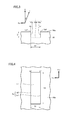
  • FIG. 7 is a schematic cross sectional view schematically showing a structure of a region VII-VII of FIG. 6 .
  • FIG. 8 is a schematic cross sectional view schematically showing a third step of the method for manufacturing the silicon carbide semiconductor device according to the embodiment of the present invention.
  • FIG. 9 is a schematic cross sectional view schematically showing a structure of a second recess.
  • FIG. 10 is a schematic plan view schematically showing the structure of the second recess.
  • FIG. 11 is a schematic cross sectional view schematically showing a fourth step of the method for manufacturing the silicon carbide semiconductor device according to the embodiment of the present invention.
  • FIG. 12 is a schematic cross sectional view schematically showing a fifth step of the method for manufacturing the silicon carbide semiconductor device according to the embodiment of the present invention.
  • FIG. 13 is a schematic cross sectional view schematically showing a sixth step of the method for manufacturing the silicon carbide semiconductor device according to the embodiment of the present invention.
  • FIG. 14 is a schematic cross sectional view schematically showing a seventh step of the method for manufacturing the silicon carbide semiconductor device according to the embodiment of the present invention.
  • FIG. 15 is a schematic cross sectional view schematically showing an eighth step of the method for manufacturing the silicon carbide semiconductor device according to the embodiment of the present invention.
  • FIG. 16 is a schematic cross sectional view schematically showing a ninth step of the method for manufacturing the silicon carbide semiconductor device according to the embodiment of the present invention.
  • FIG. 17 is a schematic cross sectional view schematically showing a tenth step of the method for manufacturing the silicon carbide semiconductor device according to the embodiment of the present invention.
  • FIG. 18 is a schematic cross sectional view schematically showing an eleventh step of the method for manufacturing the silicon carbide semiconductor device according to the embodiment of the present invention.
  • FIG. 19 is a schematic cross sectional view schematically showing a twelfth step of the method for manufacturing the silicon carbide semiconductor device according to the embodiment of the present invention.
  • FIG. 20 is a schematic cross sectional view schematically showing the structure of the silicon carbide semiconductor device according to the embodiment of the present invention.
  • FIG. 21 is a flowchart schematically showing the method for manufacturing the silicon carbide semiconductor device according to the embodiment of the present invention.
  • FIG. 22 is a schematic perspective view schematically showing the structure of the silicon carbide layer.
  • FIG. 23 is a schematic plan view schematically showing the structure of the silicon carbide layer.
  • FIG. 24 is a schematic cross sectional view schematically showing a structure of a first projection according to a comparative example.
  • FIG. 25 is a schematic cross sectional view schematically showing a structure of a second projection according to a comparative example.
  • LSA Laser Step Alignment
  • FIA Field Image Alignment
  • the LSA method is an optical alignment method in which an alignment mark is irradiated with laser and reflected light of the laser is analyzed for the purpose of alignment.
  • the FIA method is an image recognition method in which an edge of an image recognized by a camera is recognized for the purpose of alignment.
  • the silicon carbide epitaxial layer When forming a silicon carbide epitaxial layer on an angled-off main surface of a silicon carbide substrate, the silicon carbide epitaxial layer is grown asymmetrically with respect to the normal line of the main surface.
  • a difference in coverage between the epitaxial layers presumably causes a difference in alignment precision between the recess type and the projection type.
  • a difference in alignment precision also presumably lies between the LSA method and the FIA method.
  • the inventor prepared a silicon carbide substrate having a main surface provided with a recess type groove and a silicon carbide substrate having a main surface provided with a projection type protrusion, then formed silicon carbide epitaxial layers thereon, and then examined alignment precision using the recess and projection formed in the silicon carbide epitaxial layers.
  • alignment precision each of the LSA method and the FIA method was employed. As a result of the examination, it was found that with the LSA method, a position recognized for alignment is deviated from the actual position in each of the cases of the recess type and the projection type.
  • the alignment precision is affected by not only the depth of the recess but also the thickness of the epitaxial layer formed on the recess. As a result of detailed examination, it was found that high alignment precision is attained when a ratio obtained by dividing the depth of the recess by the thickness of the epitaxial layer formed on the recess is not less than 0.2.
  • a method for manufacturing a silicon carbide semiconductor device includes the following steps. There is prepared a first silicon carbide layer 10 having a first main surface 10 a and a second main surface 10 b opposite to first main surface 10 a . A first recess 1 is formed in first main surface 10 a of first silicon carbide layer 10 , first recess 1 including a side portion 10 c continuously connected to first main surface 10 a and a bottom portion 10 d continuously connected to side portion 10 c .
  • a second silicon carbide layer 20 is formed in contact with first main surface 10 a , side portion 10 c , and bottom portion 10 d , second silicon carbide layer 20 having a third main surface 20 b in contact with first main surface 10 a and a fourth main surface 20 a opposite to third main surface 20 b .
  • An image of a second recess 2 formed in fourth main surface 20 a at a position facing first recess 1 is obtained. Alignment is performed based on the image of second recess 2 .
  • the first main surface corresponds to a plane angled off relative to a ⁇ 0001 ⁇ plane such that a normal line vector z of first main surface 10 a has at least one of components of ⁇ 11-20> and ⁇ 1-100>.
  • a ratio obtained by dividing a depth D of first recess 1 by a thickness T of second silicon carbide layer 20 is more than 0.2.
  • the ratio obtained by dividing depth D of first recess 1 by thickness T of second silicon carbide layer 20 is more than 0.2. Accordingly, there can be provided a method for manufacturing a silicon carbide semiconductor device to allow for improved alignment precision.
  • a size X 1 of an opening 1 a of first recess 1 in an in-plane off direction is less than a size Y 1 of opening 1 a of first recess 1 in a direction perpendicular to the in-plane off direction. Accordingly, there can be provided a method for manufacturing a silicon carbide semiconductor device to allow for effectively improved alignment precision.
  • the off direction refers to a direction in which normal line vector z of first main surface 10 a is inclined relative to a [0001] direction (i.e., c axis).
  • the in-plane off direction refers to a direction obtained by projecting the off direction on first main surface 10 a . Specific examples of the off direction and the in-plane off direction will be described later.
  • size X 1 of opening 1 a of first recess 1 in the in-plane off direction is not less than 2 ⁇ m and not more than 15 ⁇ m.
  • size X 1 of opening 1 a is not less than 2 ⁇ m, the first recess can be effectively suppressed from being filled.
  • size X 1 of opening 1 a is not more than 15 ⁇ m, opening end portion 1 a 1 of opening 1 a facing opposite to the in-plane off direction can be suppressed from being reduced in angle.
  • second recess 2 is an alignment mark used in an exposure process. Accordingly, in the exposure process, high alignment precision can be realized.
  • thickness T of second silicon carbide layer 20 is not less than 0.5 ⁇ m and not more than 5 ⁇ m.
  • thickness T of second silicon carbide layer 20 is not less than 0.5 ⁇ m, an effect of increase of on resistance can be suppressed from being strong.
  • thickness T of second silicon carbide layer 20 is not more than 5 ⁇ m, first recess 1 can be suppressed effectively from being filled.
  • a relaxation region 71 is formed in first silicon carbide layer 10 , an electric field relaxation effect of relaxation region 71 can be maintained to be high.
  • first recess 1 is formed on a dicing line 3 of first main surface 10 a .
  • first recess 1 is formed on the dicing line, alignment precision can be increased without decreasing an area in which a semiconductor element is formed.
  • the method for manufacturing the silicon carbide semiconductor device according to the embodiment further includes a step of forming a first impurity region 71 in first silicon carbide layer 10 after the step of forming first silicon carbide layer 10 . Accordingly, the silicon carbide semiconductor device having first impurity region. 71 can be obtained.
  • the method for manufacturing the silicon carbide semiconductor device according to the embodiment further includes a step of forming at least one of a second impurity region 84 and an electrode 94 after the step of performing the alignment based on the image of the second recess. Accordingly, alignment precision can be improved for at least one of the second impurity region and electrode 94 .
  • the following describes a method for manufacturing a MOSFET 100 serving as a silicon carbide semiconductor device according to the present embodiment.
  • a first silicon carbide layer forming step (S 10 FIG. 21 ) is performed.
  • a silicon carbide single crystal substrate 80 is prepared by slicing an ingot made of, for example, hexagonal silicon carbide having polytype 4 H.
  • a first epitaxial layer 81 a made of silicon carbide is formed.
  • This epitaxial growth can be performed by a CVD (Chemical Vapor Deposition) method employing a mixed gas of silane (SiH 4 ) and propane (C 3 H 8 ) as a source material gas and employing hydrogen gas (H 2 ) as a carrier gas, for example.
  • CVD Chemical Vapor Deposition
  • silicon carbide epitaxial substrate 10 serving as a first silicon carbide layer is prepared.
  • Silicon carbide epitaxial substrate 10 has n type (first conductivity type).
  • Silicon carbide epitaxial substrate 10 has a first main surface 10 a and a second main surface 10 b opposite to first main surface 10 a .
  • Silicon carbide epitaxial substrate 10 includes: silicon carbide single crystal substrate 80 ; and a first epitaxial layer 81 a constituted of a silicon carbide epitaxial layer formed on silicon carbide single crystal substrate 80 , for example.
  • Silicon carbide epitaxial substrate 10 may be provided with an orientation flat portion 4 .
  • a direction a 11 in which orientation flat portion 4 extends is a ⁇ 11-20> direction
  • a direction a 21 perpendicular to direction a 11 is a ⁇ 1-100> direction.
  • direction a 11 in which orientation flat portion 4 extends is a ⁇ 1-100> direction
  • a direction a 21 perpendicular to direction a 11 may be a ⁇ 11-20> direction, for example.
  • first main surface 10 a corresponds to a plane angled off in of direction a 1 by an off angle ⁇ relative to a ⁇ 0001 ⁇ plane (plane indicated by a broken line), for example.
  • Off angle ⁇ is preferably an angle of not more than 8°, such as 4° or 8°.
  • the first main surface corresponds to a plane angled off relative to the ⁇ 0001 ⁇ plane such that a normal line vector z of first main surface 10 a has at least one of components of ⁇ 11-20> and ⁇ 1-100>.
  • first main surface 10 a corresponds to a plane angled off relative to the ⁇ 1000 ⁇ plane such that normal line vector z of first main surface 10 a has a component of ⁇ 1-20>.
  • a direction c is a [0001] direction (i.e., the c axis of the hexagonal silicon carbide), and direction a 1 is the ⁇ 11-20> direction, for example.
  • the off direction is a direction in which normal line vector z of first main surface 10 a is inclined relative to the [0001] direction.
  • the off direction is the a 1 direction (i.e., the ⁇ 11-20> direction).
  • FIG. 1 i.e., the ⁇ 11-20> direction.
  • first main surface 10 a corresponds to a plane obtained by inclining the (0001) plane off relative to the a 1 direction.
  • the in-plane off direction represents a direction obtained by projecting the off direction on first main surface 10 a .
  • the in-plane off direction is the a 11 direction.
  • a first recess forming step (S 20 : FIG. 21 ) is performed.
  • a first recess 1 is formed to have an opening in first main surface 10 a of silicon carbide epitaxial substrate 10 , and includes: a side portion 10 c continuously connected to first main surface 10 a ; and a bottom portion 10 d continuously connected to side portion 10 c .
  • First recess 1 has a depth. D of, for example, about not less than 0.5 ⁇ m and not more than 2 ⁇ m, preferably, about not less than 0.7 ⁇ m and not more than 1.5 ⁇ m, and further preferably, about not less than 0.7 ⁇ m and not more than 1.0 ⁇ m.
  • size X 1 of opening 1 a of first recess 1 in in-plane off direction a 11 is, for example, about not less than 2 ⁇ m and not more than 15 ⁇ n, and preferably about not less than 4 ⁇ m and not more than 8 ⁇ m.
  • size X 1 is not less than 2 ⁇ m, the recess can be suppressed from being filled, whereas when size X 1 is not less than 4 ⁇ m, the recess is substantially not filled.
  • an opening end portion 1 a 1 of first recess 1 facing opposite to the a 11 direction can be suppressed from being reduced in angle
  • opening end portion 1 a 1 facing opposite to the a 11 direction can be substantially securely suppressed from being reduced in angle
  • size X 1 of opening 1 a of first recess 1 in in-plane off direction a 11 is smaller than size Y 1 of opening 1 a of first recess 1 in direction a 12 perpendicular to in-plane off direction a 11 .
  • Size X 1 is 6 ⁇ m and size Y 1 is 80 ⁇ m, for example. Size X 1 may be not more than 0.1 time as large as size Y 1 .
  • first main surface 10 a of silicon carbide epitaxial substrate 10 may be provided with a plurality of dicing lines 3 in the a 11 direction parallel to the direction in which orientation flat portion 4 extends and the a 12 direction perpendicular to the a 11 direction.
  • a dicing line 3 represents a cutting position for cutting silicon carbide epitaxial substrate 10 having semiconductor elements formed thereon.
  • dicing line 3 represents a position to be cut in a dicing step.
  • Dicing line 3 may be a groove.
  • first recess 1 is preferably formed on dicing line 3 of first main surface 10 a .
  • First recess 1 is preferably formed such that the longitudinal direction of opening 1 a of first recess 1 (more preferably, perpendicularly) crosses the direction in which dicing line 3 extends.
  • a plurality of first recesses 1 may be provided in the direction in which the dicing line extends.
  • a space e between two adjacent first recesses 1 may be larger or smaller than size X 1 of first recess 1 .
  • Space e of two adjacent first recesses 1 is about not less than 4 ⁇ m and not more than 8 ⁇ m, for example. More preferably, a plurality of first recesses 1 are formed on each of a dicing line 3 a extending in a direction parallel to the direction in which orientation flat portion 4 extends and a dicing line 3 b extending in a direction perpendicular to dicing line 3 b.
  • a relaxation region 71 (first impurity region) having p type (second conductivity type) is formed in contact with a portion of first main surface 10 a of first epitaxial layer 81 a .
  • acceptor ions impurity ions for providing the second conductivity type
  • relaxation region 71 may be formed after forming first recess 1 or may be formed before forming first recess 1 .
  • a second silicon carbide layer forming step (S 30 : FIG. 21 ) is performed.
  • a second silicon carbide layer 20 having n type conductivity and made of silicon carbide is formed in contact with first main surface 10 a of silicon carbide epitaxial substrate 10 .
  • Second silicon carbide layer 20 has a third main surface 20 b and a fourth main surface 20 a opposite to third main surface 20 b .
  • Second silicon carbide layer 20 is in contact with first main surface 10 a , side portion 10 c of first recess 1 , and bottom portion 10 d of first recess 1 .
  • Second silicon carbide layer 20 is in contact with first main surface 10 a .
  • Second silicon carbide layer 20 is formed to fill first recess 1 .
  • Second silicon carbide layer 20 has a thickness T of, for example, about not less than 0.5 ⁇ m and not more than 5 ⁇ m, and preferably, about not less than 1.5 ⁇ m and not more than 3 ⁇ m.
  • a ratio obtained by dividing depth D of first recess 1 by thickness T of second silicon carbide layer 20 is more than 0.2.
  • the ratio is preferably not less than 0.23, is more preferably not less than 0.27, and is further preferably not less than 0.33.
  • a second recess 2 having an opening in fourth main surface 20 a is formed in fourth main surface 20 a of second silicon carbide layer 20 at a position facing first recess 1 .
  • Second recess 2 includes: a first side portion 20 c and a second side portion 20 e each continuously connected to fourth main surface 20 a ; and a bottom portion 20 d connecting first side portion 20 c and second side portion 20 e to each other.
  • Second recess 2 can be used as an alignment mark.
  • First side portion 20 c of second recess 2 is formed to correspond to a plane perpendicular to the c axis, for example.
  • opening end portion 2 a 1 of second recess 2 facing opposite to in-plane off direction a 11 in the direction parallel to first main surface 10 a is formed at a position b 1 substantially corresponding to opening end portion 1 a 1 of first recess 1 .
  • opening end portion 2 a 2 of second recess 2 facing in-plane off direction a 11 in the direction parallel to first main surface 10 a is formed at a position b 3 substantially corresponding to opening end portion 1 a 2 of first recess 1 .
  • the width of opening 2 a of second recess 2 in in-plane off direction a 11 is substantially the same as the width of opening 1 a of first recess 1 in the in-plane off direction.
  • the width of bottom portion 20 d of second recess 2 in in-plane off direction a 11 is less than the width of bottom portion 10 d of first recess 1 in in-plane off direction a 11 (i.e., distance between position b 1 and position b 3 ).
  • size X 2 of opening 2 a of second recess 2 in in-plane off direction a 11 is less than size Y 2 of opening 2 a of second recess 2 in direction a 12 perpendicular to in-plane off direction a 11 .
  • size Y 1 of opening 1 a of first recess 1 in direction a 12 perpendicular to in-plane off direction a 11 is substantially the same as size Y 2 of opening 2 a of second recess 2 in direction a 12 perpendicular to in-plane off direction a 11 .
  • position b 1 of opening end portion 2 a 1 of second recess 2 facing opposite to in-plane off direction a 11 substantially corresponds to position b 1 of opening end portion 1 a 1 of first recess 1 facing opposite to in-plane off direction a 11 , whereby alignment precision can be high by performing alignment using opening end portion 2 a 1 of second recess 2 .
  • size Y 1 of opening 1 a of first recess 1 in direction a 12 perpendicular to the in-plane off direction is increased to be more than size X 1 of opening 1 a of first recess 1 in in-plane off direction a 11
  • size Y 2 of opening 2 a of second recess 2 in direction a 12 perpendicular to the in-plane off direction can be increased, thereby effectively improving alignment precision.
  • Second silicon carbide layer 20 may be formed by the same method as the method of forming first epitaxial layer 81 a.
  • a p base layer 82 and an n region 83 are formed in second silicon carbide layer 20 .
  • a p contact region 84 is formed on p base layer 82 . They can be formed by means of, for example, ion implantations into the second silicon carbide layer ( FIG. 11 ). In the ion implantations for forming p base layer 82 and p contact region 84 , ions of an impurity for providing p type such as aluminum (Al) are implanted.
  • ions of an impurity for providing n type conductivity such as phosphorus (P) are implanted, for example.
  • impurity for providing n type conductivity such as phosphorus (P)
  • epitaxial growth involving addition of impurities may be employed.
  • a second recess image obtaining step (S 40 : FIG. 21 ) and an alignment step (S 50 : FIG. 21 ) may be performed.
  • an image of second recess 2 formed in fourth main surface 20 a of second silicon carbide layer 20 at the position facing first recess 1 is obtained.
  • the image of second recess 2 may be obtained by, for example, a camera and an edge of second recess 2 may be recognized.
  • the edge of second recess 2 is, for example, opening end portion 2 a 1 of opening 2 a of second recess 2 facing opposite to the in-plane off direction (see FIG. 10 ).
  • alignment is performed based on the image of second recess 2 .
  • Second recess 2 is an alignment mark used in an exposure process, for example. Specifically, the position of silicon carbide epitaxial substrate 10 having second silicon carbide layer 20 formed thereon is adjusted such that a mask layer formed of, for example, a resist is formed on fourth main surface 20 a and the mask layer above a region in which p contact region 84 is to be formed is exposed. Next, the mask layer is subjected to exposure and development, thereby removing a portion of the mask layer above the region in which p contact region 84 is to be formed. Next, ions are implanted into second silicon carbide layer 20 using the remaining mask layer, thereby forming p contact region 84 .
  • a mask layer formed of, for example, a resist is formed on fourth main surface 20 a and the mask layer above a region in which p contact region 84 is to be formed is exposed.
  • the mask layer is subjected to exposure and development, thereby removing a portion of the mask layer above the region in which p contact region 84 is to be formed.
  • p contact region 84 (second impurity region) is formed after alignment is performed based on the image of second recess 2 .
  • the relative position of p contact region 84 to relaxation region 71 in the in-plane direction of fourth main surface 20 a may be adjusted.
  • heat treatment is performed to activate the impurities.
  • This heat treatment is preferably performed at a temperature of not less than 1500° C. and not more than 1900° C., such as a temperature of approximately 1700° C.
  • the heat treatment is performed for approximately 30 minutes, for example.
  • the atmosphere of the heat treatment is preferably an inert gas atmosphere, such as Ar atmosphere.
  • a mask layer 40 having an opening is formed on fourth main surface 20 a constituted of n region 83 and p contact region 84 .
  • a silicon oxide film or the like can be used, for example.
  • the opening is formed corresponding to the position of a trench TR (see FIG. 20 ).
  • mask layer 40 may be aligned and formed such that a position corresponding to the opening is exposed.
  • etching As shown in FIG. 15 , in the opening of mask layer 40 , n region 83 , p base layer 82 , and a portion of second epitaxial layer 81 b are removed by etching.
  • An exemplary, usable etching method is reactive ion etching (RIE), in particular, inductively coupled plasma (ICP) RIE.
  • RIE reactive ion etching
  • ICP inductively coupled plasma
  • TCP-RIE can be used which employs SF 6 or a mixed gas of SF 6 and O 2 as a reactive gas.
  • a recess TQ is formed to have a side wall substantially perpendicular to upper surface P 2 (i.e., fourth main surface 20 a ).
  • thermal etching is performed in recess TQ.
  • the thermal etching can be performed by heating in an atmosphere including a reactive gas having at least one or more types of halogen atom.
  • the at least one or more types of halogen atom include at least one of chlorine (Cl) atom and fluorine (F) atom.
  • This atmosphere is Cl 2 , BCL 3 , SF 6 , or CF 4 , for example.
  • the thermal etching is performed using a mixed gas of chlorine gas and oxygen gas as a reactive gas, at a heat treatment temperature of, for example, not less than 700° C. and not more than 1000° C.
  • the reactive gas may contain a carrier gas in addition to the chlorine gas and the oxygen gas.
  • An exemplary, usable carrier gas is nitrogen (N 2 ) gas, argon gas, helium gas, or the like.
  • trench TR is formed in upper surface P 2 of silicon carbide layer 101 .
  • Trench TR includes: a side wall surface SW extending to second epitaxial layer 81 b through n region 83 and p base layer 82 ; and a bottom surface BT located on second epitaxial layer 81 b .
  • Each of side wall surface SW and bottom surface BT is separated from relaxation region 71 .
  • mask layer 40 is removed by means of an appropriate method such as etching ( FIG. 22 ).
  • gate oxide film 91 is formed to cover each of side wall surface SW and bottom surface BT of trench TR.
  • Gate oxide film 91 can be formed by means of, for example, thermal oxidation. Thereafter, NO annealing may be performed using nitrogen monoxide (NO) gas as an atmospheric gas.
  • NO nitrogen monoxide
  • a temperature profile has such a condition that the temperature is not less than 1100° C. and not more than 1300° C. and holding time is approximately 1 hour, for example. Accordingly, nitrogen atoms are introduced in an interface region between gate oxide film 91 and p base layer 82 . As a result, formation of interface states in the interface region is suppressed, thereby achieving improved channel mobility.
  • a gas other than the NO gas can be employed as the atmospheric gas as long as the nitrogen atoms can be thus introduced.
  • Ar annealing may be further performed using argon (Ar) as an atmospheric gas.
  • the Ar annealing is preferably performed at a heating temperature higher than the heating temperature in the above-described NO annealing and lower than the melting point of gate oxide film 91 . This heating temperature is held for approximately 1 hour, for example. Accordingly formation of interface states in the interface region between gate oxide film 91 and p base layer 82 is further suppressed.
  • an inert gas such as nitrogen gas can be employed as the atmospheric gas.
  • gate electrode 92 is formed on gate oxide film 91 .
  • gate electrode 92 is formed on gate oxide film 91 so as to fill the region within trench TR with gate oxide film 91 interposed therebetween.
  • a method for forming gate electrode 92 can be performed by, for example, forming a film of conductor or doped polysilicon and performing CMP (Chemical Mechanical Polishing).
  • an interlayer insulating film 93 is formed on gate electrode 92 and gate oxide film 91 so as to cover the exposed surface of gate electrode 92 .
  • Etching is performed to form an opening in interlayer insulating film 93 and gate oxide film 91 .
  • each of n region 83 and p contact region 84 is exposed on upper surface P 2 .
  • the opening may be formed after performing alignment based on the image of second recess 2 formed in second silicon carbide layer 20 and then performing the exposure and development processes.
  • a source electrode 94 is formed in contact with each of n region 83 and n contact region 84 .
  • a drain electrode 98 is formed on lower surface P 1 constituted of first epitaxial layer 81 a with silicon carbide single crystal substrate 80 being interposed therebetween.
  • a source interconnection layer 95 is formed.
  • MOSFET 100 which serves as a silicon carbide semiconductor device and which includes silicon carbide layer 101 , gate oxide film 91 , gate electrode 92 , interlayer insulating film 93 , source electrode 94 , source interconnection layer 95 , and drain electrode 98 .
  • Silicon carbide layer 101 has a hexagonal crystal structure of polytype 4 H.
  • Silicon carbide layer 101 includes first silicon carbide layer 10 and second silicon carbide layer 20 .
  • First silicon carbide layer 10 includes silicon carbide single crystal substrate 80 , first epitaxial layer 81 a , and relaxation region 71 .
  • Second silicon carbide layer 20 includes second epitaxial layer 81 b , p base layer 82 , n region 83 , and p contact region 84 S.
  • Each of first epitaxial layer 81 a and second epitaxial layer 81 b has n type conductivity.
  • Each of first epitaxial layer 81 a and second epitaxial layer 81 b preferably has an impurity concentration lower than the impurity concentration of silicon carbide single crystal substrate 80 .
  • Each of first epitaxial layer 81 a and second epitaxial layer 81 b preferably has a donor concentration of not less than 1 ⁇ 10 15 cm ⁇ 3 and not more than 5 ⁇ 10 16 cm ⁇ 3 , such as 8 ⁇ 10 15 cm ⁇ 3 .
  • P base layer 82 has p type.
  • P base layer 82 is provided on second epitaxial layer 81 b .
  • P base layer 82 has an acceptor concentration of, for example, 1 ⁇ 10 18 cm ⁇ 3 .
  • N region 83 has n type conductivity.
  • N region 83 is provided on p base layer 82 so as to be separated from second epitaxial layer 81 b by p base layer 82 .
  • N region 83 and p contact region 84 constitute upper surface P 2 of silicon carbide layer 101 .
  • P contact region 84 has p type conductivity.
  • P contact region 84 is connected to p base layer 82 .
  • Trench TR is provided in upper surface P 2 of silicon carbide layer 101 .
  • Trench TR has a side wall surface SW and a bottom surface BT.
  • Side wall surface SW extends to second epitaxial layer 81 b through n region 83 and p base layer 82 .
  • Side wall surface SW includes a channel surface of MOSFET 100 on p base layer 82 .
  • Side wall surface SW is inclined relative to upper surface P 2 of silicon carbide layer 101 , whereby trench TR is expanded toward the opening in a tapered manner.
  • Side wall surface SW preferably has a plane orientation, inclined by not less than 50° and not more than 65° relative to the ⁇ 0001 ⁇ plane, and more preferably has a plane orientation inclined by not less than 50° and not more than 65° relative to the (000-1) plane.
  • Bottom surface BT is located on second epitaxial layer 81 b .
  • bottom surface BT has a flat shape substantially parallel to upper surface P 2 .
  • a portion at which bottom surface BT and side wall surface SW are connected to each other constitutes a corner portion, of trench TR.
  • trench TR extends to constitute a mesh having a honeycomb structure when viewed in a plan view (see FIG. 23 ).
  • silicon carbide layer 101 has upper surface P 2 having a hexagonal shape and surrounded by trench TR.
  • Relaxation region 71 has p type conductivity. Relaxation region 71 is provided in first silicon carbide layer 10 . Relaxation region 71 is separated from p base layer 82 by second epitaxial layer 81 b . Moreover, relaxation region 71 is separated from each of side wall surface SW and bottom surface BT of trench TR. Preferably, relaxation region 71 is separated from p base layer 82 by not less than 1 ⁇ m and not more than 5 ⁇ m. A value obtained by integrating impurity concentrations based on a unit volume of relaxation region 71 in the thickness direction (vertical direction in FIG. 20 ) corresponds to a dose amount in the ion implantation for forming relaxation region 71 .
  • This dose amount is preferably not less than 1 ⁇ 10 12 cm ⁇ 2 and not more than 1 ⁇ 10 15 cm ⁇ 2 , such as 1 ⁇ 10 13 cm ⁇ 2 .
  • the impurity included in relaxation region 71 is aluminum, for example.
  • Relaxation region 71 is at least partially provided in a position deeper than the position of bottom surface BT of trench TR. Preferably, as shown in FIG. 20 , relaxation region 71 is provided only in a position deeper than the position of bottom surface BT of trench TR.
  • relaxation region 71 When viewed in a plan view, relaxation region 71 is disposed at least partially outside bottom surface BT of trench TR. Preferably, as shown in FIG. 23 , when viewed in a plan view, relaxation region 71 is disposed only outside bottom surface BT of trench TR. Preferably, when viewed in a plan view ( FIG. 23 ), a distance between relaxation region. 71 and bottom surface BT of trench TR is not less than 0.5 ⁇ m and not more than 5 ⁇ m.
  • Gate oxide film 91 covers each of side wall surface SW and bottom surface BT of trench TR.
  • Gate electrode 92 is provided on gate oxide film 91 .
  • Source electrode 94 is in contact with each of n regions 83 and p contact region 84 .
  • Source interconnection layer 95 is in contact with source electrode 94 .
  • Source interconnection layer 95 is, for example, an aluminum layer.
  • Interlayer insulating film 93 insulates between gate electrode 92 and source interconnection layer 95 .
  • silicon carbide semiconductor device 100 is a MOSFET but silicon carbide semiconductor device 100 is not limited to a MOSFET.
  • Silicon carbide semiconductor device 100 may be a Schottky barrier diode or an IGBT (Insulated Gate Bipolar Transistor), for example.
  • the first conductivity type is n type and the second conductivity type is p type, but the first conductivity type may be p type and the second conductivity type may be n type.
  • the step of performing alignment is used when forming the p contact region, but the step of performing alignment is not limited to the case where it is performed upon the formation of the p contact region.
  • the step of performing alignment may be used in a step, such as a silicon carbide dry etching step, a gate electrode forming step, or an interlayer insulating film contact hole forming step.
  • second recess 2 is an alignment mark in the exposure process, but second recess 2 is not limited to the alignment mark in the exposure process as long as second recess 2 serves as an alignment mark.
  • Second recess 2 may be an alignment mark used for a defect inspection step, a laser annealing step, or the like, for example.
  • the ratio obtained by dividing depth D of first recess 1 by thickness T of second silicon carbide layer 20 is more than 0.2. Accordingly, there can be provided a method for manufacturing MOSFET 100 to allow for improved alignment precision.
  • a size X 1 of an opening 1 a of first recess 1 in an in-plane off direction is less than a size Y 1 of opening 1 a of first recess 1 in a direction perpendicular to the in-plane off direction. Accordingly, there can be provided a method for manufacturing MOSFET 100 to allow for effectively improved alignment precision.
  • size X 1 of opening 1 a of first recess 1 in in-plane off direction a 11 is not less than 2 ⁇ m and not more than 15 ⁇ m.
  • size X 1 of opening 1 a is not less than 2 ⁇ m, first recess 1 can be effectively suppressed from being filled.
  • size X 1 of opening 1 a is not more than 15 ⁇ m, opening end portion 1 a 1 of opening 1 a facing opposite to in-plane off direction a 11 can be suppressed from being reduced in angle.
  • second recess 2 is an alignment mark used in an exposure process. Accordingly, in the exposure process, high alignment precision can be realized.
  • thickness T of second silicon carbide layer 20 is not less than 0.5 ⁇ m and not more than 5 ⁇ m.
  • thickness T of second silicon carbide layer 20 is not less than 0.5 ⁇ m, an effect of increase of on resistance can be suppressed from being strong.
  • thickness T of second silicon carbide layer 20 is not more than 5 ⁇ m, first recess 1 can be suppressed effectively from being filled. The electric field relaxation effect of relaxation region 71 can be maintained to be high.
  • first recess 1 is formed on a dicing line 3 of first main surface 10 a
  • first recess 1 is formed on the dicing line, alignment precision can be improved without decreasing an area in which a semiconductor element is formed.
  • the method for manufacturing MOSFET 100 according to the present embodiment further includes a step of forming a first impurity region 71 in first silicon carbide layer 10 after the step of forming first silicon carbide layer 10 . Accordingly, MOSFET 100 having relaxation region 71 can be obtained.
  • the method for manufacturing MOSFET 100 further includes a step of forming a p contact region 84 and a source electrode 94 after the step of performing the alignment based on the image of second recess 2 . Accordingly, alignment precision in p contact region 84 and source electrode 94 can be improved.
  • silicon carbide epitaxial substrates 10 were prepared each of which was provided with first recess 1 in first main surface 10 a as shown in FIG. 3 . Depth D of first recess 1 was set at 0.5 ⁇ m and 1.0 ⁇ m.
  • silicon carbide epitaxial substrates 10 projection type substrates
  • silicon carbide epitaxial layer 20 having a thickness of 3 mm was formed on first main surface 10 a of each of silicon carbide epitaxial substrates 10 .
  • second recess 2 was formed at a position facing first recess 1 as shown in FIG. 9 .
  • a second projection 20 f was formed at a position facing first projection 10 f as shown n in FIG. 25 .
  • the substrates described above were introduced into an i-line stepper and were aligned using the LSA method and the FIA method, and alignment precision was inspected.
  • Table 1 shows results for alignment precision when the LSA method was used
  • Table 2 shows results for alignment precision when the FIA method was used.
  • the recess type is more preferable than the projection type as an alignment mark of a silicon carbide substrate.
  • the FIA method is more preferable than the LSA method as an alignment method.
  • first recess 1 and thickness T of silicon carbide epitaxial layer 20 formed on first recess 1 were prepared, and then silicon carbide epitaxial layer 20 having a thickness of 3 ⁇ m was formed on each of the silicon carbide substrates.
  • silicon carbide substrates including first recesses 1 having depths D of 0.5 ⁇ m and 1.0 ⁇ m were prepared, and then silicon carbide epitaxial layer 20 having a thickness of 1.5 ⁇ m was formed on each of the silicon carbide substrates.
  • alignment precision read result
  • Table 3 shows results for alignment precision when the thickness of silicon carbide epitaxial layer 20 was 3 ⁇ m
  • Table 4 shows results for alignment precision when the thickness of silicon carbide epitaxial layer 20 was 1.5 ⁇ m.
  • a sign “A” indicates that the alignment marks were read satisfactorily and there were little variations of alignment positions.
  • a sign “B” indicates that the alignment marks could be read but there were variations of alignment positions to some extent.
  • a sign “C” indicates that the alignment marks could not be read.
  • first recess first recess
  • first a 1 , 1 a 2 , 2 a 1 , 2 a 2 opening end portion; 1 a , 2 a opening; 2 : second recess; 3 , 3 a , 3 b : dicing line; 4 : orientation flat portion; 10 : first silicon carbide layer (silicon carbide epitaxial substrate); 10 a : first main surface; 10 b : second main surface; 10 c : side portion; 10 d , 20 d : bottom portion; 10 f : first projection; 20 : second silicon carbide layer (silicon carbide epitaxial layer); 20 a : fourth main surface; 20 b : third main surface; 20 c : first side portion; 20 e : second side portion; 20 f : second projection; 40 : mask layer; 71 : relaxation region (first impurity region); 80 : silicon carbide single crystal substrate; 81 a : first epitaxial layer; 81 b : second

Landscapes

  • Physics & Mathematics (AREA)
  • General Physics & Mathematics (AREA)
  • Engineering & Computer Science (AREA)
  • Manufacturing & Machinery (AREA)
  • Computer Hardware Design (AREA)
  • Microelectronics & Electronic Packaging (AREA)
  • Power Engineering (AREA)
  • Condensed Matter Physics & Semiconductors (AREA)
  • Electrodes Of Semiconductors (AREA)
  • Recrystallisation Techniques (AREA)
  • Exposure And Positioning Against Photoresist Photosensitive Materials (AREA)
  • Exposure Of Semiconductors, Excluding Electron Or Ion Beam Exposure (AREA)

Abstract

A method for manufacturing a silicon carbide semiconductor device includes the following steps. There is prepared a first silicon carbide layer having a first main surface and a second main surface. A first recess including a side portion and a bottom portion is formed in the first main surface of the first silicon carbide layer. A second silicon carbide layer is formed in contact with the first main surface, the side portion, and the bottom portion. An image of a second recess formed at a position facing the first recess of the fourth main surface is obtained. Alignment is performed based on the image of the second recess. The first main surface corresponds to a plane angled off relative to a {0001} plane. A ratio obtained by dividing a depth of the first recess by a thickness of the second silicon carbide layer is more than 0.2.

Description

TECHNICAL FIELD
The present invention relates to a method for manufacturing a silicon carbide semiconductor device, more particularly, a method for manufacturing a silicon carbide semiconductor device including a step of performing alignment.
BACKGROUND ART
In recent years, in order to achieve high breakdown voltage, low loss, and utilization of semiconductor devices under a high temperature environment, silicon carbide has begun to be adopted as a material for a semiconductor device. Silicon carbide is a wide band gap semiconductor having a band gap larger than that of silicon, which has been conventionally widely used as a material for semiconductor devices. Hence, by adopting silicon carbide as a material for a semiconductor device, the semiconductor device can have a high breakdown voltage, reduced on resistance, and the like. Further, the semiconductor device thus adopting silicon carbide as its material has characteristics less deteriorated even under a high temperature environment than those of a semiconductor device adopting silicon as its material, advantageously.
For example, Japanese Patent Laying-Open No. 2011-100928 (Patent Document 1) describes a method of forming an alignment mark in a silicon carbide substrate having an off direction of <11-20>. According to the method described in Japanese Patent Laying-Open No. 2011-100928, a trench is used as the alignment mark. The trench has an opening having a shape symmetrical relative to the off direction, and has a polygonal shape having an apex at a portion located in the most downstream side of the oft direction. Accordingly, the silicon carbide substrate and the mask can be aligned with each other with high precision.
Moreover, Japanese Patent Laying-Open No. 2013-65650 (Patent Document 2) describes a method for manufacturing a silicon carbide semiconductor device, including a step of aligning an optical mask with an original position by correcting an influence resulting from deformation of an alignment mark if the shape of the alignment mark is deformed. Accordingly, even when an off substrate is used, a photolithographic optical mask can be aligned precisely.
Furthermore, Japanese Patent Laying-Open No. 2009-170558 (Patent Document 3) describes that a first trench for forming a device and a second trench used as an alignment mark are formed such that the first trench has a solid angle larger than the solid angle of the second trench. Accordingly, the growth rate of the bottom portion of the first trench can be larger than the growth rate of the bottom portion of the second trench, whereby when the main surface of the substrate is planarized, a recess is formed in the portion having had the second trench formed therein and the recess can be used as an alignment mark.
CITATION LIST Patent Document
    • PTD 1: Japanese Patent Laying-Open No. 2011-1.00928
    • PTD 2: Japanese Patent Laying-Open No. 2013-65650
    • PTD 3: Japanese Patent Laying-Open No. 2009-170558
SUMMARY OF INVENTION Technical Problem
However, even when a silicon carbide semiconductor device is manufactured using each of the methods described in Japanese Patent Laying-Open No. 2011-100928 and Japanese Patent Laying-Open No 2013-65650, sufficiently high alignment precision may not be attained.
Moreover, when the manufacturing method described in Japanese Patent Laying-Open No. 2009-170558 is used for a silicon carbide substrate having a main surface angled off relative to a {000} plane, the recess used as an alignment mark is formed asymmetrically, with the result that high alignment precision cannot be attained.
The present invention has been made in view of the above-mentioned problem, and has an object to provide a method for manufacturing a silicon carbide semiconductor device to allow for improved alignment precision.
Solution to Problem
A method for manufacturing a silicon carbide semiconductor device according to the present invention has the following steps. There is prepared a first silicon carbide layer having a first main surface and a second main surface opposite to the first main surface. A first recess is formed in the first main surface of the first silicon carbide layer, the first recess including a side portion continuously connected to the first main surface and a bottom portion continuously connected to the side portion. A second silicon carbide layer is formed in contact with the first main surface, the side portion, and the bottom portion, the second silicon carbide layer having a third main surface in contact with the first main surface and a fourth main surface opposite to the third main surface. An image of a second recess formed in the fourth main surface at a position facing the first recess is obtained. Alignment is performed based on the image of the second recess. The first main surface corresponds to a plane angled off relative to a {000} plane such that a normal line vector of the first main surface has at least one of components of <1-20> and <1-100>. A ratio obtained by dividing a depth of the first recess by a thickness of the second silicon carbide layer is more than 0.2.
Advantageous Effects of Invention
According to the present invention, there can be provided a method for manufacturing a silicon carbide semiconductor device to allow for improved alignment precision.
BRIEF DESCRIPTION OF DRAWINGS
FIG. 1 is a schematic plan view schematically showing a first step of a method for manufacturing a silicon carbide semiconductor device according to one embodiment of the present invention.
FIG. 2 is a schematic cross sectional view schematically showing the first step of the method for manufacturing the silicon carbide semiconductor device according to the embodiment of the present invention.
FIG. 3 is a schematic cross sectional view schematically showing a structure of a first recess.
FIG. 4 is a schematic plan view schematically showing the structure of the first recess.
FIG. 5 is a schematic cross sectional view schematically showing a second step of the method for manufacturing the silicon carbide semiconductor device according to the embodiment of the present invention.
FIG. 6 is a schematic plan view schematically showing the structure of the first recess formed on a dicing line.
FIG. 7 is a schematic cross sectional view schematically showing a structure of a region VII-VII of FIG. 6.
FIG. 8 is a schematic cross sectional view schematically showing a third step of the method for manufacturing the silicon carbide semiconductor device according to the embodiment of the present invention.
FIG. 9 is a schematic cross sectional view schematically showing a structure of a second recess.
FIG. 10 is a schematic plan view schematically showing the structure of the second recess.
FIG. 11 is a schematic cross sectional view schematically showing a fourth step of the method for manufacturing the silicon carbide semiconductor device according to the embodiment of the present invention.
FIG. 12 is a schematic cross sectional view schematically showing a fifth step of the method for manufacturing the silicon carbide semiconductor device according to the embodiment of the present invention.
FIG. 13 is a schematic cross sectional view schematically showing a sixth step of the method for manufacturing the silicon carbide semiconductor device according to the embodiment of the present invention.
FIG. 14 is a schematic cross sectional view schematically showing a seventh step of the method for manufacturing the silicon carbide semiconductor device according to the embodiment of the present invention.
FIG. 15 is a schematic cross sectional view schematically showing an eighth step of the method for manufacturing the silicon carbide semiconductor device according to the embodiment of the present invention.
FIG. 16 is a schematic cross sectional view schematically showing a ninth step of the method for manufacturing the silicon carbide semiconductor device according to the embodiment of the present invention.
FIG. 17 is a schematic cross sectional view schematically showing a tenth step of the method for manufacturing the silicon carbide semiconductor device according to the embodiment of the present invention.
FIG. 18 is a schematic cross sectional view schematically showing an eleventh step of the method for manufacturing the silicon carbide semiconductor device according to the embodiment of the present invention.
FIG. 19 is a schematic cross sectional view schematically showing a twelfth step of the method for manufacturing the silicon carbide semiconductor device according to the embodiment of the present invention.
FIG. 20 is a schematic cross sectional view schematically showing the structure of the silicon carbide semiconductor device according to the embodiment of the present invention.
FIG. 21 is a flowchart schematically showing the method for manufacturing the silicon carbide semiconductor device according to the embodiment of the present invention.
FIG. 22 is a schematic perspective view schematically showing the structure of the silicon carbide layer.
FIG. 23 is a schematic plan view schematically showing the structure of the silicon carbide layer.
FIG. 24 is a schematic cross sectional view schematically showing a structure of a first projection according to a comparative example.
FIG. 25 is a schematic cross sectional view schematically showing a structure of a second projection according to a comparative example.
DESCRIPTION OF EMBODIMENTS
The following describes an embodiment of the present invention based on figures. It should be noted that in the below-mentioned figures, the same or corresponding portions are given the same reference characters and are not described repeatedly. Regarding crystallographic indications in the present specification, an individual orientation is represented by [ ], a group orientation is represented by < >, and an individual plane is represented by ( ), and a group plane is represented by { }. In addition, a negative crystallographic index is normally expressed by putting “-” (bar) above a numeral, but is expressed by putting the negative sign before the numeral in the present specification.
First, the following describes an overview of embodiments of the present invention.
As a result of diligent study on a method of forming an alignment mark in a method for manufacturing a silicon carbide semiconductor device, the inventor has obtained the following knowledge and arrived at the present invention. As types of general alignment marks, there are the following two types: a recess type and a projection type. Moreover, as methods of recognizing an alignment mark, there are the following two methods' an LSA (Laser Step Alignment) method and an FIA (Field Image Alignment) method. The LSA method is an optical alignment method in which an alignment mark is irradiated with laser and reflected light of the laser is analyzed for the purpose of alignment. The FIA method is an image recognition method in which an edge of an image recognized by a camera is recognized for the purpose of alignment.
When forming a silicon carbide epitaxial layer on an angled-off main surface of a silicon carbide substrate, the silicon carbide epitaxial layer is grown asymmetrically with respect to the normal line of the main surface. When forming epitaxial layers on the recess type and projection type alignment marks, a difference in coverage between the epitaxial layers presumably causes a difference in alignment precision between the recess type and the projection type. Similarly, a difference in alignment precision also presumably lies between the LSA method and the FIA method.
The inventor prepared a silicon carbide substrate having a main surface provided with a recess type groove and a silicon carbide substrate having a main surface provided with a projection type protrusion, then formed silicon carbide epitaxial layers thereon, and then examined alignment precision using the recess and projection formed in the silicon carbide epitaxial layers. For the examination of the alignment precision, each of the LSA method and the FIA method was employed. As a result of the examination, it was found that with the LSA method, a position recognized for alignment is deviated from the actual position in each of the cases of the recess type and the projection type. This is presumably due to the following reason: because the alignment mark itself is deformed asymmetrically, a method employing reflection of light such as the LSA provides offset according to the asymmetrically deformed shape, with the result that the position recognized for alignment is deviated to one side. Next, with the FIA method, the device could not recognize the projection type alignment mark. On the other hand, the device could recognize the recess type alignment mark in some cases, and could not recognize it in other cases.
As a result of examining the alignment method employing the recess type alignment mark and the FIA method more in detail, the following knowledge was obtained. That is, it was found that when the recess formed in the main surface of the silicon carbide substrate has a small depth, the device cannot recognize the alignment mark; however, when the recess has a large depth, the device can recognize the alignment mark and alignment precision is very high. Moreover, it was found that the alignment precision is affected by not only the depth of the recess but also the thickness of the epitaxial layer formed on the recess. As a result of detailed examination, it was found that high alignment precision is attained when a ratio obtained by dividing the depth of the recess by the thickness of the epitaxial layer formed on the recess is not less than 0.2.
(1) A method for manufacturing a silicon carbide semiconductor device according to an embodiment includes the following steps. There is prepared a first silicon carbide layer 10 having a first main surface 10 a and a second main surface 10 b opposite to first main surface 10 a. A first recess 1 is formed in first main surface 10 a of first silicon carbide layer 10, first recess 1 including a side portion 10 c continuously connected to first main surface 10 a and a bottom portion 10 d continuously connected to side portion 10 c. A second silicon carbide layer 20 is formed in contact with first main surface 10 a, side portion 10 c, and bottom portion 10 d, second silicon carbide layer 20 having a third main surface 20 b in contact with first main surface 10 a and a fourth main surface 20 a opposite to third main surface 20 b. An image of a second recess 2 formed in fourth main surface 20 a at a position facing first recess 1 is obtained. Alignment is performed based on the image of second recess 2. The first main surface corresponds to a plane angled off relative to a {0001} plane such that a normal line vector z of first main surface 10 a has at least one of components of <11-20> and <1-100>. A ratio obtained by dividing a depth D of first recess 1 by a thickness T of second silicon carbide layer 20 is more than 0.2.
According to the method for manufacturing the silicon carbide semiconductor device according to the embodiment, the ratio obtained by dividing depth D of first recess 1 by thickness T of second silicon carbide layer 20 is more than 0.2. Accordingly, there can be provided a method for manufacturing a silicon carbide semiconductor device to allow for improved alignment precision.
(2) Preferably in the method for manufacturing the silicon carbide semiconductor device according to the embodiment, a size X1 of an opening 1 a of first recess 1 in an in-plane off direction is less than a size Y1 of opening 1 a of first recess 1 in a direction perpendicular to the in-plane off direction. Accordingly, there can be provided a method for manufacturing a silicon carbide semiconductor device to allow for effectively improved alignment precision. Here, the off direction refers to a direction in which normal line vector z of first main surface 10 a is inclined relative to a [0001] direction (i.e., c axis). The in-plane off direction refers to a direction obtained by projecting the off direction on first main surface 10 a. Specific examples of the off direction and the in-plane off direction will be described later.
(3) Preferably in the method for manufacturing the silicon carbide semiconductor device according to the embodiment, size X1 of opening 1 a of first recess 1 in the in-plane off direction is not less than 2 μm and not more than 15 μm. When size X1 of opening 1 a is not less than 2 μm, the first recess can be effectively suppressed from being filled. Moreover, when size X1 of opening 1 a is not more than 15 μm, opening end portion 1 a 1 of opening 1 a facing opposite to the in-plane off direction can be suppressed from being reduced in angle.
(4) Preferably in the method for manufacturing the silicon carbide semiconductor device according to the embodiment, second recess 2 is an alignment mark used in an exposure process. Accordingly, in the exposure process, high alignment precision can be realized.
(5) Preferably in the method for manufacturing the silicon carbide semiconductor device according to the embodiment, thickness T of second silicon carbide layer 20 is not less than 0.5 μm and not more than 5 μm. When thickness T of second silicon carbide layer 20 is not less than 0.5 μm, an effect of increase of on resistance can be suppressed from being strong. When thickness T of second silicon carbide layer 20 is not more than 5 μm, first recess 1 can be suppressed effectively from being filled. Moreover, when a relaxation region 71 is formed in first silicon carbide layer 10, an electric field relaxation effect of relaxation region 71 can be maintained to be high.
(6) Preferably in the method for manufacturing the silicon carbide semiconductor device according to the embodiment in the step of forming first recess 1, first recess 1 is formed on a dicing line 3 of first main surface 10 a. By forming first recess 1 on the dicing line, alignment precision can be increased without decreasing an area in which a semiconductor element is formed.
(7) Preferably, the method for manufacturing the silicon carbide semiconductor device according to the embodiment further includes a step of forming a first impurity region 71 in first silicon carbide layer 10 after the step of forming first silicon carbide layer 10. Accordingly, the silicon carbide semiconductor device having first impurity region. 71 can be obtained.
(8) Preferably, the method for manufacturing the silicon carbide semiconductor device according to the embodiment further includes a step of forming at least one of a second impurity region 84 and an electrode 94 after the step of performing the alignment based on the image of the second recess. Accordingly, alignment precision can be improved for at least one of the second impurity region and electrode 94.
Next, an embodiment of the present invention will be described more in detail.
With reference to FIG. 1 to FIG. 21, the following describes a method for manufacturing a MOSFET 100 serving as a silicon carbide semiconductor device according to the present embodiment.
First, a first silicon carbide layer forming step (S10 FIG. 21) is performed. Specifically, with reference to FIG. 1 and FIG. 2, a silicon carbide single crystal substrate 80 is prepared by slicing an ingot made of, for example, hexagonal silicon carbide having polytype 4H. Next, by epitaxial growth on silicon carbide single crystal substrate 80, a first epitaxial layer 81 a made of silicon carbide is formed. This epitaxial growth can be performed by a CVD (Chemical Vapor Deposition) method employing a mixed gas of silane (SiH4) and propane (C3H8) as a source material gas and employing hydrogen gas (H2) as a carrier gas, for example. In doing so, it is preferable to introduce nitrogen (N) or phosphorus (P) as an impurity, for example. As described above, silicon carbide epitaxial substrate 10 serving as a first silicon carbide layer is prepared. Silicon carbide epitaxial substrate 10 has n type (first conductivity type).
Silicon carbide epitaxial substrate 10 has a first main surface 10 a and a second main surface 10 b opposite to first main surface 10 a. Silicon carbide epitaxial substrate 10 includes: silicon carbide single crystal substrate 80; and a first epitaxial layer 81 a constituted of a silicon carbide epitaxial layer formed on silicon carbide single crystal substrate 80, for example. Silicon carbide epitaxial substrate 10 may be provided with an orientation flat portion 4. When a direction a11 in which orientation flat portion 4 extends is a <11-20> direction, a direction a21 perpendicular to direction a11 is a <1-100> direction. Moreover, direction a11 in which orientation flat portion 4 extends is a <1-100> direction, a direction a21 perpendicular to direction a11 may be a <11-20> direction, for example.
With reference to FIG. 2, first main surface 10 a corresponds to a plane angled off in of direction a1 by an off angle θ relative to a {0001} plane (plane indicated by a broken line), for example. Off angle θ is preferably an angle of not more than 8°, such as 4° or 8°. Specifically, the first main surface corresponds to a plane angled off relative to the {0001} plane such that a normal line vector z of first main surface 10 a has at least one of components of <11-20> and <1-100>. Preferably, first main surface 10 a corresponds to a plane angled off relative to the {1000} plane such that normal line vector z of first main surface 10 a has a component of <1-20>. In FIG. 2, a direction c is a [0001] direction (i.e., the c axis of the hexagonal silicon carbide), and direction a1 is the <11-20> direction, for example. The off direction is a direction in which normal line vector z of first main surface 10 a is inclined relative to the [0001] direction. In the case of FIG. 2, the off direction is the a1 direction (i.e., the <11-20> direction). In FIG. 2, first main surface 10 a corresponds to a plane obtained by inclining the (0001) plane off relative to the a1 direction. The in-plane off direction represents a direction obtained by projecting the off direction on first main surface 10 a. In the case of FIG. 2, the in-plane off direction is the a11 direction.
Next, a first recess forming step (S20: FIG. 21) is performed. Specifically, with reference to FIG. 3, a first recess 1 is formed to have an opening in first main surface 10 a of silicon carbide epitaxial substrate 10, and includes: a side portion 10 c continuously connected to first main surface 10 a; and a bottom portion 10 d continuously connected to side portion 10 c. First recess 1 has a depth. D of, for example, about not less than 0.5 μm and not more than 2 μm, preferably, about not less than 0.7 μm and not more than 1.5 μm, and further preferably, about not less than 0.7 μm and not more than 1.0 μm. Moreover, size X1 of opening 1 a of first recess 1 in in-plane off direction a11 is, for example, about not less than 2 μm and not more than 15 μn, and preferably about not less than 4 μm and not more than 8 μm. When size X1 is not less than 2 μm, the recess can be suppressed from being filled, whereas when size X1 is not less than 4 μm, the recess is substantially not filled. Moreover, when size X1 is not more than 15 μm, an opening end portion 1 a 1 of first recess 1 facing opposite to the a11 direction can be suppressed from being reduced in angle, whereas when size X1 is not more than 8 μm, opening end portion 1 a 1 facing opposite to the a11 direction can be substantially securely suppressed from being reduced in angle.
Preferably, with reference to FIG. 4, when viewed in a plan view (field of view seen in the normal direction of first main surface 10 a), size X1 of opening 1 a of first recess 1 in in-plane off direction a11 is smaller than size Y1 of opening 1 a of first recess 1 in direction a12 perpendicular to in-plane off direction a11. Size X1 is 6 μm and size Y1 is 80 μm, for example. Size X1 may be not more than 0.1 time as large as size Y1.
With reference to FIG. 5, first main surface 10 a of silicon carbide epitaxial substrate 10 may be provided with a plurality of dicing lines 3 in the a11 direction parallel to the direction in which orientation flat portion 4 extends and the a12 direction perpendicular to the a11 direction. A dicing line 3 represents a cutting position for cutting silicon carbide epitaxial substrate 10 having semiconductor elements formed thereon. In other words, dicing line 3 represents a position to be cut in a dicing step. Dicing line 3 may be a groove.
With reference to FIG. 6 and FIG. 7, in the step of forming the first recess, first recess 1 is preferably formed on dicing line 3 of first main surface 10 a. First recess 1 is preferably formed such that the longitudinal direction of opening 1 a of first recess 1 (more preferably, perpendicularly) crosses the direction in which dicing line 3 extends. As shown in FIG. 6, a plurality of first recesses 1 may be provided in the direction in which the dicing line extends. A space e between two adjacent first recesses 1 may be larger or smaller than size X1 of first recess 1. Space e of two adjacent first recesses 1 is about not less than 4 μm and not more than 8 μm, for example. More preferably, a plurality of first recesses 1 are formed on each of a dicing line 3 a extending in a direction parallel to the direction in which orientation flat portion 4 extends and a dicing line 3 b extending in a direction perpendicular to dicing line 3 b.
With reference to FIG. 8, a relaxation region 71 (first impurity region) having p type (second conductivity type) is formed in contact with a portion of first main surface 10 a of first epitaxial layer 81 a. Specifically, acceptor ions (impurity ions for providing the second conductivity type) are implanted into first main surface 10 a of first epitaxial layer 81 a using an implanting mask (not shown). It should be noted that relaxation region 71 may be formed after forming first recess 1 or may be formed before forming first recess 1.
Next, a second silicon carbide layer forming step (S30: FIG. 21) is performed. With reference to FIG. 9 to FIG. 11, after relaxation region 71 is formed in first epitaxial layer 81 a, a second silicon carbide layer 20 having n type conductivity and made of silicon carbide is formed in contact with first main surface 10 a of silicon carbide epitaxial substrate 10. Second silicon carbide layer 20 has a third main surface 20 b and a fourth main surface 20 a opposite to third main surface 20 b. Second silicon carbide layer 20 is in contact with first main surface 10 a, side portion 10 c of first recess 1, and bottom portion 10 d of first recess 1. Third main surface 20 b of second silicon carbide layer 20 is in contact with first main surface 10 a. Second silicon carbide layer 20 is formed to fill first recess 1. Second silicon carbide layer 20 has a thickness T of, for example, about not less than 0.5 μm and not more than 5 μm, and preferably, about not less than 1.5 μm and not more than 3 μm. A ratio obtained by dividing depth D of first recess 1 by thickness T of second silicon carbide layer 20 is more than 0.2. The ratio is preferably not less than 0.23, is more preferably not less than 0.27, and is further preferably not less than 0.33.
As shown in FIG. 9, a second recess 2 having an opening in fourth main surface 20 a is formed in fourth main surface 20 a of second silicon carbide layer 20 at a position facing first recess 1. Second recess 2 includes: a first side portion 20 c and a second side portion 20 e each continuously connected to fourth main surface 20 a; and a bottom portion 20 d connecting first side portion 20 c and second side portion 20 e to each other. Second recess 2 can be used as an alignment mark. First side portion 20 c of second recess 2 is formed to correspond to a plane perpendicular to the c axis, for example.
With reference to FIG. 9, when viewed in a direction perpendicular to both in-plane off direction a11 and normal line vector z of first main surface 10 a, opening end portion 2 a 1 of second recess 2 facing opposite to in-plane off direction a11 in the direction parallel to first main surface 10 a is formed at a position b1 substantially corresponding to opening end portion 1 a 1 of first recess 1. Meanwhile, opening end portion 2 a 2 of second recess 2 facing in-plane off direction a11 in the direction parallel to first main surface 10 a is formed at a position b3 substantially corresponding to opening end portion 1 a 2 of first recess 1. Hence, the width of opening 2 a of second recess 2 in in-plane off direction a11 (i.e., distance between position b1 and position b3) is substantially the same as the width of opening 1 a of first recess 1 in the in-plane off direction. However, the width of bottom portion 20 d of second recess 2 in in-plane off direction a11 (i.e., distance between position b1 and position b2) is less than the width of bottom portion 10 d of first recess 1 in in-plane off direction a11 (i.e., distance between position b1 and position b3).
With reference to FIG. 10, size X2 of opening 2 a of second recess 2 in in-plane off direction a11 is less than size Y2 of opening 2 a of second recess 2 in direction a12 perpendicular to in-plane off direction a11. Moreover, size Y1 of opening 1 a of first recess 1 in direction a12 perpendicular to in-plane off direction a11 is substantially the same as size Y2 of opening 2 a of second recess 2 in direction a12 perpendicular to in-plane off direction a11. As described above, position b1 of opening end portion 2 a 1 of second recess 2 facing opposite to in-plane off direction a11 substantially corresponds to position b1 of opening end portion 1 a 1 of first recess 1 facing opposite to in-plane off direction a11, whereby alignment precision can be high by performing alignment using opening end portion 2 a 1 of second recess 2. Further, when size Y1 of opening 1 a of first recess 1 in direction a12 perpendicular to the in-plane off direction is increased to be more than size X1 of opening 1 a of first recess 1 in in-plane off direction a11, size Y2 of opening 2 a of second recess 2 in direction a12 perpendicular to the in-plane off direction can be increased, thereby effectively improving alignment precision.
With reference to FIG. 11, because second silicon carbide layer 20 is formed in contact with first main surface 10 a of silicon carbide epitaxial substrate 10, relaxation region 71 is buried in first epitaxial layer 81 a and second silicon carbide layer 20 constituted of first epitaxial layer 81 a and second silicon carbide layer 20. Second silicon carbide layer 20 may be formed by the same method as the method of forming first epitaxial layer 81 a.
As shown in FIG. 12, a p base layer 82 and an n region 83 are formed in second silicon carbide layer 20. Moreover, as shown in FIG. 13, a p contact region 84 is formed on p base layer 82. They can be formed by means of, for example, ion implantations into the second silicon carbide layer (FIG. 11). In the ion implantations for forming p base layer 82 and p contact region 84, ions of an impurity for providing p type such as aluminum (Al) are implanted. Meanwhile, in the ion implantation for forming n region 83, ions of an impurity for providing n type conductivity such as phosphorus (P) are implanted, for example. It should be noted that instead of the ion implantations, epitaxial growth involving addition of impurities may be employed.
Before forming p contact region 84, a second recess image obtaining step (S40: FIG. 21) and an alignment step (S50: FIG. 21) may be performed. Specifically, an image of second recess 2 formed in fourth main surface 20 a of second silicon carbide layer 20 at the position facing first recess 1 is obtained. The image of second recess 2 may be obtained by, for example, a camera and an edge of second recess 2 may be recognized. The edge of second recess 2 is, for example, opening end portion 2 a 1 of opening 2 a of second recess 2 facing opposite to the in-plane off direction (see FIG. 10). Next, alignment is performed based on the image of second recess 2. Second recess 2 is an alignment mark used in an exposure process, for example. Specifically, the position of silicon carbide epitaxial substrate 10 having second silicon carbide layer 20 formed thereon is adjusted such that a mask layer formed of, for example, a resist is formed on fourth main surface 20 a and the mask layer above a region in which p contact region 84 is to be formed is exposed. Next, the mask layer is subjected to exposure and development, thereby removing a portion of the mask layer above the region in which p contact region 84 is to be formed. Next, ions are implanted into second silicon carbide layer 20 using the remaining mask layer, thereby forming p contact region 84. As described above, p contact region 84 (second impurity region) is formed after alignment is performed based on the image of second recess 2. In the manner described above, the relative position of p contact region 84 to relaxation region 71 in the in-plane direction of fourth main surface 20 a may be adjusted.
Next, heat treatment is performed to activate the impurities. This heat treatment is preferably performed at a temperature of not less than 1500° C. and not more than 1900° C., such as a temperature of approximately 1700° C. The heat treatment is performed for approximately 30 minutes, for example. The atmosphere of the heat treatment is preferably an inert gas atmosphere, such as Ar atmosphere.
As shown in FIG. 14, a mask layer 40 having an opening is formed on fourth main surface 20 a constituted of n region 83 and p contact region 84. As mask layer 40, a silicon oxide film or the like can be used, for example. The opening is formed corresponding to the position of a trench TR (see FIG. 20). Based on the image of second recess 2 formed in second silicon carbide layer 20, mask layer 40 may be aligned and formed such that a position corresponding to the opening is exposed.
As shown in FIG. 15, in the opening of mask layer 40, n region 83, p base layer 82, and a portion of second epitaxial layer 81 b are removed by etching. An exemplary, usable etching method is reactive ion etching (RIE), in particular, inductively coupled plasma (ICP) RIE. Specifically, for example, TCP-RIE can be used which employs SF6 or a mixed gas of SF6 and O2 as a reactive gas. With such etching, in the region in which trench TR (see FIG. 20) is to be formed, a recess TQ is formed to have a side wall substantially perpendicular to upper surface P2 (i.e., fourth main surface 20 a).
Next, thermal etching is performed in recess TQ. For example, the thermal etching can be performed by heating in an atmosphere including a reactive gas having at least one or more types of halogen atom. The at least one or more types of halogen atom include at least one of chlorine (Cl) atom and fluorine (F) atom. This atmosphere is Cl2, BCL3, SF6, or CF4, for example. For example, the thermal etching is performed using a mixed gas of chlorine gas and oxygen gas as a reactive gas, at a heat treatment temperature of, for example, not less than 700° C. and not more than 1000° C.
It should be noted that the reactive gas may contain a carrier gas in addition to the chlorine gas and the oxygen gas. An exemplary, usable carrier gas is nitrogen (N2) gas, argon gas, helium gas, or the like. When the heat treatment temperature is set at not less than 700° C. and not more than 1000° C. as described above, a rate of etching silicon carbide is approximately, for example, 70 μm/hour. In addition, in this case, mask layer 40, which is formed of silicon oxide and therefore has a very large selection ratio relative to silicon carbide, is not substantially etched during the etching of silicon carbide.
As shown in FIG. 16, by the thermal etching, trench TR is formed in upper surface P2 of silicon carbide layer 101. Trench TR includes: a side wall surface SW extending to second epitaxial layer 81 b through n region 83 and p base layer 82; and a bottom surface BT located on second epitaxial layer 81 b. Each of side wall surface SW and bottom surface BT is separated from relaxation region 71. Next, mask layer 40 is removed by means of an appropriate method such as etching (FIG. 22).
As shown in FIG. 17, gate oxide film 91 is formed to cover each of side wall surface SW and bottom surface BT of trench TR. Gate oxide film 91 can be formed by means of, for example, thermal oxidation. Thereafter, NO annealing may be performed using nitrogen monoxide (NO) gas as an atmospheric gas. A temperature profile has such a condition that the temperature is not less than 1100° C. and not more than 1300° C. and holding time is approximately 1 hour, for example. Accordingly, nitrogen atoms are introduced in an interface region between gate oxide film 91 and p base layer 82. As a result, formation of interface states in the interface region is suppressed, thereby achieving improved channel mobility. It should be noted that a gas other than the NO gas can be employed as the atmospheric gas as long as the nitrogen atoms can be thus introduced. After this NO annealing, Ar annealing may be further performed using argon (Ar) as an atmospheric gas. The Ar annealing is preferably performed at a heating temperature higher than the heating temperature in the above-described NO annealing and lower than the melting point of gate oxide film 91. This heating temperature is held for approximately 1 hour, for example. Accordingly formation of interface states in the interface region between gate oxide film 91 and p base layer 82 is further suppressed. It should be noted that instead of the Ar gas, an inert gas such as nitrogen gas can be employed as the atmospheric gas.
As shown in FIG. 18, gate electrode 92 is formed on gate oxide film 91. Specifically, gate electrode 92 is formed on gate oxide film 91 so as to fill the region within trench TR with gate oxide film 91 interposed therebetween. A method for forming gate electrode 92 can be performed by, for example, forming a film of conductor or doped polysilicon and performing CMP (Chemical Mechanical Polishing).
With reference to FIG. 19, an interlayer insulating film 93 is formed on gate electrode 92 and gate oxide film 91 so as to cover the exposed surface of gate electrode 92. Etching is performed to form an opening in interlayer insulating film 93 and gate oxide film 91. Through the opening, each of n region 83 and p contact region 84 is exposed on upper surface P2. The opening may be formed after performing alignment based on the image of second recess 2 formed in second silicon carbide layer 20 and then performing the exposure and development processes. Next, on upper surface P2, a source electrode 94 is formed in contact with each of n region 83 and n contact region 84. A drain electrode 98 is formed on lower surface P1 constituted of first epitaxial layer 81 a with silicon carbide single crystal substrate 80 being interposed therebetween.
With reference to FIG. 20, a source interconnection layer 95 is formed. In this way, MOSFET 100 is completed which serves as a silicon carbide semiconductor device and which includes silicon carbide layer 101, gate oxide film 91, gate electrode 92, interlayer insulating film 93, source electrode 94, source interconnection layer 95, and drain electrode 98. Silicon carbide layer 101 has a hexagonal crystal structure of polytype 4H. Silicon carbide layer 101 includes first silicon carbide layer 10 and second silicon carbide layer 20. First silicon carbide layer 10 includes silicon carbide single crystal substrate 80, first epitaxial layer 81 a, and relaxation region 71. Second silicon carbide layer 20 includes second epitaxial layer 81 b, p base layer 82, n region 83, and p contact region 84S.
Each of first epitaxial layer 81 a and second epitaxial layer 81 b has n type conductivity. Each of first epitaxial layer 81 a and second epitaxial layer 81 b preferably has an impurity concentration lower than the impurity concentration of silicon carbide single crystal substrate 80. Each of first epitaxial layer 81 a and second epitaxial layer 81 b preferably has a donor concentration of not less than 1×1015 cm−3 and not more than 5×1016 cm−3, such as 8×1015 cm−3.
P base layer 82 has p type. P base layer 82 is provided on second epitaxial layer 81 b. P base layer 82 has an acceptor concentration of, for example, 1×1018 cm−3. N region 83 has n type conductivity. N region 83 is provided on p base layer 82 so as to be separated from second epitaxial layer 81 b by p base layer 82. N region 83 and p contact region 84 constitute upper surface P2 of silicon carbide layer 101. P contact region 84 has p type conductivity. P contact region 84 is connected to p base layer 82.
Trench TR is provided in upper surface P2 of silicon carbide layer 101. Trench TR has a side wall surface SW and a bottom surface BT. Side wall surface SW extends to second epitaxial layer 81 b through n region 83 and p base layer 82. Side wall surface SW includes a channel surface of MOSFET 100 on p base layer 82. Side wall surface SW is inclined relative to upper surface P2 of silicon carbide layer 101, whereby trench TR is expanded toward the opening in a tapered manner. Side wall surface SW preferably has a plane orientation, inclined by not less than 50° and not more than 65° relative to the {0001} plane, and more preferably has a plane orientation inclined by not less than 50° and not more than 65° relative to the (000-1) plane.
Bottom surface BT is located on second epitaxial layer 81 b. In the present embodiment, bottom surface BT has a flat shape substantially parallel to upper surface P2. A portion at which bottom surface BT and side wall surface SW are connected to each other constitutes a corner portion, of trench TR. In the present embodiment, trench TR extends to constitute a mesh having a honeycomb structure when viewed in a plan view (see FIG. 23). Accordingly, silicon carbide layer 101 has upper surface P2 having a hexagonal shape and surrounded by trench TR.
Relaxation region 71 has p type conductivity. Relaxation region 71 is provided in first silicon carbide layer 10. Relaxation region 71 is separated from p base layer 82 by second epitaxial layer 81 b. Moreover, relaxation region 71 is separated from each of side wall surface SW and bottom surface BT of trench TR. Preferably, relaxation region 71 is separated from p base layer 82 by not less than 1 μm and not more than 5 μm. A value obtained by integrating impurity concentrations based on a unit volume of relaxation region 71 in the thickness direction (vertical direction in FIG. 20) corresponds to a dose amount in the ion implantation for forming relaxation region 71. This dose amount is preferably not less than 1×1012 cm−2 and not more than 1×1015 cm−2, such as 1×1013 cm−2. The impurity included in relaxation region 71 is aluminum, for example. Relaxation region 71 is at least partially provided in a position deeper than the position of bottom surface BT of trench TR. Preferably, as shown in FIG. 20, relaxation region 71 is provided only in a position deeper than the position of bottom surface BT of trench TR.
When viewed in a plan view, relaxation region 71 is disposed at least partially outside bottom surface BT of trench TR. Preferably, as shown in FIG. 23, when viewed in a plan view, relaxation region 71 is disposed only outside bottom surface BT of trench TR. Preferably, when viewed in a plan view (FIG. 23), a distance between relaxation region. 71 and bottom surface BT of trench TR is not less than 0.5 μm and not more than 5 μm.
Gate oxide film 91 covers each of side wall surface SW and bottom surface BT of trench TR. Gate electrode 92 is provided on gate oxide film 91. Source electrode 94 is in contact with each of n regions 83 and p contact region 84. Source interconnection layer 95 is in contact with source electrode 94. Source interconnection layer 95 is, for example, an aluminum layer. Interlayer insulating film 93 insulates between gate electrode 92 and source interconnection layer 95.
In the above-mentioned embodiment, it has been illustrated that silicon carbide semiconductor device 100 is a MOSFET but silicon carbide semiconductor device 100 is not limited to a MOSFET. Silicon carbide semiconductor device 100 may be a Schottky barrier diode or an IGBT (Insulated Gate Bipolar Transistor), for example. In the example, it has been illustrated that the first conductivity type is n type and the second conductivity type is p type, but the first conductivity type may be p type and the second conductivity type may be n type. In the above-mentioned embodiment, it has been illustrated that the step of performing alignment is used when forming the p contact region, but the step of performing alignment is not limited to the case where it is performed upon the formation of the p contact region. The step of performing alignment may be used in a step, such as a silicon carbide dry etching step, a gate electrode forming step, or an interlayer insulating film contact hole forming step.
Moreover, in the above-mentioned embodiment, it has been illustrated that second recess 2 is an alignment mark in the exposure process, but second recess 2 is not limited to the alignment mark in the exposure process as long as second recess 2 serves as an alignment mark. Second recess 2 may be an alignment mark used for a defect inspection step, a laser annealing step, or the like, for example.
Next, the following describes function and effect of the method for manufacturing MOSFET 100 according to the present embodiment.
According to the method for manufacturing MOSFET 100 according to the present embodiment, the ratio obtained by dividing depth D of first recess 1 by thickness T of second silicon carbide layer 20 is more than 0.2. Accordingly, there can be provided a method for manufacturing MOSFET 100 to allow for improved alignment precision.
Moreover, according to the method for manufacturing MOSFET 100 according to the present embodiment, a size X1 of an opening 1 a of first recess 1 in an in-plane off direction is less than a size Y1 of opening 1 a of first recess 1 in a direction perpendicular to the in-plane off direction. Accordingly, there can be provided a method for manufacturing MOSFET 100 to allow for effectively improved alignment precision.
Moreover, according to the method for manufacturing MOSFET 100 according to the present embodiment, size X1 of opening 1 a of first recess 1 in in-plane off direction a11 is not less than 2 μm and not more than 15 μm. When size X1 of opening 1 a is not less than 2 μm, first recess 1 can be effectively suppressed from being filled. Moreover, when size X1 of opening 1 a is not more than 15 μm, opening end portion 1 a 1 of opening 1 a facing opposite to in-plane off direction a11 can be suppressed from being reduced in angle.
Moreover, according to the method fir manufacturing MOSFET 100 according to the present embodiment, second recess 2 is an alignment mark used in an exposure process. Accordingly, in the exposure process, high alignment precision can be realized.
Moreover, according to the method for manufacturing MOSFET 100 according to the present embodiment, thickness T of second silicon carbide layer 20 is not less than 0.5 μm and not more than 5 μm. When thickness T of second silicon carbide layer 20 is not less than 0.5 μm, an effect of increase of on resistance can be suppressed from being strong. When thickness T of second silicon carbide layer 20 is not more than 5 μm, first recess 1 can be suppressed effectively from being filled. The electric field relaxation effect of relaxation region 71 can be maintained to be high.
Moreover, according to the method for manufacturing MOSFET 100 according to the present embodiment, in the step of forming first recess 1, first recess 1 is formed on a dicing line 3 of first main surface 10 a By forming first recess 1 on the dicing line, alignment precision can be improved without decreasing an area in which a semiconductor element is formed.
Moreover, the method for manufacturing MOSFET 100 according to the present embodiment further includes a step of forming a first impurity region 71 in first silicon carbide layer 10 after the step of forming first silicon carbide layer 10. Accordingly, MOSFET 100 having relaxation region 71 can be obtained.
Moreover, the method for manufacturing MOSFET 100 according to the present embodiment further includes a step of forming a p contact region 84 and a source electrode 94 after the step of performing the alignment based on the image of second recess 2. Accordingly, alignment precision in p contact region 84 and source electrode 94 can be improved.
[Example]
First, silicon carbide epitaxial substrates 10 (recess type substrate) were prepared each of which was provided with first recess 1 in first main surface 10 a as shown in FIG. 3. Depth D of first recess 1 was set at 0.5 μm and 1.0 μm. Likewise, silicon carbide epitaxial substrates 10 (projection type substrates) were prepared each of which was provided with a first projection 10 f at first main surface 10 a as shown in FIG. 24. The height of first projection 10 f was set at 0.5 μm and 1.0 μm. Next, silicon carbide epitaxial layer 20 having a thickness of 3 mm was formed on first main surface 10 a of each of silicon carbide epitaxial substrates 10. When the recess type substrate was used, second recess 2 was formed at a position facing first recess 1 as shown in FIG. 9. When the projection type substrate was used, a second projection 20 f was formed at a position facing first projection 10 f as shown n in FIG. 25. In this way, the following two types of substrates were prepared: the substrate (projection type) according to a comparative example; and the substrate (recess type) according to the present invention's example. The substrates described above were introduced into an i-line stepper and were aligned using the LSA method and the FIA method, and alignment precision was inspected.
With reference to Table 1 and Table 2, the following describes results for alignment precision. Table 1 shows results for alignment precision when the LSA method was used, whereas Table 2 shows results for alignment precision when the FIA method was used.
TABLE 1
Size Projection Type Recess Type
0.5 μm Deviation of 2 to 3 μm to Right Deviation of 2 to 3 μm to
Side Right Side
1.0 μm Deviation of 2 to 3 μm to Right Deviation of 2 to 3 μm to
Side Right Side
TABLE 2
Size Projection Type Recess Type
0.5 μm Unrecognizable Unrecognizable
1.0 μm Unrecognizable Within ±0.1 μm
As shown in Table 1, when the LSA method was used, the alignment position was deviated by about 2 to 3 μm to one side (right side) in the case of each of the projection type substrate and the recess type substrate. No difference was found between the case where each of depth D of first recess 1 and the height of first projection 10 f was 0.5 μm and the case where each of depth D of first recess 1 and the height of first projection 10 f was 1.0 μm. When the alignment mark itself is deformed asymmetrically, a method employing reflection of light such as the LSA method presumably provides offset according to the deformed shape, thus resulting in uniform deviation to one side.
As shown in Table 2, when the TFA method was used and each of depth D of first recess 1 and the height of first projection 10 f was 0.5 μm, the stepper could not recognize the alignment mark in the case of each of the projection type substrate and the recess type substrate before performing alignment. Moreover, for the projection type substrate having first projection 10 f having a height of 1.0 μm, the stepper could not recognize the alignment mark. On the other hand, when depth D of first recess 1 was 1.0 μm, alignment precision was ±0.1 μm. This alignment precision was comparable to alignment precision guaranteed for a reference mark by the i-line stepper used for this experiment.
In this way, it was confirmed that the recess type is more preferable than the projection type as an alignment mark of a silicon carbide substrate. Moreover, it was confirmed that the FIA method is more preferable than the LSA method as an alignment method.
Next, alignment precision was checked by changing the depth of first recess 1 and thickness T of silicon carbide epitaxial layer 20 formed on first recess 1. Specifically, six types of silicon carbide substrates respectively including first recesses 1 having depths D of 0.6 μm, 0.7 μm, 0.8 μm, 0.9 μm, and 1.1 μm were prepared, and then silicon carbide epitaxial layer 20 having a thickness of 3 μm was formed on each of the silicon carbide substrates. Likewise, two types of silicon carbide substrates including first recesses 1 having depths D of 0.5 μm and 1.0 μm were prepared, and then silicon carbide epitaxial layer 20 having a thickness of 1.5 μm was formed on each of the silicon carbide substrates. Using the alignment marks formed in the eight types of silicon carbide substrates in total, alignment precision (read result) was inspected.
With reference to Table 3 and Table 4, the following describes results for alignment precision. Table 3 shows results for alignment precision when the thickness of silicon carbide epitaxial layer 20 was 3 μm, whereas Table 4 shows results for alignment precision when the thickness of silicon carbide epitaxial layer 20 was 1.5 μm. Here, the definitions of signs in the read results will be described. A sign “A” indicates that the alignment marks were read satisfactorily and there were little variations of alignment positions. A sign “B” indicates that the alignment marks could be read but there were variations of alignment positions to some extent. A sign “C” indicates that the alignment marks could not be read.
TABLE 3
Depth (D) of First Recess 0.6 μm 0.7 μm 0.8 μm 0.9 μm 1.1 μm
Thickness (T) of Second   3 μm   3 μm   3 μm   3 μm   3 μm
Silicon Carbide Layer
Ratio (D/T) 0.20 0.23 0.27 0.3 0.37
Read Result C B A A A
TABLE 4
Depth (D) of First Recess 0.5 μm 1.0 μm
Thickness (T) of Second Silicon 1.5 μm 1.5 μm
Carbide Layer
Ratio (D/T) 0.33 0.67
Read Result A A
As shown in Table 3 and Table 4, it was confirmed that when a ratio obtained by dividing depth D of first recess 1 by the second silicon carbide layer (silicon carbide epitaxial layer) is more than 0.2 more specifically, when the ratio is not less than 0.23, the alignment marks can be read although there are variations of alignment positions to some extent. Moreover, it was confirmed that when the ratio is not less than 0.27, the alignment marks are read satisfactorily and there are little variations of alignment positions. Furthermore, it was confirmed that when the ratio is not less than 0.33, even if the thickness of silicon carbide epitaxial layer 20 is 1.5 μm, the alignment marks are read satisfactorily and there are little variations of alignment positions.
The embodiments and examples disclosed herein are illustrative and non-restrictive in any respect. The scope of the present invention is defined by the terms of the claims, rather than the embodiments described above, and is intended to include any modifications within the scope and meaning equivalent to the terms of the claims.
REFERENCE SIGNS LIST
1: first recess; 1 a 1, 1 a 2, 2 a 1, 2 a 2: opening end portion; 1 a, 2 a opening; 2: second recess; 3, 3 a, 3 b: dicing line; 4: orientation flat portion; 10: first silicon carbide layer (silicon carbide epitaxial substrate); 10 a: first main surface; 10 b: second main surface; 10 c: side portion; 10 d, 20 d: bottom portion; 10 f: first projection; 20: second silicon carbide layer (silicon carbide epitaxial layer); 20 a: fourth main surface; 20 b: third main surface; 20 c: first side portion; 20 e: second side portion; 20 f: second projection; 40: mask layer; 71: relaxation region (first impurity region); 80: silicon carbide single crystal substrate; 81 a: first epitaxial layer; 81 b: second epitaxial layer; 82: p base layer; 83: n region; 84: p contact region (second impurity region); 91: gate oxide film; 92: gate electrode; 93: interlayer insulating film; 94: source electrode; 95: source interconnection layer; 98: drain electrode; 100: MOSFET; 101: silicon carbide layer; BT: bottom surface; P1: lower surface; P2: upper surface; SW: side wall surface; T: thickness; TQ: recess; TR: trench; W: width; e: space; a1: off direction; a11: in-plane off direction; b1, b2, b3: position; z: normal line vector.

Claims (8)

The invention claimed is:
1. A method for manufacturing a silicon carbide semiconductor device, comprising steps of:
preparing a first silicon carbide layer having a first main surface and a second main surface opposite to said first main surface;
forming a first recess in said first main surface of said first silicon carbide layer, said first recess including a side portion continuously connected to said first main surface and a bottom portion continuously connected to said side portion;
forming a second silicon carbide layer in contact with said first main surface, said side portion, and said bottom portion, said second silicon carbide layer having a third main surface in contact with said first main surface and a fourth main surface opposite to said third main surface;
obtaining an image of a second recess formed in said fourth main surface at a position facing said first recess; and
performing alignment based on said image of said second recess,
said first main surface corresponding to a plane angled off relative to a {0001} plane such that a normal line vector of said first main surface has at least one of components of <11-20> and <1-100>,
a ratio obtained by dividing a depth of said first recess by a thickness of said second silicon carbide layer being more than 0.2.
2. The method for manufacturing the silicon carbide semiconductor device according to claim 1, wherein a size of an opening of said first recess in an in-plane off direction is less than a size of said opening of said first recess in a direction perpendicular to said in-plane off direction.
3. The method for manufacturing the silicon carbide semiconductor device according to claim 2, wherein the size of the opening of said first recess in said in-plane off direction is not less than 2 μm and not more than 15 μm.
4. The method for manufacturing the silicon carbide semiconductor device according to claim 1, wherein said second recess is an alignment mark used in an exposure process.
5. The method for manufacturing the silicon carbide semiconductor device according to claim 1, wherein the thickness of said second silicon carbide layer is not less than 0.5 μm and not more than 5 μm.
6. The method for manufacturing the silicon carbide semiconductor device according to claim 1, wherein in the step of forming said first recess, said first recess is formed on a dicing line of said first main surface.
7. The method for manufacturing the silicon carbide semiconductor device according to claim 1, further comprising a step of forming a first impurity region in said first silicon carbide layer after the step of forming said first silicon carbide layer.
8. The method for manufacturing the silicon carbide semiconductor device according to claim 1, further comprising a step of forming at least one of a second impurity region and an electrode after the step of performing the alignment based on said image of said second recess.
US14/892,972 2013-06-13 2014-05-08 Method for manufacturing silicon carbide semiconductor device Active US9620358B2 (en)

Applications Claiming Priority (3)

Application Number Priority Date Filing Date Title
JP2013124657A JP6107453B2 (en) 2013-06-13 2013-06-13 Method for manufacturing silicon carbide semiconductor device
JP2013-124657 2013-06-13
PCT/JP2014/062311 WO2014199749A1 (en) 2013-06-13 2014-05-08 Silicon carbide semiconductor device manufacturing method

Publications (2)

Publication Number Publication Date
US20160118250A1 US20160118250A1 (en) 2016-04-28
US9620358B2 true US9620358B2 (en) 2017-04-11

Family

ID=52022051

Family Applications (1)

Application Number Title Priority Date Filing Date
US14/892,972 Active US9620358B2 (en) 2013-06-13 2014-05-08 Method for manufacturing silicon carbide semiconductor device

Country Status (5)

Country Link
US (1) US9620358B2 (en)
EP (1) EP3010037A4 (en)
JP (1) JP6107453B2 (en)
CN (1) CN105283947A (en)
WO (1) WO2014199749A1 (en)

Cited By (2)

* Cited by examiner, † Cited by third party
Publication number Priority date Publication date Assignee Title
US20170221714A1 (en) * 2016-02-01 2017-08-03 Fuji Electric Co., Ltd. Silicon carbide semiconductor device and method of manufacturing silicon carbide semiconductor device
US10367092B2 (en) 2016-02-01 2019-07-30 Fuji Electric Co., Ltd. Silicon carbide semiconductor device and method of manufacturing silicon carbide semiconductor device

Families Citing this family (11)

* Cited by examiner, † Cited by third party
Publication number Priority date Publication date Assignee Title
JP6331634B2 (en) * 2014-04-17 2018-05-30 住友電気工業株式会社 Method for manufacturing silicon carbide semiconductor device
CN105047536A (en) * 2015-07-22 2015-11-11 泰科天润半导体科技(北京)有限公司 Alignment mark for silicon carbide device and preparation method of alignment mark
JP2017055007A (en) * 2015-09-11 2017-03-16 株式会社東芝 Semiconductor device and manufacturing method thereof
JP6696499B2 (en) 2015-11-24 2020-05-20 住友電気工業株式会社 Silicon carbide epitaxial substrate and method for manufacturing silicon carbide semiconductor device
JP6705670B2 (en) * 2016-03-15 2020-06-03 富士電機株式会社 Silicon carbide semiconductor device and method for manufacturing silicon carbide semiconductor device
JP2019056725A (en) * 2017-09-19 2019-04-11 株式会社デンソー Method for manufacturing semiconductor device using silicon carbide semiconductor substrate
JP6950396B2 (en) * 2017-09-19 2021-10-13 株式会社デンソー Silicon Carbide Semiconductor Substrate and Method for Manufacturing Silicon Carbide Semiconductor Device Using It
JP6981890B2 (en) * 2018-01-29 2021-12-17 ルネサスエレクトロニクス株式会社 Semiconductor device
US20220170179A1 (en) * 2019-06-13 2022-06-02 Sumitomo Electric Industries, Ltd. Silicon carbide substrate and method of manufacturing silicon carbide substrate
US11978677B2 (en) * 2021-06-24 2024-05-07 Taiwan Semiconductor Manufacturing Co., Ltd. Wafer positioning method and apparatus
JP7640486B2 (en) * 2022-03-08 2025-03-05 株式会社デンソー Semiconductor device manufacturing method and semiconductor wafer

Citations (25)

* Cited by examiner, † Cited by third party
Publication number Priority date Publication date Assignee Title
US5072266A (en) * 1988-12-27 1991-12-10 Siliconix Incorporated Trench DMOS power transistor with field-shaping body profile and three-dimensional geometry
JPH04255211A (en) 1991-02-07 1992-09-10 Nec Kyushu Ltd Semiconductor wafer with alignment mark
JPH08306602A (en) 1995-04-27 1996-11-22 Nikon Corp Alignment device
JPH1038514A (en) 1996-07-23 1998-02-13 Nikon Corp Position detection device
US20040201097A1 (en) * 2003-04-14 2004-10-14 Takashi Ohsumi Semiconductor device and method for manufacturing the same
US6853006B2 (en) * 2002-08-09 2005-02-08 Denso Corporation Silicon carbide semiconductor device
US20060097267A1 (en) * 2004-11-08 2006-05-11 C/O Denso Corporation Silicon carbide semiconductor device and method for manufacturing the same
US20060132737A1 (en) * 2003-07-28 2006-06-22 Nikon Corporation Exposure apparatus, method for producing device, and method for controlling exposure apparatus
US7241694B2 (en) * 2004-04-14 2007-07-10 Denso Corporation Method for manufacturing semiconductor device having trench in silicon carbide semiconductor substrate
JP2007201499A (en) 2007-04-06 2007-08-09 Denso Corp Semiconductor substrate and manufacturing method thereof
JP2007273727A (en) 2006-03-31 2007-10-18 Mitsubishi Electric Corp Alignment mark and method for forming the same, semiconductor device and method for manufacturing the same
JP2007281157A (en) 2006-04-06 2007-10-25 Mitsubishi Electric Corp Manufacturing method of semiconductor device
JP2008053363A (en) 2006-08-23 2008-03-06 Matsushita Electric Ind Co Ltd Semiconductor substrate and manufacturing method thereof
US20080102591A1 (en) * 2006-10-30 2008-05-01 Denso Corporation Method of manufacturing silicon carbide semiconductor device
JP2009170558A (en) 2008-01-14 2009-07-30 Denso Corp Method for manufacturing silicon carbide semiconductor device
US7595241B2 (en) * 2006-08-23 2009-09-29 General Electric Company Method for fabricating silicon carbide vertical MOSFET devices
US7691711B2 (en) * 2008-01-31 2010-04-06 General Electric Company Method for fabricating silicon carbide vertical MOSFET devices
US7906427B2 (en) * 2008-10-14 2011-03-15 General Electric Company Dimension profiling of SiC devices
JP2011100928A (en) 2009-11-09 2011-05-19 Denso Corp Method of manufacturing silicon carbide semiconductor device
JP2013065650A (en) 2011-09-16 2013-04-11 Mitsubishi Electric Corp Silicon carbide semiconductor device manufacturing method
US9018699B2 (en) * 2011-09-22 2015-04-28 Panasonic Intellectual Property Management Co., Ltd. Silicon carbide semiconductor element and method for fabricating the same
US20150236012A1 (en) * 2012-09-06 2015-08-20 Mitsubishi Electric Corporation Semiconductor device
US20150357251A1 (en) * 2013-01-22 2015-12-10 Ps5 Luxco S.A.R.L. Method for manufacturing semiconductor device
US9236246B2 (en) * 2011-03-04 2016-01-12 Hitachi Kokusai Electric Inc. Substrate processing apparatus and a method of manufacturing a semiconductor device
US20160056241A1 (en) * 2013-04-25 2016-02-25 Sumitomo Electric Industries, Ltd. Method of manufacturing silicon carbide semiconductor device

Family Cites Families (2)

* Cited by examiner, † Cited by third party
Publication number Priority date Publication date Assignee Title
JP3638250B2 (en) * 2000-10-11 2005-04-13 シャープ株式会社 Alignment mark and method for manufacturing semiconductor device
CN102945842B (en) * 2012-11-21 2016-12-21 上海华虹宏力半导体制造有限公司 Alignment mark and manufacture method thereof

Patent Citations (25)

* Cited by examiner, † Cited by third party
Publication number Priority date Publication date Assignee Title
US5072266A (en) * 1988-12-27 1991-12-10 Siliconix Incorporated Trench DMOS power transistor with field-shaping body profile and three-dimensional geometry
JPH04255211A (en) 1991-02-07 1992-09-10 Nec Kyushu Ltd Semiconductor wafer with alignment mark
JPH08306602A (en) 1995-04-27 1996-11-22 Nikon Corp Alignment device
JPH1038514A (en) 1996-07-23 1998-02-13 Nikon Corp Position detection device
US6853006B2 (en) * 2002-08-09 2005-02-08 Denso Corporation Silicon carbide semiconductor device
US20040201097A1 (en) * 2003-04-14 2004-10-14 Takashi Ohsumi Semiconductor device and method for manufacturing the same
US20060132737A1 (en) * 2003-07-28 2006-06-22 Nikon Corporation Exposure apparatus, method for producing device, and method for controlling exposure apparatus
US7241694B2 (en) * 2004-04-14 2007-07-10 Denso Corporation Method for manufacturing semiconductor device having trench in silicon carbide semiconductor substrate
US20060097267A1 (en) * 2004-11-08 2006-05-11 C/O Denso Corporation Silicon carbide semiconductor device and method for manufacturing the same
JP2007273727A (en) 2006-03-31 2007-10-18 Mitsubishi Electric Corp Alignment mark and method for forming the same, semiconductor device and method for manufacturing the same
JP2007281157A (en) 2006-04-06 2007-10-25 Mitsubishi Electric Corp Manufacturing method of semiconductor device
JP2008053363A (en) 2006-08-23 2008-03-06 Matsushita Electric Ind Co Ltd Semiconductor substrate and manufacturing method thereof
US7595241B2 (en) * 2006-08-23 2009-09-29 General Electric Company Method for fabricating silicon carbide vertical MOSFET devices
US20080102591A1 (en) * 2006-10-30 2008-05-01 Denso Corporation Method of manufacturing silicon carbide semiconductor device
JP2007201499A (en) 2007-04-06 2007-08-09 Denso Corp Semiconductor substrate and manufacturing method thereof
JP2009170558A (en) 2008-01-14 2009-07-30 Denso Corp Method for manufacturing silicon carbide semiconductor device
US7691711B2 (en) * 2008-01-31 2010-04-06 General Electric Company Method for fabricating silicon carbide vertical MOSFET devices
US7906427B2 (en) * 2008-10-14 2011-03-15 General Electric Company Dimension profiling of SiC devices
JP2011100928A (en) 2009-11-09 2011-05-19 Denso Corp Method of manufacturing silicon carbide semiconductor device
US9236246B2 (en) * 2011-03-04 2016-01-12 Hitachi Kokusai Electric Inc. Substrate processing apparatus and a method of manufacturing a semiconductor device
JP2013065650A (en) 2011-09-16 2013-04-11 Mitsubishi Electric Corp Silicon carbide semiconductor device manufacturing method
US9018699B2 (en) * 2011-09-22 2015-04-28 Panasonic Intellectual Property Management Co., Ltd. Silicon carbide semiconductor element and method for fabricating the same
US20150236012A1 (en) * 2012-09-06 2015-08-20 Mitsubishi Electric Corporation Semiconductor device
US20150357251A1 (en) * 2013-01-22 2015-12-10 Ps5 Luxco S.A.R.L. Method for manufacturing semiconductor device
US20160056241A1 (en) * 2013-04-25 2016-02-25 Sumitomo Electric Industries, Ltd. Method of manufacturing silicon carbide semiconductor device

Non-Patent Citations (2)

* Cited by examiner, † Cited by third party
Title
International Search Report in PCT International Application No. PCT/JP2014/062311, dated Jul. 15, 2014.
Notice of Grounds of Rejection in counterpart Japanese Patent Application No. 2013-124657, dated Dec. 6, 2016.

Cited By (5)

* Cited by examiner, † Cited by third party
Publication number Priority date Publication date Assignee Title
US20170221714A1 (en) * 2016-02-01 2017-08-03 Fuji Electric Co., Ltd. Silicon carbide semiconductor device and method of manufacturing silicon carbide semiconductor device
US9997358B2 (en) * 2016-02-01 2018-06-12 Fuji Electric Co., Ltd. Silicon carbide semiconductor device having stacked epitaxial layers
US10367092B2 (en) 2016-02-01 2019-07-30 Fuji Electric Co., Ltd. Silicon carbide semiconductor device and method of manufacturing silicon carbide semiconductor device
US10586703B2 (en) 2016-02-01 2020-03-10 Fuji Electric Co., Ltd. Method of manufacturing silicon carbide semiconductor device
US10832914B2 (en) 2016-02-01 2020-11-10 Fuji Electric Co., Ltd. Method of manufacturing silicon carbide semiconductor device

Also Published As

Publication number Publication date
EP3010037A1 (en) 2016-04-20
JP6107453B2 (en) 2017-04-05
CN105283947A (en) 2016-01-27
EP3010037A4 (en) 2017-03-22
JP2015002198A (en) 2015-01-05
WO2014199749A1 (en) 2014-12-18
US20160118250A1 (en) 2016-04-28

Similar Documents

Publication Publication Date Title
US9620358B2 (en) Method for manufacturing silicon carbide semiconductor device
US9263347B2 (en) Method of manufacturing silicon carbide semiconductor device
US20170012108A1 (en) Method for manufacturing semiconductor device
US10014376B2 (en) Silicon carbide semiconductor device having a trench with side walls and method for manufacturing same
US8575729B2 (en) Semiconductor chip with linear expansion coefficients in direction parallel to sides of hexagonal semiconductor substrate and manufacturing method
WO2015015937A1 (en) Production method for silicon carbide semiconductor device
US10177233B2 (en) Silicon carbide semiconductor device
US20160020156A1 (en) Method for manufacturing silicon carbide semiconductor device
JP6287193B2 (en) Method for manufacturing silicon carbide semiconductor device
EP2400527A1 (en) Silicon carbide substrate and method for production thereof
US10032724B2 (en) Silicon carbide semiconductor base, method of crystal axis alignment in silicon carbide semiconductor base, and method of manufacturing silicon carbide semiconductor device
US9647081B2 (en) Method for manufacturing silicon carbide semiconductor device
JP2008053363A (en) Semiconductor substrate and manufacturing method thereof
US10608107B2 (en) Silicon carbide semiconductor device
US9893177B2 (en) Silicon carbide semiconductor device and method of manufacturing the same
JP7287405B2 (en) Silicon carbide semiconductor device
US20190319102A1 (en) Semiconductor device
US11942517B2 (en) Silicon carbide semiconductor device and method of manufacturing silicon carbide semiconductor device
WO2017010223A1 (en) Wide-bandgap semiconductor device production method, wide-bandgap semiconductor wafer, and wide-bandgap semiconductor chip
US9966437B2 (en) Method for manufacturing silicon carbide semiconductor device
JP2015207595A (en) Method for manufacturing silicon carbide semiconductor device
JP2019012801A (en) Manufacturing method of silicon carbide semiconductor device

Legal Events

Date Code Title Description
AS Assignment

Owner name: SUMITOMO ELECTRIC INDUSTRIES, LTD., JAPAN

Free format text: ASSIGNMENT OF ASSIGNORS INTEREST;ASSIGNOR:TAMASO, HIDETO;REEL/FRAME:037106/0456

Effective date: 20151109

STCF Information on status: patent grant

Free format text: PATENTED CASE

MAFP Maintenance fee payment

Free format text: PAYMENT OF MAINTENANCE FEE, 4TH YEAR, LARGE ENTITY (ORIGINAL EVENT CODE: M1551); ENTITY STATUS OF PATENT OWNER: LARGE ENTITY

Year of fee payment: 4

MAFP Maintenance fee payment

Free format text: PAYMENT OF MAINTENANCE FEE, 8TH YEAR, LARGE ENTITY (ORIGINAL EVENT CODE: M1552); ENTITY STATUS OF PATENT OWNER: LARGE ENTITY

Year of fee payment: 8