US7904019B2 - Broadcast signal and receiver and method of decoding digital broadcast signal - Google Patents
Broadcast signal and receiver and method of decoding digital broadcast signal Download PDFInfo
- Publication number
- US7904019B2 US7904019B2 US11/337,647 US33764706A US7904019B2 US 7904019 B2 US7904019 B2 US 7904019B2 US 33764706 A US33764706 A US 33764706A US 7904019 B2 US7904019 B2 US 7904019B2
- Authority
- US
- United States
- Prior art keywords
- service
- transmitter
- transmission
- transmission service
- identification information
- Prior art date
- Legal status (The legal status is an assumption and is not a legal conclusion. Google has not performed a legal analysis and makes no representation as to the accuracy of the status listed.)
- Expired - Fee Related, expires
Links
- 238000000034 method Methods 0.000 title claims description 20
- 230000005540 biological transmission Effects 0.000 claims description 36
- 230000008901 benefit Effects 0.000 description 5
- 238000010586 diagram Methods 0.000 description 4
- 230000004048 modification Effects 0.000 description 3
- 238000012986 modification Methods 0.000 description 3
- 238000006243 chemical reaction Methods 0.000 description 2
- 238000005516 engineering process Methods 0.000 description 2
- 239000000969 carrier Substances 0.000 description 1
- 238000004891 communication Methods 0.000 description 1
- 125000004122 cyclic group Chemical group 0.000 description 1
- 239000000945 filler Substances 0.000 description 1
- 230000006870 function Effects 0.000 description 1
- 230000010363 phase shift Effects 0.000 description 1
- 238000001228 spectrum Methods 0.000 description 1
Images


Classifications
-
- H—ELECTRICITY
- H04—ELECTRIC COMMUNICATION TECHNIQUE
- H04H—BROADCAST COMMUNICATION
- H04H20/00—Arrangements for broadcast or for distribution combined with broadcast
- H04H20/02—Arrangements for relaying broadcast information
-
- E—FIXED CONSTRUCTIONS
- E04—BUILDING
- E04H—BUILDINGS OR LIKE STRUCTURES FOR PARTICULAR PURPOSES; SWIMMING OR SPLASH BATHS OR POOLS; MASTS; FENCING; TENTS OR CANOPIES, IN GENERAL
- E04H15/00—Tents or canopies, in general
- E04H15/32—Parts, components, construction details, accessories, interior equipment, specially adapted for tents, e.g. guy-line equipment, skirts, thresholds
- E04H15/322—Stretching devices
-
- E—FIXED CONSTRUCTIONS
- E04—BUILDING
- E04H—BUILDINGS OR LIKE STRUCTURES FOR PARTICULAR PURPOSES; SWIMMING OR SPLASH BATHS OR POOLS; MASTS; FENCING; TENTS OR CANOPIES, IN GENERAL
- E04H15/00—Tents or canopies, in general
- E04H15/02—Tents combined or specially associated with other devices
- E04H15/04—Tents combined or specially associated with other devices suspended type, e.g. from trees or from cantilever supports
-
- E—FIXED CONSTRUCTIONS
- E04—BUILDING
- E04H—BUILDINGS OR LIKE STRUCTURES FOR PARTICULAR PURPOSES; SWIMMING OR SPLASH BATHS OR POOLS; MASTS; FENCING; TENTS OR CANOPIES, IN GENERAL
- E04H15/00—Tents or canopies, in general
- E04H15/32—Parts, components, construction details, accessories, interior equipment, specially adapted for tents, e.g. guy-line equipment, skirts, thresholds
- E04H15/34—Supporting means, e.g. frames
-
- E—FIXED CONSTRUCTIONS
- E04—BUILDING
- E04H—BUILDINGS OR LIKE STRUCTURES FOR PARTICULAR PURPOSES; SWIMMING OR SPLASH BATHS OR POOLS; MASTS; FENCING; TENTS OR CANOPIES, IN GENERAL
- E04H15/00—Tents or canopies, in general
- E04H15/32—Parts, components, construction details, accessories, interior equipment, specially adapted for tents, e.g. guy-line equipment, skirts, thresholds
- E04H15/54—Covers of tents or canopies
-
- H—ELECTRICITY
- H04—ELECTRIC COMMUNICATION TECHNIQUE
- H04H—BROADCAST COMMUNICATION
- H04H60/00—Arrangements for broadcast applications with a direct linking to broadcast information or broadcast space-time; Broadcast-related systems
- H04H60/35—Arrangements for identifying or recognising characteristics with a direct linkage to broadcast information or to broadcast space-time, e.g. for identifying broadcast stations or for identifying users
- H04H60/37—Arrangements for identifying or recognising characteristics with a direct linkage to broadcast information or to broadcast space-time, e.g. for identifying broadcast stations or for identifying users for identifying segments of broadcast information, e.g. scenes or extracting programme ID
-
- E—FIXED CONSTRUCTIONS
- E04—BUILDING
- E04H—BUILDINGS OR LIKE STRUCTURES FOR PARTICULAR PURPOSES; SWIMMING OR SPLASH BATHS OR POOLS; MASTS; FENCING; TENTS OR CANOPIES, IN GENERAL
- E04H15/00—Tents or canopies, in general
- E04H15/32—Parts, components, construction details, accessories, interior equipment, specially adapted for tents, e.g. guy-line equipment, skirts, thresholds
- E04H2015/326—Frame members connected by elastic cord
-
- H—ELECTRICITY
- H04—ELECTRIC COMMUNICATION TECHNIQUE
- H04H—BROADCAST COMMUNICATION
- H04H60/00—Arrangements for broadcast applications with a direct linking to broadcast information or broadcast space-time; Broadcast-related systems
- H04H60/09—Arrangements for device control with a direct linkage to broadcast information or to broadcast space-time; Arrangements for control of broadcast-related services
- H04H60/13—Arrangements for device control affected by the broadcast information
-
- H—ELECTRICITY
- H04—ELECTRIC COMMUNICATION TECHNIQUE
- H04H—BROADCAST COMMUNICATION
- H04H60/00—Arrangements for broadcast applications with a direct linking to broadcast information or broadcast space-time; Broadcast-related systems
- H04H60/35—Arrangements for identifying or recognising characteristics with a direct linkage to broadcast information or to broadcast space-time, e.g. for identifying broadcast stations or for identifying users
- H04H60/38—Arrangements for identifying or recognising characteristics with a direct linkage to broadcast information or to broadcast space-time, e.g. for identifying broadcast stations or for identifying users for identifying broadcast time or space
- H04H60/41—Arrangements for identifying or recognising characteristics with a direct linkage to broadcast information or to broadcast space-time, e.g. for identifying broadcast stations or for identifying users for identifying broadcast time or space for identifying broadcast space, i.e. broadcast channels, broadcast stations or broadcast areas
- H04H60/42—Arrangements for identifying or recognising characteristics with a direct linkage to broadcast information or to broadcast space-time, e.g. for identifying broadcast stations or for identifying users for identifying broadcast time or space for identifying broadcast space, i.e. broadcast channels, broadcast stations or broadcast areas for identifying broadcast areas
-
- H—ELECTRICITY
- H04—ELECTRIC COMMUNICATION TECHNIQUE
- H04H—BROADCAST COMMUNICATION
- H04H60/00—Arrangements for broadcast applications with a direct linking to broadcast information or broadcast space-time; Broadcast-related systems
- H04H60/35—Arrangements for identifying or recognising characteristics with a direct linkage to broadcast information or to broadcast space-time, e.g. for identifying broadcast stations or for identifying users
- H04H60/49—Arrangements for identifying or recognising characteristics with a direct linkage to broadcast information or to broadcast space-time, e.g. for identifying broadcast stations or for identifying users for identifying locations
- H04H60/50—Arrangements for identifying or recognising characteristics with a direct linkage to broadcast information or to broadcast space-time, e.g. for identifying broadcast stations or for identifying users for identifying locations of broadcast or relay stations
Definitions
- the present invention relates to digital multimedia broadcasting (DMB), and more particularly, to a broadcast signal and a broadcast receiver and method for decoding the same.
- DMB digital multimedia broadcasting
- Digital broadcasting has affected the existing analog radio broadcasting so as to expedite the introduction of digital radio broadcasting. Also, the digital broadcasting makes it possible to provide a digital multimedia broadcasting (DMB) service including data transmission and multimedia services as well as the existing audio radio service.
- DMB digital multimedia broadcasting
- the DMB adopted by Korea is based on Eureka-147 digital audio broadcasting (DAB) adopted as European terrestrial radio standard.
- DAB digital audio broadcasting
- Reed-Solomon code and Convolution Interleaver that are robust against burst error on a transmission channel are added to the DAB.
- the DMB is robust against noise and distortion on the transmission channel, has high transmission efficiency, and can provide various multimedia services.
- the transmission channel of the DMB serves as a wireless mobile reception channel and its amplitude is time-varying. Also, Doppler spreading of a received signal spectrum occurs due to the influence of the mobile reception.
- the DMB transmission method is based on Coded Orthogonal Frequency Division Multiplexing (OFDM).
- the OFDM scheme uses a plurality of multi-carriers, it is robust against ghost that may occur due to the multi-path. Also, the OFDM scheme has an advantage in that a channel estimation based on a pilot signal is convenient.
- the Eureka-147 has been introduced for the DAB but the Eureka-147 has been used as fundamental technology of a terrestrial DMB technology for providing a video service of a small sized moving picture by using a narrow frequency bandwidth of 2 Mhz.
- Eureka-147 system provides an expandable structure for transmitting multimedia data. That is, the Eureka-147 system provides a packet mode or a stream mode for transmitting the multimedia data. Accordingly, multimedia data can be transmitted with minimum modification of a conventional terrestrial DAB system in the Eureka-147 system.
- the terrestrial DMB service is required to provide multimedia services even under a moving environment regardless of place.
- a shaded area of the downtown such as building and subway, be provided with a re-transmitter.
- the re-transmitter is provided in a shaded area where it is difficult to receive DMB service due to subway, building areas, a high-rise building, and so on.
- the re-transmitter serves as a relay that receives the DMB service transmitted from a broadcasting station and re-transmits the DMB service to a DMB receiver placed in the shaded area.
- the present invention is directed to a broadcast receiver and a method of decoding a digital broadcast signal, which substantially obviate one or more problems due to limitations and disadvantages of the related art.
- a digital broadcast signal for use in a broadcast receiver for receiving broadcast service data frame a broadcast transmitter includes an encoded data frame which includes a main service channel (MSC), a fast information channel (FIC), and a synchronization channel (SYNC).
- the MSC includes main service data
- the FIC includes multiplexing configuration information of the main service.
- the SYNC channel may include identification information of a re-transmission service provided by the re-transmitter.
- the service identification information may directly include information identifying a type of the re-transmission service (e.g., a free or charged service).
- the service identification information may include a unique ID number of the re-transmission service. This ID number could be used by the broadcast receiver to determine a type of the re-transmission service.
- the SYNC channel may include identification information of the re-transmitter.
- the identification information of the re-transmitter may directly include information identifying a type of the re-transmission service (e.g., a free or charged service).
- the identification information of the re-transmitter may include a unique ID number of the re-transmitter, which could be used by the broadcast receiver to determine a type of the re-transmission service provided by the re-transmitter.
- a digital broadcast receiver includes a tuner, a demodulator, an information detector, a decoder, and a controller.
- the tuner receives a broadcast signal including main service data from a broadcast transmitter via a re-transmitter (e.g., gap-filler).
- the demodulator demodulates the broadcast signal, and the identification information detector detects identification information of a re-transmission service provided by the re-transmitter from the demodulated broadcast signal.
- the identification information may detect identification information of the re-transmitter from the demodulated broadcast signal.
- the decoder decodes the modulated broadcast signal, and the controller controls operation of the decoder based upon the identification information detected by the identification information detector.
- FIGS. 1A to 1E are exemplary views illustrating a DMB transmission frame according to the preferred embodiment of the present invention.
- FIG. 2 is a block diagram illustrating an example of a DMB receiver according to the preferred embodiment of the present invention
- FIG. 3 is a block diagram illustrating another example of a DMB receiver according to the preferred embodiment of the present invention.
- FIG. 4 is a flow chart illustrating a method of receiving a DMB service in accordance with the preferred embodiment of the present invention.
- FIG. 5 is a flow chart illustrating another method of receiving a DMB service in accordance with the preferred embodiment of the present invention.
- the present invention is characterized in that a DMB service provider is provided with a re-transmitter and a receiver so as to allow the re-transmitter to re-transmit a DMB broadcast service received from a transmission node to the receiver and also allow the receiver to receive the DMB broadcast service depending on a service type.
- the re-transmitter in order that the receiver divisionally receives the DMB broadcast service depending on the service type, the re-transmitter carries out re-transmission by inserting re-transmission service identification information, re-transmission service unique ID number, re-transmitter identification information, or re-transmitter unique ID number in a transmission frame of the DMB service received from the transmission node.
- the re-transmission service identification information represents information identifying a type of a re-transmission service provided by the re-transmitter.
- the type of the re-transmission service may include a free or charged service.
- the re-transmission service unique ID number represents a unique ID number of the re-transmission service provided by the re-transmitter.
- the re-transmitter identification information represents information identifying a type of the re-transmission service provided by the re-transmitter.
- the type of the re-transmission service may include a free or charged service.
- the re-transmitter unique ID number represents a unique ID number of the re-transmitter that provides the re-transmission service.
- Both the re-transmission service identification information and the re-transmitter identification information are identification information on the type of the re-transmission service directly transmitted from the re-transmitter to the receiver.
- both the re-transmission service unique ID number and the re-transmitter unique ID number are used to identify the re-transmission service provided by the re-transmitter by allowing the receiver to compare an ID number previously stored in a memory with the unique ID number corresponding to the type of the re-transmission service provided by the re-transmitter if the unique ID number corresponding to the type of the re-transmission service provided by the re-transmitter is transmitted to the receiver.
- the receiver identifies the type of the re-transmission service or the re-transmitter using the above identification information, and divisionally receives the type of the re-transmission service or the re-transmitter depending on the identified result.
- the re-transmitter carries out re-transmission by inserting the re-transmission service identification information, the re-transmission service unique ID number, the re-transmitter identification information, or the re-transmitter unique ID number in the transmission frame.
- the re-transmitter carries out re-transmission by inserting the re-transmission service identification information, the re-transmission service unique ID number, the re-transmitter identification information, or the re-transmitter unique ID number in the transmission frame.
- single broadcasting service may include a plurality of service components.
- a plurality of broadcasting services may be multiplexed and the multiplexed broadcasting services are transmitted through about 2 MHz frequency bandwidth. That is, the Eureka-147 system repeatedly transmits data in a frame unit structure.
- the transmission frame will be described with reference to FIGS. 1A to 1E illustrating an example that the identification information is inserted in the transmission frame in accordance with the preferred embodiment of the present invention.
- the transmission frame includes a synchronization channel (SYNC) for signal synchronization, a main service channel (MSC) to which actual service data are transmitted, and a fast information channel (FIC) to which data channel information transmitted through the MSC is transmitted.
- SYNC synchronization channel
- MSC main service channel
- FIC fast information channel
- the SYNC has a constant format determined to allow the receiver to recognize an initial frame, and transmits decoding information on a digital communication.
- a null symbol and a phase reference symbol (PRS) are included in the SYNC.
- the PRS is included for -DQPSK modulation/demodulation.
- the MSC includes one or more common interleaved frames (CIF) and is used to transmit actual broadcast services such as video service, audio service and data service. Since data should be transmitted in the MSC without any error, error correction data are transmitted along with actual data. That is, video service, audio service and data service are transmitted to the MSC, and information on a sub-channel inside the MSC, to which actual data are transmitted, is transmitted through the FIC along with other required information.
- CIF common interleaved frames
- the FIC Since the FIC aims to promptly transmit information, error correction data in addition to cyclic redundancy check (CRC) are not transmitted through the FIC.
- the FIC includes a plurality of fast information blocks (FIB) and is used to transmit various kinds of information for receiving the broadcast service.
- the SYNC, the FIC and the MSC included in the transmission frame include several orthogonal frequency division multiplexing (OFDM) symbols.
- OFDM orthogonal frequency division multiplexing
- the PRS of the SYNC includes a single OFDM symbol
- the FIC and the MSC respectively include three OFDM symbols and seventy-two OFDM symbols.
- the respective OFDM symbols in one frame are differentially encoded based upon the PRS.
- each service (audio service, video service and data service) at the transmission node is individually encoded to avoid any error and then interleaved in a time-domain.
- the interleaved services are multiplexed and added to the MSC that serves as a data channel.
- the multiplexed signals are interleaved in a frequency area along with multiplexing configuration information (MCI) and service information (SI) transmitted to the FIC that serves as a control channel. At this time, the information transmitted to the FIC does not allow time delay. Therefore, no interleaving is carried out in the time-domain.
- MCI multiplexing configuration information
- SI service information
- a bit row interleaved in the frequency area is mapped with differential quaternary phase shift keying (DQPSK) symbols and then constitutes OFDM symbols through inverse fast fourier transform (IFFT).
- DQPSK differential quaternary phase shift keying
- IFFT inverse fast fourier transform
- the re-transmission service identification information, the re-transmission service unique ID number, the re-transmitter identification information, or the re-transmitter unique ID number is inserted in a null symbol interval inside the SYNC of the transmission frame.
- the re-transmitter inserts the identification information in the null symbol interval of the SYNC of the transmission frame to carry out re-transmission while the receiver identifies the type of the re-transmission service provided by the re-transmitter using the memory therein.
- the re-transmitter may insert transmitter identification information (TII) including the identification information in the null symbol interval of the transmission frame and transmit the TII to the receiver so as to obtain the aforementioned effect.
- TII transmitter identification information
- the TII corresponds to unique information of the transmission node, and may be used to identify the position of the transmission node and retrieve services currently being broadcasted in a corresponding area.
- the transmission node may be a broadcasting station or a re-transmitter that provides the re-transmission service.
- the re-transmitter carries out re-transmission by inserting the identification information as shown in FIGS. 1A to 1E , so that the receiver can divisionally receive the identification information depending on the type of the re-transmission service provided by the re-transmitter using the inserted identification information.
- the receiver is located in a service shaded area and the type of the re-transmission service provided by the re-transmitter is divided into a charged service and a free service.
- the receiver identifies the type of the received service to determine whether or not to receive it.
- the re-transmission service provided by the re-transmitter is a charged service
- a user of the receiver is previously subscribed to the re-transmission service or is allowed to select whether or not to receive the re-transmission service even if the user is not subscribed to the re-transmission service.
- the user of the receiver may be charged for the re-transmission service in accordance with a previously set condition when selecting the re-transmission service.
- the previously set condition may include various options.
- the previously set condition includes a viewing time period of the DMB service re-transmitted from the re-transmitter.
- the user of the receiver may use the re-transmission service of the re-transmitter at a fixed sum system.
- the user of the receiver may be charged only if he/she uses the re-transmission service of the re-transmitter.
- the receiver selects whether or not to receive the re-transmission service re-transmitted from the re-transmitter at a charged service.
- the user may be provided with fee information on the re-transmission service of the re-transmitter and information on whether the re-transmission service is provided at a charged service in a type, such as text or sound, through the receiver.
- the re-transmitter simply re-transmits a signal received from the broadcasting station or the transmission node without modifying a structure of the broadcast signal.
- the re-transmitter carries out re-transmission by inserting the identification information in the null symbol interval of the broadcast signal as shown in FIGS. 1A to 1E only if the re-transmission service corresponds to a charged service.
- the DMB broadcast service user can receive the broadcast signal re-transmitted from the re-transmitter without any problem if the re-transmission service is provided free of charge from the broadcasting station or the re-transmitter.
- the re-transmitter carries out re-transmission as above only if the re-transmission service corresponds to a charged service, so that the receiver can receive the re-transmission service depending on the type of the re-transmission service.
- the DMB broadcast service user divisionally receives the re-transmitted broadcast signal, whereby if the DMB broadcast service user desires to receive the DMB broadcast service even in a shaded area, he/she can receive a desired service of high quality by identifying a corresponding service.
- FIG. 2 is a block diagram illustrating an example of a DMB receiver according to the preferred embodiment of the present invention.
- the receiver includes a tuner 201 tuned to receive a specific DMB service from an antenna, a demodulator 202 arranged to carry out A/D conversion, fast fourier transform (FFT), and OFDM demodulation for the DMB service tuned by the tuner 201 , an information detector 203 detecting re-transmission service identification information, re-transmission unique ID number, re-transmitter identification information, or re-transmitter unique ID number included in the broadcast signal output from the demodulator 202 , a controller 204 determining whether or not to decode the received DMB service using the extracted identification information and outputting a control signal in accordance with the determined result, a memory 205 previously storing information on the unique ID number so as to allow the controller 204 to determine whether or not to decode the received DMB service if the re-transmission unique ID number and the re-transmitter unique
- FFT fast
- the tuner 201 tunes only an RF signal including the user's desired specific DMB service among services existing in various RF signals received from the antenna.
- the services existing in various RF signals are re-transmitted from the re-transmitter and include a charged service and a free service.
- the tuner 201 converts the tuned signal to an intermediate frequency (IF) signal and outputs the IF signal to the demodulator 202 .
- IF intermediate frequency
- the demodulator 202 sequentially carries out A/D conversion, FFT, and OFDM demodulation for the IF signal and then outputs the resultant value to the information detector 203 and the switch 206 .
- the information detector 203 detects the re-transmission service identification information, the re-transmission unique ID number, the re-transmitter identification information, or the re-transmitter unique ID number inserted in the transmission frame of the received DMB broadcast signal and outputs the extracted one to the controller 204 .
- the controller 204 determines whether or not to decode the DMB service in various manners using the identification information detected from the information detector 203 . At this time, whether or not to decode the DMB service is determined depending on the type of the identification information. In other words, there are provided two cases, the one case where the re-transmission service identification information and the re-transmitter identification information are directly inserted to carry out re-transmission and the other case where the re-transmission unique ID number and the re-transmitter unique ID number are inserted to carry out re-transmission.
- the DMB service re-transmitted from the re-transmitter corresponds to a charged service
- the DMB service re-transmitted from the re-transmitter corresponds to a charged service and is provided at a fixed sum system.
- the controller determines that the receiver can receive the DMB service, and outputs the control signal, which switches on the switch 206 , to decode the DMB service.
- the receiver informs the user that the DMB service re-transmitted in a type of text or sound corresponds to a charged service, and allows the user to select whether or not to receive the DMB service. Also, it is preferable that the receiver is controlled to receive the DMB service only when selecting reception of the DMB service. This could be used even if the DMB. service re-transmitted from the re-transmitter corresponds to a charged service and the user is not subscribed to the DMB service.
- the controller 204 outputs the control signal, which switches off the switch 206 , so as not to decode the DMB service if the DMB receiver is not subscribed to the charged DMB service and does not select reception of the DMB service.
- the re-transmitter re-transmits only the unique ID number with regard to the re-transmission service. Therefore, the receiver should determine the type of the received DMB service using only the unique ID number and also determine whether or not to decode the DMB service.
- the user of the receiver previously stores information on the re-transmission service and the unique ID number of the re-transmitter in the memory 205 , and the information detector 203 detects the unique ID number and transmits to the controller.
- the controller 204 receives information on the corresponding unique ID number from the memory 205 and determines whether or not to decode the service related to the unique ID number using the information on the unique ID number.
- the receiver detects the unique ID number from the information detector 203 and compares the detected unique ID number with the unique ID number stored in the memory 205 .
- information on the presence of a specific ID number, information on the type of the service provided by the re-transmitter having the unique ID number or information on the type of the re-transmission service provided by the re-transmitter are stored in the memory 205 .
- the memory 205 transmits the information to the controller 204 .
- the controller 204 compares the two ID numbers with each other to determine whether or not to decode the re-transmission service.
- the information detector 203 detects the re-transmission service identification information, the re-transmission service unique ID number, the re-transmitter identification information, or the re-transmitter unique ID number in the null symbol interval. However, if the DMB service re-transmitted from the re-transmitter is provided free of charge or no identification information is inserted in the DMB service, the controller 204 determines that the receiver directly receives the DMB service from the broadcasting station or receives the DMB service re-transmitted from the re-transmitter that provides the re-transmission service free of charge.
- the controller 204 outputs the control signal, which switches on the switch 206 , so as to decode the received DMB service and display the decoded DMB service.
- the controller 204 outputs the control signal that switches on the switch 206 even if the signal amplitude of the interval including the re-transmission service identification information, the re-transmission service unique ID number, the re-transmitter identification information, or the re-transmitter unique ID number inserted in the null symbol interval of the broadcast signal re-transmitted from the re-transmitter is not greater than the critical value. This is because that the above case makes difficult to determine that the DMB service re-transmitted from the re-transmitter corresponds to a charged service.
- the switch 206 is switched on to output the DMB service demodulated by the demodulator 202 to the decoder 207 if the controller 204 inputs the control signal that switches on the switch 206 . However, the switch 206 is switched off so as not to output the DMB service demodulated by the demodulator 202 if the controller 204 inputs the control signal that switches off the switch 206 .
- the decoder 207 deinterleaves and decodes the DMB service demodulated by the demodulator 202 and output from the switch 206 as the switch 206 is switched on. That is, the decoder 207 deinterleaves the DMB service demodulated by the demodulator 202 in a frequency-domain and divides an FIC signal corresponding to a control channel from an MSC signal corresponding to a data channel. At this time, after the MSC signal is deinterleaved in a time-domain, video service components in the MSC are video-decoded, audio service components therein are audio-decoded, and data service components therein are data-decoded. At the same time, the FIC signal is also decoded.
- FIG. 3 is a block diagram illustrating another example of a DMB receiver according to the preferred embodiment of the present invention. Since other elements excluding a controller 304 and a multiplier 305 and their operation are the same as those of the DMB receiver described referring to FIG. 2 , their detailed description will be omitted.
- the controller 304 is different from that of the DMB receiver shown in FIG. 2 in decoding the received DMB service using the extracted identification information.
- the controller 304 will now be described in detail.
- the controller 304 determines how the signal amplitude of the interval in which the re-transmission service identification information, the re-transmission service unique ID number, the re-transmitter identification information, or the re-transmitter unique ID number is inserted is more dominant than the critical value previously set and stored in the receiver. Subsequently, the controller 304 identifies whether the receiver is subscribed to the DMB service re-transmitted from the re-transmitter or selects whether to receive the DMB service.
- the controller 304 At this time, if the receiver is subscribed to the DMB service re-transmitted from the re-transmitter or selects whether to receive the DMB service, the controller 304 generates a signal amplitude control value ⁇ corresponding to “1” and outputs the control value to the multiplier 305 .
- the multiplier 305 multiplies the DMB service demodulated by the demodulator 302 by the signal amplitude control value ⁇ and outputs the resultant value to a decoder 306 .
- the signal amplitude control value ⁇ is equal to 1
- a signal demodulated by the demodulator 302 is bypassed to the decoder 306 through the multiplier 305 .
- the signal amplitude control value ⁇ is determined by option of a designer and thus is not limited to “1.” Therefore, the signal amplitude control value ⁇ may be greater or smaller than “1.”
- the multiplier 305 multiplies the DMB service signal demodulated by the demodulator 302 by the signal amplitude control value ⁇ and outputs the resultant value to the decoder 306 .
- the amplitude of the DMB service signal input to the decoder 306 is controlled by a ratio between the whole signal amplitude and the signal amplitude of the interval where the re-transmission service identification information, the re-transmission service unique ID number, the re-transmitter identification information, or the re-transmitter unique ID number is inserted. This is to provide the user, who is not subscribed to the DMB service re-transmitted from the re-transmitter or does not select reception of the DMB service, with some DMB service free of charge.
- the re-transmission service identification information, the re-transmission service unique ID number, the re-transmitter identification information, or the re-transmitter unique ID number provided by the re-transmitter is detected and the signal amplitude of the interval where the identification information is inserted is equal to 0.7 greater than a critical value (e.g., 0.5).
- the signal amplitude control value ⁇ is equal to “1” if the receiver is subscribed to the DMB service re-transmitted from the re-transmitter or selects reception of the DMB service.
- the multiplier 305 multiplies the DMB service signal demodulated by the demodulator 302 by 1 or 0.3 and outputs the resultant value to the decoder 306 .
- the controller 304 determines that the DMB service re-transmitted from the re-transmitter or transmitted from the broadcasting station corresponds to a free serve if the re-transmission service identification information, the re-transmission service unique ID number, the re-transmitter identification information, or the re-transmitter unique ID number on the re-transmitter, which provides the re-transmission service free of charge, is inserted in the null symbol interval, or if no identification information is inserted therein.
- the signal amplitude control value ⁇ is equal to “0.3,” so that the DMB service signal demodulated by the demodulator 302 is bypassed to the decoder 306 through the multiplier 305 .
- the signal amplitude control value ⁇ is equal to “0.3” if the signal amplitude of the detected identification information is smaller than the critical value.
- the decoder 306 deinterleaves the DMB service output from the multiplier 305 and decodes the deinterleaved DMB service.
- the re-transmitter carries out re-transmission by inserting the re-transmission service identification information, the re-transmission service unique ID number, the re-transmitter identification information, or the re-transmitter unique ID number in the null symbol interval of the transmission frame.
- the transmitting signal does not interfere with a signal for a free DMB service re-transmitted from the re-transmitter. This does not affect the receiver for the free DMB service.
- equipment of the re-transmitter for the terrestrial DMB service could be provided actively.
- the re-transmitter may regularly or irregularly modify the re-transmission service identification information, the re-transmission service unique ID number, the re-transmitter identification information, or the re-transmitter unique ID number.
- the re-transmitter modifies the identification information.
- the re-transmitter may modify either only information on a free/charged service or a corresponding re-transmitter ID.
- the identification information is variably set as the case may be in the same manner as entitlement checking messages (ECM) and entitlement management messages (EMM) of a conditional access (CA) provided under the DMB standard.
- ECM entitlement checking messages
- EMM entitlement management messages
- FIG. 4 is a flow chart illustrating a method of receiving a DMB service in accordance with the preferred embodiment of the present invention.
- the re-transmitter carries out re-transmission by inserting re-transmission service identification information and re-transmitter identification information in a null symbol interval of a transmission frame of a DMB broadcast signal received from a transmission node.
- the receiver divisionally receives the service re-transmitted from the re-transmitter using the identification information.
- the re-transmission service type is divided into a charged service type and a free service type, and the identification information is inserted to carry out re-transmission only in case of the charged service type.
- the information detector 203 determines whether the re-transmission service identification information or the re-transmitter identification information is detected in the null symbol interval of the transmission frame of the received DMB service (S 402 ).
- the broadcasting station or the re-transmitter re-transmits the DMB service without inserting the identification information in the null symbol interval.
- the received DMB service is a free service. Therefore, the received DMB service is decoded and displayed on a monitor (S 407 ).
- the controller 204 compares the signal amplitude of the interval, in which the identification information is inserted, with a critical value to determine whether the signal amplitude of the interval is greater than the critical value (S 403 ).
- the controller determines that the DMB service re-transmitted from the broadcasting station or the re-transmitter corresponds to a free service, and decodes the DMB service to display the decoded DMB service on the monitor (S 407 ).
- the controller determines that the DMB service re-transmitted from the re-transmitter corresponds to a charged service. In this case, the controller determines whether the user of the receiver is subscribed to the charged DMB service (S 404 ).
- step S 404 if the user of the receiver is subscribed to the charged DMB service, the controller 204 outputs a control signal to switch on the switch 206 .
- the switch 206 transmits the signal demodulated by the demodulator 202 to the decoder 207 in accordance with the control signal. Therefore, the receiver decodes the DMB service re-transmitted from the re-transmitter to display the decoded DMB service on the monitor (S 405 ).
- step S 404 if the user of the receiver is not subscribed to the charged DMB service, the receiver does not decode the DMB service. Therefore, the controller 204 outputs a control signal to the switch 206 to switch off the switch 206 . The switch 206 does not output the signal demodulated by the demodulator 202 to the decoder 207 . As a result, the receiver neither decodes the DMB service re-transmitted from the re-transmitter nor displays the DMB service on the monitor (S 406 ).
- the user may select whether or not to receive the DMB serve. In this case, if the user selects reception of the DMB service re-transmitted from the re-transmitter, the receiver decodes the DMB service to display the decoded DMB service on the monitor.
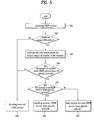
- FIG. 5 is a flow chart illustrating another method of receiving a DMB service in accordance with the preferred embodiment of the present invention.
- the re-transmitter carries out re-transmission by inserting re-transmission service unique ID number and re-transmitter unique ID number in a null symbol interval of a transmission frame of a DMB broadcast signal received from a transmission node.
- the receiver divisionally receives the service re-transmitted from the re-transmitter using the unique ID number as identification information.
- the re-transmission service type is divided into a charged service type and a free service type, and the identification information is inserted to carry out re-transmission only in case of the charged service type.
- the information detector 203 of the receiver determines whether the re-transmission service unique ID number or the re-transmitter unique ID number is detected in the null symbol interval of the transmission frame of the received DMB service (S 502 ).
- the broadcasting station or the re-transmitter re-transmits the DMB service without inserting the identification information in the null symbol interval. In this case, it is determined that the received DMB service is a free service. Therefore, the received DMB service is decoded and displayed on a monitor (S 508 ).
- the controller 204 receives information on the unique ID number from the memory 205 (S 503 ).
- the controller 204 identifies the type of the received re-transmission service using the information on the unique ID number received from the memory 205 . As a result, if the received service is a free service or there is no information on the unique ID number, the controller 204 determines that the service corresponds to a free service and decodes the service to display the decoded service on the monitor (S 508 ).
- the controller 204 determines whether the receiver is subscribed to the service (S 505 ).
- step S 505 if the receiver is not subscribed to the service or if the user does not select reception of the service due to a non-fixed sum system even in case where the receiver is subscribed to the service, the receiver fails to receive the service. Therefore, the controller 204 outputs the control signal, which switches off the switch 206 , to the switch 206 .
- the switch 206 neither decodes the signal demodulated by the demodulator 202 nor displays the signal on the monitor (S 506 ).
- step S 505 if the receiver is subscribed to the service at a fixed sum system, the receiver can receive the service. Therefore, the controller 204 outputs the control signal, which switches on the switch 206 , to the switch 206 .
- the switch 206 decodes the signal demodulated by the demodulator 202 to display the decoded signal on the monitor (S 507 ).
- the receiver is not subscribed to the service or if the receiver is subscribed to the service at a non-fixed sum system, information on whether to receive the charged service is transmitted to the user so as to allow the user to select reception of the service and determine whether to decode the service in accordance with the user's selection.
- terminologies used in the present invention are defined considering functions in the present invention and may be changed depending on the skilled person's intention in the art or practices. Therefore, the terminologies should be defined based upon the whole description of the present invention.
Landscapes
- Engineering & Computer Science (AREA)
- Architecture (AREA)
- Signal Processing (AREA)
- Civil Engineering (AREA)
- Structural Engineering (AREA)
- Two-Way Televisions, Distribution Of Moving Picture Or The Like (AREA)
- Circuits Of Receivers In General (AREA)
- Radio Relay Systems (AREA)
Applications Claiming Priority (2)
| Application Number | Priority Date | Filing Date | Title |
|---|---|---|---|
| KR10-2005-0006749 | 2005-01-25 | ||
| KR1020050006749A KR100710308B1 (ko) | 2005-01-25 | 2005-01-25 | 유료 이동형 방송 서비스를 위한 데이터 구조, 유료이동형 방송 서비스 방법, 및 이동형 방송 수신기 |
Publications (2)
| Publication Number | Publication Date |
|---|---|
| US20060166616A1 US20060166616A1 (en) | 2006-07-27 |
| US7904019B2 true US7904019B2 (en) | 2011-03-08 |
Family
ID=35985706
Family Applications (1)
| Application Number | Title | Priority Date | Filing Date |
|---|---|---|---|
| US11/337,647 Expired - Fee Related US7904019B2 (en) | 2005-01-25 | 2006-01-24 | Broadcast signal and receiver and method of decoding digital broadcast signal |
Country Status (4)
| Country | Link |
|---|---|
| US (1) | US7904019B2 (de) |
| EP (1) | EP1684451A3 (de) |
| KR (1) | KR100710308B1 (de) |
| CN (1) | CN1812297B (de) |
Cited By (4)
| Publication number | Priority date | Publication date | Assignee | Title |
|---|---|---|---|---|
| US20090175379A1 (en) * | 2007-12-12 | 2009-07-09 | Rosum Corporation | Transmitter Identification For Wireless Signals Having A Digital Audio Broadcast Physical Layer |
| US20100131823A1 (en) * | 2007-06-25 | 2010-05-27 | Jae Hyung Song | Digital broadcast system for transmitting/receiving digital broadcast data, and data processing method for use in the same |
| US20140149829A1 (en) * | 2007-07-23 | 2014-05-29 | Lg Electronics Inc. | Digital broadcasting system and method of processing data in digital broadcasting system |
| US20150207653A1 (en) * | 2014-01-22 | 2015-07-23 | Ralph Oppelt | Transmitting a Frequency-Modulated Signal |
Families Citing this family (15)
| Publication number | Priority date | Publication date | Assignee | Title |
|---|---|---|---|---|
| KR100690797B1 (ko) * | 2005-01-27 | 2007-03-09 | 엘지전자 주식회사 | 수신제한 방송 시스템 및 방법 |
| CN101167356B (zh) * | 2005-03-24 | 2013-03-06 | 客得富移动通信股份有限公司 | 针对单频网络中各个发射机的条件接入系统及方法 |
| KR100710257B1 (ko) * | 2005-04-19 | 2007-04-20 | 엘지전자 주식회사 | 유료 이동형 방송 서비스를 위한 데이터 구조, 유료 이동형방송 서비스 방법 및 이동형 방송 수신기 |
| KR20060110426A (ko) * | 2005-04-19 | 2006-10-25 | 삼성전자주식회사 | 단말 주파수 망을 이용하는 디지털 방송 시스템에서 데이터송수신 방법 및 장치와 그 시스템 |
| KR100710330B1 (ko) * | 2005-06-10 | 2007-04-23 | 엘지전자 주식회사 | 멀티미디어 방송 시스템 및 멀티미디어 방송 채널 정보제공방법 |
| KR100723311B1 (ko) * | 2005-06-15 | 2007-05-30 | 주식회사 케이티프리텔 | 인증키를 이용하여 중계기로부터의 지상파 dmb 신호를수신하는 방법 |
| KR101204513B1 (ko) * | 2005-12-20 | 2012-11-26 | 삼성전자주식회사 | 디지털 멀티미디어 재생 장치 및 디지털 멀티미디어 재생장치에서 디지털 멀티미디어 방송을 제공하는 방법 |
| EP1830490B1 (de) * | 2006-03-03 | 2013-07-03 | Samsung Electronics Co., Ltd. | Vorrichtung und Verfahren zur Unterstützung eines Weiterleitungsdienstes in einem Multihop-Relay-Breitbandkommunikationssystem mit drahtlosem Zugang |
| US7746961B2 (en) * | 2006-04-11 | 2010-06-29 | Telefonaktiebolaget L M Ericsson (Publ) | Efficient detection of predetermined sequences |
| KR100770888B1 (ko) * | 2006-08-07 | 2007-10-26 | 삼성전자주식회사 | Dmb 단말기에서 매너 지역 알림 방법 |
| WO2009038440A2 (en) | 2007-09-21 | 2009-03-26 | Lg Electronics Inc. | Digital broadcasting receiver and method for controlling the same |
| KR101572875B1 (ko) * | 2007-09-21 | 2015-11-30 | 엘지전자 주식회사 | 디지털 방송 시스템 및 데이터 처리 방법 |
| US7975281B2 (en) * | 2007-09-21 | 2011-07-05 | Lg Electronics, Inc. | Digital broadcasting system and method of processing data in digital broadcasting system |
| KR20110071226A (ko) * | 2009-12-21 | 2011-06-29 | 한국전자통신연구원 | 자기 식별정보 추가 장치 및 방법 |
| KR101388517B1 (ko) * | 2010-10-19 | 2014-04-23 | 전북대학교산학협력단 | 심볼 인터리버를 이용한 통신 방법 및 장치 |
Citations (12)
| Publication number | Priority date | Publication date | Assignee | Title |
|---|---|---|---|---|
| US6078592A (en) * | 1995-10-04 | 2000-06-20 | U.S. Philips Corporation | DAB receiver, apparatus and method for a format conversion of a DAB data sequence |
| EP1087585A2 (de) | 1999-09-17 | 2001-03-28 | Lucent Technologies Inc. | Identifizierung einer terrestrischen Zwischenstation durch Verwendung von inaktiven Unterträger eines Mehrträgersignals |
| WO2001033729A1 (en) | 1999-11-04 | 2001-05-10 | Xm Satellite Radio Inc. | Method and system for providing geographic specific services in a satellite communications network |
| US6434138B2 (en) * | 1996-05-08 | 2002-08-13 | Robert Bosch Gmbh | Process for transmitting messages by digital sound broadcasting and receiver for carrying out this process |
| US20030070172A1 (en) * | 2001-01-18 | 2003-04-10 | Kazuhrio Matsuzaki | Storage digital broadcasting apparatus and storage digital broadcasting receiver |
| US20040022326A1 (en) * | 2002-07-30 | 2004-02-05 | John Morrish | Digital audio receiver |
| DE10232096A1 (de) | 2002-07-15 | 2004-02-05 | Primacom Management Gmbh | Verfahren zur Einspeisung von Fernsehsignalen |
| KR20040048603A (ko) | 2002-12-04 | 2004-06-10 | 한국전자통신연구원 | 직교 주파수 분할 다중 수신 장치 |
| US20040132456A1 (en) * | 2002-09-30 | 2004-07-08 | Kabushiki Kaisha Toshiba | Wireless system, wireless base station and wireless terminal |
| US20050034156A1 (en) * | 2003-08-08 | 2005-02-10 | Yuichi Terui | Data broadcast material transmission system for ground wave digital broadcasting |
| US20060039565A1 (en) * | 2001-03-26 | 2006-02-23 | Samsung Electronics Co., Ltd. | Method of controlling transmission and reception of data including encrypted data stream |
| US7624419B2 (en) * | 2001-11-02 | 2009-11-24 | Sanyo Electric Co., Ltd. | Re-transmitter and digital broadcast receiving system |
Family Cites Families (11)
| Publication number | Priority date | Publication date | Assignee | Title |
|---|---|---|---|---|
| US5835487A (en) * | 1995-12-08 | 1998-11-10 | Worldspace International Network, Inc. | Satellite direct radio broadcast system |
| KR0176347B1 (ko) * | 1995-12-29 | 1999-05-01 | 정장호 | 수신제한 기능을 갖는 디지탈 위성방송 시스템 |
| JPH10313286A (ja) * | 1997-05-13 | 1998-11-24 | Sony Corp | 受信装置 |
| KR19990004172A (ko) * | 1997-06-27 | 1999-01-15 | 구자홍 | 디지탈 오디오 수신기의 타이밍 동기장치 |
| KR19990010142A (ko) * | 1997-07-15 | 1999-02-05 | 구자홍 | 디지탈 오디오 방송 수신시스템의 자동 이득 조절장치 및 방법 |
| KR100369998B1 (ko) * | 1998-11-06 | 2003-03-17 | 엘지전자 주식회사 | 티브이의 유료채널시청 제한방법 |
| KR100623116B1 (ko) * | 1999-09-16 | 2006-09-11 | 주식회사 케이티프리텔 | 이동 통신 시스템에서의 요금 할인 지역 통보 시스템 및 이를 이용한 요금 할인 지역 통보 방법 |
| KR100372800B1 (ko) * | 2001-06-18 | 2003-02-15 | 주식회사 피씨포인트 | 레이져프린터 재활용카트리지 |
| JP2004134931A (ja) * | 2002-10-09 | 2004-04-30 | Kenwood Corp | Dab放送受信装置 |
| KR100490258B1 (ko) * | 2003-04-30 | 2005-05-17 | 실리샌드 주식회사 | 디지털 오디오 방송 수신기와 그의 동작방법 |
| KR20050016722A (ko) * | 2005-01-06 | 2005-02-21 | 삼성전자주식회사 | 디지털 멀티미디어 방송 제한 수신 시스템 및 그 방법 |
-
2005
- 2005-01-25 KR KR1020050006749A patent/KR100710308B1/ko not_active Expired - Fee Related
-
2006
- 2006-01-17 EP EP06290116A patent/EP1684451A3/de not_active Ceased
- 2006-01-24 US US11/337,647 patent/US7904019B2/en not_active Expired - Fee Related
- 2006-01-25 CN CN2006100062658A patent/CN1812297B/zh not_active Expired - Fee Related
Patent Citations (13)
| Publication number | Priority date | Publication date | Assignee | Title |
|---|---|---|---|---|
| US6078592A (en) * | 1995-10-04 | 2000-06-20 | U.S. Philips Corporation | DAB receiver, apparatus and method for a format conversion of a DAB data sequence |
| US6434138B2 (en) * | 1996-05-08 | 2002-08-13 | Robert Bosch Gmbh | Process for transmitting messages by digital sound broadcasting and receiver for carrying out this process |
| EP1087585A2 (de) | 1999-09-17 | 2001-03-28 | Lucent Technologies Inc. | Identifizierung einer terrestrischen Zwischenstation durch Verwendung von inaktiven Unterträger eines Mehrträgersignals |
| WO2001033729A1 (en) | 1999-11-04 | 2001-05-10 | Xm Satellite Radio Inc. | Method and system for providing geographic specific services in a satellite communications network |
| US6347216B1 (en) * | 1999-11-04 | 2002-02-12 | Xm Satellite Radio Inc. | Method and system for providing geographic specific services in a satellite communications network |
| US20030070172A1 (en) * | 2001-01-18 | 2003-04-10 | Kazuhrio Matsuzaki | Storage digital broadcasting apparatus and storage digital broadcasting receiver |
| US20060039565A1 (en) * | 2001-03-26 | 2006-02-23 | Samsung Electronics Co., Ltd. | Method of controlling transmission and reception of data including encrypted data stream |
| US7624419B2 (en) * | 2001-11-02 | 2009-11-24 | Sanyo Electric Co., Ltd. | Re-transmitter and digital broadcast receiving system |
| DE10232096A1 (de) | 2002-07-15 | 2004-02-05 | Primacom Management Gmbh | Verfahren zur Einspeisung von Fernsehsignalen |
| US20040022326A1 (en) * | 2002-07-30 | 2004-02-05 | John Morrish | Digital audio receiver |
| US20040132456A1 (en) * | 2002-09-30 | 2004-07-08 | Kabushiki Kaisha Toshiba | Wireless system, wireless base station and wireless terminal |
| KR20040048603A (ko) | 2002-12-04 | 2004-06-10 | 한국전자통신연구원 | 직교 주파수 분할 다중 수신 장치 |
| US20050034156A1 (en) * | 2003-08-08 | 2005-02-10 | Yuichi Terui | Data broadcast material transmission system for ground wave digital broadcasting |
Cited By (12)
| Publication number | Priority date | Publication date | Assignee | Title |
|---|---|---|---|---|
| US20100131823A1 (en) * | 2007-06-25 | 2010-05-27 | Jae Hyung Song | Digital broadcast system for transmitting/receiving digital broadcast data, and data processing method for use in the same |
| US8098646B2 (en) * | 2007-06-25 | 2012-01-17 | Lg Electronics Inc. | Digital broadcast system for transmitting/receiving digital broadcast data, and data processing method for use in the same |
| US8284727B2 (en) * | 2007-06-25 | 2012-10-09 | Lg Electronics Inc. | Digital broadcast system for transmitting/receiving digital broadcast data, and data processing method for use in the same |
| US20140149829A1 (en) * | 2007-07-23 | 2014-05-29 | Lg Electronics Inc. | Digital broadcasting system and method of processing data in digital broadcasting system |
| US9281919B2 (en) * | 2007-07-23 | 2016-03-08 | Lg Electronics Inc. | Digital broadcasting system and method of processing data in digital broadcasting system |
| US9590659B2 (en) * | 2007-07-23 | 2017-03-07 | Lg Electronics Inc. | Digital broadcasting system and method of processing data in digital broadcasting system |
| US10193575B2 (en) | 2007-07-23 | 2019-01-29 | Lg Electronics Inc. | Digital broadcasting system and method of processing data in digital broadcasting system |
| US10790856B2 (en) | 2007-07-23 | 2020-09-29 | Lg Electronics Inc. | Digital broadcasting system and method of processing data in digital broadcasting system |
| US11012097B2 (en) | 2007-07-23 | 2021-05-18 | Lg Electronics Inc. | Digital broadcasting system and method of processing data in digital broadcasting system |
| US20090175379A1 (en) * | 2007-12-12 | 2009-07-09 | Rosum Corporation | Transmitter Identification For Wireless Signals Having A Digital Audio Broadcast Physical Layer |
| US20150207653A1 (en) * | 2014-01-22 | 2015-07-23 | Ralph Oppelt | Transmitting a Frequency-Modulated Signal |
| US9954700B2 (en) * | 2014-01-22 | 2018-04-24 | Siemens Aktiengesellschaft | Transmitting a frequency-modulated signal |
Also Published As
| Publication number | Publication date |
|---|---|
| EP1684451A3 (de) | 2007-08-22 |
| EP1684451A2 (de) | 2006-07-26 |
| CN1812297A (zh) | 2006-08-02 |
| KR100710308B1 (ko) | 2007-04-23 |
| CN1812297B (zh) | 2010-09-15 |
| US20060166616A1 (en) | 2006-07-27 |
| KR20060086014A (ko) | 2006-07-31 |
Similar Documents
| Publication | Publication Date | Title |
|---|---|---|
| US7904019B2 (en) | Broadcast signal and receiver and method of decoding digital broadcast signal | |
| US7912006B2 (en) | Digital broadcasting system and method of processing data in digital broadcasting system | |
| US20130343468A1 (en) | Broadcasting signal transmitter/receiver and broadcasting signal transmission/reception method | |
| TWI462511B (zh) | 數位廣播服務發現相關連技術 | |
| CN101010953A (zh) | 接收数字多媒体广播信号的设备和方法 | |
| US7916809B2 (en) | Digital receiver apparatus | |
| US20070089148A1 (en) | Apparatus for providing supplementary function of digital multimedia broadcasting and method of the same | |
| US20070002723A1 (en) | Signaling network ID in TPS bits | |
| KR100636216B1 (ko) | 동일한 방송 서비스를 제공하는 방법 및 그 방송 수신 장치 | |
| US8670368B2 (en) | Broadcast retransmitting method, broadcast retransmitting apparatus, replay apparatus, and broadcast retransmitting system using the same | |
| KR100710230B1 (ko) | 유료 이동형 방송 서비스를 위한 데이터 구조, 방법 및이동형 방송 수신기 | |
| KR100710327B1 (ko) | 유료 이동형 방송 서비스를 위한 데이터 구조, 유료 이동형방송 서비스 방법 및 이동형 방송 수신기 | |
| KR20060125088A (ko) | 디지털 방송 시스템에서 슬립 모드시 긴급 서비스 송수신을위한 방법 및 이를 위한 송수신기 | |
| KR101273358B1 (ko) | 통신 시스템에서 차세대 지상파 디지털 멀티미디어 신호 송수신 방법 및 장치 | |
| KR100710257B1 (ko) | 유료 이동형 방송 서비스를 위한 데이터 구조, 유료 이동형방송 서비스 방법 및 이동형 방송 수신기 | |
| KR100710328B1 (ko) | 유료 이동형 방송 서비스를 위한 데이터 구조, 유료 이동형방송 서비스 방법 및 이동형 방송 수신기 | |
| KR100710224B1 (ko) | 유료 이동형 방송 서비스를 위한 데이터 구조, 유료 이동형방송 서비스 방법 및 이동형 방송 수신기 | |
| JP2006020236A (ja) | 移動体向けデジタル放送用受信装置及びその受信品質表示方法 | |
| KR100735704B1 (ko) | 유료 이동형 방송 서비스를 위한 데이터 구조, 및 방법 | |
| KR100710225B1 (ko) | 유료 이동형 방송 서비스를 위한 데이터 구조, 유료 이동형방송 서비스 방법 및 이동형 방송 수신기 | |
| KR100735703B1 (ko) | 이동형 방송 서비스를 위한 데이터 구조, 및 방법 | |
| JP2006165934A (ja) | デジタル放送受信システム、携帯端末、及び、デジタル放送受信装置、 | |
| KR100746085B1 (ko) | 유료 이동형 방송 서비스를 위한 방법 및 이동형 방송수신기 | |
| JP2008278089A (ja) | 自動チャンネルリスト作成方法、受信装置、映像表示装置、及び音声出力装置 | |
| KR100777295B1 (ko) | 이동 방송 서비스를 위한 데이터 처리 방법 |
Legal Events
| Date | Code | Title | Description |
|---|---|---|---|
| AS | Assignment |
Owner name: LG ELECTRONICS INC., KOREA, REPUBLIC OF Free format text: ASSIGNMENT OF ASSIGNORS INTEREST;ASSIGNORS:KWAK, KOOK YEON;KO, WOO SUK;JUN, JUNG SIG;AND OTHERS;REEL/FRAME:017500/0132 Effective date: 20060117 |
|
| STCF | Information on status: patent grant |
Free format text: PATENTED CASE |
|
| FEPP | Fee payment procedure |
Free format text: PAYOR NUMBER ASSIGNED (ORIGINAL EVENT CODE: ASPN); ENTITY STATUS OF PATENT OWNER: LARGE ENTITY |
|
| FPAY | Fee payment |
Year of fee payment: 4 |
|
| FEPP | Fee payment procedure |
Free format text: MAINTENANCE FEE REMINDER MAILED (ORIGINAL EVENT CODE: REM.); ENTITY STATUS OF PATENT OWNER: LARGE ENTITY |
|
| LAPS | Lapse for failure to pay maintenance fees |
Free format text: PATENT EXPIRED FOR FAILURE TO PAY MAINTENANCE FEES (ORIGINAL EVENT CODE: EXP.); ENTITY STATUS OF PATENT OWNER: LARGE ENTITY |
|
| STCH | Information on status: patent discontinuation |
Free format text: PATENT EXPIRED DUE TO NONPAYMENT OF MAINTENANCE FEES UNDER 37 CFR 1.362 |
|
| FP | Lapsed due to failure to pay maintenance fee |
Effective date: 20190308 |