US7744003B2 - Microcircuit card whereof the performances can be modified after personalization - Google Patents
Microcircuit card whereof the performances can be modified after personalization Download PDFInfo
- Publication number
- US7744003B2 US7744003B2 US10/530,203 US53020303A US7744003B2 US 7744003 B2 US7744003 B2 US 7744003B2 US 53020303 A US53020303 A US 53020303A US 7744003 B2 US7744003 B2 US 7744003B2
- Authority
- US
- United States
- Prior art keywords
- card
- command
- microcircuit card
- modification
- microcircuit
- Prior art date
- Legal status (The legal status is an assumption and is not a legal conclusion. Google has not performed a legal analysis and makes no representation as to the accuracy of the status listed.)
- Expired - Lifetime, expires
Links
Images


Classifications
-
- G—PHYSICS
- G07—CHECKING-DEVICES
- G07F—COIN-FREED OR LIKE APPARATUS
- G07F7/00—Mechanisms actuated by objects other than coins to free or to actuate vending, hiring, coin or paper currency dispensing or refunding apparatus
- G07F7/08—Mechanisms actuated by objects other than coins to free or to actuate vending, hiring, coin or paper currency dispensing or refunding apparatus by coded identity card or credit card or other personal identification means
- G07F7/10—Mechanisms actuated by objects other than coins to free or to actuate vending, hiring, coin or paper currency dispensing or refunding apparatus by coded identity card or credit card or other personal identification means together with a coded signal, e.g. in the form of personal identification information, like personal identification number [PIN] or biometric data
- G07F7/1008—Active credit-cards provided with means to personalise their use, e.g. with PIN-introduction/comparison system
-
- G—PHYSICS
- G06—COMPUTING OR CALCULATING; COUNTING
- G06Q—INFORMATION AND COMMUNICATION TECHNOLOGY [ICT] SPECIALLY ADAPTED FOR ADMINISTRATIVE, COMMERCIAL, FINANCIAL, MANAGERIAL OR SUPERVISORY PURPOSES; SYSTEMS OR METHODS SPECIALLY ADAPTED FOR ADMINISTRATIVE, COMMERCIAL, FINANCIAL, MANAGERIAL OR SUPERVISORY PURPOSES, NOT OTHERWISE PROVIDED FOR
- G06Q20/00—Payment architectures, schemes or protocols
- G06Q20/30—Payment architectures, schemes or protocols characterised by the use of specific devices or networks
- G06Q20/34—Payment architectures, schemes or protocols characterised by the use of specific devices or networks using cards, e.g. integrated circuit [IC] cards or magnetic cards
- G06Q20/355—Personalisation of cards for use
- G06Q20/3552—Downloading or loading of personalisation data
Definitions
- the present invention concerns a microcircuit card whereof the performance can be modified after a step of personalization of the card, and a method for configuring this kind of card.
- customization in its widest sense, means that the data specific to a card or to a person is entered in the card. This data may for example, be a name, an address, and also includes keys associated with the card. The only thing that is important is that this data is specific to this card.”
- the invention finds one special but nonlimiting application in the field of mobile telecommunication microcircuit cards such as SIM cards conforming to the GSM standard and cards conforming to similar standards such as the CDMA, TDMA or UMTS standards.
- the invention enables modification of the performance of a customized mobile telecommunication card already allocated to a user subscribing to a mobile telephone service.
- This kind of process is used in particular during the phases of developing a microcircuit card, during which the cards are tested at different clock frequencies, the clock frequency of the card then being fixed before the end of the personalization process.
- the invention relates to a microcircuit card including means for receiving a command and means for modifying at least one characteristic of the performance of said card on reception of said command, it being possible for the modification means to be used after a step of personalization of said card.
- the invention relates according to a second aspect to a method of configuring a microcircuit card comprising the following successive steps:
- a characteristic of “performance” of a microcircuit card that can be modified by a configuration method conforming to the present invention must be understood as referring to any hardware or software characteristic pre-existing in the card and not accessible after personalization.
- the invention thus enables the performance of a microcircuit card to be enhanced or degraded by sending the command cited above after personalization, the card having been already allocated to a user.
- a user requiring to use a card with new performance must necessarily change the microcircuit card.
- the user of a microcircuit card including a physical EEPROM of 64 kbytes but in which the size of the usable area has been limited to 32 kbytes before personalization can use all of the 64 kbytes of the physical memory, without having to change the card.
- the microcircuit card further comprises means for authenticating the sender of the command.
- those authenticating means comprise cryptographic means for verifying if the command was encrypted with a predetermined authentication key.
- These verification means may use a hashing function of an MD4, MD5 or SHA-1 algorithm.
- modification of the performance of the card necessitates a knowledge of the authentication key, which may be kept secret by an operator, the manufacturer of the card or any third party, thereby reserving the possibility of modifying the performance of the card.
- the above authentication key is associated with the modification of a predetermined characteristic of the performance of a predetermined card.
- the modification means are adapted to determine which characteristic of the performance of the card must be modified as a function of a predetermined instruction received in the command.
- This feature enables, in accordance with the predetermined instruction received in the command, modification of one or several characteristics of the card.
- the receiver means are adapted to receive the command in accordance with the SMS protocol or a similar protocol such as the MMS (MultiMedia Service) protocol.
- SMS Short Message Service
- MMS MultiMedia Service
- This embodiment therefore allows the modification of at least one characteristic of the performance of the card via a mobile telecommunication network.
- the command may be received by the receiver means through a cable network or locally.
- the modification means are adapted to modify the size of a usable area of a physical memory of the card.
- This feature therefore allows the memory capacity of the card to be increased, for example to allow the downloading of new applications into the card.
- the size of the usable area of the physical memory is modified by creating or by destroying at least one specific file contained in the physical memory or by modifying the size of at least one specific file contained in the physical memory.
- This file may be a file specifically created to occupy space in the physical memory or a data file used by an application of the microcircuit card.
- the means for modification of at least one characteristic of performance are adapted to modify a clock frequency of the card, reversibly or not.
- the calculation speed of a processor or a cryptographic component of the card may be accelerated, enabling more complex processing to be carried out on digital data received by the microcircuit card.
- the means for modification of at least one characteristic of performance are adapted to allow or prevent the use of at least one software function of the card, reversibly or not.
- This particular feature thus allows validation of software applications initially provided on the card but invalidated before the end of its personalization.
- This kind of software function may for example be a cryptographic function, such as a function for checking a digital data signature.
- the means for modification of the performance of the card are adapted to allow or prevent the use of the whole or part of an electronic circuit of the card, reversibly or not, that electronic circuit being a cryptographic unit, for example.
- the microcircuit card according to the invention further comprises synchronization means adapted to verify that the command is unique.
- This particular feature advantageously avoids dishonest use of the microcircuit card by preventing a second execution of a command already received and fraudulently copied.
- FIG. 1 is a diagram of the architecture of a microcircuit card according to the invention.
- FIG. 2 represents a command conforming to the present invention in a preferred embodiment
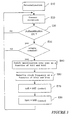
- FIG. 3 is a flowchart of the main steps of a preferred embodiment of a configuration method according to the invention.
- FIG. 1 is a diagram of the architecture of a microcircuit card 100 according to the invention.
- the microcircuit card 100 principally comprises a processor CPU associated in the conventional way with a certain number of memories of RAM, ROM and EEPROM type.
- the memory ROM comprises in particular the instructions of a computer program adapted to implement a configuration method conforming to the present invention, the main steps of which are described later with reference to FIG. 3 .
- the random access memory RAM comprises registers necessary for the execution of this program.
- the microcircuit card 100 also comprises a physical memory, for example a memory of EEPROM type, whereof the size of a usable area 110 may be modified after personalization.
- a physical memory for example a memory of EEPROM type, whereof the size of a usable area 110 may be modified after personalization.
- the microcircuit card 100 also comprises an electronic circuit 120 that in the embodiment described here is a cryptographic unit.
- the microcircuit card 100 also receives a signal from a clock CLOCK external to the card, this clock signal being supplied to the various components of the card.
- the microcircuit card 100 includes a PLL (phase-locked loop) component known to the person skilled in the art for deriving signals at various clock frequencies from the external clock signal CLOCK.
- PLL phase-locked loop
- the usable area 110 of the memory EEPROM comprises a register mult_clk for storing a multiplier factor that is applied to the frequency of the signal from the external clock CLOCK.
- the processor CPU When the microcircuit card is powered up, the processor CPU reads this register mult_clk and programs the PLL component with the value contained in this register, the clock signal at the output of the PLL component then being applied to certain components of the card.
- the PLL component modifies the calculation speeds of the processor CPU and the cryptographic unit 120 .
- the microcircuit card 100 comprises means RX for receiving a command 200 , a preferred embodiment of which is described next with reference to FIG. 2 .
- the command 200 comprises a field 210 comprising a predetermined instruction that is analyzed to determine which characteristics of the performance of the card 100 must be modified.
- the characteristics of the performance of the microcircuit card 100 that can be modified after personalization are the size of the usable area 110 of the physical memory EEPROM, the frequency of the clock signal, and a software function f used by the processor CPU and the electronic circuit 120 .
- the instruction 210 consists of a byte in which:
- the receiver means RX are adapted to receive the command 200 in accordance with the SMS protocol, for example by means of the ENVELOPE command of that protocol, and to store the command 200 in an area of the random access memory RAM.
- the microcircuit card 100 also comprises means for authenticating the sender of the command 200 .
- the authenticating means comprise cryptographic means for verifying if the command 200 was encrypted with a predetermined authentication key AUTH stored in a portion AUTH of the usable area 110 of the memory EEPROM at the time of personalization of the card.
- These cryptographic means may consist in a processing program that is executed by the processor CPU and comprises instructions for implementing a public key decrypting algorithm such as the RSA algorithm known to the person skilled in the art.
- the microcircuit card 100 further comprises synchronization means 130 adapted to verify that the command 200 is unique.
- the synchronization means 130 may in particular consist of an electronic circuit implementing the verification test E 35 described later with reference to FIG. 3 .
- the processor CPU determines, from the command 200 , the characteristics(s) of the performance of the microcircuit card 100 that must be modified.
- the microcircuit card 100 comprises, before personalization, a computer file VOID_FILE in the physical memory EEPROM and, when the pair (bit_ 1 , bit_ 2 ) is equal to (1, 1), the processor CPU destroys this file VOID_FILE, thereby freeing up a part of the physical memory EEPROM.
- the size of the usable area of the physical memory EEPROM is, if possible, increased, by a reduction in the size of the file VOID_FILE, in a predetermined manner, for example by 16 kbytes.
- the reception of a command 200 whereof the pair (bit 1 , bit 2 ) is equal to (1,0) or (0,1) is without effect.
- modifying the characteristics of the file VOID_FILE may necessitate a specific key KEY 220 received in the command 200 (as represented in FIG. 2 ).
- a plurality of files of the same type may be provided before personalization of the card, which progressively increases the size of the usable area of the physical memory EEPROM by destroying these files.
- the processor CPU obtains a clock multiplier factor by reading the third bit bit 3 and the fourth bit bit 4 of this instruction 210 .
- this clock multiplier factor is respectively equal to 1, 2 and 3 for values of the pairs (bit 3 , bit 4 ) respectively equal to (0,1), (1,0), (1,1).
- this multiplier factor is stored in the register mult_clk of the usable area 110 of the memory EEPROM, this register being read by the processor CPU on power up to set the parameters of the PLL component.
- the microcircuit card comprises modification means adapted to allow or prevent the use of a software function f of the card.
- the read only memory ROM comprises a computer program able to invoke this software function f when a soft register of the usable area 110 of the non-volatile memory EEPROM contains the value 1.
- the processor CPU On reception of the command 200 , the processor CPU reads the value of the fifth bit bit 5 of the predetermined instruction received in the command 200 and then writes it in the soft register.
- the software function is a cryptographic function or a digital data signature checking function received by the receiver means RX.
- the microcircuit card 100 also comprises modification means adapted to allow or prevent the use of all or part of an electronic circuit 120 of the card.
- this electronic circuit 120 comprises a cryptographic unit.
- this electronic circuit 120 is possible after writing of the value 1 in a hard register of this component, the value of this register being modified by the processor CPU with the content of the sixth bit bit 6 of the predetermined instruction.
- modifying the clock frequency and allowing or preventing use of the software function or the electronic component are reversible operations. In another embodiment, at least one of these operations could be non-reversible.
- the configuration method comprises a first step E 10 of personalization. This step is known to the person skilled in the art and is not described in detail here.
- this personalization step consists in writing data specific to the card or to a user of the card in a memory of the card, for example in the EEPROM.
- this personalization step comprises in particular writing the value of the authentication key AUTH in a memory EEPROM of the microcircuit card 100 .
- This personalization step also includes the creation of the file VOID_FILE and its key 220 in the memory EEPROM.
- the step E 10 is followed by a step E 20 of receiving the command 200 described previously with reference to FIG. 2 .
- the step E 20 is followed by a verification step E 30 during which the processor CPU authenticates the sender of the command 200 .
- this authentication step is effected by verifying if the command 200 was encrypted with a predetermined authentication key AUTH being stored in a register of the memory EEPROM at the time of personalization of the card.
- This test is then followed by a test E 35 which verifies that the command 200 is unique.
- This verification test E 35 avoids unauthorized execution for a second time of a command 200 already received and fraudulently copied.
- this verification test E 35 may be implemented by incorporating in each command 200 a message number that is incremented for each command and comparing the number received in a particular command 200 with the value of the number received in the preceding command 200 .
- step E 40 the size of the usable area 110 of the physical memory EEPROM is modified as a function of the values of the first and second bits (bit 1 , bit 2 ) of the predetermined instruction 210 received in the command 200 .
- this step E 40 is performed by creating, by destroying the file VOID_FILE contained in the physical memory EEPROM or by modifying the size of this file VOID_FILE.
- step E 40 of modifying the size of the usable area 110 of the physical memory EEPROM is followed by a step E 60 during which the multiplier factor for the frequency of the external clock CLOCK is stored in the register mult_clk of the usable area 110 of the memory EEPROM; this register is read by the processor CPU on power up to set the parameters of the component PLL, the effect of which is to modify reversibly the clock frequency of the card.
- the clock frequency multiplier factor is determined by the value of the third bit bit 3 and the fourth bit bit 4 of the predetermined instruction 210 .
- step E 60 of modifying the clock frequency is followed by a step E 70 during which the processor CPU writes the value of the fifth bit bit 5 of the instruction 210 in the soft register of the non-volatile memory EEPROM.
- a software function f for example a cryptographic function such as a digital data signature checking function is rendered accessible in the sense that it can be invoked by a computer program stored in the memory ROM or in the memory EEPROM.
- the step E 70 is followed by a step E 80 during which the processor CPU stores the value of the sixth bit bit 6 of the predetermined instruction in the hard register of the electronic circuit 120 .
- this electronic circuit 120 is a cryptographic unit.
- the step E 80 is followed by a step E 20 already described of reception of a command.
Landscapes
- Engineering & Computer Science (AREA)
- Business, Economics & Management (AREA)
- General Physics & Mathematics (AREA)
- Physics & Mathematics (AREA)
- Accounting & Taxation (AREA)
- Computer Networks & Wireless Communication (AREA)
- Microelectronics & Electronic Packaging (AREA)
- Strategic Management (AREA)
- General Business, Economics & Management (AREA)
- Theoretical Computer Science (AREA)
- Storage Device Security (AREA)
- Credit Cards Or The Like (AREA)
- Prepayment Telephone Systems (AREA)
Applications Claiming Priority (4)
| Application Number | Priority Date | Filing Date | Title |
|---|---|---|---|
| FR0212340A FR2845502B1 (fr) | 2002-10-04 | 2002-10-04 | Carte a microcircuit dont les performances peuvent etre modifiees apres personnalisation. |
| FR02/12340 | 2002-10-04 | ||
| FR0212340 | 2002-10-04 | ||
| PCT/FR2003/002854 WO2004032042A1 (fr) | 2002-10-04 | 2003-09-29 | Carte a microcircuit dont les performances peuvent etre modifiees apres personnalisation |
Publications (2)
| Publication Number | Publication Date |
|---|---|
| US20060231632A1 US20060231632A1 (en) | 2006-10-19 |
| US7744003B2 true US7744003B2 (en) | 2010-06-29 |
Family
ID=32011403
Family Applications (1)
| Application Number | Title | Priority Date | Filing Date |
|---|---|---|---|
| US10/530,203 Expired - Lifetime US7744003B2 (en) | 2002-10-04 | 2003-09-29 | Microcircuit card whereof the performances can be modified after personalization |
Country Status (9)
| Country | Link |
|---|---|
| US (1) | US7744003B2 (de) |
| EP (1) | EP1547005B9 (de) |
| JP (1) | JP4718180B2 (de) |
| CN (1) | CN100395771C (de) |
| AU (1) | AU2003283480A1 (de) |
| FR (1) | FR2845502B1 (de) |
| HU (1) | HUE029453T2 (de) |
| PT (1) | PT1547005T (de) |
| WO (1) | WO2004032042A1 (de) |
Families Citing this family (2)
| Publication number | Priority date | Publication date | Assignee | Title |
|---|---|---|---|---|
| FR2880149B1 (fr) * | 2004-12-23 | 2007-03-30 | Oberthur Card Syst Sa | Procede de traitement de donnees et dispositif associe |
| FR2999747B1 (fr) * | 2012-12-19 | 2018-05-04 | Idemia France | Procede de securisation d'un dispositif apte a communiquer avec un lecteur selon deux protocoles d'authentification |
Citations (5)
| Publication number | Priority date | Publication date | Assignee | Title |
|---|---|---|---|---|
| EP0479617A2 (de) | 1990-10-05 | 1992-04-08 | Kabushiki Kaisha Toshiba | System und Verfahren zur gegenseitigen Echtheitserkennung |
| US6273335B1 (en) | 1998-03-05 | 2001-08-14 | Visa International Service Association | System and method for locking and unlocking an application in a smart card |
| EP1143688A1 (de) | 2000-03-02 | 2001-10-10 | Client Electronics GmbH | Mobildiensten auf eine Chipkarte |
| EP1223565A1 (de) | 2001-01-12 | 2002-07-17 | Motorola, Inc. | Transaktionssystem, tragbares Gerät, Endgerät und Transaktionsverfahren |
| US20020103891A1 (en) * | 2001-01-31 | 2002-08-01 | Kabushiki Kaisha Toshiba | Hardware management apparatus |
Family Cites Families (6)
| Publication number | Priority date | Publication date | Assignee | Title |
|---|---|---|---|---|
| JP2930259B2 (ja) * | 1991-04-22 | 1999-08-03 | 株式会社東芝 | 携帯可能電子装置 |
| JPH06131517A (ja) * | 1992-10-19 | 1994-05-13 | Matsushita Electric Ind Co Ltd | Icカード |
| FR2716989B1 (fr) * | 1994-03-04 | 1996-04-05 | Gemplus Card Int | Procédé de fonctionnement d'une carte à puce. |
| JP3718564B2 (ja) * | 1995-12-22 | 2005-11-24 | 大日本印刷株式会社 | Icカード |
| JPH09231111A (ja) * | 1995-12-22 | 1997-09-05 | Dainippon Printing Co Ltd | Icカード |
| WO2000025278A1 (en) * | 1998-10-27 | 2000-05-04 | Visa International Service Association | Delegated management of smart card applications |
-
2002
- 2002-10-04 FR FR0212340A patent/FR2845502B1/fr not_active Expired - Lifetime
-
2003
- 2003-09-29 PT PT37754520T patent/PT1547005T/pt unknown
- 2003-09-29 JP JP2004540860A patent/JP4718180B2/ja not_active Expired - Lifetime
- 2003-09-29 CN CNB038237520A patent/CN100395771C/zh not_active Expired - Lifetime
- 2003-09-29 WO PCT/FR2003/002854 patent/WO2004032042A1/fr not_active Ceased
- 2003-09-29 EP EP03775452.0A patent/EP1547005B9/de not_active Expired - Lifetime
- 2003-09-29 US US10/530,203 patent/US7744003B2/en not_active Expired - Lifetime
- 2003-09-29 AU AU2003283480A patent/AU2003283480A1/en not_active Abandoned
- 2003-09-29 HU HUE03775452A patent/HUE029453T2/en unknown
Patent Citations (5)
| Publication number | Priority date | Publication date | Assignee | Title |
|---|---|---|---|---|
| EP0479617A2 (de) | 1990-10-05 | 1992-04-08 | Kabushiki Kaisha Toshiba | System und Verfahren zur gegenseitigen Echtheitserkennung |
| US6273335B1 (en) | 1998-03-05 | 2001-08-14 | Visa International Service Association | System and method for locking and unlocking an application in a smart card |
| EP1143688A1 (de) | 2000-03-02 | 2001-10-10 | Client Electronics GmbH | Mobildiensten auf eine Chipkarte |
| EP1223565A1 (de) | 2001-01-12 | 2002-07-17 | Motorola, Inc. | Transaktionssystem, tragbares Gerät, Endgerät und Transaktionsverfahren |
| US20020103891A1 (en) * | 2001-01-31 | 2002-08-01 | Kabushiki Kaisha Toshiba | Hardware management apparatus |
Also Published As
| Publication number | Publication date |
|---|---|
| CN1689034A (zh) | 2005-10-26 |
| FR2845502A1 (fr) | 2004-04-09 |
| EP1547005B9 (de) | 2020-07-29 |
| CN100395771C (zh) | 2008-06-18 |
| EP1547005B1 (de) | 2016-05-04 |
| EP1547005A1 (de) | 2005-06-29 |
| AU2003283480A1 (en) | 2004-04-23 |
| EP1547005B2 (de) | 2019-10-02 |
| HUE029453T2 (en) | 2017-02-28 |
| PT1547005T (pt) | 2016-09-08 |
| WO2004032042A1 (fr) | 2004-04-15 |
| JP2006501555A (ja) | 2006-01-12 |
| FR2845502B1 (fr) | 2005-01-28 |
| US20060231632A1 (en) | 2006-10-19 |
| JP4718180B2 (ja) | 2011-07-06 |
| HK1073001A1 (zh) | 2005-09-16 |
Similar Documents
| Publication | Publication Date | Title |
|---|---|---|
| US7299358B2 (en) | Indirect data protection using random key encryption | |
| EP1273996B1 (de) | Sicherer Bootloader zum Sichern digitaler Geräte | |
| US6357004B1 (en) | System and method for ensuring integrity throughout post-processing | |
| RU2456663C2 (ru) | Прогрессивная начальная загрузка для беспроводного устройства | |
| KR101393307B1 (ko) | 보안 부팅 방법 및 그 방법을 사용하는 반도체 메모리시스템 | |
| EP1880368B1 (de) | Implementierung einer integritätsgeschützten sicheren speicherung | |
| EP2115655B1 (de) | Virtuelle sichere einmalige on-chip-programmierung | |
| EP2372592B1 (de) | Integrierte Schaltung und System zur Installierung eines Computercodes darauf | |
| US20050283662A1 (en) | Secure data backup and recovery | |
| US20090144559A1 (en) | Electronic device booted up with security, a hash computing method, and a boot-up method thereof | |
| JP2007512787A (ja) | トラステッド・モバイル・プラットフォーム・アーキテクチャ | |
| CN100578473C (zh) | 嵌入式系统和增加嵌入式系统安全性的方法 | |
| CN101325485A (zh) | 处理电子设备中信息的方法、系统、电子设备和处理块 | |
| EP2051181A1 (de) | Informationsendgerät, sicherheitsvorrichtung, datenschutzverfahren und datenschutzprogramm | |
| US20090193261A1 (en) | Apparatus and method for authenticating a flash program | |
| US20060112266A1 (en) | Method and device for authenticating software | |
| US20080010686A1 (en) | Confidential Information Processing Device | |
| EP1465038B1 (de) | Speichersicherungsgerät für flexible Programmumgebung | |
| US20060231632A1 (en) | Microcircuit card whereof the performances can be modified after customization | |
| HK1073001B (en) | Microcircuit card whereof the performances can be modified after customization | |
| JP6950861B2 (ja) | 電子情報記憶装置、icカード、演算決定方法、及び演算決定プログラム | |
| JPH05274498A (ja) | Icカードとそのデータ記憶用メモリの消去方法 | |
| JP2003271904A (ja) | 記憶媒体アクセス装置及び記憶媒体アクセス方法、並びにアクセスプログラム |
Legal Events
| Date | Code | Title | Description |
|---|---|---|---|
| AS | Assignment |
Owner name: OBERTHUR CARD SYSTEMS SA,FRANCE Free format text: ASSIGNMENT OF ASSIGNORS INTEREST;ASSIGNORS:JAYET, STEPHANE;HUOT, JEAN-CLAUDE;SIGNING DATES FROM 20050331 TO 20050502;REEL/FRAME:016873/0866 Owner name: OBERTHUR CARD SYSTEMS SA, FRANCE Free format text: ASSIGNMENT OF ASSIGNORS INTEREST;ASSIGNORS:JAYET, STEPHANE;HUOT, JEAN-CLAUDE;REEL/FRAME:016873/0866;SIGNING DATES FROM 20050331 TO 20050502 |
|
| FEPP | Fee payment procedure |
Free format text: PAYOR NUMBER ASSIGNED (ORIGINAL EVENT CODE: ASPN); ENTITY STATUS OF PATENT OWNER: LARGE ENTITY |
|
| AS | Assignment |
Owner name: OBERTHUR TECHNOLOGIES,FRANCE Free format text: CHANGE OF NAME;ASSIGNOR:OBERTHUR CARD SYSTEMS SA;REEL/FRAME:024363/0665 Effective date: 20071227 |
|
| STCF | Information on status: patent grant |
Free format text: PATENTED CASE |
|
| FPAY | Fee payment |
Year of fee payment: 4 |
|
| MAFP | Maintenance fee payment |
Free format text: PAYMENT OF MAINTENANCE FEE, 8TH YEAR, LARGE ENTITY (ORIGINAL EVENT CODE: M1552) Year of fee payment: 8 |
|
| MAFP | Maintenance fee payment |
Free format text: PAYMENT OF MAINTENANCE FEE, 12TH YEAR, LARGE ENTITY (ORIGINAL EVENT CODE: M1553); ENTITY STATUS OF PATENT OWNER: LARGE ENTITY Year of fee payment: 12 |
|
| AS | Assignment |
Owner name: IDEMIA FRANCE, FRANCE Free format text: CHANGE OF NAME;ASSIGNOR:OBERTHUR TECHNOLOGIES;REEL/FRAME:062140/0907 Effective date: 20180117 |