US7462494B2 - Method for laser desorption mass spectrometry using porous polymeric substrates with particle fillers - Google Patents
Method for laser desorption mass spectrometry using porous polymeric substrates with particle fillers Download PDFInfo
- Publication number
- US7462494B2 US7462494B2 US10/457,651 US45765103A US7462494B2 US 7462494 B2 US7462494 B2 US 7462494B2 US 45765103 A US45765103 A US 45765103A US 7462494 B2 US7462494 B2 US 7462494B2
- Authority
- US
- United States
- Prior art keywords
- porous
- matrix
- coating
- desorption
- polymer
- Prior art date
- Legal status (The legal status is an assumption and is not a legal conclusion. Google has not performed a legal analysis and makes no representation as to the accuracy of the status listed.)
- Expired - Fee Related, expires
Links
Images




Classifications
-
- H—ELECTRICITY
- H01—ELECTRIC ELEMENTS
- H01J—ELECTRIC DISCHARGE TUBES OR DISCHARGE LAMPS
- H01J49/00—Particle spectrometers or separator tubes
- H01J49/26—Mass spectrometers or separator tubes
- H01J49/34—Dynamic spectrometers
- H01J49/40—Time-of-flight spectrometers
-
- H—ELECTRICITY
- H01—ELECTRIC ELEMENTS
- H01J—ELECTRIC DISCHARGE TUBES OR DISCHARGE LAMPS
- H01J49/00—Particle spectrometers or separator tubes
- H01J49/02—Details
- H01J49/04—Arrangements for introducing or extracting samples to be analysed, e.g. vacuum locks; Arrangements for external adjustment of electron- or ion-optical components
- H01J49/0409—Sample holders or containers
- H01J49/0418—Sample holders or containers for laser desorption, e.g. matrix-assisted laser desorption/ionisation [MALDI] plates or surface enhanced laser desorption/ionisation [SELDI] plates
-
- Y—GENERAL TAGGING OF NEW TECHNOLOGICAL DEVELOPMENTS; GENERAL TAGGING OF CROSS-SECTIONAL TECHNOLOGIES SPANNING OVER SEVERAL SECTIONS OF THE IPC; TECHNICAL SUBJECTS COVERED BY FORMER USPC CROSS-REFERENCE ART COLLECTIONS [XRACs] AND DIGESTS
- Y10—TECHNICAL SUBJECTS COVERED BY FORMER USPC
- Y10T—TECHNICAL SUBJECTS COVERED BY FORMER US CLASSIFICATION
- Y10T428/00—Stock material or miscellaneous articles
- Y10T428/249921—Web or sheet containing structurally defined element or component
- Y10T428/249953—Composite having voids in a component [e.g., porous, cellular, etc.]
-
- Y—GENERAL TAGGING OF NEW TECHNOLOGICAL DEVELOPMENTS; GENERAL TAGGING OF CROSS-SECTIONAL TECHNOLOGIES SPANNING OVER SEVERAL SECTIONS OF THE IPC; TECHNICAL SUBJECTS COVERED BY FORMER USPC CROSS-REFERENCE ART COLLECTIONS [XRACs] AND DIGESTS
- Y10—TECHNICAL SUBJECTS COVERED BY FORMER USPC
- Y10T—TECHNICAL SUBJECTS COVERED BY FORMER US CLASSIFICATION
- Y10T436/00—Chemistry: analytical and immunological testing
- Y10T436/24—Nuclear magnetic resonance, electron spin resonance or other spin effects or mass spectrometry
Definitions
- the present invention is directed to a substrate for use in the retention and subsequent desorption of molecules. More specifically, the invention is directed to a substrate for use in receiving and releasing samples to be used in analytical processes, such as mass spectrometry.
- MALDI Matrix-assisted laser desorption and ionization
- MALDI has been successfully used to identify peptides, proteins, synthetic polymers, oligonucleotides, carbohydrates, and other large molecules.
- traditional MALDI has drawbacks for the analysis of many small molecules because signals from the chemical matrix interfere with signals from analyte molecules.
- Chemical matrices have many other undesirable consequences besides signal interference. For example, matrices can complicate sample preparation, and the additional processing steps and materials risk the introduction of contaminants into the sample. Both the matrix and analyte must typically be dissolvable in the same solvent, further complicating sample preparation.
- the matrix can also make it more difficult to interface separation techniques, and inhomogeneous sample spots can lead to a sweet-spot phenomenon wherein higher amounts of analyte and matrix crystals aggregate along the perimeter of the sample drop, leading to reduced reproducibility of spectra.
- DIOS desorption/ionization on silicon
- a first implementation of the invention includes a porous polymeric article containing a polymeric substrate having a first surface;
- porous polymeric article is configured for receiving of analytes and subsequent desorption of the analytes.
- Methods of the invention utilize porous substrates, optionally in combination with one or more surface coatings and fillers, to provide enhanced desorption of analytes. Such enhanced desorption is particularly useful in fields of analysis such as mass spectroscopy.
- This enhanced desorption has various utilities.
- use of the porous substrate may allow desorption to be performed without the use of chemical matrices.
- the methods of the invention may achieve superior performance over that of conventional matrix based methods (for example, higher signal to noise ratios and/or better resolution).
- the porous substrate may allow desorption to be performed in the presence of matrix, but with superior performance compared to standard matrix based methods using conventional desorption substrates.
- an applied analyte/matrix droplet may dry in a more uniform manner than without a porous substrate.
- lower levels of matrix may be used, thereby reducing signal noise from the matrix.
- Such behavior is advantageous in allowing the use of automated sample deposition, location, and analysis.
- use of the porous substrate may result in fewer ionic adducts (such as potassium and sodium) being formed, resulting in a simpler and easier to interpret spectrum.
- Specific implementations of the invention are directed to an article having a porous surface.
- the article contains a polymeric substrate with a plurality of pores, and in certain implementations a nonvolatile coating over at least a portion of the plurality of pores.
- the present invention also provides for a desorption substrate that is made from relatively inexpensive raw materials and can be economically produced such that it may be used and disposed of, or alternatively used as a storage device for archiving analyte samples.
- the methods and articles of the invention have many applications, including use in proteomics, which is the study of protein location, interaction, structure and function and seeks to identify and characterize the proteins present in both healthy and diseased biological samples.
- Other applications include DNA analysis, small molecule analysis, automated high throughput mass spectrometry, and combinations with separation techniques such as electrophoresis, immobilized affinity chromatography, or liquid chromatography.
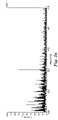
- FIG. 1 a is a mass spectrum of prazosin with matrix on conventional MALDI target.
- FIG. 1 b is a mass spectrum of prazosin without matrix on graphite containing micro-porous high density polyethylene film plus a diamond like glass coating.
- FIG. 2 a is a mass spectrum of prazosin without matrix on graphite containing micro-porous high density polyethylene film without a diamond like glass coating.
- FIG. 2 b is a mass spectrum of prazosin without matrix on graphite containing micro-porous high density polyethylene film plus a diamond like glass coating.
- FIG. 3 a is a mass spectrum of neurotensin without matrix on graphite containing micro-porous high density polyethylene film without a diamond like glass coating.
- FIG. 3 b is a mass spectrum of neurotensin without matrix on graphite containing micro-porous high density polyethylene film plus a diamond like glass coating.
- FIG. 4 a is a mass spectrum of prazosin without matrix on micro-porous high density polyethylene film containing tungsten particles and without a diamond like glass coating.
- FIG. 4 b is a mass spectrum of prazosin without matrix on micro-porous high density polyethylene film containing tungsten particles and a diamond like glass coating.
- FIG. 4 c is a mass spectrum of neurotensin without matrix on micro-porous high density polyethylene film containing tungsten particles and without a diamond like glass coating.
- FIG. 4 d is a mass spectrum of neurotensin without matrix on micro-porous high density polyethylene film containing tungsten particles and a diamond like glass coating.
- FIG. 5 a is a mass spectrum of a combination of chemical samples on graphite micro-porous high density polyethylene film plus a diamond like glass coating (positive ionization mode).
- FIG. 5 b is a mass spectrum of a combination of chemical samples on graphite micro-porous high density polyethylene film plus a diamond like glass coating (negative ionization mode).
- FIG. 6 is a mass spectrum of a mixture of compounds on graphite micro-porous high density polyethylene film plus diamond like glass coating.
- the present invention is directed to methods and articles for the analysis of various compositions, in particular those utilizing high-energy desorption/ionization of a sample.
- laser desorption and ionization of samples for mass spectroscopy are suitable applications of the invention.
- the apparatus serves to achieve, promote or enhance useful desorption and ionization without fragmentation.
- the methods of the invention may achieve superior performance (as manifested by, for example, higher signal to noise values) compared to traditional methods and devices.
- Substrates made in accordance with the invention typically have a porous surface and include one or more surface coatings and/or particulate fillers.
- the substrate comprises a high density polyethylene (HDPE) which has a carbon based filler, such as graphite or carbon black.
- HDPE high density polyethylene
- the thermoplastic polymeric structure may be substantially homogeneous throughout there may be a porosity gradient in the structure, but is typically finely porous or porous.
- the particulate filler whether graphite, carbon black, metal, or another material, may be substantially uniformly distributed throughout the article or the particulate filler may have a gradient density throughout the article.
- the porous particulate-filled substrate may be provided as, for example, films, sheets, or webs.
- the film may be uniaxially or biaxially oriented.
- the substrates of the invention often have a network of interconnected passageways to provide communicating pores, with high effective pore size range, low fluid flow resistance, broad pore size control and with up to 50 or more volume percent filler loading.
- the substrate is typically formed by thermally induced phase separation, also known as TIPS, such as that taught in U.S. Pat. No. 4,539,256 entitled “Microporous sheet material, method of making and articles made therewith”, incorporated herein by reference in its entirety.
- This thermodynamic, non-equilibrium phase separation may be either liquid-liquid phase separation or liquid-solid phase separation.
- thermoplastic polymer refers to conventional polymers, both crystalline and non-crystalline, which are melt processable under ordinary melt processing conditions.
- thermoplastic polymer includes polymers which are at least partially crystalline.
- amorphous includes polymers without substantial crystalline ordering such as, for example, polymethylmethacrylate, polysulfone, and atactic polystyrene.
- melting temperature refers to the temperature at which the thermoplastic polymer, in a blend of thermoplastic polymer and compatible diluent, will melt.
- crystallization temperature refers to the temperature at which the thermoplastic polymer, in a melt blend of thermoplastic polymer and compatible diluent, will crystallize.
- the term “equilibrium melting point”, as used with regard to the thermoplastic polymer, refers to the commonly accepted melting point temperature of the thermoplastic polymer as found in published literature.
- particle refers to submicron or low micron-sized particles, also termed “particulate filler” herein, such particles having a major axis no larger than five microns.
- discretely dispersed or “colloidal suspension” means that the particles are arrayed substantially as individual particles throughout a liquid or solid phase.
- Thermoplastic polymers useful in the present invention include olefinic, condensation and oxidation polymers.
- One particularly suitable polymer is high density polyethylene (HDPE).
- Representative olefinic polymers include high and low density polyethylene, polypropylene, polyvinyl-containing polymers, butadiene-containing polymers, acrylate containing polymers such as polymethyl methacrylate, and fluorine containing polymers such as polyvinylidene fluoride.
- Condensation polymers include polyesters such as polyethylene terephthalate and polybutylene terephthalate, polyamides, polycarbonates and polysulfones.
- Polyphenylene oxide is representative of the oxidation polymers which can be used. Blends of thermoplastic polymers may also be used.
- the compatible diluent is a material which is capable of forming a solution with the thermoplastic polymer when heated above the melt temperature of the polymer and which phase separates from the polymer on cooling.
- the compatibility of the liquid with the polymer can be determined by heating the polymer and the liquid to form a clear homogeneous solution. If a solution of the polymer and the liquid cannot be formed at any liquid concentration, then the liquid is generally inappropriate for use with that polymer.
- the liquid used may include compounds, which are solid at room temperature but liquid at the melt temperature of the polymer.
- non-polar organic liquids with similar room temperature solubility parameters are generally useful at the solution temperatures.
- polar organic liquids are generally useful with polar polymers.
- useful liquids are those that are compatible diluents for each of the polymers used.
- the liquid selected must be compatible with each type of polymer block.
- Blends of two or more liquids can be used as the compatible diluent as long as the selected polymer is soluble in the liquid blend at the polymer melt temperature and the solution formed phase separates on cooling.
- compatible diluent Various types of organic compounds have been found useful as the compatible diluent, including aliphatic and aromatic acids, aliphatic, aromatic and cyclic alcohols, aldehydes, primary and secondary amines, aromatic and ethoxylated amines, diamines, amides, esters and diesters, ethers, ketones and various hydrocarbons and heterocyclics.
- polymer selected is polypropylene
- aliphatic hydrocarbons such as mineral oil
- esters such as dibutyl phthalate
- ethers such as dibenzyl ether
- an aliphatic hydrocarbon such as mineral oil or and aliphatic ketone such as methyl nonyl ketone or an ester such as dioctyl phthalate are useful as the compatible diluent.
- Compatible diluents for use with low density polyethylene include aliphatic acids such as decanoic acid and oleic acid or primary alcohols such as decyl alcohol.
- esters such as dibutyl phthalate are useful as the compatible diluent.
- esters such as propylene carbonate, ethylene carbonate, or tetramethylene sulfone are useful as the compatible diluent.
- useful compatible diluents include, 1,4-butanediol and lauric acid.
- a compatible diluent for use with the polymer polyphenylene oxide is, for example, tallowamine.
- the particulate filler is arrayed in the structure.
- the structure is spherulitic, particles are in both the spherulites and in the fibrils between them. Although the particles are firmly held in the polymeric structure, they are substantially exposed after removal of the compatible diluent.
- the distribution of particles is uniform wherever the polymer phase occurs.
- the particles substantially exist as individual, and not agglomerated, particles throughout the porous structure. Agglomerates of 3 to 4 particles may occur, but their frequency is typically no more than in the compatible diluent dispersion prior to melt blending with the polymer. The average particle spacing depends upon the volume loading of the particle in the polymer.
- the compatible diluent is removed from the material to yield a particle-filled, substantially liquid-free, porous thermoplastic polymeric material.
- the compatible diluent may be removed by, for example, solvent extraction, volatilization, or any other convenient method, and the particle phase remains entrapped to a level of at least about 90 percent, more preferably 95 percent, most preferably 99 percent, in the porous polymer structure.
- the particle-filled porous structures of this invention can be oriented, i.e., stretched beyond their elastic limit to introduce permanent set or elongation and to ensure that the micropores are permanently developed or formed. Orientation can be carried out either before or after removal of the compatible diluent. This orientation of the structures aids in controlling pore size and enhances the porosity and the mechanical properties of the material without changing the particle uniformity and degree of agglomeration in the polymer phase. Orientation causes the porous structure to expand such that the porosity increases.
- Particle-filled porous films of the invention may be uniaxially or biaxially oriented in accordance with the teachings of Shipman in U.S. Pat. No. 4,539,256 incorporated by reference in its entirety.
- the particle-filled porous material of the invention may also be further modified, either before or after removal of the compatible diluent, by depositing various materials on the surface thereof using known coating or deposition techniques.
- the particle-filled porous material may be coated with metal by vapor deposition or sputtering techniques or by materials such as adhesives, aqueous or solvent-based compositions, and dyes. Coating can be accomplished by such conventional coating techniques as, for example, roller coating, spray coating, dip coating, and the like.
- the porous substrate of the invention normally include at least some filler particles, frequently a carbonaceous materials such as, for example, carbon black or graphite; and metals, such as gold, silver, and tungsten.
- the particles useful in the present invention are generally capable of forming a colloidal dispersion with the compatible diluent.
- the particle size is often less than 5 microns, more commonly less than 3 microns in size, and frequently less than about 1 micron in size.
- Useful particles besides carbonaceous materials include metals such as, for example, lead, platinum, tungsten, gold, bismuth, copper, and silver, metal oxides such as, for example, lead oxide, iron oxide, chrome oxide, titania, silica and alumina, and blends thereof.
- materials that are good energy dispersers are beneficial, particular those that absorb light at the same wavelength as the energy used to laser desorb the analyte.
- the laser has a wavelength of 337 nm, it is typically desirable to have the particles at least partially absorb light at this wavelength.
- the amount of filler particles in the thermoplastic polymer depends upon the amount of filler in the compatible diluent prior to melt blending and upon the relative amount of thermoplastic polymer and compatible diluent in the blend.
- the amount of particles colloidally dispersed in the compatible diluent depends upon how well the particles are wet by the diluent, the surface area of the particles, and the proper choice of a dispersing aid or surfactant. Generally, for non-porous particles, a dispersion containing 40-50 volume percent particles can be achieved.
- the amount of filler in the polymer can be much greater than the amount of filler in the compatible diluent when the melt blend has a higher concentration of liquid than polymer.
- the actual polymer concentration selected from within the predetermined concentration range for the diluent-polymer system being used is limited by functional considerations.
- the polymer concentration and molecular weight should be sufficient to provide the porous structure which is formed on cooling with adequate strength for handling in further processing steps.
- the polymer concentration should be such that the viscosity of the diluent-polymer melt solution is suitable for the equipment used to shape the article.
- the polymer concentration in the compatible diluent is about 10 to 80 weight percent, which corresponds to a compatible diluent concentration of 20 to 90 weight percent.
- high compatible diluent concentrations i.e. 80 to 90 percent
- a very high, e.g., about 95 weight percent, concentration of the particulate filler in the thermoplastic polymer, relative to the diluent can be achieved.
- the resulting filled porous article is, surprisingly, 80 percent particulate filler by volume after the diluent is removed. That the particle-filled porous thermoplastic polymeric articles of the invention can contain such large amounts of particulate filler is unexpected because it is believed that particle-filled thermoplastic articles made by standard extrusion processes achieve only about 20 percent filler by volume.
- porous films of the present invention may be advantageously used in combination with one or more coatings applied on top of the porous film to provide enhanced desorption. Coatings may also serve other purposes; for example, coatings may provide a protective or abrasion-resistant barrier.
- Useful coatings include organic materials such as graphite, carbon black, the families of materials referred to as Diamond-Like Carbon (DLC), as described in U.S. Pat. No. 6,265,068, and Diamond-Like Glass (DLG), as described in PCT publication WO 0166820 entitled Diamond-Like Glass Thin Films, and incorporated herein by reference, silanes and silane derivatives, and parylene.
- Other useful coatings according to the present invention include inorganic materials such as metals; for example aluminum, gold, silver, nickel, titanium, palladium, and platinum; metal oxides, for example titanium dioxide, silicon oxide and zirconium oxide, and alloys of metals or metal oxides, such as inconel or indium tin oxide.
- Such surface coatings are generally nonvolatile under conditions used for laser desorption. That is, the coating either exhibits negligible volatility, or the entities that are volatilized are so low in molecular weight (for example, carbon clusters which may be emitted from graphite, or aluminum ions which may be emitted from aluminum) that they do not interfere with the analyte being measured.
- the coatings are distinguished from conventional matrices.
- matrix materials known in the art for MALDI applications are typically thought of as “nonvolatile” in that they have a slow evaporation or sublimation rate under ambient conditions, they are volatilized to a significant extent in the actual laser desorption process, and the volatilized species have molecular weight such that they may interfere with or obscure the analyte signal.
- Coatings may be applied to the porous film via various methods, including vapor coating, sputter coating, plasma coating, vacuum sublimation, chemical vapor deposition, cathodic arc deposition, and so on. These methods are particularly suited for coating of metals and metal oxides. Coatings such as graphite are most easily applied by obtaining the graphite as a dispersion and applying it to the substrate by any of the well-known methods for liquid coating (knife coating, spray coating, dip coating, spin coating, etc.).
- the coating can be provided at discrete locations, such as spots.
- one coating may be discrete while the other may be continuous, according to the needs of the particular instance.
- Discontinuous coatings may serve several functions. For example, they may serve to demarcate the particular area in which the analyte sample is to be deposited, and then to allow the area to be located once the film with sample is placed in the mass spectrometer.
- a coating may also be used which provides a discontinuity in the surface energy of the porous film to advantageously contain a deposited analyte sample within a desired area, and to prevent wicking or spreading of the sample over an undesirably wide area.
- Such coatings may be applied in a discrete manner via any number of methods.
- a mask such as a perforated screen or film, may be used to limit the coating to the areas defined by the mask.
- the mask can be attached to the film (for example via an adhesive) during coating of the different layers such that the layers are superimposed in registration. The mask is then removed after the final coating process.
- the perforated mask itself can remain on the film, in which case it will serve to provide wells that serve to contain the analyte droplet that is placed in the wells.
- the present invention comprises a porous substrate, and optional coatings useful for enhanced desorption, particularly in mass spectroscopy.
- the film is attached to a standard metal plate for insertion into a mass spectrometry instrument.
- a number of useful embodiments of the invention exist.
- the adhesive can be a laminating adhesive or double-faced tape.
- the laminating adhesive can be attached to the underside of the porous film, with a release liner remaining in place on the bottom of the adhesive. The user can then simply remove the release liner and attach the film directly to the plate by means of the adhesive.
- a separate piece of laminating adhesive can be supplied to the user, who can then apply the adhesive to the metal plate, remove the liner, and attach the porous film to the top of the adhesive.
- the adhesive should be carefully selected such that it does not harbor or generate any impurities, which might contaminate the porous substrate.
- Such conductive adhesives are readily available, for example conductive adhesive 9713 available from 3M of Maplewood, Minn.
- the adhesive may be selected such that it is permanently attached to the underside of the porous film; alternatively, it may be removable.
- the porous film will be packaged for delivery to the customer.
- This packaging may consist of any means that protects the film and does not act to impart contaminating impurities to the film.
- the film could be packaged in a plastic bag or plastic case.
- a protective liner may be placed atop the upper (porous) surface of the film.
- the present invention is particularly well suited to mass spectrometry analysis.
- Analyte spots deposited on a substrate are hit with short laser pulses to desorb and ionize the sample. Ions are formed and then accelerated by one or more electric fields before arriving at a detector. The time it takes to reach the detector, or the location on the detector at which the particles strike, can be used to determine the mass of the particles.
- Time-of-flight analysis is one mass spectrometry method that can be used. For molecules under 10,000 Da, a reflectron mode is used to condense the kinetic energy distribution of the ions reaching the detector. This method was developed to increase the resolution of mass spectroscopy and is used primarily for molecules under 10,000 Da. This higher resolution often results in a drop in sensitivity and a limited mass range.
- a micro-porous high density polyethylene film was produced using the thermally-induced phase separation technique described in U.S. Pat. No. 4,539,256.
- the film was produced using Finathene® 1285 high density polyethylene (AtoFina Petrochemicals Co. Houston, Tex.) with an initial mineral oil content of 74%.
- the mineral oil was extracted using a suitable solvent.
- the porosity of the resulting film was approximately 80% with an average pore size of approximately 0.26 microns.
- the following procedure was used. A 5 cm ⁇ 5 cm piece of the film was clamped between two aluminum plates with the uppermost plate having 64 through-holes, 1 mm in diameter, spaced similar to a conventional MALDI metal plate. The clamped sample was then coated with a hydrophilic Diamond-Like Glass (DLG) coating using a Plasma-Therm vapor coater according to the methods described in PCT publication WO0166820 by exposing the sample to a DLG plasma on one side under the following conditions: 10 seconds of oxygen plasma, 30 seconds of oxygen and tetramethylene silane mixture, followed by 20 seconds of an oxygen plasma. The resulting film had 64 circular DLG spots.
- DLG Hydrophilic Diamond-Like Glass
- Neurotensin is an endogenous trideca-peptide neurotransmitter, which influences distinct central and peripheral physiological functions in mammals. Reflectron mode was used for all tests.
- Examples 1-4 were tested using the above drug and peptide analytes with the addition of 0.5 ⁇ L matrix solution (( ⁇ -cyano 4-hydroxycinnamic acid—CHCA, 1:1 acetonitrile:water, 0.1% TFA).
- matrix solution ( ⁇ -cyano 4-hydroxycinnamic acid—CHCA, 1:1 acetonitrile:water, 0.1% TFA).
- the same drug and peptide molecules were analyzed using a traditional steel MALDI plate with CHCA matrix.
- S/N is the ratio of the amplitude of the desired signal to the amplitude of noise signals at a given point in time.
- concentration of the analyte concentration of the analyte. S/N usually increases with increasing analyte concentration. If the 2 spots did not compare well with each other, the analysis was rerun using a freshly prepared film.
- Table 1 below shows the use of DLG-coated porous films with and without matrix as LDI substrates compared to a traditional steel LDI plate.
- the LDI mass spectra of prazosin with matrix on a conventional MALDI target (C1) and prazosin without matrix on graphite loaded MPF with a DLG coating (E7) are shown in FIGS. 1 a and 1 b .
- Examples 5-8 demonstrate the use of particle-loaded porous films as LDI substrates.
- the films were prepared as in Examples 1-4 above except GM9255 high density polyethylene was used (Hoescht Celanese). Approximately 22% by weight of graphite (TimCal America Inc., Westlake, Ohio) was compounded into the film using a 30% dispersion of the graphite in mineral oil. The membrane was clamped between two metal frames and placed in a methyl ethyl ketone bath for 15 minutes to remove the mineral oil. DLG spots were applied using the same method as in Examples 1-4 above. Analytes were spotted onto the substrates as in Examples 1-4. Testing was done with and without DLG coatings. A matrix was not used.
- the test results using the graphite-loaded films are shown in Table 2 below.
- the LDI mass spectra for prazosin without DLG (E5) and with DLG (E7) are shown in FIGS. 2 a and 2 b .
- the LDI mass spectra for neurotensin without DLG (E6) and with DLG (E8) are shown in FIGS. 3 a and 3 b.
- Examples 9-12 demonstrate the use of particle-loaded porous films as an LDI substrate.
- the films were prepared as in Examples 5-8 above except FINA 1285 high density polyethylene and non-conductive carbon (Columbian Chemicals, Marietta, Ga.) was compounded into the films.
- the membrane was clamped between two metal frames and placed in a methyl ethyl ketone bath for 15 minutes to remove the mineral oil.
- DLG spots were applied using the same method as in Examples 1-4 above. Analytes were spotted onto the substrates as in Examples 1-4. Testing was done with and without DLG coatings. A matrix was not used.
- the test results using the carbon-loaded films are shown in Table 2 below.
- Examples 13-16 demonstrate the use of metal particle-loaded porous films as an LDI substrate.
- the films were prepared as in Examples 5-8 above except 5-8% metal powder was compounded into the films.
- PbO lead oxide, Hammond Lead Products, Hammond, Ind.
- W tungsten, Union Carbide Corp, Danbury, Conn.
- the membrane was clamped between two metal frames and placed in a methyl ethyl ketone bath for 15 minutes to remove the mineral oil.
- DLG spots were applied using the same method as in Examples 1-4 above. Prazosin and neurotensin were used as the test analytes and were spotted onto the substrates as in Examples 1-4. Testing was done with and without a DLG coating.
- the graphite-loaded MPF described in Examples 5-8 above was used with DLG spots to analyze a series of 8 synthesized drug molecules having molecular weights in close proximity to each other.
- the series of eight molecules were dissolved individually in methanol in concentration ranges from 0.1 to 0.3 ⁇ g/ ⁇ L.
- Samples were labeled A through H. 1.0 ⁇ L of each solution was spotted onto the MPF and air-dried.
- the LDI mass spectra of compound F in both positive and negative ionization modes are shown in FIGS.
- FIG. 6 shows one of the three replicates spectrum showing that the ion signals (positive ionization mode) of A (1.0 ⁇ L), D (1.0 ⁇ L), F (0.5 ⁇ L), and H (1.5 ⁇ L) were detected and consistent in three replicate runs despite the variation in concentration.
- the resolution and signal to noise ratio of the testing of the eight compounds are shown below in Table 4.
Landscapes
- Chemical & Material Sciences (AREA)
- Analytical Chemistry (AREA)
- Physics & Mathematics (AREA)
- Optics & Photonics (AREA)
- Other Investigation Or Analysis Of Materials By Electrical Means (AREA)
- Electron Tubes For Measurement (AREA)
Priority Applications (8)
| Application Number | Priority Date | Filing Date | Title |
|---|---|---|---|
| US10/457,651 US7462494B2 (en) | 2003-06-09 | 2003-06-09 | Method for laser desorption mass spectrometry using porous polymeric substrates with particle fillers |
| EP04785783A EP1634318A2 (en) | 2003-06-09 | 2004-04-14 | Laser desorption substrate |
| MXPA05013277A MXPA05013277A (es) | 2003-06-09 | 2004-04-14 | Substrato para desorcion de rayo laser. |
| BRPI0411129 BRPI0411129A (pt) | 2003-06-09 | 2004-04-14 | artigo polimérico poroso, e, método para analisar um material de amostra |
| PCT/US2004/011468 WO2005004191A2 (en) | 2003-06-09 | 2004-04-14 | Laser desorption substrate |
| KR1020057023538A KR20060017855A (ko) | 2003-06-09 | 2004-04-14 | 레이저 탈착 기판 |
| JP2006532407A JP2007503592A (ja) | 2003-06-09 | 2004-04-14 | レーザー脱離基材 |
| US12/269,464 US20090069177A1 (en) | 2003-06-09 | 2008-11-12 | Laser desorption substrate |
Applications Claiming Priority (1)
| Application Number | Priority Date | Filing Date | Title |
|---|---|---|---|
| US10/457,651 US7462494B2 (en) | 2003-06-09 | 2003-06-09 | Method for laser desorption mass spectrometry using porous polymeric substrates with particle fillers |
Related Child Applications (1)
| Application Number | Title | Priority Date | Filing Date |
|---|---|---|---|
| US12/269,464 Division US20090069177A1 (en) | 2003-06-09 | 2008-11-12 | Laser desorption substrate |
Publications (2)
| Publication Number | Publication Date |
|---|---|
| US20040248108A1 US20040248108A1 (en) | 2004-12-09 |
| US7462494B2 true US7462494B2 (en) | 2008-12-09 |
Family
ID=33490372
Family Applications (2)
| Application Number | Title | Priority Date | Filing Date |
|---|---|---|---|
| US10/457,651 Expired - Fee Related US7462494B2 (en) | 2003-06-09 | 2003-06-09 | Method for laser desorption mass spectrometry using porous polymeric substrates with particle fillers |
| US12/269,464 Abandoned US20090069177A1 (en) | 2003-06-09 | 2008-11-12 | Laser desorption substrate |
Family Applications After (1)
| Application Number | Title | Priority Date | Filing Date |
|---|---|---|---|
| US12/269,464 Abandoned US20090069177A1 (en) | 2003-06-09 | 2008-11-12 | Laser desorption substrate |
Country Status (7)
| Country | Link |
|---|---|
| US (2) | US7462494B2 (enExample) |
| EP (1) | EP1634318A2 (enExample) |
| JP (1) | JP2007503592A (enExample) |
| KR (1) | KR20060017855A (enExample) |
| BR (1) | BRPI0411129A (enExample) |
| MX (1) | MXPA05013277A (enExample) |
| WO (1) | WO2005004191A2 (enExample) |
Cited By (1)
| Publication number | Priority date | Publication date | Assignee | Title |
|---|---|---|---|---|
| US20090069177A1 (en) * | 2003-06-09 | 2009-03-12 | 3M Innovative Properties Company | Laser desorption substrate |
Families Citing this family (16)
| Publication number | Priority date | Publication date | Assignee | Title |
|---|---|---|---|---|
| DE10322701B4 (de) * | 2003-05-20 | 2006-12-28 | Humboldt-Universität Zu Berlin | Probenträger unter Verwendung eines porösen, Metalloxidpartikel umfassenden Films, Verfahren zur Herstellung eines Probenträgers, Verwendung des Probenträgers sowie Verfahren zum selektiven Nachweis von phosphorylierten/sulfatierten Biopolymeren, insbesondere Peptiden/Proteinen |
| US7268317B2 (en) * | 2003-09-02 | 2007-09-11 | Lsp Technologies, Inc. | Laser peening process and apparatus using a liquid erosion-resistant opaque overlay coating |
| US6958480B1 (en) * | 2004-06-25 | 2005-10-25 | The Regents Of The University Of California | Sample desorption/ionization from mesoporous silica |
| US20070139451A1 (en) * | 2005-12-20 | 2007-06-21 | Somasiri Nanayakkara L | Microfluidic device having hydrophilic microchannels |
| JP2007263600A (ja) * | 2006-03-27 | 2007-10-11 | Shimadzu Corp | 試料ターゲット |
| AT504100B9 (de) * | 2006-08-25 | 2009-12-15 | Leopold Franzens Uni Innsbruck | Matrix-freie maldi massenspektrometrie |
| US20100278695A1 (en) * | 2007-05-08 | 2010-11-04 | Waters Technologies Corporation | Chromatographic And Electrophoretic Separation Media And Apparatus |
| JP5317054B2 (ja) * | 2008-12-26 | 2013-10-16 | 大日本塗料株式会社 | 質量分析用基板及びその製造方法並びに質量分析法 |
| KR101227690B1 (ko) | 2011-08-11 | 2013-01-29 | 한국과학기술원 | 그라핀과 탄소나노튜브 복합 필름에 기반한 레이저 탈착/이온화 질량분석 기판 제작 및 응용 |
| KR20150052898A (ko) * | 2013-11-06 | 2015-05-15 | 연세대학교 산학협력단 | 말디톱 질량분석기에 이용가능한 시료 플레이트 및 상기 시료 플레이트의 제조방법 |
| JP6218716B2 (ja) * | 2014-09-30 | 2017-10-25 | 富士フイルム株式会社 | 多孔フィルム及びその製造方法 |
| EP3296733A4 (en) * | 2015-05-08 | 2019-04-10 | AGC Inc. | SAMPLE SPECTRUM FOR MASS SPECTROMETRY ANALYSIS, METHOD FOR MASS SPECTROMETRIC ANALYSIS AND DEVICE FOR MASS SPECTROMETRIC ANALYSIS |
| JP7233268B2 (ja) * | 2019-03-19 | 2023-03-06 | 浜松ホトニクス株式会社 | 試料支持体、イオン化方法、及び質量分析方法 |
| JP7226006B2 (ja) * | 2019-03-26 | 2023-02-21 | 株式会社豊田中央研究所 | レーザー脱離/イオン化質量分析用の有機シリカ基板、及び、それを用いたレーザー脱離/イオン化質量分析法 |
| US20220186030A1 (en) * | 2019-05-15 | 2022-06-16 | 3M Innovative Properties Company | (co)polymer matrix composites comprising thermally-conductive particles and a nonvolatile diluent and methods of making the same |
| CN115078336A (zh) * | 2021-03-10 | 2022-09-20 | 华东师范大学 | 一种多层空心氧化物微球材料及合成方法和在代谢物检测中的应用 |
Citations (20)
| Publication number | Priority date | Publication date | Assignee | Title |
|---|---|---|---|---|
| US3383247A (en) | 1965-08-19 | 1968-05-14 | Engelhard Ind Inc | Process for producing a fuel cell electrode |
| US4539256A (en) | 1982-09-09 | 1985-09-03 | Minnesota Mining And Manufacturing Co. | Microporous sheet material, method of making and articles made therewith |
| WO1989011608A1 (en) | 1988-05-25 | 1989-11-30 | W.L. Gore & Associates, Inc. | Gasketing products and manufacture thereof |
| WO1992002580A1 (en) | 1990-08-10 | 1992-02-20 | Commonwealth Scientific And Industrial Research Organisation | Controlled permeability film |
| US5130342A (en) | 1988-10-14 | 1992-07-14 | Mcallister Jerome W | Particle-filled microporous materials |
| EP0542522A2 (en) | 1991-11-12 | 1993-05-19 | Sumitomo Rubber Industries Limited | Silicone rubber roller for electrophotography |
| US5385694A (en) | 1993-03-26 | 1995-01-31 | W. L. Gore & Associates, Inc. | Microemulsion polymerization systems and coated materials made therefrom |
| US5696198A (en) | 1996-01-22 | 1997-12-09 | Electrosorbent, Inc. | Porous electroconductive composite material, and method of manufacturing the same |
| US5945175A (en) | 1996-06-14 | 1999-08-31 | Kimberly-Clark Worldwide, Inc. | Durable hydrophilic coating for a porous hydrophobic polymer substrate |
| US6010776A (en) | 1998-05-19 | 2000-01-04 | 3M Innovative Properties Company | Microporous materials containing cross-linked oil |
| US6096213A (en) | 1998-08-14 | 2000-08-01 | 3M Innovative Properties Company | Puncture-resistant polyolefin membranes |
| US6265068B1 (en) | 1997-11-26 | 2001-07-24 | 3M Innovative Properties Company | Diamond-like carbon coatings on inorganic phosphors |
| US6288390B1 (en) | 1999-03-09 | 2001-09-11 | Scripps Research Institute | Desorption/ionization of analytes from porous light-absorbing semiconductor |
| WO2001066820A1 (en) | 2000-03-05 | 2001-09-13 | 3M Innovative Properties Company | Diamond-like glass thin films |
| US20020171037A1 (en) | 2001-02-14 | 2002-11-21 | Ellson Richard N. | Method and system using acoustic ejection for preparing and analyzing a cellular sample surface |
| WO2003025631A1 (en) | 2001-09-19 | 2003-03-27 | 3M Innovative Properties Company | Optical and optoelectronic articles |
| WO2003051498A1 (en) | 2001-12-14 | 2003-06-26 | 3M Innovative Properties Company | Plasma treatment of porous materials |
| WO2003075307A1 (en) | 2002-03-01 | 2003-09-12 | Picoliter Inc. | Methods, devices, and systems using acoustic ejection for depositing fluid droplets on a sample surface for analysis |
| US20030218130A1 (en) | 2002-05-02 | 2003-11-27 | Ciphergen Biosystems, Inc. | Biochips with surfaces coated with polysaccharide-based hydrogels |
| US20040094705A1 (en) * | 2002-11-18 | 2004-05-20 | Wood Kenneth B. | Microstructured polymeric substrate |
Family Cites Families (11)
| Publication number | Priority date | Publication date | Assignee | Title |
|---|---|---|---|---|
| US3793060A (en) * | 1971-06-03 | 1974-02-19 | Gen Electric | Metallized ultrafine porous polymer articles |
| US4463329A (en) * | 1978-08-15 | 1984-07-31 | Hirosuke Suzuki | Dielectric waveguide |
| US4539246A (en) * | 1984-03-23 | 1985-09-03 | Deere & Company | Socket casting with a cast-in ball and method of casting |
| US5753358A (en) * | 1994-08-25 | 1998-05-19 | W. L. Gore & Associates, Inc. | Adhisive-filler polymer film composite |
| US6045700A (en) * | 1996-07-29 | 2000-04-04 | Solutia Inc. | Retrievable organic carbon scavengers for cleaning of contaminated surface water sediments |
| US6171689B1 (en) * | 1999-01-15 | 2001-01-09 | 3M Innovative Properties Company | Flame retardant microporous materials |
| US7678539B2 (en) * | 2000-08-10 | 2010-03-16 | Corning Incorporated | Arrays of biological membranes and methods and use thereof |
| WO2002096541A1 (en) * | 2001-05-25 | 2002-12-05 | Waters Investments Limited | Desalting plate for maldi mass spectrometry |
| AU2002305710A1 (en) * | 2001-05-25 | 2002-12-09 | Waters Investments Limited | Sample concentration maldi plates for maldi mass spectrometry |
| US7842498B2 (en) * | 2001-11-08 | 2010-11-30 | Bio-Rad Laboratories, Inc. | Hydrophobic surface chip |
| US7462494B2 (en) * | 2003-06-09 | 2008-12-09 | 3M Innovative Properties Company | Method for laser desorption mass spectrometry using porous polymeric substrates with particle fillers |
-
2003
- 2003-06-09 US US10/457,651 patent/US7462494B2/en not_active Expired - Fee Related
-
2004
- 2004-04-14 WO PCT/US2004/011468 patent/WO2005004191A2/en not_active Ceased
- 2004-04-14 MX MXPA05013277A patent/MXPA05013277A/es unknown
- 2004-04-14 EP EP04785783A patent/EP1634318A2/en not_active Withdrawn
- 2004-04-14 BR BRPI0411129 patent/BRPI0411129A/pt not_active IP Right Cessation
- 2004-04-14 KR KR1020057023538A patent/KR20060017855A/ko not_active Withdrawn
- 2004-04-14 JP JP2006532407A patent/JP2007503592A/ja active Pending
-
2008
- 2008-11-12 US US12/269,464 patent/US20090069177A1/en not_active Abandoned
Patent Citations (20)
| Publication number | Priority date | Publication date | Assignee | Title |
|---|---|---|---|---|
| US3383247A (en) | 1965-08-19 | 1968-05-14 | Engelhard Ind Inc | Process for producing a fuel cell electrode |
| US4539256A (en) | 1982-09-09 | 1985-09-03 | Minnesota Mining And Manufacturing Co. | Microporous sheet material, method of making and articles made therewith |
| WO1989011608A1 (en) | 1988-05-25 | 1989-11-30 | W.L. Gore & Associates, Inc. | Gasketing products and manufacture thereof |
| US5130342A (en) | 1988-10-14 | 1992-07-14 | Mcallister Jerome W | Particle-filled microporous materials |
| WO1992002580A1 (en) | 1990-08-10 | 1992-02-20 | Commonwealth Scientific And Industrial Research Organisation | Controlled permeability film |
| EP0542522A2 (en) | 1991-11-12 | 1993-05-19 | Sumitomo Rubber Industries Limited | Silicone rubber roller for electrophotography |
| US5385694A (en) | 1993-03-26 | 1995-01-31 | W. L. Gore & Associates, Inc. | Microemulsion polymerization systems and coated materials made therefrom |
| US5696198A (en) | 1996-01-22 | 1997-12-09 | Electrosorbent, Inc. | Porous electroconductive composite material, and method of manufacturing the same |
| US5945175A (en) | 1996-06-14 | 1999-08-31 | Kimberly-Clark Worldwide, Inc. | Durable hydrophilic coating for a porous hydrophobic polymer substrate |
| US6265068B1 (en) | 1997-11-26 | 2001-07-24 | 3M Innovative Properties Company | Diamond-like carbon coatings on inorganic phosphors |
| US6010776A (en) | 1998-05-19 | 2000-01-04 | 3M Innovative Properties Company | Microporous materials containing cross-linked oil |
| US6096213A (en) | 1998-08-14 | 2000-08-01 | 3M Innovative Properties Company | Puncture-resistant polyolefin membranes |
| US6288390B1 (en) | 1999-03-09 | 2001-09-11 | Scripps Research Institute | Desorption/ionization of analytes from porous light-absorbing semiconductor |
| WO2001066820A1 (en) | 2000-03-05 | 2001-09-13 | 3M Innovative Properties Company | Diamond-like glass thin films |
| US20020171037A1 (en) | 2001-02-14 | 2002-11-21 | Ellson Richard N. | Method and system using acoustic ejection for preparing and analyzing a cellular sample surface |
| WO2003025631A1 (en) | 2001-09-19 | 2003-03-27 | 3M Innovative Properties Company | Optical and optoelectronic articles |
| WO2003051498A1 (en) | 2001-12-14 | 2003-06-26 | 3M Innovative Properties Company | Plasma treatment of porous materials |
| WO2003075307A1 (en) | 2002-03-01 | 2003-09-12 | Picoliter Inc. | Methods, devices, and systems using acoustic ejection for depositing fluid droplets on a sample surface for analysis |
| US20030218130A1 (en) | 2002-05-02 | 2003-11-27 | Ciphergen Biosystems, Inc. | Biochips with surfaces coated with polysaccharide-based hydrogels |
| US20040094705A1 (en) * | 2002-11-18 | 2004-05-20 | Wood Kenneth B. | Microstructured polymeric substrate |
Non-Patent Citations (6)
Cited By (1)
| Publication number | Priority date | Publication date | Assignee | Title |
|---|---|---|---|---|
| US20090069177A1 (en) * | 2003-06-09 | 2009-03-12 | 3M Innovative Properties Company | Laser desorption substrate |
Also Published As
| Publication number | Publication date |
|---|---|
| WO2005004191A3 (en) | 2005-06-16 |
| MXPA05013277A (es) | 2006-03-09 |
| US20040248108A1 (en) | 2004-12-09 |
| JP2007503592A (ja) | 2007-02-22 |
| WO2005004191A2 (en) | 2005-01-13 |
| US20090069177A1 (en) | 2009-03-12 |
| EP1634318A2 (en) | 2006-03-15 |
| KR20060017855A (ko) | 2006-02-27 |
| BRPI0411129A (pt) | 2006-07-18 |
Similar Documents
| Publication | Publication Date | Title |
|---|---|---|
| US20090069177A1 (en) | Laser desorption substrate | |
| US11961728B2 (en) | Surface-assisted laser desorption/ionization method, mass spectrometry method and mass spectrometry device | |
| US7105809B2 (en) | Microstructured polymeric substrate | |
| CN1169188C (zh) | 具有憎水覆层的气相质谱仪样品支架 | |
| Fertig et al. | Microstructured glass chip for ion-channel electrophysiology | |
| US20180254177A1 (en) | Fabrication of mass spectrometry surface | |
| US20050040328A1 (en) | Reduction of matrix interference for MALDI mass spectrometry analysis | |
| EP1274116A2 (en) | Conductive card suitable as a MALDI-TOF target | |
| US20060214102A1 (en) | Ambient pressure matrix-assisted laser desorption ionization (MALDI) apparatus and method of analysis | |
| JP2007535107A (ja) | ダイヤモンド及び他の材料の複合材料又は組成物の検体分析への利用 | |
| US12205811B2 (en) | Sample supports for solid-substrate electrospray mass spectrometry | |
| JP4918662B2 (ja) | Maldi質量分析用の試料ホルダおよび質量分析方法 | |
| EP3152582B1 (en) | Methods of detecting biological prints, fluids or analytes therein using porous semiconductor substrates | |
| US20060121599A1 (en) | Method for producing a sample carrier for maldi-mass spectrometry | |
| WO2018211112A1 (en) | Maldi mass spectrometry method | |
| US20230221282A1 (en) | Method for detecting analytes | |
| WO2006083151A1 (en) | Sample plate for maldi mass spectrometry and process for manufacture of the same | |
| SG194207A1 (en) | Selective detection and analysis of small molecules | |
| Credo et al. | Development of a porous silicon product for small molecule mass spectrometry | |
| JP7331233B1 (ja) | 質量分析用試料の調製方法 | |
| JP2025021423A (ja) | 液体展開用シート | |
| US20220189752A1 (en) | Ionization method and mass spectrometry method | |
| JP2024166099A (ja) | 液体展開用シート、及び液体展開用シートの製造方法 |
Legal Events
| Date | Code | Title | Description |
|---|---|---|---|
| AS | Assignment |
Owner name: 3M INNOVATIVE PROPERTIES COMPANY, MINNESOTA Free format text: ASSIGNMENT OF ASSIGNORS INTEREST;ASSIGNORS:LAKSHMI, BRINDA B.;CHONG CONKLIN, BATHESHEBA E.;REEL/FRAME:014174/0698;SIGNING DATES FROM 20030606 TO 20030609 |
|
| STCF | Information on status: patent grant |
Free format text: PATENTED CASE |
|
| FPAY | Fee payment |
Year of fee payment: 4 |
|
| FPAY | Fee payment |
Year of fee payment: 8 |
|
| FEPP | Fee payment procedure |
Free format text: MAINTENANCE FEE REMINDER MAILED (ORIGINAL EVENT CODE: REM.); ENTITY STATUS OF PATENT OWNER: LARGE ENTITY |
|
| LAPS | Lapse for failure to pay maintenance fees |
Free format text: PATENT EXPIRED FOR FAILURE TO PAY MAINTENANCE FEES (ORIGINAL EVENT CODE: EXP.); ENTITY STATUS OF PATENT OWNER: LARGE ENTITY |
|
| STCH | Information on status: patent discontinuation |
Free format text: PATENT EXPIRED DUE TO NONPAYMENT OF MAINTENANCE FEES UNDER 37 CFR 1.362 |
|
| FP | Lapsed due to failure to pay maintenance fee |
Effective date: 20201209 |