US7279526B2 - Heterophasic propylene polymer - Google Patents
Heterophasic propylene polymer Download PDFInfo
- Publication number
- US7279526B2 US7279526B2 US10/468,059 US46805904A US7279526B2 US 7279526 B2 US7279526 B2 US 7279526B2 US 46805904 A US46805904 A US 46805904A US 7279526 B2 US7279526 B2 US 7279526B2
- Authority
- US
- United States
- Prior art keywords
- ethylene
- copolymer
- propylene
- composition
- polymer
- Prior art date
- Legal status (The legal status is an assumption and is not a legal conclusion. Google has not performed a legal analysis and makes no representation as to the accuracy of the status listed.)
- Expired - Fee Related, expires
Links
Images

Classifications
-
- C—CHEMISTRY; METALLURGY
- C08—ORGANIC MACROMOLECULAR COMPOUNDS; THEIR PREPARATION OR CHEMICAL WORKING-UP; COMPOSITIONS BASED THEREON
- C08F—MACROMOLECULAR COMPOUNDS OBTAINED BY REACTIONS ONLY INVOLVING CARBON-TO-CARBON UNSATURATED BONDS
- C08F10/00—Homopolymers and copolymers of unsaturated aliphatic hydrocarbons having only one carbon-to-carbon double bond
- C08F10/04—Monomers containing three or four carbon atoms
- C08F10/06—Propene
-
- C—CHEMISTRY; METALLURGY
- C08—ORGANIC MACROMOLECULAR COMPOUNDS; THEIR PREPARATION OR CHEMICAL WORKING-UP; COMPOSITIONS BASED THEREON
- C08L—COMPOSITIONS OF MACROMOLECULAR COMPOUNDS
- C08L23/00—Compositions of homopolymers or copolymers of unsaturated aliphatic hydrocarbons having only one carbon-to-carbon double bond; Compositions of derivatives of such polymers
- C08L23/02—Compositions of homopolymers or copolymers of unsaturated aliphatic hydrocarbons having only one carbon-to-carbon double bond; Compositions of derivatives of such polymers not modified by chemical after-treatment
- C08L23/10—Homopolymers or copolymers of propene
- C08L23/14—Copolymers of propene
- C08L23/142—Copolymers of propene at least partially crystalline copolymers of propene with other olefins
-
- C—CHEMISTRY; METALLURGY
- C08—ORGANIC MACROMOLECULAR COMPOUNDS; THEIR PREPARATION OR CHEMICAL WORKING-UP; COMPOSITIONS BASED THEREON
- C08F—MACROMOLECULAR COMPOUNDS OBTAINED BY REACTIONS ONLY INVOLVING CARBON-TO-CARBON UNSATURATED BONDS
- C08F210/00—Copolymers of unsaturated aliphatic hydrocarbons having only one carbon-to-carbon double bond
- C08F210/04—Monomers containing three or four carbon atoms
- C08F210/06—Propene
-
- C—CHEMISTRY; METALLURGY
- C08—ORGANIC MACROMOLECULAR COMPOUNDS; THEIR PREPARATION OR CHEMICAL WORKING-UP; COMPOSITIONS BASED THEREON
- C08L—COMPOSITIONS OF MACROMOLECULAR COMPOUNDS
- C08L2207/00—Properties characterising the ingredient of the composition
- C08L2207/02—Heterophasic composition
-
- C—CHEMISTRY; METALLURGY
- C08—ORGANIC MACROMOLECULAR COMPOUNDS; THEIR PREPARATION OR CHEMICAL WORKING-UP; COMPOSITIONS BASED THEREON
- C08L—COMPOSITIONS OF MACROMOLECULAR COMPOUNDS
- C08L23/00—Compositions of homopolymers or copolymers of unsaturated aliphatic hydrocarbons having only one carbon-to-carbon double bond; Compositions of derivatives of such polymers
- C08L23/02—Compositions of homopolymers or copolymers of unsaturated aliphatic hydrocarbons having only one carbon-to-carbon double bond; Compositions of derivatives of such polymers not modified by chemical after-treatment
- C08L23/04—Homopolymers or copolymers of ethene
- C08L23/08—Copolymers of ethene
- C08L23/0807—Copolymers of ethene with unsaturated hydrocarbons only containing four or more carbon atoms
- C08L23/0815—Copolymers of ethene with unsaturated hydrocarbons only containing four or more carbon atoms with aliphatic 1-olefins containing one carbon-to-carbon double bond
-
- C—CHEMISTRY; METALLURGY
- C08—ORGANIC MACROMOLECULAR COMPOUNDS; THEIR PREPARATION OR CHEMICAL WORKING-UP; COMPOSITIONS BASED THEREON
- C08L—COMPOSITIONS OF MACROMOLECULAR COMPOUNDS
- C08L23/00—Compositions of homopolymers or copolymers of unsaturated aliphatic hydrocarbons having only one carbon-to-carbon double bond; Compositions of derivatives of such polymers
- C08L23/02—Compositions of homopolymers or copolymers of unsaturated aliphatic hydrocarbons having only one carbon-to-carbon double bond; Compositions of derivatives of such polymers not modified by chemical after-treatment
- C08L23/16—Ethene-propene or ethene-propene-diene copolymers
-
- C—CHEMISTRY; METALLURGY
- C08—ORGANIC MACROMOLECULAR COMPOUNDS; THEIR PREPARATION OR CHEMICAL WORKING-UP; COMPOSITIONS BASED THEREON
- C08L—COMPOSITIONS OF MACROMOLECULAR COMPOUNDS
- C08L2314/00—Polymer mixtures characterised by way of preparation
- C08L2314/06—Metallocene or single site catalysts
Definitions
- the invention relates to improvements in and relating to heterophasic polypropylenes, in particular heterophasic propylene copolymers in which a beneficial balance between the properties of impact resistance, stiffness and stress whitening resistance may be achieved.
- Heterophasic polypropylene polymers ie. polymers containing a propylene polymer matrix and an elastomer, have been found to be particularly vulnerable to stress whitening if their impact resistance is adequately high. Thus stress whitening increases with increased elastomer content while a homopolymer itself generally has very low stress whitening. As a result the acceptable end uses of heterophasic propylene polymers have been limited to some extent.
- heterophasic propylene polymer composition comprising the following components:
- the matrix polymer must contain at least one polypropylene; however it is preferred for the matrix to contain two or more propylene polymers. Where the matrix polymer comprises two or more different propylene polymers these may be polymers with different monomer make up and/or with different molecular weight distributions. These components may have identical or differing monomer compositions and tacticities.
- the matrix polymer may be produced in a polymerization stage effected in one or more polymerization reactors or by blending two or more compatible polymers having the desired molecular weight distributions or monomer make ups.
- a matrix polymer comprising two or more different propylene polymers may be produced by the use of two or more catalyst types in a one-reactor polymerization or alternatively by carrying out polymerization in two or more different polymerisation reactors (e.g. bulk and/or gas phase reactors; as bulk reactors, loop reactors are preferred) whereby to generate matrix polymers of the different desired molecular weight distributions or monomer make ups in the different polymerization reactors. This latter approach is preferred.
- the matrix will preferably be a propylene homopolymer or a mixture thereof with a random propylene copolymer.
- the comonomers may include monomers copolymerizable with propylene, for example comonomers such as ethylene and C 4-20 mono or multiply unsaturated monomers, in particular ethylene and C 4-10 ⁇ -olefins, e.g. 1-butene or 1-hexene.
- a copolymer component is present this will be a relatively high molecular weight random copolymer.
- the comonomer content is relatively low, e.g. 0 to 5% wt, preferably 1 to 4% wt.
- monomer feedstock particularly of C 2-3 ⁇ -olefins
- monomer feedstock may comprise small quantities of copolymerizable impurities
- homopolymer is used herein to denote a polymer deriving at least 99% by weight from a single monomer.
- the higher molecular weight component is preferably a homopolymer or a random copolymer while the lower molecular weight component is preferably a higher crystallinity homopolymer.
- the polymer matrix material is thus preferably a combination of a high molecular weight homopolypropylene or propylene random copolymer (e.g. with C 2 or C 4-10 ⁇ -olefin comonomers) and a low to moderate molecular weight, higher crystallinity homopolypropylene.
- polymers having the desired properties for the components of the matrix polymer may be achieved using techniques well known to those skilled in the art, e.g. by appropriate selection of catalyst systems (e.g. Ziegler Natta catalysts or metallocene or other single site catalysts), comonomers, polymerization reactor type and polymerization process conditions.
- catalyst systems e.g. Ziegler Natta catalysts or metallocene or other single site catalysts
- comonomers e.g. Ziegler Natta catalysts or metallocene or other single site catalysts
- polymerization reactor type e.g., metallocene or other single site catalysts
- the matrix polymer is produced in a polymerization process using a supported Ziegler Natta catalyst system (especially a high yield Ziegler Natta system containing Ti, Cl, Mg and Al).
- Metallocene catalysts may also be used.
- the matrix polymer constitutes 60 to 90%, preferably 70 to 80%, by weight of the overall heterophasic polymer composition components i), ii) and iii).
- the second component of the heterophasic polymer composition of the invention is the elastomer.
- the elastomer is preferably an ⁇ -olefin polymer, in particular a propylene polymer, more particularly a propylene copolymer with one or more copolymerizable monomers, e.g. as described above, particularly ethylene.
- the comonomer content is desirably relatively high e.g. 25 to 45%, preferably 30 to 40% by weight and the molecular weight is preferably relatively high.
- the molecular weight of such elastomers may be measured indirectly by measurement of intrinsic viscosity of the xylene soluble amorphous fraction (AM).
- the elastomer preferably has an intrinsic viscosity (IV of AM) measured in decalin at 135° C.
- the elastomer is preferably a propylene-ethylene copolymer containing 25 to 45% wt ethylene and having an intrinsic viscosity (IV of AM) of 1.5 to 4 dL/g.
- the elastomer may be produced by conventional gas phase ⁇ -olefin polymerization techniques; however it is preferably produced using a supported catalyst system, e.g. a Ziegler Natta catalyst system or a metallocene:alumoxane catalyst system.
- a supported catalyst system e.g. a Ziegler Natta catalyst system or a metallocene:alumoxane catalyst system.
- the elastomer will constitute 5 to 30%, preferably 6 to 18%, by weight of the heterophasic polymer composition components i), ii), iii).
- the elastomer may be blended in with the matrix polymer. However, more desirably it is produced by performing a second polymerization stage in the presence of particles of matrix polymer, e.g. as a second polymerization stage of a multistage polymerization.
- the combination of the matrix and elastomer polymers is produced in a two stage polymerization using two or more polymerization reactors, more preferably using bulk and gas phase reactors (especially fluidized bed gas phase reactors) especially preferably using a loop reactor followed by two gas phase reactors or by a loop and a gas phase reactor.
- the catalyst system used may be varied between stages but is preferably the same for all stages.
- a prepolymerized heterogeneous (i.e. supported) catalyst is used.
- the catalyst may be a metallocene, it is preferred to use Ziegler Natta catalysts, e.g. an inorganic halide (e.g. MgCl 2 ) supported titanium catalyst, together with an aluminium alkyl (e.g. triethylaluminium) cocatalyst.
- Silanes e.g. dicyclopentanedimethoxysilane (DCPDMS) or cyclohexylmethyldimethoxysilane (CHMDMS
- DCPDMS dicyclopentanedimethoxysilane
- CHMDMS cyclohexylmethyldimethoxysilane
- the polymerisations are preferably effected in bulk (e.g. loop) or gas phase reactors.
- step c) in which the elastomer is produced, two or more gas phase reactors in series may be used.
- the process involves in step a) a bulk reactor, especially a loop reactor, and in steps b) and c) gas phase reactors.
- molecular weight may be controlled for example by controlling hydrogen addition to the reaction mixture and monomer make-up by controlling feed rates of different monomers.
- the first step is preferably a propylene homopolymerization.
- matrix polymer production may involve firstly a propylene homopolymerisation and secondly a propylene-ethylene random copolymerisation producing a polymer mixture with an ethylene content of up to 5% wt, more preferably 1 to 4% wt.
- the elastomer production polymerisation stage is preferably a propylene/ethylene copolymerization, preferably performed at a lower temperature than the matrix polymerisation stage using a higher ethylene:propylene molar ratio, e.g.
- amorphous fraction i.e. a xylene soluble fraction
- This amorphous fraction preferably has an intrinsic viscosity (measured in decalin at 135° C.) of 1.5 to 4 dl/g, especially 2.0 to 3.5 dl/g, and an ethylene (i.e. ethylene monomer derived) content of 25 to 45% wt, especially 30 to 40% wt.
- the third component of the heterophasic polymer composition of the invention is an ethylene copolymer plastomer.
- the plastomers used in the present invention may be produced for example by metallocene-catalyzed polymerization or other single site catalyzed polymerization, and have densities of no more than 910 kg/m 3 , preferably no more than 910 kg/m 3 , e.g. 875 to 900 kg/m 3 and MFR 2.16 (190° C.) measured at 190° C. with a 2.16 kg load according to ISO 1133, of at least 0.5 g/10 min., e.g. up to 50 g/10 min.
- Such plastomers are available commercially (e.g. as Exact 4041 and Exact 2M011 from DEXplastomers of the Netherlands).
- the plastomer is present in the heterophasic polymer composition as from 5 to 25%, preferably 10 to 20%, by weight of the total weight of composition components i), ii) and iii). Because the use of plastomers in heterophasic propylene polymer compositions affects the impact strength, the stress whitening resistance and the stiffness, the specific amount included will depend on the desired balance between these properties.
- the plastomer may be added to the matrix and elastomer polymer compositions, for example by blending.
- composition of the invention comprises:
- the heterophasic polymer composition of the invention may contain other components, e.g. conventional additives such as colours, nucleating agents, fillers, antioxidants, radiation stabilizers, etc.
- conventional additives such as colours, nucleating agents, fillers, antioxidants, radiation stabilizers, etc.
- inorganic, organic or polymeric nucleating agents is especially preferred.
- nucleating agents is described in EP-A-826728, U.S. Pat. No. 5,362,782 and U.S. Pat. No. 5,258,464, the contents of which are hereby incorporated by reference.
- the heterophasic polymer composition of the invention may be prepared for use by blending the components, preferably in an extruder-blender.
- the resultant blend may then be used for production of polymer end products, e.g. pipes, mouldings, films, sheets, rods and fibres. It is particularly suitable however for use in the preparation of moulded or extruded items (such as containers, boxes, items of luggage etc), preferably using techniques such as extrusion, injection moulding and blow moulding.
- the invention provides the use of a heterophasic polymer composition according to the invention, e.g. a composition in flowable particulate form, for the manufacture of polymer items, particularly items with high stress whitening resistance and/or impact resistance, e.g. for the manufacture of containers and container closures for foodstuffs or medicines, household appliances and components thereof, medical equipment and components thereof, automotive parts, items of luggage, boxes, and equipment for use in sterile manufacturing and components thereof, for example by a moulding or extrusion technique.
- the invention also provides polymer items produced from the heterophasic polymer compositions of the invention.
- T° MFR 2.16 (T°) values referred to herein are measured at T° C. under a 2.16 kg load according to ISO 1133.
- Heterophasic propylene copolymers were produced in a pilot plant having a loop reactor and two fluid bed gas phase reactors connected in series.
- the catalyst, cocatalyst and donor were fed to the loop reactor.
- the solid polymer from the loop reactor, containing the active catalyst, then entered the first and thereafter the second of the gas phase reactors.
- a prepolymerised MgCl 2 —supported Ti catalyst (prepared according to EP-A 491566) was used in the polymerisation.
- the cocatalyst was triethylaluminium (TEA) and the external donor was dicyclopentanedimethoxysilane (DCPDMS).
- TEA triethylaluminium
- DCPDMS dicyclopentanedimethoxysilane
- the Al/Ti mole ratio was 250 and the Al/donor mole ratio was 5.
- a propylene homopolymer was produced and the polymerisation was continued in the first gas phase reactor which produced a random propylene copolymer with an ethylene content of about 2 wt %.
- the polymerisation was further continued in the second stage, in the second gas phase reactor, where a propylene/ethylene copolymer elastomer was produced.
- the polymerisation temperature was 80° C. in the loop and the first gas phase reactor and 70° C. in the second gas phase reactor.
- the MFR 2.16 (230° C.) of the two stages were adjusted with separate hydrogen feeds.
- the homopolymer matrix after the loop had a MFR 2.16 (230°) of 11 g/10 min and after the first gas phase reactor the MFR 2.16 (230° C.) was 0.4 g/10 min, and the polymer composition after the second stage had a MFR 2.16 (230° C.) of 0.37 g/10 min (after stabilisation and pelletising).
- Standard formulation with 5000 ppm Irganox B215 (from Ciba) and 700 ppm Ca-stearate was used.
- the final copolymer had an ethylene content of 7 wt % (measured by Fourier transform infrared spectometry—FTIR) and a xylene soluble amorphous fraction (AM) of 12 wt %.
- the ethylene content of the amorphous phase (C2 of AM) was 34 wt % and the intrinsic viscosity of the amorphous fraction (measured in decalin at 135° C. according to standard procedures) (IV of AM) was 2.6 dl/g.
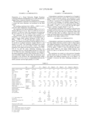
- the copolymer was tested for mechanical properties by standard ISO tests. Specimens were cut from compression moulded plaques (4 mm thick). The results are set out in Table 1 below as sample P1.
- the stress whitening resistance was evaluated by a white blush test using a falling weight impacter (a weight of 25 kg with a drop of 20 mm). The minimum and maximum diameters of the resultant blushes were measured in mm.
- the mechanical properties of the heterophasic blend are set out in Table 1 below.
- the stress whitening resistance remained at about the same level despite the much improved impact.
- Heterophasic propylene copolymers were produced as in Example 1 except that the Al/external donor mole ratio was 8 and the matrix polymer was produced using two loop reactors in series. After the first loop reactor, the matrix polymer had a MFR 2.16 (230° C.) of 0.07 g/10 min and after the second loop reactor a MFR 2.16 (230° C.) of 0.33 g/10 min. The loop reactor temperature was 68° C. The elastomer was produced as in Example 1 and the final product had an MFR 2.16 (230° C.) of 0.26 g/10 min after pelletising. Irganox B215 and calcium stearate were used for formulation as in Example 1.
- the final copolymer had a total ethylene content of 5.6 wt % and AM of 10.3 wt % with a C2 of AM of 32.2 wt % and IV of AM of 3.7 dl/g.
- the copolymer, P2 was blended with the plastomer as in Example 1.
- the MFR 2.16 (230° C.) of the blend (Blend 2) was 0.34 g/10 min.
- the mechanical properties of the heterophasic blend are set out in Table 1 below.
- the impact stayed high even at ⁇ 20° C. compared to brittle for the base polymer, P2.
- the stress whitening resistance was the same despite the big impact improvement.
- the heterophasic copolymer was produced as in Example 1 except that the aluminium to external donor mole ratio was 8. After the first reactor, the homopolymer had a MFR 2.16 (230° C.) of 270 g/10 min and after the second reactor the matrix polymer had a MFR 2.16 (230° C.) of 26 g/10 min.
- the elastomer was produced as in Examples 1 and 2 except that the comonomer ratio (C2/C3) was 0.61 mol/mol, and the hydrogen was adjusted so that the final copolymer had a MFR 2.16 (230° C.) of 12.1 g/10 min after pelletising.
- the final copolymer had a total ethylene content of 6.5 wt % and AM of 11.4 wt %.
- the C2 of AM was 38 wt % and IV of AM was 3.1 dl/g.
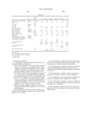
- the copolymer was tested for mechanical properties by standard ISO tests from injection moulded specimens. The results are set out in Table 2 below as sample P3.
- the copolymer, P3 was blended with the plastomer as in Example 1.
- the results of the mechanical properties of the final polymer blend are set out in Table 2 below as sample Blend 3.
- the falling weight impact showed good ductility down to ⁇ 20° C., and the Charpy notched result was also clearly improved.
- the stress whitening resistance measured by the white blush diameter was still of the same order as the copolymer (P3).
- the heterophasic copolymer was produced as in Example 2. After the first reactor the homopolymer product had an MFR 2.16 (230° C.) of 9.2 g/10 min and in the second reactor a random copolymer was produced with an ethylene content of about 2 wt %. The elastomer was produced in the third reactor as in Examples 1 and 2 and the MFR 2.16 (230° C.) after pelletising was 7.7 g/10 min.
- the copolymer had a total ethylene content of 5.9 wt % and the AM was 10.7 wt %.
- the C2 of AM was 34 wt % and the IV of AM was 2.5 dl/g.
- the copolymer was tested as in Example 3 and the results are set out in Table 2 below as sample P4.
- This copolymer blend had very good falling weight impact down to ⁇ 20° C. as the starting copolymer had less ductility already at room temperature.
- the Charpy value was also clearly improved.
- the stress whitening resistance measured by the white blush was still of the same order as the copolymer (P4).
- the starting heterophasic copolymer was produced as in Example 4 except that the second reactor produced a propylene homopolymer.
- the matrix polymer had an MFR 2 of 4.4 g/10 min.
- the elastomer was produced in the third reactor with a comonomer molar ratio (C2/C3) of 0.62.
- the final copolymer had a MFR 2.16 (230° C.) of 3.3 g/10 min (after stabilisation and pelletising).
- the final copolymer had an ethylene content of 5.6 wt % and the AM was 11.7 wt %.
- the C2 of AM was 32.7 wt % and the IV of AM was 2.3 dl/g.
- copolymer was tested as in Examples 3 and 4 and the results are set out in Table 2 below as sample P5.
- copolymer, P5 was blended with the plastomer as in Examples 1 to 4.
- the mechanical properties of the final copolymer blend are set out in Table 2 below as sample Blend 5.
- the blend had very good impact properties down to ⁇ 20° C., with a stress whitening resistance comparable to that of the base copolymer (P5).
- the heterophasic copolymer was produced as in Example 3 except that more elastomer was produced in the third reactor.
- the resulting copolymer had a MFR 2.16 (230° C.) of 11 g/10 min (after stabilisation and pelletising).
- the copolymer (P6) had an ethylene content of 9.2 wt % and the AM was 21.4 wt %.
- the C2 of AM was 31.4 wt % and the IV of AM was 3 dl/g.
- the copolymer was tested and the test results are set out in Table 2 below as sample P6.
- the copolymer, P6 was blended with polymer as in Examples 1 to 5 except that in place of the plastomer was used a Ziegler Natta catalyst produced LLDPE with a MFR 2.16 (190° C.) of 30 g/10 min and a density of 917 kg/m 3 .
- Two blends were produced with the addition of 10 wt % and 20 wt % (blend copolymer samples Blend 6.1 and Blend 6.2) LLDPE.
- the copolymer and blends were tested and the results are set out in Table 2 below.
- the impact properties were improved with the lower amount of LLDPE (10 wt %) and the stress whitening resistance was unchanged.
- the ethylene/propylene rubber interphase is too low to act as a compatabiliser between the matrix polymer and the high quantity of LLDPE
- a heterophasic copolymer was prepared as in Example 6 but with a lower elastomer content.
- This copolymer (P7) had MFR 2.16 (230° C.) of 12 g/10 min and an ethylene content of 5.0% wt.
- Copolymer P7 was blended with 5 and 15% wt of LLDPE as in Example 6 to produce samples Blend 7.1 and 7.2 and with 5 and 15% wt of a plastomer (Exact 4041) with MFR 2.16 (190° C.) of 2.6 g/10 min and 881 kg/m 3 density to produce Samples Blend 7.3 and 7.4.
- a heterophasic copolymer was produced as in Example 5 but with a higher elastomer content in order to obtain impact and stiffness properties of the same order as in Blend 5 of Example 5.
- the ethylene content of this copolymer (P8) was 9.7% wt
- MFR 2.16 (230° C.) was 3.8 g/10 min
- the amorphous phase (AM) i.e. the xylene soluble fraction
- C2 of AM was 35% wt
- IV of AM was 2.4 dl/g.
Landscapes
- Chemical & Material Sciences (AREA)
- Health & Medical Sciences (AREA)
- Chemical Kinetics & Catalysis (AREA)
- Medicinal Chemistry (AREA)
- Polymers & Plastics (AREA)
- Organic Chemistry (AREA)
- Crystallography & Structural Chemistry (AREA)
- Compositions Of Macromolecular Compounds (AREA)
- Addition Polymer Or Copolymer, Post-Treatments, Or Chemical Modifications (AREA)
- Oscillators With Electromechanical Resonators (AREA)
Applications Claiming Priority (3)
| Application Number | Priority Date | Filing Date | Title |
|---|---|---|---|
| EP01301521A EP1236769A1 (de) | 2001-02-21 | 2001-02-21 | Heterophasisches Propylenpolymer |
| EP01301521.9 | 2001-02-21 | ||
| PCT/EP2002/001620 WO2002072693A1 (en) | 2001-02-21 | 2002-02-14 | Heterophasic propylene polymer |
Publications (2)
| Publication Number | Publication Date |
|---|---|
| US20040116607A1 US20040116607A1 (en) | 2004-06-17 |
| US7279526B2 true US7279526B2 (en) | 2007-10-09 |
Family
ID=8181728
Family Applications (1)
| Application Number | Title | Priority Date | Filing Date |
|---|---|---|---|
| US10/468,059 Expired - Fee Related US7279526B2 (en) | 2001-02-21 | 2002-02-14 | Heterophasic propylene polymer |
Country Status (6)
| Country | Link |
|---|---|
| US (1) | US7279526B2 (de) |
| EP (2) | EP1236769A1 (de) |
| AT (1) | ATE293145T1 (de) |
| DE (1) | DE60203706T3 (de) |
| ES (1) | ES2242000T7 (de) |
| WO (1) | WO2002072693A1 (de) |
Cited By (8)
| Publication number | Priority date | Publication date | Assignee | Title |
|---|---|---|---|---|
| US20060052541A1 (en) * | 2002-06-25 | 2006-03-09 | Erling Hagen | Polyolefin with improved scratch resistance and process for producing the same |
| US20100105848A1 (en) * | 2008-10-27 | 2010-04-29 | Prasadarao Meka | Propylene Impact Copolymers With Balanced Impact Strength And Stiffness |
| US20100249329A1 (en) * | 2007-08-08 | 2010-09-30 | Borealis Technology Oy | Sterilisable and tough impact polypropylene composition |
| US20110294940A1 (en) * | 2008-11-21 | 2011-12-01 | Borealis Ag | Method for improving flowability of heterophasic polypropylene powder |
| US20130065006A1 (en) * | 2010-05-10 | 2013-03-14 | Ctl-Th Packaging, S.L. Unipersonal | Tube made of flexible material, procedure for the manufacture of tubes made of flexible material, and the formulation used |
| CN107922695A (zh) * | 2015-08-10 | 2018-04-17 | Sabic环球技术有限责任公司 | 包含多相丙烯共聚物的组合物 |
| US20210115235A1 (en) * | 2017-05-18 | 2021-04-22 | Borealis Ag | Heterophasic polyolefin composition with excellent optical properties |
| US11993701B2 (en) | 2017-09-20 | 2024-05-28 | Borealis Ag | Polypropylene composition |
Families Citing this family (52)
| Publication number | Priority date | Publication date | Assignee | Title |
|---|---|---|---|---|
| CA2487512A1 (en) | 2002-06-26 | 2004-01-08 | Basell Poliolefine Italia S.P.A. | Impact-resistant polyolefin compositions |
| AU2003242663A1 (en) | 2002-06-26 | 2004-01-19 | Basell Poliolefine Italia S.P.A. | Impact-resistant polyolefin compositions |
| ATE491745T1 (de) | 2003-05-15 | 2011-01-15 | Borealis Tech Oy | Polyolefin-zusammensetzung |
| EP1510547A1 (de) * | 2003-08-13 | 2005-03-02 | Borealis Technology OY | Neuartige Polypropylenzusammensetzungen mit verbesserter Weissbruchneigungsbeständigkeit |
| JP2005097358A (ja) * | 2003-09-22 | 2005-04-14 | Showa Denko Plastic Products Co Ltd | ポリプロピレン系成形体及び容器 |
| EP1680468B1 (de) | 2003-11-06 | 2011-08-17 | Basell Poliolefine Italia S.r.l. | Polypropylenzusammensetzung |
| BRPI0511307A (pt) | 2004-06-08 | 2007-12-04 | Basell Poliolefine Srl | composição poliolefìnica tendo um alto balanço de dureza, resistência a impacto e alongamento na ruptura e um baixo encolhimento térmico |
| EP1607440A1 (de) | 2004-06-18 | 2005-12-21 | Borealis Technology OY | Modifizierte Polypropylenzusammensetzung |
| DE102004042290A1 (de) * | 2004-09-01 | 2006-03-02 | Helvoet Pharma Belgium N.V. | Medizinischer Verpackungsbehälter |
| ES2399823T3 (es) * | 2004-09-02 | 2013-04-03 | Borealis Technology Oy | Una tubería de polímero sin presión, una composición para la misma, y un proceso para su preparación |
| EP1659151A1 (de) * | 2004-11-18 | 2006-05-24 | Borealis Technology OY | Neue Propylenpolymerzusammensetzungen |
| PL1681315T3 (pl) * | 2005-01-14 | 2009-03-31 | Borealis Polymers Oy | Heterofazowa kompozycja polimerowa i sposób jej wytwarzania |
| PL1724303T3 (pl) * | 2005-05-20 | 2010-03-31 | Borealis Tech Oy | Polipropylen o poprawionej przetwarzalności do produkcji rur |
| ES2325405T5 (es) * | 2005-05-20 | 2013-04-23 | Borealis Technology Oy | Polímero de elevada fluidez en fusión, con duración mejorada, para aplicaciones en tubos |
| US20080281046A1 (en) * | 2005-08-22 | 2008-11-13 | Ryoji Mori | Propylene Based Resin Composition |
| CA2621207C (en) | 2005-08-29 | 2014-09-23 | Bfs Diversified Products, Llc | Thermoplastic roofing membranes |
| ES2315776T3 (es) * | 2005-11-16 | 2009-04-01 | Borealis Technology Oy | Resina de polipropileno con baja contraccion, alta resistencia al impacto, rigidez y resistencia al rayado. |
| DE602005018087D1 (de) * | 2005-12-22 | 2010-01-14 | Borealis Tech Oy | Polyolefinzusammensetzungen |
| ES2309648T3 (es) * | 2005-12-30 | 2008-12-16 | Borealis Technology Oy | Pelicula de polipropileno con caracteristicas mecanicas equilibradas. |
| EP1818365A1 (de) | 2006-02-14 | 2007-08-15 | Borealis Technology Oy | Polypropylenzusammensetzungen |
| DE602006020248D1 (de) | 2006-04-18 | 2011-04-07 | Borealis Tech Oy | Polymerschicht für Kabel mit verbesserter Weissbruchneigungsbeständigkeit |
| ES2404700T3 (es) * | 2006-04-26 | 2013-05-28 | Borealis Technology Oy | Un artículo de poliolefina transparente que está sometido a un tratamiento térmico |
| ES2558869T3 (es) | 2006-06-30 | 2016-02-09 | Borealis Technology Oy | Composición de poliolefinas adecuada para botellas con alta resistencia al impacto y transparencia |
| KR101273049B1 (ko) | 2006-12-29 | 2013-06-10 | 주식회사 효성 | 폴리올레핀계 수지조성물 및 이를 포함하는 다층 필름 |
| EP2014714A1 (de) * | 2007-07-11 | 2009-01-14 | Borealis Technology Oy | Heterophasische Polyolefin-Zusammensetzung |
| EP2072546B2 (de) * | 2007-12-18 | 2012-12-26 | Borealis Technology Oy | Heterophasisches Polypropylen mit hoher Schlagfestigkeit |
| BRPI0908411B1 (pt) | 2008-02-29 | 2018-10-30 | Basell Poliolefine Italia Srl | composições de poliolefinas |
| EP2108679A1 (de) | 2008-04-10 | 2009-10-14 | Borealis Technology Oy | Polymerzusammensetzung mit geringer Emission |
| US8450416B2 (en) | 2008-04-11 | 2013-05-28 | Borealis Technology Oy | Flexible polypropylene with high impact strength |
| WO2009129873A1 (en) * | 2008-04-24 | 2009-10-29 | Borealis Ag | High purity heterophasic propylene copolymers |
| EP2145923B9 (de) * | 2008-07-16 | 2019-06-12 | Borealis AG | Rohr mit hoher Festigkeit enthaltend eine Heterophasenpolymerzusammensetzung |
| EP2340279B1 (de) | 2008-09-24 | 2013-03-06 | Basell Poliolefine Italia S.r.l. | Polyolefinzusammensetzungen mit guter trübungsbeständigkeit |
| EP2251375A1 (de) * | 2009-05-07 | 2010-11-17 | Borealis AG | Thermoplastische Polyolefinverbindungen mit verringerter Entflammungsempfindlichkeit |
| ATE512196T1 (de) | 2009-06-22 | 2011-06-15 | Borealis Ag | Heterophasische polypropylen- copolymerzusammensetzung |
| EP2368921B1 (de) * | 2010-03-26 | 2014-11-26 | Borealis AG | VERFAHREN ZUR HERSTELLUNG VON FLIEßFÄHIGEM, COMONOMERREICHEN POLYPROPYLEN |
| EP2423257B1 (de) * | 2010-08-27 | 2012-10-24 | Borealis AG | Steife Polypropylenzusammensetzung mit ausgezeichneter Streckung beim Bruch |
| EP2586825B1 (de) * | 2011-10-28 | 2014-05-28 | Borealis AG | Weiche Polypropylenzusammensetzung mit hohem Durchfluss |
| EP2592111A1 (de) | 2011-11-11 | 2013-05-15 | Basell Poliolefine Italia S.r.l. | Polymerzusammensetzung für Stoßstangen und Innenräume und polyethylenbasierte Harzvorläufer |
| EP2592112A1 (de) | 2011-11-11 | 2013-05-15 | Basell Poliolefine Italia S.r.l. | Polymerzusammensetzung für Stoßstangen und Innenräume und polyethylenbasierte Harzvorläufer |
| ES2525494T3 (es) * | 2011-11-29 | 2014-12-23 | Borealis Ag | Composición de poliolefinas con reducida aparición de marcas de flujo |
| CN103946022B (zh) * | 2011-12-02 | 2016-10-12 | 埃克森美孚化学专利公司 | 多层薄膜及其制造方法 |
| MX381413B (es) * | 2012-09-18 | 2025-03-04 | Prime Polymer Co Ltd | Composicion de resina de polipropileno y sus usos. |
| PL2824142T3 (pl) | 2013-07-12 | 2016-08-31 | Borealis Ag | Kopolimer heterofazowy |
| EP3224015B1 (de) * | 2014-11-24 | 2020-01-01 | Borealis AG | Polymerzusammensetzungen und extrusionsbeschichtete artikel |
| EP3234008B1 (de) * | 2014-12-19 | 2019-02-20 | Abu Dhabi Polymers Co. Ltd (Borouge) LLC. | Verbesserte weissbruchleistung für batteriegehäuse |
| RU2768931C2 (ru) * | 2017-01-30 | 2022-03-25 | Бореалис Аг | Композиция гетерофазного полиолефина с улучшенными оптическими свойствами |
| ES2959196T3 (es) * | 2017-06-29 | 2024-02-21 | Borealis Ag | Composición de polipropileno con excelente rendimiento al impacto |
| US11384232B2 (en) * | 2018-03-14 | 2022-07-12 | Sumitomo Chemical Company, Limited | Heterophasic propylene polymerization material |
| DE102018113157B4 (de) * | 2018-06-01 | 2022-03-03 | Silgan White Cap Manufacturing Gmbh | Gefäßverschluss mit Dichtungselement |
| EP3877464B1 (de) * | 2018-11-07 | 2022-10-12 | Borealis AG | Polyolefinzusammensetzung mit verbesserter schlag- und aufhellungsbeständigkeit |
| US12359047B2 (en) | 2019-04-12 | 2025-07-15 | Borealis Ag | Low stress whitening polypropylene composition |
| ES2928288T3 (es) * | 2020-05-18 | 2022-11-16 | Borealis Ag | Película de múltiples capas con propiedades mejoradas |
Citations (5)
| Publication number | Priority date | Publication date | Assignee | Title |
|---|---|---|---|---|
| US5747592A (en) * | 1994-12-16 | 1998-05-05 | Exxon Chemical Patents, Inc. | Thermoplastic polymer compositions and their production and use |
| WO1998021275A1 (en) | 1996-11-13 | 1998-05-22 | Exxon Chemical Patents Inc. | Modification of polypropylene impact copolymers with metallocene based polyethylenes |
| WO1998054260A1 (en) | 1997-05-29 | 1998-12-03 | Exxon Chemical Patents Inc. | Low modulus thermoplastic olefin compositions |
| WO1998059002A1 (en) | 1997-06-24 | 1998-12-30 | Borealis A/S | Heterophasic propylene copolymer and process for its preparation |
| WO2001077224A1 (en) | 2000-04-07 | 2001-10-18 | Borealis Technology Oy | Process for producing propylene based polymer compositions |
-
2001
- 2001-02-21 EP EP01301521A patent/EP1236769A1/de not_active Withdrawn
-
2002
- 2002-02-14 ES ES02711869T patent/ES2242000T7/es active Active
- 2002-02-14 EP EP02711869A patent/EP1373403B3/de not_active Expired - Lifetime
- 2002-02-14 AT AT02711869T patent/ATE293145T1/de not_active IP Right Cessation
- 2002-02-14 WO PCT/EP2002/001620 patent/WO2002072693A1/en not_active Ceased
- 2002-02-14 DE DE60203706T patent/DE60203706T3/de not_active Expired - Lifetime
- 2002-02-14 US US10/468,059 patent/US7279526B2/en not_active Expired - Fee Related
Patent Citations (5)
| Publication number | Priority date | Publication date | Assignee | Title |
|---|---|---|---|---|
| US5747592A (en) * | 1994-12-16 | 1998-05-05 | Exxon Chemical Patents, Inc. | Thermoplastic polymer compositions and their production and use |
| WO1998021275A1 (en) | 1996-11-13 | 1998-05-22 | Exxon Chemical Patents Inc. | Modification of polypropylene impact copolymers with metallocene based polyethylenes |
| WO1998054260A1 (en) | 1997-05-29 | 1998-12-03 | Exxon Chemical Patents Inc. | Low modulus thermoplastic olefin compositions |
| WO1998059002A1 (en) | 1997-06-24 | 1998-12-30 | Borealis A/S | Heterophasic propylene copolymer and process for its preparation |
| WO2001077224A1 (en) | 2000-04-07 | 2001-10-18 | Borealis Technology Oy | Process for producing propylene based polymer compositions |
Non-Patent Citations (1)
| Title |
|---|
| Amberg et al, Ethylene-Propylene Rubber, Industrial and Engineering Chemistry, May 1961, vol. 53, No. 5, pp. 368-370. * |
Cited By (16)
| Publication number | Priority date | Publication date | Assignee | Title |
|---|---|---|---|---|
| US20060052541A1 (en) * | 2002-06-25 | 2006-03-09 | Erling Hagen | Polyolefin with improved scratch resistance and process for producing the same |
| US20100249329A1 (en) * | 2007-08-08 | 2010-09-30 | Borealis Technology Oy | Sterilisable and tough impact polypropylene composition |
| US8173747B2 (en) * | 2007-08-08 | 2012-05-08 | Borealis Technology Oy | Sterilisable and tough impact polypropylene composition |
| US20100105848A1 (en) * | 2008-10-27 | 2010-04-29 | Prasadarao Meka | Propylene Impact Copolymers With Balanced Impact Strength And Stiffness |
| US7851554B2 (en) * | 2008-10-27 | 2010-12-14 | Exxonmobil Chemical Patents Inc. | Propylene impact copolymers with balanced impact strength and stiffness |
| US20110105690A1 (en) * | 2008-10-27 | 2011-05-05 | Prasadarao Meka | Method for Making Propylene Impact Copolymers with Balanced Impact Strength and Stiffness |
| US8076419B2 (en) | 2008-10-27 | 2011-12-13 | Exxonmobil Chemical Patents Inc. | Method for making propylene impact copolymers with balanced impact strength and stiffness |
| US8841390B2 (en) * | 2008-11-21 | 2014-09-23 | Borealis Ag | Method for improving flowability of heterophasic polypropylene powder |
| US20110294940A1 (en) * | 2008-11-21 | 2011-12-01 | Borealis Ag | Method for improving flowability of heterophasic polypropylene powder |
| US20130065006A1 (en) * | 2010-05-10 | 2013-03-14 | Ctl-Th Packaging, S.L. Unipersonal | Tube made of flexible material, procedure for the manufacture of tubes made of flexible material, and the formulation used |
| US8568843B2 (en) * | 2010-05-10 | 2013-10-29 | Ctl-Th Packaging, S.L. Unipersonal | Tube made of flexible material, procedure for the manufacture of tubes made of flexible material, and the formulation used |
| CN107922695A (zh) * | 2015-08-10 | 2018-04-17 | Sabic环球技术有限责任公司 | 包含多相丙烯共聚物的组合物 |
| US10995206B2 (en) * | 2015-08-10 | 2021-05-04 | Sabic Global Technologies B.V. | Composition comprising heterophasic propylene copolymer |
| CN107922695B (zh) * | 2015-08-10 | 2021-06-15 | Sabic环球技术有限责任公司 | 包含多相丙烯共聚物的组合物 |
| US20210115235A1 (en) * | 2017-05-18 | 2021-04-22 | Borealis Ag | Heterophasic polyolefin composition with excellent optical properties |
| US11993701B2 (en) | 2017-09-20 | 2024-05-28 | Borealis Ag | Polypropylene composition |
Also Published As
| Publication number | Publication date |
|---|---|
| EP1373403B3 (de) | 2010-02-17 |
| EP1373403A1 (de) | 2004-01-02 |
| ES2242000T7 (es) | 2011-08-01 |
| WO2002072693A1 (en) | 2002-09-19 |
| DE60203706T3 (de) | 2010-07-22 |
| ATE293145T1 (de) | 2005-04-15 |
| DE60203706T2 (de) | 2006-03-02 |
| US20040116607A1 (en) | 2004-06-17 |
| ES2242000T3 (es) | 2005-11-01 |
| DE60203706D1 (en) | 2005-05-19 |
| EP1373403B1 (de) | 2005-04-13 |
| EP1236769A1 (de) | 2002-09-04 |
Similar Documents
| Publication | Publication Date | Title |
|---|---|---|
| US7279526B2 (en) | Heterophasic propylene polymer | |
| EP1801156B1 (de) | Polyolefinzusammensetzungen | |
| CN101379127B (zh) | 聚丙烯组合物 | |
| US7579422B2 (en) | Propylene random copolymer and process for the production thereof | |
| US6300420B1 (en) | Polypropylene composition with broad MWD | |
| CN101679557B (zh) | 用于制备软质丙烯聚合物组合物的方法 | |
| CN102695757B (zh) | 高流动聚丙烯组合物 | |
| US8044135B2 (en) | Polypropylene impact copolymer compositions | |
| US20160200839A1 (en) | Polypropylene composition comprising a propylene copolymer component | |
| EP2488583B1 (de) | Propylenpolymerzusammensetzungen | |
| KR20080086439A (ko) | 프로필렌 단일중합체 성분을 포함하는 폴리프로필렌 조성물 | |
| US20110293869A1 (en) | High melt flow random polypropylene copolymer | |
| CN100354356C (zh) | 抗冲击聚烯烃组合物 | |
| EP2264099A1 (de) | Propylenpolymerzusammensetzungen | |
| CN101679558A (zh) | 软质丙烯聚合物组合物 | |
| WO2011138111A1 (en) | Propylene polymer compositions | |
| EP1874838B1 (de) | Propylenpolymerzusammensetzung zum thermoformen | |
| EP2492309A1 (de) | Heterophasische Polyolefinzusammensetzung mit verbesserter Fließfähigkeit und Stoßfestigkeit | |
| EP2666817A1 (de) | Weiche heterophasische Polyolefinzusammensetzung mit niedrigem C6-Entnahmevolumen | |
| EP1873203A1 (de) | Polyolefinzusammensetzung zur Herstellung von Flaschen mit Schlagfestigkeit und Tranparenz | |
| WO2025162707A1 (en) | Polypropylene composition |
Legal Events
| Date | Code | Title | Description |
|---|---|---|---|
| AS | Assignment |
Owner name: BOREALIS TECHNOLOGY OY, FINLAND Free format text: ASSIGNMENT OF ASSIGNORS INTEREST;ASSIGNORS:MALM, BO;JAASKELAINEN, PIRJO;PITKANEN, PAIVI;AND OTHERS;REEL/FRAME:015072/0846;SIGNING DATES FROM 20030828 TO 20030923 |
|
| FEPP | Fee payment procedure |
Free format text: PAYOR NUMBER ASSIGNED (ORIGINAL EVENT CODE: ASPN); ENTITY STATUS OF PATENT OWNER: LARGE ENTITY |
|
| FPAY | Fee payment |
Year of fee payment: 4 |
|
| REMI | Maintenance fee reminder mailed | ||
| LAPS | Lapse for failure to pay maintenance fees | ||
| STCH | Information on status: patent discontinuation |
Free format text: PATENT EXPIRED DUE TO NONPAYMENT OF MAINTENANCE FEES UNDER 37 CFR 1.362 |
|
| FP | Lapsed due to failure to pay maintenance fee |
Effective date: 20151009 |