US6147136A - Dental compositions based on ROMP oligomers and polymers - Google Patents
Dental compositions based on ROMP oligomers and polymers Download PDFInfo
- Publication number
- US6147136A US6147136A US09/162,454 US16245498A US6147136A US 6147136 A US6147136 A US 6147136A US 16245498 A US16245498 A US 16245498A US 6147136 A US6147136 A US 6147136A
- Authority
- US
- United States
- Prior art keywords
- component
- composition according
- dental composition
- relative
- denotes
- Prior art date
- Legal status (The legal status is an assumption and is not a legal conclusion. Google has not performed a legal analysis and makes no representation as to the accuracy of the status listed.)
- Expired - Lifetime
Links
- 239000000203 mixture Substances 0.000 title claims abstract description 58
- 229920000642 polymer Polymers 0.000 title claims abstract description 26
- 238000007152 ring opening metathesis polymerisation reaction Methods 0.000 title claims description 12
- 239000004568 cement Substances 0.000 claims abstract description 21
- 239000000463 material Substances 0.000 claims abstract description 21
- 239000000945 filler Substances 0.000 claims abstract description 14
- 239000003999 initiator Substances 0.000 claims abstract description 13
- 238000011049 filling Methods 0.000 claims abstract description 12
- 239000000654 additive Substances 0.000 claims abstract description 7
- 239000000049 pigment Substances 0.000 claims abstract description 5
- 150000001875 compounds Chemical class 0.000 claims description 32
- 239000000843 powder Substances 0.000 claims description 18
- 239000007788 liquid Substances 0.000 claims description 12
- 238000002156 mixing Methods 0.000 claims description 8
- 238000006243 chemical reaction Methods 0.000 claims description 7
- 238000004519 manufacturing process Methods 0.000 claims description 6
- 229910052760 oxygen Inorganic materials 0.000 claims description 6
- 238000010526 radical polymerization reaction Methods 0.000 claims description 6
- 125000000217 alkyl group Chemical group 0.000 claims description 5
- 238000010538 cationic polymerization reaction Methods 0.000 claims description 5
- 125000002915 carbonyl group Chemical group [*:2]C([*:1])=O 0.000 claims description 4
- 229920006395 saturated elastomer Polymers 0.000 claims description 4
- NIXOWILDQLNWCW-UHFFFAOYSA-M Acrylate Chemical compound [O-]C(=O)C=C NIXOWILDQLNWCW-UHFFFAOYSA-M 0.000 claims description 3
- 239000002738 chelating agent Substances 0.000 claims description 3
- 125000004122 cyclic group Chemical group 0.000 claims description 3
- 239000003085 diluting agent Substances 0.000 claims description 3
- 229910052739 hydrogen Inorganic materials 0.000 claims description 3
- CERQOIWHTDAKMF-UHFFFAOYSA-M methacrylate group Chemical group C(C(=C)C)(=O)[O-] CERQOIWHTDAKMF-UHFFFAOYSA-M 0.000 claims description 3
- 125000004433 nitrogen atom Chemical group N* 0.000 claims description 3
- 125000004430 oxygen atom Chemical group O* 0.000 claims description 3
- 239000003381 stabilizer Substances 0.000 claims description 3
- 229910052717 sulfur Inorganic materials 0.000 claims description 3
- 125000002947 alkylene group Chemical group 0.000 claims 2
- 101100177155 Arabidopsis thaliana HAC1 gene Proteins 0.000 claims 1
- 101100434170 Oryza sativa subsp. japonica ACR2.1 gene Proteins 0.000 claims 1
- 101100434171 Oryza sativa subsp. japonica ACR2.2 gene Proteins 0.000 claims 1
- 125000003700 epoxy group Chemical group 0.000 claims 1
- 238000000034 method Methods 0.000 claims 1
- 239000002253 acid Substances 0.000 description 23
- 150000007513 acids Chemical class 0.000 description 18
- 239000000178 monomer Substances 0.000 description 14
- VYPSYNLAJGMNEJ-UHFFFAOYSA-N silicon dioxide Inorganic materials O=[Si]=O VYPSYNLAJGMNEJ-UHFFFAOYSA-N 0.000 description 11
- 238000005452 bending Methods 0.000 description 8
- 239000000243 solution Substances 0.000 description 7
- 239000000470 constituent Substances 0.000 description 6
- 239000003178 glass ionomer cement Substances 0.000 description 6
- HWSSEYVMGDIFMH-UHFFFAOYSA-N 2-[2-[2-(2-methylprop-2-enoyloxy)ethoxy]ethoxy]ethyl 2-methylprop-2-enoate Chemical compound CC(=C)C(=O)OCCOCCOCCOC(=O)C(C)=C HWSSEYVMGDIFMH-UHFFFAOYSA-N 0.000 description 5
- 241000183024 Populus tremula Species 0.000 description 5
- 239000011521 glass Substances 0.000 description 5
- 238000012552 review Methods 0.000 description 5
- 235000012239 silicon dioxide Nutrition 0.000 description 5
- XLYOFNOQVPJJNP-UHFFFAOYSA-N water Substances O XLYOFNOQVPJJNP-UHFFFAOYSA-N 0.000 description 5
- 239000007864 aqueous solution Substances 0.000 description 4
- 239000003479 dental cement Substances 0.000 description 4
- 229920002521 macromolecule Polymers 0.000 description 4
- 238000006116 polymerization reaction Methods 0.000 description 4
- 239000000126 substance Substances 0.000 description 4
- FRIBMENBGGCKPD-UHFFFAOYSA-N 3-(2,3-dimethoxyphenyl)prop-2-enal Chemical compound COC1=CC=CC(C=CC=O)=C1OC FRIBMENBGGCKPD-UHFFFAOYSA-N 0.000 description 3
- -1 4,1-phenyleneoxy Chemical group 0.000 description 3
- MUBZPKHOEPUJKR-UHFFFAOYSA-N Oxalic acid Chemical compound OC(=O)C(O)=O MUBZPKHOEPUJKR-UHFFFAOYSA-N 0.000 description 3
- 125000003118 aryl group Chemical group 0.000 description 3
- 125000003178 carboxy group Chemical group [H]OC(*)=O 0.000 description 3
- 125000002524 organometallic group Chemical group 0.000 description 3
- 150000002978 peroxides Chemical class 0.000 description 3
- 239000010453 quartz Substances 0.000 description 3
- 239000000377 silicon dioxide Substances 0.000 description 3
- 238000004154 testing of material Methods 0.000 description 3
- VNQXSTWCDUXYEZ-UHFFFAOYSA-N 1,7,7-trimethylbicyclo[2.2.1]heptane-2,3-dione Chemical compound C1CC2(C)C(=O)C(=O)C1C2(C)C VNQXSTWCDUXYEZ-UHFFFAOYSA-N 0.000 description 2
- 229910002020 Aerosil® OX 50 Inorganic materials 0.000 description 2
- OKTJSMMVPCPJKN-UHFFFAOYSA-N Carbon Chemical compound [C] OKTJSMMVPCPJKN-UHFFFAOYSA-N 0.000 description 2
- VZCYOOQTPOCHFL-OWOJBTEDSA-N Fumaric acid Chemical compound OC(=O)\C=C\C(O)=O VZCYOOQTPOCHFL-OWOJBTEDSA-N 0.000 description 2
- AMFGWXWBFGVCKG-UHFFFAOYSA-N Panavia opaque Chemical compound C1=CC(OCC(O)COC(=O)C(=C)C)=CC=C1C(C)(C)C1=CC=C(OCC(O)COC(=O)C(C)=C)C=C1 AMFGWXWBFGVCKG-UHFFFAOYSA-N 0.000 description 2
- VSCWAEJMTAWNJL-UHFFFAOYSA-K aluminium trichloride Chemical compound Cl[Al](Cl)Cl VSCWAEJMTAWNJL-UHFFFAOYSA-K 0.000 description 2
- 150000001412 amines Chemical class 0.000 description 2
- 230000015572 biosynthetic process Effects 0.000 description 2
- 229930006711 bornane-2,3-dione Natural products 0.000 description 2
- 239000002775 capsule Substances 0.000 description 2
- 239000003054 catalyst Substances 0.000 description 2
- 150000001768 cations Chemical class 0.000 description 2
- 239000002131 composite material Substances 0.000 description 2
- RWGFKTVRMDUZSP-UHFFFAOYSA-N cumene Chemical compound CC(C)C1=CC=CC=C1 RWGFKTVRMDUZSP-UHFFFAOYSA-N 0.000 description 2
- 208000002925 dental caries Diseases 0.000 description 2
- ZMJOQTILTVQJJE-UHFFFAOYSA-N ethenol;2-methylprop-2-enoic acid Chemical compound OC=C.CC(=C)C(O)=O ZMJOQTILTVQJJE-UHFFFAOYSA-N 0.000 description 2
- QQYNRBAAQFZCLF-UHFFFAOYSA-N furan-maleic anhydride adduct Chemical compound O1C2C3C(=O)OC(=O)C3C1C=C2 QQYNRBAAQFZCLF-UHFFFAOYSA-N 0.000 description 2
- 150000002432 hydroperoxides Chemical class 0.000 description 2
- SVSUWSOGSRJLQC-UHFFFAOYSA-N hydroxymethyl 3-[2-[3-(hydroxymethoxy)-3-oxoprop-1-enyl]-1-tricyclo[5.2.1.02,6]decanyl]prop-2-enoate Chemical compound C12CCCC2(C=CC(=O)OCO)C2(C=CC(=O)OCO)CC1CC2 SVSUWSOGSRJLQC-UHFFFAOYSA-N 0.000 description 2
- 239000011256 inorganic filler Substances 0.000 description 2
- 229910003475 inorganic filler Inorganic materials 0.000 description 2
- 238000005259 measurement Methods 0.000 description 2
- 150000002734 metacrylic acid derivatives Chemical class 0.000 description 2
- 125000003518 norbornenyl group Chemical class C12(C=CC(CC1)C2)* 0.000 description 2
- 239000002243 precursor Substances 0.000 description 2
- 239000003469 silicate cement Substances 0.000 description 2
- 238000003756 stirring Methods 0.000 description 2
- 229910052712 strontium Inorganic materials 0.000 description 2
- CIOAGBVUUVVLOB-UHFFFAOYSA-N strontium atom Chemical compound [Sr] CIOAGBVUUVVLOB-UHFFFAOYSA-N 0.000 description 2
- 150000003512 tertiary amines Chemical class 0.000 description 2
- VZCYOOQTPOCHFL-UHFFFAOYSA-N trans-butenedioic acid Natural products OC(=O)C=CC(O)=O VZCYOOQTPOCHFL-UHFFFAOYSA-N 0.000 description 2
- 229910009111 xH2 O Inorganic materials 0.000 description 2
- SMZOUWXMTYCWNB-UHFFFAOYSA-N 2-(2-methoxy-5-methylphenyl)ethanamine Chemical compound COC1=CC=C(C)C=C1CCN SMZOUWXMTYCWNB-UHFFFAOYSA-N 0.000 description 1
- JAHNSTQSQJOJLO-UHFFFAOYSA-N 2-(3-fluorophenyl)-1h-imidazole Chemical compound FC1=CC=CC(C=2NC=CN=2)=C1 JAHNSTQSQJOJLO-UHFFFAOYSA-N 0.000 description 1
- NIXOWILDQLNWCW-UHFFFAOYSA-N 2-Propenoic acid Natural products OC(=O)C=C NIXOWILDQLNWCW-UHFFFAOYSA-N 0.000 description 1
- XDLMVUHYZWKMMD-UHFFFAOYSA-N 3-trimethoxysilylpropyl 2-methylprop-2-enoate Chemical compound CO[Si](OC)(OC)CCCOC(=O)C(C)=C XDLMVUHYZWKMMD-UHFFFAOYSA-N 0.000 description 1
- ROWKCXLLOLDVIO-UHFFFAOYSA-N 7-oxabicyclo[2.2.1]hept-5-ene-2,3-dicarboxylic acid Chemical compound O1C2C=CC1C(C(=O)O)C2C(O)=O ROWKCXLLOLDVIO-UHFFFAOYSA-N 0.000 description 1
- 239000005725 8-Hydroxyquinoline Substances 0.000 description 1
- 238000005698 Diels-Alder reaction Methods 0.000 description 1
- KCXVZYZYPLLWCC-UHFFFAOYSA-N EDTA Chemical compound OC(=O)CN(CC(O)=O)CCN(CC(O)=O)CC(O)=O KCXVZYZYPLLWCC-UHFFFAOYSA-N 0.000 description 1
- 229910004039 HBF4 Inorganic materials 0.000 description 1
- 229910004713 HPF6 Inorganic materials 0.000 description 1
- MHAJPDPJQMAIIY-UHFFFAOYSA-N Hydrogen peroxide Chemical compound OO MHAJPDPJQMAIIY-UHFFFAOYSA-N 0.000 description 1
- 229910021578 Iron(III) chloride Inorganic materials 0.000 description 1
- CERQOIWHTDAKMF-UHFFFAOYSA-N Methacrylic acid Chemical compound CC(=C)C(O)=O CERQOIWHTDAKMF-UHFFFAOYSA-N 0.000 description 1
- BPQQTUXANYXVAA-UHFFFAOYSA-N Orthosilicate Chemical compound [O-][Si]([O-])([O-])[O-] BPQQTUXANYXVAA-UHFFFAOYSA-N 0.000 description 1
- 229910019142 PO4 Inorganic materials 0.000 description 1
- OFOBLEOULBTSOW-UHFFFAOYSA-N Propanedioic acid Natural products OC(=O)CC(O)=O OFOBLEOULBTSOW-UHFFFAOYSA-N 0.000 description 1
- 101150108015 STR6 gene Proteins 0.000 description 1
- FEWJPZIEWOKRBE-UHFFFAOYSA-N Tartaric acid Natural products [H+].[H+].[O-]C(=O)C(O)C(O)C([O-])=O FEWJPZIEWOKRBE-UHFFFAOYSA-N 0.000 description 1
- 150000001252 acrylic acid derivatives Chemical class 0.000 description 1
- 239000012190 activator Substances 0.000 description 1
- 230000000996 additive effect Effects 0.000 description 1
- 230000001464 adherent effect Effects 0.000 description 1
- 230000002411 adverse Effects 0.000 description 1
- 125000001931 aliphatic group Chemical group 0.000 description 1
- 150000007656 barbituric acids Chemical class 0.000 description 1
- 229910052788 barium Inorganic materials 0.000 description 1
- DSAJWYNOEDNPEQ-UHFFFAOYSA-N barium atom Chemical compound [Ba] DSAJWYNOEDNPEQ-UHFFFAOYSA-N 0.000 description 1
- 125000001797 benzyl group Chemical group [H]C1=C([H])C([H])=C(C([H])=C1[H])C([H])([H])* 0.000 description 1
- 150000007942 carboxylates Chemical class 0.000 description 1
- 239000003795 chemical substances by application Substances 0.000 description 1
- 239000008139 complexing agent Substances 0.000 description 1
- 239000005548 dental material Substances 0.000 description 1
- 238000011161 development Methods 0.000 description 1
- 239000012933 diacyl peroxide Substances 0.000 description 1
- 125000005520 diaryliodonium group Chemical group 0.000 description 1
- 238000002845 discoloration Methods 0.000 description 1
- 229960001484 edetic acid Drugs 0.000 description 1
- 150000002170 ethers Chemical class 0.000 description 1
- 150000002222 fluorine compounds Chemical class 0.000 description 1
- 239000001530 fumaric acid Substances 0.000 description 1
- 239000000499 gel Substances 0.000 description 1
- 239000008187 granular material Substances 0.000 description 1
- 238000001033 granulometry Methods 0.000 description 1
- 239000005337 ground glass Substances 0.000 description 1
- MBAKFIZHTUAVJN-UHFFFAOYSA-I hexafluoroantimony(1-);hydron Chemical compound F.F[Sb](F)(F)(F)F MBAKFIZHTUAVJN-UHFFFAOYSA-I 0.000 description 1
- 238000010348 incorporation Methods 0.000 description 1
- 230000000977 initiatory effect Effects 0.000 description 1
- RBTARNINKXHZNM-UHFFFAOYSA-K iron trichloride Chemical compound Cl[Fe](Cl)Cl RBTARNINKXHZNM-UHFFFAOYSA-K 0.000 description 1
- 229910052746 lanthanum Inorganic materials 0.000 description 1
- FZLIPJUXYLNCLC-UHFFFAOYSA-N lanthanum atom Chemical compound [La] FZLIPJUXYLNCLC-UHFFFAOYSA-N 0.000 description 1
- VZCYOOQTPOCHFL-UPHRSURJSA-N maleic acid Chemical compound OC(=O)\C=C/C(O)=O VZCYOOQTPOCHFL-UPHRSURJSA-N 0.000 description 1
- 239000011976 maleic acid Substances 0.000 description 1
- 239000011159 matrix material Substances 0.000 description 1
- LVHBHZANLOWSRM-UHFFFAOYSA-N methylenebutanedioic acid Natural products OC(=O)CC(=C)C(O)=O LVHBHZANLOWSRM-UHFFFAOYSA-N 0.000 description 1
- 235000006408 oxalic acid Nutrition 0.000 description 1
- 229940116315 oxalic acid Drugs 0.000 description 1
- 238000006864 oxidative decomposition reaction Methods 0.000 description 1
- 238000010525 oxidative degradation reaction Methods 0.000 description 1
- 238000007248 oxidative elimination reaction Methods 0.000 description 1
- 229960003540 oxyquinoline Drugs 0.000 description 1
- 150000002976 peresters Chemical class 0.000 description 1
- 125000000864 peroxy group Chemical group O(O*)* 0.000 description 1
- 125000005634 peroxydicarbonate group Chemical group 0.000 description 1
- NBIIXXVUZAFLBC-UHFFFAOYSA-K phosphate Chemical compound [O-]P([O-])([O-])=O NBIIXXVUZAFLBC-UHFFFAOYSA-K 0.000 description 1
- 239000010452 phosphate Substances 0.000 description 1
- AQSJGOWTSHOLKH-UHFFFAOYSA-N phosphite(3-) Chemical class [O-]P([O-])[O-] AQSJGOWTSHOLKH-UHFFFAOYSA-N 0.000 description 1
- 239000004033 plastic Substances 0.000 description 1
- 230000000379 polymerizing effect Effects 0.000 description 1
- 230000001698 pyrogenic effect Effects 0.000 description 1
- MCJGNVYPOGVAJF-UHFFFAOYSA-N quinolin-8-ol Chemical compound C1=CN=C2C(O)=CC=CC2=C1 MCJGNVYPOGVAJF-UHFFFAOYSA-N 0.000 description 1
- 229910052761 rare earth metal Inorganic materials 0.000 description 1
- 150000002910 rare earth metals Chemical class 0.000 description 1
- 150000003839 salts Chemical class 0.000 description 1
- 150000004756 silanes Chemical class 0.000 description 1
- 238000003786 synthesis reaction Methods 0.000 description 1
- 239000011975 tartaric acid Substances 0.000 description 1
- 235000002906 tartaric acid Nutrition 0.000 description 1
- 230000007704 transition Effects 0.000 description 1
- SEAZOECJMOZWTD-UHFFFAOYSA-N trimethoxy(oxiran-2-ylmethyl)silane Chemical compound CO[Si](OC)(OC)CC1CO1 SEAZOECJMOZWTD-UHFFFAOYSA-N 0.000 description 1
- RBORBHYCVONNJH-UHFFFAOYSA-K yttrium(iii) fluoride Chemical compound F[Y](F)F RBORBHYCVONNJH-UHFFFAOYSA-K 0.000 description 1
Images
Classifications
-
- A—HUMAN NECESSITIES
- A61—MEDICAL OR VETERINARY SCIENCE; HYGIENE
- A61K—PREPARATIONS FOR MEDICAL, DENTAL OR TOILETRY PURPOSES
- A61K6/00—Preparations for dentistry
- A61K6/80—Preparations for artificial teeth, for filling teeth or for capping teeth
- A61K6/884—Preparations for artificial teeth, for filling teeth or for capping teeth comprising natural or synthetic resins
- A61K6/887—Compounds obtained by reactions only involving carbon-to-carbon unsaturated bonds
Definitions
- the present invention relates to dental compositions containing oligomers or polymers obtained by ring-opening metathesis polymerization.
- Ethylenically-unsaturated monomers preferably methacrylate and acrylate monomers
- 2,2-Bis(4,1-phenyleneoxy (2-hydroxy-3,1-propanediyl)-methacrylate)-propylidene bis-GMA
- Bowen U.S. Pat. No. 3,066,112
- TEGDMA triethyleneglycol dimethacrylate
- Curing of these compositions is based on a radical polymerization reaction which is initiated by appropriately activated radical-forming initiators.
- the adverse polymerization shrinkage that occurs during polymerization is problematic. For example, during application as filling material, this can lead to the formation of discoloration at the edge of the tooth cavity or even to the development of marginal gaps with the associated risk of secondary caries.
- these cement materials Compared with the radical-polymerizing dental compositions, these cement materials have the great drawback that their mechanical properties such as compressive strength and bending strength are markedly inferior. The reason for this is, in the case of the glass-ionomer cements, among other things a very high flexibility of the polycarboxylic acid of the liquid.
- the task of the present invention is to elaborate dental materials containing oligomers and polymers, which lead in the case of radical-polymerizing systems to little volumetric shrinkage and in the case of cement systems to better mechanical properties.
- compositions which contain:
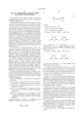
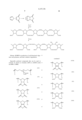
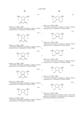
- component (a) are oligomers or polymers with the general formula ##STR3## or ##STR4## in which:
- X denotes CH 2 , NH, O or S
- m has a value from 10 to 20 000
- n has a value from 10 to 20 000
- R 1 denotes --CHR 4 --CHR 5 --, --CR 4 ⁇ CR 5 -- ##STR5## C 2 -C 10 -alkylene, C 2 -C 10 -alkenylene, C 2 -C 10 -epoxyalkylene, or C 6 -C 15 -o-arylene which can be substituted by alkyl, OH, NH 2 , C(O)OR 6 , C(O)NHR 6 , PO 3 H, SO 3 H, Cl, Br or F,
- R 1' denotes --CHR 4 --CHR 5 --, CR 4 ⁇ CR 5 -- ##STR6##
- R 2 , R 3 , R 4 , R 5 denote H, C 1 -C 15 -alkyl, C(O)OR 6 , C(O)NHR 6 , PO 3 H, SO 3 H, OH and
- R 6 denotes H or a linear, branched or cyclic C 1 -C 30 -alkyl or aryl residue, which can contain 0-10 O or N atoms and 0 to 5 carbonyl groups and is saturated or unsaturated, with the proviso that these compounds contain groups which lead to curing of the compositions by radical or cationic polymerization or by a cement reaction.
- Oligomers or polymers of general formulae I and II can be obtained by ring-opening metathesis polymerization (ROMP).
- ROMP ring-opening metathesis polymerization
- Ring-opening metathesis polymerization is known from the literature and has also been used industrially for some years (Comprehensive Polymer Sci.; 4, 109-142). Uses of these oligomers or polymers obtained by ROMP for dental applications are not known.
- Ethylenically unsaturated oligomers or polymers can be used in the disclosed dental compositions either alone or in combination with other ethylenically unsaturated monomers.
- Ethylenically unsaturated co-monomers whose use is preferred are acrylates or methacrylates.
- Especially preferred ethylenically unsaturated co-monomers are bis-GMA, TEGDMA, bis-(hydroxymethyl)tricyclo(5.2.1.0 2 ,6)-decane-diacrylate and 2,2-bis(4,1-phenyleneoxy(3,1-propanediyl)-methacrylate)-propylidene.
- Radical-forming catalysts according to constituent (c) for curing these ethylenically unsaturated monomers, oligomers and polymers can be substances that can be activated by UV or visible light, for example benzoinalkylether, benzyl ketals, acylphosphine oxides or aliphatic and aromatic 1,2-diketone compounds, e.g. camphor quinone, it being possible for the photochemical polymerization to be accelerated in a known way by adding activators, such as tertiary amines or organic phosphites.
- activators such as tertiary amines or organic phosphites.
- Suitable initiator systems for initiating radical polymerization by a redox mechanism are for example the systems peroxide/amine or peroxide/barbituric acid derivatives and the like.
- initiator systems of this kind it is advisable to prepare an initiator (e.g. peroxide) and a catalyst component (e.g. amine) separately. The two components are then mixed together homogeneously shortly before use.
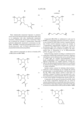
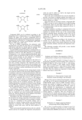
- Compounds (IX) to (XII) can once again be synthesized from the corresponding precursors as described in "Comprehensive organometallic Chemistry II: a review of the literature 1982-1994", Elsevier 1995, pages 1209-1232.
- Compound (XIII) can be produced according to the information from A. Demonceau et al. in Macromolecules (1997), 30, pages 3127 to 3136.
- the cationically polymerizable compounds according to formulae (I) and (II) can likewise be used either alone or in combination with epoxy-functional co-monomers.
- epoxy-functionalized co-monomers are the 3,4-epoxycyclohexylmethyl-3',4'-epoxycyclohexyl-carboxylate disclosed in DE-A-196 48 283 and tetrakis-(3,4-epoxy-cyclohexylethyl)-tetramethyltetracyclosiloxane.
- cation formers For curing these epoxy-functionalized monomers, oligomers or polymers, cation formers according to constituent (c) are used.
- acid formers such as Lewis or Broensted acids or compounds that release such acids, which initiate cationic polymerization, for example BF 3 or its ether adducts (BF 3 + THF, BF 3 + Et 2 O, etc.), AlCl 3 , FeCl 3 , HPF 6 , HAsF 6 , HSbF 6 , HBF 4 or substances that initiate polymerization after irradiation by UV or visible light or by heat and/or pressure, such as (eta-6-cumene)(eta-5-cyclopentadienyl)-iron-hexafluoroantimonate, substituted diaryl-iodonium salts and triarylsulphonium salts.
- peroxy compounds such as per-esters, diacyl peroxides, peroxydicarbonates and hydroperoxides.
- hydroperoxides is preferred, and cumene hydroperoxide in approx. 70-90% solution in cumene is especially preferred for use as an accelerator.
- the ratio of photo-initiator to cumene hydroperoxide can be varied over a wide range from 1:0.001 to 1:10, but preferably a ratio from 1:0.1 to 1:6 is used, and a ratio from 1:0.5 to 1:4 is especially preferred.
- complexing agents for example oxalic acid, 8-hydroxyquinoline, ethylenediamine-tetraacetic acid and aromatic polyhydroxy compounds.
- Bases typically tertiary amines, can be added as retarders.
- Suitable fillers that can be used in conjunction with the ethylenically unsaturated or the epoxy-functionalized oligomers or polymers according to unsaturated constituent (b), are inorganic fillers as a rule. Quartz, ground glasses, silica gels and pyrogenic silicas or their granules may be mentioned as examples. It is preferable for radiopaque fillers to be used as well, at least partially. These can on the one hand be radiopaque glasses, i.e. glasses containing e.g.
- strontium, barium or lanthanum, or part of the fillers may consist of a radiopaque additive, for example yttrium trifluoride, strontium hexafluorozirconate or fluorides of the rare-earth metals.
- a radiopaque additive for example yttrium trifluoride, strontium hexafluorozirconate or fluorides of the rare-earth metals.
- Common hydrophobizing agents are silanes, for example trimethoxy-methacryloyloxypropylsilane, or trimethoxyglycidylsilane.
- the fillers preferably have a mean granulometry ⁇ 20 ⁇ m and especially ⁇ 5 ⁇ m and an upper limit of grain size of 150, preferably 70 ⁇ m and especially 25 ⁇ m. Mixtures of 5-25 wt. % of fillers with a mean grain size of 0.02-0.06 ⁇ m and 65-85 wt.
- Compounds with the general formulae (I) and (II), which set by a cement reaction preferably contain free carboxyl groups.
- Polycarboxylic acids based on acrylic acid, methacrylic acid, maleic acid, fumaric acid or itaconic acid as monomers, have for example been used until now for the so-called glass-ionomer cements.
- a disadvantage of cements which set with these polycarboxylic acids is that, in comparison with other dental filling materials, they display only very poor values of bending strength. One cause of this is considered to be the great flexibility of the polycarboxylic acid chains, which do not lead to sufficient stiffness of the cured material. Attempts to increase the density of carboxyl groups per monomer unit generally result in polymers that are no longer sufficiently water-soluble for use in a cement system.
- Polymeric acids which have a C--C double bond and a saturated five-membered ring in their polymer chain according to formula (I) and (II), and which are known from the literature, can be produced from 5,6-carboxyl-substituted norbornenes by ROMP.
- These polymeric acids have a molar weight per carbonyl group of 105-107 g/mol and surprisingly, despite their markedly lower density of carboxyl groups, compared with traditional polymeric acids, they have very good solubility in water.
- these acids offer the possibility of being further modified by subsequent reactions.
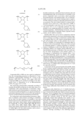
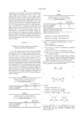
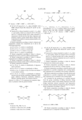
- the chain length of these molecules can be adapted to the needs of the particular application by oxidative cleavage according to the following scheme. ##
- Compound (XIV) can be produced according to the information from A. Demonceau et al. in Macromolecules (1997), 30, pages 3127 to 3136. Compounds (XV) to (XXIV) can once again be synthesized from the corresponding precursors as described in "Comprehensive organometallic Chemistry II: a review of the literature 1982-1994", Elsevier 1995, pages 1209-1232.
- polymeric acids described here can either be used alone or in combination with known acids that are already used for cements. Such acids are described for example in DE-A-2 101 889.
- silicate cement powders As acid-soluble powders according to constituent (b), it is possible to use conventional silicate cement powders, as also described in DE-A-2 101 889. However, it is especially advantageous to use calcium-aluminium-fluosilicate glass powders, which are described in DE-A-2 061 513. Suitable silicate cement powders are also indicated in "Chemical Society Reviews” (1978), 7 (2), 265-296.
- Dental cements are usually employed in the form of a two-component system, which consists of a liquid component and a powder component.
- the oligomeric and polymeric acids according to the invention can, according to one embodiment i) of the invention, be part of the mixing liquid and can, according to another embodiment ii), be part of the powder component:
- the mixing liquid consists of an aqueous solution of the previously defined oligomeric or polymeric acids and of conventional polymeric acids and usual additives if required.
- the acid-containing monomers are generally at a concentration of at least 20%, generally 30 to 60 wt. %, especially 40 to 50 wt. % in the aqueous solution, if the cement system is intended as tooth filling cement. Even lower concentrations are advantageous for fixing cements and for prosthetic purposes.
- the aqueous solutions should have viscosities of at least 0.5 poise, though at most 300 poise. A preferred viscosity range is between 2 and 200, especially between 5 and 100 poise (at 25° C.).
- dental cements pre-dosed in so-called shaking capsules.
- the liquid and the powder are provided in two separate compartments, and they are combined and mixed mechanically immediately before use.
- This pre-dosing can also be applied to the dental compositions according to the invention.
- the mixing component of the dental cements i.e. the oligomeric or polymeric acids according to constituent (a)
- the mixing component can then simply be mixed with water, with the usual additives if required.
- the oligomeric and polymeric acids can each be added as a half to the liquid and the powdered mixing component.
- compounds XIV to XXIV can also be used as adherents in so-called bonding compositions. These are used either without filler (0 wt. % of component (b)) or with low filler content (5 to 30 wt. % of component (b)).
- Suitable auxiliaries according to component (d) are for example the stabilizers, pigments or diluents that are usually employed in dentistry.
- chelating agents preferably tartaric acid, can be added both to the powder component and to the liquid component, to improve the curing characteristics [see DE-A-2 319 715].
- the dental compositions according to the invention are suitable for the production of filling materials, fixing cements, inlays, onlays, veneer shells, temporary crown and bridge materials, dentistry materials and impression materials.
- aqueous solution from Example 1 200 mg is mixed with 200 mg of an aqueous polycarboxylic acid solution (CHELON-FIL liquid, made by ESPE, Seefeld). Using a spatula, this mixture is worked to a paste with 1.2 g of reactive glass powder (CHELON-FIL Powder, made by ESPE, Seefeld). For determination of compressive and bending strength, the freshly mixed cement is placed in the appropriate test-piece moulds and left until completion of setting (approx. 5 minutes). Then the test-pieces are removed from the moulds and are tested in a Zwick Universal Tester in accordance with ISO Standard 4049 and ISO Standard 9917. The results of material testing are shown in Table 1.
- Exo-7-oxabicyclo[2.2.1]-hept-5-ene-2,3-dicarboxylic anhydride is dissolved in 23.5 g hydroxyethylene methacrylate (HEMA) and stirred for 10 hours. Then it is taken up with a solution of 105 g water and K 2 [RuCl 5 ]*xH 2 O (approx. 140 mg/ml) and heated to 60° C., with stirring. After about 45 minutes, a clear, highly viscous solution forms, and this is dried at high vacuum for several hours. Then the high-viscosity residue is diluted with 10 g triethyleneglycol-dimethacrylate (TEGDMA).
- TEGDMA triethyleneglycol-dimethacrylate
Landscapes
- Health & Medical Sciences (AREA)
- Oral & Maxillofacial Surgery (AREA)
- Plastic & Reconstructive Surgery (AREA)
- Epidemiology (AREA)
- Life Sciences & Earth Sciences (AREA)
- Animal Behavior & Ethology (AREA)
- General Health & Medical Sciences (AREA)
- Public Health (AREA)
- Veterinary Medicine (AREA)
- Dental Preparations (AREA)
Applications Claiming Priority (2)
| Application Number | Priority Date | Filing Date | Title |
|---|---|---|---|
| DE19742980 | 1997-09-29 | ||
| DE19742980A DE19742980A1 (de) | 1997-09-29 | 1997-09-29 | Dentalmassen auf der Basis von ROMP-Oligomeren oder -Polymeren |
Publications (1)
| Publication Number | Publication Date |
|---|---|
| US6147136A true US6147136A (en) | 2000-11-14 |
Family
ID=7844000
Family Applications (1)
| Application Number | Title | Priority Date | Filing Date |
|---|---|---|---|
| US09/162,454 Expired - Lifetime US6147136A (en) | 1997-09-29 | 1998-09-29 | Dental compositions based on ROMP oligomers and polymers |
Country Status (5)
| Country | Link |
|---|---|
| US (1) | US6147136A (de) |
| EP (1) | EP0904767B1 (de) |
| JP (1) | JPH11158022A (de) |
| AU (1) | AU736342B2 (de) |
| DE (2) | DE19742980A1 (de) |
Cited By (15)
| Publication number | Priority date | Publication date | Assignee | Title |
|---|---|---|---|---|
| US20020045678A1 (en) * | 2000-08-22 | 2002-04-18 | Lopez Larry A. | Dental restorative compositions and method of use thereof |
| US6465541B2 (en) * | 1998-10-07 | 2002-10-15 | 3M Innovative Properties Company | Radiopaque cationically polymerizable compositions comprising a radiopacifying filler, and method for polymerizing same |
| US6525125B1 (en) * | 1999-02-05 | 2003-02-25 | Materia, Inc. | Polyolefin compositions having variable density and methods for their production and use |
| US20030125262A1 (en) * | 2000-03-21 | 2003-07-03 | Wisconsin Alumni Research Foundation | Methods and reagents for regulation of cellular responses in biological systems |
| US20040044112A1 (en) * | 2002-08-27 | 2004-03-04 | Sullivan Michael J. | Golf balls comprising glass ionomers, ormocers, or other hybrid organic/inorganic compositions |
| US20040157973A1 (en) * | 2002-08-27 | 2004-08-12 | Sullivan Michael J. | Golf balls comprising glass ionomers, ormocers, or other hybrid organic/inorganic compositions |
| US6835271B1 (en) * | 1999-08-06 | 2004-12-28 | 3M Espe Ag | Adhesive systems |
| US6852775B1 (en) | 1999-06-21 | 2005-02-08 | 3M Espe Ag | Polymerizable dental compositions |
| US20050159510A1 (en) * | 2004-01-15 | 2005-07-21 | Sonja Smolak | Dental materials based on ROMP composites |
| US20060287459A1 (en) * | 2004-06-15 | 2006-12-21 | Xiaoming Jin | Radical polymerizable macrocyclic resin compositions with low polymerization stress |
| US7238122B2 (en) | 2002-08-27 | 2007-07-03 | Acushnet Company | Ormocer composites for golf ball components |
| US20080182948A1 (en) * | 2004-06-15 | 2008-07-31 | Xiaoming Jin | Low shrinkage and low stress dental compositions |
| US20080300340A1 (en) * | 2007-05-31 | 2008-12-04 | Gross Stephen M | Self-healing dental composites and related methods |
| US20100104585A1 (en) * | 2000-03-21 | 2010-04-29 | Kiessling Laura L | Methods and Reagents for Regulation of Cellular Responses in Biological Systems |
| US11446116B2 (en) | 2020-07-06 | 2022-09-20 | Perfect Fit Crowns, Llc | Method and apparatus for dental crown restorations using prefabricated sleeve-crown pairs |
Families Citing this family (7)
| Publication number | Priority date | Publication date | Assignee | Title |
|---|---|---|---|---|
| DE19905093A1 (de) * | 1999-02-01 | 2000-08-03 | Ivoclar Ag Schaan | Schrumpfungsarme Dentalmaterialien |
| DE19912251A1 (de) | 1999-03-18 | 2000-09-21 | Espe Dental Ag | Zweikomponentige Zubereitungen zur Herstellung von zahntechnischen Modellen |
| DE19937093A1 (de) * | 1999-08-06 | 2001-02-08 | Espe Dental Ag | Adhäsivsysteme III |
| US6395851B1 (en) | 2000-06-09 | 2002-05-28 | Eastman Chemical Company | Copolymerization of norbornene and functional norbornene monomers |
| ATE519473T1 (de) | 2004-06-30 | 2011-08-15 | Ivoclar Vivadent Ag | Dentalmaterialien, erhalten durch photoinduzierte ring-öffnungs-metathese-polymerisation von cyclischen olefinen |
| DE102013008176A1 (de) | 2012-10-05 | 2014-04-10 | Voco Gmbh | Kit und Verfahren zur indirekten chairside Herstellung von Kompositinlays |
| KR102786311B1 (ko) * | 2020-09-29 | 2025-03-24 | 니폰 제온 가부시키가이샤 | 네거티브형 감광성 수지 조성물 |
Citations (9)
| Publication number | Priority date | Publication date | Assignee | Title |
|---|---|---|---|---|
| US4722948A (en) * | 1984-03-16 | 1988-02-02 | Dynatech Corporation | Bone replacement and repair putty material from unsaturated polyester resin and vinyl pyrrolidone |
| US4855234A (en) * | 1985-11-08 | 1989-08-08 | Minnesota Mining And Manufacturing Company | Biologically active protein immobilized with a polymeric fibrous support |
| US4872936A (en) * | 1985-10-09 | 1989-10-10 | Ernst Muhlbauer Kg | Polymerizable cement mixtures |
| US5019379A (en) * | 1987-07-31 | 1991-05-28 | Massachusetts Institute Of Technology | Unsaturated polyanhydrides |
| US5539060A (en) * | 1993-07-30 | 1996-07-23 | Nippon Zeon Co., Ltd. | Method for hydrogenation of metathesis polymers |
| DE19608313A1 (de) * | 1996-02-22 | 1997-08-28 | Ivoclar Ag | Polymerisierbare Hybridmonomere |
| EP0792881A1 (de) * | 1996-02-22 | 1997-09-03 | Ivoclar Ag | Funktionalisierte bicyclische (Meth)acrylate |
| CA2199567A1 (en) * | 1996-03-20 | 1997-09-20 | Volker Rheinberger | Functionalized and polymerizable polymer |
| DE19616183A1 (de) * | 1996-03-20 | 1997-09-25 | Ivoclar Ag | Funktionalisiertes und polymerisierbares Polymer |
Family Cites Families (1)
| Publication number | Priority date | Publication date | Assignee | Title |
|---|---|---|---|---|
| AU7692294A (en) * | 1993-09-10 | 1995-03-27 | Ciba-Geigy Ag | Process for the polymerization of cyclic olefins and a polymerizable composition |
-
1997
- 1997-09-29 DE DE19742980A patent/DE19742980A1/de not_active Ceased
-
1998
- 1998-09-29 EP EP98118366A patent/EP0904767B1/de not_active Expired - Lifetime
- 1998-09-29 DE DE59813275T patent/DE59813275D1/de not_active Expired - Lifetime
- 1998-09-29 US US09/162,454 patent/US6147136A/en not_active Expired - Lifetime
- 1998-09-29 AU AU87147/98A patent/AU736342B2/en not_active Ceased
- 1998-09-29 JP JP10275028A patent/JPH11158022A/ja active Pending
Patent Citations (9)
| Publication number | Priority date | Publication date | Assignee | Title |
|---|---|---|---|---|
| US4722948A (en) * | 1984-03-16 | 1988-02-02 | Dynatech Corporation | Bone replacement and repair putty material from unsaturated polyester resin and vinyl pyrrolidone |
| US4872936A (en) * | 1985-10-09 | 1989-10-10 | Ernst Muhlbauer Kg | Polymerizable cement mixtures |
| US4855234A (en) * | 1985-11-08 | 1989-08-08 | Minnesota Mining And Manufacturing Company | Biologically active protein immobilized with a polymeric fibrous support |
| US5019379A (en) * | 1987-07-31 | 1991-05-28 | Massachusetts Institute Of Technology | Unsaturated polyanhydrides |
| US5539060A (en) * | 1993-07-30 | 1996-07-23 | Nippon Zeon Co., Ltd. | Method for hydrogenation of metathesis polymers |
| DE19608313A1 (de) * | 1996-02-22 | 1997-08-28 | Ivoclar Ag | Polymerisierbare Hybridmonomere |
| EP0792881A1 (de) * | 1996-02-22 | 1997-09-03 | Ivoclar Ag | Funktionalisierte bicyclische (Meth)acrylate |
| CA2199567A1 (en) * | 1996-03-20 | 1997-09-20 | Volker Rheinberger | Functionalized and polymerizable polymer |
| DE19616183A1 (de) * | 1996-03-20 | 1997-09-25 | Ivoclar Ag | Funktionalisiertes und polymerisierbares Polymer |
Non-Patent Citations (2)
| Title |
|---|
| Patent Abstract of Japan C 293 Mar. 31, 1992 vol. 16/No. 126. * |
| Patent Abstract of Japan C-293 Mar. 31, 1992 vol. 16/No. 126. |
Cited By (29)
| Publication number | Priority date | Publication date | Assignee | Title |
|---|---|---|---|---|
| US7030049B2 (en) * | 1998-10-07 | 2006-04-18 | 3M Innovative Properties Company | Radiopaque cationically polymerizable compositions comprising a radiopacifying filler, and method for polymerizing same |
| US20030158289A1 (en) * | 1998-10-07 | 2003-08-21 | 3M Innovative Properties Company | Radiopaque cationically polymerizable compositions comprising a radiopacifying filler, and method for polymerizing same |
| US7160528B2 (en) | 1998-10-07 | 2007-01-09 | 3M Innovative Properties Company | Radiopaque cationically polymerizable compositions comprising a radiopacifying filler, and method for polymerizing same |
| US6465541B2 (en) * | 1998-10-07 | 2002-10-15 | 3M Innovative Properties Company | Radiopaque cationically polymerizable compositions comprising a radiopacifying filler, and method for polymerizing same |
| US20060052232A1 (en) * | 1998-10-07 | 2006-03-09 | 3M Innovative Properties Company | Radiopaque cationically polymerizable compositions comprising a radiopacifying filler, and method for polymerizing same |
| US6525125B1 (en) * | 1999-02-05 | 2003-02-25 | Materia, Inc. | Polyolefin compositions having variable density and methods for their production and use |
| US6852775B1 (en) | 1999-06-21 | 2005-02-08 | 3M Espe Ag | Polymerizable dental compositions |
| US6835271B1 (en) * | 1999-08-06 | 2004-12-28 | 3M Espe Ag | Adhesive systems |
| US20070270351A1 (en) * | 2000-03-21 | 2007-11-22 | Kiessling Laura L | Methods and Reagents for Regulation of Cellular Responses in Biological Systems |
| US20030125262A1 (en) * | 2000-03-21 | 2003-07-03 | Wisconsin Alumni Research Foundation | Methods and reagents for regulation of cellular responses in biological systems |
| US20100104585A1 (en) * | 2000-03-21 | 2010-04-29 | Kiessling Laura L | Methods and Reagents for Regulation of Cellular Responses in Biological Systems |
| US20020045678A1 (en) * | 2000-08-22 | 2002-04-18 | Lopez Larry A. | Dental restorative compositions and method of use thereof |
| US20040044112A1 (en) * | 2002-08-27 | 2004-03-04 | Sullivan Michael J. | Golf balls comprising glass ionomers, ormocers, or other hybrid organic/inorganic compositions |
| US7037965B2 (en) | 2002-08-27 | 2006-05-02 | Acushnet Company | Golf balls comprising glass ionomers, ormocers, or other hybrid organic/inorganic compositions |
| US6793592B2 (en) | 2002-08-27 | 2004-09-21 | Acushnet Company | Golf balls comprising glass ionomers, or other hybrid organic/inorganic compositions |
| US20040157973A1 (en) * | 2002-08-27 | 2004-08-12 | Sullivan Michael J. | Golf balls comprising glass ionomers, ormocers, or other hybrid organic/inorganic compositions |
| US7238122B2 (en) | 2002-08-27 | 2007-07-03 | Acushnet Company | Ormocer composites for golf ball components |
| US7691919B2 (en) * | 2004-01-15 | 2010-04-06 | Ivoclar Vivadent Ag | Dental materials based on ROMP composites |
| US20050159510A1 (en) * | 2004-01-15 | 2005-07-21 | Sonja Smolak | Dental materials based on ROMP composites |
| US20080182948A1 (en) * | 2004-06-15 | 2008-07-31 | Xiaoming Jin | Low shrinkage and low stress dental compositions |
| US20080182997A1 (en) * | 2004-06-15 | 2008-07-31 | Dentsply International Inc. | Radical polymerizable macrocyclic resin compositions with low polymerization stress |
| US20060287459A1 (en) * | 2004-06-15 | 2006-12-21 | Xiaoming Jin | Radical polymerizable macrocyclic resin compositions with low polymerization stress |
| US20110152569A1 (en) * | 2004-06-15 | 2011-06-23 | Xiaoming Jin | Radical polymerizable macrocyclic resin compositions with low polymerization stress |
| US8129446B2 (en) | 2004-06-15 | 2012-03-06 | Dentsply International Inc. | Radical polymerizable macrocyclic resin compositions with low polymerization stress |
| US8461227B2 (en) | 2004-06-15 | 2013-06-11 | Dentsply International Inc. | Radical polymerizable macrocyclic resin compositions with low polymerization stress |
| US20080300340A1 (en) * | 2007-05-31 | 2008-12-04 | Gross Stephen M | Self-healing dental composites and related methods |
| US8735463B2 (en) * | 2007-05-31 | 2014-05-27 | Creighton University | Self-healing dental composites and related methods |
| US11446116B2 (en) | 2020-07-06 | 2022-09-20 | Perfect Fit Crowns, Llc | Method and apparatus for dental crown restorations using prefabricated sleeve-crown pairs |
| US12611286B2 (en) | 2020-07-06 | 2026-04-28 | Rsl Dental Technologies Llc | Method and apparatus for dental crown restorations using prefabricated sleeve-crown pairs |
Also Published As
| Publication number | Publication date |
|---|---|
| EP0904767B1 (de) | 2005-12-14 |
| AU8714798A (en) | 1999-04-15 |
| JPH11158022A (ja) | 1999-06-15 |
| EP0904767A2 (de) | 1999-03-31 |
| EP0904767A3 (de) | 2004-02-04 |
| DE59813275D1 (de) | 2006-01-19 |
| AU736342B2 (en) | 2001-07-26 |
| DE19742980A1 (de) | 1999-04-01 |
Similar Documents
| Publication | Publication Date | Title |
|---|---|---|
| AU736342B2 (en) | Dental compositions based on ROMP oligomers and polymers | |
| US6075068A (en) | Dental compositions curable by ROMP | |
| EP0044352B1 (de) | Addukte aus Diisocyanaten und Methacryloylalkylethern, -alkoxybenzolen bzw. -alkoxycycloalkanen und deren Verwendung | |
| Moszner et al. | Recent developments of new components for dental adhesives and composites | |
| AU671091B2 (en) | Dental composition and method | |
| US6084004A (en) | Compositions which undergo light-induced cationic curing and their use | |
| US4886843A (en) | Dual-cure cement | |
| US4372836A (en) | Light curable acrylic dental composition with calcium fluoride pigment | |
| US20030069327A1 (en) | Dental compostions comprising bisacrylamides and use thereof | |
| US7678843B2 (en) | Dental restorative material composition | |
| JPH11349427A (ja) | ラジカル重合可能な歯科用材料 | |
| CN103167859A (zh) | 牙科组合物 | |
| KR102742769B1 (ko) | 치과 재료를 제조하기 위한 단량체 혼합물 | |
| US3853962A (en) | Novel methacrylate monomer | |
| US7589132B2 (en) | Dental resins, dental composite materials, and method of manufacture thereof | |
| JP2000204069A (ja) | 重合性不飽和結合含有n―置換アミド化合物 | |
| ES2709762T3 (es) | Materiales dentales a base de monómeros híbridos | |
| EP1879544B1 (de) | Materialien und dentalkomposite daraus | |
| ES2913449T3 (es) | Materiales dentales a base de reticulantes ciclopolimerizables | |
| US20040039080A1 (en) | Dental material and composition | |
| JP6506589B2 (ja) | 歯科用表面処理剤組成物 | |
| JP2004300066A (ja) | 歯科用材料および歯科用組成物 | |
| US7560500B2 (en) | Materials leading to improved dental composites and dental composites made therefrom | |
| US7495038B2 (en) | Materials leading to improved dental composites and dental composites made therefrom | |
| JP3594970B2 (ja) | 歯科用組成物および方法 |
Legal Events
| Date | Code | Title | Description |
|---|---|---|---|
| AS | Assignment |
Owner name: ESPE DENTAL AG, GERMANY Free format text: ASSIGNMENT OF ASSIGNORS INTEREST;ASSIGNOR:BISSINGER, PETER;REEL/FRAME:009598/0229 Effective date: 19981028 |
|
| STCF | Information on status: patent grant |
Free format text: PATENTED CASE |
|
| FEPP | Fee payment procedure |
Free format text: PAYOR NUMBER ASSIGNED (ORIGINAL EVENT CODE: ASPN); ENTITY STATUS OF PATENT OWNER: LARGE ENTITY |
|
| AS | Assignment |
Owner name: 3M ESPE AG, GERMANY Free format text: CHANGE OF NAME;ASSIGNOR:ESPE DENTAL AG;REEL/FRAME:013578/0031 Effective date: 20010322 |
|
| FPAY | Fee payment |
Year of fee payment: 4 |
|
| FPAY | Fee payment |
Year of fee payment: 8 |
|
| AS | Assignment |
Owner name: 3M DEUTSCHLAND GMBH, GERMANY Free format text: MERGER;ASSIGNOR:3M ESPE AG;REEL/FRAME:027762/0754 Effective date: 20111223 |
|
| FPAY | Fee payment |
Year of fee payment: 12 |