US5997805A - High carbon, high density forming - Google Patents
High carbon, high density forming Download PDFInfo
- Publication number
- US5997805A US5997805A US08/879,275 US87927597A US5997805A US 5997805 A US5997805 A US 5997805A US 87927597 A US87927597 A US 87927597A US 5997805 A US5997805 A US 5997805A
- Authority
- US
- United States
- Prior art keywords
- article
- powder
- sintered
- sintering
- molybdenum
- Prior art date
- Legal status (The legal status is an assumption and is not a legal conclusion. Google has not performed a legal analysis and makes no representation as to the accuracy of the status listed.)
- Expired - Fee Related
Links
Images


Classifications
-
- C—CHEMISTRY; METALLURGY
- C22—METALLURGY; FERROUS OR NON-FERROUS ALLOYS; TREATMENT OF ALLOYS OR NON-FERROUS METALS
- C22C—ALLOYS
- C22C33/00—Making ferrous alloys
- C22C33/02—Making ferrous alloys by powder metallurgy
- C22C33/0207—Using a mixture of pre-alloyed powders or a master alloy
-
- C—CHEMISTRY; METALLURGY
- C21—METALLURGY OF IRON
- C21D—MODIFYING THE PHYSICAL STRUCTURE OF FERROUS METALS; GENERAL DEVICES FOR HEAT TREATMENT OF FERROUS OR NON-FERROUS METALS OR ALLOYS; MAKING METAL MALLEABLE, e.g. BY DECARBURISATION OR TEMPERING
- C21D1/00—General methods or devices for heat treatment, e.g. annealing, hardening, quenching or tempering
- C21D1/26—Methods of annealing
-
- C—CHEMISTRY; METALLURGY
- C22—METALLURGY; FERROUS OR NON-FERROUS ALLOYS; TREATMENT OF ALLOYS OR NON-FERROUS METALS
- C22C—ALLOYS
- C22C33/00—Making ferrous alloys
- C22C33/02—Making ferrous alloys by powder metallurgy
-
- B—PERFORMING OPERATIONS; TRANSPORTING
- B22—CASTING; POWDER METALLURGY
- B22F—WORKING METALLIC POWDER; MANUFACTURE OF ARTICLES FROM METALLIC POWDER; MAKING METALLIC POWDER; APPARATUS OR DEVICES SPECIALLY ADAPTED FOR METALLIC POWDER
- B22F2998/00—Supplementary information concerning processes or compositions relating to powder metallurgy
Definitions
- the invention relates to manufacturing methods that allow the forming of high carbon sintered powder metal steel compacts to high density at ambient temperature.
- the invention relates to specific thermal treatments that must be applied prior to the forming operation.
- the invention further relates to specific compositions of iron based powder blends that may be used in the manufacture of the high density article.
- Forming as defined herein includes:
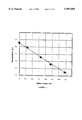
- FIG. 1 illustrates that as carbon content is raised, the density achieved on cold forming is significantly reduced.
- FIG. 1 shows that at the 60 tons per square inch forming pressure, a sintered part with 0.2% carbon, a density of approximately 7.5 g/cc would be achieved. With 0.6% carbon, at the same forming pressure, a density of only 7.3 g/cc would be achieved.
- This invention details methods of processing high carbon materials in a manner that minimizes the above reduction in formability that is usually experienced at higher carbon contents.
- the invention describes methods of manufacturing higher carbon powder metal compacts that are suited to forming to high density in the range of 7.4 to 7.7 g/cc.
- the compositions of the final articles are of a medium to high carbon steel distinction wherein the carbon content is between 0.4% to 0.8% by weight, and preferably about 0.6% depending upon the requirements of the finished article.
- the forming operation is carried out at ambient temperature (although elevated temperatures could be used) which provides acceptable forming tool life and excellent precision features.
- the process preferably uses low cost iron powders which are blended with calculated amounts of graphite and lubricant, calculated amounts of ferro alloys may also be added such that the final desired chemical composition is achieved.
- the powder blend is suited to compaction in rigid compaction dies whereby the powder blend will be pressed into a compact that is around 90% of theoretical density.
- the process is generally described in U.S. Pat. No. 5,476,632. Sintering of the ferroalloy compositions is undertaken at high temperatures, generally greater than 1250° C. such that oxides contained within the compact are reduced.
- the benefits of the invention may also be arrived at by using prealloyed, partially prealloyed or elemental blends of metal powders that contain elements either individually or in combination from the group of chromium, copper, molybdenum, manganese or nickel, either individually or in combination.
- Such materials can be sintered at conventional sintering temperatures of 1100° C. to 1150° C. or alternatively at higher sintering temperatures in excess of 1150° C.
- FIG. 2 shows a diagram of a typical conventional sintering furnace temperature cycle, which consists of a heating segment, a hold at sintering temperature, and a cooling segment.
- FIG. 3 shows a diagram of a modified temperature profile that is a feature of the invention described herein. In the modified cycle shown in FIG. 3, there is an interruption or isothermal hold during the cooling segment.
- Another embodiment of the invention may include the use of a conventional sintering cycle, but then subjecting the sintered articles to a subsequent heat treatment process which includes a heating segment, a holding segment that is usually at a lower temperature than the sintering temperature, and a cooling segment that includes an isothermal hold segment, all of which is illustrated in FIG. 4.
- the high carbon sintered powder metal article is suitable for forming to high density as described in U.S. patent application Ser. No. 08/644,978.
- FIG. 1 is a chart illustrating the effect of carbon on formed density with test rings formed at 60 tsi.
- FIG. 2 is a diagram of a conventional sintering furnace temperature cycle.
- FIG. 3 is a diagram of a modified sintering furnace temperature cycle that includes an interruption during cooling.
- FIG. 4 is a diagram of a heat treatment temperature cycle that includes an interruption during cooling.
- FIG. 5 is a diagram of an alternative temperature cycle that includes slow cooling in the critical temperature range.
- FIG. 6 is an idealised isothermal transformation diagram.
- FIG. 7 shows the microstructure of sintered part after conventional cooling.
- FIG. 8 shows the microstructure which relates to the modified cooling treatment described herein.
- FIG. 9 is a specific thermal cycle example used with an iron, 0.6 wt % C, 0.5 wt % molybdenum alloy.
- FIG. 10 is a graph showing the effect of forming pressure on formed density, Fe, 0.6 wt % C, 0.5 wt % Mo alloy.
- FIG. 11 is a graph showing mechanical property comparison.
- FIG. 12 is a cross-sectional view of the forming process.
- FIG. 13 is a cross-sectional view of the forming process for a sintered ring.
- a method of manufacturing a high carbon sintered powder metal article, suited to forming to high density is herein described.
- the invention involves medium to high carbon steel compositions that after the described thermal processing, may be formed to high density at ambient temperature.
- the medium to high carbon steel compositions utilized herein is between 0.4% and 0.8% by weight carbon, and preferably between 0.6 and 0.7% by weight of the final article.
- the actual carbon content employed depends upon the desired mechanical properties of the final sintered article.
- the remaining composition of the article may be essentially iron and unavoidable impurities.
- the manufacturing method described herein can also be applied to a broad range of alloy compositions as required.
- the commonality in the invention for the various compositions resides in the thermal processing that can be applied to the wide range of compositions with the objective of providing a high carbon containing material (i.e. 0.4% to 0.8% by weight) that is suited to forming to high density by the process described in U.S. patent application Ser. No. 08/644,978 and PCT/CA96/00879.
- alloying elements may be required, such as, chromium, copper, manganese, molybdenum, and nickel. These alloying elements may be present either individually or in combination in a manner to achieve the desired mechanical and metallurgical requirements of the final article.
- the preferred method of adding chromium, manganese and molybdenum would be to add these as ferro alloys (i.e. ferro chromium, ferro manganese, and ferro molybdenum) to the base iron powder as described in U.S. Pat. No. 5,476,632, which is incorporated hereby by reference.
- ferro alloys i.e. ferro chromium, ferro manganese, and ferro molybdenum
- ferro manganese, ferro chromium, and ferro molybdenum may be used individually with the base iron powder, or in any combination, such as may be required to achieve the desired functional requirements of the manufactured article. In other words one, two or three separate ferro alloys could be used or three ferro alloys can be blended with the base iron powder.
- base iron powder includes Hoeganaes Ancorsteel 1000/1000B/1000C, Quebec Metal Powder sold under the trade marks QMP Atomet 29 and Atomet 1001.
- the base iron powder composition consists of commercially available substantially pure iron powder which preferably contains less than 1% by weight unavoidable impurities. Additions of alloying elements are made to achieve the desired properties of the final article. Examples of compositional ranges of alloying elements that may typically be used include at least one of the following: 0.4 to 0.8% carbon, 0 to 1.5% of manganese, 0 to 1.5% chromium and 0 to 1.5% of molybdenum where the % refers to the percentage weight of the alloying element (apart from carbon) to the total weight of the sintered product and the total weight of the alloying elements is between 0 to 2.5%.
- the reference to 0% refers to the situation where there is 0% of the alloying elements Mn, Cr, Mo but between 0.4 to 0.8% carbon.
- the alloying elements Mn, Cr, and Mo are added as ferro alloys namely FeMn, FeCr, FeMo.
- the particle size of the iron powder will have a distribution generally in the range of 10 to 350 ⁇ m.
- the particle size of the alloying additions will generally be within the range of 2 to 20 ⁇ m.
- a lubricant is added to the powder blend. Such lubricants are used regularly in the powdered metal industry. Typical lubricants employed are regular commercially available grades of the type which include, zinc stearate, stearic acid or ethylene bistearamide.
- Nickel and molybdenum content may be achieved by using prealloyed grades of powder.
- Prealloyed molybdenum powder metal having molybdenum compositions of 0.5% to 1.5% with the remainder being iron and unavoidable impurities can be used.
- Prealloyed molybdenum powder metal is available from Hoeganaes under the designation Ancorsteel 85HP (which has approximately 0.85% Mo by weight) or Ancorsteel 150HP (which has approximately 1.50% by weight Mo) or Quebec Powder Metal under the trademarks QMP at 4401 (which has approximately 0.85% by weight Mo).
- the particle size of the prealloyed molybdenum powder metal is generally within the range of 45 ⁇ m to 250 ⁇ m typically.
- the same type lubricants as referred to above may be used to facilitate compaction.
- Copper and nickel contents may be achieved by suitable additions of elemental powders of copper and nickel to the base iron powder.
- elemental powders are available in the marketplace and contain trace elements and unavoidable impurities.
- copper, nickel and molybdenum contents may be achieved by using partially prealloyed grades of powder, for example grades of the type supplied by Hoeganaes, under the designation of Distaloy.
- the formulated blend of powder containing powders of either iron, prealloyed iron, or partially prealloyed iron, together with carbon (which is usually added as graphite), ferro alloys if required, and lubricant, will be compacted in the usual manner as described by pressing in rigid tools.
- the compacted article is then sintered either at conventional temperatures for prealloyed and partially prealloyed iron which are in the range of 1100° C. to 1350° C.
- Sintering the base iron powder with ferro alloys is conducted at high temperature sintering generally greater than 1250° C. as described in U.S. Pat. No. 5,476,632.
- a reducing atmosphere will be maintained, or a vacuum, to ensure reduction of oxides within the compact during exposure to the elevated temperature.
- an isothermal hold is introduced. The precise temperature of the isothermal hold depends on the carbon content and alloy composition of the material being processed. Generally, the isothermal hold will be in the range of 680° C. to 700° C., although for some alloys, the isothermal hold may need to be within the temperature range of 650° C. to 750° C.
- the duration of the isothermal hold will be within the range of 20 minutes to two hours, depending upon carbon content, alloy composition, and the type of component that is being manufactured.
- the isothermal hold technique is the preferred method of achieving the required metallurgical condition prior to the high density forming operation described in U.S. patent application Ser. No. 08/644,978 and PCT/CA96/00879.
- acceptable results may also be achieved by introducing a significantly slower cooling rate section during the generally faster cooling rate from either the maximum sintering temperature or the maximum heat treatment temperature, such a thermal cycle is shown in FIG. 5.
- FIG. 6 shows an idealized isothermal transformation diagram for a steel. The exact form of the diagram changes with each specific composition of steel. However FIG. 6 illustrates one of the features of the diagram together with the effect of cooling rate and the isothermal hold on the microstructure that will be produced in the finally cooled article. On conventional cooling from sintering or heat treatment temperatures, the cooling rate is essentially linear as shown by cooling path "1" on FIG. 6.
- the resulting microstructure would consist of essentially pearlite, a small amount of other transformation phases may be present depending upon actual carbon content, alloy content and precise cooling rate.
- Such a microstructure as shown in FIG. 7, is relatively hard.
- the microstructure shown in FIG. 7 will not give high density during a subsequent high density forming operation.
- a pearlic structure as shown in FIG. 7, although useful, is not sufficiently ductile or malleable.
- the modified cooling method is used, as shown by path "2" on FIG. 6, a remarkably different microstructure is achieved from exactly the same high carbon material.
- the isothermal hold temperature, and time duration, are selected such that during cooling of the material, a residence time is achieved in the ferrite region of the isothermal transformation diagram.
- the result is that in the finally cooled article, a much greater proportion of ferrite, which is very soft, is present, which provides a microstructure in a high carbon material that is well suited to a subsequent high density forming operation. Accordingly by utilizing the isothermal hold technique disclosed herein one controls the transformation to maximize the ferrite content.
- FIG. 8 shows the resultant microstructure of the same material shown in FIG. 7, but the modified cooling path was used during cooling from sintering temperature.
- An iron based 0.6% carbon, 0.5% molybdenum alloy was prepared by blending iron powder, lubricant ferromolybdenum and graphite. The blended mixture was compacted into test rings with a compacting pressure of about 40 tons per square inch to give a green density of approximately 7.0 g/cc.
- the compacted rings were then heated to sintering temperature at a heating rate of approximately 20° C. per minute, the compact was held at sintering temperature of 1280° C. for 20 minutes.
- the compact was cooled from sintering temperature at 12° C. per minute to 680° C. whereupon an isothermal hold was introduced at 680° C. for a time period of 60 minutes. Cooling from 680° C. was continued to ambient at 12° C. per minute.
- the thermal cycle is represented in FIG. 9. A nitrogen/hydrogen reducing atmosphere was maintained throughout the thermal cycle.
- FIG. 10 shows that after forming at pressures in the range of 50 to 80 tons per square inch, densities in the range of 7.4 g/cc to 7.6 g/cc were achieved. At 60 tons per square inch a density of slightly greater than 7.5 g/cc was achieved. It should be noted that, as shown in FIG. 1, with conventional thermal cycling, with a 0.6% carbon alloy, a density of only 7.3 g/cc would be achieved after forming at 60 tons per square inch.
- alloying elements from the group of, chromium, copper, manganese, molybdenum nickel, niobium and vanadium may be present either individually or in combination, together with the high carbon content, (in the range of 0.4% C by weight to 0.8% C by weight).
- the process can be utilized to produce a number of products, including clutch backing plates, sprockets, transmission gears and connecting rods.
- the heat treatment operation is generally carried out within the temperature range of 800° C. and 1300° C.
- the conditions may be varied within the above range to suit the desired functional requirements of the specific article.
- a protective atmosphere during the heat treatment process.
- the atmosphere prevents oxidization of the article during the exposure to the elevated temperature of the heat treatment process.
- the actual atmosphere used may consist of hydrogen ⁇ nitrogen blends, nitrogen ⁇ exothermic gas blends, nitrogen ⁇ endothermic gas blends, disassociated ammonia or a vacuum.
- a carburizing atmosphere may be used during heat treatment.
- the carburizing atmosphere may consist of methane or propane where the carbon atoms will migrate from the methane or propane to the surface layers of the article. In such an operation, carbon will be introduced into the surface layers of the article. If the article is subsequently quenched, a case hardened product can be produced with beneficial wear resistant properties.
- the heat treatment process specifically causes metallurgical bonding within the densified article. After forming, there is very little metallurgical bonding between the compressed powder articles. Such a structure, while having high density, will generally not demonstrate good mechanical properties. At the elevated temperature of the heat treatment process, the cold worked structure will recrystallize and metallurgical bonding occurs between the compressed particles. After completion of the metallurgical bonding process, the article will demonstrate remarkable mechanical properties which are unusual for sintered PM articles.
- the article After the heat treatment, the article is ready for use and will exhibit mechanical properties that are generally very similar to wrought steel of the same chemical composition.
- the precise extent of dimensional movement will depend on sintering conditions employed, such as temperature, time and atmosphere, and on the specific alloying additions that are made.
- the sintered article will be approximately 90% of theoretical density and will be of substantially the same shape as the final article. Additional processing allowances on dimensions are present and shall be more fully particularized herein.
- the sintered article is then subject to the forming operation in which dimensions are bought essentially to final requirements.
- dimensional control is accomplished in the moving of the sintered part during forming.
- high density is imparted to the article.
- the forming operation is often referred to as coining, sizing, repressing or restriking. In essence all processes are carried out in a similar manner.
- the commonality is pressing of a sintered article within a closed rigid die cavity. In the high density forming operation the sintered article is pressed within a closed die cavity.
- the closed die cavity of the forming operation is shown in FIG. 12.
- the closed rigid die cavity 10 is defined by spaced vertical die walls 12 and 14, lower punch or ram walls 16 and upper punch or ram 18.
- the sintered part is represented by 20.
- upper punch or ram 18 imparts a compressive force to sintered part 20.
- the compressive force can be imparted by relative movement between lower punch or ram wall 16 and upper punch or ram wall 18.
- the closed die cavity is designed with a clearance 22 to permit movement of the ductile sintered material in a direction perpendicular to or normal to the compressive force as shown by arrow A.
- the overall compressed length or height of the sintered article is reduced by the dimension S.
- Conventional coining may permit reduction or movement of the sintered material in direction A by 1 to 3%.
- the invention described herein permits movement of the sintered material beyond 3% of the original height or length. It is possible as shall be described herein that the reduction S or percentage closure of the sintered material can reach as much as 30% reduction of dimension H. Particularly advantageous results are achieved by having a closure which represents a compressed length or height Ch, which is between 3% to 19%, less than the original uncompressed length.
- S represents the change in the overall height H of the sintered part to that of the compressed height Ch.
- the compression of the overall length or height collapses the microstructural pores in the sintered powder metal part and thereby densifies the sintered part.
- FIG. 13 Another example of the closed die cavity is shown in FIG. 13 where the closed rigid die cavity 10 is again defined by the rigid tools namely spaced vertical die walls 12 and 14 respectively, the lower punch or ram wall 16 and upper punch or ram wall 18 and core 19.
- the core 19 moves in sliding coaxial relationship within aligned holes formed in upper punch or ram and lower punch or ram.
- the sintered part is represented by a ring 21 which has a bore 23 therethrough.
- upper punch or ram 18 imparts a compressive force A to the sintered ring 21.
- the compressive force can be imparted by relative movement between lower punch or ram wall 16 and upper punch or ram 18.
- the closed die cavity is once again designed with a clearance 22 to permit movement of ductile sintered material in a direction perpendicular or normal to the compressive force A.
- the sintered material will move within the closed cavity from the position of the arrows C v , C h to D v and D h .
- the sintered material will move to fill the clearance 22.
- the bore 23 will have a smaller internal diameter after the application of the compressive force.
- the compressed height of the sintered ring 21 can be reduced by approximately 3 to 19% of the uncompressed height.
- the height of the ring also represents the height is in the axial direction of the ring.
- the sintered article is formed by axial compression allowing radial expansion to decrease the axial length of the sintered article by approximately 3 to 30% of the original axial length.
- the tool clearance 22 depends on the geometry of the sintered part, and it is possible that one could have a different tool clearance 22 on the outside diameter of the part than the tool clearance on the inside diameter.
- the invention described herein may be used to produce a variety of sintered powder metal powder articles or parts which have multi-levels. Examples of such are described in U.S. patent application Ser. No. 08/644,978 and PACT/CA96/00879, and include transmission sockets.
- a multi-level component is comprised of the powder metal powders referred to earlier.
Landscapes
- Chemical & Material Sciences (AREA)
- Engineering & Computer Science (AREA)
- Materials Engineering (AREA)
- Mechanical Engineering (AREA)
- Metallurgy (AREA)
- Organic Chemistry (AREA)
- Physics & Mathematics (AREA)
- Thermal Sciences (AREA)
- Crystallography & Structural Chemistry (AREA)
- Powder Metallurgy (AREA)
- Ceramic Products (AREA)
Priority Applications (9)
| Application Number | Priority Date | Filing Date | Title |
|---|---|---|---|
| US08/879,275 US5997805A (en) | 1997-06-19 | 1997-06-19 | High carbon, high density forming |
| ES98929176T ES2170505T3 (es) | 1997-06-19 | 1998-06-19 | Procedimiento para la fabricacion de una pieza metalica de polvo sinterizado. |
| DE69803218T DE69803218T2 (de) | 1997-06-19 | 1998-06-19 | Verfahren zur herstellung von hochdichten sinterwerkstücke mit hohem kohlenstoffgehalt |
| EP98929176A EP1027467B1 (en) | 1997-06-19 | 1998-06-19 | Method for manufacturing high carbon sintered powder metal steel parts of high density |
| AT98929176T ATE212073T1 (de) | 1997-06-19 | 1998-06-19 | Verfahren zur herstellung von hochdichten sinterwerkstücke mit hohem kohlenstoffgehalt |
| PCT/CA1998/000600 WO1998059083A1 (en) | 1997-06-19 | 1998-06-19 | Method for manufacturing high carbon sintered powder metal steel parts of high density |
| AU79032/98A AU7903298A (en) | 1997-06-19 | 1998-06-19 | Method for manufacturing high carbon sintered powder metal steel parts of high density |
| JP50346299A JP2002504188A (ja) | 1997-06-19 | 1998-06-19 | 高密度の高炭素焼結金属粉末鋼部品の製造法 |
| CA002294066A CA2294066A1 (en) | 1997-06-19 | 1998-06-19 | Method for manufacturing high carbon sintered powder metal steel parts of high density |
Applications Claiming Priority (1)
| Application Number | Priority Date | Filing Date | Title |
|---|---|---|---|
| US08/879,275 US5997805A (en) | 1997-06-19 | 1997-06-19 | High carbon, high density forming |
Publications (1)
| Publication Number | Publication Date |
|---|---|
| US5997805A true US5997805A (en) | 1999-12-07 |
Family
ID=25373797
Family Applications (1)
| Application Number | Title | Priority Date | Filing Date |
|---|---|---|---|
| US08/879,275 Expired - Fee Related US5997805A (en) | 1997-06-19 | 1997-06-19 | High carbon, high density forming |
Country Status (9)
| Country | Link |
|---|---|
| US (1) | US5997805A (https=) |
| EP (1) | EP1027467B1 (https=) |
| JP (1) | JP2002504188A (https=) |
| AT (1) | ATE212073T1 (https=) |
| AU (1) | AU7903298A (https=) |
| CA (1) | CA2294066A1 (https=) |
| DE (1) | DE69803218T2 (https=) |
| ES (1) | ES2170505T3 (https=) |
| WO (1) | WO1998059083A1 (https=) |
Cited By (17)
| Publication number | Priority date | Publication date | Assignee | Title |
|---|---|---|---|---|
| WO2002000378A1 (en) * | 2000-06-28 | 2002-01-03 | Höganäs Ab | Method of production of surface densified powder metal components |
| US6338747B1 (en) | 2000-08-09 | 2002-01-15 | Keystone Investment Corporation | Method for producing powder metal materials |
| US6358298B1 (en) | 1999-07-30 | 2002-03-19 | Quebec Metal Powders Limited | Iron-graphite composite powders and sintered articles produced therefrom |
| US6485540B1 (en) | 2000-08-09 | 2002-11-26 | Keystone Investment Corporation | Method for producing powder metal materials |
| US6488736B2 (en) * | 2000-04-11 | 2002-12-03 | Nissan Motor Co., Ltd. | Method of producing sintered metal sprocket and sprocket produced by the method |
| US20030208784A1 (en) * | 1997-03-13 | 2003-11-06 | Ruley Henry Earl | Methods of constructing a gene mutation library and compounds and compositions thereof |
| EP1371742A1 (fr) * | 2002-06-14 | 2003-12-17 | Snecma Moteurs | Matériau dense autolubrifiant à sec; pièce mécanique en ledit matériau; procédé d'élaboration dudit matériau |
| US20040115084A1 (en) * | 2002-12-12 | 2004-06-17 | Borgwarner Inc. | Method of producing powder metal parts |
| EP1344840A4 (en) * | 2000-10-25 | 2004-08-25 | Honda Motor Co Ltd | SINTERIZED GEAR WHEEL |
| US20040182201A1 (en) * | 2003-02-25 | 2004-09-23 | Matsushita Electric Works, Ltd., | Metal powder composition for use in selective laser sintering |
| US20070048169A1 (en) * | 2005-08-25 | 2007-03-01 | Borgwarner Inc. | Method of making powder metal parts by surface densification |
| US20090129964A1 (en) * | 2005-01-05 | 2009-05-21 | Stackpole Limited | Method of forming powder metal components having surface densification |
| US20100034686A1 (en) * | 2005-01-28 | 2010-02-11 | Caldera Engineering, Llc | Method for making a non-toxic dense material |
| US20100116088A1 (en) * | 2008-11-10 | 2010-05-13 | Kabushiki Kaisha Kobe Seiko Sho (Kobe Steel, Ltd.) | High-strength composition iron powder and sintered part made therefrom |
| CN101879598A (zh) * | 2010-06-28 | 2010-11-10 | 莱芜钢铁股份有限公司 | 连铸结晶器用粉末合金自润滑轴承 |
| US20110002805A1 (en) * | 2007-12-19 | 2011-01-06 | Parker Hannifin Corporation | Formable sintered alloy with dispersed hard phase |
| US20240254604A1 (en) * | 2021-10-14 | 2024-08-01 | Hoeganaes Corporation | Alloy compositions |
Families Citing this family (2)
| Publication number | Priority date | Publication date | Assignee | Title |
|---|---|---|---|---|
| US6143240A (en) * | 1997-11-14 | 2000-11-07 | Stackpole Limited | High density forming process with powder blends |
| DE60025931T2 (de) * | 1999-11-04 | 2006-08-31 | Hoeganaes Corp. | Herstellungsverfahren für verbesserte metallurgische pulverzusammensetzung und nutzung derselbe |
Citations (11)
| Publication number | Priority date | Publication date | Assignee | Title |
|---|---|---|---|---|
| GB1310821A (en) * | 1969-08-30 | 1973-03-21 | Mitsubishi Metal Mining Co Ltd | Carbide spheroidization in sintered iron-based alloys |
| US4018632A (en) * | 1976-03-12 | 1977-04-19 | Chrysler Corporation | Machinable powder metal parts |
| US4836848A (en) * | 1987-03-12 | 1989-06-06 | Mitsubishi Kinzoku Kabushiki Kaisha | Fe-based sintered alloy for valve seats for use in internal combustion engines |
| US4913739A (en) * | 1982-05-22 | 1990-04-03 | Kernforschungszentrum Karlsruhe Gmbh | Method for powder metallurgical production of structural parts of great strength and hardness from Si-Mn or Si-Mn-C alloyed steels |
| US5009704A (en) * | 1989-06-28 | 1991-04-23 | Allied-Signal Inc. | Processing nickel-base superalloy powders for improved thermomechanical working |
| WO1995021275A1 (en) * | 1994-02-08 | 1995-08-10 | Stackpole Limited | Hi-density sintered alloy |
| WO1995026421A1 (en) * | 1994-03-25 | 1995-10-05 | Brico Engineering Limited | A method of making a sintered article |
| US5476632A (en) * | 1992-09-09 | 1995-12-19 | Stackpole Limited | Powder metal alloy process |
| US5547523A (en) * | 1995-01-03 | 1996-08-20 | General Electric Company | Retained strain forging of ni-base superalloys |
| WO1997001651A1 (en) * | 1995-06-29 | 1997-01-16 | Stackpole Limited | Hi-density sintered alloy and spheroidization method for pre-alloyed powders |
| US5754937A (en) * | 1996-05-15 | 1998-05-19 | Stackpole Limited | Hi-density forming process |
Family Cites Families (1)
| Publication number | Priority date | Publication date | Assignee | Title |
|---|---|---|---|---|
| SU1395426A1 (ru) * | 1986-06-16 | 1988-05-15 | Белорусское Научно-Производственное Объединение Порошковой Металлургии | Способ изготовлени порошковых изделий из железографита |
-
1997
- 1997-06-19 US US08/879,275 patent/US5997805A/en not_active Expired - Fee Related
-
1998
- 1998-06-19 EP EP98929176A patent/EP1027467B1/en not_active Expired - Lifetime
- 1998-06-19 WO PCT/CA1998/000600 patent/WO1998059083A1/en not_active Ceased
- 1998-06-19 JP JP50346299A patent/JP2002504188A/ja not_active Ceased
- 1998-06-19 DE DE69803218T patent/DE69803218T2/de not_active Expired - Fee Related
- 1998-06-19 AU AU79032/98A patent/AU7903298A/en not_active Abandoned
- 1998-06-19 ES ES98929176T patent/ES2170505T3/es not_active Expired - Lifetime
- 1998-06-19 AT AT98929176T patent/ATE212073T1/de not_active IP Right Cessation
- 1998-06-19 CA CA002294066A patent/CA2294066A1/en not_active Abandoned
Patent Citations (11)
| Publication number | Priority date | Publication date | Assignee | Title |
|---|---|---|---|---|
| GB1310821A (en) * | 1969-08-30 | 1973-03-21 | Mitsubishi Metal Mining Co Ltd | Carbide spheroidization in sintered iron-based alloys |
| US4018632A (en) * | 1976-03-12 | 1977-04-19 | Chrysler Corporation | Machinable powder metal parts |
| US4913739A (en) * | 1982-05-22 | 1990-04-03 | Kernforschungszentrum Karlsruhe Gmbh | Method for powder metallurgical production of structural parts of great strength and hardness from Si-Mn or Si-Mn-C alloyed steels |
| US4836848A (en) * | 1987-03-12 | 1989-06-06 | Mitsubishi Kinzoku Kabushiki Kaisha | Fe-based sintered alloy for valve seats for use in internal combustion engines |
| US5009704A (en) * | 1989-06-28 | 1991-04-23 | Allied-Signal Inc. | Processing nickel-base superalloy powders for improved thermomechanical working |
| US5476632A (en) * | 1992-09-09 | 1995-12-19 | Stackpole Limited | Powder metal alloy process |
| WO1995021275A1 (en) * | 1994-02-08 | 1995-08-10 | Stackpole Limited | Hi-density sintered alloy |
| WO1995026421A1 (en) * | 1994-03-25 | 1995-10-05 | Brico Engineering Limited | A method of making a sintered article |
| US5547523A (en) * | 1995-01-03 | 1996-08-20 | General Electric Company | Retained strain forging of ni-base superalloys |
| WO1997001651A1 (en) * | 1995-06-29 | 1997-01-16 | Stackpole Limited | Hi-density sintered alloy and spheroidization method for pre-alloyed powders |
| US5754937A (en) * | 1996-05-15 | 1998-05-19 | Stackpole Limited | Hi-density forming process |
Non-Patent Citations (2)
| Title |
|---|
| Database WPI Section Ch, Week 8847 Derwent Publications Ltd., London, G.B. Class M22, AN 88 336390 XP002082034 May 15, 1988. * |
| Database WPI Section Ch, Week 8847 Derwent Publications Ltd., London, G.B. Class M22, AN 88-336390 XP002082034 May 15, 1988. |
Cited By (29)
| Publication number | Priority date | Publication date | Assignee | Title |
|---|---|---|---|---|
| US20030208784A1 (en) * | 1997-03-13 | 2003-11-06 | Ruley Henry Earl | Methods of constructing a gene mutation library and compounds and compositions thereof |
| US6358298B1 (en) | 1999-07-30 | 2002-03-19 | Quebec Metal Powders Limited | Iron-graphite composite powders and sintered articles produced therefrom |
| US6488736B2 (en) * | 2000-04-11 | 2002-12-03 | Nissan Motor Co., Ltd. | Method of producing sintered metal sprocket and sprocket produced by the method |
| US7169351B2 (en) | 2000-06-28 | 2007-01-30 | Höganäs Ab | Method of production of surface densified powder metal components |
| WO2002000378A1 (en) * | 2000-06-28 | 2002-01-03 | Höganäs Ab | Method of production of surface densified powder metal components |
| CN100391659C (zh) * | 2000-06-28 | 2008-06-04 | 赫加奈斯公司 | 生产表面致密的粉末金属部件的方法 |
| US20030155041A1 (en) * | 2000-06-28 | 2003-08-21 | Sven Bengtsson | Method of production of surface densified powder metal components |
| US6485540B1 (en) | 2000-08-09 | 2002-11-26 | Keystone Investment Corporation | Method for producing powder metal materials |
| WO2002011927A3 (en) * | 2000-08-09 | 2003-01-09 | Keystone Invest Corp | Method for producing powder metal materials |
| US6338747B1 (en) | 2000-08-09 | 2002-01-15 | Keystone Investment Corporation | Method for producing powder metal materials |
| EP1344840A4 (en) * | 2000-10-25 | 2004-08-25 | Honda Motor Co Ltd | SINTERIZED GEAR WHEEL |
| EP1371742A1 (fr) * | 2002-06-14 | 2003-12-17 | Snecma Moteurs | Matériau dense autolubrifiant à sec; pièce mécanique en ledit matériau; procédé d'élaboration dudit matériau |
| FR2840969A1 (fr) * | 2002-06-14 | 2003-12-19 | Snecma Moteurs | Materiau dense autolubrifiant a sec; piece mecanique en ledit materiau; procede d'elaboration dudit materiau |
| US6890368B2 (en) | 2002-06-14 | 2005-05-10 | Snecma Moteurs | Dry self-lubricating dense material; a mechanical part formed from said material; a method of manufacturing said material |
| US20050123432A1 (en) * | 2002-12-12 | 2005-06-09 | Borgwarner Inc. | Method of producing powder metal parts |
| US20040115084A1 (en) * | 2002-12-12 | 2004-06-17 | Borgwarner Inc. | Method of producing powder metal parts |
| US20040182201A1 (en) * | 2003-02-25 | 2004-09-23 | Matsushita Electric Works, Ltd., | Metal powder composition for use in selective laser sintering |
| CN1309514C (zh) * | 2003-02-25 | 2007-04-11 | 松下电工株式会社 | 用于选择性激光烧结的金属粉末组合物及其制备方法 |
| US7258720B2 (en) * | 2003-02-25 | 2007-08-21 | Matsushita Electric Works, Ltd. | Metal powder composition for use in selective laser sintering |
| EP1850989A4 (en) * | 2005-01-05 | 2011-06-29 | Stackpole Ltd | METHOD FOR PRODUCING POWDER METALLIC COMPONENTS HAVING A DENSIFIED SURFACE |
| US20090129964A1 (en) * | 2005-01-05 | 2009-05-21 | Stackpole Limited | Method of forming powder metal components having surface densification |
| US20100034686A1 (en) * | 2005-01-28 | 2010-02-11 | Caldera Engineering, Llc | Method for making a non-toxic dense material |
| US20070048169A1 (en) * | 2005-08-25 | 2007-03-01 | Borgwarner Inc. | Method of making powder metal parts by surface densification |
| US20110002805A1 (en) * | 2007-12-19 | 2011-01-06 | Parker Hannifin Corporation | Formable sintered alloy with dispersed hard phase |
| US20100116088A1 (en) * | 2008-11-10 | 2010-05-13 | Kabushiki Kaisha Kobe Seiko Sho (Kobe Steel, Ltd.) | High-strength composition iron powder and sintered part made therefrom |
| US8287615B2 (en) | 2008-11-10 | 2012-10-16 | Kobe Steel, Ltd. | High-strength composition iron powder and sintered part made therefrom |
| CN101879598A (zh) * | 2010-06-28 | 2010-11-10 | 莱芜钢铁股份有限公司 | 连铸结晶器用粉末合金自润滑轴承 |
| US20240254604A1 (en) * | 2021-10-14 | 2024-08-01 | Hoeganaes Corporation | Alloy compositions |
| US12612685B2 (en) * | 2021-10-14 | 2026-04-28 | Hoeganaes Corporation | Alloy compositions |
Also Published As
| Publication number | Publication date |
|---|---|
| JP2002504188A (ja) | 2002-02-05 |
| CA2294066A1 (en) | 1998-12-30 |
| DE69803218D1 (de) | 2002-02-21 |
| AU7903298A (en) | 1999-01-04 |
| EP1027467A1 (en) | 2000-08-16 |
| EP1027467B1 (en) | 2002-01-16 |
| DE69803218T2 (de) | 2002-08-29 |
| WO1998059083A1 (en) | 1998-12-30 |
| ES2170505T3 (es) | 2002-08-01 |
| ATE212073T1 (de) | 2002-02-15 |
Similar Documents
| Publication | Publication Date | Title |
|---|---|---|
| US5754937A (en) | Hi-density forming process | |
| US5997805A (en) | High carbon, high density forming | |
| US5613180A (en) | High density ferrous power metal alloy | |
| CA2420531C (en) | Method for producing powder metal materials | |
| JP6688287B2 (ja) | プレアロイ鉄基粉末、プレアロイ鉄基粉末を含有する鉄基粉末混合物、及び鉄基粉末混合物からプレス成形および焼結した部品を製造する方法 | |
| US4954171A (en) | Composite alloy steel powder and sintered alloy steel | |
| WO2003106079A1 (en) | Prealloyed iron-based powder, a method of producing sintered components and a component | |
| JPH04231404A (ja) | 最適化2回プレス−2回焼結粉末冶金方法 | |
| US5881354A (en) | Sintered hi-density process with forming | |
| US6143240A (en) | High density forming process with powder blends | |
| US6485540B1 (en) | Method for producing powder metal materials | |
| US20090129964A1 (en) | Method of forming powder metal components having surface densification | |
| JP3572078B2 (ja) | 焼結部品を製造する方法 | |
| EP0334968A1 (en) | Composite alloy steel powder and sintered alloy steel | |
| MXPA99012104A (en) | Method for manufacturing high carbon sintered powder metal steel parts of high density | |
| CN113677459A (zh) | 粉末冶金用铁基混合粉末和铁基烧结体 | |
| MXPA00004468A (es) | Proceso formador de alta densidad con mezclas en polvo | |
| Berg et al. | Growth of PM through Material and Processes Development for High-Performance Components | |
| JPH0225504A (ja) | 高疲労強度鉄系焼結材料およびその製造方法 | |
| MXPA97004316A (en) | Low-alloy steel powders for hardening sinterizac | |
| MXPA98000397A (es) | Aleacion sinterizada de alta densidad y metodo para la formacion de esferas para polvos de pre-aleacion | |
| JPS62256903A (ja) | 焼結部材の製造方法 | |
| JPH03177533A (ja) | 焼結材料の製造方法 |
Legal Events
| Date | Code | Title | Description |
|---|---|---|---|
| AS | Assignment |
Owner name: STACKPOLE LIMITED, CANADA Free format text: ASSIGNMENT OF ASSIGNORS INTEREST;ASSIGNORS:LAWCOCK, ROGER;JONES, PETER;REEL/FRAME:008630/0230 Effective date: 19970525 |
|
| FPAY | Fee payment |
Year of fee payment: 4 |
|
| SULP | Surcharge for late payment | ||
| REMI | Maintenance fee reminder mailed | ||
| FPAY | Fee payment |
Year of fee payment: 8 |
|
| REMI | Maintenance fee reminder mailed | ||
| LAPS | Lapse for failure to pay maintenance fees | ||
| STCH | Information on status: patent discontinuation |
Free format text: PATENT EXPIRED DUE TO NONPAYMENT OF MAINTENANCE FEES UNDER 37 CFR 1.362 |
|
| FP | Lapsed due to failure to pay maintenance fee |
Effective date: 20111207 |