US5425082A - Communication processing apparatus, communication processing system, and communication processing method - Google Patents
Communication processing apparatus, communication processing system, and communication processing method Download PDFInfo
- Publication number
- US5425082A US5425082A US07/936,625 US93662592A US5425082A US 5425082 A US5425082 A US 5425082A US 93662592 A US93662592 A US 93662592A US 5425082 A US5425082 A US 5425082A
- Authority
- US
- United States
- Prior art keywords
- data
- converting
- document
- audio
- transmitting
- Prior art date
- Legal status (The legal status is an assumption and is not a legal conclusion. Google has not performed a legal analysis and makes no representation as to the accuracy of the status listed.)
- Expired - Fee Related
Links
Images




Classifications
-
- H—ELECTRICITY
- H04—ELECTRIC COMMUNICATION TECHNIQUE
- H04N—PICTORIAL COMMUNICATION, e.g. TELEVISION
- H04N1/00—Scanning, transmission or reproduction of documents or the like, e.g. facsimile transmission; Details thereof
- H04N1/32—Circuits or arrangements for control or supervision between transmitter and receiver or between image input and image output device, e.g. between a still-image camera and its memory or between a still-image camera and a printer device
- H04N1/32101—Display, printing, storage or transmission of additional information, e.g. ID code, date and time or title
- H04N1/32106—Display, printing, storage or transmission of additional information, e.g. ID code, date and time or title separate from the image data, e.g. in a different computer file
- H04N1/32122—Display, printing, storage or transmission of additional information, e.g. ID code, date and time or title separate from the image data, e.g. in a different computer file in a separate device, e.g. in a memory or on a display separate from image data
-
- H—ELECTRICITY
- H04—ELECTRIC COMMUNICATION TECHNIQUE
- H04B—TRANSMISSION
- H04B14/00—Transmission systems not characterised by the medium used for transmission
- H04B14/02—Transmission systems not characterised by the medium used for transmission characterised by the use of pulse modulation
- H04B14/04—Transmission systems not characterised by the medium used for transmission characterised by the use of pulse modulation using pulse code modulation
-
- H—ELECTRICITY
- H04—ELECTRIC COMMUNICATION TECHNIQUE
- H04L—TRANSMISSION OF DIGITAL INFORMATION, e.g. TELEGRAPHIC COMMUNICATION
- H04L51/00—User-to-user messaging in packet-switching networks, transmitted according to store-and-forward or real-time protocols, e.g. e-mail
- H04L51/06—Message adaptation to terminal or network requirements
- H04L51/066—Format adaptation, e.g. format conversion or compression
-
- H—ELECTRICITY
- H04—ELECTRIC COMMUNICATION TECHNIQUE
- H04M—TELEPHONIC COMMUNICATION
- H04M3/00—Automatic or semi-automatic exchanges
- H04M3/42—Systems providing special services or facilities to subscribers
- H04M3/50—Centralised arrangements for answering calls; Centralised arrangements for recording messages for absent or busy subscribers ; Centralised arrangements for recording messages
- H04M3/53—Centralised arrangements for recording incoming messages, i.e. mailbox systems
- H04M3/5307—Centralised arrangements for recording incoming messages, i.e. mailbox systems for recording messages comprising any combination of audio and non-audio components
-
- H—ELECTRICITY
- H04—ELECTRIC COMMUNICATION TECHNIQUE
- H04M—TELEPHONIC COMMUNICATION
- H04M3/00—Automatic or semi-automatic exchanges
- H04M3/42—Systems providing special services or facilities to subscribers
- H04M3/50—Centralised arrangements for answering calls; Centralised arrangements for recording messages for absent or busy subscribers ; Centralised arrangements for recording messages
- H04M3/53—Centralised arrangements for recording incoming messages, i.e. mailbox systems
- H04M3/533—Voice mail systems
-
- H—ELECTRICITY
- H04—ELECTRIC COMMUNICATION TECHNIQUE
- H04N—PICTORIAL COMMUNICATION, e.g. TELEVISION
- H04N1/00—Scanning, transmission or reproduction of documents or the like, e.g. facsimile transmission; Details thereof
- H04N1/00095—Systems or arrangements for the transmission of the picture signal
- H04N1/00114—Systems or arrangements for the transmission of the picture signal with transmission of additional information signals
- H04N1/00116—Systems or arrangements for the transmission of the picture signal with transmission of additional information signals of multimedia information
-
- H—ELECTRICITY
- H04—ELECTRIC COMMUNICATION TECHNIQUE
- H04M—TELEPHONIC COMMUNICATION
- H04M2203/00—Aspects of automatic or semi-automatic exchanges
- H04M2203/60—Aspects of automatic or semi-automatic exchanges related to security aspects in telephonic communication systems
- H04M2203/609—Secret communication
-
- H—ELECTRICITY
- H04—ELECTRIC COMMUNICATION TECHNIQUE
- H04N—PICTORIAL COMMUNICATION, e.g. TELEVISION
- H04N2201/00—Indexing scheme relating to scanning, transmission or reproduction of documents or the like, and to details thereof
- H04N2201/32—Circuits or arrangements for control or supervision between transmitter and receiver or between image input and image output device, e.g. between a still-image camera and its memory or between a still-image camera and a printer device
- H04N2201/3201—Display, printing, storage or transmission of additional information, e.g. ID code, date and time or title
- H04N2201/3202—Display, printing, storage or transmission of additional information, e.g. ID code, date and time or title of communication or activity log or report
-
- H—ELECTRICITY
- H04—ELECTRIC COMMUNICATION TECHNIQUE
- H04N—PICTORIAL COMMUNICATION, e.g. TELEVISION
- H04N2201/00—Indexing scheme relating to scanning, transmission or reproduction of documents or the like, and to details thereof
- H04N2201/32—Circuits or arrangements for control or supervision between transmitter and receiver or between image input and image output device, e.g. between a still-image camera and its memory or between a still-image camera and a printer device
- H04N2201/3201—Display, printing, storage or transmission of additional information, e.g. ID code, date and time or title
- H04N2201/3204—Display, printing, storage or transmission of additional information, e.g. ID code, date and time or title of data relating to a user, sender, addressee, machine or electronic recording medium
- H04N2201/3205—Display, printing, storage or transmission of additional information, e.g. ID code, date and time or title of data relating to a user, sender, addressee, machine or electronic recording medium of identification information, e.g. name or ID code
-
- H—ELECTRICITY
- H04—ELECTRIC COMMUNICATION TECHNIQUE
- H04N—PICTORIAL COMMUNICATION, e.g. TELEVISION
- H04N2201/00—Indexing scheme relating to scanning, transmission or reproduction of documents or the like, and to details thereof
- H04N2201/32—Circuits or arrangements for control or supervision between transmitter and receiver or between image input and image output device, e.g. between a still-image camera and its memory or between a still-image camera and a printer device
- H04N2201/3201—Display, printing, storage or transmission of additional information, e.g. ID code, date and time or title
- H04N2201/3204—Display, printing, storage or transmission of additional information, e.g. ID code, date and time or title of data relating to a user, sender, addressee, machine or electronic recording medium
- H04N2201/3209—Display, printing, storage or transmission of additional information, e.g. ID code, date and time or title of data relating to a user, sender, addressee, machine or electronic recording medium of a telephone number
-
- H—ELECTRICITY
- H04—ELECTRIC COMMUNICATION TECHNIQUE
- H04N—PICTORIAL COMMUNICATION, e.g. TELEVISION
- H04N2201/00—Indexing scheme relating to scanning, transmission or reproduction of documents or the like, and to details thereof
- H04N2201/32—Circuits or arrangements for control or supervision between transmitter and receiver or between image input and image output device, e.g. between a still-image camera and its memory or between a still-image camera and a printer device
- H04N2201/3201—Display, printing, storage or transmission of additional information, e.g. ID code, date and time or title
- H04N2201/3212—Display, printing, storage or transmission of additional information, e.g. ID code, date and time or title of data relating to a job, e.g. communication, capture or filing of an image
- H04N2201/3214—Display, printing, storage or transmission of additional information, e.g. ID code, date and time or title of data relating to a job, e.g. communication, capture or filing of an image of a date
-
- H—ELECTRICITY
- H04—ELECTRIC COMMUNICATION TECHNIQUE
- H04N—PICTORIAL COMMUNICATION, e.g. TELEVISION
- H04N2201/00—Indexing scheme relating to scanning, transmission or reproduction of documents or the like, and to details thereof
- H04N2201/32—Circuits or arrangements for control or supervision between transmitter and receiver or between image input and image output device, e.g. between a still-image camera and its memory or between a still-image camera and a printer device
- H04N2201/3201—Display, printing, storage or transmission of additional information, e.g. ID code, date and time or title
- H04N2201/3212—Display, printing, storage or transmission of additional information, e.g. ID code, date and time or title of data relating to a job, e.g. communication, capture or filing of an image
- H04N2201/3215—Display, printing, storage or transmission of additional information, e.g. ID code, date and time or title of data relating to a job, e.g. communication, capture or filing of an image of a time or duration
-
- H—ELECTRICITY
- H04—ELECTRIC COMMUNICATION TECHNIQUE
- H04N—PICTORIAL COMMUNICATION, e.g. TELEVISION
- H04N2201/00—Indexing scheme relating to scanning, transmission or reproduction of documents or the like, and to details thereof
- H04N2201/32—Circuits or arrangements for control or supervision between transmitter and receiver or between image input and image output device, e.g. between a still-image camera and its memory or between a still-image camera and a printer device
- H04N2201/3201—Display, printing, storage or transmission of additional information, e.g. ID code, date and time or title
- H04N2201/3212—Display, printing, storage or transmission of additional information, e.g. ID code, date and time or title of data relating to a job, e.g. communication, capture or filing of an image
- H04N2201/3221—Display, printing, storage or transmission of additional information, e.g. ID code, date and time or title of data relating to a job, e.g. communication, capture or filing of an image of a job number or identification, e.g. communication number
-
- H—ELECTRICITY
- H04—ELECTRIC COMMUNICATION TECHNIQUE
- H04N—PICTORIAL COMMUNICATION, e.g. TELEVISION
- H04N2201/00—Indexing scheme relating to scanning, transmission or reproduction of documents or the like, and to details thereof
- H04N2201/32—Circuits or arrangements for control or supervision between transmitter and receiver or between image input and image output device, e.g. between a still-image camera and its memory or between a still-image camera and a printer device
- H04N2201/3201—Display, printing, storage or transmission of additional information, e.g. ID code, date and time or title
- H04N2201/3225—Display, printing, storage or transmission of additional information, e.g. ID code, date and time or title of data relating to an image, a page or a document
- H04N2201/3243—Display, printing, storage or transmission of additional information, e.g. ID code, date and time or title of data relating to an image, a page or a document of type information, e.g. handwritten or text document
-
- H—ELECTRICITY
- H04—ELECTRIC COMMUNICATION TECHNIQUE
- H04N—PICTORIAL COMMUNICATION, e.g. TELEVISION
- H04N2201/00—Indexing scheme relating to scanning, transmission or reproduction of documents or the like, and to details thereof
- H04N2201/32—Circuits or arrangements for control or supervision between transmitter and receiver or between image input and image output device, e.g. between a still-image camera and its memory or between a still-image camera and a printer device
- H04N2201/3201—Display, printing, storage or transmission of additional information, e.g. ID code, date and time or title
- H04N2201/3261—Display, printing, storage or transmission of additional information, e.g. ID code, date and time or title of multimedia information, e.g. a sound signal
-
- H—ELECTRICITY
- H04—ELECTRIC COMMUNICATION TECHNIQUE
- H04N—PICTORIAL COMMUNICATION, e.g. TELEVISION
- H04N2201/00—Indexing scheme relating to scanning, transmission or reproduction of documents or the like, and to details thereof
- H04N2201/32—Circuits or arrangements for control or supervision between transmitter and receiver or between image input and image output device, e.g. between a still-image camera and its memory or between a still-image camera and a printer device
- H04N2201/3201—Display, printing, storage or transmission of additional information, e.g. ID code, date and time or title
- H04N2201/3273—Display
-
- H—ELECTRICITY
- H04—ELECTRIC COMMUNICATION TECHNIQUE
- H04N—PICTORIAL COMMUNICATION, e.g. TELEVISION
- H04N2201/00—Indexing scheme relating to scanning, transmission or reproduction of documents or the like, and to details thereof
- H04N2201/32—Circuits or arrangements for control or supervision between transmitter and receiver or between image input and image output device, e.g. between a still-image camera and its memory or between a still-image camera and a printer device
- H04N2201/3201—Display, printing, storage or transmission of additional information, e.g. ID code, date and time or title
- H04N2201/3278—Transmission
-
- Y—GENERAL TAGGING OF NEW TECHNOLOGICAL DEVELOPMENTS; GENERAL TAGGING OF CROSS-SECTIONAL TECHNOLOGIES SPANNING OVER SEVERAL SECTIONS OF THE IPC; TECHNICAL SUBJECTS COVERED BY FORMER USPC CROSS-REFERENCE ART COLLECTIONS [XRACs] AND DIGESTS
- Y10—TECHNICAL SUBJECTS COVERED BY FORMER USPC
- Y10S—TECHNICAL SUBJECTS COVERED BY FORMER USPC CROSS-REFERENCE ART COLLECTIONS [XRACs] AND DIGESTS
- Y10S379/00—Telephonic communications
- Y10S379/908—Multimedia
Definitions
- This invention relates to a communication processing apparatus, a communication processing system and a communication processing method, in which the communication processing apparatus has a telephone, which serves as an audio input/output unit, a facsimile device equipped with an image/text input/output unit, a communication unit, an enciphering unit, a display unit and a touch-panel dial input unit, as well as an external storage device such as a hard disk, a photomagnetic disk or a digital audio tape.
- a value serving as a code is decided by negotiation prior to transmission of image data between the sending and receiving sides. This value is preset on the sending and receiving sides. On the sending side, the value serving as the code is scrambled with the image data before the transmission is made. On the receiving side, the received data that has been enciphered based upon the value serving as the code is converted to reproduce the original image.
- the user is not furnished with a useful function through which audio, namely a voice message for supplementing an image, and the image are processed in interrelated form.
- An object of the present invention is to provide a communication processing apparatus, a communication processing system and a communication processing method through which the foregoing drawbacks of the prior art can be eliminated.
- Another object of the present invention is to provide a communication processing apparatus, a communication processing system and a communication processing method in which it is unnecessary to limit the actions of the receiving party and a tape recorder is no longer required, and in which audio and images can be interrelated with ease and stored and the audio can be edited.
- Another object of the present invention is to provide a communication processing apparatus, a communication processing system and a communication processing method in which a voice message can be appended in order to supplement the contents of transmitted image data.
- Still another object of the present invention is to provide a communication processing apparatus in which the contents of image data that have been transmitted can be discriminated before the data are outputted, thereby making it possible to utilize paper resources effectively, as by excluding output of unwanted images sent by wrongful use of facsimile transmission.
- a further object of the present invention is to provide a communication processing apparatus, a communication processing system and a communication processing method in which, when a questionnaire or the like is transmitted, responses having greater accuracy can be gathered by offering guidance through voice messages.
- a further object of the present invention is to provide a communication processing apparatus, a communication processing system and a communication processing method in which, by converting audio into code data, the code data are stored in an external device and a voice message is capable of being edited by using the stored data.
- Yet another object of the present invention is to provide a communication processing apparatus, a communication processing system and a communication processing method in which effective utilization can be made of voice messages that the user has recorded in the past, and in which a voice message sent from another party is stored and this voice message is appended to a voice message or image data to be transmitted for the purpose of replying, whereby the replying party can be notified more clearly as to the nature of the matter requiring a reply.
- Yet another object of the present invention is to provide a communication processing apparatus, a communication processing system and a communication processing method through which it is possible to manage a history of responses and agreements by accumulating and consolidating audio and images sent in combined form.
- a further object of the present invention is to provide a communication processing apparatus, a communication processing system and a communication processing method in which the enciphering not only of images as in the prior art but also of audio from a telephone makes it possible to improve the reliability of communication in terms of maintaining the confidentiality of communication data.
- Another object of the present invention is to provide a communication processing apparatus comprising first converting means for converting audio into digital data, second converting means for converting the digital data, which has been converted by the first converting means, into code data, and transmitting means for uniting and transmitting the code data converted by the second converting means and document data prepared in advance.
- Another object of the present invention is to provide a communication processing apparatus comprising first converting means for converting audio into digital data, second converting means for converting the digital data, which has been converted by the first converting means, into code data, third converting means for converting the code obtained by the second converting means into enciphered data, and transmitting means for uniting and transmitting the enciphered data converted by the third converting means and document data prepared in advance.
- Another object of the present invention is to provide a communication processing system for performing communication processing between a transmitting apparatus and a receiving apparatus via a line
- the transmitting apparatus has first converting means for converting audio into digital data, second converting means for converting the digital data, which has been converted by the first converting means, into code data, and transmitting means for uniting and transmitting the code data converted by the second converting means and document data prepared in advance
- the receiving apparatus has receiving means for receiving data from the transmitting apparatus, third converting means for converting, into digital data, code data corresponding to audio in the data received by the receiving means, fourth converting means for converting the digital data, which has been converted by the third converting means, into analog data, and output means for producing an audio output based upon the analog data converted by the fourth converting means.
- Another object of the present invention is to provide a communication processing method comprising a first step of converting audio into digital data, a second step of converting the digital data, which has been converted by the first converting step, into code data, a transmitting step of uniting and transmitting the code data converted by the second converting step and document data prepared in advance, a receiving step of receiving data transmitted by the transmitting step, a third converting step of converting, into digital data, code data corresponding to audio in the data received by the receiving step, a fourth converting step of converting the digital data, which has been converted by the third converting step, into analog data, and a step of producing an audio output based upon the analog data converted by the fourth converting step.
- FIG. 1 is a block diagram showing the construction of a facsimile apparatus according to a first embodiment of the present invention
- FIGS. 2A and 2B are diagrams illustrating examples of communication procedures according to recommendation T62 in accordance with this embodiment
- FIG. 2C is a diagram showing an example of a control document according to this embodiment.
- FIG. 3 is a flowchart for describing a voice-code converting procedure according to this embodiment
- FIG. 4 is a flowchart for describing a first communication control procedure by a CPU according to this embodiment
- FIG. 5 is a flowchart for describing a second communication control procedure by a CPU according to this embodiment
- FIG. 6 is a flowchart for describing a third communication control procedure by a CPU according to this embodiment
- FIG. 7 is a flowchart for describing a fourth communication control procedure by a CPU according to this embodiment.
- FIG. 8 is a flowchart for describing a fifth communication control procedure by a CPU according to this embodiment.
- FIG. 9 is a flowchart for describing a sixth communication control procedure by a CPU according to this embodiment.
- FIG. 10 is a flowchart for describing a seventh communication control procedure by a CPU according to this embodiment.
- FIG. 11 is a flowchart for describing a eighth communication control procedure by a CPU according to this embodiment.
- FIG. 12 is a flowchart for describing a ninth communication control procedure by a CPU according to this embodiment.
- FIGS. 13A, 13B, 14 and 15 are diagrams for giving a supplementary explanation of the eighth communication control procedure according to this embodiment.
- FIG. 1 is a block diagram illustrating the construction of a facsimile apparatus embodying the present invention.
- the facsimile apparatus includes a CPU 1 comprising a microprocessor or the like.
- the elements described below are connected to a system bus 14 comprising address and data buses of the CPU 1, and the CPU 1 controls these elements to carry out a facsimile communication operation.
- ROM 2 and a RAM 3, which serves as a working area, are connected to the system bus 14.
- the control program of the CPU 1 is stored in the ROM 2, and the RAM 3 is employed as the working area of the CPU 1.
- the apparatus further includes a handset 4 for converting a voice into an audio signal (analog data) and sending the analog data to the system bus 14.
- the analog data are inputted, converted into a voice and outputted via the system bus 14.
- the audio signal is inputted to an audio converter 5 via the system bus 14, and the audio converter 5 converts the audio signal into digital data by a PCM (pulse-code modulation) conversion and sends the digital data to the system bus 14.
- the digital data are inputted via the system bus 14 and subjected to a reverse PCM conversion so as to be converted into an audio signal (analog data), and the analog data are sent to the system bus 14.
- the digital data are inputted to a code converter 6 via the system bus 14.
- the code converter 6 converts the digital data into a code and sends the code data to the system bus 14.
- the code data are inputted via the system bus 14 and converted into digital data, and the digital data are sent to the system bus 14.
- a reader 7 reads image data, performs code compression into an MH (modified Huffman) code, an MR (modified read) code or MMR (modified-modified read) code and sends the compressed data to the system bus 14.
- the compressed image data or text data are inputted to a print output unit 8 via the system bus 14, and the unit 8 outputs the data on paper.
- a display unit 9 comprises a liquid-crystal device (LCD) for displaying various messages illustrated in FIG. 15. Further, the display unit 9 serves as a touch panel which displays "NO” and “YES” buttons. By pressing the “NO” button, a “NO” operation can be selected; pressing the “YES” button selects a “YES” operation.
- LCD liquid-crystal device
- a dial input unit 10 which is used when inputting another party's number, is capable of inputting numerals ("1", “2", “3", . . . ).
- a communication controller 12 comprises a modem, an NCU (network control unit) and a call-signal detector, etc.
- the communication controller 12 interfaces the facsimile apparatus with a line 13, such as a telephone or ISDN (integrated service digital network).
- An enciphering converter 15, by coding audio data is capable of being applied to audio data as well.
- Numeral 16 denotes a data storage unit which uses a hard disk or a photomagnetic disk.
- a system employing a control document is employed as the system for transmitting character data. It is possible to distinguish the control document by a document-identifier parameter of a CDs command defined in recommendation T62.
- FIGS. 2A and 2B are diagrams illustrating examples of communication procedures in recommendation T62 according to this embodiment
- FIG. 2C is a diagram showing an example of a control document according to this embodiment.
- FIGS. 2A and 2B illustrate two types of methods for a case where coded audio data are transmitted and received in multidocuments.
- Communication Method 1 shown in FIG. 2A is a multidocument transceiving method in which audio data initially are transmitted/received in a control document, after which, in the next document, image data are transmitted/received in a normal document.
- Communication Method 2 shown in FIG. 2B is a multidocument transceiving method in which image data initially are transmitted/received in a normal document, after which, in the next document, audio data are transmitted/received in a control document.
- control document is recommended in CCITT. T62.
- the data placed in this control document is divided according to domestic standards and company standards (a manufacturer's own mode).
- a transmission is made in which an identifier (90), which indicates voice mail, and data are placed in application capability within the company standards.
- Text data also can be placed in the above-mentioned application capability as an identifier (80).
- FIG. 3 is a flowchart for describing a voice-code converting procedure according to this embodiment.
- step S30 in FIG. 3 processing is executed for sampling analog data at a predetermined sampling rate and converting the data into digital data.
- step S31 at which processing is executed for compressing the data based upon the continuity of the digital data obtained at step S30.
- a compressing method see "A Technique for High Performance Data Compression" by Terry A. Welch, IEEE Computer, vol. 17, No. 6 (June, 1984), pp. 8 ⁇ 19.
- step S32 Since compressed data are data which possess no meaning as code data, these data cannot be transmitted. Accordingly, at step S32, the compressed data are converted into a character code by a UNIX UU encoding method, and the character code is stored in the RAM 3. It should be noted that even if a character code is converted into a character, audio is not put into the form of documentation.
- FIG. 4 is a flowchart for describing a first communication control procedure executed by the CPU 1 of this embodiment.
- the illustrated procedure is stored in the ROM 2 as a control program of the CPU 1.
- FIG. 4 is a processing procedure for a case where audio data, image data or text data are transmitted by a facsimile machine.
- Step S41 calls for a voice message from the handset 4 to be stored in the RAM 3 as audio data.
- the above-mentioned voice-code conversion of FIG. 3 is performed at step S42.
- step S43 at which the code data of RAM 3 are accumulated in the RAM 3 upon being consolidated in the form of a control document capable of being transmitted by facsimile.
- step S44 a document that has been set in place is read by the reader 7 and converted into image data thereby.
- step S45 the inputted image data are code-compressed into an MH code or MR, MMR codes capable of being transmitted by facsimile, and the compressed data are accumulated in the RAM 3.
- step S46 calls for data inputted from the key input unit 11 to be stored in the RAM 3 as text data.
- step S47 at which the text data in RAM 3 are accumulated in the RAM 3 upon being consolidated in the form of a control document capable of being transmitted by facsimile.
- step S48 the control document for the voice message created at step S43, the normal document based upon compressed data created at step S45 and the control document for text data created at step S47 are combined in the form of a multidocument and accumulated in the RAM 3.
- step S49 at which the multidocument created at step S48 is transmitted to line 13 via the communication controller 8.
- FIG. 5 is a flowchart for describing a second communication control procedure executed by the CPU 1 of this embodiment.
- the illustrated procedure is stored in the ROM 2 as a control program of the CPU 1.
- FIG. 5 is a processing procedure for a case where audio data, image data or text data are received by a facsimile machine.
- Step S50 in FIG. 5 calls for the multidocument data received from line 13 to be stored in the RAM 3 using the communication controller 12.
- step S51 the attributes of the documents are verified from the multidocument data of RAM 3, the audio data are extracted and these data are again stored in the RAM 3.
- step S52 at which the audio data (code data) stored in the RAM 3 are reverse-code converted by UU encode using the code converter 6.
- step S53 the reverse-code converted digital data are decompressed, and the decompressed digital data are converted into analog data by a PCM conversion and then stored again in the RAM 3 at step S54.
- Step S55 calls for the audio data in RAM 3 to be outputted as audio using the handset 4.
- step S56 the attributes of the documents are verified from the multidocument data of RAM 3, the image data are extracted and these data are again stored in the RAM 3.
- the image data stored in the RAM 3 are printed out at step S57 using the print output unit 8.
- step S58 the attributes of the documents are verified from the multidocument data of RAM 3, the text data are extracted and these data are again stored in the RAM 3.
- the text data stored in the RAM 3 are printed out at step S59 using the print output unit 8.
- FIG. 6 is a flowchart for describing a third communication control procedure executed by the CPU 1 of this embodiment.
- the illustrated procedure is stored in the ROM 2 as a control program of the CPU 1.
- FIG. 6 is a processing procedure for a case where audio data is enciphered and transmitted by a facsimile machine.
- Step S61 calls for a voice message from the handset 4 to be stored in the RAM 3 as audio data.
- the audio data are subjected to the above-mentioned voice-code conversion of FIG. 3.
- step S63 at which the code data of RAM 3 are accumulated in the RAM 3 upon being enciphered using the enciphering converter 15.
- the enciphered audio data (code data) created at step S63 are transmitted to line 13 via the communication controller 8 at step S64.
- the enciphering of code data is carried out through a method of scrambling predetermined data in the code data, as is well known in the enciphering of image data in the prior art.
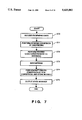
- FIG. 7 is a flowchart for describing a fourth communication control procedure executed by the CPU 1 of this embodiment.
- the illustrated procedure is stored in the ROM 2 as a control program of the CPU 1.
- the data classification and method of reception employ the same method as shown in FIG. 5.
- FIG. 7 is a processing procedure for a case where enciphered audio data are received by a facsimile machine.
- Step S70 in FIG. 7 calls for the enciphered data received from line 13 to be stored in the RAM 3 using the communication controller 12.
- step S71 the enciphered data in RAM 3 are restored to the original audio data (code data) using the enciphering converter 15, and the restored data are again stored in the RAM 3.
- the predetermined data that have been scrambled are eliminated from the received data, whereby a conversion which is the reverse of enciphering is executed.
- step S72 at which the audio data (code data) stored in the RAM 3 are reverse-code converted by UU encode using the code converter 6. Then, at step S73, the reverse-code converted digital data are decompressed, and the decompressed digital data are converted into analog data by a PCM conversion and then stored again in the RAM 3 at step S74.
- the audio data in RAM 3 are outputted as audio using the handset 4 at step S75.
- FIG. 8 is a flowchart for describing a fifth communication control procedure executed by the CPU 1 of this embodiment.
- the illustrated procedure is stored in the ROM 2 as a control program of the CPU 1.
- FIG. 8 is a method of rapidly putting audio data, image data and text data into the form of a multidocument and then transmitting the same by a facsimile machine.
- step S81 in FIG. 8 the system waits for the handset 4 to be raised (to attain the "UNHOOKED" state).
- the program proceeds to step S82 if the handset 4 has been unhooked.
- Step S82 calls for a voice message from the handset 4 to be stored in the RAM 3 as audio data.
- the audio data are subjected to the above-mentioned voice-code conversion of FIG. 3.
- step S84 the code data in RAM 3 are transmitted in the form of one control document to the line 13 via the communication controller 12.
- step S85 at which it is determined whether a document has been set for the reader 7 to read. If a document has been set in place, the program proceeds to step S86, at which the set document is read by the reader 7 and converted into image data thereby.
- step S87 the inputted image data are code-compressed into an MH code or MR, MMR codes capable of being transmitted by facsimile, and the compressed data are transmitted, as a second normal document of a multidocument, to the line 13 via the communication controller 12.
- Step S89-1 calls for the data inputted from the key input unit 11 to be stored in the RAM 3 as text data.
- step S89-2 at which the text data in RAM 3 are transmitted, as a third control document of a multidocument, to the line 13 via the communication controller 12.
- FIG. 9 is a flowchart for describing a sixth communication control procedure executed by the CPU 1 of this embodiment.
- the illustrated procedure is stored in the ROM 2 as a control program of the CPU 1.
- FIG. 9 is a method of extracting audio data, image data and text data from stored data, putting the extracted data into the form of a multidocument and then transmitting the same by a facsimile machine.
- step S90 in FIG. 9 audio data stored in the data storage unit 16 are displayed on the display unit 9 in the order in which they were inputted, and an item of audio data is selected by a cursor.
- the selected voice message is outputted as audio from the handset 4 at step S91.
- step S92 it is determined at step S92 whether the outputted voice message is the one sought. If it is ("YES" at step S92), the program proceeds to step S93. If the voice message is not the one sought, the program returns from step S92 to step S90.
- step S93 the selected audio data are registered in the data storage unit 16 as one control document.
- step S95 the text data stored in the data storage unit 16 are displayed on the display unit 9 in the order in which they were inputted, and an item of text data is selected by a cursor and registered in the data storage unit 16.
- step S96 at which the control document for the voice message created at step S93, the normal document based upon compressed data created at step S94 and the control document for text data created at step S95 are combined in the form of a multidocument and registered in the storage unit 16.
- step S97 the multidocument created at step S96 is transmitted to line 13 via the communication controller 12.
- FIG. 10 is a flowchart for describing a seventh communication control procedure executed by the CPU 1 of this embodiment.
- the illustrated procedure is stored in the ROM 2 as a control program of the CPU 1.
- FIG. 10 is a processing procedure for a case where audio data, image data and text data are received and rapidly outputted by a facsimile machine.
- Step S100 calls for multidocument data received from the line 13 to be stored in the RAM 3 using the communication controller 12.
- step S101 the attributes of the documents are verified from the document data in the multidocument data of RAM 3, and the audio data are removed.
- step S102 at which information reading "With voice message" is appended to header information.
- step S103 the attributes of the documents are verified from the multidocument data of RAM 3, and the image data are extracted.
- step S104 the header information created at step S102 is appended to the extracted image data, after which the image is printed out using the print output unit 8.
- step S105 the attributes of the documents are verified from the multidocument data of RAM 3, and the text data are extracted.
- step S106 the header information created at step S102 is appended to the extracted text data, after which the text is printed out using the print output unit 8.
- FIG. 11 is a flowchart for describing an eighth communication control procedure executed by the CPU 1 of this embodiment.
- the illustrated procedure is stored in the ROM 2 as a control program of the CPU 1.
- FIG. 11 is a processing procedure for a case where audio data, image data and text data are received and stored temporarily in the data storage unit by a facsimile machine.
- Step S110 calls for multidocument data received from the line 13 to be stored in the data storage unit 16 using the communication controller 12.
- step S111 a directory for document storage is created in the data storage unit 16.
- step S112 the attributes of the documents are verified from the multidocument data of storage unit 16, and the audio data are extracted.
- step S113 the audio data extracted at step S112 are stored in the directory of step S111.
- step S114 the attributes of the documents are verified from the multidocument data of storage unit 16, and the image data are extracted.
- the image data extracted at step S114 are stored in the directory of step S115.
- the attributes of the documents are verified from the multidocument data of storage unit 16, and the text data are extracted.
- the text data extracted at step S116 are stored in the directory of step S115.
- FIGS. 13 through 15 The structure of the directory and the procedure for referring to it are illustrated in FIGS. 13 through 15.
- FIG. 12 is a flowchart for describing a ninth communication control procedure executed by the CPU 1 of this embodiment.
- the illustrated procedure is stored in the ROM 2 as a control program of the CPU 1.
- FIG. 12 is a processing procedure for a case where audio data, image data and text data are received and only the audio data are stored temporarily in the data storage unit by a facsimile machine.
- Step S120 calls for multidocument data received from the line 13 to be stored in the data storage unit 16 using the communication controller 12.
- step S121 consecutive numbers are created in order to identify each of the documents.
- step S122 the attributes of the documents are verified from the multidocument data of storage unit 16, and the audio data are extracted.
- step S123 at which the audio data extracted at step S122 are stored in the data storage unit 16 with consecutive numbers attached to them. The consecutive numbers are subsequently retrieved and outputted.
- step S124 the attributes of the documents are verified from the multidocument data of storage unit 16, and the image data are extracted. After the consecutive numbers created at step S121 are attached to the extracted image data, the image data are printed out at step S125 using the print output unit 8.
- step S126 the attributes of the documents are verified from the multidocument data of storage unit 16, and the text data are extracted. After the consecutive numbers created at step S121 are attached to the extracted text data, the text data are printed out at step S127 using the print output unit 8.
- FIGS. 13 through 15 are diagrams for giving a supplementary explanation of the eighth communication control procedure according to this embodiment. These diagrams illustrate the structure of the directory and the method of referring to it.
- the data storage unit 16 is partitioned into directory units (see FIG. 13), each of which has a label such as "Multidocument A". Under the label, a plurality of files in document units, namely as audio, image and text files, are present. In the case of a label "Multidocument B”, a plurality of files in document units, namely audio, image and text files, are present under the label.
- the data of the label "Multidocument A" (FIG. 14) is composed of the time received (the time at which a facsimile transmission was received), the other party's dial number (the dial number of the party that made the transmission), the other party's abbreviated name (the abbreviated name of the party that made the transmission), the receiving party's abbreviated name (there are instances where the abbreviated name of the receiving party is included when the sending party specifies the receiving party), and a related-document pointer (a pointer which indicates a multidocument sent to another party or a multidocument sent previously from another party). These are used in order to refer to the directory.
- the information displayed by the LCD of the display unit 9 when the directory is referred to is the content of the multidocument of each directory. Instances of reception are indicated at 1, 2, 3, . . . in descending order starting from the most recent. Reception time, the other party's abbreviated name, the other party's dial number and the content of the reception (sound: voice mail; picture: image data; document: text data) are displayed for each instance of reception, and selection is made by entering a number using a key or by employing the cursor for the selection.
- means for converting audio (analog data) into digital data and means for converting the digital data into code data are provided.
- a voice message inputted from a telephone or the like is converted into code data and it is possible to transmit this data upon unifying it with facsimile image and/or text data.
- the code data may be stored in an external device and a voice message is capable of being edited by using the stored data.
- identifiers for audio and for images/text can be set in the content of a document, thereby making possible transmission to the line 13 in the form of a single document instead of using the multidocument of step S110.
- the present invention may be applied to a system composed of a plurality of devices or to an apparatus comprising one device. It goes without saying that the present invention can be applied also to a case where the above-mentioned effects are attained by supplying a program to a system or apparatus.
Landscapes
- Engineering & Computer Science (AREA)
- Signal Processing (AREA)
- Multimedia (AREA)
- Computer Networks & Wireless Communication (AREA)
- General Engineering & Computer Science (AREA)
- Facsimiles In General (AREA)
- Telephonic Communication Services (AREA)
Priority Applications (1)
| Application Number | Priority Date | Filing Date | Title |
|---|---|---|---|
| US08/377,785 US5544233A (en) | 1991-09-04 | 1995-01-24 | Communication processing apparatus, communication |
Applications Claiming Priority (4)
| Application Number | Priority Date | Filing Date | Title |
|---|---|---|---|
| JP22391091 | 1991-09-04 | ||
| JP3-223910 | 1991-09-04 | ||
| JP4192322A JPH05199323A (ja) | 1991-09-04 | 1992-07-20 | 通信処理装置、通信処理システム、及び、通信処理方法 |
| JP4-192322 | 1992-07-20 |
Related Child Applications (1)
| Application Number | Title | Priority Date | Filing Date |
|---|---|---|---|
| US08/377,785 Division US5544233A (en) | 1991-09-04 | 1995-01-24 | Communication processing apparatus, communication |
Publications (1)
| Publication Number | Publication Date |
|---|---|
| US5425082A true US5425082A (en) | 1995-06-13 |
Family
ID=26507250
Family Applications (2)
| Application Number | Title | Priority Date | Filing Date |
|---|---|---|---|
| US07/936,625 Expired - Fee Related US5425082A (en) | 1991-09-04 | 1992-08-28 | Communication processing apparatus, communication processing system, and communication processing method |
| US08/377,785 Expired - Fee Related US5544233A (en) | 1991-09-04 | 1995-01-24 | Communication processing apparatus, communication |
Family Applications After (1)
| Application Number | Title | Priority Date | Filing Date |
|---|---|---|---|
| US08/377,785 Expired - Fee Related US5544233A (en) | 1991-09-04 | 1995-01-24 | Communication processing apparatus, communication |
Country Status (4)
| Country | Link |
|---|---|
| US (2) | US5425082A (enExample) |
| EP (1) | EP0532209B1 (enExample) |
| JP (1) | JPH05199323A (enExample) |
| DE (1) | DE69226408T2 (enExample) |
Cited By (5)
| Publication number | Priority date | Publication date | Assignee | Title |
|---|---|---|---|---|
| US5631745A (en) * | 1992-05-14 | 1997-05-20 | Current Logic | Multi-function telecommunications instrument |
| US5638373A (en) * | 1990-11-29 | 1997-06-10 | Fujitsu Limited | ISDN interface unit |
| US5696812A (en) * | 1994-07-15 | 1997-12-09 | Canon Kabushiki Kaisha | Data communication apparatus having a function of recording a voice into a memory |
| US5719920A (en) * | 1995-03-31 | 1998-02-17 | The Messenger Group Llc | Method and apparatus for processing and downloading sound messages onto a permanent memory of a communication package |
| US7352854B1 (en) | 2003-09-29 | 2008-04-01 | At&T Delaware Intellectual Property, Inc. | Call waiting suppression |
Families Citing this family (11)
| Publication number | Priority date | Publication date | Assignee | Title |
|---|---|---|---|---|
| TW237588B (enExample) * | 1993-06-07 | 1995-01-01 | Microsoft Corp | |
| US5473691A (en) * | 1993-11-05 | 1995-12-05 | Microsoft Corporation | System and method for computer data transmission |
| DE19517391C2 (de) | 1994-06-20 | 1999-07-22 | Siemens Ag | Verfahren und Anordnung zum Übertragen von Audiosignalen zwischen Kommunikationsendgeräten |
| KR970705278A (ko) * | 1994-07-25 | 1997-09-06 | 로더리히 네테부쉬.롤프 옴케 | 통신 단말장치 간의 오디오 신호 전송 방법 및 장치(process and device for transmitting audio signals between communication terminals) |
| KR100193793B1 (ko) * | 1995-06-16 | 1999-06-15 | 윤종용 | 팩시밀리의 메세지 처리방법 |
| FR2744582B1 (fr) * | 1996-02-02 | 2001-08-24 | Sagem | Appareil de telephonie a annotation vocale |
| US6138096A (en) | 1996-11-26 | 2000-10-24 | Add Value Holdings Pte Ltd. | Apparatus for speech-based generation, audio translation, and manipulation of text messages over voice lines |
| JPH1174987A (ja) * | 1997-08-29 | 1999-03-16 | Oki Data:Kk | ファクシミリ装置 |
| AU4045100A (en) * | 1999-03-30 | 2000-10-16 | Scimarc Llc | Interactive targeted marketing system and method |
| US20090216554A1 (en) * | 2003-03-04 | 2009-08-27 | Bill Wayne Massey | System and Method for Outcome-Based Management of Medical Science Liasons |
| US20040177071A1 (en) * | 2003-03-04 | 2004-09-09 | Massey Bill Wayne | System and method for outcome-based management of medical science liaisons |
Citations (10)
| Publication number | Priority date | Publication date | Assignee | Title |
|---|---|---|---|---|
| JPS5914133A (ja) * | 1982-07-14 | 1984-01-25 | Matsushita Electric Ind Co Ltd | 音声記録再生装置 |
| US4837798A (en) * | 1986-06-02 | 1989-06-06 | American Telephone And Telegraph Company | Communication system having unified messaging |
| JPH01300689A (ja) * | 1988-05-27 | 1989-12-05 | Sharp Corp | 伝送装置 |
| US4907094A (en) * | 1987-01-28 | 1990-03-06 | Canon Kabushiki Kaisha | Data communication system |
| EP0372894A2 (en) * | 1988-12-06 | 1990-06-13 | Canon Kabushiki Kaisha | Image communication apparatus |
| US4961185A (en) * | 1988-07-11 | 1990-10-02 | Ricoh Company, Ltd. | Method for controlling a terminal equipment coupled to an integrated services digital network and a terminal equipment based on the same |
| US4996707A (en) * | 1989-02-09 | 1991-02-26 | Berkeley Speech Technologies, Inc. | Text-to-speech converter of a facsimile graphic image |
| US5084770A (en) * | 1989-07-18 | 1992-01-28 | Konica Corporation | Image communication apparatus |
| US5091931A (en) * | 1989-10-27 | 1992-02-25 | At&T Bell Laboratories | Facsimile-to-speech system |
| US5164980A (en) * | 1990-02-21 | 1992-11-17 | Alkanox Corporation | Video telephone system |
Family Cites Families (2)
| Publication number | Priority date | Publication date | Assignee | Title |
|---|---|---|---|---|
| JP2783630B2 (ja) * | 1990-02-15 | 1998-08-06 | キヤノン株式会社 | 端末装置 |
| US5166977A (en) * | 1991-05-31 | 1992-11-24 | Encrypto, Inc. | Protocol converter for a secure fax transmission system |
-
1992
- 1992-07-20 JP JP4192322A patent/JPH05199323A/ja active Pending
- 1992-08-28 DE DE69226408T patent/DE69226408T2/de not_active Expired - Fee Related
- 1992-08-28 EP EP92307850A patent/EP0532209B1/en not_active Expired - Lifetime
- 1992-08-28 US US07/936,625 patent/US5425082A/en not_active Expired - Fee Related
-
1995
- 1995-01-24 US US08/377,785 patent/US5544233A/en not_active Expired - Fee Related
Patent Citations (10)
| Publication number | Priority date | Publication date | Assignee | Title |
|---|---|---|---|---|
| JPS5914133A (ja) * | 1982-07-14 | 1984-01-25 | Matsushita Electric Ind Co Ltd | 音声記録再生装置 |
| US4837798A (en) * | 1986-06-02 | 1989-06-06 | American Telephone And Telegraph Company | Communication system having unified messaging |
| US4907094A (en) * | 1987-01-28 | 1990-03-06 | Canon Kabushiki Kaisha | Data communication system |
| JPH01300689A (ja) * | 1988-05-27 | 1989-12-05 | Sharp Corp | 伝送装置 |
| US4961185A (en) * | 1988-07-11 | 1990-10-02 | Ricoh Company, Ltd. | Method for controlling a terminal equipment coupled to an integrated services digital network and a terminal equipment based on the same |
| EP0372894A2 (en) * | 1988-12-06 | 1990-06-13 | Canon Kabushiki Kaisha | Image communication apparatus |
| US4996707A (en) * | 1989-02-09 | 1991-02-26 | Berkeley Speech Technologies, Inc. | Text-to-speech converter of a facsimile graphic image |
| US5084770A (en) * | 1989-07-18 | 1992-01-28 | Konica Corporation | Image communication apparatus |
| US5091931A (en) * | 1989-10-27 | 1992-02-25 | At&T Bell Laboratories | Facsimile-to-speech system |
| US5164980A (en) * | 1990-02-21 | 1992-11-17 | Alkanox Corporation | Video telephone system |
Non-Patent Citations (4)
| Title |
|---|
| Patent Abstracts of Japan, E field, vol. 14, No. 95, Feb. 21, 1990 The Patent Office Japanese Government, p. 99 E 892 & JP A 01 300 689. * |
| Patent Abstracts of Japan, E field, vol. 14, No. 95, Feb. 21, 1990 The Patent Office Japanese Government, p. 99 E 892 & JP-A-01 300 689. |
| Welch, T. A., "A Technique for High-Performance Data Compression", Computer, vol. 17, No. 6, Jun. 1984, pp. 8-19. |
| Welch, T. A., A Technique for High Performance Data Compression , Computer, vol. 17, No. 6, Jun. 1984, pp. 8 19. * |
Cited By (5)
| Publication number | Priority date | Publication date | Assignee | Title |
|---|---|---|---|---|
| US5638373A (en) * | 1990-11-29 | 1997-06-10 | Fujitsu Limited | ISDN interface unit |
| US5631745A (en) * | 1992-05-14 | 1997-05-20 | Current Logic | Multi-function telecommunications instrument |
| US5696812A (en) * | 1994-07-15 | 1997-12-09 | Canon Kabushiki Kaisha | Data communication apparatus having a function of recording a voice into a memory |
| US5719920A (en) * | 1995-03-31 | 1998-02-17 | The Messenger Group Llc | Method and apparatus for processing and downloading sound messages onto a permanent memory of a communication package |
| US7352854B1 (en) | 2003-09-29 | 2008-04-01 | At&T Delaware Intellectual Property, Inc. | Call waiting suppression |
Also Published As
| Publication number | Publication date |
|---|---|
| DE69226408D1 (de) | 1998-09-03 |
| EP0532209A3 (en) | 1994-08-24 |
| US5544233A (en) | 1996-08-06 |
| EP0532209A2 (en) | 1993-03-17 |
| DE69226408T2 (de) | 1998-12-10 |
| JPH05199323A (ja) | 1993-08-06 |
| EP0532209B1 (en) | 1998-07-29 |
Similar Documents
| Publication | Publication Date | Title |
|---|---|---|
| US5544233A (en) | Communication processing apparatus, communication | |
| US7889236B2 (en) | Automatic file transmission system | |
| US5065254A (en) | Facsimile machine and facsimile transmission system | |
| JP4086393B2 (ja) | 通信システム、通信装置及びそれらの制御方法 | |
| US7925779B2 (en) | Method of sending and receiving personal information by using mobile terminal | |
| KR20000017324A (ko) | 멀티미디어 메시지 통신 방법 및 그 장치 | |
| WO1997042752A1 (en) | Communication terminal and computer system | |
| JPS58179062A (ja) | 送受信兼用型フアクシミリ装置 | |
| KR100630216B1 (ko) | 이동단말기에서의 단문 메시지 서비스 방법 | |
| JP2001119588A (ja) | ファクシミリ装置 | |
| JP2596747B2 (ja) | ファクシミリ装置 | |
| US6414965B1 (en) | Data communication apparatus | |
| JP2583845B2 (ja) | 画像送信装置 | |
| KR100269134B1 (ko) | 휴대용정보단말기에서의에디팅및팩스송수신장치및방법 | |
| EP0835018A1 (en) | Communication terminal device and communication method | |
| JP2001156978A (ja) | 通信端末装置 | |
| JP3537596B2 (ja) | ファクシミリ装置 | |
| JP2000134405A (ja) | 電子メール機能付通信端末装置 | |
| US7012707B2 (en) | Image forming apparatus utilizing T.33 protocol to include both extensions and secondary phone numbers | |
| JPH01251873A (ja) | 通信装置 | |
| JPH11298649A (ja) | ファクシミリ装置 | |
| JPH1042030A (ja) | 通信端末装置 | |
| JPH04360371A (ja) | ファクシミリ装置 | |
| JPH056822B2 (enExample) | ||
| JPH0787240A (ja) | ファクシミリ装置 |
Legal Events
| Date | Code | Title | Description |
|---|---|---|---|
| AS | Assignment |
Owner name: CANON KABUSHIKI KAISHA, A CORP. OF JAPAN, JAPAN Free format text: ASSIGNMENT OF ASSIGNORS INTEREST.;ASSIGNOR:SUGINO, KAZUMASA;REEL/FRAME:006246/0319 Effective date: 19920819 |
|
| CC | Certificate of correction | ||
| FPAY | Fee payment |
Year of fee payment: 4 |
|
| FEPP | Fee payment procedure |
Free format text: PAYER NUMBER DE-ASSIGNED (ORIGINAL EVENT CODE: RMPN); ENTITY STATUS OF PATENT OWNER: LARGE ENTITY Free format text: PAYOR NUMBER ASSIGNED (ORIGINAL EVENT CODE: ASPN); ENTITY STATUS OF PATENT OWNER: LARGE ENTITY |
|
| FPAY | Fee payment |
Year of fee payment: 8 |
|
| REMI | Maintenance fee reminder mailed | ||
| LAPS | Lapse for failure to pay maintenance fees | ||
| STCH | Information on status: patent discontinuation |
Free format text: PATENT EXPIRED DUE TO NONPAYMENT OF MAINTENANCE FEES UNDER 37 CFR 1.362 |
|
| FP | Lapsed due to failure to pay maintenance fee |
Effective date: 20070613 |