US4554562A - Scratch resistant recording materials for electroerosion printing not requiring a lubricant overcoat - Google Patents
Scratch resistant recording materials for electroerosion printing not requiring a lubricant overcoat Download PDFInfo
- Publication number
- US4554562A US4554562A US06/567,297 US56729783A US4554562A US 4554562 A US4554562 A US 4554562A US 56729783 A US56729783 A US 56729783A US 4554562 A US4554562 A US 4554562A
- Authority
- US
- United States
- Prior art keywords
- intermediate layer
- layer
- thin
- recording
- electroerosion
- Prior art date
- Legal status (The legal status is an assumption and is not a legal conclusion. Google has not performed a legal analysis and makes no representation as to the accuracy of the status listed.)
- Expired - Lifetime
Links
- 239000000463 material Substances 0.000 title claims abstract description 108
- 239000000314 lubricant Substances 0.000 title claims abstract description 62
- 238000007639 printing Methods 0.000 title abstract description 17
- 230000003678 scratch resistant effect Effects 0.000 title 1
- VYPSYNLAJGMNEJ-UHFFFAOYSA-N Silicium dioxide Chemical compound O=[Si]=O VYPSYNLAJGMNEJ-UHFFFAOYSA-N 0.000 claims abstract description 39
- 238000000034 method Methods 0.000 claims abstract description 39
- QLOAVXSYZAJECW-UHFFFAOYSA-N methane;molecular fluorine Chemical compound C.FF QLOAVXSYZAJECW-UHFFFAOYSA-N 0.000 claims abstract description 33
- 229910052782 aluminium Inorganic materials 0.000 claims abstract description 31
- XAGFODPZIPBFFR-UHFFFAOYSA-N aluminium Chemical compound [Al] XAGFODPZIPBFFR-UHFFFAOYSA-N 0.000 claims abstract description 31
- 229920005989 resin Polymers 0.000 claims abstract description 25
- 239000011347 resin Substances 0.000 claims abstract description 25
- 229920000642 polymer Polymers 0.000 claims abstract description 21
- 230000008569 process Effects 0.000 claims abstract description 17
- 239000000377 silicon dioxide Substances 0.000 claims abstract description 17
- 239000004033 plastic Substances 0.000 claims abstract description 16
- 229920003023 plastic Polymers 0.000 claims abstract description 16
- NBVXSUQYWXRMNV-UHFFFAOYSA-N fluoromethane Chemical compound FC NBVXSUQYWXRMNV-UHFFFAOYSA-N 0.000 claims abstract description 15
- 230000001050 lubricating effect Effects 0.000 claims abstract description 8
- 229920001600 hydrophobic polymer Polymers 0.000 claims abstract 2
- 239000007787 solid Substances 0.000 claims description 38
- 239000004020 conductor Substances 0.000 claims description 27
- 229920002313 fluoropolymer Polymers 0.000 claims description 15
- 239000011236 particulate material Substances 0.000 claims description 15
- 229920006037 cross link polymer Polymers 0.000 claims description 14
- 238000006748 scratching Methods 0.000 claims description 11
- 230000002393 scratching effect Effects 0.000 claims description 11
- 239000010439 graphite Substances 0.000 claims description 10
- 229910002804 graphite Inorganic materials 0.000 claims description 10
- OKTJSMMVPCPJKN-UHFFFAOYSA-N Carbon Chemical compound [C] OKTJSMMVPCPJKN-UHFFFAOYSA-N 0.000 claims description 9
- 230000004044 response Effects 0.000 claims description 9
- 230000006872 improvement Effects 0.000 claims description 8
- 239000010409 thin film Substances 0.000 claims description 7
- 239000012141 concentrate Substances 0.000 claims description 3
- 230000003746 surface roughness Effects 0.000 claims description 3
- XLYOFNOQVPJJNP-UHFFFAOYSA-N water Substances O XLYOFNOQVPJJNP-UHFFFAOYSA-N 0.000 claims description 3
- KRHYYFGTRYWZRS-UHFFFAOYSA-M Fluoride anion Chemical compound [F-] KRHYYFGTRYWZRS-UHFFFAOYSA-M 0.000 claims description 2
- 230000002411 adverse Effects 0.000 claims description 2
- 239000000945 filler Substances 0.000 claims description 2
- 239000011343 solid material Substances 0.000 claims 11
- 239000011159 matrix material Substances 0.000 claims 2
- 239000000470 constituent Substances 0.000 claims 1
- 230000002708 enhancing effect Effects 0.000 claims 1
- 239000013618 particulate matter Substances 0.000 claims 1
- 239000002245 particle Substances 0.000 abstract description 23
- 229920006362 Teflon® Polymers 0.000 abstract description 8
- 238000007645 offset printing Methods 0.000 abstract description 4
- 239000010410 layer Substances 0.000 description 53
- 239000010408 film Substances 0.000 description 30
- 239000011230 binding agent Substances 0.000 description 17
- 229920006217 cellulose acetate butyrate Polymers 0.000 description 16
- 238000000576 coating method Methods 0.000 description 16
- 239000000203 mixture Substances 0.000 description 12
- 239000000758 substrate Substances 0.000 description 10
- JOYRKODLDBILNP-UHFFFAOYSA-N Ethyl urethane Chemical compound CCOC(N)=O JOYRKODLDBILNP-UHFFFAOYSA-N 0.000 description 9
- 229920001228 polyisocyanate Polymers 0.000 description 8
- 239000005056 polyisocyanate Substances 0.000 description 8
- 239000011248 coating agent Substances 0.000 description 7
- GNWXVOQHLPBSSR-UHFFFAOYSA-N oxolane;toluene Chemical compound C1CCOC1.CC1=CC=CC=C1 GNWXVOQHLPBSSR-UHFFFAOYSA-N 0.000 description 6
- 239000003431 cross linking reagent Substances 0.000 description 5
- 239000002270 dispersing agent Substances 0.000 description 5
- -1 e.g. Polymers 0.000 description 5
- 239000000976 ink Substances 0.000 description 5
- VTYYLEPIZMXCLO-UHFFFAOYSA-L Calcium carbonate Chemical compound [Ca+2].[O-]C([O-])=O VTYYLEPIZMXCLO-UHFFFAOYSA-L 0.000 description 4
- 239000001856 Ethyl cellulose Substances 0.000 description 4
- ZZSNKZQZMQGXPY-UHFFFAOYSA-N Ethyl cellulose Chemical compound CCOCC1OC(OC)C(OCC)C(OCC)C1OC1C(O)C(O)C(OC)C(CO)O1 ZZSNKZQZMQGXPY-UHFFFAOYSA-N 0.000 description 4
- GWEVSGVZZGPLCZ-UHFFFAOYSA-N Titan oxide Chemical compound O=[Ti]=O GWEVSGVZZGPLCZ-UHFFFAOYSA-N 0.000 description 4
- 238000005299 abrasion Methods 0.000 description 4
- 229920002678 cellulose Polymers 0.000 description 4
- 238000006243 chemical reaction Methods 0.000 description 4
- 229920001249 ethyl cellulose Polymers 0.000 description 4
- 235000019325 ethyl cellulose Nutrition 0.000 description 4
- 238000001704 evaporation Methods 0.000 description 4
- 230000008020 evaporation Effects 0.000 description 4
- 238000003682 fluorination reaction Methods 0.000 description 4
- 238000004519 manufacturing process Methods 0.000 description 4
- 239000004814 polyurethane Substances 0.000 description 4
- 229920002635 polyurethane Polymers 0.000 description 4
- 239000004094 surface-active agent Substances 0.000 description 4
- 229920001187 thermosetting polymer Polymers 0.000 description 4
- KSBAEPSJVUENNK-UHFFFAOYSA-L tin(ii) 2-ethylhexanoate Chemical compound [Sn+2].CCCCC(CC)C([O-])=O.CCCCC(CC)C([O-])=O KSBAEPSJVUENNK-UHFFFAOYSA-L 0.000 description 4
- YXFVVABEGXRONW-UHFFFAOYSA-N toluene Substances CC1=CC=CC=C1 YXFVVABEGXRONW-UHFFFAOYSA-N 0.000 description 4
- 238000007738 vacuum evaporation Methods 0.000 description 4
- 229920002799 BoPET Polymers 0.000 description 3
- 238000009825 accumulation Methods 0.000 description 3
- 239000003054 catalyst Substances 0.000 description 3
- 239000001913 cellulose Substances 0.000 description 3
- 239000008199 coating composition Substances 0.000 description 3
- 229910052681 coesite Inorganic materials 0.000 description 3
- 229910052906 cristobalite Inorganic materials 0.000 description 3
- 238000004132 cross linking Methods 0.000 description 3
- 238000001723 curing Methods 0.000 description 3
- 239000007970 homogeneous dispersion Substances 0.000 description 3
- 230000002209 hydrophobic effect Effects 0.000 description 3
- 238000010348 incorporation Methods 0.000 description 3
- 239000011256 inorganic filler Substances 0.000 description 3
- 229910003475 inorganic filler Inorganic materials 0.000 description 3
- 229910052751 metal Inorganic materials 0.000 description 3
- 239000002184 metal Substances 0.000 description 3
- 229920000728 polyester Polymers 0.000 description 3
- 230000005855 radiation Effects 0.000 description 3
- 229910052682 stishovite Inorganic materials 0.000 description 3
- 239000000126 substance Substances 0.000 description 3
- 229910052905 tridymite Inorganic materials 0.000 description 3
- 229910052582 BN Inorganic materials 0.000 description 2
- PZNSFCLAULLKQX-UHFFFAOYSA-N Boron nitride Chemical compound N#B PZNSFCLAULLKQX-UHFFFAOYSA-N 0.000 description 2
- 239000000020 Nitrocellulose Substances 0.000 description 2
- 241001422033 Thestylus Species 0.000 description 2
- XLOMVQKBTHCTTD-UHFFFAOYSA-N Zinc monoxide Chemical compound [Zn]=O XLOMVQKBTHCTTD-UHFFFAOYSA-N 0.000 description 2
- HVVWZTWDBSEWIH-UHFFFAOYSA-N [2-(hydroxymethyl)-3-prop-2-enoyloxy-2-(prop-2-enoyloxymethyl)propyl] prop-2-enoate Chemical compound C=CC(=O)OCC(CO)(COC(=O)C=C)COC(=O)C=C HVVWZTWDBSEWIH-UHFFFAOYSA-N 0.000 description 2
- 125000001931 aliphatic group Chemical group 0.000 description 2
- PNEYBMLMFCGWSK-UHFFFAOYSA-N aluminium oxide Inorganic materials [O-2].[O-2].[O-2].[Al+3].[Al+3] PNEYBMLMFCGWSK-UHFFFAOYSA-N 0.000 description 2
- 229910000019 calcium carbonate Inorganic materials 0.000 description 2
- 229920002301 cellulose acetate Polymers 0.000 description 2
- 125000003700 epoxy group Chemical group 0.000 description 2
- 229920001220 nitrocellulos Polymers 0.000 description 2
- 229920002037 poly(vinyl butyral) polymer Polymers 0.000 description 2
- 229920000647 polyepoxide Polymers 0.000 description 2
- 239000002491 polymer binding agent Substances 0.000 description 2
- 229920006254 polymer film Polymers 0.000 description 2
- 238000007669 thermal treatment Methods 0.000 description 2
- DMYOHQBLOZMDLP-UHFFFAOYSA-N 1-[2-(2-hydroxy-3-piperidin-1-ylpropoxy)phenyl]-3-phenylpropan-1-one Chemical compound C1CCCCN1CC(O)COC1=CC=CC=C1C(=O)CCC1=CC=CC=C1 DMYOHQBLOZMDLP-UHFFFAOYSA-N 0.000 description 1
- UPMLOUAZCHDJJD-UHFFFAOYSA-N 4,4'-Diphenylmethane Diisocyanate Chemical compound C1=CC(N=C=O)=CC=C1CC1=CC=C(N=C=O)C=C1 UPMLOUAZCHDJJD-UHFFFAOYSA-N 0.000 description 1
- 229920001342 Bakelite® Polymers 0.000 description 1
- 241001436672 Bhatia Species 0.000 description 1
- OYPRJOBELJOOCE-UHFFFAOYSA-N Calcium Chemical compound [Ca] OYPRJOBELJOOCE-UHFFFAOYSA-N 0.000 description 1
- 229920013683 Celanese Polymers 0.000 description 1
- 229920001747 Cellulose diacetate Polymers 0.000 description 1
- 239000004593 Epoxy Substances 0.000 description 1
- LFQSCWFLJHTTHZ-UHFFFAOYSA-N Ethanol Chemical compound CCO LFQSCWFLJHTTHZ-UHFFFAOYSA-N 0.000 description 1
- 239000005057 Hexamethylene diisocyanate Substances 0.000 description 1
- 229920000877 Melamine resin Polymers 0.000 description 1
- 239000004721 Polyphenylene oxide Substances 0.000 description 1
- 239000004743 Polypropylene Substances 0.000 description 1
- 229910021612 Silver iodide Inorganic materials 0.000 description 1
- 229920001079 Thiokol (polymer) Polymers 0.000 description 1
- 238000003848 UV Light-Curing Methods 0.000 description 1
- UKLDJPRMSDWDSL-UHFFFAOYSA-L [dibutyl(dodecanoyloxy)stannyl] dodecanoate Chemical compound CCCCCCCCCCCC(=O)O[Sn](CCCC)(CCCC)OC(=O)CCCCCCCCCCC UKLDJPRMSDWDSL-UHFFFAOYSA-L 0.000 description 1
- NBJODVYWAQLZOC-UHFFFAOYSA-L [dibutyl(octanoyloxy)stannyl] octanoate Chemical compound CCCCCCCC(=O)O[Sn](CCCC)(CCCC)OC(=O)CCCCCCC NBJODVYWAQLZOC-UHFFFAOYSA-L 0.000 description 1
- 230000001133 acceleration Effects 0.000 description 1
- 230000006978 adaptation Effects 0.000 description 1
- 238000013459 approach Methods 0.000 description 1
- 125000003118 aryl group Chemical group 0.000 description 1
- 239000004637 bakelite Substances 0.000 description 1
- 230000009286 beneficial effect Effects 0.000 description 1
- 230000008901 benefit Effects 0.000 description 1
- 230000005540 biological transmission Effects 0.000 description 1
- 230000000903 blocking effect Effects 0.000 description 1
- KGBXLFKZBHKPEV-UHFFFAOYSA-N boric acid Chemical compound OB(O)O KGBXLFKZBHKPEV-UHFFFAOYSA-N 0.000 description 1
- 239000004327 boric acid Substances 0.000 description 1
- 229910052791 calcium Inorganic materials 0.000 description 1
- 239000011575 calcium Substances 0.000 description 1
- 229910052918 calcium silicate Inorganic materials 0.000 description 1
- 239000000378 calcium silicate Substances 0.000 description 1
- OYACROKNLOSFPA-UHFFFAOYSA-N calcium;dioxido(oxo)silane Chemical compound [Ca+2].[O-][Si]([O-])=O OYACROKNLOSFPA-UHFFFAOYSA-N 0.000 description 1
- 229920003086 cellulose ether Polymers 0.000 description 1
- 239000003153 chemical reaction reagent Substances 0.000 description 1
- 239000011247 coating layer Substances 0.000 description 1
- 238000009749 continuous casting Methods 0.000 description 1
- 238000007796 conventional method Methods 0.000 description 1
- 238000007334 copolymerization reaction Methods 0.000 description 1
- 229910052802 copper Inorganic materials 0.000 description 1
- 238000000151 deposition Methods 0.000 description 1
- 230000008021 deposition Effects 0.000 description 1
- 238000011161 development Methods 0.000 description 1
- 239000012975 dibutyltin dilaurate Substances 0.000 description 1
- 239000006185 dispersion Substances 0.000 description 1
- 238000005516 engineering process Methods 0.000 description 1
- 150000002170 ethers Chemical class 0.000 description 1
- 150000002334 glycols Chemical class 0.000 description 1
- 238000000227 grinding Methods 0.000 description 1
- 238000010438 heat treatment Methods 0.000 description 1
- RRAMGCGOFNQTLD-UHFFFAOYSA-N hexamethylene diisocyanate Chemical compound O=C=NCCCCCCN=C=O RRAMGCGOFNQTLD-UHFFFAOYSA-N 0.000 description 1
- 125000002887 hydroxy group Chemical group [H]O* 0.000 description 1
- XXROGKLTLUQVRX-UHFFFAOYSA-N hydroxymethylethylene Natural products OCC=C XXROGKLTLUQVRX-UHFFFAOYSA-N 0.000 description 1
- 238000003384 imaging method Methods 0.000 description 1
- 230000000977 initiatory effect Effects 0.000 description 1
- 229910052500 inorganic mineral Inorganic materials 0.000 description 1
- 229910052745 lead Inorganic materials 0.000 description 1
- 238000001459 lithography Methods 0.000 description 1
- 238000013507 mapping Methods 0.000 description 1
- 239000006224 matting agent Substances 0.000 description 1
- 230000007246 mechanism Effects 0.000 description 1
- JDSHMPZPIAZGSV-UHFFFAOYSA-N melamine Chemical compound NC1=NC(N)=NC(N)=N1 JDSHMPZPIAZGSV-UHFFFAOYSA-N 0.000 description 1
- 238000011415 microwave curing Methods 0.000 description 1
- 238000003801 milling Methods 0.000 description 1
- 238000012986 modification Methods 0.000 description 1
- 230000004048 modification Effects 0.000 description 1
- 229910052961 molybdenite Inorganic materials 0.000 description 1
- CWQXQMHSOZUFJS-UHFFFAOYSA-N molybdenum disulfide Chemical compound S=[Mo]=S CWQXQMHSOZUFJS-UHFFFAOYSA-N 0.000 description 1
- 229910052982 molybdenum disulfide Inorganic materials 0.000 description 1
- 239000000178 monomer Substances 0.000 description 1
- GEMHFKXPOCTAIP-UHFFFAOYSA-N n,n-dimethyl-n'-phenylcarbamimidoyl chloride Chemical compound CN(C)C(Cl)=NC1=CC=CC=C1 GEMHFKXPOCTAIP-UHFFFAOYSA-N 0.000 description 1
- 229920003986 novolac Polymers 0.000 description 1
- 229940049964 oleate Drugs 0.000 description 1
- ZQPPMHVWECSIRJ-KTKRTIGZSA-N oleic acid Chemical compound CCCCCCCC\C=C/CCCCCCCC(O)=O ZQPPMHVWECSIRJ-KTKRTIGZSA-N 0.000 description 1
- 125000002524 organometallic group Chemical group 0.000 description 1
- 229920001568 phenolic resin Polymers 0.000 description 1
- 239000005011 phenolic resin Substances 0.000 description 1
- 229920006287 phenoxy resin Polymers 0.000 description 1
- 239000013034 phenoxy resin Substances 0.000 description 1
- 239000000049 pigment Substances 0.000 description 1
- 229920005906 polyester polyol Polymers 0.000 description 1
- 229920001225 polyester resin Polymers 0.000 description 1
- 239000004645 polyester resin Substances 0.000 description 1
- 229920000570 polyether Polymers 0.000 description 1
- 229920000139 polyethylene terephthalate Polymers 0.000 description 1
- 239000005020 polyethylene terephthalate Substances 0.000 description 1
- 229920005596 polymer binder Polymers 0.000 description 1
- 229920000307 polymer substrate Polymers 0.000 description 1
- 229920000098 polyolefin Polymers 0.000 description 1
- 229920001155 polypropylene Polymers 0.000 description 1
- 238000002360 preparation method Methods 0.000 description 1
- 230000009467 reduction Effects 0.000 description 1
- 238000009877 rendering Methods 0.000 description 1
- 239000005871 repellent Substances 0.000 description 1
- 230000002940 repellent Effects 0.000 description 1
- 239000012260 resinous material Substances 0.000 description 1
- 229920006395 saturated elastomer Polymers 0.000 description 1
- 235000012239 silicon dioxide Nutrition 0.000 description 1
- 229910052709 silver Inorganic materials 0.000 description 1
- 239000002904 solvent Substances 0.000 description 1
- 238000000935 solvent evaporation Methods 0.000 description 1
- 238000004544 sputter deposition Methods 0.000 description 1
- 150000003512 tertiary amines Chemical class 0.000 description 1
- 238000012360 testing method Methods 0.000 description 1
- 238000001029 thermal curing Methods 0.000 description 1
- 229910052718 tin Inorganic materials 0.000 description 1
- 239000004408 titanium dioxide Substances 0.000 description 1
- DVKJHBMWWAPEIU-UHFFFAOYSA-N toluene 2,4-diisocyanate Chemical compound CC1=CC=C(N=C=O)C=C1N=C=O DVKJHBMWWAPEIU-UHFFFAOYSA-N 0.000 description 1
- 239000000080 wetting agent Substances 0.000 description 1
- 229910052725 zinc Inorganic materials 0.000 description 1
- 239000011701 zinc Substances 0.000 description 1
- 239000011787 zinc oxide Substances 0.000 description 1
Images
Classifications
-
- B—PERFORMING OPERATIONS; TRANSPORTING
- B41—PRINTING; LINING MACHINES; TYPEWRITERS; STAMPS
- B41M—PRINTING, DUPLICATING, MARKING, OR COPYING PROCESSES; COLOUR PRINTING
- B41M5/00—Duplicating or marking methods; Sheet materials for use therein
- B41M5/24—Ablative recording, e.g. by burning marks; Spark recording
- B41M5/245—Electroerosion or spark recording
-
- Y—GENERAL TAGGING OF NEW TECHNOLOGICAL DEVELOPMENTS; GENERAL TAGGING OF CROSS-SECTIONAL TECHNOLOGIES SPANNING OVER SEVERAL SECTIONS OF THE IPC; TECHNICAL SUBJECTS COVERED BY FORMER USPC CROSS-REFERENCE ART COLLECTIONS [XRACs] AND DIGESTS
- Y10—TECHNICAL SUBJECTS COVERED BY FORMER USPC
- Y10T—TECHNICAL SUBJECTS COVERED BY FORMER US CLASSIFICATION
- Y10T428/00—Stock material or miscellaneous articles
- Y10T428/24—Structurally defined web or sheet [e.g., overall dimension, etc.]
- Y10T428/24802—Discontinuous or differential coating, impregnation or bond [e.g., artwork, printing, retouched photograph, etc.]
- Y10T428/24893—Discontinuous or differential coating, impregnation or bond [e.g., artwork, printing, retouched photograph, etc.] including particulate material
-
- Y—GENERAL TAGGING OF NEW TECHNOLOGICAL DEVELOPMENTS; GENERAL TAGGING OF CROSS-SECTIONAL TECHNOLOGIES SPANNING OVER SEVERAL SECTIONS OF THE IPC; TECHNICAL SUBJECTS COVERED BY FORMER USPC CROSS-REFERENCE ART COLLECTIONS [XRACs] AND DIGESTS
- Y10—TECHNICAL SUBJECTS COVERED BY FORMER USPC
- Y10T—TECHNICAL SUBJECTS COVERED BY FORMER US CLASSIFICATION
- Y10T428/00—Stock material or miscellaneous articles
- Y10T428/25—Web or sheet containing structurally defined element or component and including a second component containing structurally defined particles
-
- Y—GENERAL TAGGING OF NEW TECHNOLOGICAL DEVELOPMENTS; GENERAL TAGGING OF CROSS-SECTIONAL TECHNOLOGIES SPANNING OVER SEVERAL SECTIONS OF THE IPC; TECHNICAL SUBJECTS COVERED BY FORMER USPC CROSS-REFERENCE ART COLLECTIONS [XRACs] AND DIGESTS
- Y10—TECHNICAL SUBJECTS COVERED BY FORMER USPC
- Y10T—TECHNICAL SUBJECTS COVERED BY FORMER US CLASSIFICATION
- Y10T428/00—Stock material or miscellaneous articles
- Y10T428/25—Web or sheet containing structurally defined element or component and including a second component containing structurally defined particles
- Y10T428/254—Polymeric or resinous material
-
- Y—GENERAL TAGGING OF NEW TECHNOLOGICAL DEVELOPMENTS; GENERAL TAGGING OF CROSS-SECTIONAL TECHNOLOGIES SPANNING OVER SEVERAL SECTIONS OF THE IPC; TECHNICAL SUBJECTS COVERED BY FORMER USPC CROSS-REFERENCE ART COLLECTIONS [XRACs] AND DIGESTS
- Y10—TECHNICAL SUBJECTS COVERED BY FORMER USPC
- Y10T—TECHNICAL SUBJECTS COVERED BY FORMER US CLASSIFICATION
- Y10T428/00—Stock material or miscellaneous articles
- Y10T428/31504—Composite [nonstructural laminate]
- Y10T428/3154—Of fluorinated addition polymer from unsaturated monomers
Definitions
- the invention relates to electroerosion printing and to recording materials for use as human readable material and for use in the production of direct negatives and direct offset masters.
- Electroerosion printing is a well-known technique for producing markings, such as letters, numbers, symbols, patterns, such as circuit patterns, or other legible or coded indicia on recording material in response to an electric signal which removes or erodes material from the surface of the recording material as the result of spark initiation (arcing).
- the surface which is electrically eroded or removed to provided such indicia on the recording material is usually a thin film of conductive material which is vaporized in response to localized heating associated with sparking (arcing) initiated by applying an electric current to an electrode in contact with the surface of a recording material comprising the thin conductive film on a non-conductive backing or support.
- the thin conductive film is usually a thin film of vaporizable metal, such as aluminum.
- a multi-styli print head is scanned across the aluminum surface of the recording medium and electrodes are selectively energized to form images in accordance with digitally coded image information. Electroerosion materials and processes are useful to produce directly, human readable images, photomasks, etc.
- the print head used to record the desired information may be comprised of thirty or more styli which move in relation to the surface of specially prepared recording media. Electrical writing signals are fed to the stylus or styli to provide controlled electrical pulses which generate arcing at the surface of the recording material selectively to heat and remove by evaporation a layer, usually aluminum, of the recording material; the removed material corresponds to the indicia which are to be recorded.
- a common problem with high resolution electroerosion printing processes using conventional metallized plastic substrates is that severe scratching of the aluminum layer occurs during writing. This may be attributable to the relatively low resistance of a thin aluminum film to mechanical abrasion or to other causes, including plastic deformation of the substrate.
- the thin conductive film for example, the vapor-deposited thin aluminum film, apparently cannot withstand the high strains generated when the support or substrate is deformed, resulting in scratching.
- the styli cold-weld to the thin aluminum conductive layer the structure may suffer shear, either at the aluminum-substrate interface or below it in the substrate itself.
- electroerosion recording materials comprising a non-conductive support, a thin layer of conductive material capable of being removed by evaporation during electroerosion recording and an improved intermediate layer of thin, hard cross-linked polymer between said support and said layer of conductive material.
- the cross-linked polymer layer such as a thermoset cellulose-acetate-butyrate polymer (CAB) cross-linked with polyisocyanate, and containing hard particles such as silica, is found to reduce plastic deformation of the support in response to stylus writing pressure and thus minimizes scratching during the electroerosion process, while the surface roughness is sufficient to scour off from the stylus debris formed during electroerosion recording.
- CAB thermoset cellulose-acetate-butyrate polymer
- Lubricant coatings containing conductive particles of high lubricity, such as graphite, in a polymeric binder are disclosed in copending application Ser. No. 454,744, filed Dec. 30, 1982.
- electroerosion recording materials having superior resistance to surface abrasion or scratching of the thin conductive film, such as aluminum, improved adhesion of aluminum to the base layer, marked reduction in the print head wear, reduced “fouling” and “baking,” and an overall improvement in print quality can be produced by providing between the conductive film and the support a thin hydrophobic layer comprising graphite fluoride and/or fluorocarbon polymers such as the Teflon® resins as solid lubricants and a hard particulate material such as silica, in a polymer binder, said layer having sufficient hardness to substantially eliminate scratching due to plastic deformation of the support without reducing the handling and writing qualities of the recording material.
- the recording material of this invention has a further advantage of process simplification since it does not require a lubricant overcoat and thus, eliminates the extra step of applying a lubricating overcoat that is needed in prior techniques as discussed hereinabove.
- the electroerosion recording material has a light transmissive intermediate layer comprising graphite fluoride and/or fluorocarbon resin as lubricants and white hard particulate material in a polymeric binder, thereby enabling the recording material to be used in preparing direct negatives and/or offset printing masters.
- the intermediate layer contains graphite fluoride and/or fluorocarbon resins such as ⁇ Teflon ⁇ along with other solid lubricants such as graphite, and a hard particulate material such as silica in a polymeric binder.
- graphite fluoride and/or fluorocarbon resins such as ⁇ Teflon ⁇ along with other solid lubricants such as graphite, and a hard particulate material such as silica in a polymeric binder.
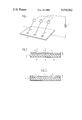
- FIG. 1 of the drawings is a general schematic rendering of an illustrative electroerosion printing system.
- FIG. 2 of the drawings is a cross-sectional view of a direct negative made in accordance with this invention.
- FIG. 3 of the drawings is a cross-sectional view of an offset master made in accordance with this invention.
- the present invention is concerned with improvements in electroerosion recording materials and in particular such materials useful in the production of direct negative and offset printing masters.
- the invention comprises the provision between the thin conductive film and the plastic support member, such as a polyester, e.g., Mylar®, of a hard, lubricating, thermoset polymeric film or layer which reduces plastic deformation of the support member during electroerosion writing sufficiently so that abrasion of the thin conductive film, usually evaporated aluminum, is minimized.
- the plastic support member such as a polyester, e.g., Mylar®, of a hard, lubricating, thermoset polymeric film or layer which reduces plastic deformation of the support member during electroerosion writing sufficiently so that abrasion of the thin conductive film, usually evaporated aluminum, is minimized.
- the hardness, thickness and asperities caused by inorganic fillers such as silica, of this intermediate layer are also selected so that the handling and writing characteristics of the recording material are not adversely affected.
- a superior hard, thin underlayer for a conductive metal layer is provided for electroerosion recording materials by inclusion of graphite fluoride and/or Teflon® resin as micropowder available from duPont and a hard particulate material, preferably in a thermoset cross-linked polymer binder, as the underlayer.
- Graphite fluorides such as the FluorographiteTM product of Ozark-Mahoning can be obtained in particle size of the order of 3-40 ⁇ m and can be employed either as a single solid lubricant component in the base layer coating composition or in combination with fluorocarbon resins and/or with essentially any laminar solid of high lubricity.
- the preferred material is graphite although other lamellar or conductive lubricant materials which are expected to be useful include, for example, MoS 2 , WS 2 , AgI, Sn, Cu, Ag, Pb, Bi, Al, Zn, etc.
- Non-conductive particulate lubricants that may be used in combination with Teflon® resins and/or graphite fluoride include boron nitride and boric acid.
- the hard particles are preferably SiO 2 , but could be other materials known in the art, such as, titanium dioxide, zinc oxide, alumina, calcium carbonate, boron nitride, etc., having a size of about 0.5 to 10.0 ⁇ m.
- the silica particles act as a filler in the system to prevent blocking and also help to improve wear-resistance of the coating.
- the lubricating particles are selected to be physically and chemically compatible with the heretofore described hard particle-binder systems.
- the lubricating particles of graphite fluoride will range in size from about 1 to 20 microns, preferably about 2 to 5 microns, and the Teflon® micropowder resins are available from du Pont in particle size ranging from 0.5-5 microns.
- graphite fluoride When graphite fluoride is used as the sole or major lubricating particle, for example in the fabrication of the recording material, it can be used in an amount of about 0.5 to 5 weight percent, based on the cured film. On the other hand, when the graphite fluoride is employed in combination with other solid lubricants, a lesser amount of about 0.2 to 2 wt% can be conveniently employed, with the overall particulate lubricant content of the cured film being about 2 to 10% by weight. It is observed that graphite fluoride tends to phase separate such that it concentrates on the surface of the coating upon curing to cause spatial fixation of the graphite fluoride particles in the polymeric binder.
- Graphite fluoride (CF x ) n such as the FluorographiteTM product of Ozark-Mahoning is available in a range of degrees of fluorination with coloration varying from black through grays to white with increasing fluorination.
- FluorographiteTM having a degree of fluorination (x) of 0.25 is black, of 0.9 is light gray and about 1 is snow white.
- urethane cross-linked CAB cellulose-acetate-butyrate
- PVC pigment-volume concentration
- the hard particles are present in a concentration of about 5 to 25, and the lubricant particles in a concentration of about 0.5 to 5.
- the grapite fluoride is being used primarily to aid in surface adhesion, its PVC in the intermediate layer can be about 0.2 to 1.5, with the remainder of particulate lubricant PVC being provided by other conductive or non-conductive lubricant particles
- a fluorocarbon resin When a fluorocarbon resin is used as the sole or the major lubricant particulate, it can be used in an amount of about 0.5 to 5 weight percent based on the total solids in the cured coatings. However, when such a resin is employed as a co-lubricant with graphite fluoride or other solid lubricants, a lesser amount of about 0.2 to 2 weight percent generally is sufficient to provide an overall improvement in the performance of the recording material according to this invention.
- the Teflon® resins available as micropowders in particle size of 0.5-5 micron from Du Pont are the preferred materials to provide base layers having light transmissivity suitable for use in direct negative or direct offset-master applications.
- the polymeric binder can be selected from the binders used in preparing hard cross-linked and non-cross-linked intermediate layers which can contain hard particles, as disclosed in the heretofore mentioned application Ser. No. 454,743.
- the polymeric binder can be selected from cellulose esters and ethers such as cellulose acetate butyrate (CAB), ethyl cellulose, nitrocellulose and cellulose acetate, or other polymers including polyvinylbutyral, novolak resins, epoxys, styryl allyl alcohol, etc.
- CAB cellulose acetate butyrate
- novolak resins epoxys
- styryl allyl alcohol etc.
- the polymeric binder forms a highly cross-linked polymer coating
- the following are representative examples of various cross-linked polymer systems for application according to this invention:
- suitable cellulose derived materials are: Cellulose acetate butyrate (CAB), ethyl cellulose (EC), nitrocellulose. cellulose acetate and cellulose diacetate, etc.
- Alternate materials containing unsubstituted hydroxyl groups for reaction with polyisocyanates to form cross-linked polyurethanes are: polyvinylbutyral, Bakelite phenoxy resins, phenolic resins, epoxies sych as Eponols and polyether glycols such as "Teracol” (from du Pont), and poly(styrylallyl alcohol).
- Typical polyisocyanates that react with available --OH groups of cellulosic binders or alternate systems include toluene diisocyanate, diphenylmethane diisocyanate, hexamethylene diisocyanate-based systems such as Desmodur N-75 (aliphatic prepolymer, Mobay Chemical Co.) and Mondur Resins such as CB-60 and CB-75, and Mondur HC.
- Melamine cross-linking agents can also be employed to obtain thermoset coatings with the above binders.
- Inorganic fillers such as SiO 2 , alumina, CaCO 3 , TiO 2 and calcium silicate, etc.
- the urethane forming reactions of the above-described binders and urethane prepolymers are catalyzed by organometallic reagents such as stannous oleate, stannous octoate, dibutyl-tin dioctoate, dibutyl-tin dilaurate, calcium or cobalt naphthenate and also tertiary amines. Further acceleration of the cross-linking reaction can be achieved by thermal treatment of the coatings.
- Cross-linked polymer coatings with beneficial properties can be obtained by the use of radiation curable acrylated polyurethane oligomers of the type "UVITHANE 783" and “UVITHANE 788" available from Thiokol Chemical Div.
- Inorganic fillers such as silica can be dispersed by conventional techniques prior to coating.
- Highly cross-linked films can also be obtained by thermal or radiation-induced copolymerization/co-cross-linking of the above UV curable urethane oligomers with added multifunctional monomers such as pentaerythritol triacrylate (PETA) and trimethyolol-propane triacrylate (TMPTA) available from Celanese Corporation.
- PETA pentaerythritol triacrylate
- TMPTA trimethyolol-propane triacrylate
- Desired cross-linked films can also be formed by thermal, microwave, or UV curing of coatings cast from blends of acrylated cellulosic derivatives and UV curable urethane oligomers described in (b) above.
- cellulose derived binders such as cellulose acetate butyrate or ethyl cellulose with polyisocyanates as cross-linking agents.
- the material may be used filled with silica particles plus the lubricant particles.
- the intermediate layer should have a thickness of 2-10 micrometers.
- the support or substrate is selected from those materials heretofore used in preparing the type of electroerosion recording material desired, for example, Mylar® polyester, paper or polyolefin such as polypropylene.
- the conductive recording layer such as Al
- the conductive recording layer can be applied by vacuum evaporation or sputtering, as known in the art. Desired resistivity is in the area of 1 to 5 ohms/cm 2 .
- the intermediate layer is sufficiently hydrophobic to maintain good hydrophilic-hydrophobic mapping between the hydrophilic Al background and the hydrophobic written region due to exposed intermediate layer, when oleophilic inks are used in preparing copies from the offset master.
- FIG. 1 illustrates schematically an electroerosion printing system 1 which includes a source of electrical energy 2, which is connected with writing control means 3 for controlling the flow (voltage and pulse length) of electrical current to styli 4 which are electrodes which contact the surface of the electroerosion recording material 5.
- Means are provided for moving the styli 4 relative to and in contact with the surface of the recording material 5.
- the styli 4 move relative to the recording material 5 and the writing control means 3 direct pulses of current to the styli of sufficient voltage to cause arcing and evaporation of a conductive layer of the material, there can be recorded desired information, patterns and graphics of any kind.
- the electroerosion recording material of this invention 6 is shown in cross section to comprise a support 7 of paper, polymer film, etc., a thin, conductive, evaporable layer or film 8, and a tough, hard film 10 containing lubricant particles and hard particles positioned between the support 7 and the evaporable layer 8.
- This intermediate film 10 is comprised of fluorocarbon resins and/or graphite fluoride as solid lubricants along with small hard particles such as silica in a suitable polymeric binder, for example, urethane cross-linked cellulose-acetate-butyrate (CAB) as disclosed in copending application Ser. No. 454,743.
- CAB urethane cross-linked cellulose-acetate-butyrate
- the intermediate layer serves to reduce scratching of the material during electroerosion printing to the extent that a lubricant top coat is not needed.
- the evaporable film 8 usually has a resistance from about 1 to 5 ohms per square centimeter and is frequently a vapor-deposited thin film of aluminum.
- the backing or support is a light transparent or transmissive material and the intermediate layer is also transparent or light transmissive
- the resulting product can be used as a photomask or direct-negative medium for the development of photosensitive materials, e.g., in the production of offset lithography masters, circuit boards, etc.
- the styli have been energized and the conductive film burned off light windows 11 are provided through the transparent backing so that the material is rendered selectively light (arrows) transmissive and may then be used in direct-photo-negative or like applications.
- the intermediate layer 10 is chosen to be ink receptive. Imaging by electroerosion printing is carried out to selectively expose the intermediate layer.
- the conductive layer 8 must be ink repellent.
- CAB cellulose acetate butyrate
- the mixture was agitated for 10 minutes and applied in a continuous casting process, by a conventional web coating technique, on the surface of a transparent MylarTM polyester (polyethylene terephthalate) film, 2 mil thick, (XM-728, E. I.
- the printed material prepared according to this example was employed as a high quality direct negative and as an offset master using the standard water dampening-ink cycle on the printing press to generate more than 3,000 prints of excellent quality.
- a mixture of 20 parts of a 20% CAB solution in 4:1 THF-toluene, 1.5 parts amorphous silica (IMSILA-108H), 0.15 parts of FluorographiteTM (x 0.45), 0.1 parts of dispersing agent (R221-75) and 0.02 parts of FC-430 surfactant, was ball milled for 16 hours to form a homogeneous dispersion. This was mixed with a solution of 4.1 parts of polyisocyanate crosslinking agent (CB-75, Mobay) in 8 parts of a 4:1 mixture of THF and toluene, along with 0.01 parts of T-9 as the catalyst.
- CB-75, Mobay polyisocyanate crosslinking agent
- Example 2 The mixture was stirred for 10 minutes and applied as described in Example 1 to form a 4-5 ⁇ m thick lubricant base layer.
- the recording material thus prepared was tested on a high speed electroerosion printer. Again, excellent print quality, high resolution with essentially no accumulation of eroded debris on the print head, and a marked improvement in the wear characteristics of the print head were realized.
- polyisocyanate cross-linking agent Desmodur N-75 from Mobay Chemical Co.
- the mixture was applied as described in Examples 1 and 2 to form 4-6 micron thick lubricant base layer. Thereafter, a thin film of aluminum, about 250-400 ⁇ thick, was deposited over the base layer by vacuum evaporation.
- the aluminized recording medium thus prepared upon printing on a high speed electroerosion printer, provided an excellent quality direct negative which was also employed as an offset master for making more than 5,000 copies of high quality on a printing press using the standard water dampening-ink cycle.
Landscapes
- Thermal Transfer Or Thermal Recording In General (AREA)
- Paints Or Removers (AREA)
- Printing Plates And Materials Therefor (AREA)
Priority Applications (5)
| Application Number | Priority Date | Filing Date | Title |
|---|---|---|---|
| US06/567,297 US4554562A (en) | 1983-12-30 | 1983-12-30 | Scratch resistant recording materials for electroerosion printing not requiring a lubricant overcoat |
| JP59192765A JPS60145887A (ja) | 1983-12-30 | 1984-09-17 | 放電破壊記録材料 |
| CA000467385A CA1221834A (en) | 1983-12-30 | 1984-11-08 | Scratch resistant recording materials for electroerosion printing not requiring a lubricant overcoat |
| EP19840114278 EP0147643B1 (de) | 1983-12-30 | 1984-11-27 | Elektroerosionsdruck |
| DE8484114278T DE3476356D1 (en) | 1983-12-30 | 1984-11-27 | Electroerosion printing |
Applications Claiming Priority (1)
| Application Number | Priority Date | Filing Date | Title |
|---|---|---|---|
| US06/567,297 US4554562A (en) | 1983-12-30 | 1983-12-30 | Scratch resistant recording materials for electroerosion printing not requiring a lubricant overcoat |
Publications (1)
| Publication Number | Publication Date |
|---|---|
| US4554562A true US4554562A (en) | 1985-11-19 |
Family
ID=24266583
Family Applications (1)
| Application Number | Title | Priority Date | Filing Date |
|---|---|---|---|
| US06/567,297 Expired - Lifetime US4554562A (en) | 1983-12-30 | 1983-12-30 | Scratch resistant recording materials for electroerosion printing not requiring a lubricant overcoat |
Country Status (5)
| Country | Link |
|---|---|
| US (1) | US4554562A (de) |
| EP (1) | EP0147643B1 (de) |
| JP (1) | JPS60145887A (de) |
| CA (1) | CA1221834A (de) |
| DE (1) | DE3476356D1 (de) |
Cited By (14)
| Publication number | Priority date | Publication date | Assignee | Title |
|---|---|---|---|---|
| US4684563A (en) * | 1983-10-04 | 1987-08-04 | Seiko Epson Kabushiki Kaisha | Electrothermal transfer recording sheet |
| US4727383A (en) * | 1986-12-04 | 1988-02-23 | Dennison Manufacturing Company | Burnish protected electrosensitive recording |
| US4749612A (en) * | 1984-11-23 | 1988-06-07 | Beiersdorf Aktiengesellschaft | Colored Antistatic adhesive tape |
| US4908250A (en) * | 1985-12-09 | 1990-03-13 | Hitachi Maxell, Ltd. | Optical recording medium and production method thereof |
| US4980225A (en) * | 1988-07-12 | 1990-12-25 | Sayles & Scheel Enterprises, Incorporated | Conductive composition and method of use |
| US5064715A (en) * | 1986-11-12 | 1991-11-12 | Minnesota Mining And Manufacturing Company | Dielectric coating for recording member containing hydrophobic silica |
| WO1992000816A1 (en) * | 1990-07-09 | 1992-01-23 | E.I. Du Pont De Nemours And Company | Coated fixing roller |
| US5084331A (en) * | 1989-01-23 | 1992-01-28 | International Business Machines Corporation | Electroerosion recording medium of improved corrosion resistance |
| US5176947A (en) * | 1990-12-07 | 1993-01-05 | International Business Machines Corporation | Electroerosion printing plates |
| US5217829A (en) * | 1990-02-22 | 1993-06-08 | Presstek, Inc. | Method for producing photomasks |
| US5354633A (en) * | 1993-09-22 | 1994-10-11 | Presstek, Inc. | Laser imageable photomask constructions |
| US5721299A (en) * | 1989-05-26 | 1998-02-24 | International Business Machines Corporation | Electrically conductive and abrasion/scratch resistant polymeric materials, method of fabrication thereof and uses thereof |
| US20070112094A1 (en) * | 2003-08-01 | 2007-05-17 | Carole Noutary | Printing ink |
| US20160077347A1 (en) * | 2014-09-17 | 2016-03-17 | Samsung Electronics Co., Ltd. | Films for writing and display apparatuses including the same |
Families Citing this family (2)
| Publication number | Priority date | Publication date | Assignee | Title |
|---|---|---|---|---|
| US4836105A (en) * | 1987-12-10 | 1989-06-06 | International Business Machines Corporation | Direct negative and offset master production using thermal liftoff |
| CA2074714A1 (en) * | 1990-01-31 | 1991-08-01 | Michael T. Nowak | Method and means for producing photomasks |
Citations (8)
| Publication number | Priority date | Publication date | Assignee | Title |
|---|---|---|---|---|
| US3983564A (en) * | 1973-09-28 | 1976-09-28 | Canon Kabushiki Kaisha | Image recording member |
| US4212923A (en) * | 1975-03-20 | 1980-07-15 | Phillips Petroleum Company | Laminate using a poly(arylene sulfide)-polytetrafluoroethylene adhesive |
| US4241134A (en) * | 1979-05-24 | 1980-12-23 | Gaf Corporation | Electrostatically imageable drafting film |
| US4339758A (en) * | 1981-05-15 | 1982-07-13 | Dennison Manufacturing Company | Electrosensitive recording |
| US4388400A (en) * | 1980-10-06 | 1983-06-14 | Fuji Photo Film Co., Ltd. | Heat-mode recording material |
| US4400706A (en) * | 1980-07-30 | 1983-08-23 | Honshu Seishi Kabushiki Kaisha | Discharge recording medium |
| US4408319A (en) * | 1978-07-15 | 1983-10-04 | Pioneer Electronic Corporation | Optical information recording mother disc and method of producing the same |
| US4423132A (en) * | 1978-04-27 | 1983-12-27 | Canon Kabushiki Kaisha | Electrostatic image holder having insulating overlayer of fluorinated surfactant |
Family Cites Families (3)
| Publication number | Priority date | Publication date | Assignee | Title |
|---|---|---|---|---|
| DE3017450A1 (de) * | 1980-05-07 | 1981-11-12 | Robert Bosch Gmbh, 7000 Stuttgart | Aufzeichnungstraeger fuer registriergeraete |
| JPS59124888A (ja) * | 1982-12-30 | 1984-07-19 | インタ−ナショナル ビジネス マシ−ンズ コ−ポレ−ション | 放電記録材 |
| JPS59124889A (ja) * | 1982-12-30 | 1984-07-19 | インタ−ナショナル ビジネス マシ−ンズ コ−ポレ−ション | 放電記録材 |
-
1983
- 1983-12-30 US US06/567,297 patent/US4554562A/en not_active Expired - Lifetime
-
1984
- 1984-09-17 JP JP59192765A patent/JPS60145887A/ja active Pending
- 1984-11-08 CA CA000467385A patent/CA1221834A/en not_active Expired
- 1984-11-27 DE DE8484114278T patent/DE3476356D1/de not_active Expired
- 1984-11-27 EP EP19840114278 patent/EP0147643B1/de not_active Expired
Patent Citations (8)
| Publication number | Priority date | Publication date | Assignee | Title |
|---|---|---|---|---|
| US3983564A (en) * | 1973-09-28 | 1976-09-28 | Canon Kabushiki Kaisha | Image recording member |
| US4212923A (en) * | 1975-03-20 | 1980-07-15 | Phillips Petroleum Company | Laminate using a poly(arylene sulfide)-polytetrafluoroethylene adhesive |
| US4423132A (en) * | 1978-04-27 | 1983-12-27 | Canon Kabushiki Kaisha | Electrostatic image holder having insulating overlayer of fluorinated surfactant |
| US4408319A (en) * | 1978-07-15 | 1983-10-04 | Pioneer Electronic Corporation | Optical information recording mother disc and method of producing the same |
| US4241134A (en) * | 1979-05-24 | 1980-12-23 | Gaf Corporation | Electrostatically imageable drafting film |
| US4400706A (en) * | 1980-07-30 | 1983-08-23 | Honshu Seishi Kabushiki Kaisha | Discharge recording medium |
| US4388400A (en) * | 1980-10-06 | 1983-06-14 | Fuji Photo Film Co., Ltd. | Heat-mode recording material |
| US4339758A (en) * | 1981-05-15 | 1982-07-13 | Dennison Manufacturing Company | Electrosensitive recording |
Cited By (15)
| Publication number | Priority date | Publication date | Assignee | Title |
|---|---|---|---|---|
| US4684563A (en) * | 1983-10-04 | 1987-08-04 | Seiko Epson Kabushiki Kaisha | Electrothermal transfer recording sheet |
| US4749612A (en) * | 1984-11-23 | 1988-06-07 | Beiersdorf Aktiengesellschaft | Colored Antistatic adhesive tape |
| US4908250A (en) * | 1985-12-09 | 1990-03-13 | Hitachi Maxell, Ltd. | Optical recording medium and production method thereof |
| US5064715A (en) * | 1986-11-12 | 1991-11-12 | Minnesota Mining And Manufacturing Company | Dielectric coating for recording member containing hydrophobic silica |
| US4727383A (en) * | 1986-12-04 | 1988-02-23 | Dennison Manufacturing Company | Burnish protected electrosensitive recording |
| US4980225A (en) * | 1988-07-12 | 1990-12-25 | Sayles & Scheel Enterprises, Incorporated | Conductive composition and method of use |
| US5084331A (en) * | 1989-01-23 | 1992-01-28 | International Business Machines Corporation | Electroerosion recording medium of improved corrosion resistance |
| US5721299A (en) * | 1989-05-26 | 1998-02-24 | International Business Machines Corporation | Electrically conductive and abrasion/scratch resistant polymeric materials, method of fabrication thereof and uses thereof |
| US5217829A (en) * | 1990-02-22 | 1993-06-08 | Presstek, Inc. | Method for producing photomasks |
| WO1992000816A1 (en) * | 1990-07-09 | 1992-01-23 | E.I. Du Pont De Nemours And Company | Coated fixing roller |
| US5176947A (en) * | 1990-12-07 | 1993-01-05 | International Business Machines Corporation | Electroerosion printing plates |
| US5354633A (en) * | 1993-09-22 | 1994-10-11 | Presstek, Inc. | Laser imageable photomask constructions |
| US20070112094A1 (en) * | 2003-08-01 | 2007-05-17 | Carole Noutary | Printing ink |
| US20160077347A1 (en) * | 2014-09-17 | 2016-03-17 | Samsung Electronics Co., Ltd. | Films for writing and display apparatuses including the same |
| US10067584B2 (en) * | 2014-09-17 | 2018-09-04 | Samsung Electronics Co., Ltd. | Films for writing and display apparatuses including the same |
Also Published As
| Publication number | Publication date |
|---|---|
| EP0147643A3 (en) | 1987-02-25 |
| EP0147643A2 (de) | 1985-07-10 |
| JPS60145887A (ja) | 1985-08-01 |
| DE3476356D1 (en) | 1989-03-02 |
| EP0147643B1 (de) | 1989-01-25 |
| CA1221834A (en) | 1987-05-19 |
Similar Documents
| Publication | Publication Date | Title |
|---|---|---|
| US4554562A (en) | Scratch resistant recording materials for electroerosion printing not requiring a lubricant overcoat | |
| CA1232135A (en) | Recording materials with new hydrophilic protective coatings for use in electroerosion printing | |
| US5249525A (en) | Spark-discharge lithography plates containing image-support pigments | |
| EP0847853B1 (de) | Entwicklungsfreie Flachdruckplatte | |
| EP0147703B1 (de) | Elektroerosionsaufzeichnungsmaterial mit Gleitschutzschicht | |
| EP0147641B1 (de) | Aufzeichnungsmaterial für Elektroerosionsdruck | |
| EP0113005A1 (de) | Aufzeichnungsmaterialien für Elektroerosion und Verwendungsverfahren | |
| EP0158276B1 (de) | Elektroerosionsaufzeichnungsmaterial | |
| US4830909A (en) | Scratch resistant recording materials for electroerosion printing comprising cross-linked polymer base layer | |
| US4894279A (en) | Electroerosion print media having protective coatings modified with organotitanium reagents | |
| CA1221832A (en) | Method for making direct negatives and direct masters by electroerosion recording and products formed thereby | |
| JP2735429B2 (ja) | イメージ支持顔料を含有するリソグラフ印刷プレート | |
| US5176947A (en) | Electroerosion printing plates | |
| EP0147642B1 (de) | Elektroerosionsdruckmaterial mit Schutzschicht | |
| US5084331A (en) | Electroerosion recording medium of improved corrosion resistance | |
| EP1426927B1 (de) | Magnetisches Aufzeichnungsmittel | |
| JPH1178243A (ja) | 感熱記録媒体 | |
| KR100750032B1 (ko) | 감열기록재료 | |
| EP0379673B1 (de) | Elektroerosions-Aufzeichnungsmaterial mit verbesserter Korrosionsbeständigkeit | |
| EP0842788A1 (de) | Bildaufzeichnungsmaterial mit Schutzschicht und Verfahren zu deren Herstellung | |
| JPH06505206A (ja) | リソグラフ印刷プレートの有効寿命を延長し挙動を改善するための方法 | |
| JP2007176011A (ja) | 保護層熱転写シート | |
| JPH10138442A (ja) | 製版方法及び版材 |
Legal Events
| Date | Code | Title | Description |
|---|---|---|---|
| AS | Assignment |
Owner name: INTERNATIONAL BUSINESS MACHINES CORPORATION,NEW YO Free format text: ASSIGNMENT OF ASSIGNORS INTEREST;ASSIGNORS:AFZALI-ARDAKANI, ALI;COHEN, MITCHELL S.;PENNINGTON, KEITH S.;AND OTHERS;SIGNING DATES FROM 19840207 TO 19840220;REEL/FRAME:004264/0988 Owner name: INTERNATIONAL BUSINESS MACHINES CORPORATION, ARMON Free format text: ASSIGNMENT OF ASSIGNORS INTEREST.;ASSIGNORS:AFZALI-ARDAKANI, ALI;COHEN, MITCHELL S.;PENNINGTON, KEITH S.;AND OTHERS;REEL/FRAME:004264/0988;SIGNING DATES FROM 19840207 TO 19840220 |
|
| STCF | Information on status: patent grant |
Free format text: PATENTED CASE |
|
| FPAY | Fee payment |
Year of fee payment: 4 |
|
| FPAY | Fee payment |
Year of fee payment: 8 |
|
| FPAY | Fee payment |
Year of fee payment: 12 |