US4387258A - Selective hydrogenation using palladium/platinum on crystalline silica polymorph/silicalite/high silica zeolite - Google Patents
Selective hydrogenation using palladium/platinum on crystalline silica polymorph/silicalite/high silica zeolite Download PDFInfo
- Publication number
- US4387258A US4387258A US06/342,719 US34271982A US4387258A US 4387258 A US4387258 A US 4387258A US 34271982 A US34271982 A US 34271982A US 4387258 A US4387258 A US 4387258A
- Authority
- US
- United States
- Prior art keywords
- palladium
- catalyst
- silica
- polymorph
- crystalline silica
- Prior art date
- Legal status (The legal status is an assumption and is not a legal conclusion. Google has not performed a legal analysis and makes no representation as to the accuracy of the status listed.)
- Expired - Lifetime
Links
Images


Classifications
-
- C—CHEMISTRY; METALLURGY
- C07—ORGANIC CHEMISTRY
- C07C—ACYCLIC OR CARBOCYCLIC COMPOUNDS
- C07C5/00—Preparation of hydrocarbons from hydrocarbons containing the same number of carbon atoms
- C07C5/02—Preparation of hydrocarbons from hydrocarbons containing the same number of carbon atoms by hydrogenation
- C07C5/03—Preparation of hydrocarbons from hydrocarbons containing the same number of carbon atoms by hydrogenation of non-aromatic carbon-to-carbon double bonds
- C07C5/05—Partial hydrogenation
-
- B—PERFORMING OPERATIONS; TRANSPORTING
- B01—PHYSICAL OR CHEMICAL PROCESSES OR APPARATUS IN GENERAL
- B01J—CHEMICAL OR PHYSICAL PROCESSES, e.g. CATALYSIS OR COLLOID CHEMISTRY; THEIR RELEVANT APPARATUS
- B01J21/00—Catalysts comprising the elements, oxides, or hydroxides of magnesium, boron, aluminium, carbon, silicon, titanium, zirconium, or hafnium
- B01J21/06—Silicon, titanium, zirconium or hafnium; Oxides or hydroxides thereof
- B01J21/08—Silica
-
- B—PERFORMING OPERATIONS; TRANSPORTING
- B01—PHYSICAL OR CHEMICAL PROCESSES OR APPARATUS IN GENERAL
- B01J—CHEMICAL OR PHYSICAL PROCESSES, e.g. CATALYSIS OR COLLOID CHEMISTRY; THEIR RELEVANT APPARATUS
- B01J29/00—Catalysts comprising molecular sieves
- B01J29/03—Catalysts comprising molecular sieves not having base-exchange properties
- B01J29/035—Microporous crystalline materials not having base exchange properties, such as silica polymorphs, e.g. silicalites
-
- C—CHEMISTRY; METALLURGY
- C07—ORGANIC CHEMISTRY
- C07C—ACYCLIC OR CARBOCYCLIC COMPOUNDS
- C07C5/00—Preparation of hydrocarbons from hydrocarbons containing the same number of carbon atoms
- C07C5/02—Preparation of hydrocarbons from hydrocarbons containing the same number of carbon atoms by hydrogenation
- C07C5/08—Preparation of hydrocarbons from hydrocarbons containing the same number of carbon atoms by hydrogenation of carbon-to-carbon triple bonds
- C07C5/09—Preparation of hydrocarbons from hydrocarbons containing the same number of carbon atoms by hydrogenation of carbon-to-carbon triple bonds to carbon-to-carbon double bonds
-
- C—CHEMISTRY; METALLURGY
- C07—ORGANIC CHEMISTRY
- C07C—ACYCLIC OR CARBOCYCLIC COMPOUNDS
- C07C2523/00—Catalysts comprising metals or metal oxides or hydroxides, not provided for in group C07C2521/00
- C07C2523/38—Catalysts comprising metals or metal oxides or hydroxides, not provided for in group C07C2521/00 of noble metals
- C07C2523/40—Catalysts comprising metals or metal oxides or hydroxides, not provided for in group C07C2521/00 of noble metals of the platinum group metals
- C07C2523/42—Platinum
-
- C—CHEMISTRY; METALLURGY
- C07—ORGANIC CHEMISTRY
- C07C—ACYCLIC OR CARBOCYCLIC COMPOUNDS
- C07C2523/00—Catalysts comprising metals or metal oxides or hydroxides, not provided for in group C07C2521/00
- C07C2523/38—Catalysts comprising metals or metal oxides or hydroxides, not provided for in group C07C2521/00 of noble metals
- C07C2523/40—Catalysts comprising metals or metal oxides or hydroxides, not provided for in group C07C2521/00 of noble metals of the platinum group metals
- C07C2523/44—Palladium
-
- C—CHEMISTRY; METALLURGY
- C07—ORGANIC CHEMISTRY
- C07C—ACYCLIC OR CARBOCYCLIC COMPOUNDS
- C07C2529/00—Catalysts comprising molecular sieves
- C07C2529/03—Catalysts comprising molecular sieves not having base-exchange properties
- C07C2529/035—Crystalline silica polymorphs, e.g. silicalites
Definitions
- the present invention relates to the selective hydrogenation of unsaturated hydrocarbon feeds using catalysts comprising a catalytically-active metal on a crystalline silica support, and especially to the hydrogenation of acetylenic and diolefinic compounds to mono-olefins.
- Steam cracked hydrocarbon streams are important as a source or polymerization grade olefins such as ethylene, propylene and butylenes and they are also used as a source of aromatics hydrocarbons. Thus streams also contain significant amounts of diolefins and acetylenes which must be removed by selective hydrogenation as their presence would cause problems in subsequent processing of the streams.
- This invention seeks to provide a hydrogenation catalyst suitable for long term operation.
- the invention resides in the use in the catalyst of a carrier with inherently low total acidity and a regular pore structure which serves to minimize the loss in efficiency resulting from polymer fouling.
- the invention provides a method of selectively hydrogenating an unsaturated hydrocarbon feed to convert alkynes and dienes to alkenes containing a single olefinic double bond, in which the feed is contacted with hydrogen over a catalyst comprising palladium or platinum supported on a crystalline silica polymorph having a total acidity not greater than 40 ⁇ mole/g as measured by pyridine adsorption at 300° C.
- the silica polymorph may be a crystalline silica with a structure analogous to a zeolite or a highly siliceous zeolite, but in each case having very low levels of metal substitution within the tetrahedral silica framework and having the desired level of total acidity.
- Preferred silica polymorphs are those in which the ratio of silicon to modifying elements such as aluminium in the tetrahedral framework is greater than 500, and more preferably greater than 5000 and approaches infinite.
- the core material may contain small amounts of other elements as impurities which do not form part of the tetrahedral silica structure and do not contribute to the catalytic activity of the silica.
- suitable silicas may contain aluminium impurities in amounts of up to 0.3 wt%, where this is occluded in a separate phase, and have little catalytic or acidic activity.
- the total aluminium content of the carrier is less than 0.2 wt%.
- the carriers for use in the invention must have a total acidity of not greater than 40 ⁇ moles/g as defined hereinbefore.
- the catalyst carrier has an acidity of not greater than 30 ⁇ moles/g, more preferably not greater than 20 ⁇ moles/g.
- the silica polymorph preferably has, after calcination in air for at least one hour at 600° C., a mean refractive index of 1.39 ⁇ 0.01 and a specific gravity at 25° C. of 1.70 ⁇ 0.05.
- the polymorph has an X-ray powder diffraction pattern in which the six strongest d-values are:
- silica polymorph is known as "silicalite", and is described in U.S. Pat. No. 4,061,724 assigned to Union Carbide Corporation.
- the pore diameter of silicalite is in the range of from 5 to 6 Angstrom units and the pore volume is typically 0.18 ml/g determined by adsorption.
- Silicalite may be prepared by the process described in U.S. Pat. No. 4,061,724 which consists of a hydrothermal crystallization from an aqueous reaction mixture containing a silica source and an alkylonium compound at pH 10-14 to form a hydrous precursor, followed by calcining the precursor.
- silicalite may also be prepared in the absence of alkonium compounds--for example, in a manner analogous to that described in U.K. Pat. No. 1,574,840 in respect of the related aluminosilicate zeolite known as "ELZ-105".
- a second preferred form of silica polymorph, related to silicalite has, in addition to the refractive index and specific gravity characteristics following calcination in air for at least an hour at 600° C. an adsorptive capacity for water vapour at 23° C. and a water vapour pressure of 4.6 mm Hg of less than 1 wt %, an infra-red spectrum which exhibits a substantial absence of absorption in the region 3700-3100 cm -1 , and an X-ray powder diffraction pattern containing at least the following d-values:
- silic polymorph may, however, alternatively be prepared in the absence of the compound Q 2 O.
- the catalysts of the present invention preferably comprise from 0.05 to 1.0 wt% palladium or platinum based on the weight of the complete catalyst.
- Palladium is the preferred catalytically-active metal.
- the amount of palladium or platinum incorporated in the catalyst of the invention is not crucial, but it has been found that if less than 0.05 wt % is present the catalytic activity is impaired. In general a palladium or platinum content of from 0.1 to 0.05% by weight of the catalyst is preferred. A catalyst of the invention including 0.3% by weight of palladium has been found to be particularly useful.
- the platinum or palladium crystallites may have a diameter of from 10 to 2000 A and excellent results have been obtained using catalysts calculated (from metal surface area measurements) as having palladium crystallites of from 20 to 200 A. However, the crystallite size is not normally measured, and it is sufficient if the metal component is well dispersed in the silica polymorph. Good dispersion of the metal results in disappearance from the x-ray diffraction pattern of the lines characteristic of the metal--2.25 A for palladium and 2.27 A for platinum.
- the palladium may be introduced by depositing a palladium salt onto the silica polymorph followed by calcining and reduction.
- the palladium salt used must be capable of decomposing under the calcining conditions.
- the oxide formed is then reduced to metallic palladium.
- the palladium salt may be, for example, a nitrate, lactate, acetate or chloride, and palladium acetate and palladium chloride are preferred.
- a variety of techniques are known for depositing the palladium salt upon the support, as would be appreciated by one skilled in the art. The procedure may be summarized as comprising adding the support to a solution of the salt, or vice versa, followed by drying and/or draining.
- the deposited palladium salt is calcined, preferably at a temperature in the range of from 300° to 450° C. for 16 hours.
- the reduction of palladium oxide to metallic palladium is conveniently carried out by means of a hydrogen atmosphere preferably at a temperature of from 100° to 200° C. for a period of from 2 to 6 hours.
- palladium to the silica support could be employed such as gas or vapour phase deposition, copelletizing, co-extrusion and ion exchange.
- the selective hydrogenation of an unsaturated hydrocarbon feed using the catalyst of the invention may be carried out under the conventional conditions for this treatment, and it is believed to be within the competence of one skilled in the art to select appropriate hydrogenation conditions.
- the unsaturated feed will usually be passed over the catalyst with hydrogen at an input temperature of from 25° to 150° C. and a pressure of from 5 to 45 atmospheres.
- the liquid hourly space velocity is from 0.5 to 6.
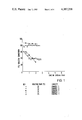
- FIG. 1 is a graph of percentage diolefin conversion against reaction time for a supported palladium catalyst of the invention
- FIG. 2 is a similar graph to FIG. 1, but showing the results for a supported platinum catalyst of the invention
- FIGS. 3 and 4 are similar graphs to FIG. 1, but showing the results for a supported palladium catalyst of the invention and for conventional catalysts using alumina supports.
- a silica polymorph was prepared for use as a carrier in the catalyst of the invention.
- the X-ray powder diffraction pattern for this polymorph gas as follows:
- the silica polymorph was prepared using the following method: 476 g of silica sol (Ludox HS-40) were diluted with 100 ml of water. The formed solution was mixed with 130 ml of 20% (by wt) tetrapropylammonium hydroxide solution. To this mixture was added a solution of 33 g of sodium hydroxide in 100 ml of water to form a synthesis gel.
- the gel was placed in two 250 ml polypropylene bottles provided with condensers which were heated in an oil bath for 7 days at 100° C. to bring about crystallization.
- the formed crystals were collected, washed and dried. Scanning Electron Photomicrographs showed the product to be in the form of spherical crystal aggregates with a particle size of 0.5 micron.
- the silica polymorph formed as a powder in step (a) was contacted with an aqueous solution of palladium acetate containing palladium in an amount corresponding to 0.3 wt % of the complete catalyst.
- the powder was shaken in the solution to ensure a uniform dispersion of the palladium salt, and then dried with agitation on a rotary evaporator.
- the dried, impregnated powder was then calcined in a muffle furnace at 250° to 300° C. overnight to convert the palladium salt to palladium oxide.
- the catalyst may be pelletised, then stored in the oxidised form and reduced to the metallic palladium form in situ when required.
- the oxidised form of the catalyst may be pelletised and reduced to the metallic palladium form ready for use immediately on preparation.
- the reduction is carried out using a hydrogen atmosphere at a temperature of 100° to 150° C. for at least one hour.
- Example 1(a) The procedure of Example 1(a) was repeated.
- the formed silica polymorph powder was then extruded with 15 wt% of a kaolin binder to form pellets, which were then impregnated, dried, calcined and reduced in the manner described in Example 1(b).
- Example 1(a) The procedure of Example 1(a) was repeated except that palladium acetate was added to the crystallisation mixture in an amount corresponding to 0.3 wt % of palladium in the final catalyst.
- the product of step (a) comprised a palladium salt deposited on a silica polymorph support. This product was dried, and then calcined and reduced in the manner described in Example 1(b).
- Example 3 The procedure of Example 3 was repeated, but using platinum acetate in place of palladium acetate. A supported platinum catalyst containing 0.3 wt % platinum was prepared.
- Example 3 The catalyst of Example 3 was compared with a commercially available palladium-on-alumina catalyst, designated Comparison I The characteristics of the two catalysts are indicated below in Table 1.
- the catalyst were tested using a 12.5 mm tubular reactor to which was fed a stream cracked naphtha stream containing 70 wt % benzene and 2.5 wt % mixed diolefins together with a hydrogen stream, the hydrogen/hydrocarbon ratio being 90 Nm 3 /m 3 , and the LHSV being 6.
- the diolefin conversion at various reactor temperatures was determined by the UVK method monitoring UV absorbtion at 235 ⁇ , this absorbtion being specific to diolefin.
- the results obtained are given in Table 2 and demonstrate the greater efficiency to be obtained by using the catalyst of the invention, even though the comparison alumina catalyst is of comparatively low acidity.
- the catalysts prepared in Examples 1 and 3 were compared in the selective hydrogenation of SCN feed containing diolefins.
- the SCN feed contained approximately 78.5% benzene, and 11.3% diolefins, and to this was added 50 ppm a commercially-available inhibitor, Kerobit.
- 120 ml/hr of the feed were passed together with 11 l/hr hydrogen over the catalyst under test in a 12.5 mm tubular reactor at a pressure of 24 bar g and an LHSV of 6.0.
- the diolefin conversion was measured at 25° C. and 75° C. using the UVK method by measuring UV absorbtion of samples taken at 15 minute intervals. The results are shown graphically in FIG. 1, as percentage diolefin conversion against time.
- Example 6 The test procedure of Example 6 was repeated but using the catalyst of Example 4. The results are shown in FIG. 2, which is a graph of % diolefin conversion (determined by UVK) against time.
- the catalyst of Example 2 was tested over a period exceeding 100 hours and compared with 2 conventional palladium-on-alumina catalysts.
- the comparison catalysts were Comparison I (identified in Example 5) and Comparison II. Details of the catalyst of Example 2 and Comparison II are as follows:
- the three catalysts were tested under identical conditions using tubular reactors maintained under the same reaction conditions. 50 ml of each catalyst were used.
- the SCN feed employed has the following characteristics:
- the temperature was selected to give diolefin conversions in the region of 50% ⁇ 10% to enable differences in acidity to be observed. A higher temperature could be used in practical applications to secure a higher rate of conversion.
- Silica polymorphs prepared generally according to the procedure of U.S. Pat. No. 4,061,724 but containing sufficient aluminium to give total acidity outside the range specified for the invention
- the palladium contents of each of the formed catalysts is given in Table 4, together with the total acidity measured by pyridine adsorption at 300° C.
- the catalysts were then used to hydrogenate an SCN-benzene heart cut over a 50 hour period isothermally under the following conditions.
- the spent catalysts were then weighed to give the combined weight of catalyst, adsorbed material and fouling.
- the spent catalysts were first subjected to a vacuum of 10 mm Hg at 20° C. for 16 hours and reweighed, then heated successively to 100° C., 200° C., 300° C. and 450° C. in air, being held at each temperature for 16 hours and weighed.
- the vacuum treatment and heat treatment up to 200° C. removes unpolymerized, adsorbed hydrocarbons leaving the truly polymeric fouling which is removed by the 300° C. and 450° C. treatments.
- Table 4 The results are shown in Table 4 in terms of % weight loss for each treatment and they demonstrate the link between catalyst acidity and fouling since as the total acidity is reduced the amount of fouling is also reduced.
Landscapes
- Chemical & Material Sciences (AREA)
- Organic Chemistry (AREA)
- Engineering & Computer Science (AREA)
- Materials Engineering (AREA)
- Chemical Kinetics & Catalysis (AREA)
- Crystallography & Structural Chemistry (AREA)
- Organic Low-Molecular-Weight Compounds And Preparation Thereof (AREA)
- Catalysts (AREA)
- Low-Molecular Organic Synthesis Reactions Using Catalysts (AREA)
Applications Claiming Priority (2)
| Application Number | Priority Date | Filing Date | Title |
|---|---|---|---|
| GB8102514 | 1981-01-28 | ||
| GB8102514 | 1981-01-28 |
Publications (1)
| Publication Number | Publication Date |
|---|---|
| US4387258A true US4387258A (en) | 1983-06-07 |
Family
ID=10519276
Family Applications (1)
| Application Number | Title | Priority Date | Filing Date |
|---|---|---|---|
| US06/342,719 Expired - Lifetime US4387258A (en) | 1981-01-28 | 1982-01-25 | Selective hydrogenation using palladium/platinum on crystalline silica polymorph/silicalite/high silica zeolite |
Country Status (5)
| Country | Link |
|---|---|
| US (1) | US4387258A (show.php) |
| EP (1) | EP0058014B1 (show.php) |
| JP (1) | JPS57183725A (show.php) |
| CA (1) | CA1162946A (show.php) |
| DE (1) | DE3260088D1 (show.php) |
Cited By (33)
| Publication number | Priority date | Publication date | Assignee | Title |
|---|---|---|---|---|
| US4536488A (en) * | 1983-10-24 | 1985-08-20 | Atomic Energy Of Canada Limited | Method of manufacturing a crystalline silica/platinum catalyst structure |
| US4665267A (en) * | 1985-07-25 | 1987-05-12 | The British Petroleum Company | Chemical process and catalyst |
| US4822942A (en) * | 1987-12-28 | 1989-04-18 | Mobil Oil Corporation | Styrene production |
| US4830729A (en) * | 1987-12-28 | 1989-05-16 | Mobil Oil Corporation | Dewaxing over crystalline indium silicates containing groups VIII means |
| US4849567A (en) * | 1987-12-28 | 1989-07-18 | Mobil Oil Corporation | Catalytic dehydrogenation of hydrocarbons over indium-containing crystalline microporous materials |
| US4851599A (en) * | 1988-06-24 | 1989-07-25 | Mobil Oil Corporation | Styrene production |
| US4868145A (en) * | 1987-12-28 | 1989-09-19 | Mobil Oil Corporation | Dehydrogenation and dehydrocyclization catalyst |
| US4882040A (en) * | 1988-06-24 | 1989-11-21 | Mobil Oil Corporation | Reforming process |
| US4886926A (en) * | 1988-06-24 | 1989-12-12 | Mobil Oil Corporation | Catalytic dehydrogenation of hydrocarbons over tin-containing crystalline microporous materials |
| US4892645A (en) * | 1988-06-24 | 1990-01-09 | Mobil Oil Corporation | Dewaxing catalyst based on tin containing materials |
| US4906800A (en) * | 1986-11-17 | 1990-03-06 | The Standard Oil Company | Procedure for imparting selectivity to hydrogenation catalysts and method for using the same |
| US4910357A (en) * | 1988-06-24 | 1990-03-20 | Mobil Oil Corporation | Alkylate upgrading |
| US4922050A (en) * | 1987-12-28 | 1990-05-01 | Mobil Oil Corporation | Catalytic dehydrogenation of hydrocarbons over indium-containing crystalline microporous materials |
| US4931416A (en) * | 1988-06-24 | 1990-06-05 | Mobil Oil Corporation | Thallium or lead-containing microporous crystalline materials and their use as dehydrogenation dehydrocyclization and reforming catalysts |
| US4935566A (en) * | 1987-11-17 | 1990-06-19 | Mobil Oil Corporation | Dehydrocyclization and reforming process |
| US4982028A (en) * | 1987-12-28 | 1991-01-01 | Mobil Oil Corporation | Dehydrogenation and dehydrocyclization catalyst |
| US4990710A (en) * | 1988-06-24 | 1991-02-05 | Mobil Oil Corporation | Tin-containing microporous crystalline materials and their use as dehydrogenation, dehydrocyclization and reforming catalysts |
| US5013423A (en) * | 1987-11-17 | 1991-05-07 | Mobil Oil Corporation | Reforming and dehydrocyclization |
| US5037529A (en) * | 1989-12-29 | 1991-08-06 | Mobil Oil Corp. | Integrated low pressure aromatization process |
| US5052561A (en) * | 1987-09-16 | 1991-10-01 | Chevron Research & Technology Company | Crystalline silicate catalyst and a reforming process using the catalyst |
| US5103066A (en) * | 1990-12-10 | 1992-04-07 | Mobil Oil Corp. | Dehydrogenation of alcohols over non-acidic metal-zeolite catalysts |
| US5122489A (en) * | 1990-10-15 | 1992-06-16 | Mobil Oil Corporation | Non-acidic dehydrogenation catalyst of enhanced stability |
| US5124497A (en) * | 1989-10-11 | 1992-06-23 | Mobil Oil Corporation | Production of mono-substituted alkylaromatics from C8 +N-paraffins |
| US5147837A (en) * | 1990-10-22 | 1992-09-15 | Mobil Oil Corporation | Titania containing dehydrogenation catalysts |
| US5182012A (en) * | 1987-09-16 | 1993-01-26 | Chevron Research And Technology Company | Crystalline silicate catalyst and processes using the catalyst |
| US5192728A (en) * | 1988-06-24 | 1993-03-09 | Mobil Oil Corporation | Tin-colating microporous crystalline materials and their use as dehydrogenation, dehydrocyclization reforming catalysts |
| US5993644A (en) * | 1996-07-16 | 1999-11-30 | Chevron U.S.A. Inc. | Base stock lube oil manufacturing process |
| US20030039609A1 (en) * | 2000-03-02 | 2003-02-27 | Toshihiro Tomita | Zeolite formed product, zeolite laminate intermediate, zeolite laminate composite and method for their preparation |
| US20050096217A1 (en) * | 2003-10-29 | 2005-05-05 | Sud-Chemie, Inc. | Selective hydrogenation catalyst |
| EP1700836A1 (en) | 2003-03-26 | 2006-09-13 | Basf Aktiengesellschaft | Palladium-based catalyst for selective hydrogenation of acetylene |
| KR101190725B1 (ko) * | 2010-07-14 | 2012-10-12 | 한국전력공사 | 산성가스 분리회수 장치 |
| KR102223597B1 (ko) | 2019-10-10 | 2021-03-05 | 한국화학연구원 | 아세틸렌의 선택적 수소화용 촉매 및 이의 제조방법 |
| KR20220049888A (ko) | 2020-10-15 | 2022-04-22 | 한국화학연구원 | 메탄의 비산화 메탄전환 및 아세틸렌의 선택적 수소화용 촉매 및 이의 제조방법 |
Families Citing this family (3)
| Publication number | Priority date | Publication date | Assignee | Title |
|---|---|---|---|---|
| JPS6090771A (ja) * | 1983-10-26 | 1985-05-21 | Tokyo Electric Co Ltd | インクドツトプリンタ− |
| CA2260240A1 (en) * | 1996-07-15 | 1998-01-22 | James N. Ziemer | Sulfur resistant hydroconversion catalyst and hydroprocessing of sulfur-containing lube feedstock |
| JP6005625B2 (ja) * | 2011-03-09 | 2016-10-12 | 和光純薬工業株式会社 | アルキン誘導体の部分水素化反応 |
Citations (6)
| Publication number | Priority date | Publication date | Assignee | Title |
|---|---|---|---|---|
| DE1418198B1 (de) * | 1958-09-20 | 1969-09-04 | Hoechst Ag | Verfahren zur gleichzeitigen und selektiven katalytischen Umwandlung von Acetylenkohlenwasserstoffen und Butadien in Olefine |
| US4061724A (en) * | 1975-09-22 | 1977-12-06 | Union Carbide Corporation | Crystalline silica |
| EP0035807A1 (en) * | 1980-03-06 | 1981-09-16 | Shell Internationale Researchmaatschappij B.V. | Process for carrying out catalytic conversions |
| US4309276A (en) * | 1980-04-28 | 1982-01-05 | Chevron Research Company | Hydrocarbon conversion with low-sodium silicalite |
| US4329530A (en) * | 1979-11-20 | 1982-05-11 | Imperial Chemical Industries Limited | Hydrogenation catalyst and process for the selective hydrogenation of highly unsaturated hydrocarbons |
| US4347392A (en) * | 1979-06-08 | 1982-08-31 | Institut Francais Du Petrole | Process for the selective hydrogenation of a hydrocarbon fraction with 2 or 3 carbon atoms per molecule |
Family Cites Families (4)
| Publication number | Priority date | Publication date | Assignee | Title |
|---|---|---|---|---|
| JPS5518742B2 (show.php) * | 1972-09-07 | 1980-05-21 | ||
| JPS534682B2 (show.php) * | 1972-09-14 | 1978-02-20 | ||
| GB1505826A (en) * | 1974-04-01 | 1978-03-30 | Ici Ltd | Hydrocarbon conversion |
| US4073865A (en) * | 1976-09-27 | 1978-02-14 | Union Carbide Corporation | Silica polymorph and process for preparing same |
-
1982
- 1982-01-25 US US06/342,719 patent/US4387258A/en not_active Expired - Lifetime
- 1982-01-26 EP EP82300395A patent/EP0058014B1/en not_active Expired
- 1982-01-26 DE DE8282300395T patent/DE3260088D1/de not_active Expired
- 1982-01-27 CA CA000395014A patent/CA1162946A/en not_active Expired
- 1982-01-28 JP JP57012512A patent/JPS57183725A/ja active Granted
Patent Citations (6)
| Publication number | Priority date | Publication date | Assignee | Title |
|---|---|---|---|---|
| DE1418198B1 (de) * | 1958-09-20 | 1969-09-04 | Hoechst Ag | Verfahren zur gleichzeitigen und selektiven katalytischen Umwandlung von Acetylenkohlenwasserstoffen und Butadien in Olefine |
| US4061724A (en) * | 1975-09-22 | 1977-12-06 | Union Carbide Corporation | Crystalline silica |
| US4347392A (en) * | 1979-06-08 | 1982-08-31 | Institut Francais Du Petrole | Process for the selective hydrogenation of a hydrocarbon fraction with 2 or 3 carbon atoms per molecule |
| US4329530A (en) * | 1979-11-20 | 1982-05-11 | Imperial Chemical Industries Limited | Hydrogenation catalyst and process for the selective hydrogenation of highly unsaturated hydrocarbons |
| EP0035807A1 (en) * | 1980-03-06 | 1981-09-16 | Shell Internationale Researchmaatschappij B.V. | Process for carrying out catalytic conversions |
| US4309276A (en) * | 1980-04-28 | 1982-01-05 | Chevron Research Company | Hydrocarbon conversion with low-sodium silicalite |
Non-Patent Citations (4)
| Title |
|---|
| Anderson et al., J. Catalysis, 58, 114 (1979). * |
| Bibby et al., Nature, 280, 664 (1979). * |
| Olson, et al., J. Catalysis, 61, 390 (1980). * |
| Wu et al., J. Phys. Chem., 83, 2778 (1979). * |
Cited By (45)
| Publication number | Priority date | Publication date | Assignee | Title |
|---|---|---|---|---|
| US4536488A (en) * | 1983-10-24 | 1985-08-20 | Atomic Energy Of Canada Limited | Method of manufacturing a crystalline silica/platinum catalyst structure |
| AU590779B2 (en) * | 1985-07-25 | 1989-11-16 | British Petroleum Company Plc, The | Catalytically dehydrogenating hydrocarbons |
| US4665267A (en) * | 1985-07-25 | 1987-05-12 | The British Petroleum Company | Chemical process and catalyst |
| US4795732A (en) * | 1985-07-25 | 1989-01-03 | The British Petroleum Company P.L.C. | Sulphided platinum group metal-silicalite dehydrogenation catalysts |
| EP0212850B1 (en) * | 1985-07-25 | 1991-05-22 | The British Petroleum Company p.l.c. | Dehydrogenation process and catalyst |
| US4906800A (en) * | 1986-11-17 | 1990-03-06 | The Standard Oil Company | Procedure for imparting selectivity to hydrogenation catalysts and method for using the same |
| US5182012A (en) * | 1987-09-16 | 1993-01-26 | Chevron Research And Technology Company | Crystalline silicate catalyst and processes using the catalyst |
| US5052561A (en) * | 1987-09-16 | 1991-10-01 | Chevron Research & Technology Company | Crystalline silicate catalyst and a reforming process using the catalyst |
| US4935566A (en) * | 1987-11-17 | 1990-06-19 | Mobil Oil Corporation | Dehydrocyclization and reforming process |
| US5013423A (en) * | 1987-11-17 | 1991-05-07 | Mobil Oil Corporation | Reforming and dehydrocyclization |
| US4868145A (en) * | 1987-12-28 | 1989-09-19 | Mobil Oil Corporation | Dehydrogenation and dehydrocyclization catalyst |
| US4849567A (en) * | 1987-12-28 | 1989-07-18 | Mobil Oil Corporation | Catalytic dehydrogenation of hydrocarbons over indium-containing crystalline microporous materials |
| US4830729A (en) * | 1987-12-28 | 1989-05-16 | Mobil Oil Corporation | Dewaxing over crystalline indium silicates containing groups VIII means |
| US4822942A (en) * | 1987-12-28 | 1989-04-18 | Mobil Oil Corporation | Styrene production |
| US4922050A (en) * | 1987-12-28 | 1990-05-01 | Mobil Oil Corporation | Catalytic dehydrogenation of hydrocarbons over indium-containing crystalline microporous materials |
| US4982028A (en) * | 1987-12-28 | 1991-01-01 | Mobil Oil Corporation | Dehydrogenation and dehydrocyclization catalyst |
| US4892645A (en) * | 1988-06-24 | 1990-01-09 | Mobil Oil Corporation | Dewaxing catalyst based on tin containing materials |
| US5283385A (en) * | 1988-06-24 | 1994-02-01 | Mobil Oil Corporation | Upgrading of normal pentane to cyclopentane |
| US4990710A (en) * | 1988-06-24 | 1991-02-05 | Mobil Oil Corporation | Tin-containing microporous crystalline materials and their use as dehydrogenation, dehydrocyclization and reforming catalysts |
| US4910357A (en) * | 1988-06-24 | 1990-03-20 | Mobil Oil Corporation | Alkylate upgrading |
| US4886926A (en) * | 1988-06-24 | 1989-12-12 | Mobil Oil Corporation | Catalytic dehydrogenation of hydrocarbons over tin-containing crystalline microporous materials |
| US4882040A (en) * | 1988-06-24 | 1989-11-21 | Mobil Oil Corporation | Reforming process |
| US5304694A (en) * | 1988-06-24 | 1994-04-19 | Mobil Oil Corporation | Isobutene and isoamylene production |
| US4931416A (en) * | 1988-06-24 | 1990-06-05 | Mobil Oil Corporation | Thallium or lead-containing microporous crystalline materials and their use as dehydrogenation dehydrocyclization and reforming catalysts |
| US5284986A (en) * | 1988-06-24 | 1994-02-08 | Mobil Oil Corporation | Upgrading of normal pentane to cyclopentene |
| US4851599A (en) * | 1988-06-24 | 1989-07-25 | Mobil Oil Corporation | Styrene production |
| US5192728A (en) * | 1988-06-24 | 1993-03-09 | Mobil Oil Corporation | Tin-colating microporous crystalline materials and their use as dehydrogenation, dehydrocyclization reforming catalysts |
| US5124497A (en) * | 1989-10-11 | 1992-06-23 | Mobil Oil Corporation | Production of mono-substituted alkylaromatics from C8 +N-paraffins |
| US5037529A (en) * | 1989-12-29 | 1991-08-06 | Mobil Oil Corp. | Integrated low pressure aromatization process |
| US5122489A (en) * | 1990-10-15 | 1992-06-16 | Mobil Oil Corporation | Non-acidic dehydrogenation catalyst of enhanced stability |
| US5147837A (en) * | 1990-10-22 | 1992-09-15 | Mobil Oil Corporation | Titania containing dehydrogenation catalysts |
| US5103066A (en) * | 1990-12-10 | 1992-04-07 | Mobil Oil Corp. | Dehydrogenation of alcohols over non-acidic metal-zeolite catalysts |
| US5993644A (en) * | 1996-07-16 | 1999-11-30 | Chevron U.S.A. Inc. | Base stock lube oil manufacturing process |
| US6264826B1 (en) | 1996-07-16 | 2001-07-24 | Chevron U.S.A Inc. | Base stock lube oil manufacturing process |
| US20070014717A1 (en) * | 2000-03-02 | 2007-01-18 | Ngk Insulators, Ltd. | Zeolite formed product, zeolite laminate intermediate, zeolite laminate composite and method for their preparation |
| US20030039609A1 (en) * | 2000-03-02 | 2003-02-27 | Toshihiro Tomita | Zeolite formed product, zeolite laminate intermediate, zeolite laminate composite and method for their preparation |
| US7608554B2 (en) | 2000-03-02 | 2009-10-27 | Ngk Insulators, Ltd. | Zeolite formed product, zeolite laminate intermediate, zeolite laminate composite and method for their preparation |
| EP1700836A1 (en) | 2003-03-26 | 2006-09-13 | Basf Aktiengesellschaft | Palladium-based catalyst for selective hydrogenation of acetylene |
| US20060229478A1 (en) * | 2003-03-26 | 2006-10-12 | Basf Aktiengesellschaft | Palladium-based catalyst for selective hydrogenation of acetylene |
| US7453017B2 (en) | 2003-03-26 | 2008-11-18 | Basf Ag | Palladium-based catalyst for selective hydrogenation of acetylene |
| US20050096217A1 (en) * | 2003-10-29 | 2005-05-05 | Sud-Chemie, Inc. | Selective hydrogenation catalyst |
| KR101190725B1 (ko) * | 2010-07-14 | 2012-10-12 | 한국전력공사 | 산성가스 분리회수 장치 |
| KR102223597B1 (ko) | 2019-10-10 | 2021-03-05 | 한국화학연구원 | 아세틸렌의 선택적 수소화용 촉매 및 이의 제조방법 |
| US12364973B2 (en) | 2019-10-10 | 2025-07-22 | Korea Research Institute Of Chemical Technology | Catalyst for selective hydrogenation of acetylene and method for producing same |
| KR20220049888A (ko) | 2020-10-15 | 2022-04-22 | 한국화학연구원 | 메탄의 비산화 메탄전환 및 아세틸렌의 선택적 수소화용 촉매 및 이의 제조방법 |
Also Published As
| Publication number | Publication date |
|---|---|
| CA1162946A (en) | 1984-02-28 |
| DE3260088D1 (en) | 1984-05-10 |
| JPS57183725A (en) | 1982-11-12 |
| EP0058014A1 (en) | 1982-08-18 |
| EP0058014B1 (en) | 1984-04-04 |
| JPH0222735B2 (show.php) | 1990-05-21 |
Similar Documents
| Publication | Publication Date | Title |
|---|---|---|
| US4387258A (en) | Selective hydrogenation using palladium/platinum on crystalline silica polymorph/silicalite/high silica zeolite | |
| US4116813A (en) | Hydrocarbon conversion with crystalline zeolite ZSM-34 | |
| US5516961A (en) | Dehydrogenation using sulfur tolerant zeolite catalyst | |
| EP0159847B1 (en) | Preparation of zeolite beta | |
| RU2153397C2 (ru) | Цеолит ssz-41 и способ его получения | |
| EP0159846B1 (en) | Preparation of zeolite beta | |
| AU628031B2 (en) | A dehydrogenation and dehydrocyclization catalyst, its synthesis and use | |
| US5522984A (en) | Modified zeolite beta, processes for preparation and use thereof | |
| KR20000016112A (ko) | 금속-함유 제올라이트 촉매, 그의 제조방법 및탄화수소 전환을위한 그의 용도 | |
| KR0149035B1 (ko) | 촉매적 크래킹 방법 | |
| JPH0258315B2 (show.php) | ||
| CN101309887A (zh) | 烯烃二聚的方法 | |
| EP0016494B1 (en) | Process for the preparation of an aromatic hydrocarbon mixture, and aromatic hydrocarbon mixtures so prepared | |
| EP0162609A2 (en) | Preparation of zeolite ZSM-12 | |
| US4454367A (en) | Process for the low polymerization of isobutene | |
| JPS5869822A (ja) | 低活性触媒によるオリゴマ−化方法 | |
| US4370219A (en) | Hydrocarbon conversion process employing essentially alumina-free zeolites | |
| JPS5914407B2 (ja) | ゼオライトzsm−34及びそれを使用した転化法 | |
| US5980859A (en) | Modified zeolite beta processes for preparation | |
| US3529033A (en) | Catalytic conversion | |
| US4830729A (en) | Dewaxing over crystalline indium silicates containing groups VIII means | |
| CA2562702C (en) | Catalyst for selective opening of cyclic paraffins and process for using the catalyst | |
| US4849567A (en) | Catalytic dehydrogenation of hydrocarbons over indium-containing crystalline microporous materials | |
| CA2112119A1 (en) | Dehydrogenation and isomerization/oligomerization of light paraffin feeds | |
| US4499325A (en) | Alkene conversion using AMS-1B crystalline borosilicate |
Legal Events
| Date | Code | Title | Description |
|---|---|---|---|
| AS | Assignment |
Owner name: EXXON RESEARCH AND ENGINEERING COMPANY A DE CORP. Free format text: ASSIGNMENT OF ASSIGNORS INTEREST.;ASSIGNORS:VADEKAR,MOHAN;ROBSON, HARRY E.;REEL/FRAME:004100/0946;SIGNING DATES FROM 19820107 TO 19820112 |
|
| STCF | Information on status: patent grant |
Free format text: PATENTED CASE |
|
| FEPP | Fee payment procedure |
Free format text: PAYOR NUMBER ASSIGNED (ORIGINAL EVENT CODE: ASPN); ENTITY STATUS OF PATENT OWNER: LARGE ENTITY |
|
| MAFP | Maintenance fee payment |
Free format text: PAYMENT OF MAINTENANCE FEE, 4TH YEAR, PL 96-517 (ORIGINAL EVENT CODE: M170); ENTITY STATUS OF PATENT OWNER: LARGE ENTITY Year of fee payment: 4 |
|
| MAFP | Maintenance fee payment |
Free format text: PAYMENT OF MAINTENANCE FEE, 8TH YEAR, PL 96-517 (ORIGINAL EVENT CODE: M171); ENTITY STATUS OF PATENT OWNER: LARGE ENTITY Year of fee payment: 8 |
|
| MAFP | Maintenance fee payment |
Free format text: PAYMENT OF MAINTENANCE FEE, 12TH YEAR, LARGE ENTITY (ORIGINAL EVENT CODE: M185); ENTITY STATUS OF PATENT OWNER: LARGE ENTITY Year of fee payment: 12 |