US4071701A - Method of and apparatus for addressing a buffer memory in a transit exchange for synchronous data signals - Google Patents
Method of and apparatus for addressing a buffer memory in a transit exchange for synchronous data signals Download PDFInfo
- Publication number
- US4071701A US4071701A US05/674,101 US67410176A US4071701A US 4071701 A US4071701 A US 4071701A US 67410176 A US67410176 A US 67410176A US 4071701 A US4071701 A US 4071701A
- Authority
- US
- United States
- Prior art keywords
- sequence
- memory
- tdm
- data
- address
- Prior art date
- Legal status (The legal status is an assumption and is not a legal conclusion. Google has not performed a legal analysis and makes no representation as to the accuracy of the status listed.)
- Expired - Lifetime
Links
- 239000000872 buffer Substances 0.000 title claims abstract description 48
- 238000000034 method Methods 0.000 title claims abstract description 10
- 230000001360 synchronised effect Effects 0.000 title description 2
- 230000003213 activating effect Effects 0.000 claims 3
- 238000007792 addition Methods 0.000 abstract 1
- 238000010586 diagram Methods 0.000 description 7
- 230000004913 activation Effects 0.000 description 4
- 125000004122 cyclic group Chemical group 0.000 description 3
- 238000005070 sampling Methods 0.000 description 3
- 230000008520 organization Effects 0.000 description 2
- 230000015572 biosynthetic process Effects 0.000 description 1
- 238000006243 chemical reaction Methods 0.000 description 1
- 238000010276 construction Methods 0.000 description 1
- 238000005259 measurement Methods 0.000 description 1
- 230000008929 regeneration Effects 0.000 description 1
- 238000011069 regeneration method Methods 0.000 description 1
- 230000002123 temporal effect Effects 0.000 description 1
Images



Classifications
-
- H—ELECTRICITY
- H04—ELECTRIC COMMUNICATION TECHNIQUE
- H04L—TRANSMISSION OF DIGITAL INFORMATION, e.g. TELEGRAPHIC COMMUNICATION
- H04L12/00—Data switching networks
- H04L12/50—Circuit switching systems, i.e. systems in which the path is physically permanent during the communication
- H04L12/52—Circuit switching systems, i.e. systems in which the path is physically permanent during the communication using time division techniques
-
- H—ELECTRICITY
- H04—ELECTRIC COMMUNICATION TECHNIQUE
- H04Q—SELECTING
- H04Q11/00—Selecting arrangements for multiplex systems
- H04Q11/04—Selecting arrangements for multiplex systems for time-division multiplexing
Definitions
- the present invention relates to a method of and an apparatus for minimizing the transfer time in a transit exchange which transfers synchronous data signals from incoming TDM-links to outgoing TDM-links for data signals belonging to data channels of the type to which is assigned more than one time slot in a TDM-frame in correspondance to the data rate of the data channel.
- a transit exchange includes a switch memory for the storage of incoming data signals in memory positions, each of which is assigned to one of the incoming data channels in the incoming links, and a buffer memory to which the data signals are transferred and stored in memory positions assigned to the time slots belonging to the respective outgoing channels in the outgoing links before they are sent out via these links.
- the write-in and the read-out operations in the buffer memory occur alternately at a repetition rate determined by the data rate of the respective channel in such a manner that the read-out to the outgoing TDM-links is made cyclically, each cycle encompassing the reading of a time slot with a certain sequence number to each of the links.
- a transit exchange of the above described type is earlier described in the Swedish patent application No. 75.01678-2.
- an address calculating unit is included in the transit exchange which, being given the memory position of the first time slot belonging to the data channel and the data rate class of the data channel, determines the successive memory positions in the buffer memory to which the write-in is to be made.
- the address calculating unit can be designed such that, on the first write-in occasion, it chooses the memory position of the first time slot and then, by use of simple arithmetic calculations generates the addresses of the other memory positions according to a cyclic pattern.
- FIG. 1 is a block diagram of a transit exchange
- FIG. 2 is a timing diagram which illustrates the formation of data channels of several rates in a time division multiplex frame
- FIG. 3 is a timing diagram which shows the principle for scanning of the multiplex connections
- FIG. 4 is a schematic diagram of the switch memory organization
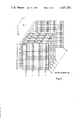
- FIG. 5 is a schematic diagram of the buffer memory organization
- FIG. 6 is a schematic diagram of the addressing apparatus according to the invention.
- Each of the connections is arranged for the transfer in time division multiplex of a number of data channels with several rates which are multiples of a basic rate.
- This basic rate is determined in a known manner by the number of time slots in a time division multiplex frame.
- the TDM frames are assumed to be character oriented and, besides the synchronization information, to comprise 80 time slots for data signals, each representing the basic rate of 75 characters per second.
- FIG. 2 the positioning of 3 different data channels in a TDM connection is schematically shown.
- Line a shows a number of frames in which the time slots which are utilized have been marked with different symbols and on the lines b, c and d a series of data elements are illustrated, e.g. characters, corresponding to each of the channels with the data rates 1, 2 and 4 times the basic rate for the connection.
- the line equipments are arranged in 16 groups, for example equipments LU 101 - LU 116, each of which is connected to a multiplexor, e.g. MX1, and to a demultiplexor, e.g. DX1, having the task to switch through the connections in selected time slots to an incoming common multiplexor bus line MB and to individual outgoing demultiplexor bus lines, e.g. DB1.
- the multiplexors MX1 - 4 together constitute a sampling arrangement for the signal values of the incoming data channels and the demultiplexors DX1 - 4 together constitute a reading arrangement for the transfer of indication values representing the signal values of the outgoing data channels to a regeneration arrangement included in each line equipment as will be described later.
- Each line equipment also includes circuits for the mutual synchronization of on the one hand the transit exchange and on the other hand the frame structures of the multiplex connections. All these circuits are known per se.
- the sampling and the reading operate synchronously and they are controlled by an address counter AR by means of address information which is transferred to all multiplexors and demultiplexors through the bus line AB according to a cyclic pattern where each time slot in every multiplex connection is addressed at a repetition rate of 75 times per second.
- a series of sampling values carrying the information in a time slot are transferred to a read-in buffer IB, at the same time as the indication values referring to the corresponding time slot in the outgoing direction are transferred from a read-out buffer, e.g. UB1.
- the switching-through of the information from the read-in buffer to the read-out buffers takes place in a central switching equipment CK.
- the equipment CK comprises a switch memory KM to which the incoming time slot information is brought via a data bus DB by means of address information KO from an address calculating unit AD1.
- the data signals stored in the switch memory are processed by the switch logic KL which is supported by the control computer SD.
- the signal processing concerns, for example, the decoding and storing in the switch memory of the outgoing address during the course of a setting-up procedure. From the switch memory the data signals are transferred via the switch logic to a buffer memory BM where they are stored in the memory locations belonging to the outgoing time slots.
- the address stored in the switch memory is utilized, after conversion in an address calculating unit AD2.
- the multiplex connections are addressed cyclically, whereby every cycle comprises 16 sequences of 5 steps each.
- information relating to an outgoing time slot belonging to one multiplex connection in each of the four demultiplexors DX1 - DX4 is transferred from the buffer memory BM to the four read-out buffers UB1 - UB4.
- the four read-out buffers are read out in turn to the respective time slots at the same time as the information from an incoming time slot in the same multiplex connections is transferred in turn via the multiplexors MX1 - MX4 to the read-in buffer IB.
- the addressing procedure is illustrated in the timing diagram, FIG. 3, where the relative timing conditions for four different TDM connections are shown on the lines a, b, c and d, each comprising 80 time slots per multiplex frame.
- a time slot according to the example the time slots 36, 71, 30 and 18, respectively, for the frames shown
- all the multiplex connections are scanned in a cycle comprising, according to the example, 64 steps in accordance with the timing pulses on line e.
- the cycle comprises sixteen sequences, each having five steps. The five steps relating to sequence number 1 of the cycle are shown on the lines f-j.
- step 001 the above information transfer from the buffer memory BM to the read-out buffers UB1-UB4 is made for the outgoing multiplex connections MF 101, 201, 301 and 401.
- step (101) a time slot is read in from the incoming multiplex connection MF 101 and a time slot is read out to the outgoing multiplex connection MF 101 in synchronism with new write-in operations in the switch memory and the buffer memory.
- step (201) the multiplex connection MF 201 is treated in the corresponding way and so on until the cycle is completed by the treatment of the multiplex connection MF 416.
- the switch memory KM has a memory area for each of the 64 multiplex connections MF 101-416. In each area there is a memory location for each of the data channels in the respective multiplex connections, the number of channels depending on the allocation of the time slots to different rates. The greatest number of channels (80) is obtained if all the channels have the data rate 75 characters per second. The other extreme case is that all of the time slots in a multiplex connection, for example MF 415, are utilized for one data channel only with the rate 6000 characters per second. Between these extreme cases there are multiplexes with a varying number of channels of different rates within the range 75-1200 characters per second.
- connection MF 101 has five data channels K1-K5, all with the data rate 1200 ch/s, while for example multiplex connection MF 416 has 10 data channels, of which two are for 1200 ch/s and the others are equally divided between 300 and 600 ch/s.
- the writing of information into the respective memory locations occurs at a repetition rate determined by the data rate of the data channels and in accordance with the address information obtained from the address calculating unit AD1.
- an analysis of the incoming information occurs in connection with the setting up phase, whereby the address to the outgoing direction is determined.
- This address is stored in the memory location segment marked ADDR in the figure.
- the segment CLASS the data rate of the channel is indicated and in the segment DATA the data signals are written which are to be transferred to the buffer memory.
- Other segments are intended for various purposes such as status information, signal analysis, time measurement and so on.
- the buffer memory BM has a memory location for every outgoing time slot in each of the multiplex connections.
- the buffer memory is divided into a number of memory planes or areas, each of which contains a memory location for each multiplex connection.
- Each memory plane corresponds to one of the eighty time slots in the multiplex frame.
- the memory locations are arranged in four columns corresponding to the four demultiplexors DX1-DX4 and each column, consequently, comprises sixteen lines which are scanned during an address cycle.
- the buffer memory is scanned by means of an address counter AR in such a manner that, for the duration of a time slot, information from the buffer memory is read out to each of the outgoing multiplex connections.
- a read-out is then made to a connection in each of the four demultiplexors, for example to the connections MF101, MF201, MF301 and MF401.
- the address calculating unit AD2 When writing into the buffer memory, one at a time of the memory locations is addressed with the aid of the address calculating unit AD2 in accordance with the information which is read from the segments ADDR and CLASS in the switch memory KM at the same time as the information in the word segment DATA.
- the selection of a memory plane is made in a way which is advantageous to the transfer time by utilization of address information from the address counter AR in a manner which will be described later.
- the address to a memory location can thus be expressed with 13 binary digits and may, for instance, consist of three address parts, corresponding to the coordinate axis, x, y, z drawn in the Fig. From the address counter AR only the address parts y and z are received, but from the address calculator unit AD2 all three parts are received. The most significant address part, according to the shown memory construction, is z which selects the memory planes. After that follows the part y which selects the lines and lastly x which singles out the columns or the separate memory words on an addressed line. For the sake of clarity the binary form will not be used, but the address parts will be decimal from 0.
- the apparatus comprises three input registers IR1, IR2, IR3 for storage of the basic information necessary for the address calculation and an output register UR for storage of the calculated address. Further included are a decoder DE and a memory MK together with a read-out register RK and a read pulse generator LG to produce the address constants applying to the different data rate classes, as will be described later, and an adder AD the addition of address constants to the input address.
- the arrangement also comprises a pair of comparators KO1, KO2, two AND-gates AG1, AG2, and three OR-gates OG1, OG2, OG3, which handle the logic processing.
- the addressing apparatus AD2 receives the information CLASS which is stored in the input register IR1, and the information ADDR which is stored in the input register IR2.
- the information CLASS states the data rate of the data channel being presently addressed in the switch memory and the information ADDR states the address to the memory location in the buffer memory BM which refers to the first time slot of the data channel.
- register IR2 is divided into three parts. These parts correspond to the three address parts x, y, z mentioned earlier and consequently they refer to the column and the line in the memory plane which contains the first time slot of the above mentioned data channel.
- the result is transferred to the output register upon reception of a write pulse from the gate OG1 after completed processing, and the complete address can be fed out on path BO.
- the data channel works with the rate 300 ch/s and consequently it belongs to one of those rate classes which are indicated to the constant memory.
- the class 75 ch/s is not indicated to the memory, but instead to the OR-gate OG1 which implies that the address in register IR2 is transferred to the output register UR without logic processing.
- the address part z is transferred via the adder AD which receives the constant O on its input from the register RK, as the register is assumed to be initially O-set.
- the read pulse generator LG is activated via the OR-gate OG2 and emits a first pulse to the constant memory MK.
- a value is fed to the register RK, stating the increment which is to be added to the address part z for the actual data channel in order to create the address to the next time slot.
- the comparison gives the same result as before and therefore a new read-out from the constant memory is initiated.
- the comparator indicates equality between the two z-values which implies activation condition to one of the inputs of each of the AND-gates AG1 and AG2.
- Activation of either of the two other inputs occurs in dependence on a comparison made between the address parts y stored in the registers IR2 and IR3, i.e. between the line addresses for on the one hand the actual data channel and on the other hand the memory word read out last. If the comparison shows that the memory word which contains the actual data channel has not yet been read out, i.e. that the y-part in register IR2 is the larger one, an indication is obtained on the right hand output from the comparator KO2.
- the read pulse generator emits a new read pulse to the constant memory and in the register RK the value 20 is again added to the previous value 40.
- An indication is then obtained on the right hand output from the comparator KO1 and via gate OG1 a transfer is caused to the output register UR of the address parts z and y from the input register IR2 and of the address part z from the adder AD.
- the highest valid value for the address part z is 79.
- a value should be indicated to the output register corresponding to the first time slot of the actual channel, while to the comparator KO1 a value is to be indicated which gives the correct result when being compared with the z-value from register IR3.
- a solution to this problem is to let the adder present its results with an additional digit (hundreds digit) which can be regarded by the comparator KO1 but be neglected by the output register.
Landscapes
- Engineering & Computer Science (AREA)
- Computer Networks & Wireless Communication (AREA)
- Signal Processing (AREA)
- Time-Division Multiplex Systems (AREA)
- Communication Control (AREA)
Applications Claiming Priority (2)
| Application Number | Priority Date | Filing Date | Title |
|---|---|---|---|
| SW7504895 | 1975-04-28 | ||
| SE7504895A SE383674B (sv) | 1975-04-28 | 1975-04-28 | Sett och anordning for adressering av ett buffertminne i en formedlingsstation for synkrona datasignaler |
Publications (1)
| Publication Number | Publication Date |
|---|---|
| US4071701A true US4071701A (en) | 1978-01-31 |
Family
ID=20324422
Family Applications (1)
| Application Number | Title | Priority Date | Filing Date |
|---|---|---|---|
| US05/674,101 Expired - Lifetime US4071701A (en) | 1975-04-28 | 1976-04-06 | Method of and apparatus for addressing a buffer memory in a transit exchange for synchronous data signals |
Country Status (8)
| Country | Link |
|---|---|
| US (1) | US4071701A (show.php) |
| AU (1) | AU1334076A (show.php) |
| DE (1) | DE2616038A1 (show.php) |
| DK (1) | DK150438C (show.php) |
| FI (1) | FI58851C (show.php) |
| NL (1) | NL7604531A (show.php) |
| NO (1) | NO138824C (show.php) |
| SE (1) | SE383674B (show.php) |
Cited By (27)
| Publication number | Priority date | Publication date | Assignee | Title |
|---|---|---|---|---|
| US4112258A (en) * | 1977-10-12 | 1978-09-05 | Bell Telephone Laboratories, Incorporated | Communication system using intelligent network processor |
| US4160126A (en) * | 1978-05-01 | 1979-07-03 | Gte Sylvania Incorporated | Modular multiplex/demultiplex apparatus |
| US4160876A (en) * | 1978-05-01 | 1979-07-10 | Gte Sylvania Incorporated | Modular multiplex/demultiplex apparatus |
| US4179587A (en) * | 1977-06-20 | 1979-12-18 | L. M. Ericsson Pty. Ltd. | Bit switching of word formatted data |
| US4402078A (en) * | 1980-03-11 | 1983-08-30 | Thomson-Csf Telephone | Signalling switching system in a time switching network and time switching network incorporating such a system |
| US4408323A (en) * | 1981-06-29 | 1983-10-04 | Bell Telephone Laboratories, Incorporated | Processor facilities for integrated packet and voice switching |
| US4421955A (en) * | 1979-07-20 | 1983-12-20 | Kokusai Denshin Denwa Kabushiki Kaisha | Distributed switching system |
| WO1984001068A1 (en) * | 1982-08-26 | 1984-03-15 | Scully Richard L | A pulse code modulated digital automatic branch exchange |
| US4455648A (en) * | 1981-03-13 | 1984-06-19 | Siemens Aktiengesellschaft | Time division multiplex switching network unit |
| USRE31651E (en) * | 1977-10-12 | 1984-08-21 | Bell Telephone Laboratories, Incorporated | Communication system using intelligent network processor |
| US4482995A (en) * | 1981-03-13 | 1984-11-13 | Siemens Aktiengesellschaft | Time division multiplex switching network unit |
| US4512014A (en) * | 1979-08-24 | 1985-04-16 | Siemens Aktiengesellschaft | Time slot multiplex system for the division multiplexing of digital communication signals |
| US4547877A (en) * | 1983-06-09 | 1985-10-15 | At&T Bell Laboratories | System for switching multirate digitized voice and data |
| US4654860A (en) * | 1983-06-16 | 1987-03-31 | The Boeing Company | Spacecraft telemetry regenerator |
| US4667321A (en) * | 1983-11-14 | 1987-05-19 | Tandem Computers Incorporated | Input-output multiplexer-demultiplexer communications channel |
| US4788679A (en) * | 1986-09-02 | 1988-11-29 | Nippon Telegraph And Telephone Corporation | Packet switch with variable data transfer rate links |
| US4876682A (en) * | 1986-04-01 | 1989-10-24 | Northern Telecom Limited | Switching tdm digital signals |
| US4928273A (en) * | 1989-02-21 | 1990-05-22 | Unisys Corporation | Time division multiplexer/demultiplexer with deterministic time slot assignment |
| AU643261B2 (en) * | 1990-03-19 | 1993-11-11 | Societe Anonyme Dite Alcatel Cit | Switching element for cross-connect equipment for digital bit streams multiplexed by time-division multiplexing digital tributaries with different bit rates |
| US5343467A (en) * | 1991-05-31 | 1994-08-30 | Alcatel N.V. | Space/time switching element having input/output circuits each separately switchable between two or more bit rates |
| US5461626A (en) * | 1989-03-27 | 1995-10-24 | Hitachi, Ltd. | Method and apparatus for multiplexing digital signal |
| US6085270A (en) * | 1998-06-17 | 2000-07-04 | Advanced Micro Devices, Inc. | Multi-channel, multi-rate isochronous data bus |
| US6088748A (en) * | 1998-06-17 | 2000-07-11 | Advanced Micro Devices, Inc. | Personal computer system incorporating an isochronous multi-channel, multi-rate data bus |
| US6134698A (en) * | 1998-06-17 | 2000-10-17 | Advanced Micro Devices, Inc. | Reduced pin count isochronous data bus |
| US6404771B1 (en) | 1998-06-17 | 2002-06-11 | Advanced Micro Devices, Inc. | Clock lead/lag extraction in an isochronous data bus |
| US20130275843A1 (en) * | 2012-04-11 | 2013-10-17 | Lsi Corporation | Trend-analysis scheme for reliably reading data values from memory |
| US20220121487A1 (en) * | 2020-10-20 | 2022-04-21 | Micron Technology, Inc. | Thread scheduling control and memory splitting in a barrel processor |
Families Citing this family (1)
| Publication number | Priority date | Publication date | Assignee | Title |
|---|---|---|---|---|
| IT1163247B (it) * | 1983-04-08 | 1987-04-08 | Telettra Lab Telefon | Sistema per la rivelazione di errori nella predisposizione di canali di multiplatori di dati, e relativo rivelatore di illegalita |
Citations (3)
| Publication number | Priority date | Publication date | Assignee | Title |
|---|---|---|---|---|
| US3766322A (en) * | 1970-11-21 | 1973-10-16 | Plessey Handel Investment Ag | Data switching exchanges |
| US3840707A (en) * | 1971-12-22 | 1974-10-08 | Ericsson Telefon Ab L M | Intermediate exchange for digital signals,for connection of one of a number of inlets to a specific outlet of a number of outlets |
| US3970794A (en) * | 1973-03-29 | 1976-07-20 | Siemens Aktiengesellschaft | PCM time-division multiplex telecommunication network |
-
1975
- 1975-04-28 SE SE7504895A patent/SE383674B/xx not_active IP Right Cessation
-
1976
- 1976-04-06 US US05/674,101 patent/US4071701A/en not_active Expired - Lifetime
- 1976-04-12 DE DE19762616038 patent/DE2616038A1/de active Pending
- 1976-04-26 FI FI761144A patent/FI58851C/sv not_active IP Right Cessation
- 1976-04-27 NO NO761443A patent/NO138824C/no unknown
- 1976-04-27 DK DK188276A patent/DK150438C/da not_active IP Right Cessation
- 1976-04-27 AU AU13340/76A patent/AU1334076A/en not_active Expired
- 1976-04-28 NL NL7604531A patent/NL7604531A/xx unknown
Patent Citations (3)
| Publication number | Priority date | Publication date | Assignee | Title |
|---|---|---|---|---|
| US3766322A (en) * | 1970-11-21 | 1973-10-16 | Plessey Handel Investment Ag | Data switching exchanges |
| US3840707A (en) * | 1971-12-22 | 1974-10-08 | Ericsson Telefon Ab L M | Intermediate exchange for digital signals,for connection of one of a number of inlets to a specific outlet of a number of outlets |
| US3970794A (en) * | 1973-03-29 | 1976-07-20 | Siemens Aktiengesellschaft | PCM time-division multiplex telecommunication network |
Cited By (33)
| Publication number | Priority date | Publication date | Assignee | Title |
|---|---|---|---|---|
| US4179587A (en) * | 1977-06-20 | 1979-12-18 | L. M. Ericsson Pty. Ltd. | Bit switching of word formatted data |
| USRE31651E (en) * | 1977-10-12 | 1984-08-21 | Bell Telephone Laboratories, Incorporated | Communication system using intelligent network processor |
| US4112258A (en) * | 1977-10-12 | 1978-09-05 | Bell Telephone Laboratories, Incorporated | Communication system using intelligent network processor |
| US4160126A (en) * | 1978-05-01 | 1979-07-03 | Gte Sylvania Incorporated | Modular multiplex/demultiplex apparatus |
| US4160876A (en) * | 1978-05-01 | 1979-07-10 | Gte Sylvania Incorporated | Modular multiplex/demultiplex apparatus |
| US4421955A (en) * | 1979-07-20 | 1983-12-20 | Kokusai Denshin Denwa Kabushiki Kaisha | Distributed switching system |
| US4512014A (en) * | 1979-08-24 | 1985-04-16 | Siemens Aktiengesellschaft | Time slot multiplex system for the division multiplexing of digital communication signals |
| US4402078A (en) * | 1980-03-11 | 1983-08-30 | Thomson-Csf Telephone | Signalling switching system in a time switching network and time switching network incorporating such a system |
| US4455648A (en) * | 1981-03-13 | 1984-06-19 | Siemens Aktiengesellschaft | Time division multiplex switching network unit |
| US4482995A (en) * | 1981-03-13 | 1984-11-13 | Siemens Aktiengesellschaft | Time division multiplex switching network unit |
| US4408323A (en) * | 1981-06-29 | 1983-10-04 | Bell Telephone Laboratories, Incorporated | Processor facilities for integrated packet and voice switching |
| US4455646A (en) * | 1982-08-26 | 1984-06-19 | Richard L. Scully | Pulse code modulated digital automatic exchange |
| WO1984001068A1 (en) * | 1982-08-26 | 1984-03-15 | Scully Richard L | A pulse code modulated digital automatic branch exchange |
| US4547877A (en) * | 1983-06-09 | 1985-10-15 | At&T Bell Laboratories | System for switching multirate digitized voice and data |
| US4654860A (en) * | 1983-06-16 | 1987-03-31 | The Boeing Company | Spacecraft telemetry regenerator |
| US4667321A (en) * | 1983-11-14 | 1987-05-19 | Tandem Computers Incorporated | Input-output multiplexer-demultiplexer communications channel |
| US4876682A (en) * | 1986-04-01 | 1989-10-24 | Northern Telecom Limited | Switching tdm digital signals |
| US4788679A (en) * | 1986-09-02 | 1988-11-29 | Nippon Telegraph And Telephone Corporation | Packet switch with variable data transfer rate links |
| US4928273A (en) * | 1989-02-21 | 1990-05-22 | Unisys Corporation | Time division multiplexer/demultiplexer with deterministic time slot assignment |
| US5461626A (en) * | 1989-03-27 | 1995-10-24 | Hitachi, Ltd. | Method and apparatus for multiplexing digital signal |
| AU643261B2 (en) * | 1990-03-19 | 1993-11-11 | Societe Anonyme Dite Alcatel Cit | Switching element for cross-connect equipment for digital bit streams multiplexed by time-division multiplexing digital tributaries with different bit rates |
| JPH084254B2 (ja) | 1990-03-19 | 1996-01-17 | アルカテル・セイテ | 異なるビット速度のディジタルビット列を時分割多重化することにより多重化されたディジタルビット列の交差接続装置用のスイッチング要素 |
| US5343467A (en) * | 1991-05-31 | 1994-08-30 | Alcatel N.V. | Space/time switching element having input/output circuits each separately switchable between two or more bit rates |
| EP0515980A3 (en) * | 1991-05-31 | 1996-10-30 | Sel Alcatel Ag | Space-time switching stage |
| US6085270A (en) * | 1998-06-17 | 2000-07-04 | Advanced Micro Devices, Inc. | Multi-channel, multi-rate isochronous data bus |
| US6088748A (en) * | 1998-06-17 | 2000-07-11 | Advanced Micro Devices, Inc. | Personal computer system incorporating an isochronous multi-channel, multi-rate data bus |
| US6134698A (en) * | 1998-06-17 | 2000-10-17 | Advanced Micro Devices, Inc. | Reduced pin count isochronous data bus |
| US6404771B1 (en) | 1998-06-17 | 2002-06-11 | Advanced Micro Devices, Inc. | Clock lead/lag extraction in an isochronous data bus |
| US20130275843A1 (en) * | 2012-04-11 | 2013-10-17 | Lsi Corporation | Trend-analysis scheme for reliably reading data values from memory |
| US8782504B2 (en) * | 2012-04-11 | 2014-07-15 | Lsi Corporation | Trend-analysis scheme for reliably reading data values from memory |
| US20140298148A1 (en) * | 2012-04-11 | 2014-10-02 | Lsi Corporation | Trend-analysis scheme for reliably reading data values from memory |
| US20220121487A1 (en) * | 2020-10-20 | 2022-04-21 | Micron Technology, Inc. | Thread scheduling control and memory splitting in a barrel processor |
| US12135987B2 (en) * | 2020-10-20 | 2024-11-05 | Micron Technology, Inc. | Thread scheduling control and memory splitting in a barrel processor |
Also Published As
| Publication number | Publication date |
|---|---|
| DK150438B (da) | 1987-02-23 |
| DK150438C (da) | 1987-07-13 |
| FI761144A7 (show.php) | 1976-10-29 |
| NO761443L (show.php) | 1976-10-29 |
| NO138824B (no) | 1978-08-07 |
| NO138824C (no) | 1978-11-15 |
| DE2616038A1 (de) | 1976-11-18 |
| SE383674B (sv) | 1976-03-22 |
| FI58851B (fi) | 1980-12-31 |
| NL7604531A (nl) | 1976-11-01 |
| FI58851C (fi) | 1981-04-10 |
| DK188276A (da) | 1976-10-29 |
| AU1334076A (en) | 1977-11-03 |
Similar Documents
| Publication | Publication Date | Title |
|---|---|---|
| US4071701A (en) | Method of and apparatus for addressing a buffer memory in a transit exchange for synchronous data signals | |
| US4636783A (en) | Device for giving a pattern a rotation of an integral multiple of 90° with the pattern read from a memory on a block by block basis | |
| US4845664A (en) | On-chip bit reordering structure | |
| US4206322A (en) | Time-division switching system for multirate data | |
| KR840001731A (ko) | 순차적인 워어드가 정열된 어드레스 지정장치 | |
| GB1318657A (en) | Redundancy reduction systems and apparatus therefor | |
| US4386425A (en) | Switching unit for the transfer of digitized signals in PCM system | |
| US3866180A (en) | Having an instruction pipeline for concurrently processing a plurality of instructions | |
| US3806886A (en) | Apparatus for storing several messages received simultaneously | |
| EP0520425B1 (en) | Semiconductor memory device | |
| US5201058A (en) | Control system for transferring vector data without waiting for transfer end of the previous vector data | |
| US4046963A (en) | Times slot switching | |
| US4431992A (en) | Circuit for addressing a set of registers in a switching exchange | |
| GB1480764A (en) | Transit exchange for asynchronous data | |
| US3689701A (en) | Multisignaller associated with a time division multiplex switching center | |
| US4023145A (en) | Time division multiplex signal processor | |
| US4575583A (en) | Programmable digital controller for generating instructions | |
| KR100248395B1 (ko) | 디지털 통신용 채널 부호기 설계방법 | |
| SU1101600A1 (ru) | Преобразователь электрического сигнала в давление жидкости или газа | |
| RU2061U1 (ru) | Формирователь управляющих кодовых последовательностей | |
| SU1287172A1 (ru) | Устройство формировани маршрута сообщени в однородной вычислительной системе | |
| SU1151942A1 (ru) | Устройство дл ввода информации | |
| RU2018942C1 (ru) | Устройство для сопряжения абонентов с цвм | |
| GB2044039A (en) | Digital signalling receiver for receiving PCM tones | |
| SU1054895A1 (ru) | Устройство дл формировани последовательностей временных интервалов |