US11831716B2 - System and method for communication between BMSs - Google Patents
System and method for communication between BMSs Download PDFInfo
- Publication number
- US11831716B2 US11831716B2 US16/763,075 US201916763075A US11831716B2 US 11831716 B2 US11831716 B2 US 11831716B2 US 201916763075 A US201916763075 A US 201916763075A US 11831716 B2 US11831716 B2 US 11831716B2
- Authority
- US
- United States
- Prior art keywords
- bmss
- slave
- communication
- bms
- data reception
- Prior art date
- Legal status (The legal status is an assumption and is not a legal conclusion. Google has not performed a legal analysis and makes no representation as to the accuracy of the status listed.)
- Active, expires
Links
Images


Classifications
-
- H—ELECTRICITY
- H04—ELECTRIC COMMUNICATION TECHNIQUE
- H04L—TRANSMISSION OF DIGITAL INFORMATION, e.g. TELEGRAPHIC COMMUNICATION
- H04L67/00—Network arrangements or protocols for supporting network services or applications
- H04L67/01—Protocols
- H04L67/12—Protocols specially adapted for proprietary or special-purpose networking environments, e.g. medical networks, sensor networks, networks in vehicles or remote metering networks
-
- H—ELECTRICITY
- H01—ELECTRIC ELEMENTS
- H01M—PROCESSES OR MEANS, e.g. BATTERIES, FOR THE DIRECT CONVERSION OF CHEMICAL ENERGY INTO ELECTRICAL ENERGY
- H01M10/00—Secondary cells; Manufacture thereof
- H01M10/42—Methods or arrangements for servicing or maintenance of secondary cells or secondary half-cells
- H01M10/425—Structural combination with electronic components, e.g. electronic circuits integrated to the outside of the casing
-
- H—ELECTRICITY
- H01—ELECTRIC ELEMENTS
- H01M—PROCESSES OR MEANS, e.g. BATTERIES, FOR THE DIRECT CONVERSION OF CHEMICAL ENERGY INTO ELECTRICAL ENERGY
- H01M10/00—Secondary cells; Manufacture thereof
- H01M10/42—Methods or arrangements for servicing or maintenance of secondary cells or secondary half-cells
- H01M10/44—Methods for charging or discharging
-
- H—ELECTRICITY
- H04—ELECTRIC COMMUNICATION TECHNIQUE
- H04L—TRANSMISSION OF DIGITAL INFORMATION, e.g. TELEGRAPHIC COMMUNICATION
- H04L43/00—Arrangements for monitoring or testing data switching networks
- H04L43/08—Monitoring or testing based on specific metrics, e.g. QoS, energy consumption or environmental parameters
- H04L43/0876—Network utilisation, e.g. volume of load or congestion level
- H04L43/0894—Packet rate
-
- H—ELECTRICITY
- H04—ELECTRIC COMMUNICATION TECHNIQUE
- H04L—TRANSMISSION OF DIGITAL INFORMATION, e.g. TELEGRAPHIC COMMUNICATION
- H04L47/00—Traffic control in data switching networks
- H04L47/10—Flow control; Congestion control
- H04L47/24—Traffic characterised by specific attributes, e.g. priority or QoS
- H04L47/2458—Modification of priorities while in transit
-
- H—ELECTRICITY
- H04—ELECTRIC COMMUNICATION TECHNIQUE
- H04L—TRANSMISSION OF DIGITAL INFORMATION, e.g. TELEGRAPHIC COMMUNICATION
- H04L61/00—Network arrangements, protocols or services for addressing or naming
-
- H—ELECTRICITY
- H04—ELECTRIC COMMUNICATION TECHNIQUE
- H04L—TRANSMISSION OF DIGITAL INFORMATION, e.g. TELEGRAPHIC COMMUNICATION
- H04L61/00—Network arrangements, protocols or services for addressing or naming
- H04L61/30—Managing network names, e.g. use of aliases or nicknames
- H04L61/3015—Name registration, generation or assignment
-
- H—ELECTRICITY
- H04—ELECTRIC COMMUNICATION TECHNIQUE
- H04Q—SELECTING
- H04Q9/00—Arrangements in telecontrol or telemetry systems for selectively calling a substation from a main station, in which substation desired apparatus is selected for applying a control signal thereto or for obtaining measured values therefrom
-
- H—ELECTRICITY
- H01—ELECTRIC ELEMENTS
- H01M—PROCESSES OR MEANS, e.g. BATTERIES, FOR THE DIRECT CONVERSION OF CHEMICAL ENERGY INTO ELECTRICAL ENERGY
- H01M10/00—Secondary cells; Manufacture thereof
- H01M10/42—Methods or arrangements for servicing or maintenance of secondary cells or secondary half-cells
- H01M10/425—Structural combination with electronic components, e.g. electronic circuits integrated to the outside of the casing
- H01M2010/4271—Battery management systems including electronic circuits, e.g. control of current or voltage to keep battery in healthy state, cell balancing
-
- H—ELECTRICITY
- H01—ELECTRIC ELEMENTS
- H01M—PROCESSES OR MEANS, e.g. BATTERIES, FOR THE DIRECT CONVERSION OF CHEMICAL ENERGY INTO ELECTRICAL ENERGY
- H01M10/00—Secondary cells; Manufacture thereof
- H01M10/42—Methods or arrangements for servicing or maintenance of secondary cells or secondary half-cells
- H01M10/425—Structural combination with electronic components, e.g. electronic circuits integrated to the outside of the casing
- H01M2010/4278—Systems for data transfer from batteries, e.g. transfer of battery parameters to a controller, data transferred between battery controller and main controller
-
- H—ELECTRICITY
- H01—ELECTRIC ELEMENTS
- H01M—PROCESSES OR MEANS, e.g. BATTERIES, FOR THE DIRECT CONVERSION OF CHEMICAL ENERGY INTO ELECTRICAL ENERGY
- H01M2220/00—Batteries for particular applications
- H01M2220/20—Batteries in motive systems, e.g. vehicle, ship, plane
-
- H—ELECTRICITY
- H04—ELECTRIC COMMUNICATION TECHNIQUE
- H04Q—SELECTING
- H04Q2209/00—Arrangements in telecontrol or telemetry systems
- H04Q2209/30—Arrangements in telecontrol or telemetry systems using a wired architecture
-
- Y—GENERAL TAGGING OF NEW TECHNOLOGICAL DEVELOPMENTS; GENERAL TAGGING OF CROSS-SECTIONAL TECHNOLOGIES SPANNING OVER SEVERAL SECTIONS OF THE IPC; TECHNICAL SUBJECTS COVERED BY FORMER USPC CROSS-REFERENCE ART COLLECTIONS [XRACs] AND DIGESTS
- Y02—TECHNOLOGIES OR APPLICATIONS FOR MITIGATION OR ADAPTATION AGAINST CLIMATE CHANGE
- Y02E—REDUCTION OF GREENHOUSE GAS [GHG] EMISSIONS, RELATED TO ENERGY GENERATION, TRANSMISSION OR DISTRIBUTION
- Y02E60/00—Enabling technologies; Technologies with a potential or indirect contribution to GHG emissions mitigation
- Y02E60/10—Energy storage using batteries
Definitions
- the present disclosure relates to a system and method for communication between BMSs, and more particularly, to a system and method for communication between BMSs, which may reduce a communication response delay between a master BMS and a plurality of slave BMSs provided to a battery pack.
- Secondary batteries commercially available at present include nickel-cadmium batteries, nickel-hydrogen batteries, nickel-zinc batteries, lithium secondary batteries and the like.
- the lithium secondary batteries have almost no memory effect compared to nickel-based secondary batteries and thus are in the limelight due to advantageous of free charging and discharging, low self-discharge rate and high energy density.
- Batteries are used in a wide variety of applications, and large capacities are often required for devices such as electric-driven vehicles or smart grid systems to which batteries are frequently utilized.
- the capacity of the secondary battery namely the capacity of a battery cell itself, may be increased.
- the capacity increase effect is not large and there is a physical limitation on the size expansion of the secondary battery.
- a battery pack in which a plurality of battery modules are connected in series and in parallel is widely used.
- a demand for a battery pack having a multi-module structure in which a plurality of battery modules, in each of which includes a plurality of batteries connected in series and/or in parallel, are aggregated is increasing.
- the battery pack having the multi-module structure includes a plurality of batteries, there is a limit to control the charge/discharge states of all the batteries using a single BMS.
- a BMS is installed in each battery module included in the battery pack, so that one of the BMSs is designated as a master BMS and the remaining BMSs are designated as slave BMSs. Then, the charge and discharge of each battery module is controlled by the master-slave method.
- the master BMS communicates with the slave BMSs in order to collectively manage the charge and discharge of the battery modules included in the battery pack.
- the master BMS collects various charge/discharge monitor data regarding the battery modules managed by the slave BMSs or transmits a control command for controlling the charging/discharging operation of each battery module to the corresponding slave BMS.
- a communication identifier ID for the master BMS to uniquely identify each slave BMS must be allocated to each slave BMS.
- the communication identifier has a priority to distinguish each slave BMS.
- the communication identifier has a higher priority as the size of the communication identifier is smaller.
- the data of the slave BMS with a low priority may be lost by the slave BMS with a high priority.
- a communication response between the master BMS and the slave BMS with a low priority may be delayed.
- the present disclosure is designed to solve the problems of the related art, and therefore the present disclosure is directed to providing an improved system and method for communication between BMSs, which may reduce a communication response delay between a master BMS and a plurality of slave BMSs provided to a battery pack.
- a system for communication between BMSs is a system for communication between BMSs of a battery pack that includes a plurality of BMSs connected to a parallel communication network, the system comprising: a plurality of slave BMSs allocated with different communication identifiers, each having a variable field; and a master BMS configured to allocate a communication identifier to each of the plurality of slave BMSs through the parallel communication network, change a priority determination value allocated to the variable field of each slave BMS according to a predetermined condition, and perform communication with the plurality of slave BMSs based on the communication identifier.
- the master BMS may be configured to calculate a data reception rate corresponding to each slave BMS based on a total amount of data received from the plurality of slave BMSs and an amount of data received from each slave BMS.
- the master BMS may be configured to change the priority determination value allocated to the variable field of each slave BMS based on the calculated data reception rate.
- the master BMS may be configured to calculate an average value of the data reception rates of the plurality of slave BMSs and change the priority determination value of one or more slave BMSs among the plurality of slave BMS whose data reception rate is smaller than the average value, based on the average value.
- the master BMS may be configured to change the priority determination value so that the priority determination value is decreased as the data reception rate is smaller.
- the master BMS may be configured to calculate an average value of the data reception rates of the plurality of slave BMSs and change the priority determination value of one or more slave BMSs among the plurality of slave BMS whose data reception rate is greater than the average value, based on the average value.
- the master BMS may be configured to change the priority determination value so that the priority determination value is increased as the data reception rate is greater.
- the master BMS may be configured to allocate the communication identifier to each of the plurality of slave BMSs so that the variable field is disposed at a foremost region of the communication identifier.
- a battery pack according to an embodiment of the present disclosure comprises the system for communication between BMSs according to the present disclosure.
- a vehicle according to an embodiment of the present disclosure comprises the system for communication between BMSs according to the present disclosure.
- a method for communication between BMSs is a method for communication between BMSs of a battery pack that includes a plurality of BMSs connected to a parallel communication network, the method comprising: allocating a communication identifier having a variable field to each of a plurality of slave BMSs through the parallel communication network; changing a priority determination value allocated to the variable field of each slave BMS according to a predetermined condition; and allowing the plurality of slave BMSs and a master BMS to communication with each other based on the communication identifier.
- the present disclosure may have various effects other than the above, and other effects of the present disclosure may be understood from the following description and more clearly figured out by the embodiments of the present disclosure.
- FIG. 1 is a diagram schematically showing a system for communication between BMSs according to an embodiment of the present disclosure.
- FIG. 2 is a diagram showing an example of data sent from each slave BMS, which is received by a master BMS, in the system for communication between BMSs according to an embodiment of the present disclosure.
- FIG. 3 is a diagram schematically showing a system for communication between BMSs according to another embodiment of the present disclosure.
- FIG. 4 is a diagram schematically showing a method for communication between BMSs according to an embodiment of the present disclosure.
- processor refers to a unit that processes at least one function or operation, and may be implemented by hardware, software, or a combination of hardware and software.
- a secondary battery means one independent cell that has a cathode terminal and an anode terminal and is physically separable.
- one pouch-type lithium polymer cell may be considered as a secondary battery.
- a system for communication between BMSs according to an embodiment of the present disclosure may be a system for communication system between a plurality of BMSs connected to a parallel communication network 50 , which is provided to a battery pack. More specifically, the system for communication between BMSs according to an embodiment of the present disclosure may be a system for communication between BMSs, which may reduce a communication response delay between a master BMS 100 and a plurality of slave BMSs 201 , 202 , 203 , 204 provided to the battery pack.
- the plurality of BMSs provided in the system for communication between BMSs may be BMSs (Battery Management Systems) to which an algorithm for communication between the master BMS 100 and the slave BMSs 201 , 202 , 203 , 204 according to the present disclosure is applied.
- each of the plurality of BMS may control at least one secondary battery in charge thereof.
- the control functions of the plurality of BMSs may include charge/discharge control of a secondary battery, equalization control, switching, measurement and monitoring of electrical characteristic values, fault indication, on/off control, and state of charge (SOC) measurement, and the like.
- the master BMS 100 and the plurality of slave BMSs 201 , 202 , 203 , 204 may be, as shown in FIG. 1 , electrically connected through the parallel communication network 50 to send and receive electrical signals.
- the parallel communication network 50 connecting the master BMS 100 and the plurality of slave BMSs 201 , 202 , 203 , 204 , respectively, may be used for the plurality of slave BMSs 201 , 202 , 203 , 204 to send and receive information for receiving a communication identifier from the master BMS 100 .
- the parallel communication network 50 may be a controller area network (CAN) communication network.
- the master BMS 100 and the plurality of slave BMSs 201 , 202 , 203 , and 204 may include a processor and a memory device, respectively.
- the processor may perform each operation of the system for communication between BMSs according to an embodiment of the present disclosure.
- the memory device may store information necessary for the operation of the system for communication between BMSs according to an embodiment of the present disclosure in advance.
- the memory device may store a communication identifier.
- the processor may be implemented to include a processor, an application-specific integrated circuit (ASIC), another chipset, a logic circuit, a register, a communication modem, and/or a data processing device, selectively.
- ASIC application-specific integrated circuit
- the memory device is not particularly limited as long as it serves as a storage medium capable of recording and erasing data.
- the memory device may be RAM, ROM, a register, a hard disk, an optical recording medium, or a magnetic recording medium.
- the memory device may also be electrically connected to the processor, for example, via a data bus or the like so as to be accessed by the processor.
- the memory device may also store and/or update and/or erase and/or transmit data generated when a program including various control logics performed in the processor and/or a control logic is executed.
- FIG. 1 is a diagram schematically showing a system for communication between BMSs according to an embodiment of the present disclosure
- FIG. 2 is a diagram showing an example of data sent from each slave BMS, which is received by a master BMS, in the system for communication between BMSs according to an embodiment of the present disclosure
- FIG. 3 is a diagram schematically showing a system for communication between BMSs according to another embodiment of the present disclosure.
- the system for communication between BMSs includes a plurality of slave BMSs 201 , 202 , 203 , 204 and a master BMS 100 .
- the plurality of slave BMSs 201 , 202 , 203 , 204 may be allocated with different communication identifiers, each having a variable field.
- the communication identifier may be an identifier ID for the master BMS 100 to recognize each slave BMS 201 , 202 , 203 , 204 so that the master BMS 100 communicates with each slave BMS 201 , 202 , 203 , 204 .
- different identifiers ID may be allocated to different slave BMSs 201 , 202 , 203 , 204 as the communication identifiers.
- the communication identifier may be a code implemented in a coding language including a plurality of letters or numbers.
- a first communication identifier 211 may be an identifier ID allocated to the first slave BMS 201 and used for communication between the master BMS 100 and the first slave BMS 201 .
- the first communication identifier 211 may be 0x01.
- a second communication identifier 212 may be an identifier ID allocated to the second slave BMS 202 and used for communication between the master BMS 100 and the second slave BMS 202 .
- the second communication identifier 212 may be 0x02.
- a third communication identifier 213 may be an identifier ID allocated to the third slave BMS 203 and used for communication between the master BMS 100 and the third slave BMS 203 .
- the third communication identifier 213 may be 0x03.
- a fourth communication identifier 214 may be an identifier ID allocated to the fourth slave BMS 204 and used for communication between the master BMS 100 and the fourth slave BMS 204 .
- the fourth communication identifier 214 may be 0x04.
- variable field may be a region included in the communication identifier. More specifically, the variable field may be a region included in a portion of the communication identifier so that a coding language having at least one letter or number is provided therein.
- a first variable field 221 may be a region set before 1 of the first communication identifier 211 .
- a second variable field 222 may be a region set before 2 of the second communication identifier 212 .
- a third variable field 223 may be a region set before 3 of the third communication identifier 213 .
- a fourth variable field 224 may be a region set before 4 of the fourth communication identifier 214 .
- the master BMS 100 may allocate a communication identifier to each of the plurality of slave BMSs 201 , 202 , 203 , 204 through the parallel communication network 50 .
- the master BMS 100 may allocate the communication identifier according to a predetermined condition to each slave BMS 201 , 202 , 203 , 204 .
- the master BMS 100 may sequentially allocate communication identifiers to the slave BMSs 201 , 202 , 203 , 204 according to the connection order of the slave BMSs 201 , 202 , 203 , 204 .
- the master BMS 100 may change a priority determination value allocated to the variable field according to a predetermined condition.
- the priority determination value may be allocated to the variable field.
- the priority determination value may be a coding language including at least one letter or number.
- the priority determination value may be 0 or 1.
- the master BMS 100 may change the priority determination value for at least one slave BMS 201 , 202 , 203 , 204 . More specifically, the master BMS 100 may change the priority determination value for at least one slave BMS 201 , 202 , 203 , 204 and allocate the changed priority determination value to at least one slave BMS 201 , 202 , 203 , 204 , respectively.
- the master BMS 100 may communicate with the plurality of slave BMSs 201 , 202 , 203 , 204 based on the communication identifiers.
- the master BMS 100 may identify each slave BMS 201 , 202 , 203 , 204 through the communication identifier and communicate between the master BMS 100 and each slave BMS 201 , 202 , 203 , 204 based on the communication identifier.
- the master BMS 100 may identify the first slave BMS 201 based on the first communication identifier 211 having the value of 0x01 and communicate with the first slave BMS 201 based on the first communication identifier 211 .
- the master BMS 100 may identify the second slave BMS 202 based on the second communication identifier 212 having the value of 0x02 and communicate with the second slave BMS 202 based on the second communication identifier 212 .
- the master BMS 100 may identify the third slave BMS 203 based on the third communication identifier 213 having the value of 0x03 and communicate with the third slave BMS 203 based on the third communication identifier 213 .
- the master BMS 100 may identify the fourth slave BMS 204 based on the fourth communication identifier 214 having the value of 0x04 and communicate with the fourth slave BMS 204 based on the fourth communication identifier 214 .
- the master BMS 100 may calculate a data reception rate corresponding to each slave BMS 201 , 202 , 203 , 204 . More specifically, the master BMS 100 may calculate the data reception rate corresponding to each slave BMS 201 , 202 , 203 , 204 based on a total amount of data received from the plurality of slave BMSs 201 , 202 , 203 , 204 and an amount of data received from each slave BMS 201 , 202 , 203 , 204 .
- the master BMS 100 may communicate with each slave BMS 201 , 202 , 203 , 204 based on the communication identifier and calculate the data reception rate corresponding to each slave BMS 201 , 202 , 203 , 204 .
- the master BMS 100 may receive data sent from each slave BMS 201 , 202 , 203 , 204 .
- the master BMS 100 may calculate the total data amount by summing all of a data amount of first data 10 received from the first slave BMS 201 , a data amount of second data 20 received from the second slave BMS 202 , a data amount of third data 30 received from the third slave BMS 203 and a data amount of fourth data 40 received from the fourth slave BMS 204 .
- the data amount may be a size of data (e.g., byte).
- the master BMS 100 may calculate the data reception rate indicating a ratio of data received by the master BMS 100 for each slave BMS 201 , 202 , 203 , 204 based on the calculated total data amount and the data amount of data received from each slave BMS.
- the master BMS 100 may communicate with each slave BMS 201 , 202 , 203 , 204 based on the communication identifier. More specifically, the master BMS 100 may determine a communication priority of each of the plurality of slave BMSs 201 , 202 , 203 , 204 based on the communication identifier and communicate with each slave BMS 201 , 202 , 203 , 204 according to the determined communication priority.
- the master BMS 100 may select a slave BMS, which is to receive data, based on the value of the communication identifier and receive data from the selected slave BMS.
- the master BMS 100 may receive data of the first slave BMS 201 having a smaller communication identifier and does not receive data of the fourth slave BMS 204 .
- the first communication identifier 211 of the first slave BMS 201 may be 0x01
- the fourth communication identifier 214 of the fourth slave BMS 204 may be 0x04.
- the master BMS 100 may receive data of the first slave BMS 201 having a smaller communication identifier and does not receive data of the second slave BMS 202 .
- the first communication identifier 211 of the first slave BMS 201 may be 0x01
- the second communication identifier 212 of the second slave BMS 202 may be 0x02.
- the master BMS 100 may change the priority determination value assigned to the variable fields of each slave BMS 201 , 202 , 203 , 204 . More specifically, the master BMS 100 may change the priority determination value based on the calculated data reception rate.
- the master BMS 100 may calculate the data reception rate. For example, if the communication identifiers of the first to fourth slave BMSs 201 , 202 , 203 , 204 are 0x01, 0x02, 0x03, and 0x04, respectively, the master BMS 100 may receive the greatest data from the first slave BMS 201 and receive the smallest data from the fourth slave BMS 204 .
- the communication identifiers of the first to fourth slave BMSs 201 , 202 , 203 , 204 are 0x01, 0x02, 0x03, and 0x04, respectively, the data reception rate of the first slave BMS 201 may be high and the data reception rate of the fourth slave BMS 204 may be low.
- the master BMS 100 may change the priority determination value based on the calculated data reception rate. For example, the master BMS 100 may change the priority determination value of the first slave BMS 201 having the highest data reception rate. For example, the master BMS 100 may change the communication identifier of the first slave BMS 201 from 0x01 to 0x11, without changing the communication identifiers of the second to fourth slave BMSs 202 , 203 , 204 .
- the master BMS 100 may calculate an average value of the data reception rates of the plurality of slave BMSs 201 , 202 , 203 , 204 . For example, if the data reception rate for the first slave BMS 201 is 100%, the data reception rate for the second slave BMS 202 is 90%, the data reception rate for the third slave BMS 203 is 70% and the data reception rate for the fourth slave BMS 204 is 10%, the master BMS 100 may calculate the average value of the data reception rates as 67.5%.
- the master BMS 100 may change the priority determination value of at least one of the plurality of slave BMSs 201 , 202 , 203 , 204 so that the priority of a slave BMS having a smaller data reception rate than the average value is increased based on the average value of the data reception rates.
- the master BMS 100 may change the priority determination value of the fourth slave BMS 204 whose data reception rate is smaller than 67.5%, which is the average value of the data reception rates.
- the master BMS 100 may change the priority determination value of the fourth slave BMS 204 so that the size of the communication identifier of the fourth slave BMS 204 is decreased.
- the system for communication between BMSs may effectively manage the data reception rates by changing the priority determination value of a slave BMS having the highest or lowest data reception rate.
- the master BMS 100 may change the priority determination value of at least one of the plurality of slave BMSs 201 , 202 , 203 , 204 such that the priority of a slave BMS whose data reception rate is greater than the average value is lowered based on the average value of the data reception rate.
- the master BMS 100 may change the priority determination values of the first slave BMS 201 , the second slave BMS 202 and the third slave BMS 203 whose data reception rates are higher than 67.5%, which is the average value of the data reception rates.
- the master BMS 100 change the priority determination values of the first slave BMS 201 , the second slave BMS 202 and the third slave BMS 203 so that the sizes of the communication identifiers of the first slave BMS 201 , the second slave BMS 202 and the third slave BMS 203 are increased.
- the master BMS 100 may change the priority determination value such that the communication identifier value is decreased as the data reception rate is smaller. For example, if the data reception rate for the first slave BMS 201 is 100%, the data reception rate for the second slave BMS 202 is 90%, the data reception rate for the third slave BMS 203 is 70% and the data reception rate for the fourth slave BMS 204 is 10%, the master BMS 100 may change the priority determination value of at least one of the first to fourth slave BMSs 201 , 202 , 203 , 204 so that the communication identifier decreases in the order of the first slave BMS 201 , the second slave BMS 202 , the third slave BMS 203 and the fourth slave BMS 204 .
- the master BMS 100 may change the priority determination value so that the communication identifier value is increased as the data reception rate is greater. For example, if the data reception rate for the first slave BMS 201 is 100%, the data reception rate for the second slave BMS 202 is 90%, the data reception rate for the third slave BMS 203 is 70% and the data reception rate for the fourth slave BMS 204 is 10%, the master BMS 100 may change the priority determination value of at least one of the first to fourth slave BMSs 201 , 202 , 203 , 204 so that the communication identifier increases in the order of the fourth slave BMS 204 , the third slave BMS 203 , the second slave BMS 202 and the first slave BMS 201 .
- the system for communication between BMSs may maintain the data reception rates evenly by changing the priority determination values of the plurality of slave BMSs, thereby preventing a sudden loss of data for a specific slave BMS. That is, the system for communication between BMSs may prevent accumulation of data losses for a specific slave BMS.
- the master BMS 100 may allocate communication identifiers to the plurality of slave BMSs 201 , 202 , 203 , 204 , respectively. More specifically, the master BMS 100 may allocate communication identifiers to the plurality of slave BMSs 201 , 202 , 203 , 204 so that the variable field is disposed at a foremost region of the communication identifier. For example, as shown in FIG. 3 , the master BMS 100 may dispose the variable field at the foremost region of the communication identifier such that a first digit or letter in the region of the communication identifier becomes the priority determination value.
- the system for communication between BMSs according to an embodiment of the present disclosure has an advantage of easily changing orders of the communication priorities.
- the priority may be set lower as the communication identifier is greater.
- the system for communication between BMSs may be a component of a battery pack including a plurality of secondary batteries.
- the battery pack may include at least one secondary battery, the system for communication between BMSs, electrical equipment (having a BMS, a relay, a fuse, etc.), and a case.
- the plurality of battery cells may be classified into the N number of cell groups, and the cell groups may be respectively coupled with the N number of BMSs in a one-to-one relationship. It is obvious that the battery cells in each cell group may be connected in series and/or in parallel.
- the system for communication between BMSs may be a component of a battery-powered system including a battery and a load powered therefrom.
- the battery-powered systems include a vehicle, an electric vehicle (EV), a hybrid electric vehicle (HEV), an electric bicycle (E-Bike), a power tool, an energy storage system, an uninterruptible power source (UPS), a portable computer, a portable telephone, a portable audio device, a portable video device, and the like.
- the load include a motor for providing a rotational force with the power supplied by the battery, or a power conversion circuit for converting the power supplied by the battery into a power required by various circuit components.
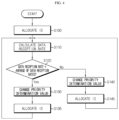
- FIG. 4 is a diagram schematically showing a method for communication between BMSs according to an embodiment of the present disclosure.
- the method for communication between BMSs according to an embodiment of the present disclosure will be described.
- the method for communication between BMSs according to an embodiment of the present disclosure may be performed by the apparatus for communication between BMSs.
- the master BMS 100 may allocate a communication identifier having a variable field to each of the plurality of slave BMSs 201 , 202 , 203 , 204 .
- the master BMS 100 may calculate a data reception rate for each slave BMS 201 , 202 , 203 , 204 .
- the master BMS 100 may calculate an average value of the data reception rates and determine whether the data reception rate of each slave BMS 201 , 202 , 203 , 204 is smaller than the average value of the data reception rates. If the result of the step S 120 is “YES”, the method proceeds to the step S 130 . Otherwise, the method proceeds to the step S 140 .
- the master BMS 100 may change the priority determination value of a slave BMS whose data reception rate is lower than the average value of the data reception rates. For example, the master BMS 100 may change the priority determination value so that the communication identifier of the slave BMS whose data reception rate is smaller than the average value is decreased. That is, the master BMS 100 may set the slave BMS whose data reception rate is lower than the average value to have a higher priority, by setting the communication identifier smaller.
- the master BMS 100 may allocate the communication identifier having the changed priority determination value to a target slave BMS.
- the target slave BMS may be a slave BMS whose priority determination value is changed.
- the number of target slave BMSs may be one or plural.
- the method may return to the step S 110 .
- the master BMS 100 may change the communication identifier of a slave BMS whose data reception rate is greater than the average value, thereby resultantly setting the second slave BMS 202 to have a higher priority.
- the master BMS 100 may determine whether the communication identifiers of the plurality of slave BMSs 201 , 202 , 203 , 204 are changeable, and change the communication identifier of each of the plurality of slave BMSs 201 , 202 , 203 , 204 in response to the determined result.
- the master BMS 100 may change the priority determination value of a slave BMS whose data reception rate is greater than the average value of the data reception rates. For example, the master BMS 100 may change the priority determination value so that the communication identifier of the slave BMS having a greater data reception rate is increased. That is, the master BMS 100 may set the slave BMS whose data reception rate is greater than the average value to have a lower priority, by setting the communication identifier to a greater value.
- the master BMS 100 may allocate the communication identifier having the changed priority determination value to the target slave BMS. Subsequently, the method may return to the step S 110 .
- the processor may be implemented as a set of program modules.
- the program modules may be stored in a memory device and executed by a processor.
- the types of various control logics of the processor there is no particular limitation on the types of various control logics of the processor, as long as one or more control logics are combined and the combined control logic is written in a computer-readable code system so that the computer-readable access is possible.
- the recording medium includes at least one selected from the group consisting of a ROM, a RAM, a register, a CD-ROM, a magnetic tape, a hard disk, a floppy disk and an optical data recording device.
- the code system may be stored and executed in a distributed manner on computers connected through a network.
- functional programs, code and segments for implementing the combined control logics may be easily inferred by programmers in the technical field to which the present disclosure belongs.
Landscapes
- Engineering & Computer Science (AREA)
- Computer Networks & Wireless Communication (AREA)
- Signal Processing (AREA)
- General Chemical & Material Sciences (AREA)
- Manufacturing & Machinery (AREA)
- Chemical & Material Sciences (AREA)
- Chemical Kinetics & Catalysis (AREA)
- Electrochemistry (AREA)
- Environmental & Geological Engineering (AREA)
- Computing Systems (AREA)
- Health & Medical Sciences (AREA)
- General Health & Medical Sciences (AREA)
- Medical Informatics (AREA)
- Microelectronics & Electronic Packaging (AREA)
- Mobile Radio Communication Systems (AREA)
- Remote Monitoring And Control Of Power-Distribution Networks (AREA)
- Charge And Discharge Circuits For Batteries Or The Like (AREA)
- Small-Scale Networks (AREA)
Applications Claiming Priority (3)
| Application Number | Priority Date | Filing Date | Title |
|---|---|---|---|
| KR10-2018-0118520 | 2018-10-04 | ||
| KR1020180118520A KR102258814B1 (ko) | 2018-10-04 | 2018-10-04 | Bms 간 통신 시스템 및 방법 |
| PCT/KR2019/012464 WO2020071682A1 (ko) | 2018-10-04 | 2019-09-25 | Bms 간 통신 시스템 및 방법 |
Publications (2)
| Publication Number | Publication Date |
|---|---|
| US20200351349A1 US20200351349A1 (en) | 2020-11-05 |
| US11831716B2 true US11831716B2 (en) | 2023-11-28 |
Family
ID=70055588
Family Applications (1)
| Application Number | Title | Priority Date | Filing Date |
|---|---|---|---|
| US16/763,075 Active 2041-01-16 US11831716B2 (en) | 2018-10-04 | 2019-09-25 | System and method for communication between BMSs |
Country Status (7)
| Country | Link |
|---|---|
| US (1) | US11831716B2 (es) |
| EP (1) | EP3734920B1 (es) |
| JP (1) | JP7048855B2 (es) |
| KR (1) | KR102258814B1 (es) |
| CN (1) | CN111373705B (es) |
| ES (1) | ES3055826T3 (es) |
| WO (1) | WO2020071682A1 (es) |
Families Citing this family (5)
| Publication number | Priority date | Publication date | Assignee | Title |
|---|---|---|---|---|
| KR102861413B1 (ko) * | 2020-02-13 | 2025-09-17 | 주식회사 엘지에너지솔루션 | 배터리 제어 시스템, 배터리 팩, 전기 차량 및 상기 배터리 제어 시스템을 위한 제어 방법 |
| KR102818312B1 (ko) * | 2020-06-19 | 2025-06-10 | 주식회사 엘지에너지솔루션 | 배터리 모듈의 에러를 진단하는 슬레이브 bms 및 상기 슬레이브 bms를 포함하는 배터리 팩 |
| KR20220067327A (ko) * | 2020-11-17 | 2022-05-24 | 주식회사 엘지에너지솔루션 | Bms 관리 장치 및 방법 |
| KR102534217B1 (ko) * | 2020-12-15 | 2023-05-17 | 한화솔루션 주식회사 | 에너지 저장 시스템의 통신 아이디 설정 장치 |
| CN114094677B (zh) * | 2022-01-18 | 2023-03-31 | 瑞诺技术(深圳)有限公司 | 一种基于新能源电能转变的家居储能系统及其管理系统 |
Citations (42)
| Publication number | Priority date | Publication date | Assignee | Title |
|---|---|---|---|---|
| JP2001350639A (ja) | 2000-06-06 | 2001-12-21 | Atr Adaptive Communications Res Lab | ソフトリアルタイムにおけるスケジューリング方法 |
| US20040125815A1 (en) | 2002-06-24 | 2004-07-01 | Mikio Shimazu | Packet transmission apparatus and method thereof, traffic conditioner, priority control mechanism and packet shaper |
| US20060036435A1 (en) * | 2003-01-08 | 2006-02-16 | France Telecom | Method for encoding and decoding audio at a variable rate |
| US20070121524A1 (en) | 2005-11-30 | 2007-05-31 | Vijay Rangarajan | Method and apparatus providing prioritized recursion resolution of border gateway protocol forwarding information bases |
| CN101051221A (zh) | 2006-12-19 | 2007-10-10 | 浙江工业大学 | 多焊接电源群控系统 |
| US20090092055A1 (en) * | 2007-10-05 | 2009-04-09 | Qualcomm Incorporated | Triggering multi-carrier requests |
| CN101640951A (zh) | 2008-07-28 | 2010-02-03 | 富士通株式会社 | 基站、通信终端、基站及通信终端通信的方法、通信系统 |
| US20100158013A1 (en) * | 2008-12-22 | 2010-06-24 | Broadcom Corporation | Systems and methods for reducing latency and reservation request overhead in a communications network |
| JP2012181131A (ja) | 2011-03-02 | 2012-09-20 | Mitsubishi Electric Corp | 蓄電管理装置 |
| US20130110637A1 (en) * | 2011-11-02 | 2013-05-02 | Ross Bott | Strategically timed delivery of advertisements or electronic coupons to a mobile device in a mobile network |
| KR20130058373A (ko) | 2011-11-25 | 2013-06-04 | 주식회사 엘지화학 | 멀티 bms에 대한 식별자 할당 시스템 및 방법 |
| US20130253715A1 (en) * | 2011-05-31 | 2013-09-26 | Lg Chem, Ltd. | Power storage system having modularized bms connection structure and method for controlling the system |
| CN103522994A (zh) | 2013-10-28 | 2014-01-22 | 国家电网公司 | 电动汽车换电站动力电池箱成组自动选优系统及工作方法 |
| US20140056235A1 (en) * | 2012-02-14 | 2014-02-27 | Telefonaktiebolaget L M Ericsson (Publ) | Smart 3GDT |
| CN103650290A (zh) | 2011-09-05 | 2014-03-19 | 株式会社Lg化学 | 用于向电池组的多个从分配标识符的方法和系统 |
| KR20140078323A (ko) | 2012-12-17 | 2014-06-25 | 넥스콘 테크놀러지 주식회사 | 에너지 저장 시스템용 슬레이브 배터리 관리 시스템에 대한 자동 식별자 설정 방법 |
| KR101458436B1 (ko) | 2014-09-11 | 2014-11-12 | 김근희 | 데이터 전송 방법 및 이를 적용한 주식 체결 시스템 |
| US20150006666A1 (en) * | 2010-07-26 | 2015-01-01 | Seven Networks, Inc. | Distributed implementation of dynamic wireless traffic policy |
| US20150084598A1 (en) | 2013-09-23 | 2015-03-26 | Samsung Sdi Co., Ltd. | Battery system, method of controlling battery system, and energy storage system including the same |
| JP2015177234A (ja) | 2014-03-13 | 2015-10-05 | 株式会社豊田自動織機 | 電池モジュール及びcan通信識別子設定方法 |
| US20150372897A1 (en) * | 2014-06-24 | 2015-12-24 | Samsung Electronics Co., Ltd. | Method and apparatus for relaying in multicast network |
| US20160226268A1 (en) | 2015-01-30 | 2016-08-04 | Samsung Sdi Co., Ltd. | Battery system and energy storage system including the same |
| US20160291683A1 (en) | 2015-04-03 | 2016-10-06 | Microsoft Technology Licensing, Llc | Battery Management in a Device with Multiple Batteries |
| US20160359329A1 (en) * | 2015-06-04 | 2016-12-08 | Samsung Sdi Co., Ltd. | Battery control system and method |
| US20170331577A1 (en) * | 2016-05-13 | 2017-11-16 | Telefonaktiebolaget Lm Ericsson (Publ) | Network Architecture, Methods, and Devices for a Wireless Communications Network |
| US20170353929A1 (en) * | 2016-06-01 | 2017-12-07 | Isco International, Llc | Method and apparatus for performing signal conditioning to mitigate interference detected in a communication system |
| KR101837840B1 (ko) | 2016-06-23 | 2018-04-19 | 엘지전자 주식회사 | 전압 분배를 이용하여 슬레이브 장치의 식별자를 설정하는 방법 및 이를 구현하는 장치 |
| US20180149704A1 (en) | 2015-12-17 | 2018-05-31 | Lg Chem, Ltd. | Battery module and cell configuration recognition system for id assignment |
| US20180186241A1 (en) * | 2016-12-30 | 2018-07-05 | Textron Innovations Inc. | Handling a fault condition on a lithium-battery-powered utility vehicle |
| KR20180079769A (ko) | 2017-01-02 | 2018-07-11 | 엘지전자 주식회사 | 배터리 시스템 |
| CN108297723A (zh) | 2018-01-10 | 2018-07-20 | 力帆实业(集团)股份有限公司 | 基于rfid的汽车电池定位充电连接系统及其方法 |
| US10131246B2 (en) * | 2017-04-05 | 2018-11-20 | H55 Sa | Communication system for battery management systems in electric or hybrid vehicles |
| US10367677B2 (en) * | 2016-05-13 | 2019-07-30 | Telefonaktiebolaget Lm Ericsson (Publ) | Network architecture, methods, and devices for a wireless communications network |
| US20190260097A1 (en) * | 2017-07-06 | 2019-08-22 | Lg Chem, Ltd. | Wireless Battery Management System And Battery Pack Including Same |
| US10506506B2 (en) * | 2018-04-30 | 2019-12-10 | Ofinno, Llc | 5G policy control for restricted local operator services |
| US20200229206A1 (en) * | 2017-12-30 | 2020-07-16 | Intel Corporation | Methods and devices for wireless communications |
| US20210168077A1 (en) * | 2017-05-31 | 2021-06-03 | South China University Of Technology | Method of cross-layer opportunistic routing for internet of vehicles based on decentralized congestion control strategy |
| US20210309121A1 (en) * | 2020-04-03 | 2021-10-07 | Ola Electric Mobility Private Limited | Battery swapping to manage in-vehicle battery communication |
| US20210313626A1 (en) * | 2020-04-01 | 2021-10-07 | Sensata Technologies, Inc. | Listening only wireless network controller in a wireless battery management system |
| US20220046114A1 (en) * | 2019-01-20 | 2022-02-10 | Arilou Information Security Technologies Ltd. | System and method for data compression based on data position in frames structure |
| US20220052872A1 (en) * | 2020-08-11 | 2022-02-17 | Infineon Technologies Ag | Battery management system and method for data transmission in a battery management system |
| US20230051999A1 (en) * | 2020-01-13 | 2023-02-16 | Briggs & Stratton, Llc | Battery management system for battery powered equipment |
Family Cites Families (1)
| Publication number | Priority date | Publication date | Assignee | Title |
|---|---|---|---|---|
| KR20180118520A (ko) | 2017-04-21 | 2018-10-31 | (주)네이처튠 | 마유(馬乳) 가수분해 유청단백질(wph)분말과 베타카제인을 함유한 근소실재활환자 근육강화용 마유 조제분유 조성물 및 조제유 |
-
2018
- 2018-10-04 KR KR1020180118520A patent/KR102258814B1/ko active Active
-
2019
- 2019-09-25 JP JP2020530639A patent/JP7048855B2/ja active Active
- 2019-09-25 WO PCT/KR2019/012464 patent/WO2020071682A1/ko not_active Ceased
- 2019-09-25 EP EP19869805.2A patent/EP3734920B1/en active Active
- 2019-09-25 US US16/763,075 patent/US11831716B2/en active Active
- 2019-09-25 ES ES19869805T patent/ES3055826T3/es active Active
- 2019-09-25 CN CN201980005908.2A patent/CN111373705B/zh active Active
Patent Citations (48)
| Publication number | Priority date | Publication date | Assignee | Title |
|---|---|---|---|---|
| JP2001350639A (ja) | 2000-06-06 | 2001-12-21 | Atr Adaptive Communications Res Lab | ソフトリアルタイムにおけるスケジューリング方法 |
| US20040125815A1 (en) | 2002-06-24 | 2004-07-01 | Mikio Shimazu | Packet transmission apparatus and method thereof, traffic conditioner, priority control mechanism and packet shaper |
| US20060036435A1 (en) * | 2003-01-08 | 2006-02-16 | France Telecom | Method for encoding and decoding audio at a variable rate |
| CN101322341A (zh) | 2005-11-30 | 2008-12-10 | 思科技术公司 | 提供边界网关协议转发信息库的优先级区分式递归解析的方法和装置 |
| US20070121524A1 (en) | 2005-11-30 | 2007-05-31 | Vijay Rangarajan | Method and apparatus providing prioritized recursion resolution of border gateway protocol forwarding information bases |
| CN101051221A (zh) | 2006-12-19 | 2007-10-10 | 浙江工业大学 | 多焊接电源群控系统 |
| US20090092055A1 (en) * | 2007-10-05 | 2009-04-09 | Qualcomm Incorporated | Triggering multi-carrier requests |
| CN101640951A (zh) | 2008-07-28 | 2010-02-03 | 富士通株式会社 | 基站、通信终端、基站及通信终端通信的方法、通信系统 |
| US20100190505A1 (en) * | 2008-07-28 | 2010-07-29 | Fujitsu Limited | Base station, communication terminal, method for communication at base station, method for communication at communication terminal, and communication system |
| US20100158013A1 (en) * | 2008-12-22 | 2010-06-24 | Broadcom Corporation | Systems and methods for reducing latency and reservation request overhead in a communications network |
| US20150006666A1 (en) * | 2010-07-26 | 2015-01-01 | Seven Networks, Inc. | Distributed implementation of dynamic wireless traffic policy |
| JP2012181131A (ja) | 2011-03-02 | 2012-09-20 | Mitsubishi Electric Corp | 蓄電管理装置 |
| US20130253715A1 (en) * | 2011-05-31 | 2013-09-26 | Lg Chem, Ltd. | Power storage system having modularized bms connection structure and method for controlling the system |
| CN103650290A (zh) | 2011-09-05 | 2014-03-19 | 株式会社Lg化学 | 用于向电池组的多个从分配标识符的方法和系统 |
| US20140091769A1 (en) | 2011-09-05 | 2014-04-03 | Lg Chem, Ltd. | Method and system for allocating identifiers to multi-slave in battery pack |
| US20130110637A1 (en) * | 2011-11-02 | 2013-05-02 | Ross Bott | Strategically timed delivery of advertisements or electronic coupons to a mobile device in a mobile network |
| KR20130058373A (ko) | 2011-11-25 | 2013-06-04 | 주식회사 엘지화학 | 멀티 bms에 대한 식별자 할당 시스템 및 방법 |
| US20140056235A1 (en) * | 2012-02-14 | 2014-02-27 | Telefonaktiebolaget L M Ericsson (Publ) | Smart 3GDT |
| KR20140078323A (ko) | 2012-12-17 | 2014-06-25 | 넥스콘 테크놀러지 주식회사 | 에너지 저장 시스템용 슬레이브 배터리 관리 시스템에 대한 자동 식별자 설정 방법 |
| US20150084598A1 (en) | 2013-09-23 | 2015-03-26 | Samsung Sdi Co., Ltd. | Battery system, method of controlling battery system, and energy storage system including the same |
| KR20150033188A (ko) | 2013-09-23 | 2015-04-01 | 삼성에스디아이 주식회사 | 배터리 시스템, 배터리 시스템의 제어 방법 및 이를 포함하는 전력 저장 시스템 |
| EP3090905A1 (en) | 2013-10-28 | 2016-11-09 | State Grid Corporation of China | Automatic group optimization system for power battery boxes in electric vehicle battery swap stations, and operation method therefor |
| CN103522994A (zh) | 2013-10-28 | 2014-01-22 | 国家电网公司 | 电动汽车换电站动力电池箱成组自动选优系统及工作方法 |
| JP2015177234A (ja) | 2014-03-13 | 2015-10-05 | 株式会社豊田自動織機 | 電池モジュール及びcan通信識別子設定方法 |
| US20150372897A1 (en) * | 2014-06-24 | 2015-12-24 | Samsung Electronics Co., Ltd. | Method and apparatus for relaying in multicast network |
| KR101458436B1 (ko) | 2014-09-11 | 2014-11-12 | 김근희 | 데이터 전송 방법 및 이를 적용한 주식 체결 시스템 |
| US20160226268A1 (en) | 2015-01-30 | 2016-08-04 | Samsung Sdi Co., Ltd. | Battery system and energy storage system including the same |
| US20160291683A1 (en) | 2015-04-03 | 2016-10-06 | Microsoft Technology Licensing, Llc | Battery Management in a Device with Multiple Batteries |
| US20160359329A1 (en) * | 2015-06-04 | 2016-12-08 | Samsung Sdi Co., Ltd. | Battery control system and method |
| US20180149704A1 (en) | 2015-12-17 | 2018-05-31 | Lg Chem, Ltd. | Battery module and cell configuration recognition system for id assignment |
| US20170331577A1 (en) * | 2016-05-13 | 2017-11-16 | Telefonaktiebolaget Lm Ericsson (Publ) | Network Architecture, Methods, and Devices for a Wireless Communications Network |
| US10367677B2 (en) * | 2016-05-13 | 2019-07-30 | Telefonaktiebolaget Lm Ericsson (Publ) | Network architecture, methods, and devices for a wireless communications network |
| US20170353929A1 (en) * | 2016-06-01 | 2017-12-07 | Isco International, Llc | Method and apparatus for performing signal conditioning to mitigate interference detected in a communication system |
| KR101837840B1 (ko) | 2016-06-23 | 2018-04-19 | 엘지전자 주식회사 | 전압 분배를 이용하여 슬레이브 장치의 식별자를 설정하는 방법 및 이를 구현하는 장치 |
| US20180186241A1 (en) * | 2016-12-30 | 2018-07-05 | Textron Innovations Inc. | Handling a fault condition on a lithium-battery-powered utility vehicle |
| KR20180079769A (ko) | 2017-01-02 | 2018-07-11 | 엘지전자 주식회사 | 배터리 시스템 |
| US10131246B2 (en) * | 2017-04-05 | 2018-11-20 | H55 Sa | Communication system for battery management systems in electric or hybrid vehicles |
| US20190126774A1 (en) * | 2017-04-05 | 2019-05-02 | H55 Sa | Communication system for battery management systems in electric or hybrid vehicles |
| US20210168077A1 (en) * | 2017-05-31 | 2021-06-03 | South China University Of Technology | Method of cross-layer opportunistic routing for internet of vehicles based on decentralized congestion control strategy |
| US20190260097A1 (en) * | 2017-07-06 | 2019-08-22 | Lg Chem, Ltd. | Wireless Battery Management System And Battery Pack Including Same |
| US20200229206A1 (en) * | 2017-12-30 | 2020-07-16 | Intel Corporation | Methods and devices for wireless communications |
| CN108297723A (zh) | 2018-01-10 | 2018-07-20 | 力帆实业(集团)股份有限公司 | 基于rfid的汽车电池定位充电连接系统及其方法 |
| US10506506B2 (en) * | 2018-04-30 | 2019-12-10 | Ofinno, Llc | 5G policy control for restricted local operator services |
| US20220046114A1 (en) * | 2019-01-20 | 2022-02-10 | Arilou Information Security Technologies Ltd. | System and method for data compression based on data position in frames structure |
| US20230051999A1 (en) * | 2020-01-13 | 2023-02-16 | Briggs & Stratton, Llc | Battery management system for battery powered equipment |
| US20210313626A1 (en) * | 2020-04-01 | 2021-10-07 | Sensata Technologies, Inc. | Listening only wireless network controller in a wireless battery management system |
| US20210309121A1 (en) * | 2020-04-03 | 2021-10-07 | Ola Electric Mobility Private Limited | Battery swapping to manage in-vehicle battery communication |
| US20220052872A1 (en) * | 2020-08-11 | 2022-02-17 | Infineon Technologies Ag | Battery management system and method for data transmission in a battery management system |
Non-Patent Citations (2)
| Title |
|---|
| Extended Search Report dated Mar. 3, 2021 in corresponding EP Patent Application No. 19869805.2. |
| International Search Report issued in PCT/KR2019/012464 (PCT/ISA/210), dated Jan. 2, 2020. |
Also Published As
| Publication number | Publication date |
|---|---|
| JP7048855B2 (ja) | 2022-04-06 |
| KR102258814B1 (ko) | 2021-07-14 |
| ES3055826T3 (en) | 2026-02-16 |
| CN111373705B (zh) | 2023-05-30 |
| US20200351349A1 (en) | 2020-11-05 |
| EP3734920B1 (en) | 2025-11-19 |
| WO2020071682A1 (ko) | 2020-04-09 |
| KR20200038817A (ko) | 2020-04-14 |
| EP3734920A1 (en) | 2020-11-04 |
| CN111373705A (zh) | 2020-07-03 |
| EP3734920A4 (en) | 2021-03-31 |
| JP2021506207A (ja) | 2021-02-18 |
Similar Documents
| Publication | Publication Date | Title |
|---|---|---|
| US11831716B2 (en) | System and method for communication between BMSs | |
| US10571523B2 (en) | Wireless battery management system and battery pack including same | |
| US9488977B2 (en) | Power storage system having modularized BMS connection structure and method for controlling the system | |
| EP3444921B1 (en) | Charging control apparatus and method capable of energy saving and quick cell balancing | |
| US11356824B2 (en) | Wireless control system, wireless control method, and battery pack | |
| EP3641095A1 (en) | Battery charge management device and method | |
| US12449485B2 (en) | Battery management apparatus and method | |
| KR102679256B1 (ko) | 배터리 모듈 밸런싱 장치 및 이를 포함하는 배터리 팩 | |
| EP3644183B1 (en) | Apparatus and method for diagnosing communication abnormality | |
| US11340305B2 (en) | Apparatus and method for estimating state of secondary battery | |
| KR102684206B1 (ko) | 배터리 모듈 밸런싱 장치 및 방법 | |
| EP2854254A1 (en) | Charging station having battery cell balancing system | |
| KR102591062B1 (ko) | 배터리 열화 밸런싱 장치 및 방법 | |
| KR20180049545A (ko) | 멀티 충전이 가능한 배터리팩과 배터리팩 확장성을 고려한 에너지 저장 시스템 | |
| EP3840102B1 (en) | Bms recognition system and method | |
| CN105612677A (zh) | 用于防止由于通信错误的错误的控制算法的执行的电池管理单元 | |
| KR102697277B1 (ko) | Bms의 소프트웨어 호환성 진단 장치 및 방법 | |
| US20240421610A1 (en) | Battery Control System and Method for Managing Battery State | |
| CN117254553A (zh) | 主动均衡电路及主动均衡电路的均衡方法 | |
| KR101596488B1 (ko) | 오작동 방지 알고리즘을 포함하는 배터리 관리 시스템 및 방법 | |
| EP4697552A1 (en) | Battery management device and battery balancing method thereby | |
| KR20240023837A (ko) | 이종 배터리를 포함한 배터리 시스템 및 이의 제어 방법 | |
| WO2025186560A1 (en) | Battery management system |
Legal Events
| Date | Code | Title | Description |
|---|---|---|---|
| AS | Assignment |
Owner name: LG CHEM, LTD., KOREA, REPUBLIC OF Free format text: ASSIGNMENT OF ASSIGNORS INTEREST;ASSIGNORS:NAM, HO-CHOL;CHOI, MOON-GYU;SIGNING DATES FROM 20200214 TO 20200219;REEL/FRAME:052625/0850 |
|
| FEPP | Fee payment procedure |
Free format text: ENTITY STATUS SET TO UNDISCOUNTED (ORIGINAL EVENT CODE: BIG.); ENTITY STATUS OF PATENT OWNER: LARGE ENTITY |
|
| STPP | Information on status: patent application and granting procedure in general |
Free format text: APPLICATION DISPATCHED FROM PREEXAM, NOT YET DOCKETED |
|
| STPP | Information on status: patent application and granting procedure in general |
Free format text: DOCKETED NEW CASE - READY FOR EXAMINATION |
|
| AS | Assignment |
Owner name: LG ENERGY SOLUTION, LTD., KOREA, REPUBLIC OF Free format text: ASSIGNMENT OF ASSIGNORS INTEREST;ASSIGNOR:LG CHEM, LTD.;REEL/FRAME:058295/0068 Effective date: 20211027 |
|
| STPP | Information on status: patent application and granting procedure in general |
Free format text: NON FINAL ACTION MAILED |
|
| STPP | Information on status: patent application and granting procedure in general |
Free format text: RESPONSE TO NON-FINAL OFFICE ACTION ENTERED AND FORWARDED TO EXAMINER |
|
| STPP | Information on status: patent application and granting procedure in general |
Free format text: FINAL REJECTION MAILED |
|
| STPP | Information on status: patent application and granting procedure in general |
Free format text: NOTICE OF ALLOWANCE MAILED -- APPLICATION RECEIVED IN OFFICE OF PUBLICATIONS |
|
| STPP | Information on status: patent application and granting procedure in general |
Free format text: PUBLICATIONS -- ISSUE FEE PAYMENT VERIFIED |
|
| STCF | Information on status: patent grant |
Free format text: PATENTED CASE |