US11795329B2 - Black titanium dioxide LiDAR reflecting particles and vehicles comprising the same - Google Patents
Black titanium dioxide LiDAR reflecting particles and vehicles comprising the same Download PDFInfo
- Publication number
- US11795329B2 US11795329B2 US17/093,737 US202017093737A US11795329B2 US 11795329 B2 US11795329 B2 US 11795329B2 US 202017093737 A US202017093737 A US 202017093737A US 11795329 B2 US11795329 B2 US 11795329B2
- Authority
- US
- United States
- Prior art keywords
- equal
- less
- titanium dioxide
- electromagnetic radiation
- lidar
- Prior art date
- Legal status (The legal status is an assumption and is not a legal conclusion. Google has not performed a legal analysis and makes no representation as to the accuracy of the status listed.)
- Active, expires
Links
- GWEVSGVZZGPLCZ-UHFFFAOYSA-N Titan oxide Chemical compound O=[Ti]=O GWEVSGVZZGPLCZ-UHFFFAOYSA-N 0.000 title claims abstract description 463
- 239000004408 titanium dioxide Substances 0.000 title claims abstract description 224
- 239000002245 particle Substances 0.000 title claims description 86
- 230000005670 electromagnetic radiation Effects 0.000 claims abstract description 141
- 238000002310 reflectometry Methods 0.000 claims abstract description 57
- 238000001429 visible spectrum Methods 0.000 claims abstract description 57
- SOQBVABWOPYFQZ-UHFFFAOYSA-N oxygen(2-);titanium(4+) Chemical group [O-2].[O-2].[Ti+4] SOQBVABWOPYFQZ-UHFFFAOYSA-N 0.000 claims abstract description 20
- 239000003973 paint Substances 0.000 claims description 45
- 239000011230 binding agent Substances 0.000 claims description 10
- 239000000463 material Substances 0.000 description 31
- 239000003086 colorant Substances 0.000 description 17
- 239000006229 carbon black Substances 0.000 description 13
- 238000005984 hydrogenation reaction Methods 0.000 description 12
- 239000012279 sodium borohydride Substances 0.000 description 11
- 229910000033 sodium borohydride Inorganic materials 0.000 description 11
- 238000000034 method Methods 0.000 description 5
- 238000004070 electrodeposition Methods 0.000 description 4
- 239000000049 pigment Substances 0.000 description 4
- 238000001228 spectrum Methods 0.000 description 4
- 238000011282 treatment Methods 0.000 description 4
- JOYRKODLDBILNP-UHFFFAOYSA-N Ethyl urethane Chemical compound CCOC(N)=O JOYRKODLDBILNP-UHFFFAOYSA-N 0.000 description 3
- 239000011258 core-shell material Substances 0.000 description 3
- 230000007547 defect Effects 0.000 description 3
- 229910052739 hydrogen Inorganic materials 0.000 description 3
- 239000001257 hydrogen Substances 0.000 description 3
- 238000001392 ultraviolet--visible--near infrared spectroscopy Methods 0.000 description 3
- UFHFLCQGNIYNRP-UHFFFAOYSA-N Hydrogen Chemical compound [H][H] UFHFLCQGNIYNRP-UHFFFAOYSA-N 0.000 description 2
- 229910019142 PO4 Inorganic materials 0.000 description 2
- 238000013459 approach Methods 0.000 description 2
- QVGXLLKOCUKJST-UHFFFAOYSA-N atomic oxygen Chemical compound [O] QVGXLLKOCUKJST-UHFFFAOYSA-N 0.000 description 2
- 238000001514 detection method Methods 0.000 description 2
- 238000011161 development Methods 0.000 description 2
- 239000007789 gas Substances 0.000 description 2
- 230000031700 light absorption Effects 0.000 description 2
- 238000005259 measurement Methods 0.000 description 2
- 238000012986 modification Methods 0.000 description 2
- 230000004048 modification Effects 0.000 description 2
- 229910052760 oxygen Inorganic materials 0.000 description 2
- 239000001301 oxygen Substances 0.000 description 2
- NBIIXXVUZAFLBC-UHFFFAOYSA-K phosphate Chemical compound [O-]P([O-])([O-])=O NBIIXXVUZAFLBC-UHFFFAOYSA-K 0.000 description 2
- 239000010452 phosphate Substances 0.000 description 2
- 239000011941 photocatalyst Substances 0.000 description 2
- 239000000843 powder Substances 0.000 description 2
- 238000001878 scanning electron micrograph Methods 0.000 description 2
- 239000004923 Acrylic lacquer Substances 0.000 description 1
- VYZAMTAEIAYCRO-UHFFFAOYSA-N Chromium Chemical compound [Cr] VYZAMTAEIAYCRO-UHFFFAOYSA-N 0.000 description 1
- 239000004593 Epoxy Substances 0.000 description 1
- QEFDIAQGSDRHQW-UHFFFAOYSA-N [O-2].[Cr+3].[Fe+2] Chemical class [O-2].[Cr+3].[Fe+2] QEFDIAQGSDRHQW-UHFFFAOYSA-N 0.000 description 1
- 238000010521 absorption reaction Methods 0.000 description 1
- 230000004075 alteration Effects 0.000 description 1
- 230000015572 biosynthetic process Effects 0.000 description 1
- 239000003575 carbonaceous material Substances 0.000 description 1
- 238000006555 catalytic reaction Methods 0.000 description 1
- 230000008859 change Effects 0.000 description 1
- 238000006243 chemical reaction Methods 0.000 description 1
- 229910052804 chromium Inorganic materials 0.000 description 1
- 239000011651 chromium Substances 0.000 description 1
- BIJOYKCOMBZXAE-UHFFFAOYSA-N chromium iron nickel Chemical compound [Cr].[Fe].[Ni] BIJOYKCOMBZXAE-UHFFFAOYSA-N 0.000 description 1
- 239000002320 enamel (paints) Substances 0.000 description 1
- 238000004146 energy storage Methods 0.000 description 1
- 229910052595 hematite Inorganic materials 0.000 description 1
- 239000011019 hematite Substances 0.000 description 1
- 150000002431 hydrogen Chemical class 0.000 description 1
- CPSYWNLKRDURMG-UHFFFAOYSA-L hydron;manganese(2+);phosphate Chemical compound [Mn+2].OP([O-])([O-])=O CPSYWNLKRDURMG-UHFFFAOYSA-L 0.000 description 1
- 238000002329 infrared spectrum Methods 0.000 description 1
- 239000001023 inorganic pigment Substances 0.000 description 1
- 229910000398 iron phosphate Inorganic materials 0.000 description 1
- WBJZTOZJJYAKHQ-UHFFFAOYSA-K iron(3+) phosphate Chemical compound [Fe+3].[O-]P([O-])([O-])=O WBJZTOZJJYAKHQ-UHFFFAOYSA-K 0.000 description 1
- LIKBJVNGSGBSGK-UHFFFAOYSA-N iron(3+);oxygen(2-) Chemical compound [O-2].[O-2].[O-2].[Fe+3].[Fe+3] LIKBJVNGSGBSGK-UHFFFAOYSA-N 0.000 description 1
- 229910052751 metal Inorganic materials 0.000 description 1
- 239000002184 metal Substances 0.000 description 1
- 229910003455 mixed metal oxide Inorganic materials 0.000 description 1
- 229910052755 nonmetal Inorganic materials 0.000 description 1
- 238000000985 reflectance spectrum Methods 0.000 description 1
- 239000004065 semiconductor Substances 0.000 description 1
- 230000007704 transition Effects 0.000 description 1
- 239000012463 white pigment Substances 0.000 description 1
- LRXTYHSAJDENHV-UHFFFAOYSA-H zinc phosphate Chemical compound [Zn+2].[Zn+2].[Zn+2].[O-]P([O-])([O-])=O.[O-]P([O-])([O-])=O LRXTYHSAJDENHV-UHFFFAOYSA-H 0.000 description 1
- 229910000165 zinc phosphate Inorganic materials 0.000 description 1
Images




Classifications
-
- C—CHEMISTRY; METALLURGY
- C09—DYES; PAINTS; POLISHES; NATURAL RESINS; ADHESIVES; COMPOSITIONS NOT OTHERWISE PROVIDED FOR; APPLICATIONS OF MATERIALS NOT OTHERWISE PROVIDED FOR
- C09D—COATING COMPOSITIONS, e.g. PAINTS, VARNISHES OR LACQUERS; FILLING PASTES; CHEMICAL PAINT OR INK REMOVERS; INKS; CORRECTING FLUIDS; WOODSTAINS; PASTES OR SOLIDS FOR COLOURING OR PRINTING; USE OF MATERIALS THEREFOR
- C09D5/00—Coating compositions, e.g. paints, varnishes or lacquers, characterised by their physical nature or the effects produced; Filling pastes
- C09D5/004—Reflecting paints; Signal paints
-
- C—CHEMISTRY; METALLURGY
- C01—INORGANIC CHEMISTRY
- C01G—COMPOUNDS CONTAINING METALS NOT COVERED BY SUBCLASSES C01D OR C01F
- C01G23/00—Compounds of titanium
- C01G23/04—Oxides; Hydroxides
- C01G23/047—Titanium dioxide
-
- C—CHEMISTRY; METALLURGY
- C09—DYES; PAINTS; POLISHES; NATURAL RESINS; ADHESIVES; COMPOSITIONS NOT OTHERWISE PROVIDED FOR; APPLICATIONS OF MATERIALS NOT OTHERWISE PROVIDED FOR
- C09C—TREATMENT OF INORGANIC MATERIALS, OTHER THAN FIBROUS FILLERS, TO ENHANCE THEIR PIGMENTING OR FILLING PROPERTIES ; PREPARATION OF CARBON BLACK ; PREPARATION OF INORGANIC MATERIALS WHICH ARE NO SINGLE CHEMICAL COMPOUNDS AND WHICH ARE MAINLY USED AS PIGMENTS OR FILLERS
- C09C1/00—Treatment of specific inorganic materials other than fibrous fillers; Preparation of carbon black
- C09C1/36—Compounds of titanium
- C09C1/3607—Titanium dioxide
- C09C1/3653—Treatment with inorganic compounds
- C09C1/3661—Coating
-
- C—CHEMISTRY; METALLURGY
- C09—DYES; PAINTS; POLISHES; NATURAL RESINS; ADHESIVES; COMPOSITIONS NOT OTHERWISE PROVIDED FOR; APPLICATIONS OF MATERIALS NOT OTHERWISE PROVIDED FOR
- C09D—COATING COMPOSITIONS, e.g. PAINTS, VARNISHES OR LACQUERS; FILLING PASTES; CHEMICAL PAINT OR INK REMOVERS; INKS; CORRECTING FLUIDS; WOODSTAINS; PASTES OR SOLIDS FOR COLOURING OR PRINTING; USE OF MATERIALS THEREFOR
- C09D7/00—Features of coating compositions, not provided for in group C09D5/00; Processes for incorporating ingredients in coating compositions
- C09D7/40—Additives
- C09D7/60—Additives non-macromolecular
- C09D7/61—Additives non-macromolecular inorganic
- C09D7/62—Additives non-macromolecular inorganic modified by treatment with other compounds
-
- G—PHYSICS
- G01—MEASURING; TESTING
- G01S—RADIO DIRECTION-FINDING; RADIO NAVIGATION; DETERMINING DISTANCE OR VELOCITY BY USE OF RADIO WAVES; LOCATING OR PRESENCE-DETECTING BY USE OF THE REFLECTION OR RERADIATION OF RADIO WAVES; ANALOGOUS ARRANGEMENTS USING OTHER WAVES
- G01S7/00—Details of systems according to groups G01S13/00, G01S15/00, G01S17/00
- G01S7/48—Details of systems according to groups G01S13/00, G01S15/00, G01S17/00 of systems according to group G01S17/00
- G01S7/481—Constructional features, e.g. arrangements of optical elements
-
- C—CHEMISTRY; METALLURGY
- C01—INORGANIC CHEMISTRY
- C01P—INDEXING SCHEME RELATING TO STRUCTURAL AND PHYSICAL ASPECTS OF SOLID INORGANIC COMPOUNDS
- C01P2002/00—Crystal-structural characteristics
- C01P2002/80—Crystal-structural characteristics defined by measured data other than those specified in group C01P2002/70
- C01P2002/82—Crystal-structural characteristics defined by measured data other than those specified in group C01P2002/70 by IR- or Raman-data
-
- C—CHEMISTRY; METALLURGY
- C01—INORGANIC CHEMISTRY
- C01P—INDEXING SCHEME RELATING TO STRUCTURAL AND PHYSICAL ASPECTS OF SOLID INORGANIC COMPOUNDS
- C01P2004/00—Particle morphology
- C01P2004/01—Particle morphology depicted by an image
-
- C—CHEMISTRY; METALLURGY
- C01—INORGANIC CHEMISTRY
- C01P—INDEXING SCHEME RELATING TO STRUCTURAL AND PHYSICAL ASPECTS OF SOLID INORGANIC COMPOUNDS
- C01P2004/00—Particle morphology
- C01P2004/01—Particle morphology depicted by an image
- C01P2004/03—Particle morphology depicted by an image obtained by SEM
-
- C—CHEMISTRY; METALLURGY
- C01—INORGANIC CHEMISTRY
- C01P—INDEXING SCHEME RELATING TO STRUCTURAL AND PHYSICAL ASPECTS OF SOLID INORGANIC COMPOUNDS
- C01P2004/00—Particle morphology
- C01P2004/60—Particles characterised by their size
- C01P2004/62—Submicrometer sized, i.e. from 0.1-1 micrometer
-
- C—CHEMISTRY; METALLURGY
- C01—INORGANIC CHEMISTRY
- C01P—INDEXING SCHEME RELATING TO STRUCTURAL AND PHYSICAL ASPECTS OF SOLID INORGANIC COMPOUNDS
- C01P2004/00—Particle morphology
- C01P2004/60—Particles characterised by their size
- C01P2004/64—Nanometer sized, i.e. from 1-100 nanometer
-
- C—CHEMISTRY; METALLURGY
- C01—INORGANIC CHEMISTRY
- C01P—INDEXING SCHEME RELATING TO STRUCTURAL AND PHYSICAL ASPECTS OF SOLID INORGANIC COMPOUNDS
- C01P2004/00—Particle morphology
- C01P2004/80—Particles consisting of a mixture of two or more inorganic phases
- C01P2004/82—Particles consisting of a mixture of two or more inorganic phases two phases having the same anion, e.g. both oxidic phases
- C01P2004/84—Particles consisting of a mixture of two or more inorganic phases two phases having the same anion, e.g. both oxidic phases one phase coated with the other
- C01P2004/86—Thin layer coatings, i.e. the coating thickness being less than 0.1 time the particle radius
-
- C—CHEMISTRY; METALLURGY
- C01—INORGANIC CHEMISTRY
- C01P—INDEXING SCHEME RELATING TO STRUCTURAL AND PHYSICAL ASPECTS OF SOLID INORGANIC COMPOUNDS
- C01P2004/00—Particle morphology
- C01P2004/80—Particles consisting of a mixture of two or more inorganic phases
- C01P2004/82—Particles consisting of a mixture of two or more inorganic phases two phases having the same anion, e.g. both oxidic phases
- C01P2004/84—Particles consisting of a mixture of two or more inorganic phases two phases having the same anion, e.g. both oxidic phases one phase coated with the other
- C01P2004/88—Thick layer coatings
-
- C—CHEMISTRY; METALLURGY
- C01—INORGANIC CHEMISTRY
- C01P—INDEXING SCHEME RELATING TO STRUCTURAL AND PHYSICAL ASPECTS OF SOLID INORGANIC COMPOUNDS
- C01P2006/00—Physical properties of inorganic compounds
- C01P2006/40—Electric properties
-
- C—CHEMISTRY; METALLURGY
- C01—INORGANIC CHEMISTRY
- C01P—INDEXING SCHEME RELATING TO STRUCTURAL AND PHYSICAL ASPECTS OF SOLID INORGANIC COMPOUNDS
- C01P2006/00—Physical properties of inorganic compounds
- C01P2006/42—Magnetic properties
-
- C—CHEMISTRY; METALLURGY
- C01—INORGANIC CHEMISTRY
- C01P—INDEXING SCHEME RELATING TO STRUCTURAL AND PHYSICAL ASPECTS OF SOLID INORGANIC COMPOUNDS
- C01P2006/00—Physical properties of inorganic compounds
- C01P2006/60—Optical properties, e.g. expressed in CIELAB-values
-
- C—CHEMISTRY; METALLURGY
- C08—ORGANIC MACROMOLECULAR COMPOUNDS; THEIR PREPARATION OR CHEMICAL WORKING-UP; COMPOSITIONS BASED THEREON
- C08K—Use of inorganic or non-macromolecular organic substances as compounding ingredients
- C08K3/00—Use of inorganic substances as compounding ingredients
- C08K3/18—Oxygen-containing compounds, e.g. metal carbonyls
- C08K3/20—Oxides; Hydroxides
- C08K3/22—Oxides; Hydroxides of metals
- C08K2003/2237—Oxides; Hydroxides of metals of titanium
- C08K2003/2241—Titanium dioxide
-
- C—CHEMISTRY; METALLURGY
- C08—ORGANIC MACROMOLECULAR COMPOUNDS; THEIR PREPARATION OR CHEMICAL WORKING-UP; COMPOSITIONS BASED THEREON
- C08K—Use of inorganic or non-macromolecular organic substances as compounding ingredients
- C08K9/00—Use of pretreated ingredients
- C08K9/02—Ingredients treated with inorganic substances
Definitions
- the present specification generally relates to black titanium dioxide (TiO 2 ) particles and, more specifically, black TiO 2 particles that reflect near-IR electromagnetic radiation.
- LiDAR systems using pulsed laser electromagnetic radiation with a wavelength of 905 nanometers have been proposed and tested for autonomous vehicle obstacle detection and avoidance systems.
- dark colored (e.g., black) pigments used in automotive paint to provide a dark colored vehicle absorb not only visible electromagnetic radiation to provide the dark color, but also absorbs near-IR electromagnetic radiation with a wavelength of 905 nanometers, which includes LiDAR electromagnetic radiation.
- a first aspect includes black titanium dioxide comprising: a crystalline titanium dioxide core; and an amorphous titanium dioxide shell that encompasses the crystalline titanium dioxide core, wherein the black titanium dioxide has a reflectivity of electromagnetic radiation in the visible spectrum that is less than or equal to 15% and a reflectivity for near-IR and LiDAR electromagnetic radiation that is greater than or equal to 10%.
- a second aspect includes the black titanium dioxide of the first aspect, wherein the black titanium dioxide has a reflectivity of electromagnetic radiation in the visible spectrum that is less than or equal to 5%.
- a third aspect includes the black titanium dioxide of any one of the first to second aspects, wherein the black titanium dioxide has a reflectivity for near-IR and LiDAR electromagnetic radiation that is greater than or equal to 20%.
- a fourth aspect includes the black titanium dioxide of any one of the first to third aspects, wherein the black titanium dioxide has a reflectivity for electromagnetic radiation in the visible spectrum that is from greater than or equal to 0.5% to less than or equal to 5%.
- a fifth aspect includes the black titanium dioxide of any one of the first to fourth aspects, wherein the black titanium dioxide has a reflectivity for near-IR and LiDAR electromagnetic radiation that is from greater than or equal to 15% to less than or equal to 65%.
- a sixth aspect includes the black titanium dioxide of any one of the first to fifth aspects, wherein the black titanium dioxide has a band gap from greater than or equal to 1.0 eV to less than or equal to 2.0 eV.
- a seventh aspect includes the black titanium dioxide of any one of the first to sixth aspects, wherein the black titanium dioxide has a band gap from greater than or equal to 1.2 eV to less than or equal to 1.8 eV.
- An eighth aspect includes black titanium dioxide particles comprising: a crystalline titanium dioxide core; and an amorphous titanium dioxide shell that encompasses the crystalline titanium dioxide core, wherein the black titanium dioxide particle has a band gap from greater than or equal to 1.0 eV to less than or equal to 2.0 eV.
- a ninth aspect includes the black titanium dioxide particles of the eight aspect, wherein the black titanium dioxide particles have a band gap from greater than or equal to 1.2 eV to less than or equal to 1.8 eV.
- a tenth aspect includes the black titanium dioxide particles of any one of the eighth to ninth aspects, wherein the amorphous titanium dioxide shell has a thickness less than or equal to 5.0 nm.
- An eleventh aspect includes the black titanium dioxide particles of any one of the eighth to tenth aspects, wherein the amorphous titanium dioxide shell has a thickness less than or equal to 2.5 nm.
- a twelfth aspect includes the black titanium dioxide particles of any one of the eighth to eleventh aspects, wherein the amorphous titanium dioxide shell has a thickness from greater than or equal to 0.1 nm to less than or equal to 5.0 nm.
- a thirteenth aspect includes the black titanium dioxide particles of any one of the eighth to twelfth aspects, wherein the black titanium dioxide particles have an average particle size D 50 that is from greater than or equal to 5 nm to less than or equal to 200 nm.
- a fourteenth aspect includes the black titanium dioxide particles of any one of the eighth to thirteenth aspects, wherein the black titanium dioxide particles have a reflectivity of electromagnetic radiation in the visible spectrum that is less than or equal to 15% and a reflectivity for near-IR and LiDAR electromagnetic radiation that is greater than or equal to 10%.
- a fifteenth aspect includes the black titanium dioxide particles of any one of the eighth to fourteenth aspects, wherein the black titanium dioxide particles have a reflectivity of electromagnetic radiation in the visible spectrum that is less than or equal to 5% and a reflectivity for near-IR and LiDAR electromagnetic radiation that is greater than or equal to 20%.
- a sixteenth aspect includes a paint comprising: a paint binder; black titanium dioxide comprising: a crystalline titanium dioxide core; and an amorphous titanium dioxide shell that encompasses the crystalline titanium dioxide core, wherein the black titanium dioxide has a reflectivity of electromagnetic radiation in the visible spectrum that is less than or equal to 15% and a reflectivity for near-IR and LiDAR electromagnetic radiation that is greater than or equal to 10%, wherein the LiDAR reflecting dark colored paint has a color with a lightness in CIELAB color space less than or equal to 40.
- a seventeenth aspect includes the paint of the sixteenth aspect, wherein the black titanium dioxide has a band gap from greater than or equal to 1.0 eV to less than or equal to 2.0 eV.
- An eighteenth aspect includes the paint of any one of the sixteenth to seventeenth aspects, wherein the amorphous titanium dioxide shell has a thickness less than or equal to 5 nm.
- a nineteenth aspect includes a vehicle comprising: a body panel coated in a LiDAR reflecting dark colored paint, the LiDAR reflecting dark colored paint comprising: a paint binder; black titanium dioxide comprising: a crystalline titanium dioxide core; and an amorphous titanium dioxide shell that encompasses the crystalline titanium dioxide core, wherein the black titanium dioxide has a reflectivity of electromagnetic radiation in the visible spectrum that is less than or equal to 15% and a reflectivity for near-IR and LiDAR electromagnetic radiation that is greater than or equal to 10%, wherein the LiDAR reflecting dark colored paint has a color with a lightness in CIELAB color space less than or equal to 40.
- a twentieth aspect includes the vehicle of the nineteenth aspect, wherein black titanium dioxide has a band gap from greater than or equal to 1.0 eV to less than or equal to 2.0 eV.
- FIG. 1 A graphically depicts the reflectivity versus wavelength of electromagnetic radiation for conventional colorants
- FIG. 1 B graphically depicts the reflectivity versus wavelength of electromagnetic radiation for colorants according to embodiments disclosed and described herein;
- FIG. 2 is a bar graph depicting the jetness of commercially available materials and black TiO 2 according to embodiments disclosed and described herein;
- FIG. 3 schematically depicts the development of black TiO 2 during hydrogenation, and the band gaps for each step of development
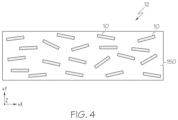
- FIG. 4 schematically depicts a cross sectional view of a LiDAR reflecting dark colored paint layer on an article according to one or more embodiments disclosed and described herein;
- FIG. 5 schematically depicts a vehicle with side panels painted with a LiDAR reflecting dark colored paint according to one or more embodiments disclosed and described herein;
- FIG. 6 schematically depicts a cross sectional view of a side panel painted with the LiDAR reflecting dark colored paint in FIG. 5 ;
- FIGS. 7 A- 7 C are scanning electron microscope (SEM) images of TiO 2 samples with reflectivity of near-IR for the sample shown in the inlay;
- FIGS. 8 A- 8 C are photographs showing the color of TiO 2 samples
- FIG. 9 is a photograph of black TiO 2 powder according to embodiments disclosed and described herein.
- FIG. 10 is a photograph showing the near-IR reflectivity of black TiO 2 powder according to embodiments disclosed and described herein.
- black titanium dioxide comprises: a crystalline titanium dioxide core; and an amorphous titanium dioxide shell that encompasses the crystalline titanium dioxide core, wherein the black titanium dioxide has a reflectivity of electromagnetic radiation in the visible spectrum that is less than or equal to 15% and a reflectivity for near-IR and LiDAR electromagnetic radiation that is greater than or equal to 10%.
- LiDAR reflective black TiO 2 particles disclosed and described herein display a dark color and reflect near-IR electromagnetic radiation, which includes LiDAR, with wavelengths between and including 850 nm and 1550 nm.
- the black TiO 2 particles disclosed and described herein can be included in a paint system to form a LiDAR reflecting dark colored paint that can be applied to objects, such as, for examples, portions of a vehicle, so that LiDAR systems can detect an article coated with the LiDAR reflecting dark colored paint.
- near-IR electromagnetic radiation refers to electromagnetic radiation with wavelengths between and including 750 nm and 950 nm
- LiDAR refers to electromagnetic radiation with wavelengths between and including 905 nm to 1550 nm.
- visible spectrum refers to electromagnetic radiation with wavelengths between and including 350 nm and 750 nm.
- the LiDAR reflecting dark colored paint may be disposed on surfaces to provide a LiDAR reflecting dark colored surface.
- Non-limiting examples include surfaces of vehicle body panels such as vehicle door panels, vehicle quarter panels, and the like.
- Utilization of the LiDAR reflecting black TiO 2 particles allows dark colored vehicles to be detected with a LiDAR system.
- Various embodiments of LiDAR reflecting black TiO 2 and methods for using the same will be described in further detail herein with specific reference to the appended drawings.
- One difficulty in forming dark-colored (such as black) particles and paint systems that reflect LiDAR or near-IR electromagnetic radiation is the close proximity of the visible spectrum of electromagnetic radiation and near-IR electromagnetic radiation or LiDAR.
- Materials that provide a dark color, such as black do not reflect electromagnetic radiation within the visible spectrum of electromagnetic radiation.
- Such materials will generally also not reflect electromagnetic radiation just outside of the visible spectrum of electromagnetic radiation, such as near-IR and LiDAR. Accordingly, a material that does not reflect electromagnetic radiation within the visible spectrum but does reflect near-IR or LiDAR electromagnetic radiation is required to have a very sharp increase in reflectivity just outside of the visible spectrum of electromagnetic radiation.
- FIG. 1 A the reflectivity of materials that are commonly used as colorants in a paint system.
- the percentage of reflectivity is measured via Perkin Elmer Lambda 1050 UV-Vis NIR spectrometer.
- the percentage of reflectivity is presented along the y-axis of FIG. 1 A and the wavelength of the electromagnetic radiation is provided along the x-axis of FIG. 1 A .
- a conventional black colorant such as carbon black.
- the carbon black colorant does not reflect electromagnetic radiation in the visible spectrum (to the left of the graph).
- the reflection of this black colorant is near zero percent within the visible spectrum of electromagnetic radiation.
- white TiO 2 reflects near-IR and LiDAR electromagnetic radiation as shown on the right side of the graph (e.g., from about 905 nm to 1050 nm) where the reflection of near-IR and LiDAR electromagnetic radiation is greater than forty percent (at 1550 nm), and around sixty percent (at 905 nm).
- white TiO 2 as the name indicates, also reflects electromagnetic radiation within the visible spectrum. As shown in FIG. 1 A , white TiO 2 reflects nearly eighty percent of electromagnetic radiation within the visible spectrum. Accordingly, neither of these colorants are suitable as a dark-colored particle that also reflects near-IR or LiDAR electromagnetic radiation.
- FIG. 1 B is a graph showing the target conditions of a particle that does not reflect light in the visible spectrum of electromagnetic radiation, but that does reflect near-IR and LiDAR electromagnetic radiation. It should be understood that FIG. 1 B shows the theoretical reflectance of a material that does not reflect light in the visible spectrum, but that does reflect near-IR and LiDAR electromagnetic radiation. Like FIG. 1 A , the percentage of reflectivity is measured along the y-axis and the wavelength of electromagnetic radiation is provided along the x-axis. Along the bottom of the graph is shown the reflectivity of a conventional black colorant, which is identical to the reflectivity of the conventional black colorant shown in FIG. 1 A . As shown in FIG.
- particles that do not reflect electromagnetic within the visible spectrum and that reflect near-IR and LiDAR electromagnetic radiation have at least two distinct regions of reflection.
- the first region of reflection is within the visible spectrum of electromagnetic radiation, indicated as “1” on the left side of the graph in FIG. 1 B .
- particles that do not reflect electromagnetic within the visible spectrum and that reflect near-IR and LiDAR electromagnetic radiation will behave the same as conventional black colorants (such as carbon black) by not reflecting electromagnetic radiation within the visible spectrum.
- particles that do not reflect electromagnetic within the visible spectrum and that reflect near-IR and LiDAR electromagnetic radiation reflect nearly zero percent of electromagnetic radiation within the visible spectrum.
- particles that do not reflect electromagnetic within the visible spectrum and that reflect near-IR and LiDAR electromagnetic radiation have a second region of reflection that is outside of the visible spectrum of electromagnetic radiation.
- the second region of reflection encompasses electromagnetic radiation with wavelengths including and between 750 nm and 1050 nm (which includes near-IR and LiDAR electromagnetic radiation).
- the particles that do not reflect electromagnetic within the visible spectrum and that reflect near-IR and LiDAR electromagnetic radiation perform similarly as white TiO 2 by reflecting a high amount of electromagnetic radiation within the second region of reflection.
- particles that do not reflect electromagnetic within the visible spectrum and that reflect near-IR and LiDAR electromagnetic radiation reflect, for example, about sixty percent of LiDAR electromagnetic radiation having a wavelength of 905 nm and reflects greater than forty percent of LiDAR electromagnetic radiation having a wavelength of 1550 nm.
- particles can reflect a sufficient amount of near-IR and LiDAR electromagnetic radiation that the particles can be detected by LiDAR systems.
- FIG. 1 B shows a steep increase in reflectance just outside of the visible spectrum of electromagnetic radiation.
- this steep increase of reflectance is present at a wavelength of electromagnetic radiation that is at or about 905 nm, which is a wavelength of electromagnetic radiation commonly used in LiDAR systems.
- the reflectance increases from about zero percent to nearly sixty percent at a wavelength of electromagnetic radiation that is about 905 nm. Forming a particle with such a precise and steep increase in reflectance is difficult to achieve and there is very little room for error.
- the material if the material reflects too much electromagnetic radiation within the visible spectrum, the appearance of the color will not be pure black, but will have hints of, for example, red or purple. However, if the material does not reflect a sufficient amount of near-IR or LiDAR electromagnetic radiation, the material will not be suitable for detection by LiDAR systems.
- CIP complex inorganic pigments
- FIG. 2 is a bar graph that shows the jetness of various materials on the y-axis. Jetness is measured by X-Rite Spectrophotometer.
- carbon black which is the material commonly used as a black colorant, but does not reflect near-IR or LiDAR electromagnetic radiation. As shown in FIG. 2 , carbon black has a jetness of about 165.
- Materials 1-7 are one typical CIP containing materials that reflect near-IR and LiDAR electromagnetic radiation, but as can be seen in FIG. 2 , these materials have a jetness that is around 142 or less. This difference in jetness is notable, as materials 1-7 have tints of red or blue. Thus, this considerable gap in jetness between carbon black and materials 1-7 show that materials 1-7 are generally not suitable to be used in applications where pure black is desired, such as, for example, in paint for automotive applications.
- Black TiO 2 is another material that has been considered for use as a black colorant. As shown in FIG. 2 , black TiO 2 has a jetness that approaches 165, which is comparable to the jetness of carbon black. Black TiO 2 generally does not show tints of red and brown, and is a good substitute for carbon black. However, standard black TiO 2 does not reflect near-IR or LiDAR electromagnetic radiation. Moreover, black TiO 2 is more expensive to prepare than carbon black because, as presented in more detail below, TiO 2 naturally has a white color and must be treated, such as, for example, through hydrogenation, to form black TiO 2 .
- White TiO 2 reflects near-IR and LiDAR electromagnetic radiation, but when it is treated to become black TiO 2 it loses its ability to reflect near-IR and LiDAR electromagnetic radiation. Accordingly, although black TiO 2 is visibly similar to carbon black in terms of its jetness, carbon black is generally preferred over black TiO 2 for economic reasons. However, according to embodiments disclosed and described herein, white TiO 2 may theoretically be converted to black TiO 2 that does not reflect electromagnetic radiation within the visible spectrum and reflects near-IR and LiDAR electromagnetic radiation. TiO 2 is a widely used oxide material. It has attracted considerable interest in the fields of catalysis, solar cells, energy storage, and semiconductor devices.
- white TiO 2 can be treated to turn to a dark color that has a jetness that approaches the jetness of carbon black.
- hydrogenation of white TiO 2 is an exemplary treatment that can be used to turn white TiO 2 to black TiO 2 . It has been found that as hydrogenation proceeds, the defect band of TiO 2 rises to be near the valence band while the conduction band of TiO 2 remains almost unchanged. This provides a band gap that is believed to be close to 1.8 eV. By exploiting the stability of the conduction band of TiO 2 and the instability of the defect band of TiO 2 , it is believed that the band gap of TiO 2 can be controlled to provide unique and desired properties of the TiO 2 .
- the band gap generally refers to the energy difference (in electron volts or eV) between the top of the valence band (VB) and the bottom of the conduction band (CB).
- the band gap is the energy required for an electron to move from the valence band to the conduction band.
- the band gap correlates to the threshold where photons can be absorbed by a material. Therefore, the band gap determines what portion of the electromagnetic spectrum the material can absorb. Generally, a material with a large band gap will absorb a greater portion of electromagnetic spectra having a short wavelength and a material with a small band gap will absorb a greater portion of electromagnetic spectra having long wavelengths.
- TiO 2 is a material that is particularly amenable to band gap manipulation, as discussed in more detail below.
- white TiO 2 that has a relatively pure crystalline structure is widely available.
- crystalline TiO 2 has a band gap of about 3.2 eV and has a high reflectivity of electromagnetic radiation in the visible spectrum as well as a high reflectivity of near-IR and LiDAR electromagnetic radiation (as shown in FIG. 1 A ).
- the valence band of TiO 2 may be manipulated through various methods, such as, for example, hydrogenation. As hydrogenation proceeds, the crystalline structure of TiO 2 is altered, and a disordered shell begins to be formed on the surface of the TiO 2 particle, forming a crystalline-amorphous core-shell black TiO 2 .
- this disordered shell on the TiO 2 particle alters the valence band while the conduction band remains constant.
- the TiO 2 will transition from a white color to a grey color, and the alteration of the valence band reduces the band gap.
- grey TiO 2 reflects less electromagnetic radiation in the visible spectrum than white TiO 2 and still reflects near-IR and LiDAR electromagnetic radiation.
- grey TiO 2 still reflects a significant amount of electromagnetic radiation in the visible spectrum, and is not suitable for applications where a pure black color is desired.
- the amorphous shell is more thoroughly formed on the surface of the TiO 2 particle such that a lattice disorder is formed at the surface by H-doping, introducing electronic states forming valence band shifting, which consequently narrowed the bandgap to about half of the original bandgap. It was observed that there are no other defects, such as oxygen vacancy or Ti 3+ in the disordered shell. It is hypothesized that in this structure, electromagnetic radiation in the visible spectrum is not reflected (i.e., is absorbed), but near-IR and LiDAR electromagnetic radiation is reflected due to reduced band gap. In this way, TiO 2 particles having an amorphous TiO 2 shell and a crystalline TiO 2 core would not reflect electromagnetic radiation within the visible spectrum and would reflect near-IR and LiDAR electromagnetic radiation.
- the entire TiO 2 particle will become amorphous TiO 2 , as shown in FIG. 3 .
- the band gap of the TiO 2 particle is essentially zero, and the amorphous TiO 2 particle does reflect electromagnetic radiation in the visible spectrum or near-IR and LiDAR electromagnetic radiation.
- the amorphous black TiO 2 was the desired product, and treatments would bypass the stage where TiO 2 particles have a well-formed amorphous TiO 2 shell and a crystalline TiO 2 core.
- the unique properties of TiO 2 particles that have a well-formed disordered shell and a crystalline TiO 2 core were not appreciated. Indeed, it is difficult to control the hydrogenation process in such a way that TiO 2 particles that have a well-formed disordered TiO 2 shell and a crystalline TiO 2 core are achieved.
- TiO 2 particles comprise a crystalline TiO 2 core and a disordered TiO 2 shell.
- the disordered TiO 2 shell has a thickness of less than or equal to 5.0 nm, such as less than or equal to 4.5 nm, less than or equal to 4.0 nm, less than or equal to 3.5 nm, less than or equal to 3.0 nm, less than or equal to 2.5 nm, less than or equal to 2.0 nm, less than or equal to 1.5 nm, less than or equal to 1.0 nm, or less than or equal to 0.5 nm.
- the disordered TiO 2 shell has a thickness from greater than or equal to 0.1 nm to less than or equal to 5.0 nm, such as from greater than or equal to 0.5 nm to less than or equal to 5.0 nm, from greater than or equal to 1.0 nm to less than or equal to 5.0 nm, from greater than or equal to 1.5 nm to less than or equal to 5.0 nm, from greater than or equal to 2.0 nm to less than or equal to 5.0 nm, from greater than or equal to 2.5 nm to less than or equal to 5.0 nm, from greater than or equal to 3.0 nm to less than or equal to 5.0 nm, from greater than or equal to 3.5 nm to less than or equal to 5.0 nm, from greater than or equal to 4.0 nm to less than or equal to 5.0 nm, or from greater than or equal to 4.5 nm to less than or equal to 5.0 nm.
- the disordered TiO 2 shell has a thickness from greater than or equal to 0.1 nm to less than or equal to 5.0 nm, such as from greater than or equal to 0.1 nm to less than or equal to 4.5 nm, from greater than or equal to 0.1 nm to less than or equal to 4.0 nm, from greater than or equal to 0.1 nm to less than or equal to 3.5 nm, from greater than or equal to 0.1 nm to less than or equal to 3.0 nm, from greater than or equal to 0.1 nm to less than or equal to 2.5 nm, from greater than or equal to 0.1 nm to less than or equal to 2.0 nm, from greater than or equal to 0.1 nm to less than or equal to 1.5 nm, from greater than or equal to 0.1 nm to less than or equal to 1.0 nm, or from greater than or equal to 0.1 nm to less than or equal to 0.5 nm.
- the disordered TiO 2 shell has a thickness from greater than or equal to 0.1 nm to less than or equal to 5.0 nm, such as from greater than or equal to 0.5 nm to less than or equal to 4.5 nm, from greater than or equal to 1.0 nm to less than or equal to 4.0 nm, from greater than or equal to 1.5 nm to less than or equal to 3.5 nm, from greater than or equal to 2.0 nm to less than or equal to 3.0 nm, or from greater than or equal to 2.5 nm to less than or equal to 3.0 nm.
- the overall particle size of the TiO 2 particle is not particularly limited. However, in one or more embodiments, the TiO 2 particles have an average particle size D 50 from greater than or equal to 5 nm to less than or equal to 200 nm, such as from greater than or equal to 20 nm to less than or equal to 180 nm, from greater than or equal to 40 nm to less than or equal to 200 nm, from greater than or equal to 60 nm to less than or equal to 200 nm, from greater than or equal to 80 nm to less than or equal to 200 nm, from greater than or equal to 100 nm to less than or equal to 200 nm, from greater than or equal to 120 nm to less than or equal to 200 nm, from greater than or equal to 140 nm to less than or equal to 200 nm, from greater than or equal to 160 nm to less than or equal to 200 nm, or from greater than or equal to 180 nm to less than or equal to 200 nm.
- D 50 from
- the TiO 2 particles have an average particle size D 50 from greater than or equal to 10 nm to less than or equal to 180 nm, such as from greater than or equal to 10 nm to less than or equal to 160 nm, from greater than or equal to 10 nm to less than or equal to 140 nm, from greater than or equal to 10 nm to less than or equal to 120 nm, from greater than or equal to 10 nm to less than or equal to 100 nm, from greater than or equal to 10 nm to less than or equal to 80 nm, from greater than or equal to 10 nm to less than or equal to 60 nm, from greater than or equal to 10 nm to less than or equal to 40 nm, or from greater than or equal to 10 nm to less than or equal to 20 nm.
- the TiO 2 particles have an average particle size D 50 from greater than or equal to 20 nm to less than or equal to 180 nm, such as from greater than or equal to 40 nm to less than or equal to 160 nm, from greater than or equal to 60 nm to less than or equal to 140 nm, or from greater than or equal to 80 nm to less than or equal to 120 nm.
- the targeted band gap for TiO 2 particles having an disordered TiO 2 shell and a crystalline TiO 2 core as measured by UV-Vis-NIR spectrometer is from greater than or equal to 1.0 eV to less than or equal to 2.0 eV, such as from greater than or equal to 1.1 eV to less than or equal to 2.0 eV, from greater than or equal to 1.2 eV to less than or equal to 2.0 eV, from greater than or equal to 1.3 eV to less than or equal to 2.0 eV, from greater than or equal to 1.4 eV to less than or equal to 2.0 eV, from greater than or equal to 1.5 eV to less than or equal to 2.0 eV, from greater than or equal to 1.6 eV to less than or equal to 2.0 eV,
- the targeted band gap of TiO 2 particles having an disordered TiO 2 shell and a crystalline TiO 2 core is from greater than or equal to 1.0 eV to less than 1.8 eV, from greater than or equal to 1.0 eV to less than or equal to 1.7 eV, from greater than or equal to 1.0 eV to less than or equal to 1.6 eV, from greater than or equal to 1.0 eV to less than or equal to 1.5 eV, from greater than or equal to 1.0 eV to less than or equal to 1.4 eV, from greater than or equal to 1.0 eV to less than or equal to 1.3 eV, from greater than or equal to 1.0 eV to less than or equal to 1.2 eV, or from greater than or equal to 1.0 eV to less than or equal to 1.1 eV.
- the targeted band gap of TiO 2 particles having an disordered TiO 2 shell and a crystalline TiO 2 core is from greater than or equal to 1.1 eV to less than or equal to 1.9 eV, such as from greater than or equal to 1.2 eV to less than or equal to 1.8 eV, from greater than or equal to 1.3 eV to less than or equal to 1.7 eV, from greater than or equal to 1.4 eV to less than or equal to 1.6 eV, or about 1.5 eV.
- TiO 2 particles according to embodiments disclosed and described herein have a targeted reflectivity for electromagnetic radiation in the visible spectrum that is less than or equal to 15%, as measured via UV-Vis-NIR spectrophotometer such as less than or equal to 14%, less than or equal to 13%, less than or equal to 12%, less than or equal to 11%, less than or equal to 10%, less than or equal to 9%, less than or equal to 8%, less than or equal to 7%, less than or equal to 6%, less than or equal to 5%, less than or equal to 4%, less than or equal to 3%, less than or equal to 2%, or less than or equal to 1%.
- a targeted reflectivity for electromagnetic radiation in the visible spectrum that is less than or equal to 15%, as measured via UV-Vis-NIR spectrophotometer such as less than or equal to 14%, less than or equal to 13%, less than or equal to 12%, less than or equal to 11%, less than or equal to 10%, less than or equal to 9%, less than or
- the TiO 2 particles have a targeted reflectivity for electromagnetic radiation in the visible spectrum that is from greater than or equal to 0.5% to less than or equal to 15%, such as from greater than or equal to 0.5% to less than or equal to 14%, from greater than or equal to 0.5% to less than or equal to 13%, from greater than or equal to 0.5% to less than or equal to 12%, from greater than or equal to 0.5% to less than or equal to 11%, from greater than or equal to 0.5% to less than or equal to 10%, from greater than or equal to 0.5% to less than or equal to 9%, from greater than or equal to 0.5% to less than or equal to 8%, from greater than or equal to 0.5% to less than or equal to 7%, from greater than or equal to 0.5% to less than or equal to 6%, from greater than or equal to 0.5% to less than or equal to 5%, from greater than or equal to 0.5% to less than or equal to 4%, from greater than or equal to 0.5% to less than or equal to 3%, from greater than or equal to 0. to 0.5%
- TiO 2 particles according to embodiments disclosed and described herein have a targeted reflectivity for near-IR and LiDAR electromagnetic radiation that is greater than or equal to 10%, greater than or equal to 15%, greater than or equal to 20%, greater than or equal to 25%, greater than or equal to 30%, greater than or equal to 35%, greater than or equal to 40%, greater than or equal to 45%, greater than or equal to 50%, greater than or equal to 60%, or greater than or equal to 65%.
- the TiO 2 particles have a targeted reflectivity for near-IR and LiDAR electromagnetic radiation that is from greater than or equal to 10% to less than or equal to 65%, such as from greater than or equal to 10% to less than or equal to 60%, from greater than or equal to 10% to less than or equal to 55%, from greater than or equal to 10% to less than or equal to 50%, from greater than or equal to 10% to less than or equal to 45%, from greater than or equal to 10% to less than or equal to 40%, from greater than or equal to 10% to less than or equal to 35%, from greater than or equal to 10% to less than or equal to 30%, from greater than or equal to 10% to less than or equal to 25%, from greater than or equal to 10% to less than or equal to 20%, or from greater than or equal to 10% to less than or equal to 15%.
- a targeted reflectivity for near-IR and LiDAR electromagnetic radiation that is from greater than or equal to 10% to less than or equal to 65%, such as from greater than or equal to 10% to less than or equal to 60%, from greater than or equal to 10%
- the methods for forming black TiO 2 particles with an disordered TiO 2 shell and a crystalline TiO 2 core comprises exposing white TiO 2 to a hydrogen atmosphere in gas phase (e.g., greater than 99% H 2 ) at temperatures from greater than or equal to 200° C. to less than or equal to 600° C. at pressures from greater than or equal to 20 bar to less than or equal to 90 bar, and for durations from greater than or equal to 12 hours to less than or equal to 10 days.
- a hydrogen atmosphere in gas phase e.g., greater than 99% H 2
- the temperature is from greater than or equal to 200° C. to less than or equal to 600° C., such as from greater than or equal to 200° C. to less than or equal to 575° C., from greater than or equal to 200° C. to less than or equal to 550° C., from greater than or equal to 200° C. to less than or equal to 525° C., from greater than or equal to 200° C. to less than or equal to 500° C., from greater than or equal to 200° C. to less than or equal to 475° C., from greater than or equal to 200° C. to less than or equal to 450° C., from greater than or equal to 200° C.
- the temperature is from greater than or equal to 225° C. to less than or equal to 600° C., from greater than or equal to 250° C. to less than or equal to 600° C., from greater than or equal to 275° C. to less than or equal to 600° C., from greater than or equal to 300° C. to less than or equal to 600° C., from greater than or equal to 325° C. to less than or equal to 600° C., from greater than or equal to 350° C. to less than or equal to 600° C., from greater than or equal to 375° C. to less than or equal to 600° C., from greater than or equal to 400° C.
- the temperature is from greater than or equal to 225° C.
- the pressure is from greater than or equal to 20 bar to less than or equal to 90 bar, such as from greater than or equal to 25 bar to less than or equal to 90 bar, from greater than or equal to 30 bar to less than or equal to 90 bar, from greater than or equal to 35 bar to less than or equal to 90 bar, from greater than or equal to 40 bar to less than or equal to 90 bar, from greater than or equal to 45 bar to less than or equal to 90 bar, from greater than or equal to 50 bar to less than or equal to 90 bar, from greater than or equal to 55 bar to less than or equal to 90 bar, from greater than or equal to 60 bar to less than or equal to 90 bar, from greater than or equal to 65 bar to less than or equal to 90 bar, from greater than or equal to 70 bar to less than or equal to 90 bar, from greater than or equal to 75 bar to less than or equal to 90 bar, from greater than or equal to 80 bar to less than or equal to 90 bar, or from greater than or equal to 85 bar to less than or equal to 90 bar.
- the pressure is from greater than or equal to 20 bar to less than or equal to 85 bar, such as from greater than or equal to 20 bar to less than or equal to 80 bar, from greater than or equal to 20 bar to less than or equal to 75 bar, from greater than or equal to 20 bar to less than or equal to 70 bar, from greater than or equal to 20 bar to less than or equal to 65 bar, from greater than or equal to 20 bar to less than or equal to 60 bar, from greater than or equal to 20 bar to less than or equal to 55 bar, from greater than or equal to 20 bar to less than or equal to 50 bar, from greater than or equal to 20 bar to less than or equal to 45 bar, from greater than or equal to 20 bar to less than or equal to 40 bar, from greater than or equal to 20 bar to less than or equal to 35 bar, from greater than or equal to 20 bar to less than or equal to 30 bar, from greater than or equal to 20 bar to less than or equal to 25 bar.
- 20 bar to less than or equal to 85 bar such as from greater than or equal to 20 bar to less than or equal to
- the pressure is from greater than or equal to 25 bar to less than or equal to 85 bar, such as from greater than or equal to 30 bar to less than or equal to 80 bar, from greater than or equal to 35 bar to less than or equal to 75 bar, from greater than or equal to 40 bar to less than or equal to 70 bar, from greater than or equal to 45 bar to less than or equal to 65 bar, or from greater than or equal to 50 bar to less than or equal to 60 bar.
- the duration is from greater than or equal to 12 hours to less than or equal to 10 days, such as from greater than or equal to 1 day to less than or equal to 10 days, such as from greater than or equal to 12 hours to less than or equal to 9 days, from greater than or equal to 12 hours to less than or equal to 8 days, from greater than or equal to 12 hours to less than or equal to 7 days, from greater than or equal to 12 hours to less than or equal to 6 days, from greater than or equal to 12 hours to less than or equal to 5 days, from greater than or equal to 12 hours to less than or equal to 4 days, from greater than or equal to 12 hours to less than or equal to 3 days, from greater than or equal to 12 hours to less than or equal to 2 days, or from greater than or equal to 12 hours to less than or equal to 1 day.
- the duration is from greater than or equal to 1 day to less than or equal to 10 days, such as from greater than or equal to 2 days to less than or equal to 10 days, from greater than or equal to 3 days to less than or equal to 10 days, from greater than or equal to 4 days to less than or equal to 10 days, from greater than or equal to 5 days to less than or equal to 10 days, from greater than or equal to 6 days to less than or equal to 10 days, from greater than or equal to 7 days to less than or equal to 10 days, from greater than or equal to 8 days to less than or equal to 10 days, or from greater than or equal to 9 days to less than or equal to 10 days.
- the duration is from greater than or equal to 1 day to less than or equal to 9 days, such as from greater than or equal to 2 days to less than or equal to 8 days, from greater than or equal to 3 days to less than or equal to 7 days, or from greater than or equal to 4 days to less than or equal to 6 days.
- the methods for forming black TiO 2 particles with an disordered TiO 2 shell and a crystalline TiO 2 core comprises exposing white TiO 2 to NaBH 4 at temperatures from greater than or equal to 250° C. to less than or equal to 400° C. at atmospheric pressure, and for durations from greater than or equal to 0.5 hours to less than or equal to 48 hours.
- the temperature is from greater than or equal to 250° C. to less than or equal to 400° C., such as from greater than or equal to 275° C. to less than or equal to 400° C., from greater than or equal to 300° C. to less than or equal to 400° C., from greater than or equal to 325° C. to less than or equal to 400° C., from greater than or equal to 350° C. to less than or equal to 400° C., OR from greater than or equal to 375° C. to less than or equal to 400° C. In one or more embodiments, the temperature is from greater than or equal to 250° C. to less than or equal to 375° C., from greater than or equal to 250° C.
- the temperature is from greater than or equal to 275° C. to less than or equal to 375° C., such as from greater than or equal to 300° C. to less than or equal to 350° C.
- the duration is from greater than or equal to 0.5 hours to less than or equal to 48 hours, such as from greater than or equal to 2 hour to less than or equal to 48 hours, from greater than or equal to 5 hours to less than or equal to 48 hours, from greater than or equal to 7 hours to less than or equal to 48 hours, from greater than or equal to 10 hours to less than or equal to 48 hours, from greater than or equal to 12 hours to less than or equal to 48 hours, from greater than or equal to 15 hours to less than or equal to 48 hours, from greater than or equal to 17 hours to less than or equal to 48 hours, from greater than or equal to 20 hours to less than or equal to 48 hours, from greater than or equal to 22 hours to less than or equal to 48 hours, from greater than or equal to 25 hours to less than or equal to 48 hours, from greater than or equal to 27 hours to less than or equal to 48 hours, from greater than or equal to 30 hours to less than or equal to 48 hours, from greater than or equal to 32 hours to less than or equal to 48 hours, from greater than or
- the duration is from greater than or equal to 0.5 hours to less than or equal to 45 hours, such as from greater than or equal to 0.5 hours to less than or equal to 42 hours, from greater than or equal to 0.5 hours to less than or equal to 40 hours, from greater than or equal to 0.5 hours to less than or equal to 37 hours, from greater than or equal to 0.5 hours to less than or equal to 35 hours, from greater than or equal to 0.5 hours to less than or equal to 32 hours, from greater than or equal to 0.5 hours to less than or equal to 30 hours, from greater than or equal to 0.5 hours to less than or equal to 27 hours, from greater than or equal to 0.5 hours to less than or equal to 25 hours, from greater than or equal to 0.5 hours to less than or equal to 22 hours, from greater than or equal to 0.5 hours to less than or equal to 20 hours, from greater than or equal to 0.5 hours to less than or equal to 17 hours, from greater than or equal to 0.5 hours to less than or equal to 15 hour, from greater than or equal to 0.5 hours to 45 hours, such as
- the duration is from greater than or equal to 2 hour to less than or equal to 45 hours, such as from greater than or equal to 5 hours to less than or equal to 42 hours, from greater than or equal to 7 hours to less than or equal to 40 hours, from greater than or equal to 10 hours to less than or equal to 37 hours, from greater than or equal to 12 hours to less than or equal to 35 hours, from greater than or equal to 15 hours to less than or equal to 32 hours, from greater than or equal to 18 hours to less than or equal to 30 hours, or from greater than or equal to 20 hours to less than or equal to 28 hours.
- a ratio of TiO 2 to NaBH 4 is from greater than or equal to 1.0:1.0 to less than or equal to 5.0:1.0, such as from greater than or equal to 1.5:1.0 to less than or equal to 5.0:1.0, from greater than or equal to 2.0:1.0 to less than or equal to 5.0:1.0, from greater than or equal to 2.5:1.0 to less than or equal to 5.0:1.0, from greater than or equal to 3.0:1.0 to less than or equal to 5.0:1.0, from greater than or equal to 3.5:1.0 to less than or equal to 5.0:1.0, from greater than or equal to 4.0:1.0 to less than or equal to 5.0:1.0, or from greater than or equal to 4.5:1.0 to less than or equal to 5.0:1.0.
- a ratio of TiO 2 to NaBH 4 is from greater than or equal to 1.0:1.0 to less than or equal to 4.5:1.0, such as from greater than or equal to 1.0:1.0 to less than or equal to 4.0:1.0, from greater than or equal to 1.0:1.0 to less than or equal to 3.5:1.0, from greater than or equal to 1.0:1.0 to less than or equal to 3.0:1.0, from greater than or equal to 1.0:1.0 to less than or equal to 2.5:1.0, from greater than or equal to 1.0:1.0 to less than or equal to 2.0:1.0, from greater than or equal to 1.0:1.0 to less than or equal to 1.5:1.0.
- a ratio of TiO 2 to NaBH 4 is from greater than or equal to 1.5:1.0 to less than or equal to 4.5:1.0, such as from greater than or equal to 2.0:1.0 to less than or equal to 4.0:1.0, or from greater than or equal to 2.5:1.0 to less than or equal to 3.5:1.0.
- black TiO 2 is formed by exposing white TiO 2 to NaBH 4 at a ratio of TiO 2 to NaBH 4 from greater than or equal to 3.0:1.0 to less than or equal to 4.5:1.0 at a temperature from greater than or equal to 250° C. to less than or equal to 300° C. for a duration from greater than or equal to 1 hour to less than or equal to 14 hours at atmospheric pressure.
- a LiDAR reflecting dark colored layer 12 (e.g., a paint layer) with a plurality of black TiO 2 particles 10 according to embodiments disclosed and described herein is depicted.
- the LiDAR reflecting dark colored layer 12 includes a plurality of black TiO 2 particles 10 according to embodiments disclosed and described herein disposed in a binder 150 (e.g., a paint binder).
- a binder 150 e.g., a paint binder.
- binders including enamel paint binders, urethane paint binders, and combination enamel-urethane paint binders.
- the LiDAR reflecting dark colored layer 12 appears as a dark color to an observer viewing the LiDAR reflecting dark colored layer 12 and reflects near-IR and LiDAR electromagnetic radiation with a wavelength of, for example, 905 nm or 1550 nm. That is, the LiDAR reflecting dark colored layer 12 exposed to sunlight and viewed by an observer has a color with a lightness in CIELAB color space of less than or equal to 20 and reflects an average of more than 20% of near-IR and LiDAR electromagnetic radiation with a wavelength of 905 nm or 1550 nm. In embodiments, the LiDAR reflecting dark colored layer 12 exposed to sunlight reflects an average of less than 10% of electromagnetic radiation in the visible spectrum and has a lightness in CIELAB color space of less than or equal to 15.
- the LiDAR reflecting dark colored layer 12 exposed to sunlight may have a lightness in CIELAB color space of less than or equal to 10.
- the term “average” refers to an average of ten (10) reflectance values equally distanced apart along a specified reflectance spectrum for a LiDAR reflecting dark colored pigment or LiDAR reflecting dark colored layer described herein.
- the terms “reflects more than” and “reflects less than” as used herein refers to “reflects an average of more than” and “reflects an average or less than”, respectively, unless otherwise stated.
- FIGS. 5 and 6 embodiments of a vehicle ‘V’ painted with a LiDAR reflecting dark colored paint are depicted. Particularly, FIG. 5 depicts the vehicle V with a side panel ‘S’ coated with a LiDAR reflecting dark colored paint 50 and FIG. 6 depicts a cross section of one of the side panel S with the LiDAR reflecting dark colored paint 50 .
- the LiDAR reflecting dark colored paint 50 may include a plurality of layers that provide surface protection and a desired color.
- the LiDAR reflecting dark colored paint 50 may include a phosphate layer 122 , an electrocoating layer 124 , a primer layer 126 , a color layer 112 or a color layer 114 (also known as a basecoat or basecoat layer) and a clear coat layer 128 .
- a phosphate layer include a manganese phosphate layer, an iron phosphate layer, a zinc phosphate layer, and combinations thereof.
- Non-limiting examples of an electrocoating layer include an anodic electrocoating layer and a cathodic electrocoating layer.
- Non-limiting examples of a primer layer include an epoxy primer layer and a urethane primer layer.
- Non-limiting examples of a clear coat layer include a urethane clear coat layer and an acrylic lacquer clear coat layer.
- the LiDAR reflecting dark colored paint 50 appears as a dark color to an observer viewing the LiDAR reflecting dark paint and reflects near-IR and LiDAR electromagnetic radiation with a wavelength of 905 nm or 1550 nm. That is, the LiDAR reflecting dark colored paint 50 exposed to sunlight and viewed by an observer has a color with lightness in CIELAB color space of less than or equal to 20 and reflects more than 40% of near-IR or LiDAR electromagnetic radiation with a wavelength of 905 nm or 1550 nm.
- the LiDAR reflecting dark colored paint 50 exposed to sunlight reflects an average of less than 10% of electromagnetic radiation in the visible spectrum and has a lightness in CIELAB color space of less than or equal to 15. In such embodiments, the LiDAR reflecting dark colored paint 50 exposed to sunlight may have a lightness in CIELAB color space of less than or equal to 10.
- LiDAR reflecting black TiO 2 particles may be used in paint to provide LiDAR reflecting dark colored articles that can be detected with LiDAR systems using near-IR or LiDAR electromagnetic radiation, such as with a wavelength of 905 nm or 1550 nm. That is, articles desired to be detected by LiDAR systems such as automobiles, motorcycles, bicycles, and the like, may be painted with a LiDAR reflecting dark colored paint described herein and thereby provide a dark colored article a desired ark color and yet be detectable by a LiDAR system using near-IR electromagnetic radiation, such as with a wavelength of 905 nm or 1550 nm.
- Sample 1 was commercially available white TiO 2 .
- Sample 2 was prepared by exposing commercially available white TiO 2 to NaBH 4 at a TiO 2 to NaBH 4 of 4.0:1.0. The TiO 2 was exposed to NaBH 4 at 375° C. and atmospheric pressure for 1 hour.
- Sample 3 was prepared by exposing commercially available TiO 2 to a hydrogen atmosphere at a temperature of 250° C. and a pressure of 20 bar for 5 days.
- FIG. 7 A is a scanning electron microscope (SEM) image of Sample 1 showing white TiO 2 particles that are crystalline TiO 2 .
- the inset in FIG. 7 A is the reflectivity of Sample 1 for near-IR electromagnetic radiation. As can be seen in the image, no core shell structure has been formed, and Sample 1 is a good reflector of near-IR electromagnetic radiation.
- FIG. 8 A shows that Sample 1 has a very light, white color.
- FIG. 7 B is an SEM image of Sample 2 showing that the TiO 2 particles transitioned to being entirely amorphous.
- the inset in FIG. 7 B is the reflectivity of Sample 2 for near-IR electromagnetic radiation. As can be seen in the image, no core shell structure has been formed, and Sample 2 does not reflect near-IR electromagnetic radiation.
- FIG. 8 B shows that Sample 2 has a very black color.
- FIG. 7 C is an SEM image of Sample 3 showing that the TiO 2 particles formed a disordered shell encompassing a core of crystalline TiO 2 .
- the inset in FIG. 7 C is the reflectivity of Sample 3 for near-IR electromagnetic radiation.
- Sample 3 is a good reflector of near-IR electromagnetic radiation.
- FIG. 8 B shows that Sample 3 has a greyish color.
- a sample was prepared by exposing the commercially available white TiO 2 from Example 1 to NaBH 4 at a TiO 2 to NaBH 4 ratio of 4.0:1.0 at atmospheric pressure and a temperature of 275° C. for a duration of 12 hours. As shown in FIG. 9 , this sample had a good black color with a slight blue.
- FIG. 10 is photograph of the sample using a camera that detects near-IR reflectivity and shows that the sample is good at reflecting near-IR electromagnetic radiation.
- start points and endpoints of ranges are disclosed herein and it is contemplated that any single start point can be used in conjunction with any given endpoint and the ranges include the start and endpoints unless otherwise noted.
- the range “greater than or equal to 50 nm, 75 nm, 100 nm, 125 nm, 150 nm or 175 nm, and less than or equal to 200 nm, 175 nm, 150 nm, 125 nm, 100 nm, or 75 nm” includes any combination of the start points between and including 50 nm, 75 nm, 100 nm, 125 nm, 150 nm or 175 nm and the end points between and including 200 nm, 175 nm, 150 nm, 125 nm, 100 nm, or 75 nm, so long and as the end point is greater than the start part.
Landscapes
- Chemical & Material Sciences (AREA)
- Organic Chemistry (AREA)
- Engineering & Computer Science (AREA)
- Life Sciences & Earth Sciences (AREA)
- Materials Engineering (AREA)
- Wood Science & Technology (AREA)
- Inorganic Chemistry (AREA)
- Remote Sensing (AREA)
- Computer Networks & Wireless Communication (AREA)
- Physics & Mathematics (AREA)
- General Physics & Mathematics (AREA)
- Radar, Positioning & Navigation (AREA)
- Environmental & Geological Engineering (AREA)
- General Life Sciences & Earth Sciences (AREA)
- Geology (AREA)
- Inorganic Compounds Of Heavy Metals (AREA)
- Paints Or Removers (AREA)
- Pigments, Carbon Blacks, Or Wood Stains (AREA)
Priority Applications (3)
| Application Number | Priority Date | Filing Date | Title |
|---|---|---|---|
| US17/093,737 US11795329B2 (en) | 2019-11-12 | 2020-11-10 | Black titanium dioxide LiDAR reflecting particles and vehicles comprising the same |
| CN202011260801.3A CN112850785B (zh) | 2019-11-12 | 2020-11-12 | 黑色二氧化钛LiDAR反射颗粒以及包含其的车辆 |
| JP2020188678A JP7653050B2 (ja) | 2019-11-12 | 2020-11-12 | 黒色二酸化チタンLiDAR反射粒子及びそれを含有する乗物 |
Applications Claiming Priority (2)
| Application Number | Priority Date | Filing Date | Title |
|---|---|---|---|
| US201962934307P | 2019-11-12 | 2019-11-12 | |
| US17/093,737 US11795329B2 (en) | 2019-11-12 | 2020-11-10 | Black titanium dioxide LiDAR reflecting particles and vehicles comprising the same |
Publications (2)
| Publication Number | Publication Date |
|---|---|
| US20210139713A1 US20210139713A1 (en) | 2021-05-13 |
| US11795329B2 true US11795329B2 (en) | 2023-10-24 |
Family
ID=75847342
Family Applications (1)
| Application Number | Title | Priority Date | Filing Date |
|---|---|---|---|
| US17/093,737 Active 2042-01-14 US11795329B2 (en) | 2019-11-12 | 2020-11-10 | Black titanium dioxide LiDAR reflecting particles and vehicles comprising the same |
Country Status (3)
| Country | Link |
|---|---|
| US (1) | US11795329B2 (https=) |
| JP (1) | JP7653050B2 (https=) |
| CN (1) | CN112850785B (https=) |
Families Citing this family (6)
| Publication number | Priority date | Publication date | Assignee | Title |
|---|---|---|---|---|
| JP7178059B1 (ja) * | 2021-05-31 | 2022-11-25 | 日本ペイントコーポレートソリューションズ株式会社 | 塗料組成物及び塗膜 |
| KR102757364B1 (ko) * | 2021-12-16 | 2025-01-22 | 씨큐브 주식회사 | 근적외선 반사 기능을 갖는 효과 안료, 이를 이용한 도료 및 패널 |
| WO2023239762A2 (en) | 2022-06-08 | 2023-12-14 | Toyota Motor Engineering & Manufacturing North America, Inc. | Lidar reflective fabric |
| US11656388B1 (en) | 2022-06-08 | 2023-05-23 | Toyota Motor Engineering & Manufacturing North America, Inc. | LiDAR reflective fabric |
| CN120187807A (zh) * | 2022-11-04 | 2025-06-20 | 日涂工业涂料有限公司 | 涂料组合物和涂膜 |
| KR102910679B1 (ko) * | 2023-12-15 | 2026-01-09 | 국립한밭대학교 산학협력단 | 티타늄 산화물 층을 포함하는 라이다 인지형 흑색 나노입자 |
Citations (6)
| Publication number | Priority date | Publication date | Assignee | Title |
|---|---|---|---|---|
| US20120118723A1 (en) * | 2009-03-12 | 2012-05-17 | The Regents Of The University Of California | Nanostructures Having Crystalline and Amorphous Phases |
| WO2012075369A1 (en) | 2010-12-03 | 2012-06-07 | 3G Mermet Corporation | Near infrared reflecting composition and coverings for architectural openings incorporating same |
| CN103214032B (zh) | 2013-04-28 | 2015-02-11 | 中国科学院上海硅酸盐研究所 | 氢等离子体辅助氢化制备黑色二氧化钛的方法 |
| CN105600820B (zh) | 2015-12-30 | 2017-06-06 | 中国科学院上海硅酸盐研究所 | 一种绿色二氧化钛及其制备方法、改性方法和应用 |
| CN107601557A (zh) | 2017-10-11 | 2018-01-19 | 新疆大学 | 一种制备1T@2H‑MoS2/黑色TiO2的方法 |
| US20180120435A1 (en) | 2016-10-28 | 2018-05-03 | Ppg Industries Ohio, Inc. | Coatings for increasing near-infrared detection distances |
Family Cites Families (14)
| Publication number | Priority date | Publication date | Assignee | Title |
|---|---|---|---|---|
| JPH10130126A (ja) * | 1996-10-28 | 1998-05-19 | Akou Kasei Kk | ファンデーション |
| JP5021174B2 (ja) | 2004-03-18 | 2012-09-05 | 大日精化工業株式会社 | 赤外線反射性被覆粒子の製造方法、赤外線反射性着色組成物および着色物品 |
| JP5413554B2 (ja) | 2008-04-25 | 2014-02-12 | 戸田工業株式会社 | 太陽光高反射塗料用着色顔料 |
| KR101265781B1 (ko) * | 2011-01-20 | 2013-06-07 | (주)엠케이 | 결정질 이산화티타늄 코어-비정질 이산화티타늄 쉘 형태의 이산화티타늄 광촉매, 그 제조방법 및 상기 이산화티타늄 광촉매를 포함한 친수성 코팅제 |
| JP2012158664A (ja) * | 2011-01-31 | 2012-08-23 | Canon Chemicals Inc | 光学素子用の内面反射防止黒色塗料 |
| CN104941614B (zh) | 2014-03-24 | 2017-12-08 | 中国科学院上海硅酸盐研究所 | 接触式还原法制备黑色二氧化钛的方法 |
| JP2016180041A (ja) | 2015-03-24 | 2016-10-13 | 神奈川県 | 赤外線反射性黒色系顔料の製造方法 |
| CN105056925B (zh) | 2015-09-07 | 2017-07-04 | 黑龙江大学 | 一种黑二氧化钛纳米棒可见光光催化剂的制备方法 |
| CN107138161B (zh) * | 2017-07-17 | 2020-04-03 | 上海友兰科技有限公司 | 一种掺杂黑色二氧化钛的制备方法 |
| CN107497413A (zh) * | 2017-07-27 | 2017-12-22 | 东华大学 | 一种黑色二氧化钛涂层的制备方法 |
| US11118062B2 (en) * | 2017-12-06 | 2021-09-14 | Toyota Motor Engineering & Manufacturing North America, Inc. | LiDAR reflecting dark colored pigments and vehicles comprising the same |
| CN108787370B (zh) * | 2018-05-30 | 2021-06-29 | 中国科学院宁波材料技术与工程研究所 | 一种黑色二氧化钛可见光催化涂层的制备方法 |
| CN109655947A (zh) * | 2019-01-08 | 2019-04-19 | 四川大学 | 对可见-近红外光强吸收的核壳材料及其制备方法 |
| CN110240791B (zh) * | 2019-06-11 | 2021-04-23 | 安徽三绿实业有限公司 | 一种广告字3d打印材料及其制备方法 |
-
2020
- 2020-11-10 US US17/093,737 patent/US11795329B2/en active Active
- 2020-11-12 CN CN202011260801.3A patent/CN112850785B/zh active Active
- 2020-11-12 JP JP2020188678A patent/JP7653050B2/ja active Active
Patent Citations (6)
| Publication number | Priority date | Publication date | Assignee | Title |
|---|---|---|---|---|
| US20120118723A1 (en) * | 2009-03-12 | 2012-05-17 | The Regents Of The University Of California | Nanostructures Having Crystalline and Amorphous Phases |
| WO2012075369A1 (en) | 2010-12-03 | 2012-06-07 | 3G Mermet Corporation | Near infrared reflecting composition and coverings for architectural openings incorporating same |
| CN103214032B (zh) | 2013-04-28 | 2015-02-11 | 中国科学院上海硅酸盐研究所 | 氢等离子体辅助氢化制备黑色二氧化钛的方法 |
| CN105600820B (zh) | 2015-12-30 | 2017-06-06 | 中国科学院上海硅酸盐研究所 | 一种绿色二氧化钛及其制备方法、改性方法和应用 |
| US20180120435A1 (en) | 2016-10-28 | 2018-05-03 | Ppg Industries Ohio, Inc. | Coatings for increasing near-infrared detection distances |
| CN107601557A (zh) | 2017-10-11 | 2018-01-19 | 新疆大学 | 一种制备1T@2H‑MoS2/黑色TiO2的方法 |
Non-Patent Citations (1)
| Title |
|---|
| Yun Hang Hu, "A Highly Efficient Photocatalyst-Hydrogenated Black TiO2 for the Photocatalytic Splitting of Water" (https://onlinelibrary.wiley.com/doi/abs/10.1002/anie.201206375) Published: Nov. 4, 2012. |
Also Published As
| Publication number | Publication date |
|---|---|
| JP2021075454A (ja) | 2021-05-20 |
| US20210139713A1 (en) | 2021-05-13 |
| JP7653050B2 (ja) | 2025-03-28 |
| CN112850785B (zh) | 2024-04-19 |
| CN112850785A (zh) | 2021-05-28 |
Similar Documents
| Publication | Publication Date | Title |
|---|---|---|
| US11795329B2 (en) | Black titanium dioxide LiDAR reflecting particles and vehicles comprising the same | |
| Pfaff | The world of inorganic pigments | |
| Maile et al. | Effect pigments—past, present and future | |
| CN102675917B (zh) | 反射红外辐射的白色颜料、其制造及其用途 | |
| CN1202429C (zh) | 色移薄膜色素 | |
| KR102371493B1 (ko) | 근적외선 차폐 재료 미립자 분산체, 근적외선 차폐체 및 근적외선 차폐용 적층 구조체 및 이들의 제조방법 | |
| EP1676890A1 (en) | Infrared shielding material microparticle dispersion, infrared shield, process for producing infrared shielding material microparticle, and infrared shielding material microparticle | |
| EP2598578B1 (de) | Pvd-metalleffektpigmente mit diffraktiver struktur und metallnanopartikeln, verfahren zu deren herstellung und verwendung derselben | |
| WO2013150983A1 (ja) | 複合酸化物ブラック顔料及びその製造方法 | |
| Zou et al. | Yellow β-Bi2O3/BaCO3 complex pigments with impressive near infrared reflectance and excellent color performance | |
| KR102042751B1 (ko) | 근적외선 흡수 필터 및 촬상소자 | |
| Otgonbayar et al. | Designing LiDAR‐Detectable Dark‐Tone Materials with High Near‐Infrared Reflectivity for Autonomous Driving: A Comprehensive Review | |
| US8187705B2 (en) | Manganese vanadium tantalum oxide and pigments having a black metallic effect coated with the same | |
| He et al. | Synthesis and coloration of highly dispersive SiO2/BiVO4 hybrid pigments with low cost and high NIR reflectance | |
| Maile | Colorants in coatings | |
| US20260055277A1 (en) | Near infrared reflective copper oxide coated particles | |
| De Marco et al. | Self-regulating VO2 photonic pigments | |
| Song et al. | Electronic configuration in outset orbitals of doping elements plays as a key factor in tuning near infrared reflection of YMn0. 9M0. 1O3 (M= Cr, Mn, Fe, Co, Al, Ga and In) | |
| KR20190025911A (ko) | 티타늄 디옥사이드 제조물 | |
| TWI907663B (zh) | 紅外線吸收粒子分散液、紅外線吸收粒子分散體、紅外線吸收夾層透明基材、紅外線吸收透明基材 | |
| JP7315354B2 (ja) | 被覆酸化亜鉛粒子及びその製造方法 | |
| Sameera et al. | Exploration of Near-Infrared-Reflecting Zn0. 5M0. 5Fe2O4 Pigment for Sustainable Coatings by Transition Metal Substitutions and a Modifier | |
| CN114873651B (zh) | 近红外反射的铜氧化物涂覆的颗粒 | |
| US20260078262A1 (en) | Coated and layered structures to create lidar reflective black composites | |
| US20240263012A1 (en) | Encapsulation of palette flakes with nanostructured copper oxide as lidar reflective black pigments |
Legal Events
| Date | Code | Title | Description |
|---|---|---|---|
| AS | Assignment |
Owner name: TOYOTA MOTOR ENGINEERING & MANUFACTURING NORTH AMERICA, INC., TEXAS Free format text: ASSIGNMENT OF ASSIGNORS INTEREST;ASSIGNORS:WU, SONGTAO;BANERJEE, DEBASISH;HUANG, KAN;SIGNING DATES FROM 20201016 TO 20201109;REEL/FRAME:054320/0249 |
|
| FEPP | Fee payment procedure |
Free format text: ENTITY STATUS SET TO UNDISCOUNTED (ORIGINAL EVENT CODE: BIG.); ENTITY STATUS OF PATENT OWNER: LARGE ENTITY |
|
| STPP | Information on status: patent application and granting procedure in general |
Free format text: APPLICATION DISPATCHED FROM PREEXAM, NOT YET DOCKETED |
|
| STPP | Information on status: patent application and granting procedure in general |
Free format text: DOCKETED NEW CASE - READY FOR EXAMINATION |
|
| STPP | Information on status: patent application and granting procedure in general |
Free format text: RESPONSE TO NON-FINAL OFFICE ACTION ENTERED AND FORWARDED TO EXAMINER |
|
| STPP | Information on status: patent application and granting procedure in general |
Free format text: NOTICE OF ALLOWANCE MAILED -- APPLICATION RECEIVED IN OFFICE OF PUBLICATIONS |
|
| STPP | Information on status: patent application and granting procedure in general |
Free format text: PUBLICATIONS -- ISSUE FEE PAYMENT RECEIVED |
|
| STPP | Information on status: patent application and granting procedure in general |
Free format text: PUBLICATIONS -- ISSUE FEE PAYMENT VERIFIED |
|
| STCF | Information on status: patent grant |
Free format text: PATENTED CASE |
|
| AS | Assignment |
Owner name: TOYOTA JIDOSHA KABUSHIKI KAISHA, JAPAN Free format text: ASSIGNMENT OF ASSIGNORS INTEREST;ASSIGNOR:TOYOTA MOTOR ENGINEERING & MANUFACTURING NORTH AMERICA, INC.;REEL/FRAME:066051/0076 Effective date: 20231228 |