US10443294B2 - Control method and control system for a vehicle closing element - Google Patents
Control method and control system for a vehicle closing element Download PDFInfo
- Publication number
- US10443294B2 US10443294B2 US15/922,254 US201815922254A US10443294B2 US 10443294 B2 US10443294 B2 US 10443294B2 US 201815922254 A US201815922254 A US 201815922254A US 10443294 B2 US10443294 B2 US 10443294B2
- Authority
- US
- United States
- Prior art keywords
- trigger signal
- sending
- operating event
- time interval
- detection time
- Prior art date
- Legal status (The legal status is an assumption and is not a legal conclusion. Google has not performed a legal analysis and makes no representation as to the accuracy of the status listed.)
- Active
Links
Images




Classifications
-
- E—FIXED CONSTRUCTIONS
- E05—LOCKS; KEYS; WINDOW OR DOOR FITTINGS; SAFES
- E05F—DEVICES FOR MOVING WINGS INTO OPEN OR CLOSED POSITION; CHECKS FOR WINGS; WING FITTINGS NOT OTHERWISE PROVIDED FOR, CONCERNED WITH THE FUNCTIONING OF THE WING
- E05F15/00—Power-operated mechanisms for wings
- E05F15/70—Power-operated mechanisms for wings with automatic actuation
- E05F15/73—Power-operated mechanisms for wings with automatic actuation responsive to movement or presence of persons or objects
-
- B—PERFORMING OPERATIONS; TRANSPORTING
- B60—VEHICLES IN GENERAL
- B60R—VEHICLES, VEHICLE FITTINGS, OR VEHICLE PARTS, NOT OTHERWISE PROVIDED FOR
- B60R25/00—Fittings or systems for preventing or indicating unauthorised use or theft of vehicles
- B60R25/20—Means to switch the anti-theft system on or off
- B60R25/2054—Means to switch the anti-theft system on or off by foot gestures
-
- B—PERFORMING OPERATIONS; TRANSPORTING
- B60—VEHICLES IN GENERAL
- B60R—VEHICLES, VEHICLE FITTINGS, OR VEHICLE PARTS, NOT OTHERWISE PROVIDED FOR
- B60R25/00—Fittings or systems for preventing or indicating unauthorised use or theft of vehicles
- B60R25/20—Means to switch the anti-theft system on or off
- B60R25/24—Means to switch the anti-theft system on or off using electronic identifiers containing a code not memorised by the user
- B60R25/246—Means to switch the anti-theft system on or off using electronic identifiers containing a code not memorised by the user characterised by the challenge triggering
-
- E—FIXED CONSTRUCTIONS
- E05—LOCKS; KEYS; WINDOW OR DOOR FITTINGS; SAFES
- E05F—DEVICES FOR MOVING WINGS INTO OPEN OR CLOSED POSITION; CHECKS FOR WINGS; WING FITTINGS NOT OTHERWISE PROVIDED FOR, CONCERNED WITH THE FUNCTIONING OF THE WING
- E05F15/00—Power-operated mechanisms for wings
- E05F15/70—Power-operated mechanisms for wings with automatic actuation
- E05F15/73—Power-operated mechanisms for wings with automatic actuation responsive to movement or presence of persons or objects
- E05F15/76—Power-operated mechanisms for wings with automatic actuation responsive to movement or presence of persons or objects responsive to devices carried by persons or objects, e.g. magnets or reflectors
-
- H—ELECTRICITY
- H03—ELECTRONIC CIRCUITRY
- H03K—PULSE TECHNIQUE
- H03K17/00—Electronic switching or gating, i.e. not by contact-making and –breaking
- H03K17/94—Electronic switching or gating, i.e. not by contact-making and –breaking characterised by the way in which the control signals are generated
- H03K17/945—Proximity switches
- H03K17/955—Proximity switches using a capacitive detector
-
- E—FIXED CONSTRUCTIONS
- E05—LOCKS; KEYS; WINDOW OR DOOR FITTINGS; SAFES
- E05Y—INDEXING SCHEME ASSOCIATED WITH SUBCLASSES E05D AND E05F, RELATING TO CONSTRUCTION ELEMENTS, ELECTRIC CONTROL, POWER SUPPLY, POWER SIGNAL OR TRANSMISSION, USER INTERFACES, MOUNTING OR COUPLING, DETAILS, ACCESSORIES, AUXILIARY OPERATIONS NOT OTHERWISE PROVIDED FOR, APPLICATION THEREOF
- E05Y2400/00—Electronic control; Electrical power; Power supply; Power or signal transmission; User interfaces
- E05Y2400/80—User interfaces
- E05Y2400/85—User input means
-
- E—FIXED CONSTRUCTIONS
- E05—LOCKS; KEYS; WINDOW OR DOOR FITTINGS; SAFES
- E05Y—INDEXING SCHEME ASSOCIATED WITH SUBCLASSES E05D AND E05F, RELATING TO CONSTRUCTION ELEMENTS, ELECTRIC CONTROL, POWER SUPPLY, POWER SIGNAL OR TRANSMISSION, USER INTERFACES, MOUNTING OR COUPLING, DETAILS, ACCESSORIES, AUXILIARY OPERATIONS NOT OTHERWISE PROVIDED FOR, APPLICATION THEREOF
- E05Y2400/00—Electronic control; Electrical power; Power supply; Power or signal transmission; User interfaces
- E05Y2400/80—User interfaces
- E05Y2400/85—User input means
- E05Y2400/8505—User authentication, e.g. biometric
-
- E—FIXED CONSTRUCTIONS
- E05—LOCKS; KEYS; WINDOW OR DOOR FITTINGS; SAFES
- E05Y—INDEXING SCHEME ASSOCIATED WITH SUBCLASSES E05D AND E05F, RELATING TO CONSTRUCTION ELEMENTS, ELECTRIC CONTROL, POWER SUPPLY, POWER SIGNAL OR TRANSMISSION, USER INTERFACES, MOUNTING OR COUPLING, DETAILS, ACCESSORIES, AUXILIARY OPERATIONS NOT OTHERWISE PROVIDED FOR, APPLICATION THEREOF
- E05Y2400/00—Electronic control; Electrical power; Power supply; Power or signal transmission; User interfaces
- E05Y2400/80—User interfaces
- E05Y2400/85—User input means
- E05Y2400/856—Actuation thereof
- E05Y2400/858—Actuation thereof by body parts, e.g. by feet
-
- E—FIXED CONSTRUCTIONS
- E05—LOCKS; KEYS; WINDOW OR DOOR FITTINGS; SAFES
- E05Y—INDEXING SCHEME ASSOCIATED WITH SUBCLASSES E05D AND E05F, RELATING TO CONSTRUCTION ELEMENTS, ELECTRIC CONTROL, POWER SUPPLY, POWER SIGNAL OR TRANSMISSION, USER INTERFACES, MOUNTING OR COUPLING, DETAILS, ACCESSORIES, AUXILIARY OPERATIONS NOT OTHERWISE PROVIDED FOR, APPLICATION THEREOF
- E05Y2900/00—Application of doors, windows, wings or fittings thereof
- E05Y2900/50—Application of doors, windows, wings or fittings thereof for vehicles
-
- E—FIXED CONSTRUCTIONS
- E05—LOCKS; KEYS; WINDOW OR DOOR FITTINGS; SAFES
- E05Y—INDEXING SCHEME ASSOCIATED WITH SUBCLASSES E05D AND E05F, RELATING TO CONSTRUCTION ELEMENTS, ELECTRIC CONTROL, POWER SUPPLY, POWER SIGNAL OR TRANSMISSION, USER INTERFACES, MOUNTING OR COUPLING, DETAILS, ACCESSORIES, AUXILIARY OPERATIONS NOT OTHERWISE PROVIDED FOR, APPLICATION THEREOF
- E05Y2900/00—Application of doors, windows, wings or fittings thereof
- E05Y2900/50—Application of doors, windows, wings or fittings thereof for vehicles
- E05Y2900/53—Type of wing
- E05Y2900/531—Doors
-
- E—FIXED CONSTRUCTIONS
- E05—LOCKS; KEYS; WINDOW OR DOOR FITTINGS; SAFES
- E05Y—INDEXING SCHEME ASSOCIATED WITH SUBCLASSES E05D AND E05F, RELATING TO CONSTRUCTION ELEMENTS, ELECTRIC CONTROL, POWER SUPPLY, POWER SIGNAL OR TRANSMISSION, USER INTERFACES, MOUNTING OR COUPLING, DETAILS, ACCESSORIES, AUXILIARY OPERATIONS NOT OTHERWISE PROVIDED FOR, APPLICATION THEREOF
- E05Y2900/00—Application of doors, windows, wings or fittings thereof
- E05Y2900/50—Application of doors, windows, wings or fittings thereof for vehicles
- E05Y2900/53—Type of wing
- E05Y2900/531—Doors
- E05Y2900/532—Back doors or end doors
-
- E—FIXED CONSTRUCTIONS
- E05—LOCKS; KEYS; WINDOW OR DOOR FITTINGS; SAFES
- E05Y—INDEXING SCHEME ASSOCIATED WITH SUBCLASSES E05D AND E05F, RELATING TO CONSTRUCTION ELEMENTS, ELECTRIC CONTROL, POWER SUPPLY, POWER SIGNAL OR TRANSMISSION, USER INTERFACES, MOUNTING OR COUPLING, DETAILS, ACCESSORIES, AUXILIARY OPERATIONS NOT OTHERWISE PROVIDED FOR, APPLICATION THEREOF
- E05Y2900/00—Application of doors, windows, wings or fittings thereof
- E05Y2900/50—Application of doors, windows, wings or fittings thereof for vehicles
- E05Y2900/53—Type of wing
- E05Y2900/546—Tailboards, tailgates or sideboards opening upwards
-
- E—FIXED CONSTRUCTIONS
- E05—LOCKS; KEYS; WINDOW OR DOOR FITTINGS; SAFES
- E05Y—INDEXING SCHEME ASSOCIATED WITH SUBCLASSES E05D AND E05F, RELATING TO CONSTRUCTION ELEMENTS, ELECTRIC CONTROL, POWER SUPPLY, POWER SIGNAL OR TRANSMISSION, USER INTERFACES, MOUNTING OR COUPLING, DETAILS, ACCESSORIES, AUXILIARY OPERATIONS NOT OTHERWISE PROVIDED FOR, APPLICATION THEREOF
- E05Y2900/00—Application of doors, windows, wings or fittings thereof
- E05Y2900/50—Application of doors, windows, wings or fittings thereof for vehicles
- E05Y2900/53—Type of wing
- E05Y2900/548—Trunk lids
-
- G—PHYSICS
- G07—CHECKING-DEVICES
- G07C—TIME OR ATTENDANCE REGISTERS; REGISTERING OR INDICATING THE WORKING OF MACHINES; GENERATING RANDOM NUMBERS; VOTING OR LOTTERY APPARATUS; ARRANGEMENTS, SYSTEMS OR APPARATUS FOR CHECKING NOT PROVIDED FOR ELSEWHERE
- G07C9/00—Individual registration on entry or exit
- G07C9/00174—Electronically operated locks; Circuits therefor; Nonmechanical keys therefor, e.g. passive or active electrical keys or other data carriers without mechanical keys
- G07C9/00309—Electronically operated locks; Circuits therefor; Nonmechanical keys therefor, e.g. passive or active electrical keys or other data carriers without mechanical keys operated with bidirectional data transmission between data carrier and locks
- G07C2009/00388—Electronically operated locks; Circuits therefor; Nonmechanical keys therefor, e.g. passive or active electrical keys or other data carriers without mechanical keys operated with bidirectional data transmission between data carrier and locks code verification carried out according to the challenge/response method
-
- G—PHYSICS
- G07—CHECKING-DEVICES
- G07C—TIME OR ATTENDANCE REGISTERS; REGISTERING OR INDICATING THE WORKING OF MACHINES; GENERATING RANDOM NUMBERS; VOTING OR LOTTERY APPARATUS; ARRANGEMENTS, SYSTEMS OR APPARATUS FOR CHECKING NOT PROVIDED FOR ELSEWHERE
- G07C2209/00—Indexing scheme relating to groups G07C9/00 - G07C9/38
- G07C2209/60—Indexing scheme relating to groups G07C9/00174 - G07C9/00944
- G07C2209/63—Comprising locating means for detecting the position of the data carrier, i.e. within the vehicle or within a certain distance from the vehicle
- G07C2209/65—Comprising locating means for detecting the position of the data carrier, i.e. within the vehicle or within a certain distance from the vehicle using means for sensing the user's hand
-
- G—PHYSICS
- G07—CHECKING-DEVICES
- G07C—TIME OR ATTENDANCE REGISTERS; REGISTERING OR INDICATING THE WORKING OF MACHINES; GENERATING RANDOM NUMBERS; VOTING OR LOTTERY APPARATUS; ARRANGEMENTS, SYSTEMS OR APPARATUS FOR CHECKING NOT PROVIDED FOR ELSEWHERE
- G07C9/00—Individual registration on entry or exit
- G07C9/00174—Electronically operated locks; Circuits therefor; Nonmechanical keys therefor, e.g. passive or active electrical keys or other data carriers without mechanical keys
- G07C9/00309—Electronically operated locks; Circuits therefor; Nonmechanical keys therefor, e.g. passive or active electrical keys or other data carriers without mechanical keys operated with bidirectional data transmission between data carrier and locks
Definitions
- the present invention relates to a method for controlling an adjusting movement of a power-operated adjustable vehicle closing element, such as a vehicle side door or a vehicle liftgate, and to a control system.
- a power-operated adjustable vehicle closing element such as a vehicle side door or a vehicle liftgate
- a sensor element For triggering an adjusting movement of a power-operated, in particular motor-driven adjustable vehicle closing element, it is known to detect operating events in a contactless manner by means of at least one sensor element of a sensor device provided at the vehicle, which originate from a movement of an (authorized) user.
- a sensor element comprises for example a proximity sensor by which a kick movement of a person can be detected and this can possibly be assessed as an operating event in order to initiate a motor-driven adjustment of the vehicle closing element.
- a course of measurement values detected (continuously or discretely) by the sensor device in a detection time interval is evaluated.
- the adjustment of the vehicle closing element is effected.
- the actual adjustment of the vehicle closing element usually is preceded by the generation and the sending of at least one trigger signal that triggers at least one operation preceding the adjustment of the vehicle closing element.
- a trigger signal for example after the detection of an operating event the execution of an authentication process can be triggered, in which the presence of a valid identification means in the vicinity of the vehicle is checked. Only when both an operating event has been detected and a valid identification means is present in the vicinity of the vehicle and hence both conditions are cumulatively fulfilled is an adjustment of the vehicle closing element triggered.
- a (further) trigger signal then is sent to a drive in order to activate the same.
- a lock that locks the vehicle closing element in a closed position can also be actuated.
- the respective necessary trigger signals for the operations preceding the actual adjustment of the vehicle closing element, without the execution of which an adjustment of the vehicle closing element does not occur are generated and sent one after the other and only after the evaluation as to whether an operating event is present.
- a certain time passes after the movements carried out by the person, until an adjustment of the vehicle closing element actually is made or until the detection of a valid operating event is signaled to the user by corresponding preceding operations. Therefore, a person often performs the movement in the detection area already for a second time, assuming that the first movement has not been detected. This possibly results in an undesired functional behavior and has a negative effect on the operating comfort and the user satisfaction.
- DE 10 2010 060 364 A1 it is proposed already at least indiscriminately that an authentication process can be effected before, during or after the definition of an operating event, wherein ultimately the adjustment of the vehicle closing element only is effected if both a positive authentication and a positive detection of an operating event are present.
- DE 10 2010 060 364 A1 does not indicate at what time, on what basis and in particular by means of what signal the authentication process is triggered.
- a method it is detected as an operating event by means of a sensor device in a contactless way whether a person performs a particular movement with a body part in a detection area, wherein for the detection of the operating event a course of measurement values detected (continuously or discretely) by the sensor device in a detection time interval is evaluated. Furthermore, it is provided that at least one trigger signal is generated and sent, which triggers at least one operation preceding the adjustment of the vehicle closing element, without the execution of which an adjustment of the vehicle closing element does not occur.
- a preceding operation then comprises e.g. an authentication process, the unlocking of a lock for the vehicle closing element or the activation of a drive for the adjustment of the vehicle closing element.
- At least one measurement value detected for the presence of an operating event is utilized to trigger the sending of the trigger signal, before the detection time interval has elapsed and before—for example with reference to at least one further measurement value and in view of stored criteria, in particular reference and/or threshold values—the course of the measurement values at all can be evaluated as to whether an operating event is present.
- the sending of the trigger signal thus is triggered on the basis of at least one measurement value for a measurement quantity that first (subsequently) is used for the evaluation as to whether or not an operating event is present.
- the decision as to whether the sending of the trigger signal is to be started thus can be effected already for example on the basis of a section of the representative course of measurement values completed only later for the presence of an operating event and hence before it is clear whether or not a (permissible) operating event is present at all.
- the trigger signal has been sent already at least in part or even the operation to be triggered thereby already is started, although no operating event possibly is detected at the end of the detection time interval.
- the at least one operation triggered by the at least one trigger signal is triggered or can be triggered earlier than in previously used control methods in which the sending of the trigger signal can be started only at the end of the detection time interval.
- a detection of an additional measurement quantity for the start of the sending of the trigger signal can be omitted.
- the course to be evaluated of measurement values detected by the sensor device in a detection time interval thus is split for example into several (at least two) sub-functions or sections, wherein already on the basis of a first sub-function or a first section a decision is made on the start of the sending of the trigger signal, although it can be decided only by means of the at least one further, second sub-function or the further, second section whether or not a permissible operating even actually is present.
- an authentication process is triggered by means of the trigger signal to be sent, in which the presence of a valid identification means in the vicinity of the vehicle is checked.
- a trigger signal for triggering the authentication process thus is sent already at a time within the detection time interval at which with reference to the stored criteria no decision can yet be made by means of an evaluation logic as to whether or not a movement to be assessed as an operating event actually is carried out by a person with a body part in a detection area.
- the sending of the trigger signal for the start of the authentication process also is completed at a time before the detection time interval has elapsed.
- the authentication process here is started not only on the basis of the at least one detected measurement value, before it has been evaluated whether or not an operating event is present.
- the authentication process triggered by the trigger signal also can be completed already at a time before the detection time interval has elapsed and before a sufficient number of measurement values has been detected in order to evaluate whether or not an operating event is present.
- the duration and hence signal length of a trigger signal and the duration and hence length of the authentication process here consequently are adjusted to each other and to the detection time interval such that the completion of the authentication process once admissibly started in any case still is completed within the detection time interval.
- the adjustment of the vehicle closing element thus can be triggered right at the end of the detection time interval, as the authentication process and hence the search for a valid identification means and hence for an authenticated user already has been carried out in parallel.
- the adjustment of the vehicle closing element does not occur and the control method can be stopped directly after the evaluation as to whether or not an operating event is present.
- the sending of the trigger signal when an operating event has been detected, is completed only at a time after the detection time interval has elapsed.
- the sending of the trigger signal triggering the authentication process thus is started within the detection time interval on the basis of the at least one detected measurement value.
- the sending and hence the transmission of the trigger signal is not completed yet by the end of the detection time interval.
- the trigger signal hence still is incomplete and the authentication is not yet started.
- the authentication process is stored in an electronic control unit receiving the trigger signal for the start of the authentication process that the authentication process only is started when a trigger signal with a specified signal length, for example in the form of a coded signal with high and low levels, in the form of a pulse or in the form of a pulse sequence with predefined signal, pulse or sequence length, is received.
- the sending of the trigger signal now is started yet in the detection time interval, but at a time at which the temporal distance to the end of the detection time interval is so small that the trigger signal cannot have been sent yet completely by the end of the detection time interval.
- the end of the detection time interval merely a part of the trigger signal necessary for triggering the authentication process has been transmitted in this variant, so that in the absence of a detection of a (permissible) operating event the sending of the trigger signal can be stopped after the detection time interval and hence the trigger signal sent so far remains incomplete.
- the authentication preceding the adjustment of the vehicle closing element thus is not carried out (and hence neither the adjustment of the vehicle closing element, which cumulatively requires a positive authentication and the detection of an operating event).
- the trigger signal only must be sent further and hence be prolonged to the defined signal length in order to trigger the authentication process.
- the sending of the subsequently completed trigger signal is started already before the detection of an operating event,—as compared to a sending of the trigger signal started only after the detection of an operating event—the time which passes from the beginning of the movement carried out by the user until the completion of the authentication and the adjustment of the vehicle closing element can be reduced.
- the time at which the sending of the trigger signal is triggered for example can lie at the beginning of the detection time interval or at a time within the detection time interval, at which a criterion concerning the number of detected measurement values, which is stored in an electronic control device, is fulfilled.
- a criterion for example can comprise the exceedance of a minimum number of measurement values that must be available in order to be able to assume an operating event with a defined probability.
- the beginning of the time at which the sending of the trigger signal is triggered thus can lie at a time within the detection period at which a sufficient (previously defined) amount of measurement values is available, which allows an operating event to be assumed with a sufficient (previously defined) probability.
- this time lies in a last half of the detection time interval.
- a second half of the detection time interval it can be assumed, for example, that a meaningful tendency for the presence of an operating event already is possible on the basis of the number of detected measurement values and hence an assessment with a sufficient probability (which possibly has previously been stored in an electronic control device).
- the sending of the trigger signal for example always is effected only after more than half of the detection time interval has elapsed, and in particular in a last third of the detection time interval.
- This at least one operation in particular can comprise the above-explained authentication process, the actuation of a lock for unlocking the vehicle closing element and/or the activation of a drive for the power-operated adjustment of the vehicle closing element.
- the sending of the trigger signal is started at a time in the detection time interval, so that at the end of the detection time interval the trigger signal has not yet reached the defined signal length, and only upon detection of an operating event the trigger signal is sent further until reaching the defined signal length and hence completed, but otherwise the sending of the same is stopped.
- the sending of the trigger signal can be stopped when no operating event has been detected, so that the trigger signal transmitted so far remains incomplete and the operation preceding the adjustment of the vehicle closing element is not triggered.
- no authentication process is started and/or no activation of a drive for the adjustment of the vehicle closing element is effected, just like of course the adjustment of the vehicle closing element itself is not effected.
- a trigger signal in particular in the form of a pulse, a pulse sequence or a continuous signal sequence (the latter in particular as a coded signal with high and low levels) thus is prolonged to the full length when an operating event has been detected.
- the complete trigger signal can be sent already distinctly earlier than in a case when sending is effected only upon completion of the detection of an operating event.
- the operation preceding the adjustment of the vehicle closing element is not carried out either on the basis of the incomplete trigger signal.
- the only partial sending of the (hence incomplete) trigger signal preferably remains without any consequence and in particular is not noticeable for a user.
- more than half of the signal for triggering the operation preceding the adjustment of the vehicle closing element has been sent already before the end of the detection time interval.
- more than half of the trigger signal in particular more than 70% of the trigger signal has already been transmitted before an operating event is detectable.
- more than half of the trigger signal to be transmitted for starting the authorization process has already been transmitted to an electronic authentication system and/or more than half of the trigger signal to be transmitted for the activation of the lock and/or the drive has already been transmitted to an electronic control system of the lock or drive, before it is detected whether or not an operating event actually is present.
- the beginning of the sending of the trigger signal in principle can be triggered by a detected measurement value exceeding or falling short of a specified threshold value, before the detection interval has elapsed and it has been evaluated whether or not an operating event is present.
- a drive can be activatable by means of a (further) trigger signal in the form of a control signal, wherein the sending of this control signal is started after the detection time interval has elapsed and it is evaluated whether an operating event is present.
- a (further) trigger signal in the form of a control signal
- an authentication process is started for example by means of a trigger signal sent partly or completely before the end of the detection time interval.
- a positive authentication is present for the presence of a valid identification means in the vicinity of the vehicle, the subsequent actuation of a lock and/or the subsequent activation of the drive for the adjustment of the vehicle closing element thereby is automatically triggered by means of a control signal.
- the authentication process for example is triggered by an electronic control device by means of a first trigger signal and separately the activation of a drive by the same electronic control device by means of a further, second trigger signal in the form of the control signal.
- the generation and the beginning of the sending of the trigger signal are dependent on at least one additional criterion.
- Such an additional criterion for example can be a temporal development of successive detected measurement values and/or the value of a maximum of detected measurement values.
- the sending of the trigger signal in principle can be dependent on whether a measurement quantity evaluated for the presence of an operating event exceeds a (first) threshold value with detected measurement values.
- a (first) threshold value For the beginning of the sending of the trigger signal, however, it then is evaluated in addition in how far successive measurement values rise or fall (before or after the exceedance of the threshold value) and/or whether the course of the measurement values has a (local) maximum whose value does not exceed or fall below a reference value.
- a kick movement carried out by a person, in particular in the region of the bumper of the vehicle, is detected as an operating event by means of the sensor device, for example in a contactless way.
- Such an operating event then will preferably trigger the adjustment of a vehicle closing element in the form of a liftgate or a trunk lid of the vehicle.
- control system for an adjusting device for the power-operated adjustment of a vehicle closing element.
- a control system comprises at least one sensor device by means of which it is detectable as an operating event in a contactless way that a person has carried out a particular movement in a detection area with a body part.
- the control system comprises an electronic control device by means of which
- the electronic control device is configured
- the proposed control system in particular can be useful for carrying out a method according to the invention.
- the features of an exemplary embodiment for a method according to the invention as explained above and below also are applicable for exemplary embodiments of a control system according to the invention, and vice versa.
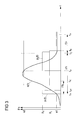
- FIG. 1 shows a signal-time diagram for a first exemplary embodiment of an inventive method of a correspondingly operating exemplary embodiment for a control system according to the invention, in which the sending of a trigger signal for starting an authentication process already is started when with reference to a measured course of a measurement signal it cannot finally be evaluated whether a permissible operating event actually is present, and only upon positive detection of an operating event the trigger signal is completed in order to actually trigger the authentication process.
- FIG. 2 shows a signal-time diagram for a second exemplary embodiment in which an authentication process and an activation of a drive for adjusting a vehicle closing element (possibly with preceding actuation of a lock) are triggered via separate trigger signals, and a trigger signal for triggering the authentication process already is sent at an early stage before completion of the detection of an operating event.
- FIG. 3 shows a signal-time diagram for a third exemplary embodiment in which analogous to the second exemplary embodiment according to FIG. 2 different trigger signals are used for the start of an authentication process and the activation of a drive, but in contrast to the second exemplary embodiment the sending of the trigger signal for the activation of the drive is started before the detection of an operating event and is completed only upon positive detection of the operating event.
- FIG. 4 schematically shows the rear end of a vehicle with a liftgate as a vehicle closing element by illustrating a control system according to the invention.
- FIG. 5 shows a signal-time diagram for a sequence of a control method known from the prior art.
- FIG. 4 shows a design variant of a control system according to the invention that is used in a vehicle FZ.
- the vehicle FZ includes a vehicle closing element in the form of a liftgate H.
- the liftgate H is adjustable in a power-operated way by means of a liftgate drive HM.
- the liftgate drive HM includes for example at least one electric motor. In a closed condition of the liftgate H the same is locked via a liftgate lock HS and hence blocked against an unauthorized opening.
- an authorized or authenticated user carries out a kick movement in the region of a rear-end bumper ST of the vehicle FZ.
- the kick movement carried out with a leg B and a foot F of the user in the region of the bumper ST correspondingly should be detectable as an operating event in a contactless way.
- a sensor device comprising several, here at least two, capacitive sensor elements 1 A and 1 B of the control system.
- the sensor elements 1 A and 1 B are spatially separate from each other and monitor different, possibly overlapping detection areas 10 A and 10 B before and below the bumper ST, which jointly define a detection area of the control system, in response to an approach of the user and the execution of the kick movement.
- a change in capacitance in the respective detection areas 10 A and 10 B associated to a sensor element 1 A or 1 B is detected. Via the detected measurement values for the changing capacitance a kick movement can then be inferred.
- the measurement values detected by means of the sensor device 1 A, 1 B are evaluated by an electronic control device SE connected to the sensor elements 1 A and 1 B, which to this end integrates an evaluation logic.
- the liftgate lock HS is actuated by means of the electronic control device SE for unlocking the liftgate H and the liftgate drive HM is actuated for adjusting the liftgate H.
- a valid identification means is present, for example in the form of a transponder T of a remote control unit for the vehicle FZ. It hence is checked for example whether a valid vehicle key is present in the vicinity of the vehicle FZ. It then is concluded therefrom that the kick movement was carried out by an authorized/authenticated user. By the corresponding authentication process it is correspondingly avoided that every kick movement (of an arbitrary person) carried out in the region of the bumper ST already leads to an opening of the liftgate H.
- the signal-time diagram of FIG. 5 illustrates a method known from the prior art for controlling the adjusting movement of the liftgate H on opening in response to a detected, permissible operating event.
- a course of measurement values detected by the sensor device 1 A, 1 B on the one hand is plotted as measurement signal s over the time t.
- the parabolic course of the measurement signal s as shown in FIG. 5 is representative for a kick movement carried out at the bumper ST and hence for a positive detection of an operating event.
- an additional ordinate for the temporal development of a trigger signal p over the time t is provided in the diagram of FIG. 5 .
- a pulse or signal strength p s of a sent trigger signal p merely is indicated by way of example.
- a coded signal with different high and low levels, a pulse sequence, or a pulse sequence with at least two different pulse strengths can of course also be sent. Sending start and duration of transmission of the trigger signal p each are controlled by the electronic control device SE.
- the measurement signal s initially rises above a stored threshold value s 1 .
- the threshold value s 1 is exceeded, for example both sensor elements 1 A and 1 B are activated. From this time t s the electronic control device SE therefore takes account of the measurement values for the evaluation as to whether a permissible operating event actually is present.
- the illustrated parabolic course of the measurement signals s is detected, i.e.
- an evaluation logic of the electronic control device 1 A, 1 B assesses this as a valid operating event and sends a trigger signal p in the form of a pulse with a length of 400 ms.
- this trigger signal p represents a trip signal for triggering the authentication process in order to check whether a valid transponder T is present in the vicinity of the vehicle FZ.
- This key search and the related authentication process takes a time ⁇ t K .
- a further operation likewise preceding the actual adjustment of the liftgate H is triggered, namely the actuation of the liftgate drive H and possibly before this the actuation of the indicators and/or headlights of the vehicle FZ in order to visually inform a user of the successful detection of an operating event (before the liftgate H is adjusted).
- a further time interval ⁇ t A again passes, until the liftgate drive H actually triggers the adjustment of the liftgate H.
- this is achieved in that the sending of at least one trigger signal for triggering an operation necessarily preceding the adjustment of the vehicle closing element, here of the liftgate H, at least partly takes place already before the evaluation as to whether or not a permissible operating event is present. Furthermore, to avoid additional sensor elements, the sending of such a trigger signal for the start of an authentication process in this connection can depend on at least one measurement value and hence on the measurement signal s, which anyway is detected and evaluated in order to detect an operating event.
- a trigger signal in the form of a trip signal p with a pre-defined signal length ⁇ t 1 is sent in order to start the start of an authentication process at a time t E , which represents the signaling end and hence the end of the 400 ms pulse.
- a time t E which represents the signaling end and hence the end of the 400 ms pulse.
- the sending of the trip signal p for triggering the authentication process already has started before the detection time interval ⁇ t 1 is completed, and hence it is possible at all for the electronic control device SE to finally evaluate whether or not a permissible operating event actually is present.
- The/a criterion for the beginning of the sending of the trip signal p at the time t P within the detection time interval ⁇ t 1 is stepping through a maximum by the detected measurement signal s. Stepping through this maximum for example is detected with reference to a second threshold value s 2 (with s 2 >s 1 ), wherein this second threshold value s 2 likewise is stored in the evaluation logic of the electronic control device SE.
- the kick movement to be detected thus is split into at least two sub-functions, on the one hand into a pre-kick and a subsequent confirmation.
- the possible beginning of the sending of the trip signal p and hence for example the height of the second threshold value s 2 and the duration of the trip signal p are adjusted to each other and to the detection time interval ⁇ t 1 such that when the sending of the trip signal p once has been triggered, this trip signal p has not yet been sent completely by the end of the detection time interval ⁇ t 1 and hence by the time of the evaluation and detection of a permissible operating event.
- the trip signal p has not yet been sent over the specified, full signal length, here 400 ms, which is necessary to trigger the authentication process.
- the beginning of the sending of the trip signal p and hence the start of a pre-kick signaling at the time t P at the earliest is effected at a time within the detection time interval ⁇ t 1 , at which a criterion concerning the number of detected measurement values, which is stored in the electronic control device SE, is fulfilled.
- a criterion for example can comprise the exceedance of a minimum number of measurement values that must be available in order to be able to assume an operating event with a sufficient probability.
- the beginning of the sending of the trip signal p is effected after more than half of the detection time interval ⁇ t 1 has elapsed.
- two different trigger signals p 1 and p 2 in the form of a trip signal p 1 and a control signal p 2 are provided, which are sent at different times in order to on the one hand trigger the authentication process and hence the key search and on the other hand the activation of the liftgate drive HM (including the actuation of the liftgate lock HS to release the liftgate H).
- the sending of the trip signal p 1 already is triggered at the beginning of the detection time interval ⁇ t 1 and hence by the measurement signal s exceeding the threshold value s 1 .
- the transmission of this trip signal p 1 for example is effected via a LIN bus.
- the authentication process and in particular the key search herewith is triggered, even while the measurement signal s is detected further in order to be able to assess at the later time t C whether or not a permissible operating event actually is present.
- the key search usually taking less than 200 ms, e.g. 150 ms, then is completed at a time t K within the detection time interval ⁇ t 1 .
- the length of the trip signal p 1 to be transmitted for triggering the authentication process and the duration of the key search thus are adjusted to each other and to the detection time interval ⁇ t 1 , so that a time interval ⁇ t K , which has elapsed between the beginning of the sending of the trip signal p 1 and the end of the key search, completely lies within the detection time interval ⁇ t 1 .
- the key search thus in any case is completed already after the detection of a pre-kick event, before it is evaluated whether or not a permissible operating event actually is present.
- the activation of the liftgate drive HM and possibly an indicator actuation must yet be triggered via the sending of the control signal p 2 .
- both trigger signals p 1 and p 2 are transmitted via a LIN bus for triggering the authentication process and for activating the liftgate drive HM (and the liftgate lock HS)
- the time here can also easily be shortened to 1100 ms, which period elapses between the beginning of a kick movement and the actual adjustment of the liftgate H.
- the two aspects of the design variants of FIGS. 1 and 2 are combined with each other.
- the authentication process already is started at an early time upon detection of a pre-kick event by generating and sending a first trigger signal in the form of a trip signal p 1 , so that the authentication process is completed yet within the detection time interval ⁇ t 1 .
- a second trigger signal in the form of a control signal p 2 for activating the liftgate drive HM (and with locked liftgate H for the previous or simultaneous actuation of the liftgate lock HS) is started yet at a time t P within the detection time interval ⁇ t 1 .
- the sending of the control signal p 2 for example is triggered again by the measurement signal s falling short of the second threshold value s 2 , after the measurement signal s had reached a maximum, as it is accompanied by a swiveling back of a foot F of the user.
- the control signal p 2 is sent further up to the signal length t E -t P triggering the activation of the liftgate drive HM and hence completed.
- the further sending of the control signal p 2 ultimately each also depends on the positive authentication of a valid transponder T at the end of the authentication process (at the time t K ). In other words, the sending of the control signal p 2 only is continued upon detection of a valid operating event by the end of the detection time interval ⁇ t 1 , but is stopped when beforehand no valid transponder T has been detected in the vicinity of the vehicle FZ.
- FIG. 3 shows the control signal p 2 for actuating the liftgate drive HM as a high-low sequence.
- a complete control signal p 2 that triggers the activation of the liftgate drive HM thus contains a defined signal or pulse sequence, here for example with a pulse of a first signal or pulse strength p S followed by a signal or a pulse with a second (here: lower) signal or pulse strength p L .
- this sequence is transmitted only incompletely, no activation of the liftgate drive HM is effected.
- the earliest possible time t P for the beginning of the sending of the control signal p 2 within the detection time interval ⁇ t 1 can be specified such that by the end of the detection time interval ⁇ t 1 always only a part of the sequence has been transmitted and only upon detection of a permissible operating event the sequence of the control signal p 2 is completed, for example with the signal or pulse component of a lower signal or pulse strength p L .
- the receivers of the respective trigger signals p, p 1 and p 2 for example can be electronic control devices and in particular control devices within the vehicle FZ, which for example control the key search or are associated with the liftgate lock HS and the liftgate drive HM and which via a LIN or CAN bus are connected to the electronic control device SE.
- the generation and the beginning of the sending of a trigger signal p, p 1 or p 2 in principle can be dependent on at least one additional criterion, in particular on a measurement value of the sensor elements 1 A or 1 B and/or on a measurement value of a further (non-illustrated) sensor element.
- the sending of the trigger signal/trip signal p 1 for the start of an authentication process can be avoided when an additional evaluation reveals that the presence of a pre-kick event and hence also at a later time the presence of a permissible operating event is improbable.
- a temporal development of successive measurement values for the measurement signal s and/or the value of a maximum of detected measurement values in the detection time interval ⁇ t 1 or a subinterval of this detection time interval ⁇ t 1 can be employed.
- the at least one additional criterion for the beginning of the sending of a trigger signal p, p 1 or p 2 also is employed for the final evaluation as to whether or not a valid operating event is present.
- the at least one additional criterion can have an at least partly redundant information content. During the execution of a kick movement this additional criterion can however be utilized already in order to exclude a real kick (against the or in the direction of the bumper ST).
Landscapes
- Engineering & Computer Science (AREA)
- Mechanical Engineering (AREA)
- Human Computer Interaction (AREA)
- Lock And Its Accessories (AREA)
Applications Claiming Priority (3)
| Application Number | Priority Date | Filing Date | Title |
|---|---|---|---|
| DE102017207279 | 2017-04-28 | ||
| DE102017207279.2 | 2017-04-28 | ||
| DE102017207279.2A DE102017207279A1 (de) | 2017-04-28 | 2017-04-28 | Steuerungsverfahren und Steuerungssystem für ein Fahrzeugschließelement |
Publications (2)
| Publication Number | Publication Date |
|---|---|
| US20180313133A1 US20180313133A1 (en) | 2018-11-01 |
| US10443294B2 true US10443294B2 (en) | 2019-10-15 |
Family
ID=61972360
Family Applications (1)
| Application Number | Title | Priority Date | Filing Date |
|---|---|---|---|
| US15/922,254 Active US10443294B2 (en) | 2017-04-28 | 2018-03-15 | Control method and control system for a vehicle closing element |
Country Status (4)
| Country | Link |
|---|---|
| US (1) | US10443294B2 (de) |
| EP (1) | EP3395621B2 (de) |
| CN (1) | CN108798358B (de) |
| DE (1) | DE102017207279A1 (de) |
Cited By (2)
| Publication number | Priority date | Publication date | Assignee | Title |
|---|---|---|---|---|
| US20180298669A1 (en) * | 2015-12-02 | 2018-10-18 | Bayerische Motoren Werke Aktiengesellschaft | Control Device and Control Method for a Vehicle Having an Automatically Opening and/or Automatically Closing Hatch |
| US20250026306A1 (en) * | 2023-07-18 | 2025-01-23 | Ford Global Technologies, Llc | Systems and methods for controlling vehicle rear closure |
Families Citing this family (4)
| Publication number | Priority date | Publication date | Assignee | Title |
|---|---|---|---|---|
| DE102017204078B4 (de) * | 2017-03-13 | 2020-04-02 | Continental Automotive Gmbh | Verfahren zum Steuern eines Verschlusselements eines Fahrzeugs |
| CN116677278A (zh) * | 2019-06-20 | 2023-09-01 | 麦格纳覆盖件有限公司 | 动力闭合构件致动系统 |
| DE102022132728A1 (de) * | 2021-12-10 | 2023-06-15 | Huf Hülsbeck & Fürst Gmbh & Co. Kg | Verfahren und Sensoranordnung zum Erfassen einer Betätigungshandlung eines Benutzers |
| DE102022132135A1 (de) * | 2022-12-05 | 2024-06-06 | Valeo Schalter Und Sensoren Gmbh | Ansteuern einer sensoreinrichtung |
Citations (10)
| Publication number | Priority date | Publication date | Assignee | Title |
|---|---|---|---|---|
| WO2011092341A1 (de) | 2010-02-01 | 2011-08-04 | Huf Hülsbeck & Fürst Gmbh & Co. Kg | Virtueller schalter und verfahren zum betrieb eines solchen |
| WO2012059100A2 (de) | 2010-11-04 | 2012-05-10 | Huf Hülsbeck & Fürst Gmbh & Co. Kg | Verfahren für ein kraftfahrzeug |
| WO2014032988A1 (de) | 2012-08-30 | 2014-03-06 | Huf Hülsbeck & Fürst Gmbh & Co. Kg | Sicherheitssystem für eine kraftfahrzeugtür eines kraftfahrzeuges mit mindestens zwei sensoren |
| US8788152B2 (en) * | 2008-04-29 | 2014-07-22 | Volkswagen Ag | Method and device for actuating a door or a flap of a vehicle |
| WO2015000608A1 (de) | 2013-07-03 | 2015-01-08 | Huf Hülsbeck & Fürst Gmbh & Co. Kg | Verfahren zur erfassung einer funktionsbetätigung an fahrzeugen |
| WO2015113554A1 (de) | 2014-01-31 | 2015-08-06 | Huf Hülsbeck & Fürst Gmbh & Co.Kg | Emblem für ein kraftfahrzeug mit einem sensorsystem sowie verfahren hierzu |
| DE102014101201A1 (de) | 2014-01-31 | 2015-08-06 | Huf Hülsbeck & Fürst Gmbh & Co. Kg | Montagemodul für ein Kraftfahrzeug |
| US9162685B2 (en) * | 2013-07-03 | 2015-10-20 | Huf Huelsbeck & Fuerst Gmbh & Co. Kg | Detection method for operating gestures |
| DE102015009749A1 (de) | 2014-07-31 | 2016-02-04 | U-Shin Ltd. | Steuervorrichtung eines fahrzeug-öffnungs/ schliess-elements, verfahren zum steuern eines fahrzeug-öffnungs/ schliess-elements und programm dafür |
| US9593522B1 (en) * | 2016-02-17 | 2017-03-14 | Jvis-Usa, Llc | System including a hand-held communication device having a motion sensor for remotely controlling the position of a door of a land vehicle and key fob for use in the system |
Family Cites Families (4)
| Publication number | Priority date | Publication date | Assignee | Title |
|---|---|---|---|---|
| DE102004035585A1 (de) † | 2004-07-22 | 2006-02-09 | Hella Kgaa Hueck & Co. | Verfahren zum Steuern der Entriegelung oder Verriegelung der Türen eines Kraftfahrzeuges |
| DE102010009058A1 (de) * | 2010-02-23 | 2011-08-25 | Brose Fahrzeugteile GmbH & Co. KG, Hallstadt, 96103 | Verfahren für den Betrieb des elektrischen Bordnetzes eines Kraftfahrzeugs |
| DE102010037577B4 (de) † | 2010-09-16 | 2025-07-17 | Huf Hülsbeck & Fürst Gmbh & Co. Kg | Erfassungsverfahren für Betätigungsgesten und zugehöriges Kalibrierungsverfahren |
| FR3015395B1 (fr) † | 2013-12-20 | 2017-10-27 | Valeo Securite Habitacle | Systeme mains-libres pour vehicule automobile |
-
2017
- 2017-04-28 DE DE102017207279.2A patent/DE102017207279A1/de not_active Withdrawn
-
2018
- 2018-03-15 US US15/922,254 patent/US10443294B2/en active Active
- 2018-04-12 EP EP18167030.8A patent/EP3395621B2/de active Active
- 2018-04-27 CN CN201810393885.4A patent/CN108798358B/zh active Active
Patent Citations (17)
| Publication number | Priority date | Publication date | Assignee | Title |
|---|---|---|---|---|
| US8788152B2 (en) * | 2008-04-29 | 2014-07-22 | Volkswagen Ag | Method and device for actuating a door or a flap of a vehicle |
| US20120319502A1 (en) | 2010-02-01 | 2012-12-20 | Huf Hülsbeck & Fürst Gmbh & Co. Kg | Virtual switch and method for operating same |
| WO2011092341A1 (de) | 2010-02-01 | 2011-08-04 | Huf Hülsbeck & Fürst Gmbh & Co. Kg | Virtueller schalter und verfahren zum betrieb eines solchen |
| WO2012059100A2 (de) | 2010-11-04 | 2012-05-10 | Huf Hülsbeck & Fürst Gmbh & Co. Kg | Verfahren für ein kraftfahrzeug |
| DE102010060364A1 (de) | 2010-11-04 | 2012-05-10 | Huf Hülsbeck & Fürst Gmbh & Co. Kg | Verfahren für ein Kraftfahrzeug |
| US20150325066A1 (en) | 2012-08-30 | 2015-11-12 | Huf Hülsbeck & Fürst Gmbh & Co. Kg | Safety system for a motor vehicle door, comprising at least two sensors |
| WO2014032988A1 (de) | 2012-08-30 | 2014-03-06 | Huf Hülsbeck & Fürst Gmbh & Co. Kg | Sicherheitssystem für eine kraftfahrzeugtür eines kraftfahrzeuges mit mindestens zwei sensoren |
| WO2015000608A1 (de) | 2013-07-03 | 2015-01-08 | Huf Hülsbeck & Fürst Gmbh & Co. Kg | Verfahren zur erfassung einer funktionsbetätigung an fahrzeugen |
| US20160137165A1 (en) | 2013-07-03 | 2016-05-19 | Huf Huelsbeck & Fuerst Gmbh & Co. Kg | Method for detecting a function actuation on vehicles |
| US9162685B2 (en) * | 2013-07-03 | 2015-10-20 | Huf Huelsbeck & Fuerst Gmbh & Co. Kg | Detection method for operating gestures |
| DE102014101201A1 (de) | 2014-01-31 | 2015-08-06 | Huf Hülsbeck & Fürst Gmbh & Co. Kg | Montagemodul für ein Kraftfahrzeug |
| WO2015113554A1 (de) | 2014-01-31 | 2015-08-06 | Huf Hülsbeck & Fürst Gmbh & Co.Kg | Emblem für ein kraftfahrzeug mit einem sensorsystem sowie verfahren hierzu |
| US20170166167A1 (en) | 2014-01-31 | 2017-06-15 | Huf Hülsbeck & Fürst Gmbh & Co. Kg | Emblem for a Motor Vehicle with a Sensor System and Method Thereto |
| US20170174179A1 (en) | 2014-01-31 | 2017-06-22 | Huf Hülsbeck & Fürst Gmbh & Co. Kg | Assembly Module for a Motor Vehicle |
| DE102015009749A1 (de) | 2014-07-31 | 2016-02-04 | U-Shin Ltd. | Steuervorrichtung eines fahrzeug-öffnungs/ schliess-elements, verfahren zum steuern eines fahrzeug-öffnungs/ schliess-elements und programm dafür |
| JP2016035194A (ja) | 2014-07-31 | 2016-03-17 | 株式会社ユーシン | 車両開閉体制御装置、車両開閉体制御方法、およびプログラム |
| US9593522B1 (en) * | 2016-02-17 | 2017-03-14 | Jvis-Usa, Llc | System including a hand-held communication device having a motion sensor for remotely controlling the position of a door of a land vehicle and key fob for use in the system |
Non-Patent Citations (1)
| Title |
|---|
| European Search Report dated Sep. 14, 2018 issued in corresponding Application No. 18167030.8-1132, 5 pages. |
Cited By (4)
| Publication number | Priority date | Publication date | Assignee | Title |
|---|---|---|---|---|
| US20180298669A1 (en) * | 2015-12-02 | 2018-10-18 | Bayerische Motoren Werke Aktiengesellschaft | Control Device and Control Method for a Vehicle Having an Automatically Opening and/or Automatically Closing Hatch |
| US10954711B2 (en) * | 2015-12-02 | 2021-03-23 | Bayerische Motoren Werke Aktiengesellschaft | Control device and control method for a vehicle having an automatically opening and/or automatically closing hatch |
| US20250026306A1 (en) * | 2023-07-18 | 2025-01-23 | Ford Global Technologies, Llc | Systems and methods for controlling vehicle rear closure |
| US12466360B2 (en) * | 2023-07-18 | 2025-11-11 | Ford Global Technologies, Llc | Systems and methods for controlling vehicle rear closure |
Also Published As
| Publication number | Publication date |
|---|---|
| EP3395621A1 (de) | 2018-10-31 |
| EP3395621B1 (de) | 2020-06-10 |
| DE102017207279A1 (de) | 2018-10-31 |
| EP3395621B2 (de) | 2024-12-18 |
| US20180313133A1 (en) | 2018-11-01 |
| CN108798358B (zh) | 2020-12-01 |
| CN108798358A (zh) | 2018-11-13 |
Similar Documents
| Publication | Publication Date | Title |
|---|---|---|
| US10443294B2 (en) | Control method and control system for a vehicle closing element | |
| US11766993B2 (en) | Automatic power door opening on sustained presence | |
| CN101960081B (zh) | 门控开关异常检测装置和方法 | |
| JP4687779B2 (ja) | 車両用ドアロックシステム、キーレスエントリーシステム、ロック制御方法 | |
| US8237544B2 (en) | Automatic door control system and method | |
| US9744941B2 (en) | Motor vehicle with remote start and subsequent automatic shutdown | |
| KR20140004233A (ko) | 차량의 폐쇄 요소 장치를 제어하기 위한 방법 | |
| CN110758318B (zh) | 车锁控制方法和装置 | |
| US20200165860A1 (en) | Method and adjusting device for adjusting a vehicle adjusting part with output status information | |
| CN106515613A (zh) | 基于无匙启动智能进入系统的报警方法和装置 | |
| US20160031342A1 (en) | Back seat occupant detector and alarm | |
| US7315237B2 (en) | Automotive antitheft system | |
| CN110259323A (zh) | 汽车车门控制方法、电子设备及汽车 | |
| CN109296284B (zh) | 一种车窗控制方法、系统、装置及计算机可读存储介质 | |
| JP2006510828A (ja) | 車両セキュリティシステム | |
| US7477138B2 (en) | Function operation warning device | |
| US20160180616A1 (en) | Control device and control system for vehicle opening/closing body | |
| CN114475176B (zh) | 汽车车门电动释放的控制方法和装置 | |
| KR101934357B1 (ko) | 스마트키 연동 테일게이트 자동 열림 및 램프 자가점검방법 | |
| JP5083412B2 (ja) | 車両用制御装置及び方法 | |
| US11549287B2 (en) | Door latch, in particular motor vehicle door latch | |
| DE102010048393A1 (de) | Fahrzeugzugangs- und/oder Fahrberechtigungssystem | |
| US7649443B2 (en) | Antitheft apparatus | |
| CN111636795A (zh) | 一种汽车车门控制方法、电子设备及汽车车门控制系统 | |
| CN119041795B (zh) | 感应尾门控制方法、系统、存储介质和设备 |
Legal Events
| Date | Code | Title | Description |
|---|---|---|---|
| FEPP | Fee payment procedure |
Free format text: ENTITY STATUS SET TO UNDISCOUNTED (ORIGINAL EVENT CODE: BIG.); ENTITY STATUS OF PATENT OWNER: LARGE ENTITY |
|
| AS | Assignment |
Owner name: BROSE FAHRZEUGTEILE GMBH & CO. KOMMANDITGESELLSCHA Free format text: ASSIGNMENT OF ASSIGNORS INTEREST;ASSIGNORS:GOLDMANN, THOMAS;GUNREBEN, ANDRE;REEL/FRAME:045351/0135 Effective date: 20180323 |
|
| STPP | Information on status: patent application and granting procedure in general |
Free format text: NON FINAL ACTION MAILED |
|
| STPP | Information on status: patent application and granting procedure in general |
Free format text: RESPONSE TO NON-FINAL OFFICE ACTION ENTERED AND FORWARDED TO EXAMINER |
|
| STPP | Information on status: patent application and granting procedure in general |
Free format text: NOTICE OF ALLOWANCE MAILED -- APPLICATION RECEIVED IN OFFICE OF PUBLICATIONS |
|
| STPP | Information on status: patent application and granting procedure in general |
Free format text: PUBLICATIONS -- ISSUE FEE PAYMENT VERIFIED |
|
| STCF | Information on status: patent grant |
Free format text: PATENTED CASE |
|
| MAFP | Maintenance fee payment |
Free format text: PAYMENT OF MAINTENANCE FEE, 4TH YEAR, LARGE ENTITY (ORIGINAL EVENT CODE: M1551); ENTITY STATUS OF PATENT OWNER: LARGE ENTITY Year of fee payment: 4 |