US10125357B2 - Factor IX variants with clotting activity in absence of their cofactor and their use for treating bleeding disorders - Google Patents
Factor IX variants with clotting activity in absence of their cofactor and their use for treating bleeding disorders Download PDFInfo
- Publication number
- US10125357B2 US10125357B2 US13/001,187 US200913001187A US10125357B2 US 10125357 B2 US10125357 B2 US 10125357B2 US 200913001187 A US200913001187 A US 200913001187A US 10125357 B2 US10125357 B2 US 10125357B2
- Authority
- US
- United States
- Prior art keywords
- variant
- viii
- activity
- factor
- amino acid
- Prior art date
- Legal status (The legal status is an assumption and is not a legal conclusion. Google has not performed a legal analysis and makes no representation as to the accuracy of the status listed.)
- Active, expires
Links
Images





Classifications
-
- C—CHEMISTRY; METALLURGY
- C12—BIOCHEMISTRY; BEER; SPIRITS; WINE; VINEGAR; MICROBIOLOGY; ENZYMOLOGY; MUTATION OR GENETIC ENGINEERING
- C12N—MICROORGANISMS OR ENZYMES; COMPOSITIONS THEREOF; PROPAGATING, PRESERVING, OR MAINTAINING MICROORGANISMS; MUTATION OR GENETIC ENGINEERING; CULTURE MEDIA
- C12N9/00—Enzymes; Proenzymes; Compositions thereof; Processes for preparing, activating, inhibiting, separating or purifying enzymes
- C12N9/14—Hydrolases (3)
- C12N9/48—Hydrolases (3) acting on peptide bonds (3.4)
- C12N9/50—Proteinases, e.g. Endopeptidases (3.4.21-3.4.25)
- C12N9/64—Proteinases, e.g. Endopeptidases (3.4.21-3.4.25) derived from animal tissue
- C12N9/6421—Proteinases, e.g. Endopeptidases (3.4.21-3.4.25) derived from animal tissue from mammals
- C12N9/6424—Serine endopeptidases (3.4.21)
- C12N9/644—Coagulation factor IXa (3.4.21.22)
-
- A—HUMAN NECESSITIES
- A61—MEDICAL OR VETERINARY SCIENCE; HYGIENE
- A61P—SPECIFIC THERAPEUTIC ACTIVITY OF CHEMICAL COMPOUNDS OR MEDICINAL PREPARATIONS
- A61P7/00—Drugs for disorders of the blood or the extracellular fluid
- A61P7/04—Antihaemorrhagics; Procoagulants; Haemostatic agents; Antifibrinolytic agents
-
- G—PHYSICS
- G01—MEASURING; TESTING
- G01N—INVESTIGATING OR ANALYSING MATERIALS BY DETERMINING THEIR CHEMICAL OR PHYSICAL PROPERTIES
- G01N33/00—Investigating or analysing materials by specific methods not covered by groups G01N1/00 - G01N31/00
- G01N33/48—Biological material, e.g. blood, urine; Haemocytometers
- G01N33/50—Chemical analysis of biological material, e.g. blood, urine; Testing involving biospecific ligand binding methods; Immunological testing
- G01N33/68—Chemical analysis of biological material, e.g. blood, urine; Testing involving biospecific ligand binding methods; Immunological testing involving proteins, peptides or amino acids
- G01N33/6893—Chemical analysis of biological material, e.g. blood, urine; Testing involving biospecific ligand binding methods; Immunological testing involving proteins, peptides or amino acids related to diseases not provided for elsewhere
-
- A—HUMAN NECESSITIES
- A61—MEDICAL OR VETERINARY SCIENCE; HYGIENE
- A61K—PREPARATIONS FOR MEDICAL, DENTAL OR TOILETRY PURPOSES
- A61K38/00—Medicinal preparations containing peptides
-
- C—CHEMISTRY; METALLURGY
- C12—BIOCHEMISTRY; BEER; SPIRITS; WINE; VINEGAR; MICROBIOLOGY; ENZYMOLOGY; MUTATION OR GENETIC ENGINEERING
- C12Y—ENZYMES
- C12Y304/00—Hydrolases acting on peptide bonds, i.e. peptidases (3.4)
- C12Y304/21—Serine endopeptidases (3.4.21)
- C12Y304/21022—Coagulation factor IXa (3.4.21.22)
-
- G—PHYSICS
- G01—MEASURING; TESTING
- G01N—INVESTIGATING OR ANALYSING MATERIALS BY DETERMINING THEIR CHEMICAL OR PHYSICAL PROPERTIES
- G01N2333/00—Assays involving biological materials from specific organisms or of a specific nature
- G01N2333/90—Enzymes; Proenzymes
- G01N2333/914—Hydrolases (3)
- G01N2333/948—Hydrolases (3) acting on peptide bonds (3.4)
- G01N2333/95—Proteinases, i.e. endopeptidases (3.4.21-3.4.99)
- G01N2333/964—Proteinases, i.e. endopeptidases (3.4.21-3.4.99) derived from animal tissue
- G01N2333/96425—Proteinases, i.e. endopeptidases (3.4.21-3.4.99) derived from animal tissue from mammals
- G01N2333/96427—Proteinases, i.e. endopeptidases (3.4.21-3.4.99) derived from animal tissue from mammals in general
- G01N2333/9643—Proteinases, i.e. endopeptidases (3.4.21-3.4.99) derived from animal tissue from mammals in general with EC number
- G01N2333/96433—Serine endopeptidases (3.4.21)
- G01N2333/96441—Serine endopeptidases (3.4.21) with definite EC number
- G01N2333/9645—Factor IX (3.4.21.22)
-
- G—PHYSICS
- G01—MEASURING; TESTING
- G01N—INVESTIGATING OR ANALYSING MATERIALS BY DETERMINING THEIR CHEMICAL OR PHYSICAL PROPERTIES
- G01N2800/00—Detection or diagnosis of diseases
- G01N2800/22—Haematology
- G01N2800/224—Haemostasis or coagulation
Definitions
- the present invention relates to variants of a vitamin K-dependent serine protease of the coagulation cascade, preferably variants of factor IX (F.IX), wherein the variant is characterized in that it has clotting activity in absence of its cofactor.
- the present invention furthermore relates to the use of these variants for the treatment and/or prophylaxis of bleeding disorders, in particular hemophilia A and/or hemophilia B or hemophilia caused or complicated by inhibitory antibodies to F.VIII.
- the present invention also relates to further variants of factor IX (F.IX) which have desired properties and can, thus be tailored for respective specific therapeutic applications.
- the blood coagulation factor IX plays a central role in the coagulation cascade.
- F.IX is a trypsin-like vitamin K-dependent serine protease that circulates in the plasma as a single chain inactive zymogen (DiScipio et al., 1977; Davie et al., 1991).
- Factor IX is activated by either factor XIa or by factor VIIa-tissue factor in a Ca 2+ dependent manner.
- the activation requires cleavage of two peptide bonds by either the activated factor VII (F.VIIa)-tissue factor complex or activated factor XI (F.XIa) (Fujikawa et al., 1974; Lindquist et al., 1978) to remove a 35-residue activation peptide.
- F.VIIa activated factor VII
- F.XIa activated factor XI
- F.IX is a multi-domain protein.
- GLA N-terminal ⁇ -carboxy glutamic acid
- AP activation peptide
- C-terminal serine protease domain with a trypsin-like active site (DiScipio et al., 1978).
- This domain structure defines the serine protease family of clotting factors (Furie and Furie, 1988), including also factor II (F.II), factor VII (F.VII), factor X (F.X), factor XI (F.XI), factor XII (F.XII), and protein C (PC).
- F.IXa has unique proteolytic properties. Complex formation of F.IXa with F.VIIIa on a phospholipid surface increases reactivity against the natural substrate F.X 10 6 -fold (Duffy and Lollar, 1992), while virtually no cleavage of peptides with corresponding F.X sequences was observed (McRae et al., 1981).
- Activated factor IX then activates factor X (F.X) in a reaction that is dependent on the presence of calcium ions, a membrane surface (phospholipid), and a nonenzymatic protein cofactor, activated factor VIII (F.VIIIa) (Davie et al., 1991).
- F.IXa displays only very little proteolytic activity against natural or synthetic substrates in the absence of its cofactor F.VIIIa. Binding of F.VIIIa results in a 10 6 -fold increase in proteolytic activity for F.X, whereas the activity with peptidic substrates remains less affected (Duffy and Lollar, 1992; McRae et al., 1981).
- F.IXa modulation substrate-dependent activity of F.IXa modulation is similarly observed for the related coagulation enzymes activated PC (co-factor Protein S), F.Xa (co-factor Factor Va), F.VIIa (cofactor tissue factor), and FIIa (co-factor thrombomodulin), which in the presence of their cofactors, achieve a significant activity or specificity change with their natural substrates.
- PC co-factor Protein S
- F.Xa co-factor Factor Va
- F.VIIa cofactor tissue factor
- FIIa co-factor thrombomodulin
- coagulation factors IXa F.IXa
- Xa Xa
- Hopfner et al. investigated variants of truncated F.IXa (rf9a) and F.Xa (rf10a) in E. coli to identify determinants of the difference in the amidolytic activity of F.IXa which is 10 4 -fold lower than that of F.Xa.
- F.IXa is characterized by its very low amidolytic activity that is not improved in the presence of cofactor, factor VIIIa (F.VIIIa), distinguishing F.IXa from all other coagulation factors.
- Activation of the F.IXa-F.VIIIa complex requires its macromolecular substrate, factor X (F.X).
- F.X factor X
- the 99-loop positioned near the active site partly accounts for the poor activity of F.IXa because it adopts a conformation that interferes with canonical substrate binding in the subsites S2-S4.
- Sichler et al. (2003) disclose that residues Lys-98 and Tyr-99 (chymotrypsin numbering) are critically linked to the amidolytic properties of F.IXa.
- Hemophilia is the name of a family of hereditary genetic disorders that impair the body's ability to control blood clotting, or coagulation.
- Haemophilia A the most common form, is caused by a mutation of the factor VIII (F.VIII) gene, leading to a deficiency in F.VIII.
- F.VIII factor VIII
- the inheritance is X-linked recessive; hence, males are affected while females are carriers or very rarely display a mild phenotype. 1 in 5,000 males are affected.
- Hemophilia B also known as factor IX (F.IX) deficiency, is the second most common type of hemophilia, but hemophilia B is far less common than hemophilia A.
- haemophilia Although there is no cure for haemophilia, it can be controlled with regular infusions of the deficient clotting factor, i.e. F.VIII in haemophilia A or F.IX in haemophilia B.
- prophylaxis involves the infusion of coagulation factor on a regular schedule in order to keep clotting levels sufficiently high to prevent spontaneous bleeding episodes.
- On-demand treatment involves treating bleeding episodes once they arise.
- haemophiliacs develop antibodies (inhibitors) against the replacement factors given to them, so the amount of the factor has to be increased or non-human replacement products must be given, such as porcine F.VIII or modified variants thereof, see e.g. WO 01/68109 A1 (Emory University).
- risks of using an already activated protease, like factor VIIa, over prolonged time intervals might carry risks, including thrombotic risks, risks through constant activation of the vascular endothelium and vessel damage, risk of pro-coagulant signalling which could promote tumor growth or metastasis, etc.
- WO 02/40544 A2 discloses mutant human factor IX comprising mutations in the heparin binding domain, which decrease the affinity of the mutant human F.IX for heparin compared to wild type F.IX, and their use in the therapeutic intervention of hemophilia B.
- Hemophilia is ideal for a gene therapeutic approach since the required coagulation is circulating in the blood stream and may therefore be expressed basically everywhere in the body. Further, studies with prophylactic treatment of patients with a severe form of the disease have demonstrated that a minimal elevation of circulating coagulation factor above 1% can already improve the clinical outcome and avoid the majority of lesions caused by the disease, i.e. joint destruction.
- Several gene therapy approaches have been developed, but testing is still in the early clinical stages. The most promising approaches are currently for the treatment of hemophilia B with adeno-associated viral vectors (AAV).
- AAV adeno-associated viral vectors
- Intramuscular injection AAV to skeletal muscle of humans with hemophilia B is safe, but higher doses are required to achieve therapeutic factor IX levels.
- dose escalation is not possible in this approach, since the risk of the formation of inhibitory antibodies depends on the amount of F.IX antigen expressed in the muscle per injection site.
- Estimation in a hemophilia B dog model let to the conclusion, that more then 400 intramuscular injections would be necessary to obtain F.IX expression levels of around 1% in humans (Arruda et al., 2004). This procedure, therefore, is not applicable to humans.
- F.IX-R338A generated a protein with 2- or 6-fold higher specific activity than F.IX-WT following vector delivery to skeletal muscle or liver, respectively.
- F.IX-WT and variant forms provide effective hemostasis in vivo upon challenge by tail-clipping assay.
- intramuscular injection of AAV-F.IX variants did not trigger antibody formation to F.IX in mice tolerant to F.IX-WT.
- R338A variant first described by Chang et al. (1998), another variant, V86A, with higher specific F.IX activity has been described (Chang et al. 2002).
- the present invention aims to improve the methods and means for the treatment and/or prophylaxis of bleeding disorders as present in the prior art and it is, thus, an objective of the present invention to provide improved methods and means which allow for an effective, specific and targeted treatment and/or prophylaxis of bleeding disorders, in particular hemophilia A and/or B.
- this object is solved by providing a variant of a vitamin K-dependent serine protease of the coagulation cascade wherein the variant is characterized in that it has clotting activity in absence of its cofactor.
- the coagulation factors VII (F.VII), IX (F.IX) and X (F.X) as well as the cofactor inhibitor protein C (which degrades the co-factors F.Va and F.VIIIa) and thrombin are vitamin K-dependent serine proteases of the coagulation cascade.
- Vitamin K is an essential factor to a hepatic gamma-glutamyl carboxylase that adds a carboxyl group to glutamic acid residues (in the Gla-domain) on factors II (thrombin), VII, IX and X, as well as protein S, protein C and protein Z.
- the serine protease family of clotting factors which includes factor II (F.II), factor VII (F.VIII), factor IX (F.IX), factor X (F.X), and protein C (PC), is defined by a specific domain structure (Furie and Furie, 1988).
- Serine proteases are characterised by the presence of a serine residue in the active site of the enzyme.
- the mentioned proteins circulate in a zymogene form and are activated by cleavage of an activation site.
- F.IXa modulation is similarly observed for the related coagulation enzymes activated PC (co-factor Protein S), F.Xa (co-factor Factor Va), F.VIIa (cofactor tissue factor), and FIIa (co-factor thrombomodulin), which in the presence of their cofactors, achieve a significant activity or specificity change with their natural substrates substrates.
- PC co-factor Protein S
- F.Xa co-factor Factor Va
- F.VIIa cofactor tissue factor
- FIIa co-factor thrombomodulin
- a variant of a vitamin K-dependent serine protease of the coagulation cascade is preferably selected from a variant of factor VII (F.VII), factor IX (F.IX), factor X (F.X), protein C or thrombin.
- variants preferably refers to amino acid substitution, addition (insertion) or deletion variants or derivatives of the naturally occurring protein.
- Variants comprise furthermore an amino acid sequence comprising modified amino acid(s), unnatural amino acid(s) or peptidomimetic(s) or further compounds which can mimic a peptide backbone/structure.
- Variants can also comprise the substitution or coupling with parts of other molecules or coupling with other molecules.
- Amino acid substitutions comprise conservative as well as non conservative replacement by other amino acids or by isosteres (modified amino acids that bear close structural and spatial similarity to protein amino acids), amino acid additions or isostere additions.
- a variant of the vitamin K-dependent serine protease factor IX (F.IX) or activated factor XI (F.IXa) is provided, wherein the variant of F.IX is characterized in that it has clotting activity in absence of its cofactor, wherein the cofactor is factor VIII (F.VIII) or activated factor VIII (F.VIIIa).
- Factor IX within this patent application refers to the human F.IX protein and cDNA described by Kurachi and Davie, 1982.
- amino acid sequence of SEQ ID NO. 2 contains the signal peptide and the pro-peptide of F.IX. The actual numbering starts at ⁇ 46(Met); +1 is Tyr.
- Activated factor IX within this patent application refers to the activated F.IX molecule through cleavage of the 35 amino acid activation peptide as described above.
- the F.IX numbering system is used (according to Kurachi and Davie, 1982, except when indicated otherwise.
- the chymotrypsinogen numbering is used for the description of certain amino acids in homology to the serine protease chymotrypsin.
- the chymotrypsin numbering is only used when explicitly indicated herein.
- the “clotting activity” or “functional activity” of F.IX can also be referred to as specific F.IX activity, which is usually measured in Unit/milligram (U/mg). Since one Unit (1 U) of F.IX is referred to as the amount of F.IX in 1 milliliter (ml) of normal human plasma, which corresponds to 5000 ng F.IX, the usual specific activity is around 200 U/mg. Since the specific activity of F.IX is defined as protease activity in the plasma in presence of F.VIII, there is no definition in use in the art for (clotting) activity in absence of cofactor F.VIII. Therefore, the clotting activity in absence of F.VIII, also called “F.VIII-like activity”, is expressed herein as percentage of the activity, which an equal amount of wild type F.IX would exhibit in the presence of F.VIII.
- a F.IX variant has “clotting activity” in absence of its cofactor, when it corrects the blood coagulation deficiency caused by the absence of clotting F.VIII in the blood, which in case of a disease can either be due to absence of the F.VIII protein, presence of a defective F.VIII protein, or inhibition of the F.VIII protein, for example by inhibitory antibodies.
- the assay system used in the present invention for determining “clotting activity” or “functional activity” of the variants of a vitamin K-dependent serine protease of the coagulation cascade, preferably of F.IX variants, is an one stage assay based on the aPTT.
- the activated partial thromboplastin time (aPTT or APTT) is a performance indicator measuring the efficacy of both the “intrinsic” (now referred to as the contact activation pathway) and the common coagulation pathways. Apart from detecting abnormalities in blood clotting, it is also used to monitor the treatment effects with heparin, a major anticoagulant.
- the test is performed by spiking the sample into F.VIII or F.IX deficient plasma for measurement of the F.VIII or F.IX activity, respectively. This test is referred to as F.VIII or F.IX one stage assay. Now, F.VIII independent activity of a FAX variant can be determined by one stage assay and using F.VIII deficient plasma.
- blood is collected with oxalate or citrate which arrest coagulation by binding calcium.
- the plasma is separated from the corpuscular parts of the blood by centrifugation.
- the protein is diluted in imidazole buffer.
- the sample is mixed and added to standardized factor (VIII or IX) deficient plama.
- VIII or IX standardized factor
- phospholipid, an activator (such as silica, celite, kaolin, ellagic acid), and calcium to reverse the anticoagulant effect of the oxalate) are mixed into the plasma sample.
- the time is measured until a thrombus (clot) forms.
- the test is termed “partial” due to the absence of tissue factor from the reaction mixture (see Langdell et al., 1953).
- the variants of faxtor IX according to the invention have clinical relevant clotting activity (or clotting activity with clinical relevance), i.e. clotting activity which makes the variants suitable for clinical applications, as disclosed herein below.
- a preferred clotting activity with clinical relevance is 1% or more clotting activity of the variant in absence of cofactor F.VIII, wherein 100% refers to the activity of wild type F.IX in presence of cofactor F.VIII or F.VIIIa.
- the variant factor IX of the invention comprises a modification of the 99-loop, preferably by amino acid substitutions, insertions and/or deletions.
- a modification of the 99-loop can also be achieved by affecting the loop structure by amino acid substitutions, insertions and/or deletions of adjacent amino acid residues or residues interacting otherwise with the 99-loop.
- the 99-loop or insertion loop 80-90 (according to chymotrypsinogen numbering) of factor IX encompasses amino acid residues 256 to 268 (F.IX numbering).
- the 99-loop is positioned near the active site and plays a role in the activation of F.IX. According to Sichler et al. (2003), Tyr-177 locks the 99-loop in an inactive conformation which, in the physiologic complex, is released by cofactor F.VIIIa. F.X is then able to rearrange the unlocked 99-loop and subsequently binds to the active site cleft.
- the variant factor IX according to the invention comprises preferably at least one amino acid substitution in a position selected from the group of
- the variant factor IX according to the invention comprises at least one amino acid substitution in a position selected from the group of 255 to 269, 383, 181, 290, 388, 34, 25, 353, 358, 338, 377, 4, 86, 217, 277, and/or a modification of the 99-loop.
- the variant factor IX comprises at least an amino acid substitution selected from K265T, I383V, V181I, I290L, E388G, N34D, F25Y, F353Y, R358A, R338A, R338L, S377W, G4Y, V86A, V217L, E277A and/or a modification of the 99-loop.
- the variant factor IX comprises an amino acid substitution in position 265 (position 98 according to chymotrypsinogen numbering), preferably K265T (K98T according to chymotrypsinogen numbering) or, preferably, an amino acid substitution in position 265 which is selected from K265T, K265A, K265G, K265V, K265N and K265D.
- the variant factor IX comprises an amino acid substitution in position 265 (preferably selected from K265T, K265A, K265G, K265V, K265N and K265D) or the amino acid substitution K265T (K98T according to chymotrypsinogen numbering) in combination with a further amino acid substitution.
- the further amino acid substitution is preferably an (more preferably at least one) amino acid substitution in a position selected from the group of
- the variant factor IX comprises the amino acid substitution K265T and an amino acid substitution selected from I383V, V181I, I290L, E388G, N34D, F25Y, F353Y, R358A, R338A, R338L, S377W, G4Y, V86A, V217L and/or E277A.
- the variant factor IX comprises an amino acid substitution in position 265 or the amino acid substitution K265T and (in combination with) an amino acid substitution selected from I383V, V181I, I290L, E388G, N34D, F25Y, F353Y, R358A, R338A, R338L, S377W, G4Y, V86A, V217L and/or E277A.
- the variant factor IX comprises multiple amino acid substitutions from the group of amino acid positions 265, 4, 338, 377, 259, 345, 1, 10, 37, 50, 85, 116, 119, 120, 181, 217, 235, 245, 253, 259, 301, 360, 383, 340, 86, 25, 34, 290, 291, 274, 353, 358, 375, 388, 35, 277,
- multiple amino acid substitutions refers to substitutions in 2, 3, 4 or more positions.
- F.IX variant which allows F.VIII-independent therapy of bleeding disorders: a variant with an amino acid substitution in position 265, preferably K265T (K98T according to chymotrypsin numbering).
- K265T has been described in a different context in Sichler et al. 2003. Kolkman and Mertens (2000) describe a K265A variant.
- F.IXa has a poor activity compared to other serine proteases like F.Xa.
- exchanging only few amino acids affecting the 99-loop of F.IX by corresponding F.X sequences resulted in a dramatic improvement of amidolytic activity (up to several thousand-fold) in kinetic studies with truncated recombinant F.IXa variants using peptide substrates (see Hopfner et al., 1997 and Sichler et al., 2003)).
- a shift in specificity towards a “F.X-like” function was observed.
- the variant factor IX is characterized that it has clotting activity in absence of cofactor F.VIII and has the K265T amino acid substitution.
- position 265 is the main determinant for F.VIII bypassing activity of F.IX variants.
- the inventors showed that reversing residue 265 from T to the natural occurring K (V181I/265K/I383V, IKV) resulted in a near complete loss of F.VIII independent activity.
- the variant factor IX is characterized that it has clotting activity in absence of cofactor F.VIII and has an amino acid substitution in position 265, preferably selected from K265T, K265A, K265G, 1(265V, K265N and K265D or other amino acids.
- the present invention does not encompass a variant factor IX that only has the amino acid substitution K265A. According to the present invention, if amino acid substitution K265A is present in a variant factor IX this implies that the variant has further amino acid substitutions in combination with K265A, i.e. it comprises further amino acid substitutions, such as in positions 181 and/or 383.
- the inventors have furthermore found that the protein activity of F.IX can be even further modified by introduction of additional amino acid substitution to the amino acid substitution of Group A in order to obtain a F.IX variant with desired properties:
- Amino acid position Amino acid substitution Group A 265 K265T or other amino acid substitution (preferably selected from K265T, K265A, K265G, K265V, K265N and K265D) but not K265A alone Group B 383, 181, 290 I383V, V181I, I290L Group C 388, 34, 25, 353, 358, 383 E388G, N34D, F25Y, F353Y, R358A, I383V Group D 338, 377, 4, 86, 217, 277 R338A, R338L, S377W, G4Y, V86A, V217L, E277A
- the inventors further added two additional amino acid substitutions (Group B), resulting in a protein (V181I/K265T/I383V) with 167% F.IX and 16% “F.VIII like” activity.
- the variant accordingly has a 160,000-fold higher clotting activity in absence of F.VIII compared to the wild type protein.
- These additional amino acid substitutions were chosen in a way to maximally increase F.VIII independent F.IX activity without exorbitantly increasing the F.IX specific activity.
- a protein with high protease activity independently of presence of F.VIII or F.IX might have the potential to treat all types of F.IX or F.VIII deficiencies ((i.e. Group A+B+D).
- All variants of Group A and in combination of Group A are especially suitable for the therapy of patients with hemophilia A, inhibitory antibodies and other bleeding disorders as well as for the treatment of hemophilia B.
- a variant factor IX is characterized in that it has clotting activity in absence of cofactor F.VIII,
- the variant factor IX comprises the amino acid substitution K265T and amino acid substitution(s) in a position selected from the group of 383, 181 and/or 290 (group B), more preferably comprises the amino acid substitution K265T and amino acid substitution(s) selected from I383V, V181I and/or I290L.
- the variant factor IX comprises an amino acid substitution in position 265 or the amino acid substitution K265T, in combination with amino acid substitution(s) in a position selected from the group of 383, 181 and/or 290 (group B),
- An amino acid substitution in position 265 is preferably selected from K265T, K265A, K265G, K265V, K265N and K265D.
- F.IX variants of Group A+B have a F.VIII-independent clotting activity which is increased compared to the respective clotting activity of the basis variant (Group A).
- a variant factor IX is characterized in that it has clotting activity in absence of cofactor F.VIII, but decreased activity in presence of cofactor F.VIII,
- the variant factor IX comprises the amino acid substitution K265T and amino acid substitution(s) in a position selected from the group of 388, 34, 25, 383, 353 and/or 358 (Group C),
- amino acid substitution K265T and amino acid substitution(s) selected from E388G, N34D, F25Y, F353Y, I383V and/or R358A.
- F.IX variants of Group A+C have a F.VIII-dependent activity which is decreased compared to wild type and preferably to the respective activity of the basis variant (Group A) (or preferably decreased compared to variant(s) of Group A+B).
- F.IX variants of Group A+C restrict F.VIII-dependent activity and minimize possible thrombogenic risks.
- a variant factor IX is characterized in that it has clotting activity in absence of cofactor F.VIII, but decreased activity in presence of cofactor F.VIII
- the variant factor IX comprises the amino acid substitution K265T and amino acid substitution(s) in a position selected from the group of 383, 181, 290, 388, 34, 25, 353 and/or 358 (group B+C),
- amino acid substitution K265T and amino acid substitution(s) selected from I383V, V181I, I290L, E388G, N34D, F25Y, F353Y and/or R358A.
- a variant of factor IX is characterized in that it has increased clotting activity in presence of its cofactor compared to wild type, wherein the cofactor is factor VIII (F.VIII) or activated factor VIII (F.VIIIa).
- a variant factor IX according to this aspect of the present invention comprises at least one amino acid substitution in a position selected from the group of 338, 377, 4, 86, 217 and/or 277,
- the variants of Group D and variants that are combined with Group D are especially suitable for the treatment of hemophilia B.
- a protein with isolated high F.IX activity in presence of F.VIII is a good therapeutic for the treatment of F.IX deficiency.
- the amino acid subsitutions of Group D also increase F.IX activity in presence of F.VIII in absence of the above mentioned K265T mutation (Group A).
- Table 2 A list of variants tested for this purpose without introduction of the K265T mutation are shown in Table 2.
- a variant factor IX is characterized in that it has clotting activity in absence of cofactor F.VIII and increased clotting activity in presence of cofactor F.VIII compared to wildtype,
- the variant factor IX comprises the amino acid substitution K265T and amino acid substitution(s) in a position selected from the group of 338, 377, 4, 86, 217 and/or 277 (group D),
- amino acid substitution K265T amino acid substitution K265T and amino acid substitution(s) selected from R338A, R338L, S377W, G4Y, V86A, V217L and/or E277A.
- F.IX variants of Group A+D have a F.VIII-dependent clotting activity which is increased compared to the respective F.VIII-dependent clotting activity of wild type, and preferably of the basis variant (Group A). They have also an increased potency for treatment of hemophilia B.
- a variant factor IX is characterized in that it has (increased) clotting activity in absence of cofactor F.VIII and increased clotting activity in presence of cofactor F.VIII,
- the variant factor IX comprises the amino acid substitution K265T and amino acid substitution(s) in a position selected from the group of 383, 181, 290, 338, 377, 4, 86, 217 and/or 277,
- amino acid substitution K265T and amino acid substitution(s) selected from I383V, V181I, I290L, R338A, R338L, S377W, G4Y, V86A, V217L and/or E277A.
- the variant factor IX according to the invention is more preferably selected from
- variant factor IX is N-(2-aminoethyl)-2-aminoethyl-N-(2-aminoethyl)-2-aminoethyl-N-(2-aminoethyl)-2-aminoethyl-N-(2-aminoethyl)-2-aminoethyl-N-(2-aminoethyl)-2-aminoethyl-N-(2-aminoethyl)-2-aminoethyl-N-(2-aminoethyl)-2-aminoethyl-N-(2-aminoethyl)-2-aminoethyl-N-(2-aminoethyl)-2-aminoethyl-N-(2-aminoethyl)-2-aminoethyl-N-(2-aminoethyl)-2-aminoethyl-N
- the variant factor IX according to the invention is selected from variant K265T or
- amino acid substitution in position 181 and/or 383 preferably V181I and/or I383V
- variant factor IX is N-(2-aminoethyl)-2-aminoethyl-N-(2-aminoethyl)-2-aminoethyl-N-(2-aminoethyl)-2-aminoethyl-N-(2-aminoethyl)-2-aminoethyl-N-(2-aminoethyl)-2-aminoethyl-N-(2-aminoethyl)-2-aminoethyl-N-(2-aminoethyl)-2-aminoethyl-N-(2-aminoethyl)-2-aminoethyl-N-(2-aminoethyl)-2-aminoethyl-N-(2-aminoethyl)-2-aminoethyl-N-(2-aminoethyl)-2-aminoethyl-N
- K265T/V181I/I383V refers to a variant containing these amino acid substitutions in combination, i.e. K265T and V181I and I383V in combination.
- K265T/V181I/I383V/R338A/S377W refers to a variant containing these amino acid substitutions in combination, i.e. K265T and V181I and I383V and R338A and S377W in combination, and so one.
- the present invention does not encompass a variant factor IX that only has the amino acid substitution K265A. According to the present invention, if amino acid substitution K265A is present in a variant factor IX this implies that the variant has further amino acid substitutions in combination with K265A, i.e. it comprises further amino acid substitutions, such as in positions 181 and/or 383.
- the present invention does not encompass a variant factor IX that only has the following amino acid substitution(s):
- the variants of factor IX according to the invention comprise a further compound or moiety, which is preferably covalently attached to the variant (conjugate).
- the further compound or moiety is selected from
- the above object is furthermore solved by providing nucleic acids encoding the variant factor IX according to the present invention.
- nucleic acid refers to DNA, RNA and derivatives thereof, DNA and/or RNA comprising modified nucleotides/nucleosides.
- the nucleic acid is operably linked to a promoter and/or terminator sequence.
- Preferred promoter and/or terminator sequences are the human alpha1 anti-trypsin promoter, the hepatic locus control region 1, or the cytomegalovirus promoter and a polyadenylation signal vom human or bovine growth hormone of the Simianese Virus 40.
- a nucleic acid is “operably linked” to a promoter and/or terminator sequence when the transcription/translation of the nucleic acid is controlled by the respective promoter/terminator, preferably in a cell and by the cellular transcription/translation machinery, such that e.g. the encoded protein can be obtained from the nucleic acid.
- the nucleic acid is an expression plasmid, a gene therapy construct, a sequence encoded in a gene transfer vector, a gene sequence used for DNA modification or repair, or similar.
- Preferred gene therapy constructs are viral and non-viral vectors, such as adeno-associated viral vectors (AAV), plasmid vectors, or minicircle vectors, as described e.g. in (Schuettrumpf et al., 2005).
- AAV adeno-associated viral vectors
- plasmid vectors plasmid vectors
- minicircle vectors as described e.g. in (Schuettrumpf et al., 2005).
- the object is furthermore solved by providing a pharmaceutical composition comprising at least one variant of factor IX (F.IX) of the invention or at least one nucleic acid of the invention, and optionally pharmaceutically acceptable carrier(s) and/or excipient(s).
- a pharmaceutical composition comprising at least one variant of factor IX (F.IX) of the invention or at least one nucleic acid of the invention, and optionally pharmaceutically acceptable carrier(s) and/or excipient(s).
- Suitable pharmaceutically acceptable carrier(s) and/or excipient(s) are known in the art. The skilled artisan will selected the preferred pharmaceutically acceptable carrier(s) and/or excipient(s) depending on the intended application of the pharmaceutical composition, such as disorder to be treated, patient to be treated, treatment regimen etc.
- the object is furthermore solved by providing the variants of a vitamin K-dependent serine protease of the coagulation cascade, most preferably the variants of factor IX, as disclosed in the present invention or the nucleic acids encoding them or the pharmaceutical compositions of the invention for the diagnosis, prevention and/or treatment of diseases.
- the disease to be diagnosed, prevented and or treated is preferably a bleeding disorder or bleeding.
- a “bleeding disorder” is preferably hemophilia A and/or hemophilia B, hemophilia caused or complicated by inhibitory antibodies to factor VIII, by a deficiency of factor VIII or factor IX, or by the presence of a non functional factor VIII or factor IX protein, or any other bleeding or bleeding tendency.
- the bleeding disorder is hemophilia A, hemophilia caused or complicated by inhibitory antibodies to factor F.VIII or F.VIIIa, hemophilia B.
- the bleeding disorder or bleeding is a bleeding disorder where by-passing agents are used, including e.g. neonatal coagulopathies; severe hepatic disease; high-risk surgical procedures; traumatic blood loss; bone marrow transplantation; thrombocytopenias and platelet function disorders; urgent reversal of oral anticoagulation; congenital deficiencies of factors V, VII, X, and XI; and von Willebrand disease with inhibitors to von Willebrand factor, blood loss in connection with large injuries, cerebral bleedings, thrombocyte function disorders.
- by-passing agents including e.g. neonatal coagulopathies; severe hepatic disease; high-risk surgical procedures; traumatic blood loss; bone marrow transplantation; thrombocytopenias and platelet function disorders; urgent reversal of oral anticoagulation; congenital deficiencies of factors V, VII, X, and XI; and von Willebrand disease with inhibitors to von Willebrand factor, blood loss in connection with large injuries, cerebral bleedings, thro
- the object is furthermore solved by using a variant of a vitamin K-dependent serine protease of the coagulation cascade, most preferably the variants of factor IX, as disclosed in the present invention or the nucleic acids encoding them for the manufacture of a medicament for the treatment and/or the prevention of a bleeding disorder or bleeding.
- the variant of factor IX (F.IX), the nucleic acid or the pharmaceutical composition of the invention are used for protein infusion therapy, cellular therapy, gene therapy and/or prophylaxis of a bleeding disorder or bleeding.
- the inventors are the first to apply a variant of Group A, in particular K265T, for the treatment of hemophilia A or hemophilia caused or complicated by inhibitory antibodies to factor F.VIII or F.VIIIa.
- the variant F.IX molecules with higher protease/clotting activity in absence of F.VIII could be an alternative to common bypassing agents, with the advantage of being activated directly at the site of injury. This would resemble physiologic clot formation, prevent the infusion of already activated proteases as usual in the available bypassing agents at the moment, and make therapy safer.
- a zymogene F.IX variant would presumably also have a far longer half life, enabling prophylactic substitution therapy also in inhibitor patients.
- patients lacking F.VIII could even be suitable for a gene transfer approach using the smaller and less immunogenic F.IX, for which gene therapy studies are far more promising at the moment.
- the proposed F.IX variants could even bundle the efforts offering therapy for patients with hemophilia A and hemophilia B, or with inhibitory antibodies to F.VIII.
- the variant would also be useful in the treatment of other bleeding disorders.
- variants could be used in diagnostic testing systems or for the development and screening for direct F.IXa inhibitory substances, which since a long time are desired as anticoagulants, but for which no effective screening was possible, due to the low efficacy of F.IXa without assembly in the tenase complex.
- Diagnosis, prevention and/or treatment, wherein the disease is hemophilia B, by all variants described herein preferably by
- the variants of the present invention are suitable tools to treat patients with bleeding disorder using protein administration, or cell- or gene therapeutic administration (viral, DNA, RNA, or other vectors).
- Diseases for treatment are hemophilia A and B, also caused or complicated by inhibitory antibodies to FVIII, for treatment of bleeding and for prophylactic therapy.
- the object is furthermore solved by providing a method for screening of anticoagulant compounds (anticoagulants), preferably substances that directly inhibit F.IXa.
- Such a method comprises the use of at least one variant factor IX of the present invention, as defined herein.
- tenase refers to complex of the activated forms of the blood coagulation factors factor VIII (F.VIIIa) and factor IX (F.IXa). It forms on a phospholipid surface in the presence of calcium and is responsible for the activation of factor X).
- variants are suitable tools in diagnostic testing systems or for the development and screening for direct F.IXa inhibitory substances, which since a long time are desired as anticoagulants, but for which no effective screening was possible, due to the low efficacy of F.IXa without assembly in the tenase complex.
- a screening method according to the invention is preferably a method for identifying a compound which binds to a variant factor IX of the present invention and/or which modulates its activity,
- FIG. 1 Factor IX amino acid and nucleotide sequence sequences.
- FIG. 2 Clotting activity of wildtype factor IX (WT) or FIX variant containing the FFT substitutions (FFT) in F.IX-, FX-, and F.VIII-deficient plasma.
- the variant containing the FFT substitutions shows an activity of 2% in F.VIII-deficient plasma at 100% (5000 ng/ml) F.IX antigen levels (see C), while the activity in F.X-deficient plasma was negligible (see B).
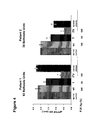
- FIG. 4 aPTT-based One Stage F. VIII assay in plasma of patients with an acquired form of hemophilia A caused by high titers of inhibitory antibodies to F.VIII.
- FIG. 5 FIX variants partially correct clotting times in F. VIII K.O. mice.
- Non-viral minicircle vectors for liver-derived expression of F.IX at doses between 10 and 50 ⁇ g/mouse either WT or variant [K265T (T), V181I/K265T/1383V (ITV) or V181I/K265T/R338A/S377W/I383V (ITAWV)], were injected into F.VIII K.O. mice by hydrodynamic injection technique.
- T K265T
- V181I/K265T/R338A/S377W/I383V ITAWV
- FIG. 6 F.IX variants stop bleeding in FVIII K.O. mice.
- mice expressing F.IX WT or variants [K265T (T), V181I/K265T/I383V (ITV) or V181I/K265T/R338A/S377W/I383V (ITAWV)] following non-viral gene transfer were challenged by tail clip assay.
- mice were anesthetized and the tail pre-heated in 37° C. saline solution. The tails were then cut at either 1.5 mm (A) or 3 mm (B) diameter and blood was collected into the warm saline solution. After ten minutes the tails of the mice were sutured and cauterized to stop bleeding.
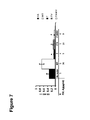
- FIG. 7 FIX variants stop bleeding in F. VIII K.O. mice with high titers of inhibitory antibodies against F. VIII.
- Inhibitory antibodies against F.VIII were induced in F.VIII K.O. mice by non-viral gene transfer to the liver using F.VIII gene transfer with a plasmid vector. Gene transfer was determined by F.VIII measurement at day 3 post injection. 6 weeks later we confirmed the presence of high titers (20.000 to 100.000 ng/ml) of anti-FVIII antibodies and the absence of residual F.VIII antigen and activity by one-stage and ELISA assay. Mice were then treated by minicircle gene transfer for F.IX WT or variant expression and challenged by tail clip assay on the third following day. Numbers of mice in each group and average F.IX expression levels are shown below the graph.
- FIG. 8 Position 265 is the main determinant for F. VIII bypassing activity of FIX variants.
- Wildtype refers to V181/K265/I383
- ITV refers to V181I/K265T/I383V
- IAV refers to V181I/K265A/I383V.
- the Y-axis shows the F.IX specific activity (F.IX activity divided by F.IX antigen in percent), setting F.IX WT as 100%.
- the X-axis shows the same ratio, but this time the activity measurement was performed in F.VIII deficient plasma. Reversing residue 265 from Threonine to the natural occurring Lysine (V181I/265K/I383V, IKV) resulted in a near complete loss of F.VIII independent activity.
- the inventors first introduced the mutations Y259F/K265T/Y345T (FTT) into F.IX and expressed the protein in tissue culture. Basically no effect was seen on F.IX specific activity; however the activity in F.VIII-deficient plasma increased dramatically. Since this activity is still a small fraction of the F.IX specific activity (100% of F.IX antigen corresponds to 2% of “F.VIII-like” activity), the inventors concentrated the variant proteins to concentrations of 20,000 to 40,000 ng/ml (400-800% of normal plasma concentration). In this concentration “F.VIII-like” activities of up to over 30% could be measured, while no activity was detected for WT F.IX or negative controls.
- FTT Y259F/K265T/Y345T
- FIG. 2 Comparison of the activities of the FTT variant in F.VIII-, F.IX-, or F.X-deficient plasma compared to the wild-type protein (WT) is shown in FIG. 2 .
- the inventors combined the FTT variant with several other mutations in order to generate F.IX molecules with different properties.
- Table 1 gives an overview of the tested mutations and the activity of the variants in F-VIII.- or F-IX-deficient plasma.
- the inventors also tested the single mutations and found surprisingly that the only substitution necessary is the K265T (i.e. K98T) variant and that the others are even worsening the protease activity in presence and absence of F.VIII (Table 1).
- the inventors further tested variants and combined them to obtain molecules with high F.IX activity in presence of F.VIII.
- Table 3 shows several variants with more then 10-fold increase in activity. Also apparent from this table is the fact that combining mutations with desired increased activity leads to combined variants with highest activity levels. Some of the variants, like R338A/S377W, were also tested for their activity in absence of F.VIII (Table 1). However, only in combination with the K265T variant an enhanced effect on the F.VIII independent F.IX activity could be observed.
- the inventors combined single mutations with a desired effect to obtain variants with further increased desired high activities.
- the K265T variant has 6.6% activity in absence of F.VIII and 191% activity in presence of F.VIII.
- the inventors combined the K265T mutation with either mutation I383V or V181I.
- the resulting variants V181I/K265T and K265T/I383V had 9.0% and 8.7% activity in absence of F.VIII, and 219% and 139% activity in presence of F.VIII.
- This moderate increase in activity in absence of F.VIII could further be significantly improved by combining all three mutations to the variant V181I/K265T/I383V without increasing the activity in presence of F.VIII to 16.4% and 209%, respectively.
- F.IX variants in presence of inhibitory antibodies directed against FVIII we performed aPTT-based one stage F.VIII assays in plasma of patients with an acquired form of hemophilia A ( FIG. 4 ).
- F.IX variants could indeed improve hemostasis in vivo and therefore provide proof of concept for the feasibility of an approach using F.IX variants as bypassing therapeutics.
- F.IX variants were injected into the tail veins of F.VIII K.O. mice using hydrodynamic injection technique.
- mice were then treated by minicircle gene transfer for F.IX WT or variant expression and challenged by tail clip assay on the third following day ( FIG. 7 ).
- the blood loss among control groups (no vector and FIX WT treated mice) was significantly higher compared to the bleeding in all three variant treated groups [K265T (T), V181I/K265T/I383V (ITV) or V181I/K265T/R338A/S377W/I383V (ITAWV)]. Therefore, the functionality of F.IX variants in both, in presence and in absence, of inhibitory antibodies to F.VIII was confirmed.
- the vector construct used was pAAV-CMV-hF.IX.
- the variants were expressed in HEK 293 cells, F.IX antigen levels determined by ELISA, and F.IX activity in F.IX deficient and ind F.VIII deficient plasma was determined by one-stage assay, as described above. Reversing residue 265 from Threonine to the natural occurring Lysine (V181I/265K/I383V, IKV) resulted in a near complete loss of F.VIII independent activity.
- mutants with small amino acid residues in position 265 show higher clotting activity, wherein the mutations K265T and K265A show the highest increase in clotting activity.
- This result was unexpected, since the F.VIII independent activity for a factor IX variant carrying the single K265A substitution which was previously described was in a far lower range (Kolkman and Mertens, Biochemistry 2000, 39, 7398-7405)
- the vectors for tissue culture ( FIG. 3 A) consisted of F.IX with an 1.4 kb truncated intron 1 driven by a CMV promoter as previously described (Schuettrumpf et al., 2005).
- the nucleotide changes encoding for the desired variants were introduced into this plasmid by standard site directed mutagenesis.
- the expression vector for liver directed gene transfer ( FIG. 3B ) consisted of the hepatic locus control region 1, the human alpha-1 anti-trypsin promoter, the F.IX mini-gene containing the truncated 1.4 kb intron 1, and a bovine growth hormone polyadenylation signal (HCR/hAAT-F.IX) as described (Miao et al., 2000) with minor modifications.
- the expression cassette was introduced into a mini-circle producer plasmid kindly provided by Mark Kay (Chen et al., 2005). This system allows the elimination of bacterial plasmid backbone sequence for circular DNA vectors.
- a whole plasmid containing the expression cassette for F.IX flanked by integrase recognition sequences is grown in E. coli bacteria.
- An inducible phage ⁇ C31 integrase and the inducible endonuclease I-SceI together with its recognition site are located on the other (parental) part of the plasmid.
- the integrase is activated by addition of arabinose. Activation of the integrase leads to the formation of two circles, one containing only the expression cassette, the other containing all the rest of the plasmid. Conditions (pH, temperature, and sodium content) are then adjusted for the endonuclease, which was similarly induced by the arabinose.
- This enzyme cuts in the bacterial plasmid backbone but not the expression cassette contained in the minicircle, so that the minicircle remains in the bacteria, while the rest of the plasmid is degraded.
- Minicircles were then purified over a regular one-step affinity column and residual bacterial DNA contaminants in the preparations were removed by linearization of the bacterial backbone with NruI restriction enzyme digest followed by exonucleolytical degradation with Plasmid-Safe ATP-Dependend DNase (Epicentre Biotechnologies, Madison, Wis.). Finally, we isolated the episomal DNA from the digests via phenol-chloroforme extraction resulting in recovery of highly pure minicircle (MC-HCR/hAAT-F.IX).
- the F.VIII expression vector for inhibitor induction following liver-directed gene transfer in mice was constructed similar to the HCR/hAAT-F.IX construct with the difference, that F.IX was exchanged with the B-domain deleted F.VIII gene. Further, a plasmid vector containing the pSL1180 backbone instead of a minicircle vector was employed.
- HEK-293 were transfected with the CMV-F.IX plasmids by standard calcium phosphate transfection method and kept in serum free media with addition of 10 ⁇ g/ml vitamin K. 48 hours after transfection the supernatant of cells was collected and the cells were harvested. An aliquot of the supernatant was taken and tested for F.IX antigen levels and activity. For mutants with suspected F.VIII activity, the rest of the supernatant was concentrated using Vivaspin 20® (Viva Science AG, Hannover, Germany) concentration method. With this method concentrations of 25,000 ng/ml (500% of normal plasma activity) are easily obtained. This allowed accurate testing of the protease activity in F.VIII deficient plasma. Each time the experiment was performed, WT F.IX, F.IX S365R (no activity), and not transfected cells are used as controls. All experiments were repeated at least once and performed in triplicates.
- F.IX concentrations were determined using an enzyme-linked immunosorbent assay (ELISA) in which a monoclonal antibody to human F.IX, clone HIX-1 (Sigma, St Louis, Mo.), was used as capture antibody at dilution of 1:800; and as detecting antibody, peroxidase-conjugated polyclonal goat anti-human F.IX (Affinity Biologicals, Hamilton, ON) was used at dilution of 1:1000.
- ELISA enzyme-linked immunosorbent assay
- F.IX functional activity was determined by a modified one-stage factor assay incubating 25 ⁇ l human FIX or FVIII-deficient plasma with 25 ⁇ l automated activated partial thromboplastin time (aPTT) reagent (Dade Behring, Marburg, Germany), and a total of 25 ⁇ l of a test sample that was undiluted (or when required, samples were diluted in imidazole buffer for 3 minutes at 37° C.). Then, 25 ⁇ l 25-mM CaCl2 was added, and time to clot formation was measured using a fibrometer.
- aPTT automated activated partial thromboplastin time
- Antibodies to FVIII were measured by a specific ELISA to murine immunoglobulin G (IgG) subclasses (IgG1 and IgG2) as described (Schuettrumpf et al., 2005) with minor modifications by coating plates with 1 ⁇ g/ml purified recombinant FVIII (Cogenate, Bayer HealthCare, Leverkusen, Germany).
- the FVIII-activity in plasma of F.VIII inhibitor mice was determined by using Chromogenic FVIII:C Assay (Haemochrom Diagnostica, Essen, Germany). The determination of the FVIII antigene levels was performed using an ELISA kit from American Diagnostica (Pfungstadt, Germany).
- mice deficient in FVIII were obtained from The Jackson Laboratory (Bar Harbour, Me., USA). C57Bl/6 mice were purchased from Harlan (Indianapolis, Ind.).
- non viral gene transfer vector was administered by hydrodynamic injection technique as previously described (Schuettrumpf et al., 2008). In short, non viral vectors at doses of 10 to 50 ⁇ g per mouse in a volume of 2 ml physiological saline solution were injected into the tail vein of mice in 5 to 8 seconds. During the following experiments blood was then taken from the mice either by retro-orbital bleeding, or by bleeding following tail cut.
- Tail-bleedings were performed blinded to the injected vector. Mice were anesthetized and distal tail (1.5 or 3 mm of diameter) was cut and immediately immersed in 37° C. saline solution. The blood loss was determined by measuring the absorbance of hemoglobin (A492 nm) in the saline solution in which the tail was placed, as reported. Schuettrumpf et al., 2005.
Landscapes
- Health & Medical Sciences (AREA)
- Life Sciences & Earth Sciences (AREA)
- Chemical & Material Sciences (AREA)
- Engineering & Computer Science (AREA)
- Organic Chemistry (AREA)
- Bioinformatics & Cheminformatics (AREA)
- Genetics & Genomics (AREA)
- Wood Science & Technology (AREA)
- Zoology (AREA)
- Biomedical Technology (AREA)
- General Health & Medical Sciences (AREA)
- Biochemistry (AREA)
- General Engineering & Computer Science (AREA)
- Molecular Biology (AREA)
- Medicinal Chemistry (AREA)
- Microbiology (AREA)
- Biotechnology (AREA)
- Hematology (AREA)
- Immunology (AREA)
- Urology & Nephrology (AREA)
- Proteomics, Peptides & Aminoacids (AREA)
- Public Health (AREA)
- Food Science & Technology (AREA)
- Veterinary Medicine (AREA)
- Pathology (AREA)
- Animal Behavior & Ethology (AREA)
- Pharmacology & Pharmacy (AREA)
- Cell Biology (AREA)
- General Physics & Mathematics (AREA)
- Analytical Chemistry (AREA)
- Physics & Mathematics (AREA)
- Diabetes (AREA)
- Nuclear Medicine, Radiotherapy & Molecular Imaging (AREA)
- Chemical Kinetics & Catalysis (AREA)
- General Chemical & Material Sciences (AREA)
- Medicines That Contain Protein Lipid Enzymes And Other Medicines (AREA)
- Peptides Or Proteins (AREA)
- Epidemiology (AREA)
- Enzymes And Modification Thereof (AREA)
- Medicines Containing Material From Animals Or Micro-Organisms (AREA)
Applications Claiming Priority (4)
| Application Number | Priority Date | Filing Date | Title |
|---|---|---|---|
| EP08013561.9 | 2008-07-28 | ||
| EP08013561A EP2149603A1 (en) | 2008-07-28 | 2008-07-28 | Factor IX variants with clotting activity in absence of their cofactor and their use for treating bleeding disorders |
| EP08013561 | 2008-07-28 | ||
| PCT/EP2009/005465 WO2010012451A1 (en) | 2008-07-28 | 2009-07-28 | Factor ix variants with clotting activity in absence of their cofactor and their use for treating bleeding disorders |
Related Parent Applications (1)
| Application Number | Title | Priority Date | Filing Date |
|---|---|---|---|
| PCT/EP2009/005465 A-371-Of-International WO2010012451A1 (en) | 2008-07-28 | 2009-07-28 | Factor ix variants with clotting activity in absence of their cofactor and their use for treating bleeding disorders |
Related Child Applications (1)
| Application Number | Title | Priority Date | Filing Date |
|---|---|---|---|
| US16/148,819 Continuation US10883097B2 (en) | 2008-07-28 | 2018-10-01 | Factor IX variants with clotting activity in absence of their cofactor and their use for treating bleeding disorders |
Publications (2)
| Publication Number | Publication Date |
|---|---|
| US20110217284A1 US20110217284A1 (en) | 2011-09-08 |
| US10125357B2 true US10125357B2 (en) | 2018-11-13 |
Family
ID=40032573
Family Applications (2)
| Application Number | Title | Priority Date | Filing Date |
|---|---|---|---|
| US13/001,187 Active 2032-09-15 US10125357B2 (en) | 2008-07-28 | 2009-07-28 | Factor IX variants with clotting activity in absence of their cofactor and their use for treating bleeding disorders |
| US16/148,819 Active US10883097B2 (en) | 2008-07-28 | 2018-10-01 | Factor IX variants with clotting activity in absence of their cofactor and their use for treating bleeding disorders |
Family Applications After (1)
| Application Number | Title | Priority Date | Filing Date |
|---|---|---|---|
| US16/148,819 Active US10883097B2 (en) | 2008-07-28 | 2018-10-01 | Factor IX variants with clotting activity in absence of their cofactor and their use for treating bleeding disorders |
Country Status (9)
| Country | Link |
|---|---|
| US (2) | US10125357B2 (enExample) |
| EP (6) | EP2149603A1 (enExample) |
| JP (1) | JP6029826B2 (enExample) |
| KR (2) | KR101947424B1 (enExample) |
| CN (1) | CN102112608B (enExample) |
| AU (1) | AU2009275391B2 (enExample) |
| CA (2) | CA3033578C (enExample) |
| ES (3) | ES2628688T3 (enExample) |
| WO (1) | WO2010012451A1 (enExample) |
Cited By (8)
| Publication number | Priority date | Publication date | Assignee | Title |
|---|---|---|---|---|
| US20170260516A1 (en) * | 2014-06-30 | 2017-09-14 | Biogen Ma Inc. | Optimized factor ix gene |
| WO2023077012A1 (en) | 2021-10-27 | 2023-05-04 | Regeneron Pharmaceuticals, Inc. | Compositions and methods for expressing factor ix for hemophilia b therapy |
| US11753461B2 (en) | 2016-02-01 | 2023-09-12 | Bioverativ Therapeutics Inc. | Optimized factor VIII genes |
| US11787851B2 (en) | 2013-02-15 | 2023-10-17 | Bioverativ Therapeutics Inc. | Optimized factor VIII gene |
| US12173307B2 (en) | 2020-06-24 | 2024-12-24 | Bioverativ Therapeutics Inc. | Methods for the purification of viral vectors |
| WO2025160324A2 (en) | 2024-01-26 | 2025-07-31 | Regeneron Pharmaceuticals, Inc. | Methods and compositions for using plasma cell depleting agents and/or b cell depleting agents to suppress host anti-aav antibody response and enable aav transduction and re-dosing |
| US12403164B2 (en) | 2019-09-30 | 2025-09-02 | Bioverativ Therapeutics Inc. | Lentiviral vector formulations |
| WO2025184567A1 (en) | 2024-03-01 | 2025-09-04 | Regeneron Pharmaceuticals, Inc. | Methods and compositions for re-dosing aav using anti-cd40 antagonistic antibody to suppress host anti-aav antibody response |
Families Citing this family (21)
| Publication number | Priority date | Publication date | Assignee | Title |
|---|---|---|---|---|
| ES2985035T3 (es) | 2008-09-15 | 2024-11-04 | Uniqure Biopharma B V | Mutante de polipéptido de factor IX, sus usos y su procedimiento de producción |
| TWI595004B (zh) | 2010-11-03 | 2017-08-11 | 介控生化科技公司 | 經修飾之第九因子多胜肽及其用途 |
| AU2012222366A1 (en) | 2011-03-02 | 2013-08-01 | Novo Nordisk A/S | Coagulation factor-targeting to TLT-1 on activated platelets |
| EA028914B1 (ru) * | 2011-07-25 | 2018-01-31 | Байоджен Хемофилия Инк. | Исследования для мониторинга нарушений свертываемости крови |
| CN103173482A (zh) * | 2011-12-22 | 2013-06-26 | 武汉科技大学 | 野生型和突变体hFⅨ毕赤酵母表达载体及构建方法和应用 |
| EP2666782A1 (en) * | 2012-05-22 | 2013-11-27 | Imnate Sarl | Coagulation factor VIII with reduced immunogenicity. |
| WO2014070349A1 (en) * | 2012-10-29 | 2014-05-08 | Regents Of The University Of Minnesota | Factor ix variants |
| CN103060366A (zh) * | 2012-12-25 | 2013-04-24 | 武汉科技大学 | 人凝血因子ⅸ突变体毕赤酵母表达载体及构建方法和应用 |
| US9651567B2 (en) * | 2013-05-14 | 2017-05-16 | Cgt Enterprises, Llc | Test strips for determining coagulation factor activities |
| EP2881463A1 (en) | 2013-12-09 | 2015-06-10 | DRK-Blutspendedienst Baden-Württemberg-Hessen gGmbH | Factor IX variants with clotting activity in absence of their cofactor and/or with increased F.IX clotting activity and their use for treating bleeding disorders |
| GB201420139D0 (en) | 2014-11-12 | 2014-12-24 | Ucl Business Plc | Factor IX gene therapy |
| US11066481B2 (en) | 2015-07-23 | 2021-07-20 | The Regents Of The University Of California | Antibodies to coagulation factor XIa and uses thereof |
| US11452749B2 (en) | 2017-07-10 | 2022-09-27 | Uniqure Ip B.V. | Means and methods for AAV gene therapy in humans |
| US10842885B2 (en) | 2018-08-20 | 2020-11-24 | Ucl Business Ltd | Factor IX encoding nucleotides |
| GB201813528D0 (en) | 2018-08-20 | 2018-10-03 | Ucl Business Plc | Factor IX encoding nucleotides |
| GB201817810D0 (en) * | 2018-10-31 | 2018-12-19 | Ucl Business Plc | Modified factor IX polypeptides |
| WO2020104480A1 (en) * | 2018-11-19 | 2020-05-28 | Uniqure Biopharma B.V. | Adeno-associated virus vectors for expressing fviii mimetics and uses thereof |
| ES3062513T3 (en) * | 2019-03-19 | 2026-04-13 | CSL Innovation Pty Ltd | Factor ix variants and uses thereof in therapy |
| CN110684798A (zh) * | 2019-09-03 | 2020-01-14 | 深圳新诺微环生物科技有限公司 | 肌肉靶向的微环dna基因治疗 |
| CN114277057B (zh) * | 2021-07-09 | 2023-10-13 | 上海天泽云泰生物医药有限公司 | 用于治疗或预防b型血友病的重组腺相关病毒载体和方法 |
| CN116590262A (zh) * | 2023-03-23 | 2023-08-15 | 上海交通大学医学院附属瑞金医院 | 一种凝血因子ix突变体及其应用 |
Citations (7)
| Publication number | Priority date | Publication date | Assignee | Title |
|---|---|---|---|---|
| WO1999003496A1 (en) | 1997-07-21 | 1999-01-28 | The University Of North Carolina At Chapel Hill | Factor ix antihemophilic factor with increased clotting activity |
| US20060040856A1 (en) * | 2003-12-03 | 2006-02-23 | Neose Technologies, Inc. | Glycopegylated factor IX |
| WO2007149406A2 (en) | 2006-06-19 | 2007-12-27 | Nautilus Technology Llc | Modified coagulation factor ix polypeptides and use thereof for treatment |
| US20080167219A1 (en) | 2007-01-09 | 2008-07-10 | Shu-Wha Lin | Recombinant human factor ix and use thereof |
| WO2008092643A2 (en) | 2007-02-01 | 2008-08-07 | Baxter International Inc. | Improved fix-mutant proteins for hemophilia b treatment |
| WO2008092644A2 (en) | 2007-02-01 | 2008-08-07 | Baxter International Inc. | Fviii-independent fix-mutant proteins for hemophilia a treatment |
| WO2010012251A1 (de) * | 2008-07-25 | 2010-02-04 | Alexander Koslow | Verkugelungs- / zerkleinerungsmaschine |
Family Cites Families (5)
| Publication number | Priority date | Publication date | Assignee | Title |
|---|---|---|---|---|
| US6458563B1 (en) | 1996-06-26 | 2002-10-01 | Emory University | Modified factor VIII |
| DK1282438T3 (da) | 2000-05-10 | 2005-11-14 | Novo Nordisk Healthcare Ag | Farmaceutisk sammensætning omfattende en faktor VIIa og en faktor XIII |
| RU2326126C2 (ru) * | 2000-09-13 | 2008-06-10 | Ново Нордиск Хелт Кэр Аг | Полипептид фактора vii свертывания крови, его получение и применение |
| WO2002040544A2 (en) | 2000-11-14 | 2002-05-23 | Board Of Regents, University Of Texas Systems | Mutant human factor ix with an increased resistance to inhibition by heparin |
| RU2396347C2 (ru) * | 2004-08-17 | 2010-08-10 | Ксл Бехринг Гмбх | Модифицированные витамин к-зависимые полипептиды |
-
2008
- 2008-07-28 EP EP08013561A patent/EP2149603A1/en not_active Withdrawn
-
2009
- 2009-07-28 WO PCT/EP2009/005465 patent/WO2010012451A1/en not_active Ceased
- 2009-07-28 AU AU2009275391A patent/AU2009275391B2/en not_active Ceased
- 2009-07-28 CN CN2009801296698A patent/CN102112608B/zh not_active Expired - Fee Related
- 2009-07-28 EP EP11005215.6A patent/EP2390323B1/en active Active
- 2009-07-28 EP EP17164245.7A patent/EP3241899B1/en active Active
- 2009-07-28 EP EP19191719.4A patent/EP3623470A3/en not_active Withdrawn
- 2009-07-28 EP EP09777493A patent/EP2318526A1/en not_active Ceased
- 2009-07-28 ES ES14165396.4T patent/ES2628688T3/es active Active
- 2009-07-28 CA CA3033578A patent/CA3033578C/en active Active
- 2009-07-28 US US13/001,187 patent/US10125357B2/en active Active
- 2009-07-28 CA CA2729501A patent/CA2729501C/en active Active
- 2009-07-28 KR KR1020177022245A patent/KR101947424B1/ko active Active
- 2009-07-28 ES ES11005215.6T patent/ES2441167T3/es active Active
- 2009-07-28 EP EP14165396.4A patent/EP2767587B1/en active Active
- 2009-07-28 ES ES17164245T patent/ES2753638T3/es active Active
- 2009-07-28 JP JP2011520375A patent/JP6029826B2/ja not_active Expired - Fee Related
- 2009-07-28 KR KR1020117001765A patent/KR101768896B1/ko not_active Expired - Fee Related
-
2018
- 2018-10-01 US US16/148,819 patent/US10883097B2/en active Active
Patent Citations (10)
| Publication number | Priority date | Publication date | Assignee | Title |
|---|---|---|---|---|
| WO1999003496A1 (en) | 1997-07-21 | 1999-01-28 | The University Of North Carolina At Chapel Hill | Factor ix antihemophilic factor with increased clotting activity |
| US20060040856A1 (en) * | 2003-12-03 | 2006-02-23 | Neose Technologies, Inc. | Glycopegylated factor IX |
| WO2007149406A2 (en) | 2006-06-19 | 2007-12-27 | Nautilus Technology Llc | Modified coagulation factor ix polypeptides and use thereof for treatment |
| US20080167219A1 (en) | 2007-01-09 | 2008-07-10 | Shu-Wha Lin | Recombinant human factor ix and use thereof |
| WO2008118507A2 (en) | 2007-01-09 | 2008-10-02 | Wu, Karl | Recombinant human factor ix and use thereof |
| WO2008092643A2 (en) | 2007-02-01 | 2008-08-07 | Baxter International Inc. | Improved fix-mutant proteins for hemophilia b treatment |
| WO2008092644A2 (en) | 2007-02-01 | 2008-08-07 | Baxter International Inc. | Fviii-independent fix-mutant proteins for hemophilia a treatment |
| US20080214461A1 (en) * | 2007-02-01 | 2008-09-04 | Baxter International Inc. | FVIII-Independent FIX-Mutant Proteins for Hemophilia A Treatment |
| US20080214462A1 (en) * | 2007-02-01 | 2008-09-04 | Baxter International Inc. | FIX-Mutant Proteins for Hemophilia B Treatment |
| WO2010012251A1 (de) * | 2008-07-25 | 2010-02-04 | Alexander Koslow | Verkugelungs- / zerkleinerungsmaschine |
Non-Patent Citations (10)
| Title |
|---|
| Chang, J. et al., "Changing residue 338 in human factor IX from arginine to alanine causes an increase in catalytic activity", Journal of Biological Chemistry, May 1998, vol. 273, No. 20, pp. 12089-12094. |
| Chang, Y. et al., "Identification of functionally important residues of the epidermal growth factor-2 domain of factor IX by alanine-scanning mutagenesis", Journal of Biological Chemistry, Jul. 2002, vol. 277, No. 28, pp. 25393-25399. |
| CHEMICAL ABSTRACTS, 1 January 1990, Columbus, Ohio, US; abstract no. Acc.no. 1991:245177, YOSHIOKA A, ET AL.: "Congenital factor IX abnormailities." XP002516994 |
| Hamaguchi et al., "Mutations in the catalytic domain of factor IX that are related to the subclass hemophilia Bm", Biochemistry, Jun. 1993, vol. 32, No. 25, pp. 6324-6329. |
| Hartmann et al., "Variants of recombinant factor IX with enhanced functional properties", Blood, Nov. 2007, vol. 110, No. 11, part 1, abstract 2694. |
| Hopfner K-P., et al. 1997 The EMBO Journal 16(22): 6626-6635. * |
| Kolkman et al., "Insertion loop 256-268 in coagulation factor IX restricts enzymatic activity in the absence but not in the presence of factor VIII", Biochemistry, Jun. 2000, vol. 39, No. 25, pp. 7398-7405. |
| Lin et al., "Identification of functionally important residues in the protease domain of factor IX that are critical for binding factor XIa, TFPI, and antibodies", Blood, Nov. 2002, vol. 100, No. 11, abstract 1006. |
| Sichler et al., "Physiological fIXa activation involves a cooperative conformational rearrangement of the 99-loop", Journal of Biological Chemistry, Feb. 2003, vol. 278, No. 6, pp. 4121-4126. |
| Yoshioka et al., "Congenital factor IX abnormalities", Database Capulus, Chemical Abstracts Service, Database Accession No. 1991:245177, 1990, XP-002516994. |
Cited By (11)
| Publication number | Priority date | Publication date | Assignee | Title |
|---|---|---|---|---|
| US11787851B2 (en) | 2013-02-15 | 2023-10-17 | Bioverativ Therapeutics Inc. | Optimized factor VIII gene |
| US12679882B2 (en) | 2013-02-15 | 2026-07-14 | Bioverativ Therapeutics Inc. | Optimized factor VIII gene |
| US20170260516A1 (en) * | 2014-06-30 | 2017-09-14 | Biogen Ma Inc. | Optimized factor ix gene |
| US11008561B2 (en) * | 2014-06-30 | 2021-05-18 | Bioverativ Therapeutics Inc. | Optimized factor IX gene |
| US12275970B2 (en) | 2014-06-30 | 2025-04-15 | Bioverativ Therapeutics Inc. | Optimized factor IX gene |
| US11753461B2 (en) | 2016-02-01 | 2023-09-12 | Bioverativ Therapeutics Inc. | Optimized factor VIII genes |
| US12403164B2 (en) | 2019-09-30 | 2025-09-02 | Bioverativ Therapeutics Inc. | Lentiviral vector formulations |
| US12173307B2 (en) | 2020-06-24 | 2024-12-24 | Bioverativ Therapeutics Inc. | Methods for the purification of viral vectors |
| WO2023077012A1 (en) | 2021-10-27 | 2023-05-04 | Regeneron Pharmaceuticals, Inc. | Compositions and methods for expressing factor ix for hemophilia b therapy |
| WO2025160324A2 (en) | 2024-01-26 | 2025-07-31 | Regeneron Pharmaceuticals, Inc. | Methods and compositions for using plasma cell depleting agents and/or b cell depleting agents to suppress host anti-aav antibody response and enable aav transduction and re-dosing |
| WO2025184567A1 (en) | 2024-03-01 | 2025-09-04 | Regeneron Pharmaceuticals, Inc. | Methods and compositions for re-dosing aav using anti-cd40 antagonistic antibody to suppress host anti-aav antibody response |
Also Published As
| Publication number | Publication date |
|---|---|
| AU2009275391B2 (en) | 2015-01-22 |
| EP2390323B1 (en) | 2013-11-27 |
| EP2767587A3 (en) | 2014-11-26 |
| KR101768896B1 (ko) | 2017-08-17 |
| ES2628688T3 (es) | 2017-08-03 |
| ES2441167T3 (es) | 2014-02-03 |
| EP3241899B1 (en) | 2019-08-21 |
| EP3623470A3 (en) | 2020-07-22 |
| JP2011528913A (ja) | 2011-12-01 |
| US20110217284A1 (en) | 2011-09-08 |
| EP2390323A3 (en) | 2012-01-11 |
| ES2753638T3 (es) | 2020-04-13 |
| WO2010012451A1 (en) | 2010-02-04 |
| KR20110036071A (ko) | 2011-04-06 |
| EP2390323A2 (en) | 2011-11-30 |
| JP6029826B2 (ja) | 2016-11-24 |
| AU2009275391A1 (en) | 2010-02-04 |
| KR20170096210A (ko) | 2017-08-23 |
| CA2729501A1 (en) | 2010-02-04 |
| CN102112608A (zh) | 2011-06-29 |
| EP2318526A1 (en) | 2011-05-11 |
| KR101947424B1 (ko) | 2019-02-13 |
| EP2767587A2 (en) | 2014-08-20 |
| CN102112608B (zh) | 2013-11-20 |
| CA3033578C (en) | 2022-07-26 |
| CA2729501C (en) | 2019-04-02 |
| CA3033578A1 (en) | 2010-02-04 |
| EP2149603A1 (en) | 2010-02-03 |
| EP3241899A1 (en) | 2017-11-08 |
| EP2767587B1 (en) | 2017-04-05 |
| EP3623470A2 (en) | 2020-03-18 |
| US20190017039A1 (en) | 2019-01-17 |
| US10883097B2 (en) | 2021-01-05 |
Similar Documents
| Publication | Publication Date | Title |
|---|---|---|
| US10883097B2 (en) | Factor IX variants with clotting activity in absence of their cofactor and their use for treating bleeding disorders | |
| US11208645B2 (en) | Factor IX variants with clotting activity in absence of their cofactor and/or with increased F.IX clotting activity and their use for treating bleeding disorders | |
| US9249404B2 (en) | Coagulation factor X polypeptides with modified activation properties | |
| WO2008119815A1 (en) | Subcutaneous administration of coagulation factor ix | |
| CN101356192B (zh) | 用于调节止血的组合物和方法 | |
| Class et al. | Patent application title: Factor IX Variants with Clotting Activity in Absence of Their Cofactor and/or With Increased F. IX Clotting Activity and Their Use for Treating Bleeding Disorders | |
| WO2003084466A2 (en) | FACTORVIIa COMPOSITIONS | |
| Hoyer | Structure-Function Relationships of Human Coagulation Proteins |
Legal Events
| Date | Code | Title | Description |
|---|---|---|---|
| AS | Assignment |
Owner name: DRK-BLUTSPENDEDIENST BADEN-WURTTEMBERG-HESSEN GGMB Free format text: ASSIGNMENT OF ASSIGNORS INTEREST;ASSIGNORS:SEIFRIED, ERHARD;SCHUTTRUMPF, JORG;REEL/FRAME:025975/0600 Effective date: 20110119 |
|
| STCF | Information on status: patent grant |
Free format text: PATENTED CASE |
|
| MAFP | Maintenance fee payment |
Free format text: PAYMENT OF MAINTENANCE FEE, 4TH YEAR, LARGE ENTITY (ORIGINAL EVENT CODE: M1551); ENTITY STATUS OF PATENT OWNER: LARGE ENTITY Year of fee payment: 4 |
|
| FEPP | Fee payment procedure |
Free format text: MAINTENANCE FEE REMINDER MAILED (ORIGINAL EVENT CODE: REM.); ENTITY STATUS OF PATENT OWNER: LARGE ENTITY |