RU2265079C2 - Treatment of surface for enhancing corrosion resistance of austenitic stainless steels - Google Patents
Treatment of surface for enhancing corrosion resistance of austenitic stainless steels Download PDFInfo
- Publication number
- RU2265079C2 RU2265079C2 RU2003106421/02A RU2003106421A RU2265079C2 RU 2265079 C2 RU2265079 C2 RU 2265079C2 RU 2003106421/02 A RU2003106421/02 A RU 2003106421/02A RU 2003106421 A RU2003106421 A RU 2003106421A RU 2265079 C2 RU2265079 C2 RU 2265079C2
- Authority
- RU
- Russia
- Prior art keywords
- steel
- acid
- austenitic stainless
- corrosion
- temperature
- Prior art date
Links
Images

Classifications
-
- C—CHEMISTRY; METALLURGY
- C23—COATING METALLIC MATERIAL; COATING MATERIAL WITH METALLIC MATERIAL; CHEMICAL SURFACE TREATMENT; DIFFUSION TREATMENT OF METALLIC MATERIAL; COATING BY VACUUM EVAPORATION, BY SPUTTERING, BY ION IMPLANTATION OR BY CHEMICAL VAPOUR DEPOSITION, IN GENERAL; INHIBITING CORROSION OF METALLIC MATERIAL OR INCRUSTATION IN GENERAL
- C23G—CLEANING OR DE-GREASING OF METALLIC MATERIAL BY CHEMICAL METHODS OTHER THAN ELECTROLYSIS
- C23G1/00—Cleaning or pickling metallic material with solutions or molten salts
- C23G1/02—Cleaning or pickling metallic material with solutions or molten salts with acid solutions
-
- C—CHEMISTRY; METALLURGY
- C22—METALLURGY; FERROUS OR NON-FERROUS ALLOYS; TREATMENT OF ALLOYS OR NON-FERROUS METALS
- C22C—ALLOYS
- C22C38/00—Ferrous alloys, e.g. steel alloys
- C22C38/18—Ferrous alloys, e.g. steel alloys containing chromium
- C22C38/40—Ferrous alloys, e.g. steel alloys containing chromium with nickel
- C22C38/42—Ferrous alloys, e.g. steel alloys containing chromium with nickel with copper
-
- C—CHEMISTRY; METALLURGY
- C22—METALLURGY; FERROUS OR NON-FERROUS ALLOYS; TREATMENT OF ALLOYS OR NON-FERROUS METALS
- C22C—ALLOYS
- C22C38/00—Ferrous alloys, e.g. steel alloys
- C22C38/001—Ferrous alloys, e.g. steel alloys containing N
-
- C—CHEMISTRY; METALLURGY
- C22—METALLURGY; FERROUS OR NON-FERROUS ALLOYS; TREATMENT OF ALLOYS OR NON-FERROUS METALS
- C22C—ALLOYS
- C22C38/00—Ferrous alloys, e.g. steel alloys
- C22C38/18—Ferrous alloys, e.g. steel alloys containing chromium
- C22C38/40—Ferrous alloys, e.g. steel alloys containing chromium with nickel
- C22C38/44—Ferrous alloys, e.g. steel alloys containing chromium with nickel with molybdenum or tungsten
-
- C—CHEMISTRY; METALLURGY
- C23—COATING METALLIC MATERIAL; COATING MATERIAL WITH METALLIC MATERIAL; CHEMICAL SURFACE TREATMENT; DIFFUSION TREATMENT OF METALLIC MATERIAL; COATING BY VACUUM EVAPORATION, BY SPUTTERING, BY ION IMPLANTATION OR BY CHEMICAL VAPOUR DEPOSITION, IN GENERAL; INHIBITING CORROSION OF METALLIC MATERIAL OR INCRUSTATION IN GENERAL
- C23F—NON-MECHANICAL REMOVAL OF METALLIC MATERIAL FROM SURFACE; INHIBITING CORROSION OF METALLIC MATERIAL OR INCRUSTATION IN GENERAL; MULTI-STEP PROCESSES FOR SURFACE TREATMENT OF METALLIC MATERIAL INVOLVING AT LEAST ONE PROCESS PROVIDED FOR IN CLASS C23 AND AT LEAST ONE PROCESS COVERED BY SUBCLASS C21D OR C22F OR CLASS C25
- C23F15/00—Other methods of preventing corrosion or incrustation
-
- C—CHEMISTRY; METALLURGY
- C23—COATING METALLIC MATERIAL; COATING MATERIAL WITH METALLIC MATERIAL; CHEMICAL SURFACE TREATMENT; DIFFUSION TREATMENT OF METALLIC MATERIAL; COATING BY VACUUM EVAPORATION, BY SPUTTERING, BY ION IMPLANTATION OR BY CHEMICAL VAPOUR DEPOSITION, IN GENERAL; INHIBITING CORROSION OF METALLIC MATERIAL OR INCRUSTATION IN GENERAL
- C23G—CLEANING OR DE-GREASING OF METALLIC MATERIAL BY CHEMICAL METHODS OTHER THAN ELECTROLYSIS
- C23G1/00—Cleaning or pickling metallic material with solutions or molten salts
- C23G1/02—Cleaning or pickling metallic material with solutions or molten salts with acid solutions
- C23G1/08—Iron or steel
- C23G1/086—Iron or steel solutions containing HF
-
- C—CHEMISTRY; METALLURGY
- C21—METALLURGY OF IRON
- C21D—MODIFYING THE PHYSICAL STRUCTURE OF FERROUS METALS; GENERAL DEVICES FOR HEAT TREATMENT OF FERROUS OR NON-FERROUS METALS OR ALLOYS; MAKING METAL MALLEABLE, e.g. BY DECARBURISATION OR TEMPERING
- C21D2261/00—Machining or cutting being involved
Landscapes
- Chemical & Material Sciences (AREA)
- Engineering & Computer Science (AREA)
- Materials Engineering (AREA)
- Mechanical Engineering (AREA)
- Metallurgy (AREA)
- Organic Chemistry (AREA)
- Chemical Kinetics & Catalysis (AREA)
- General Chemical & Material Sciences (AREA)
- Cleaning And De-Greasing Of Metallic Materials By Chemical Methods (AREA)
- ing And Chemical Polishing (AREA)
Abstract
Description
Область изобретенияField of Invention
Настоящее изобретение касается способа обработки аустенитных нержавеющих сталей и изделий, изготавливаемых из таких сталей. Более конкретно, изобретение касается способа обработки по меньшей мере части поверхности из аустенитных нержавеющих сталей и изделий, изготавливаемых из таких сталей, для повышения их стойкости к коррозии. Настоящее изобретение также направлено на аустенитные нержавеющие стали и изделия, изготавливаемые из таких сталей, которые производят с использованием способа согласно изобретению. Изобретение находит применение, например, в производстве стойких к коррозии полос, брусков, листов, отливок, пластин, труб и других изделий из аустенитных нержавеющих сталей.The present invention relates to a method for processing austenitic stainless steels and products made from such steels. More specifically, the invention relates to a method for treating at least a portion of a surface of austenitic stainless steels and products made from such steels to increase their resistance to corrosion. The present invention is also directed to austenitic stainless steels and products made from such steels that are produced using the method according to the invention. The invention finds application, for example, in the production of corrosion-resistant strips, bars, sheets, castings, plates, pipes and other products from austenitic stainless steels.
Описание предшествующего уровня техникиDescription of the Related Art
Потребность в металлах с высокой стойкостью к коррозии продиктовало разработку сталей с различными составами. Изделия, изготовленные из сталей, устойчивых к хлоридной точечной и щелевой коррозии, особенно важны для работы в такой окружающей среде, как, например, в морской воде и в определенных отраслях, использующих химическую обработку. Нержавеющие стали на основе Cr-Mo, которые содержат приблизительно 6 масс.% молибдена и которые обычно называются «супераустенитные сплавы», разрабатывались для использования в этих и других агрессивных средах.The need for metals with high resistance to corrosion dictated the development of steels with various compositions. Products made from steels resistant to pitting and crevice corrosion are especially important for working in environments such as seawater and certain chemical processing industries. Cr-Mo-based stainless steels, which contain approximately 6 wt.% Molybdenum and are commonly referred to as “super austenitic alloys,” have been developed for use in these and other aggressive environments.
В основном стойкость к коррозии нержавеющих сталей регулируется химическим составом поверхностей, открытых для окружающей среды. Известно, что отжиг на воздухе, т.е. операция термической обработки, которая обычно используется в производстве нержавеющих сталей, приводит к получению обедненного хромом слоя около металлической поверхности под насыщенной хромом окалиной. Известно, что неудачные попытки удалить обе эти поверхности ухудшают антикоррозионные рабочие характеристики нержавеющих сталей. Для удаления насыщенной хромом окалины используются механические процессы, например пескоструйная обработка абразивными частицами или шлифование.The corrosion resistance of stainless steels is mainly controlled by the chemical composition of surfaces exposed to the environment. It is known that annealing in air, i.e. the heat treatment operation, which is commonly used in the production of stainless steels, results in a chromium depleted layer near a metal surface under a chromium-saturated scale. It is known that unsuccessful attempts to remove both of these surfaces degrade the corrosion performance of stainless steels. Mechanical processes are used to remove chromium-rich scale, such as sandblasting with abrasive particles or grinding.
Удаление обедненного хромом слоя в основном выполняется химическими средствами, а именно кислотным травлением. В основном травление включает в себя погружение стали в кислотный раствор, обычно водный раствор азотной кислоты (HNO3) и фтористоводородной кислоты (HF), на период времени, предпочтительно значительно менее 60 минут. Для ускорения процесса травления кислотный раствор может иметь повышенную температуру, предпочтительно температуру, при которой кислотный раствор сильно не испаряется. Общеизвестно, что травление нержавеющих сталей, обладающих высокой стойкостью к коррозии, требует особой осторожности и внимания, поскольку известно, что эти материалы подвергаются травлению медленно, что затрудняет удаление обедненного хромом слоя.Removing the chromium depleted layer is mainly carried out by chemical means, namely acid etching. Generally, etching involves immersing the steel in an acid solution, usually an aqueous solution of nitric acid (HNO 3 ) and hydrofluoric acid (HF), for a period of time, preferably significantly less than 60 minutes. To accelerate the etching process, the acid solution may have an elevated temperature, preferably a temperature at which the acid solution does not evaporate strongly. It is well known that the etching of stainless steels with high corrosion resistance requires special care and attention, since it is known that these materials are etched slowly, which makes it difficult to remove the chromium depleted layer.
Прежде считалось, что желательно выполнять травление нержавеющих сталей с использованием относительно разбавленных кислотных растворов. Это объяснялось тем, что оборудование для производства стали обычно производит различные сплавы, и многие нержавеющие сплавы не выдерживают травления более агрессивными травильными растворами или им не требуется более агрессивный раствор для травления, удаляющий обедненный хромом слой. Кроме того, обращение с более сильными кислотными растворами и их переработка потребует повышенной промышленной безопасности и контроля окружающей среды. Таким образом, для увеличения стойкости к коррозии нержавеющих сталей использовалось травление относительно разбавленным, неагрессивным травильным раствором. Полагали, что для получения нержавеющей стали с коррозионными свойствами, превосходящими, в частности, нержавеющую сталь после травления, необходима модификация состава сплава. Так, например, увеличение содержания хрома и/или молибдена определенной нержавеющей стали было использовано для увеличения стойкости к коррозии стали. Однако увеличение содержания хрома, молибдена и других легирующих добавок сплава, повышающих стойкость к коррозии нержавеющей стали, увеличивает стоимость сплавов и может потребовать изменений в производственном процессе. Таким образом, целесообразно обеспечить способ увеличения стойкости к коррозии нержавеющей стали без модификации химического состава сталей.It was previously thought that it was desirable to etch stainless steels using relatively dilute acid solutions. This is because steelmaking equipment usually produces various alloys, and many stainless alloys cannot withstand more aggressive etching solutions, or they do not need a more aggressive etching solution that removes the chromium depleted layer. In addition, handling and processing stronger acidic solutions will require increased industrial safety and environmental control. Thus, to increase the corrosion resistance of stainless steels, etching with a relatively dilute, non-aggressive etching solution was used. It was believed that in order to obtain stainless steel with corrosive properties superior in particular to stainless steel after pickling, modification of the alloy composition is necessary. For example, an increase in the chromium and / or molybdenum content of a particular stainless steel has been used to increase the corrosion resistance of steel. However, an increase in the content of chromium, molybdenum and other alloying alloys that increase the corrosion resistance of stainless steel increases the cost of alloys and may require changes in the manufacturing process. Thus, it is advisable to provide a way to increase the corrosion resistance of stainless steel without modifying the chemical composition of the steels.
Сущность изобретенияSUMMARY OF THE INVENTION
Настоящее изобретение обеспечивает способ увеличения стойкости к коррозии аустенитных нержавеющих сталей и изделий, изготавливаемых из таких сталей. Способ включает в себя удаление достаточного количества материала с, по меньшей мере, части поверхности стали таким образом, что находящиеся на поверхности участки зарождения коррозии устраняются или их количество уменьшается в такой степени, которая превышает достигнутую ранее в обычной обработке аустенитной нержавеющей стали. Удаление материала с поверхности стали может выполняться любым известным способом, подходящим для удаления материала с поверхности стали. Такие способы включают, например, пескоструйную обработку абразивными частицами, шлифование и/или кислотное травление. Кислотное травление, например, происходит в условиях, которые более агрессивны (например, более крепкий травильный раствор и/или более продолжительное время травления) относительно обычных условий травления для той же стали. Применение способа согласно изобретению в производстве определенной аустенитной нержавеющей стали обеспечивает стойкость к коррозии, превышающую коррозионную стойкость стали того же химического состава, которая была обработана обычным способом.The present invention provides a method of increasing corrosion resistance of austenitic stainless steels and products made from such steels. The method includes removing a sufficient amount of material from at least a portion of the surface of the steel in such a way that the areas of corrosion nucleation located on the surface are eliminated or their amount is reduced to such an extent that exceeds that previously achieved in conventional austenitic stainless steel processing. Removing the material from the surface of the steel can be performed by any known method suitable for removing material from the surface of the steel. Such methods include, for example, sandblasting with abrasive particles, grinding and / or acid etching. Acid etching, for example, occurs under conditions that are more aggressive (e.g., a stronger etching solution and / or longer etching time) relative to the usual etching conditions for the same steel. The application of the method according to the invention in the production of certain austenitic stainless steel provides corrosion resistance in excess of the corrosion resistance of steel of the same chemical composition that has been processed in the usual way.
Способ согласно изобретению может обеспечить аустенитные нержавеющие стали, имеющие критическую температуру щелевой коррозии («КТЩК»), по меньшей мере, приблизительно на 13,5°С больше, чем стали того же состава, которые были подвергнуты травлению или обработаны каким-либо другим обычным способом. Для аустенитной нержавеющей стали с 6% содержанием молибдена, например такой, как UNS N08367, (имеющейся в продаже под названием AL-6XN® и AL-6XN PLUS™, компании Allegheny Ludlum Corporation, Pittsburgh, Pennsylvania), увеличение КТЩК на 13,5°С эквивалентно увеличению содержания хрома по меньшей мере приблизительно на 4 массовых процента или увеличению содержания молибдена на 1,2 массовых процента. Способ настоящего изобретения устраняет значительное увеличение стоимости, а также опасения, касающиеся фазовой устойчивости, которые обычно связаны с увеличением содержания легирующих добавок.The method according to the invention can provide austenitic stainless steels having a critical temperature of crevice corrosion (“KTSChK”) of at least about 13.5 ° C more than steels of the same composition that have been pickled or otherwise processed with ordinary way. For austenitic stainless steel with a 6% molybdenum content such as UNS N08367 (commercially available as AL-6XN® and AL-6XN PLUS ™ by Allegheny Ludlum Corporation, Pittsburgh, PA), a 13.5% increase in KTSC ° C is equivalent to an increase in chromium content of at least about 4 weight percent or an increase in molybdenum content by 1.2 weight percent. The method of the present invention eliminates a significant increase in cost, as well as concerns regarding phase stability, which are usually associated with an increase in the content of dopants.
Настоящее изобретение, таким образом, обеспечивает экономичный способ существенного улучшения свойств стойкости к коррозии аустенитных нержавеющих сталей без изменения химического состава сталей.The present invention thus provides an economical way to substantially improve the corrosion resistance properties of austenitic stainless steels without changing the chemical composition of the steels.
Краткое описание фигурBrief Description of the Figures
Преимущества настоящего изобретения станут более понятными из ссылки на сопутствующие фигуры, в которых:The advantages of the present invention will become more apparent from reference to the accompanying figures, in which:
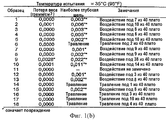
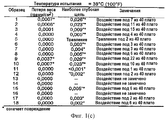
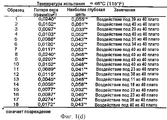
Фигуры 1(а)-1(d) показывают результаты испытания на множественную щелевую коррозию (с использованием болтового крепления), обозначаемого здесь ТК Кор 2 и выполняемого при различных температурах на сплаве UNS N08367, изготовленном и прошедшем очистку травлением в кислоте обычным способом;Figures 1 (a) -1 (d) show the results of multiple crevice corrosion testing (using bolt fastening), hereinafter referred to as TC Cor 2, and performed at various temperatures on UNS N08367 alloy manufactured and cleaned by acid etching in the usual way;
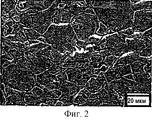
Фигура 2 является микрофотографией, полученной в сканирующем электронном микроскопе, поверхности сплава UNS N08367, изготовленного и прошедшего очистку травлением в кислоте обычным способом;Figure 2 is a photomicrograph obtained by scanning electron microscope, the surface of the alloy UNS N08367, made and cleaned by etching in acid in the usual way;
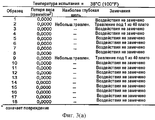
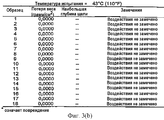
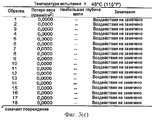
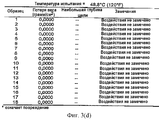
Фигуры 3(а)-3(d) показывают результаты испытания на множественную щелевую коррозию (с использованием болтового крепления), обозначаемого здесь ТК Кор 2 и выполняемого при различных температурах на сплаве UNS N08367 после проведения обработки, которая увеличивает стойкость к коррозии и которая является примером реализации способа настоящего изобретения;Figures 3 (a) -3 (d) show the results of the test for multiple crevice corrosion (using bolt fastening), hereinafter referred to as TC Cor 2, and performed at various temperatures on UNS N08367 alloy after processing, which increases corrosion resistance and which is an example implementation of the method of the present invention;
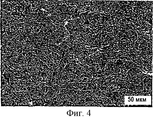
Фигура 4 является микрофотографией, полученной в сканирующем электронном микроскопе (СЭМ), поверхности сплава UNS N08367 после проведения обработки, которая повышает стойкость к коррозии и которая является примером реализации способа настоящего изобретения;Figure 4 is a micrograph obtained by scanning electron microscope (SEM), the surface of the alloy UNS N08367 after processing, which increases corrosion resistance and which is an example implementation of the method of the present invention;
Фигура 5 является микрофотографией в СЭМ поверхности сплава UNS N08367, изготовленного и прошедшего очистку травлением в кислоте обычным способом после испытания по стандарту ASTM G 150;Figure 5 is an SEM micrograph of the surface of a UNS N08367 alloy made and cleaned by acid etching in the usual manner after testing according to ASTM G 150;
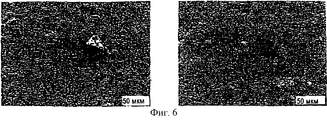
Фигура 6 является микрофотографией в СЭМ поверхности сплава UNS N08367 после обработки, которая повышает стойкость к коррозии и которая является примером реализации способа согласно настоящему изобретению, и после испытания по стандарту ASTM G 150;Figure 6 is an SEM photomicrograph of the surface of the UNS N08367 alloy after treatment, which increases corrosion resistance and which is an example implementation of the method according to the present invention, and after testing according to ASTM G 150;
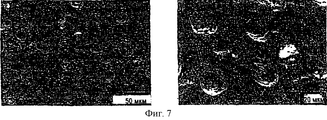
Фигура 7 является микрофотографией в СЭМ поверхности сплава UNS N08367 после обработки, которая повышает стойкость к коррозии и которая является примером реализации способа настоящего изобретения, и после испытания по стандарту ASTM G 150; иFigure 7 is an SEM photomicrograph of the surface of the UNS N08367 alloy after treatment, which increases corrosion resistance and which is an example implementation of the method of the present invention, and after testing according to ASTM G 150; and
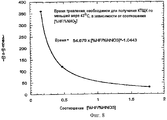
Фигура 8 является графиком времени травления, в минутах, необходимого для достижения КТЩК (критической температуры щелевой коррозии) по меньшей мере 43°С (110°F) в зависимости от масс.% соотношения HF к HNO3 в травильном растворе.Figure 8 is a graph of the etching time, in minutes, required to achieve a CTSC (critical crevice corrosion temperature) of at least 43 ° C (110 ° F) depending on the weight% of the ratio of HF to HNO 3 in the etching solution.
Подробное описание изобретенияDETAILED DESCRIPTION OF THE INVENTION
Настоящее изобретение обеспечивает способ увеличения стойкости к коррозии аустенитных нержавеющих сталей и изделий, изготавливаемых из таких сталей. Способ включает в себя удаление достаточного количества материала с, по меньшей мере, части поверхности стали таким образом, что находящиеся на поверхности участки зарождения коррозии устраняются или их количество уменьшается до такой степени, которая превышает достигнутые ранее в обычной обработке аустенитной нержавеющей стали. Удаление материала с поверхности стали может выполняться любым из разнообразных известных способов, включая пескоструйную обработку абразивными частицами, шлифование и/или кислотное травление. Способ согласно изобретению обеспечивает улучшение стойкости к коррозии стали без необходимости модификации химического состава стали. Способ может применяться для аустенитной нержавеющей стали в любой форме, включая полосу, пруток, пластину, лист, отливку, трубу и т.д.The present invention provides a method of increasing corrosion resistance of austenitic stainless steels and products made from such steels. The method includes removing a sufficient amount of material from at least a portion of the surface of the steel in such a way that the areas of corrosion nucleation located on the surface are eliminated or their amount is reduced to such an extent that exceeds previously achieved in conventional processing of austenitic stainless steel. Removing material from the surface of the steel can be accomplished by any of a variety of known methods, including sandblasting with abrasive particles, grinding and / or acid etching. The method according to the invention provides improved corrosion resistance of steel without the need to modify the chemical composition of the steel. The method can be applied to austenitic stainless steel in any form, including a strip, bar, plate, sheet, casting, pipe, etc.
Последующие результаты испытаний применения изобретения к нержавеющей стали UNS N08367, которая является аустенитной нержавеющей сталью, содержащей приблизительно 6 масс.% молибдена, явно демонстрируют преимущества, обеспечиваемые настоящим изобретением. Изобретение, однако, этим не ограничивается. Не имея намерения ограничивать действие изобретения какой-либо теорией, авторы настоящего изобретения считают, что способ настоящего изобретения увеличивает стойкость к коррозии путем устранения или уменьшения количества участков на поверхности стали, где может зародиться коррозия. Считается, что повышение стойкости к коррозии любой аустенитной нержавеющей стали будет достигнуто применением данного способа при обработке такой стали в процессе производства или после процесса производства. Таким образом, тот факт, что здесь описаны только определенные примеры реализации, не означает какого-либо ограничения изобретения, и настоящий объем изобретения обеспечен в прилагаемой формуле изобретения.The following test results of the application of the invention to stainless steel UNS N08367, which is an austenitic stainless steel containing approximately 6 wt.% Molybdenum, clearly demonstrate the advantages provided by the present invention. The invention, however, is not limited to this. Not intending to limit the effect of the invention to any theory, the authors of the present invention believe that the method of the present invention increases corrosion resistance by eliminating or reducing the number of sections on the surface of the steel where corrosion can occur. It is believed that increasing the corrosion resistance of any austenitic stainless steel will be achieved by using this method when processing such steel during the production process or after the production process. Thus, the fact that only certain embodiments are described herein does not mean any limitation of the invention, and the present scope of the invention is provided in the appended claims.
Настоящее изобретение особенно целесообразно для увеличения стойкости к коррозии аустенитных нержавеющих сталей, которые будут использоваться в особо коррозионных средах. Аустенитные нержавеющие стали, которые для этого используются, обычно состоят из от 20 до 40 масс.% никеля, от 14 до 24 масс.% хрома, и от 4 до 12 масс.% молибдена. Состав одной такой стали UNS N08367, которая рассматривается в последующих испытаниях, изложен в таблице 1.The present invention is particularly suitable for increasing the corrosion resistance of austenitic stainless steels to be used in particularly corrosive environments. The austenitic stainless steels that are used for this usually consist of from 20 to 40 wt.% Nickel, from 14 to 24 wt.% Chromium, and from 4 to 12 wt.% Molybdenum. The composition of one such steel, UNS N08367, which is considered in subsequent tests, is set forth in table 1.
UNS N08367 Химический составTable 1
UNS N08367 Chemical composition
Относительная стойкость к питтинговой (точечной) коррозии нержавеющей стали может быть соотнесена с составом сплава применением числа эквивалента стойкости к питтинговой коррозии (ЭСПК). Число ЭСПК обеспечивает основывающийся на составе прогноз стойкости нержавеющего сплава к воздействию местной коррозии, вызываемой хлоридом. Несмотря на то, что для вычисления числа ЭСПК описано несколько уравнений, широко применимым является приводимое ниже Уравнение 1.The relative resistance to pitting (pitting) corrosion of stainless steel can be correlated with the composition of the alloy by applying the number of equivalent resistance to pitting corrosion (ESPK). The number of ESPCs provides a composition-based forecast of the resistance of the stainless alloy to the effects of local corrosion caused by chloride. Although several equations are described to calculate the number of ESPCs,
Уравнение 1: число(ЭСПК) = (масс.% Cr) + 3,3 (масс.% Мо) + 30 (масс.% N). Таким образом, состав UNS N08367, показанный в таблице 1, имеет число ЭСПК, составляющее 47,5, в то время как максимальное число ЭСПК сплава UNS N08367 составляет 52,6.Equation 1: number (ESPC) = (wt.% Cr) + 3.3 (wt.% Mo) + 30 (wt.% N). Thus, the composition of UNS N08367 shown in Table 1 has an ESPC number of 47.5, while the maximum number of ESPCs of UNS N08367 alloy is 52.6.
Для того, чтобы сравнить разницу способности сопротивляться коррозии сплава UNS N08367, обработанного обычным способом, с тем же сплавом, который прошел обработку согласно способу настоящего изобретения, подвергали испытанию образцы для измерения критической температуры щелевой коррозии (КТЩК), используя испытание, обозначенное ТК Кор 2 на щелевую коррозию. Испытание часто требуется специально в случаях, когда стальная продукция предназначается для применения в очень коррозионных средах. Испытание ТК Кор 2 является испытанием на множественную щелевую коррозию с использованием болтового крепления шайб, известное специалисту в данной области. Конкретно, испытание ТК Кор 2 заключается в том, что стальной образец подвергают воздействию 10% раствора FeCl3·6H2O на время выдержки в течение 72 часов. Для этой цели к испытываемому образцу болтами крепят устройства шайб (Delrin) согласно стандарту ASTM G78 для создания искусственных щелей (трещин) на поверхности образца. Испытание на щелевую коррозию ТК Кор 2, которое использовалось, проводили после приложения вращающего момента, составляющего 50 дюймо-фунта для закрепления шайб на поверхности образцов. Для определения предельной температуры воздействия коррозии образцы испытывали в широком диапазоне температур. Когда образцами являлись пластины, наличие щелевой коррозии определяли, если потеря веса образца превышала 0,0002 г/см2 или если глубина воздействия коррозии превышала 0,0015 дюймов.In order to compare the difference in resistance to corrosion of the alloy of UNS N08367, processed in the usual way, with the same alloy that was processed according to the method of the present invention, samples were tested for measuring critical temperature of crevice corrosion (KTSChK), using the test designated
Традиционно, результаты, которые ожидали получить от испытания ТК Кор 2 для аустенитных нержавеющих сталей, могли быть спрогнозированы на основании состава сплава. Уравнение 2, представленное ниже, является одним уравнением, дающим прогноз критической температуры щелевой коррозии испытаний ТК Кор 2, который основывается на составе сплава.Traditionally, the results that were expected to be obtained from testing the
Уравнение 2: КТЩК (°С)=3,2 (масс.% Cr) + 7,6 (масс.% Мо) + 10,5 (масс.% N) - 88,5.Equation 2: KTSCH (° C) = 3.2 (wt.% Cr) + 7.6 (wt.% Mo) + 10.5 (wt.% N) - 88.5.
Данное уравнение подобно уравнению, показанному в описании согласно стандарту ASTM G48, но модифицировано, чтобы объяснить, что испытание ТК Кор 2 немного более агрессивно, чем испытание на щелевую коррозию в Способе D (по стандарту ASTM). Таким образом, согласно Уравнению 2, сплава UNS N08367, который имеет число ЭСПК («эквивалент стойкости к питтинговой коррозии»), составляющее 47,5, будет предположительно иметь КТЩК (критическую температуру щелевой коррозии) 27°С (80,6°F).This equation is similar to the equation shown in the description according to ASTM G48, but modified to explain that the
Испытание на щелевую коррозию ТК Кор 2 выполняли на образцах стали UNS N08367, обработанных обычным способом, включая отжиг при прокате и очистку травлением в кислоте в обычных условиях обработки. Результаты испытания ТК Кор 2 при температурах от 32,2°С (90°F) до 46°С (115°F) приведены на Фигурах 1(а)-1(d). Как и ожидалось, повреждения происходили при всех измеренных температурах, включая измерения при таких низких температурах, как 32,2°С (90°F). Эти результаты согласуются с данными результатов Уравнения 2, приведенного выше.The crevice corrosion test of
Фигура 2 показывает поверхность стали UNS N08367, обработанной обычным способом. Воздействие коррозии на поверхность образца, изготовленного обычным способом после того, как он прошел испытание по стандарту ASTM G 150, видно на микрофотографии в СЭМ согласно Фигуре 5. Типичная, полученная после проката поверхность, показанная на Фигуре 5, имеет очень активное состояние поверхности стали. Морфология этого воздействия предполагает, что такое состояние активной поверхности может служить слабым звеном в коррозионной стойкости сплава.Figure 2 shows the surface of steel UNS N08367, processed in the usual way. The effect of corrosion on the surface of a sample made in the usual way after it passed the
Фигура 3(а)-3(d) показывает улучшенную стойкость к коррозии, достигнутую согласно примеру реализации способа настоящего изобретения. Согласно примеру реализации, типичную, полученную после проката поверхность стали подвергали пескоструйной очистке и затем легкому травлению относительно слабой кислотой в течение короткого промежутка времени. Травильным раствором был 10,02% HNO3/1,16% HF (как используется здесь % кислоты = [граммы кислоты/100 мл раствора]), температура травильного раствора составляла 140°F (60°C), и сталь выдерживали в растворе в течение 3 минут. Как очевидно, данная обработка поверхности давала существенное улучшение характеристики стойкости к коррозии по сравнению с образцами, которые были подвергнуты только кислотному травлению. Образцы после пескоструйной обработки и кислотного травления прошли испытание на щелевую коррозию ТК Кор 2 при температуре 48,8°С (120°F), которая является самой высокой температурой, значительно превышающей 27°С (80,6°F), то есть результатом КТЩК, прогнозируемым Уравнением 2 для стали, имеющей состав стали UNS N08367.Figure 3 (a) -3 (d) shows the improved corrosion resistance achieved according to an example implementation of the method of the present invention. According to an implementation example, a typical steel surface obtained after rolling was sandblasted and then lightly etched with relatively weak acid for a short period of time. The pickling solution was 10.02% HNO 3 / 1.16% HF (as used here% acid = [grams of acid / 100 ml of solution]), the temperature of the pickling solution was 140 ° F (60 ° C), and the steel was kept in solution within 3 minutes. As is obvious, this surface treatment gave a significant improvement in the corrosion resistance characteristics compared to samples that were subjected only to acid etching. The samples after sandblasting and acid etching were tested for crevice corrosion of
Как становится очевидным из Фигуры 4, поверхность, подвергнутая пескоструйной очистке и травлению, полностью истирается, не оставляя следов предшествующей очистки травлением. Изобретатели не имеют намерения ограничиваться какой-то конкретной теорией, объясняющей, как настоящее изобретение увеличивает стойкость к коррозии. Однако результаты, представленные на Фигуре 4, подсказывают, что улучшение стойкости к коррозии, полученное пескоструйной обработкой образивными частицами, может быть связано с удалением участков зарождения коррозии, находящихся на исходной поверхности после прокатки.As it becomes apparent from Figure 4, the surface subjected to sandblasting and etching is completely abraded, leaving no traces of previous etching. The inventors do not intend to be limited to any particular theory explaining how the present invention increases corrosion resistance. However, the results presented in Figure 4 suggest that the improvement in corrosion resistance obtained by sandblasting by forming particles may be associated with the removal of corrosion nuclei located on the initial surface after rolling.
Дополнительное испытание улучшения стойкости к коррозии, достигаемое настоящим изобретением, было проведено с использованием процесса испытания ASTM G150 для определения критической температуры электрохимической питтинговой коррозии (КТЭПК). КТЭПК является чувствительным способом классификации стойкости сплава к питтинговой (точечной) хлоридной коррозии. Испытание включает выдерживание образцов стали при постоянном потенциале, составляющем 700 мВ, в то время как температуру образца и раствора увеличивают со скоростью 1°С в минуту. Измерения, приведенные здесь, проводились в электролизере (Gamry Flex Cell) c использованием системы испытания критической питтинговой коррозии (Gamry CSM 110). Электролит, который использовали в испытании, состоял из 1М NaCl и во время испытания электролизер продували 99,99%-ным азотом. Критическую температуру электрохимической питтинговой коррозии (КТЭПК) определяют как температуру, при которой электрический ток увеличивается приблизительно до 100 мкА/см2 и удерживается приблизительно при этой пороговой плотности тока в течение 60 секунд.An additional test of the improvement in corrosion resistance achieved by the present invention was carried out using the ASTM G150 test process to determine the critical temperature of electrochemical pitting corrosion (CTEPC). KTEPK is a sensitive way to classify the resistance of an alloy to pitting (pitting) chloride corrosion. The test involves holding steel samples at a constant potential of 700 mV, while the temperature of the sample and solution is increased at a rate of 1 ° C per minute. The measurements given here were carried out in an electrolytic cell (Gamry Flex Cell) using a critical pitting corrosion test system (Gamry CSM 110). The electrolyte used in the test consisted of 1M NaCl and during the test the cell was purged with 99.99% nitrogen. The critical temperature of electrochemical pitting corrosion (KTEPK) is defined as the temperature at which the electric current increases to approximately 100 μA / cm 2 and is held at approximately this threshold current density for 60 seconds.
Образцы сплава UNS N08367 испытывали на КТЭПК после того, как они проходили (1) обычную очистку травлением в кислоте, (2) пескоструйную обработку и травление (в растворе 10,02% HNO3/1,16% HF при температуре 140°F (60°C) в течение 3 минут), или (3) шлифование и очистку травлением в кислоте.Samples of UNS N08367 alloy were tested on KTEPK after they underwent (1) conventional cleaning by etching in acid, (2) sandblasting and etching (in a solution of 10.02% HNO 3 / 1.16% HF at 140 ° F ( 60 ° C) for 3 minutes), or (3) grinding and cleaning by etching in acid.
Результаты приведены в таблице 2.The results are shown in table 2.
Результаты испытания КТЭПtable 2
KTEP test results
Эти результаты параллельны результатам испытания ТК Кор 2 на щелевую коррозию. Очищенная кислотой поверхность показывает самую небольшую стойкость (самую низкую КТЭПК). С другой стороны, если поверхность подвергается обработке абразивными частицами и травлению или шлифованию и очистке травлением в кислоте, стойкость к коррозии улучшается. Образцы, используемые для получения результатов КТЭПК, исследовали в сканирующем электронном микроскопе, чтобы узнать, можно ли различить участки инициирования коррозионного воздействия. Воздействие на поверхность образца после очистки травлением в кислоте показано на Фигуре 5. Здесь участки инициирования (зарождения коррозии) состоят из зон, которые преимущественно подвергли воздействию коррозии, в результате чего образуется очень необычный рисунок травления. Морфология воздействия предполагает присутствие более активного состояния поверхности, которое служит слабым звеном в стойкости к коррозии стали.These results are parallel to the results of
Участки для воздействия коррозии на поверхность стали, обработанной согласно одному примеру реализации настоящего изобретения, в котором поверхность подвергалась пескоструйной обработке и травлению, показаны на Фигуре 6. Как очевидно, данные участки состоят из изолированных углообразных полостей в виде ямок. На Фигуре 7 показана микрофотография, полученная в СЭМ, поверхности стали, обработанной согласно другому примеру реализации изобретения. Как показывает Фигура 7, поверхность шлифованного и очищенного кислотой образца имеет сферические изъязвления, широко распространившиеся по поверхности образца. Причиной широкого распространения коррозионного изъязвления на данном образце является то, что образец подвергался воздействию более высокой температуры, что вызвало зарождение новых участков воздействия коррозии.Areas for the effect of corrosion on the surface of steel machined according to one embodiment of the present invention, in which the surface was sandblasted and etched, are shown in Figure 6. Obviously, these sections consist of insulated pit-shaped cavities. The Figure 7 shows a micrograph obtained in SEM, the surface of the steel processed according to another example implementation of the invention. As Figure 7 shows, the surface of a sample polished and acid-cleaned has spherical ulcerations that have spread widely over the surface of the sample. The reason for the widespread corrosion ulceration in this sample is that the sample was exposed to a higher temperature, which caused the emergence of new areas of corrosion.
Данные результаты показывают, что морфология воздействия зависит от обработки поверхности стали. Получаемая обычным способом поверхность стали имеет очень активное состояние поверхности, что может быть слабым звеном в стойкости стали к коррозии. Когда поверхность подвергают воздействию коррозии, на ней образуются очень необычные рисунки травления, которые напоминают ряды концентрических колец. Пескоструйная обработка и шлифование являются двумя способами удаления такого состояния поверхности. Изобретатели показали, что удаление или уменьшение такого состояния поверхности способом настоящего изобретения обеспечивает обработанную поверхность со стойкостью к коррозии, которая увеличена относительно стойкости, которую получают обработкой стали обычным способом.These results show that the morphology of the effect depends on the surface treatment of steel. The steel surface obtained in the usual way has a very active state of the surface, which may be a weak link in the corrosion resistance of steel. When a surface is exposed to corrosion, very unusual etching patterns form on it, which resemble rows of concentric rings. Sandblasting and grinding are two ways to remove this surface condition. The inventors have shown that the removal or reduction of such a state of the surface by the method of the present invention provides a treated surface with corrosion resistance, which is increased relative to the resistance that is obtained by processing steel in the usual way.
Несмотря на то, что пескоструйная обработка и/или шлифование могут использоваться для увеличения характеристики стойкости к коррозии стали, как уже указывалось, такие операции могут иметь существенное воздействие на себестоимость и время выпуска продукции. Поэтому считали, что использование относительно агрессивного процесса травления позволит определить возможность достижения улучшенной стойкости к коррозии. Проводили несколько экспериментов с использованием различных травильных растворов и времени выдержки в них. Несмотря на то, что все такие испытания выполнялись с использованием кислого водного раствора, включающего HNO3 и HF, полагают, что другие кислоты, например Н2SO4 и HCl, также могут использоваться в травильном растворе согласно настоящему изобретению. Как видно из результатов испытания ТК Кор 2, представленных в таблице 3, приведенной ниже, непродолжительное травление в слабом растворе (растворе 10,02% HNO3/1,16% HF при температуре 140°F (60°C) в течение 3 минут), существенно не улучшает стойкость к коррозии.Despite the fact that sandblasting and / or grinding can be used to increase the corrosion resistance of steel, as already mentioned, such operations can have a significant impact on the cost and production time. Therefore, it was believed that the use of a relatively aggressive etching process would determine the possibility of achieving improved corrosion resistance. Several experiments were carried out using various etching solutions and the exposure time in them. Although all such tests were performed using an acidic aqueous solution including HNO 3 and HF, it is believed that other acids, such as H 2 SO 4 and HCl, can also be used in the etching solution according to the present invention. As can be seen from the results of the
Испытание ТК Кор 2 непродолжительное/слабое травление
Температура испытания - 46°С (115°F)Table 3
Test Temperature - 46 ° C (115 ° F)
Каждый из перечисленных в таблице 3 образцов не прошел испытания ТК Кор 2 при температуре 46°С (115°F). Это следовало из Уравнения 2, которое для сплава UNS N08367 показывает КТЩК только 27°С (80,6°F).Each of the samples listed in Table 3 did not pass the
Затем проводили испытание ТК Кор 2 в более агрессивных условиях, чем условия обработки обычным способом. Результаты приведены в таблице 4.Then they tested the
Результаты испытания ТК Кор 2: меняющиеся условия травленияTable 4
TC Cor 2 test results: changing etching conditions
Увеличение стойкости к коррозии в результате агрессивного травления очевидно. Различные комбинации времени травления, температуры и химии травильной ванны, включенные в таблицу 4, обеспечили после травления образцы со значениями КТЩК, существенно превышающими 27°С, т.е. результат, прогнозируемый Уравнением 2 для сплава UNC N08367, имеющего типичное число ЭСПК, равное 47,5 (Уравнение 2 прогнозирует КТЩК, составляющую 37,7°С для сплава UNC N08367 при максимальном диапазоне состава для Cr, Mo и N). Некоторые образцы имели значения КТЩК, доходящие до 38°С, 40,5°С, 43°С (110°F) и 46°С (115°F), что является существенным увеличением стойкости к питтинговой (точечной) коррозии относительно ожидаемого значения. На основании приведенных выше уравнений предсказанное увеличение КТЩК на 13,5-20°С может достигаться путем модификации состава сплава UNC N08367 с включением дополнительных 4 масс.% хрома, или, в качестве альтернативы, дополнительных 1,2 масс.% молибдена. Помимо соображений стоимости таких легирующих добавок, которые увеличивают стойкость к коррозии сплава UNC N08367, их использование нецелесообразно вследствие возникновения фазовой неустойчивости.An increase in corrosion resistance due to aggressive etching is obvious. Various combinations of the etching time, temperature, and chemistry of the etching bath, included in Table 4, provided after etching samples with KTSCh values significantly exceeding 27 ° С, i.e. the result predicted by
Для дальнейшего исследования способа настоящего изобретения время травления, необходимое для достижения по меньшей мере 43°С (110°F) КТЩК, было нансили на график в виде функции массового процентного соотношения HF к HNO3 в травильном растворе. Полученный график показан на Фигуре 8. Данный график показывает, что время травления, необходимое для увеличения стойкости к коррозии, не находится в прямо пропорциональной зависимости от соотношения масс.% HF к масс.% HNO3 в травильной ванне. В частности, минимальное время травления в минутах, требующееся для достижения КТЩК по меньшей мере 43°С (110°F), приблизительно составляет 55(х)-1,0443, где (х) является массовым соотношением HF к HNO3 в травильном растворе. Считается, что такие же графики могут быть разработаны для использования ванн с другими химическими составами.To further investigate the method of the present invention, the etching time necessary to achieve at least 43 ° C (110 ° F) HSCI was nansilized on the graph as a function of the mass percentage of HF to HNO 3 in the etching solution. The resulting graph is shown in Figure 8. This graph shows that the etching time required to increase the corrosion resistance is not directly proportional to the ratio of mass% HF to mass% HNO 3 in the pickling bath. In particular, the minimum etching time in minutes required to achieve a CTSC of at least 43 ° C (110 ° F) is approximately 55 (x) -1.0443 , where (x) is the mass ratio of HF to HNO 3 in the etching solution . It is believed that the same graphics can be developed for the use of bathtubs with other chemical compositions.
Настоящее изобретение может использоваться с любой аустенитной сталью для увеличения стойкости к коррозии стали относительно стойкости к коррозии, которая может быть достигнута при обработке стали обычным способом. Например, приведенные выше данные показывают, что в действительности стойкость к коррозии образцов аустенитной нержавеющей стали, обрабатываемой способом настоящего изобретения, значительно превышает стойкость к коррозии стали, прошедшей обычную обработку кислотой. Таким образом, способ настоящего изобретения может быть использован для обеспечения аустенитных нержавеющих сталей и изделий, изготовляемых из таких сталей, имеющих свойства стойкости к коррозии, которые до сих пор не достигались в стали такого же химического состава. Способ изобретения может применяться к изделиям любого вида, изготовленными из аустенитных нержавеющих сталей. Такие изделия включают в себя, например, полосы, прутки, пластины, листы, отливки и трубы.The present invention can be used with any austenitic steel to increase the corrosion resistance of steel relative to the corrosion resistance that can be achieved by treating steel in a conventional manner. For example, the above data show that, in fact, the corrosion resistance of austenitic stainless steel samples processed by the method of the present invention is significantly higher than the corrosion resistance of steel subjected to conventional acid treatment. Thus, the method of the present invention can be used to provide austenitic stainless steels and products made from such steels having corrosion resistance properties that have not yet been achieved in steel of the same chemical composition. The method of the invention can be applied to products of any kind made from austenitic stainless steels. Such products include, for example, strips, rods, plates, sheets, castings and pipes.
Следует понимать, что настоящее изобретение описывает аспекты изобретения, разъясняющие изобретение. Чтобы сделать описание проще некоторые аспекты изобретения, которые будут понятны специалисту в данной области техники и которые не способствуют лучшему раскрытию изобретения, не включены. Несмотря на то, что настоящее изобретение описано в связи с определенными примерами реализации, специалисту после рассмотрения приведенного описания будет понятно, что возможны варианты и модификации изобретения. Предшествующее описание и последующие пункты формулы предназначены для того, чтобы охватить все такие варианты и модификации изобретения.It should be understood that the present invention describes aspects of the invention explaining the invention. To simplify the description, some aspects of the invention that will be understood by a person skilled in the art and which do not contribute to a better disclosure of the invention are not included. Despite the fact that the present invention is described in connection with certain examples of implementation, the specialist after considering the above description will be clear that possible variations and modifications of the invention. The foregoing description and the following claims are intended to cover all such variations and modifications of the invention.
Claims (26)
Applications Claiming Priority (2)
| Application Number | Priority Date | Filing Date | Title |
|---|---|---|---|
| US09/633,508 | 2000-08-07 | ||
| US09/633,508 US6709528B1 (en) | 2000-08-07 | 2000-08-07 | Surface treatments to improve corrosion resistance of austenitic stainless steels |
Publications (2)
| Publication Number | Publication Date |
|---|---|
| RU2003106421A RU2003106421A (en) | 2004-09-20 |
| RU2265079C2 true RU2265079C2 (en) | 2005-11-27 |
Family
ID=24539908
Family Applications (1)
| Application Number | Title | Priority Date | Filing Date |
|---|---|---|---|
| RU2003106421/02A RU2265079C2 (en) | 2000-08-07 | 2001-08-02 | Treatment of surface for enhancing corrosion resistance of austenitic stainless steels |
Country Status (14)
| Country | Link |
|---|---|
| US (1) | US6709528B1 (en) |
| EP (1) | EP1311714A4 (en) |
| JP (1) | JP4662685B2 (en) |
| KR (1) | KR100622775B1 (en) |
| CN (1) | CN1287009C (en) |
| AU (2) | AU7916901A (en) |
| BR (1) | BRPI0111076B1 (en) |
| CA (1) | CA2407591C (en) |
| MX (1) | MXPA02010475A (en) |
| NO (1) | NO342461B1 (en) |
| PL (1) | PL196598B1 (en) |
| RU (1) | RU2265079C2 (en) |
| WO (1) | WO2002012592A1 (en) |
| ZA (1) | ZA200209034B (en) |
Families Citing this family (13)
| Publication number | Priority date | Publication date | Assignee | Title |
|---|---|---|---|---|
| JP4556952B2 (en) | 2004-12-07 | 2010-10-06 | 住友金属工業株式会社 | Martensitic stainless steel pipe for oil well |
| WO2008100476A1 (en) * | 2007-02-12 | 2008-08-21 | Henkel Ag & Co. Kgaa | Process for treating metal surfaces |
| US8430075B2 (en) * | 2008-12-16 | 2013-04-30 | L.E. Jones Company | Superaustenitic stainless steel and method of making and use thereof |
| KR101309980B1 (en) | 2012-11-16 | 2013-09-17 | 서울특별시 | Chemical treatment method to improve the corrosion resistance highly-alloyed duplex stainless steel welds |
| CN103469193A (en) * | 2013-08-23 | 2013-12-25 | 中核苏阀横店机械有限公司 | Formula of forming pickling passivation solution for surface oxide film of stainless steel casting |
| CN103774160A (en) * | 2014-01-20 | 2014-05-07 | 东北大学 | Method for controlling local surface corrosion in stainless steel pickling process |
| US20160067668A1 (en) * | 2014-09-09 | 2016-03-10 | Chevron U.S.A. Inc. | Cost-effective materials for process units using acidic ionic liquids |
| KR20190042119A (en) | 2017-10-13 | 2019-04-24 | 김종백 | Gloss treatment method of the surface of stainless hot forging products |
| TWI689632B (en) * | 2018-10-22 | 2020-04-01 | 國立中興大學 | Method for coating layered double metal hydroxide on stainless steel surface |
| CN112585292B (en) * | 2019-06-14 | 2022-12-06 | Posco公司 | Austenitic stainless steel excellent in electrical conductivity and manufacturing method thereof |
| CN111482486A (en) * | 2020-03-27 | 2020-08-04 | 滁州市新康达金属制品有限公司 | Machining method for anti-rusting refrigerator stamping part |
| CN114457288A (en) * | 2022-01-20 | 2022-05-10 | 山西太钢不锈钢股份有限公司 | High-nitrogen austenitic stainless steel and preparation method of middle plate thereof |
| KR20240079703A (en) | 2022-11-29 | 2024-06-05 | 현대자동차주식회사 | Surface treatment method of non-paint stainless vehicle body |
Citations (4)
| Publication number | Priority date | Publication date | Assignee | Title |
|---|---|---|---|---|
| US4545826A (en) * | 1984-06-29 | 1985-10-08 | Allegheny Ludlum Steel Corporation | Method for producing a weldable austenitic stainless steel in heavy sections |
| RU2015194C1 (en) * | 1992-02-17 | 1994-06-30 | Акционерное общество "НЭП УралНИИчермет" | Steel |
| RU2039122C1 (en) * | 1993-03-17 | 1995-07-09 | Центральный научно-исследовательский институт конструкционных материалов "Прометей" | Corrosion-resistant austenite steel |
| US5807444A (en) * | 1996-03-22 | 1998-09-15 | Usinor Sacilor | Process for the continuous casting of an austenitic stainless steel strip onto one or between two moving walls with dimpled surfaces, and casting plant for its implementation |
Family Cites Families (23)
| Publication number | Priority date | Publication date | Assignee | Title |
|---|---|---|---|---|
| US3837847A (en) | 1969-07-11 | 1974-09-24 | Int Nickel Co | Corrosion resistant ferritic stainless steel |
| US3895940A (en) | 1969-07-11 | 1975-07-22 | Int Nickel Co | Corrosion resistant high chromium ferritic stainless steel |
| US3776784A (en) * | 1972-07-14 | 1973-12-04 | Steel Corp | Method of processing stainless steel strips or sheets |
| DE3716665A1 (en) * | 1987-05-19 | 1988-12-08 | Vdm Nickel Tech | CORROSION RESISTANT ALLOY |
| JPH0674490B2 (en) * | 1987-09-09 | 1994-09-21 | 日本鋼管株式会社 | Austenitic stainless steel for seawater resistance |
| JPH01195294A (en) * | 1988-01-28 | 1989-08-07 | Sumitomo Metal Ind Ltd | Method for descaling high alloy |
| US4911886A (en) * | 1988-03-17 | 1990-03-27 | Allegheny Ludlum Corporation | Austentitic stainless steel |
| US4875933A (en) | 1988-07-08 | 1989-10-24 | Famcy Steel Corporation | Melting method for producing low chromium corrosion resistant and high damping capacity Fe-Mn-Al-C based alloys |
| US4975335A (en) * | 1988-07-08 | 1990-12-04 | Fancy Steel Corporation | Fe-Mn-Al-C based alloy articles and parts and their treatments |
| US4915752A (en) * | 1988-09-13 | 1990-04-10 | Carondelet Foundry Company | Corrosion resistant alloy |
| JPH0298586A (en) * | 1988-09-29 | 1990-04-10 | Nisshin Steel Co Ltd | Hot water container made of stainless steel |
| US5120614A (en) * | 1988-10-21 | 1992-06-09 | Inco Alloys International, Inc. | Corrosion resistant nickel-base alloy |
| US5057108A (en) | 1990-01-12 | 1991-10-15 | Zimmer, Inc. | Method of surface finishing orthopedic implant devices |
| US5196632A (en) | 1990-08-09 | 1993-03-23 | The Badger Company, Inc. | Treatment of heat exchangers to reduce corrosion and by-product reactions |
| JP2588646B2 (en) * | 1991-05-14 | 1997-03-05 | 新日本製鐵株式会社 | High speed pickling method for steel metal |
| US5275696A (en) * | 1993-05-03 | 1994-01-04 | The United States Of America As Represented By The Secretary Of The Navy | Stainless steel surface treatment |
| US5673473A (en) | 1993-06-25 | 1997-10-07 | Medtronic, Inc. | Method of surface finishing a medical device shield using metallic media |
| DE4342188C2 (en) * | 1993-12-10 | 1998-06-04 | Bayer Ag | Austenitic alloys and their uses |
| SE504733C2 (en) * | 1994-06-17 | 1997-04-14 | Ta Chemistry Ab | Pickling procedure |
| JPH08158078A (en) * | 1994-12-02 | 1996-06-18 | Sumitomo Metal Ind Ltd | Pickling method for stainless steel |
| JPH09296257A (en) * | 1996-05-02 | 1997-11-18 | Kawasaki Steel Corp | Austenitic stainless steel excellent in corrosion resistance and glossiness |
| US5743968A (en) * | 1997-03-20 | 1998-04-28 | Armco Inc. | Hydrogen peroxide pickling of stainless steel |
| JP3457512B2 (en) * | 1997-08-05 | 2003-10-20 | 新日本製鐵株式会社 | Method for smooth pickling of austenitic stainless steel strip |
-
2000
- 2000-08-07 US US09/633,508 patent/US6709528B1/en not_active Expired - Lifetime
-
2001
- 2001-08-02 CA CA002407591A patent/CA2407591C/en not_active Expired - Lifetime
- 2001-08-02 JP JP2002517868A patent/JP4662685B2/en not_active Expired - Lifetime
- 2001-08-02 BR BRPI0111076A patent/BRPI0111076B1/en active IP Right Grant
- 2001-08-02 AU AU7916901A patent/AU7916901A/en active Pending
- 2001-08-02 WO PCT/US2001/024367 patent/WO2002012592A1/en not_active Ceased
- 2001-08-02 CN CNB01810357XA patent/CN1287009C/en not_active Expired - Lifetime
- 2001-08-02 MX MXPA02010475A patent/MXPA02010475A/en active IP Right Grant
- 2001-08-02 EP EP01957421A patent/EP1311714A4/en not_active Ceased
- 2001-08-02 AU AU2001279169A patent/AU2001279169B9/en not_active Expired
- 2001-08-02 RU RU2003106421/02A patent/RU2265079C2/en active
- 2001-08-02 PL PL359628A patent/PL196598B1/en unknown
- 2001-08-02 KR KR1020027014539A patent/KR100622775B1/en not_active Expired - Lifetime
-
2002
- 2002-11-06 ZA ZA200209034A patent/ZA200209034B/en unknown
-
2003
- 2003-02-06 NO NO20030586A patent/NO342461B1/en not_active IP Right Cessation
Patent Citations (4)
| Publication number | Priority date | Publication date | Assignee | Title |
|---|---|---|---|---|
| US4545826A (en) * | 1984-06-29 | 1985-10-08 | Allegheny Ludlum Steel Corporation | Method for producing a weldable austenitic stainless steel in heavy sections |
| RU2015194C1 (en) * | 1992-02-17 | 1994-06-30 | Акционерное общество "НЭП УралНИИчермет" | Steel |
| RU2039122C1 (en) * | 1993-03-17 | 1995-07-09 | Центральный научно-исследовательский институт конструкционных материалов "Прометей" | Corrosion-resistant austenite steel |
| US5807444A (en) * | 1996-03-22 | 1998-09-15 | Usinor Sacilor | Process for the continuous casting of an austenitic stainless steel strip onto one or between two moving walls with dimpled surfaces, and casting plant for its implementation |
Also Published As
| Publication number | Publication date |
|---|---|
| CA2407591A1 (en) | 2002-02-14 |
| NO20030586D0 (en) | 2003-02-06 |
| BR0111076A (en) | 2004-01-13 |
| JP2004514052A (en) | 2004-05-13 |
| PL359628A1 (en) | 2004-08-23 |
| CN1432073A (en) | 2003-07-23 |
| WO2002012592A1 (en) | 2002-02-14 |
| NO342461B1 (en) | 2018-05-22 |
| AU7916901A (en) | 2002-02-18 |
| ZA200209034B (en) | 2003-08-28 |
| AU2001279169B9 (en) | 2006-05-18 |
| MXPA02010475A (en) | 2003-03-10 |
| KR20030022112A (en) | 2003-03-15 |
| CN1287009C (en) | 2006-11-29 |
| PL196598B1 (en) | 2008-01-31 |
| NO20030586L (en) | 2003-02-06 |
| JP4662685B2 (en) | 2011-03-30 |
| AU2001279169B2 (en) | 2005-09-15 |
| EP1311714A1 (en) | 2003-05-21 |
| CA2407591C (en) | 2008-10-07 |
| EP1311714A4 (en) | 2005-07-27 |
| US6709528B1 (en) | 2004-03-23 |
| BRPI0111076B1 (en) | 2016-06-21 |
| KR100622775B1 (en) | 2006-09-13 |
Similar Documents
| Publication | Publication Date | Title |
|---|---|---|
| RU2265079C2 (en) | Treatment of surface for enhancing corrosion resistance of austenitic stainless steels | |
| US4339282A (en) | Method and composition for removing aluminide coatings from nickel superalloys | |
| AU2001279169A1 (en) | Surface treatments to improve corrosion resistance of austenitic stainless steels | |
| JPH0477077B2 (en) | ||
| KR20180107422A (en) | Stainless steel with excellent surface gloss and corrosion resistance, method of method for treating surface the same | |
| US5395461A (en) | Method of producing titanium material resistant to hydrogen absorption in aqueous hydrogen sulfide solution | |
| JP2004256896A (en) | Treatment method for steel surface, and production method for steel | |
| JPH0568537B2 (en) | ||
| JPH10324986A (en) | Alkali molten salt bath for descaling high Cr stainless steel | |
| KR100322231B1 (en) | Method for producing chromium-containing hot rolled steel strip | |
| JP2842787B2 (en) | Annealing and descaling of cold rolled stainless steel strip | |
| JP3446520B2 (en) | Method of forming oxide passivation film on ferritic stainless steel | |
| CN112301351A (en) | Pickling and passivating process for austenitic stainless steel part | |
| JP7614613B2 (en) | Stainless steel passivation treatment solution and passivation treatment method | |
| KR102553114B1 (en) | Method for forming a metal coating | |
| JPS5983783A (en) | Acid pickling method of hot-rolled cr stainless steel strip | |
| Lo et al. | Stress Corrosion Cracking of Electroless Nickel‐Plated Low‐Carbon Steel in Hot Concentrated NaOH Solutions | |
| KR20240101061A (en) | Method for treating austenitic stainless steel | |
| KR100395136B1 (en) | Hot Rolled Steels of Inba Alloy | |
| JP3216533B2 (en) | Method for descaling hot rolled steel strip of Fe-Ni alloy | |
| Whitcraft | Material issues in the Pharmaceutical Industry | |
| KR20220079003A (en) | Method for pickling austenitic stainless steel | |
| JPH0128831B2 (en) | ||
| JPH0535228B2 (en) | ||
| JP2004263233A (en) | Pickling method for stainless steel |
Legal Events
| Date | Code | Title | Description |
|---|---|---|---|
| PD4A | Correction of name of patent owner |